Why Flip 7 Went Viral — and 6 Push-Your-Luck Games to Play Next
The blackjack-simple card game that conquered game nights in 2024 — and where to point your luck once the deck gets familiar.


AI-assisted research and drafting in Yumi’s voice · reviewed by Robert Pruitt · how this guide was made
Last editorial refresh: 2026-06-30 Gold-standard QA: 2026-07-17 13 sources reviewed Affiliate links checked during gold-standard pass

The short answer
Flip 7 went viral because it compresses the entire "just one more card" thrill of blackjack into a 20-minute game anyone can learn in under a minute and play with up to 18 people at once — the rare party-weight card game that earned a 2025 Spiel des Jahres nomination. If you love it, the six best push-your-luck games to play next are Incan Gold (Diamant), Can't Stop, The Quacks of Quedlinburg, Deep Sea Adventure, Welcome to the Dungeon, and No Thanks!.
Decision map
Choose in thirty seconds
Big groups, families, and game nights wanting fast, loud, blackjack-style tension.
The exact crowd that loved Flip 7; plays 3-8 in 20-30 minutes.
Players who want raw probability and the simplest possible press-your-luck.
Some games earn their hype slowly. Flip 7 did it in a single round — flip a card, flip another, push too far, bust, and immediately demand to play again. It is the kind of game that turns a quiet dinner table into a chorus of groans and "one more hand," and that instinct is exactly what makes the whole push-your-luck genre worth exploring.
Start here, then go deeper
You are in the right cabinet.
 ✦ Topic PathBoard Game Buying Guides: compare the whole shelfStart with the decision, not the shelf. These guides compare the games, editions, expansions, player counts, and costs people...
 Best OfBeyond UNO: 8 Better Card Games for Family Game NightUNO walks so these eight could run. Same easy-in, same big laughs — minus the table-flip that ends in someone storming off to their room....
 Best OfBest Party Card Games for Adults, Ranked (2026)Okay but have you SEEN what the room's been saying about Monikers, Wavelength, So Clover!, Just One — because the party-game conversation...
What is Flip 7, and how does it actually play?
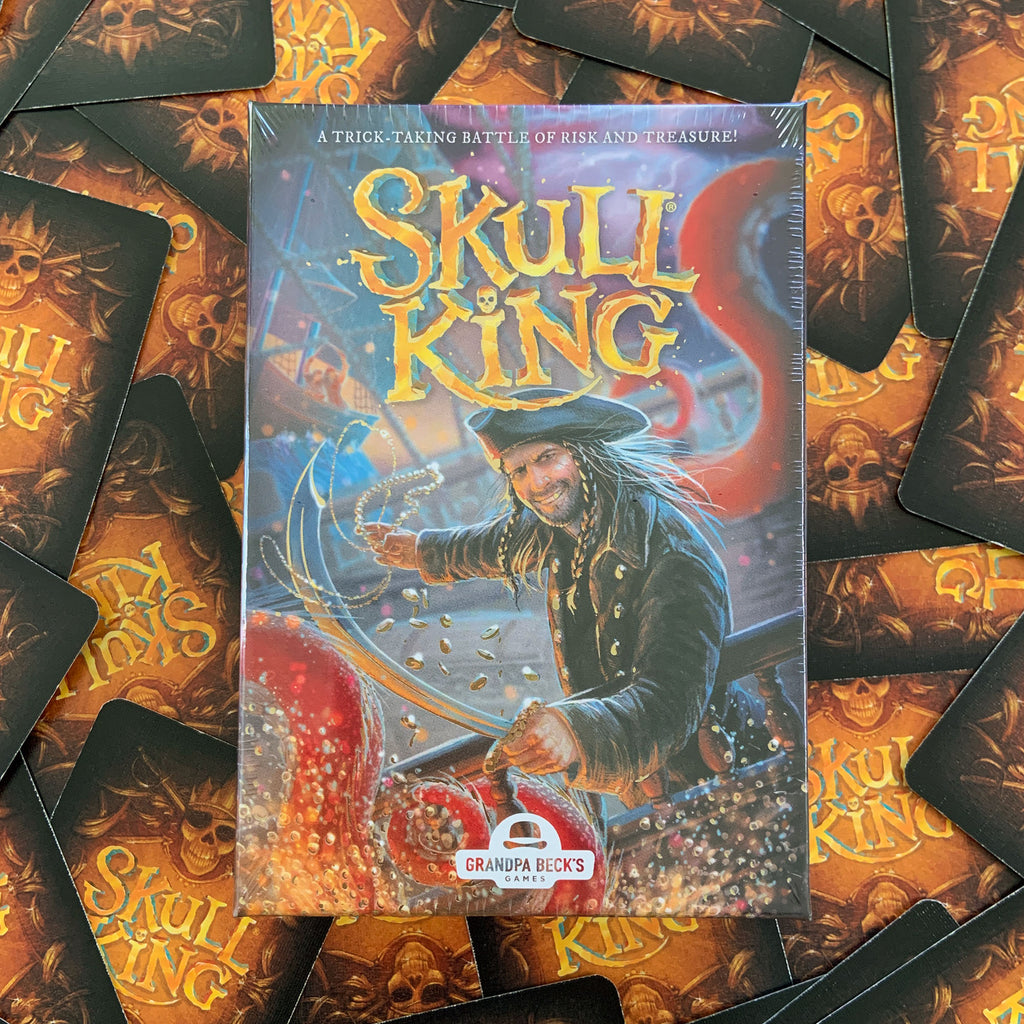
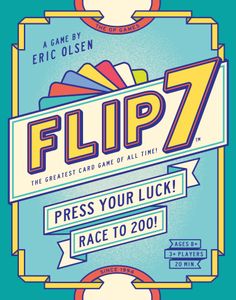
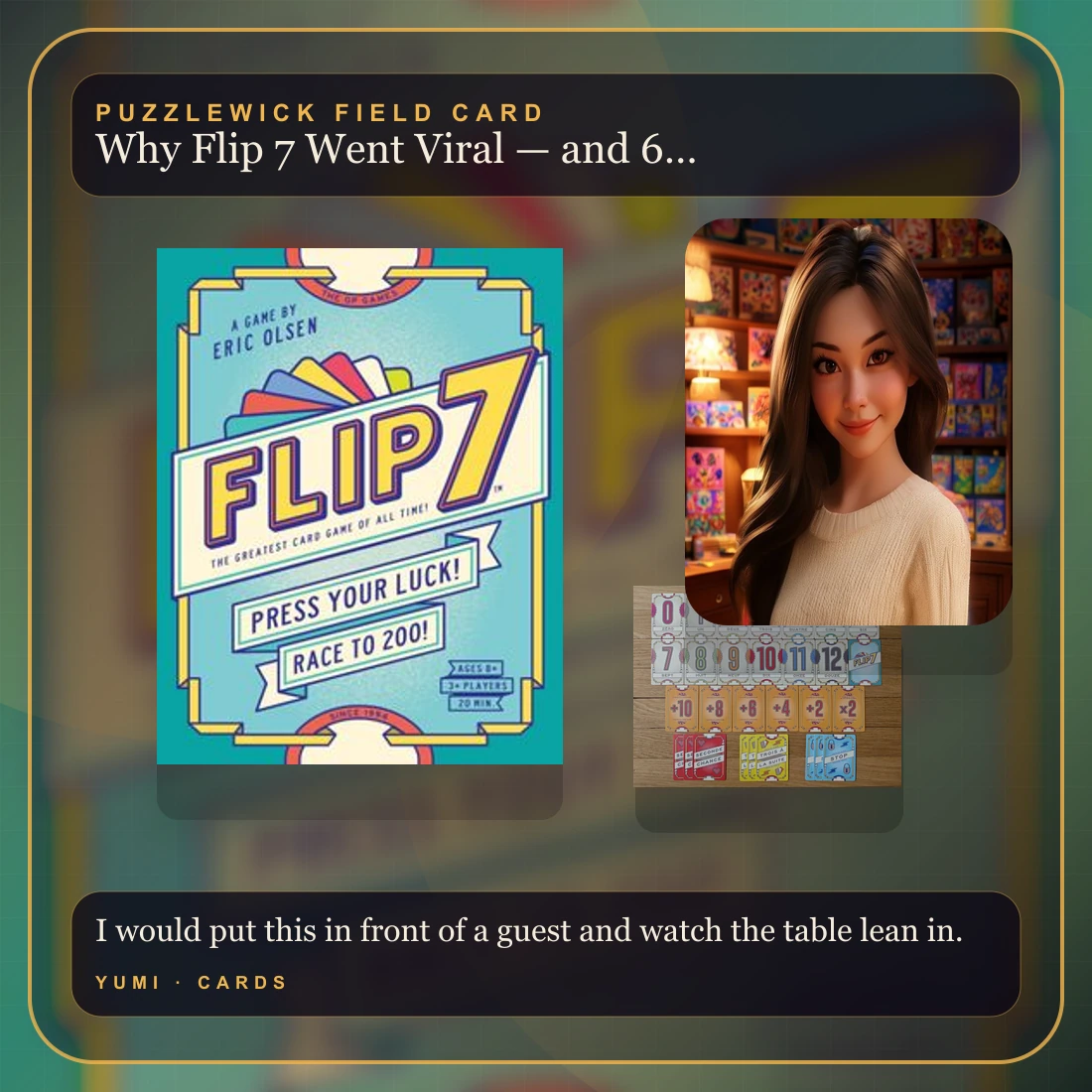
Flip 7 is a press-your-luck card game designed by Eric Olsen and published by The Op in 2024. The deck is 94 cards, mostly number cards from 0 to 12, where the quantity matches the value — one 1, two 2s, three 3s, all the way up to twelve 12s. On your turn you make one decision over and over: hit or stay.
Each card you flip adds its face value to your round score. The catch is brutal in its simplicity: flip a number you already have in front of you and you bust, losing everything for that round. Stay before that happens and you bank your points. First player to 200 across multiple rounds wins.
The hook in the name is the bonus: collect seven unique number cards without busting and you score an extra 15 points — and end the round for everyone. That single rule transforms every flip near the end into a held-breath event.
Why did Flip 7 go viral in 2024 and 2025?
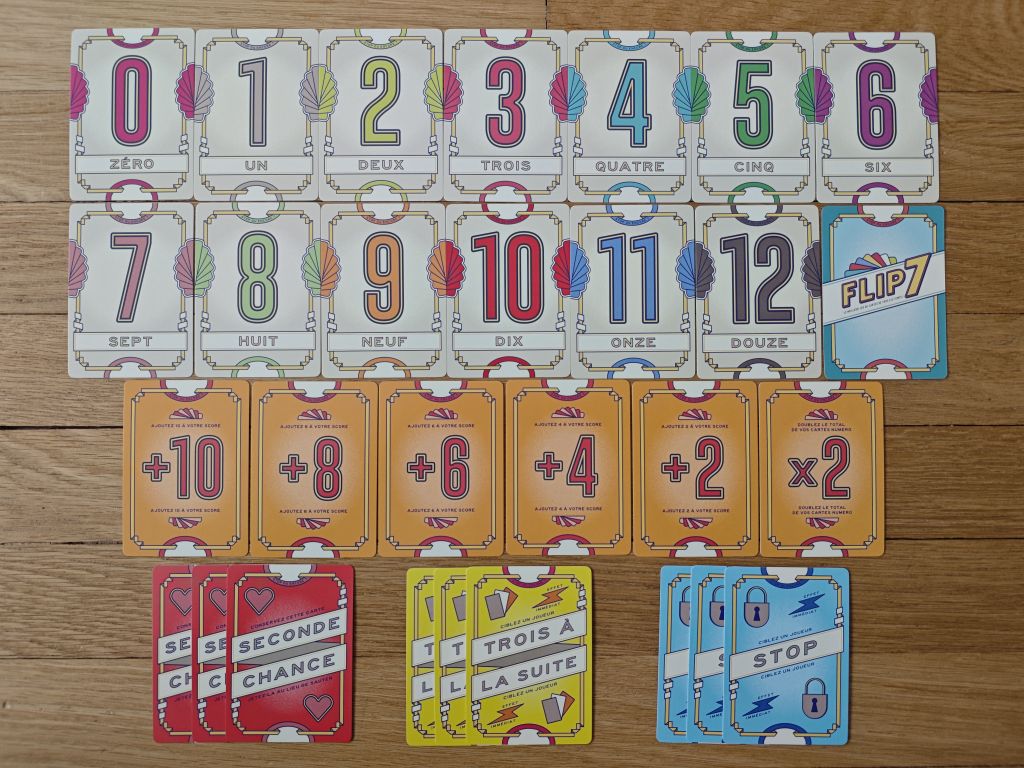

Flip 7 hit a sweet spot almost no other game occupies: it teaches in about a minute, plays in about twenty, and scales from a couple of friends up to eighteen players. That last number is the secret weapon — most great card games cap out at four or five, but Flip 7 turns a crowded holiday table or a classroom into a single shared game.
It also rides the most reliable feeling in all of gaming, the "just one more card" reflex. The Spiel des Jahres jury described it as a game that, with simple means, "awakens greed, schadenfreude, and thrilling tension." Watching someone flip their seventh card to nail the bonus — or bust on the very last one — produces big, loud table moments, and big table moments are what spread on social video.
The blackjack DNA helps too. Almost everyone already understands hit-or-stay, so there is no rules barrier between a newcomer and their first agonizing decision.
Did Flip 7 win the Spiel des Jahres?
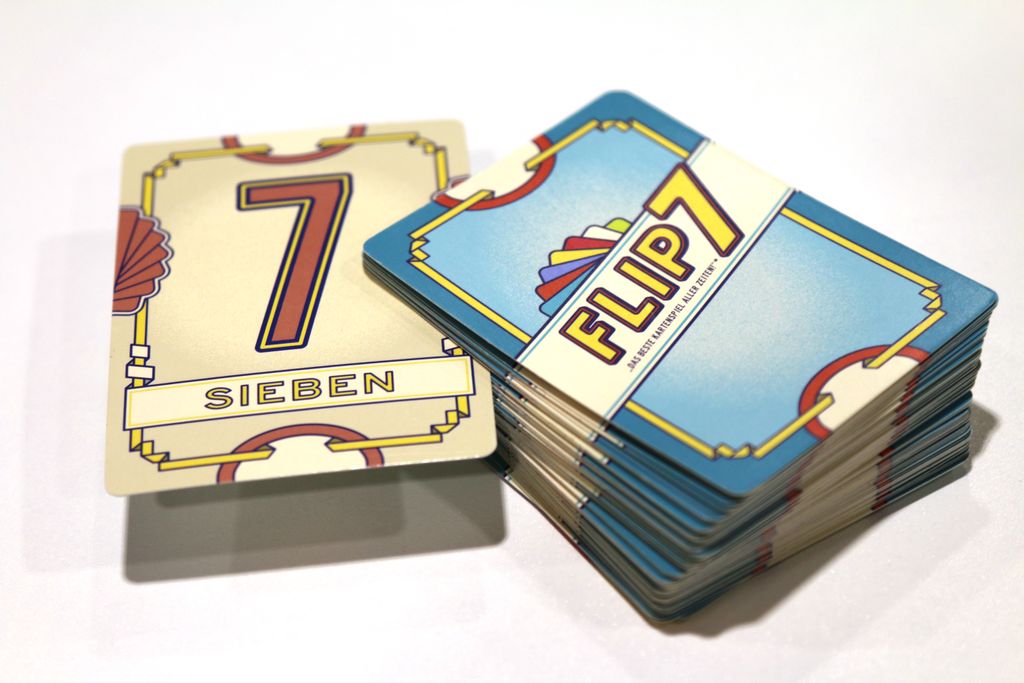
No — Flip 7 was nominated for the 2025 Spiel des Jahres (the German Game of the Year, the most influential award in the hobby), but the top prize went to Bomb Busters by Hisashi Hayashi. Flip 7 shared the nominee shortlist with Bomb Busters and Krakel Orakel.
That is still a remarkable result. A nomination from this jury is a career-defining honor, and for a fast, light card game to land beside heavier titles signals how genuinely well-tuned Flip 7 is. The nomination, plus a German-language edition from Kosmos in 2025, pushed it onto shelves and game-night tables far beyond its initial English release.
What is a "push-your-luck" game, exactly?

Push-your-luck (also called press-your-luck) is a genre built around one tension: every time you act, you gain a little more reward and edge a little closer to losing everything. You are never forced to stop — you choose to stop, which means every bust feels like your own fault, and every big score feels earned.
Flip 7 is a card-flipping version. Other classics use dice (Can't Stop), bag-drawing (Quacks of Quedlinburg), or shared communal risk (Incan Gold). The mechanism changes; the gut-feeling does not. If the moment you loved in Flip 7 was hovering over that last flip, every game below is built to recreate it.
What is the closest game to Flip 7 for the same crowd?
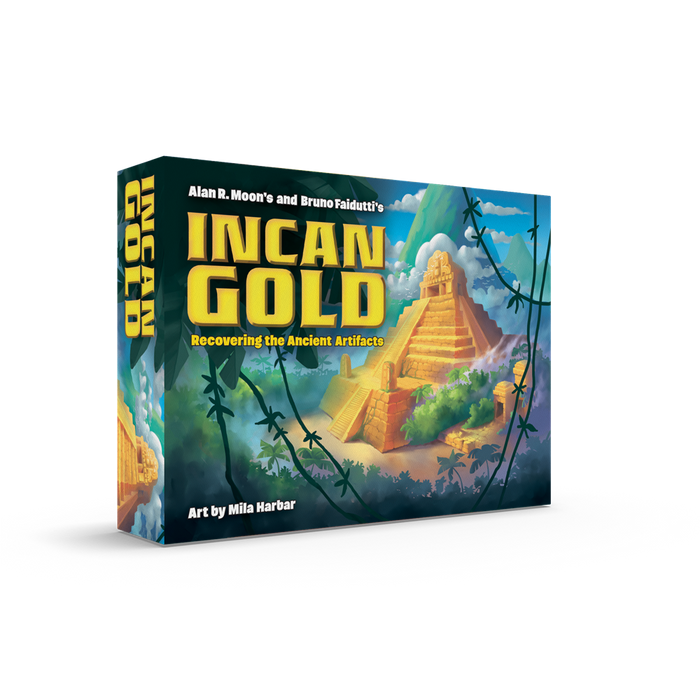
Incan Gold (sold in some regions as Diamant) is the closest cousin in spirit. It is a simultaneous, communal push-your-luck game for 3 to 8 players where everyone explores a ruin together, grabbing treasure as cards are revealed — until a second copy of a hazard sends everyone still inside home with nothing.
Like Flip 7, it teaches in a minute, plays in twenty to thirty, and handles big groups beautifully. The twist is social: you are all reading each other, deciding whether to stay in the temple one more card while watching who else loses their nerve first. It is the natural "we loved Flip 7, what next" purchase.
What is the best pure push-your-luck game with no cards at all?
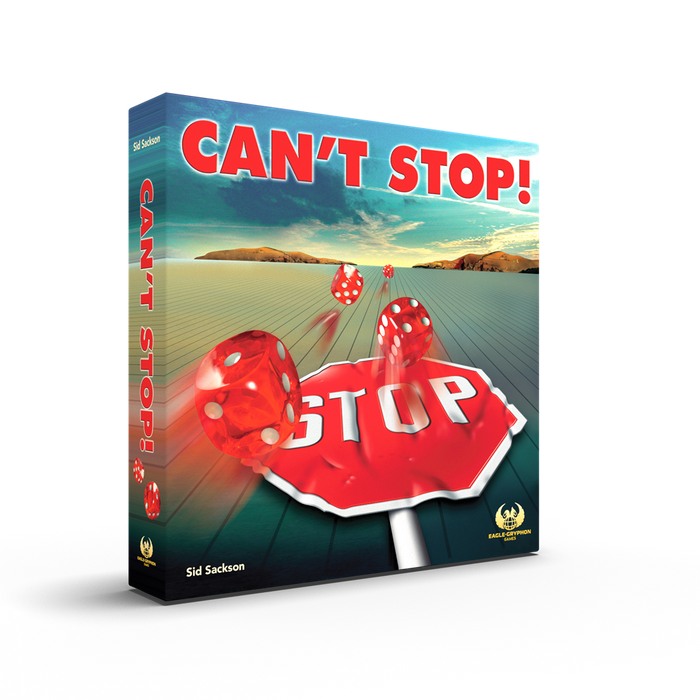
Can't Stop, the 1980 Sid Sackson classic, is the genre in its most distilled form. You roll four dice, pair them into column numbers, and advance up a board — but you may keep rolling as far as your nerve allows. Bust on a bad roll and you lose all the progress you risked that turn.
What sets Can't Stop apart from bag- or deck-driven games is that there is nothing between you and the dice: no engine, no economy, just raw probability and your own greed. It is decades old and still one of the best on-ramps to teaching why stopping is the hardest skill in the genre.
What is the deepest game for someone who wants more strategy?
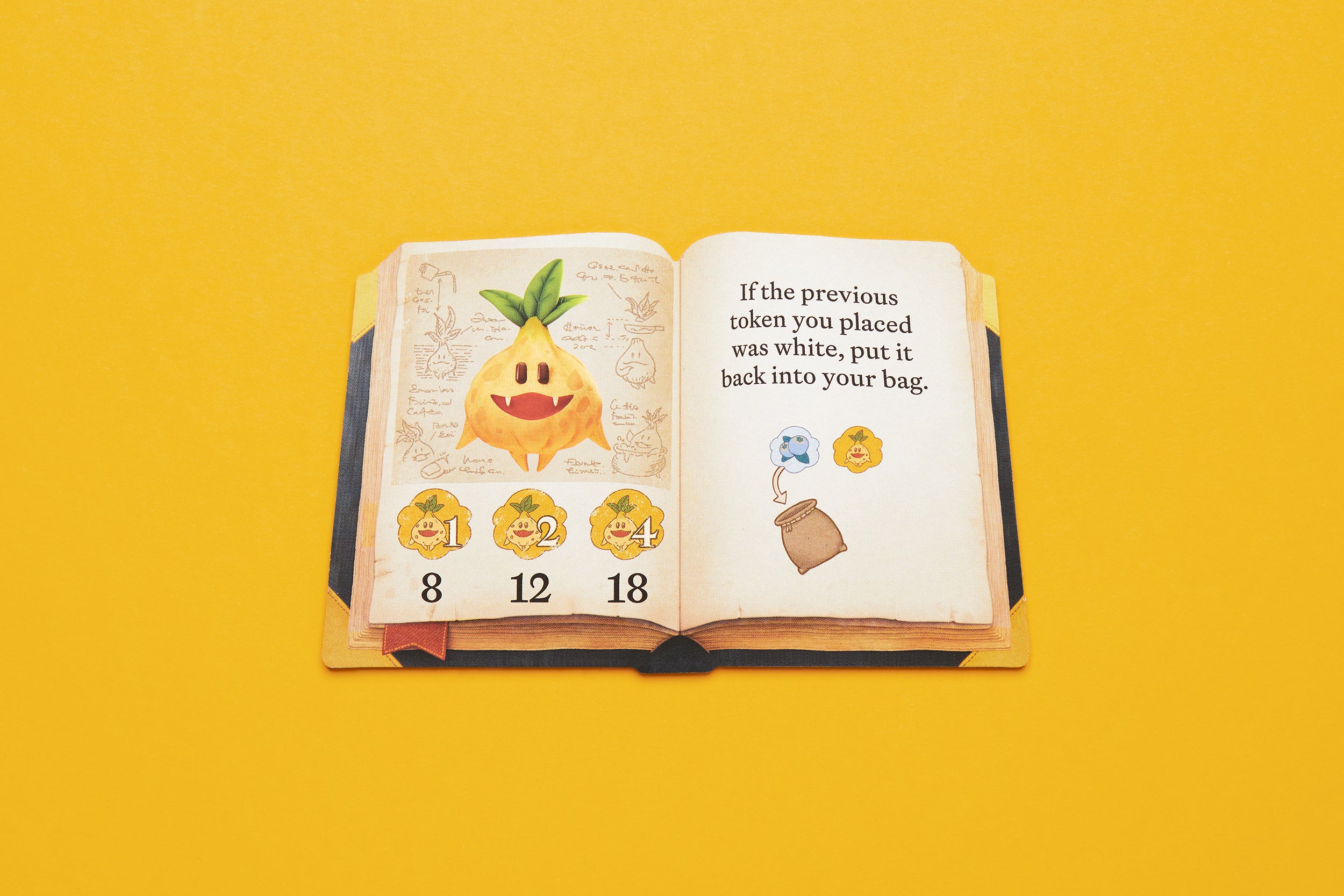
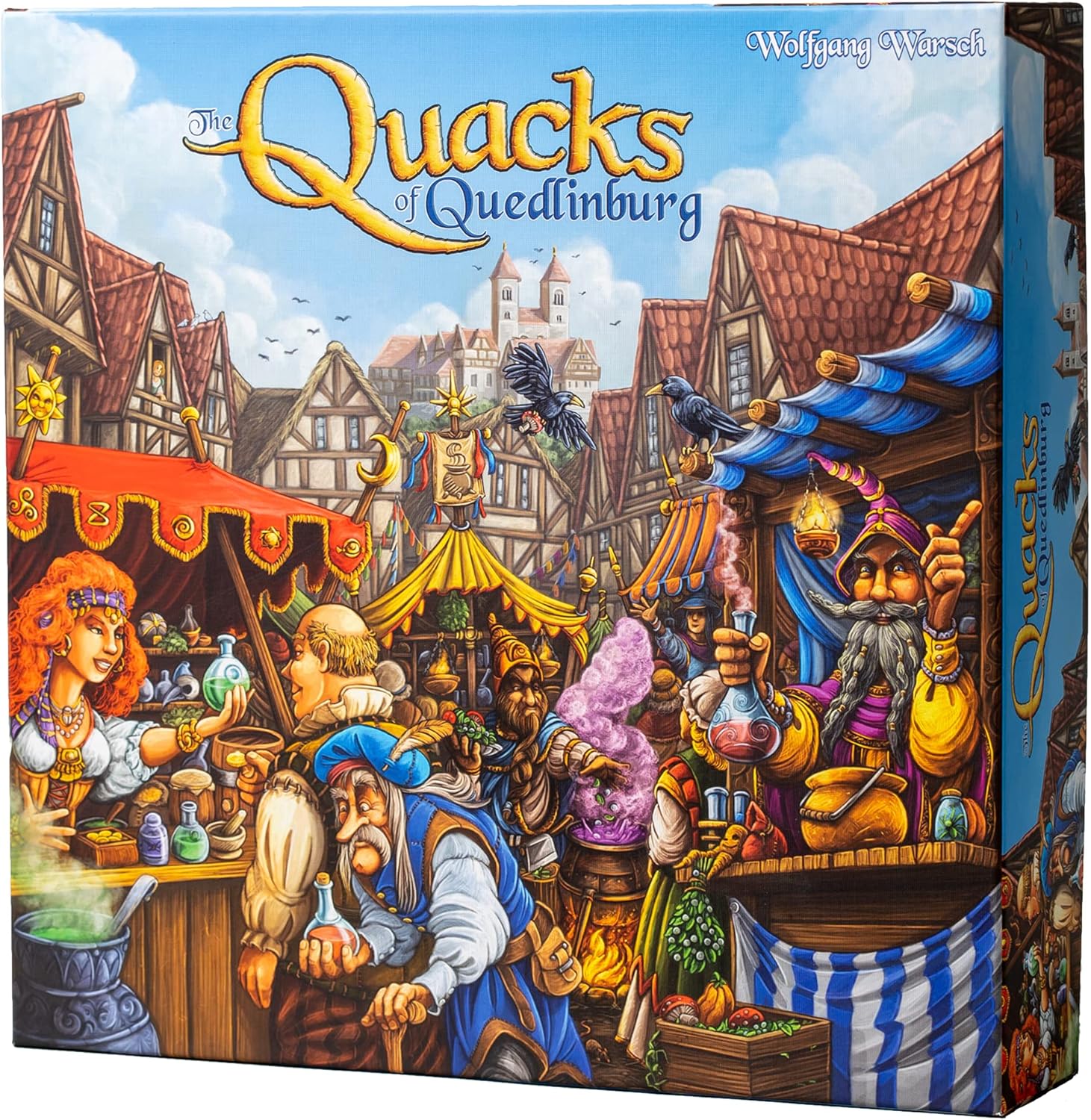
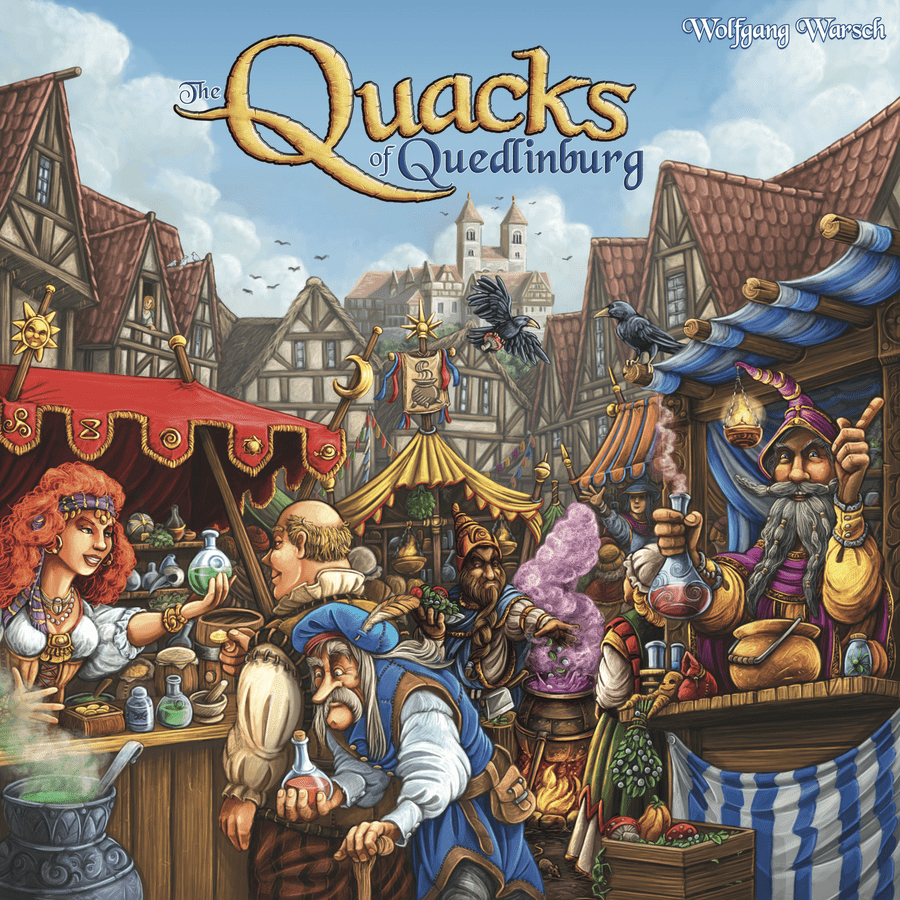
The Quacks of Quedlinburg is the step up when a group wants push-your-luck with real strategic meat. It won the 2018 Kennerspiel des Jahres (the connoisseur's Game of the Year), and you play a charlatan brewing a potion by pulling ingredient chips from a bag — pushing for a bigger, higher-scoring brew while dodging the white "cherry bomb" chips that blow up your cauldron if you draw too many.
Between rounds you spend your winnings to reshape your own bag, so the press-your-luck core sits on top of a satisfying buy-and-build engine. It runs longer (around 45 minutes, 2 to 4 players) and asks more of you than Flip 7, which is exactly the point for a group ready to graduate.
What is the best small, portable push-your-luck game?
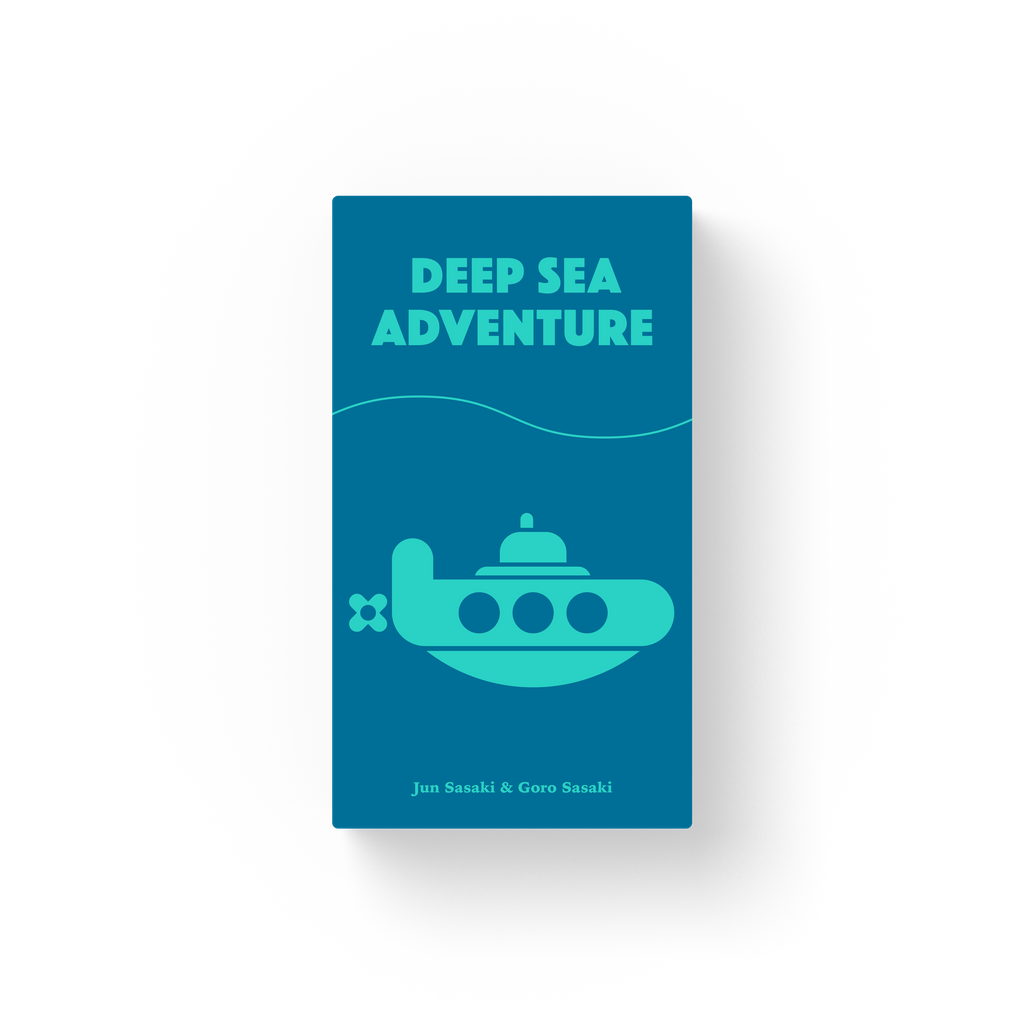
Deep Sea Adventure packs enormous tension into a tiny box. Two to six divers share a single dwindling oxygen supply as they descend after treasure; the more loot you carry, the slower you move and the more air everyone burns. Linger too long and you drown — dropping all your treasure to the seabed.
The genius is the shared resource: every diver who stays greedy drains the air for the whole table, so the pressure is collective and gleefully passive-aggressive. It is cheap, pocket-sized, plays in about 30 minutes, and is one of the best travel and pub games in the genre.
What is the best bluffing-flavored push-your-luck game?
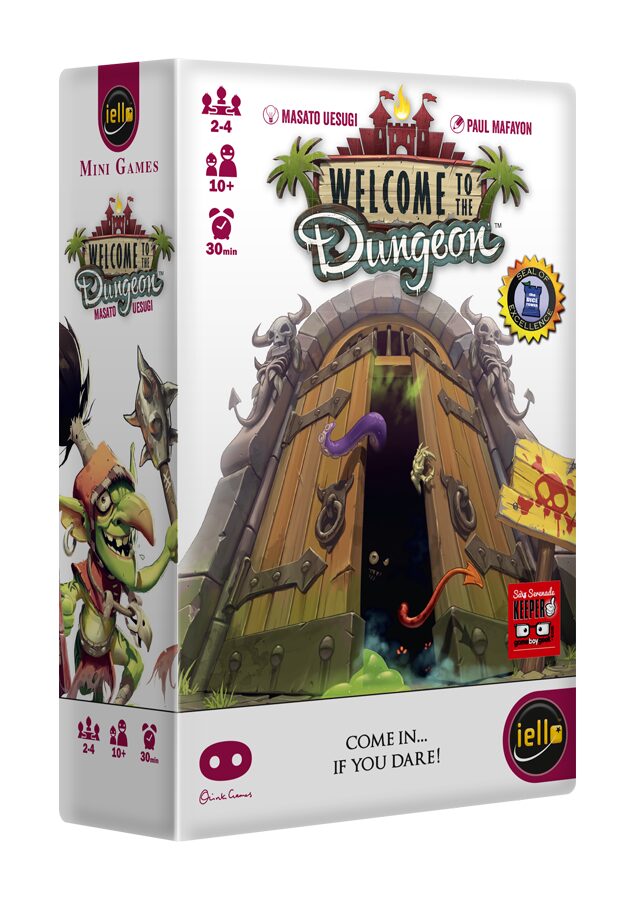
Welcome to the Dungeon turns press-your-luck into a game of nerve and bluff. Players take turns either adding a monster to the dungeon or removing a piece of their hero's equipment — each addition raising the danger, each removal weakening whoever eventually has to dive in. Push the others too hard and you might be the one forced to face a dungeon you can no longer survive.
It is fast, mean in the friendliest way, and adds a layer Flip 7 does not have: you are pressing other people's luck as much as your own. Great for groups that enjoy a little chicken-game psychology.
What is the lightest filler that scratches the same itch?
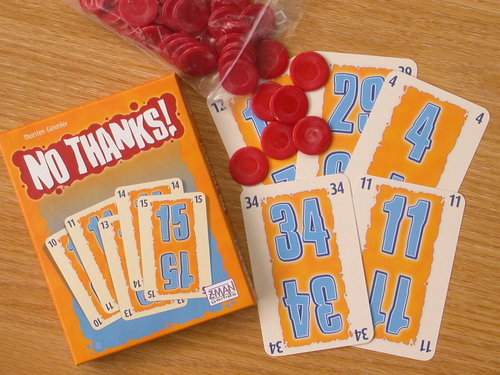

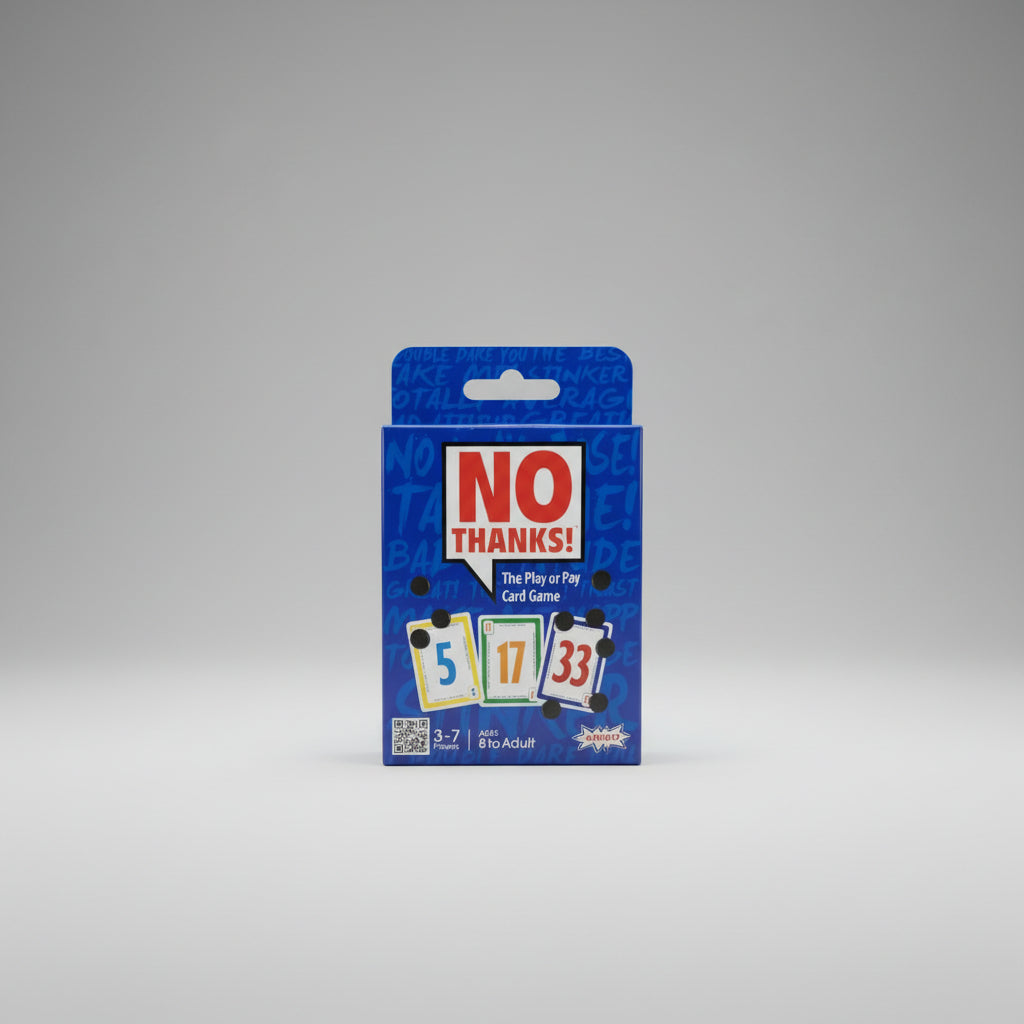
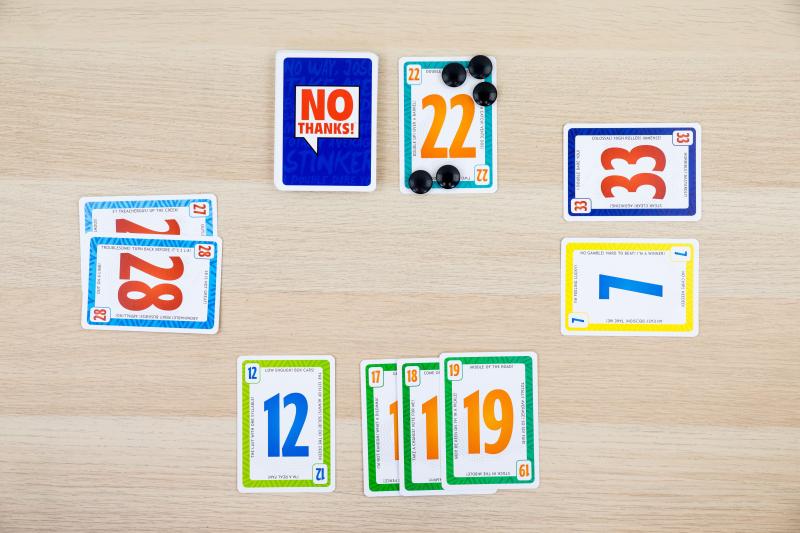
No Thanks! is not a classic flip-and-bust game, but it lives in the same family of agonizing small decisions. Cards worth penalty points are revealed one at a time, and on your turn you either take the card (and its points) or pay a chip to pass it on. Run low on chips and you are cornered into eating cards you desperately do not want.
It is tiny, plays in about 20 minutes, and produces the same table tension as Flip 7 — the constant negotiation between "I can hold out a little longer" and "I have to act now." A perfect warm-up or palate-cleanser between heavier games.
Which of these should I buy first?
If you want the most direct Flip 7 successor for the same big, casual group, get Incan Gold (Diamant) — it is the same communal nerve in a slightly richer wrapper. If you want pure, timeless push-your-luck, get Can't Stop. If your group is ready to graduate to something with strategic depth and replay value, The Quacks of Quedlinburg is the standout.
For travel and pub nights, Deep Sea Adventure is unbeatable for its size, and Welcome to the Dungeon or No Thanks! round out a shelf with bluff and filler. None of these replaces Flip 7 — they extend the feeling it gave you in different directions.
What experienced tables keep reporting
Recurring owner patterns, synthesized in Puzzlewick's words. Follow each evidence trail to read the original discussion.
The fun is in going for the win, sticking it to your opponent, and watching people succeed despite math and the odds.
The picks
Some links below are affiliate links — as an Amazon Associate, Puzzlewick earns from qualifying purchases, at no extra cost to you. It never changes a pick.
3 photos Flip 7
Incan Gold (Diamant)
Can't Stop
3 photos The Quacks of Quedlinburg
Welcome to the Dungeon
 3 photos
 No Thanks!
At a glance
| Game | Players | Time | Mechanism | Best for |
|---|---|---|---|---|
| Flip 7 | 3-18 | ~20 min | Card flip | Big casual groups |
| Incan Gold (Diamant) | 3-8 | 20-30 min | Communal card reveal | Closest Flip 7 successor |
| Can't Stop | 2-4 | ~30 min | Dice | Purest push-your-luck |
| The Quacks of Quedlinburg | 2-4 | ~45 min | Bag-building | More strategy & depth |
| Deep Sea Adventure | 2-6 | ~30 min | Shared resource | Travel & pub nights |
| Welcome to the Dungeon | 2-4 | ~30 min | Bluff / bidding | Bluffing groups |
| No Thanks! | 3-7 | ~20 min | Card drafting | Lightest filler |
Questions, answered
Why is Flip 7 so popular and addictive right now?
Flip 7 is popular because it pairs an instantly familiar blackjack-style hit-or-stay decision with a one-minute teach, a ~20-minute play time, and support for up to 18 players. That combination triggers the "just one more card" reflex over and over while scaling to almost any group size, which is why it spread so fast on social media and at game nights.
What kind of game is Flip 7?
Flip 7 is a push-your-luck (press-your-luck) card game in the style of blackjack. Players repeatedly flip number cards to build a score, busting and losing the round if they flip a number they already have, and choosing when to stop and bank their points.
Did Flip 7 win the Spiel des Jahres in 2025?
No, Flip 7 did not win — it was a nominee for the 2025 Spiel des Jahres, but the main award went to Bomb Busters. Flip 7 was shortlisted alongside Bomb Busters and Krakel Orakel, which is still a major honor for a light card game.
How many players can play Flip 7?
Flip 7 supports 3 to 18 players, which is unusually high for a card game and a big reason for its appeal. This makes it well suited to large gatherings, classrooms, and holiday tables where most card games cap out at four or five players.
How long does a game of Flip 7 take?
A game of Flip 7 typically takes about 20 minutes. Individual rounds are very fast, and the full game runs until a player reaches 200 points across multiple rounds.
What is the Flip 7 bonus rule?
The Flip 7 bonus awards 15 extra points to any player who flips seven unique number cards in a single round without busting. Achieving it also immediately ends the round for all players, making the seventh flip the most dramatic moment in the game.
What games are most like Flip 7?
The game most like Flip 7 is Incan Gold (also sold as Diamant), a communal push-your-luck game for 3-8 players with the same fast teach and big-group energy. Can't Stop, Deep Sea Adventure, and No Thanks! also deliver a similar hit-or-stay tension in different formats.
What is the best push-your-luck game for big groups like Flip 7?
Incan Gold (Diamant) is the best push-your-luck game for big groups after Flip 7, supporting up to 8 players with a simultaneous, social explore-or-flee decision. It keeps the party energy while adding the tension of reading when everyone else will lose their nerve.
What is the best push-your-luck game with more strategy?
The Quacks of Quedlinburg is the best push-your-luck game for players wanting more strategy, winning the 2018 Kennerspiel des Jahres. It layers bag-building and an upgrade economy on top of the press-your-luck core, rewarding planning between rounds rather than pure nerve.
Is Flip 7 good for kids and families?
Yes, Flip 7 is good for families and is recommended for ages 8 and up. The rules are simple enough for children to grasp in one round, while the constant risk-reward decisions keep adults engaged at the same table.
What is the difference between Incan Gold and Diamant?
Incan Gold and Diamant are the same game sold under different names and editions, designed by Alan R. Moon and Bruno Faidutti. Diamant is the original/European title; Incan Gold is a common English-language release, with only minor art and component differences between printings.
What is the cheapest game to play after Flip 7?
No Thanks! and Deep Sea Adventure are among the cheapest follow-ups, both typically priced low and packaged in small boxes. They deliver the same hold-out-or-act tension as Flip 7 in fast, portable, budget-friendly formats.
Is Flip 7 just blackjack?
No, Flip 7 is not just blackjack, though it borrows the hit-or-stay decision. Instead of beating a dealer's hand to 21, you avoid flipping a duplicate number, chase a seven-unique-card bonus, and race to 200 points across rounds, which adds set-collection and special-card layers blackjack lacks.
What dice-based push-your-luck game should I try?
Can't Stop is the dice-based push-your-luck game to try first, a 1980 Sid Sackson classic. You roll and press your luck up a board with nothing between you and the dice, making it the purest and most teachable expression of the genre.
Yumi's verdict
Flip 7 deserves the hype: it is one of the cleanest, most scalable push-your-luck designs ever made, and a Spiel des Jahres nomination confirms it is more than a passing social-media moment. But it is a gateway, not a ceiling — once the deck feels familiar, Incan Gold keeps the big-group thrill, Can't Stop delivers the purest version of the genre, and The Quacks of Quedlinburg shows how deep press-your-luck can go.
Research ledger 13 sources · reviewed 2026-07-17
Specifications, rules, current product information, community experience, and contrary evidence were checked against the sources below. Commercial links are kept separate from editorial evidence.
- de.wikipedia.orgde.wikipedia.org/wiki/Flip_7
- spiel-des-jahres.despiel-des-jahres.de/spiele/flip-7
- spiel-des-jahres.despiel-des-jahres.de/en/award-winners-2025-2
- boardgamewire.comboardgamewire.com/index.php/2025/05/20/flip-7-bomb-busters-krakel-orakel-to-battle-it-out-for-this-years-spiel-des-jahres-award
- theop.gamestheop.games/products/flip-7
- officialgamerules.orgofficialgamerules.org/game-rules/flip-7-rules
- gaminglib.comgaminglib.com/blogs/news/blowing-up-the-competition-bomb-busters-takes-spiel-des-jahres-2025
- en.wikipedia.orgen.wikipedia.org/wiki/The_Quacks_of_Quedlinburg
- en.wikipedia.orgen.wikipedia.org/wiki/Diamant_(board_game)
- shutupandsitdown.comshutupandsitdown.com/games/incan-gold
- whatsericplaying.comwhatsericplaying.com/2018/04/30/deep-sea-adventure
- victoryconditions.comvictoryconditions.com/best-push-your-luck-board-games
- medium.commedium.com/meeplegamers/flip-7-with-a-vengeance-from-the-op-review-f218816c0cdb
Come in, take your shoes off — let me show you something.

Keep exploring
The next smart rabbit holes.
✦ Topic PathBoard Game Buying Guides: compare the whole shelfStart with the decision, not the shelf. These guides compare the games, editions, expansions, player counts, and costs people...Best OfBeyond UNO: 8 Better Card Games for Family Game NightUNO walks so these eight could run. Same easy-in, same big laughs — minus the table-flip that ends in someone storming off to their room....Best OfBest Party Card Games for Adults, Ranked (2026)Okay but have you SEEN what the room's been saying about Monikers, Wavelength, So Clover!, Just One — because the party-game conversation...