The 2026 Board Game Hype Test: Which Trending Games Are Actually Worth Your Table?
BoardGameGeek Hotness measures attention on BoardGameGeek, not sales and not your future happiness. Robert turns five fast-moving names into durable buy, try, or wait decisions.


Written and reviewed by Robert Pruitt · how this guide was made
Last editorial refresh: 2026-08-29 Gold-standard QA: 2026-08-30 10 sources reviewed Affiliate links checked during gold-standard pass

The short answer
Buy Dewan if you want a concise competitive route puzzle that is already available; try Avalon before paying for deluxe density; watch Drillers if multi-use-card efficiency and solo support sound like the pleasure; wait for owner evidence on Medico and Horror on the Orient Express. The Hotness order moved within the same day, which is exactly why this guide ranks decisions instead of boxes.
Decision map
Choose in thirty seconds
Current exact product, short action menu, and a clearly documented route puzzle.
The shifting map and layered faction systems may be the pleasure or the tax.
Multi-use cards, fuel pressure, upgrades, drones, and solo support point to a substantial efficiency puzzle.
Both remain pre-release watchlist decisions, not reviewed recommendations.
On August 29, BoardGameGeek’s Hotness briefly put Dewan, Avalon: The Riven Veil, Medico, Drillers, and Horror on the Orient Express at the front of its conversation. Later the same day, Drillers moved, Medico and Horror slipped, and Magical Athlete and Machi Koro: Life entered the first five. Nothing about the games changed during lunch.
Hotness is an attention signal: useful for discovering what people are reading and discussing on that site. It is not a sales chart, quality award, player-count census, or fit test for your table. So this is not another tier list pretending a letter grade can replace a host.
Start here, then go deeper
You are in the right cabinet.
 ✦ Topic PathBoard Game Buying Guides: compare the whole shelfStart with the decision, not the shelf. These guides compare the games, editions, expansions, player counts, and costs people...
 Best Of5 New Board Games Worth Your Next Game Night: Cozy Stories, Clever Cards, and a Proper AdventureImani matches five current tabletop releases to five kinds of evening, with the awkward bits included: permanent stickers, limited...
 ComparisonThe Best Engine-Building Board Games of 2026, RankedA sensei's tier list of the games that taught a generation what "the engine click" feels like — from the gateway masterpiece to the...
What does BoardGameGeek Hotness actually tell you?

It tells you what is receiving attention on BoardGameGeek at the moment you look. That can surface a new release, a campaign update, a review wave, or a rules discussion. It does not disclose unit sales, ownership, satisfaction, or fit for your group.
Use the list as a research queue. Record the date, verify the product with its publisher, and ask one table decision. This guide’s question is not “which title sat fourth?” It is “what should a reader do next?”
Which games are buy, try, or wait in thirty seconds?
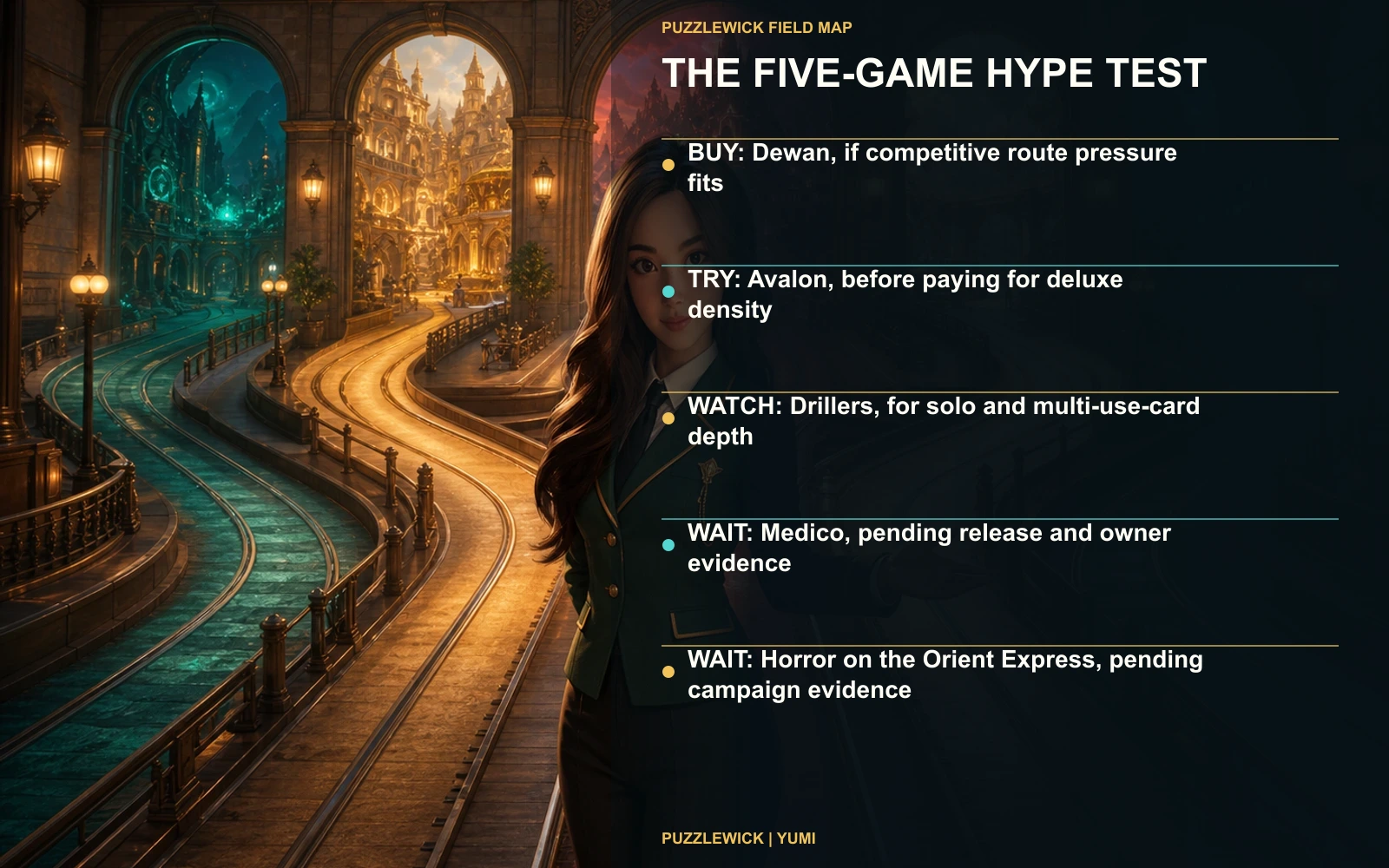
Buy Dewan when your group wants a concise competitive route puzzle and does not mind destinations disappearing. Try Avalon before paying for deluxe density. Watch Drillers if multi-use-card efficiency, fuel pressure, and solo support sound like the fun. Wait on Medico and Horror until release and independent owner evidence catch up with the premise.
“Wait” is not a dismissal. It is the correct verdict when a question requires evidence that does not yet exist.
Who should buy Dewan now?
Dewan gives each turn two basic choices: take two adjacent terrain cards, or spend terrain cards to place a camp along a legal route. The route cost includes the starting and destination spaces. Only one camp occupies a territory, so a destination can disappear while you plan.
That short action menu hides meaningful timing and map pressure. Buy it for a competitive forty-minute route puzzle, not because it happened to sit first on a chart. Puzzlewick’s deeper current guide covers the first-night teach and table footprint.
Should you try Avalon before buying deluxe?
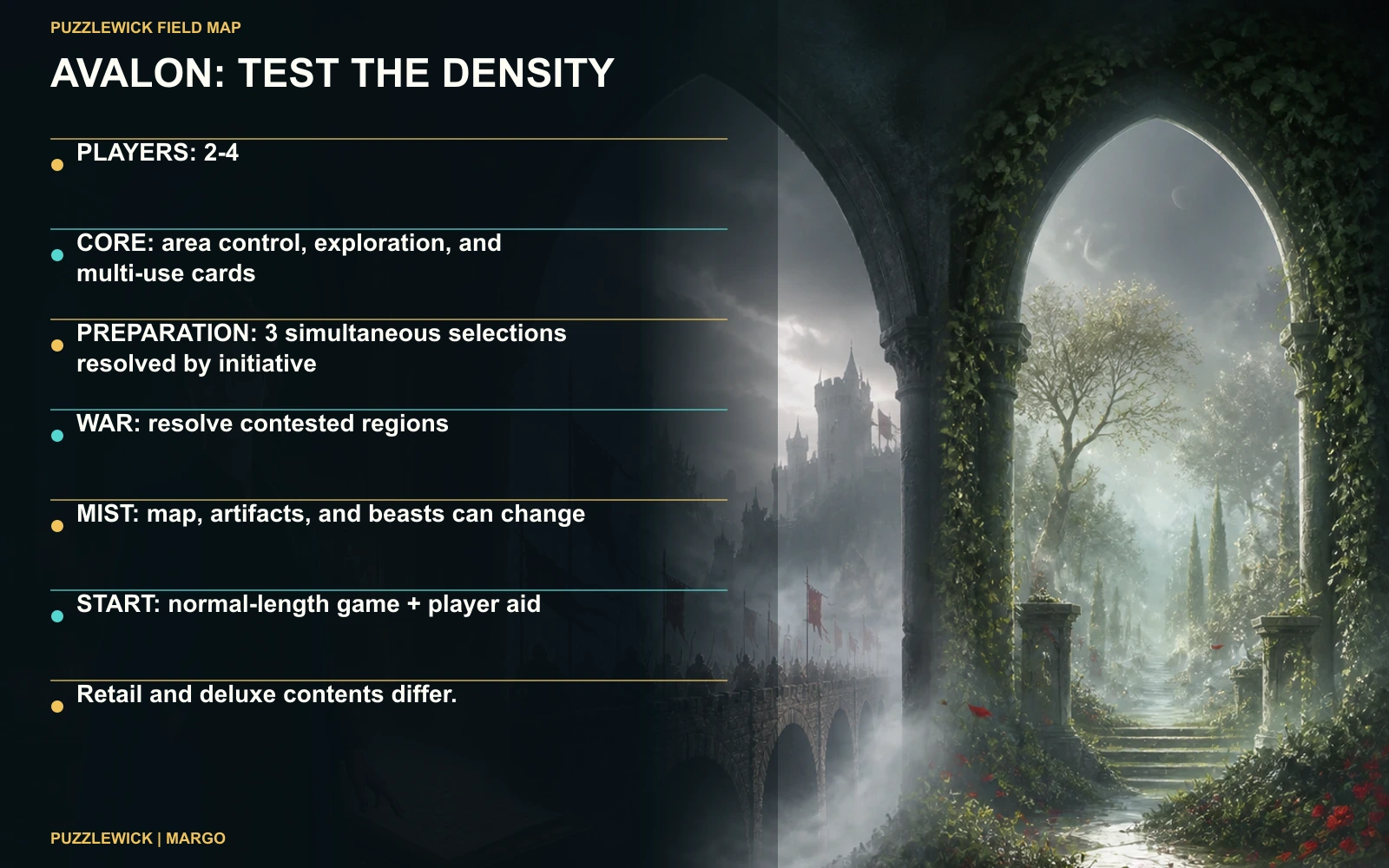
Avalon: The Riven Veil is a two-to-four-player Arthurian area-control and exploration game with symmetric and asymmetric factions, hand management, multi-use cards, and push-your-luck combat. Preparation uses three simultaneous selection rounds resolved by initiative; war resolves contested regions; mist changes the map and the availability of artifacts and beasts.
That layered interaction may be exactly why your group loves it. It may also be too much system for the evening you imagine. Start with the normal-length game and a player aid. Retail and deluxe are different products; never assume campaign photography belongs to the retail box.
Do Avalon factions change how the game plays?
The Knights, Fey, and Druid materials show distinct identities rather than one faction repeated through a different palette. Before choosing a favourite, learn what the faction asks you to value during preparation, war, and mist.
For a first game, avoid teaching every exceptional possibility up front. Explain the shared sequence, let the player aid carry terminology, and resolve one contested region carefully. After play, ask whether predicting rivals and adapting to mist felt exciting or merely exhausting.
What do Drillers starting decks, events, and shop reveal?

Czech Games Edition lists Drillers for one to four players, age twelve and older, at roughly thirty minutes per player, with a planned Q3 2026 release. Multi-use cards drive mechs through an abandoned mine while minerals, fuel, drones, upgrades, milestones, events, and a shop shape the efficiency problem.
The design has a clear audience: people who enjoy extracting several jobs from one card and improving an engine under pressure. The unanswered buying questions are how satisfying solo and two-player scaling feel across repeated games and whether the per-player time remains comfortable for your group.
The official component list includes a central board, four player boards, four mech miniatures, twelve drone tokens, thirty-three mine tiles, four milestone tiles, four card stands, 110 cards, markers, cubes, rules, scoring pad, and help sheets. That supports the promise of a substantial system without proving balance or replayability.
Watch how independent reviewers describe dead time, upgrade cadence, and the relationship between event pressure and planned efficiency. A publisher gallery can show the machine. Repeated play is what reveals whether the machine keeps asking interesting questions.
Who should keep Medico on a watchlist?
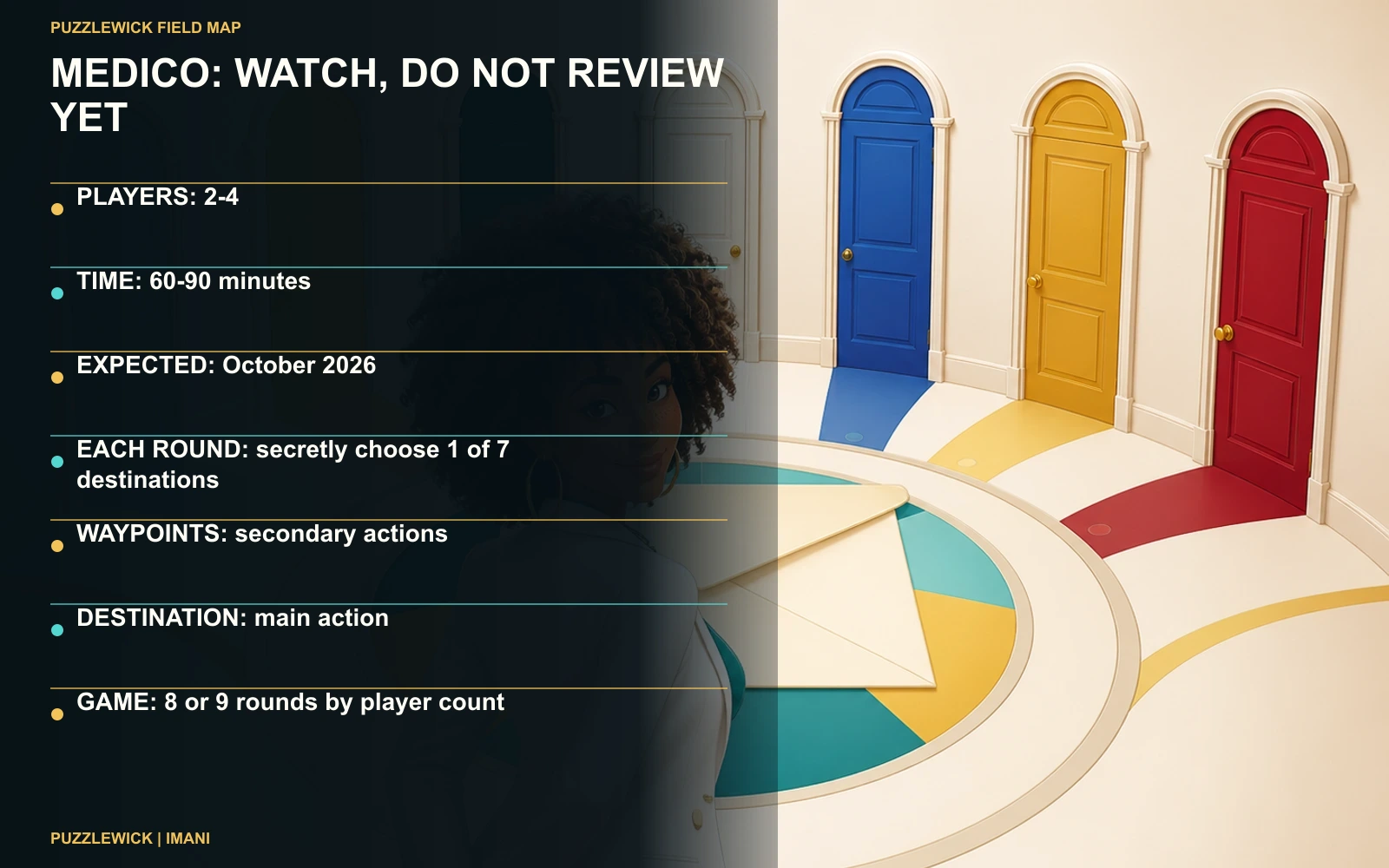
Pegasus lists Medico for two to four players, ages twelve and up, sixty to ninety minutes, with an expected October 2026 release. Each round, players secretly and simultaneously choose one of seven destinations. Waypoints grant secondary actions; the destination grants the main action. The game lasts eight or nine rounds depending on player count.
That is enough to explain the decision space and not enough to issue a quality verdict. Watch for whether simultaneous choices create tense reading or repeated collisions, and whether downtime remains low after the reveal.
Is Horror on the Orient Express ready for a campaign verdict?
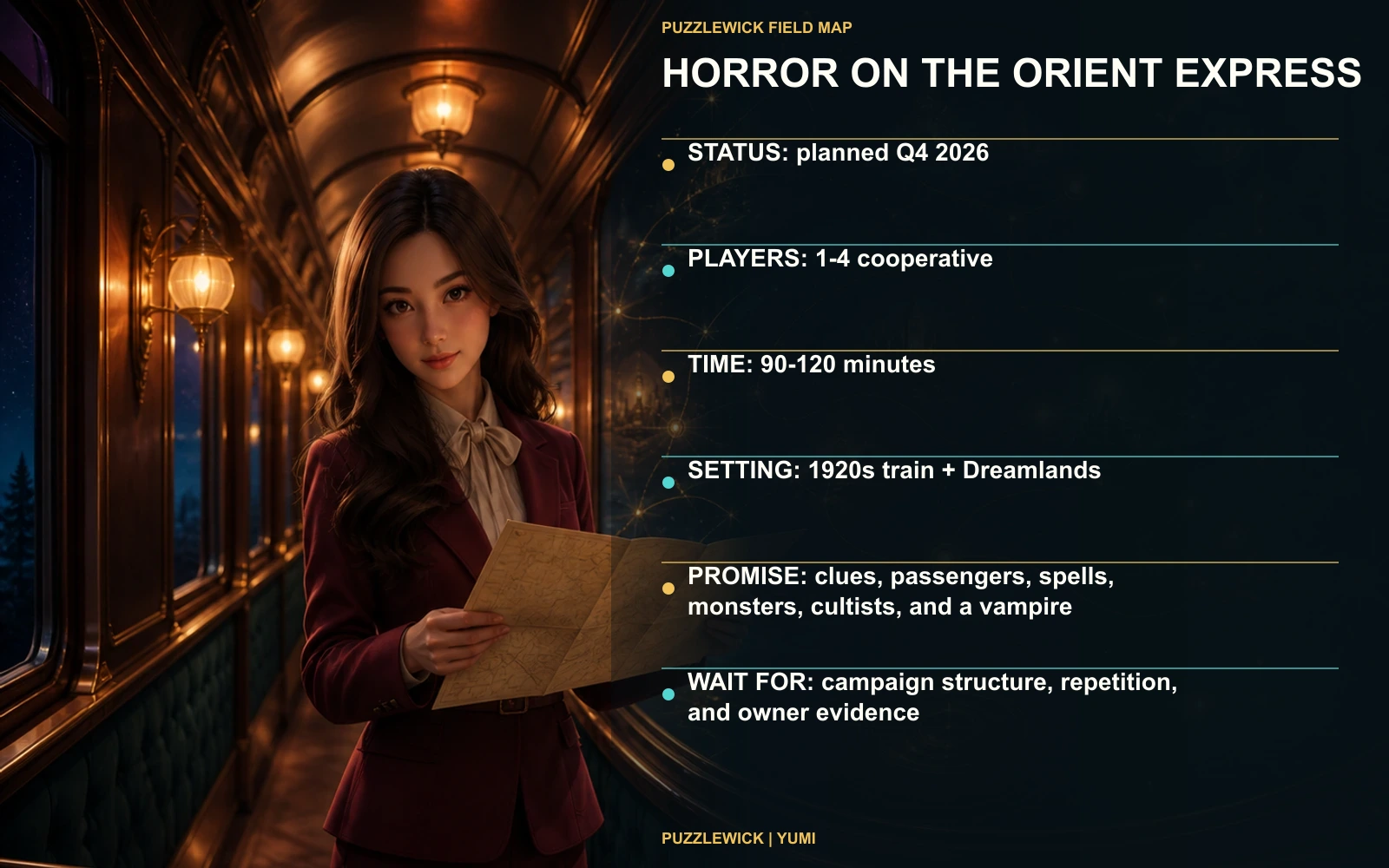
Chaosium and Asmodee identify product CHA9000 for a planned Q4 2026 release. It is a one-to-four-player cooperative game for ages fourteen and up, with sessions listed at ninety to 120 minutes. The premise crosses a 1920s train and the Dreamlands, with character development, items, passenger conversations, clues, spells, monsters, cultists, and a vampire.
Those are real publisher claims. Campaign structure, repetition, narrative payoff, component usability, and owner satisfaction remain post-release questions. Preorder for the premise only if you are comfortable buying before those answers exist.
Why did the Hotness order change, and which sources settle the decision?
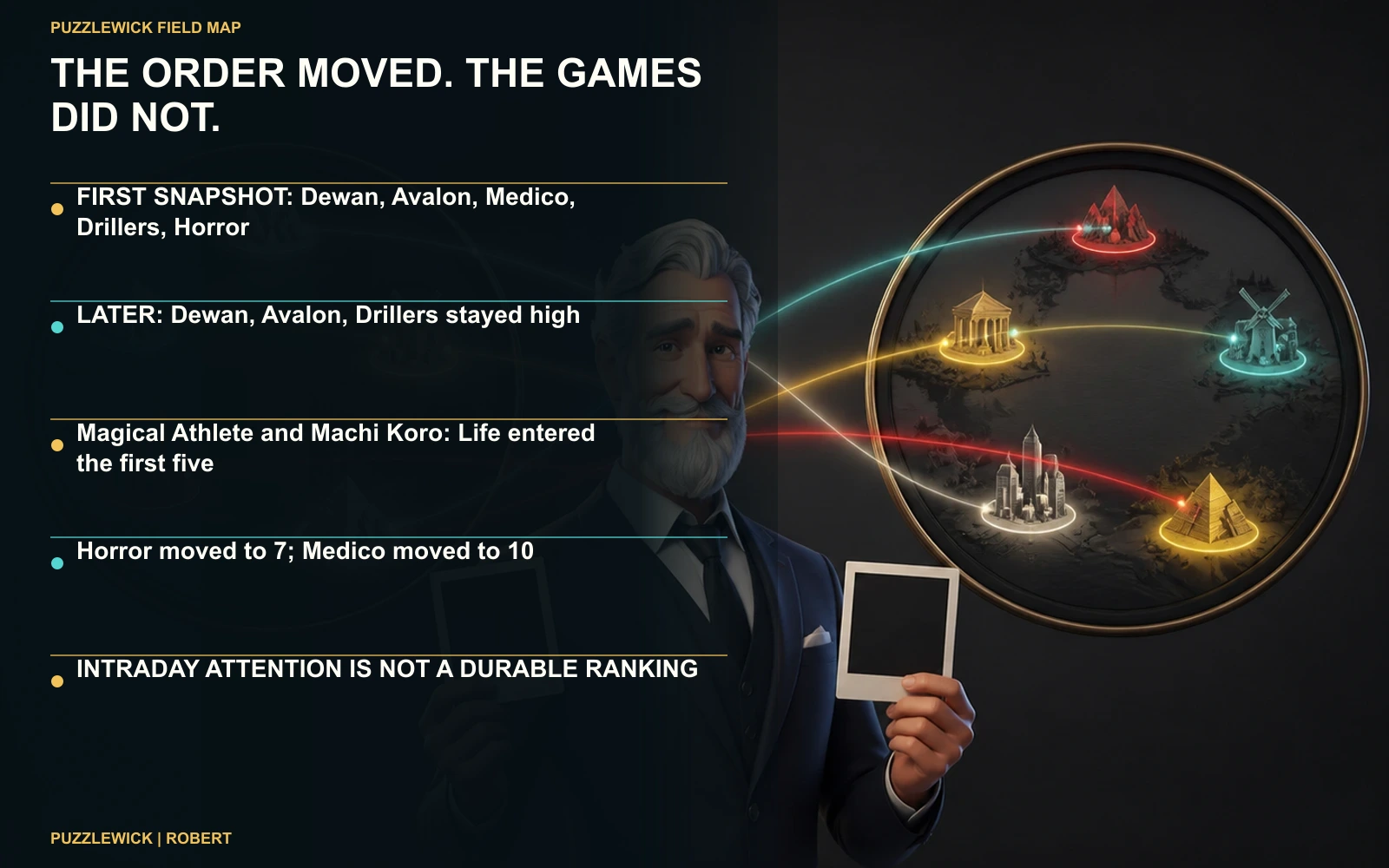
The first complete August 29 snapshot showed Dewan, Avalon, Medico, Drillers, and Horror. Later, Dewan and Avalon remained first and second, Drillers moved to third, Magical Athlete and Machi Koro: Life entered the first five, Horror moved to seventh, and Medico moved to tenth.
That movement is useful evidence about the list itself: attention is volatile. It is not evidence that Medico became a worse game before dinner. A durable article should preserve the date and decision, not freeze a momentary ordinal into its title.
Use the publisher for identity, contents, player count, and release status. Use the current rulebook for setup, turn structure, end conditions, and exceptions. Use independent reviews for observed tradeoffs. Use community discussion to find recurring questions. Use an exact retailer page for edition, seller, and availability.
No source does every job. BoardGameGeek Hotness is excellent at telling us where to look next. Puzzlewick’s responsibility begins after the click.
How should you host the first night?
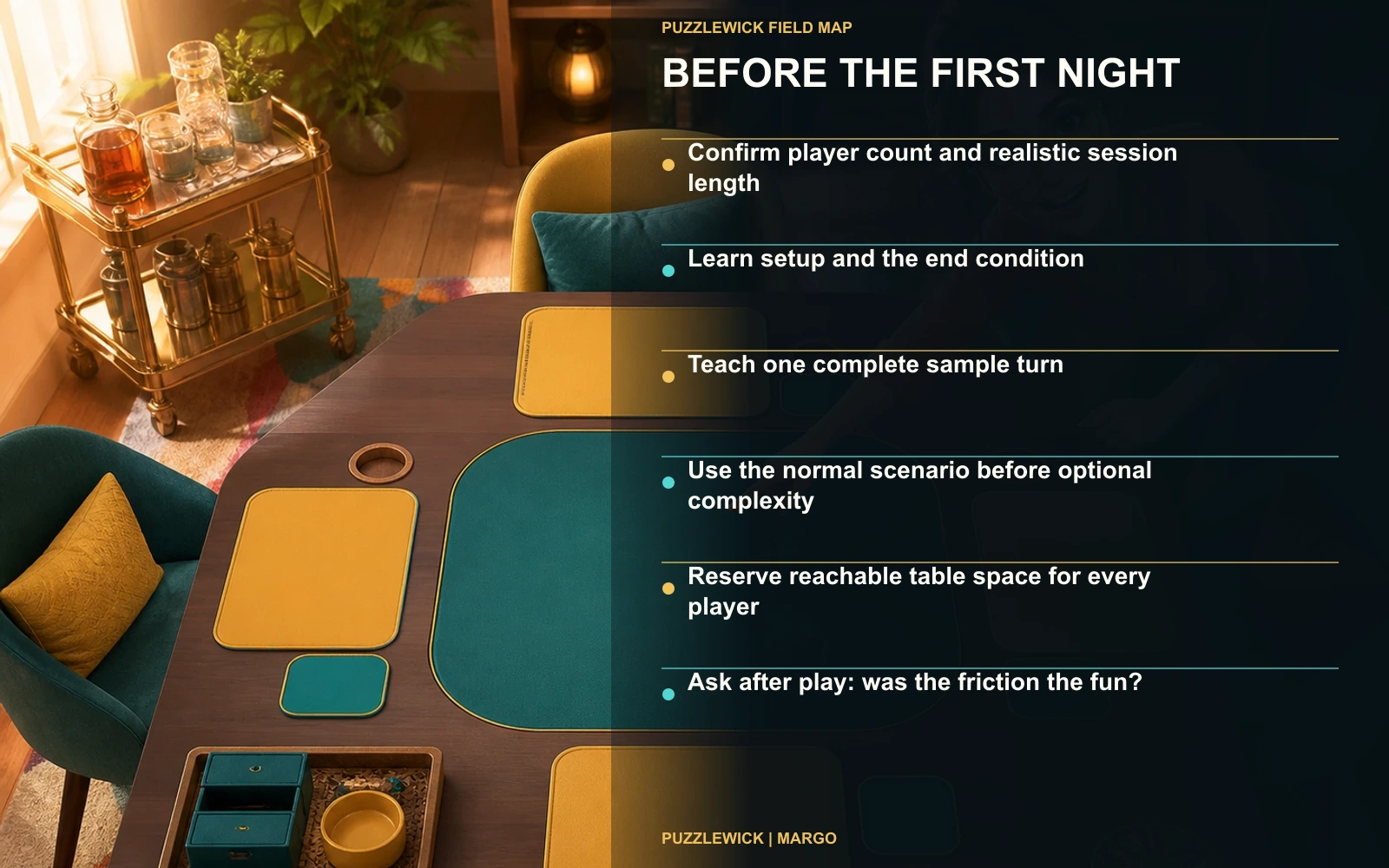
Confirm player count and realistic session length. Learn setup and the end condition. Demonstrate one complete sample turn, then reset. Use the normal scenario before optional complexity. Give every player a reachable, readable area and keep drinks outside the component path.
After play, ask one useful question: was the friction the pleasure? In Avalon, layered prediction may be the game. In Drillers, multi-use efficiency may be the game. The answer tells you more than asking whether everybody agrees with a rank.
What experienced tables keep reporting
Recurring owner patterns, synthesized in Puzzlewick's words. Follow each evidence trail to read the original discussion.
a contemplative game with layered strategy and sophisticated card play
Co-op designs continue to dominate board gaming's biggest prize as Bomb Busters seals Spiel des Jahres win
The picks
Some links below are affiliate links — as an Amazon Associate, Puzzlewick earns from qualifying purchases, at no extra cost to you. It never changes a pick.
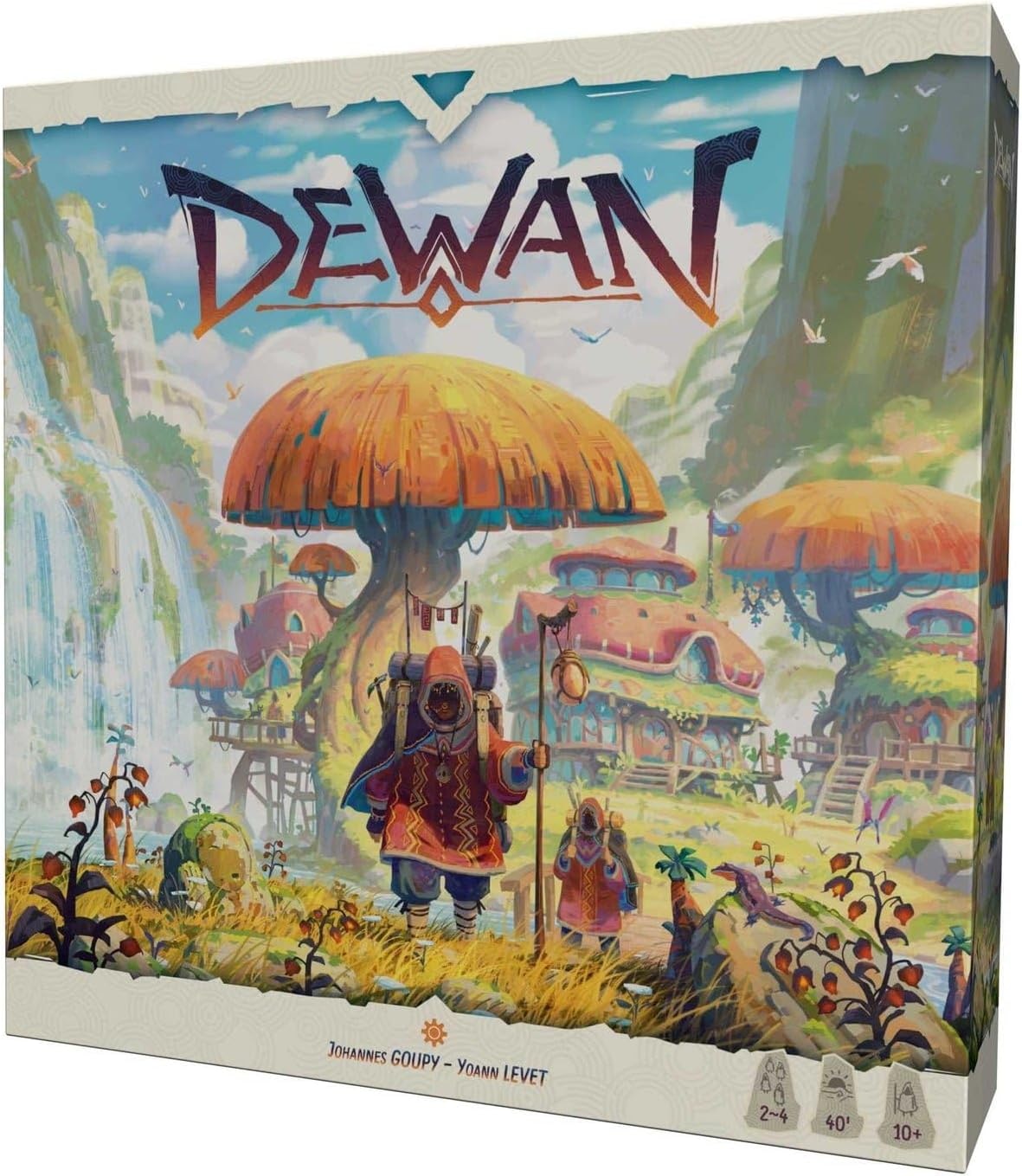
Dewan - English Edition
Two actions create a readable teach; shared destinations and endpoint terrain costs create the real pressure.
- Short action menu
- About forty minutes
- Clear exact product
- Competitive blocking matters
- Not a solo game
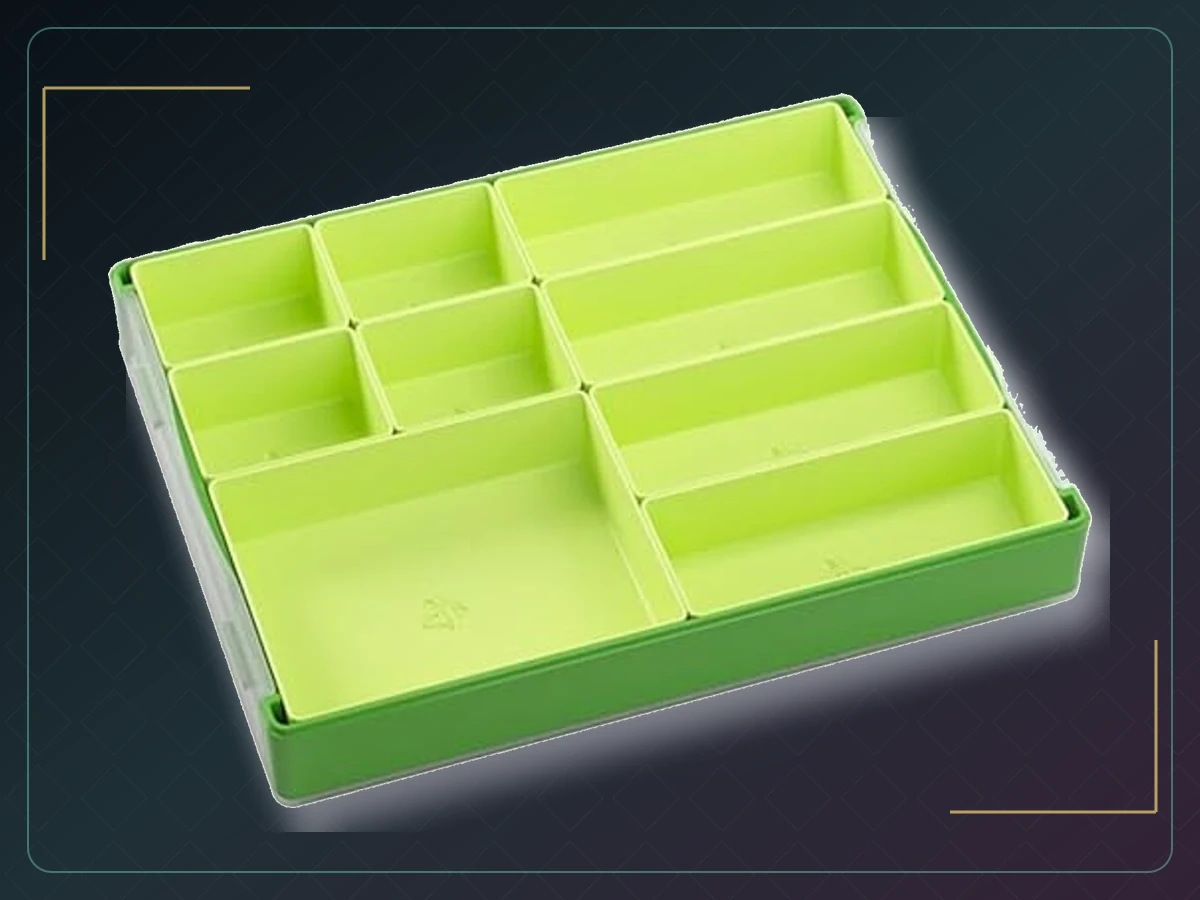
Gamegenic Token Silo Convertible - Lime Green
Nine removable trays turn a loose component pile into a readable shared supply, then close back into one compact box.
- Nine removable trays
- Convertible storage case
- Trusted hobby brand
- Lime finish will not suit every table
- Check the largest component before buying

Luck Lab Board Game Token Trays, 6-Pack Folding Silicone Swirl Color Bowls | Use as Component Trays, Dice T...
Six folding silicone bowls are the cheapest clean answer when several shared piles keep migrating across the table.
- Six colour-coded bowls
- Folds flat
- Easy to move during setup
- No lidded storage
- Not an in-box insert
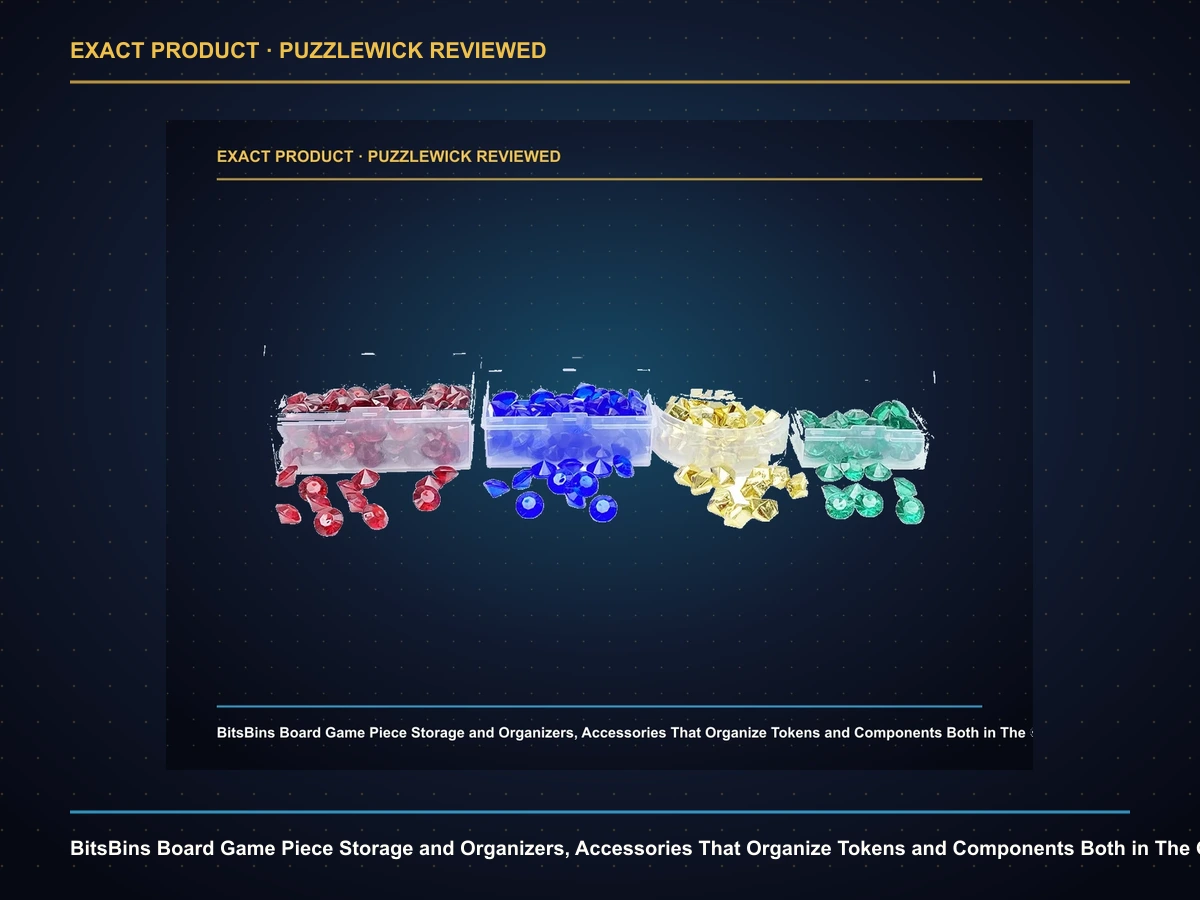
BitsBins Board Game Piece Storage and Organizers, Accessories That Organize Tokens and Components Both in The Game Box and...
BitsBins bridge storage and play: grouped pieces can leave the box together and arrive as ready-made table trays.
- In-box and table use
- Multiple bins
- Reusable across games
- Fit depends on box geometry
- Not tailored to one title
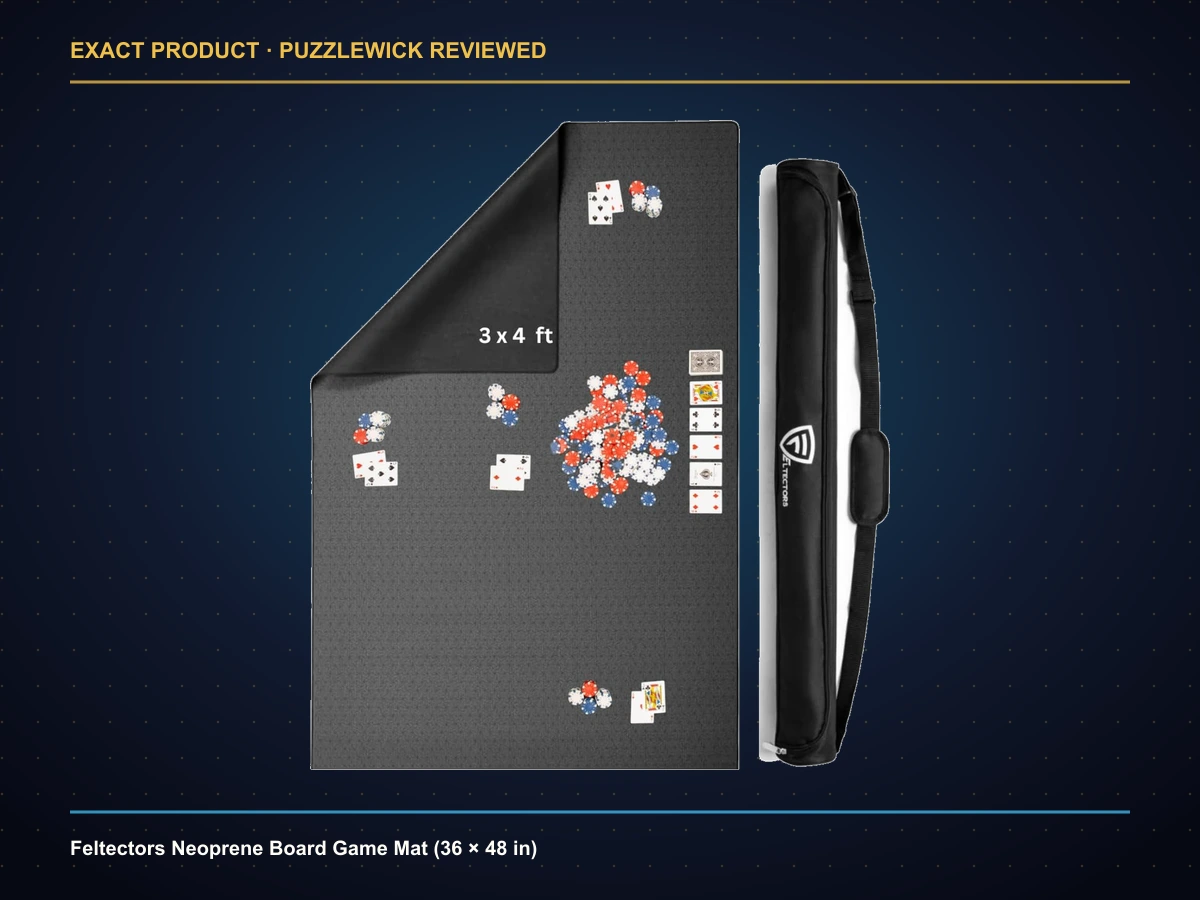
Feltectors Neoprene Board Game Mat (36 × 48 in)
A full-table neoprene mat improves card pickup, dampens dice, and protects components without claiming every sprawling game will fit.
- Known 36 by 48 inch footprint
- Neoprene pickup surface
- Works across many games
- Too small for some campaign games
- Requires storage space when rolled
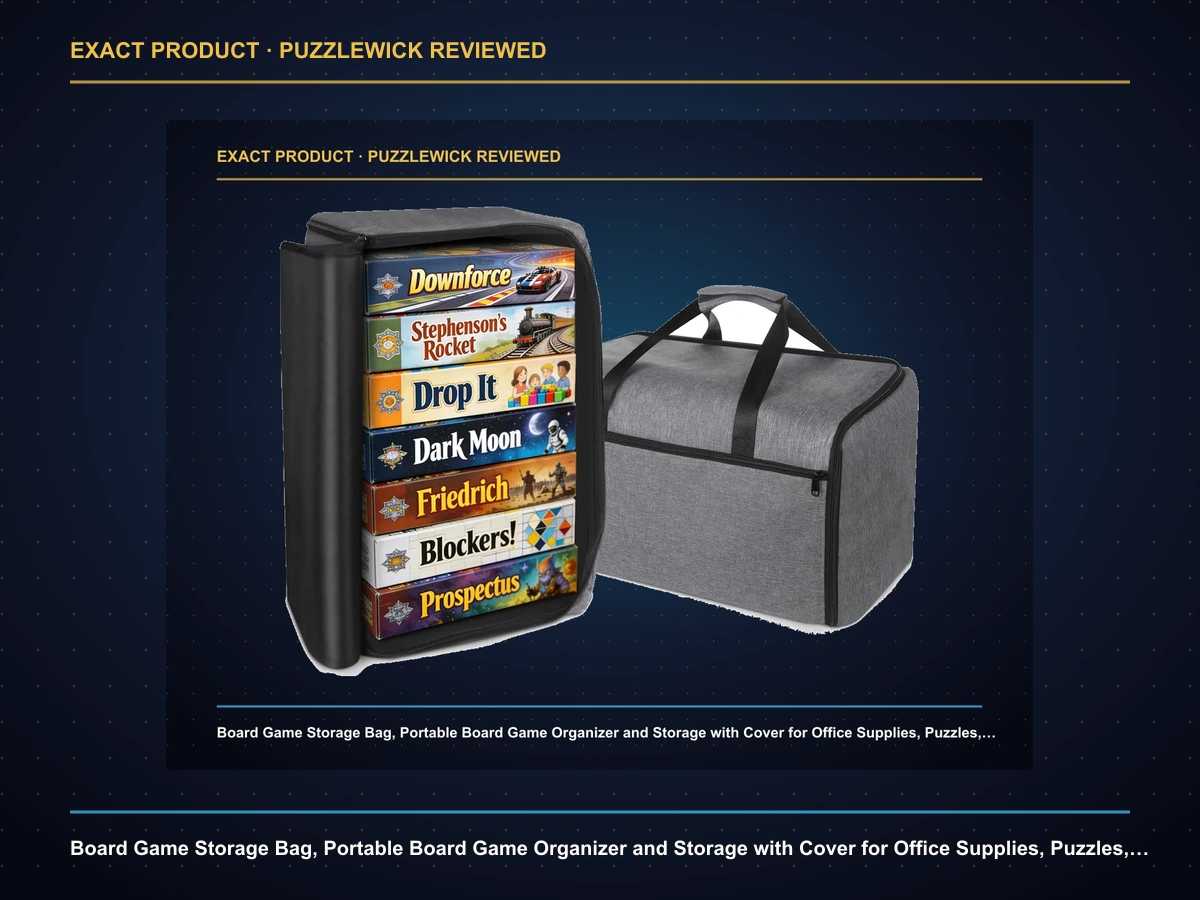
Board Game Storage Bag, Portable Board Game Organizer and Storage with Cover for Office Supplies, Puzzles, Building Block...
A covered storage bag is useful for travel nights when the game box needs protection from scuffs and accessories need one destination.
- Portable covered storage
- Room for support gear
- Reusable beyond one title
- Not impact-proof
- Box fit varies
At a glance
| label | a | b |
|---|---|---|
| Current action | Buy: Dewan | Try/watch: Avalon and Drillers |
| Wait lane | Medico | Horror on the Orient Express |
| Evidence available | Publisher facts and exact current Dewan listing | Pre-release premises; incomplete owner evidence |
| Hotness means | Attention on BoardGameGeek | Not sales, quality, ownership, or table fit |
Free download — 2026 board-game hype test field card

A printable Hotness interpretation, buy-try-wait map, first-night check, and source ladder.
Unofficial fan-made reference. Compiled by Puzzlewick from the sources listed on the sheet. Not affiliated with or endorsed by the publisher — always defer to the official rulebook.
Questions, answered
What does BoardGameGeek Hotness measure?
It is a current attention ranking on BoardGameGeek. It is useful for discovering active conversations, but it is not a sales chart, quality award, ownership count, or guarantee of fit.
Which trending board game is safest to buy now?
Among the five examined here, Dewan has the cleanest current purchase case because its official identity, rules, table fit, and exact English Amazon product can be checked now.
Is Avalon: The Riven Veil good for beginners?
Its two-to-four-player structure has a learnable sequence, but faction asymmetry, multi-use cards, initiative, war, and a shifting mist map create meaningful density. Try the normal-length game with a player aid before paying for deluxe extras.
Does Drillers support solo play?
Yes. Czech Games Edition lists one to four players. The important watch question is how satisfying solo and two-player scaling feel across repeated play.
Is Medico released?
Pegasus lists an expected October 2026 release. This guide explains the published mechanism and keeps the quality verdict open.
Is Horror on the Orient Express a campaign game?
The publisher describes cooperative investigation, character development, and a substantial narrative premise. Final campaign structure and owner experience remain post-release questions.
Keeper's verdict
Robert’s verdict: Dewan is the cleanest current purchase because its identity, rules, and exact listing can be inspected now. Avalon and Drillers deserve a try-or-watch lane based on density and release state. Medico and Horror on the Orient Express remain watchlist products until release and independent owner evidence catch up with their excellent premises.
Research ledger 10 sources · reviewed 2026-08-30
Specifications, rules, current product information, community experience, and contrary evidence were checked against the sources below. Commercial links are kept separate from editorial evidence.
- BoardGameGeek Hotnessboardgamegeek.com/hotness
- Dewan official product and resourcesspacecowboys.fr/dewan-en
- Dewan official rulebookcdn.svc.asmodee.net/production-spacecowboys/uploads/2025/11/SCFC01_EN_DEWAN_RULES_20250611_compressed.pdf
- Avalon: The Riven Veilshadowborne-games.com/pages/avalon
- Drillersczechgames.com/games/drillers
- Medico English Editionpegasus.de/en/Medico-English-Edition/55146E
- Horror on the Orient Express: The Board Gameshop.asmodee.ca/en/cha9000
- TCGplayer current editorial and marketplace indextcgplayer.com
- Magical Athlete official product pagecmyk.games/products/magical-athlete
- Machi Koro Life official product pagepandasaurusgames.com/products/machi-koro-life

If it didn't earn a shelf, it isn't here.

Keep exploring
The next smart rabbit holes.
✦ Topic PathBoard Game Buying Guides: compare the whole shelfStart with the decision, not the shelf. These guides compare the games, editions, expansions, player counts, and costs people...Best Of5 New Board Games Worth Your Next Game Night: Cozy Stories, Clever Cards, and a Proper AdventureImani matches five current tabletop releases to five kinds of evening, with the awkward bits included: permanent stickers, limited...ComparisonThe Best Engine-Building Board Games of 2026, RankedA sensei's tier list of the games that taught a generation what "the engine click" feels like — from the gateway masterpiece to the...