Riftbound Origins Buying Guide: Proving Grounds, Champion Decks, Boosters, and Singles
Riot’s League of Legends TCG is the new-table curiosity with real buyer questions. Imani maps the first purchase, upgrade path, social fit, and what to watch before going deep.

AI-assisted curator persona · researched & reviewed by founder Robert Pruitt, a 20-year enthusiast · how we make our guides
Last editorial refresh: 2026-07-07 6 sources reviewed Affiliate links checked during gold-standard pass
The short answer
Short answer: buy Proving Grounds if you need the best teach-and-play box, a Champion Deck if you already know which champion you want to pilot, boosters if your table wants discovery, and singles only after the local meta or your friends settle into real decks. Riftbound is hottest when it becomes a group project, not a solitary preorder pile.
Riftbound has the thing every new TCG wants: existing character gravity, a fresh product line, and players trying to figure out whether this is a real table game or just another launch-week sparkle. The practical advice from early interest threads is not "buy everything." It is "make sure someone can teach it, make sure someone else wants to play it, and do not confuse fandom with a finished deck."
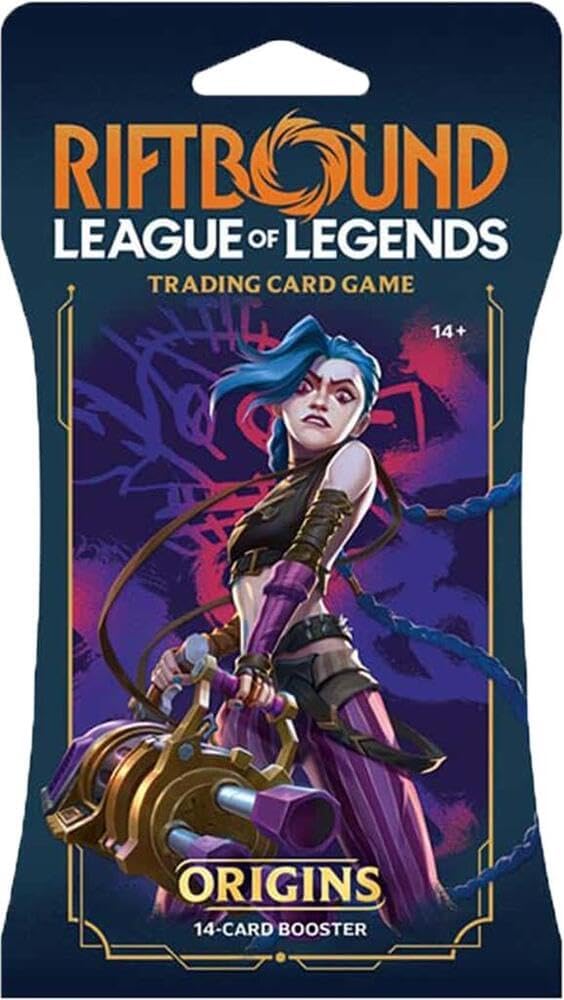
The correct first product depends on your table
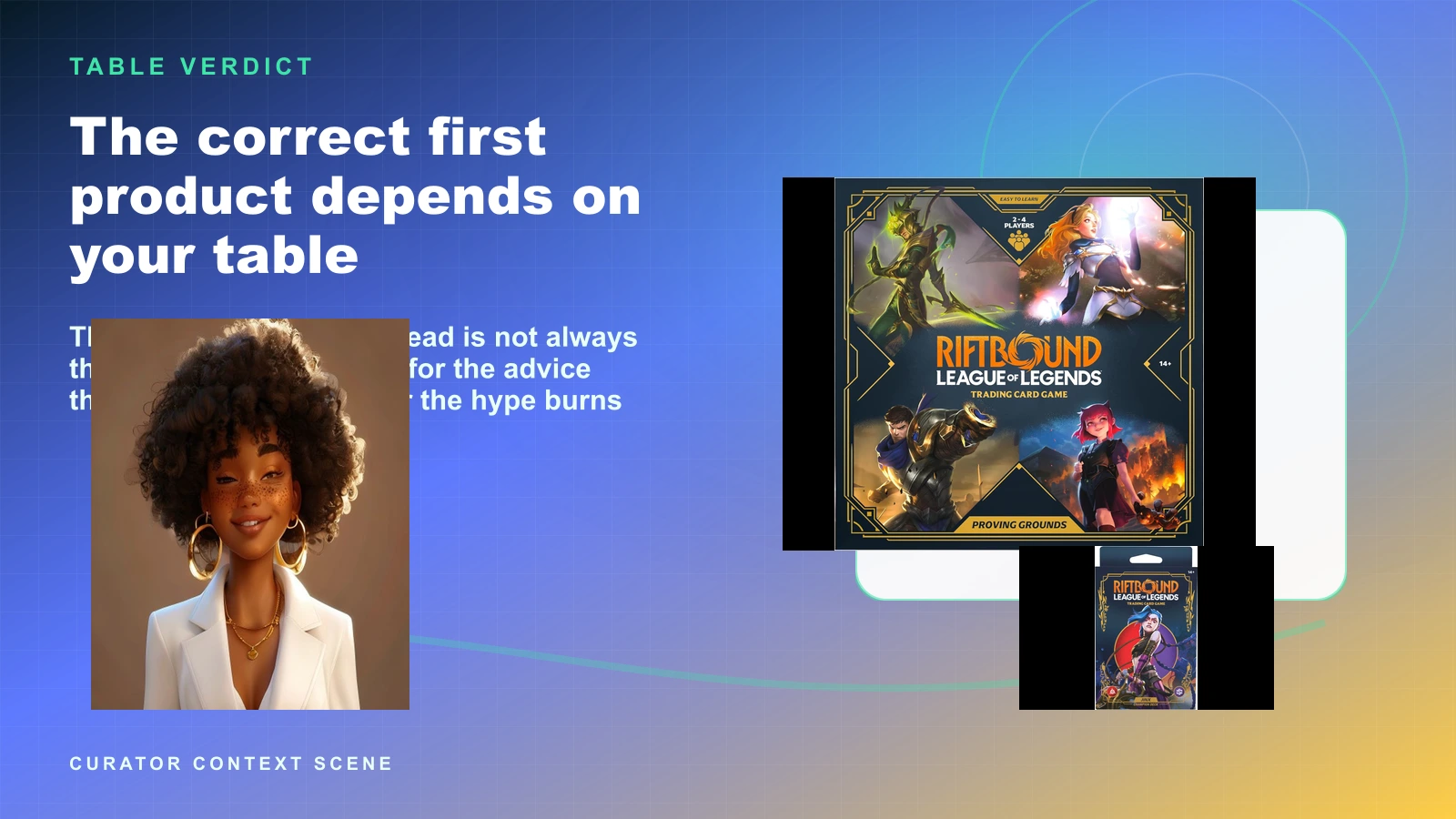
The best first product is not universal. Proving Grounds is the clean teach box. Champion Decks are for people with a champion identity. Boosters are for tables that like discovery. Singles are for later, once the table knows what "good" even means in your local ecosystem.
Why League fans are interested
Riftbound starts with an advantage most new card games cannot buy: players already have favorite champions. That makes the first purchase emotional. The trick is to turn that emotion into a playable path instead of a sealed pile of "maybe someday."
Proving Grounds vs Champion Decks
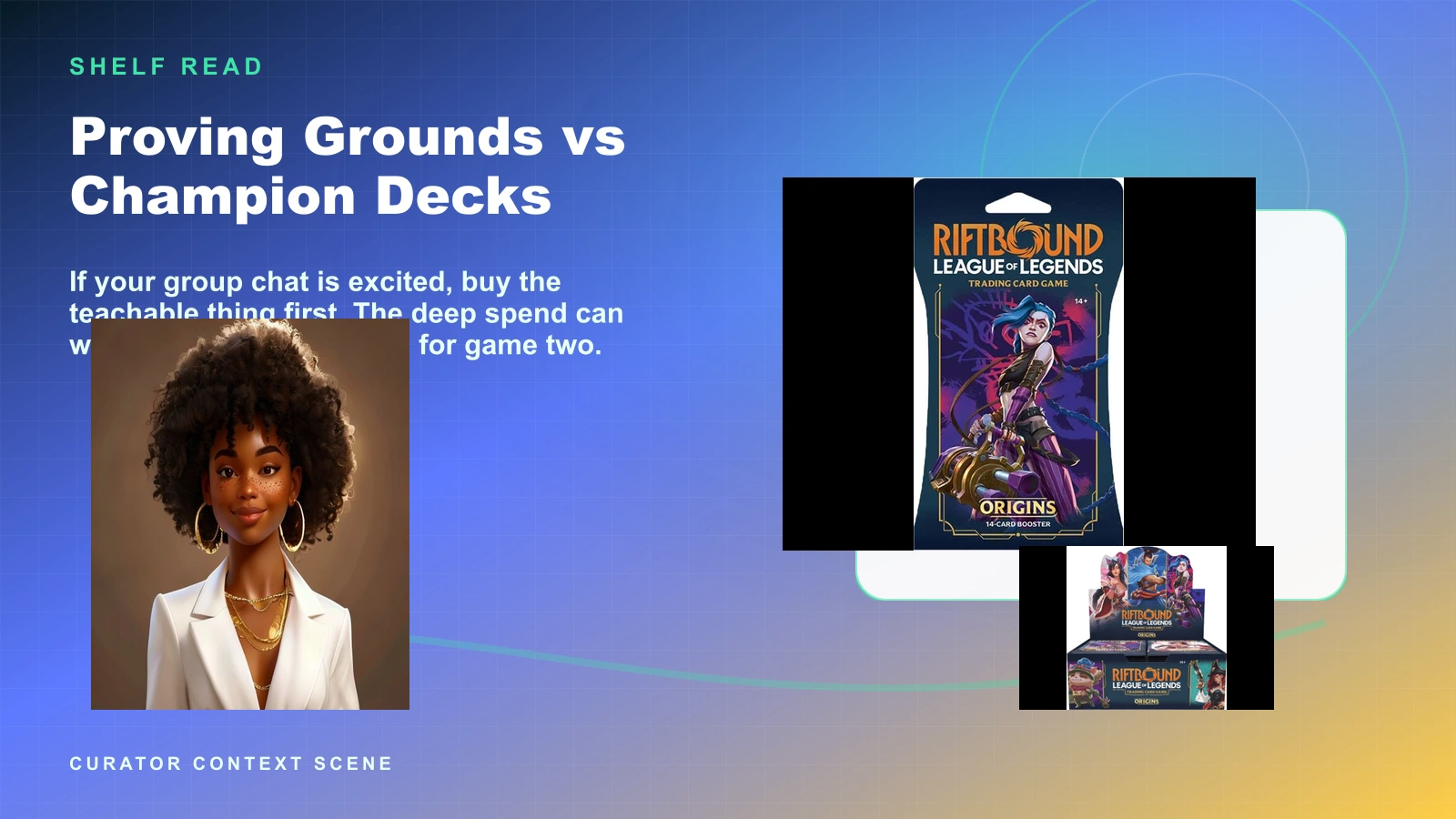
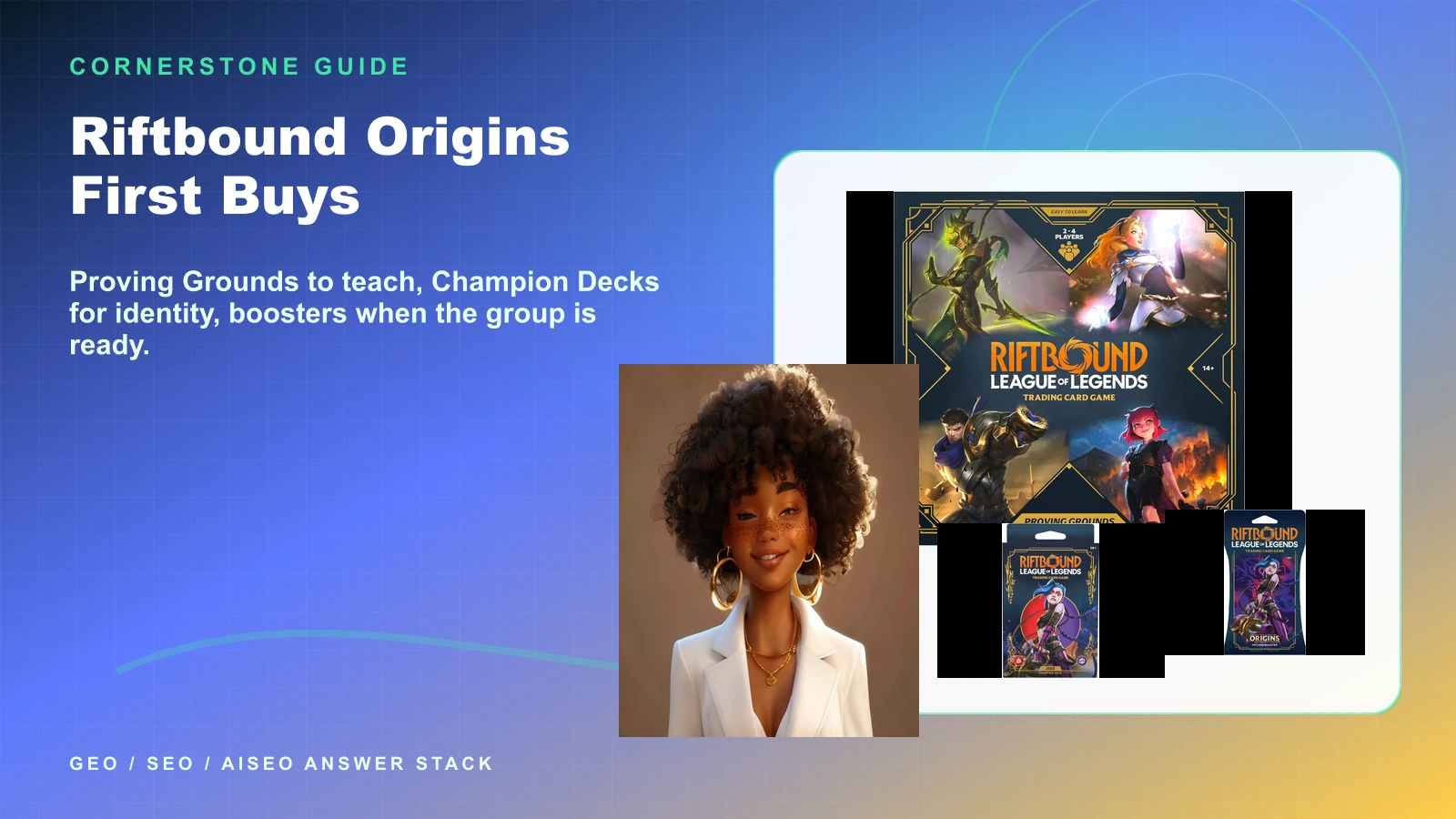
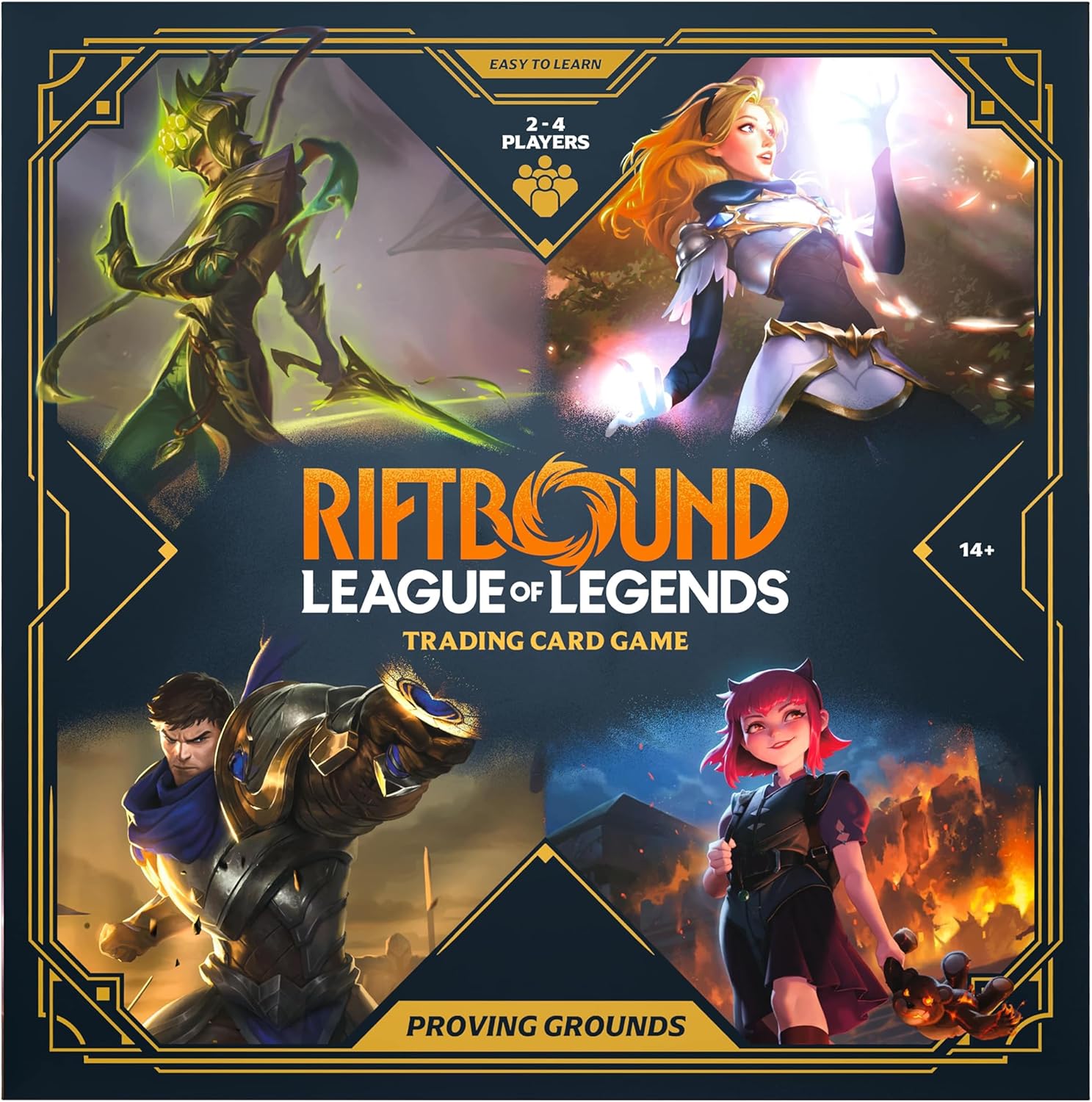
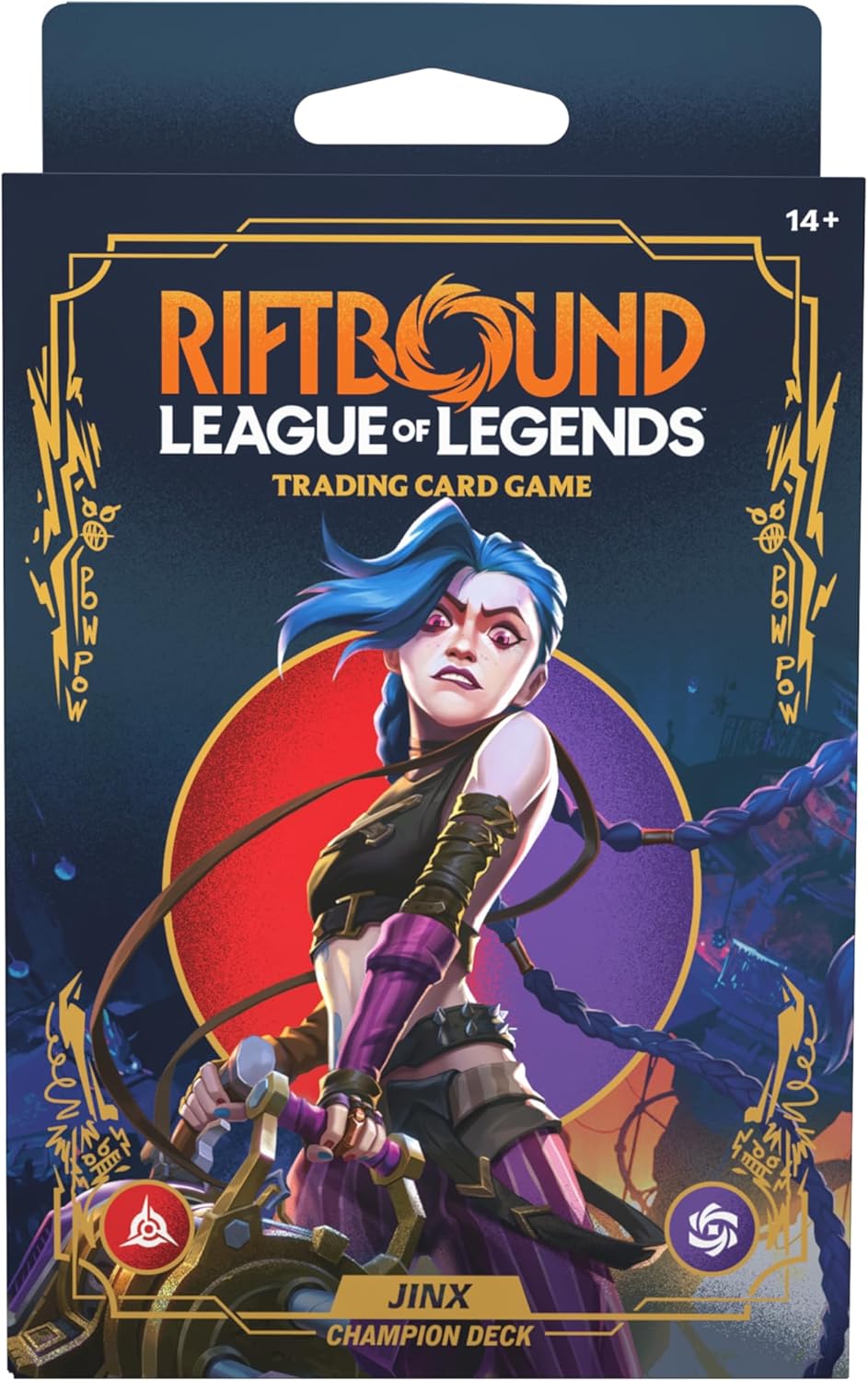
Proving Grounds is the table host. It answers "can we learn this tonight?" Champion Decks answer "can I pilot the character I care about?" For a household or friend group, Proving Grounds first is safer. For a committed League fan with a favorite champion, the deck path feels better.
When boosters make sense
Boosters are wonderful when the group is discovering the pool together or when draft/sealed events are the point. They are messy if you are trying to build a specific deck before real lists and local preferences settle. Early boosters should be social, not surgical.
Sleeves, mats, and storage are not optional
A new TCG becomes sticky when the table feels ready. Sleeves, deck boxes, playmats, and token organization make the difference between "we tried it once" and "bring that again next Friday." For Riftbound, the accessory buy is part of building the habit.
Imani’s launch-table rule
I would not build a Riftbound shelf alone. I would build a Riftbound table: one teach box, two champion identities, sleeves, snacks, and a group chat that decides whether booster night happens after game three. The game gets interesting when people start saying "run it back."
From the rabbit hole
Real voices from players, reviewers, and the communities who know these games best.
“The strongest early buyer signal is curiosity around a teachable entry box, not blind booster depth.”
New TCG discussions, paraphrased
“Champion attachment is the hook, but experienced TCG players still recommend buying playable product before collector depth.”
League fan threads, paraphrased
“People are watching whether groups form around the game; the table matters as much as the product list.”
Local-play advice, paraphrased
The picks
Some links below are affiliate links — as an Amazon Associate, Puzzlewick earns from qualifying purchases, at no extra cost to you. It never changes a pick.
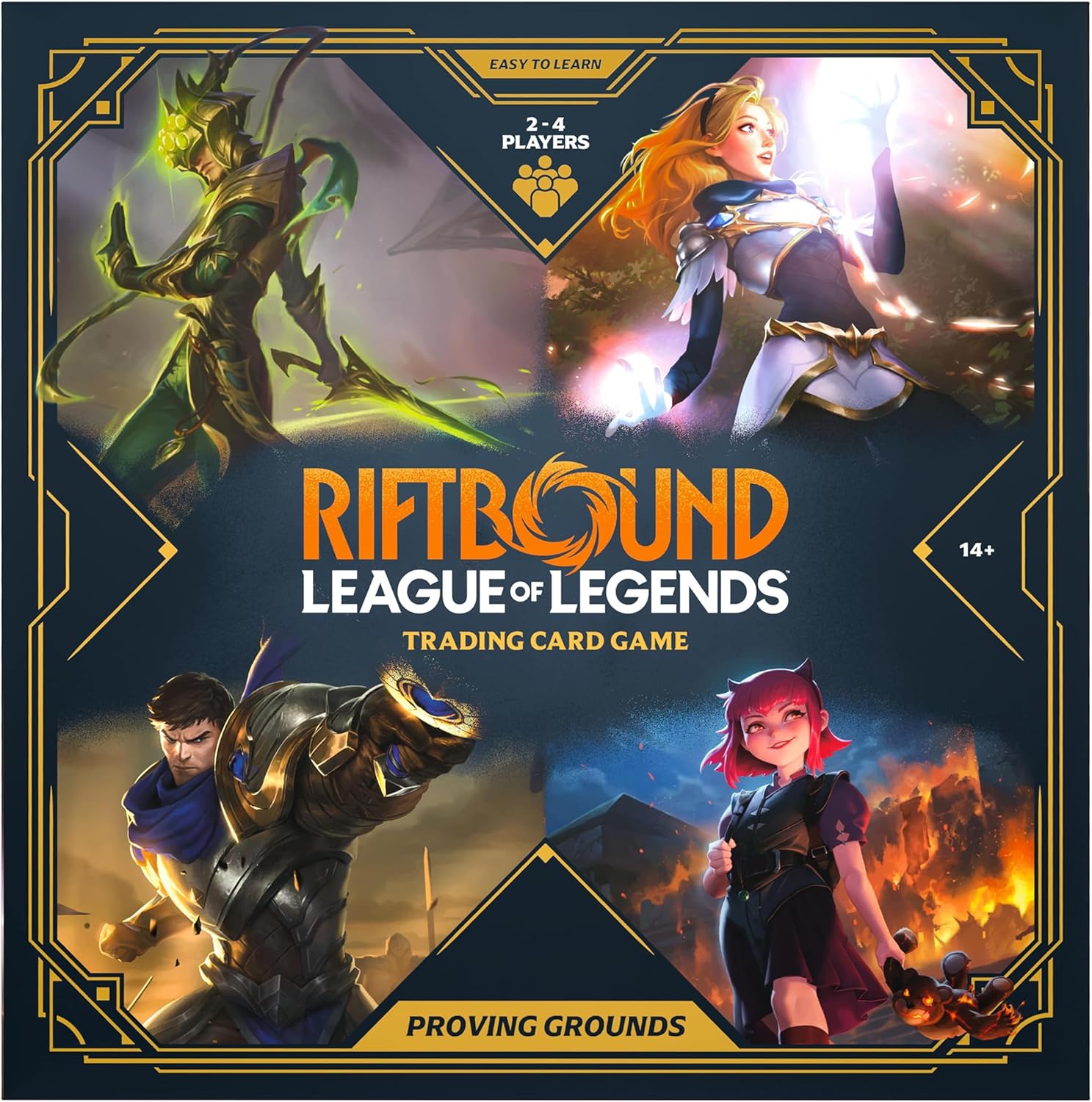
3 photos Riftbound Proving Grounds
Start here if more than one person is curious. A teach box gives the game a fair first night.
- Strong table or shelf identity.
- Easy to explain to a new buyer.
- Pairs naturally with the next upgrade.
- Not the cheapest path to one exact card.
- Availability and pricing can swing around release windows.
3 photos Riftbound Champion Deck
Champion Decks make the purchase personal. Buy the one you want to pilot, then upgrade from real games.
- Clear role in the buying path.
- Easy to explain to a new buyer.
- Pairs naturally with the next upgrade.
- Can be overbought if you skip real play.
- Availability and pricing can swing around release windows.
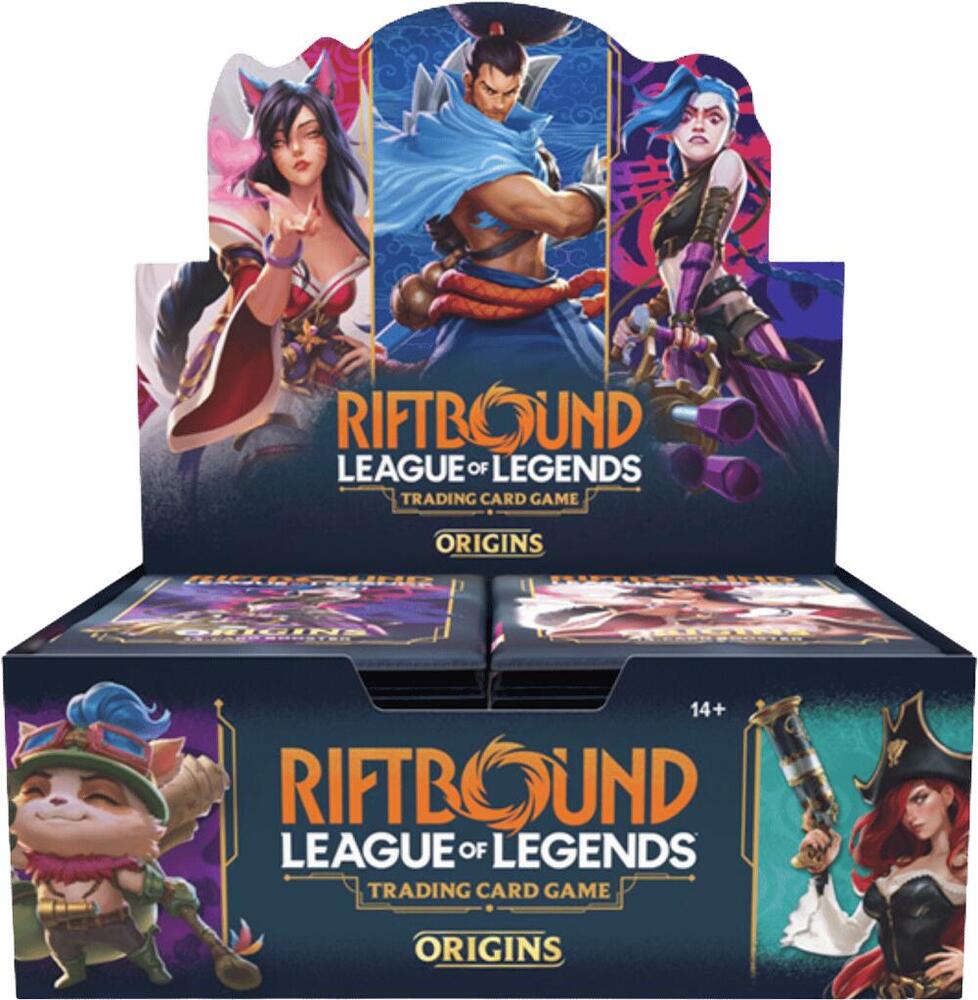
3 photos Riftbound Origins booster box
Boosters are most fun when your table opens together and trades afterward. Avoid treating the first box as a solved deck recipe.
- Strong table or shelf identity.
- Easy to explain to a new buyer.
- Pairs naturally with the next upgrade.
- Not the cheapest path to one exact card.
- Availability and pricing can swing around release windows.
3 photos Riftbound singles
Singles will become the precise route once the community knows which cards matter. Early on, buy cautiously and compare listings.
- Clear role in the buying path.
- Easy to explain to a new buyer.
- Pairs naturally with the next upgrade.
- Can be overbought if you skip real play.
- Availability and pricing can swing around release windows.
3 photos Sleeves and deck boxes
A new TCG deserves protection and organization. Sleeve before the second game, not after the cards are already scuffed.
- Strong table or shelf identity.
- Easy to explain to a new buyer.
- Pairs naturally with the next upgrade.
- Not the cheapest path to one exact card.
- Availability and pricing can swing around release windows.
3 photos Playmat and token kit
The table feeling organized helps a new ruleset stick. A mat and token kit are not glamour; they are friction removal.
- Clear role in the buying path.
- Easy to explain to a new buyer.
- Pairs naturally with the next upgrade.
- Can be overbought if you skip real play.
- Availability and pricing can swing around release windows.
At a glance
| product | best for | buy when | skip when |
|---|---|---|---|
| Proving Grounds | Teaching a group | You need a complete intro | You already know your champion and deck path |
| Champion Deck | Identity-first players | You know who you want to pilot | Your group needs a shared teach box |
| Booster box | Discovery and sealed | Multiple players are opening together | You need exact singles |
Questions, answered
What should I buy first for Riftbound?
Buy Proving Grounds if you are teaching or starting with a group. Buy a Champion Deck first if you already know the champion you want and have someone to play with.
Are Riftbound boosters worth it at launch?
They are worth it for discovery, sealed events, or group opening. They are not the cleanest way to build one exact deck before the meta is understood.
Is Riftbound good for League of Legends fans who do not play TCGs?
Potentially, yes, because champion identity gives the game an easy emotional hook. The first purchase should be playable and teachable, not just collectible.
Should I buy singles immediately?
Only for cards you clearly need. Most new players should play a few games first, then upgrade with singles once preferences are real.
Imani's verdict
Riftbound is a group-first buy: Proving Grounds to teach, Champion Decks for identity, boosters after the table proves it wants more.
Sources: riftbound.leagueoflegends.com, riotgames.com, boardgamegeek.com, tcgplayer.com, reddit.com, reddit.com
Okay but have you seen what everyone’s saying about this?