The Best Party Games for Big Groups in 2026 (That Even Non-Gamers Love)
Six crowd-scale games that teach in two minutes, fold in the cousin who 'doesn't play board games,' and get all ten people at the table laughing at once.

AI-assisted curator persona · research and editorial responsibility: Robert Pruitt · how this guide was made
Last editorial refresh: 2026-06-18 Gold-standard QA: 2026-08-10 13 sources reviewed Affiliate links checked during gold-standard pass

The short answer
For a big group where not everyone is a gamer, the most reliable winners are Codenames (two teams, endlessly scalable, one-word clues), Telestrations 12-Player Party Pack (draw-it / guess-it telephone for up to 12), and Just One (cooperative, warm, zero losers). All three teach in under two minutes and put the loudest laugh of the night at the table rather than in any one person's hands. If you want bodies out of chairs, add Throw Throw Burrito; for pure color-and-vibe play that anyone can read, reach for Hues and Cues or Wavelength.
Decision map
Choose in thirty seconds
The all-purpose opener for any mixed crowd; scales from 4 to 12+ in two teams
The biggest tables (up to 12) and maximum laugh-per-minute
Cozy 4–7 tables and the most nervous non-gamers; nobody loses alone
Hosting is my favorite sport, and the moment I dread most is the one where I open a game box and watch half the room's eyes glaze over at a rulebook. A great party game for a big group is a different animal from a great card game. It has to do three things before the snacks go cold: teach itself in about the time it takes to refill a drink, make the person who swears they 'don't play board games' feel like a genius within one round, and turn ten near-strangers into one laughing table. I've sat these six down with bridal showers, in-law holidays, and a deck full of coworkers who'd never met. These are the ones that earned a permanent spot in my hosting cabinet — every product below is verified live on Amazon, and every voice is a real, sourced reaction.
Start here, then go deeper
You are in the right cabinet.
 ⌂ Topic PathFamily and Gateway Games: compare the whole shelfA good family game gets everyone playing quickly without becoming disposable after three nights. These guides prioritize clear...
 ComparisonThe Best Family Board Games of 2026, Ranked (Kids + Adults Together)One table, three generations, zero meltdowns — the games that make a 7-year-old and a tired grown-up scheme against each other and both...
 Best OfBest Party Card Games for Adults, Ranked (2026)Okay but have you SEEN what the room's been saying about Monikers, Wavelength, So Clover!, Just One — because the party-game conversation...
What actually makes a party game work for a big, mixed group?

Three things, and they're non-negotiable when you've got eight or ten people and a third of them are skeptics.
- It teaches in two minutes. If you're still explaining when the first person checks their phone, you've lost the room. The best big-group games have one rule you can say out loud while you shuffle.
- It hides the weak link. Team play and cooperative play mean nobody gets singled out for being 'bad at games.' The crowd carries everyone — and the people who fear games are exactly the ones you're hosting for.
- The funny lives at the table, not in one person. You don't want a game that only works if your funniest friend showed up. You want one where the situation is funny — a terrible drawing, a clue that backfired, a foam burrito to the face.
Everything on this list clears all three. Where they differ is energy: some are warm and conversational, some are loud and chaotic, and a host's real job is reading the room and reaching for the right one at the right moment. Here's a quiet credential worth knowing: three of these six (Codenames, Just One, and — by way of its designer — Wavelength) carry the Spiel des Jahres pedigree, the most demanding 'will normal humans actually enjoy this' award in the hobby. That jury specifically rewards games a stranger can learn at a dinner table, which is the exact bar a party game has to clear.
Which game should I open FIRST with a room that doesn't know each other?
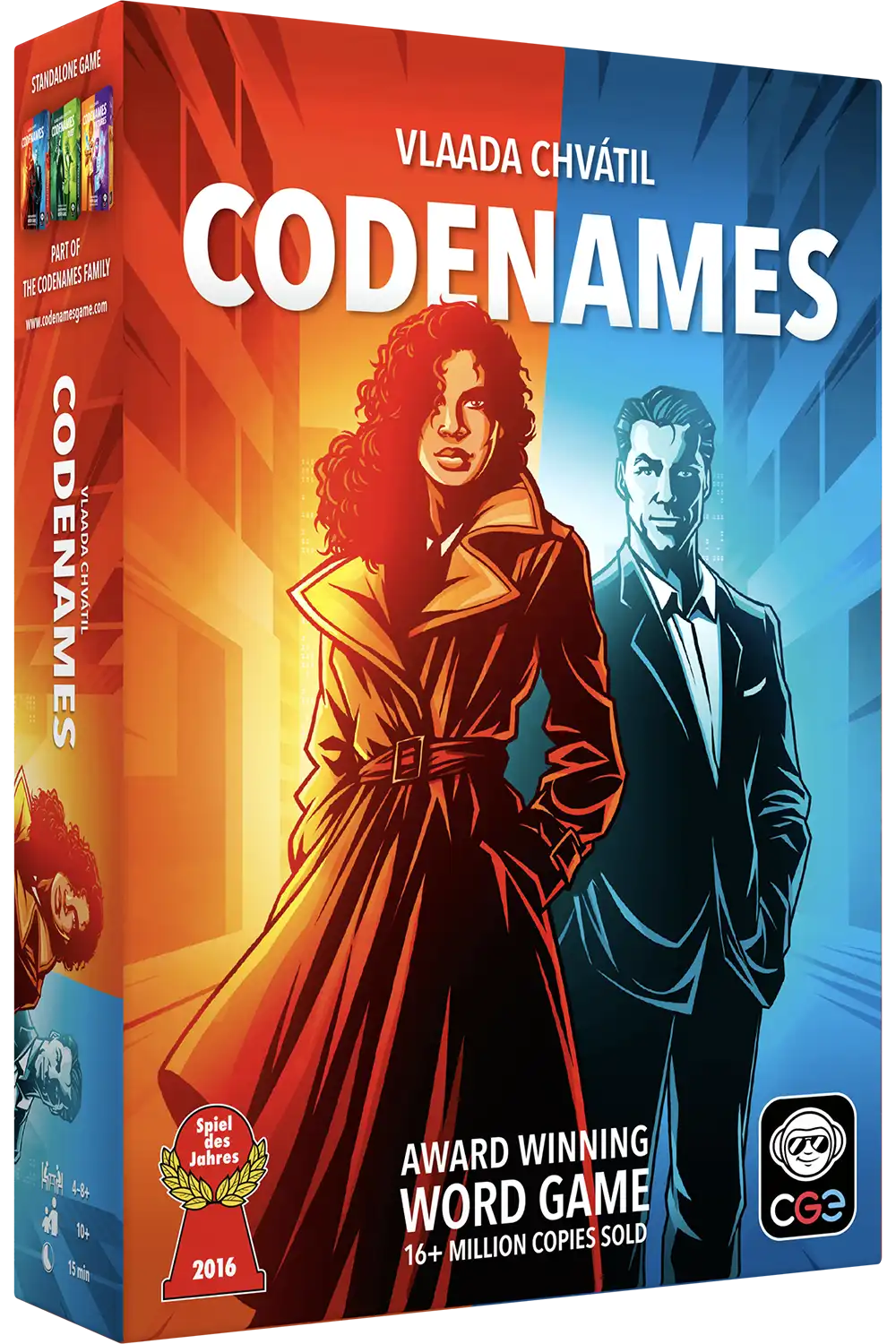
Start with Codenames. I open with it almost every time, and the hosting logic is simple: it splits the room into two teams instantly, so nobody's exposed solo, and the entire game is one-word clues pointing at words on the table. A grandmother and a teenager sit at the same table and both feel useful inside one round. (It won the 2016 Spiel des Jahres for exactly this reason — it's the game the German jury handed its top prize to over far flashier designs.)
It scales beautifully. The official count tops out at 8+, but in practice you can pile a dozen people around it in two teams and let the clue-giver be the only one on the spot. The downtime while someone crafts a clever clue? That's when the table starts heckling — and that's the good part, not dead air.
The insider move almost no casual group uses: the zero clue. You're allowed to give a clue and say the number zero — 'Baking, 0' — which means 'none of OUR words connect to this; actively avoid anything baking-related.' It's how veterans steer their team away from a word that looks dangerously close to the assassin. And if you host on a big table where half the room squints at the cards, know that Codenames XXL exists — a double-size board with giant print, built for exactly the ten-people-craning-their-necks situation. Rotate the spymaster chair so the spotlight keeps moving; the magic is watching a nervous clue-giver land an impossible double.

What's the funniest game for the biggest table (10 to 12 people)?
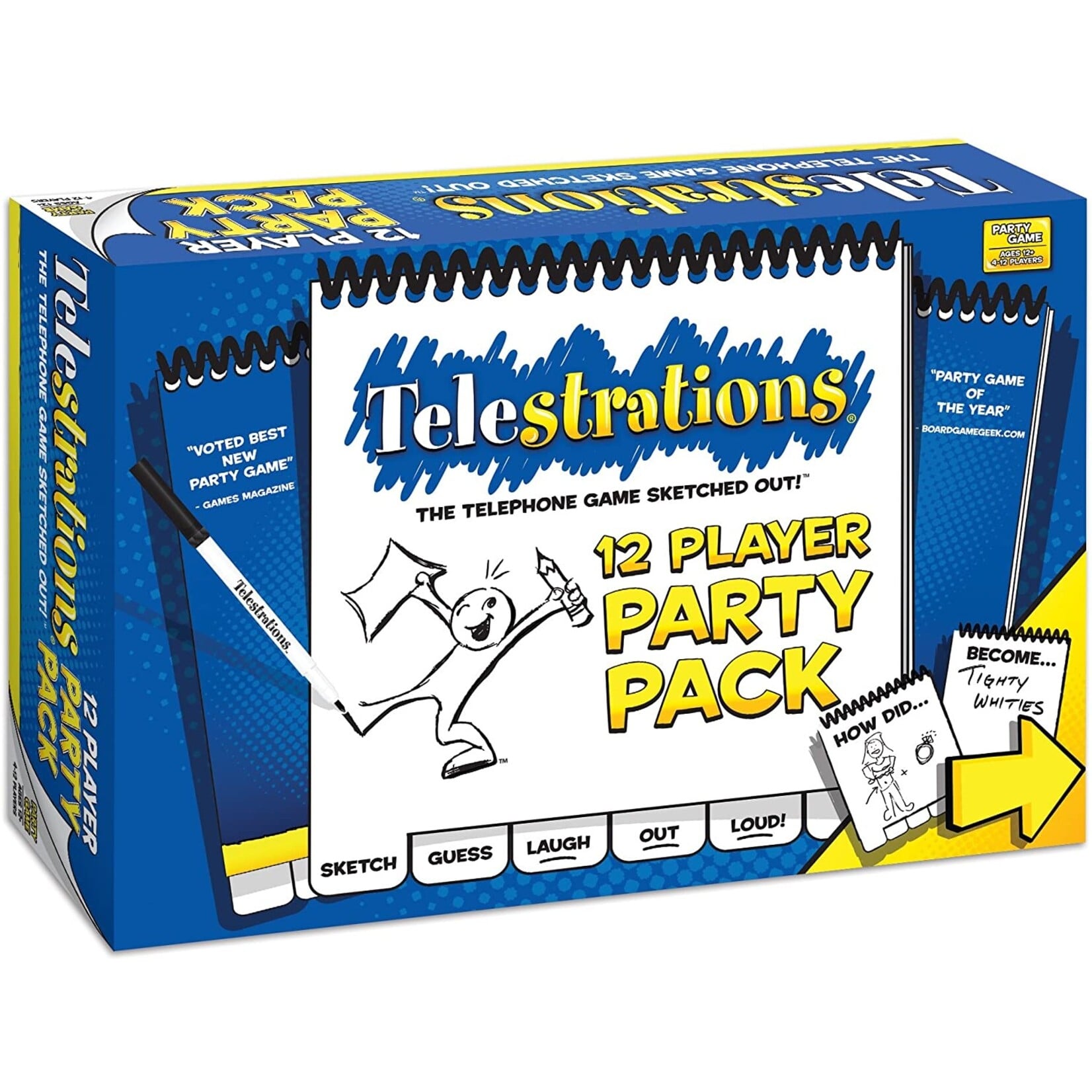
Telestrations 12-Player Party Pack. This is my desert-island pick for a genuinely large crowd, because almost nothing else handles a full dozen and gets funnier the worse everyone is at it.
It's the telephone game, drawn. You sketch a word, pass your little sketchbook, the next person guesses what you drew, the next person draws that guess, and so on around the ring. By the time your book comes home, 'mermaid riding a unicycle' has landslided into a guess of 'angry hot dog,' and the whole table loses it at the reveal.
Here's the pro move that turns a fun round into a legendary one: when you're guessing, interpret the drawing as literally as you possibly can. Don't be charitable. If the sketch reads like a potato with legs, write 'potato with legs.' Charity kills the chain; literalism is the engine of the landslide. The companion rule from longtime players: never leave a panel blank. A confidently wrong guess or a chaotic scribble always beats an empty page — the game thrives in confusion, and a blank just stalls the laugh.
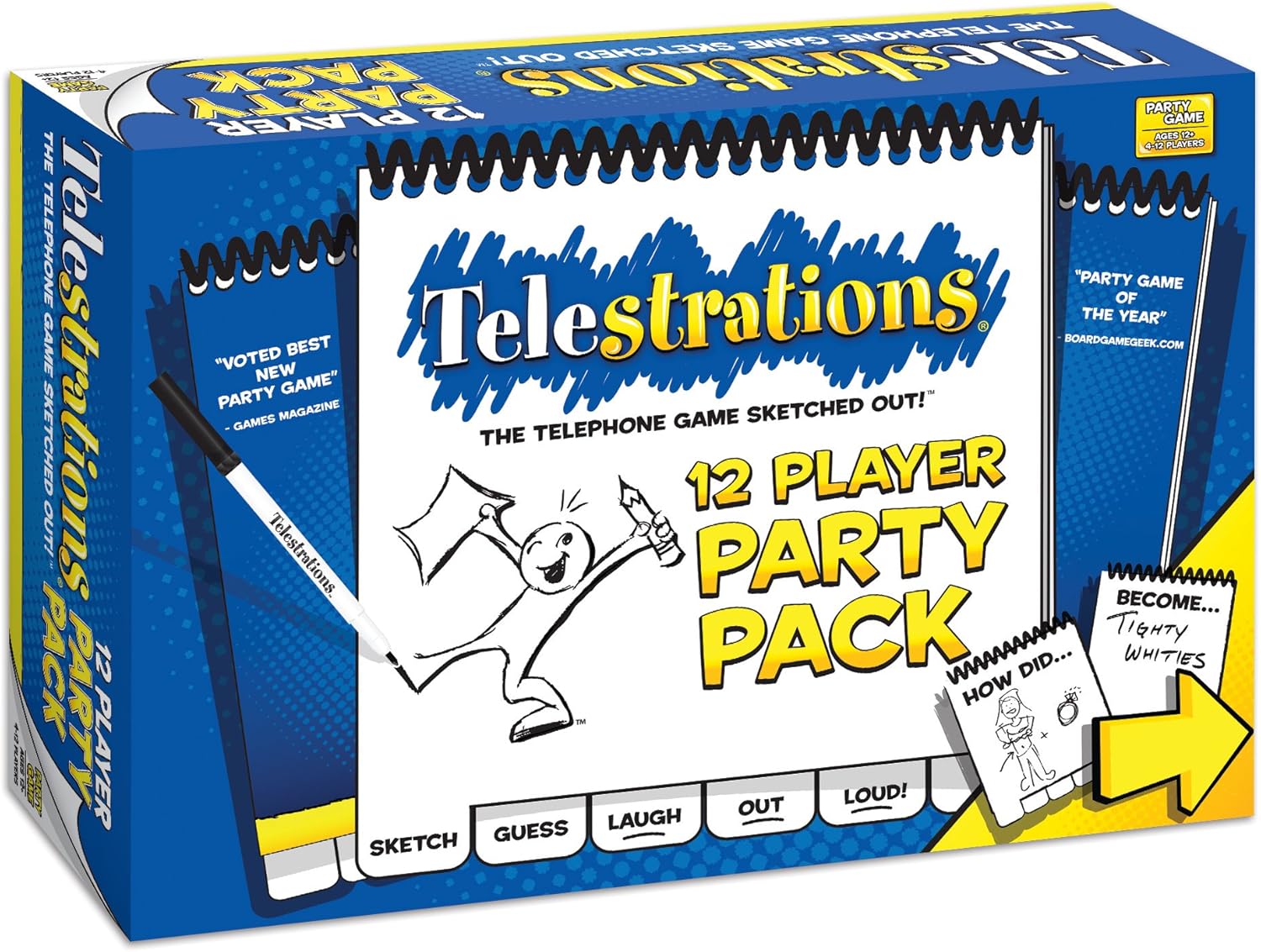
One purchasing note that genuinely matters: Telestrations ships in 6-, 8-, and 12-player editions, and the player count is literally how many sketchbooks and markers are in the box. For a real big group, only the 12-Player Party Pack (with 600 fresh phrases) keeps everyone in every round — the 8-player will leave four people watching.
Is there a game where NOBODY loses and nobody gets put on the spot?
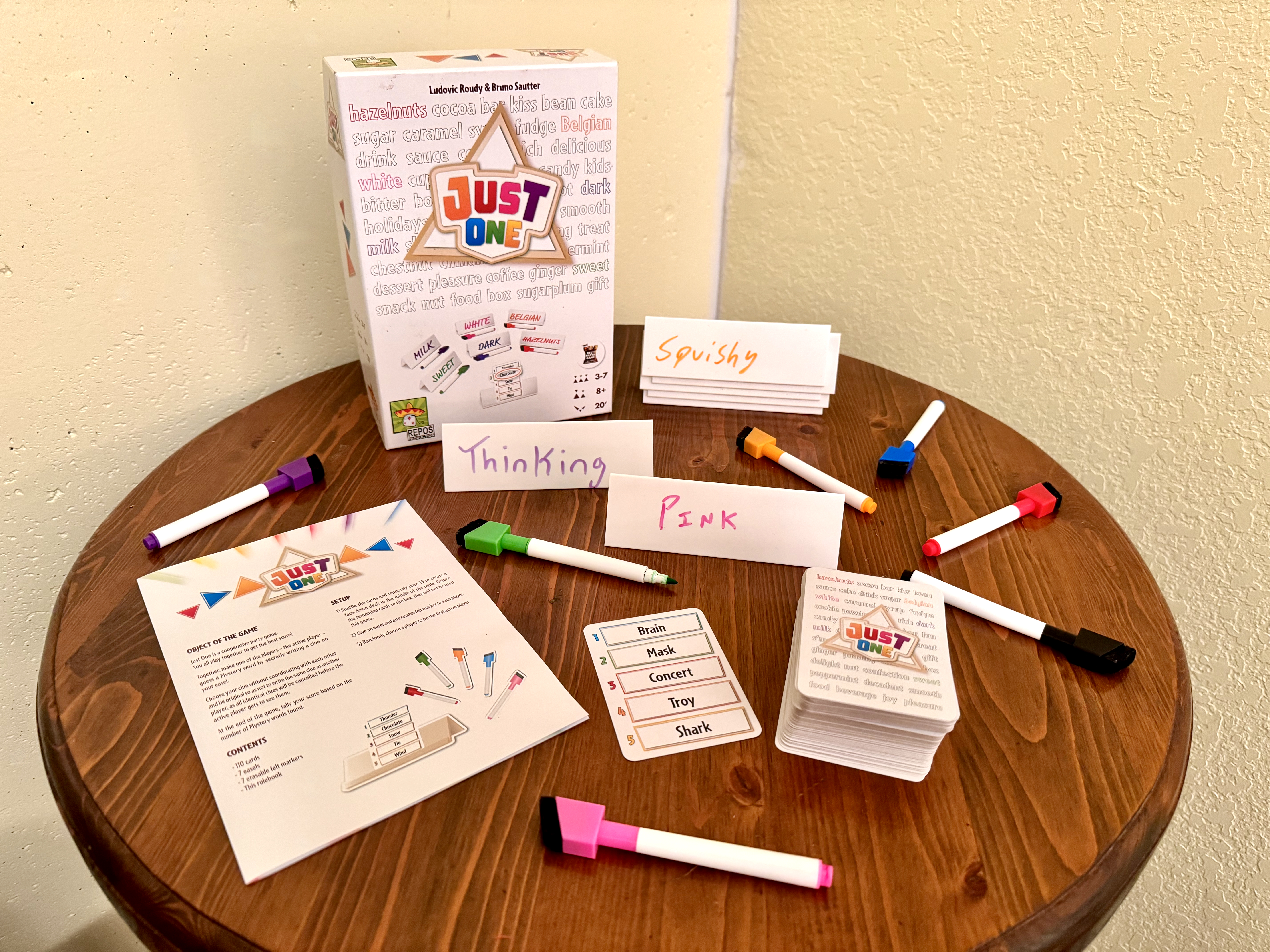
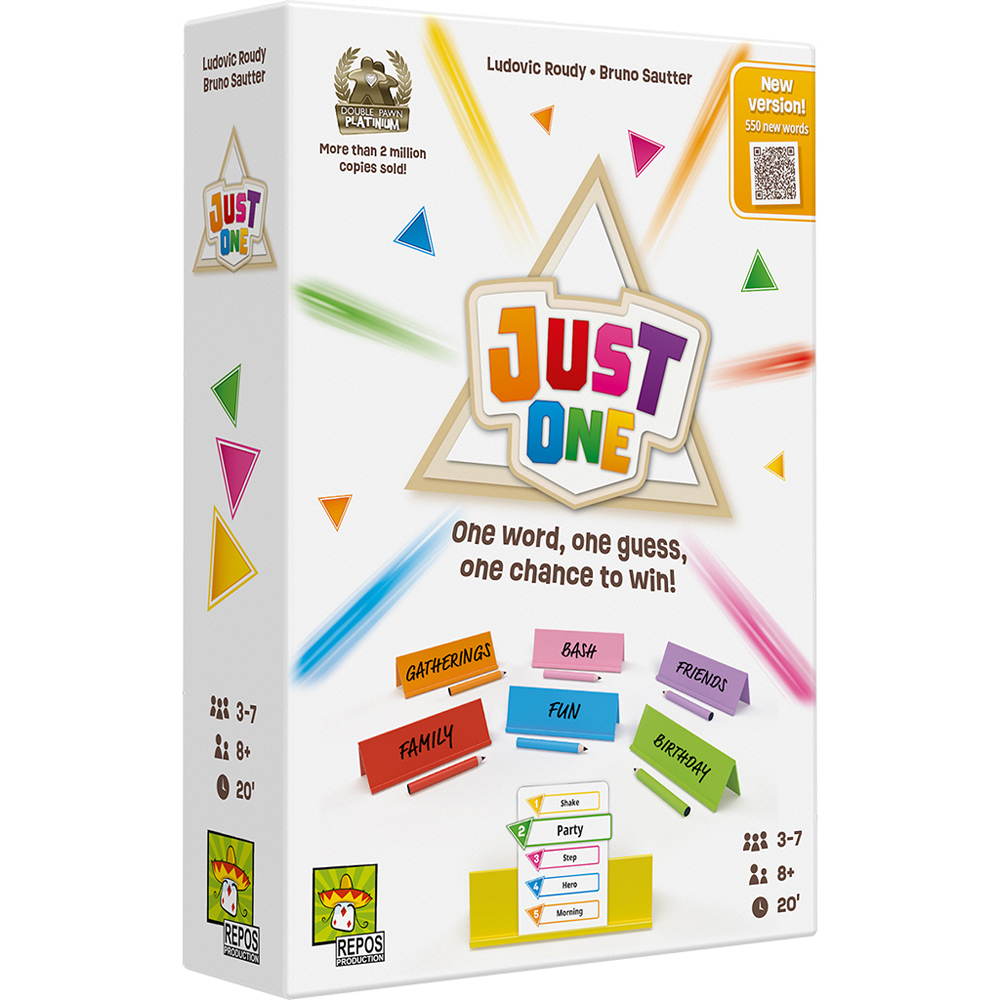
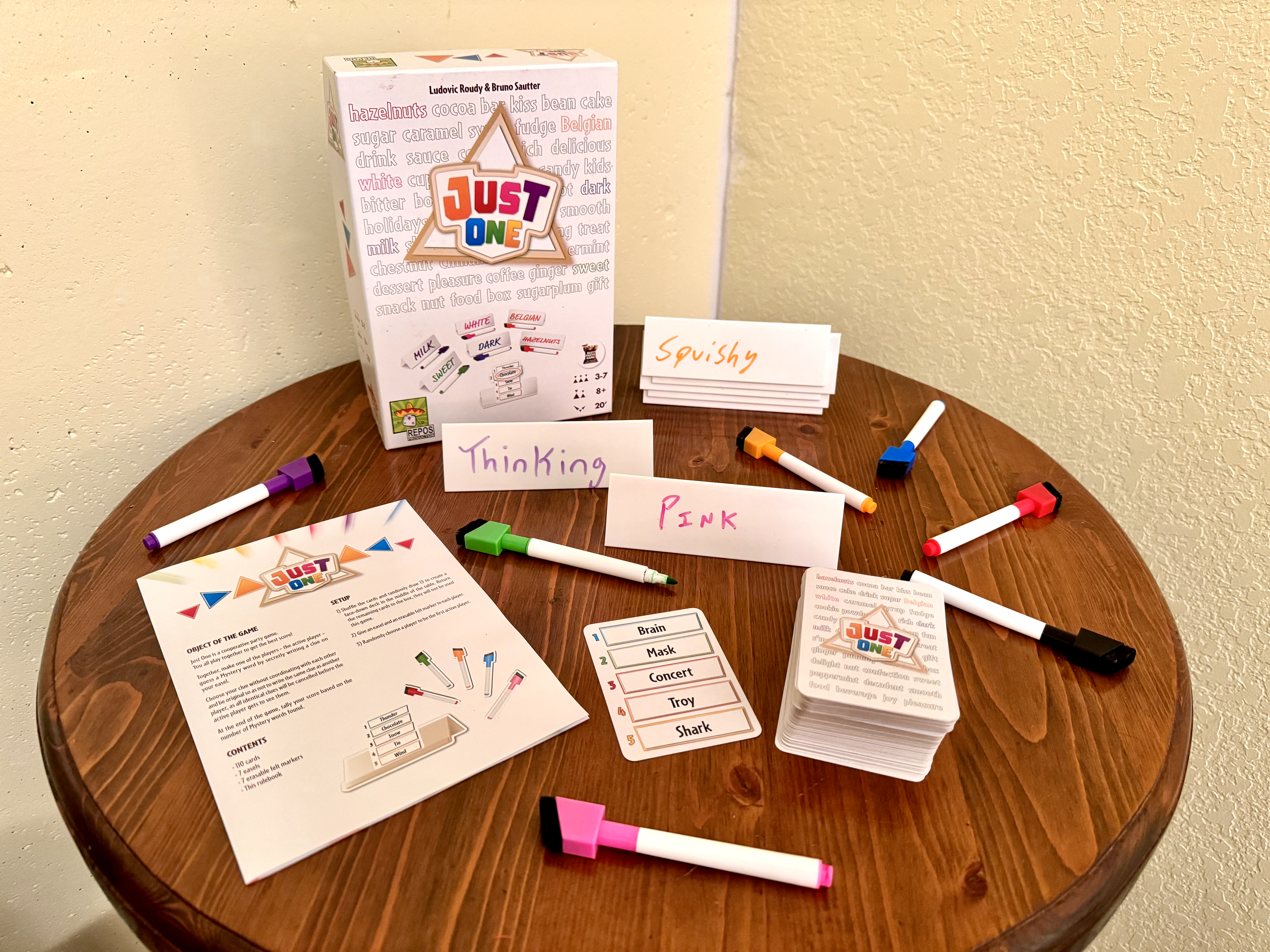
Yes — Just One, and it's the warmest game I own. It won the 2019 Spiel des Jahres, and once you play it you understand why a jury fell for something this gentle. It's fully cooperative: the whole table is trying to help one person guess a single mystery word. Everyone secretly writes a one-word clue… and here's the twist that makes the table howl with affection — any duplicate clues cancel out before the guesser ever sees them. So if three of you all wrote 'ocean,' all three vanish, and the guesser gets nothing.
The rule that trips up first-timers, and the one worth saying aloud before round one: it's not just exact matches that cancel — it's the whole word family. 'Prince,' 'Princess,' 'Princely,' and 'Princes' all collide and erase each other. So the real skill isn't being clever; it's being clever in a direction nobody else will think of. The post-round 'WAIT, you all wrote the same thing?!' groan-laugh is the entire joy.
The honest caveat for this list: Just One caps at 7 players. So it's my pick for a dinner-party-sized crowd, not a 12-person bash. For a smaller, cozier table it is unbeatable — and it's the gentlest possible on-ramp for someone genuinely nervous about games, because there's no way to personally lose. The table wins or loses as one warm, slightly chaotic brain. Past seven, split into two tables or pivot to Telestrations.

We want to get OUT of our chairs — any game with real physical chaos?
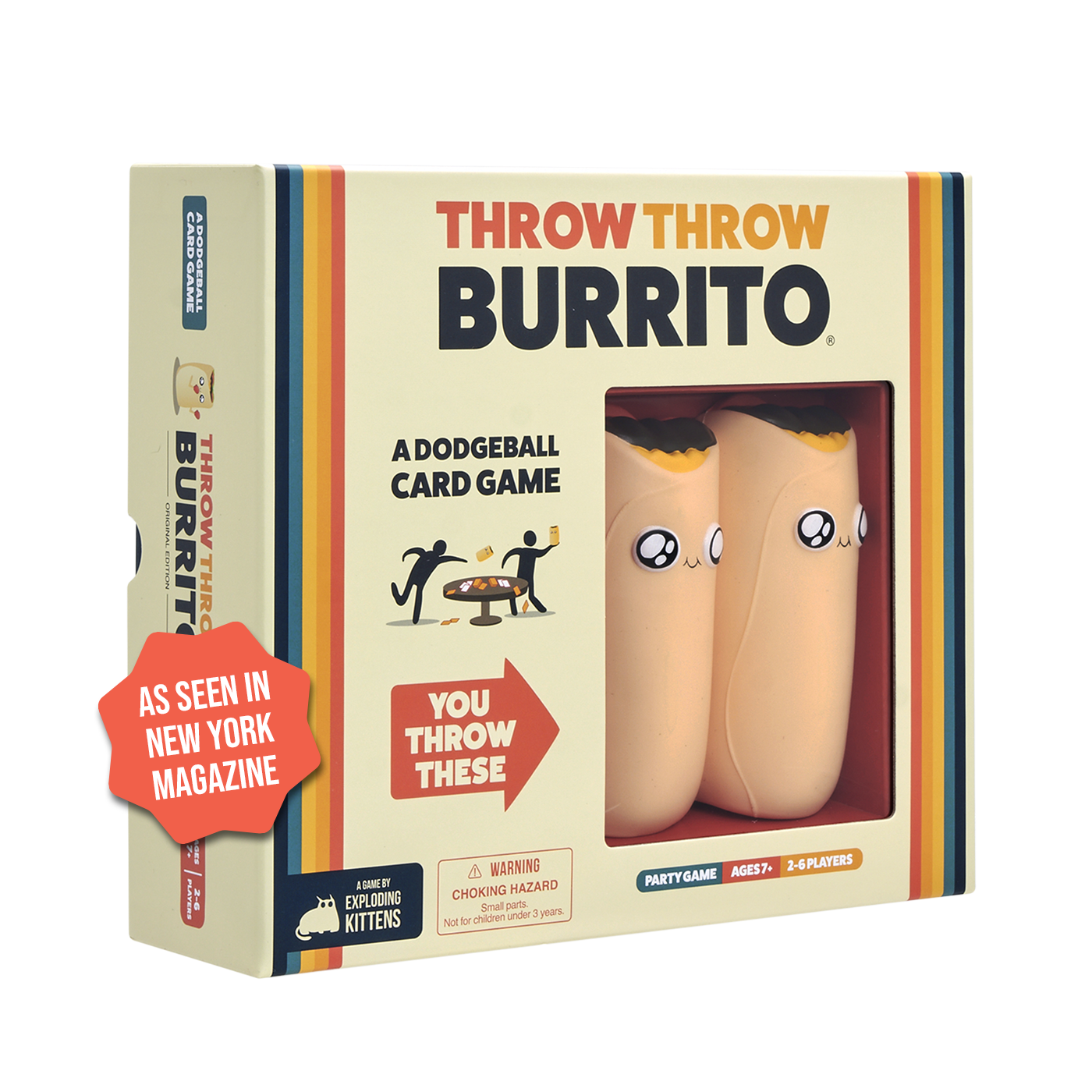
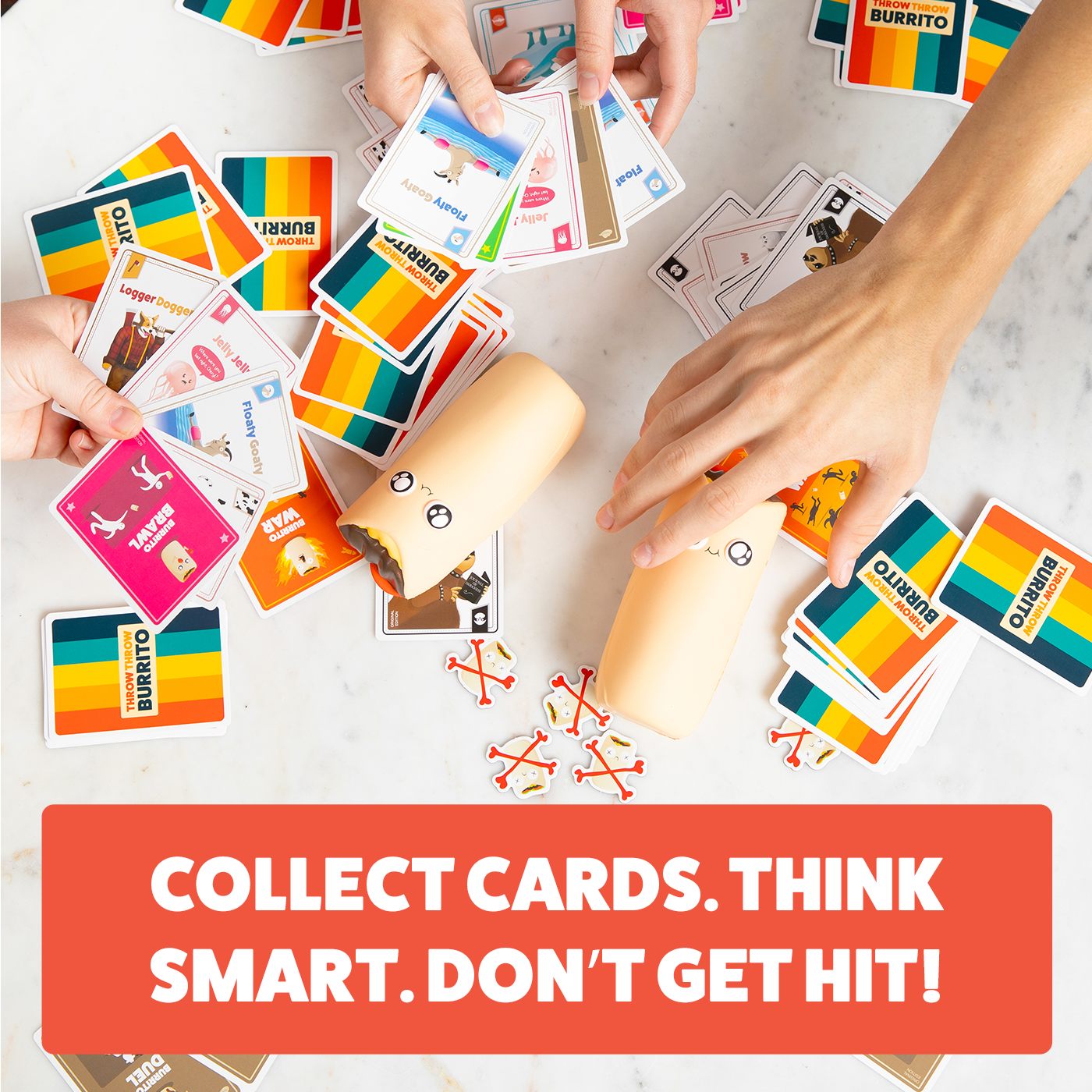
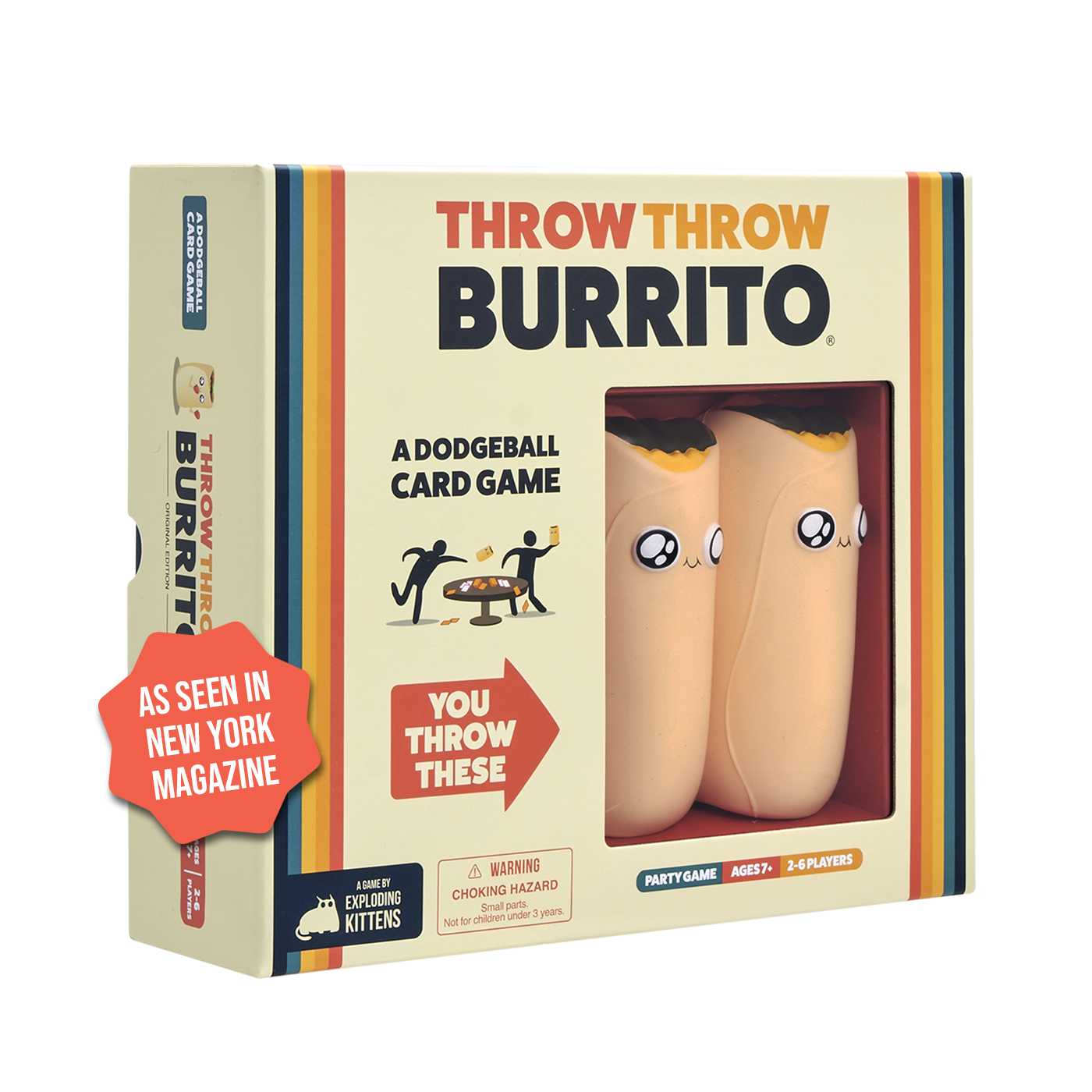
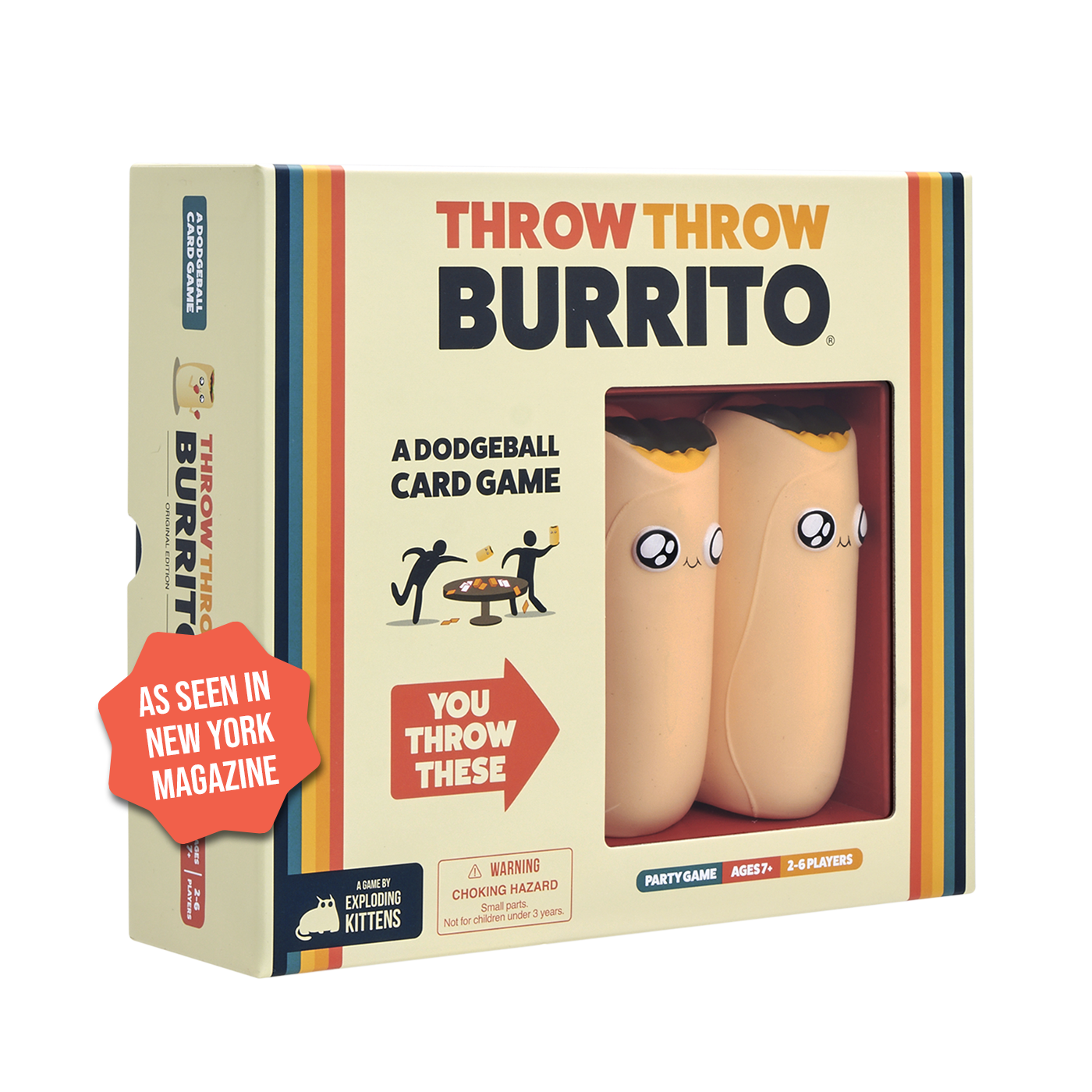
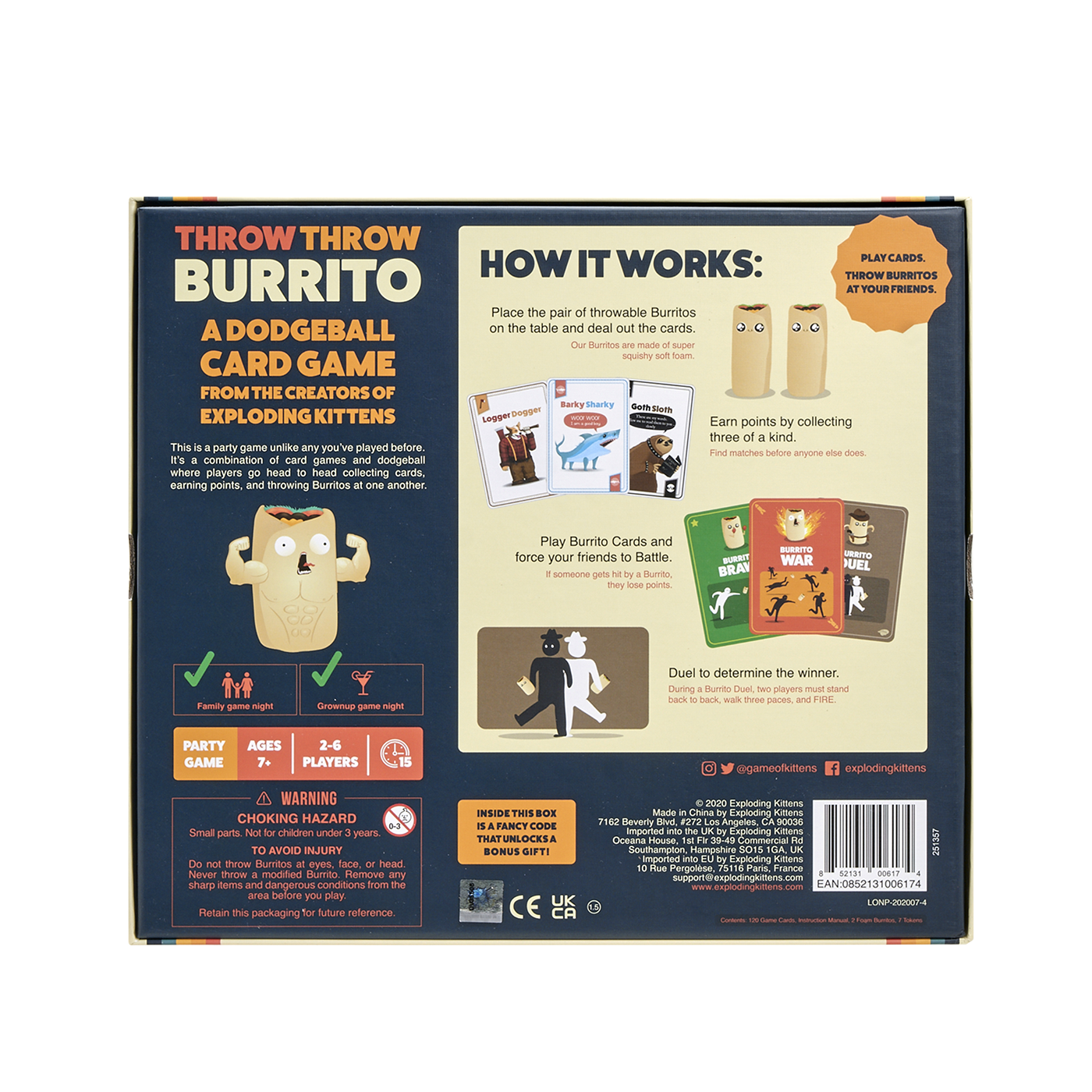
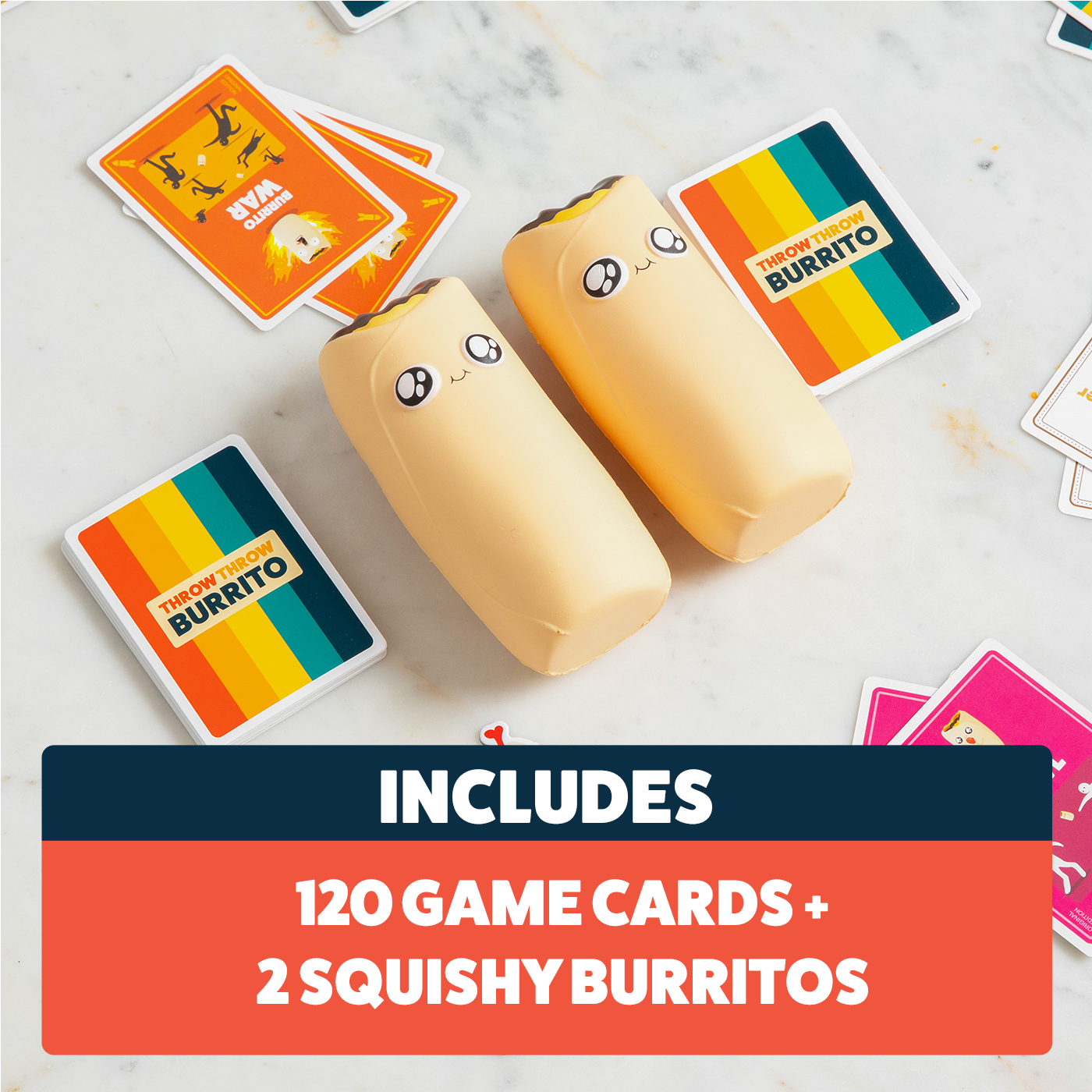
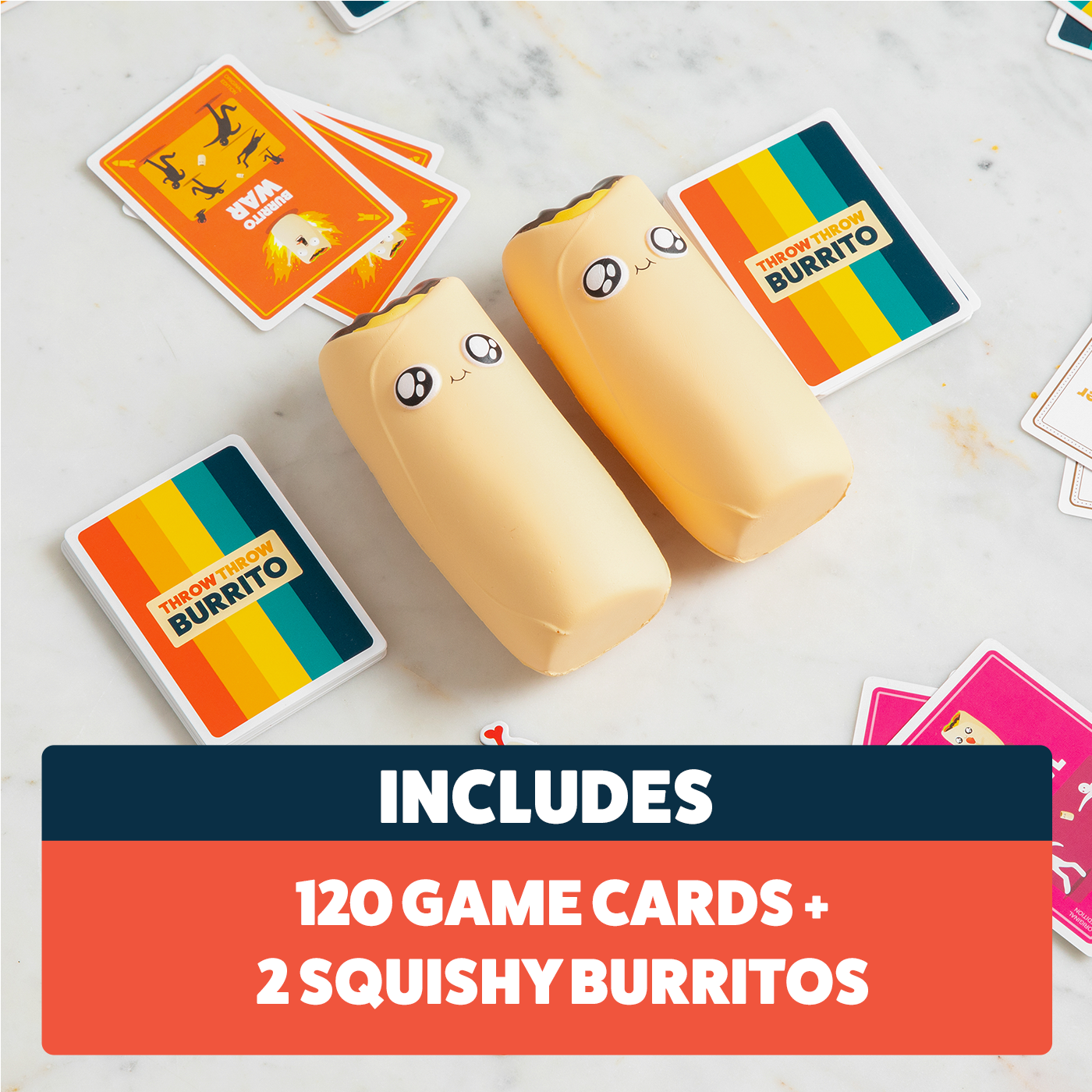
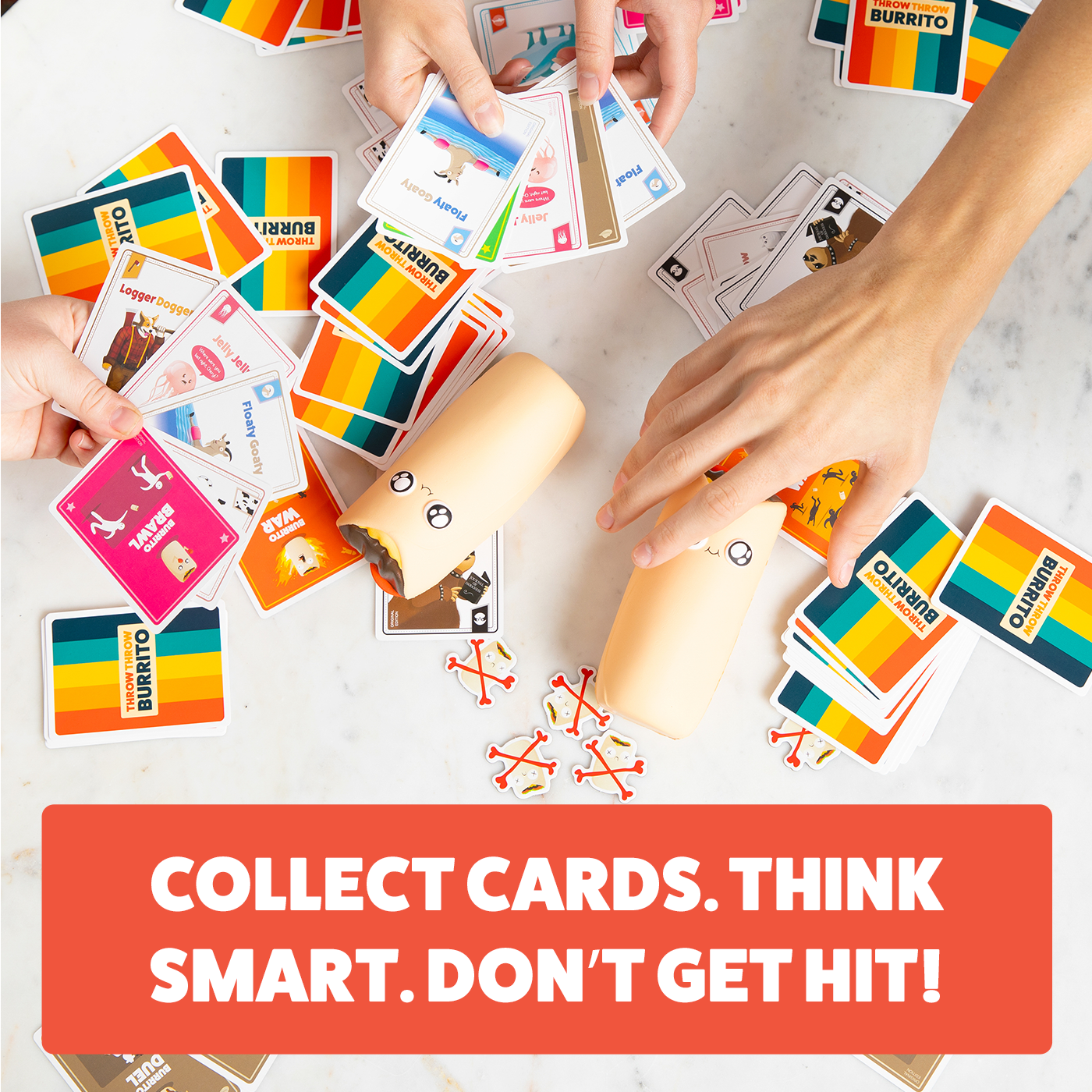
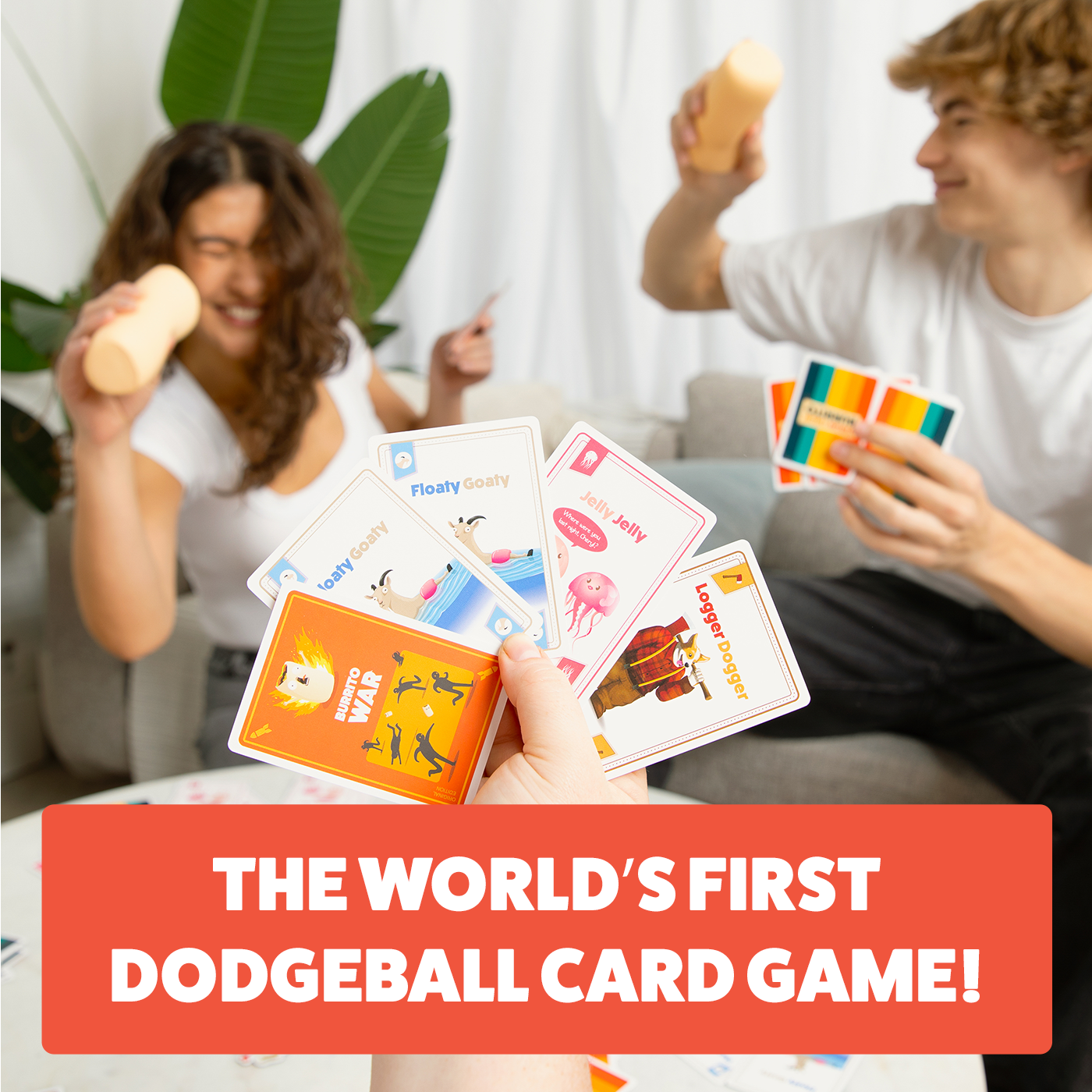
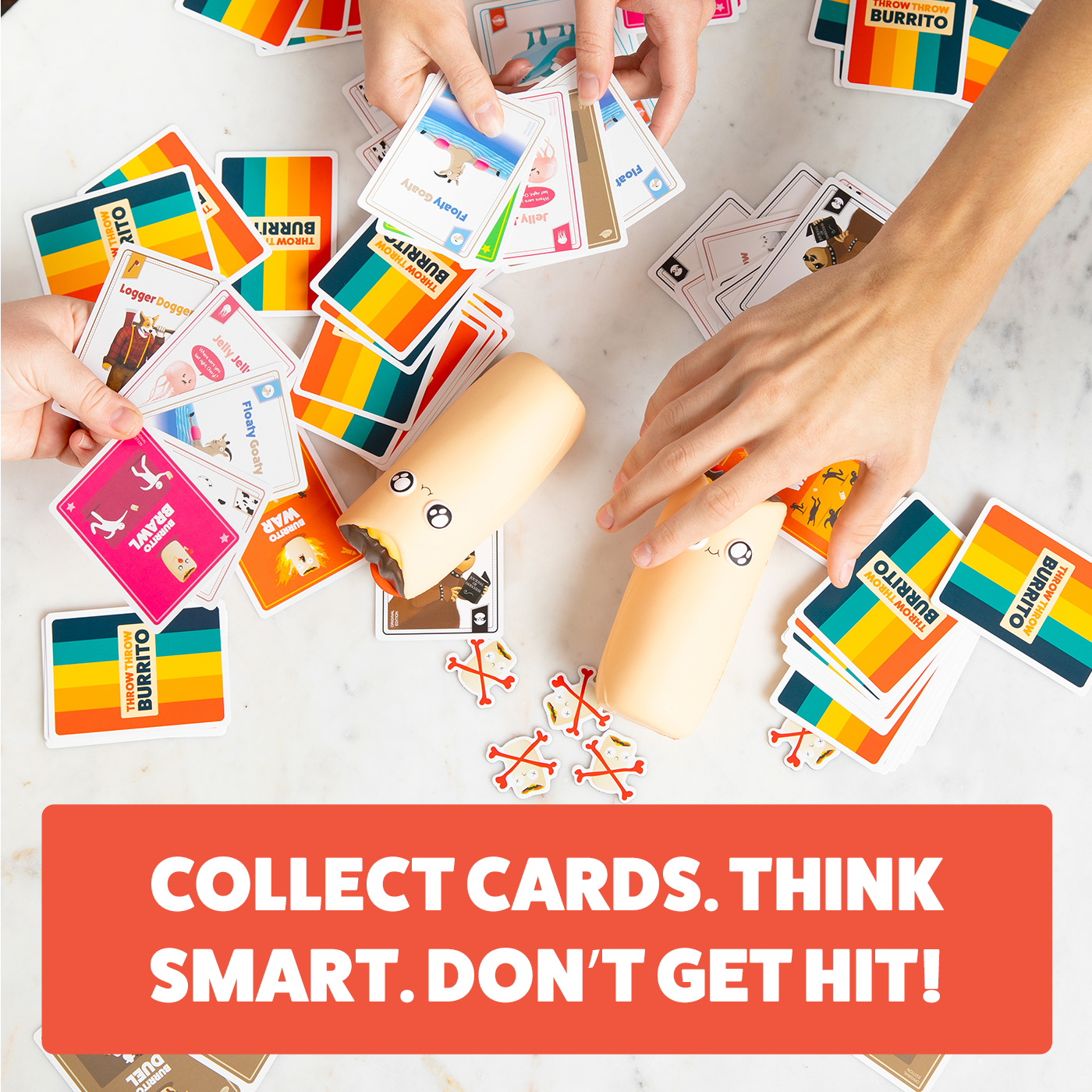
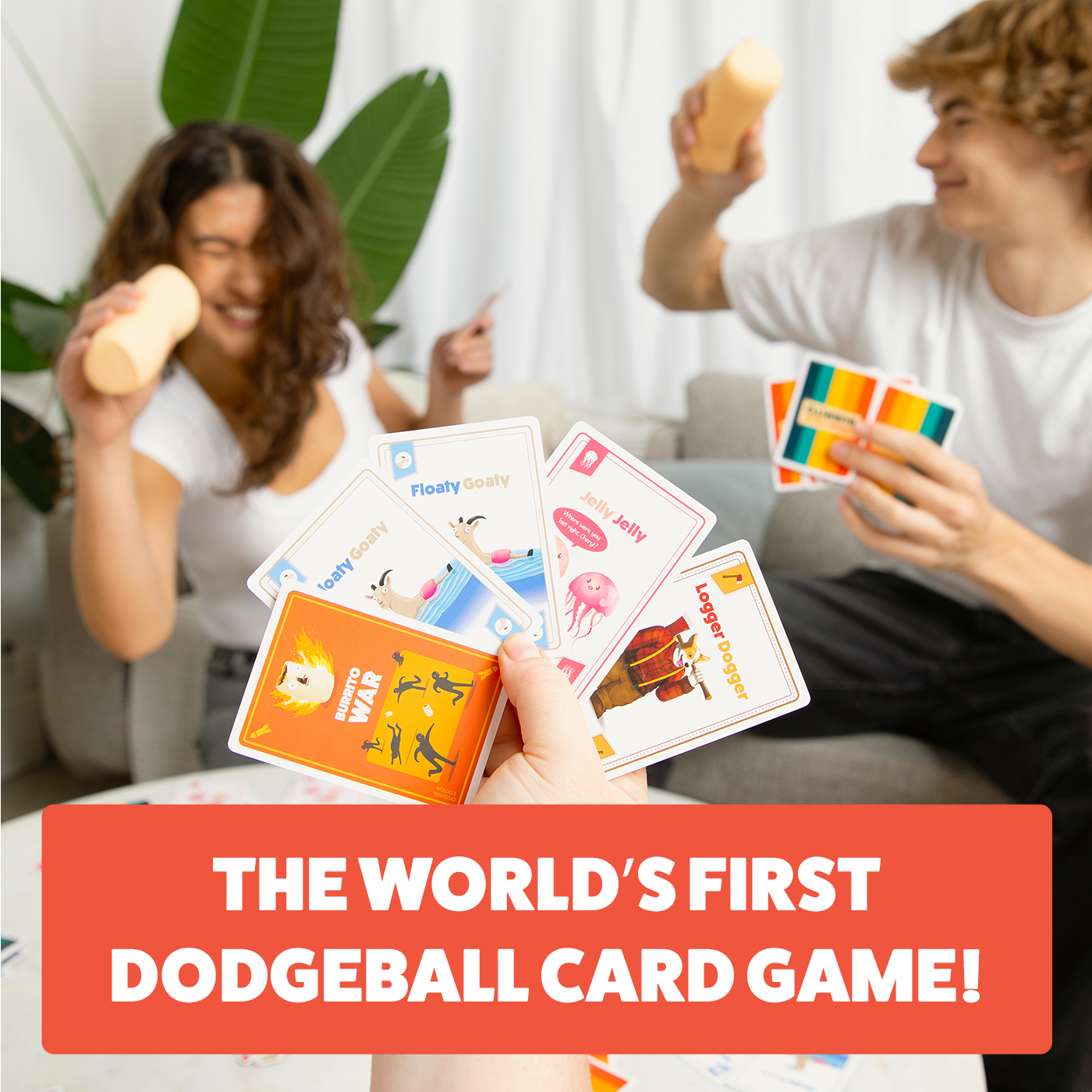
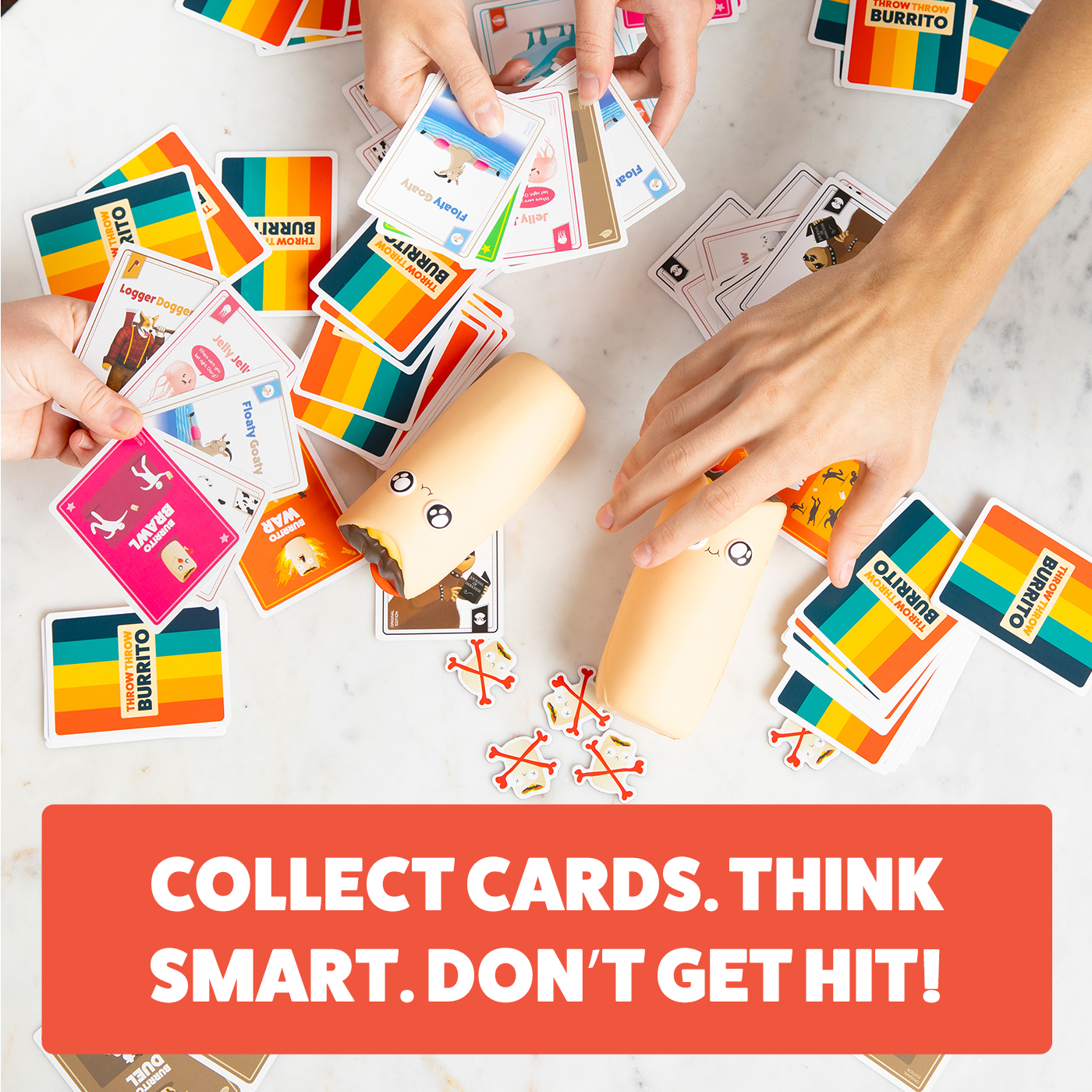
Throw Throw Burrito — the world's first dodgeball card game, from the Exploding Kittens crew. You're collecting matching cards like a normal speed game, but the second certain matches hit the table, it triggers a duel, and people grab the soft foam burritos and peg each other across the room.
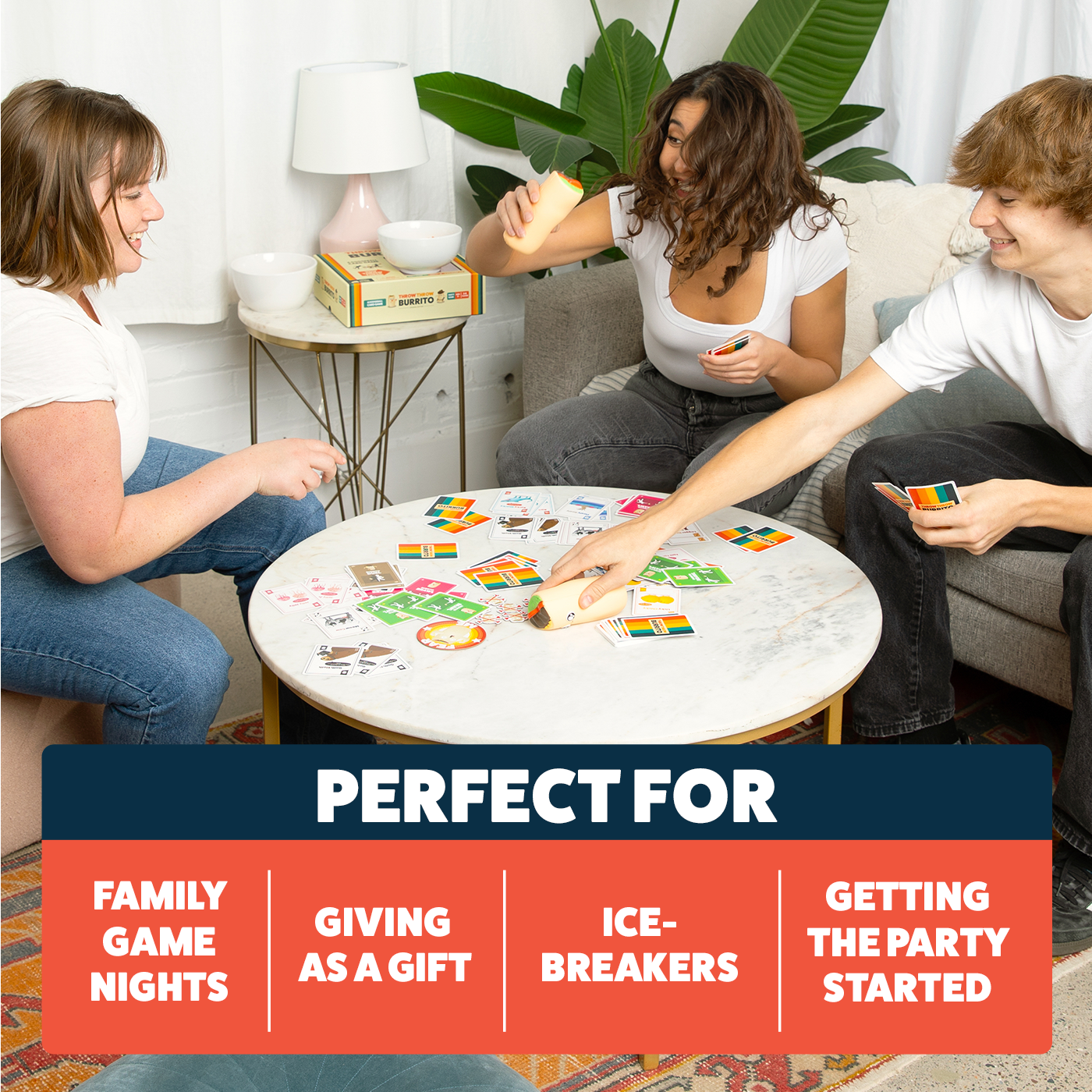
This is the game I reach for when the energy is high, the group skews younger or rowdier, and people have been sitting too long. It's gloriously silly, physically active, and because there's no rigid turn order it descends into happy chaos fast. Ages 7+, so it's a genuine all-family option.
Two honest host notes. First, it caps at 6 players, so for a bigger bash run it as a side-table or a tournament bracket between rounds of a larger game — it's also the perfect ten-minute 'palate cleanser' that gets everyone standing again. Second, and this is the one nobody tells you: clear the breakables off the table first. I learned that one the fun way.
The big-group secret weapon, if you want to lean all the way in: there's a separate Throw Throw Burrito Extreme Outdoor Edition that swaps the little foam burritos for giant inflatable ones and turns the whole thing into backyard dodgeball with real room to run. For a summer party of a dozen people, that's the version that earns its space in the trunk.

What's the easiest game to teach a true non-gamer?
Two answers, depending on the vibe you want.
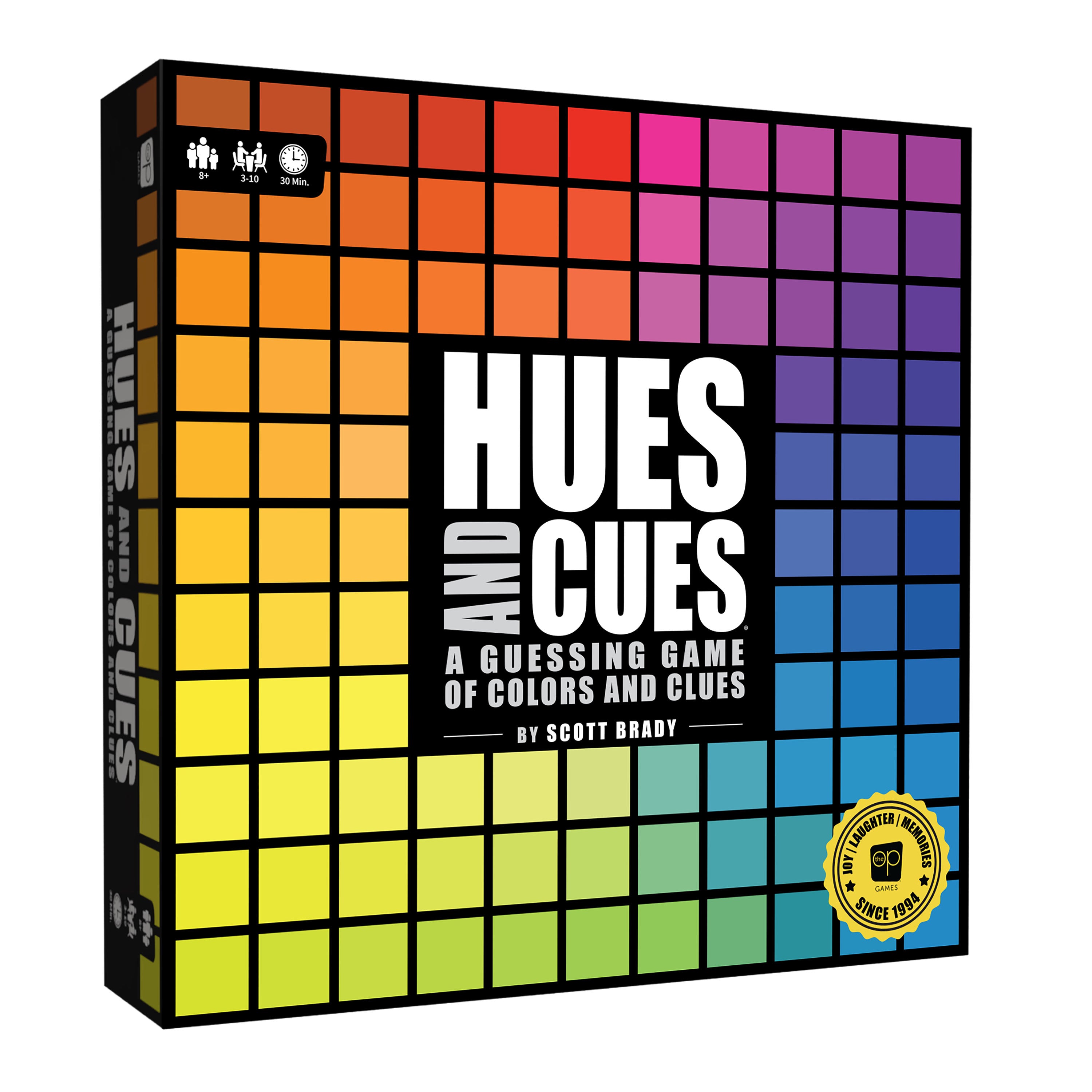
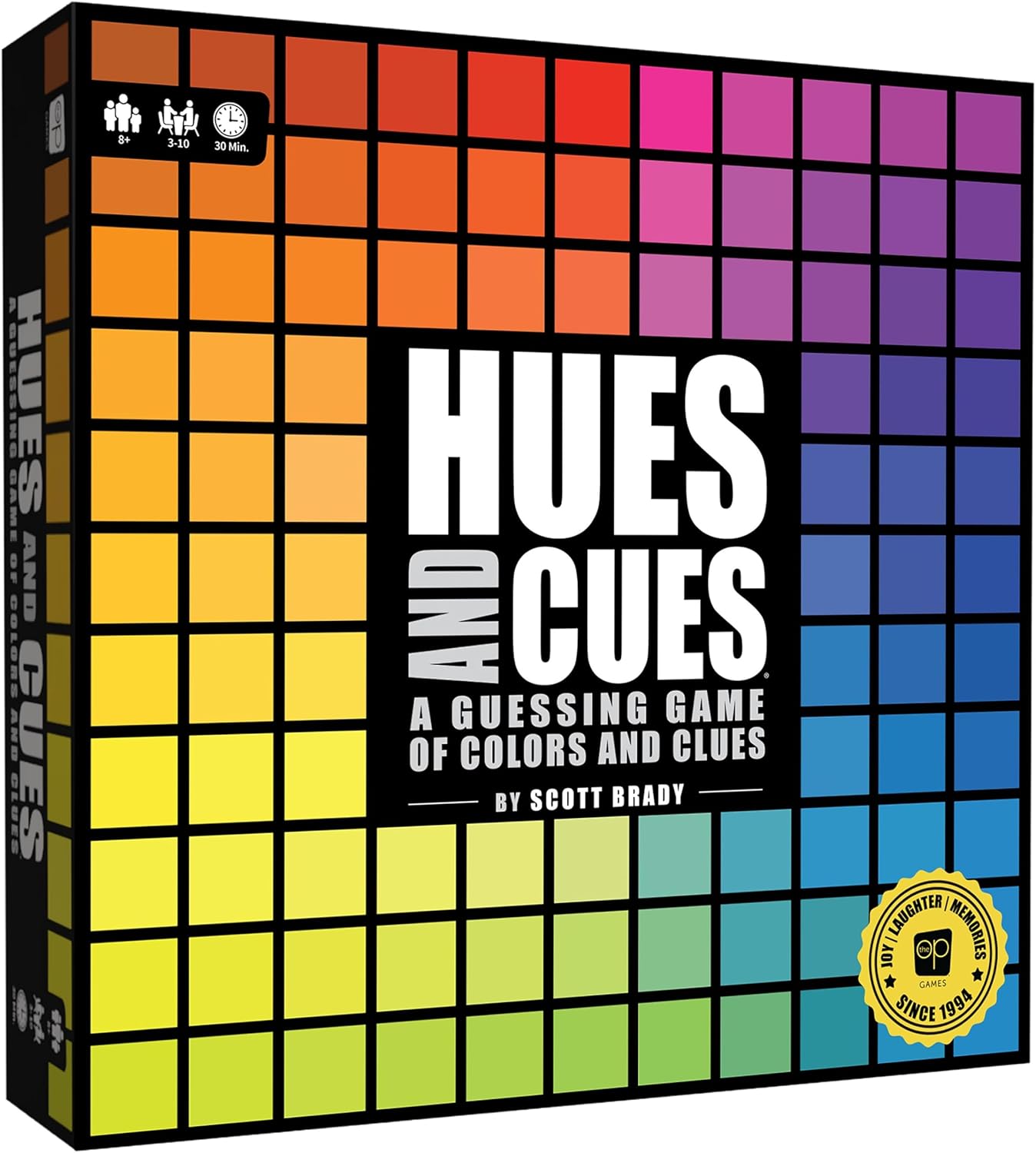
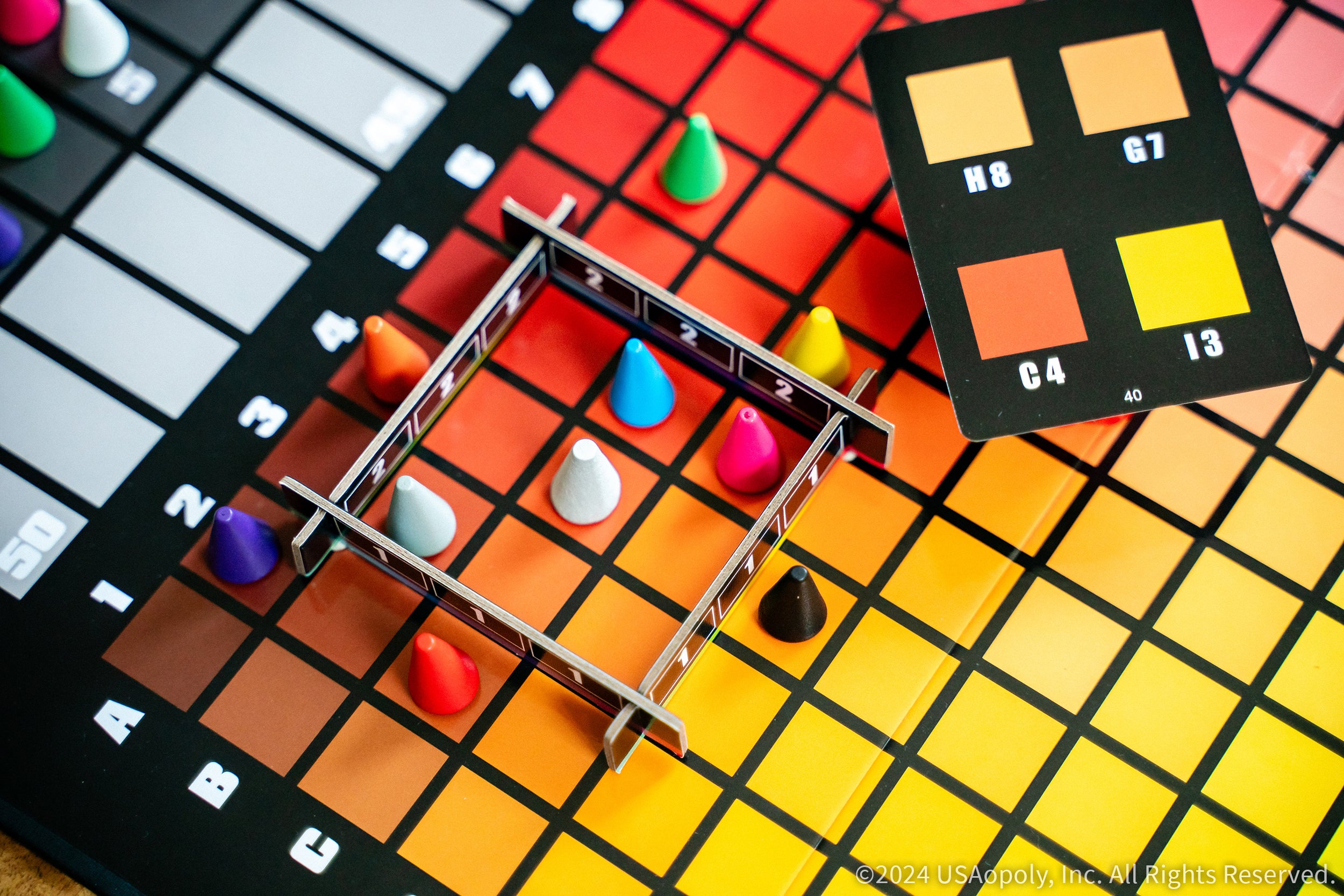
For the simplest possible rule, Hues and Cues. There's one giant board of 480 colors; you give a one- or two-word clue ('robin's egg,' 'spicy mustard') and everyone places a token where they think your color lives. Closer guesses score. That's the whole game. It runs 3–10 players and feels more like chatting than competing, so people who flinch at 'board games' relax immediately. The insider cluing tip: two-word clues that pin a category AND a flavor ('angry tomato,' 'beach-day sky') guide the table far better than a single vague word — but if you over-specify, everyone clusters on the exact spot and the scoring flattens. One honest accessibility flag, because I'd want a friend to tell me: Hues and Cues is built entirely on color discrimination, so it can be genuinely tough for guests with color-vision deficiency. If you know someone at the table sees reds and greens differently, pair them up so it's a conversation, not a solo guess.
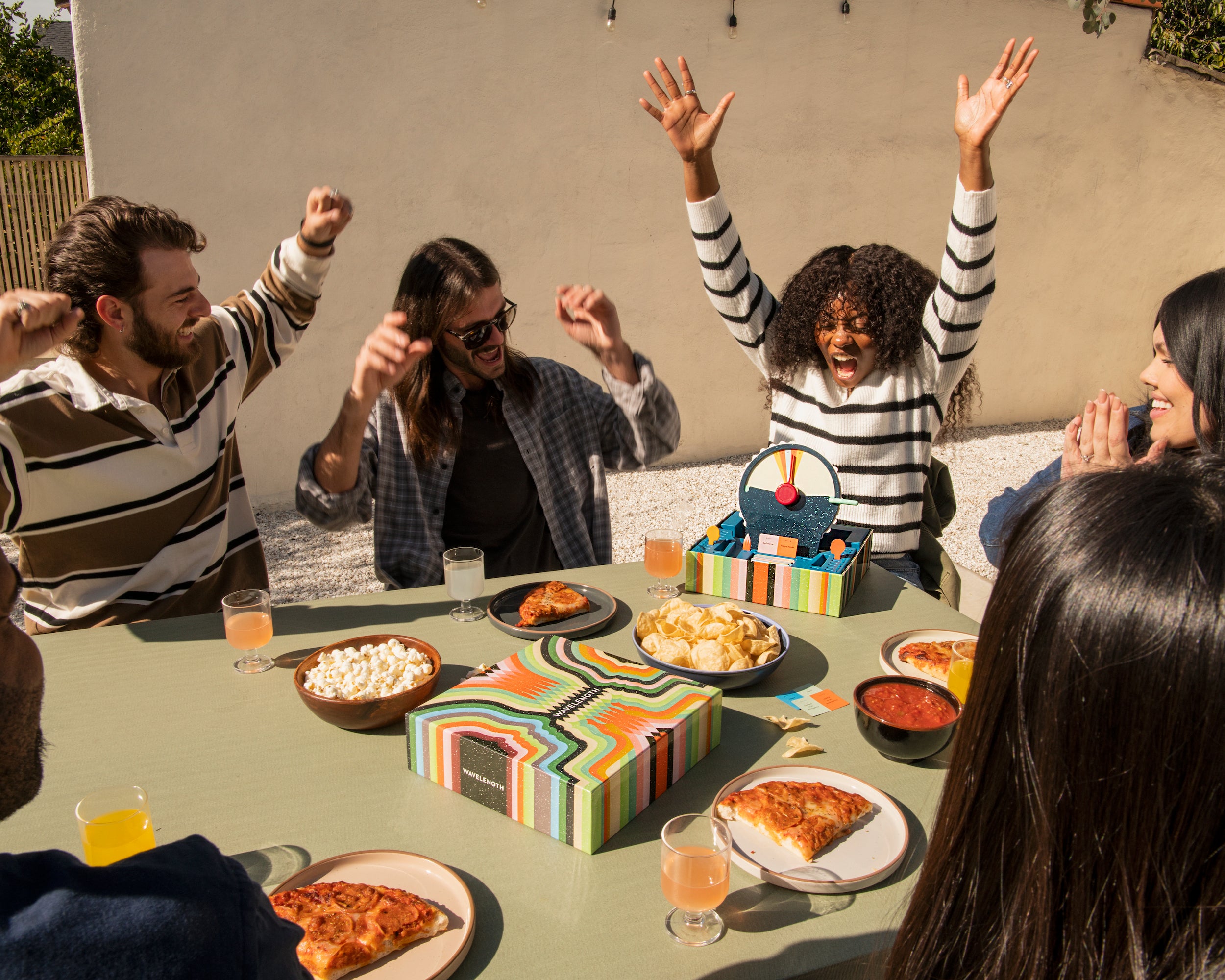
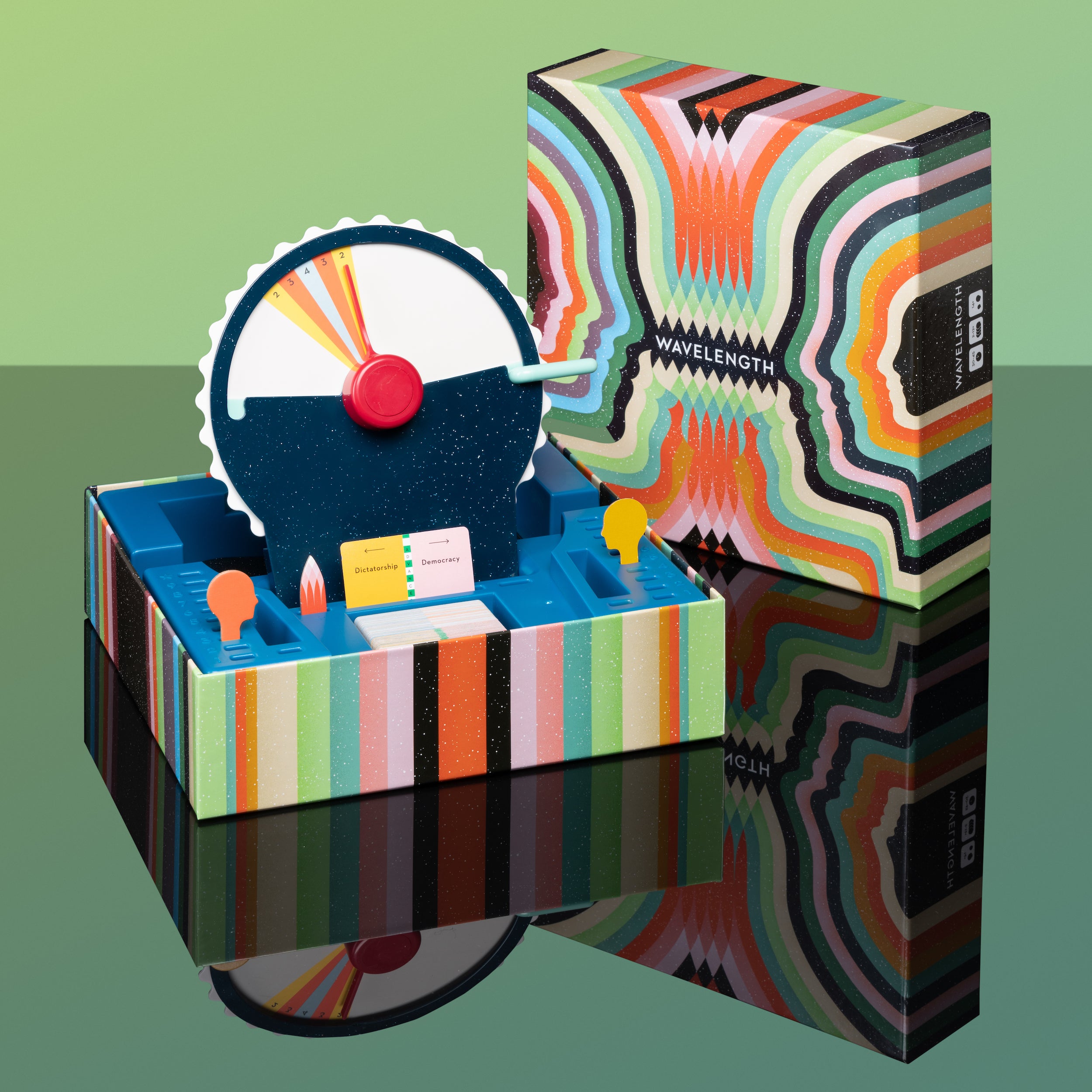
For a clever team guessing game with more drama, Wavelength. A clue-giver (the 'Psychic') sees where a hidden target sits on a spectrum — say, 'overrated ↔ underrated' — and gives one clue to nudge the team's dial. It sparks the best friendly arguments of the night and scales 2–12. Both are nearly impossible to teach wrong, which is exactly what you want when you're also playing host.
What are the secret rules and the host's playbook for running the whole night?

A few mechanics most casual groups never discover — and they're the difference between a fine night and a great one.
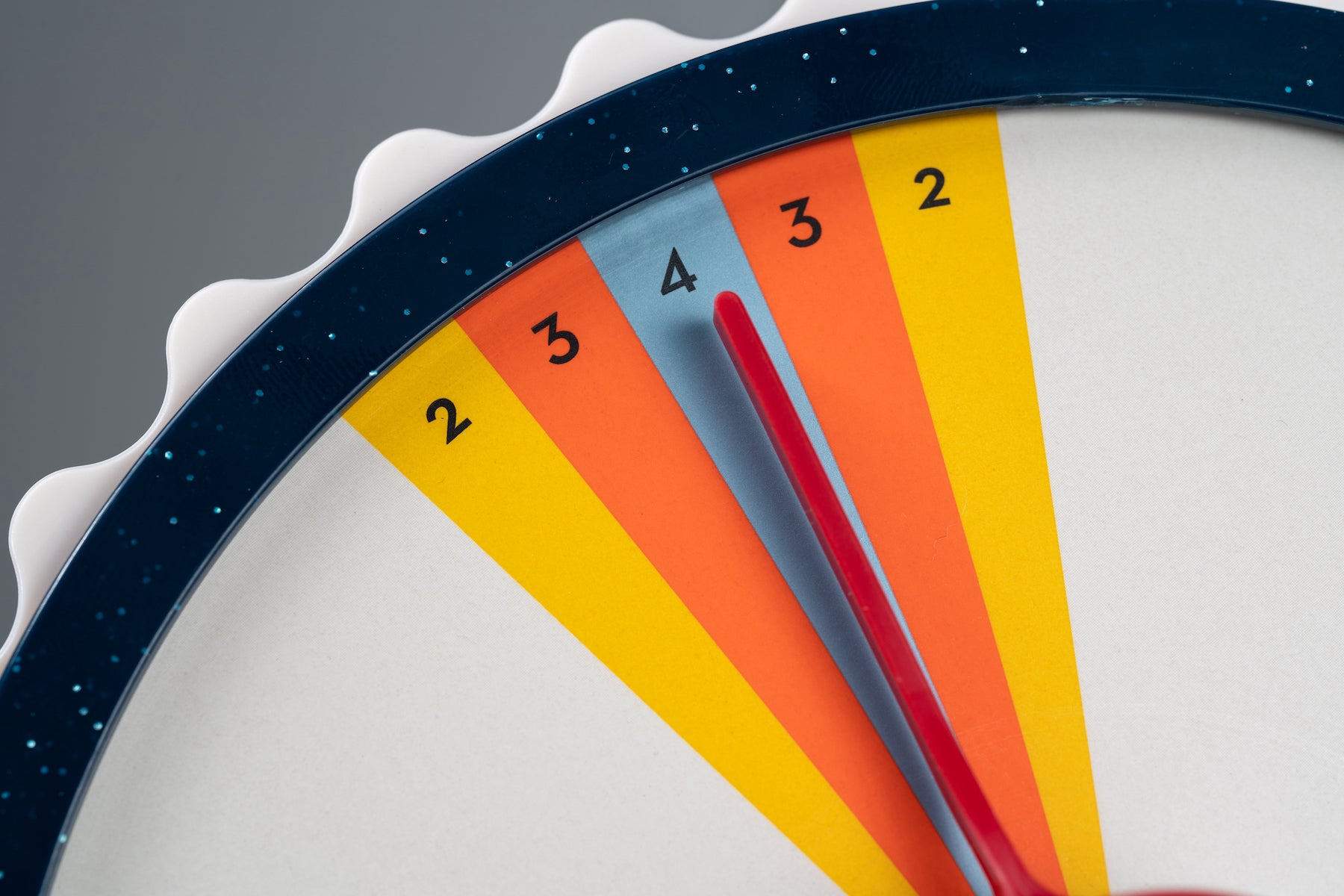
The Wavelength move nobody uses: after the active team guesses, the other team gets to call whether the real target is to the LEFT or RIGHT of that guess — get it right and they steal a point. It keeps the off-team locked in instead of zoning out, which is the single biggest failure mode at a big table. Wavelength also has an official Psychic Catch-Up rule: a team that's losing but nails a 4-point bullseye immediately takes another turn, so a blowout can flip late. (It won Golden Geek Best Party Game 2019 and was co-designed by Wolfgang Warsch, the modern-classic mind behind The Mind and The Quacks of Quedlinburg — a useful tell that it's deeper than it looks.)
Now sequence the evening. You don't need all six on night one:
- Open warm and easy — Hues and Cues or Codenames, while latecomers trickle in.
- Peak loud in the middle — Telestrations, or a Throw Throw Burrito bracket the moment people get antsy.
- Land soft — Just One, as the night thins to your closest people.
And the cardinal host rule: teach by playing, never by reading. 'Let's just do one practice round, cards up, no score.' Every game here is designed to be learned by doing — lean on that and your guests never feel quizzed. Read the room, not the rulebook. That's the whole job.
What experienced tables keep reporting
Recurring owner patterns, synthesized in Puzzlewick's words. Follow each evidence trail to read the original discussion.
On Codenames: "It's one of those rare games where everyone can sit at the same table and feel like they have a real shot at contributing."
On Just One: "It's engaging enough for gamers yet approachable enough for non-gamers, with a tight gameplay loop that tickles the brain and encourages table talk."
On Telestrations: "I've been pulling Telestrations out for years now and not once has it failed to crack up every single person playing."
On Throw Throw Burrito: "It is a chaotic free for all," which makes "this family friendly party game an easy favorite."
Read the evidence: Erica Ruscio, ALA Games & Gaming Round Table
On Wavelength: "Wavelength is my go-to for a lot of reasons, but one more than any other: it accommodates all player counts."
On Hues and Cues: reviewers flag it as "a great choice when you're looking for something to fit a large group (especially with game-averse players)."
The picks
Some links below are affiliate links — as an Amazon Associate, Puzzlewick earns from qualifying purchases, at no extra cost to you. It never changes a pick.
 2 photos
 Codenames (2nd Edition)
- Players
- 2-8
- Time
- 15 min
- Age
- 14+
- Complexity
- 1.3 / 5
- Publisher
- Czech Games Edition · 2015
- Designer
- Vlaada Chvátil
- Art
- Stéphane Gantiez, Tomáš Kučerovský, Filip Murmak
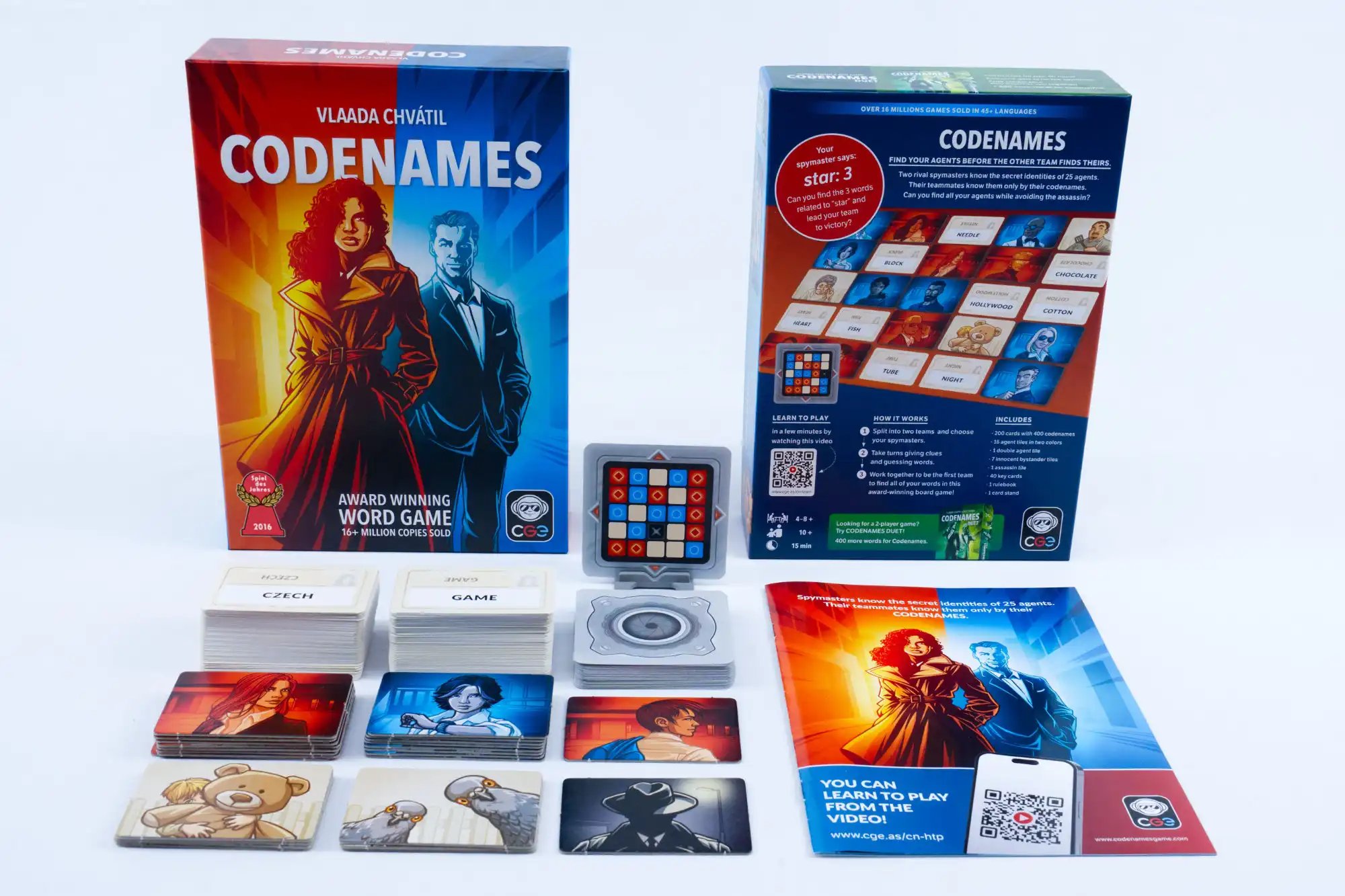
The gold-standard party game for a reason. Two teams, one-word clues, words on the table — that's the entire rule, and it lands on grandparents and teenagers alike. Rotate the clue-giver so the spotlight (and the pressure) keeps moving, and a room of strangers becomes one loud, heckling table fast.
- Teaches in literally one sentence
- Scales to a dozen people in two teams
- Only the clue-giver is ever 'on the spot'
- Spiel des Jahres winner; endlessly replayable
- Fun leans on the clue-giver role — rotate it
- Brief downtime while clues are crafted (good heckling time)
 2 photos
 Telestrations 12-Player Party Pack
- Players
- 4-12
- Time
- 30 min
- Age
- 12+
- Publisher
- The Op (USAopoly) · 2011
Telephone-meets-Pictionary, and the only mainstream party game that comfortably seats a full dozen. You draw, pass, guess, pass, draw the guess — and the reveal of how badly it all derailed is the funniest minute of the night. Bad artists win here; there's no skill gate at all.
- Handles up to 12 players out of the box
- Funnier the WORSE everyone draws — zero skill gate
- 600 fresh phrases in this edition
- Reveals produce the single biggest table laugh
- Buy the 12-player pack specifically; smaller packs leave people out
- Dry-erase books need a wipe between groups
 4 photos
 Just One
- Players
- 3-7
- Time
- 20 min
- Age
- 8+
- Complexity
- 1.0 / 5
- Publisher
- Repos Production · 2018
- Designers
- Ludovic Roudy, Bruno Sautter
- Art
- Éric Azagury, Florian Poullet
The warmest, gentlest game on the list. Fully cooperative — the whole table helps one guesser — with a sublime twist: duplicate clues cancel, so you're racing to be helpful AND original. The 'wait, we ALL wrote ocean?!' groan-laugh is the entire joy. Its only limit is a 7-player ceiling.
- Fully cooperative — no one is singled out
- Teaches in under a minute
- The duplicate-clue twist is pure table delight
- Best possible on-ramp for game-shy guests
- Caps at 7 players — not for a 12-person bash
- Needs a willing guesser each round
 3 photos
 Hues and Cues
- Players
- 3-10
- Time
- 30 min
- Age
- 8+
- Publisher
- The Op (USAopoly) · 2020
- Designer
- Scott Brady
Give a one- or two-word clue for a color, everyone guesses where it lives on a board of 480 shades, closest wins. That's it. It plays more like a relaxed conversation than a competition, which is exactly why game-averse guests warm up to it instantly — and it stretches to ten.
- Possibly the simplest rule of any game here
- Feels like chatting, not competing
- Runs 3–10 players
- Low-pressure; great for game-averse crowds
- Lower chaos/energy than Telestrations or Burrito
- Color-vision differences can affect a few players
 3 photos
 Wavelength
- Players
- 2-12
- Time
- 30-45 min
- Age
- 14+
- Complexity
- 1.12 / 5
- Publisher
- CMYK · 2019
- Designers
- Alex Hague, Justin Vickers, Wolfgang Warsch
- Art
- Sofie Hannibal, Nan Na Hvass
A hidden target sits on a spectrum (overrated ↔ underrated), the clue-giver nudges the team's dial with one clue, and the friendly arguments that follow are the best part. Beautiful component, dead-simple concept, and it accommodates basically any group size. Note the 14+ age guide.
- Sparks the night's best (friendly) debates
- Accommodates all player counts, 2–12
- Gorgeous, tactile dial component
- Golden Geek Best Party Game winner
- Publisher lists ages 14+
- Slightly more abstract than color/drawing games
 13 photos
 Throw Throw Burrito
- Players
- 2-6
- Time
- 15 min
- Age
- 7+
- Complexity
- 1.13 / 5
- Publisher
- Exploding Kittens · 2019
- Designers
- Matthew Inman, Elan Lee, Brian Spence
The world's first dodgeball card game: collect matching cards, trigger a duel, and peg your friends with soft foam burritos. It's loud, active, and gloriously dumb in the best way — the perfect energy reset between calmer games. Caps at 6, so run it as a side-table or a bracket.
- Gets the whole room out of their seats
- Soft foam burritos — genuinely all-ages (7+)
- Fast 15-minute rounds; ideal palate cleanser
- Near-zero teach
- Caps at 6 players — bracket it for big groups
- Clear breakables off the table first
- Too rowdy for a mellow crowd
At a glance
| game | maker | players | age | teach time | energy | best for |
|---|---|---|---|---|---|---|
| Codenames (2nd Ed.) | Czech Games Edition | 2–8+ (best 4+, scales to 12 in teams) | 14+ | ~1 min | Clever / competitive | All-purpose opener for any crowd |
| Telestrations 12-Player | USAopoly (The Op) | 4–12 | 12+ | ~2 min | Laugh-out-loud | Biggest tables, maximum laughs |
| Just One | Repos Production | 3–7 | 8+ | <1 min | Warm / cooperative | Cozy tables, nervous non-gamers |
| Hues and Cues | The Op / USAopoly | 3–10 | 8+ | ~1 min | Relaxed / conversational | Easiest teach for non-gamers |
| Wavelength | CMYK | 2–12 | 14+ | ~2 min | Debate-y / team | Friendly arguments, any group size |
| Throw Throw Burrito | Exploding Kittens | 2–6 | 7+ | ~2 min | Loud / physical | Out-of-chairs chaos, energy reset |
Questions, answered
What is the single best party game for a big group of non-gamers?
Codenames. It splits the room into two teams so no one is exposed alone, the only rule is 'give a one-word clue for words on the table,' and it scales from four players to a dozen. A first-timer can contribute meaningfully in the first round.
Which of these games handles the MOST players?
Telestrations 12-Player Party Pack (up to 12) and Wavelength (2–12) handle the largest single tables. Codenames also stretches to 12+ when you play in two teams. Just One (7) and Throw Throw Burrito (6) have the lowest ceilings.
We have 10–12 people. What should I buy?
Telestrations 12-Player Party Pack is the cleanest fit — it seats all 12 with enough sketchbooks and markers. Pair it with Codenames (two teams) for variety, and use Throw Throw Burrito as a 6-player bracket between rounds.
Which game is best if some guests are nervous or 'don't play board games'?
Just One or Hues and Cues. Just One is fully cooperative so nobody can lose alone, and Hues and Cues has possibly the simplest rule of any game here — just describe a color. Both feel more like conversation than competition.
Is there a party game with no losing and no one on the spot?
Just One. The whole table cooperates to help one person guess a word, so you win or lose as a group. It's the gentlest on-ramp on this list, though it caps at 7 players.
Which game gets people out of their chairs?
Throw Throw Burrito — it's a dodgeball card game where matches trigger duels and you throw soft foam burritos at each other. It's loud, physical, and ages 7+, but it caps at 6 players, so run it as a side-table or tournament bracket for bigger groups.
What's the funniest game on the list?
Telestrations, by a wide margin for most groups. It's the telephone game drawn out, and the reveal of how a simple word mutated into nonsense through bad drawings and wrong guesses produces the biggest table laugh of the night.
Do I really need the 12-player version of Telestrations?
If your group is large, yes. Telestrations sells 6-, 8-, and 12-player editions, and the player count is set by how many sketchbooks and markers are in the box. For a true big group, only the 12-Player Party Pack keeps everyone in every round.
What's the easiest game to teach while I'm also hosting?
Hues and Cues. One board of colors, give a short clue, everyone places a token near the shade — closest scores. You can teach it in one sentence and start scoring on the very first turn. Wavelength is a close second for clever team play.
Are any of these good with kids in the mix?
Yes. Throw Throw Burrito is ages 7+ and a genuine all-family hit, and Just One and Hues and Cues are 8+. Codenames and Wavelength list 14+, so for younger players lean toward the first three.
How long do these games take to play?
Most run short and flexible: Throw Throw Burrito rounds are about 15 minutes, Just One around 20, and Codenames, Hues and Cues, Telestrations, and Wavelength typically run 20–45 minutes depending on group size. None overstay their welcome, which is exactly what you want at a party.
If I can only buy ONE game, which is it?
Codenames. It's the most scalable, the fastest to teach, and the most reliable across any mix of ages and experience levels. If you later build a cabinet, add Telestrations for big-group laughs and Just One for cozy nights.
Yumi's verdict
If you host one party this year and buy one game, make it Codenames — it's the most teachable, most scalable, most crowd-proof game in the category, and it makes your shyest guest feel sharp inside a single round. Build past that and the kit writes itself: Telestrations 12-Player Party Pack for when the table swells past eight and you want pure laughter, Just One for cozy cooperative nights where nobody loses alone, Throw Throw Burrito to launch everyone out of their chairs, and Hues and Cues or Wavelength as the gentle on-ramp for the friend who swears they 'don't play board games.' Read the room, sequence from warm to loud to soft, and teach by playing — that's the whole secret to a table that's still laughing when the snacks are gone.
Still deciding? Take the Game-Finder — answer seven quick questions and the cabinet hands you the one board game built for your table, with a buy link and your own shareable player talisman.
Research ledger 13 sources · reviewed 2026-08-10
Specifications, rules, current product information, community experience, and contrary evidence were checked against the sources below. Commercial links are kept separate from editorial evidence.
- amazon.comamazon.com/dp/B014Q1XX9S?tag=puzzlewick-20
- amazon.comamazon.com/dp/B0083J768O?tag=puzzlewick-20
- amazon.comamazon.com/dp/B07GJ7NDZQ?tag=puzzlewick-20
- amazon.comamazon.com/dp/B084D2XQ9F?tag=puzzlewick-20
- amazon.comamazon.com/dp/B07T446163?tag=puzzlewick-20
- amazon.comamazon.com/dp/B07TS96J7Q?tag=puzzlewick-20
- rolltoreview.comrolltoreview.com/codenames-board-game-review
- shelfgamer.comshelfgamer.com/reviews/just-one
- rolltoreview.comrolltoreview.com/telestrations-review
- games.ala.orggames.ala.org/game-review-throw-throw-burrito
- meeplemountain.commeeplemountain.com/reviews/wavelength
- tabletopbellhop.comtabletopbellhop.com/game-reviews/hues-and-cues
- Czech Games Edition official Codenames product recordczechgames.com/en/codenames
Come in, take your shoes off — let me show you something.

Keep exploring
The next smart rabbit holes.
⌂ Topic PathFamily and Gateway Games: compare the whole shelfA good family game gets everyone playing quickly without becoming disposable after three nights. These guides prioritize clear...ComparisonThe Best Family Board Games of 2026, Ranked (Kids + Adults Together)One table, three generations, zero meltdowns — the games that make a 7-year-old and a tired grown-up scheme against each other and both...Best OfBest Party Card Games for Adults, Ranked (2026)Okay but have you SEEN what the room's been saying about Monikers, Wavelength, So Clover!, Just One — because the party-game conversation...