Arkham Horror vs Eldritch Horror vs Mansions of Madness: The Best Lovecraft Co-op
Three boxes, three different kinds of doom, one group chat that will not stop arguing about it. Here's who to invite, what to expect, and which one actually goes on your table tonight.


AI-assisted research and drafting in Imani’s voice · reviewed by Robert Pruitt · how this guide was made
Last editorial refresh: 2026-06-21 Gold-standard QA: 2026-08-13 10 sources reviewed Affiliate links checked during gold-standard pass

The short answer
If you can only buy ONE: get Mansions of Madness: Second Edition. It's the plug-and-play pick that lands dead-center in the sweet spot of price, variety, and easy-to-learn, and the app doing the Keeper job makes it the most immersive box of the three out of the gate. BUT — if you're mostly playing solo or as a duo and you want the deepest, most novel-like campaign of your life (and your wallet can survive the slow burn), Arkham Horror: The Card Game is the connoisseur's crown. And if you want a whole Call-of-Cthulhu adventure in a single evening with zero app and zero expansion treadmill, Eldritch Horror is your globe-trotting one-shot. Match the box to your table first; the right answer changes per friend group.
Decision map
Choose in thirty seconds
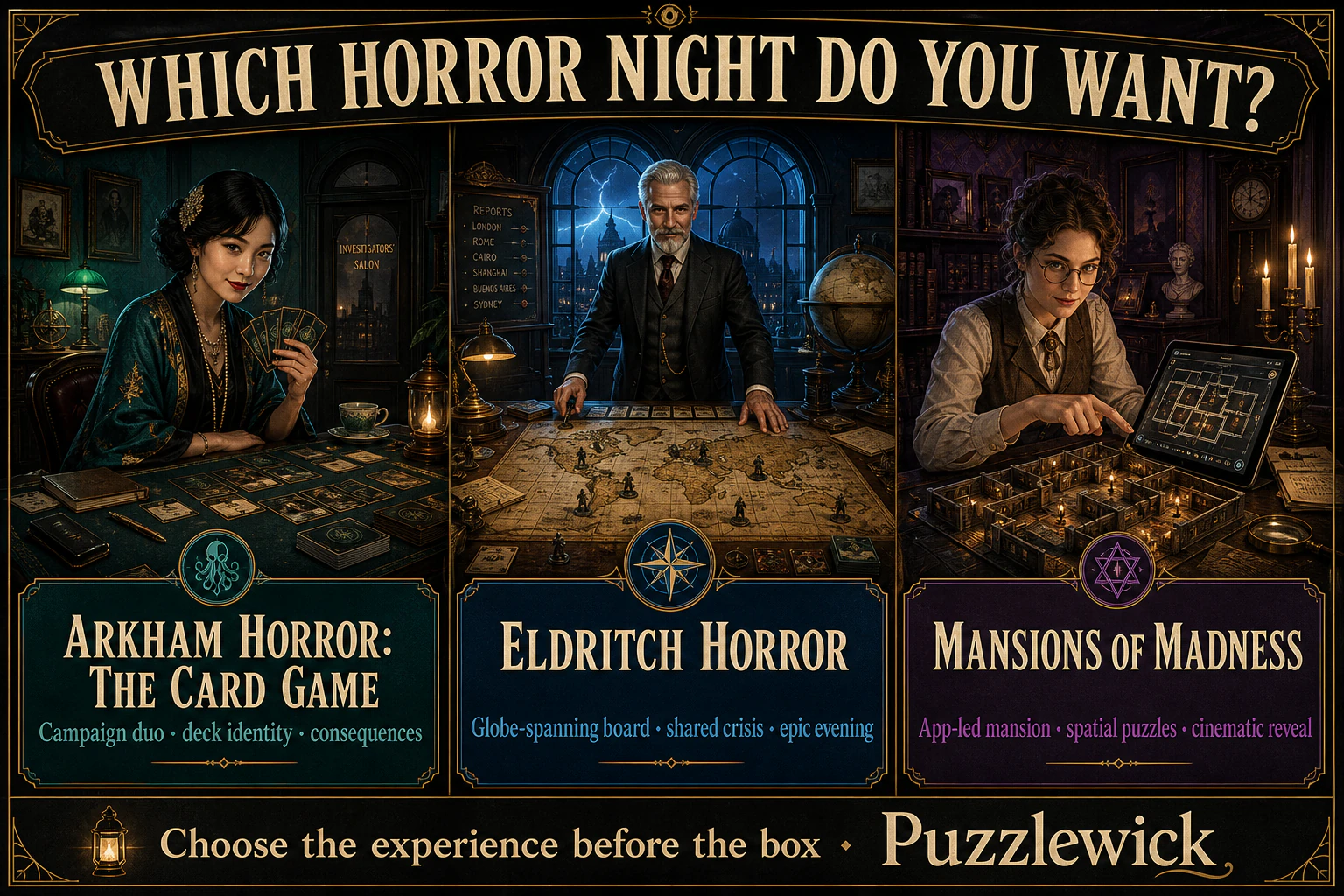
Solo and 1-2 player duos who want a deckbuilding, character-driven campaign with permanent consequences and near-infinite replay.
Groups of 2-5 and newcomers who want plug-and-play immersion, escape-room puzzles, and a haunted-house-movie feel with minimal rules overhead.
Players who want a self-contained 2-4 hour adventure with huge variety, no app, and no expansion treadmill to enjoy it.
Okay, I have READ the room — the r/boardgames threads, the forum slap-fights, the "which one do I buy" DMs that all of us have sent at 1am — and I'm reporting back warm and honest. Because here's the thing the internet keeps fumbling: there is no single "best" Lovecraft co-op. There's the best one for your specific table, and the three contenders are barely even the same kind of night out.
Mansions is a haunted-house movie you star in — an app whispers narration, locks doors, spawns the thing behind you. Arkham LCG is an RPG-in-a-box where your investigator carries scars and choices across a branching campaign like a character in a novel you're co-writing. Eldritch is a world-spanning adventure compressed into one sitting, all physical dice and gorgeous encounter cards, no app, no homework. Same mythos, three completely different vibes.
So I'm not going to pick for you and run. I'm going to hand you the whole group chat — the consensus, the catch, the snack tips, the etiquette, the "who do I invite" call — and let you walk away knowing exactly which box belongs on YOUR table. Pull up a chair. The lights are already dim.
Start here, then go deeper
You are in the right cabinet.
 ✒ Universe HubArkham Horror Universe: the whole buying pathStart with the interactive buyer intake: separate the 2026 Chapter Two Core from Chapter One legacy boxes and the entirely...
 ☾ Topic PathCooperative Horror Games: compare the whole shelfCooperative horror works when the rules pressure the story without burying the table. This cluster maps what to buy, how campaigns...
 Buying GuideArkham Horror LCG Complete Collection Guide: Every Box, Campaign, and ExpansionThe definitive 2026 Arkham Horror LCG buying guide: what you need, what works together, phased purchases, spoiler-light campaign stories,...
Which one is actually the best — and is there even one answer?
Let me cut through it, because the consensus is clearer than the comment sections make it look.
The single most-repeated buy-one verdict across hobby blogs and forums: if you want plug-and-play immersion for a group or for new players, get Mansions of Madness 2E. It sits, as the community puts it, right at the intersection of price, variety, and being easy to learn. That's the safe, joyful, hand-it-to-anyone pick.
The connoisseur's pick is Arkham LCG — the deepest game of the three, by a wide margin on story, and arguably the best solo tabletop experience on the market. The catch is real: it's brutally hard, rules-dense, and a long-tail money pit. You buy it because you want to grow into it.
The sleeper joy is Eldritch Horror — a full Call-of-Cthulhu campaign squeezed into one 2-to-4-hour evening, with the best encounter writing on the board. No app, no treadmill, huge variety. The catch: it's the fiddliest to set up and can leave players idle at high counts.
So the honest answer is: match the box to the table, not the table to the box. Casual group that wants atmosphere → Mansions. Solo/duo who wants a campaign with consequences → Arkham. Crew that wants one big self-contained adventure tonight → Eldritch.
There is no single best Lovecraft co-op — there's the best one for your specific table, and these three are barely even the same kind of night out.
The big dividing line: do you really need the app?
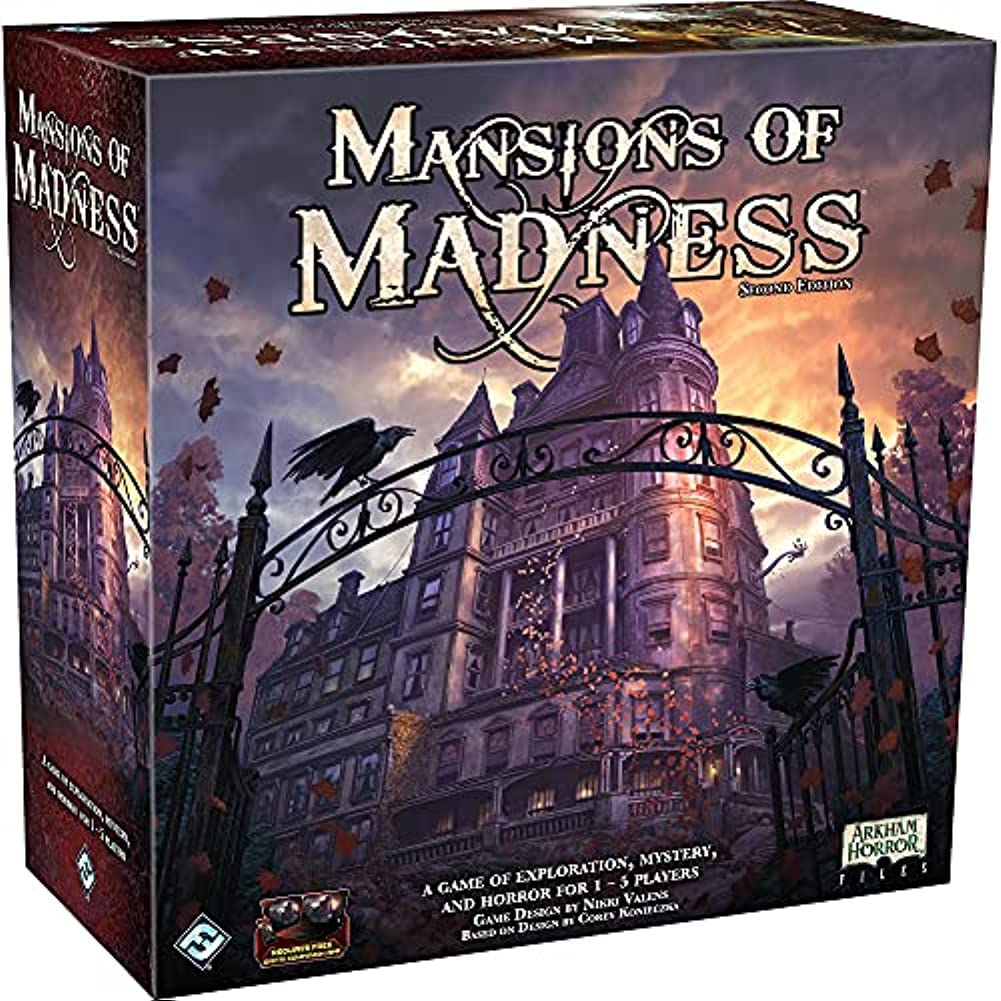

This is THE argument, every single time, so let me lay it flat.
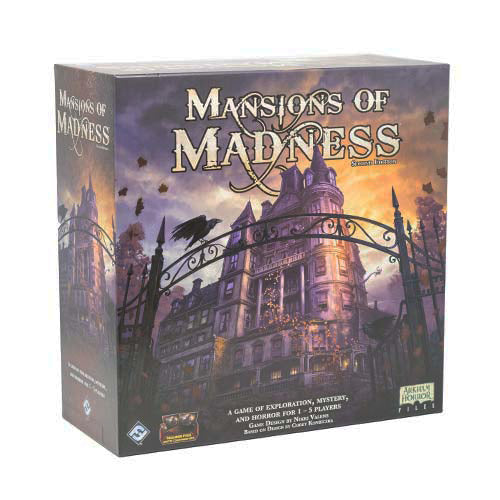
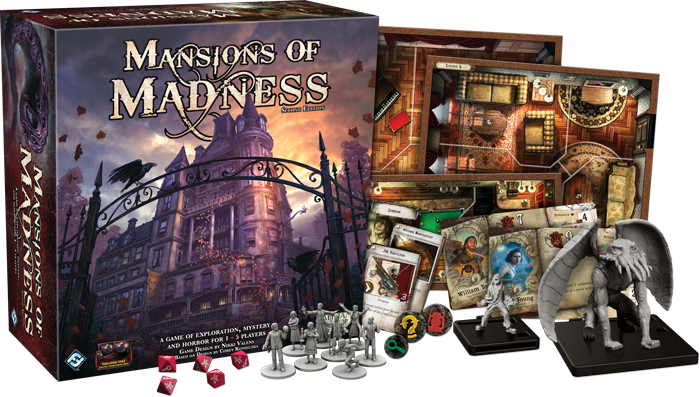
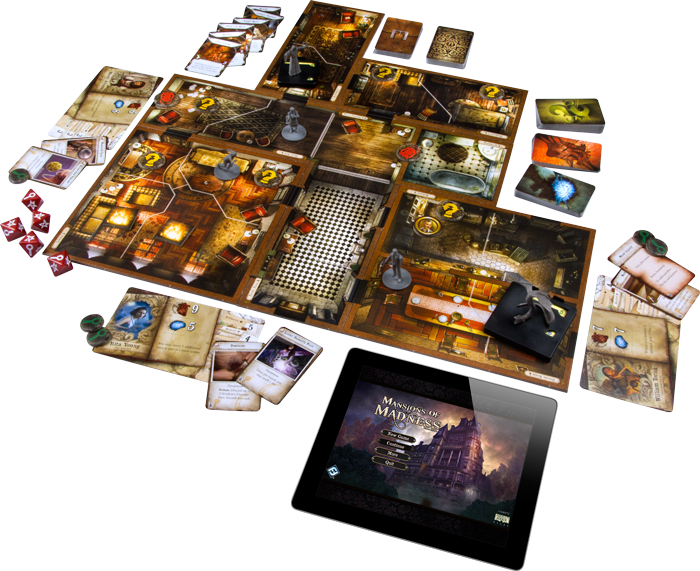
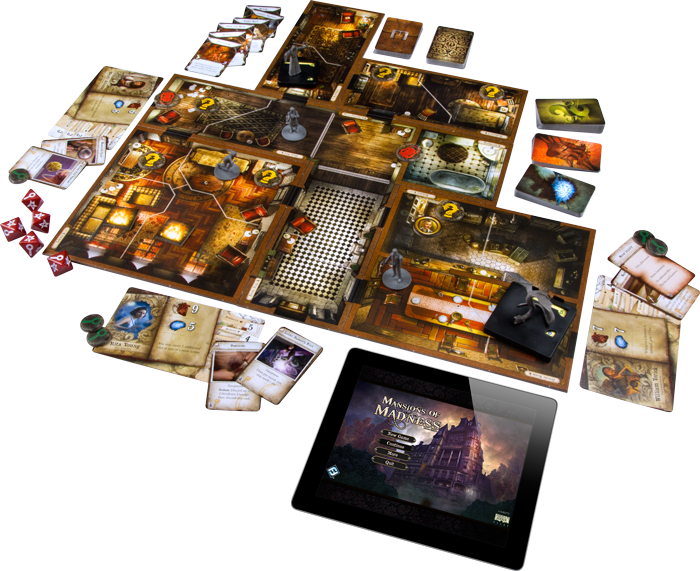
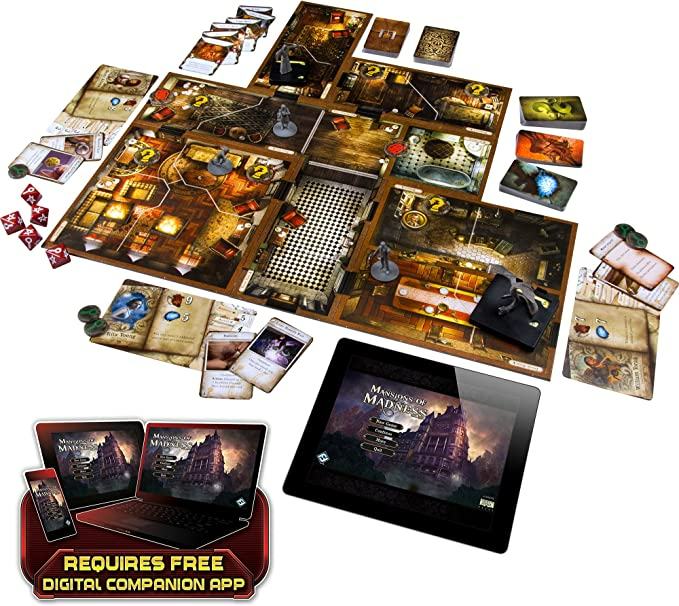
Mansions of Madness 2E requires its free companion app — Steam, iOS, Android — and it is your Keeper. It narrates, spawns monsters, locks doors, shuffles the map, runs the puzzles. No app, no game. That dependence is exactly why it's the most atmospheric box on the table — ambient audio, randomized layouts, a voice in the dark — and also the most common long-term worry buyers raise, because the game's lifespan rides on ongoing app support. Good news as of 2026: the app is still actively maintained.
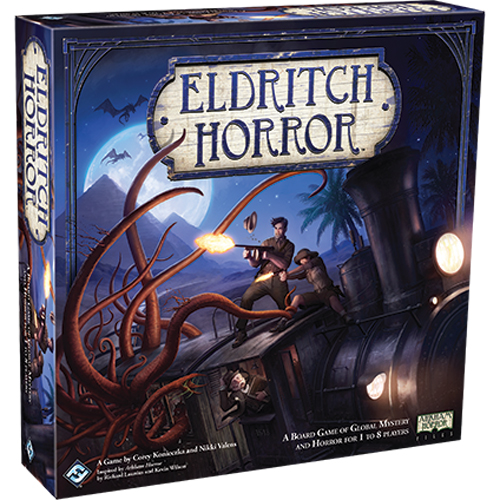
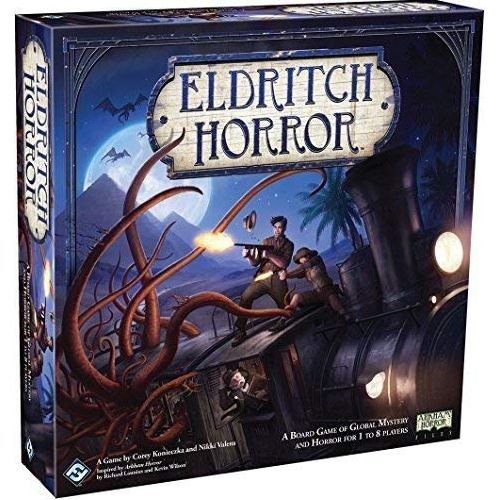
Eldritch Horror needs no app at all. It's 100% physical — dice and decks, beginning to end. The only 'app' is an unofficial fan-made setup helper called the Eldritch Companion, and it's strictly optional. You will never be locked out by a dead server.
Arkham LCG also needs no app. It's a card game; the campaign lives in the box.
So if 'this game still works in ten years no matter what' matters to you, Eldritch and Arkham are forever-boxes. If 'I want a movie to play tonight and I don't care about the year 2040' is your energy, Mansions earns every bit of its app dependence.
The app is why Mansions is the most atmospheric box on the table — and also the one thing every long-term buyer quietly worries about.
Which one is the real solo masterpiece?
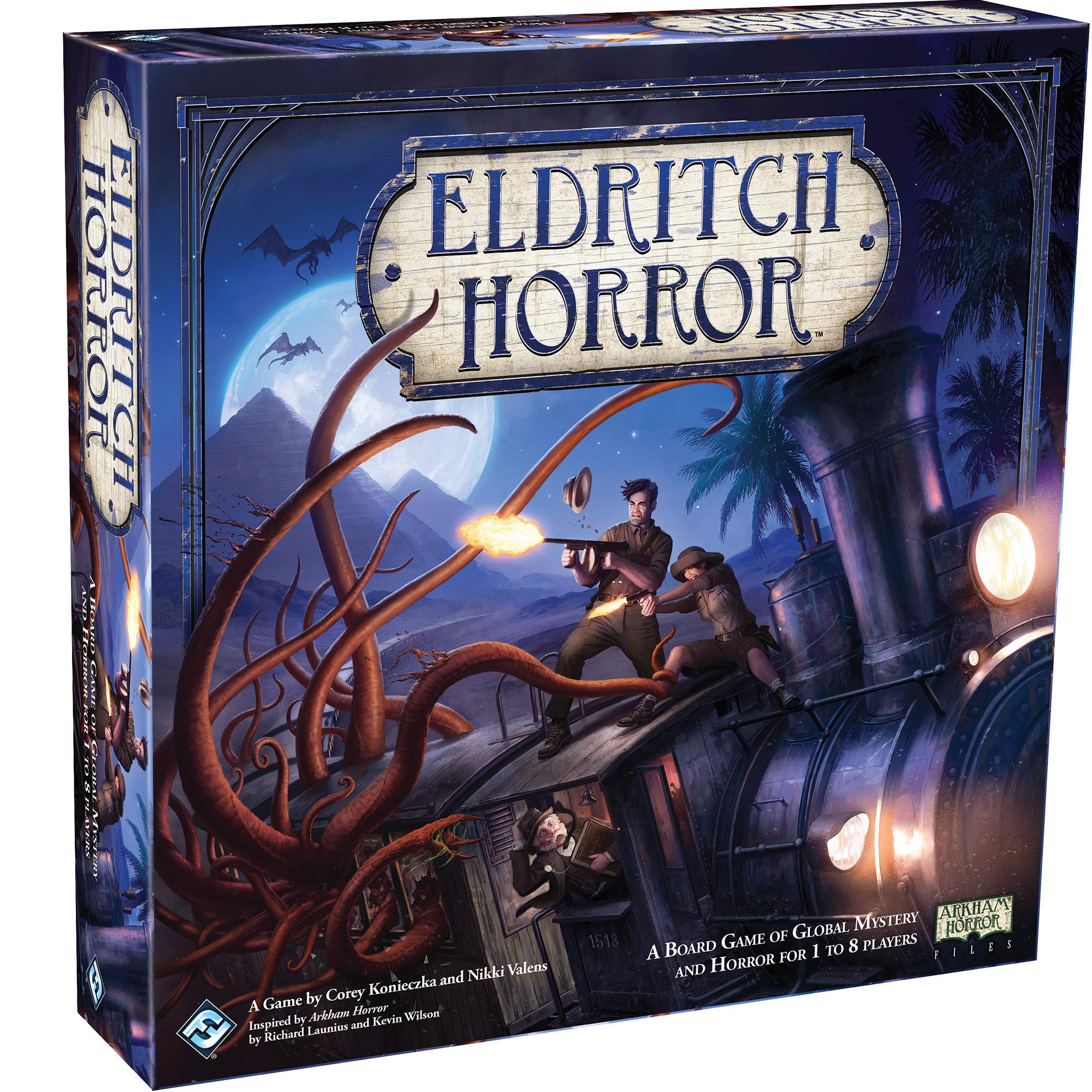

Solo players, gather — because here the consensus is loud and it's not close.
Arkham LCG is the standout solo game, full stop. 'True solo' — one investigator, one deck — is praised everywhere as one of the best solo tabletop experiences available, because it rewards efficiency and teaches the engine fast. The twist veterans love: many of them play 'two-handed' instead — running two decks at once — to hit the intended difficulty curve and unlock real combo teamwork even when nobody else is at the table.
Eldritch is genuinely great solo too, with one big asterisk: a single investigator is the hardest way to play. Solo it has zero downtime (nobody to wait on), but the game wants 3-4 investigators whether you're alone or in a group — so smart soloists run several characters. It's a wonderful solitaire engine; just don't go one-against-the-cosmos and expect mercy.
Mansions is playable solo but designed for groups — it's the weakest of the three alone. The app technically lets you do it (a feat the human-Keeper 1st edition couldn't), but the magic of Mansions is shared gasps. Bring people.
True solo Arkham is one of the best solitaire experiences in the hobby — but the veterans quietly run two decks for the difficulty curve the designers actually built.
Story or atmosphere — which box wins which crown?
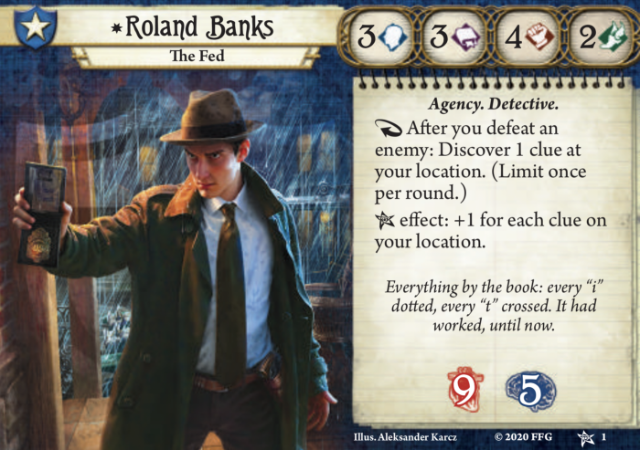

Here's where I get to play favorites for each, because every one of these wins something.
Best story / narrative depth: Arkham LCG, by consensus. Investigators gain XP, suffer trauma, and your choices branch the campaign. Players rank it first by a wide margin, and they keep naming the same peaks — 'The Unspeakable Oath,' 'The Pallid Mask,' the whole Path to Carcosa campaign — as the pinnacle of scenario design in the genre. You're not playing a game so much as co-writing a horror novel where the ink doesn't erase.
Best atmosphere / immersion: Mansions of Madness. The app's narration, the ambient audio, the warping haunted-house reveals — it's a movie you're inside. Its most-loved scenarios are story standouts: 'Escape From Innsmouth' is the most Lovecraftian and unapologetically brutal (it often demands you sacrifice a teammate — chef's kiss of despair), and puzzle-heavy missions like 'In the Jungle Awakens' give your clue-solvers and fighters genuinely distinct jobs.
Best stand-alone encounter writing: Eldritch Horror. This is its crown jewel — multi-stage encounter cards that read RPG-adjacent, a world-spanning Call of Cthulhu campaign compressed into one evening. The writing is the best on the market for a board game, and you get the whole arc in a single sitting.
How do you go from first-night chaos to actually good?
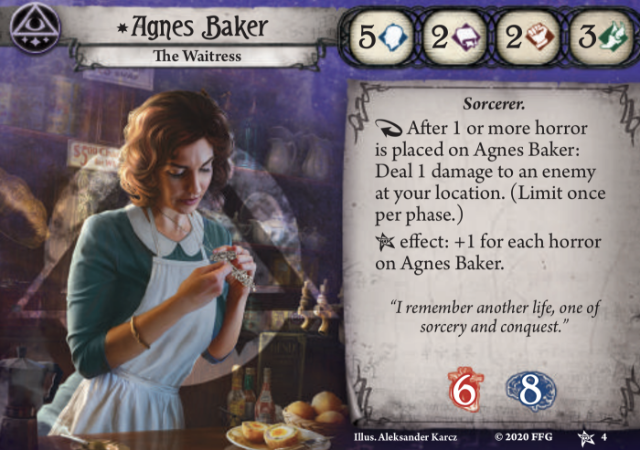
Here's the ladder — basics, intermediate, tournament-brain — because all three of these reward growth and the early hours can be rough.
Start (basics). In Arkham, do NOT build your own deck cold — copy a proven starter from ArkhamDB and specialize (be a fighter OR a clue-seeker, never a do-everything hybrid). And kindly 'cheat' while learning: rewind a turn if you forgot a card trigger — the community openly blesses this for newcomers. In Eldritch, start against Azathoth — you can't fight him, you just solve 3 Mysteries to win, which teaches the clue-and-encounter loop without a boss brawl. In Mansions, slow down — your enjoyment scales with how hard you lean into the narration, not how fast you crack the puzzle.
Level up (intermediate). Master Arkham's action economy: evade enemies instead of killing them when clues matter more, and let the right investigator do the right job — clear the path so your Seeker scoops multiple clues. Time your Act advancement: never advance the Act as your last action of the round — advance early so the table can react before the Mythos phase punishes you. In Eldritch, assign roles out loud (a fighter, a Lore/clue-getter like Trish against Azathoth) and pre-plan as a team. In Mansions, split the party on purpose — send the puzzle-solver ahead while a combat character covers them.
Sharpen (competitive-brain). Arkham has no big formal tournament circuit like its sibling Netrunner — the 'meta' lives in campaign optimization and the ArkhamDB deck community, and 'True Solo' is the purest skill test there is. Learn the chaos bag cold: know your scenario's token spread and calculate your odds before you burn a card on a test you'd pass anyway. Manipulate doom around agenda timing — doom-gaining cards are safest played right before an agenda advances. And track XP efficiency across a whole campaign: if a scenario's lost, salvage max experience or resign cleanly so trauma doesn't snowball.
Copy a proven deck, specialize one role, and rewind freely while you learn — the community will tell you the same thing: optimize later, survive the first night now.
Is this a family night or a connoisseur's obsession?
Let me sort the table by who's actually sitting at it, because this matters more than any BGG rating.
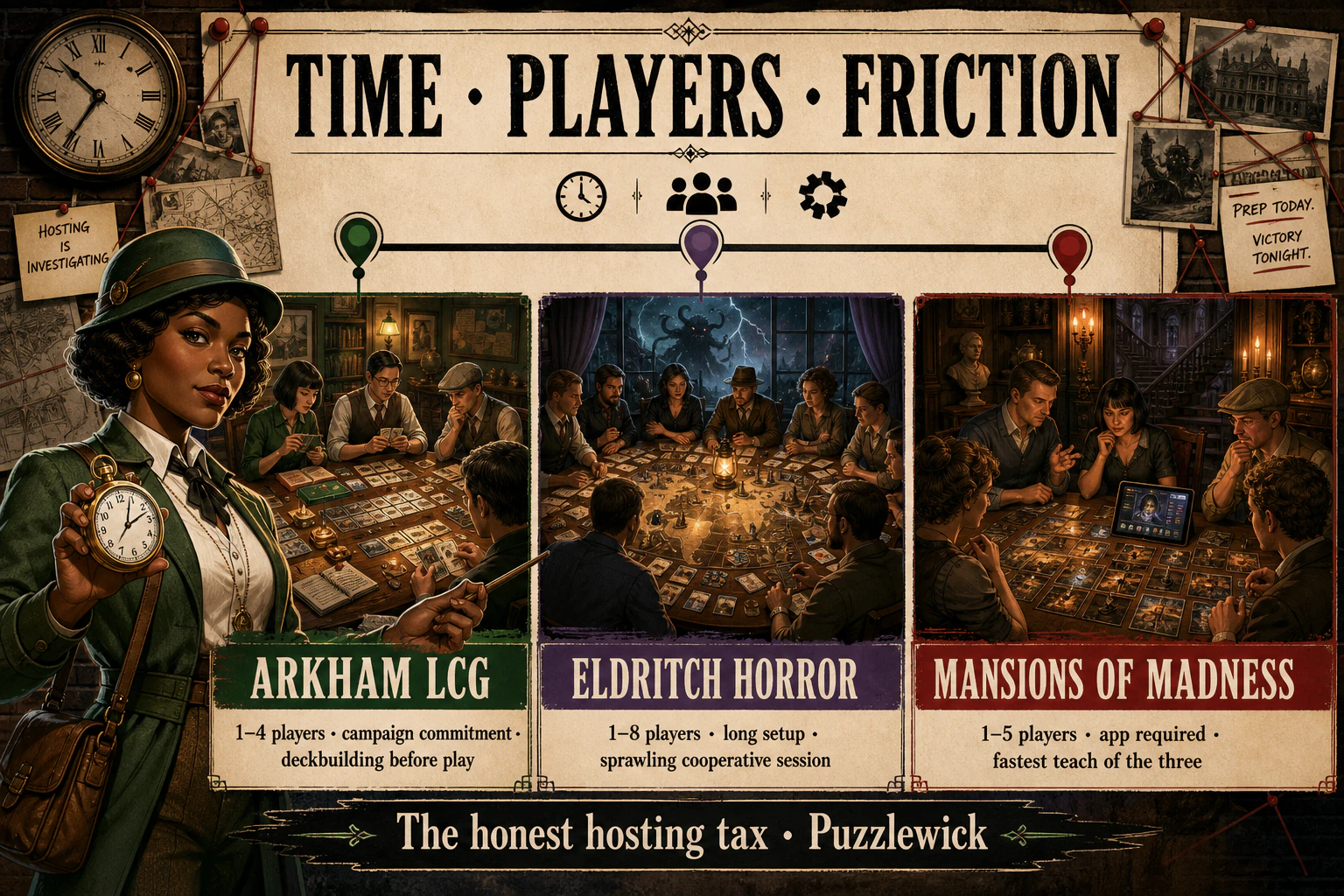
For families and newcomers, the order is clear: Mansions first. Streamlined rules, an 8-year-old can genuinely join, and the app handles ALL the bookkeeping so nobody has to be the rules referee growling at the manual. Eldritch is the next step up — everyone stays engaged, but it's more complex, so save it for the crew that's ready to climb.
Watch the runtime, friends — all three run 2-3+ hours. For a family night, pick a shorter Mansions scenario and let the app's randomized variants keep it fresh across sessions so it never feels like a re-run.
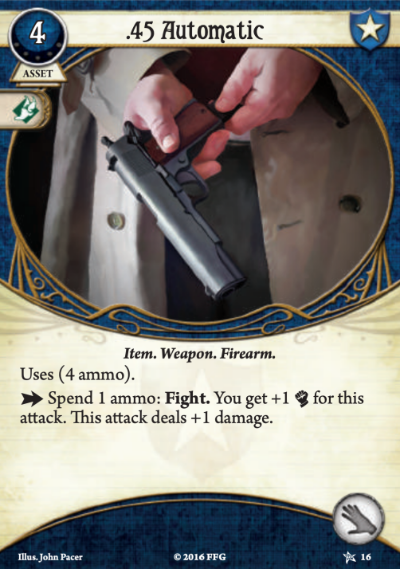
And here's the etiquette landmine to dodge: the alpha-gamer trap. Heavy co-ops invite one confident player to 'solve' everyone's turn — a known Eldritch and Arkham 3E pitfall. Agree up front: each player owns their own investigator's decisions. Advise, don't dictate.
The move that makes co-ops sing with kids and casuals alike: give everyone a clear job — the puzzle-solver, the monster-fighter, the clue-runner — so no one is just watching the confident person play solitaire in front of an audience. Mansions and Eldritch both have roles that suit different temperaments. Nobody's a spectator.
What does it actually cost — and where do I stop?
Real talk on money, because this is where Arkham scares people and where I want to set you free.
Eldritch and Mansions are honest one-box buys. Eldritch runs about $64-80 for the base (commonly $80 MSRP, ~$64 on sale), with Forsaken Lore (~$25-45) as the smart first expansion to add the variety the base box lacks. Mansions' base is the priciest entry at roughly $95-120 (and often partially out of print, so hunt the listings), with expansions ~$25-50 each — Sanctum of Twilight around $23-30 street, Horrific Journeys around $48.
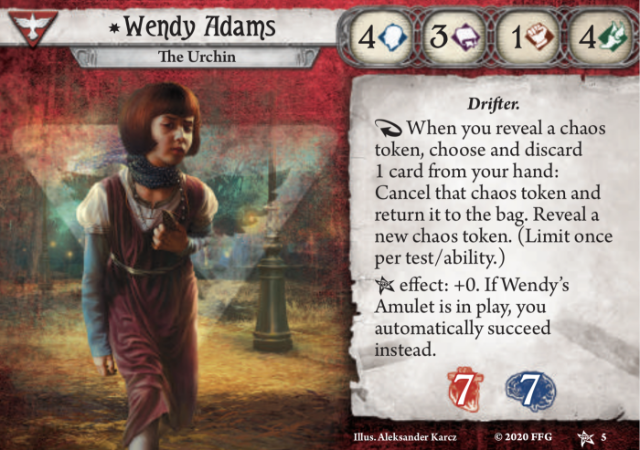
Arkham LCG is the long-tail hobby, and here's the honest catch: the new 2026 Core is cheap — about $65 and genuinely enough to start — but a full expansion cycle runs roughly £130, a healthy collection lands at $300-400, and 'completing' the line creeps toward $600-800, plus sleeves and storage on top. It adds up very, very quickly.
So let me say the kind thing the forums say: you do NOT need everything. There's a satisfying experience at every single tier — many players happily stop at $300-400, plenty are thrilled with just the core and one campaign. Buy the entry that fits your budget, not the completionist's fantasy.
One 2026 heads-up: the new 'Chapter Two' Core Set is a genuine reboot — new intro campaign, five mechanically-new investigators, rebalanced cards. Beginners should buy the newest core, because upcoming campaigns require its encounter sets; the older 2021 Revised Core only matters if you're chasing out-of-print Chapter One content.
The forums will try to sell you the $600 shelf — but the kindest, truest thing anyone said is: there's a great game at every tier, and you do not need everything.
How do you be the host everyone wants to play with?
This is The Player's Code — the part nobody writes down but everybody feels. These are co-ops; the etiquette IS the game.
Win graciously. You win or lose together — so there's no gloating, only 'we did it.' When a clutch chaos-bag pull or a perfect dice roll saves the table, credit the game's gorgeous tension, not your own genius. The we-not-me is the whole spirit.
Lose well. In Arkham especially, losing is the design — a defeated or insane investigator just writes a darker chapter. Treat a campaign loss as story, salvage the XP, and carry the scar forward instead of rage-resetting. The community's golden rule, quoted everywhere: 'if you think a scenario is easy, you're doing something wrong.'
Host the atmosphere. For Mansions, set the scene — dim the lights, run the app's audio through real speakers, let the footsteps and crackling fires do the heavy lifting. Hosts who lean into atmosphere report the single biggest jump in everyone's enjoyment.
Be a courteous tablemate during downtime. Eldritch can leave players idle 5-10 minutes between turns at high counts. Read your lengthy encounter card and plan your move while others act, so the table never stalls waiting on you. And when you teach newcomers, don't open Arkham cold for a casual group — start them on Mansions or a single Arkham investigator, openly allow turn-rewinds for missed triggers, and let people savor a loss instead of optimizing it away.
Buy with grace. Don't shame a tablemate into the $600 collection. Recommend the right entry for their budget, not the completionist dream. And respect the rules-as-written — all three have detailed FAQs and errata; check the scenario FAQ before blaming the box (ignoring Arkham's FAQ updates is a flagged common mistake).
These are co-ops — you win or lose together, so there's no gloating, only 'we did it,' and a campaign loss is just a darker chapter you get to carry forward.
How do you make it a NIGHT, not just a game?
Okay, the fun stuff — the snacks, the lexicon, the little rituals that turn 'we played a board game' into 'remember that night.'
Lean all the way into the storytelling. Read the encounter cards (Eldritch) and the app narration (Mansions) ALOUD, in your spookiest voice — players report enjoyment scales directly with how hard you ham it up. The flavor text is not filler; it's the campfire.
Run Mansions like a haunted-house movie. App audio through a Bluetooth speaker, lights down, and let the ambient footsteps and crackling fires set the dread. It's the cheapest upgrade in the hobby.
Theme the snacks and vibe to the scenario. A globe-trotting Eldritch night and a claustrophobic Mansions mansion-crawl want completely different energy on the table — match the mood and the night levels up for free.
Keep a campaign log for Arkham. Journal your investigator's scars, trauma, and choices — the persistent story is the entire point, and re-reading it before the next session rebuilds the tension like a 'previously, on...' Bonus: sleeving and storage is a rite of passage; a good insert or binder turns the expansion sprawl from a chore into part of the hobby.
Hand idle Eldritch players the lore. During someone else's long turn, let a waiting player read the flavor text of the encounter the active player just triggered — everyone stays inside the story instead of checking their phone. And always lean on ArkhamDB, the free community deckbuilder, to browse and copy proven decks before you build your own — it flattens that brutal early curve into something joyful.
Read the cards aloud in your spookiest voice, dim the lights, theme the snacks — your enjoyment scales directly with how hard you lean in.
What experienced tables keep reporting
Recurring owner patterns, synthesized in Puzzlewick's words. Follow each evidence trail to read the original discussion.
The one verdict that surfaces over and over: if you want plug-and-play immersion for a group or new players, Mansions is the buy — it sits right in the sweet spot of price, variety, and being easy to learn. If you've got the budget and want the deepest game, Arkham LCG is the connoisseur's pick.
hobby-blog + SU&SD forum consensus
App dependence is treated as the whole dividing line. Mansions' app IS the Keeper — mandatory, but it's also exactly why the game is the most atmospheric, with ambient audio and randomized maps. Eldritch's only app is an optional fan-made setup helper, and Arkham needs none.
Wikipedia / BGG general consensus
On story depth, players put Arkham LCG first by a wide margin — investigators earn XP, suffer trauma, and your choices branch the campaign. The Path to Carcosa run, and 'The Unspeakable Oath' especially, get named again and again as the pinnacle of scenario design.
Board Game Quest + BGG
Arkham's golden rule gets quoted everywhere: if a scenario feels easy, you're doing something wrong. Losing is the intended experience — a defeated or 'resigned' investigator just changes the story rather than ending the game.
Medium guide + Giant Brain
True solo Arkham (one investigator, one deck) gets called one of the best solo tabletop experiences available — but many veterans run 'two-handed' (two decks) to hit the difficulty curve the designers actually intended.
ArkhamDB community + 2026 solo guides
Eldritch's recurring warning is downtime: even at four players, rounds can run 20 minutes with 5-10 minute waits per player. Solo it has zero downtime — but a lone investigator is the hardest way to play, and 3-4 is the sweet spot whether solo or grouped.
Solo Meeple + BGG solo reviews
Veterans frame the feel difference cleanly: Mansions plays tactical and unpredictable, zoomed into one location for escape-room tension, while Eldritch (and Arkham 3E) reward strategic role-assignment — designate a fighter, a clue-gatherer — across a much wider scope.
RPG Pub thread consensus
On cost, the honest take is that Arkham's core is cheap but a full cycle is roughly £130 and you'll want several, plus sleeves and storage — it adds up fast. The relief: lots of players happily stop at $300-400, and you do not need everything to have a great time.
Medium guide + 2026 buying guides
For families and kids the order is settled: Mansions first (an 8-year-old can join), then Eldritch (everyone stays engaged but it's heavier) — and in any heavy co-op, agree up front that each player owns their own investigator's calls to dodge the alpha-gamer problem.
SU&SD forum + board-game groups
On the 2026 reboot, reviewers agree the 'Chapter Two' Core is the real deal — new intro campaign, five new investigators, rebalanced cards — and beginners should buy the newest core because upcoming campaigns need its encounter sets; the 2021 Revised Core only matters for out-of-print Chapter One content.
Ancient Evils 2026 Core review + retailers
The picks
Some links below are affiliate links — as an Amazon Associate, Puzzlewick earns from qualifying purchases, at no extra cost to you. It never changes a pick.
 8 photos
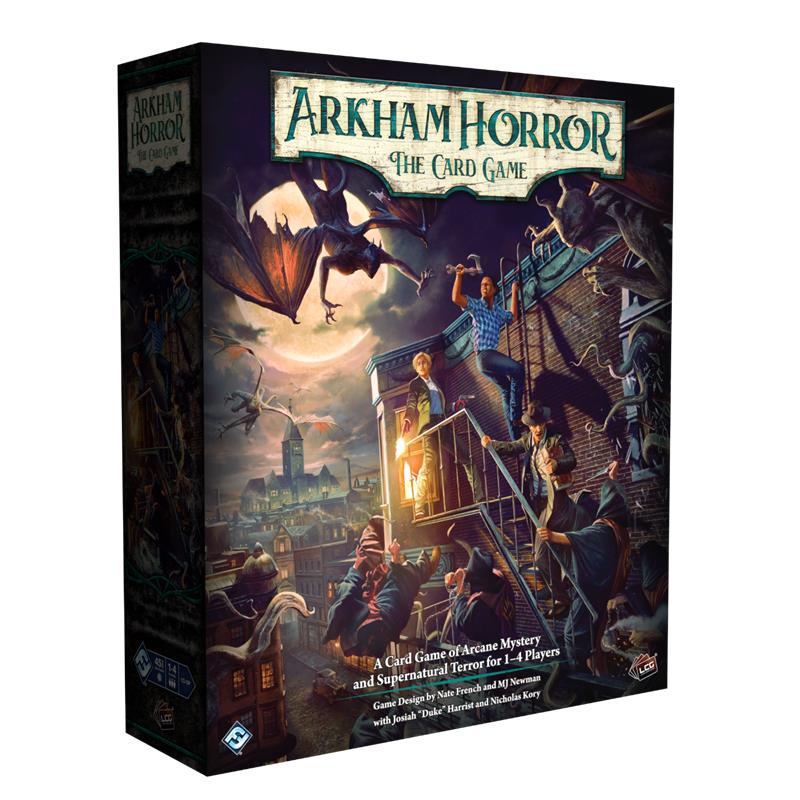
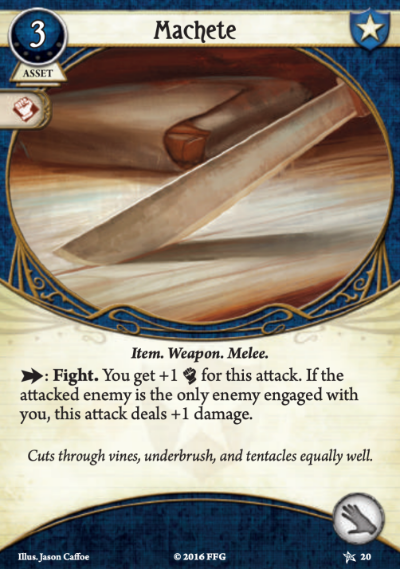
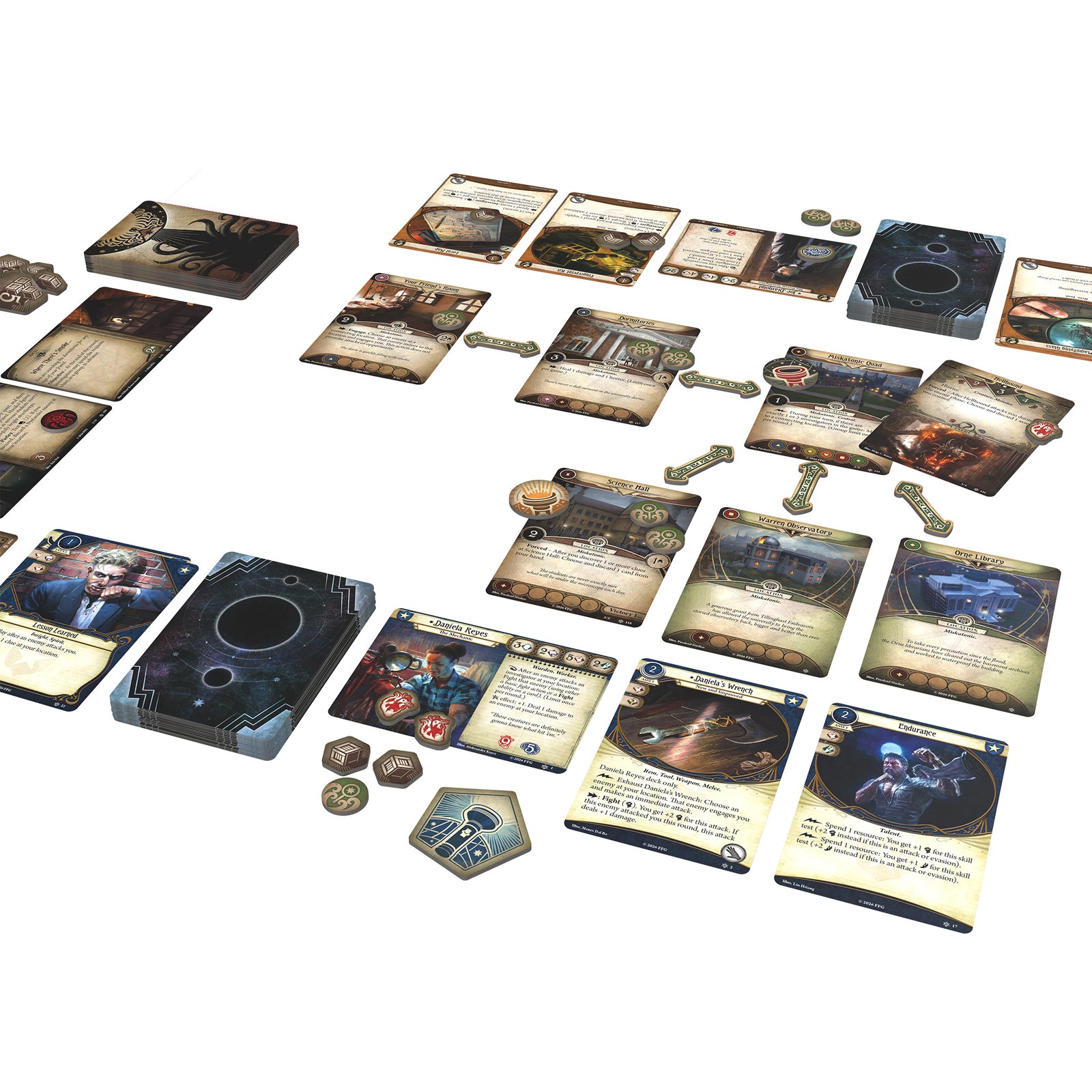
 Arkham Horror: The Card Game (LCG)
- Players
- 1-2 · best 2
- Time
- 60-120 min
- Age
- 14+
- Complexity
- 3.56 / 5
- Publisher
- Fantasy Flight Games · 2016
- Designers
- Nate French, MJ Newman
 14 photos
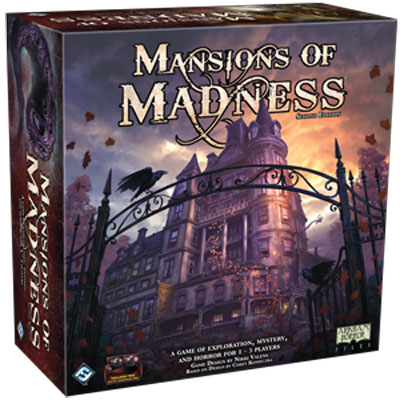
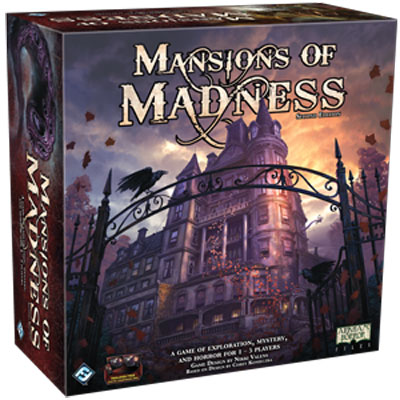
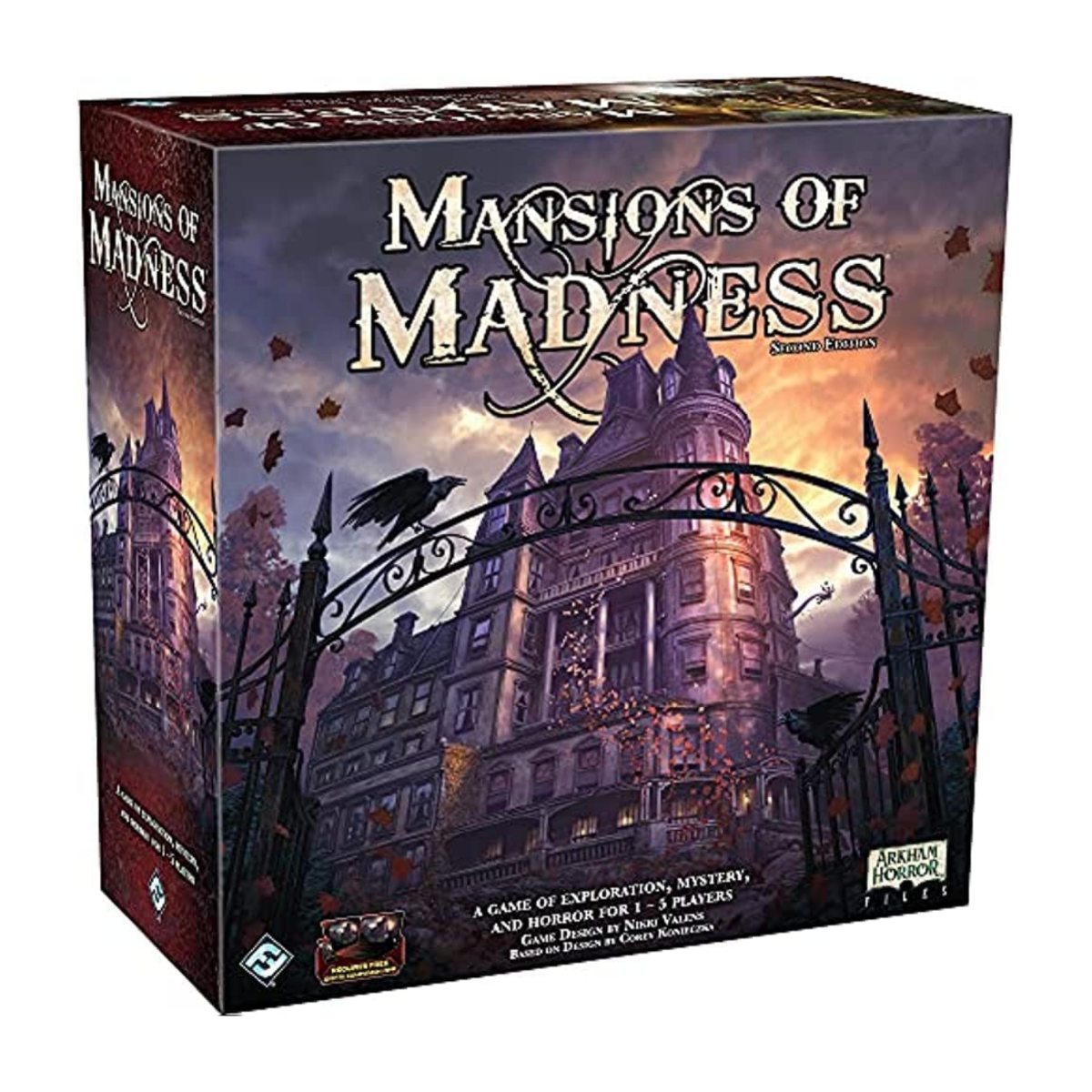
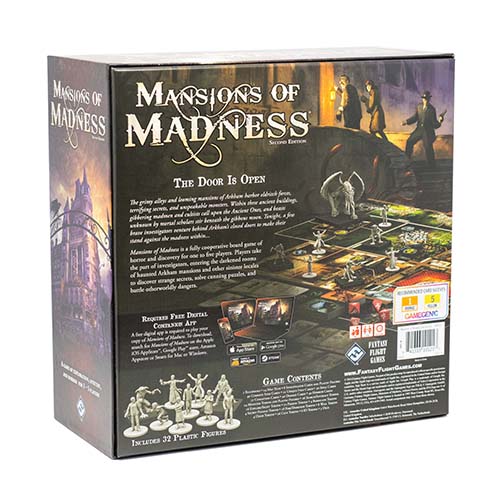
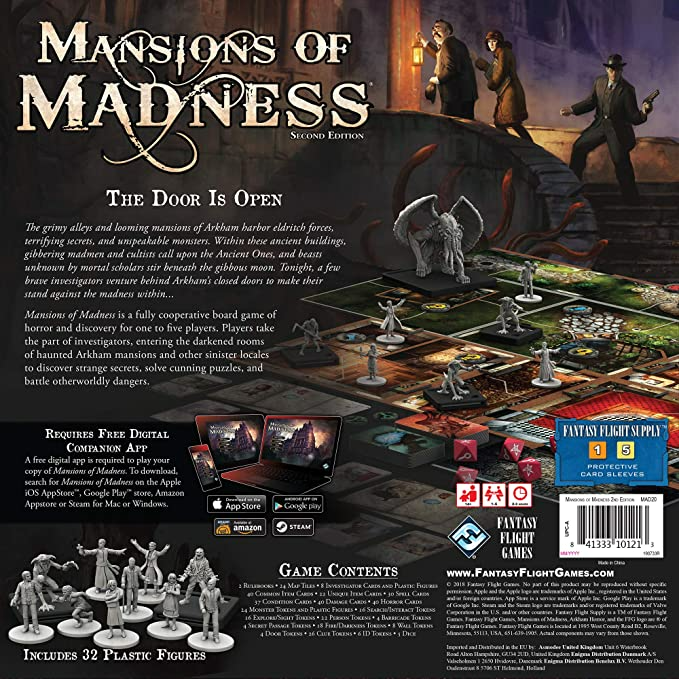
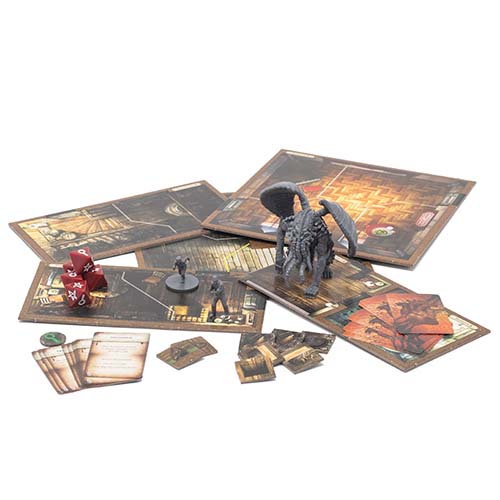
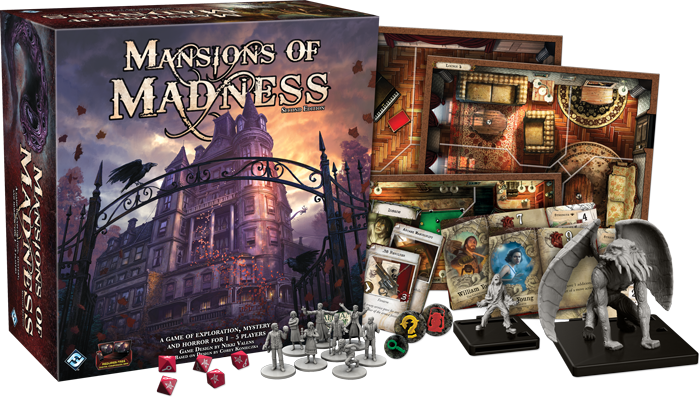
 Mansions of Madness: Second Edition
- Players
- 1-5
- Time
- 120-180 min
- Age
- 14+
- Publisher
- Fantasy Flight Games · 2016
- Designer
- Nikki Valens
 9 photos
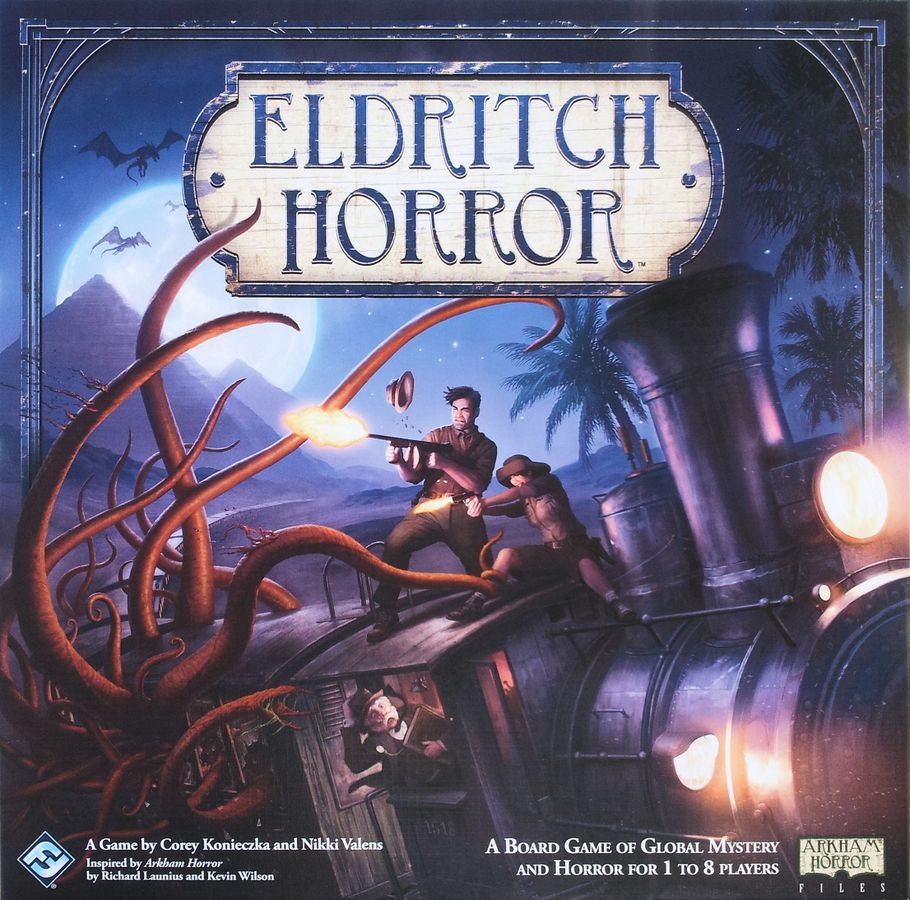
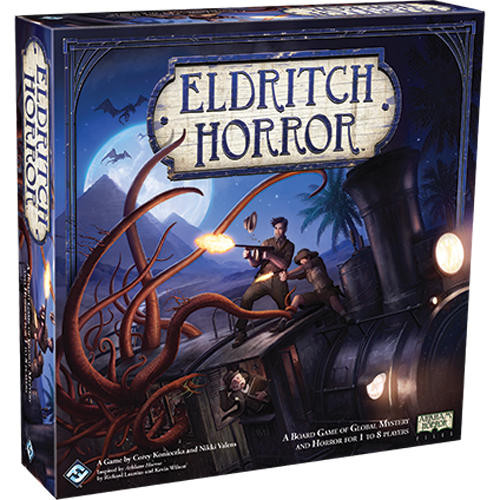
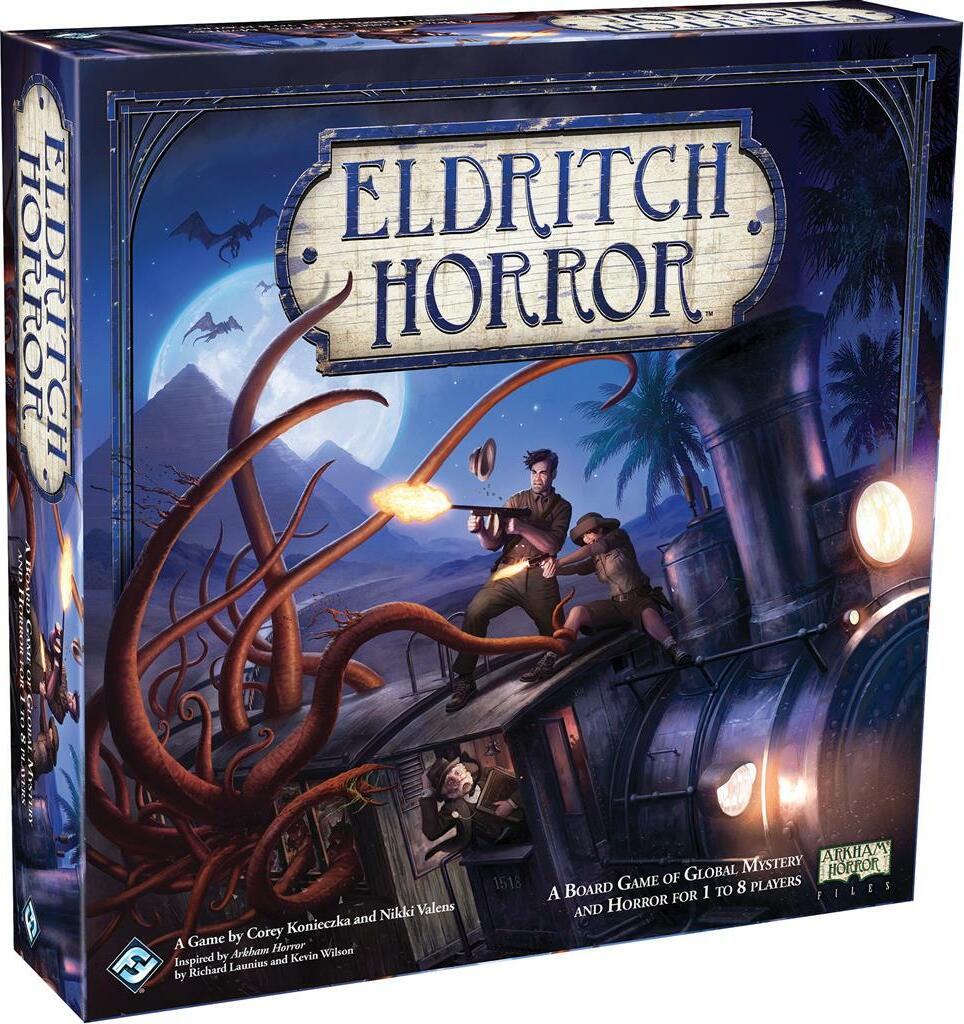
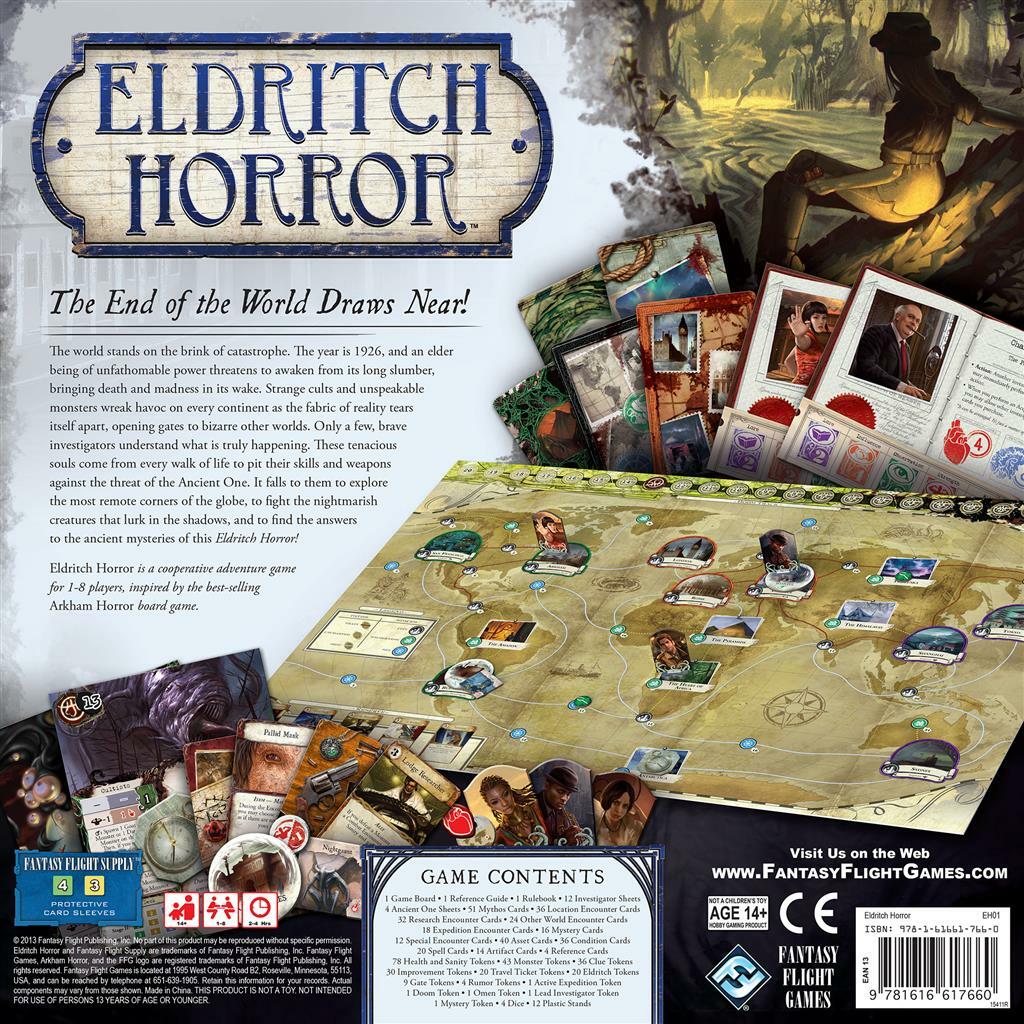
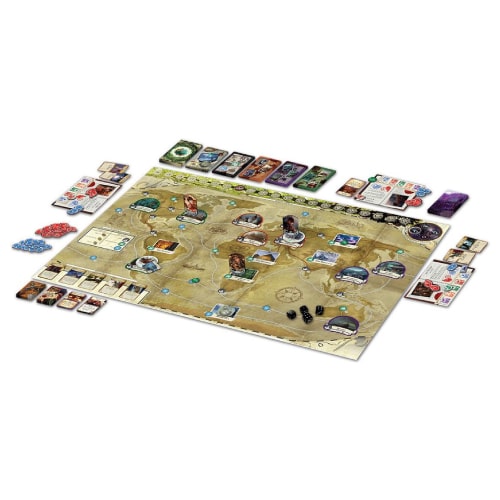
 Eldritch Horror
- Players
- 1-8 · best 3-5
- Time
- 120-240 min
- Age
- 14+
- Complexity
- 2.0 / 5
- Publisher
- Fantasy Flight Games · 2013
- Designers
- Corey Konieczka, Nikki Valens
Questions, answered
If I can only buy ONE Lovecraft co-op, which is it?
Mansions of Madness 2nd Edition — it's the most-repeated answer because it nails the sweet spot of price, variety, and ease of learning, and delivers the most immersion straight out of the box. Choose Arkham LCG instead if you specifically want the deepest, story-driven solo/duo campaign and don't mind the cost and learning curve. Choose Eldritch Horror if you want a self-contained, no-app, globe-trotting adventure with huge variety.
Do I really need the app, and what happens if it dies?
Only Mansions 2E requires an app — its free companion (Steam/iOS/Android) is your Keeper, and you literally cannot play without it, which ties the game's lifespan to ongoing support. Eldritch needs no app at all (the only one is an optional fan-made setup helper), and Arkham LCG needs no app either. As of 2026 the Mansions app is still actively maintained, but app-dependence is the most common long-term worry buyers raise — if 'plays forever, offline' matters, go Eldritch or Arkham.
Which is best for solo play?
Arkham LCG, hands down — true solo is praised as one of the best solo tabletop experiences going, and many play 'two-handed' (two decks) for the intended challenge. Eldritch is great solo too, but it plays best with 3-4 investigators; a single investigator is actually the hardest mode (though solo it has zero downtime). Mansions is playable solo but designed for groups and is the weakest of the three alone.
How much does it really cost to get into Arkham LCG?
About $65 for the 2026 Core, which is genuinely enough to start. But it's a long-tail hobby: a full expansion cycle runs roughly £130, a healthy collection lands at $300-400, and 'completing' the line approaches $600-800, plus sleeves and storage. The freeing news — there's a satisfying experience at every tier, and you absolutely do not need everything; plenty of players stop happily at $300-400 or even just the core plus one campaign.
What's the difference between Arkham Horror the card game and the Arkham Horror board game?
They're different products. Arkham Horror: The Card Game (LCG) is a deckbuilding, campaign-driven co-op where investigators persist and gain XP across scenarios. Arkham Horror 3rd Edition is a separate board game with a modular map and scenarios — more 'Lovecraftian in feel' to some, but widely considered not as strong as the LCG or Eldritch. Eldritch Horror is the globe-spanning board game spun off from that same family.
Which has the best story and which has the best atmosphere?
Best story and narrative depth: Arkham LCG, by consensus — branching campaigns, persistent investigators, and acclaimed scenarios like The Unspeakable Oath and the whole Path to Carcosa. Best atmosphere and immersion: Mansions of Madness, thanks to the app's narration, ambient audio, and warping haunted-house reveals. Eldritch takes the crown for the best stand-alone encounter writing and globe-trotting adventure.
Should I buy the 2026 'Chapter Two' Core or the older 2021 one for Arkham?
Buy the newest 2026 'Chapter Two' Core. It's a genuine reboot — new intro campaign, five mechanically-new investigators, rebalanced cards — and reviewers advise beginners to start there because upcoming campaigns require its encounter sets. The 2021 Revised Core now only matters if you're specifically chasing out-of-print Chapter One content.
Imani's verdict
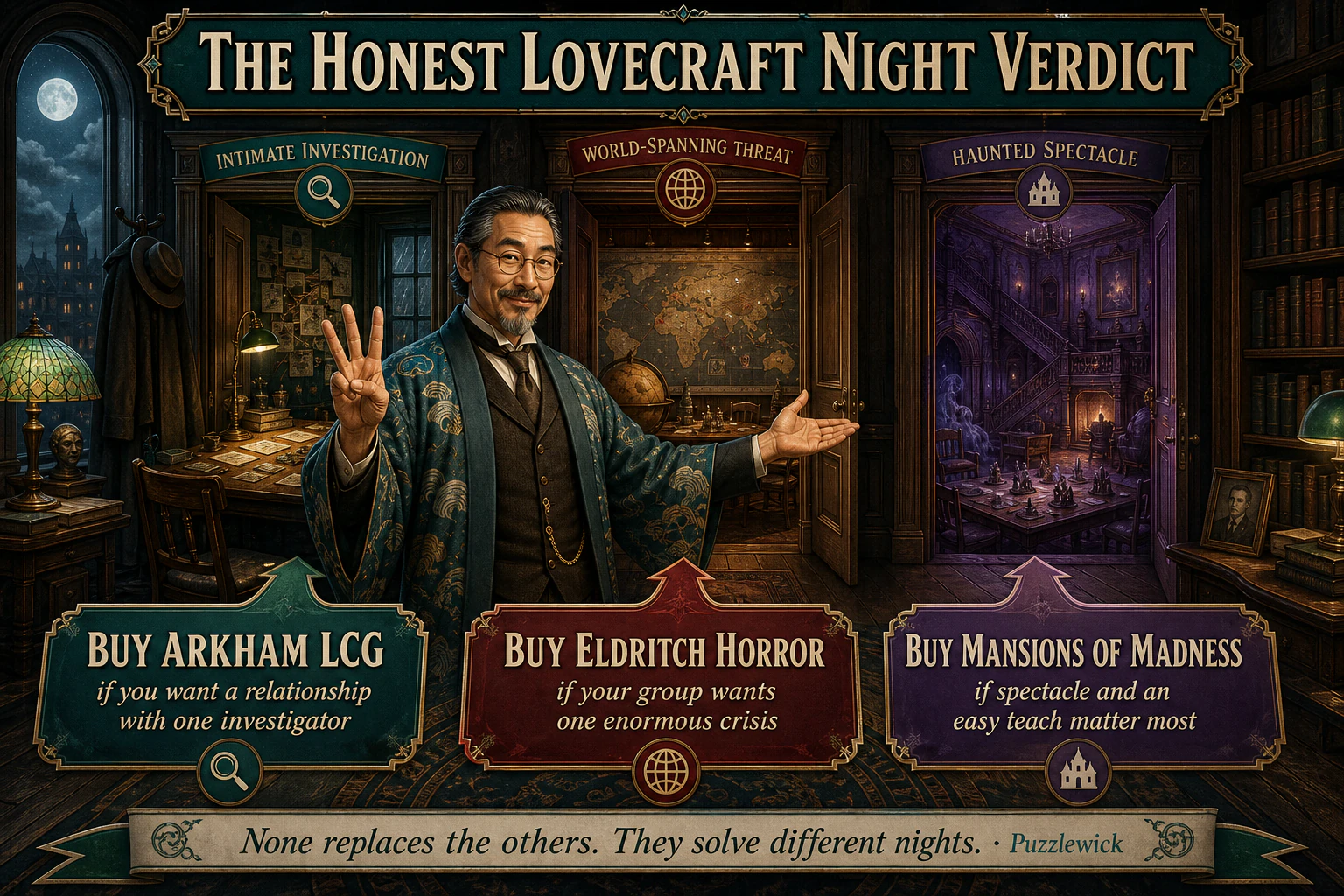
Here's my ruling, warm and final. There is no throne with one game on it — there are three crowns and you pick the one that fits your table.
Buy MANSIONS OF MADNESS 2E if you want the one box that makes any group gasp — lights down, app whispering, escape-room dread, an 8-year-old or a first-timer welcome at the table. It's the sweet-spot pick and the easy yes for most people. Just know the app is the deal and the deal is for tonight, not 2040.
Buy ARKHAM LCG if you mostly play solo or as a duo and you want a horror novel you co-write across a campaign that remembers your scars. It's the deepest, most rewarding box here — the connoisseur's love — and worth every hour and dollar IF that's the night you crave. Start at $65, stop wherever feels good, never let anyone shame you toward the $600 shelf.
Buy ELDRITCH HORROR if you want a whole world-spanning adventure in one evening, no app, no treadmill, best-in-class encounter writing, forever-playable on a shelf. Run it at 3-4 investigators and grab Forsaken Lore, and it'll out-story most campaigns in a single sitting.
Match the box to the people, lean all the way into the atmosphere, give everyone a job, and lose like it's part of the tale — because it is.
Bring: for Mansions, your most dramatic friend and a Bluetooth speaker — expect lights-down haunted-house gasps and one teammate you'll have to sacrifice. For Arkham, your steadiest solo/duo partner and a campaign journal — expect scars, hard losses, and a story that's yours forever. For Eldritch, your globe-trotting crew of 3-4 and themed snacks — expect a full Cthulhu adventure in one unforgettable evening.
Still deciding? Take the Game-Finder — answer seven quick questions and the cabinet hands you the one board game built for your table, with a buy link and your own shareable player talisman.
Research ledger 10 sources · reviewed 2026-08-13
Specifications, rules, current product information, community experience, and contrary evidence were checked against the sources below. Commercial links are kept separate from editorial evidence.
- fantasyflightgames.comfantasyflightgames.com/en/products/arkham-horror-third-edition
- fantasyflightgames.comfantasyflightgames.com/en/products/eldritch-horror
- fantasyflightgames.comfantasyflightgames.com/en/products/mansions-of-madness-second-edition
- fantasyflightgames.comfantasyflightgames.com/en/products/arkham-horror-the-card-game
- boardgamegeek.comboardgamegeek.com/boardgame/257499/arkham-horror-third-edition
- boardgamegeek.comboardgamegeek.com/boardgame/146021/eldritch-horror
- boardgamegeek.comboardgamegeek.com/boardgame/161936/mansions-of-madness-second-edition
- fantasyflightgames.comfantasyflightgames.com/en/more/product-document-archive
- reddit.comreddit.com/r/boardgames/comments/ebskg7/eldritch_horror_vs_arkham_horror_vs_mansions_of
- everythingisagame.comeverythingisagame.com/arkham-horror-vs-eldritch-horror-vs-mansions-of-madness
Okay but have you seen what everyone’s saying about this?


Keep exploring
The next smart rabbit holes.
✒ Universe HubArkham Horror Universe: the whole buying pathStart with the interactive buyer intake: separate the 2026 Chapter Two Core from Chapter One legacy boxes and the entirely...☾ Topic PathCooperative Horror Games: compare the whole shelfCooperative horror works when the rules pressure the story without burying the table. This cluster maps what to buy, how campaigns...Buying GuideArkham Horror LCG Complete Collection Guide: Every Box, Campaign, and ExpansionThe definitive 2026 Arkham Horror LCG buying guide: what you need, what works together, phased purchases, spoiler-light campaign stories,...