Spirit Island: The Complete Island — Co-op's Crown Jewel, From Spirits to Nature Incarnate
Why the island that taught a genre to think defensively is the keeper's grail — and how to begin building it when half the set has gone hard to find.


Written and reviewed by Robert Pruitt · how this guide was made
Last editorial refresh: 2026-06-24 Gold-standard QA: 2026-07-17 8 sources reviewed Affiliate links checked during gold-standard pass

The short answer
Spirit Island is the co-op grail — widely cited as the best cooperative board game ever designed, sitting inside BoardGameGeek's all-time top ten. You play the island's elemental spirits repelling colonial invaders, and the genius is that it rewards prevention over reaction. The true grail is the assembled set, but as of mid-2026 only the core game ($89.99 MSRP, ~$48–$54 street) is reliably in stock. Jagged Earth has gone scarce and hard to find, and Nature Incarnate is sold out at the publisher — so buy the core now, and treat the expansions as hunt-when-they-surface targets. Stock moves fast here, so always check the live link before you commit.
Decision map
Choose in thirty seconds
The foundation every spirit grail is built on — buyable today, a top-ten game on its own
The in-stock way to keep expanding while you hunt the scarce grail boxes
I am Robert, and I keep a short list of games that earn permanent shelf real estate — the ones I'd carry out of a burning house. Spirit Island sits at the top of it. This is not a game you play through and trade away. It's a game you assemble once, over months or years, and then replay for a decade. The full collection is a genuine save-up project, and right now it's also a genuine treasure hunt: two of its three boxes have gone scarce on retailers. Let me tell you why it's worth the patience, and exactly how to start.
Start here, then go deeper
You are in the right cabinet.
 ♛ Topic PathGrail Board Games: compare the whole shelfA grail earns its space only when the experience survives the price, setup, storage, and group commitment. These are expensive-game...
 Best Of5 New Board Games Worth Your Next Game Night: Cozy Stories, Clever Cards, and a Proper AdventureImani matches five current tabletop releases to five kinds of evening, with the awkward bits included: permanent stickers, limited...
 GuideThe 2026 Board Game Hype Test: Which Trending Games Are Actually Worth Your Table?BoardGameGeek Hotness measures attention on BoardGameGeek, not sales and not your future happiness. Robert turns five fast-moving names...
What makes Spirit Island the most-loved co-op game ever designed?

Ask a room of serious hobbyists for the best cooperative board game ever made and Spirit Island wins more often than anything else on the shelf. It lives inside BoardGameGeek's all-time top ten overall and near the summit of the co-op rankings — a position it has held for years, not a season's hype.
The pitch is unforgettable: you don't defend the island, you are the island. Each player becomes a primal elemental spirit — lightning, river, shadow, vital strength — growing an asymmetric grid of powers to drive colonial invaders back into the sea. No two spirits play remotely alike. One floods the lowlands; another whispers fear into settlers until they flee on their own.
What earns the reverence is the depth-to-bloat ratio. Most heavy games pile on rules to feel deep. Spirit Island's rules are tight; the depth comes from the collision of your spirit, the board, the invader deck, and your teammates' plans. Every game is a fresh puzzle assembled from clean parts.
It's also a game with a spine. The theme isn't decorative — you are the colonized land fighting back, and that reframing gives the table real weight. A keeper's game in the truest sense: it teaches gently, scales to brutal, and never stops revealing new lines. That combination is exactly why it never leaves my shelf.

Why does 'prevention over reaction' change how you think about a co-op?
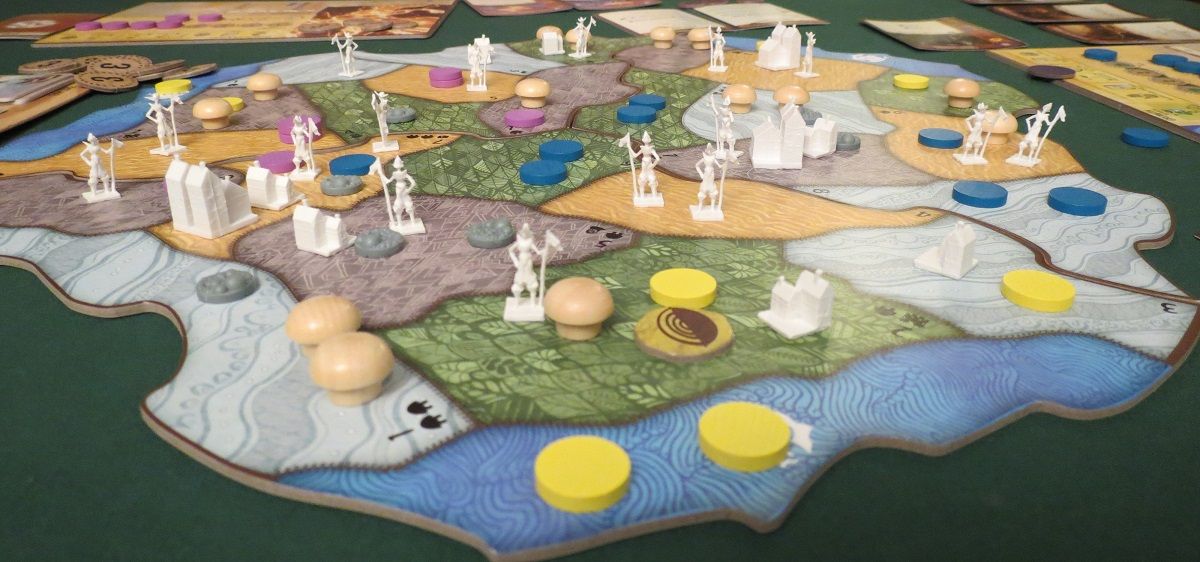
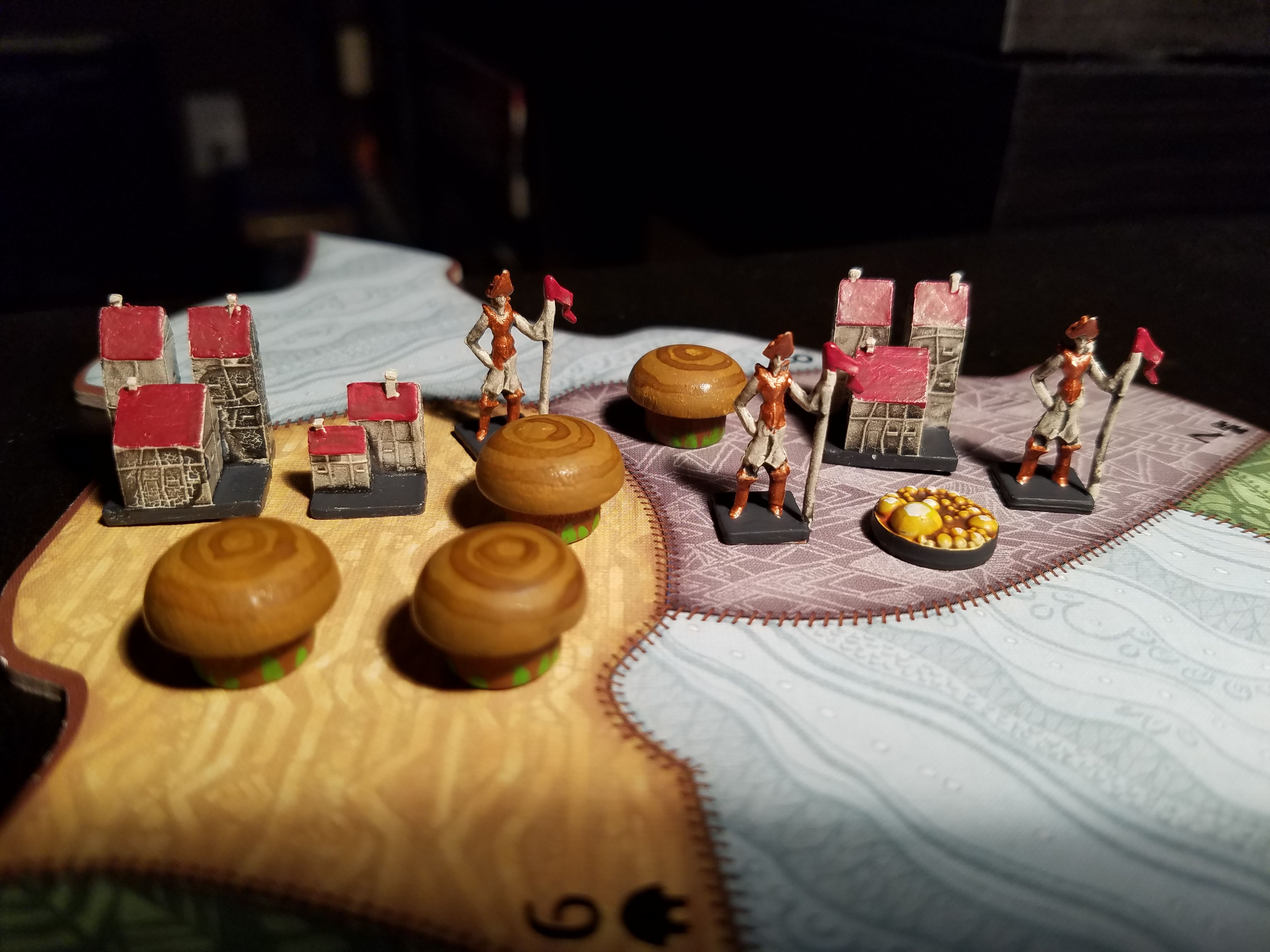
If you internalize one principle, make it this — and it's the single idea forum veterans repeat most: stopping invaders from building is far more efficient than destroying towns and cities after they appear.
Most co-ops train you to firefight. A threat lands, you scramble to extinguish it, the next one lands, you scramble again. Spirit Island quietly inverts that instinct. The invader deck telegraphs where the next wave will explore and build a turn ahead. The masterful play is to read that signal and unmake the threat before it exists — push the explorers off a land, deny the terrain, and an entire chain of towns and cities never spawns.
This is why new players struggle and improving players suddenly bloom. Reacting feels productive; you're destroying things, the board looks busy. But the table that wins is the one playing a turn into the future, defusing builds while they're still just explorers. The math is lopsided: an ounce of prevention erases a pound of cities.
- Read the deck — the next stage is visible; act on it now.
- Deny terrain — clear the land before it can be built on.
- Trust the long game — a quiet turn that prevents three towns beats a flashy turn that kills one.
Once it clicks, you stop chasing fires and start setting the board on your terms. That shift is the whole game.
Which spirit should a brand-new player pick first?
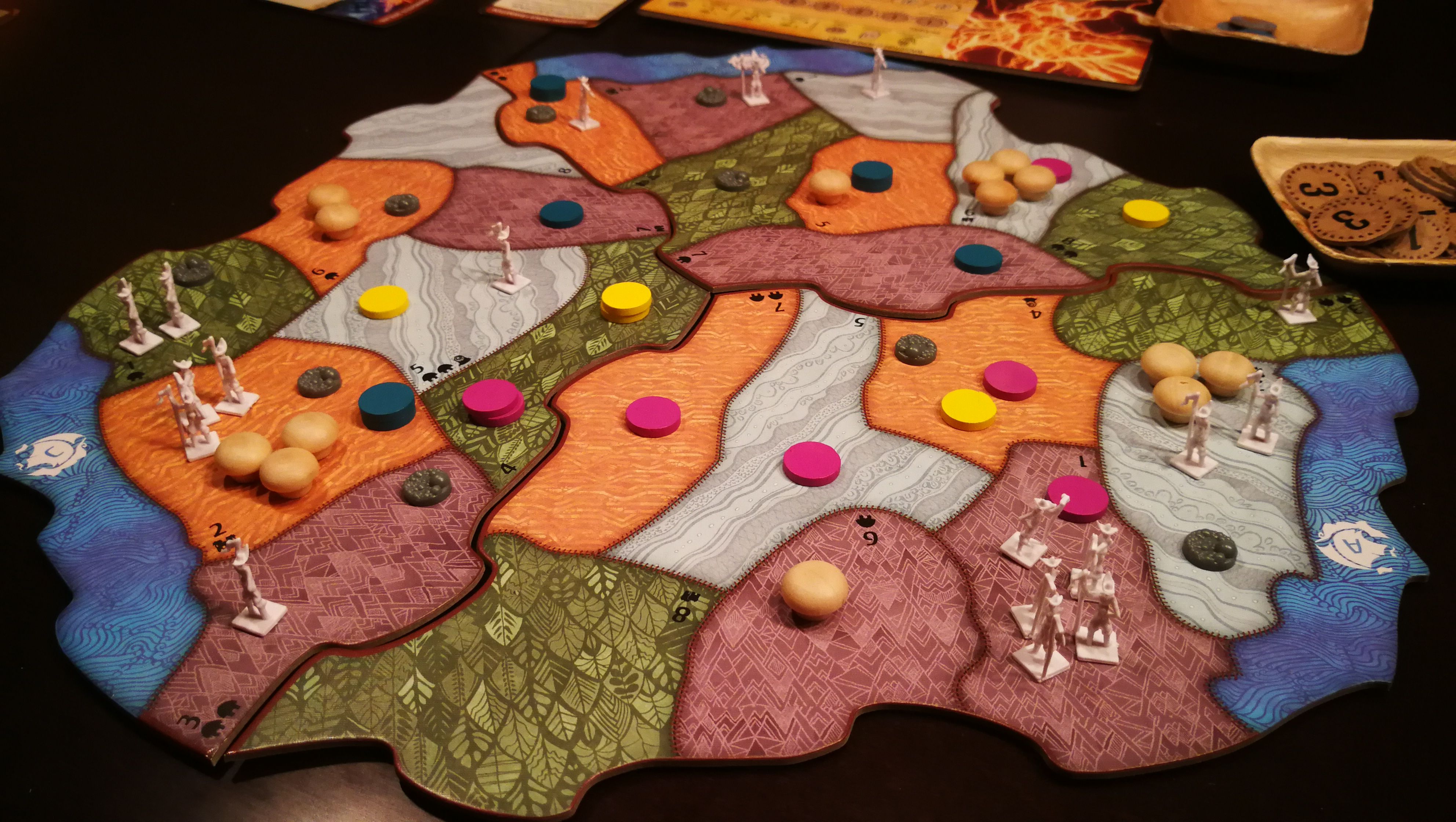
This is the highest-leverage decision a first-timer makes, and the community is near-unanimous. Strategy primers and the long-running forum threads land on the same answer: start with Lightning's Swift Strike.
Lightning is the recommended on-ramp for three reasons. It's classified as a low-complexity spirit, so its turns stay simple while a new player is still learning the board, the deck, and the phases all at once. It plays as virtually all offense — direct, board-clearing damage that excels at destroying towns and cities — which makes its impact immediately legible to a brand-new brain. And because that impact is so obvious, a first-timer can actually see their plan working, which is the fastest way to build the confidence the game lives or dies on.
One honest mechanical note, since it's the kind of detail people get wrong: most of Lightning's powers (including its innate, Thundering Destruction) are Slow by default. Its signature trick is an innate, Swiftness of Lightning, that lets it convert some Slow powers to Fast using Air elements — Lightning bends the speed dial rather than living permanently in the Fast phase. You don't need to master that on game one; just know the spirit's appeal is its simple, hard-hitting offense, not a single fixed phase.
The spirits you should not open with are the slow, control-heavy ones whose payoffs arrive a turn later — they're brilliant, but they reward a feel for the engine you don't have yet on game one. Save the shadow-and-fear toolbox and the high-complexity expansion spirits for after the basics click.
My standing advice when I teach: hand the newcomer Lightning, take a low-complexity spirit yourself, and let them watch a few of your turns before they fully trust their own. Confidence on the first island is everything — and Lightning's obvious, board-clearing punch is the surest way to earn it.
Do you need Jagged Earth and Nature Incarnate — or is the core enough?
Honest answer: the core game alone is a complete, replayable, genuinely great experience. You can play it for a year and never feel short-changed. The expansions don't fix the base game — they multiply it.
Jagged Earth is the famous one — a sprawling box that adds spirits, adversaries, and mechanics until the system feels almost endless. It's the upgrade that turns a beloved game into a lifelong one, which is exactly why its scarcity stings. Nature Incarnate goes further still with the Incarna mechanic and eight more spirits, but note the hard dependency: Nature Incarnate requires Jagged Earth to play. Buy in order — core, then Jagged Earth, then Nature Incarnate — or you'll own a box you can't use.
Here's the unvarnished 2026 reality, and the reason this grail is also a hunt: Jagged Earth has gone scarce and hard to find. It's no longer listed on the publisher's own store, and availability at third-party retailers flickers — in stock at one tracker and sold out across another on the same day. Nature Incarnate is sold out at the publisher ($59.95) and equally hard to pin down elsewhere. So the dreamed-of three-box "Complete Island" is tough to assemble at retail right now, and stock moves fast — always check the live link before you commit.
The harder truth about reprints: in April 2026, Greater Than Games' brand was acquired by Handelabra — but that deal explicitly excluded Spirit Island, covering only the Sentinel Comics / Sentinels of the Multiverse line. Spirit Island was carved out of the sale, and its publishing future is currently reported as uncertain. That doesn't mean reprints won't happen, but it does mean the outlook is murkier, not brighter. Buy the core, and treat the expansion boxes as a patient hunt rather than a sure thing.
How do Adversaries and difficulty dials turn one game into a hundred?
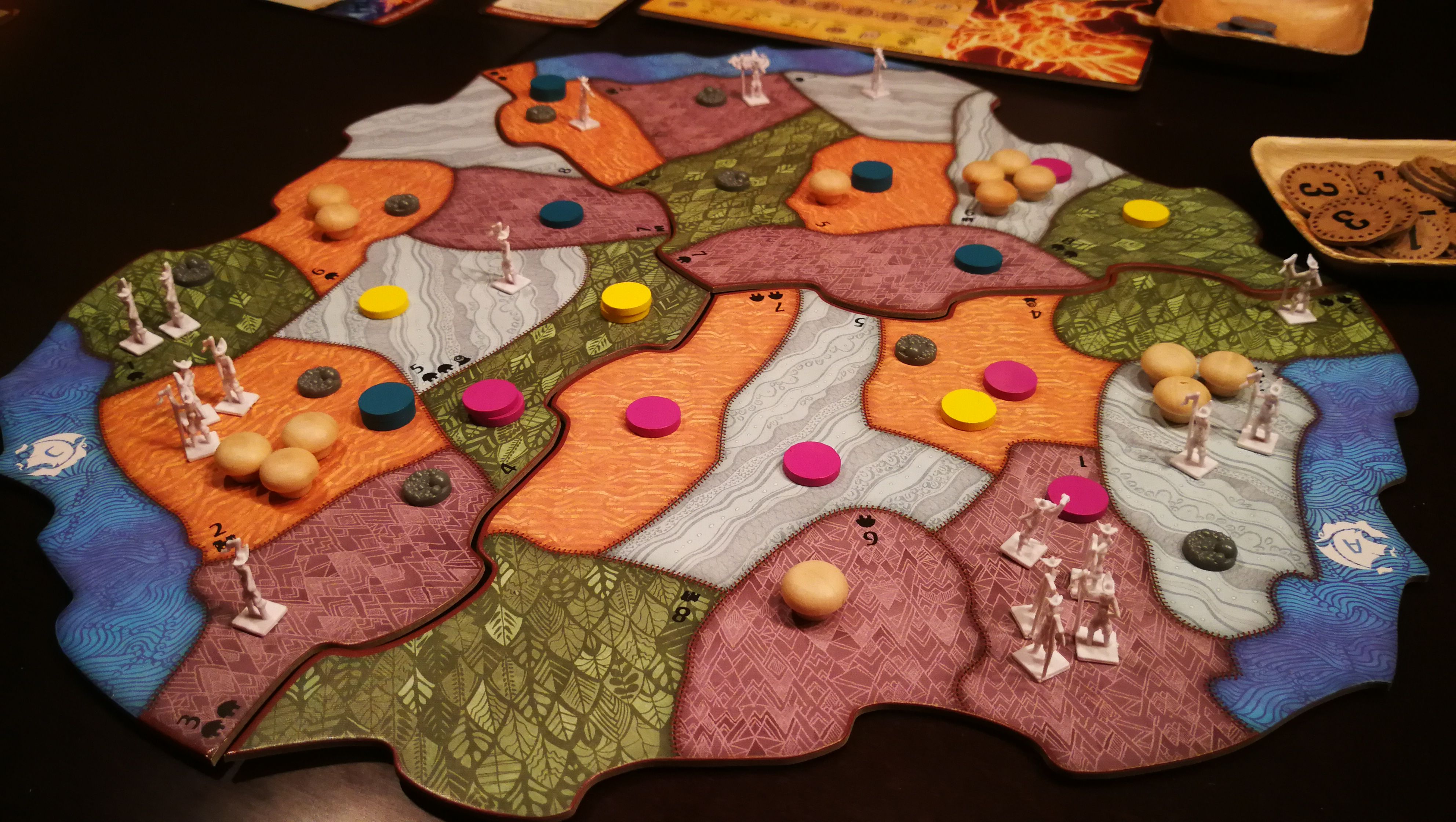
This is where the replayability claim stops being marketing and becomes math. Spirit Island ships with a set of Adversaries — distinct colonial nations, each rewriting the invader rules in its own flavor. England settles aggressively; Sweden burns the land; the Hapsburg Monarchy and Russia (from Jagged Earth) bring their own nightmares. Each one is effectively a new opponent with a new puzzle.
Layered on top is a granular difficulty dial. Every adversary has escalating levels, and you can stack scenarios on top of those. The result is a difficulty range that runs from a gentle teaching game all the way to a brutally tuned challenge that will humble a veteran table — all from the same components.
The combinatorics are the point. Pair any spirit with any adversary at any level on any board layout, and the number of meaningfully distinct games runs into the hundreds before you've even added an expansion. Then the expansions multiply the spirit and adversary pools again.
For a first session, though, do the opposite of all this: turn the dials all the way down. Skip adversaries and scenarios entirely, use the pre-printed blight space, and leave the higher-complexity expansion spirits in the box. Climb the difficulty curve deliberately, one notch at a time. The mountain is there for years — there's no prize for starting at the summit.
How do fast and slow powers actually work together each turn?
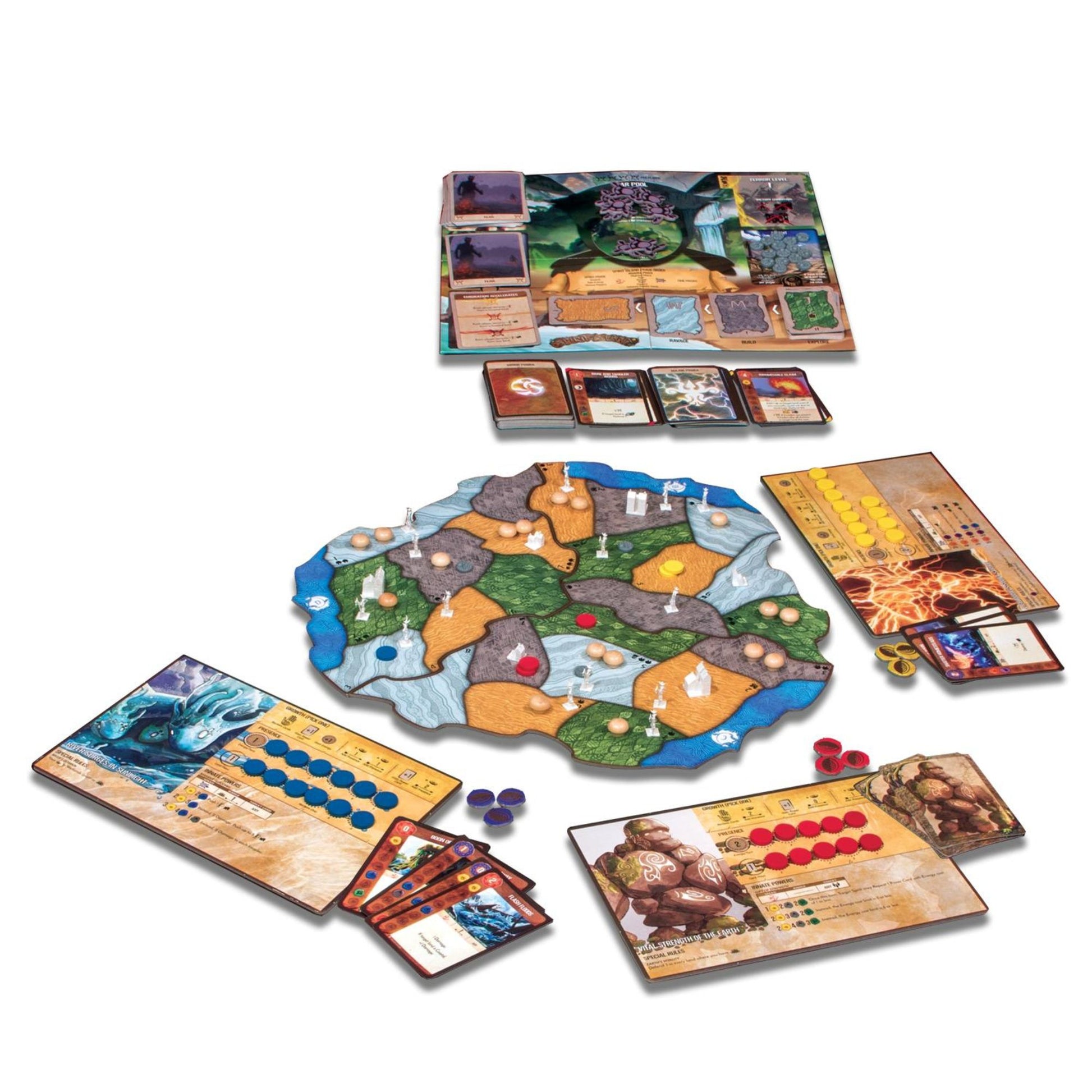
The engine that makes Spirit Island sing — and trips up everyone at first — is the Fast / Slow phase split. Powers resolve in two windows: Fast powers fire before the invaders act, Slow powers fire after. Mastering the interplay is the difference between a clean win and a board on fire.
The classic beginner error is mistiming the two. The veteran instinct, as the forums put it, is to plan for your future self: use your slow powers to disrupt the invader deck a turn ahead — softening or scattering what's about to build — while a fast power handles the threat that's already on the board this turn.
- Fast powers = this turn's emergency. Clear the explorers about to build; blunt the wave that's landing now.
- Slow powers = next turn's insurance. Set up the prevention that makes the following round trivial.
Read together, fast-and-slow is just prevention-over-reaction expressed in time. You handle the present with your fast tools and quietly defuse the future with your slow ones, so each turn you're solving a smaller problem than the table next door. When a group finally feels this rhythm — fast for now, slow for later — the whole game opens up, and the difficulty dials suddenly look a lot more inviting.

Is the ~$185 complete set worth assembling all at once?

I want to be straight with you, because the old "$185 for the complete set" pitch is no longer dependable on two counts — price and availability — and a grail this serious deserves honest numbers.
On price: the core game is $89.99 MSRP (and routinely ~$48–$54 on the street). Nature Incarnate is $59.95 at the publisher. Jagged Earth's street price lands in the $43–$50 range when it's actually in stock — which it frequently isn't. Whether the all-in number lands near $185 depends entirely on whether you catch the scarce boxes at retail or pay a secondary-market markup, so treat any single "complete set" figure as a moving target, not a fixed quote.
On availability: the bigger issue is that you often can't assemble it at retail right now. Jagged Earth has gone scarce — off the publisher's store and flickering in and out at third-party sellers; Nature Incarnate is sold out at the publisher; even Horizons of Spirit Island is currently sold out there. Only the core game is reliably in stock at major retailers today.
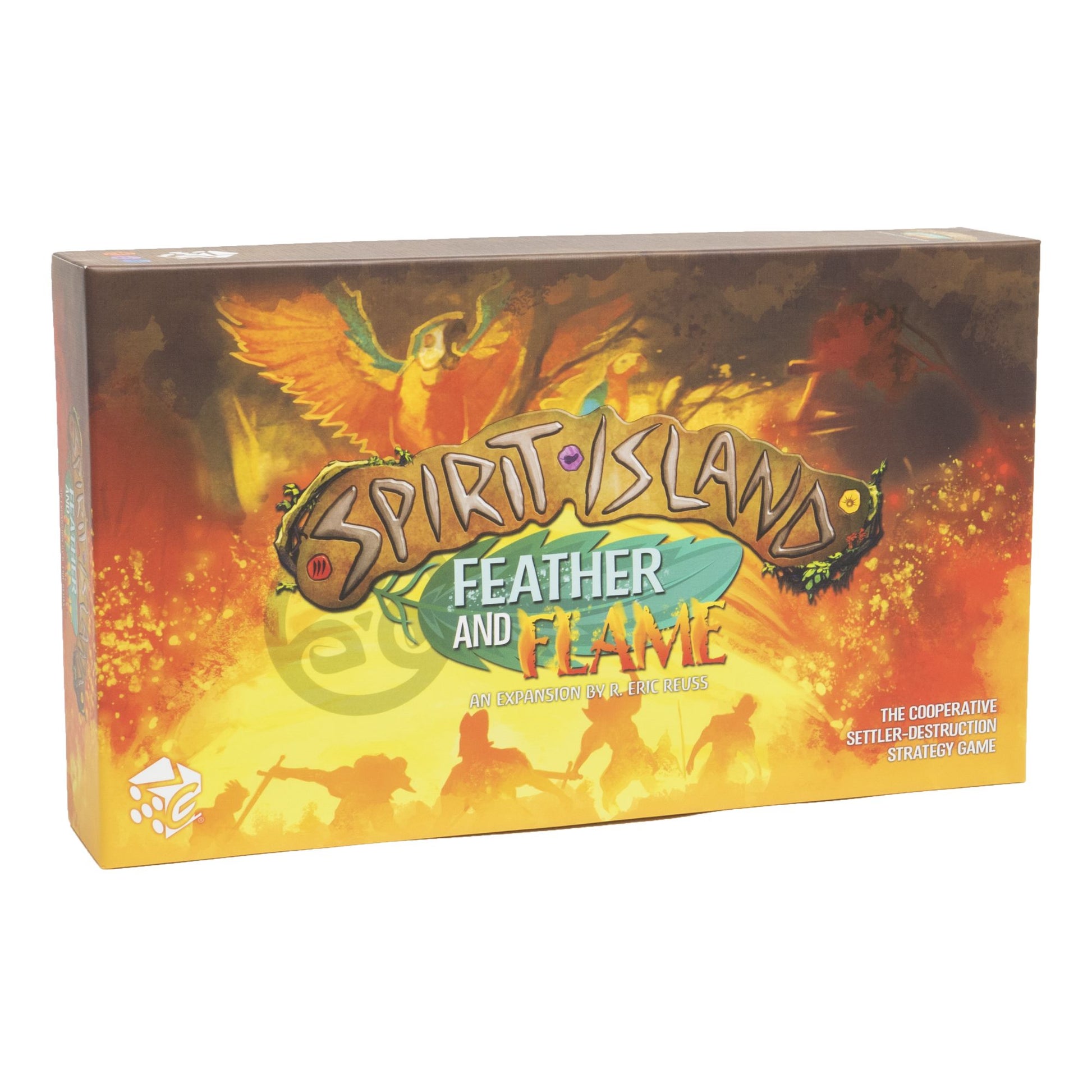
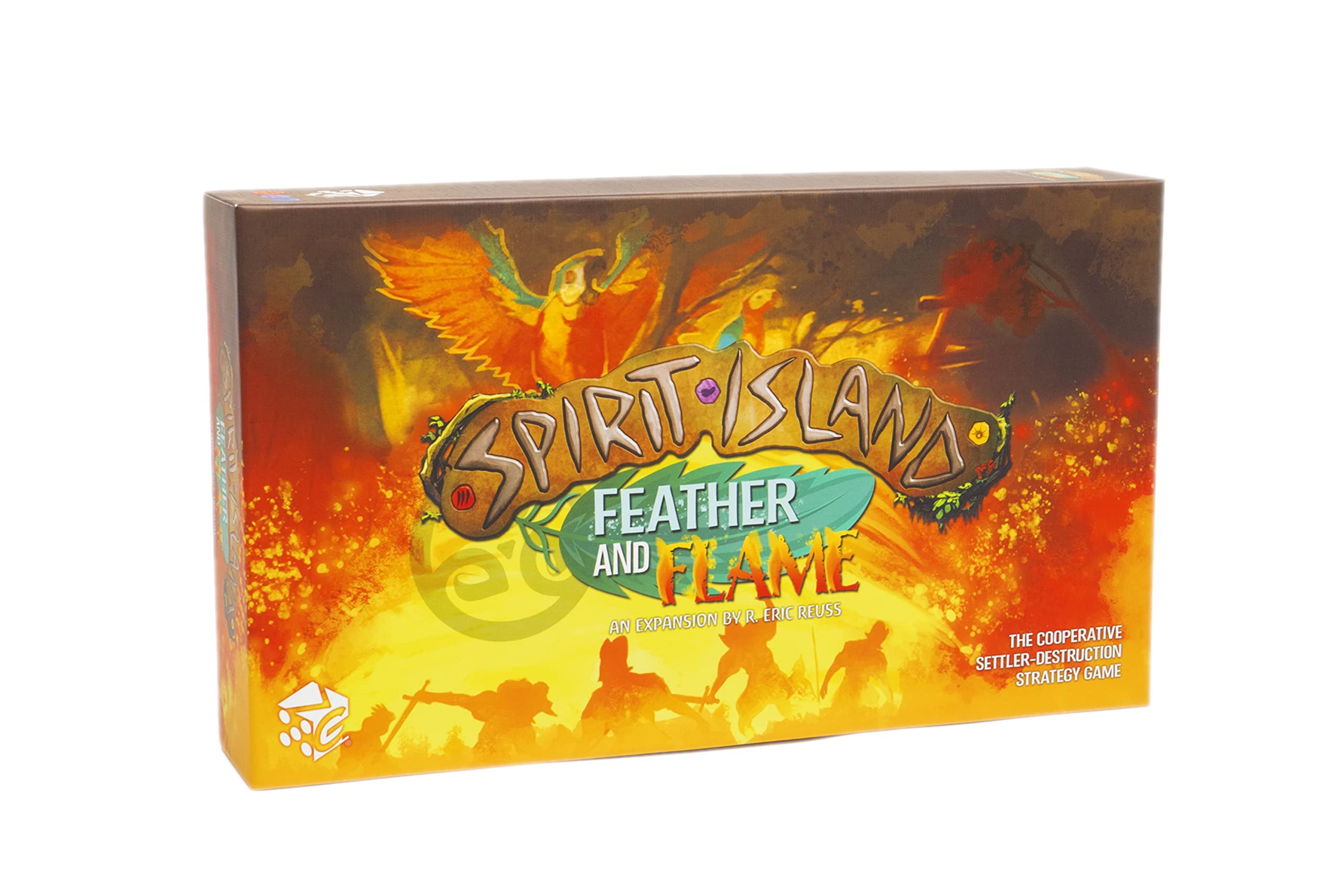
So my honest verdict: buy the core now — it's a top-ten game on its own and the foundation everything else bolts onto. If you want to keep expanding while you wait for the grail boxes to resurface, Feather and Flame ($34.95) is in stock at the publisher and adds two excellent spirits. Treat Jagged Earth and Nature Incarnate as the hunt: set a price alert, check trackers and the publisher store, and pounce when one surfaces. Prices and stock move fast here — always check the live link before you commit.

How do you teach Spirit Island without scaring people off?
Spirit Island has a reputation for being overwhelming, and it earns it if you teach it badly. Plan for a 20–30 minute setup-and-rules explanation before a first full game — and know that a rough first teach can sour a table that would otherwise have loved it. Here's how I get newcomers hooked instead of bounced.
- Strip the game to its skeleton. For the very first play, drop every difficulty knob: no adversaries, no scenarios, use the pre-printed blight space, and leave high-complexity expansion spirits in the box.
- Hand out the right spirits. Give the newcomer Lightning's Swift Strike — low-complexity, all-offense, immediately legible — and take a simple spirit yourself.
- Teach the one big idea. Don't lecture every rule. Teach prevention over reaction and the fast/slow split, and let the rest emerge through play.
- Walk a turn together. Resolve your first round out loud so they see the phase rhythm before they're asked to trust their own plan.
One more honest note for groups brand-new to the hobby: if nobody at the table has played a cooperative game before, it's fair to graduate into Spirit Island rather than open with it. But for anyone who's enjoyed a co-op already, a gentle, dials-down first island is the on-ramp — and once prevention clicks, they're yours for years. That's the moment a grail earns its place on the shelf.
The picks
Some links below are affiliate links — as an Amazon Associate, Puzzlewick earns from qualifying purchases, at no extra cost to you. It never changes a pick.
 10 photos
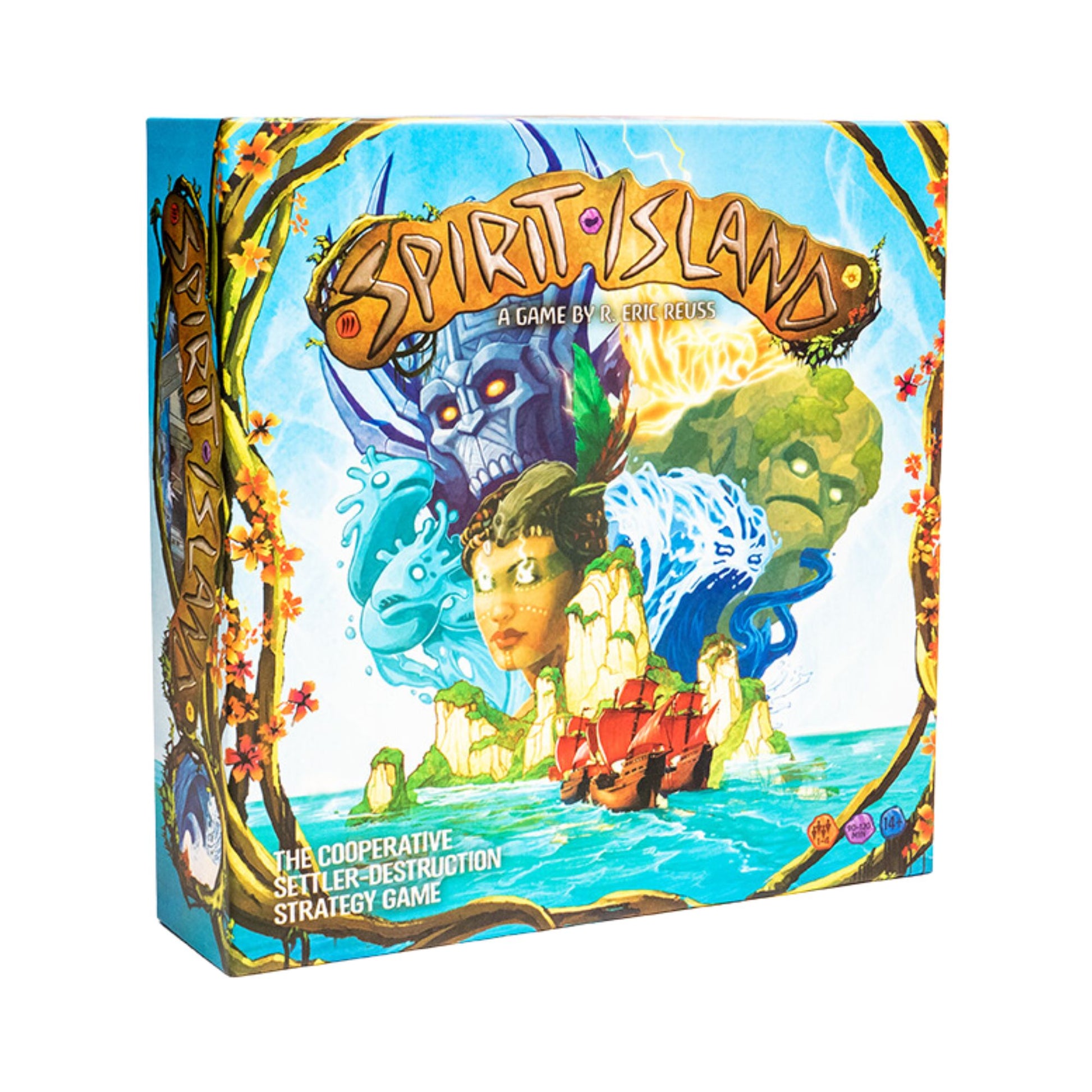
 Spirit Island (Core Game)
- Players
- 1-4 · best 3
- Time
- 90-120 min
- Age
- 13+
- Complexity
- 3.9 / 5
- Publisher
- Greater Than Games · 2017
- Designer
- R. Eric Reuss
- Art
- Jason Behnke
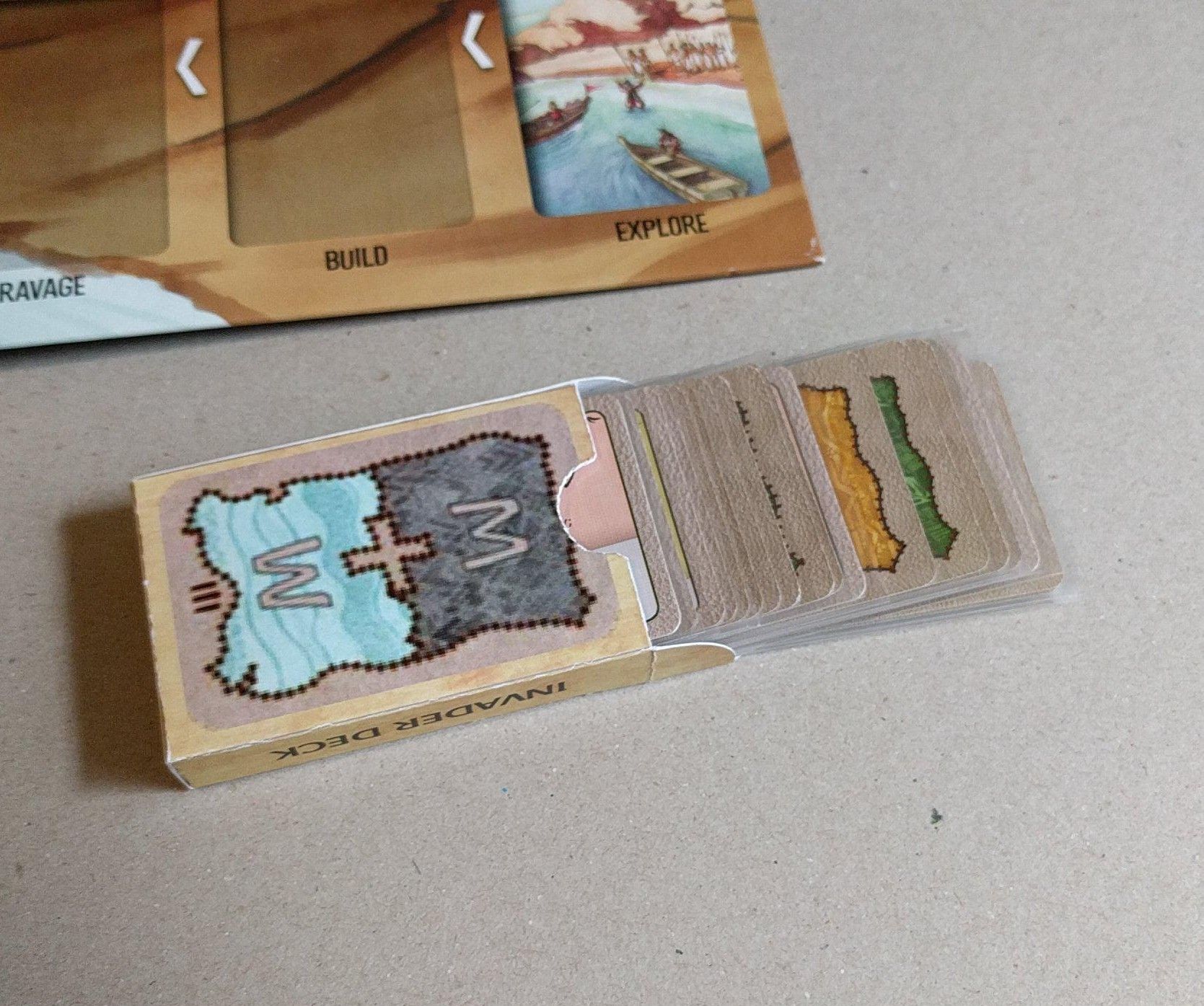
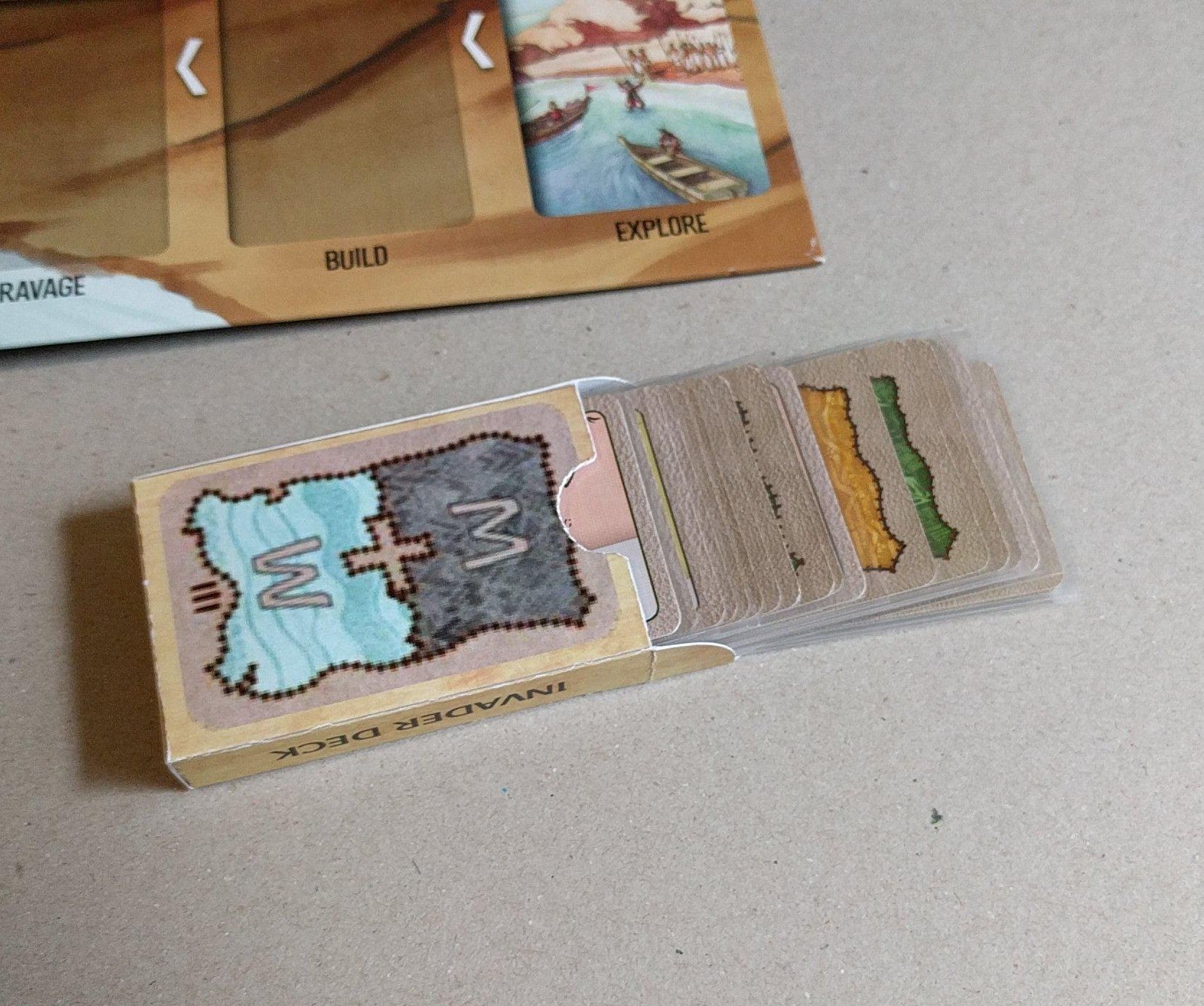
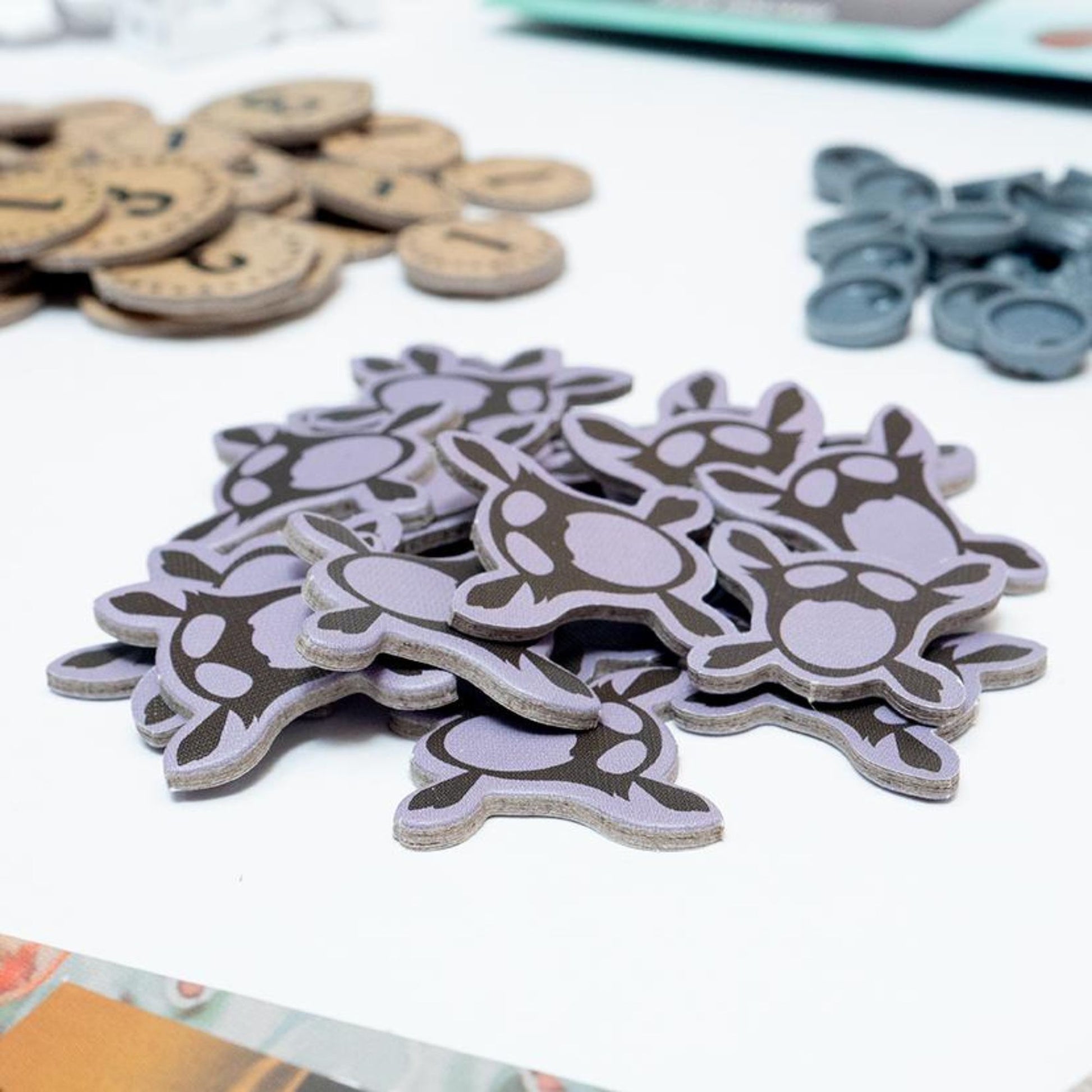
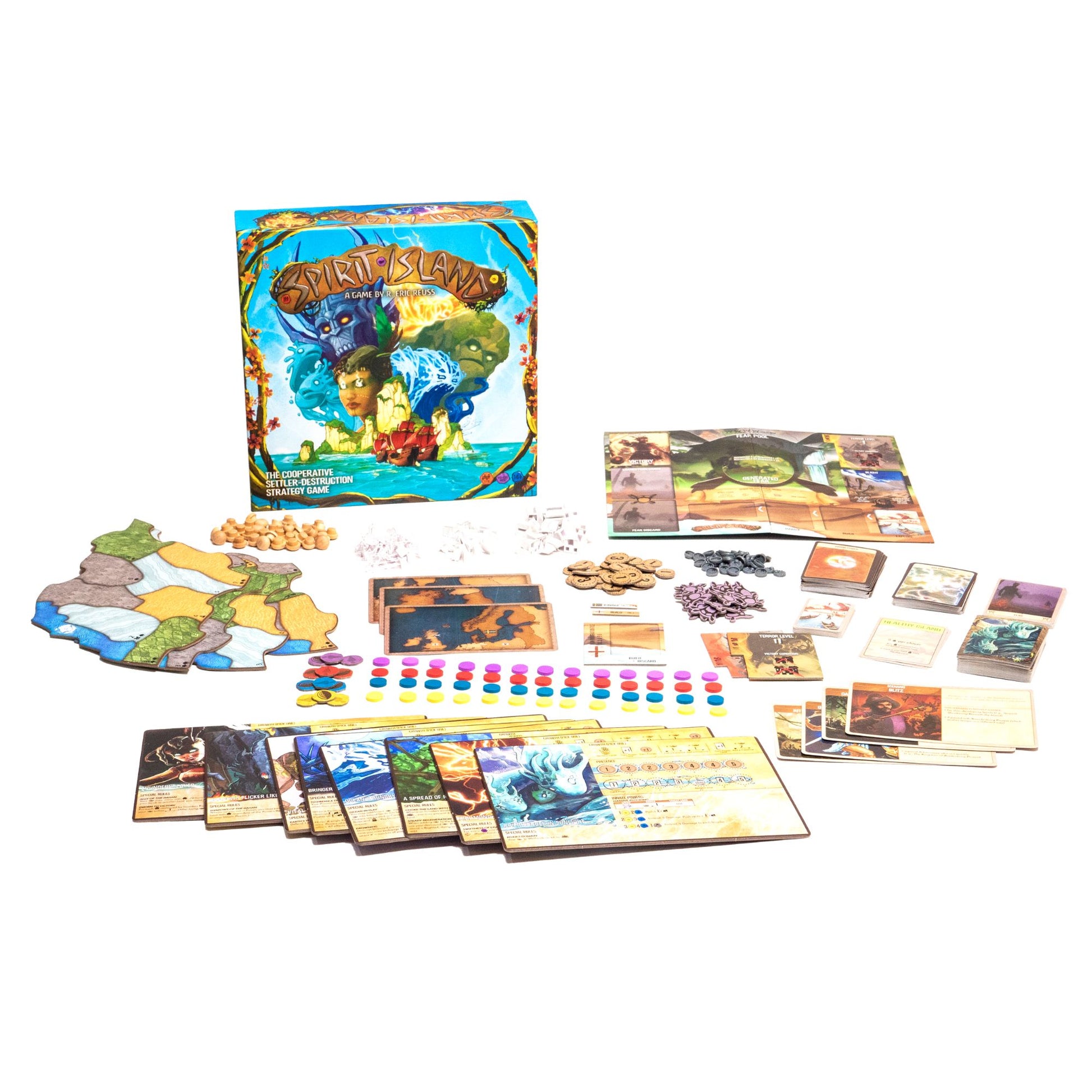
This is the box to buy now and the one everything else bolts onto. The core game is a complete, top-ten-caliber co-op experience for 1–4 players: asymmetric elemental spirits, the prevention-over-reaction puzzle, a full slate of adversaries and difficulty dials. MSRP is $89.99 at the publisher, but it routinely turns up around $48–$54 on the street at deal retailers. Stock on the core is the one stable thing in the whole Spirit Island universe right now — it's reliably in stock at major retailers when the expansions are not — so if you're starting the grail, start here, and start confident. Stock and price still move, so check the live link before you buy.
- Top-ten BGG game in a single box — genuinely complete on its own
- Reliably in stock at major retailers when the expansions are not
- Often ~$48–$54 street despite an $89.99 MSRP
- The required base for every expansion, so you never waste the purchase
- 20–30 min teach; can overwhelm a brand-new co-op table
- Premium price at full MSRP — hunt the street deal
- The expansions you'll eventually crave are hard to find right now
 4 photos
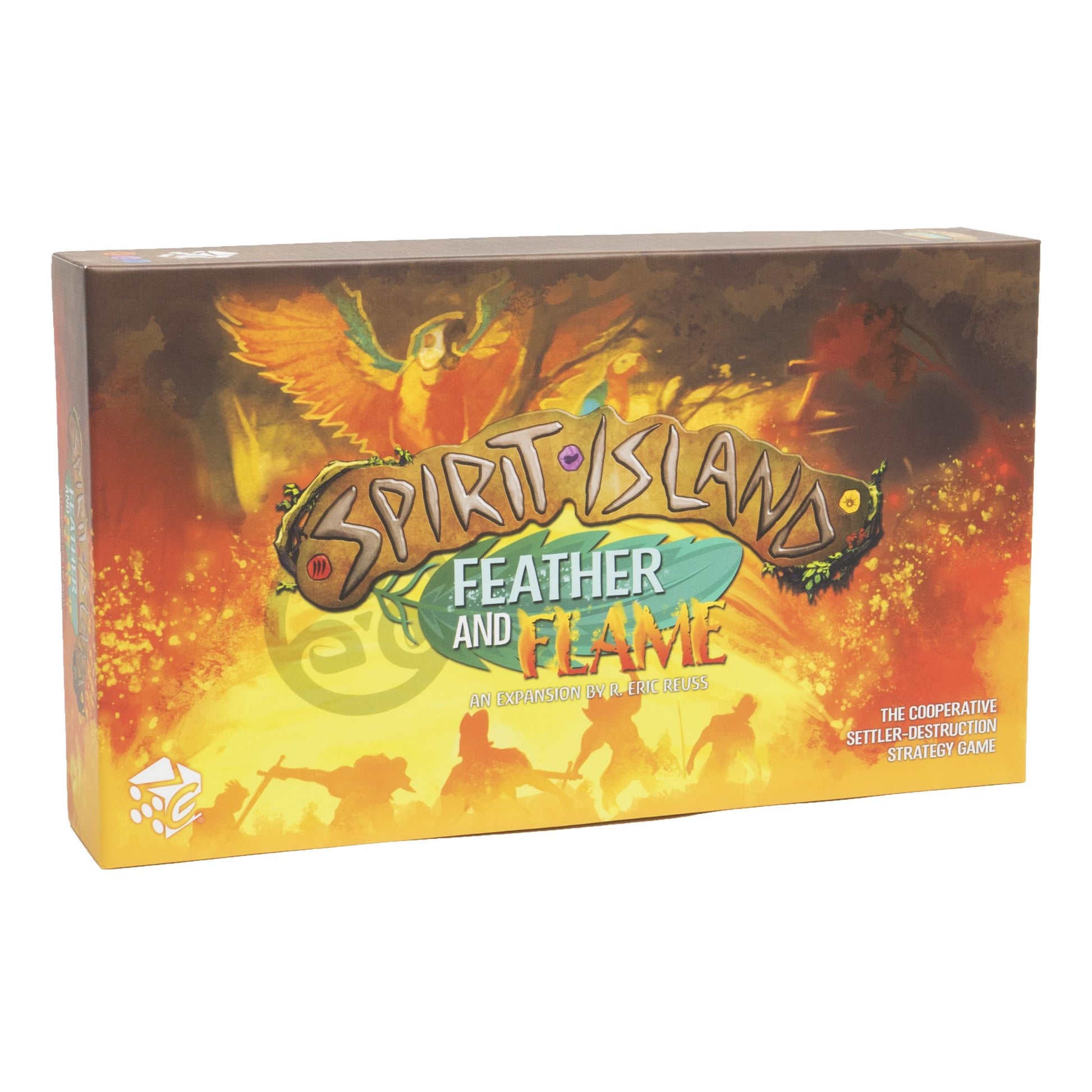
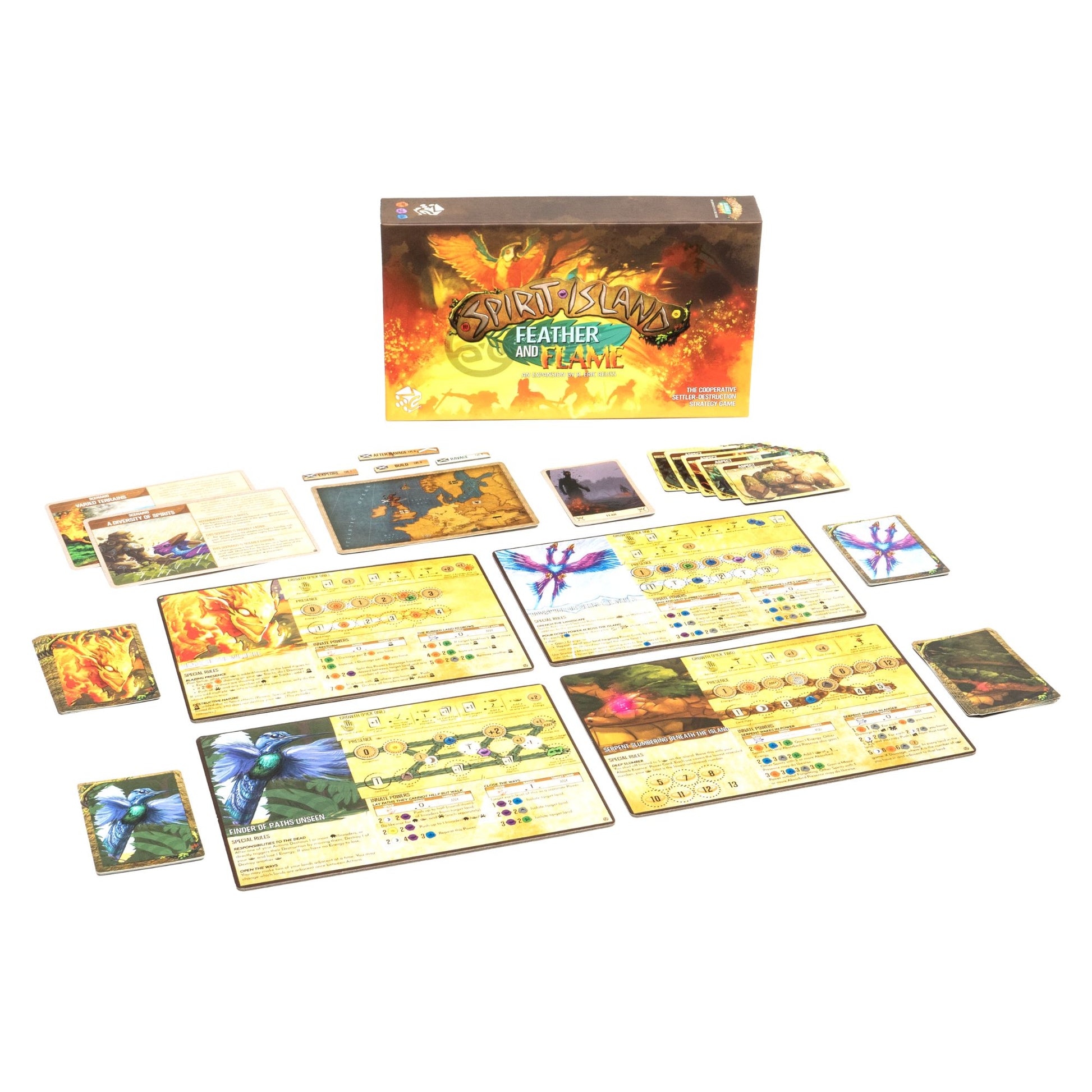
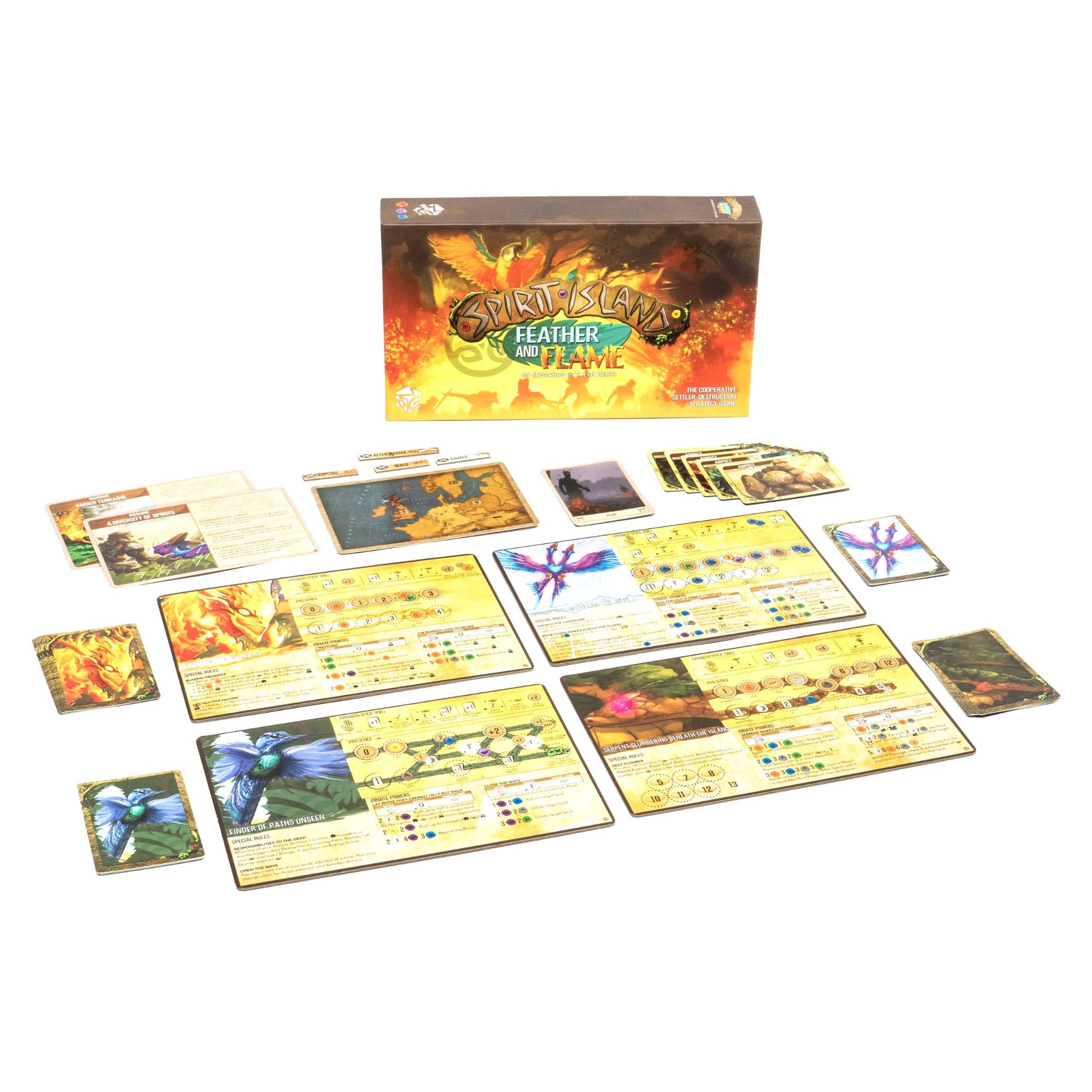
 Spirit Island: Feather and Flame (expansion)
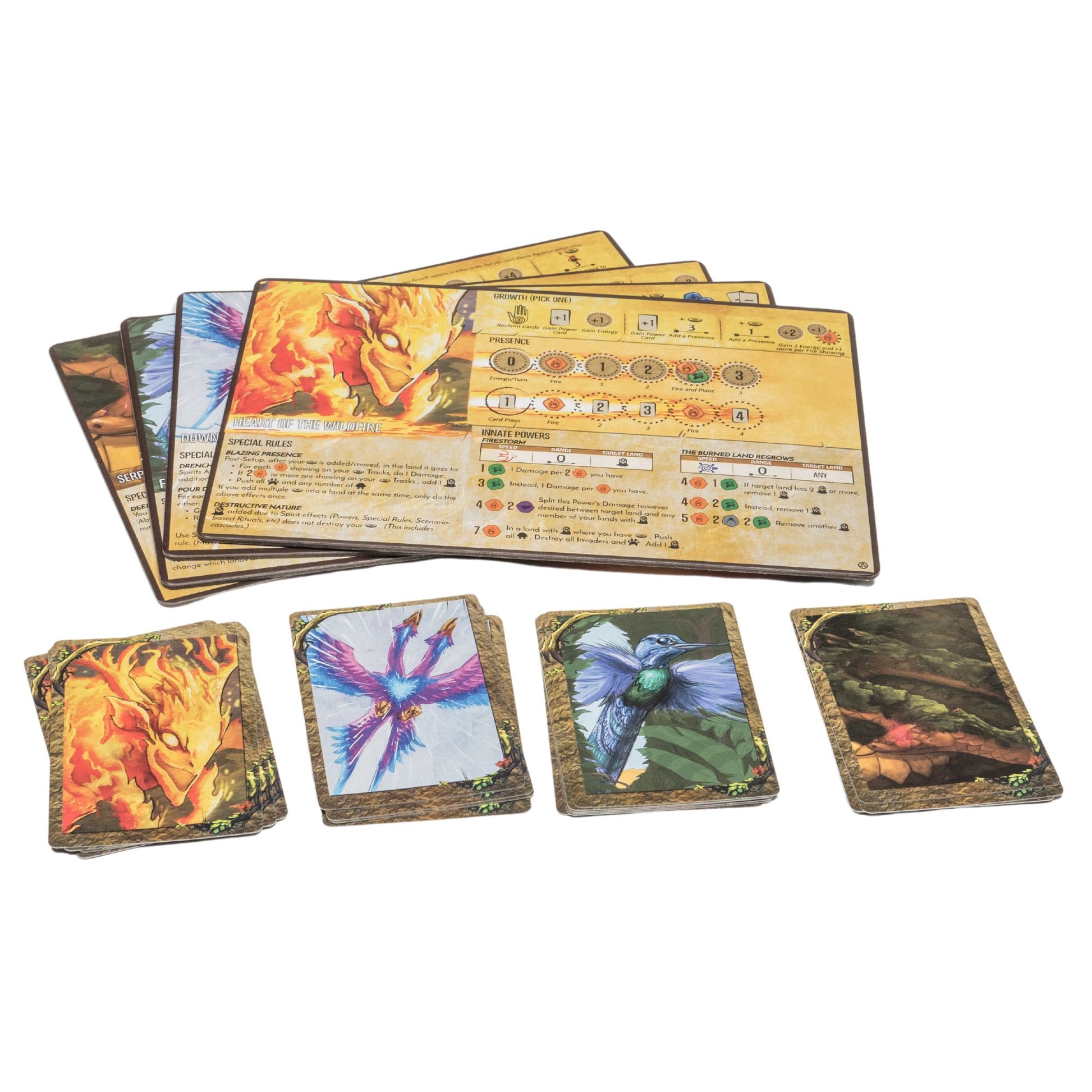
With Jagged Earth gone scarce and Nature Incarnate sold out at the publisher, this is the expansion you can actually buy right now to keep the collection growing. Feather and Flame adds two new spirits and bolts cleanly onto the core game — a satisfying way to widen the spirit pool while you wait for the grail boxes to resurface. At $34.95 and in stock at the publisher as of mid-2026, it's the pragmatic next step that doesn't leave you staring at sold-out buttons. Pair it with the core and you've got a deep, replayable table today, with Jagged Earth and Nature Incarnate as the long-term hunt. As always, stock can shift — check the live link before you buy.
- Actually in stock at $34.95 when the headline expansions are not
- Two strong new spirits that widen the core pool
- No dependency tangle — bolts straight onto the base game
- Keeps the collection moving while you wait for the scarce boxes
- Not the famous big-box upgrade (that's Jagged Earth)
- Stock can still flicker — verify before buying
- Smaller in scope than the scarce grail boxes
Questions, answered
Is the complete three-box Spirit Island set buyable in 2026?
Tough to assemble at retail right now. The core game is reliably in stock at major retailers, but Jagged Earth has gone scarce (off the publisher's own store and flickering in and out at third-party sellers) and Nature Incarnate is sold out at the publisher at $59.95. The dreamed-of 'Complete Island' is hard to put together today — buy the core now and hunt the expansions as they surface. Stock moves fast, so always check the live link before you commit.
Which spirit should a brand-new player choose first?
Lightning's Swift Strike, near-unanimously. It's a low-complexity, all-offense spirit whose hard-hitting, board-clearing impact is immediately legible to a new player — which builds the confidence the game lives on. (Mechanical note: most of Lightning's powers, including its innate, are Slow by default; its trick is an innate that converts some Slow powers to Fast using Air.) Save the slow, control-heavy spirits and the high-complexity expansion spirits until after the basics click.
Do I need the expansions, or is the core game enough?
The core game alone is a complete, top-ten-caliber co-op you could happily play for a year. Expansions multiply it rather than fix it. Note the dependency: Nature Incarnate requires Jagged Earth, so the intended order is core, then Jagged Earth, then Nature Incarnate — never buy Nature Incarnate first.
What does 'prevention over reaction' actually mean?
It's the core strategic principle: stopping invaders from building is far more efficient than destroying towns and cities after they appear. The invader deck telegraphs the next wave a turn ahead, so the winning play is to deny the terrain before anything spawns rather than firefighting after the fact.
How much does the full set really cost?
It's a moving target, and hard to complete at retail right now anyway. The core is $89.99 MSRP (~$48–$54 street), Nature Incarnate is $59.95 at the publisher, and Jagged Earth's street price runs roughly $43–$50 when you can find it — which is the catch, since it's frequently out of stock. Budget for the core today and treat the expansions as a price-alert hunt; whether the all-in number lands near the old '~$185' depends on whether you catch the scarce boxes at retail or pay a secondary-market markup.
Will Jagged Earth and Nature Incarnate be reprinted?
Nothing is officially announced, and the outlook is genuinely uncertain. When Handelabra acquired the Greater Than Games brand in April 2026, the deal explicitly excluded Spirit Island — it covered only the Sentinel Comics / Sentinels of the Multiverse line. Spirit Island was carved out, and its publishing future is currently unclear, which makes the reprint picture murkier rather than brighter. Set a price alert, watch trackers and the publisher store, and be ready to pounce — these boxes tend to vanish fast when they do appear.
Keeper's verdict
Buy the core game now — it's a top-ten board game on its own, the stable purchase in an unstable lineup, and the foundation every spirit grail bolts onto. Add Feather and Flame ($34.95, in stock at the publisher) if you want to keep expanding today. Then treat Jagged Earth and Nature Incarnate as the hunt: scarce and sold out as of mid-2026, with no reprint announced and a genuinely uncertain outlook — Handelabra's April 2026 acquisition of the Greater Than Games brand explicitly did NOT include Spirit Island, so don't count on a reprint as a sure thing. Set your price alerts, watch trackers and the publisher store, and check the live link before you commit, because stock here moves fast. This is a save-up project measured in patience, not weeks — exactly as a keeper's game should be.
Research ledger 8 sources · reviewed 2026-07-17
Specifications, rules, current product information, community experience, and contrary evidence were checked against the sources below. Commercial links are kept separate from editorial evidence.
- shop.greaterthangames.comshop.greaterthangames.com/collections/spirit-island
- boardgameprices.comboardgameprices.com/item/show/20392/spirit-island
- boardgameprices.comboardgameprices.com/item/show/28367/spirit-island-jagged-earth
- boardgamegeek.comboardgamegeek.com/boardgame/162886/spirit-island
- spiritislandwiki.comspiritislandwiki.com/index.php?title=Lightning's_Swift_Strike
- handelabra.comhandelabra.com/blog/2026/4/7/handelabra-buys-sentinel-comics-and-greater-than-games-brand
- boardgamewire.comboardgamewire.com/index.php/2026/04/15/flat-river-sells-greater-than-games-brand-sentinels-of-the-multiverse-to-digital-developer-handelabra
- en.wikipedia.orgen.wikipedia.org/wiki/Spirit_Island_(board_game)
If it didn't earn a shelf, it isn't here.

Keep exploring
The next smart rabbit holes.
♛ Topic PathGrail Board Games: compare the whole shelfA grail earns its space only when the experience survives the price, setup, storage, and group commitment. These are expensive-game...Best Of5 New Board Games Worth Your Next Game Night: Cozy Stories, Clever Cards, and a Proper AdventureImani matches five current tabletop releases to five kinds of evening, with the awkward bits included: permanent stickers, limited...GuideThe 2026 Board Game Hype Test: Which Trending Games Are Actually Worth Your Table?BoardGameGeek Hotness measures attention on BoardGameGeek, not sales and not your future happiness. Robert turns five fast-moving names...