Is Levitating Desk Decor Worth It? Ranked (2026)
Most levitating desk decor is a $79 electromagnet with a hum — but three things genuinely aren't. A skeptic stress-tests the wonder from the gimmick.

AI-assisted curator persona · research and editorial responsibility: Robert Pruitt · how this guide was made
Last editorial refresh: 2026-06-13 Gold-standard QA: 2026-08-10 21 sources reviewed Affiliate links checked during gold-standard pass

The short answer
Levitating desk decor works by maglev: an electromagnet in the base, a position sensor (Hall-effect or optical), and a feedback loop that re-aims the magnetic field hundreds of times a second to hold a magnet-loaded object suspended a centimeter or two below it. That constant correction is also the source of the faint electromagnetic whine ('coil whine') many owners notice in a silent room. Is it worth it? Sometimes. The honest split is roughly 60% visual wow, 40% function — these are sculptures that happen to spin, not better lamps or speakers. The genuinely worth-it pick is FLYTE's Lyfe levitating planter (~$299): a real living plant rotating in the air is a daily delight no flat pot matches, and FLYTE's engineering is the quietest and most stable in the field. The thing to skip is the levitating Bluetooth speaker — every one trades real sound quality for the float, draws extra power, and adds movement-induced distortion to audio that was already mediocre. Best budget joy is a maglev globe (~$50). Just know going in: every one of these takes patience to 'balance' on setup, has a strict weight limit, and will wobble or drop if you bump the desk. Puzzlewick sells none of these — we just point you at the real makers.
Decision map
Choose in thirty seconds
Best overall — the only one where the float does real work
Best floating lamp + safest mainstream buy
Best globe + best budget wonder
The thing nobody admits: levitating decor photographs like magic and lives like a parlor trick — impressive on day one, quietly demanding forever after. I've torn through the specs, read the one-star reviews the brands won't quote, and watched the pattern. Here's the honest split: most of this category is 60% visual gimmick, 40% the faint electromagnetic whine you learn to tune out. That's not a bug. It's the contract.
But not all of it. A floating object on your desk is doing real physics — a microcontroller sampling a position sensor hundreds of times a second, fighting gravity in live time. That's genuinely cool. And some pieces — a rotating living plant, a moon lamp that actually looks like craft, a globe that survives on a shelf — earn that compromise. Others are just expensive fidget toys.
So I'm not going to sell you on the hype or talk you out of it entirely. I'm going to name the three worth your money, rank ten real products by real makers (FLYTE, Hoshinchu, Sharper Image, VGAzer, MOKOQI, Fascinations/Levitron), and be explicit about the hum, the fiddly setup, and the moment the novelty wears thin. And because Puzzlewick is a library, not a store, I've got nothing to gain by talking you into the expensive one — if anything, I'd rather talk you out of the bad ones.
Start here, then go deeper
You are in the right cabinet.
 ✦ Topic PathBoard Game Buying Guides: compare the whole shelfStart with the decision, not the shelf. These guides compare the games, editions, expansions, player counts, and costs people...
 Gift GuideBest Desk Toys for Engineers & Restless Minds (2026)Ninety percent of desk toys are chrome theater that'll be in a drawer by spring. Here's the short list where the mechanism actually earns...
 Deep DiveThe Swinging Sticks: The Iron Man Desk Grail That Never Stops MovingDesigned in Germany, hand-built in Thailand, screen-used in Iron Man 2, silent, hypnotic, and impossible to ignore — the one desk object...
How does levitating desk decor actually work — and why does that matter for buyers?
Almost every levitating desk object you can buy uses active electromagnetic levitation, and understanding the mechanism tells you exactly what to expect from the product.
Inside the base is an electromagnet — a coil of wire that becomes a magnet when current flows. The floating object (the moon, the globe, the planter) has a permanent magnet embedded in it. If that were the whole story, it wouldn't work: a static magnetic field can't stably hold another magnet in mid-air. This is Earnshaw's theorem, and it's why you can't just stack two magnets and get levitation — the floating object always slides off to one side and falls.
The trick is active feedback. The base contains a position sensor — usually a Hall-effect sensor reading the magnetic field, or an optical sensor watching a beam of light the object partially blocks. A small controller reads that sensor and adjusts the electromagnet's current continuously. If the object drifts too high, it weakens the field so gravity pulls it back; if it sags too low, it strengthens the field to lift it. This correction happens several hundred times per second, which is what creates the illusion of an object hanging serenely in space.
That constant, rapid current-switching is the single most important fact for a buyer, because it explains the three things nobody puts on the box:
- The hum. Rapidly changing current through a coil makes the coil physically vibrate — the phenomenon engineers call electromagnetically induced acoustic noise, the same family as transformer hum and the buzz of old fluorescent lights. On a well-built unit it's near-silent; on a cheap one it's a faint high whine you'll hear across a quiet room at 1 a.m.
- The power draw. Holding a magnet aloft 24/7 means the electromagnet is always working. These are not zero-power objects; they're plugged-in appliances that run continuously.
- The wobble and the drop. The feedback loop has limits. Bump the desk hard enough, or exceed the weight limit, and the controller can't correct fast enough — the object wobbles, then falls.
The one exception worth knowing: the Levitron top uses spin-stabilized levitation instead — no electronics, no sensor, no hum. It's all permanent magnets plus a gyroscopic spin. That makes it silent and battery-free, but as we'll see, it trades the hum for a far more maddening setup.
The hum isn't a defect. It's the sound of physics holding your moon in the air a few hundred times a second.
The setup nobody warns you about: why 'balancing' these is genuinely fiddly
Every product photo shows the object already floating. No photo shows the ten minutes of swearing it sometimes takes to get there — and on the worst offenders, that's a recurring ritual.
Active-maglev pieces (moons, globes, planters) have a capture window: a narrow band of height and horizontal position where the feedback loop can 'grab' the object. You hold the floating piece at roughly the right gap — typically about 0.8 to 1.2 inches below the base — center it carefully, and slowly release until you feel the magnetic field take over. Too high, it won't catch. Too low, it clunks down. Off-center, it slides out and drops. It is a learned hand-feel, and it is genuinely frustrating the first several times. One moon-lamp owner described spending two to three hours gradually building up the float — and then, when it slipped off its orbit, being unable to reset it again across countless attempts, ultimately judging it 'not worth the price.' That's the failure mode to respect: not that it can't work, but that re-capturing it after a knock can defeat you.
The Levitron top is in a different league of finicky, and it deserves its own warning. It has no electronics to help you — you balance it by hand with physics. You spin a magnetized top at 1,500–3,000 rpm on a base plate and it rises to an equilibrium point through gyroscopic stabilization. But the tolerances are brutal: you must trim the top's weight with tiny washers from the kit — too heavy and it never lifts off the plate, too light and it flies off entirely. The base must be dead level (it has adjustable legs for exactly this). And then air temperature, air currents, and even vibrations through the table shift the delicate equilibrium. Owners report it can take a real session of patient tuning to get a clean float, and even then it stays up only about four minutes before air friction slows the spin and it drops. It's less a desk object and more a physics puzzle you keep on a shelf.
The takeaway: levitating decor is not plug-and-play in the way a lamp is. The electronic ones reward a few minutes of practice and then mostly behave. The Levitron rewards an afternoon of patience and then performs for four minutes at a time. Buy accordingly.
No product photo shows the ten minutes of swearing it takes to get the moon to catch its orbit.
Floating lamps and globes: which ones are genuinely magical and which are filler?
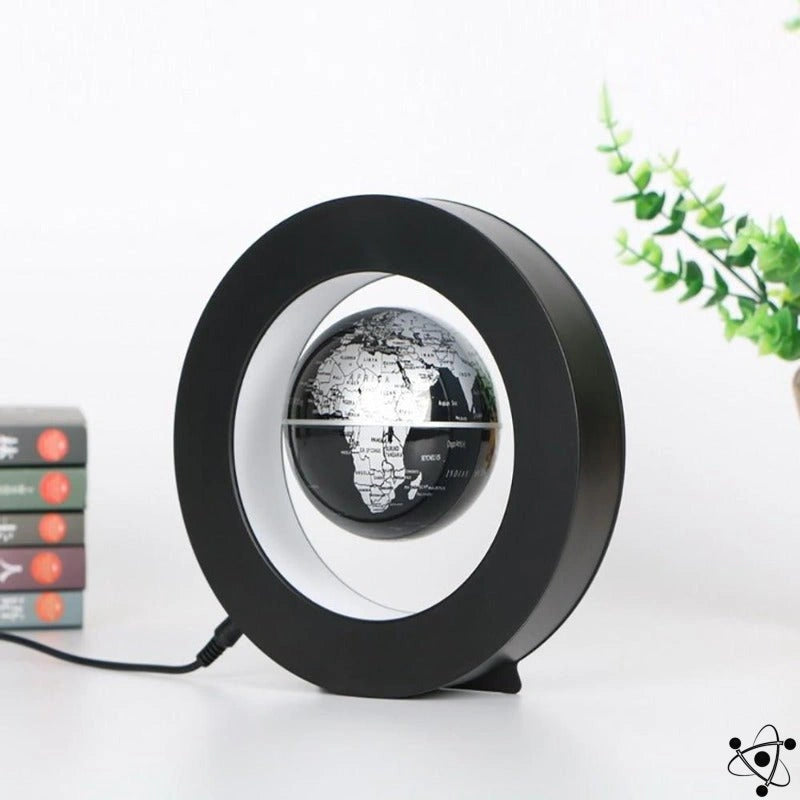
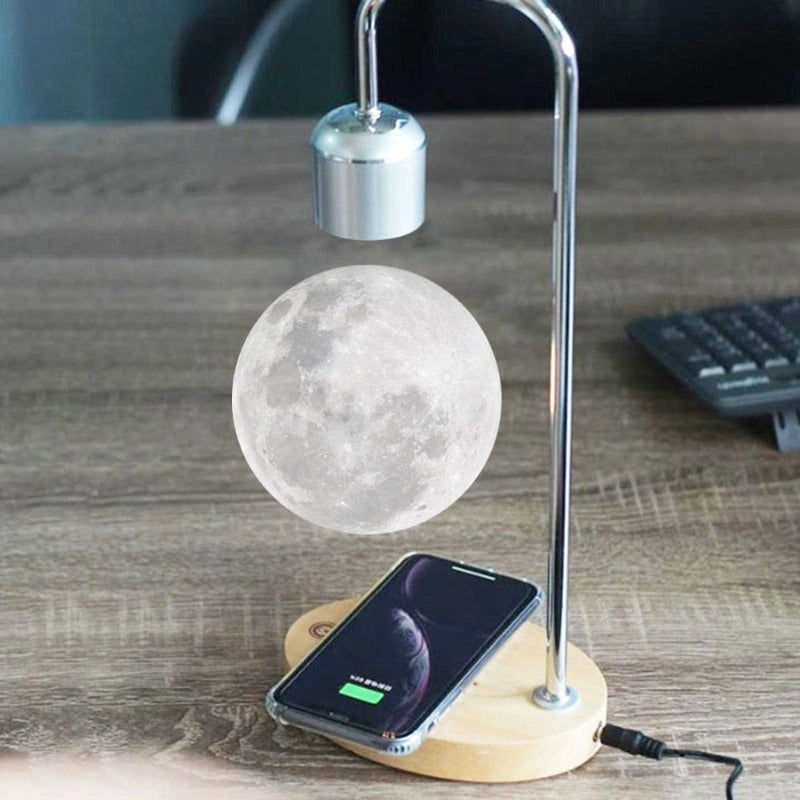
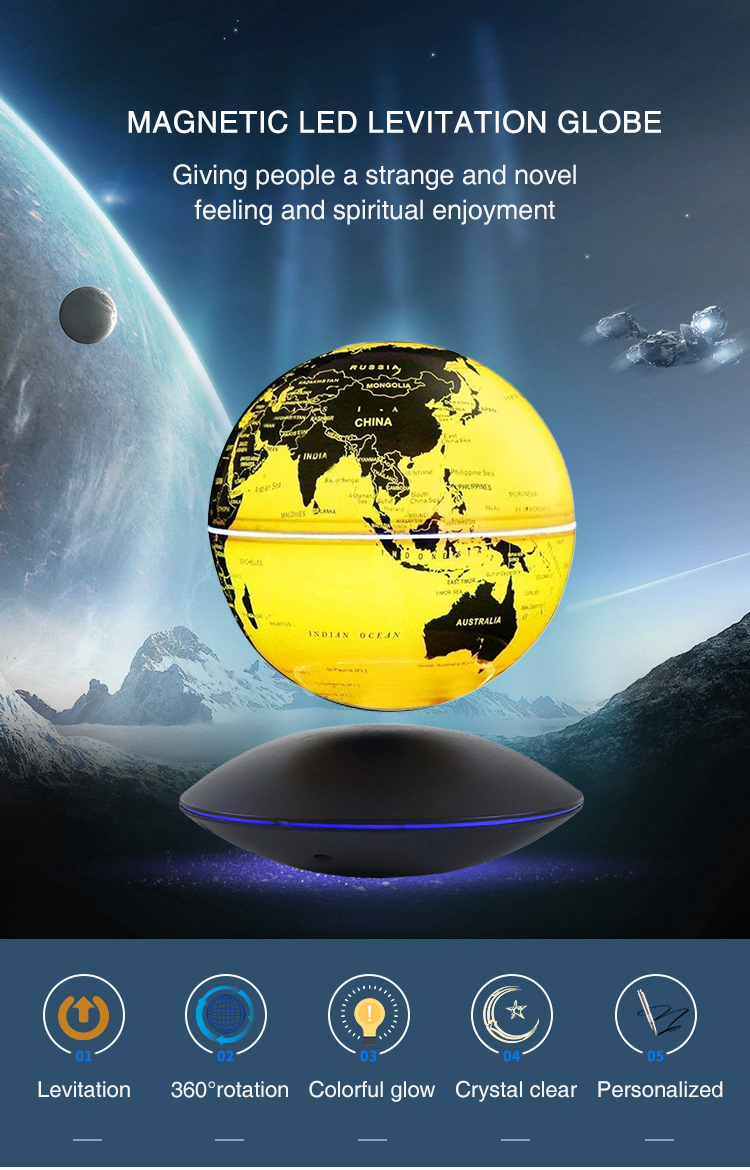
This is the heart of the category — the floating moons and hovering globes are what most people picture — so it's worth being precise about what's good.
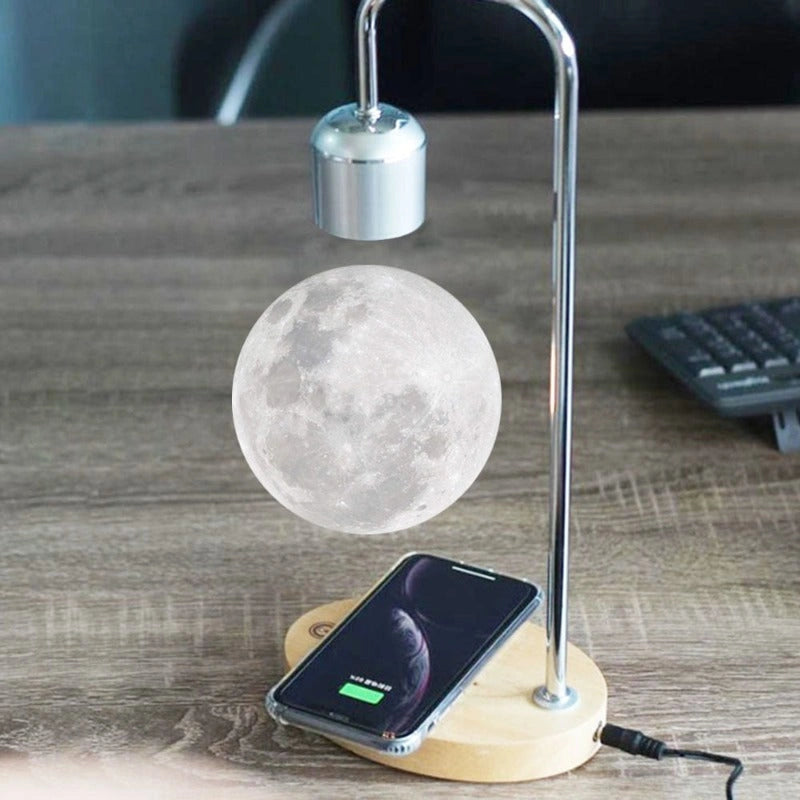
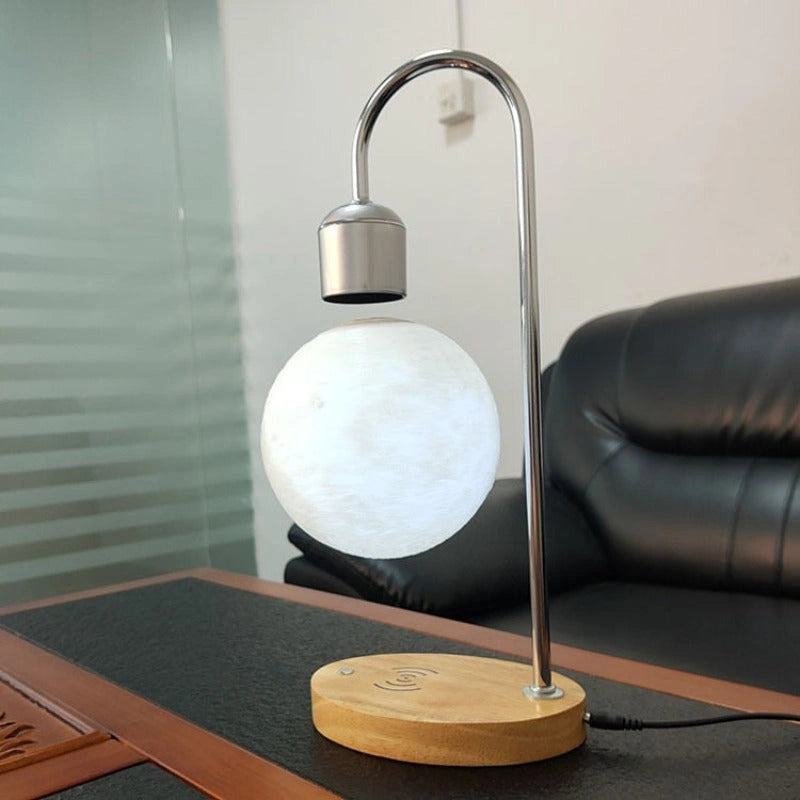
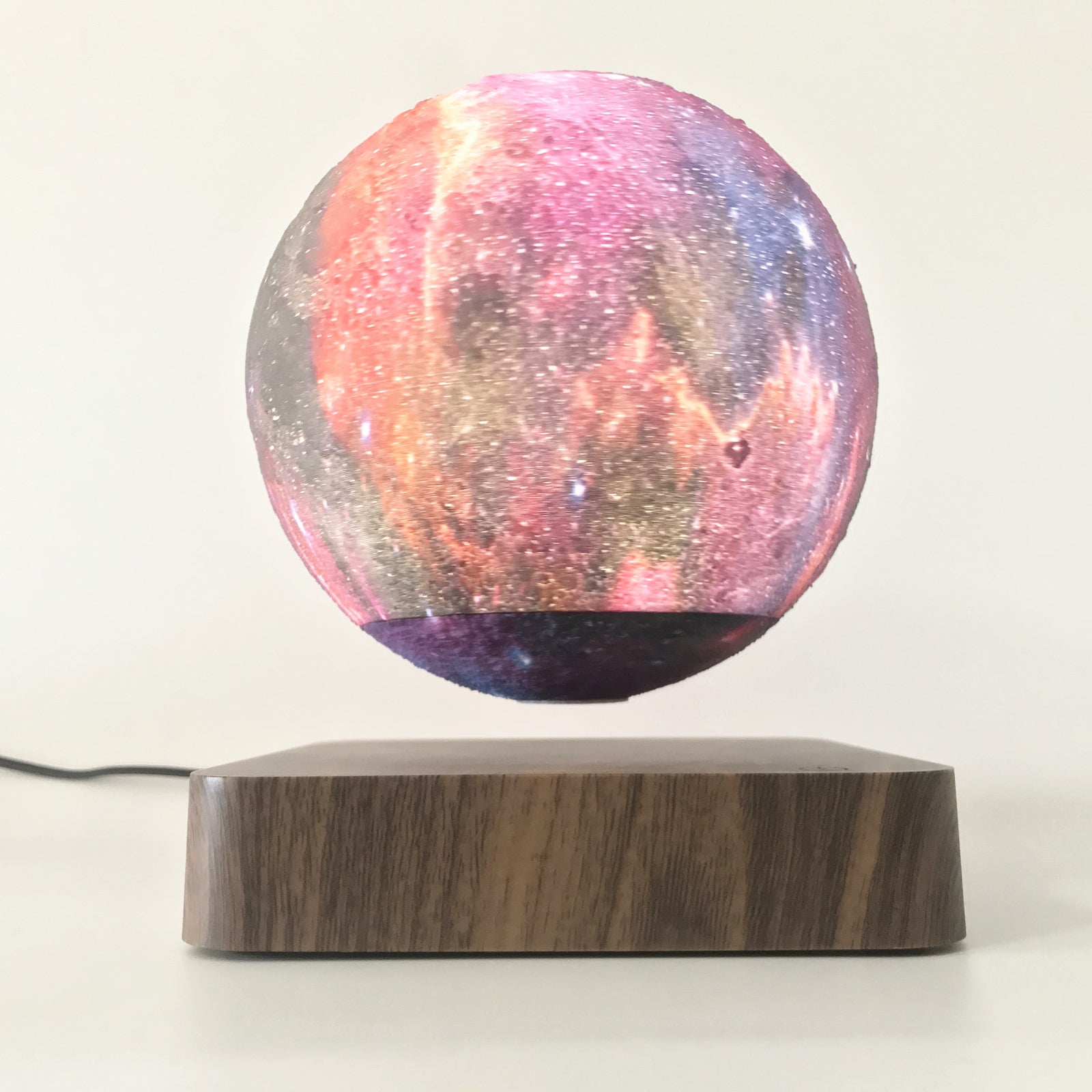
Floating moon lamps are the strongest 'wow per dollar' in the whole field, and the reason is taste: a 3D-printed lunar sphere with real crater topography, glowing softly and rotating in the air, looks genuinely beautiful rather than gimmicky. The image is the product, and the moon is an inherently lovely image. The market splits cleanly:
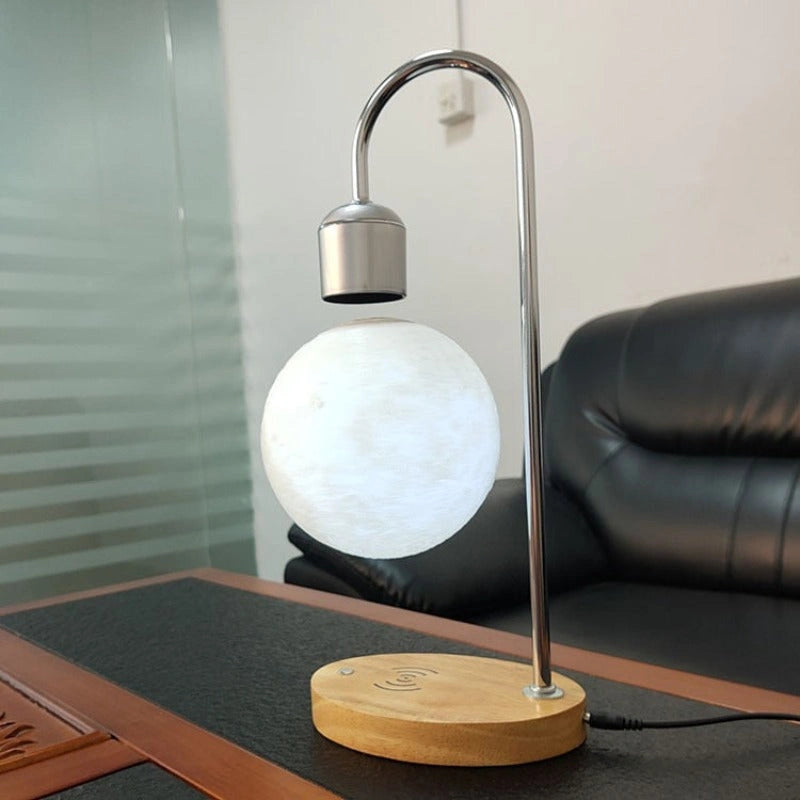
- The Sharper Image Levitating Moon Lamp (~$79.99, often discounted) is the safe pick from a real, accountable retailer. 5.5-inch moon, hovers about 0.4 inch over a touch-sensitive wood base, tap to start/stop rotation. Over 11,000 sold. It won't be the brightest reading light — none of these are — but as ambient decor it nails the brief, and buying from Sharper Image means a return path if your unit hums or won't catch.
- The VGAzer Levitating Moon Lamp (~$60, 6-inch) is the long-running enthusiast favorite on Amazon, with a wider color range and a luxe wooden base. Slightly cheaper, slightly more setup-finicky by report, but a legitimately good object.
Floating globes are the other genuinely-good sub-category, and here the value pick is clear. The MOKOQI Magnetic Levitating Globe (~$50) is the one that's been around longest and earned the reviews — roughly a 9/10 aggregate from thousands of buyers, with about 70% clearly positive. A slowly turning world globe lit from within reads as 'tasteful executive desk object,' not 'dorm gadget,' which is exactly why it survives as a gift. Globes share the same maglev caveats — capture-window setup, a faint hum on cheaper units, a 15–25 minute spin-down per nudge — but a good one is a quietly impressive thing to have turning behind you on a video call.
Where the category gets thin is everything that's just 'a small object floating because it can.' Floating picture frames (~$25–40, all generic brands) are the clearest example: a C-shaped arm, an LED ring, and a thin frame that holds two small photos and spins. It's fine. It's also the most disposable expression of the idea — the float adds nothing to a photograph the way it adds to a moon or a living plant, and the frames themselves are flimsy. If someone genuinely wants a novelty photo gift, fine; I wouldn't pay a premium for one, and I'd never put it above a moon or a globe.
A floating moon is an inherently lovely image. A floating picture frame is just a frame doing a trick.
Levitating plants: the one category where the float earns its keep

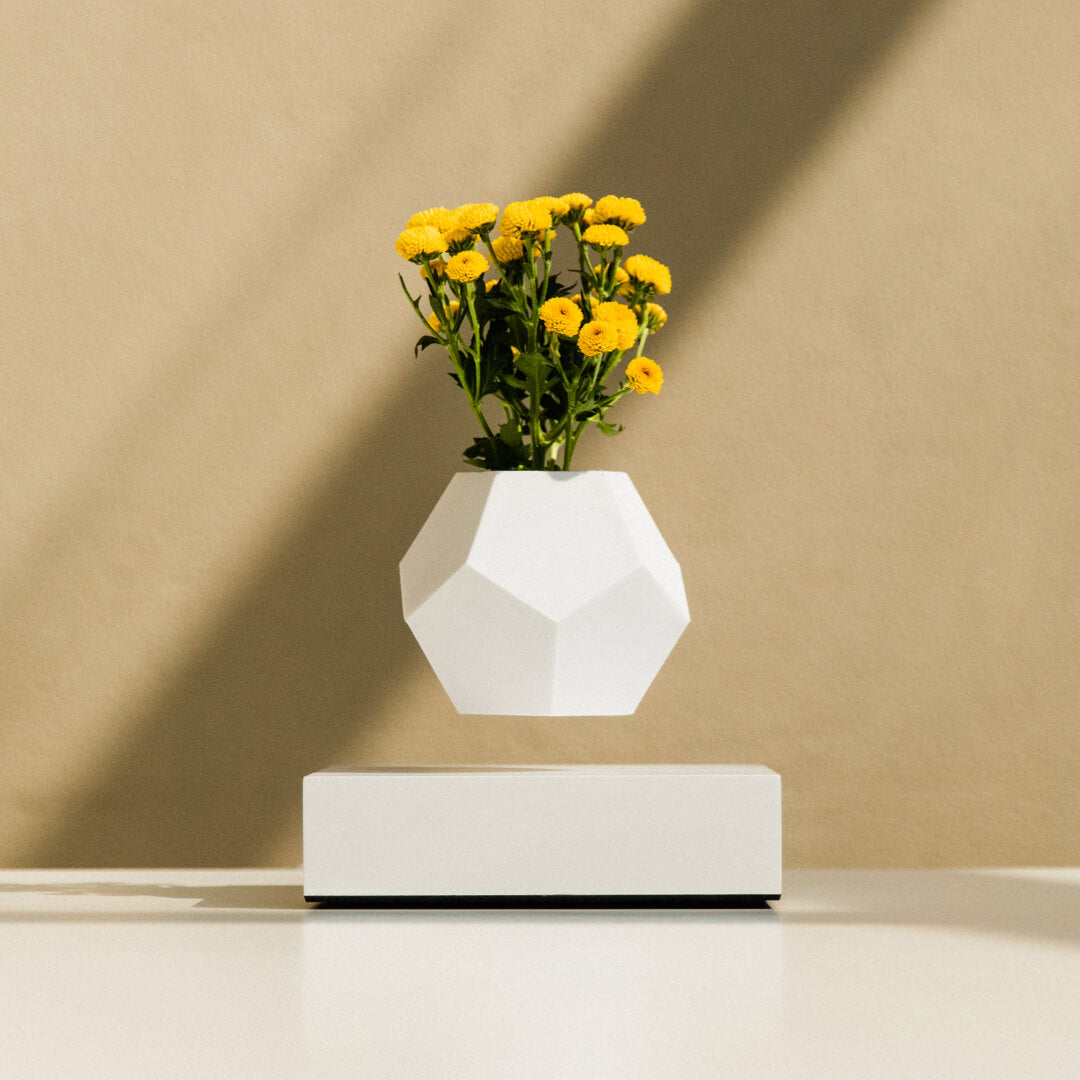
If I'm going to defend levitating decor anywhere, it's here — because a floating living plant is the rare case where the gimmick becomes genuinely functional and emotionally different from the static version.
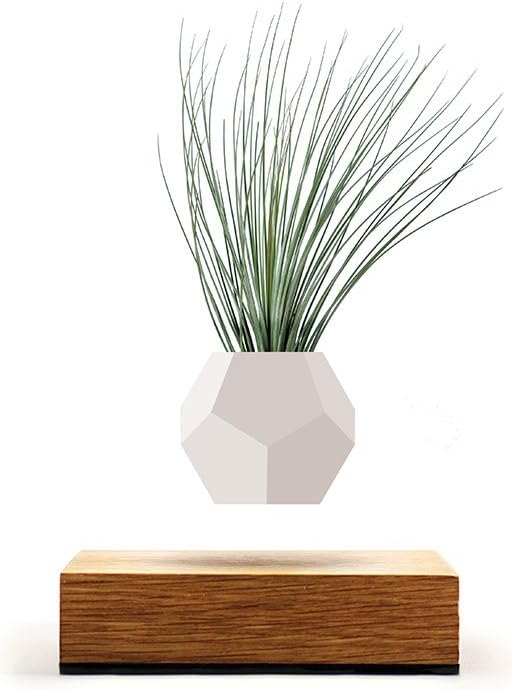
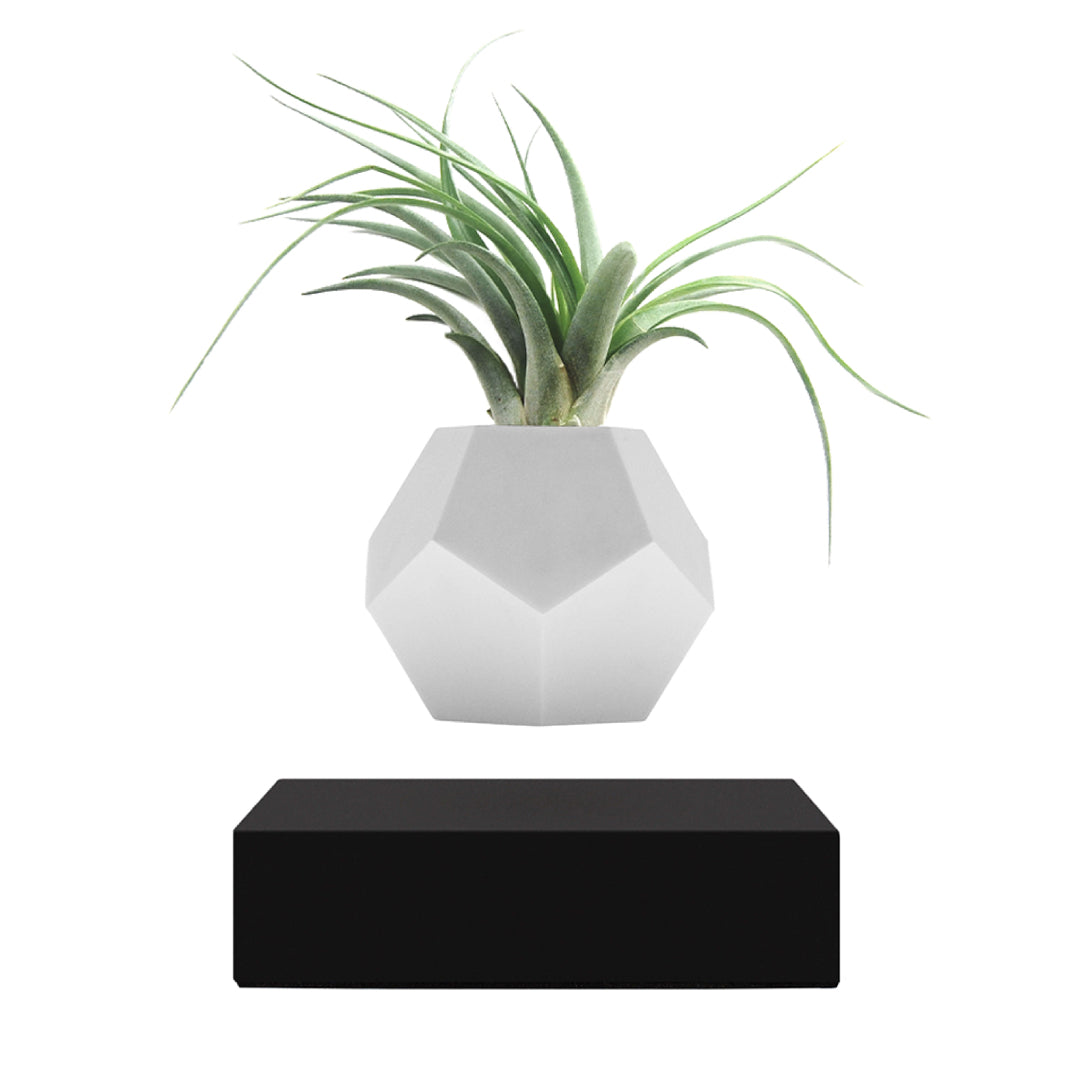
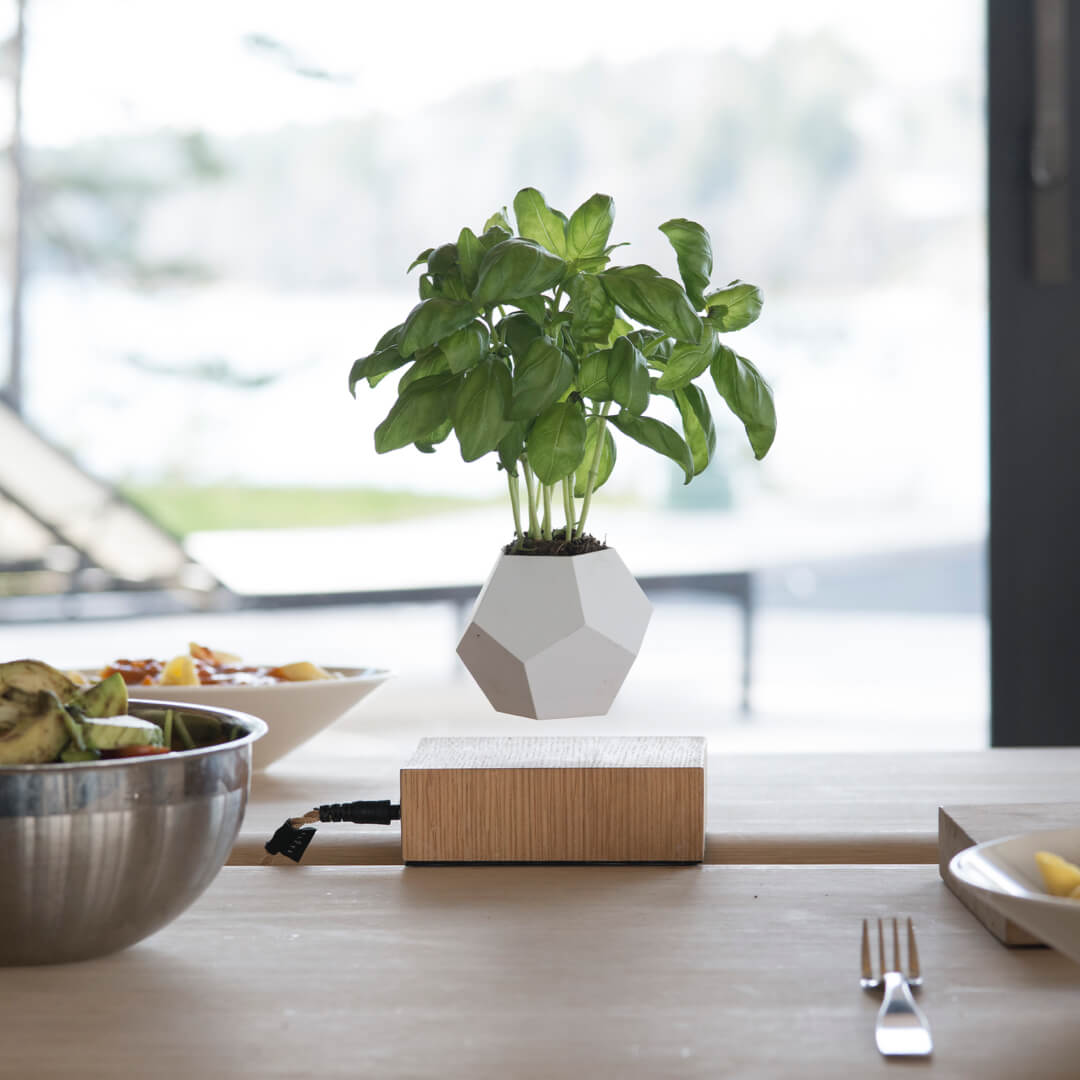
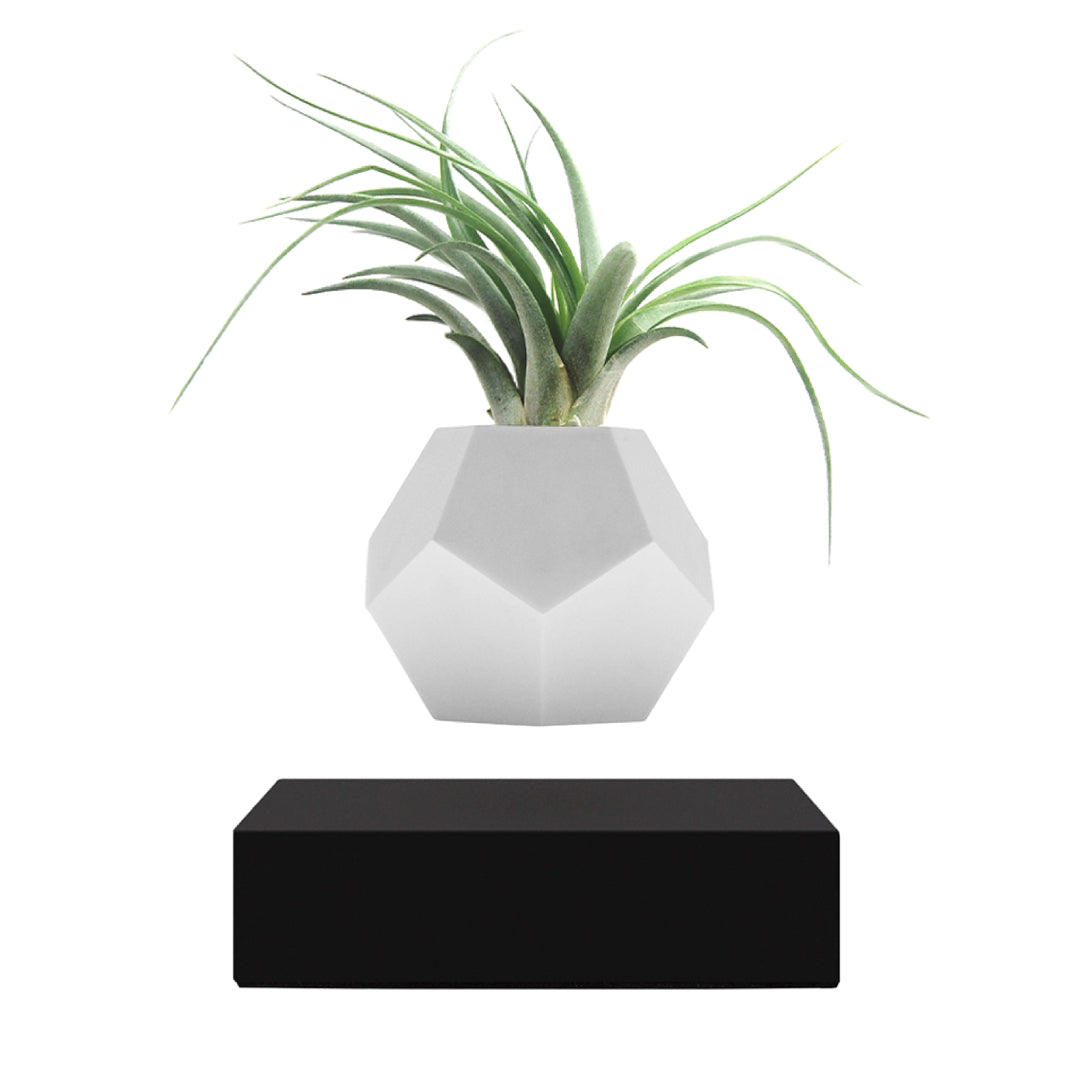
The gold standard is FLYTE's Lyfe levitating planter (~$299). A geodesic silicone pot hovers and slowly rotates above a wooden base via electromagnets embedded in the base. FLYTE is the most engineering-serious maker in this entire field — the original levitating-lightbulb company — and it shows in stability and relative quiet. The published spec matters: the planter holds up to 250 grams, levitates a steady gap above a 6-inch base, and runs off a 15V adapter. The reason this one transcends gimmick: the slow rotation gives the plant even light on all sides, 365 days a year, so it grows symmetrically instead of leaning toward a window. That's a real horticultural benefit, not just a visual one. Pair it with an air plant (Tillandsia), which needs no soil, and you get a genuinely low-maintenance floating garden. It's expensive, and at $299 you're paying a heavy premium over the physical value of a pot — but of everything in this guide, it's the piece I'd actually want on my own desk.
The more romantic, more demanding cousin is the Hoshinchu Air Bonsai (kits from ~$230). This is the famous one — a 2016 Japanese Kickstarter that raised over $840,000 from nearly 3,800 backers. A moss or lava-stone 'little star' floats about 2 cm above a porcelain 'energy base,' holding up to 300 grams, enough for a small pine or flowering sakura. It is breathtaking and it is the most demanding object here: a real bonsai needs real bonsai care, the weight balance is fussy, and the price reflects artisanal Japanese manufacturing rather than mass production. For a dedicated plant person it's a heirloom-grade wonder; for a casual buyer it's an expensive way to kill a tree.
Below those two sit the budget floating bonsai/plant pots (generic brands, ~$80–150 from stores like Stilyo and Aroflit, frequently 'on sale' from inflated MSRPs). They work on the same principle with looser tolerances and less polish. If you want to test whether you even like a floating planter before spending $299, one of these is a reasonable trial balloon — just treat the 'was $300, now $79' framing with the skepticism it deserves.
A rotating planter gives a plant even light on all sides all year. That's the rare case where the float does real work.
The levitating Bluetooth speaker: the most overrated object in the category
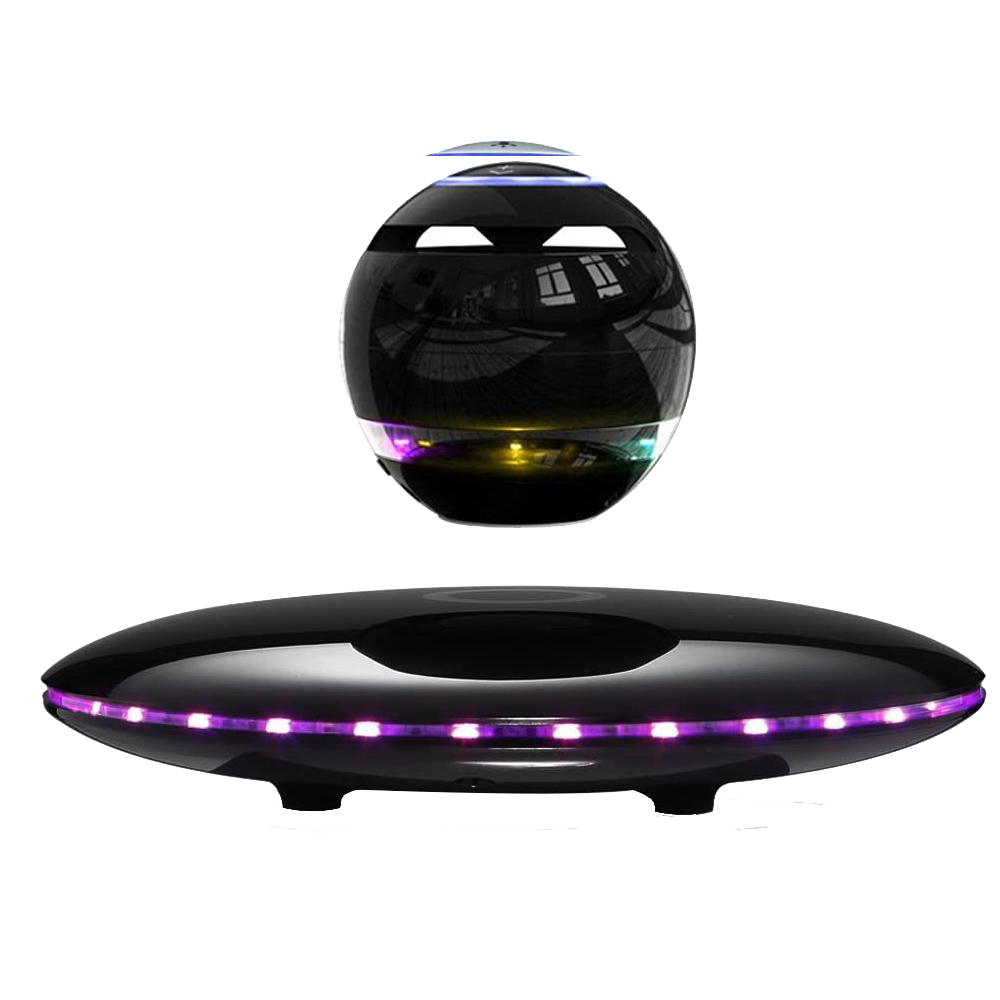
Now the one I'll happily talk you out of. A levitating Bluetooth speaker is the purest example of the float actively hurting the product, and I want to be specific about why, because it sounds like such a cool idea.
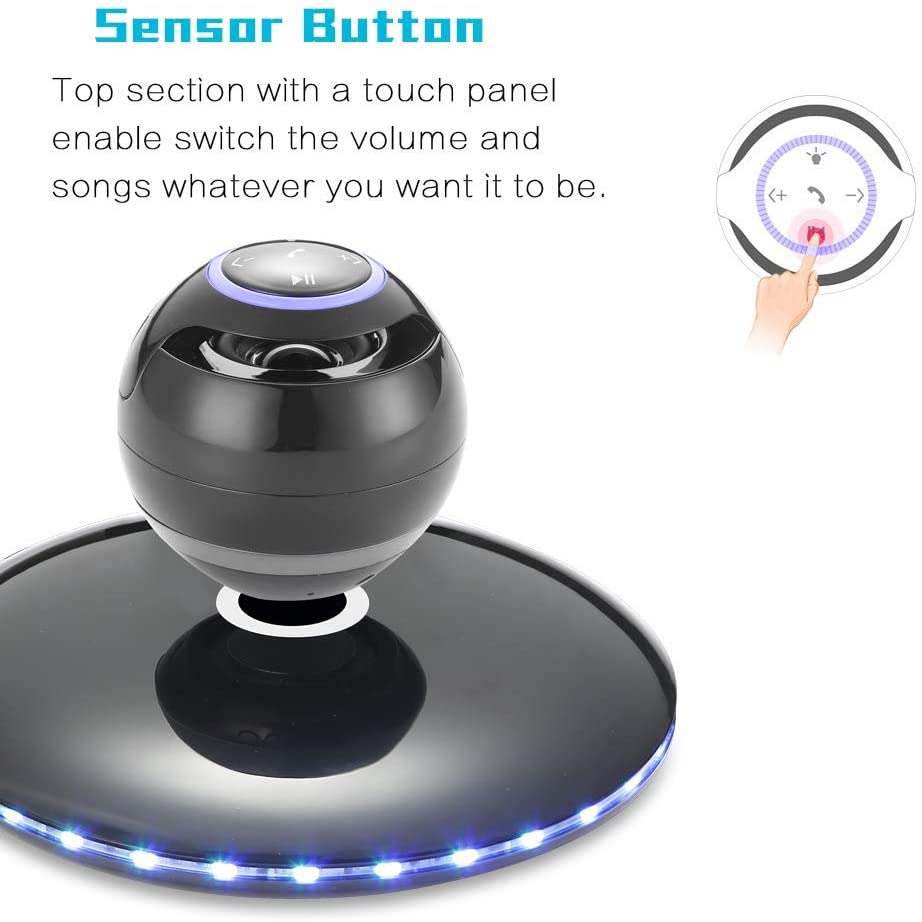
Start with the concept: the speaker driver sits in an orb that hovers above a base, and the base usually doubles as a charging dock and sometimes a passive subwoofer. The orb has its own battery because — obviously — you can't run a wire to a floating object, so it charges by sitting on the base when not aloft. LG made a flagship version of this (the PJ9), so it's not purely a no-name category. But the engineering reality is unkind:
- The float compromises the sound. A speaker that has to be light enough to levitate is a speaker that can't have a large driver, a real enclosure, or much mass — all the things that make audio sound good. Reviewers are blunt that levitating speakers cannot match a stationary speaker at the same price.
- It draws more power for worse output. You're now powering levitation and Bluetooth and the amp, for audio that's weaker than a $30 desk speaker.
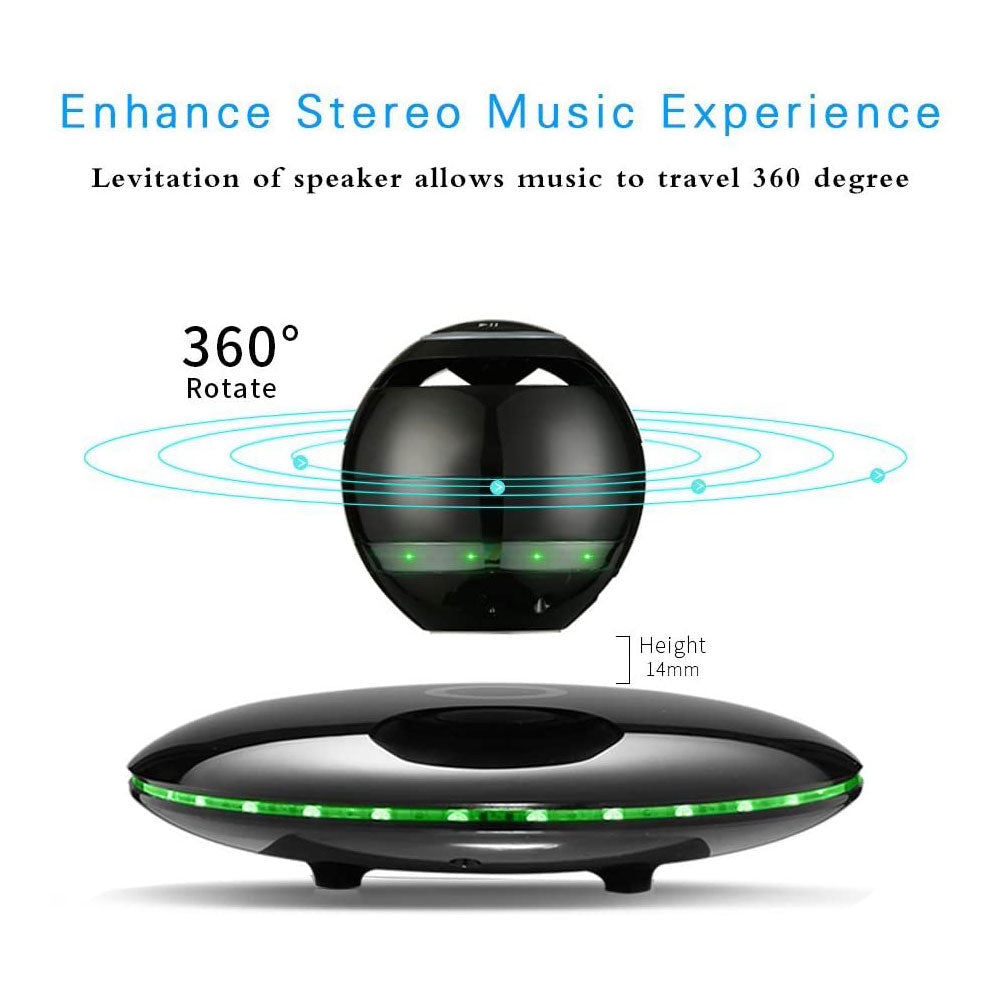
- Movement adds distortion. A speaker that drifts and rotates introduces subtle Doppler shift and image-smearing into the sound — a moving sound source is literally a textbook cause of pitch distortion. The float is at war with fidelity.
- It's still maglev. So you also inherit the hum, the capture-window setup, and the wobble-on-bump — on a device whose entire job (playing music) is unrelated to floating.
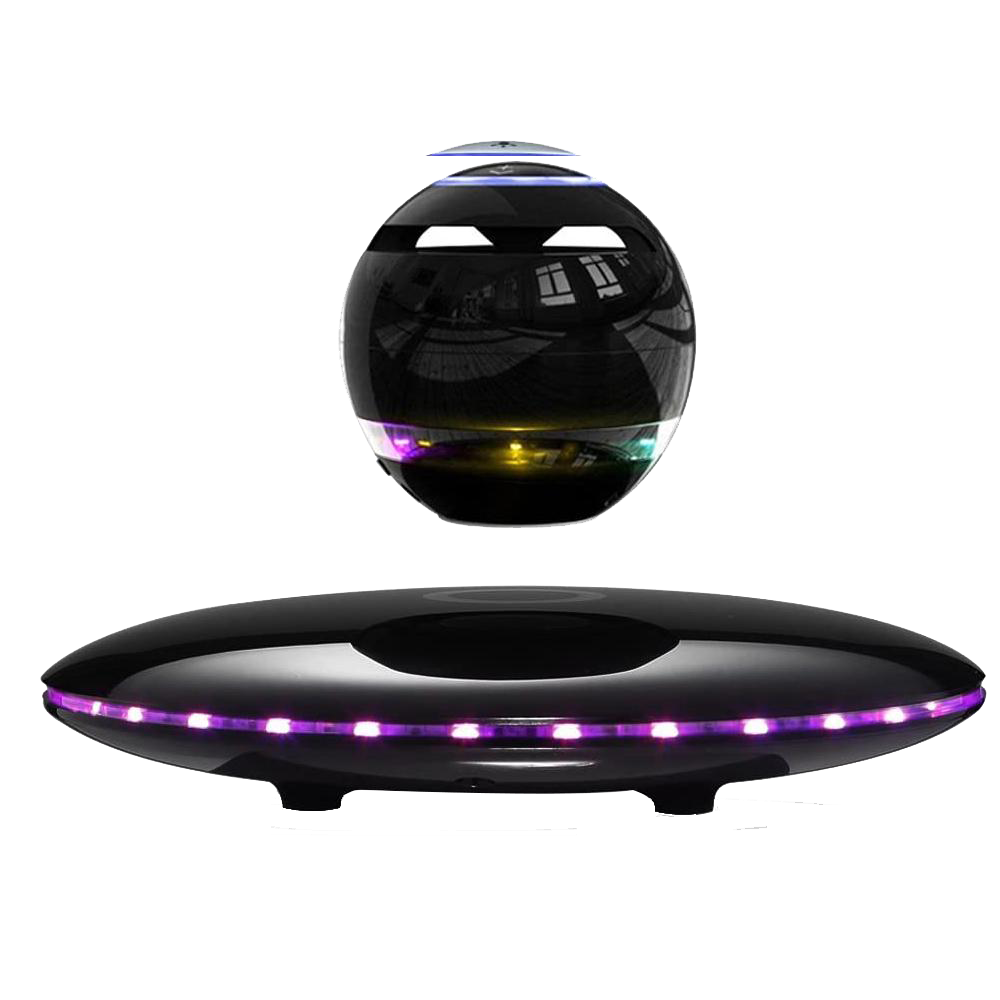
The honest assessment from people who've tested these is that they're roughly 60% visual wow, 40% audio, and that the audio half is mediocre. The candid verdict in the enthusiast world is harsher: as a piece of audio engineering it's a mess, and the marketing claims of 'cleaner floating sound' are backwards. None of this means nobody should buy one — if you want a conversation-starting sculpture that can play background podcasts, and you go in knowing the sound is an afterthought, fine. But if you're choosing it as a speaker, you're choosing the worst-sounding option at the price for the privilege of the trick. That's the definition of overrated.
A speaker light enough to levitate is a speaker too light to sound good. The float is at war with the audio.
So is it worth it? A buyer's decision framework by personality
Let me collapse all of this into a decision you can actually make, because 'it depends' is a cop-out and you came here for a verdict.
Buy levitating decor if you're honest about what it is: a kinetic sculpture that trades a little function and a little quiet for a daily hit of wonder. The float is the point; everything else is a compromise you're consciously accepting. If that framing makes you grin rather than wince, you're the right buyer.
Match the object to the person:
- The 'I want the single best one' buyer → FLYTE Lyfe planter (~$299). The only piece here where the float does real work and the engineering justifies itself. Expensive, worth it, the one I'd own.
- The 'I want maximum wonder for ~$50–80' buyer → a floating moon lamp (Sharper Image ~$80, or VGAzer ~$60) or a MOKOQI globe (~$50). Best wow-per-dollar in the category, genuinely tasteful, great gifts.
- The plant person with patience and budget → Hoshinchu Air Bonsai (~$230+). A breathtaking heirloom for someone who'll actually tend it; a tragedy for someone who won't.
- The science-gift recipient → Levitron Ultimate top (~$25–40). A pure-physics puzzle to savor, not desk decor to rely on.
- The 'I just want something cheap and floating' → a maglev globe is your answer, not a photo frame and definitely not a speaker.
Do NOT buy if: you want better light (buy a lamp), better sound (buy a speaker), or a zero-maintenance plug-and-forget object (none of these qualify — they all need setup patience and tolerate no desk-bumping). And skip the levitating speaker entirely unless the sound genuinely doesn't matter to you.
The deciding question is simple: will the wonder still delight you in month six, after the setup-fiddling and the faint hum have stopped being novel? For a moon, a globe, or a floating plant, the honest answer for most people is yes — these age into beloved fixtures. For a spinning photo frame or a levitating speaker, the honest answer is usually no, and that's the line between a worthy buy and a drawer-bound impulse.
The deciding question: will it still delight you in month six, after the hum stops being novel?
What experienced tables keep reporting
Recurring owner patterns, synthesized in Puzzlewick's words. Follow each evidence trail to read the original discussion.
After 2–3 hours of gradually building up the moon's orbit, it fell off — and despite countless attempts over many hours, I could not get it to reset. Not worth the price.
Read the evidence: Moon lamp owner review (paraphrased from aggregated retail reviews)
It's funny to watch her try to get it just right so the magnets take over and it floats — the setup is genuinely finicky before it settles.
Finding the magnetic balance between the speaker and the base can be very difficult, and it takes time and skill to set the parts correctly.
Floating speakers are 60% about the visual wow factor and 40% about actual audio performance — traditional speakers at the same price offer better sound.
Read the evidence: PowersOf10 — Best Levitating Bluetooth Speakers
Levitating speakers cannot sound as good as stationary speakers and consume more power; from a technical point of view they're criticized as a mess, with movement adding extra distortion.
Read the evidence: AudioReputation — Best Levitating Bluetooth Speakers
Setting up Buda Ball is like a lesson in meditation. It requires practice. Patience and focus.
Read the evidence: FLYTE — Buda Ball product page (the maker's own words)
The picks
Some links below are affiliate links — as an Amazon Associate, Puzzlewick earns from qualifying purchases, at no extra cost to you. It never changes a pick.

 4 photos
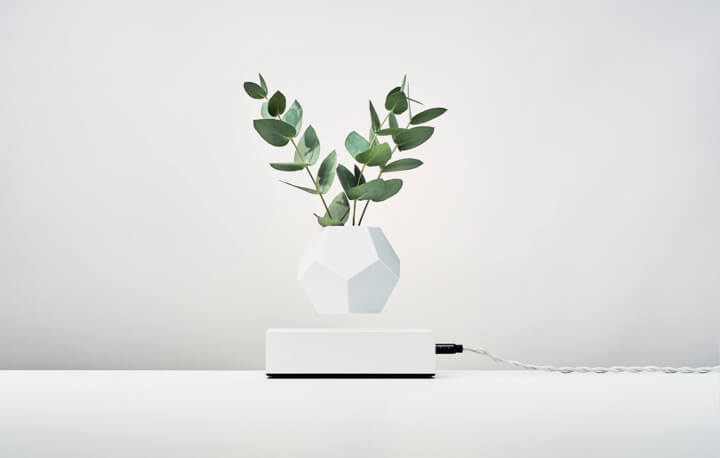
 Lyfe Levitating Planter
A geodesic silicone pot rotates in the air above a wooden base, giving a plant even light on all sides 365 days a year — a genuine horticultural benefit, not just a visual trick. FLYTE is the most engineering-serious maker in the category (they pioneered the levitating lightbulb), so it's among the quietest and most stable units you can buy. Holds up to 250g; pair it with a soil-free air plant and it's nearly maintenance-free. At ~$299 you pay a steep premium over the physical pot. It's still the one object here I'd want on my own desk.
- Float is functional, not just decorative — even all-around light keeps plants growing straight
- Best-in-class stability and low hum from a reputable maker with real support
- Looks like design, not a gadget; air-plant pairing makes it low-maintenance
- ~$299 is a heavy premium over the value of a pot
- 250g weight limit rules out heavy soil/larger plants
- Still requires capture-window setup patience like all active maglev
 2 photos
 Levitating Moon Lamp
A 5.5-inch 3D-printed moon with real crater detail hovers ~0.4 inch over a touch-sensitive wood base; tap to start or stop the rotation. The image is inherently lovely, so this reads as a beautiful object rather than a gimmick, and over 11,000 units sold means the kinks are known. Crucially, buying from Sharper Image gives you a real return path if your unit hums or won't catch its orbit — a meaningful edge over no-name sellers. Don't expect task lighting; it's ambient glow. As floating decor for a nightstand or shelf, it's the easy recommendation.
- Genuinely beautiful, tasteful object — strong wow-per-dollar
- Bought from an accountable retailer with returns/support
- Tap controls and touch base are simple and reliable
- Ambient glow only — not a usable reading lamp
- Setup capture window takes practice; can drop if bumped
- Faint maglev hum possible in a silent room
 3 photos
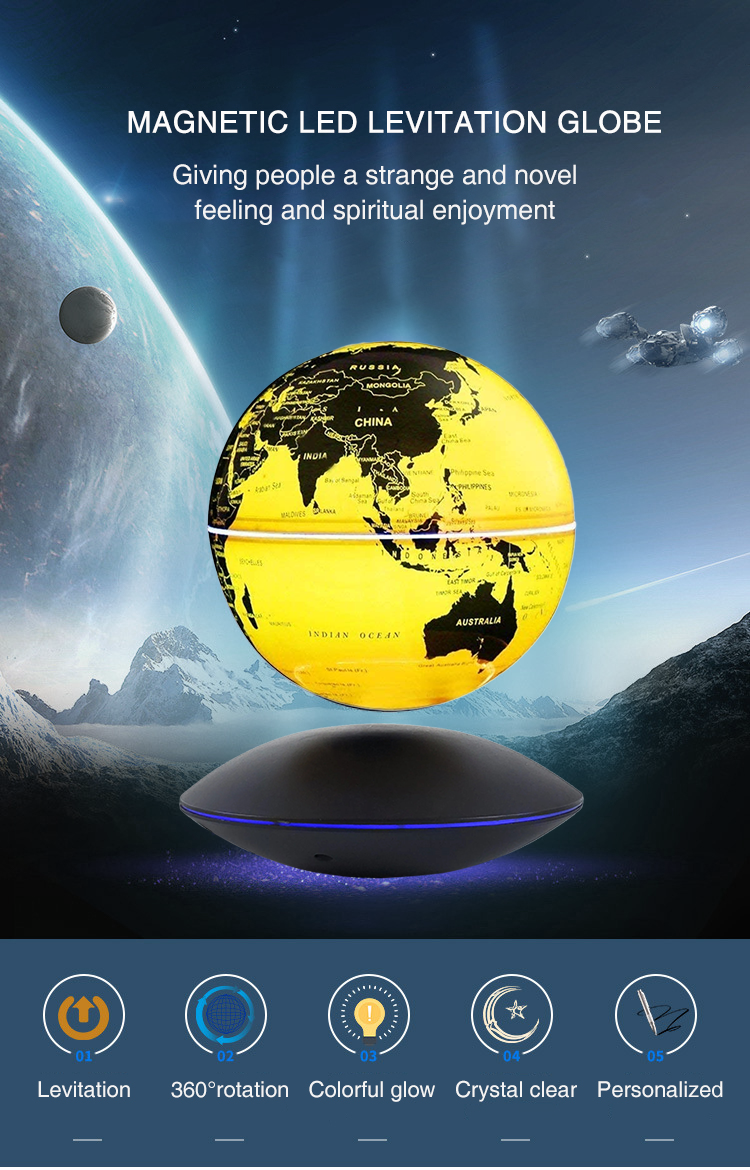
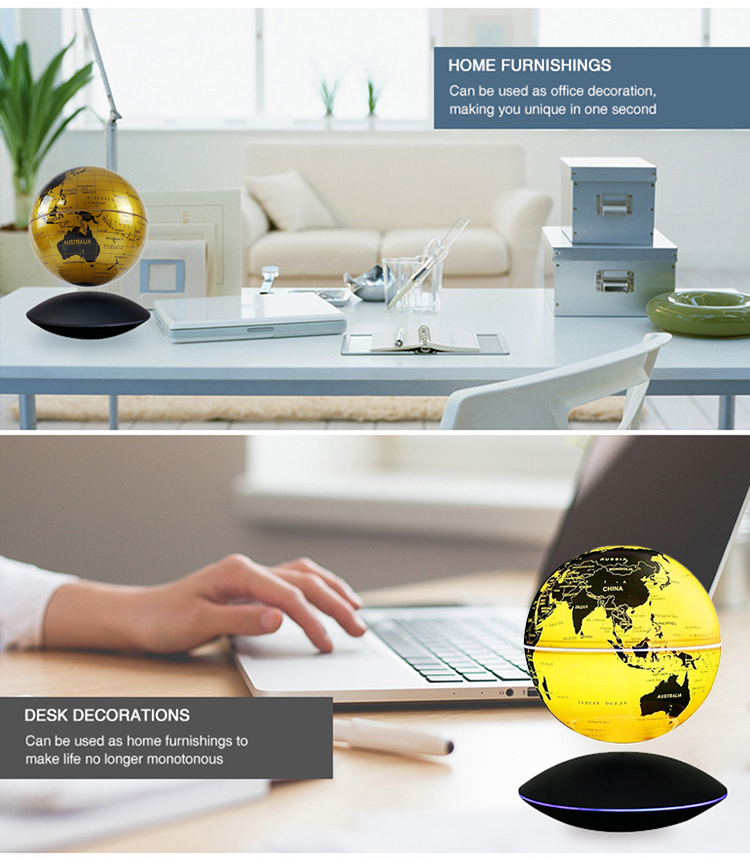
 Magnetic Levitating Globe with LED Light
The longest-running, most-reviewed maglev globe on the market, with roughly a 9/10 aggregate and about 70% clearly positive reviews across thousands of buyers. A slowly turning, internally lit world globe reads as a tasteful executive desk piece, not a dorm toy, which is why it endures as a gift. Same maglev caveats as the rest — center-and-release setup, a 15–25 minute spin-down per nudge, a possible faint hum — but a good unit is quietly impressive turning behind you on a video call. At ~$50 it's the best wonder-per-dollar in the guide.
- Proven track record — thousands of reviews, strong aggregate score
- Tasteful, gift-ready look at a low price (~$50)
- Educational angle works for kids and adults alike
- No-name-adjacent category; quality varies unit to unit
- Setup balancing is finicky the first several tries
- Cheaper units can emit an audible whine
 2 photos
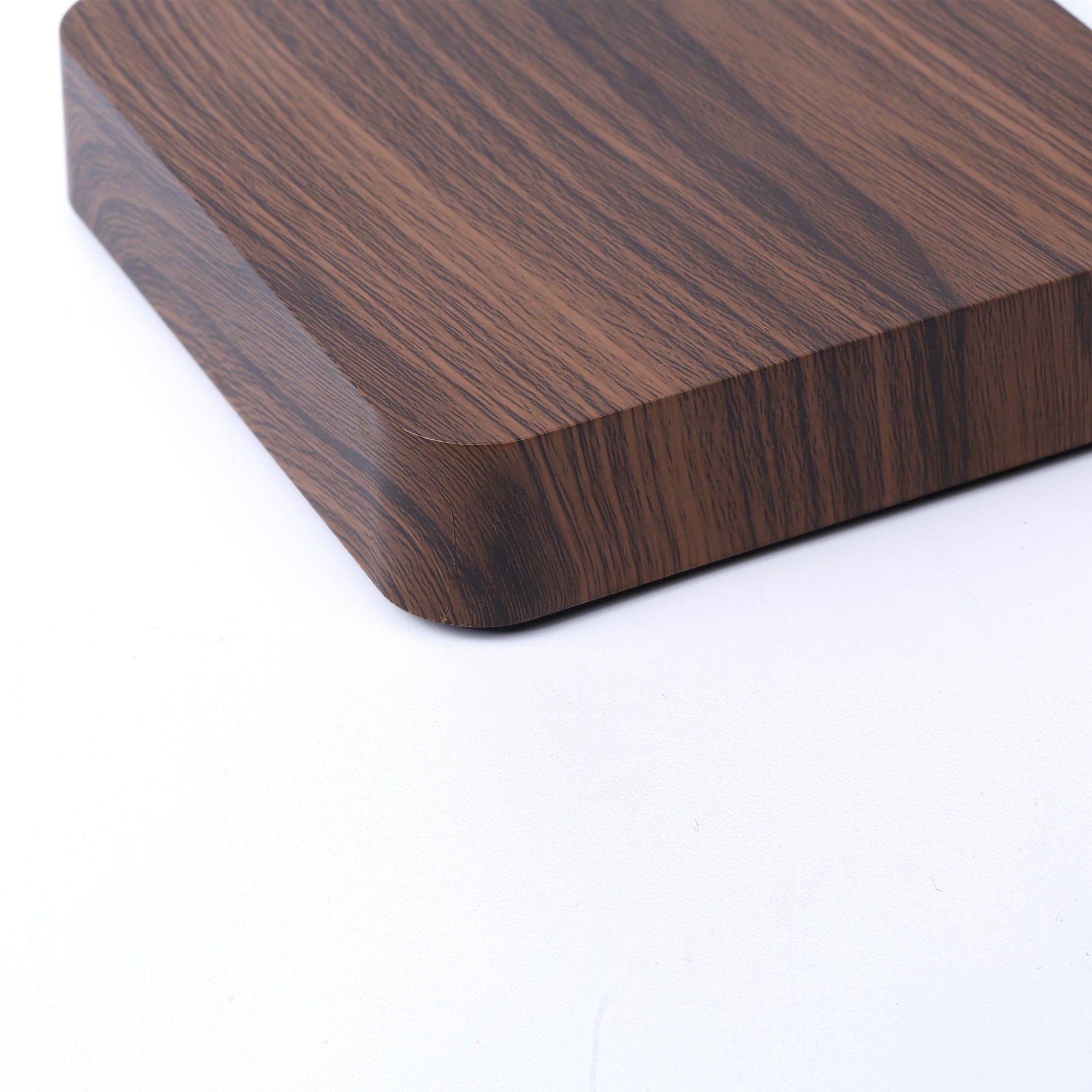
 Levitating Moon Lamp (6-inch)
The long-running enthusiast favorite among floating moons on Amazon — a 6-inch 3D-printed lunar sphere on a luxe wooden base, with a wider range of light colors than most. Slightly cheaper than the Sharper Image unit and, by repeated owner accounts, a touch more finicky to get floating, but a legitimately good and well-loved object. If you're comfortable buying from a marketplace brand and want the largest moon for the least money, this is the pick. Same rules apply: ambient glow, not task light, and budget patience for the first-day setup.
- Largest common moon (6 inch) at a low price (~$60)
- Wide color selection and an attractive wooden base
- Established, well-reviewed marketplace favorite
- Reported to be more setup-finicky than the Sharper Image unit
- Marketplace brand — less recourse than a named retailer
- Ambient light only; possible faint hum
 3 photos
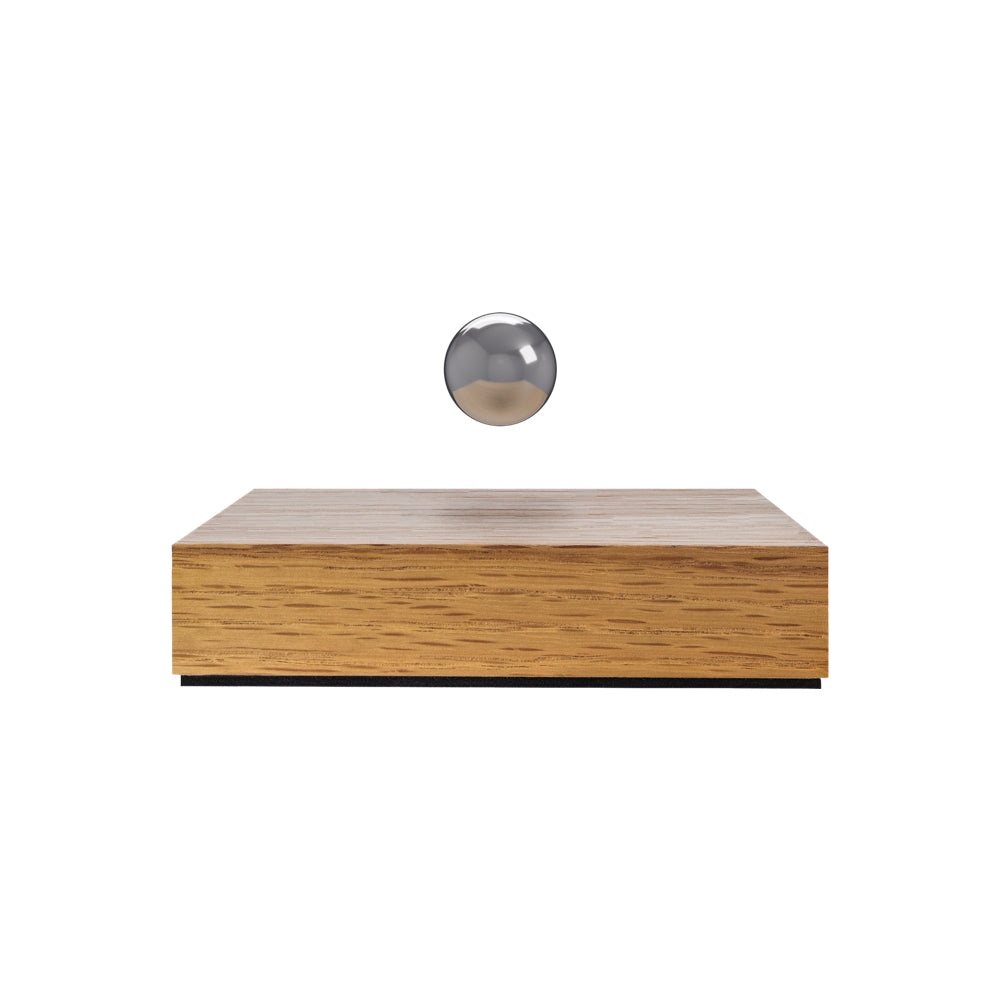
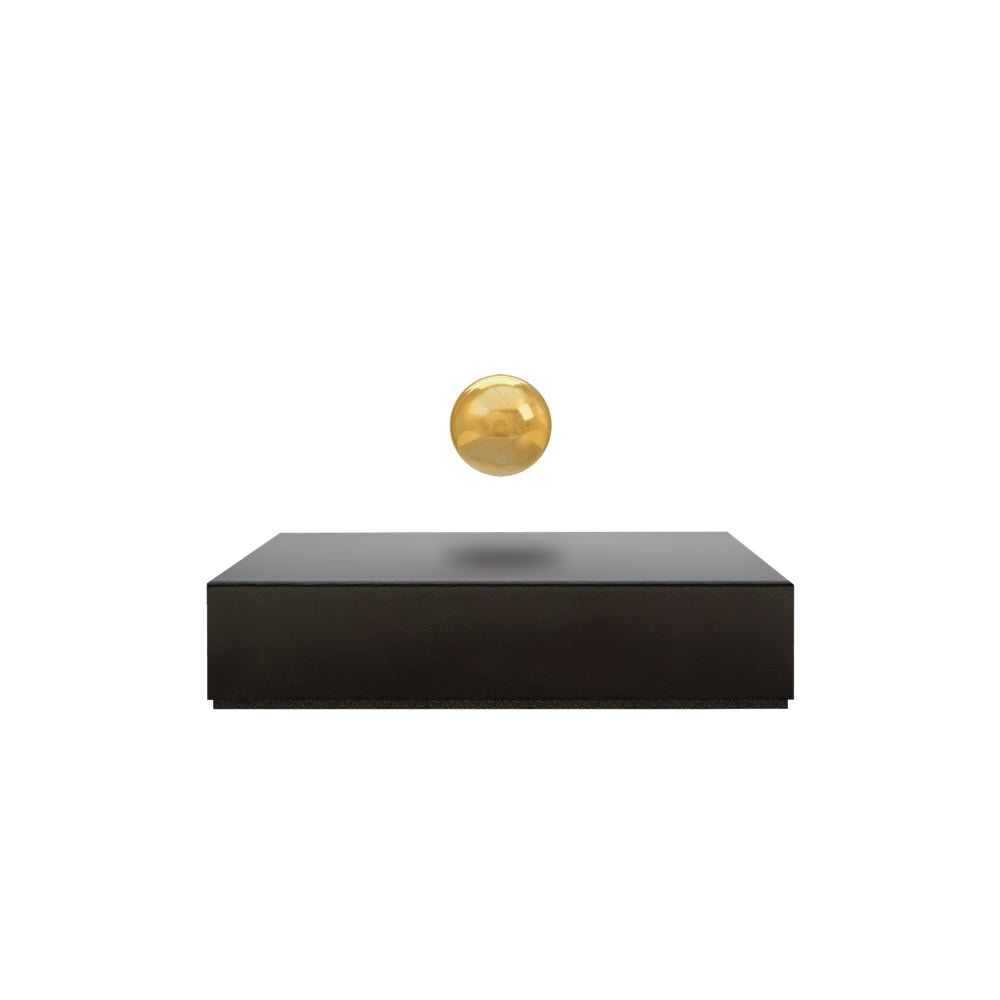
 Buda Ball Levitating Sphere
A tiny chrome or gold sphere hovers and rotates in an invisible field above a slim base — pure, meditative minimalism from FLYTE, marketed explicitly as a stress-lowering, time-stopping visual. The build quality is excellent. The catch is candor you rarely get from a maker: FLYTE itself says setup 'is like a lesson in meditation — it requires practice, patience and focus.' That's both the charm and the warning. It's a beautiful, expensive nothing — a 20mm ball floating — so its worth is entirely about whether quiet, abstract motion soothes you. For the right person it's a desk-zen totem; for most it's pricey for what it does.
- Impeccable FLYTE build quality and minimalist design
- Genuinely calming, meditative motion
- Positions vertically or horizontally for varied looks
- Setup is admittedly fiddly — FLYTE itself calls for 'practice and patience'
- ~$159 for a 20mm floating sphere is hard to justify on function
- Pure novelty — does nothing but float and spin

 2 photos
 Levitating Air Bonsai / Plant Pot (budget)
Same floating-planter principle as the FLYTE Lyfe and Hoshinchu Air Bonsai, executed by rotating no-name brands at a fraction of the price (commonly ~$80–150, almost always shown as a steep 'discount' off an inflated MSRP). Tolerances are looser, the hum can be more noticeable, and stability is less assured — but if you want to find out whether you even enjoy a floating planter before spending $299, this is a rational way to test the concept cheaply. Treat the 'was $300, now $79' framing with the skepticism it deserves and read recent reviews carefully.
- Cheapest entry to the floating-plant experience
- Good way to test the concept before a premium buy
- Works on the same maglev principle as the pricey ones
- Looser tolerances — more wobble and louder hum risk
- Inflated MSRP/'sale' marketing; verify the real price
- Inconsistent quality and support from rotating brands
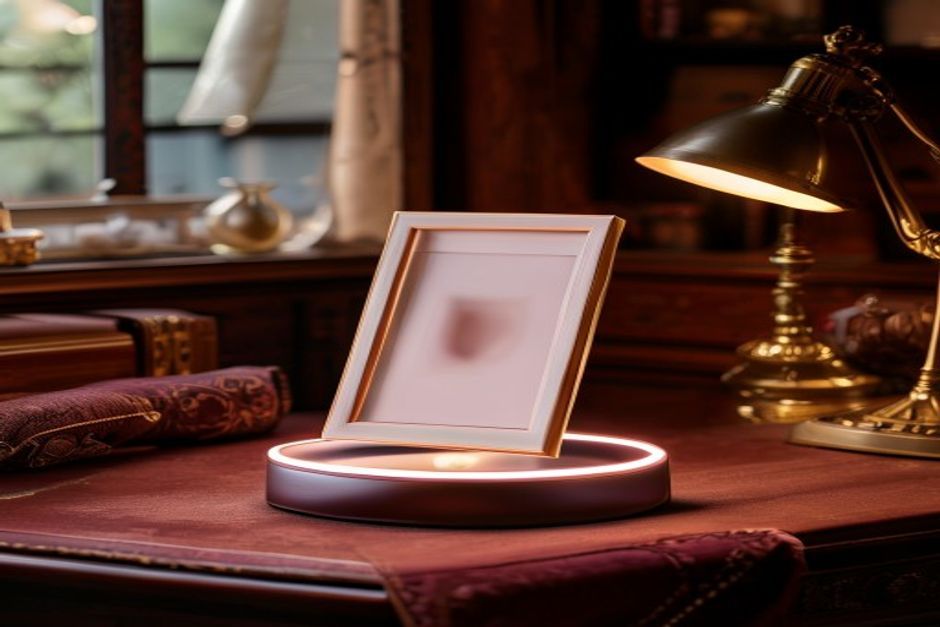
Magnetic Levitating Floating Photo Frame
A C-shaped arm, an LED ring, and a thin frame holding two small photos that spins in mid-air. It works, and as a sub-$40 novelty it's harmless fun. But it's the most disposable expression of the whole idea: the float adds nothing to a photograph the way it adds to a moon or a living plant, the frames are flimsy, and every brand selling these is interchangeable. Fine if someone specifically wants a floating-photo gimmick gift; not something I'd pay a premium for, and never above a moon, globe, or plant.
- Cheap (~$25–40) and genuinely novel at first glance
- Holds two photos; LED lighting adds some ambiance
- Reportedly among the quieter maglev novelties
- Float adds nothing meaningful to a photo — pure gimmick
- Flimsy build; fully interchangeable no-name brands
- Lowest long-term appeal of anything here
 3 photos
 Levitating Bluetooth Speaker (orb + base)
The category's clearest 'skip.' A speaker light enough to levitate is a speaker too small and too light to sound good, so it can't match a stationary unit at the same price. It draws extra power for levitation plus Bluetooth, and a moving, rotating source even adds Doppler-style distortion to the audio. On top of that you inherit every maglev downside — hum, capture-window setup, wobble-on-bump — on a device whose actual job is unrelated to floating. Reviewers consistently peg these at ~60% visual wow, 40% mediocre audio. A fun sculpture that plays background podcasts; a terrible way to spend an audio budget. For the same ~$80, buy a real speaker and a floating globe.
- High visual novelty — a real conversation starter
- Base usually doubles as a charging dock
- Can play casual background audio if fidelity is irrelevant
- Worst-sounding speaker at its price — the float hurts the audio
- Higher power draw plus movement-induced distortion
- All the maglev hassles (hum, setup, wobble) for an unrelated function
At a glance
| product | maker | type | price | best for |
|---|---|---|---|---|
| FLYTE Lyfe Planter | FLYTE | Levitating plant pot | ~$299 | Best overall (float does real work) |
| Sharper Image Moon Lamp | Sharper Image | Floating moon lamp | ~$80 | Best floating lamp / safest buy |
| MOKOQI Levitating Globe | MOKOQI | Floating globe | ~$50 | Best globe / best budget wonder |
| Hoshinchu Air Bonsai | Hoshinchu | Levitating bonsai | ~$230+ | Best for dedicated plant people |
| VGAzer Moon Lamp | VGAzer | Floating moon lamp | ~$60 | Best floating lamp on a budget |
| FLYTE Buda Ball | FLYTE | Levitating sphere | ~$159 | Minimalist desk objet (for the patient) |
| Budget floating plant pot | Stilyo / Aroflit | Levitating plant pot | ~$80–150 | Cheap trial before a Lyfe |
| Floating photo frame | Generic | Levitating picture frame | ~$30 | Cheap novelty gift |
| Levitating Bluetooth speaker | Generic / LG (PJ9) | Floating speaker | ~$80 | Most overrated — skip |
Questions, answered
How does levitating desk decor actually work?
Almost all of it uses active electromagnetic levitation. An electromagnet in the base, a position sensor (Hall-effect or optical), and a controller form a feedback loop that adjusts the magnetic field hundreds of times per second to hold a magnet-loaded object suspended just below the base. A pure static magnet can't do this (Earnshaw's theorem), which is why the electronics — and the constant correction — are essential. The lone exception is the Levitron top, which floats by gyroscopic spin instead of electronics.
Is levitating decor actually worth it, honestly?
Sometimes. Be honest about what it is: a kinetic sculpture that trades a little function and a little quiet for a daily dose of wonder. Moons, globes, and floating plants age into beloved fixtures and are worth it for object-lovers. Levitating speakers and photo frames are mostly novelty and usually aren't. The test: will it still delight you in month six, after the setup-fiddling and faint hum stop being novel? For the best picks, yes.
Do levitating decorations hum or buzz?
Active-maglev ones can, yes. The electromagnet's current switches hundreds of times a second to hold the object up, and that makes the coil physically vibrate — the same 'electromagnetically induced acoustic noise' behind transformer hum and fluorescent buzz. Well-built units (FLYTE, Sharper Image) are near-silent; cheap no-name units can emit a faint high whine you'll notice in a quiet bedroom. The Levitron top is the only truly silent option, because it has no electronics.
Are these hard to set up and 'balance'?
Yes, more than the product photos suggest. Active-maglev pieces have a narrow capture window: you hold the object about an inch below the base, center it, and slowly release until the field grabs it — expect 5–10 tries the first time, and re-catching it after a bump can be frustrating. The Levitron top is far worse: you trim its weight with washers, level the base precisely, and even then drafts, temperature, and vibration upset it. None of these are truly plug-and-play.
What's the best floating moon lamp?
The Sharper Image Levitating Moon Lamp (~$80) for the safest mainstream buy — a 5.5-inch 3D-printed moon from an accountable retailer with returns, over 11,000 sold. For the largest moon at the lowest price, the VGAzer 6-inch (~$60) is the long-running enthusiast favorite. Both are ambient glow, not reading lamps. Buy a well-reviewed unit and budget patience for the first-day setup.
What's the best levitating plant pot?
FLYTE's Lyfe planter (~$299) is the best, and the rare piece where the float does real work — slow rotation gives a plant even light on all sides all year, so it grows straight. Pair it with a soil-free air plant (the pot holds up to 250g) for near-zero maintenance. For a true living bonsai with craft pedigree, the Hoshinchu Air Bonsai (~$230+, 300g limit) is breathtaking but demands real care. To test the concept cheaply first, a budget maglev pot (~$80–150) works.
What's the best levitating globe?
The MOKOQI Magnetic Levitating Globe (~$50). It's the longest-running, most-reviewed option, with roughly a 9/10 aggregate and about 70% clearly positive reviews. A slowly turning, internally lit world globe looks like a tasteful executive desk piece rather than a toy, which is why it endures as a gift. Same maglev caveats apply: finicky first-day setup, a possible faint hum on cheaper units, and a 15–25 minute spin-down each time you nudge it.
Do levitating gadgets use a lot of power?
More than the lamp or speaker they replace, because the electromagnet works continuously to hold the object aloft — there's no 'resting' state while it's floating. Individually the draw is modest (these run off small AC adapters, e.g. 15V on the FLYTE Lyfe), but they are always-on plugged-in appliances, not zero-power objects. Levitating speakers are the worst offenders, powering levitation, Bluetooth, and an amp at once. The battery-free Levitron top is the only no-power exception.
What's the best levitating decor gift?
Match it to the person. Object-lovers: a floating moon lamp (~$60–80) or a MOKOQI globe (~$50) — high wow, tasteful, reliable. A serious plant person with budget: the Hoshinchu Air Bonsai (~$230+). A science enthusiast: the Levitron Ultimate top (~$30) as a physics puzzle. The single most universally safe gift is a moon lamp or a globe; both photograph beautifully and rarely disappoint.
Which levitating decor is the most overrated?
The levitating Bluetooth speaker. A speaker light enough to float is too small and light to sound good, it draws extra power, and a moving, rotating source adds Doppler-style distortion to already-mediocre audio — plus you inherit every maglev downside (hum, setup, wobble) on a device whose job is playing music. Reviewers rate them ~60% visual wow, 40% weak audio. For the same ~$80, buy a real speaker and a separate floating globe.
What's the best budget levitating decor?
A maglev globe (~$50, e.g. MOKOQI) is the best cheap wonder — tasteful, proven, and genuinely impressive. A floating moon lamp (~$60) is the next step up. Avoid spending your budget on a floating photo frame (the float adds nothing to a photo) or a levitating speaker (worst-sounding option at the price). Cheap and floating is fine; cheap and pointless is a drawer-bound impulse buy.
Where should I buy levitating decor — and is it safe to bookmark Puzzlewick's picks?
Buy direct from the real makers: FLYTE (flytestore.com) for the Lyfe and Buda Ball, Sharper Image for the moon lamp, Fascinations for the Levitron, and reputable marketplace listings for MOKOQI and VGAzer. Favor branded sellers over rotating no-names, and treat any '$300 → $79' banner with suspicion — verify the live price and read recent reviews for 'hum' and setup complaints. Puzzlewick is a wonder-library, not a store: we sell nothing and take no cut, so these rankings have no commercial axe to grind.
Dax's verdict
Levitating desk decor is worth it if — and only if — you buy it for the right reason: a kinetic sculpture that trades a little function and a faint hum for a daily hit of wonder. On those terms, three things genuinely deliver. FLYTE's Lyfe planter (~$299) is the rare piece where the float does real work, and the one I'd put on my own desk. A floating moon lamp (~$60–80) or a MOKOQI globe (~$50) is the best wonder-per-dollar in the category and an easy gift. Everything else is conditional: the Hoshinchu Air Bonsai (~$230+) is breathtaking but only for someone who'll truly tend it; the Levitron top (~$30) is a delightful physics puzzle but a poor everyday decor object; the floating photo frame is harmless filler. The one clear skip is the levitating Bluetooth speaker — every version sacrifices real sound for the trick, and for the same money a stationary speaker plus a floating globe beats it on both axes. Go in knowing the truth the product pages omit: these all need setup patience, tolerate no desk-bumping, have strict weight limits, and may hum faintly at night. Accept that, pick from the top of this list, and you'll own something quietly magical. And one last honest note: Puzzlewick sells none of this and earns nothing from your choice — these rankings exist to point you at the real makers and, just as often, to talk you out of the gimmicks.
Research ledger 21 sources · reviewed 2026-08-10
Specifications, rules, current product information, community experience, and contrary evidence were checked against the sources below. Commercial links are kept separate from editorial evidence.
- flytestore.comflytestore.com/products/lyfe-levitating-planter
- flytestore.comflytestore.com/products/buda-ball
- flytestore.comflytestore.com/collections/all
- sharperimage.comsharperimage.com/products/levitating-moon-lamp-by-sharper-image
- amazon.comamazon.com/dp/B016I5FHXU?tag=puzzlewick-20
- amazon.comamazon.com/dp/B075WCXSJC?tag=puzzlewick-20
- en.wikipedia.orgen.wikipedia.org/wiki/Levitron
- kickstarter.comkickstarter.com/projects/1280002828/air-bonsai-create-your-little-star
- spoon-tamago.comspoon-tamago.com/the-surreal-levitating-air-bonsai-are-now-available
- archello.comarchello.com/product/floating-air-bonsai-garden
- aroflit.comaroflit.com/products/magnetic-levitating-plant-pot-for-bonsai-real-fake-plants-floating
- stilyo.myshopify.comstilyo.myshopify.com/products/levitating-floating-bonsai-pot
- en.wikipedia.orgen.wikipedia.org/wiki/Electromagnetically_induced_acoustic_noise
- powersof10.compowersof10.com/best-levitating-bluetooth-speakers
- bestreviews.combestreviews.com/electronics/speakers/best-levitating-speakers
- audioreputation.comaudioreputation.com/levitating-bluetooth-speakers
- whathifi.comwhathifi.com/news/lg-to-launch-pj9-levitating-speaker-ces-2017
- nerdtechy.comnerdtechy.com/best-levitating-moon-lamp
- amazon.comamazon.com/dp/B0CQJHDDMW?tag=puzzlewick-20
- techtreasures.comtechtreasures.com/blog/what-a-magnetic-levitation-bluetooth-speaker-really-is-and-who-it-makes-sense-for
- Community research index: r/fidgettoys discussions about Is Levitating Desk Decor Worth It? Rankedreddit.com/r/fidgettoys/search/?q=Is%20Levitating%20Desk%20Decor%20Worth%20It%3F%20Ranked&restrict_sr=1&sort=top

I'll be honest with you — flattery is boring.

Keep exploring
The next smart rabbit holes.
✦ Topic PathBoard Game Buying Guides: compare the whole shelfStart with the decision, not the shelf. These guides compare the games, editions, expansions, player counts, and costs people...Gift GuideBest Desk Toys for Engineers & Restless Minds (2026)Ninety percent of desk toys are chrome theater that'll be in a drawer by spring. Here's the short list where the mechanism actually earns...Deep DiveThe Swinging Sticks: The Iron Man Desk Grail That Never Stops MovingDesigned in Germany, hand-built in Thailand, screen-used in Iron Man 2, silent, hypnotic, and impossible to ignore — the one desk object...