Nintendo Daitoryo Hanafuda: Holding Nintendo's 1889 Origin Story in Your Hands
Before the Switch, before the Famicom, there was a Kyoto card-maker pressing flowers onto layered paper. Daitoryo is that company's flagship hanafuda — and the most affordable grail you will ever covet.


AI-assisted research and drafting in Kenji’s voice · reviewed by Robert Pruitt · how this guide was made
Last editorial refresh: 2026-06-24 Gold-standard QA: 2026-08-10 9 sources reviewed Affiliate links checked during gold-standard pass

The short answer
Daitoryo is Nintendo's top-grade hanafuda line — 48 flower cards on thick, lacquer-backed stock, made continuously since the company's 1889 founding as a Kyoto karuta maker. Genuine new decks run about $25-$35 (JINEN Store is the most reliable source at $28; both red and black wrappers are the same Daitoryo grade), with sealed vintage examples climbing to $65-$72 on the secondary market. It is the cheapest object a serious Japanese-craft collector can chase that still carries this much meaning: an unbroken living link to the actual origin of the most important company in games. Note that Nintendo revised its Japanese hanafuda and playing-card pricing in 2026 (Japan only, effective May 25), which confirms the line is still in active production but means quoted prices may drift upward over time. Buy the genuine current-production Nintendo Daitoryo, not a generic or used 42-card bait deck.
Decision map
Choose in thirty seconds
The collector who wants Nintendo's true 1889 origin in their hands — a playable, top-grade grail that costs almost nothing and means almost everything.
I keep a deck of Daitoryo on the shelf above my writing desk, and I tell people the same thing every time they ask why a twenty-eight-dollar pack of cards sits where a person might keep a netsuke or a tea bowl. This is where Nintendo begins. Not the Switch. Not Mario. Not the gray Famicom that smells like 1983 when you blow into the cartridge. Here — twelve months of flowers pressed onto layered washi-style stock in a Kyoto workshop that opened its doors in 1889 and, astonishingly, never stopped. Daitoryo is the grail of provenance, and the strange, lovely thing about it is that you can afford it. Most grails punish you for wanting them. This one asks for the price of a nice dinner and gives you a century of unbroken craft in return. Let me show you what you are actually holding.
Start here, then go deeper
You are in the right cabinet.
 ♛ Topic PathGrail Board Games: compare the whole shelfA grail earns its space only when the experience survives the price, setup, storage, and group commitment. These are expensive-game...
 Beginner's GuideHanafuda for Beginners: How to Play Koi-Koi & Which Deck to BuyCome sit—I've been waiting to show you this. A Japanese hostess's guide to the little painted garden, the press-your-luck thrill of こいこい,...
 Best OfBest Cozy Board Games of 2026: Calico, Cascadia, Patchwork & the Relaxation Gaming RevolutionCome sit, come rest. Cozy games are the speed of real life — no winners, no rush, just beauty made by your own hands. This is the quiet...
How is a deck of flower cards Nintendo's actual origin story?
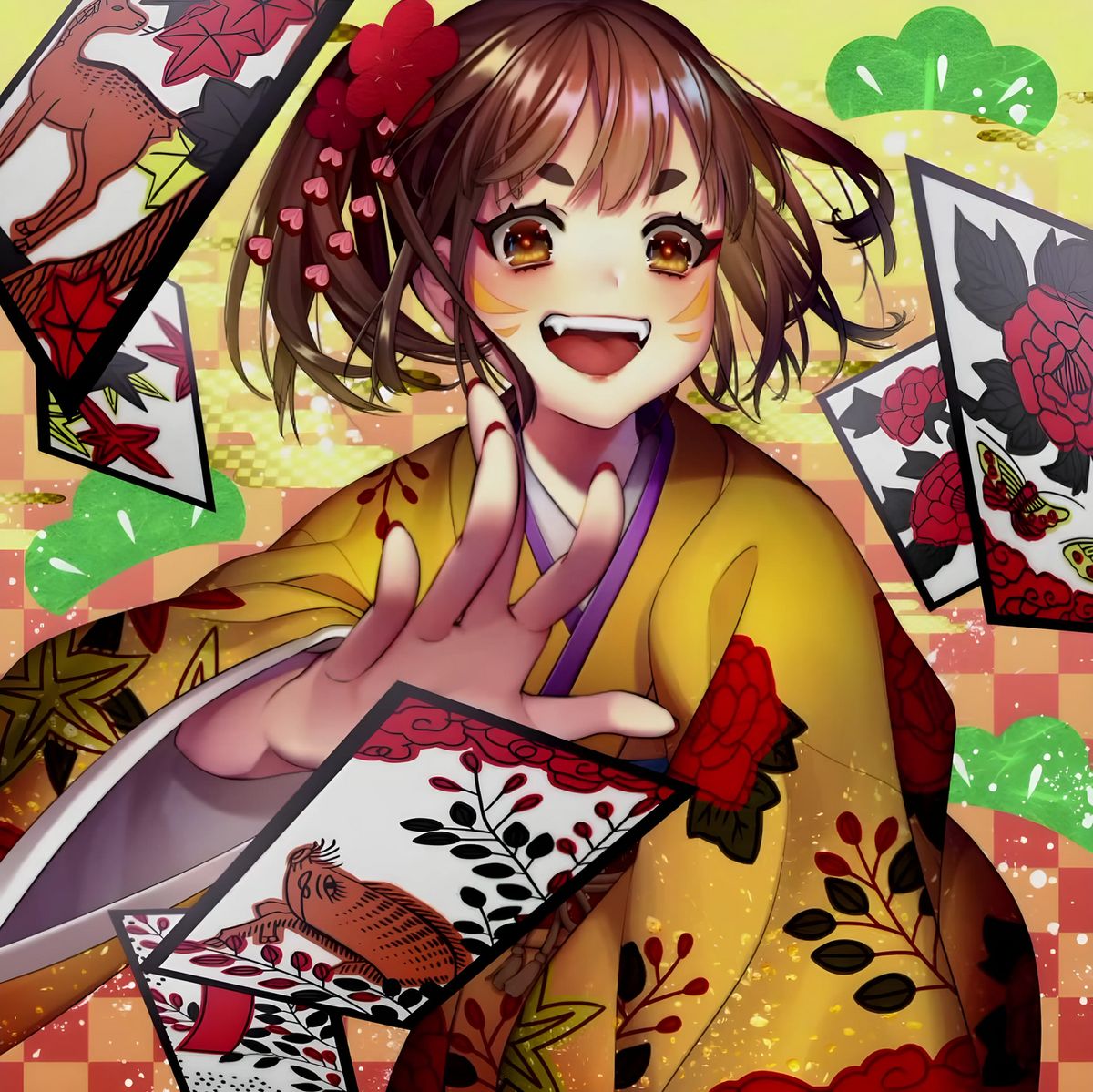

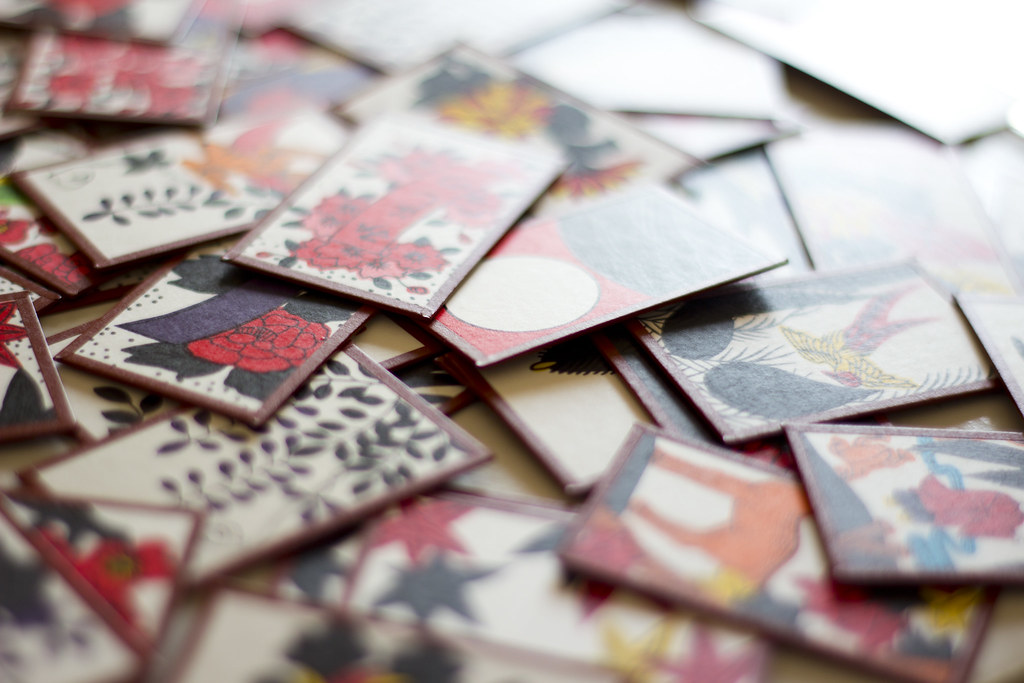
On September 23, 1889, a craftsman named Fusajiro Yamauchi opened a small shop in Kyoto to make and sell hanafuda — handmade Japanese playing cards — under the name Nintendo Koppai. There were no video games. There were no plastics, no silicon, no Hollywood pitch meetings. There was a man, a workshop, and the slow craft of pressing flowers onto layered paper.
That company is the same company. The lineage is unbroken. When you hold a Daitoryo deck, you are holding the literal product category that funded everything else — the playing cards that paid for the toys, that paid for the arcade experiments, that paid for the home console that changed the world.
- Founded 1889, Kyoto, as a hanafuda maker
- Hanafuda remained in continuous production through the entire arc — Famicom, NES, Game Boy, Wii, Switch
- Daitoryo is the line Nintendo still presses today, in 2026
This is what separates a grail from a souvenir. A reproduction would be a tribute. Daitoryo is not a tribute. It is the actual thing, still rolling off the same lineage of presses. For a collector who cares about where a company comes from — not the merch, the marrow — there is no more honest object in all of gaming. You are not buying a reference to the origin. You are buying the origin.
What makes Daitoryo the top grade of Nintendo hanafuda?
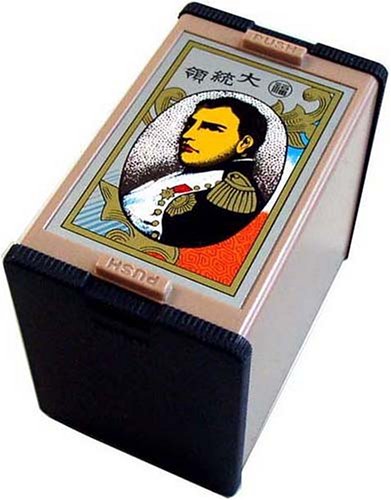
Nintendo does not make one hanafuda. It makes a tier list — and Daitoryo (大統領, "the Great President") sits at the very top. This is the distinction every serious buyer learns first, and it is the single most important thing to get right.
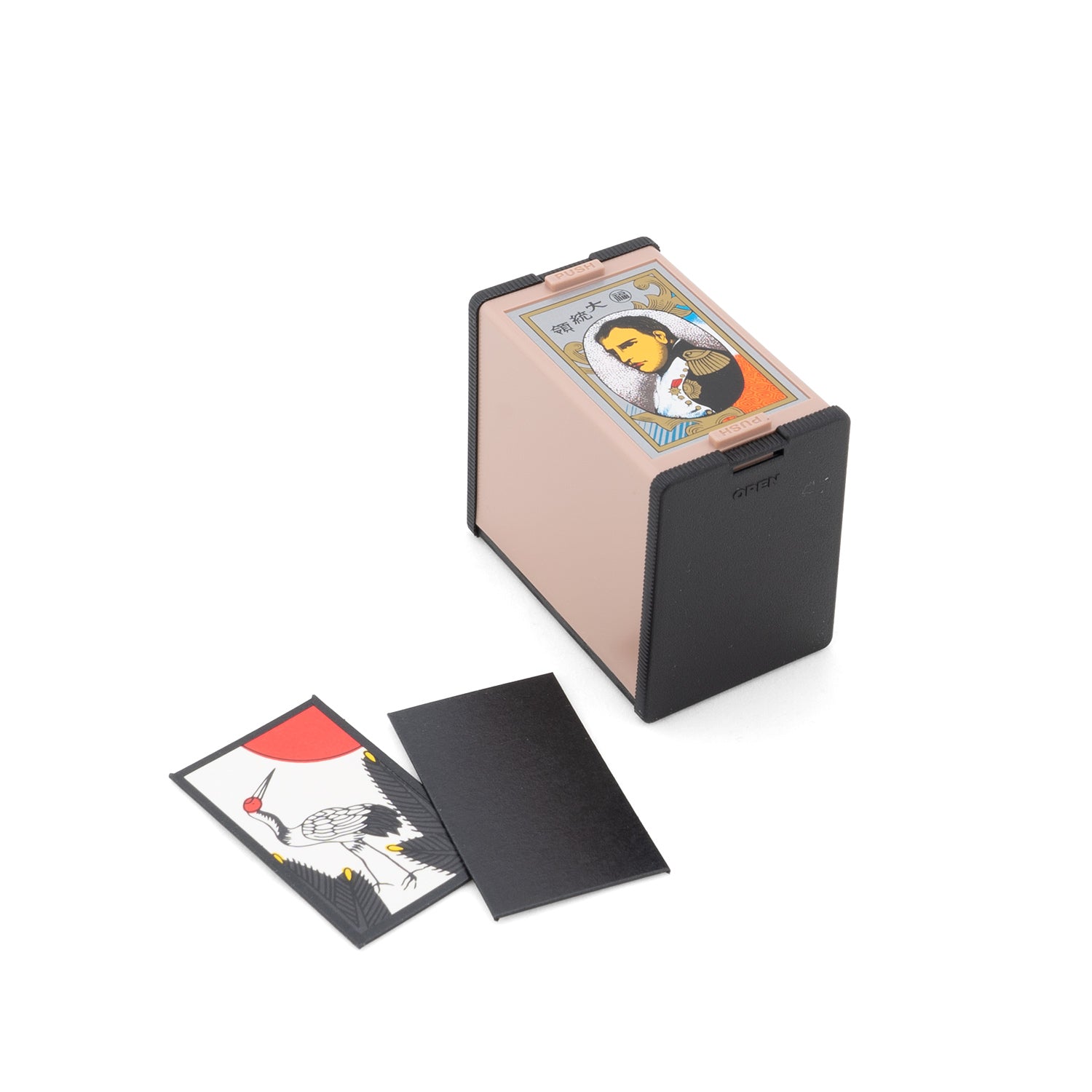
The buying guides that collectors actually trust — steve-p.org's HanaBuy page and the meticulous Fuda Wiki — are unanimous: Daitoryo is the premium grade, and the Napoleon-on-the-wrapper label is how you know you are looking at the top line rather than one of Nintendo's cheaper hanafuda packs. Veteran collectors specifically hunt the Daitoryo wrapper. It is not snobbery; it is what the grade buys you in the hand.
- Thicker layered stock — the cards have heft, a built-up paper sandwich rather than a single thin sheet
- A glossy lacquered back that catches light like enamel
- A slick, slightly water-resistant face engineered for play, not display
When people say "Nintendo makes great hanafuda," this is the deck they are unknowingly describing. The cheaper packs exist, and they are fine for learning. But a grail is about the best expression of a craft, and Daitoryo is Nintendo putting its century of card-making at full strength. Buy down the ladder and you have hanafuda. Buy Daitoryo and you have the hanafuda.
Why the Napoleon "Great President" on the wrapper?
Open the conversation about Daitoryo and someone will eventually grin and point out the obvious: that is Napoleon Bonaparte on the wrapper, and Napoleon was an Emperor, not a president. The name 大統領 literally means "the Great President." It is a glorious little historical wink that the brand has carried for over a century, and nobody at Nintendo has ever felt the need to correct it.
The choice is pure Meiji-era Japan — a moment when Western iconography signaled prestige, power, and worldliness. Stamping a European strongman on your flagship card line said, in 1889 commercial shorthand, this is the serious deck, the important one. It is branding as confidence. And it stuck so hard that today the wrapper portrait is the authenticity signal:
- See the Napoleon "Great President" label and you are looking at genuine Daitoryo grade
- The grandeur is the point — it telegraphs the top tier before you've even opened the pack
- Collectors use the wrapper itself as the first checkpoint when buying
I love this detail more than I can justify. A Kyoto card-maker, decades before it would ever touch a transistor, reaching for the most iconic face of European authority it could find and printing it on flowers. It is the first piece of Nintendo's lifelong instinct for bold, slightly absurd, deeply confident design — and it is sitting right there on a paper sleeve you can hold for $28.
What does the lacquered, water-resistant card stock feel like in play?
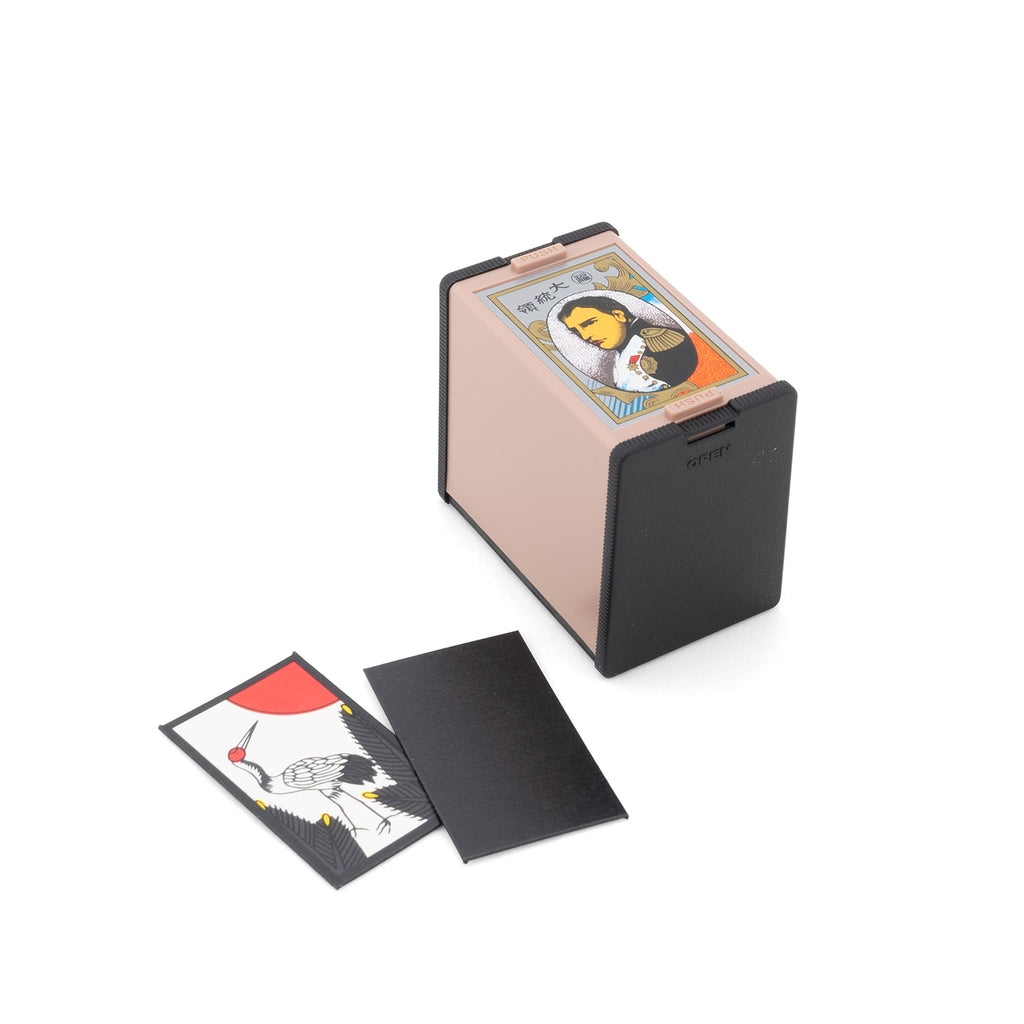
Here is where Daitoryo stops being a museum piece and becomes a tool. These cards were never meant to sit behind glass. Everything about the build is engineered for the table — for the specific, percussive joy of koi-koi.
The face carries a slick, faintly waxy finish. The back is glossy, almost lacquered. Together they do two things the forum veterans will tell you about before anything else: the deck shrugs off spilled tea and sweaty summer hands (the water-resistant surface is fully intentional), and — this is the part that gets people — the cards snap. When you slap a matching card down onto the field, the dense layered stock and that slick coating produce a clean, satisfying thwack that cheap cardstock simply cannot make.
- The thick layered stock is precisely why these feel premium in the hand — there is no flimsiness, no flex
- The glossy face/back combo is the source of the signature koi-koi "slap"
- Water-resistance means this is a deck you actually play with, not one you baby
That tactile authority is the whole argument for buying the top grade. A grail you are afraid to touch is just expensive paper. Daitoryo invites the opposite — it wants to be dealt, shuffled, slapped, and lived with. The lacquer will dull a little over years of play, and honestly, that patina is part of the romance. A well-loved Daitoryo deck looks like what it is: an object that earned its place at the table.

Red wrapper vs black wrapper — does it matter?
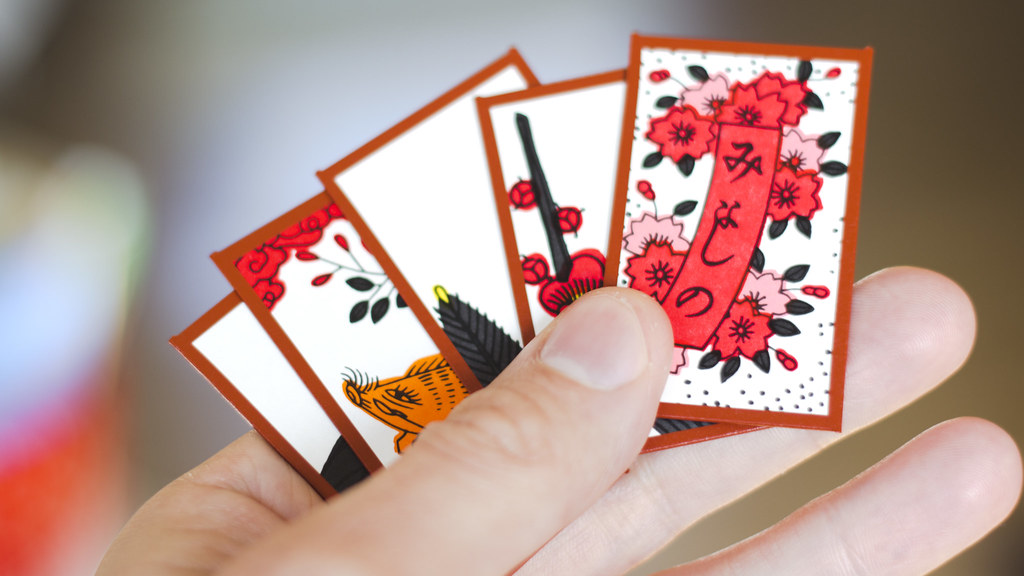
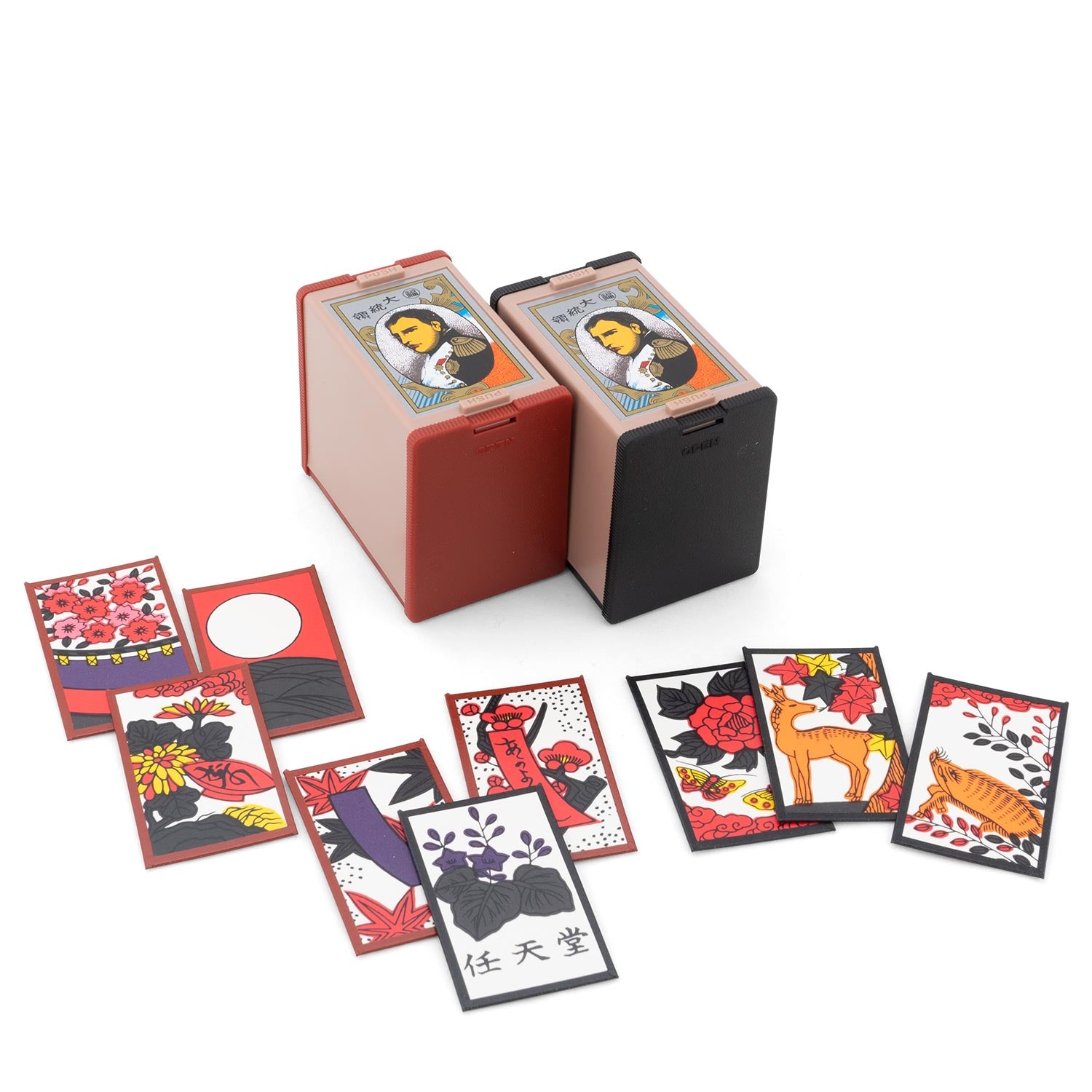
This is the question every first-time buyer asks, and the answer is reassuring: no, not in any way that affects what you're getting. Both the red-wrapper and black-wrapper Daitoryo decks are the same top grade — same layered stock, same lacquered backs, same Napoleon label, same 48 cards. The color is a cosmetic and edition distinction, nothing more.
I think of it the way I think of a good knife with two handle colors. The steel is identical; you pick the one that pleases your eye. The cards themselves come with either black or brick-red (technically ochre) backs and borders, and collectors split fairly evenly on which looks better fanned out on dark wood.
- Both wrappers = full Daitoryo premium grade; neither is "better" mechanically
- Choose on aesthetics alone — black reads sleeker, red reads warmer and more traditional
- The one place color can matter is the secondary market: sealed vintage examples carry a premium regardless of color, and certain older editions are scarcer
So buy the wrapper that makes you happy to look at it on the shelf. If you are chasing the deck as a collector's object rather than a player's, then condition and sealing matter far more than red-versus-black — a factory-sealed vintage Daitoryo in either color will always be the more coveted thing. For everyone else, this is the rare grail decision where you genuinely cannot make a wrong choice.
Where do you buy a genuine Nintendo Daitoryo deck?
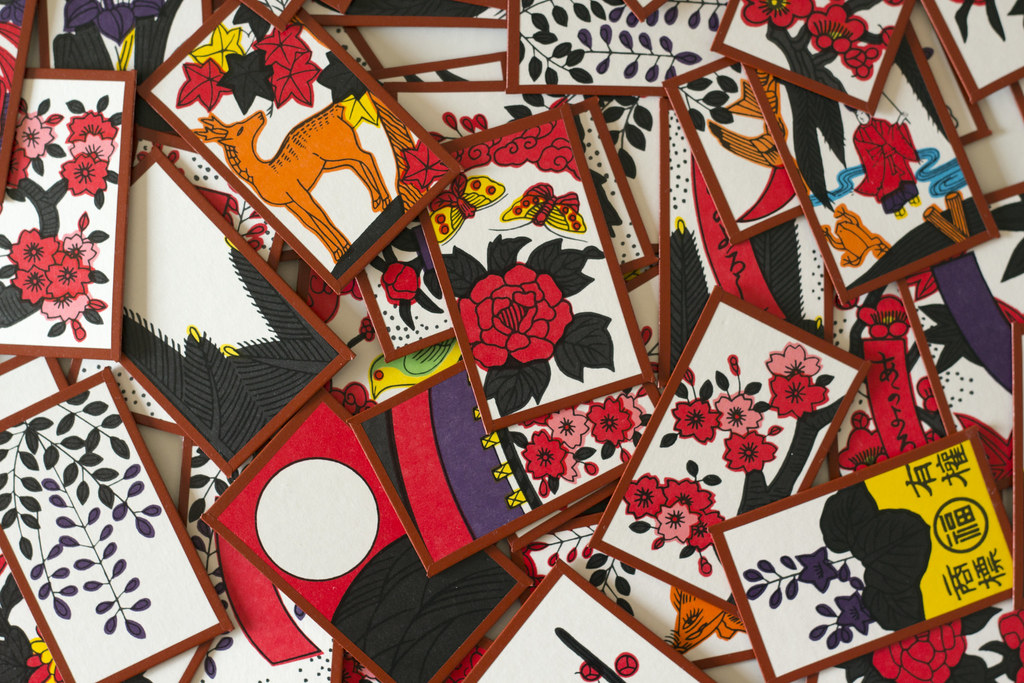
This is the section that protects your money, so read it twice. The hanafuda market is full of bait — generic decks, vintage used packs missing cards, and listings that lean on the word "Nintendo" without delivering it. The genuine Nintendo origin is the entire collector story, so a non-Nintendo deck is worthless to you no matter how pretty.
The reliable buy path is JINEN Store, which keeps genuine current-production Daitoryo consistently in stock at $28 in both red and black. That is the one I point people to first. The authentic Nintendo listing also surfaces on Amazon (the "Black President" Japan-import), but that path is a third-party import with intermittent stock — fine when it's live, frustrating when it isn't. Prices and availability genuinely move on these, so check the link before you get attached to a number.
- Buy genuine current-production, 48-card Nintendo Daitoryo — JINEN and steve-p.org's HanaBuy page list the trustworthy sources
- Avoid bait listings: watch for non-Nintendo decks and used/incomplete vintage — a 42-card deck near $30 is a red flag, not a bargain
- New retail runs $25-$35; importer markup pushes some listings to $40+, and sealed vintage NOS climbs to $65-$72+
- Heads-up: Nintendo revised its Japanese hanafuda/playing-card pricing in 2026 (Japan only, effective May 25, per Siliconera and Nintendo's own release) — proof it's still in production, but quoted prices may rise. The separate September 1 US/Canada hike applies to Switch hardware, not the cards, so no US card-price change has been announced.
The wrapper is your authenticity checkpoint. See the Napoleon "Great President" label, confirm 48 cards, buy from a source that names Nintendo plainly, and you're holding the real thing.

How do you actually play Koi-Koi with them?
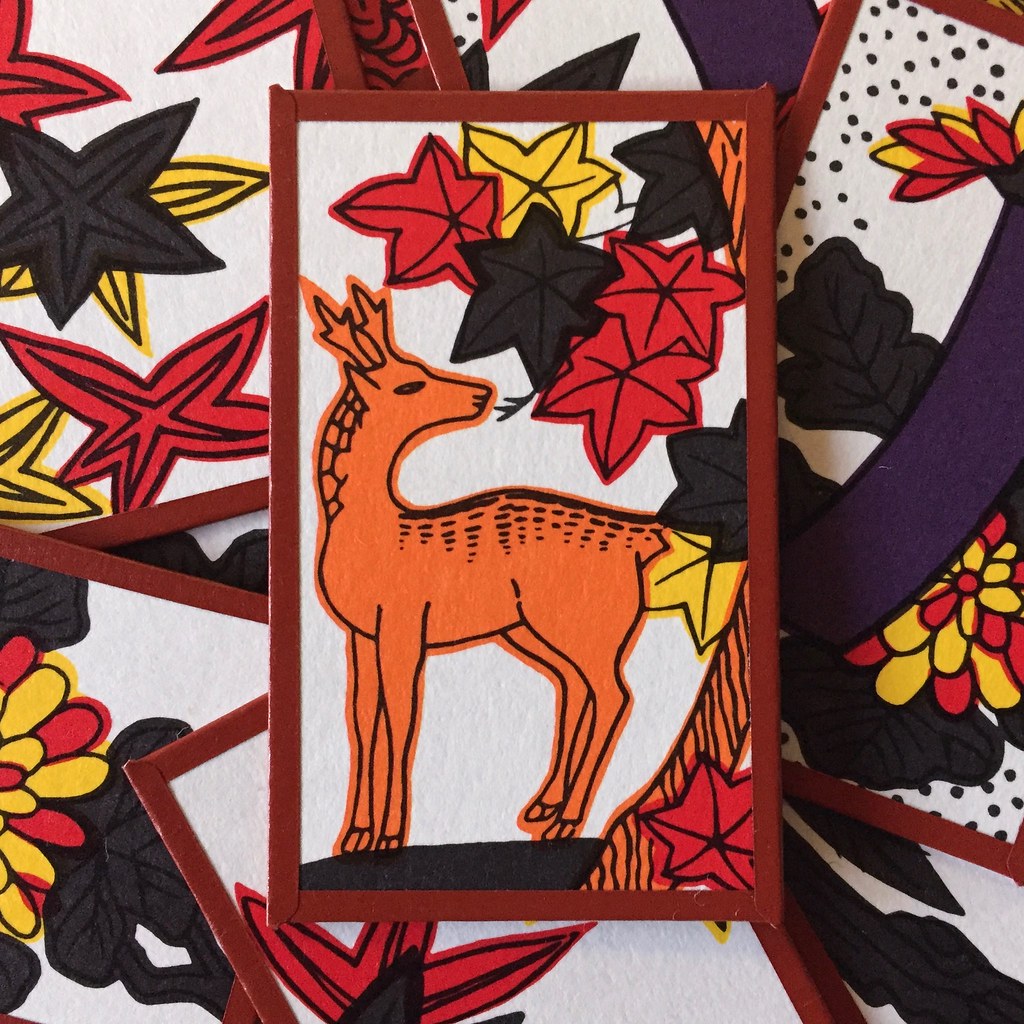
Daitoryo ships with a folded rule sheet — but it's Japanese-only, covering Koi-Koi and Hachi-Hachi (88), so if you can't read it you're effectively on your own. I'd argue learning is part of appreciating the craft anyway, so let me hand you the bones of Koi-Koi in English, the canonical two-player flower-matching game these cards exist to play.
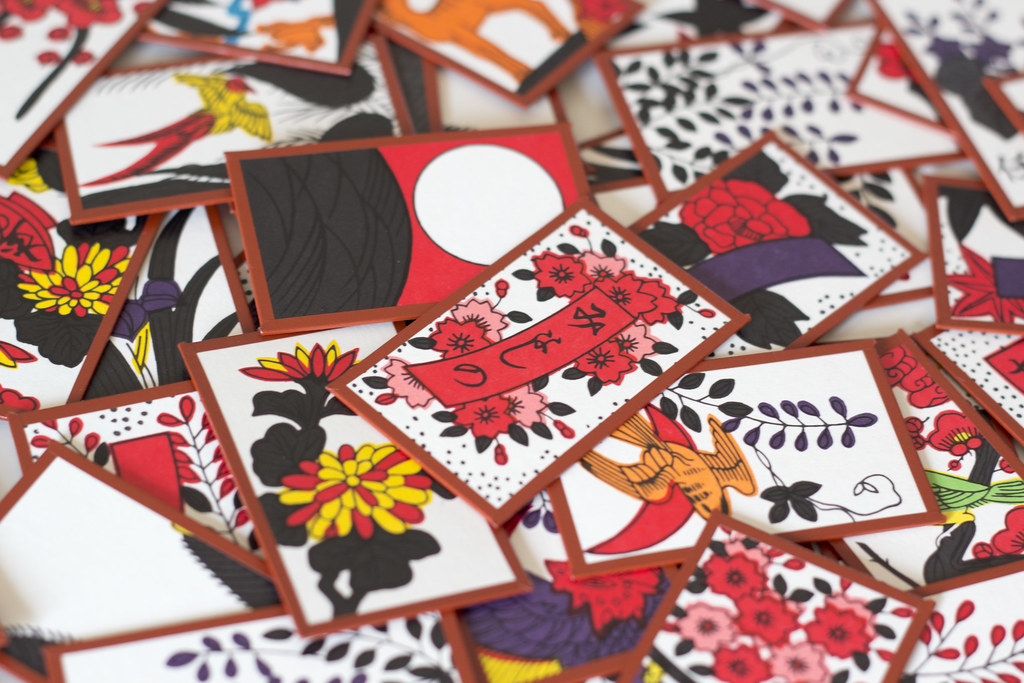
The deck is 48 cards in 12 suits, one suit per month, each tied to a seasonal flower. Setup: deal 8 cards to each player and lay 8 face-up on the field. On your turn you match a card from your hand to a field card of the same month, capturing the pair, then flip one from the deck and capture again if it matches.
- You build yaku — scoring sets — from your captures: the five Brights (Goko), the boar-deer-butterfly trio (Ino-shika-cho), the red poetry ribbons (Akatan), animals (Tane), and chaff (Kasu)
- When you complete a yaku you face the title decision: stop and bank your points, or call "koi-koi!" — "come on!" — to keep playing for a bigger score
- Calling koi-koi is the gamble the whole game is named for: bigger reward, but if your opponent scores first, they take it all
A full match runs twelve rounds — one for each month of the year, which is a poetry I never tire of. The bundled sheet proves Nintendo expects you to play, not just admire; learn the rules once and the cards transform from a beautiful object into a living tradition you can hand across a table. That is the difference between owning a grail and using one.

Why is the cheapest grail on this list also the most meaningful?
I curate a lot of expensive things. Lacquered boxes, hand-bound games, objects that ask you to save up and then ask again. So believe me when I tell you that Daitoryo, at twenty-eight dollars, outranks nearly all of them on the only axis that has ever mattered to me: meaning per gram.
Most grails are grails because they are scarce or costly. Daitoryo is neither. It is in active production — Nintendo literally revised its Japanese price in 2026, the most mundane possible proof that the presses are still warm. You can have one next week. And yet there is no object in the gaming world that connects you more directly to a true origin. This is the seed. Everything else — every console, every franchise, every childhood — grew from these flowers.
- The rarest thing here is not the object; it's the meaning — an unbroken living link to 1889
- It is gorgeous in the hand, steeped in koi-koi lore, and built to be played rather than entombed
- It is the grail you buy first and keep longest — a foundation stone for any serious collection
If you are just beginning to chase Japanese craft and lineage, start here. Save the splurges for later. This one humbles them all by costing almost nothing and carrying almost everything. Put it on the shelf where you keep the things that matter. It earns the spot.
The picks
Some links below are affiliate links — as an Amazon Associate, Puzzlewick earns from qualifying purchases, at no extra cost to you. It never changes a pick.
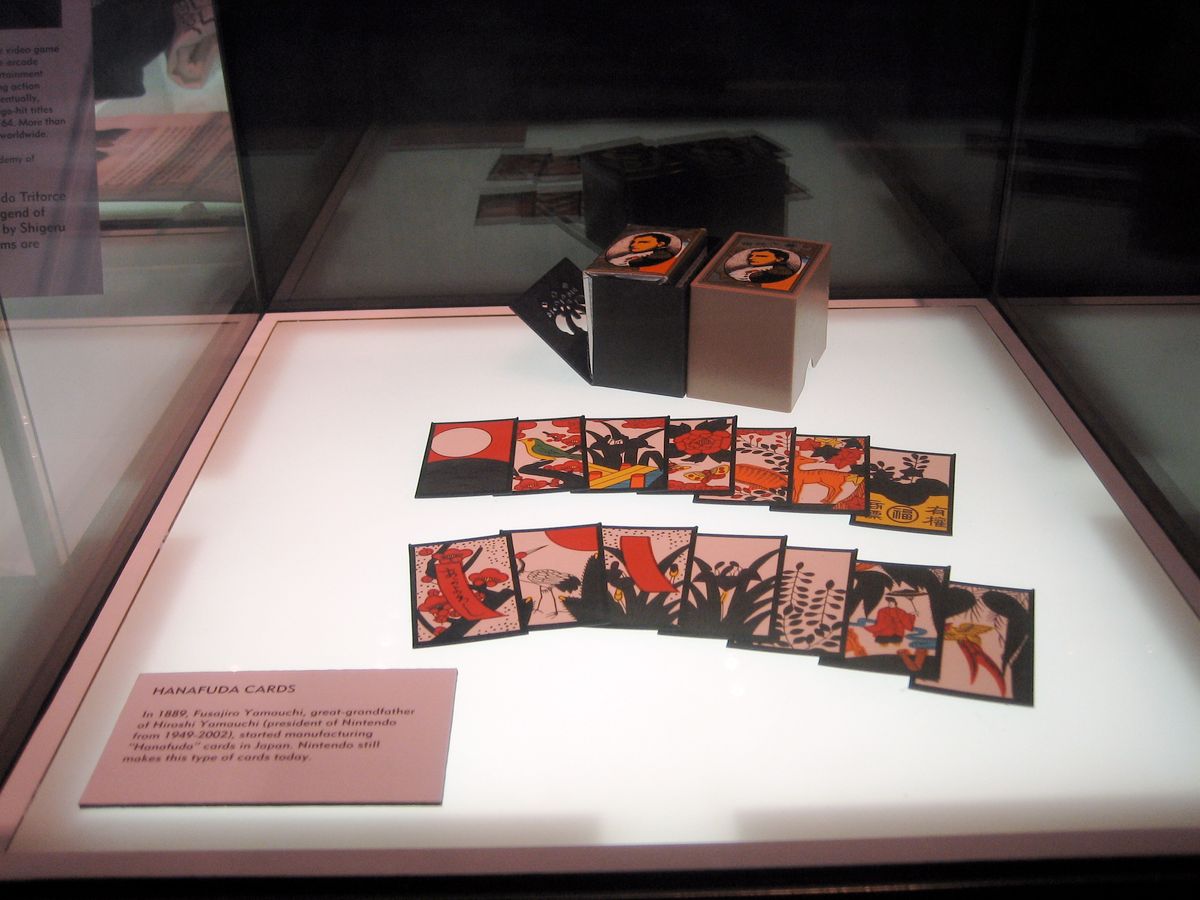
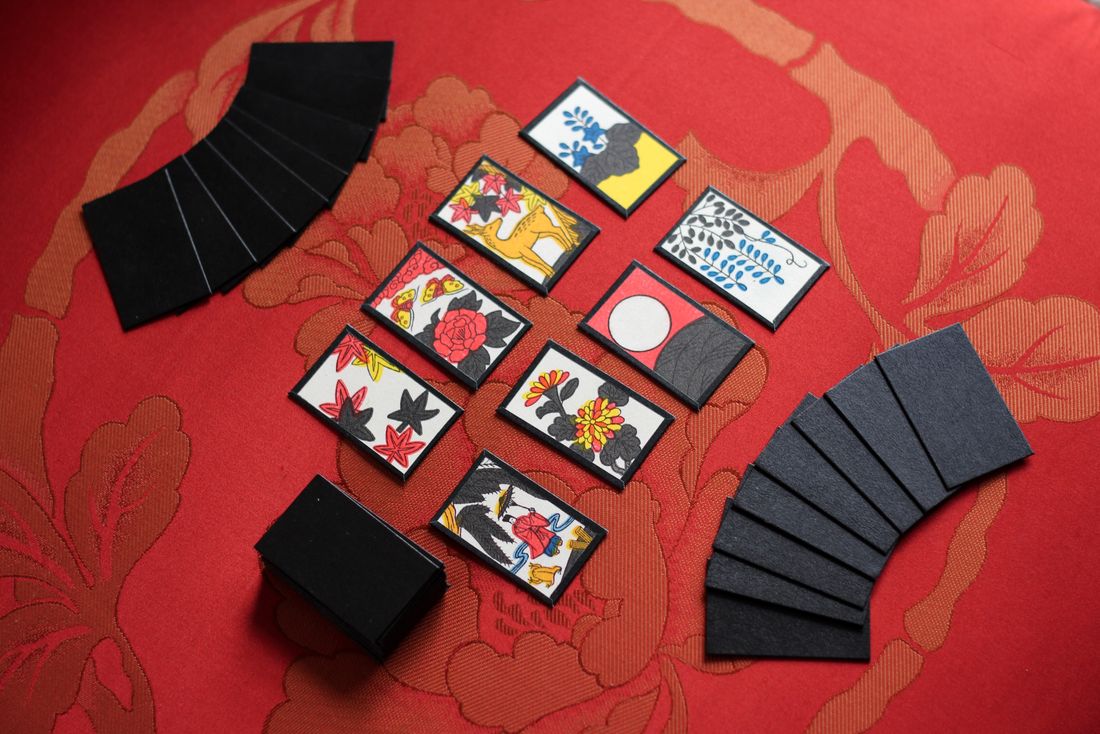 11 photos
 Nintendo Hanafuda Daitoryo (Red or Black Wrapper)
This is the flagship: Nintendo's top-tier hanafuda, 48 flower cards on thick layered stock with the signature lacquered, water-resistant finish that makes them snap on the table. The Napoleon 'Great President' wrapper is your authenticity checkpoint and the mark of the premium grade. Genuine current-production decks run about $28 from JINEN Store (the reliable source), in both red and black — the color is purely cosmetic, both are full Daitoryo. The Amazon 'Black President' Japan-import is the same authentic line but ships intermittently from third-party sellers, so stock and price move. Sealed vintage examples climb to $65-$72 on the secondary market. Nintendo's 2026 price revision (Japan only, May 25) confirms it's still pressed today — note that the separate Sept 1 US/Canada hike is for Switch hardware, not the cards.
- Nintendo's genuine top-grade hanafuda — the actual 1889 origin object, still in production
- Thick layered stock with glossy lacquered, water-resistant faces — premium feel and the satisfying koi-koi 'slap'
- Stunningly affordable for a grail of this provenance (~$28 new)
- Red or black wrapper, both identical Daitoryo grade — choose on looks alone
- Built to be played and lived with, not entombed behind glass
- The included rule sheet is Japanese-only (Koi-Koi and Hachi-Hachi) — you'll likely need an English guide to learn the games
- Amazon import stock is intermittent; JINEN is the steadier path
- 2026 Japanese price revision means quoted prices may drift upward
- Market is full of non-Nintendo and incomplete used bait listings — buy carefully
Questions, answered
Is Daitoryo really made by the same Nintendo that makes the Switch?
Yes — the very same company. Nintendo was founded in Kyoto in 1889 by Fusajiro Yamauchi as a hanafuda maker, and the lineage is unbroken straight through to the Switch era. Daitoryo is the flagship hanafuda line that company still presses today, which is exactly what makes it a grail of provenance rather than a tribute or reproduction.
How much does a genuine Nintendo Daitoryo deck cost in 2026?
New, genuine current-production decks run roughly $25-$35, with JINEN Store the reliable source at about $28 for both red and black wrappers. Importer markup pushes some listings to $40+, and sealed vintage NOS examples climb to $65-$72 on the secondary market. Note Nintendo revised its Japanese hanafuda pricing in 2026 (Japan only, effective May 25), so quoted numbers may rise over time — and there's no announced US/Canada card-price change, so check the link before you anchor on a price.
Does the red wrapper differ from the black wrapper?
Only cosmetically. Both are full Daitoryo premium grade — same 48 cards, same layered stock, same lacquered backs, same Napoleon label. Pick the color you'd rather see on your shelf (the red is technically an ochre/brick-red). The one place it matters is the collector secondary market, where sealed vintage examples in either color carry a premium over standard new decks.
Why is Napoleon on the wrapper if it's called the 'Great President'?
It's a glorious historical quirk that Nintendo has carried for over a century. The name 大統領 means 'Great President,' yet the portrait is Napoleon Bonaparte — who was an Emperor. The choice is pure Meiji-era branding, when Western iconography signaled prestige. Today the Napoleon 'Great President' label doubles as your authenticity checkpoint for genuine Daitoryo grade.
Do the cards come with instructions?
Yes, but with a catch: Daitoryo ships with a folded rule sheet for Koi-Koi and Hachi-Hachi (88) that's written in Japanese only. If you can't read it, you'll want an English guide. The short version of Koi-Koi, the canonical two-player game: deal 8 cards each plus 8 to the field, match by month, build scoring sets (yaku), and decide each round whether to bank your points or call 'koi-koi!' to gamble for more. A full match runs twelve rounds, one per month of the year.
How do I avoid buying a fake or incomplete deck?
Buy genuine current-production, 48-card Nintendo Daitoryo from a source that names Nintendo plainly — JINEN Store and steve-p.org's HanaBuy page list trustworthy sellers. Watch for non-Nintendo generic decks and used/incomplete vintage; a 42-card deck listed near $30 is a red flag. The Napoleon 'Great President' wrapper plus a confirmed 48-card count are your two quickest authenticity checks.
Kenji's verdict
Daitoryo is the rare grail that costs almost nothing and carries almost everything. For about $28 from JINEN — genuine, current-production, 48-card, in red or black — you hold the literal origin of the most important company in games: a Kyoto card-maker's flagship hanafuda, pressed continuously since 1889, gorgeous in the hand and built to be played. It's the deck you buy first and keep longest. Confirm the Napoleon 'Great President' wrapper and the 48-card count, sidestep the bait listings, and accept that stock and price move (the 2026 Japanese price revision proves it's still alive on the presses). The bundled rules are Japanese-only, so keep an English Koi-Koi guide handy. Then put it on the shelf where you keep the things that matter. It earns the spot.
Research ledger 9 sources · reviewed 2026-08-10
Specifications, rules, current product information, community experience, and contrary evidence were checked against the sources below. Commercial links are kept separate from editorial evidence.
- jinenstore.comjinenstore.com/products/nintendo-hanafuda-cards-daitoryo
- fudawiki.orgfudawiki.org/en/hanafuda/manufacturers/nintendo/daitoryo
- steve-p.orgsteve-p.org/cards/HanaBuy.html
- siliconera.comsiliconera.com/nintendo-raising-switch-switch-2-playing-card-and-hanafuda-card-prices
- nintendo.co.jpnintendo.co.jp/corporate/release/en/2026/260508.html
- amazon.comamazon.com/dp/B001FLYYHI?tag=puzzlewick-20
- fudawiki.orgfudawiki.org/en/hanafuda/games/koi-koi
- duarcain.blogspot.comduarcain.blogspot.com/2012/06/daitoryo-hanafuda-by-nintendo.html
- Community research index: r/Hanafuda discussions about Nintendo Daitoryo Hanafuda: Holding Nintendo's 1889 Origin Story in Your Handsreddit.com/r/Hanafuda/search/?q=Nintendo%20Daitoryo%20Hanafuda%3A%20Holding%20Nintendo's%201889%20Origin%20Story%20in%20Your%20Hands&restrict_sr=1&sort=top
Every object has a lineage. Let me tell you its story.

Keep exploring
The next smart rabbit holes.
♛ Topic PathGrail Board Games: compare the whole shelfA grail earns its space only when the experience survives the price, setup, storage, and group commitment. These are expensive-game...Beginner's GuideHanafuda for Beginners: How to Play Koi-Koi & Which Deck to BuyCome sit—I've been waiting to show you this. A Japanese hostess's guide to the little painted garden, the press-your-luck thrill of こいこい,...Best OfBest Cozy Board Games of 2026: Calico, Cascadia, Patchwork & the Relaxation Gaming RevolutionCome sit, come rest. Cozy games are the speed of real life — no winners, no rush, just beauty made by your own hands. This is the quiet...