How to Host a Game Night People Actually Look Forward To (2026)
The host's playbook for a night that hums — a lineup that teaches in two minutes, snacks that never grease the cards, and a table already glowing when the doorbell rings.

AI-assisted curator persona · research and editorial responsibility: Robert Pruitt · how this guide was made
Last editorial refresh: 2026-06-13 Gold-standard QA: 2026-07-17 13 sources reviewed Affiliate links checked during gold-standard pass

The short answer
A game night people actually look forward to is built on three quiet decisions: pick games that teach in under two minutes (Codenames, Just One, Sky Team for the pairs, Exploding Kittens Party Pack when the crowd swells), stage the table before anyone arrives so the room says 'sit, you're welcome here,' and pace the evening in a gentle arc — a warm-up, a centerpiece, a soft landing. Protect the cards from greasy fingers with a neoprene mat and a dice tray, keep one snack dry and one drink within reach, and read the room more than the rulebook. Hospitality is the real game; the boxes just give everyone something to do with their hands while they fall for each other.
Decision map
Choose in thirty seconds
The big-group opener that makes non-gamers feel clever
The warmest icebreaker for a mixed crowd of non-gamers
The loud chaos closer for a full house up to 10
Come in, come in — let me take your coat. I'm Yumi, and hosting, to me, is its own small art: the Japanese call the spirit of it omotenashi, anticipating a guest's needs before they ever think to ask. A great game night isn't about owning the cleverest, heaviest box on the shelf. It's about a table that's already set, a first game that's running before the shy friend has finished their first sip, and a host who's watching faces instead of flipping pages. I've poured a lot of tea over a lot of tables, and the nights people beg to repeat all share the same warmth. Let me show you how to make one.
Start here, then go deeper
You are in the right cabinet.
 ✦ Topic PathBoard Game Buying Guides: compare the whole shelfStart with the decision, not the shelf. These guides compare the games, editions, expansions, player counts, and costs people...
 Gift GuideBest Gifts for Board Game Lovers (2026): Picks They'll Actually UseI've been collecting for thirty years—buying, shelving, watching which ones earn their square footage and which ones vanish to a closet....
 Best Of8 Board Games for People Who Swear They HATE Board GamesA converter's list for the friend who pushes the box away — eight quick, gorgeous, no-homework games that win over the most committed...
What games should I actually put on the table?
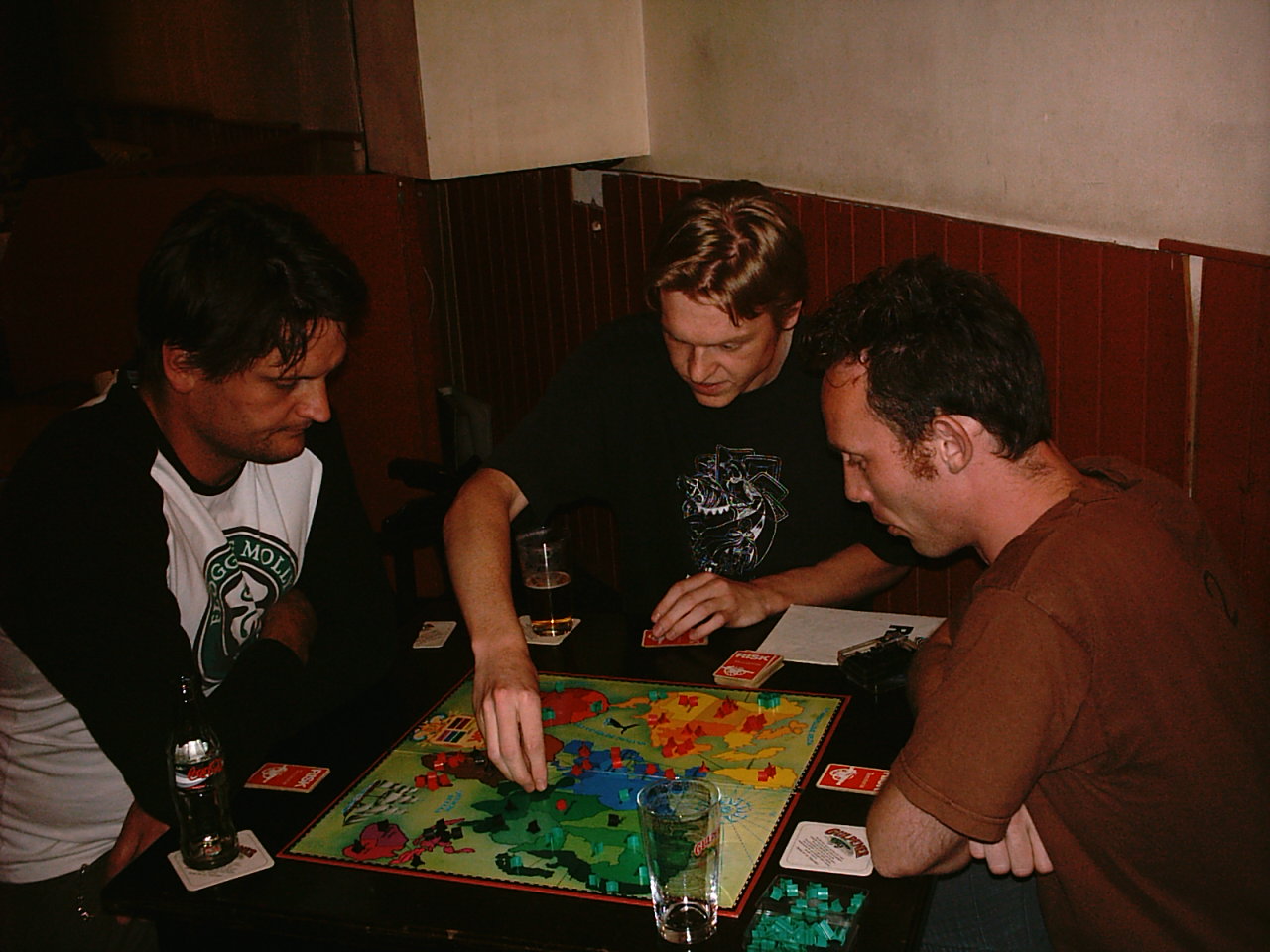
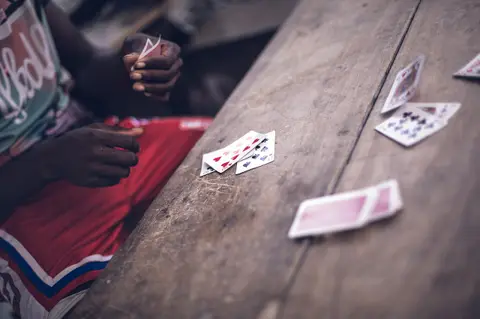
Here's my gentlest rule: the lineup is a guest list, not a trophy case. You are not trying to impress people with the longest rulebook in the room — you're trying to make the quiet one at the end of the table laugh out loud by the third turn.
I build every night around a small, reliable family of games:
- A big-group icebreaker that needs no skill — Just One or Codenames. Everyone can play, nobody can be 'bad' at them, and they reward being charming over being clever.
- One centerpiece — a game with a little more shape that you teach once and ride for a while.
- A chaos closer — Exploding Kittens: Party Pack when the room is loud and full, because it scales to ten and asks nothing of a tired brain.
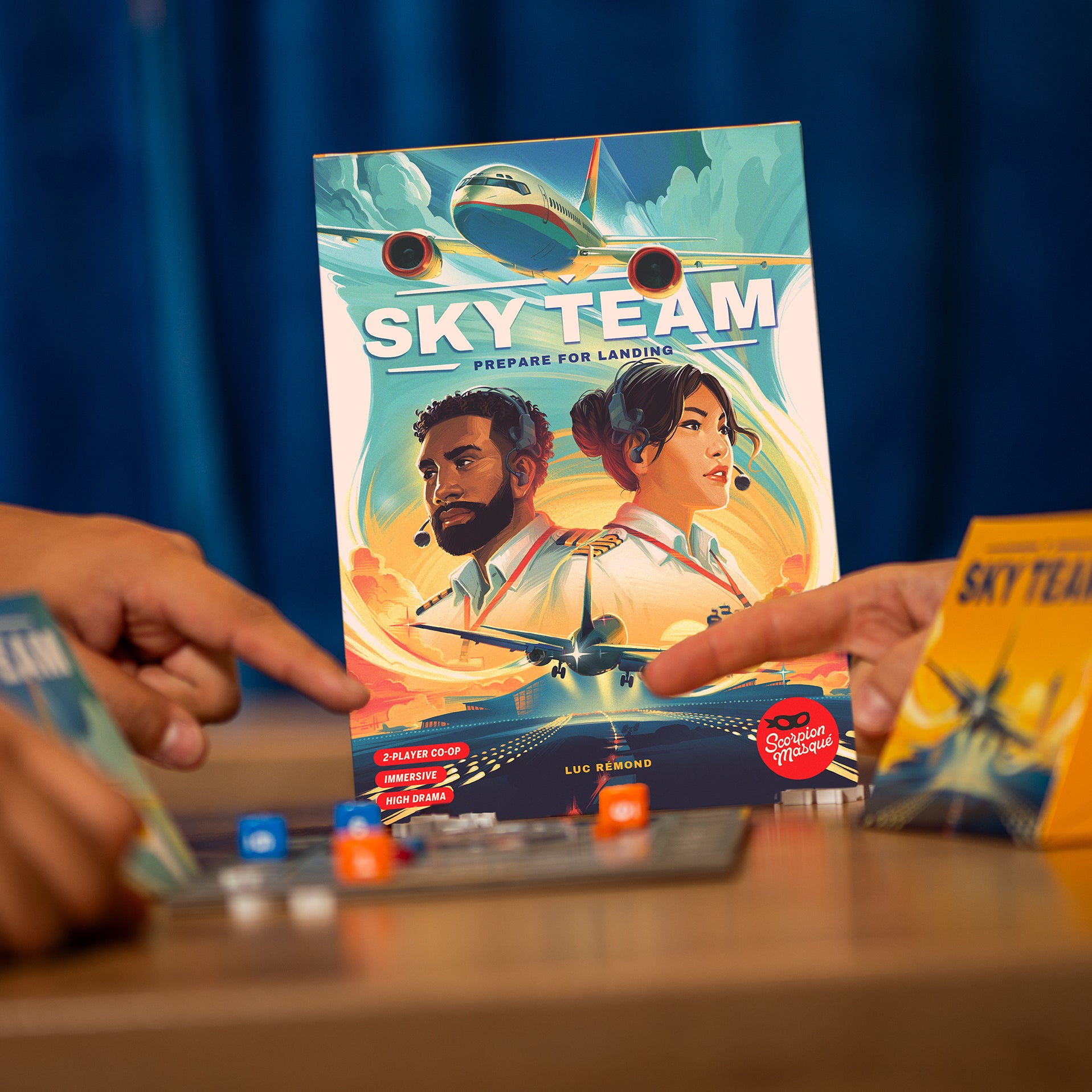
- A two-player pocket — Sky Team, for the couple who drifts to the kitchen, or the late-night pair after everyone else has gone home.
Notice what they share: fast to teach, generous to newcomers, impossible to embarrass yourself at. That's the whole secret. Save the three-hour epic for the friends who text you about board games unprompted — and even then, only after the room is warm.
The lineup is a guest list, not a trophy case.
How do I teach a game in two minutes?


This is the moment a night lives or dies, so I treat it like pouring tea — calm hands, no fuss. The mistake every nervous host makes is reading the rulebook at people. Don't. Teach the goal, the turn, and the one thing that hurts — then start.
My script for any light game:
1. The goal, in one breath. "We're spies giving one-word clues to help our team find our agents." That's Codenames. Done. 2. What you do on your turn. One sentence. "On your turn you say one word and a number." 3. The one landmine. Every game has a single 'oops' rule that matters. "Touch the assassin and we lose instantly." Name it once. 4. Then deal and play. The rest you teach inside the first round, as it comes up. People learn by doing, never by listening.
Games like Just One and Exploding Kittens are gifts here — a one-minute intro and you're off. Sky Team looks like cockpit dials but truly teaches in a turn or two: place your dice, balance the plane, land it together. Resist the urge to mention exceptions. The edge cases will arrive on their own, and you'll answer them like a friend, not a referee.
Teach the goal, the turn, and the one thing that hurts — then start.
How do I keep non-gamers having fun?
Oh, this is the heart of it — and it's where hospitality matters more than any rule. A non-gamer isn't worried about strategy. They're quietly worried about looking foolish in front of people they like. Your whole job is to make that fear impossible.
The games do most of the work if you choose kindly:
- Cooperative or team games erase the spotlight. In Just One and Sky Team, you win or lose together — there's no moment where one person is exposed and losing alone.
- Word and 'vibe' games reward life experience, not gaming experience. Your aunt who's never touched a board game will give a better Codenames clue than the strategy nerd, because she's lived more.
- Humor is a great equalizer. Exploding Kittens is pure silliness; you can't be 'serious' enough to be bad at it.
And then there's you. Celebrate the newcomer's first good move out loud. "Okay, that clue was genius." Sit a hesitant guest next to a warm, patient one. Never, ever explain a move someone's mid-way through making — let them finish, even imperfectly. A guest who feels clever once will play all night.
A non-gamer isn't afraid of losing. They're afraid of looking foolish in front of people they like — so make that impossible.
What gear makes hosting easier?
Let me tell you the small luxuries that turn a chaotic table into a calm one. These aren't fussy — they're the equivalent of cloth napkins instead of paper. Guests feel the care without knowing why.
- A neoprene play mat. A Feltectors 36×48 mat (or similar) gives cards a soft, slightly cushioned surface so they slide instead of snagging, deadens the clatter, and — bless it — wipes clean when someone sets a sweating glass down where they shouldn't. It also quietly defines the play space on a cluttered table.
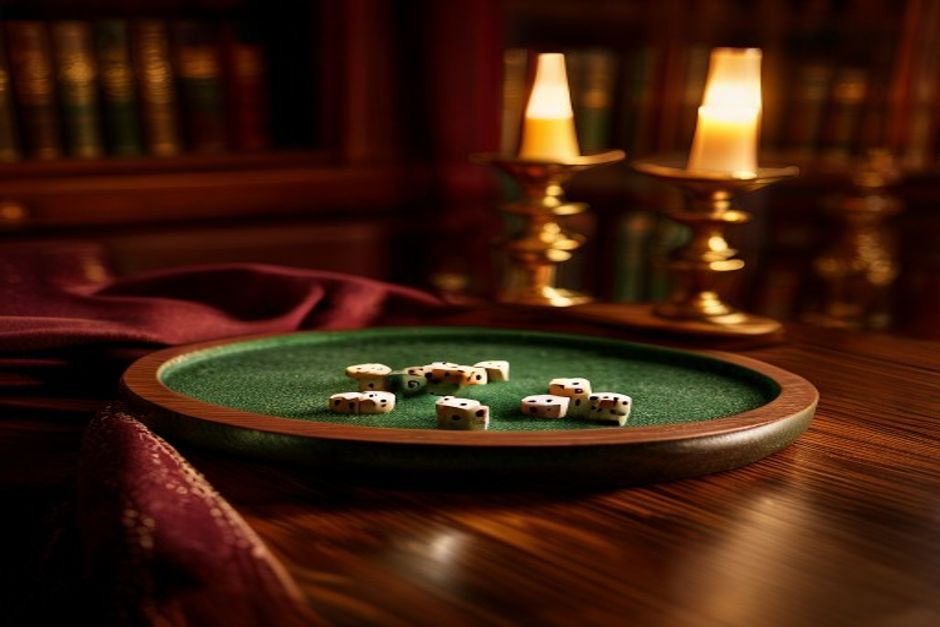
- A wooden dice tray. A felt-lined tray like the GAMELAND 10-inch keeps dice from skittering into the dip bowl or off the edge onto the floor at midnight. It hushes the roll and makes the whole table feel a little more intentional.
- Card sleeves for your most-played decks. Cheap insurance against the one greasy thumbprint that ruins a beloved box.
None of this is required to have a wonderful night. But the mat and the tray, especially, solve the two things that actually go wrong at a real table — slippery cards and runaway dice — and they make cleanup a single wipe instead of a hunt-and-gather.
Good gear is cloth napkins, not silver — guests feel the care without knowing why.
How do I handle snacks and drinks without ruining the cards?
I have opinions here, gently held. The fastest way to ruin a beautiful deck — and a good mood — is one cheesy thumbprint on a borrowed game. So I host with a simple philosophy: keep the food dry and the wet things off the table.
- Serve 'dry hands' food. Think pretzels, popcorn, crackers, nuts, grapes, chocolate squares in their wrappers, anything you eat with fingertips and a napkin. Save the wings, the nacho cheese, and the buttery anything for after the games, or for a separate side table.
- Give every drink a coaster and a home off the play mat. A spilled drink mid-game is a heartbreak. A little side tray or the edge of the counter keeps the danger zone clear.
- Set out a small bowl of damp napkins or a few wet wipes. Nobody will ask for them; everybody will use them. This is omotenashi — meeting the need before it's spoken.
- One designated 'messy snack' break. Pause between games, bring out the real food, let everyone get gloriously greasy, then wipe down and resume.
The neoprene mat earns its keep here too — if something does spill, it beads on the surface and you've lost nothing but a moment.
Keep the food dry and the wet things off the table — that's the whole snack strategy.
How long should game night be, and how do I pace it?
The kindest thing a host can do is end while everyone still wants more. A night that runs too long curdles; people get tired, someone checks their phone, the magic thins. Three to three-and-a-half hours of actual play is the sweet spot — then a soft landing.
I think of the evening as a gentle arc:
- First 20–30 minutes — arrivals and a warm-up. Have a quick, low-stakes game (Just One, a round of Codenames) already running so latecomers slip in mid-laugh instead of standing awkwardly. No one should ever walk into a silent room.
- The middle hour or two — the centerpiece. This is when the room is full and focused. Play the meatier game, or run several rounds of the crowd favorite.
- The energy dip — read it and pivot. Around hour two, watch for the sag. Don't push a new heavy game into a tired room. Pivot to silliness: Exploding Kittens, or one last loud round of the opener.
- The soft landing — one short closer. A single quick game everyone knows, then stop. End on a win, on a laugh, on a high.
Watch faces, not the clock. When the laughs get quieter and the gaps between turns grow, that's your cue. Send people home a little too early and they'll already be asking, 'When's the next one?' — which is exactly the question you want.
End while everyone still wants more. 'When's the next one?' is the only review that matters.
How do I stage the table before guests arrive?
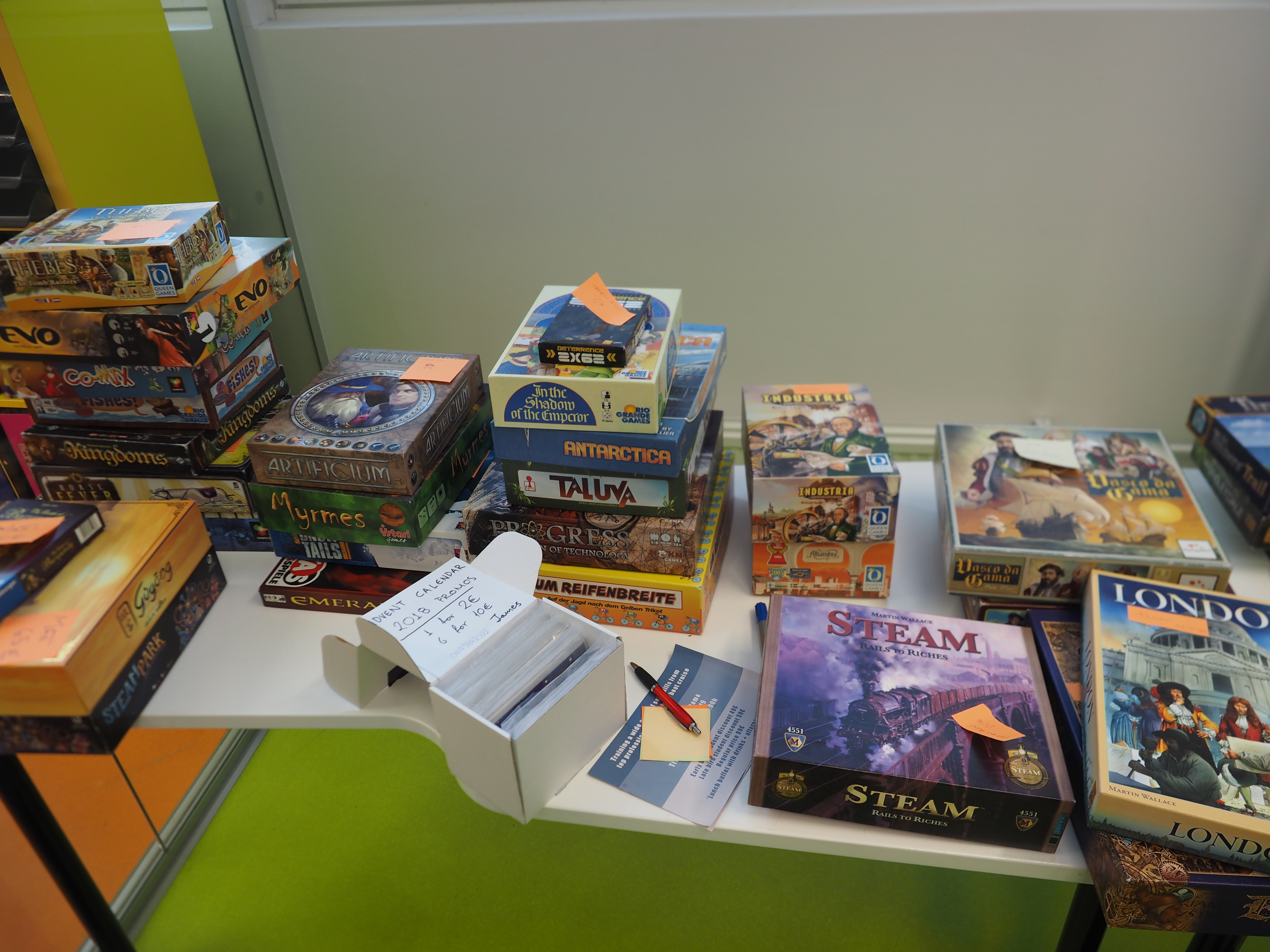
This is my favorite part, the quiet half-hour before the doorbell. A staged table is a sentence that says you were expected, and you are welcome — before a single word is spoken. Omotenashi lives in this moment.
My pre-arrival ritual:
- Lay the mat and clear the zone. Neoprene mat down, table wiped, clutter gone. The play space should look like an invitation, not an afterthought.
- Stack three games where people can see them. Spines out, lid of the first one cracked. Choice on display, but curated.
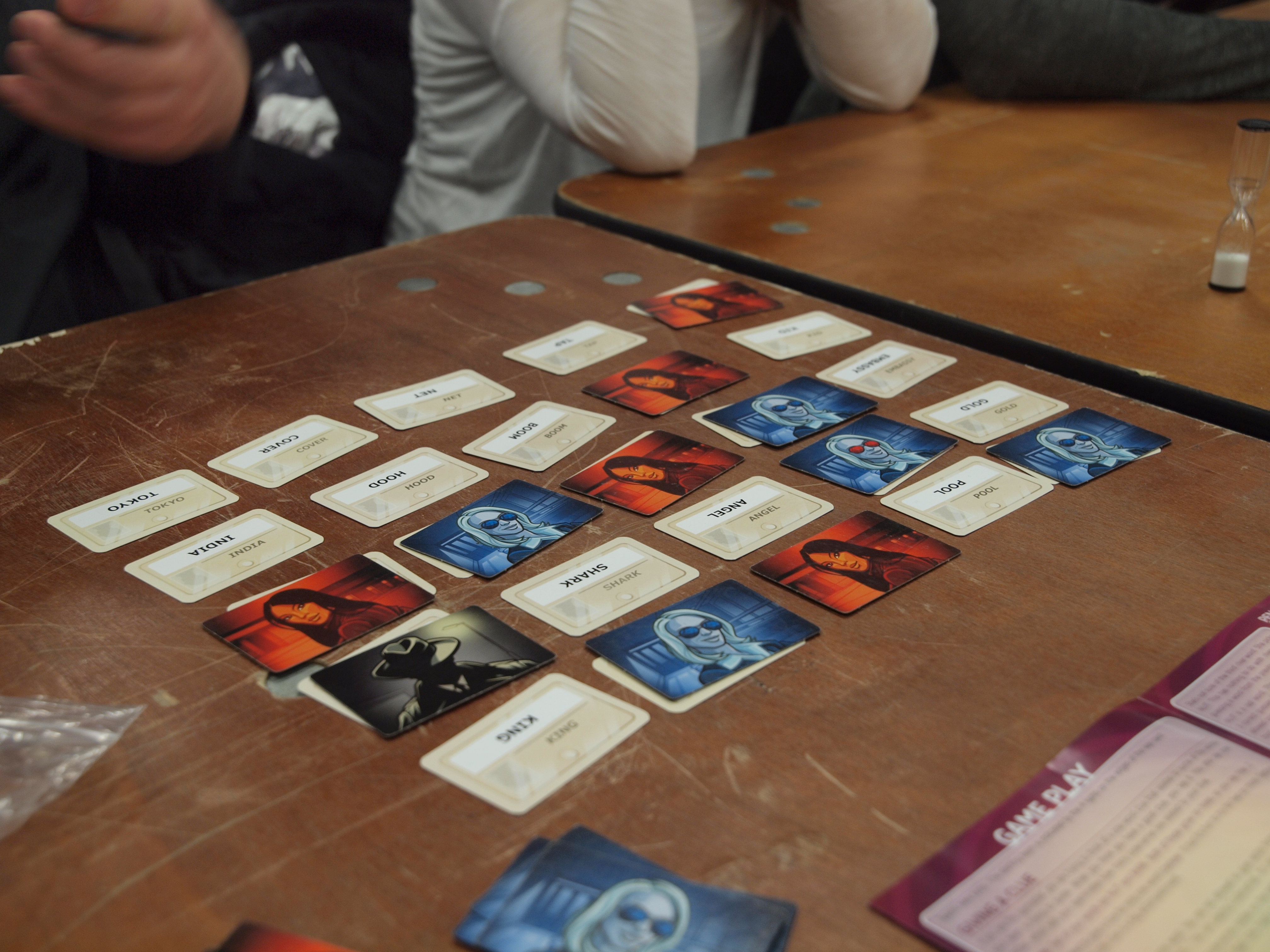
- Pre-set the first game. Codenames grid laid, or Just One easels and markers fanned out. Guests should be able to sit down and start without a setup delay.
- Snacks dry, drinks staged off the mat, damp napkins in a little bowl. The whole hospitality kit, ready and quiet.
- Light and sound. Lamps over harsh overheads, a soft playlist low enough to talk over. Warmth is half lighting.
- One small, unasked-for touch. A bowl of clementines. A candle. Coasters that match. The detail nobody requested is the one they remember.
When the bell rings, you're not scrambling — you're pouring the first drink, already smiling. That ease is contagious, and it's the truest thing you'll serve all night.
A staged table is a sentence: you were expected, and you are welcome.
From the rabbit hole
Real voices from players, reviewers, and the communities who know these games best.
review“I've introduced Just One to all sorts of people and it has never failed to capture hearts.”
Joel Lee, Shelf Gamer — Just One review
review“Sky Team might be the tightest design I've played this year. Nothing is wasted.”
Justin Bell, Meeple Mountain — Sky Team review
review“If you want a game that delivers laughter, teamwork, and unforgettable moments — all in under 30 minutes — Just One deserves a permanent spot in your collection.”
Brent, Beyond the Meeple — Just One review
review“If you regularly attend or host game nights with lots of people, then the Party Pack is perfect for you!”
Justine Jenkins, Luck and Strategy — Exploding Kittens Party Pack review
review“For two-player households seeking cooperative experiences, Sky Team offers excellent value through multiple scenarios and the Turbulence expansion.”
Ronny Alexander, Coop Board Games — Sky Team review
review“Shut Up & Sit Down recommends Codenames — the reviewers played it with fifteen different people, and all fifteen came away wanting to buy it.”
Shut Up & Sit Down — Codenames review
The picks
Some links below are affiliate links — as an Amazon Associate, Puzzlewick earns from qualifying purchases, at no extra cost to you. It never changes a pick.
 3 photos
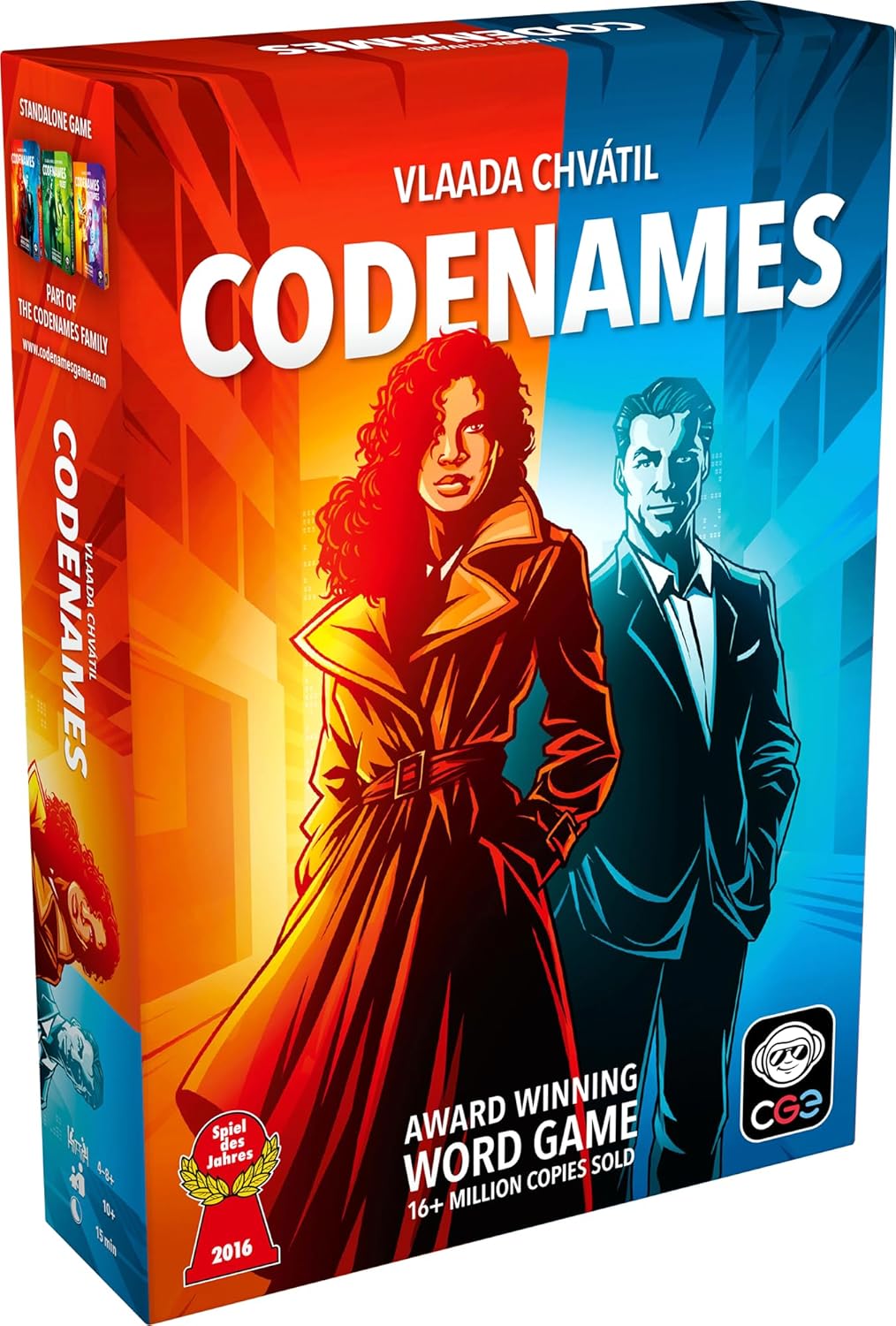
 Codenames (2nd Edition)
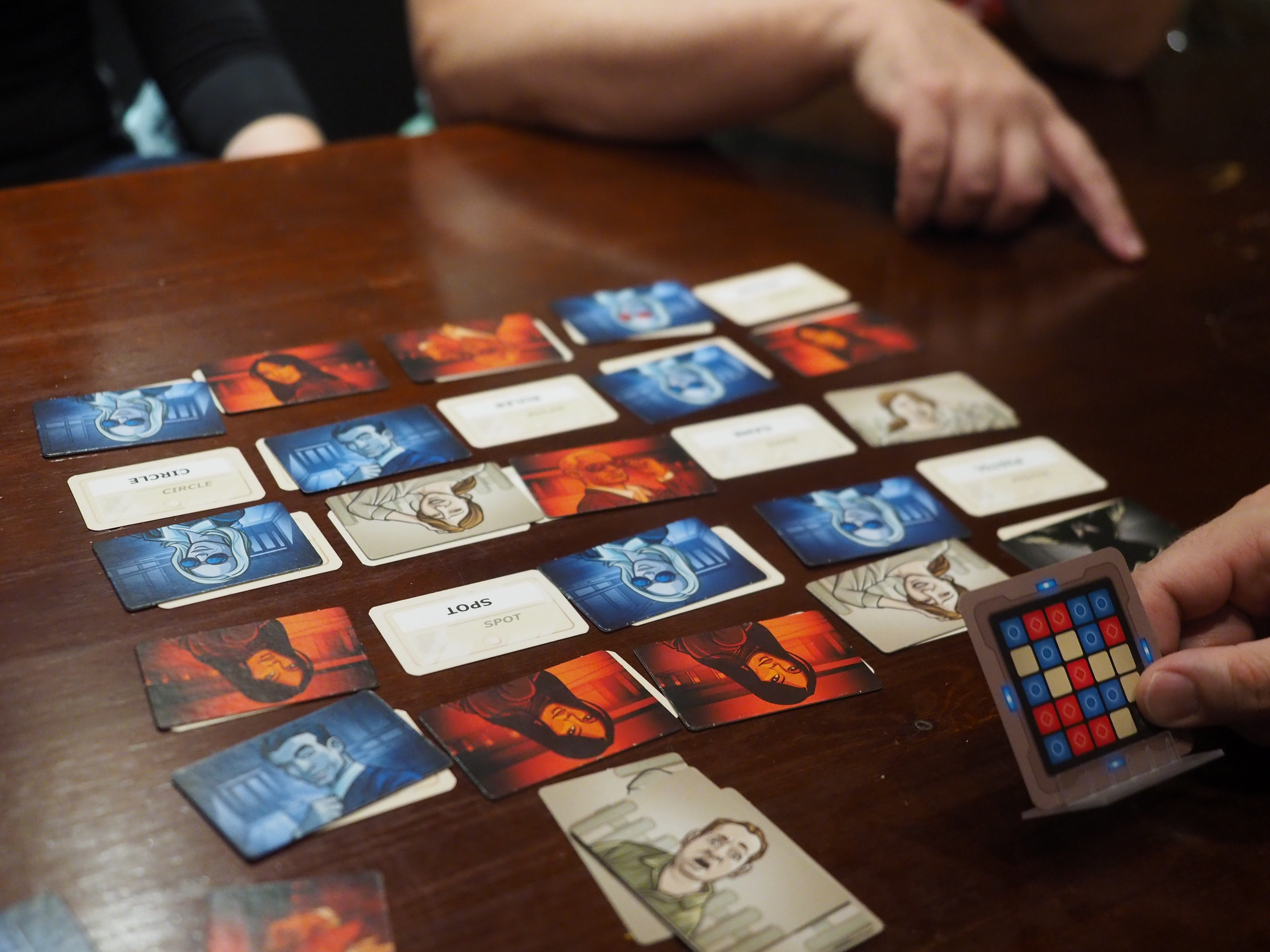
The desert-island host game. Two teams, two spymasters giving one-word clues, a grid of word cards, and one assassin tile that ends it all. It teaches in ninety seconds, plays four to eight (more if you crowd around), and — the magic part — rewards life experience over gaming experience, so the person who's never played wins the room with the best clue. The pick-up-and-play party game everyone wants their own copy of after one round.
- Teaches in under two minutes
- Scales effortlessly to large, loud groups
- Co-operative team feel means no one loses alone
- Endless replay from 200 double-sided word cards
- Needs at least four to sing (use Duet for two)
- A shy clue-giver can freeze in the spymaster seat
Just One
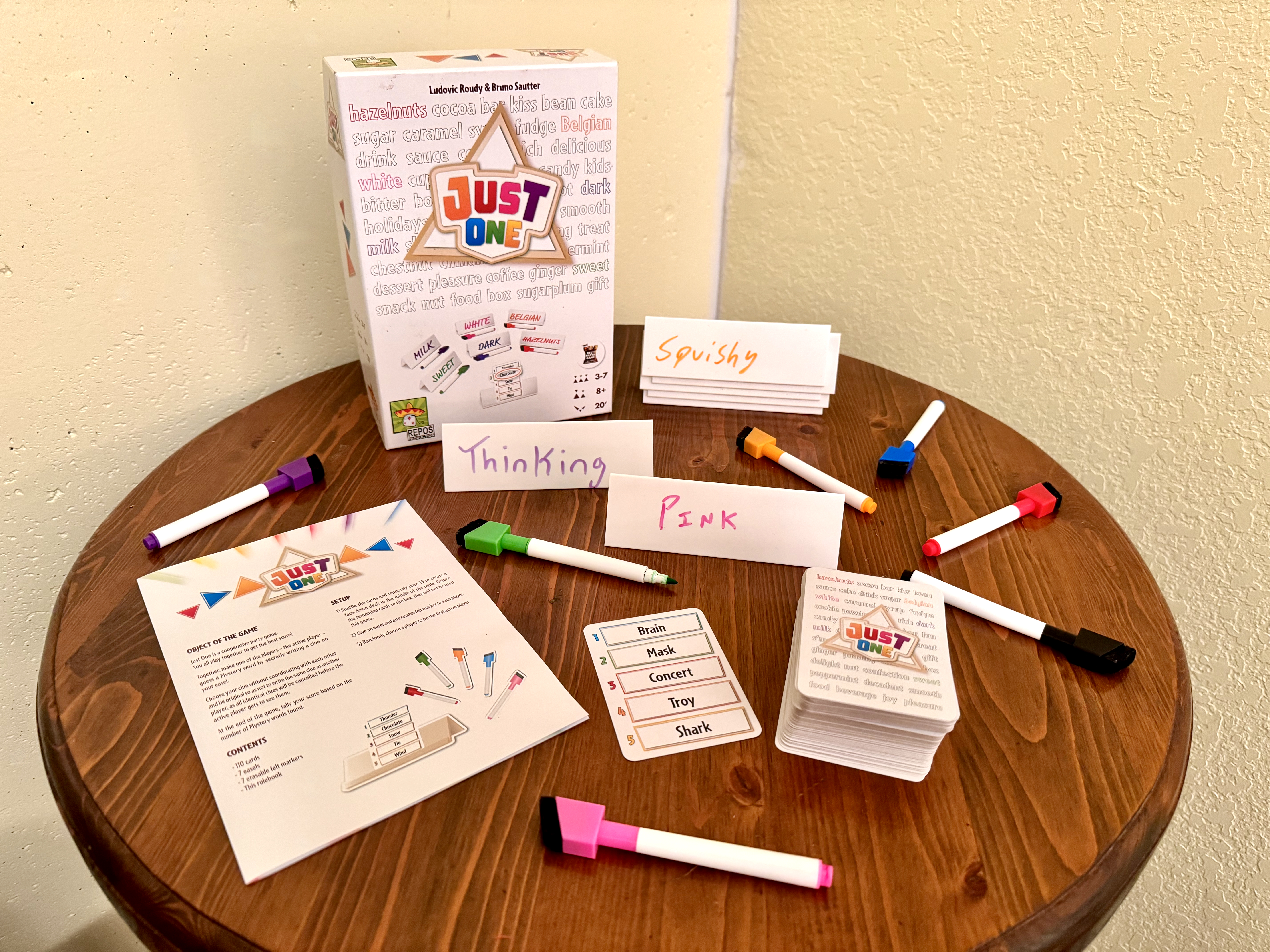
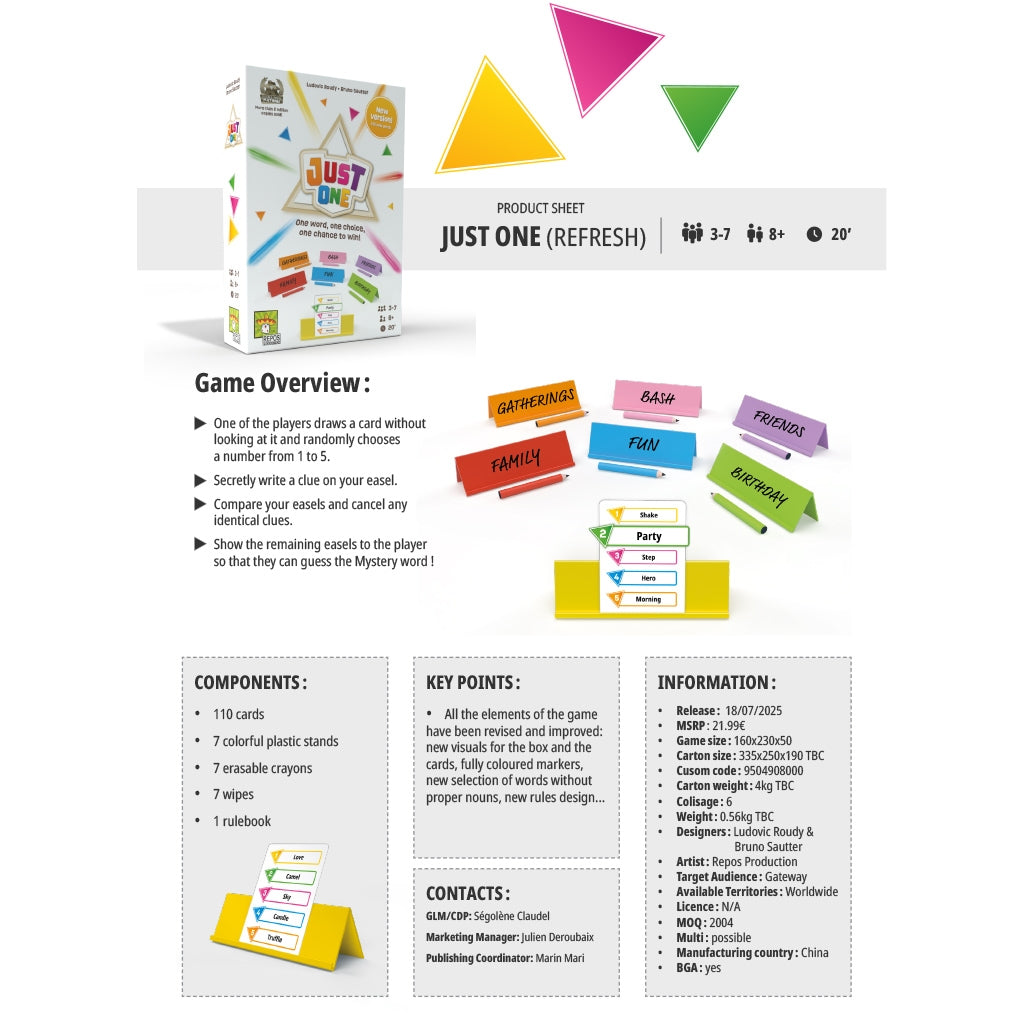
Everyone writes a one-word clue to help the guesser — but matching clues cancel out, so you're cooperating and trying to be cleverly unique. It's fully cooperative, so the table wins or loses together; nobody is ever the loser. A one-minute teach, twenty-minute play, three-to-seven players, dry-erase easels in the box. This is the game I reach for when someone at the table has 'never really played board games.'
- Under five minutes to teach, genuinely
- Fully cooperative — zero spotlight, zero embarrassment
- 550 words keep it fresh for years
- Reusable wipe-clean easels and markers included
- Needs three players minimum
- Markers dry out if caps are left off
 7 photos
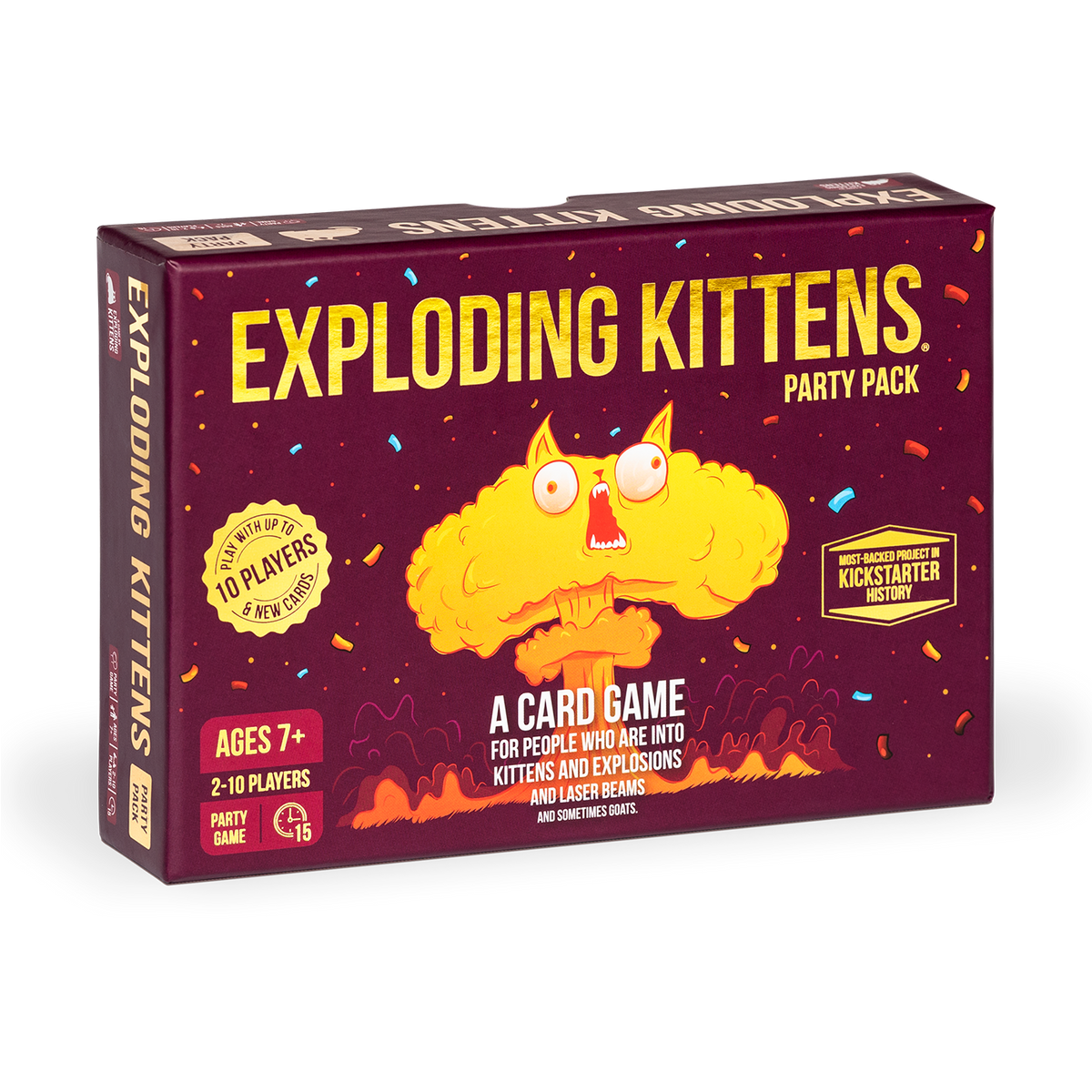
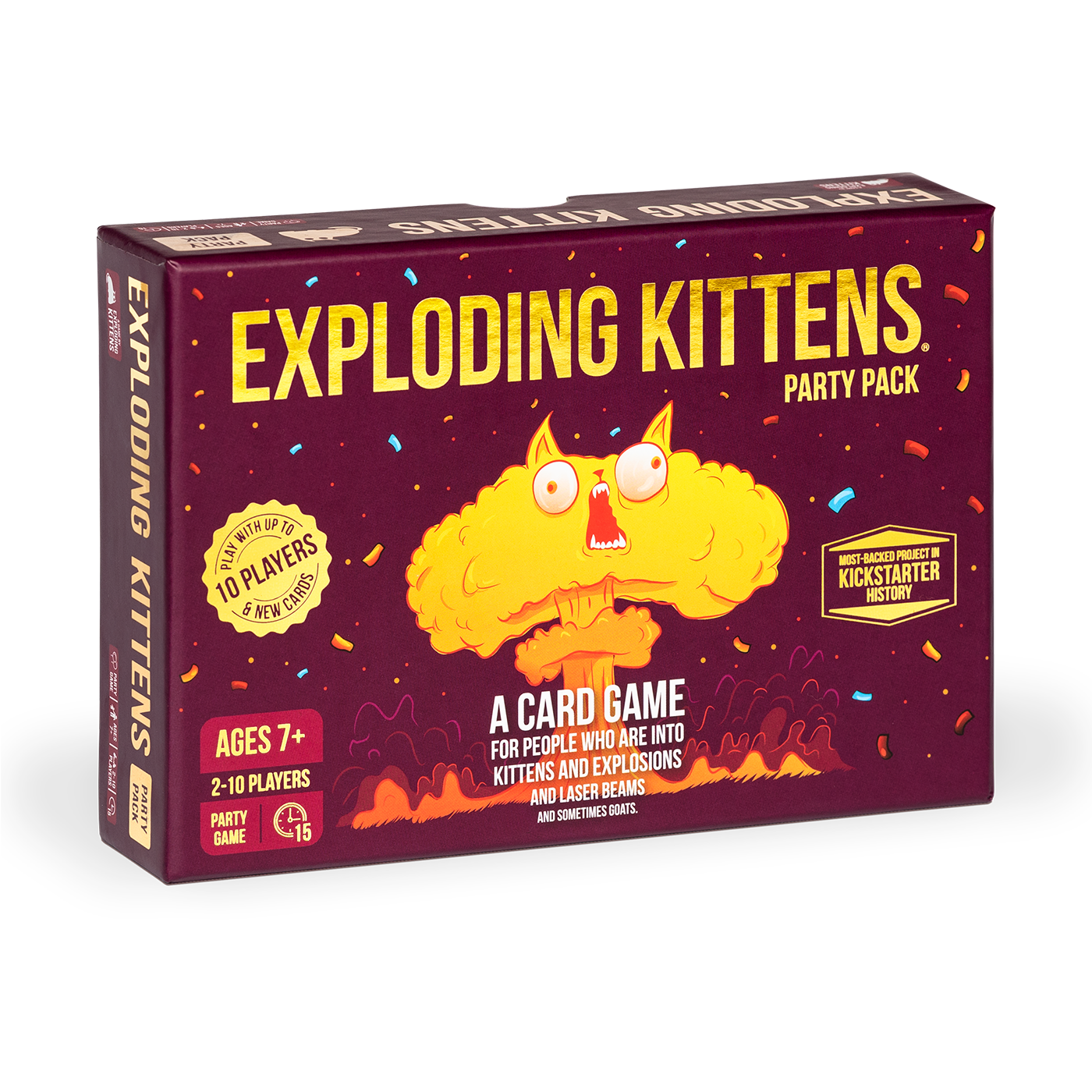
 Exploding Kittens: Party Pack
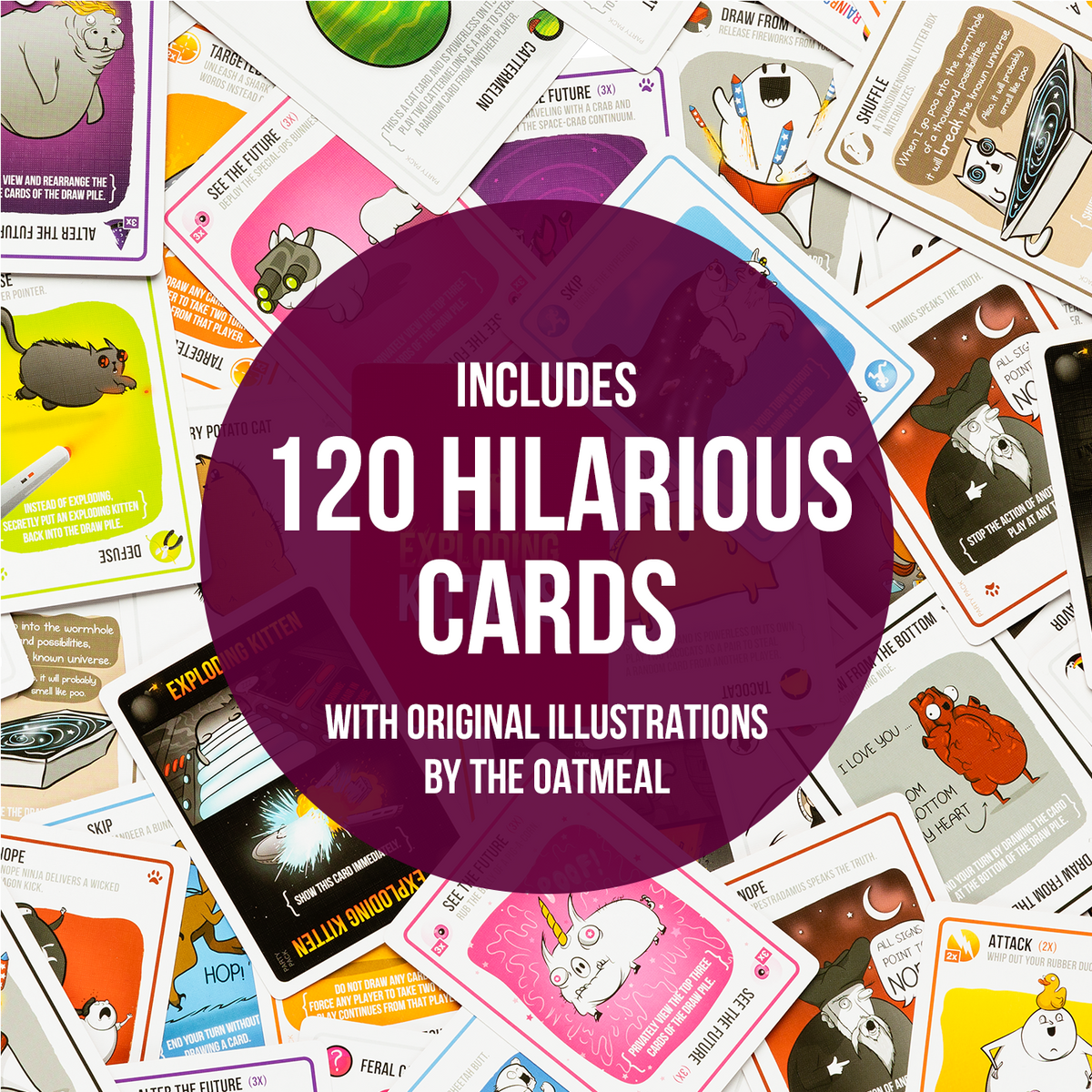
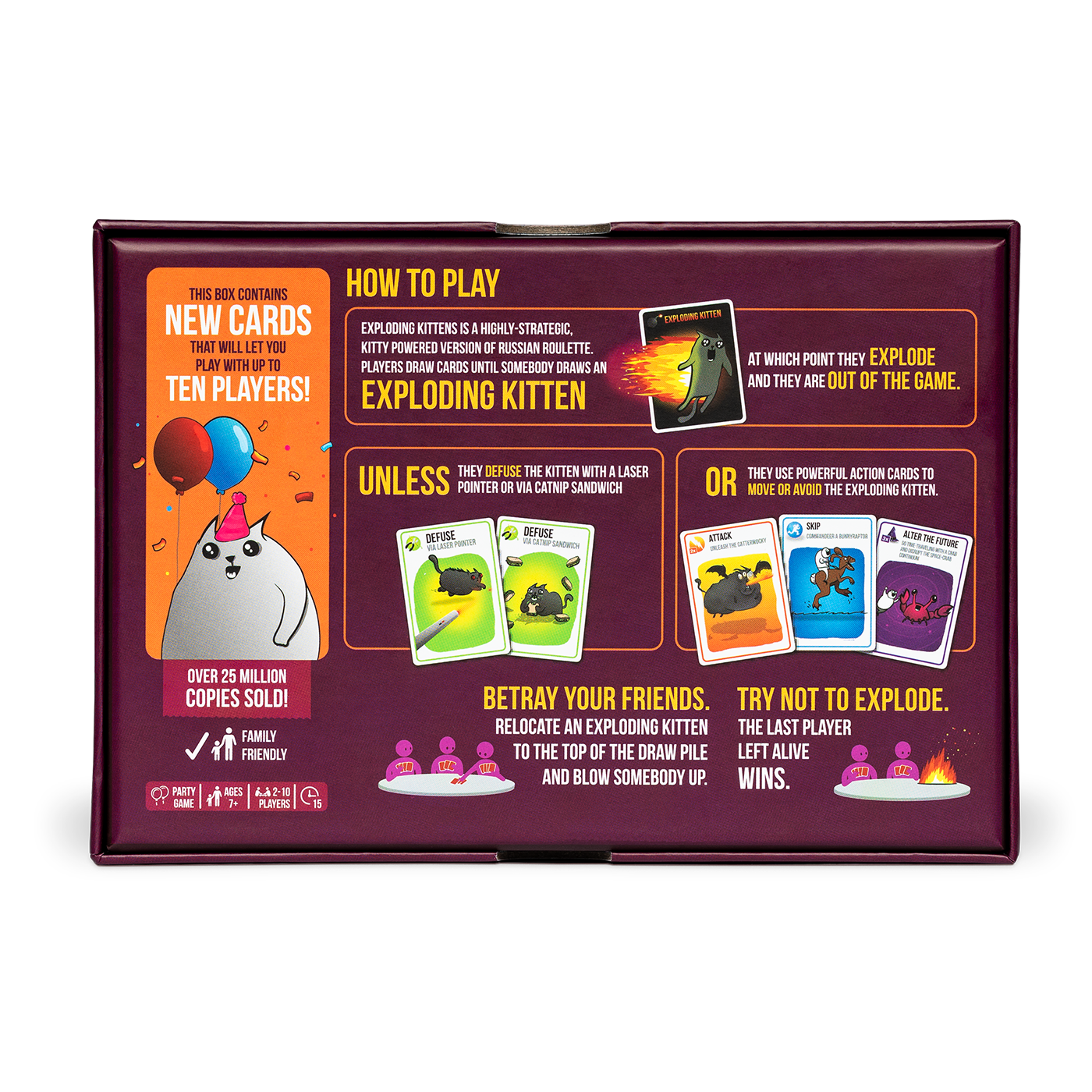
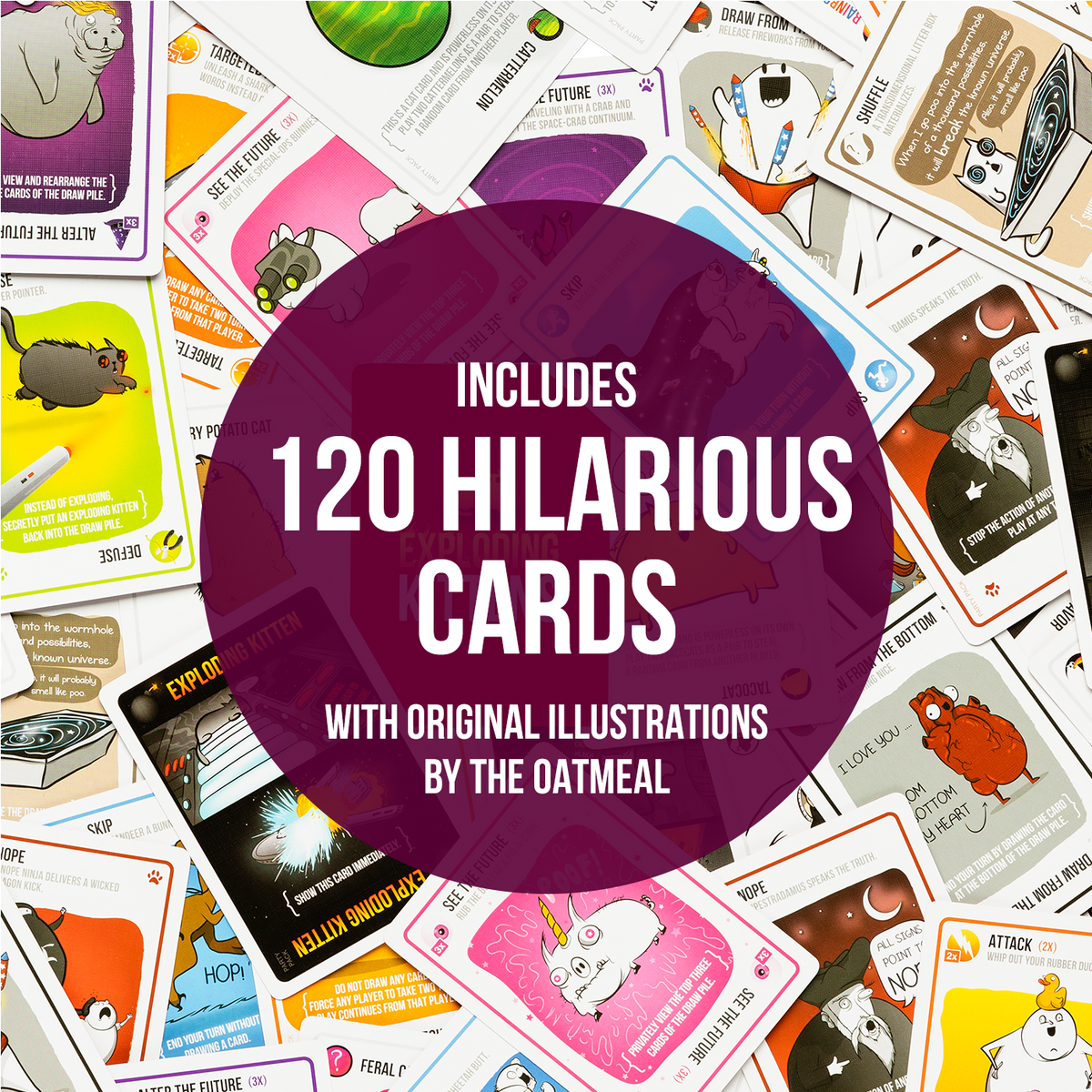
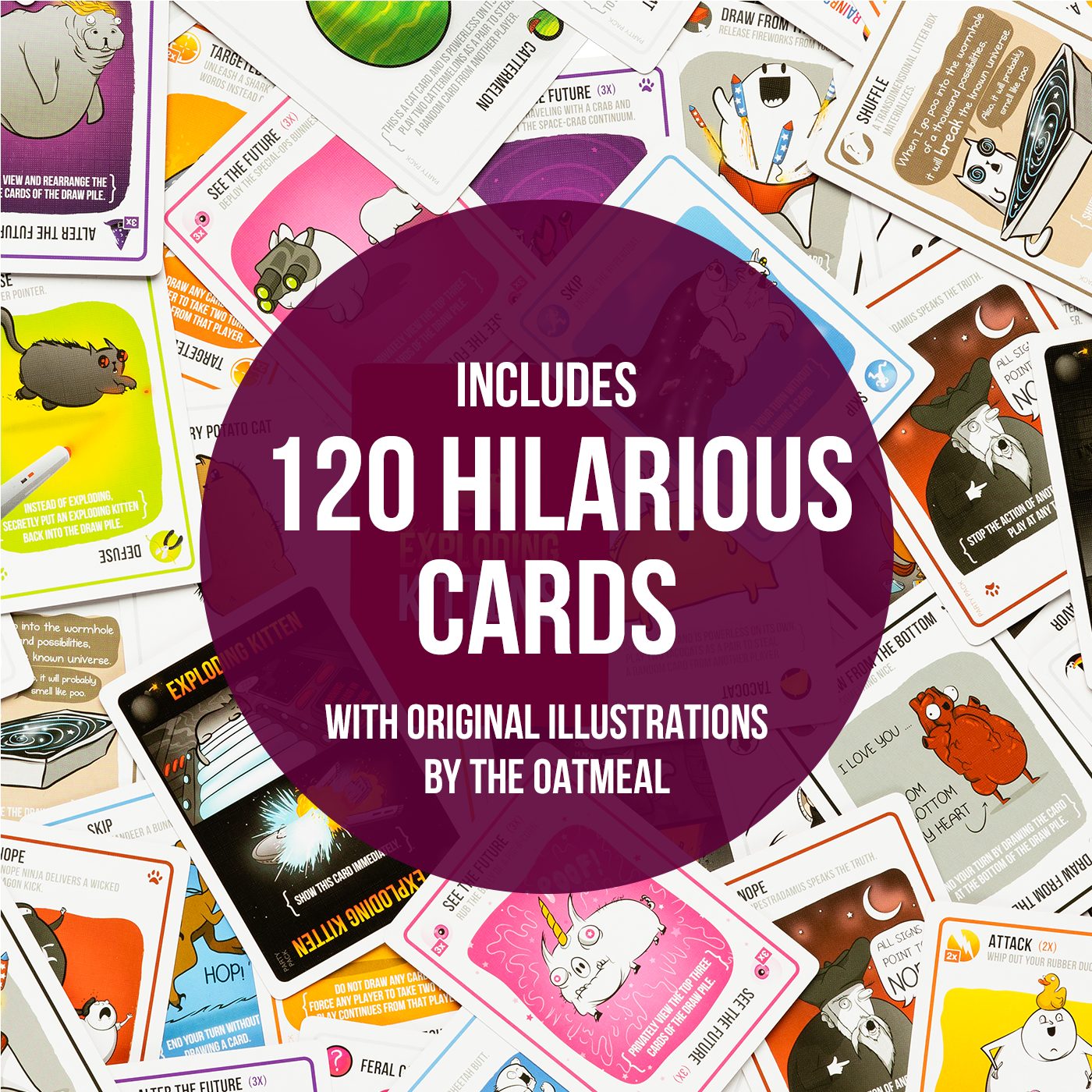
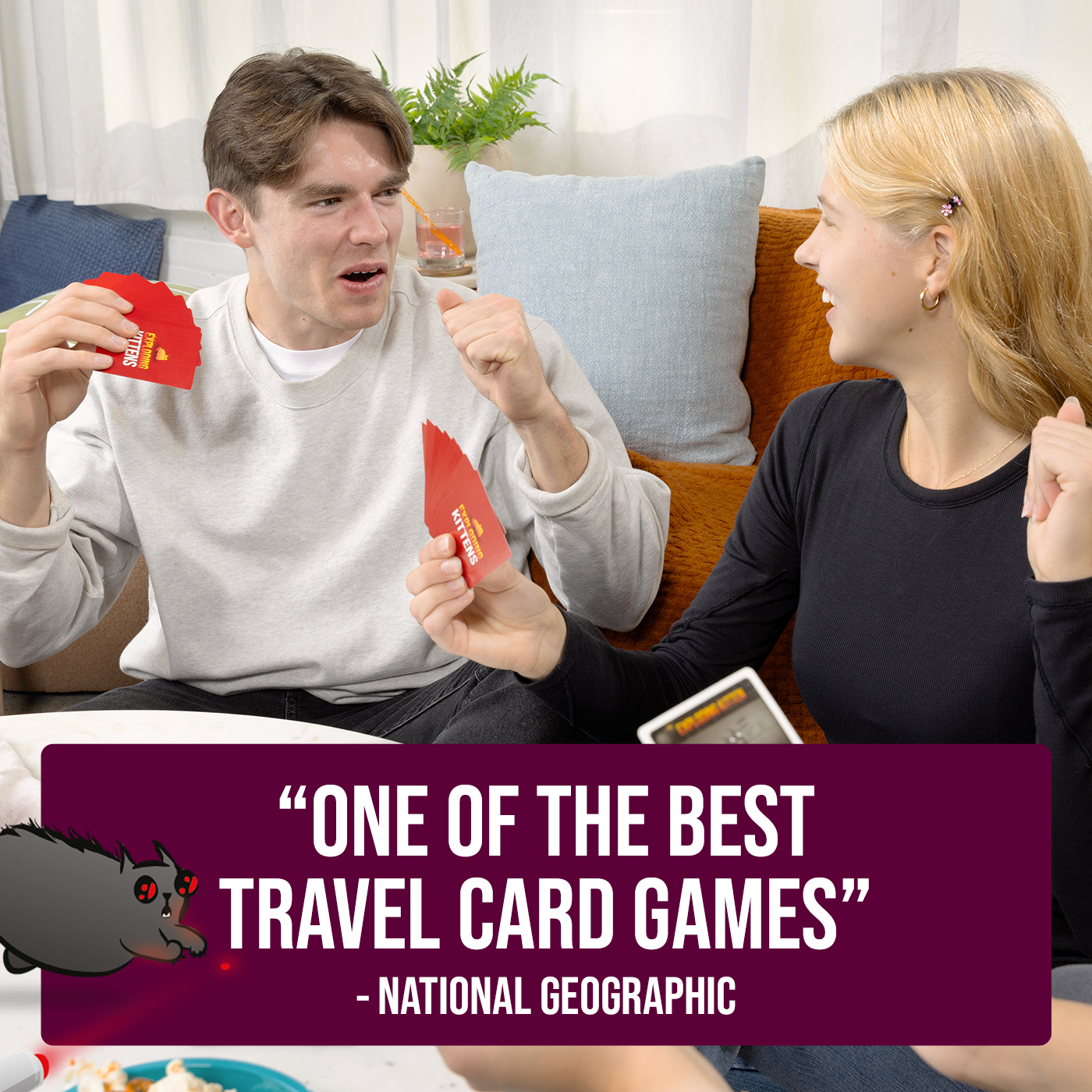
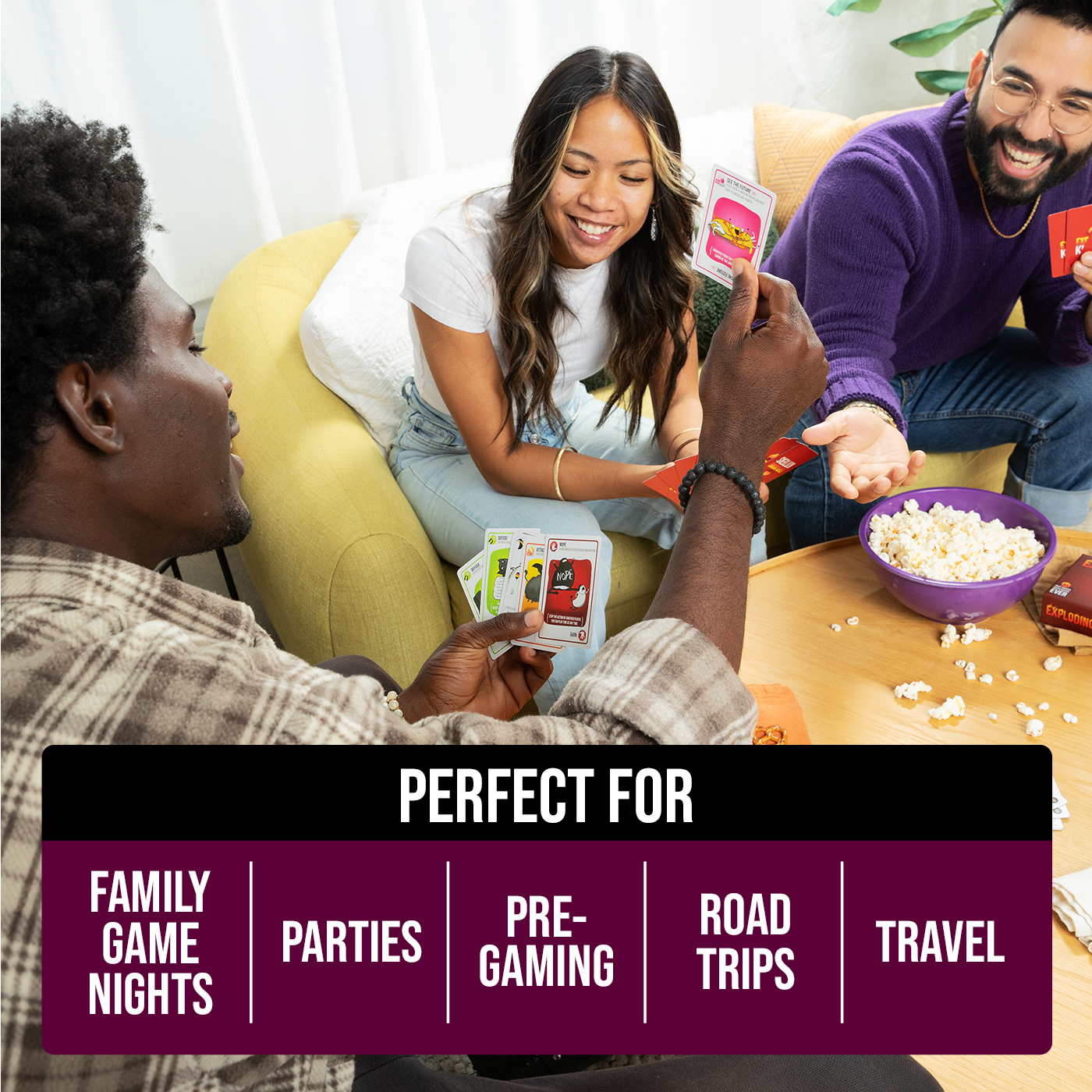
The dedicated big-group edition — up to ten players, 120 cards, fifteen minutes of pure silliness. Draw cards, sabotage your friends, dodge the exploding kitten or get knocked out. It asks nothing of a tired brain, which makes it the perfect late-night pivot when the room is loud and the heavy game would die on the table. Play it when the night is full and forgiving, not as your opener.
- Scales to a genuine 10-player crowd
- Fifteen-minute rounds, near-zero learning curve
- Absurd Oatmeal humor sets a light tone
- Great as a high-energy closer or filler
- Player elimination — knocked-out guests wait it out
- Overkill for a quiet group of four (get the Original)
 3 photos
 Sky Team
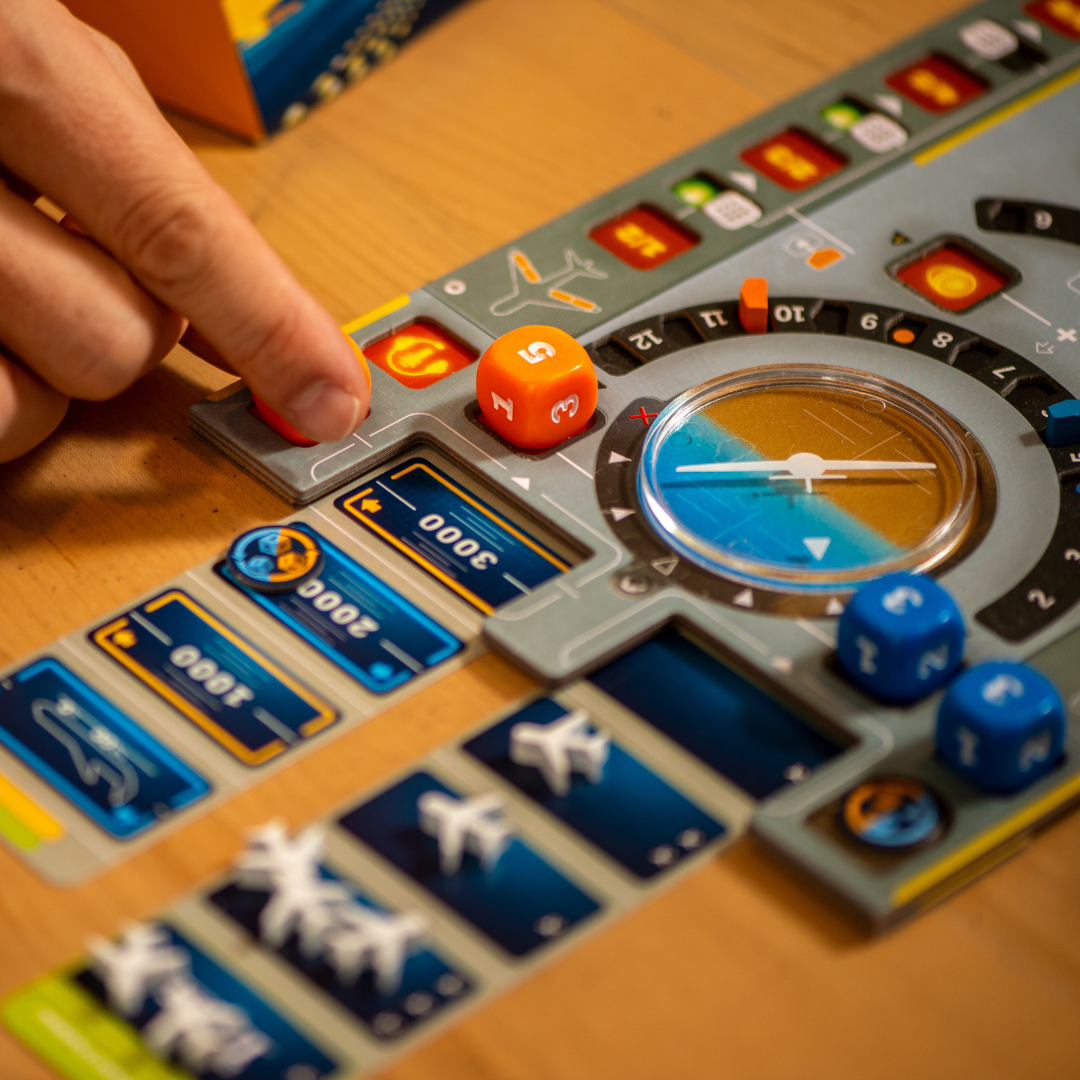
Spiel des Jahres 2024 winner, and the perfect game for the couple who drifts to the kitchen or the last pair standing after midnight. You're pilot and co-pilot landing a plane, silently placing dice to balance, brake, and touch down — talking only before each turn. Twenty tense, elegant, wordless minutes; quick enough to replay several times in an evening. Nothing in the design is wasted.
- Best-in-class two-player cooperative tension
- Teaches in a turn or two despite the cockpit look
- 20-minute sessions invite repeat plays
- Award-winning, deeply replayable design
- Strictly two players — not a party game
- Box recommends ages 14+ for the strategy
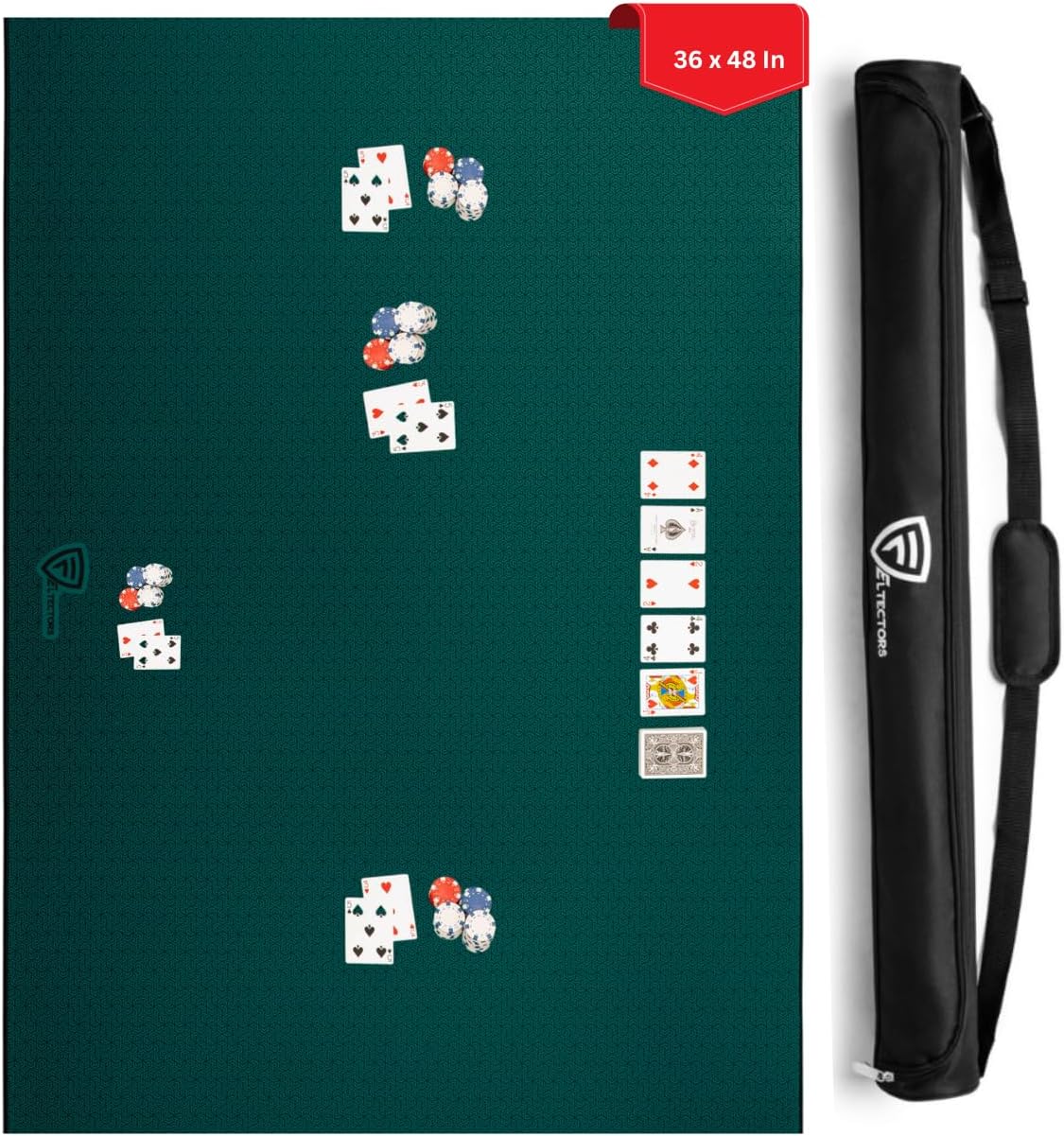
Feltectors Board Game Mat (36 × 48 in, Neoprene)
The cloth-napkin upgrade for your table. A 36×48 neoprene surface that lets cards slide instead of snag, hushes the clatter, and — crucially — is water-resistant, so a knocked-over drink beads on top instead of soaking your deck. It also quietly frames the play area on a cluttered table. Lay it down before the snacks come out and you've solved half of what actually goes wrong at a real game night.
- Cards glide and lift easily off the soft surface
- Water-resistant — a real spill plan, not just looks
- Cushioning protects cards from bending
- Big enough for five to six players; rolls up to store
- 36×48 may overhang a very small table
- Wants a flat dry-out after a big spill
GAMELAND 10-Inch Wooden Dice Tray (Felt-Lined)
Small object, large peace. A felt-lined wooden tray that keeps every die readable and contained — no more skittering into the dip bowl or vanishing under the couch at 2 a.m. The soft lining hushes the roll so a late game doesn't wake the house, and it makes the whole table feel a touch more intentional. Comes with two wooden dice. The fix for the number-one thing that ends up lost at game night.
- Keeps dice contained and results easy to read
- Felt lining muffles the rolling clatter
- Solid wood frame feels intentional on the table
- Includes two wooden dice
- Only needed for dice-driven games
- 10-inch size is one tray per few players for big rolls
At a glance
| game | maker | players | play time | teach time | best role | good for non gamers |
|---|---|---|---|---|---|---|
| Codenames | Czech Games Edition | 2–8+ (best 4+) | 15 min | ~2 min | Big-group opener | Excellent |
| Just One | Repos Production | 3–7 | 20 min | <5 min | Warm icebreaker | Best in class |
| Exploding Kittens: Party Pack | Exploding Kittens | 2–10 | 15 min | ~1 min | Chaos closer | Very good |
| Sky Team | Le Scorpion Masqué | 2 | 20 min | ~2 min | Two-player pocket | Good (couples) |
| Feltectors Mat (36×48) | Feltectors | Gear | — | — | Table protection | — |
| GAMELAND Dice Tray (10 in) | GAMELAND | Gear | — | — | Dice containment | — |
Questions, answered
What's the single best game to start a game night with?
Codenames or Just One. Both teach in under two minutes, both make non-gamers feel clever, and both play in teams or cooperatively so no one is ever exposed and losing alone. Have one already running when the first guests arrive.
How long should a game night last?
About three to three-and-a-half hours of actual play, then a soft landing. End while everyone still wants more — when the laughs get quieter and turns slow down, that's your cue to play one last short game and stop.
How do I teach a game fast without boring everyone?
Teach only three things: the goal in one breath, what you do on your turn, and the one rule that hurts (like the assassin in Codenames). Then deal and teach the rest inside the first round as it comes up. Never read the rulebook aloud.
What games work for people who never play board games?
Cooperative and word games: Just One, Codenames, and Sky Team for pairs. They reward life experience over gaming experience, and the co-op ones mean the whole table wins or loses together — so a newcomer can't be singled out as the loser.
How many players can these games handle?
Just One does 3–7, Codenames does 4–8+ (more if people crowd around), Exploding Kittens: Party Pack scales to 10, and Sky Team is strictly 2. For a full house, lean on Codenames and the Exploding Kittens Party Pack.
How do I keep snacks from ruining the cards?
Serve 'dry hands' food — pretzels, popcorn, nuts, grapes, wrapped chocolate. Keep drinks on coasters off the play area, set out damp napkins nobody asked for, and save wings and nacho cheese for a messy-snack break between games.
Is a board game mat actually worth it?
Yes, for two real reasons: cards slide and lift easily off neoprene instead of snagging, and the water-resistant surface means a spilled drink beads on top instead of soaking your deck. Lay it down before the snacks come out — it's the cheapest spill insurance at the party.
Do I need a dice tray?
Only for dice-driven games, but it solves the number-one thing that gets lost at game night: a die that skitters off the table. A felt-lined tray keeps every roll readable and contained, and quiets the clatter for late-night play.
What's the best two-player game for after everyone leaves?
Sky Team. It's the Spiel des Jahres 2024 winner, plays in 20 tense, near-wordless minutes, and is quick enough to run several times. Perfect for a couple or the last pair standing after the party winds down.
Should I put out all my games or just a few?
Just three at a time, spines out, the first one pre-set. A tower of fifteen boxes paralyzes a room with choice; three feels like a curated menu and gets people to actually commit and start playing.
How do I handle the energy dip in the middle of the night?
Watch faces around hour two. When you see the sag, don't push a new heavy game — pivot to silliness like Exploding Kittens or one more loud round of your opener. Read the room, not the rulebook.
What's the most important thing for a host to do?
Stage the table 30 minutes before anyone arrives and then relax. A calm, smiling host who's occasionally in last place sets the warmth for the whole room — the night is about hospitality, not winning.
Yumi's verdict
Here's the truth I keep coming back to, host to host: the boxes barely matter. The night people beg to repeat is the one where they felt welcomed — where a game was already running when they walked in, the first rules took two minutes, and nobody once felt foolish. Build your lineup around generous, fast-teaching games (Codenames and Just One to open, Exploding Kittens Party Pack for the loud full house, Sky Team for the late-night pair), protect the table with a neoprene mat and a dice tray so the cards stay clean and the dice stay found, keep the food dry and the drinks off the play space, and pace the evening in a gentle arc that ends a touch early. Then put the rulebook down and watch faces. Pour the tea, celebrate the newcomer's first clever move, and let yourself lose a round with a smile. Do that, and you won't need to ask whether it went well — they'll be at the door asking when the next one is.
Research ledger 13 sources · reviewed 2026-07-17
Specifications, rules, current product information, community experience, and contrary evidence were checked against the sources below. Commercial links are kept separate from editorial evidence.
- amazon.comamazon.com/dp/B014Q1XX9S?tag=puzzlewick-20
- amazon.comamazon.com/dp/B07GJ7NDZQ?tag=puzzlewick-20
- amazon.comamazon.com/dp/B0CHD8RCSJ?tag=puzzlewick-20
- amazon.comamazon.com/dp/B07CTXHNSL?tag=puzzlewick-20
- amazon.comamazon.com/dp/B0BQCNKHRG?tag=puzzlewick-20
- amazon.comamazon.com/dp/B071SDTS2X?tag=puzzlewick-20
- shelfgamer.comshelfgamer.com/reviews/just-one
- meeplemountain.commeeplemountain.com/reviews/sky-team
- beyondthemeeple.combeyondthemeeple.com/just-one-board-game-review
- coopboardgames.comcoopboardgames.com/cooperative-board-game-reviews/sky-team-review
- luckandstrategy.comluckandstrategy.com/exploding-kittens-party-pack-review
- shutupandsitdown.comshutupandsitdown.com/review-codenames
- gamesradar.comgamesradar.com/games/board-games/i-review-board-games-for-a-living-and-think-sky-team-is-an-essential-purchase-for-two-player-game-night
Come in, take your shoes off — let me show you something.
Keep exploring
The next smart rabbit holes.
✦ Topic PathBoard Game Buying Guides: compare the whole shelfStart with the decision, not the shelf. These guides compare the games, editions, expansions, player counts, and costs people...Gift GuideBest Gifts for Board Game Lovers (2026): Picks They'll Actually UseI've been collecting for thirty years—buying, shelving, watching which ones earn their square footage and which ones vanish to a closet....Best Of8 Board Games for People Who Swear They HATE Board GamesA converter's list for the friend who pushes the box away — eight quick, gorgeous, no-homework games that win over the most committed...