How to Play UNO: Official Rules, Best Editions, Strategy, and the House Rules Causing the Arguments
Imani settles stacking, Wild Draw Four challenges, seven-zero, jump-ins, and the last-card call—then ranks Classic, Flip, No Mercy, Teams, Party, and Splash by the night they are actually good at.


AI-assisted research and drafting in Imani’s voice · reviewed by Robert Pruitt · how this guide was made
Last editorial refresh: 2026-07-14 Gold-standard QA: 2026-07-14 8 sources reviewed Affiliate links checked during gold-standard pass

The short answer
Buy Classic UNO for universal family play, UNO Flip for the best strategic twist, Show ’em No Mercy for a deliberately brutal group, Teams for two-versus-two, Party for six to fourteen, and Splash for pool or travel abuse. In standard Classic UNO, stacking Draw cards is not an official rule unless your specific edition says otherwise. Match color, number, or symbol; call UNO when one card remains; first player to empty their hand wins the round.
Decision map
Choose in thirty seconds
Best universal first deck.
Best strategic upgrade.
Best for a ruthless adult or teen group.
Most UNO disputes are not rules disputes. They are unannounced variant disputes. Someone learned stacking from a cousin, somebody else uses seven-zero, and one player thinks a Wild Draw Four may be played whenever spite feels spiritually correct. Imani used Mattel’s current rule sheets and 2026 product line to separate official rules from optional chaos, then matched each edition to the crowd it was designed to survive.
Start here, then go deeper
You are in the right cabinet.
 ⌂ Topic PathFamily and Gateway Games: compare the whole shelfA good family game gets everyone playing quickly without becoming disposable after three nights. These guides prioritize clear...
 Best OfBeyond UNO: 8 Better Card Games for Family Game NightUNO walks so these eight could run. Same easy-in, same big laughs — minus the table-flip that ends in someone storming off to their room....
 Best OfBest Party Card Games for Adults, Ranked (2026)Okay but have you SEEN what the room's been saying about Monikers, Wavelength, So Clover!, Just One — because the party-game conversation...
How do you play Classic UNO?
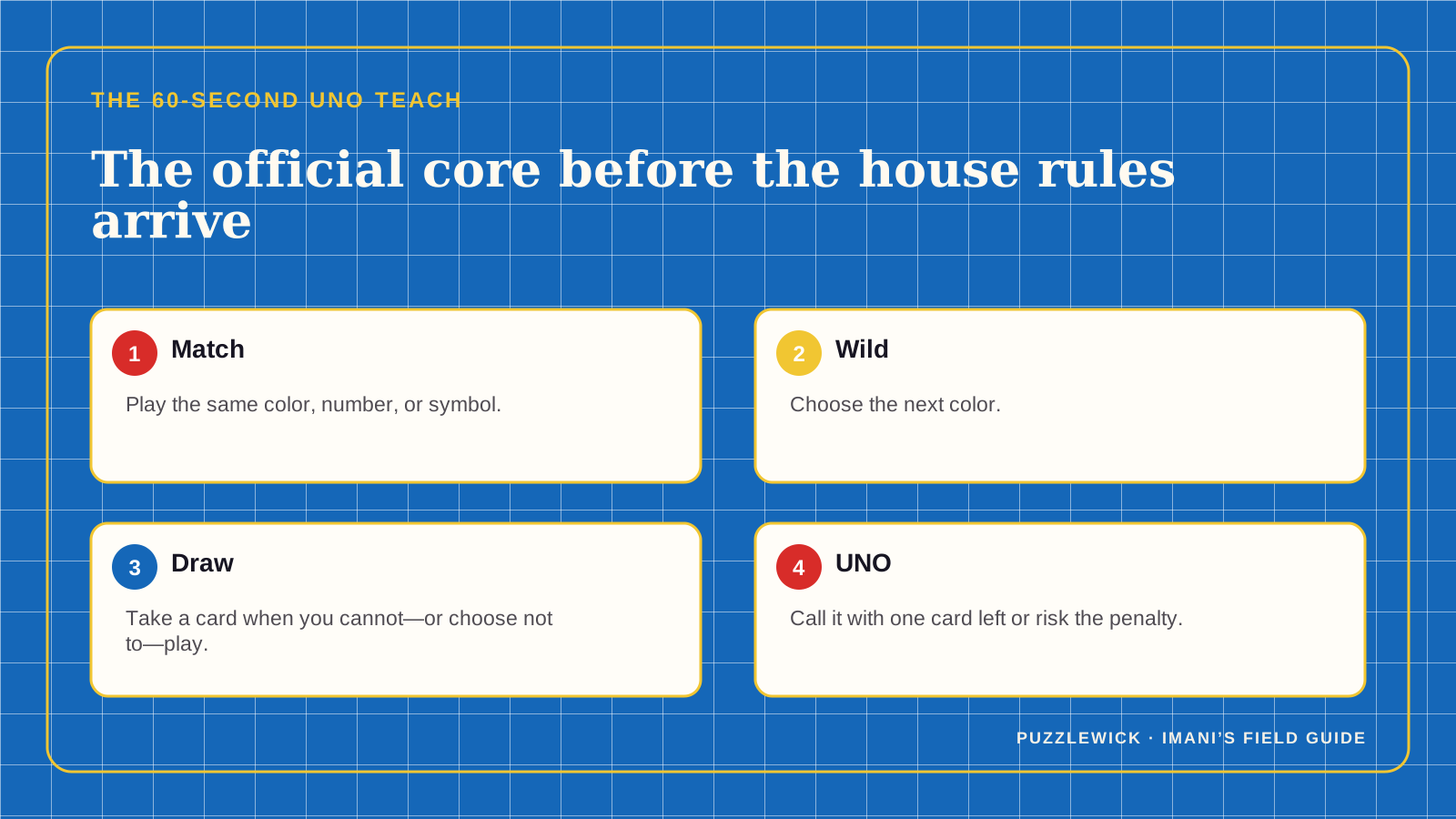
Deal seven cards to each player and turn one card face up beside the draw pile. On your turn match the discard by color, number, or symbol, or play a Wild. If you cannot or choose not to play, draw one; if that card is playable, you may play it immediately. Say “UNO” when one card remains. If another player catches you before the next player begins, draw two.
A Wild Draw Four is legal only when you have no card matching the current color; matching numbers or action symbols in other colors do not make it illegal. The target may challenge. A successful challenge makes the player who used it draw four; a failed challenge makes the challenger draw six. Official scoring gives the round winner the value of every opponent’s remaining cards, usually racing to 500, though many households simply count round wins.
Deal seven cards.
Can you stack Draw Two and Wild Draw Four cards?

Official Classic UNO does not allow stacking Draw Two or Wild Draw Four cards. The next player draws and loses the turn. Stacking is a house rule unless the edition’s own rule sheet explicitly says otherwise. No Mercy is a different rules system and includes harsher accumulation mechanics; do not import those rules backward into Classic by accident.
Before the first deal, settle stacking, jump-in, draw-until-playable, seven-zero hand swaps, and whether a Wild Draw Four challenge is active. Writing the chosen variants on one index card prevents the loudest player from rewriting the game after being targeted.
Not in standard Classic UNO unless the rule sheet for your edition explicitly introduces stacking.
Which UNO version is best?
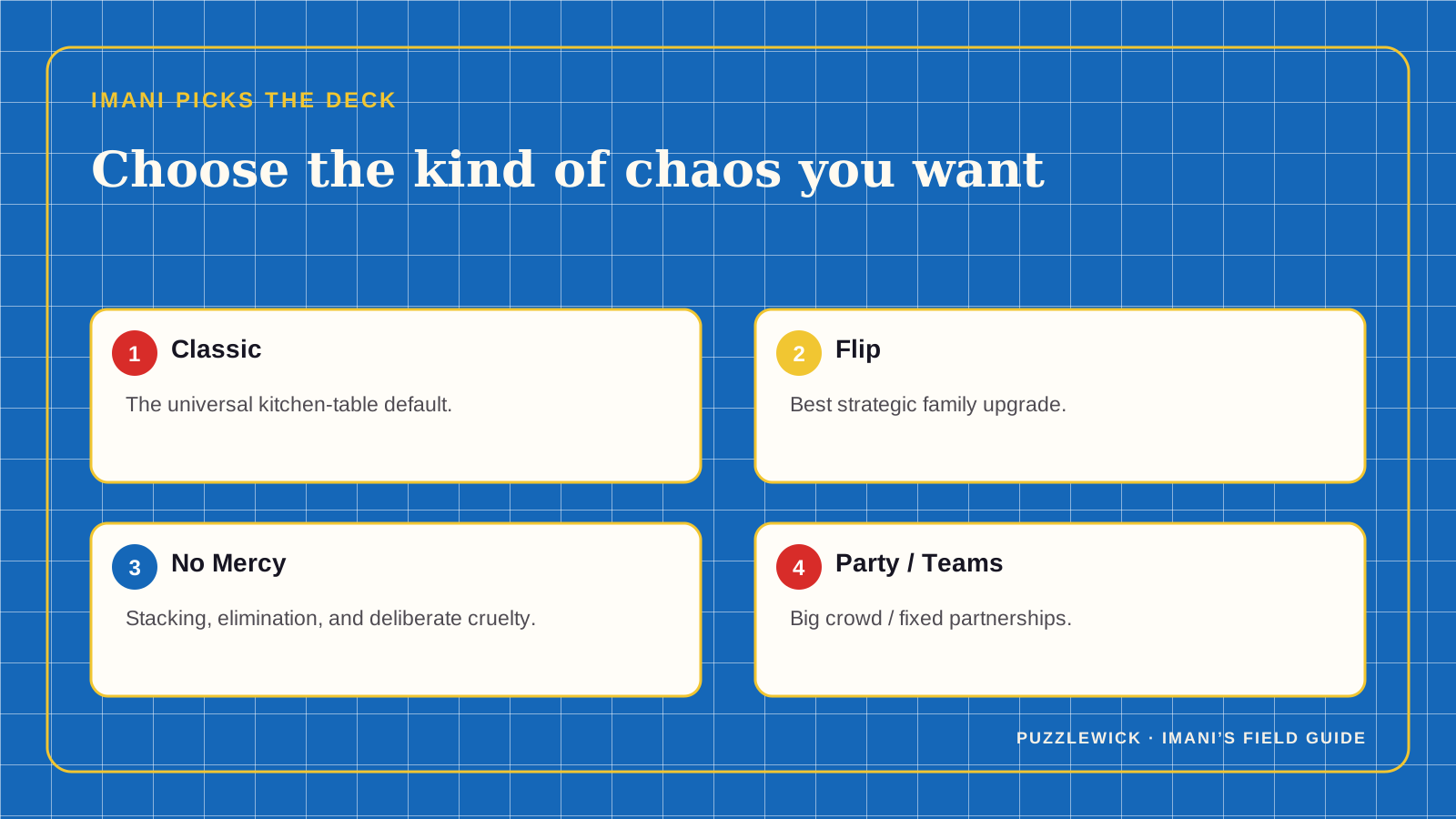

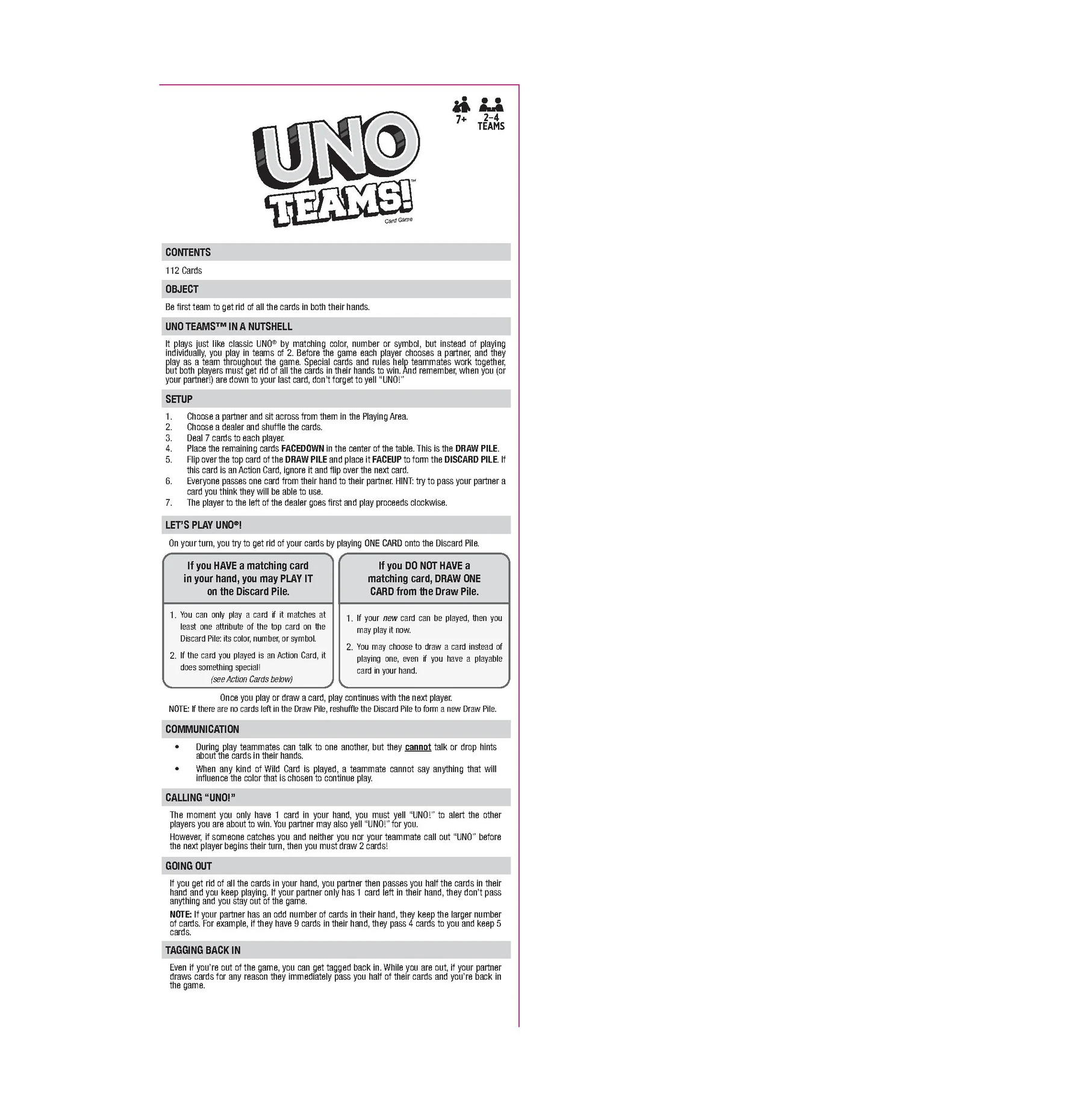
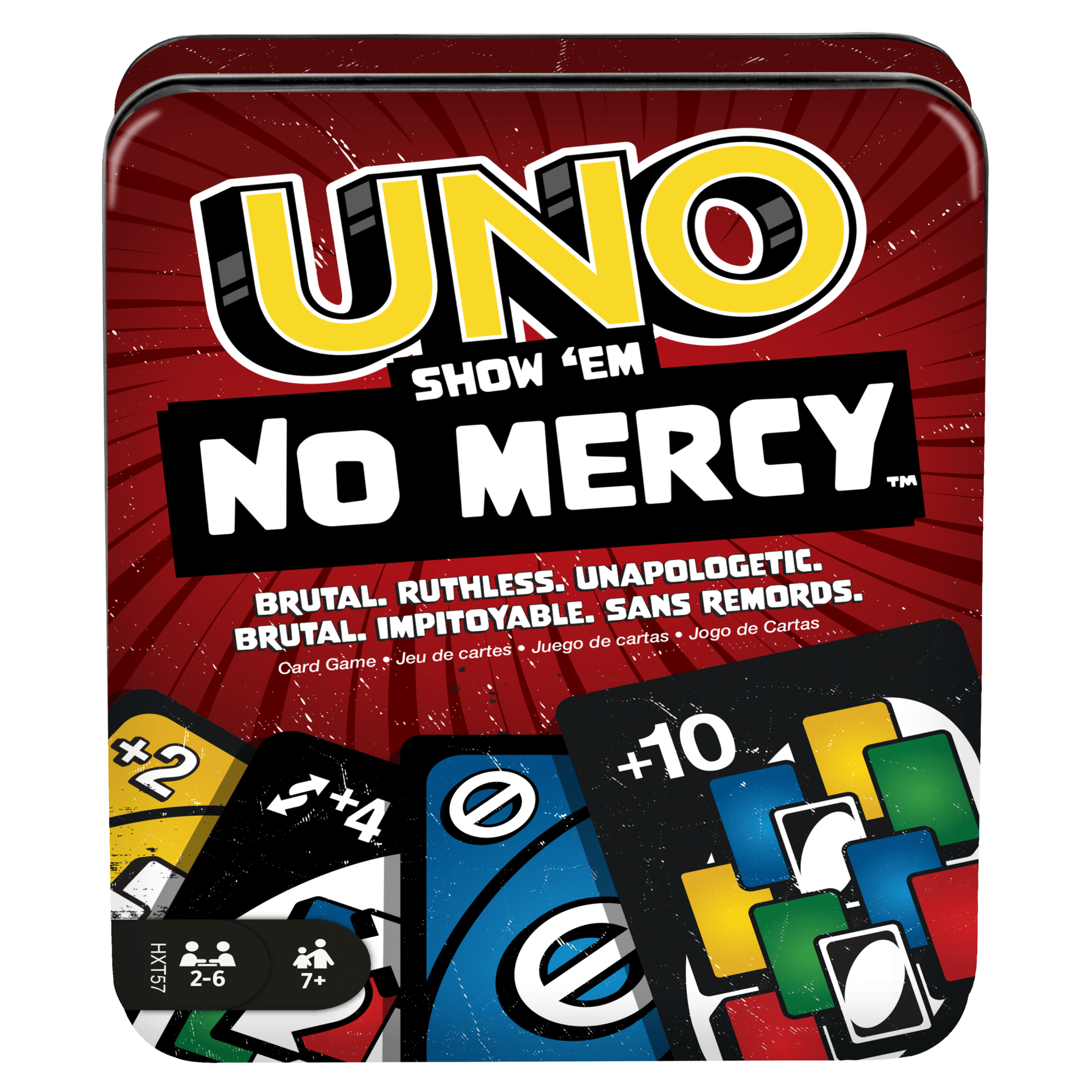
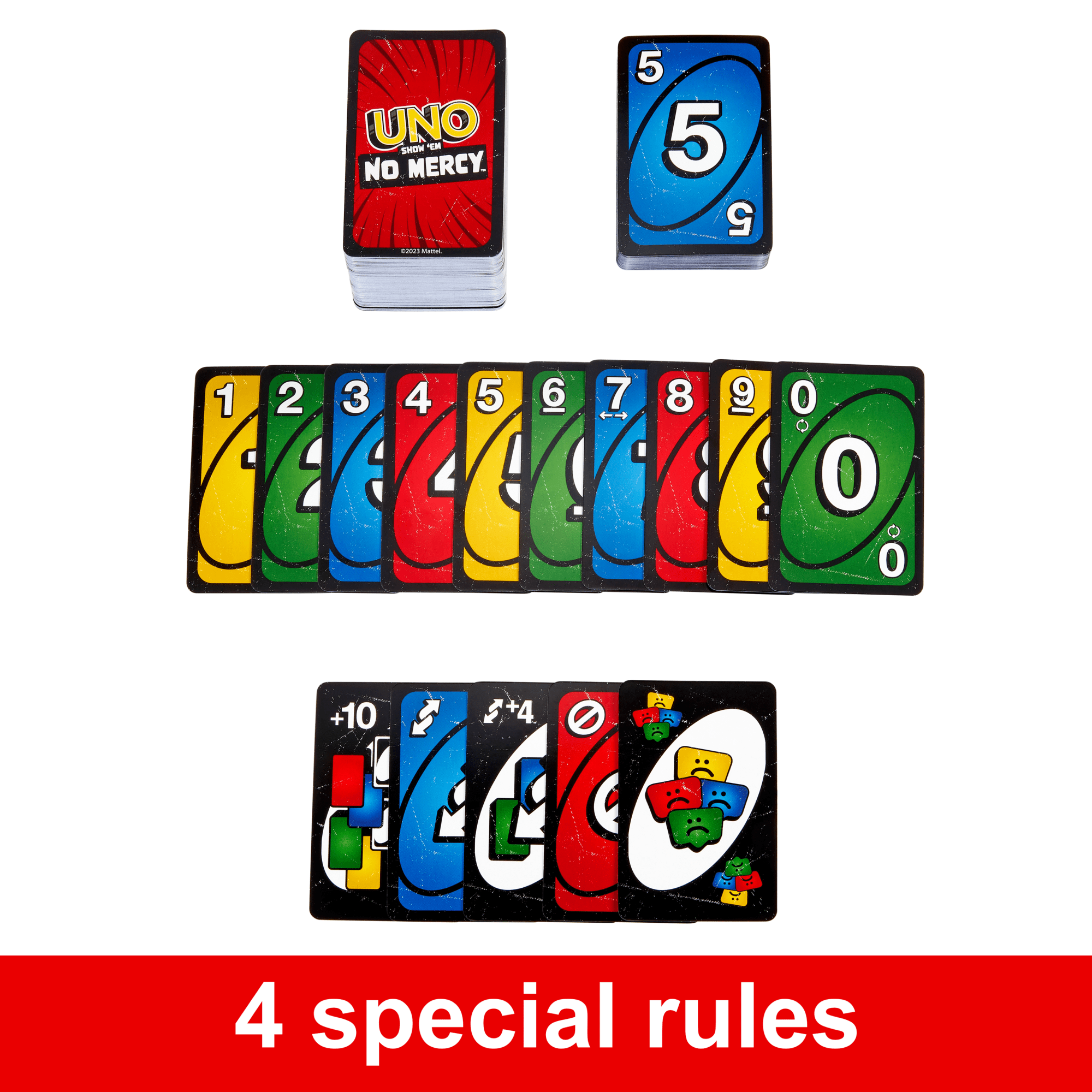
Classic wins for accessibility. UNO Flip is Imani’s best upgrade because the double-sided deck changes hand information and tempo without abandoning color matching. Show ’em No Mercy is a separate social contract: 168 cards, stacking, seven-zero swaps, and a Mercy Rule that eliminates players with twenty-five cards. Teams is the clean partnership version. Party is designed for six to fourteen. Splash uses durable plastic cards for travel and wet environments.
Do not buy by the wildest box copy. Buy by the room. A seven-year-old family table and an adult revenge night need different decks.
Classic wins for accessibility.
Is UNO No Mercy worth it?

Yes, if the table explicitly wants a longer, meaner, swingier UNO where elimination is funny rather than upsetting. No Mercy formalizes many house-rule instincts—stacking Draw cards, swapping hands on sevens, passing on zeroes—and adds stronger action cards. A player wins by emptying their hand or being the last survivor.
It is not “the definitive UNO.” It solves boredom by increasing volatility and punishment, which can magnify the exact family dynamics Classic already exposes. Explain the Mercy Rule before dealing. If anyone dislikes player elimination or giant draw stacks, buy Flip instead.
Yes, if the table explicitly wants a longer, meaner, swingier UNO where elimination is funny rather than upsetting.
What strategy actually matters in UNO?

Protect color flexibility. Hold a Wild for a dead hand or finishing turn rather than spending it at the first inconvenience. Track which colors make the next player draw repeatedly; that is a strong signal of weakness. Keep an action card for tempo near the finish, and avoid leaving yourself with one color unless the discard and table behavior support it.
In scoring games, high-value Wilds and Draw cards become liabilities in hand, so aggression and point risk must be balanced. At two players, Reverse functions much like Skip in many editions, increasing combo potential. Strategy is modest but real: information from failed colors, hand-size pressure, and turn-order control matter more than pretending the draw pile is fair.
Protect color flexibility.
Which house rules are fun and which break the game?
Seven-zero hand swaps create movement and stop one player from quietly coasting; jump-in rules reward attention but can become physically messy; stacking increases drama but can produce massive penalties and long dead zones. Drawing until playable lengthens games dramatically. A mandatory-play rule removes tactical choice. None is inherently wrong when declared.
Choose at most two variants and put them on the table before dealing. Never introduce a punitive rule after it benefits the person announcing it. Imani’s reliable family mix is seven-zero plus optional jump-in. Her ruthless mix is simply No Mercy, because a published ruleset settles the argument more cleanly than oral law.
Seven-zero hand swaps create movement and stop one player from quietly coasting; jump-in rules reward attention but can become physically messy; stacking increases drama but can produce massive penalties and long dead zones.
How do you teach children or a mixed-age group?
Sort one example of each action card, explain its symbol, and play the first hand open. Skip scoring; first out wins. Keep turns moving by allowing a player to ask which matches are legal without suggesting the best card. Use a visible direction marker for larger groups, especially after several Reverses.
For color-vision needs, use editions with clear graphic symbols and good lighting. For very large gatherings, Party’s rules and card count are better than combining random decks. Seat patient adults between children rather than on one side of the table. The goal of the first round is not tactical purity. It is making everyone confident enough to yell at the second.
Sort one example of each action card, explain its symbol, and play the first hand open.
Are accessories or premium editions worth buying?

UNO needs no mat, sleeves, shuffler, or wooden card tray. A simple discard tray helps outdoors, and a card holder is useful for small hands or limited dexterity. Splash is the practical premium for poolside and travel. Large collectible tins are gift objects; confirm the actual rule set inside rather than assuming the packaging adds a new game.
Sleeves cost more than replacing many standard decks and make a thick deck harder for children to handle. Buy the right edition and a small travel case. The most valuable accessory is a written index card listing the night’s two house rules.
UNO needs no mat, sleeves, shuffler, or wooden card tray.
How should a competitive UNO round be scored and ended?
Traditional match play awards the round winner points equal to the cards left in opponents’ hands: number cards at face value, action cards at twenty, and Wilds at fifty, with a match commonly continuing toward five hundred. This changes late play. Holding a Wild for flexibility is powerful, but losing with it becomes expensive. A player leading the match may favor safer exits; a trailing player may preserve action cards for a swing.
For casual nights, single-round victory is cleaner. Decide before dealing whether elimination, scoring, or first-out ends the experience. In No Mercy, explain both paths to victory and how the twenty-five-card Mercy Rule removes a player. In Teams, use the edition’s partnership rules rather than inventing table talk. Imani’s host card has exactly three lines: edition, active variants, win condition. Read it aloud and the annual argument loses most of its oxygen.
Traditional match play awards the round winner points equal to the cards left in opponents’ hands: number cards at face value, action cards at twenty, and Wilds at fifty, with a match commonly continuing toward five hundred.
The picks
Some links below are affiliate links — as an Amazon Associate, Puzzlewick earns from qualifying purchases, at no extra cost to you. It never changes a pick.
 2 photos
 UNO Classic
The kitchen-table standard with the broadest age and experience range.
- Best universal first deck.
- The kitchen-table standard with the broadest age and experience range.
- Declare house rules before the first deal.
2 photos UNO Flip
Double-sided cards create information, timing, and dramatic color shifts without losing accessibility.
- Best strategic upgrade.
- Double-sided cards create information, timing, and dramatic color shifts without losing accessibility.
- A better second deck than a decorative reskin.
2 photos UNO Show 'em No Mercy
Official stacking, hand swaps, elimination, and the twenty-five-card Mercy Rule.
- Best for a ruthless adult or teen group.
- Official stacking, hand swaps, elimination, and the twenty-five-card Mercy Rule.
- Not the family default.
2 photos UNO Party
Designed for a true crowd rather than forcing a small deck to carry a room.
- Best for six to fourteen players.
- Designed for a true crowd rather than forcing a small deck to carry a room.
- Too much deck for an ordinary four-player night.
At a glance
| Edition | Best for | Avoid when |
|---|---|---|
| Classic | Universal family play | You need novelty or formal stacking |
| Flip | More strategy, same accessibility | Players dislike double-sided tracking |
| No Mercy | Punishing chaos | Elimination causes real feelings |
| Teams | Two-versus-two | You want individual victory |
| Party | Six to fourteen | The group is small |
Questions, answered
Can you stack in UNO?
Not in standard Classic UNO unless the rule sheet for that edition says so. Stacking is official in Show ’em No Mercy.
When can you play Wild Draw Four?
Only when you have no card matching the current color. The next player may challenge.
What is the best UNO version?
Classic for universal play, Flip for strategy, No Mercy for deliberate brutality, Party for a crowd.
Do you have to play a card if you can?
Classic rules generally allow drawing instead of playing, but check the exact rule sheet for your edition and declare variants.
Can you stack Draw Two or Wild Draw Four cards in classic UNO?
Not under the standard classic rules. Stacking is legal only when a specific edition or declared house rule says so.
Which UNO version is best for adults?
UNO Flip adds the most strategy without losing accessibility. Show ’em No Mercy is better only for groups that actively want a harsher, longer fight.
Imani's verdict
UNO becomes good hosting when its rules stop being a family ambush. Teach the official core, declare variants before the deal, and choose the edition that matches the room. Classic is the common language, Flip is the clever upgrade, No Mercy is a consent form for cruelty, and Party is the crowd tool. The coolest UNO is not the rarest tin. It is the deck that produces the argument everyone was actually hoping to have.
Research ledger 8 sources · reviewed 2026-07-14
Specifications, rules, current product information, community experience, and contrary evidence were checked against the sources below. Commercial links are kept separate from editorial evidence.
- service.mattel.comservice.mattel.com/us/results.aspx?N=4294965484&Ntt=Uno+Games&showall=true
- shop.mattel.comshop.mattel.com/products/uno-show-em-no-mercy-hxt57
- service.mattel.comservice.mattel.com/instruction_sheets/HVW18-Eng.pdf
- service.mattel.comservice.mattel.com/instruction_sheets/HXT58-Eng.pdf
- service.mattel.comservice.mattel.com/us/productPopup.aspx?prodno=JJV58&siteid=27
- corporate.mattel.comcorporate.mattel.com/news/mattel-expands-popular-uno-social-clubs-to-14-cities-around-the-world
- boardgamegeek.comboardgamegeek.com/boardgame/2223/uno
- service.mattel.comservice.mattel.com/us/productDetail.aspx?prodno=HXT57&siteid=27

Okay but have you seen what everyone’s saying about this?

Keep exploring
The next smart rabbit holes.
⌂ Topic PathFamily and Gateway Games: compare the whole shelfA good family game gets everyone playing quickly without becoming disposable after three nights. These guides prioritize clear...Best OfBeyond UNO: 8 Better Card Games for Family Game NightUNO walks so these eight could run. Same easy-in, same big laughs — minus the table-flip that ends in someone storming off to their room....Best OfBest Party Card Games for Adults, Ranked (2026)Okay but have you SEEN what the room's been saying about Monikers, Wavelength, So Clover!, Just One — because the party-game conversation...