Harry Potter: Hogwarts Battle — The Complete Guide to the Co-op Deck-Builder Everyone's Still Obsessed With
The definitive fan guide to The OP's cooperative, campaign-style Harry Potter deck-builder — how it plays, which boxes to buy, and the exact tactics groups use to survive the brutal final Game.

AI-assisted curator persona · research and editorial responsibility: Robert Pruitt · how this guide was made
Last editorial refresh: 2026-06-13 Gold-standard QA: 2026-07-17 21 sources reviewed Affiliate links checked during gold-standard pass

The short answer
Harry Potter: Hogwarts Battle is a cooperative, campaign-style deck-building board game for 2–4 players, ages 11+, that runs about 30–60 minutes per session. You play as Harry, Ron, Hermione, or Neville, spending Influence to buy spells, allies, and items into a growing deck and dealing Attack to defeat Villains before they overrun Hogwarts' Locations. It unfolds across seven sealed 'Games' — one per book/film — each adding new cards, Villains, and rules box by box, climaxing in a Game 7 showdown with Voldemort and six Horcruxes. Designed by Forrest-Pruzan Creative, Kami Mandell, and Andrew Wolf, it's widely loved as a gateway co-op for Potter fans (BGG complexity ~2.08/5), with the main caveat being it's a mostly one-and-done campaign with luck-of-the-draw swing.
Decision map
Choose in thirty seconds
Everyone — the essential, complete seven-year campaign and the only required purchase.
Groups who found the base game too easy and want more challenge + Luna.
Players wanting more tools, more variety, bigger groups (and Ginny).
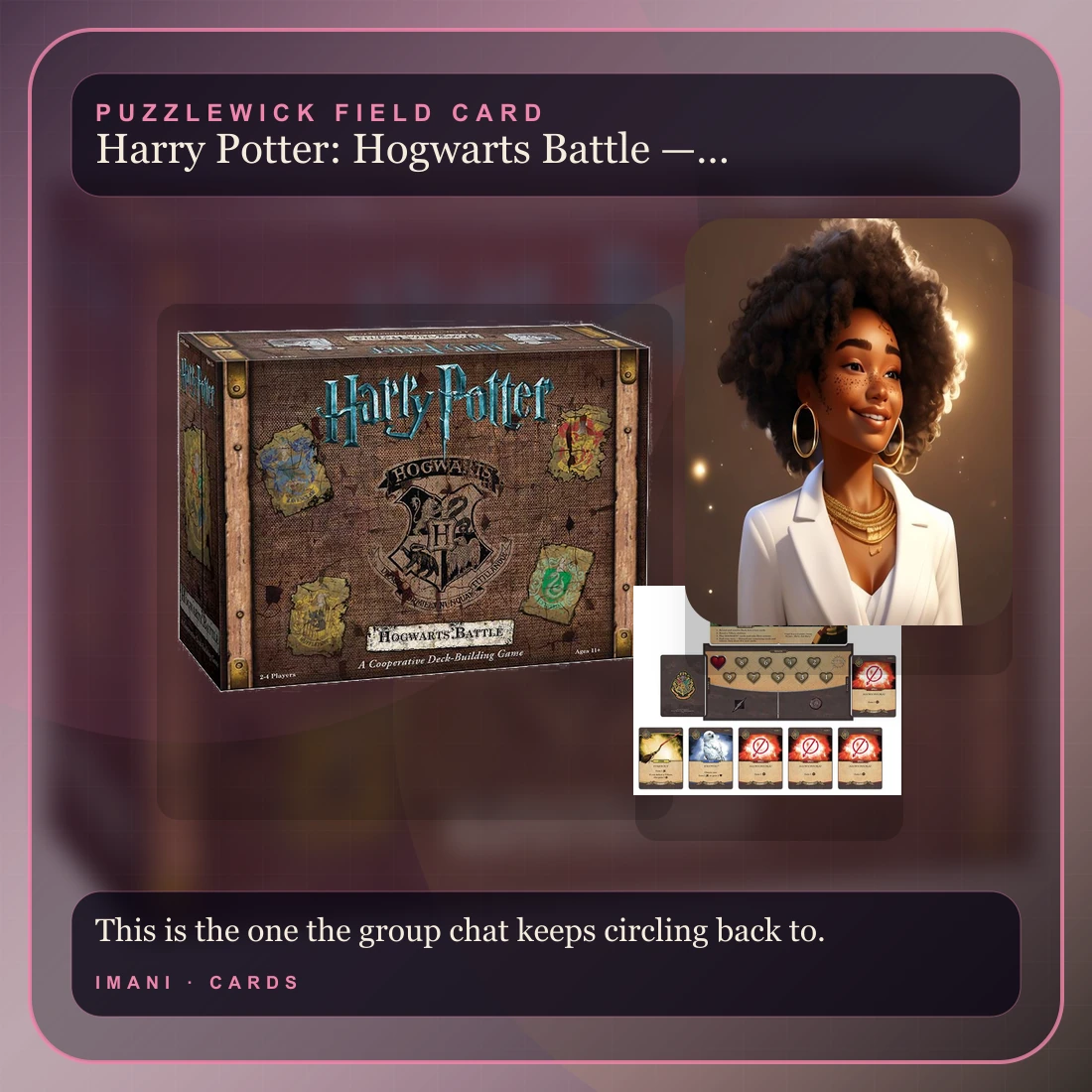
Okay but have you seen what everyone's still saying about Hogwarts Battle? Years after release, this is the game that the wider board-game community keeps handing to non-gamers and watching them fall completely in love. The pitch is irresistible: you and up to three friends are Harry, Ron, Hermione, and Neville, and you're going to fight your way through all seven years at Hogwarts — one sealed box at a time — building a deck of spells, allies, and magical items as the story (and the difficulty) gets darker.
What makes it sing isn't just the license. It's that the designers built the campaign into the components. You crack Game 1 and it's a gentle, friendly tutorial — three Villains, simple cards, a soft place to learn what deck-building even is. Then you open Game 2's little envelope. Then Game 3. And somewhere around Year Four you look up and realize the table is covered in cards, the Dark Arts deck is genuinely scary, and you're white-knuckling a turn trying to keep your last Location from falling. Meeple Mountain called the structure 'progressive complexity mirroring the darkening tone of the series,' and honestly? That's the whole magic trick.
This guide is the one I wish I'd had when I started. We'll cover exactly how the core loop works (Influence vs. Attack, the Hogwarts market, Dark Arts, Locations, stunning), how the seven-box campaign and the Horcrux finale are structured, which expansions are actually worth your Galleons and in what order, the real tactics groups use to beat the famously rough Game 7, who this is and isn't for, and where it shines and falls short. Every number here is sourced from the rulebook, The OP, and accessible reviews — and where the community disagrees, I'll bring you both sides.
Bring a sorting system and a free afternoon. You're going to want to keep playing.
Start here, then go deeper
You are in the right cabinet.
 ✦ Universe HubHarry Potter Game Collection: the whole buying pathThe Harry Potter universe sorts licensed abundance into actual game nights. Imani protects the people and the table energy; Margo...
 ✦ Topic PathBoard Game Buying Guides: compare the whole shelfStart with the decision, not the shelf. These guides compare the games, editions, expansions, player counts, and costs people...
 GuideHarry Potter: Hogwarts Battle and Expansions in 2026: What to Buy, What Each Box Changes, and How to Win TogetherThe complete answer to the Hogwarts Battle shelf: how the seven-game base campaign teaches itself, exactly what Monster Box of Monsters...
What is Harry Potter: Hogwarts Battle?
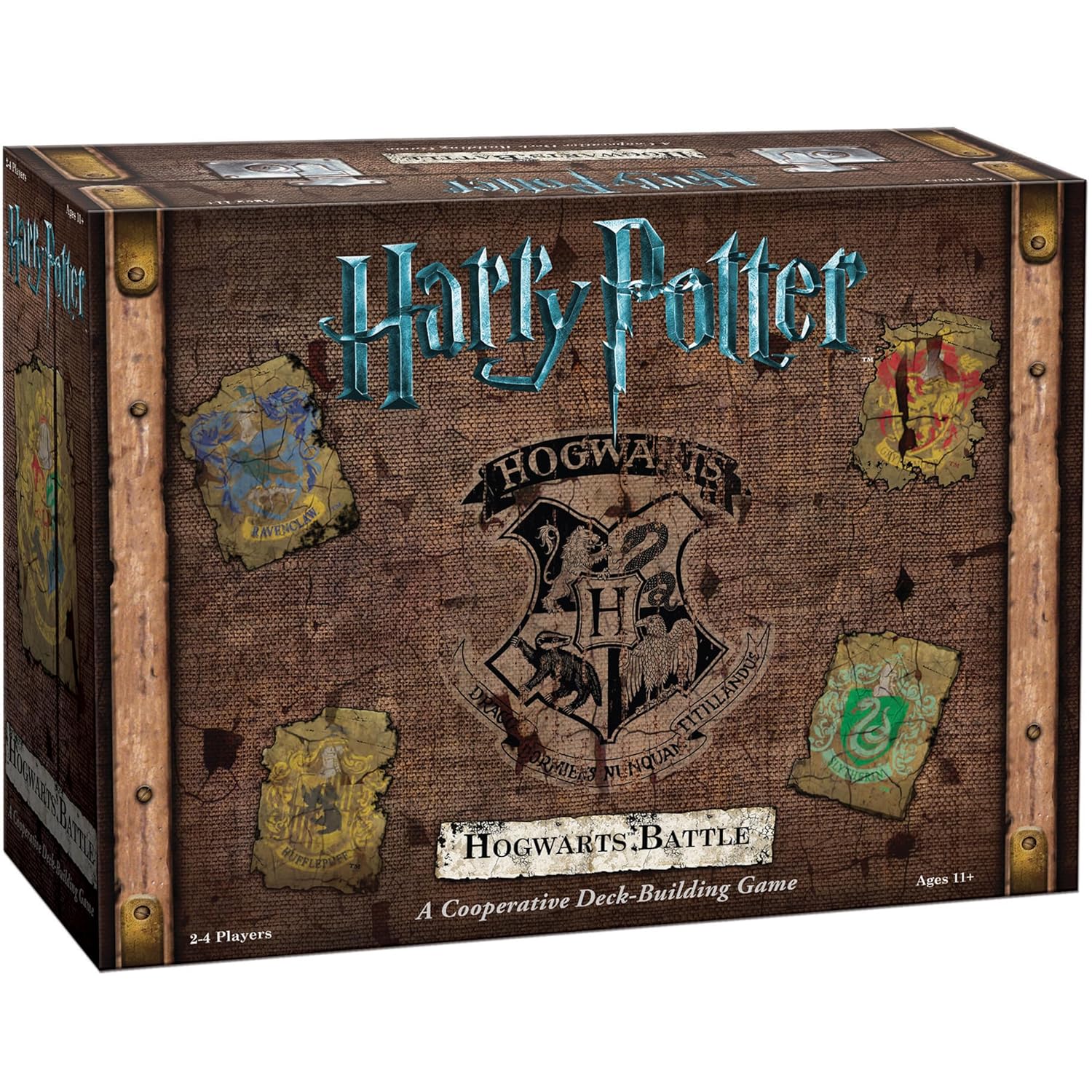

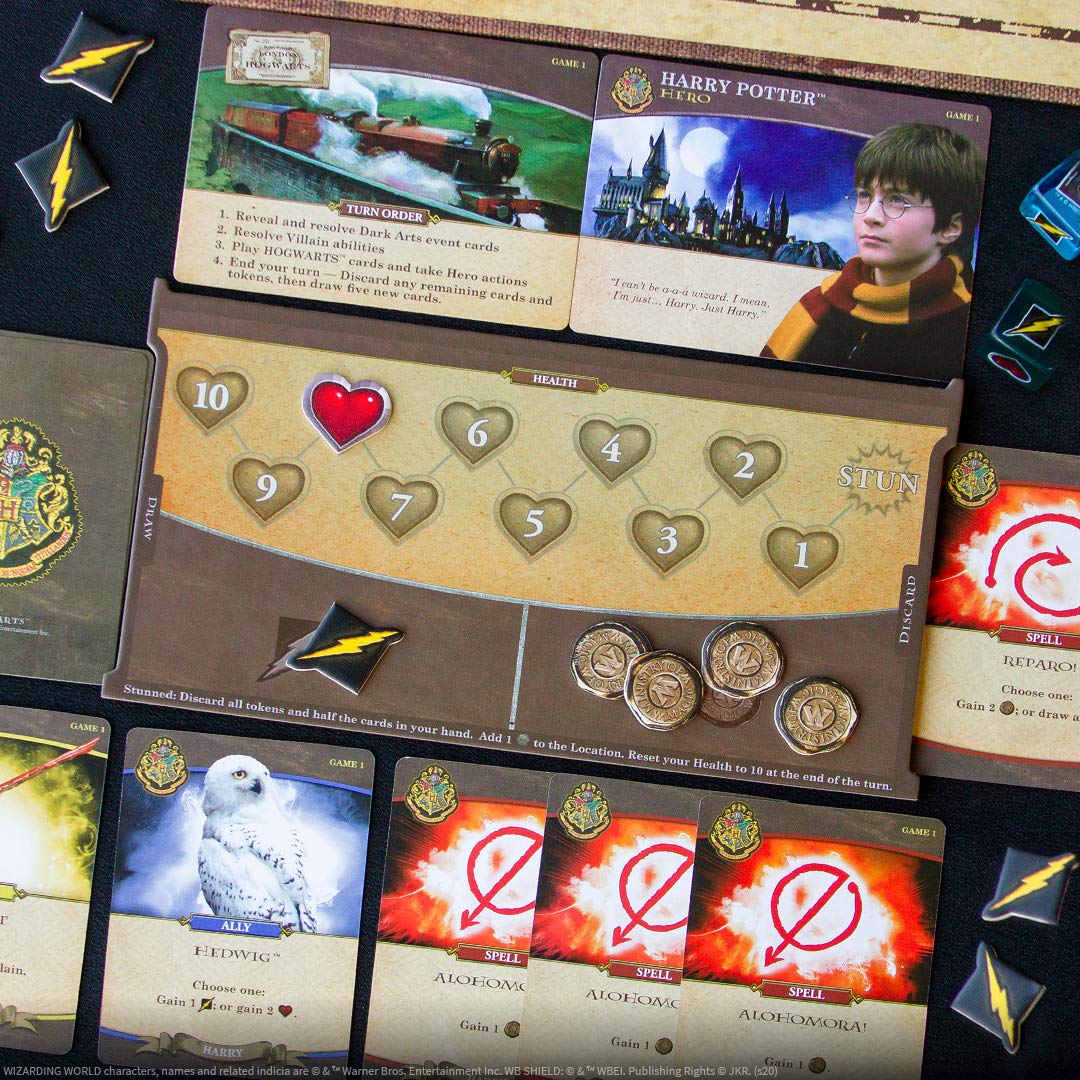
Harry Potter: Hogwarts Battle is a cooperative, legacy-flavored deck-building card game published by USAopoly (now operating as The OP) in 2016, designed by Forrest-Pruzan Creative, Kami Mandell, and Andrew Wolf. You play 2–4 players, ages 11+, in roughly 30–60 minutes per session.
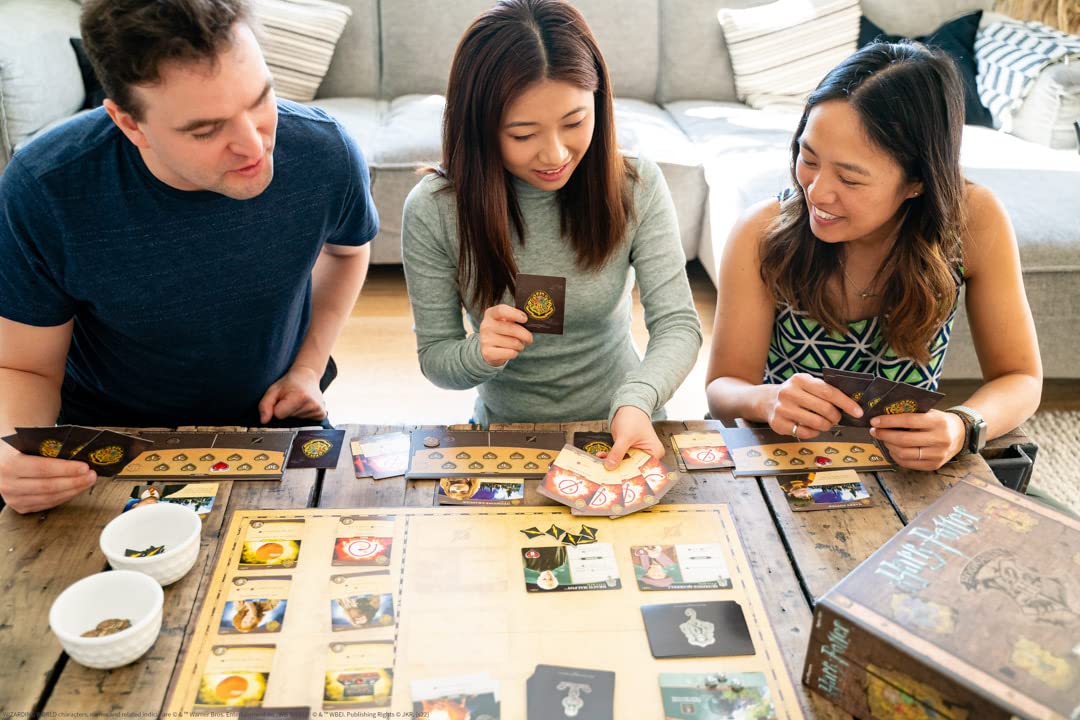
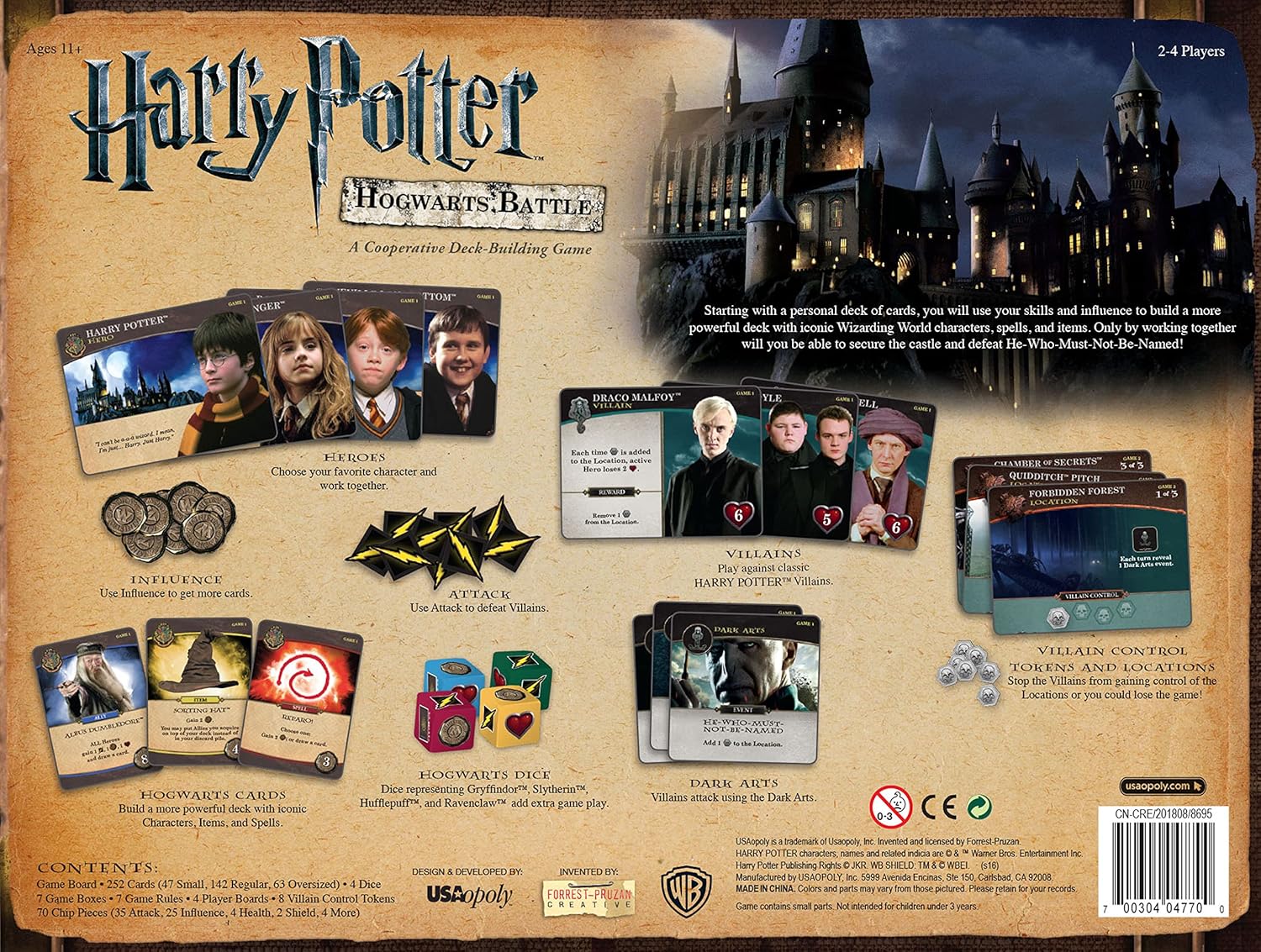
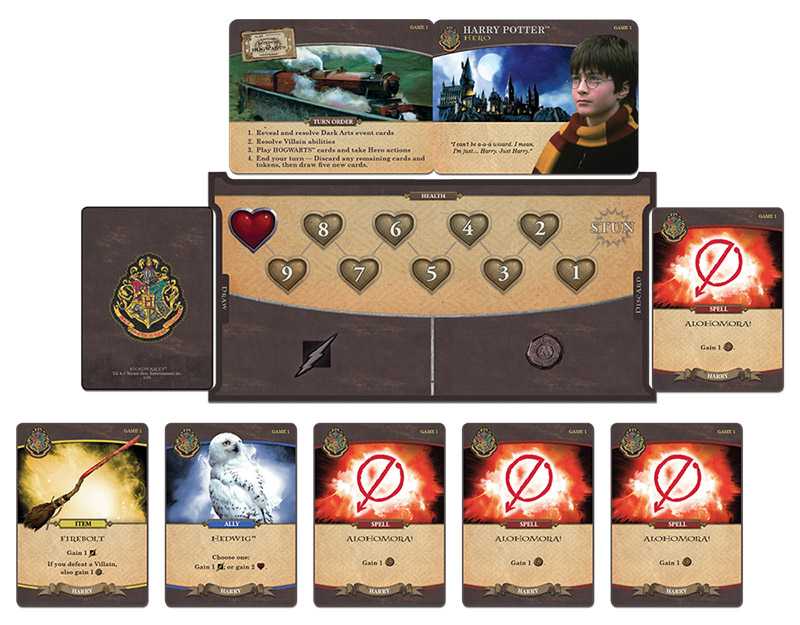
Here's the shape of it: every player picks a hero — Harry, Ron, Hermione, or Neville — and starts with an identical-ish 10-card starter deck built around the spell Alohomora! Working together, you spend a resource called Influence to buy better cards (spells, allies, items) from a shared market, and you generate Attack (damage) to defeat Villains. Meanwhile the Dark Arts deck punishes you each turn, and Villains try to seize Locations. If they take every Location, you all lose. If you defeat every Villain first, you win.
The twist that hooks everyone is the campaign. The base box contains seven sealed mini-games, labeled Game 1 through Game 7, each corresponding to a Harry Potter book/year. You don't get everything at once — you open a new box only after finishing the previous Game, and each one introduces new cards, new Villains, new Locations, and new rules. It's a deck-builder with a built-in story arc, and the components literally mature as the kids do (the card art ages up alongside the characters — Gameosity loved this detail).
It's not technically a 'legacy' game in the destroy-your-components sense — nothing is permanent, and you can fully reset and replay — but it feels legacy because of that escalating, unfolding structure.
Bring your Hogwarts house pride: you'll be rooting hard for these four by Year Three.
It's a deck-builder with the entire seven-book campaign sealed inside the box, opened one envelope at a time.
How do you play Hogwarts Battle? (the core loop explained)
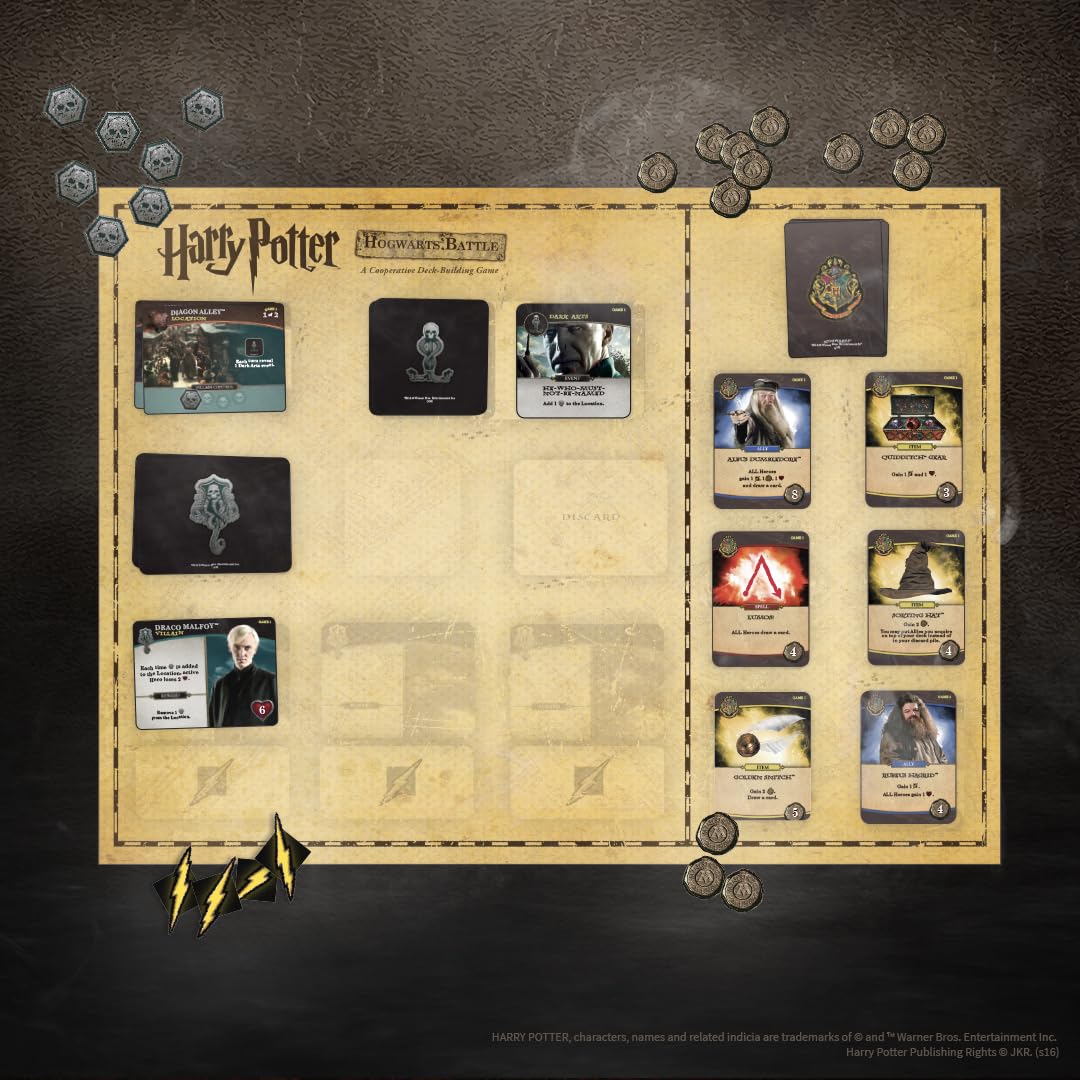
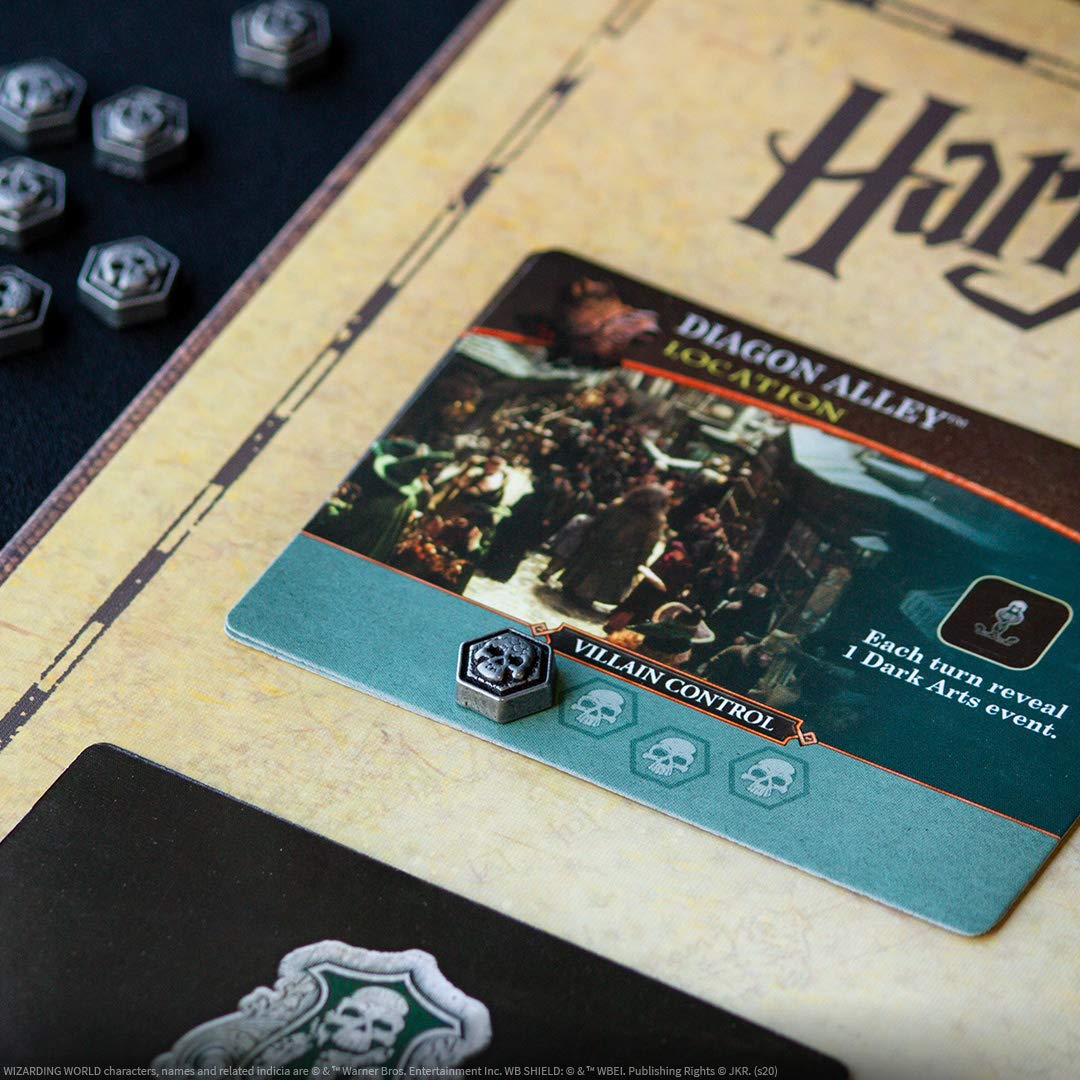
Let me walk you through one turn, because once it clicks it's so smooth.
1. Resolve the Dark Arts. At the start of each turn you reveal one or more Dark Arts event cards (the number scales up in later Games). These are the bad guys hitting back — losing Health, discarding cards, adding Control to Locations. Resolve them, then trigger any Villain abilities tied to them.
2. Play your hand and act. You draw a hand of 5 cards and play them. Cards generate two key resources: - Influence (the coin/lightning-bolt icon) — your buying power. - Attack/damage (the fist icon) — your fighting power. You also heal, draw extra cards, or roll Hogwarts house dice depending on what you play.
3. Spend Influence at the market. Six Hogwarts cards sit face-up in the market at all times. Spend Influence equal to a card's cost to buy it — it goes to your discard pile (classic deck-builder: you'll shuffle it into your deck later). Empty slots refill immediately, so the market keeps flowing.
4. Spend Attack on Villains. Assign your Attack tokens to Villains equal to their Health. Reduce a Villain to zero and it's defeated — you claim its one-time Reward (extra Influence, removing Control, healing, etc.).
5. End your turn. Any unspent Influence or Attack is discarded — you can't bank it across your own turns. Discard your remaining hand, then draw a fresh 5.
The two pillars of every decision are the eternal deck-builder tension: buy power now (Influence) or kill the thing hurting you (Attack)? And the beautiful co-op wrinkle — you can gain resources on another hero's turn and keep them for yours — means good teams set each other up across the table.
Lose condition: Villains take every Location. Win condition: you defeat every Villain first.
Bring patience for turn one — by turn three everyone at the table is fluent.
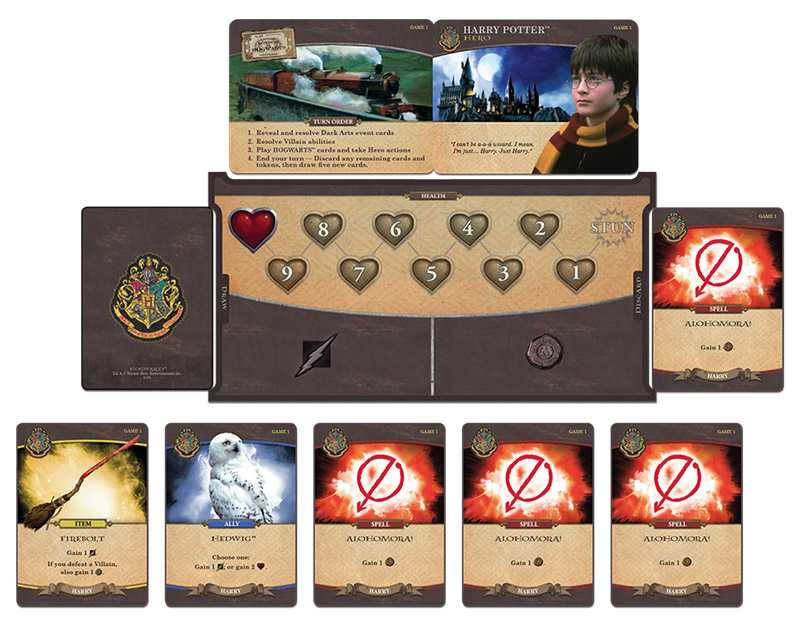
Every turn comes down to one question: buy power now, or kill the thing that's hurting you right now?
Is Harry Potter: Hogwarts Battle worth it?
Short answer: for Harry Potter fans and anyone wanting a gateway co-op, absolutely yes. For jaded heavy-eurogamers chasing deep strategy, it's a softer maybe. Let me give you the honest community read.
Why people adore it. The theme is baked into the mechanics, not painted on — allies show up in the year they appear in the books, Locations are real story beats, the art ages with the characters. The campaign rollout is a genuine joy: every box is a little present. At a ~$49.95 MSRP for seven distinct scenarios plus a fully replayable system, reviewers consistently call it strong value. Meeple Mountain: 'If you're a Harry Potter fan who enjoys cooperative board games, I strongly suggest you check it out.' Gameosity called it 'a success on most every level' and 'the perfect introduction into this fun world of hobby games.'
The honest cons. There's real luck of the draw — a clogged hand or a cruel Dark Arts flip can swing a game. There's no way to remove weak starting cards from your deck (more on that in strategy — it's a defining quirk). The later Games can feel like the market 'gets stuck' when you can't afford anything. And the box is famously big and awkward on a shelf. Most pointedly: it's largely a one-time campaign — the surprises only land once, and post-campaign replay value divides the community.
The verdict most fans land on: it's a 'play the campaign, treasure it, then decide.' It's not the deepest deck-builder on the table (BGG weight ~2.08/5, squarely family-medium-light) — but as a shared experience, especially with a Potter-loving partner, kid, or friend group, it punches way above its complexity.
Bring the right expectations and it's one of the most beloved licensed co-ops ever made.
Play the campaign, treasure it, then decide — that's the deal Hogwarts Battle offers, and most fans take it gladly.
How does the seven-Game campaign and the box-by-box unlock work?
This is the part that makes Hogwarts Battle Hogwarts Battle. The base game ships with seven sealed boxes inside the big box, one per book/year. You play them in order, and you only open the next box after completing the current Game.
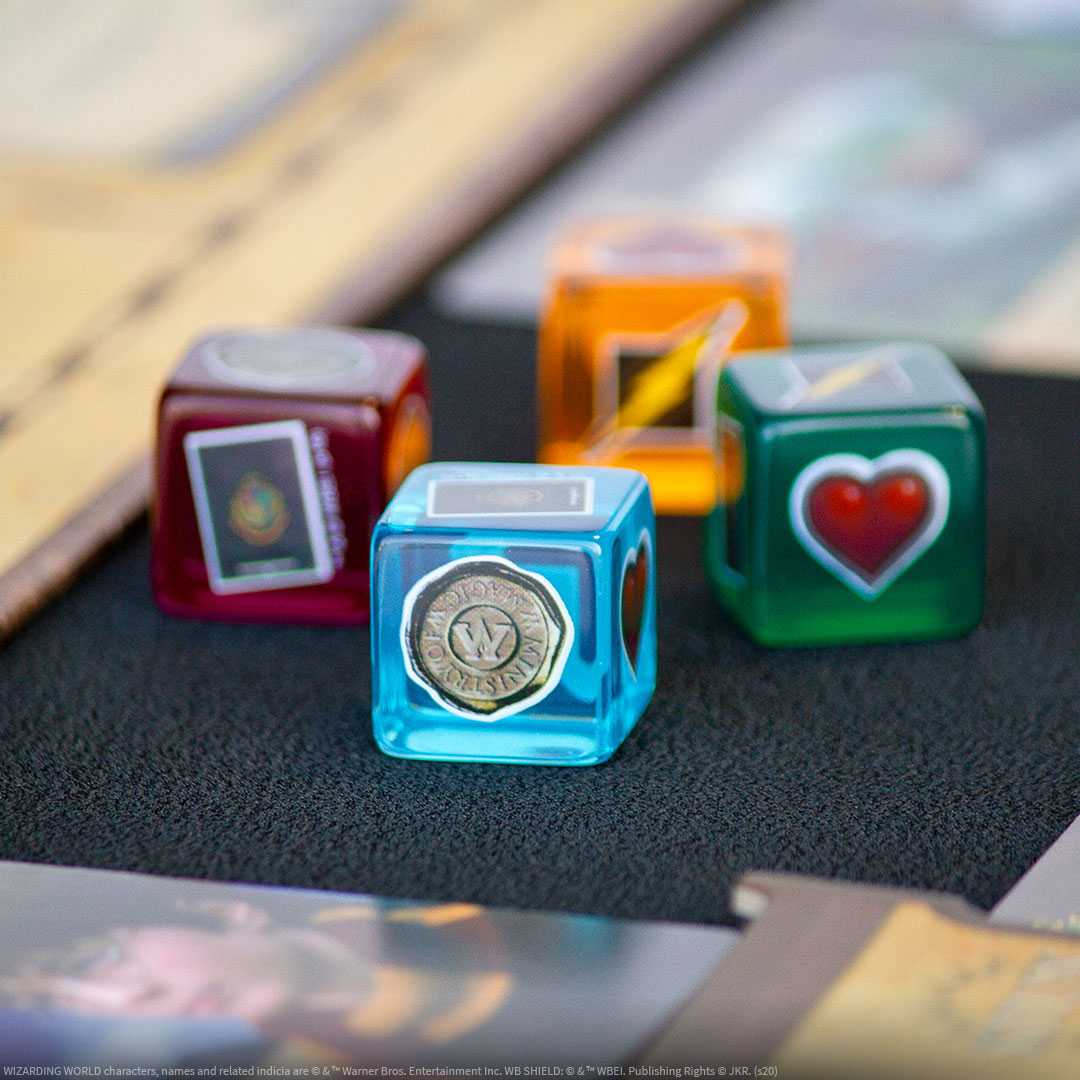
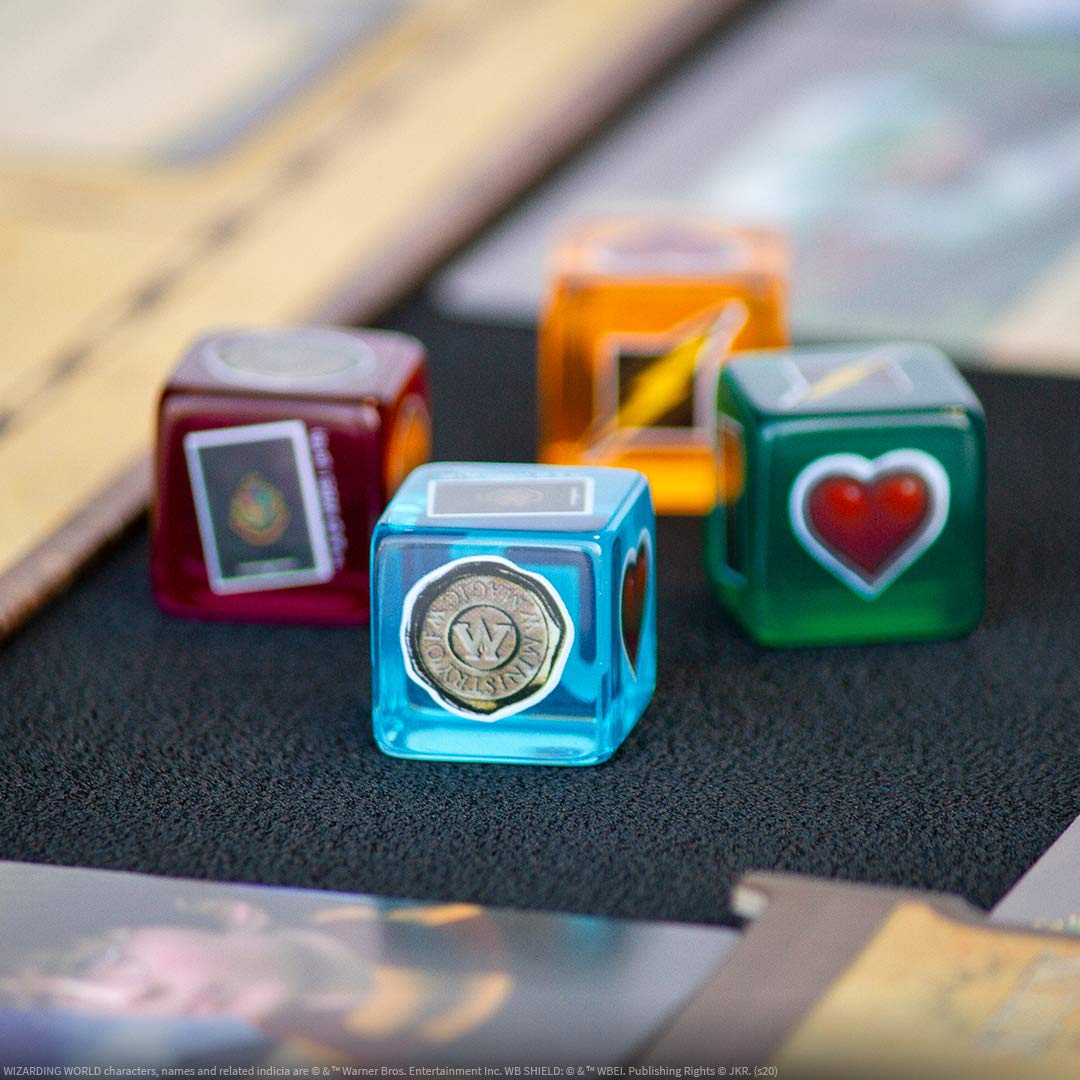
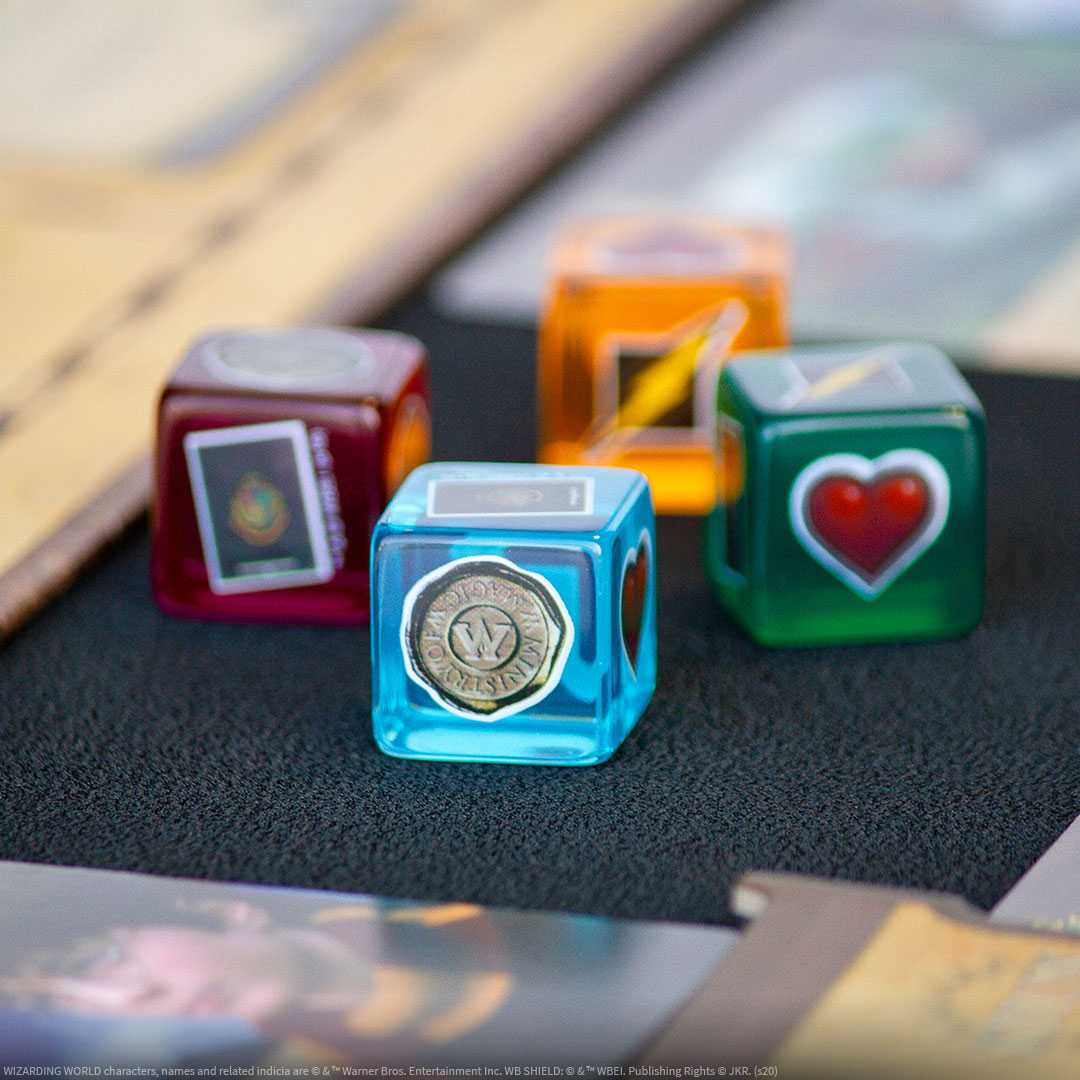
Here's the escalation, broadly: - Game 1 is the tutorial. Just three Villains, faced one at a time, simple cards, no scary mechanics. It exists to teach deck-building to total newcomers — and it's brilliant at that. - Games 2–4 layer in more Villains at once, more Locations, tougher Dark Arts, and new card types. The difficulty climbs steadily; the tone darkens. - Games 5–6 (Order of the Phoenix / Half-Blood Prince territory) get genuinely tense, with stacked Villains and nastier events. Many groups consider Game 6 a real test. - Game 7 is the finale: destroy six Horcruxes, defeat all the other Villains, and only THEN can you damage Lord Voldemort himself. The Horcruxes are destroyed by rolling specific symbols on the Hogwarts house dice — early Horcruxes need a single symbol, later ones a combination. It's the brutal capstone (its own section below).
Because nothing is destroyed, you can reset the whole campaign and play again — the boxes just re-seal conceptually. That's the difference between this and a true legacy game: the reveals are one-time, but the system is permanent.
A gorgeous design choice: the number of Dark Arts cards you flip, the count of Villains, and the deck complexity all ramp together, so the game's pressure tracks the series' rising stakes almost beat for beat.
Bring a notebook if you're a completionist — some groups love logging which year tripped them up.
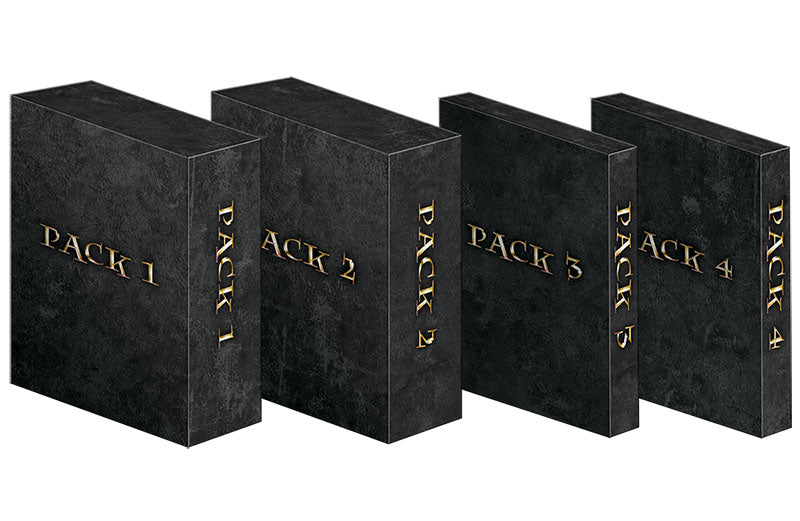
Seven sealed boxes, opened one at a time — the surprises track the books almost beat for beat.
Which Hogwarts Battle expansions should you buy, and in what order?
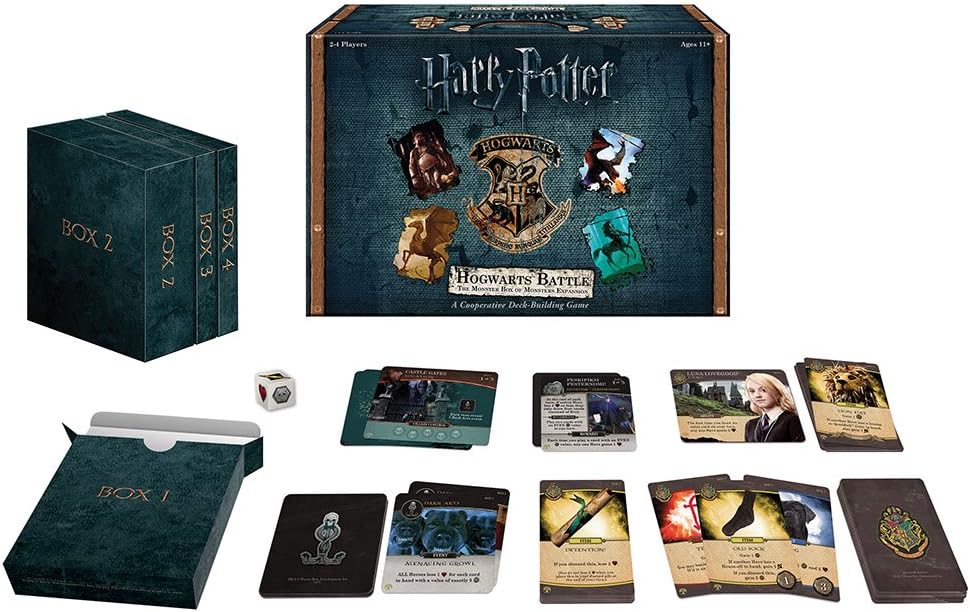

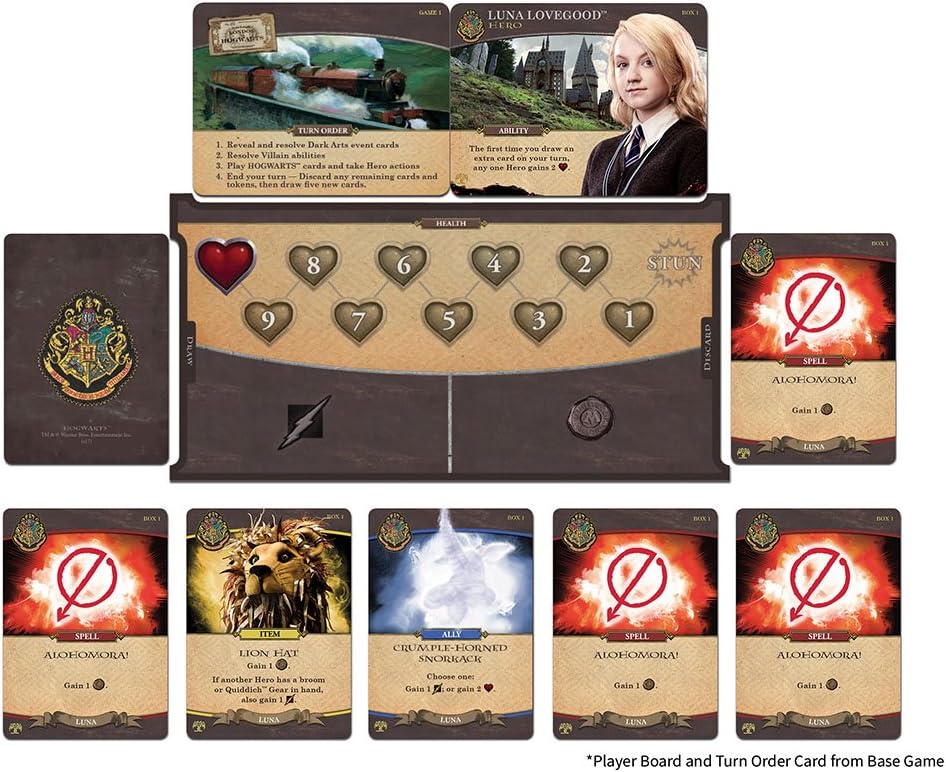
Once the campaign hooks you, you'll want more. Here's the clean map — and the community's strong opinions on order and worth.
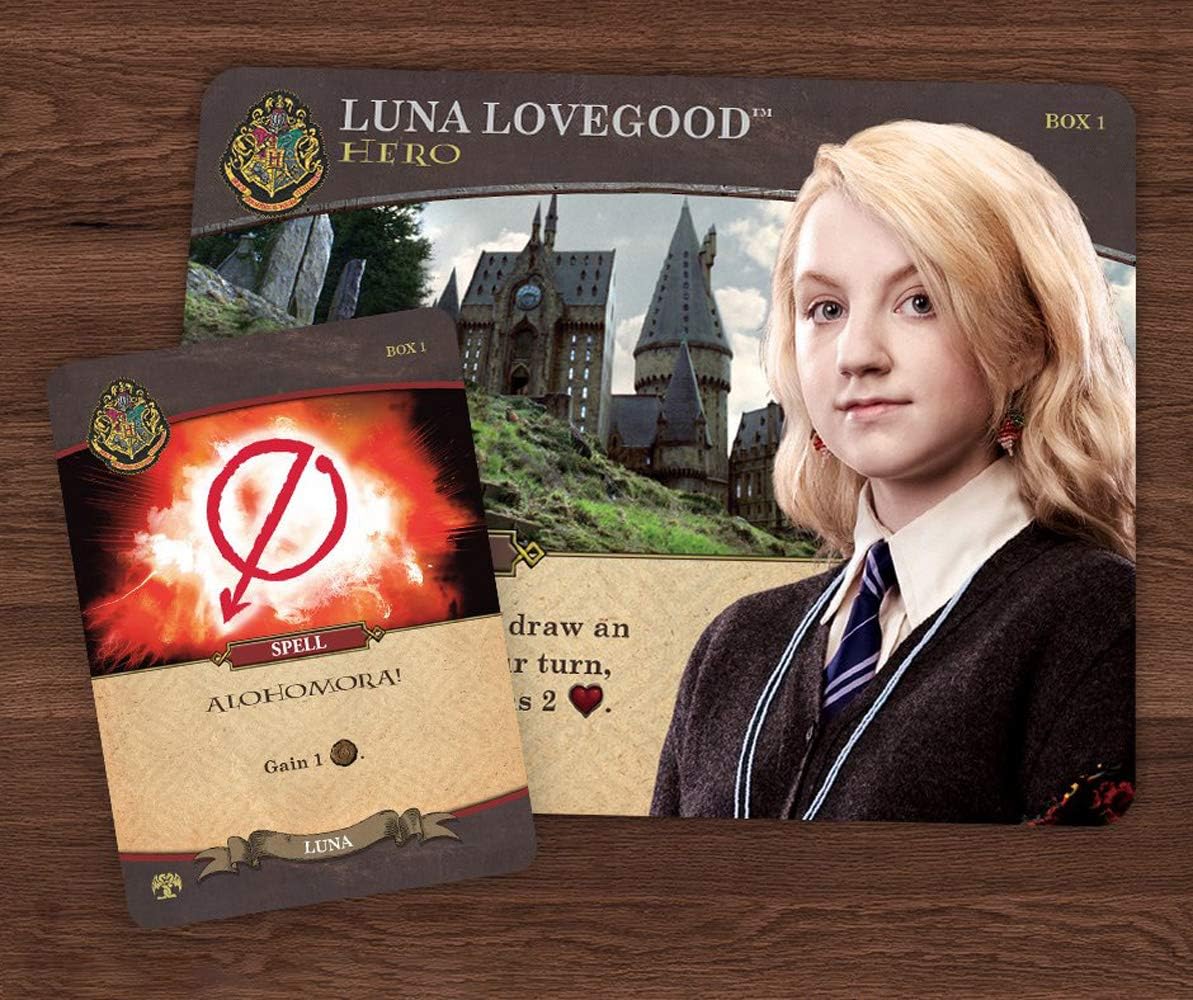
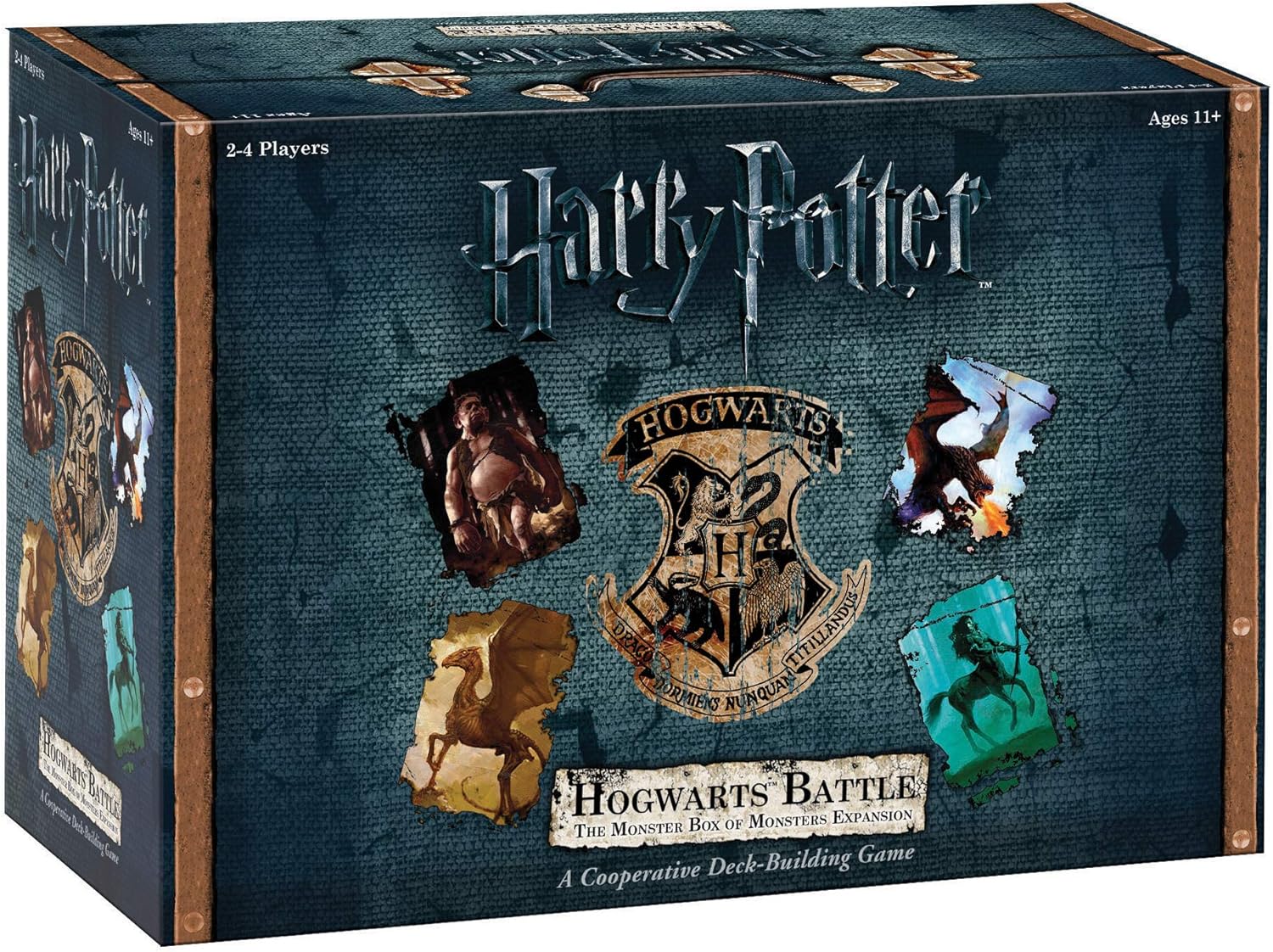
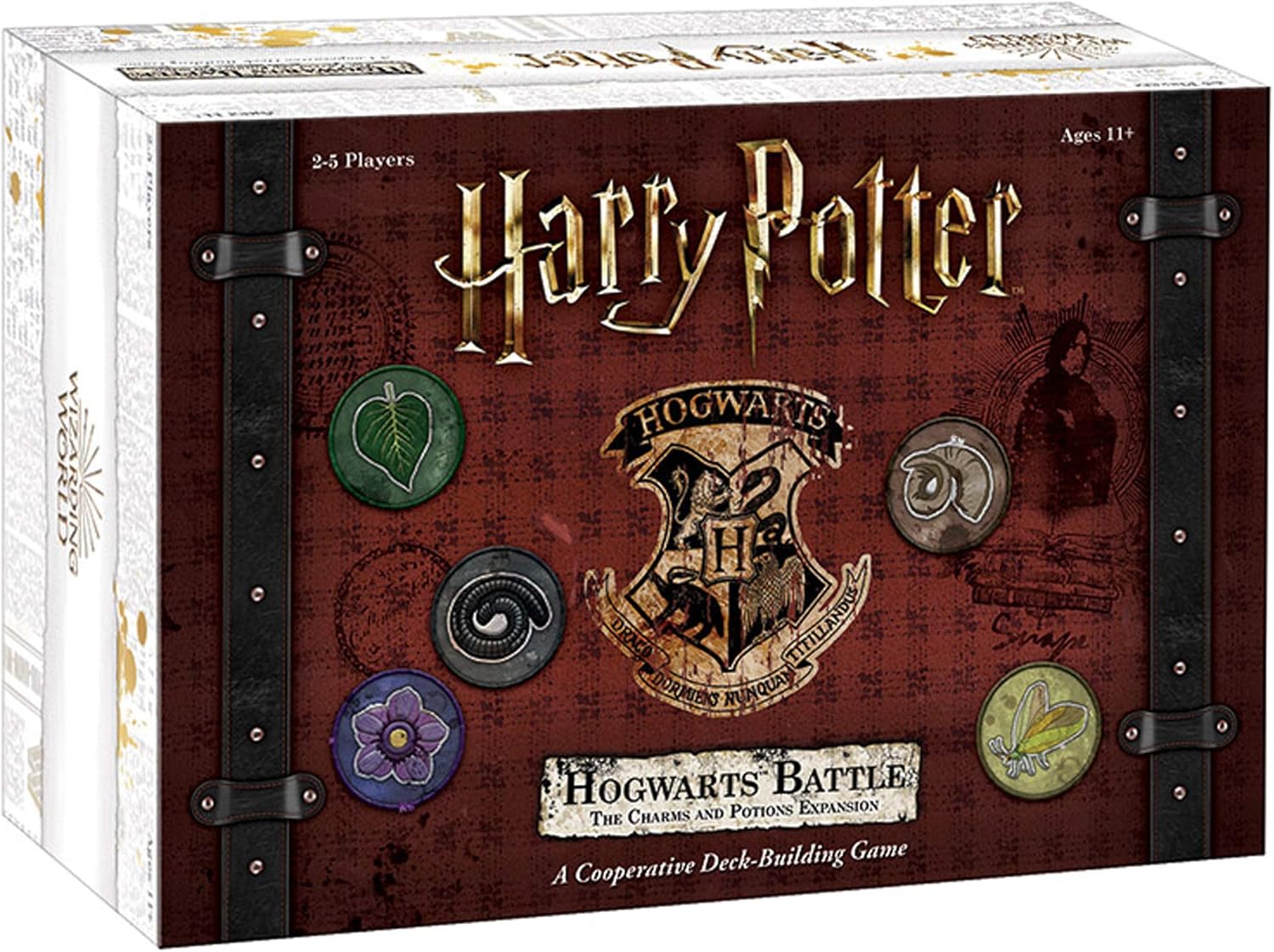
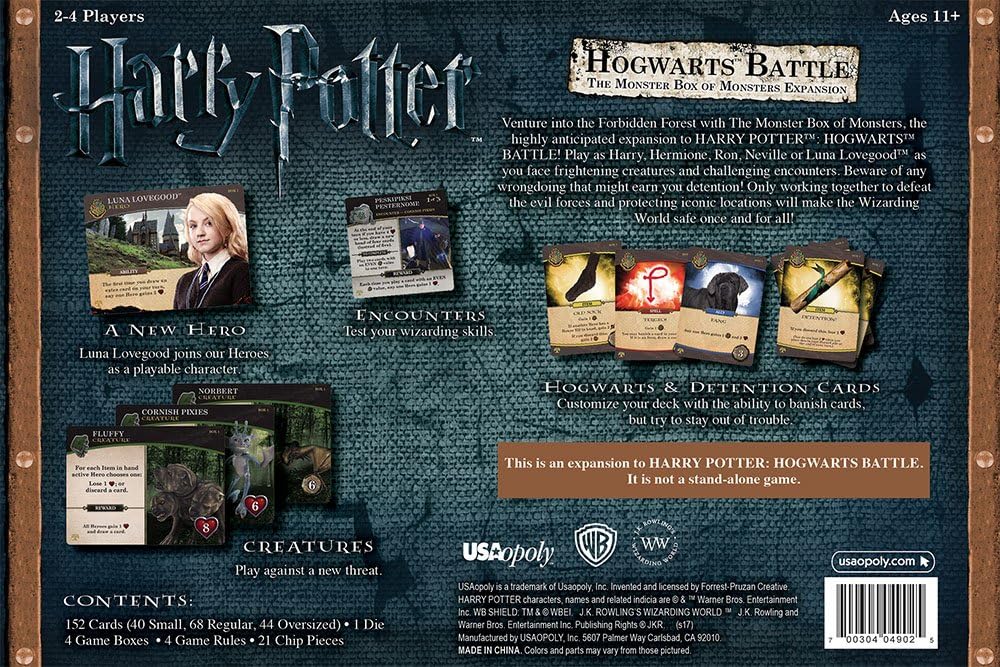
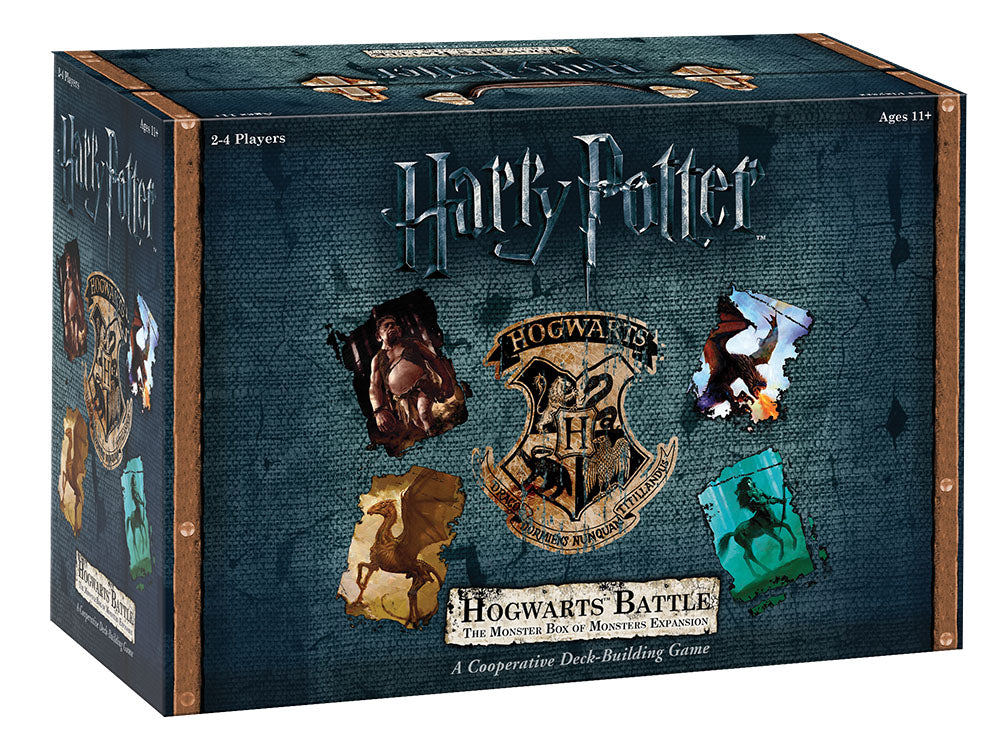
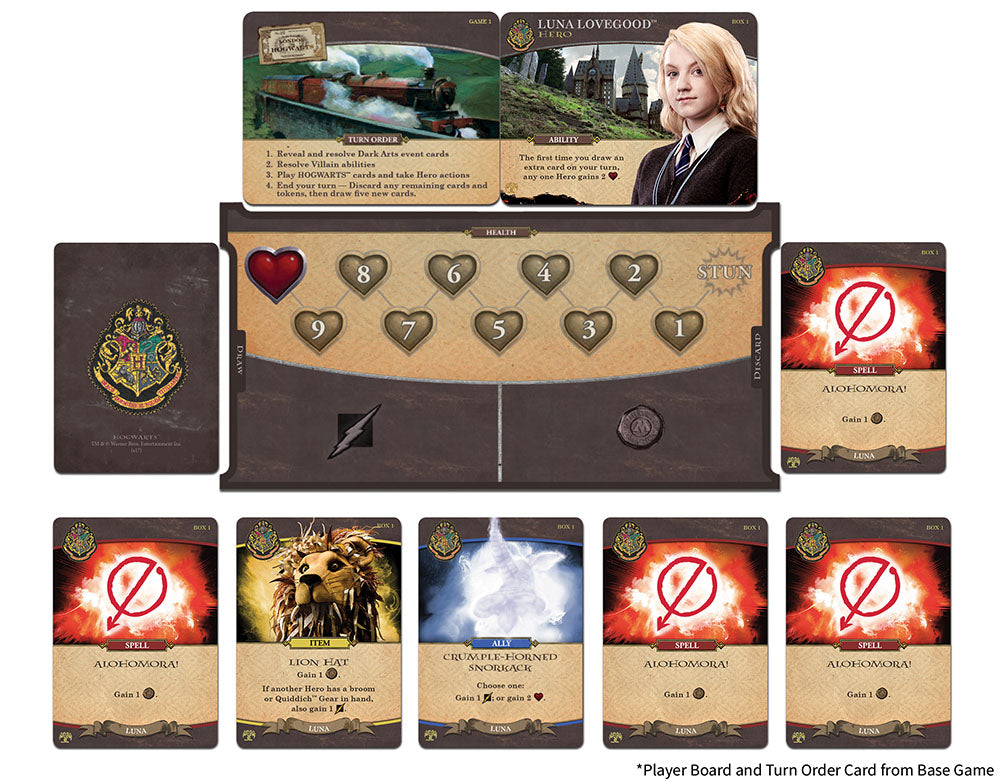
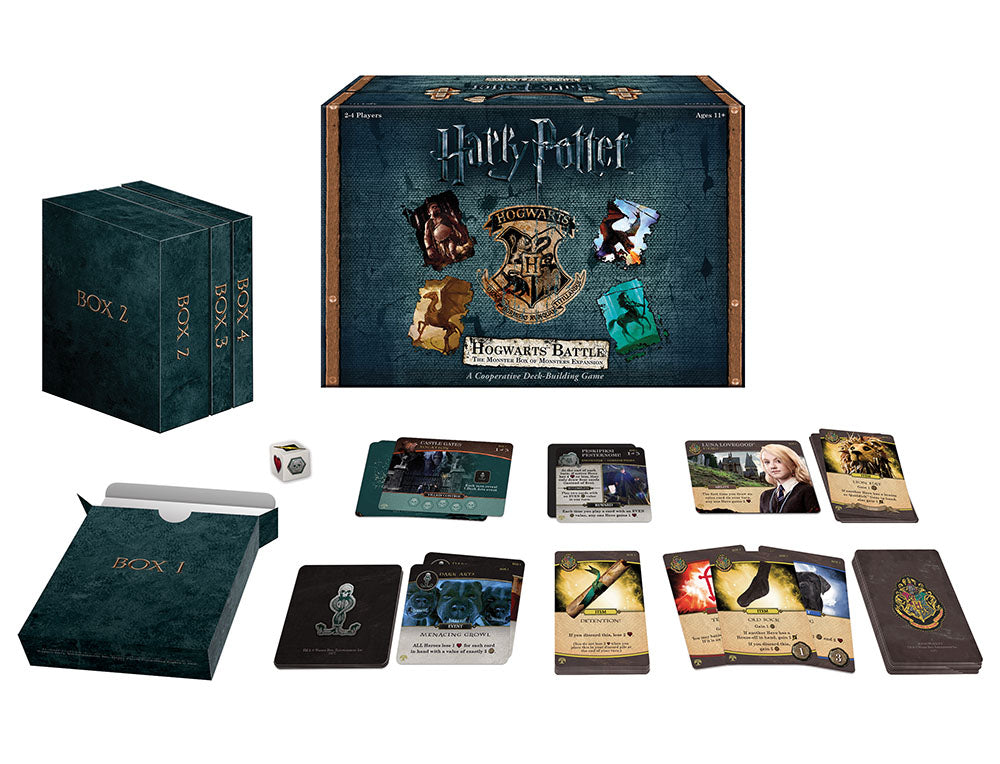
1. The Monster Box of Monsters (~$29.99) — the harder expansion. You venture into the Forbidden Forest, adding Luna Lovegood as a fifth playable hero, new Monster mechanics, encounter cards (think Horcrux-like mini-objectives), and a nasty Detention deck that shoves useless cards into your deck. It increases difficulty and complexity. Buy this if you found the base game too easy and want a meatier challenge. It bumps the cap toward 5 players.
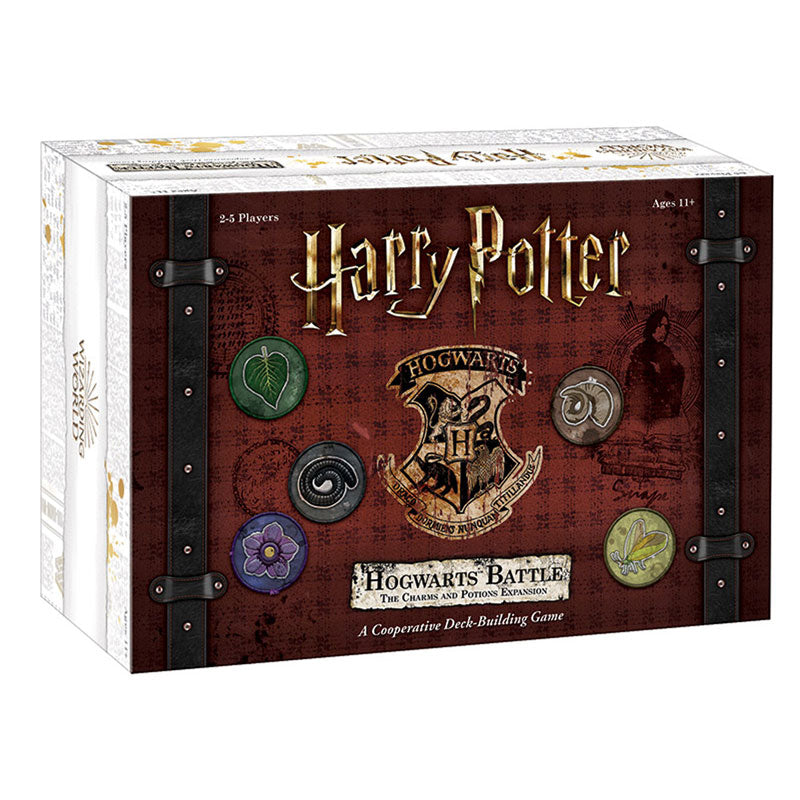
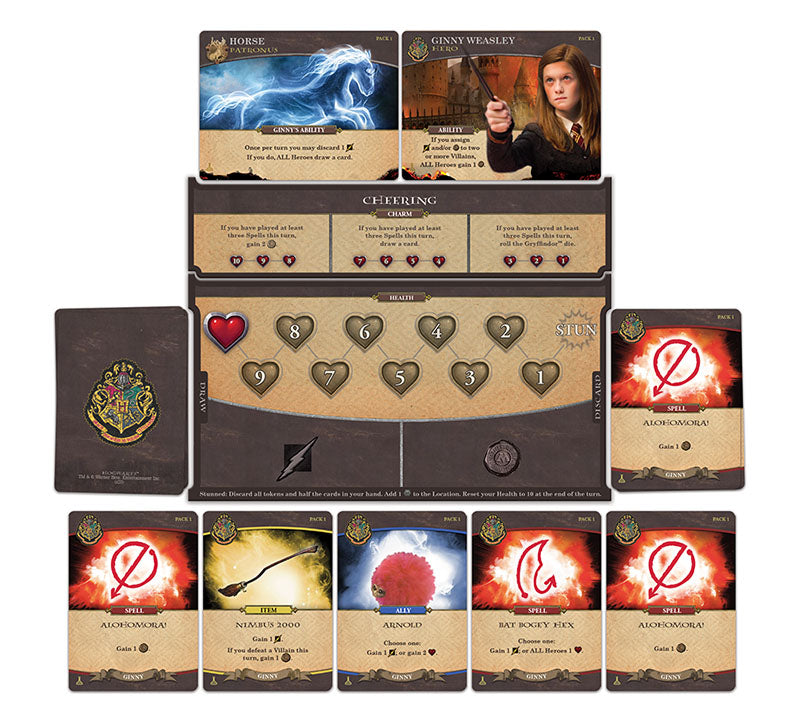
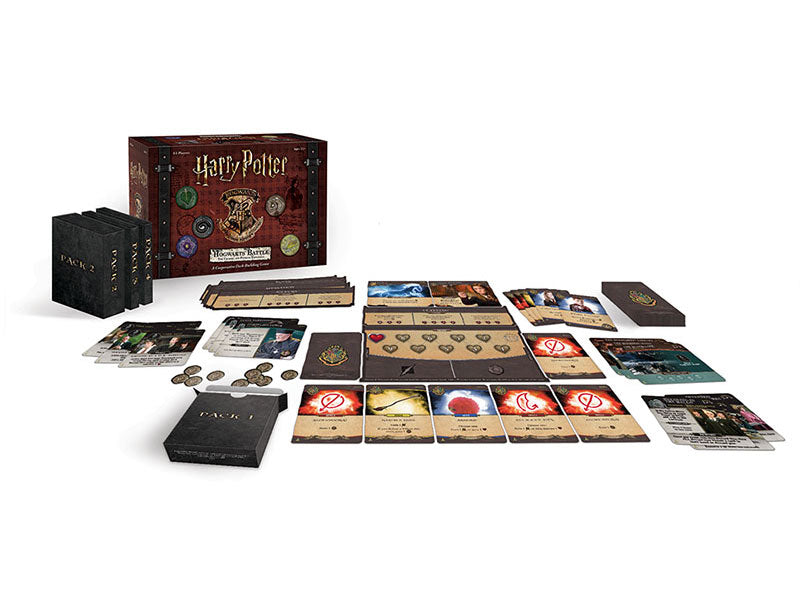
2. The Charms and Potions (~$34.95) — the deeper/easier expansion. Adds Charms (which expand your player board and powers), Potions, and Ginny Weasley as a playable character (supporting up to 2–5 players). The community read: it gives you more tools, so it tends to make the game a touch easier while adding strategic richness. Buy this if you want more variety and player options, especially for bigger groups.
Order: Both integrate into the base campaign and can be combined. The widely repeated rule of thumb: Monster Box to make it harder, Charms & Potions to make it easier — so pick based on how your group felt about base difficulty. If buying both, many add Monster Box first (for the challenge) then Charms & Potions (for the tools), but there's no forced sequence.
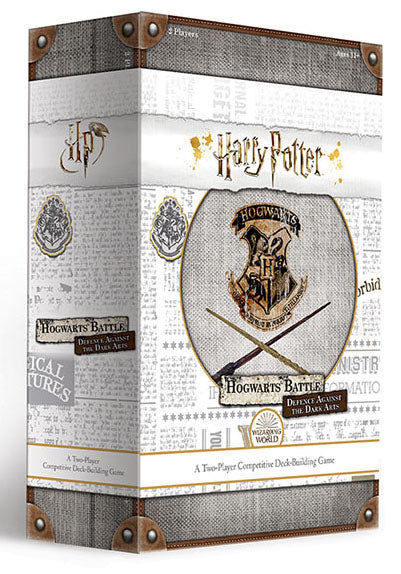
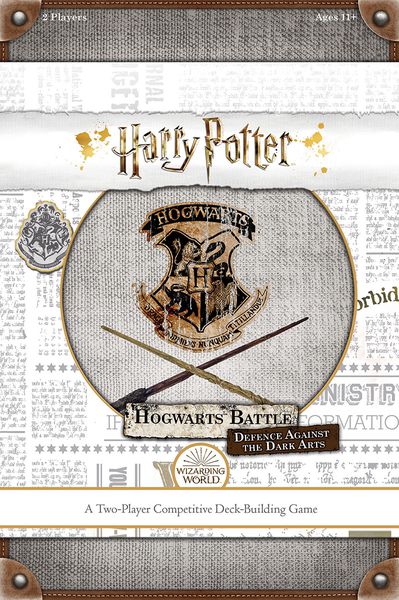
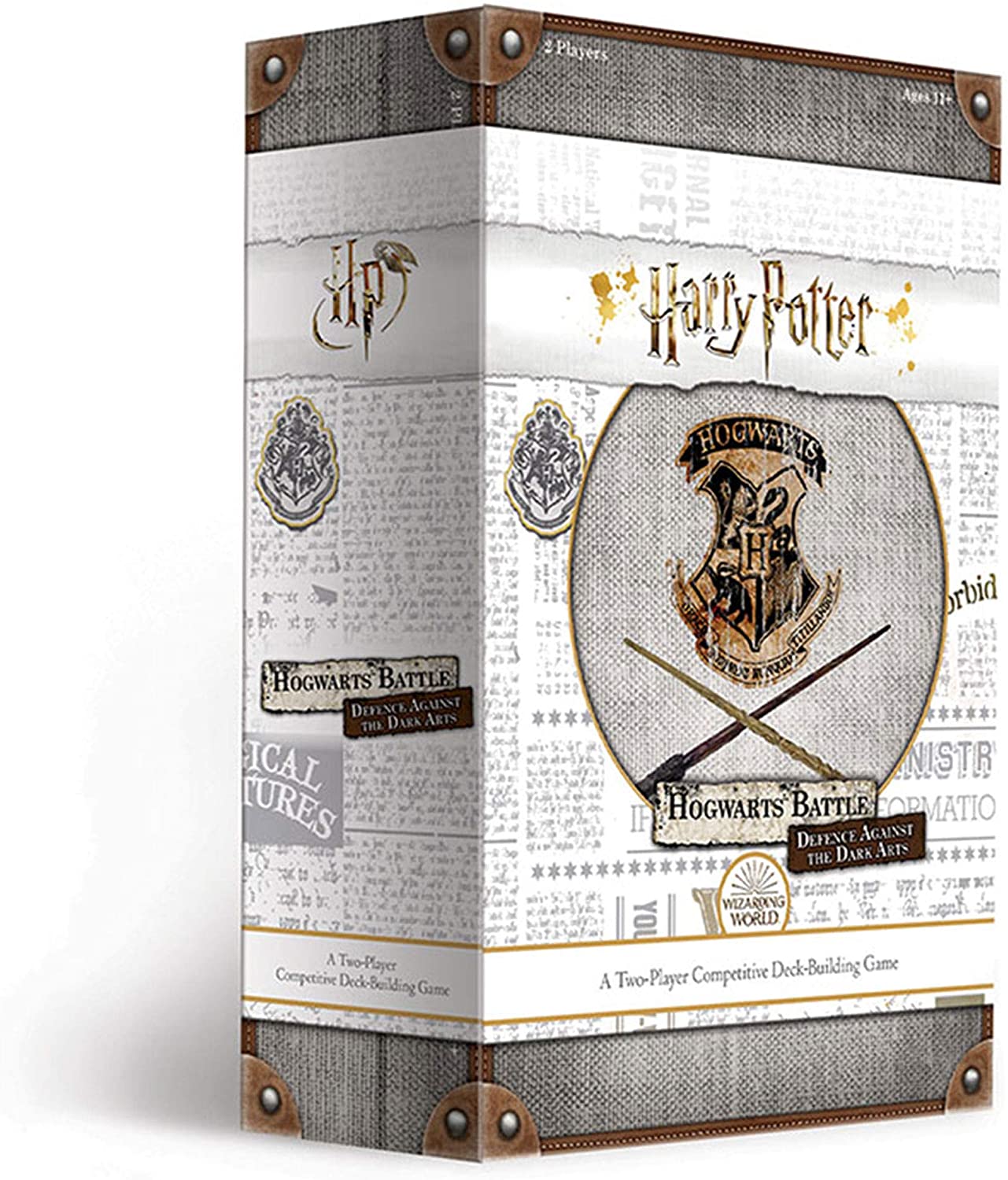
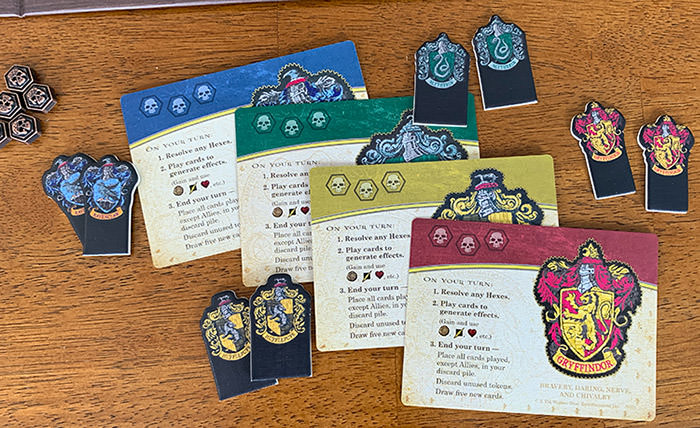
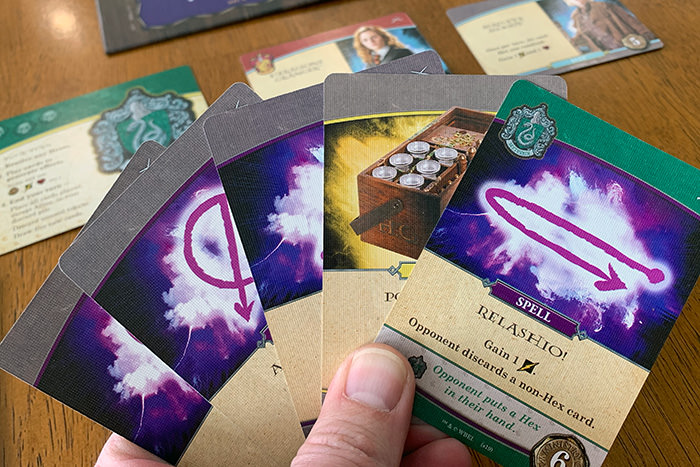
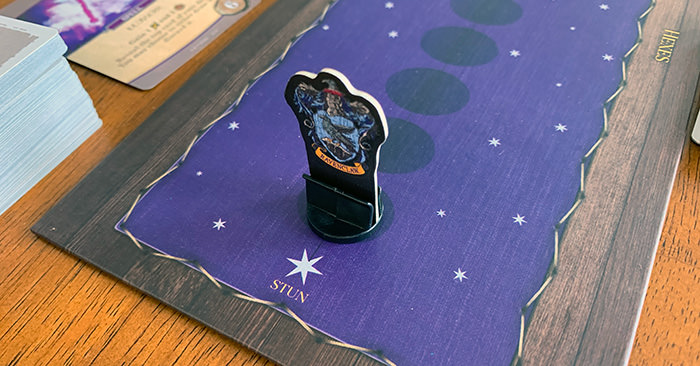
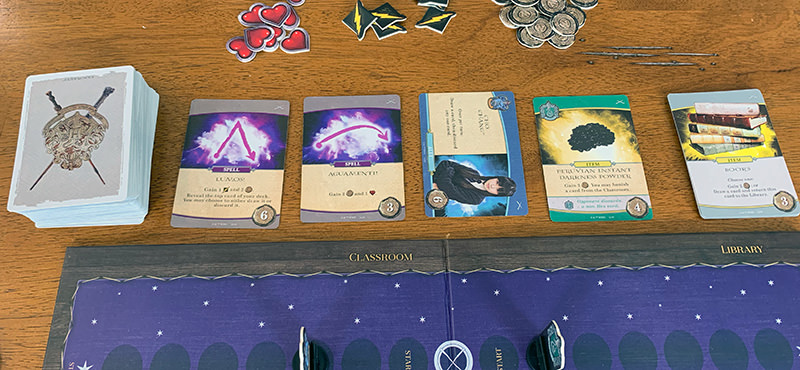
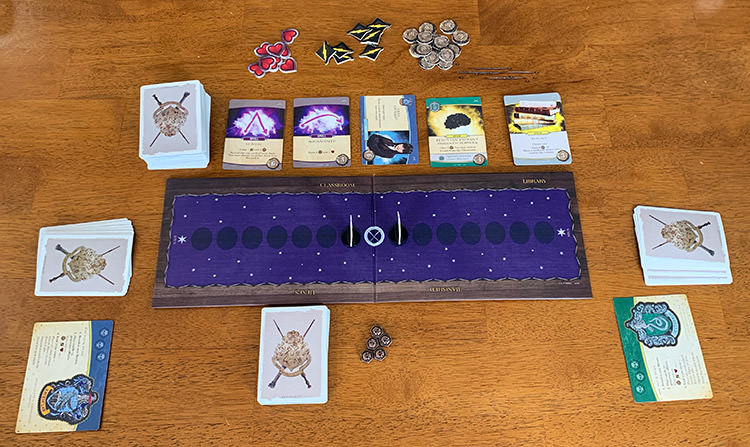
Then there's Defence Against the Dark Arts (~$24.99) — NOT a co-op expansion. It's a standalone, competitive 2-player dueling game inspired by Hogwarts Battle. You build a deck and stun your opponent three times to win, using Hex cards to disrupt and house-bonus cards for combos. Its content does not mix into the co-op base game. Buy it only if you specifically want a head-to-head wizard duel for two.
Are the co-op expansions worth it? If you loved the campaign and want to keep playing the same group of heroes with fresh challenges — yes. If you're 'campaign and done,' you can comfortably skip them.
Bring the Monster Box if your table is crushing Game 7 too easily — it'll humble you.
Monster Box to make it harder, Charms & Potions to make it easier — pick based on how your group felt about base difficulty.
What's the strategy to actually win — especially the brutal Game 7?
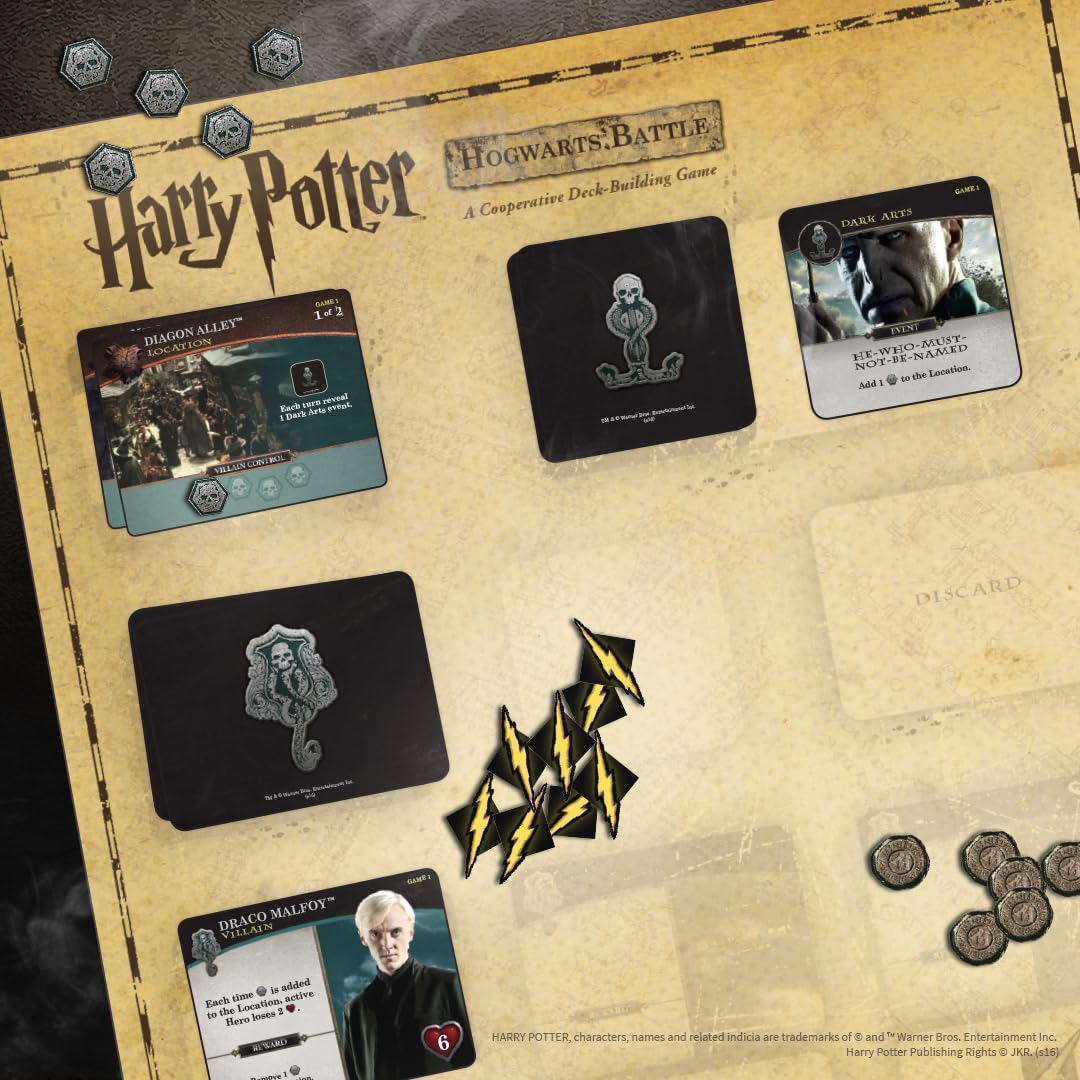

Alright, this is the heart of it. Here's how real groups beat this game, including the infamous finale.
1. Understand the deck-thinning trap. This is the #1 thing newcomers get wrong. In most deck-builders (Dominion, etc.) you thin your deck by trashing weak cards. Hogwarts Battle has almost NO way to remove your starting chaff. So the 'thinning' here isn't trashing — it's not diluting yourself with cheap junk. Every card you buy is in your deck forever. Don't snap up a 1-cost filler card just because you can afford it; a deck stuffed with weak cards draws weak hands. Buy fewer, higher-impact cards and let your good cards come up more often by comparison.
2. Focus-fire Villains. Always. Do NOT spread Attack across multiple Villains 'to be fair.' Gang up. Pick the Villain hurting you most and delete it this turn or next, then move on. A half-damaged Villain is still a fully-active threat; a dead one is a Reward in your pocket.
3. Balance Influence and Attack as a TEAM, not per-player. Designate roles. One hero can lean into Influence and play 'banker,' pumping buying power; another leans into Attack and damage. Hermione is the community darling for ramping Influence fast (grab pricey cards early); a damage-focused hero closes Villains.
4. Run a designated tank. A clever, legal trick: let one hero soak the damage (take the Health hits / get stunned) so the others keep their hands full and their resources flowing. Stunning costs you cards and adds Control, so manage it — but funneling pain to one person beats everyone bleeding.
5. Protect that first Location. Early Locations are softer; later ones are vicious. Keep the current Location alive as long as possible and clear Control when Villain Rewards let you (Draco's defeat, for instance, removes Control).
6. Never refuse a 'Hogwarts card.' The versatile Hogwarts-type cards are the most adaptable in the game and become crucial late — in Game 7 they let you choose which house dice to roll, which is exactly what you need for Horcruxes.
Beating Game 7 specifically: You must destroy all six Horcruxes AND defeat every other Villain before you can deal a single point to Voldemort. Horcruxes are destroyed by rolling the right house-dice symbols — early ones need one symbol, later ones a combination. So the winning Game-7 deck is loaded with dice-rolling cards and Hogwarts cards (for dice flexibility) alongside reliable Attack. Sequence it: thin Voldemort's escorts, grind Horcruxes with your dice engine, keep Locations breathing, and only at the very end pile Attack onto the Dark Lord. Groups that lose Game 7 almost always under-invested in dice/Horcrux cards and tried to brute-force it.
Bring a dice-rolling engine to Year Seven, or Voldemort walks.
Every card you buy is in your deck forever — so the real skill isn't thinning, it's refusing to dilute yourself with junk.
Who is Hogwarts Battle for — kids, families, solo, board gamers?
Let's match the game to the table, because the right audience adores it and the wrong one bounces.
Harry Potter fans (the bullseye). If you love the books/films, this is almost a no-brainer. The fan-service is constant and earned. It's the kind of game that turns a Potter-loving non-gamer into someone who suddenly wants to know what else is in the hobby.
Families and kids. Officially 11+, and that's a fair floor for reading the cards and grasping resource management — though plenty of younger Potter-obsessed kids play happily with an adult co-piloting (and since it's co-op, an adult can guide without 'beating' the child). Game 1's gentle tutorial makes it a fantastic family on-ramp.
Gateway / new gamers. This is one of the best 'first deck-builders' out there. Reviewers repeatedly call it the perfect introduction to hobby games — the co-op format removes the sting of losing to a person, and the difficulty ramps as your skills do.
Solo players. Yes, you can play solo — The OP even publishes official solo-play rules (run one or more heroes yourself). It's not the deepest solo experience in the genre, but it absolutely works for a one-player campaign run.
Two players. Plays great at 2 in the co-op base game. And if your duo wants competitive, that's exactly what Defence Against the Dark Arts delivers.
Experienced/heavy gamers. Set expectations: at ~2.08 weight it's medium-light. Strategy-chasers may find it breezy. But many veterans still keep it specifically as the game they pull out with family, partners, and kids — it's a connector, not a brain-burner.
Bring the kids and a Potter superfan; this is the table where everyone's on the same side.
It's a connector, not a brain-burner — the rare deck-builder you reach for specifically to play WITH the people you love.
Where does Hogwarts Battle shine — and where does it fall short?
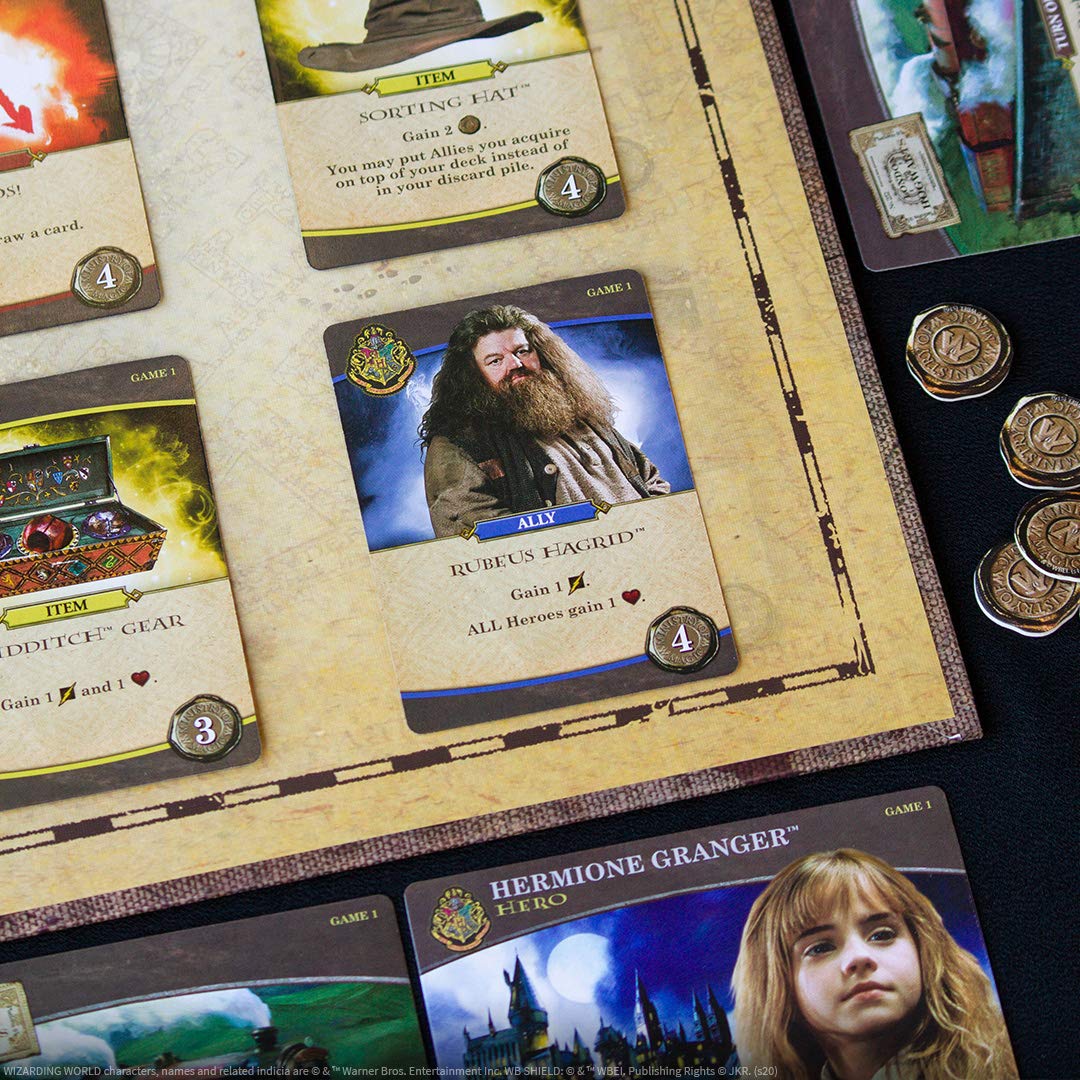

Time for the unvarnished both-sides, because a flagship guide owes you honesty.
Where it absolutely shines: - Theme woven into mechanics. Allies, Locations, and Villains all arrive at the right story moment. The art literally ages with the characters. It's one of the most thematically integrated licensed games out there. - The campaign reveal. Cracking each sealed box is a genuine thrill. The escalating Dark Arts and Villain counts make the pressure track the series' darkening tone. - Co-op accessibility. No player elimination, no 'beating' your kid, a forgiving Game 1, and a difficulty curve that grows with you. It's a near-perfect gateway. - Value & table presence. Seven scenarios, lush components, house dice, tons of cards — at frequent sale prices it's a steal.
Where it falls short: - Luck of the draw. A bad shuffle or a cruel Dark Arts flip can genuinely cost you a game. It's a deck-builder; variance is the cost of admission. - No card removal = late-game bloat. Because you can't purge weak cards, later Games can leave your deck (and the market) feeling clogged — reviewers specifically flag the market 'getting stuck' when nothing's affordable. - Villain/event repetition. Within a given book there are only so many unique Villains, so some repetition creeps in. - One-time campaign. The big one. The surprises land once. You can reset and replay, and the expansions extend life, but if you crave fresh strategic puzzles forever, the campaign's magic is finite. - That box. It's large and awkward to shelve. Minor, but every owner mentions it.
The balanced verdict: Hogwarts Battle is a theme-and-experience triumph with medium-light mechanical depth. If you want the wizarding world delivered as a shared, escalating co-op story, nothing in this price bracket does it better. If you want a bottomless strategic engine, look elsewhere — or grab the Monster Box to stretch the challenge.
Bring it for the experience, keep it for the people, and let Game 7 earn its bragging rights.
A theme-and-experience triumph with medium-light depth — buy it for the story you'll live, not the engine you'll optimize.
What experienced tables keep reporting
Recurring owner patterns, synthesized in Puzzlewick's words. Follow each evidence trail to read the original discussion.
If you're a Harry Potter fan who enjoys cooperative board games, I strongly suggest you check out Harry Potter: Hogwarts Battle. I think you'll find it just as charming as I did.
A success on most every level — the perfect introduction into this fun world of hobby games for Potter enthusiasts unfamiliar with deckbuilders.
View Hogwarts Battle as a racing game where you need to run down the villain deck faster than they can run down the location deck. Pick the villain hurting you most and focus on it — don't spread your attacks.
Never turn a Hogwarts card down — it's the most adaptable card in the game, and in the later rounds it lets you choose which dice you'll roll.
Battle for Hogwarts — this might be the co-op deckbuilder you've been looking for.
Overall, Defence Against the Dark Arts is a terrific 2-player game. It starts a bit slow and repetitive, but as the rounds go on and each player builds their arsenal, things really ramp up — unpredictable and entertaining.
Progressive complexity mirrors the darkening tone of the series — but the market can get stuck if it has too many cards you can't afford, and the deck of available cards grows unwieldy in later games with no removal mechanism.
The picks
Some links below are affiliate links — as an Amazon Associate, Puzzlewick earns from qualifying purchases, at no extra cost to you. It never changes a pick.
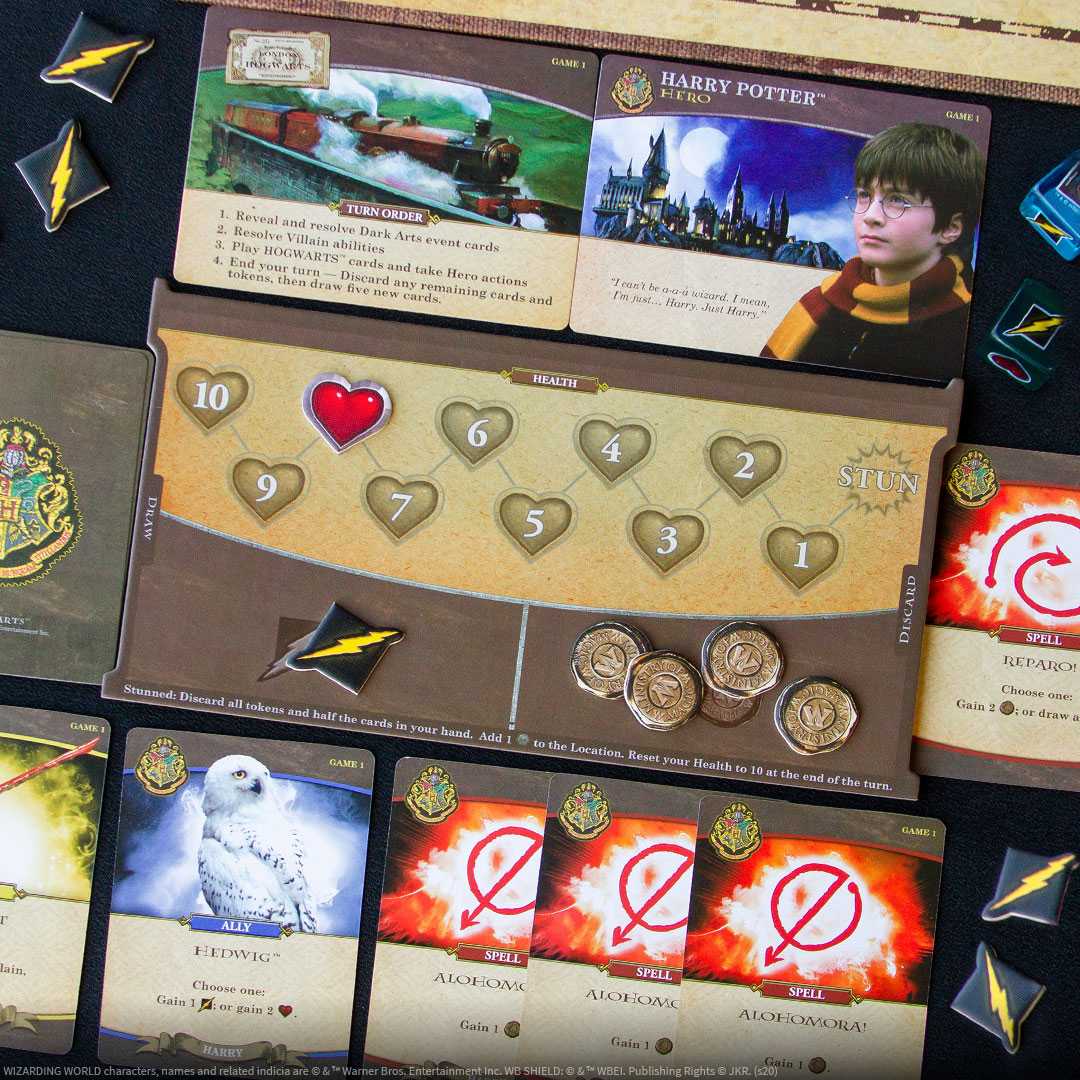 4 photos
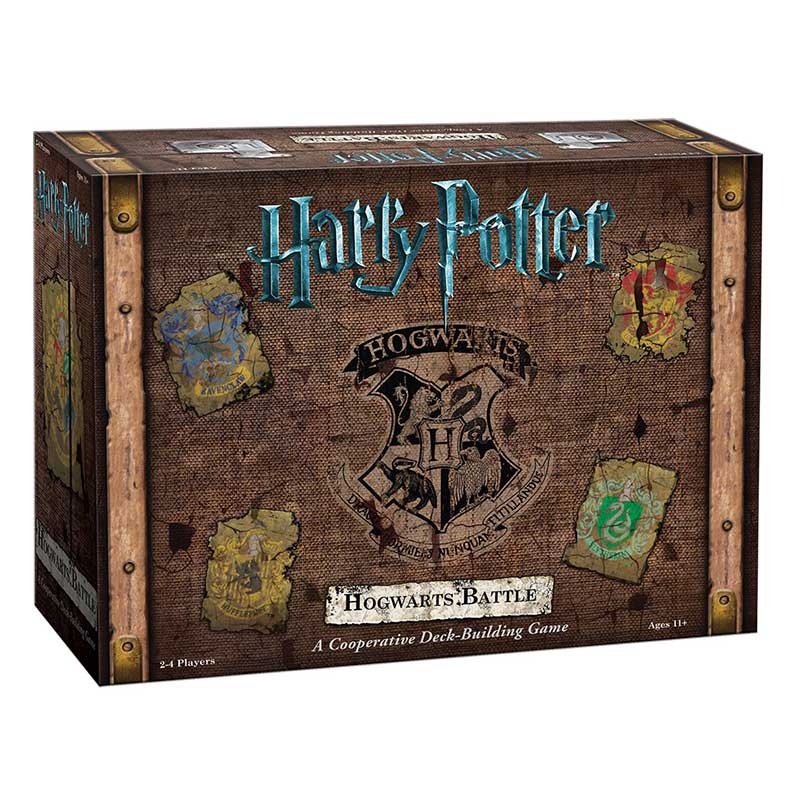
 Harry Potter: Hogwarts Battle — A Cooperative Deck-Building Game (Base Game)
The whole reason you're here. Seven sealed Games take 2–4 players from a gentle deck-building tutorial to a white-knuckle Voldemort finale, with 140+ cards, four house dice, and a campaign that unfolds box by box. Endlessly recommended as a gateway co-op and a love letter to the series. Buy this first; everything else is optional.
- Complete seven-Game campaign in one box — no expansions needed to enjoy fully
- Theme fused into mechanics; art and difficulty mature with the story
- Brilliant Game 1 tutorial makes it a top-tier gateway for new gamers and families
- Frequently discounted to ~$25–$35
- Largely a one-time campaign; surprises land once
- No card-removal mechanism can cause late-game deck bloat
- Big, awkward box to shelve
 3 photos
 The Monster Box of Monsters Expansion
The 'make it harder' add-on. Adds Luna Lovegood as a fifth hero, the Forbidden Forest, new Monster and encounter mechanics, and a punishing Detention deck that jams junk cards into your hand. If your table is crushing Game 7, this restores the fear. Integrates into the base campaign.
- Meaningfully raises difficulty and complexity
- Adds Luna Lovegood and supports up to 5 players
- New Monsters, encounters, and Detention deck add fresh tactical wrinkles
- Skip it if you already find the base game challenging
- More cards = more setup and shelf space
 3 photos
 The Charms and Potions Expansion
The 'more depth, slightly easier' add-on. Introduces Charms (which expand your player board and powers), Potions, and Ginny Weasley as a playable hero, supporting 2–5 players. It hands you more toys, which tends to ease difficulty while adding strategic texture. The natural counterpart to the Monster Box.
- Charms expand your player board and hero abilities for more decisions
- Adds Ginny Weasley; supports up to 5 players
- Great for groups wanting variety without ramping difficulty
- Can make an already-manageable game easier
- Pricier than the Monster Box
 9 photos
 Defence Against the Dark Arts (Standalone, Competitive 2-Player)
Not an expansion — a separate competitive 2-player deck-builder. You build a deck, sling Hexes, exploit house bonuses, and race to stun your opponent three times. Slow to start, then ramps into tense, swingy duels. Its content does NOT mix into the co-op base game; buy it only if you specifically want PvP.
- Excellent dedicated 2-player dueling experience
- House-matching and Hex cards add real strategic depth
- Quick 5–10 minute setup, easy to learn
- Standalone — cannot be combined with the co-op campaign
- Two players only; starts a touch slow and repetitive
- Dueling-table board art is low-contrast and easy to misread
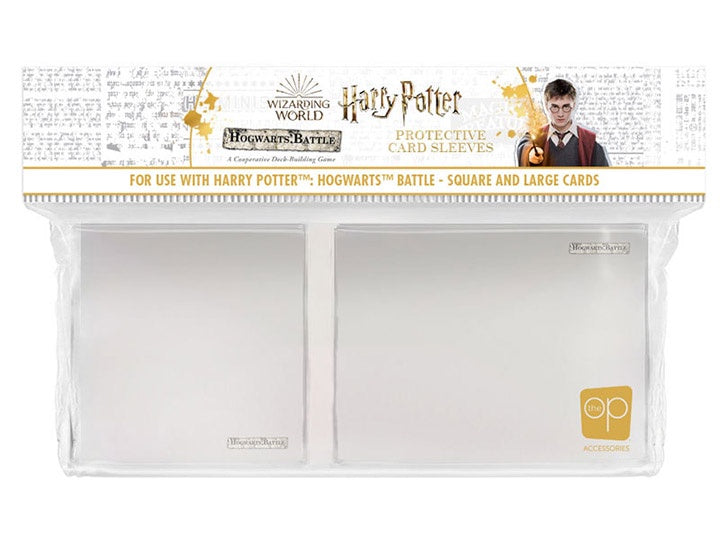
Hogwarts Battle Card Sleeves (Protection Accessory)
The community's near-universal first accessory tip. Cards get shuffled constantly across a long campaign — sleeving them protects the art and longevity, especially with kids at the table. The official line in beginner-tip lists is literally to sleeve before extensive play. A small spend for years of wear protection.
- Protects heavily-shuffled cards from wear and grubby fingers
- Cheap insurance for a game you'll replay
- Recommended in nearly every beginner-tips list
- Sleeved cards may not fit the original insert well
- Standard-size needs vary by card type (small/regular/oversized)
 3 photos
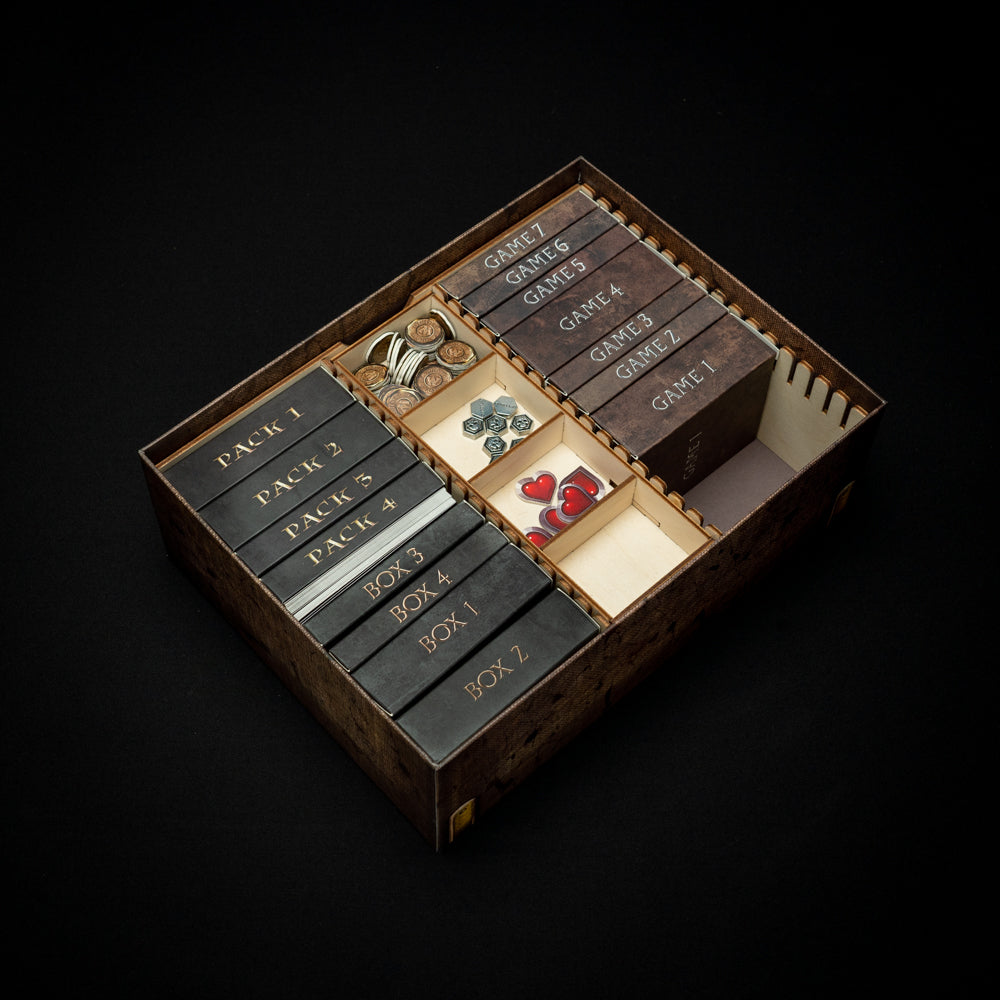
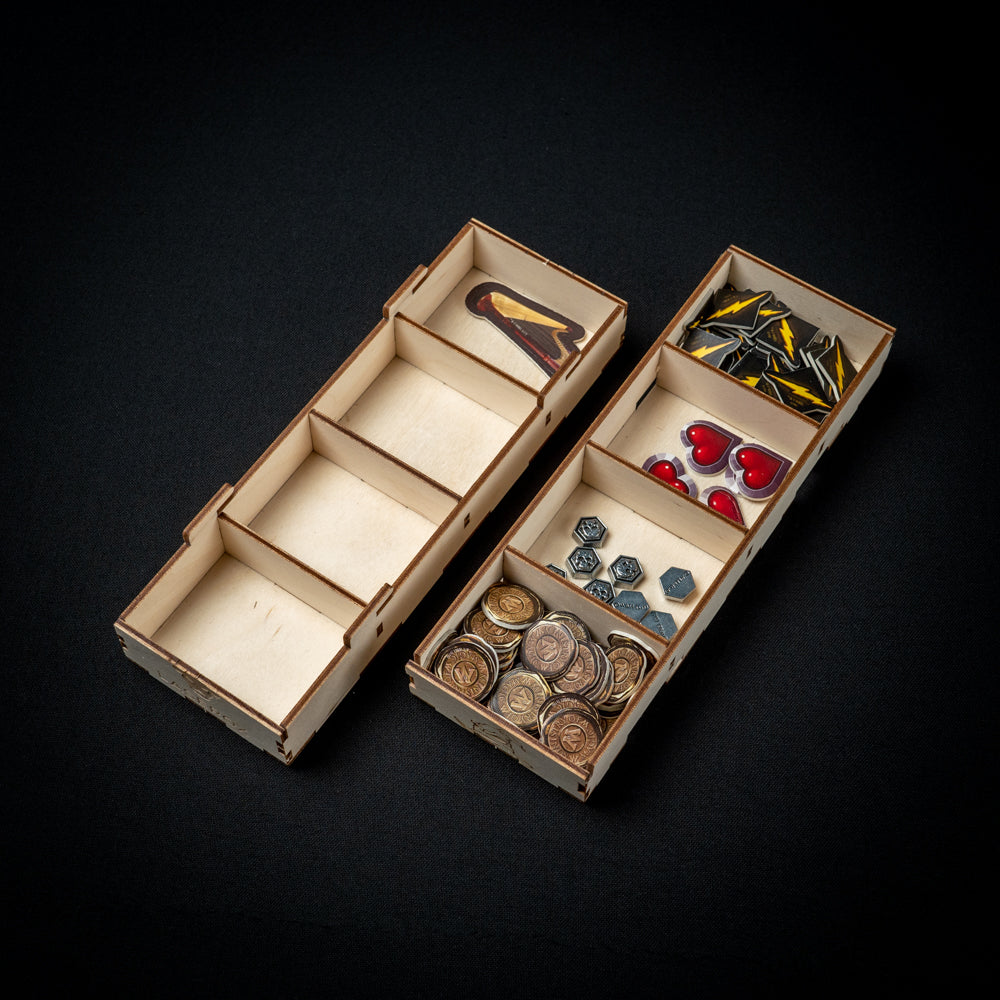
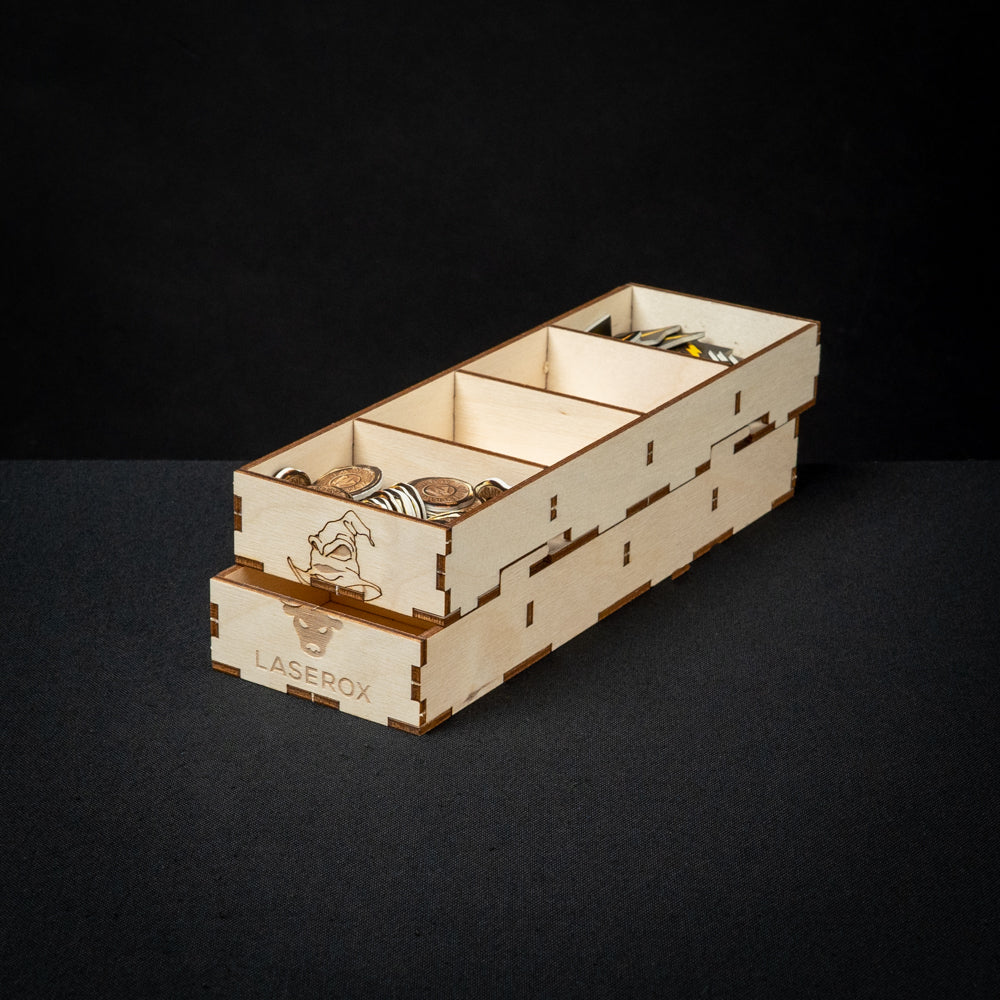
 Organizer / Insert for Hogwarts Battle (Storage Accessory)
Once you add the Monster Box and Charms & Potions, card management balloons and the stock organization strains. A dedicated third-party insert/organizer tames the sprawl, keeps the seven Games and expansion content sorted, and slashes setup time. Quality-of-life rather than essential — but transformative for combined collections.
- Dramatically faster setup and teardown across the campaign
- Keeps base + expansion cards organized and protected
- Solves the 'big awkward box' complaint everyone has
- Added cost on top of the games
- Third-party fit/quality varies by maker
At a glance
| version | players | price | best for |
|---|---|---|---|
| Hogwarts Battle (Base Game) | 2-4 | $49.95 | The essential 7-year co-op campaign — start here |
| The Monster Box of Monsters (Exp.) | 2-5 | ~$29.99 | Making the game HARDER + adding Luna |
| The Charms and Potions (Exp.) | 2-5 | $34.95 | More depth/tools (slightly easier) + adding Ginny |
| Base + Monster Box | 2-5 | ~$80 | Veterans wanting a tougher full campaign |
| Base + Charms & Potions | 2-5 | ~$85 | Bigger groups wanting variety without difficulty spike |
| Base + both expansions | 2-5 | ~$115 | The complete co-op experience, all heroes & mechanics |
| Defence Against the Dark Arts (Standalone) | 2 | ~$24.99 | Competitive head-to-head dueling (NOT co-op) |
| Card Sleeves (Accessory) | n/a | varies | Protecting heavily-shuffled cards |
| Organizer/Insert (Accessory) | n/a | varies | Taming setup once you own expansions |
| Solo Play (Official Rules) | 1 | free (uses base game) | Running the campaign single-handedly |
Questions, answered
How do you play Harry Potter: Hogwarts Battle?
Each player picks a hero (Harry, Ron, Hermione, or Neville) with a starter deck. On your turn you reveal Dark Arts events (the bad guys hitting back), draw a hand of 5 cards, then play them for two resources: Influence (to buy spells/allies/items from a 6-card market into your discard pile) and Attack (to defeat Villains equal to their Health). Unspent resources discard at end of turn. You win by defeating all Villains; you lose if the Villains take control of every Location.
Is Harry Potter: Hogwarts Battle worth it?
For Harry Potter fans and anyone wanting an accessible co-op deck-builder, yes — it's one of the best-loved licensed gateway games, with theme baked into the mechanics and a campaign that escalates beautifully. The main caveats are luck of the draw and that it's largely a one-time campaign. At an MSRP of $49.95 (and frequently on sale for $25–$35), reviewers consistently rate it strong value.
How long does a game of Hogwarts Battle take?
About 30–60 minutes per Game (The OP lists up to 60 minutes). Early Games like Game 1 are quicker since they're simpler; later Games run longer as Villains, Locations, and card decks grow. A full seven-Game campaign typically spans several play sessions rather than one sitting.
How many players can play Hogwarts Battle?
The base game supports 2–4 players cooperatively. The Monster Box of Monsters adds Luna and the Charms and Potions expansion adds Ginny, each raising the cap toward 5 players. You can also play solo using The OP's official solo rules, and Defence Against the Dark Arts is a separate competitive game for exactly 2 players.
Is Hogwarts Battle hard?
It starts very easy and gets genuinely challenging. Game 1 is a gentle tutorial with just three Villains; difficulty climbs steadily, and Game 7 (destroying six Horcruxes before you can damage Voldemort) is notoriously tough. Overall complexity is medium-light (BGG weight ~2.08/5). If you find it too easy, the Monster Box expansion ramps the difficulty; the Charms and Potions expansion eases it.
What order should I buy and play the Hogwarts Battle expansions?
Start with the base game and finish (or at least start) its seven-Game campaign first. Then: buy The Monster Box of Monsters if you want it HARDER, or The Charms and Potions if you want it EASIER/deeper. Both integrate into the base campaign and can be combined. Defence Against the Dark Arts is a standalone competitive duel that does NOT combine with the co-op game — buy it only for 2-player PvP.
Is Hogwarts Battle kid-friendly, and what age is it for?
It's rated 11+, which is a fair floor for reading cards and managing resources. But because it's fully cooperative, younger Potter-loving kids can absolutely play alongside an adult who co-pilots without it feeling like 'letting them win.' Game 1's gentle tutorial makes it a great family on-ramp; let the kids roll the Hogwarts house dice.
Can you play Hogwarts Battle solo?
Yes. The OP publishes official solo-play rules so one person can run the campaign controlling one or more heroes ('take on Voldemort single-handedly'). It's a satisfying way to experience the full arc on your own, though, like the multiplayer game, it carries some luck-of-the-draw swing.
What happens after you finish the Hogwarts Battle campaign?
Because nothing is permanently destroyed (it's not a true legacy game), you can reset the entire campaign and replay it from Game 1. You can also play any single Game as a one-off. That said, the first-time reveals only happen once, so post-campaign value comes from replaying favorite Games, increasing difficulty, or adding the expansions for fresh challenges.
Can you replay Hogwarts Battle, or is it one-and-done?
You can replay it — fully. The boxes re-seal conceptually and no components are consumed. The community is split: some treat it as a one-time campaign experience (the surprises land once), while others reset it, house-rule it, and keep it in rotation for years. Whether it's 'one-and-done' depends on whether you play for the reveals or for the underlying system.
How does Hogwarts Battle compare to other co-op deck-builders?
It's lighter and more thematic than crunchy co-op deck-builders, prioritizing the Harry Potter experience and an escalating campaign over deep strategic optimization (weight ~2.08/5). Its standout feature is the seven-box, story-driven campaign — few co-op deck-builders deliver that unfolding-narrative structure. If you want maximum strategic depth it's modest; if you want theme, accessibility, and a built-in campaign, it's near the top of the category.
Do you need the expansions to enjoy Hogwarts Battle?
No. The base game is a complete, self-contained seven-Game campaign and is the only required purchase. The expansions are for groups who've finished the base game and want to extend it — Monster Box for more challenge, Charms and Potions for more tools/variety. Buy them only if you loved the base campaign and want more of the same heroes and system.
Imani's verdict
Harry Potter: Hogwarts Battle is the gold-standard wizarding-world board game and one of the best gateway co-op deck-builders ever made. Its genius is the sealed seven-box campaign: a gentle Game 1 tutorial that grows, year by year, into a genuinely tense Game 7 against Voldemort and six Horcruxes — with theme woven so tightly into the mechanics that the art literally ages with the characters. It's medium-light (BGG ~2.08), so strategy-hounds chasing a bottomless engine should temper expectations, and the honest knocks are real: luck of the draw, no way to purge weak cards (late-game bloat), and a largely one-time campaign. But for Harry Potter fans, families, new gamers, and anyone who wants a shared, escalating story they're all on the same side of, nothing in this price bracket competes. Buy the base game first — it's complete on its own. Then, only if you want more: Monster Box to make it harder, Charms & Potions to make it easier, and Defence Against the Dark Arts purely for 2-player dueling. Bring your house pride, sleeve your cards, and don't you dare peek inside Game 7 early.
Research ledger 21 sources · reviewed 2026-07-17
Specifications, rules, current product information, community experience, and contrary evidence were checked against the sources below. Commercial links are kept separate from editorial evidence.
- theop.gamestheop.games/products/harry-potter-hogwarts-battle-a-cooperative-deck-building-game
- theop.gamestheop.games/blogs/theop/complete-guide-to-vanquishing-voldemort-in-harry-potter-hogwarts-battle
- theop.gamestheop.games/blogs/theop/harry-potter-hogwarts-battle-solo-play-rules
- theop.gamestheop.games/products/harry-potter-hogwarts-battle-the-monster-box-of-monsters-expansion
- theop.gamestheop.games/products/harry-potter-hogwarts-battle-the-charms-and-potions-expansion
- theop.gamestheop.games/products/harry-potter-hogwarts-battle-defence-against-the-dark-arts
- theop.gamestheop.games/blogs/theop/harry-potter-hogwarts-battle-defence-against-the-dark-arts-strategy-and-tips
- meeplemountain.commeeplemountain.com/reviews/harry-potter-hogwarts-battle
- gameosity.comgameosity.com/2017/07/31/harry-potter-hogwarts-battle-review
- boardgamequest.comboardgamequest.com/harry-potter-hogwarts-battle-charms-and-potions-expansion-review
- boardgamequest.comboardgamequest.com/harry-potter-hogwarts-battle-defence-against-the-dark-arts-review
- theboardgamefamily.comtheboardgamefamily.com/2020/02/harry-potter-defence-against-dark-arts-review
- sleevekings.comsleevekings.com/blogs/news/9-harry-potter-hogwarts-battle-tips-for-beginners
- boardgamegeek.comboardgamegeek.com/boardgame/199042/harry-potter-hogwarts-battle
- boardgamegeek.comboardgamegeek.com/thread/1644043/battle-hogwarts-might-be-co-op-deckbuilder-youve-b
- boardgamegeek.comboardgamegeek.com/thread/1654211/year-seven-strategy-guide
- boardgamegeek.comboardgamegeek.com/thread/1653650/year-four-through-six-strategy-guide
- boardgamegeek.comboardgamegeek.com/thread/1658670/how-do-you-thin-your-deck
- boardgamegeek.comboardgamegeek.com/thread/2718450/what-order-to-play-expansions
- harrypotter.fandom.comharrypotter.fandom.com/wiki/Harry_Potter:_Hogwarts_Battle
- manuals.plusmanuals.plus/m/2200befc7956aca08c341f4230681dd11ad7d1851f3755d6b210ad3265b80d94
Okay but have you seen what everyone’s saying about this?

Keep exploring
The next smart rabbit holes.
✦ Universe HubHarry Potter Game Collection: the whole buying pathThe Harry Potter universe sorts licensed abundance into actual game nights. Imani protects the people and the table energy; Margo...✦ Topic PathBoard Game Buying Guides: compare the whole shelfStart with the decision, not the shelf. These guides compare the games, editions, expansions, player counts, and costs people...GuideHarry Potter: Hogwarts Battle and Expansions in 2026: What to Buy, What Each Box Changes, and How to Win TogetherThe complete answer to the Hogwarts Battle shelf: how the seven-game base campaign teaches itself, exactly what Monster Box of Monsters...