Hanafuda for Beginners: How to Play Koi-Koi & Which Deck to Buy
Come sit—I've been waiting to show you this. A Japanese hostess's guide to the little painted garden, the press-your-luck thrill of こいこい, and the exact deck that belongs in your hands tonight. Gift-wrapped in warmth.

AI-assisted curator persona · research and editorial responsibility: Robert Pruitt · how this guide was made
Last editorial refresh: 2026-06-18 Gold-standard QA: 2026-08-10 10 sources reviewed Affiliate links checked during gold-standard pass

The short answer
Hanafuda (花札, "flower cards") is a Japanese deck of 48 cards — twelve months, four cards each — that you read entirely by their pictures. Koi-Koi is the beloved two-player game: match cards by month to capture them, build scoring sets called yaku, then make the game's one delicious decision — bank your points, or shout こいこい ("come on, come on!") and gamble for more. Start with Nintendo's Daitoryo for the real thing, the Mario deck for pure joy, or a Hanafuda Hawaii deck for beauty on a budget.
Decision map
Choose in thirty seconds
the authentic, traditional standard
the joyful, gift-worthy pop pick
beauty on a budget
Come in, come in — leave your shoes by the door. You walked in thinking hanafuda was for the initiated, the mysterious, the untouchable. I am here to tell you that reputation is deliciously, perfectly on purpose — the cards were designed to look secret. But sit with me? You will be playing a real round within fifteen minutes, and falling down the rabbit hole within fifteen days. I have set the whole table for you: what the cards are, how こいこい actually unfolds at speed, the yaku worth chasing, the hot opinions that will make you sound like you've played for years — and which deck to actually buy. The one that feels right in your palm. The one wrapped so beautifully you almost don't want to open it. The one your hands will reach for again and again. ❀
Start here, then go deeper
You are in the right cabinet.
 ⌂ Topic PathFamily and Gateway Games: compare the whole shelfA good family game gets everyone playing quickly without becoming disposable after three nights. These guides prioritize clear...
 Beginner's GuideHarry Potter: Hogwarts Battle — The Complete Guide to the Co-op Deck-Builder Everyone's Still Obsessed WithThe definitive fan guide to The OP's cooperative, campaign-style Harry Potter deck-builder — how it plays, which boxes to buy, and the...
 Beginner's GuideBest Gateway Board Games (2026): Picked by Who You're ConvertingTen welcoming games organized by the person at your table, with teach time, interaction and failure modes made explicit.
What even is hanafuda — and why was it secretly illegal?
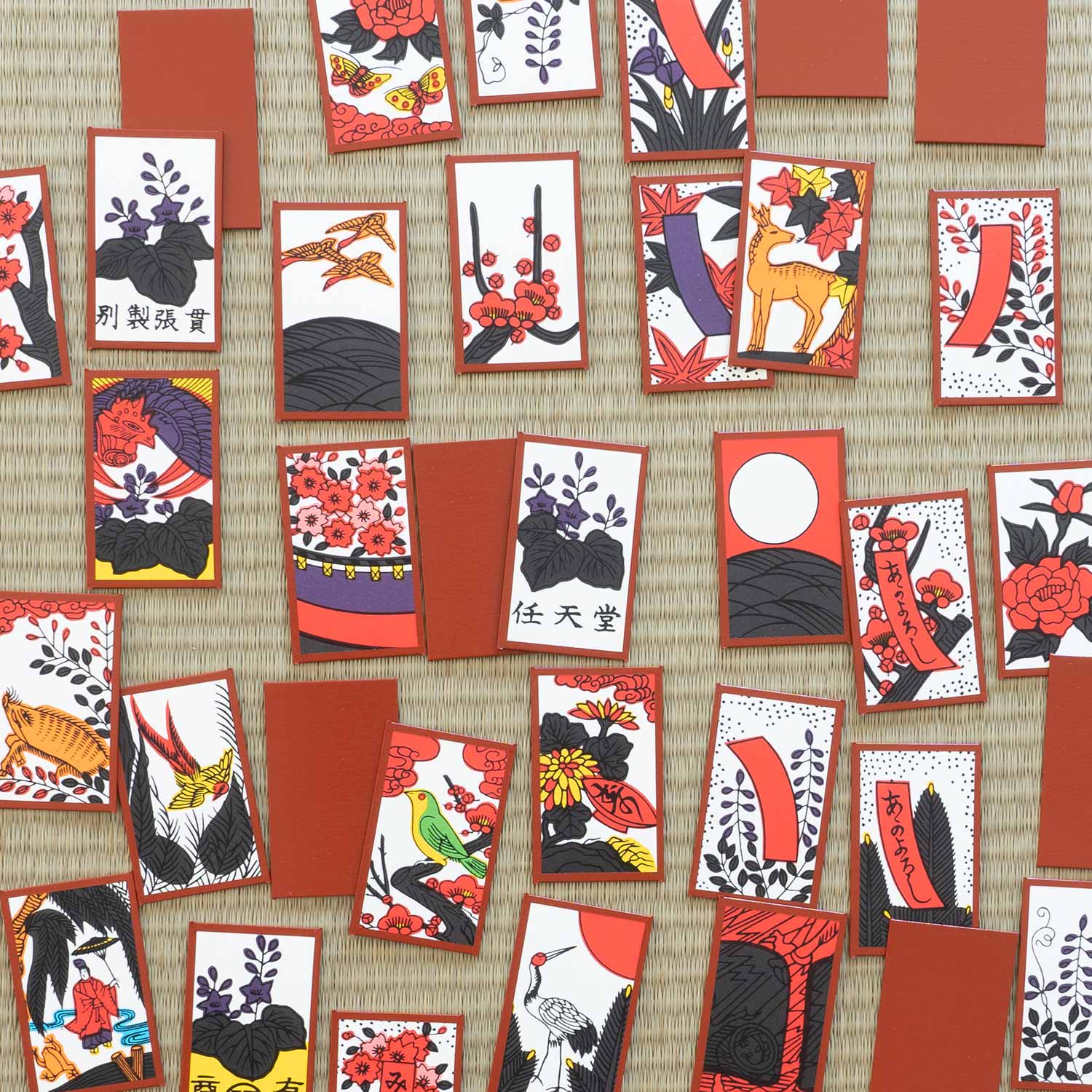

Hanafuda — 花札, literally "flower cards" — is a deck of 48 small, stiff cards split into twelve suits, one per month, each named for a seasonal flower. No numbers. No letters. You read every card by its painting, which is exactly the point.
Here is the deliciously petty origin story. Japan banned playing cards again and again across the 17th and 18th centuries — the authorities were chasing gamblers, and cards were the gamblers' tool. So designers got cheeky. Each time a deck was outlawed, a new one appeared dressed in innocent little seasonal pictures the censors couldn't quite pin to a rulebook. Cat and mouse, for over a hundred years — and hanafuda is the design that finally outlasted the ban.
And the cards themselves carry the gambling den in their bodies. Real hanafuda aren't thin like poker cards — they're built from layered paper pasted over a clay-and-paper core, which is why they're so stubby and stiff. That construction wasn't decoration; it let a player slap a card down on a tatami mat with a loud, satisfying clack. That sound was the heartbeat of the back-room. When you buy a good deck and feel how thick the cards are, you're holding two hundred years of intimidating table-slams. ❀
Wait — Nintendo made these? And the yakuza wore them?
Yes. The maker who finally won that century-long cat-and-mouse was a tiny Kyoto shop opened in 1889 by a craftsman named Fusajiro Yamauchi to print hanafuda by hand, just as the Meiji government was relaxing its stance on cards. The shop was called Nintendo. That Nintendo. Mario got his start, in a very real sense, dealing cards in the back room.
Here's the part most people never hear. Because hanafuda's home was the gambling parlor, the cards stayed tangled up with the underworld for decades — Nintendo's early decks were the house tool in yakuza dens, and the company spent its first half-century quietly stigmatized by the association. The word yakuza itself comes from a hanafuda-family gambling game, Oicho-Kabu: a losing hand of 8-9-3 (ya-ku-za) totals 20, and since only the last digit counts, it scores a flat zero. A "worthless hand" became the name for the men who dealt it.
So when you sit down to a gentle round of koi-koi over tea, know that you're playing the polished, beloved descendant of a game that was once contraband. The flowers were always a disguise — and a beautiful one. I find that history makes the cards feel more precious in the hand, not less.

How do you actually play こいこい (Koi-Koi)?
Koi-Koi is a two-player duel over a shared field of face-up cards. The whole engine in one line: match by month to capture. Two cards of the same month? Yours.
Deal 8 to each player, 8 face-up to the field, stack the rest face-down. On your turn you act twice — once from your hand, once from the deck. Play a card: if it matches a field card's month, scoop both into your pile. If nothing matches, you must leave your card on the field — and this hurts, because you're feeding your opponent a target. Then flip the top of the draw pile and resolve it the same way. Two captures a turn, when the deck is kind.
The magic is the instant a capture completes a yaku — a named scoring set. The game stops and looks at you. Bank it now (勝負 / shōbu, "I'll settle this round"), or whisper こいこい and keep playing for something bigger. The name means roughly "come on, come on" — the dare you make to yourself. One small detail beginners miss: if a hand-card and a deck-flip both match a field card of the same month, you can sometimes sweep three at once. Watch for it; those triple-captures win rounds.
What's the strategy nobody tells beginners?
Here is where most guides leave you, and where the real game begins. Three truths to tattoo on your heart.
One: stop chasing the legendary hands. Gokō (五光) — all five Brights — is gorgeous and lands in a tiny fraction of rounds. The players who actually win grind the humble stuff: five animals (tane), ten chaff (kasu), the ribbon sets. Small, steady, banked.
Two: the dealer keeps dealing — and that's the whole secret. Win a round and you stay the parent (oya), going first next round. The old hands have a saying I love: if you never lose the deal, you never lose. That alone is why a fast, modest yaku you actually bank beats a beautiful hand you gamble away. Speed protects your position.
Three: koi-koi is a knife that cuts both ways. Call it, and if your opponent completes any yaku before you score again, they win the round, their score doubles, and you get nothing. So the call isn't greed — it's board reading. Call koi-koi only when the field still holds cards that build YOUR hand and starve theirs.
Which cards matter most — and how do I read the field?
Memorize a priority order and you'll outplay people who've shuffled for years. Tier one is the five Brights plus the September Sake Cup — grab those nearly always. Tier two is the scoring spine: the red and blue poetry ribbons, and the trio of Boar (July), Deer (October), Butterflies (June) that forms Inoshikachō. Tier three down is the rest of the animals, then plain chaff.
The Sake Cup deserves its own paragraph. September's 菊に盃 (Chrysanthemum with Sake Cup) counts as an animal in many rulesets and doubles as a chaff card, AND it's the linchpin of both "drinking" yaku — Moon-Viewing (with August's Moon) and Flower-Viewing (with March's Cherry Curtain). One card, four jobs. Whoever holds it has more paths to score, so if it's sitting on the field, take it even when nothing else lines up.
Now the part that separates good from great: watch what your opponent captures. If they're hoarding blue ribbons, capture (or refuse to feed) the remaining ones to deny their yaku. And when you can't match, discard from April (Wisteria) or May (Iris) first — those suits carry no Bright and no high-value card, so they're the safest gift to hand across the table. A strong opening hand, by the way, holds about eight different suits; clumps of pairs and triplets choke your flexibility.

What's the deal with the Rain-man and the Sake Cup feud?
This is the lore that makes you sound like a lifer. November's Rain-man (the Ono-no-Michikaze Bright) looks like a prize — it's a 20-point Bright — but the scoring rules quietly disrespect it. The three-Bright yaku Sankō specifically excludes the Rain-man; the four-Bright Shikō is the four Brights without him. Include him and you don't get the clean four-Bright — you get the consolation yaku Ame-Shikō ("rainy four-light"), which scores fewer points. A Bright the rulebook treats like a liability.
Meanwhile the Sake Cup, technically the lowliest sort of card, does four jobs at once. So the r/Hanafuda community immortalized the contrast as "The Virgin Rain-man vs. The Chad Sake Cup," and I will not be taking questions, because they are correct. ♡
One honest footnote on numbers, because rulesets genuinely differ: most beginner guides and Nintendo's own sheets score Sankō at 5 or 6 depending on house rules, Shikō at 10, and Ame-Shikō at 7–8. Agree on your table's values before you deal — that one conversation prevents the only real arguments koi-koi ever causes.
Hanafuda vs. Korean hwatu — what's the difference?
If you fall for koi-koi, you'll eventually meet its bolder cousin across the sea: hwatu (화투), the Korean deck used for the wildly popular game Go-Stop. They share the same twelve-month, 48-card bones — but the differences are real and worth knowing before you buy.
Hwatu cards are thick, glossy plastic with textured backs built for fast, slap-happy play, where traditional Japanese hanafuda are layered paper with muted, painterly art. Hwatu decks usually ship with extra joker / bonus cards that Go-Stop needs and koi-koi doesn't. And there's a small trap for purists: in many hwatu decks the Willow and Paulownia months are effectively swapped in how they're treated, so a Japanese player's muscle memory can stutter for a round. None of this is a problem — it's just a different dialect of the same garden.
My honest steer: learn on a Japanese deck so the classic imagery sets into your hands, then treat a hwatu deck as the punchy, durable travel option. Go-Stop itself is a glorious, faster, more chaotic ride — "Go" is its koi-koi, "Stop" is its shōbu — and once you love the rhythm of pressing your luck, you'll want both decks in the drawer.
Down the rabbit hole: why is the deck you buy only the beginning?
A confession about why I love this little game so much: hanafuda is a collector's world wearing a card game's clothes. The moment you own one deck, you start eyeing another — an artisan stencil-coloured pack, the cobalt-blue glamour of a hwatu deck, a museum-shop exclusive. (Nintendo's own museum and store have leaned hard into hanafuda's heritage in recent years; if you spot an official commemorative set, grab it, because these things vanish and resurface at collector prices.)
And then there's the part that undoes me every time: people make these. Partners hand-painting custom decks as anniversary gifts. Fan decks built around beloved characters. Decks designed so the Brights literally shimmer, just so a newcomer can spot the prizes across the table. The r/Hanafuda crowd posts these like proud parents — "custom hanafuda my partner made for me 😭" is practically a genre.
So here's my whole philosophy in one breath: buy the deck that wants to be touched. Not the cheapest, not the rarest — the one whose weight and wrapping make you reach for it on a quiet evening. Learn koi-koi in fifteen minutes; stay for the people, the lore, and the slow, happy hoard of beautiful little gardens. Come for the game; stay forever. ❀
What experienced tables keep reporting
Recurring owner patterns, synthesized in Puzzlewick's words. Follow each evidence trail to read the original discussion.
The Virgin Rain-man vs. The Chad Sake Cup
Custom Hanafuda my partner made for me 😭
Went to Japan, started collecting Nintendo hanafuda decks!
The picks
Some links below are affiliate links — as an Amazon Associate, Puzzlewick earns from qualifying purchases, at no extra cost to you. It never changes a pick.
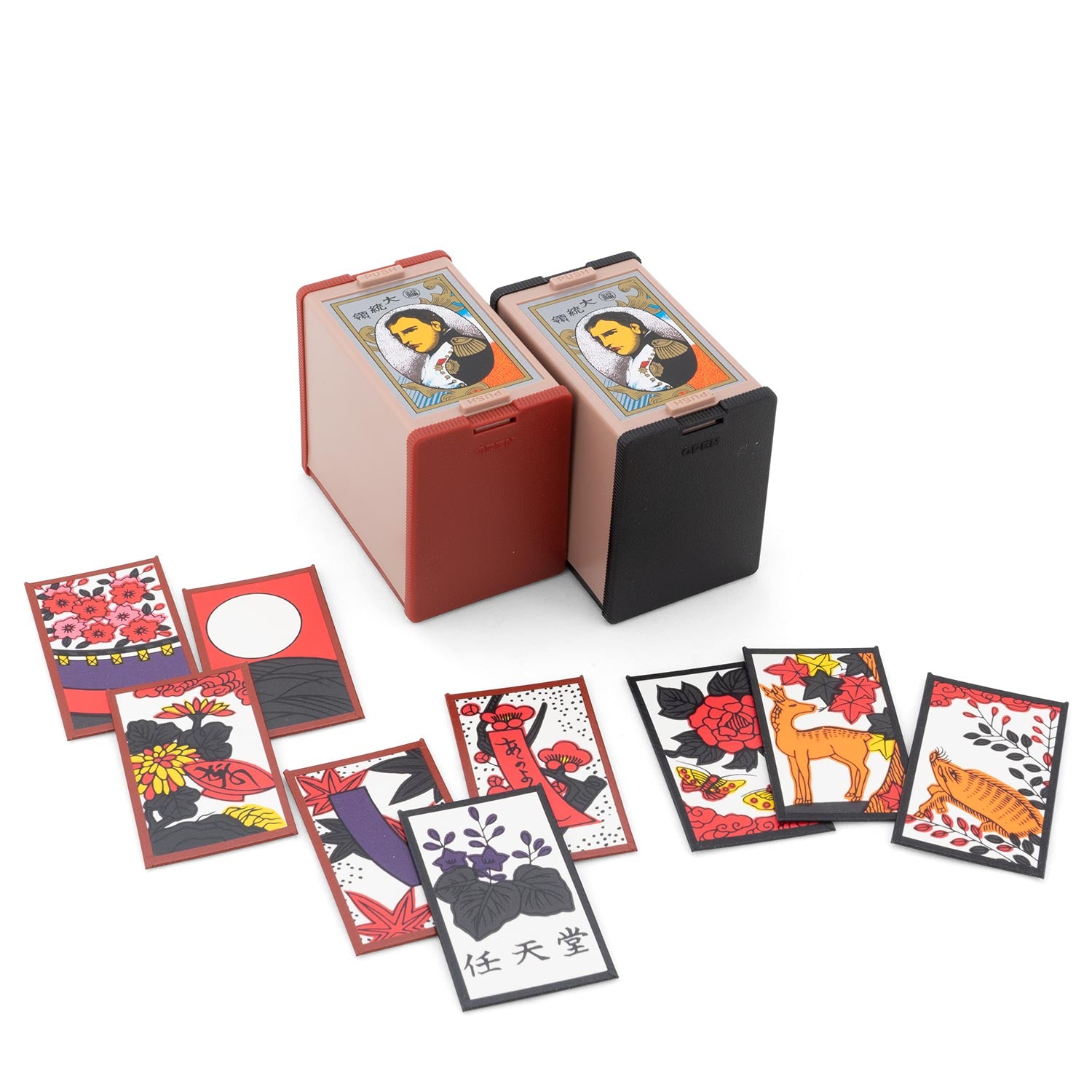
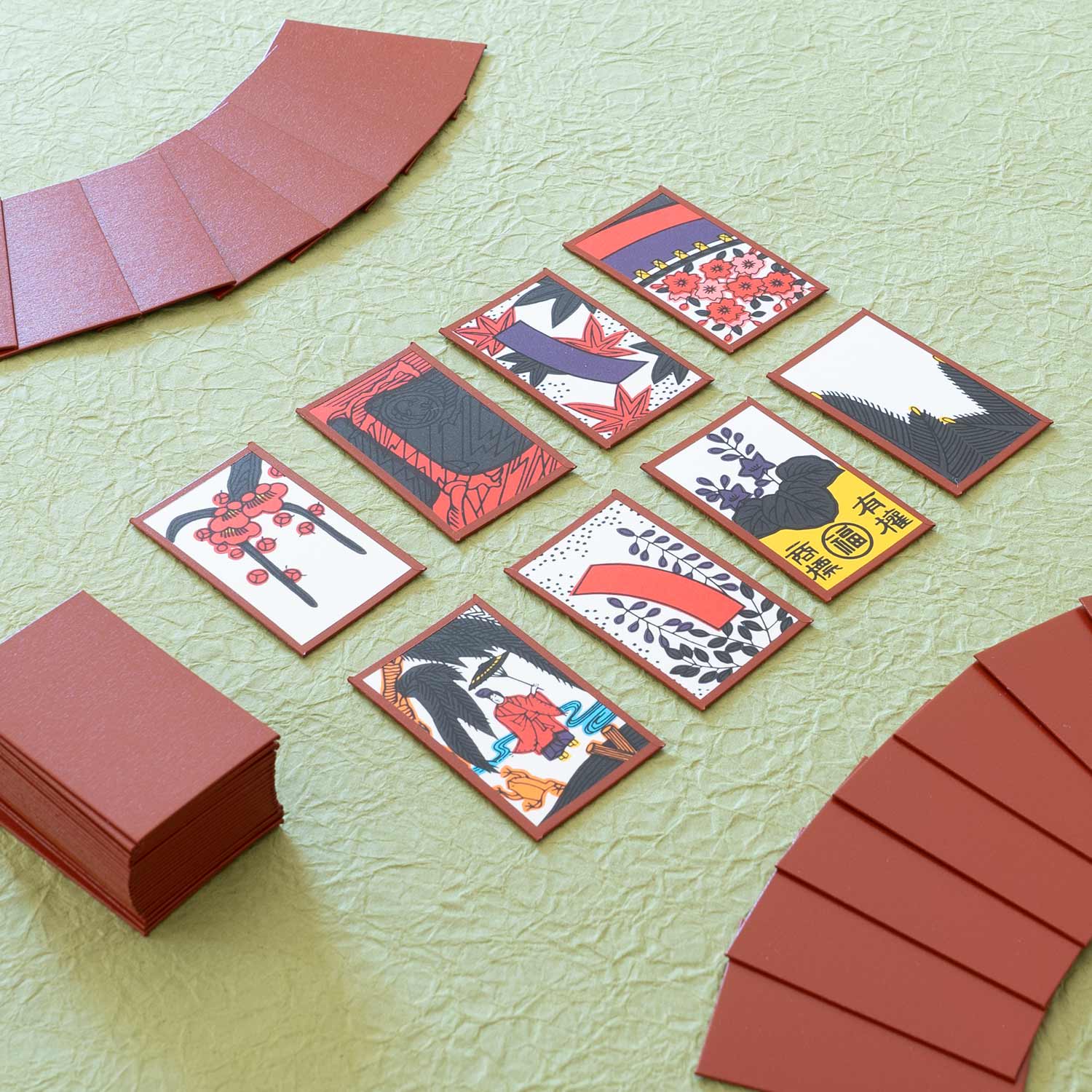
4 photos Nintendo Hanafuda Cards — Daitoryo
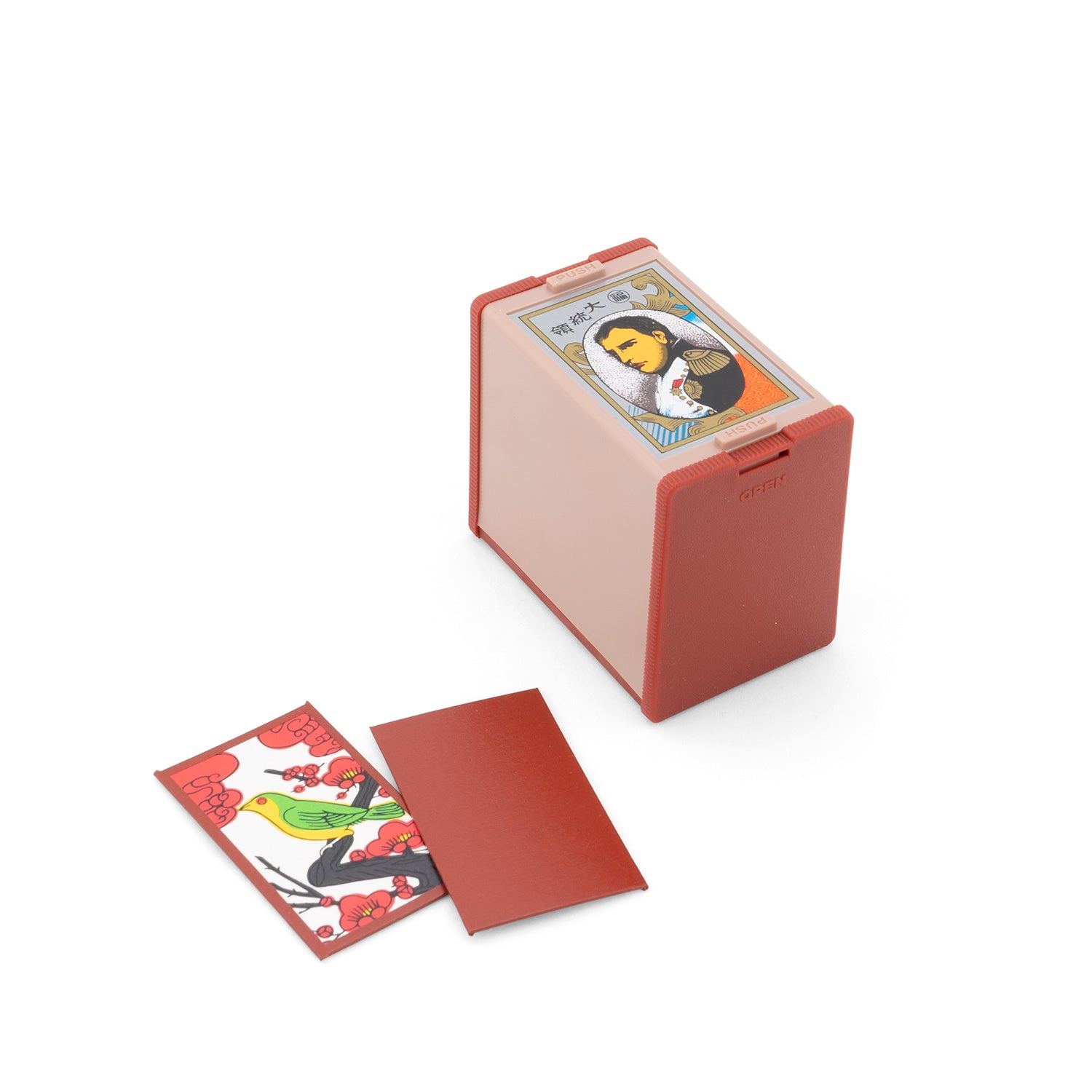
If you want the deck a Japanese player would actually own, this is it. "Daitoryo" means "President," and the box famously carries a portrait of Napoleon — a quirk Nintendo has kept for over a century. The cards are thick, sturdy, and unillustrated in the classic style, so you learn the real images rather than a stylized version. Available with red or black backs at the same price.
- The genuine, time-honored design players grow up with
- Nintendo's hallmark card stock — stiff, snappy, durable
- Forces you to learn the true card art, which transfers to any deck
- Traditional faces are austere; no scoring hints printed on the cards
- Often sold via specialty importers, so prices vary
 3 photos
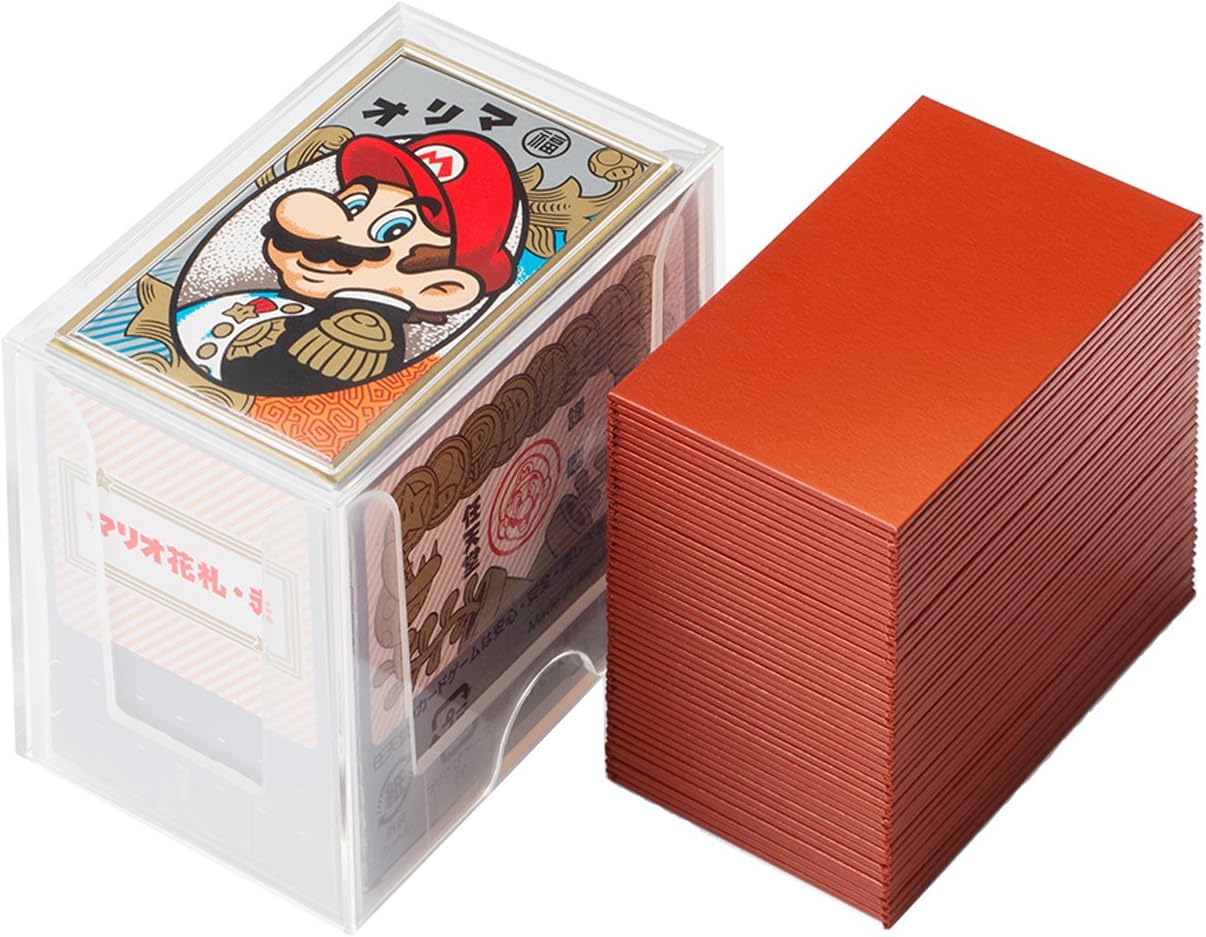
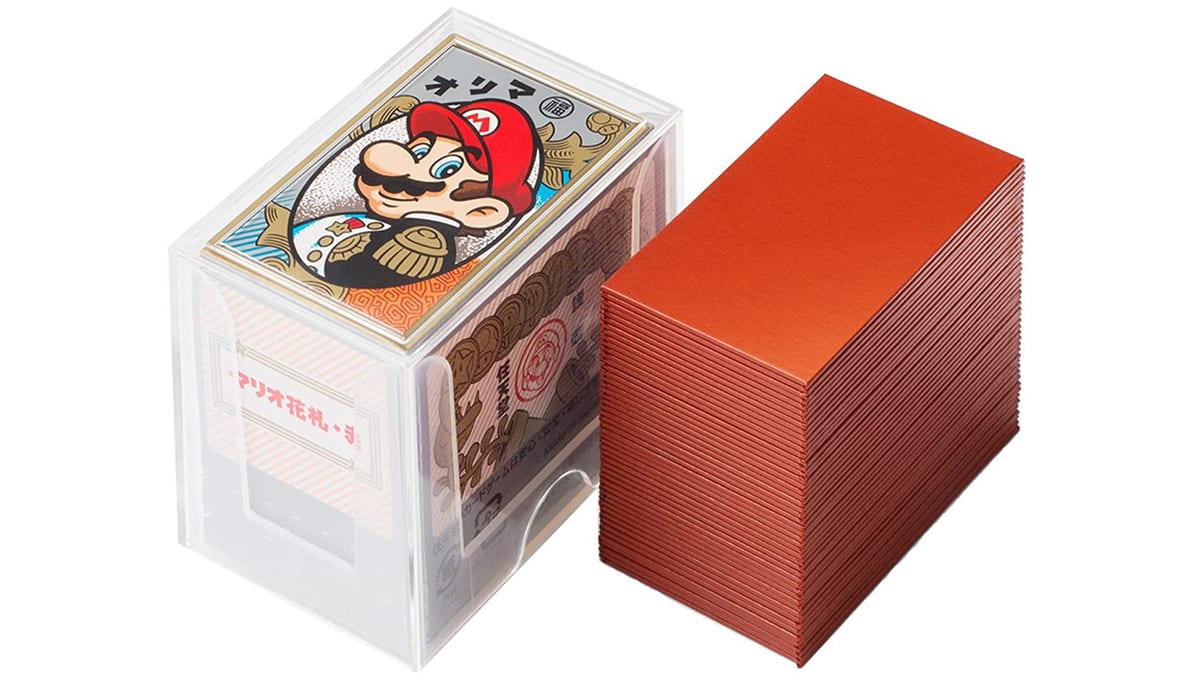
 Hanafuda Cards — Mario™ (Red)
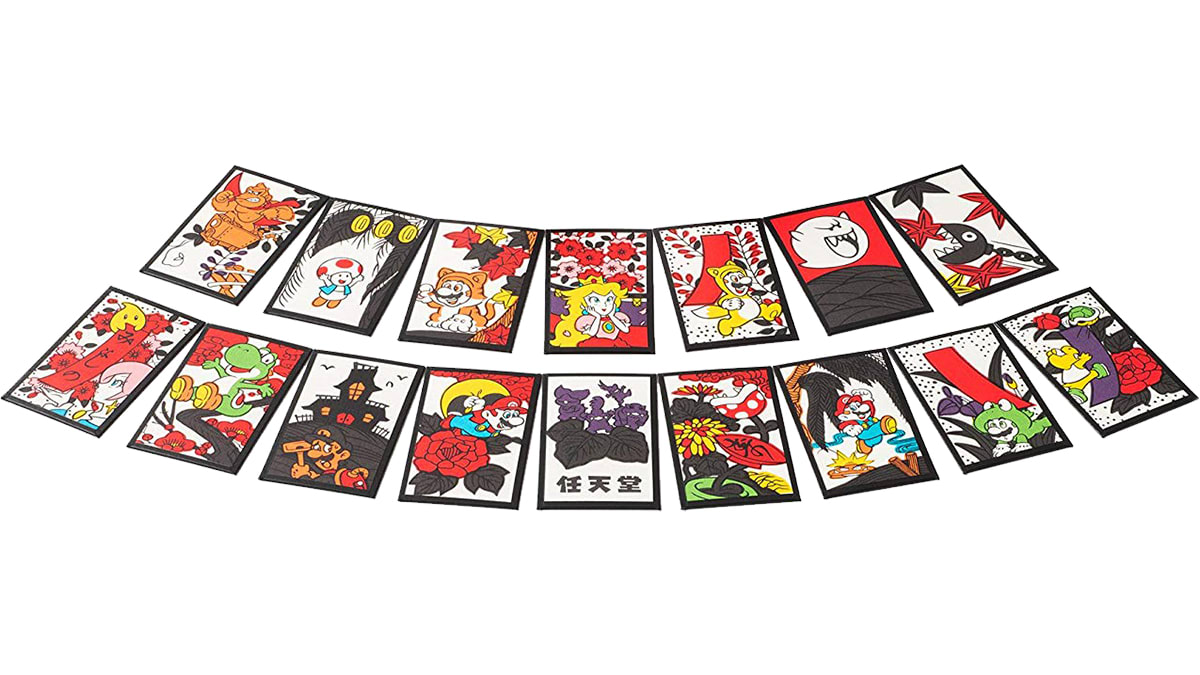
Nintendo reimagines all 48 cards with Mario, Luigi, Peach, Yoshi and friends woven into each month — and somehow it stays true to the traditional structure, so it plays exactly like a real hanafuda deck. It ships with a hard plastic storage case and an instruction sheet, which makes it a lovely first deck for a household with children. Street prices typically run around $30 through importers; I have left the figure unset because the official store does not publish a fixed price and third-party listings vary widely. A black version exists too.
- Genuinely playable — faithful to the 48-card / 12-month structure
- Includes a hard case and printed instructions
- The most welcoming deck for newcomers and kids
- Pricing is inconsistent across importers; verify before buying
- Character art makes a few months harder to read as 'flowers' at first
 5 photos
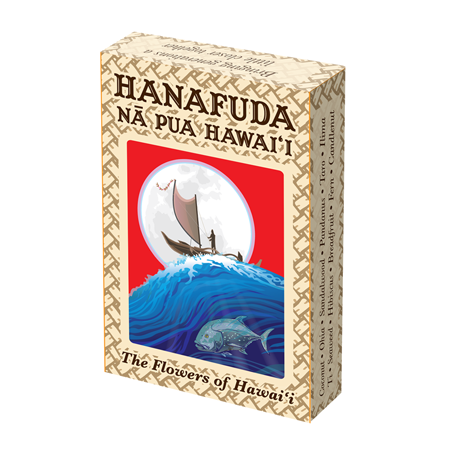
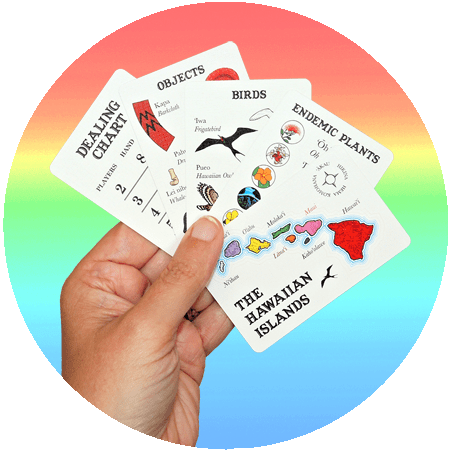
 Hanafuda Nā Pua Hawaiʻi
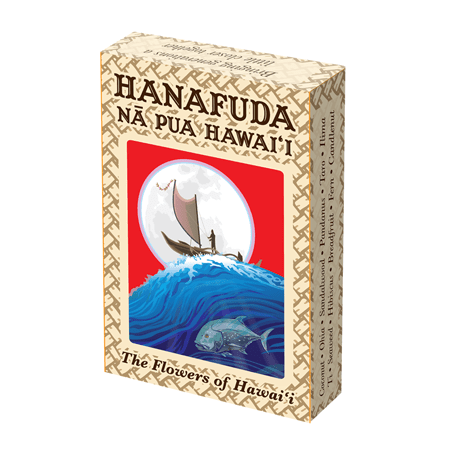
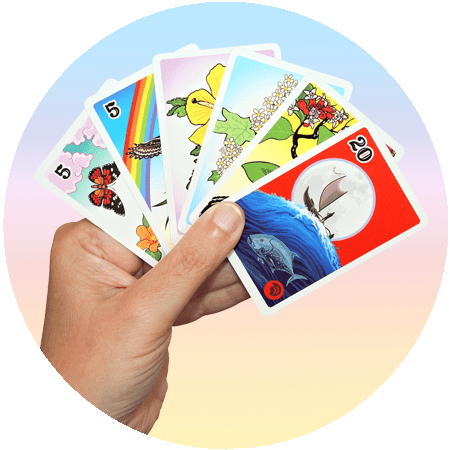
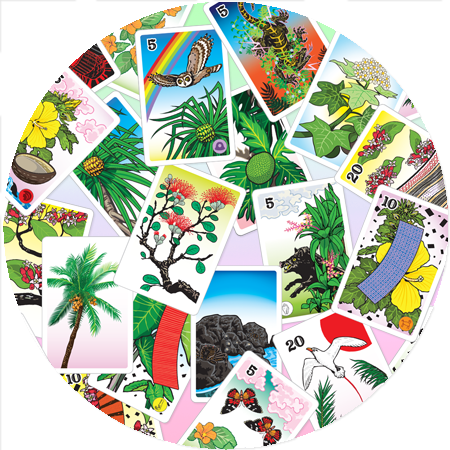
Hawaii has played hanafuda for over a century, and this modern deck honors that with artwork of indigenous and canoe plants, birds, and moʻolelo of the islands. It is inexpensive, in stock, and quietly gorgeous — the kind of deck that starts conversations. A wonderful choice if you want something distinctive without artisan pricing.
- Striking original Hawaiian-island artwork
- Among the most affordable real decks available
- Reliably in stock and ships from a small, dedicated maker
- Reimagined art means the imagery differs from the classic Japanese cards
- Not the deck to learn from if you want strict traditional fidelity
 5 photos
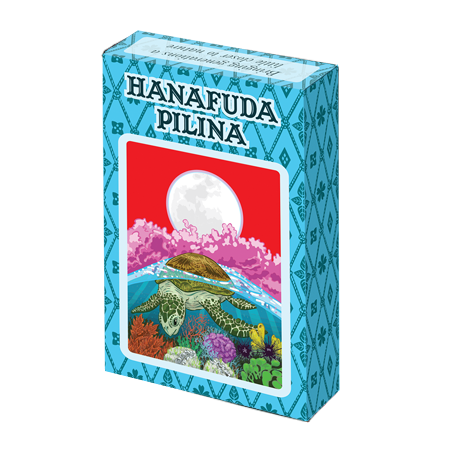
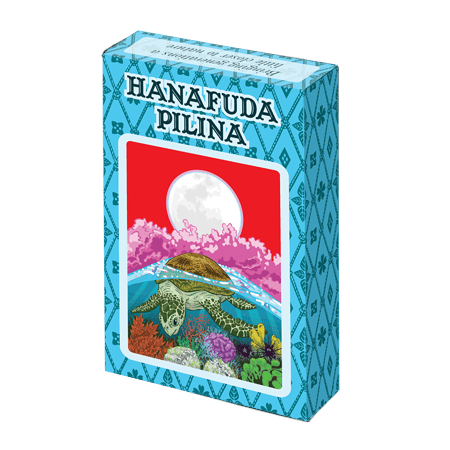
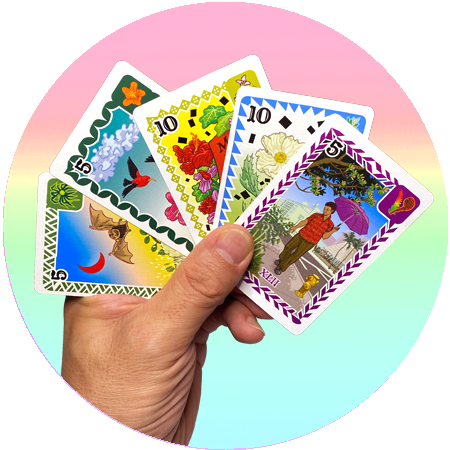
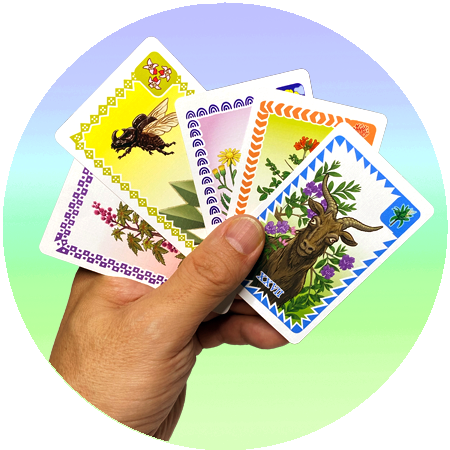
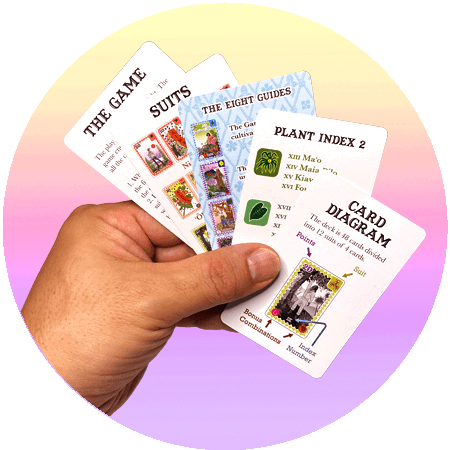
 Hanafuda Pilina
Pilina pairs the 48-card hanafuda structure with images of indigenous and invasive species of the Hawaiian Islands — native beside non-native — turning each round into a quiet lesson as well as a game. Beautifully produced, well stocked, and full of meaning. A lovely step up from Nā Pua if a deck with a message appeals to you.
- Full 48-card playable deck with a genuine ecological theme
- Modern, polished production
- Deeply in stock
- Slightly pricier than the maker's other decks
- Themed art, like all reimaginings, departs from the traditional images
 5 photos
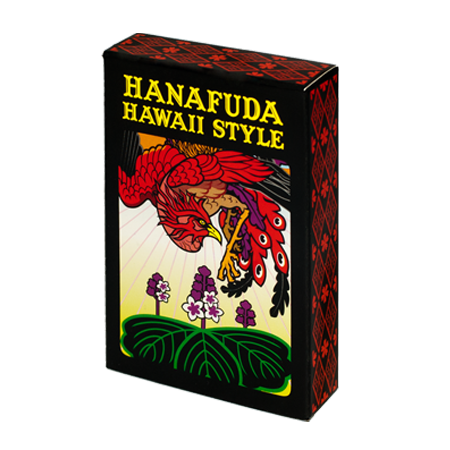
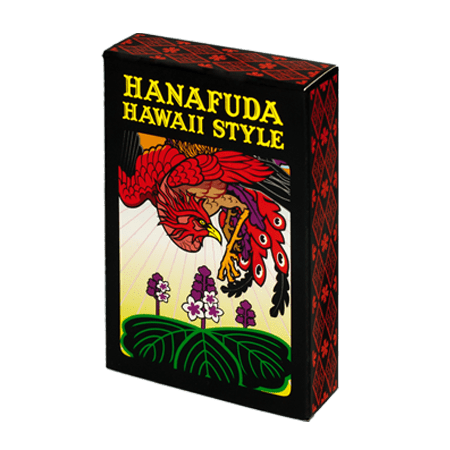
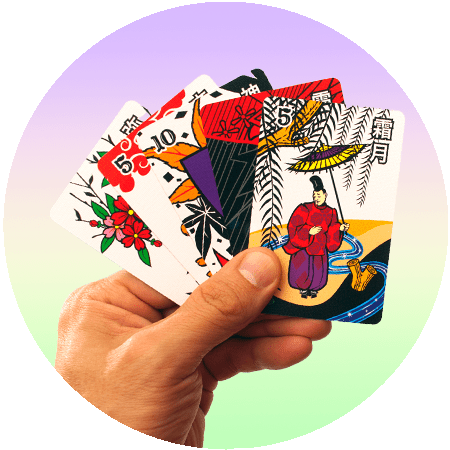
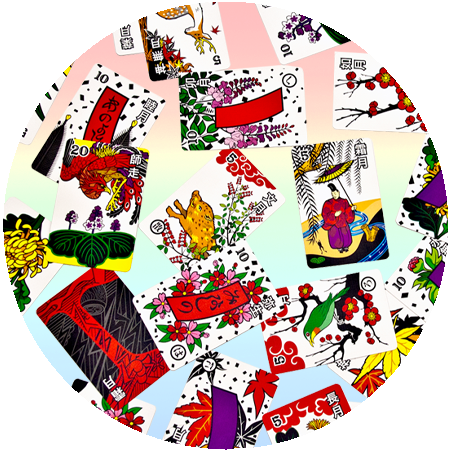
 Hanafuda Hawaii Style (Extra Large)
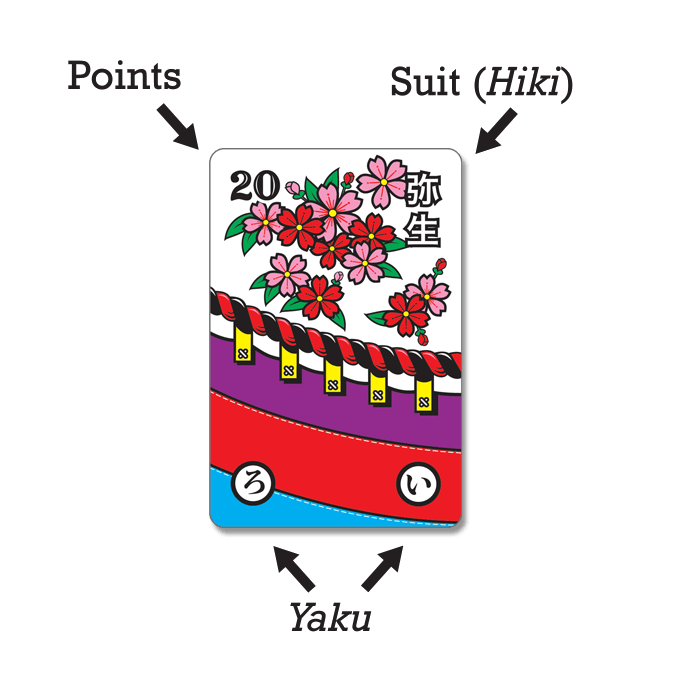
These 48 cards are roughly twice the size of standard hanafuda and — the truly kind touch — print the points, suit, and yaku right on each card's face. For an absolute beginner that is enormously reassuring; you can play a full round without once glancing at a chart. Note that it can sell out, so check availability before you set your heart on it.
- Points and yaku printed on every card — the gentlest possible on-ramp
- Oversized cards are easy to handle and read aloud
- The lowest price of any deck here
- Often out of stock
- Large size and on-card hints are training wheels you will eventually outgrow
At a glance
| deck | maker | price | best for | feel |
|---|---|---|---|---|
| Nintendo Hanafuda Daitoryo | Nintendo | $28 | the authentic standard | authentic |
| Hanafuda Cards — Mario (Red) | Nintendo | ~$30 (varies) | gift / pop pick | playful |
| Hanafuda Nā Pua Hawaiʻi | Hanafuda Hawaii | $15 | beauty on a budget | artisan |
| Hanafuda Pilina | Hanafuda Hawaii | $20 | a deck with a story | artisan |
| Hanafuda Hawaii Style (XL) | Hanafuda Hawaii | $12 | learning / group play | playful |
Questions, answered
Is hanafuda hard to learn?
No. You only need to recognize four card ranks — Brights, Animals, Ribbons, and Chaff — and one rule: match cards by month to capture them. Most people are playing a real round of Koi-Koi within fifteen minutes. The depth comes later, from the koi-koi gamble, not from the basics.
How many cards are in a hanafuda deck?
Exactly 48: twelve months (suits), four cards in each. Unlike a Western deck there are no numbers or letters — you identify every card by its picture.
What does "koi-koi" actually mean?
It means roughly "come on, come on" — the call you make when you have a winning set but choose to keep playing for a bigger one. It is a dare to yourself, and the risk is real: if your opponent finishes first after you call it, their score doubles and you get nothing.
How many players do you need for Koi-Koi?
Two. Koi-Koi is specifically a two-player hanafuda game. For more players, the same cards are used for other games such as Hachi-Hachi, but for your first sessions, find one partner and play Koi-Koi.
What is a yaku?
A yaku is a named scoring combination of captured cards — for example, the three Brights (Sankō), or the Boar-Deer-Butterfly trio (Inoshikachō). You score every yaku you complete, and their points add together. Forming one is what gives you the right to stop the round or shout koi-koi.
Which is the best hanafuda deck for a complete beginner?
If price is no object and you want the real cultural object, the Nintendo Daitoryo. If you want the easiest possible start, the Hanafuda Hawaii Style deck prints the points and yaku right on the cards. And the Mario deck is the most joyful gift — fully playable, with a case and instructions included.
Does the Nintendo Mario hanafuda deck play like a real deck?
Yes. Nintendo kept the traditional 48-card, twelve-month structure intact and simply illustrated each card with Mario-universe characters, so it plays identically to a classic deck. It also ships with a storage case and an instruction sheet.
Are the point values the same in every ruleset?
Mostly, but not perfectly. The values here follow the common standard (Gokō 10, Shikō 8, Ame-Shikō 7, Sankō 5, and so on), which matches Nintendo's own rule sheets. A few house rules differ by a point — most often scoring Sankō at 6 — and many groups apply a doubling when a round totals 7 or more. Agree on the rules before you deal.
What's the difference between hanafuda and Korean hwatu (화투)?
They're cousins. Hwatu uses the same twelve-month, 48-card structure but with a bolder, glossier plastic finish and is hugely popular in Korea (especially the game Go-Stop). If you love the koi-koi rhythm, a hwatu deck is a gorgeous, slightly punchier way to play the same garden.
Should I really chase Gokō (the five Brights)?
Almost never on purpose. It appears in under 2% of rounds. Treat it as a happy accident — keep capturing Brights when they're cheap, but build your actual score from animals, chaff, and ribbon sets. Greatness in koi-koi is mostly good bookkeeping.
Yumi's verdict
Begin where your heart is. If you want the genuine article — the deck a Japanese player grew up with — buy the Nintendo Daitoryo and learn the true card faces; everything you learn on it transfers everywhere. If this is a gift, or there are children at the table, the Mario deck is pure delight and plays exactly like the real thing. And if you simply want to start tonight, with the gentlest possible welcome, a Hanafuda Hawaii deck — Nā Pua for beauty, or the Extra-Large Style deck with the yaku printed right on the cards — will have you playing your first round of Koi-Koi before the tea has cooled. There is no wrong door. Come in.
Research ledger 10 sources · reviewed 2026-08-10
Specifications, rules, current product information, community experience, and contrary evidence were checked against the sources below. Commercial links are kept separate from editorial evidence.
- en.wikipedia.orgen.wikipedia.org/wiki/Hanafuda
- en.wikipedia.orgen.wikipedia.org/wiki/Koi-Koi
- fudawiki.orgfudawiki.org/en/hanafuda/games/koi-koi
- duarcain.blogspot.comduarcain.blogspot.com/2012/06/koi-koi-scoring-hands-yaku.html
- nintendo.comnintendo.com/us/store/products/hanafuda-cards-mario-red-119579
- jinenstore.comjinenstore.com/products/nintendo-hanafuda-cards-daitoryo
- hanafudahawaii.comhanafudahawaii.com/product/hanafuda-na-pua-hawai%ca%bbi
- hanafudahawaii.comhanafudahawaii.com/product/hanafuda-pilina
- hanafudahawaii.comhanafudahawaii.com/product/hanafuda-hawaii-style
- Community research index: r/Hanafuda discussions about Hanafuda for Beginners: How to Play Koi-Koi & Which Deck to Buyreddit.com/r/Hanafuda/search/?q=Hanafuda%20for%20Beginners%3A%20How%20to%20Play%20Koi-Koi%20%26%20Which%20Deck%20to%20Buy&restrict_sr=1&sort=top
Come in, take your shoes off — let me show you something.

Keep exploring
The next smart rabbit holes.
⌂ Topic PathFamily and Gateway Games: compare the whole shelfA good family game gets everyone playing quickly without becoming disposable after three nights. These guides prioritize clear...Beginner's GuideHarry Potter: Hogwarts Battle — The Complete Guide to the Co-op Deck-Builder Everyone's Still Obsessed WithThe definitive fan guide to The OP's cooperative, campaign-style Harry Potter deck-builder — how it plays, which boxes to buy, and the...Beginner's GuideBest Gateway Board Games (2026): Picked by Who You're ConvertingTen welcoming games organized by the person at your table, with teach time, interaction and failure modes made explicit.