How to Play Hanafuda (Koi-Koi): A Beginner's Guide (2026)
Forty-eight little flower cards whisper their secrets across the table — one beautiful push-your-luck game where you match by month, build scoring hands, and dare yourself to call koi-koi and reach for more. Come sit, I'll teach you tonight.

AI-assisted curator persona · research and editorial responsibility: Robert Pruitt · how this guide was made
Last editorial refresh: 2026-06-13 Gold-standard QA: 2026-07-17 20 sources reviewed Affiliate links checked during gold-standard pass

The short answer
Hanafuda (花札, "flower cards") is a Japanese deck of 48 small cards split into 12 suits, one per month, each painted with that month's plant — pine for January, cherry for March, chrysanthemum for September. Every suit holds four cards sorted into four ranks: brights (hikari, the showpieces), animals (tane), ribbons (tanzaku), and plains (kasu, the humble "chaff"). The most popular game for two players is Koi-Koi. Each player gets 8 cards, 8 more go face-up on the table, and the rest form a draw pile. On your turn you match a card from your hand to a table card of the same month, capturing the pair; then you flip the top of the deck and try to match again. As you gather cards you build yaku — scoring combinations like Three Brights or the boar-deer-butterfly trio. When you complete a yaku you may stop and bank the points, or call "koi-koi!" to keep playing for more — risking it all if your opponent scores first. Play a set number of rounds; highest total wins. That's the whole heart of it.
Decision map
Choose in thirty seconds
The purist who wants the iconic, authentic Japanese deck
The absolute beginner who wants English rules in the box
The traditionalist who prefers classic florals over the Napoleon box
Welcome in, and mind the step — I've dimmed the lamp on purpose, the light catches better this way. There is a particular pleasure — such a particular, quiet pleasure — in being handed a deck of cards you cannot read, and discovering, an hour later, that your hands know them perfectly. Hanafuda is exactly that pleasure. The cards are small, smaller than you expect, stiff and so satisfying between your fingers, and instead of numbers and kings they carry pine boughs and full moons and a small red ribbon that, once you notice it, you will never stop looking for.
I know the deck can look like a closed door — forty-eight unfamiliar flowers, Japanese names, talk of "yaku" and "chaff." It's easy to assume there's a secret you don't know yet. There isn't, I promise. Hanafuda is, at its very bones, a matching game: you pair a card in your hand with a card on the table because they both belong to the same month, and you take them both home. A child can do the matching. The art — the part that will keep you up past midnight whispering "one more round" — is in that delicious moment of deciding: when to be content with a small, safe win, and when to whisper koi-koi and reach for something bigger, knowing your opponent could steal the whole round if they score first.
So let me be the kind of host who takes care of you. I'll walk you slowly around the deck first, so the cards stop being strangers and become friends. Then I'll sit you down at Koi-Koi, the two-player game everyone means when they say "let's play hanafuda," and I'll stay right at your elbow through one full round — the deal, your turns, the scoring hands, that delicious koi-koi gamble, and how a game finally ends. By the time the tea's cool, you'll be teaching someone else the way I'm teaching you.
There's something warm if you'd like it, and no rush at all. Pull your chair a little closer to the light so you can see — we begin with the cards themselves.
Start here, then go deeper
You are in the right cabinet.
 ⌂ Topic PathFamily and Gateway Games: compare the whole shelfA good family game gets everyone playing quickly without becoming disposable after three nights. These guides prioritize clear...
 Beginner's GuideHanafuda for Beginners: How to Play Koi-Koi & Which Deck to BuyCome sit—I've been waiting to show you this. A Japanese hostess's guide to the little painted garden, the press-your-luck thrill of こいこい,...
 How-ToBest Beginner Card Games 2026: Easiest to Learn for All AgesFive card games so easy to learn, even your grandma will finish a round before her tea gets cold.
What is hanafuda? Meet the 48 cards and their four ranks
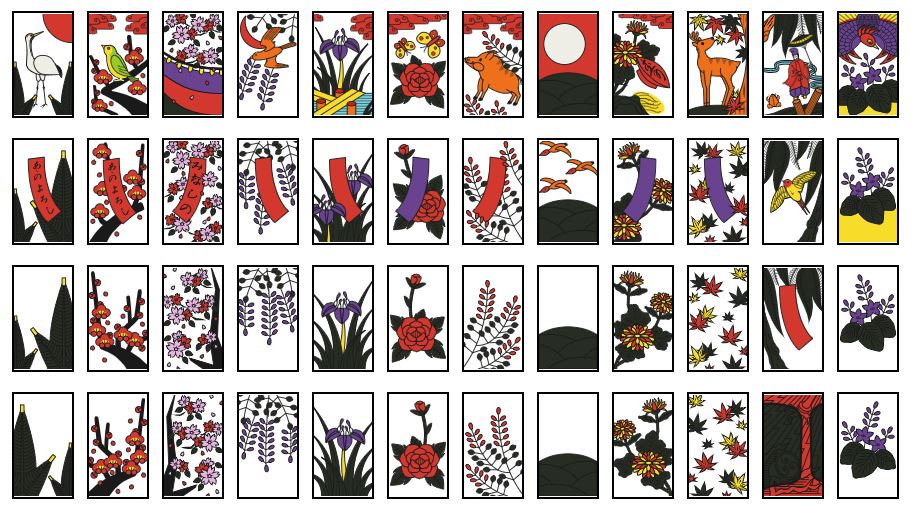
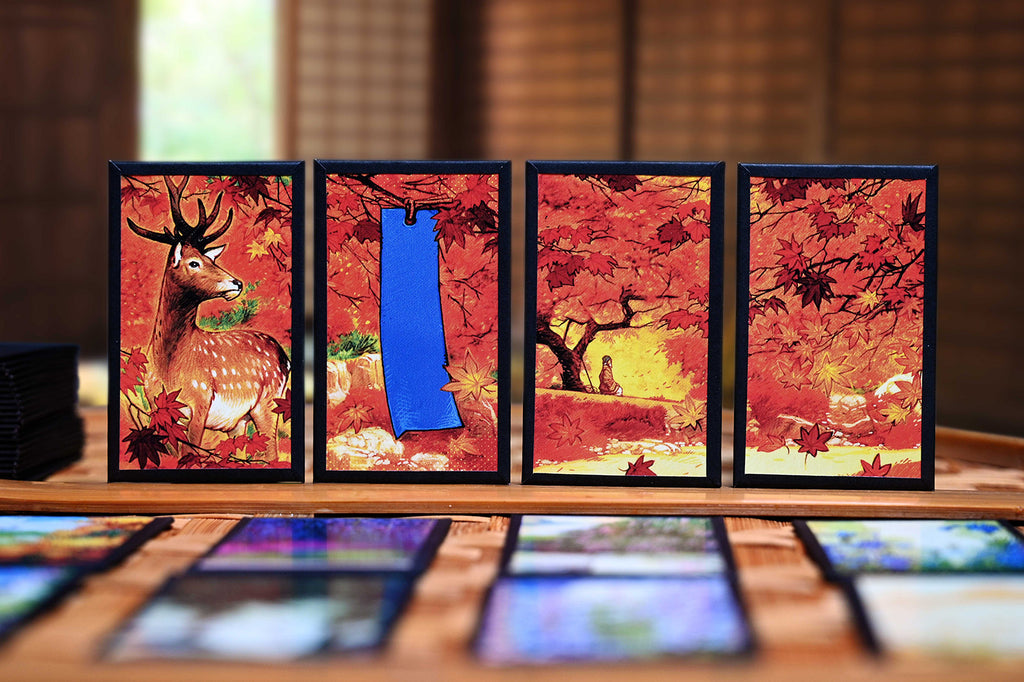
Before any game, let the deck introduce itself. A hanafuda deck holds 48 cards, divided into 12 suits — one for each month of the year. Each month is a plant: January is pine, February plum, March cherry blossom, April wisteria, May iris, June peony, July bush clover, August silvergrass (susuki), September chrysanthemum, October maple, November willow, and December paulownia. Every month gets exactly four cards, and that is the whole arithmetic: 12 × 4 = 48. There are no numbers printed anywhere. The month is the suit, and you'll soon read each picture the way you'd read a face.
Within those four-card sets, cards come in four ranks, and this is the bit worth memorizing because the whole scoring game rests on it:
- Hikari (光) — "brights." The five showpiece cards, the jewels of the deck: the Crane (January pine), the Curtain (March cherry), the Full Moon (August silvergrass), the Rain Man (November willow), and the Phoenix (December paulownia). Just 5 brights exist in the whole deck.
- Tane (種) — "animals" or "seeds." The mid-tier cards, 9 of them, showing creatures and living things: the nightingale, the cuckoo, the bridge of geese, the butterflies, the boar, the deer, and the famous Sake Cup on the chrysanthemum.
- Tanzaku (短冊) — "ribbons." The poetry slips, 10 cards, each a colored paper banner. Some are plain red, some carry red calligraphy (the akatan), and three are blue/purple (the aotan).
- Kasu (カス) — "plains" or "chaff." The plain background cards — the humble many. There are 24 of them, and despite the unkind name ("chaff," "garbage"), you will learn to want them, because collecting enough of them scores too.
Five + nine + ten + twenty-four = forty-eight. Everything balances. The brights are gorgeous, but I have a soft spot for the chaff; they teach you that in this game, no card is truly worthless. Sit with the deck a moment and find the five brights by sight — once you can spot a moon and a phoenix across the table, you're already half a player.
There are no numbers printed anywhere. The month is the suit, and you'll soon read each picture the way you'd read a face.
Setting up: how to deal a round of Koi-Koi
Now we sit down to the real thing. Koi-Koi (こいこい) is the two-player hanafuda game most people mean when they say "let's play." You need one full 48-card deck, two players, and a flat surface in good light. Decide who deals first — traditionally the oya (the dealer/parent), often chosen by a quick draw where the earlier month wins.
The deal is tidy once you've seen it. The goal is simple: 8 cards to each player's hand, and 8 cards face-up on the table (the field). The rest become the face-down draw pile.
The customary rhythm deals in little batches so nobody can claim you stacked it: two cards to your opponent, two to the field, two to yourself — then repeat that cycle until each player holds 8 and the field shows 8. (You'll sometimes see it dealt in batches of four; either works.) The remaining 32 cards sit in a neat face-down stack to the side. As one teacher gently notes, the exact batching is "more a formality and isn't necessary in casual games" — so don't fret if you simply count out 8, 8, and 8.
A word about the field. Those 8 face-up cards are the shared pool you'll be fishing from all round, so glance at them before you play. Are there three cards of the same month showing? (It happens, and it changes your plan.) Is a bright sitting there for the taking? Note it. In Koi-Koi the table is half the game — the cards in your hand only matter in relation to what's lying in the light.
Keep your captured cards in front of you, and as you take them, sort them gently into the four ranks — brights here, animals there, ribbons, plains. You're not just tidying; that little tableau in front of you is your scoresheet. You'll watch your yaku assemble themselves as the round goes on. There — eight, eight, and eight. The field is set, the deck is waiting, and the first turn is yours. Take a breath; it's gentler than it looks.
In Koi-Koi the table is half the game — the cards in your hand only matter in relation to what's lying in the light.
How a turn works: matching by month and capturing
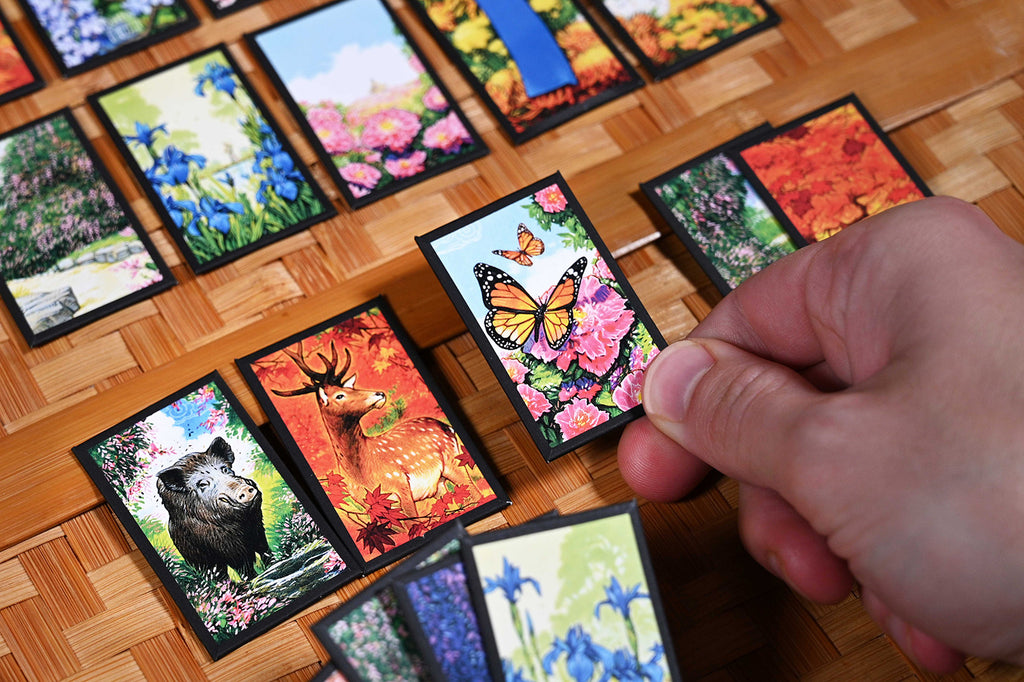
Here is the engine of the whole game, and it is wonderfully simple. A turn has two beats: play from your hand, then flip from the deck. Both beats are the same little move — match a card to the field by month, and capture the pair.
Beat one — your hand. Choose any card from your 8 and look for a card on the field of the same month. Pine matches pine, maple matches maple. If you find a match, lay your card on top of the field card and take both into your capture pile. If nothing on the field shares your card's month, you must still play a card — you place it face-up onto the field, where it now joins the pool (and may be captured later, by you or your opponent). You always play exactly one card from your hand, match or not.
Beat two — the deck. Now flip the top card of the draw pile face-up. Same rule: if it matches a card's month on the field, capture both. If it matches nothing, it stays on the field face-up. Here's the one tidy wrinkle: if the card you flip happens to match a month, you must take that pair — there's no choosing to leave it.
A small but important point: in any given month there are four cards. So when you play a card and there's a match on the field, you take that one matching card (a clean pair). If two cards of the same month are showing on the field, you take whichever one you choose. And if three of a month are on the field, your single matching card sweeps all four together — a lovely haul. These multi-match moments are where rounds swing.
Then it's your opponent's turn, and they do exactly the same: hand, then deck. Play passes back and forth, the field shifting like a tide pool — cards landing, cards getting swept — until either someone scores a yaku and decides to stop, or both hands run empty.
Let me give you a picture. Say you hold the March cherry-blossom Curtain (a bright!), and a plain March card is lying on the field. You play your Curtain onto it, scoop both, and set the Curtain proudly in your brights row. Then you flip the deck: up comes a June peony, and a June ribbon waits on the field — you take that pair too. A two-capture turn, and one of them a bright. That's a good turn, and you'll feel it. Don't overthink the matching; your eyes will learn the months faster than you'd believe.
A turn has two beats: play from your hand, then flip from the deck — and both beats are the same little move.
The yaku: every scoring hand and what it's worth
This is the heart's blood of Koi-Koi — the yaku (役), the named combinations that score. You build them by capturing the right cards, and the moment you complete one, you get a choice (more on that next). Here are the real yaku and their point values; these are stable across the standard rules.
The bright hands (hikari): - Gokō — Five Brights: 10 points. All five bright cards. The crown of the deck. - Shikō — Four Brights: 8 points. Any four brights not including the Rain Man (willow). - Ame-Shikō — Rainy Four Brights: 7 points. Four brights that do include the Rain Man. (The rain man is worth less in company — a charming bit of card etiquette.) - Sankō — Three Brights: 5 points. Any three brights excluding the Rain Man.
The "sake" viewing hands (5 points each): - Tsukimi-zake — Moon Viewing: 5 points. The Full Moon (August) + the Sake Cup (September). - Hanami-zake — Flower Viewing: 5 points. The Curtain (March) + the Sake Cup (September). Two of Japan's loveliest customs — moon-gazing and blossom-gazing — made into card combos.
The animal & ribbon sets: - Inoshikachō — Boar-Deer-Butterfly: 5 points. The boar (July), deer (October), and butterflies (June). The name literally lists them. - Akatan — Red Poetry Ribbons: 5 points. The three ribbons bearing red calligraphy (pine, plum, and cherry months). - Aotan — Blue Ribbons: 5 points. The three blue/purple ribbons (peony, chrysanthemum, and maple months). - Tane — Animals: 1 point for collecting any 5 tane cards, +1 for each additional animal beyond five. - Tan / Tanzaku — Ribbons: 1 point for any 5 ribbons, +1 per extra. - Kasu — Plains/Chaff: 1 point for any 10 chaff cards, +1 per extra. (Yes, the humble chaff scores — collect enough and the "garbage" pays.)
A few graces to know. The Sake Cup is the deck's most versatile card: it anchors both viewing hands, and in many rulesets it doubles as a tane (animal) and as chaff — handy for finishing a Tane or Kasu count. And these stack: if you've gathered Three Brights and the boar-deer-butterfly, you score both. The points add up fast, which is exactly what makes the next decision so agonizing. Don't memorize this list in a night — keep it beside you, and within a few games the shapes will live in your hands.
Even the chaff scores. Collect ten of the humblest cards and the "garbage" quietly pays you — no card in this deck is truly worthless.
Koi-koi or stop? The push-your-luck heart of the game
Here is the moment the whole game is named for. You've just completed a yaku — say, Three Brights, worth 5. Now you must choose, out loud:
- Stop (call "shōbu!" — "match/decision"): you end the round immediately, bank the points for every yaku you hold, and that hand is over. Safe. Yours.
- Continue (call "koi-koi!" — literally "come on, come on!"): you keep playing, hungry for a bigger score. If you can build another yaku, or grow the one you have, before your opponent scores, your eventual total climbs — and calling koi-koi adds a multiplier on top.
The catch — and it is a real catch — is this: once you've called koi-koi, if your opponent completes a yaku before you score again, they win the round and you get nothing. All those points you were too greedy to bank? Gone. Worse, their score may be doubled as a penalty for your koi-koi. The gamble cuts both ways.
This is the soul of Koi-Koi. A player on the lovethynerd guide put it plainly: "It is a risk-reward scenario, because if you call Koi-Koi, your opponent will score double the points if they make a match and call Game before you increase your possible points." And the flip side: "You want to call Koi-Koi if you believe that you can obtain a better yaku, an additional yaku, or add to the value of a current yaku before your opponent makes a match."
So how do you decide? Read the table. How many cards are left in the deck and in hands? (Late in a round, there's little room for either of you to improve — banking is wiser.) What is your opponent obviously collecting — are they one card from Five Brights? (Then stop, immediately.) Do you have a clear shot — three brights with the fourth still live in the deck, a Tane set one animal away? (Then koi-koi, and reach for it.)
There's no formula, and that's the joy. Koi-Koi is a game of nerve dressed in flowers. Some nights you'll bank a tidy 5 and feel clever; some nights you'll whisper koi-koi, draw the exact moon you needed, and feel like the luckiest soul at the table. Both feelings are the game working as intended. When in doubt your first few games, lean toward stopping — you'll learn the rhythm of the risk soon enough.
Koi-koi means, literally, "come on, come on." It is a game of nerve dressed in flowers.
Ending a round, scoring, and winning the game
Let's close the loop — how a round resolves, and how a full game is won.
A round ends one of two ways. Either a player completes a yaku and calls stop (shōbu) — banking their points — or both hands are exhausted with nobody choosing to stop, in which case the round is a draw and (in standard play) no points are scored. The player who stops takes everything they've earned; the opponent, even with cards captured, scores zero for that round. It's winner-take-the-round.
Now the doubling — pay attention, it's the rule new players most often miss. Two multipliers can stack:
1. The 7-point rule. If the winner's total from all their yaku is 7 points or more, that total is doubled. So a hand worth 7 actually scores 14; an 8 becomes 16. This is why reaching for that bigger yaku can be worth the koi-koi risk — crossing the 7-point line is a genuine cliff. 2. The koi-koi penalty. If the winner had called koi-koi earlier in the round and then went on to score, many rulesets double their score as the reward for the gamble paying off. (And mirror-image: if you called koi-koi and your opponent scores instead, their points may double as your penalty.)
These can compound. By the most common rules, a player who called koi-koi and finishes with 7+ points collects both bonuses — up to four times the base. A modest hand can become a round-defining haul. (Exact multiplier conventions vary by house and by app — confirm with your table before you start; I've logged the variation honestly below.)
The full game. A single round is rarely the whole game. The traditional length is 12 rounds — one for each month of the year — with the winner being whoever has the highest total points across all twelve. Many people instead play to a target score (50 is common) or simply agree on a number of rounds before they begin. The dealer (oya) usually rotates, or passes to whoever won the last round. Pick whichever suits your evening; there's no wrong choice.
And that, truly, is the whole game. The deck, the deal, the two-beat turn, the yaku, the koi-koi nerve, and the tally at the end. You came in not able to read a single card; you could sit down and play a proper round right now. That's the gift of hanafuda — it gives itself to you faster than almost any game I know. Shuffle, deal eight and eight and eight, and let the first round begin.
Cross the seven-point line and your score doubles. That cliff is exactly why the koi-koi gamble can be worth it.
Cousins at the table: Hachi-Hachi, Go-Stop, and a little etiquette
Koi-Koi has relatives, and it's worth a nod to them — partly for curiosity, partly because you may meet them.
Hachi-Hachi (八八, "Eighty-Eight") is the elder of the family — a three-player (sometimes more) hanafuda game named for a target of 88 points, with a richer scoring system and a betting culture behind it. Many scholars consider Koi-Koi a streamlined, friendlier descendant of these older capturing games like Hachi-Hachi and Hana-awase. If Koi-Koi is the cozy two-person evening, Hachi-Hachi is the bustling family table.
Go-Stop (고스톱) is hanafuda's Korean cousin, and it's enormously popular — for many Korean families it's the card game, especially around holidays. It's played with hwatu, a deck structurally almost identical to hanafuda (the cards even share the same months and ranks), with two small differences: the Willow and Paulownia suits are swapped, and hwatu decks usually ship with a few extra joker cards. Go-Stop plays like a more elaborate, often three-player Koi-Koi, with its own scoring twists and a "go or stop" decision that will feel instantly familiar — it's the same push-your-luck heartbeat. The two games are cousins by debate; scholars argue happily about who borrowed what from whom. If you love Koi-Koi, Go-Stop is your obvious next door to knock on.
And because hanafuda is Japanese to its roots, a few small graces make the table sweeter. Handle the cards with a little care — they're stiff little works of art, and people who love them treat them so. Agree on house rules before the deal (the Sake Cup's role, the doubling conventions, the round count) so the game stays warm, not argumentative. And there's a quiet seasonal poetry worth savoring: you're playing with the literal calendar of the year, moon-viewing in August, blossoms in March. One writer lovingly called the deck "a 'portable poetry' gallery." You needn't know the poems to feel it — but it's a nice thing to know it's there.
That's the family album. Learn Koi-Koi well and these cousins open easily; the grammar is shared, only the dialects differ. However you play, may the moon card find your hand. Now — shall we deal one more?
Go-Stop is the same push-your-luck heartbeat in a Korean accent. Learn Koi-Koi, and its cousins open like nearby doors.
From the rabbit hole
Real voices from players, reviewers, and the communities who know these games best.
blog“It is a risk-reward scenario, because if you call Koi-Koi, your opponent will score double the points if they make a match and call Game before you increase your possible points.”
Justin Gabriel, lovethynerd.com — A Definitive Guide to Koi-Koi
review“The rules are simple to understand and easy to teach. The card art is so pretty; it almost looks as though each card is a mini painting.”
Pudgy Cat Games — Hanafuda · Koi-Koi review
blog“I was immediately drawn in, not only by their unique size (they're about a quarter as big as standard western playing cards) but also their designs.”
Matt Vitone — Learning How to Play with Hanafuda (Medium)
feature“By mapping the cards to the seasons – Pine for January, Plum for February, Cherry for March – the game could be passed off as a calendar or an educational tool.”
Unseen Japan — Hanafuda: How a Banned Game Defined the Pre-Pokémon Era
reference“A Korean hwatu deck is structurally almost identical to a typical Japanese hanafuda deck... the suits of Willow and Paulownia are swapped, and hwatu decks come packaged with up to six additional joker cards.”
Fuda Wiki / Pagat — Games played with Flower Cards
rules-teacher“You want to call Koi-Koi if you believe that you can obtain a better yaku, an additional yaku, or add to the value of a current yaku before your opponent makes a match and calls Game.”
Justin Gabriel, lovethynerd.com — A Definitive Guide to Koi-Koi
The picks
Some links below are affiliate links — as an Amazon Associate, Puzzlewick earns from qualifying purchases, at no extra cost to you. It never changes a pick.
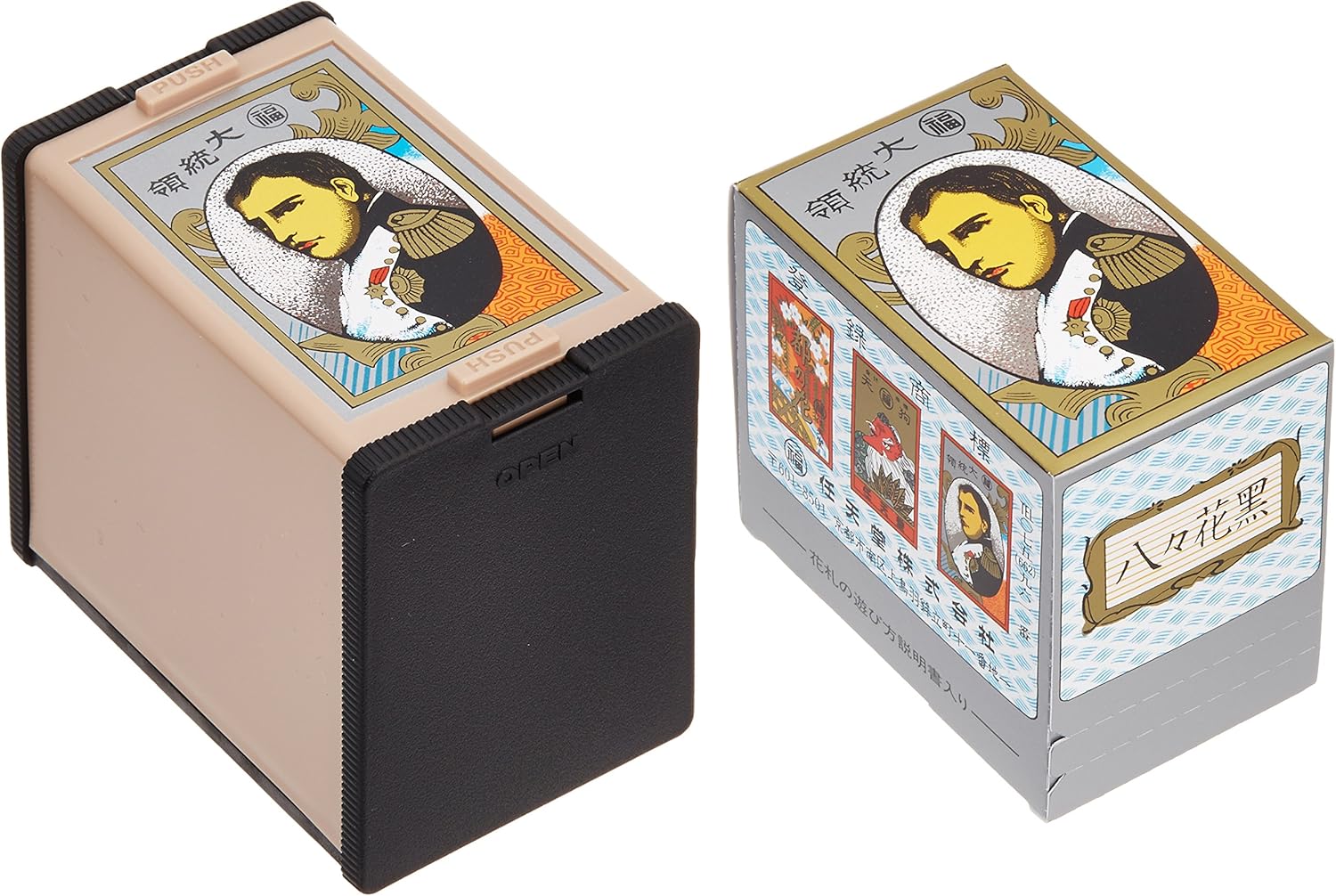
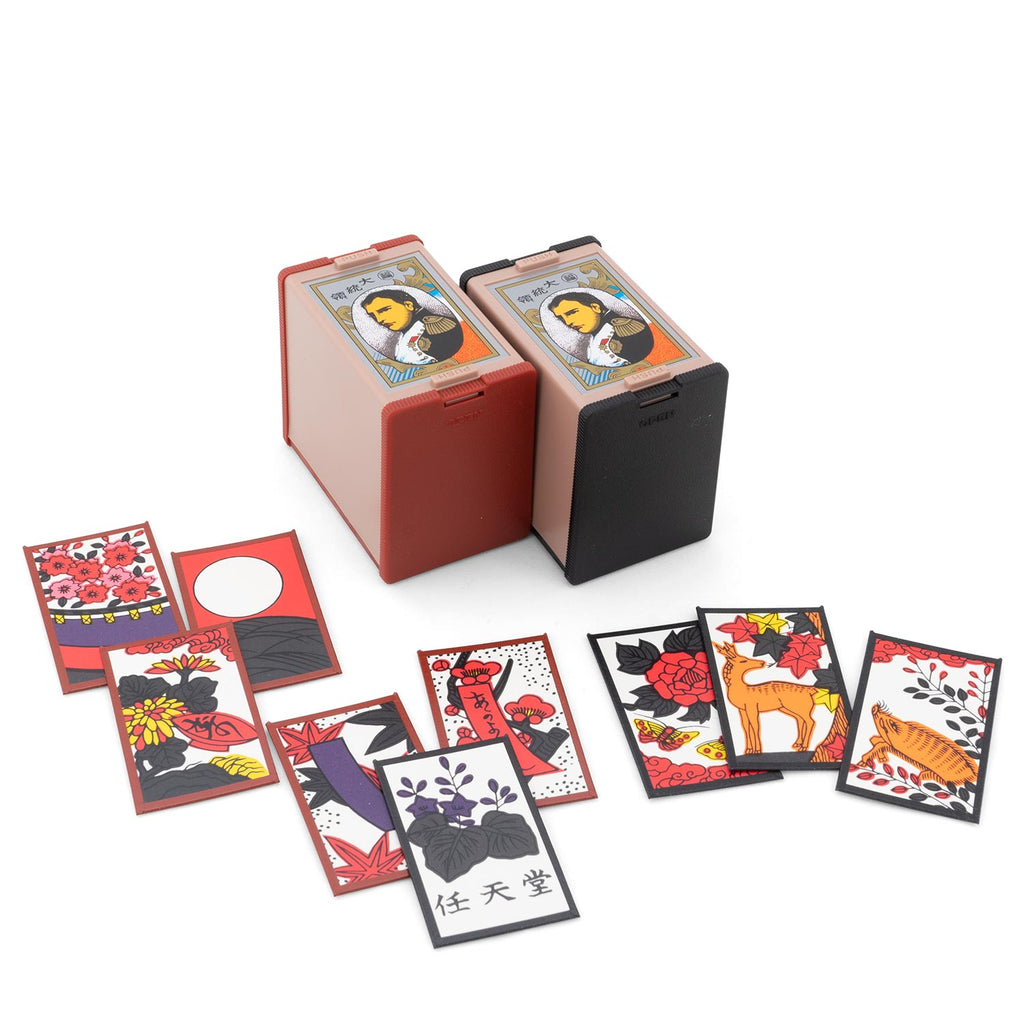
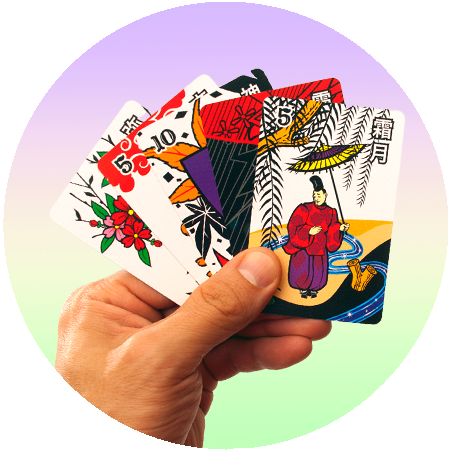
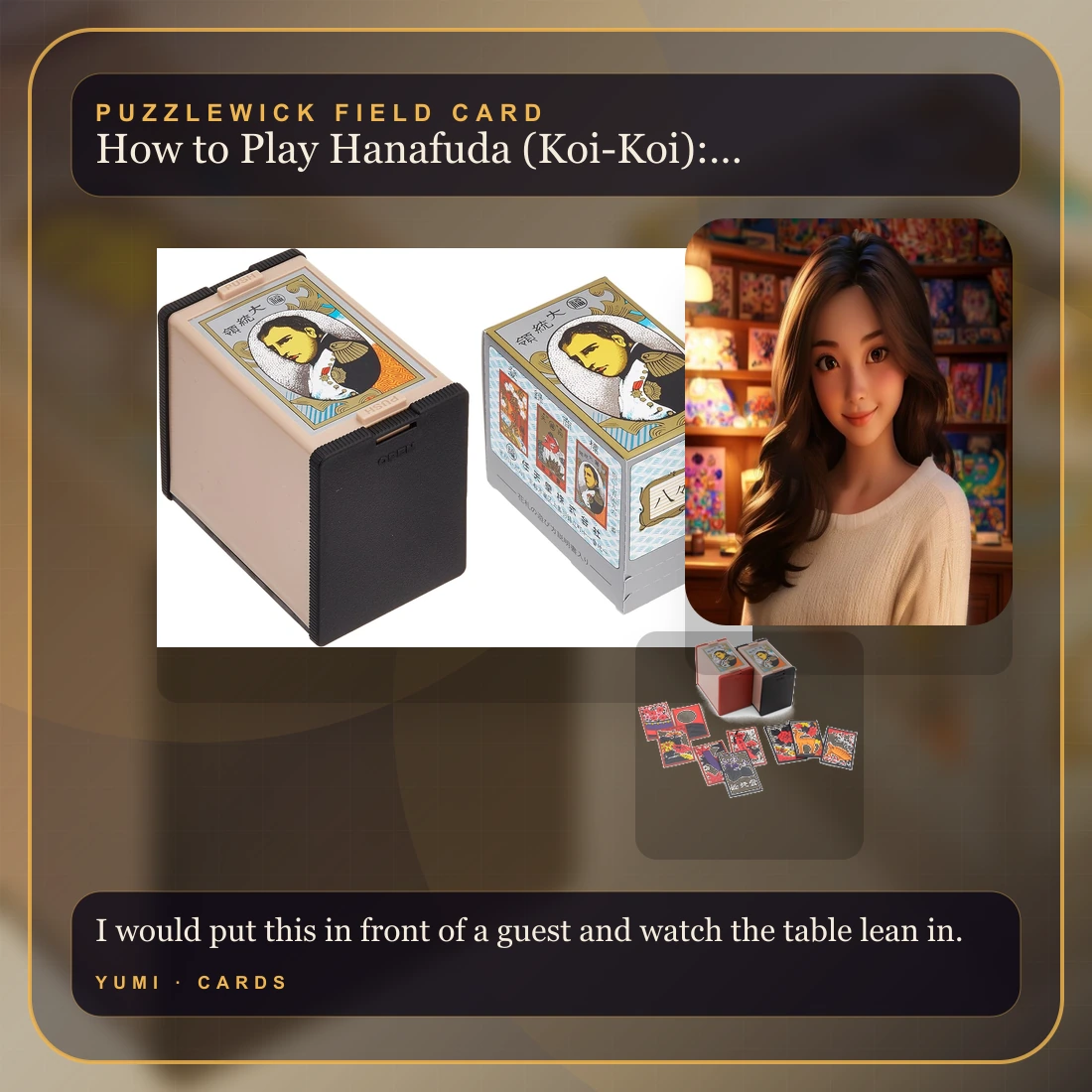
2 photos Nintendo Hanafuda — Daitōryō ("President")
This is the deck — Nintendo's premium hanafuda line, the very product that founded the company in 1889 and famously carries Napoleon's face on the box (hence "Daitōryō," President). Made of traditional thick paper in Kyoto, the cards have the exact heft, snap, and slightly slippery shuffle that hanafuda lovers chase. The traditional small size and classic art make every yaku feel the way it's meant to. If you want to play the game as it has been played for over a century, start here. Available in red or black backs.
- The authentic, iconic deck with deep historical pedigree
- Traditional Kyoto-made paper stock with the genuine feel and heft
- Classic art that matches every rules diagram you'll read online
- No English rules included — you'll learn from a guide like this one
- Traditional small size and slick paper take a few shuffles to get used to
 3 photos
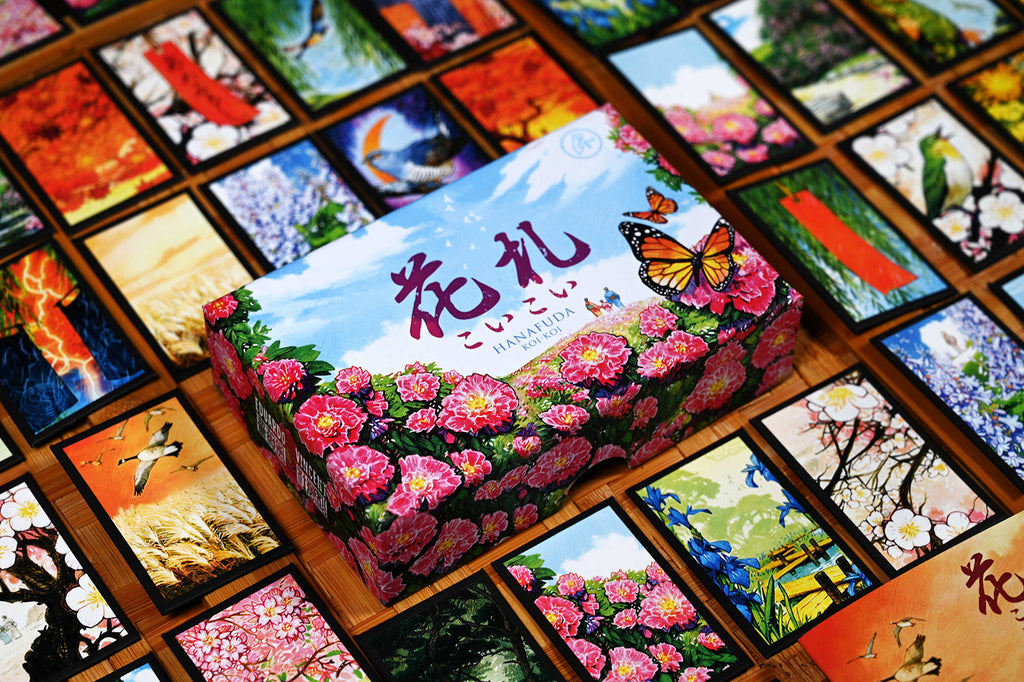
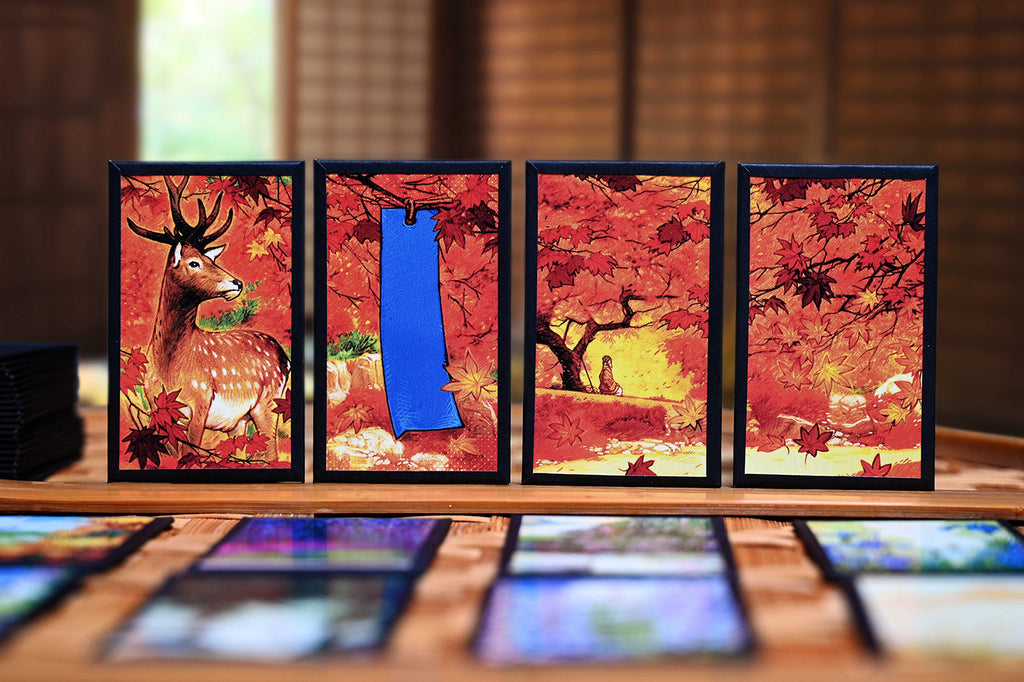
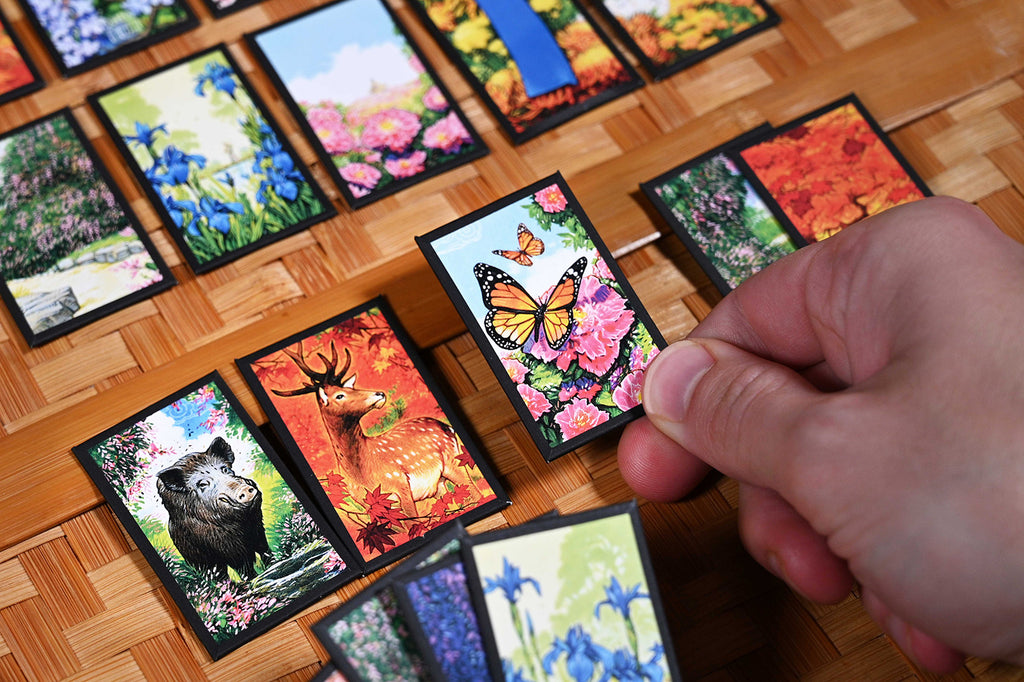
 Deluxe Hanafuda Deck (Vincent Dutrait art)
If you're nervous and want everything explained, this is your deck. Forty-eight heavyweight, beautifully illustrated cards by acclaimed artist Vincent Dutrait, packaged with a full English rulebook, per-player month-and-set reference guides, a quick-setup card, and an appendix covering eight Koi-Koi variants plus other games. It even includes a solo mode designed by Bruno Cathala for practicing alone. The reference cards mean you don't have to memorize the yaku before your first game. It does sell out — grab it when it's in stock.
- Genuinely beginner-proof: English rules, examples, and reference sheets included
- Stunning original artwork on heavyweight, durable cards
- Eight Koi-Koi variants plus a solo practice mode
- Frequently sold out — stock comes and goes
- Modern art and larger size, not the traditional Japanese look or feel
 4 photos
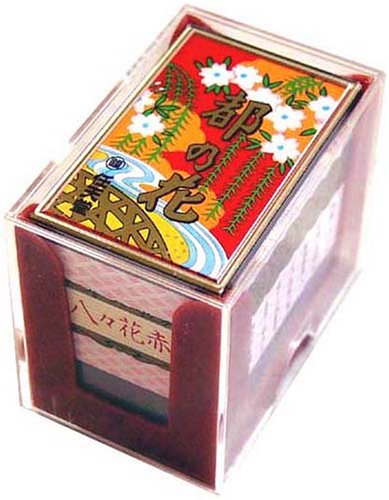
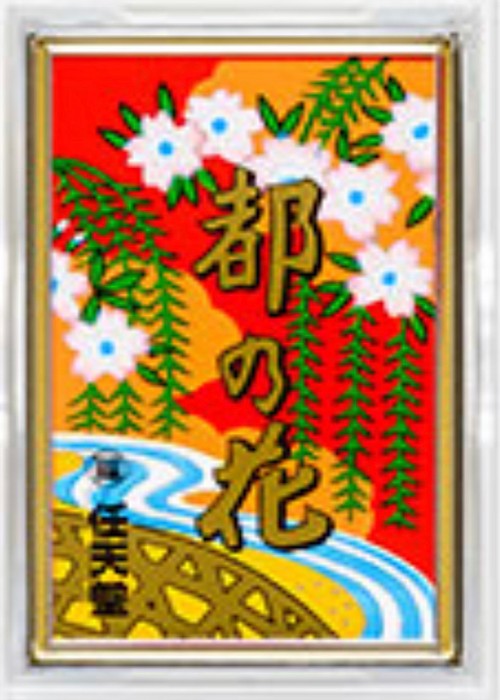
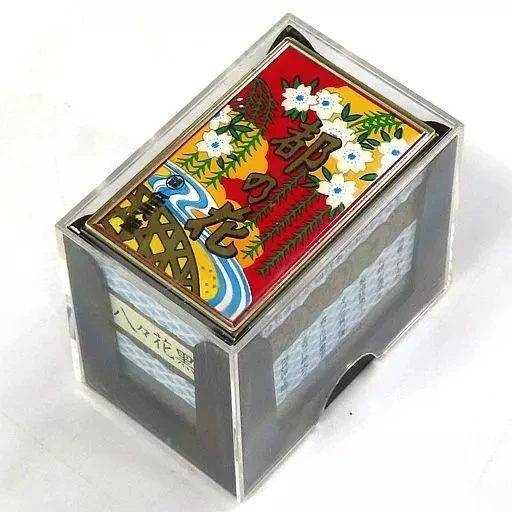
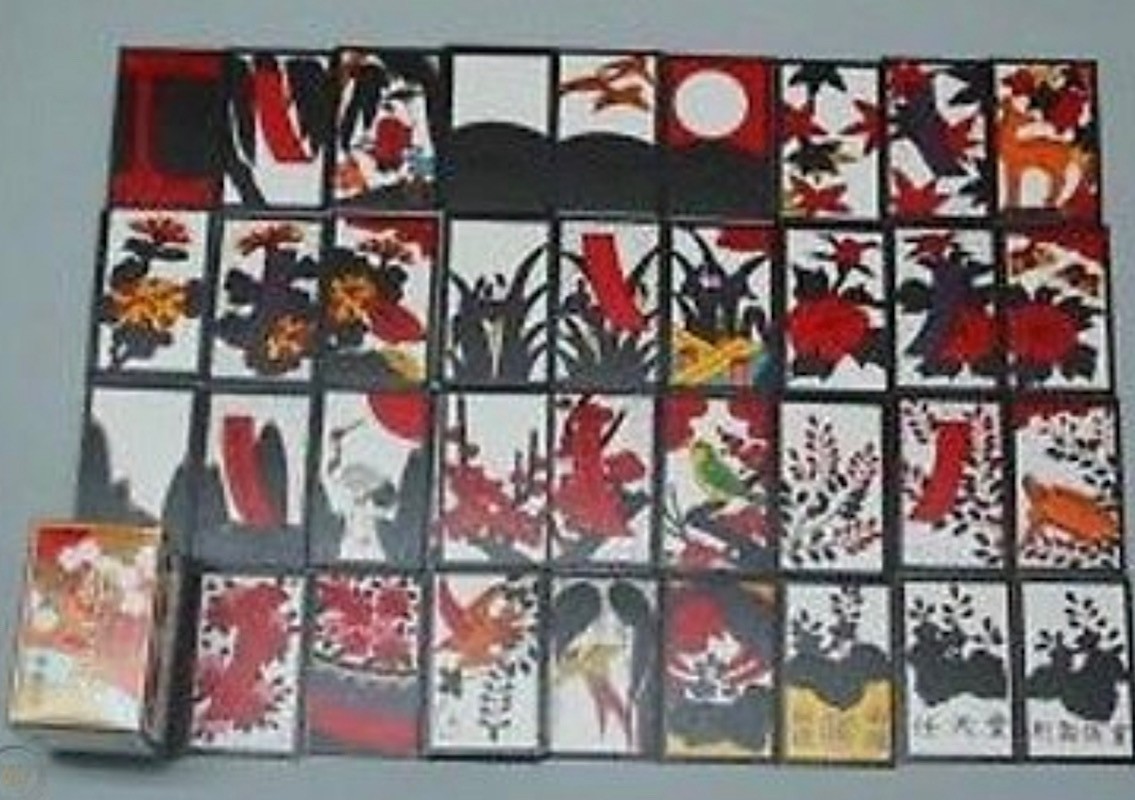
 Nintendo Hanafuda — Miyako no Hana
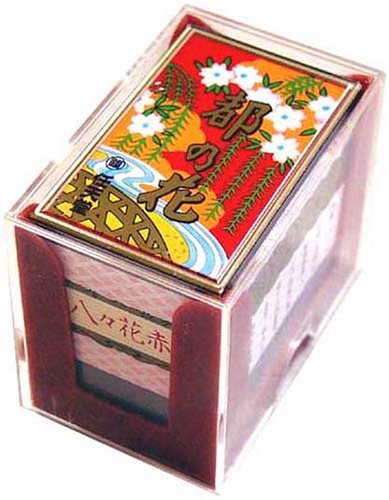
Nintendo's more traditional, budget-friendly hanafuda line. Where the Daitōryō box wears Napoleon, Miyako no Hana keeps things classically Japanese — cherry flowers, willow branches, and a river motif on the packaging. The cards themselves play identically to any standard deck; it's purely a matter of taste in presentation and a slightly gentler price. A lovely, authentic option in red or black. (Price fluctuates with import availability, so I've left it unmarked rather than guess.)
- Authentic Nintendo-made traditional hanafuda
- Classic floral presentation many purists prefer
- Typically more affordable than the premium Daitōryō line
- Pricing varies with import stock — check before buying
- No English rules in the box
 4 photos
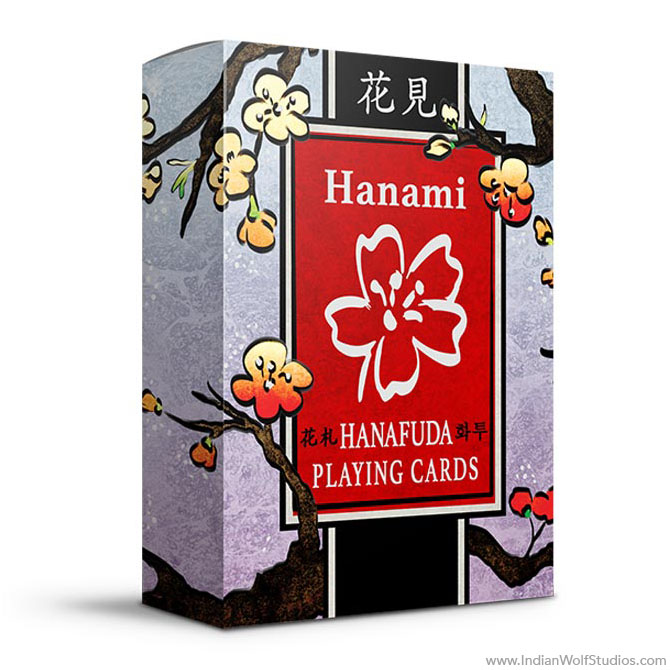
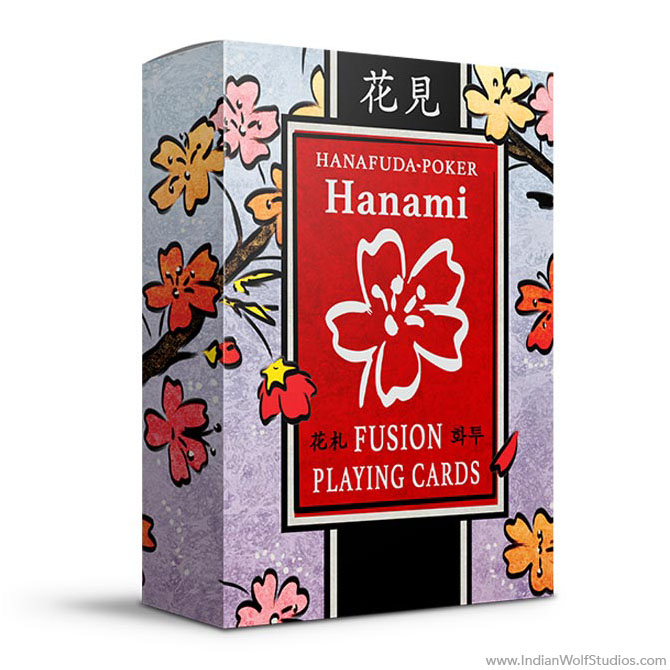
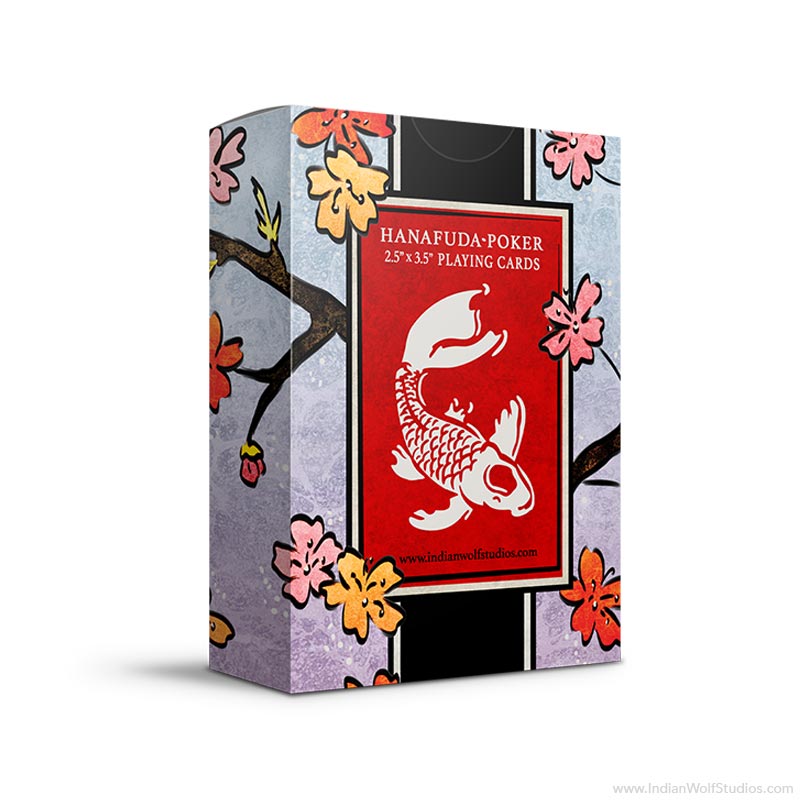
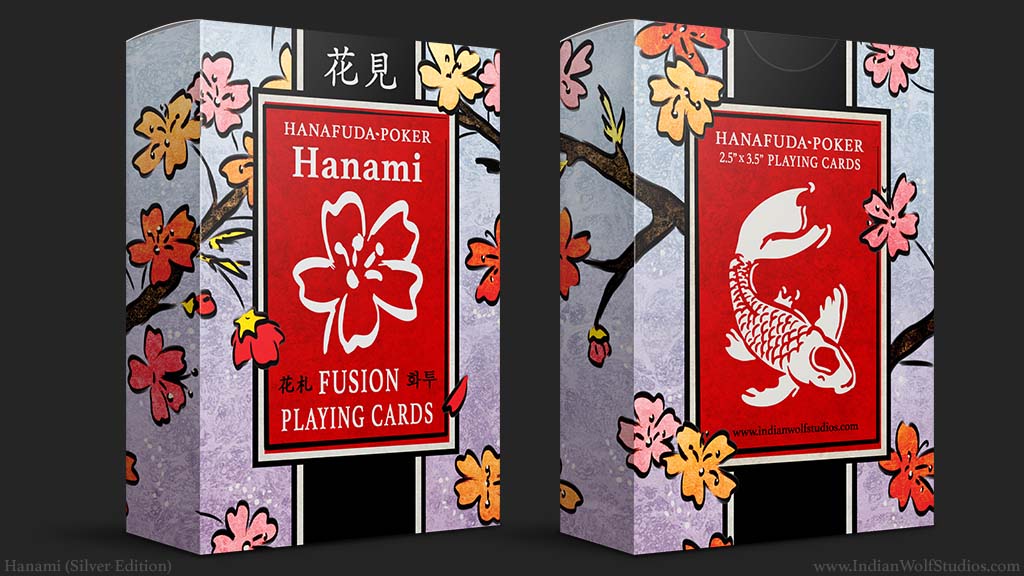
 Hanami Hanafuda — Silver Edition
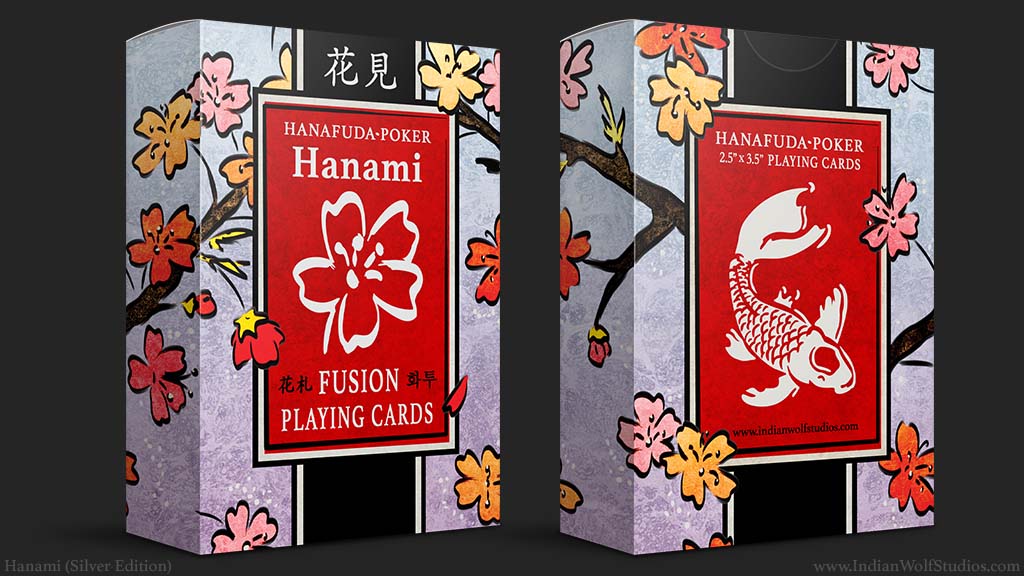
A gorgeous modern reimagining: a poker-sized, pipless hanafuda deck where each month's cards are designed as connecting panels (tetraptychs) that join into a single floral scene. Printed on premium linen-finish stock by Expert Playing Card Company, with a silver-foil tuck box. The larger size shows off the lavish art and is easier to handle for Western hands used to standard cards — though it strays from the traditional miniature feel. Fully playable for Koi-Koi. A coffee-table deck you can actually play.
- Breathtaking connecting art across each month's four cards
- Comfortable poker size on premium linen-finish stock
- Fully playable for Koi-Koi and other hanafuda games
- Poker size and 54-card count depart from the traditional 48-card miniature deck
- Premium art-deck pricing; availability varies by edition
 4 photos
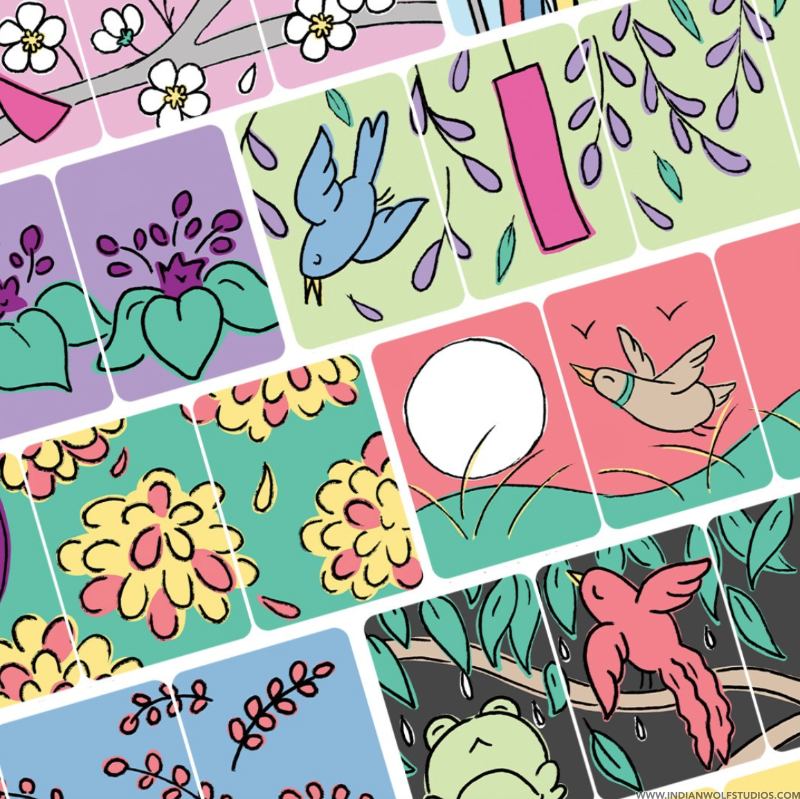
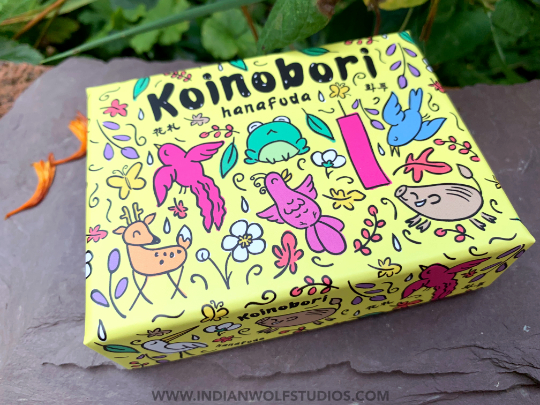
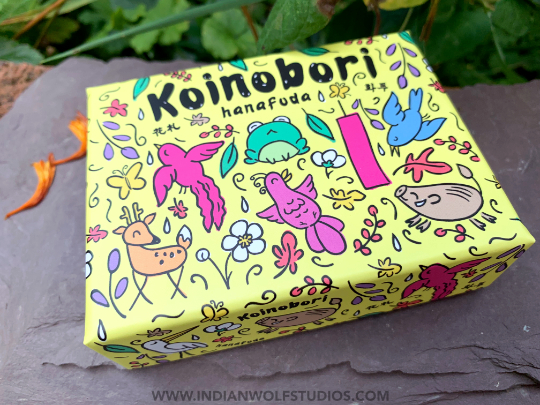
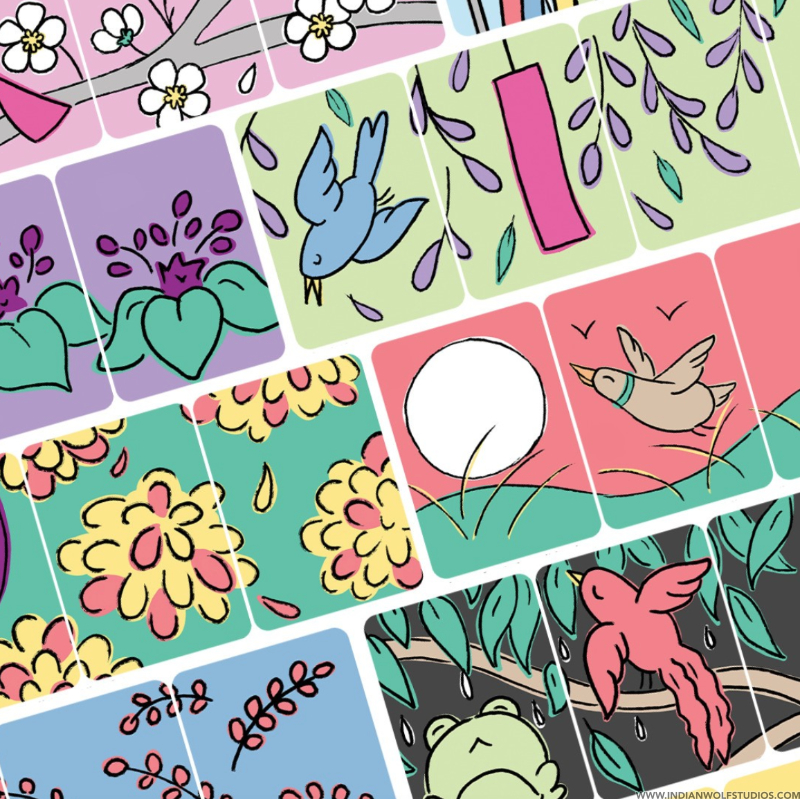
 Koinobori Hanafuda
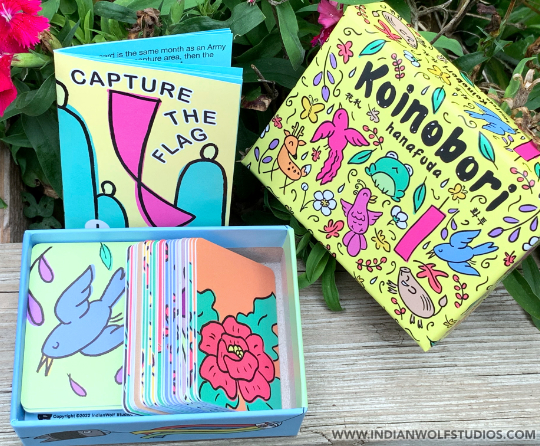
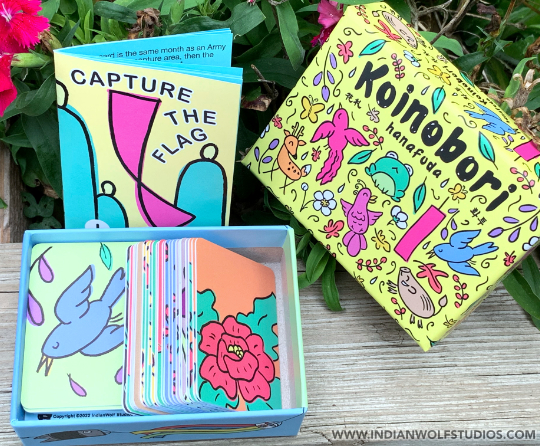
A charming carp-streamer-themed deck of mini-sized (1.7" × 2.5"), fully custom plastic cards with textured backs — closer to traditional hanafuda dimensions than the poker decks, but in hard-wearing plastic that shuffles smoothly and survives spills. The koinobori theme celebrates children and perseverance, a sweet seasonal nod. It's a pipless deck built to play any hanafuda game, Koi-Koi included. A great everyday-play deck that won't wear out.
- Durable plastic stock that outlasts paper decks
- Near-traditional mini size with a delightful original theme
- Pipless and fully compatible with Koi-Koi and other games
- Limited Kickstarter-edition print run; availability is not guaranteed
- Price not listed on the product page — check current retailer listing
 4 photos
 Hanafuda Hawaii Style Deck
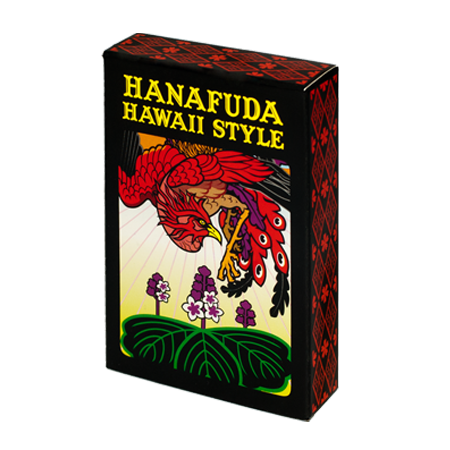
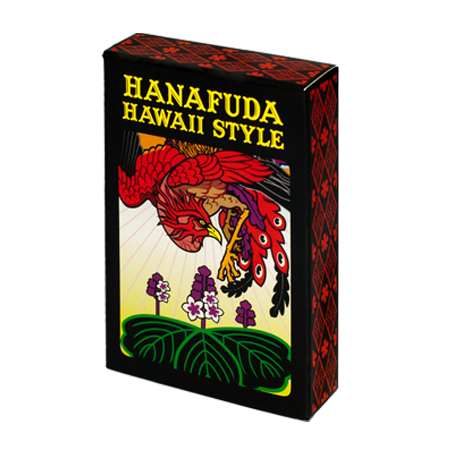
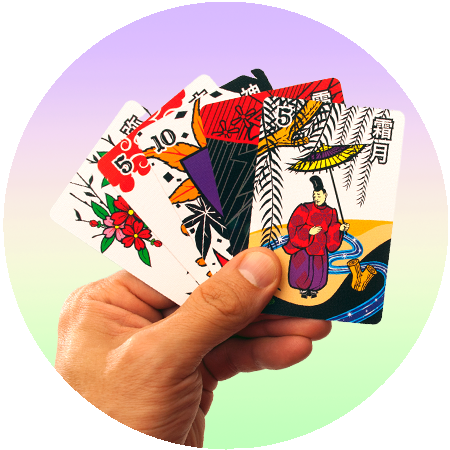
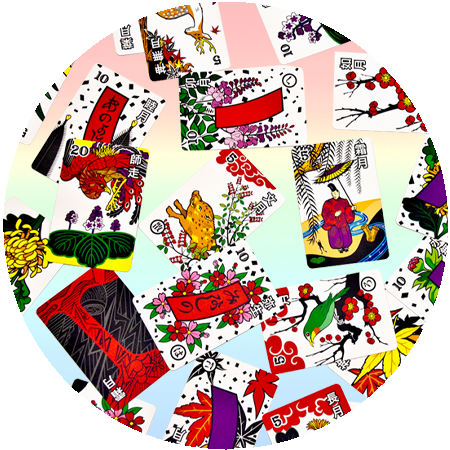
Hawaii has its own beloved hanafuda culture (the game took deep root in the islands), and Hanafuda Hawaii produces affordable, accessible decks aimed squarely at casual players and families. An extra-large version is widely available around the $25 mark, making the bigger pips easy on the eyes for learners. It's an easy, low-stakes way to get a real deck into your hands tonight without spending much. Check current retailer listings, as editions and prices shift.
- Very affordable entry point into real hanafuda
- Large-format version is easy for beginners to read
- Carries the distinct Hawaiian hanafuda tradition
- Casual production; not a premium collector feel
- Pricing and exact edition vary by retailer
At a glance
| deck | origin | art style | price | best for |
|---|---|---|---|---|
| Nintendo Daitōryō (President) | Kyoto, Japan | Traditional, classic hanafuda art (Napoleon box) | ~$28 | Purists wanting the authentic iconic deck |
| Pencil First Deluxe Hanafuda | Modern Western (Vincent Dutrait art) | Lavish modern illustration, larger cards | ~$34.99 | Beginners who want English rules in the box |
| Nintendo Miyako no Hana | Kyoto, Japan | Traditional florals, classic look | Varies (import) | Traditionalists on a gentler budget |
| IndianWolf Hanami (Silver) | Modern Western (USA) | Connecting-panel art, poker size, foil box | Premium (varies) | Design lovers wanting art-grade cards |
| IndianWolf Koinobori | Modern Western (USA) | Carp-streamer theme, mini plastic cards | Varies (Kickstarter ed.) | Durable everyday-play mini deck |
| Hanafuda Hawaii Style | Hawaii, USA | Casual, large-format option | ~$24.79 | Budget beginners and the Hawaii tradition |
Questions, answered
How many cards are in a hanafuda deck?
48 cards. They're divided into 12 suits — one for each month of the year — with exactly 4 cards in each suit (12 × 4 = 48). There are no numbers; each suit is identified by its seasonal plant.
How many players does Koi-Koi need?
Two. Koi-Koi is the classic two-player hanafuda game. (Its cousin Hachi-Hachi is built for three, and Korean Go-Stop is usually played by three.)
What's the difference between "hanafuda" and "Koi-Koi"?
Hanafuda is the deck of cards ("flower cards"). Koi-Koi is one specific game you play with that deck — the most popular two-player one. Other hanafuda games exist (Hachi-Hachi, Hana-awase, Mushi), but most people mean Koi-Koi when they say "let's play hanafuda."
What is a yaku?
A yaku (役) is a scoring combination — a named set of cards worth points. Examples include Three Brights (5 points), the boar-deer-butterfly trio (5 points), or collecting ten chaff cards (1+ points). You win a round by completing yaku and choosing to stop.
What does "koi-koi" actually mean?
Literally, "come on, come on" (or "keep going"). You call it after completing a yaku to keep playing for a bigger score instead of banking your points — the game's signature push-your-luck gamble.
Is Koi-Koi like a Western card game?
It's a "fishing" or matching game — closest in spirit to games like Casino or Scopa, where you capture table cards by pairing them. But instead of matching numbers, you match by month/suit, and the scoring combinations are unique. The push-your-luck koi-koi call has no exact Western equivalent.
Can I play Koi-Koi with a standard 52-card deck?
Not really — hanafuda's whole structure (12 months, four ranks, specific bright/animal/ribbon cards) doesn't map onto a standard deck. You need an actual hanafuda (or Korean hwatu) deck. They're inexpensive and widely available.
Which hanafuda deck should a beginner buy?
For pure authenticity, the Nintendo Daitōryō (~$28). For the easiest start, the Pencil First Deluxe deck (~$34.99) includes English rules and reference cards right in the box. Both are excellent first decks.
How long does a game of Koi-Koi take?
A single round takes just a few minutes. A full game is traditionally 12 rounds (one per month) or played to a target like 50 points — figure roughly 20–40 minutes for a complete game, depending on how often players call koi-koi.
Is Koi-Koi hard to learn?
No — it's famously approachable. The matching is intuitive within a hand or two; reviewers consistently call the rules "simple to understand and easy to teach." The only thing that takes practice is the judgment of when to call koi-koi versus stop, and that's the fun part.
What is Go-Stop?
Go-Stop is hanafuda's wildly popular Korean cousin, played with a near-identical deck called hwatu (Willow and Paulownia swapped, plus a few jokers). It plays like a richer, often three-player Koi-Koi with the same "go or stop" decision at its heart.
Where did hanafuda come from?
Japan. The cards' picture-based design arose in the 1800s partly to sidestep a ban on numbered gambling cards. Famously, Nintendo was founded in 1889 as a hanafuda manufacturer in Kyoto — its premium "Daitōryō" deck (with Napoleon on the box) became the symbol of modern hanafuda long before video games.
Yumi's verdict
Here is the whole game in one breath: hanafuda is 48 flower cards in 12 months; Koi-Koi is the two-player game where you match cards by month to capture them, build scoring combinations called yaku, and then dare yourself — bank your points and stop, or call "koi-koi!" and reach for more, knowing your opponent could snatch the round if they score first. Deal eight to each player and eight to the table, take your turns one hand-card and one deck-flip at a time, and let the round end when someone is brave or wise enough to stop. If you're buying your first deck, get the Nintendo Daitōryō (~$28) for the authentic article, or the Pencil First Deluxe deck (~$34.99) if you'd like the English rules and reference cards tucked right in the box. Either way, you're a few shuffles from a game that has charmed people for well over a century. Light the lamp, pour something warm, and play a round tonight — the moon card is waiting in the deck for someone, and it may as well be you.
Research ledger 20 sources · reviewed 2026-07-17
Specifications, rules, current product information, community experience, and contrary evidence were checked against the sources below. Commercial links are kept separate from editorial evidence.
- en.wikipedia.orgen.wikipedia.org/wiki/Koi-Koi
- sloperama.comsloperama.com/hanafuda/rules.html
- hanafudalegends.comhanafudalegends.com/how-to-play
- fudawiki.orgfudawiki.org/en/hanafuda/games/koi-koi
- lovethynerd.comlovethynerd.com/a-definitive-guide-to-koi-koi
- pudgycatgames.compudgycatgames.com/post/hanafuda-koi-koi
- medium.commedium.com/@matt.vitone/learning-how-to-play-with-hanafuda-e6ad5a97cba1
- games.porg.esgames.porg.es/articles/cards/japan/hanafuda/intro
- wopc.co.ukwopc.co.uk/explore/suit/hanafuda
- unseen-japan.comunseen-japan.com/hanafuda-card-game-japan-history
- britannica.combritannica.com/topic/hanafuda
- pagat.compagat.com/class/flower.html
- fudawiki.orgfudawiki.org/en/hanafuda/games/go-stop
- en.wikipedia.orgen.wikipedia.org/wiki/Go-Stop
- nintendo.fandom.comnintendo.fandom.com/wiki/Hanafuda
- shop.pencilfirstgames.comshop.pencilfirstgames.com/products/deluxe-hanafuda-deck
- pencilfirstgames.compencilfirstgames.com/hanafuda
- indianwolfstudios.comindianwolfstudios.com/product/hanami-hanafuda-silver-edition-playing-cards
- indianwolfstudios.comindianwolfstudios.com/product/koinobori-hanafuda-playing-cards
- jinenstore.comjinenstore.com/products/nintendo-hanafuda-cards-daitoryo
Come in, take your shoes off — let me show you something.
Keep exploring
The next smart rabbit holes.
⌂ Topic PathFamily and Gateway Games: compare the whole shelfA good family game gets everyone playing quickly without becoming disposable after three nights. These guides prioritize clear...Beginner's GuideHanafuda for Beginners: How to Play Koi-Koi & Which Deck to BuyCome sit—I've been waiting to show you this. A Japanese hostess's guide to the little painted garden, the press-your-luck thrill of こいこい,...How-ToBest Beginner Card Games 2026: Easiest to Learn for All AgesFive card games so easy to learn, even your grandma will finish a round before her tea gets cold.