How to Start Playing Magic: The Gathering in 2026: A Beginner's Guide
The free-first, buy-one-box path into Magic — and the honest catch on each starting point.


Written and reviewed by Robert Pruitt · how this guide was made
Last editorial refresh: 2026-06-17 Gold-standard QA: 2026-07-17 28 sources reviewed Affiliate links checked during gold-standard pass

The short answer
The cleanest way to start Magic: The Gathering in 2026 is to learn the rules for free on MTG Arena first (do the tutorial and the five Color Challenges, which hand you free starter decks), then buy ONE physical entry product. If you're learning alone, get the Foundations Beginner Box ($29.99) — it teaches you and contains everything two people need to play. If you're learning with a friend, partner, or kid, get a two-player Starter Kit instead (Final Fantasy or Bloomburrow, $19.99 each). When you're ready for Commander — the casual 4-player format most people settle into — buy one preconstructed deck that plays out of the box. All prices are MSRP and move at retail, so check current listings.
Decision map
Choose in thirty seconds
Learning Magic from zero, on your own, with everything in one box
Building your own first decks after you know the basics
Two people learning together out of the box
I've watched a lot of people try to start Magic the hard way — walking into a game store, getting handed a wall of booster packs, and spending sixty dollars before they even know whether they like blue or red. That's not a beginning; that's a gamble. So I want to give you the on-ramp I wish more people knew about, the one the game's own designers finally built on purpose.
Here's the short version of why this guide exists. In 2026 there is a genuinely free way to learn Magic before you spend a cent — MTG Arena's tutorial walks you through the rules with scripted puzzles and then gives you starter decks for nothing. And there is now a line of physical products, called Foundations, built specifically so a brand-new player can open one box and just start playing, with cards that won't go stale for years. Put those two together and the whole thing stops being intimidating.
But I'd be doing you a disservice if I just told you what to buy and sent you on your way. Magic is thirty-plus years old, it's the original trading card game — the one every other TCG is measured against — and it has a culture, a language, and a few honest traps that nobody warns a newcomer about. So I've folded in the stuff I actually wish someone had told me: how the five colors think, why your first deck keeps stalling on lands, what a Commander "bracket" is and why it'll save your evening, and where the real money pits are. Everything below earned its place because it does the job for a beginner — not because it's the newest, the rarest, or the most expensive. One note I'll repeat until you're sick of it: every price here is the manufacturer's suggested retail. Real-world prices move, usually upward. Check the current listing before you buy.
Start here, then go deeper
You are in the right cabinet.
 ✶ Universe HubMagic: The Gathering: the whole buying pathMagic: The Gathering is the deepest construction sandbox in the Big Three: a two-player duel, four-player Commander ritual, draft...
 🂠 Topic PathTrading Card Games: compare the whole shelfStart with the game and community you want, then buy the smallest product that lets you test it properly. These guides separate...
 Buying GuideBest Magic: The Gathering Sets & Booster Boxes to Buy in 2026A warm, no-hype guide to where to actually start — from the host's shelf, with every catch named.
Do I have to spend money to learn Magic in 2026?

No — and you shouldn't, not at first. The single best starting move in 2026 is to download MTG Arena, the free-to-play digital version of Magic, and do its New Player Experience. It was built specifically as a free gateway for newcomers, with guided tutorials, instant matchmaking, and automatic rules handling so you never have to remember whose turn it is to do what. That last part matters more than it sounds: Magic's rules have genuine depth, and letting the software enforce them while you learn means you absorb the feel of the game before you have to memorize the fine print.
The teaching happens through five Color Challenges, one for each color of mana — white, blue, black, red, and green. The first four matches in each challenge are scripted puzzle games against the AI that walk you through a mechanic and reward you with card upgrades; finishing them unlocks free mono-color and then dual-color starter decks. There's also a Starter Deck Duel event where everyone plays preset decks, so you're on even footing while you find your feet — a rare thing in a game this old, where most opponents have years of collection on you.
The honest nuance: Arena is free-to-play but effectively pay-to-speed. Every card can in principle be earned for free, but spending money accelerates how fast you unlock a collection. For learning the rules and figuring out which colors you enjoy, that doesn't matter at all — keep your wallet closed until you actually know your tastes. What nobody tells you is that the free Color Challenges aren't just a tutorial; they're a personality test. By the end of them you'll know whether you're a patient blue control player or an impatient red aggro player, and that single piece of self-knowledge is worth more than any box you could buy on day one.
How do the five colors actually think — and which one is 'you'?

This is the part I wish someone had walked me through before I ever bought a card, because Magic's five colors aren't just paint — they're five whole philosophies, and the deck you'll love is the one whose worldview matches yours. Mark Rosewater, the game's head designer, has spent decades writing about the "color pie," and once it clicks you'll never look at the cards the same way. Here's the plain-language version:
- White is order, law, and the greater good — it wants peace through structure. Mechanically: lots of small creatures, healing, and effects that punish whoever breaks the rules. The team player.
- Blue is knowledge and control — it believes anything can be perfected with enough thought. Mechanically: drawing extra cards, countering opponents' spells, and bouncing things back to hand. The patient chess player.
- Black is ambition and power at any cost — whatever it takes to win. Mechanically: paying life for advantage, killing creatures, and raising the dead. The ruthless pragmatist (and no, it's not "the evil color" — it's the self-interested one).
- Red is freedom, emotion, and action — act now, think later. Mechanically: fast aggressive creatures, direct damage to the face, and big swingy gambles. The impulsive firestarter.
- Green is nature, growth, and acceptance of how things are. Mechanically: the biggest creatures, ramping into extra mana fast, and brute force. The patient bruiser.
The colors sit in a wheel — White, Blue, Black, Red, Green — where neighbors are natural allies and opposites are enemies. You don't need to memorize any of that. Just notice which description made you nod. That's your color, and the free Arena Color Challenges will confirm it for free. Pick the philosophy that feels like you, and Magic stops being a card game you're learning and starts being a game you're playing.
Should I play on a screen or buy real cards?

This is the fork in the road, and the right answer depends entirely on how you want to spend your evenings.
Stay on Arena if you mostly want to play solo, on a screen, whenever you have a spare twenty minutes — including on your phone. It costs nothing to keep going, the matchmaking is instant, and the app does all the rules bookkeeping for you. It's also where you can grind out hundreds of games to get genuinely good before you ever sit across from a stranger.
Move to paper if you want to own physical cards, trade them, shuffle a real deck, and sit across a table from actual people. That's the social heart of the game, and it's where most longtime players live. There's a tactile magic to it that the screen never quite captures — sleeving a deck, the riffle of a shuffle, sliding a winning card across the table. You don't have to choose forever; plenty of folks do both. But your first purchase should match whichever of those two pictures sounds more like the life you want with the game.
One thing worth knowing: paper Magic has a built-in clubhouse. Almost every hobby shop that sells Magic runs Friday Night Magic (FNM) — a weekly, deliberately beginner-friendly event held in thousands of stores worldwide. It runs under "Regular" rules enforcement, which is a fancy way of saying a missed rule is treated as a learning moment, not a penalty. Entry is usually five to fifteen dollars, and showing up to one with a precon deck is one of the fastest ways to go from "I own some cards" to "I have a Tuesday-night Magic group." If you're leaning paper, the next two questions tell you exactly which one box to buy.
Which physical product should I buy first?
Buy one entry product, not a pile of booster packs. I cannot stress this enough, because the single most common way beginners waste money is cracking packs hoping to "open something good." Packs are a slot machine; entry products are a meal. Which one comes down to a single question: are you learning alone, or with someone?
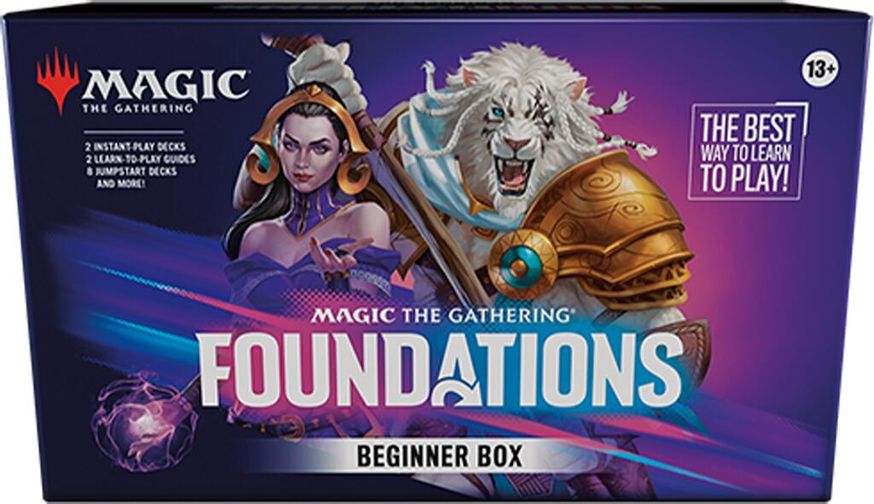
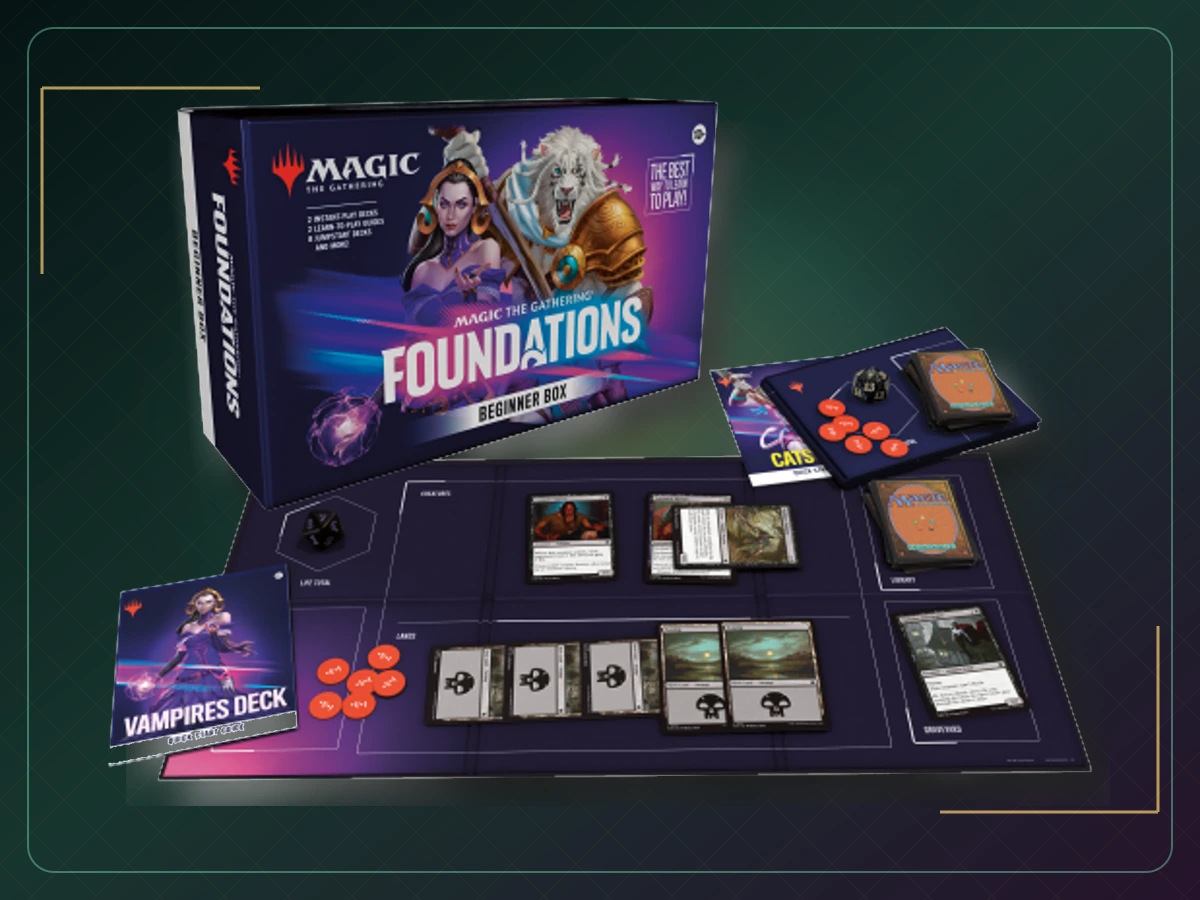
- Learning alone? Get the Foundations Beginner Box ($29.99 MSRP). It teaches you the rules and contains everything you need — 200 cards split into ten themed 20-card decks, plus playmats, life counters, and how-to-play guides. You shuffle two of the little decks together and start playing immediately.
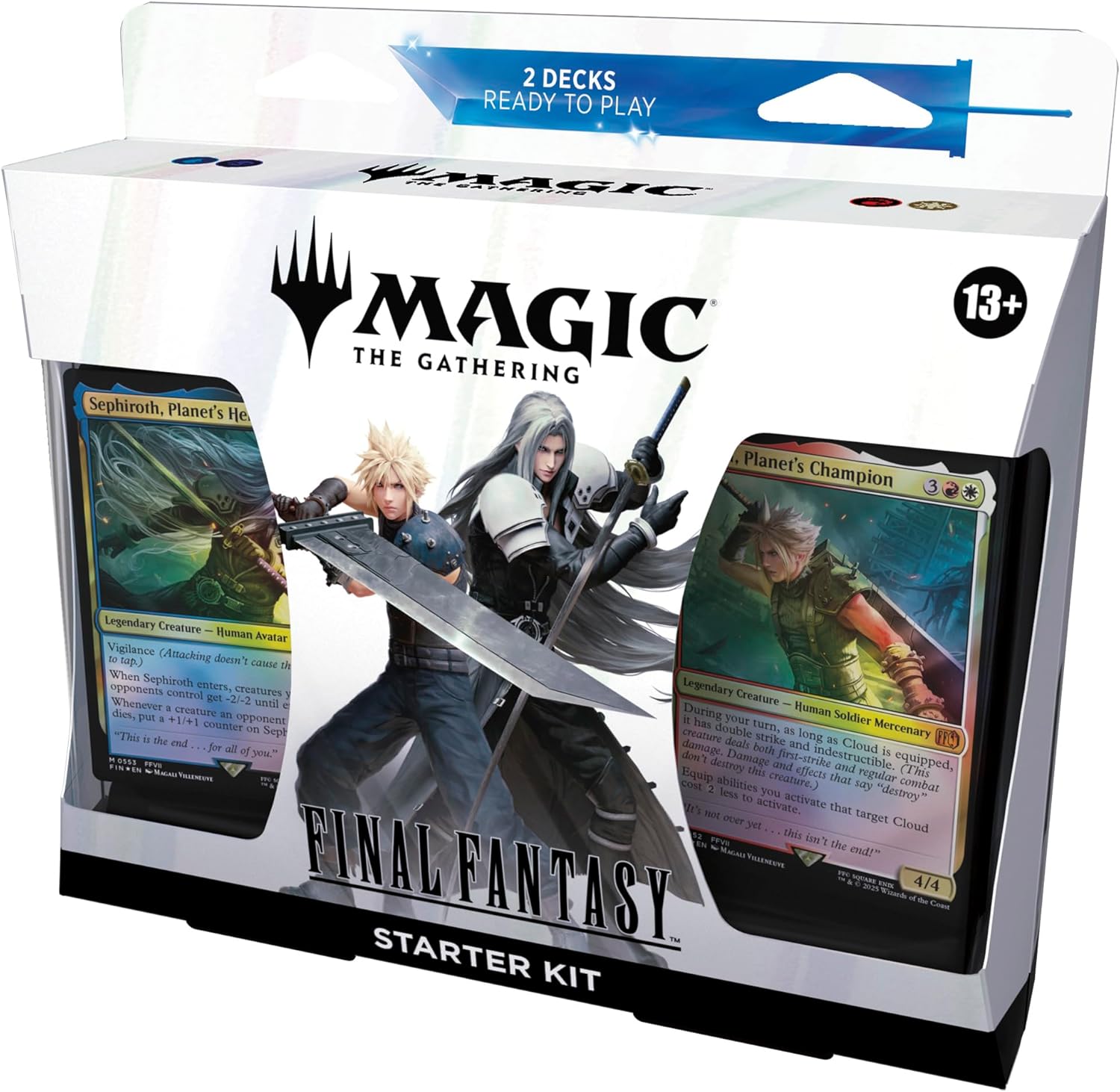
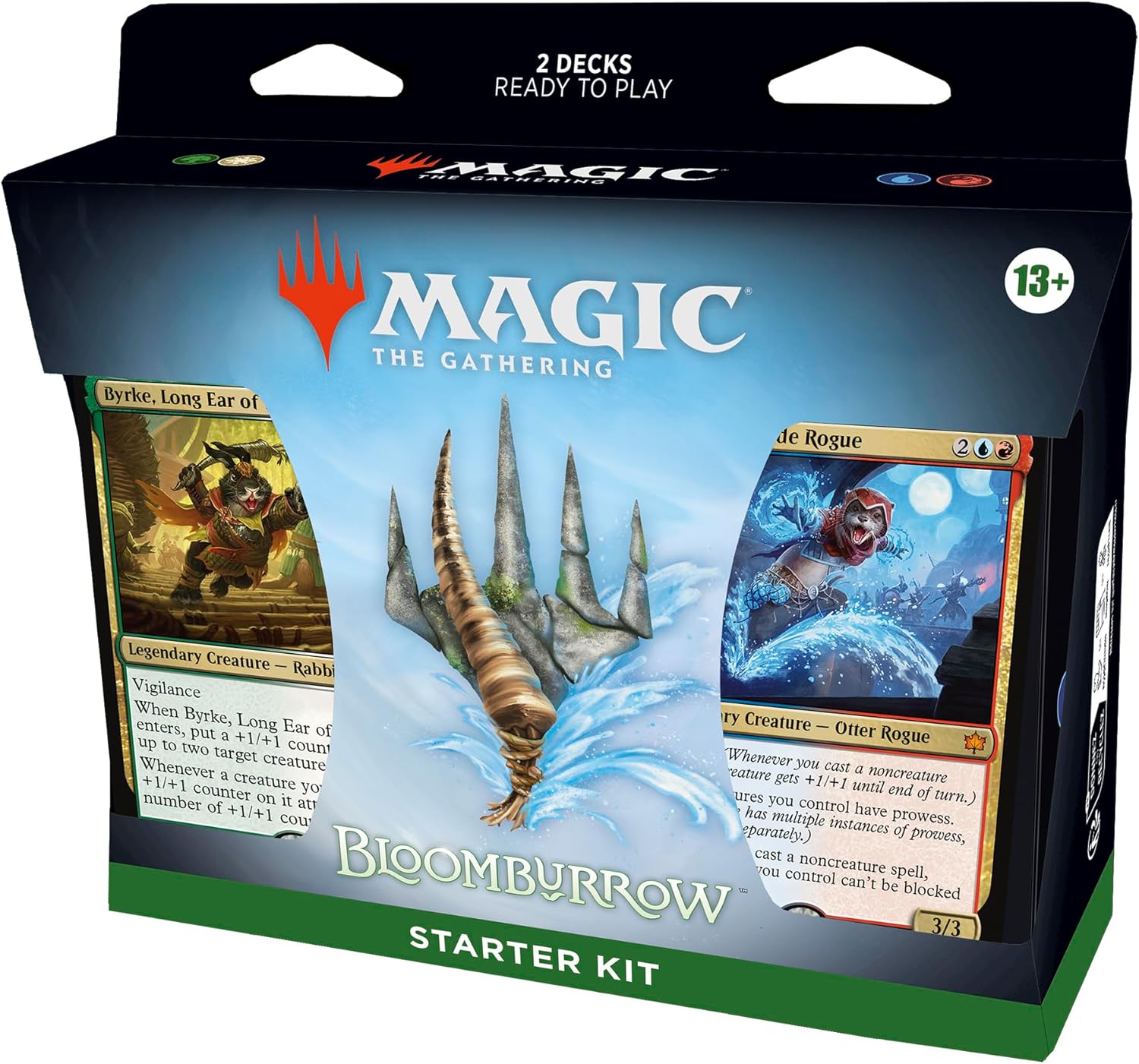
- Learning with a friend, partner, or kid? Get a two-player Starter Kit instead — the Final Fantasy kit (Cloud vs. Sephiroth) or the Bloomburrow kit (Hare Raising vs. Otter Limits), $19.99 each. Each comes with two ready-to-play 60-card decks so you both have something to play out of the box, plus codes to play the same decks on Arena in select regions.
Why Foundations specifically? It's the line Wizards of the Coast designed as a clean, evergreen home base for new players — and critically, over 350 of its cards stay legal in the Standard format until at least 2029. Here's why that's a bigger deal than it sounds: most Magic sets "rotate" out of the Standard format after a couple of years, meaning the cards you learned on can quietly stop being tournament-legal. Foundations deliberately breaks that cycle. Nothing you learn on it goes stale on you next season. That's a rare promise in this hobby, and it's the reason I point beginners here first.
Why does my deck keep stalling? (The land thing nobody explains)
Here's the lesson every new player learns the hard way, and I'd rather you learn it from me: the most common beginner deckbuilding mistake is running too few lands. Lands are how you pay for everything, and the temptation is overwhelming to cut a land or two so you can jam in one more exciting creature. Resist it. A deck that can't reliably make mana is a deck full of cards you never get to cast.
The rough rules of thumb the community has settled on over thirty years:
- In a 60-card deck, you generally want around 17 to 18 lands as a starting point — more if your deck is full of expensive spells, fewer if it's all cheap aggression.
- In a 100-card Commander deck, aim for roughly 37 lands plus a handful of "ramp" cards (things that make extra mana). The good news: every precon comes with this math already done for you.
The other free skill that instantly makes you better is the mulligan — the rule that lets you shuffle a bad opening hand back and draw a new one (at the cost of putting one card on the bottom). The beginner's golden rule: keep a hand with two to five lands; mulligan a hand with zero, one, six, or seven. That single heuristic makes the right call about 90% of the time. The trap that snares everyone? Keeping a hand with the wrong colors — six cards you can't actually cast because you're missing the right land — just because it "has stuff in it." A hand you can't play is worse than a fresh one. Learning to throw it back is the difference between a frustrating game and a fun one.
How do I grow my collection after the first box?
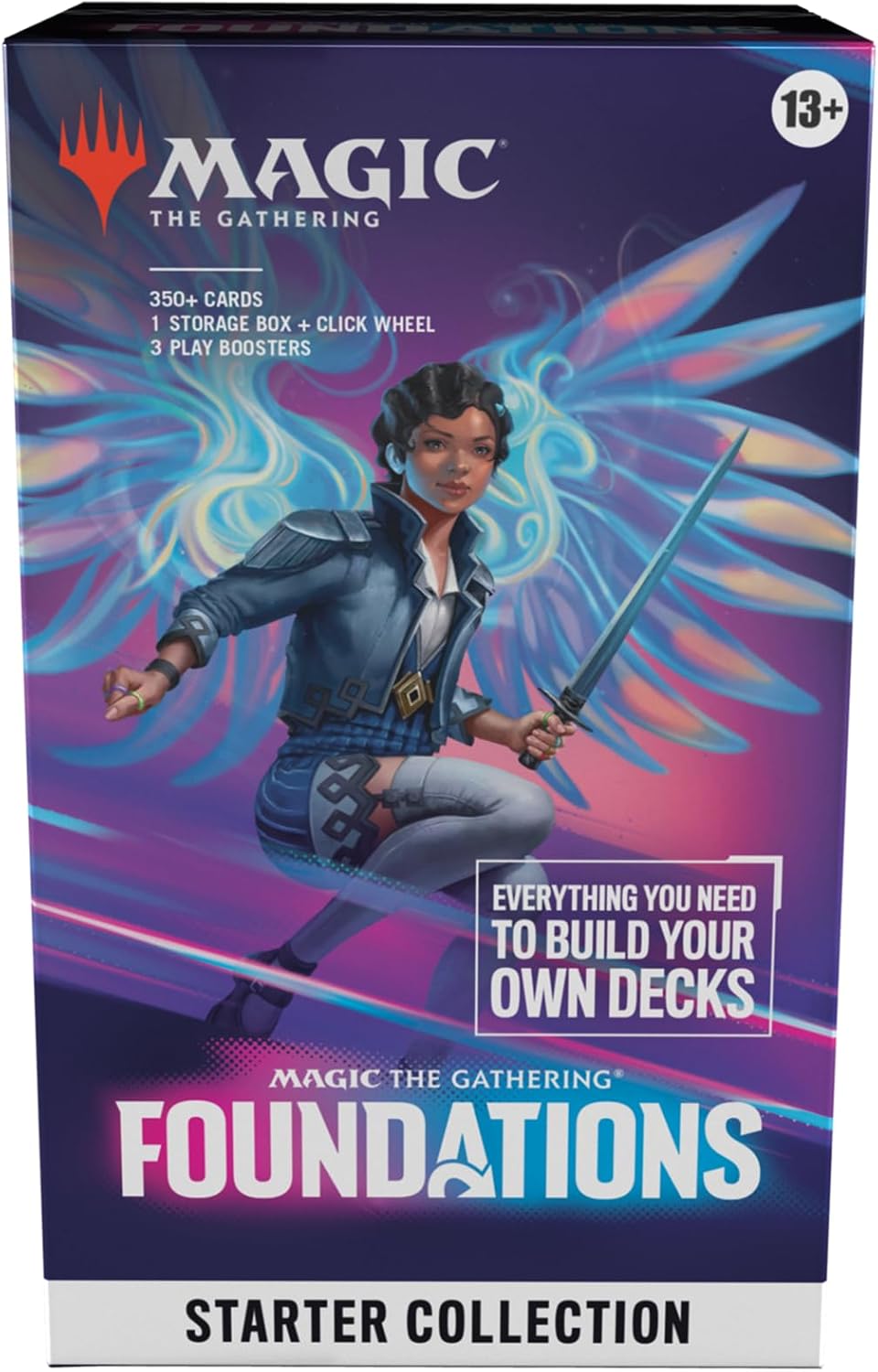
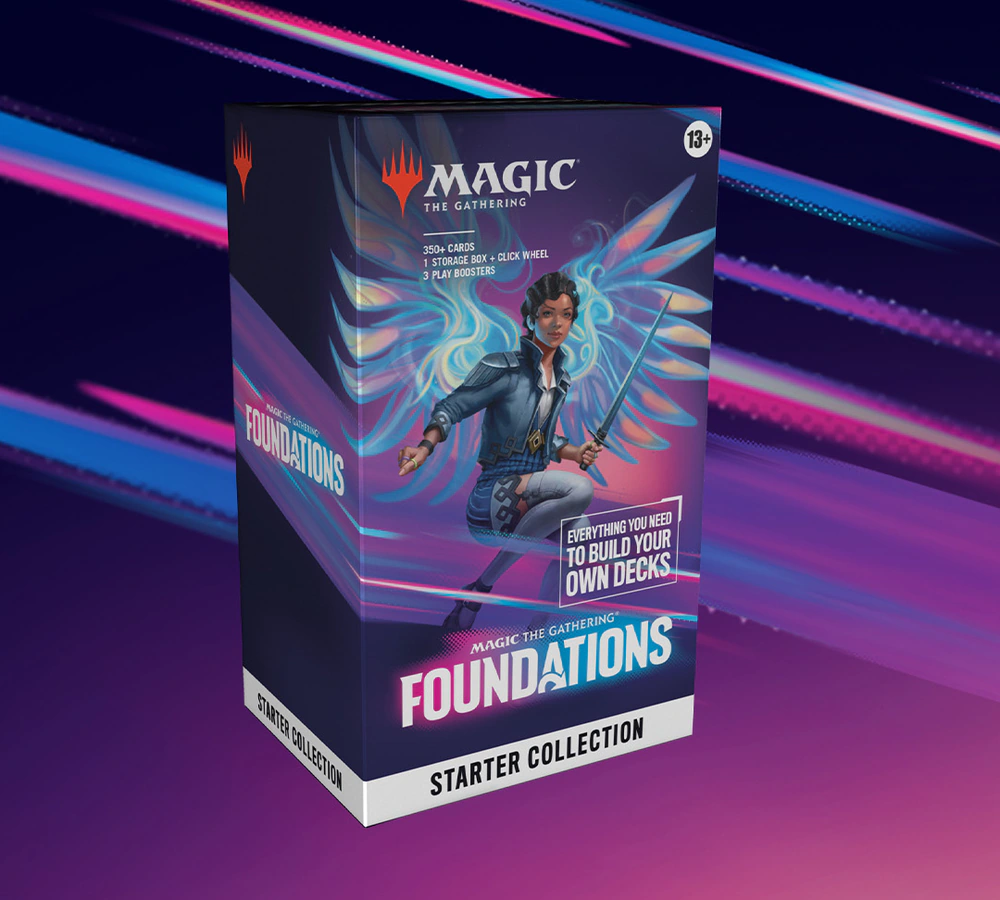
Once the Beginner Box has taught you the basics and you want to start building your own decks, the natural step two is the Foundations Starter Collection ($59.99 MSRP). It's a deck-building product: 387 cards in total, including three Play Boosters, a stack of tokens, a how-to-build-your-deck guide, a life counter, and a storage box to keep it all in.
Quietly, it also tucks in three cards — Sol Ring, Arcane Signet, and Command Tower — that are staples of the Commander format. If you only learn three card names as a beginner, those are good ones: Sol Ring in particular is so good it's in nearly every Commander deck ever built. Their inclusion here is a deliberate bridge. Wizards is nudging you toward the social format most players eventually fall in love with, which is exactly what the next question is about.
Now, the money-saving truth nobody at a store will lead with: once you know what you want, buying singles beats cracking packs every single time. Sites like TCGplayer let you buy the exact card you need for the exact price, instead of gambling on boosters. And basic lands — the Plains, Islands, Swamps, Mountains, and Forests that make up half your deck — are essentially free; most game stores keep a bulk box of them you can take by the handful. Don't ever pay real money for a basic land. Because the Starter Collection is all Foundations, the same 2029 Standard-legality promise applies here too. Money you put into this line keeps working for years rather than aging out next rotation.
What is Commander, and how do I get into it?

Commander — also called EDH, short for Elder Dragon Highlander — is the most popular casual way to play Magic, and it's where a lot of beginners ultimately want to end up. Here's a fun bit of lore: the format wasn't invented by Wizards at all. It was created by players (a group of judges, the story goes) as a homebrew way to play for fun, it spread by word of mouth, and it got so popular that Wizards officially adopted it. It's the rare case of the fans designing the game's most beloved format.
The shape of it: Commander is a singleton format, meaning your deck is exactly 100 cards with only one copy of each card (basic lands excepted), built around a single legendary creature called your commander, which lives in a special "command zone" and can always be cast from there. It's usually played as a four-player free-for-all, and everyone starts at 40 life instead of the usual 20 — so games are longer, swingier, and far more about the table than about a single duel. It's social, chatty, and forgiving, which is exactly why beginners thrive in it.
The good news: you don't build a Commander deck from scratch to start. You buy one preconstructed deck — a "precon" — that's a complete, balanced 100-card deck ready to play out of the box. One precon equals one player ready for a game night; everyone at the table brings their own.
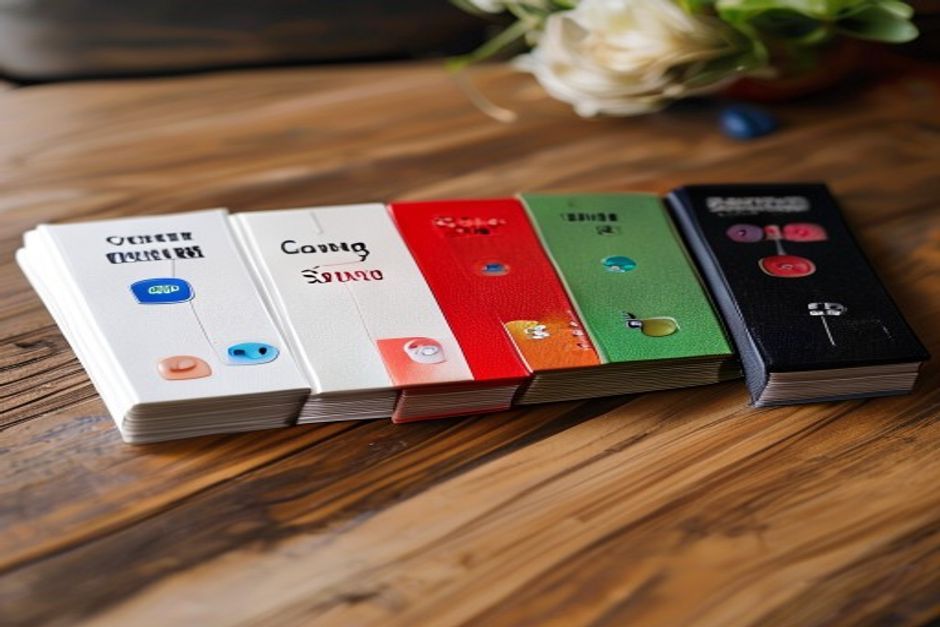
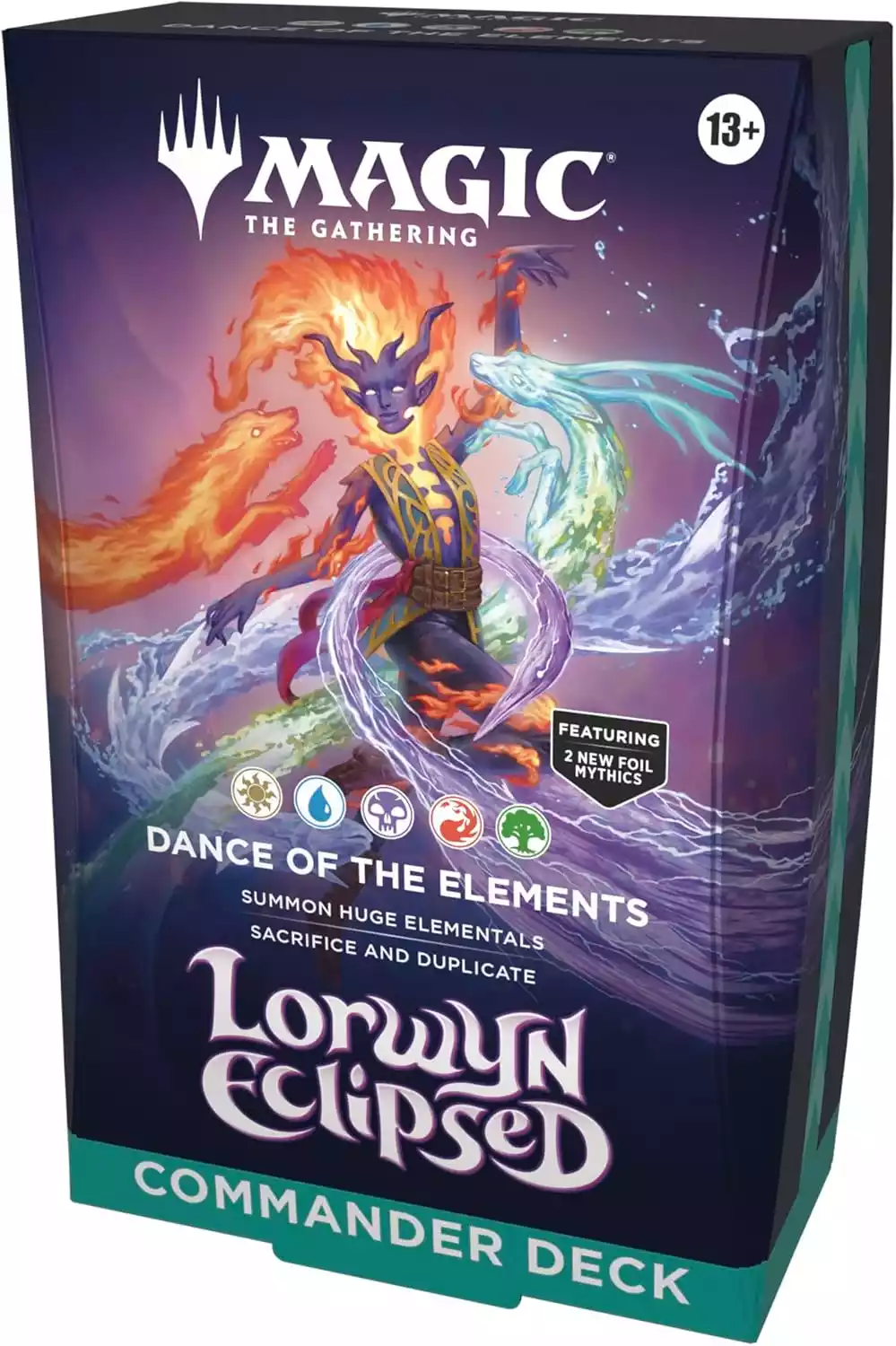
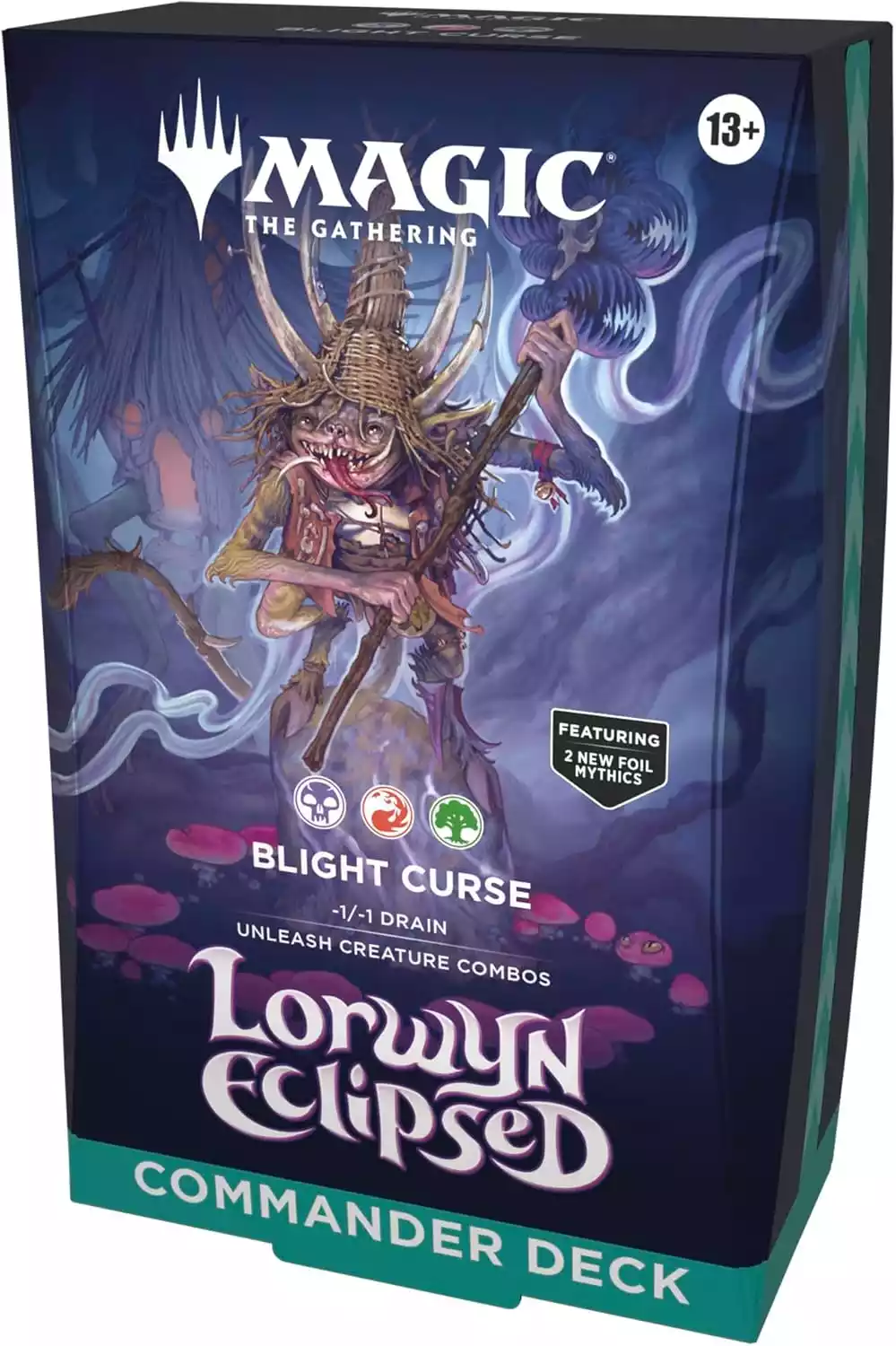
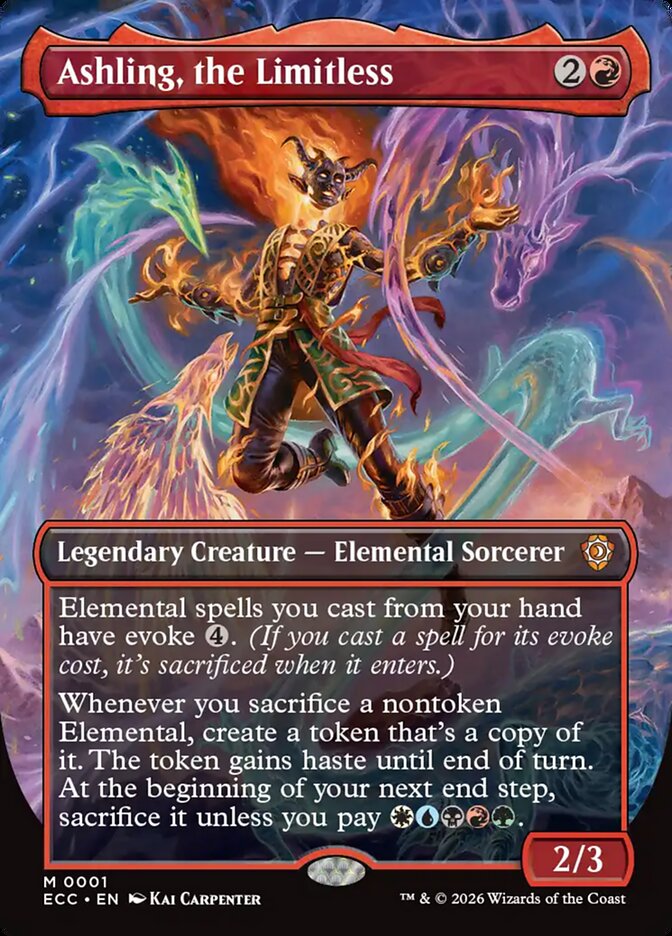
You have two routes here. If you can wait, Wizards is launching beginner-tuned, single-color Foundations Commander precons at a friendlier $30 — Calling All Angels, Reign of Dragons, Keen Engineering, Tramplesaurus Rex, and Wretched Ranks — releasing alongside the Reality Fracture set on October 7, 2026. As of mid-2026 those are upcoming, not yet on shelves. If you want to start now, grab a current Standard Commander precon instead — these run $49.99 MSRP from the Lorwyn Eclipsed set (January 2026) onward. Pick whichever color or theme appeals to you; for a first deck, lean toward straightforward strategies over fiddly combos.
What are Commander 'brackets,' and why should a beginner care?
This is the single most useful thing I can teach a new Commander player, and it's brand new — Wizards rolled out an official bracket system in 2026 to fix the format's oldest problem: mismatched games. Picture buying a $30 precon, sitting down excited, and getting flattened on turn four by someone's hyper-tuned combo deck. Not fun. Brackets exist to stop exactly that.
There are five brackets, and you only need to know where you fit:
- Bracket 1 — Exhibition: ultra-casual theme decks, just-for-laughs.
- Bracket 2 — Core: precon level. This is you. An out-of-the-box deck lives here.
- Bracket 3 — Upgraded: tuned decks with a few power cards swapped in.
- Bracket 4 — Optimized: high-power, no real restrictions.
- Bracket 5 — cEDH: fully competitive, tournament-grade.
When you sit down at a table, you just say your bracket out loud — "I've got a Bracket 2 precon" — and everyone calibrates so the game is fair. This pairs with two older bits of Commander culture worth knowing: the social contract (the unwritten agreement that the goal is for everyone to have fun, not just the winner) and Rule Zero (the pregame chat where a table can agree to house rules, like "let's not do infinite combos tonight"). What nobody tells a beginner is that this thirty-second conversation before a game matters more than any card in your deck. State your bracket, listen to theirs, and you'll have a good night even if you lose. Skip it, and even a win can feel sour. Commander is a social format first and a card game second — the brackets just made that official.
Why do the prices I see online not match this guide?
Because every number in this guide is the manufacturer's suggested retail price (MSRP), and the real world doesn't always agree with the suggestion. A couple of things to keep in mind so you're not caught off guard:
- Retail varies. A $29.99 box might sit anywhere from about $25 to $35 depending on the store and the week. Secondary-market and out-of-stock pricing tends to run higher, not lower.
- Prices have been climbing. Standard Commander precons went from $44.99 to $49.99 in 2026, and there's been real community grumbling about it. That rising cost is exactly why the upcoming $30 Foundations Commander precons are getting a warm reception — they're the cost-and-complexity fix for new players.
- Some products aren't out yet. The $30 Foundations Commander precons release October 7, 2026. If you're reading this before then, they're a thing to wait for, not buy today.
- Support your local store when you can. A great game store is worth more than the few dollars you'd save buying everything online — it's where the FNM nights, the Commander pods, and the people are. The cards are the cheap part of this hobby; the table is the valuable part.
Bottom line: treat the prices here as a map, not a receipt. Always check the current listing before you click buy.
The picks
Some links below are affiliate links — as an Amazon Associate, Puzzlewick earns from qualifying purchases, at no extra cost to you. It never changes a pick.
Foundations Beginner Box
This is the box I hand to anyone who's never played. Two hundred cards arrive as ten themed 20-card decks — Cats, Vampires, Pirates, Goblins, Wizards and more — and you simply shuffle two together and play. It also packs in playmats, spindown life counters, reference cards, and two How to Play guides, so nothing else is required to get a game going. The cards are Foundations, which means they stay Standard-legal until at least 2029; you aren't learning on something that expires. MSRP is $29.99, but prices move — check current listings, where it often lands between $25 and $35.
- Everything needed to learn and play is in the one box
- Ten themed 20-card decks make first games fast and forgiving
- Foundations cards stay Standard-legal until at least 2029
- Lowest-friction true starting point for a solo beginner
- Built to teach, not to be a competitive collection
- Retail price can drift above the $29.99 MSRP
- Two-player play means sharing the single box
Foundations Starter Collection
Think of this as step two, not a competitor to the Beginner Box. It's 387 cards — including three Play Boosters, 13 double-sided tokens, and 90 basic lands — wrapped around a how-to-build-your-deck guide, a click-wheel life counter, and a storage box to corral it all. The quiet bonus: it includes three Commander staples — Sol Ring, Arcane Signet, and Command Tower — that bridge you toward the format most players eventually adopt. Same Foundations promise applies, so these cards stay Standard-legal to at least 2029. MSRP $59.99.
- Enough cards and guidance to build your own 60-card decks
- Includes a deck-builder guide and a storage box
- Bundles three Commander staples as a bridge to that format
- Foundations cards remain Standard-legal until at least 2029
- Assumes you already know how to play
- Twice the price of the Beginner Box
- Not a ready-to-play product on its own — it's a kit for building
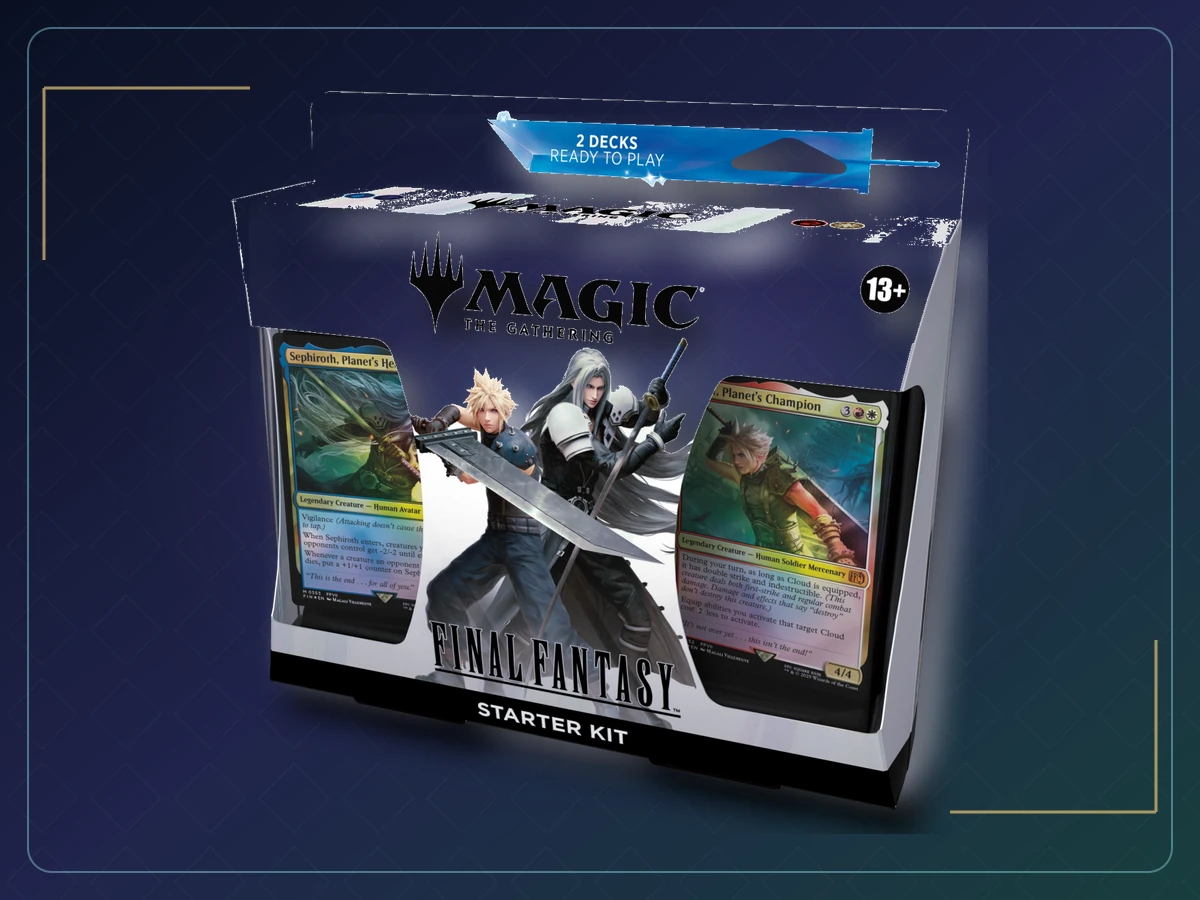
Final Fantasy Starter Kit (Cloud vs. Sephiroth)
If someone's learning alongside you, this is the cheapest way to get two people playing real Magic head-to-head immediately. You get two ready-to-play 60-card decks — one built around Cloud (Planet's Champion), one around Sephiroth (Planet's Heir) — each anchored by a traditional-foil Mythic Rare legendary creature, plus deck boxes, reference cards, a play guide, and Arena codes (select regions) to play the same decks digitally. It was the first product after Wizards reinstated MSRP, at $19.99. Prices move — check current.
- Two ready-to-play decks for two players, out of the box
- Lowest-cost true two-player on-ramp at $19.99 MSRP
- Arena codes let you replay the decks digitally (select regions)
- Final Fantasy theme is a draw for fans of the series
- Themed appeal won't land for everyone
- Two fixed decks, not a collection to build from
- Arena codes are region-limited
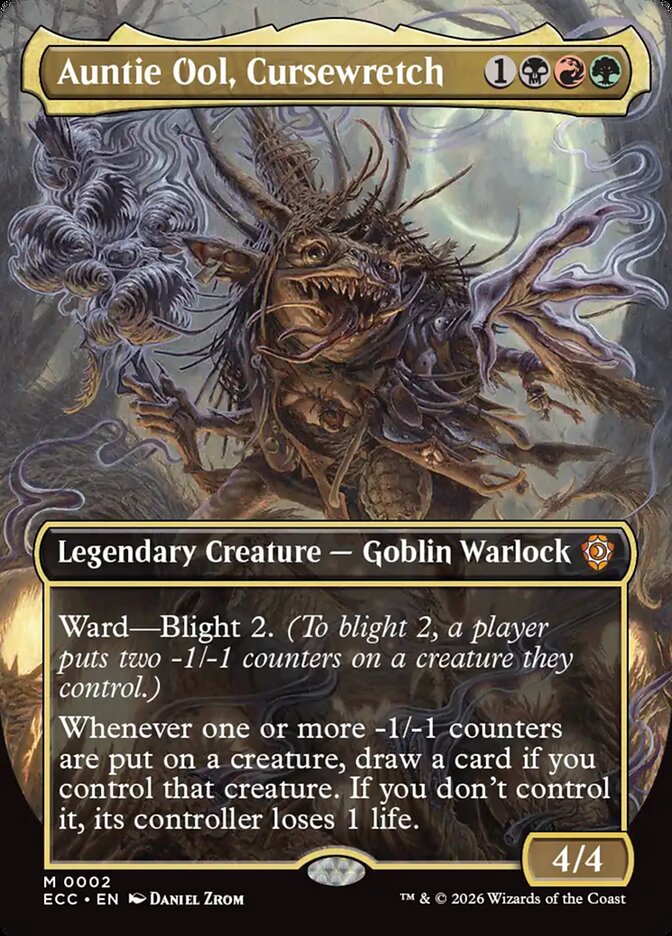
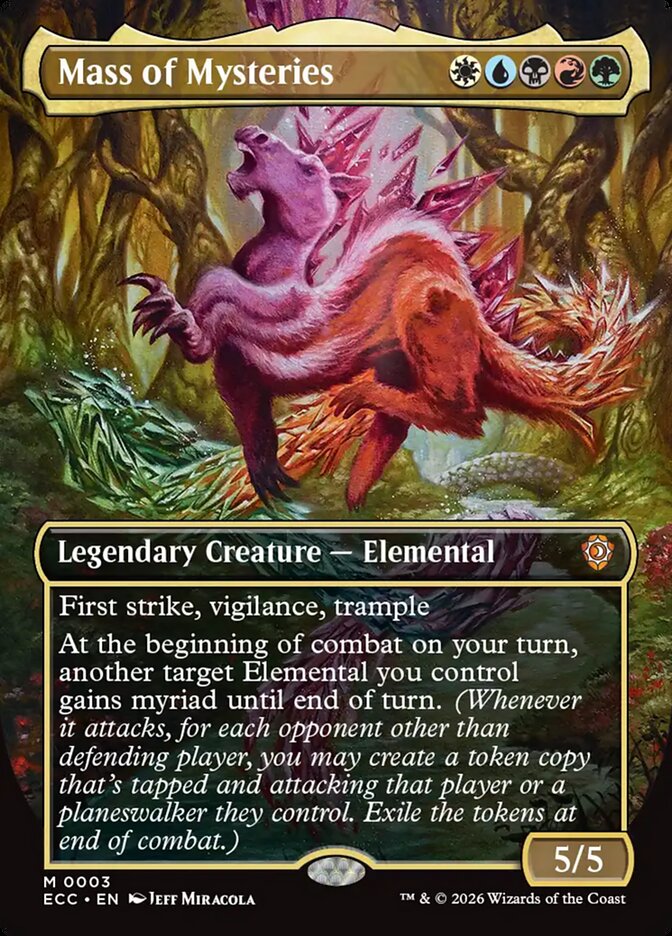 6 photos
 Standard Commander Precon Deck (Lorwyn Eclipsed and later)
If your goal is the four-player Commander table and you don't want to wait for the cheaper Foundations precons, this is the available-now path. A Commander precon is a complete, balanced 100-card deck that plays straight out of the box and can be upgraded later. Pick one whose color and theme appeal to you; for a first deck, lean toward straightforward strategies over fiddly combos. MSRP rose to $49.99 starting with Lorwyn Eclipsed (January 23, 2026); secondary prices vary, so check current.
- A complete, ready-to-play 100-card Commander deck out of the box
- Available now — no waiting for an upcoming release
- Can be upgraded over time as you learn the format
- Wide choice of colors and themes to match your taste
- $49.99 MSRP reflects a 2026 price increase from $44.99
- Newer precons dropped the Collector Booster sample and display card
- Secondary-market prices can run well above MSRP
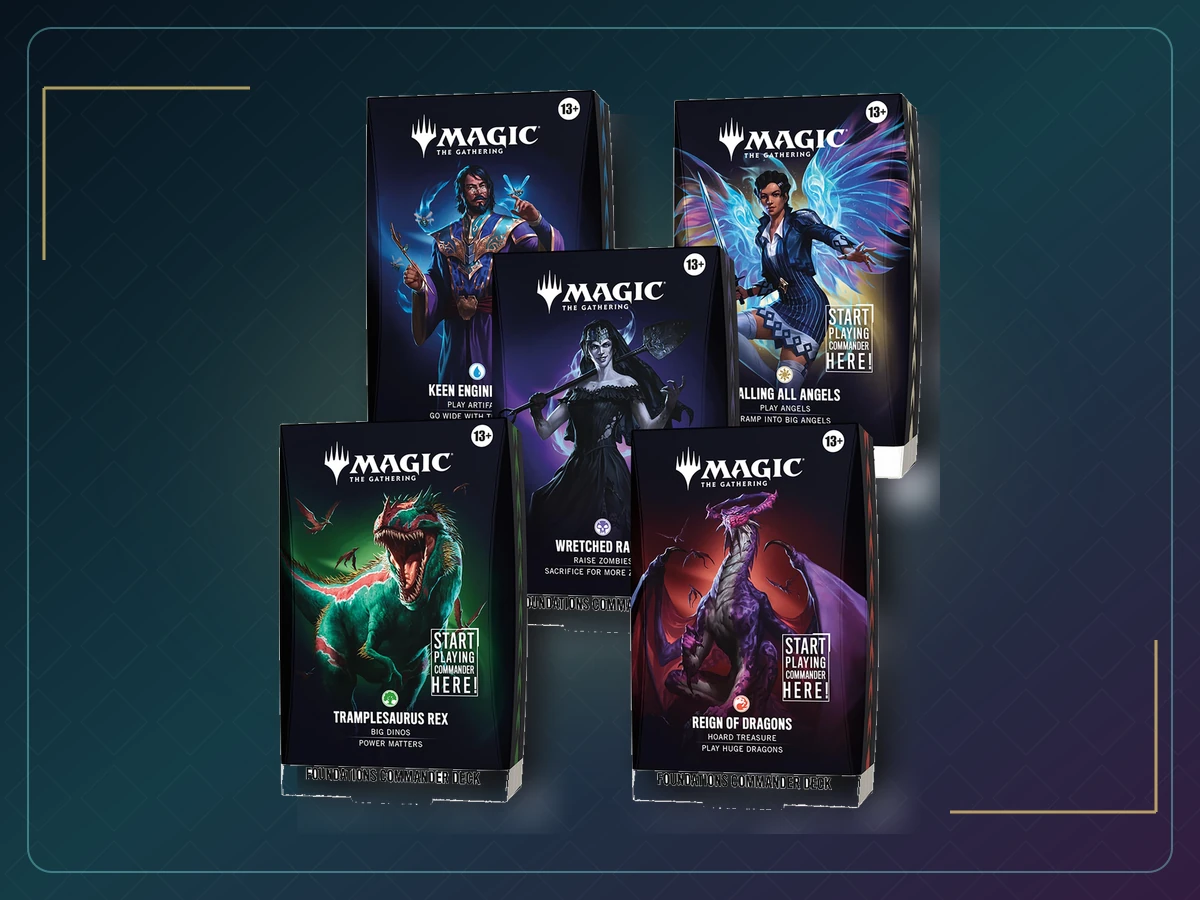
Foundations Commander Precons (Calling All Angels, Reign of Dragons, Keen Engineering, Tramplesaurus Rex, Wretched Ranks)
These are the precons I'd point a brand-new Commander player toward — once they're out. Five single-color, lower-complexity 100-card decks built specifically to onboard newcomers: Calling All Angels (White, Giada), Reign of Dragons (Red, Lathliss), Keen Engineering (Blue, Sai), Tramplesaurus Rex (Green, Ghalta), and Wretched Ranks (Black, Ghoulcaller Gisa). The pitch is a friendlier $30 and a single-color simplicity that's easier to pilot than a multicolor deck. Important: these release October 7, 2026 — upcoming, not yet available as of mid-2026, so prices move and aren't live yet — check current.
- Purpose-built to onboard beginners into Commander
- Single-color decks are easier to learn to pilot
- Lower $30 MSRP than standard $49.99 precons
- Five distinct colors and legends to choose from
- Upcoming — not released until October 7, 2026
- Single-color simplicity may feel limited as you improve
- Price and availability not yet live as of mid-2026
At a glance
| product | type | price msrp | players | best for | availability |
|---|---|---|---|---|---|
| MTG Arena | Free digital client | Free (optional purchases) | Solo vs. AI / online | Learning the rules before spending | Available now |
| Foundations Beginner Box | Learn-to-play box (200 cards) | $29.99 | 2 (shares one box) | Learning alone, everything included | Available now |
| Foundations Starter Collection | Deck-building kit (387 cards) | $59.99 | Build-your-own | Building your first decks (step 2) | Available now |
| Final Fantasy Starter Kit | Two-player kit (2x 60-card decks) | $19.99 | 2 | Two people learning together | Available now |
| Bloomburrow Starter Kit | Two-player kit (2x 60-card decks) | $19.99 | 2 | Most kid-friendly two-player intro | Available now |
| Standard Commander Precon | Preconstructed Commander deck (100 cards) | $49.99 (from Lorwyn Eclipsed) | 1 deck for a 4-player table | Entering Commander right now | Available now |
| Foundations Commander Precons | Beginner mono-color Commander decks (100 cards) | $30 | 1 deck for a 4-player table | Beginner Commander, lower price/complexity | Upcoming — Oct 7, 2026 |
Questions, answered
Do I need to spend any money to start playing Magic in 2026?
No. MTG Arena is free to download and play, and it was built as a gateway for new players. Its tutorial and five Color Challenges teach you the rules through scripted puzzle games and reward you with free starter decks. Every card can in principle be earned for free — spending money mainly speeds up how fast you unlock cards. Learn there first, figure out which colors you like, then decide whether to buy paper cards.
What is the single best first physical product for a brand-new player?
If you're learning alone, the Foundations Beginner Box ($29.99 MSRP) is the best first buy — it teaches the rules and contains everything two people need to play, including 200 cards as ten themed 20-card decks, playmats, and life counters. If you're learning with another person, get a two-player Starter Kit instead (Final Fantasy or Bloomburrow, $19.99 each) so you each have a ready-to-play deck.
What is Commander, and is it good for beginners?
Commander (also called EDH) is the most popular casual format — a 100-card singleton deck (one of each card except basic lands) built around a single legendary 'commander,' usually played as a four-player game starting at 40 life. It's beginner-friendly because you can buy one preconstructed deck that plays straight out of the box; you don't have to build from scratch. One precon equals one player ready for a game night, and everyone at the table brings their own.
Why is Foundations recommended over other sets for new players?
Foundations is an entry-level, core-style set that Wizards designed specifically as a clean, beginner-friendly home base. Most importantly, over 350 of its cards stay legal in the Standard format until at least 2029, so what you learn and buy on it won't go stale for years. That long shelf life is why both the Beginner Box and the Starter Collection are built on it.
Why don't the prices I see in stores match the ones in this guide?
Every price here is the manufacturer's suggested retail price (MSRP). Real-world retail and secondary-market prices vary and often trend higher — a $29.99 box might run $25 to $35, and out-of-stock items climb. Prices have also been rising: standard Commander precons went from $44.99 to $49.99 in 2026. Always check the current listing before you buy.
Should I get a Starter Kit or wait for the cheaper Foundations Commander precons?
It depends on what you want to play and when. Starter Kits ($19.99) are two-player intro products available now — best for two people learning Magic together. The beginner-focused Foundations Commander precons ($30) are for the Commander format and release October 7, 2026, so they're upcoming, not yet available. If you want Commander before then, start with a current $49.99 Standard precon and let a Foundations precon be your next deck.
Keeper's verdict
If you take one thing from me, take this: don't open your wallet first. Start free on MTG Arena, run the tutorial and the five Color Challenges, and let the game tell you which colors you actually enjoy — that's not just a rules lesson, it's how you find out whether you're a patient blue control player or an impatient red firestarter. Then, and only then, make one purchase. Learning alone, that's the Foundations Beginner Box. Learning with someone, it's a two-player Starter Kit. When the four-player Commander table starts calling, buy a single precon, learn the three free skills that instantly make you better — run enough lands, mulligan a hand you can't play, and state your bracket before the game — and you're ready for game night. The Foundations line is where I'd anchor a beginner's money, because those cards stay relevant until at least 2029, which is a longer promise than this hobby usually makes. And every number I've quoted is MSRP — prices move, usually upward, so check the current listing before you buy. That's the whole map. It's a kinder way in than the one most of us stumbled through, and it's the one I'd hand a friend.
Research ledger 28 sources · reviewed 2026-07-17
Specifications, rules, current product information, community experience, and contrary evidence were checked against the sources below. Commercial links are kept separate from editorial evidence.
- magic.wizards.commagic.wizards.com/en/news/feature/foundations-beginner-box-contents
- magic.wizards.commagic.wizards.com/en/news/announcements/foundations-starter-collection-contents
- mtg.fandom.commtg.fandom.com/wiki/Magic:_The_Gathering_Foundations/Beginner_Box
- mtg.fandom.commtg.fandom.com/wiki/Magic:_The_Gathering_Foundations/Starter_Collection
- mtg.fandom.commtg.fandom.com/wiki/Magic:_The_Gathering_Foundations
- wargamer.comwargamer.com/magic-the-gathering/foundations-standard-legal
- amazon.comamazon.com/dp/B0D9KYHN4D?tag=puzzlewick-20
- magic.wizards.commagic.wizards.com/en/news/announcements/final-fantasy-starter-kit-decklists
- draftsim.comdraftsim.com/mtg-starter-kit
- amazon.comamazon.com/dp/B0DTMVS4NM?tag=puzzlewick-20
- mtg.fandom.commtg.fandom.com/wiki/Bloomburrow/Starter_Kit
- gamestop.comgamestop.com/toys-games/trading-cards/products/magic-the-gathering-bloomburrow-starter-kit-2-ready-to-play-decks/20013812.html
- tcgplayer.comtcgplayer.com/content/article/How-to-Build-and-Play-Commander-EDH-A-Guide-to-MTG-s-Casual-Multiplayer-Format/620ada09-5abe-457f-875b-816898539040
- draftsim.comdraftsim.com/mtg-commander
- magic.wizards.commagic.wizards.com/en/formats/commander
- mtgrocks.commtgrocks.com/mtg-foundations-commander-precons
- mtgsalvation.commtgsalvation.com/news/50006-magic-the-gatherings-foundations-is-getting-five
- cardgamebase.comcardgamebase.com/foundations-commander-precons
- mtgsalvation.commtgsalvation.com/news/49871-wizards-of-the-coast-set-to-increase-mtg-prices-in
- draftsim.comdraftsim.com/sealed-product-update
- draftsim.comdraftsim.com/mtg-commander-precon
- draftsim.comdraftsim.com/is-mtg-arena-pay-to-win
- draftsim.comdraftsim.com/mtg-arena-color-challenge
- draftsim.comdraftsim.com/mtg-arena-starter-deck-duel
- mtgarena-support.wizards.commtgarena-support.wizards.com/hc/en-us/articles/8276672639124-Dual-Color-New-Player-Experience-Decks
- draftsim.comdraftsim.com/mtg-release-schedule
- magic.wizards.commagic.wizards.com/en/news/announcements/everything-announced-for-magic-the-gathering-in-2026
- wargamer.comwargamer.com/magic-the-gathering/reality-fracture-commander-precons

If it didn't earn a shelf, it isn't here.


Keep exploring
The next smart rabbit holes.
✶ Universe HubMagic: The Gathering: the whole buying pathMagic: The Gathering is the deepest construction sandbox in the Big Three: a two-player duel, four-player Commander ritual, draft...🂠 Topic PathTrading Card Games: compare the whole shelfStart with the game and community you want, then buy the smallest product that lets you test it properly. These guides separate...Buying GuideBest Magic: The Gathering Sets & Booster Boxes to Buy in 2026A warm, no-hype guide to where to actually start — from the host's shelf, with every catch named.