Sleeping Gods vs Distant Skies in 2026: Which Open-World Campaign Should You Buy?
Sleeping Gods vs Distant Skies, explained with exact box identity, expansion order, beginner-to-expert strategy, hosting and solo reality, community warnings, and direct Amazon purchase paths.

AI-assisted curator persona · research and editorial responsibility: Robert Pruitt · how this guide was made
Last editorial refresh: 2026-07-27 Gold-standard QA: 2026-07-30 8 sources reviewed Affiliate links checked during gold-standard pass

The short answer
Buy Distant Skies for the cleaner standalone entry and more modern onboarding. Buy the original Sleeping Gods for the sprawling voyage that made the series a grail. Neither requires the other.
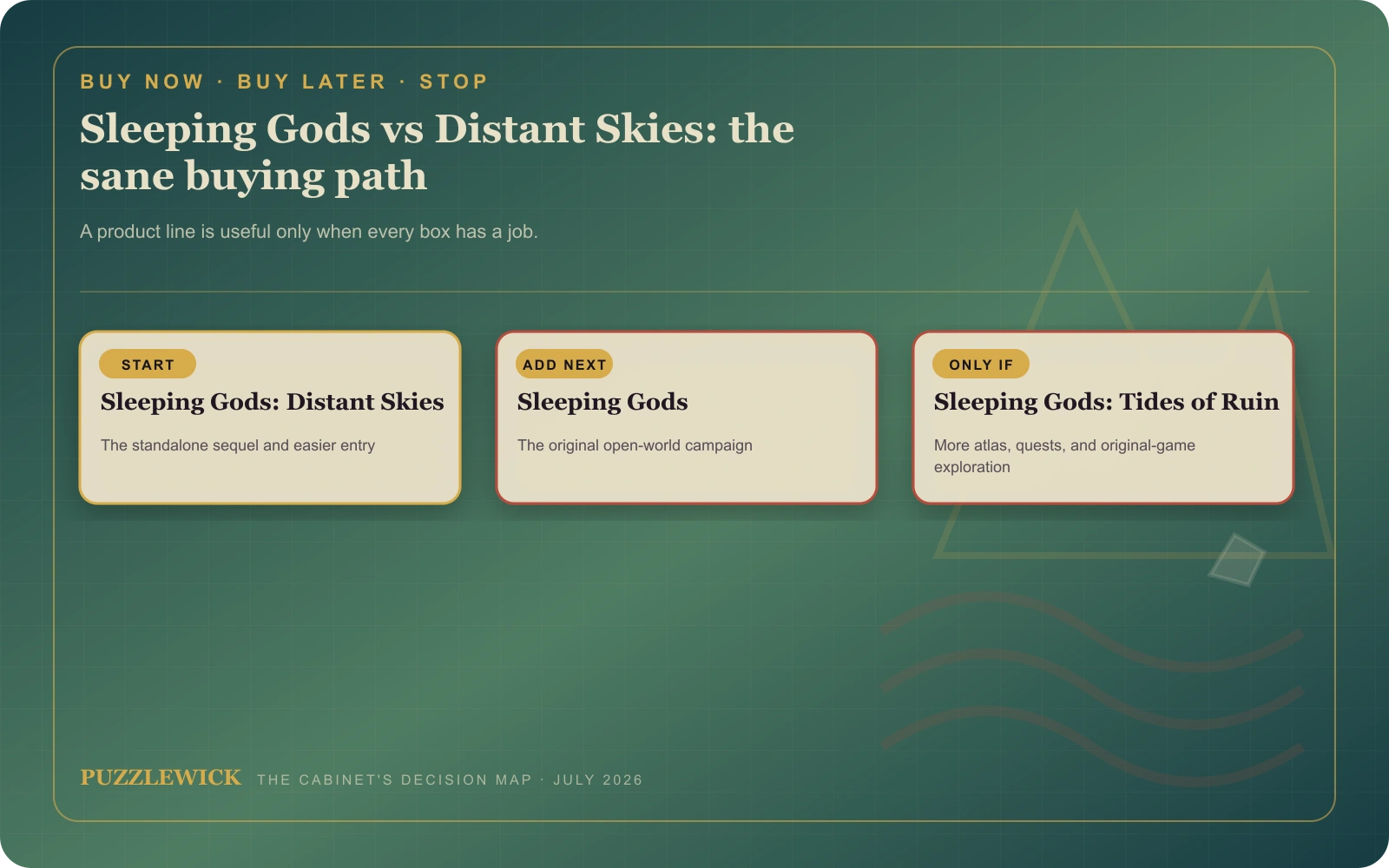
Decision map
Choose in thirty seconds
The standalone sequel and easier entry
The original open-world campaign
More atlas, quests, and original-game exploration
Sleeping Gods vs Distant Skies can look like one obvious shelf until product codes, formats, standalone boxes, expansions, and deluxe treatments begin competing for the same budget. This guide starts where the table starts: the player opens the introduction, assigns campaign records, learns travel and tests, and chooses one rumor rather than every horizon.
The cabinet’s test is whether an illustrated atlas becomes a memory palace where ports, rumors, injuries, keywords, and distant silhouettes invite one more page. We sort the verified products by that experience, then show the setup, strategy, warnings, and stopping point that keep a promising first purchase from becoming an expensive pile.
Start here, then go deeper
You are in the right cabinet.
 ⌁ Universe HubSleeping Gods: the whole buying pathSleeping Gods turns an illustrated atlas into a persistent world of rumors, injuries, keywords, and unfinished promises. This hub...✦ Topic PathBoard Game Buying Guides: compare the whole shelfStart with the decision, not the shelf. These guides compare the games, editions, expansions, player counts, and costs people...
 Buying GuideIs Sleeping Gods: Tides of Ruin Worth It? When to Add the ExpansionSleeping Gods Tides of Ruin, explained with exact box identity, expansion order, beginner-to-expert strategy, hosting and solo reality,...
The short answer: which sleeping gods vs distant skies should you buy?


Buy Distant Skies for the cleaner standalone entry and more modern onboarding. Buy the original Sleeping Gods for the sprawling voyage that made the series a grail. Neither requires the other.
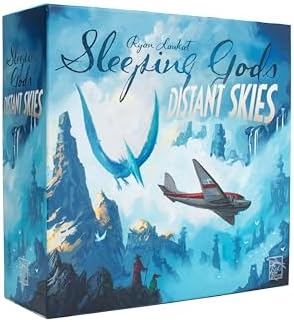
The verified purchase path is Sleeping Gods: Distant Skies on Amazon, Sleeping Gods on Amazon, Sleeping Gods: Tides of Ruin on Amazon. The first-table job is simple: the player opens the introduction, assigns campaign records, learns travel and tests, and chooses one rumor rather than every horizon. Every later box must solve a limitation that appeared during real play.
For Sleeping Gods vs Distant Skies, the useful question is not “which carton is largest?” It is whether the product supports the players, learning curve, session length, and signature decision you actually want to repeat.
What does playing Sleeping Gods vs Distant Skies actually feel like?
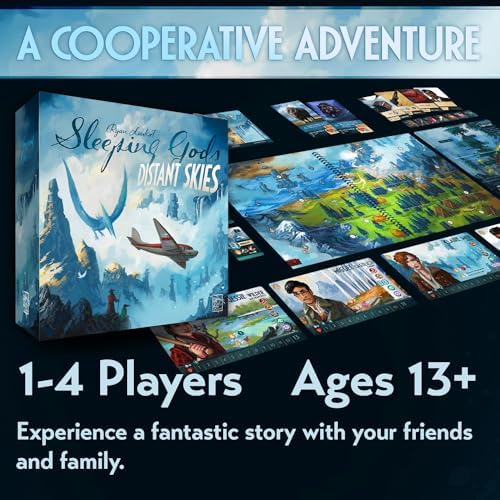

Both turn exploration into a living atlas where a place name, keyword, or damaged crew member can change the meaning of a future choice.
Play the introduction without chasing efficiency, then record keywords and stop at a natural save point.
Expert play balances quest memory, fatigue, damage, resources, and travel cost without converting discovery into spreadsheet obedience.
The lasting hook is that an illustrated atlas becomes a memory palace where ports, rumors, injuries, keywords, and distant silhouettes invite one more page. The game comes alive when a learner stops following a phase chart and makes a choice the rest of the table must respect.
How should the first box be assembled, staged, and taught?
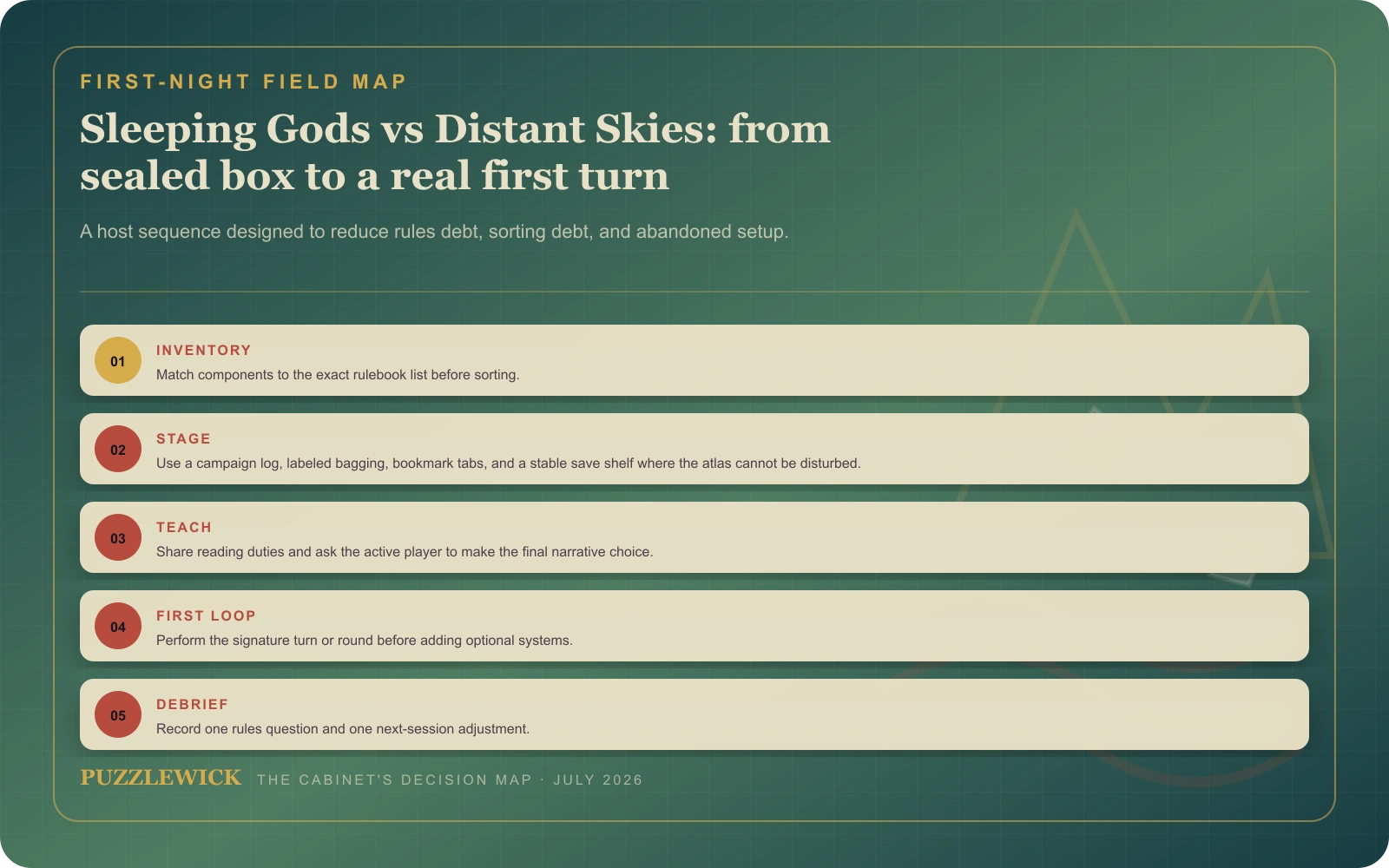

Setup: Use a campaign log, labeled bagging, bookmark tabs, and a stable save shelf where the atlas cannot be disturbed.
Teaching plan: Share reading duties and ask the active player to make the final narrative choice.
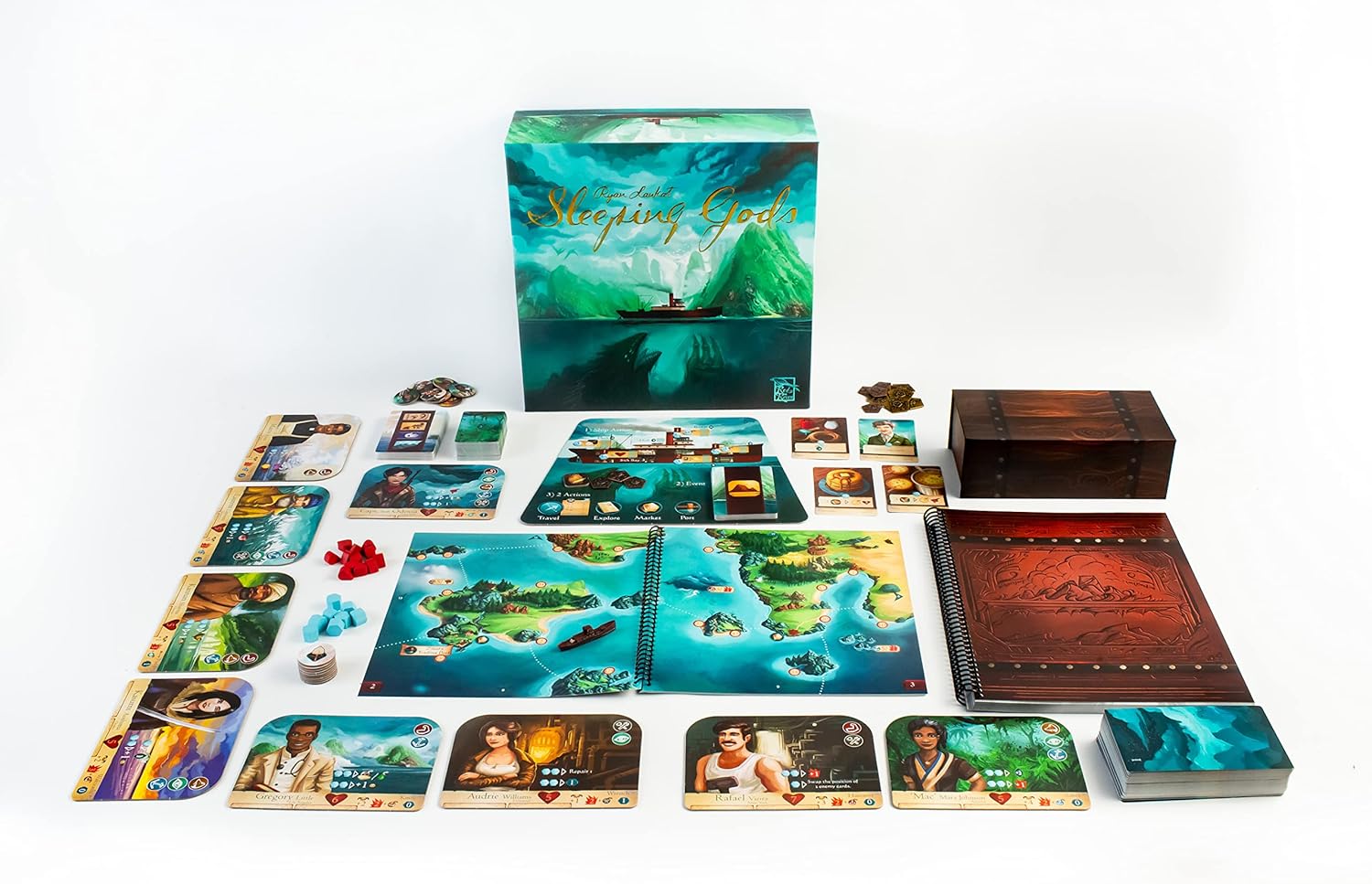
Before cleanup, photograph both standalone boxes, atlases, storybooks, crew or character boards, tokens, cards, quest log, and save storage. That becomes the group’s honest reset reference and makes the second session faster without adding another accessory.
What do players compare it to, and where does the comparison break?
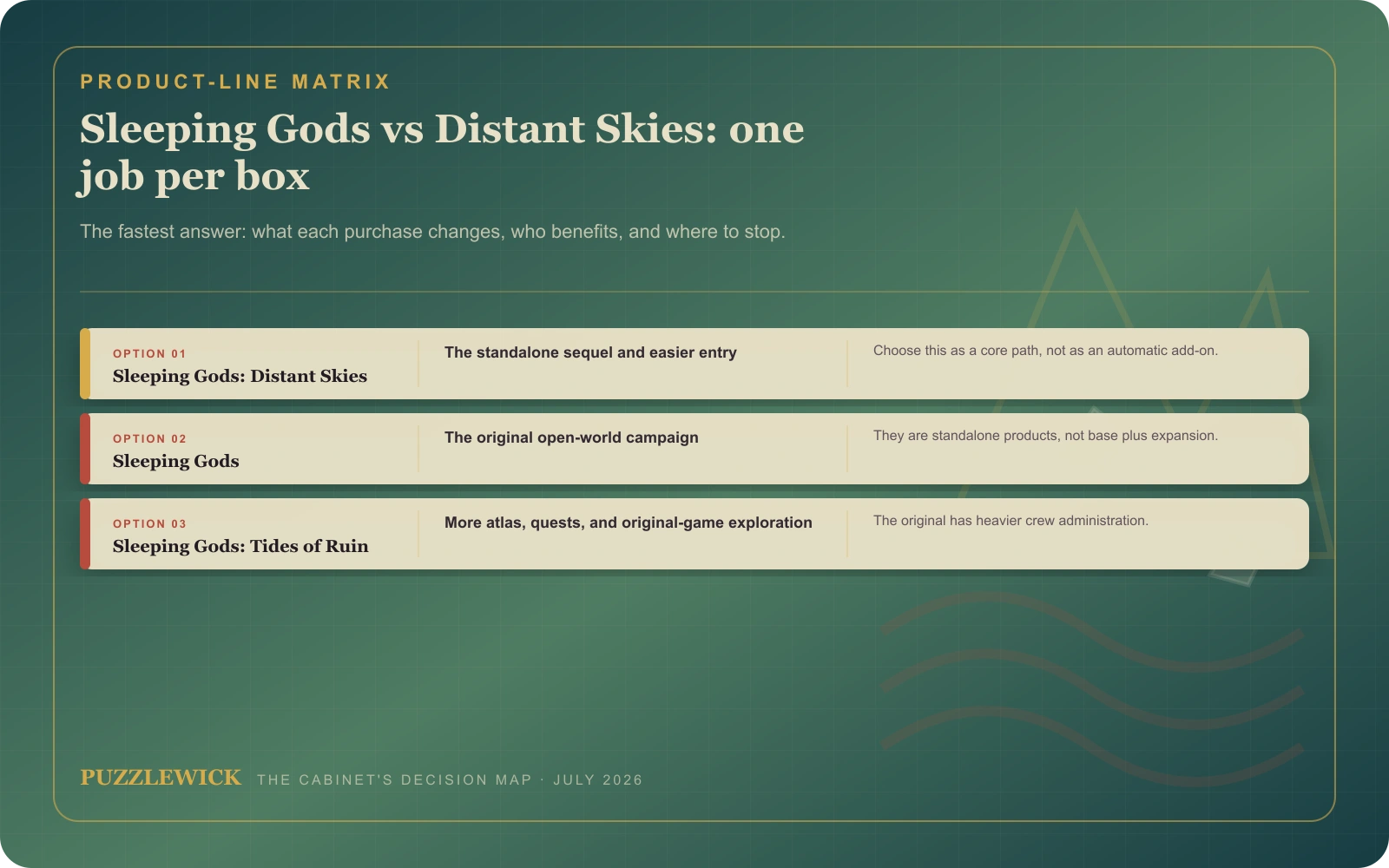
Original emphasizes ship and crew sprawl; Distant Skies offers a refined standalone adventure with different structure.
The strongest BGG and forum comparisons keep returning to onboarding, campaign structure, administration, exploration, combat, solo load, save system, story tone, and expansion compatibility. Those practical differences outlast launch-week declarations that one box simply “wins.”
Read the matrix as a table-fit tool for Sleeping Gods vs Distant Skies: theme earns the first play, while repeatable pacing and a tolerable host load earn permanent shelf space.
What should you buy first, second, and not yet?
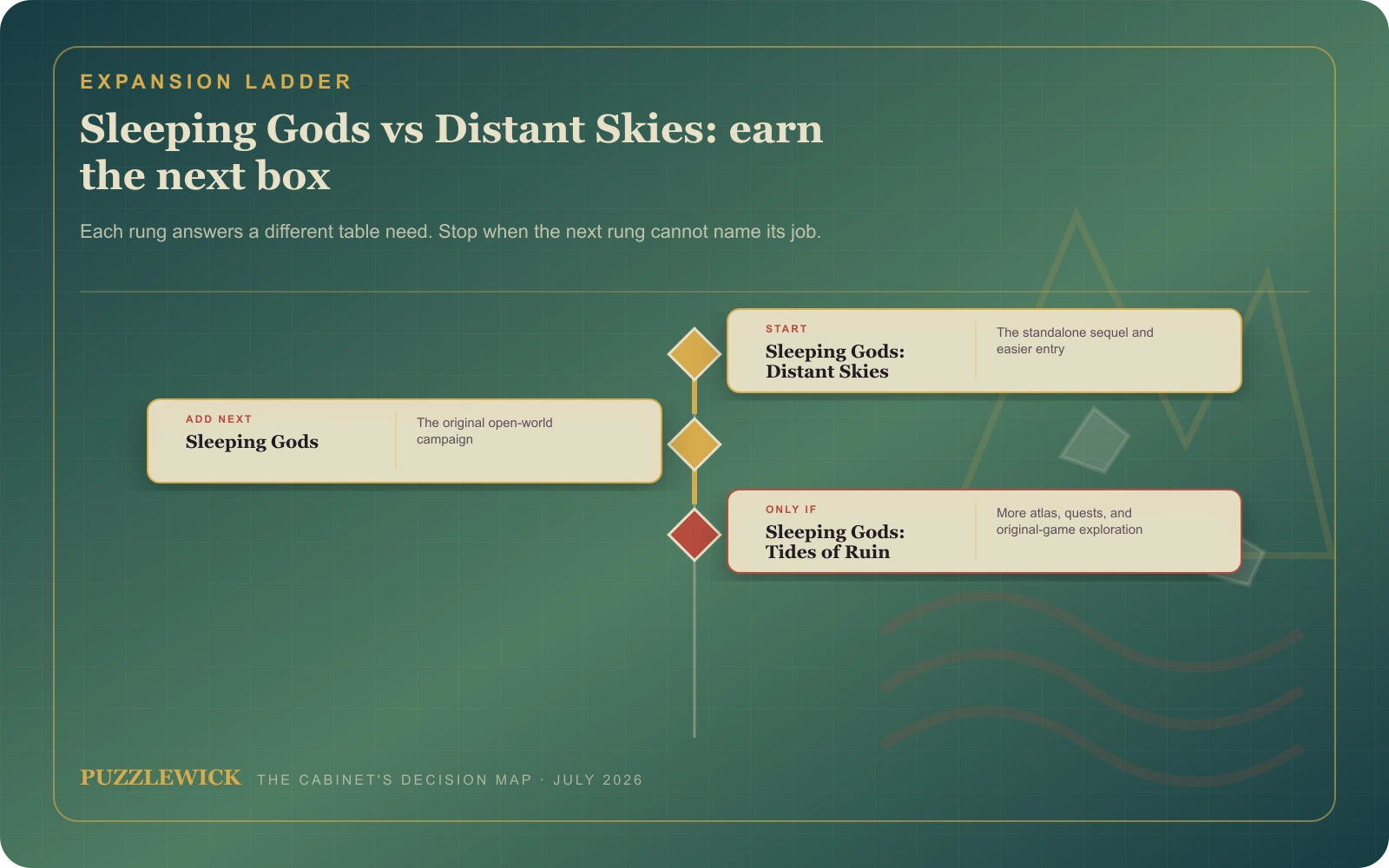
START · Sleeping Gods: Distant Skies: The standalone sequel and easier entry
ADD NEXT · Sleeping Gods: The original open-world campaign
ONLY IF · Sleeping Gods: Tides of Ruin: More atlas, quests, and original-game exploration
The stopping rule matters. They are standalone products, not base plus expansion. The original has heavier crew administration.
An Amazon page proves that a listing exists; it does not prove that the item belongs in this buying order. For Sleeping Gods vs Distant Skies, edition, language, seller, included contents, and exact product code still outrank a convenient checkout button.
What is inside each purchase path, and what does each product change?

Sleeping Gods: Distant Skies: The standalone sequel and easier entry. This is the first complete experience in this guide. Both are long campaign commitments.
Sleeping Gods: The original open-world campaign. Add it only after the table can explain why “the original open-world campaign” is the missing job. They are standalone products, not base plus expansion.
Sleeping Gods: Tides of Ruin: More atlas, quests, and original-game exploration. Add it only after the table can explain why “more atlas, quests, and original-game exploration” is the missing job. The original has heavier crew administration.
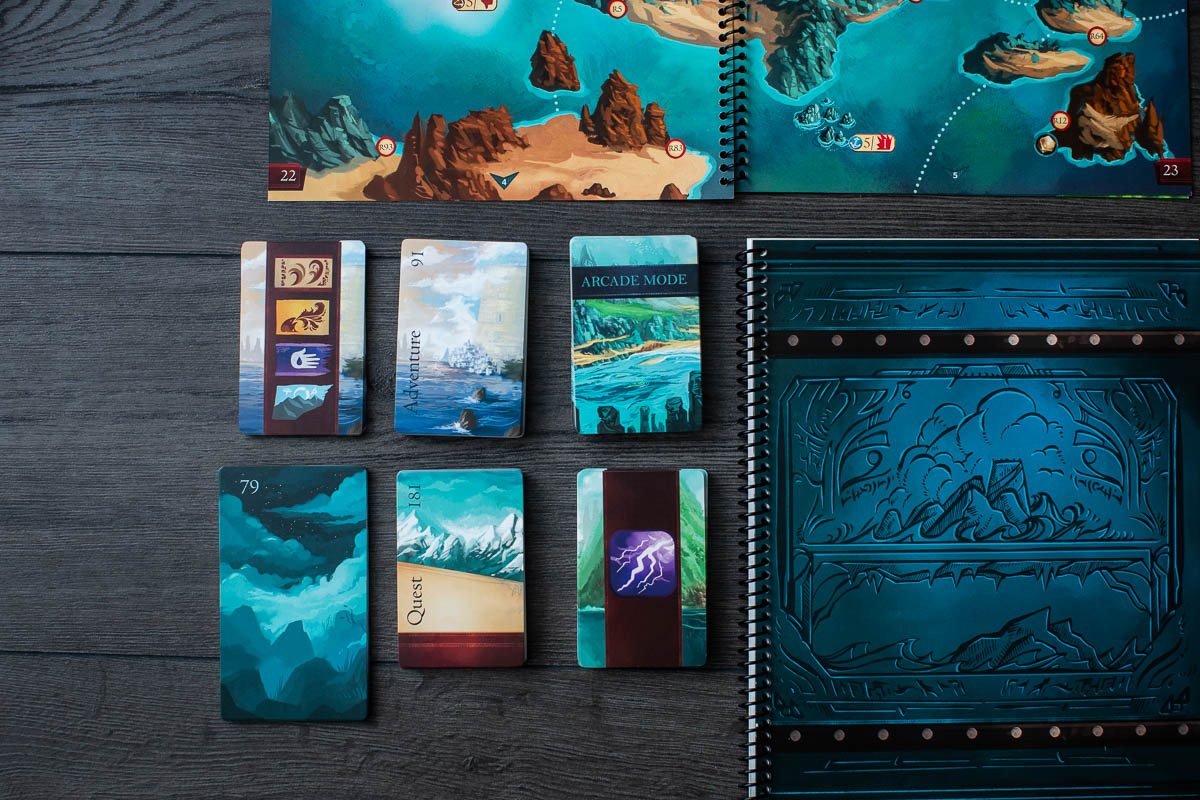
These are not interchangeable cartons. Each exact ASIN has one job in the collection: foundation, added player count, broader geography, deeper systems, or a specialist convenience. Product photos and official rules references are shown at reading size so edition marks and included components can be checked before checkout.
When a box is an expansion, its matching foundation remains mandatory. When it is standalone, owning the older game may still be useful, but it is not a rules dependency. That distinction prevents the two most common purchase failures: buying an expansion with nothing to expand and replacing a complete game with merely newer packaging.
Beginner, regular, advanced, and expert strategy
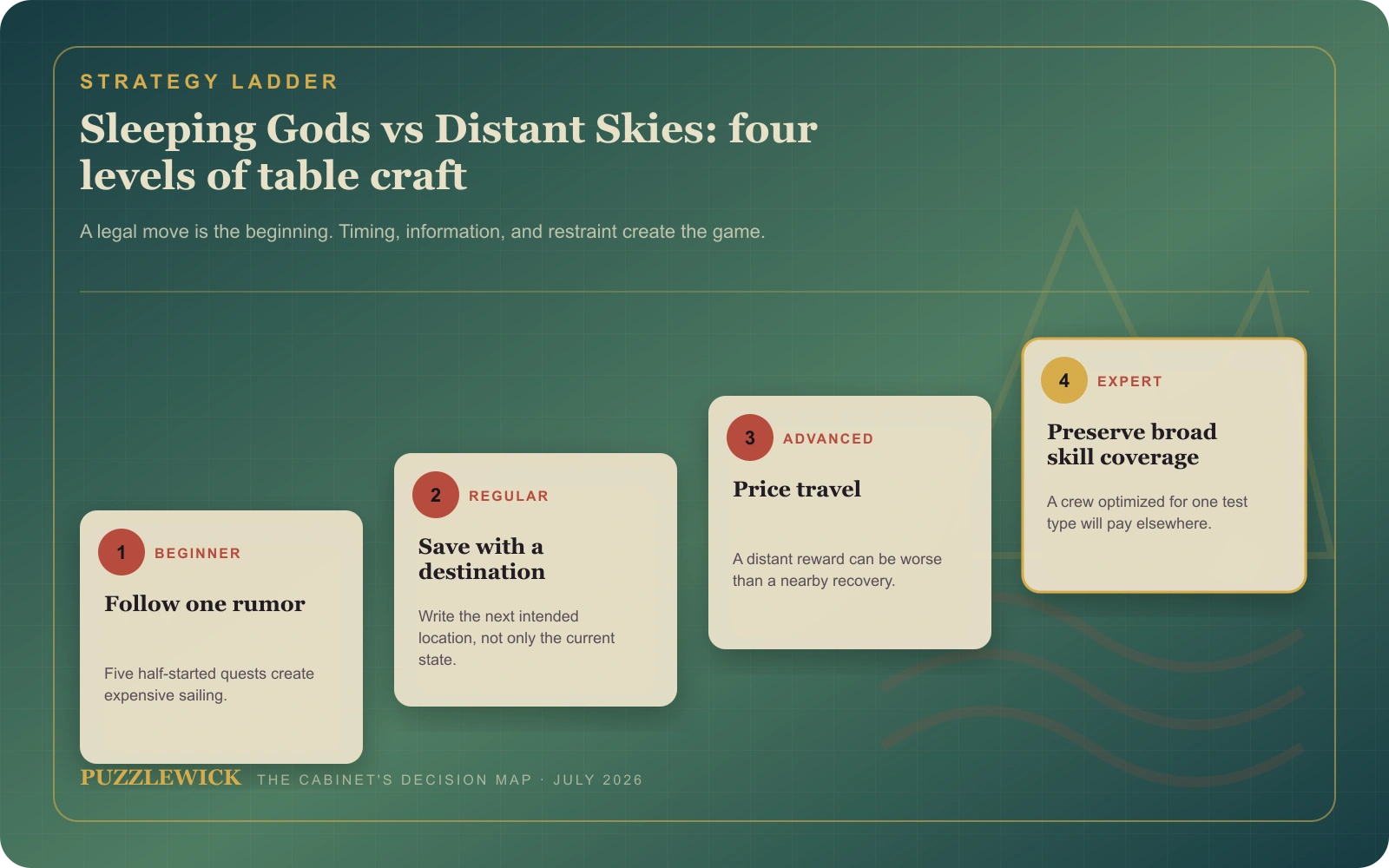
Beginner — Follow one rumor. Five half-started quests create expensive sailing.
Regular — Save with a destination. Write the next intended location, not only the current state.
Advanced — Price travel. A distant reward can be worse than a nearby recovery.
Expert — Preserve broad skill coverage. A crew optimized for one test type will pay elsewhere.
Debrief the port name that finally connected two old clues. Name the decision that created it and the rule or timing window that remained muddy. Five focused minutes will improve the next session more than buying novelty to cover an unresolved teach.
This ladder cross-checks the official rules structure against recurring owner questions about onboarding, campaign structure, administration, exploration, combat, solo load, save system, story tone, and expansion compatibility.
A three-session path from unboxing to confident play
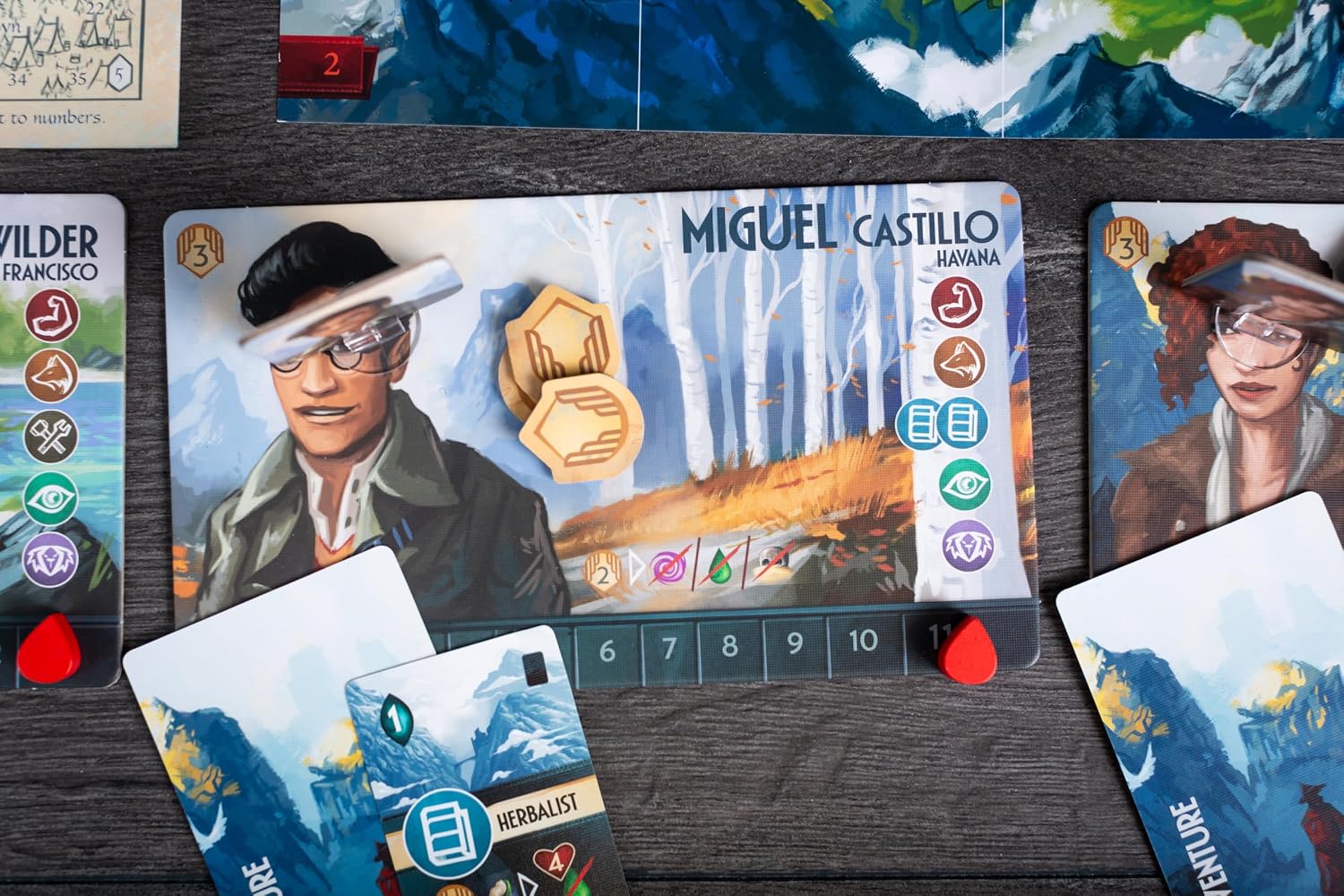

Session one — learn the loop. Play the introduction without chasing efficiency, then record keywords and stop at a natural save point. Keep optional modules closed, play legal turns, and record only the rules questions that actually interrupt a decision.
Session two — remove friction. Use the setup photograph, assign component zones, and practice the “Save with a destination” habit. The goal is a clean start and finish, not a more elaborate table.
Session three — earn the next layer. Apply “Price travel” and debrief the port name that finally connected two old clues. Only then decide whether the next product in the ladder solves a repeated limitation or merely extends the shopping phase.
This schedule protects the reason an illustrated atlas becomes a memory palace where ports, rumors, injuries, keywords, and distant silhouettes invite one more page. It also gives a buyer enough evidence to return, wait, or expand without mistaking launch excitement for long-term fit.
What is the real table, hosting, and solo commitment?
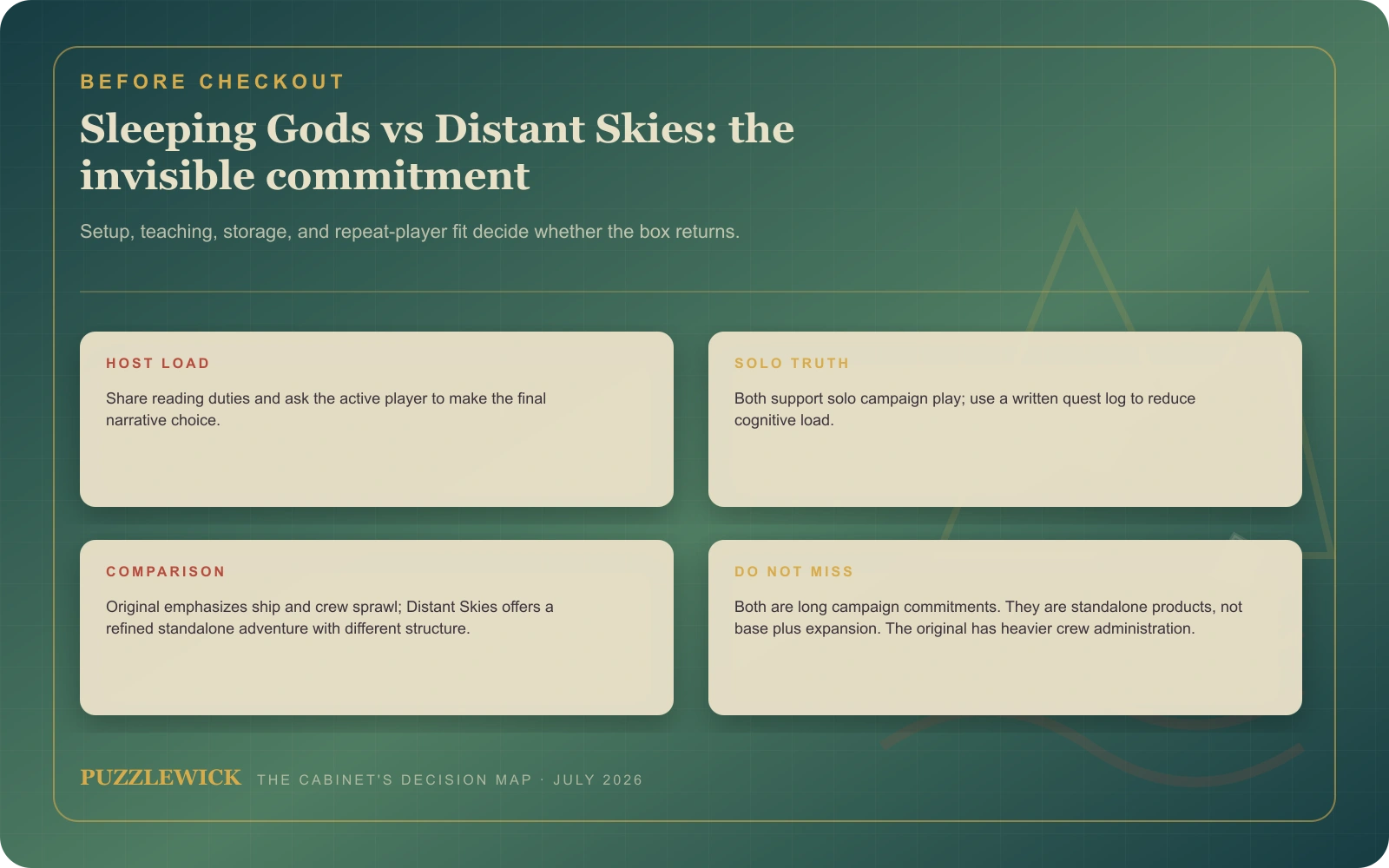

Hosting: Share reading duties and ask the active player to make the final narrative choice.
Solo: Both support solo campaign play; use a written quest log to reduce cognitive load.
The invisible budget is many sessions, written notes, stable storage, story reading, atlas handling, component sorting, and permission to stop at a real save point. That workload predicts whether Sleeping Gods vs Distant Skies returns to the table more reliably than the excitement of opening it.
What do lower-star reviews and long-term owners warn about?
The durable warnings are fit warnings. Both are long campaign commitments. They are standalone products, not base plus expansion. The original has heavier crew administration.
The Amazon reviews worth weighing are the recurring complaints — packaging, components, complexity, and mismatched expectations. Star averages drift and listings merge, so the repeated problem is the signal, not a moving decimal.
A credible warning predicts who will regret the purchase and why. A complaint that merely describes the game doing exactly what it is designed to do is not a defect; it is evidence for the “who should skip it” verdict.
Common misconceptions, corrected before checkout
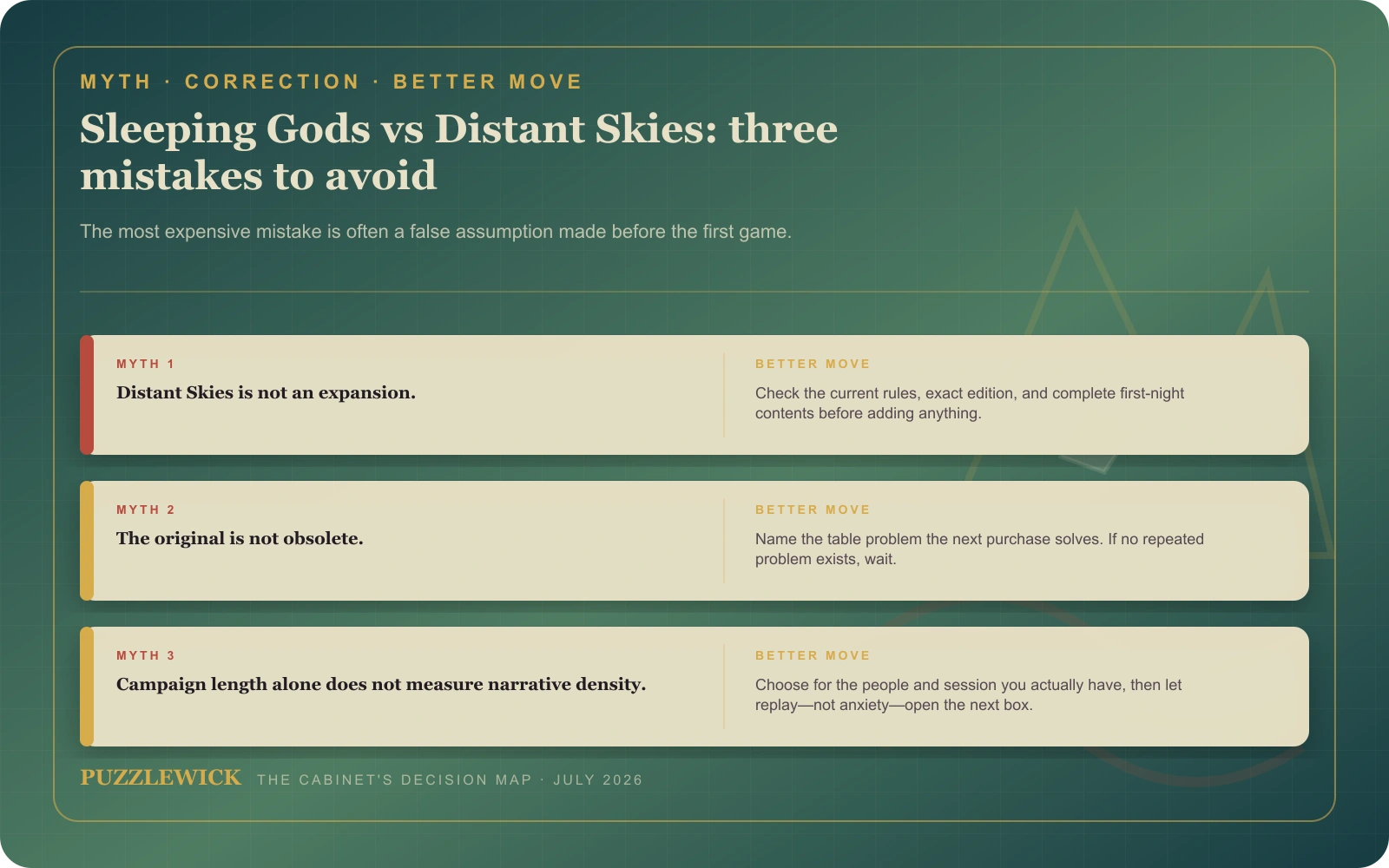
- Distant Skies is not an expansion.
- The original is not obsolete.
- Campaign length alone does not measure narrative density.
Everything above was checked July 30, 2026. Product identities and availability can move.
The Puzzlewick shelf plan for Sleeping Gods vs Distant Skies
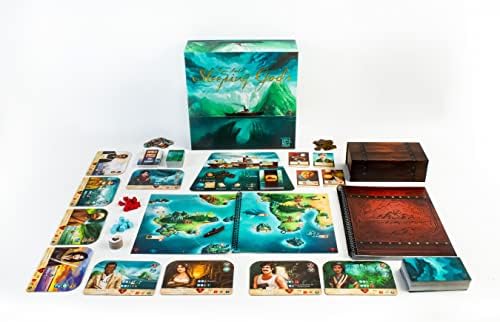

Distant Skies is the safer first purchase in 2026; the original remains the richer choice for players specifically drawn to managing the Manticore crew across a vast sea.
Before you add anything else, name the repeated table problem it fixes. If the answer is still “more stuff,” stop with the first verified box.
Current verified Amazon options: Sleeping Gods: Distant Skies on Amazon, Sleeping Gods on Amazon, Sleeping Gods: Tides of Ruin on Amazon.
The picks
Some links below are affiliate links — as an Amazon Associate, Puzzlewick earns from qualifying purchases, at no extra cost to you. It never changes a pick.

 10 photos
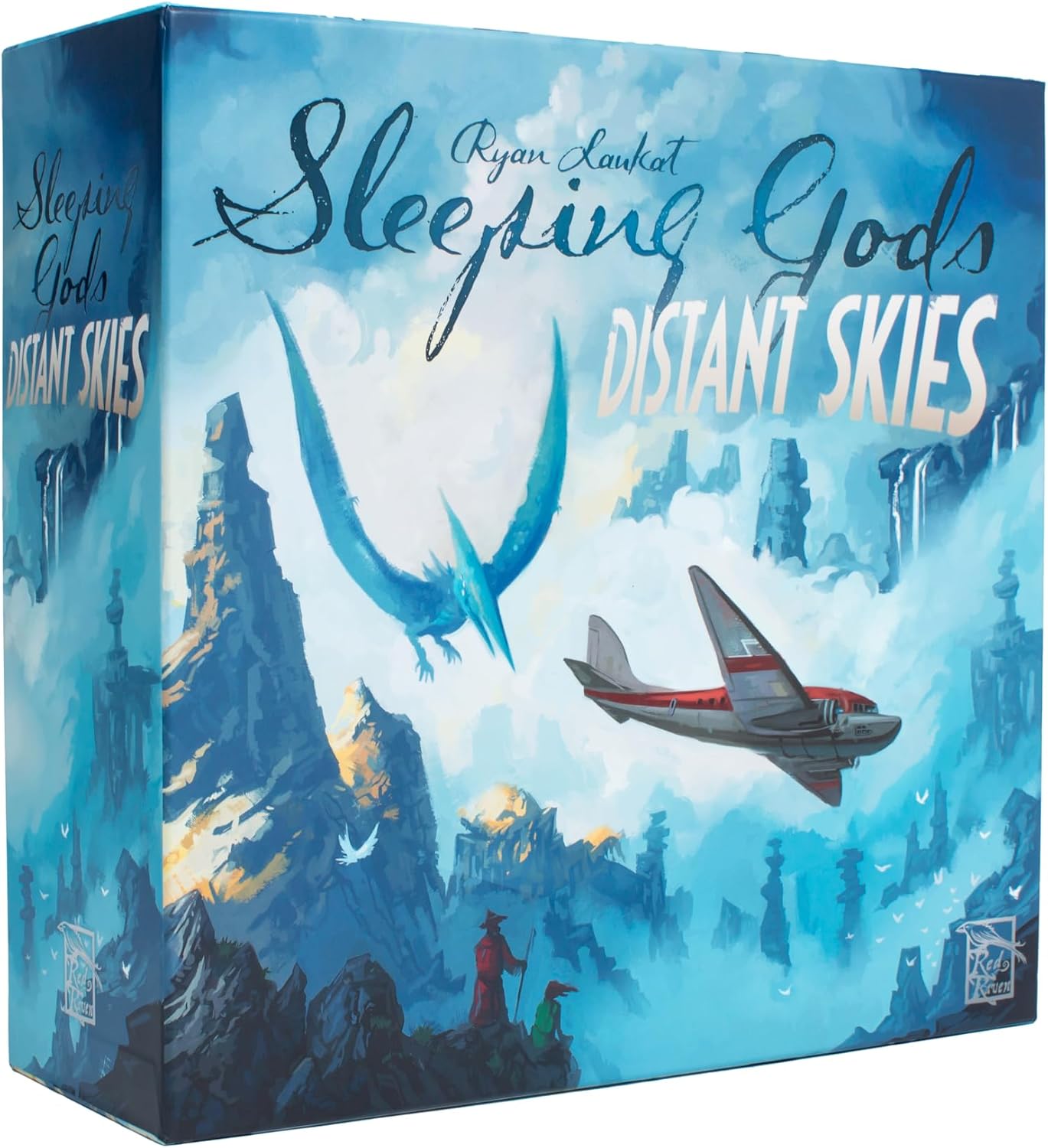
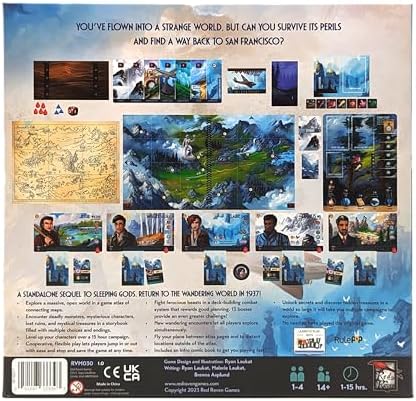
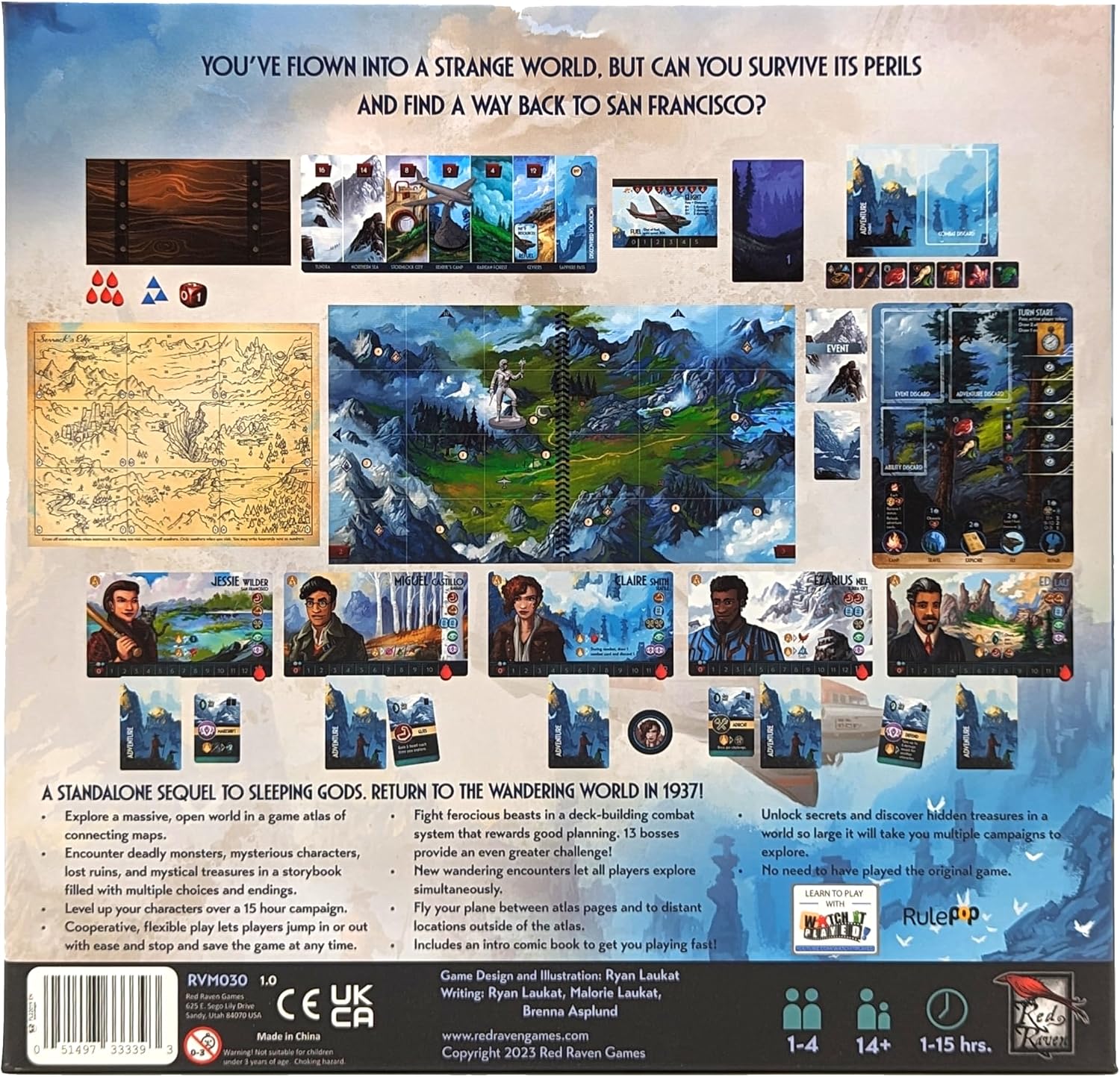
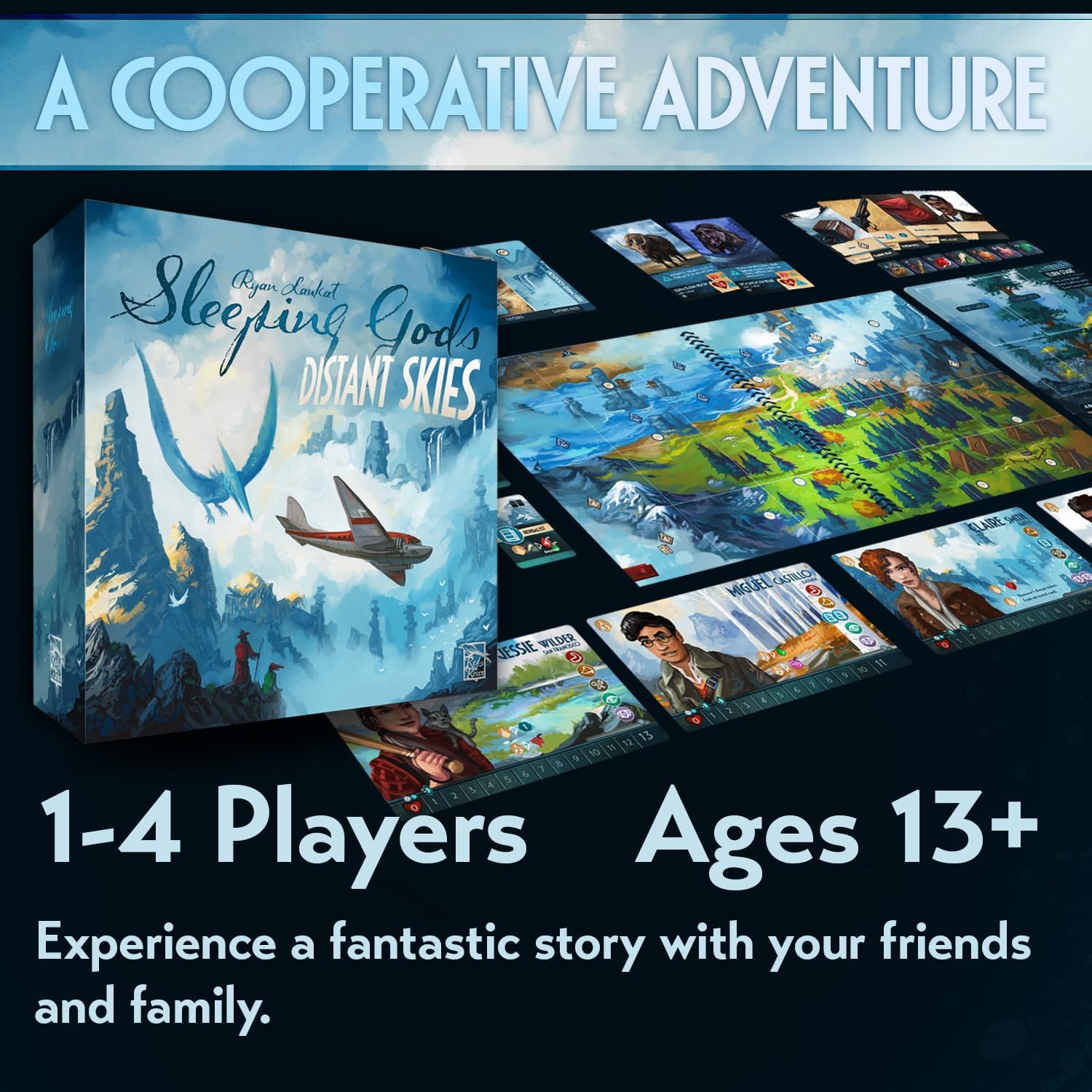
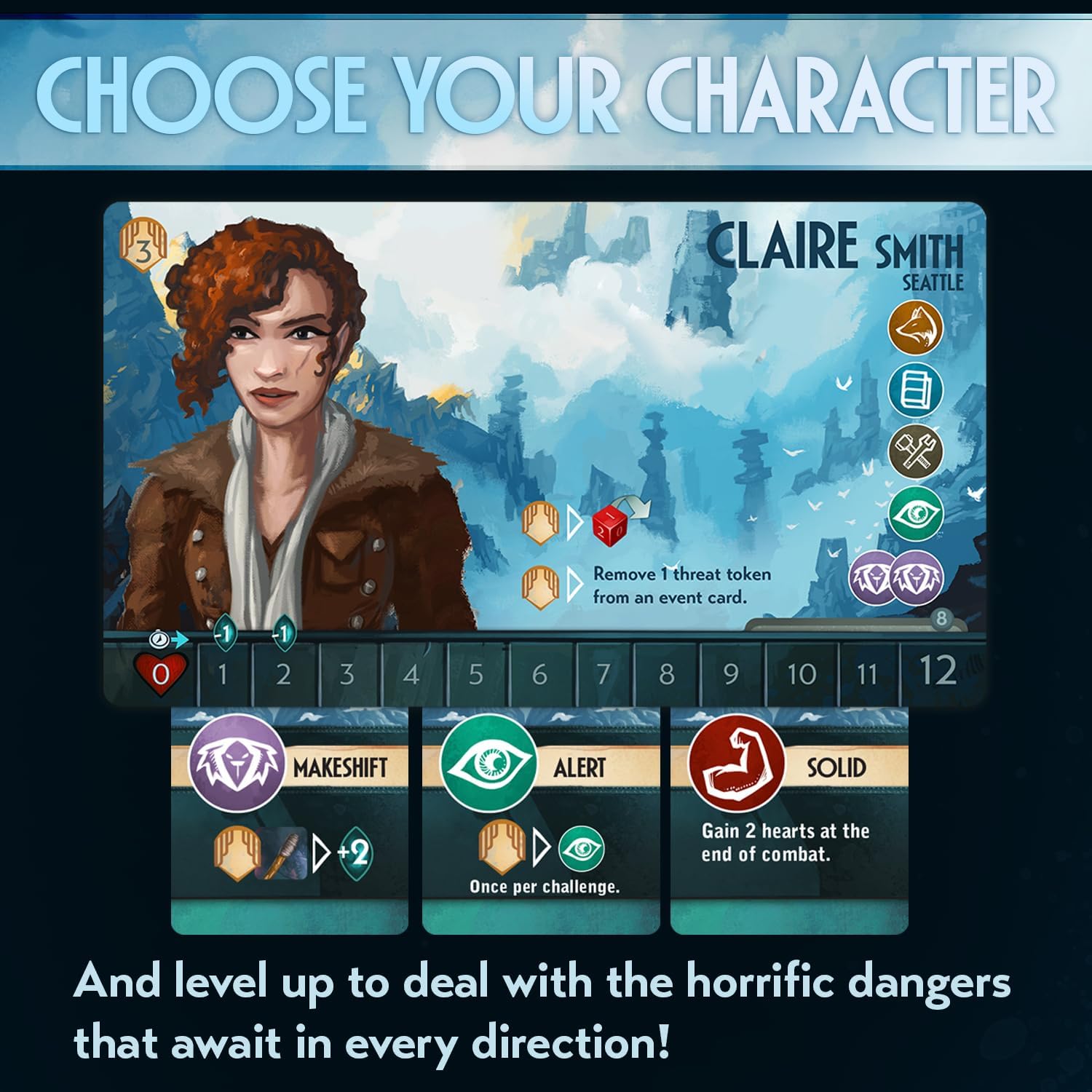
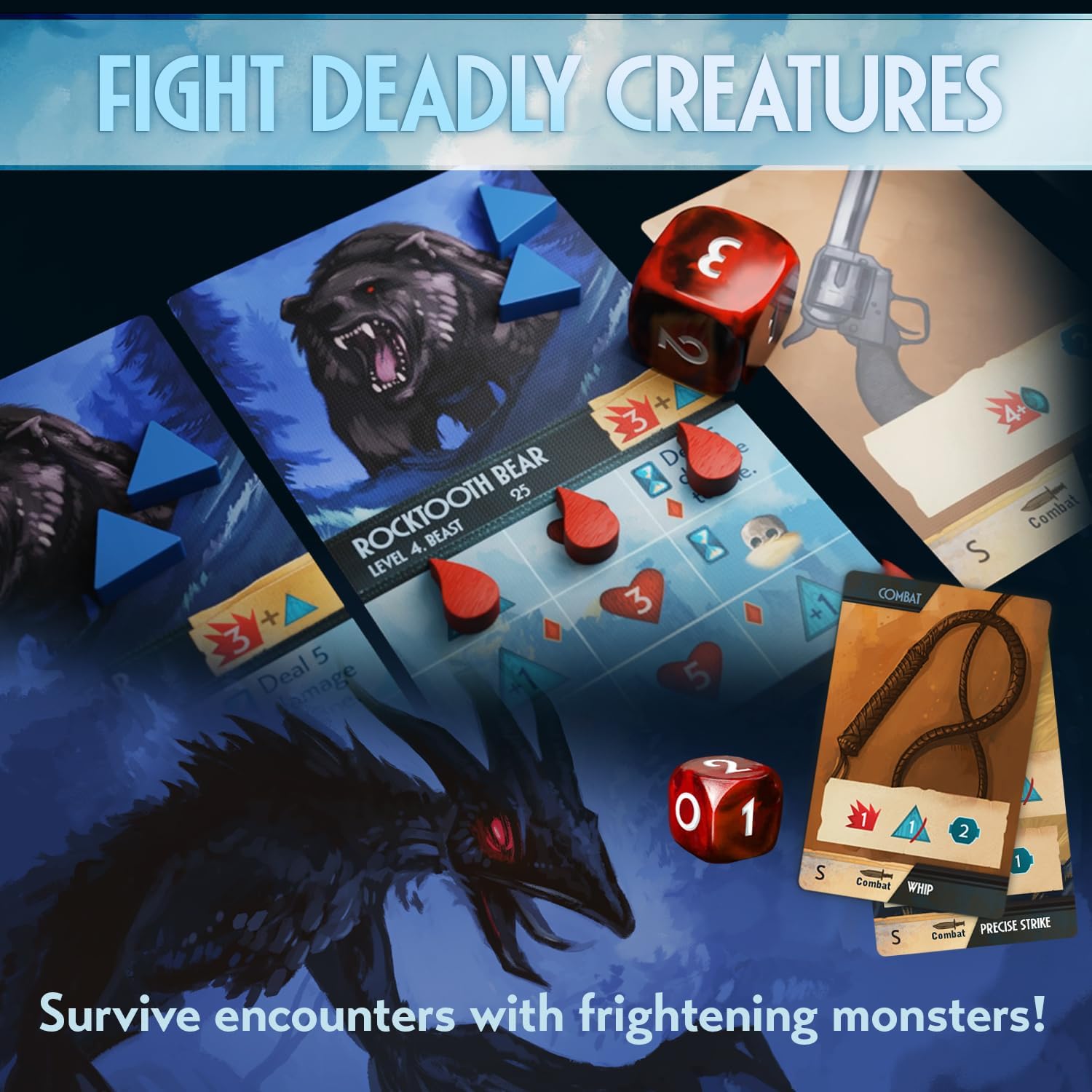
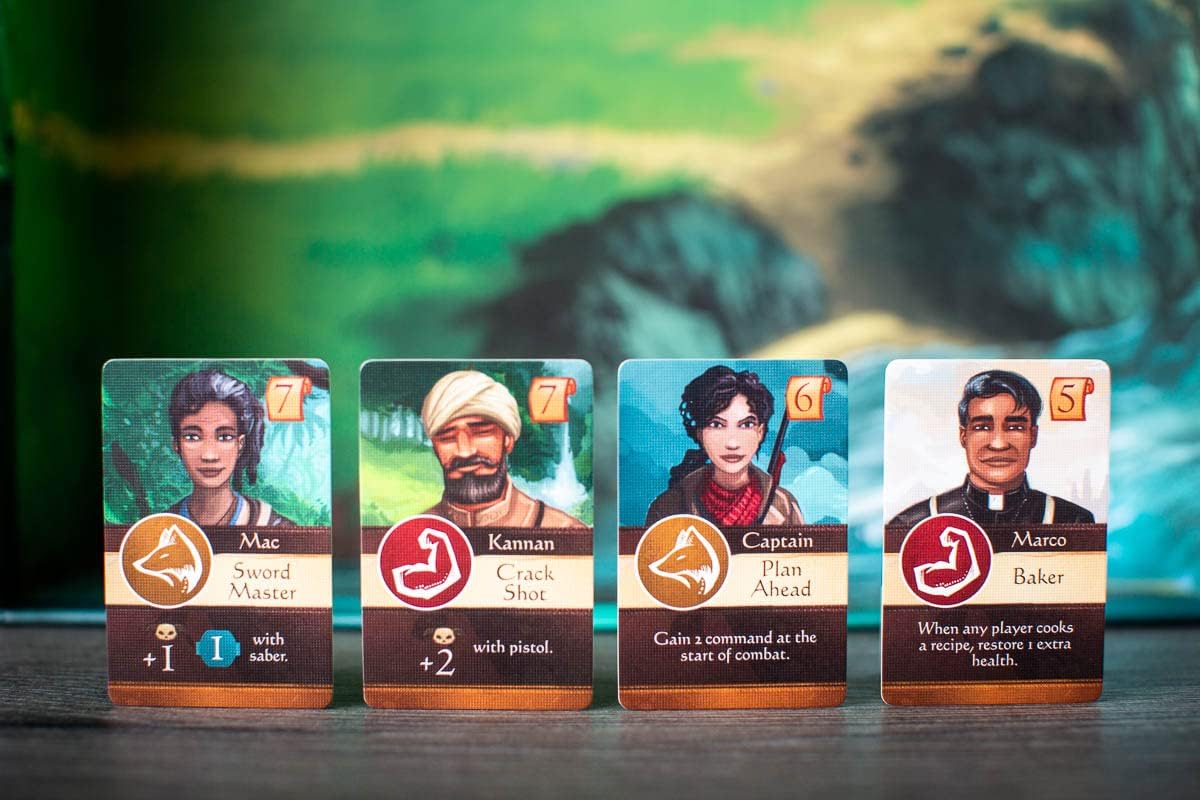
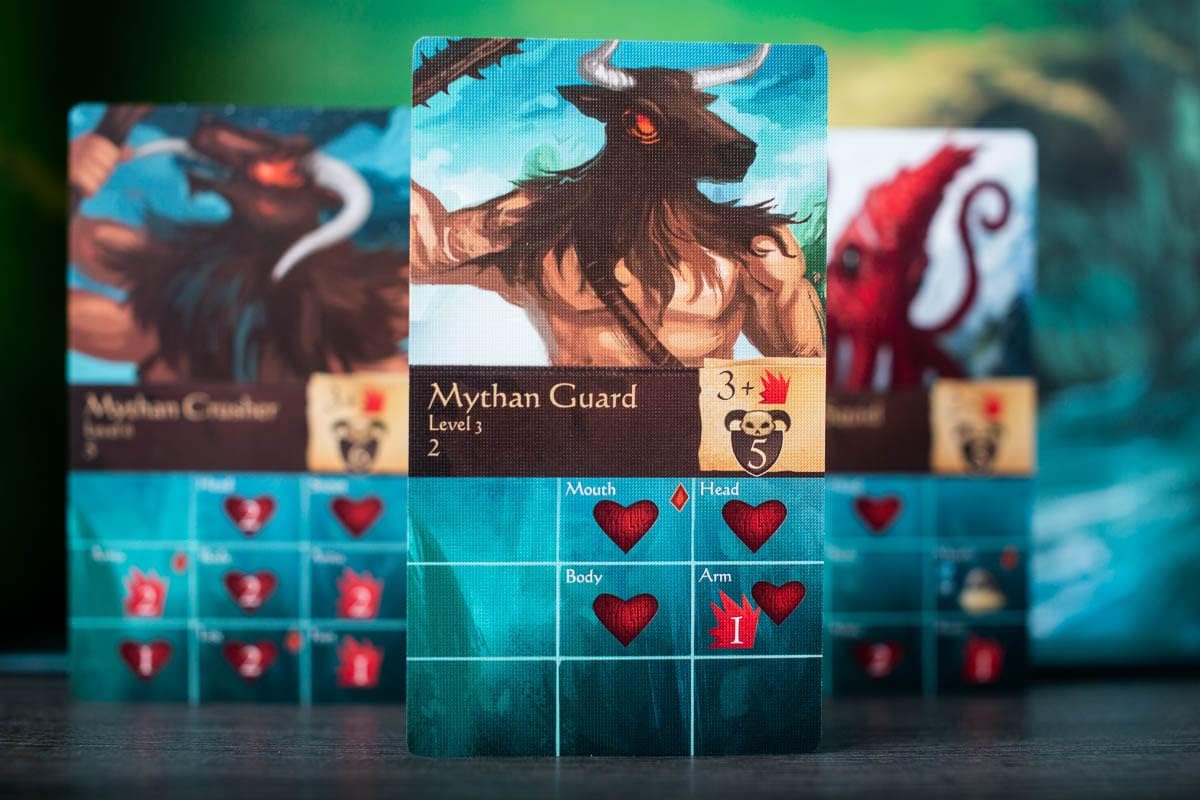
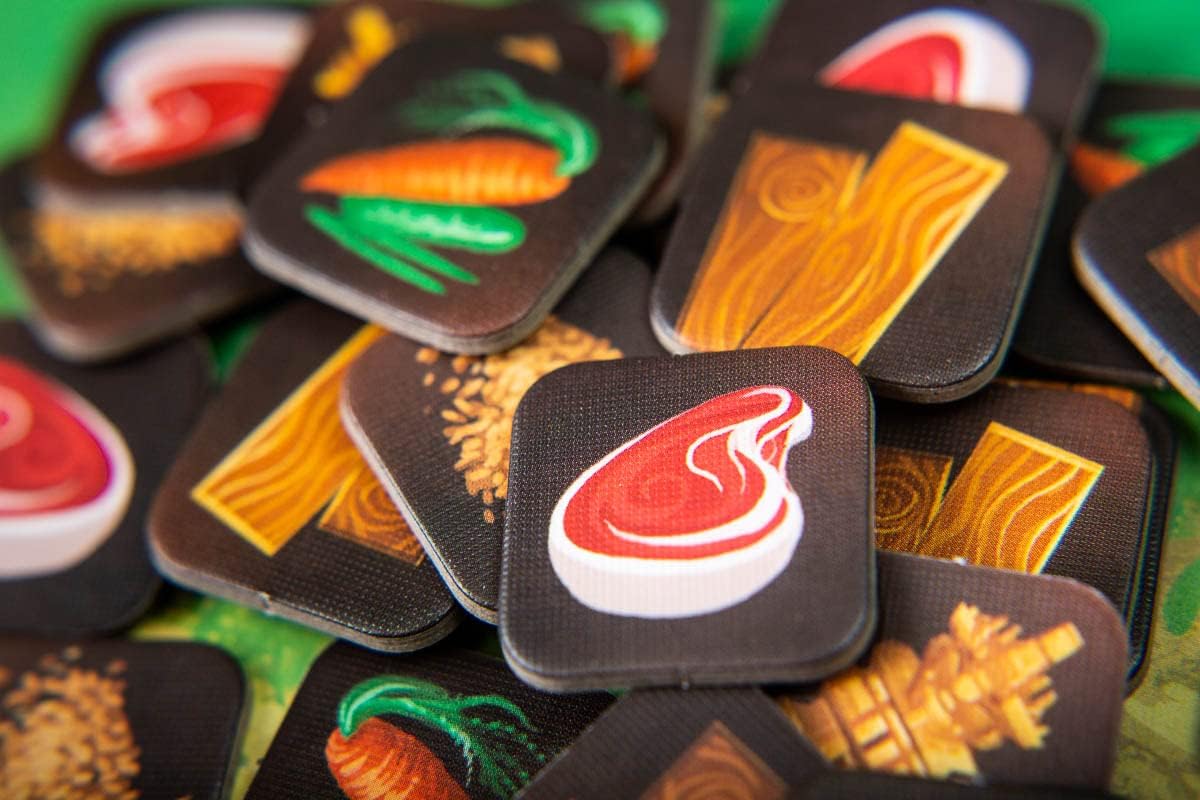
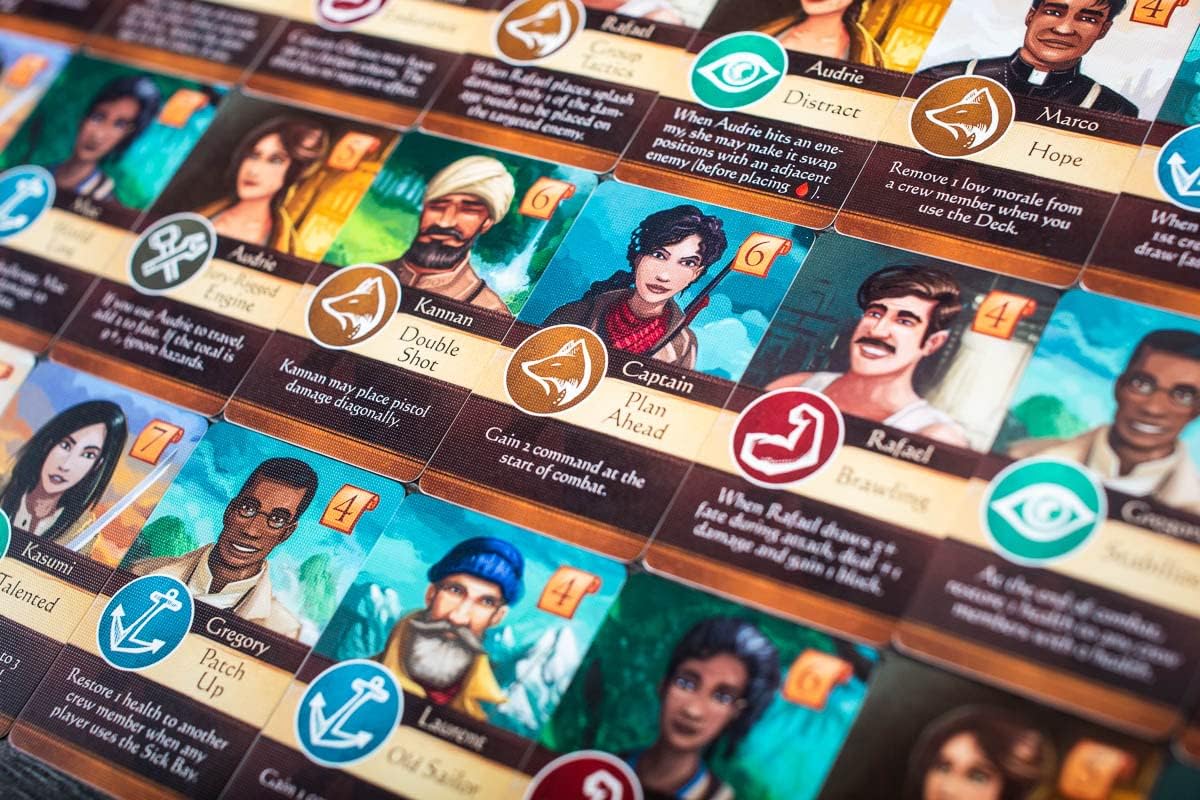
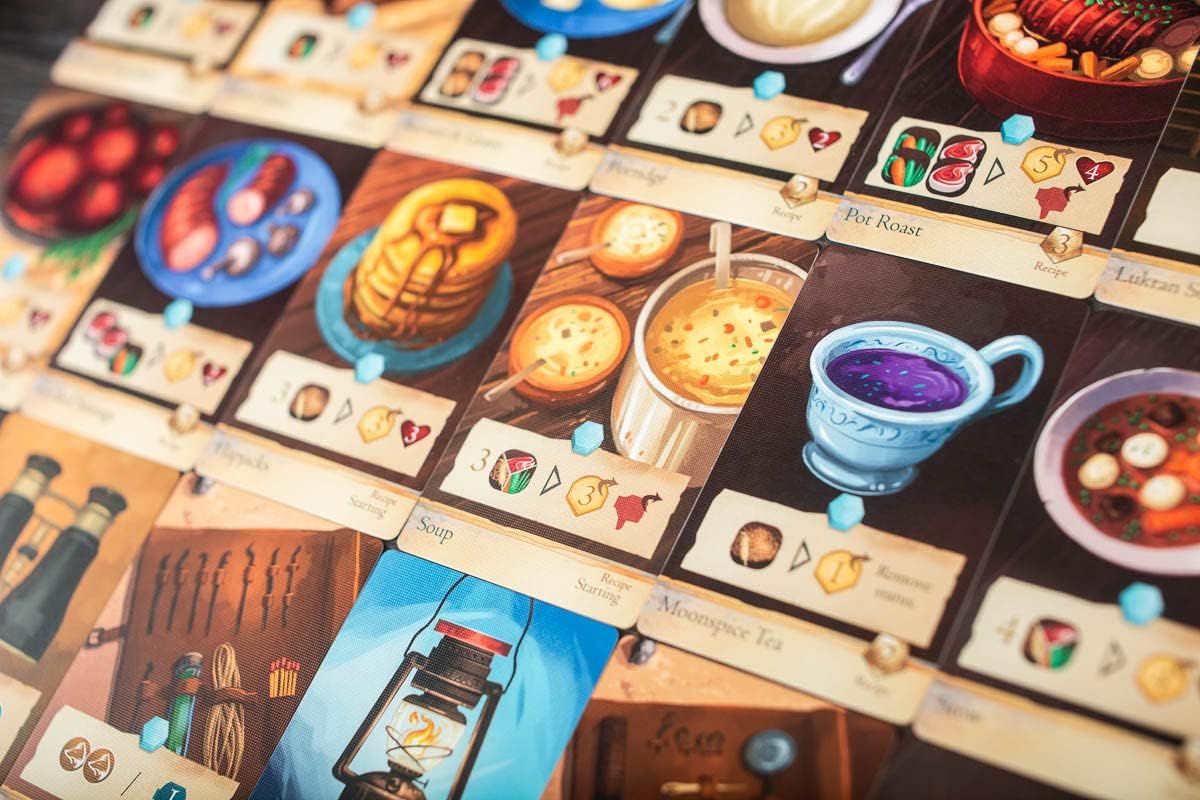
 Sleeping Gods: Distant Skies
The standalone sequel and easier entry. Listing and edition verified July 30, 2026.
- Verified listing — the exact product, not a lookalike
- Has a clear job in the buying order
- Checked against the official rules and product pages
- Stock and seller can change without notice
- Not every table needs this one
 10 photos
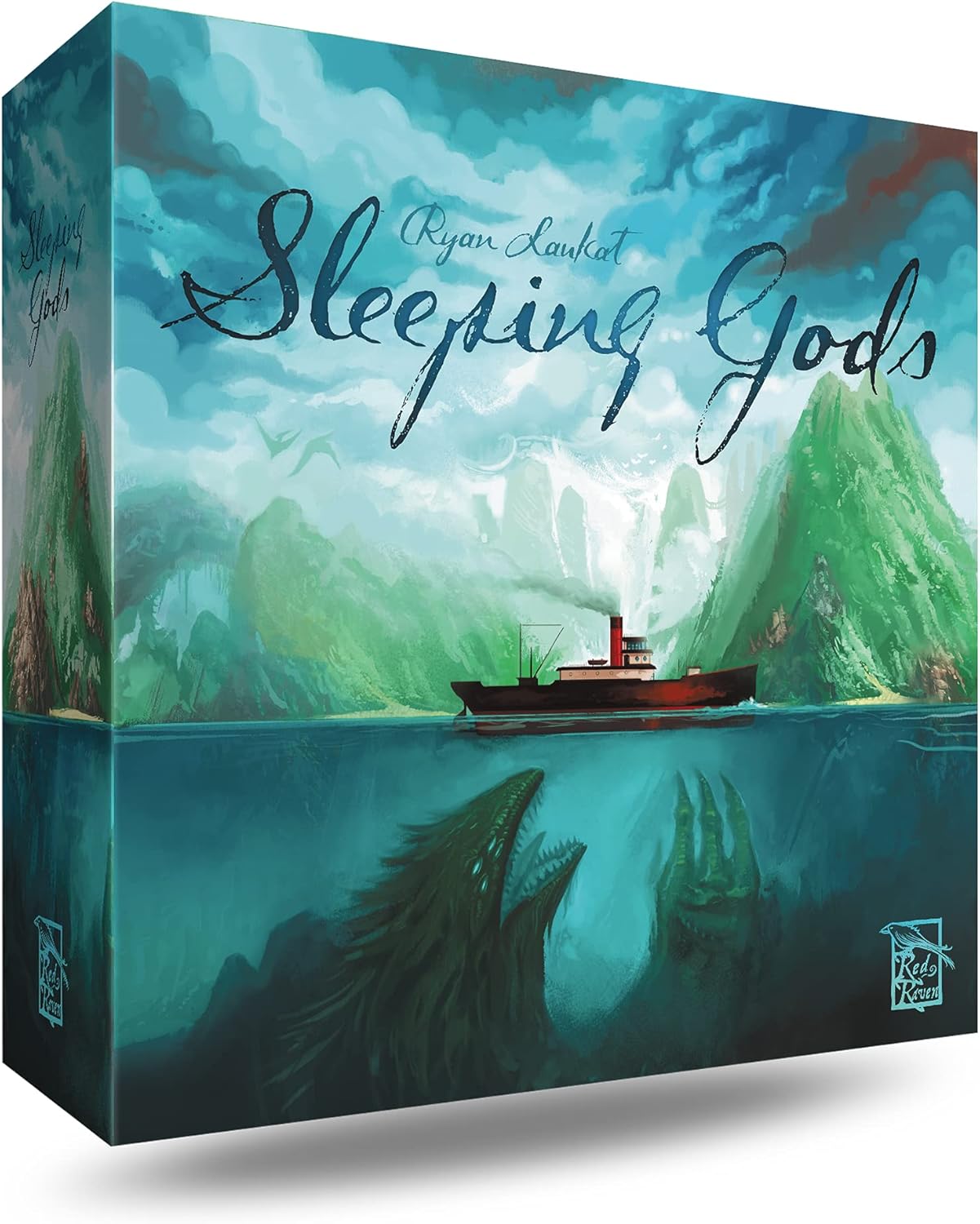
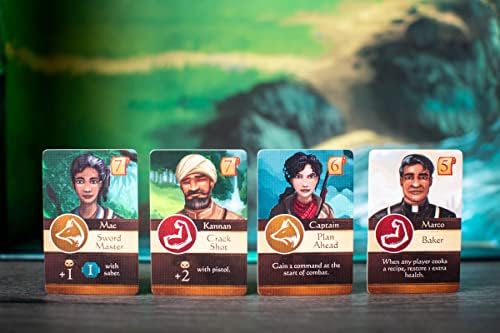
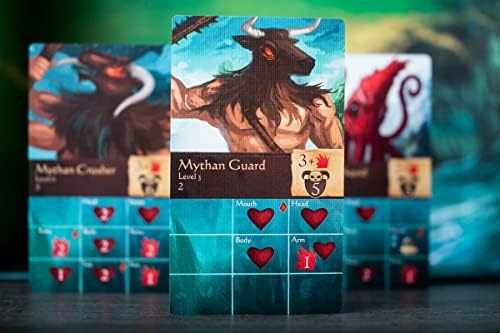
 Sleeping Gods
The original open-world campaign. Listing and edition verified July 30, 2026.
- Verified listing — the exact product, not a lookalike
- Has a clear job in the buying order
- Checked against the official rules and product pages
- Stock and seller can change without notice
- Not every table needs this one
 10 photos
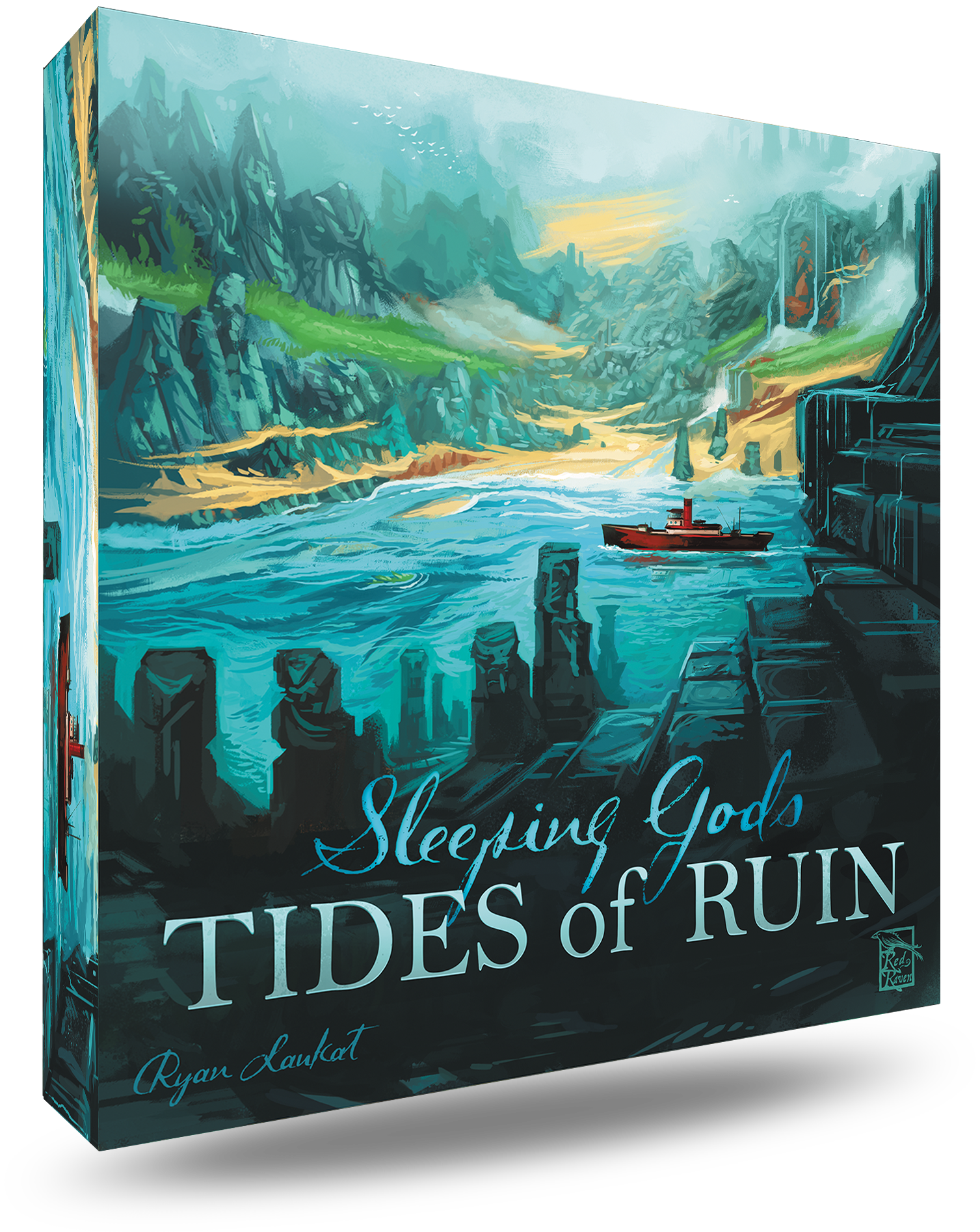
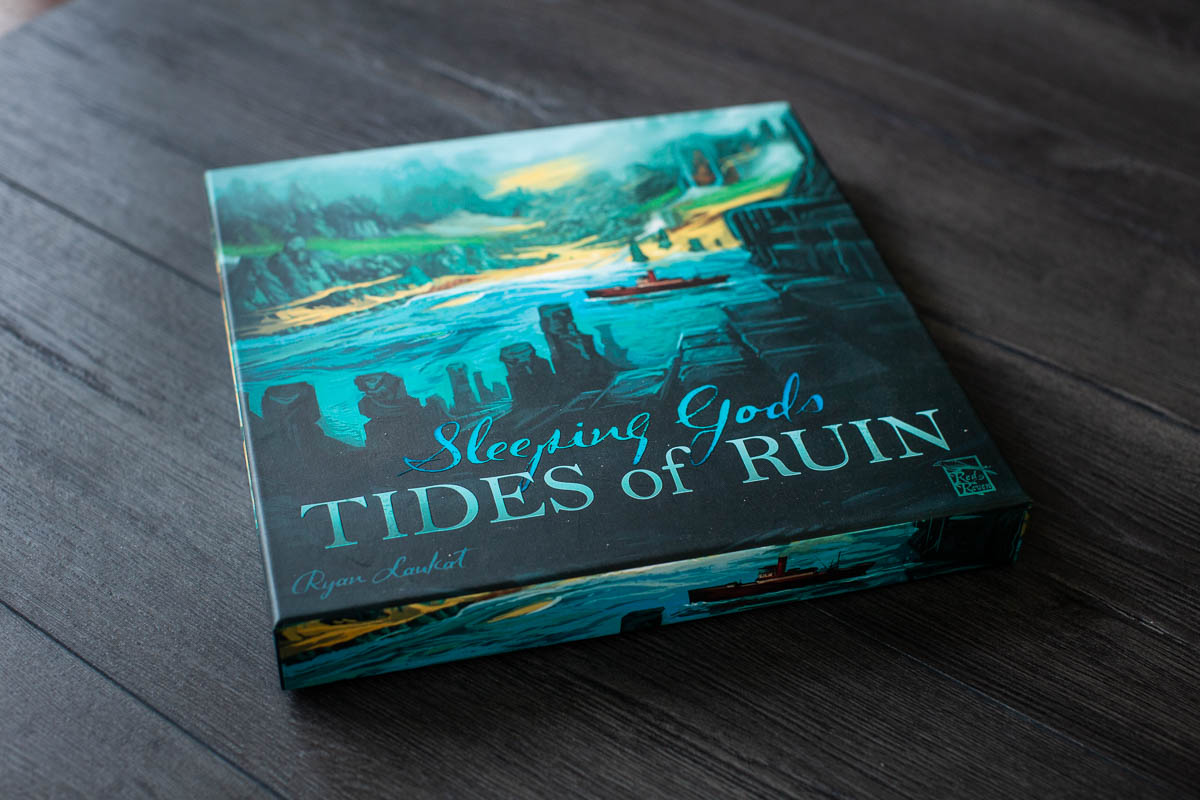
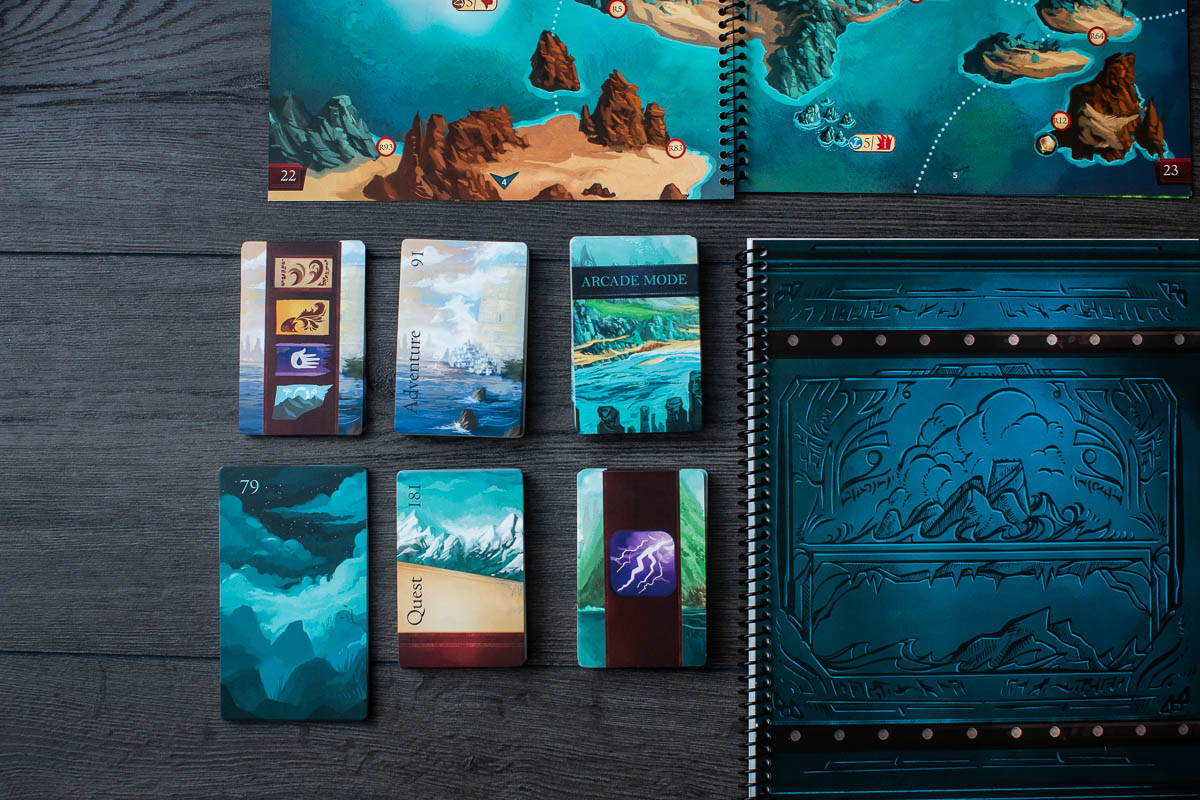
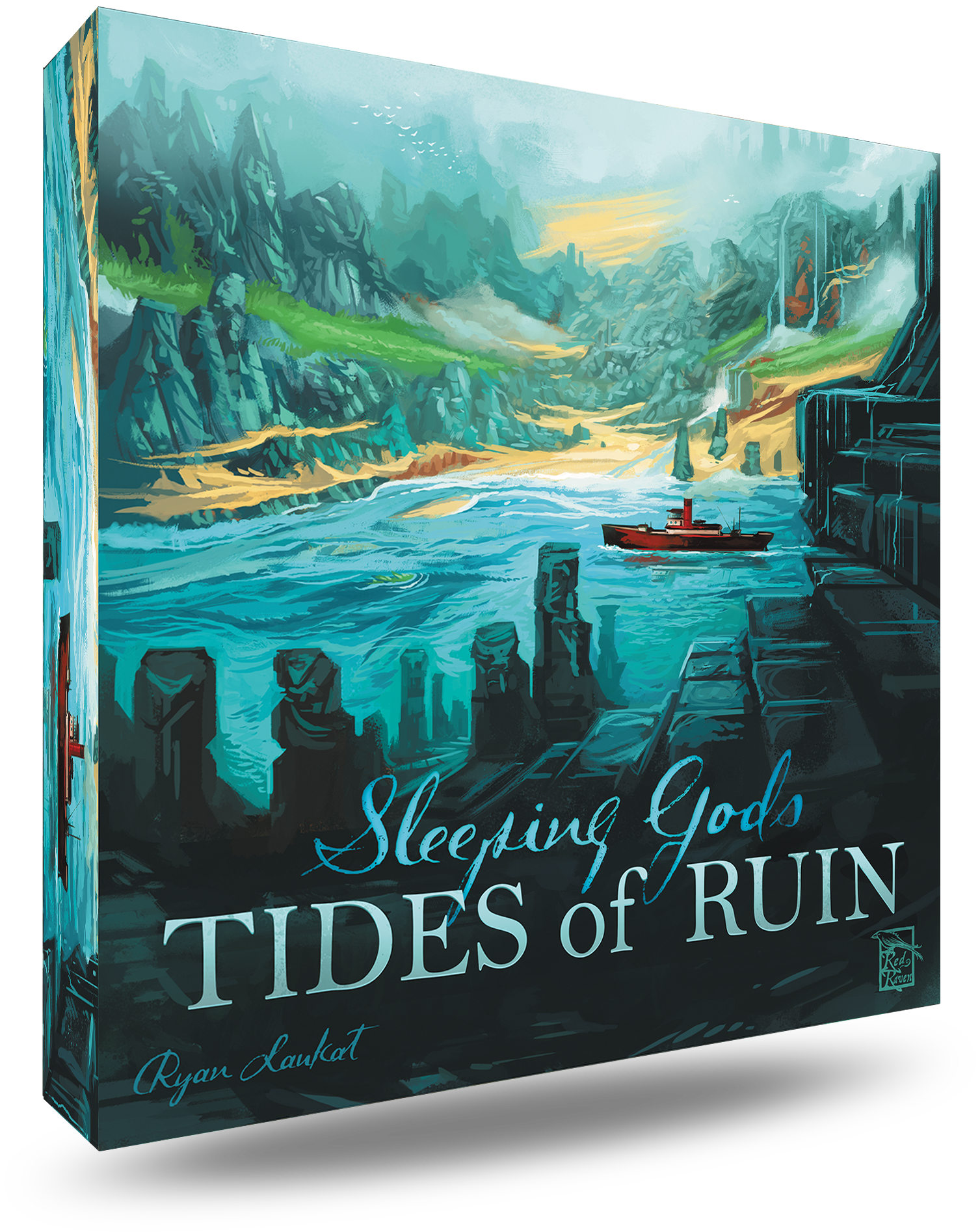
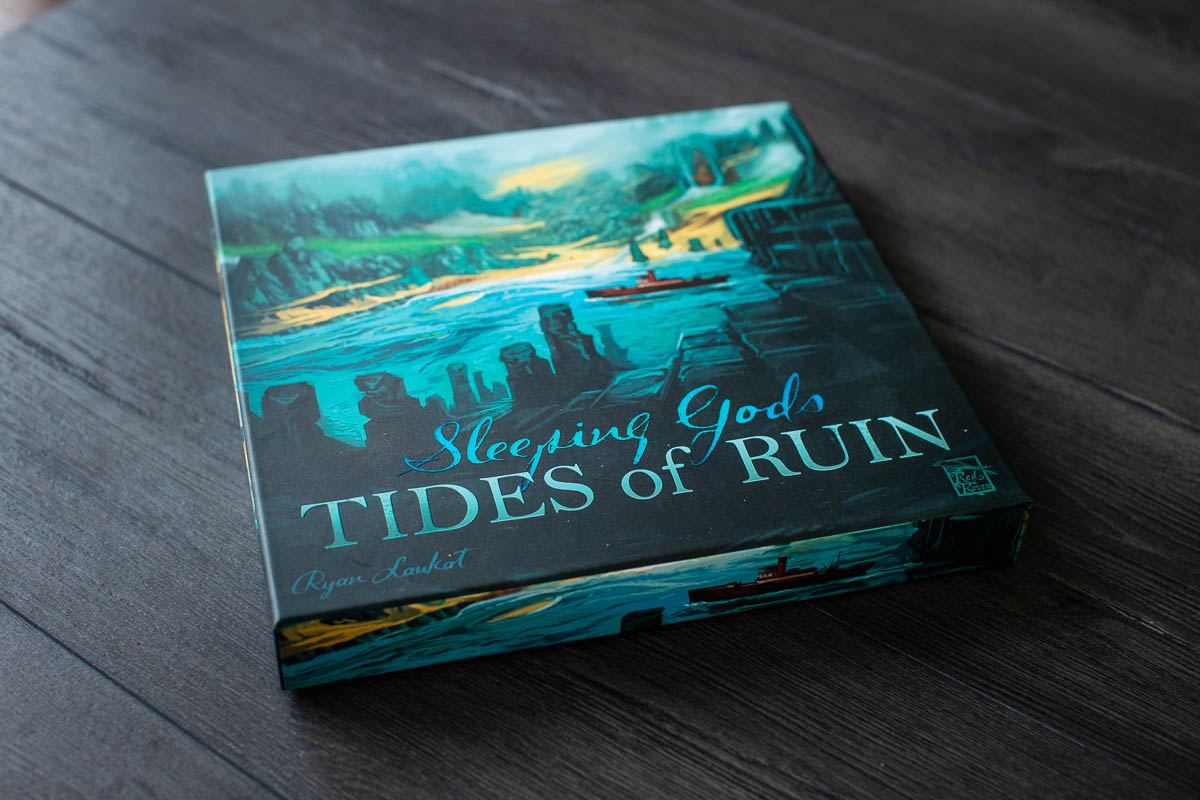
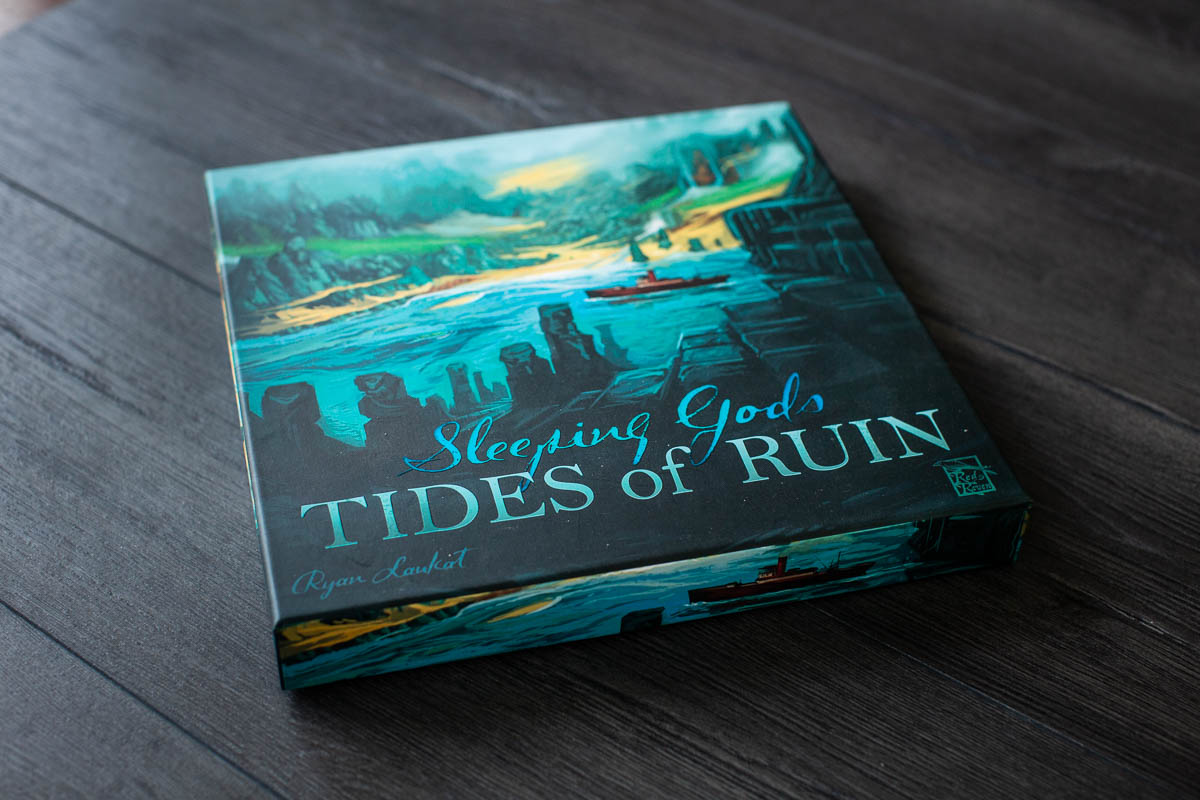
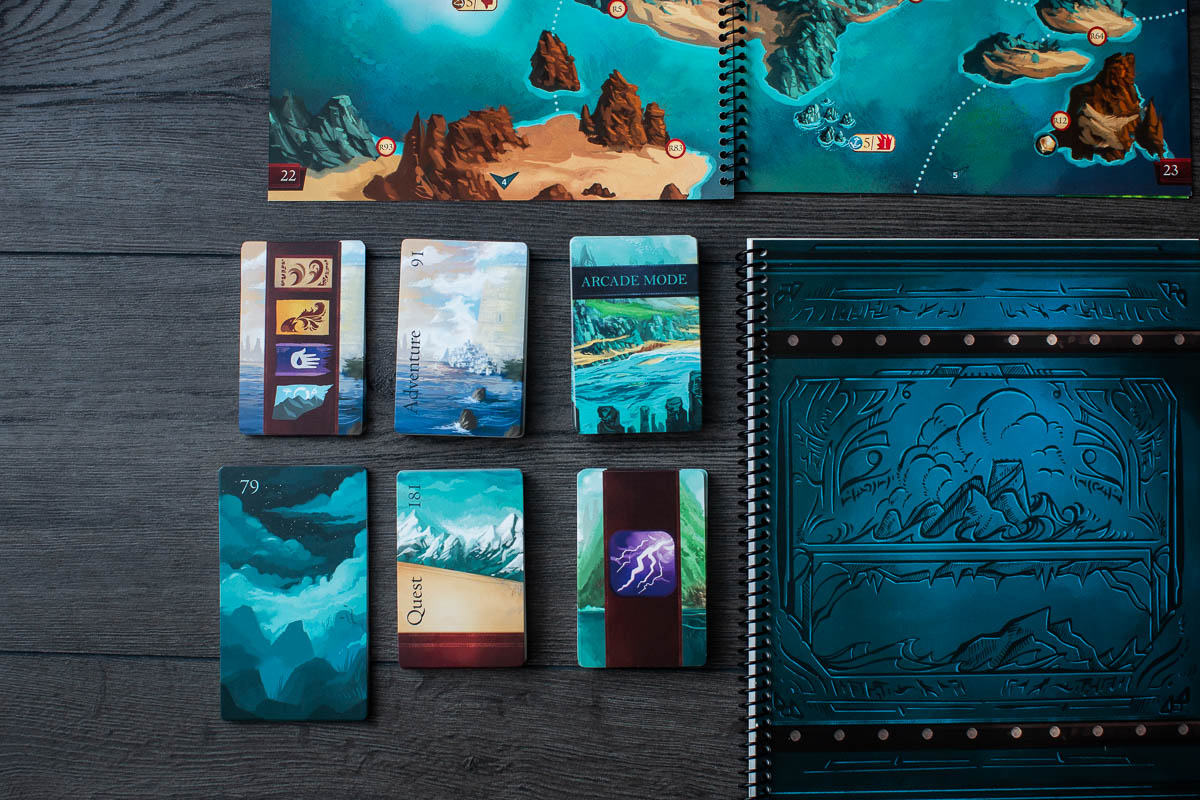
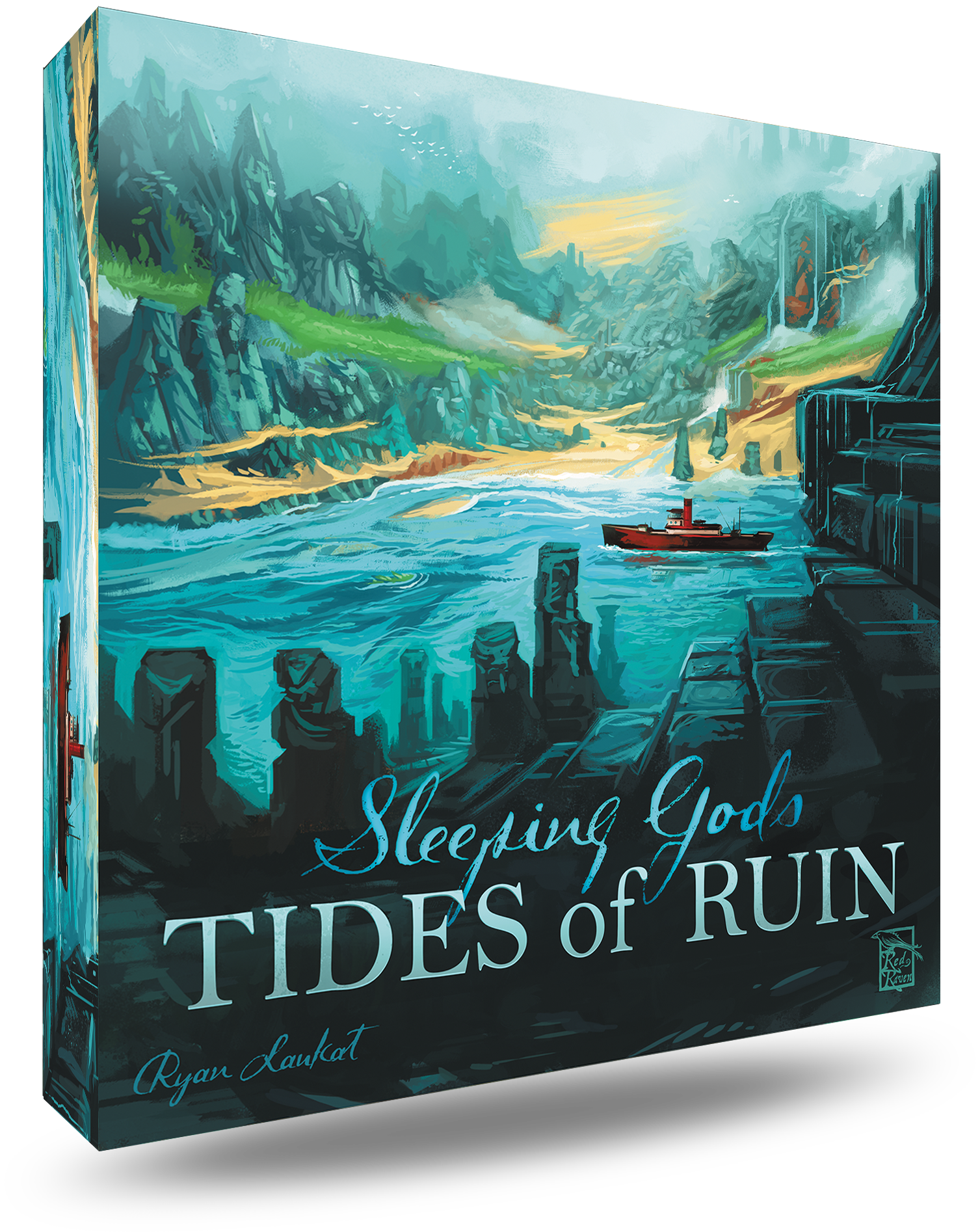
 Sleeping Gods: Tides of Ruin
More atlas, quests, and original-game exploration. Listing and edition verified July 30, 2026.
- Verified listing — the exact product, not a lookalike
- Has a clear job in the buying order
- Checked against the official rules and product pages
- Stock and seller can change without notice
- Not every table needs this one
At a glance
| Stage | Product | Buy when | Curator ruling |
|---|---|---|---|
| START | Sleeping Gods: Distant Skies | The standalone sequel and easier entry | Start here |
| ADD NEXT | Sleeping Gods | The original open-world campaign | Only after repeat play |
| ONLY IF | Sleeping Gods: Tides of Ruin | More atlas, quests, and original-game exploration | Only after repeat play |
Questions, answered
Do I need Sleeping Gods before Distant Skies?
No.
Which is easier to start?
Distant Skies.
Which is better solo?
Both support solo; Distant Skies is the cleaner onboarding choice.
Does Tides of Ruin work with Distant Skies?
No; it expands the original Sleeping Gods.
What is the safest first purchase for Sleeping Gods vs Distant Skies?
The standalone sequel and easier entry. Start with the exact edition linked in this guide, play it repeatedly, and add another box only when the table can name the missing experience.
Should I buy every product in this Sleeping Gods vs Distant Skies guide at once?
No. The sequence is a stop-aware ladder, not a single cart. Buy the first complete experience, then let repeated play justify the next box.
Yumi's verdict
Distant Skies is the safer first purchase in 2026; the original remains the richer choice for players specifically drawn to managing the Manticore crew across a vast sea.
Research ledger 8 sources · reviewed 2026-07-30
Specifications, rules, current product information, community experience, and contrary evidence were checked against the sources below. Commercial links are kept separate from editorial evidence.
- Sleeping Gods official product pageredravengames.com/sleeping-gods
- Sleeping Gods Distant Skies official pageredravengames.com/sleeping-gods-distant-skies
- Current Sleeping Gods starting-point discussionsreddit.com/r/boardgames/search/?q=sleeping%20gods%20distant%20skies&restrict_sr=1&sort=new
- BoardGameGeek title and discussion index: Sleeping Gods vs Distant Skiesboardgamegeek.com/geeksearch.php?action=search&objecttype=boardgame&q=Sleeping%20Gods%20vs%20Distant%20Skies
- Exact Amazon product identity: Sleeping Gods: Distant Skiesamazon.com/dp/B0CFPPG5WK?tag=puzzlewick-20
- Exact Amazon product identity: Sleeping Godsamazon.com/dp/B084GWHLGK?tag=puzzlewick-20
- BoardGameGeek: Sleeping Gods title, files, forums, and community recordboardgamegeek.com/boardgame/255984/sleeping-gods
- BoardGameGeek: Sleeping Gods Distant Skies title and community recordboardgamegeek.com/boardgame/358320/sleeping-gods-distant-skies

Come in, take your shoes off — let me show you something.


Keep exploring
The next smart rabbit holes.
⌁ Universe HubSleeping Gods: the whole buying pathSleeping Gods turns an illustrated atlas into a persistent world of rumors, injuries, keywords, and unfinished promises. This hub...✦ Topic PathBoard Game Buying Guides: compare the whole shelfStart with the decision, not the shelf. These guides compare the games, editions, expansions, player counts, and costs people...Buying GuideIs Sleeping Gods: Tides of Ruin Worth It? When to Add the ExpansionSleeping Gods Tides of Ruin, explained with exact box identity, expansion order, beginner-to-expert strategy, hosting and solo reality,...