War of the Ring (Second Edition): A Patient Reckoning With Tolkien's Whole War
Two players. Two ways to win. A single Ring carried east through a continent at war. The definitive grand-strategy duel of Middle-earth, examined slowly and on its own terms.

AI-assisted curator persona · research and editorial responsibility: Robert Pruitt · how this guide was made
Last editorial refresh: 2026-06-15 Gold-standard QA: 2026-07-17 12 sources reviewed Affiliate links checked during gold-standard pass
The short answer
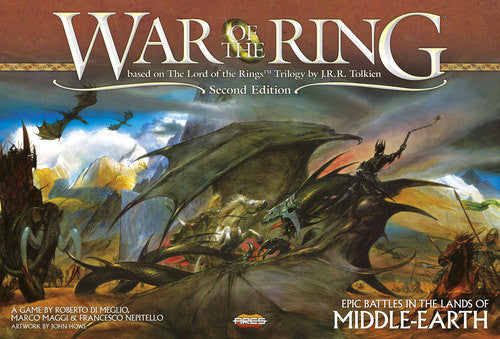
War of the Ring (Second Edition) is a two-player grand-strategy game in which one commander leads the Free Peoples of Middle-earth and the other commands the Shadow of Sauron, each pursuing a different victory. Designed by Roberto Di Meglio, Marco Maggi, and Francesco Nepitello and published by Ares Games (first edition 2004; second edition 2011), it runs about three hours. Its engine is the Action Dice: each turn you roll a handful of custom dice whose faces grant armies, character moves, musters, or events, and you spend them to fight a war while the Fellowship of the Ring slips secretly toward Mount Doom. The Shadow can win by conquering enough Free Peoples cities and strongholds, or by corrupting the Ring-bearer past 12 points on the Corruption track. The Free Peoples can win by a far smaller military conquest, or — their true hope — by walking Frodo into the fire. It is widely regarded as one of the finest thematic strategy games ever made; if you want one epic Lord of the Rings game for two, this is it.
Decision map
Choose in thirty seconds
The one definitive two-player Lord of the Rings grand-strategy duel — for pairs who want Tolkien's whole war in a single evening.
Veterans ready to promote Event-Card personalities into figures — Elrond, Galadriel, Smeagol, and the Balrog of Moria.
Players who want the legends of the field — Ents, Great Eagles, the Dead Men of Dunharrow — fighting as units.
In 2002, three Italian designers sat down to attempt a thing most thought impossible: to put the entire War of the Ring — armies and errand alike, the clash of nations and the small footsteps of two hobbits — onto a single board, in a single evening. The result, published by Nexus in 2004 and refined by Ares Games into the Second Edition we play today, did not simplify Tolkien to make him fit. It found a structure honest enough to hold him. That structure is the action die: a roll that hands each player not a menu of optimal moves but a fistful of limited verbs, forcing the eternal question of this game — do I make war, or do I tend the Quest? The Free Peoples player feels the weight Tolkien described: there are never enough hands, never enough time, and the one thing that matters most cannot be commanded, only protected. The Shadow player feels the opposite weight: vast strength, but a clock, and a fear that the Ring is moving while the armies march. This review treats the game the way it deserves to be treated — slowly, term by term, with respect shown through precision rather than enthusiasm. We will cover what it is, what comes in the box, how it actually plays, whether it is worth owning, how to play each side well, which expansions matter, and who it is for.
Start here, then go deeper
You are in the right cabinet.
 ◬ Universe HubMiddle-earth: the whole buying pathMiddle-earth is a shelf of very different journeys: premium LEGO architecture, strategic war games, and collectible card worlds....
 ✦ Topic PathBoard Game Buying Guides: compare the whole shelfStart with the decision, not the shelf. These guides compare the games, editions, expansions, player counts, and costs people...
 Deep DiveEclipse: Second Dawn for the Galaxy — The 4X Space Epic Worth Clearing the Whole Table ForA full galaxy of exploration, research, conquest, and diplomacy running on a famously elegant action-disc economy — and the version...
What War of the Ring Actually Is: Two Roads, One Ring
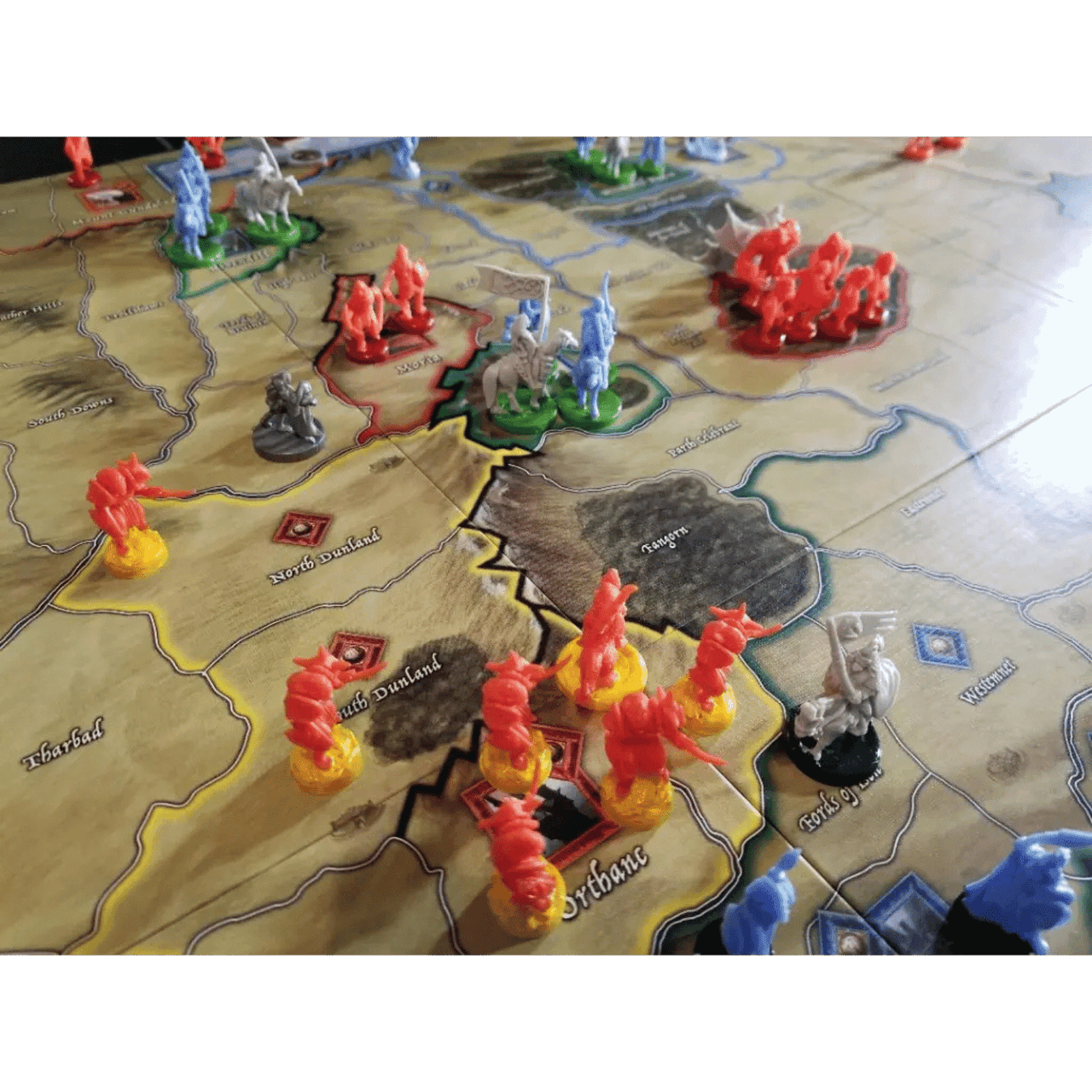

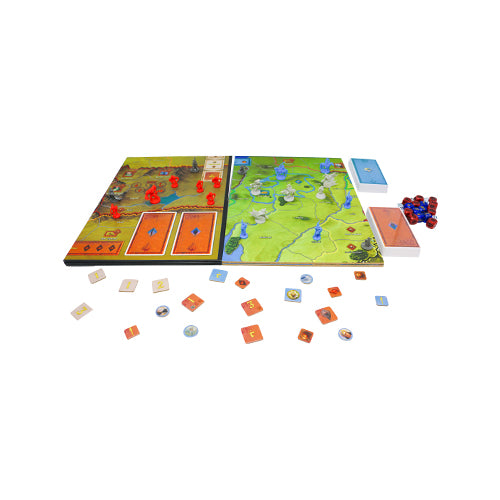
Strip away the miniatures and the lore, and War of the Ring is a contest between two clocks. The Shadow holds overwhelming force and must spend it before the Free Peoples find their footing — it wins by conquering settlements worth 10 Victory Points, or by driving the Ring-bearer's Corruption to 12. The Free Peoples hold almost nothing and must survive — they win by a military conquest worth only 4 Victory Points, or, decisively, by carrying the Ring into Mount Doom. That asymmetry is the whole design. The Shadow is supposed to be winning the war; the question is whether it wins fast enough, because every die the Dark Lord spends besieging Gondor is a die not spent hunting two hobbits in the wild. The engine that meters all of this is the Action Dice. Each turn both players roll their pool — the Free Peoples begin with four dice, the Shadow with seven — and the faces dictate what is possible: a Character action, an Army action, a Muster, an Event, the Will of the West for the Free Peoples, the Eye of Sauron for the Shadow. You do not get to do what you want; you get to do what you rolled, and the art of the game is making a wasteful roll matter. A game that gives you everything teaches nothing. War of the Ring teaches by withholding.
Every Action Die the Shadow spends besieging a city is a die it did not spend hunting two hobbits in the dark.
What's in the Box: 200-Plus Figures and a Map of Middle-earth

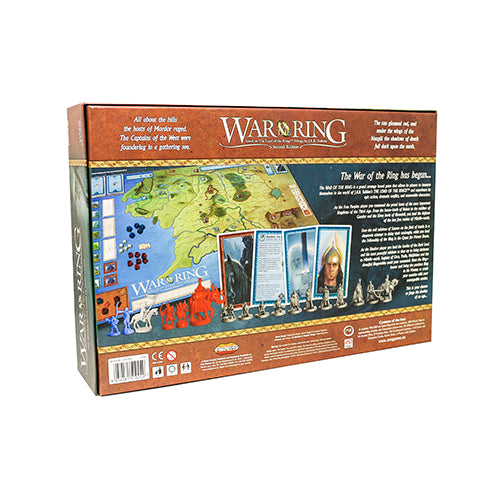
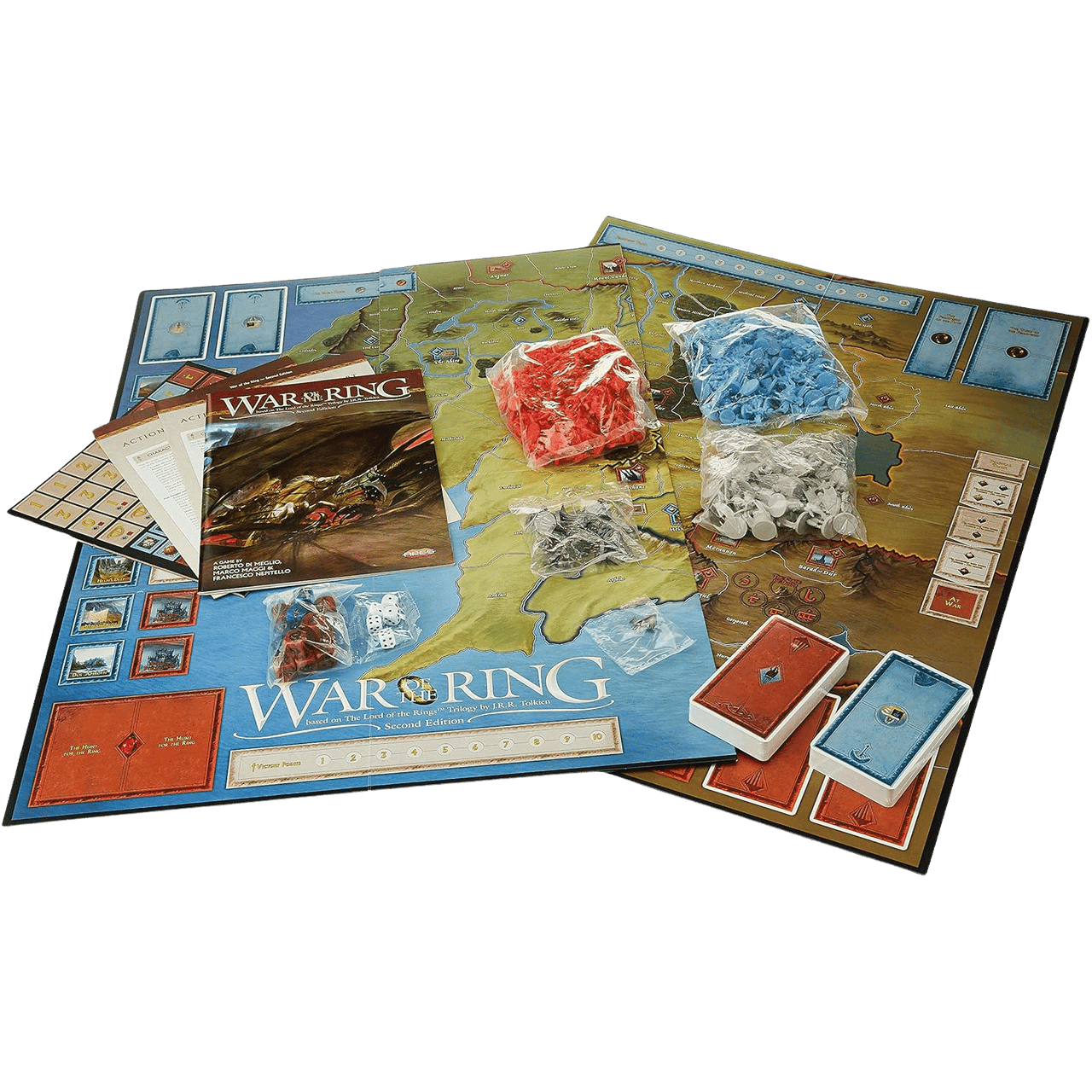
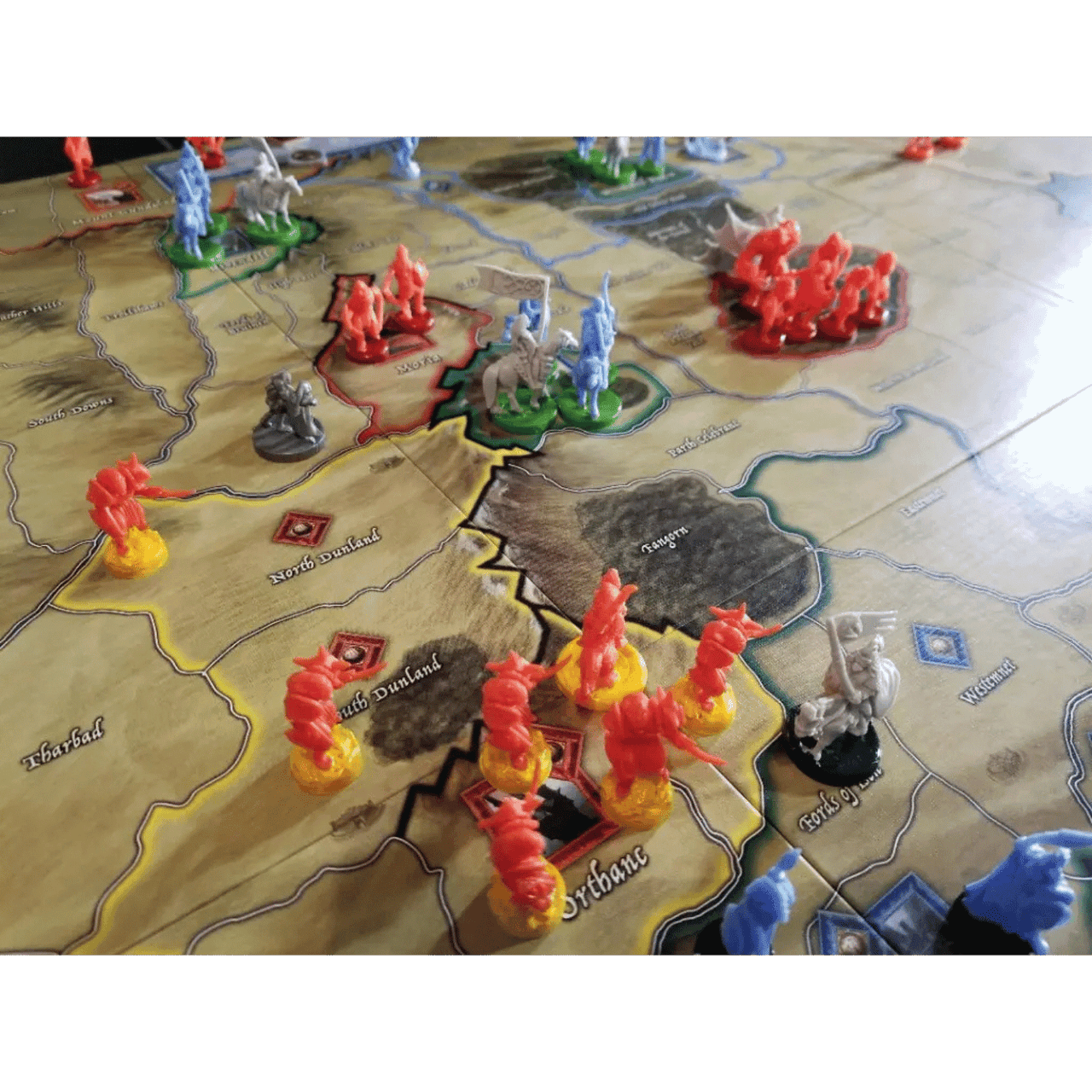
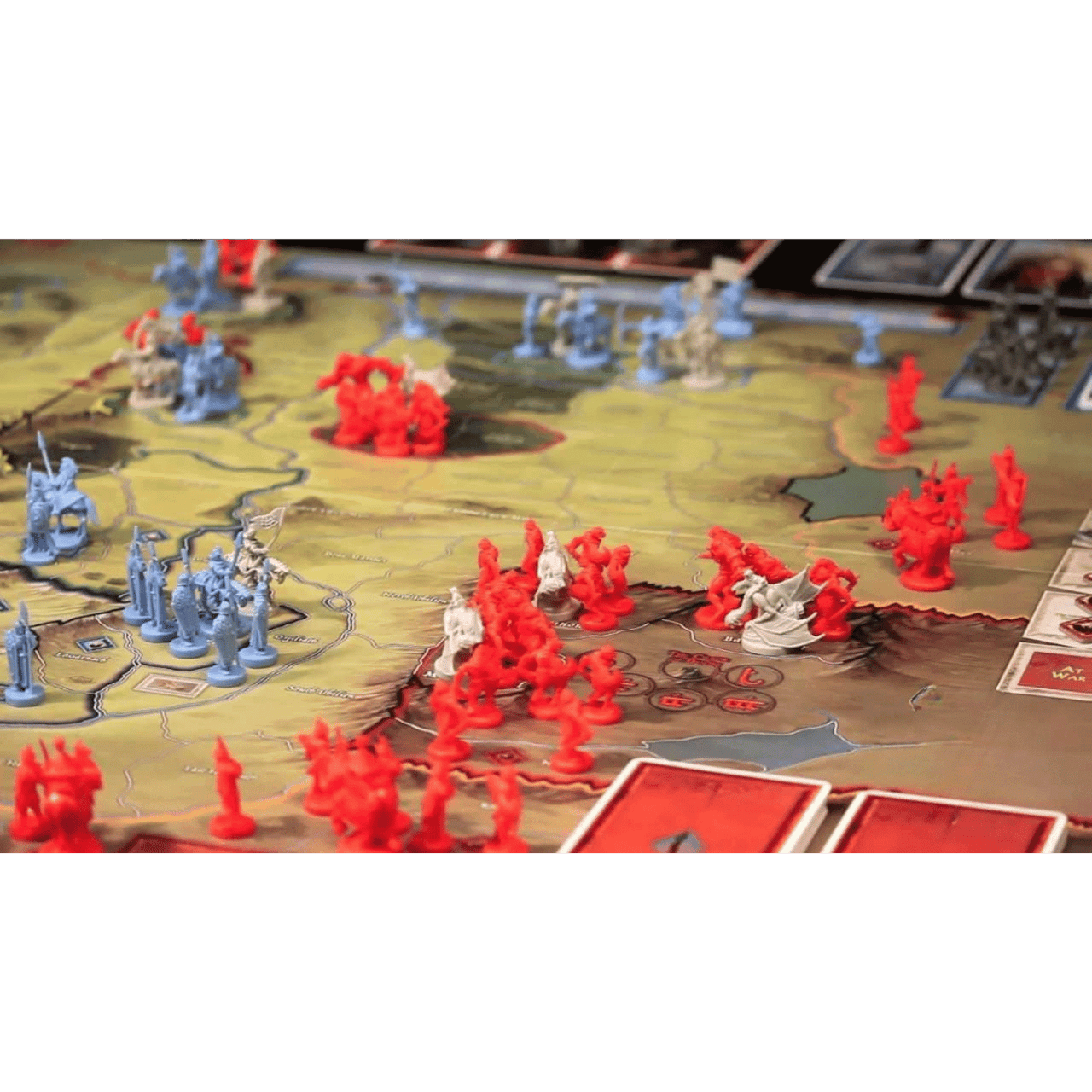
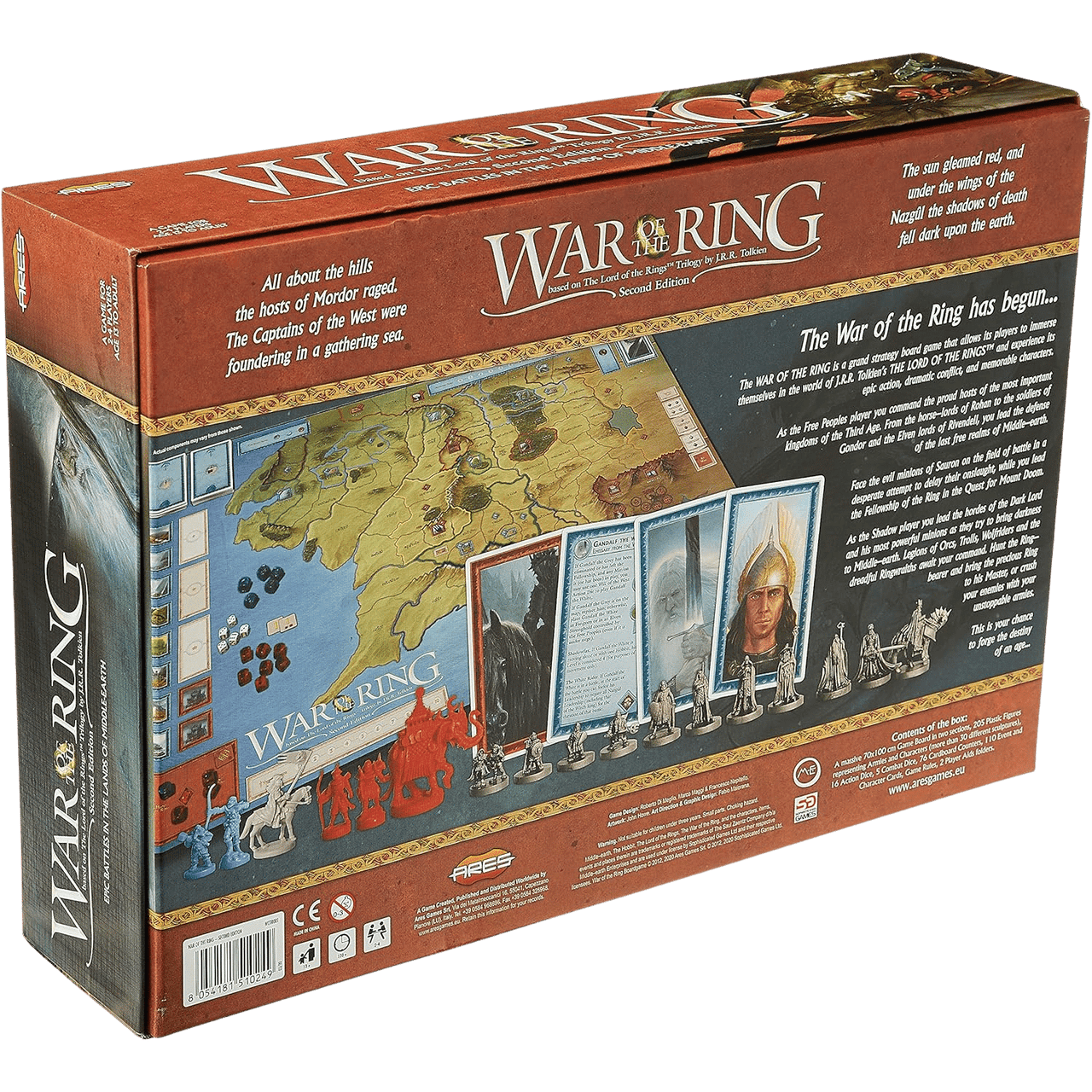
The Second Edition is a heavy box, and the weight is earned. Inside are roughly 205 plastic figures drawn from more than 30 distinct sculpts — the infantry, cavalry, and Elven, Dwarven, and Mannish nations of the West set against Orcs, Trolls, Easterlings, Southrons, and the riders of Mordor — alongside the named figures: Frodo and Sam, the Companions of the Fellowship, Gandalf, Aragorn, the Witch-king, Saruman, and the Mouth of Sauron. The board is a single large map of Middle-earth printed across two sections, roughly 70 by 100 centimeters; it wants a real table. The dice are the heart of the system: 16 Action Dice in two colors plus 5 red Combat Dice. There are 110 Event and Character cards, split into Strategy and Character decks for each side, and a set of cardboard counters for armies, leaders, settlement control, and the Hunt. Two player-aid folders carry the reference charts you will lean on for your first several games. The components are not luxury for luxury's sake. The figures communicate the state of the war at a glance — you read the board the way a general reads a map — and the custom dice make every turn a small, physical act of fate. Quality of materials is a courtesy; clarity of materials is a design decision.
You read the board the way a general reads a map: the figures are not decoration, they are information.
How It Plays: The Action Dice, the War, and the Fellowship
A turn begins with the Hunt allocation and the roll. Both players reveal their Action Dice, and from that moment the turn is a conversation of spent dice, one at a time, until both pools are empty. Each face is a verb. A Character die moves a leader-led army, advances a Companion or a Minion, or plays a Character Event; for the Free Peoples it can also move, hide, or separate the Fellowship. An Army die musters and maneuvers troops. A Muster die raises new forces or brings nations into the war. An Event die plays a card from hand. The Free Peoples' rare Will of the West face is a wildcard — it becomes any other result, or crowns Aragorn or summons Gandalf the White. The Shadow's Eye face is the price of power: Eyes are placed into the Hunt Box, feeding the search for the Ring. Combat resolves with the five red dice — armies trade blows, hits typically landing on high rolls, leaders granting re-rolls, and Combat Cards bending the exchange. Running underneath the war is the Quest. The Fellowship moves in secret along a hidden track; when it tries to advance, the Shadow rolls the Hunt, and successes inflict damage that becomes Corruption — unless a Companion is sacrificed to absorb the blow. At 12 Corruption, the Ring claims Frodo and the Free Peoples lose. The genius is that the two systems share one resource: your dice. You cannot fully fight and fully hunt and fully run. You choose, and the choosing is the game.
You cannot fully fight, fully hunt, and fully run on the same turn. You choose — and the choosing is the whole game.
Is It Worth It? Weight, Time, and the Question of Luck
War of the Ring asks a great deal before it gives. The rulebook runs roughly 48 pages, dense with exceptions, and the consensus among reviewers is plain: you will not learn this on the fly. The first game is a tutorial whatever you do, and it takes two or three sessions before the systems click into a single understanding. Budget three to four hours, plus setup; faster once both players know the dance. The marketing says two to four players, but the truth is that this is a two-player duel — extra players merely share one side's decisions, and the game loses nothing by being played by two. There is dice luck, both in the Action roll and the Hunt, and a player who wants the perfect-information chess of a Eurogame will chafe. But the luck is not the kind that decides games; it is the kind that creates them. A bad roll is a problem to be solved with the dice you have, and the better player is reliably the one who solves more of them. Set against the cost is a payoff few games reach: the sense, sustained for hours, that you are not playing about the Lord of the Rings but inside it. For the player who wants one definitive Tolkien strategy game, who has a regular opponent and an evening to give it, the value is not in question. For the player who wants something teachable in fifteen minutes, this is the wrong book entirely. A great game does not apologize for its length. It justifies it.
The luck here is not the kind that decides games. It is the kind that creates them.
Playing the Free Peoples Well: Spend Friends, Buy Time, Guard the Ring
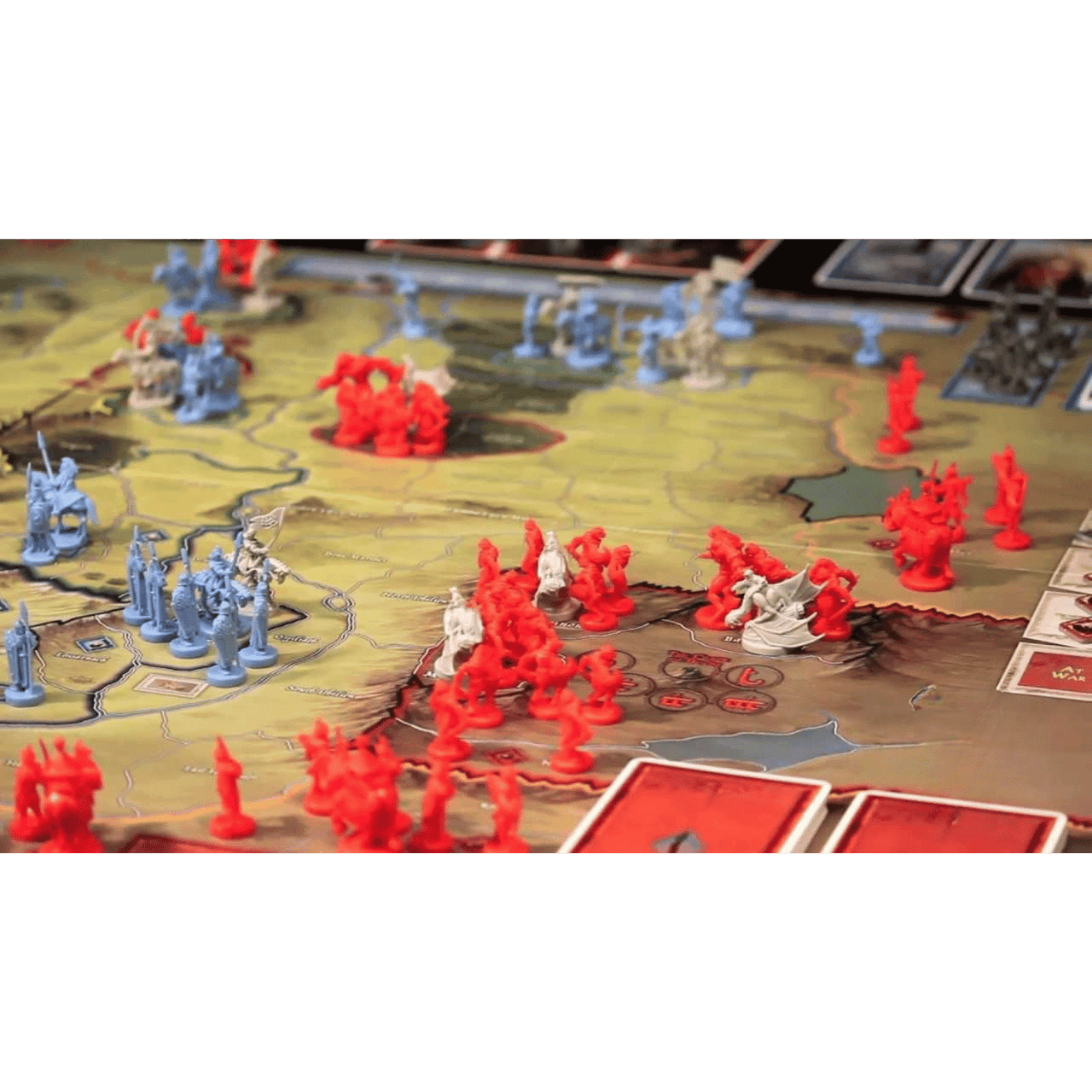
The Free Peoples player wins by understanding a hard truth: you cannot match the Shadow in attrition, so you must not try. The first discipline is the Fellowship. The Companions exist to protect Frodo; let them. Do not hoard them — sacrifice them to absorb Hunt damage and keep Corruption low and the Fellowship moving. A Companion saved while the Ring-bearer corrupts is a Companion wasted. The second discipline is tempo. Your starting four dice are not enough; your task in the early game is to grow the pool toward six by bringing your bonus characters into play — separating Companions from the Fellowship and sending them to activate the nations of the West, getting Strider to Gondor to become Aragorn, letting Gandalf fall and return the stronger. The third discipline is the gift of pressure. The Free Peoples can become the aggressor not to conquer but to distract: force the Shadow to defend its Victory Point locations, and every die it spends defending is a die it does not spend hunting or attacking. This is also your military path — a powerful, well-timed strike force mustered in Gondor or Rohan, backed by Event Cards, can retake the strongholds you need before the Shadow reaches 10. But never commit to an attack that becomes a war of attrition; the Shadow can afford to lose units, and you cannot. Defense buys the Quest its hours. The Free Peoples do not win the war. They survive it long enough for two hobbits to end it.
The Free Peoples do not win the war. They survive it long enough for two hobbits to end it.
Playing the Shadow Well: Strength Is a Clock, So Spend It
The Shadow player commands the stronger army and the heavier burden — not of weakness, but of time. You are supposed to be winning; the danger is that you win slowly while the Ring crosses the map behind you. The first discipline is the pool. You begin with seven dice and want to reach ten, and you reach them by mustering your Minions into play — Saruman, the Witch-king, the Mouth of Sauron — each of whom expands what your turn can do. Bring them out early; a Minion in hand is a die you do not have. The second discipline is the dilemma you impose. You cannot fully hunt and fully attack at once either, but unlike your opponent you can choose where to apply your weight, and you should vary it so the Free Peoples never know where the blow falls. Press Gondor and Rohan, the soft Victory Point centers in the South; threaten the North to stretch the defense thin. The Nazgûl give you reach the Free Peoples cannot match — fly them deep, force sieges, and grind toward the ten points of conquest. The third discipline is the Hunt as pressure, not lottery. Feeding the Hunt Box with Eyes raises the danger to the Fellowship even when you do not destroy it; sustained pressure forces the Free Peoples to burn Companions and slow down, which buys your armies the time to finish the war. Do not fall in love with either path. The complete Shadow player makes the Free Peoples afraid of both at once, then wins with whichever they failed to defend.
For the Shadow, strength is not safety. It is a clock — and a clock you do not spend is a clock that runs out on you.
The Expansions and Who It's For: Where to Stop, and Where to Begin
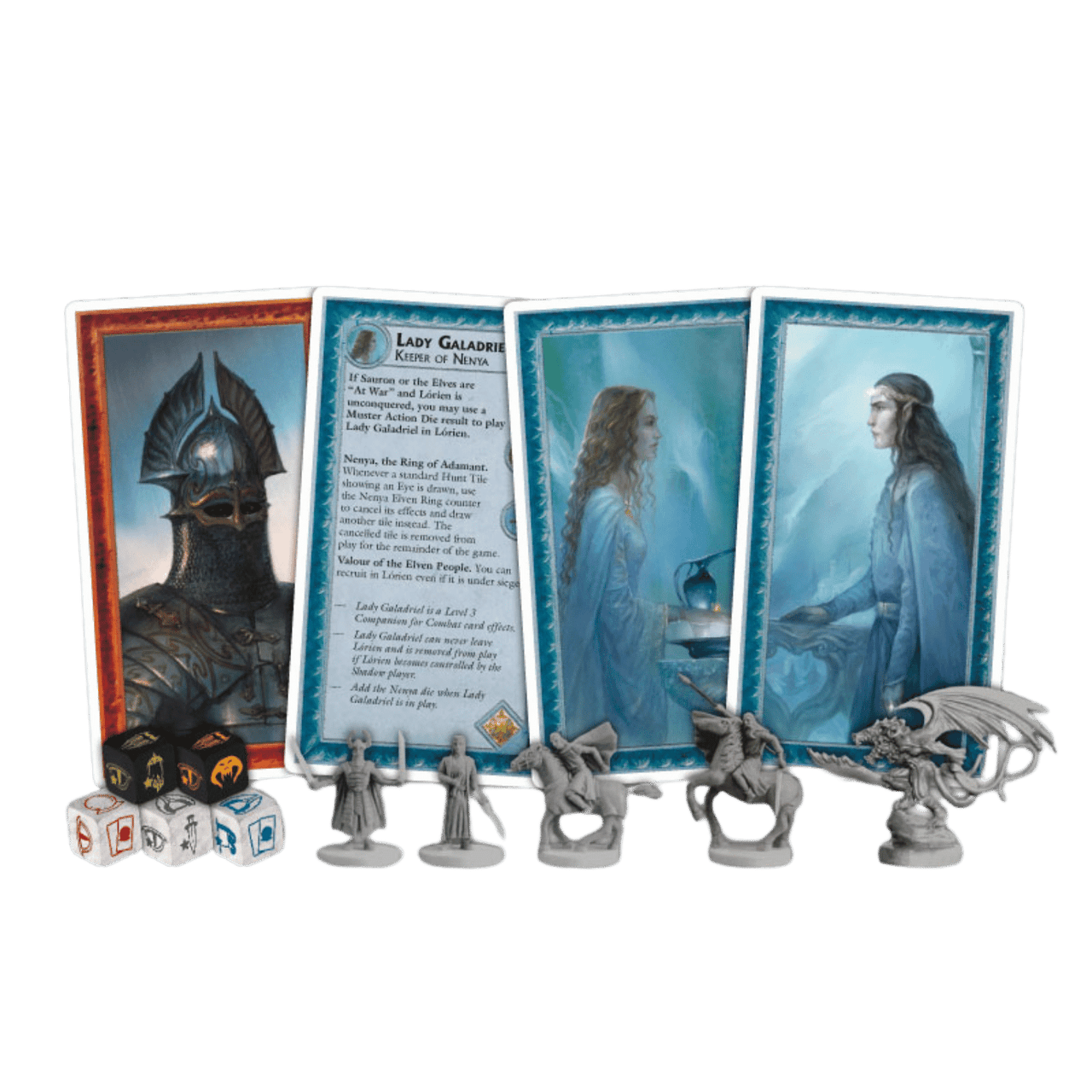
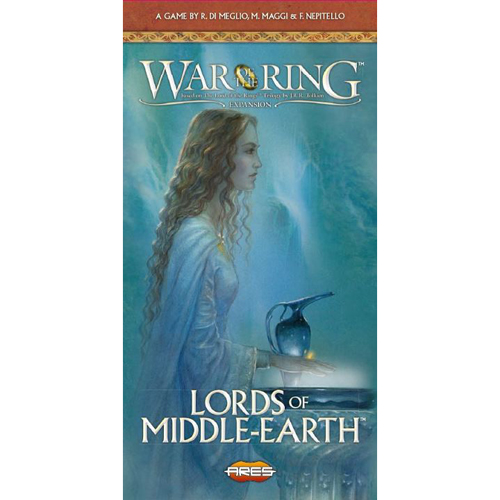
The base game is complete; nothing below is required. But the line has grown thoughtfully, and the expansions answer different appetites. Lords of Middle-earth is the connoisseur's first addition: it gives figures and rules to personalities once confined to Event Cards — Elrond, Galadriel, Smeagol, Gothmog, and the Balrog of Moria — plus alternate Gandalf, Witch-king, and Mouth of Sauron, and two new dice, the Free Peoples' Elven Ring Keepers and the Shadow's Lesser Minions. Warriors of Middle-earth brings the legends of the field — Ents, the Dead Men of Dunharrow, the Great Eagles, Corsairs of Umbar, Wild Hillmen, and Giant Spiders — promoting them from cards to sculpted, ability-bearing forces. Kings of Middle-earth, the newest of the trio, adds Sovereigns (Brand, Dain Ironfoot, Denethor, Theoden, Thranduil) and Dark Chieftains (the Black Serpent, the Shadow of Mirkwood, Ugluk), deepening the political layer of who rules where. All three combine. As for who should own the base game: the player who wants one definitive Lord of the Rings strategy experience; the pair who will return to it across many evenings; the patient student who reads a rulebook as a pleasure rather than a tax. It is not for the casual table, the fifteen-minute crowd, or the player who needs perfect information. Choose this game the way you would choose a long book by an author you trust. It does not court you. It rewards you.
Choose this game the way you would choose a long book by an author you trust. It does not court you — it rewards you.
What experienced tables keep reporting
Recurring owner patterns, synthesized in Puzzlewick's words. Follow each evidence trail to read the original discussion.
War of the Ring is quite simply a masterpiece. The choices are deliciously agonizing, the battles memorable, and the card play clever.
This game, however, certainly deserves the moniker. I felt like I was playing out the Lord of the Rings trilogy.
Ares Games describes this as a 'grand strategy board game that allows players to immerse themselves in The Lord of the Rings', and there is nothing for me to argue with regarding this statement.
It's thematic! All of those Character and Army cards lead to an insane amount of rich narrative storytelling.
Read the evidence: Yet Another Friggin' Gaming Blog — A Mordor(n) Classic: War of the Ring
It's intuitive! Driven by the Dice Actions and card play, the core game flow is pretty easy to grasp.
Read the evidence: Yet Another Friggin' Gaming Blog — A Mordor(n) Classic: War of the Ring
A recurring community debate frames it directly: 'War of the Ring 2nd Ed. — is it worth the hype?' — a question veterans almost uniformly answer yes, with the steep learning curve named as the only real caveat.
Not every voice is unqualified praise: one widely discussed thread argues the game offers 'much less agency than a 4 hour game needs' — a minority critique worth weighing against the game's length before you buy.
This is an amazing game that I would recommend to any fans of Lord of the Rings or just epic gaming experiences in general.
The picks
Some links below are affiliate links — as an Amazon Associate, Puzzlewick earns from qualifying purchases, at no extra cost to you. It never changes a pick.
 5 photos
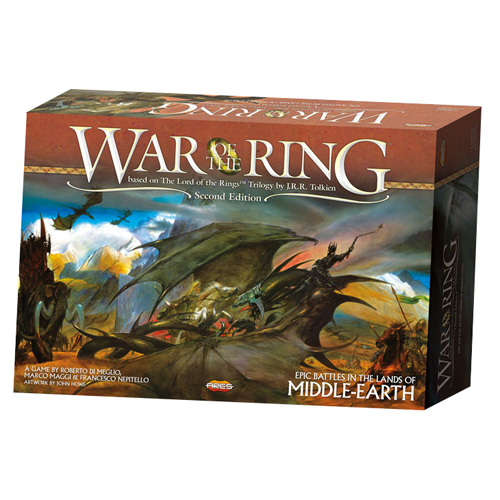
 War of the Ring (Second Edition) (Base Game)
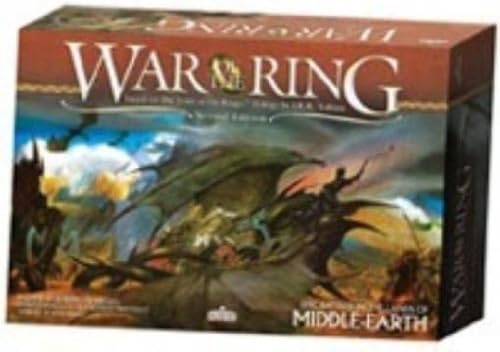
The complete experience, and the only purchase most players ever need. Roughly 205 figures, the full Action Dice engine, the Hunt, and both paths to victory in one box. Demanding to learn and long to play, but unmatched at making two players feel they are living inside the story rather than playing a game about it. Start here; the expansions can wait.
- One of the most thematically realized strategy games ever made — it genuinely feels like the trilogy
- Elegant dual-victory tension: military conquest versus the secret Quest, sharing one dice pool
- Deep, asymmetric, and endlessly replayable; the better player reliably wins
- Complete on its own — no expansion required to get the full experience
- Steep learning curve; the first game is effectively a tutorial
- Three-to-four-hour playtime and large table footprint
- Truly a two-player game despite the 2–4 player box
 3 photos
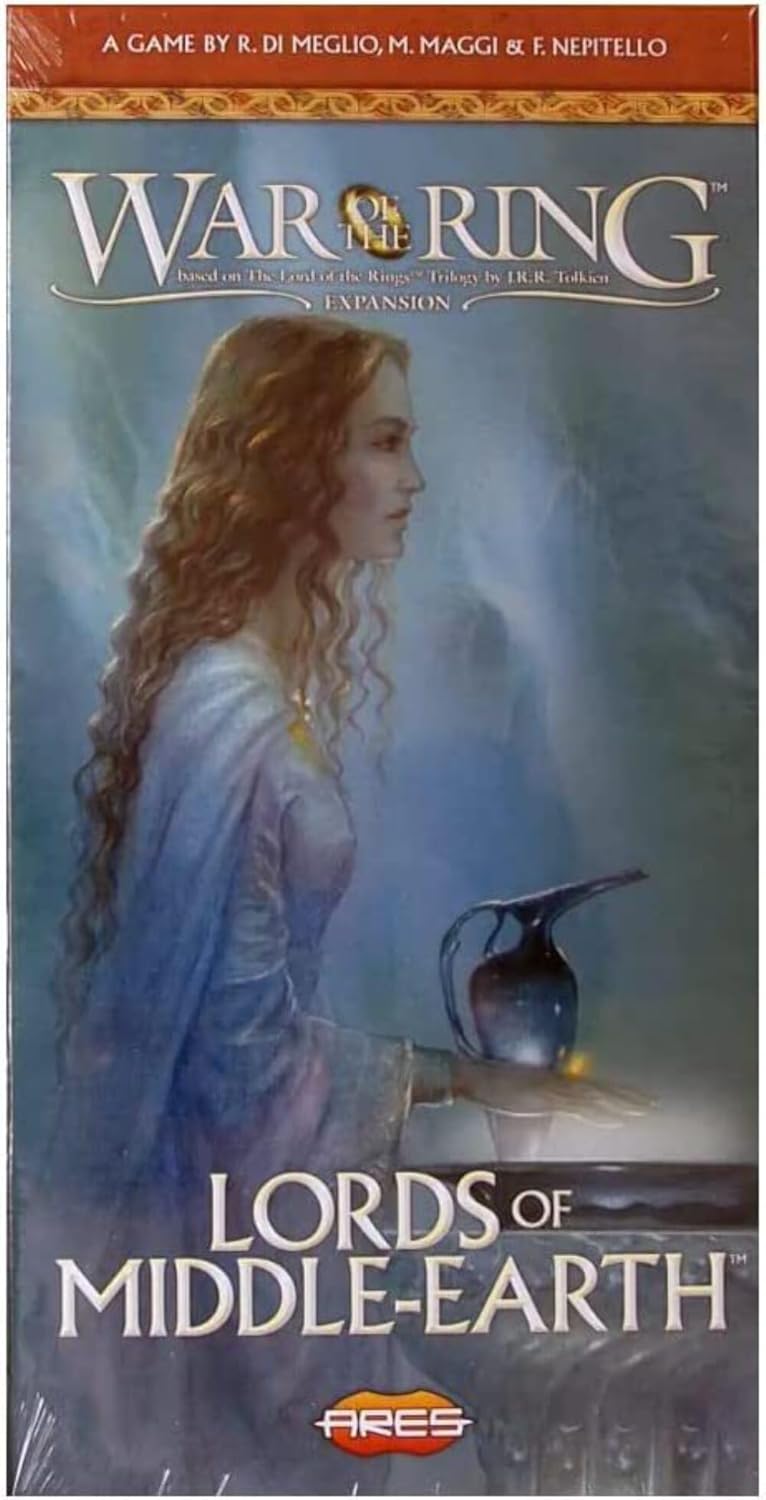
 War of the Ring: Lords of Middle-earth (Expansion)
The connoisseur's first expansion. It gives sculpts and rules to characters who previously existed only on cards, plus alternate Gandalf, Witch-king, and Mouth of Sauron, and two new Action Dice (Elven Ring Keepers; Lesser Minions). Buy it only after the base game is second nature.
- Adds beloved characters as real figures with rules, not just cards
- Two new dice types deepen both sides' decision space
- Combines cleanly with the other expansions
- Strictly for experienced players; adds rules overhead
- Unnecessary for anyone still learning the base game
 2 photos
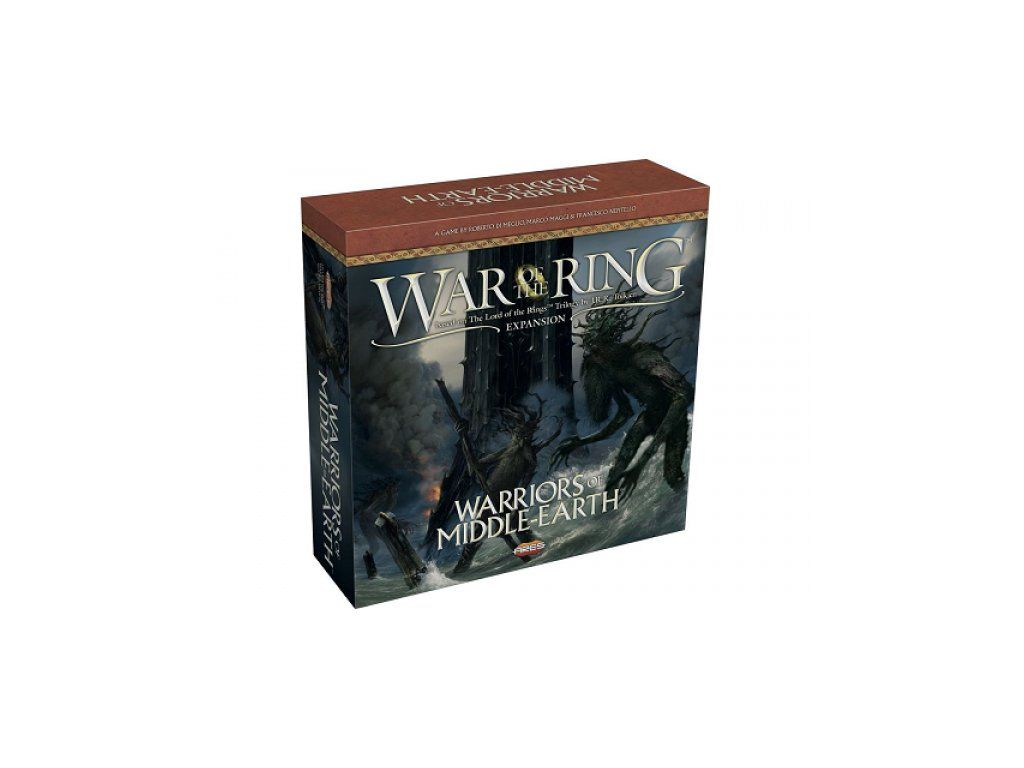
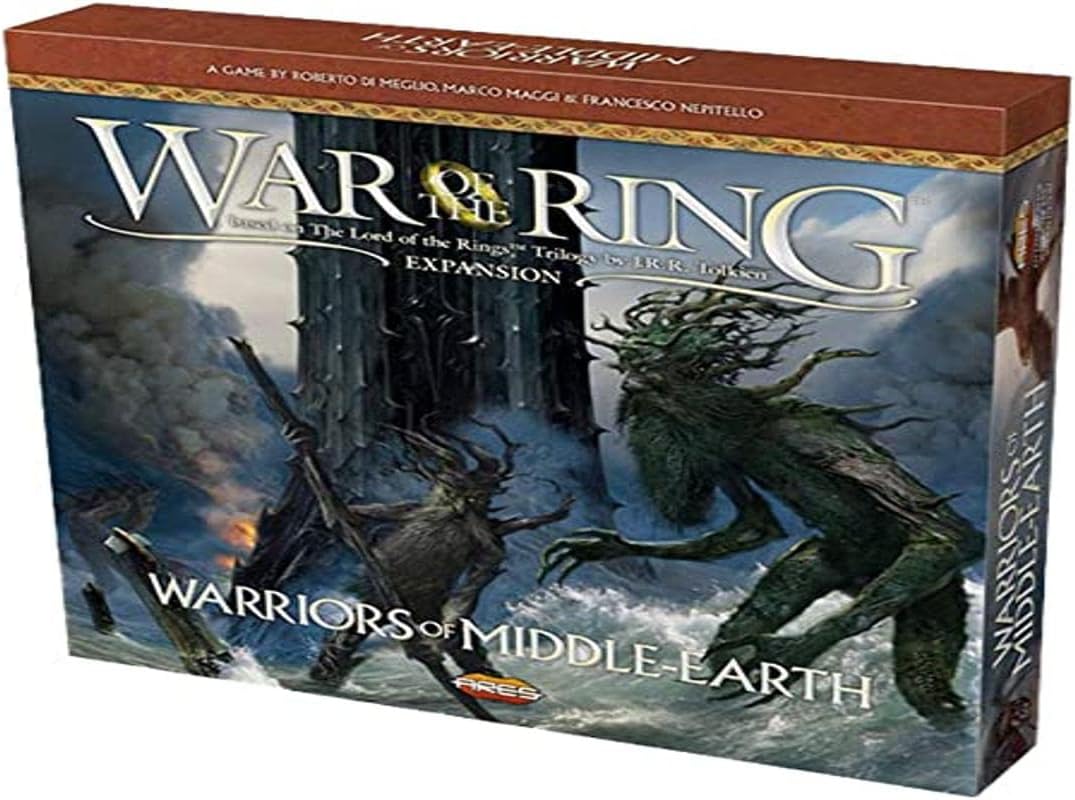
 War of the Ring: Warriors of Middle-earth (Expansion)
Turns famous combatants once limited to Event Cards — Ents, Dead Men of Dunharrow, Great Eagles, Corsairs of Umbar, Wild Hillmen, Giant Spiders — into sculpted forces with special abilities. A flavorful, field-focused addition that broadens the war without rewriting the Quest.
- Adds iconic creatures as units with unique abilities
- Expands battlefield variety and tactical options
- Stacks with Lords and Kings of Middle-earth
- Adds complexity to an already heavy game
- Best appreciated only after many base-game plays
 3 photos
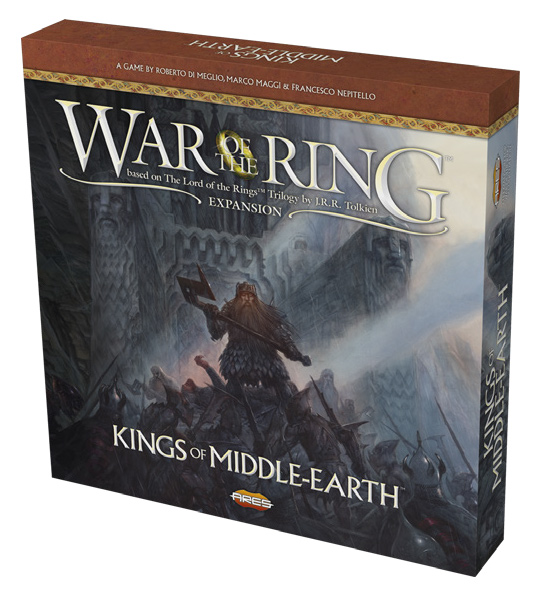
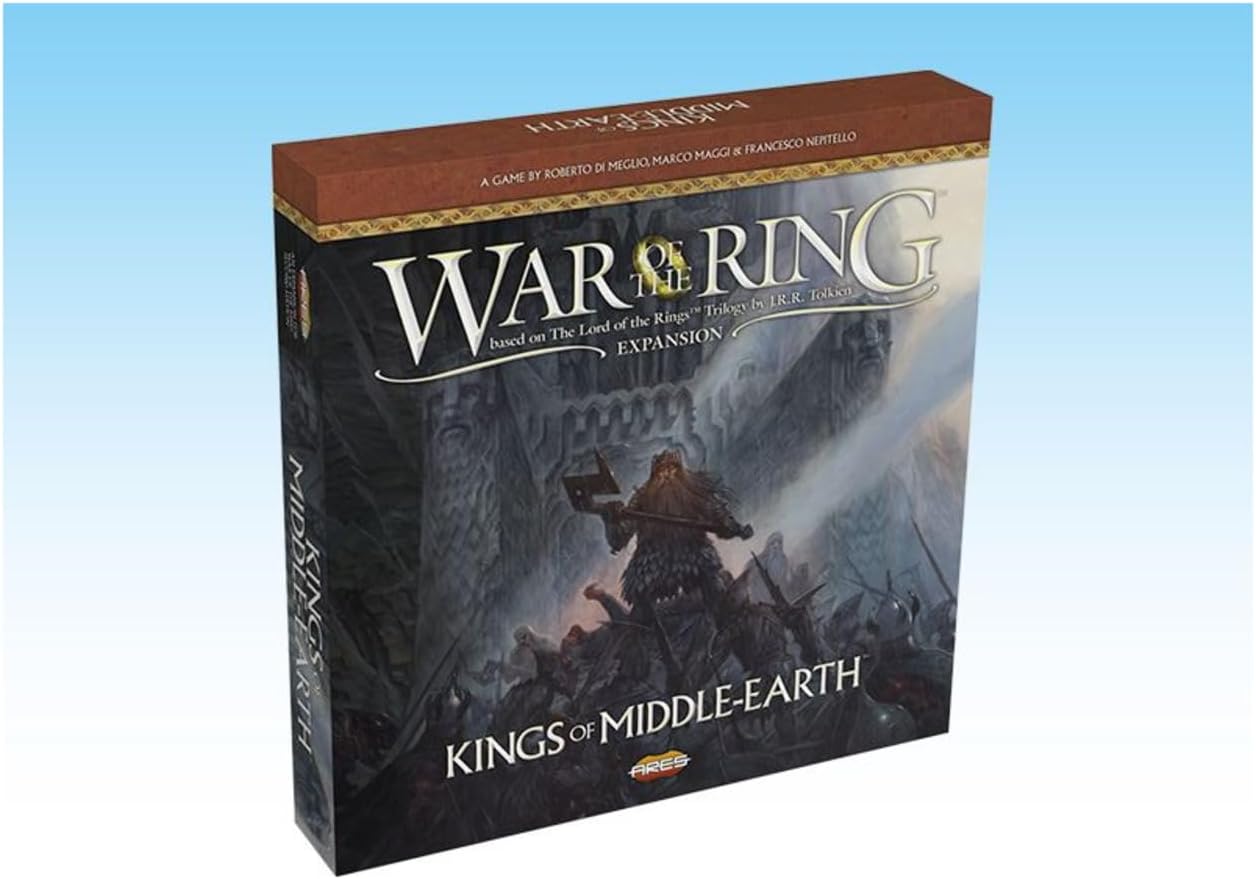
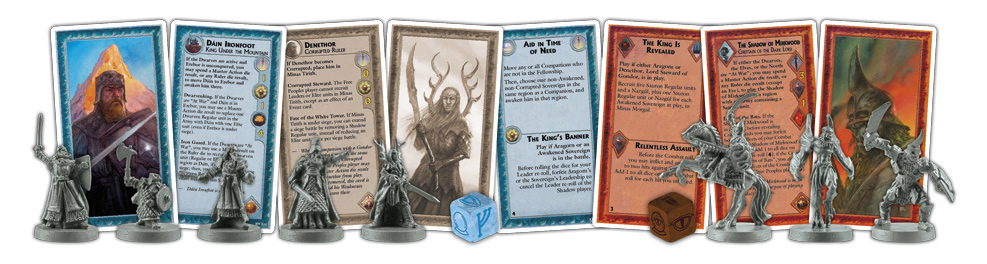
 War of the Ring: Kings of Middle-earth (Expansion)
The newest of the three. It introduces Sovereigns (Brand, Dain Ironfoot, Denethor, Theoden, Thranduil) and Dark Chieftains (the Black Serpent, the Shadow of Mirkwood, Ugluk), enriching who commands which nation and why. A late, thoughtful deepening for collectors who have exhausted the base experience.
- Adds rulers that deepen the political and national layer
- Fresh strategies through new character abilities
- Fully combinable with the rest of the line
- The least essential of the three for newcomers
- Further increases setup and rules load
At a glance
| game | players | play time | core engine | victory paths | theme | weight | best for |
|---|---|---|---|---|---|---|---|
| War of the Ring (Second Edition) | 2 (variant 3–4) | ~3–4 hours | Custom Action Dice driving war + a hidden Fellowship Quest | Military conquest OR destroy/corrupt the Ring | The Lord of the Rings — the whole war | Heavy / expert | Pairs who want the definitive Tolkien duel |
| Star Wars: Rebellion | 2 (also 3–4) | ~3–4 hours | Leader assignment to missions + galactic warfare | Empire finds & destroys the hidden Rebel base; Rebels survive on reputation | Original-trilogy Star Wars | Heavy | Fans wanting hidden-base cat-and-mouse in space |
| Twilight Struggle | 2 | ~2–3 hours | Card-driven area influence (events vs operations tension) | Control regions / VP track; avoid nuclear defeat | The Cold War | Medium-heavy | Duelists who prefer card play to dice |
| A Game of Thrones: The Board Game | 3–6 (best 6) | ~3–4 hours | Simultaneous order tokens + negotiation | Control the most strongholds/castles | A Song of Ice and Fire | Heavy | Larger groups who want diplomacy and betrayal |
Questions, answered
What is War of the Ring (Second Edition) about?
It is a two-player grand-strategy game of the entire War of the Ring. One player commands the Free Peoples of Middle-earth, the other the Shadow of Sauron. While their armies fight across the map, the Fellowship secretly carries the One Ring toward Mount Doom — and either the war or the Quest can decide the game.
How long does a game take?
About three to four hours for a full game, plus roughly 20 minutes of setup. Experienced players who know the system can finish closer to two and a half to three hours.
How many players is it really for?
It is fundamentally a two-player duel. The box lists 2–4 players, but the 3–4 variants simply split one side's decisions among teammates; the game loses nothing when played by two and is arguably best that way.
What are the two ways to win?
Both sides can win militarily or via the Ring. The Shadow wins by conquering 10 Victory Points of cities and strongholds, or by corrupting the Ring-bearer to 12 Corruption. The Free Peoples win by conquering 4 Victory Points, or — their true hope — by moving Frodo into Mount Doom to destroy the Ring.
How do the Action Dice work?
Each turn you roll your pool of custom dice. The Free Peoples start with 4, the Shadow with 7. Each face is an action type — Character, Army, Muster, Event, plus the Free Peoples' Will of the West wildcard and the Shadow's Eye. You spend the dice you rolled, so the challenge is making a limited or awkward roll count.
What is the Hunt for the Ring?
It is the system that threatens the Fellowship. The Shadow feeds the Hunt Box (notably with Eye results), and when the Fellowship moves, the Shadow rolls the Hunt. Successes deal Hunt damage that becomes Corruption on the Fellowship track — unless the Free Peoples sacrifice a Companion to absorb it. At 12 Corruption, the Ring claims Frodo and the Free Peoples lose.
Is it hard to learn?
Yes. The rulebook is roughly 48 pages dense with exceptions, and the consensus is that you cannot learn it on the fly. The first game plays like a tutorial, and most players say it takes two or three sessions before the systems click into a single understanding.
Is there a lot of luck?
There is dice luck in both the Action roll and the Hunt, but it functions as a problem to solve rather than a coin flip that decides the game. Over a full session the more skilled player reliably comes out ahead; the randomness creates situations rather than dictating outcomes.
Which side is harder to play, Free Peoples or Shadow?
Both are demanding in different ways. The Free Peoples juggle a fragile Fellowship against an overwhelming enemy and must buy time. The Shadow holds the stronger army but races a clock, balancing the Hunt against military conquest. Many players find the Free Peoples slightly more punishing to learn because the margin for error is thinner.
Do I need the expansions?
No. The base game is complete and is the only purchase most players ever need. Lords of Middle-earth, Warriors of Middle-earth, and Kings of Middle-earth each add characters, units, and rules for veterans, and all three can be combined — but only consider them once the base game is second nature.
How does it compare to Star Wars: Rebellion?
They are the two giants of the narrative, asymmetric, two-player epic genre, and both run three to four hours. Rebellion centers on the Empire hunting a hidden Rebel base via leader missions; War of the Ring centers on the dual tension of open war and a secret Quest driven by Action Dice. Many in the hobby give War of the Ring the edge for thematic depth, though the choice often comes down to which setting you love more.
Is War of the Ring worth buying in 2026?
For the right player, unreservedly. It remains one of the highest-regarded strategy games in the hobby, the Second Edition is the definitive version, and Ares continues to support the line two decades on. If you have a regular opponent, an appetite for depth, and an evening to give it, it is a near-certain centerpiece purchase. If you want something light and quick, look elsewhere.
Kenji's verdict
War of the Ring (Second Edition) is the definitive Lord of the Rings strategy game and one of the genre's true masterpieces — but it is a masterpiece that asks to be earned. Give it the rulebook, the table, the three hours, and a steady opponent, and few games in the hobby return more: the war and the Quest pulling against a single pool of dice, the Free Peoples buying time with the lives of friends, the Shadow racing its own strength against a moving Ring. The luck is real and the learning curve is steep, and it is honestly a two-player game wearing a 2–4 label. None of that diminishes it. The base box is complete and is the only purchase most players need; the three expansions are for the devoted, later. If you want one epic Tolkien game to keep for a decade, buy this one, learn it properly, and let it teach you the difference between commanding a war and surviving one.
Research ledger 12 sources · reviewed 2026-07-17
Specifications, rules, current product information, community experience, and contrary evidence were checked against the sources below. Commercial links are kept separate from editorial evidence.
- en.wikipedia.orgen.wikipedia.org/wiki/War_of_the_Ring_(board_game)
- aresgames.euaresgames.eu/games/war-of-the-ring-line/war-of-the-ring-second-edition
- meeplemountain.commeeplemountain.com/reviews/war-of-the-ring-2nd-edition
- gamingrespawn.comgamingrespawn.com/board-game-reviews/22702/war-ring-second-edition-review
- ultraboardgames.comultraboardgames.com/war-of-the-ring/game-rules.php
- rules.dized.comrules.dized.com/game/QyWMz3nySiqXu-1OHZ9PIg/I2FkX0PqT0ONokdnGnOmBw/the-burden-of-the-ring
- aresgames.euaresgames.eu/2355
- aresgames.euaresgames.eu/2782
- aresgames.euaresgames.eu/2370
- cliosboardgames.wordpress.comcliosboardgames.wordpress.com/2022/08/21/how-to-win-at-war-of-the-ring-three-basic-tips-9
- boardgamegeek.comboardgamegeek.com/boardgame/115746/war-of-the-ring-second-edition
- boardgamegeek.comboardgamegeek.com/thread/3214853/war-of-the-ring-2nd-ed-is-it-worth-the-hype
Every object has a lineage. Let me tell you its story.

Keep exploring
The next smart rabbit holes.
◬ Universe HubMiddle-earth: the whole buying pathMiddle-earth is a shelf of very different journeys: premium LEGO architecture, strategic war games, and collectible card worlds....✦ Topic PathBoard Game Buying Guides: compare the whole shelfStart with the decision, not the shelf. These guides compare the games, editions, expansions, player counts, and costs people...Deep DiveEclipse: Second Dawn for the Galaxy — The 4X Space Epic Worth Clearing the Whole Table ForA full galaxy of exploration, research, conquest, and diplomacy running on a famously elegant action-disc economy — and the version...