Pokémon TCG for Beginners: How to Start Collecting & Playing in 2026
Two doors — Play or Collect — and the exact box to buy for each, from a free app to your first real deck.

AI-assisted curator persona · researched & reviewed by founder Robert Pruitt, a 20-year enthusiast · how we make our guides
The short answer
To start playing Pokémon TCG in 2026, buy a fixed pre-built deck — a Battle Deck (~$19.99, like Koraidon ex or Miraidon ex) for one person, or Battle Academy (~$24.99, three ready decks + a 2-player board) to learn with a kid or partner. To collect instead, buy sealed boosters or an Elite Trainer Box ($39.99–$49.99) — but those packs are random and won't build a playable deck. Try the free Pokémon TCG Pocket app first to learn the rules at zero cost, and buy the current Mega Evolution-era set if you want it tournament-relevant. Treat MSRP as a floor: 2025–2026 street prices often run well above it.
Okay, gather round — because I get this text at least once a week. "My kid is obsessed, where do I even start?" Or, "I want to collect, but I opened a pack and now I have… eleven random cards and no idea what to do." Hi, hello, you're in the right room. Pull up a chair. Here's the first thing I tell everyone, and it's the thing that changes everything: decide if you're here to PLAY or to COLLECT. Those are two different doors, and walking through the wrong one is how people waste their first fifty bucks and then text me at 11pm feeling dumb. You're not dumb. You just walked through the wrong door. Happens to everybody.
If you want to play, you buy a pre-built deck — a known, working 60 cards, no guessing. If you want to collect and chase shiny cards, you buy sealed packs, and you make peace with the fact that they're random. The single most common beginner mistake? Opening boosters and hoping a real deck falls out. It won't. I promise you it won't. I've watched a hundred people learn this the expensive way, and I would very much like you to learn it the free way, from me, right now.
And here's the genuinely best part — the part that makes me want to grab your hands across the table: you can learn the whole thing for free before you spend a dime. The rules are simple enough that kids learn them in a couple of minutes. Each player runs a 60-card deck, sets aside 6 Prize cards, and you win by knocking out your opponent's Pokémon to claim all 6. That's the heartbeat of it. Everything else — energy, evolutions, the shiny rare you'll fall in love with — is just flavor on top of that one simple loop. So let's get you through the right door. I'll tell you exactly which box to buy, exactly what nobody warns you about, and exactly who to bring.
Play or collect — which door are you walking through?
This is the whole game before the game, friend. Ask yourself one question: do you want to sit across from someone and battle, or do you want to open packs and build a shiny collection? Because the answer changes everything you buy — and I mean everything.
To PLAY: you need a fixed, pre-built deck — a Battle Deck or Battle Academy — so you get a known, working 60 cards that actually function together. To COLLECT or open: you buy sealed boosters, booster bundles, or an Elite Trainer Box (ETB) — but those are random, and they are not an efficient way to build something you can play.
Here's the line I want you to tattoo on your brain: random packs are fun to open and terrible for building a deck. An ETB is accessories-and-packs — sleeves, dice, a storage box, a player's guide — it is NOT a ready-to-play deck. So if someone hands you an ETB expecting to battle that night? Different door. Lovely box. Wrong door.
And listen — plenty of people end up living in BOTH rooms, and that's the dream. You play because the game's a blast, and you collect because the art is genuinely gorgeous. But you start by picking ONE door so your first fifty dollars actually does its job. We can knock down the wall between the rooms later. Tonight, pick a door.
How does the game actually work?
Let me put your mind at ease, because this part scares people for no reason. The rules are simple enough that a six-year-old learns them in a couple of minutes — I've literally watched it happen at a kitchen table.
Each player uses a 60-card deck. You set aside 6 Prize cards face-down at the start. Then you win one of three ways: knock out your opponent's Pokémon to claim all 6 of your Prizes, OR your opponent can't draw a card when they need to (the community calls this "decking out"), OR they simply have no Pokémon left in play. That's it. That's the spine of every single game you'll ever play.
The texture lives in the three card types you'll shuffle together: Pokémon (your fighters, some of which evolve from Basic to Stage 1 to Stage 2), Energy (the fuel you attach to attack), and Trainer cards (items, supporters, and stadiums that do the clever stuff — drawing cards, searching your deck, healing). Here's the one thing every brand-new player forgets: you must have at least one Basic Pokémon in your opening hand or you mulligan and redraw. A deck full of beautiful evolutions with no Basics to start them is a deck that loses before turn one. The pre-builts in this guide already solve that for you — which is exactly why we start there.
What's the cheapest way to learn before spending money?
Free. The answer is free, and I love telling people this so much I'm practically vibrating.
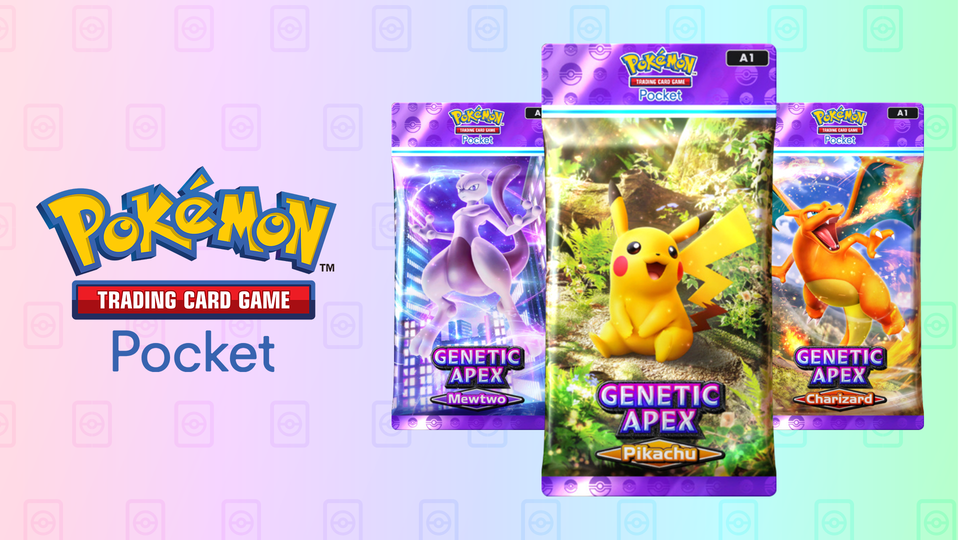
Download Pokémon TCG Pocket on iOS or Android. It launched October 30, 2024, blew past 100 million downloads by February 2025, and it's a streamlined version of the real game. You open two booster packs free every day, you use the Wonder Pick feature, and you battle with simplified 20-card decks — with auto-build, auto-battle, and rental decks holding your hand the whole way. It is a genuine, no-cost way to learn the logic of collecting AND playing before you buy a single physical card.
Now the real-talk nobody texts you about: Pocket is a fantastic teacher, but don't expect it to scratch the trading itch. When real card-to-card trading arrived in early 2025 it landed with a thud — locked behind a clunky "trade token" currency and same-rarity-only restrictions that the community openly hated. The developers heard it, publicly apologized, and have been reworking the system (moving trades onto the much-more-abundant Shinedust). So: love Pocket for learning the rhythm. Just go in knowing the social/trading layer is a work in progress, and the 20-card decks are a simplified cousin of the real 60-card game — not the same animal.
My honest move for every nervous beginner: live in Pocket for a week. By the time you walk into a card shop, you'll already know whether you're a Play person or a Collect person — and you'll have spent exactly zero dollars finding out.
Why does the 2026 era matter for what you buy?
Okay, real talk — this is the part nobody tells beginners, and it'll save you from buying a yesterday set. The Scarlet & Violet era has ended (its final set was Black Bolt & White Flare). We're now in the Mega Evolution era, and that's what "current" means in 2026.
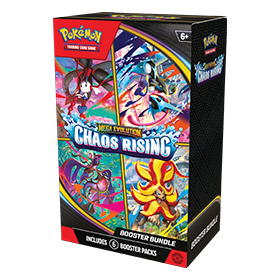
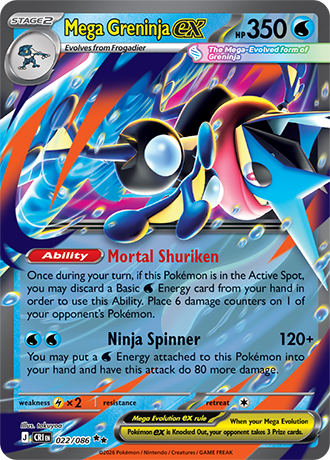
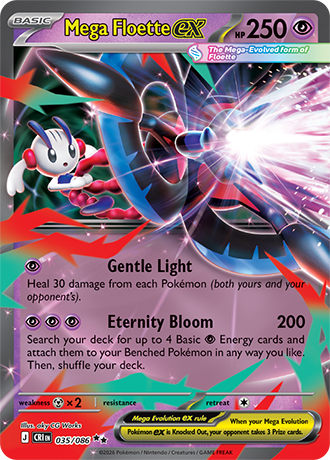
So when you quote or shop a current set, you're looking at the Mega Evolution block. The first English main expansion was simply Mega Evolution (September 26, 2025), followed by Phantasmal Flames; Mega Evolution—Ascended Heroes (January 30, 2026) is the line's first special expansion, not the first main set. The 2026 main releases roll on with Perfect Order (March 27, 2026), Chaos Rising (May 22, 2026, with Mega Greninja ex / Mega Floette ex), and Pitch Black (July 17, 2026, with a Mega Darkrai ex chase). Mark your calendar for the big one too: 30th Celebration lands September 16, 2026 — the franchise's first-ever worldwide simultaneous release, and every single pack is all-foil. That's the set people are going to be talking about all autumn.
Why care? Because if you're buying to play in Standard, current = relevant. Buy the Mega Evolution-era or 30th Celebration product and it stays usable.
What's a 'regulation mark' — and why does it secretly decide what's playable?
Here's the insider thing that quietly trips up every beginner who buys to play, and almost nobody explains it up front. Standard format — the format you want, because it uses newer cards and is the cheapest to maintain — doesn't decide legality by which set a card came from. It decides by a tiny letter printed in the bottom corner of the card called the regulation mark.
The cycle in 2026 is concrete: the next Standard rotation hits April 10, 2026 for in-person Play! Pokémon events (March 26 for digital play on TCG Live), and on that date every card stamped with a "G" regulation mark stops being legal. Cards marked H, I, and J (and whatever comes next) stay legal. That's why a card from an older set can still be tournament-legal, and a card from a newer one might not be — you read the letter, not the set name.
What does this mean for you, practically? Two things. One: if you're buying to actually compete, glance at that bottom-corner letter before you fall in love with a single. Two — and this is the freeing part — if you only play casually at the kitchen table or with friends, none of this matters at all. House rules win. Rotation is a competitive-circuit concern, not a "can my kid and I have fun on a Tuesday" concern. Knowing the difference is what separates a stressed beginner from a relaxed one.
How do I protect my cards from day one?
Don't skip this, because nothing breaks a new collector's heart like a bent corner. The community storage gold standard is dead simple: a penny (soft) sleeve placed INSIDE a hard toploader. The soft sleeve is a friction-free barrier so the card never touches the hard plastic; the toploader gives rigid protection against bending. That combo is the move for any keeper, and it costs pennies — hence the name.
For cards you actually play with, use opaque-backed deck sleeves (so nobody can read your cards through the back — yes, that's a real competitive rule, not paranoia), and double-sleeve anything valuable. For a collection, use toploader binders or 9-pocket binders — but always sleeve the card BEFORE it goes in a pocket, because even premium binder pages can micro-scratch a surface over time. Store cards upright, not stacked flat under a pile of stuff.
The brands the community trusts: Ultra Pro, Dragon Shield, BCW. Grab a stack of penny sleeves and toploaders with your very first purchase — protection is the one thing you'll never, ever regret buying early. Future-you, holding a mint card years from now, will thank present-you for the ten dollars.
How do I avoid getting burned by fakes?
This is the conversation I have with every collector before they buy a single "deal" off a stranger, so let's have it now. Counterfeit Pokémon cards are real, they're everywhere on resale marketplaces, and the fancy expensive ones are the most faked. The good news: a few free, low-tech checks catch the vast majority.
The light test is the classic — hold a card up to a bright light. Authentic cards are built like a sandwich with an opaque black inner layer that blocks most light; cheap fakes use thinner stock and you'll see the art "bleed through" and glow. It's not foolproof (some genuine cards are more translucent than you'd expect, and good fakes are getting better), so treat it as one signal, not a verdict. The rip test — tearing a card to confirm the black core — is real but obviously destroys the card, so it's a last resort on something you already suspect is junk; you can usually spot that black layer just by eyeballing the card's edge instead. Then trust your gut on the obvious tells: washed-out or too-dark colors, blurry or pixelated text, the wrong font weight, an oddly glossy back, weird thickness.
My one rule that prevents almost all heartbreak: buy from reputable sources. Sealed product from big-box stores, Pokémon Center, your local shop, or established TCGplayer sellers is overwhelmingly safe. The danger zone is loose "too good to be true" singles from random sellers. If a $200 card is going for $40, it's not your lucky day — it's a printer in someone's basement.
Where should I actually buy — and why is MSRP a fantasy?
For product, your spots are big-box stores, Pokémon Center, and TCGplayer. For the experience — casual play, Prerelease events, and someone to answer your dumb-but-not-dumb questions — get yourself to a local game or card shop. I cannot oversell this. The fastest way to actually learn is to sit at a table with humans who already know, and a Prerelease event is the single most beginner-friendly door this hobby has: everyone builds a small deck from the same fresh product at the same time, so nobody's got a years-deep advantage. You walk in a stranger and leave with a couple of people who'll happily lose to you next week.
Now the hard truth, and I say it with love: treat MSRP as a floor, not the price you'll pay. Shortages and scalping are real in 2025–2026, and street prices routinely run above sticker. One reported example — a 36-pack booster box with a ~$143.64 MSRP was selling for $239.99 at GameStop in November 2025. Booster bundles were running roughly $52–$80 at retail. So shop around, don't panic-buy, and never overpay just because a display looks empty.
And here's the money-saving tactic the competitive community swears by, the one that feels like a cheat code: to build a real playable deck, don't gamble on packs at all. Copy a known beginner-friendly decklist from a recent tournament result (they're posted free everywhere), then buy only the exact singles you need via TCGplayer. Remember the Rule of Four — you can run up to four copies of any card except Basic Energy, which is unlimited — so a focused deck is a surprisingly short, surprisingly cheap shopping list. Buying singles for a deck is almost always dramatically cheaper than chasing those cards through random boosters. Packs are for the thrill of the unknown. Singles are for actually winning.
The picks
Some links below are affiliate links — as an Amazon Associate, Puzzlewick earns from qualifying purchases, at no extra cost to you. It never changes a pick.
 6 photos
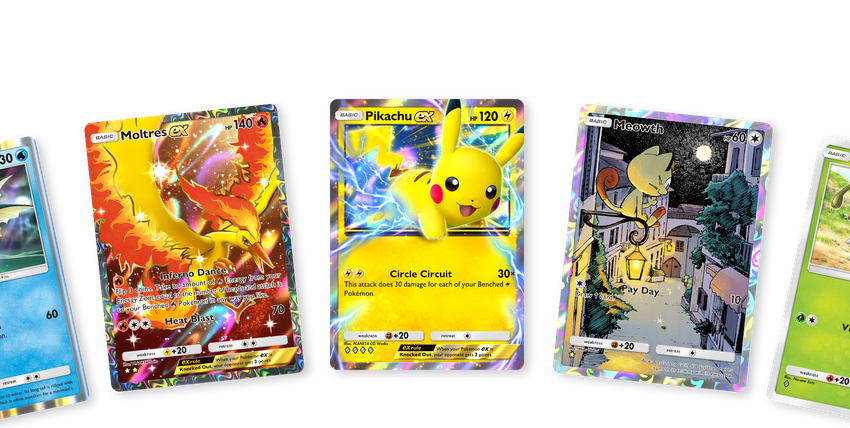
 Pokémon TCG Pocket (mobile app)
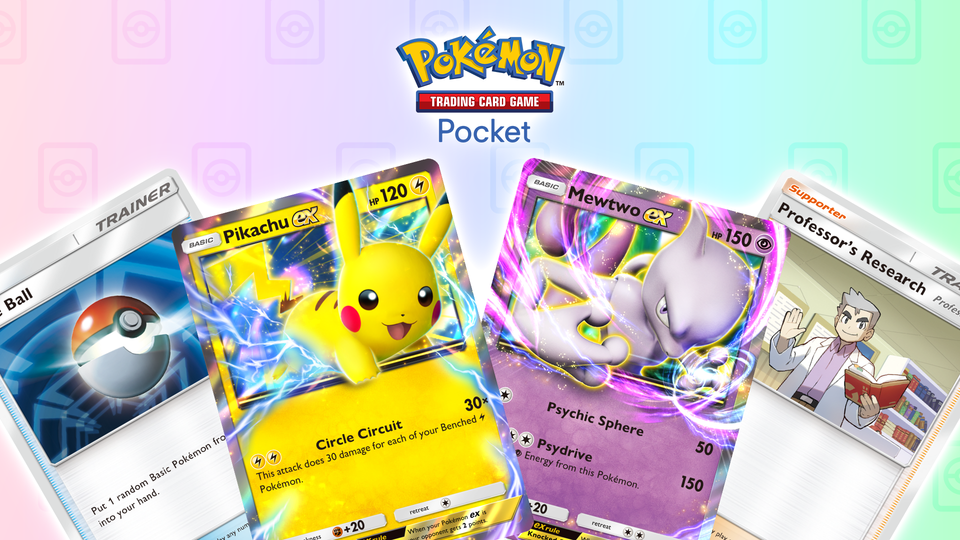
Start here, every single time. It's the free door — open two booster packs daily, try the Wonder Pick feature, and battle with simplified 20-card decks where auto-build and rental decks carry total beginners. It launched October 30, 2024 and crossed 100 million downloads by February 2025, so you're in very good company. This is the no-cost way to figure out if you're a Play person or a Collect person before you ever swipe a card. Prices move — but this one's free (with optional in-app purchases), so there's zero reason not to.
- Completely free to start, with two free packs every day
- Auto-build and rental decks make it genuinely beginner-proof
- Teaches both collecting and battling logic at zero risk
- Simplified 20-card decks aren't the full physical-game ruleset
- Optional in-app purchases can tempt you to spend
- Digital cards stay digital — no physical collection here

 8 photos
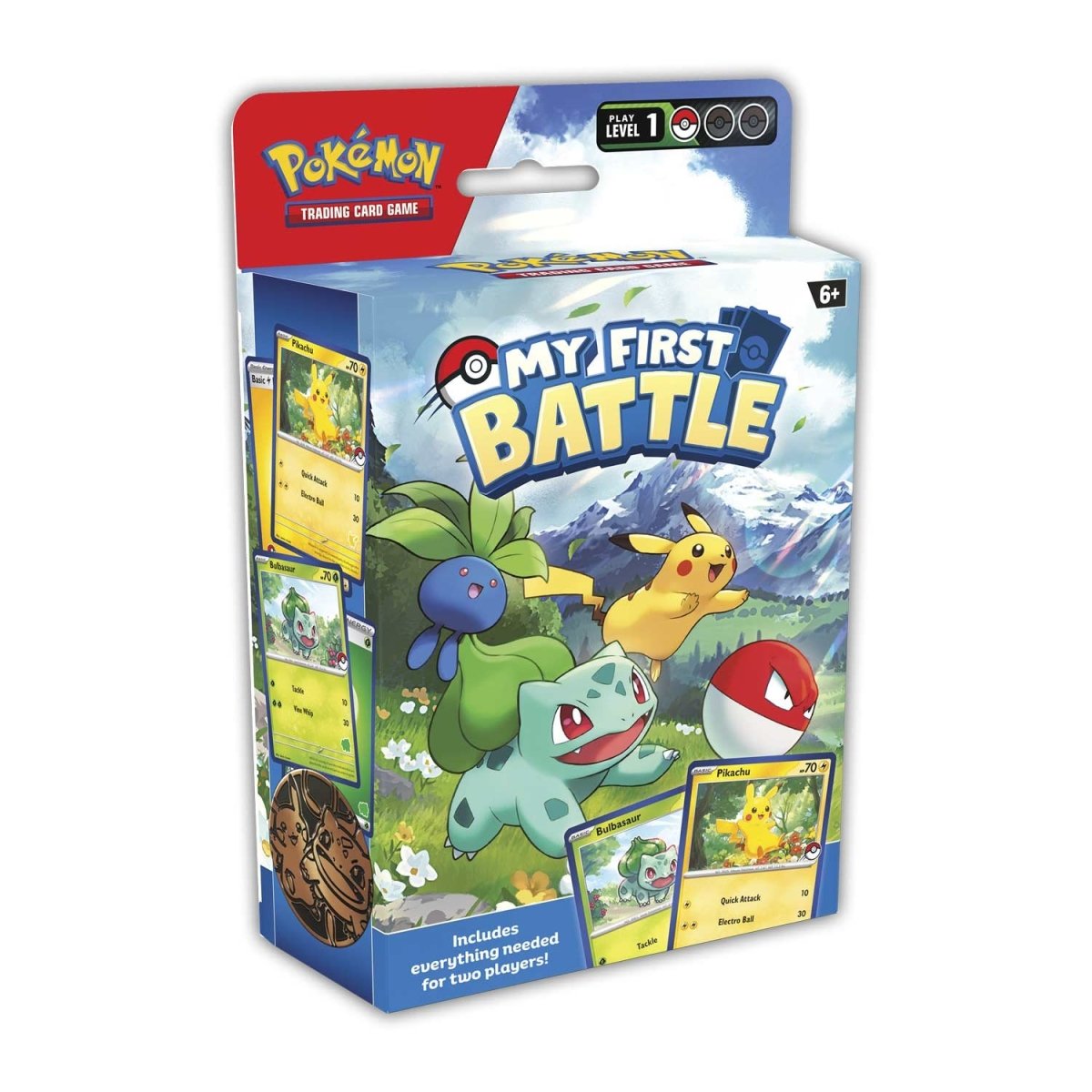
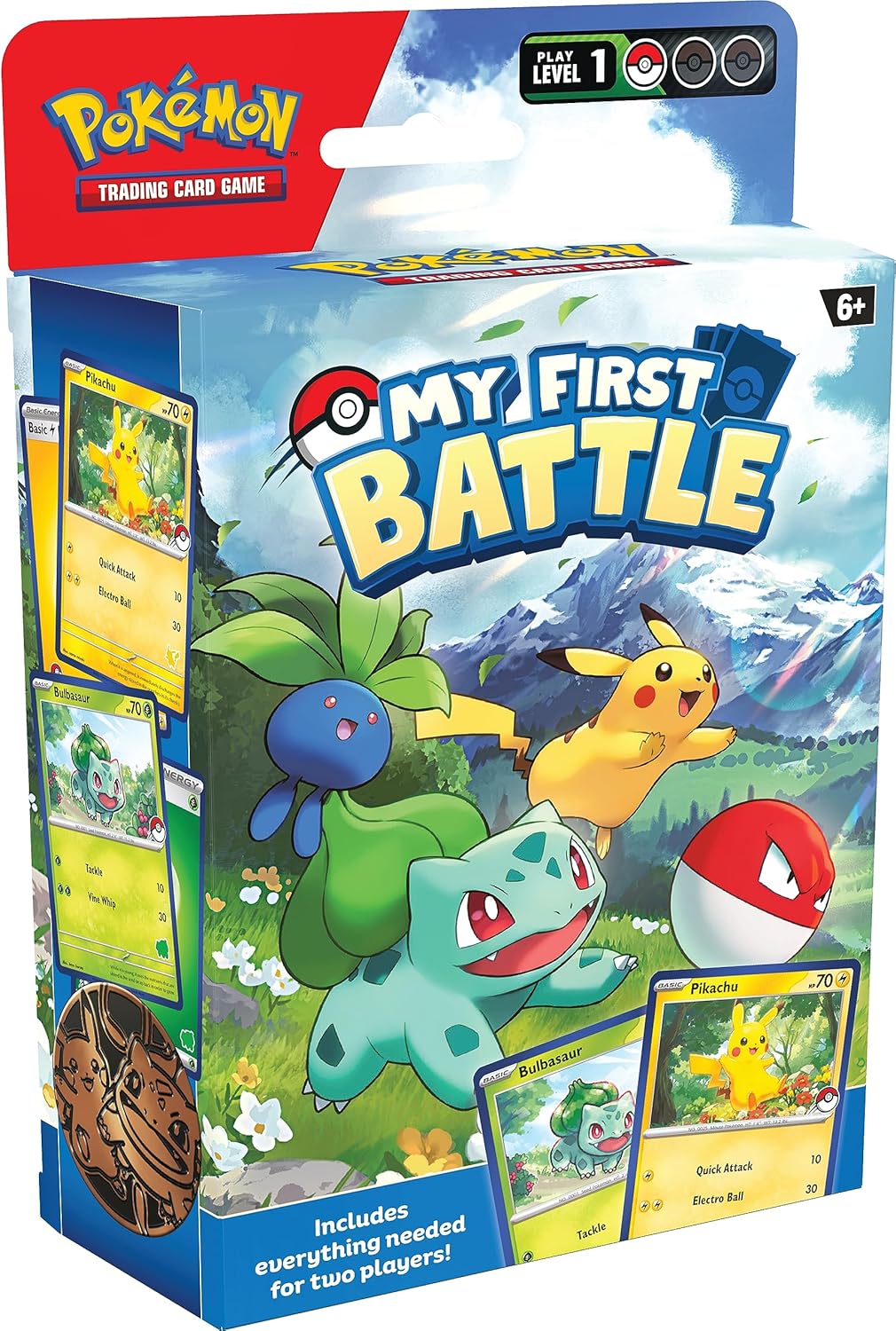
 My First Battle Box (Pikachu & Bulbasaur)
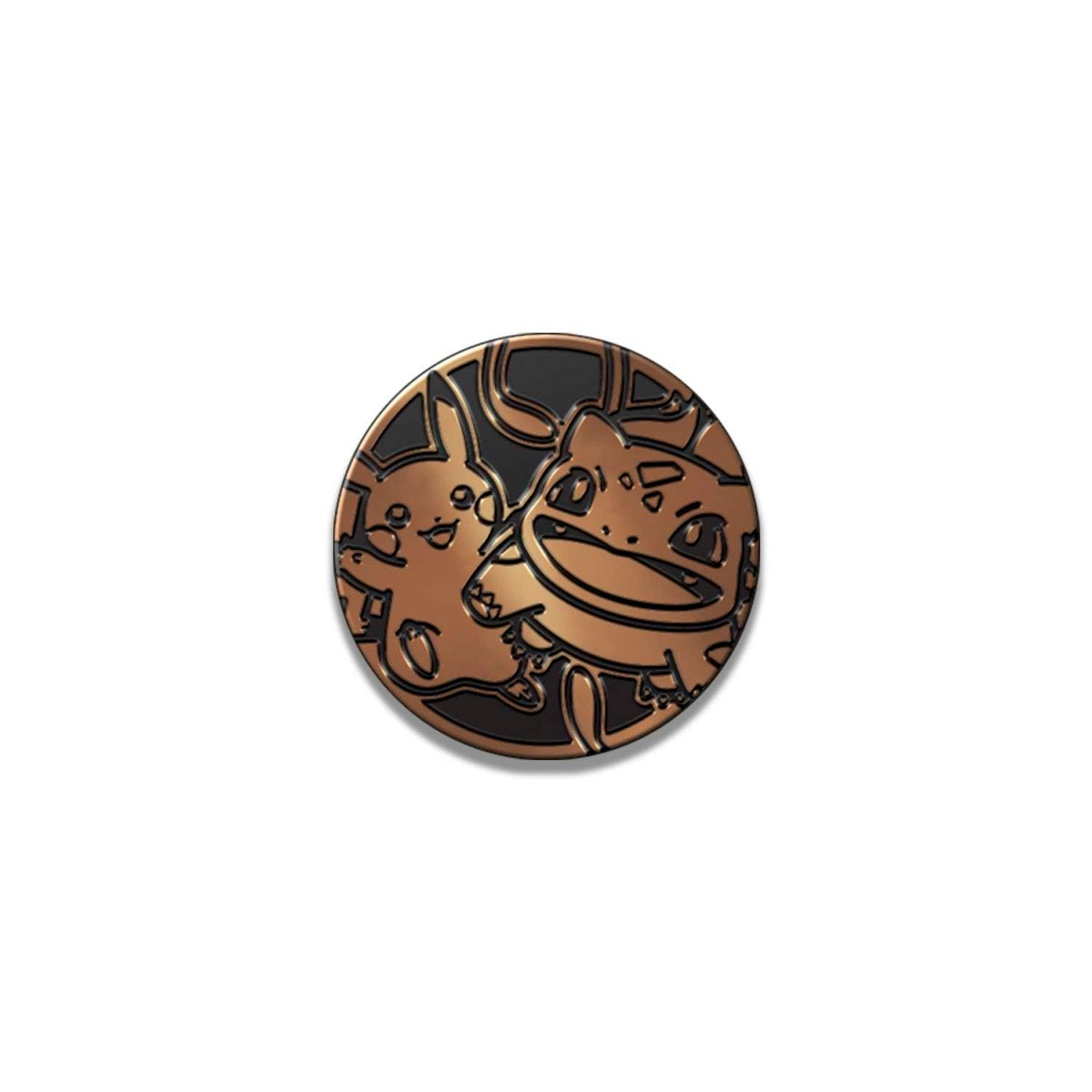
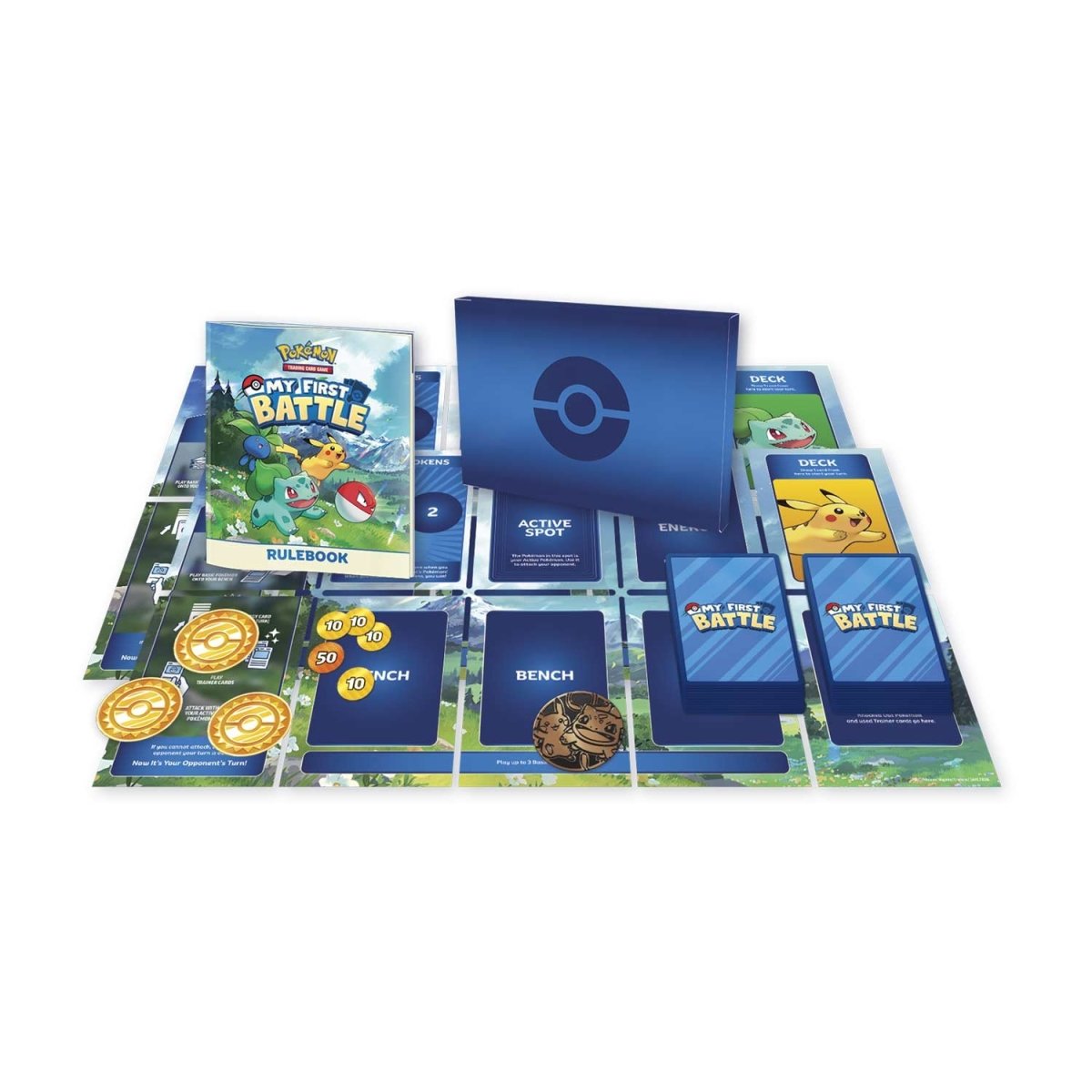
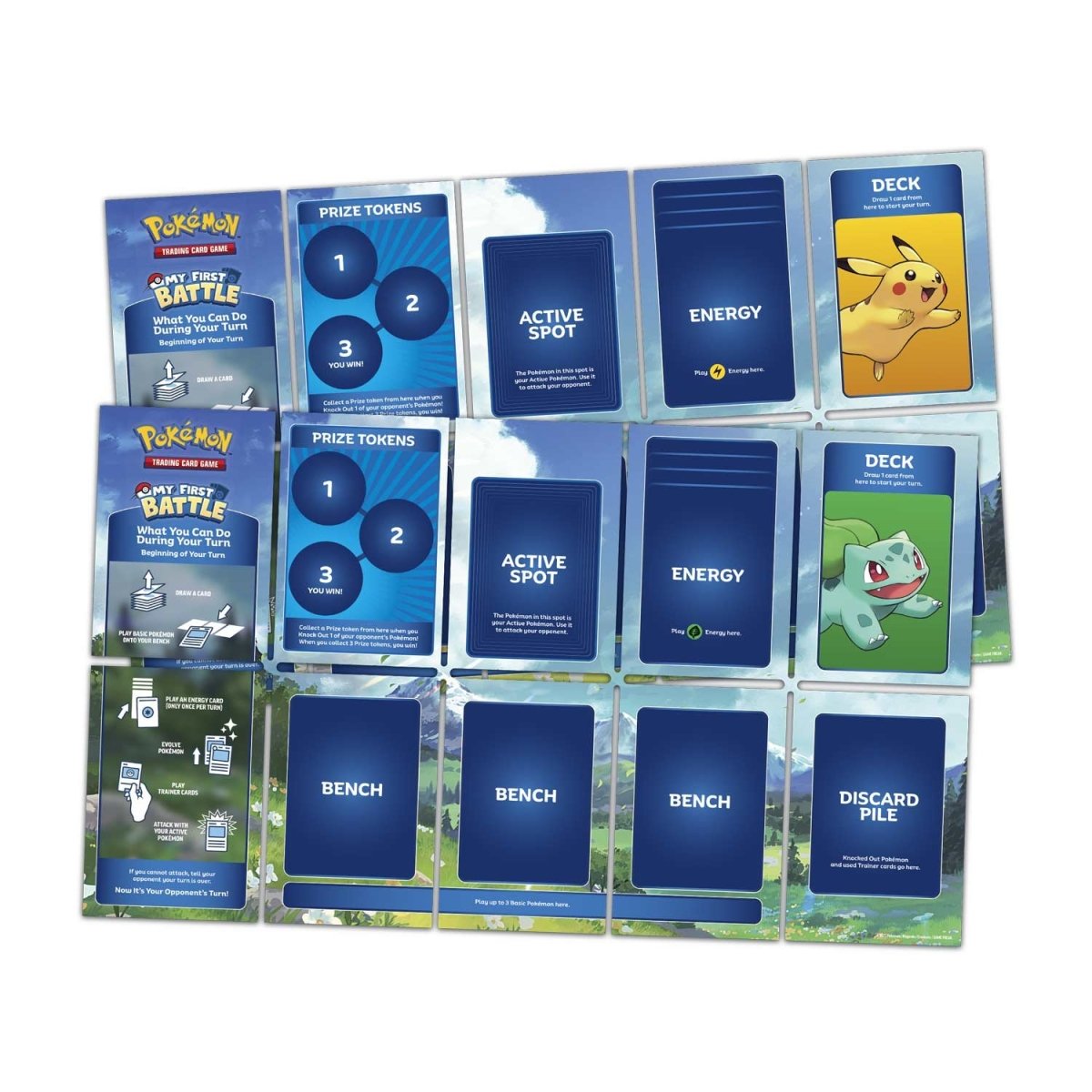
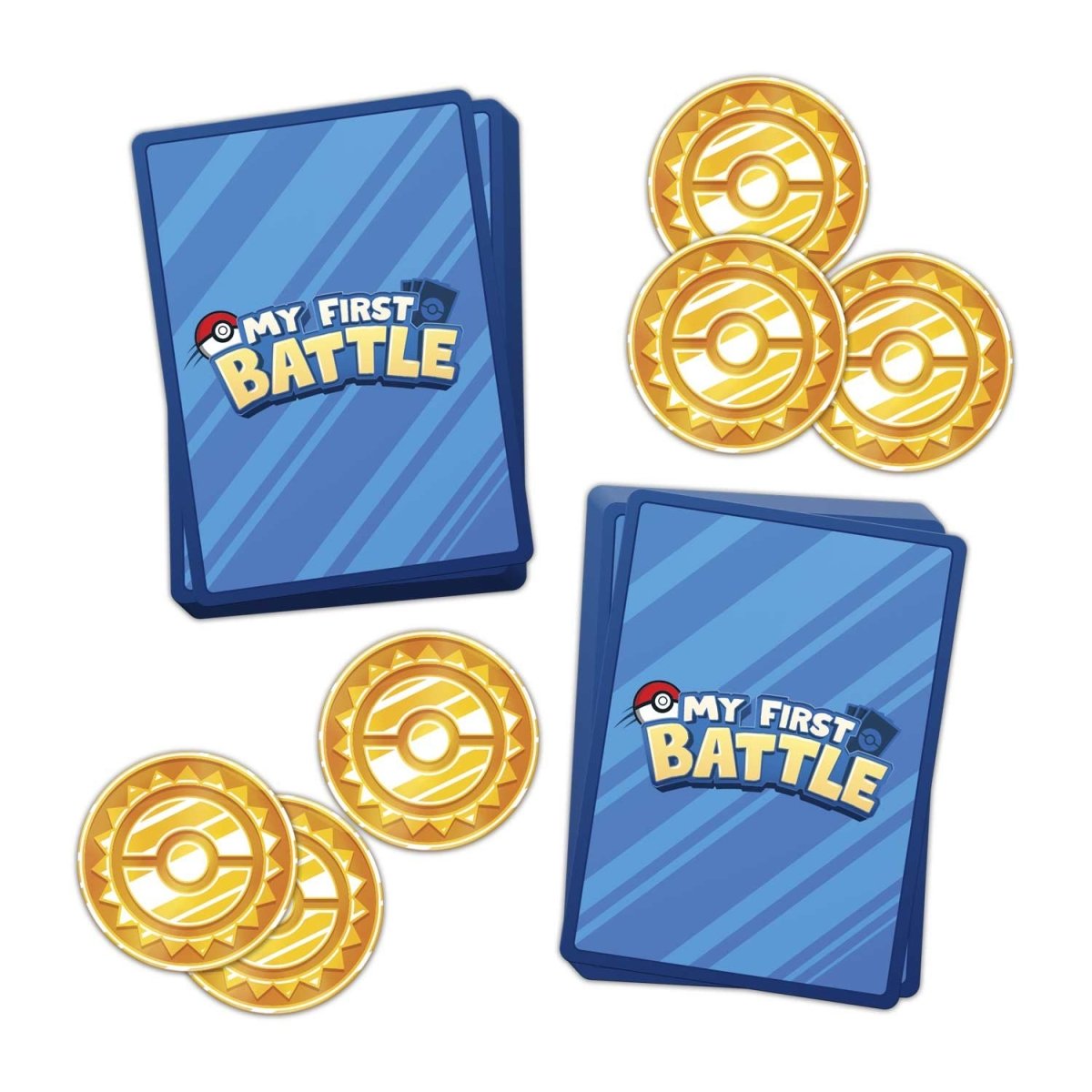
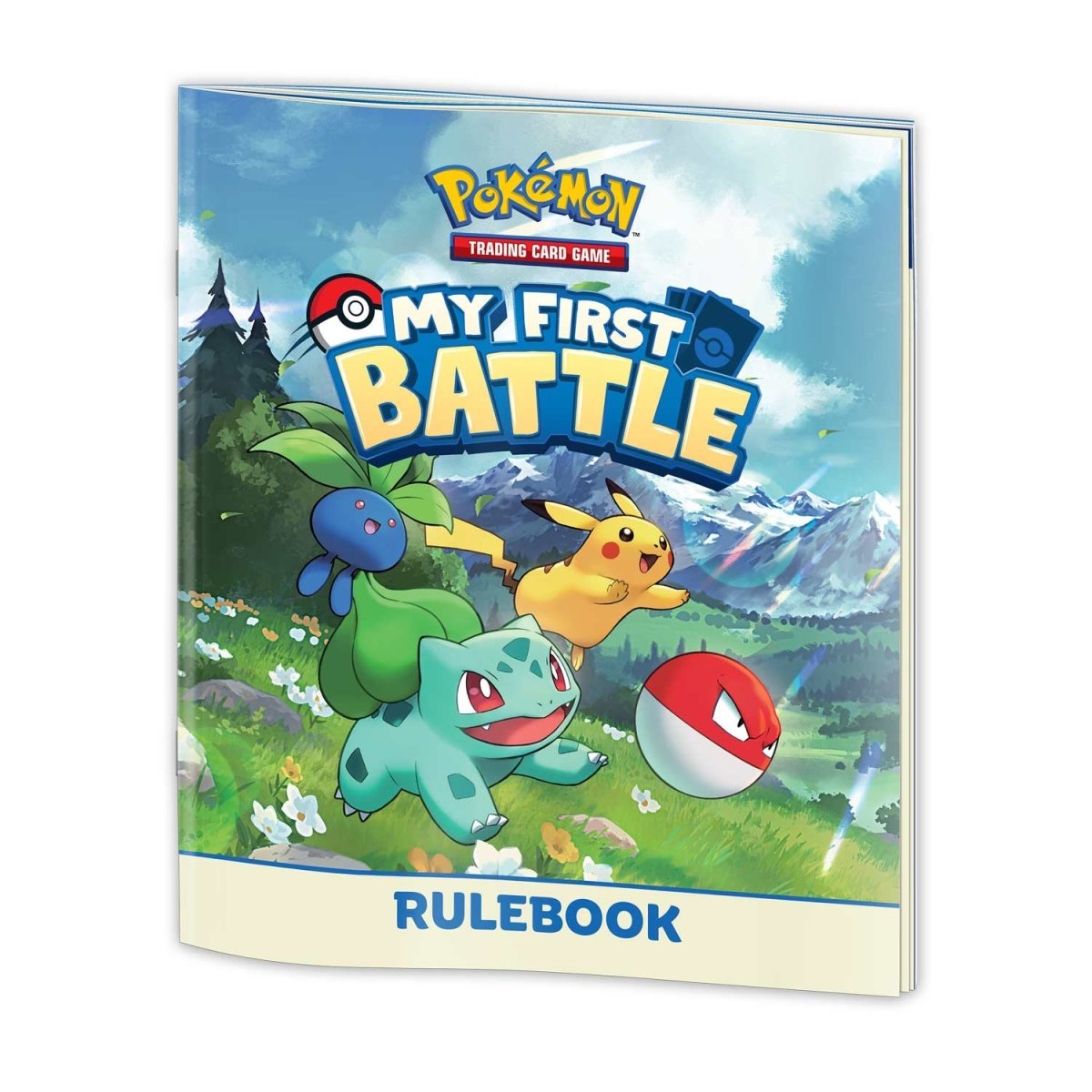
The gentlest physical on-ramp there is. It's 34 cards split into two 17-card mini-decks — this SKU pairs Pikachu against Bulbasaur (there's a separate Charmander & Squirtle box if you'd rather), plus two playmats, a rulebook, a metallic coin, damage counters, and Prize tokens — so a kid or a total newcomer can play a guided first match without anyone melting down. At $9.99 MSRP it's about as low-stakes as physical Pokémon gets. The catch is real demand: it sells out constantly and resells higher, so if you see it at sticker, grab it. Prices move — check current before you commit, because out of stock it often runs well above MSRP.
- Cheap physical entry at $9.99 MSRP
- Two ready mini-decks mean two people can play immediately
- Built around starter Pokémon kids already love
- Frequently sold out and resells above MSRP
- Only 34 cards (two 17-card decks) — a first taste, not a full deck
- Mini-decks outgrow fast once you're hooked
 8 photos
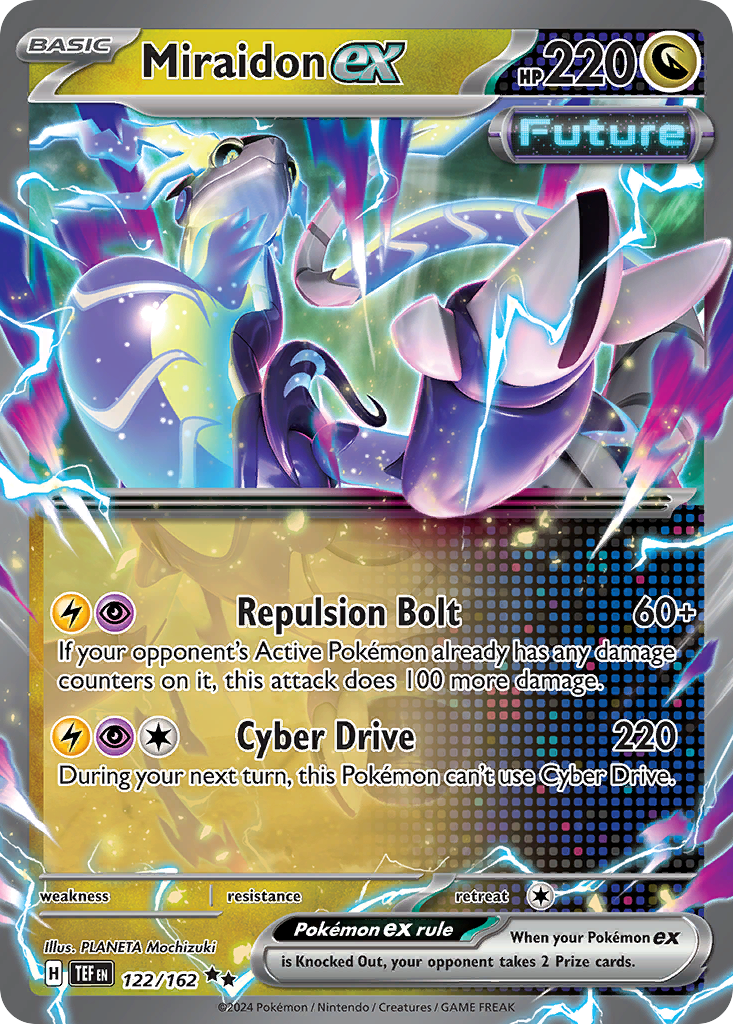
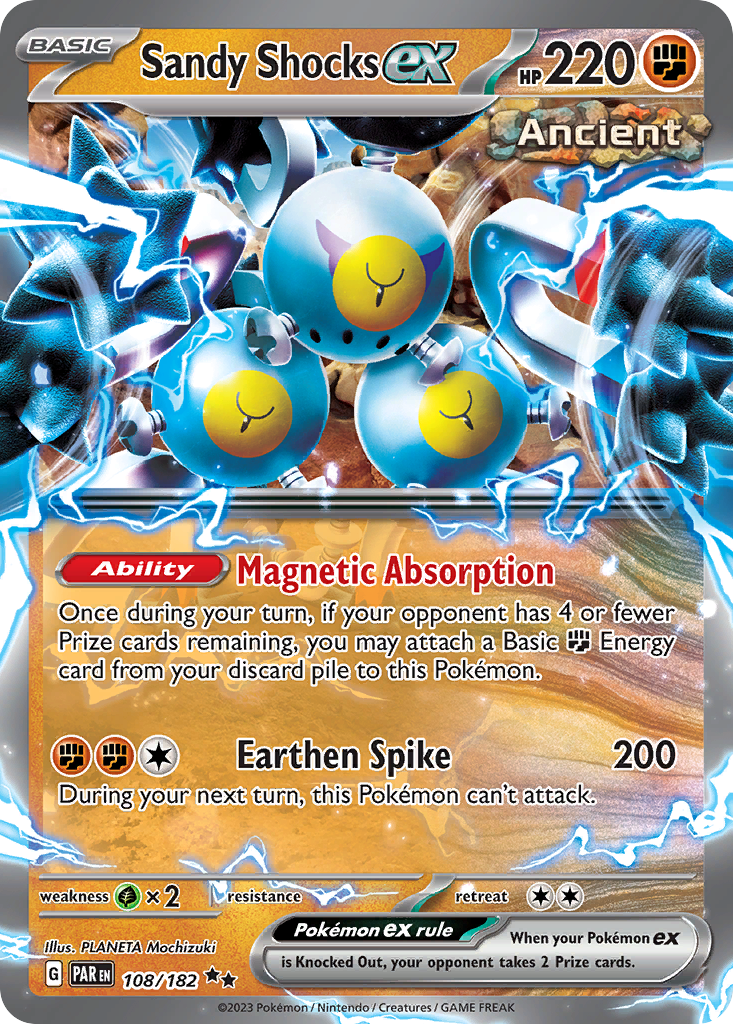
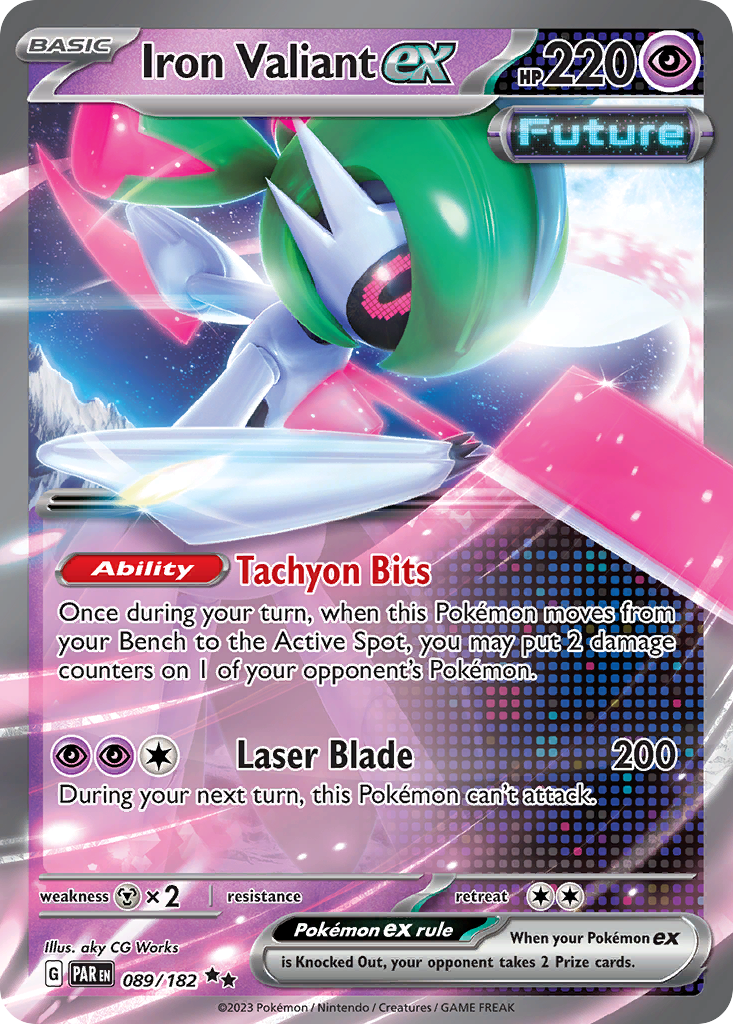
 Koraidon ex / Miraidon ex Deluxe Battle Deck
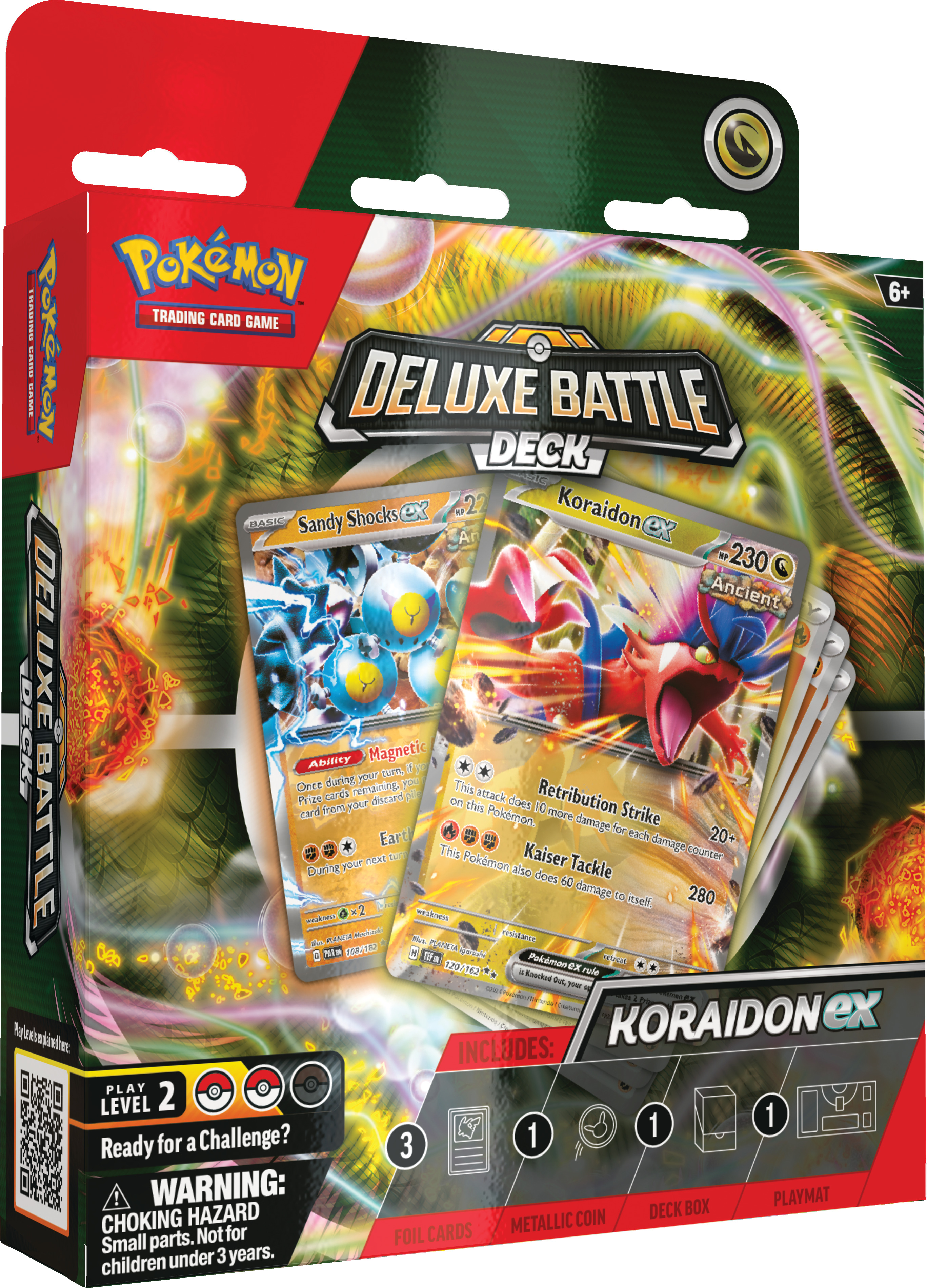
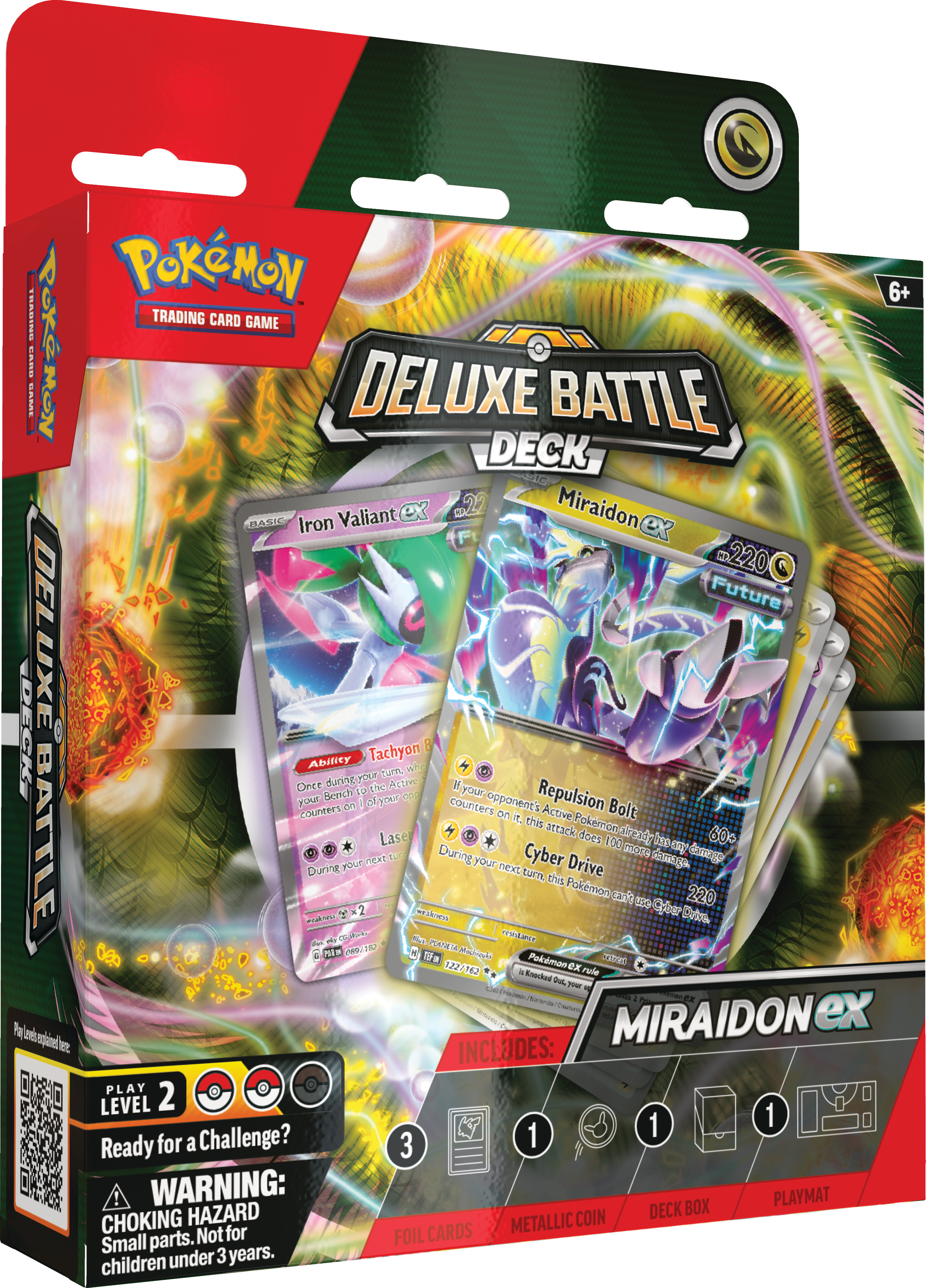
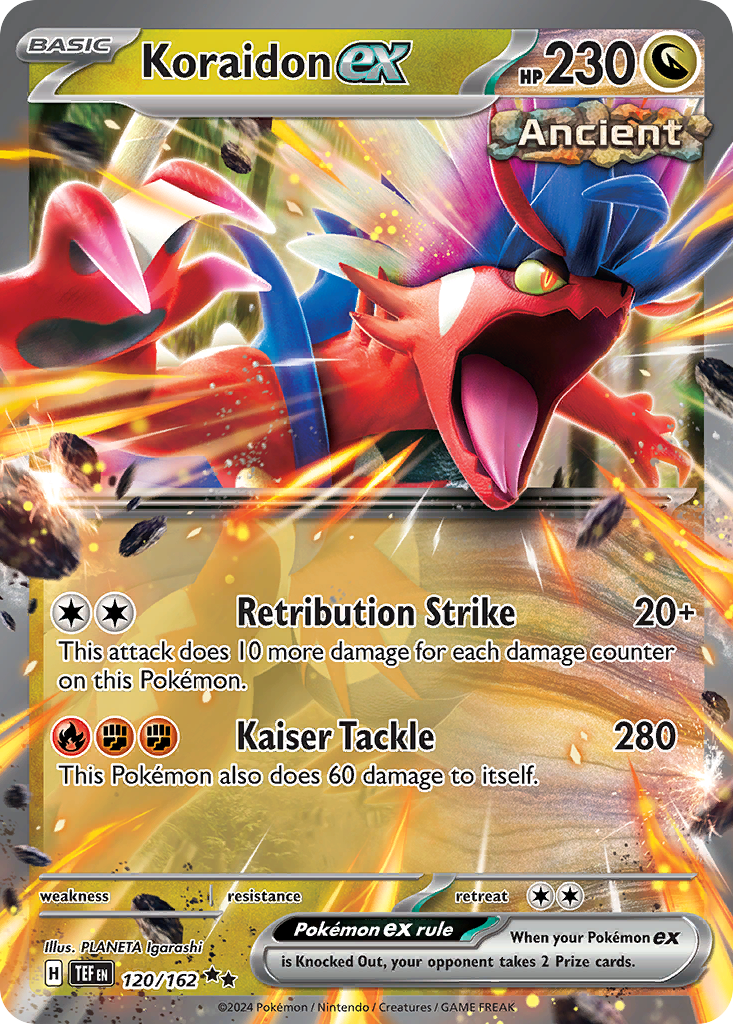
This is the community's go-to "one box, start playing" pick, and for good reason. Each is a fixed, working 60-card deck (including 3 foils) plus a single-player playmat, damage counters, a jumbo coin, special-condition markers, a deck box, and a strategy sheet — released August 23, 2024 at $19.99 each. It teaches energy acceleration and ex Pokémon, which is exactly the right first lesson. Buy one for solo learning, or grab both Koraidon ex and Miraidon ex so two of you can battle head-to-head out of the gate.
- A real, ready-to-play 60-card deck — no deckbuilding required
- Comes with playmat, counters, coin, and deck box to play instantly
- Buy two (Koraidon ex + Miraidon ex) for an instant head-to-head
- A single box is one deck, so solo buyers need a second to battle a friend
- Fixed list means limited customization out of the box
- Not the current Mega Evolution set, so less Standard-relevant long-term
 8 photos
 Pokémon TCG Battle Academy (2024)
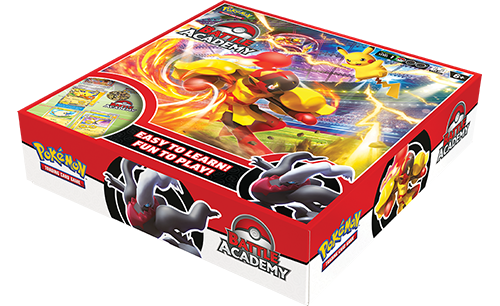
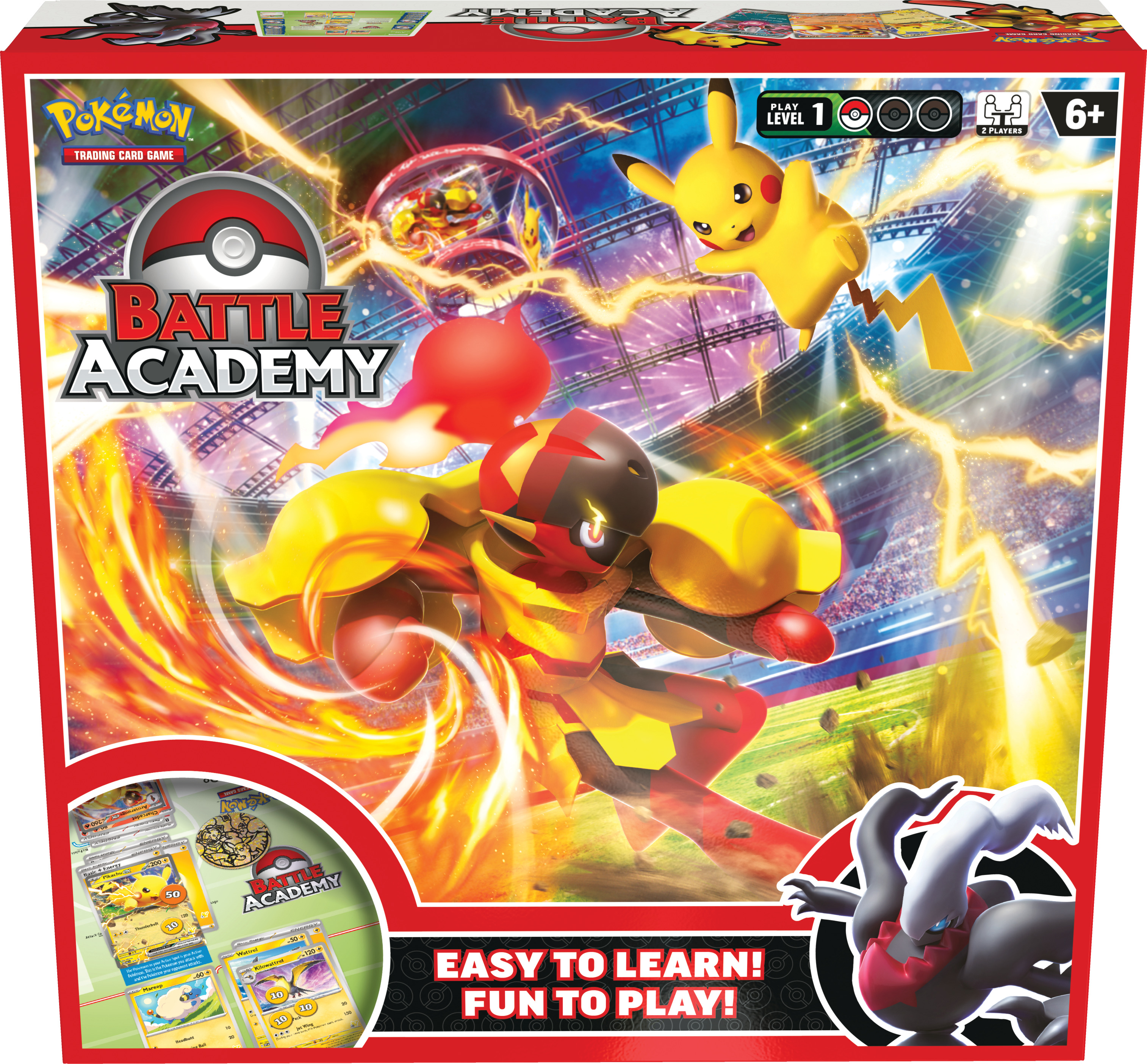
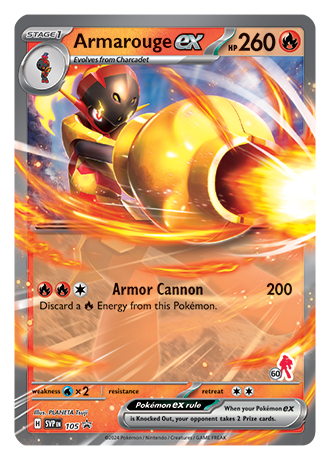
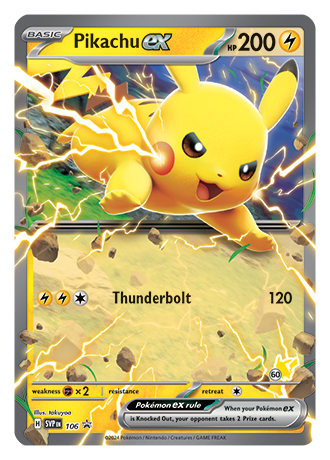
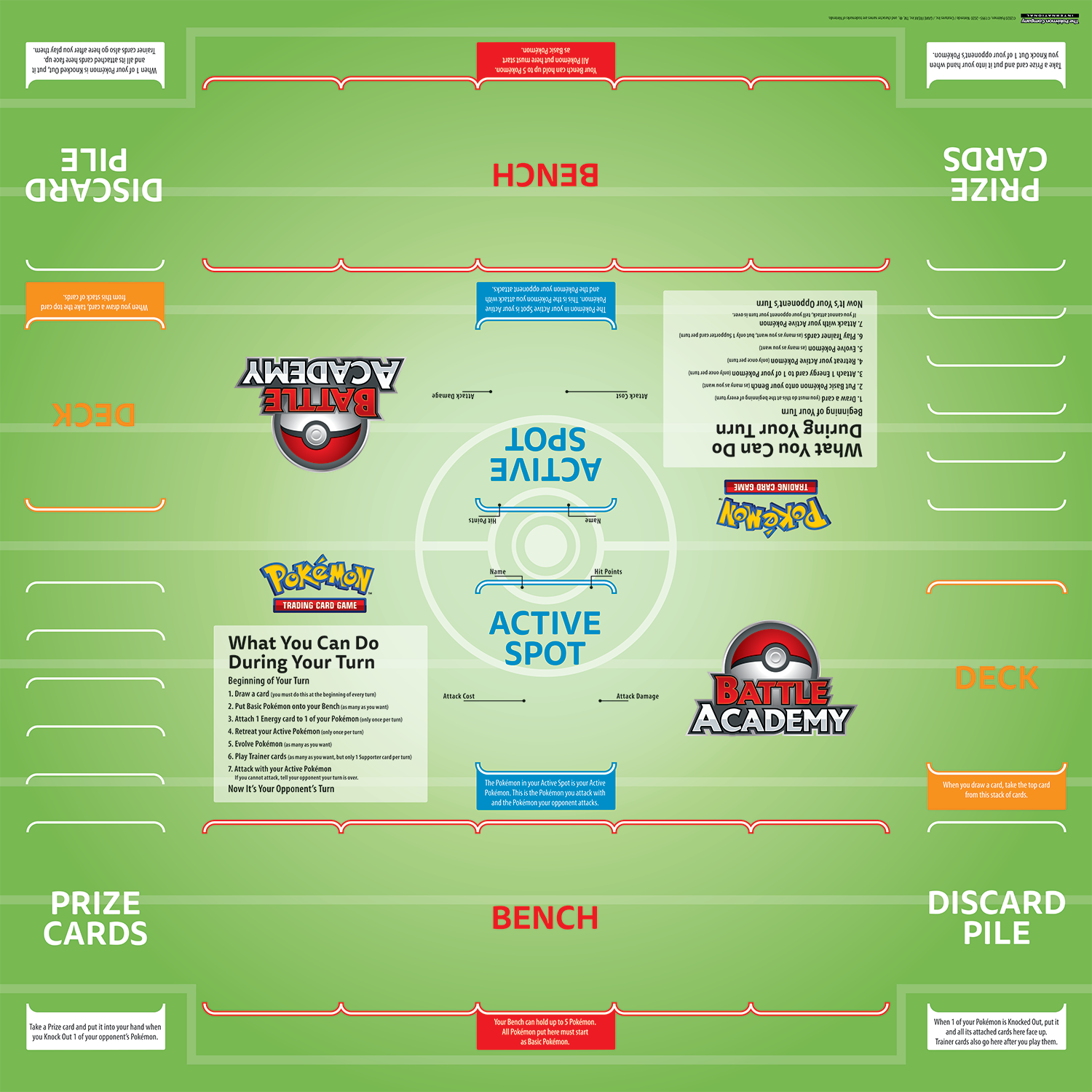
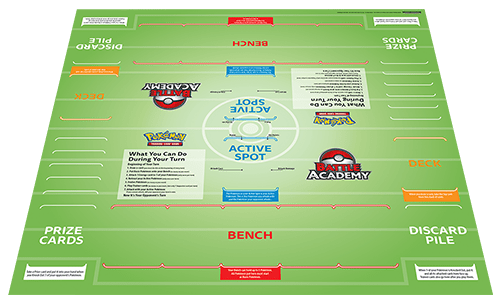
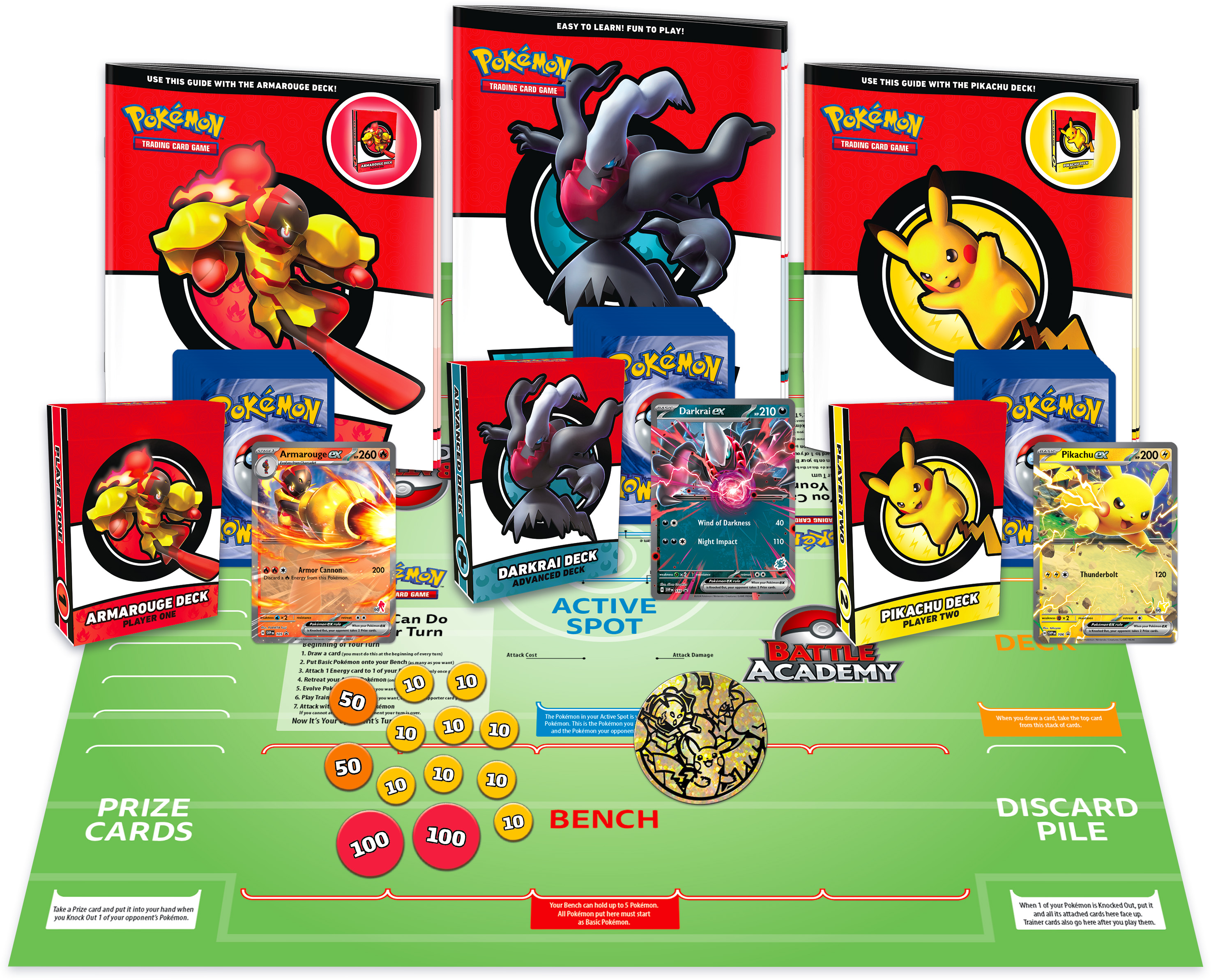
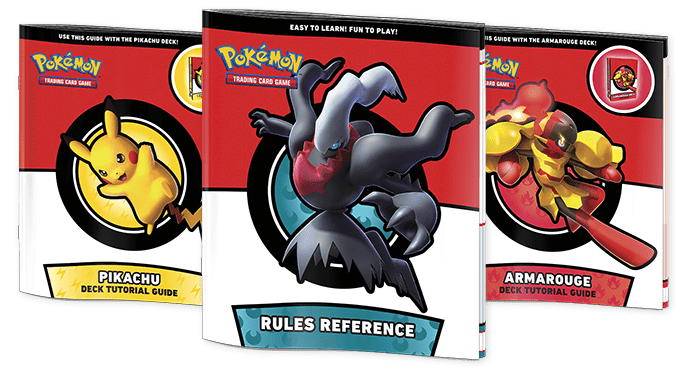
If you're learning WITH someone, this is the one. Released June 21, 2024 at $24.99, it packs THREE complete 60-card decks (built around Armarouge ex, Pikachu ex, and Darkrai ex), a two-player game board, tutorial guides, a rulebook, three deck boxes, damage counters, an oversized coin, and a Pokémon TCG Live code — literally everything two people need in a single box. Prices move and street pricing varies by retailer, so check current, but $24.99 is the MSRP. Three decks means you've got a spare and room to grow.
- Three ready 60-card decks plus a 2-player board in one box
- Built-in tutorials and rulebook walk you through your first game
- Best value for two people learning together
- Street price varies by retailer above the $24.99 MSRP
- Three decks are a learning set, not competitive Standard lists
- A 2024 box, so not the current Mega Evolution-era product
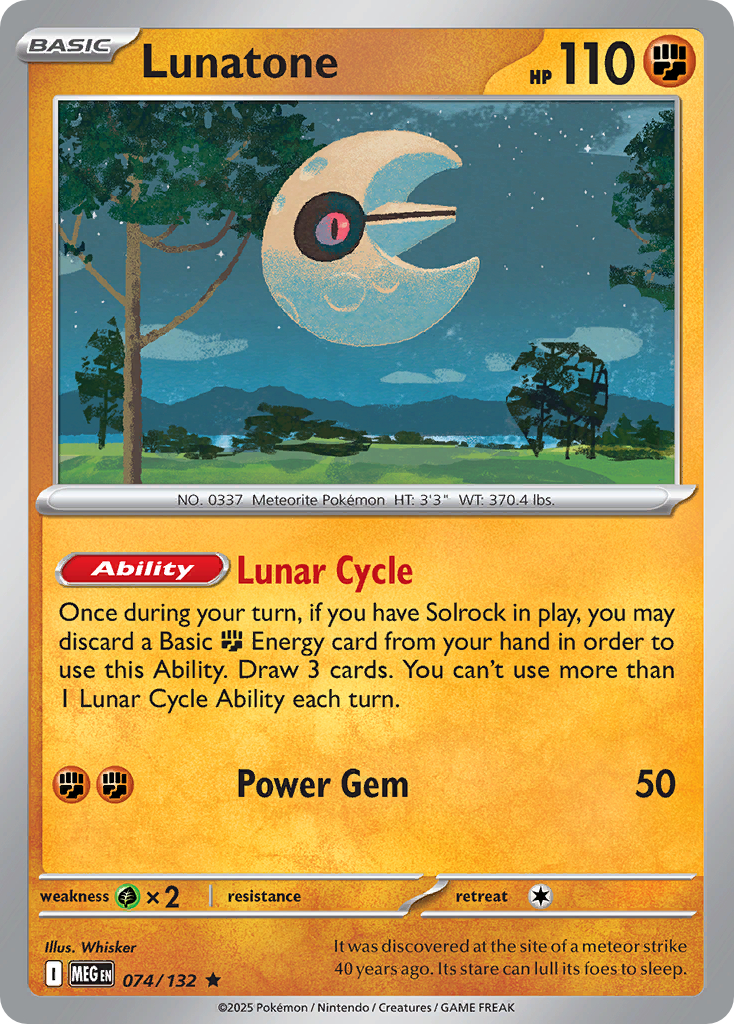
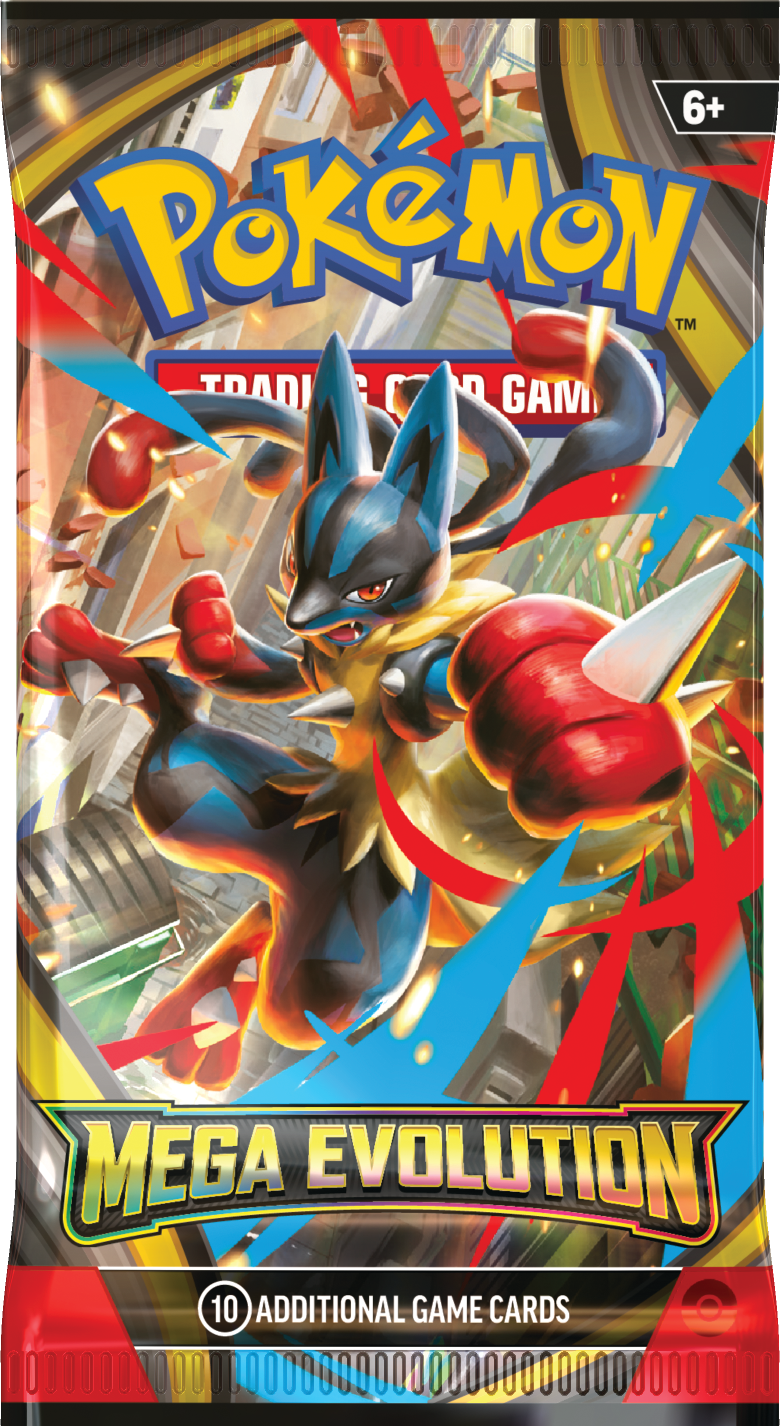
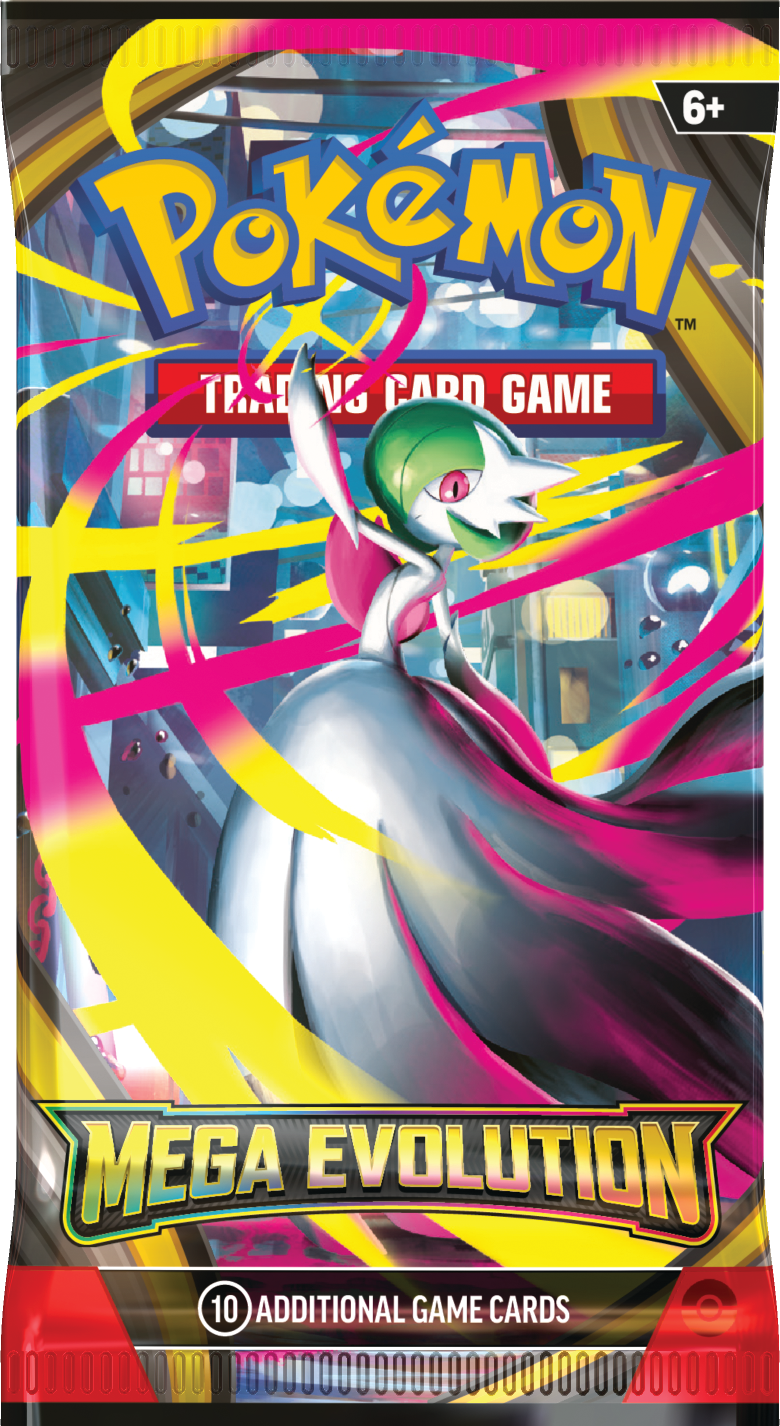 7 photos
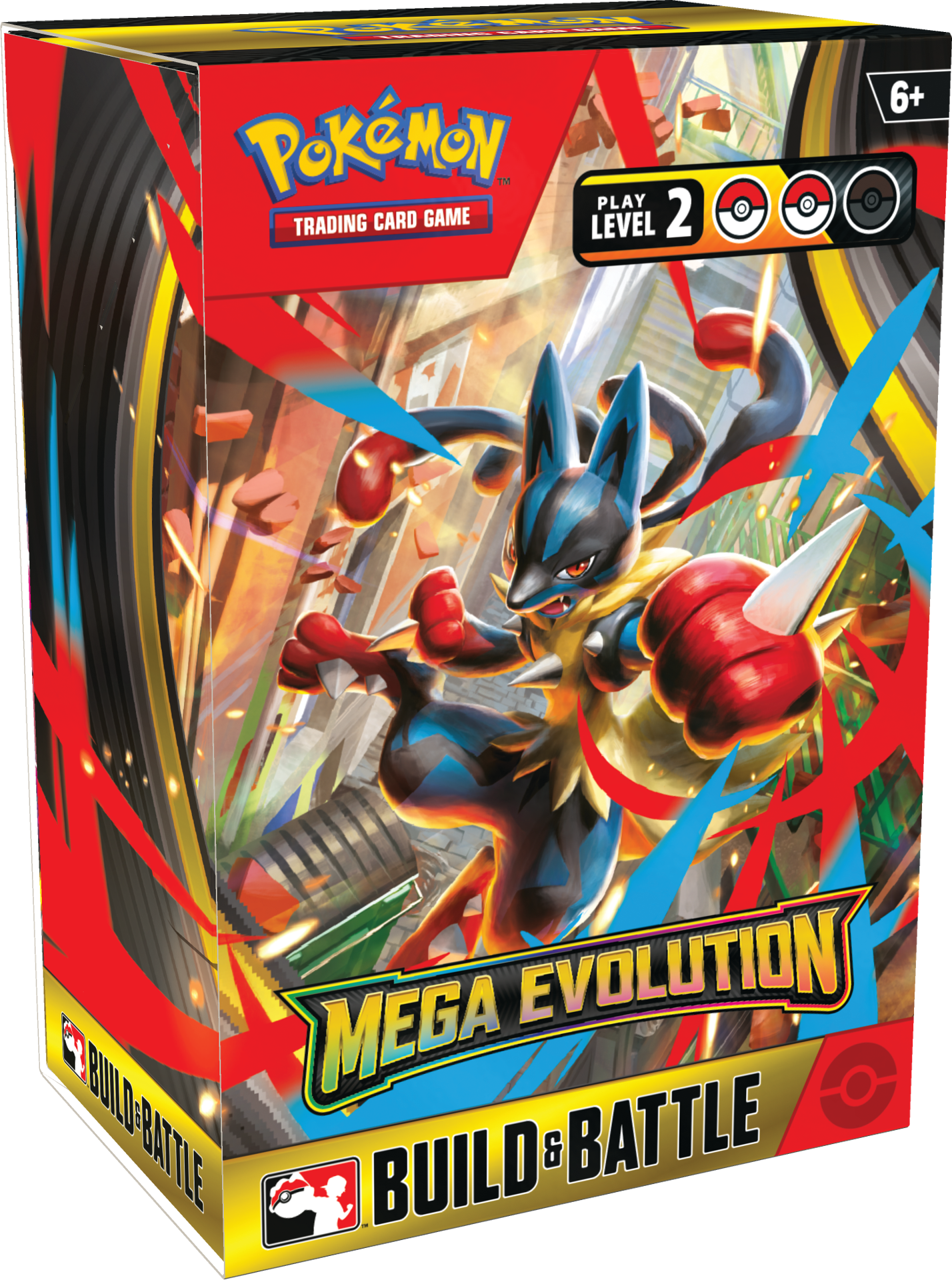
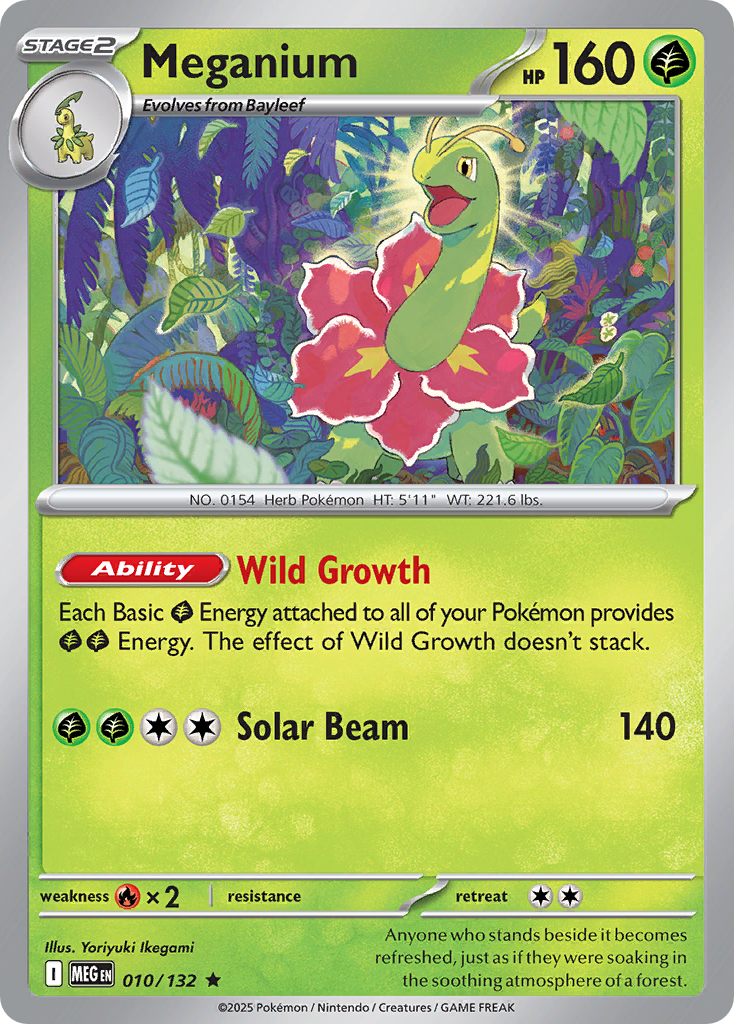
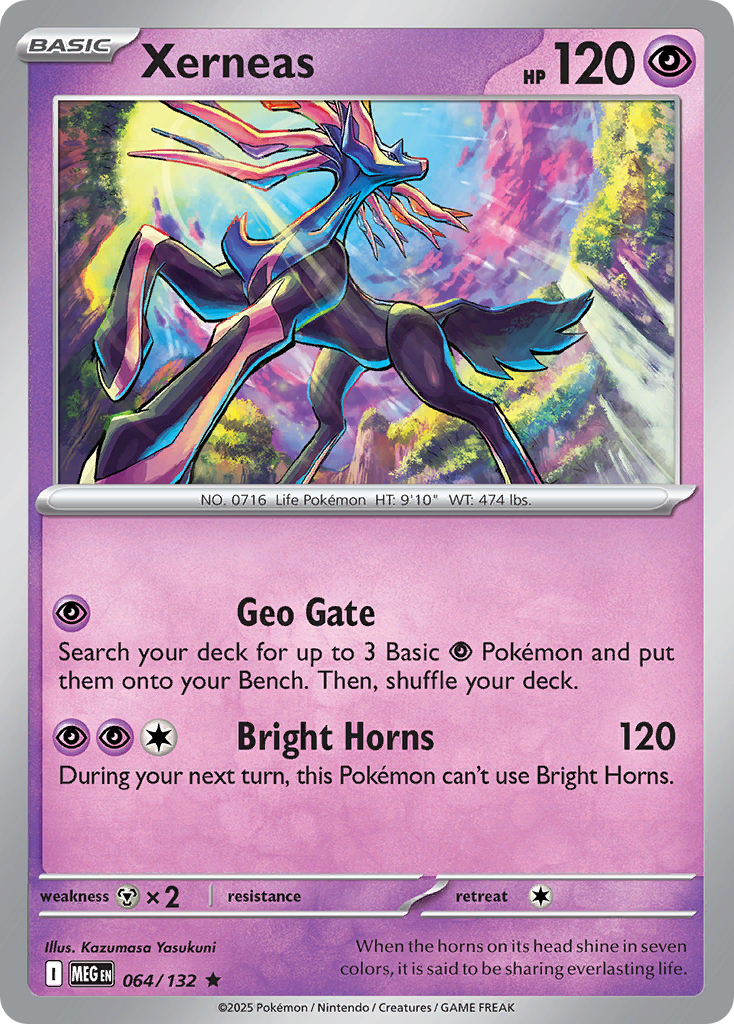
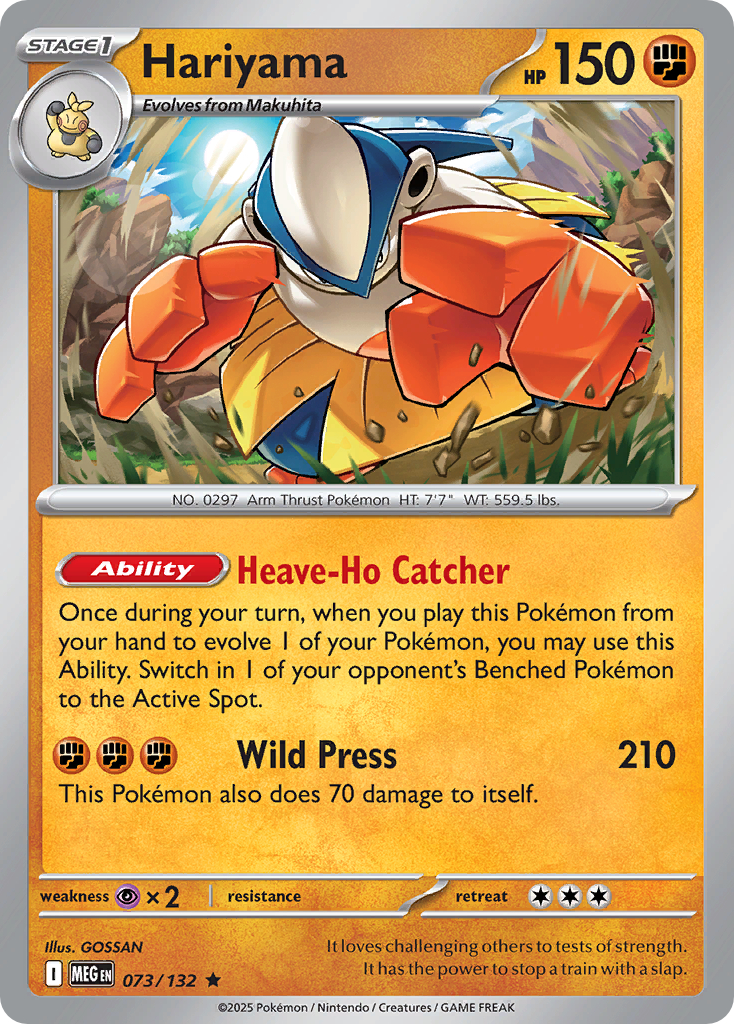
 Build & Battle Box (current Mega Evolution set, e.g., Perfect Order)
This is the beautiful in-between, and it's my secret-weapon recommendation for the indecisive. You get 4 booster packs from the current set PLUS a 40-card ready-to-play deck PLUS one of several unique foil promos — so you get the thrill of opening AND something playable when you're done. It uses the Prerelease format (a 40-card deck with 4 Prize cards instead of 60/6), which The Pokémon Company calls "perfect for introducing new Trainers." Even better, it's the kit used at beginner-friendly Prerelease events at local shops. Prices move — verify the current set's price before you buy.
- Bridges opening packs and playing in one box
- 4 packs + a 40-card ready deck + a foil promo
- Your ticket into beginner-friendly local Prerelease events
- 40-card Prerelease deck is a mini-format, not full Standard
- Street prices vary by set — verify before buying
- Packs are still partly random, so value swings
 6 photos
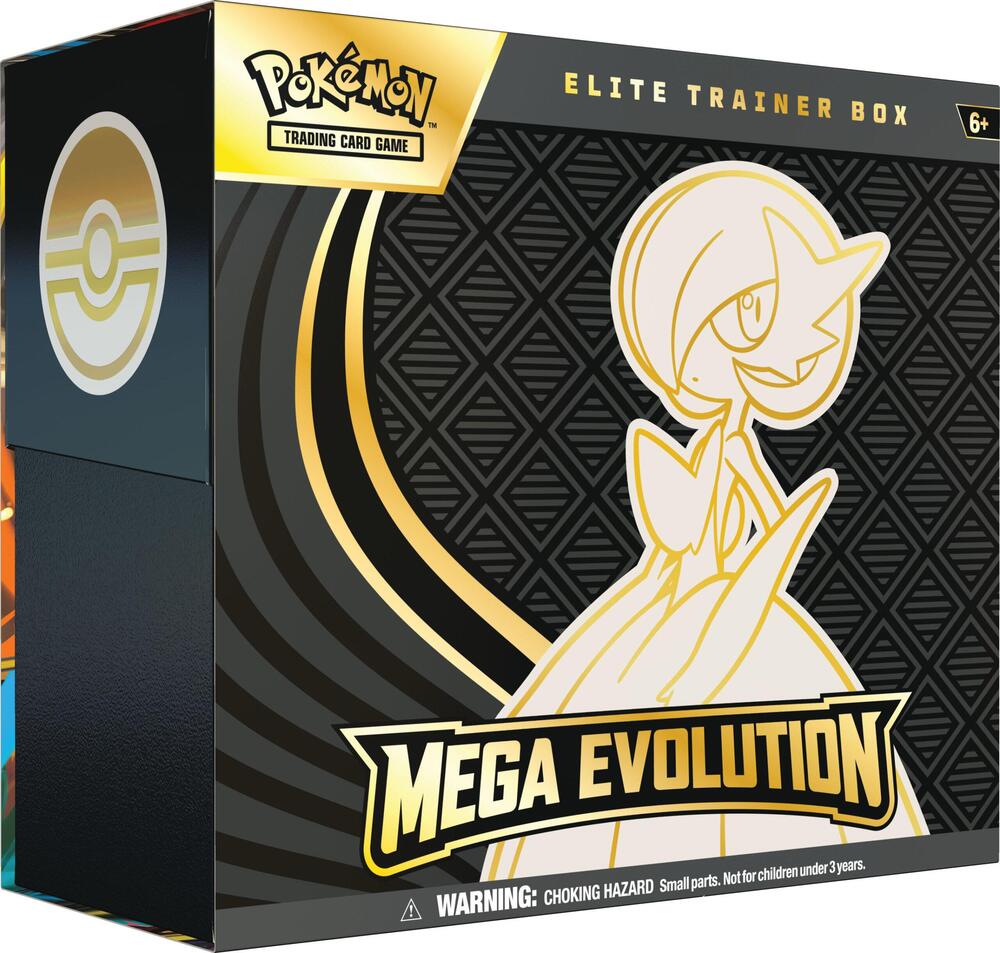
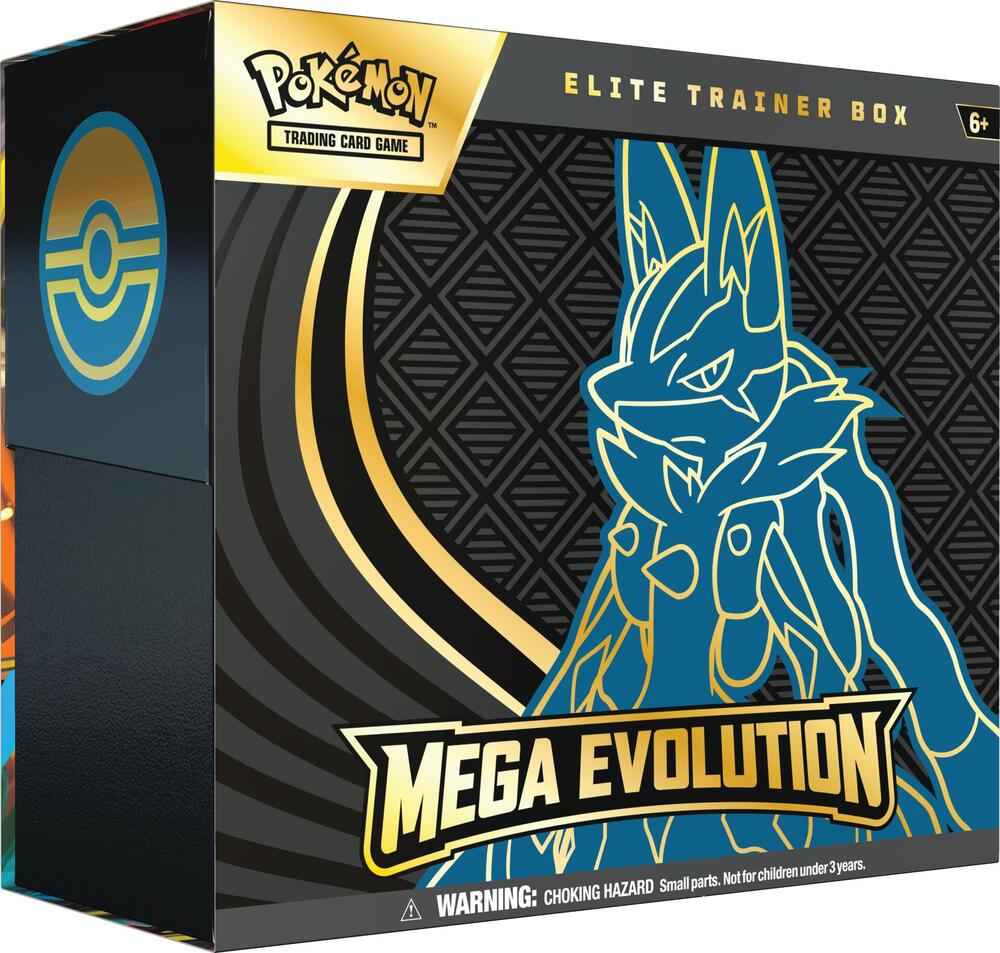
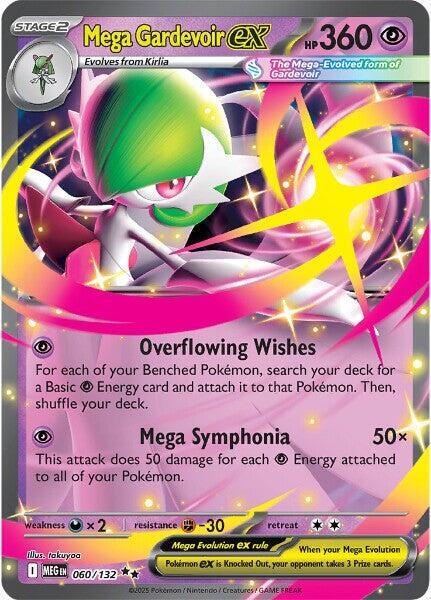
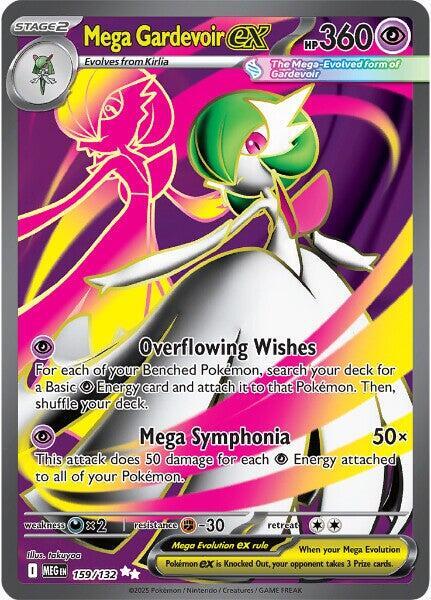
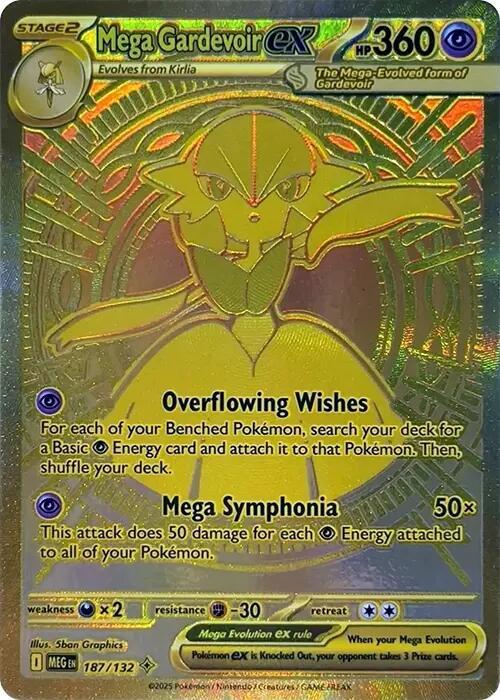
 Elite Trainer Box (ETB) — current Mega Evolution set
Gorgeous box, very specific job. An ETB is the collector/opener's one-stop: roughly 8–11 booster packs from the featured set, 65 card sleeves, ~45 Energy cards, damage-counter dice, a competition-legal die or coin, condition markers, a player's guide, usually a promo, and a sturdy storage box that holds ~550 unsleeved cards with dividers. Standard ETBs run $39.99–$49.99, with Pokémon Center exclusives around $59.99 (extra packs + a stamped promo). But hear me — it is NOT a ready-to-play deck. Pair it with a Battle Deck if you also want to play. Prices move, and sealed older-set ETBs can run $200–$500+ on the secondary market.
- Packs, 65 sleeves, ~45 energy, dice, and storage all in one box
- Sturdy collector's box holds ~550 cards with dividers
- Great gear-plus-packs value for collectors and openers
- Contains NO playable deck — purely packs and accessories
- Standard $39.99–$49.99; secondary-market sealed can hit $200–$500+
- Random packs won't build a competitive deck
 6 photos
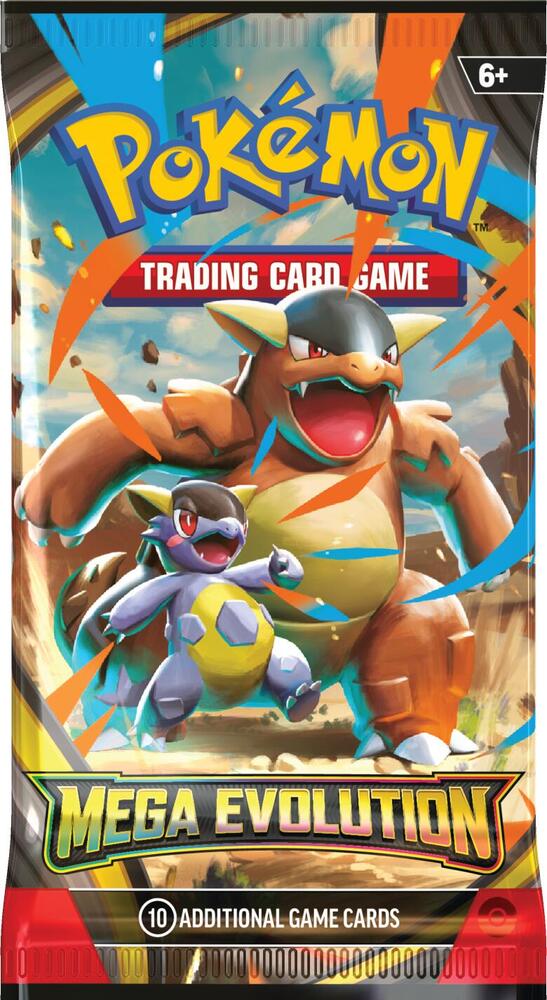
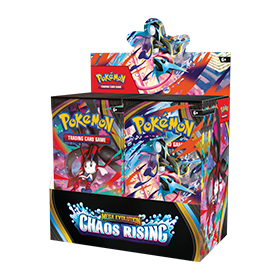
 Booster bundle / single booster packs (current set)
The pure thrill ride — and the one I gently warn beginners about. Each pack is fully random, which makes it fun to open and an inefficient way to build anything playable. Boosters run about $4–5 MSRP each, and booster bundles around $25–30 MSRP, though street prices push bundles to roughly $52–80 thanks to demand and scalping. My honest rule: only spend here AFTER you already own a pre-built deck to actually play with. Prices move fast and often blow past MSRP, so shop around and don't overpay because a shelf looks empty.
- The most fun, low-commitment way to chase shiny chase cards
- Cheap entry per pack (~$4–5 MSRP)
- You might pull something special from the current set
- Fully random — a terrible way to build a playable deck
- Street prices often far exceed MSRP (~$52–80 bundles)
- Easy to overspend chasing one card
At a glance
| pick | play or collect | price | what you get | best for |
|---|---|---|---|---|
| Pokémon TCG Pocket | Learn (both) | Free | Free digital app: 2 packs/day, Wonder Pick, 20-card battles | Learning before you spend |
| My First Battle Box | Play | $9.99 MSRP | 34 cards in two 17-card mini-decks; two starters per box (Pikachu & Bulbasaur, or Charmander & Squirtle) | Youngest beginners (ages 6+) |
| Koraidon ex / Miraidon ex Deluxe Battle Deck | Play | ~$19.99 each | Ready 60-card deck (3 foils), playmat, counters, coin, deck box | One person who wants to play now |
| Battle Academy (2024) | Play | $24.99 MSRP | THREE 60-card decks, 2-player board, tutorials, rulebook | Learning with a kid or partner |
| Build & Battle Box (current set) | Both | Street varies (verify) | 4 packs + 40-card ready deck + foil promo (Prerelease format) | Open AND play; local Prerelease events |
| Elite Trainer Box (current set) | Collect | $39.99–$49.99 ($59.99 PC excl.) | ~8–11 packs, 65 sleeves, ~45 energy, dice, storage box, promo | Collectors/openers (NOT a deck) |
| Booster bundle / single packs | Collect | ~$4–5/pack; bundles ~$25–30 MSRP (street ~$52–80) | Random sealed packs from the current set | Chasing cards after you own a deck |
Questions, answered
Should I buy booster packs to start playing?
No — and this is the number-one beginner mistake. Boosters are random, so they're fun to open but an inefficient way to build a playable deck. To PLAY, buy a fixed pre-built deck (a Battle Deck like Koraidon ex / Miraidon ex, ~$19.99, or Battle Academy, $24.99) so you get a known, working 60 cards. Save the boosters for collecting once you already have a deck to play.
What's the difference between an Elite Trainer Box and a Battle Deck?
A Battle Deck is a fixed, ready-to-play 60-card deck — the simplest way to actually play. An Elite Trainer Box (ETB) is accessories-plus-packs: roughly 8–11 booster packs, 65 sleeves, ~45 Energy cards, dice, a player's guide, a promo, and a storage box — but NO playable deck. Buy a Battle Deck to play; buy an ETB to collect a new set's packs and get all the gear. If you want both, pair them.
What's the best box for learning with my kid?
Pokémon TCG Battle Academy (2024), $24.99 MSRP. It includes THREE complete 60-card decks (Armarouge ex, Pikachu ex, Darkrai ex), a two-player game board, tutorial guides, and a rulebook — everything two people need in one box. For the youngest kids (ages 6+), My First Battle Box ($9.99 MSRP) is an even gentler first match with two 17-card mini-decks (two starters per box — Pikachu & Bulbasaur, or Charmander & Squirtle). Prices move — check current.
Can I learn Pokémon TCG for free before buying anything?
Yes. Download Pokémon TCG Pocket (free, iOS/Android). It launched October 30, 2024, has 100M+ downloads, and lets you open two booster packs free daily, use Wonder Pick, and battle with simplified 20-card decks (auto-build and rental decks help total beginners). It's a no-cost way to learn both collecting and battling before you buy physical product.
How should I protect my cards, and which brands are trusted?
The gold standard is a penny (soft) sleeve placed INSIDE a hard toploader — the soft sleeve protects the surface, the toploader prevents bending. For playing, use opaque deck sleeves and double-sleeve valuable cards; for collections, use toploader or 9-pocket binders and always sleeve a card before putting it in a pocket. Trusted brands: Ultra Pro, Dragon Shield, and BCW.
Which current set should I buy in 2026 so it stays tournament-relevant?
Buy a current Mega Evolution-era set — the Scarlet & Violet era has ended (final set: Black Bolt & White Flare). The first English main expansion was simply Mega Evolution (Sept 26, 2025), followed by Phantasmal Flames; Ascended Heroes (Jan 30, 2026) is the line's first special expansion. The 2026 main block continues with Perfect Order (Mar 27), Chaos Rising (May 22), and Pitch Black (Jul 17), plus the 30th Celebration anniversary set on Sep 16, 2026 (every pack all-foil). Standard format is the recommended beginner format because it uses newer cards and is cheaper to maintain.
Why are prices higher than MSRP, and how do I avoid overpaying?
Demand shortages and scalping in 2025–2026 mean MSRP is often a floor, not the real price. One reported example: a 36-pack booster box with a ~$143.64 MSRP sold for $239.99 at GameStop in November 2025, and booster bundles ran roughly $52–$80 at retail. Shop around across big-box stores, Pokémon Center, and TCGplayer, and don't panic-buy just because a shelf looks empty.
Imani's verdict
Here's where I land, and I'll keep it tight because you've got a card shop to get to. First: go free. Download Pokémon TCG Pocket and learn the rhythm before you spend a thing — a week in that app and you'll walk into your local shop already speaking the language. Then decide your door. If you want to PLAY, buy a pre-built deck — a single Koraidon ex or Miraidon ex Deluxe Battle Deck (~$19.99) if it's just you, or Battle Academy ($24.99) if you're learning with a kid or a partner, because three decks and a two-player board is the best shared-table value there is, full stop. Can't decide between opening and playing? A Build & Battle Box hands you both and walks you straight into a local Prerelease, which is the single warmest welcome this hobby has. If you're here to COLLECT, an ETB ($39.99–$49.99) for the current Mega Evolution-era set gives you packs, sleeves, and a storage box — just tattoo this on your heart: it is NOT a deck. And protect everything from day one: penny sleeve inside a toploader, Ultra Pro or Dragon Shield or BCW, no exceptions, no excuses. Treat MSRP as a floor, never the ceiling. Find your local shop. Let the room teach you the rest — because it will, and those people will become your people. Bring: one friend (or your kid), a Battle Academy box, a stack of penny sleeves, and zero pressure — expect to lose your first three games, laugh through every single one, and be completely, helplessly hooked by the fourth.
Sources: beckett.com, eneba.com, hiddengemscardshop.com, athlonsports.com, thetcgslayer.com, snkrdunk.com, dexerto.com, geeksandgamers.com, bleedingcool.com, pokemon.com, bulbapedia.bulbagarden.net, bulbapedia.bulbagarden.net, pokemon.com, pokemon.com, tcg.pokemon.com, bulbapedia.bulbagarden.net, pokecottage.com, pocketmonsters.net, bulbapedia.bulbagarden.net, pokemoncenter.com, pokemon.com, bulbapedia.bulbagarden.net, tcg.pokemon.com, phdgames.com, bulbapedia.bulbagarden.net, charlieintel.com, pokemoncenter.com, pokemoncenter.com, tcgprotectors.com, tcgprotectors.com, card-binder.com, cardshellz.com, forzarocket.com, en.wikipedia.org, support.pokemon.com, game8.co, gamestop.com, kotaku.com, tcgplayer.com
The Connector · reads the whole roomOkay but have you seen what everyone’s saying about this?