Karakuri Egg Puzzle Box by Akio Kamei: The Japanese Artisan Grail That Collectors Camp For
One hour of pure mechanical poetry. A cherry-wood egg that whispers its secrets if you listen.


Written and reviewed by Robert Pruitt · how this guide was made
Last editorial refresh: 2026-06-16 Gold-standard QA: 2026-07-17 8 sources reviewed Affiliate links checked during gold-standard pass

The short answer
The Karakuri Egg by Akio Kamei is a handcrafted cherry-wood puzzle box from Japan's legendary Karakuri Creation Group, priced $120-180 depending on retailer, with a gentle difficulty level (3/10) that unfolds over roughly one hour. It's valued by collectors not for brutal complexity but for its clever, counterintuitive mechanism and artistic execution—the kind of piece you solve once, then display forever and pull out to stump guests.
Decision map
Choose in thirty seconds
Collectors comparing Karakuri to traditional regional styles; solvers wanting to understand historical context
I've spent enough time in puzzle collector circles to know what separates a trinket from a grail. The Karakuri Egg sits firmly in the latter camp. Crafted by Akio Kamei in the 1990s and still produced by the Karakuri Creation Group in Hakone, Japan, this cherry-wood egg represents something disappearing from our world: objects that demand nothing from you but patience, observation, and a willingness to be delightfully outwitted by wood and mechanism.
Kamei began designing secret boxes in the early 1980s, reviving a traditional Hakone art form on the verge of extinction. He didn't just preserve the craft—he transformed it. His designs eschew brute-force complexity in favor of moments of genuine "aha"—moments where the mechanism reveals an elegance so obvious in hindsight that you feel foolish for missing it. The Egg encapsulates this philosophy perfectly.
What makes it a collector's grail isn't hype. It's that collectors who own one tend to keep it forever, that it lands on display shelves rather than in donation boxes, and that people who've never met a puzzle box before will spend an hour with it willingly, without frustration, and walk away grinning.
Start here, then go deeper
You are in the right cabinet.
 ♛ Topic PathGrail Board Games: compare the whole shelfA grail earns its space only when the experience survives the price, setup, storage, and group commitment. These are expensive-game...
 Beginner's GuideJapanese Puzzle Boxes Explained: Karakuri, Yosegi & Himitsu-bakoA wooden box from Hakone that whispers secrets back — open it only if you're patient enough to listen. Three beautiful words: 寄木細工...
 Buying GuidePremium Artisan Dice Sets: Japanese Craft, Resin & Gemstone CollectiblesThe finest gaming dice marry tradition, craft, and intention—where every roll carries the weight of careful hands and rare materials.
Why Akio Kamei's Designs Stand Apart
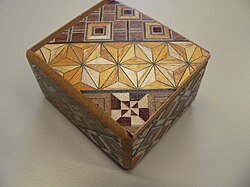
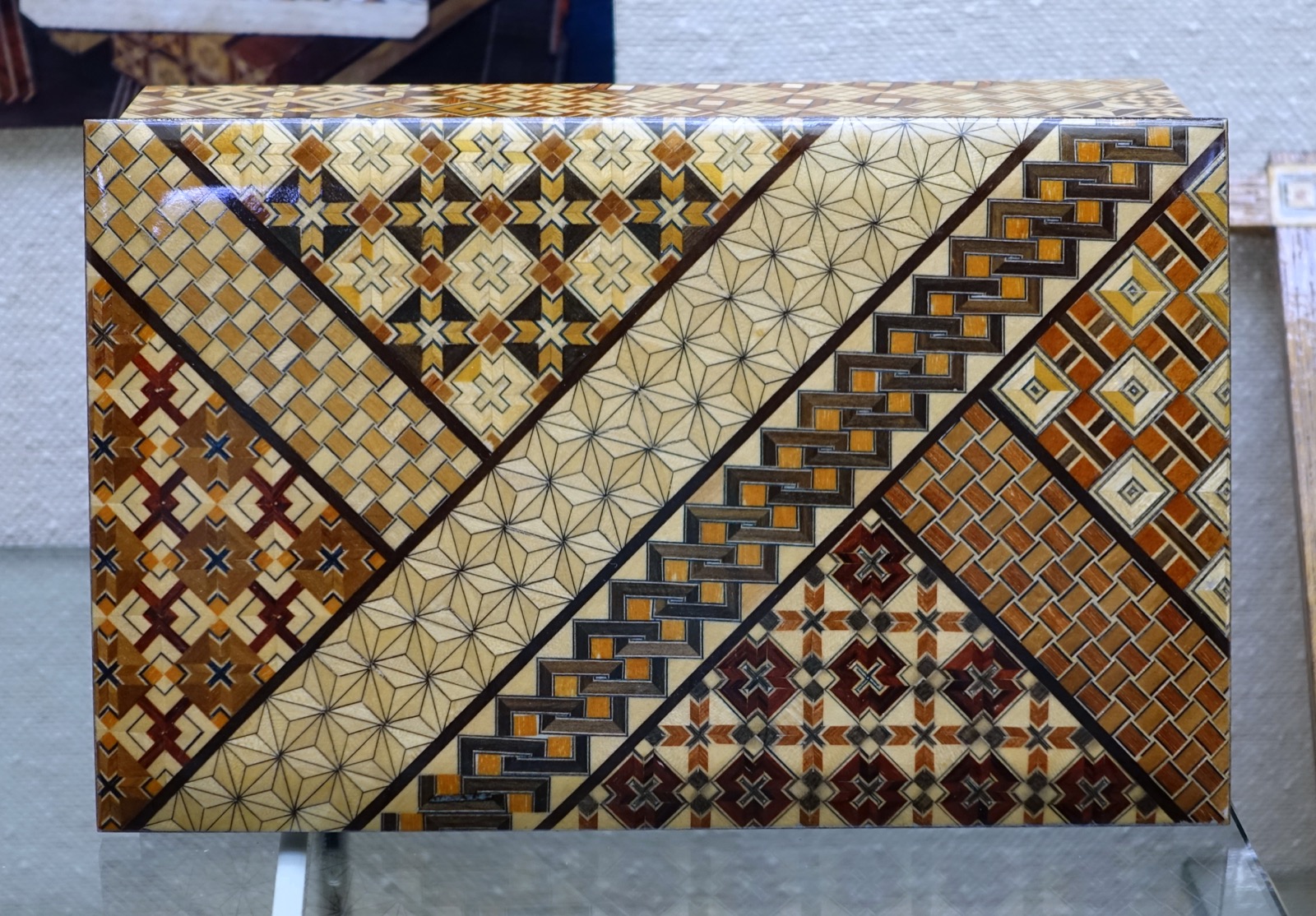
In Japanese puzzle-box culture, Akio Kamei is what happens when you marry deep craft mastery with genuine creative invention. Born in Osaka in 1948, Kamei worked for Yamanaka Wooden Puzzles before establishing his own studio, Karakuri Yasubei, in 1981. By 2011, he'd become chairman of the Karakuri Creation Group—a collective of 11 master craftsmen dedicated to designing and producing new boxes annually.
His philosophy is deceptively simple: a puzzle box should engage humor and creativity, not just test brute persistence. "Sometimes knowledge or experience disturbs the trial," he's noted, meaning that what you think you know often gets in your way. His designs reward curiosity, careful touch, and lateral thinking rather than force.
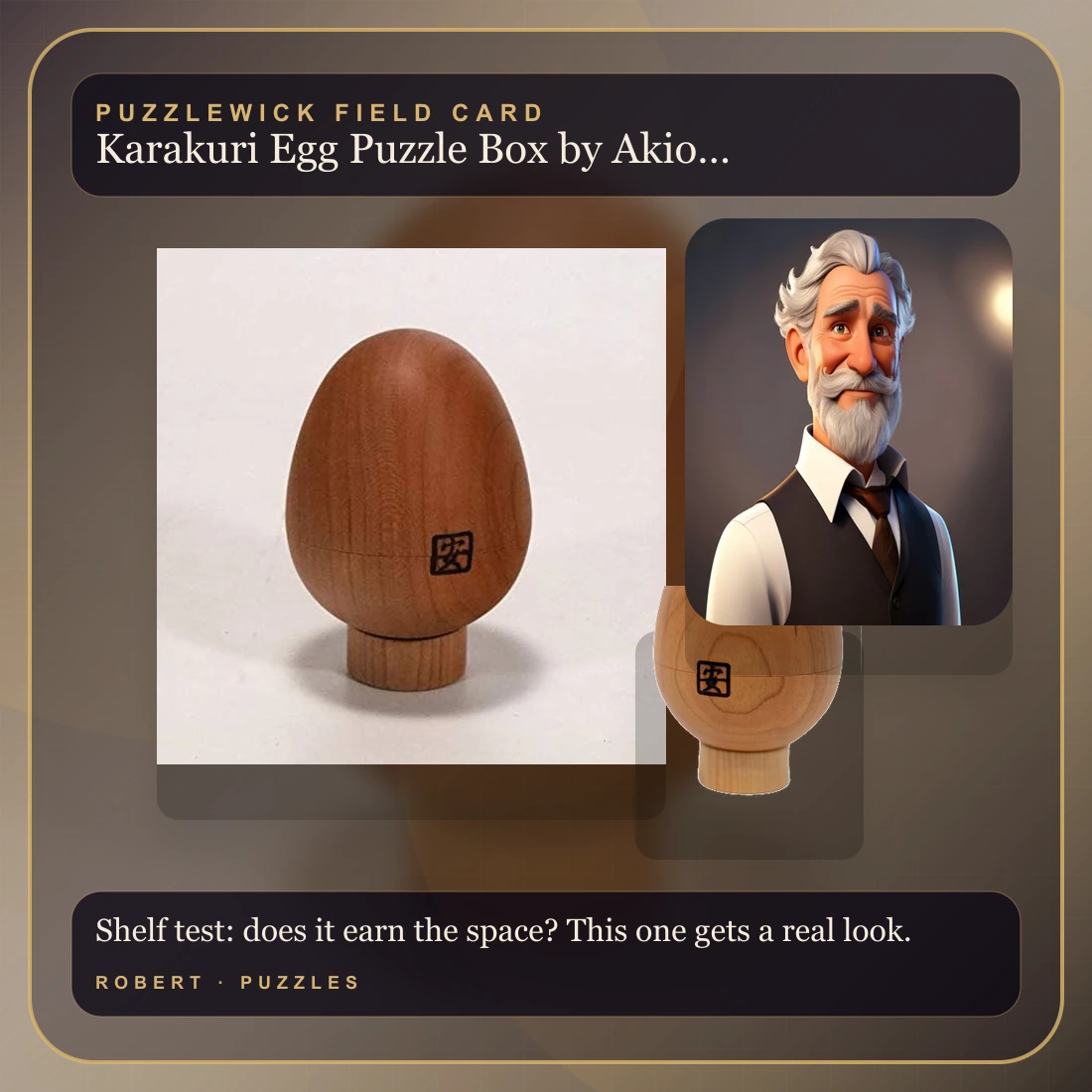
Each of his creations—whether the Egg, the Dice, the Coffee Cup, or the themed boxes like Solar Box and Love Box—tells a story through its mechanism. The Egg, created in December 1999, is a masterwork of this approach. It looks like nothing more than a smooth cherry-wood ovoid. Its secret is that it thinks like an egg thinks, and if you approach it with that kind of lateral attention, it yields.
The Egg's Mechanism: Elegant Simplicity
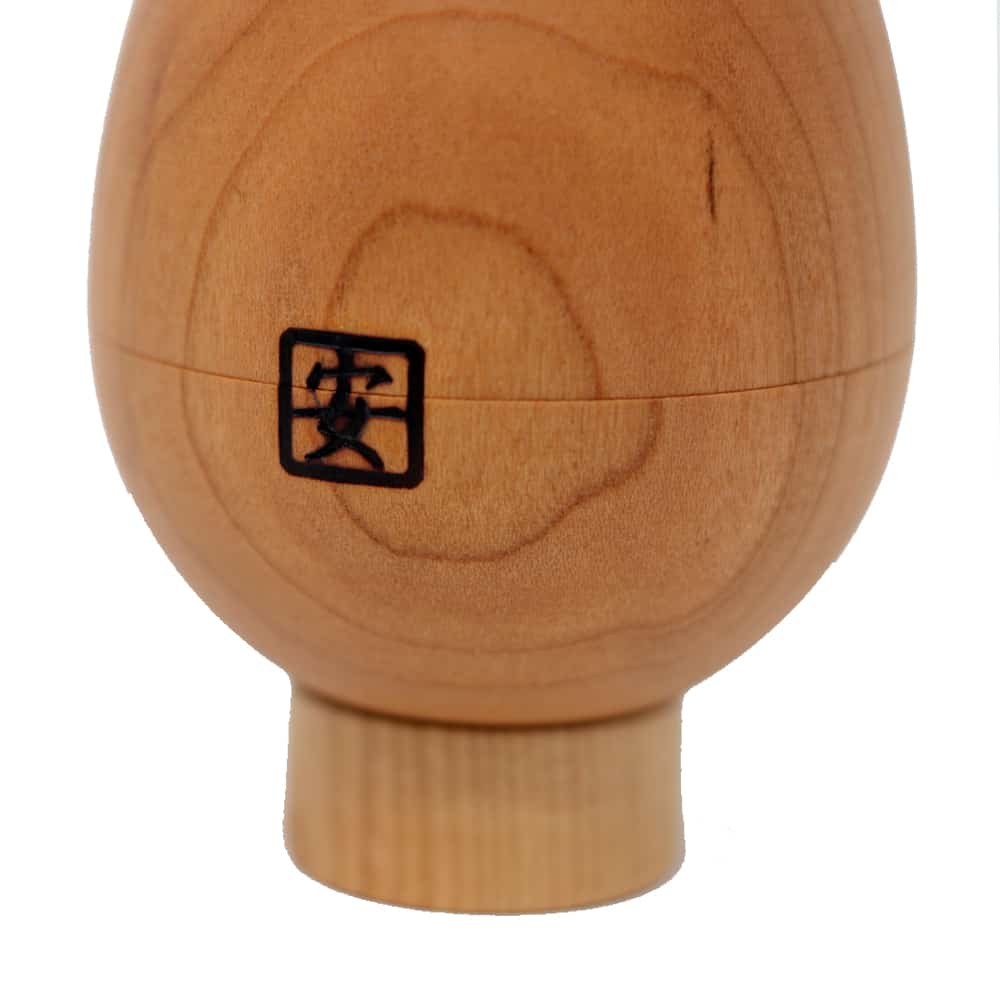
The Karakuri Egg sits at a difficulty level of 3 out of 10—technically a beginner box by Karakuri standards, yet this rating undersells it. The puzzle isn't hard because the mechanism isn't complicated. It's hard because what makes it open is so counterintuitive that you'll circle it multiple times before discovery.
The egg-shaped form is intentional. Every detail of the design—the proportions, the weight distribution, the grain of the cherry wood—nudges your hands toward specific movements. Once you find the secret, the opening is satisfying in a way that feels inevitable, even elegant. Dimensions are approximately 2.36 × 2.36 × 3.15 inches.
Solving typically takes 45 minutes to an hour for a first-time solver, depending on how open-minded you are. Some get it in 20 minutes. Others spend two hours chasing red herrings. The beauty is that the time doesn't feel wasted—you're in conversation with the object, not battling it. A customer review from Kubiya Games captures this perfectly: "The mechanism is not so hard but very unusual and clever." Exactly.
Once opened, there's a small surprise compartment inside—the kind of detail Kamei includes to reward solvers with delight, not just achievement.
Craftsmanship You Can Feel in Your Hands

Cherry wood—sakura in Japanese—is Kamei's signature material for the Egg. It's not chosen arbitrarily. Cherry wood has a medium hardness, a fine, straight grain, and a subtle warmth to its color that deepens with time and exposure to light. When you hold a Karakuri Egg, you're holding something that was hand-selected for grain pattern, then shaped with tools that have been refined over decades.
The tolerances are extraordinarily tight. Each wooden panel slides with a precision that feels mechanical without being cold. There's no rattle, no slop, no sense that a child designed this in CAD. Master craftsmen at Karakuri handmake each box, which is why production is limited and why they occasionally sell out.
The cherry wood also patinas. It darkens slightly over months and years. A collector who's owned an Egg for a decade will see a subtle deepening in color, a kind of proof that the object has had a life in their hands. That's the opposite of plastic—it's the opposite of disposability.
Each piece includes a gift box and opening directions (which you're meant to ignore until you've genuinely exhausted your own problem-solving).
Where It Fits in Your Collection
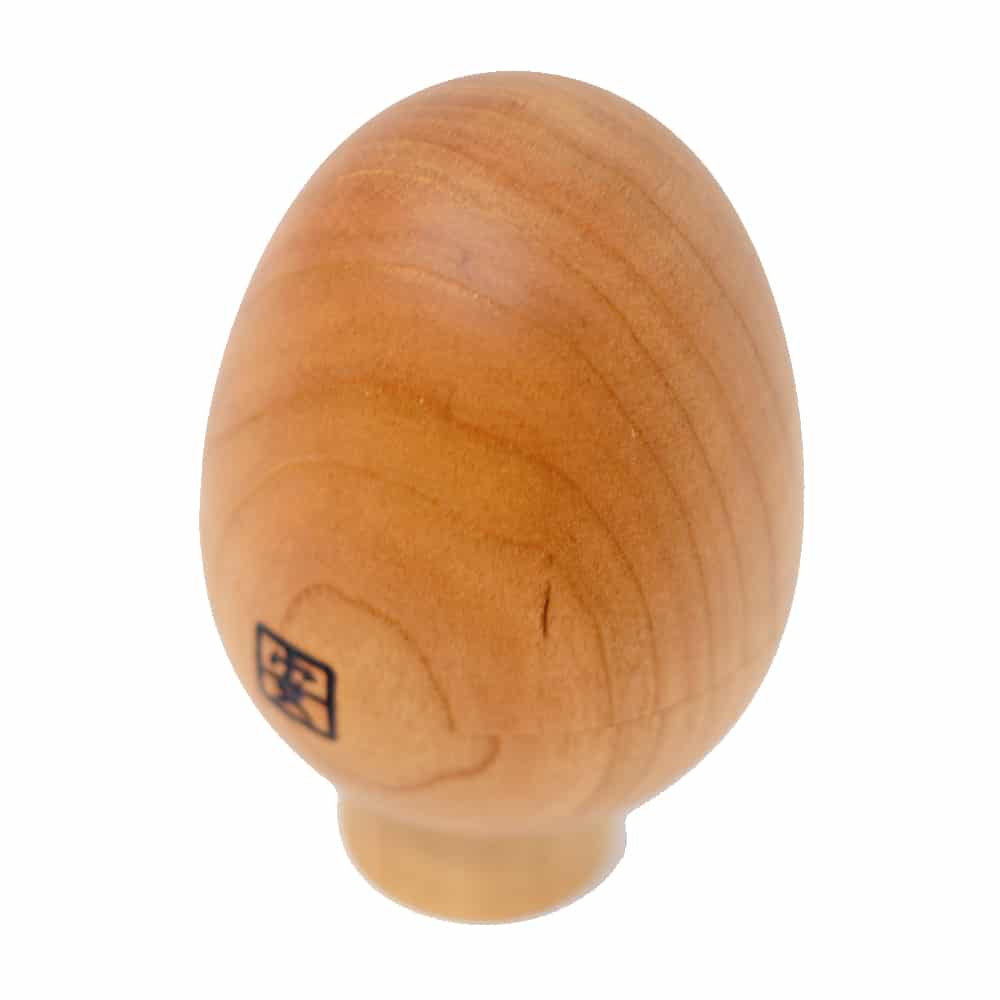
The Karakuri Egg occupies a specific niche: it's the bridge between beginner and serious collector. If you're new to puzzle boxes, it proves to you that the form matters—that a simple puzzle can be profound if the design is thoughtful. If you're a collector with shelves of boxes, the Egg earns its place because it's one of Kamei's originals from the 1990s golden period, when he was still defining what a modern Karakuri box could be.
It's also social in a way that harder puzzles aren't. You can hand it to a friend, a parent, or a colleague, and they can spend a meaningful hour with it without feeling stupid or defeated. That's rarer than you'd think.
Pricing has stayed relatively stable: between $120–180 USD depending on retailer. Kubiya Games typically lists it around $182, while Team JB Hobbies runs $119.99. International retailers (UK-based JP Games LTD, for instance) price it slightly higher with shipping. It's not cheap, but it's not the five-figure grail pieces either. It's the grail for the discerning amateur.
Availability fluctuates. Karakuri Creation Group doesn't mass-produce—when stock runs out, it's gone until the next batch. This isn't artificial scarcity; it's the reality of handmade goods from a small Tokyo-area workshop.
What the Community Actually Says
Puzzle collectors and enthusiasts who own the Egg tend to praise its cleverness over its difficulty. One verified Kubiya Games reviewer wrote: "The mechanism is not so hard but very unusual and clever," which captures why collectors keep it. It solves, then becomes art.
Greg Gelf's comprehensive guide to Karakuri Creation Group boxes notes that while some Karakuri boxes don't deliver maximum bang-for-the-buck on puzzle-solving time, they deliver on something rarer: they're works of art you enjoy re-solving. "Their beauty and elegance amaze," he writes, "and one can enjoy re-solving them."
The consensus: Karakuri boxes are valued more as collector's pieces and functional art than as pure puzzle challenges. The Egg, in particular, is celebrated for its accessibility (difficulty 3/10) combined with its design sophistication. First-time solvers aren't frustrated; they're delighted. That's the opposite of most puzzle design.
One caveat worth noting: some puzzle-optimization seekers find Karakuri boxes overpriced for the solve-time-per-dollar metric. If you're buying purely to maximize hours of puzzle engagement, a mid-range Karakuri New Secret Box (more steps, similar price) might deliver more.) But if you're buying a piece you'll keep, display, and hand to visitors with pride—that's the Egg's domain.
How to Approach Your First Solve
When your Egg arrives, resist the urge to open the instruction booklet immediately. That defeats the point. Here's the method that works:
First, spend 10–15 minutes just observing. Hold it. Feel the wood. Notice the proportions. Does the shape suggest anything about how it might move? There are no buttons, no visible seams (or rather, the seams are invisible by design). The only way forward is touch.
Second, start with gentle, small movements. Karakuri boxes reward patience and attention, not force. If you're straining, you're probably pushing the wrong way. The mechanism is designed for people, not for brute strength. Try rotating, tilting, rocking.
Third, pay attention to the moments when something feels different—when a movement has slightly different resistance, or when you hear a tiny click. These moments are breadcrumbs.
Fourth, if you're truly stuck after an hour, consult the directions. There's no shame in it. The joy of a Karakuri box is solving it, not proving something to yourself. Many collectors solve them once, then re-solve with friends, then keep them as display pieces. The mechanism doesn't wear out.
Fifth, once it opens, study the internal mechanism. Understanding why the design works the way it does is half the pleasure. Akio Kamei's engineering is elegant enough to reward that kind of inspection.
The Broader Karakuri Story: Why This Moment Matters
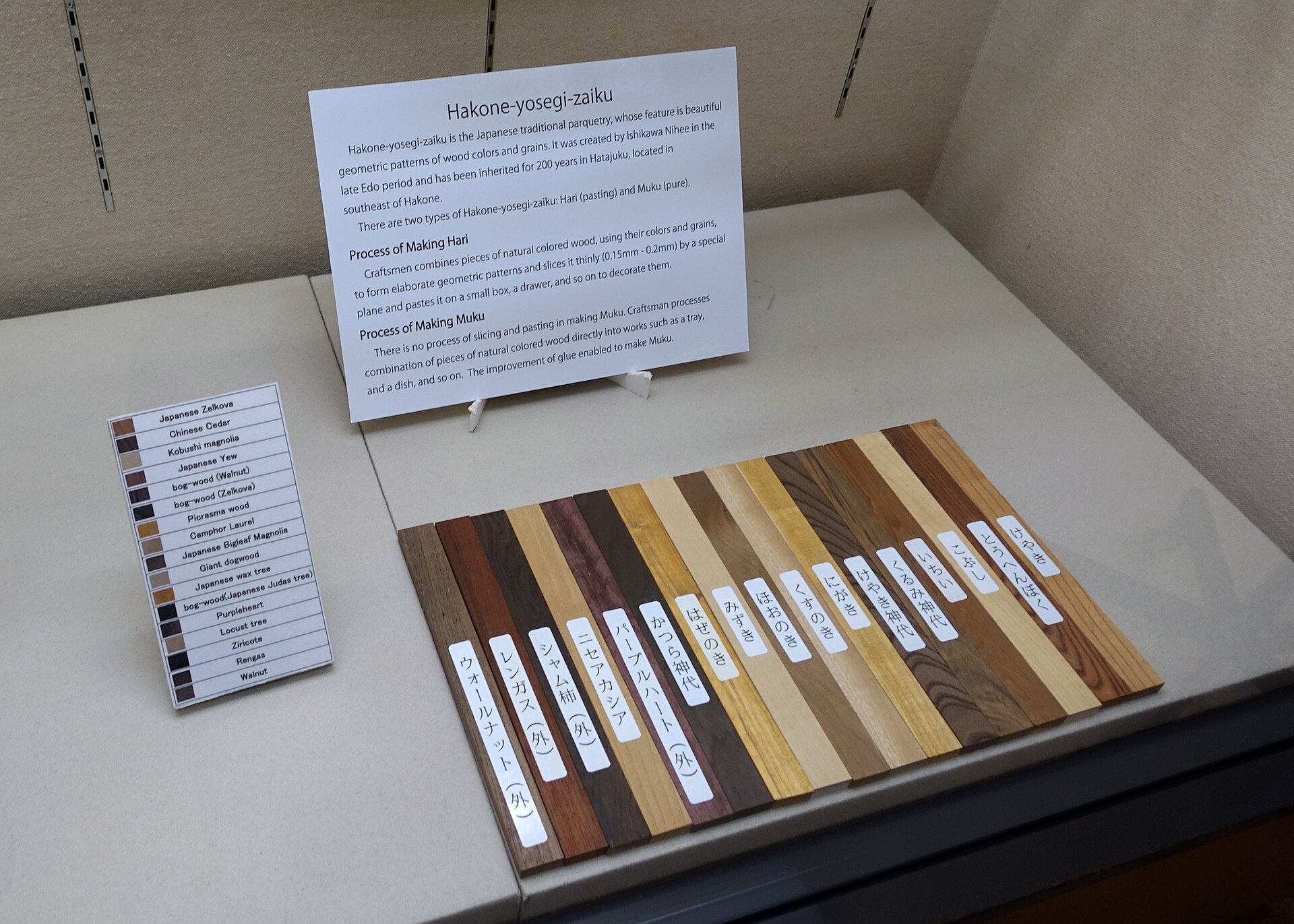
The Karakuri Creation Group emerged in 2000, formally, when Akio Kamei realized the traditional secret-box craft of Hakone was dying. Rather than let it vanish, he gathered a collective of master craftsmen and reimagined what a puzzle box could be. They've produced hundreds of designs since, from the Small Box series (affordable entry points) through the New Secret Box series (progressively harder, 6 to 32 steps) to the signature pieces like the Egg.
In 2026, there's a cultural moment here. Japanese artisanal craftsmanship is experiencing renewed global appreciation, especially among younger collectors disillusioned with mass-market disposability. Puzzle boxes, in particular, benefit from social media: short videos of clever mechanisms trigger discovery, and the Instagram-ability of handmade wooden objects drives interest.
Puzzle Paradise, a major trading forum for enthusiasts, shows Karakuri boxes moving regularly—not at speculative prices, but steadily. Karakuri Creation Group's annual membership program ($120 USD/year) includes mystery boxes and lottery access, suggesting they've found a sustainable model for direct-to-collector sales.
The Egg's place in this: it's old enough (1999) to feel like a classic, yet new enough that there's no nostalgia tax. It's handmade in a way that's verifiable—you can visit the Karakuri creation site (karakuri.gr.jp) and see the craftsmen at work. It's not a brand aping artisanship; it's artisans making objects for people who care.
The picks
Some links below are affiliate links — as an Amazon Associate, Puzzlewick earns from qualifying purchases, at no extra cost to you. It never changes a pick.
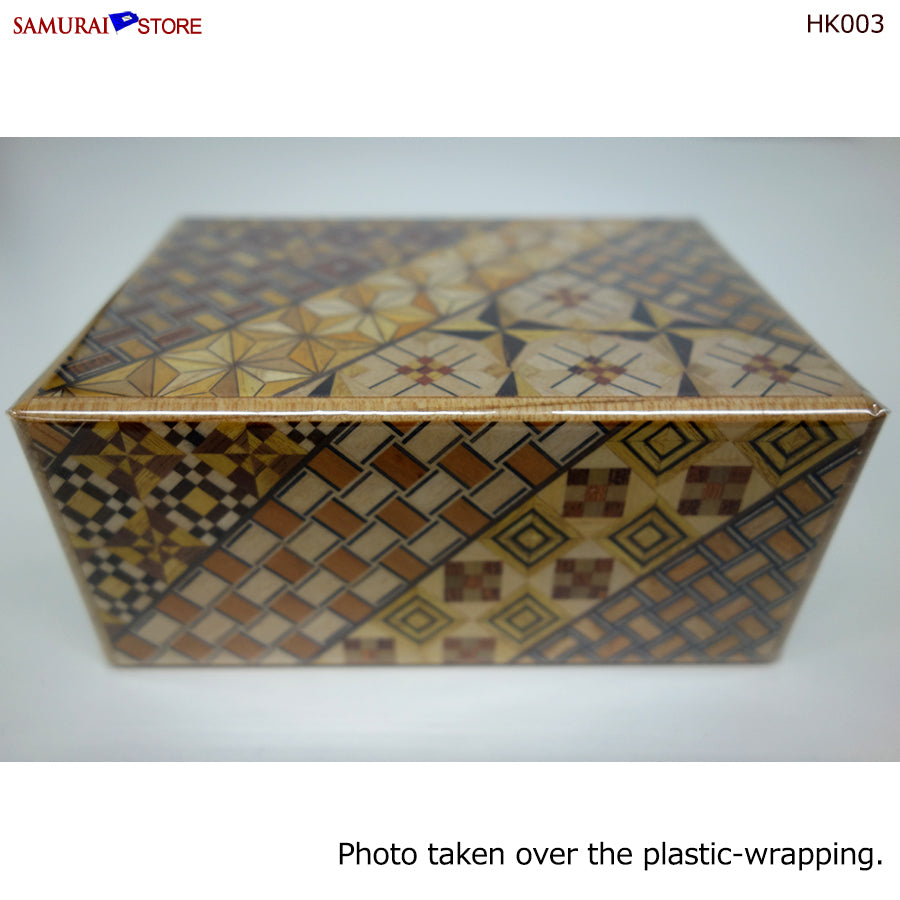
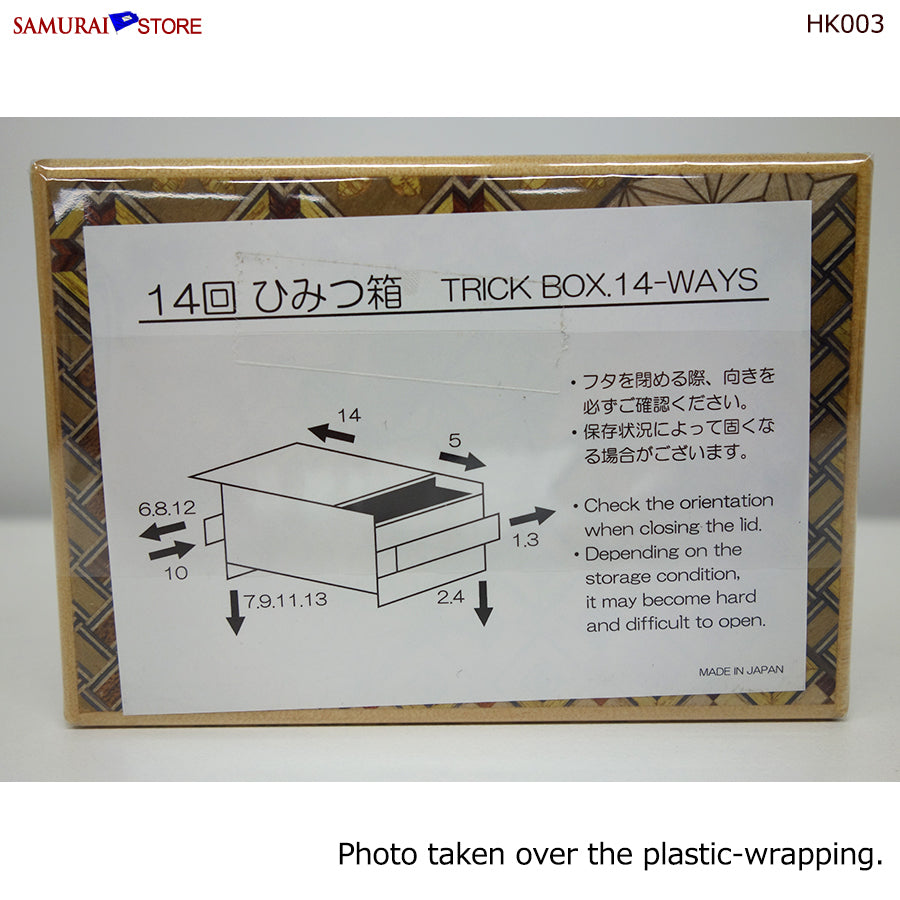
3 photos Japanese Secret Puzzle Box (Himitsu-Bako) – Traditional Series
The ancestral form that Karakuri refined. Traditional Himitsu-Bako boxes use sliding panel mechanics from 19th-century Japan. Simpler than modern Karakuri, but offer historical continuity and affordability. Good for understanding why Kamei's innovations mattered.
- Lower price reflects traditional (non-celebrity) craftsmanship
- Provides historical context for understanding Karakuri evolution
- Still offers genuine craft quality and mechanical elegance
- Design innovation is less pronounced than Karakuri originals
- Fewer readily available; harder to source consistent quality
At a glance
| Box | Maker | Difficulty | Est. Solve Time | Price | Best For |
|---|---|---|---|---|---|
| Karakuri Egg | Akio Kamei | 3/10 | 45–60 min | $145 | Elegant entry; collectors; gifts |
| Karakuri New Secret Box IV | Karakuri Creation Group | 9/10 | 2–4 hours | $95 | Challenge seekers; experienced puzzlers |
| Karakuri Small Box #6 | Karakuri Creation Group | 2/10 | 20–40 min | $45 | Budget-conscious; gift-giving; social puzzles |
| Karakuri Double Puzzle Box | Karakuri Creation Group | 5–6/10 | 1–2 hours | $165 | Intermediate collectors; multi-stage engagement |
| Japanese Himitsu-Bako (Traditional) | Regional craftsmen | 2–5/10 | 30 min–1 hour | $60 | Historical context; affordability |
Questions, answered
Is the Karakuri Egg hard to solve?
No—it's rated 3/10, making it beginner-friendly. The challenge isn't brute difficulty; it's that the opening mechanism is so counterintuitive that first-time solvers circle it multiple times before discovery. That's by design. Akio Kamei prioritizes clever elegance over complexity.
How long does it actually take to solve?
Most first-time solvers spend 45 minutes to an hour. Some get it in 20 minutes; others take two hours chasing dead ends. The joy is in the conversation with the object, not in the clock. Once you know how it opens, re-solving takes 30 seconds.
What's inside the Egg when you open it?
A small surprise compartment. Karakuri boxes are designed to reward solvers with delight, not just achievement. The opening mechanism itself is the main event, though—the internal space is modest and functional rather than cavernous.
Why is it so expensive compared to other puzzle boxes?
You're paying for handcraftsmanship in cherry wood, ingenious design by a master artisan (Akio Kamei), and limited production. Each Egg is individually hand-crafted, not mass-produced. The price reflects artisanal labor, not artificial scarcity. That said, if you're optimizing purely for puzzle hours per dollar, the Karakuri New Secret Box IV offers more solve-time at lower cost.
Where's the best place to buy the Karakuri Egg?
Kubiya Games ($182), Team JB Hobbies ($119.99), and Amazon carry it consistently. International options include JP Games LTD (UK). Prices fluctuate slightly by retailer and location. Check Puzzle Paradise (an enthusiast trading forum) if you want used pieces or to catch secondary-market activity. Availability is sometimes limited due to small-batch production from Karakuri Creation Group.
Is it a good gift for someone who's never solved a puzzle box?
Yes. The Egg is one of the best entry points. It's not intimidating, the mechanism is genuinely clever, and it delivers satisfaction without frustration. People who've never touched a puzzle box before will spend an hour with it willingly and feel accomplished when it opens. Just make sure you don't hand them the instruction booklet right away—let them discover it first.
Keeper's verdict
The Karakuri Egg is a grail for the discerning amateur, not the obsessive optimizer. It costs $120–180, takes an hour to solve, and offers no trophy for completion. What it offers instead is something rarer: a handcrafted object that rewards curiosity and delivers genuine delight. Akio Kamei designed it in 1999 to prove that elegance matters more than complexity, and two and a half decades later, that philosophy still holds. If you believe in keeping objects because they're beautiful and clever, not because they're rare or expensive, the Egg belongs on your shelf. If you're benchmarking pure puzzle-hours-per-dollar, the New Secret Box IV offers better value. But if it didn't earn a shelf in my collection, I wouldn't have written this. The Egg did.
Research ledger 8 sources · reviewed 2026-07-17
Specifications, rules, current product information, community experience, and contrary evidence were checked against the sources below. Commercial links are kept separate from editorial evidence.
- amazon.comamazon.com/dp/B07WTP13ZN?tag=puzzlewick-20
- kubiyagames.comkubiyagames.com/blogs/mechanical-puzzles-blog/the-intricate-world-of-karakuri-puzzle-boxes
- karakuri.gr.jpkarakuri.gr.jp/en/craftsman/kamei
- boxesandbooze.comboxesandbooze.com/akio-kamei
- fivesinatras.comfivesinatras.com/2020/09/11/karakuri-creation-group
- kubiyagames.comkubiyagames.com/products/karakuri-egg-puzzle-box-secret-puzzle-box
- teamjbhobbies.comteamjbhobbies.com/products/egg-cherry-wood-level-3-karakuri-creation-group
- explorepuzzles.comexplorepuzzles.com/en/my-karakuri-small-box-story
If it didn't earn a shelf, it isn't here.

Keep exploring
The next smart rabbit holes.
♛ Topic PathGrail Board Games: compare the whole shelfA grail earns its space only when the experience survives the price, setup, storage, and group commitment. These are expensive-game...Beginner's GuideJapanese Puzzle Boxes Explained: Karakuri, Yosegi & Himitsu-bakoA wooden box from Hakone that whispers secrets back — open it only if you're patient enough to listen. Three beautiful words: 寄木細工...Buying GuidePremium Artisan Dice Sets: Japanese Craft, Resin & Gemstone CollectiblesThe finest gaming dice marry tradition, craft, and intention—where every roll carries the weight of careful hands and rare materials.