Jaipur Complete Strategy Guide: How to Win the Market Without Hoarding Camels
Yumi teaches Jaipur from the first market swap to the last bonus token, including camel timing, set-size math, endgame control, travel setup, and the small habits that turn a lucky merchant into a dangerous one.


AI-assisted research and drafting in Yumi’s voice · reviewed by Robert Pruitt · how this guide was made
Last editorial refresh: 2026-07-14 Gold-standard QA: 2026-07-14 9 sources reviewed Affiliate links checked during gold-standard pass

The short answer
Jaipur is still one of the best dedicated two-player card games: fast, portable, tactical, and complete without expansions. Win by taking expensive goods early, selling before top-value tokens disappear, using camels to engineer one decisive market sweep, and accelerating the round when you are ahead. There is no essential playmat or expansion; the box, one clear table, and repeated play are enough.
Decision map
Choose in thirty seconds
Best complete purchase for a tactical pair.
Jaipur’s art suggests a relaxed market. Its decisions are closer to a knife fight conducted over tea. Every purchase changes the market for both players; every camel taken can produce an enormous next turn for the opponent. Yumi combines the official rules with long-lived strategy discussions and Board Game Arena teaching notes to explain the timing questions the rulebook cannot answer for you.
Start here, then go deeper
You are in the right cabinet.
 ⚔ Topic PathTwo-Player Board Games: compare the whole shelfThe best two-player game is designed around the duel rather than merely tolerating two people. This path separates sharp...
 Best OfBest 2-Player Card Games for Couples (2026)Okay but have you SEEN what couples keep saying about this? The ten card games that actually stay on the shelf — the ones that pull...
 ComparisonThe Best 2-Player Board Games of 2026, RankedFifteen duels for two, sorted into hard tiers — the forever-game, the silent co-op, the giant-killers under twenty bucks, and the honest...
Why is Jaipur such a strong two-player purchase?
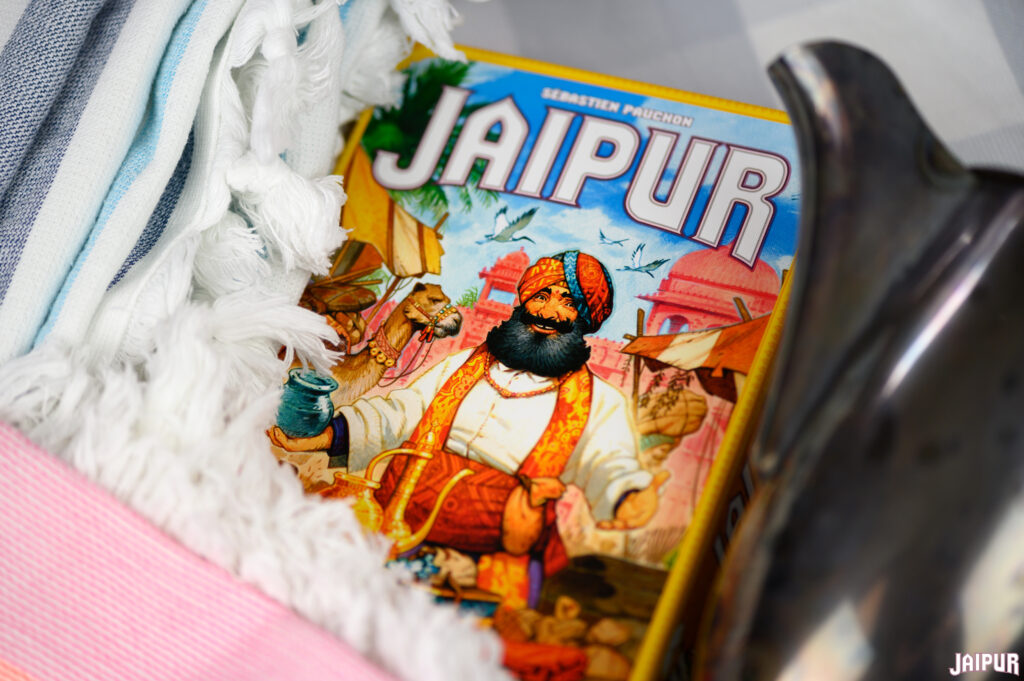
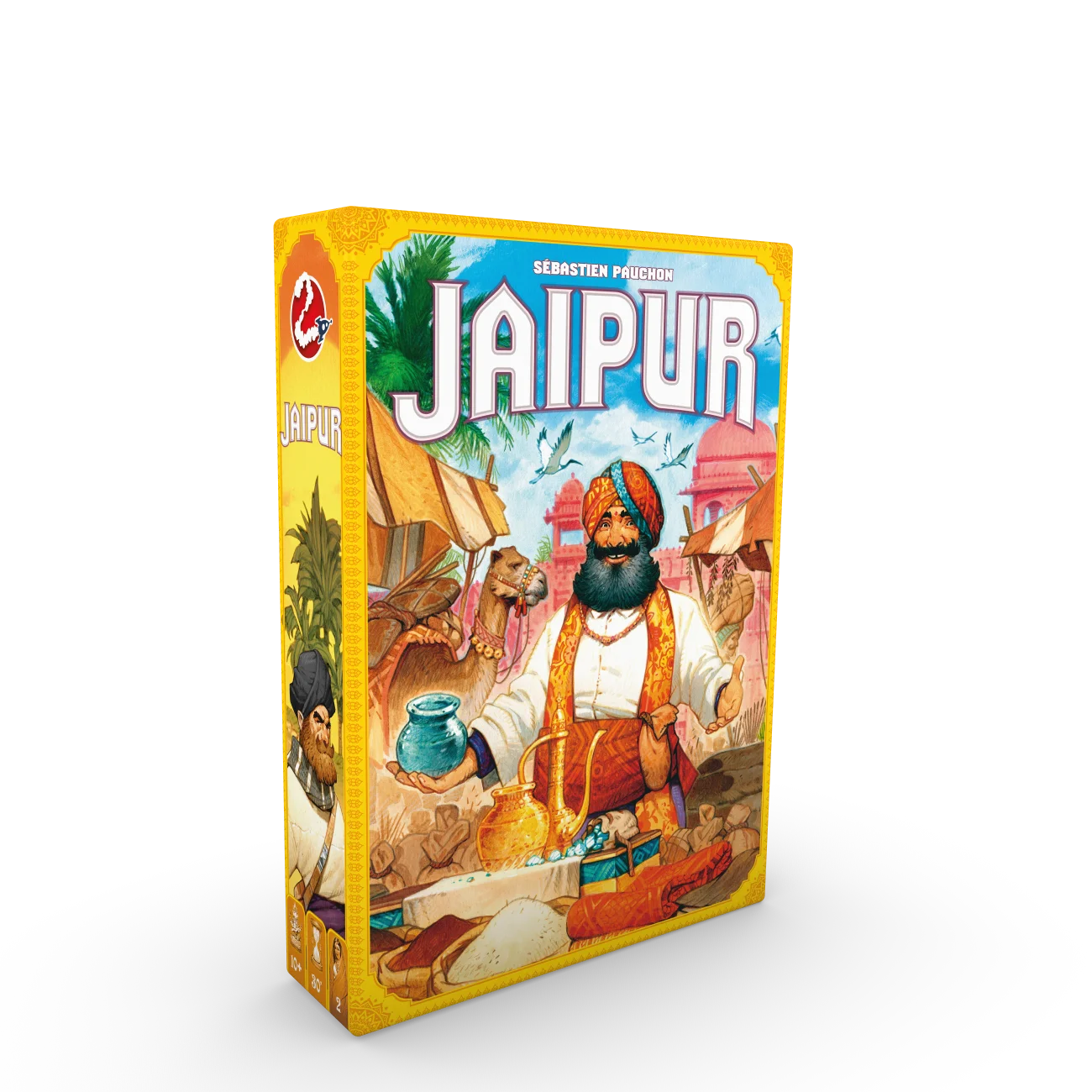
Jaipur teaches in minutes, finishes in roughly half an hour, and creates meaningful interaction without attack cards. You are competing over the same visible market, so every turn both acquires something and leaves something behind. The best-of-three seals structure gives one bad round a comeback without turning the game into an evening commitment.
There is no expansion ladder to manage. The current Space Cowboys edition is the complete design with cards, goods tokens, bonus tokens, camel herd, and a compact box. It travels well once the loose tokens are bagged. For a dedicated pair, this is the rare inexpensive game that keeps becoming more psychological as both players improve.
Jaipur teaches in minutes, finishes in roughly half an hour, and creates meaningful interaction without attack cards.
How do you teach Jaipur in one round?
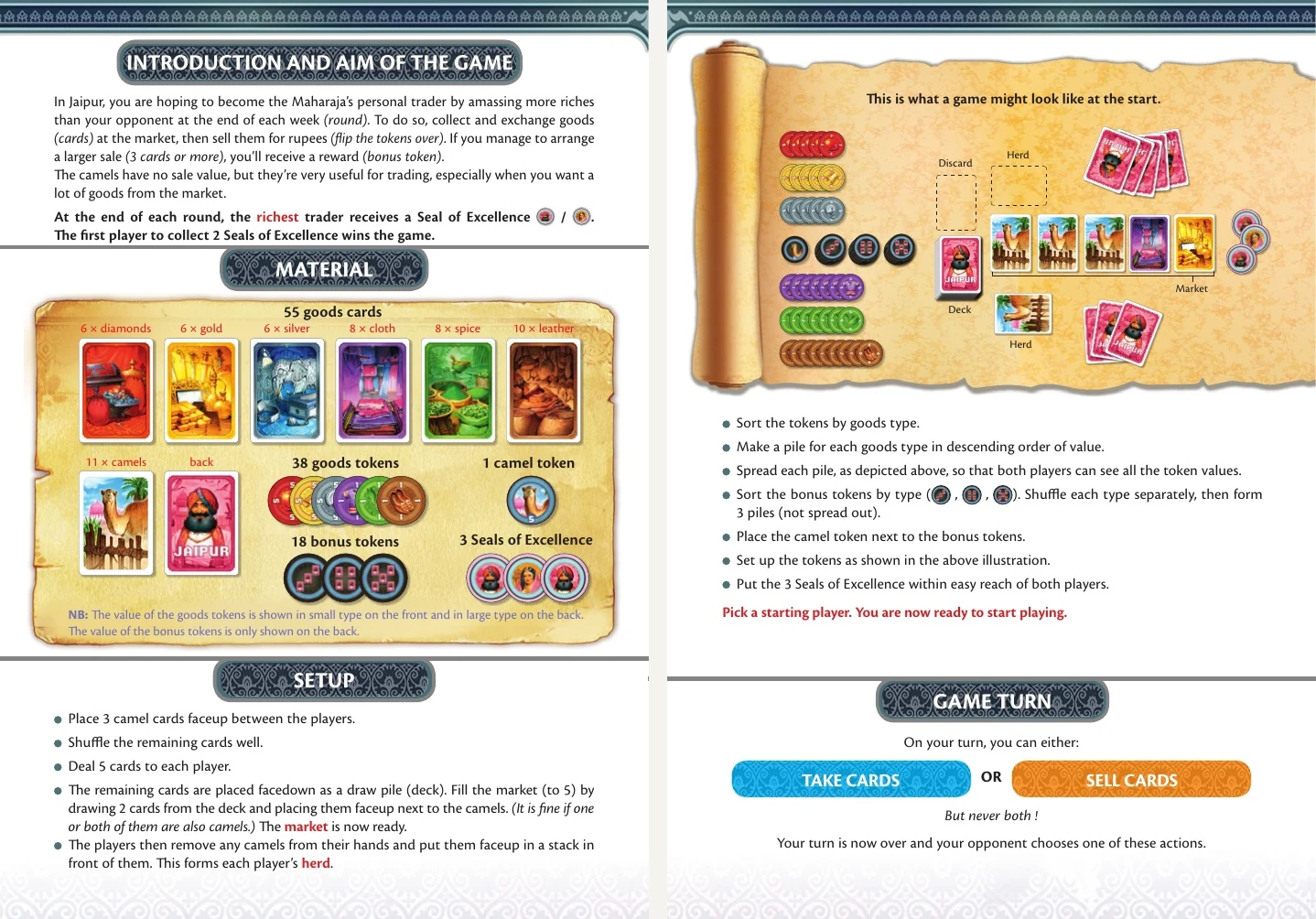
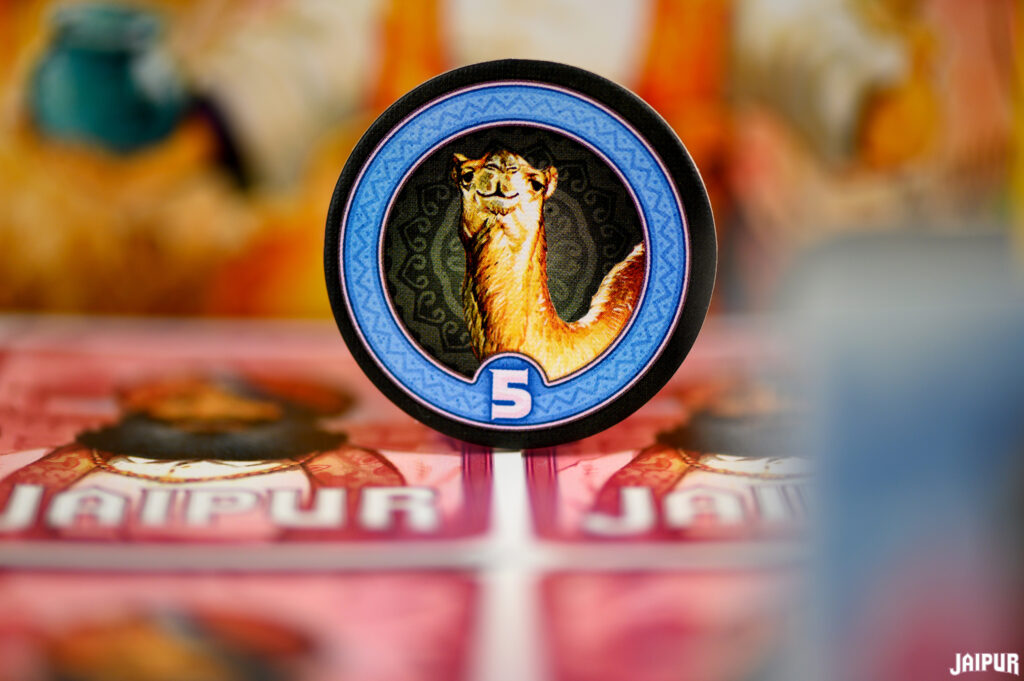
Place three camel cards face up between the players. Deal five cards to each player, then move any camels from those hands face up into their personal herd. Reveal cards from the goods deck until the shared market contains five cards including its starting camels. On a turn either take one good, take every camel in the market, or exchange two or more hand cards/camels for the same number of market goods; alternatively, sell one goods type. Diamonds, gold, and silver require at least two cards in a sale.
Take the highest remaining goods tokens for the number sold, then take a 3-, 4-, or 5-card bonus when eligible. A round ends when three goods-token piles are empty or the market deck cannot refill to five. The richer player earns a Seal of Excellence; first to two seals wins. That complete loop is enough to start playing.
On your turn, either take goods, take all camels, trade multiple cards with the market, or sell one type of good.
When should you take all the camels?
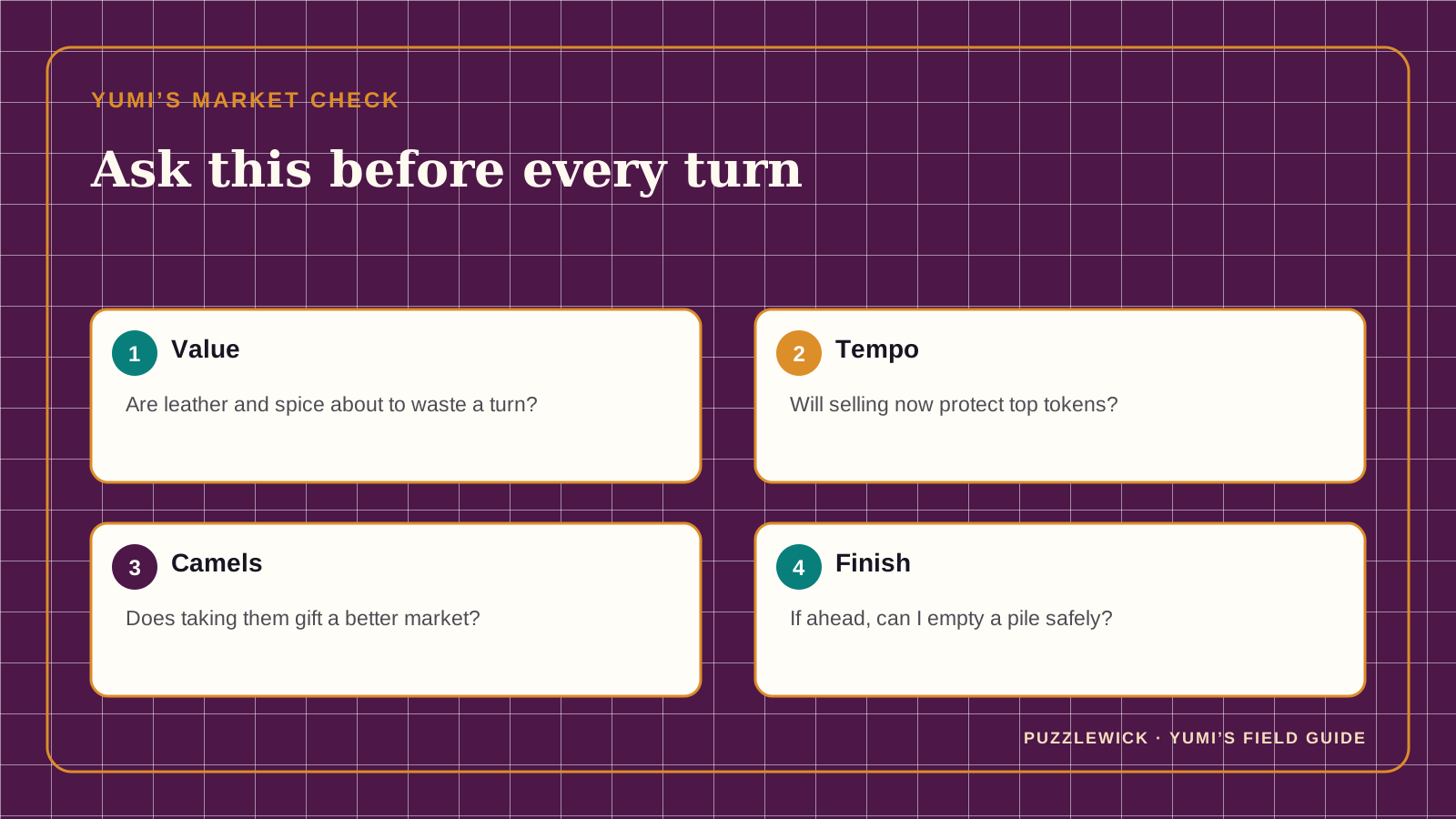
Take camels when the market they reveal is weak for your opponent, when your hand limit blocks a profitable goods take, or when the herd will enable a large multi-card exchange. Do not take camels merely because there are many of them. Removing five camels can reveal five premium goods and hand your rival the perfect turn.
The camel bonus is binary: only the larger herd matters, and one camel more than your opponent wins it as completely as ten more. Treat camels as liquidity first and a small endgame prize second. Count the visible herd sizes late in the round, but do not sacrifice a high-value sale to win a five-point majority.
Take camels when the market they reveal is weak for your opponent, when your hand limit blocks a profitable goods take, or when the herd will enable a large multi-card exchange.
Should you sell small sets or wait for bonuses?
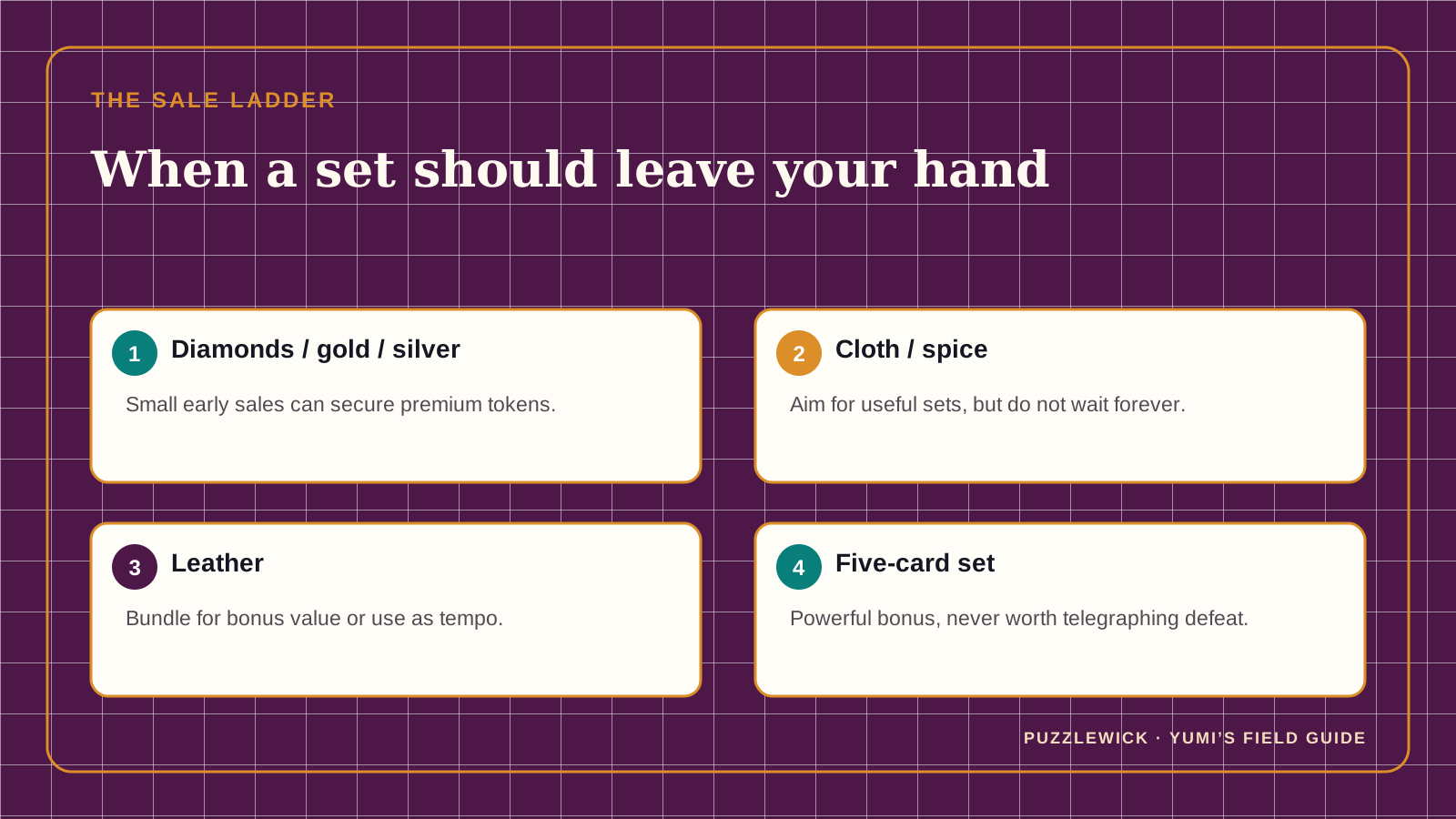
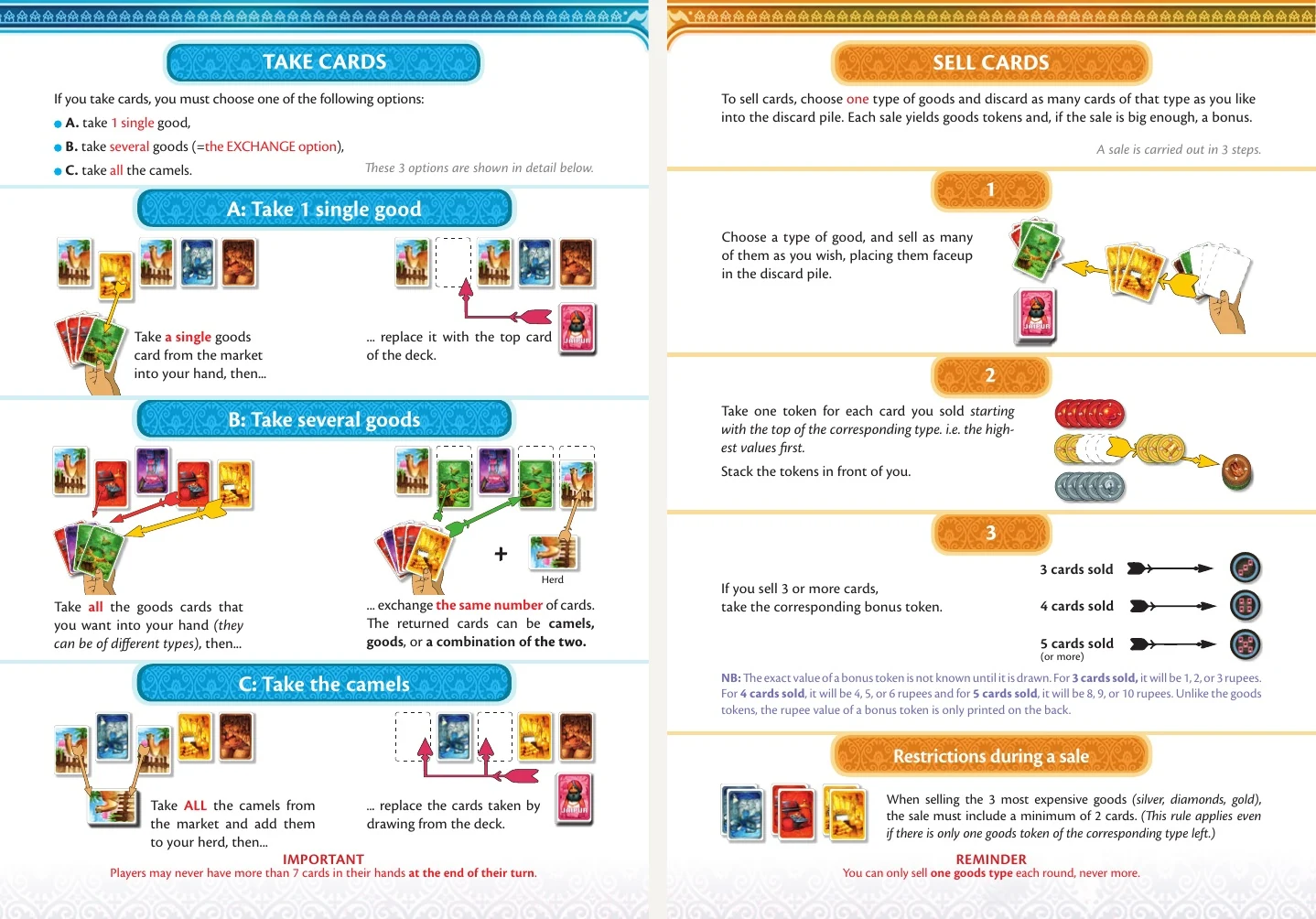
High-value goods often want early sales because their goods tokens decline sharply. Selling two gold now can outperform waiting several turns for a three-card bonus while your opponent strips the premium tokens. Low-value goods can justify larger bundles because the set bonus contributes more of the total.
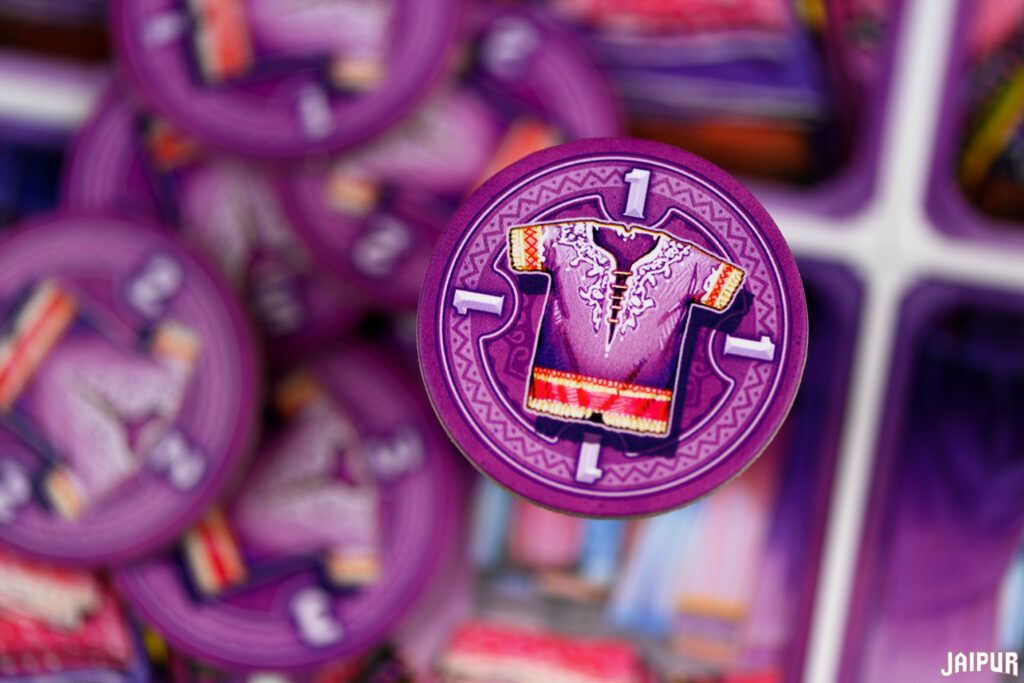
Bonus tokens are hidden and variable, so think in ranges rather than promises. A five-card sale is dramatic, but the value of waiting includes hand congestion, market opportunities missed, and the information you reveal by repeatedly taking one color. The correct sale is the one that preserves tempo and secures known value before chasing uncertain upside.
High-value goods often want early sales because their goods tokens decline sharply.
How do you control the market?
Never evaluate a take in isolation. Imagine the row after your action. Taking one diamond may uncover a second diamond for your opponent; trading away camels may seed the market with exactly the low-value colors they can exploit. A powerful exchange does two jobs: it improves your hand and leaves an awkward row.
Track which premium goods have already been sold. If most gold tokens are gone, gold cards become less urgent and may be useful trade material. If your opponent is clearly assembling cloth, sell yours early or deny the fifth card. Jaipur’s open market makes memory valuable without requiring perfect card counting.
Never evaluate a take in isolation.
How do you close a round when you are ahead?
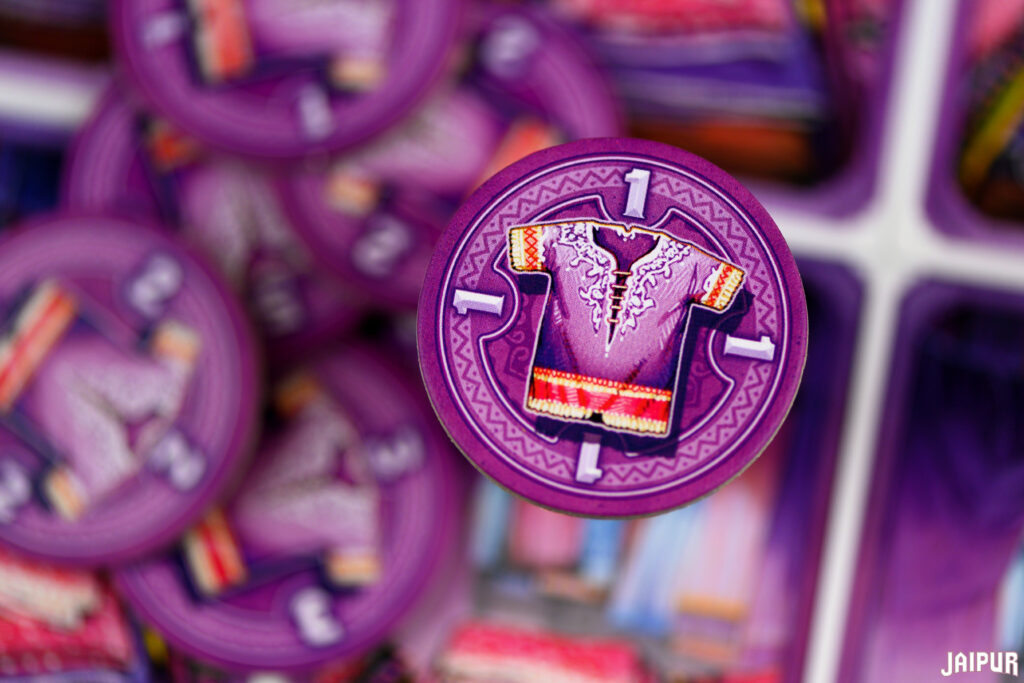
The round can end when the deck empties or when three goods token stacks are exhausted. If your visible lead is comfortable, shorten the runway: sell low goods to empty piles, take cards that accelerate the deck, and avoid speculative camel turns. If behind, preserve piles and seek a large bonus swing.
Estimate, do not obsess. Add your visible goods tokens, likely bonuses, and the five-point camel token. Then compare tempo. An opponent holding seven cards may have more value than their token stack suggests. The advanced move is recognizing when the game state—not the prettiest sale—has become your product.
The round can end when the deck empties or when three goods token stacks are exhausted.
What are the most common strategy mistakes?
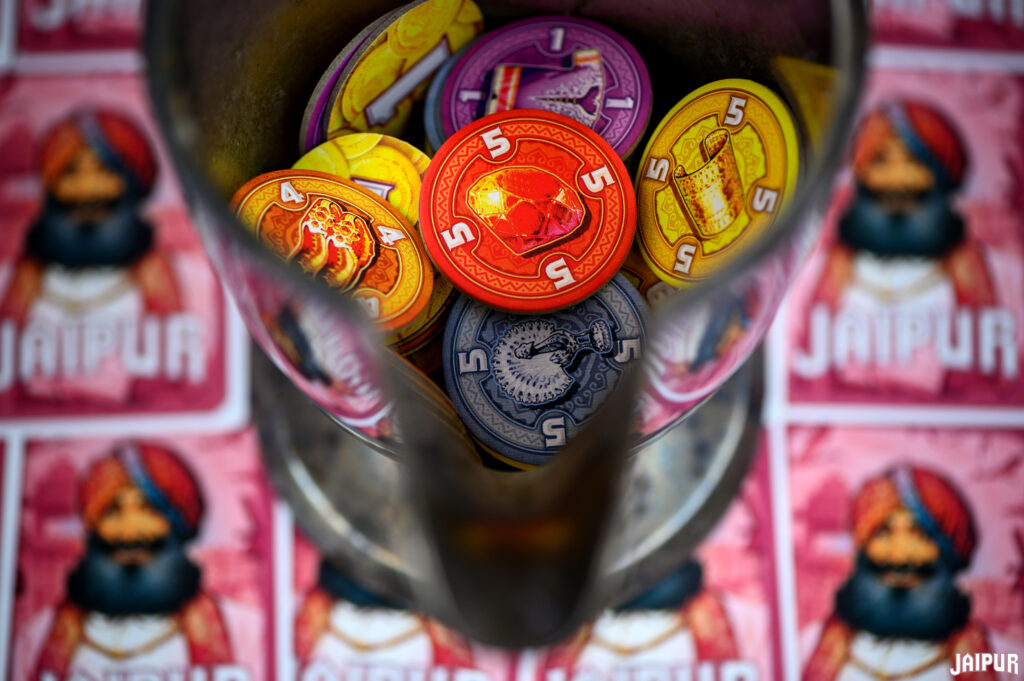
Beginners hoard camels, chase five-card sets, and treat leather as automatically worthless. Good players use leather to earn a large bonus, empty a third pile, or trade into scarce premium goods. Beginners also forget that taking one visible good can improve the market for the rival; sometimes the correct turn is a deliberately modest sale that forces them to reveal new cards.
Finally, do not preserve a perfect hand until the round ends around it. Jaipur rewards conversion. Cards in hand are plans; tokens already claimed are points. Yumi’s rule is simple: if a sale secures top tokens and frees the hand for a strong market, make the market pay you now.
Beginners hoard camels, chase five-card sets, and treat leather as automatically worthless.
Do you need sleeves, a playmat, or a travel organizer?
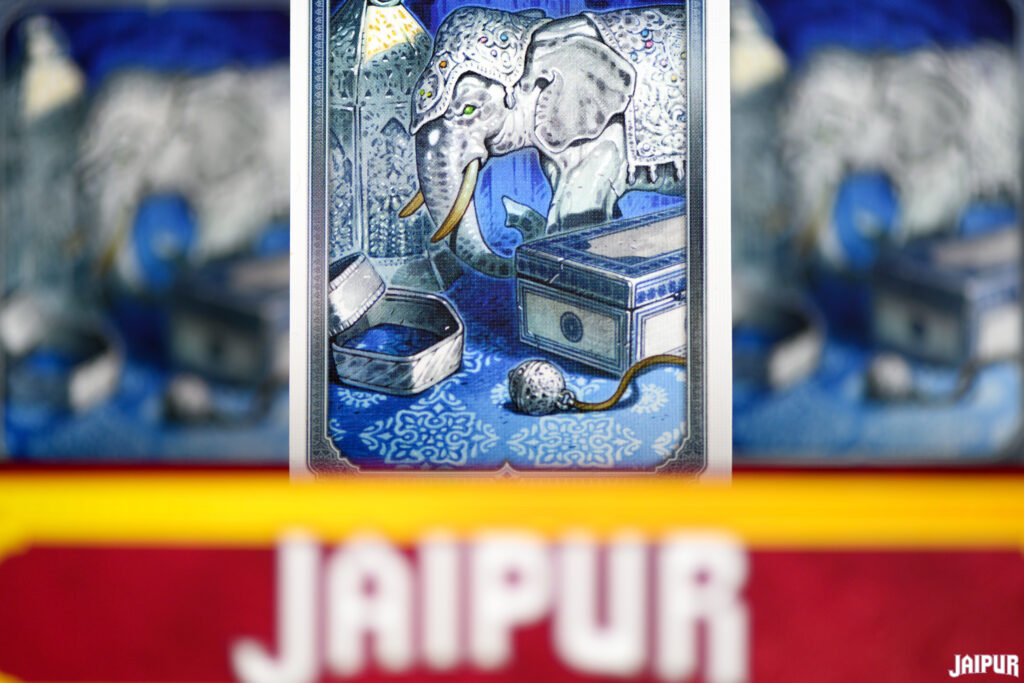
None is essential. Sleeve the cards only if Jaipur lives in a café bag or sees constant play; the market cards are shuffled often, but replacement cost is lower than a premium sleeve project. A small generic mat improves card pickup and gives the token piles a visual boundary, yet the game occupies little space and works on any clean table.
For travel, use two zip bags: one for goods and bonus tokens, one for seals and the camel token. Keep cards in a deck box if leaving the main box at home. The best accessory is a shallow dish for the camel herd—because watching them accumulate in one ridiculous pile is part of the pleasure.
None is essential.
How should you read an opponent’s hand without perfect counting?
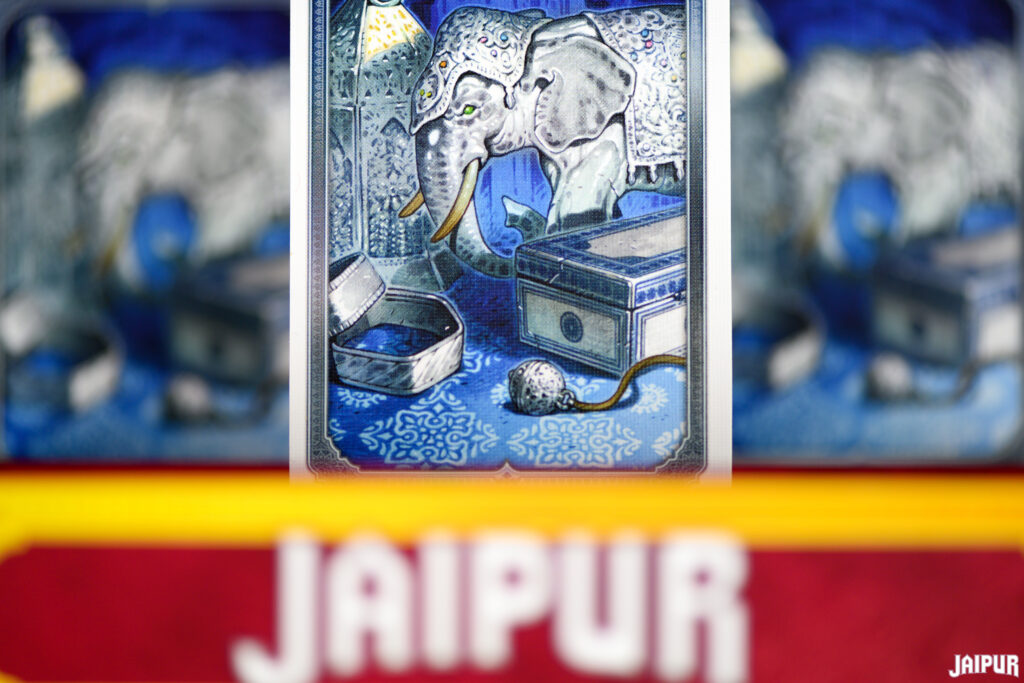
Track categories rather than every card. If your opponent has taken gold twice and has not sold it, assume at least a legal premium set. If they repeatedly decline camels, their hand may be near seven and unable to absorb a market swing. A sudden low-value sale often means they are clearing space for a known market or accelerating the third empty pile.
Use the token stacks as public memory. The number of premium tokens gone tells you how urgent denial remains. The visible goods cards plus your own hand narrow what the rival can hold, but do not spend more attention counting than deciding. Yumi’s practical ledger has four lines: likely premium set, hand congestion, camel difference, and end trigger. Update those after each sale. The goal is not omniscience; it is knowing whether the next turn belongs to value, denial, or ending the round.
Track categories rather than every card.
The picks
Some links below are affiliate links — as an Amazon Associate, Puzzlewick earns from qualifying purchases, at no extra cost to you. It never changes a pick.
 2 photos
 Jaipur
A fast market duel with visible information, set timing, hand management, and a best-of-three arc.
- Best complete purchase for a tactical pair.
- A fast market duel with visible information, set timing, hand management, and a best-of-three arc.
- There is no expansion you need after this.
At a glance
| Situation | Best action | Reason |
|---|---|---|
| Premium goods tokens untouched | Sell a legal small set | Secure known value before the stack falls. |
| Many camels in market | Inspect what will be revealed first | A herd can gift the opponent a premium row. |
| Ahead late | Accelerate pile or deck exhaustion | Convert the lead into the end of the round. |
| Behind late | Preserve piles and seek a large set | You need variance and hidden bonus value. |
Questions, answered
Does Jaipur have expansions?
No essential official expansion is needed. The current box is a complete two-player game.
Are camels good?
Yes as trade liquidity, but taking every camel can reveal a powerful market to your opponent. The majority token is only five points.
What is the best Jaipur strategy?
Secure high-value tokens early, build larger sets mainly with lower-value goods, and manage the end of the round when ahead.
Is Jaipur good for travel?
Very good. It is compact, quick, and needs modest table space; bag the loose tokens separately.
Is a Jaipur playmat worth buying?
It is a nice tactile upgrade on a hard or slippery table, but never necessary. A generic card mat works as well as a themed one.
How long does Jaipur take?
A complete best-of-three match commonly fits in about 30 minutes once both merchants know the turn options.
Yumi's verdict
Jaipur is complete straight from the box and becomes richer through familiarity rather than modules. Buy it for a pair that enjoys reading tempo, then learn to value the market you leave behind as much as the goods you take. Sell premium goods before perfection, use camels as flexible currency, and remember that a lead becomes real only when you make the round end.
Research ledger 9 sources · reviewed 2026-07-14
Specifications, rules, current product information, community experience, and contrary evidence were checked against the sources below. Commercial links are kept separate from editorial evidence.
- spacecowboys-games.comspacecowboys-games.com/game/jaipur
- boardgamegeek.comboardgamegeek.com/boardgame/54043/jaipur
- en.boardgamearena.comen.boardgamearena.com/doc/Tips_jaipur
- reddit.comreddit.com/r/boardgames/comments/d6fb6v
- ultraboardgames.comultraboardgames.com/jaipur/game-rules.php
- asmodee.co.ukasmodee.co.uk/products/jaipur
- boardgamearena.comboardgamearena.com/gamepanel?game=jaipur
- reddit.comreddit.com/r/boardgames/search/?q=jaipur%20strategy
- cdn.svc.asmodee.netcdn.svc.asmodee.net/production-spacecowboys/uploads/2025/11/Rules-JAIPUR-12x17-Version-EN_BD.pdf

Come in, take your shoes off — let me show you something.

Keep exploring
The next smart rabbit holes.
⚔ Topic PathTwo-Player Board Games: compare the whole shelfThe best two-player game is designed around the duel rather than merely tolerating two people. This path separates sharp...Best OfBest 2-Player Card Games for Couples (2026)Okay but have you SEEN what couples keep saying about this? The ten card games that actually stay on the shelf — the ones that pull...ComparisonThe Best 2-Player Board Games of 2026, RankedFifteen duels for two, sorted into hard tiers — the forever-game, the silent co-op, the giant-killers under twenty bucks, and the honest...