Flip 7: How to Play, Win, and What the 2026 Editions Add
Flip 7 rules, scoring, the bust math, and every 2026 edition explained: how to play, when to hit vs stay, and the games to buy when the deck runs cold.


AI-assisted research and drafting in Imani’s voice · reviewed by Robert Pruitt · how this guide was made
Last editorial refresh: 2026-07-03 Gold-standard QA: 2026-08-10 17 sources reviewed Affiliate links checked during gold-standard pass

The short answer
Flip 7 is a press-your-luck card game where you flip number cards one at a time trying to keep going without flipping a number you already have. Draw a duplicate and you bust: zero points for the round. Choose to stay and you bank everything you've collected. Land seven different numbers and you trigger Flip 7 - a 15-point bonus that ends the round for the whole table. Action cards (Freeze, Flip Three, Second Chance) and modifiers (+2 through +10 and a x2) let you gift risk to rivals or protect yourself, and the first player to 200 points across multiple rounds wins. The whole thing teaches in ninety seconds, plays in twenty minutes, and has sold over two million copies since a Smosh Games video lit the fuse.
Decision map
Choose in thirty seconds
Everyone - the definitive place to start
Gifting, superfans, and anyone who wants the scorepad
Groups that love needling each other - the meaner variant
THE VERDICT: Flip 7 is the rare breakout that actually earns the hype. It's a $8 deck of 94 cards, it explains itself before your snacks are open, and it produces the specific kind of table-wide groan-and-cheer that makes a party game travel from house to house on its own. It won the Origins Award for Best Party Game, took a Golden Geek, and rode all the way to a 2025 Spiel des Jahres nomination - the most prestigious honor in the hobby.
THE FLAW: it is engineered to hurt you. The math is a trap wearing a friendly face. Every card you flip makes the next flip more dangerous, and the game hands your opponents little levers - Freeze, Flip Three - to shove you off the cliff at the exact moment you were about to bank. If you don't understand the deck, you will bust at six cards over and over and swear the game is 'just luck.' It isn't. It's a probability curve you can feel with your fingertips once you know what's in the deck.
...and oh, have you SEEN what everyone is saying about it.
I read party-game threads the way other people read the news, and Flip 7 has been the 1am game - the one that keeps the night going long after the 'real' game is packed away. Somebody flips their seventh card, the whole table loses it, and then it's 'one more round' four times in a row. I've watched it convert people who swore they hate card games. That's the tell. So here is the whole thing: the exact rules, the exact deck, the actual bust math (with the designer's fingerprints all over it - he was a math teacher before this game let him retire), every 2026 edition arriving this year, and the five push-your-luck games to buy the second Flip 7 starts feeling too familiar. Let's flip.
Start here, then go deeper
You are in the right cabinet.
 ✦ Topic PathBoard Game Buying Guides: compare the whole shelfStart with the decision, not the shelf. These guides compare the games, editions, expansions, player counts, and costs people...
 GuideThe Lord of the Rings: Fate of the Fellowship Guide: How to Play, Win Together and Start ConfidentlyKenji explains the cooperative Middle-earth adventure from your first turn to Mount Doom: the rules that matter, the Hope you cannot...
 GuideDisney Villainous Buying Guide 2026: Darkness Brewing vs Introduction to Evil, Every Expansion Ranked, and Which Villains Can MixYumi sorts every Disney Villainous box by first-night clarity, replay value, character overlap, and the one compatibility rule that saves...
How do you play Flip 7? The rules in ninety seconds
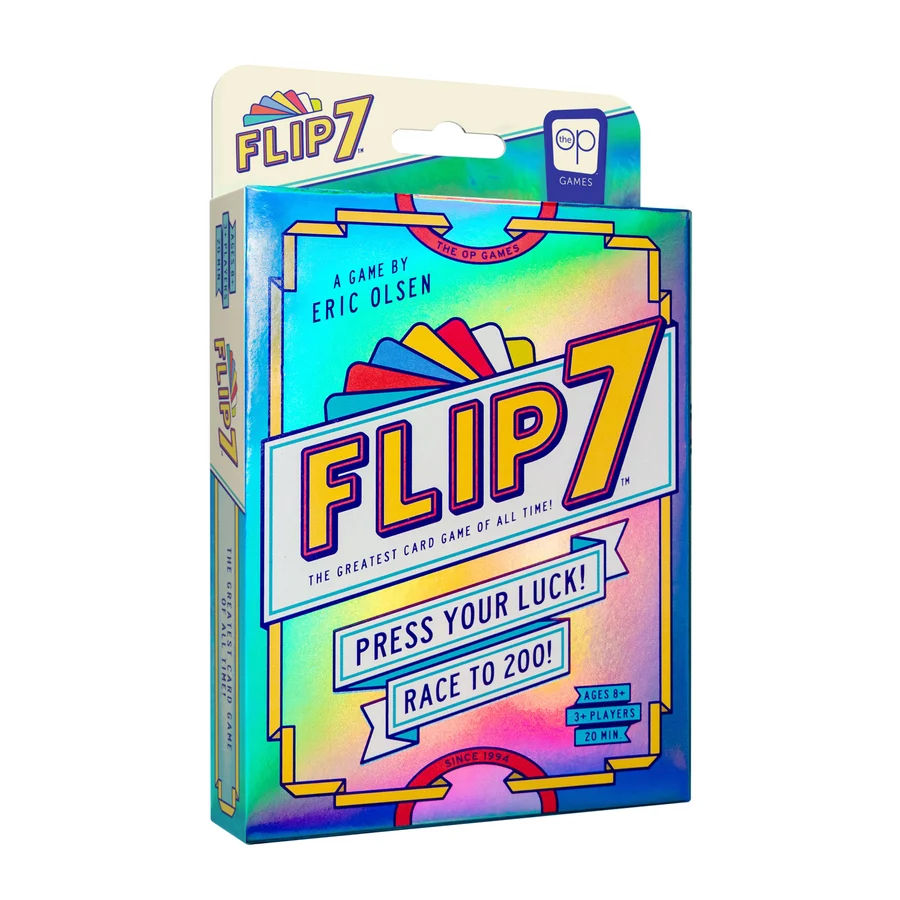

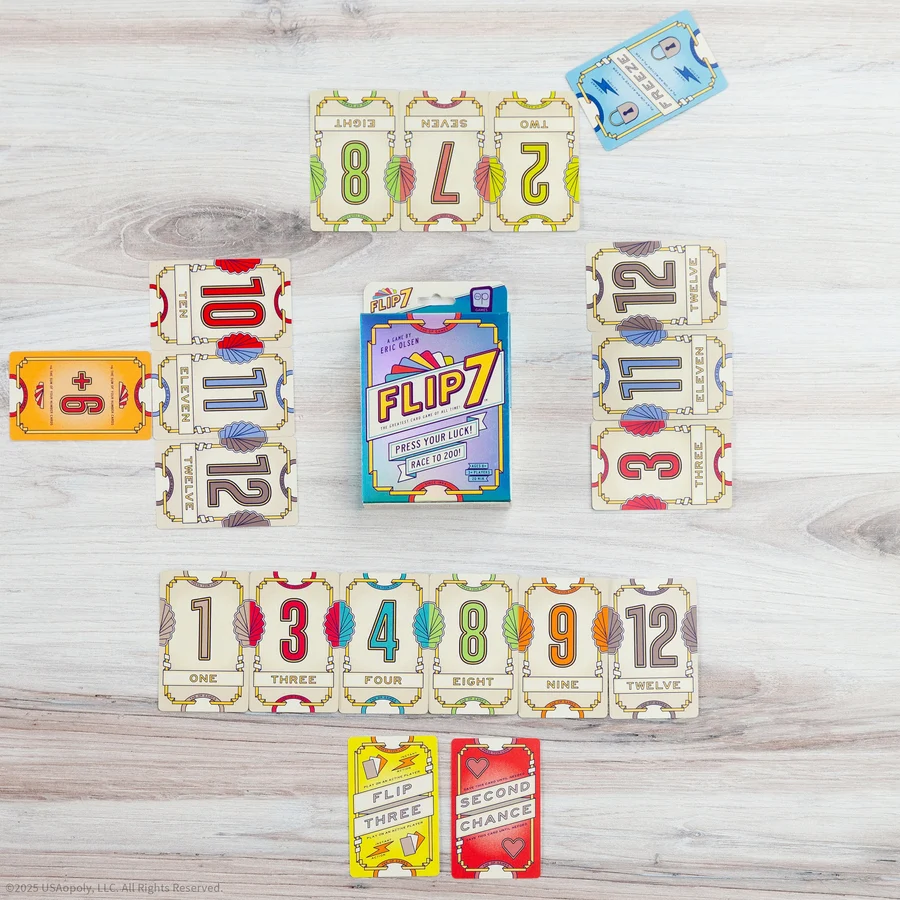
Flip 7 is one deck and one loop, repeated. On your turn you say 'hit' and the dealer flips the top card face-up in front of you. It's almost always a number card (0 through 12). As long as you keep flipping numbers you don't already have, your line grows and your score with it.
The catch is the whole game: if you flip a number you already have in front of you, you bust. You lose every point in that line for the round. Gone. So after every flip, you make one decision - hit (flip again and risk it) or stay (stop, and bank everything you've collected this round). Once you stay, you're safe and out until the round ends.
A round ends when everybody has either stayed or busted - OR when someone flips their seventh unique number card, which triggers Flip 7 and ends the round instantly for the entire table. Then everyone scores, the deal passes, and you go again. The first player to reach 200 total points wins. That usually takes a handful of quick rounds.
That's genuinely it. Number cards, don't-repeat-a-number, hit or stay, first to 200. Everything else - the action cards, the modifiers, the 15-point bonus - is spice layered on top of that ninety-second core. Teach this part first, deal a practice round, and let the rest reveal itself.
Number cards, don't-repeat-a-number, hit or stay, first to 200. You can teach it before the snacks are open.
What's actually in the deck? The 94 cards that decide everything
You cannot play this game well without knowing the deck, and the deck is beautifully cruel by design. There are 94 cards total, split into three groups.
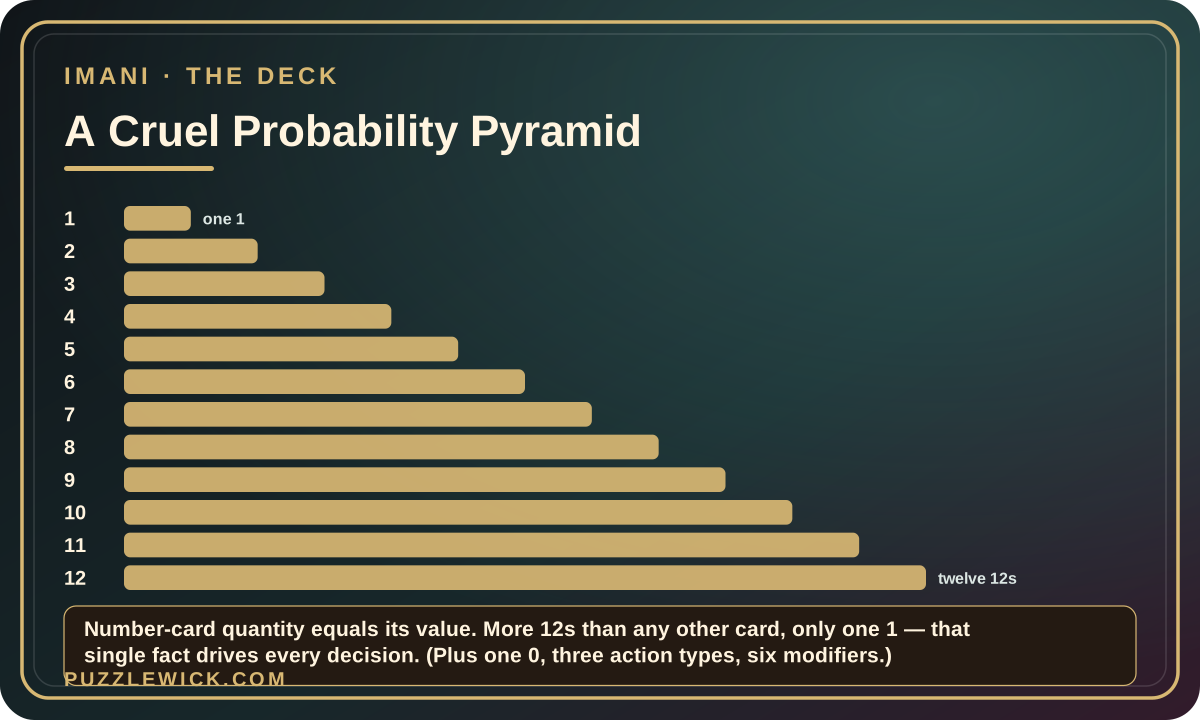
Number cards (0-12). This is the heart of it, and here's the wicked part: the quantity of each number matches its value. There is exactly one 1, two 2s, three 3s, four 4s... all the way up to twelve 12s. Plus a single 0 card, which is worth zero points but counts as a unique number - a genuinely safe flip. That's 78 number cards plus the zero. The design consequence is enormous: high numbers are worth the most points AND are the most numerous, which means they're both the juiciest and the most likely to be the card that busts you.
Action cards. There are three types, and they're where the 'party' lives. Freeze forces a chosen player (or yourself) to stop immediately and bank - like being made to stay against your will. Flip Three forces a player to flip three cards in a row with no chance to stop between them (a coin flip of a gift - it can hand someone a fortune or blow them up). Second Chance is your parachute: keep it in front of you, and the first time you'd bust on a duplicate, you discard the Second Chance and the offending card instead of busting. You can only hold one at a time.
Modifier cards. These change your final math: +2, +4, +6, +8, +10, and a single x2. They aren't number cards, so they don't help or hurt the no-duplicates rule and they don't count toward Flip 7 - they just juice your score at the end.
Burn this into memory: there are more 12s than any other card, and only one 1. That single fact drives every good decision you'll make. When your line is full of high numbers, the deck is loaded against your next flip. When you're holding low cards, you're standing on the safe part of the curve.
How does scoring work, and what is the Flip 7 bonus?

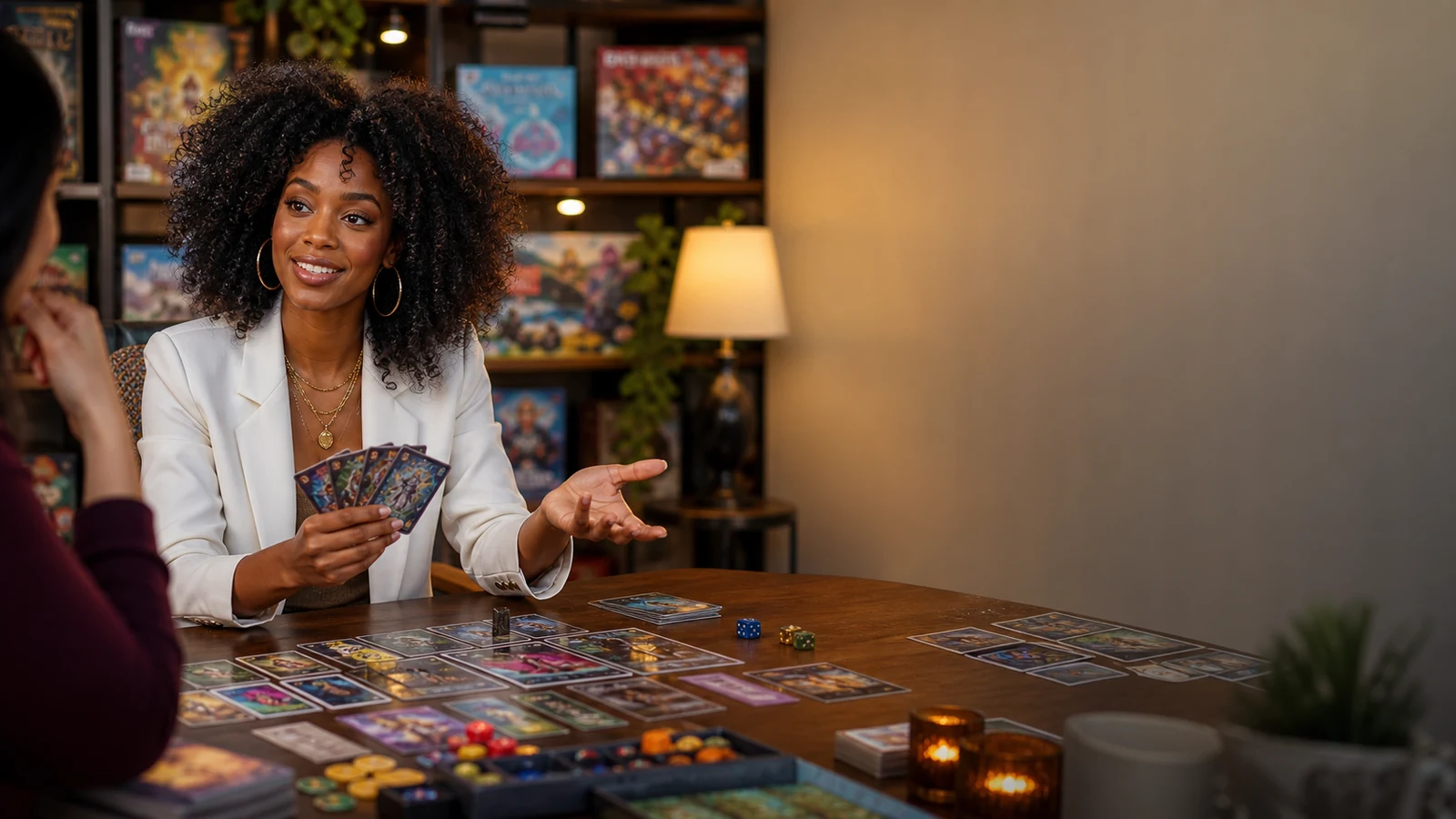
Scoring happens at the end of each round, and only for players who stayed or were Frozen - anyone who busted scores zero for the round no matter how many cards they'd stacked up. That's the whole tension in one sentence.
If you survived, add up the face values of your number cards first. A line of 12, 9, 7, 4, and 0 is 32 points. Then apply your modifiers in a specific order: the x2 multiplies your number total first, and THEN the plus-modifiers get added. So that 32-point line with a x2 and a +6 scores 32 x 2 = 64, then +6 = 70 points. Order matters - the multiplier never touches the plus cards, only the numbers.
Then the crown jewel: Flip 7. If you collect seven unique number cards in one round, you score a flat +15 bonus on top of everything - and you instantly end the round for the entire table. Everyone else scores wherever they are, whether they were ready or not. A big Flip 7 with a couple of modifiers can swing a game in a single round, which is why the whole table leans in when someone's sitting on six different numbers and reaching for a seventh.
All of this ladders toward 200 points. You'll typically get there in five to eight rounds. The scoring is quick mental math, which is deliberate - keep a scorepad handy (the Deluxe edition finally ships one), because 'wait, whose turn was it and what's the score' is the only friction this game has.
- Confirm you stayed or were Frozen - busted players score 0 for the round.
- Add up the face values of all your number cards.
- Apply the x2 modifier to that number total (if you have one).
- Add your plus modifiers (+2, +4, +6, +8, +10) after the doubling.
- Add the 15-point Flip 7 bonus if you collected seven unique numbers.
- Record the round score; first player to 200 total wins.
Bust and you score zero, no matter how gorgeous the line was. That's not a bug - that's the entire heartbeat of the game.
What do the action cards do, and how do you weaponize them?

The three action cards are what turn a solitaire probability puzzle into a party game where people gasp. Understanding them is the difference between 'fun little card game' and 'we played until 2am.'
Freeze. When you flip a Freeze, you choose any player - including yourself - and that player is immediately frozen: they bank their current points and are out for the round. The obvious play is defensive: flip a Freeze while sitting on a beautiful line and freeze yourself to lock it in. The delicious play is offensive: freeze the opponent who's one card away from a game-winning Flip 7, or freeze someone with a fat x2 line before they can grow it further. It's a scalpel.
Flip Three. You choose a player who must immediately flip three cards in a row, no stopping between them. This is the game's grenade with the pin already pulled - and you can throw it at anyone. Hand it to the leader sitting on five unique numbers and you're basically forcing them to run a gauntlet where a single duplicate wipes their round. Occasionally it backfires gorgeously and gifts them a Flip 7. That uncertainty is exactly why the whole table reacts when a Flip Three comes out.
Second Chance. Pure defense, and the one everyone wants. Keep it in front of you and the first time you'd bust on a duplicate, you discard the Second Chance plus the duplicate and keep flipping. It effectively buys you one extra card of courage. You can only hold one at a time - draw a second while holding one and you must give it to a player who doesn't have one (or discard it). A Second Chance in hand should make you noticeably braver about hitting.
The deeper truth: action cards make Flip 7 a game of timing and targeting, not just nerve. The best players aren't the luckiest flippers - they're the ones who freeze the right person at the right second and save their Second Chance for the flip that matters.
When should you hit vs stay? The push-your-luck math
Here's the part people get wrong, and the part that turns 'it's just luck' into 'oh, I can actually get better at this.' Flip 7's designer, Eric Olsen, was a math teacher before this game let him retire - and it shows. The bust curve is not linear. It's a cliff.
Think about it in terms of your line. With three unique numbers, your odds of the next flip being a repeat are low - the numbers you're holding cover only a small slice of the deck. By five or six cards, every additional flip starts to feel like a coin flip, because your line now covers a big chunk of the numbers still live. Crucially, the risk depends on which numbers you hold: a line stuffed with high cards (10, 11, 12) is far more dangerous to extend, because there are so many copies of those numbers in the deck waiting to match. A line of low cards sits on the safe part of the curve.
The practical heuristics the good players use:
- Consider staying once you're around 20+ points unless you have a specific reason to push (a Second Chance in hand, a x2 you want to grow, or a live shot at Flip 7).
- Hit freely when your line is only low numbers (0-4). Those are rare in the deck, so adding another card is cheap risk.
- Get nervous at five or six cards regardless of the total, because you're deep on the curve now and a bust wipes everything.
- A Second Chance makes you braver by exactly one flip. With it, push for the seventh card and the 15-point bonus. Without it at five unique numbers, banking a clean 25-40 is often the correct, boring, winning play.
- Count what's out. If three 12s are already face-up around the table, your own 12 got much safer - there are fewer left to match it. This is the single skill that separates players.
The seductive target is always Flip 7 and its +15, but the disciplined answer is usually to bank a solid line rather than chase a swing that busts a quarter of the time. Win the boring rounds. Let the deck lure everyone else off the cliff.
The designer was a math teacher. The bust curve is not an accident - it's a lesson you feel in your fingertips at card number six.
Why is Flip 7 so addictive - and how did it blow up?
You cannot understand this game's rise without understanding why the loop is chemically compelling. Flip 7 nails the three levers every great push-your-luck game pulls: the decision is constant (you choose to hit or stay after literally every card), the stakes are all-or-nothing (bust and you lose everything, which makes each flip a tiny drama), and the payoff is social (the whole table watches you decide, so your nerve is on public display). That's a slot machine you play with your friends' faces two feet away.
Then there's the origin story, which is the good kind of surreal. Flip 7 launched at Gen Con 2024, a small deck from The Op (USAOPOLY) designed by a part-time inventor. Ray Billings from The Op handed a copy to Spencer Agnew of Smosh Games - one of the internet's original personality-driven channels, with tens of millions of subscribers and an enormous gateway role into the tabletop hobby. Smosh was skeptical (they already had a wall of games), but the cast's chemistry turned out to be perfect fuel for Flip 7's public-nerve drama. The video hit, and the game went vertical.
The numbers are staggering for a card game this small: over two million copies sold, released in 19 languages, and weeks parked atop BoardGameGeek's bestseller chart, outselling heavyweights. It swept a shelf of awards. And Eric Olsen, the designer, got to retire from teaching math to make games full-time - a genuinely lovely coda that the community adopted as part of the game's charm.
The honest read: Flip 7 is not deep in the way a heavy euro is deep. It's deep in the way a great party trick is deep - infinitely repeatable, endlessly social, and impossible to play just once. That's not a lesser thing. That's the hardest thing in the hobby to design, and Flip 7 did it with 94 cards.
What new Flip 7 editions are coming in 2026?
2026 is the year Flip 7 stops being one deck and becomes a line. If you're deciding what to buy, here's the honest map of what's out and what's landing.
Flip 7 (2nd Edition) is the standard, the one to start with. Around $8, 94 cards, everything above. The 2nd Edition is a light refresh of the original - same game, cleaned up. If you own the 1st Edition, you're not missing anything mechanical; the differences are cosmetic and component-level, not rules.
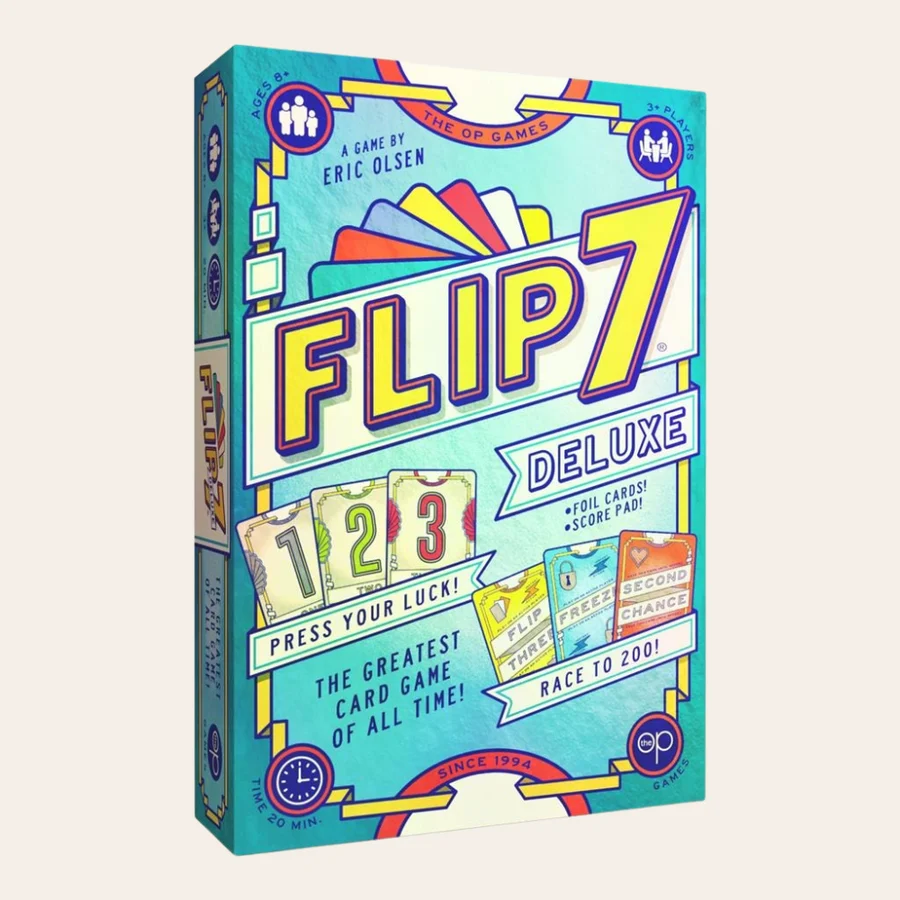
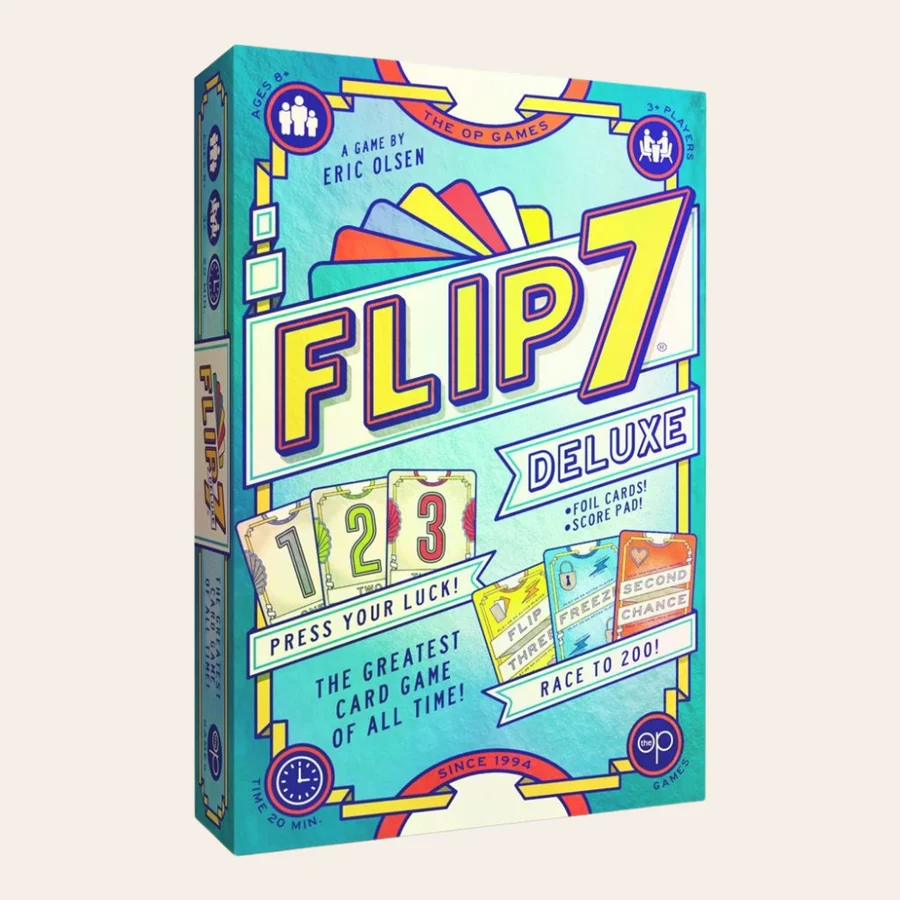
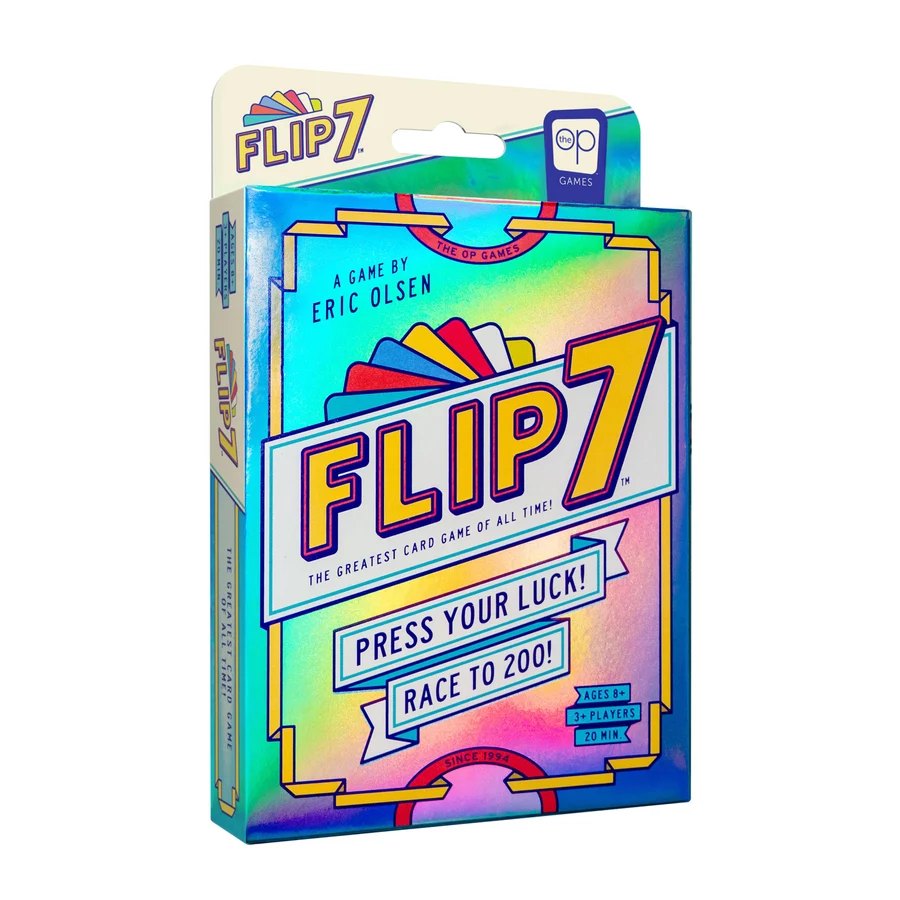
Flip 7: Deluxe hit retail June 1, 2026 at about $17.95. It's the same game with all-foil cards and - finally - an included score pad to track wins and win streaks. This is the version to buy if you already love the game and want the premium shelf presence, or if you're gifting it. The only knock is price; you're paying roughly double the base for foil and paper.
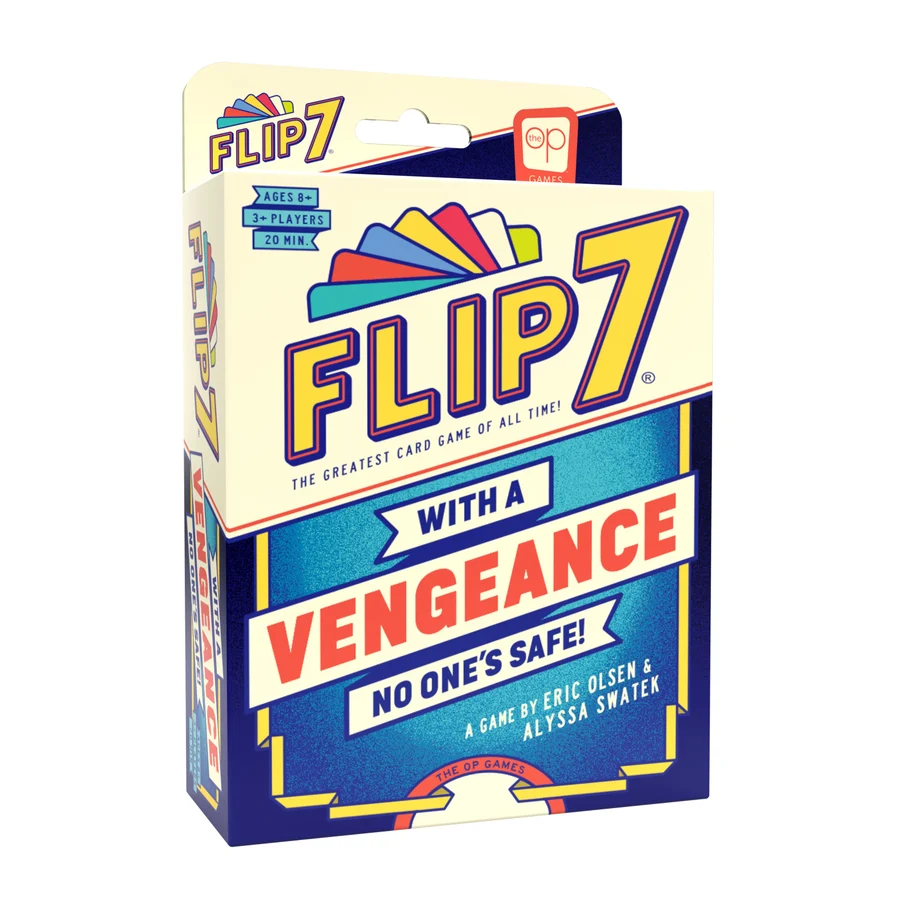
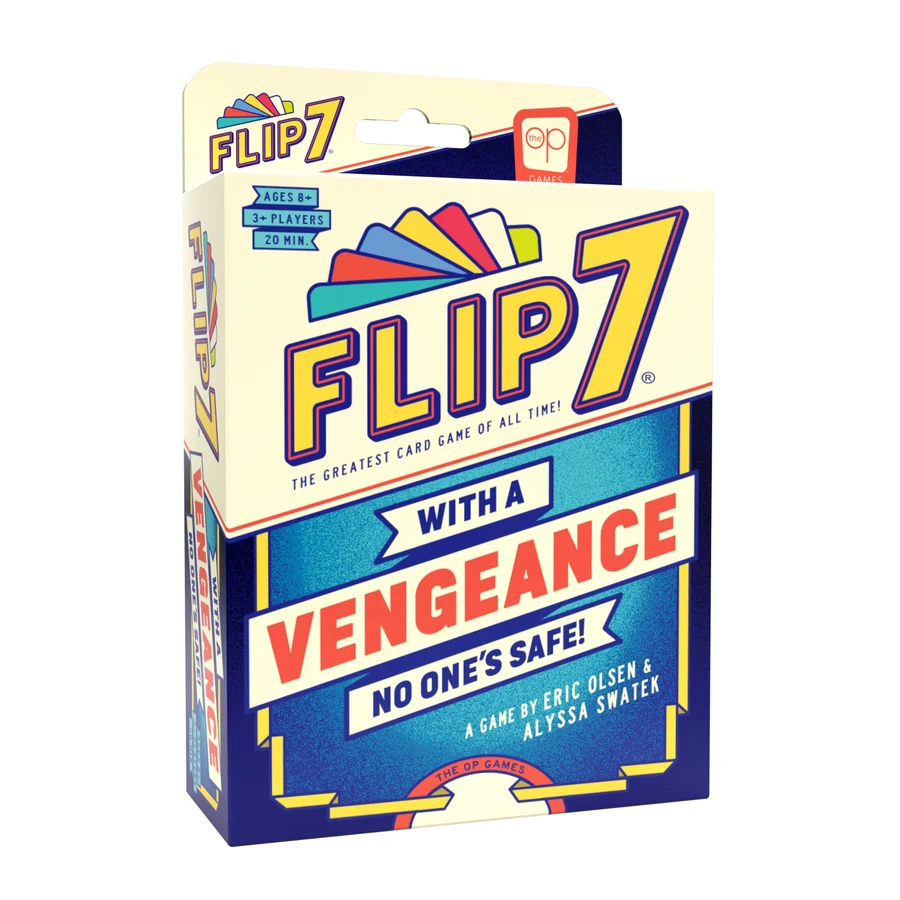
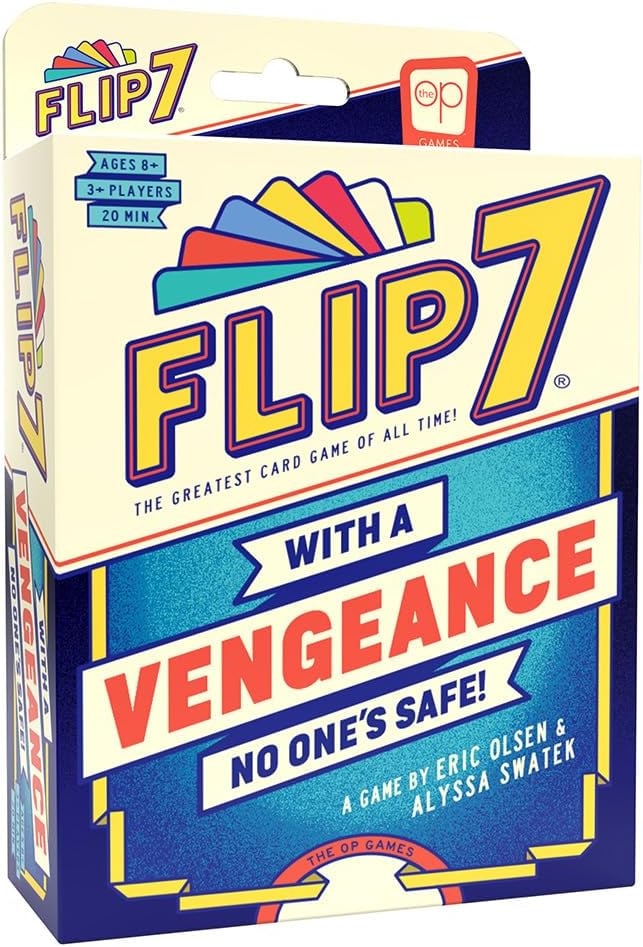
Flip 7: With a Vengeance is the spicy one, and it's a standalone sequel (not an expansion), designed by Alyssa Swatek and Eric Olsen, a Walmart exclusive. It cranks the 'take that' up hard: new action cards that let you steal, swap, and discard, an enhanced Flip 4, negative modifiers, and the rules loosen so modifiers and actions can be played on players who have already stayed. Notably, there are no Second Chance cards - which makes every draw more dramatic and every table meaner. Reviewers note the card stock is thinner and cheaper than the original, so buy it for the aggression, not the components.
Flip 7: Grinch Edition is a Walmart holiday exclusive with Grinch-themed art - same core game, seasonal skin, great stocking stuffer.
And the big one on the horizon: The Op has confirmed licensed Flip 7 editions for 2026, with one or two new rules wrinkles, built on partnerships with marquee brands - Hasbro, Disney, Marvel, Nintendo, Warner Bros., Cartoon Network, and Nickelodeon. Nothing's been named specifically yet, so check current listings before you preorder anything branded - but a Mario or Marvel Flip 7 is clearly the plan.
1st vs 2nd Edition, and Flip 7 vs With a Vengeance - which do you buy?
Two comparisons trip people up, so let's settle both.
1st Edition vs 2nd Edition. These are the same game. The 2nd Edition (2025) is a refresh that arrived after the game exploded and demand went vertical - it's about production, branding, and availability, not rules. There's no mechanical reason to hunt down a 1st Edition or to 'upgrade' from it. If you own either, you own Flip 7. Buy whichever is in stock and cheapest. The only real reason to prefer one is collector sentiment.
Base Flip 7 vs Flip 7: With a Vengeance. This is the choice that actually matters, and it's about temperament. Base Flip 7 is the clean, elegant, teach-anyone version - the Second Chance card gives it a built-in mercy that keeps it friendly. With a Vengeance rips the mercy out: no Second Chance, plus stealing, swapping, discarding, a harsher Flip 4, and negative modifiers, with actions that can even hit players who already banked. It's louder, meaner, and more chaotic - phenomenal with a group that loves needling each other, potentially too spiky for a mixed-ages family table.
My honest recommendation: buy the base game first. It's the platonic version, it's cheaper, and it's the one you can teach to anyone from a cautious grandparent to a competitive nephew. Once your group has fifty rounds under its belt and starts craving blood, THEN bring in With a Vengeance as the 'grown-up' variant for game night. They're not a base-and-expansion pair - each is a complete standalone game - so you're choosing a mood, not building a set.
And if you're buying to gift or to show off? The Deluxe foil edition is the one that makes people go 'ooh' when it hits the table, and it finally includes the scorepad the base game always wanted.
What games should you buy when Flip 7 gets familiar?
Here's the thing about a game this addictive: you WILL want the next hit. When Flip 7 starts feeling a little known - when your group has internalized the deck and the drama dips - these are the push-your-luck games to reach for next, each scratching a slightly different version of the same itch. I've laid out the full picks below, but the short version:
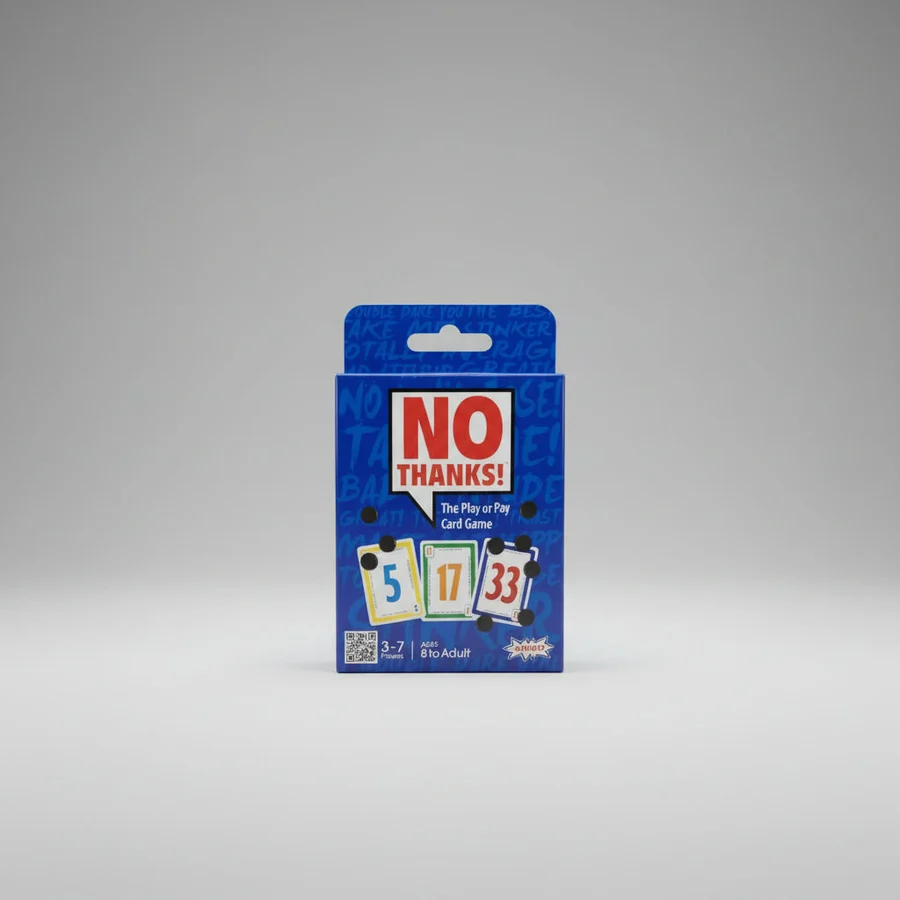
No Thanks! is the closest cousin in spirit and price - a tiny, brutal, instantly-teachable card game where you're paying chips to avoid taking penalty cards, and every 'no thanks' tightens the trap. If Flip 7 is 'do I dare take more,' No Thanks is 'do I dare say no again.' It's the cheapest, tightest next-buy.
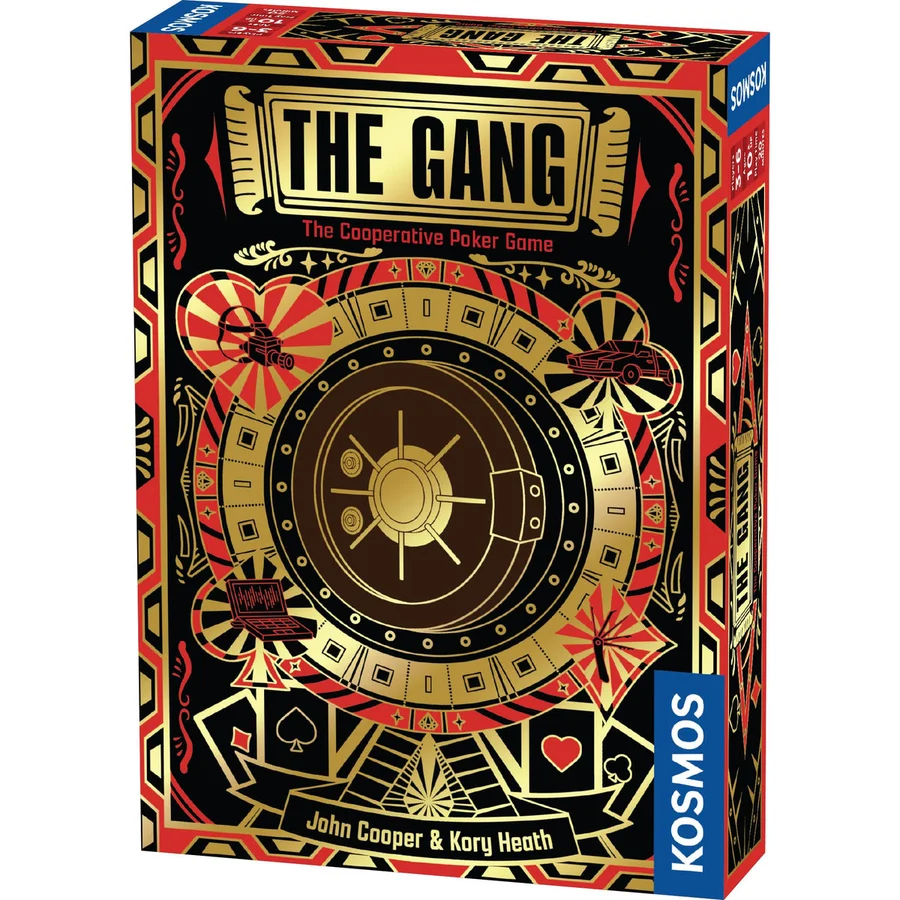
The Gang flips the social wiring: it's a cooperative press-your-luck poker game where the whole table wins or loses together, communicating only through limited tokens. It's the 'we're all in this' version of the same white-knuckle tension, and it's brilliant with the exact crowd that loves Flip 7's table-wide gasps.
Diamant (Incan Gold) is the pure, classic push-your-luck experience - everyone ventures into a mine together, grabbing gems, and each round you secretly decide to press on or leave with your loot before a trap wipes the greedy. It scales huge and plays fast, just like Flip 7.
All three land in the same $8-20 zone, all teach in minutes, and all deliver that specific 'one more round' compulsion. Full breakdowns, prices, and who each one is for are in the picks below.
How do you keep Flip 7 fun at bigger, wilder tables?

Flip 7 officially plays with 3 or more, and 'or more' is doing a lot of quiet work - this game scales to genuinely enormous groups, which is a huge part of why it became a party staple. But bigger tables need a few small habits to stay smooth.
Deal briskly and keep the loop moving. The whole appeal is pace. Don't let players agonize; the hit-or-stay call should be a heartbeat, not a committee. A round should feel like popcorn - pop, pop, pop, groan, cheer.
Watch the deck at large counts. With a lot of players, you'll chew through the 94 cards fast, and a round can trigger a reshuffle mid-flip. Just shuffle the discards back in when you run low and keep going - it doesn't break anything.
Use Freeze and Flip Three as social glue, not just weapons. At a big table, targeting decisions ARE the entertainment. Encourage a little theater - the announced Freeze, the gleefully-aimed Flip Three. That's where the memories come from. If your group is competitive, With a Vengeance's steal/swap/discard actions turn a big table into glorious chaos.
Keep score visibly. With many players racing to 200, an unseen scorepad is where the fun leaks out in arguments. Put it in the middle. (Or buy the Deluxe edition, which finally ships one.) A shared, visible track keeps the 'ooh, they're at 180' tension alive, which is half the fun in the closing rounds.
The core stays the same at any size - flip, decide, bank or bust. Scale just amplifies the social layer, which is exactly the layer you bought this game for.
What experienced tables keep reporting
Recurring owner patterns, synthesized in Puzzlewick's words. Follow each evidence trail to read the original discussion.
Ray from The Op gave Smosh a copy despite their wall of games, and promised they wouldn't regret it.
The game let designer Eric Olsen retire from teaching math to make games full time.
Flip 7 won an Origins Award for best party game, adding to its Golden Geek best party game.
Flip 7 was one of three finalists for the 2025 Spiel des Jahres, the hobby's most coveted award.
The picks
Some links below are affiliate links — as an Amazon Associate, Puzzlewick earns from qualifying purchases, at no extra cost to you. It never changes a pick.
3 photos Flip 7 (2nd Edition)
This is the game, full stop - the award-winning, two-million-selling press-your-luck deck that teaches in ninety seconds and plays in twenty minutes. The 2nd Edition is the current standard printing, mechanically identical to the original with cleaner production. At around eight dollars it's the best value in the entire party-game aisle, and it fits in a jacket pocket. If you buy one thing from this guide, buy this.
- Cheapest possible entry to a genuinely great game
- Teaches in under two minutes to anyone
- Scales from a few players to a big crowd
- Origins + Golden Geek winner, Spiel des Jahres nominee
- No included scorepad in the base box
- So addictive it derails whatever you meant to play next
3 photos Flip 7: Deluxe
The same beloved game dressed up: all-foil cards that catch the light and, at long last, an included score pad for tracking wins and win streaks. Released to retail June 1, 2026 at about eighteen dollars. You're paying roughly double the base price for shine and paper, so this is the 'I already love Flip 7' or 'this is a gift' pick rather than the starter. But it looks fantastic on the table and solves the base game's one real annoyance.
- Premium all-foil cards look gorgeous in play
- Finally includes a proper scorepad
- The ideal gift version of a hit game
- Roughly double the base price
- Mechanically identical to the cheap version
Flip 7: With a Vengeance
A standalone sequel, not an expansion: same core loop, no mercy. It strips out the Second Chance card and adds steal, swap, and discard actions, an enhanced Flip 4, and negative modifiers - and lets you play actions on rivals who've already banked. It's louder and more cutthroat, phenomenal with a competitive crowd. One honest caveat: reviewers note the card stock is thinner and cheaper than the original, so buy it for the chaos, not the components. Check current price and stock; it's launched as a Walmart exclusive.
- Genuinely different, meaner variant for veterans
- Steal/swap/discard actions crank up player interaction
- Standalone - no base game required to play it
- Thinner, cheaper card stock than the original
- No Second Chance makes it harsh for casual/family tables
- Exclusive availability can make it hard to find at list price
2 photos No Thanks!
The closest cousin to Flip 7 in feel and format: a tiny deck of numbered cards and a handful of chips, where you either pay a chip to say 'no thanks' to a penalty card or take the card and its points. Every refusal tightens the noose, and the agonizing hit-or-take decision loop will feel instantly familiar to Flip 7 fans. It's decades old, still perfect, and costs about thirteen dollars. If you want one more small deck that delivers the same squeeze, this is it.
- Same tiny-box, teach-in-minutes format as Flip 7
- Brutally elegant risk decisions every single turn
- Modern classic that never gets old
- Cheap and travels anywhere
- Less explosively social than Flip 7
- Tops out around 5-7 players
2 photos The Gang
A cooperative press-your-luck poker heist where the whole table wins or loses together, communicating only through limited tokens as you try to rank your hidden poker hands in the right order. It takes Flip 7's white-knuckle 'do we push' energy and points it outward - you're all sweating the same reveal. Around fifteen dollars, plays in twenty minutes, and it's a genuine phenomenon in its own right. Perfect for the exact group that loves Flip 7's table-wide gasps but wants to be on the same side.
- Cooperative - great for groups that dislike direct conflict
- Same fast, high-tension press-your-luck heartbeat
- No poker expertise required to enjoy it
- Award-buzzed and widely loved
- Cooperative wiring is a different feel than Flip 7's competition
- Communication-limited play can frustrate very casual players
At a glance
| Edition | Price (approx) | What's different | Best for | Second Chance? |
|---|---|---|---|---|
| Flip 7 (2nd Edition) | $7.95 | The current standard printing; the game everyone means | Starting - buy this first | Yes |
| Flip 7: Deluxe | $17.95 | All-foil cards + included scorepad | Gifting and superfans | Yes |
| Flip 7: With a Vengeance | Check current | Standalone sequel: steal/swap/discard, Flip 4, negative modifiers, no Second Chance | Cutthroat veteran groups | No |
| Flip 7: Grinch Edition | Check current | Holiday-themed Walmart exclusive skin of the base game | Seasonal gift / stocking stuffer | Yes |
| Licensed editions (2026) | TBA | Confirmed brand tie-ins with one or two rules tweaks; not yet named | Fans of the specific brand | Likely - confirm at release |
Questions, answered
How do you play Flip 7?
On your turn you flip number cards one at a time. Keep flipping numbers you don't already have and your score grows. Flip a number you already have and you bust - zero points that round. After each flip you choose to hit (flip again) or stay (bank your points and stop). A round ends when everyone has stayed or busted, or when someone hits seven unique numbers (Flip 7). First player to 200 total points wins.
What is the Flip 7 bonus?
If you collect seven unique number cards in a single round, you score a flat 15-point bonus on top of your card total - and you immediately end the round for the entire table, forcing everyone else to score wherever they currently are. It's the biggest single swing in the game.
How many cards are in Flip 7?
94 cards total. That's number cards 0 through 12 (where the quantity of each matches its value - one 1, two 2s, up to twelve 12s, plus a single 0), three types of action cards (Freeze, Flip Three, Second Chance), and modifier cards (+2, +4, +6, +8, +10, and a x2).
What happens when you bust in Flip 7?
If you flip a number that's already in front of you, you bust: you score zero points for that entire round, no matter how many cards or modifiers you'd collected. Your turn ends immediately. This all-or-nothing risk is the core of the game's tension.
How does scoring work in Flip 7?
Only players who stayed or were Frozen score (busted players get zero). Add up your number cards' face values, apply the x2 modifier to that total first, then add any plus modifiers (+2 through +10), then add the 15-point Flip 7 bonus if you collected seven unique numbers. First to 200 wins.
How do the modifier cards work?
Modifiers change your final score. The x2 doubles your number-card total, and it's applied before the plus cards. The plus modifiers (+2, +4, +6, +8, +10) add flat points after the doubling. Modifiers aren't number cards, so they don't affect the no-duplicates rule and don't count toward the seven cards needed for Flip 7.
What does the Freeze card do?
When you flip a Freeze, you choose any player (including yourself) who must immediately stop and bank their points, out for the round. Use it defensively to lock in your own great line, or offensively to freeze an opponent right before they'd hit a game-winning Flip 7 or double a huge line.
What does Flip Three do?
You choose a player who must immediately flip three cards in a row with no chance to stop between them. It's high-risk to receive - three forced flips can easily produce a bust - but it can occasionally backfire and hand the target a Flip 7. It's the game's grenade.
How does the Second Chance card work?
Keep a Second Chance in front of you and the first time you'd bust on a duplicate number, you discard the Second Chance plus that duplicate instead of busting, and keep flipping. You can only hold one at a time. It effectively buys you one extra flip of courage.
When should you stay in Flip 7?
A common heuristic is to consider staying once you're around 20+ points, unless you have a specific reason to push - a Second Chance in hand, a x2 you want to grow, or a realistic shot at Flip 7. Get especially cautious at five or six cards, and stay earlier when your line is full of high numbers (10-12), since those have the most copies in the deck and are most likely to bust you.
Is Flip 7 all luck, or is there skill?
There's real skill. Because card quantity equals value (twelve 12s, only one 1), you can read the deck: if the numbers matching your line are already showing around the table, you're safer to hit. Managing when to bank, when to spend a Freeze, and when to save a Second Chance separates strong players from frustrated ones. It's a probability game dressed as a luck game.
How many players can play Flip 7?
The base game is for 3 or more players and scales to genuinely large groups, which is a big reason it became a party staple. Bigger tables just amplify the social action-card theater. Flip 7: With a Vengeance is marketed for even larger crowds.
How long does a game of Flip 7 take?
About 20 minutes for a full game to 200 points, though the reality is that groups almost always play multiple games back to back - the 'one more round' pull is famously strong. Individual rounds are just a couple of minutes each.
What's the difference between Flip 7 1st and 2nd Edition?
They're the same game mechanically. The 2nd Edition (2025) is a refreshed printing that arrived after the game became a runaway hit - the differences are production and cosmetic, not rules. There's no gameplay reason to prefer one over the other, so buy whichever is cheaper and in stock.
What is Flip 7: With a Vengeance?
A standalone sequel (not an expansion) by Alyssa Swatek and Eric Olsen. It's a meaner variant: it removes the Second Chance card and adds steal, swap, and discard actions, an enhanced Flip 4, and negative modifiers, and lets you target players who've already banked. It's a Walmart exclusive with thinner card stock. Buy the base game first; add this for a cutthroat veteran group.
What is Flip 7: Deluxe?
A premium edition that reached retail June 1, 2026 at about $17.95. It's the same game with all-foil cards and, importantly, an included scorepad for tracking wins and win streaks. It's the ideal gift version and solves the base game's lack of a scorepad, at roughly double the price.
Are there licensed Flip 7 editions coming?
Yes. The Op has confirmed licensed Flip 7 editions for 2026 with one or two new rules wrinkles, built on partnerships with brands including Hasbro, Disney, Marvel, Nintendo, Warner Bros., Cartoon Network, and Nickelodeon. Specific titles hadn't been named as of this writing, so check current listings before preordering anything branded.
What games are like Flip 7?
The best next-buys are other push-your-luck games: No Thanks! (a tiny, tight card game about refusing penalty cards), The Gang (a cooperative press-your-luck poker heist), and Diamant / Incan Gold (a classic shared-greed mine crawl). All teach in minutes and deliver the same hit-or-bank tension.
Where can I play Flip 7 online?
Flip 7 is available to play digitally on Board Game Arena, which is a great way to learn the rules and feel the bust curve before or alongside owning the physical deck.
Why is Flip 7 so popular?
A combination of a near-perfect push-your-luck loop (a public hit-or-stay decision after every card), a tiny price, and a viral moment: a Smosh Games feature sent it vertical. It's sold over two million copies in 19 languages, won the Origins and Golden Geek Best Party Game awards, and earned a 2025 Spiel des Jahres nomination - the hobby's top honor.
Imani's verdict
Buy the base 2nd Edition. Everything else is flavor.
Flip 7 is the most efficient fun-per-dollar in the party-game aisle right now, and it isn't close. For about eight dollars you get a loop that teaches in ninety seconds, plays in twenty minutes, scales from a few friends to a roaring crowd, and produces the exact table-wide drama that made two million people buy it and a math teacher retire happy. The bust curve is real, the skill is real, and the 'one more round' pull is so strong it's practically a warning label.
My honest buying map: start with 2nd Edition. If you want to gift it or flex a little, the Deluxe foil is genuinely lovely and finally includes the scorepad. If your group has the deck memorized and craves blood, add With a Vengeance as a standalone hard mode - just don't make it anyone's first taste. And when even Flip 7 starts feeling known, the push-your-luck itch has a whole family waiting.
IMANI'S ONE-MORE-ROUND RECKONING: Is Flip 7 deep like a heavy euro? No. Is it the game I have watched keep more parties alive past midnight than anything else on my shelf? Yes, and it isn't a contest. Deep isn't the only kind of great. Repeatable-and-social is the hardest thing in this hobby to build, and Flip 7 nailed it with 94 cards and a cruel little pyramid of numbers.
When you're ready for the next hit, wander over to the best cooperative card games for game night, or if you want the whole genre mapped, the best push-your-luck games to buy next.
Research ledger 17 sources · reviewed 2026-08-10
Specifications, rules, current product information, community experience, and contrary evidence were checked against the sources below. Commercial links are kept separate from editorial evidence.
- theop.gamestheop.games/products/flip-7
- theop.gamestheop.games/blogs/theop/flip7-how-did-we-ge-there
- theop.gamestheop.games/products/flip-7-grinch-edition
- flip7score.comflip7score.com/how-to-play
- flip7score.comflip7score.com/strategy
- officialgamerules.orgofficialgamerules.org/game-rules/flip-7-rules
- geekyhobbies.comgeekyhobbies.com/flip-7-rules
- geekdad.comgeekdad.com/2025/04/can-you-beat-the-odds-and-flip-7
- meeplemountain.commeeplemountain.com/reviews/flip-7-with-a-vengeance
- icv2.comicv2.com/articles/news/view/62122/flip-7-deluxe-heads-retail
- boardgamewire.comboardgamewire.com/index.php/2025/06/23/flip-7-continues-awards-run-with-origin-award-victory-fromage-and-endeavor-deep-sea-also-among-winners
- boardgamegeek.comboardgamegeek.com/blog/1/blogpost/174264/spiel-des-jahres-nominations-for-2025-bomb-busters
- smosh.fandom.comsmosh.fandom.com/wiki/Flip_7
- amazon.comamazon.com/dp/B0DWGVM7RY?tag=puzzlewick-20
- walmart.comwalmart.com/ip/Flip-7-With-A-Vengeance/16627153738
- amazon.comamazon.com/dp/B0CRHZC52H?tag=puzzlewick-20
- amazon.comamazon.com/dp/B0D8VZKNBS?tag=puzzlewick-20
Okay but have you seen what everyone’s saying about this?

Keep exploring
The next smart rabbit holes.
✦ Topic PathBoard Game Buying Guides: compare the whole shelfStart with the decision, not the shelf. These guides compare the games, editions, expansions, player counts, and costs people...GuideThe Lord of the Rings: Fate of the Fellowship Guide: How to Play, Win Together and Start ConfidentlyKenji explains the cooperative Middle-earth adventure from your first turn to Mount Doom: the rules that matter, the Hope you cannot...GuideDisney Villainous Buying Guide 2026: Darkness Brewing vs Introduction to Evil, Every Expansion Ranked, and Which Villains Can MixYumi sorts every Disney Villainous box by first-night clarity, replay value, character overlap, and the one compatibility rule that saves...