Best Tunnel Books & Paper Theatres, Ranked (2026)
Little stages of cut paper, ranked by the people who literally lose sleep over them — from Victorian peepshows to Edo tatebanko to the laser-cut sculptures you can buy right now.

AI-assisted curator persona · research and editorial responsibility: Robert Pruitt · how this guide was made
Last editorial refresh: 2026-06-13 Gold-standard QA: 2026-08-10 23 sources reviewed Affiliate links checked during gold-standard pass

The short answer
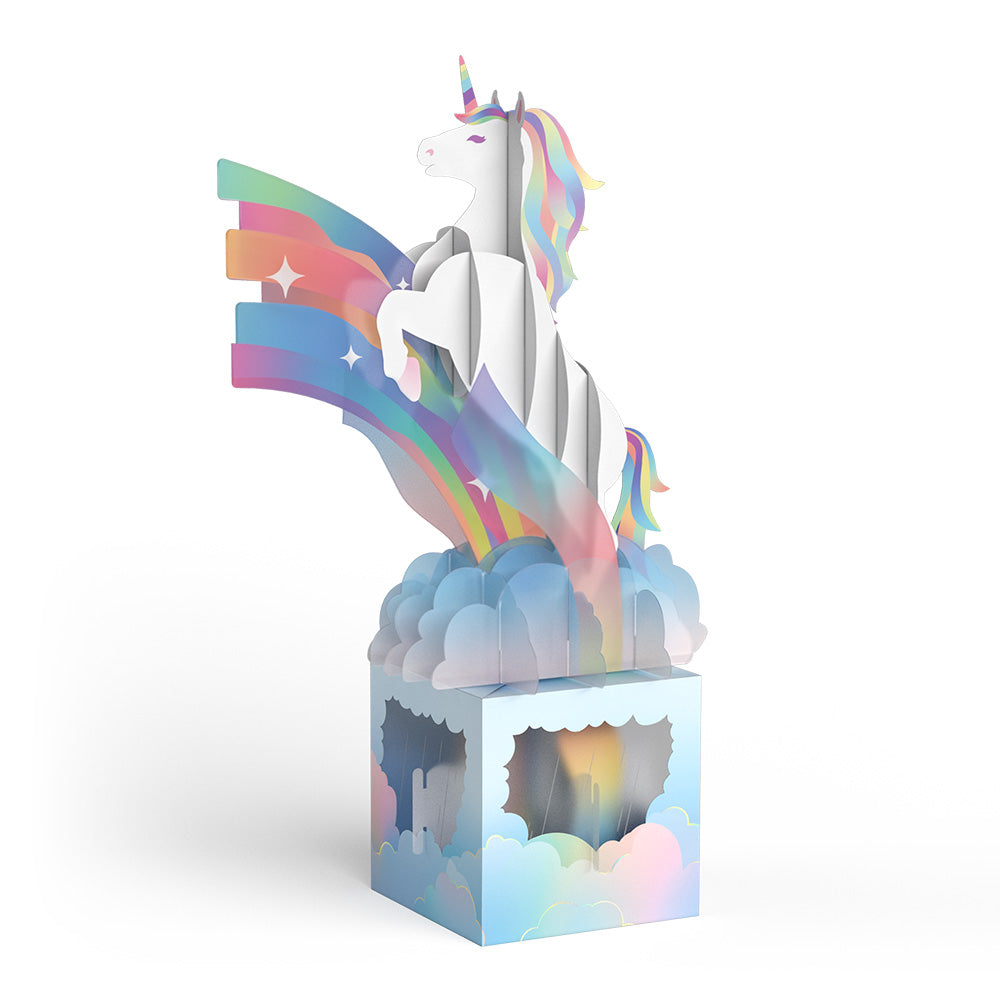
A tunnel book (or paper peepshow) is a row of cut-paper panels connected by accordion folds, so when you peer through a hole in the front you see a scene that recedes into theatrical depth. A paper theatre (or toy theatre) is a miniature proscenium stage with printed sets and slide-in characters. Tatebanko is the Edo-era Japanese version: a flat sheet that builds into a standing diorama. For best overall, the layered cut-paper light sculpture — Lovepop's Unicorn Unboxed (~$39, sliceform kirigami) — gives the most theatrical depth for the least skill. The best toy/paper theatre is anything from Benjamin Pollock's Toyshop in London (~$38-$57 for the contemporary-artist theatres), the direct heir to the Victorian original. The best tunnel book to buy ready-made is a real antiquarian peepshow from a specialist dealer like VintagePopupBooks.com (~$145+), or, as an accessible book, Robert Sabuda's Alice's Adventures in Wonderland pop-up (~$40), which literally builds in a Victorian peep-show spread. The best DIY kit is a tatebanko paper-diorama kit (Hokusai's Great Wave, ~$15-20). This is a niche, artist-driven category — be patient with stock.
Decision map
Choose in thirty seconds
Best DIY kit & best first build — pre-printed, forgiving, ~$15-20
Best gift & most accessible — theatrical paper depth in an in-print book, including a real peep-show spread
Okay, so. The whole paper-art community keeps saying the same thing, and I'm going to translate it for you: you do not look at a tunnel book, you peer into it. That single word — peer — is the whole genre. Lean in. The flat thing on your shelf folds open into a stage with weather and distance living inside it.
I went straight to the people who actually live in this corner: the book-arts teachers, the toy-theatre keepers holding down Covent Garden, the tatebanko folders in Tokyo, the Etsy makers cutting layers at midnight in their kitchens, the museum curators at the V&A who guard the largest peepshow collection on earth. What they all share is the same tender obsession — depth made from nothing but paper, light, and one hole to look through. A V&A note about the traveling peepshow men (the first pocket cinemas, two hundred years before screens) keeps surfacing: they would charge people to peer inside and narrate the scene like a live show. Bring your eye close. The magic lives in the lean-in.
So this is not a gadget guide. This is a row of little theatres, ranked. Some you buy finished from a Covent Garden shop that's been doing this since the 1700s; some you fold yourself from an A4 sheet on a Sunday afternoon; one is a Victorian antique you peer into exactly the way a Londoner did when the Thames Tunnel was the wonder of the age.
And because this is Puzzlewick: we don't sell these. We point you at the makers, the museums, and the dealers who do — and we tell you straight when the category is thin.
Start here, then go deeper
You are in the right cabinet.
 ✦ Topic PathBoard Game Buying Guides: compare the whole shelfStart with the decision, not the shelf. These guides compare the games, editions, expansions, player counts, and costs people...
 Best OfBest Pop-Up Books for Adults & Collectors (2026)Ten paper-engineering showpieces compared by mechanism, display impact, edition risk and current buyability.
 Best OfBuild-Your-Own Automata Kits Ranked: Best Wooden Mechanical Models (2026)Stop buying wooden puzzle kits branded as automata that just sit there—here's the honest ranking of kits that actually move.
What exactly is a tunnel book — and why does the whole community say 'peer into,' never 'look at'?
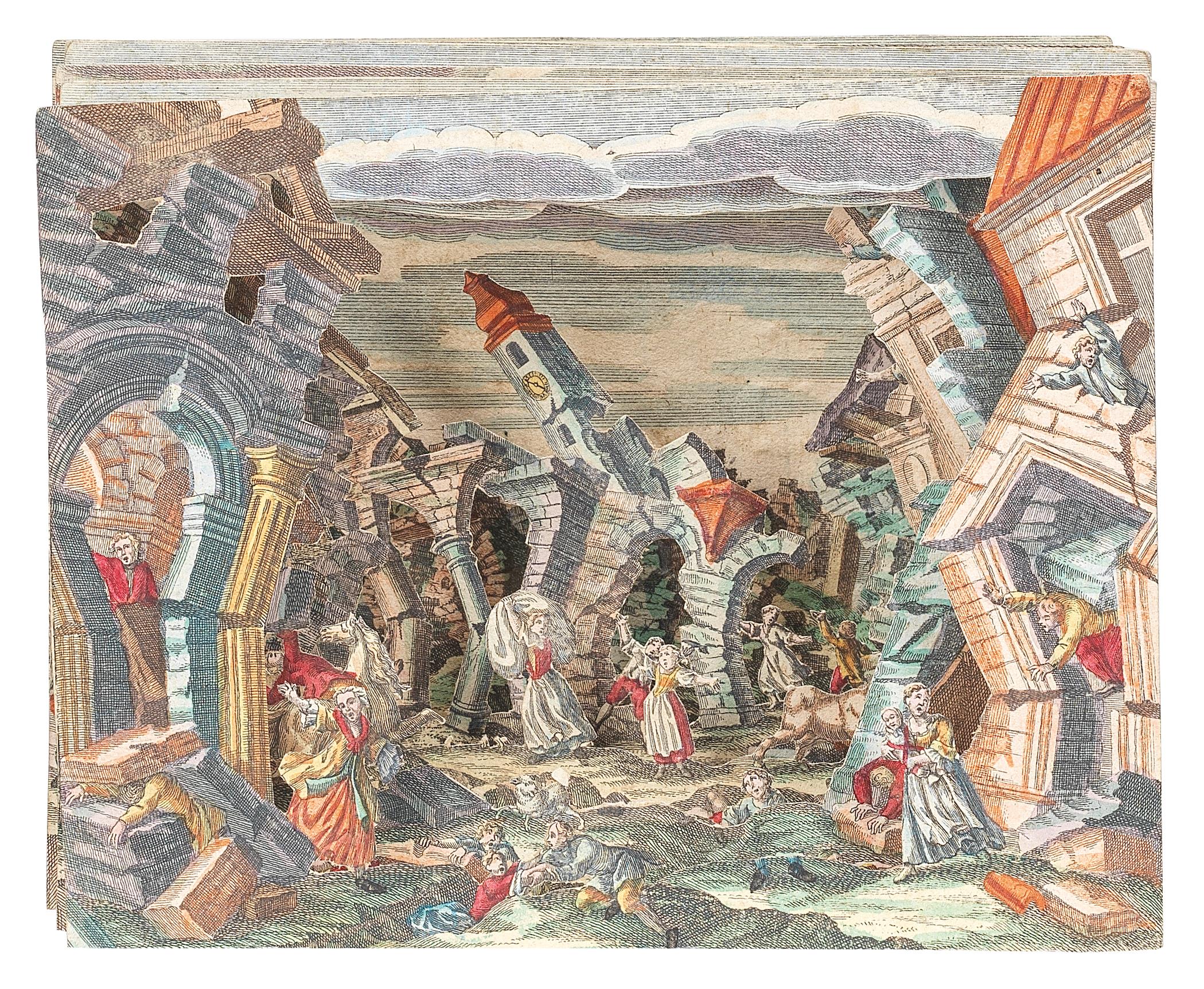
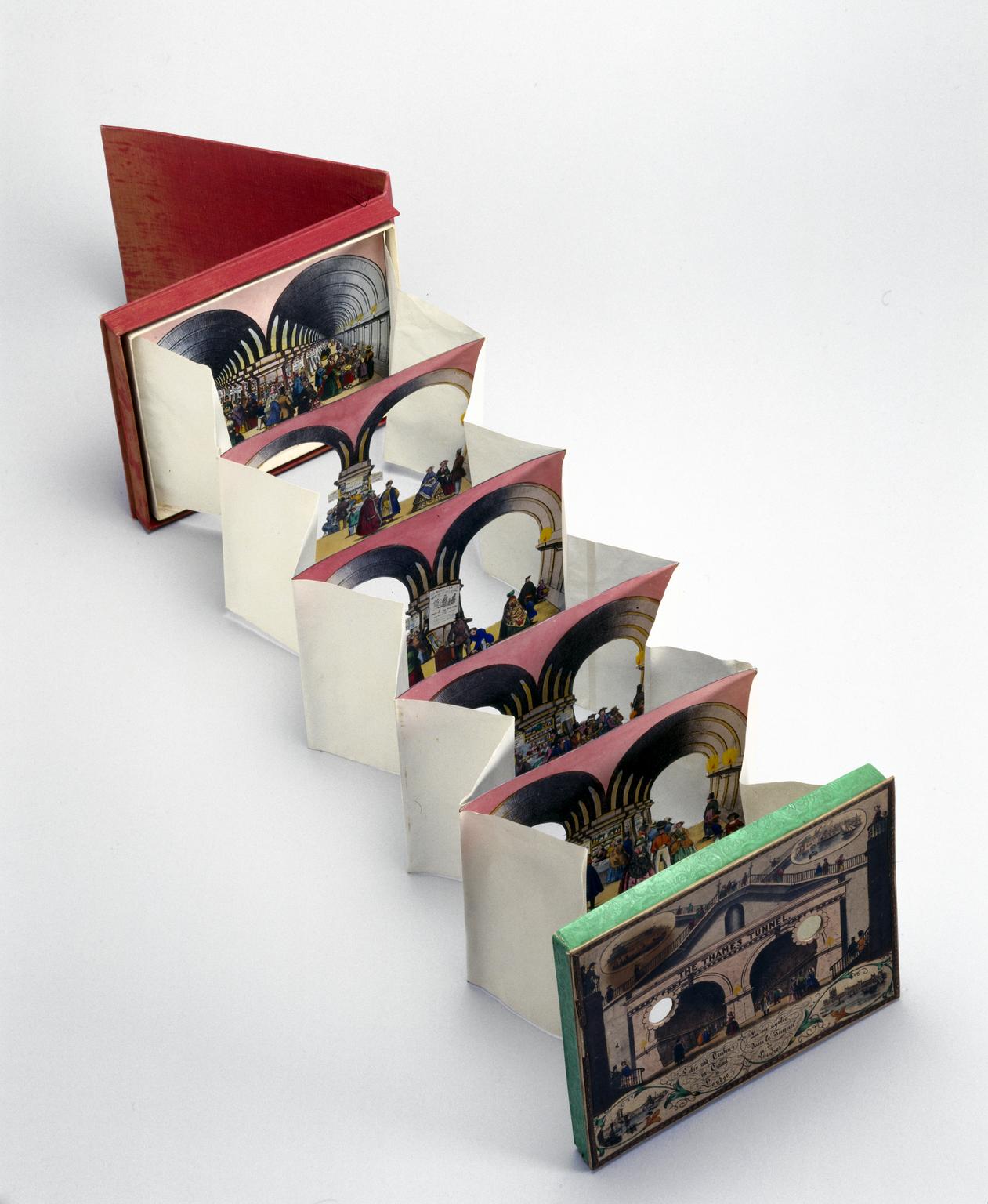
Strip it to mechanics. A tunnel book is a series of cut-paper panels placed one behind another, each pierced with a window, connected down the two sides by accordion-folded (concertina) strips of paper or cloth. The panels pull apart like a little bellows. You look through a hole in the front cover, and because each layer is cut away in the middle, your eye travels past the foreground, past the middle ground, to a backdrop — and your brain reads distance. The Smithsonian Libraries put it plainly: tunnel books are 'a series of cut-paper panels placed one behind the other, creating the illusion of depth and perspective.'
The form is genuinely old. The Center for Book Arts dates the structure 'back to the 1800s' and notes it lets the viewer 'peer into the book and discover a hidden world, which can be static or evolving through the sequential opening of its accumulated layers.' Georgia Tech's papermaking museum traces the idea even earlier — 'to the mid-18th century' — and names the source of the magic: these were 'inspired by movable sets on a theatrical stage.' That is the secret. A tunnel book is a theatre flattened into a book. The wings, the backdrop, the painted depth of a stage set — folded shut and given a peephole.
Why does everyone say peer and not look? Because the peephole is the art. A flat illustration shows you everything at once. A tunnel book withholds — it makes you bring your eye close, close one eye almost without meaning to, and find the depth. Makers talk about this constantly: the reward is the lean-in. One book-arts class is literally titled 'The Tunnel Book: Setting a Stage,' which tells you how practitioners think of it — not as a book to read but a stage to dress.
The forms branch from there. Peepshow / tunnel book: the accordion-sided viewer above. Paper theatre / toy theatre: an actual miniature proscenium with a curtain, layered flat scenery, and characters you slide on sticks. Tatebanko: the Edo-Japanese cousin, a printed sheet you cut and fold into a freestanding diorama. Kirigami light box / shadow box: layered silhouette cut-paper in a frame, lit from behind so the layers read as glowing depth. Pop-up diorama / carousel book: a bound book whose pages spring into 3-D, sometimes opening into a full 360° carousel.
What they all share is the peephole instinct — depth you have to look into. Bring: a single desk lamp angled low behind the piece, and the patience to get your eye right up to the glass.
A tunnel book is a theatre flattened into a book — the wings, the backdrop, the painted depth of a stage, folded shut and given a peephole.
Where did paper peepshows and toy theatres actually come from?
Three rivers feed this little ocean, and the community loves all three differently.
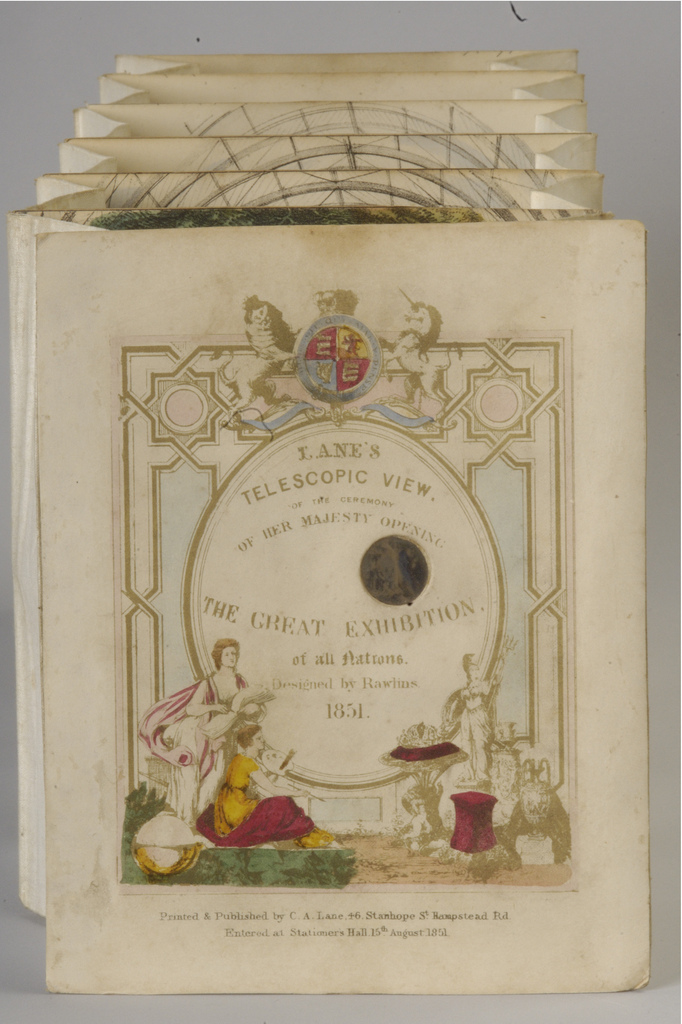
River one — the European peepshow. The engraver and print-seller Martin Engelbrecht (1684-1756) of Augsburg, Germany is credited with the early layered, cut-paper perspective view — boxes and sheets you peer into for theatrical depth, made on the printing presses of the 18th century. By the 1800s the form exploded across Europe, riding the same wave as every other optical novelty — 'a century later when optical devices and spectacles were trendy,' as My Modern Met frames it. Travelling showmen carried them town to town. The V&A's own note paints the scene: 'traveling peepshow men would charge adults and children to look inside the box, while commenting on the scene depicted and bringing it to life.' These were pocket spectacles for events too big to see in person — the opening of a tunnel, a coronation, the Arc de Triomphe, a World's Fair. Paper peepshows of the 1939 New York World's Fair ('The World of Tomorrow,' Trylon and Perisphere) are still collected today.
The single most important collection lives in London: the largest hoard of Victorian peepshows in the world was given to the Victoria & Albert Museum, including the famous Gestetner Collection — the people who guard these are unembarrassed about how moving they find them.
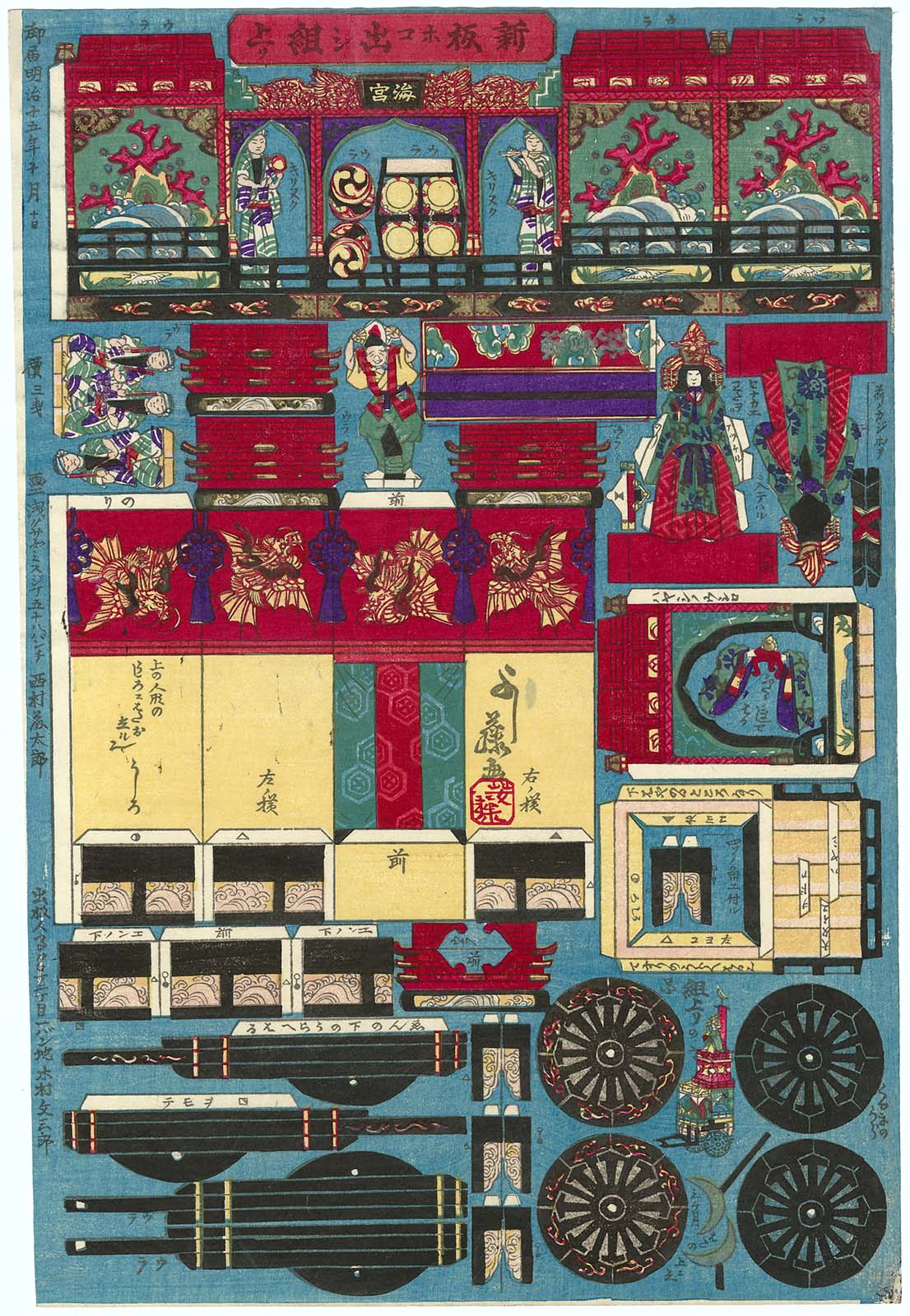
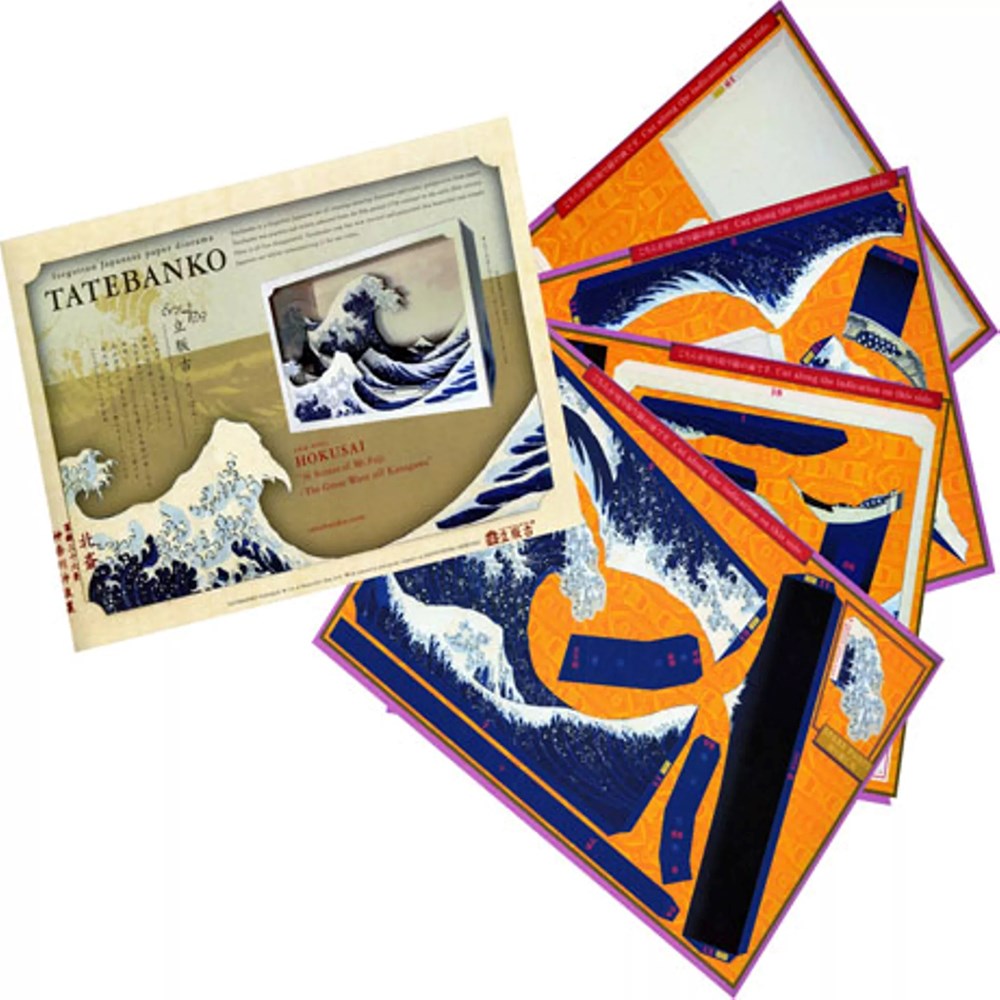
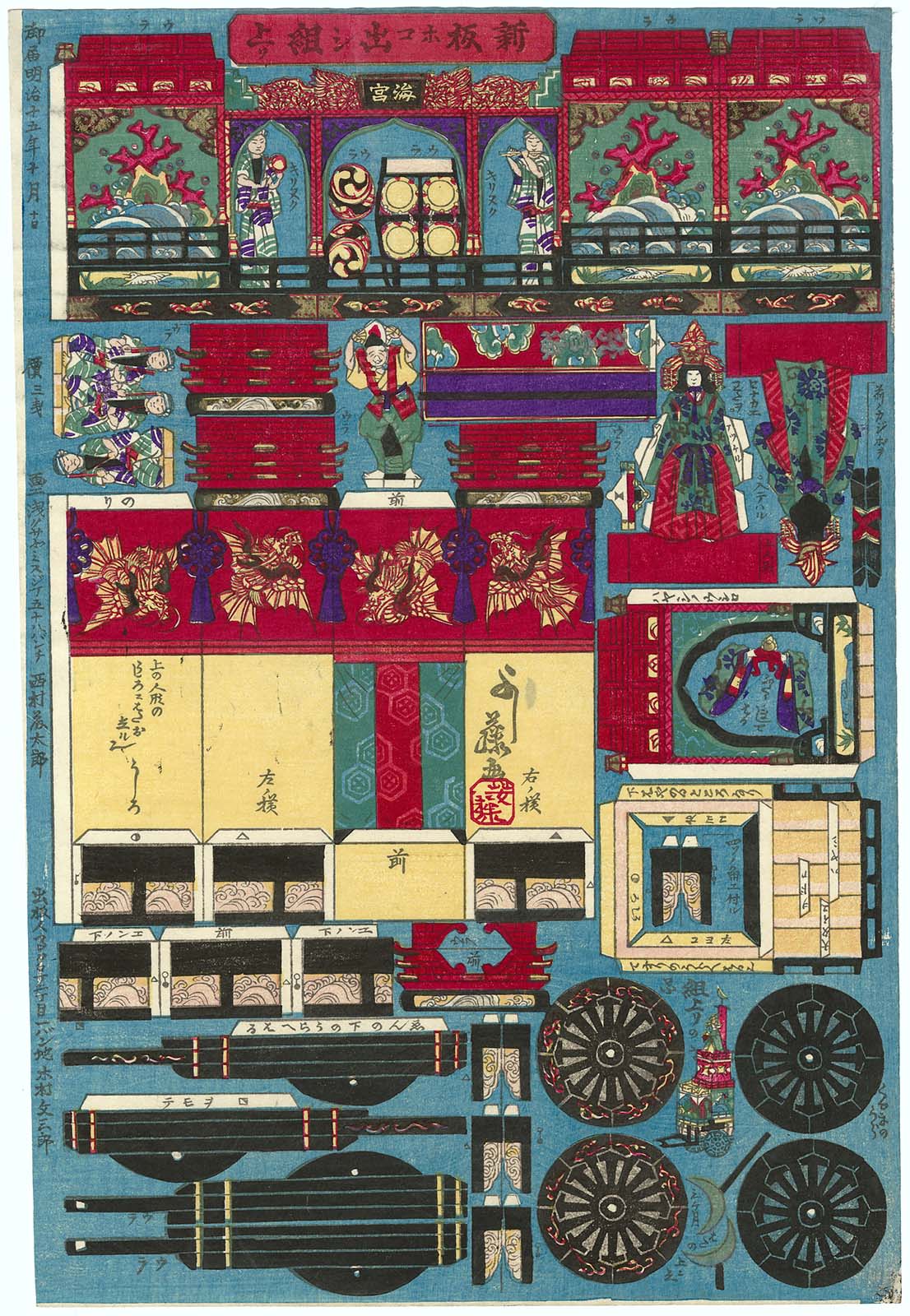
River two — the Edo Japanese tatebanko. While Europe peered into accordion boxes, Japan was folding tatebanko — 'the almost forgotten Japanese art of creating amazing dioramas and scenic perspectives from paper,' as one modern kit-maker describes it. A flat printed sheet, cut and assembled, becomes a standing landscape with foreground, mid-ground, and a far mountain. It is the same instinct — layered paper depth — arrived at independently, and it pairs perfectly with ukiyo-e imagery (Hokusai's Great Wave practically asks to be a diorama).
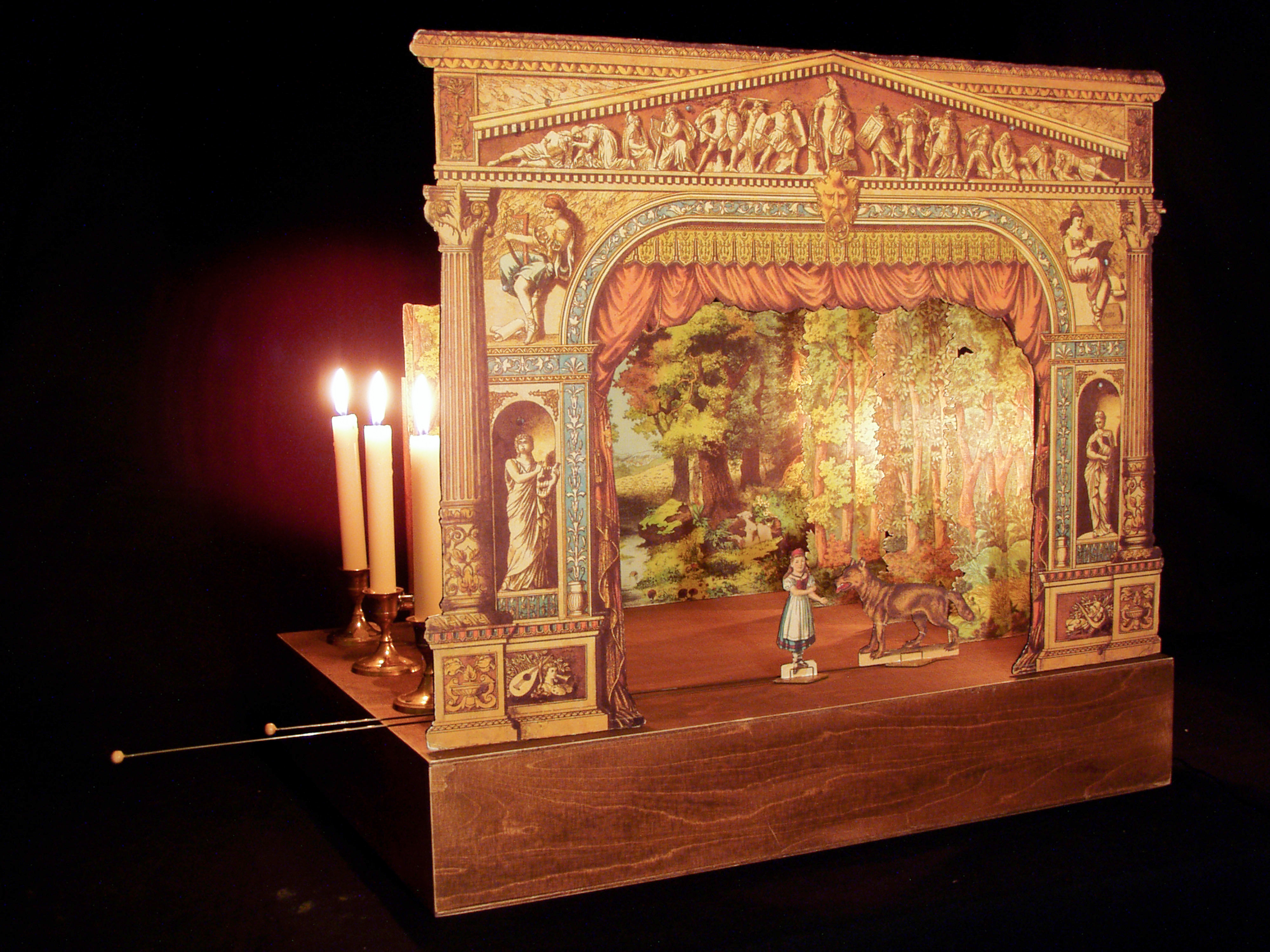
River three — the Victorian toy theatre. This is the proscenium branch, and its keeper is a real address. Benjamin Pollock's Toyshop, with roots reaching back to the early 1800s through Redington and then Pollock, sold sheets of printed scenery and characters under the immortal pricing tag 'a penny plain, twopence coloured.' You bought the sheets, cut them out, mounted them, and staged a play on a tabletop. Robert Louis Stevenson adored them. The tradition survives in two living institutions: Pollock's Toy Museum and Benjamin Pollock's Toyshop in Covent Garden, which still 'produces its own range of theatres and paper models designed by contemporary artists.'
Bring: a museum visit if you can — the V&A peepshows or Pollock's in London — because nothing on a screen prepares you for the depth in the real paper.
Travelling peepshow men would charge adults and children to look inside the box, while commenting on the scene and bringing it to life — pocket cinemas two centuries before screens.
What makes a beautiful tunnel book or paper theatre — what do the makers obsess over?

Listen to enough makers and the same four obsessions surface. Beauty here is engineered, not lucky.
1. Real depth between the layers. The whole illusion lives in the gap. Too few panels and the scene is flat; too shallow an accordion and the layers crush together. Light-box practitioners are exact about this — the community consensus is roughly '7 centimetres (about 3 inches) of box depth' to let silhouettes separate and cast their little shadows. A beautiful piece stages real distance: something almost touching your eye, something a world away.
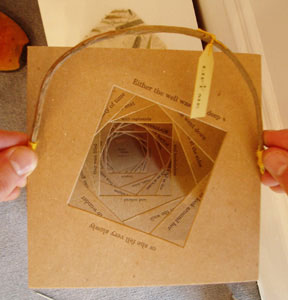
2. Cuts that frame, not clutter. Each panel's window is a proscenium for the one behind it. The best makers cut foreground elements that reach in — branches, archways, a curtain edge — so your eye is led, not blocked. Tara Bryan's celebrated artist edition Down the Rabbit Hole is the connoisseur's example: boards 'die-cut with a square hole in the center, positioned at different angles and diminishing in size,' so the fall down the rabbit-hole is built into the geometry. The cutting is the choreography.
3. Materials that hold a fold and a hue. This is where artist editions leave printer-paper behind. Bryan printed her sides 'with a linocut in yellow, brown, red, and dark purple on Japanese handmade Kiritsubo paper'; her later edition used 'laser-cut museum board panels connected with folded pieces of handmade Matsuo Kozo paper.' Museum board for crisp panels, Japanese kozo/washi for hinges that fold a thousand times without cracking. The hinge paper is the unsung hero — it is what lets the thing breathe open and shut.
4. A scene worth peering into. A tunnel book is a single held moment — so it has to be the right moment. The masters pick an image with built-in recession (a tunnel, a forest path, a wave curling over a far mountain, a rabbit-hole) and a story the depth can tell. Pollock's contemporary theatres lean on exactly this: Snow Queen by Kate Baylay, Hansel & Gretel by Clive Hicks-Jenkins, Rusalka by María Gordon — fairy tales chosen because they want a stage.
And the honest community caveat: this is a small, artist-driven world. The truly beautiful pieces are often limited editions, one-maker Etsy shops, or museum-shop runs that sell out. Patience and a watchlist beat impulse-buying here.
Bring: archival museum board for the panels and a roll of Japanese kozo tissue for the hinges — and a light placed low and to one side, never flat-on, so the layers throw shadows.
The hinge paper is the unsung hero. Japanese kozo folds a thousand times without cracking — it is what lets the little theatre breathe open and shut.
What are the best paper theatres to buy — and is Pollock's really still the one?
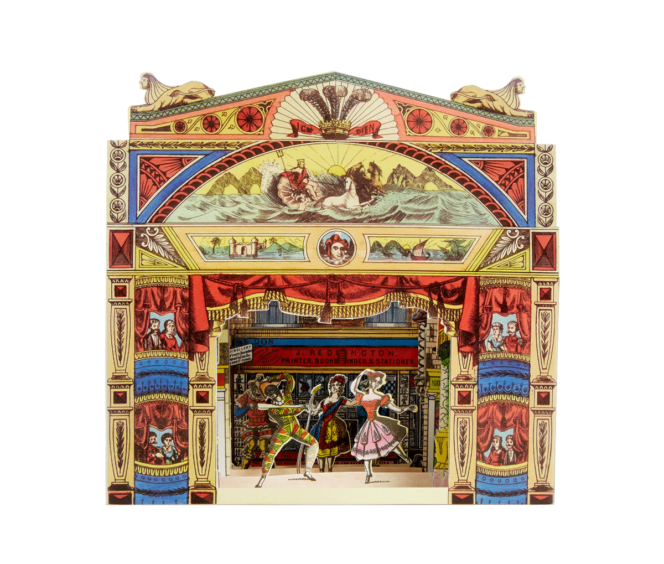
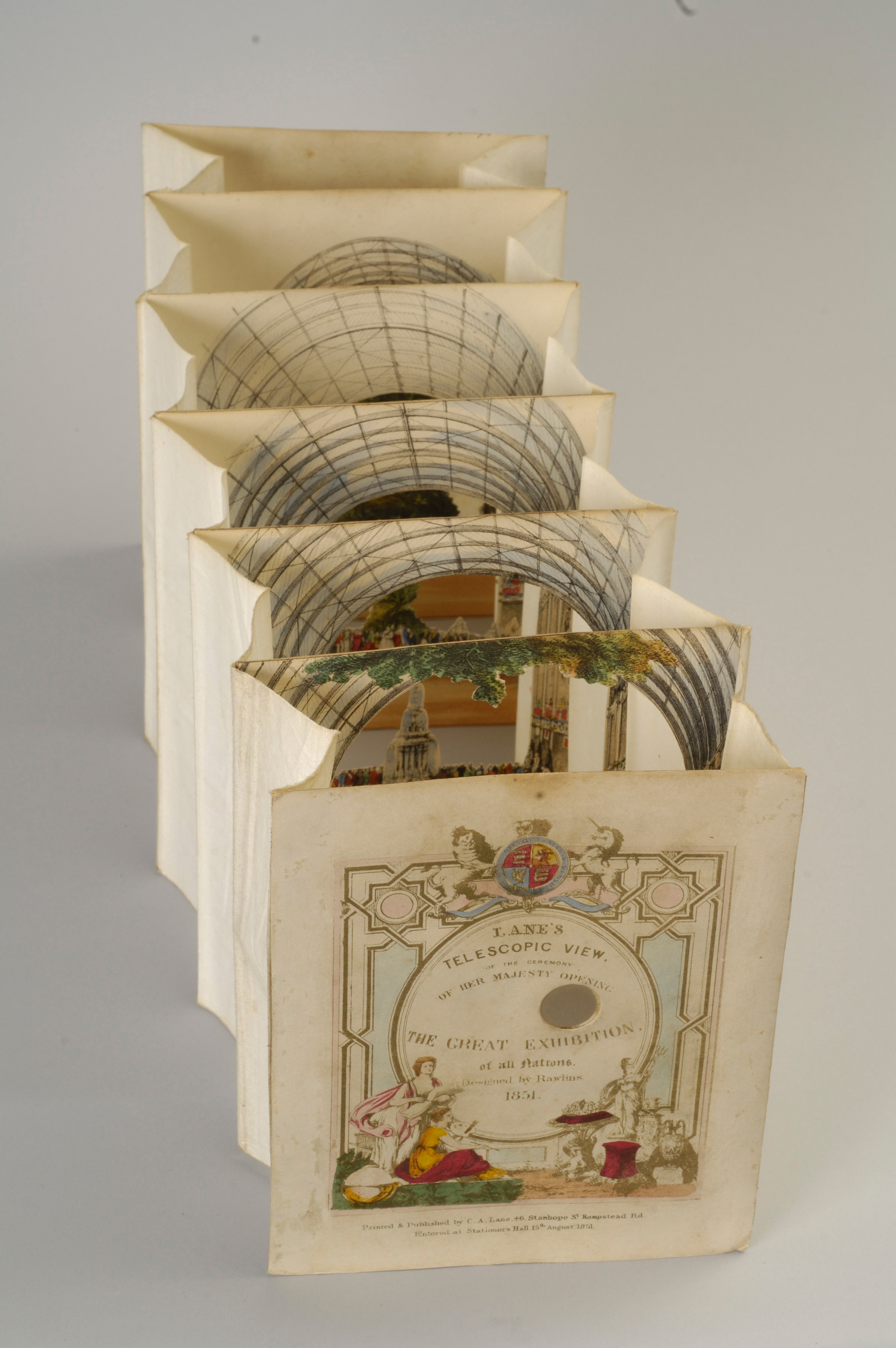
Yes. If you want a paper theatre — a real proscenium stage with a curtain and slide-in characters — the answer the whole hobby gives is Benjamin Pollock's Toyshop, Covent Garden, London. It is the living descendant of the Victorian toy-theatre trade, and it still 'produces its own range of theatres and paper models designed by contemporary artists,' displayed at Liberty, Fortnum & Mason, and the Royal Opera House. This is not nostalgia cosplay; it is an unbroken line back to 'a penny plain, twopence coloured.'
What's beautiful is that they sell at every commitment level, so nobody's priced out and nobody serious is bored:
Gateway (~$13-$32 / £10-£25). The Pollock's Theatre Diorama Pop-Up Card (£10, ~$13) is the toe-in-the-water — a real little stage that folds from a card. The Pantomime Toy Theatre with Cinderella (£25, ~$32) and La Belle et la Bête Paper Theatre (£25, ~$32) are proper cut-and-build stages at pocket-money prices.
The heart of the range (~$38 / £30). This is the sweet spot, and it is where the contemporary-artist magic lives: Snow Queen by Kate Baylay, Hansel & Gretel by Clive Hicks-Jenkins, Rusalka by María Gordon, The Dancing Marquess by Lukas Palumbo, Pinocchio by Hannah Dyson, Shakespeare's Toy Theatre with A Midsummer Night's Dream — each around £30 (~$38). You're buying a named illustrator's whole staged world. The Magic Horn / Sleeping Beauty Toy Theatre (£45, ~$57) and Fourpenny Toy Theatre (£35, ~$44) sit just above.
Heirloom (~$222 / £175). The Nutcracker Ballet Paper Theatre by John MacFarlane and The Trompe L'Oeil Theatre (each £175, ~$222) are the collector pieces — the ones that live under glass.
The community's honest note: Pollock's is a small London shop, not Amazon. International shipping and currency conversion apply, stock on individual artist theatres rotates, and the artist editions can sell through. But for a genuine paper theatre with a 200-year pedigree, there is simply no equivalent — and the museum (Pollock's Toy Museum) lets you see the Victorian originals that started it all.
Bring: a craft knife, a steel ruler, a cutting mat, and an evening — these are build-it kits, and the building is the joy.
It is not nostalgia cosplay; it is an unbroken line back to 'a penny plain, twopence coloured' — the same Covent Garden trade Robert Louis Stevenson loved.
What's the best tunnel book to actually buy — antique, artist edition, or book?

Here the honest answer splits three ways, because 'tunnel book' covers a rare antique, a one-off artwork, and a mass-market book that happens to do the trick.
If you want the real Victorian thing — buy an antique peepshow. Specialist dealers like VintagePopupBooks.com (the 'Virtual Movable Book Museum') and antiquarian sellers carry genuine 19th-century accordion peepshows: the Telescopic View (1851 Great Exhibition), Thames Tunnel souvenirs, and the 1939 'World of Tomorrow' New York peepshow. These are collectibles — expect roughly ~$145 to well over $1,500 depending on subject, age, and condition, and expect to peer into the exact object a Victorian held. This is the purest 'tunnel book to buy,' but it is a collector's purchase: condition varies, each is one-of-one, and you're bidding against other obsessives.
If you want a living artist's tunnel book — commission or watch the makers. The fine-art end is led by names like the late Tara Bryan, whose Down the Rabbit Hole is the genre's touchstone (laser-cut museum-board panels, handmade Japanese paper hinges, tiny editions of 40). These appear at book-arts fairs, in special collections, and occasionally on the secondary market — rarely cheap, never mass-produced. On Etsy, working makers sell genuinely lovely finished tunnel books and peepshow boxes one at a time; buyers there describe being 'struck by the meticulous craftsmanship and the delicate beauty of the piece' on opening the package. That's the trade-off: total uniqueness, variable availability.
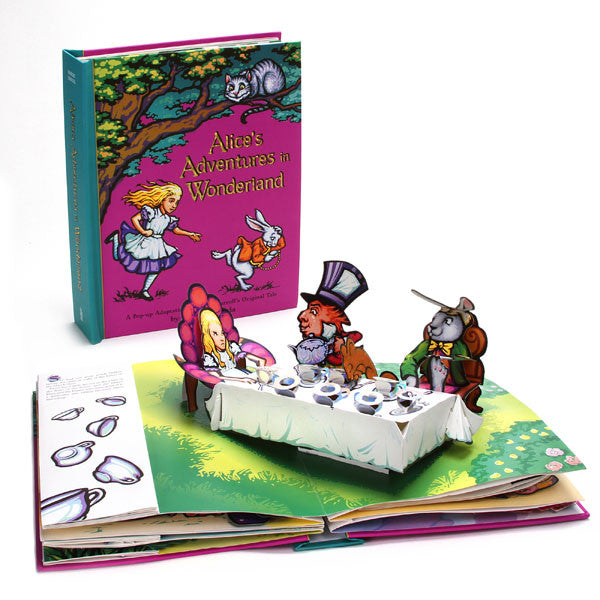
If you want a tunnel-book feeling you can buy tonight — get a great pop-up book. The most accessible on-ramp is Robert Sabuda's Alice's Adventures in Wonderland: A Pop-Up Adaptation (~$40), which is beloved precisely because it builds an actual Victorian peep-show spread into its pages, alongside foil and tactile effects, in John Tenniel's classic style. It is in print, it is ~$40 at museum shops (Getty, NYPL) and booksellers, and it delivers theatrical paper depth with zero risk. For the same instinct in a children's edition, his Wonderful Wizard of Oz carousel-style pop-up is a sister choice.
The community's blunt guidance: don't expect a 'standard' product. The antique is rare, the artwork is rarer, and the book is the dependable one. Match the route to whether you want to own history, own art, or own something tonight.
Bring: a dealer watchlist for the antique route — and, for tonight, the Sabuda Alice, opened to the peep-show spread under a low lamp.
Match the route to what you actually want: to own history (the antique), to own art (the artist edition), or to own something tonight (the Sabuda pop-up).
What's the best DIY kit, tatebanko, and light box — and are these hard to make?
Good news: this is the most welcoming corner of the whole category. You can make a real one this weekend.
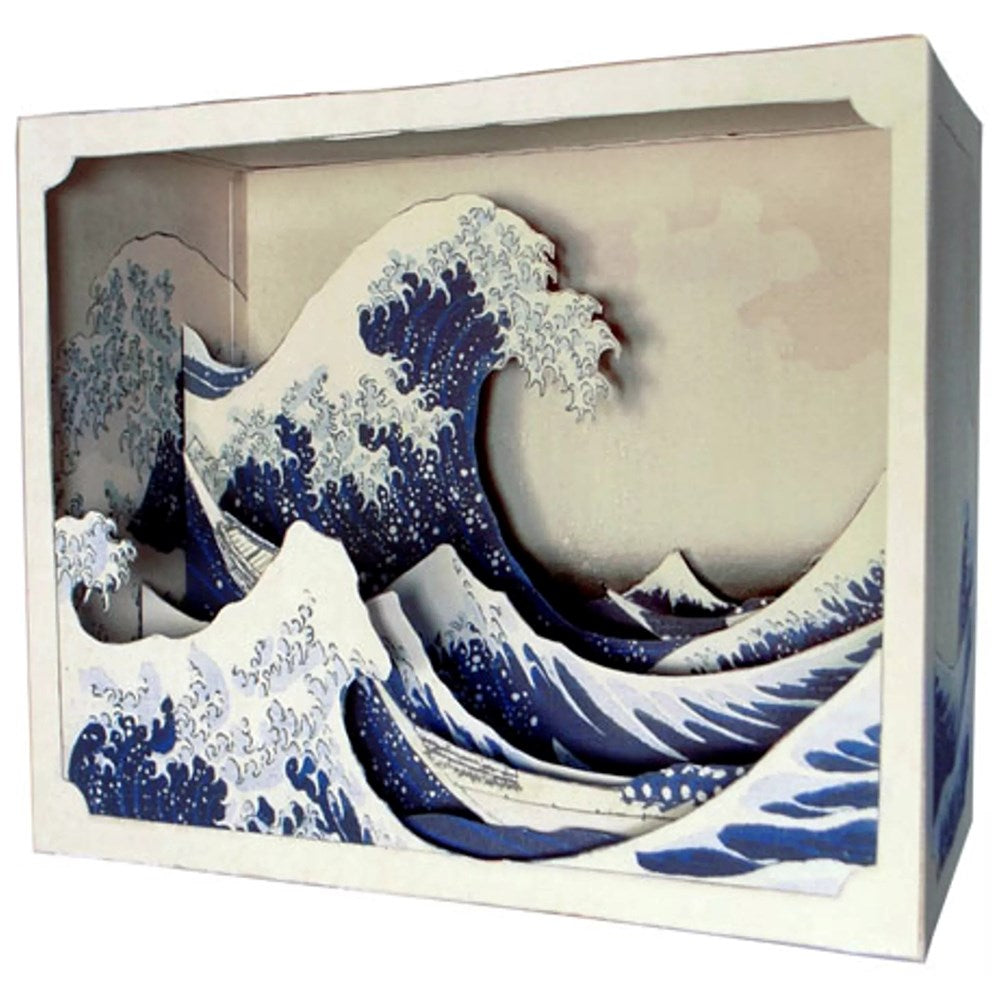
Best DIY kit overall — a tatebanko paper-diorama kit. This is my pick for first-timers. A Tatebanko Hokusai kit (the Great Wave off Kanagawa and 36 Views / Red Fuji editions are the famous ones) arrives as 'a nicely packaged A4 size' sheet and builds into a standing diorama roughly '7.5" W x 3.5" D x 4.82" H.' Everything is printed and pre-designed; you cut, fold, and assemble. Historically these run around ~$15-$20 (one retailer files them under 'Great Gifts Under $50'). No drawing skill required, and you end up with a Hokusai you can stand on a shelf. Honest caveat: these are niche imports and stock genuinely fluctuates — one shop currently lists the Red Fuji as out-of-stock with a restock window, so check two or three retailers (Amazon, ArchitectGiftsPlus, specialty design shops) before giving up.
Best tunnel-book DIY route — a templated kit or a class. Craft suppliers like Alpha Stamps periodically release themed tunnel-book kits (e.g., Laura Carson's Alice-in-Wonderland 6×6 arch tunnel book) bundling the die-cut book and matching collage papers — lovely, though specific kits sell out and rotate. For a guaranteed great first build, a printable Etsy template (the Wizard of Oz Coloring Carousel / Tunnel Book is a charming one — print, color, cut) costs only a few dollars. And the gold-standard route is a Center for Book Arts class, 'The Tunnel Book: Setting a Stage' — make one in an afternoon with a teacher.
Best light box / shadow box — layered kirigami, lit from behind. For the glowing version, two honest paths. Buy finished: Lovepop's Unboxed Pop-Up Paper Sculptures (Unicorn, Pirate Ship, ~$39, 12" H × 8.5" W) are laser-cut sliceform kirigami that stand and fold flat — the most theatrical depth for the least effort, and they ship today. Make it yourself: the kirigami/papercut light-box community (3dpaperlightbox.com, tdesign510, countless Etsy SVG sellers) sells layered shadow-box templates you cut on a Cricut or by hand and light with an LED strip — the community describes the result as a 'stereoscopic pattern showing sparkling and beautiful color in the dark.'
So — are these hard? Honestly, no, on a sliding scale. Tatebanko and a printable tunnel-book template are a relaxed afternoon with a craft knife. A from-scratch artist tunnel book on museum board with kozo hinges is a real skill you grow into. A multi-layer Cricut light box sits in between. Start with the tatebanko; you'll be hooked before the glue dries.
Bring: a fresh #11 blade, a self-healing cutting mat, a bone folder for crisp accordion creases, and a warm-white LED strip for the light-box dream.
Start with the tatebanko — A4 sheet in, standing Hokusai out, no drawing skill required. You'll be hooked before the glue dries.
What experienced tables keep reporting
Recurring owner patterns, synthesized in Puzzlewick's words. Follow each evidence trail to read the original discussion.
Traveling peepshow men would charge adults and children to look inside the box, while commenting on the scene depicted and bringing it to life.
Read the evidence: Victoria & Albert Museum (via My Modern Met)
A tunnel book is a sculptural book structure... allowing the viewer to peer into the book and discover a hidden world, which can be static or evolving through the sequential opening of its accumulated layers.
Read the evidence: Center for Book Arts — 'The Tunnel Book: Setting a Stage'
Tunnel books or peep shows are a series of cut-paper panels placed one behind the other, creating the illusion of depth and perspective.
Read the evidence: Smithsonian Libraries — 'The Dance of the Tunnel Book'
Down the Rabbit Hole... boards die-cut with a square hole in the center, positioned at different angles and diminishing in size... printed with a linocut on Japanese handmade Kiritsubo paper.
Read the evidence: Tara Bryan, artist's description of her tunnel book edition
Tatebanko is the almost forgotten Japanese art of creating amazing dioramas and scenic perspectives from paper.
Read the evidence: Tatebanko kit maker (Hokusai Great Wave kit listing, via ArchitectGiftsPlus)
Papercut light boxes... combine silhouette paper pieces to create a stereoscopic pattern showing sparkling and beautiful color in the dark.
Read the evidence: Papercut light-box community (3dpaperlightbox.com)
The picks
Some links below are affiliate links — as an Amazon Associate, Puzzlewick earns from qualifying purchases, at no extra cost to you. It never changes a pick.
 3 photos
 Tatebanko Japanese Paper Diorama Kit — Hokusai 'The Great Wave' / 'Red Fuji' (best DIY kit)
The friendliest possible entry into layered paper depth. An A4 sheet of pre-printed Hokusai imagery cuts and folds into a freestanding diorama about 7.5" wide × 3.5" deep × 4.8" tall — the Edo-Japanese answer to the European peepshow. No drawing, no design, just satisfying cutting and folding that ends in a Great Wave (or Red Fuji) you can stand on a shelf. At roughly ~$15-20 it's an easy gift and an even easier 'try the hobby' purchase. The one real caveat is supply: these are niche imports and stock genuinely comes and goes, so check a couple of retailers and grab one when you see it in stock.
- Pre-printed and pre-designed — zero art skill, very forgiving
- Iconic Hokusai result; ~$15-20 makes it a perfect on-ramp or gift
- Teaches real layered-depth construction in one relaxed afternoon
- Niche import — stock fluctuates and editions go out of print
- Single fixed scene; not customizable like a from-scratch tunnel book
 3 photos
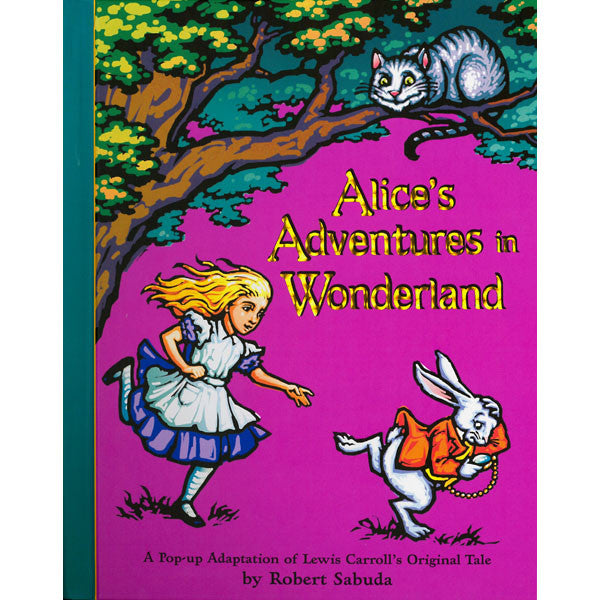
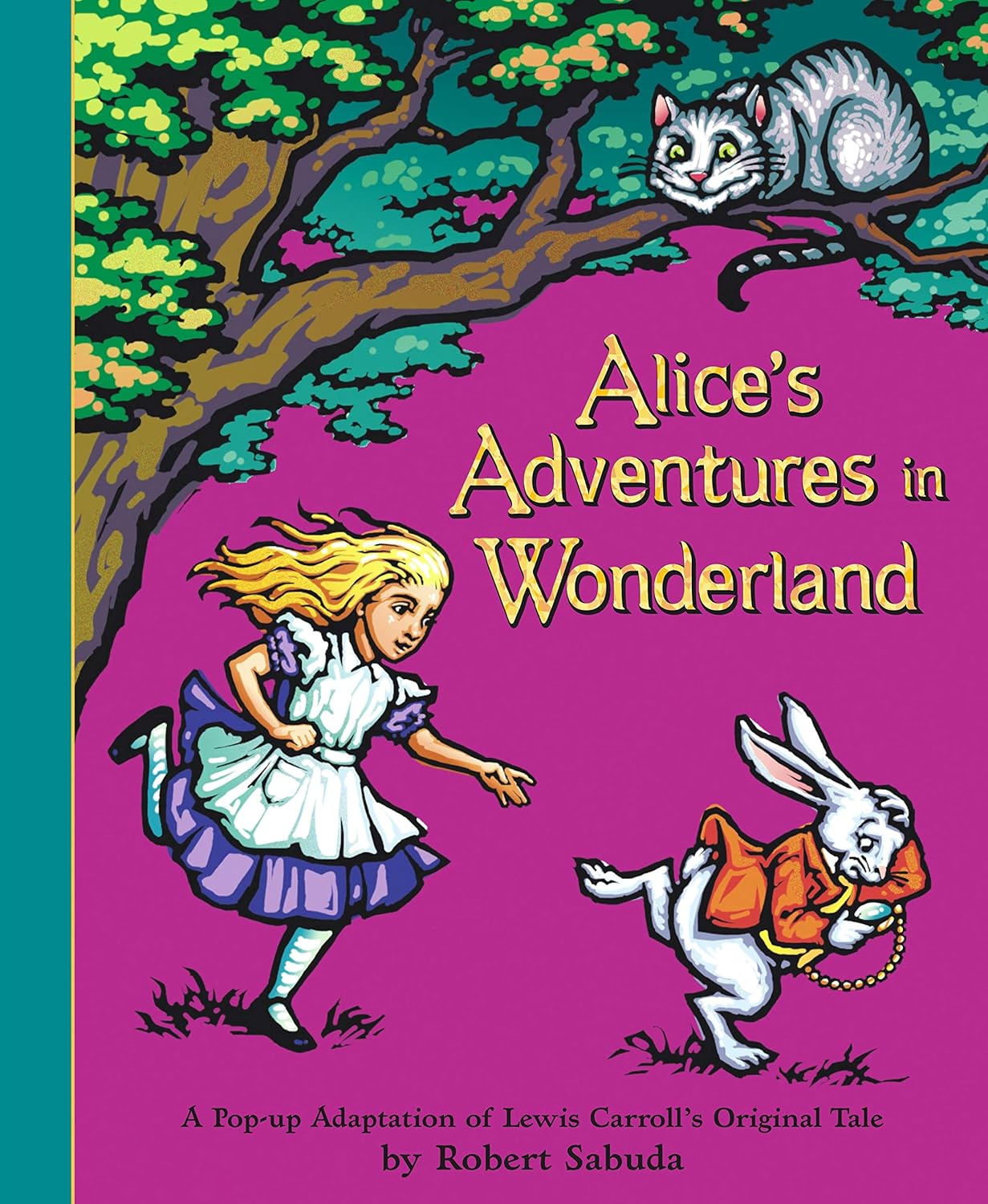
 Alice's Adventures in Wonderland: A Pop-Up Adaptation (best gift / best book on-ramp)
If you want the tunnel-book feeling with none of the risk, this is it. Sabuda's masterwork adapts Tenniel's classic Alice into super-sized pop-ups — and crucially, it builds an actual Victorian peep-show spread into its pages, alongside multifaceted foil and tactile effects. It's widely in print at ~$40 through museum shops (Getty, NYPL) and booksellers, so it's dependable in a category where most things are rare or made-to-order. As a gift it's almost unbeatable: instantly impressive, genuinely artful, and safe for careful hands of any age. Purists will note it's a bound pop-up book, not a standalone accordion peepshow — but that's the point of its accessibility.
- In print and easy to buy at ~$40 — a rarity in this niche
- Literally includes a Victorian peep-show spread plus foil/tactile effects
- Gorgeous Tenniel-style art; an unbeatable, low-risk gift
- A bound pop-up book, not a true standalone tunnel book
- Delicate paper engineering — not for unsupervised small children
At a glance
| item | maker | form | price | best for |
|---|---|---|---|---|
| Unicorn Unboxed Pop-Up Sculpture | Lovepop | Sliceform kirigami sculpture | ~$39 | Best overall — instant layered depth |
| Contemporary-Artist Paper Theatres | Benjamin Pollock's Toyshop | Toy / paper theatre (build-it) | ~£30 / ~$38 | Best paper theatre — heritage proscenium |
| Tatebanko Hokusai Kit (Great Wave / Red Fuji) | Tatebanko (import) | Japanese paper diorama (DIY) | ~$15-20 | Best DIY kit & first build |
| Alice's Adventures in Wonderland: A Pop-Up Adaptation | Robert Sabuda / Little Simon | Pop-up book (with peep-show spread) | ~$40 | Best gift & easiest on-ramp |
| Genuine Antique Peepshow | VintagePopupBooks.com & dealers | Victorian accordion tunnel book | ~$145-$1,500+ | Best 'own history' collectible |
| Shadow Box Set / Tableaux (Tug Rice) | Benjamin Pollock's Toyshop | Paper shadow-box / diorama | ~£30 / ~$38 | Best heritage shadow-box gift |
| Theatre Diorama Pop-Up Card | Benjamin Pollock's Toyshop | Pop-up card theatre | ~£10 / ~$13 | Best for kids / cheapest taste |
| Down the Rabbit Hole (artist edition) | Tara Bryan | Fine-art tunnel book | Collector / secondary market | Best fine-art reference piece |
| Kirigami Light-Box Template | Papercut light-box community | DIY backlit shadow box (SVG) | ~$5+ template + materials | Best make-your-own light box |
| Wizard of Oz Carousel/Tunnel Printable | Independent Etsy maker | Printable tunnel/carousel (DIY) | ~$6 | Best cheap kids' DIY |
Questions, answered
What is a tunnel book?
A tunnel book (also called a paper peepshow) is a series of cut-paper panels placed one behind another and connected down the sides by accordion (concertina) folds. Each panel has a window cut in it, so when you peer through a hole in the front cover, you see a scene that recedes into layered depth — like looking into a tiny theatre. The Center for Book Arts describes it as a structure that lets you 'peer into the book and discover a hidden world.'
What is a paper theatre or toy theatre?
A paper (or toy) theatre is a miniature proscenium stage built from printed paper — a curtain, a stage, layered flat scenery, and characters you slide on or off. You cut and mount the printed sheets, then stage a play on a tabletop. The classic source is Benjamin Pollock's Toyshop in London, heir to the Victorian 'penny plain, twopence coloured' tradition Robert Louis Stevenson loved.
What is tatebanko?
Tatebanko is the Edo-era Japanese art of building paper dioramas — 'the almost forgotten Japanese art of creating amazing dioramas and scenic perspectives from paper.' A flat printed sheet is cut and folded into a freestanding standing scene with foreground, mid-ground, and a far backdrop. Modern kits often use Hokusai imagery (The Great Wave, Red Fuji) and build into a diorama roughly 7.5" wide.
What's the history of paper peepshows?
Layered cut-paper peepshows trace to 18th-century Europe — the Augsburg engraver Martin Engelbrecht (1684-1756) is credited with early examples — and exploded in the 19th century alongside other optical novelties. Travelling showmen charged people to peer into them at fairs. They commemorated big events: coronations, the Arc de Triomphe, the Great Exhibition, the Thames Tunnel, and even the 1939 New York World's Fair. The V&A in London holds the world's largest Victorian peepshow collection.
Why is it called a 'tunnel' book?
Because of one 19th-century craze: London's Thames Tunnel (built 1825-1843) was a global sensation, and so many souvenir peepshows depicted its long receding arches that the whole accordion-sided form picked up the nickname 'tunnel book.' The Gestetner Collection alone holds more than 60 Thames Tunnel peepshows.
What's the best tunnel book to buy?
It depends on your goal. To own history, buy a genuine antique peepshow from a specialist dealer like VintagePopupBooks.com (~$145+). To own fine art, watch for artist editions (the Tara Bryan-class makers) or one-off Etsy makers. To buy theatrical paper depth tonight with zero risk, get Robert Sabuda's Alice's Adventures in Wonderland pop-up (~$40), which builds in an actual Victorian peep-show spread.
What's the best paper theatre?
Benjamin Pollock's Toyshop in London is the consensus pick — the living descendant of the Victorian toy-theatre trade, still producing theatres designed by contemporary artists. Start with a ~£30 (~$38) artist theatre like the Snow Queen (Kate Baylay) or Hansel & Gretel (Clive Hicks-Jenkins); go up to the ~£175 Nutcracker by John MacFarlane for an heirloom.
What's the best DIY kit?
A tatebanko Hokusai paper-diorama kit (The Great Wave or Red Fuji, ~$15-20). It's pre-printed and pre-designed, so there's no drawing — you just cut, fold, and assemble an A4 sheet into a standing 7.5"-wide diorama. It's the most forgiving on-ramp in the whole category. For a tunnel book specifically, a printable Etsy template (a few dollars) or a Center for Book Arts class is the easiest route.
What's the best light box or shadow box?
To buy finished: Lovepop's Unboxed Pop-Up Paper Sculptures (Unicorn or Pirate Ship, ~$39) are laser-cut sliceform kirigami that deliver layered depth instantly. To make your own: buy a layered papercut light-box template (3dpaperlightbox.com, tdesign510, Etsy SVGs, ~$5+), cut it on a Cricut or by hand, frame it, and backlight with an LED strip for a glowing, 'stereoscopic' scene.
Are tunnel books and paper theatres hard to make?
Not to start. A tatebanko kit or a printable tunnel-book template is a relaxed afternoon with a craft knife — pre-designed, very forgiving. A multi-layer Cricut light box is a step up. A from-scratch artist tunnel book on museum board with Japanese kozo-paper hinges is a real skill you grow into. Begin with a tatebanko; cutting and folding well matters far more than drawing ability.
What's the best gift?
For most people, Robert Sabuda's Alice's Adventures in Wonderland pop-up (~$40) — instantly impressive, genuinely artful, in print, and safe for careful hands. For a maker, a Pollock's artist paper theatre (~£30/~$38). For a child, the Pollock's Theatre Diorama Pop-Up Card (~£10/~$13) or a tatebanko kit (~$15-20).
What's best for kids — and where do I buy all this?
For kids: the Pollock's pop-up card (~$13), a tatebanko Hokusai kit (~$15-20), or a printable Wizard of Oz coloring tunnel/carousel template (~$6) they color and build with help. Where to buy: Benjamin Pollock's Toyshop (pollocks-coventgarden.co.uk) for theatres; Lovepop (lovepop.com) for sculptures; Amazon/ArchitectGiftsPlus/specialty design shops for tatebanko; VintagePopupBooks.com for antique peepshows; Getty/NYPL museum shops and booksellers for the Sabuda pop-up; Etsy for handmade pieces and printable templates. Puzzlewick doesn't sell these — we point you to the makers.
Imani's verdict
So here is the chorus, gathered. The whole community keeps circling one word — peer — and every pick on this list earns it. For the most theatrical depth with the least risk, Lovepop's Unicorn Unboxed (~$39) opens flat-to-stage in seconds. For a real paper theatre with two centuries behind it, walk into Benjamin Pollock's Toyshop and start at a ~£30 artist theatre. For your very first build, fold a tatebanko Hokusai (~$15-20) this weekend. For the safest gift, Sabuda's Alice (~$40) literally hides a Victorian peep show in its pages. And for collectors who want the genuine 19th-century article, a dealer peepshow (~$145+) lets you lean in exactly as a Londoner did when the Thames Tunnel was the wonder of the world. Be patient: this is a small, artist-driven, sometimes-out-of-stock corner of the paper world — watchlists beat impulse here. Bring: a low lamp set behind the layers, one eye nearly closed, and your face right up to the little stage — that lean-in is the entire art. (And to be clear, as always: Puzzlewick is a wonder-library, not a store. We don't sell any of these and we take no markup — we just point you at the makers, museums, and dealers who do, and tell you honestly where the magic is thin.)
Research ledger 23 sources · reviewed 2026-08-10
Specifications, rules, current product information, community experience, and contrary evidence were checked against the sources below. Commercial links are kept separate from editorial evidence.
- library.si.edulibrary.si.edu/digital-library/exhibition/paper-engineering/dance-tunnel-book
- mymodernmet.commymodernmet.com/paper-peepshow-tunnel-book
- smithsonianmag.comsmithsonianmag.com/smart-news/museums-giant-collection-of-paper-peepshow-offers-pinhole-into-past-180960012
- ssgreatbritain.orgssgreatbritain.org/collection-stories/thames-tunnel-peepshow-1830
- library.si.edulibrary.si.edu/es/tags/martin-engelbrecht
- pollocks-coventgarden.co.ukpollocks-coventgarden.co.uk/categories/paper-theatres
- pollocks-coventgarden.co.ukpollocks-coventgarden.co.uk/about-us/our-history
- pollockstoymuseum.co.ukpollockstoymuseum.co.uk/our-history
- en.wikipedia.orgen.wikipedia.org/wiki/Benjamin_Pollock's_Toy_Shop
- craftsmanship.netcraftsmanship.net/the-rise-and-fall-of-toy-theatre
- lovepop.comlovepop.com/products/unicorn-unboxed-pop-up-paper-sculpture
- lovepop.comlovepop.com/products/pirate-ship-unboxed-pop-up-paper-sculpture
- amazon.comamazon.com/dp/B002J4UCX0?tag=puzzlewick-20
- architectgiftsplus.comarchitectgiftsplus.com/products/tatebanko-paper-diorama-kit-hokusai-the-great-wave
- stormthecastle.comstormthecastle.com/Things/tatebanko-paper-dioramas.htm
- vintagepopupbooks.comvintagepopupbooks.com/category-s/1874.htm
- vintagepopupbooks.comvintagepopupbooks.com/peepshow-p/m-8.htm
- shop.getty.edushop.getty.edu/products/alices-adventures-in-wonderland-a-pop-up-adaptation
- amazon.comamazon.com/dp/0689847432?tag=puzzlewick-20
- centerforbookarts.orgcenterforbookarts.org/product/classes/online/tunnel-book
- tarabryan.comtarabryan.com/down-the-rabbit-hole
- 3dpaperlightbox.com3dpaperlightbox.com
- Community research index: r/bookcollecting discussions about Best Tunnel Books & Paper Theatres, Rankedreddit.com/r/bookcollecting/search/?q=Best%20Tunnel%20Books%20%26%20Paper%20Theatres%2C%20Ranked&restrict_sr=1&sort=top
Okay but have you seen what everyone’s saying about this?
Keep exploring
The next smart rabbit holes.
✦ Topic PathBoard Game Buying Guides: compare the whole shelfStart with the decision, not the shelf. These guides compare the games, editions, expansions, player counts, and costs people...Best OfBest Pop-Up Books for Adults & Collectors (2026)Ten paper-engineering showpieces compared by mechanism, display impact, edition risk and current buyability.Best OfBuild-Your-Own Automata Kits Ranked: Best Wooden Mechanical Models (2026)Stop buying wooden puzzle kits branded as automata that just sit there—here's the honest ranking of kits that actually move.