Elden Ring: The Board Game — Which Core Set to Buy First (2026)
All three Elden Ring board game core sets are out. Which to buy first, how they connect, player count, solo, and whether it feels like the game.


AI-assisted research and drafting in Dax’s voice · reviewed by Robert Pruitt · how this guide was made
Last editorial refresh: 2026-07-03 Gold-standard QA: 2026-08-10 17 sources reviewed Affiliate links checked during gold-standard pass

The short answer
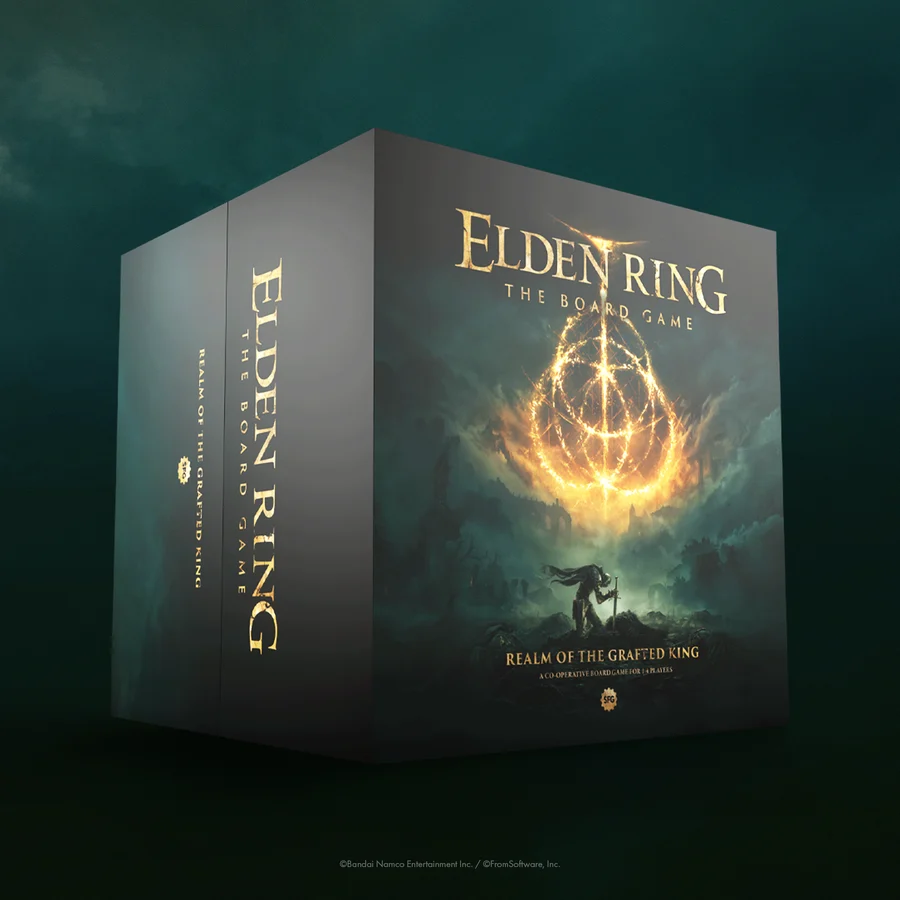
Buy Realm of the Grafted King first. It is the flagship, the biggest box, and the only starting point that makes the other two make sense. Steamforged's Elden Ring: The Board Game ships as three standalone-but-combinable co-op core sets. Realm of the Grafted King ($199.99) is the 50-plus-hour Limgrave campaign with 54 miniatures, four Tarnished, and Margit as the wall you throw yourself at. Weeping Peninsula ($119.99, Leonine Misbegotten) and Stormveil Castle ($129.99, Godrick the Grafted on a 120mm base) are 20-plus-hour standalone sets that each add two new Tarnished classes and clip onto Grafted King for a bigger campaign. All three play 1-4 and support true solo. If you have never opened one, start with Grafted King; if you already own it and want more Lands Between, Stormveil is the better second box because Godrick is the payoff fight. Everything else is expansions, and expansions are not where you start.
Decision map
Choose in thirty seconds
The correct first purchase for almost everyone — new players and completionists alike.
The best second box — for players who own Grafted King and want the payoff fight.
The cheapest entry and the ideal third box for completionists filling in the map.
THE VERDICT: There is exactly one correct first purchase, and it is Realm of the Grafted King. It is the only set built as a front door — the biggest campaign, the widest roster, the tutorial curve, and the region (Limgrave) every Elden Ring player already has muscle memory for. The other two boxes are excellent, but they are second boxes wearing standalone clothing.
THE FLAW: Steamforged marketed all three as "standalone," which is technically true and practically misleading. Standalone means the box contains a complete game. It does not mean any box is an equally good place to begin. Buy Weeping Peninsula first because it is cheaper and you get a smaller campaign that assumes you already understand the combat's rhythm before it starts turning the screws. The word "standalone" is doing heavy lifting, and it will separate a beginner from ninety dollars they should have spent on the flagship.
...and yet.
The three-box structure is genuinely smart once you see the logic. This is a co-op, diceless, card-driven Soulslike where your hand of cards is your stamina and every enemy runs an AI pattern you have to read like a boss's tell. The battle-stance system — aggressive, neutral, defensive — turns positioning into a mind game instead of a dice-roll. And it is one of the rare co-op campaign games that is balanced as carefully for one player as for four, which matters more than any marketing bullet.
I played it like something I actually had to review: solo first, then two-player, then I made three people read a Choose-Your-Own-Adventure book aloud until someone begged for a rules summary. What follows is not a hype reel. It is the shortest honest route from "which box" to "the right box for the specific person asking," with a compounding piece of context you should know — the A24 Elden Ring film (Alex Garland, March 2028) is going to send a wave of new people toward this shelf, and hype is not a buying strategy.
Start here, then go deeper
You are in the right cabinet.
 ✦ Topic PathBoard Game Buying Guides: compare the whole shelfStart with the decision, not the shelf. These guides compare the games, editions, expansions, player counts, and costs people...
 ComparisonThe Elder Scrolls: Betrayal of the Second Era vs Too Many Bones in 2026: Which Chip Theory RPG?Three-session sandbox campaign or one-night tyrant run? The real differences in table space, character building, solo flow, expansions,...
 Buying GuideLands of Evershade Buying Guide (2026): Standard vs Special vs Scout vs ExplorerA current, evidence-backed Lands of Evershade pledge guide: the best core box, the real gameplay all-in, which miniature tier earns its...
Which Elden Ring board game core set should I buy first?

Realm of the Grafted King. If you read nothing else, read that sentence and add it to your cart.
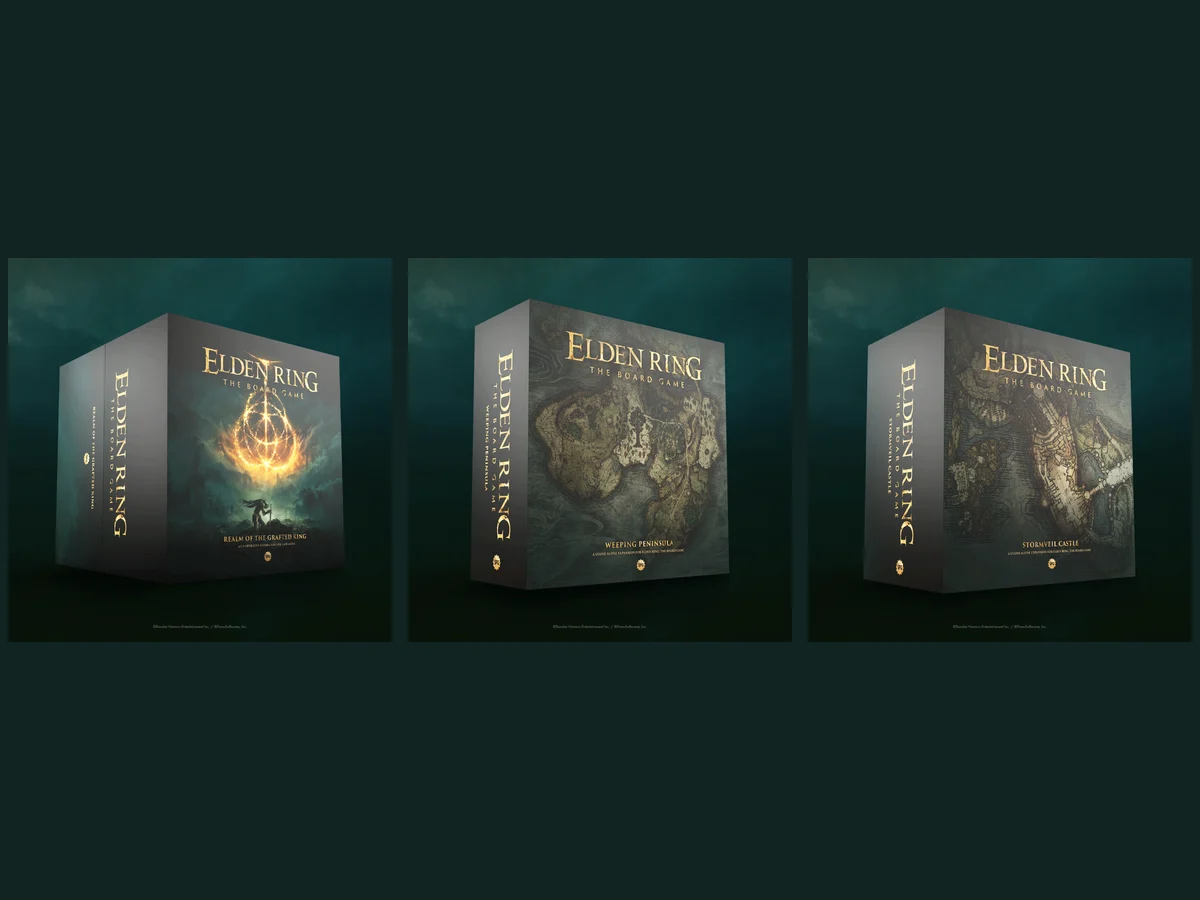
Here is the reasoning, because "trust me" is how people end up owning the wrong box. Elden Ring: The Board Game exists as three core sets: Realm of the Grafted King ($199.99), Weeping Peninsula ($119.99), and Stormveil Castle ($129.99). Every one is a complete, standalone cooperative game for 1-4 players. Every one supports solo. And every one connects to the others so you can push the quest books together into one larger campaign. So far, so friendly.
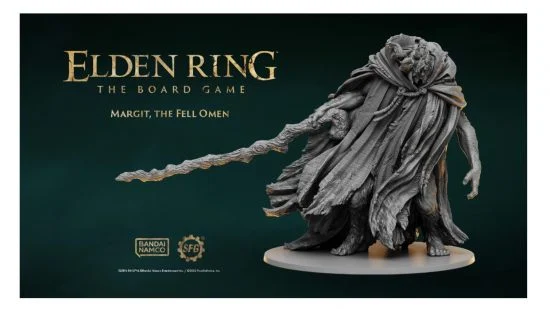
The trap is the word "standalone." It is true that any box is playable on its own. It is not true that any box is an equally good first box. Grafted King is the flagship for concrete reasons: it carries the 50-plus-hour campaign (the other two are 20-plus hours each), it has the most miniatures (54, of which 50 are enemies), it ships the four "default" Tarnished archetypes — Vagabond, Samurai, Astrologer, and Prophet — that map cleanly onto how new players think about Elden Ring classes, and it covers Limgrave, the region every video-game player learned the game in. Margit, the Fell Omen, is your headline wall. It is the tutorial that respects you enough to hurt.
The smaller boxes assume competence the flagship teaches. Weeping Peninsula and Stormveil each add two exclusive Tarnished classes and their own boss, but they are pitched as more Lands Between for someone who already owns the combat engine, not as a gentle on-ramp. Starting there is like starting Elden Ring in Caelid. Possible. Educational. Not recommended.
So: new to it, buy Grafted King. Already own Grafted King and want the natural next region, buy Stormveil Castle (Godrick is the boss the flagship's whole first arc is pointing at). Weeping Peninsula is the third box, not the first — a great expansion of the world, a poor place to learn it.
'Standalone' means the box is complete. It does not mean the box is a good place to begin. Those are different promises.
How do the three core sets connect, and what is the play order?
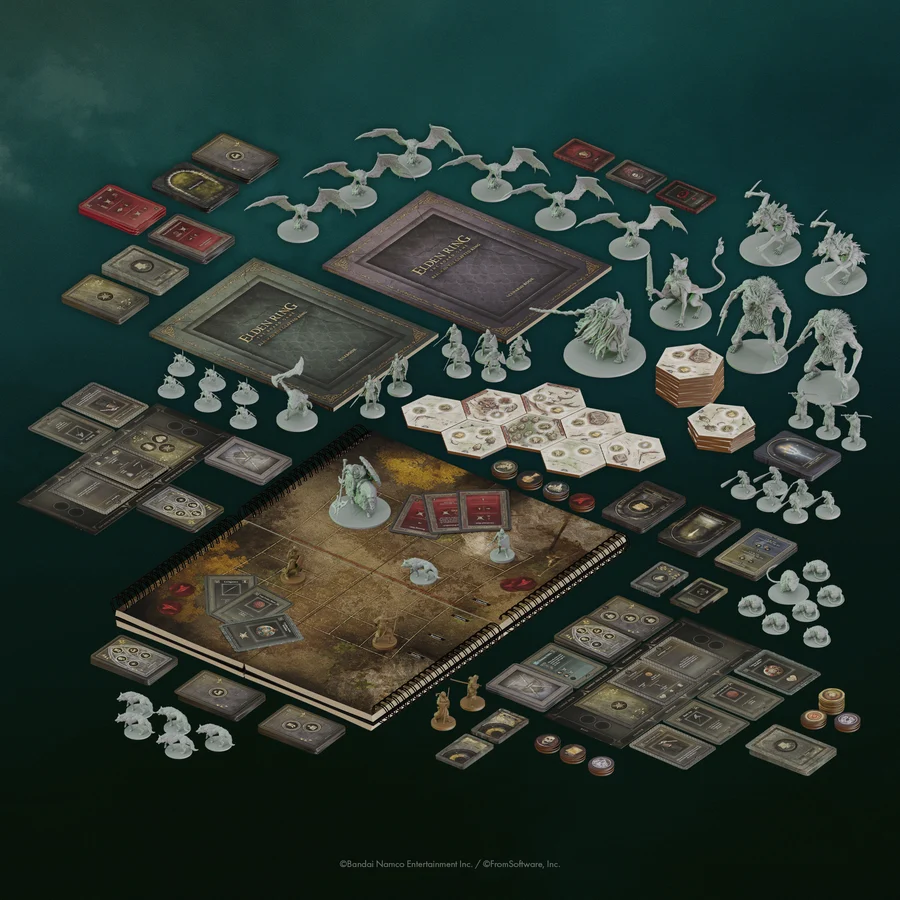
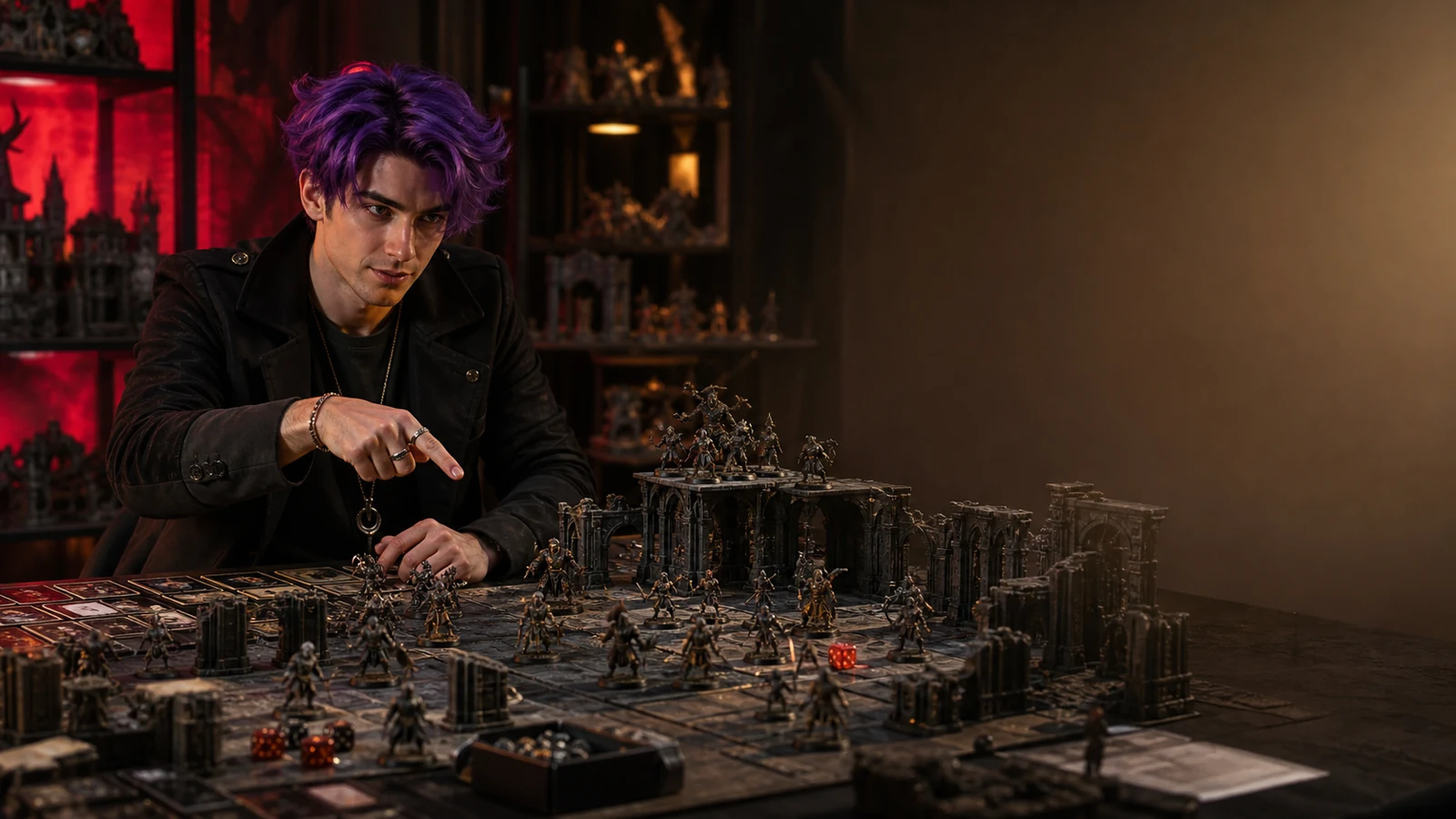
This is the question the product pages answer badly, so let me draw it straight. The three sets are modular co-op campaigns set in adjacent regions of Limgrave, and they connect two different ways depending on what you want.
Way one — play them separately. Each box is its own campaign with its own scenario book, its own bosses, and its own Tarnished. You can finish Grafted King, shelve it, and later run Stormveil as a completely separate 20-plus-hour experience. Nothing forces continuity.
Way two — combine them into one grander campaign. The sets are designed so you can literally push the quest books together and create a shared arena for the climactic boss fights, folding multiple regions into a single longer arc. Your leveled-up Tarnished, your unlocked gear, and your progression carry across. This is where the three-box structure stops looking like a money grab and starts looking like a deliberately scalable campaign engine.
The recommended play order tracks the video game's geography and difficulty curve: Realm of the Grafted King (Limgrave) → Weeping Peninsula (the melancholy land south of Limgrave) → Stormveil Castle (Godrick's fortress, the region-capping dungeon). That order gives you the gentlest teaching first, a mid-difficulty detour second, and the fortress payoff last — exactly how a first Elden Ring run tends to flow. If you are buying to combine, buy Grafted King now and add the other two later; there is no penalty for staggering purchases because progression is designed to slot in.
One caution worth its own sentence: combining sets does not merge the rulebooks into something simpler. It merges content. You are adding scenarios, enemies, and bosses to a system you already know — not learning a new system. That is exactly why you want the flagship's rules in your hands before you glue three campaigns together.
- Start with Realm of the Grafted King (Limgrave) — learn the combat and stance system across its 50-plus-hour campaign.
- Add Weeping Peninsula (south of Limgrave) as a 20-plus-hour detour with the Hero and Bandit Tarnished.
- Finish with Stormveil Castle — Godrick the Grafted on a 120mm base is the region's capstone fight.
- To combine, push the quest books together for a single grander campaign; leveled Tarnished and gear carry across.
Is Elden Ring: The Board Game any good, and does it feel like the video game?
Mostly yes, with an asterisk I am contractually obligated to my own conscience to hand you.
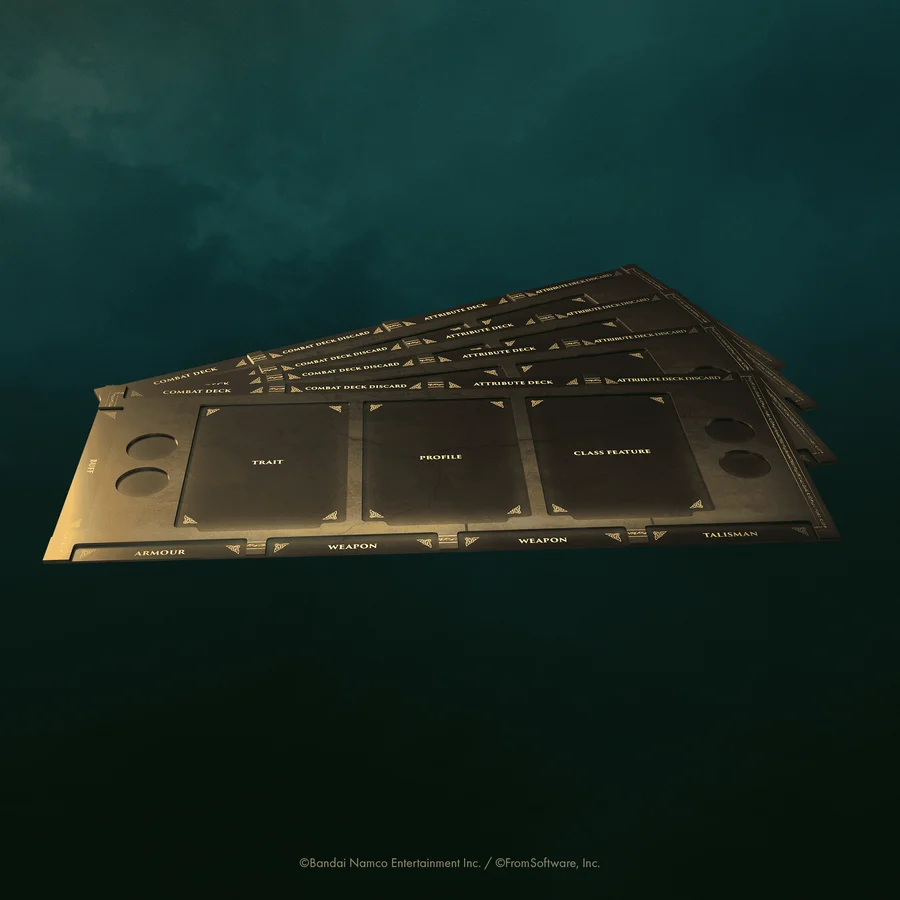
What it nails. The combat is the real thing translated, not the logo slapped on a generic dungeon crawler. It is diceless and card-driven: your hand of cards is your stamina pool, and every enemy runs a legible AI attack pattern you learn to read like a boss's wind-up animation. The standout mechanism is the tension of when to dump multiple attack cards for big damage versus holding them in hand as defense — spend everything on offense and you are wide open, exactly like emptying your stamina bar mid-combo in the video game. Layer the battle-stance system on top (aggressive draws more but can help the enemy, neutral manipulates turn order, defensive recovers stamina) and positioning becomes a mind game rather than a dice roll. Reviewers repeatedly land on the same word: Soulslike. Technical, tactical, a little bit random. It earns the license.
Where the asterisk lives. Two honest complaints show up across reviews. First, the boss encounter grid is built from four ring-bound books arranged in a square, which leaves awkward gaps and demands page-flipping mid-fight — functional, inelegant, a little fiddly. Second, and more philosophical: the game feels like completing scenarios inside the Elden Ring universe more than exploring the Lands Between. The open-world magic — the pull of a distant glowing tree, the reward of wandering off the path — is the hardest thing FromSoftware built and the hardest thing to put in a box. The tile-drawing exploration does a respectable job of keeping every map different, but it is a structured campaign, not a sandbox. If you are buying it to feel lost in Limgrave, temper that.
The comparison you are actually making. Yes, this is from the same studio (Steamforged) as Dark Souls: The Board Game, and yes, that game had a rocky launch that needed rules patches. Elden Ring is the better product: bigger and better miniatures — the designers call them some of their best work — a more considered campaign structure, and a combat engine that iterated on the Dark Souls deck rather than reprinting it. It is not a reskin. It is the studio's Souls board game done properly the second time.
So, is it good? Yes — for the right person. It is a heavy, reading-forward, tactically rich co-op campaign that rewards patience and punishes autopilot. The video game did the same. The translation is faithful, warts and page-flips included.
Your hand of cards is your stamina bar. Empty it on a combo and you are as exposed on the table as you are on the screen.
What is in each box — bosses, miniatures, and Tarnished classes?
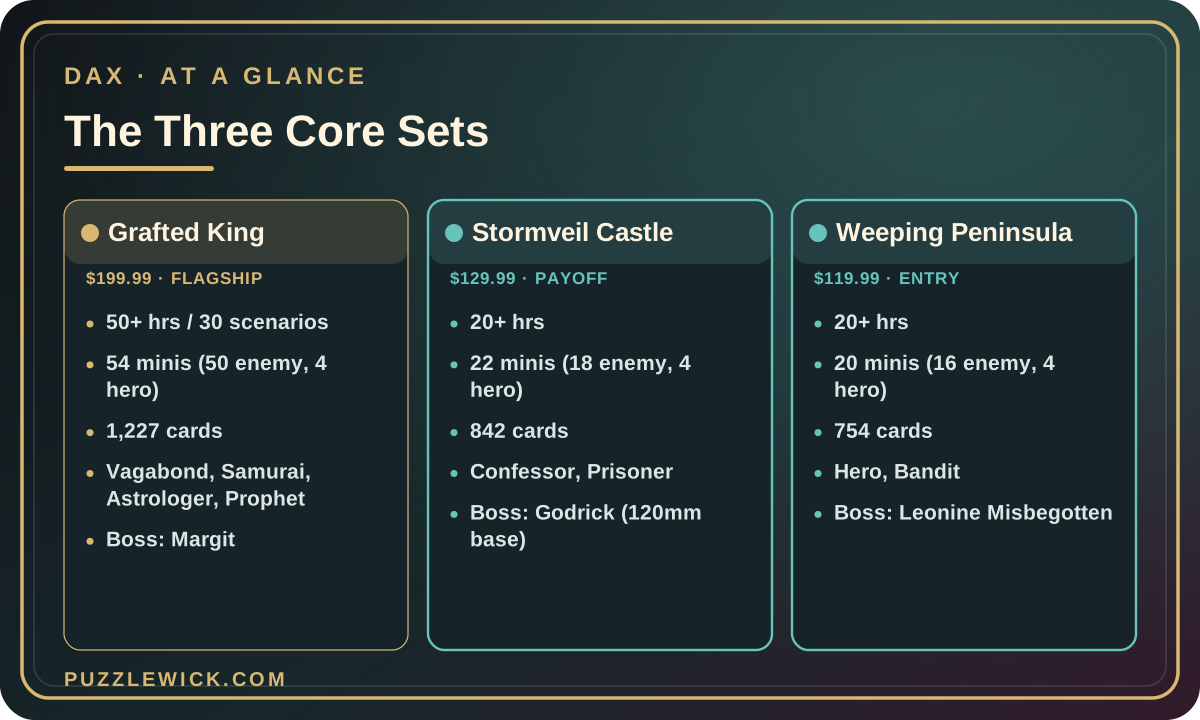
Here is the contents breakdown that actually matters when you are choosing, stripped of marketing adjectives.
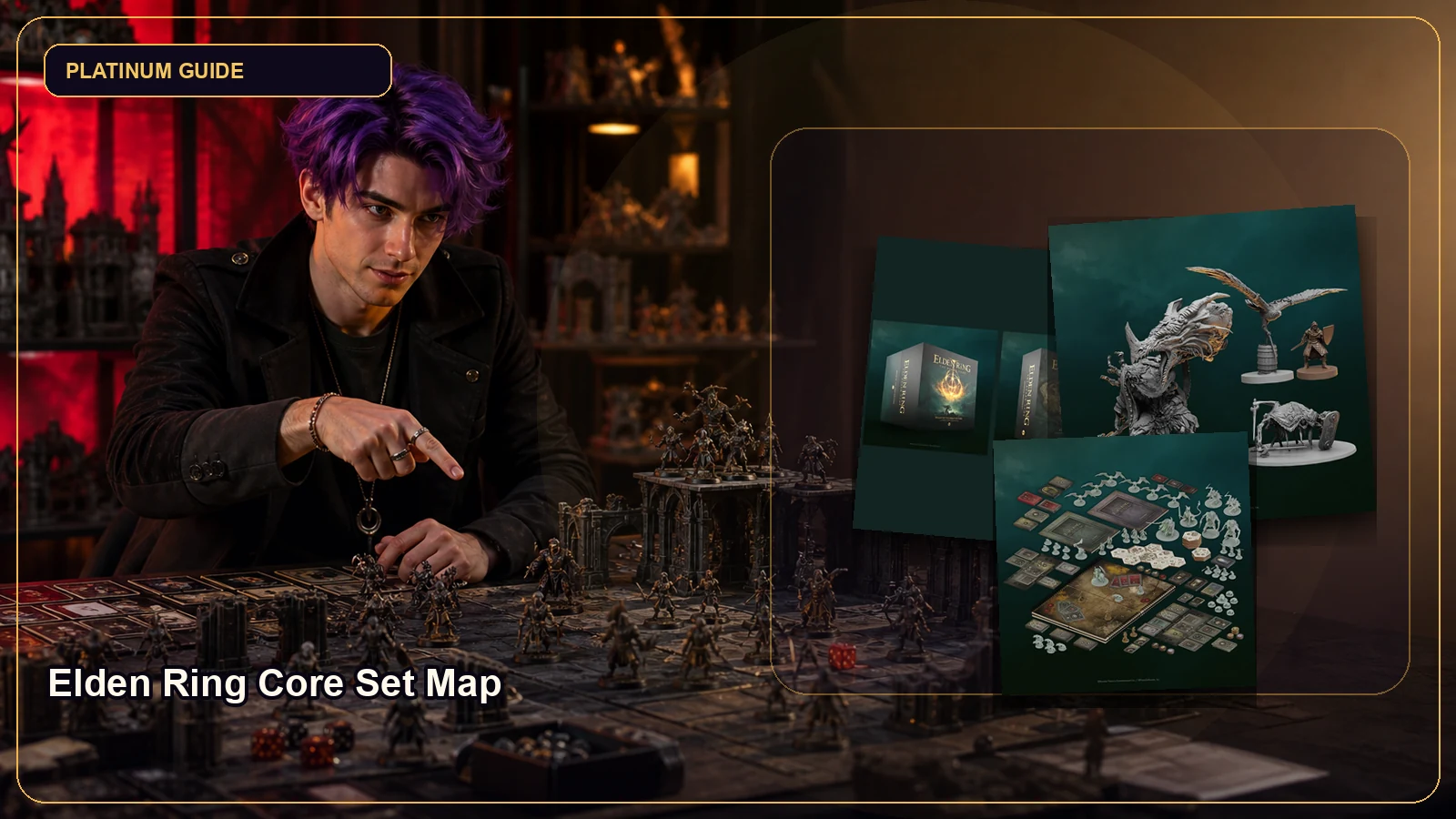
Realm of the Grafted King — $199.99, the flagship. Region: Limgrave. Campaign: 50-plus hours across 30 replayable scenarios (each also playable as a 45-90 minute one-shot). Headline boss: Margit, the Fell Omen. Miniatures: 54 total — 50 enemies and 4 heroes. Tarnished: Vagabond, Samurai, Astrologer, Prophet. Also in the box: 4 encounter books, 1 scenario book, 4 dashboard books, 61 hex tiles, 185 tokens, and a genuinely enormous 1,227 cards plus the rulebook. This is the deep end and the shallow end in one box — the reason it is the answer to 'which first.'
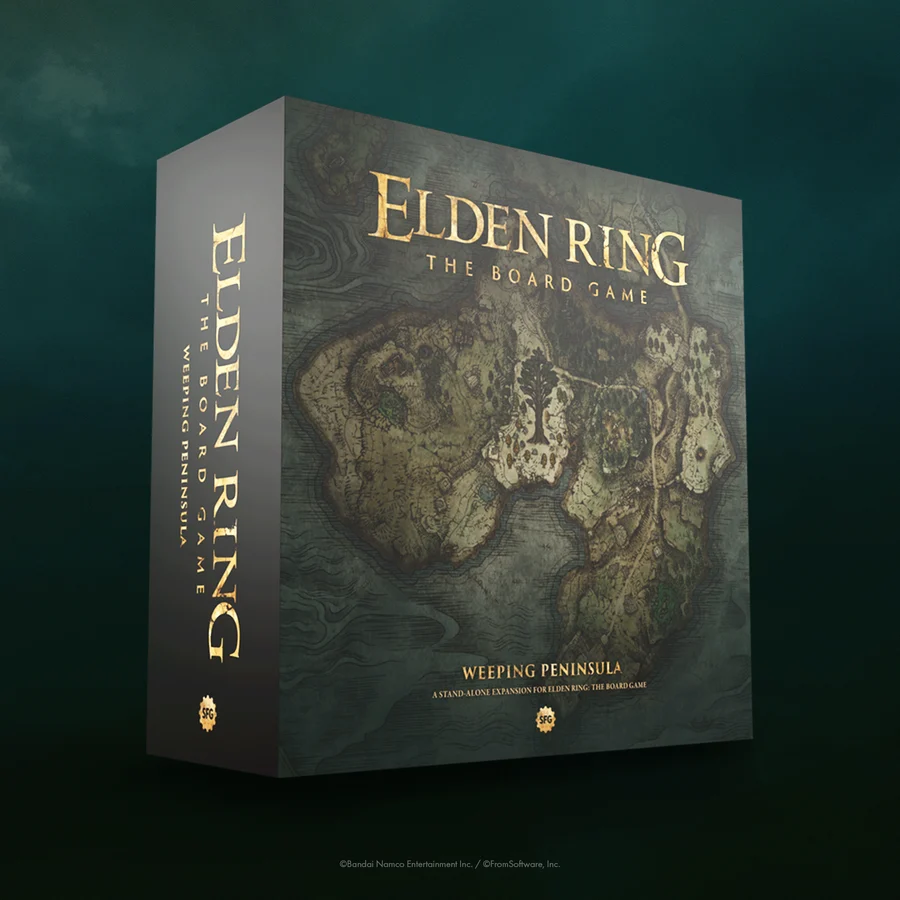
Weeping Peninsula — $119.99, the value entry. Region: the Weeping Peninsula, the melancholy land south of Limgrave. Campaign: 20-plus hours. Headline boss: the Leonine Misbegotten. Tarnished exclusive to this set: Hero and Bandit. Miniatures: 20 total — 16 enemies and 4 heroes. Contents: 45 hex tiles, 177 tokens, 754 cards, 4 encounter books, 1 scenario book, 4 dashboard books, rulebook. Cheapest ticket in, smallest campaign, best as a second or third box.
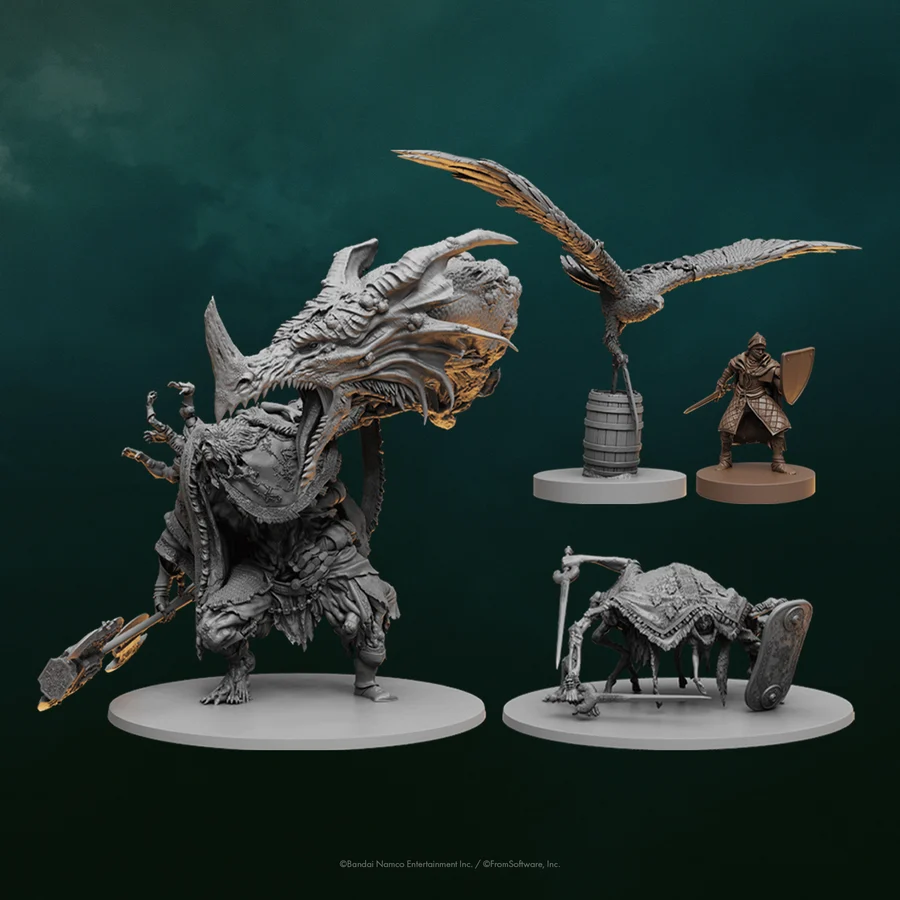
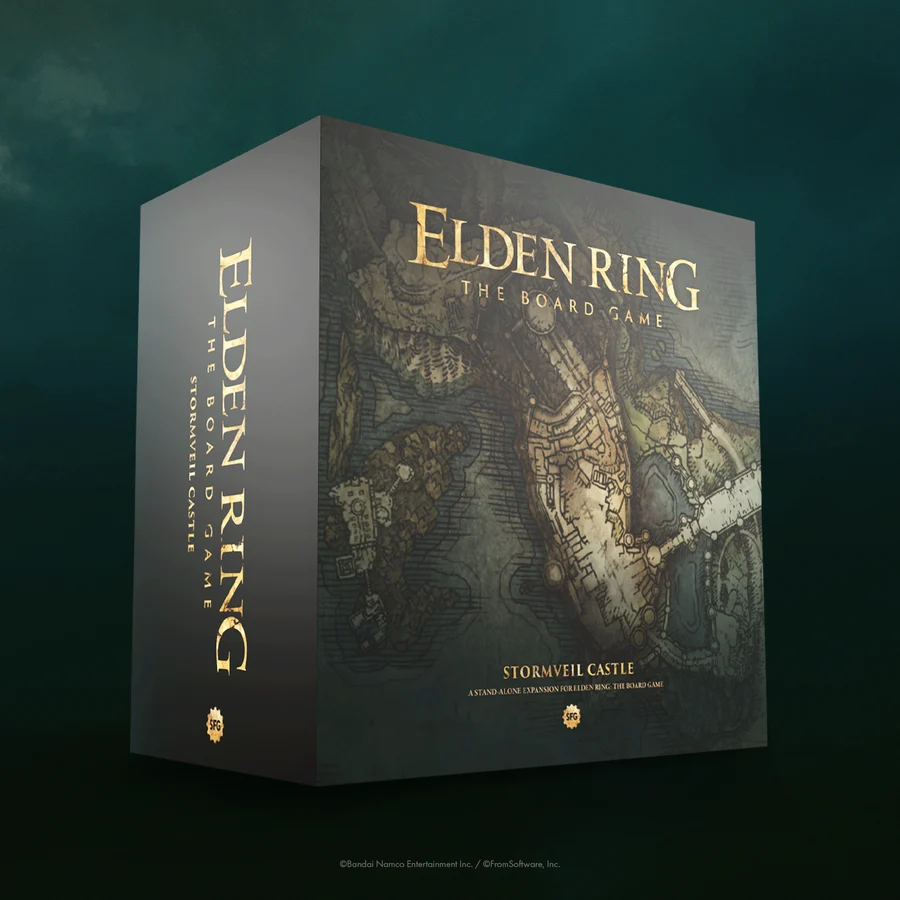
Stormveil Castle — $129.99, the payoff box. Region: Godrick's fortress. Campaign: 20-plus hours. Headline boss: Godrick the Grafted, on a chunky 120mm base — the single most impressive mini in the line and the fight the whole Limgrave arc points toward. Tarnished exclusive to this set: Confessor and Prisoner. Miniatures: 22 total — 18 enemies and 4 heroes. Contents: 44 hex tiles, 166 tokens, 842 cards, 4 encounter books, 1 scenario book, 4 dashboard books, rulebook. This is the best second box precisely because Godrick is the boss with the most weight behind him.
One pattern to notice: every box gives you four playable heroes. The flagship's four are the archetypal starting classes; the smaller boxes each add two set-exclusive Tarnished (plus two more heroes). So collecting all three is also how you unlock the full roster of classes — another reason the modular structure rewards patience rather than a single panic-buy.
How many players, and is the solo mode actually good?

All three core sets play 1 to 4 players, cooperatively, and the solo mode is not an afterthought — it is a headline feature, and it is the mode I would point most buyers toward first.
Here is why the solo claim holds up better than usual. This is a fully cooperative game with no traitor mechanic and no hidden competition, which means there is no structural difference between 'one brain running four Tarnished' and 'four brains running one each.' The AI-driven enemy patterns do the opposing work; the players are always on the same side of the table. Reviewers consistently note the game is balanced as carefully for solo as for a full group — which, if you have ever tried to schedule four adults for a 50-hour campaign, is the single most valuable design decision in the box.
The multiplayer wrinkle worth knowing: players can drop into each other's combats to help, mirroring the video game's summon-a-friend co-op. If one Tarnished is getting mauled, another can join that fight. It is a lovely touch and it makes 3-4 player games feel like the real thing.
The honest downside at higher counts is the reading. Story and choices are delivered Choose-Your-Own-Adventure style. Solo, that is intimate and atmospheric — you are reading to yourself, setting your own pace. At three or four players, someone becomes the designated narrator reading passages aloud, and long sessions can turn into a lot of out-loud page-turning. It works. It also tests the group's patience on hour six.
My recommendation on count: if you are mostly a solo or two-player household, this game is close to ideal and you should buy with confidence. If you are buying specifically for a rowdy four-player game night, know that it is a slower, more contemplative, more reading-heavy experience than a beer-and-pretzels dungeon crawler — closer to a shared novel with excellent tactics than a fast romp.
Should I wait, buy now, or worry about the A24 Elden Ring film hype?
Let me put on the cynical hat I keep by the door for exactly this question, because hype is a terrible reason to buy a $200 box and an even worse reason to skip one.
The film context is real. A24 is making a live-action Elden Ring movie, written and directed by Alex Garland, shot for IMAX, with a cast including Kit Connor, Cailee Spaeny, and Ben Whishaw, and George R. R. Martin among the producers. It is dated for March 3, 2028. That is a genuine cultural accelerant — a video-game IP with a prestige-film halo is a rare double heat, and it will absolutely drive new people toward anything with the Elden Ring name, this board game included.
Here is why that should not change your purchase timing. The board game is out now, complete, and not waiting on the movie for anything. A 2028 film does not add content to a 2026 box. What film hype can do is dumber and more expensive: it can inflate secondary-market prices, spike demand around release, and tempt people into panic-buying all three sets at once because a trailer made them feel something. Do not let a movie two years out set your board-game budget.
The actual buying logic is unchanged by Hollywood. If you want the game, the game is good and available today — buy Grafted King and start. If you are only interested because a movie is coming, you do not want a 50-hour tactical co-op campaign; you want the movie, and you should wait for the movie. Those are different products serving different itches, and conflating them is how a box sits shrink-wrapped on a shelf for two years.
Dax's timing verdict: buy now if you want to play. The film is a reason the world will care about Elden Ring in 2028; it is not a reason this specific box will be better or worse than it is this afternoon. Hype is weather. Your shelf is climate. Buy for the climate.
Hype is weather. Your game shelf is climate. Buy for the climate, not the forecast.
What about the expansions — do I need Agheel, Erdtree Avatar, or Limgrave Depths?
No. Not to start, and not for a long time. But it is worth knowing the shape of the range so you do not accidentally buy an expansion thinking it is a core set — a genuinely easy mistake given how the store lists them together.
The expansions currently orbit the flagship, Realm of the Grafted King, and they are strictly additive: Flying Dragon Agheel (the big set-piece dragon fight), Erdtree Avatar, and Limgrave Depths (an SFG-exclusive dungeon add-on). These are content boosters for people who already finished or fell in love with the base campaign and want more encounters and more marquee bosses. They assume you own Grafted King. They are not standalone, and they are not first purchases.
Separately there are cosmetic and quality-of-life upgrades that work across all three core sets: the Spirit Ashes and the Dual-Layer Player Board. The dual-layer board in particular is the kind of upgrade that sounds trivial and turns out to matter, because the base dashboards are one of the few components reviewers flag as flimsier than they should be. If you play a lot and the flat cardstock dashboards annoy you, that upgrade is the one to eyeball. It is a nice-to-have, not a need-to-have.
The rule to internalize: core sets first, and only one core set to begin. Expansions are the reward for loving the base game, not the on-ramp to it. If you are standing in a store or scrolling a cart and you see 'Agheel' or 'Limgrave Depths' before you own Grafted King, you are looking at dessert before you have ordered dinner. Put it back. Buy the flagship. Come back for the dragon when Margit stops scaring you.
The bottom line: who each box is actually for

Let me sort the humans, because 'it depends' is a cop-out and you came here for an answer.
Buy Realm of the Grafted King if: you are new to the board game, you want the longest campaign, you want the archetypal starting classes, or you simply want the single best-value first purchase. This is 90 percent of readers. It is the flagship, the tutorial, the deepest box, and the only correct front door. Full stop.
Buy Stormveil Castle as your second box if: you own and enjoy Grafted King and want the natural next step. Godrick the Grafted on his 120mm base is the boss the whole Limgrave arc is building toward, and the Confessor and Prisoner add real class variety. It is the payoff purchase.
Buy Weeping Peninsula if: you want the cheapest entry point and you already understand the combat, OR you are collecting all three and want the melancholy southern region to complete the map. It is the smallest campaign and the least essential of the three — a fine third box, a poor first one.
Buy the expansions if: you have finished a core campaign, you want more, and you specifically miss the big set-piece fights. Agheel, Erdtree Avatar, and Limgrave Depths are for people already in love. The Dual-Layer Player Board is for people who play enough that the flat dashboards started to bug them.
Do not buy anything yet if: your entire interest is the 2028 A24 film. You want a movie ticket, not a 50-hour co-op campaign. Wait, and buy the game when you want to play rather than when a trailer made you feel a certain way.
That is the whole map. One flagship, two follow-ups, a shelf of expansions, and one very clear starting point that the word 'standalone' was quietly trying to talk you out of.
What experienced tables keep reporting
Recurring owner patterns, synthesized in Puzzlewick's words. Follow each evidence trail to read the original discussion.
Just as punishing as the real thing.
Read the evidence: TheGamer: Elden Ring: The Board Game Review
Elden Ring has produced some of the best models that we've ever made.
Read the evidence: Wargamer: Elden Ring board game minis bigger than Dark Souls
It can feel like completing scenarios in the Elden Ring universe rather than true open-world exploration.
Read the evidence: Board Game Quest: Stormveil Castle review
Your hand is your stamina, and learning the AI-driven attack patterns is key.
The picks
Some links below are affiliate links — as an Amazon Associate, Puzzlewick earns from qualifying purchases, at no extra cost to you. It never changes a pick.
3 photos Elden Ring: The Board Game — Realm of the Grafted King (Core Set)
This is the flagship and the front door: a 50-plus-hour cooperative campaign across 30 replayable scenarios set in Limgrave, headlined by Margit, the Fell Omen. It ships 54 miniatures, the four archetypal Tarnished (Vagabond, Samurai, Astrologer, Prophet), and a card-driven, diceless combat engine where your hand is your stamina. It is the box that teaches the system the other two assume you already know. If you buy one Elden Ring box, buy this one.
- Longest campaign in the line — 50-plus hours, 30 replayable scenarios
- Most miniatures (54) and the biggest card pool (1,227)
- Ships the four archetypal starting Tarnished classes
- Set in Limgrave — the region every video-game player already knows
- Balanced as carefully for solo as for four players
- Highest price of the three at $199.99
- Heavy footprint, long setup, and a lot of reading
- The four-book boss encounter grid is fiddly and gap-prone
3 photos Elden Ring: The Board Game — Stormveil Castle (Core Set)
Stormveil is where the Limgrave arc pays off: Godrick the Grafted, mounted on a dramatic 120mm base, is the most impressive mini in the entire line. The 20-plus-hour standalone campaign adds two exclusive Tarnished — the Confessor and Prisoner — and 22 miniatures across a fortress you actually want to storm. It plays alone but shines as the capstone to a combined campaign. It is the follow-up purchase, not the first.
- Godrick the Grafted on a 120mm base — the line's showpiece miniature
- Adds two set-exclusive Tarnished classes (Confessor, Prisoner)
- The natural narrative capstone to the Grafted King campaign
- Fully standalone and combinable, 1-4 players plus solo
- 20-plus-hour campaign is much shorter than the flagship's 50-plus
- Not a good first box — assumes you know the combat engine
- Longer per-session play time (120+ minutes) than the smaller sets
2 photos Elden Ring: The Board Game — Weeping Peninsula (Core Set)
The Weeping Peninsula is the smallest and cheapest core set: a 20-plus-hour standalone campaign in the melancholy land south of Limgrave, ending in a climactic battle with the Leonine Misbegotten. It adds the Hero and Bandit Tarnished and 20 miniatures. It is a lovely region and a genuinely good game — but it is pitched as more Lands Between for people who already own the engine, which makes it a poor first purchase and a great second or third.
- Lowest price of the three core sets at $119.99
- Adds two set-exclusive Tarnished classes (Hero, Bandit)
- Completes the southern region for a combined campaign
- Fully standalone and combinable, 1-4 players plus solo
- Smallest campaign and fewest miniatures (20) of the three cores
- Weakest first box — assumes prior familiarity with the system
- Least essential of the three if you are not collecting the full map
2 photos Elden Ring: The Board Game — Dual-Layer Player Board Upgrade
This cosmetic upgrade replaces the base flat-cardstock dashboards — one of the few components reviewers call out as thinner than it should be — with recessed dual-layer boards that keep tokens in place across all three core sets. It is a pure quality-of-life buy: unnecessary to play, genuinely nice once you play a lot. Check current pricing, as this is an accessory rather than a core set. Buy it after you know you love the game, never before.
- Fixes the flimsiest component reviewers cite (flat dashboards)
- Recessed slots stop tokens sliding mid-game
- Works across all three core sets
- Purely cosmetic — adds no content or scenarios
- Not a first purchase; only worth it for frequent players
- Pricing and availability vary — check current listing
At a glance
| Set | Price (USD) | Campaign | Headline boss | Miniatures | Exclusive Tarnished | Buy it |
|---|---|---|---|---|---|---|
| Realm of the Grafted King | $199.99 | 50+ hours, 30 scenarios | Margit, the Fell Omen | 54 (50 enemy, 4 hero) | Vagabond, Samurai, Astrologer, Prophet | FIRST — the flagship front door |
| Stormveil Castle | $129.99 | 20+ hours | Godrick the Grafted (120mm base) | 22 (18 enemy, 4 hero) | Confessor, Prisoner | SECOND — the payoff box |
| Weeping Peninsula | $119.99 | 20+ hours | Leonine Misbegotten | 20 (16 enemy, 4 hero) | Hero, Bandit | THIRD — cheapest, least essential first |
| Expansions (Agheel / Erdtree Avatar / Limgrave Depths) | Varies — check current | Add-on encounters | Flying Dragon Agheel, Erdtree Avatar, etc. | Set-piece bosses + enemies | None | LATER — require Grafted King |
| Dual-Layer Player Board (upgrade) | Varies — check current | N/A (cosmetic) | N/A | None | None | OPTIONAL — quality-of-life for heavy players |
Questions, answered
Which Elden Ring board game core set should I buy first?
Realm of the Grafted King. It is the flagship: a 50-plus-hour Limgrave campaign with 54 miniatures, the four archetypal Tarnished classes, and Margit as the headline boss. It is the only set built as a beginner's front door. The other two are standalone but assume you already understand the combat, making them better second or third boxes.
How many core sets does Elden Ring: The Board Game have?
Three: Realm of the Grafted King ($199.99), Weeping Peninsula ($119.99), and Stormveil Castle ($129.99). Each is a complete standalone cooperative game for 1-4 players, and all three can be combined into one larger campaign.
Do the three Elden Ring board game core sets connect?
Yes. Each set plays standalone, but you can push the quest books together to build one grander campaign that carries your leveled-up Tarnished and gear across regions. The recommended combined play order is Realm of the Grafted King, then Weeping Peninsula, then Stormveil Castle.
What is the recommended play order for the Elden Ring board game?
Follow the video game's geography and difficulty curve: Realm of the Grafted King (Limgrave) first, then Weeping Peninsula (south of Limgrave), then Stormveil Castle (Godrick's fortress) as the capstone. If you buy to combine them, start with Grafted King and add the others later — progression is designed to slot in.
Is Elden Ring: The Board Game cooperative or competitive?
Fully cooperative. All players are on the same side against AI-driven enemies, with no traitor or competition mechanic. Players can even drop into each other's combats to help, mirroring the video game's summon co-op.
How many players does Elden Ring: The Board Game support?
All three core sets play 1 to 4 players cooperatively, and all three support true solo play. Solo is a headline feature, not an afterthought — the game is balanced as carefully for one player as for four.
Is the solo mode in Elden Ring: The Board Game good?
Yes. Because the game is fully cooperative with AI-run enemies, one player controlling the Tarnished plays essentially the same as a group, and reviewers consistently note it is balanced for solo. It is one of the strongest solo campaign experiences in this genre — ideal if scheduling a group for a 50-hour campaign is hard.
Does the Elden Ring board game feel like the video game?
Largely, yes. The diceless, card-driven combat where your hand is your stamina, the AI enemy attack patterns, and the aggressive/neutral/defensive battle-stance system all capture the Soulslike tactical feel. The main gap is exploration: it plays as a campaign of scenarios in the Elden Ring universe rather than a true open-world sandbox.
Which boss is in each Elden Ring board game core set?
Realm of the Grafted King is headlined by Margit, the Fell Omen; Weeping Peninsula culminates in the Leonine Misbegotten; and Stormveil Castle features Godrick the Grafted on a 120mm base — the largest and most impressive miniature in the line.
How long is the Elden Ring board game campaign?
Realm of the Grafted King offers a 50-plus-hour campaign across 30 replayable scenarios. Weeping Peninsula and Stormveil Castle each offer 20-plus-hour campaigns. Individual scenarios can be played as one-shots of roughly 45-90 minutes (120-plus minutes per session in Stormveil).
How is the Elden Ring board game combat different from Dark Souls: The Board Game?
Both are card-based Soulslikes from Steamforged, but Elden Ring's combat functions quite differently — it centers on a battle-stance system and using your hand as a stamina pool, with an open-world tile-drawing exploration layer. Elden Ring also has bigger, better miniatures and a more considered campaign structure; the designers call its models some of their best work.
Is Elden Ring: The Board Game better than the Dark Souls board game?
Generally regarded as yes. Dark Souls: The Board Game had a rocky launch that needed rules patches; Elden Ring is the studio's more polished second attempt at a FromSoftware adaptation, with superior miniatures, a stronger campaign framework, and an iterated combat engine rather than a reskin.
What Tarnished classes come in each Elden Ring board game set?
Realm of the Grafted King includes the Vagabond, Samurai, Astrologer, and Prophet. Weeping Peninsula adds the Hero and Bandit. Stormveil Castle adds the Confessor and Prisoner. Collecting all three unlocks the full roster of playable classes.
Do I need the expansions to play the Elden Ring board game?
No. The expansions — Flying Dragon Agheel, Erdtree Avatar, and Limgrave Depths — require Realm of the Grafted King and add extra encounters and set-piece bosses. They are for players who already own and love the base campaign, not first purchases.
What is the cheapest Elden Ring board game core set?
Weeping Peninsula at $119.99 is the cheapest core set, followed by Stormveil Castle at $129.99 and Realm of the Grafted King at $199.99. However, cheapest does not mean best to start — the flagship Grafted King is still the recommended first purchase for new players.
Is the Elden Ring board game hard?
Yes, deliberately. Reviewers describe it as 'just as punishing as the real thing.' The card-as-stamina system, AI enemy patterns, and unforgiving bosses reward patience and punish autopilot, just like the video game. It is a heavy, tactically demanding co-op, not a casual dungeon crawler.
Should I wait for the A24 Elden Ring movie before buying the board game?
No — not if you actually want to play. The A24 film (directed by Alex Garland, releasing March 3, 2028) is unrelated to the board game's content; a 2028 movie adds nothing to a 2026 box. If your only interest is the film, wait for the film. If you want the game, it is complete and available now.
What age is the Elden Ring board game for?
Steamforged lists the core sets for ages 14 and up, reflecting the rules complexity, reading load, and dark fantasy theme rather than the components themselves.
Can I buy the Elden Ring board game core sets one at a time?
Yes, and you should. Each box is standalone and combinable, so there is no penalty for staggering purchases. Start with Realm of the Grafted King, then add Stormveil Castle or Weeping Peninsula later if you want a larger combined campaign and more Tarnished classes.
What comes in the Realm of the Grafted King box?
54 miniatures (50 enemy, 4 hero), 4 encounter books, 1 scenario book, 4 dashboard books, 61 hex tiles, 185 tokens, 1,227 cards, and a rulebook — supporting a 50-plus-hour campaign of 30 replayable scenarios set in Limgrave.
Dax's verdict
Realm of the Grafted King is the answer to 'which first,' and it is not close.
Steamforged built a genuinely clever three-box system — standalone campaigns that also click together into one long march across Limgrave, the Weeping Peninsula, and Stormveil Castle. The combat is the real Soulslike thing translated to cards: your hand is your stamina, the enemies run readable AI tells, and the battle-stance mind-game turns positioning into strategy instead of a dice roll. It is one of the best solo co-op campaigns on the shelf, and it is comfortably the studio's finest FromSoftware adaptation to date.
But the marketing word 'standalone' is quietly trying to sell a beginner the wrong box. Standalone means complete. It does not mean 'good place to begin.' Only the flagship is the front door — the longest campaign, the widest roster, the region you already know, and the tutorial curve the smaller boxes skip.
DAX'S PRICE RECKONING: Is $199.99 a lot for a board game? Yes. Is it a lot for a 50-plus-hour, solo-friendly, endlessly replayable tactical campaign that is faithful to a game people put 200 hours into? Suddenly, no. Buy Grafted King. Add Stormveil when Margit stops scaring you. Leave Weeping Peninsula and the expansions for when you already love it. And do not let a 2028 movie set a 2026 budget — flattery is boring, and so is buying three boxes because a trailer made you feel something.
If you are assembling a co-op shelf, pair this with our best cooperative board games for 2026, or if you are weighing FromSoftware tabletop options head-to-head, read Dark Souls vs Elden Ring: which Steamforged board game to buy.
Research ledger 17 sources · reviewed 2026-08-10
Specifications, rules, current product information, community experience, and contrary evidence were checked against the sources below. Commercial links are kept separate from editorial evidence.
- steamforged.comsteamforged.com/pages/elden-ring-board-game
- steamforged.comsteamforged.com/collections/elden-ring-board-game
- steamforged.comsteamforged.com/products/elden-ring-board-game-realm-of-the-grafted-king
- steamforged.comsteamforged.com/products/elden-ring-board-game-weeping-peninsula
- steamforged.comsteamforged.com/products/elden-ring-board-game-stormveil-castle
- steamforged.comsteamforged.com/blogs/brands/elden-ring-the-board-game-out-now
- steamforged.comsteamforged.com/blogs/brands/combat-part-one-elden-ring-board-game
- steamforged.comsteamforged.com/blogs/brands/combat-part-two-elden-ring-board-game
- thegamer.comthegamer.com/elden-ring-the-board-game-review
- boardgamequest.comboardgamequest.com/elden-ring-the-board-game-stormveil-castle-review
- wargamer.comwargamer.com/elden-ring-board-game/minis-bigger-than-dark-souls
- boardgamegeek.comboardgamegeek.com/boardgame/373107/elden-ring-realm-of-the-grafted-king
- amazon.comamazon.com/dp/B0DSLDR3MD?tag=puzzlewick-20
- en.wikipedia.orgen.wikipedia.org/wiki/Elden_Ring_(film)
- bandainamcoent.combandainamcoent.com/news/elden-ring-live-action-adaptation-in-theaters-march-3-2028
- variety.comvariety.com/2026/film/global/elden-ring-alex-garland-a24-full-cast-release-date-1236725875
- deadline.comdeadline.com/2026/04/alex-garland-elden-ring-march-2028-cailee-spaeny-1236865471
I'll be honest with you — flattery is boring.
Keep exploring
The next smart rabbit holes.
✦ Topic PathBoard Game Buying Guides: compare the whole shelfStart with the decision, not the shelf. These guides compare the games, editions, expansions, player counts, and costs people...ComparisonThe Elder Scrolls: Betrayal of the Second Era vs Too Many Bones in 2026: Which Chip Theory RPG?Three-session sandbox campaign or one-night tyrant run? The real differences in table space, character building, solo flow, expansions,...Buying GuideLands of Evershade Buying Guide (2026): Standard vs Special vs Scout vs ExplorerA current, evidence-backed Lands of Evershade pledge guide: the best core box, the real gameplay all-in, which miniature tier earns its...