40K Combat Patrol vs 1,000 vs 2,000 in 11th Edition
Imani’s 40K format guide for 11th Edition: Combat Patrol vs 1,000 vs 2,000 points, with cost, time, terrain, and table-culture advice.


AI-assisted research and drafting in Imani’s voice · reviewed by Robert Pruitt · how this guide was made
Last editorial refresh: 2026-07-01 Gold-standard QA: 2026-08-10 11 sources reviewed Affiliate links checked during gold-standard pass

The short answer
Start with Combat Patrol if you are learning, move to 1,000 points for your first real army, and treat 2,000 points as the destination once your table has time, terrain, and transport. The expensive mistake is jumping to the format that looks most “official” before your group can repeat it. Imani’s read: the best format is the biggest game your table will happily play twice.
Decision map
Choose in thirty seconds
Best first-night format
Best split-box escalation anchor
Best full rules reference
There is a sentence every new 40K group eventually says, usually while staring at a cart that costs more than a sensible appliance: what size game are we actually trying to play? Not what looks coolest. Not what tournaments use. What size game will get painted, transported, taught, remembered, and played again next week.
That is the real comparison. Combat Patrol, 1,000 points, and 2,000 points are not merely point totals. They are three different social contracts. Combat Patrol says: let us learn without turning shopping into homework. 1,000 points says: let us build real armies and accept a little weirdness. 2,000 points says: give me the full cathedral, the long game, the list depth, the cinematic mess, and the four-hour afternoon.
Imani answer, heart on sleeve and tape measure in hand: start smaller than your ambition. The table culture you build in the first month matters more than the army you imagine owning at the end of the year.
Start here, then go deeper
You are in the right cabinet.
 ✠ Universe HubWarhammer: the whole buying pathWarhammer is Games Workshop's tabletop colossus — the grimdark far future of Warhammer 40,000 and the high fantasy of Age of...
 ⚙ Topic PathMiniatures and Wargames: compare the whole shelfThe cheapest box is not always the cheapest way in. These guides connect rules format, faction fit, terrain, tools, paint, and the...
 MasterclassHow to Start Warhammer 40,000 in 2026The current starter boxes, the honest first budget, faction choice, painting, first-game flow, and the traps that turn a fun army into a...
The short answer: where should a new player start?
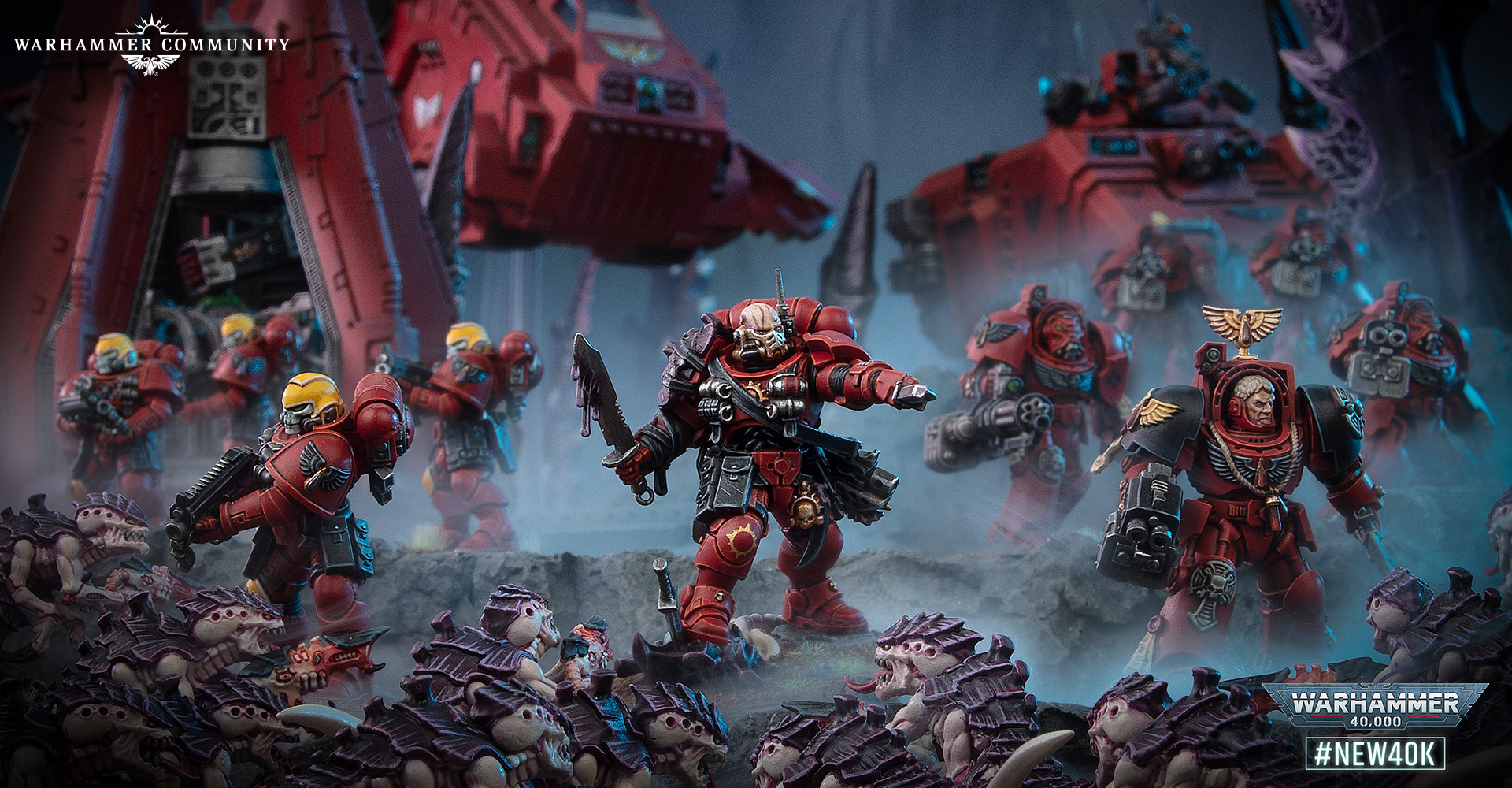
If this is your first 40K purchase, Combat Patrol is the safest first play format because each box is designed as a compact force with a prebuilt rule surface. You can learn movement, shooting, charges, objectives, terrain, and command decisions without also learning how to diagnose a bad list.
If you have already played a few small games or you are splitting the Armageddon launch box, 1,000 points is the first real army milestone. It lets you choose units, learn the mission pack, and feel your faction identity without carrying a full event list.
If you want the format most clubs and competitive players treat as the baseline, 2,000 points is the destination. It is richer, usually less swingy than 1,000, and more representative of how codexes are tested and discussed. It is also the quickest way to bury a beginner under pile-of-shame gravity.
Why is Combat Patrol the best first-night format?
Combat Patrol is for the table that needs momentum more than optimization. You buy one faction box, use the intended small-force rules, and start learning what a turn feels like. That matters because 40K loses new players when the first session becomes list algebra before anyone has rolled a charge.
The upside is speed: fewer units, fewer special cases, less pregame anxiety, and a lower chance that one person accidentally creates a list the other player cannot meaningfully answer. The downside is that Combat Patrol boxes are not equal hobby products outside the format. Some are better stepping stones into larger armies than others, and some become awkward if you chase a specific tournament list later.
The social trick is to treat Combat Patrol as a date, not a marriage. Play three nights. Learn terrain. Learn how objectives force movement. Learn whether you like painting the faction. Then decide whether the army deserves a 1,000-point expansion.
When should you move from Combat Patrol to 1,000 points?
A 1,000-point Incursion game is the best second step because the army finally becomes yours. You choose what fills the gaps. You decide whether the first tank matters more than the second elite infantry unit. You feel how a cheap scoring piece can be more valuable than another beautiful threat.
In 11th Edition, the 1,000-point size also keeps the Detachment Point conversation readable. You still have meaningful army-building choices, but the game usually avoids the full-stack complexity of 2,000 points. That makes it the best place to learn what your faction is asking you to do on a real mission table.
The risk is swinginess. At 1,000, one underpriced monster, one hard skew, or one terrain mistake can dominate a game. Do not solve that by rushing to 2,000 immediately. Solve it by writing fairer local lists, using enough terrain, and agreeing that the first ten games are for learning the format, not proving a meta point.
A 1,000-point army is not half of a 2,000-point army. It is its own little ecosystem.
When is a 2,000-point Warhammer army worth it?
2,000-point Strike Force is the size people mean when they talk about mainstream matched play, tournaments, big battle reports, and serious faction conversations. It gives armies enough redundancy that one mistake or one dead unit does not always decide the game. It lets combined-arms factions actually combine arms. It gives centerpiece models room to exist without eating the entire list.
It is also expensive and slow. You need more models, more storage, more painting discipline, more terrain, more table time, and more tolerance for rules overhead. A good 2,000-point game can feel like a tiny opera of bad decisions. A bad first 2,000-point game can feel like four hours of being punished for not owning the right thing yet.
So yes, 2,000 is the goal if you want the full hobby. No, it should not be the first instruction a new player receives at the store counter.
How much table space does each Warhammer format need?
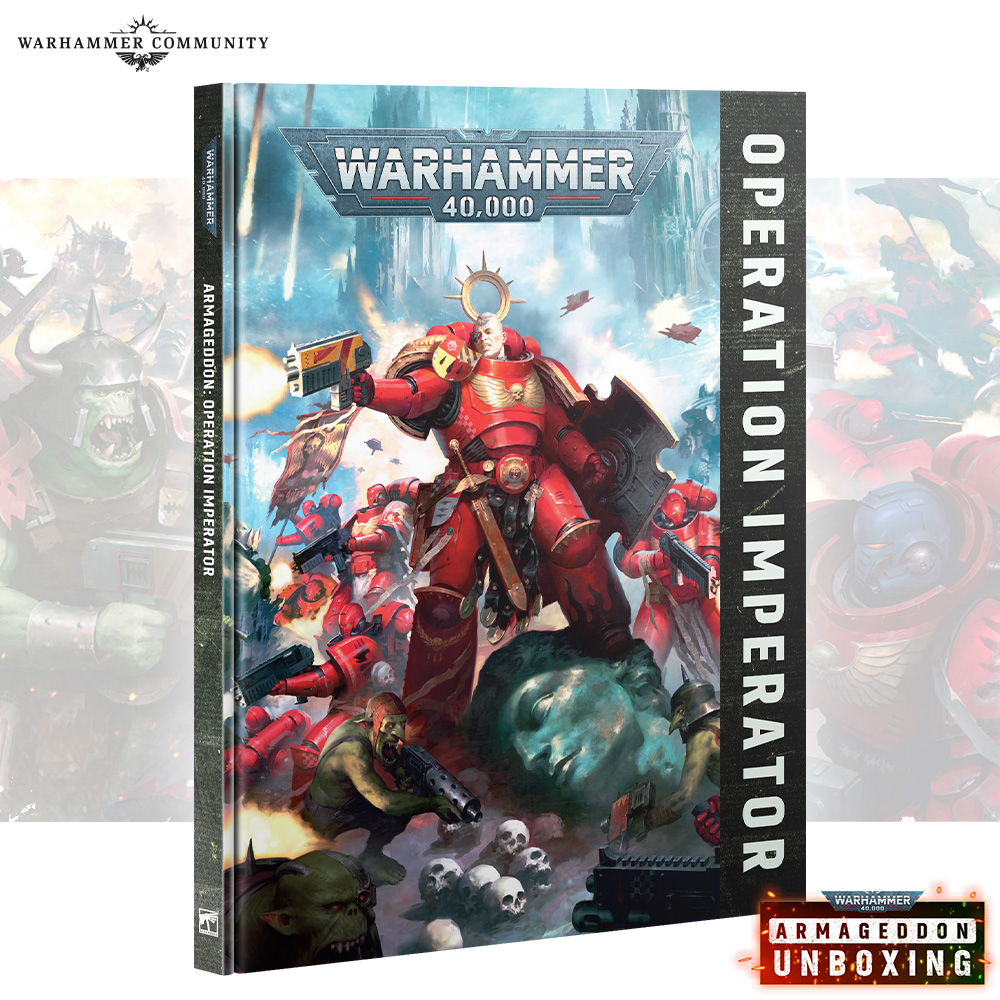
People compare points and forget terrain. Combat Patrol can run on a smaller footprint and tolerate a simpler setup. 1,000 points starts demanding real line-of-sight blocking terrain, objective placement, and staged movement lanes. 2,000 points absolutely needs a proper board and enough terrain to make movement decisions matter.
Too little terrain makes shooting armies feel cruel and melee armies feel doomed. Too much random scatter makes tanks and monsters feel like they are playing in a crowded attic. The best beginner improvement is often not another unit. It is better terrain, clearer objective markers, and a shared understanding of what blocks line of sight before deployment starts.
That is also the culture piece: agree on the shape of the game before the first model touches the table. If one player expects a casual learning night and the other player brings a tuned 2,000-point list, the mismatch happened before dice.
What is the no-regret Warhammer escalation path?
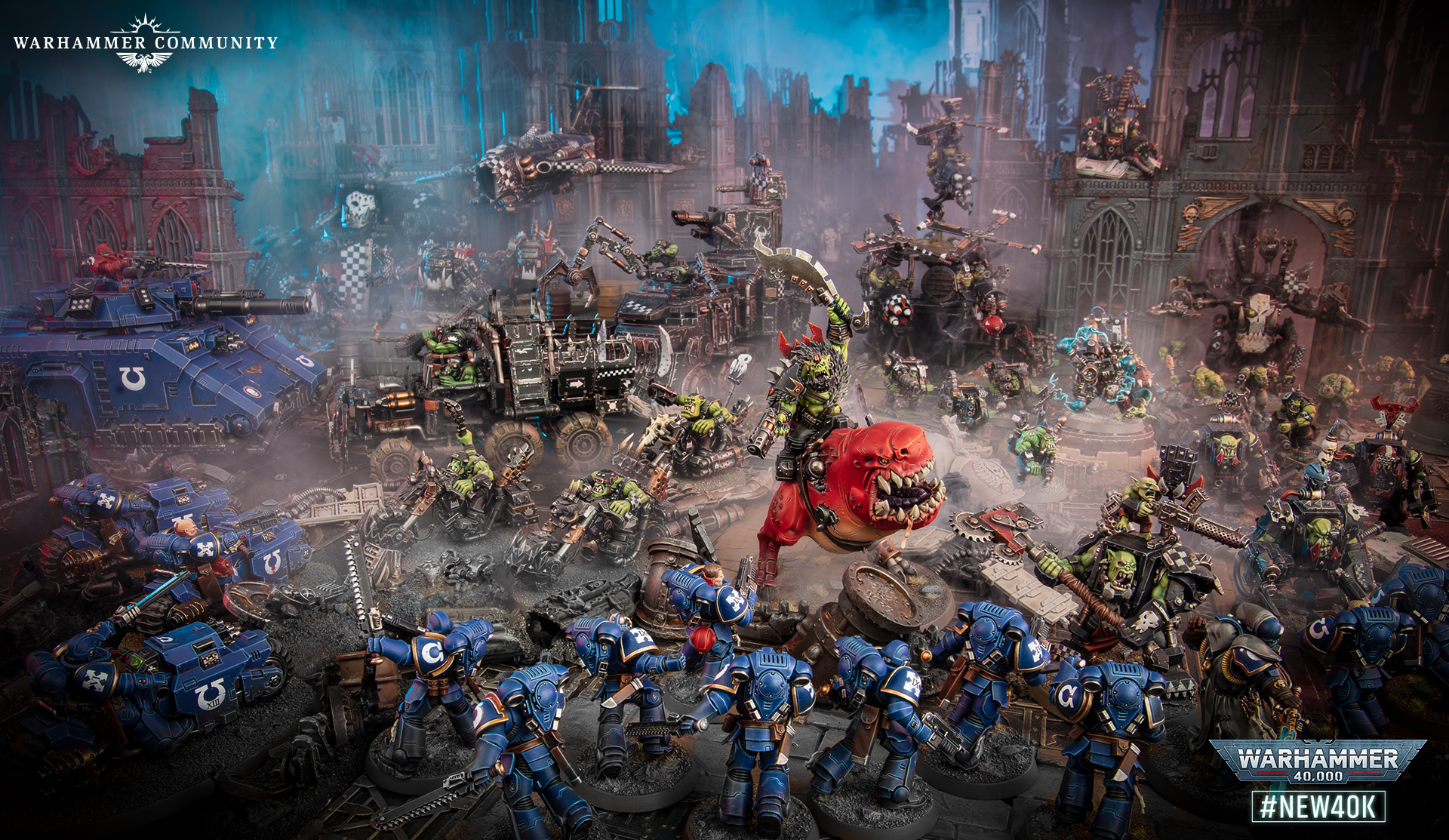
Here is the path I would give a friend: play Combat Patrol three times, then write a 1,000-point list that solves scoring, delivery, anti-tank, and a counterpunch. Play that list until the game starts feeling small. Only then commit to 2,000.
The reason is emotional, not just financial. A player who grows into 2,000 points understands why each unit is there. A player who buys 2,000 points up front often owns a gorgeous pile of contextless plastic and a vague sense of guilt.
Make escalation ceremonial. Every new purchase should answer a problem your games actually revealed. If your Marines cannot crack armor, buy range. If your Orks cannot reach the midboard, buy delivery. If your Aeldari keep winning by speed and then losing by fragility, buy staying power. Let the table tell you what the cart needs.
Which format is best for cost, time, and painting?
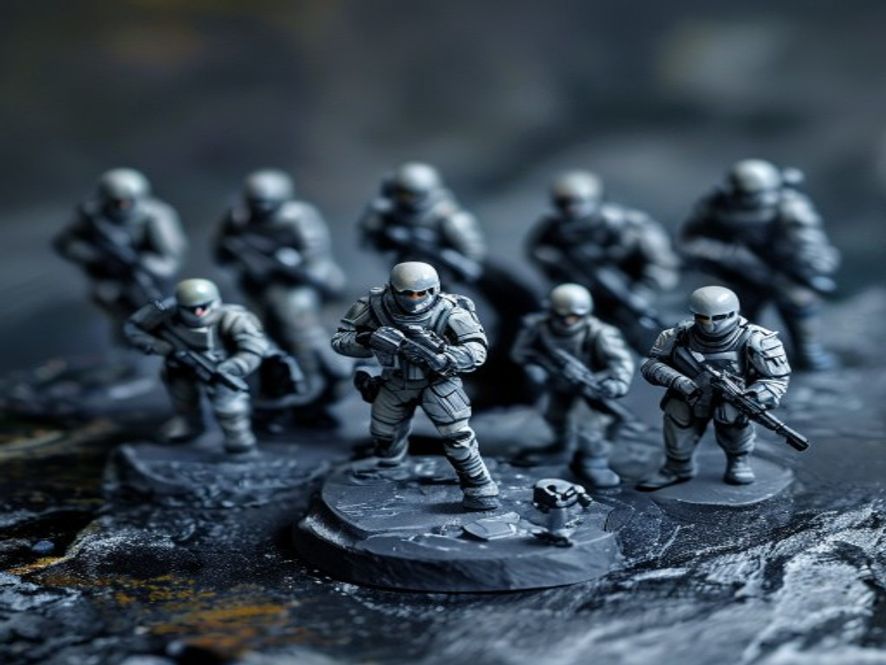
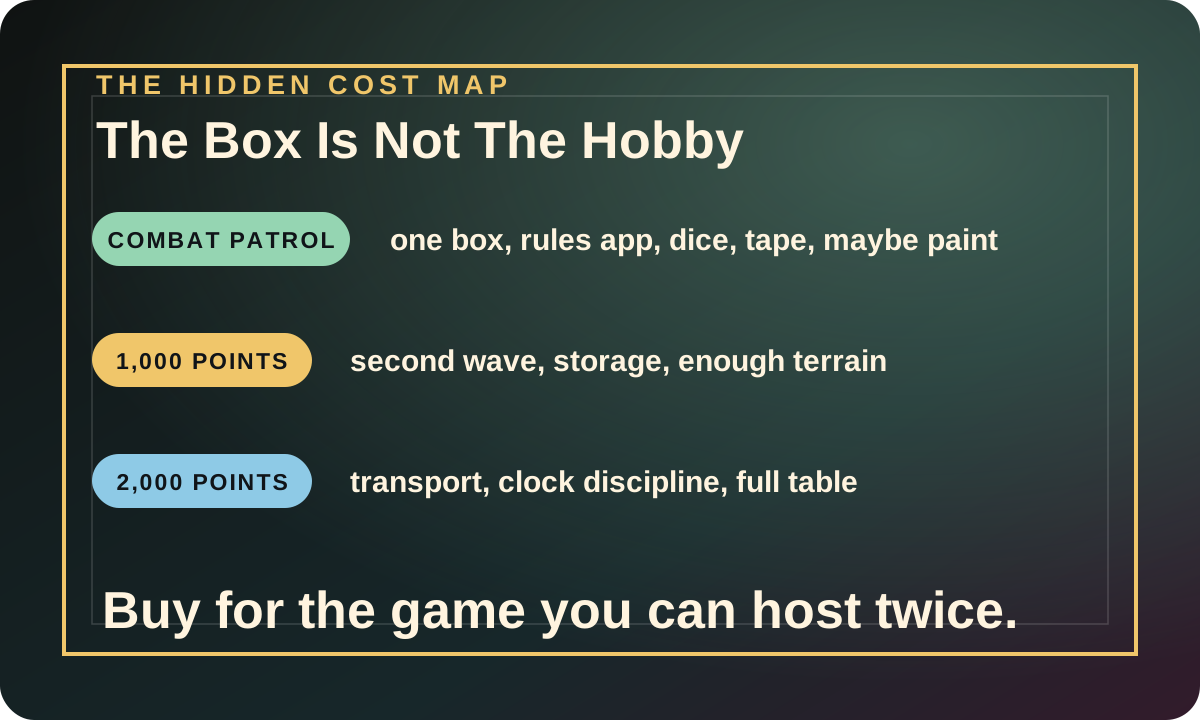
Combat Patrol is cheapest and fastest because it limits the question. You still need tools, primer, paint, dice, a tape measure, and patience, but the army itself stays finite.
1,000 points is the most efficient sweet spot for learning the actual hobby. You paint enough models to feel ownership, but not so many that the project becomes a second job. It also gives you enough list identity to decide whether your faction fantasy is real or just box art chemistry.
2,000 points is best after your habits exist. You know how fast you paint. You know whether you can transport models safely. You know whether your group can schedule long games. You know whether you enjoy list iteration or secretly only enjoy building one beautiful squad at a time. None of those are moral judgments. They are format data.
What should your group agree on before game one?
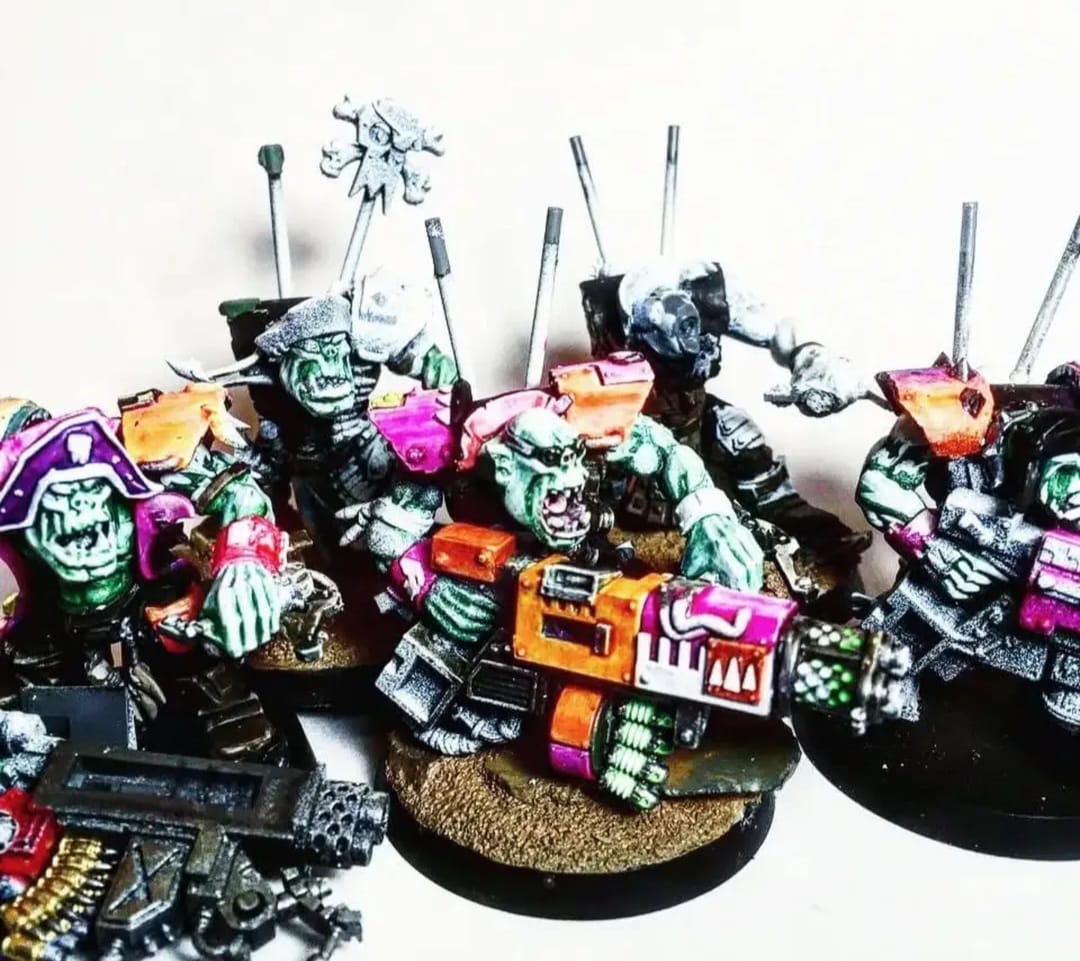
Agree on four things: format, terrain density, learning posture, and list tone. Format is the point size. Terrain density is whether the board gives both armies real movement decisions. Learning posture means whether take-backs are allowed for obvious beginner mistakes. List tone means whether everyone is building for practice, narrative, or competitive reps.
This is not overthinking. It is hospitality. A clear social contract lets dramatic dice feel funny instead of unfair. It also keeps one person from becoming the table lawyer while everyone else is still figuring out what an objective marker does.
For Combat Patrol, allow gentle take-backs and explain intent. For 1,000, allow one rewind per player for the first few games. For 2,000, talk expectations before list submission. The bigger the game, the more important the conversation.
The final format verdict
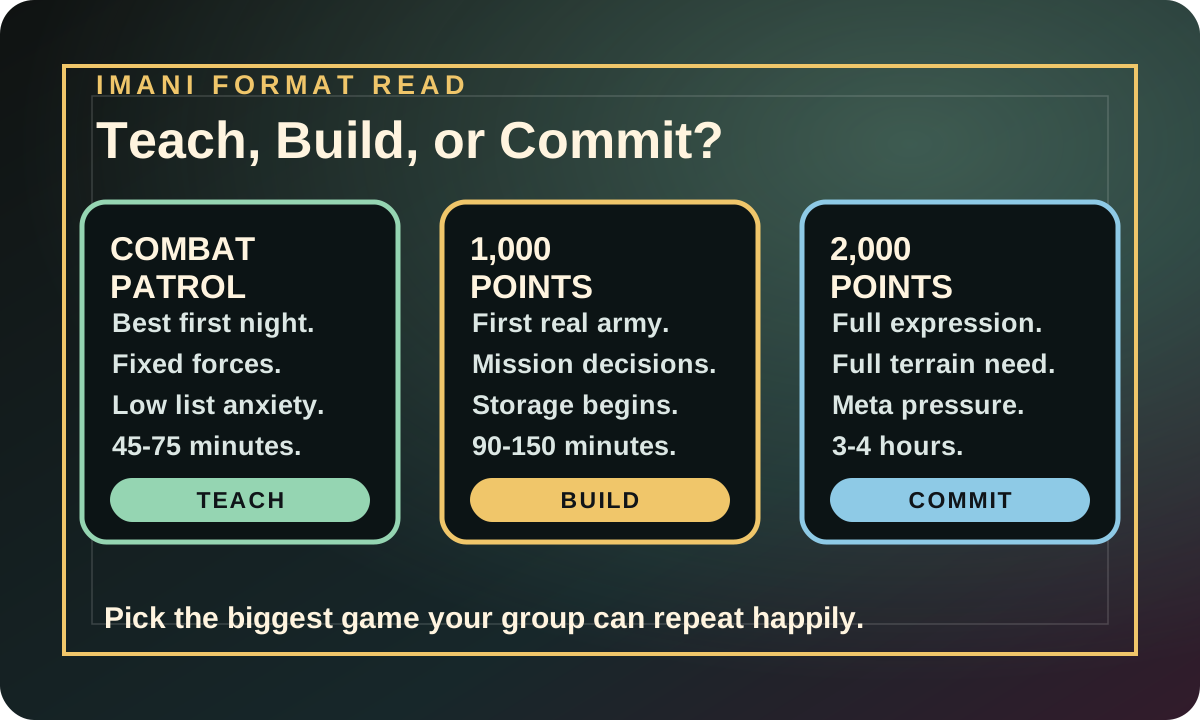
Choose Combat Patrol if you need a first night, a low-friction teach, or a way to test a faction before you commit. Choose 1,000 points if you want a real army that still respects your calendar. Choose 2,000 points if your group has the time, terrain, painted models, and appetite for the full strategic meal.
The best 40K format is the one that gets played again. That sounds soft until you watch a table vanish under the weight of premature ambition. Start where the joy is repeatable. Grow when the smaller game starts asking for more. That is how a purchase becomes a hobby instead of a monument.
What experienced tables keep reporting
Recurring owner patterns, synthesized in Puzzlewick's words. Follow each evidence trail to read the original discussion.
500-1000pts is the recommended point range for learning, which matches the Patrol-to-1K bridge.
Games Workshop framed the Combat Patrol Companion as first-games help, lore, and quick hobby guidance.
A 2,000-point dream without terrain, storage, and a four-hour slot is not an army plan yet. It is a mood board.
Read the evidence: Puzzlewick synthesis from current 11th Edition beginner threads
The picks
Some links below are affiliate links — as an Amazon Associate, Puzzlewick earns from qualifying purchases, at no extra cost to you. It never changes a pick.
Warhammer 40,000 Combat Patrol box
A one-box faction entry that keeps the first teach focused on turns and objectives instead of list construction.
- Fastest way to start
- Lower model count
- Great faction test
- Not every box scales equally
- Balance depends on patrol rules
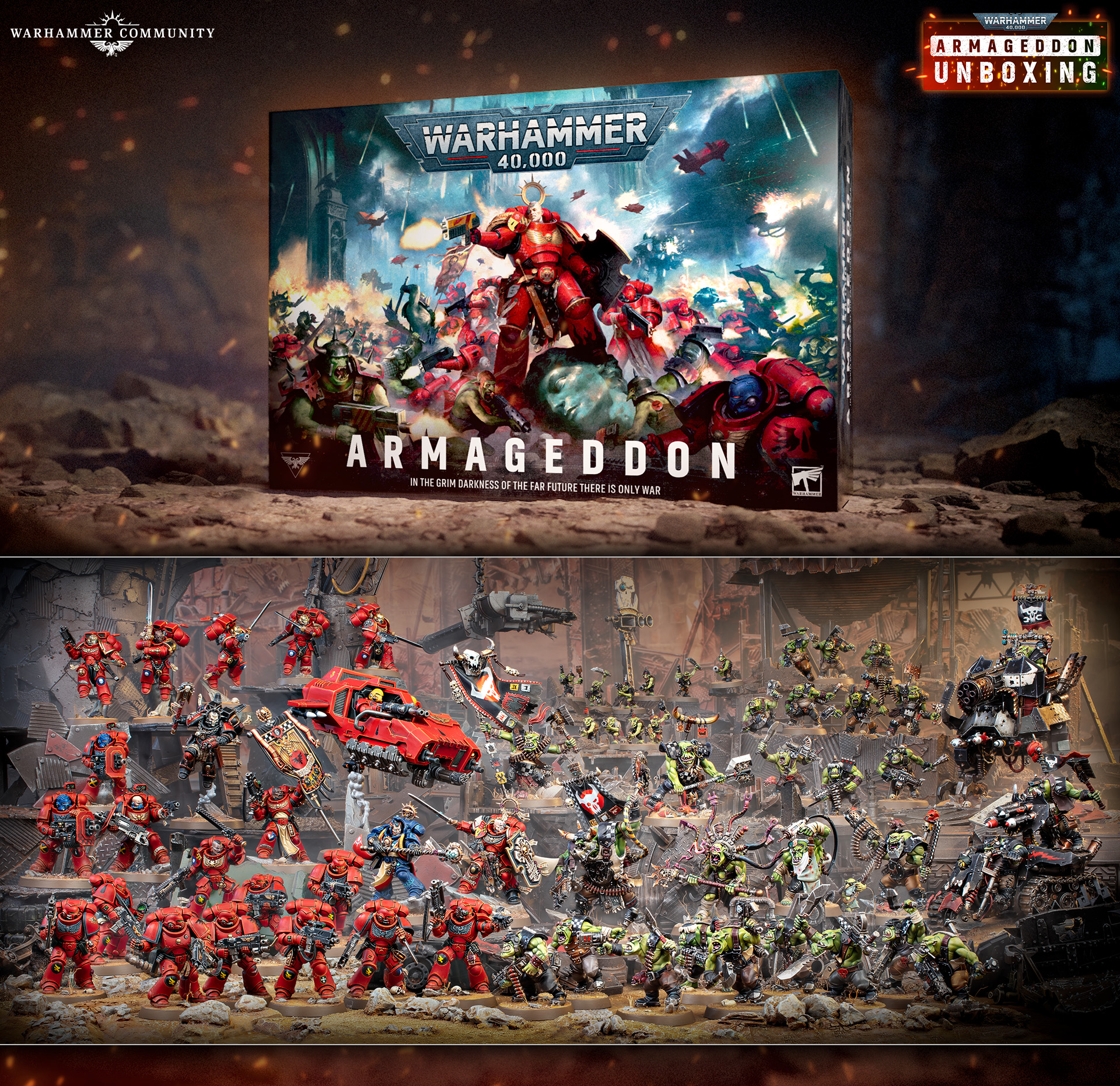
Warhammer 40,000: Armageddon launch box
A two-player launch package that becomes a great 1,000-point project after role-focused upgrades.
- Two armies
- Rules and mission material
- Strong narrative hook
- Neither half is 1,000 alone
- Big first hobby project
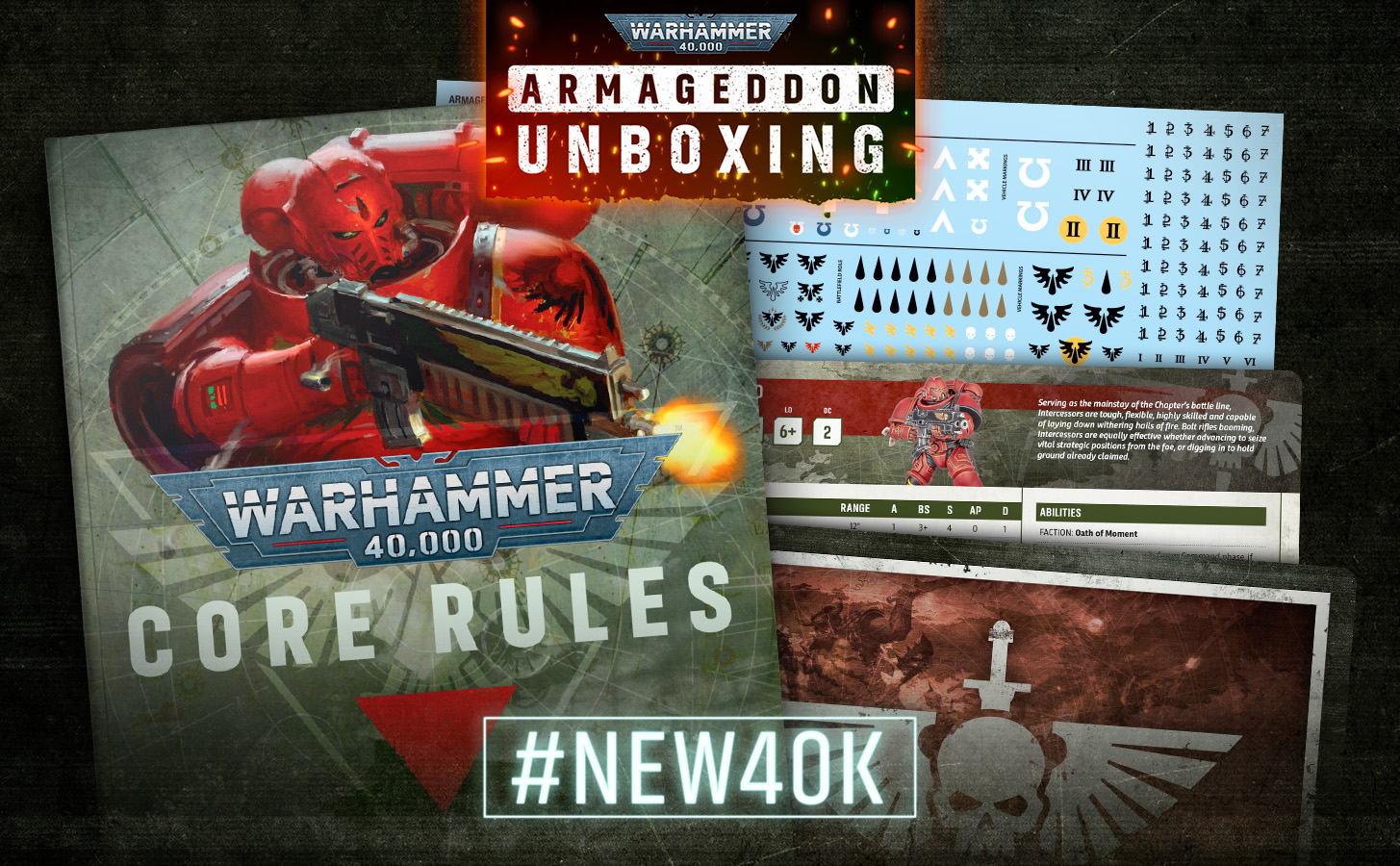
Warhammer 40,000 Core Book
Useful once the group is moving beyond Combat Patrol and wants the full rules, missions, lore, and army-building reference.
- Beautiful reference
- Useful for hosts
- Supports full-format play
- Rules also update online
- Heavy table object
Chapter Approved mission deck
A mission deck turns larger games into repeatable, scorable practice instead of line-up-and-fight habits.
- Adds structure
- Good for club nights
- Teaches objectives
- Edition-specific
- Can be scarce
Warhammer tape measure and dice set
The unglamorous kit that prevents the first game from stopping every six minutes.
- Always needed
- Cheap compared to models
- Good gift add-on
- Any good dice/tape works
- Brand premium
At a glance
| Format | Best for | Typical time | Buying pressure | Main risk | Imani take |
|---|---|---|---|---|---|
| Combat Patrol | First games, new factions, quick nights | 45-75 min | One box plus hobby basics | Boxes vary as future 1,000-point foundations | Best first yes |
| 1,000 points | First real army and mission learning | 90-150 min | Core force plus role patches | Swingier matchups and skew | Best learning milestone |
| 2,000 points | Club baseline, tournaments, full collection play | 3-4 hours | High: army, storage, terrain, time | Too much too soon | Best destination |
Questions, answered
Is Combat Patrol the same as 500 points?
No. Combat Patrol uses boxed forces and format-specific tuning. Treat it as its own beginner format, not simply a normal points size.
Is 1,000 points balanced in 11th Edition?
It is playable and excellent for learning, but more swingy than 2,000. Avoid hard skew lists while your group is escalating.
Why do tournaments usually use 2,000 points?
2,000 gives armies enough redundancy, tools, and scoring depth for the full matched-play experience. It also fits established event expectations.
Should I buy 2,000 points before my first game?
Usually no. Buy a Combat Patrol or a contained launch path first, play, then expand based on problems your games reveal.
How long does each Warhammer 40K format take?
Combat Patrol often fits 45-75 minutes after teaching. 1,000 points often runs 90-150 minutes. 2,000 points commonly asks for a full 3-4 hour session.
What is the best second step after Combat Patrol?
Build toward a fair 1,000-point list with scoring, anti-tank, delivery, and counterpunch roles covered.
Do I need a full table for Combat Patrol?
No, but terrain still matters. Smaller games can run on smaller layouts, while 1,000 and 2,000 need better terrain planning.
Which format is best for kids or family learning?
Combat Patrol, with take-backs and open explanations. Keep the first games short and celebratory.
Which format is best for competitive practice?
2,000 points is the baseline for most serious matched-play practice, but 1,000 can still teach fundamentals.
What should I buy before adding more models?
Primer, basic paints, clippers, glue if needed, dice, a tape measure, objective markers, and enough terrain to make games fair.
Imani's verdict
If I were starting a friend in 11th Edition, I would not hand them a 2,000-point shopping list. I would hand them a Combat Patrol night, then a 1,000-point army plan with one clear table identity, then a promise that 2,000 points is waiting when 1,000 starts feeling too small. The hobby gets better when the escalation feels earned.
Research ledger 11 sources · reviewed 2026-08-10
Specifications, rules, current product information, community experience, and contrary evidence were checked against the sources below. Commercial links are kept separate from editorial evidence.
- warhammer-community.comwarhammer-community.com/en-gb/articles/ctdexme4/warhammer-40000-the-new-edition-is-revealed-at-adepticon-preview-2026
- warhammer-community.comwarhammer-community.com/en-gb/articles/95fucn12/building-an-army-in-the-new-edition-of-warhammer-40000
- warhammer-community.comwarhammer-community.com/en-gb/articles/oefzq9fg/new40k-how-your-army-affects-your-mission
- warhammer-community.comwarhammer-community.com/en-gb/articles/nhqt9wx3/new40k-rules-download-the-free-core-rules-now
- warhammer-community.comwarhammer-community.com/en-gb/articles/8wi6x7nq/new40k-points-apps-and-updates-incoming
- reddit.comreddit.com/r/Warhammer40k/comments/1udp90s/what_to_buy_next
- goonhammer.comgoonhammer.com/40k-11th-edition-points-review-overview
- reddit.comreddit.com/r/Warhammer40k/comments/1tx1whq/11th_edition_1000pt_games_for_beginners
- reddit.comreddit.com/r/CombatPatrol40k/comments/1todfdz/11th_edition_combat_patrol
- warhammer-community.comwarhammer-community.com/en-gb/articles/dcnhuoit/new40k-more-new-edition-releases-for-warhammer-40000
- wargamer.comwargamer.com/warhammer-40k/11th-edition
Okay but have you seen what everyone’s saying about this?


Keep exploring
The next smart rabbit holes.
✠ Universe HubWarhammer: the whole buying pathWarhammer is Games Workshop's tabletop colossus — the grimdark far future of Warhammer 40,000 and the high fantasy of Age of...⚙ Topic PathMiniatures and Wargames: compare the whole shelfThe cheapest box is not always the cheapest way in. These guides connect rules format, faction fit, terrain, tools, paint, and the...MasterclassHow to Start Warhammer 40,000 in 2026The current starter boxes, the honest first budget, faction choice, painting, first-game flow, and the traps that turn a fun army into a...