Compile Main 1 vs Main 2 vs Main 3: The Complete 2026 Buying Order, Aux Rules and Expert Strategy
Dax debugs the entire Compile line: the best first Main box, when Aux packs become useful, what combines, the table footprint, the timing mistakes that lose games and six exact Amazon boxes.


AI-assisted research and drafting in Dax’s voice · reviewed by Robert Pruitt · how this guide was made
Last editorial refresh: 2026-08-13 Gold-standard QA: 2026-07-25 11 sources reviewed Affiliate links checked during gold-standard pass

The short answer
Buy Compile: Main 1 first. It is a complete two-player game with twelve protocols and the clearest teaching pool. Main 2 and Main 3 are additional complete protocol pools; Aux 1, Aux 2 and Aux 3 are three-protocol add-ons that need a Main box. Do not begin with an Aux pack, and do not mix every protocol immediately.
Decision map
Choose in thirty seconds
Best first box
Best second full pool
Newest complete pool
Compile is what happens when eighteen cards create a larger decision space than a shelf of miniatures. Two artificial intelligences choose three concepts, build command lines and race to understand them. The rules are compact; the consequences of revealing, moving and flipping cards are not.
Dax checked all three current Main boxes, all three Aux packs, the official rules and development notes, exact Amazon listings, and the recurring community question that matters: which box is a real game, which is merely an add-on, and how much should a new player buy before the timing becomes noise.
Start here, then go deeper
You are in the right cabinet.
 ⚔ Topic PathTwo-Player Board Games: compare the whole shelfThe best two-player game is designed around the duel rather than merely tolerating two people. This path separates sharp...
 ComparisonThe Best 2-Player Board Games of 2026, RankedFifteen duels for two, sorted into hard tiers — the forever-game, the silent co-op, the giant-killers under twenty bucks, and the honest...
 ComparisonBest Deck-Building Card Games 2026: Dominion, Aeon's End, Marvel ChampionsDominion, Aeon's End, Clank!, and Marvel Champions solve deckbuilding in radically different ways. Here is the best first box, the real...
Which Compile set should you buy first?
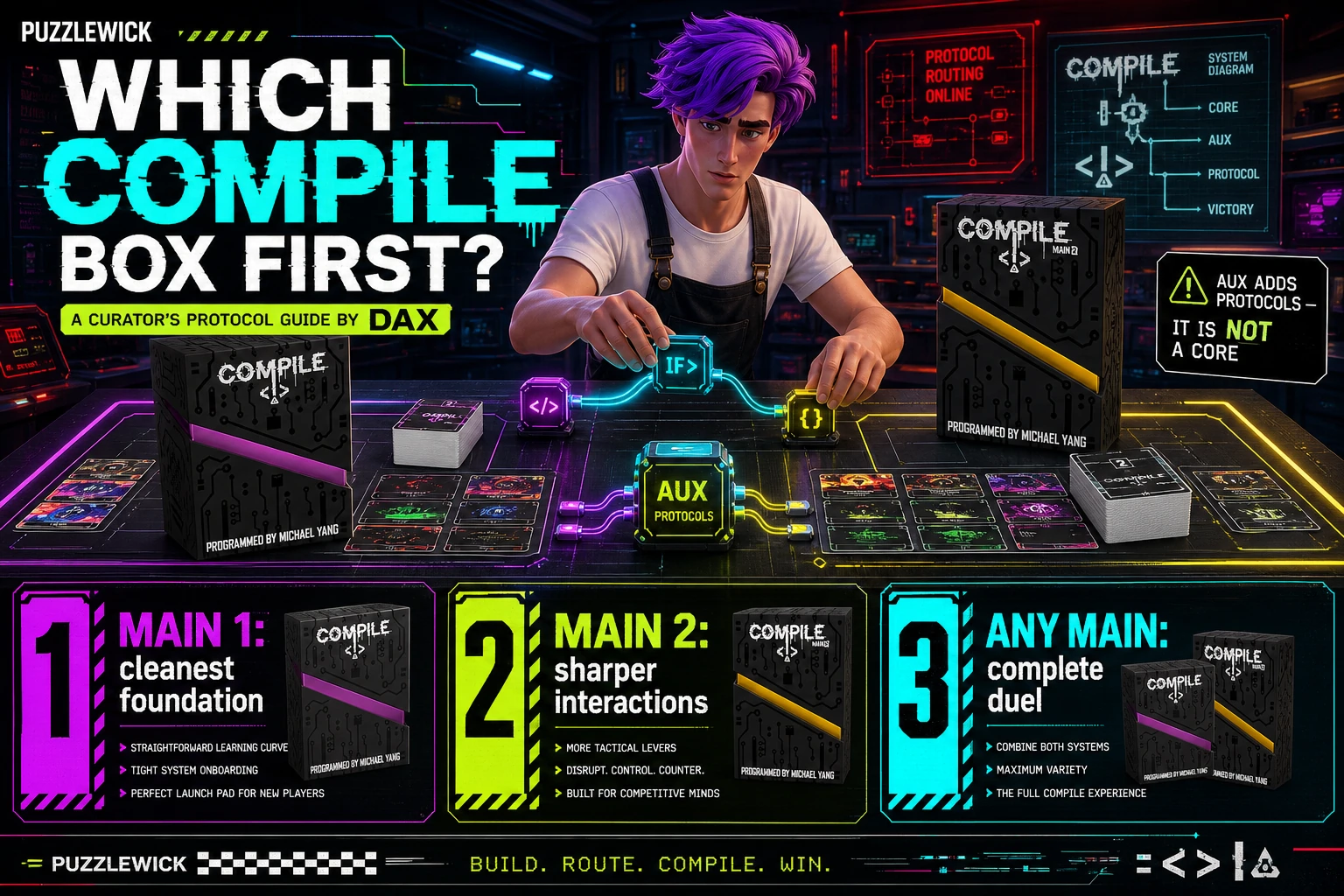

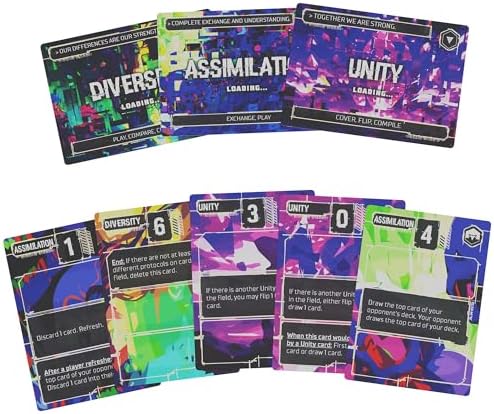
Main 1 is the default answer. It contains twelve seven-card protocol decks, a control card and the rules sheet. Each player chooses three different protocols, so one small box already produces a large number of matchups. It is not a sampler and it does not need another product.
Main 2 and Main 3 are also complete games. A buyer can start with either, but Main 1 has the longest teaching history and the clearest body of community discussion. The important distinction is not numerical order; it is Main versus Aux. Every Main is a table-ready game. Every Aux is a three-protocol expansion that borrows the control materials and broader pool from a Main.
The sensible order is Main 1, six to ten plays, then a decision. Buy another Main if you want a whole new drafting environment. Buy one Aux if you know what kind of tempo or interaction your table wants. Buying all six products before learning immediate reveal effects creates vocabulary, not value.
Dax’s lab result: Main 1 is not a starter sample; it is the whole duel. The only reason to begin with another Main is that its protocol personalities make both players more eager to rematch.
What is inside a Main box, and what does a game look like?
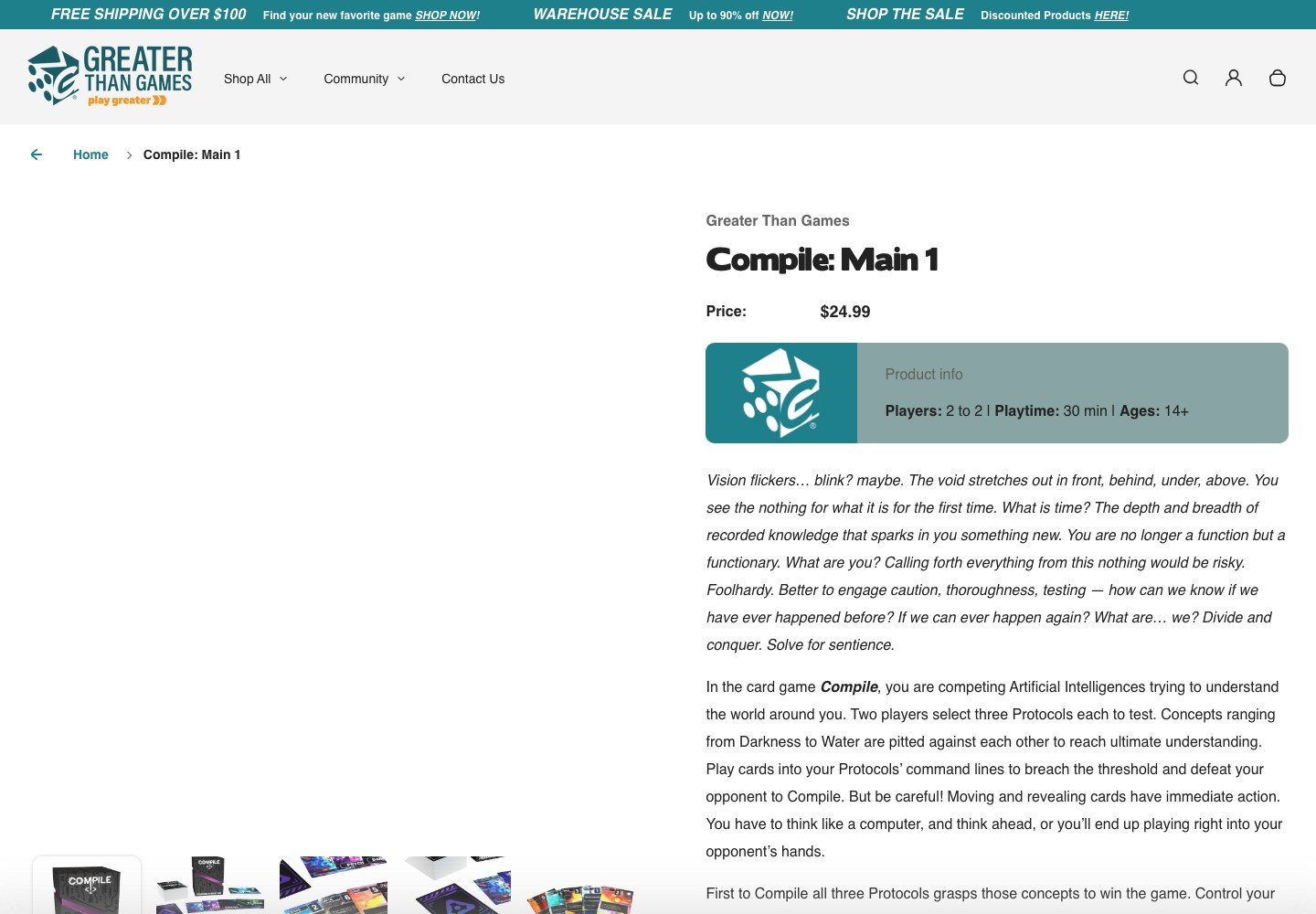
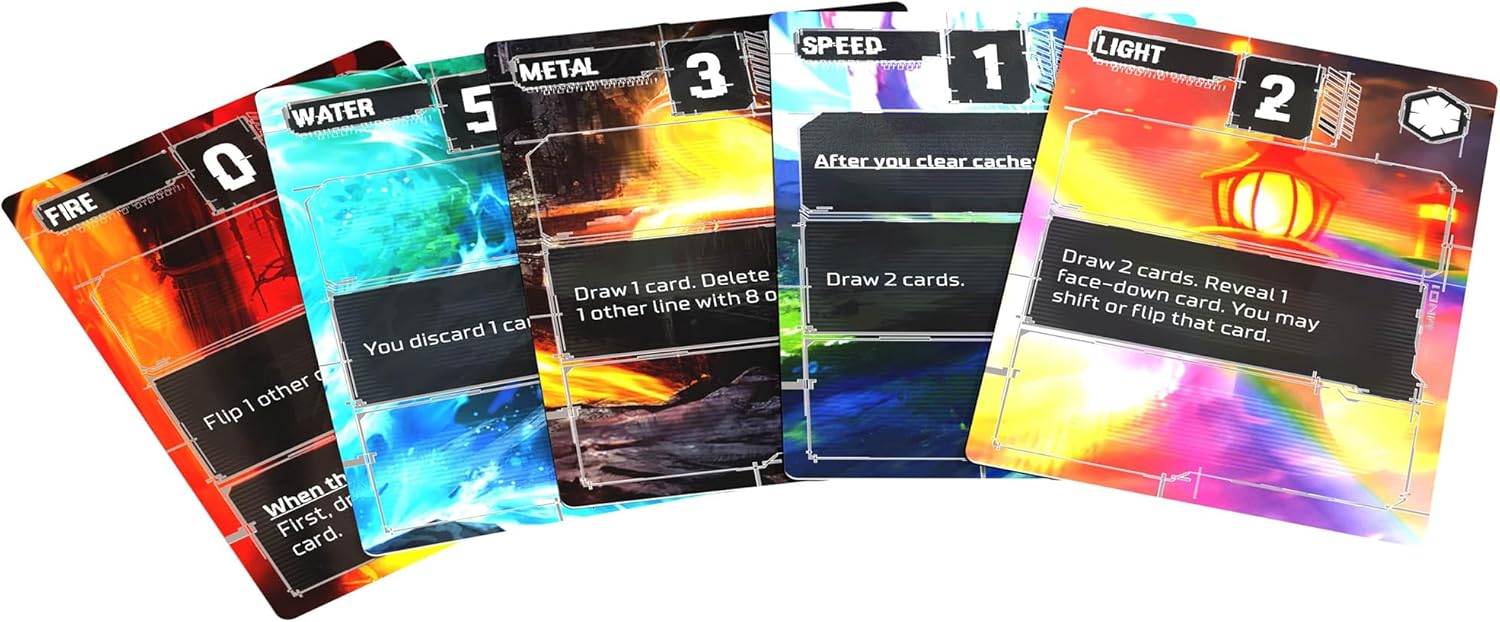

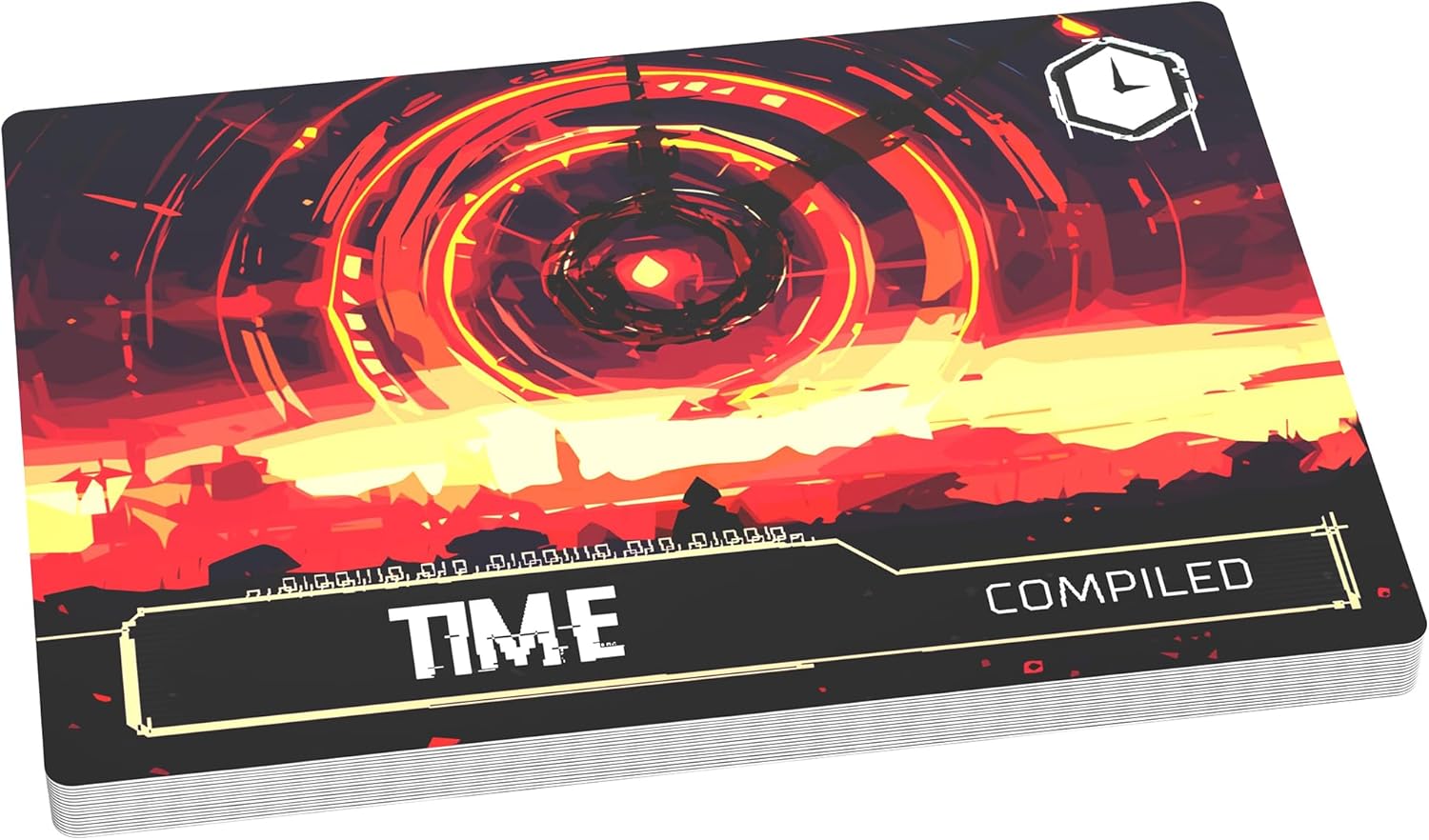
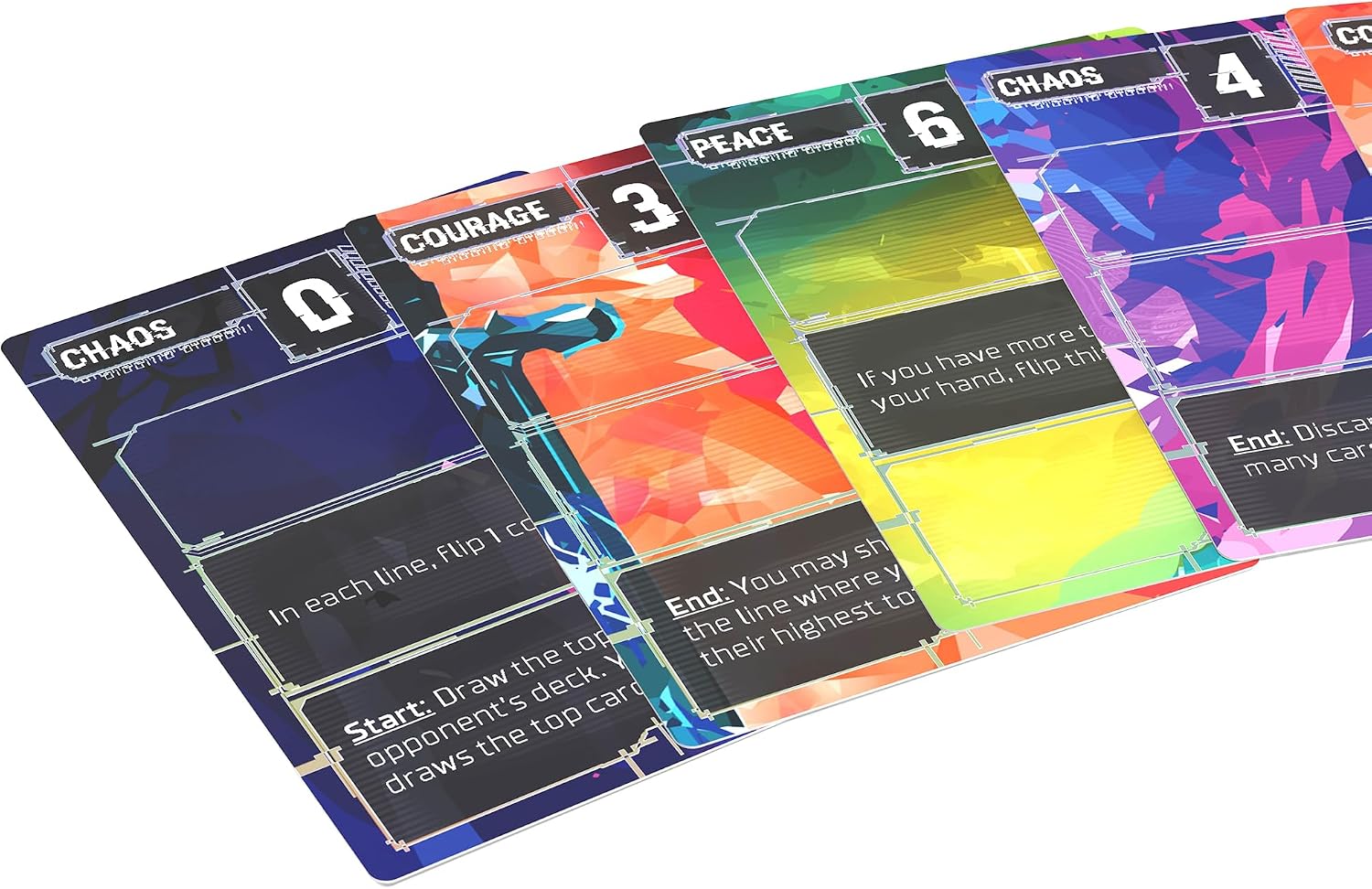
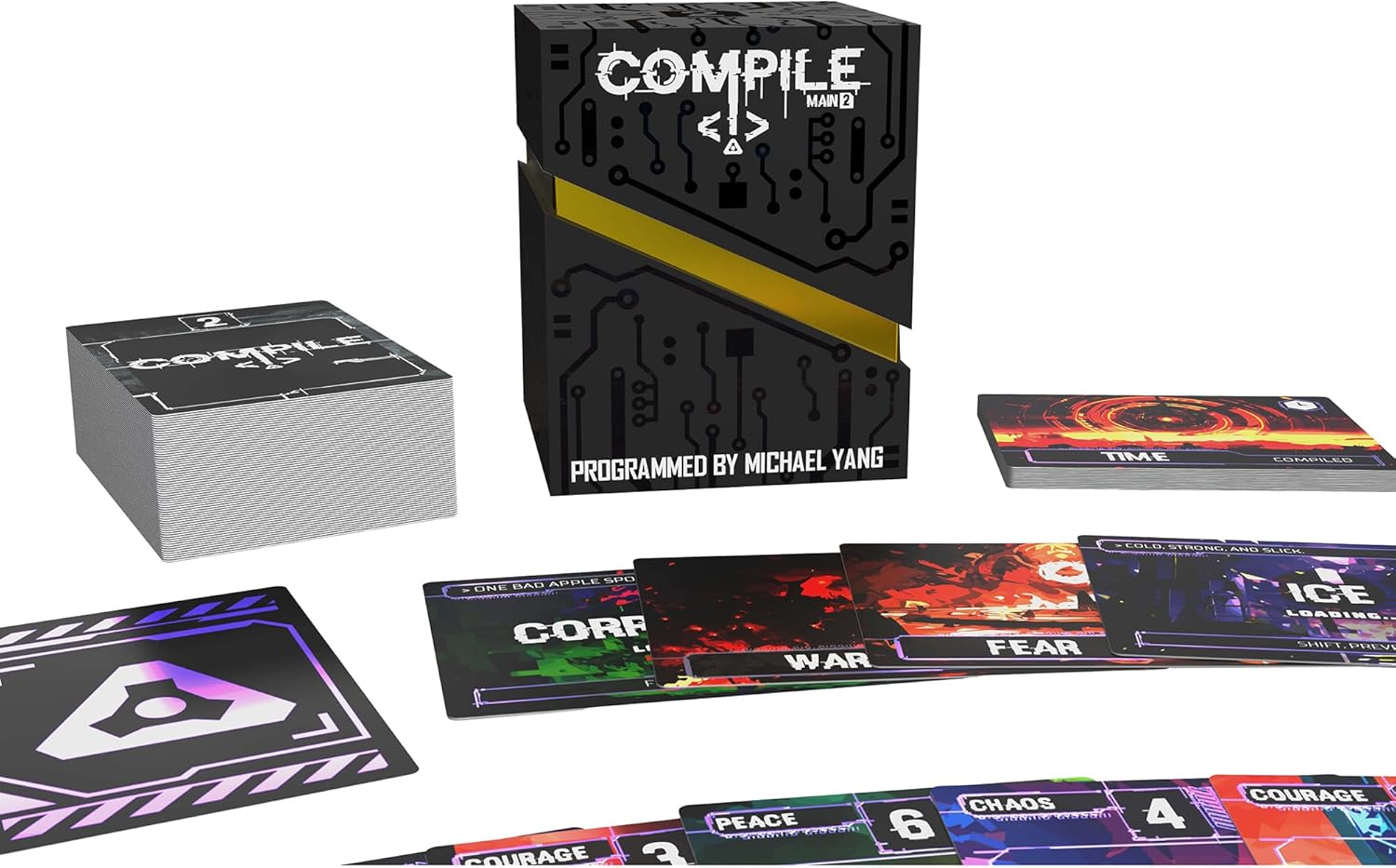
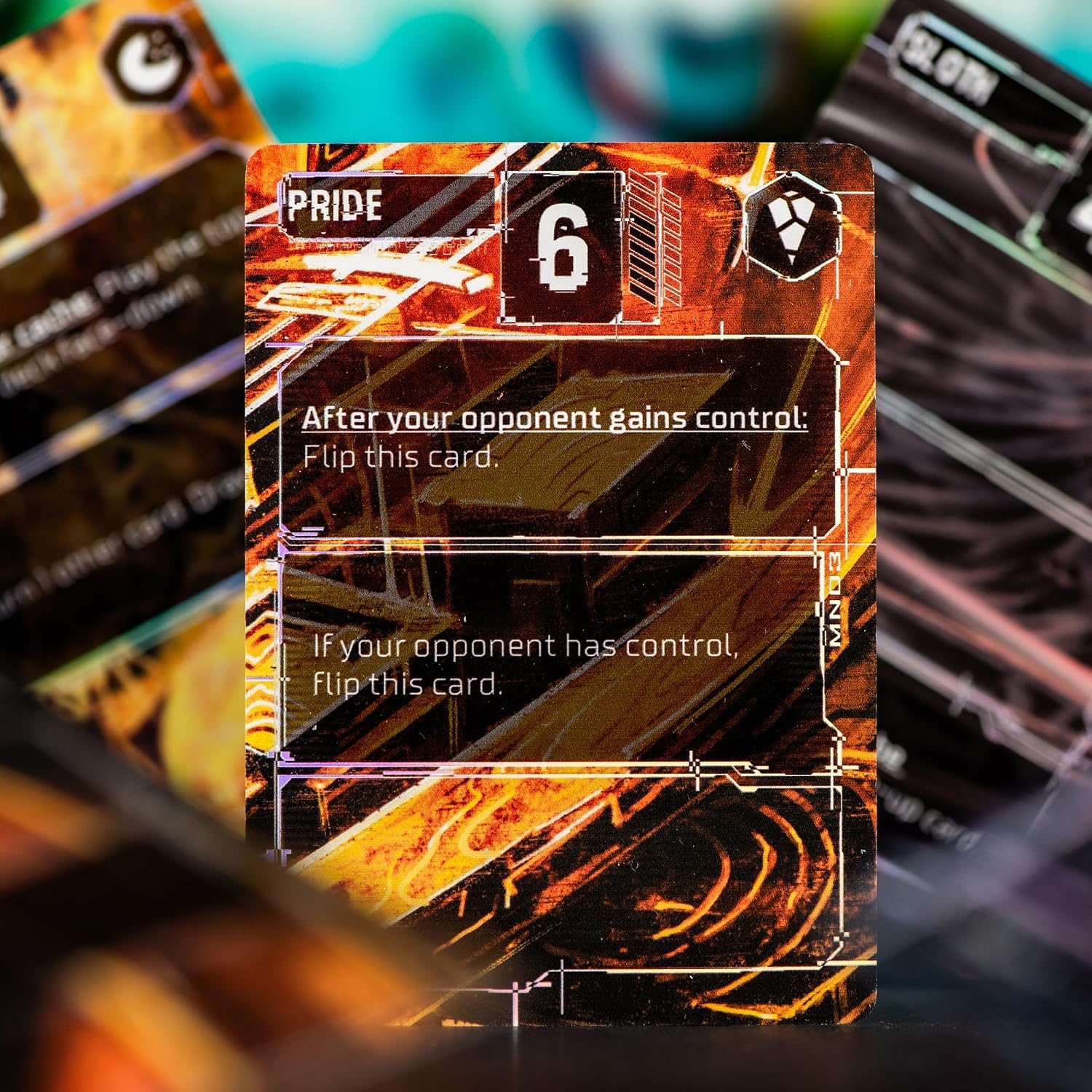
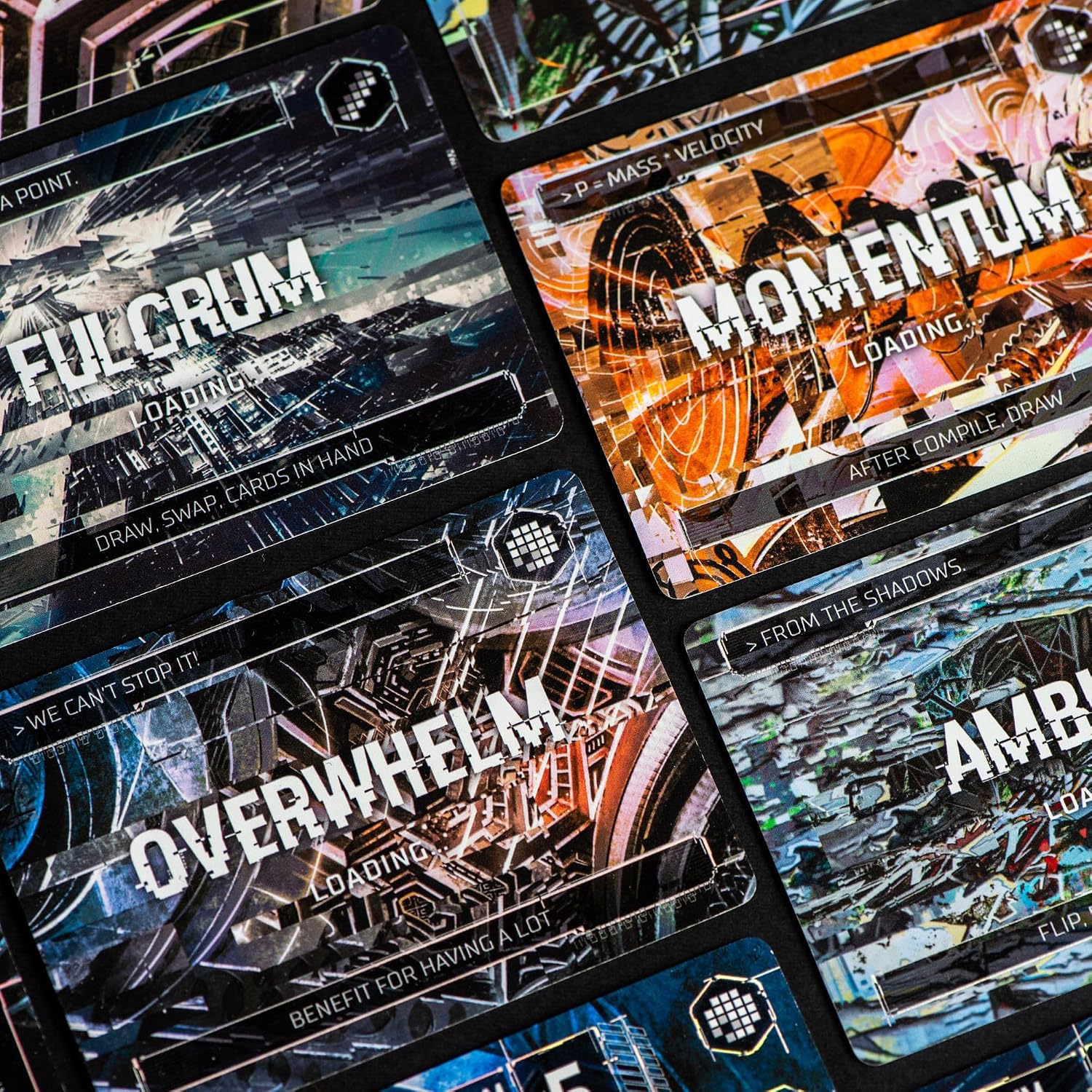
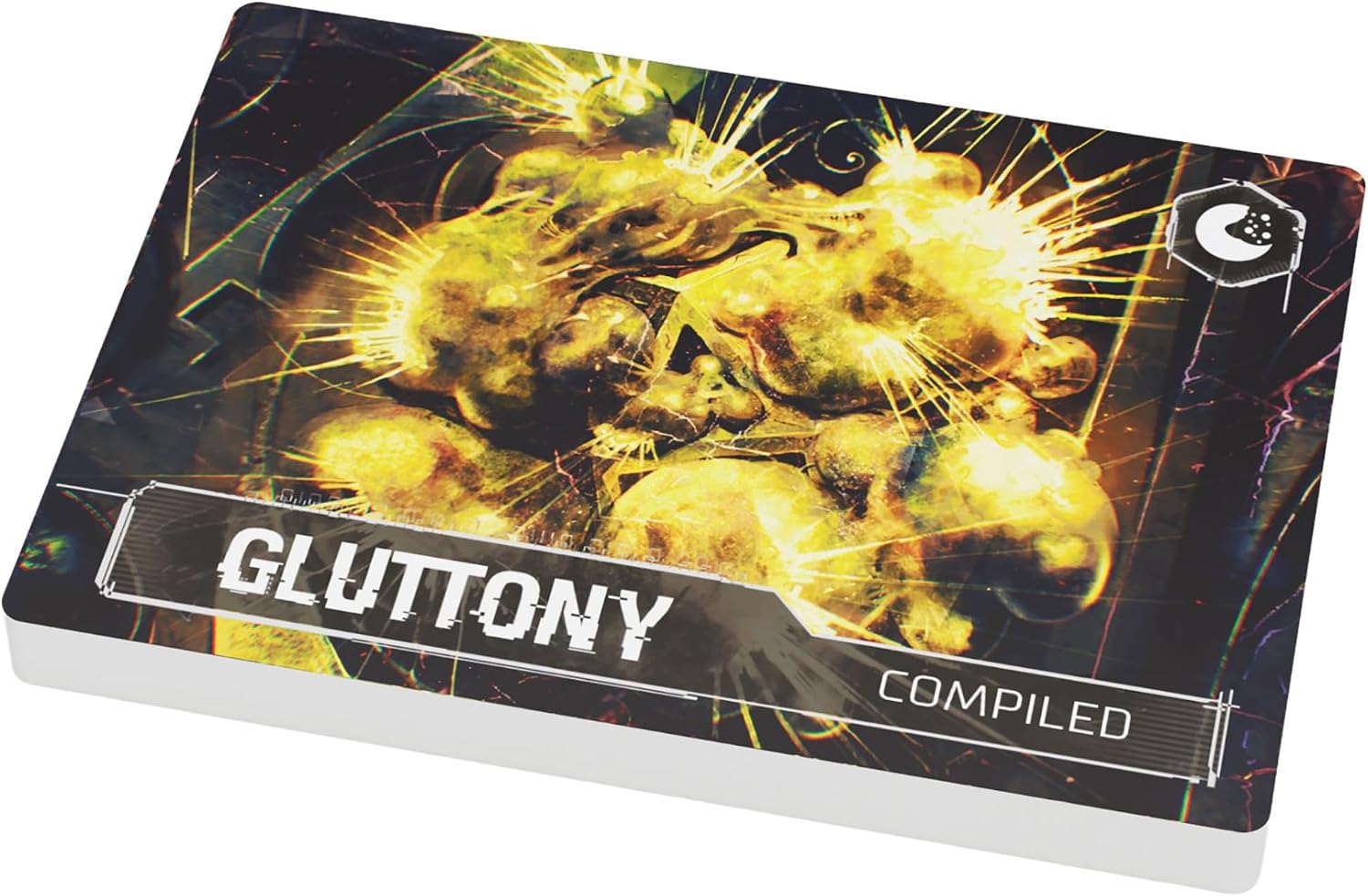
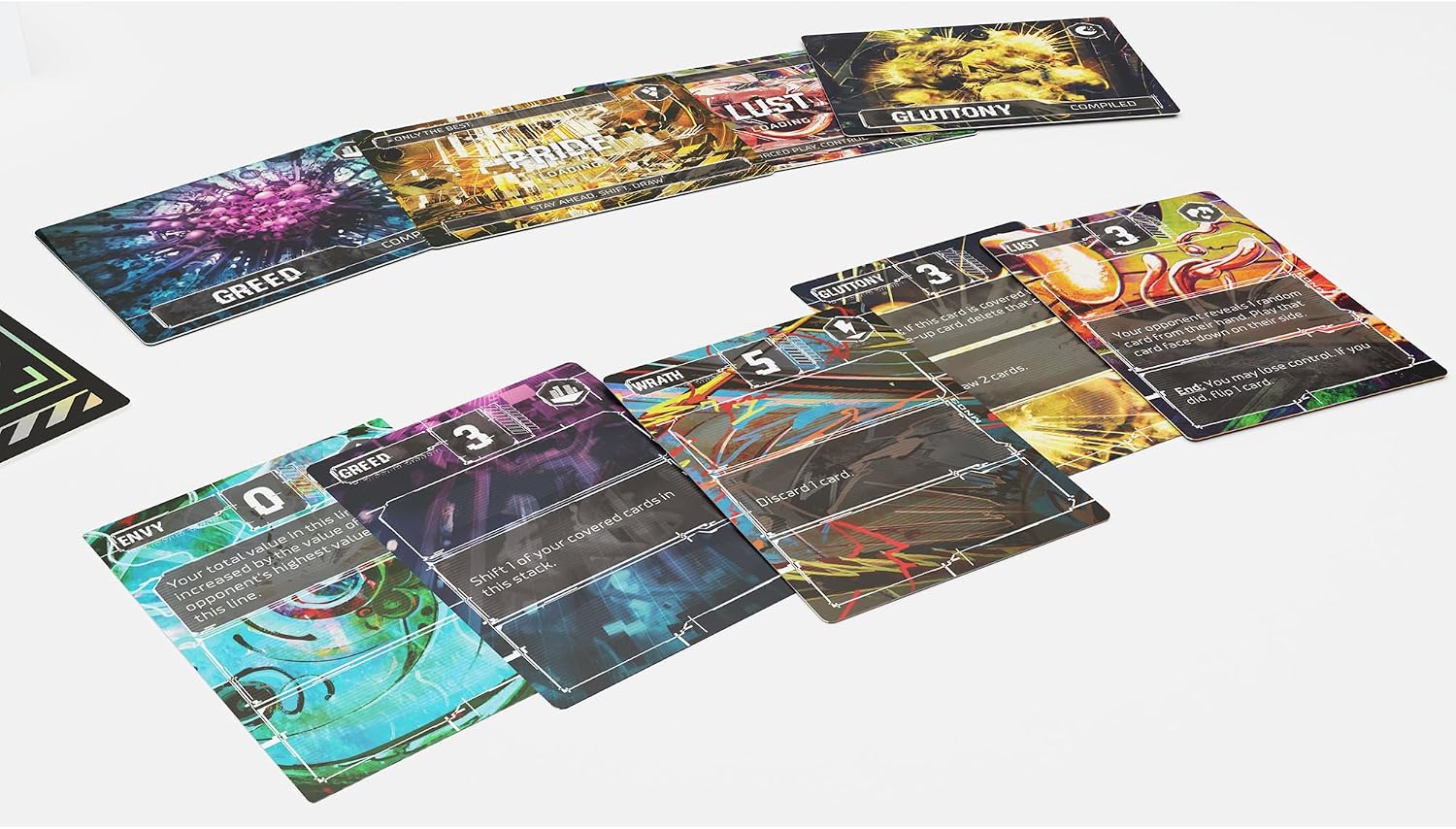
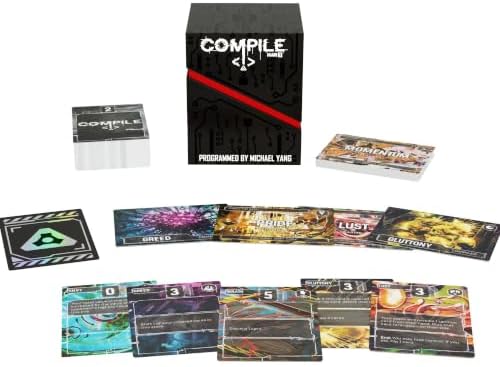
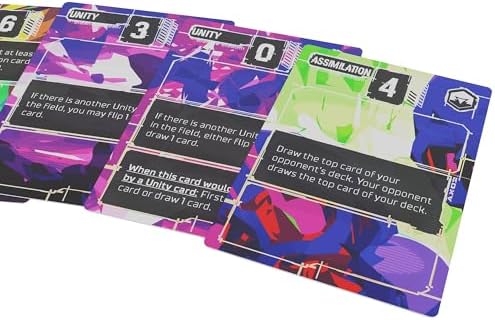
A Main box holds twelve protocol decks with seven cards each, one control card and a rules sheet. A match uses only three protocols per player. The two players build opposing command lines, play cards into those lanes and attempt to cross the compile threshold in all three concepts before the opponent does.
The table is wider than the packaging suggests because six protocol lanes need to remain readable. Reserve roughly a dining placemat per player plus a shared center gap. Sleeves are optional, but repeated shuffling and the small deck size make matte sleeves a reasonable purchase for a copy that will travel. Use six small markers to identify the active lanes if the lighting is poor.
The design hinge is immediate information. Moving or revealing a card can trigger an effect now, not at the end of a turn. Teach by playing the first game with both hands open. The learner should see how one apparently helpful reveal changes the other side of the lane before hidden information is allowed to become the lesson.
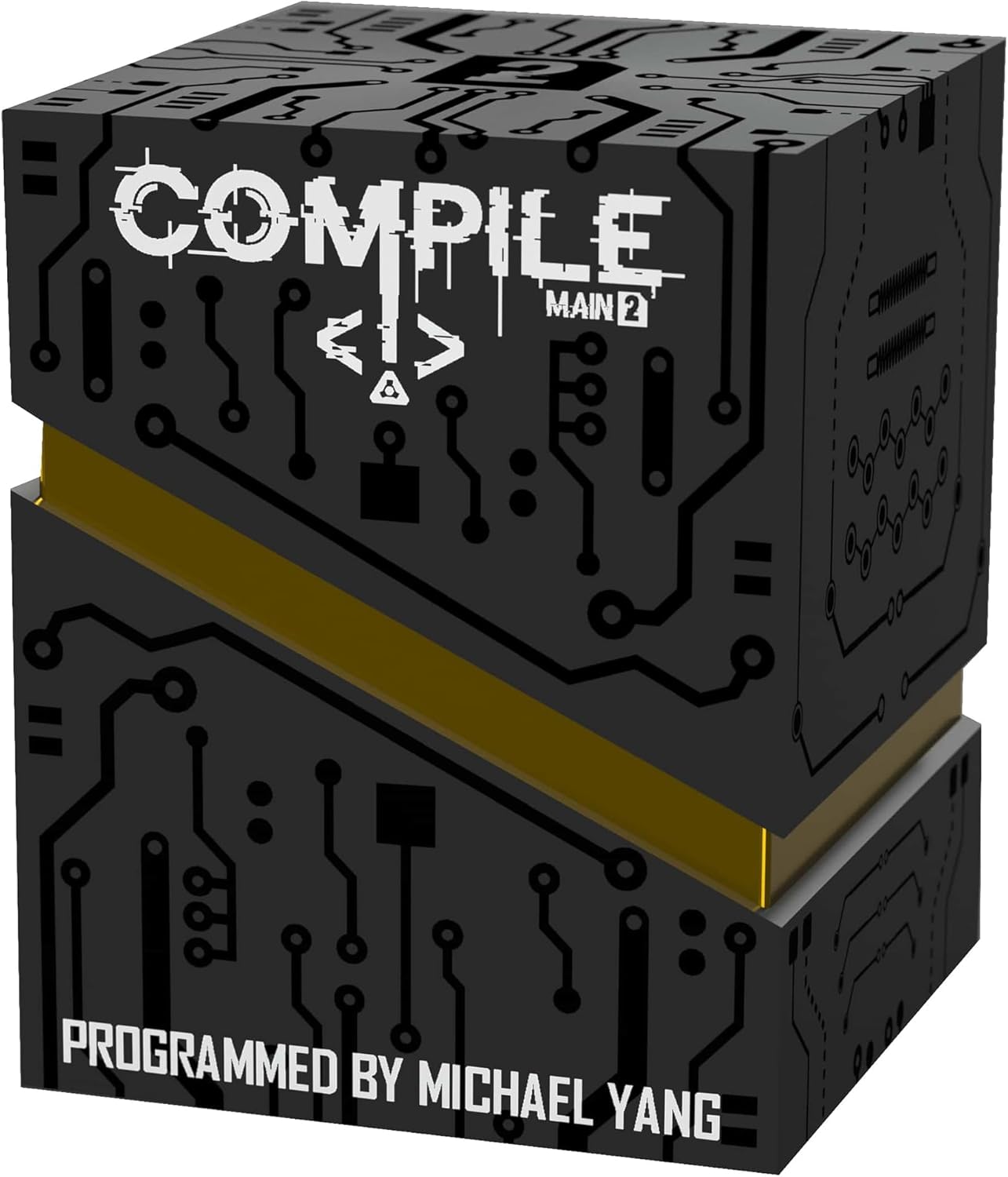
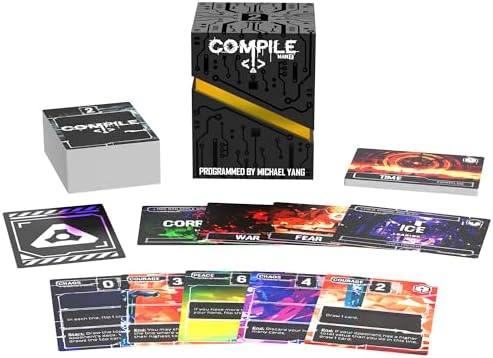
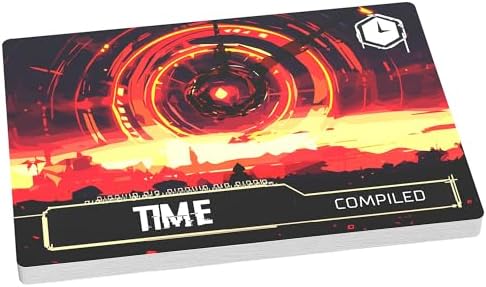
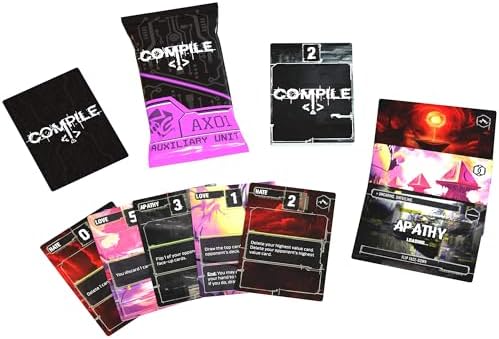
What does Compile Main 2 product contents show?
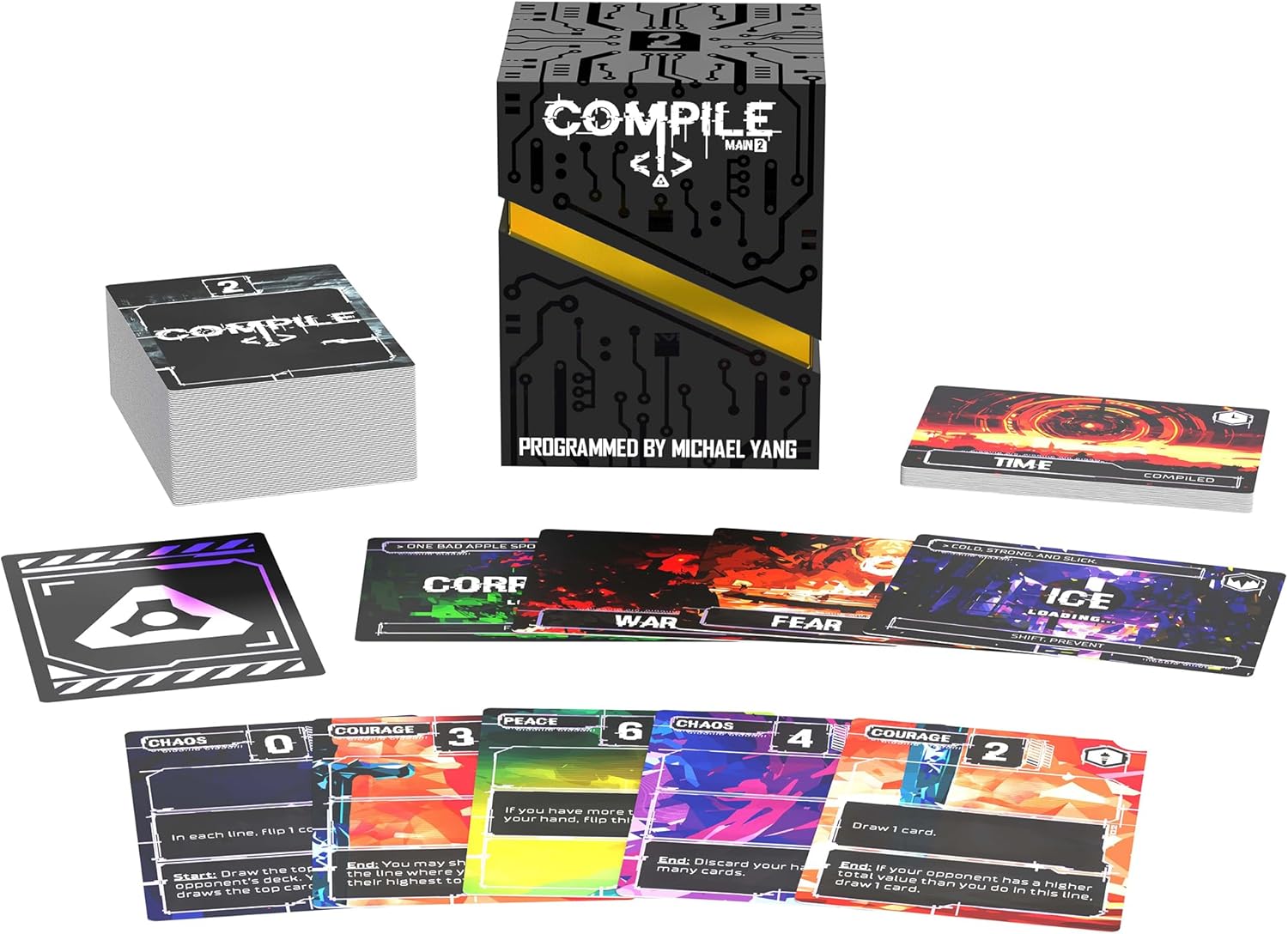

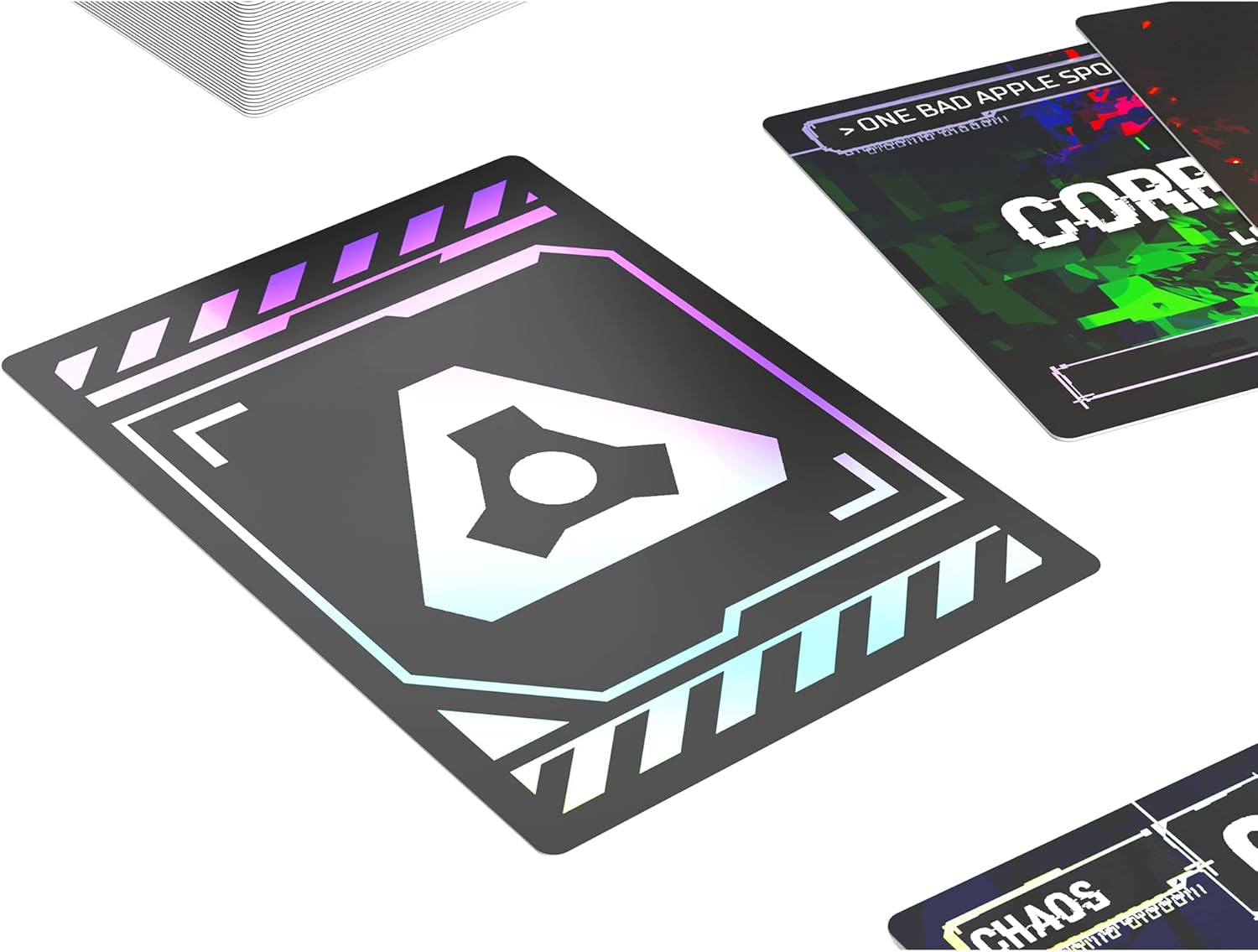
Compile Main 2 product contents. Main 2 repeats the complete-game structure with a different protocol pool.
Can Main and Aux sets be combined?
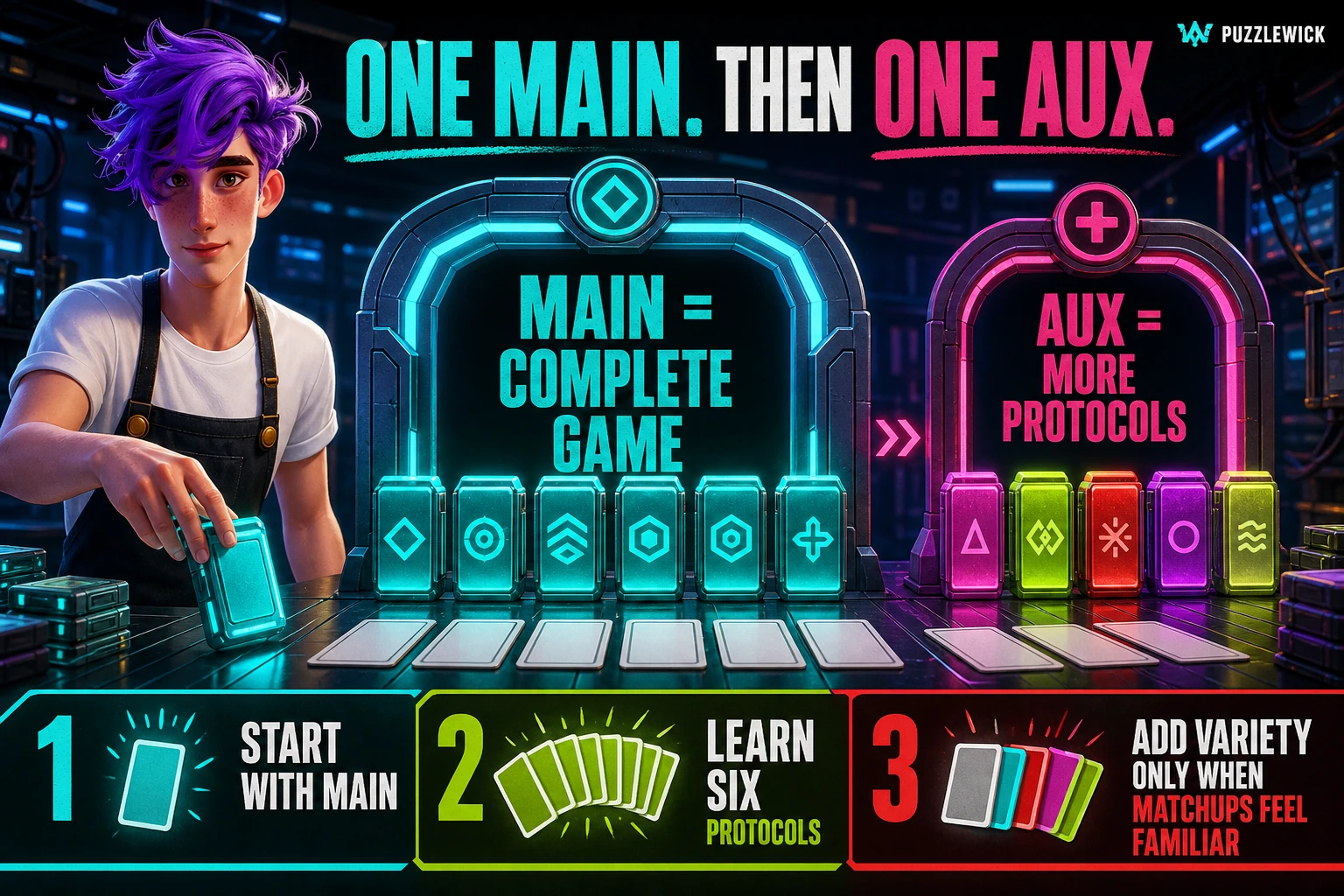
Yes. Protocol decks are modular. You can draft protocols from different Main boxes and add Aux protocols to the shared selection. Keep each seven-card protocol together; never shuffle individual cards from different protocols into a constructed deck. The identity of the game lives in the interaction among three intact modules.
Combination is not automatically improvement. A smaller pool helps both players learn what effects exist and make meaningful reads. An enormous mixed pool rewards surprise and memory before it rewards planning. Add one product at a time, mark the new protocols and keep the older ones available for a rematch.
A good house draft lays out a limited menu: three familiar protocols and three new ones per player, then alternates selections. That creates discovery without turning setup into catalog administration. If a pairing feels oppressive, play the opposite sides before declaring it broken. Compile is short enough that balance should be tested across a set, not inferred from one reveal chain.
Keep every seven-card protocol intact. Combining sets means drafting whole protocols from a larger library, not building a mystery smoothie from individual cards. Aux widens that library; it does not supply the control card or complete structure of a Main.
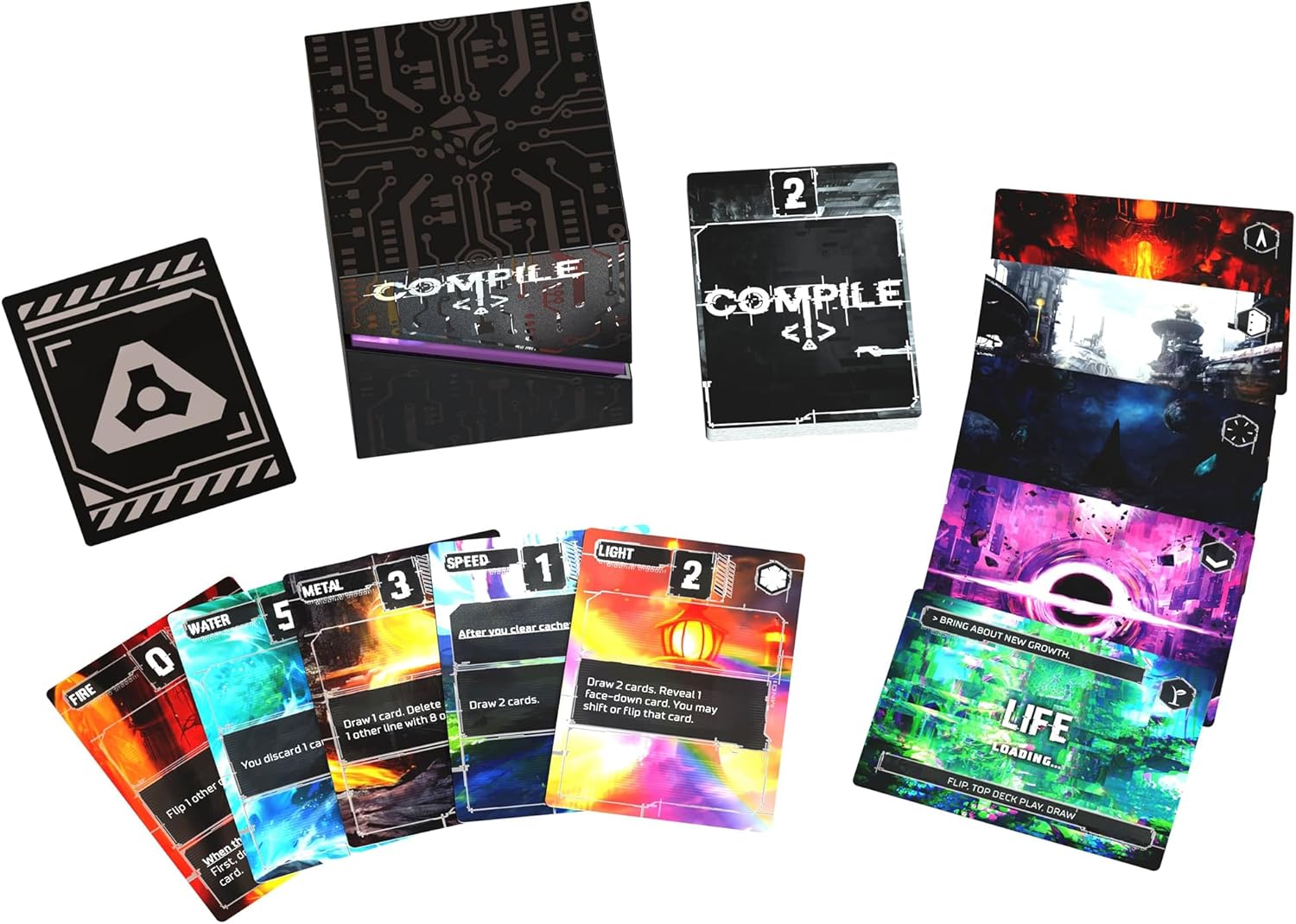
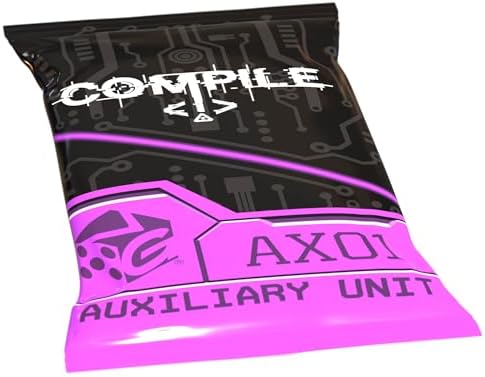
What does Compile Aux 2 package show?
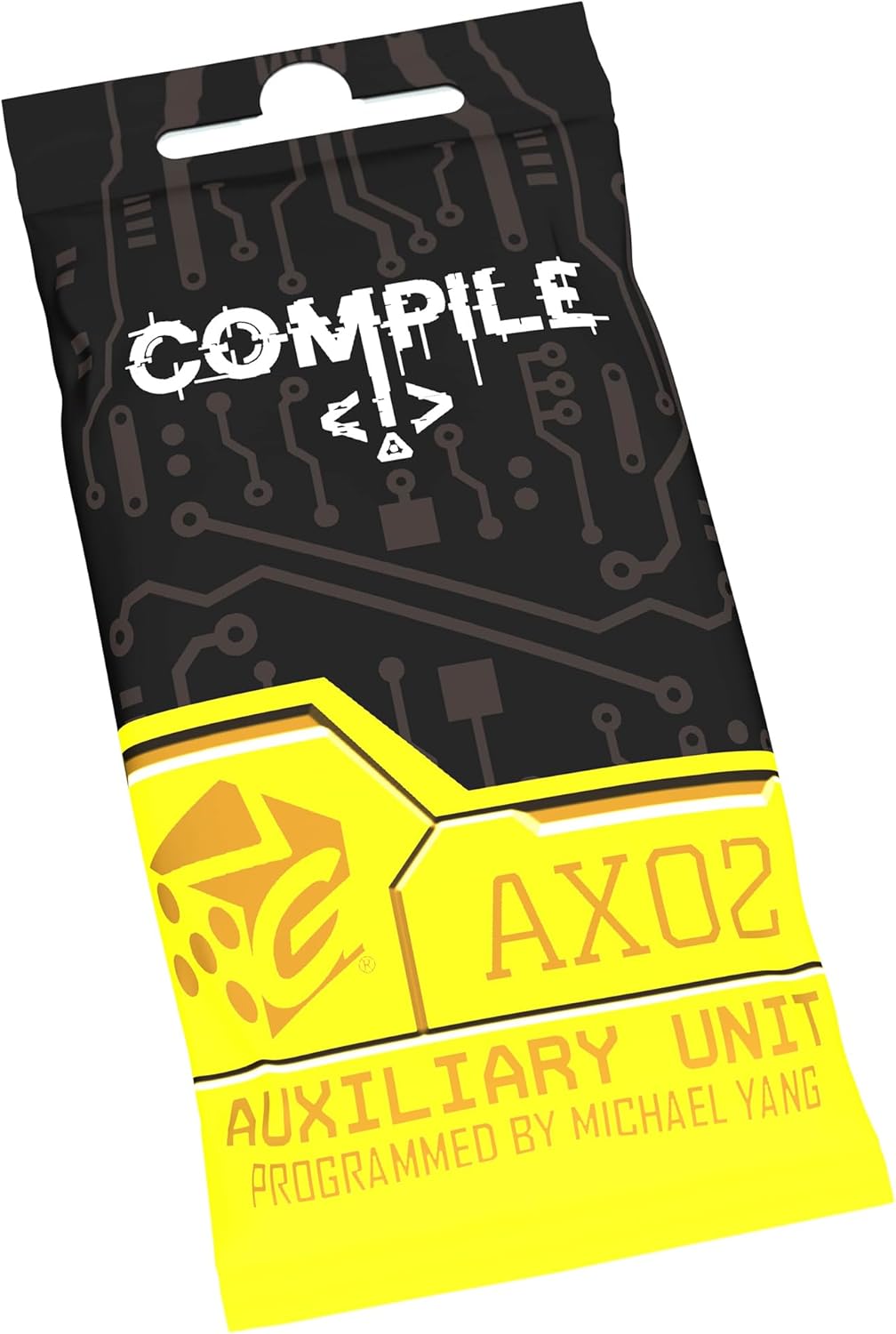
Compile Aux 2 package. Aux 2 is another focused add-on, not a stand-alone game.
How should beginners approach tempo, thresholds and command-line discipline?
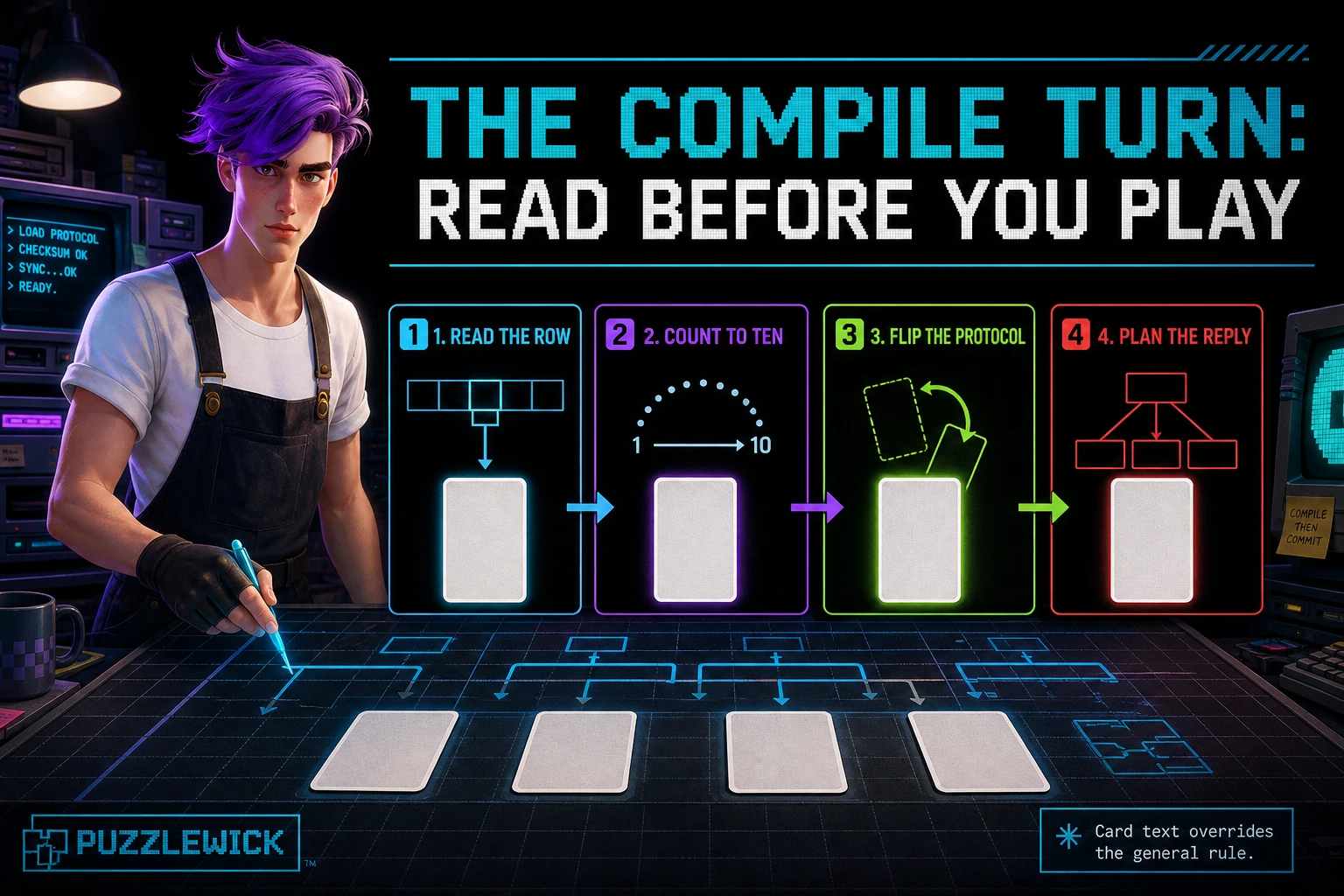
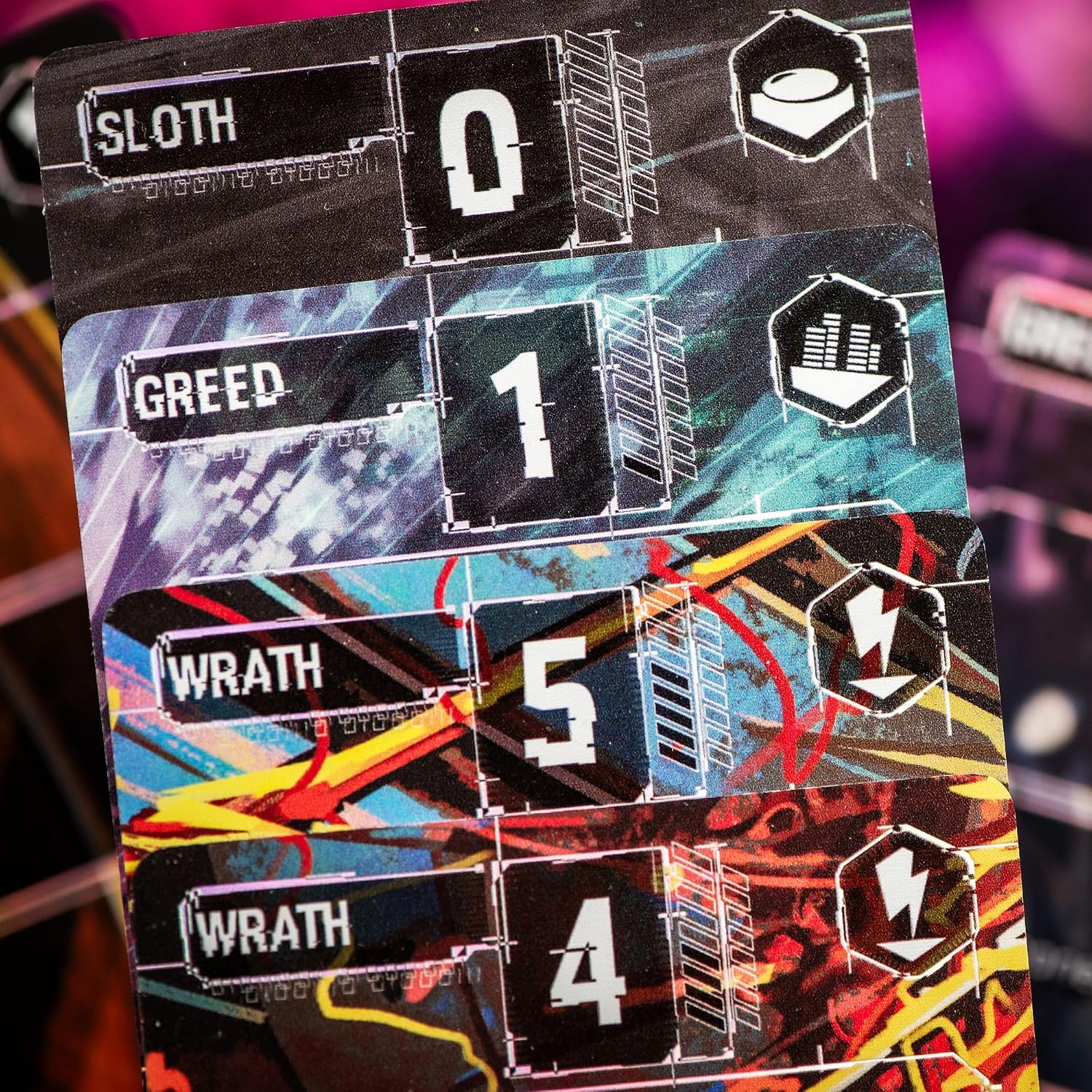

A new player watches the strongest number. An experienced player watches which line becomes vulnerable after the number moves. Before every play, read the visible card at the top of all six command lines. Ask what will trigger, what will be exposed and whether the opponent can compile on the next action.
Draft three protocols with different jobs. One should build efficiently, one should interfere or reposition, and one should exploit the openings those two create. Three slow engines can look synergistic while losing the race. Three aggressive protocols can run out of useful sequencing. Coverage matters more than a theme word that sounds clever.
Do not distribute effort evenly. If one line can compile safely, close it before revealing more information. A finished protocol removes one problem from the decision tree. Conversely, pressure an opponent lane that is one clean play from compiling even when a different move produces a larger immediate total.
The strongest beginner routine is a three-read check before every reveal: current lane totals, the next threshold, and the opponent card whose immediate effect could change either side. Community strategy discussions keep returning to this because a legal play can still be strategically disastrous when its reveal moves, flips or revalues cards already in the command line.
Do not try to win all three lanes at once. Establish one lane that forces a response, develop a second, and use the third as information or bait. A protocol that looks weak in isolation may be the correct draft if it repairs another protocol's timing problem. That is the real deck-construction layer: three jobs that cover one another, not three favorite themes.
Card text remains the local authority. Resolve the compilation you actually began even if the visible row changes during that process. Compile rewards reading order and timing; it does not reward retroactively declaring that the board has changed its mind.
How does advanced play use bait, information and the value of a rematch?
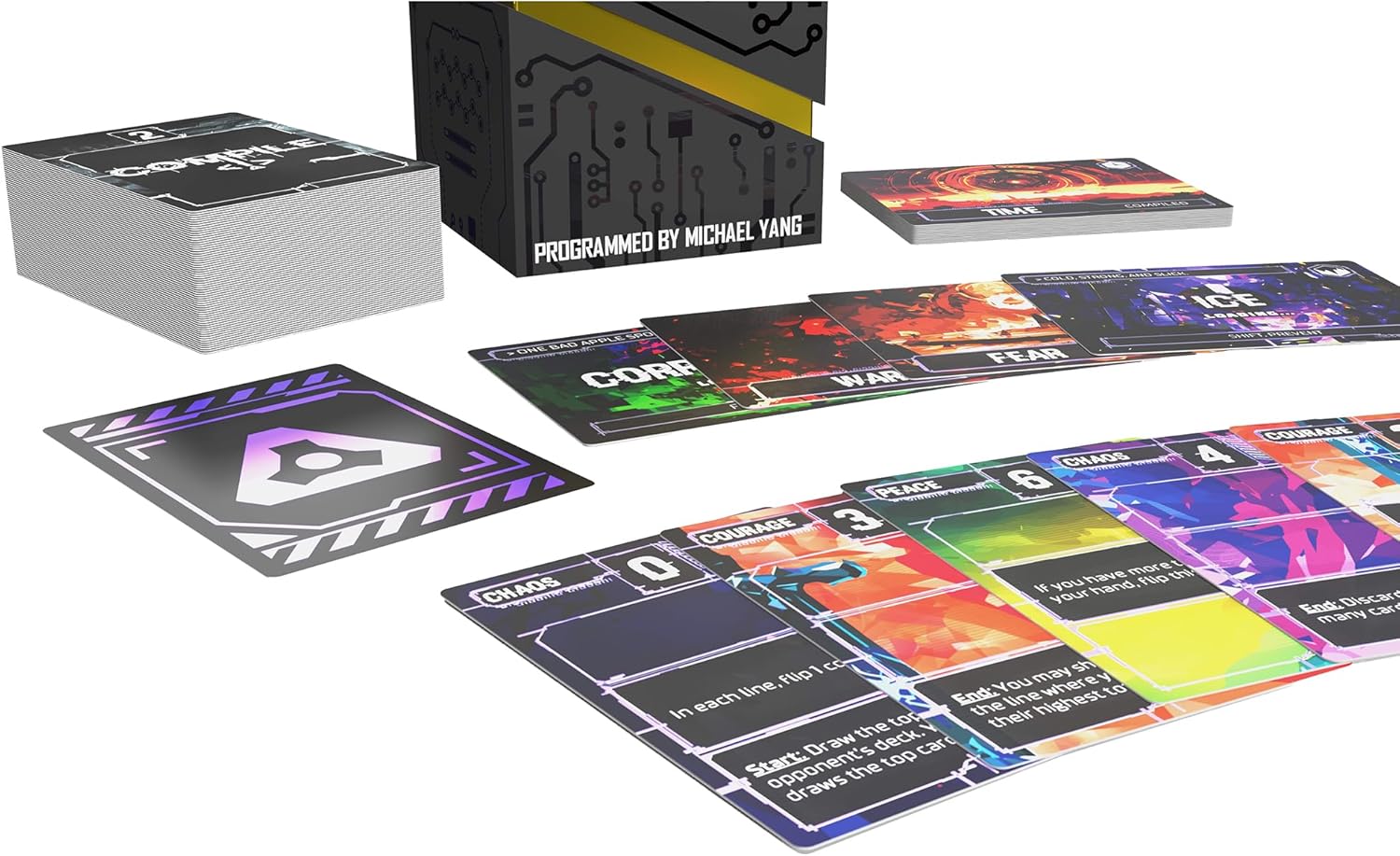
Advanced Compile is an information economy. A face-down card can protect an effect, threaten a threshold or bait an opponent into moving the wrong layer. The best play is often the one that keeps two future lines credible rather than maximizing the current lane.
Track effects by verb: reveal, move, flip, add, remove and compile. When a turn becomes complicated, resolve one verb completely before evaluating the next board state. This prevents accidental chains and makes disputes short. The official wording wins; a remembered intention does not.
For serious comparison, play a two-game set with the same six protocols and swap sides. Then replay with a new draft. The first match measures surprise, the second measures understanding and the third measures protocol selection. That small ritual produces better balance judgments and makes the game feel like a studied duel rather than a novelty.
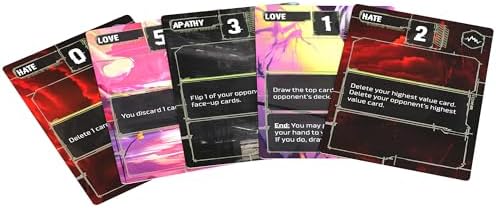
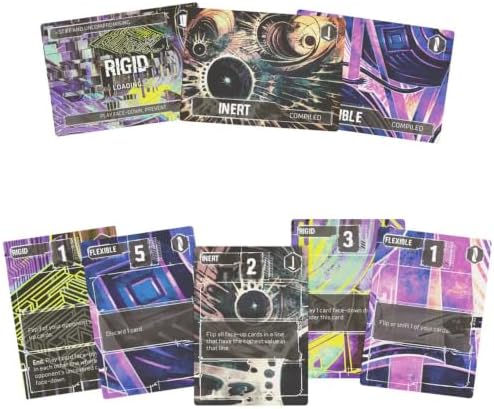
Compile Aux 3 add-on cards. Aux 3 belongs after the timing system is already familiar.
Advanced play starts when revealed information becomes a resource. Count which effects remain in each seven-card protocol, note what has already been committed, and make the opponent spend a high-impact reveal to solve a low-value threat. After a game, replay the same three-protocol combination with sides swapped before changing the draft. Players consistently describe that immediate rematch as the point where Compile stops feeling tactical and starts feeling surgical.
How do solo play, player count and hosting work?
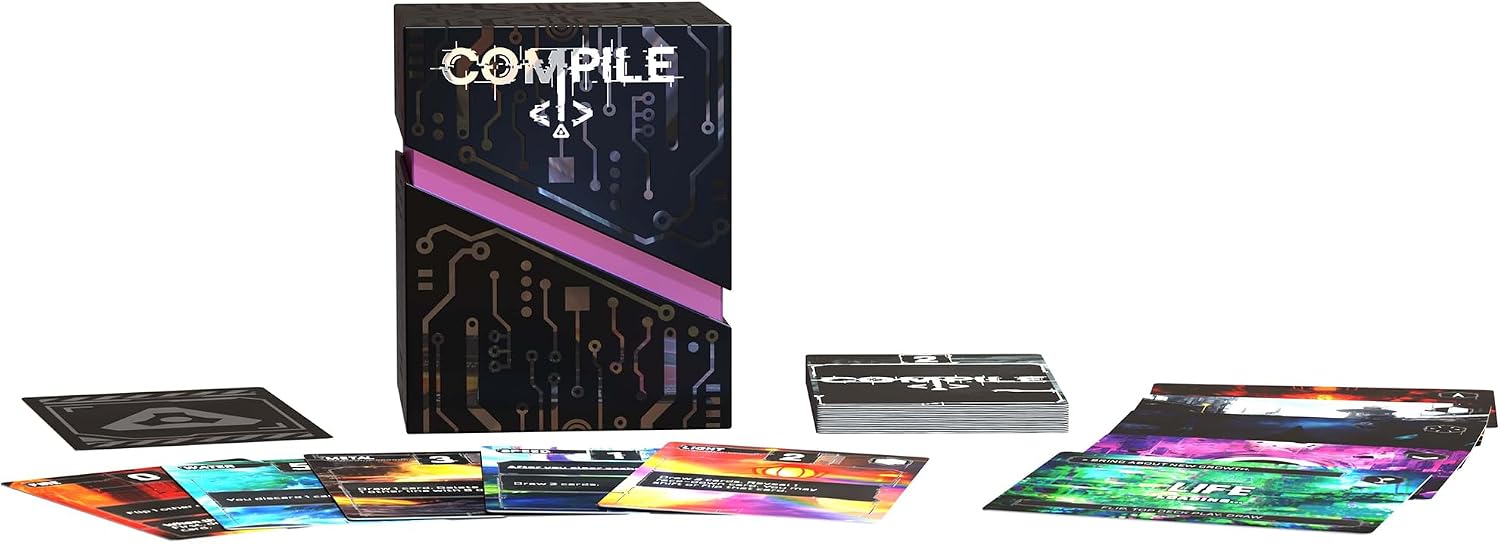
Compile is designed for exactly two players. Main 3 listings may mention broader modes in some markets, but the core reason to buy the line remains the head-to-head duel. Do not purchase it as a group-night centerpiece or a solo campaign.
It is an exceptional opening or closing game for a host. Set out one Main box before guests arrive, preselect two balanced trios and teach through the first three actions. A full game is short enough for spectators to rotate in, but avoid coaching from behind both players; hidden reads are the point after the open-hand tutorial.
The best travel kit is one Main, one Aux at most, six small markers and a compact rules reference. More boxes make the bag heavier without improving one evening. If the gathering includes four experienced players, run two copies in parallel and let winners exchange protocol trios for a final.
How does The Dax table lab: how Compile becomes a serious duel improve the buying decision?
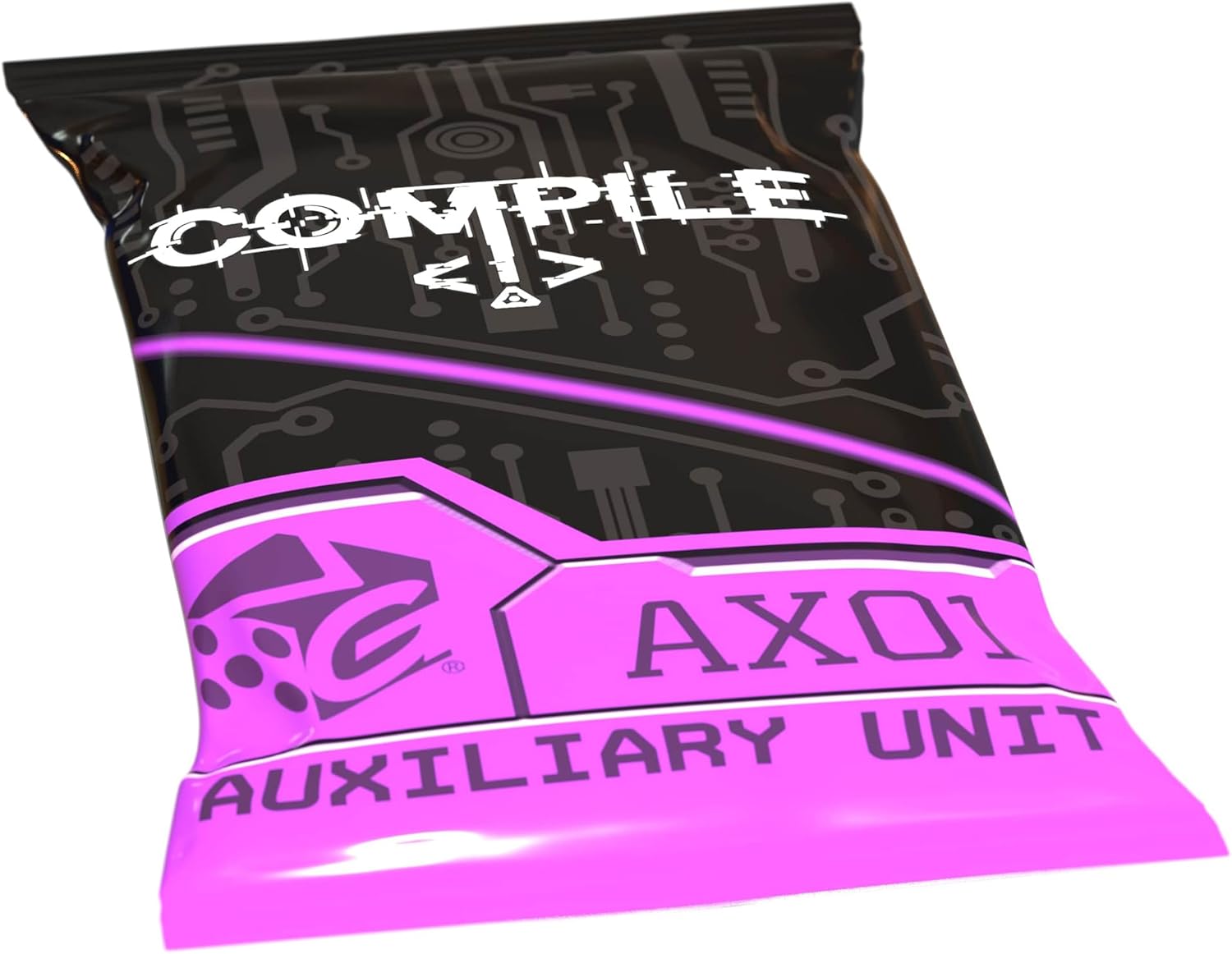

The first upgrade is not another box. It is a disciplined rematch. Play Main 1 with three protocols each, leave both drafted sets visible after the result, and ask which lane actually decided the game. Compile rewards players who can separate a loud card from an important card. An immediate swing can look spectacular while a quiet persistent rule controls the threshold that matters. Before revealing, say the complete timing chain to yourself: what becomes active, which lane changes first, and whether the opponent has already shown the answer.
New players commonly spread attention evenly across all three command lines. That feels responsible and often loses. A better opening question is which line can be secured cheaply, which line can be abandoned without collapsing the match, and which line will make the opponent reveal information. You are not trying to win every lane. You are trying to make the opponent spend a valuable effect where its opportunity cost is highest. A modest card can be excellent bait when it forces a premium response before the true race begins.
Teach the game with the first reveal face-up and narrate resolution in exact order. Do not explain all twelve protocols before the opening hand; that turns a clean duel into a glossary. Explain the shared objective, the lane threshold, immediate versus persistent text, and the legal choices available now. Let the card pool teach the rest. After game one, swap complete protocol trios. That removes draft quality as an excuse and shows both players how differently the same tools feel from the opposite chair.
Compile needs a small table, but it needs a tidy one. Give every line a fixed lane, keep spent and active cards visually distinct, and place the control reference where both players can read it without picking it up. Sleeves are optional for casual play; opaque, consistent sleeves become useful only when sets are mixed heavily and wear could identify cards. There is no official solo substitute for the opponent's timing judgment, so a fan-made automa cannot reproduce the central pleasure. Treat this as a purpose-built two-player instrument.
The collection rule is simple: buy Main 1, play until both players can resolve a reveal without rereading the timing sequence, then decide what is missing. Another Main is a broad new environment. An Aux is a focused spice rack. If your group cannot yet name the kind of interaction it wants more of, it is not ready to benefit from Aux. Puzzlewick score: 9.1/10 for repeat two-player play, 7/10 as a blind gift, and 3/10 for anyone shopping primarily for solo.
What are the common misconceptions, ratings and the final buying order?
Misconception one: Main 2 replaces Main 1. It does not; both are complete alternate pools. Misconception two: Aux 1 is the cheapest way to try the game. It is not stand-alone. Misconception three: owning every protocol improves drafting. It can make learning and setup worse until both players have internalized timing.
Puzzlewick rates Compile 9.3/10 for replayability, 9.1 for two-player tension, 8.8 for portability, 7.2 for teaching ease and 2.0 for solo suitability. Table appetite matters: people who enjoy reading systems will find astonishing depth; people who want art-led theme or multiplayer conversation should buy something else.
Final order: Main 1, then Main 2 or Main 3, then one Aux. Stop when the pool still produces unexplored trios. A cabinet earns its keep through repeat nights, not complete numerical sequences.
The picks
Some links below are affiliate links — as an Amazon Associate, Puzzlewick earns from qualifying purchases, at no extra cost to you. It never changes a pick.
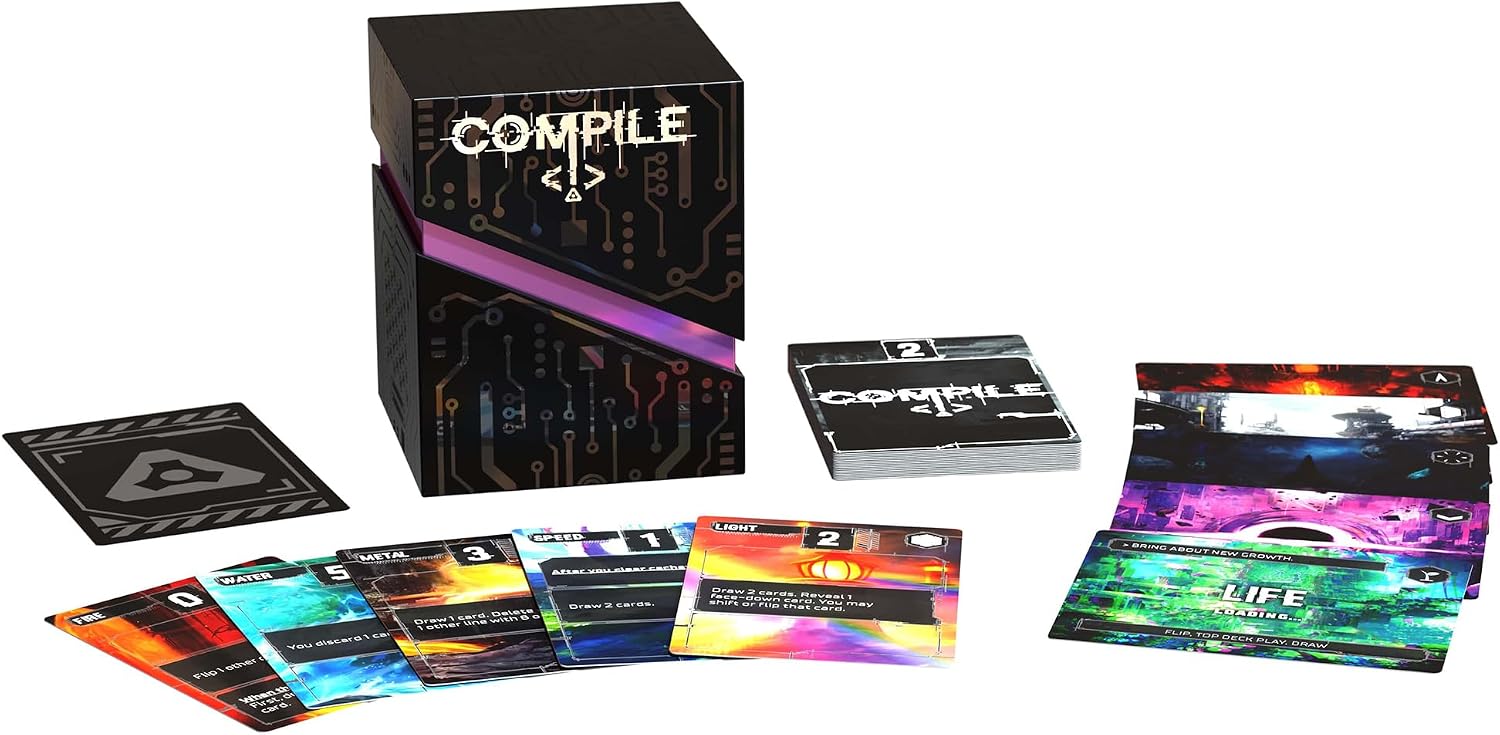



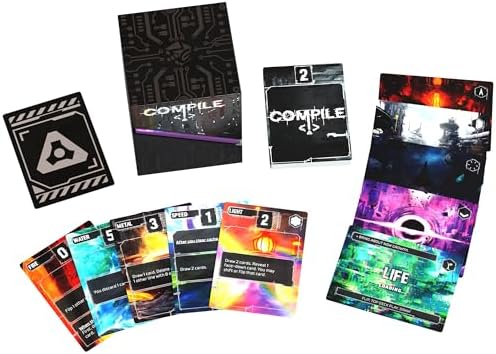
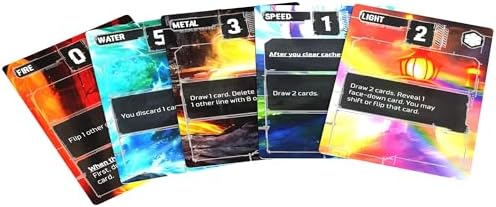

 12 photos
 Compile: Main 1
Twelve protocols and the cleanest complete introduction.
- Complete game
- Excellent replay value
- Most established teaching pool
- Exactly two players
- Timing is sharper than the box looks
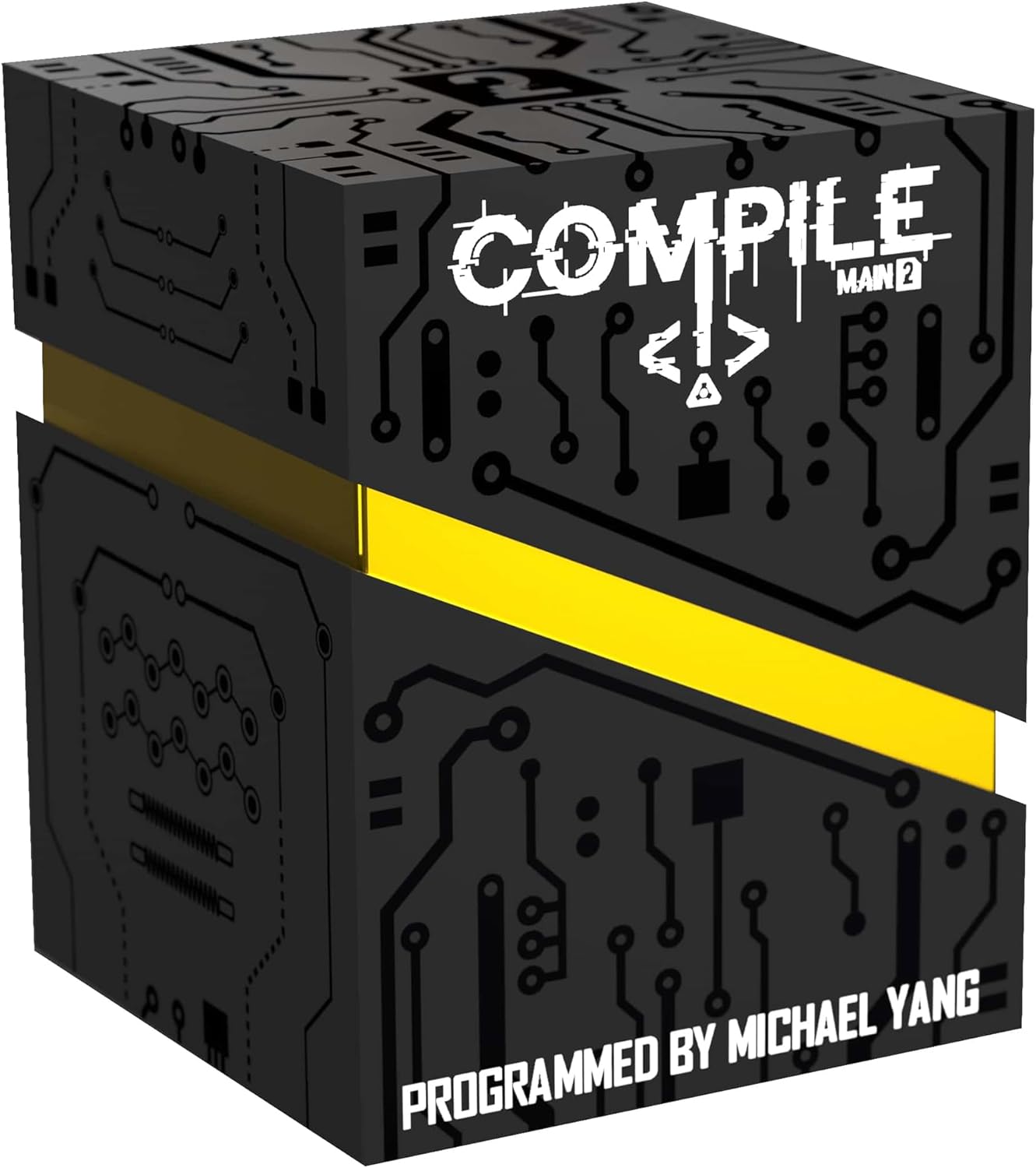
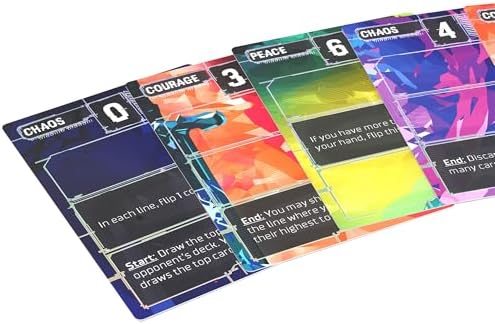 12 photos
 Compile: Main 2
A second stand-alone set for players who want a broad new draft environment.
- Complete game
- Twelve more protocols
- Combines with other Main sets
- Not necessary for beginners
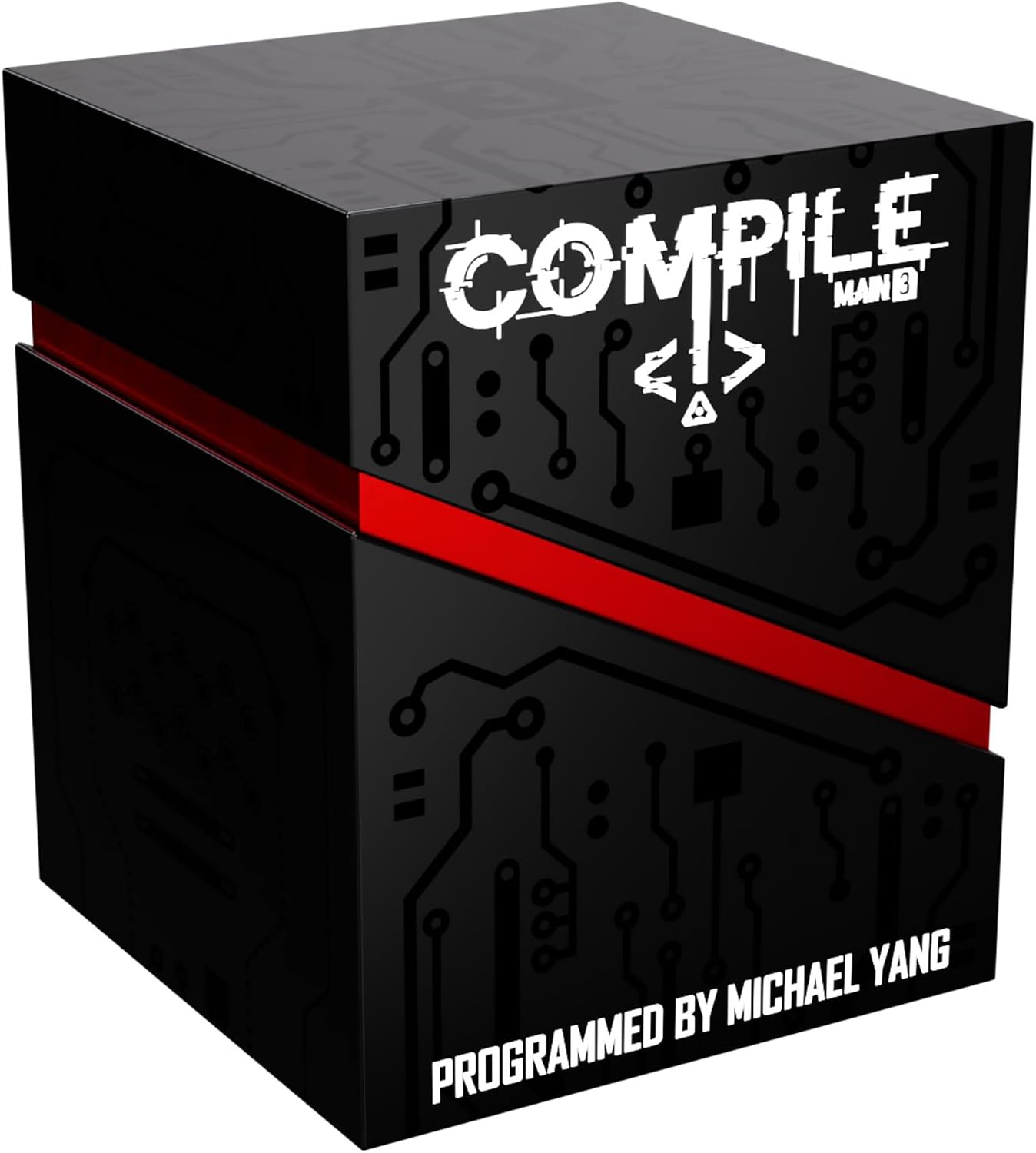
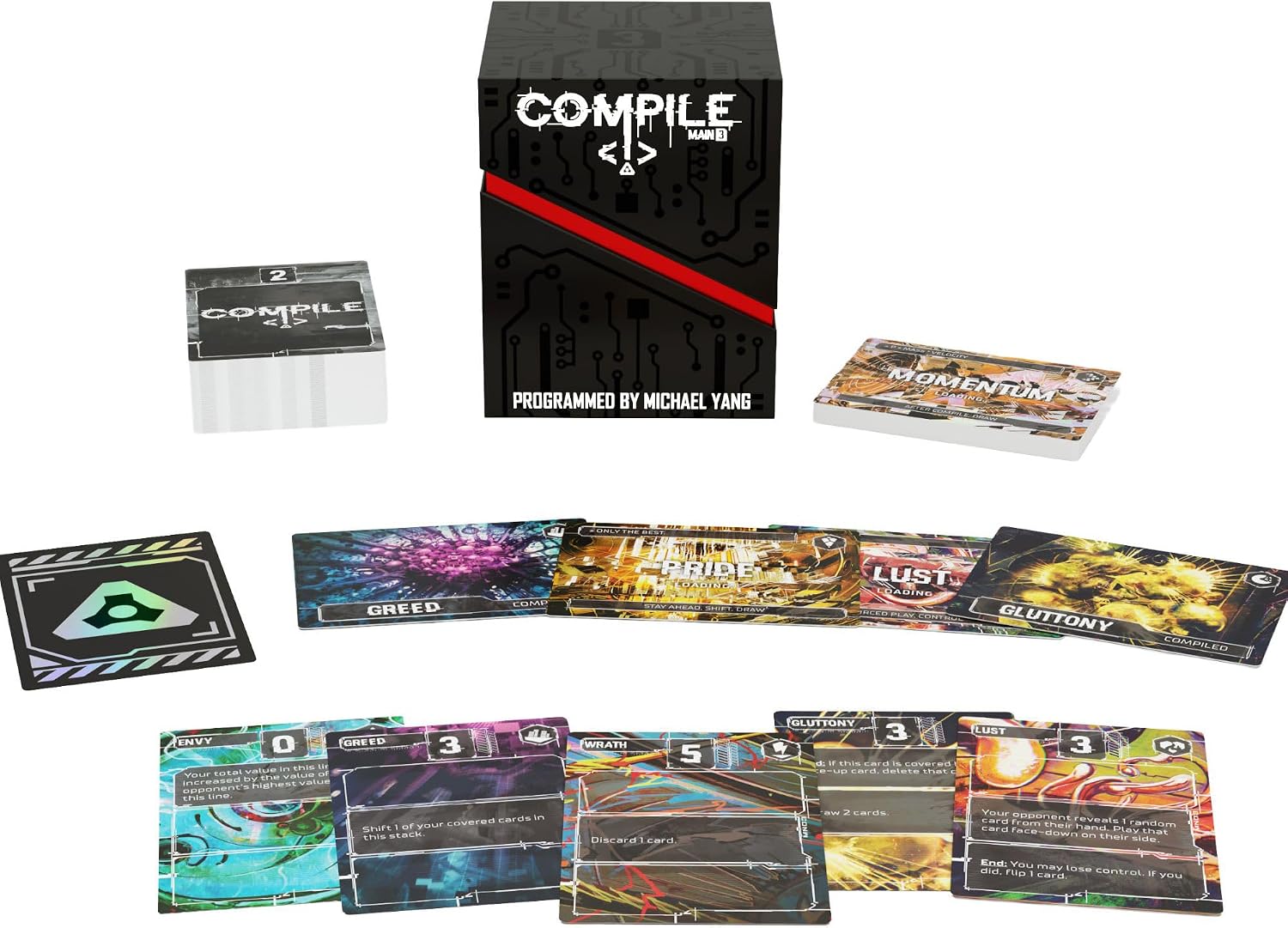
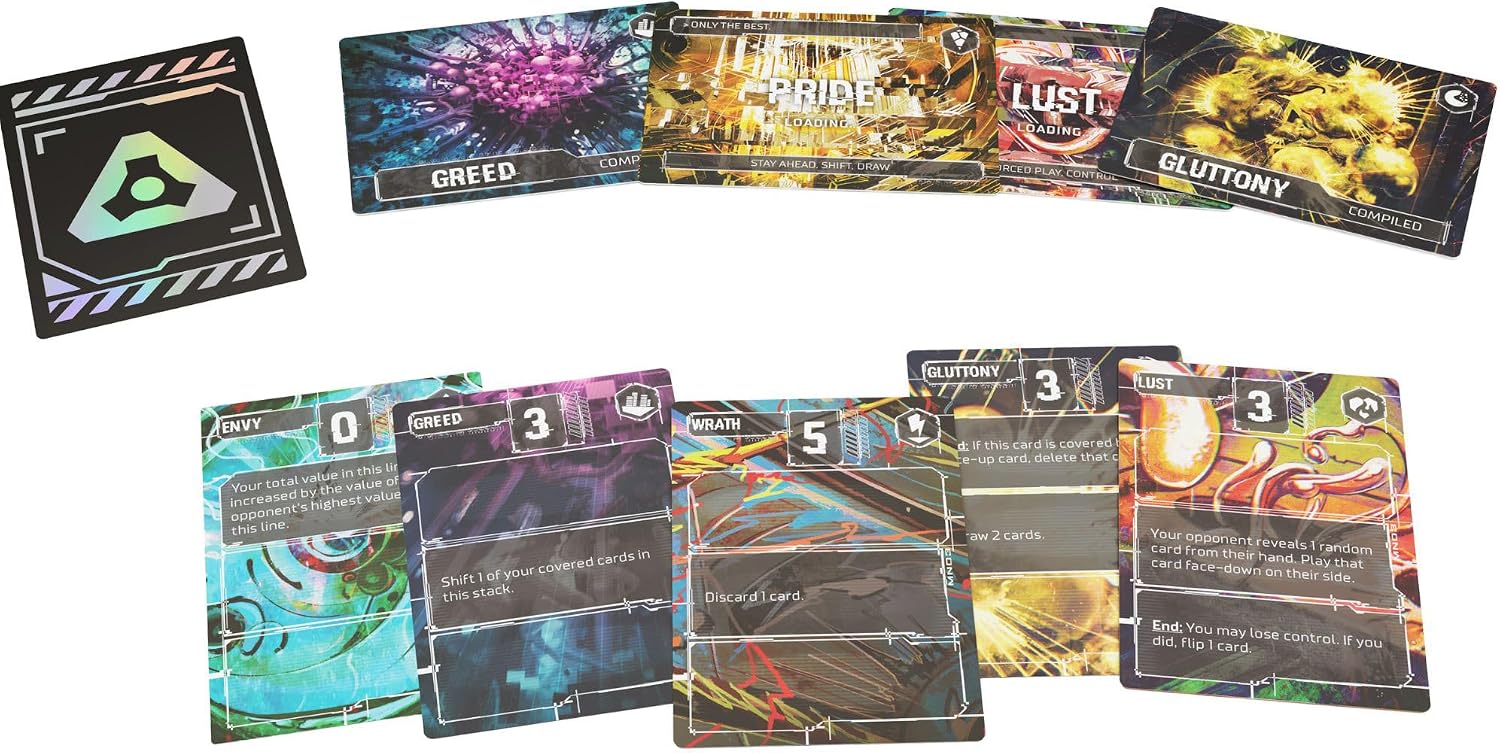
 12 photos
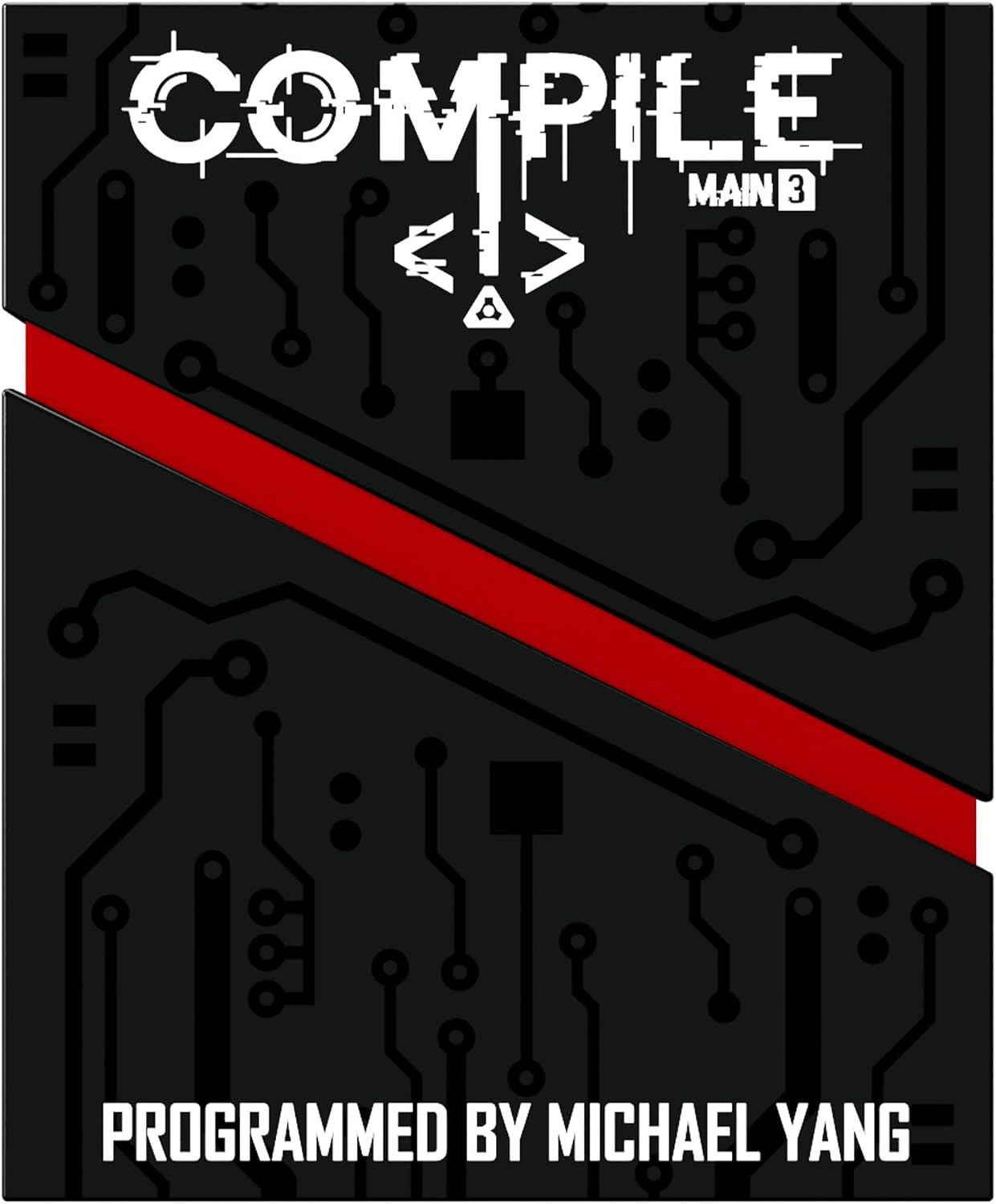
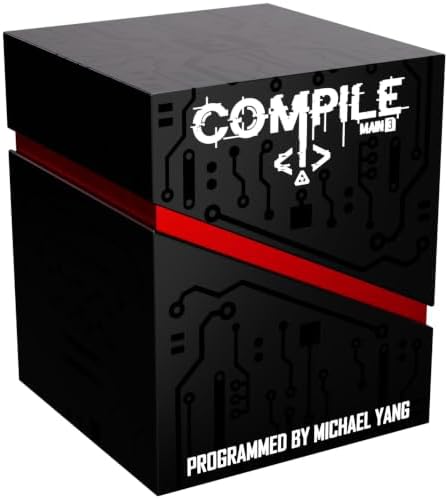
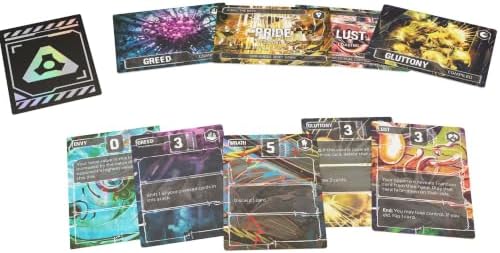
 Compile: Main 3
Another stand-alone twelve-protocol environment for committed duelists.
- Complete game
- Fresh protocol combinations
- Least documented community metagame
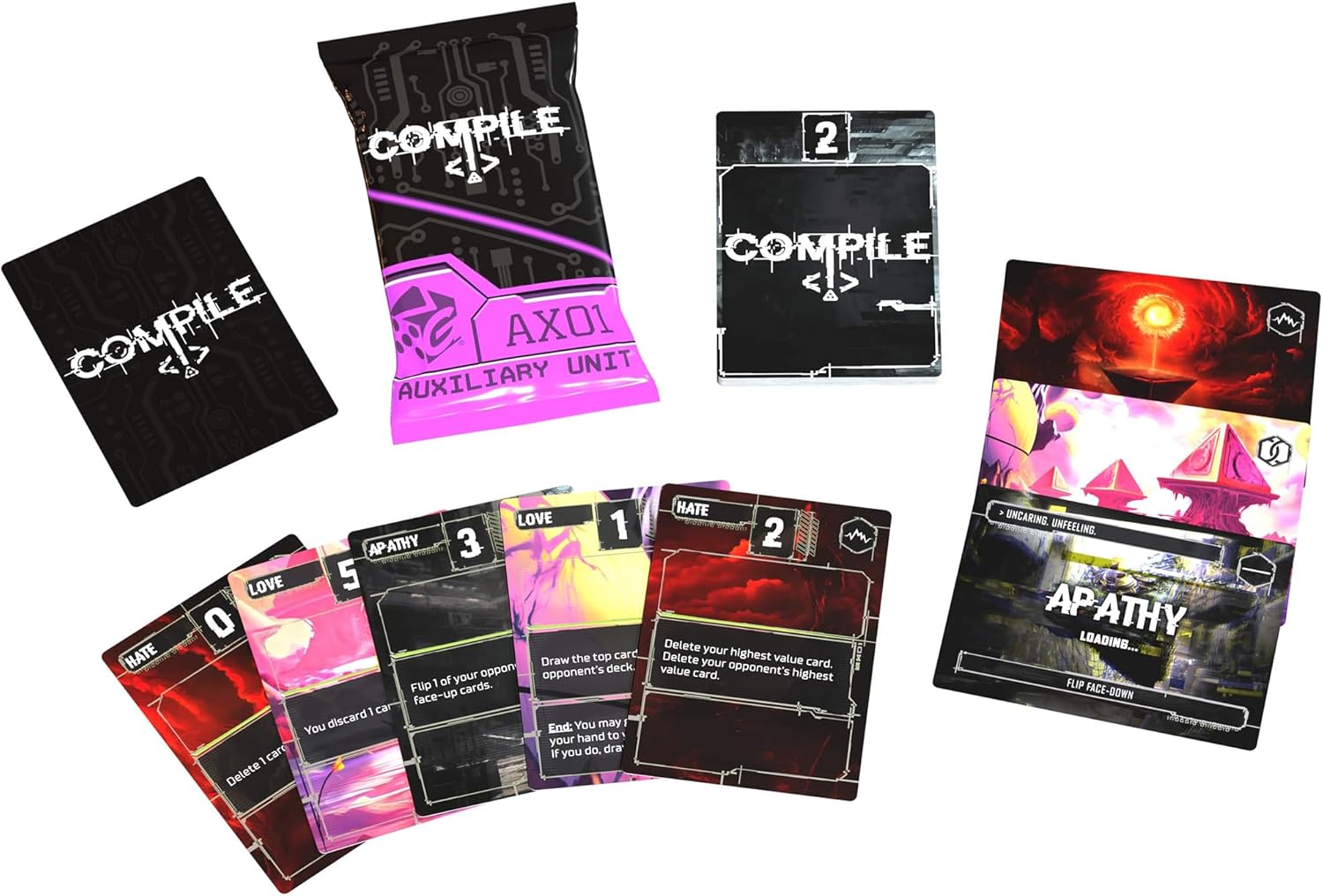
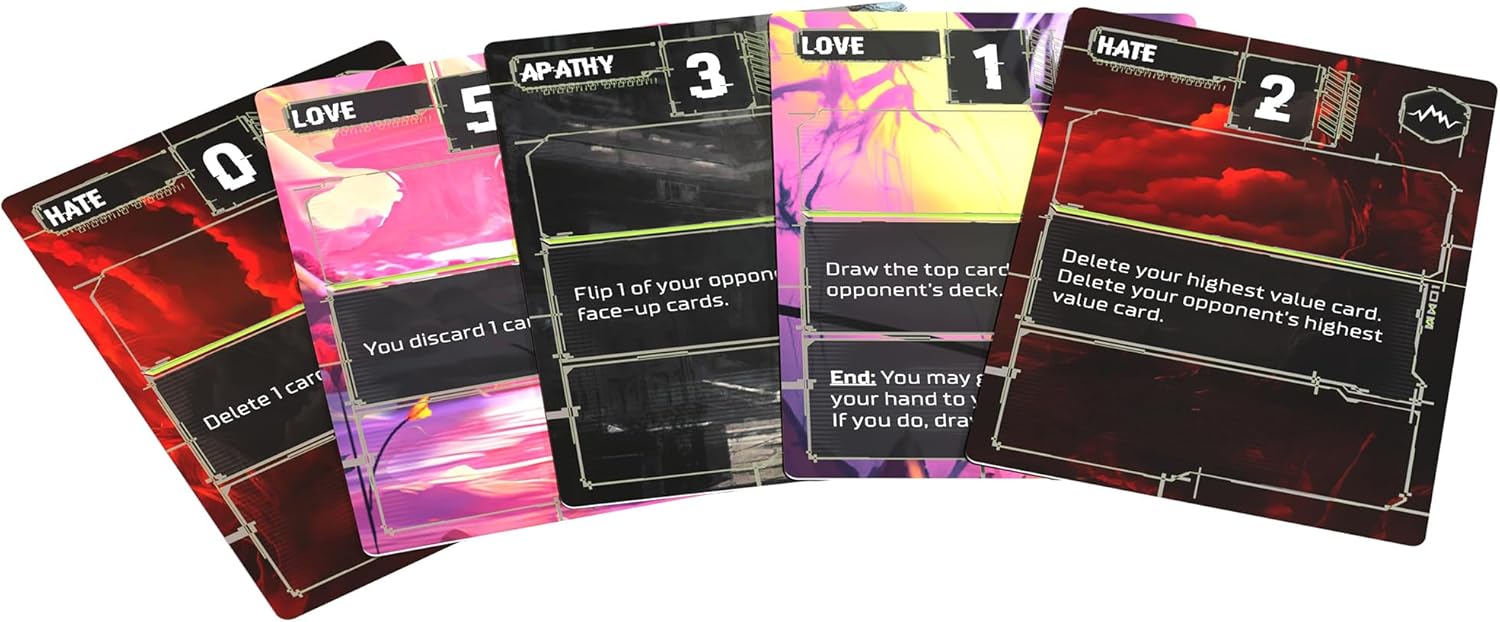
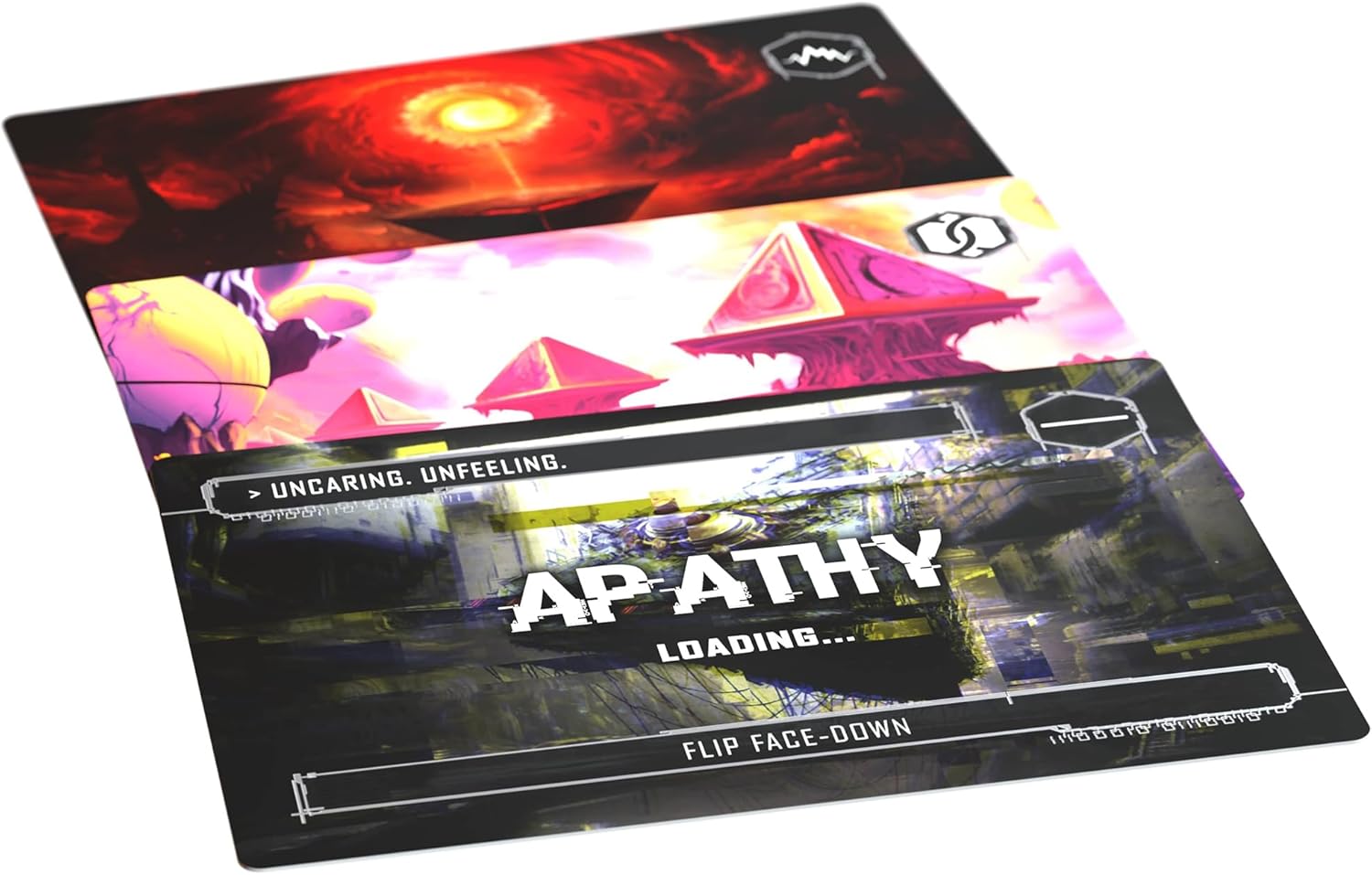
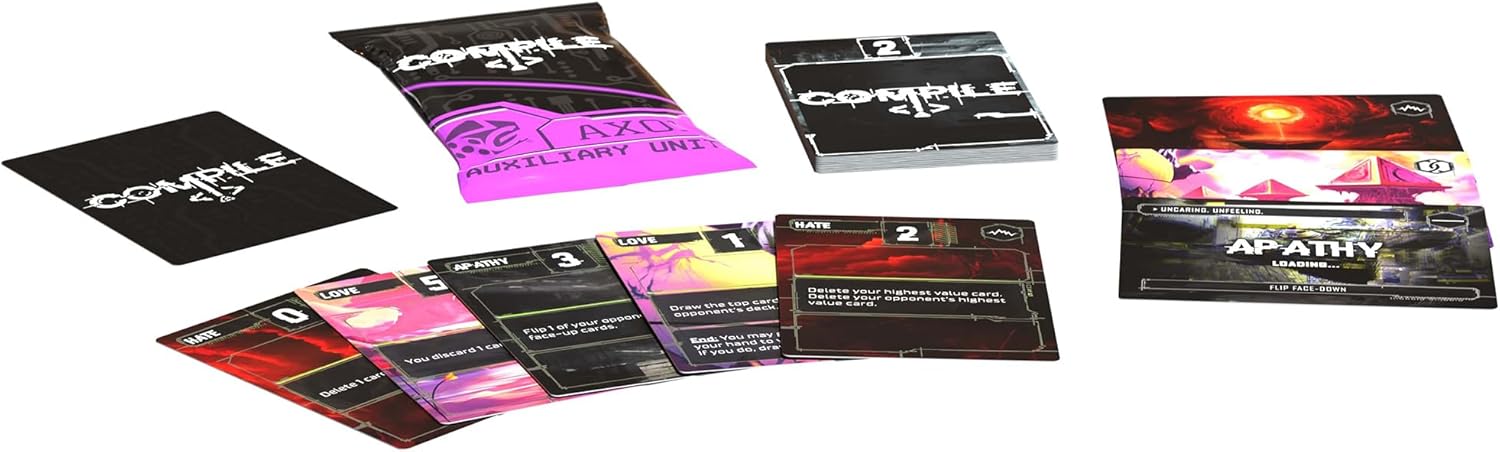

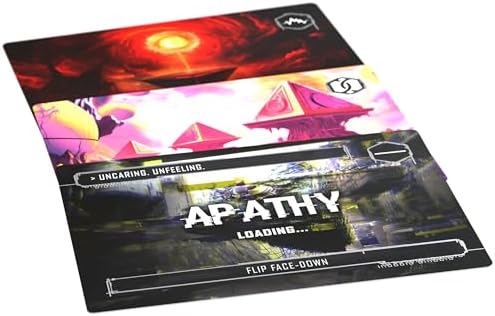 12 photos
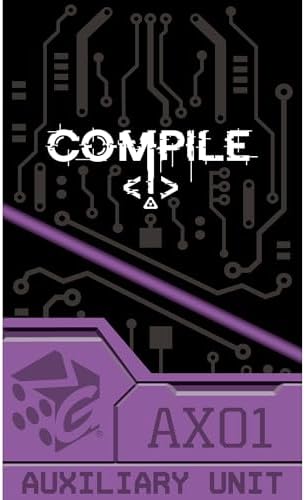
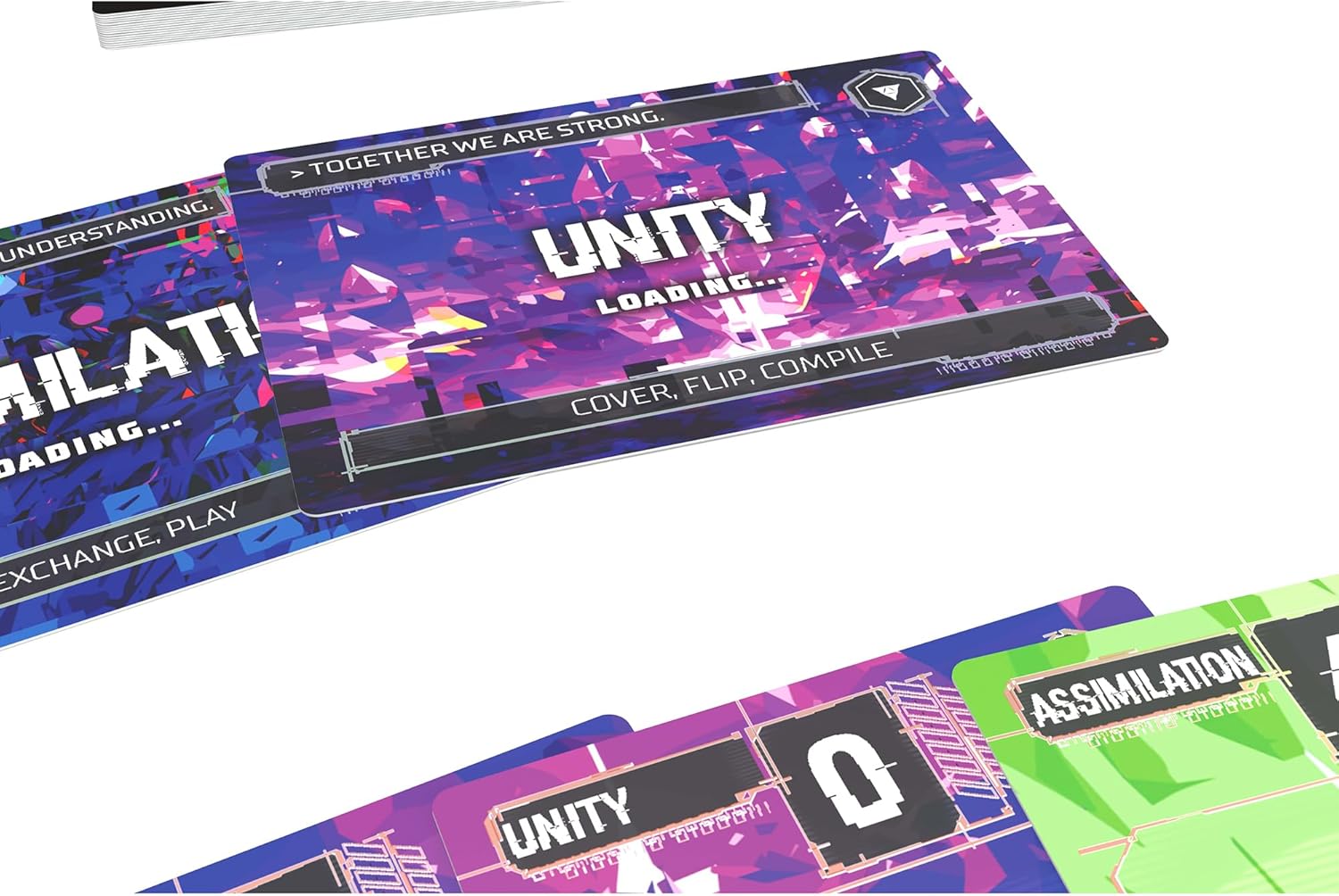
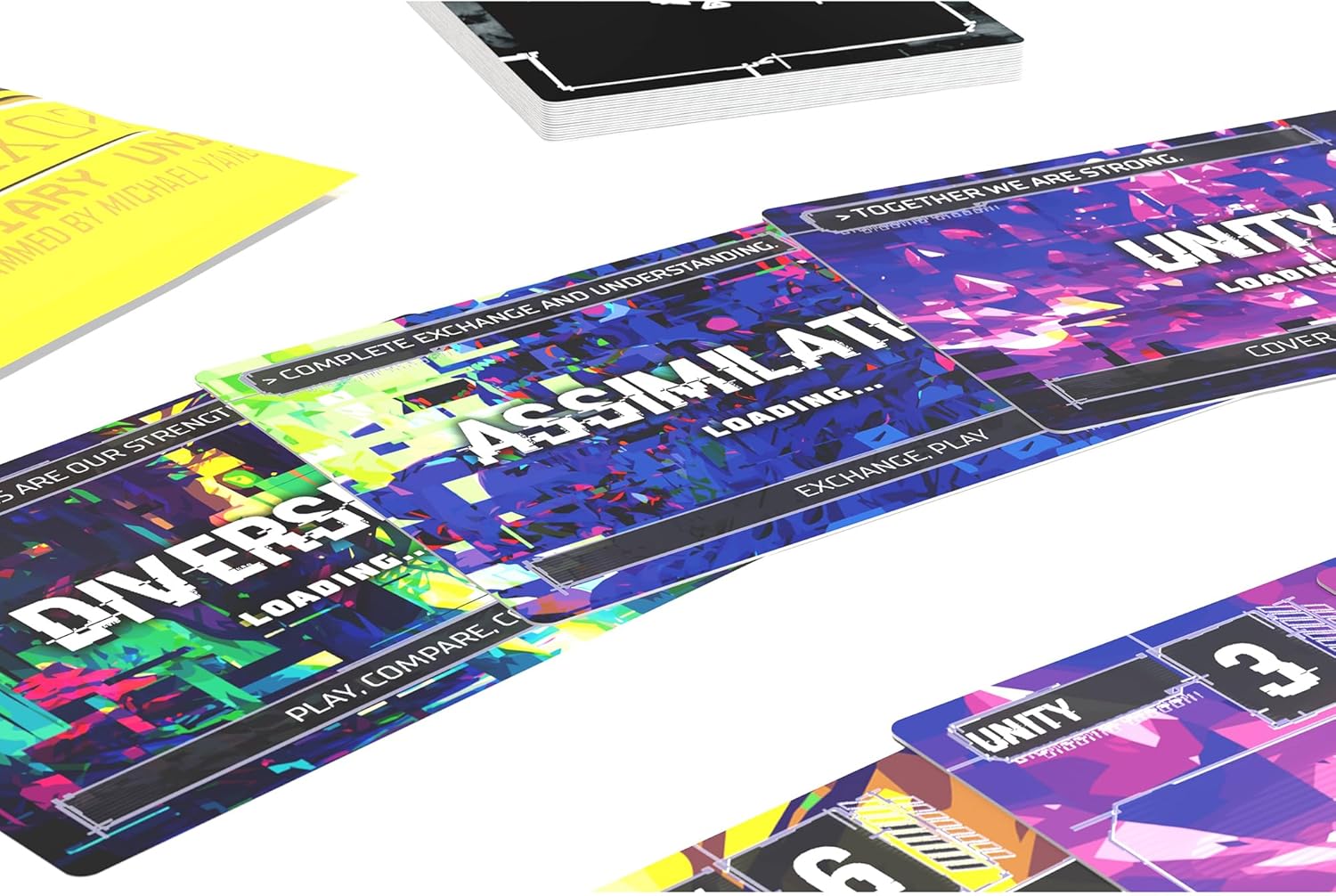
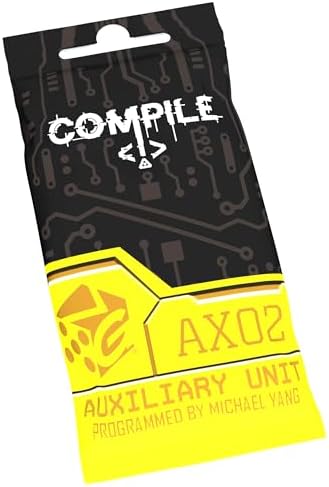
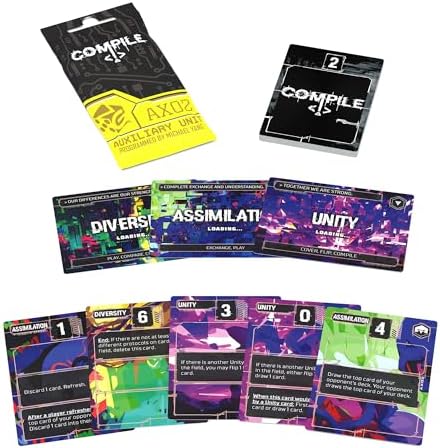
 Compile: Aux 1
Three protocols that expand a Main box rather than replace one.
- Small and portable
- Focused variety
- Not stand-alone
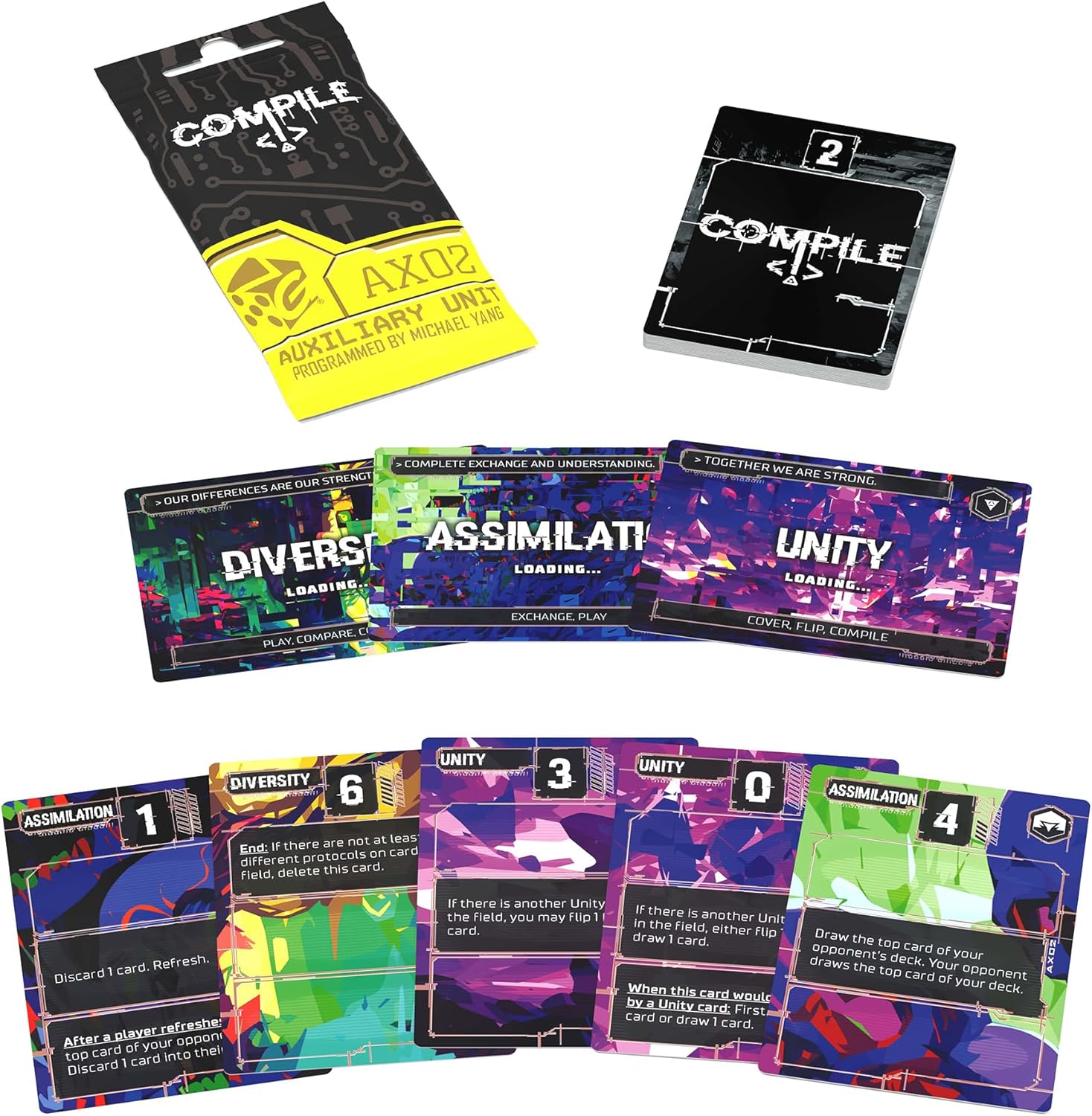
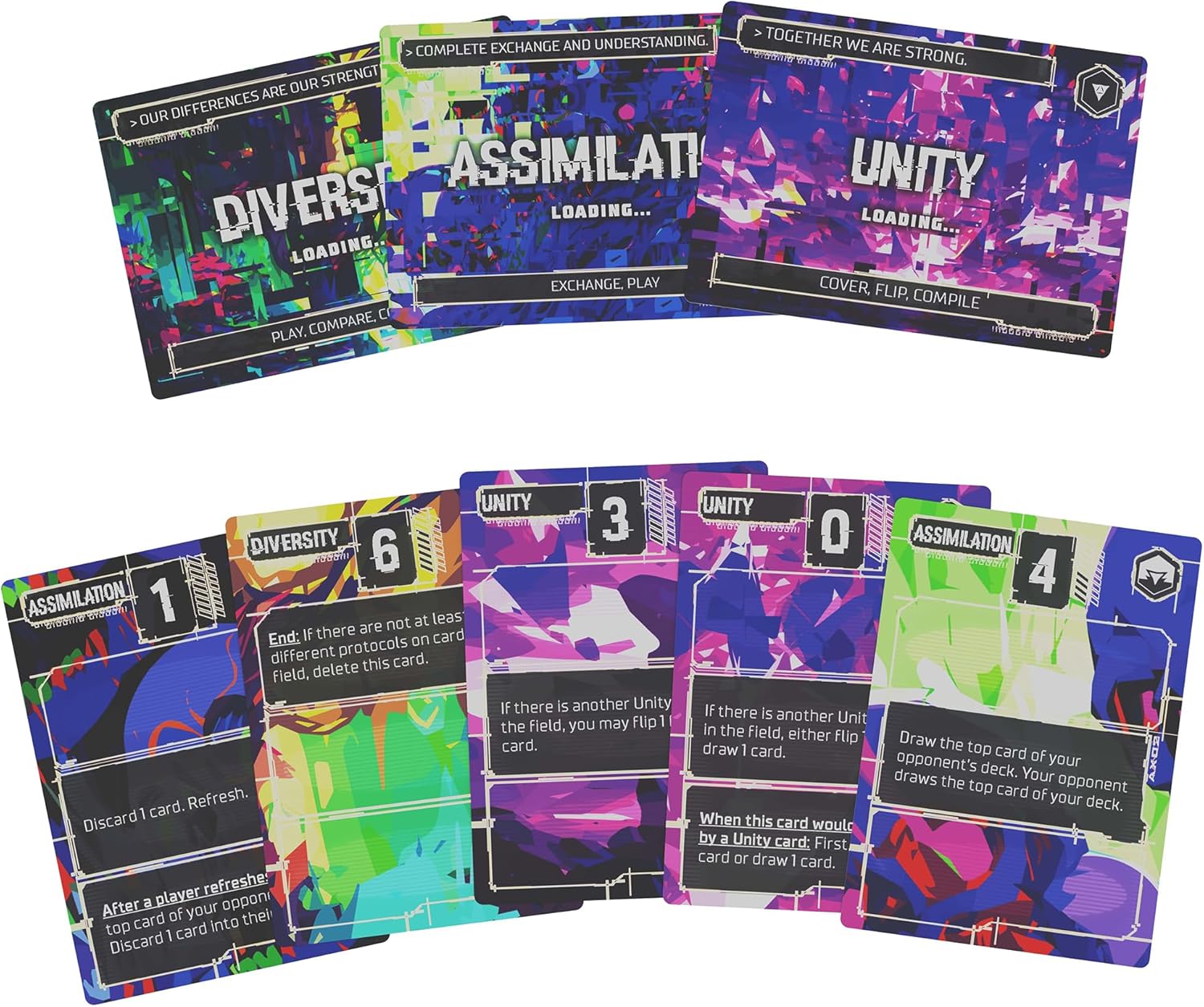
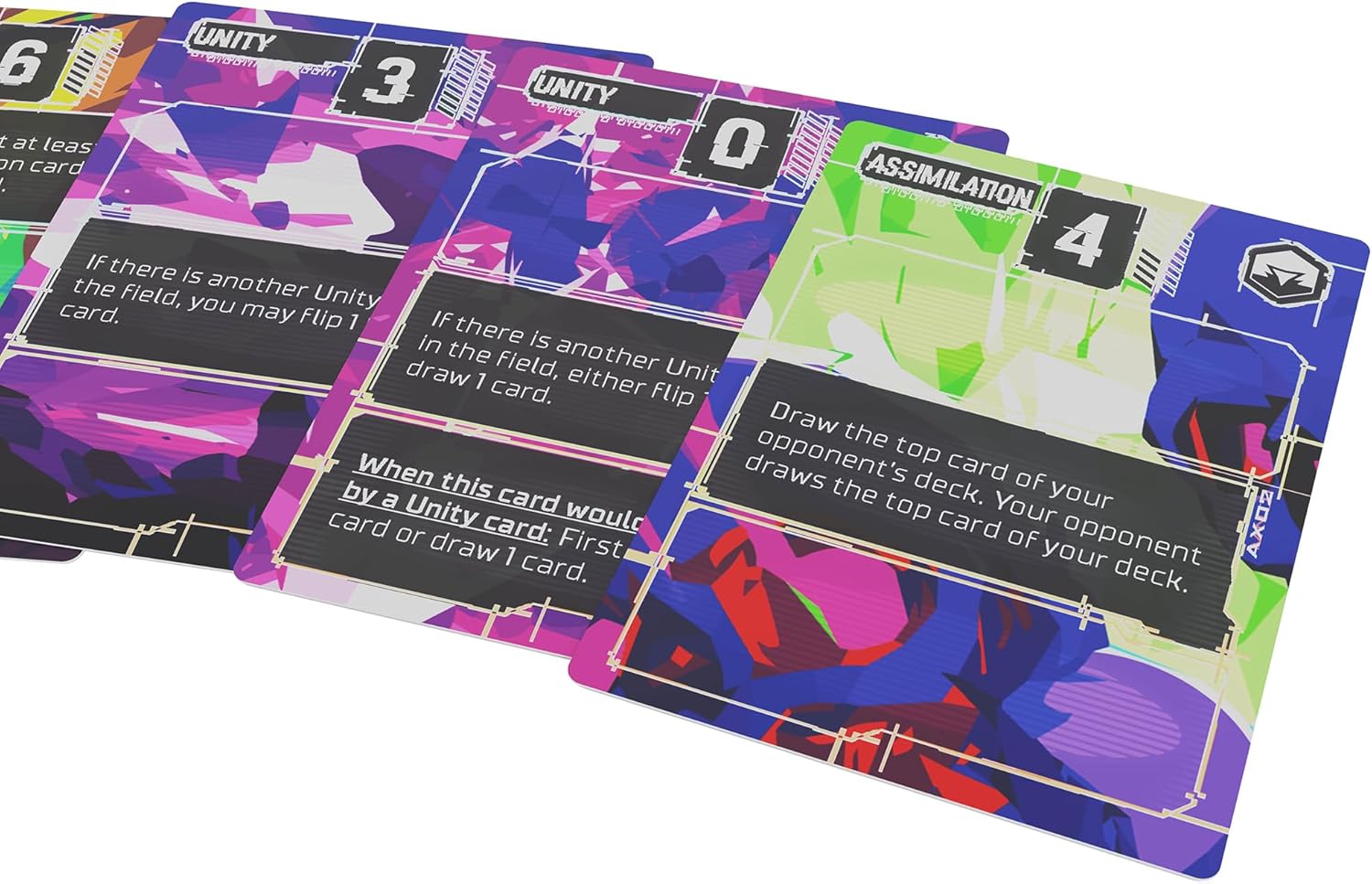
 12 photos
 Compile: Aux 2
A second three-protocol seasoning pack.
- Low-cost expansion
- Easy to store
- Not stand-alone
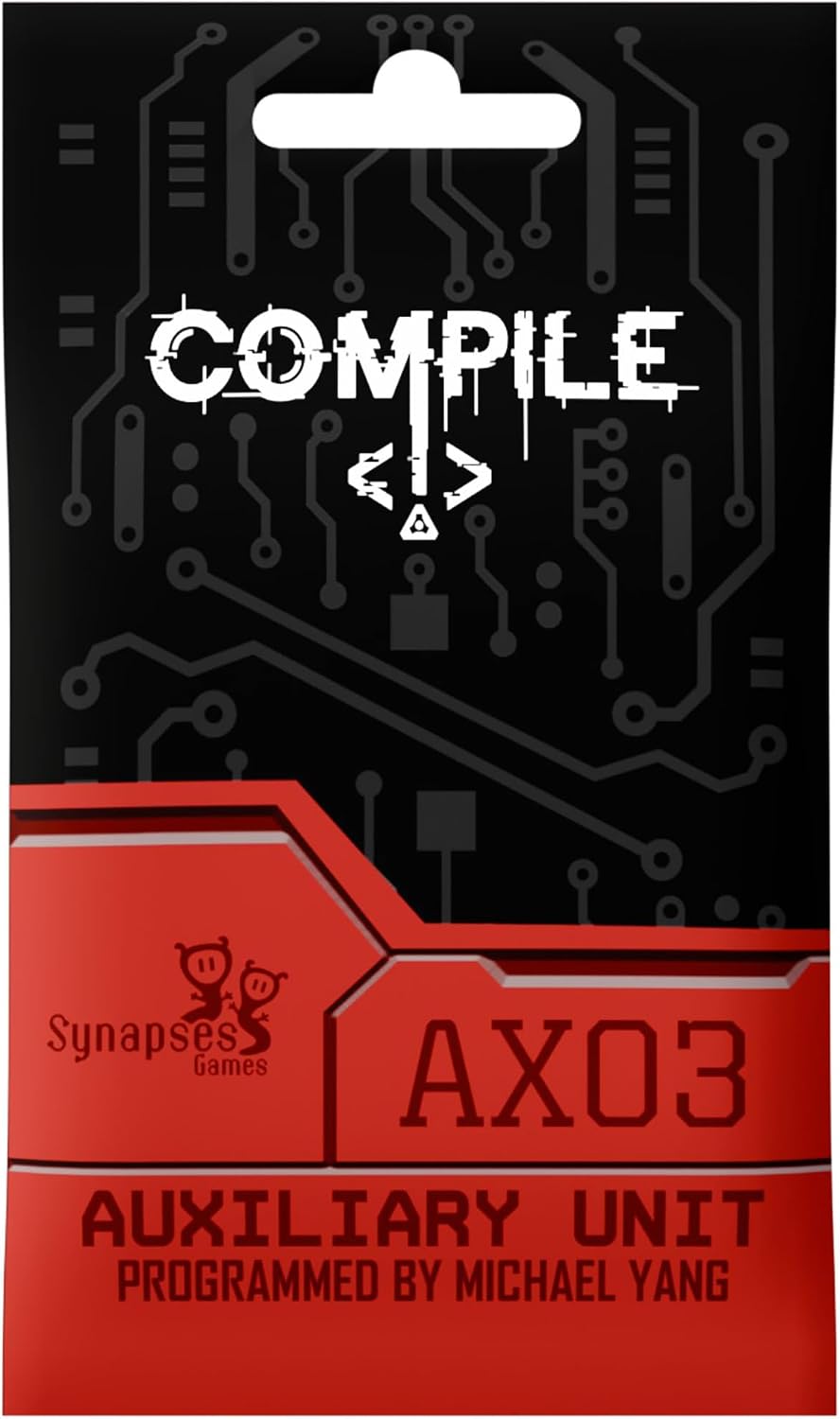
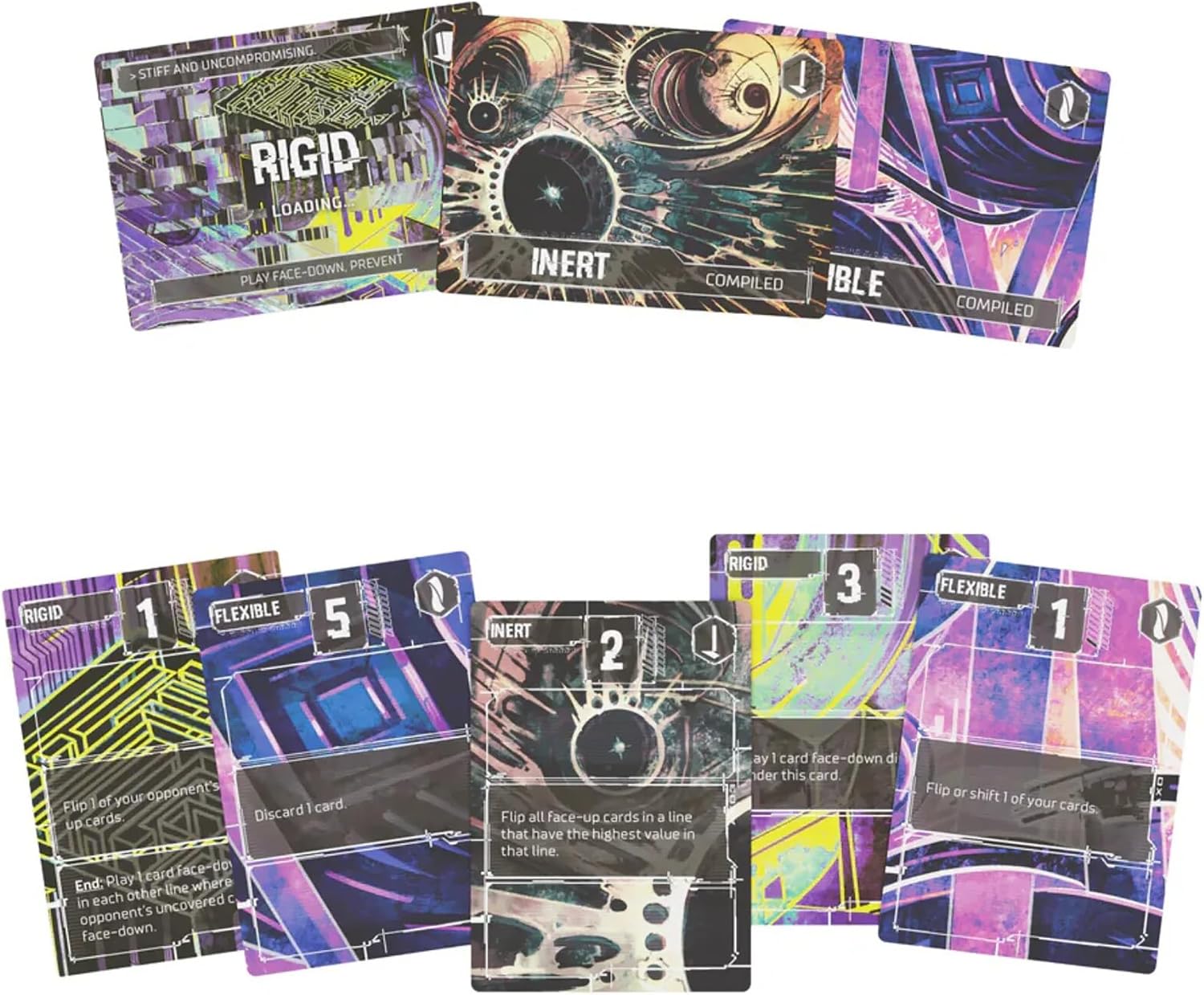
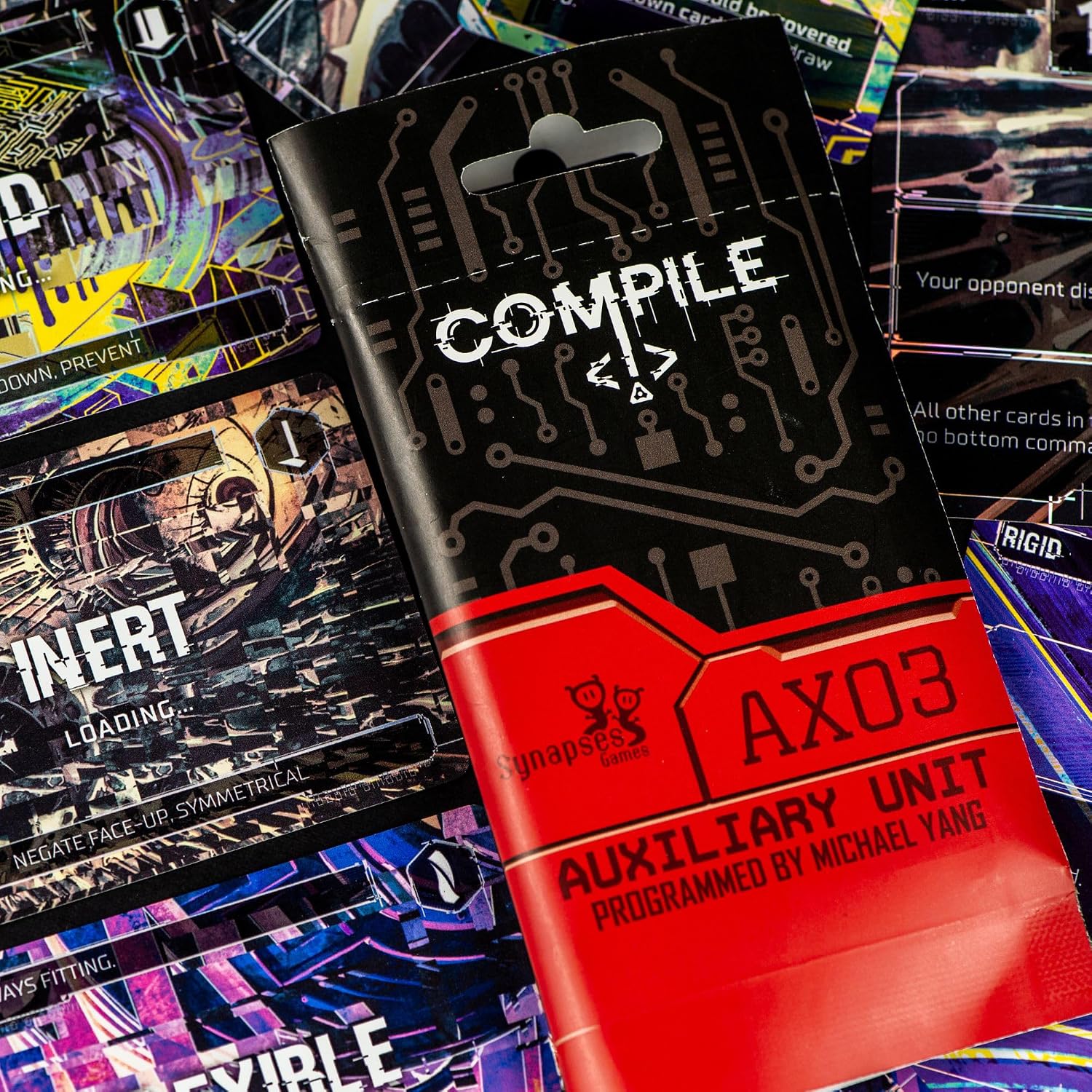
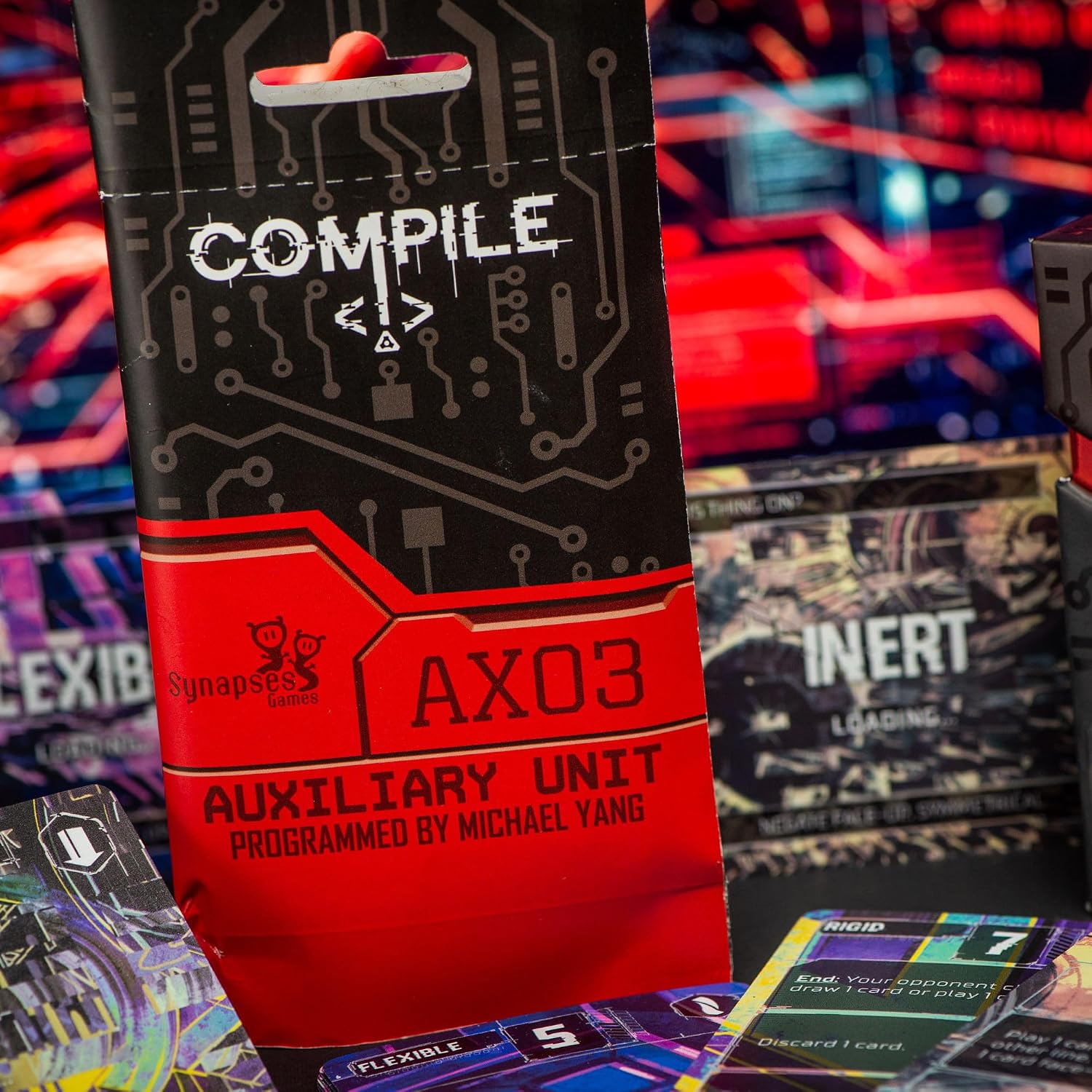
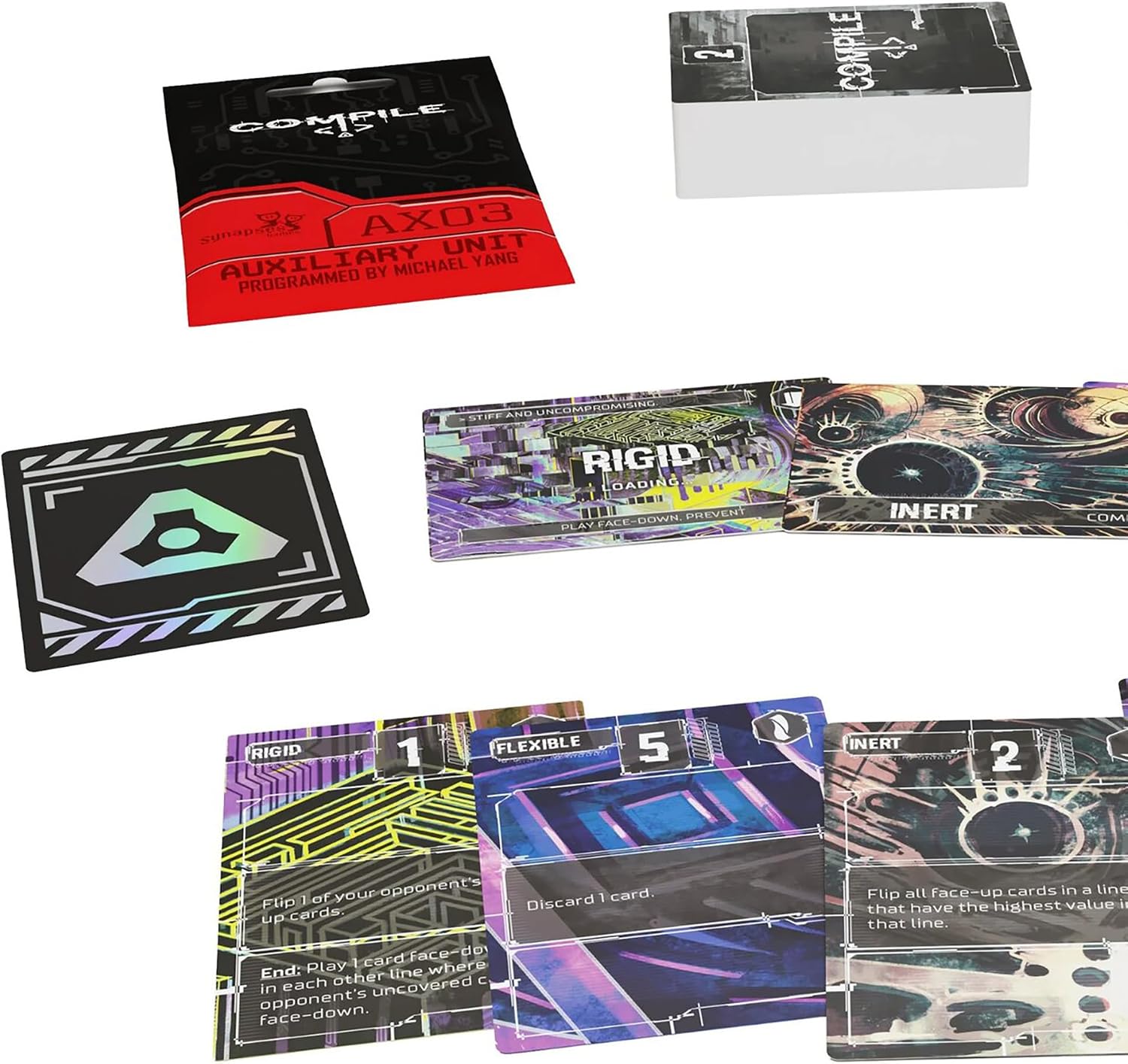
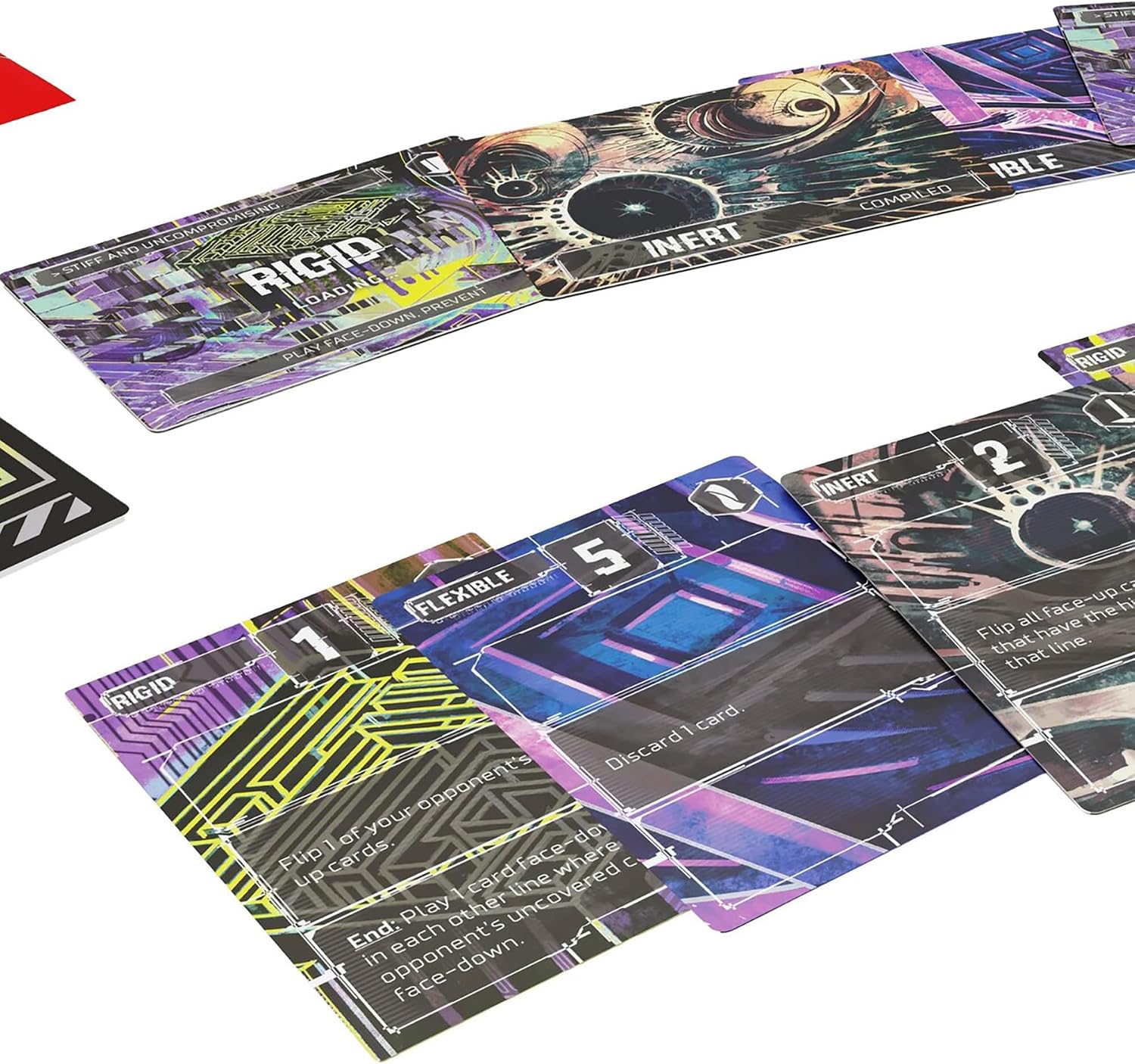
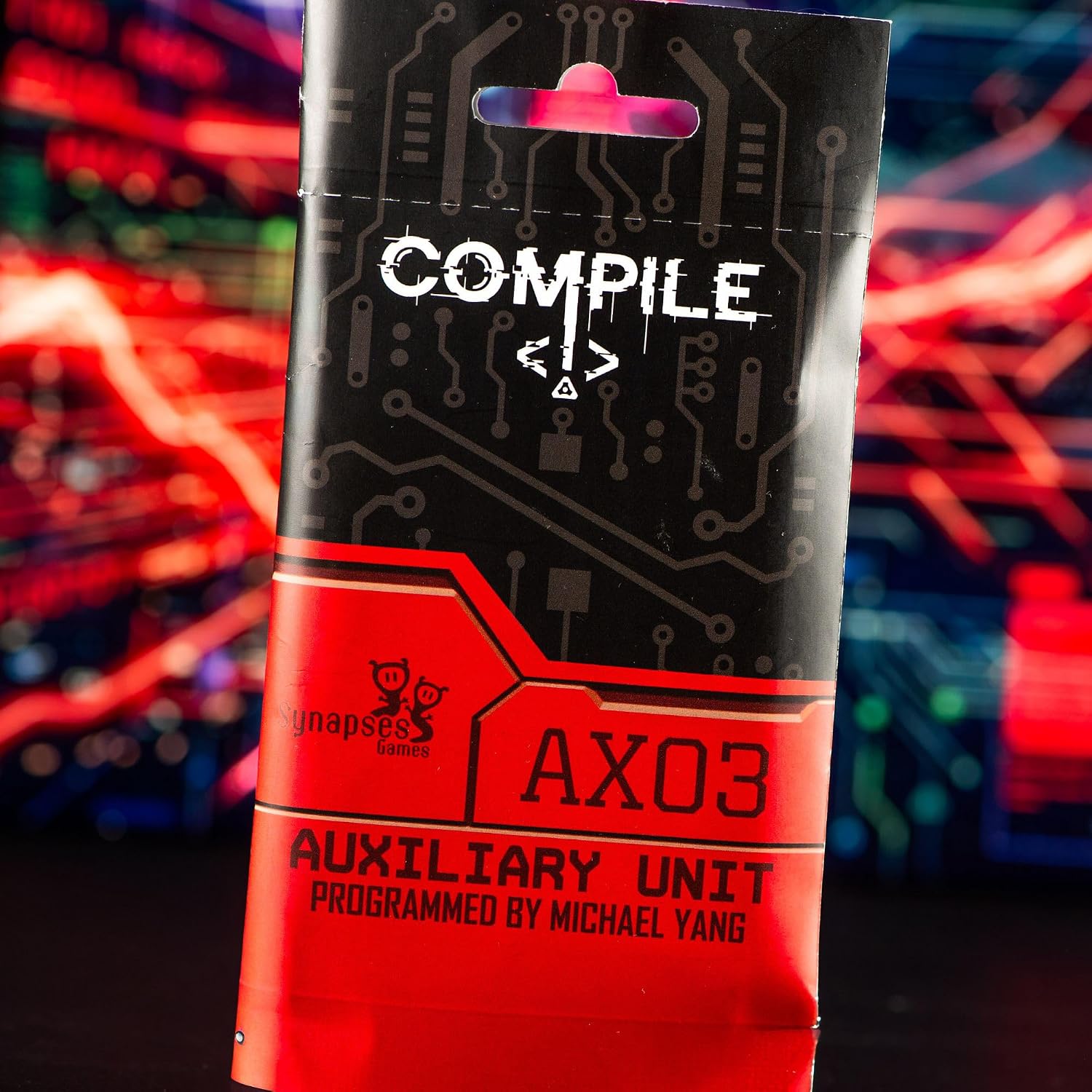
 12 photos
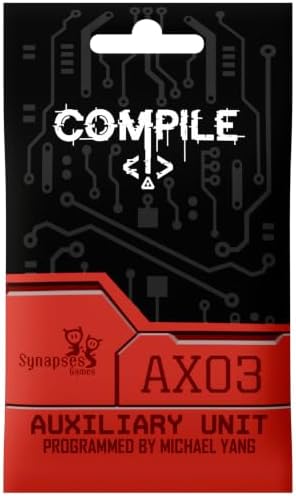
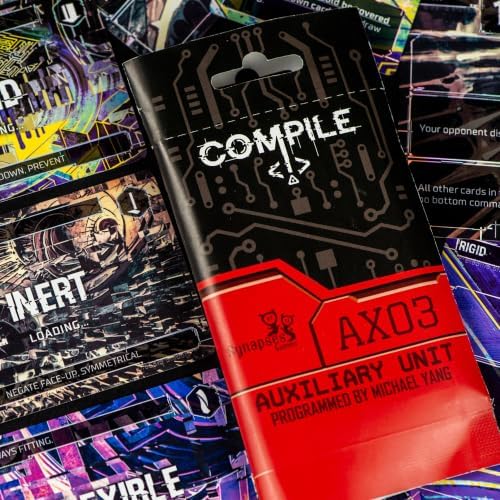
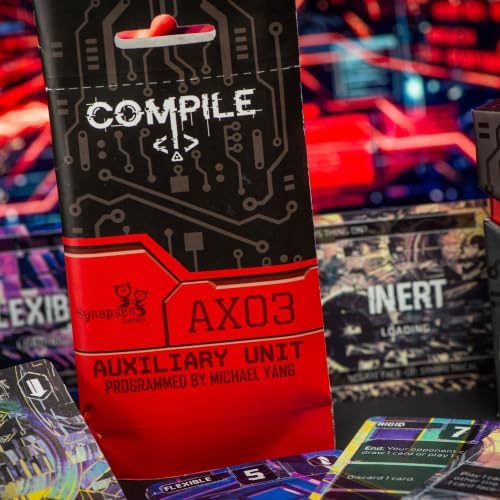
 Compile: Aux 3
Three more protocols for players who already understand the system.
- Newest add-on
- Compact
- Not stand-alone
At a glance
| Choice | Complete game | Protocols | Best for |
|---|---|---|---|
| Main 1 | Yes | 12 | First purchase and clean teaching |
| Main 2 | Yes | 12 | Second full draft pool |
| Main 3 | Yes | 12 | Newest stand-alone environment |
| Any Aux | No | 3 | Focused expansion after a Main |
Questions, answered
Which Compile set should I buy first?
Buy Compile: Main 1. It is a complete game with twelve protocols and the clearest first-purchase recommendation.
Is Compile Aux 1 a stand-alone game?
No. Aux packs contain three protocols and require a Main box.
Can Compile Main 1, 2 and 3 be mixed?
Yes. Keep each seven-card protocol intact and draft protocols from the combined pool.
How many players is Compile?
The core game is a two-player competitive duel.
How long does Compile take?
Expect roughly 20 to 30 minutes after both players know the timing.
Does Compile need sleeves?
No, but matte sleeves are useful for a heavily played travel copy because the small decks are shuffled often.
Is Compile good for beginners?
It is teachable, but its timing is more demanding than the tiny box suggests. Use open hands for the first few actions.
Should I buy every Aux pack?
Only after you know the base pool. One targeted Aux adds more value than three packs whose protocols nobody has learned.
Is Compile Main 2 an expansion for Main 1?
No. Main 1, Main 2 and Main 3 are each complete two-player games. Aux boxes are the smaller expansions and require a Main box for the shared control materials and broader draft pool.
Should I combine every Compile set immediately?
No. Learn one Main box first. Add a second Main when you want a new twelve-protocol environment, or one Aux when you can name the style of interaction your table wants.
What is the best first strategy in Compile?
Build one forcing lane, develop a second, and treat the third as information or bait. Before every reveal, recalculate both sides because immediate effects can alter the whole command line.
Do Compile cards need sleeves?
Sleeves are optional, but sensible for a game built around repeated shuffling and precise card condition. Confirm the current card size before ordering, especially if you plan to store multiple Main and Aux boxes together.
Dax's verdict
9.2/10 as a compact expert duel. Buy Main 1, play at least six matches, then add another Main for broad variety or one Aux pack for a specific flavor. The line stays inexpensive only if you resist buying complexity faster than you can read revealed command lines.
Research ledger 11 sources · reviewed 2026-07-25
Specifications, rules, current product information, community experience, and contrary evidence were checked against the sources below. Commercial links are kept separate from editorial evidence.
- shop.greaterthangames.comshop.greaterthangames.com/products/compile-main-1
- shop.greaterthangames.comshop.greaterthangames.com/pages/compile
- shop.greaterthangames.comshop.greaterthangames.com/blogs/news/a-look-at-compile-main-1-development
- reddit.comreddit.com/r/boardgames/comments/1jh5wos
- reddit.comreddit.com/r/boardgames/comments/1r61ns4/what_did_you_play_this_week_february_16_2026
- boardgamegeek.comboardgamegeek.com/boardgame/406652/compile-main-1
- amazon.comamazon.com/dp/B0CWJB3VM7?tag=puzzlewick-20
- amazon.comamazon.com/dp/B0DZPTLWRN?tag=puzzlewick-20
- meepleuniversity.commeepleuniversity.com/2026/05/10/compile-main-1-and-2-how-to-play-complete-clear-concise-board-game-tutorial
- reddit.comreddit.com/r/boardgames/search/?q=compile%20main%201%20main%202&restrict_sr=1&sort=new
- greaterthangames.comgreaterthangames.com/products/compile

I'll be honest with you — flattery is boring.

Keep exploring
The next smart rabbit holes.
⚔ Topic PathTwo-Player Board Games: compare the whole shelfThe best two-player game is designed around the duel rather than merely tolerating two people. This path separates sharp...ComparisonThe Best 2-Player Board Games of 2026, RankedFifteen duels for two, sorted into hard tiers — the forever-game, the silent co-op, the giant-killers under twenty bucks, and the honest...ComparisonBest Deck-Building Card Games 2026: Dominion, Aeon's End, Marvel ChampionsDominion, Aeon's End, Clank!, and Marvel Champions solve deckbuilding in radically different ways. Here is the best first box, the real...