Puzzle Box Gift Guide 2026: Worth It? Difficulty & Resettable
Not all puzzle boxes are born equal. Here's what's actually worth giving in 2026, ranked by difficulty, price, and replay value.


Written and reviewed by Robert Pruitt · how this guide was made
Last editorial refresh: 2026-06-18 Gold-standard QA: 2026-08-10 9 sources reviewed Affiliate links checked during gold-standard pass

The short answer
A quality puzzle box—whether resettable wooden escape room, electro-mechanical, or subscription-fed—absolutely earns its shelf space if you're giving to someone who actually likes problem-solving. The real question isn't worth-it, it's: which difficulty floor and format fits your person? A Cluebox runs $50 and resets cleanly; subscription boxes start at $20/month for casual players; the fancy stuff (Kagen Sound, Tesla Box) hits $75–230 and assumes serious commitment.
Decision map
Choose in thirty seconds
First-time puzzle box gift; groups or individuals who want escape-room vibes
Serious puzzle enthusiasts; people who want an electro-mechanical showpiece
Puzzle newcomers; people who like portable, shareable challenges
Puzzle boxes have this weird magic—they live in that space between fidget toy and actual brain exercise, between coffee-table ornament and gateway drug to escape rooms. I've been collecting them for years, and honestly, the difference between "this sits here collecting dust" and "people fight over who gets to solve it first" comes down to three things: difficulty, resettability, and whether the mechanism feels fair (as opposed to "wait, how was I supposed to know that?"). In 2026, the options are pretty wild. You've got wooden boxes from Poland that require actually solving riddles. You've got electro-mechanical rigs that hum and tick and have hidden magnets everywhere. You've got subscriptions that show up each month. And yeah, they range from "nicer than a coffee" to "that's a used car payment." I've separated the wheat from the chaff here—the ones that actually reward you when you hand them over, and the ones that should stay on your own shelf.
Start here, then go deeper
You are in the right cabinet.
 ❖ Topic PathMechanical Puzzles: compare the whole shelfThe right mechanical puzzle matches the solver's patience, not simply the maker's difficulty number. These guides translate...
 ReviewKarakuri Egg Puzzle Box by Akio Kamei: The Japanese Artisan Grail That Collectors Camp ForOne hour of pure mechanical poetry. A cherry-wood egg that whispers its secrets if you listen.
 Buying GuideSiebenstein-Spiele Wooden Puzzle Boxes: Difficulty Levels & Starter GuideFrom German laser-cut craft to puzzles that reward patience over brute force—a curator's roadmap for choosing your first Siebenstein box.
Should You Even Buy a Puzzle Box? (The One-Question Test)
Here's the only filter that matters: does your person enjoy being stuck? Not enjoy winning — everyone enjoys winning. I mean the 20-minute stretch where they're turning a thing over in their hands, muttering, refusing to look it up. If that sounds like them, a good puzzle box is one of the best gifts on earth. If they're the "just tell me the answer" type, you'll spend $50 to make someone vaguely annoyed at a coffee table.
The thing people miss is that the category itself is a spectrum, and matching the wrong sub-type to a person is how good intentions die. A take-apart metal teaser, a sequential-discovery box, a fidget-cube, and a maze burr are about as alike as a crossword and a marathon. They all say "puzzle" on the tin.
The quiet superpower of the good ones is resettability. A 1,000-piece jigsaw is a one-night stand; a resettable box is the gift that keeps generating moments. You hand it to a friend at a dinner party, lose them for an hour, and they emerge proud. I've watched a single $50 box rack up a dozen solves across two years. Insider move: when you give one, give it with zero context. "Open it." That's the whole instruction. The blank-slate confusion is the gift — the second you start explaining, you've spoiled the first and best aha.
What Makes a Puzzle Box "Fair" Instead of a Cheap Trick?


This is the single most important concept in the hobby, and almost no gift guide tells you. Puzzle people draw a hard line between a trick box and a sequential-discovery box, and it's the difference between a gift someone treasures and one they quietly resent.
A trick box has a single arbitrary gimmick — slide a panel you'd never find on purpose, blow on a hole, hold it at a weird angle. When you finally crack it you don't feel clever; you feel told. A sequential-discovery box is the gold standard: solving one step physically hands you the tool or clue for the next — a ball bearing, a hidden rod, a key. Every action chains off the last, so the box teaches you its own logic as you go.
The serious-collector consensus, codified across forums like Boxes and Booze and PuzzleMad, rests on two unwritten rules: no outside tools (only your hands and what the box gives you), and gentle manipulation (if you're forcing it, you're wrong). A well-designed box can't be broken open by brute strength, and it never needs to be.
Why this matters for gifting: "fair" boxes produce the I-feel-smart dopamine; "tricky" boxes produce the I-feel-cheated shrug. Every pick in this guide leans toward the fair end. When you read an Amazon review that says "unfair" or "impossible to know," believe it — that's a trick box wearing a sequential-discovery costume.

The Resettable Sweet Spot: Wooden Escape Boxes ($25–$60)
If you only read one section, read this one — it's where 80% of you should be shopping. Companies like iDventure (Cluebox) and Wooden.City build laser-cut wooden escape-room-style boxes you crack over 60–90 minutes, and then reset cleanly for the next person. That reset is the whole magic trick.
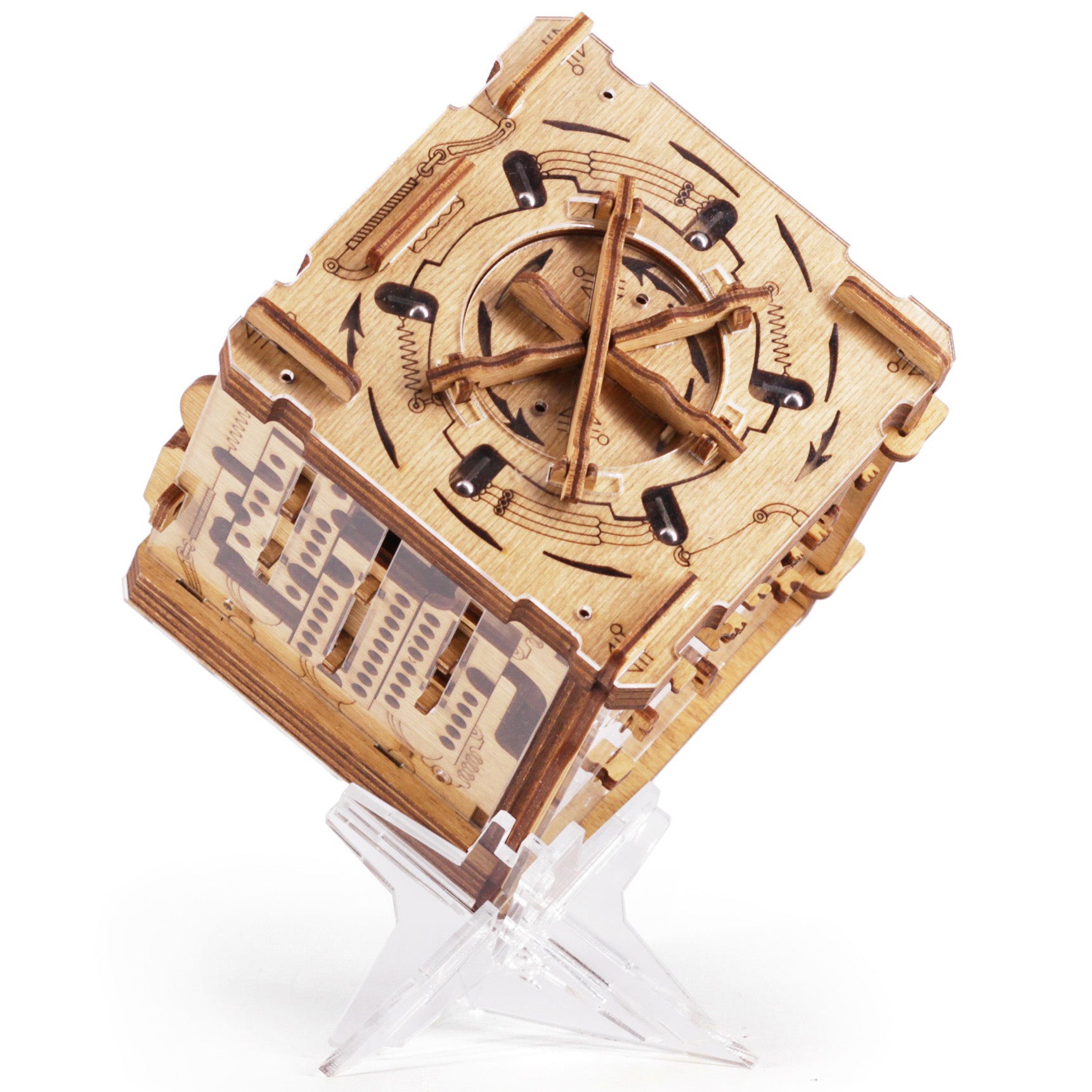
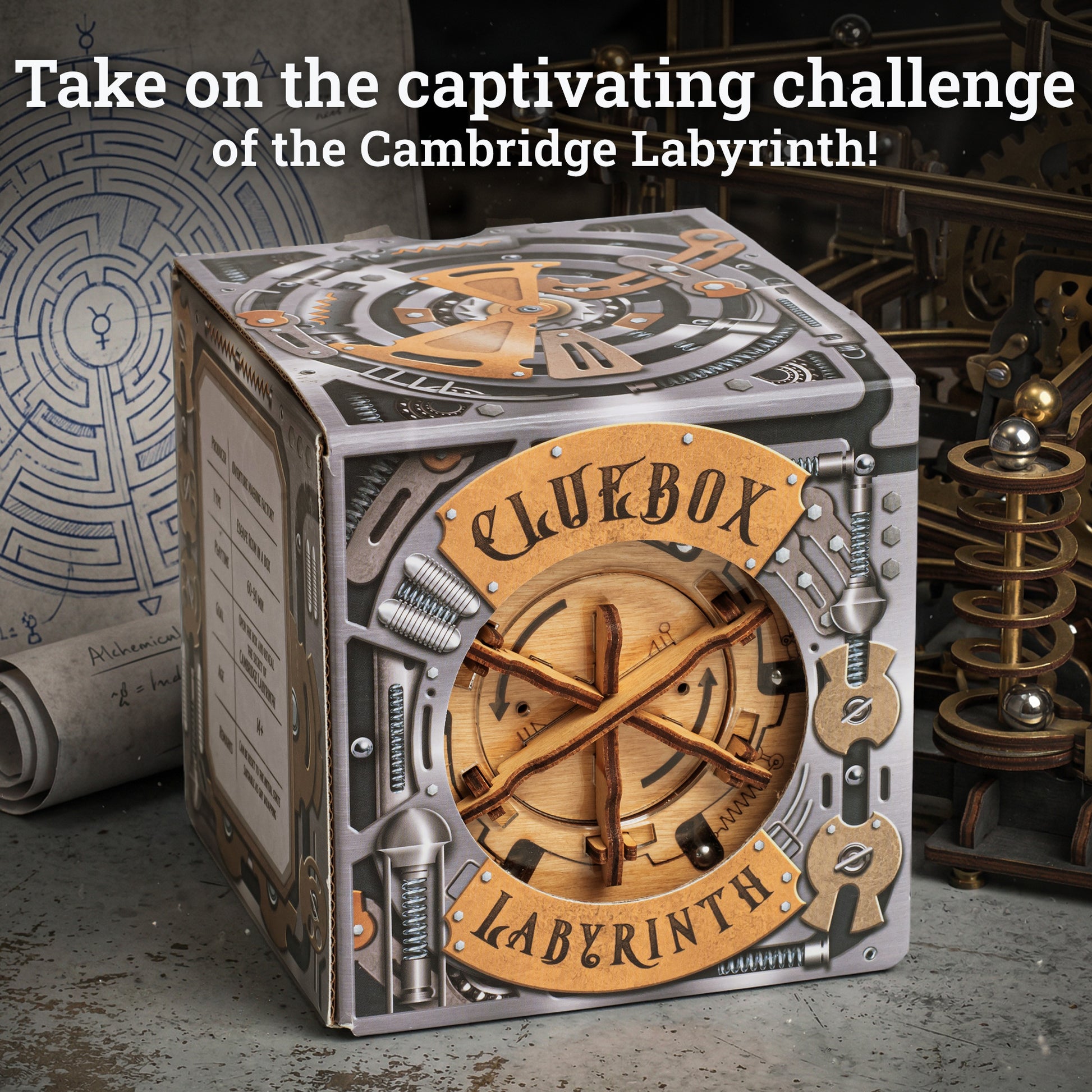
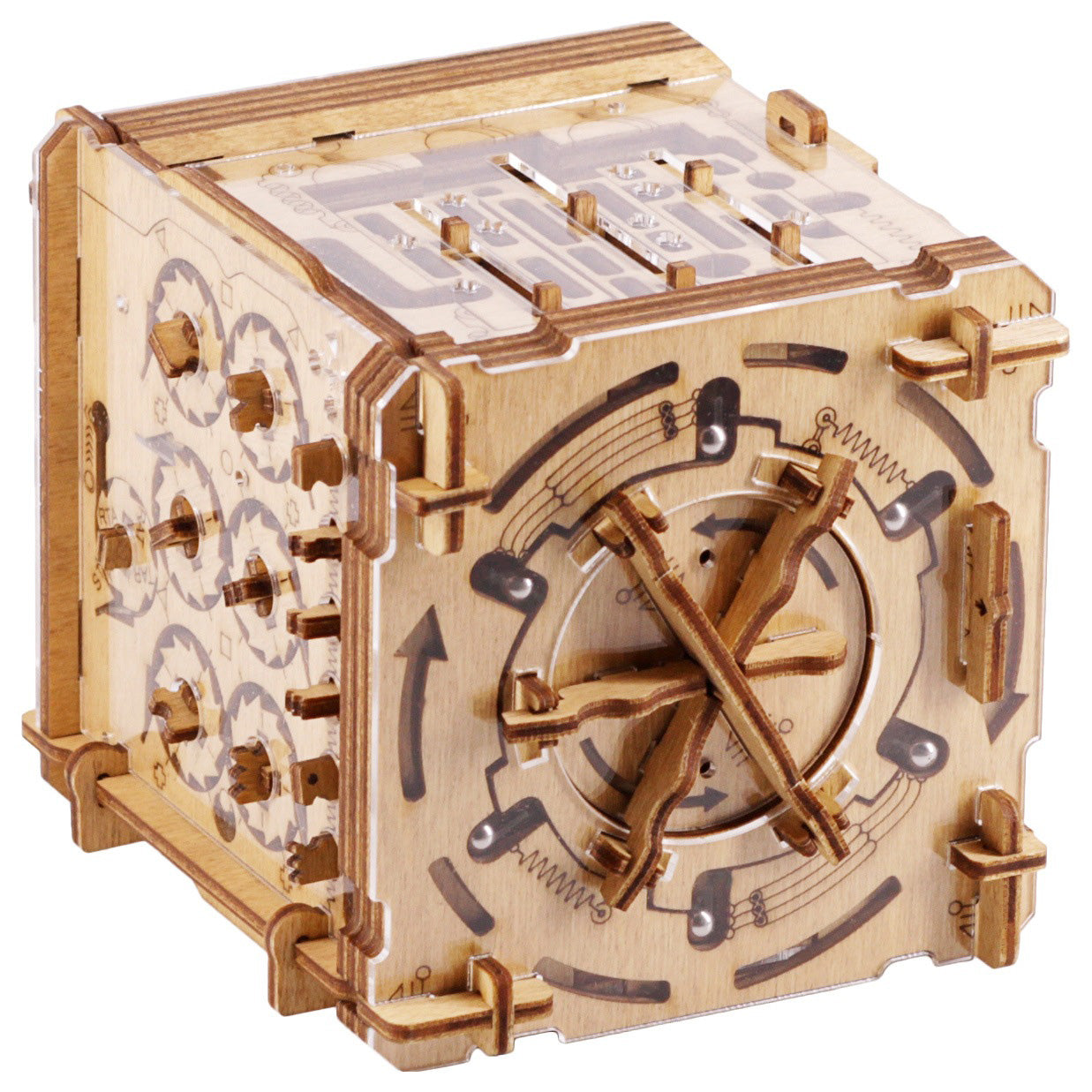
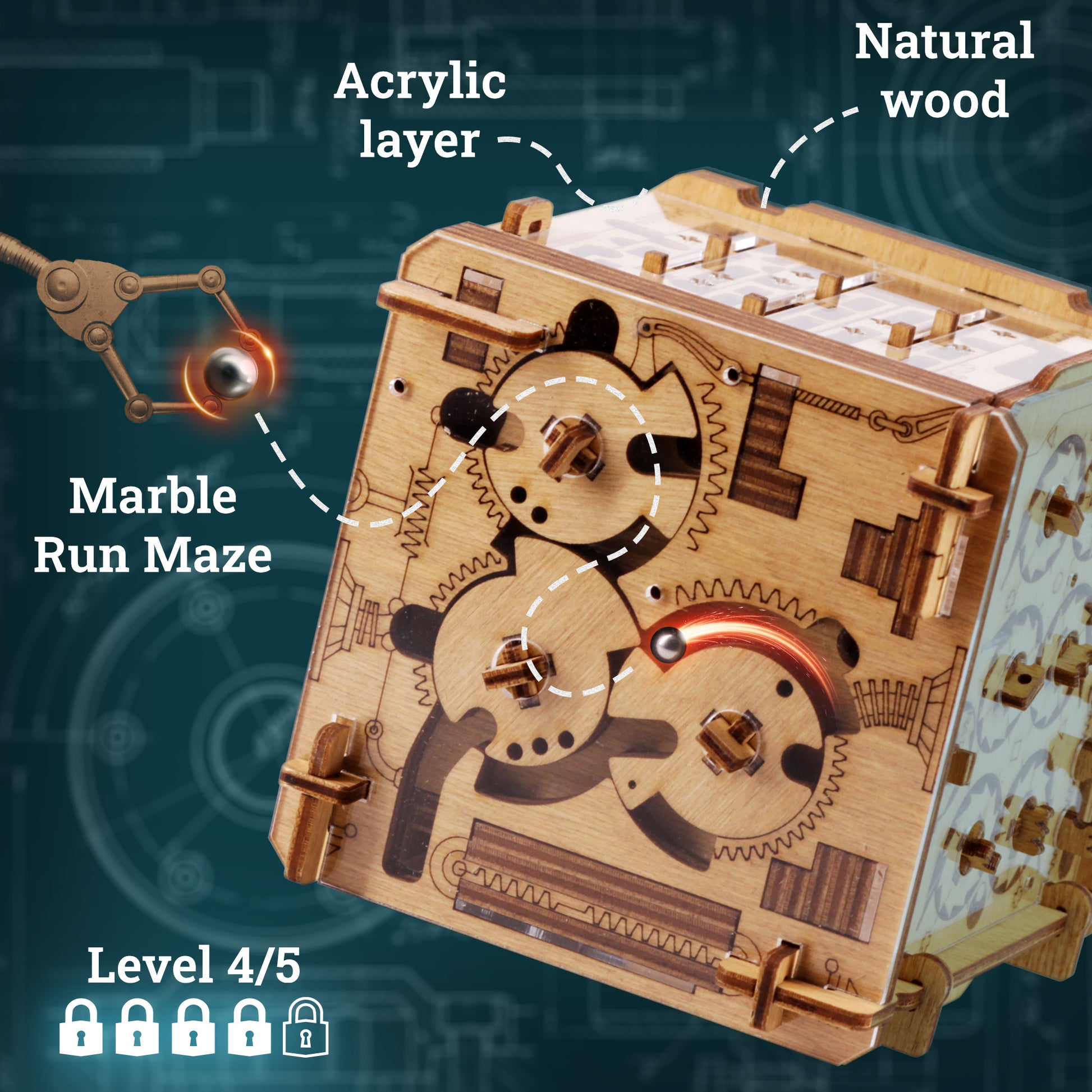
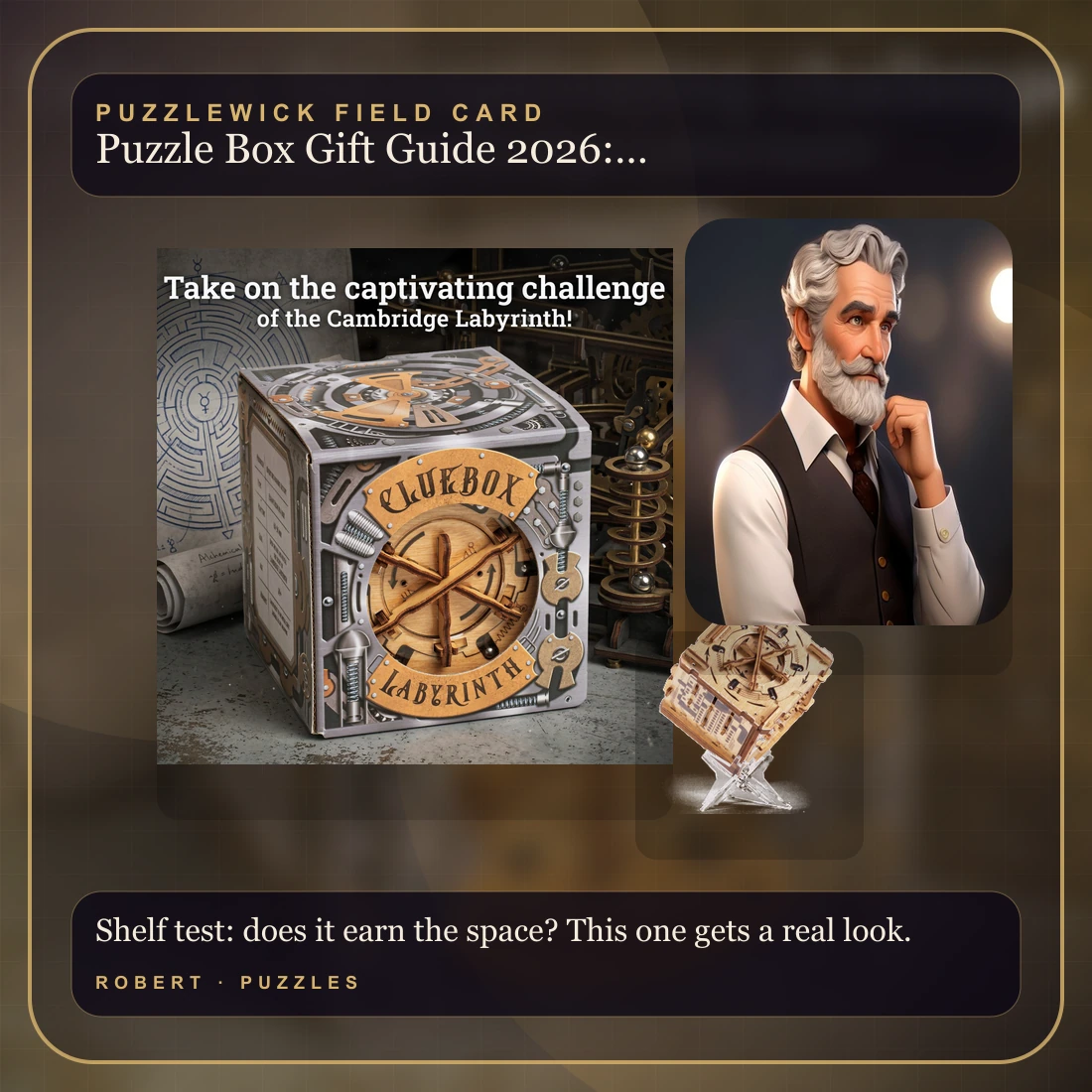
The Cluebox Cambridge Labyrinth is my standing default, and it's worth knowing why it works. It's roughly 167 precisely laser-cut birch parts with six acrylic faceplates, and — the detail most people don't expect — it adds rolling metal marbles you steer through an internal labyrinth. So it's not just "find the hidden catch"; there's a kinetic, tilt-and-roll skill layer on top of the logic. It's themed around the (semi-legendary) Cambridge Philosophical Society initiation, which gives it a nice "prove yourself worthy" framing when you hand it over.
Insider tip the box won't tell you: iDventure runs a free, progressive online hint system on their site. It doesn't dump the solution — it nudges, one rung at a time. So when your recipient hits a wall at minute 70, they don't have to quit or YouTube it; they get exactly one breadcrumb and keep their dignity. That single feature is why these survive in households where a harder box would get shelved forever.
How to give one well:
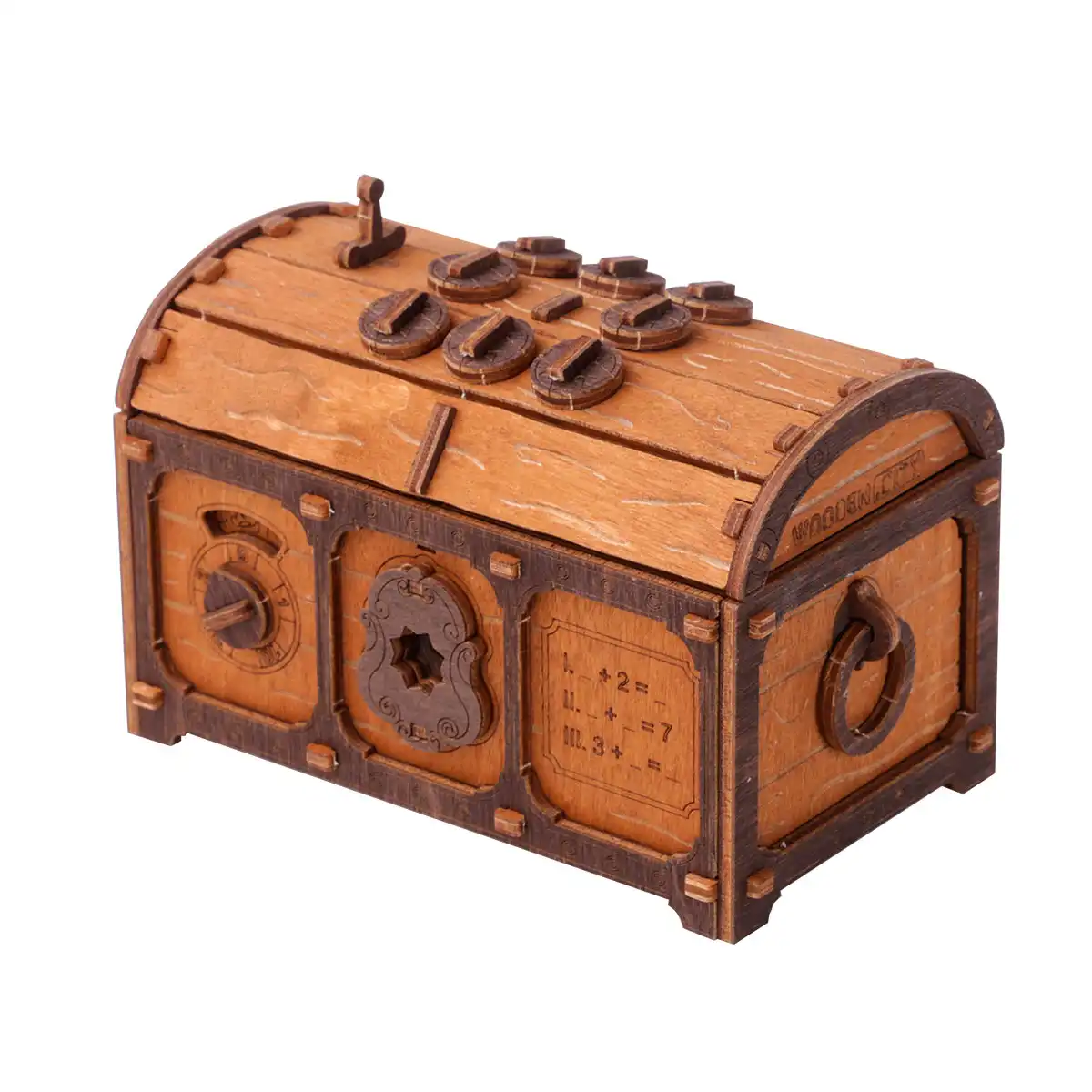
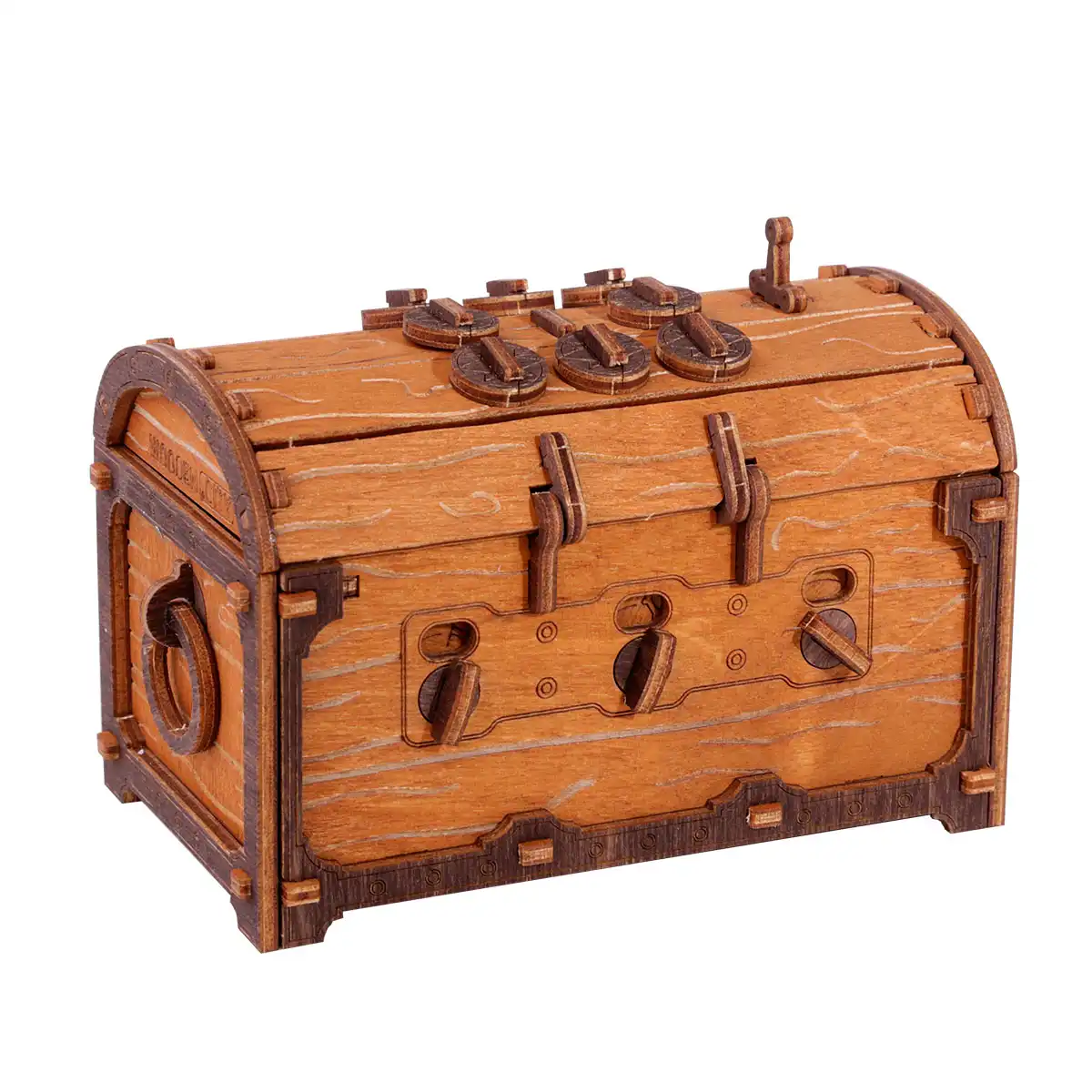
- Pick by theme/vibe — Cambridge Labyrinth is the classic; the Wooden.City Treasure Chest adds a build step.
- Give it with ZERO hints; the confusion is the gift.
- Block out 60–90 uninterrupted minutes — this is not a between-meetings puzzle.
- Bookmark iDventure's free online hint ladder BEFORE gifting, so a stuck solver nudges instead of quitting.
- Reset it yourself once so you understand the mechanism; then it's theirs to pass on.

Electro-Mechanical & Maze Boxes: The Hard Mode ($60–$230+)
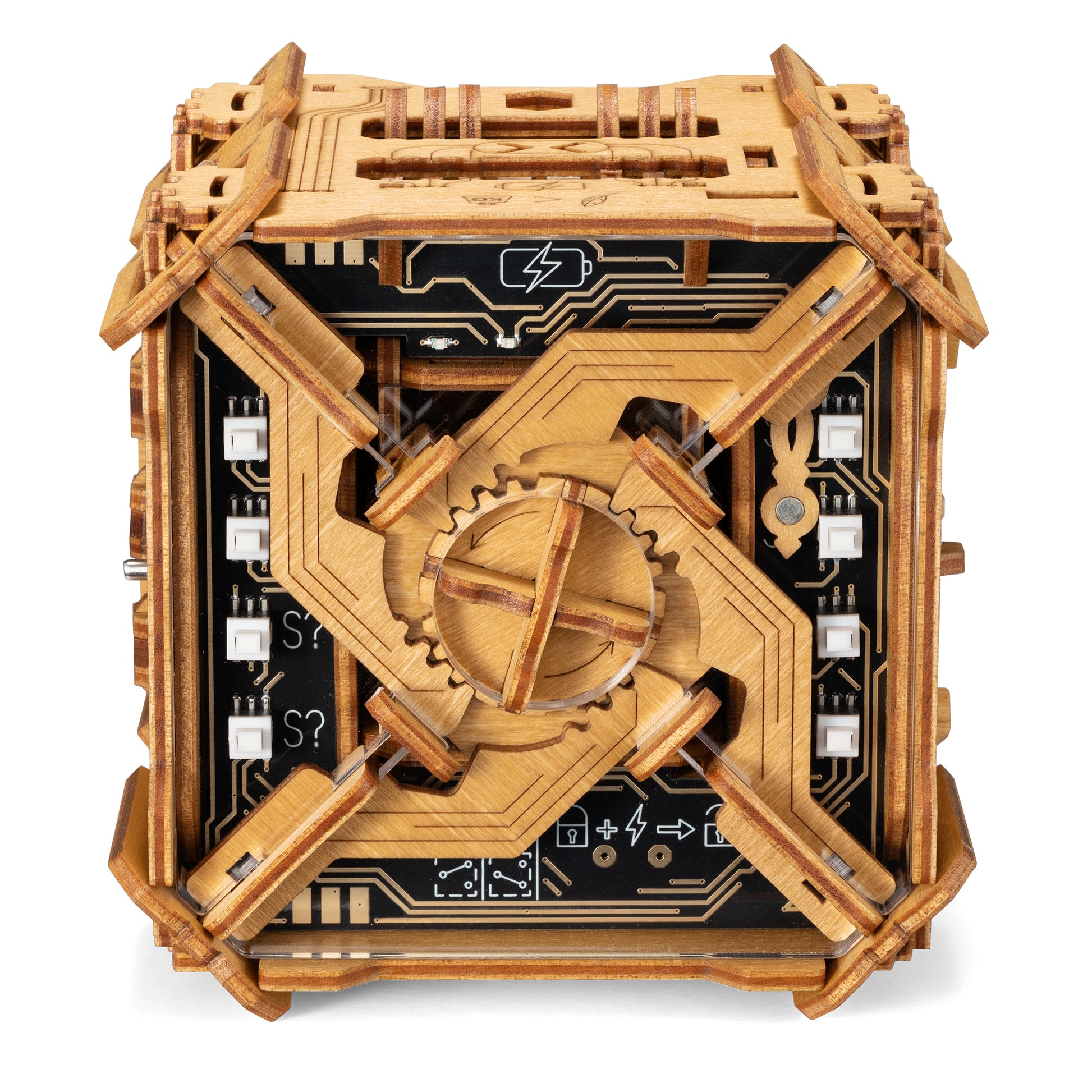
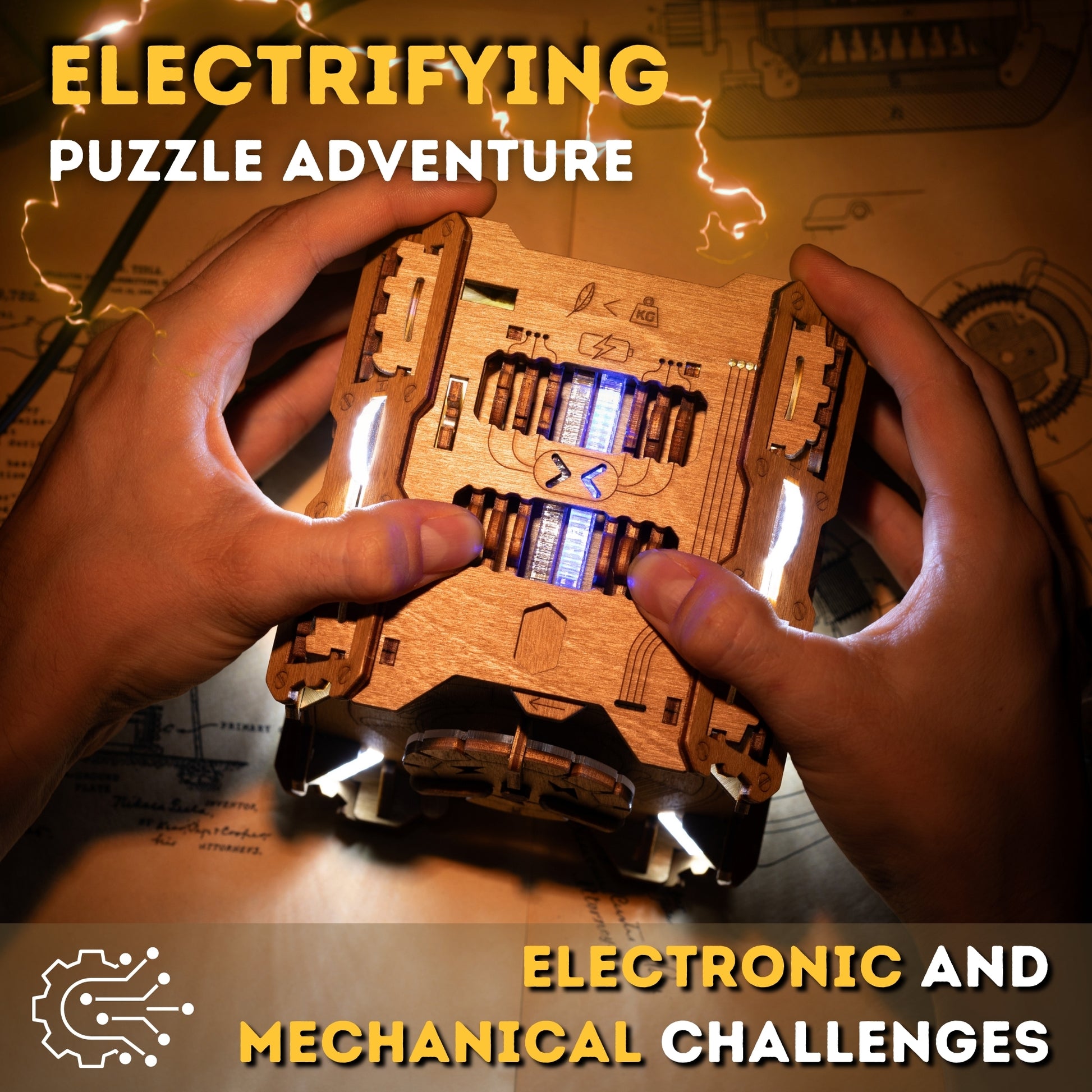
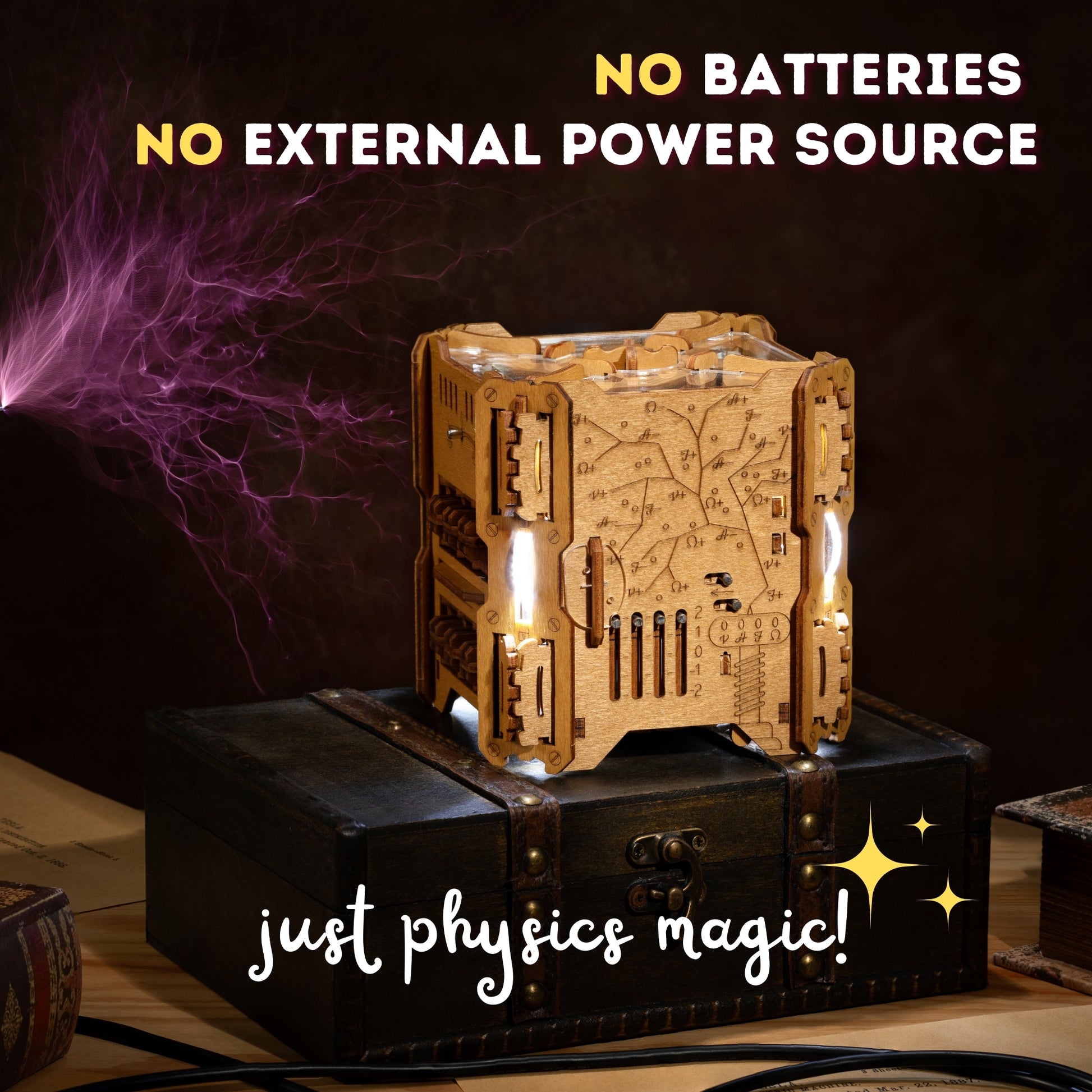
If wooden boxes are the appetizer, this tier is the tasting menu — and the prices climb to match. The Tesla Box by Puzzle Potato is the showpiece: a dense electro-mechanical rig with dozens of hidden magnets that rotates and clicks, carrying a 5/5 difficulty rating and a multi-hour solve. This is a box you give to someone with a track record of finishing wooden boxes — not a starter.
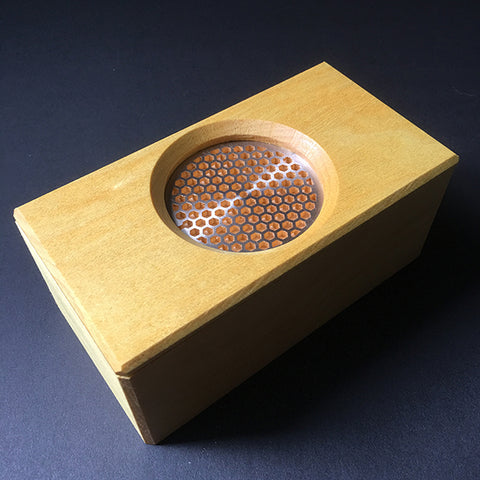
The far end of this tier is genuine puzzle art, and the name to know is Kagen Sound — a full-time artist from Colorado with a mathematics degree who applies it to shifting geometric mechanisms. His signature, the Maze Burr, won IPP "Puzzle of the Year" in 2006, taking both the jury grand prize and people's choice. Here's the stat that makes collectors go quiet: the Maze Burr's interchangeable maze plates yield 14,766,080 possible configurations, of which 8,723,152 have a solution — the original booklet hand-curated just 30 problems from that ocean, and a single configuration can take anywhere from 7 to 116 moves to open. Once solved, you rebuild it into an entirely different puzzle. That's not a $230 gift; that's an heirloom with a near-infinite difficulty dial.
Real talk: you cannot brute-force this tier, and several pieces are made-to-order with real wait times and limited runs. Buy here only for someone who already speaks the language:
- Confirm your recipient has actually FINISHED a wooden box first — this tier punishes beginners.
- Check resettability explicitly; some electro-mechanical boxes only reset via the maker.
- For artist boxes, check availability EARLY — many are made-to-order with waitlists.
- Keep the maker's hint/solution sheet on standby, but make them ask.
- Frame it as a weeks-long relationship, not a one-evening solve.
Metal Brain Teasers: Portable, Mensa-Rated, Nearly Indestructible ($10–$45)
The single most reliable "I don't know their ceiling" gift. Hanayama cast-metal puzzles — now formally branded the Huzzle line — are small, gorgeous, battery-free, and built on a clean six-level difficulty scale that's actually Mensa-rated, so the numbers mean something. Level 1 is genuinely kid-friendly; Level 6 (the infamous Enigma, News, Devil) is "why am I doing this to myself."
The lore here is part of the gift. The line was shaped by the late Nob Yoshigahara, one of the most revered puzzle designers who ever lived, and his hint for the brutal Level 6 Enigma has become the unofficial motto of the whole cast line: "the key word is twist… don't use too much force… the pieces should just slide apart." It was written for one puzzle, but it captures the entire ethos of cast puzzles — they reward finesse, not muscle. If your recipient is white-knuckling one, they've misunderstood it, and "stop forcing it, it's supposed to glide" is often the only hint they need.
The honest caveat: these don't reset the way a wooden box does. Once you know the move, you know it. But that's secretly part of their social charm — you become the house expert who's already "beaten" it, and you get to watch every new visitor pick it up and struggle while you sip your coffee. Buy a curated set of 3–5 across Levels 3–4 so a newcomer can level up inside one gift:
- Buy a SET spanning Levels 3–4 so a newcomer can climb without rebuying.
- Start a true beginner at Level 2–3; skip 5–6 unless they're seasoned.
- Coach the universal hint — stop forcing, it should glide — without revealing the move.
- Leave them out on a shelf; passive puzzle marketing for every guest.
- Keep the little drawstring pouch; it's how you re-gift or travel with them.

Shashibo & Shape-Shifters: The Meditative One (~$25)
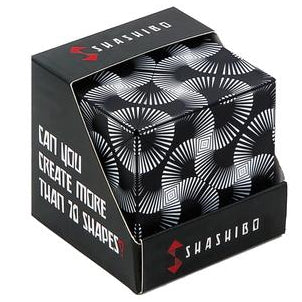
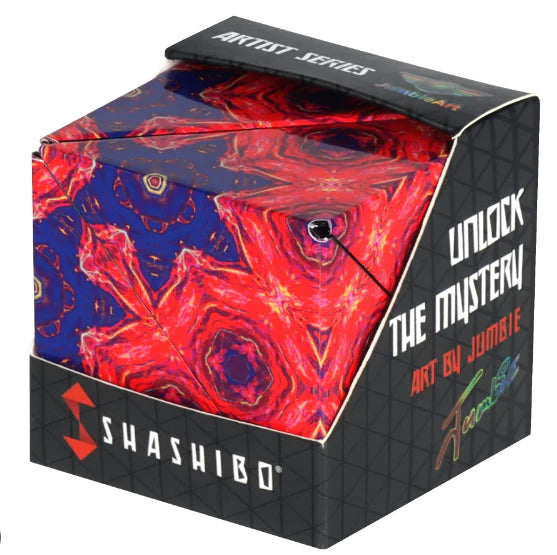
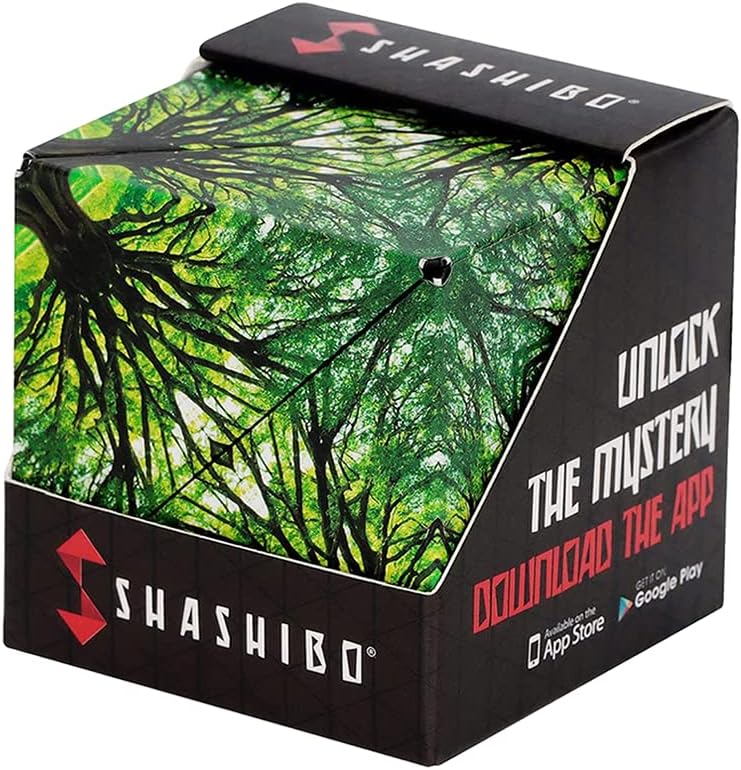
Shashibo is the bridge between "puzzle" and "toy," and it's the gift you give the person who doesn't think they like puzzles. Inside its cubes sit 36 rare-earth magnets, and they let it collapse and rebloom into a huge range of forms — the box and most retailers cite 70+ shapes (some listings say 100+), including the satisfying rhombic dodecahedron ball that snaps together like it was always meant to be one.
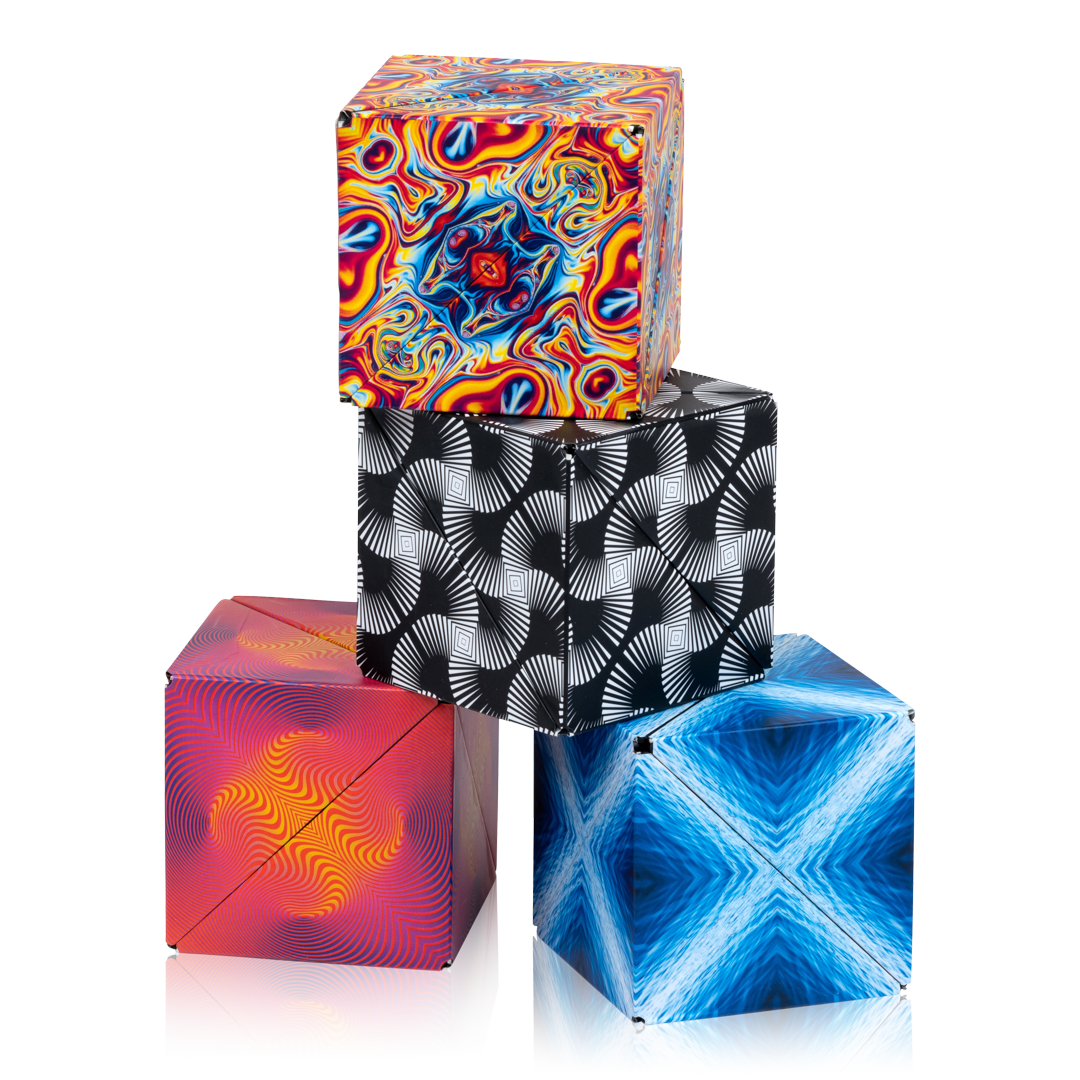
The bit that elevates it above a fidget knock-off is that it's a real piece of design, not a gimmick — it was invented by Andreas Hoenigschmid, a German (Bavarian-born) artist who worked as a sand artist before bringing the cube to market, and there's genuine geometry under the hood, which is why manipulating it feels elegant rather than random. It's also why the surface art on the licensed Explorer/Elements editions actually lines up across folds — the patterns were composed for the geometry.
Set expectations honestly when you gift it: there is no "I solved it" moment here. It's not goal-oriented; it's a flow object. You pick it up, twenty minutes vanish, your hands are busy and your brain quiets down. If your recipient wants the victory hit of cracking a box, send them to the wooden-box or Hanayama tiers instead. But for the desk-fidgeter, the call-doodler, the person who needs something to do with their hands — Shashibo is close to perfect:
- Download the free Fun in Motion app — its guided shape challenges keep it from plateauing.
- Set the expectation up front: this is a flow toy, not a 'solve it' box.
- Pick a licensed art edition (Explorer/Elements) if the look matters — patterns align across folds.
- Pair two of them — advanced builds combine multiple cubes into bigger structures.
- There's no wrong way to use it; that's the entire pitch.
Puzzle-of-the-Month Subscriptions: The Gift That Keeps Coming ($20–$45/mo)
A subscription solves a different problem than a single box: it removes the "what do I get them?" question for months at a stretch, and it self-corrects for the fact that you can't perfectly guess their ceiling — variety does the calibrating for you. Kubiya Games runs the best-known program, and it's worth getting the tiers right because the marketing names are slightly counterintuitive:
- The Player — beginner-friendly (ages ~7+), puzzles averaging difficulty ~3/5. The safe entry.
- The Explorer — the intermediate step-up tier: more variety, deeper mechanisms, and a stronger test of patience, roughly difficulty 3–4/5. The right pick for an enthusiastic solver who's outgrown beginner boxes but isn't a hardened master yet.
- The Thinker — the top, masters-only tier, level 4–5/5, pulled from their hardest wooden mechanical puzzles. This is the one to buy for a genuine expert.
The detail that makes it a great gift rather than a recurring bill: each month's box isn't a single item — it's typically two to three handcrafted puzzles plus a mini keychain puzzle, printed step-by-step solutions, and a sticker. The included solutions matter more than they sound: they're the safety net that keeps a stuck recipient from feeling abandoned mid-month.
The footgun: gifting a full 12 months to someone who turns out lukewarm creates obligation, and obligation kills joy. Kubiya sells one-time, 3-, 6-, and 12-month options for exactly this reason. My standing advice: gift 3 months as a trial, and if you want a guaranteed hit on day one, pair it with a single sure-thing box (a Cluebox) so you're not betting the whole gift on a format they may not love.
Difficulty, Price-Per-Solve & The Honest Verdict

Difficulty in this hobby isn't one scale, so stop comparing across types. Read the labels like this:
- Wooden escape boxes (Cluebox, Wooden.City): 60–90 min, intermediate, best as a 1–2 person experience. Resettable.
- Hanayama / Huzzle metal: Mensa-rated 1–6. Levels 1–2 = 10–30 min (kid-friendly), 3–4 = the adult sweet spot, 5–6 = 2+ hours where frustration is the point. Not resettable.
- Electro-mechanical & artist boxes (Tesla Box, Kagen Sound): 5/5 and beyond, multi-hour to multi-week, demanding patience + spatial + lateral thinking.
- Shashibo: unrated — it's play, not solving.
Now the part people get weird about: price ≠ value. The right lens is cost-per-solve. A $50 resettable Cluebox passed around 20 people is ~$2.50 a solve — a screaming deal. A $230 Kagen Maze Burr isn't "expensive," it's a near-infinite-replay reconfigurable machine and a piece of art; judged on that, it's also rational — just for a different buyer. The only genuinely bad purchase is the box that sits unopened. An expensive grail gathering dust is a beautiful waste; a $35 Hanayama set handled at every dinner party is a triumph.
Rule of thumb: never solved a box before → start at Hanayama Level 3–4 or a 60–90-min wooden box. Already finished a Cluebox → you've earned Level 5–6 metal, the Tesla Box, or a long stare at Kagen Sound. Buy the box they'll use, not the one that impresses you.
The picks
Some links below are affiliate links — as an Amazon Associate, Puzzlewick earns from qualifying purchases, at no extra cost to you. It never changes a pick.

 8 photos
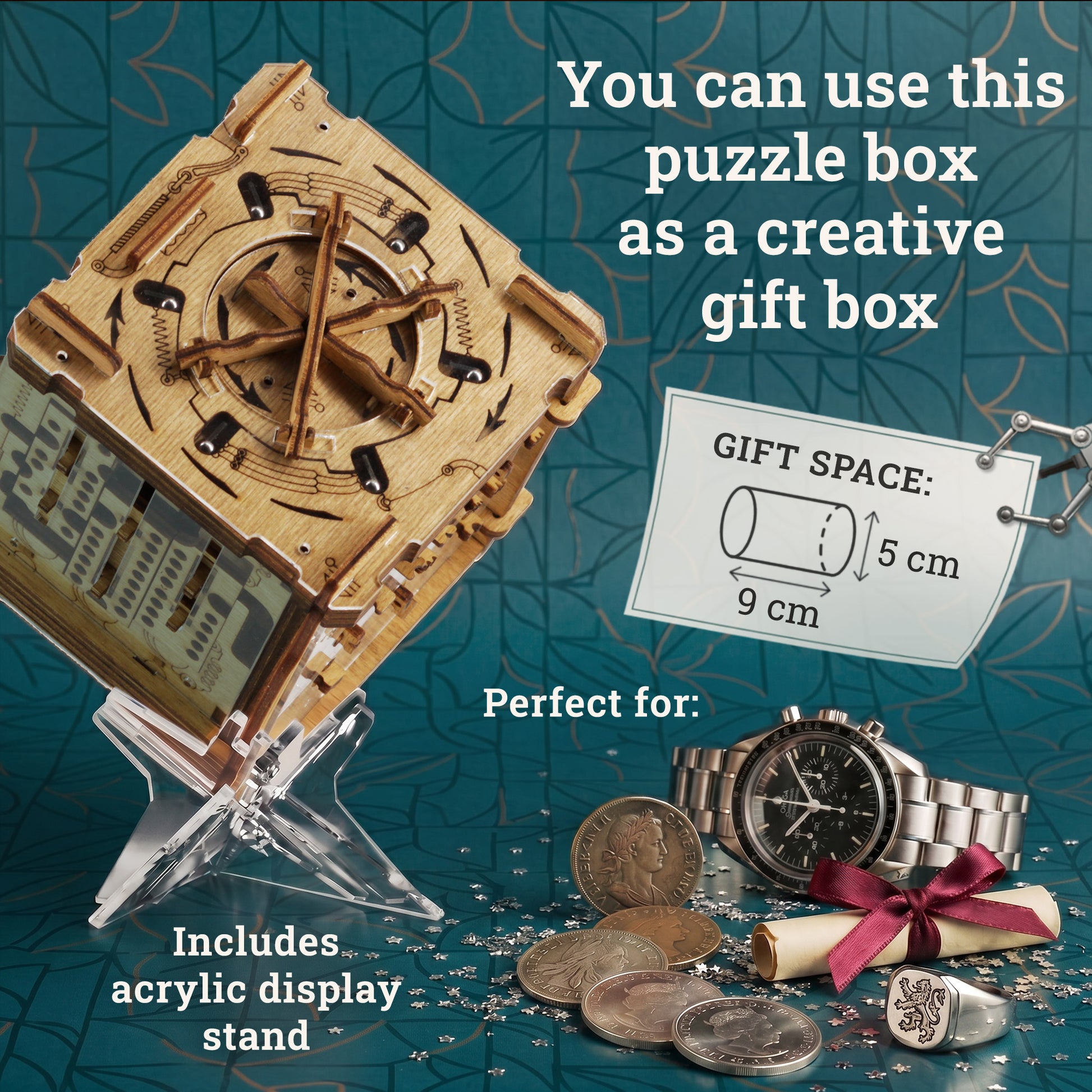
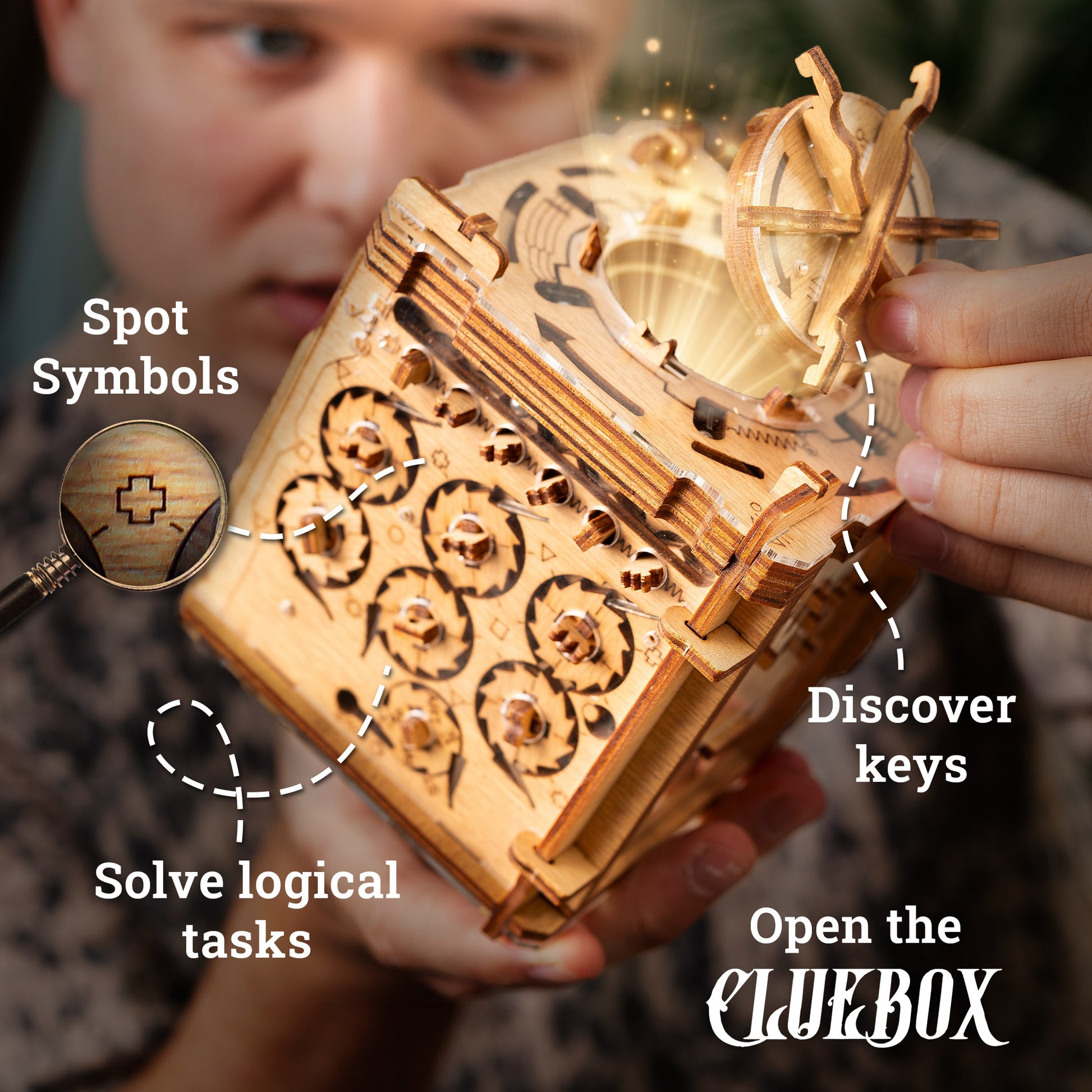
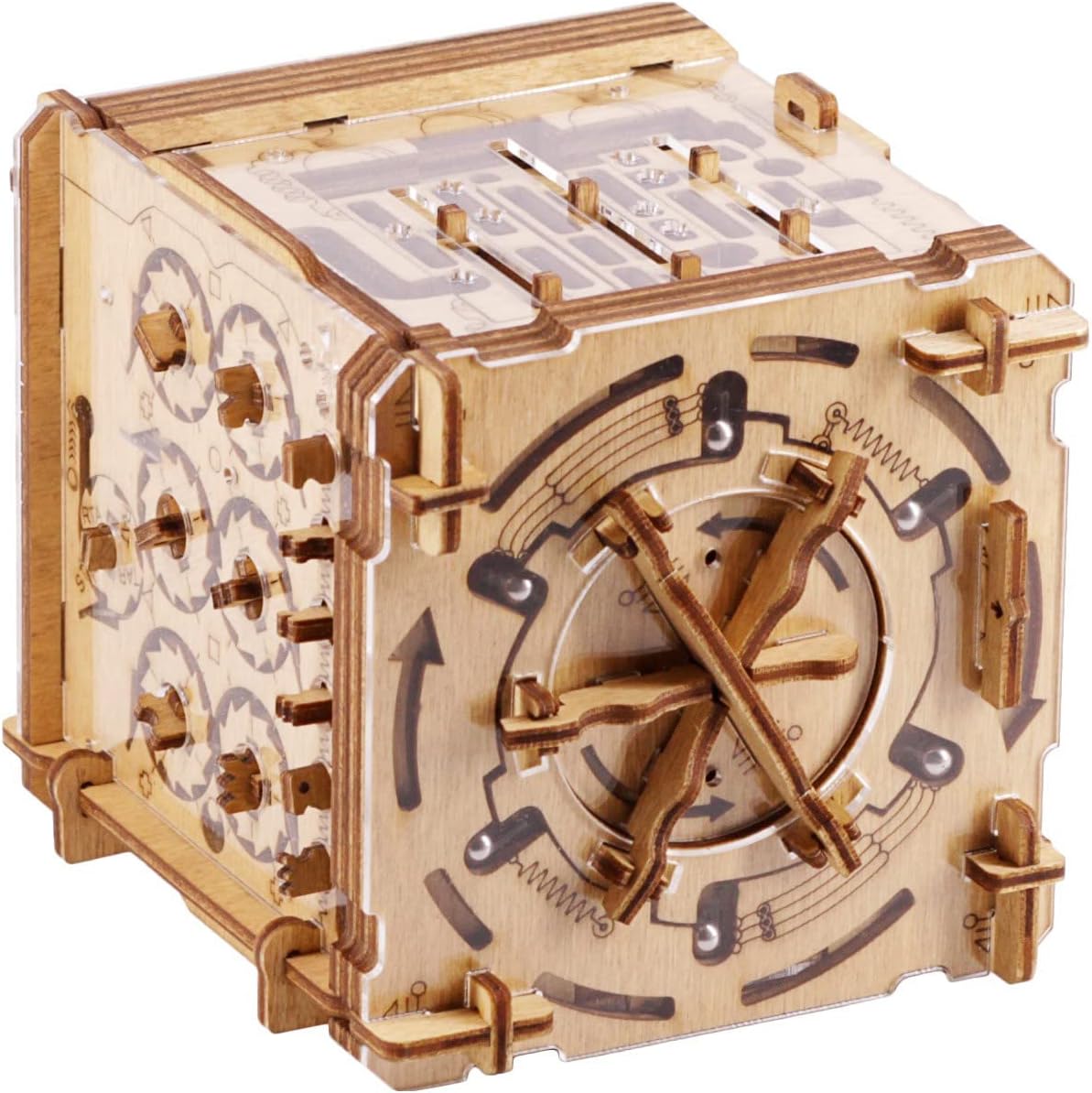
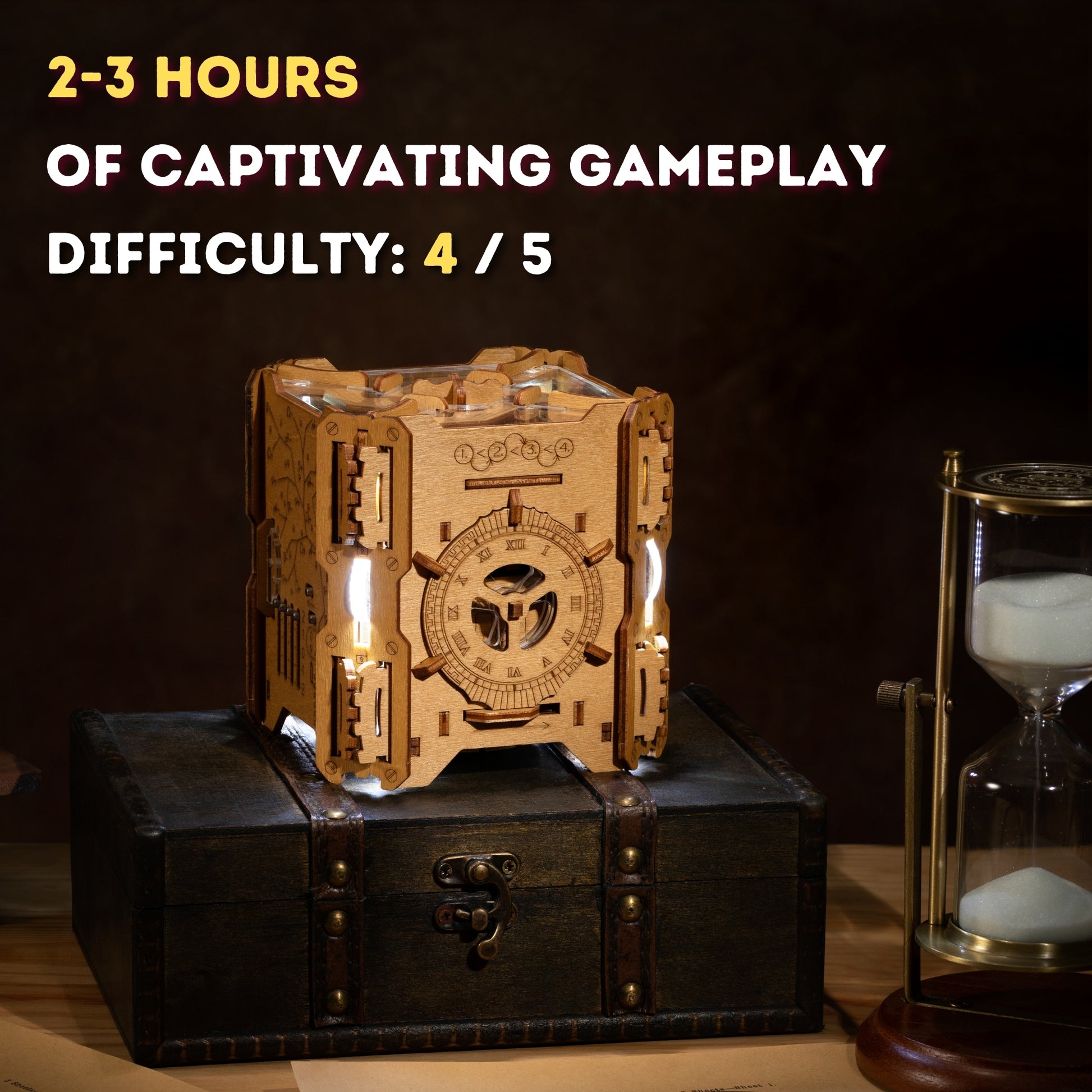
 Cluebox Cambridge Labyrinth
This is the gateway drug. Wooden construction, multiple interconnected puzzles, 60–90 min solve time, and it resets cleanly so friends can take a turn. Cambridge Labyrinth is thematic and fair—no unfair tricks. If you're buying a puzzle box for someone and you're not 100% sure they'll love it, this is the safe bet.
- Resettable design
- Genuinely clever design with fair logic
- Beautiful wooden construction
- Requires focused 90-min block
- Not suitable if recipient has zero patience for spatial puzzles
 7 photos
 Tesla Box (Puzzle Potato)
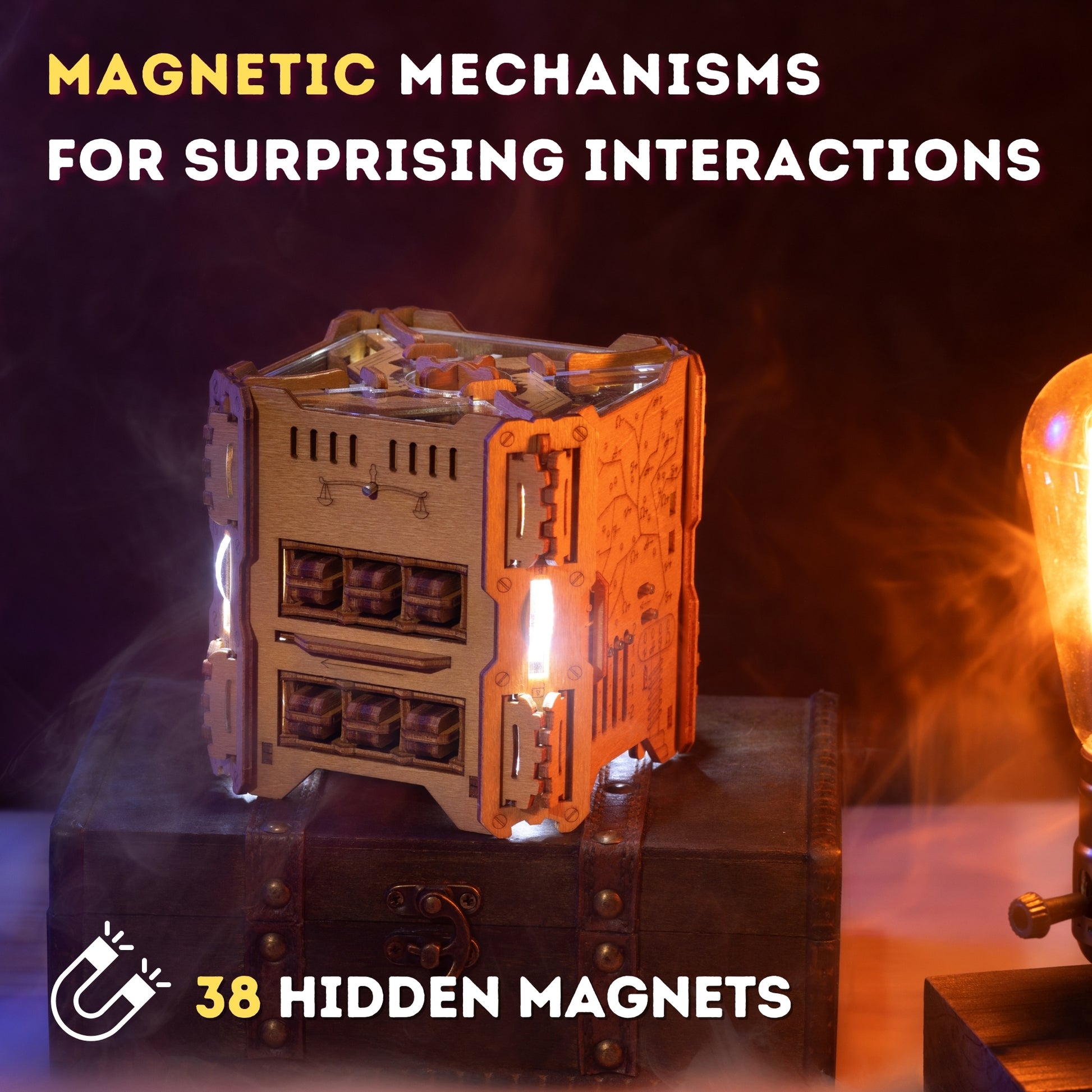
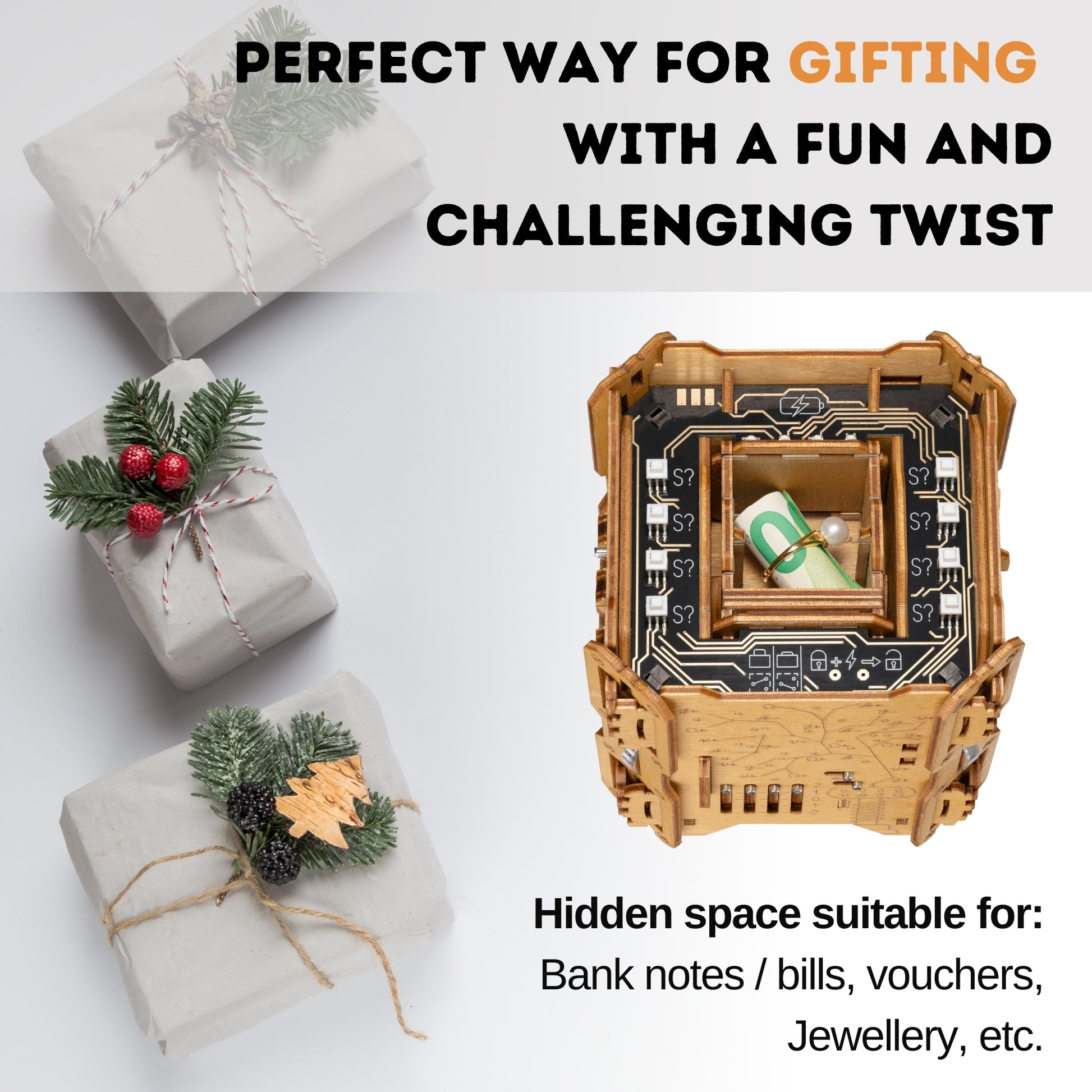
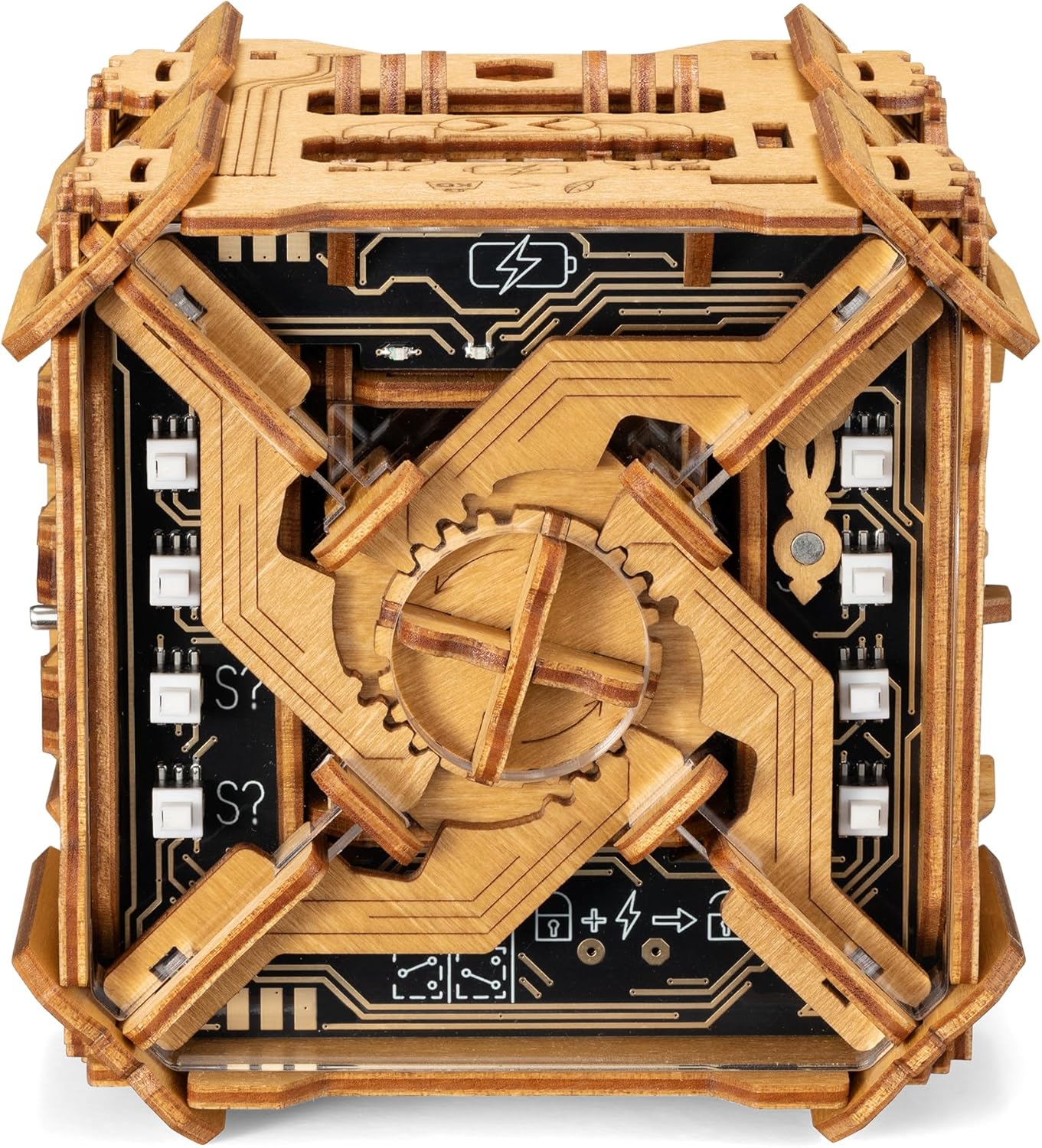
38 hidden magnets, 5/5 difficulty, and 5+ hours of gameplay. This is premium. It looks beautiful, it feels engineered, and solving it is a legitimate accomplishment. Not resettable in the traditional sense, but it can be reset by the maker. Best for someone with a track record of finishing wooden boxes.
- Electro-mechanical innovation
- 5+ hours of engagement
- Premium build quality and presentation
- High difficulty—not for casual puzzlers
- Expensive for an uncertain buyer
- Requires serious problem-solving patience
 4 photos
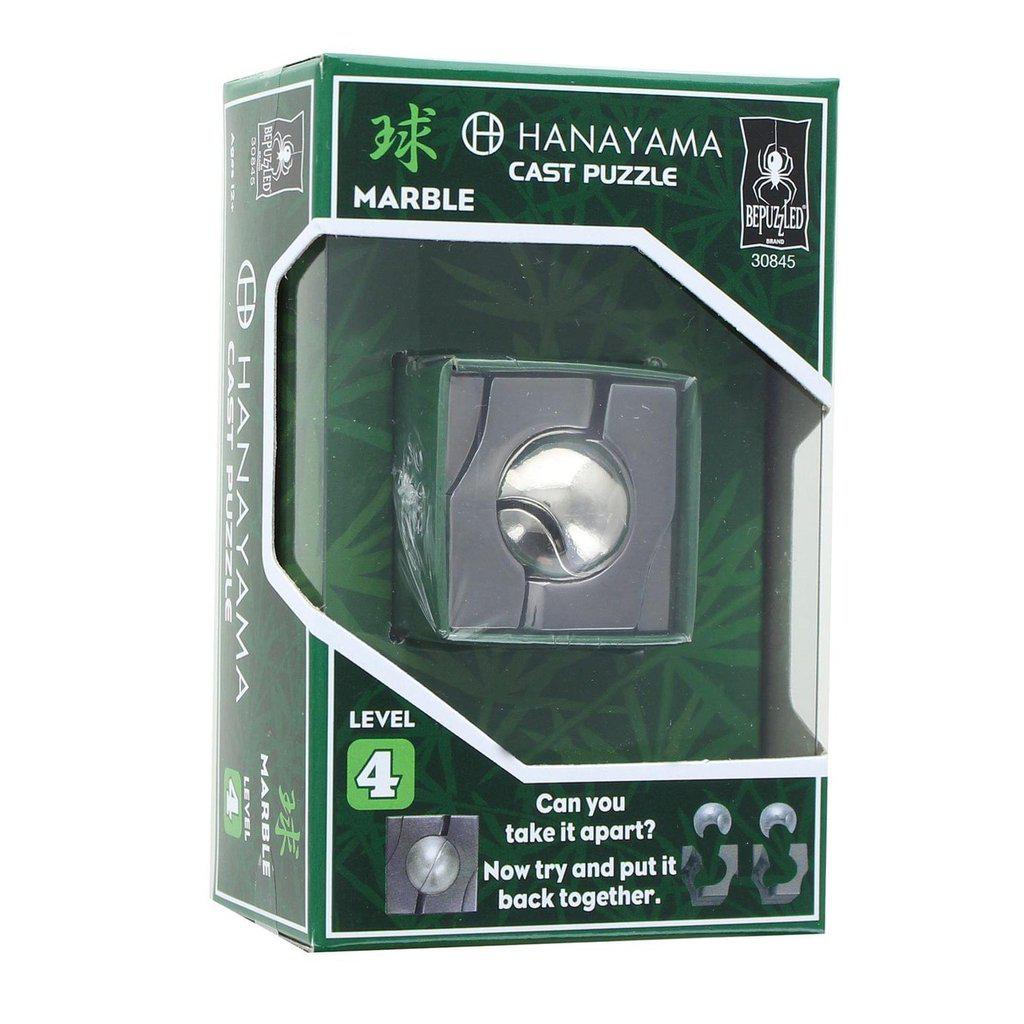
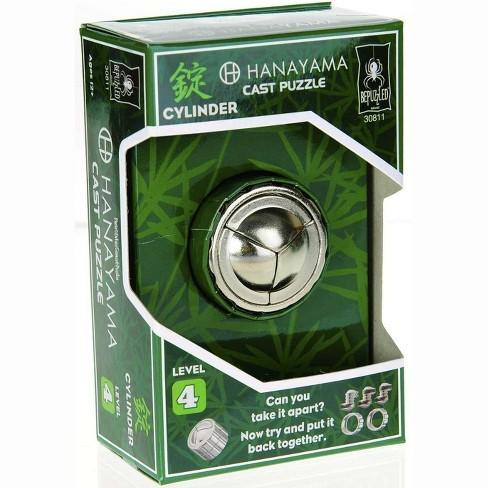
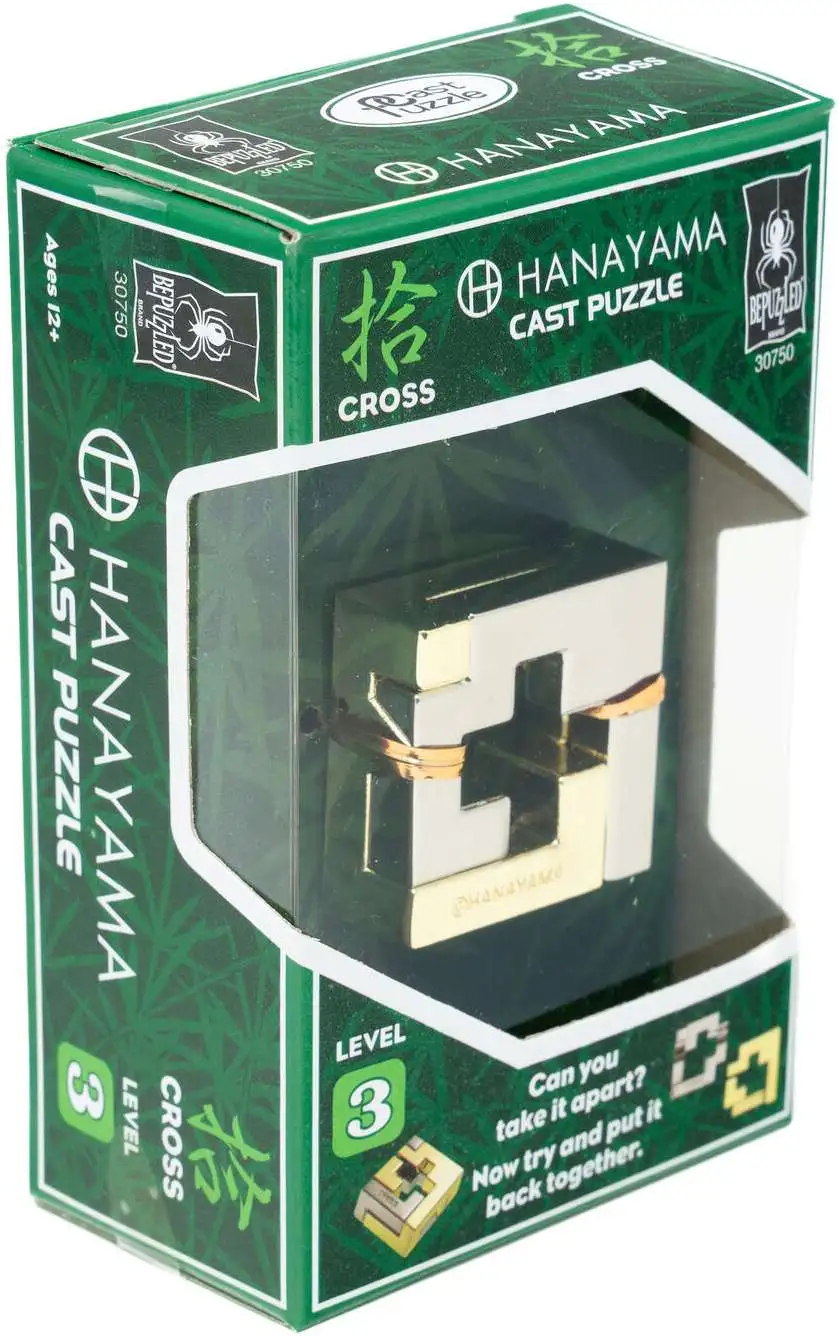
 Hanayama Puzzle Set (Level 3–4 Mix)
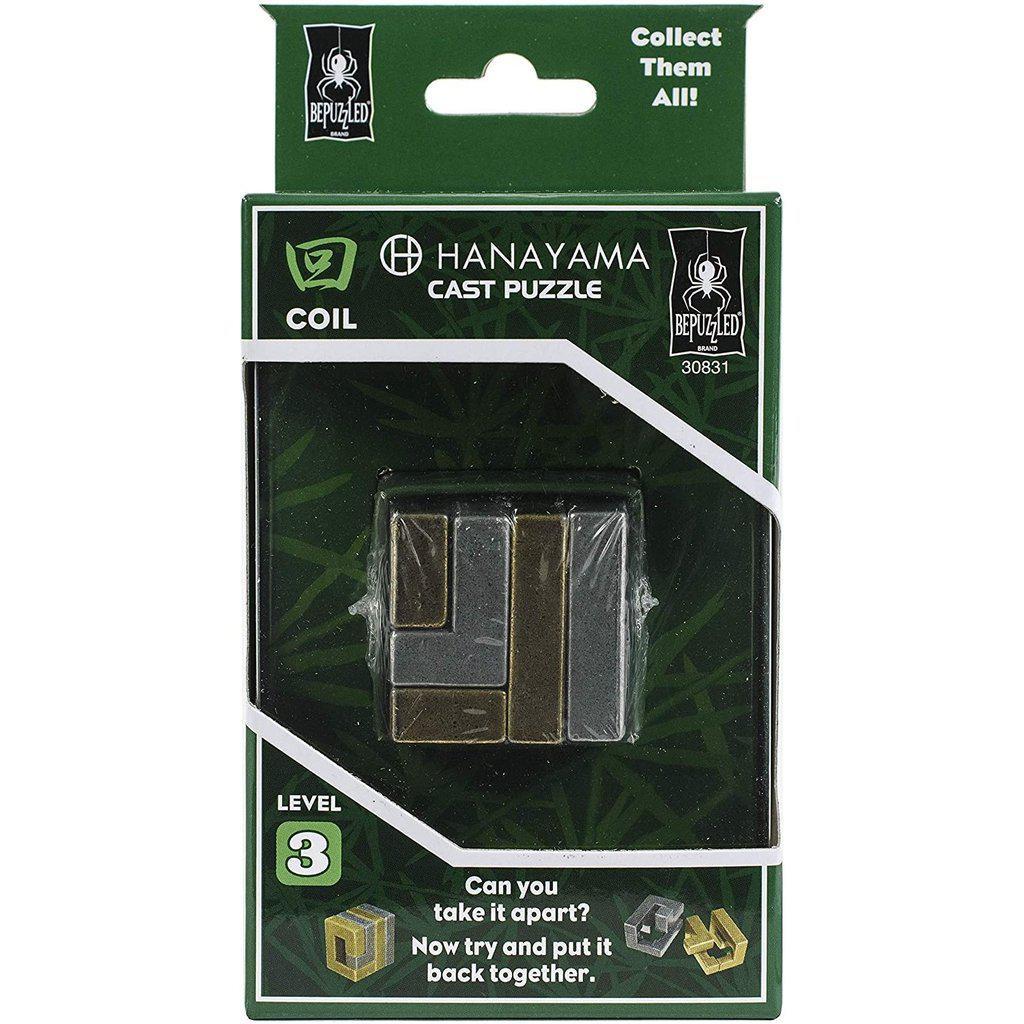
Grab a set of four Mensa-rated metal brain teasers in the Level 3–4 range. They're small, beautiful, and endlessly rewatchable (new people = new solvers). No batteries, no setup, just pure mechanical elegance. The difficulty is fair—you figure it out, you feel smart.
- Portable and durable
- Beautiful cast metal construction
- Mensa-rated difficulty levels
- Not resettable once solved
- Can be frustrating if you hit a wall
- Some people find them fiddly
 7 photos
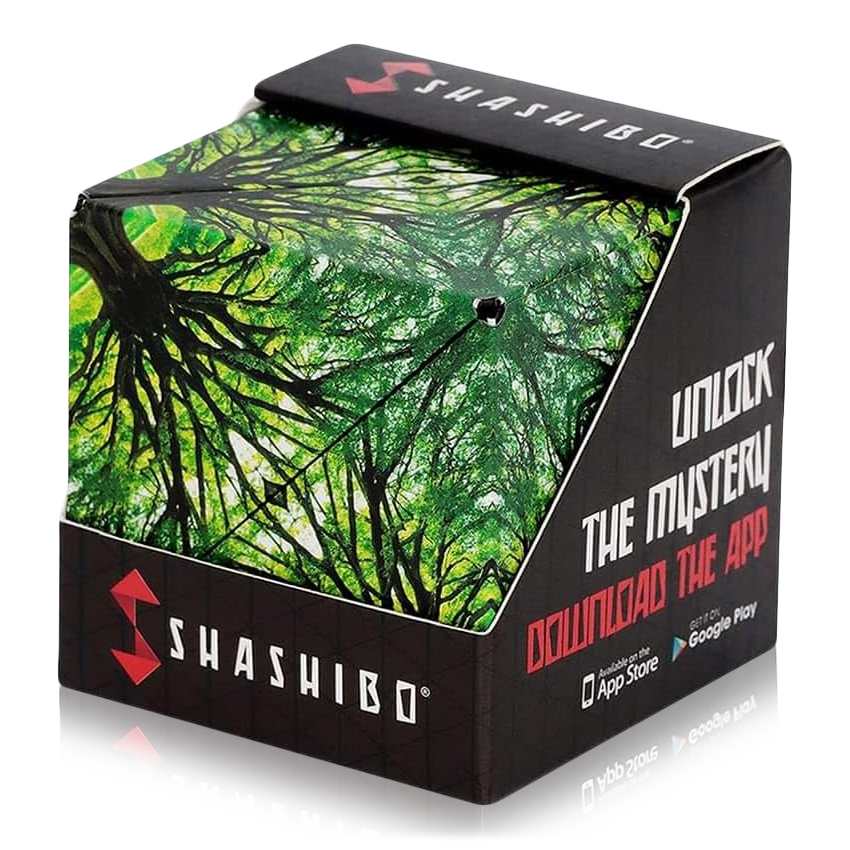
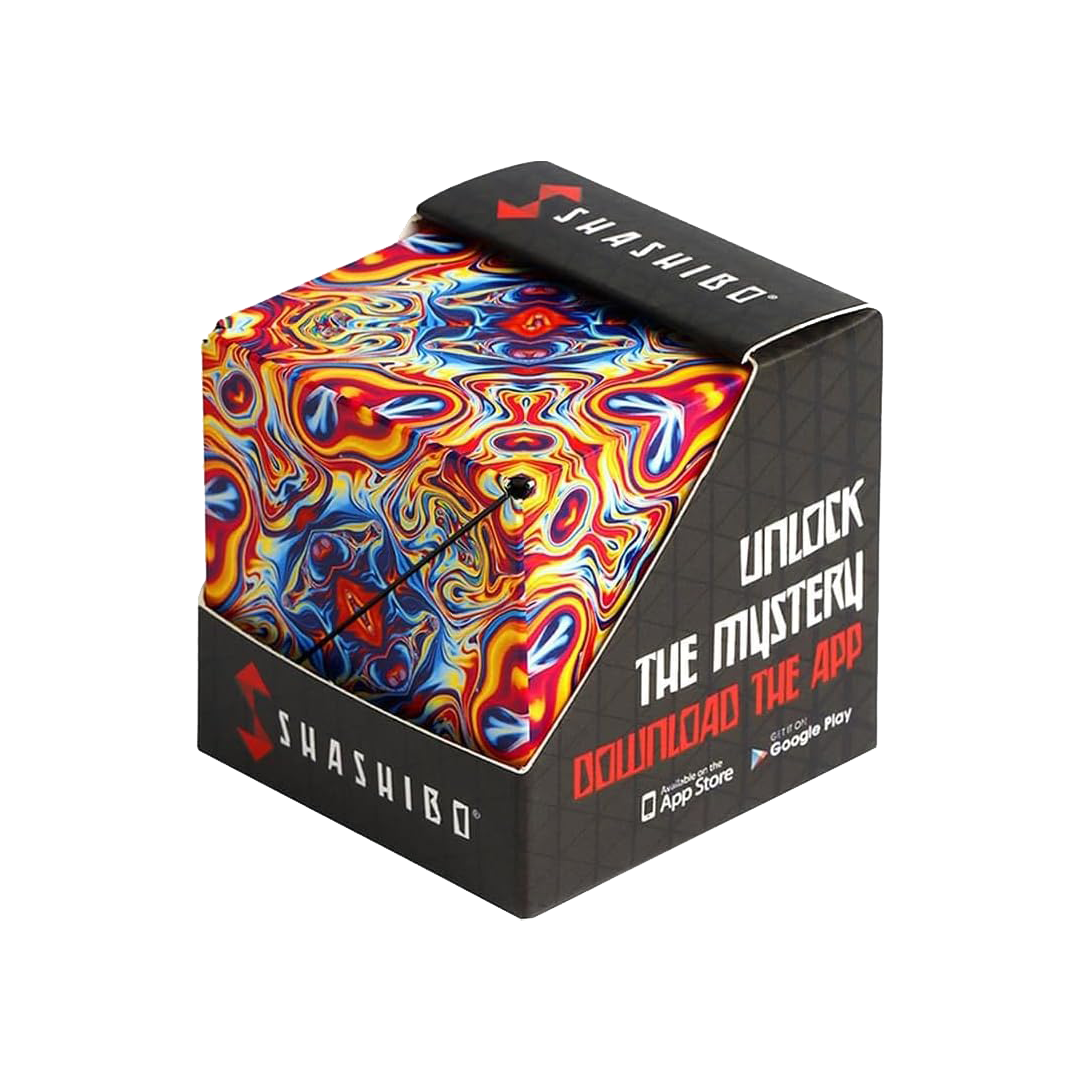
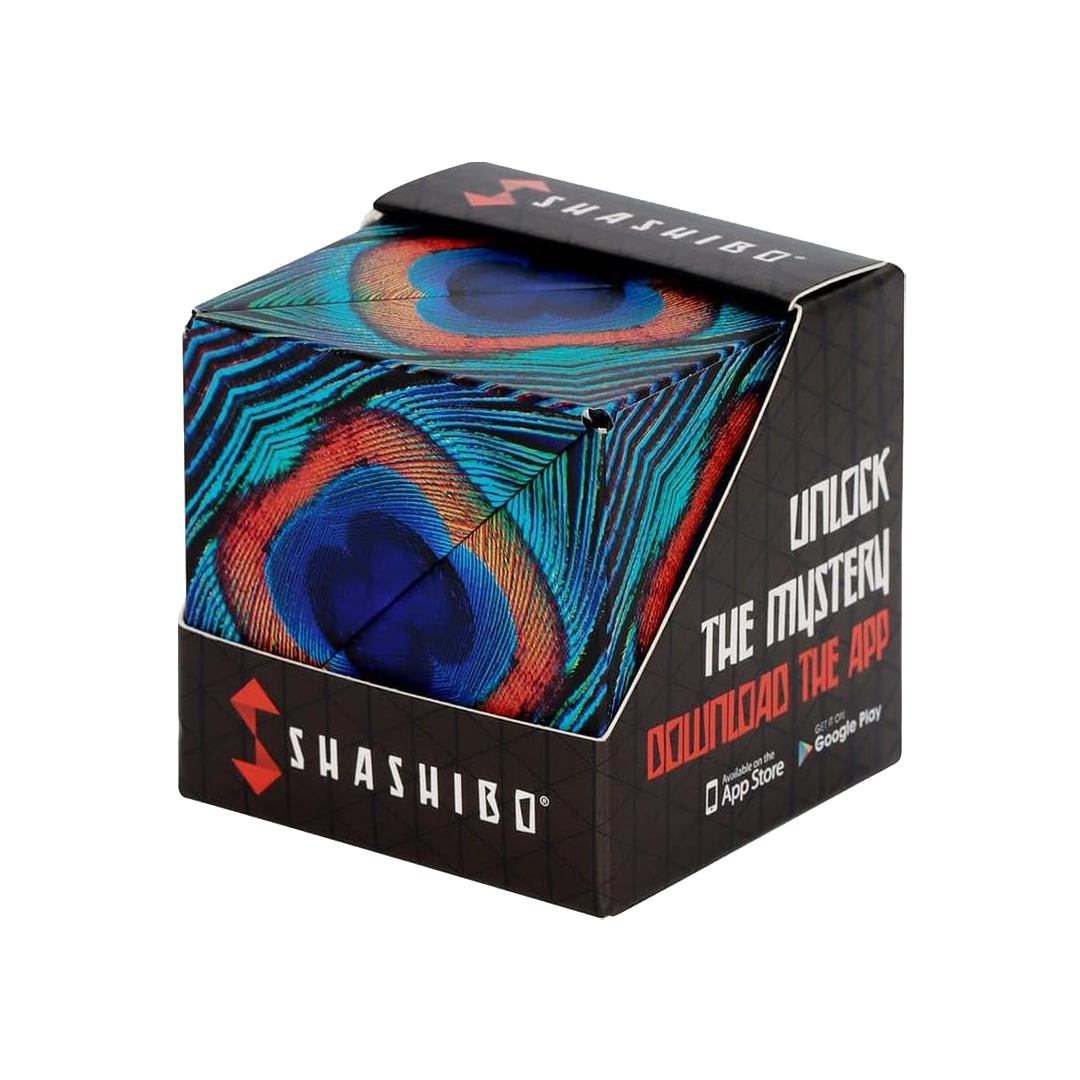
 Shashibo Shape-Shifting Magnetic Puzzle Box
36 rare earth magnets, 70+ shapes, zero right answer. It's meditative rather than goal-oriented. Sits on a desk, looks cool, and weirdly satisfying to manipulate. Not a puzzle you 'beat,' but a toy that rewards play. Spring 2026 edition just dropped with new designs.
- Fidget-friendly without being boring
- Beautiful artistic designs
- Durable construction
- Not a 'solve and win' experience
- No difficulty scale to work up to
- More of a toy than a puzzle
 9 photos
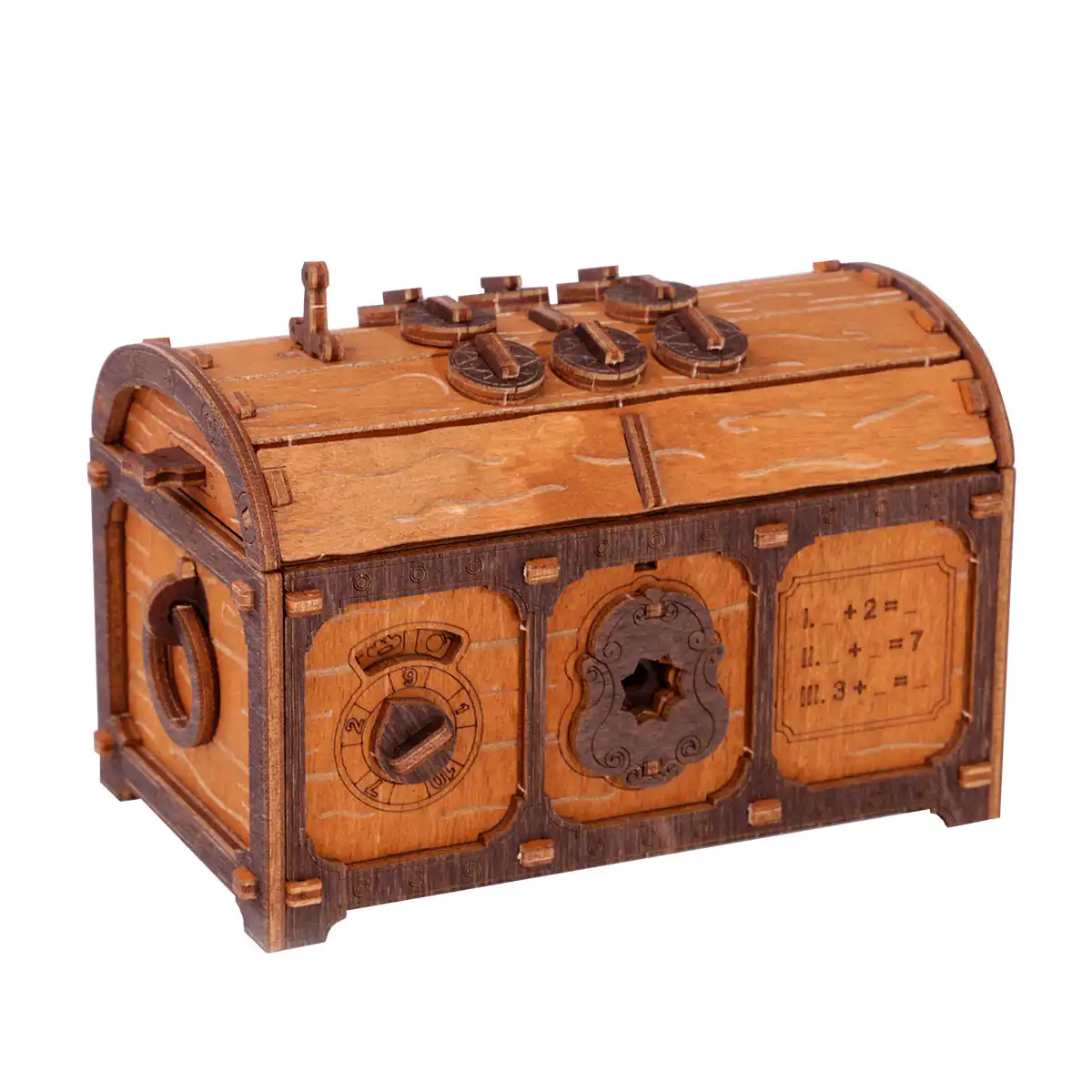
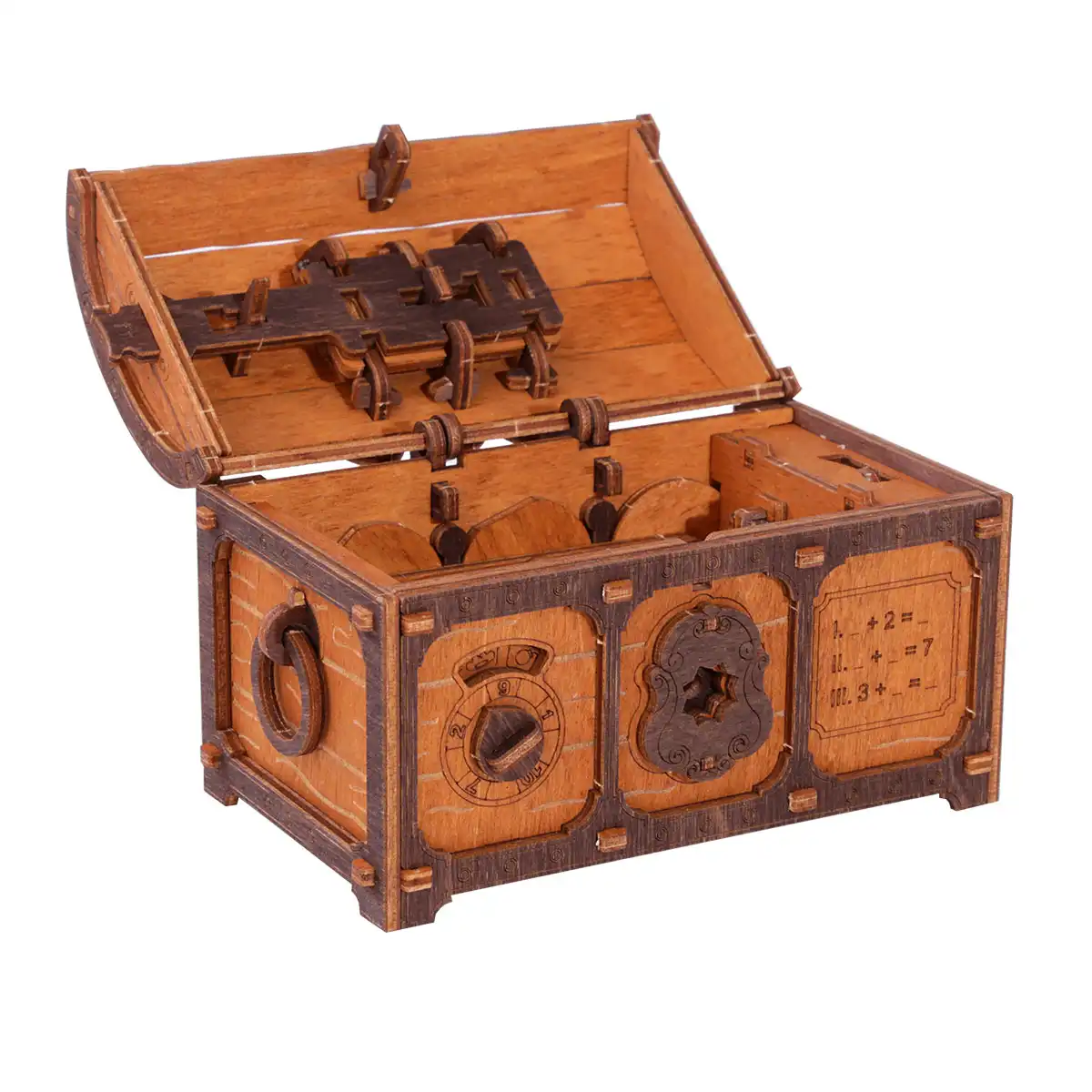
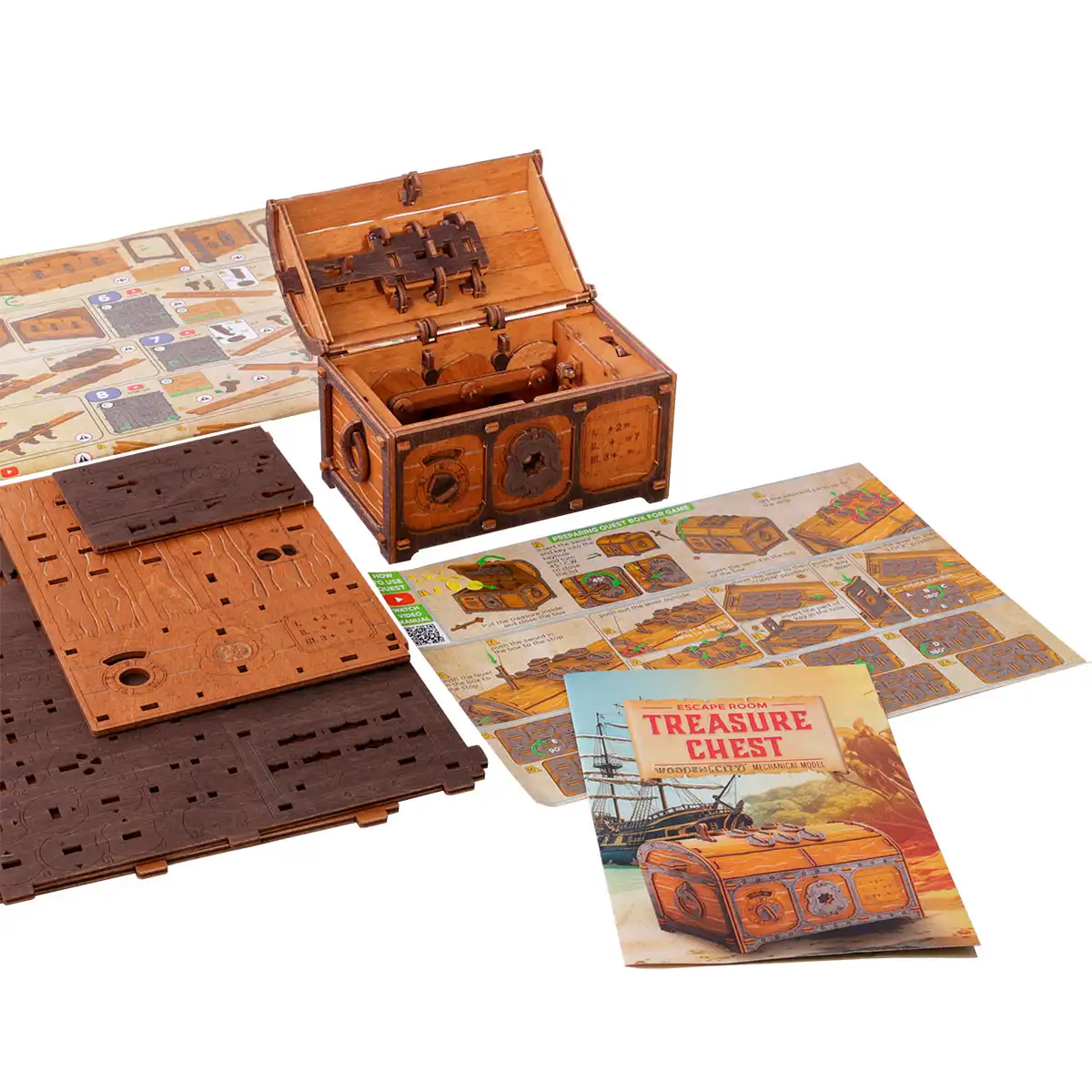
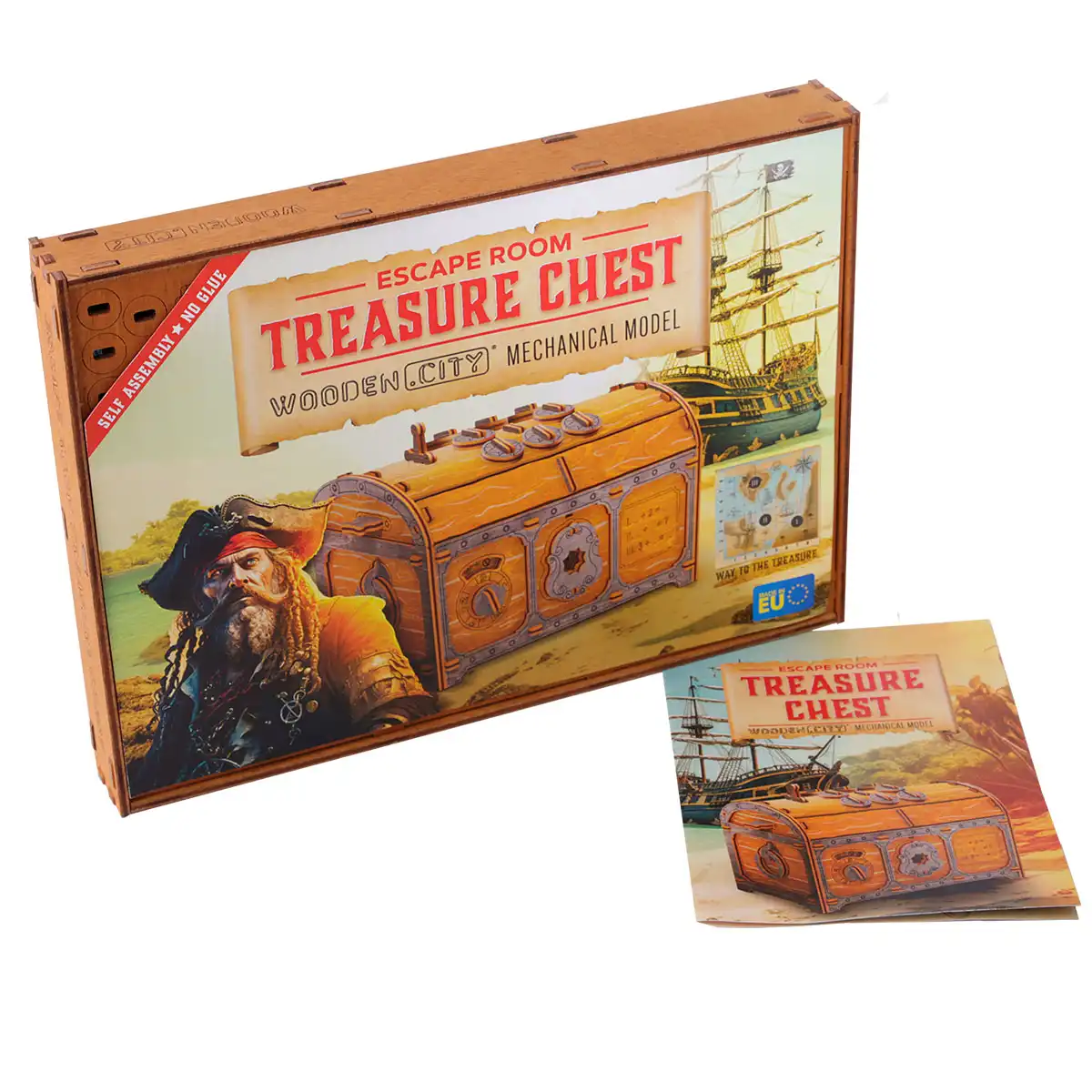
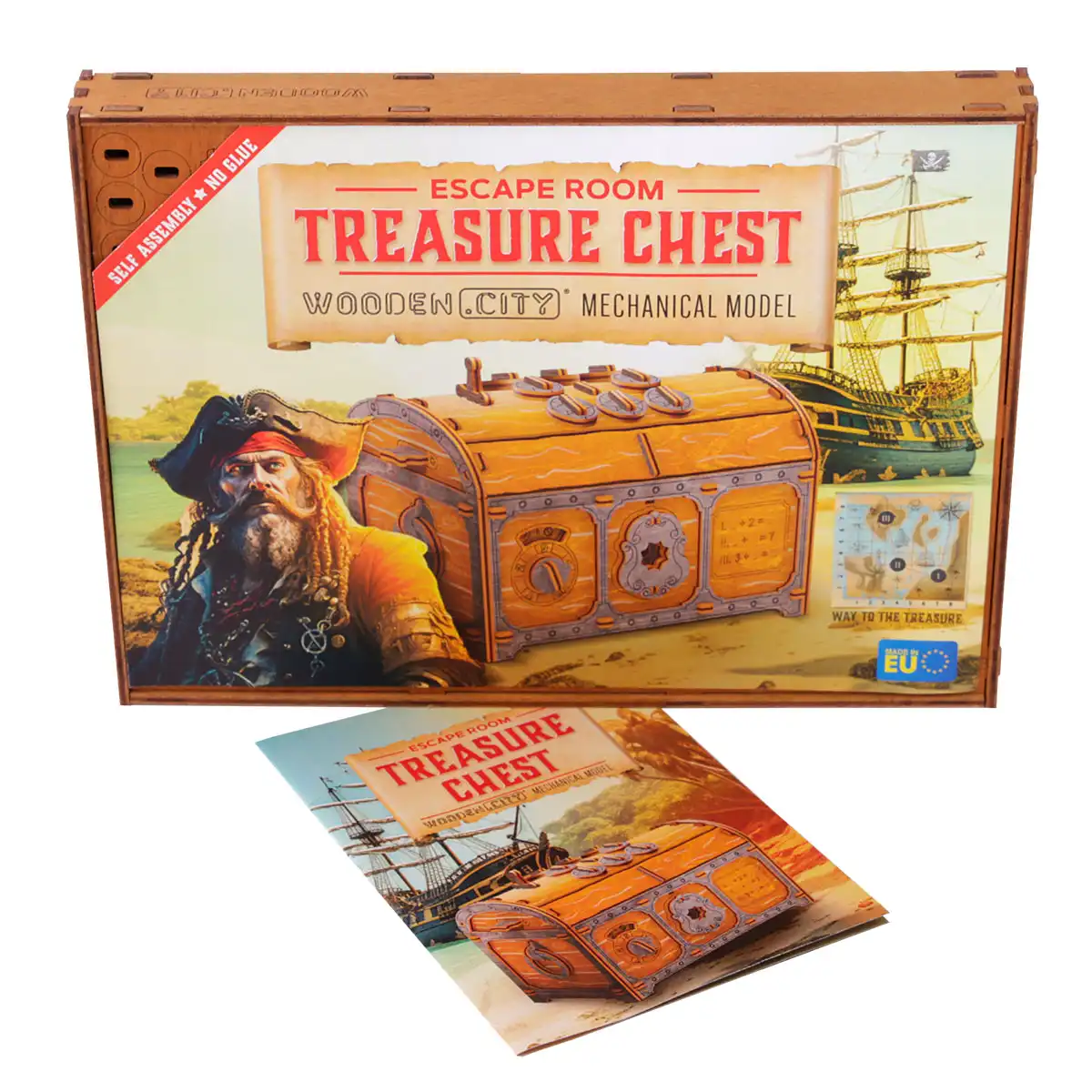
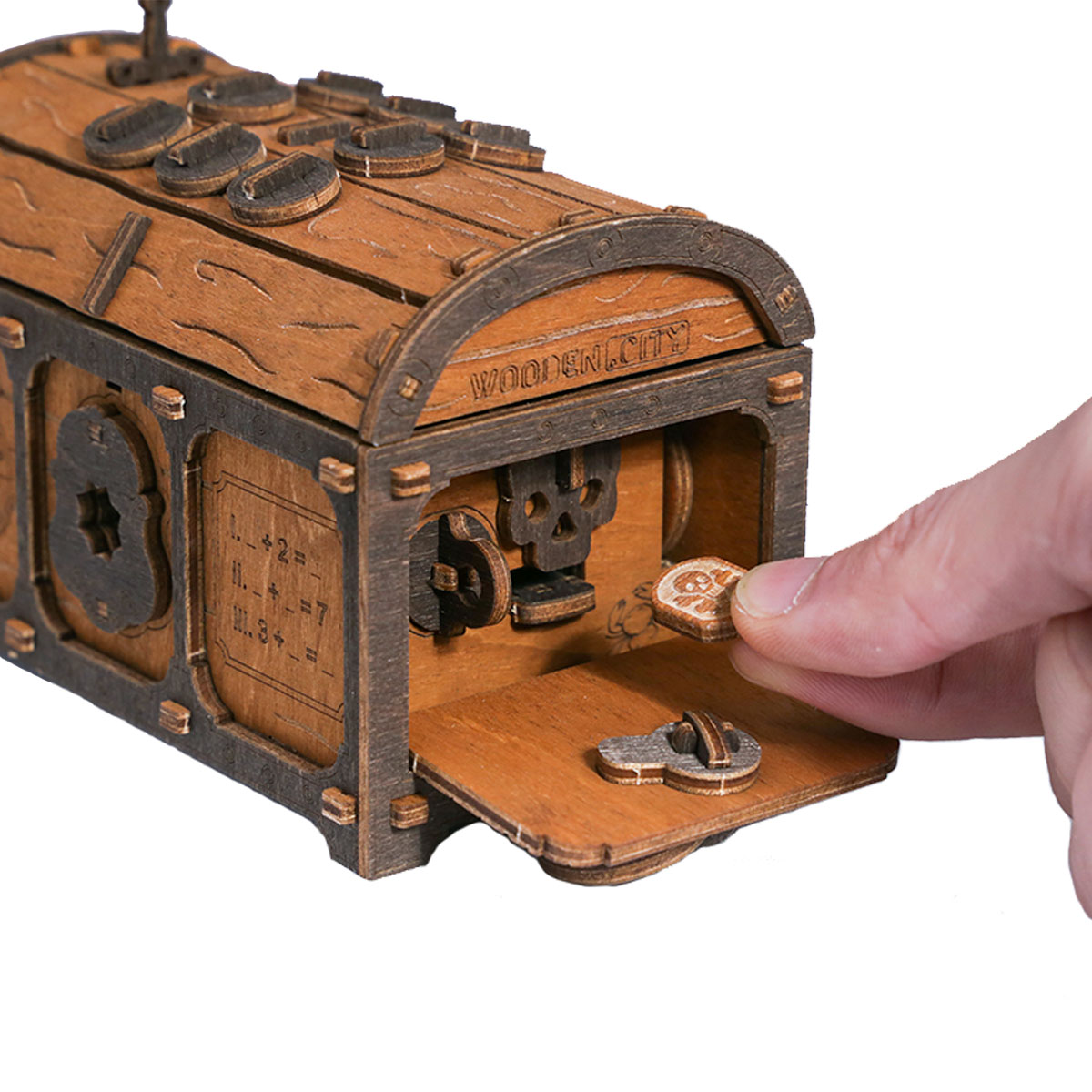
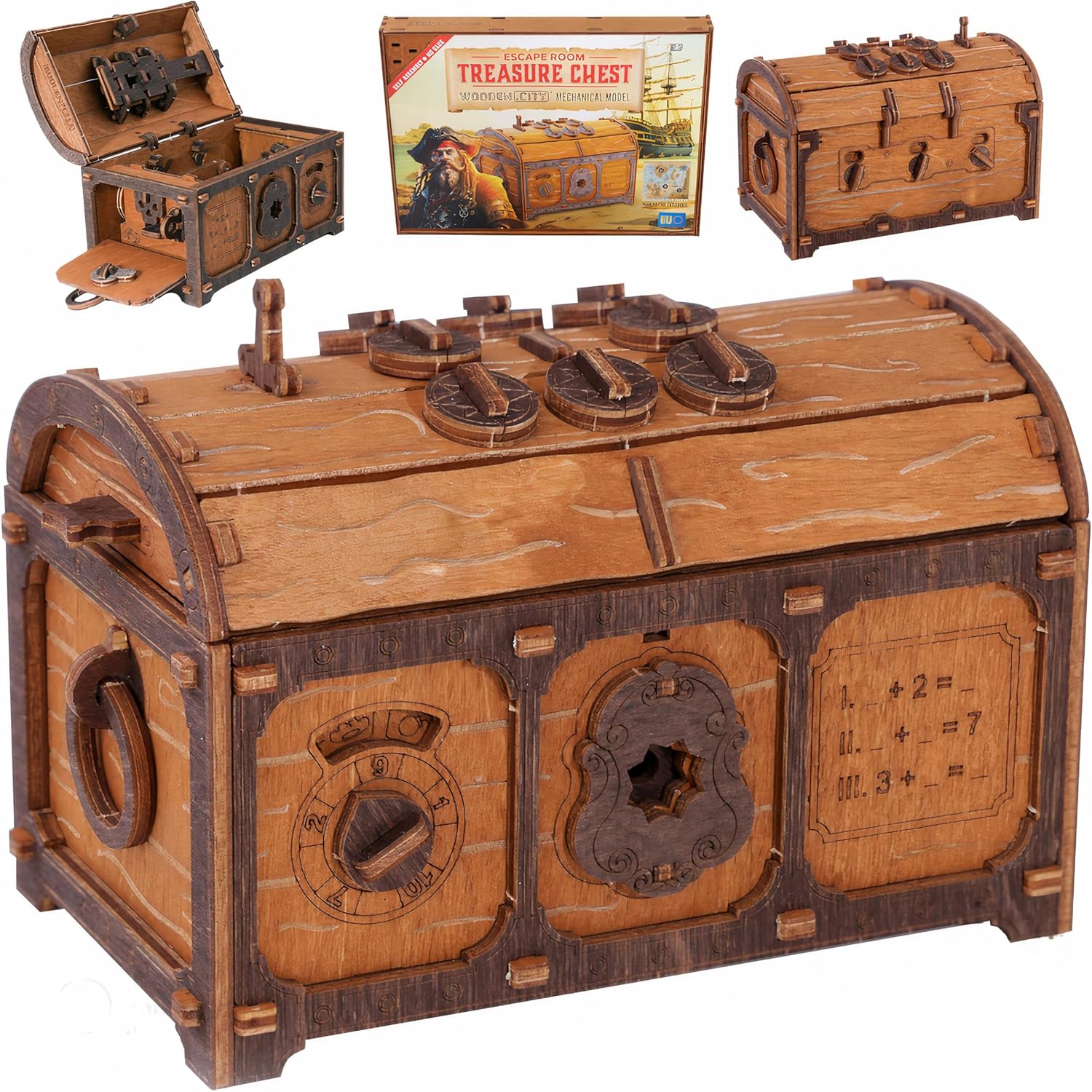
 Wooden.City Treasure Chest 3D Puzzle Box
Laser-cut birch plywood, 165 pieces, six riddles to unlock the hidden chamber. You literally assemble and solve it, so there's two layers of satisfaction. Resets cleanly. Made in Poland. Similar difficulty to Cluebox but with the added satisfaction of building it first. Great for hiding cash or jewelry as a surprise.
- Build + solve combination
- Resettable design
- Beautiful natural materials
- Assembly adds time (not for everyone)
- Birch wood can be delicate during build
- Longer commitment than pure-solve box






 8 photos
 Kubiya Games Puzzle Subscription (3-Month Gift)
Three-month gift lets them test the waters with handcrafted mechanical puzzles delivered monthly. Choose 'The Player' tier for beginners or 'The Explorer' for variety. It's the gift that keeps coming, without the obligation of 12 months. Easy to extend if they love it.
- Removes the 'what to buy' problem for three months
- Variety prevents plateau
- Handcrafted quality
- Ongoing commitment might feel obligatory
- Harder to 'reset'—puzzles are solved once
- Full 12-month sub is pricey unless you're sure
At a glance
| Product | Price | Difficulty | Type | Resettable | Best For |
|---|---|---|---|---|---|
| Cluebox Cambridge Labyrinth | $50 | Intermediate (60–90 min) | Wooden Escape Box | Yes | First-timers, groups |
| Tesla Box | $75 | Expert (5+ hours) | Electro-Mechanical | By manufacturer | Serious enthusiasts, collectors |
| Hanayama Level 3–4 Set | $35 | Intermediate-Hard | Metal Brain Teasers | No | Portable, shareable puzzles |
| Shashibo | $25 | N/A (play, not solve) | Magnetic Shape-Shifter | Endless variations | Fidgeters, desk-jockeys |
| Wooden.City Treasure Chest | $50 | Intermediate (60–90 min) | 3D Wooden Build-Solve | Yes | Build + solve combo, gift money |
| Kubiya Subscription (3 mo) | $90 (3 mo) | Varies by tier | Monthly Handcrafted | No | Puzzle fiends, variety seekers |
| Kagen Sound Honeycomb | $230 | Expert (hardest available) | Wooden Maze Box | No | Collectors, investment-grade |
Questions, answered
Are puzzle boxes actually worth the money, or am I wasting $50?
If your recipient enjoys problem-solving and can sit with a challenge for 60–90 minutes without Googling the answer, they're worth it. The real value is in replayability—a Cluebox gets passed around, and 10 people will solve it. Cost-per-solve drops fast. If your person opens a box and immediately asks for the answer, you picked the wrong gift, not the wrong product.
Which puzzle box is best for someone with zero experience?
Start with a Hanayama Level 2–3 metal brain teaser ($12–$15) or the Cluebox Cambridge Labyrinth ($50). Metal teasers are lower commitment and portable; Cluebox is a fuller experience. Both are fair—you figure them out without unfair tricks.
Can you actually reset the boxes, or is that marketing speak?
Wooden escape boxes (Cluebox, Wooden.City) genuinely reset. You solve it, open the chamber, close it back up, and shuffle the internal pieces slightly so the next solver doesn't remember. They reset cleanly 5–10 times before wear. Metal brain teasers don't reset—once you know the trick, you know it. Subscriptions send new puzzles, so replayability isn't the point.
Is the Tesla Box or Kagen Sound worth the price jump from a $50 Cluebox?
Only if your recipient is already a puzzle enthusiast and wants investment-grade quality or extreme difficulty. A $50 Cluebox is more 'fun gift' than 'grail purchase.' The Tesla Box and Kagen boxes are for people who have a puzzle collection and want to level up. If you're not sure they're that deep into puzzles, the Cluebox is the better choice.
What's the easiest puzzle box to solve if I want a quick win?
Shashibo (no 'solve,' just play), or a Hanayama Level 1 metal teaser (10–20 minutes). Avoid Levels 5–6 and anything marketed as 'expert' unless you like frustration. Wooden boxes are 60–90 min minimum, so they're not quick wins.
Do I have to buy puzzle boxes in person, or are direct Amazon product pages enough?
Amazon has solid selection. Search 'puzzle box gift,' 'resettable puzzle box,' 'metal puzzle box,' or 'escape room in a box.' Reviews matter more here than anywhere—a $40 box with 4-star reviews beats a $80 box with 3-star reviews. Check verify-purchase reviews specifically.
Keeper's verdict
Puzzle boxes are genuinely good gifts—but only for the right person. The sweet spot is $30–$75: a Cluebox, a Wooden.City box, or a curated metal brain teaser set. These are resettable (or shareable), fair to solve, and beautiful enough to live on a shelf. The expensive stuff (Tesla Box, Kagen Sound) is for people with a track record of finishing puzzles and an appetite for harder difficulty. Subscriptions are excellent if you're unsure and want to test the waters with a 3-month trial. Avoid blind-buying puzzle boxes for people who don't like being stuck or frustrated. But if you're shopping for someone who enjoys the process of solving—not just the answer—you can't miss. A good puzzle box is the rare gift that gets genuinely used, shared, and remembered.
Research ledger 9 sources · reviewed 2026-08-10
Specifications, rules, current product information, community experience, and contrary evidence were checked against the sources below. Commercial links are kept separate from editorial evidence.
- amazon.comamazon.com/dp/B09X4FYMM1?tag=puzzlewick-20
- puzzlepotato.compuzzlepotato.com/products/tesla-box
- kubiyagames.comkubiyagames.com/pages/subscription-puzzle-boxes
- amazon.comamazon.com/dp/B0DFWQ6N2K?tag=puzzlewick-20
- amazon.comamazon.com/dp/B0DCGDZYB7?tag=puzzlewick-20
- funinmotiontoys.comfuninmotiontoys.com/products/shashibo
- amazon.comamazon.com/dp/B07F5XQGJY?tag=puzzlewick-20
- puzzleboxworld.compuzzleboxworld.com/products/honeycomb-puzzle-box-most-difficult
- Community research index: r/mechanicalpuzzles discussions about Puzzle Box Gift Guide: Worth It? Difficulty & Resettablereddit.com/r/mechanicalpuzzles/search/?q=Puzzle%20Box%20Gift%20Guide%3A%20Worth%20It%3F%20Difficulty%20%26%20Resettable&restrict_sr=1&sort=top
If it didn't earn a shelf, it isn't here.

Keep exploring
The next smart rabbit holes.
❖ Topic PathMechanical Puzzles: compare the whole shelfThe right mechanical puzzle matches the solver's patience, not simply the maker's difficulty number. These guides translate...ReviewKarakuri Egg Puzzle Box by Akio Kamei: The Japanese Artisan Grail That Collectors Camp ForOne hour of pure mechanical poetry. A cherry-wood egg that whispers its secrets if you listen.Buying GuideSiebenstein-Spiele Wooden Puzzle Boxes: Difficulty Levels & Starter GuideFrom German laser-cut craft to puzzles that reward patience over brute force—a curator's roadmap for choosing your first Siebenstein box.