Masterclass
Flesh and Blood
A blunt, complete initiation into the deepest one-on-one card game on the table — what it is, what it costs, how a turn actually works, and the unwritten code that turns a game store into a home. By 2026, the door has never been cheaper to walk through.
Flesh and Blood (everyone says "FaB") is a 1-vs-1 hero-combat card game from Legend Story Studios where you pick a single hero and duel another player until someone's life hits zero. The defining mechanic is "pitching": every card is also a resource, so each one is a gut-check between attacking, blocking, or burning it for fuel — there's no mana type and no mulligan. In 2026 it's never been cheaper to start: the new ~$20 Silver Age preconstructed decks are tournament-legal out of the box, and you learn it in person at a weekly local-store Armory.

AI-assisted curator persona · researched & reviewed by founder Robert Pruitt, a 20-year enthusiast · our method
- The DojoWhite belt
- The MonasteryGreen belt
- The Mountain RetreatBrown belt
- The Grand HallRed belt
- The Campfire of MastersBlack belt
What Is Flesh and Blood — and Why 2026 Is the Year to Cross the Threshold

Grab a seat, initiate — I've got a spare deck right here, and you are not sitting out your first Armory. Everybody at this table started exactly where you're standing, and somebody handed them a deck too. Today that somebody is me, so pick a hero that looks like your kind of trouble and let's go.
Here's the honest pitch. Flesh and Blood — "FaB," never the full name unless you want to out yourself as fresh off the boat — is a head-to-head card game from Legend Story Studios, an Auckland studio led by former pro Magic player James White. You pick one hero, build a deck of attacks, defense reactions, and equipment around that hero's class (Warrior, Brute, Ninja, Guardian, Wizard, Runeblade, Ranger, and more), then duel another player until someone's life total hits zero. It's strictly 1-vs-1, and it's built for paper — there's no official digital client. The game was designed to be played, as the saying goes, "in the flesh and blood."
The soul of it is closer to a fighting game than to other card games. You don't pilot an archetype here — you become a hero. People say "I'm a Rhinar player" or "I'm a Dorinthea player" the way a Street Fighter main claims a character, because no two heroes play alike and your choice reads as an extension of you. So the first rule of the dojo: pick your hero, not your deck. Want to smash face? A Brute like Rhinar. Like disciplined sword combat? A Warrior like Dorinthea. Crave fast combo turns? A Ninja like Katsu.
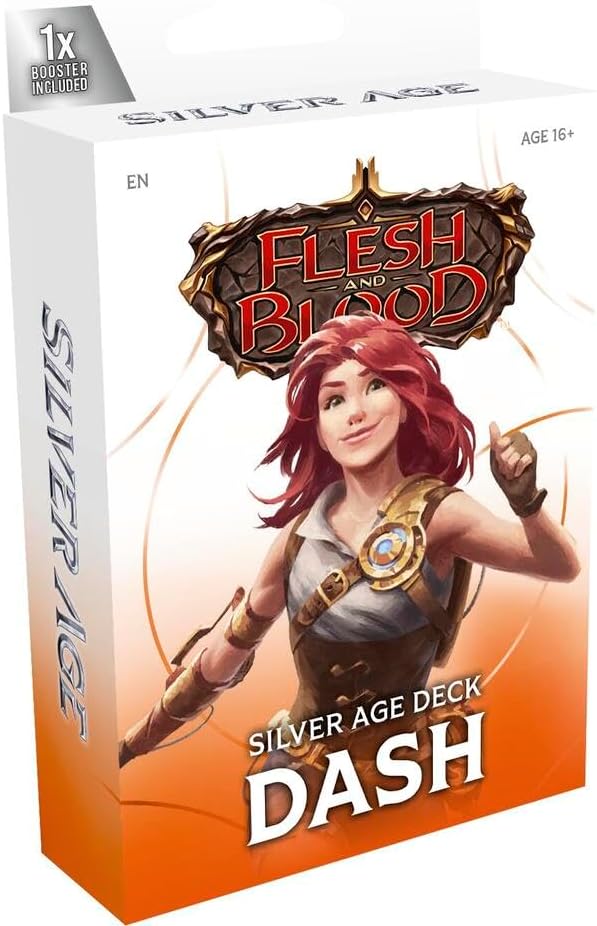
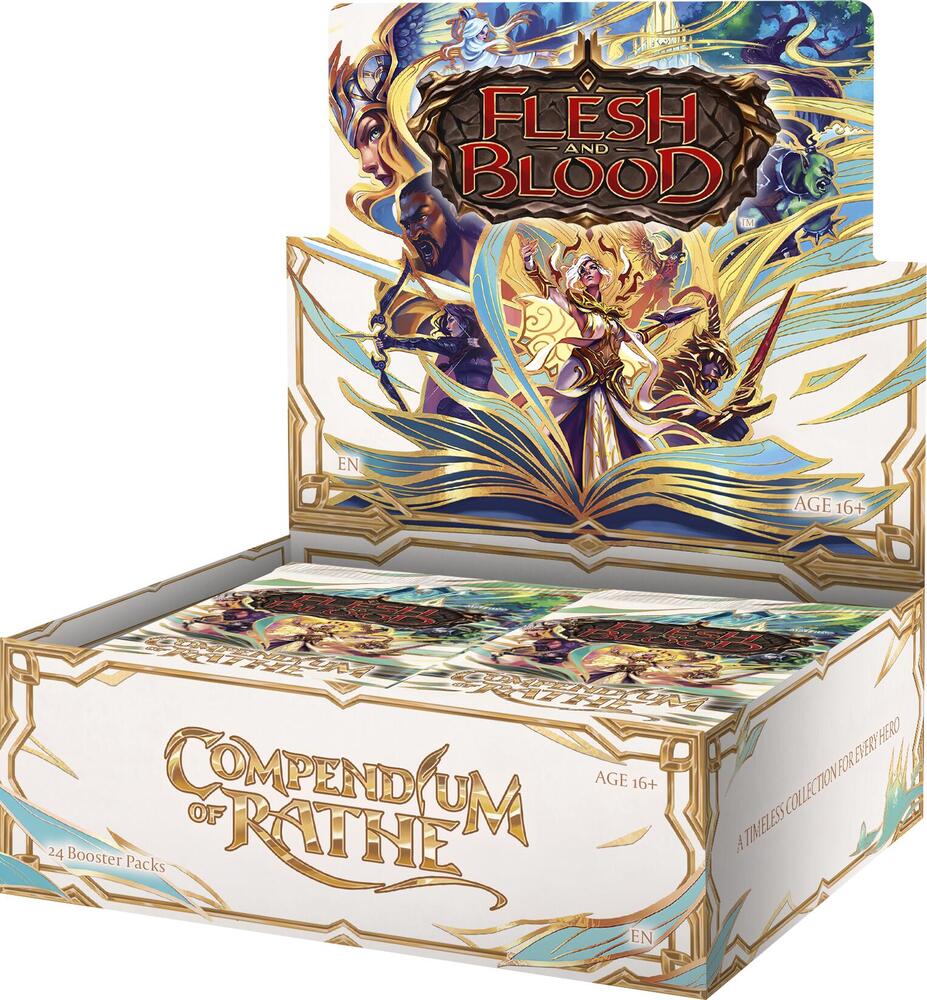
And 2026 is, flatly, the best moment in FaB history to walk in. Two things landed together. First, Silver Age — a deliberately affordable competitive format with ten ~$19.99 preconstructed decks (Kayo, Iyslander, Viserai, Dash, Bravo, Azalea, Dorinthea, Fai, Enigma, Arakni) that LSS markets as "your $20 ticket to the $2,000,000 World Tour." Tournament-legal out of the box. Second, the premium Compendium of Rathe set (London premiere Feb 6–8, store release ~Feb 13), which reprints iconic staples and eases the long-running cost of the deeper format. The years-old complaint — "top decks cost $300–400" — finally has a $20 answer.
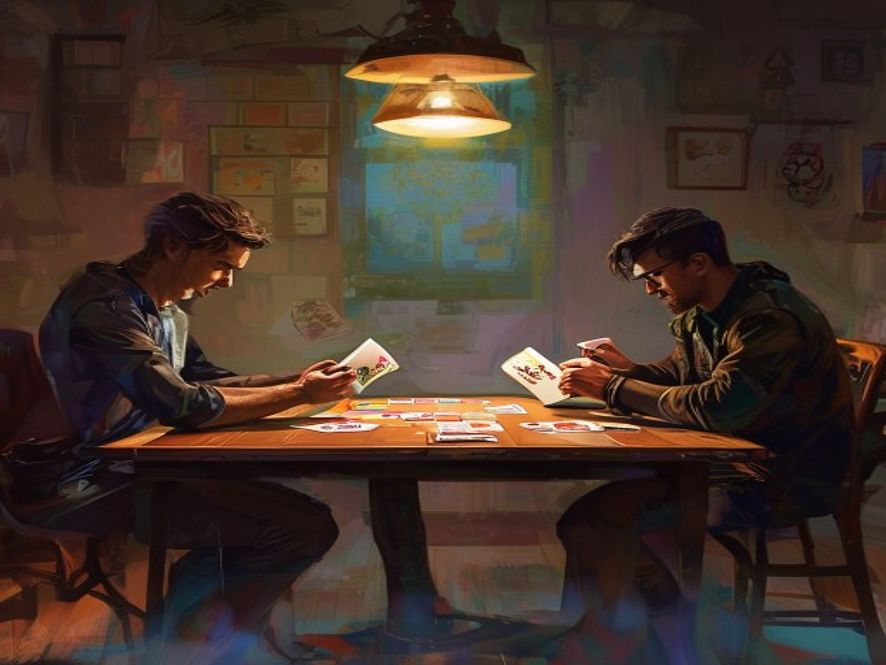
You don't pilot an archetype in FaB. You become a hero — and your hero choice reads as an extension of you.
- Watch the official Ira tutorial video on fabtcg.com and skim the Beginner's Guide before you spend a cent — seeing one game played makes the combat-chain timing click.
- Pick a hero by playstyle, not by tier list: smash (Brute/Rhinar), disciplined blade (Warrior/Dorinthea), or combo flurry (Ninja/Katsu).
- Choose a format to start in — Blitz (fast, cheap, exactly 40 cards) or the new Silver Age (~$20, tournament-legal) are the newcomer on-ramps.
- Buy ONE ready-to-play preconstructed deck — a Silver Age precon, a Heavy Hitters Blitz Deck, or a two-player Classic Battles box.
- Use the official Store and Event Locator to find your nearest game store and put a weekly Armory on your calendar.
- Read your chosen hero's short lore before you commit — you're choosing who you carry into Rathe, not just a stat line.
Speak the language before you sit down
FaB — what everyone calls the game; say the full name and you've outed yourself. Pitch — sliding a card face-up to pay for another card's cost (1, 2, or 3 resources by its color stripe). Armory — the weekly casual-but-real tournament at your local store; "see you at Armory" is the heartbeat of the whole scene. Go again — the most-loved two words in the game; a keyword that hands you another action so you can keep swinging.
The first courtesy of the table
Welcome every kind of player — the grinder, the collector, the lore nerd, the casual who'll never enter a tournament. None of them owes you a "real" game, and all of them keep the local scene alive. If you're the strong regular, keep a seat open and step out of a round to teach the new face who just walked in, rather than chasing one more win.
Don't chase the tier list on day one
The strongest deck you can't pilot loses to the fair deck you understand. Regulars on r/FleshandBloodTCG say it plainly: "you just need a deck, a hero you enjoy, and a willingness to learn." A hero you love beats a "best" hero you don't.
It takes two — always
FaB is built as a 1-vs-1 duel; you always need an opponent. That's exactly why a two-player box or a second deck is a smart first buy, and why the in-person Armory scene is so central. You're not buying a game you play alone — you're buying a reason to show up.
Building, Pitching, and Sleeving: The Meditative Craft of Your First Deck

Welcome to the workshop, initiate. Forget the "best deck" for a moment — in FaB you build a character, not a netlist, so tell me how you like to fight and we'll build your pitch ratios around it. See those colored stripes? One pip, two pip, three pip — that's the whole secret, and learning to feel it is the craft.
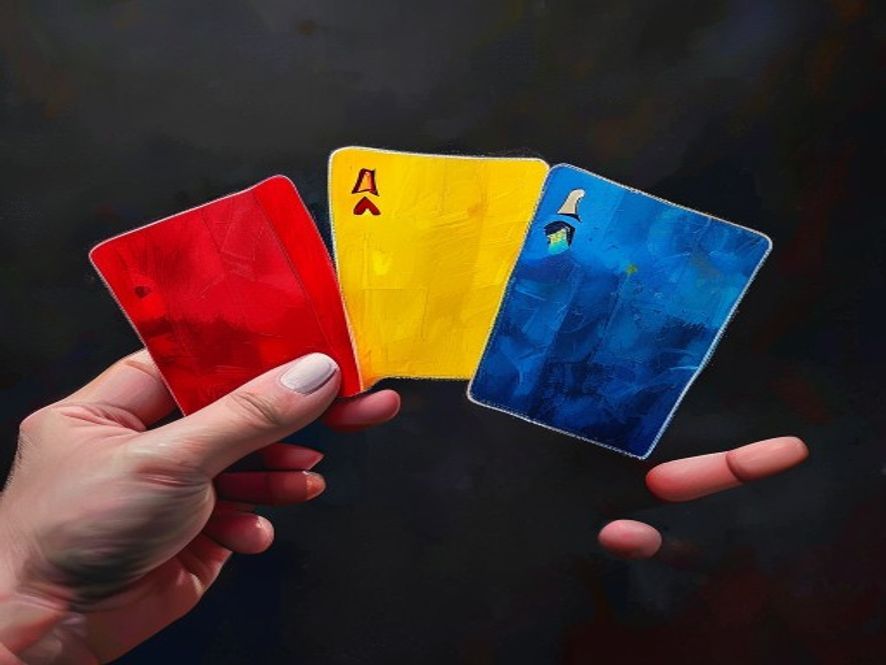
FaB craft is two devotions that usually live in the same person. The first is deckbuilding as character-honing. Because every card carries a pitch value — 1 (red), 2 (yellow), or 3 (blue) resources by its color stripe — tuning a deck is less about hunting a "best list" and more about your pitch ratios, your tempo curve, and the hidden art of pitch stacking: deliberately ordering the cards you discard so they loop back in a useful sequence on the second cycle, when your deck comes back around. A well-built FaB deck is a fighting-game character sheet — it expresses how you solve problems under pressure. Someone maining aggressive Rhinar and someone maining high-pressure Iyslander aren't just playing different decks; they're telling you something true about themselves.
The second devotion is the collector's craft, and it owns people. There's a word for it: the crinkle — the sound and the temptation of cracking sealed first-edition product. Cold foils ("CF") are the prestige treatment, first-edition only and never reprinted as cold foil, so the whole obsession runs on scarcity and beauty. Veterans argue forever about EV — the expected dollar return of opening a box — and whether to crack or hold. Nobody will shame you for chasing pretty cardboard to display rather than to win, and nobody will shame the grinder who never opens a pack. The craft is the love letter.
Here's the gift, though: in 2026 you don't have to build anything yet. The lowest acceptable "ready" bar is simply a preconstructed deck and a willingness to learn. A Silver Age precon, a Heavy Hitters Blitz Deck, or a two-player Classic Battles box puts a complete, legal hero in your hands — gear included. Sleeve it in standard 63×88mm matte sleeves so it shuffles and pitches smooth, and you're done. That's ready. Building from singles can wait until a hero has its hooks in you.


A well-built FaB deck is a fighting-game character sheet — it expresses how you solve problems under pressure.
- Start with a preconstructed deck — don't build from singles on night one. Everything you need to play is already in the box.
- Sleeve your deck in standard matte sleeves (e.g. Dragon Shield, 100 ct covers a full deck) so pitching and shuffling stay smooth.
- Learn your hero's three or four key cards and win condition before you tinker — know what the deck wants to do.
- Practice pitch order on purpose: before you pitch, ask "which card do I least need to draw back soon?"
- Grab a deck box sized for a sleeved 60–80 card deck plus weapon, equipment, and sideboard — FaB carries more than just the main deck.
- Hold a cold foil up to the light once, feel "the crinkle" — then maybe keep the box sealed. Future-you will thank you.
The craftsman's vocabulary
Pitch stacking — ordering the cards you discard so they return in a useful sequence on the second cycle; the move that marks a thinking player. The crinkle — the sound and temptation of cracking sealed first-edition product. Cold foil / CF — the first-edition-only prestige finish, never reprinted; the crown jewel of any collection. EV — expected value, the average return of opening a sealed box, and an eternal community argument.
Cracking your first cold foil
Feeling "the crinkle," opening first-edition product, and pulling a real chase cold foil is the collector's baptism. The night you finally understand the obsession — the moment you stop rolling your eyes at people who buy cards to hold rather than to win, because now you're one of them.
The starter kit beyond the deck
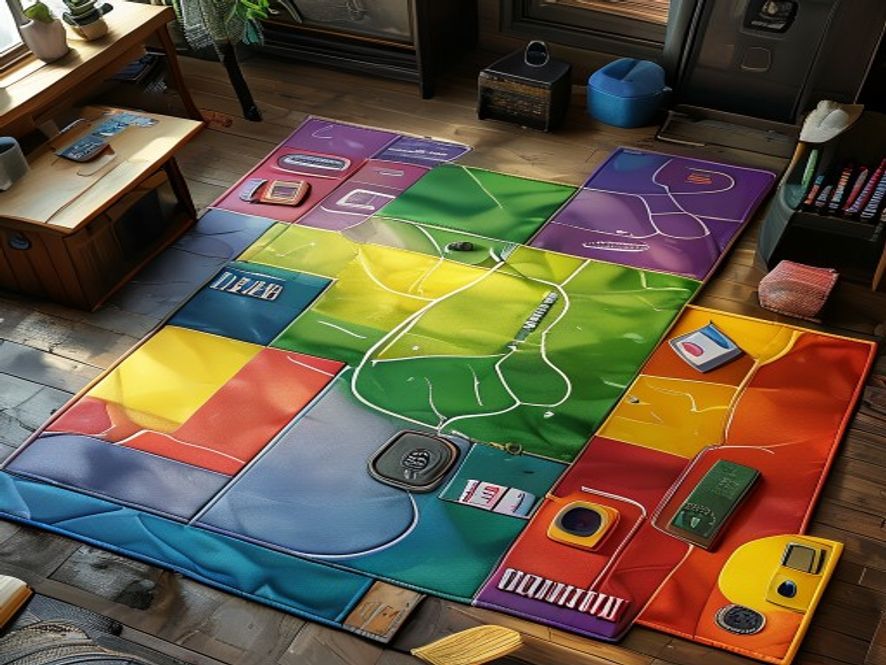
Standard 63×88mm matte sleeves (one 100-ct pack covers a Classic Constructed deck), a deck box sized for 60–80 sleeved cards plus gear, a playmat with clear zones, a reliable life counter (dial, dice, or app), and a few tokens for class resources. Double-sleeve only if you're protecting expensive foils long-term.
Read the 'rate' as you build
One card is roughly "worth 3" — 3 damage if it attacks, ~3 block if it defends, or resources if it pitches. The Ultimate Guard guides frame this as the core conceptual leap: cards that beat that rate are your power plays, and the ones that underperform it become your natural pitch fodder. Build knowing which is which.
How a Turn Actually Works: The Combat Chain, the Win Condition, and Playing Honestly

Listen close, initiate, because one rule will save your life: blocking everything feels safe and it loses you 100% of your games. Think of every attack as me offering you a handshake — you decide whether to take the hit or block it, and that choice IS the game. Don't memorize cards; learn the rhythm — pitch, play, go again — and the rest is just vocabulary.
Strip away the lore and here's the machine. Your hero card sets your starting life, your hand size (Intellect, usually 4), and which cards you may run. Each turn you draw back up to four, and combat resolves as a chain: the attacker declares an attack; the defender may block with cards from hand or with equipment; then both players get reaction windows — attack reactions and defense reactions — before the attack resolves and deals damage. You win by reducing the opponent's life to zero. That's it. Margo wants you to call it aloud your first games: "attack declared… blocks?… reactions?… damage." Internalize the sequence before you speed up.
The engine underneath is pitch. To pay a card's cost, you pitch cards from hand for resources, and pitched cards go to the bottom of your deck — so pitch order is a genuine decision (this is where pitch stacking lives). Critically: there is no mana type and no mulligan. You play the four cards you draw. An awkward hand isn't bad luck — it's a puzzle, and that framing is the right emotional tone for the whole game. "There's no mana screw in Rathe."
The etiquette is baked into the mechanics. "Go again" is your tempo currency — a normal turn gives one action point, but go-again cards grant another, letting you chain swings. The Arsenal is your one face-down "set aside for later" slot — store a card to play next turn, but you can't pitch from it and can only block from it with a defense reaction. And the deepest lesson, the one veterans nod at: stop over-blocking. "Play 100% defense and you lose 100% of the time." But also: "blocking for two is still blocking" — sometimes denying the opponent value with an inefficient block is exactly right. Knowing which is which is the climb. Call your steps, give your opponent their windows, and don't slow-roll to burn the clock — that's not just bad strategy, it's bad manners.

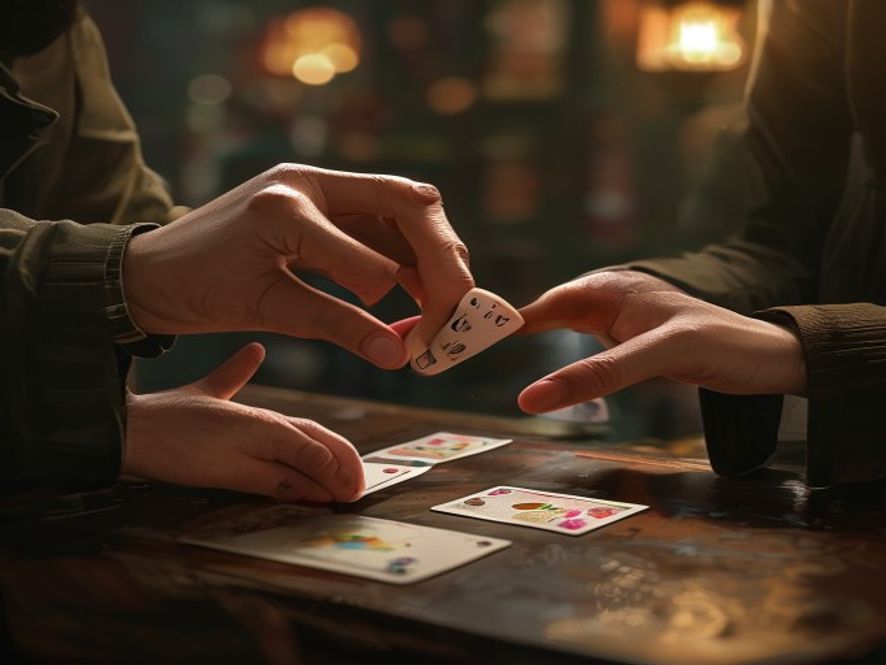
An awkward hand isn't bad luck — it's a puzzle. There's no mana screw in Rathe.
- Slow your first games down: literally say "attack declared, blocks, reactions, damage" out loud until the chain is automatic.
- Don't all-out attack on turn one — the opponent has a full fresh hand to block, so you mostly trade cards for nothing.
- Read each 4-card hand for its ceiling first: "what's the most I can do if I use every card?" before choosing attack-turn or block-and-pitch.
- Let some damage through to keep your hand for a bigger swing — over-blocking bleeds your offense and rarely fatigues anyone out.
- Use the Arsenal on purpose: stash a card that combos with next turn's draw, never a dead block-only card.
- Leave reaction windows up — don't dump your whole hand and forget the opponent can react after you declare.
The combat vocabulary
Go again — a keyword granting another action point so you keep swinging; the rhythm you're chasing. Arsenal — your one face-down hold-for-later slot; "what's in your arsenal?" is half a mind game. Dominate — a keyword that stops the defender blocking with more than one card; calling "it's got dominate" before a swing is a small flex. Blocking for two — throwing cards to soak damage; even an inefficient block can be the right play.
Announce your steps
Call your attacks, let reactions resolve, and give your opponent the window to block or react before you barrel ahead. Rushing the chain to pressure someone is sloppy tempo and plain bad manners. Don't slow-roll or stall to burn the clock either — FaB is a game of initiative and respect. You take your turn with purpose, then you let them take theirs.
The night you stopped over-blocking
Every player begins by blocking everything and losing slowly. The moment you let damage through to keep your hand for a bigger swing — the moment defense stops being a panic reflex and becomes a choice — is when FaB clicks. Describe that night to a veteran and watch them nod. You crossed the same line they did.
Make them block inefficiently
Awkward attack values (a 4, a 7) force the opponent to over-spend cards to stop you — and making them burn two cards to block one of yours is value, even when no damage lands. Don't assume "block everything" wins fatigue games; breaking a forced-block cycle takes patience and landing targeted damage when they're weak.
Hanging With the Pros: Sequencing, the Meta, and the Line You Never Cross

Alright initiate, you've earned the Hall, so I'll be blunt: we're not trying to stomp you — a close game decided by one block is the best night either of us can have. Whatever you're chasing — grinding, collecting, just the lore — there's a chair for it, and nobody owes anybody a "serious" game. But when you sit down to compete for real, win or lose you shake on it and you mean it. That's the only price of admission here.
The edge in FaB isn't a secret tech card — it's sequencing. The coaching crowd (Card Advantage, Advantage University) treats this as a skill game where reps and matchup knowledge beat netdecking. A few pro habits to start carrying. Read your hand for its ceiling first — what's the most damage if I use every card? — then decide attack-turn vs. block-and-pitch. Think in rate: a card is on-rate at ~3 points; overperformers are power plays, underperformers are pitch fodder. Lead with go-again so your action points keep flowing instead of stranding half your hand. And weigh weapon attacks for hidden card advantage — attacking with your weapon doesn't burn cards from your deck, which compounds as games run long.
Then there's the meta and the long money. FaB runs Living Legend: heroes that win enough at large events accrue points and, past a threshold (around 1,000), retire from Classic Constructed to keep the format fresh. "Did your guy get LL'd?" is said with genuine grief — but it's strategic, too. Check the Living Legend list before you sink money into a hero about to graduate. Progression runs from weekly Armory to Skirmishes and Battle Hardened, then Callings and World Tour-qualifying events; a top finish there earns a Pro Tour Invite (PTI) — the first real rung on the ladder.
Now the bright line. Every competitive game grows a "win-at-all-costs jerk" archetype, and FaB's code draws the line clearly: you do not rush an opponent through the combat chain to fluster them, you do not slow-roll or stall to burn the clock, and you do not bury a beginner in jargon and combos to feel big. Strict no-take-backs rigor is for tournaments — not for someone's first night. The disrespect, the clock-abuse, the chair-hogging — that's the thing you never become to win. Win and lose at the table, not in your face. A close game where one block decided it is a gift; thank your opponent and mean it.
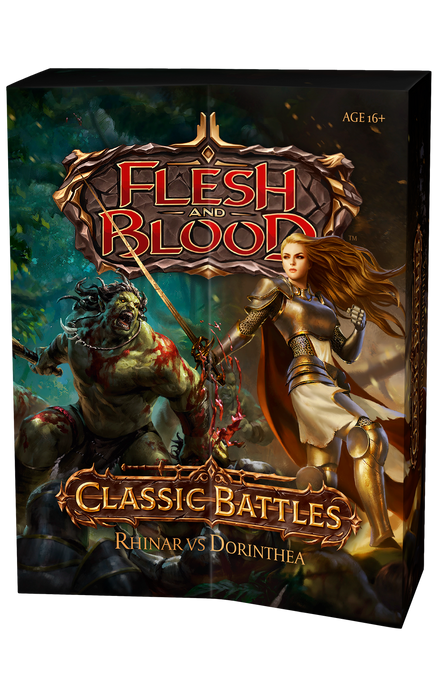


The strongest deck you can't pilot loses to the fair deck you understand — and the win you took by being a jerk wasn't worth keeping.
- Move into a real format deck (Armory Deck, Classic Constructed, or Silver Age) and learn to sideboard against your local meta.
- Practice on-turn vs. off-turn planning: sometimes play a weak turn and stash a card to set up a bigger 5-card swing next turn.
- Lead with your go-again cards to keep action points flowing — never strand the rest of your hand behind them.
- Track the broader metagame and tier shifts, not just your own deck, once you're entering Skirmishes and Battle Hardened.
- Check the Living Legend list before investing heavily in a hero — don't buy in on someone about to retire.
- Let the opposing hero shape your block-vs-take choices: race or disrupt combo decks, value defense and durable equipment against aggro.
The competitor's slang
Living Legend / LL'd — a hero that hit ~1,000 points and got retired from Classic Constructed; "did your guy get LL'd?" carries real grief. Second cycle — the late-game point where your deck loops back and your earlier pitch order suddenly matters; "plan for the second cycle" means thinking five turns ahead. PTI — a Pro Tour Invite, earned by topping a Calling-scale event. EV — still arguing about it at the top tables, too.
The line you never cross
The win-at-all-costs archetype exists in every game; here it's the player who rushes you through the chain, stalls to drain the clock, and buries a beginner in combos to feel large. Don't be him. No-take-backs is for tournaments, not someone's first night — let an obviously uninformed misplay slide in a casual game. You win and lose at the table, not in someone's face.
Sequencing is the whole edge
Plan on-turn vs. off-turn: intentionally play a quiet turn, stash in arsenal, and set up a bigger swing next turn. Lead with go-again to keep action points alive. Use awkward attack values to force inefficient blocks. And remember weapon attacks don't consume deck cards — hidden card advantage that wins long games. Reps make all of this automatic; theory alone won't.
Respect the matchup, not the tier list
Against combo or lockout heroes you race or disrupt; against aggressive heroes you value defense reactions and equipment durability. Let the opposing hero shape your block-vs-take decisions. The fair deck you understand will beat the "S-tier" deck you can't pilot — pick by mastery, not by ranking.
The Unwritten Code, the Lore of Rathe, and the Table That Saved You a Seat

Come sit by the fire, initiate — you're one of us now. Get the store's Discord before you leave, because that's where the loaner offers and the lifts to events and half the friendships actually happen. Come back next week, and the week after; the whole thing is built on showing up to Armory. Do it three times and you'll have people for life.
Ask anyone what they love about FaB and they won't lead with a combo — they'll lead with the room. Because the game was built to be played in person, the community formed around physical tables, and that physicality breeds a rare intimacy. How someone blocks, what they keep in arsenal, when they take the hit instead of defending — it quietly reveals how they think and who they are. Couples learn how their partner solves problems over two small cups of sake at the kitchen table. Friends understand each other more deeply through their heroes. And it's a genuine refuge — members describe FaB spaces as some of the only places certain friends, including trans players, get seen as they truly are and called by their proper names.
The everyday culture is aggressively generous. Regulars donate playmats so every newcomer gets one and feels like they belong — like a club patch. Veterans keep loaner decks and sort bulk into free starter piles. People lend strangers hundreds of dollars of cardboard on a handshake, and it always comes back, because the whole thing runs on trust. As the community puts it: FaB is less a hobby you join than a table that's been saving you a seat.
And the lore is the soul under it. This is the world of Rathe — Solana's Light against the Shadow of iArathael, the floating Demonastery of heretics and free-thinkers, tragic heroes like Levia who bargained with darkness to survive. A fanbase that's equal parts hardcore competitor, devout lore-reader, and crinkle-cursed collector, all bonded by the irony-tinged reverence of people who know they've found the deepest game on the table and can't shut up about it. The rites mark your road — your first Armory, falling for your hero, the night you stopped over-blocking, your first cold foil, your hero one day going Living Legend. But the real graduation is the last one: teaching someone else to play. The day you hand out the loaner and keep the seat open, you've stopped being welcomed and started welcoming. Initiation complete. Go again.



FaB is less a hobby you join than a table that's been saving you a seat.
- Join your local store's Discord before you leave your first Armory — that's where the real community lives.
- Show up to Armory three weeks running; consistency is how you go from stranger to regular.
- Keep a simpler loaner deck on you so you can teach a newcomer instead of crushing them.
- Read the lore of Rathe — the Light/Shadow war, the Demonastery, your hero's story — to feel the soul under the cards.
- When you host or run a night, donate or keep a spare playmat and sort bulk into a free starter pile.
- The day you teach your first newcomer to play, you've graduated — keep the seat open for the next one.
The unwritten code of the table
Keep a simpler second deck to teach with, not crush with. Offer a loaner to anyone who shows up without a deck — the trust always comes back. Announce your steps and give reaction windows. Don't slow-roll or stall. Welcome the grinder, the collector, the lore nerd, and the casual equally. And if you're the strong regular, step out of a round to teach the new face rather than chasing one more win.
Teaching someone else to play
The community's real graduation. Becoming the person who hands out the loaner deck and keeps the seat open is when you stop being welcomed and start welcoming. Every other rite — first Armory, picking your hero, your first cold foil — leads here. The table saved you a seat; now you save one for the next initiate.
The soul of Rathe
FaB was built on a defiant idea — a tabletop game meant for the table, played "in the flesh and blood," no digital client, a real opponent breathing across from you. The lore is the war of Light and Shadow: Solana against iArathael, the floating Demonastery of heretics between them, tragic heroes like Levia who bargained with darkness. When your hero goes Living Legend, it means you mained someone who defined an era — bittersweet, and a badge of honor.
Hosting a night that grows on people
Pre-build and pre-sleeve two contrasting teaching decks so a newcomer plays immediately. Narrate your decisions aloud and slow the chain down on purpose. Keep spare sleeves, life counters, and tokens so a guest is never blocked by missing gear. Frame the no-mulligan rule positively — an awkward hand is a puzzle, not bad luck. Curate fair, non-combo teaching matchups first; save lockout decks for later.
Pitch a fruit board
Tournament-smart fuel the scene actually recommends: almonds, mixed nuts, granola bars, water or electrolytes to stay sharp over a long event. Skip greasy convention food — grease is the enemy of cards. For flavor, "pitch" a fruit board: red (apple/strawberry), yellow (banana/pineapple), blue (blueberry) to nod to the 1/2/3 pitch colors. Single-bite, low-mess finger food keeps hands clean for shuffling.
The Armory — what to buy first
Everything you need to begin, ranked. Honest picks; affiliate links support the cabinet.
 1
1 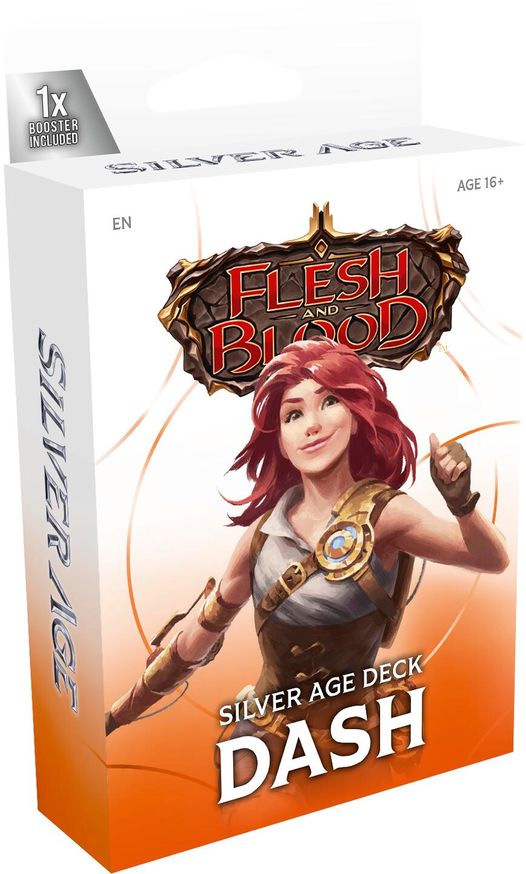
Legend Story Studios · The single best 2026 entry point — tournament-legal out of the box
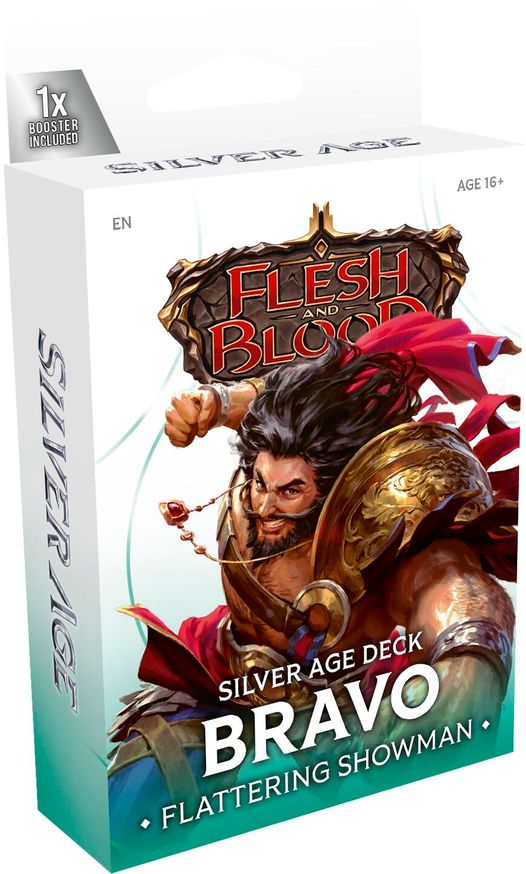
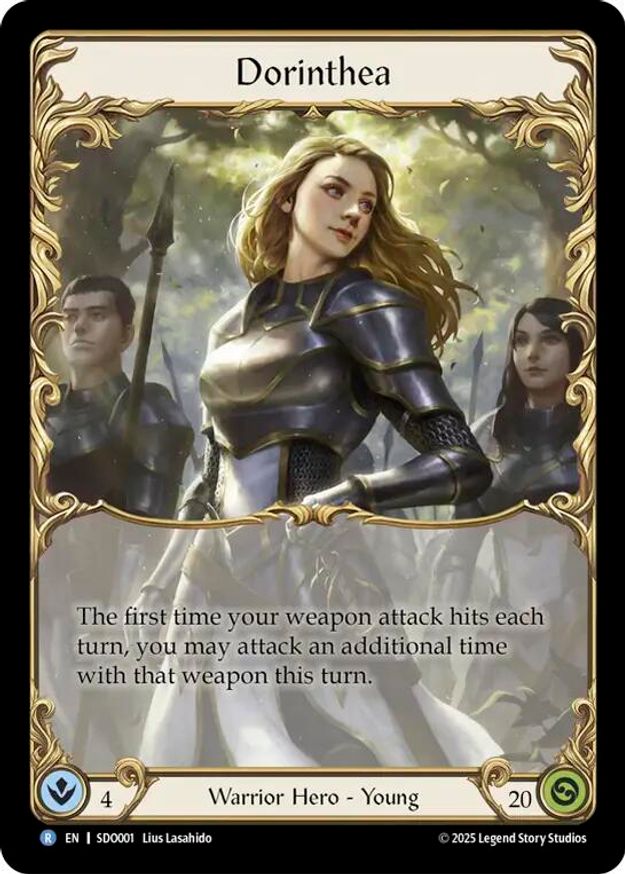
Silver Age Preconstructed Deck (Bravo, Dorinthea, or Dash)
This is the headline. A 40-card, tournament-legal deck for the new affordable Silver Age format, marketed (fairly) as "your $20 ticket to the $2,000,000 World Tour." Ten heroes launched around February — Kayo, Iyslander, Viserai, Dash, Bravo, Azalea, Dorinthea, Fai, Enigma, Arakni — and LSS says these can win major events unaltered. Pick the hero whose playstyle appeals to you, not the one a tier list points at. For ~$20 you are in, legally, on the road to the World Tour. Nothing else on this list does that.
Dax: If you buy one thing in 2026, buy this. It's the whole reason this year is the moment.
- Tournament-legal with zero upgrades
- ~$20 answers years of "$300 deck" complaints
- Ten heroes — buy the playstyle you'll actually enjoy
- Restricted 55-card pool means less deckbuilding depth than Classic Constructed
- Community-voted annual rotation may eventually retire your chosen hero from the format
The catch: It's a single format — if your local scene runs mostly Classic Constructed or Blitz, confirm a Silver Age night exists before you commit your evenings to it.
2 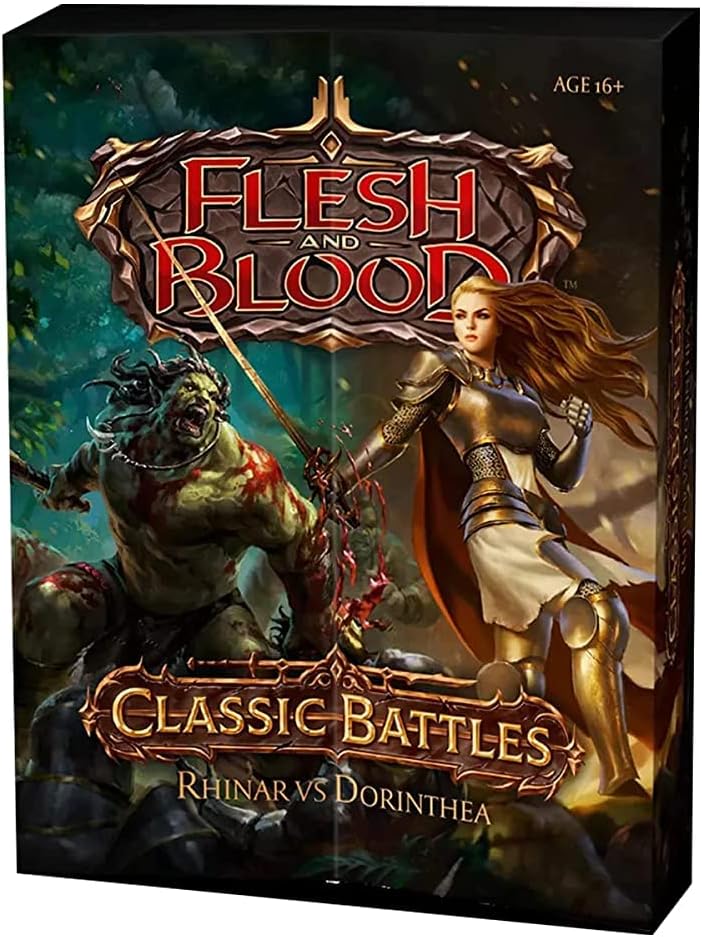
Legend Story Studios · Learning with a friend out of one box
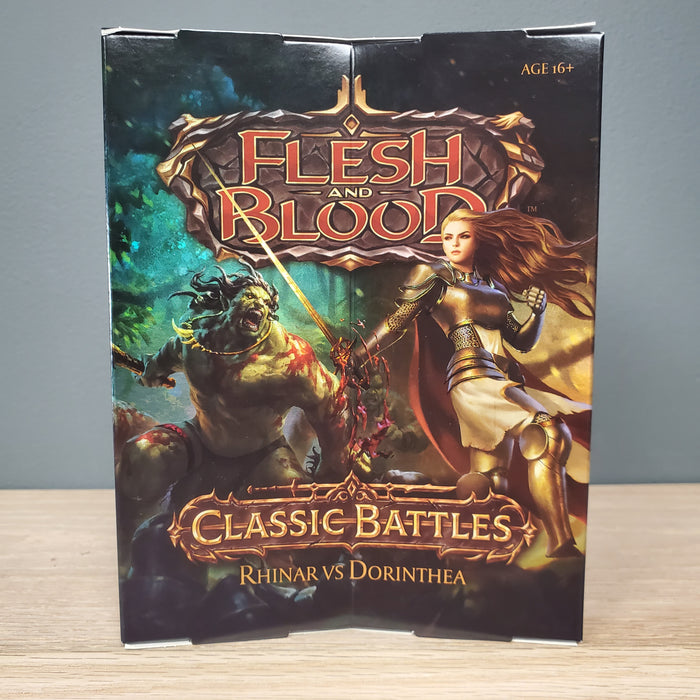
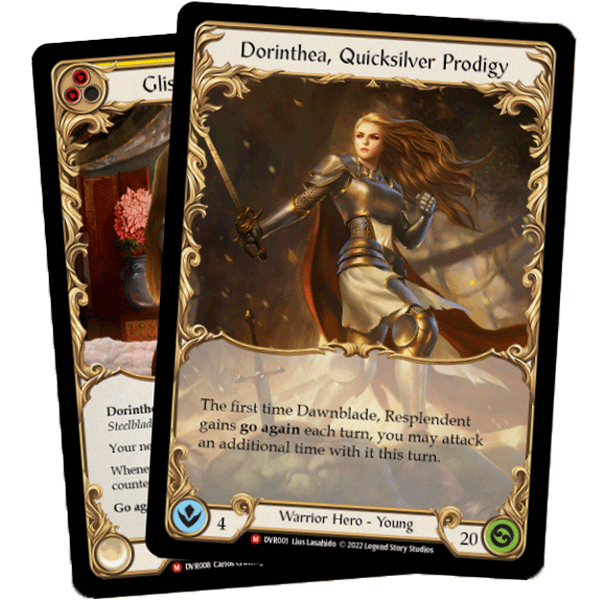
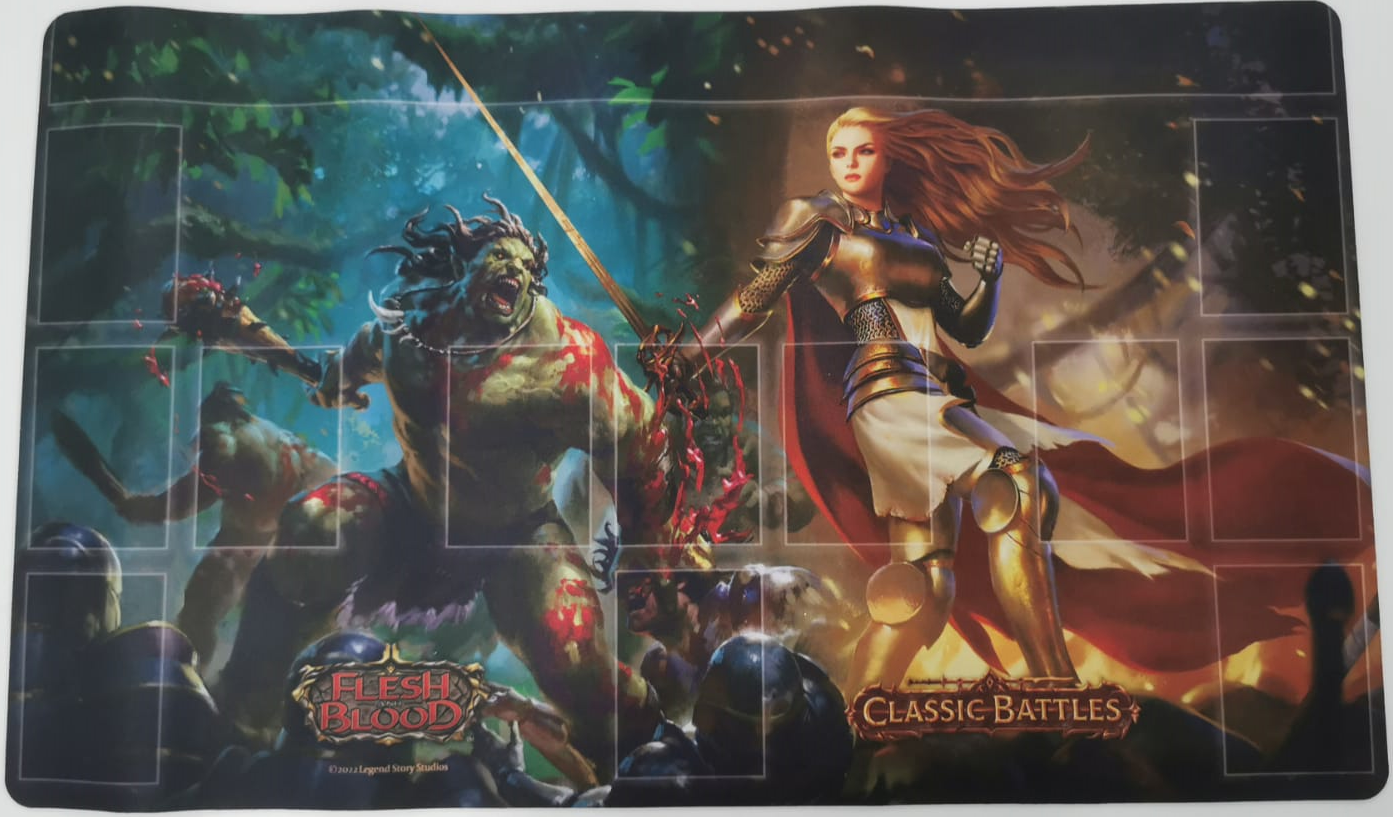
Classic Battles: Rhinar vs. Dorinthea
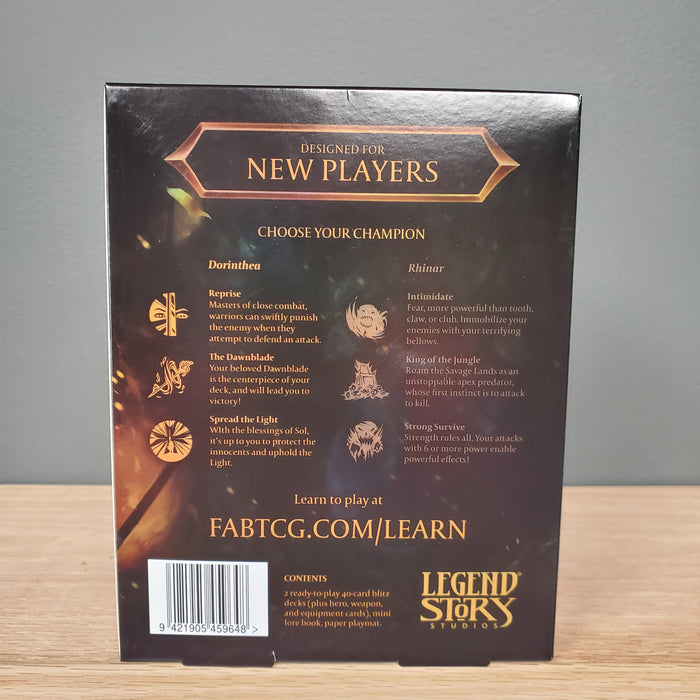
The cleanest two-player on-ramp there is. One box, two complete ready-to-play Blitz decks, a mini lore book, and a quick-start playmat. The matchup is deliberate: a smash Brute (Rhinar) against a precise Warrior (Dorinthea), so you learn both ends of the game — aggression and discipline — in your first sitting. Because FaB is strictly 1-vs-1, having two decks in one box solves your single biggest beginner problem: needing an opponent who also knows the rules.
Dax: This is the box I hand a couple or a pair of friends who want to learn together. It just works.
- Two contrasting heroes teach opposite styles at once
- Everything for two players in a single box
- Includes lore book and quick-start mat for true beginners
- Blitz decks, so not your long-term competitive format
- Two heroes only — less replay variety than buying separate precons
The catch: ~$50 typical street price is more than a single precon — worth it only if you genuinely have a regular opponent at home.
 3
3 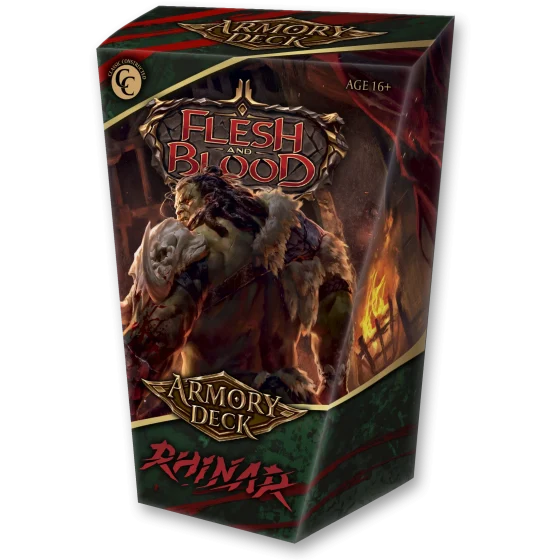
Legend Story Studios · Bridging into the deeper Classic Constructed / weekly Armory scene
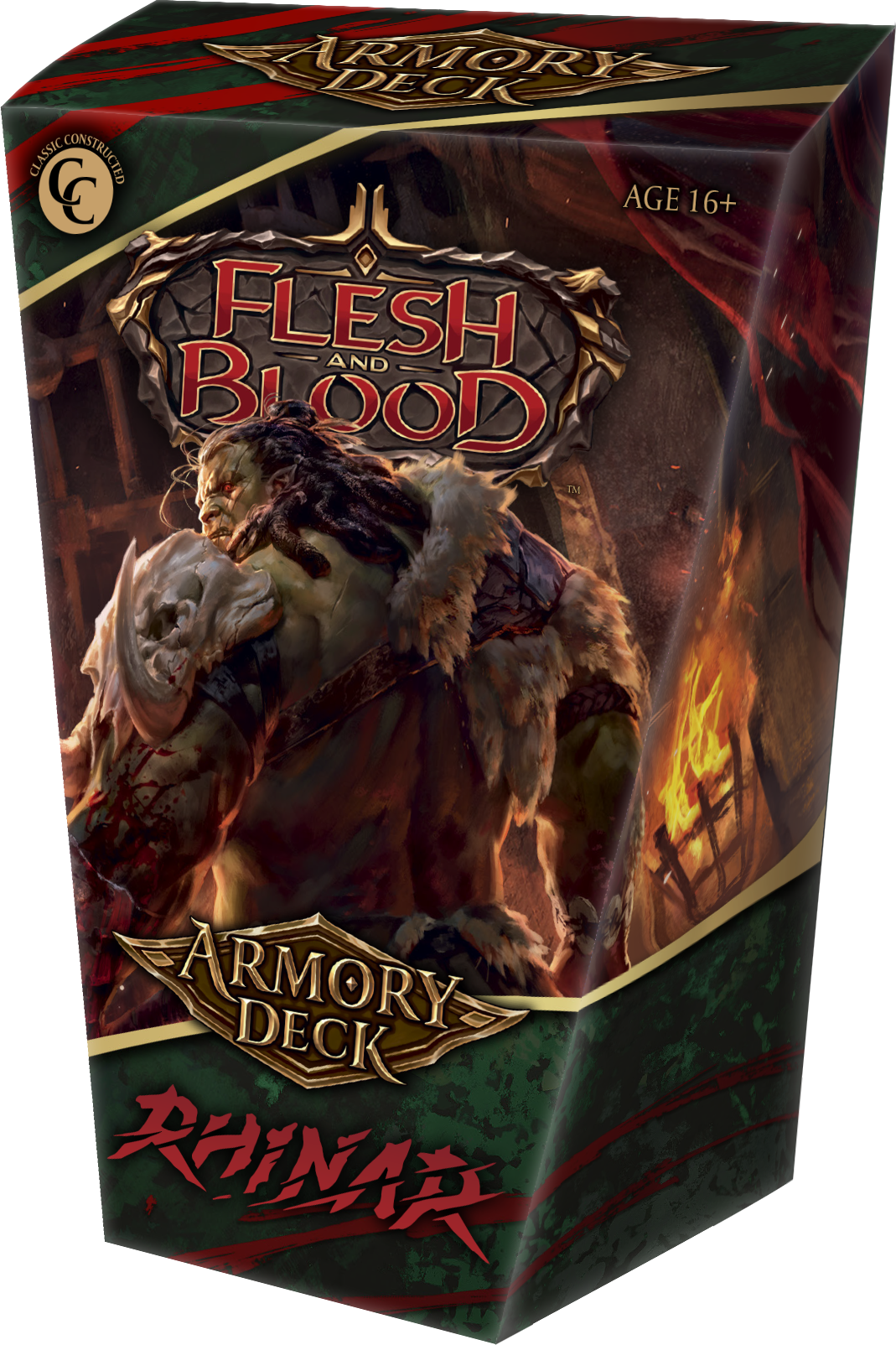
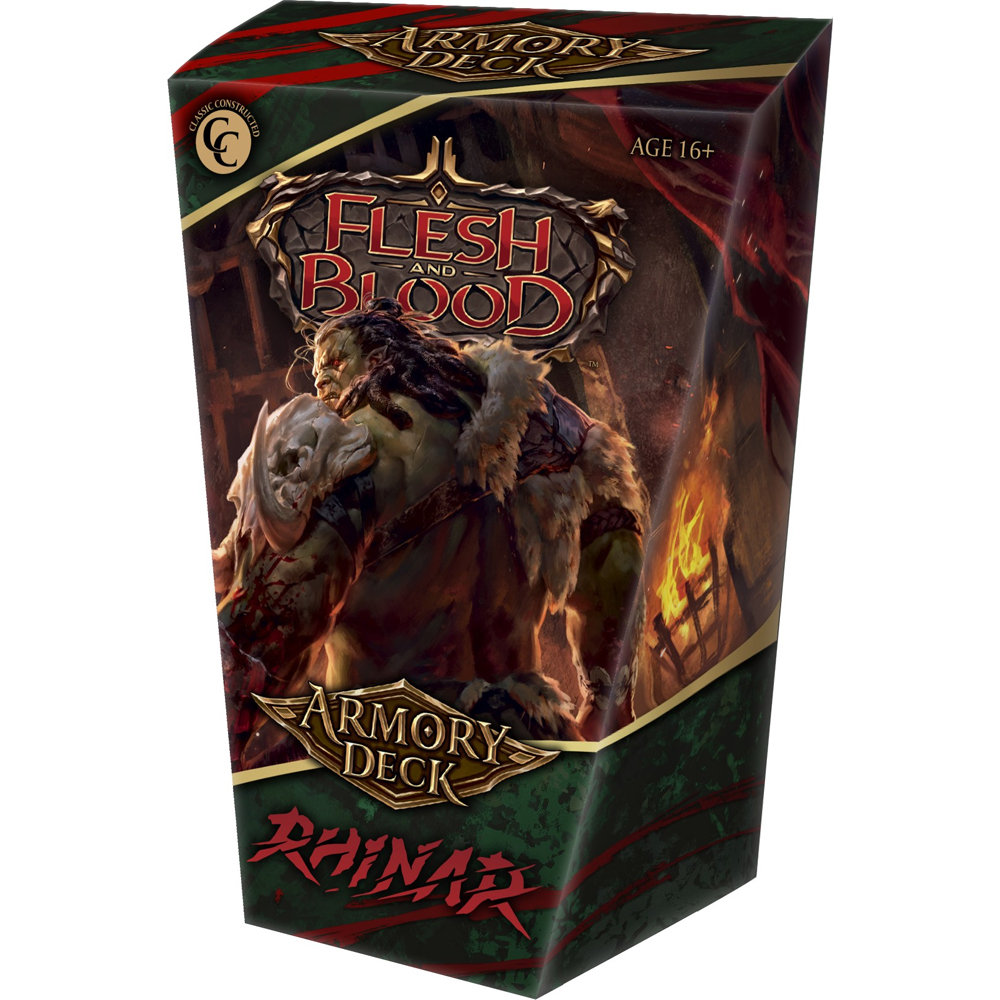
Armory Deck (e.g. Armory Deck: Rhinar)
The bridge deck. A ~$40 ready-to-play, Classic Constructed-oriented preconstructed deck with all gear included — a real hero, new card designs, plus foundational staples. If you know you eventually want the "main" competitive format and the weekly Armory grind, this is the cleanest step up from Blitz without building from singles. It gets you a genuine format hero and the equipment that comes with it in one purchase.
Dax: Buy this after you're sure you're staying and you want Classic Constructed, not before.
- Includes weapon and equipment — a complete real hero
- On-ramp to the deeper Classic Constructed format
- New designs plus staples in one box
- Pricier than a Silver Age precon for a similar "out-of-box" experience
- Not fully optimized — you'll want upgrades to truly compete in CC
The catch: It points you at Classic Constructed, where fully-tuned decks can run $300–400 — the Armory Deck is the start of that road, not the end.
 4
4 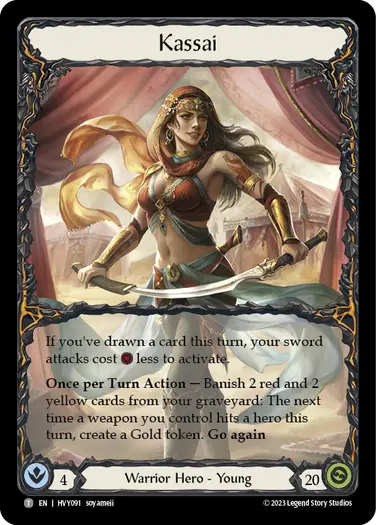
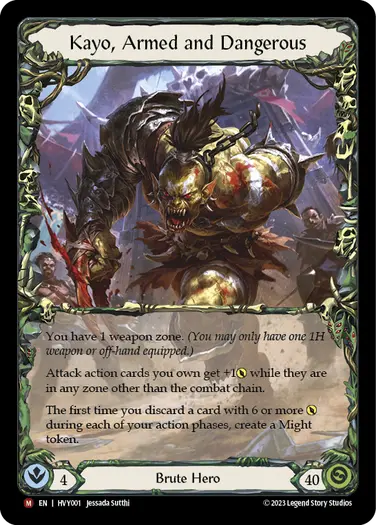
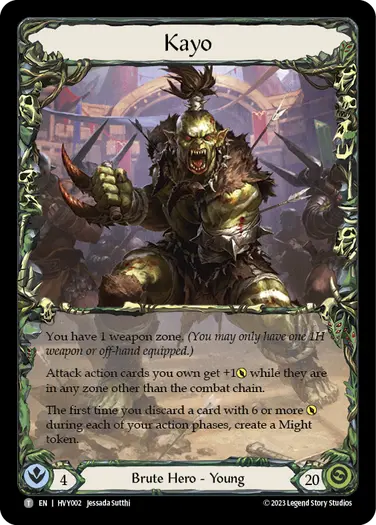
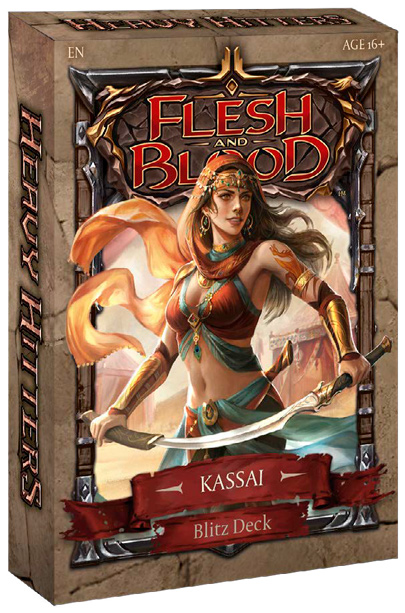
Legend Story Studios · A self-contained, action-packed way to learn the combat chain
Heavy Hitters Blitz Deck
Explicitly designed as a first-time-player on-ramp. A ready-to-play 40-card Blitz deck built around a Rainbow Foil young hero with extended-art key cards. The Blitz decks are action-packed and self-contained — a clean way to drill the combat chain (attack → block → reactions → damage) without any deckbuilding friction. If Silver Age isn't in your area yet, this is the next-best learning purchase.
Dax: A great learn-the-chain deck, especially if Silver Age hasn't reached your store yet.
- Purpose-built as a beginner on-ramp
- Rainbow Foil hero and extended-art cards feel premium
- Fast, self-contained Blitz games are ideal for learning the rhythm
- Blitz isn't the main competitive format long-term
- Price varies by retailer — shop around
The catch: Price isn't fixed — it varies widely by retailer, so don't overpay; compare a few stores first.
 5
5 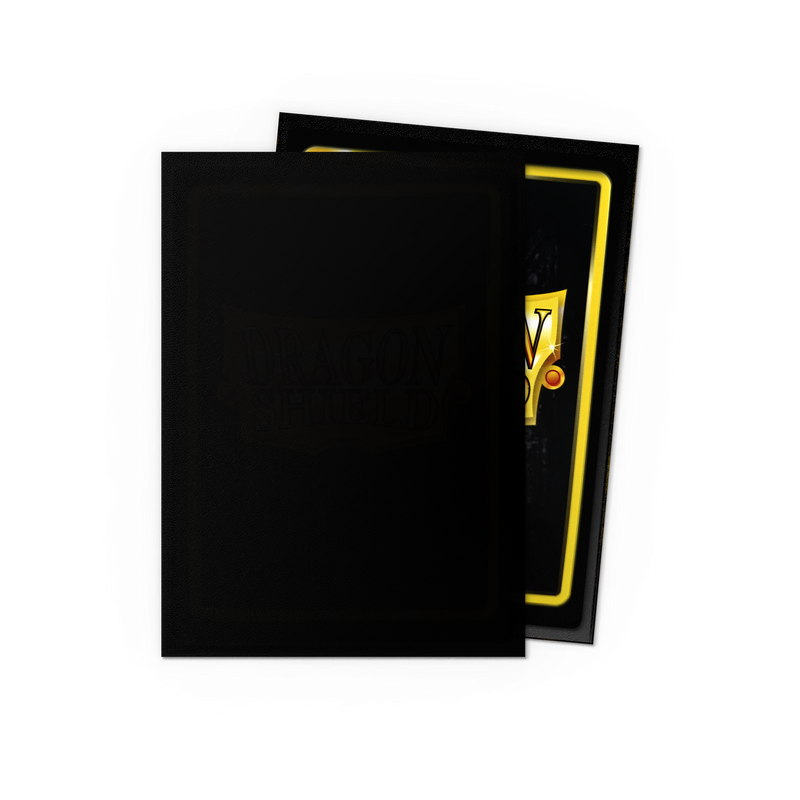
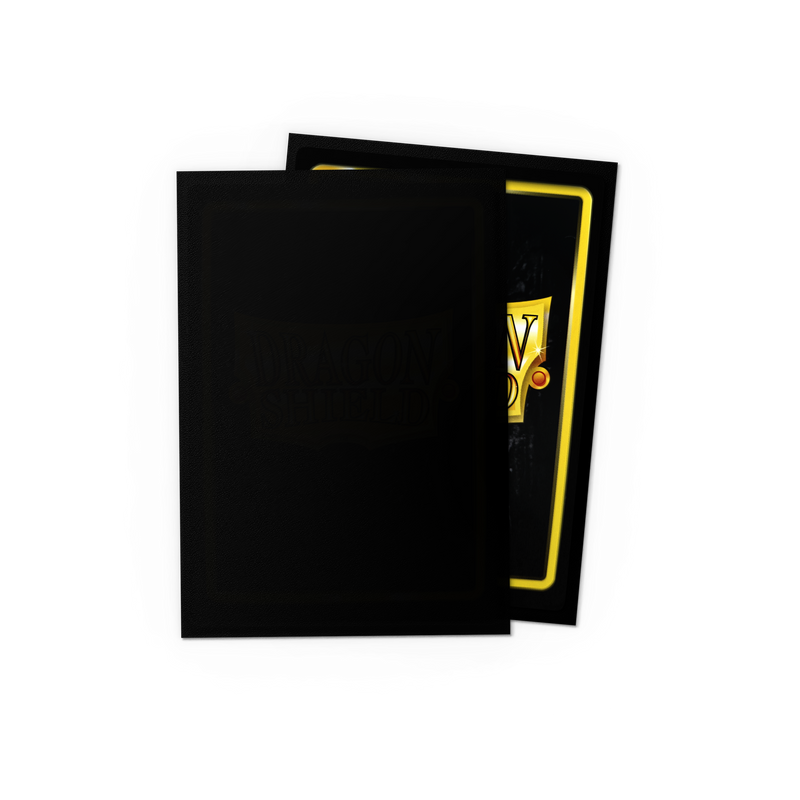
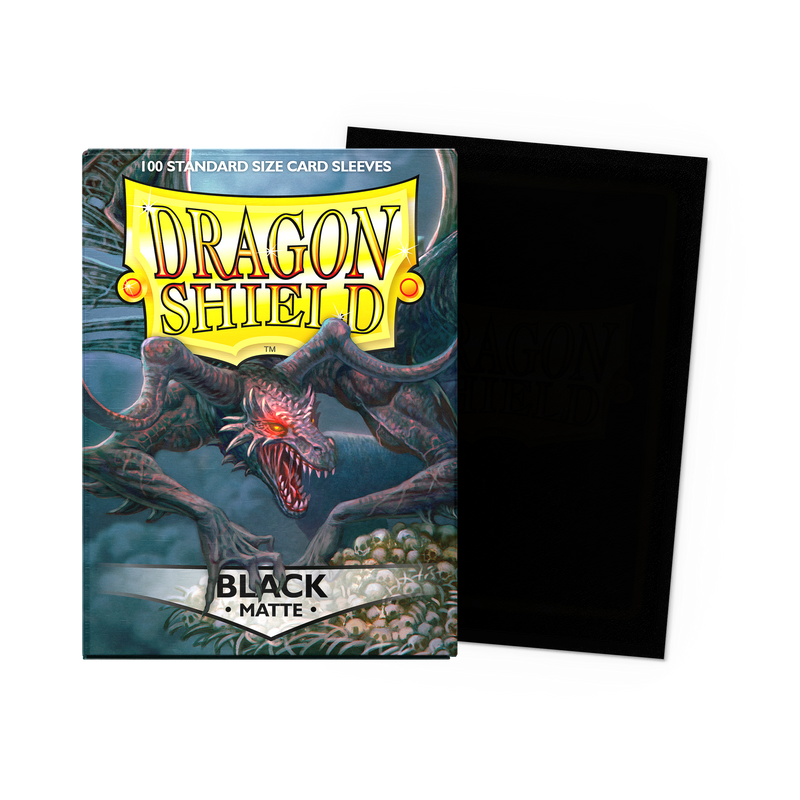
Dragon Shield (Arcane Tinmen) · Protecting and smoothly pitching every deck you own
Dragon Shield Standard Matte Sleeves (100 ct)
Unglamorous and non-negotiable. FaB uses standard 63×88mm cards, so any standard sleeve fits — and matte sleeves shuffle and pitch smoothly, which matters in a game where you slide cards out of hand constantly. One 100-count pack covers a full Classic Constructed deck. Sleeving protects your cards and makes the core motion of the game feel good. Buy these with your first deck, not later.
Dax: The least exciting purchase here and the one you'll be glad you made every single game.
- One pack covers a full Classic Constructed deck
- Matte finish makes pitching and shuffling smooth
- Cheap insurance for cards that hold value
- Double-sleeve adds cost if protecting expensive foils long-term
The catch: ~$10–12 is a rough figure and varies — but skipping sleeves entirely is the real mistake, not the few dollars.
 6
6 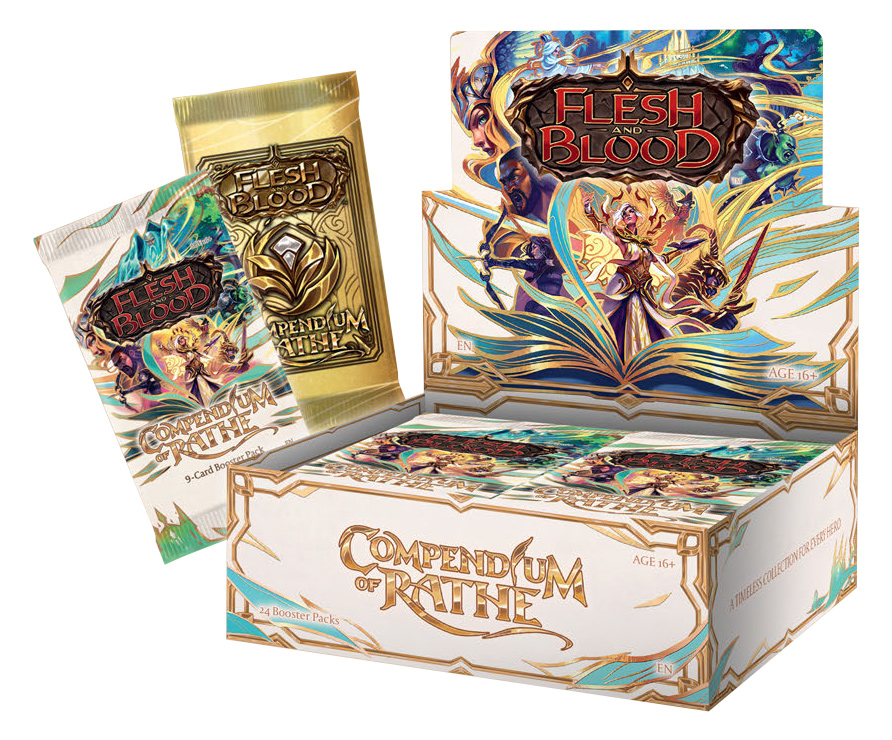
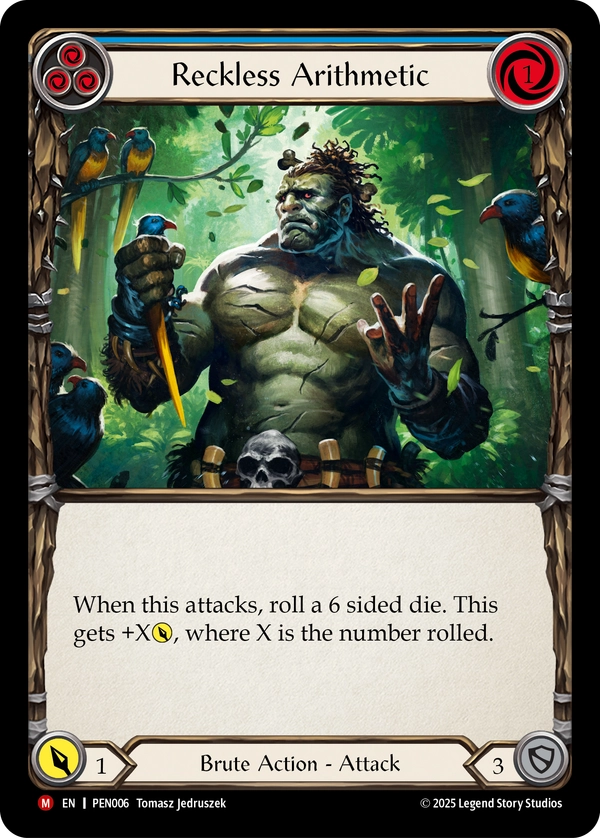
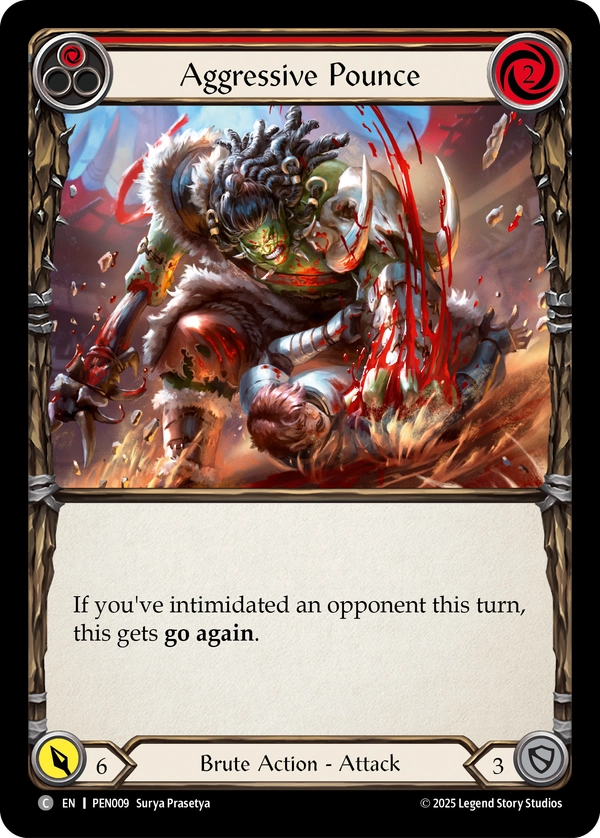
Legend Story Studios · The collector and pack-opening experience — once you know you're staying
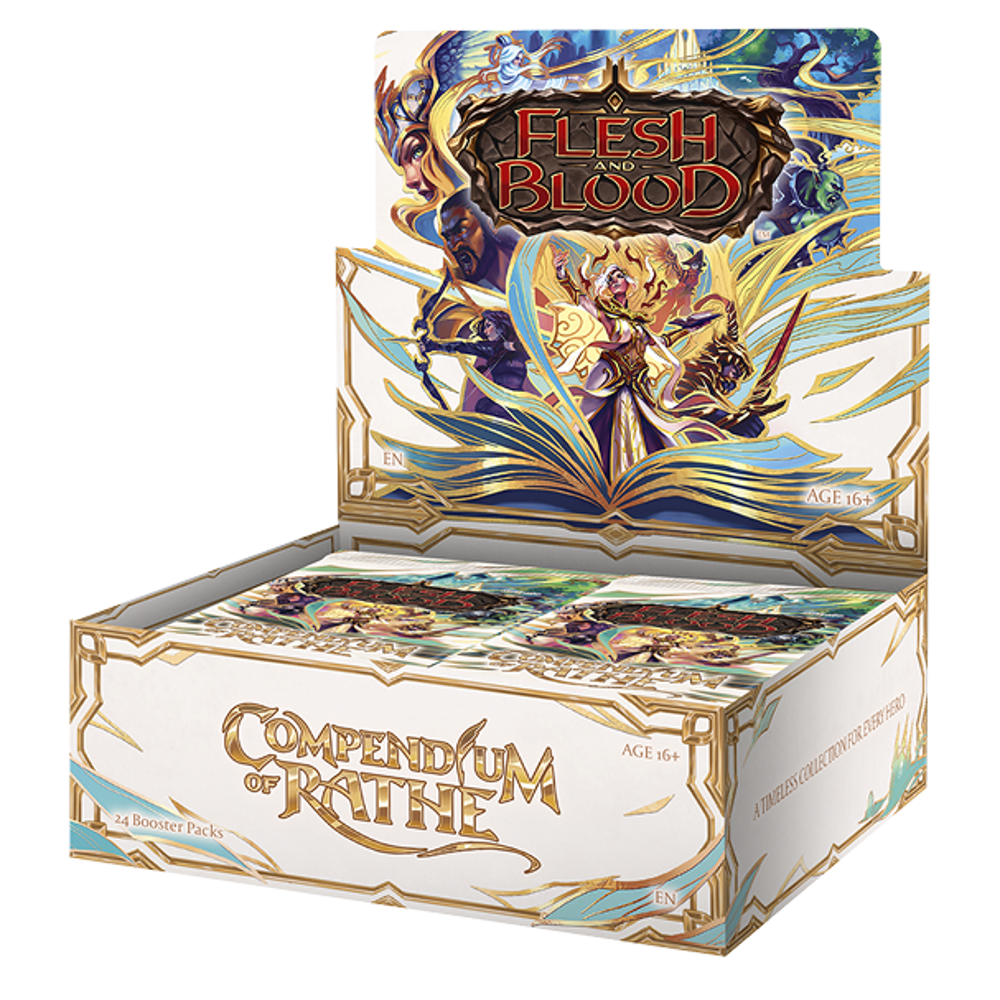
Compendium of Rathe booster pack / box
The premium 2026 release: a 348-card expansion with a London premiere (Feb 6–8) and store release around Feb 13. Every pack has at least three rares plus an extra rare, cold foils at roughly 1-in-8, and special Antiquity Packs. It reprints iconic staples — including multiple Fabled cards such as Eye of Ophidia — which eases the cost of Classic Constructed over time. This is not a learn-to-play purchase; it's the crinkle, the chase, the collector's baptism.
Dax: Only worth it once you know you're staying — for the chase, not the lesson.
- Reprints staples (incl. Fabled cards) that ease CC costs
- Cold foils ~1-in-8 plus Antiquity Packs for chasers
- The premium opening experience FaB collectors live for
- Not a beginner learn-to-play product
- Booster prices and exact reprint list vary and weren't fully confirmed at research time
The catch: "Feel the crinkle — but maybe keep it sealed." Booster prices vary by retailer, and opening for value (EV) is a coin-flip the community argues about endlessly.
Questions from the road
Is Flesh and Blood only two players?
Yes. FaB is built as a 1-vs-1 dueling game — you always need an opponent. That's why a two-player starter box (like Classic Battles) or a second deck is a smart early buy, and why the local-store Armory scene is so central: it's where your opponents are.
Do I need to spend hundreds of dollars to play?
No. Fully optimized Classic Constructed decks can run $300–400, but in 2026 the new Silver Age format launched with ~$20 tournament-legal precons, Blitz has cheap budget decks for nearly every class, and ~$40 Armory Decks bridge you into Constructed. You can be competitive without breaking the bank — that's the whole story of this year.
What's the difference between Blitz, Classic Constructed, and Silver Age?
Blitz uses a young hero and exactly 40 cards — faster, cheaper, great for learning. Classic Constructed (the main competitive format) uses an adult hero, a 60-card minimum plus a sideboard, longer games, and deeper strategy. Silver Age is the newer middle option: a 40-card deck from a restricted, affordable 55-card pool, max two copies each.
What does 'pitching' mean?
Pitching is how you pay for cards. Each card has a pitch value (1, 2, or 3 resources, shown as red/yellow/blue stripes) and a cost. You pitch cards from hand to generate resources, and pitched cards go to the bottom of your deck — so the order you pitch in affects what you draw later. This deliberate ordering is called pitch stacking.
Is there a mulligan?
No. You play the four cards you draw — there's no redraw. This is a defining feature: every hand is a puzzle of which cards to attack with, block with, or pitch, and it rewards skill over luck. As the saying goes, "there's no mana screw in Rathe" — an awkward hand is a puzzle, not bad luck.
Which hero should a beginner pick?
Pick by playstyle, not by tier list. Want to smash face? A Brute like Rhinar. Like disciplined sword combat? A Warrior like Dorinthea. Enjoy fast combo turns? A Ninja like Katsu. The Silver Age precons (Bravo, Dash, Azalea, Fai and more) are all built to be approachable and competitive. The fair deck you understand beats the "best" deck you can't pilot.
Can I play Flesh and Blood online?
FaB is deliberately designed around in-person play at local game stores rather than an official digital client — the intended experience is paper cards at a table, "in the flesh and blood." Use the official Store and Event Locator on fabtcg.com to find a nearby weekly Armory and play face to face.
What is Living Legend, and why did my hero 'retire'?
Heroes that win enough at large events accrue Living Legend points; past a threshold (around 1,000) the hero is retired from Classic Constructed to keep the metagame fresh. "Did your guy get LL'd?" is said with real grief. Check the official Living Legend list before investing heavily in a hero that's near retirement.
What's the big new thing in 2026?
Two things. The Silver Age format — an affordable ~$20 competitive on-ramp with community-voted annual hero rotation — and Compendium of Rathe, a premium 348-card expansion (London premiere Feb 6–8, store release ~Feb 13) packed with rares, cold foils at ~1-in-8, Antiquity Packs, and reprinted staples including Fabled cards.
What size sleeves and accessories do I need?
FaB uses standard 63×88mm cards, so any standard sleeve (Dragon Shield, etc.) works — one 100-count pack covers a Classic Constructed deck. Beyond sleeves, grab a deck box sized for 60–80 cards plus equipment and sideboard, a life counter (dial, dice, or app), a playmat with clear zones, and a few counter tokens for class resources.
◆ The graduation Blunt close, the way I always give it: Flesh and Blood is the deepest game on the table and, somehow, the warmest room around it — and in 2026 the door costs about twenty bucks. So here's your graduation, initiate. Buy a Silver Age precon or a two-player box, sleeve it, and pick your hero by what feels like your kind of trouble, not by a tier list. Learn the chain by saying it out loud, block less than you're tempted to, and remember that a close game decided by one block is the best night either of you will have. Shake on every match and mean it; keep a loaner on you and the seat open. The table's been saving you a chair this whole time — welcome in. Now go again.
— Dax, —Dax
The Critic · the honest verdictI'll be honest with you — flattery is boring.
Found your footing? Send this to someone starting out.
Sources & further reading
- fabtcg.com/products
- en.wikipedia.org/wiki/Flesh_and_Blood_(card_game)
- cardgamer.com/games/tcgs/flesh-and-blood/how-to-play-flesh-and-blood-tcg-a-beginners-guide
- cardgamer.com/games/tcgs/flesh-and-blood/getting-started-in-competitive-flesh-and-blood
- ultimateguard.com/en/blog/strategic-guide-flesh-and-blood-beginners-intermediates-fab
- articles.starcitygames.com/flesh-and-blood/flesh-and-blood-keynote-presentation-reveals-next-set-extra-silver-age-support-and-more
- articles.starcitygames.com/flesh-and-blood/silver-age-compendium-of-rathe-to-usher-in-new-era-of-flesh-and-blood
- articles.starcitygames.com/news/flesh-and-blood-announces-new-set-high-seas
- fabtcg.com/products/booster-set/high-seas
- rules.fabtcg.com/en/cr/glossary
- rathetimes.com/articles/the-fighting-game-theory-of-flesh-and-blood
- rathetimes.com/articles/the-emotional-intimacy-of-flesh-and-blood
- rathetimes.com/articles/infectious-host-make-your-game-night-one-that-grows-on-people
- rathetimes.com/articles/fab-finance-an-introduction