Cthulhu: Death May Die Review — You Go Insane, Then You Shoot a God in the Face
CMON's two-fisted Lovecraft co-op hands you a fistful of dice and one heretical idea: don't run from the Old Ones — summon them, then kill them. A full guide to the box, the madness mechanic, how to survive your first hunt, and which core to buy.

AI-assisted curator persona · research and editorial responsibility: Robert Pruitt · how this guide was made
Last editorial refresh: 2026-06-15 Gold-standard QA: 2026-07-17 13 sources reviewed Affiliate links checked during gold-standard pass

The short answer
Cthulhu: Death May Die is a 1–5 player cooperative dice-combat board game by Eric M. Lang and Rob Daviau (CMON), 90–120 minutes, where investigators in the 1920s deliberately complete a cultist's ritual to drag an Elder One into our world at its most vulnerable — then gun it down. Its signature hook is inverted sanity: losing your mind is GOOD, because each step toward madness unlocks more dice and abilities, but hit the end of the insanity track and your investigator dies. 'Fear of the Unknown' (Amazon ASIN B0C18YL722) is the current standalone-playable core — a complete game in one box with 10 investigators, 6 episodes, and two Great Old Ones (Tsathoggua and Azathoth). Season 2 (B07Z7D443R) is an expansion, not a standalone. If you want the splashiest minis in tabletop and a Lovecraft game you can teach in ten minutes and finish in an evening, this is the one.
Decision map
Choose in thirty seconds
The best modern on-ramp — a complete, standalone core box with the splashiest god minis CMON has ever made.
"If that means punching Cthulhu right in his squid face, then so be it." That's how the crew at Northern Dice opened their review, and honestly — that's the whole pitch, isn't it? Every other Lovecraft game on the shelf is asking you to be careful. To investigate. To read the clue, lose the sanity, lower your eyes. Eric Lang and Rob Daviau looked at all of that reverence and asked the only question a table full of friends actually wants answered: what if we hit it instead? So you start the game already cracked. You're not a steady-handed scholar — you're a doomed pulp hero who's seen too much and decided to do something stupid and magnificent about it. You and four friends are going to FINISH the cult's ritual yourselves, yank an Elder God halfway into our reality while it's still soft, and then throw fistfuls of dice at it until one of you is dead or it is. Pull up a chair. Let me walk you through the box, the madness, and exactly how you keep your first hunt from ending in a TPK.
Start here, then go deeper
You are in the right cabinet.
 ✦ Topic PathBoard Game Buying Guides: compare the whole shelfStart with the decision, not the shelf. These guides compare the games, editions, expansions, player counts, and costs people...
 Best Of5 New Board Games Worth Your Next Game Night: Cozy Stories, Clever Cards, and a Proper AdventureImani matches five current tabletop releases to five kinds of evening, with the awkward bits included: permanent stickers, limited...
 GuideThe 2026 Board Game Hype Test: Which Trending Games Are Actually Worth Your Table?BoardGameGeek Hotness measures attention on BoardGameGeek, not sales and not your future happiness. Robert turns five fast-moving names...
What is Cthulhu: Death May Die, and what's this 'go insane to fight gods' hook?

Picture the usual Lovecraft bargain: monsters are coming, and your whole job is to stop the summoning. Death May Die tears that page out. Here, you're a band of investigators who've decided the only way to actually kill a god is to pull it through the veil yourselves — to complete the very ritual everyone else is trying to prevent, so the Elder One arrives weak and embodied instead of distant and untouchable. Then you shoot it in the face. The genius is in how it makes you pay. Every investigator begins with a personal insanity, and your Sanity Track only ever moves one direction: down. You can't heal it. What you've seen, you've seen. But — and this is the move that makes the whole table lean in — each threshold you cross toward madness LEVELS YOU UP. New dice. New skill-tree abilities: attacking from rooms away, hitting multiple enemies, free re-rolls, permanent bonus dice. So you actually WANT to lose your mind, just not all of it, because the skull at the end of that track is death. It's a tug-of-war between power and oblivion you fight inside your own head, every single turn.
Losing sanity in this game is a good thing — it's what makes you more capable of dealing with the threats at hand.
What's in the box — the minis, the dice, the sheer plastic of it?
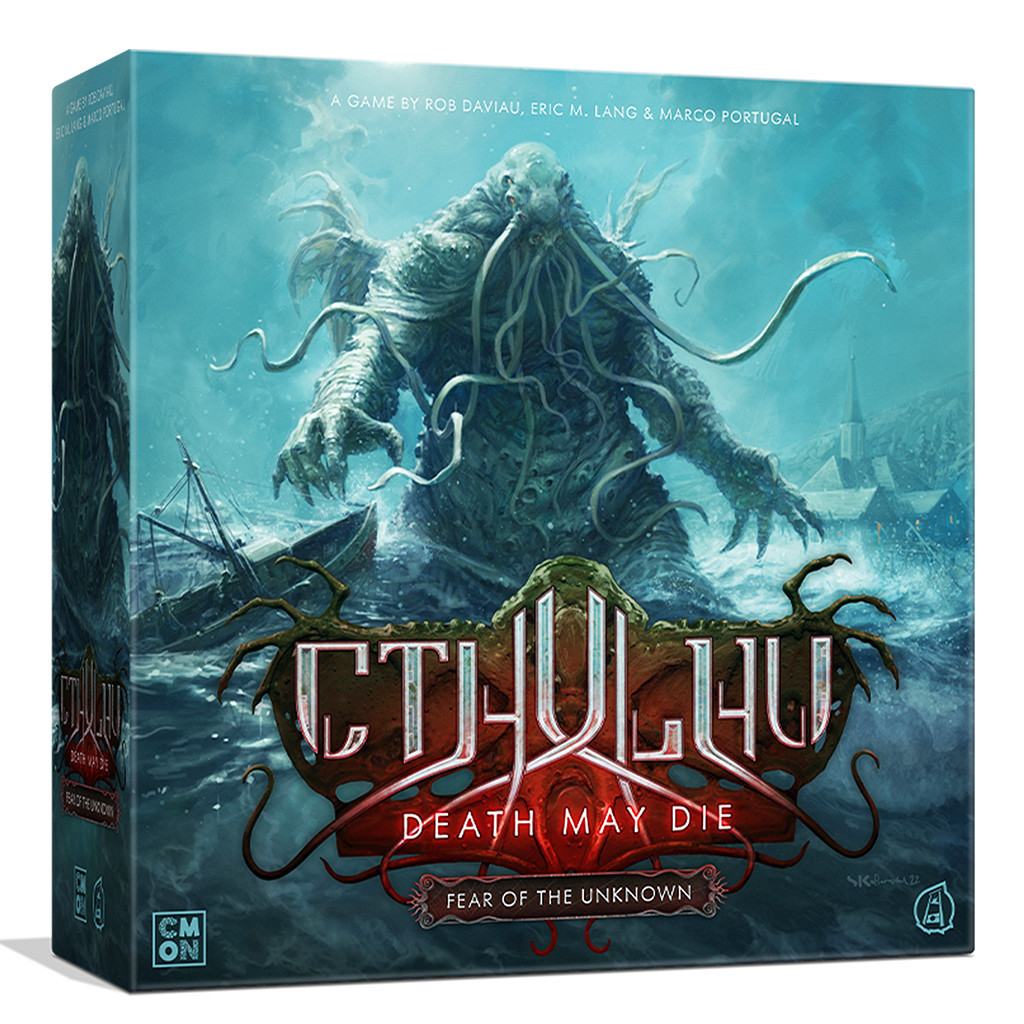
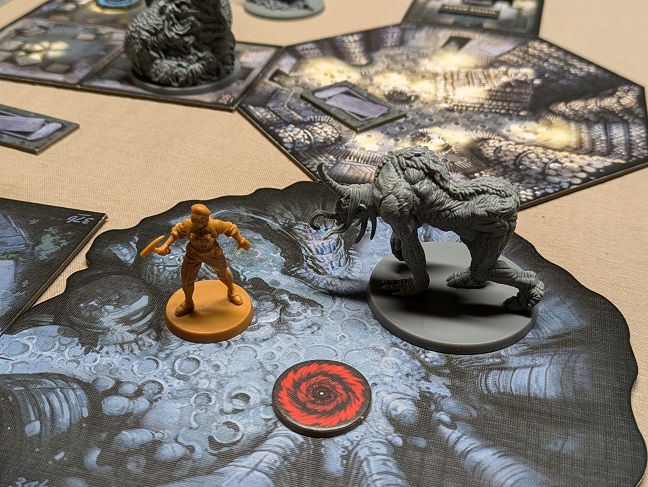
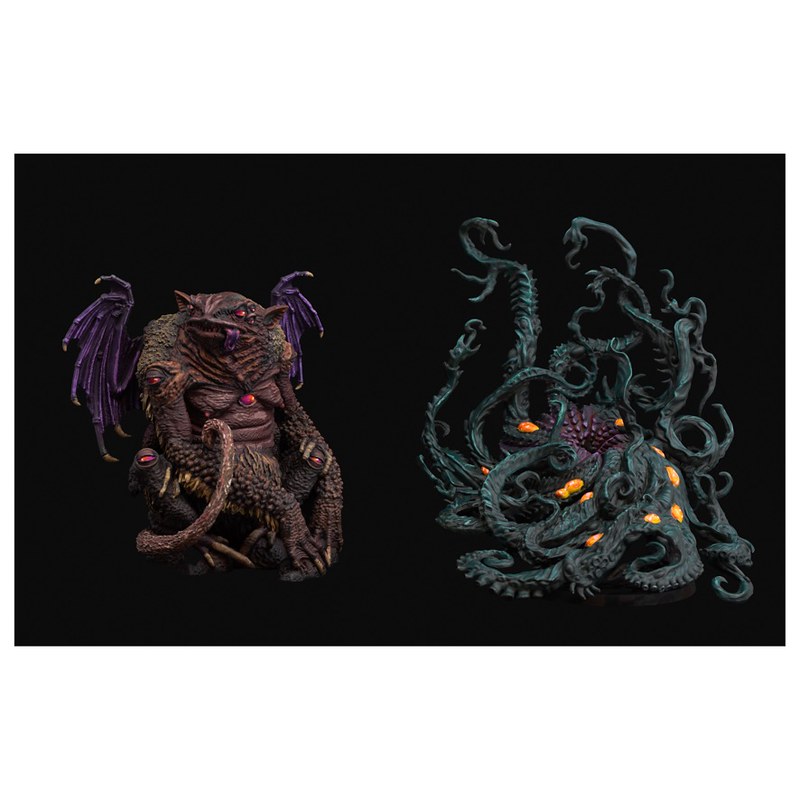
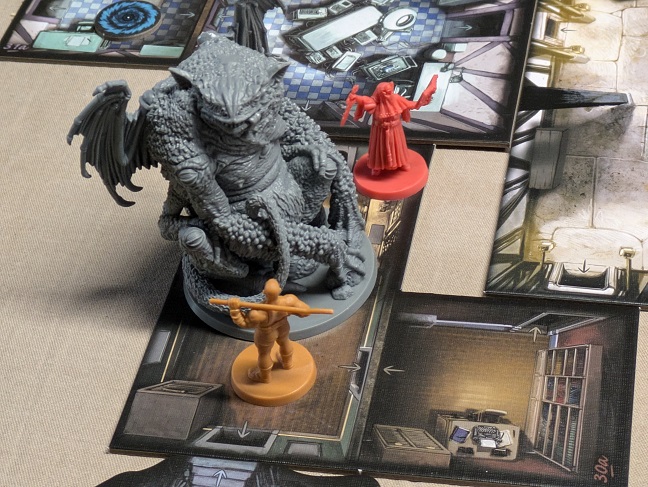
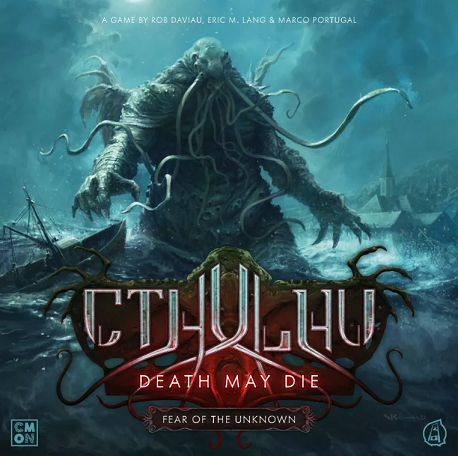
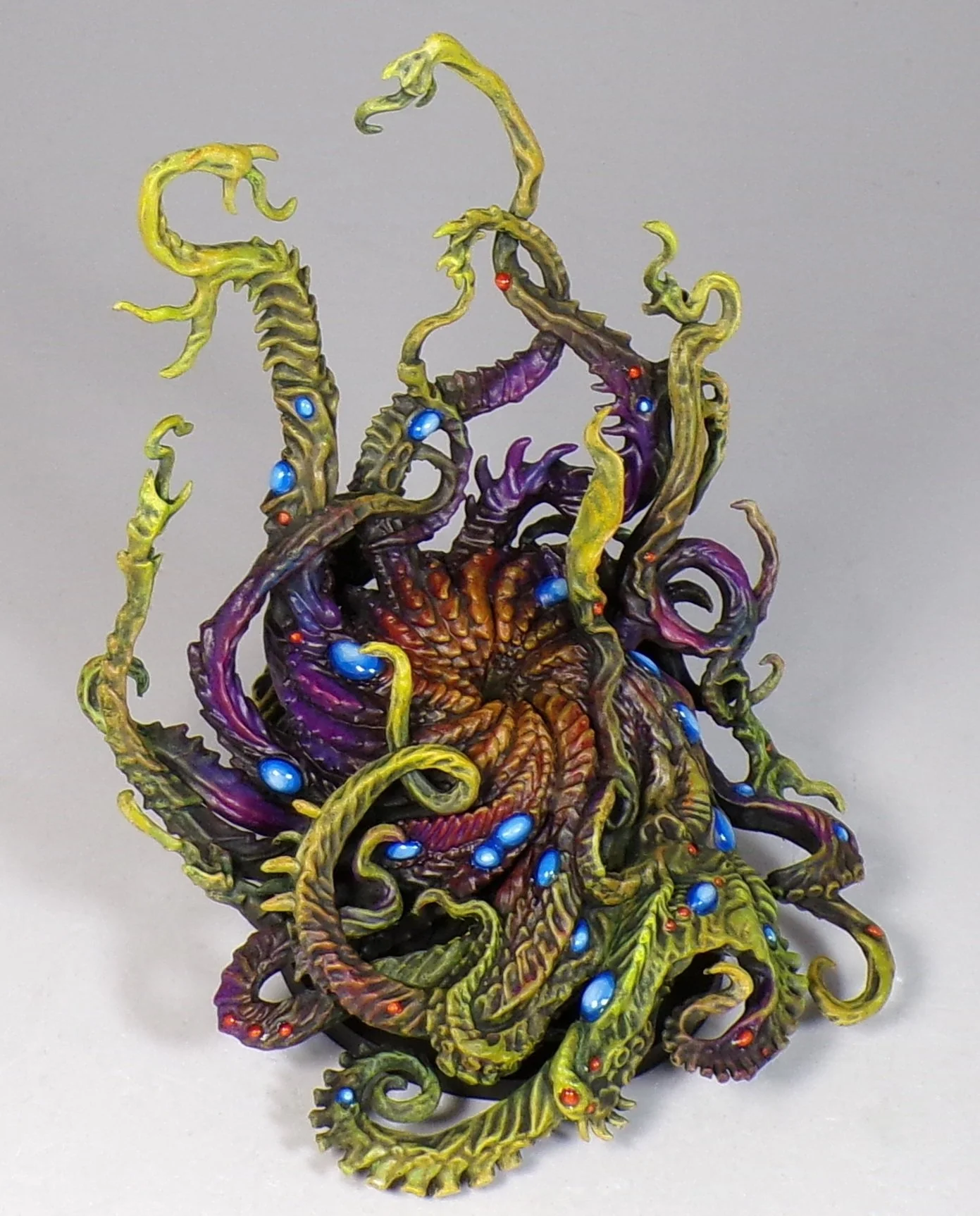
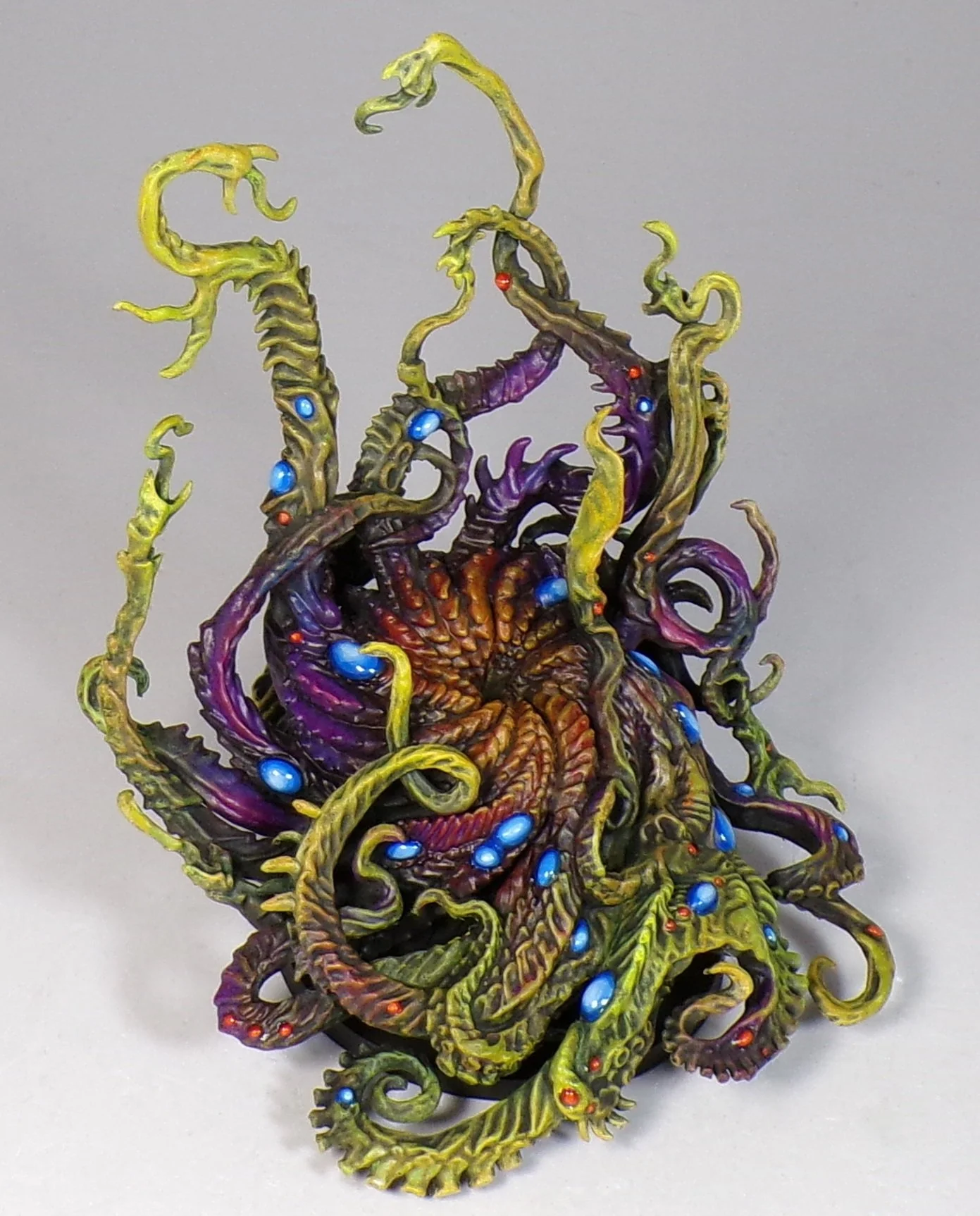
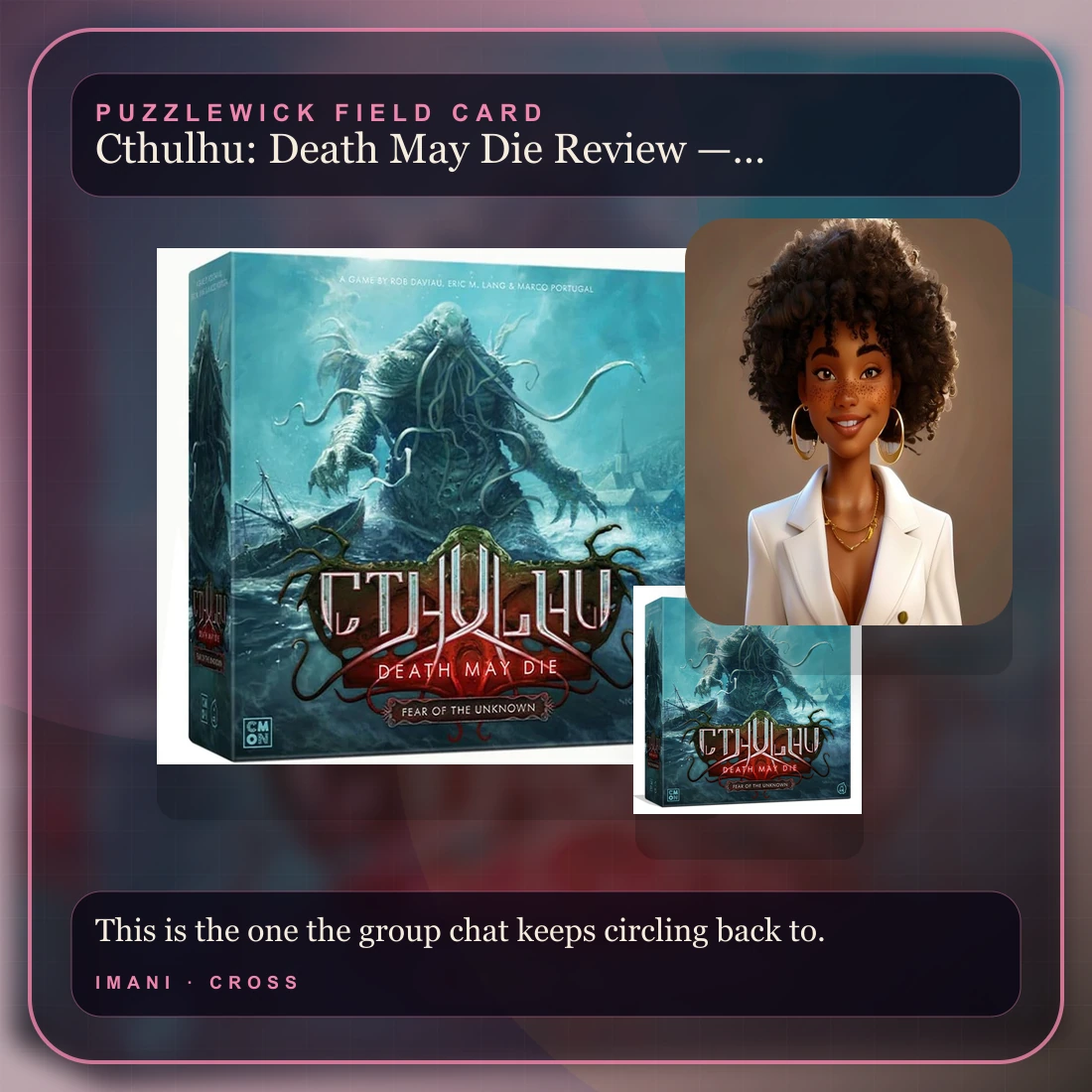
Open 'Fear of the Unknown' and the first thing that happens is your jaw drops, because this is CMON flexing. "As always with a CMON game, and in particular a Cthulhu: Death May Die product, the miniatures quality is superb," wrote Nerdly — and the two new Great Old Ones, Tsathoggua and Azathoth, are "large and richly detailed, offering an absolute dream for painters." Inside this core you get ten unique investigators (including a sharp new archaeologist), six standalone episodes, two Elder Ones, fresh monster sculpts — Gugs, Ghasts, Fishers From Outside — plus this set's new toys: Relics that buff you and upgrade when you hit insanity, and harder Unknown Monsters for when you want to suffer. Then there are the dice. Mana Worm nailed the feeling: "In proper Ameri-trash fashion, we are fist-fighting ancient, incomprehensible gods by throwing swelling handfuls of dice at them." The custom black combat dice feel heavy and good in the hand, the location tiles are oversized and clear, and the table presence when a god mini lands on the board is genuinely a moment. This is a game that looks like an event before anyone's rolled a thing.
We are fist-fighting ancient, incomprehensible gods by throwing swelling handfuls of dice at them.
How does an episode actually play, turn by turn?
Here's the rhythm, and it's why people who 'don't like complicated games' end up loving this one. You pick an Episode (the map, the ritual, the scenario rules) and pair it with an Elder One (your boss and its special minions), snap the modular pieces together, and go. On your turn you take a small handful of actions — move, attack, use a special — and when you fight, you grab the three black dice plus any green bonus dice your skills have earned and let them fly. Tentacle results on those dice cost you sanity (remember: that's a Faustian gift). Between players, the Mythos deck does its worst: spawning enemies, moving monsters, and inching the Elder One toward the board. Discovery cards, meanwhile, hand you tools, companions, and the actual STORY — "the flavor and narrative of the episode is revealed through these discoveries," as Mana Worm put it. Phase one is all about disrupting the ritual: hitting the right objectives scattered across the map. Then the ritual collapses, the god is summoned to the board, the episode rules fade, and "every turn is an intense battle for survival." The beauty? It scales 1–5 players with no separate rules — Mythos timing tightens with player count, so a solo hunt and a five-player hunt are tuned to be equally brutal.
When the Elder One is summoned, the episode rules become less relevant and the Elder One rules come into focus — and every turn is an intense battle for survival.
How do you win your first hunt? (Real strategy)
Let's keep your table alive. The win condition is clean: defeat the Elder One's Final Stage and you all win; if any single investigator hits maximum insanity and dies BEFORE the ritual is broken, everybody loses. That asymmetry should shape every decision. First lesson, straight from the BGG strategy threads and every guide I read: this is a 'run like hell and pray' game, not a play-it-safe game. "Plan your moves carefully" does NOT mean dawdle — the Mythos clock is always ticking the god toward you, so move with urgency and disrupt the ritual objectives fast. Second: ride your insanity deliberately. You WANT to cross those early thresholds to bank the extra dice and abilities, because a maxed-out investigator is a monster in the final fight — but pace it so nobody is one bad tentacle roll from the skull when the boss lands. Third: focus-fire and spread roles. Build a party with a mix of muscle, range, and utility, then concentrate damage rather than chipping at everything. Fourth: respect the dice variance. Reviewers are blunt that "you can get completely ruined by dice and card randomness," so use those skill-granted re-rolls and bonus dice on the swings that matter — the objective you MUST clear, the boss stage you MUST close — not on mopping up trash mobs. Run hard, go a little mad on purpose, and save your best dice for the face of god.
This game is run-like-hell-and-pray-everything-works-out, not play-too-safe-and-slow.
Which box do you buy, and how do the cores and Seasons combine?
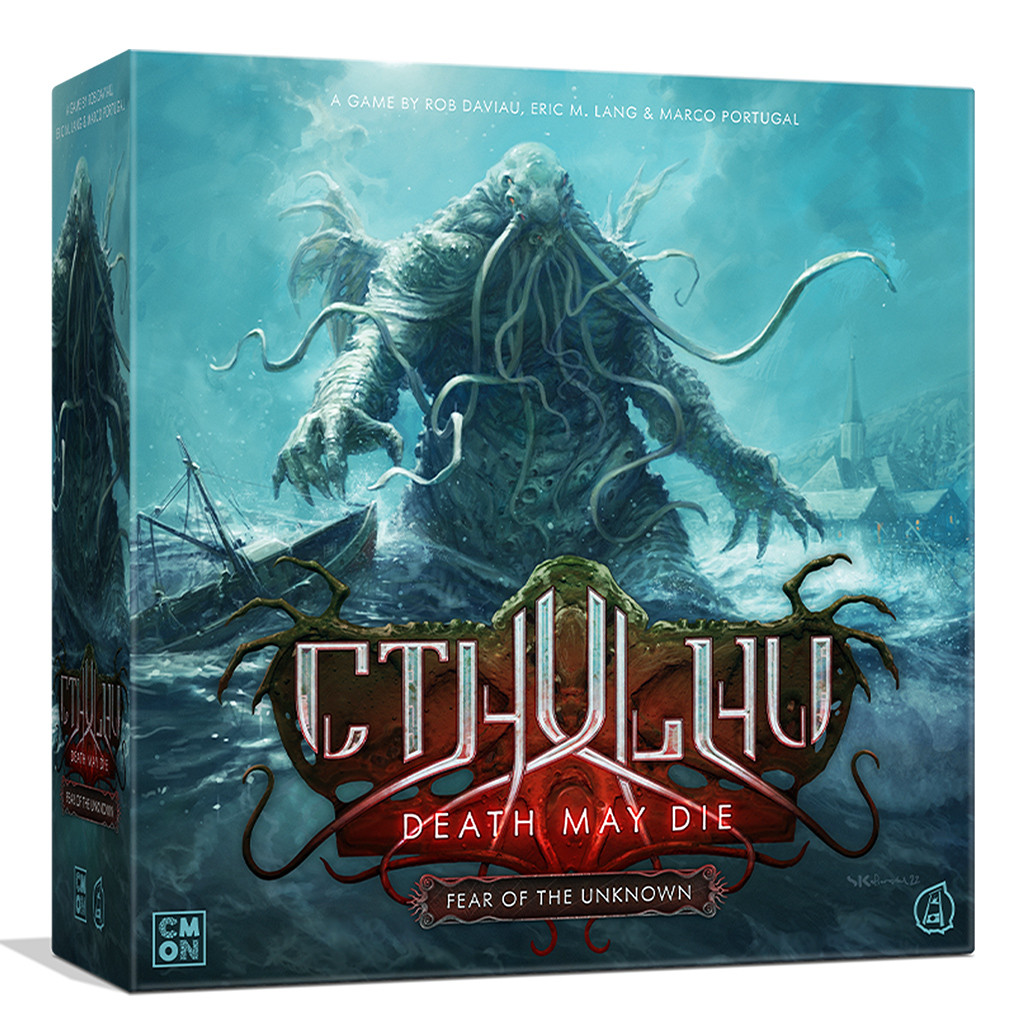
This is the question that trips everyone up at the shelf, so let me be plain. The line is modular and a little sprawling — "it's unfortunately cumbersome to work with this product line," Player Elimination warns, because content lives across multiple boxes. But the combine-everything design is also its superpower: any Episode can pair with any Elder One you own. Here's the map. 'Fear of the Unknown' (your Pick #1 below, Amazon B0C18YL722) is effectively Season 3, and it's the current STANDALONE core — a complete game in one box, no other purchase required, and a clean modern on-ramp. Season 1 (the original 2019 box) and Season 2 are the earlier sets; Season 2 specifically is sold as an EXPANSION (Amazon B07Z7D443R — "Season 2 Board Game Expansion" right in the title), bringing six more episodes and ten more investigators, and CMON built it so its heroes play with Season 1 missions too. So: if you own nothing, buy a standalone core (Fear of the Unknown is the easiest to find new and self-contained). Then bolt on Seasons for more gods, heroes, and maps that all interlock. The honest caveat: Player Elimination, reviewing Fear of the Unknown, felt it leaned on series knowledge and added 'clutter' — so I'd genuinely steer a brand-new player to a core box first, master the madness, then expand once you're hungry for more elder ones to kill.
Any Episode can pair with any Elder One you own — the box you start with is a foundation, not a ceiling.
How does it stack up against Eldritch Horror and Mansions of Madness?
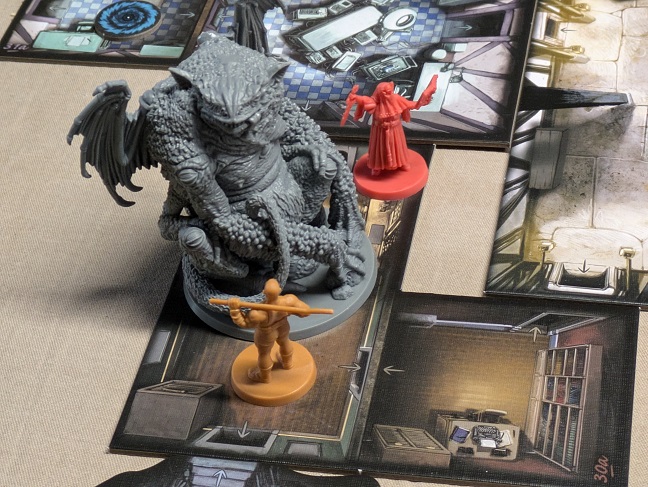
If you already own a Lovecraft game, you're rightly asking whether this one earns its shelf space — and the answer depends entirely on the night you want. Tabletop Bellhop drew the line perfectly: "This is two-fisted pulp Cthulhu, not research-and-investigation Cthulhu." Eldritch Horror is the globe-trotting strategic epic — 1–8 players, sprawling, a slow-burn campaign of mysteries and travel where your investigator choice ripples across hours. Mansions of Madness: Second Edition is the app-driven, story-rich dungeon crawl — atmospheric, tactical, unfolding on the fly with less room for table-wide coordination. Death May Die is neither of those, on purpose: it's the fast, loud, confrontational one. You set up in minutes, you finish in an evening, you teach it to anyone, and instead of solving the horror you PUNCH it. The trade-off is real and worth naming — there's less narrative mystery and less long-game strategy here than in the Fantasy Flight giants. But if your table's idea of a great night is grabbing a fistful of dice, going gloriously insane, and gunning down a cosmic god before bedtime, nothing else on the shelf does it this cleanly. As Northern Dice landed it: this became their "favourite Cthulhu based game."
This is two-fisted pulp Cthulhu, not research-and-investigation Cthulhu.
So — is it worth it, and who is it for?
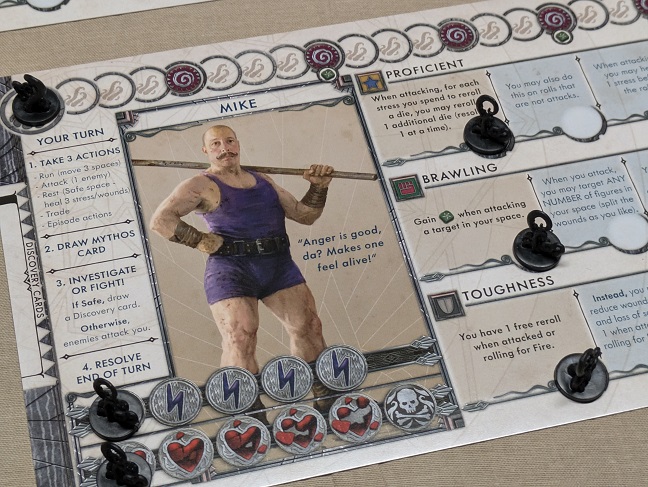
Here's where I land after listening to every voice in the room. The critics who love it REALLY love it: 5-out-of-5 from Mana Worm and Nerdly's hands-on, 4-out-of-5 from Nerdly's overall verdict, and the recurring refrain that the sanity system is "truly one of the best board game mechanisms devised." The skeptics are honest too — Player Elimination, deep into Season 3 fatigue, shrugged that "none of us need another season," and everyone agrees the multi-box line gets cluttered and the dice can wreck a run. Both things are true, and that's the useful part: this is not the game for the table that wants a deep narrative campaign or airtight strategic control. It IS the game for the table that wants a gorgeous, high-energy, genuinely tense co-op you can pull off the shelf, teach in ten minutes, and resolve in one glorious evening of throwing dice at a god's face. It's worth it if 'fist-fighting Azathoth with my friends' makes you grin — and if that sentence did nothing for you, buy Eldritch Horror instead, with my blessing. For everyone still grinning: yes. Buy the core. Lose your mind on purpose. Kill the god.
The sanity system is truly one of the best board game mechanisms devised — it both enhances the potency of your character while bringing you closer to extinction.
What experienced tables keep reporting
Recurring owner patterns, synthesized in Puzzlewick's words. Follow each evidence trail to read the original discussion.
In proper Ameri-trash fashion, we are fist-fighting ancient, incomprehensible gods by throwing swelling handfuls of dice at them.
The sanity system is truly one of the best board game mechanisms devised, for it both enhances the potency of your character while also bringing you closer to extinction.
Read the evidence: Player Elimination — Staring Back at Madness
As always with a CMON game, and in particular a Cthulhu: Death May Die product, the miniatures quality is superb.
Read the evidence: Nerdly — Cthulhu: Fear of the Unknown review (4/5)
This is two-fisted pulp Cthulhu, not research and investigation Cthulhu.
Read the evidence: Tabletop Bellhop — Cthulhu: Death May Die review
If that means punching Cthulhu right in his squid face, then so be it! Sanity can not be recovered; what has been experienced cannot be forgotten.
Read the evidence: Northern Dice — Punching Cthulhu in his Tentacles
None of us need another season of Death May Die, particularly one with some underbaked ideas and additional clutter.
Read the evidence: Player Elimination — Staring Back at Madness (the skeptical view)
Taking insanity and upgrading your skills unlocks some game-changing abilities, such as attacking from several rooms away, attacking multiple enemies at once, free re-rolls, and gaining extra dice for the rest of the game.
Read the evidence: Meeple Mountain — Cthulhu: Death May Die review
This game is more 'run like hell and pray everything works out' rather than playing too safe and slow.
Read the evidence: Dice n Board — Cthulhu: Death May Die guide
The picks
Some links below are affiliate links — as an Amazon Associate, Puzzlewick earns from qualifying purchases, at no extra cost to you. It never changes a pick.
 5 photos
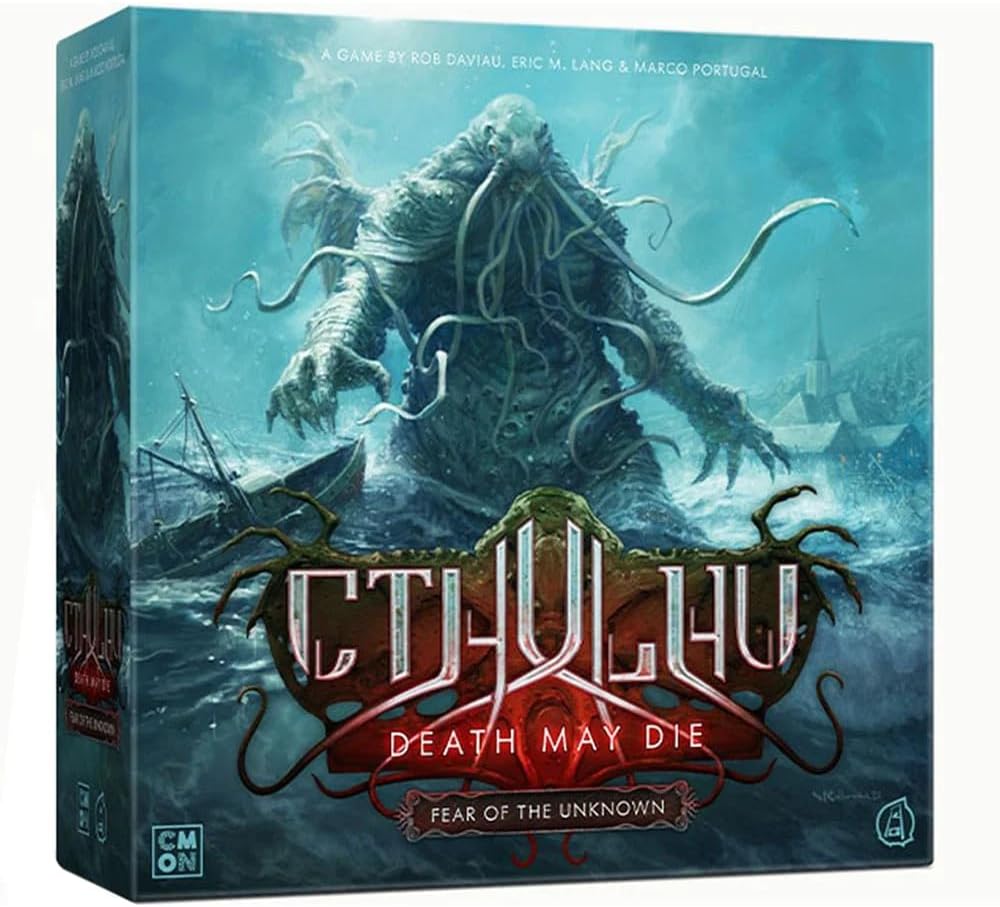
 Cthulhu: Death May Die — Fear of the Unknown (Core)
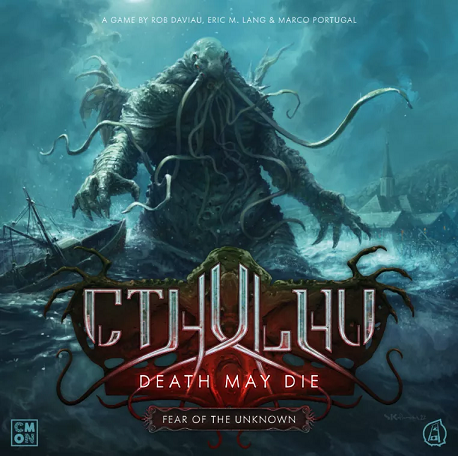
This is the box to start with: a self-contained game (effectively Season 3) with 10 investigators, 6 episodes, and two Great Old Ones — Tsathoggua and Azathoth — plus new Relics and Unknown Monsters. The sanity-as-power engine is intact and as sharp as ever ('one of the best board game mechanisms devised'), the sculpts are painter-bait, and you can teach it in ten minutes and finish in an evening. Reviewers split only on whether the series needs MORE seasons — not on whether the game is good. It is. Any Episode and Elder One you later add will combine with this box.
- Standalone — complete game in one box, no other purchase needed
- Two gorgeous new Great Old Ones (Tsathoggua, Azathoth) plus fresh monster sculpts
- The signature inverted-sanity mechanic that powers you up as you go mad
- Teaches in ~10 minutes; lighter set-up/tear-down than Arkham Horror; scales 1–5 with no extra rules
- Leans slightly on series familiarity; the broader multi-box line gets cluttered
- Chunky minis crowd busy map tiles, and a cold streak of dice can sink a run
At a glance
| box | amazon asin | type | needs a core | investigators | episodes | elder ones | best for |
|---|---|---|---|---|---|---|---|
| Fear of the Unknown (Core) | B0C18YL722 | Standalone core (≈ Season 3) | No — complete game | 10 | 6 | 2 (Tsathoggua, Azathoth) | New players — the modern on-ramp |
| Season 2 | B07Z7D443R | Expansion | Yes — needs a core box | 10 | 6 | New monster figures + new gods/locations | Owners expanding — heroes play with S1 & S2 missions |
| Season 1 (original 2019) | verify before buying | Standalone core | No — original complete game | Original roster | Original episodes | Includes Hastur (a fan-favorite sculpt) | Collectors / the original starting point |
| Eldritch Horror (Fantasy Flight) | different game | Standalone — globe-trotting strategic co-op | No | 1–8 players | Mystery/scenario driven | Ancient Ones to prevent | Long, strategic, story-rich nights (NOT a dice-chucker) |
| Mansions of Madness 2E (Fantasy Flight) | different game | Standalone — app-driven crawl | No (companion app required) | 1–5 players | Branching app scenarios | Atmospheric, tactical horror | Story-first explorers who want mystery over combat |
Questions, answered
What is Cthulhu: Death May Die?
A 1–5 player cooperative dice-combat board game from CMON, designed by Eric M. Lang and Rob Daviau. You play 1920s investigators who complete a cult's ritual to summon an Elder One into our world weakened — then kill it. Games run about 90–120 minutes, ages 14+.
Why do you 'go insane' in the game?
Each investigator has a Sanity Track that only goes down and can't be healed. Crossing insanity thresholds is a benefit — it levels up your skills, granting extra dice and powerful abilities. The catch: reaching the end of the track (the skull) kills your investigator. You want to go a little mad for power, but not too far.
How does an episode play out?
You pair an Episode (map + ritual + rules) with an Elder One (the boss). On your turn you take a few actions and roll dice to fight. First you disrupt the ritual by hitting objectives on the map; then the Elder One is summoned to the board and every turn becomes a fight for survival until you defeat its final stage.
How do you win — and how do you lose?
You win by defeating the Elder One's Final Stage. You lose if any investigator reaches maximum insanity and dies before the ritual is disrupted, which causes the whole team to lose. Manage the insanity track carefully across the group.
Is 'Fear of the Unknown' standalone, or do I need another box?
It's standalone — a complete game in one box (effectively Season 3) with 10 investigators, 6 episodes, and two Great Old Ones. You don't need any other purchase to play. It's the easiest modern starting point.
Is Season 2 standalone?
No. Season 2 is sold as an expansion — its Amazon listing is titled 'Season 2 Board Game Expansion.' It adds six episodes and ten investigators that combine with a core box, but it isn't a complete game on its own.
How do the cores and Seasons combine?
The line is fully modular: any Episode can be paired with any Elder One you own, and heroes mix across sets (Season 2's investigators play with Season 1 missions, for example). Start with a standalone core, then add Seasons for more gods, heroes, and maps that all interlock.
How many players, and does it work solo?
1 to 5 players, and it scales without separate rules — Mythos card timing adjusts to player count, so solo and five-player games are tuned to be equally challenging. It's well-regarded as a solo experience.
How long does a game take and how hard is it to learn?
About 90–120 minutes per game. The rules are 'surprisingly straightforward,' with scenario-specific exceptions printed right on the cards, so most groups can teach it in roughly ten minutes. Set-up and tear-down are lighter than Arkham Horror.
What's the best strategy to win my first hunt?
Move with urgency to disrupt the ritual objectives fast (the Mythos deck is a ticking clock), cross your early insanity thresholds on purpose to bank dice and abilities, build a party with mixed roles and focus-fire, and save your skill-granted re-rolls and bonus dice for the swings that matter — key objectives and boss stages, not trash mobs. Don't let a near-skull teammate take fatal risks before the ritual is broken.
How does it compare to Eldritch Horror or Mansions of Madness?
Death May Die is 'two-fisted pulp Cthulhu, not research-and-investigation Cthulhu.' Eldritch Horror is a long, strategic, world-spanning co-op; Mansions of Madness 2E is an app-driven, atmospheric crawl. Death May Die is the fast, confrontational one — teach in minutes, finish in an evening, and punch the god instead of solving the mystery.
Is it worth buying?
If you want a gorgeous, high-energy, tense co-op you can teach fast and finish in one evening, yes. Critics range from 4/5 to 5/5 and praise the sanity mechanic and miniatures; the honest caveats are that the multi-box line gets cluttered, dice variance can sink a run, and chunky minis crowd tiles. It's not the pick for a deep narrative campaign — but it's the best 'kill a cosmic god with friends tonight' game on the shelf.
Imani's verdict
Cthulhu: Death May Die is the rare Lovecraft co-op that trades reverence for adrenaline — and absolutely earns it. The inverted sanity mechanic (lose your mind, gain your power, but not too much) is one of the smartest risk/reward dials in the hobby, the minis are CMON at full flex, and the whole thing teaches in ten minutes and resolves in one glorious evening of throwing dice at a god's face. It isn't flawless: the multi-box line sprawls, dice variance can wreck a run, and the chunky sculpts crowd busy tiles. And it is decidedly NOT the game for a table craving deep narrative or airtight strategy — that's Eldritch Horror or Mansions of Madness. But if 'fist-fight Azathoth with my friends tonight' makes you grin, start with the Fear of the Unknown core (Amazon B0C18YL722), go a little mad on purpose, and kill the god. Critics land it between 4 and 5 stars; so do I — a clear, enthusiastic recommendation for the right table.
Research ledger 13 sources · reviewed 2026-07-17
Specifications, rules, current product information, community experience, and contrary evidence were checked against the sources below. Commercial links are kept separate from editorial evidence.
- amazon.comamazon.com/dp/B0C18YL722?tag=puzzlewick-20
- amazon.comamazon.com/dp/B07Z7D443R?tag=puzzlewick-20
- boardgamegeek.comboardgamegeek.com/boardgame/373600/cthulhu-death-may-die-fear-of-the-unknown
- boardgamegeek.comboardgamegeek.com/boardgame/256972/cthulhu-death-may-die-season-2-expansion
- meeplemountain.commeeplemountain.com/reviews/cthulhu-death-may-die
- coopboardgames.comcoopboardgames.com/cooperative-board-game-reviews/cthulhu-death-may-die-review
- playerelimination.complayerelimination.com/2025/02/10/staring-back-at-madness-a-cthulhu-death-may-die-fear-of-the-unknown-review
- manaworm.commanaworm.com/2025/10/21/fear-of-the-unknown-review
- nerdly.co.uknerdly.co.uk/2024/11/11/cthulhu-fear-of-the-unknown-board-game-review
- tabletopbellhop.comtabletopbellhop.com/game-reviews/cthulhu-death-may-die-review
- northerndice.wordpress.comnortherndice.wordpress.com/2020/01/02/cthulhu-death-may-die
- ultraboardgames.comultraboardgames.com/cthulhu-death-may-die/game-rules.php
- boardvsgame.comboardvsgame.com/?q=146021,205059,253344
Okay but have you seen what everyone’s saying about this?

Keep exploring
The next smart rabbit holes.
✦ Topic PathBoard Game Buying Guides: compare the whole shelfStart with the decision, not the shelf. These guides compare the games, editions, expansions, player counts, and costs people...Best Of5 New Board Games Worth Your Next Game Night: Cozy Stories, Clever Cards, and a Proper AdventureImani matches five current tabletop releases to five kinds of evening, with the awkward bits included: permanent stickers, limited...GuideThe 2026 Board Game Hype Test: Which Trending Games Are Actually Worth Your Table?BoardGameGeek Hotness measures attention on BoardGameGeek, not sales and not your future happiness. Robert turns five fast-moving names...