Arkham Horror LCG First Game Guide 2026: Setup, Rules, Skill Tests & Solo Play
Robert turns the rulebook into one playable evening: which Core to open, exactly how to build the table, what every phase does, and the rules that most often spoil a first scenario.


Written and reviewed by Robert Pruitt · how this guide was made
Last editorial refresh: 2026-07-26 Gold-standard QA: 2026-08-13 16 sources reviewed Affiliate links checked during gold-standard pass

The short answer
For a first Arkham Horror LCG game in 2026, buy Chapter Two Core if you want the current evergreen entry, use one unmodified starter deck, follow the scenario setup line by line, and keep the four-phase round and skill-test ladder visible. Play one investigator for the simplest rules load or two-handed solo if you want the full clue-and-combat team puzzle.
Decision map
Choose in thirty seconds
It is Fantasy Flight’s current evergreen Core and future-facing product path.
It remains a complete compatible Chapter One foundation; no replacement purchase is required.
Learn turns and tests before diagnosing deck construction.
True solo is cleaner, while two-handed teaches role coverage.
This is the card you keep beside your first game. Arkham Horror: The Card Game is a cooperative campaign game about investigating locations, managing enemies, passing skill tests, and living with consequences. The rules are learnable; the first setup is what makes the game look harder than it is.
Robert rebuilt the opening evening from Fantasy Flight’s current Chapter Two rulebook, campaign guide, official tutorial path, June 2026 Grimoire, and the questions that keep recurring in beginner discussions. We will not explain the whole library before your first action. We will put the right cards in the right places, teach the heartbeat of a round, and show exactly where a first table usually trips.
Start here, then go deeper
You are in the right cabinet.
 ✒ Universe HubArkham Horror Universe: the whole buying pathStart with the interactive buyer intake: separate the 2026 Chapter Two Core from Chapter One legacy boxes and the entirely...
 ☾ Topic PathCooperative Horror Games: compare the whole shelfCooperative horror works when the rules pressure the story without burying the table. This cluster maps what to buy, how campaigns...
 Strategy GuideArkham Horror LCG Deckbuilding Guide 2026: Roles, Upgrades, Tommy, Marie & Campaign TeamsMargo strips deckbuilding down to jobs, economy, action compression, role coverage, and campaign evidence—then puts the 2026 investigator...
Which Arkham Horror LCG Core should a new player buy in 2026?
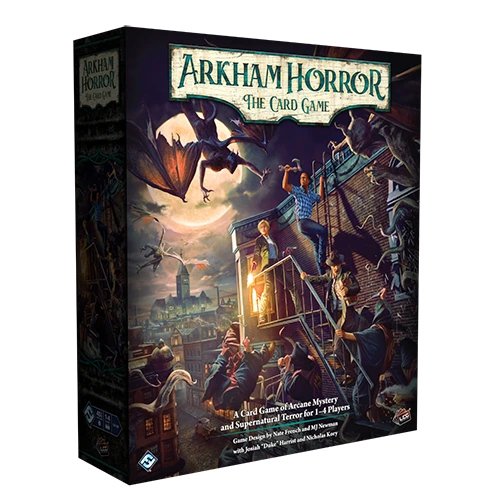
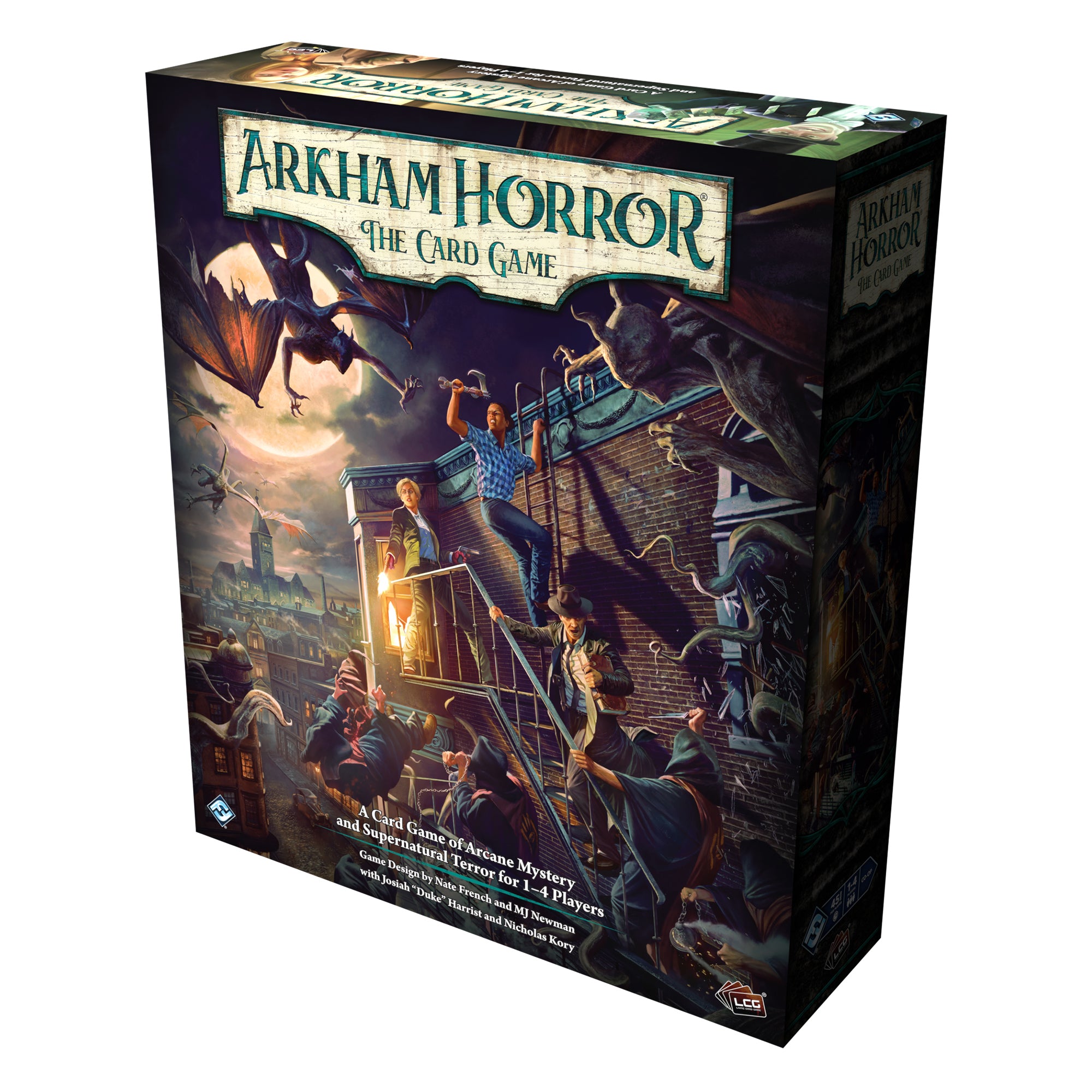
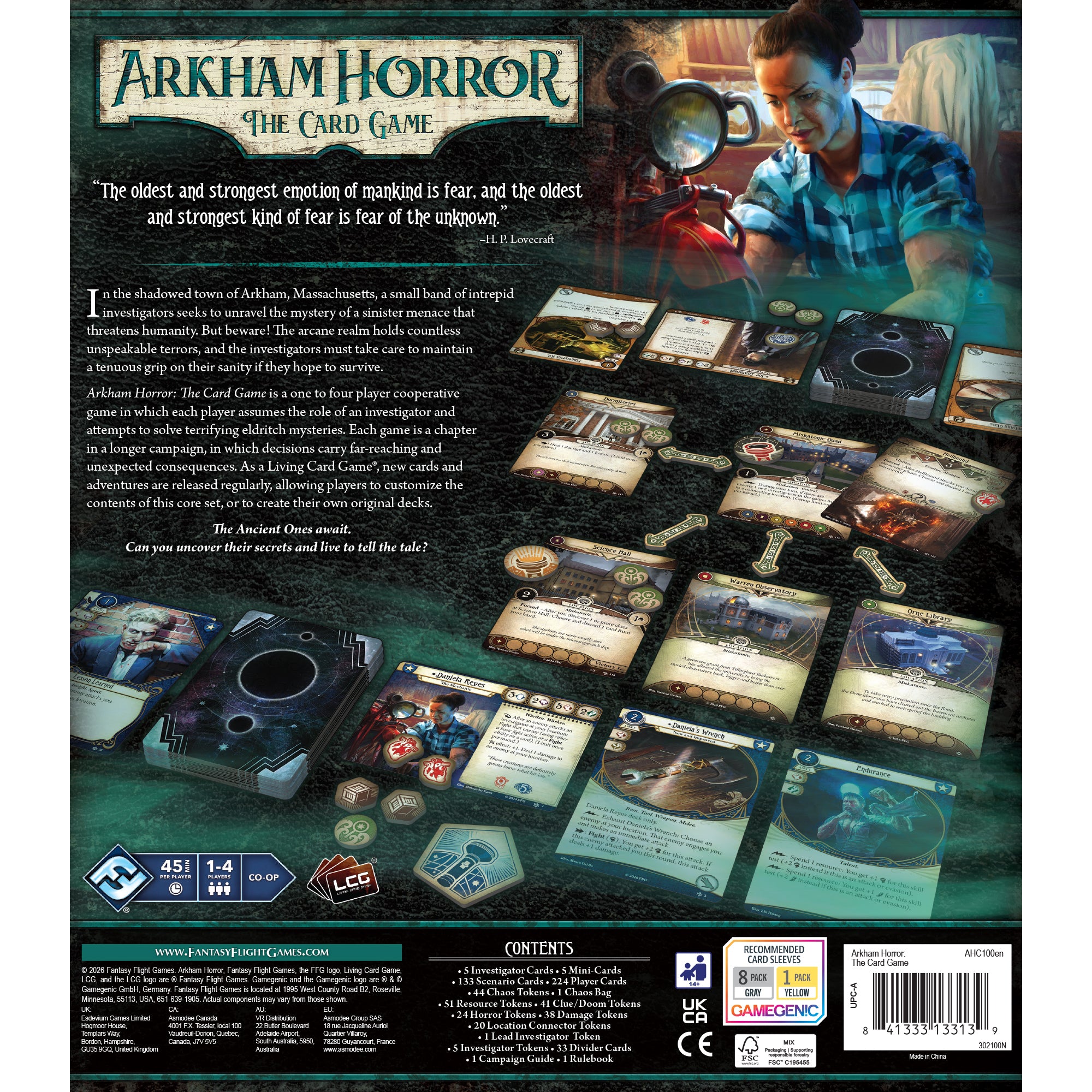
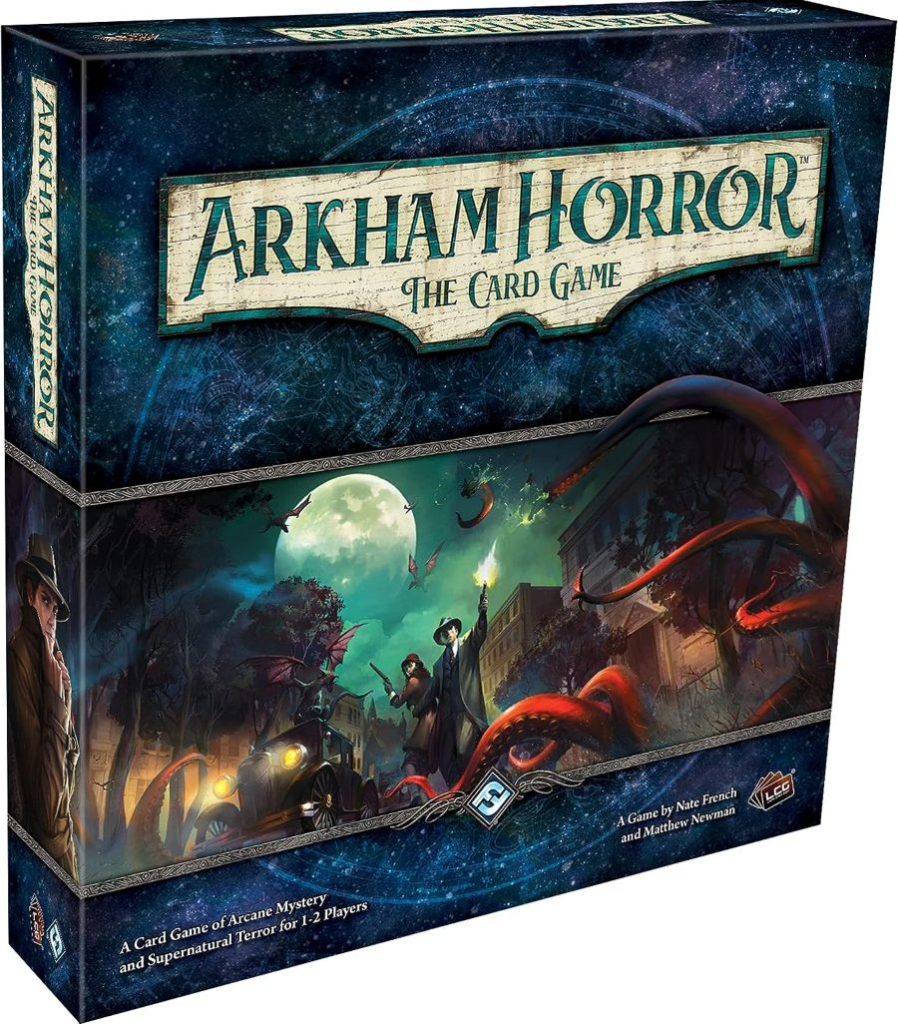
Buy Arkham Horror: The Card Game Chapter Two Core Set if you are starting fresh. Fantasy Flight released it in March 2026 as the current evergreen entry. It contains five investigators, a usable player-card pool, tokens, and the three-scenario Brethren of Ash campaign. It is not a new edition of the rules; it is the new foundation and Current-environment entry point.
If you already own Revised Core, keep it. That box is still fully compatible and remains the cleanest physical foundation for the Chapter One library. Fantasy Flight now calls older releases the Legacy environment, but “legacy” does not mean obsolete. The card backs, core rules, and campaign model still work together.
The practical fork is simple: Chapter Two for a new collection, Revised Core for an existing Chapter One collection. Do not buy both before you know you want both eras.
What is inside the Chapter Two Core box?
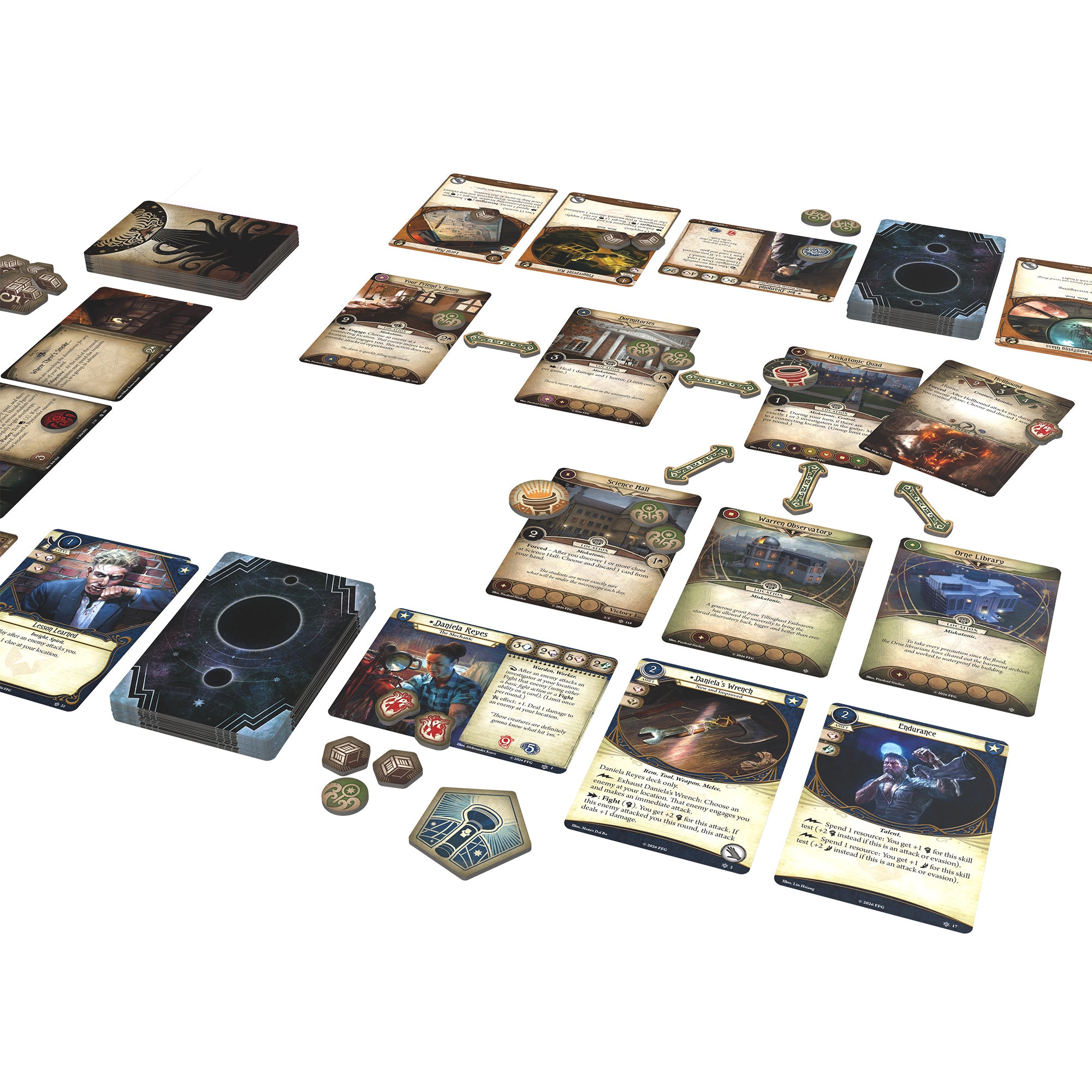
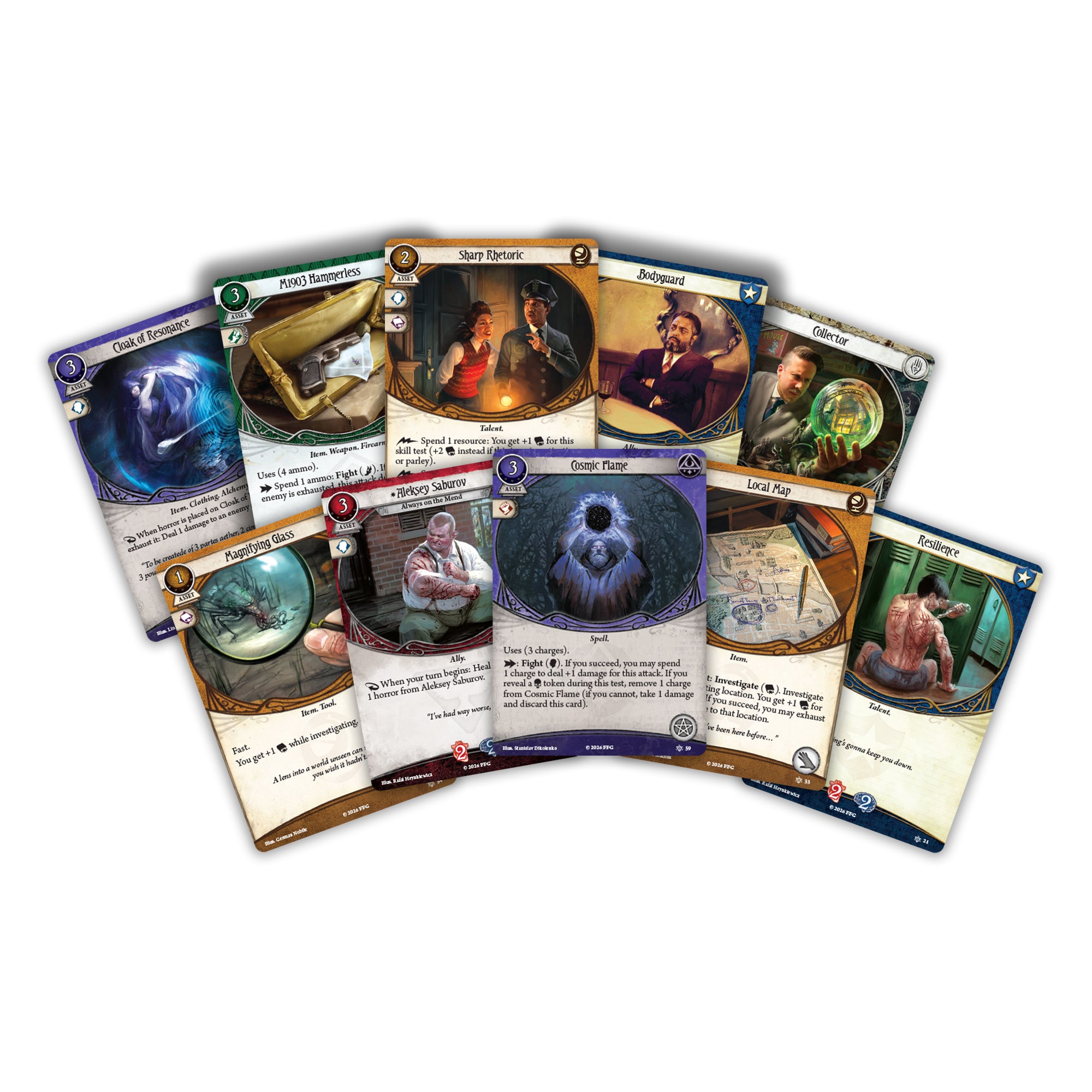
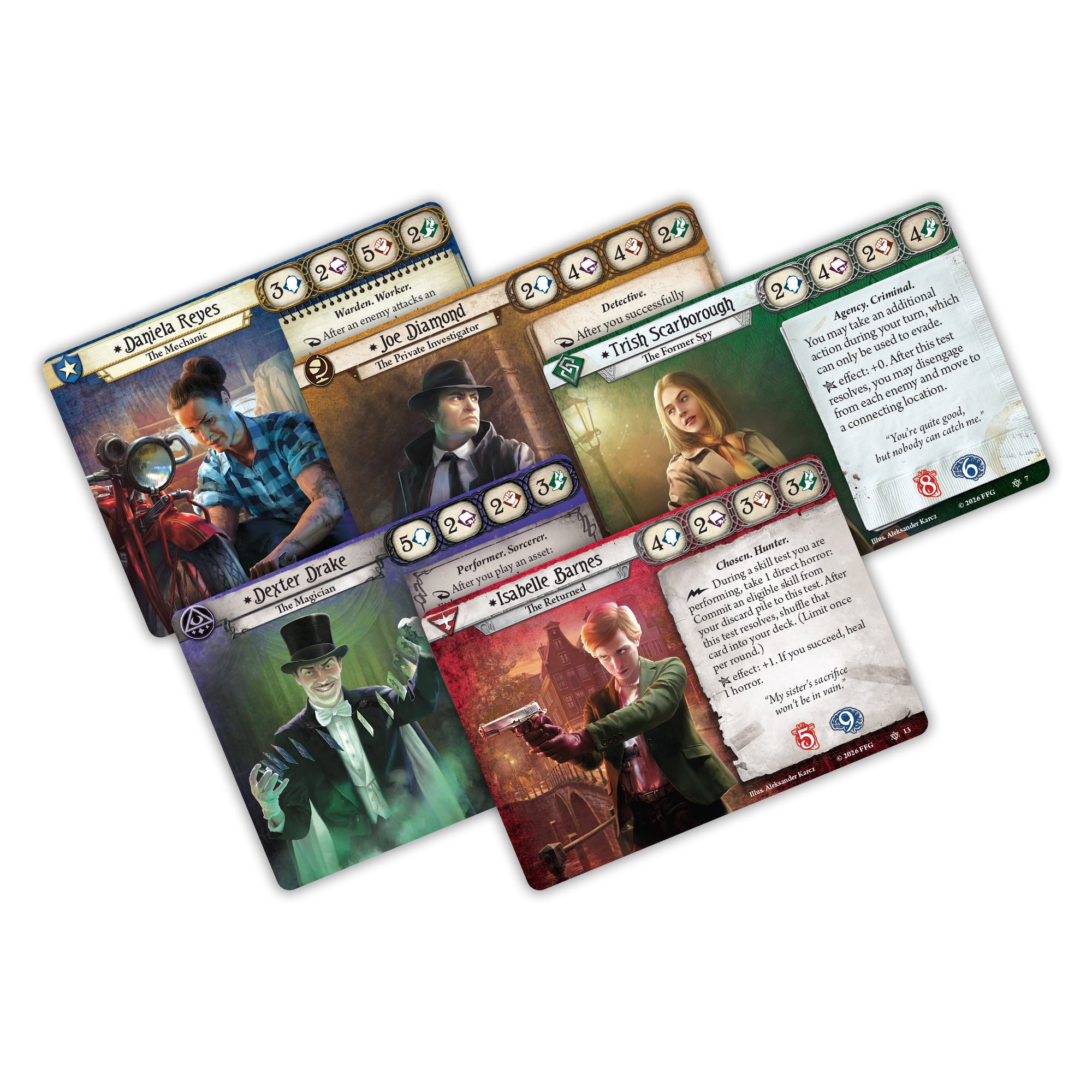
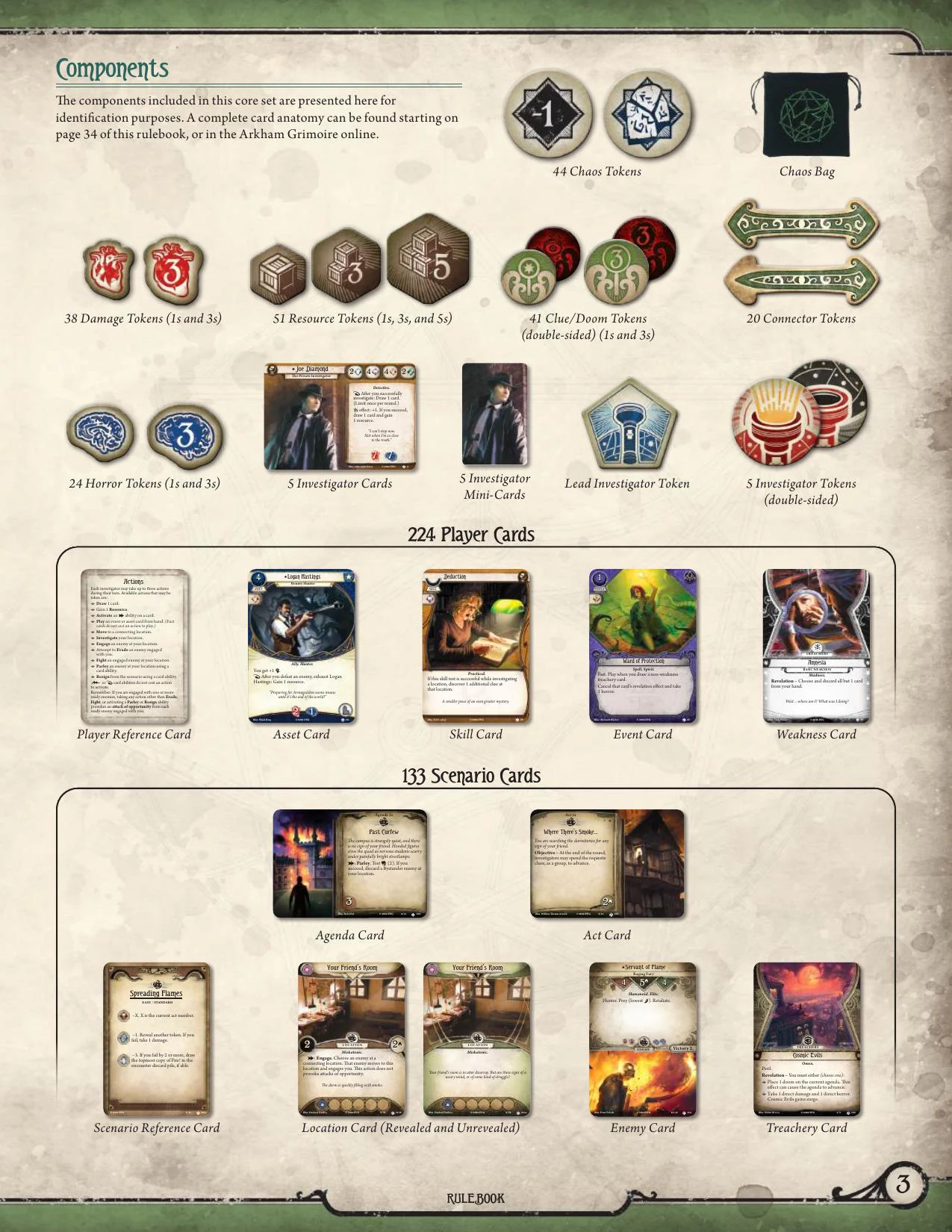
The box gives one to four players the physical foundation: investigator mini cards, investigator and player cards, scenario cards, locations, act and agenda decks, encounter cards, health and sanity resources, clues and doom, and the chaos bag tokens used by every test. The campaign guide supplies the exact setup and story resolutions.
Before sorting by art or color, separate the three jobs: player cards build investigator decks, scenario cards create the current case, and core components are reused every game. Keep encounter sets together by the small set symbol at the bottom of the card. That symbol is more useful than the card title when the setup list asks you to find a packet.
How do you set up the first scenario?
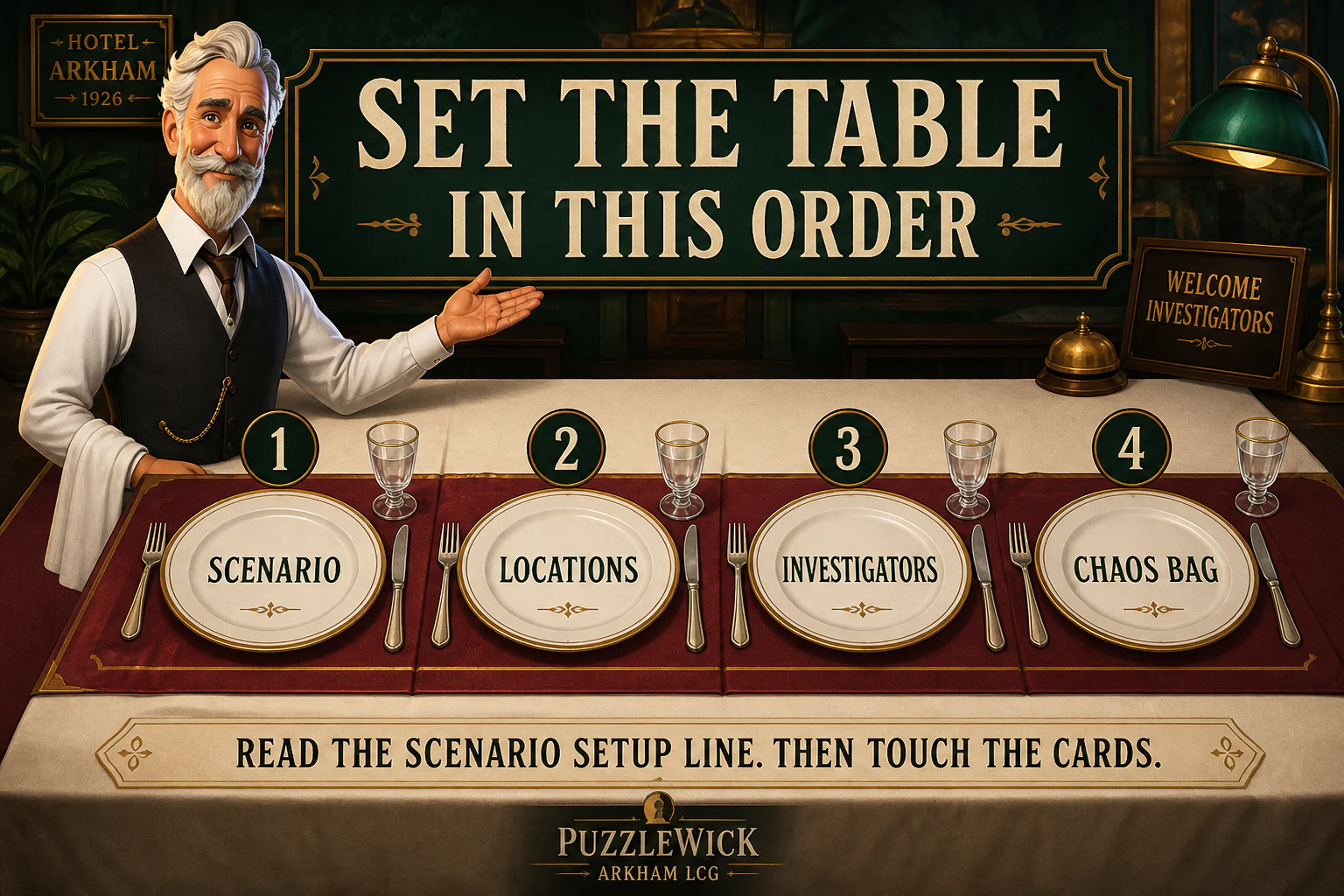
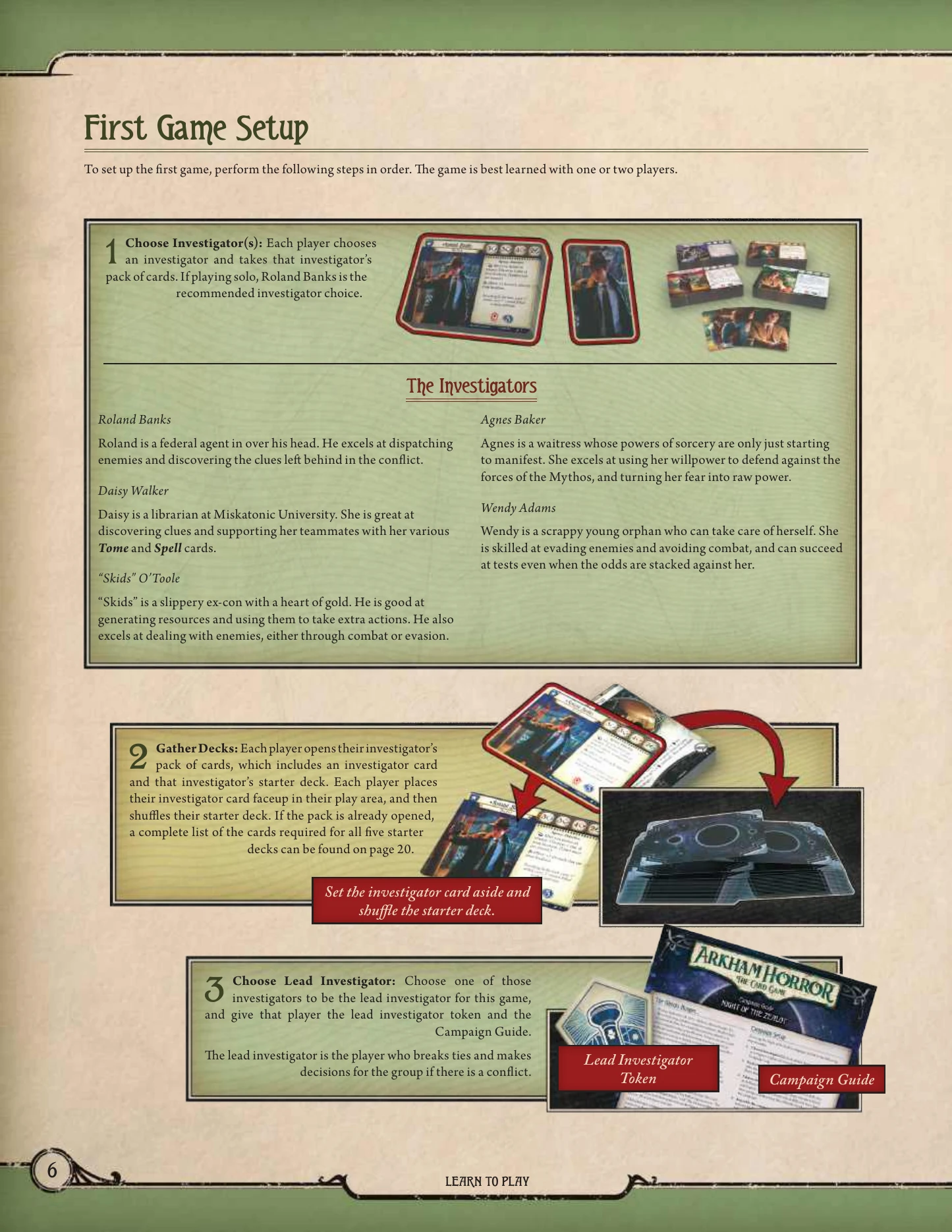
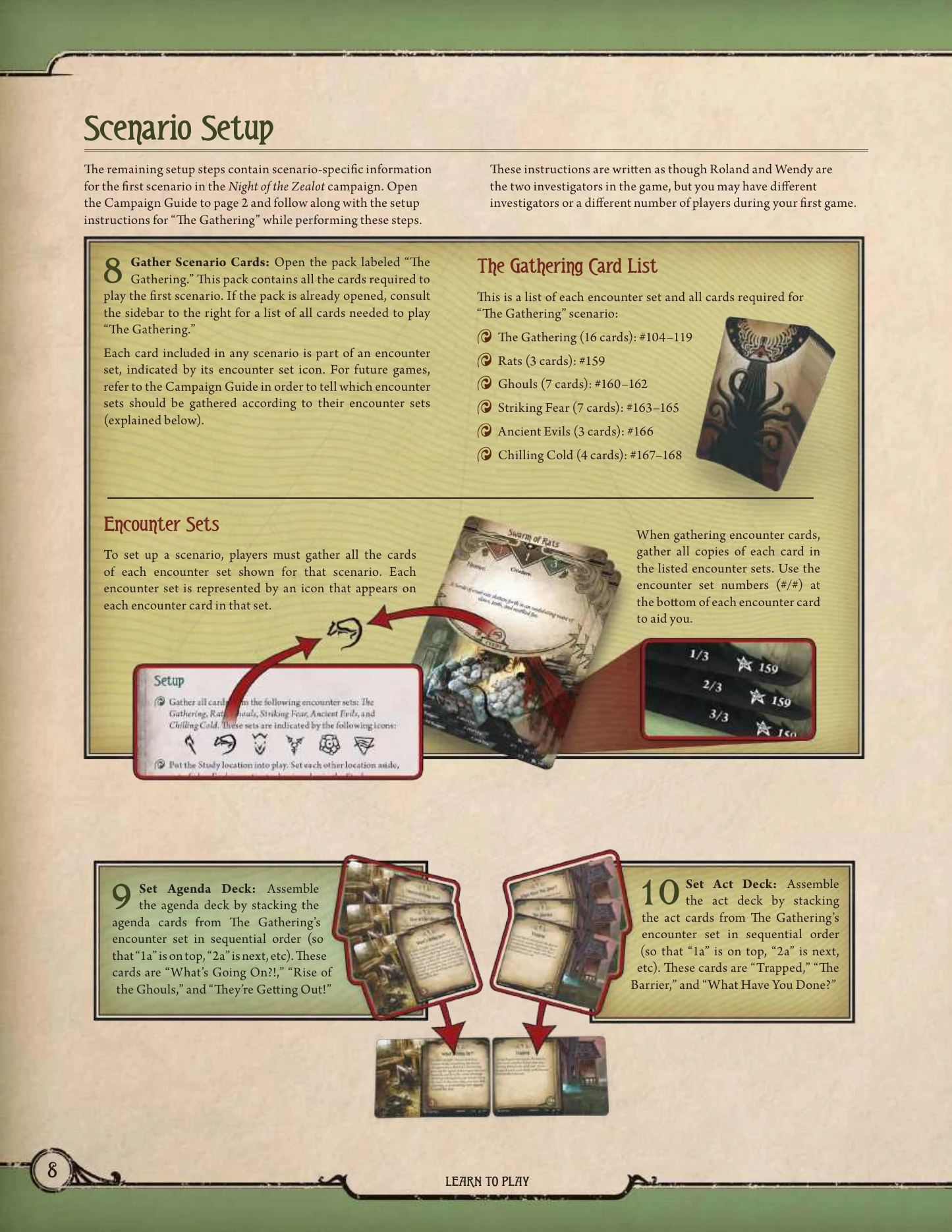
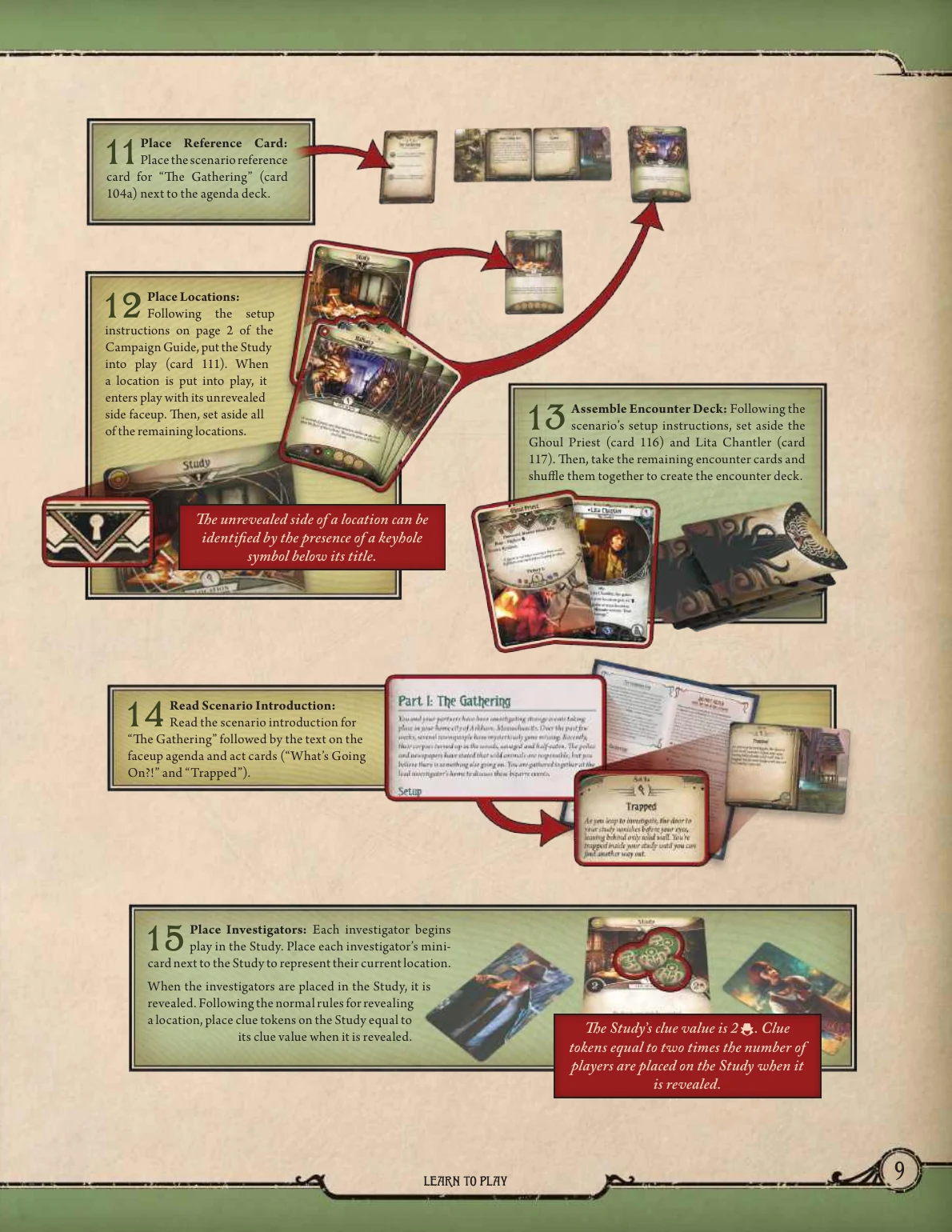
Use the campaign guide, not a photograph of somebody else’s table. Choose the campaign and scenario, read only the setup section, gather every named encounter set by symbol, place the act and agenda in their starting state, build the location map exactly as instructed, then assemble the chaos bag for the chosen difficulty.
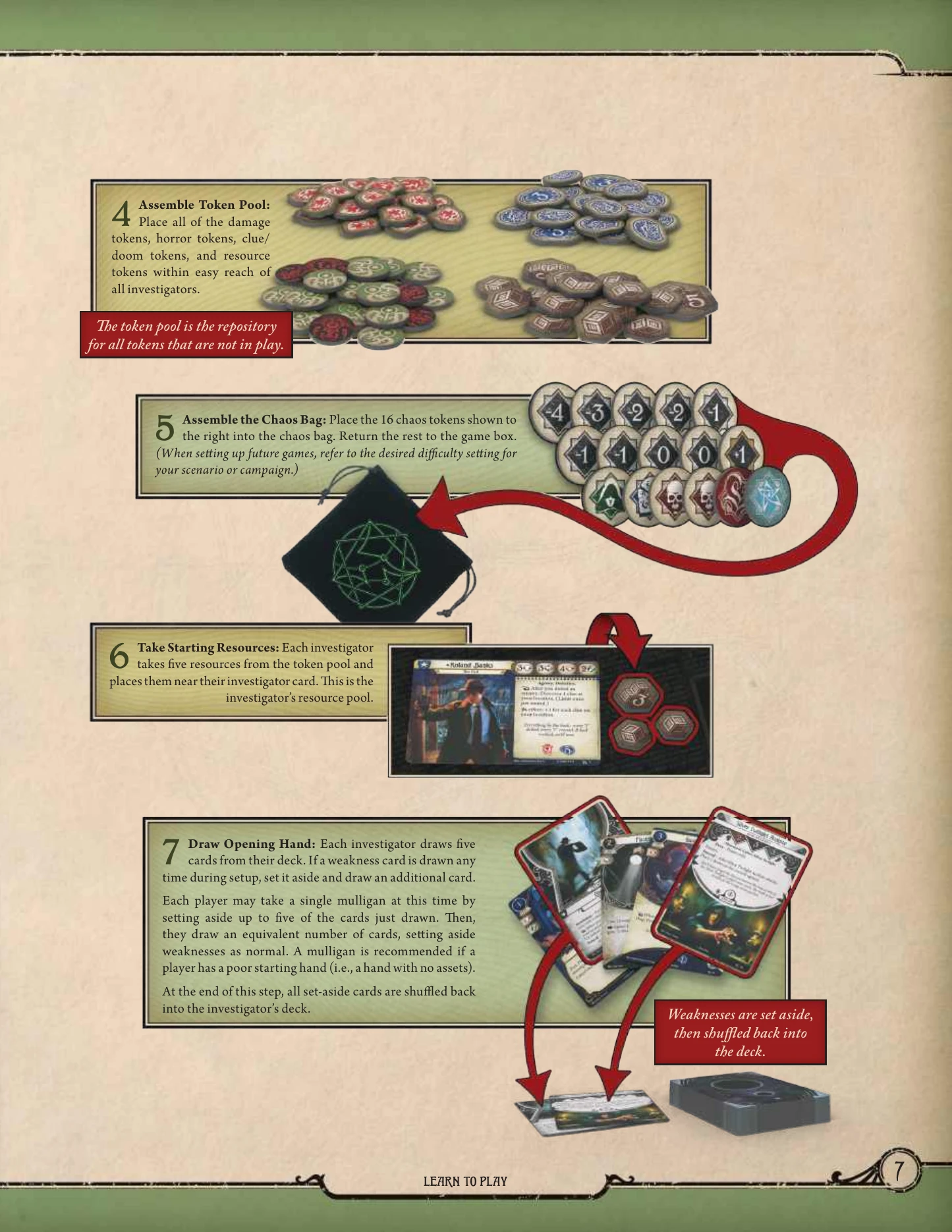
Each investigator chooses a legal deck and reads both sides of the investigator card. Put the mini card at the stated starting location. Take five resources and draw five opening cards. Perform one mulligan: set aside any unwanted non-weakness cards, draw replacements, then shuffle the set-aside cards back into the deck. Weaknesses drawn during setup are handled according to the rules rather than casually redrawn.
- Choose campaign and scenario.
- Gather named encounter sets by symbol.
- Place act, agenda, locations, encounter deck, and tokens.
- Build the chaos bag for the chosen difficulty.
- Choose investigator and legal deck.
- Take five resources, draw five cards, and mulligan once.
What goes where on the table?
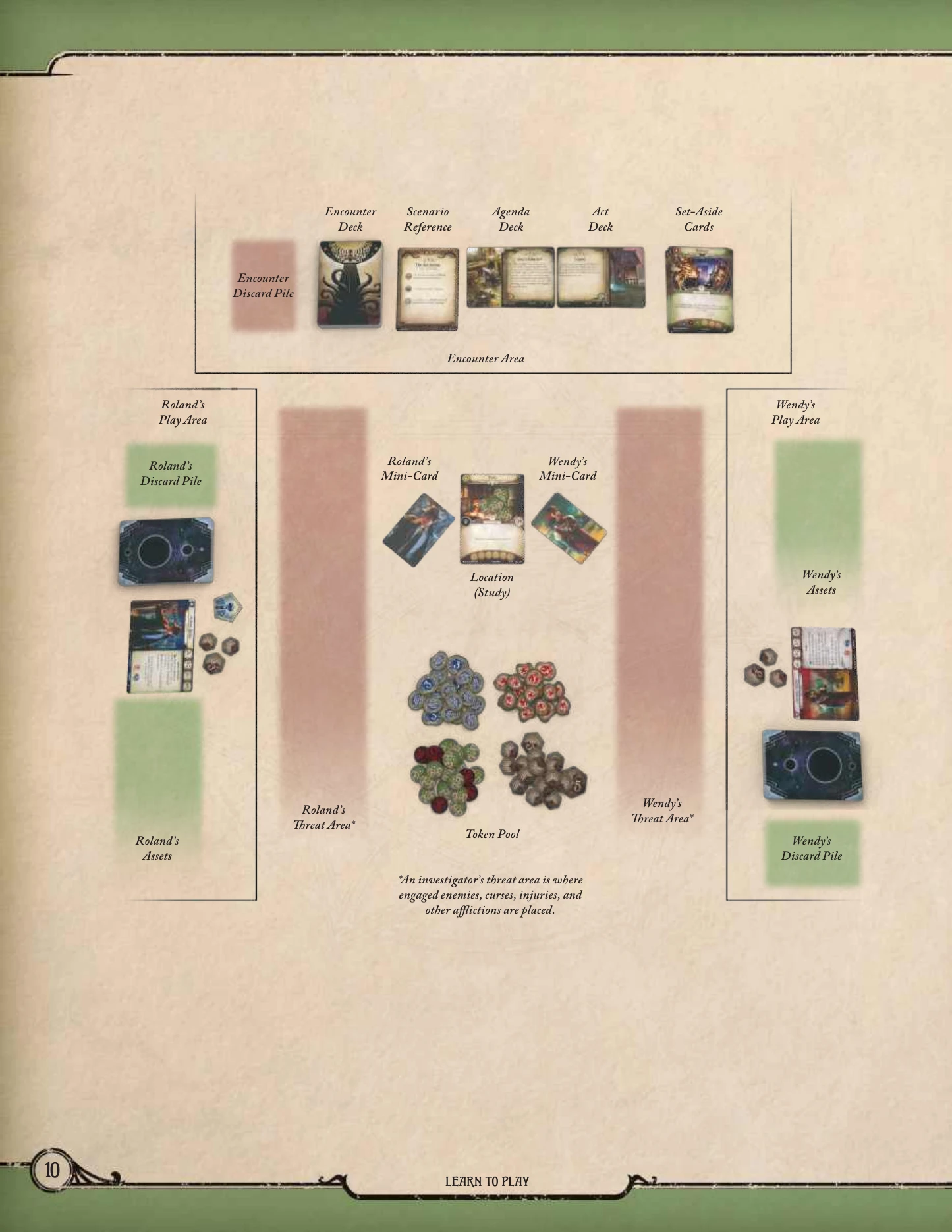
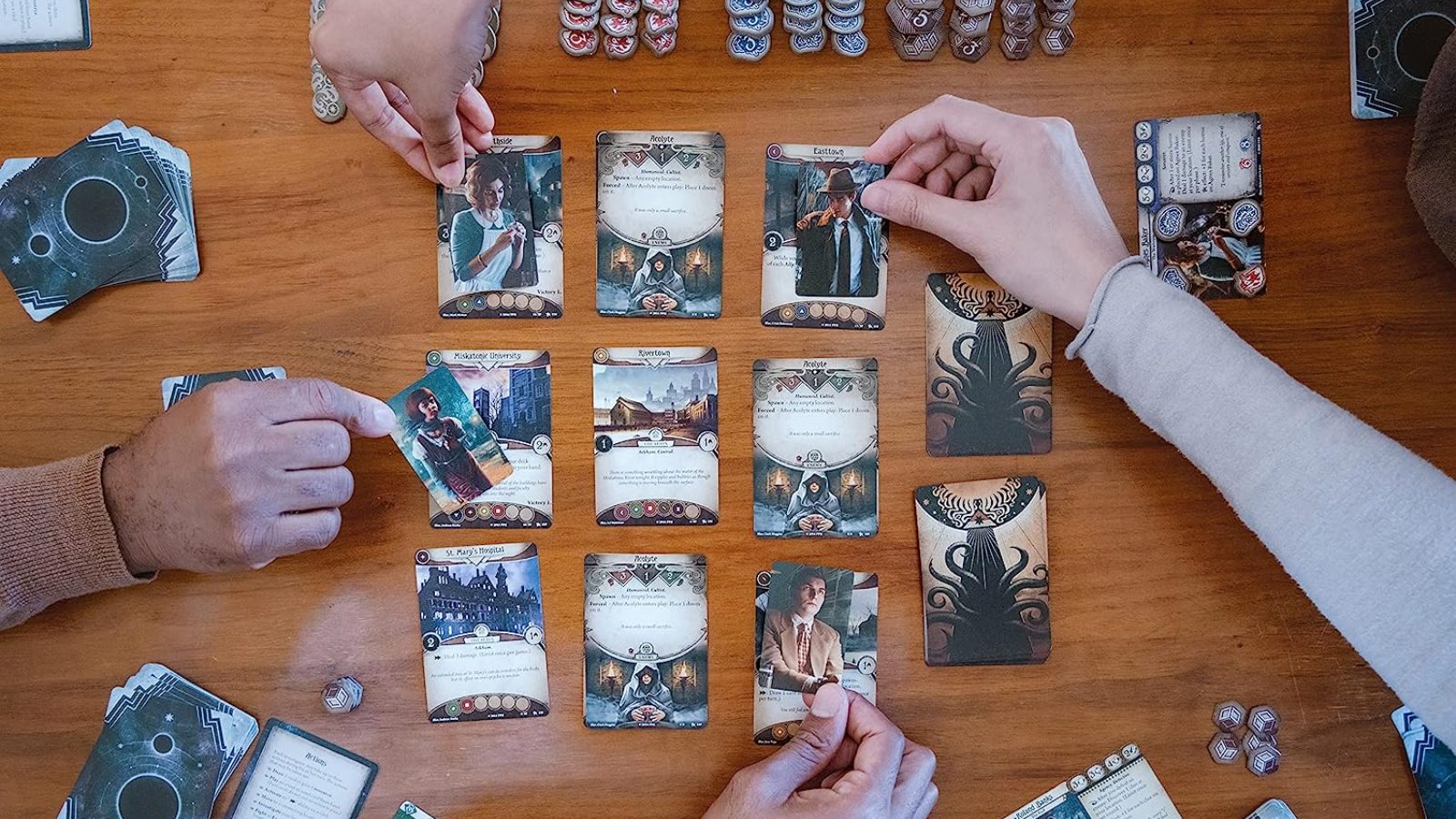
Think of the table as three zones. The scenario zone holds the act, agenda, encounter deck, and location map. Each investigator zone holds a deck, discard pile, investigator card, resources, and assets. The shared edge holds damage, horror, clues, doom, and the chaos bag.
Put the act and agenda where every player can read their thresholds. Leave space around locations because enemies, clues, and investigator mini cards will accumulate there. Keep each investigator’s threat area distinct; enemies and treacheries there are not communal decoration. The clean layout prevents timing mistakes because the physical location of a card tells the table who controls the problem.
How does a round work?
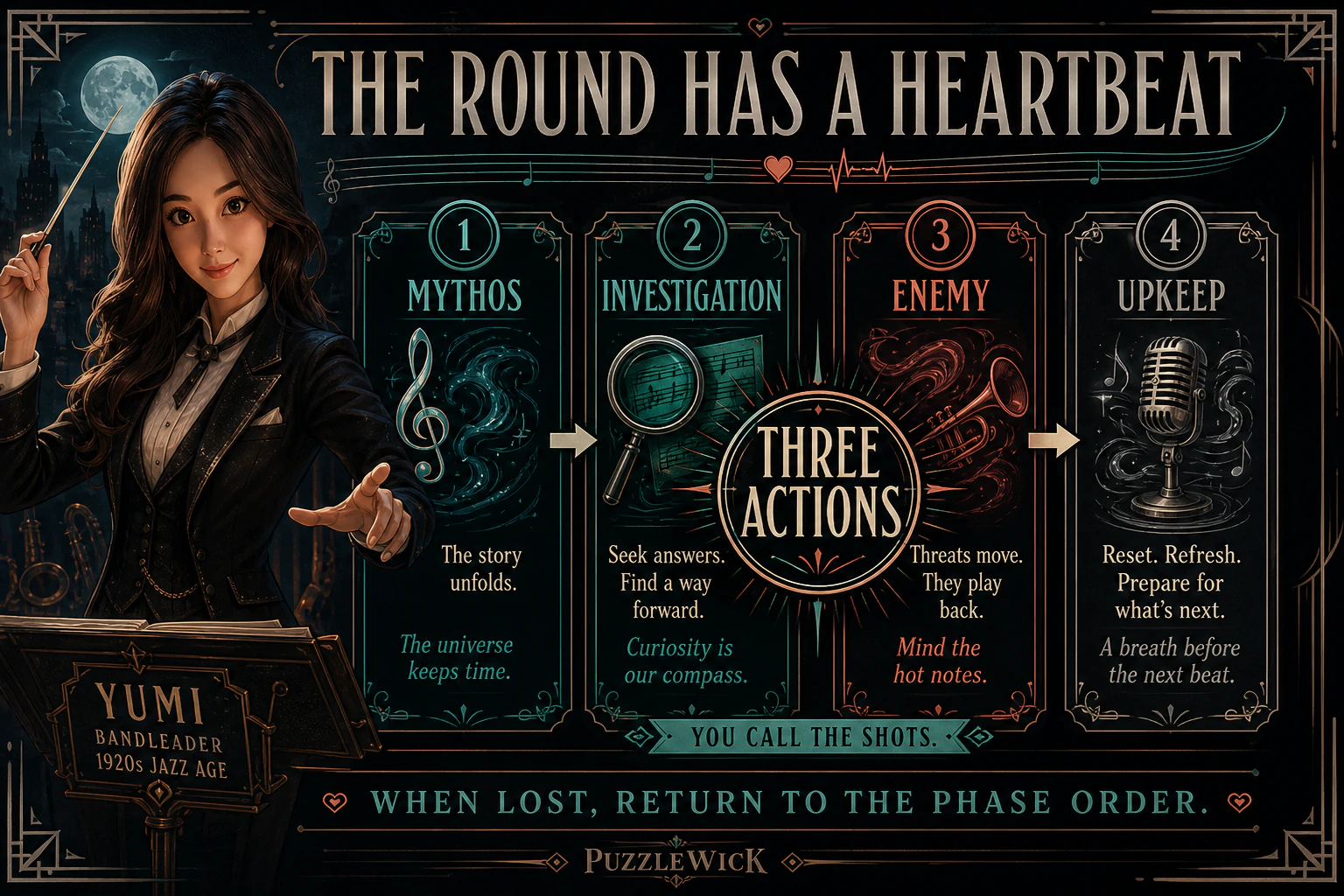
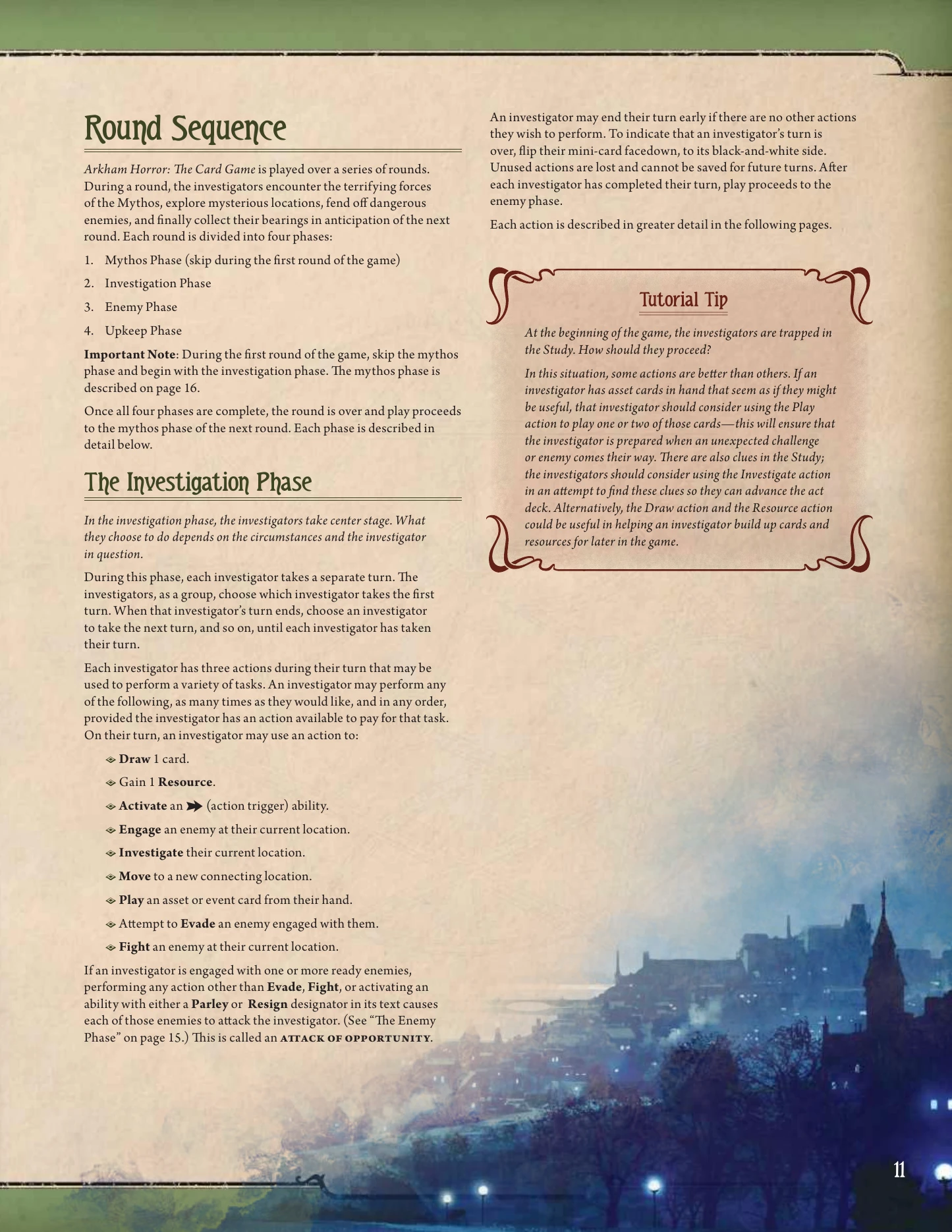
After the first-round exception, each round follows four phases. In the Mythos phase, place doom, check the agenda threshold, and have each investigator draw and resolve one encounter card. In the Investigation phase, investigators take turns and each gets three actions. In the Enemy phase, Hunter enemies move and engaged ready enemies attack. In Upkeep, ready exhausted cards, draw one card, and gain one resource.
The investigators choose their order in the Investigation phase, and that order may change every round. Let the clue lead wait while the fighter clears an enemy. Let the support investigator move first if a boost must arrive before a difficult test. “Whose turn?” is a tactical question, not a seating chart.
How do skill tests and the chaos bag work?
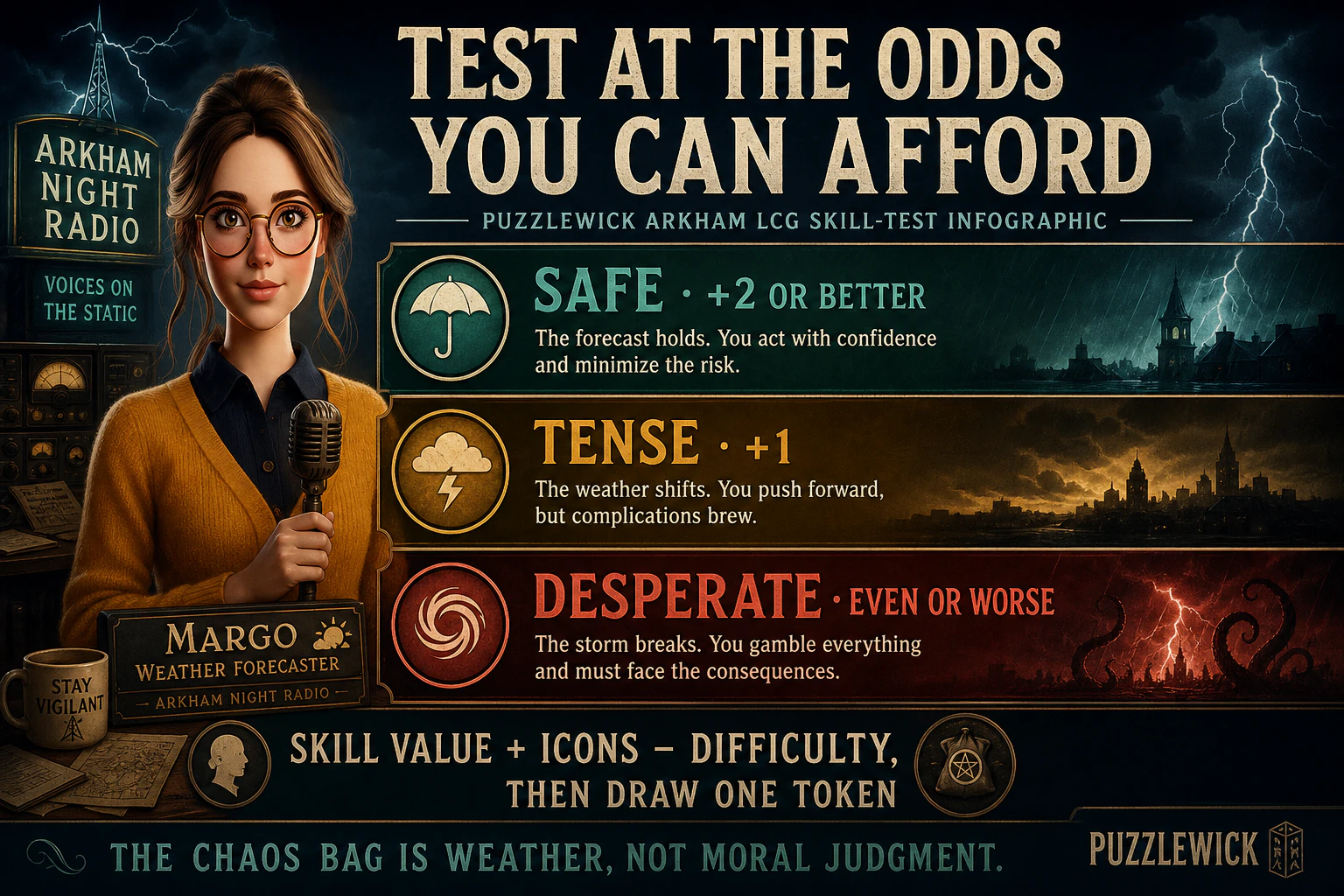
A skill test names one of four skills: willpower, intellect, combat, or agility. Start with the investigator’s value, add eligible icons from committed cards and active bonuses, reveal one chaos token, resolve its modifier or symbol text, then compare the final total with the difficulty. Equal or higher succeeds.
Only commit cards that are legal for the test. Another investigator at your location may usually commit one card to your test; the investigator taking the test may commit any legal number. The auto-fail token makes the test fail regardless of total, so a giant commitment can reduce ordinary risk without removing all risk.
The bag is not a memory contest. Keep the scenario reference card visible because its symbol effects can change with difficulty and scenario state.
Which actions cause attacks of opportunity?

An investigator gets three actions and may move, investigate, draw, gain a resource, play a card, activate an action ability, engage, fight, evade, parley, or resign when allowed. While engaged with one or more ready enemies, taking an action other than fight, evade, parley, or resign provokes an attack of opportunity from each engaged ready enemy.
That means drawing a card, gaining a resource, moving away, investigating, or playing most assets can be brutally expensive while engaged. Deal with the enemy or have a teammate engage it away first. Also remember that attacking an enemy engaged with another investigator can damage that investigator if the attack fails. Arkham permits heroism; it invoices carelessness.
Should your first solo game use one investigator or two?
Use one investigator if your priority is learning timing and card anatomy. You manage one hand, one threat area, and three actions. Choose a flexible investigator with a credible clue plan and a credible enemy plan.
Use two investigators if your priority is learning the game’s team puzzle. One deck can lean toward clues while the other controls enemies. Two-handed solo is more administration, but it smooths the extremes of true solo and makes scenario pacing resemble multiplayer.
For the first scenario, do not optimize both decks between every action. Play open-handed, narrate triggers, and use a simple token or coin to mark which investigator has finished the turn. The second hand should add tactical possibility, not bookkeeping fog.
What should you do when a rule is unclear?

Resolve the immediate question from the physical rulebook or the latest Arkham Grimoire. If the answer still is not clear, choose a reasonable temporary ruling, write the question down, and keep playing. A ten-minute forum search in the middle of a scene costs more atmosphere than one reversible mistake.
For a guided watch, Fantasy Flight’s official beginner page links Watch It Played’s full tutorial. For deck and campaign bookkeeping, Arkham Cards is excellent, but the physical act, agenda, scenario reference, and investigator cards remain the live table’s source of truth.
What should you buy after the first game?
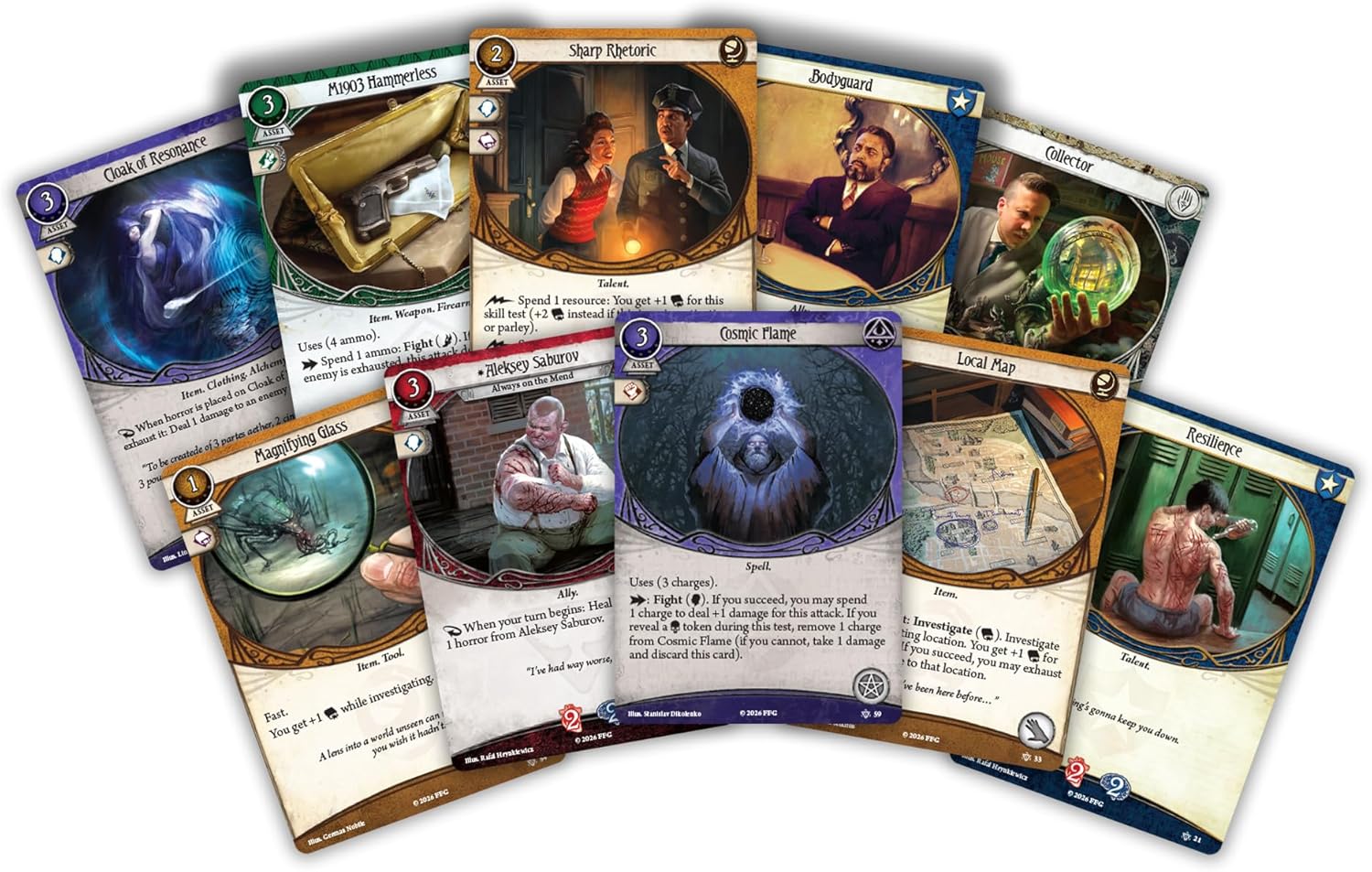

Nothing until you finish the Core campaign. If the group loved the story and wants a larger arc, choose one Campaign Expansion. If the group loved building decks, add one current investigator deck such as Tommy Muldoon or Marie Lambeau. Do not buy a random old Mythos Pack: the legacy release model split campaigns across a deluxe box and six packs, and a single orphan pack is not a campaign.
Continue with Volume II: Deckbuilding and Campaign Teams when your first question changes from “what can I do?” to “what should this deck do?”
The picks
Some links below are affiliate links — as an Amazon Associate, Puzzlewick earns from qualifying purchases, at no extra cost to you. It never changes a pick.
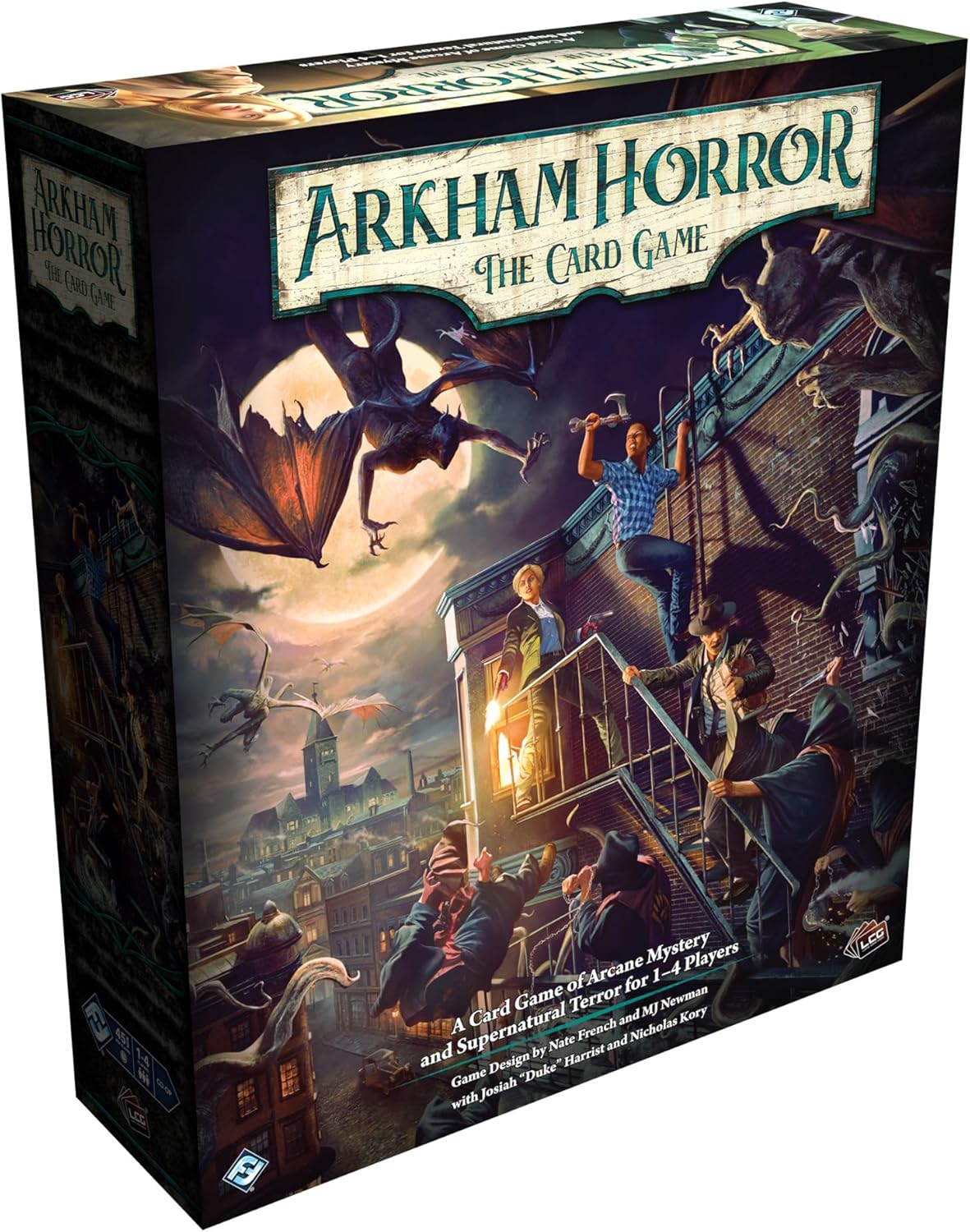
Arkham Horror: The Card Game Chapter Two Core Set
The clean current Core: five investigators, foundational player cards, reusable components, and the three-scenario Brethren of Ash campaign.
- Current evergreen entry
- One-box first campaign
- Future-facing investigator and campaign ecosystem
- Legacy campaigns may need official substitution or print-and-play bridges
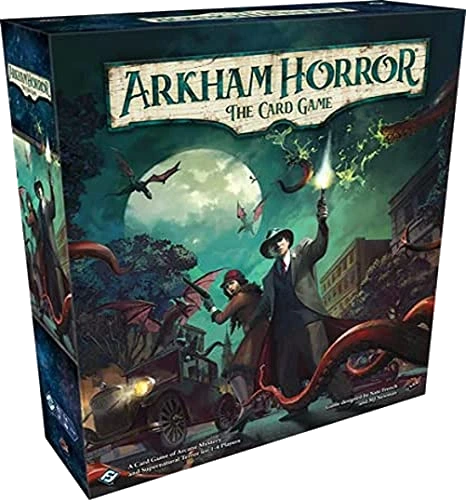
Arkham Horror: The Card Game Revised Core Set
Still a complete compatible foundation with the original five investigators and Night of the Zealot; no need to replace it merely because Chapter Two exists.
- Complete Chapter One foundation
- Duplicate staples in one box
- Direct compatibility with legacy campaigns
- Not the current release path for a brand-new collection
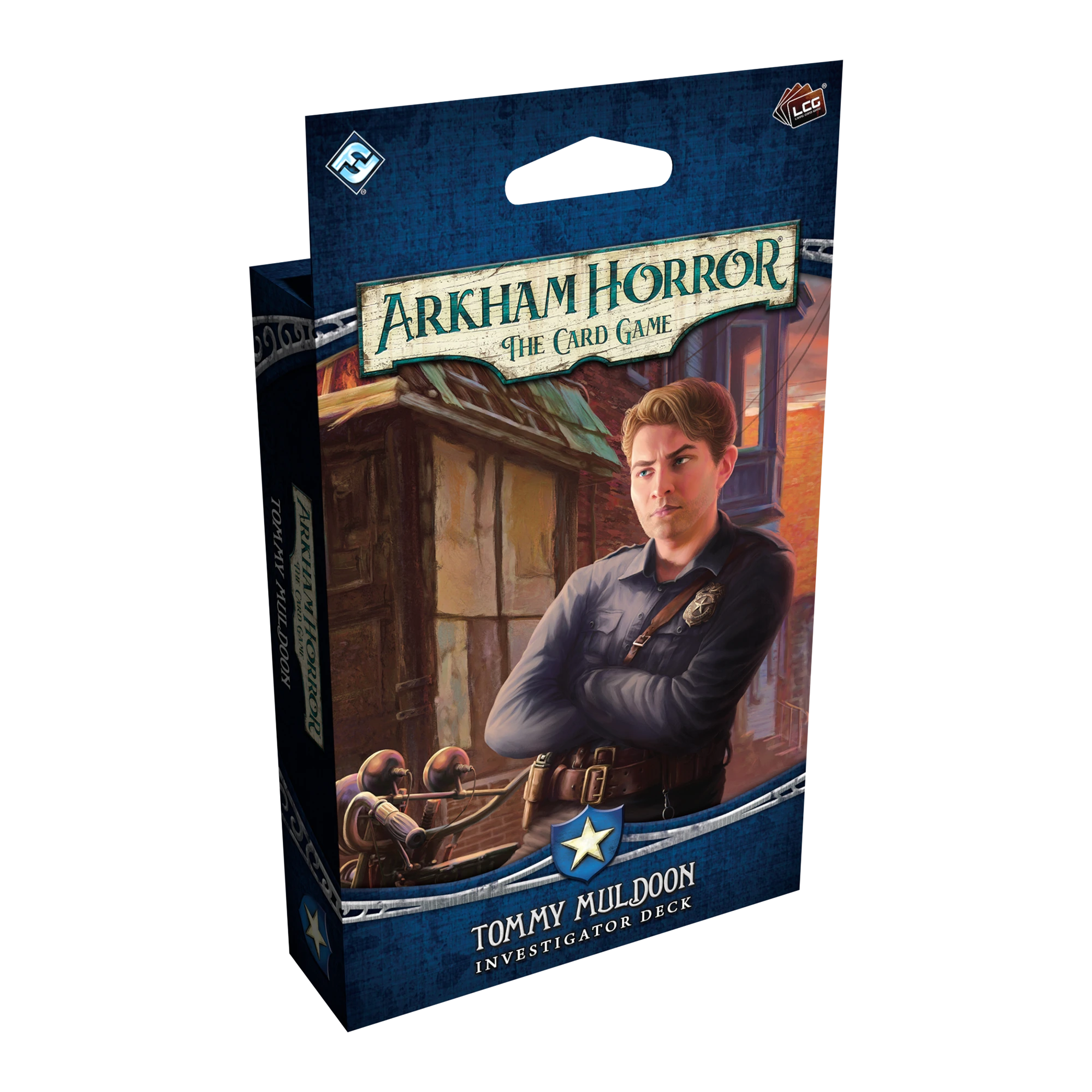
Tommy Muldoon Investigator Deck
A current ready-to-play investigator deck with upgrade options. Add it after the Core if Guardian teamwork is the part you want more of.
- Ready to play
- Distinct tank/economy identity
- Current product
- Requires a Core Set
- Protection timing rewards careful play
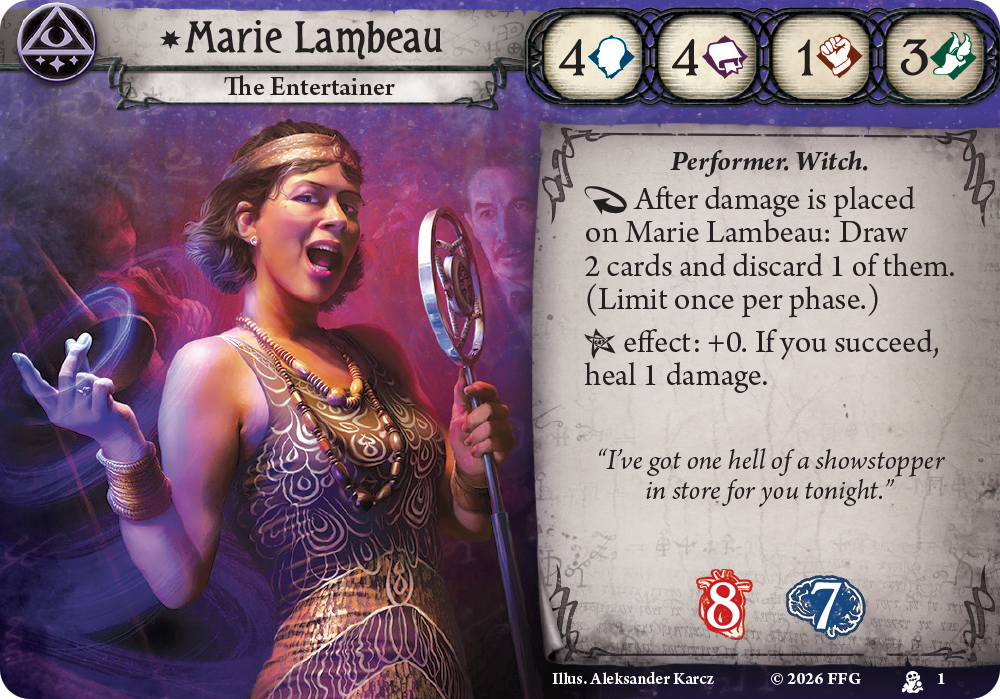
Marie Lambeau Investigator Deck
A current investigator deck that expands play without requiring you to solve an entire collection first.
- Ready to play
- Current product
- Strong thematic identity
- Requires a Core Set
- Mystic sequencing is less forgiving than a basic fighter
At a glance
| Choice | Best for | Includes | Catch |
|---|---|---|---|
| Chapter Two Core | A new 2026 buyer | Five investigators, player cards, tokens, and The Brethren of Ash three-scenario campaign | Older campaigns may use Grimoire substitutions or official print-and-play bridges |
| Revised Core | Owners and Chapter One collectors | Five original investigators, duplicate staples, tokens, and Night of the Zealot | It is the legacy foundation, not the new release path |
| One investigator solo | Learning the rules quickly | One hand, one threat area, one deck | Some investigators struggle to cover both clues and enemies |
| Two-handed solo | Learning the full team game | Two complementary investigators | More triggers, cards, and decisions to track |
Questions, answered
What is the best Arkham Horror LCG Core Set for a beginner in 2026?
Chapter Two Core is the current evergreen entry and best default for a completely new buyer. Revised Core remains a valid Chapter One foundation for existing owners and collectors.
Is Chapter Two a second edition of Arkham Horror LCG?
No. Fantasy Flight states that Chapter Two is not a new edition. The fundamental rules and card backs remain compatible; Chapter Two begins the Current environment and new release path.
Do I need two Core Sets?
No. Both Revised Core and Chapter Two Core are designed as one-box foundations. The original 2016 Core often required two copies for full playsets, which is one reason old advice can be confusing.
How many actions does an investigator get?
Each investigator normally gets three actions during that investigator’s turn in the Investigation phase.
Do you draw encounter cards in the first round?
No. The first round begins with the Investigation phase, so the first Mythos phase is skipped.
What causes an attack of opportunity?
While engaged with a ready enemy, most actions provoke. Fight, evade, parley, and resign actions do not. Read card-specific instructions for exceptions.
Can another investigator help with my skill test?
An investigator at your location may normally commit one eligible card to your test. You may commit any legal number from your own hand unless another rule limits it.
Is true solo or two-handed solo easier?
True solo is easier to administer. Two-handed solo usually offers better role coverage and a smoother campaign experience, but it doubles the hands and triggers you track.
Should I change the starter deck before the first game?
No. Play at least one scenario unchanged. You need evidence about what the deck failed to do before replacing cards intelligently.
What should I buy after the Core?
Finish the Core campaign first. Then choose one complete Campaign Expansion for more story or one current Investigator Deck for a new ready-to-play character. Avoid orphan legacy Mythos Packs unless completing a known old cycle.
Keeper's verdict
Start with one Core, one prebuilt deck, one scenario, and one visible turn reference. Chapter Two is the clean current buy; Revised Core is still a valid Chapter One foundation. Do not buy a campaign mountain to solve a teaching problem.
Research ledger 16 sources · reviewed 2026-08-13
Specifications, rules, current product information, community experience, and contrary evidence were checked against the sources below. Commercial links are kept separate from editorial evidence.
- Fantasy Flight Games: How to Play Arkham Horror LCGarkhamhorror.com/lcg-begin-here
- Fantasy Flight Games: Intro to Arkhamfantasyflightgames.com/en/news/2026/2/5/intro-to-arkham
- Arkham Horror LCG Chapter Two Core rulebookimages-cdn.fantasyflightgames.com/filer_public/0e/d0/0ed09507-1705-47ed-a630-cd15885cabb0/ahc100_rulebook-web.pdf
- Arkham Horror LCG Chapter Two campaign guideimages-cdn.fantasyflightgames.com/filer_public/f0/22/f022ac7c-9c30-4521-ac16-1f74f00e1d31/ahc100_campaign_guide-web.pdf
- Fantasy Flight Games: Chapter Two available nowfantasyflightgames.com/en/news/2026/3/20/available-now-march-20-1
- Fantasy Flight Games: A Look at Things to Comefantasyflightgames.com/en/news/2026/1/22/a-look-at-things-to-come
- Fantasy Flight Games: Turning the Pagefantasyflightgames.com/en/news/2026/2/19/turning-the-page
- Arkham Grimoire v1.1, June 2026images-cdn.fantasyflightgames.com/filer_public/76/b3/76b332d5-7047-458f-91b6-82c8500cc445/arkham_grimoire.pdf
- ArkhamDB deckbuilder and card databasearkhamdb.com
- Arkham Cards campaign and deck apparkhamcards.com
- 2026 community beginner FAQ for Chapter Tworeddit.com/r/arkhamhorrorlcg/comments/1t777by/beginner_faq_chapter_2
- 2026 community deckbuilding tips for beginnersreddit.com/r/arkhamhorrorlcg/comments/1qbpsc8/deckbuilding_tips_for_beginner
- Watch It Played: Arkham Horror LCG tutorialyoutube.com/watch?v=m1w-bfmicQo
- Fantasy Flight Games: Hidden Truths rules updatefantasyflightgames.com/en/news/2026/3/18/hidden-truths
- 2026 community discussion: Is Chapter Two a good starting point?reddit.com/r/arkhamhorrorlcg/comments/1rekcp1/is_chapter_2_a_good_starting_place
- 2026 community first-game discussionreddit.com/r/arkhamhorrorlcg/comments/1t3bd7v/first_game
If it didn't earn a shelf, it isn't here.


Keep exploring
The next smart rabbit holes.
✒ Universe HubArkham Horror Universe: the whole buying pathStart with the interactive buyer intake: separate the 2026 Chapter Two Core from Chapter One legacy boxes and the entirely...☾ Topic PathCooperative Horror Games: compare the whole shelfCooperative horror works when the rules pressure the story without burying the table. This cluster maps what to buy, how campaigns...Strategy GuideArkham Horror LCG Deckbuilding Guide 2026: Roles, Upgrades, Tommy, Marie & Campaign TeamsMargo strips deckbuilding down to jobs, economy, action compression, role coverage, and campaign evidence—then puts the 2026 investigator...