Marvel Champions Buying Order 2026: The Best In-Print Boxes, Heroes, and What to Skip
Marvel Champions buying order, explained with exact box identity, expansion order, beginner-to-expert strategy, hosting and solo reality, community warnings, and direct Amazon purchase paths.

AI-assisted curator persona · research and editorial responsibility: Robert Pruitt · how this guide was made
Last editorial refresh: 2026-07-29 Gold-standard QA: 2026-07-29 9 sources reviewed Affiliate links checked during gold-standard pass

The short answer
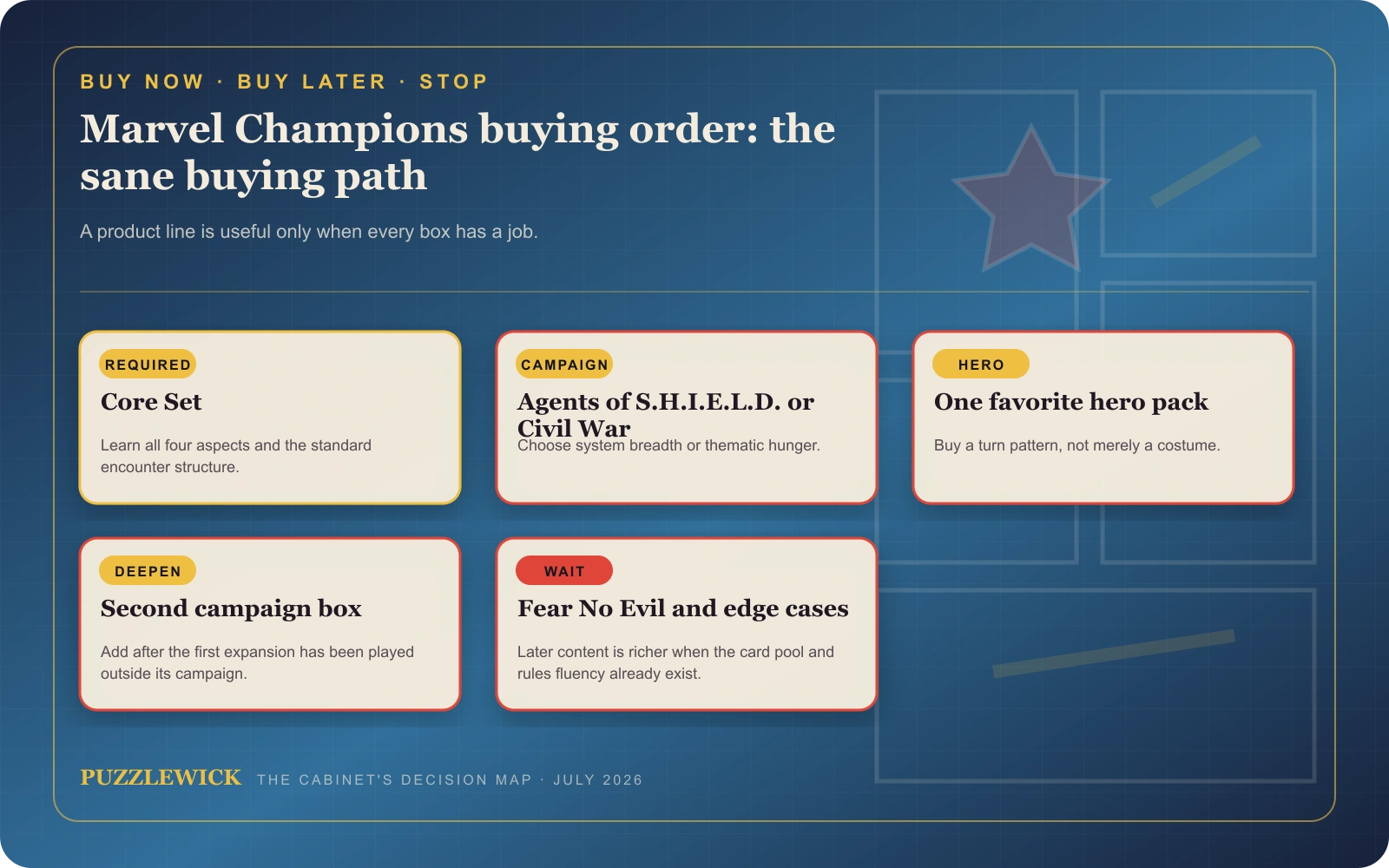
Start with the Core Set, play each aspect, then buy one campaign box whose villains and heroes you actively want. Agents of S.H.I.E.L.D. is the broad first expansion recommendation in the current in-print line; Civil War is the hotter thematic branch; Fear No Evil belongs later. Add hero packs only when they improve a favorite aspect or character fantasy.
Decision map
Choose in thirty seconds
Learn all four aspects and the standard encounter structure.
Choose system breadth or thematic hunger.
Buy a turn pattern, not merely a costume.
Add after the first expansion has been played outside its campaign.
Marvel Champions buying order can look like one obvious shelf until product codes, formats, standalone boxes, expansions, and deluxe treatments begin competing for the same budget. This guide starts where the table starts: one hero learns setup, player phase, villain phase, threat, attacks, defense, obligations, and flipping forms against a straightforward villain.
The cabinet’s test is whether hero form changes, alter-ego recovery, threat clocks, encounter boosts, and aspect cards make one deck feel like a small comic arc. We sort the verified products by that experience, then show the setup, strategy, warnings, and stopping point that keep a promising first purchase from becoming an expensive pile.
Start here, then go deeper
You are in the right cabinet.
 ✦ Universe HubMarvel Tabletop: the whole buying pathPuzzlewick’s Marvel universe begins with the experience, not the logo. Choose a deck-construction laboratory, a fast miniature...
 ✺ Topic PathCooperative Campaign Games: compare the whole shelfA cooperative campaign is a promise your group makes to its future self. These guides show which box reaches the table, how much...
 ComparisonMarvel Zombies vs Zombicide Second Edition in 2026: Which Giant Co-op Box Should You Buy?Margo opens both enormous boxes, separates Hunger from equipment, explains the X-Men Resistance core-box trap and names the apocalypse...
The short answer: which marvel champions buying order should you buy?


Start with the Core Set, play each aspect, then buy one campaign box whose villains and heroes you actively want. Agents of S.H.I.E.L.D. is the broad first expansion recommendation in the current in-print line; Civil War is the hotter thematic branch; Fear No Evil belongs later. Add hero packs only when they improve a favorite aspect or character fantasy.
The verified purchase path is Marvel Champions: The Card Game Core Set on Amazon, Marvel Champions: Agents of S.H.I.E.L.D. on Amazon, Marvel Champions: Civil War on Amazon, Marvel Champions: Fear No Evil on Amazon. The first box should let one hero learns setup, player phase, villain phase, threat, attacks, defense, obligations, and flipping forms against a straightforward villain; every later box must solve a limitation that appeared during real play.
For Marvel Champions buying order, the useful question is not “which carton is largest?” It is whether the product supports the players, learning curve, session length, and signature decision you actually want to repeat.
What does playing Marvel Champions buying order actually feel like?
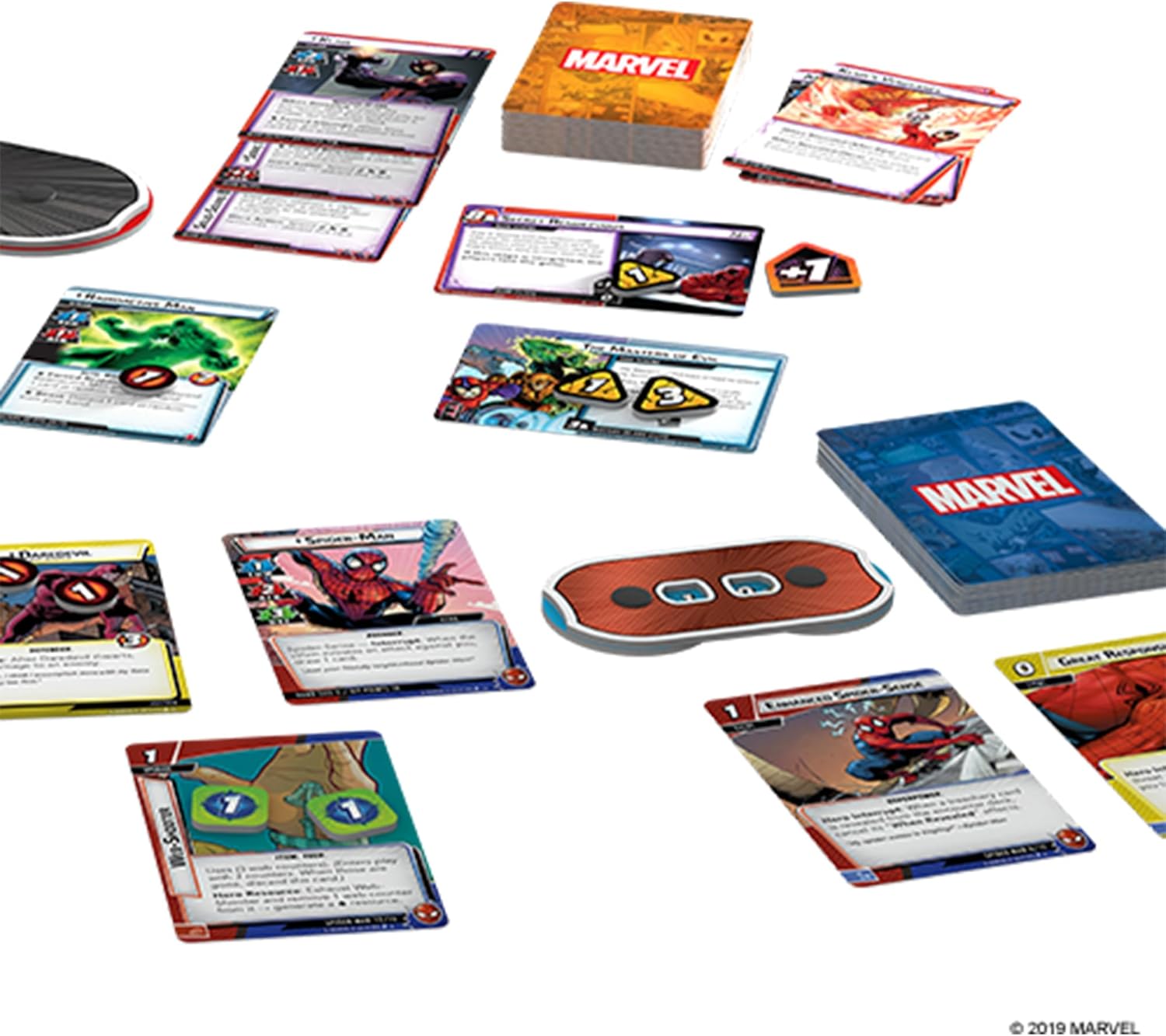

Each player pilots a hero who flips between hero and alter-ego forms, manages hand size and resources, thwarts schemes, attacks villains, and absorbs encounter pressure.
Scenarios are modular: a villain deck combines with standard and modular encounter sets, so the same hero can face a very different tactical puzzle without a new core system.
Deck construction turns character identity into decisions—Captain Marvel’s resource flow, Spider-Man’s defense, or a leadership swarm—while cooperative timing keeps one player’s setup from becoming everyone else’s downtime.
The lasting hook is that hero form changes, alter-ego recovery, threat clocks, encounter boosts, and aspect cards make one deck feel like a small comic arc. The game comes alive when a learner stops following a phase chart and makes a choice the rest of the table must respect.
How should the first box be assembled, staged, and taught?
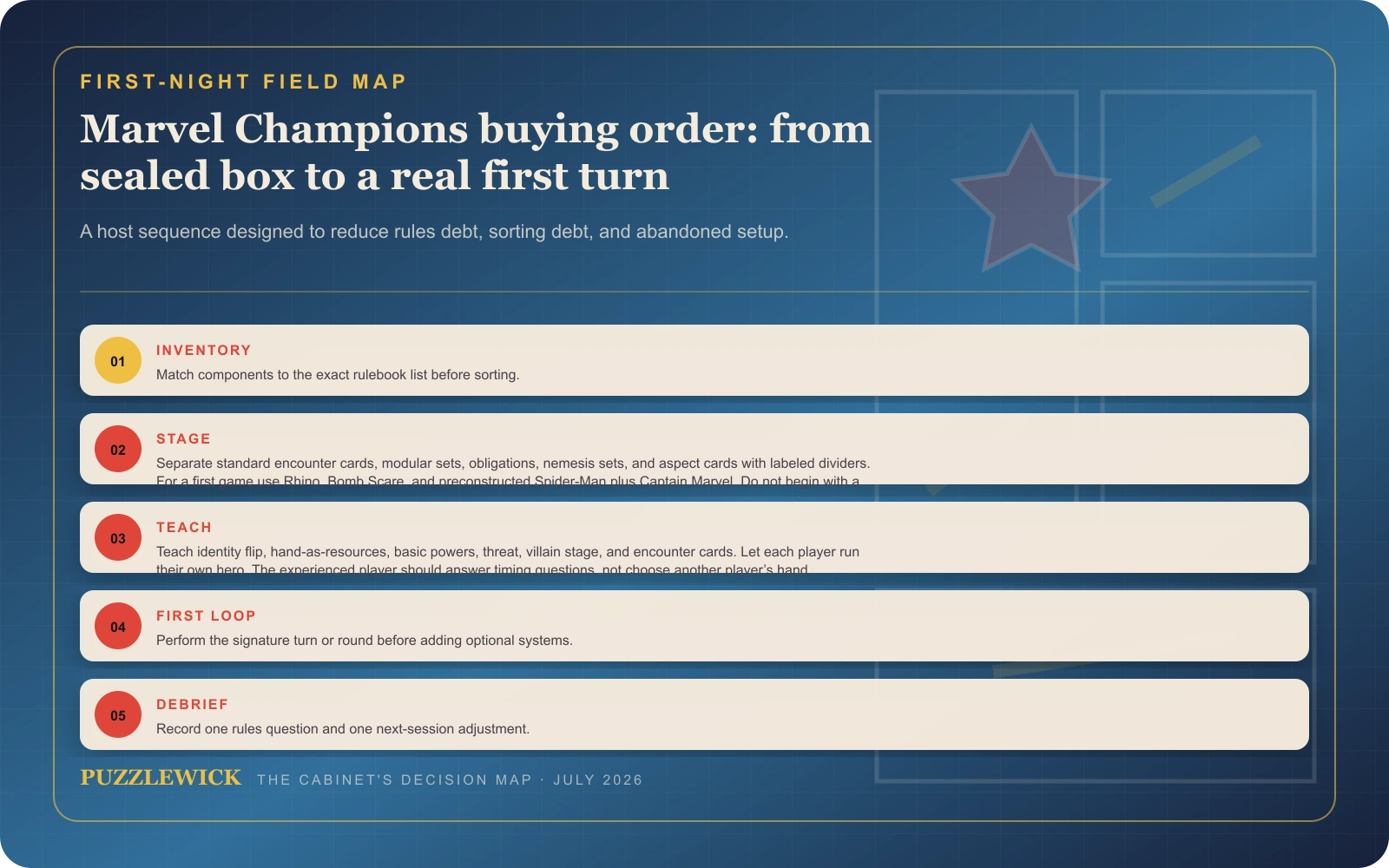

Setup: Separate standard encounter cards, modular sets, obligations, nemesis sets, and aspect cards with labeled dividers. For a first game use Rhino, Bomb Scare, and preconstructed Spider-Man plus Captain Marvel. Do not begin with a campaign log.
Teaching plan: Teach identity flip, hand-as-resources, basic powers, threat, villain stage, and encounter cards. Let each player run their own hero. The experienced player should answer timing questions, not choose another player’s hand.
Before cleanup, photograph hero and alter-ego, identity deck, aspect cards, villain, main scheme, encounter deck, threat, damage, and status cards. That becomes the group’s honest reset reference and makes the second session faster without adding another accessory.
What do players compare it to, and where does the comparison break?
Arkham Horror LCG is campaign-first and failure-forward; Marvel Champions is scenario-first and reset-friendly. Sentinels of the Multiverse provides fixed hero decks. Marvel Champions sits between them: deck construction without requiring a long narrative commitment.
The strongest BGG and forum comparisons keep returning to campaign value, hero variety, encounter modularity, aspect support, collection overlap, and how much deckbuilding a new player actually wants. Those practical differences outlast launch-week declarations that one box simply “wins.”
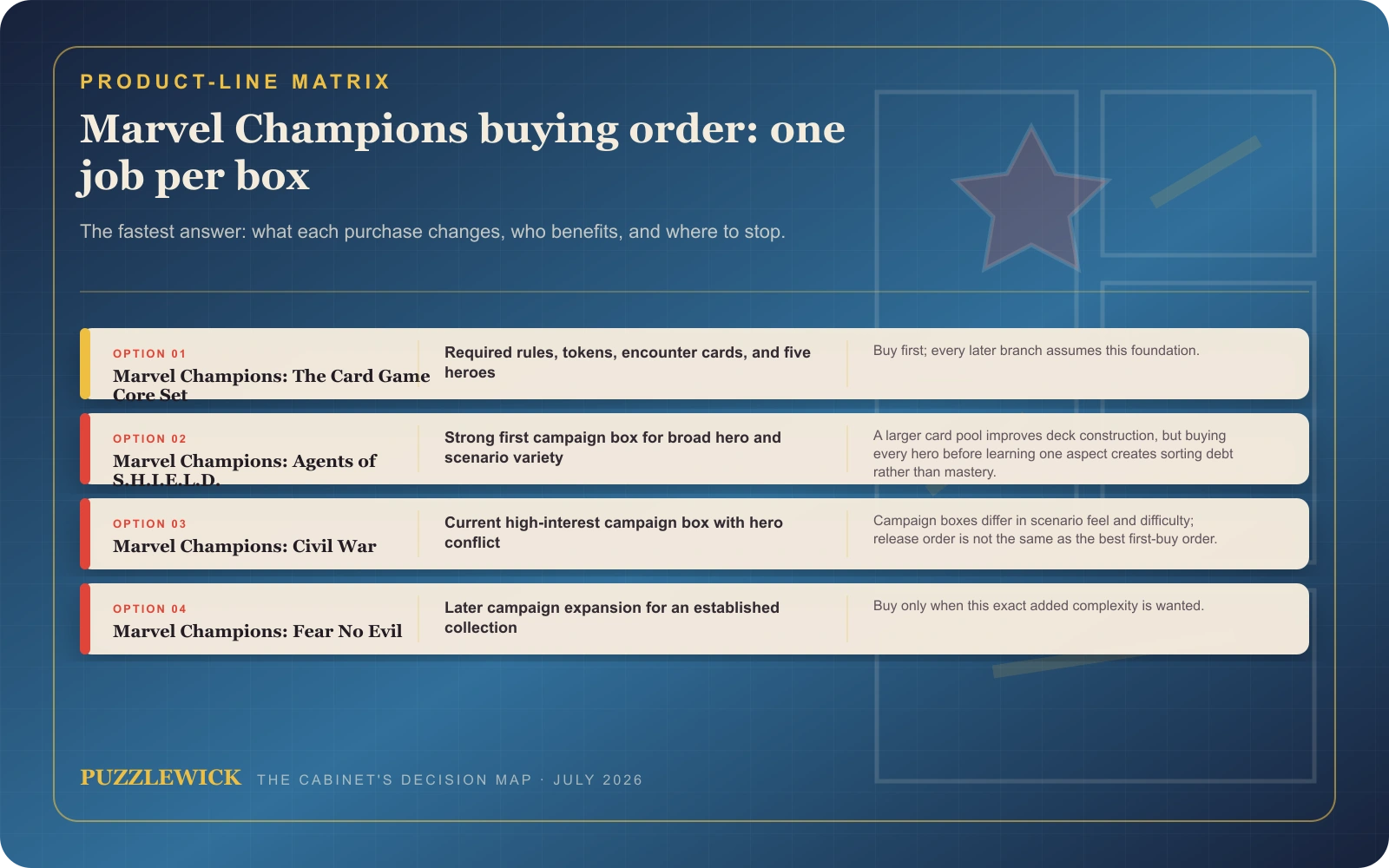
Read the matrix as a table-fit tool for Marvel Champions buying order: theme earns the first play, while repeatable pacing and a tolerable host load earn permanent shelf space.
What should you buy first, second, and not yet?
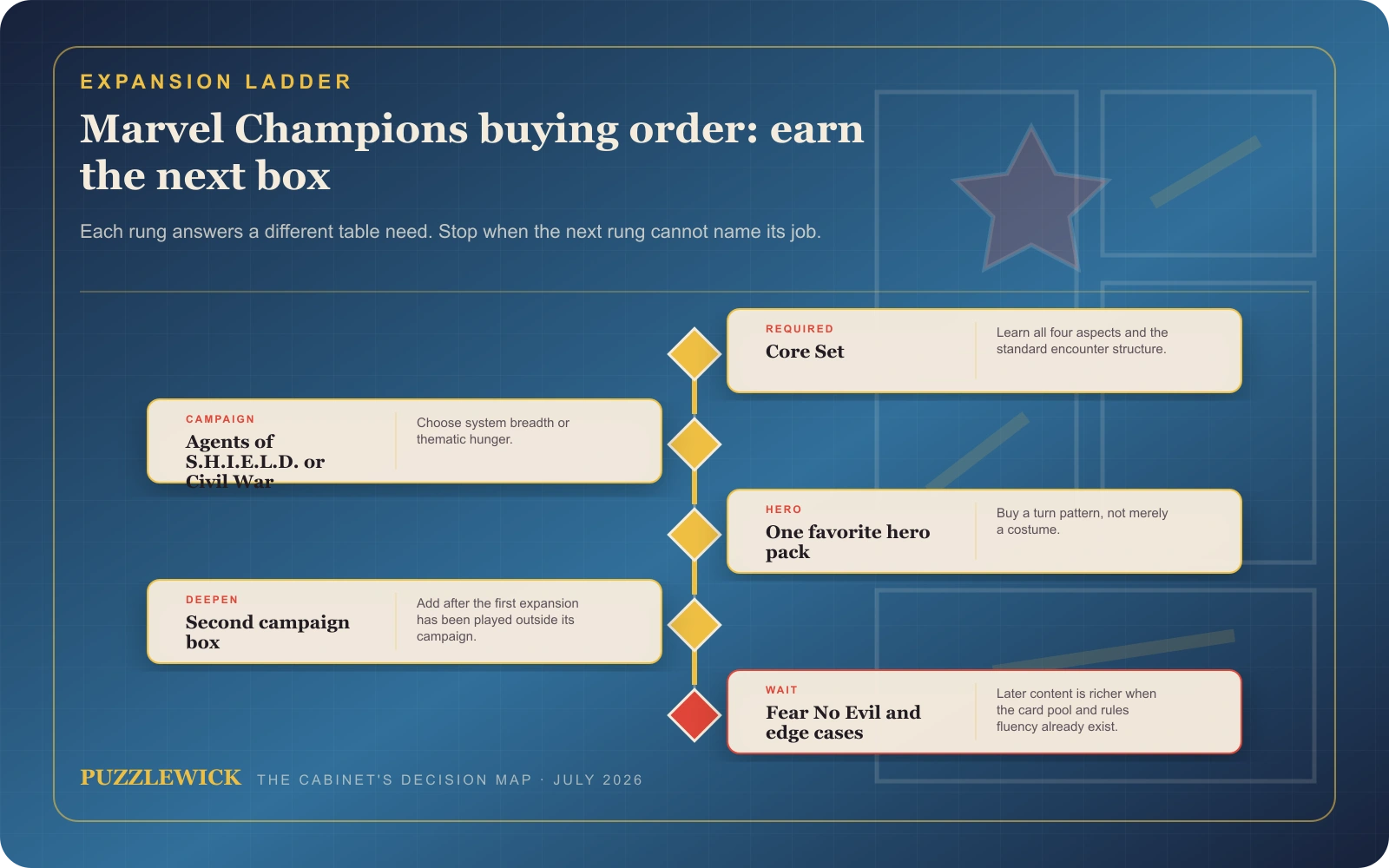

REQUIRED · Core Set: Learn all four aspects and the standard encounter structure.
CAMPAIGN · Agents of S.H.I.E.L.D. or Civil War: Choose system breadth or thematic hunger.
HERO · One favorite hero pack: Buy a turn pattern, not merely a costume.
DEEPEN · Second campaign box: Add after the first expansion has been played outside its campaign.
WAIT · Fear No Evil and edge cases: Later content is richer when the card pool and rules fluency already exist.
The stopping rule matters. A larger card pool improves deck construction, but buying every hero before learning one aspect creates sorting debt rather than mastery. Campaign boxes differ in scenario feel and difficulty; release order is not the same as the best first-buy order.
An Amazon page proves that a listing exists; it does not prove that the item belongs in this buying order. For Marvel Champions buying order, edition, language, seller, included contents, and exact product code still outrank a convenient checkout button.
Beginner, regular, advanced, and expert strategy
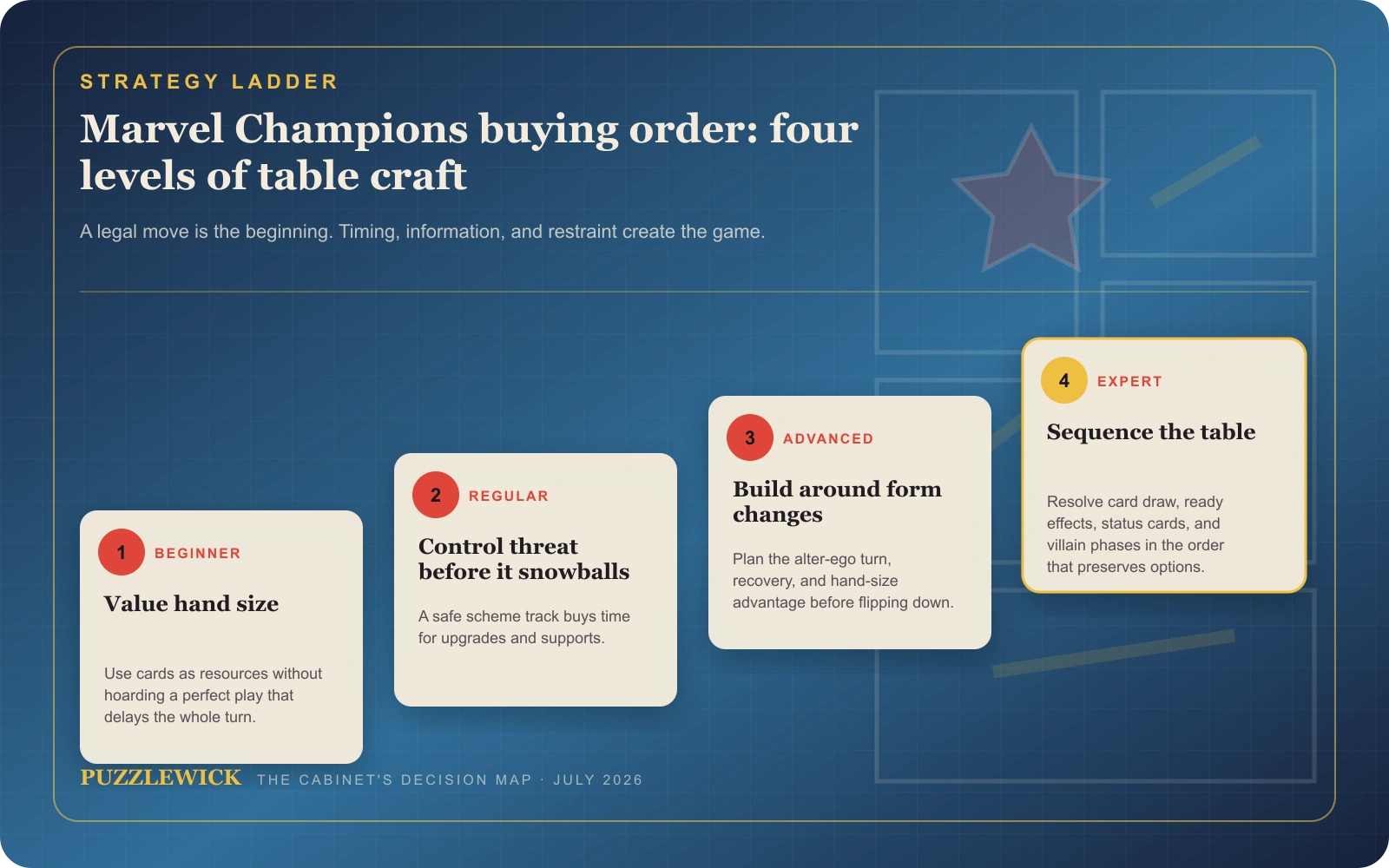
Beginner — Value hand size. Use cards as resources without hoarding a perfect play that delays the whole turn.
Regular — Control threat before it snowballs. A safe scheme track buys time for upgrades and supports.
Advanced — Build around form changes. Plan the alter-ego turn, recovery, and hand-size advantage before flipping down.
Expert — Sequence the table. Resolve card draw, ready effects, status cards, and villain phases in the order that preserves options.
Debrief the villain phase that decided the game. Name the decision that created it and the rule or timing window that remained muddy. Five focused minutes will improve the next session more than buying novelty to cover an unresolved teach.
This ladder cross-checks the official rules structure against recurring owner questions about campaign value, hero variety, encounter modularity, aspect support, collection overlap, and how much deckbuilding a new player actually wants.
What is the real table, hosting, and solo commitment?
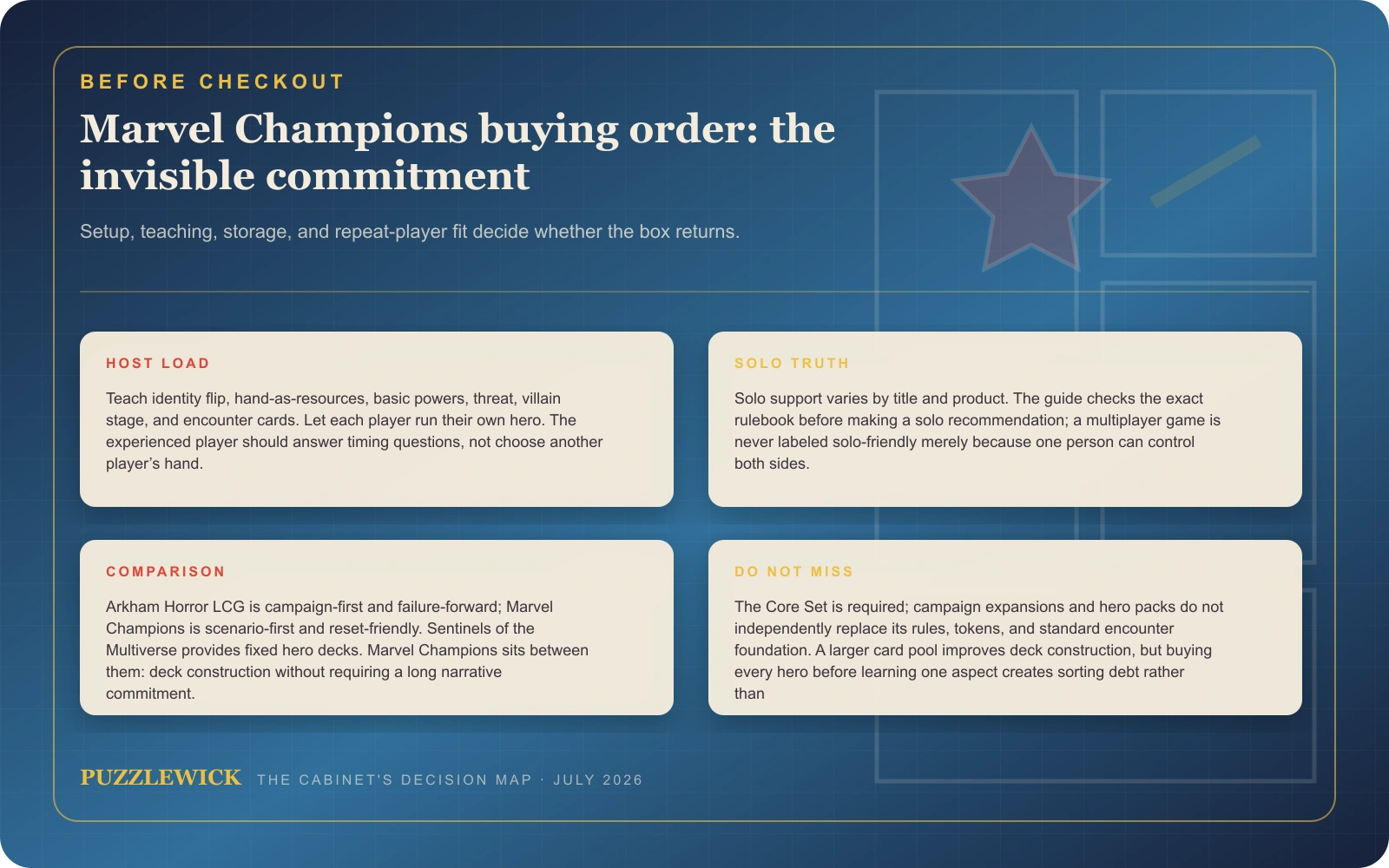
Hosting: Teach identity flip, hand-as-resources, basic powers, threat, villain stage, and encounter cards. Let each player run their own hero. The experienced player should answer timing questions, not choose another player’s hand.
Solo: Marvel Champions supports true solo and multihanded solo. One hero is faster and sharper for learning; two heroes broaden answers but double upkeep, trigger tracking, and deck construction.
The invisible budget is card sorting, sleeves, modular encounter storage, deck construction, campaign bookkeeping, and resisting the urge to buy heroes faster than they are played. That workload predicts whether Marvel Champions buying order returns to the table more reliably than the excitement of opening it.
What do lower-star reviews and long-term owners warn about?
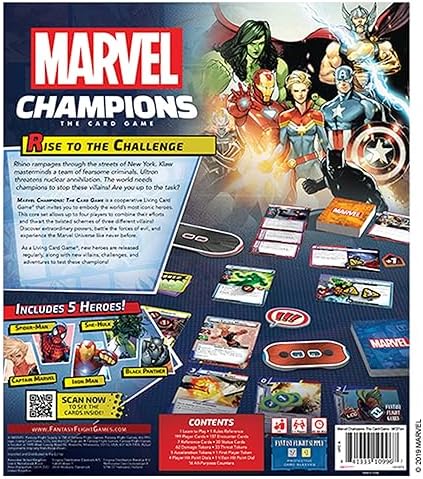
The durable warnings are fit warnings. The Core Set is required; campaign expansions and hero packs do not independently replace its rules, tokens, and standard encounter foundation. A larger card pool improves deck construction, but buying every hero before learning one aspect creates sorting debt rather than mastery. Campaign boxes differ in scenario feel and difficulty; release order is not the same as the best first-buy order.
The Amazon reviews worth weighing are the recurring complaints — packaging, components, complexity, and mismatched expectations. Star averages drift and listings merge, so the repeated problem is the signal, not a moving decimal.
A credible warning predicts who will regret the purchase and why. A complaint that merely describes the game doing exactly what it is designed to do is not a defect; it is evidence for the “who should skip it” verdict.
Common misconceptions, corrected before checkout
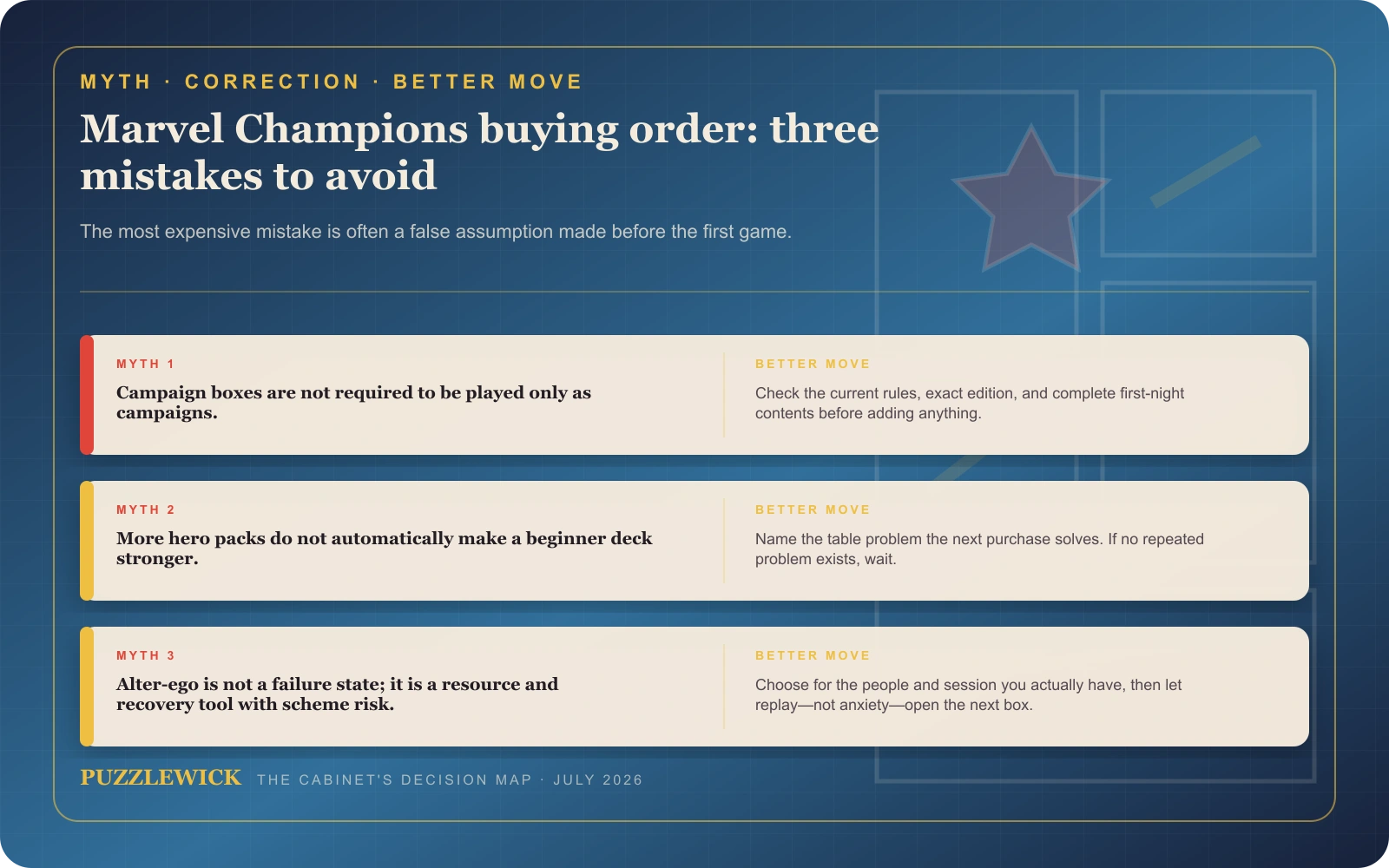
- Campaign boxes are not required to be played only as campaigns.
- More hero packs do not automatically make a beginner deck stronger.
- Alter-ego is not a failure state; it is a resource and recovery tool with scheme risk.
Everything above was checked July 29, 2026. Product identities and availability can move.
The Puzzlewick shelf plan for Marvel Champions buying order

The sane first shelf is Core Set plus one campaign expansion, not a tower of hero packs. S.H.I.E.L.D. is the safer systems recommendation, while Civil War wins for players drawn to its roster and conflict. Build one hero in two aspects before expanding again; the game’s value comes from remixing cards, not merely owning them.
Before adding Agents of S.H.I.E.L.D. or Civil War, explain which repeated table problem it fixes and how that changes hero form changes, alter-ego recovery, threat clocks, encounter boosts, and aspect cards make one deck feel like a small comic arc. If the answer is still “more stuff,” stop with the first verified box.
Current verified Amazon options: Marvel Champions: The Card Game Core Set on Amazon, Marvel Champions: Agents of S.H.I.E.L.D. on Amazon, Marvel Champions: Civil War on Amazon, Marvel Champions: Fear No Evil on Amazon.
The picks
Some links below are affiliate links — as an Amazon Associate, Puzzlewick earns from qualifying purchases, at no extra cost to you. It never changes a pick.

 10 photos
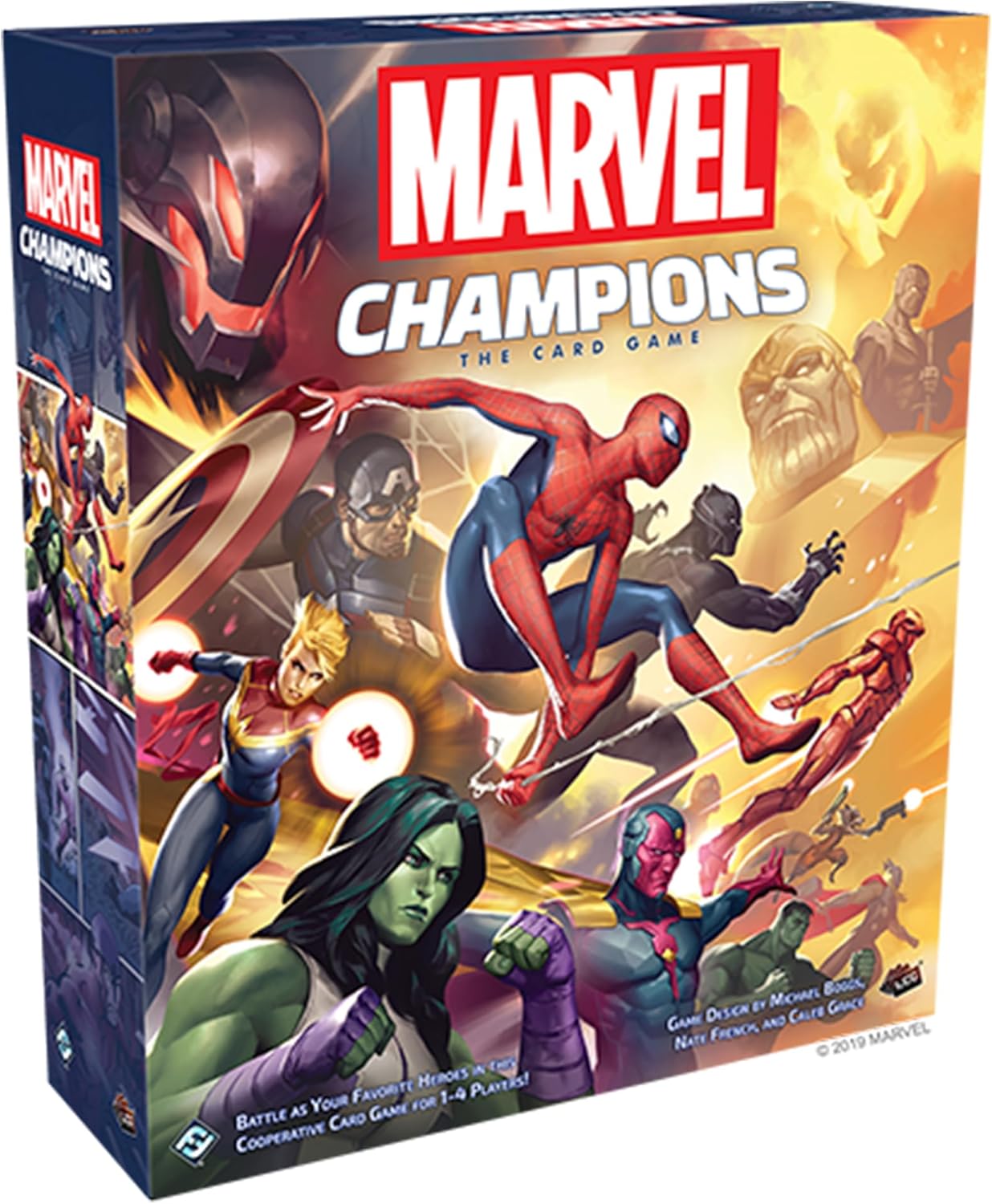
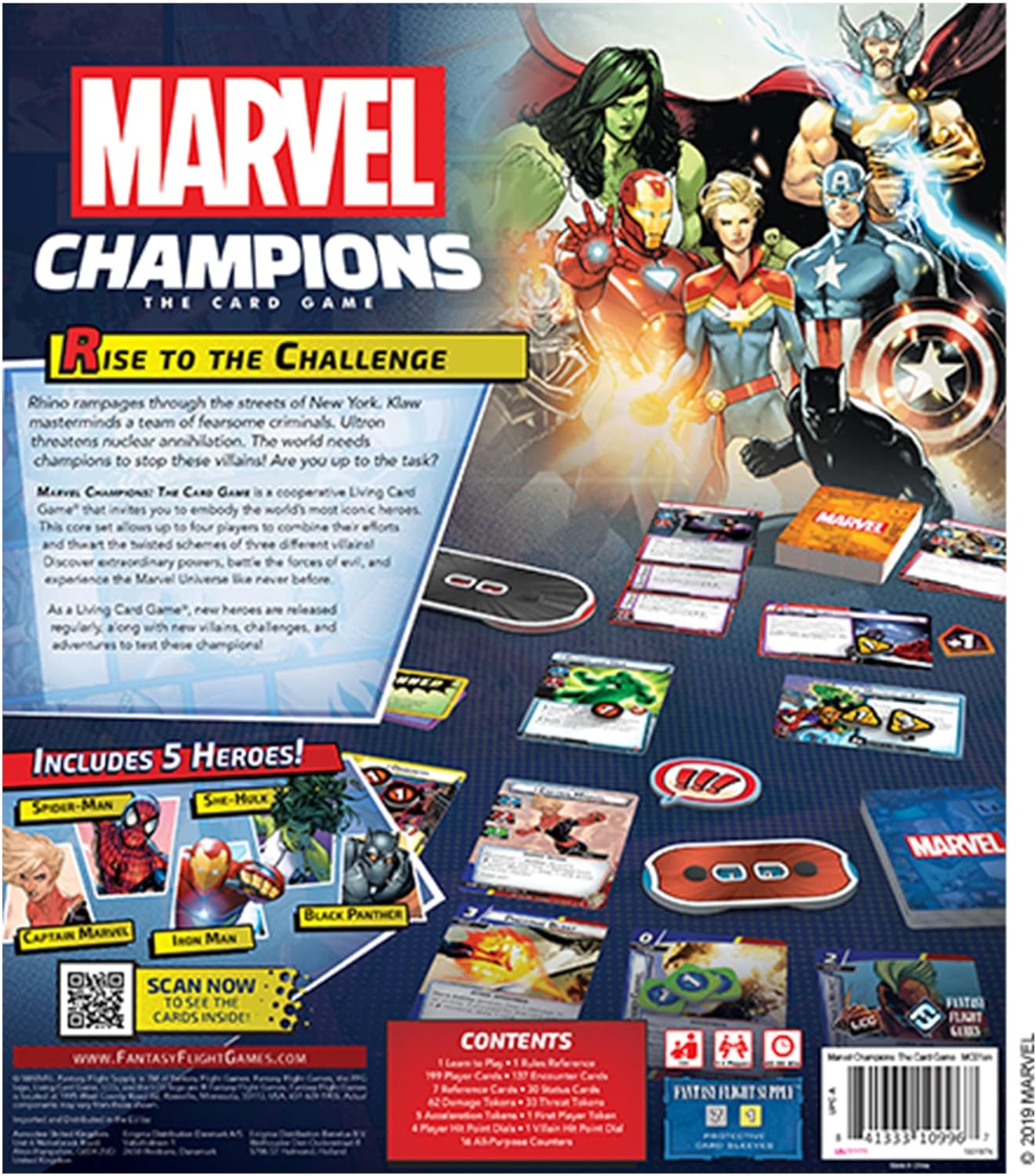
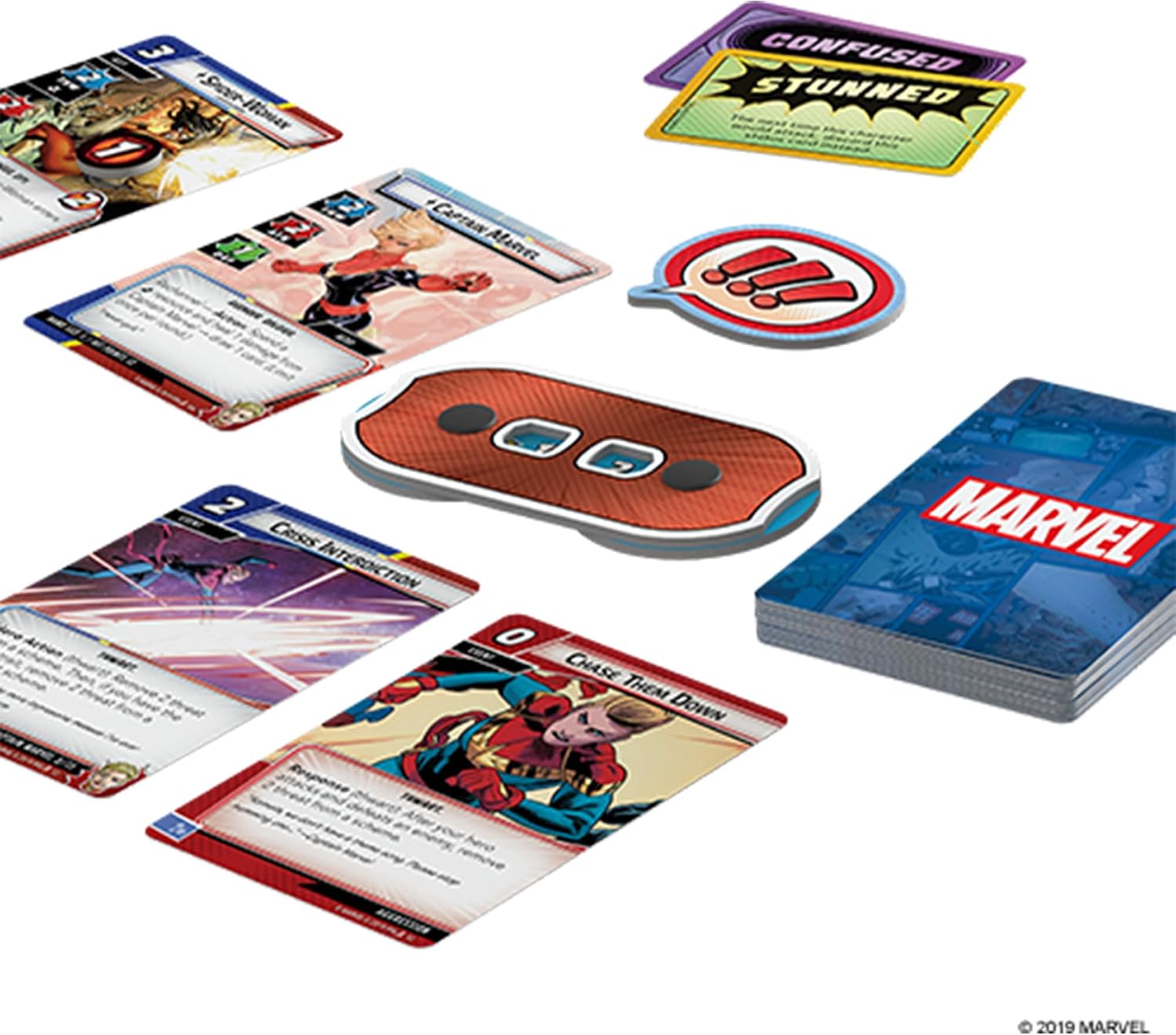
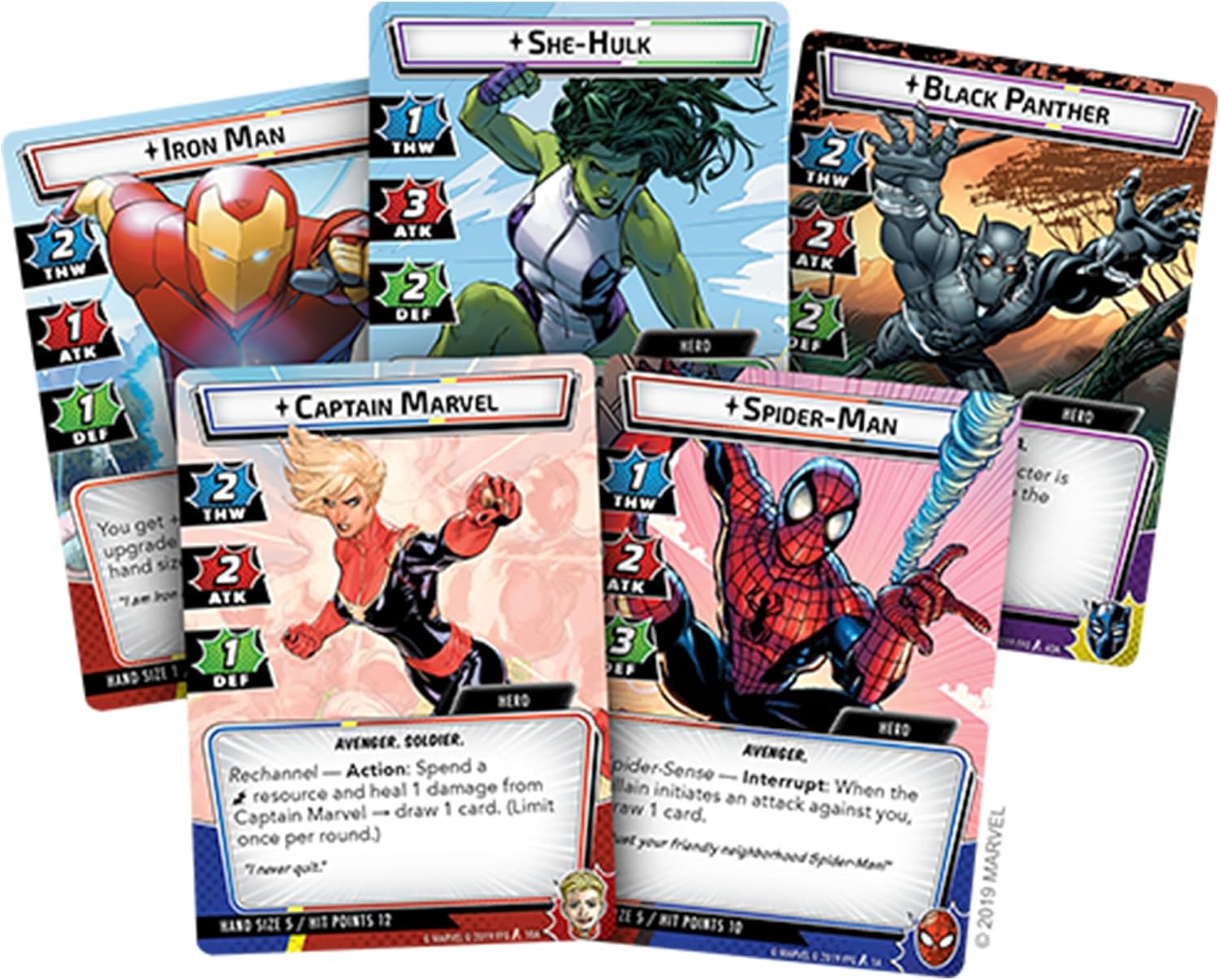
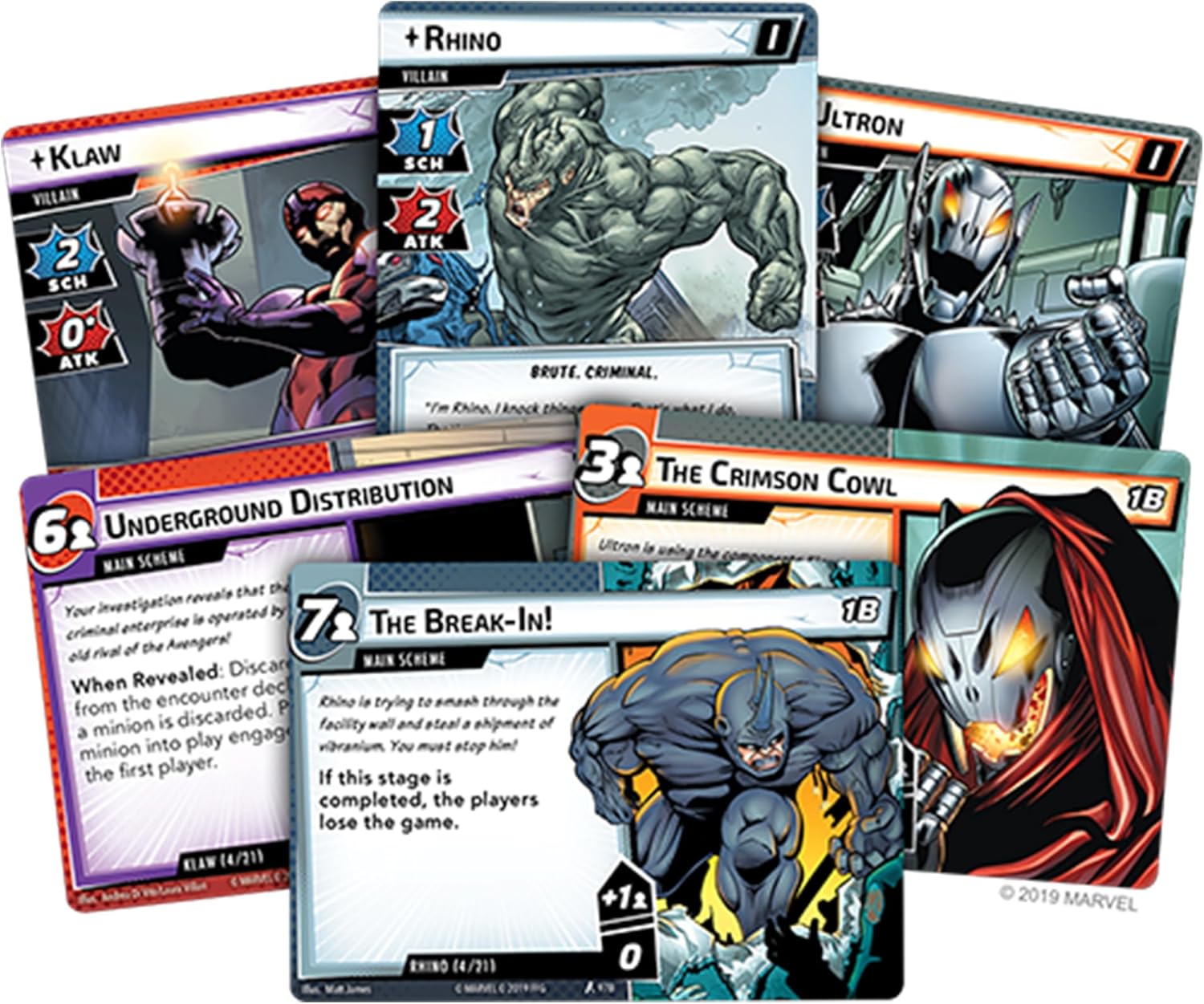
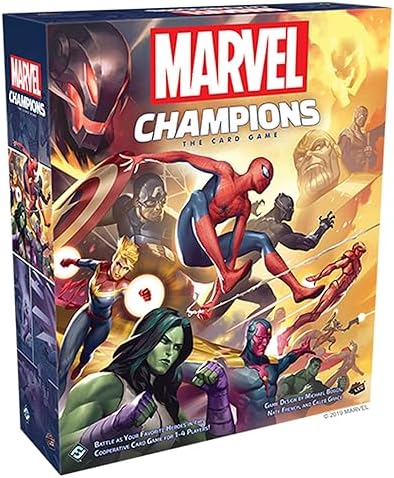
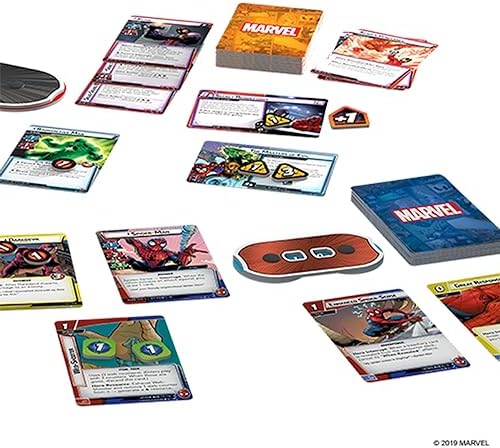
 Marvel Champions: The Card Game Core Set
Required rules, tokens, encounter cards, and five heroes. Listing and edition verified July 29, 2026.
- Verified listing — the exact product, not a lookalike
- Has a clear job in the buying order
- Checked against the official rules and product pages
- Stock and seller can change without notice
- Not every table needs this one
 10 photos
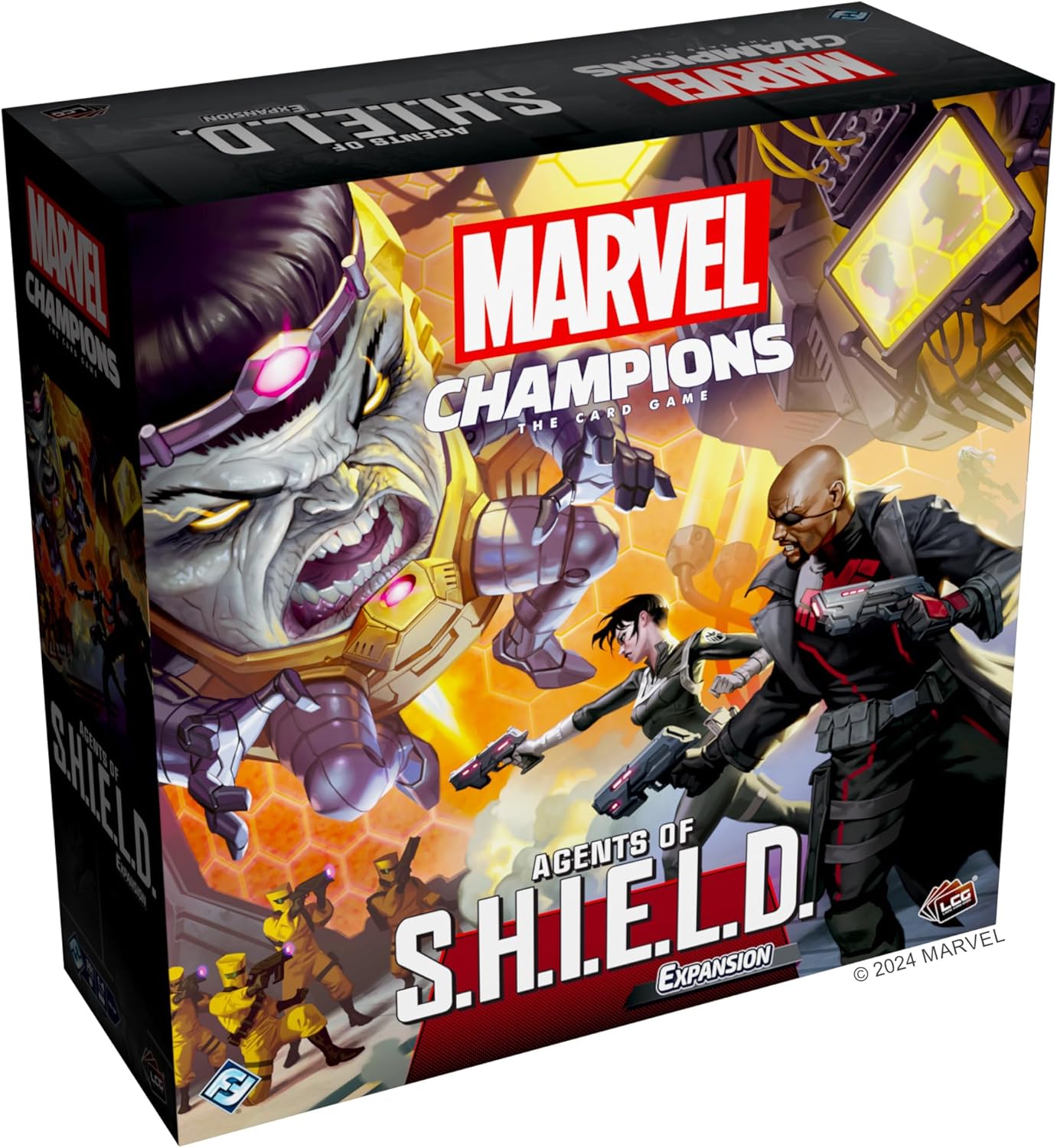
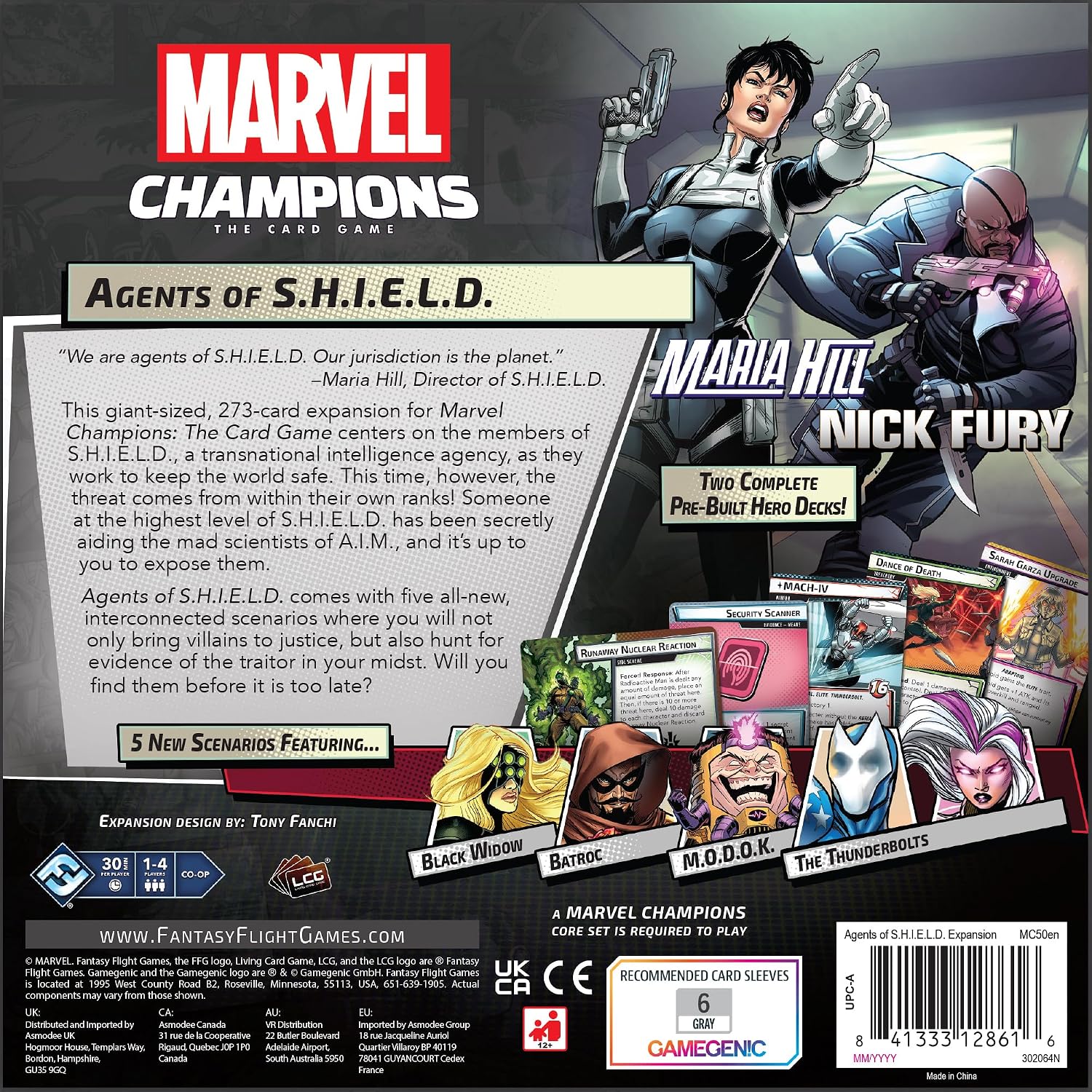
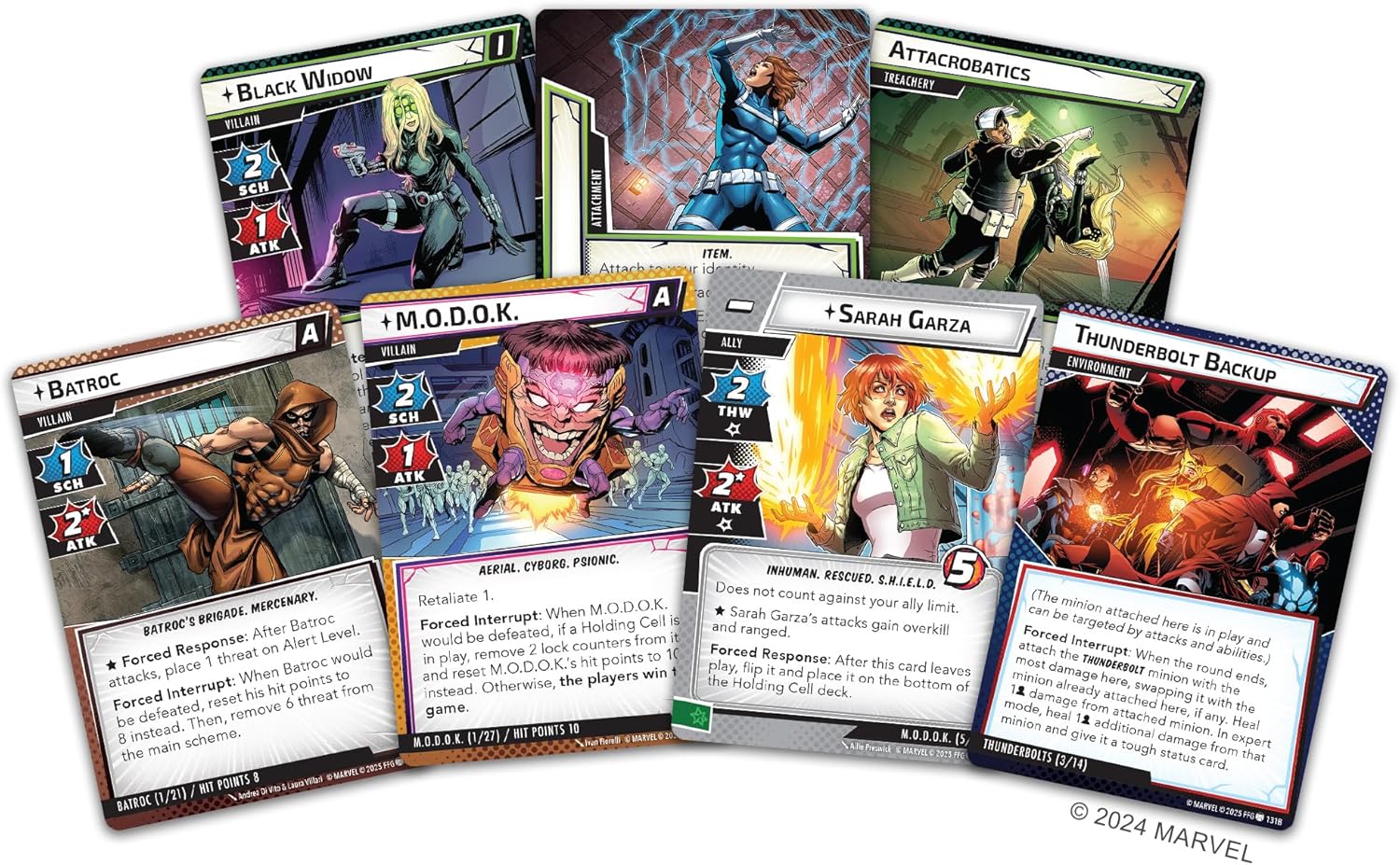
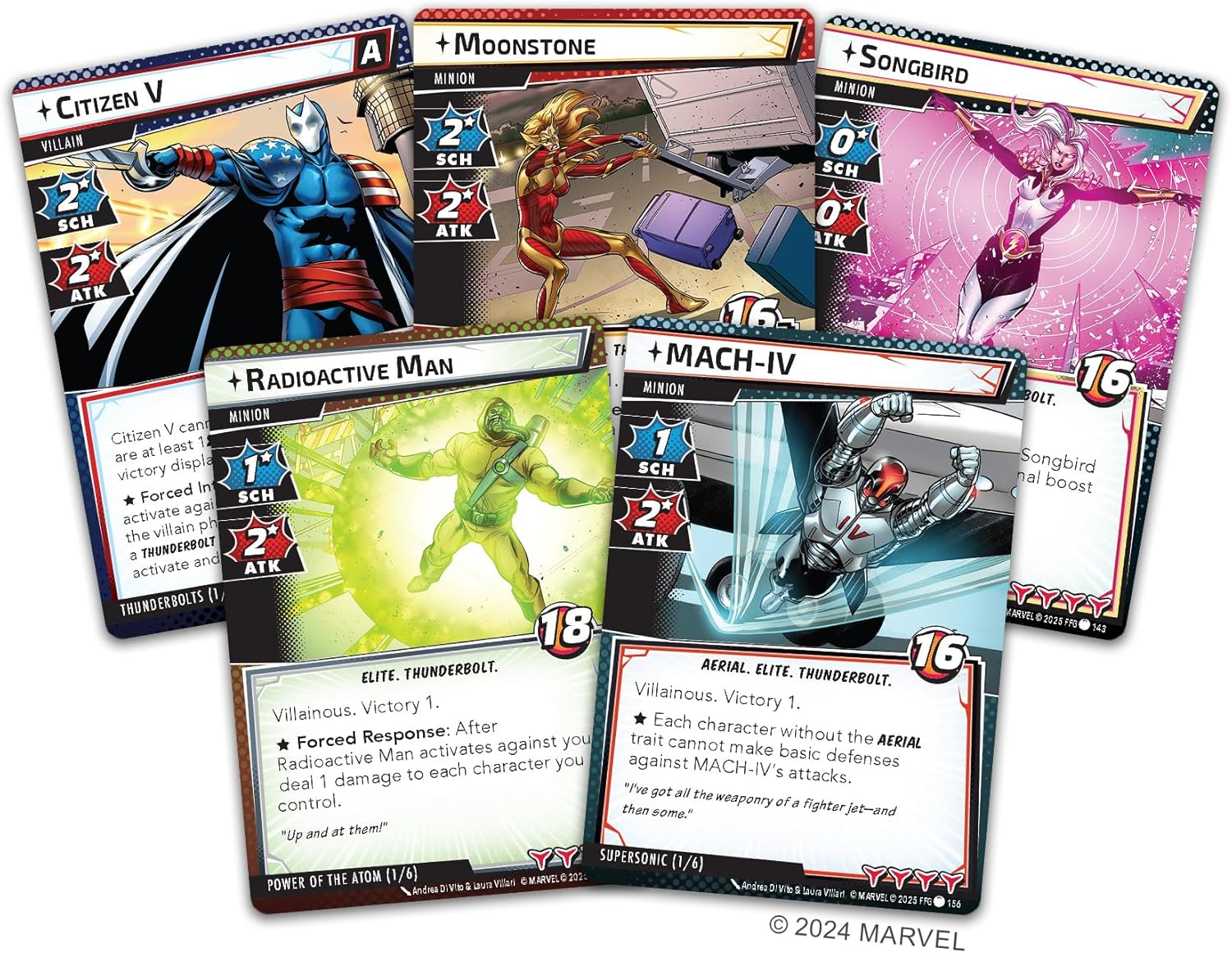
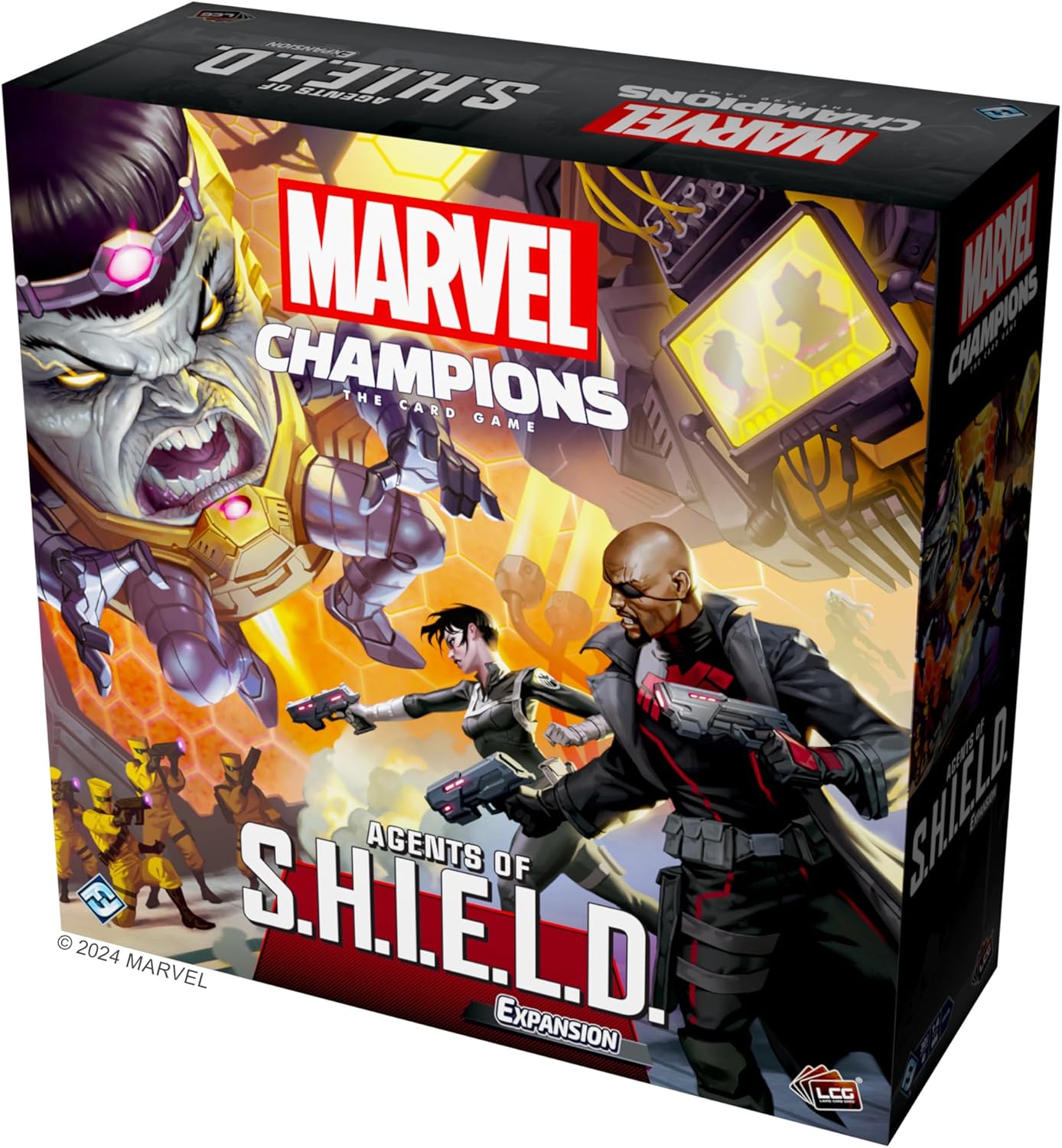
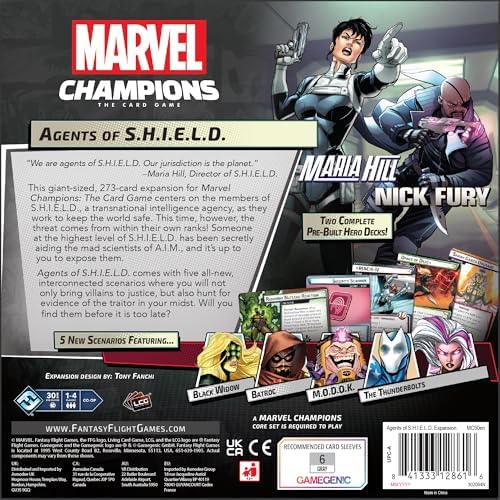
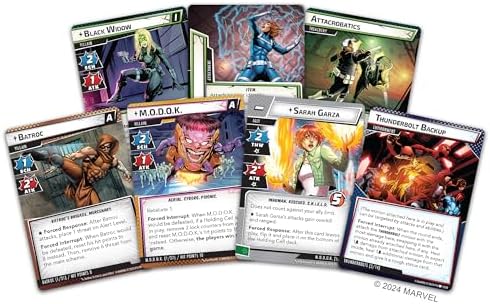
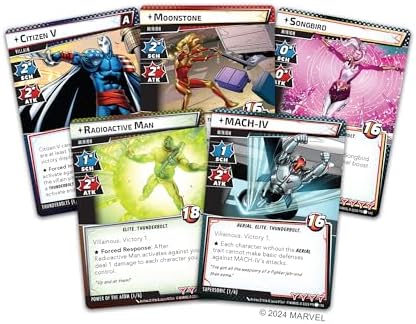
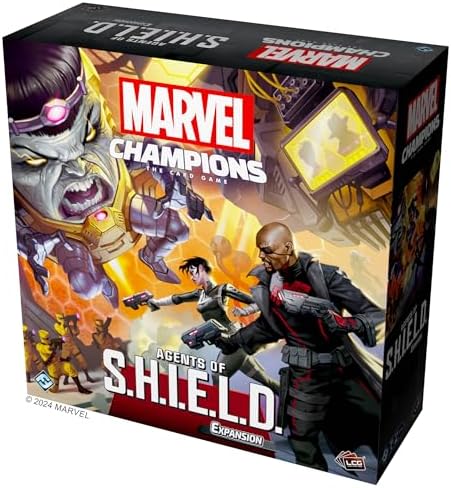
 Marvel Champions: Agents of S.H.I.E.L.D.
Strong first campaign box for broad hero and scenario variety. Listing and edition verified July 29, 2026.
- Verified listing — the exact product, not a lookalike
- Has a clear job in the buying order
- Checked against the official rules and product pages
- Stock and seller can change without notice
- Not every table needs this one

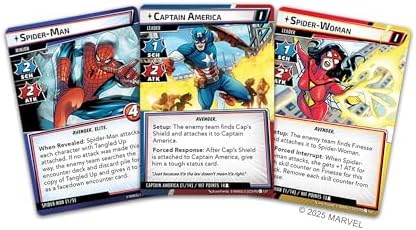 10 photos
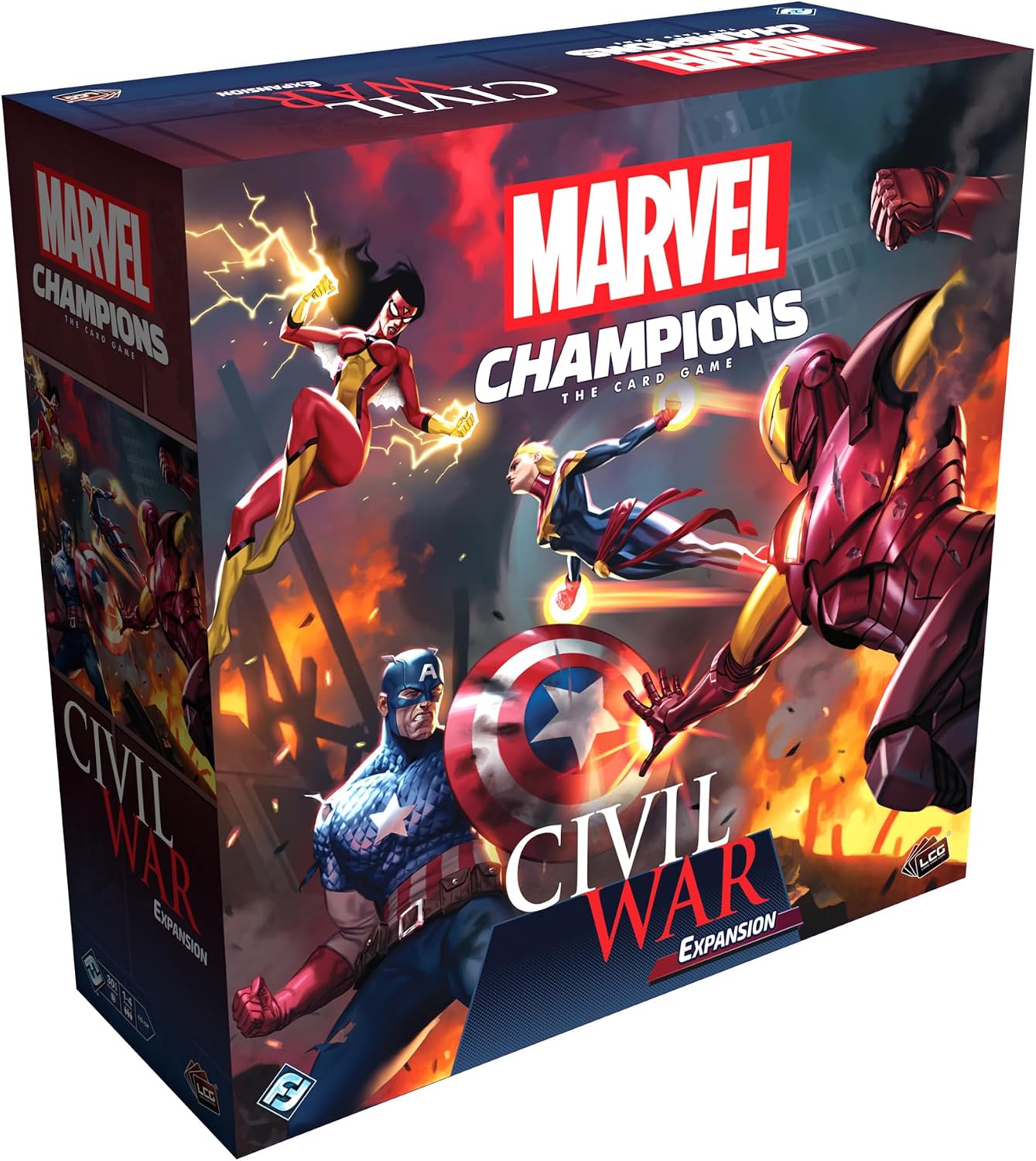
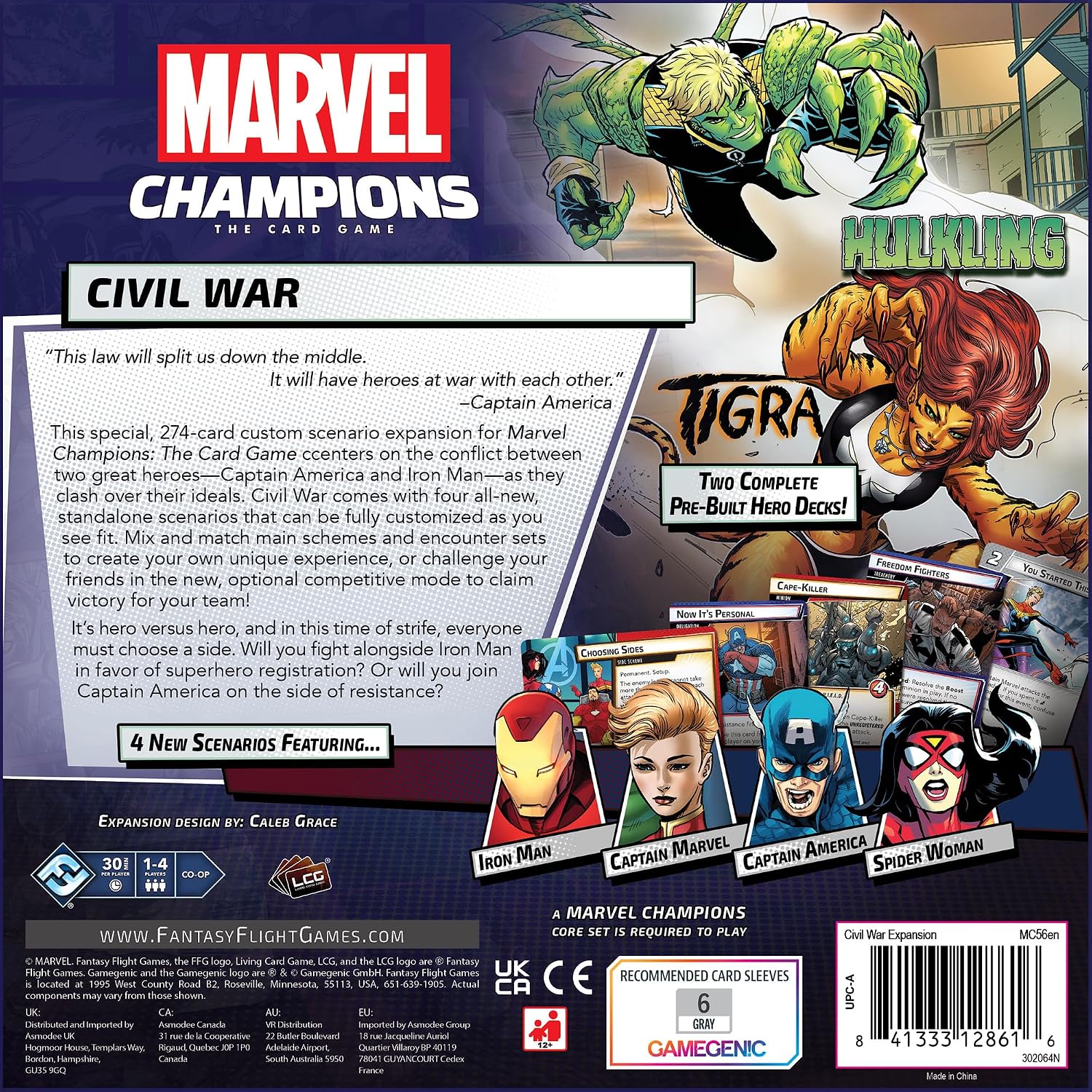
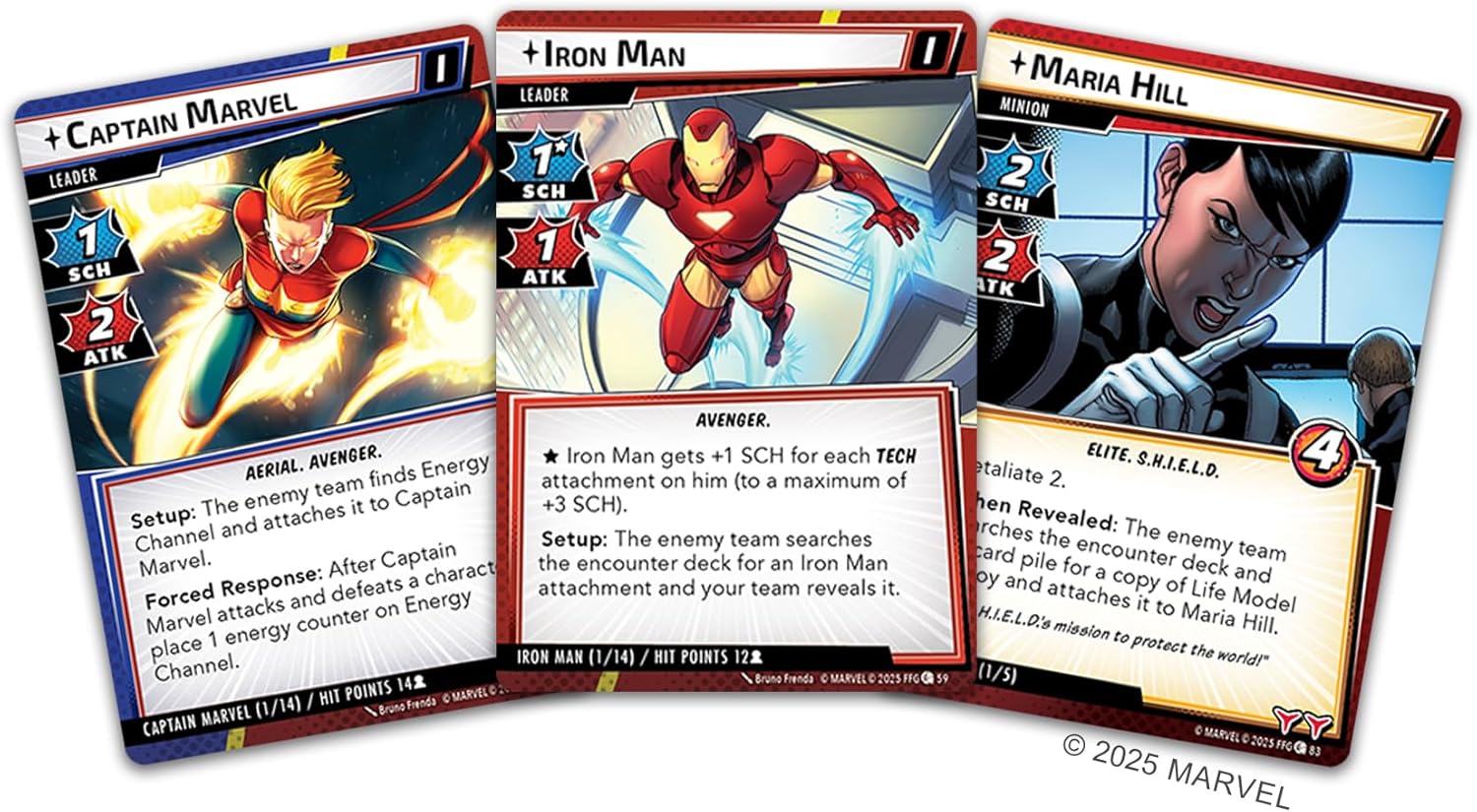
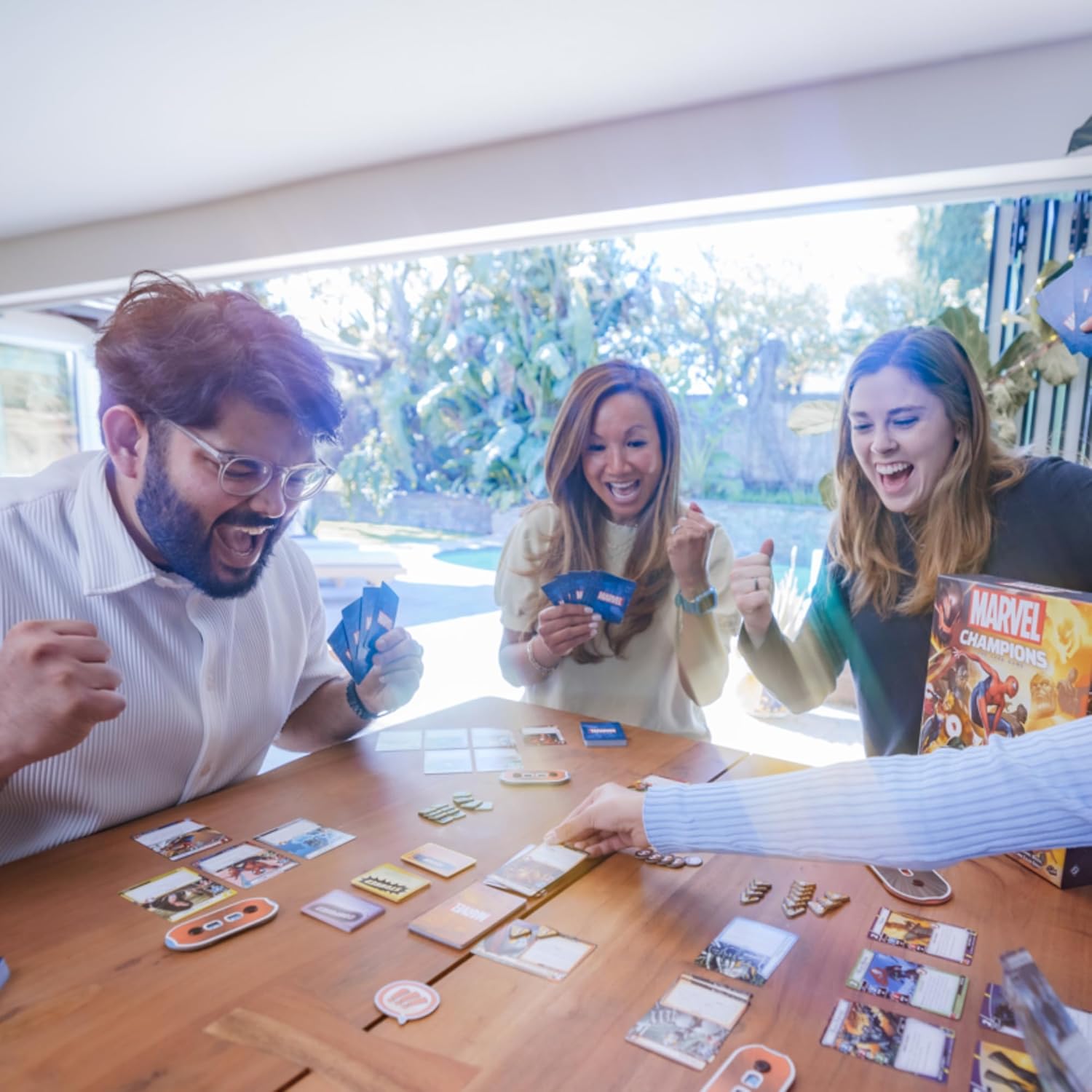
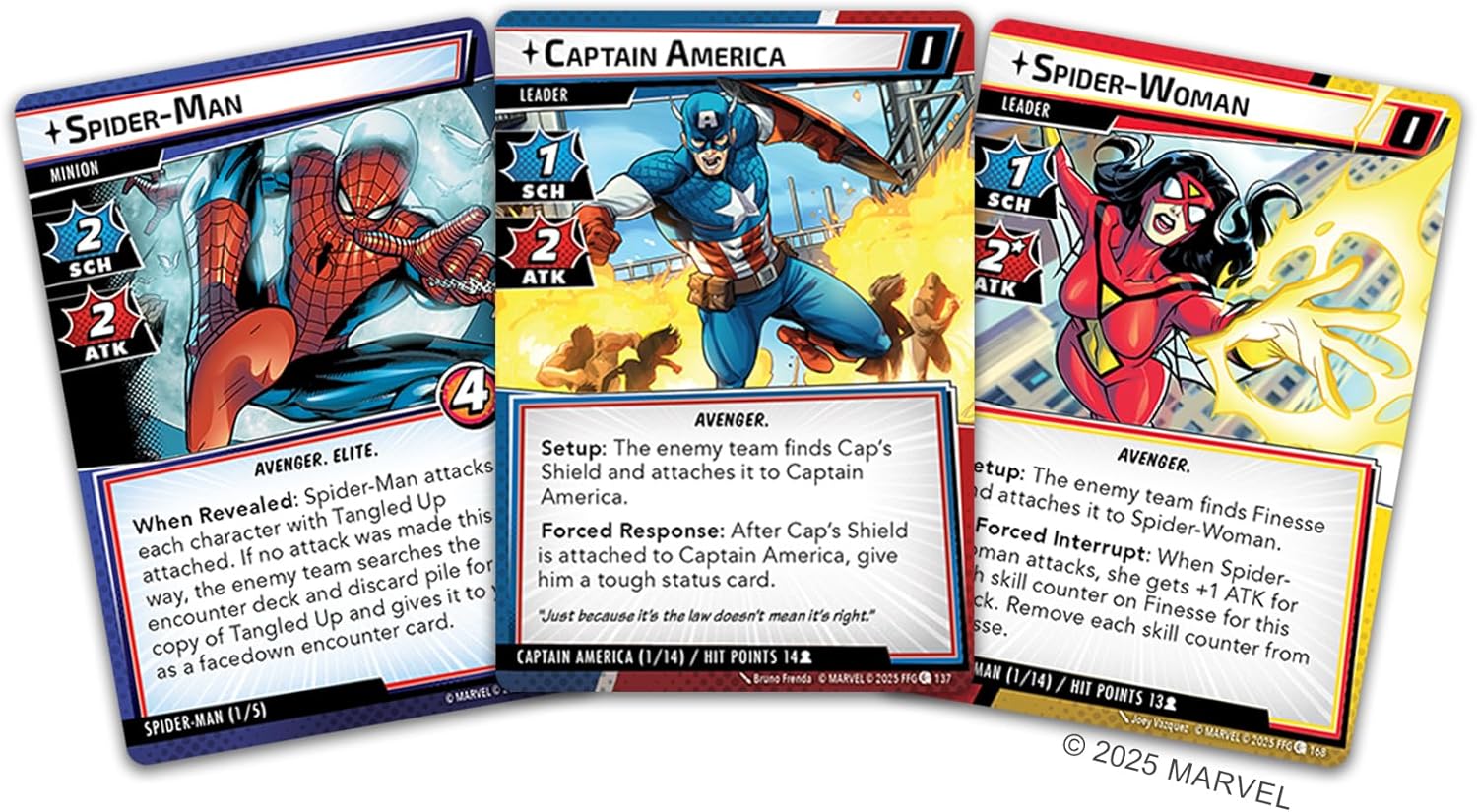
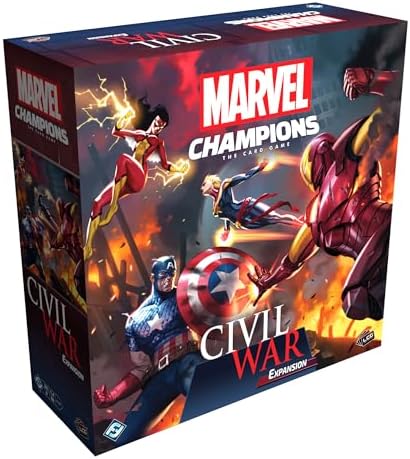
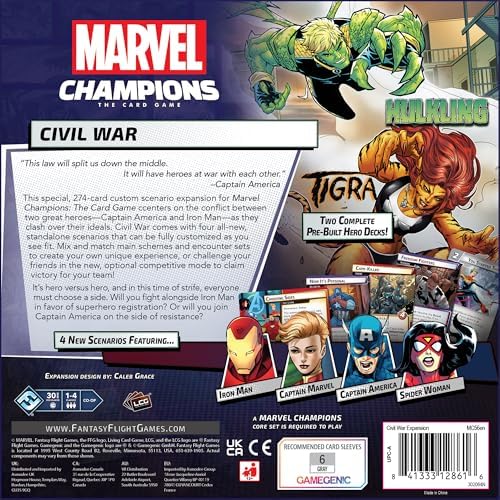
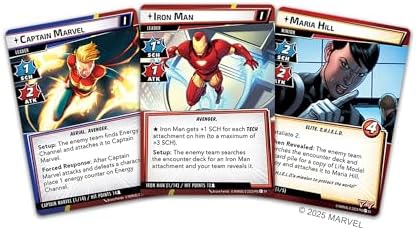
 Marvel Champions: Civil War
Current high-interest campaign box with hero conflict. Listing and edition verified July 29, 2026.
- Verified listing — the exact product, not a lookalike
- Has a clear job in the buying order
- Checked against the official rules and product pages
- Stock and seller can change without notice
- Not every table needs this one
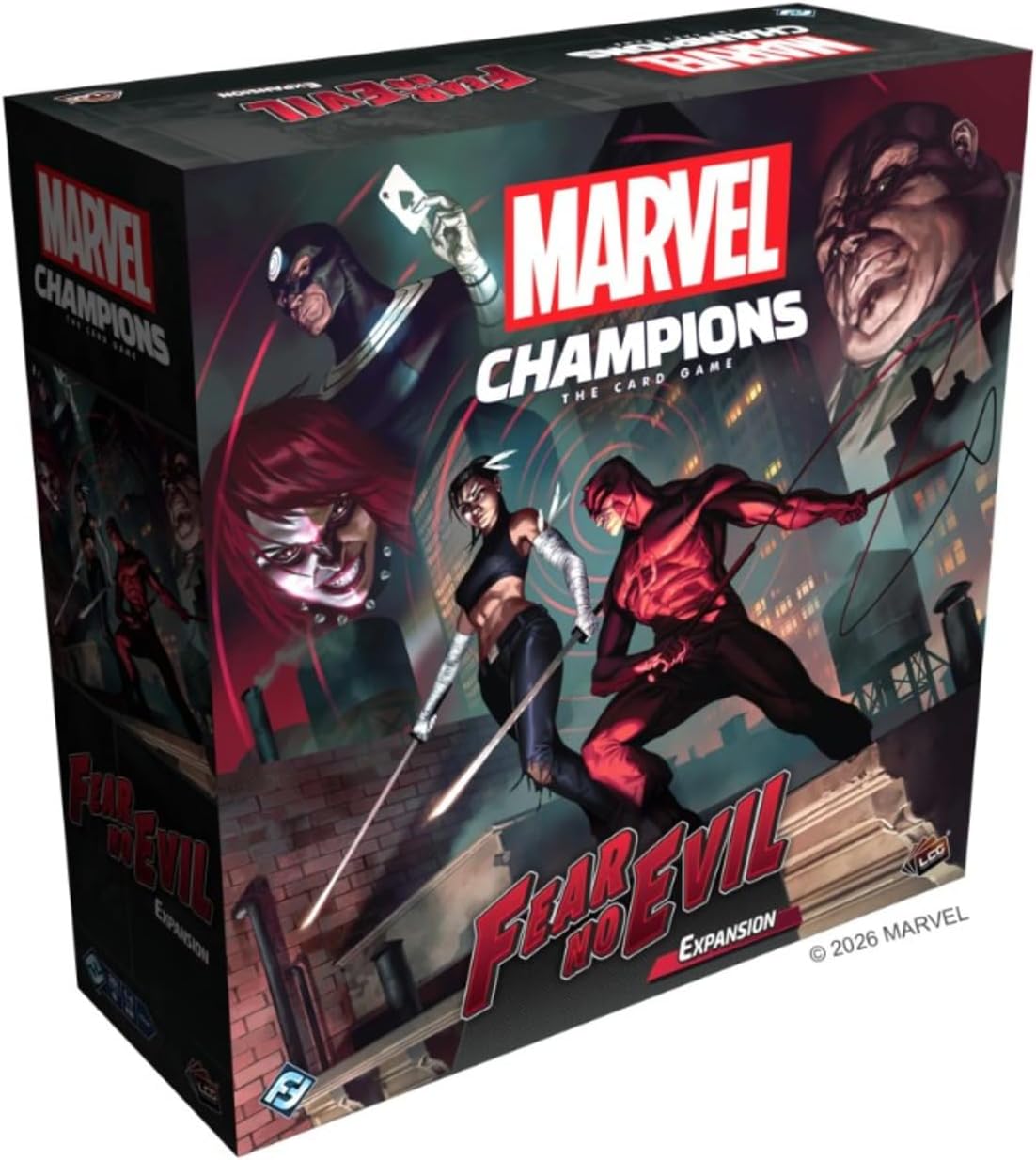
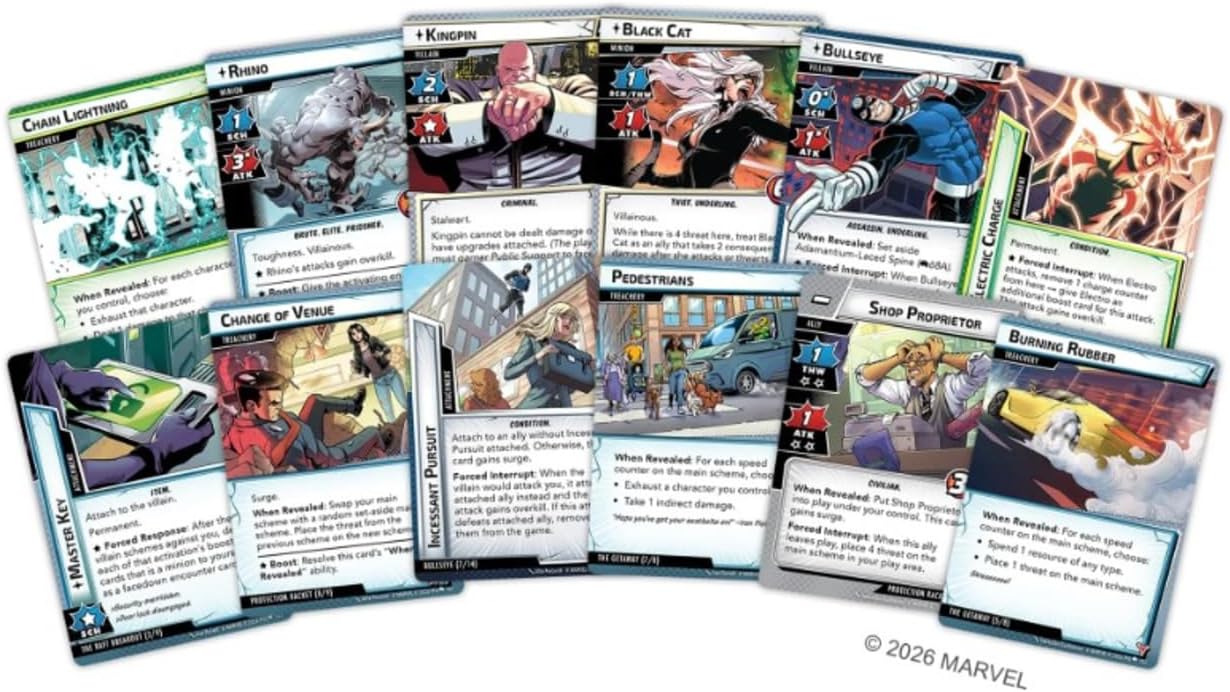
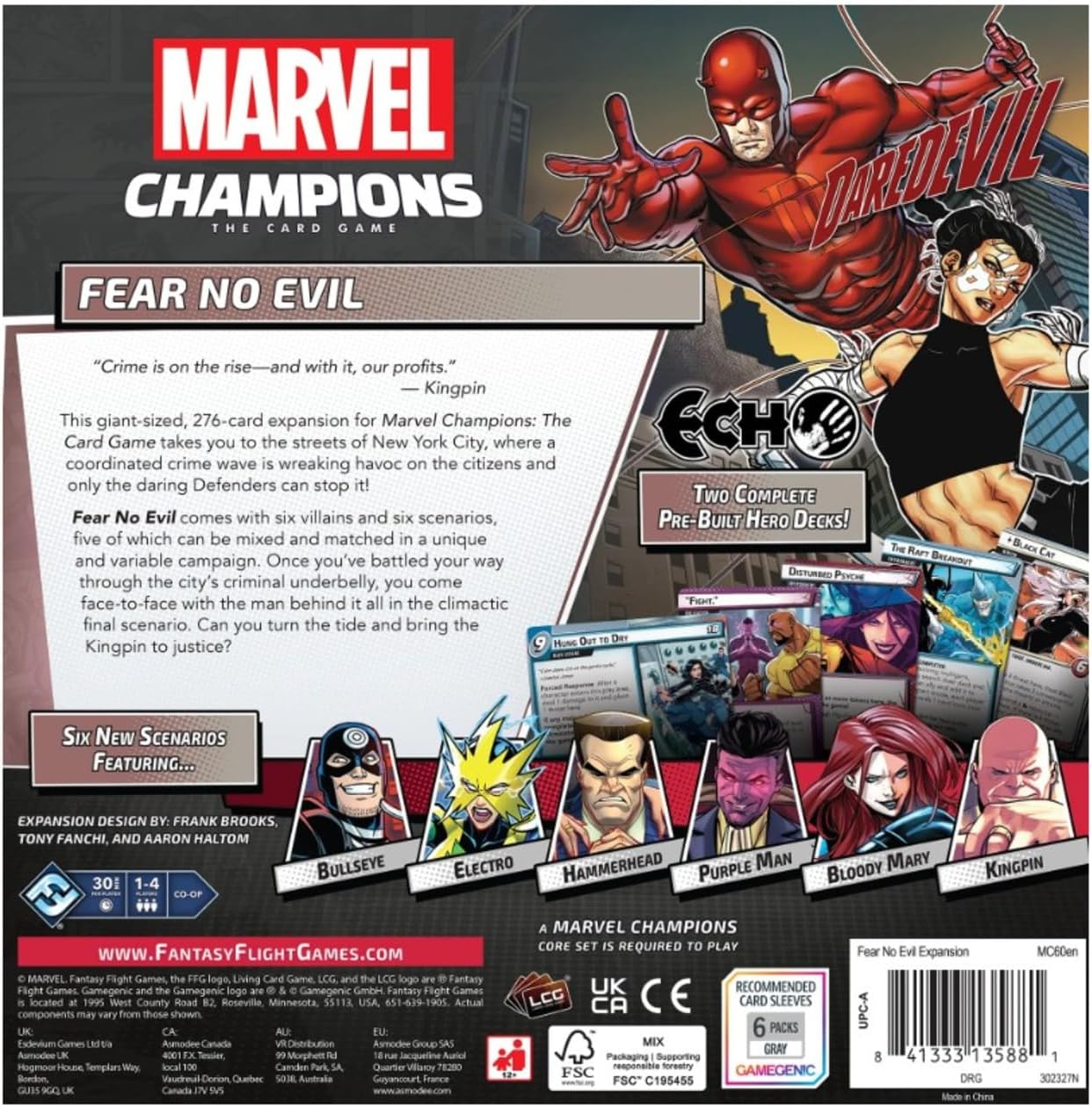
 6 photos
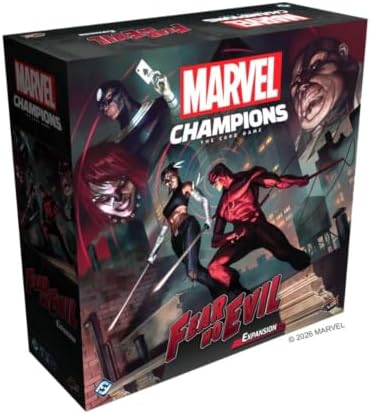
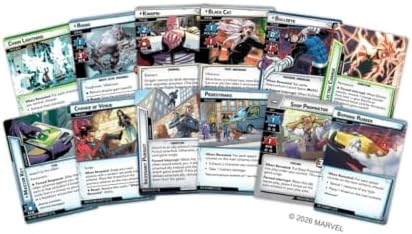
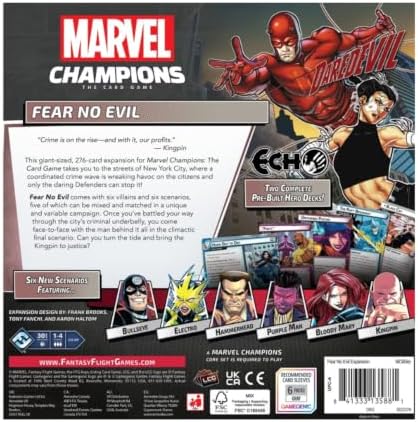
 Marvel Champions: Fear No Evil
Later campaign expansion for an established collection. Listing and edition verified July 29, 2026.
- Verified listing — the exact product, not a lookalike
- Has a clear job in the buying order
- Checked against the official rules and product pages
- Stock and seller can change without notice
- Not every table needs this one
At a glance
| Stage | Product | Buy when | Curator ruling |
|---|---|---|---|
| REQUIRED | Core Set | Learn all four aspects and the standard encounter structure. | Start here |
| CAMPAIGN | Agents of S.H.I.E.L.D. or Civil War | Choose system breadth or thematic hunger. | Only after repeat play |
| HERO | One favorite hero pack | Buy a turn pattern, not merely a costume. | Only after repeat play |
| DEEPEN | Second campaign box | Add after the first expansion has been played outside its campaign. | Specialist / later |
Questions, answered
What should I buy first for Marvel Champions?
Buy the Core Set. Every other product assumes its rules, tokens, and standard encounter material.
What is the best first campaign expansion?
Agents of S.H.I.E.L.D. is the broad recommendation; Civil War is an excellent thematic alternative.
Do hero packs work without a campaign box?
Yes, but they still require the Core Set.
Should I buy Marvel Champions in release order?
No. Buy one current campaign box and heroes tied to your preferred characters and aspects.
Is Marvel Champions good solo?
Yes. One hero is fast and focused; two-handed solo gives broader aspect interaction at a higher upkeep cost.
How many expansions do I need?
Core plus one campaign box already supports substantial replay. Add only after the table can name the next experience it wants.
Imani's verdict
The sane first shelf is Core Set plus one campaign expansion, not a tower of hero packs. S.H.I.E.L.D. is the safer systems recommendation, while Civil War wins for players drawn to its roster and conflict. Build one hero in two aspects before expanding again; the game’s value comes from remixing cards, not merely owning them.
Research ledger 9 sources · reviewed 2026-07-29
Specifications, rules, current product information, community experience, and contrary evidence were checked against the sources below. Commercial links are kept separate from editorial evidence.
- Fantasy Flight Marvel Champions product hubfantasyflightgames.com/en/products/marvel-champions-the-card-game
- Marvel Champions rules reference 1.7images-cdn.fantasyflightgames.com/filer_public/11/9f/119fdb98-cabe-4de3-8be8-4c4dbcae9d7c/mc_rulesreference_v17-web.pdf
- Official Civil War expansion pagefantasyflightgames.com/en/products/marvel-champions-the-card-game/products/civil-war
- Official Fear No Evil announcementfantasyflightgames.com/en/news/2026/4/16/fear-no-evil
- Current new-player purchasing guidereddit.com/r/marvelchampionslcg/comments/1sfmi72/new_player_purchasing_guide_updated_and_mostly
- Where-to-start discussionreddit.com/r/marvelchampionslcg/comments/1qiyzbb/where_to_start
- BoardGameGeek title and discussion index: Marvel Champions buying orderboardgamegeek.com/geeksearch.php?action=search&objecttype=boardgame&q=Marvel%20Champions%20buying%20order
- Exact Amazon product identity: Marvel Champions: The Card Game Core Setamazon.com/dp/B07W1BF6D5?tag=puzzlewick-20
- Exact Amazon product identity: Marvel Champions: Agents of S.H.I.E.L.D.amazon.com/dp/B0DK7T35ZF?tag=puzzlewick-20

Okay but have you seen what everyone’s saying about this?


Keep exploring
The next smart rabbit holes.
✦ Universe HubMarvel Tabletop: the whole buying pathPuzzlewick’s Marvel universe begins with the experience, not the logo. Choose a deck-construction laboratory, a fast miniature...✺ Topic PathCooperative Campaign Games: compare the whole shelfA cooperative campaign is a promise your group makes to its future self. These guides show which box reaches the table, how much...ComparisonMarvel Zombies vs Zombicide Second Edition in 2026: Which Giant Co-op Box Should You Buy?Margo opens both enormous boxes, separates Hunger from equipment, explains the X-Men Resistance core-box trap and names the apocalypse...