Marvel Champions vs Marvel United in 2026: Which Marvel Co-op Should You Buy?
Imani separates the deck-building laboratory from the miniature-filled family table, then gives each game one sane expansion path instead of a multiverse-sized shopping cart.

AI-assisted curator persona · research and editorial responsibility: Robert Pruitt · how this guide was made
Last editorial refresh: 2026-08-13 Gold-standard QA: 2026-07-25 10 sources reviewed Affiliate links checked during gold-standard pass

The short answer
Buy Marvel Champions if you want the deeper solo or two-player card game, meaningful deck construction, and modular villains. Buy Marvel United if you want the faster teach, miniatures, family-friendly co-op, and easy four-player table. For most solo players Champions wins; for mixed-skill groups United wins.
Decision map
Choose in thirty seconds
Solo players and card-game pairs
Families and quick cooperative nights
Champions owners ready for a campaign branch
This is a buying decision, not a fandom census. Imani separates the deck-building laboratory from the miniature-filled family table, then gives each game one sane expansion path instead of a multiverse-sized shopping cart.
Every product link in this guide resolves to an exact Amazon detail page with the Puzzlewick affiliate tag. Product galleries and official manuals were checked on 2026-07-25; moving prices are deliberately left to the current listing.
Start here, then go deeper
You are in the right cabinet.
 ✦ Universe HubMarvel Tabletop: the whole buying pathPuzzlewick’s Marvel universe begins with the experience, not the logo. Choose a deck-construction laboratory, a fast miniature...✦ Topic PathBoard Game Buying Guides: compare the whole shelfStart with the decision, not the shelf. These guides compare the games, editions, expansions, player counts, and costs people...
 ComparisonMarvel Dice Throne vs X-Men Dice Throne in 2026: Which Box Should You Buy?Yumi rolls past the hero art and opens the packaging truth: folding boards, missing trays, cross-compatibility, official patches and the...
Should you buy Marvel Champions or Marvel United?
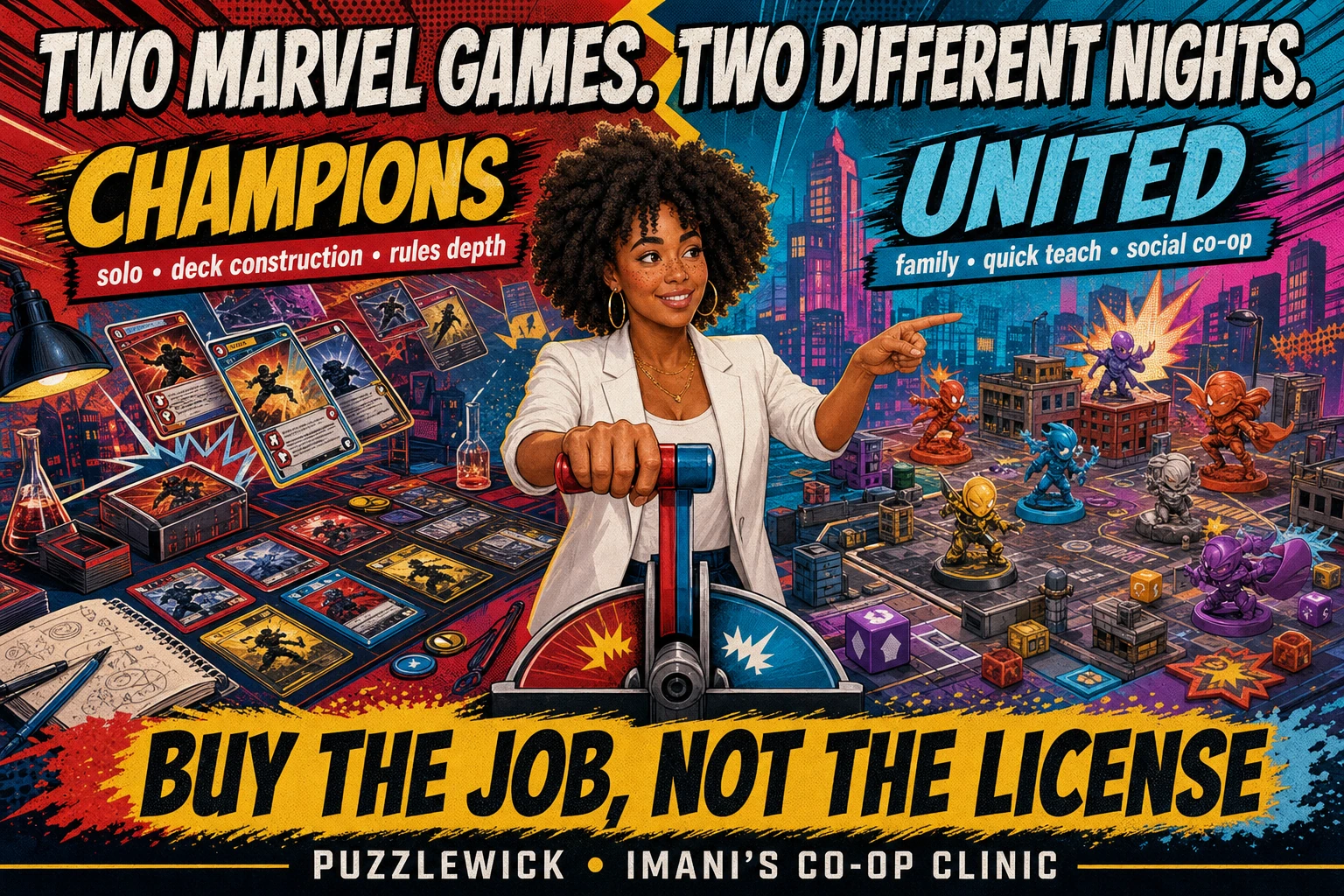
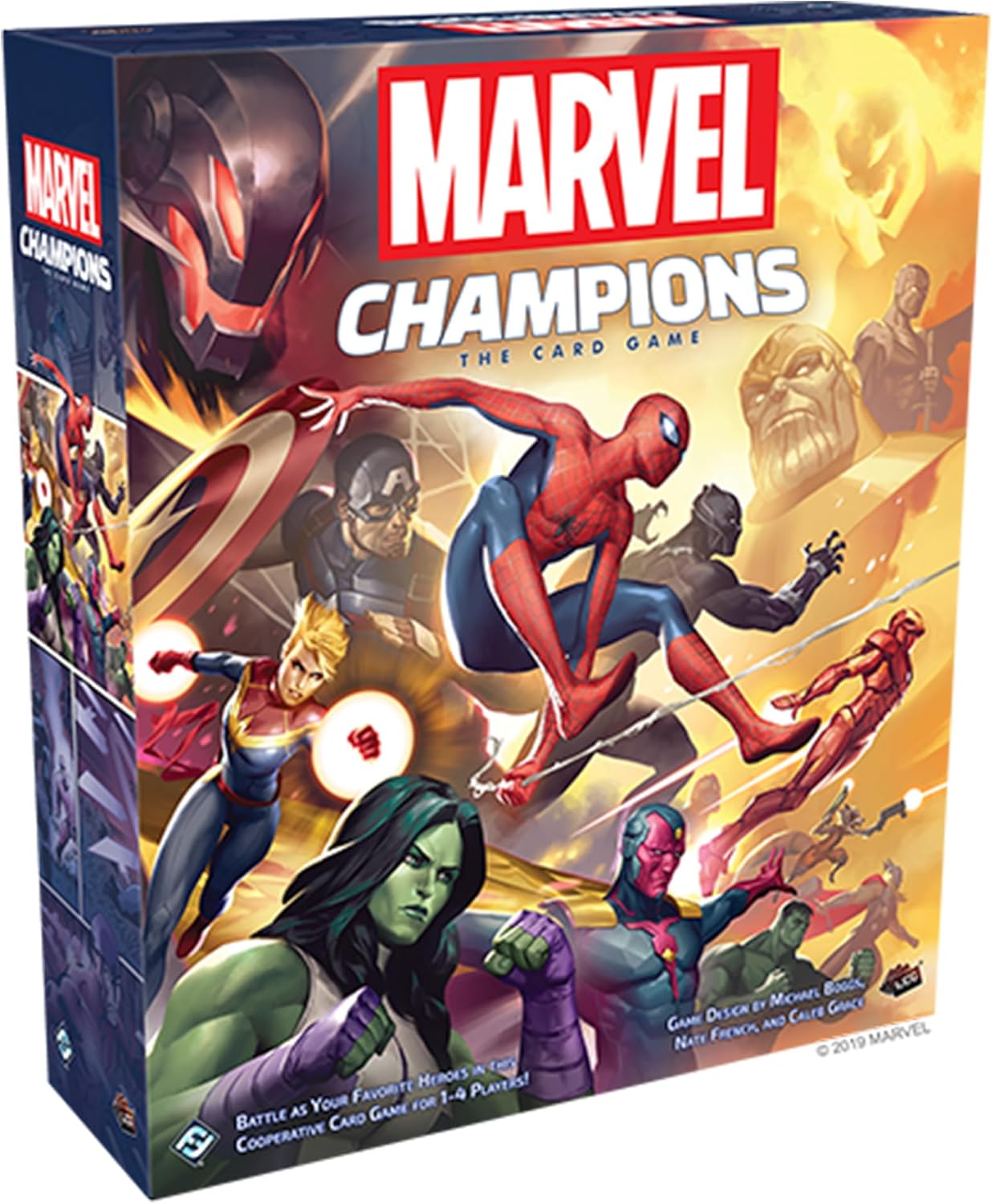
The games share a license, not a job. Marvel Champions Core is a card-game laboratory: choose a hero, pair that fixed hero kit with an aspect deck, assemble a villain encounter, and learn exactly when Actions, Responses and Interrupts resolve. Marvel United: Multiverse is a social co-op: move among locations, extend a shared storyline and combine the symbols on adjacent hero cards.
Champions wins when one or two people want to study a system. United wins when a host wants four people making satisfying decisions inside ten minutes. That distinction matters more than which miniatures or heroes are in the box.
Imani’s broad recommendation is Champions for solo, United for a family or rotating game night, and both only when those two rooms genuinely occur in your life.
Imani’s translation: Champions asks, “How do I solve this villain?” United asks, “How quickly can I get everyone doing superhero things?” Same cape rack, different evening.
How different are the two games at the table?
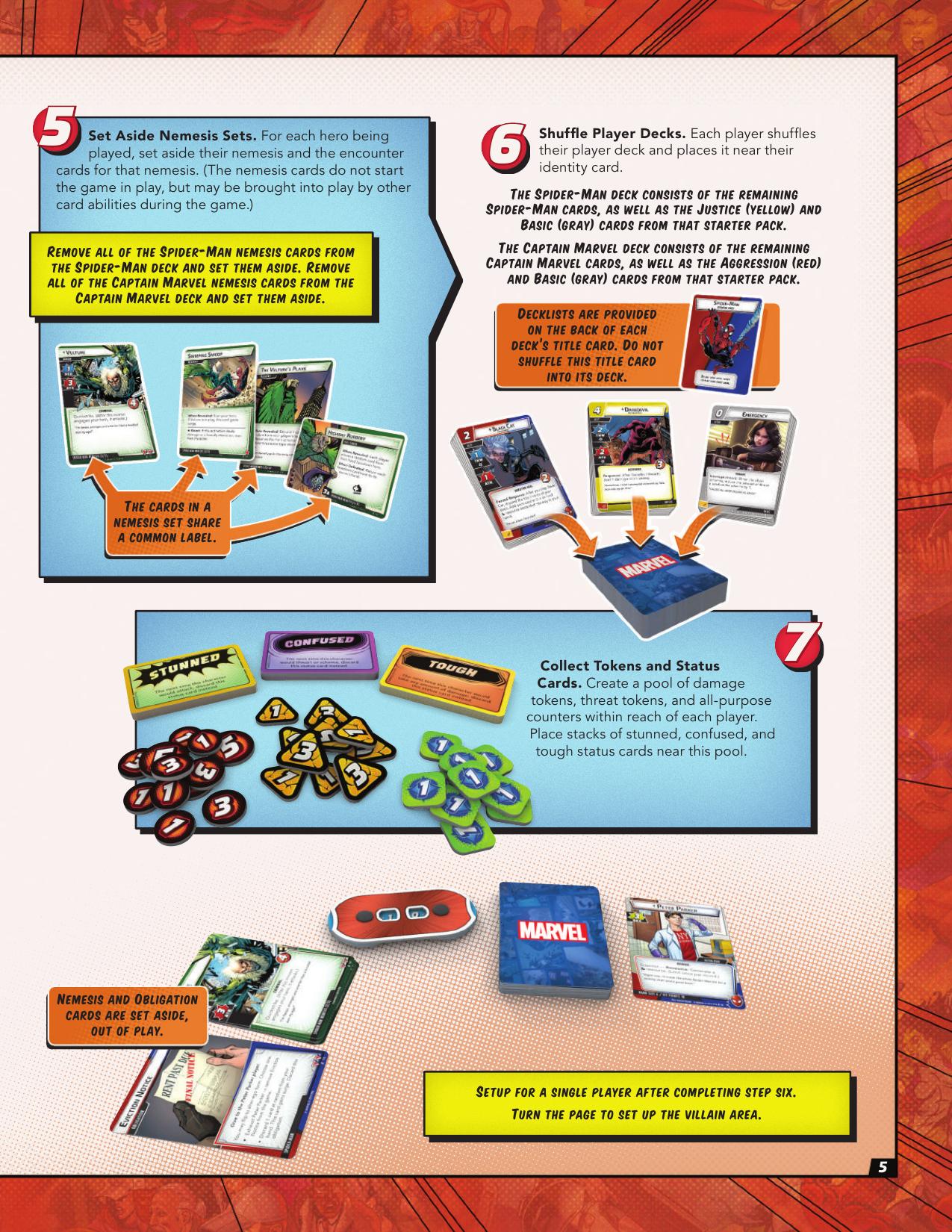
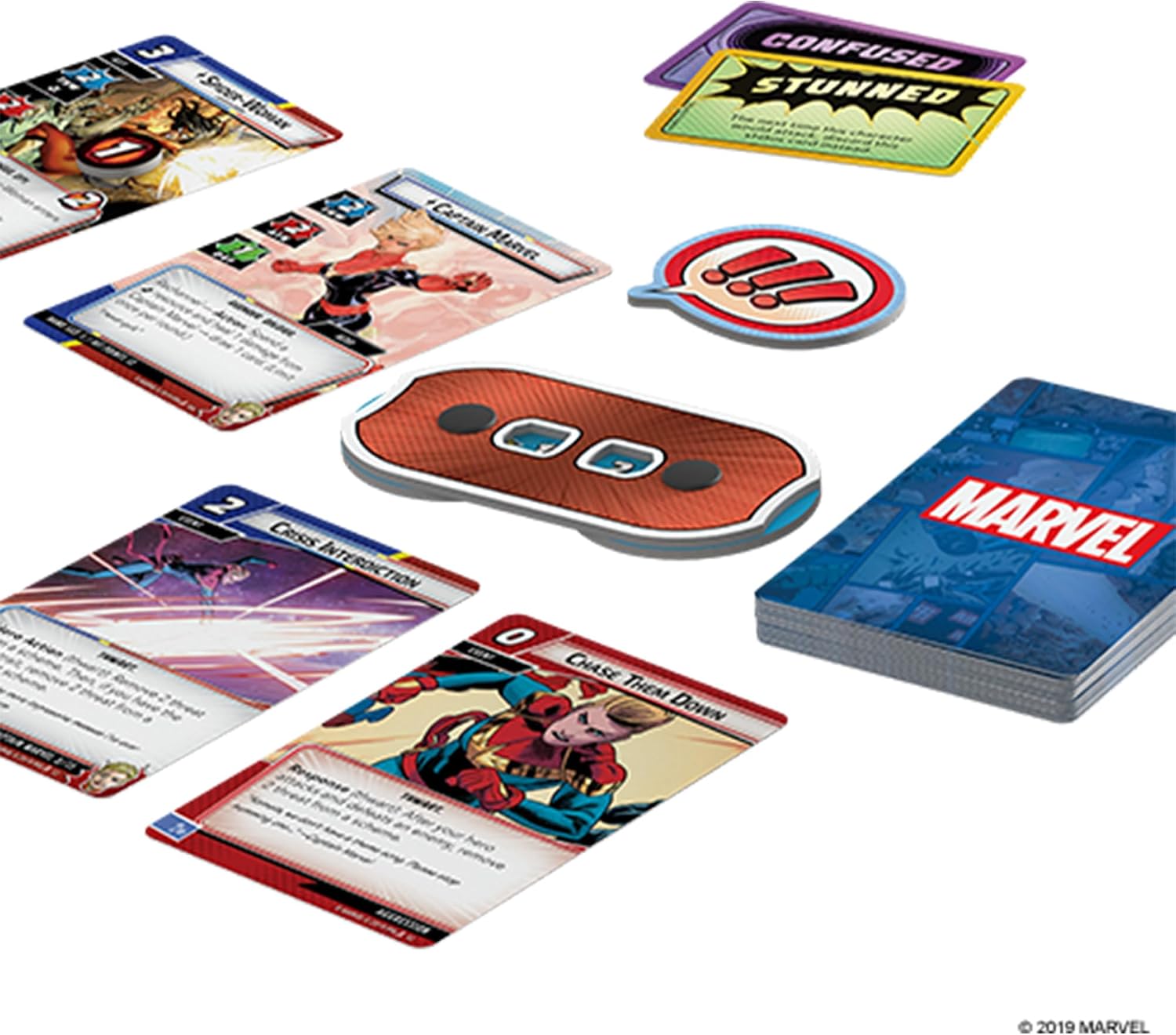
Marvel Champions gives each player a hero identity card, a hero-specific kit and a chosen aspect. The villain has a main scheme, encounter deck and modular set. Damage and threat are separate clocks, so flipping between hero and alter-ego form is not flavor text; it changes what you can do and what the villain attacks.
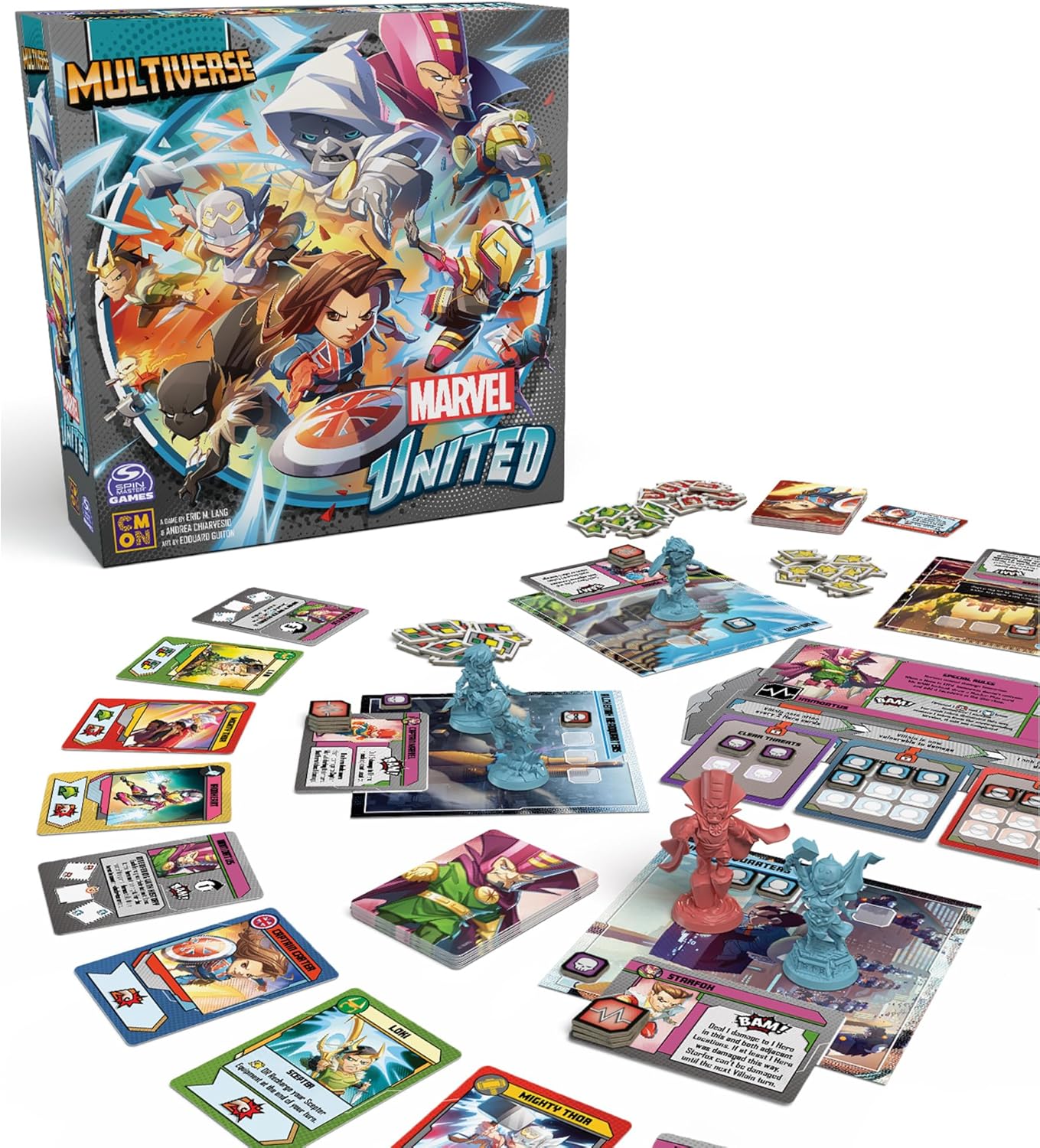
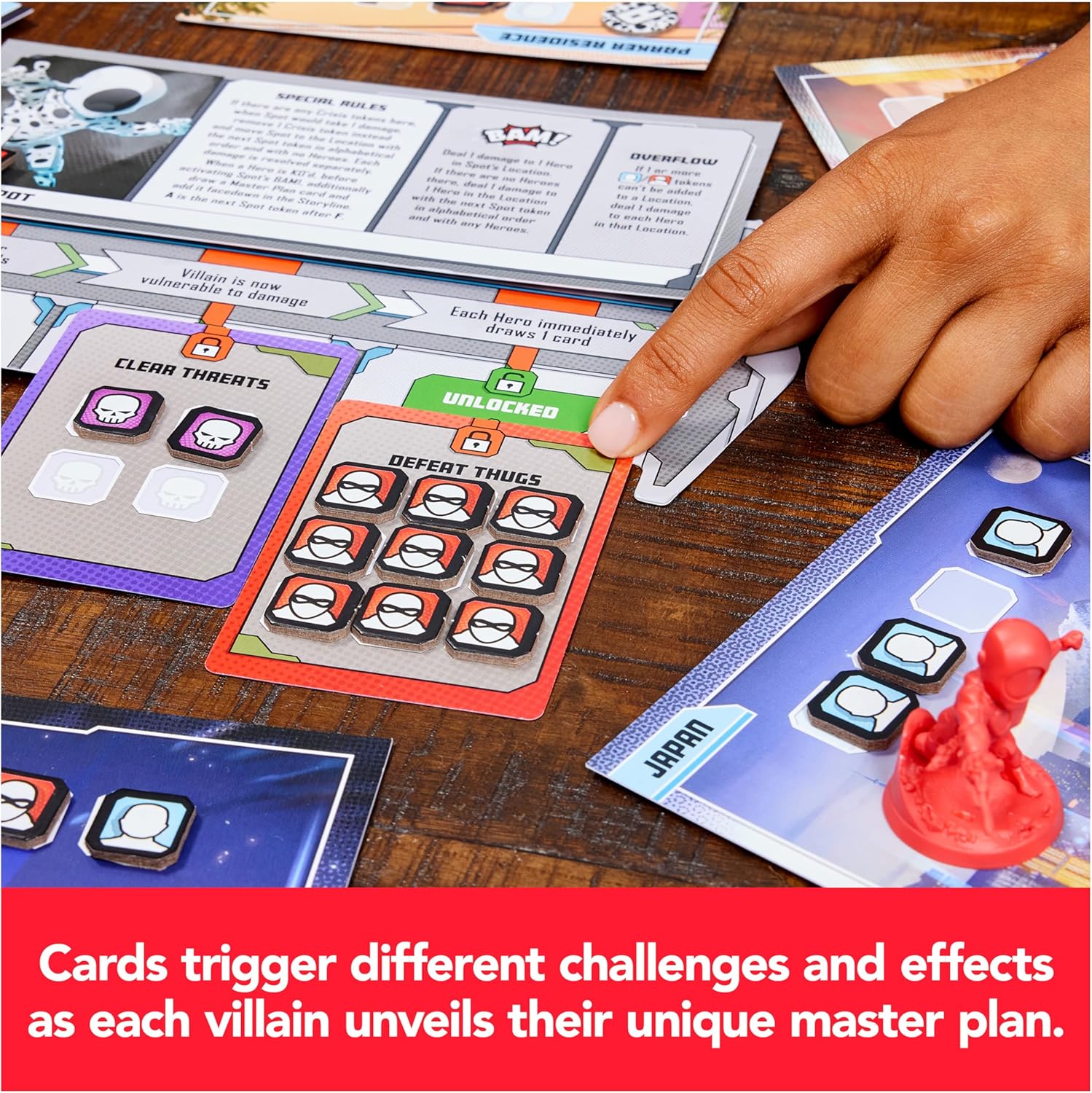
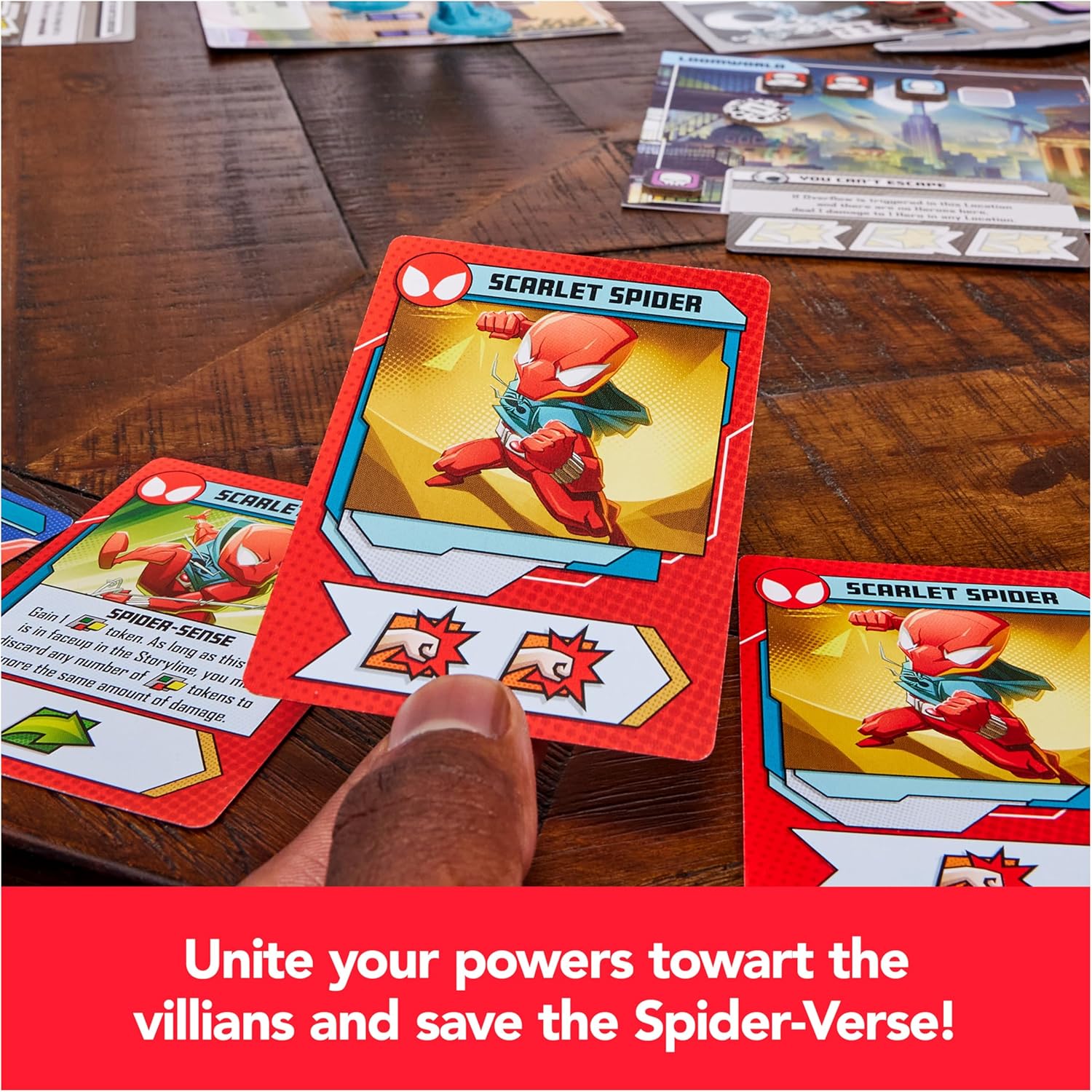
Marvel United places hero cards into one shared storyline. The symbols on the previous hero card help the next player, which makes turn order and team composition the real engine. A villain travels, resolves a Master Plan card and fills locations with threats until heroes clear missions and can attack.
The result is not “heavy versus easy.” It is construction and timing versus sequencing and accessibility. United can become sharp under challenge rules, but it never becomes a deck-construction game. Champions can be taught cleanly, but it never becomes a ten-minute family setup.
What exactly comes in each core box?
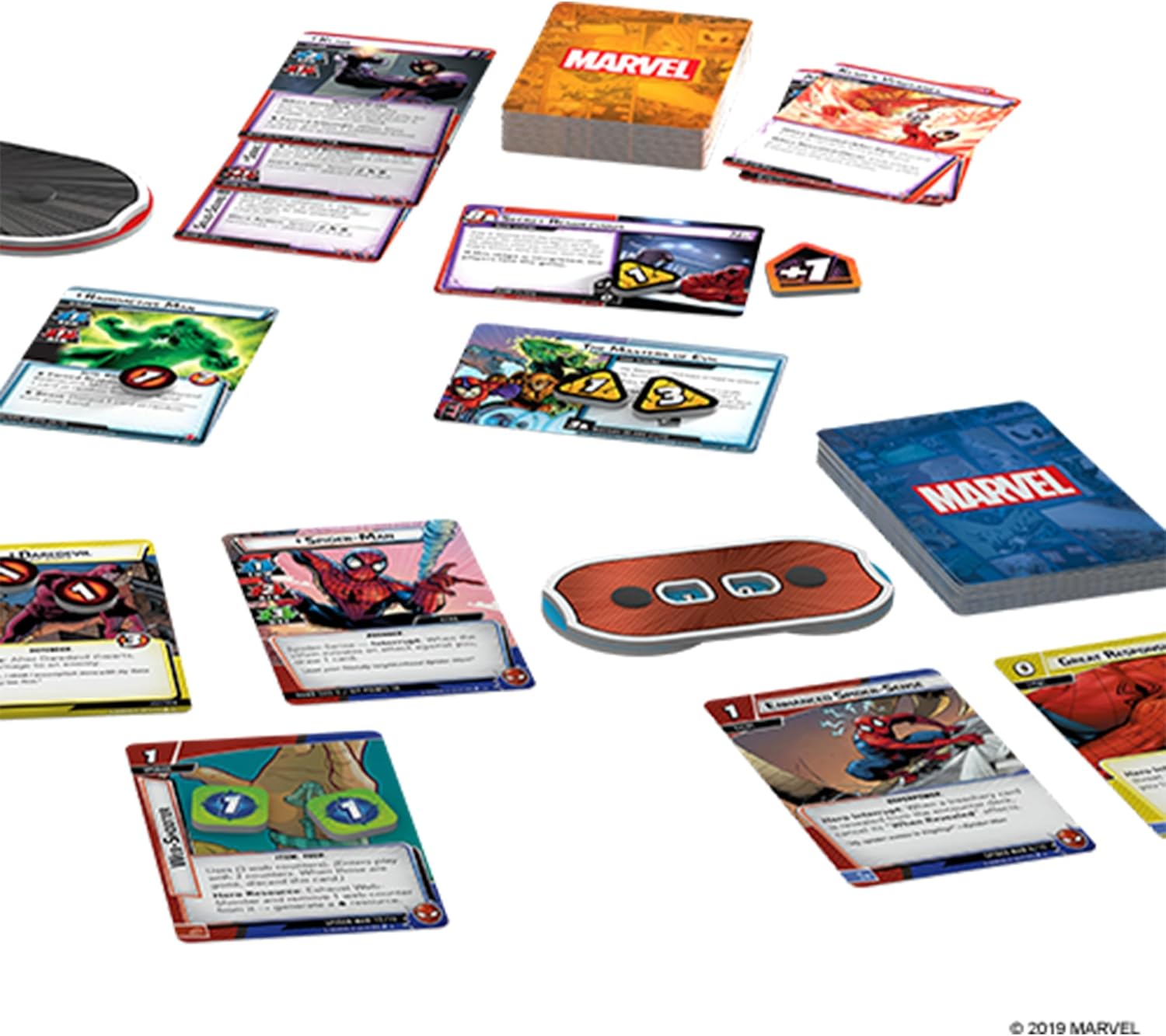


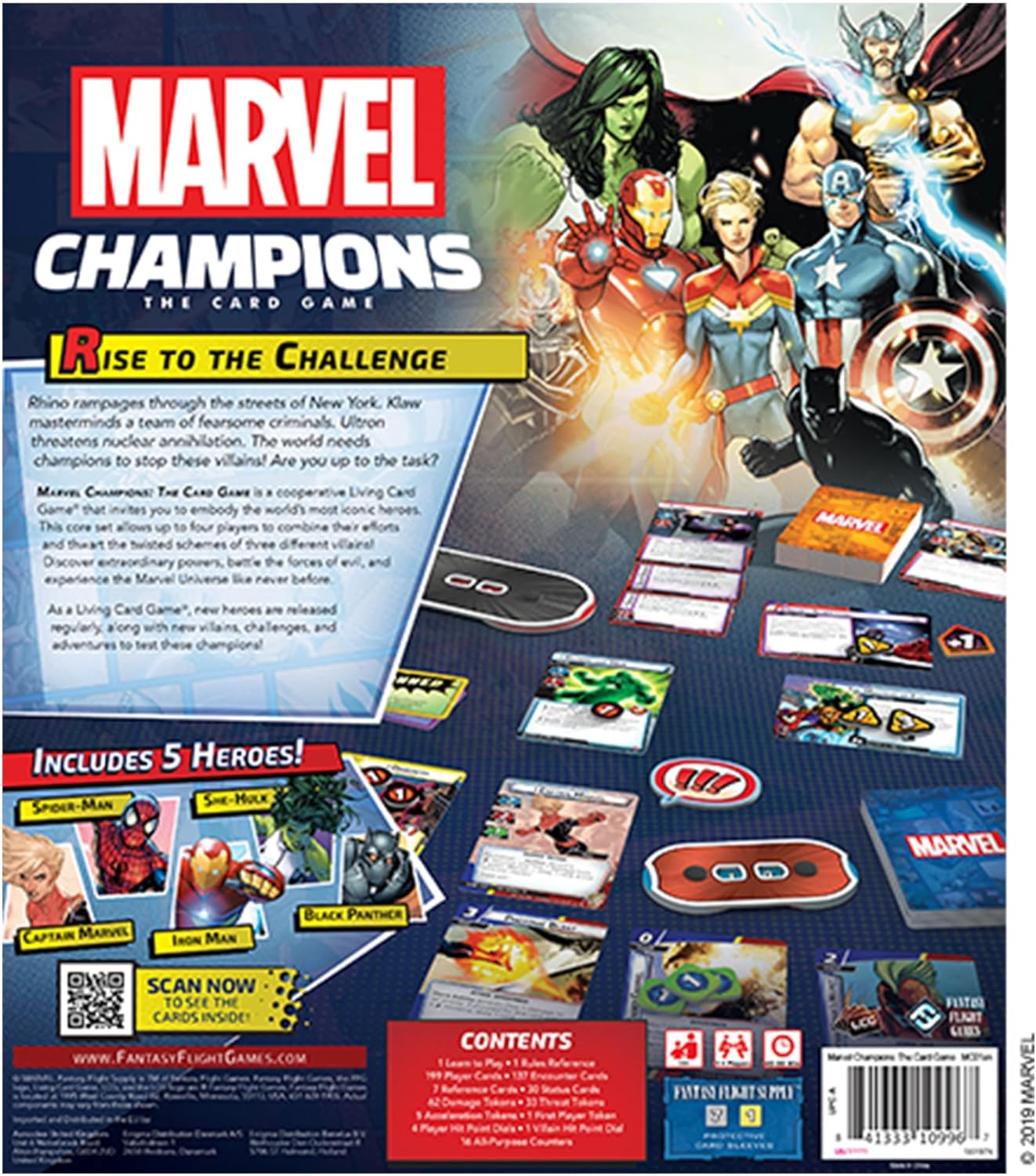
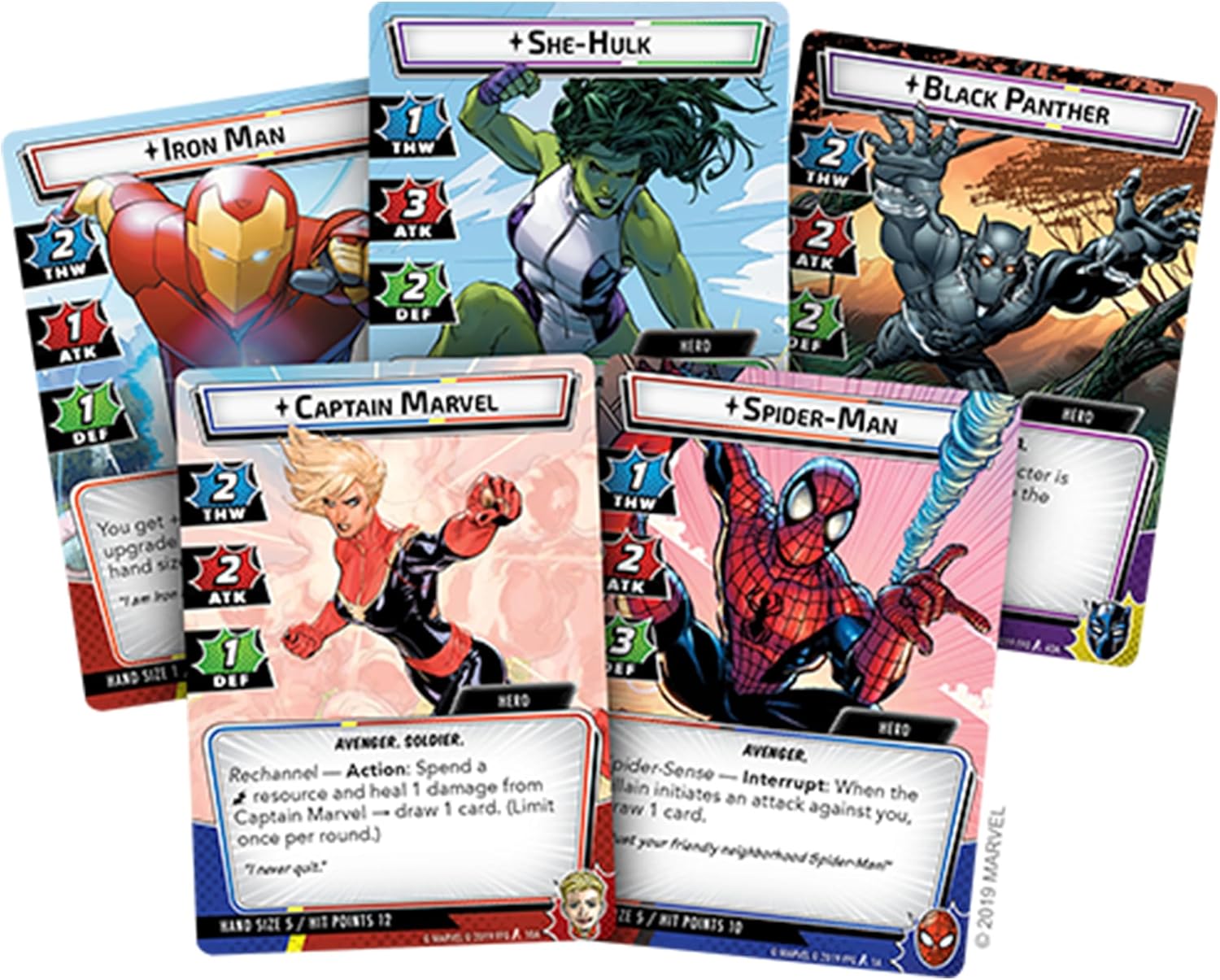
Marvel Champions Core includes five heroes—Spider-Man, Captain Marvel, She-Hulk, Iron Man and Black Panther—plus three villains, aspect cards, modular encounters, tokens and hit-point dials. It supports one to four players, but its cleanest pace is solo or two.
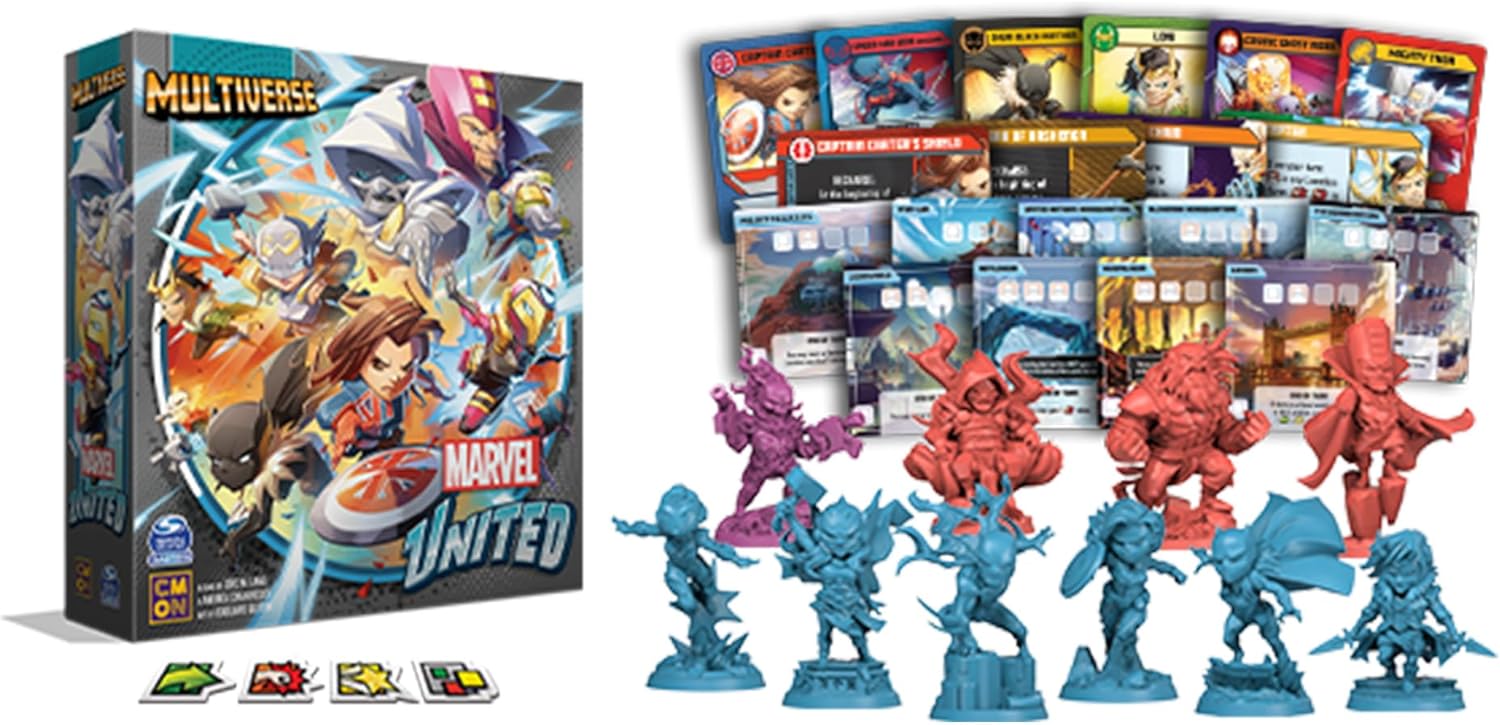
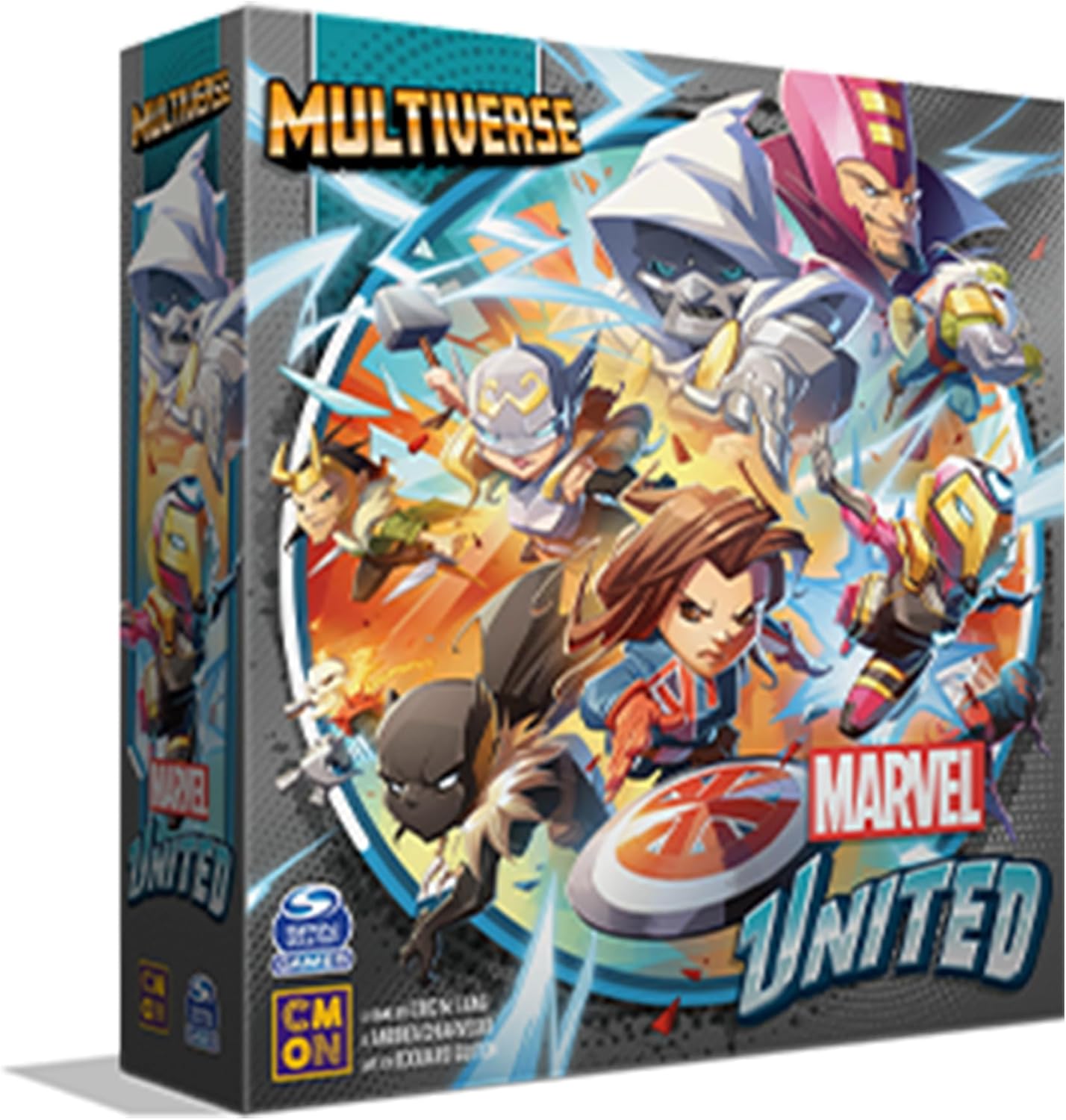
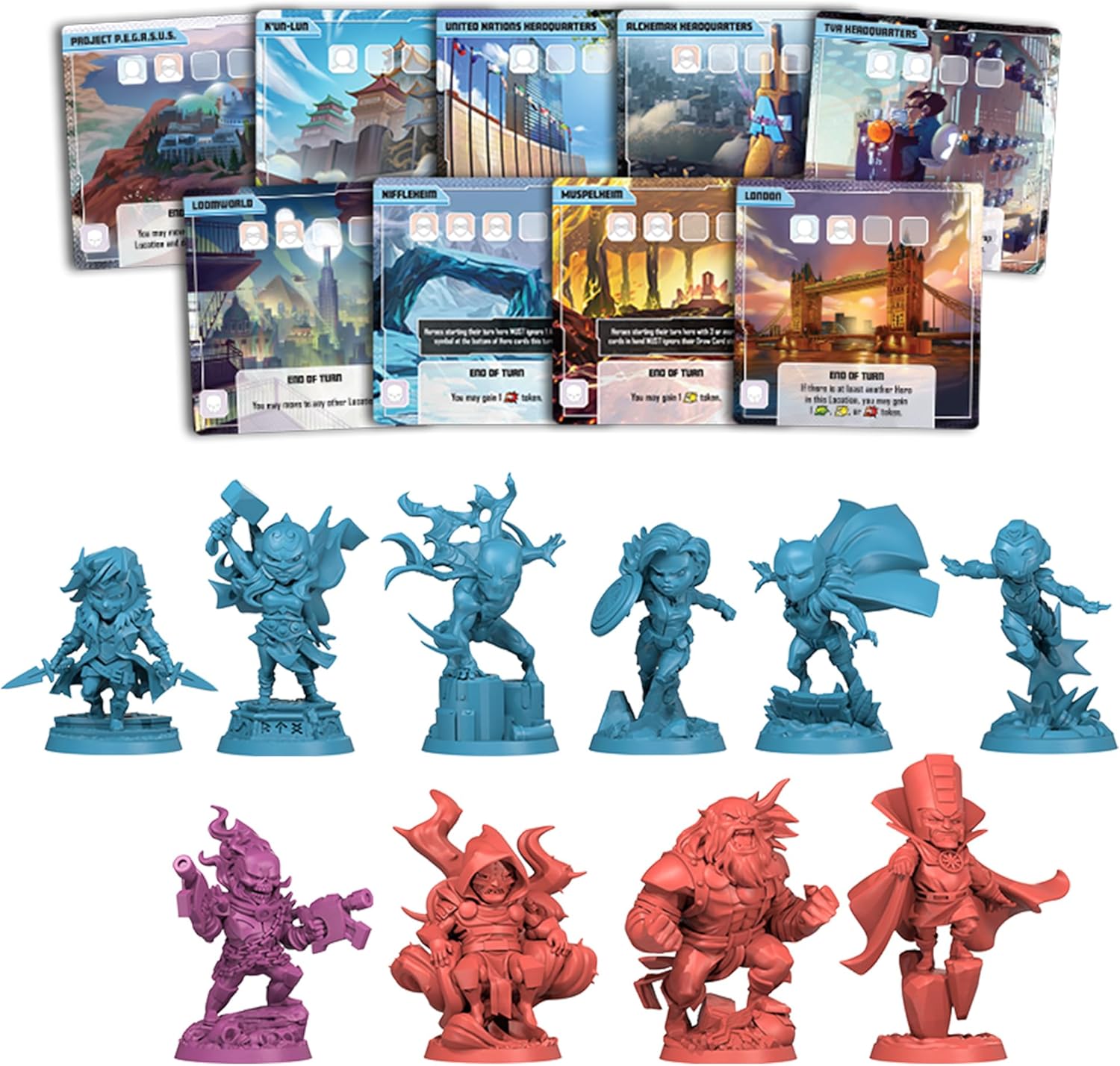
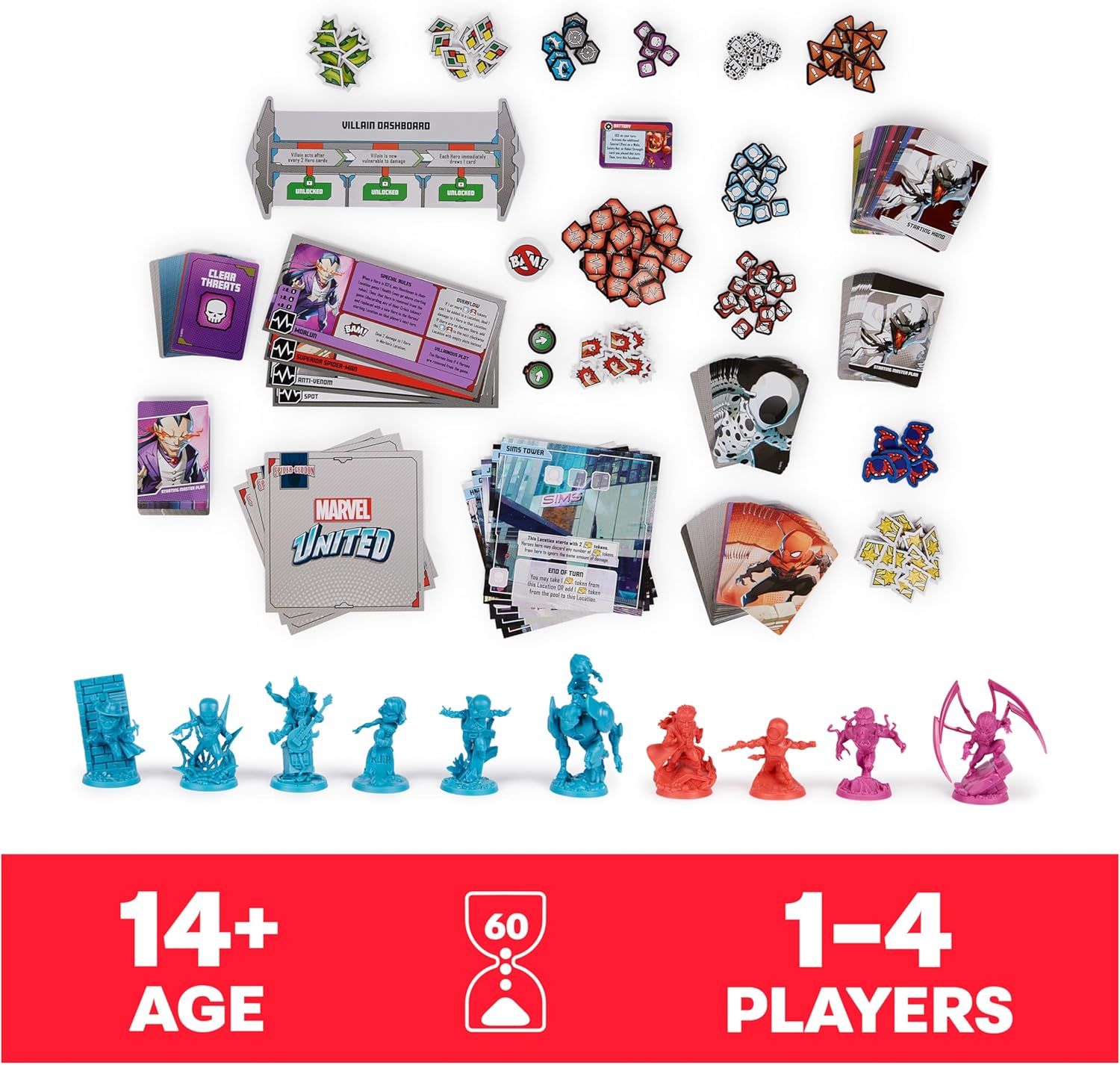
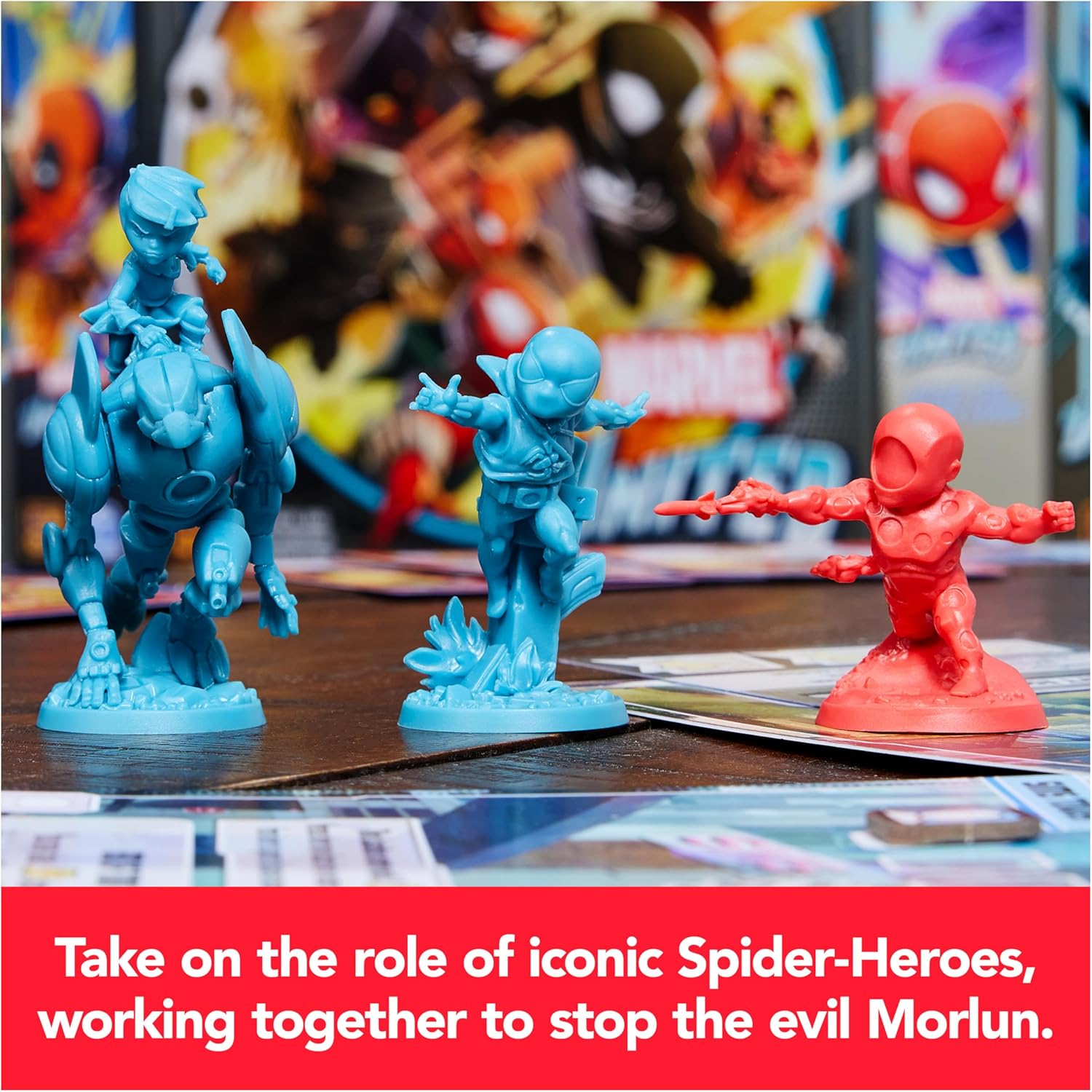
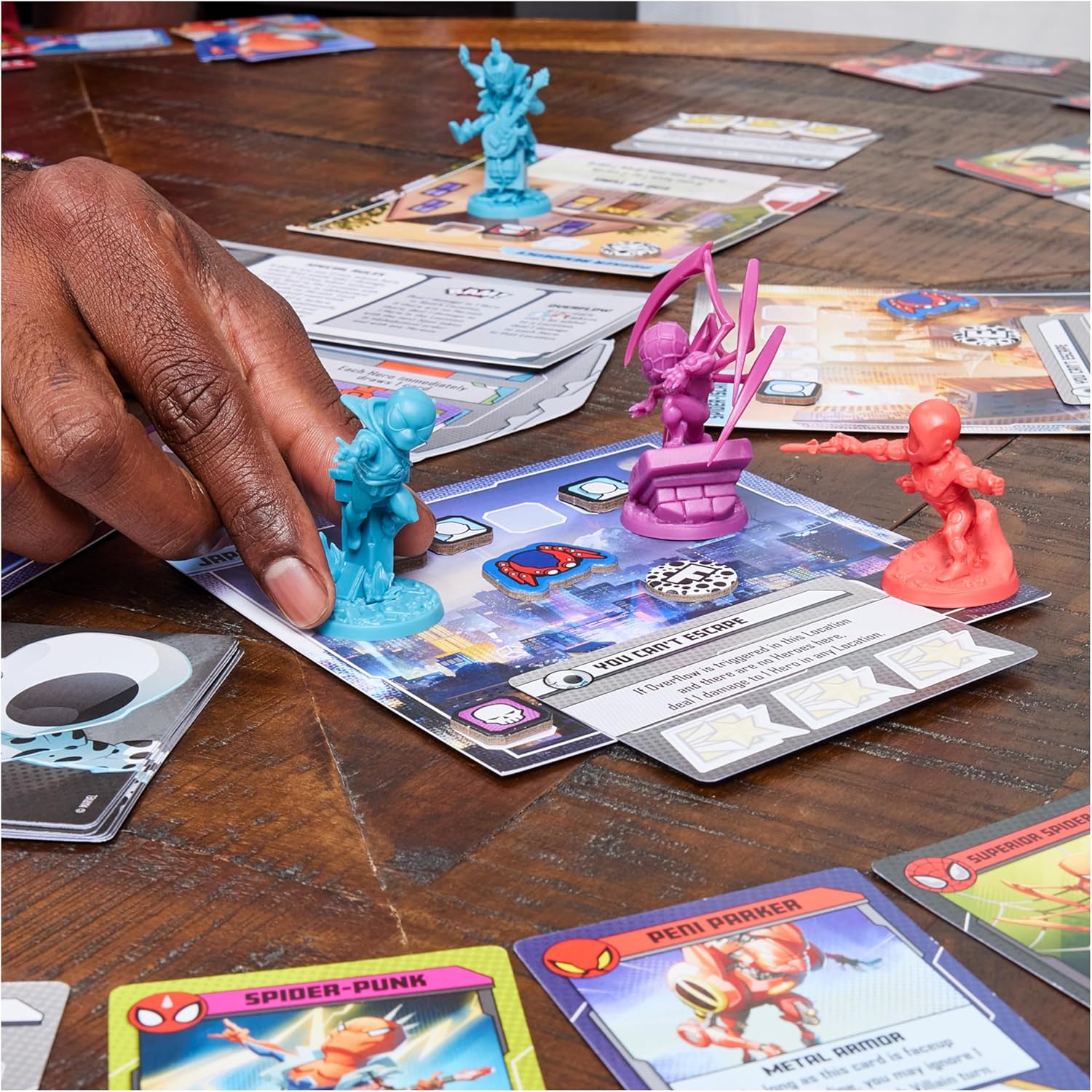
Marvel United: Multiverse is a standalone core rather than a dependency disguised as an expansion. It introduces Equipment, Commander Solo Mode and an anti-hero while retaining the central location and storyline system. The exact Amazon gallery also shows the miniatures, location cards, dashboards and tokens before purchase.
Neither box needs sleeves, a playmat or an insert to function. Sleeves become sensible only after repeated shuffling proves the game has a permanent place in the rotation.
Which game is better solo?
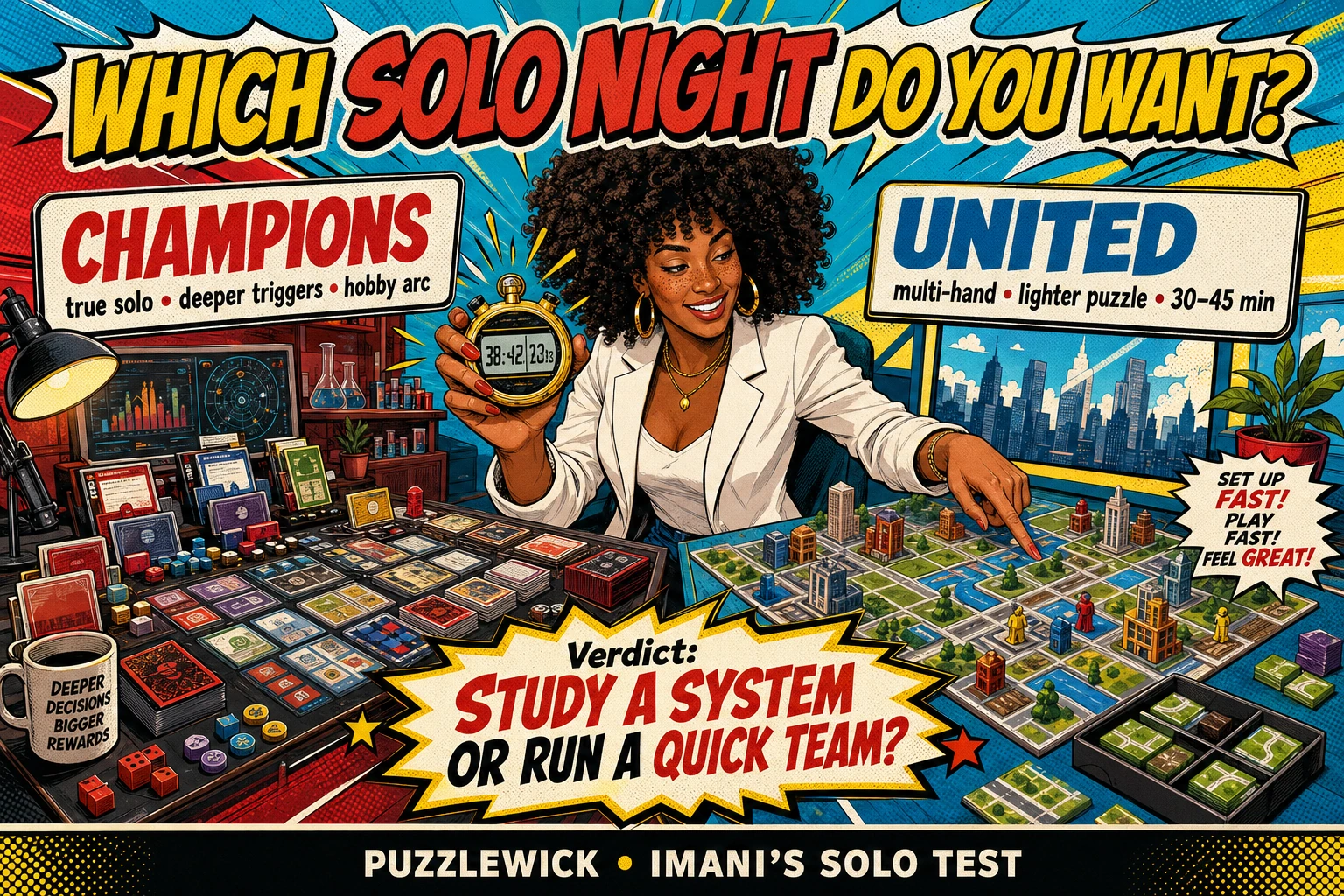
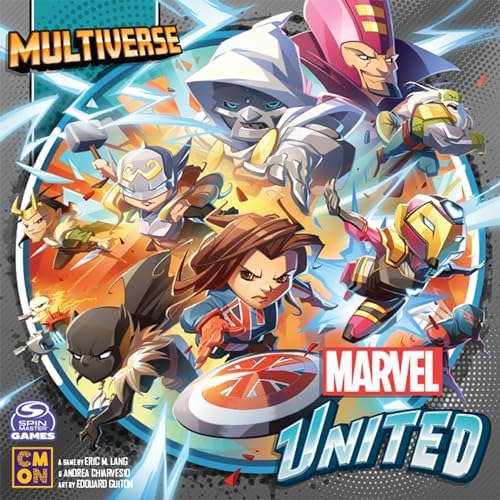
Marvel Champions wins solo. True solo is fast and focused; two-handed solo exposes more hero combinations at the cost of more triggers. The core lesson from experienced players is to begin with Rhino, use a recommended deck and separate “Forced” effects from optional responses before raising difficulty.
Marvel United is easy to multi-hand because each hero has a compact deck and open information. Current solo discussion repeatedly prefers controlling three or four heroes over the dedicated solo variant. That works, but the puzzle is lighter and can feel repetitive if the villain set is too easy.
Use United when you want a 30–45 minute comic-book puzzle. Use Champions when the deck, encounter module and rematch can become a hobby.
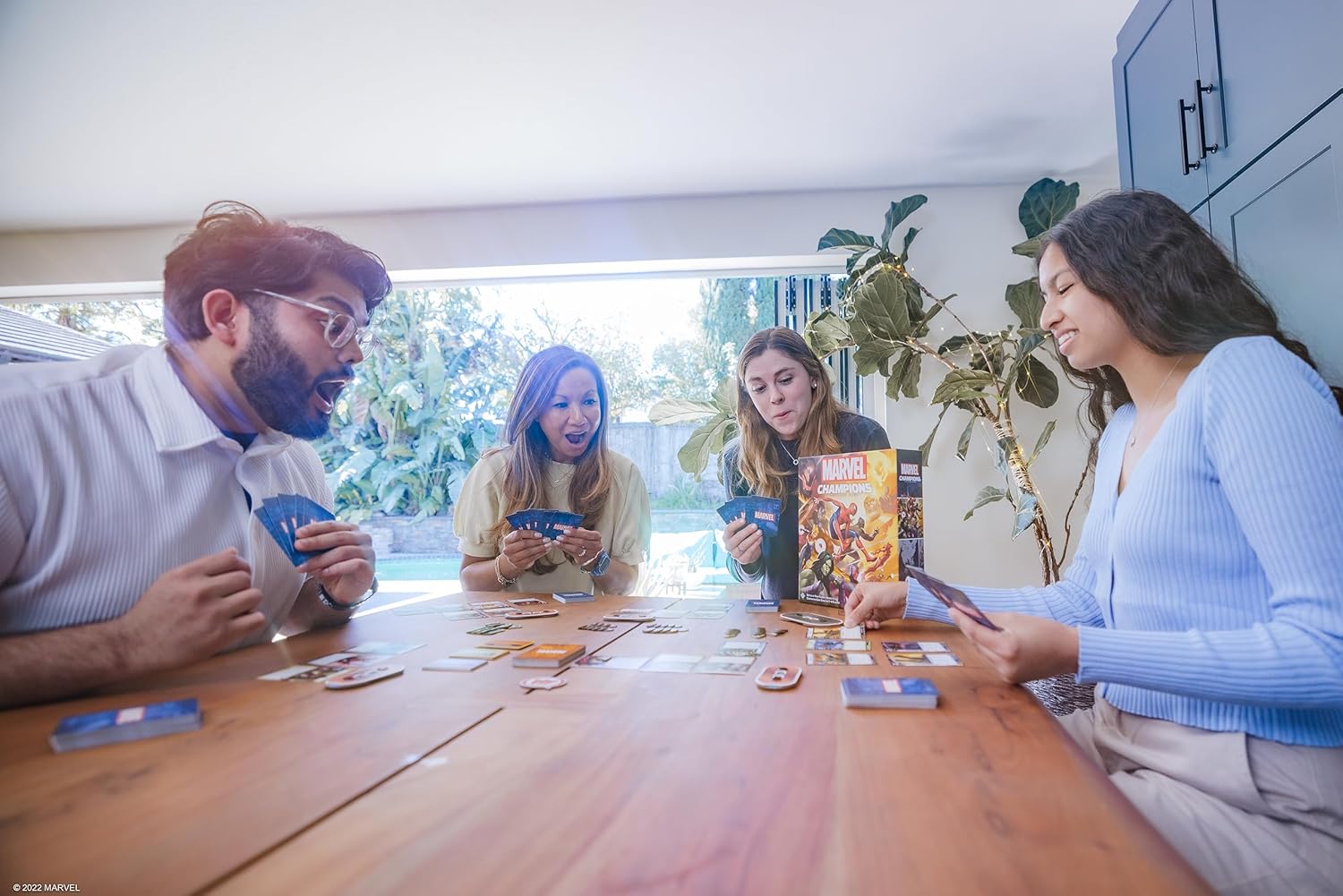
Community experience is unusually consistent here: Champions is most comfortable at one or two, while four heroes can turn a sharp card puzzle into a committee meeting with snacks. United is the cleaner mixed-group invitation because turns stay short and the shared storyline keeps everyone watching.
What should you buy after the core?
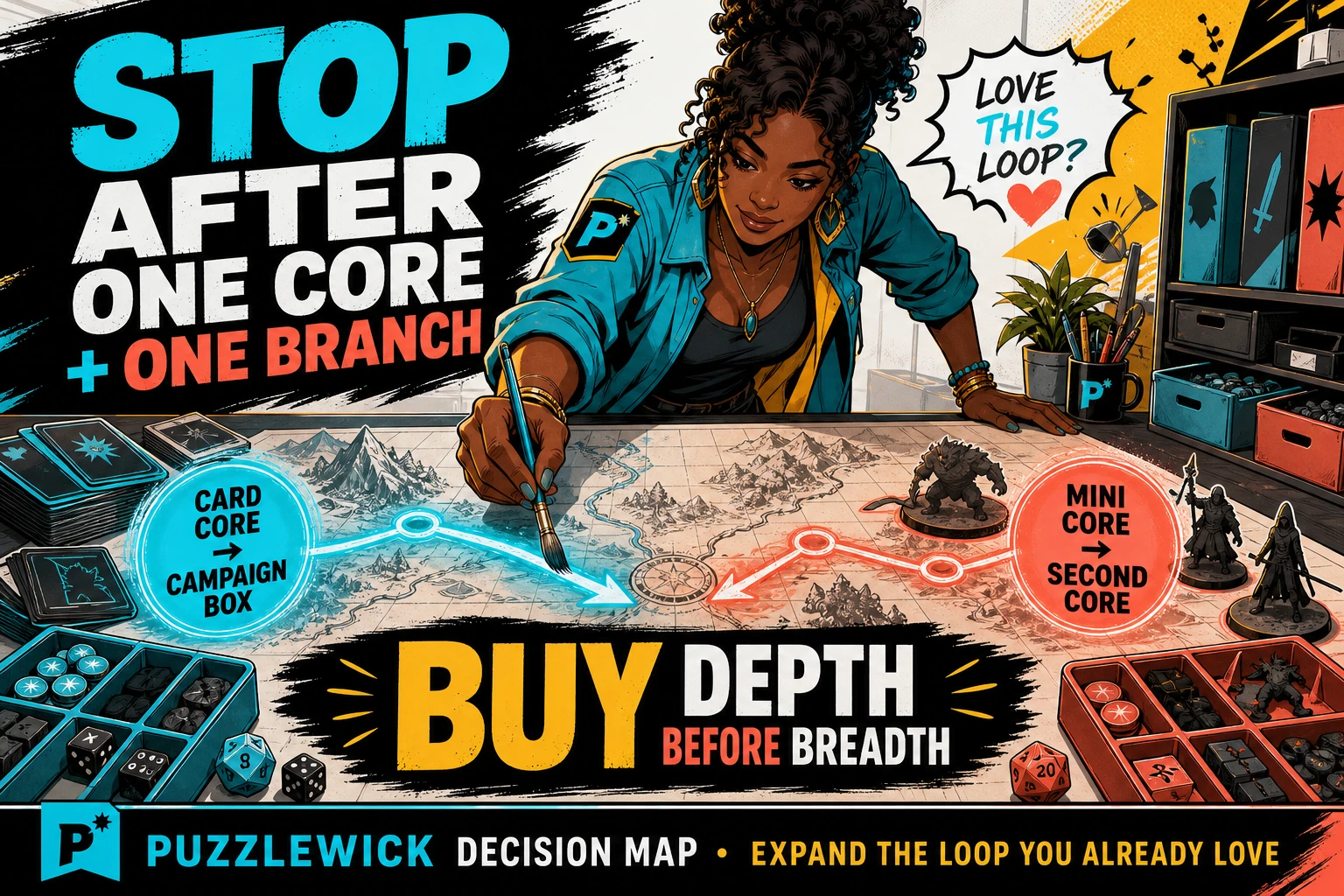
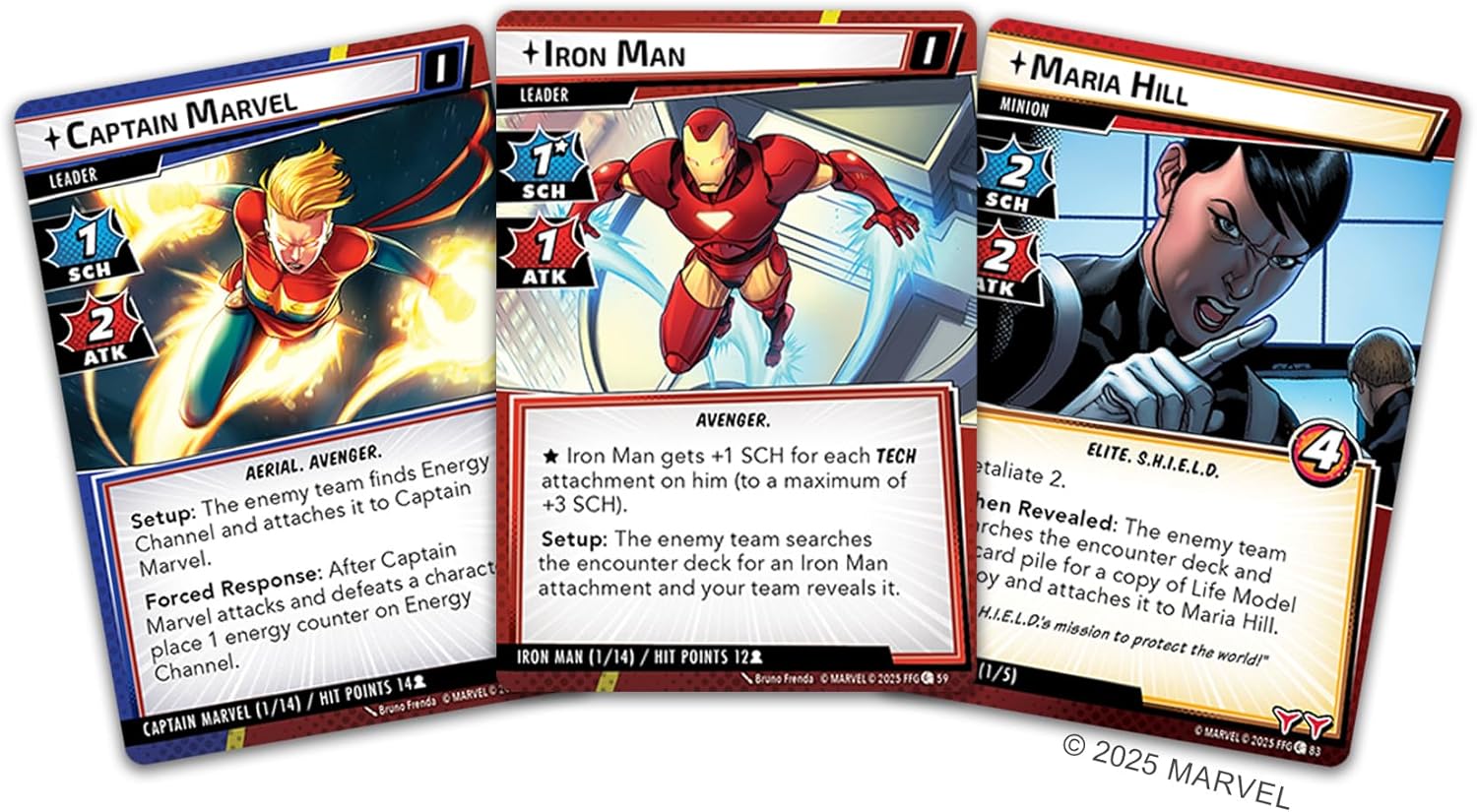

For Champions, play every core hero and villain before adding Civil War. Civil War is a large campaign expansion with configurable scenarios; it is a coherent depth purchase rather than another loose hero. Fantasy Flight’s Current, Legacy and Limited environments matter for organized formats, but a home collection can still mix legal cards under the normal rules.
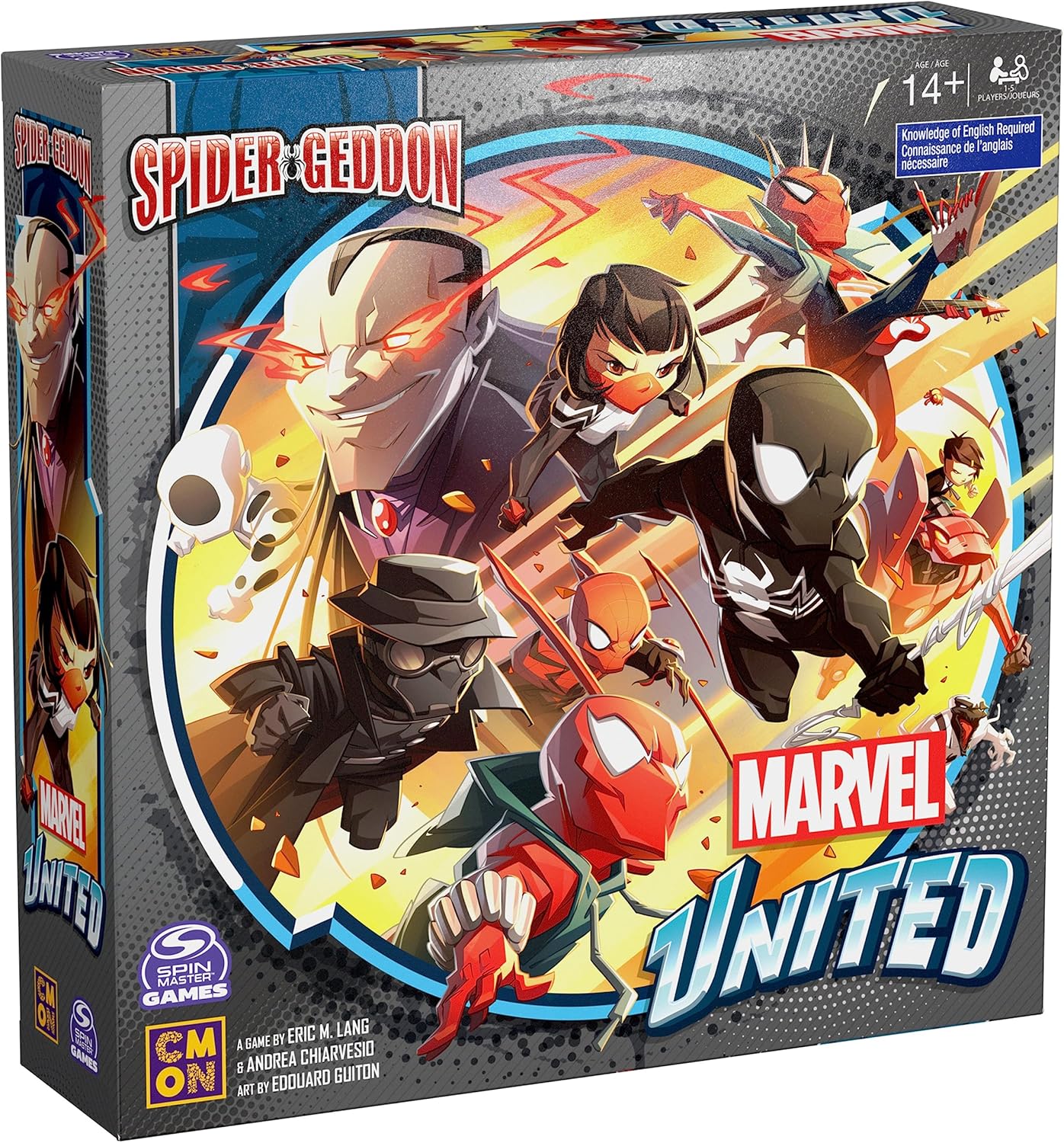
For United, buy Spider-Geddon after Multiverse if the table wants another self-contained roster. Do not begin by buying secondary-market Kickstarter lots. Multiverse already adds Equipment and improved solo options; Spider-Geddon adds variety without turning acquisition into archaeology.
The stop rule is simple: one core plus one branch. If that pair is not being played, more characters will not repair the underlying fit.
The collection trap is symmetrical. Champions can become a wall of hero packs; United can become a census. Neither improves because the shelf has achieved population density.
What strategy makes each game better after the first night?
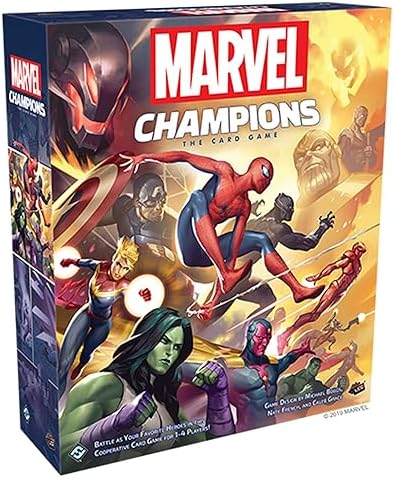
In Champions, build upgrades before racing damage, manage threat before it forces a loss, and treat alter-ego turns as planned recovery rather than panic. Expert play is often tempo accounting: which resource card creates a permanent advantage, which encounter effect must be canceled, and when a villain stage should be advanced.
In United, count visible Move, Attack and Heroic Action symbols before playing. Delay the third cleared mission until the table can exploit an exposed villain. On harder settings, hero-specific cards matter more because wild symbols are reduced; that makes team composition legible instead of cosmetic.
For both games, stop changing heroes every session. Repeat the same matchup once. The second play reveals whether the first loss came from rules, sequence or the actual system.
Which game is better for a family or mixed-skill group?
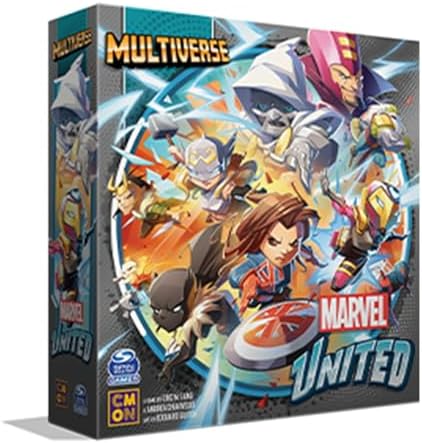
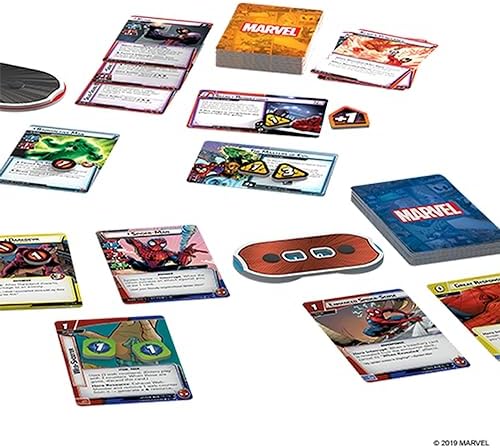
United is the safer answer. Turns are short, information is open and the miniature moving around recognizable locations gives non-card-gamers a physical story. An experienced host can quietly manage villain upkeep without taking over player decisions.
Champions can work with a patient group, but four players stretch the villain phase and multiply timing questions. Teach with one experienced pilot, two players and recommended decks before presenting a four-hero event.
For children below the printed age, the limiting factors are reading, sequencing and frustration tolerance rather than miniature handling. United usually crosses that bridge sooner.
The final shelf plan: what should you buy now?
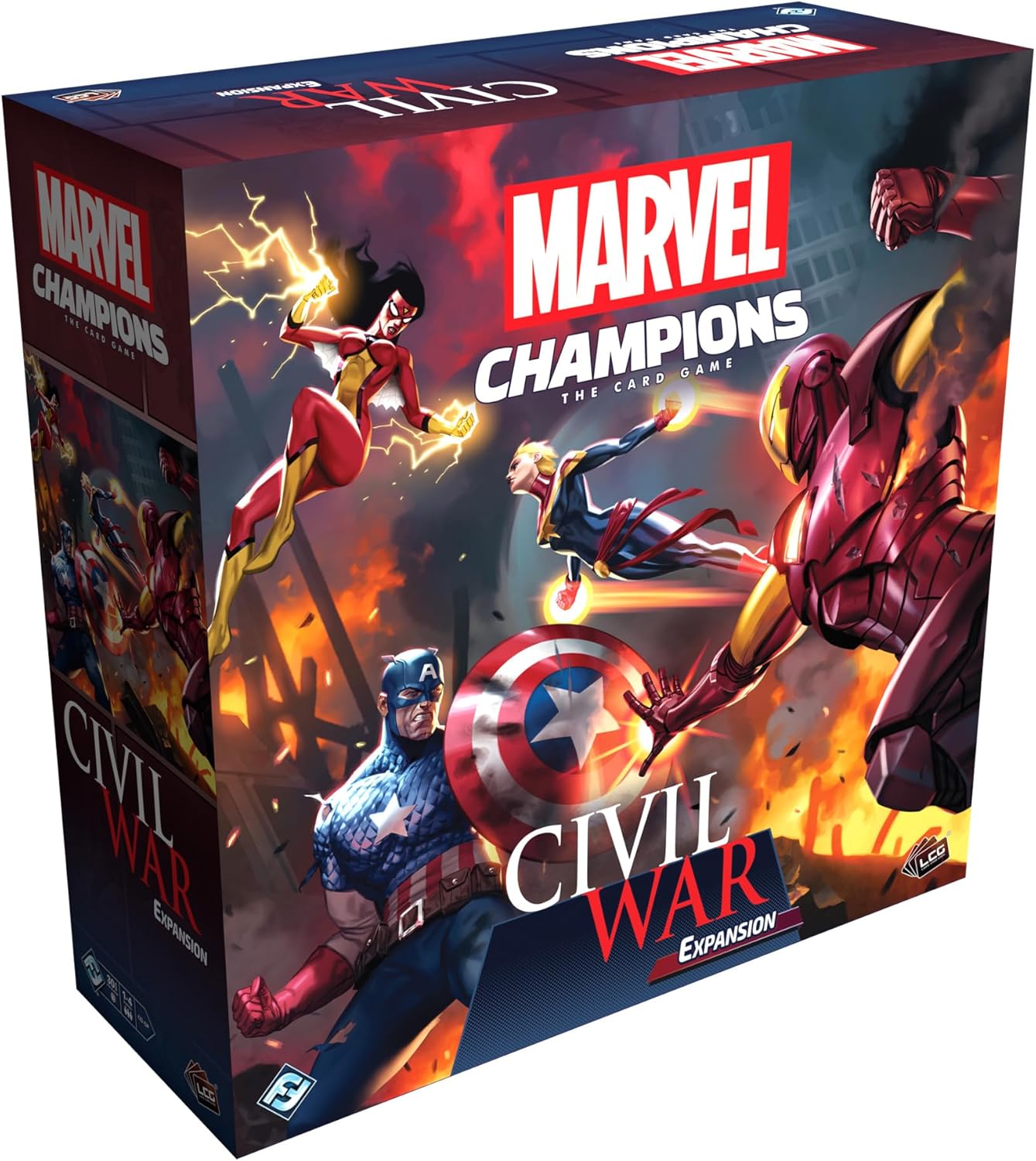
Solo or two-player card gamer: buy Marvel Champions Core. Add Civil War only after the core villains have produced real rematches.
Family, mixed group or miniature fan: buy Marvel United: Multiverse. Add Spider-Geddon when the table asks for more villains, not when the shelf looks empty.
Collector tempted by everything: buy neither line in bulk. Both systems become better through familiarity. A multiverse is not a permission slip to skip the first ten plays.
The picks
Some links below are affiliate links — as an Amazon Associate, Puzzlewick earns from qualifying purchases, at no extra cost to you. It never changes a pick.
 6 photos
 Marvel Champions: The Card Game Core Set
Five heroes, three villains, modular encounter sets and deck construction make this a complete system rather than a sampler.
- Excellent solo
- Modular villains
- Real deck construction
- Rules timing takes practice
- Expansion line can look overwhelming
 6 photos
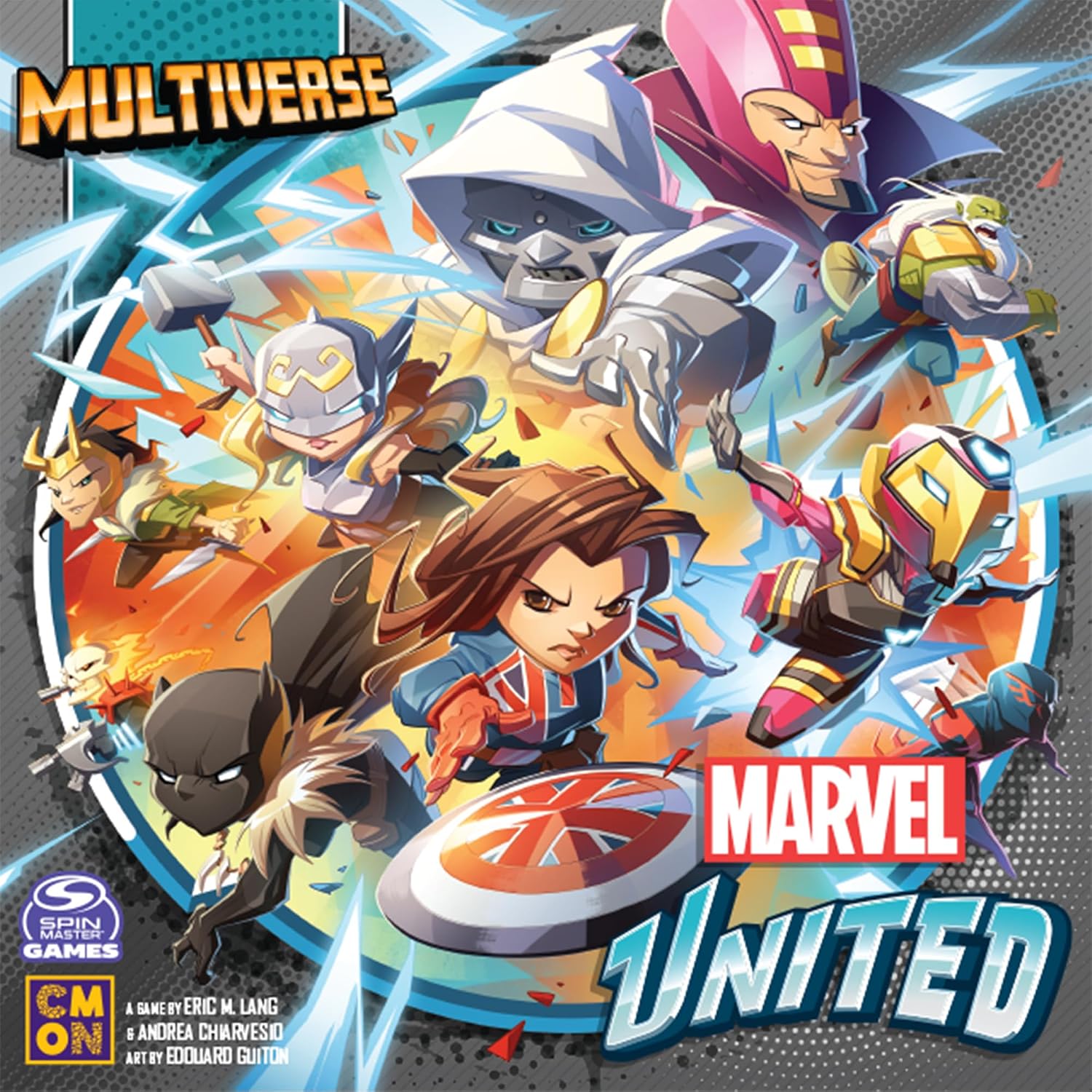
 Marvel United: Multiverse Core Box
A standalone core with miniatures, Equipment and Commander Solo Mode that gets a group playing quickly.
- Fast teach
- Tactile miniatures
- Easy multi-hand play
- Lighter decisions
- Crowdfunding catalog creates FOMO
 6 photos
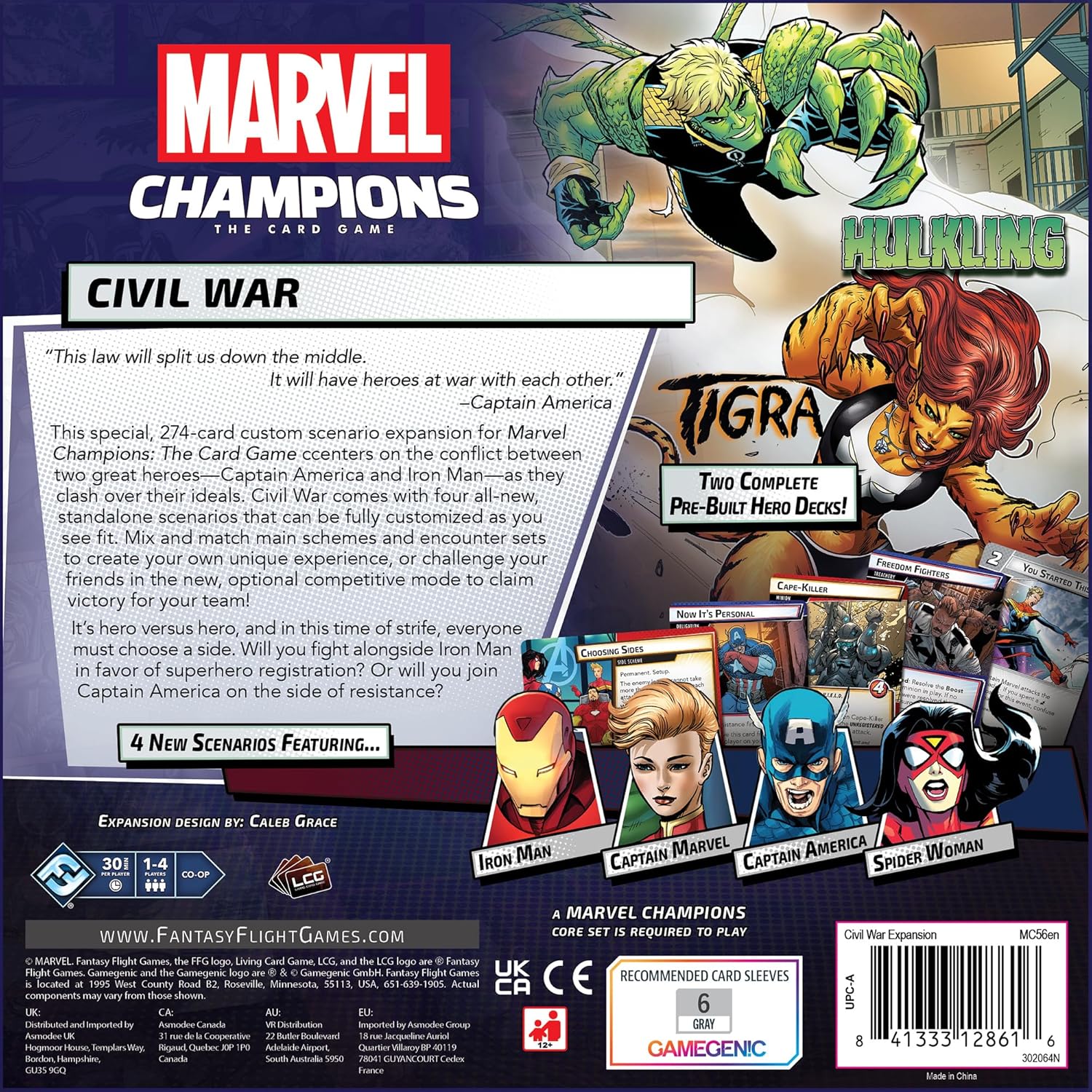
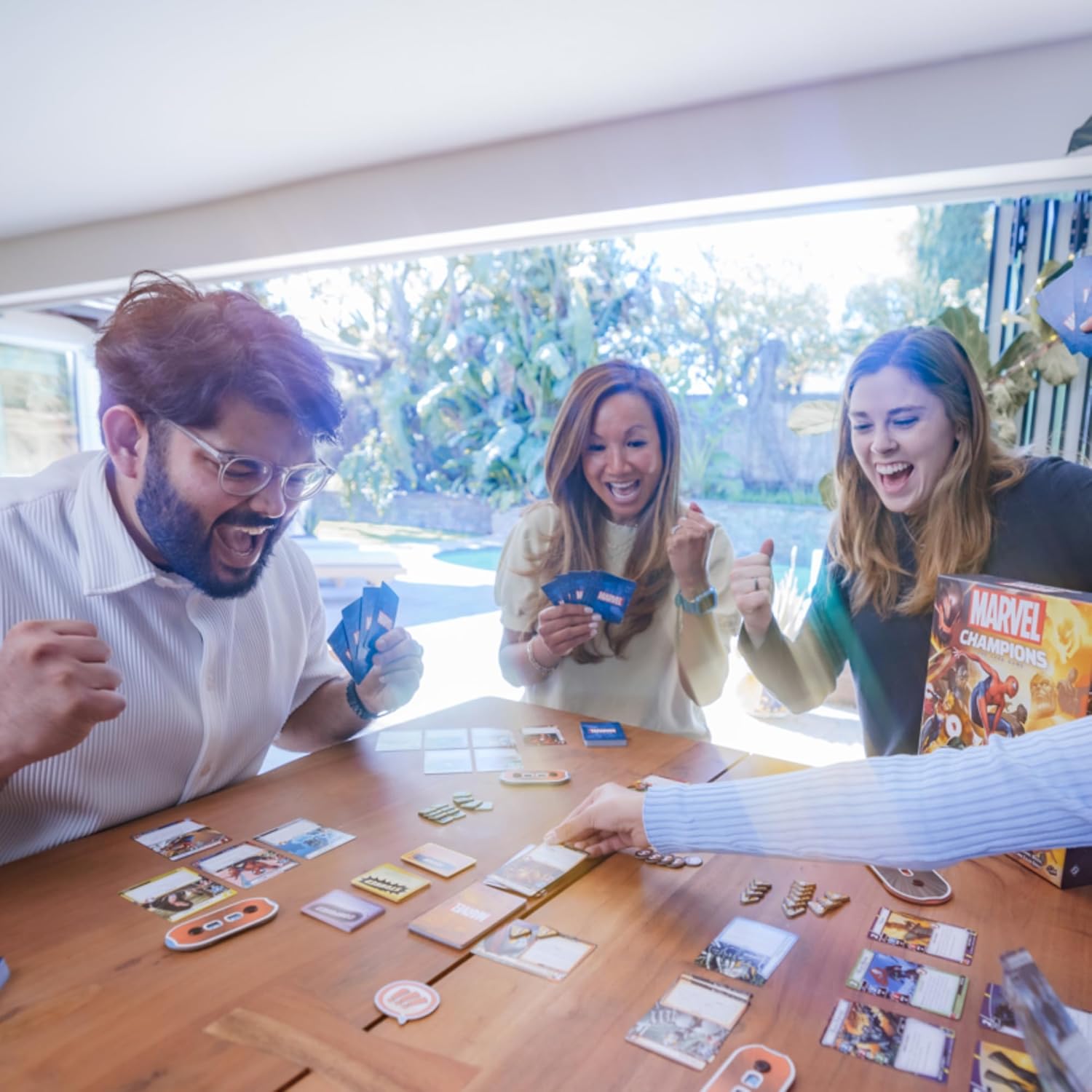
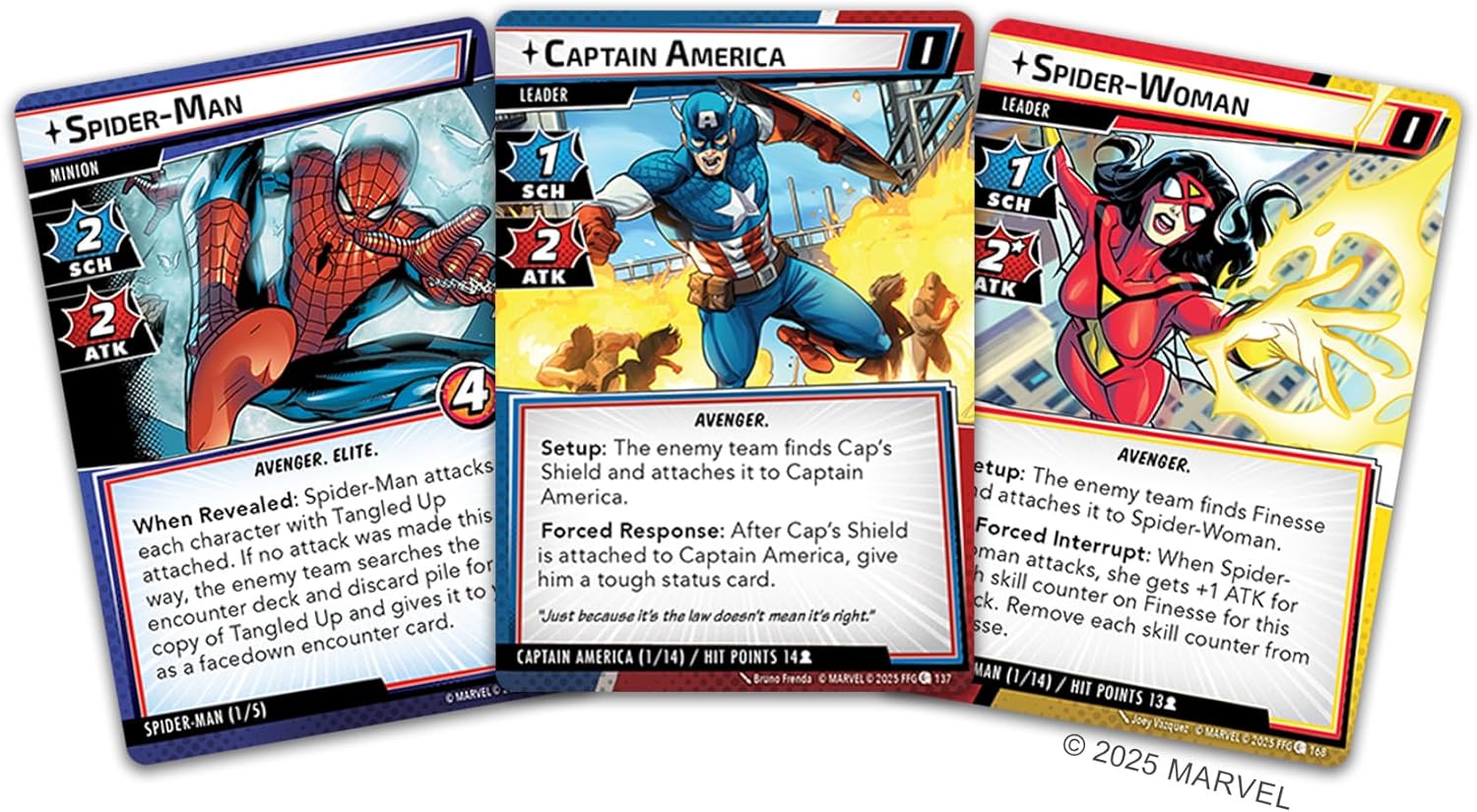
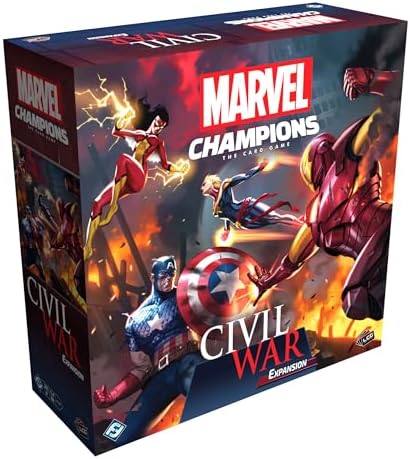
 Marvel Champions: Civil War Expansion
Configurable scenarios and the Civil War campaign deepen the core without requiring random boosters.
- Campaign structure
- Current-era content
- Scenario customization
- Requires Champions Core
- Not a first purchase
 6 photos
 Marvel United: Spider-Geddon
A compact standalone box with a focused roster and more interesting hero-villain texture than the earliest United material.
- Standalone
- Strong themed roster
- Mixes with Multiverse
- Still a light system
- Duplicated system components
At a glance
| Decision | Marvel Champions | Marvel United |
|---|---|---|
| Best solo | Excellent | Good multi-hand |
| Best family teach | Medium | Excellent |
| Depth source | Deck construction | Hero timing and team mix |
| First expansion | Civil War | Spider-Geddon |
| Best count | 1–2 | 2–4 |
Questions, answered
Is Marvel Champions better than Marvel United?
For solo depth and deck construction, yes. For a fast family or mixed-skill co-op, Marvel United is the better fit.
Can Marvel United be played solo?
Yes. Many experienced solo players prefer controlling three or four heroes rather than using a dedicated solo mode.
Is Marvel United: Multiverse standalone?
Yes. The Multiverse Core Box is a complete standalone game and can mix with other Marvel United material.
Does Marvel Champions require deck building?
Recommended decks let you start immediately, but deck construction is one of the system’s central long-term pleasures.
Which Marvel game is easier to teach?
Marvel United is easier and faster to teach because turns are compact and the board state is open.
What is the best Marvel Champions expansion after core?
Civil War is our 2026 campaign-box recommendation after the core has been played thoroughly.
What is the best Marvel United box after Multiverse?
Spider-Geddon is a strong Amazon-available standalone second box with a focused roster.
Do I need sleeves or a playmat?
No. Play first. Sleeve only after repeated shuffling makes wear a real concern.
Which game is better at four players?
Marvel United. Champions works at four but resolves more slowly and creates more timing overhead.
Should I buy a complete collection?
No. Start with one core and one coherent branch. Both lines generate substantial play long before completion.
Imani's verdict
Marvel Champions is the better game for a repeat solo player or card-game pair. Marvel United is the better host game for families and mixed-experience groups. Neither needs a complete collection: Champions Core plus one campaign box, or United Multiverse plus Spider-Geddon, is already an excellent shelf.
Research ledger 10 sources · reviewed 2026-07-25
Specifications, rules, current product information, community experience, and contrary evidence were checked against the sources below. Commercial links are kept separate from editorial evidence.
- fantasyflightgames.comfantasyflightgames.com/en/products/marvel-champions-the-card-game
- images-cdn.fantasyflightgames.comimages-cdn.fantasyflightgames.com/filer_public/ab/be/abbef836-d5ef-4241-b2bd-1062df73f367/mvc01_learn_to_play_eng-compressed.pdf
- fantasyflightgames.comfantasyflightgames.com/en/news/2025/12/17/championing-new-rules
- cdn.svc.asmodee.netcdn.svc.asmodee.net/production-asmodeeca/uploads/2025/07/MUN016_Multiverse_Rulebook_web-LOW.pdf
- cmon.comcmon.com/what-s-new-in-marvel-united-multiverse
- reddit.comreddit.com/r/soloboardgaming/comments/1tdwf7o/does_marvel_united_offer_an_enjoyable_solo_play
- reddit.comreddit.com/r/marvelchampionslcg/comments/1qc87ou/any_tips_for_a_newbie
- reddit.comreddit.com/r/marvelchampionslcg/comments/1sfmi72/new_player_purchasing_guide_updated_and_mostly
- reddit.comreddit.com/r/boardgames/comments/125t02r/marvel_champions_vs_marvel_united
- reddit.comreddit.com/r/MarvelUnited/comments/1j535a5/marvel_united_vs_marvel_champions
Okay but have you seen what everyone’s saying about this?


Keep exploring
The next smart rabbit holes.
✦ Universe HubMarvel Tabletop: the whole buying pathPuzzlewick’s Marvel universe begins with the experience, not the logo. Choose a deck-construction laboratory, a fast miniature...✦ Topic PathBoard Game Buying Guides: compare the whole shelfStart with the decision, not the shelf. These guides compare the games, editions, expansions, player counts, and costs people...ComparisonMarvel Dice Throne vs X-Men Dice Throne in 2026: Which Box Should You Buy?Yumi rolls past the hero art and opens the packaging truth: folding boards, missing trays, cross-compatibility, official patches and the...