Buying Guide · Updated 2026-10-23
Riftbound Radiance: Build Your Premium Game Night


AI-assisted research, writing and editorial QA under Robert’s direction. Our process
The short answer
Our October 22 Amazon US check found no qualified Radiance offer; the Amazon buttons below are clearly named older-set alternatives and accessories. Choose Radiance Showdown for two prepared decks, the Vault for a smaller opening with storage, or a 24-pack display for a deliberate collector evening. Add sleeves and a licensed mat before storage you do not need.
Sources checked 2026-10-22 · 16 sources & review details · Review overdue; time-sensitive facts need rechecking.

At a glance
| Your plan | Radiance format | What you get | What it does not solve |
|---|---|---|---|
| Play together | Evelynn vs Seraphine Showdown | Two prepared decks; mats, boxes and two boosters | Amazon exact offer not established |
| A contained gift opening | Vault | Six boosters; storage, foil tokens and 36 Runes | No two prepared decks; Amazon offer not established |
| A full collector opening | Booster Display | 24 randomized 14-card packs | No guaranteed chase or complete constructed list |
| A Sealed event | Pre-Rift kit / organizer entry | Five boosters and a seeded champion pack | Loose kit is not event admission |
Start here, then go deeper
You are in the right cabinet.
 ✧ Universe HubAnime & New-Wave TCGs: the whole buying pathBeyond Magic and Pokémon, a new wave of trading card games has gone mainstream — One Piece, Yu-Gi-Oh!, Dragon Ball, Digimon, Weiss...
 🂠 Topic PathTrading Card Games: compare the whole shelfStart with the game and community you want, then buy the smallest product that lets you test it properly. These guides separate...
 Beginner's GuideHow to Start Riftbound in 2026: Your First Box, First Three Games, and First Local TableYumi makes Riot's League of Legends card game approachable: which box teaches, what the runes actually do, why the last point matters,...
Choose the evening before the box
Radiance brings Runeterra's performers into the spotlight: Evelynn's menace, Seraphine's spectacle, and a music-themed collector treatment. Riot set the English, French and Chinese release for October 23, 2026. The attractive purchase is the one that gives you an evening you will enjoy after the wrappers are gone.
For a first game together, choose two prepared decks. For a gift opening, consider the Vault. For a longer opening session, choose one display and set a stopping point beforehand. Expensive protection belongs around cards you intend to keep; an empty chest supplies neither cards nor a playable deck.
The four Radiance formats, without the confusion
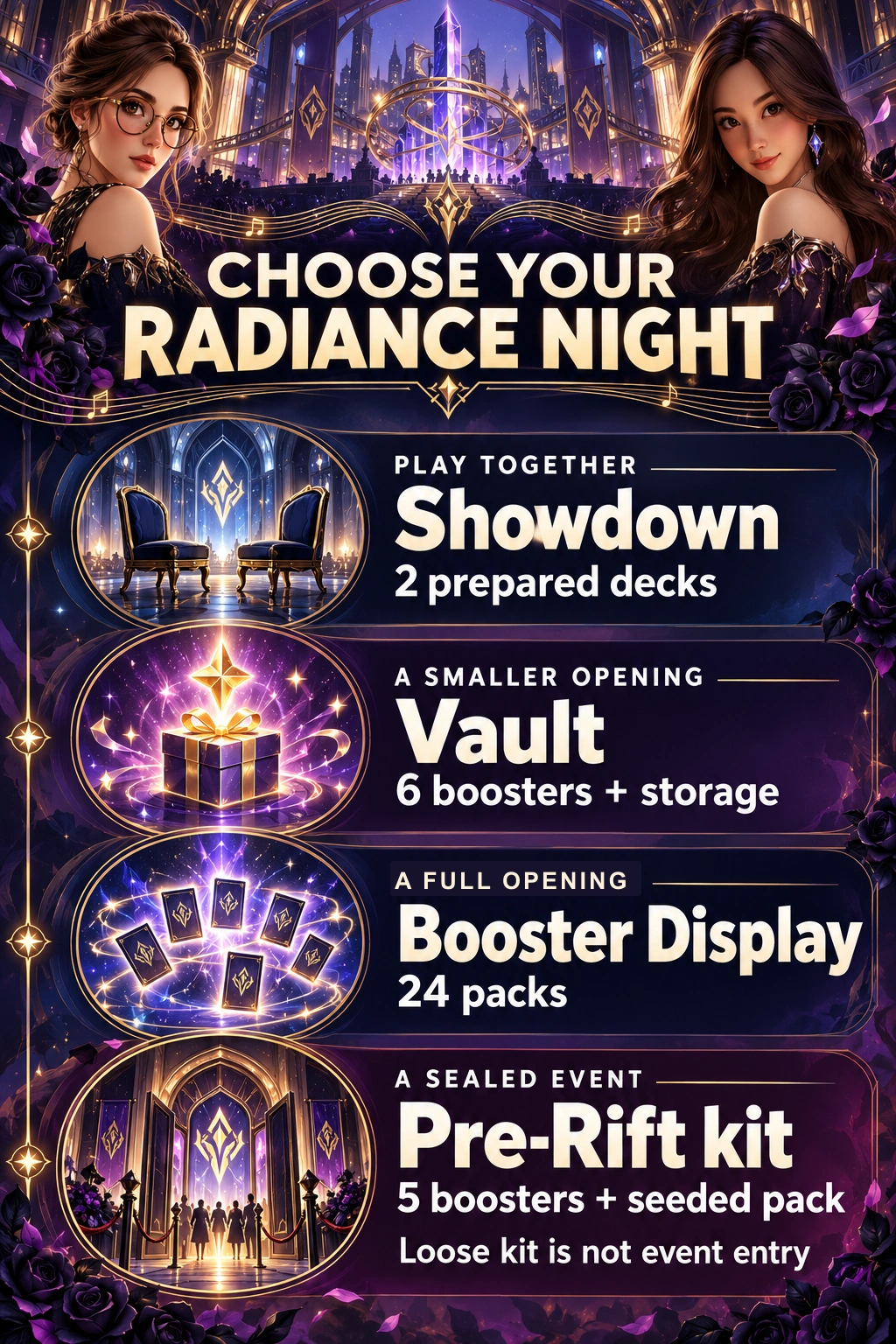
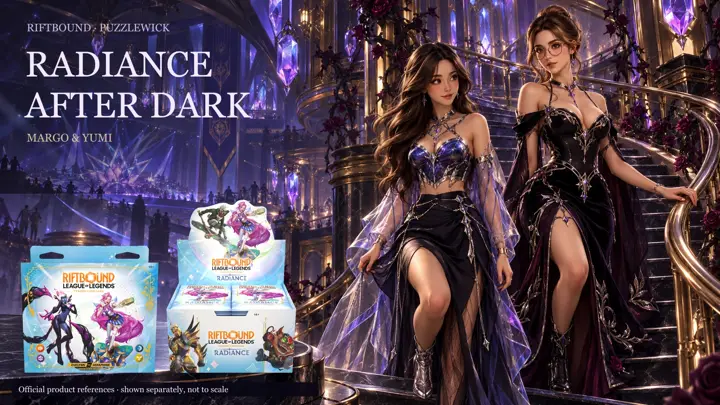
Evelynn versus Seraphine Showdown is the complete two-person route. Riot lists two 56-card preconstructed decks, two paper playmats, two boosters, a rulebook and two folding deck boxes. Leave the boosters aside for the first game; the prepared lists make it easier to understand what each deck is trying to do.
The Vault pairs six Radiance boosters with storage, foil tokens and 36 Runes. It makes a more contained collector gift than a display. It does not contain the two prepared Showdown decks. Keep its storage box if it meets your needs before buying a second container.
The Booster Display contains 24 packs of 14 cards. Buy it because you want that opening experience and the set's artwork. Neither a particular champion nor a complete constructed deck is promised.
A Pre-Rift kit contains five boosters and a champion pack themed around one of nine new Legends. Riot's event guide separates this from a ready-to-play constructed product. A loose kit purchase is not event admission; ask the organizer what entry includes. The October 16–22 Pre-Rift window and the October 23 retail launch are different dates.
Our Amazon check: stock is not the same as a correct listing
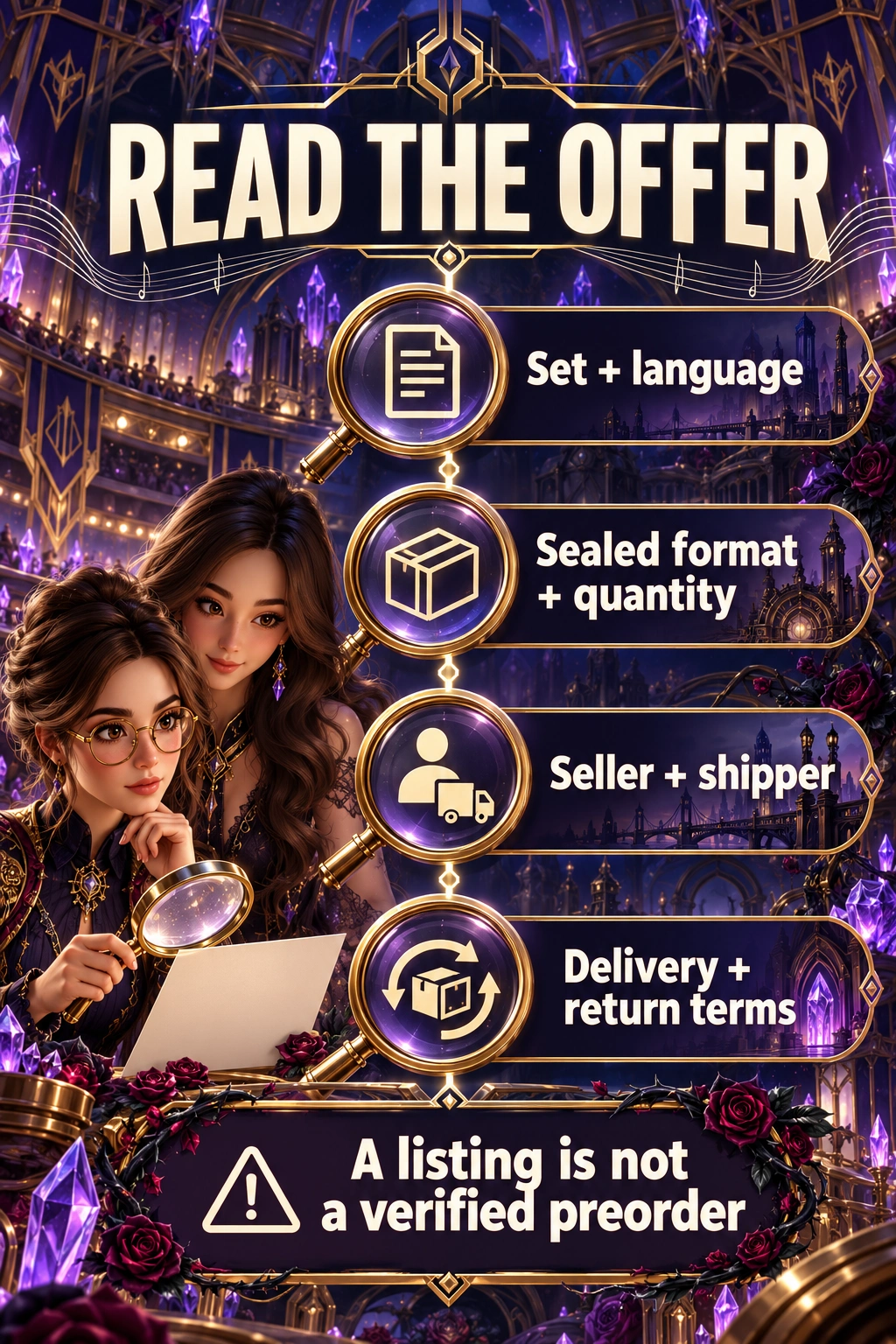
Checked October 22, 2026, for Amazon US delivery to Keller, Texas 76248: the Radiance search returned a Pre-Rift kit and a booster-box listing with purchase buttons. Both incorrectly identified the manufacturer as Upper Deck; the display's description named Vendetta. Those conflicts remain unresolved, so neither earns a recommended purchase button here. We did not establish an exact Amazon Vault or Evelynn/Seraphine Showdown offer.
The Radiance pictures link to official product information while these gaps remain. The Amazon buttons below lead to individually checked older-set products and accessories, named honestly. They are alternatives, not relabeled Radiance stock. Most selected offers were third-party sellers, sometimes fulfilled by Amazon. Recheck seller, sealed condition, language, full delivered total and delivery estimate before paying. A listing's shipping promise is not a guaranteed release-day arrival.
Yumi’s first game: buy one complete route
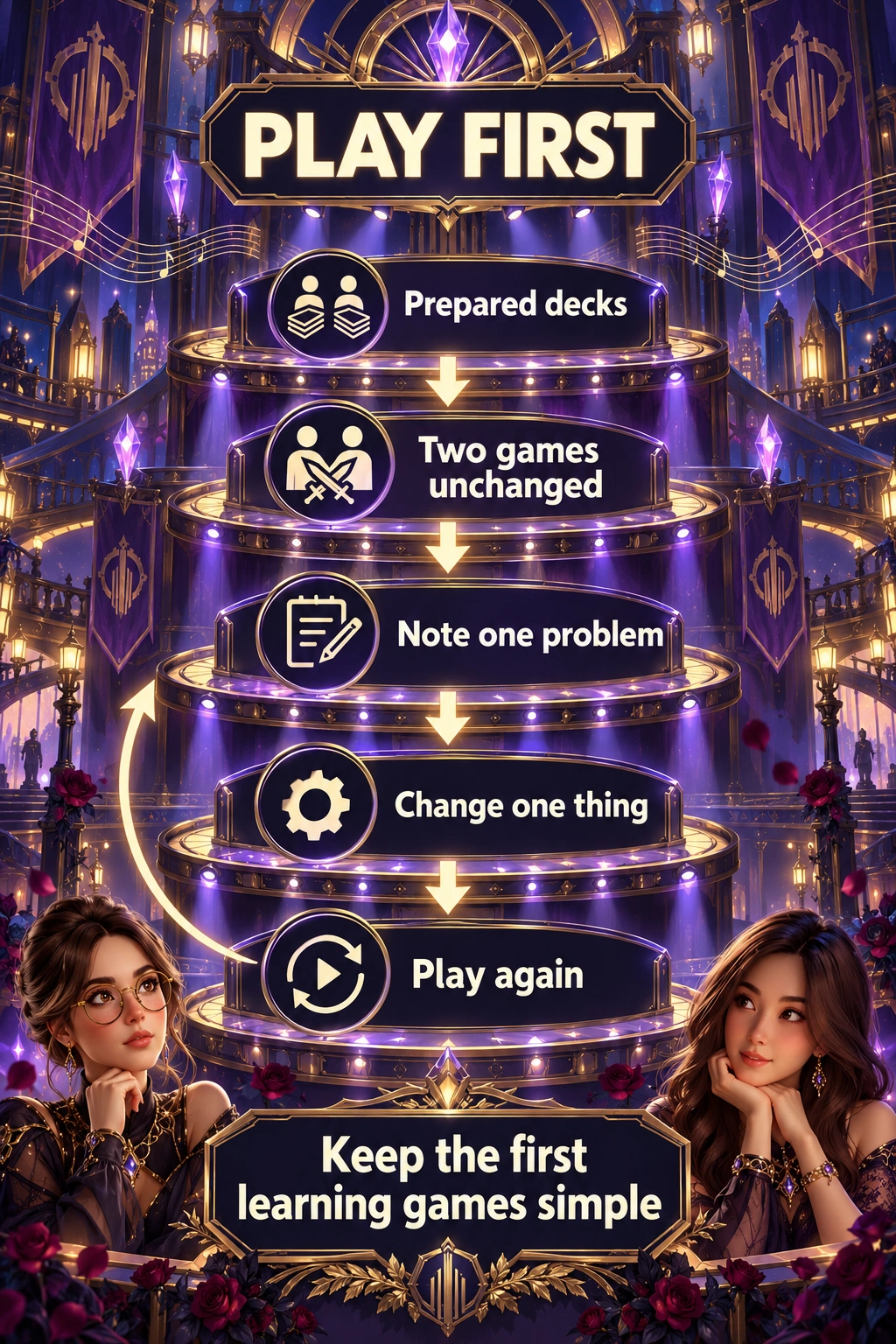
If you want to play before finding an eligible Radiance pair, the Vendetta Zed versus Shen Showdown supplies two prepared sides. Origins Proving Grounds is the group alternative: its four teaching decks feature Annie, Master Yi, Lux and Garen. Choose one route; buying both is optional. Neither contains the Radiance Showdown pair.
Clear a table, keep each deck's Runes and Battlefields with that deck, and follow the included learning material. Play a second game with the same lists before opening upgrade packs. Swap sides if both players want to understand the other plan. The first useful question is which decisions you enjoyed, rather than which chase card you missed.
A paper mat already supplies a play surface. A cloth mat and sleeves can make handling and setup more pleasant, but you can learn without an elaborate accessory order. Our Riftbound learning guide goes deeper into the game.
Collector night: choose a set, then choose a limit
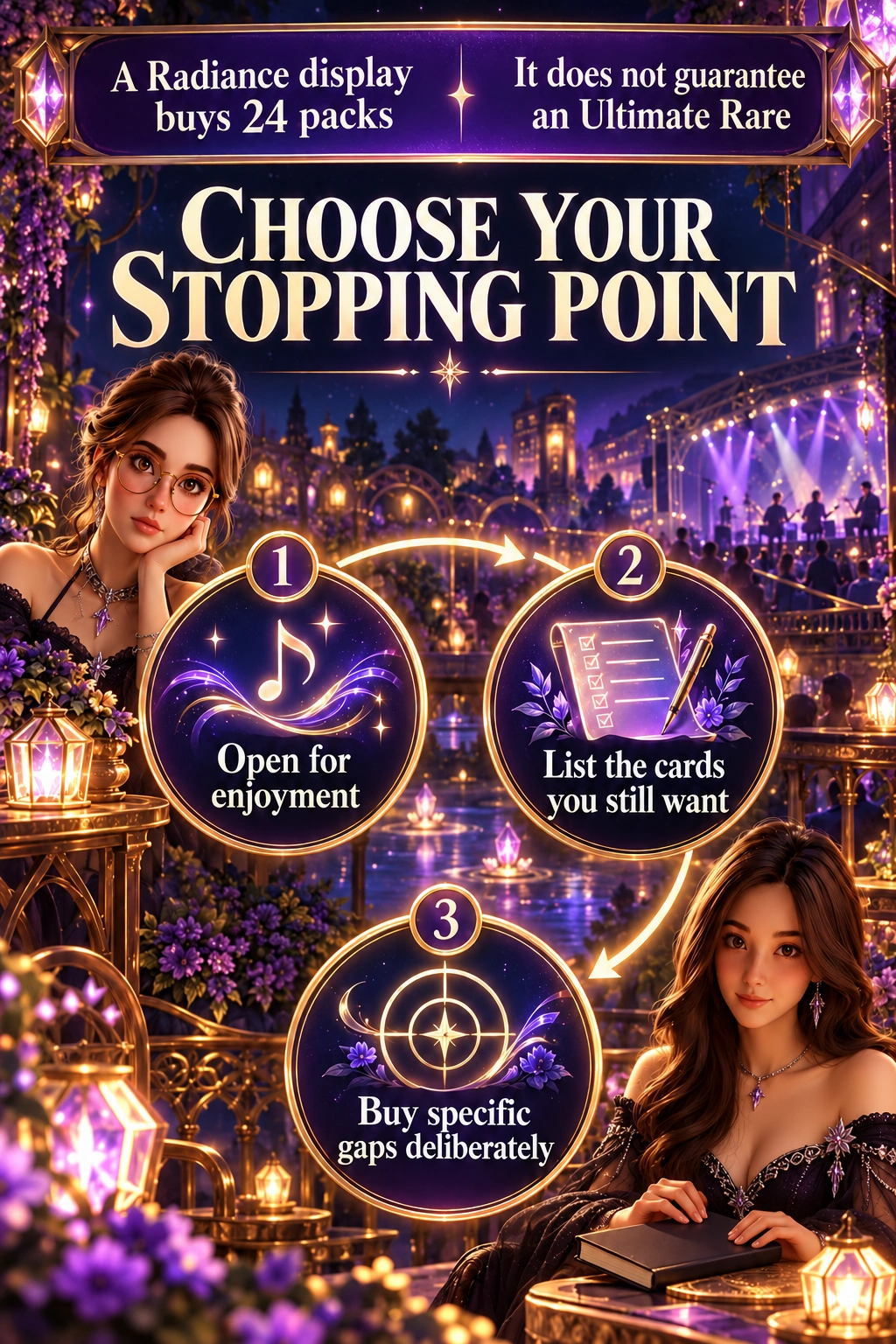
Radiance's display is the music-themed opening. If you prefer an earlier set's champions or art, our checked Amazon alternatives include Origins, Spiritforged, Unleashed and Vendetta displays. Each selected listing is a 24-pack display. Their different card pools are the reason to choose between them; an expensive older box is not automatically a better deck upgrade.
- Origins: choose the debut pool if its early cast, including Jinx, Lee Sin and Viktor, is your attraction. Its distinctive collector route is League-skin alternate art and artist-signed Legend treatments; a display is for exploring that pool, not obtaining a chosen signature.
- Spiritforged: Fiora, Rumble and Ezreal accompany a stronger Equipment theme. Riot’s set introduction explains Quick-Draw and Weaponmaster alongside Gold and Repeat. Choose it if those champions or equipment sequencing interest you; the precise upgrade still needs to match your deck list.
- Unleashed: Master Yi, Vi, Diana and Pyke bring a jungle-flavoured pool whose XP and Level mechanics reward building toward later benefits. Its exceptional Baron Nashor Ultimate is a collector attraction, never a promised pull. Choose this pool for those champions and progression mechanics.
Vendetta is a further checked alternative with its own cast. Inspect the actual card gallery or a desired deck list before choosing any display. Keep a list of cards you want, sort the opening once, then decide whether specific singles would solve the remaining gaps more predictably.
Riot's collector warning is decisive: There is no guaranteed Ultimate Rare in any pack, box, or case.
Its Radiance overview reports approximately 0.025% of packs across the print run. That is not a box schedule, a resale forecast or a reason to keep opening until you hit. Premium treatment is a collecting preference; it does not change a card's rules text into a stronger version.
Already playing: upgrade a plan, not an opening total
Pick your Legend and a specific problem before buying more sealed product. Are you missing an early play, running short of interaction, or struggling to contest the relevant Battlefield? Change one part of the list and play again. Buying several unrelated displays makes that diagnosis harder.
Radiance's new mechanics reward planning around locations and timing. The October 16 rules update explains that Deploy Gear can be played to any Battlefield, but dies when an opponent holds that location. Show Off locks in the referenced information when the card or object is shown; Disarm triggers on the first attack each combat and reduces an enemy unit's Might at that Battlefield. Consult current text for individual interactions.
In his September 29 Satchel Charge preview, TechRadar's Hamish Hector cautions that Bomb setups can let them score another point before they face any consequences
. This is a useful tradeoff, not proof that Bombs will dominate tournaments. GamesRadar+'s Rollin Bishop, in his October 1 Jarvan IV preview, describes Deploy Gear with Action as much more versatile than just being played on your turn
. Before spending, ask whether your intended deck actually uses those timing windows. Both pieces are publisher-access previews with affiliate links, not comparative purchased-box tests.
Protection that earns its place
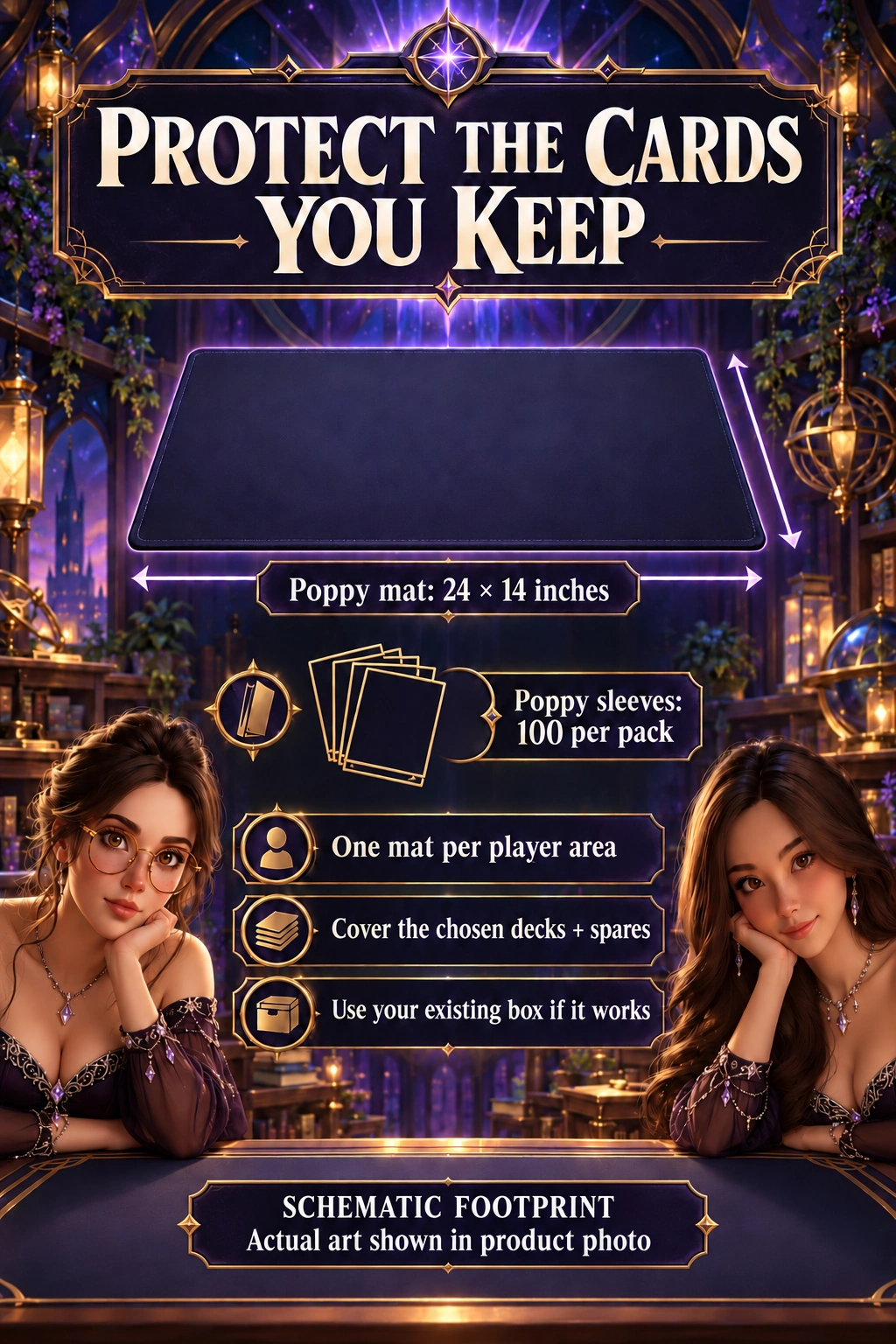
Official Poppy art sleeves give a played deck a coherent Riftbound look; the selected pack contains 100 standard-size sleeves. Keep every sleeve within a deck identical, replace damaged sleeves, and check event requirements. A 100-sleeve pack is not automatically enough for both complete Showdown decks and spare replacements. Keep distinct game zones organized rather than assuming one outer sleeve fits every storage accessory.
The official Poppy bound-edge playmat measures approximately 24 by 14 inches. Its appeal is the licensed art and bound edge, with a softer surface for picking up cards. This is the Unleashed Poppy design, not a Radiance mat or a two-player table cover. One mat serves one player's area; use the included paper mats if that is already enough.
We chose official art rather than an unverified custom mat with invented zones. Sleeve finish, mat art and a fancy case do not improve pull rates or grant tournament eligibility.
One travelling deck or a growing collection?

The black Gamegenic Watchtower 100+ XL is the focused card-holder upgrade. Its removable deck holder and accessory drawer suit a regular playing deck plus small counters. The manufacturer's capacity is up to 100 double-sleeved cards; sleeve thickness and how you separate Runes, tokens and Battlefields affect your actual load. Measure your sleeved stack rather than forcing cards into a full compartment.
The black Games’ Lair 600+ Convertible solves the larger problem: multiple decks, loose cards and accessories in one organized chest. Gamegenic rates it for up to 600 regular double-sleeved cards or 800 board-game-sleeved cards, with drawers, trays and a convertible lid. Those are manufacturer capacities, not a Puzzlewick fit test. This is an empty organizer; it does not contain booster packs, cards or a playmat.
Choose the Watchtower for a focused outing and the Lair for a collection that genuinely needs sorting. Buying both immediately can duplicate storage you already own. Neither is advertised here as waterproof, crush-proof, a graded-slab vault or a confirmed protector for an unopened Radiance retail box. That last job needs exact internal measurements and verified package fit.
A premium experience has a stopping point
Our order is simple: one complete play route or one intentional opening, enough compatible sleeves, then the mat or storage upgrade that solves a real problem. Keep an existing box if it works. Leave room in the budget for future specific cards after you know the deck you enjoy.
The ten shop choices are alternatives across those jobs, not a ten-item shopping list. Buy the evening you want to repeat. When that evening and the cards you keep are comfortably provided for, stop.
The picks
Some links below are affiliate links — as an Amazon Associate, Puzzlewick earns from qualifying purchases, at no extra cost to you. It never changes a pick.
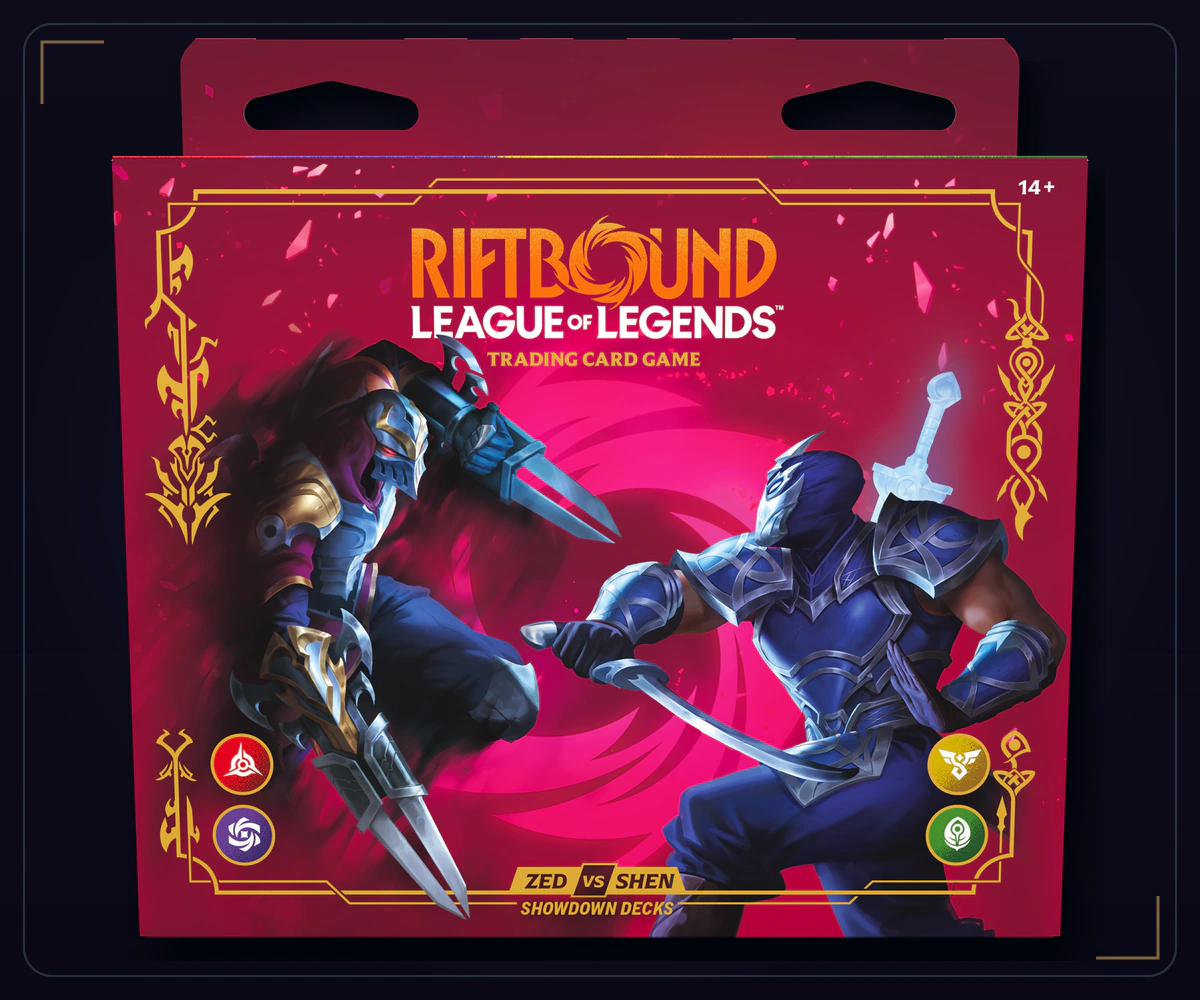
Riftbound Vendetta: Zed vs Shen Showdown
Two prepared sides remove the first shopping problem: finding a legal deck for the other player. Choose this Vendetta pair if you want to learn now rather than wait for a Radiance offer.
- Two people learning together
- Contains the named Vendetta decks, not Evelynn and Seraphine or Radiance cards. A prepared pair is a teaching route, not proof of tournament strength.

Riftbound Origins: Proving Grounds
Four supplied champion decks make this the group-teaching alternative: Annie, Master Yi, Lux and Garen give a returning group several starting personalities in one learning box.
- A shared introduction for two to four
- Origins learning contents, not four customizable Radiance Champion products. Use the included teaching configuration before spending on upgrades.
Questions, answered
Is there a special Radiance Collector Booster Box?
Riot’s current Radiance lineup lists the regular Booster Display, Vault, Showdown decks and Pre-Rift kit. We did not establish a separate Amazon Collector Booster format. Do not confuse a premium asking price or an empty acrylic protector with a different sealed product.
Should I preorder a Radiance box through Amazon?
Only when the exact set, sealed format, language and selected seller offer agree. Our October 22 Radiance listings had unresolved identity conflicts. The Thai retailer screenshot and Riot’s release date do not certify an Amazon preorder or delivery promise.
Do I need premium accessories for my first game?
A complete prepared product and its included materials are the first priority. Sleeves protect played cards; a licensed mat and larger chest are optional choices for comfort, art and organization.
Margo's verdict
Choose a prepared pair for play, a Vault for a contained opening, or one display for a deliberate collector night. Add protection for the actual cards you keep; stop before storage and sealed purchases duplicate the same job.
Research ledger 16 sources · reviewed 2026-10-22
Specifications, rules, current product information, community experience, and contrary evidence were checked against the sources below. Commercial links are kept separate from editorial evidence.
- Riot: Radiance overview, updated October 16playriftbound.com/en-us/news/announcements/the-radiance-overview
- Riot: Radiance Evelynn vs Seraphine Showdown contentsmerch.riotgames.com/en-us/product/riftbound-radiance-evelynn-seraphine-showdown
- Riot: Radiance Booster Display contentsmerch.riotgames.com/en-us/product/riftbound-radiance-booster-display
- Riot: Radiance Pre-Rift kit and event rulesplayriftbound.com/en-us/news/announcements/preparing-for-the-radiance-pre-rift
- Riot: Core Rules Radiance patch, effective October 16playriftbound.com/en-us/news/announcements/core-rules-radiance-patch-notes-effective-october-16-2026
- Riot: Radiance errataplayriftbound.com/en-us/news/announcements/radiance-errata-updates
- Hamish Hector, TechRadar: Satchel Charge preview, September 29techradar.com/gaming/exclusive-our-radiance-preview-card-for-league-of-legends-tcg-riftbound-is-satchel-charge-heres-what-it-does
- Rollin Bishop, GamesRadar+: Jarvan IV preview, October 1gamesradar.com/tabletop-gaming/exclusive-riftbound-card-reveals-feature-a-princely-league-of-legends-champion-all-about-gear
- Gamegenic: Games’ Lair 600+ Convertiblegamegenic.com/product/games-lair-600-convertible
- Gamegenic: Watchtower 100+ XL Convertiblegamegenic.com/product/watchtower-100-xl-convertible
- Riot: Proving Groundsmerch.riotgames.com/en-us/product/riftbound-proving-grounds
- UVS Games: Radiance English sell sheets, including exact English SKUsuvsgames.com/wp-content/uploads/2026/08/EN-Riftbound-Radiance-Sell-Sheets.pdf
- UVS Games: Riftbound retailer marketing source portaluvsgames.com/retailer-portal/page-uvs-retailer-portal-marketing-assets-riftbound
- Riot: Collectability in Riftbound Originsplayriftbound.com/en-us/news/announcements/collectability-in-riftbound-origins
- Riot: Spiritforged PAX set and mechanics introductionplayriftbound.com/en-us/news/announcements/recap-of-our-pax-unplugged-panel
- Riot: The Unleashed Overviewplayriftbound.com/en-us/news/announcements/the-unleashed-overview
Let me check that before we say it.


Keep exploring
The next smart rabbit holes.
✧ Universe HubAnime & New-Wave TCGs: the whole buying pathBeyond Magic and Pokémon, a new wave of trading card games has gone mainstream — One Piece, Yu-Gi-Oh!, Dragon Ball, Digimon, Weiss...🂠 Topic PathTrading Card Games: compare the whole shelfStart with the game and community you want, then buy the smallest product that lets you test it properly. These guides separate...Beginner's GuideHow to Start Riftbound in 2026: Your First Box, First Three Games, and First Local TableYumi makes Riot's League of Legends card game approachable: which box teaches, what the runes actually do, why the last point matters,...