Flesh and Blood Silver Age vs Armory Decks in 2026: The Best First Deck
Flesh and Blood starter decks, explained with exact box identity, expansion order, beginner-to-expert strategy, hosting and solo reality, community warnings, and direct Amazon purchase paths.

AI-assisted curator persona · research and editorial responsibility: Robert Pruitt · how this guide was made
Last editorial refresh: 2026-07-29 Gold-standard QA: 2026-07-29 9 sources reviewed Affiliate links checked during gold-standard pass

The short answer
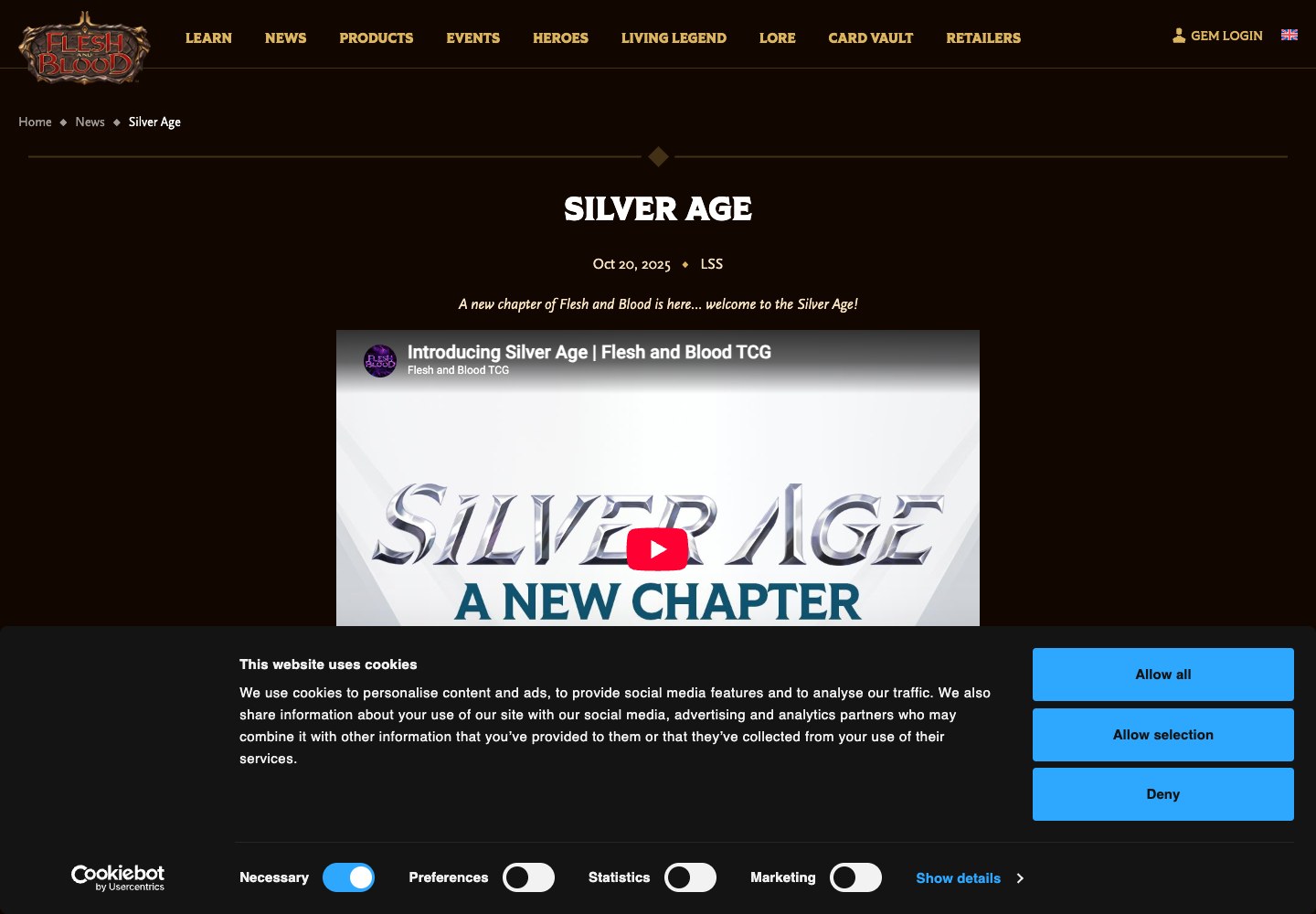
Start with a Silver Age deck when you need the cleanest route into Flesh and Blood’s pitch, block, weapon, and combat-chain language. Choose an Armory Deck when you already understand those systems and want a more complete hero-specific list. The right first deck is the hero whose turn pattern you want to repeat, not the box with the loudest rarity promise.
Decision map
Choose in thirty seconds
A balanced home teach needs two heroes at the same product tier.
Play open-handed before discussing metagame upgrades.
Upgrade only the turn pattern the player wants to master.
Move up when local events and a deeper format are real plans.
Flesh and Blood starter decks can look like one obvious shelf until product codes, formats, standalone boxes, expansions, and deluxe treatments begin competing for the same budget. This guide starts where the table starts: two open hands reveal pitch, arsenal, attack, defend, reactions, chain links, and end phase before either player hides information.
The cabinet’s test is whether pitch decisions, weapon pressure, breakpoints, and attack-reaction windows make every card both a move and a resource. We sort the verified products by that experience, then show the setup, strategy, warnings, and stopping point that keep a promising first purchase from becoming an expensive pile.
Start here, then go deeper
You are in the right cabinet.
 ♢ Universe HubFlesh and Blood: the whole buying pathFlesh and Blood is a hero-centered dueling card game where equipment, pitch values, combat chains, and defense decisions matter...🂠 Topic PathTrading Card Games: compare the whole shelfStart with the game and community you want, then buy the smallest product that lets you test it properly. These guides separate...
 Buying GuideBest Flesh and Blood Accessories 2026: Armory Sleeves, Deck Boxes & PlaymatKenji’s tournament-clean system for the deck, hero, weapons, equipment, public zones, mat, and first Armory night.
The short answer: which flesh and blood starter decks should you buy?


Start with a Silver Age deck when you need the cleanest route into Flesh and Blood’s pitch, block, weapon, and combat-chain language. Choose an Armory Deck when you already understand those systems and want a more complete hero-specific list. The right first deck is the hero whose turn pattern you want to repeat, not the box with the loudest rarity promise.
The verified purchase path is Flesh and Blood Silver Age: Dorinthea Deck on Amazon, Flesh and Blood Silver Age: Fai Deck on Amazon, Flesh and Blood Silver Age: Viserai Deck on Amazon, Flesh and Blood Armory Deck: Arakni on Amazon. The first box should let two open hands reveal pitch, arsenal, attack, defend, reactions, chain links, and end phase before either player hides information; every later box must solve a limitation that appeared during real play.
For Flesh and Blood starter decks, the useful question is not “which carton is largest?” It is whether the product supports the players, learning curve, session length, and signature decision you actually want to repeat.
What does playing Flesh and Blood starter decks actually feel like?
Flesh and Blood asks each card to be attack, defense, or resource. Pitching powers the current turn but also creates a late-game deck order that experienced players can plan around.
Weapon attacks and equipment make the hero feel persistent even as the hand cycles. Blocking is not passive; it determines what remains for the next offensive turn.
The game becomes a duel of tempo, breakpoints, arsenal information, and choosing when to absorb damage so a better hand can swing back.
The lasting hook is that pitch decisions, weapon pressure, breakpoints, and attack-reaction windows make every card both a move and a resource. The game comes alive when a learner stops following a phase chart and makes a choice the rest of the table must respect.
How should the first box be assembled, staged, and taught?
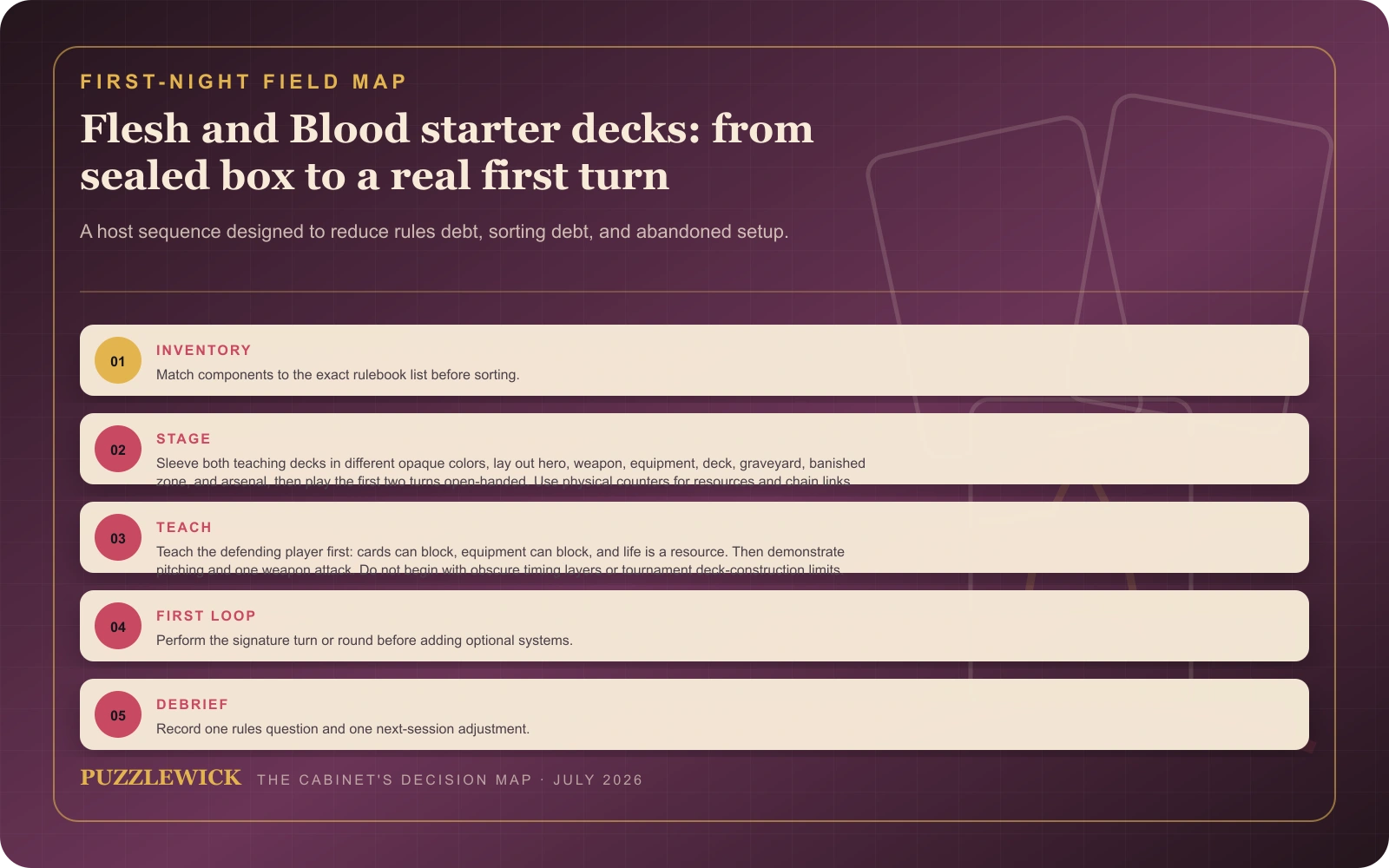

Setup: Sleeve both teaching decks in different opaque colors, lay out hero, weapon, equipment, deck, graveyard, banished zone, and arsenal, then play the first two turns open-handed. Use physical counters for resources and chain links until sequencing becomes automatic.
Teaching plan: Teach the defending player first: cards can block, equipment can block, and life is a resource. Then demonstrate pitching and one weapon attack. Do not begin with obscure timing layers or tournament deck-construction limits.
Before cleanup, photograph hero, weapon, equipment, deck, graveyard, arsenal, pitch zone, and the first combat chain. That becomes the group’s honest reset reference and makes the second session faster without adding another accessory.
What do players compare it to, and where does the comparison break?
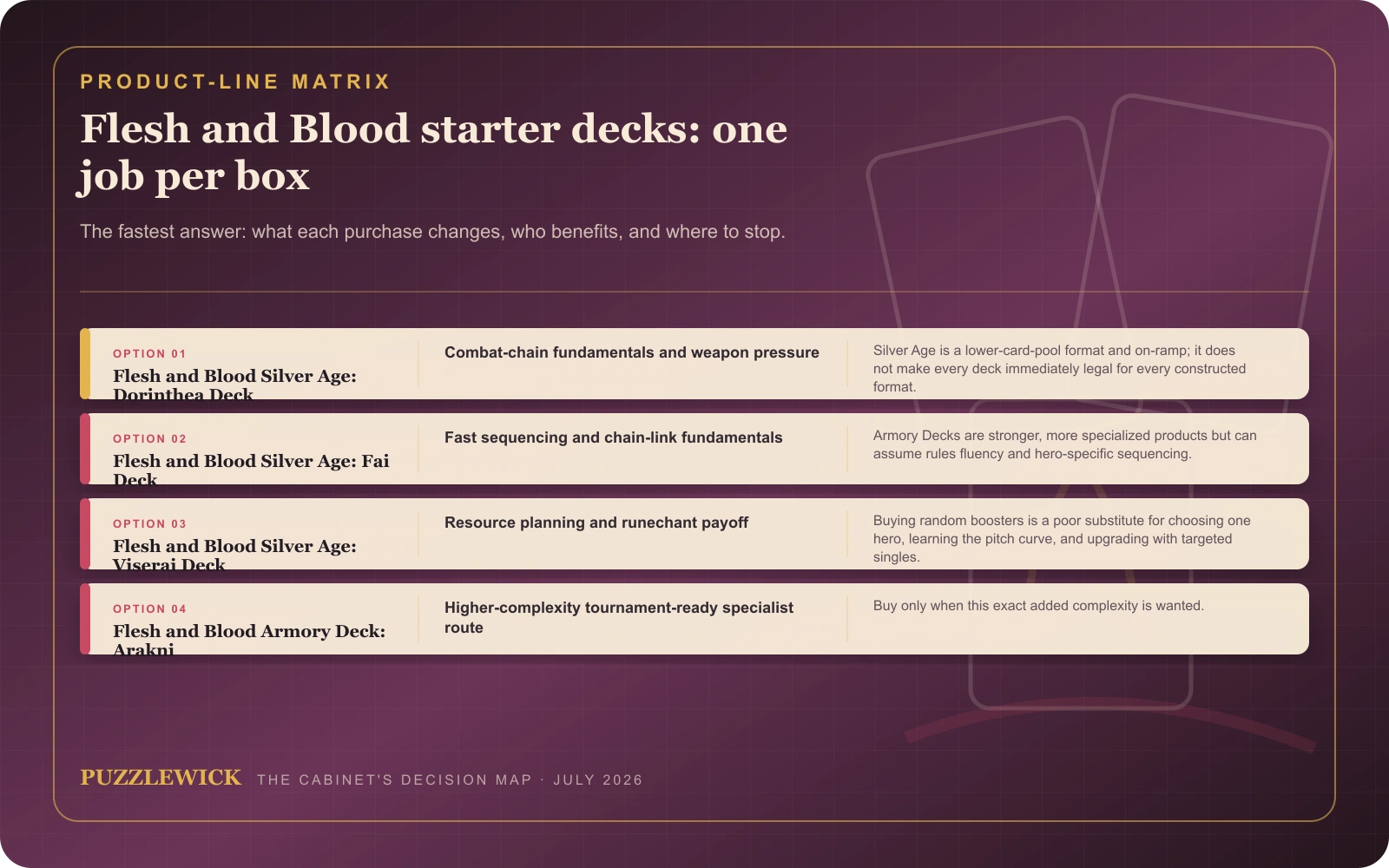
Silver Age decks are curriculum; Armory Decks are specialization. Pokémon Battle Academy is easier and more scripted. Magic Commander is more social and board-state heavy. Flesh and Blood is the most duel-like: every hand asks whether to defend, pitch, arsenal, or turn sideways into pressure.
The strongest BGG and forum comparisons keep returning to teaching clarity, hero complexity, format legality, upgrade friction, and whether a deck rewards fundamentals or specialist sequencing. Those practical differences outlast launch-week declarations that one box simply “wins.”
Read the matrix as a table-fit tool for Flesh and Blood starter decks: theme earns the first play, while repeatable pacing and a tolerable host load earn permanent shelf space.
What should you buy first, second, and not yet?
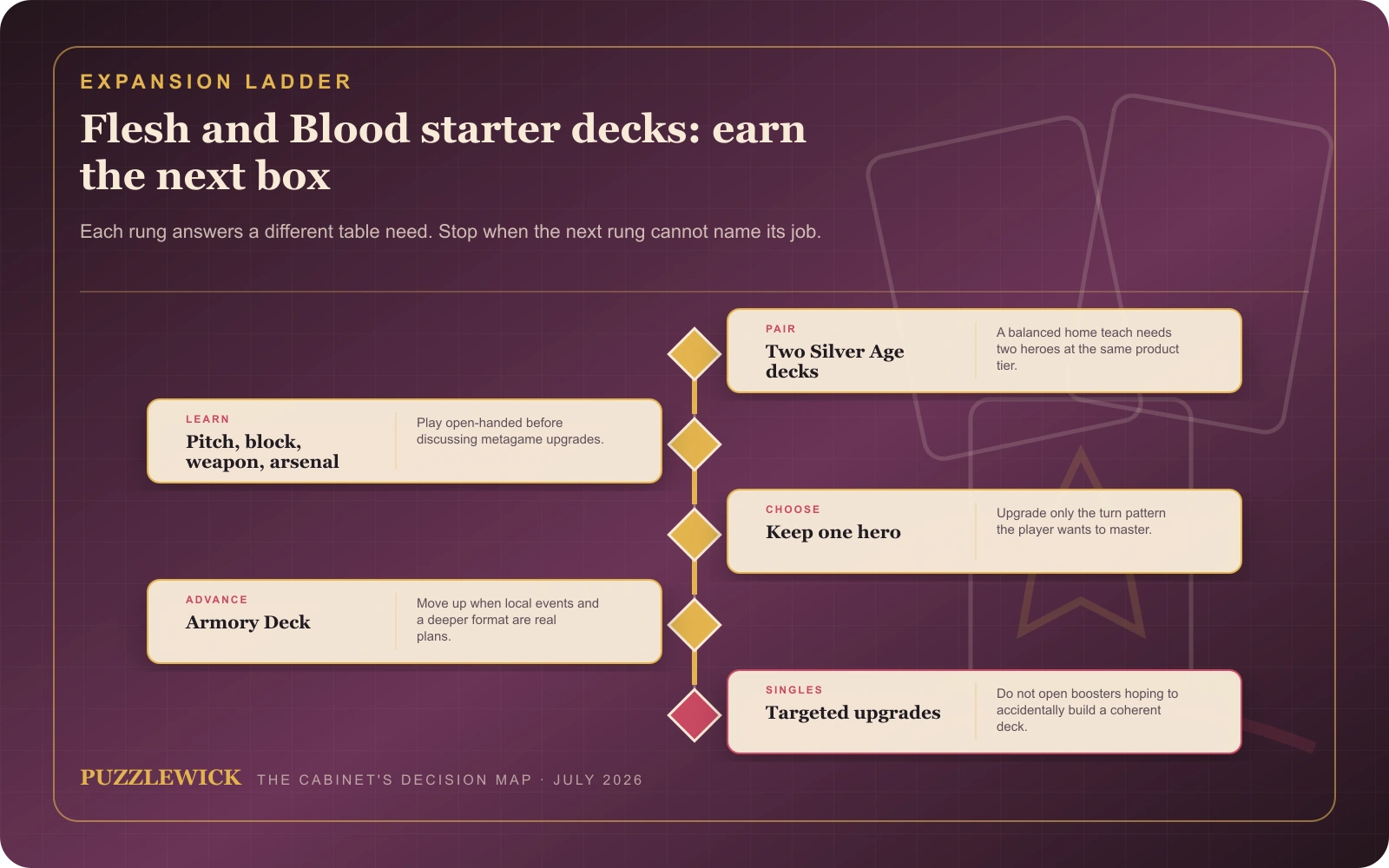
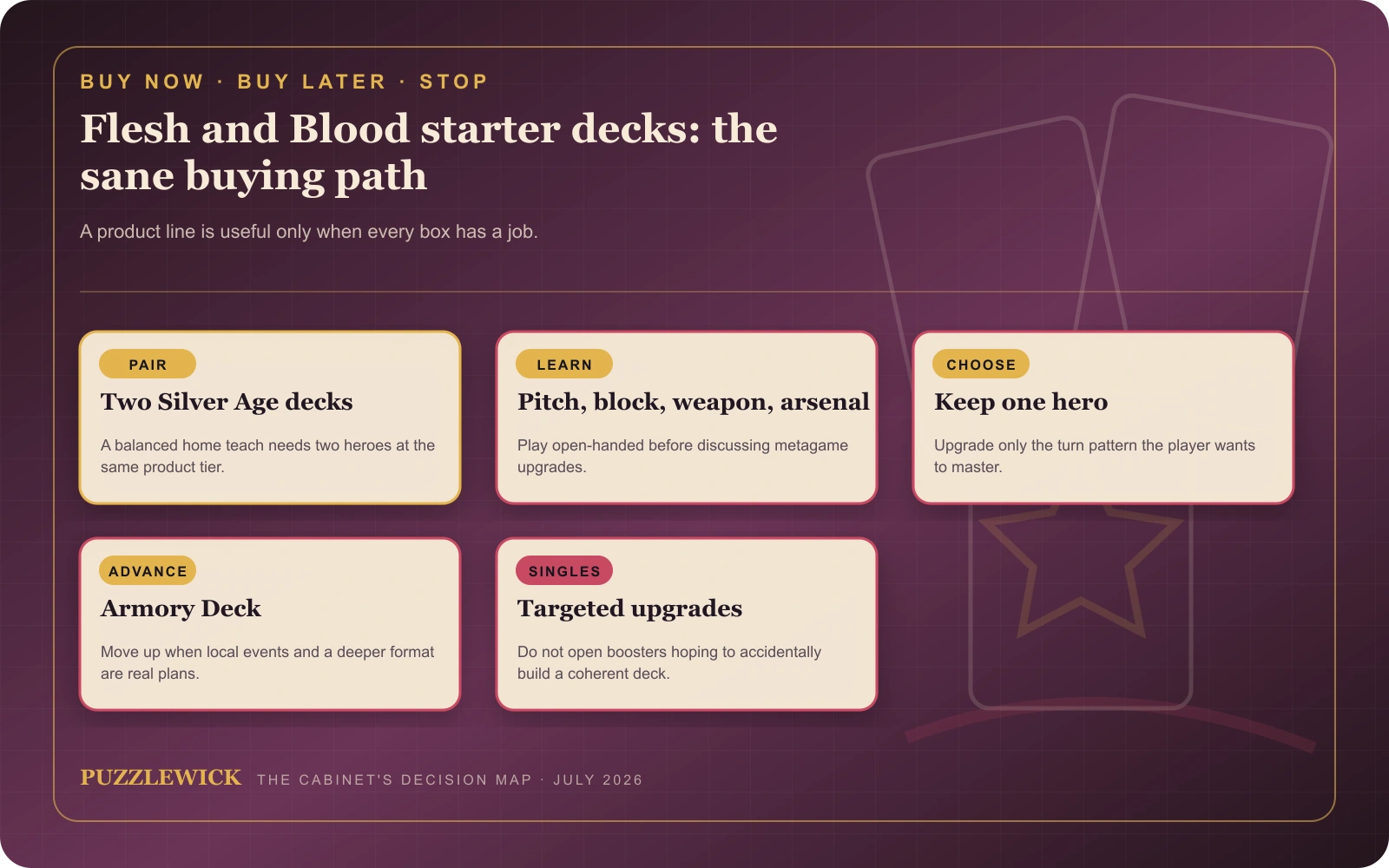
PAIR · Two Silver Age decks: A balanced home teach needs two heroes at the same product tier.
LEARN · Pitch, block, weapon, arsenal: Play open-handed before discussing metagame upgrades.
CHOOSE · Keep one hero: Upgrade only the turn pattern the player wants to master.
ADVANCE · Armory Deck: Move up when local events and a deeper format are real plans.
SINGLES · Targeted upgrades: Do not open boosters hoping to accidentally build a coherent deck.
The stopping rule matters. Armory Decks are stronger, more specialized products but can assume rules fluency and hero-specific sequencing. Buying random boosters is a poor substitute for choosing one hero, learning the pitch curve, and upgrading with targeted singles.
An Amazon page proves that a listing exists; it does not prove that the item belongs in this buying order. For Flesh and Blood starter decks, edition, language, seller, included contents, and exact product code still outrank a convenient checkout button.
Beginner, regular, advanced, and expert strategy
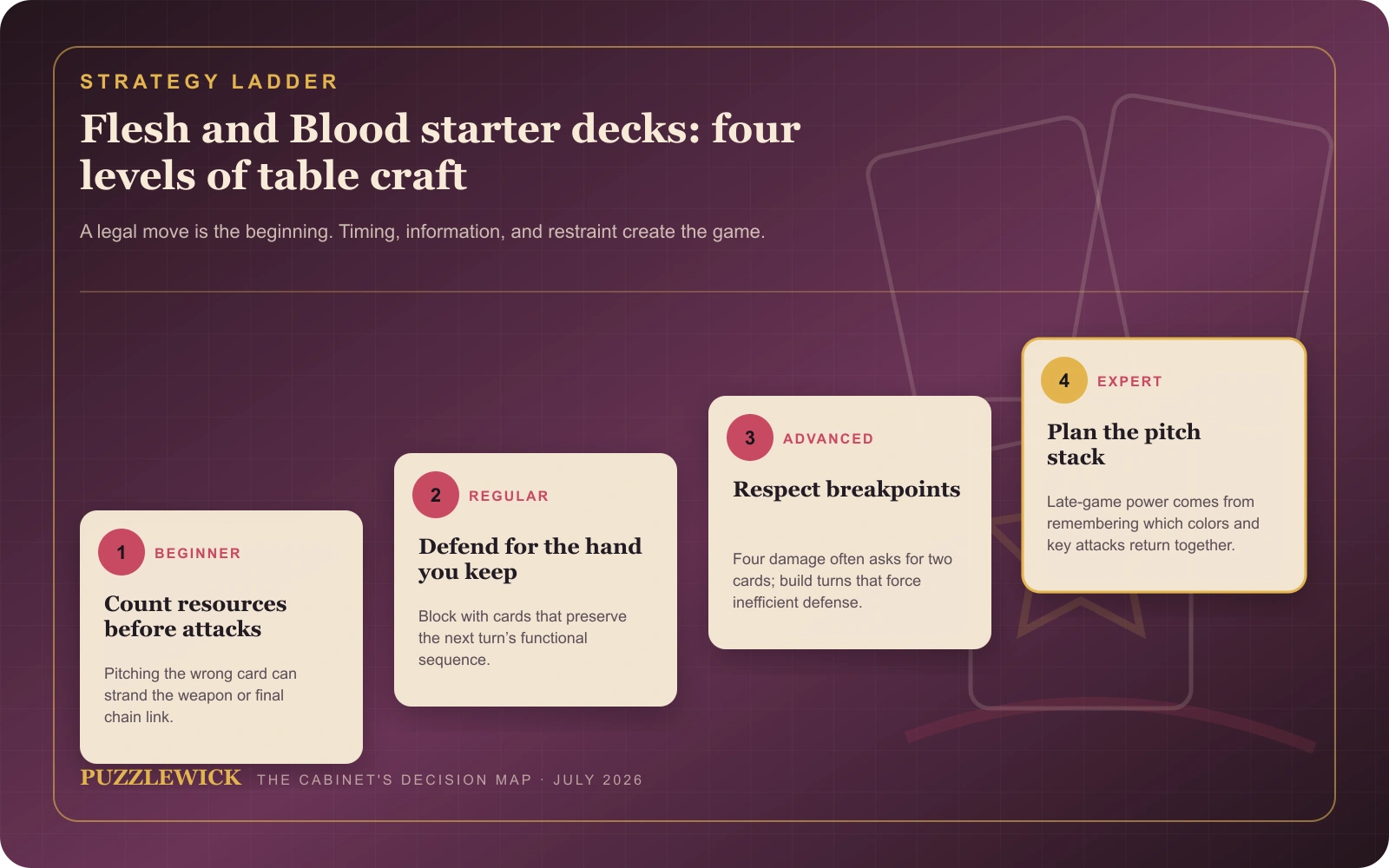
Beginner — Count resources before attacks. Pitching the wrong card can strand the weapon or final chain link.
Regular — Defend for the hand you keep. Block with cards that preserve the next turn’s functional sequence.
Advanced — Respect breakpoints. Four damage often asks for two cards; build turns that force inefficient defense.
Expert — Plan the pitch stack. Late-game power comes from remembering which colors and key attacks return together.
Debrief the closing combat chain. Name the decision that created it and the rule or timing window that remained muddy. Five focused minutes will improve the next session more than buying novelty to cover an unresolved teach.
This ladder cross-checks the official rules structure against recurring owner questions about teaching clarity, hero complexity, format legality, upgrade friction, and whether a deck rewards fundamentals or specialist sequencing.
What is the real table, hosting, and solo commitment?
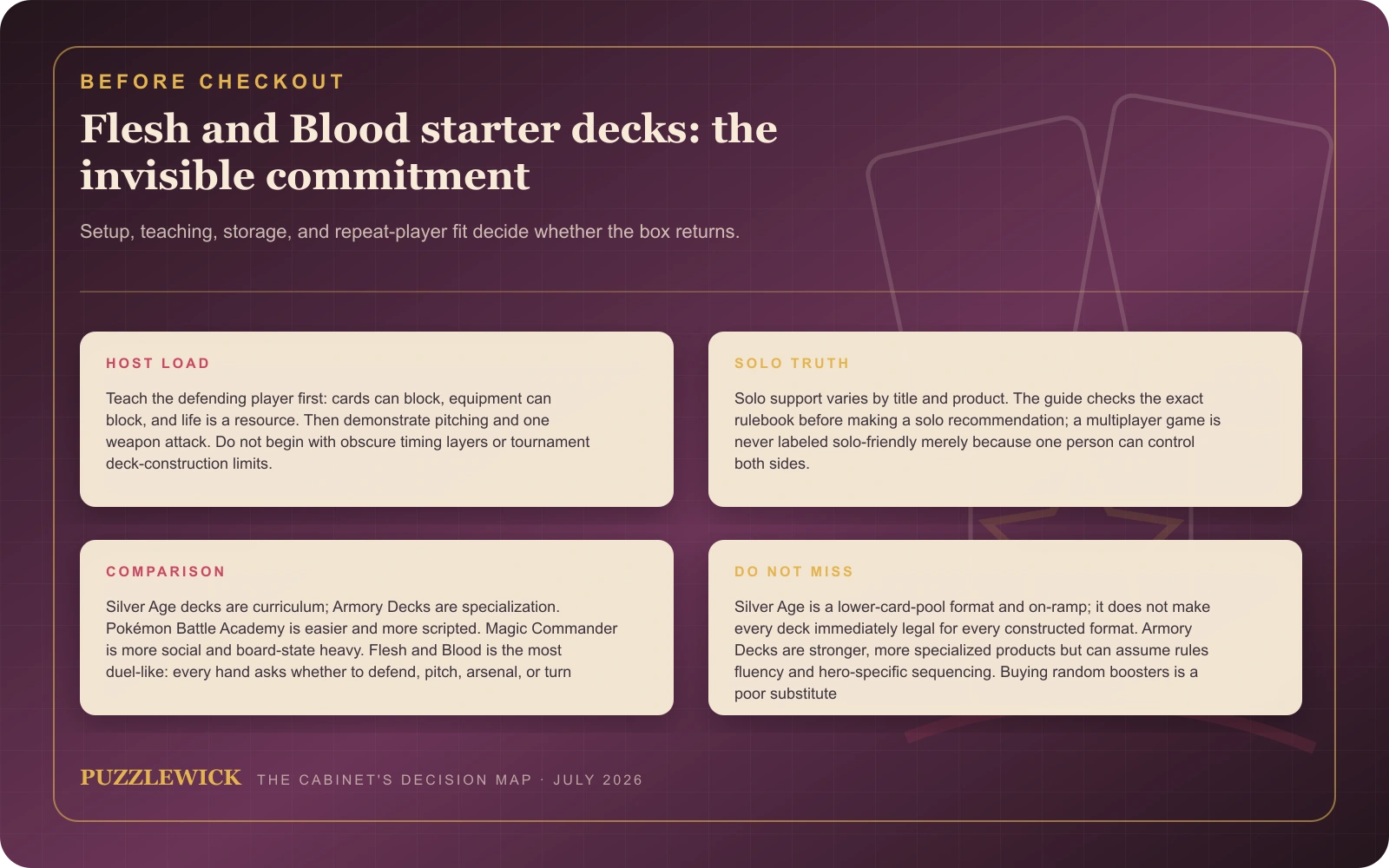

Hosting: Teach the defending player first: cards can block, equipment can block, and life is a resource. Then demonstrate pitching and one weapon attack. Do not begin with obscure timing layers or tournament deck-construction limits.
Solo: Flesh and Blood needs an opponent because defense, reactions, and hidden hands create the combat puzzle. Goldfishing helps pitch order; it does not test whether a line survives real blocks.
The invisible budget is sleeves, tokens, local format choice, matchup practice, sideboard planning, and the temptation to upgrade before understanding pitch. That workload predicts whether Flesh and Blood starter decks returns to the table more reliably than the excitement of opening it.
What do lower-star reviews and long-term owners warn about?
The durable warnings are fit warnings. Silver Age is a lower-card-pool format and on-ramp; it does not make every deck immediately legal for every constructed format. Armory Decks are stronger, more specialized products but can assume rules fluency and hero-specific sequencing. Buying random boosters is a poor substitute for choosing one hero, learning the pitch curve, and upgrading with targeted singles.
The Amazon reviews worth weighing are the recurring complaints — packaging, components, complexity, and mismatched expectations. Star averages drift and listings merge, so the repeated problem is the signal, not a moving decimal.
A credible warning predicts who will regret the purchase and why. A complaint that merely describes the game doing exactly what it is designed to do is not a defect; it is evidence for the “who should skip it” verdict.
Common misconceptions, corrected before checkout
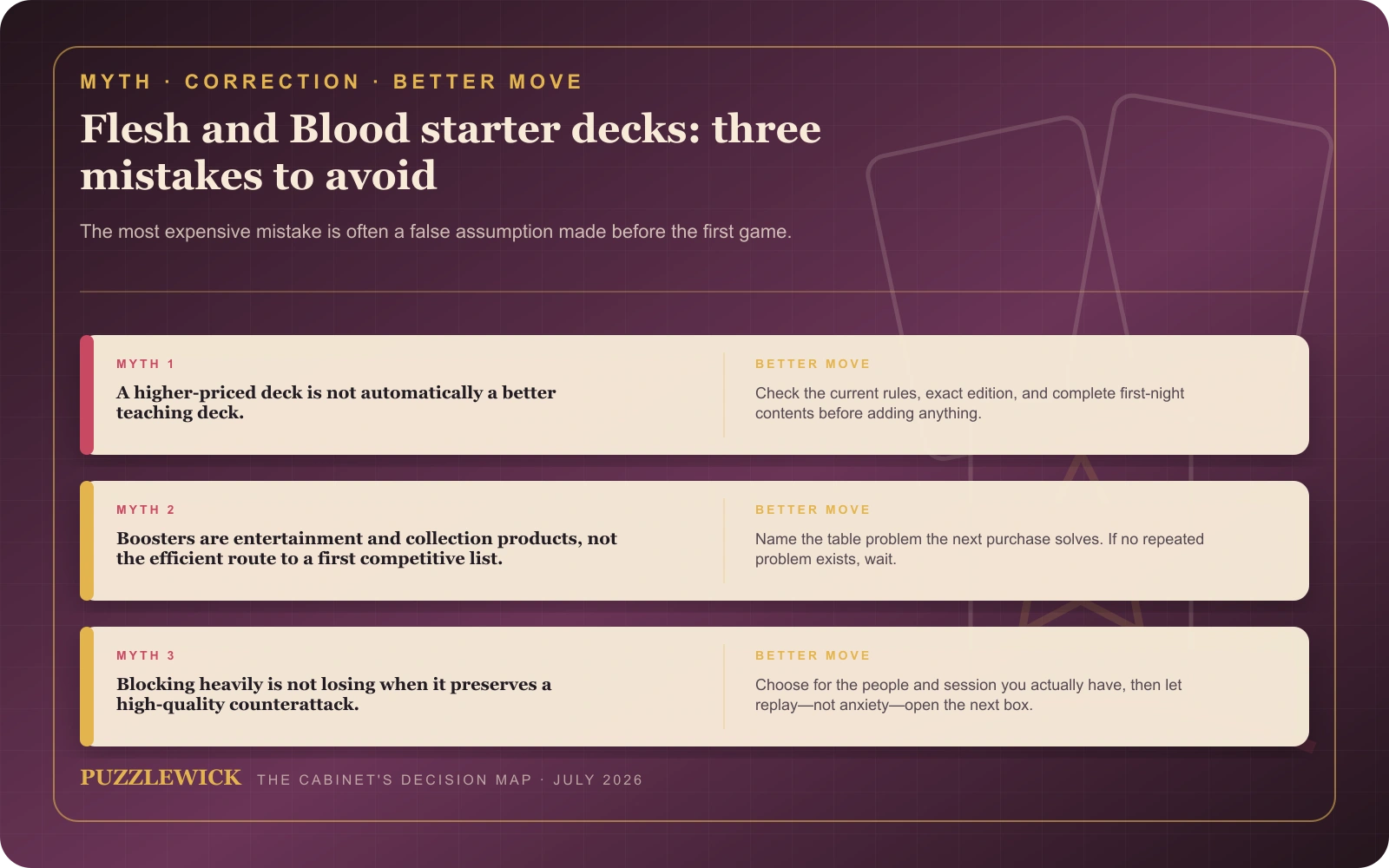
- A higher-priced deck is not automatically a better teaching deck.
- Boosters are entertainment and collection products, not the efficient route to a first competitive list.
- Blocking heavily is not losing when it preserves a high-quality counterattack.
Everything above was checked July 29, 2026. Product identities and availability can move.
The Puzzlewick shelf plan for Flesh and Blood starter decks
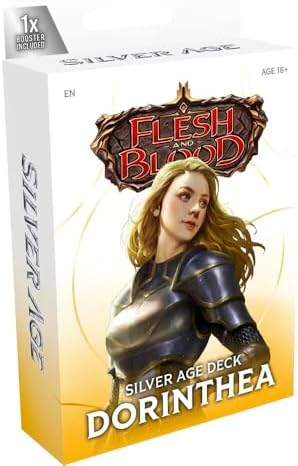
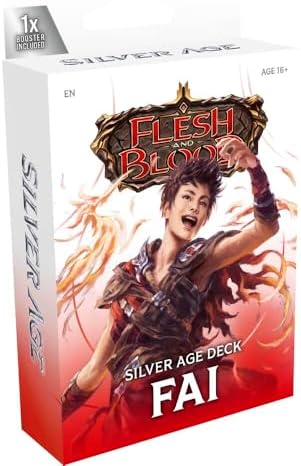
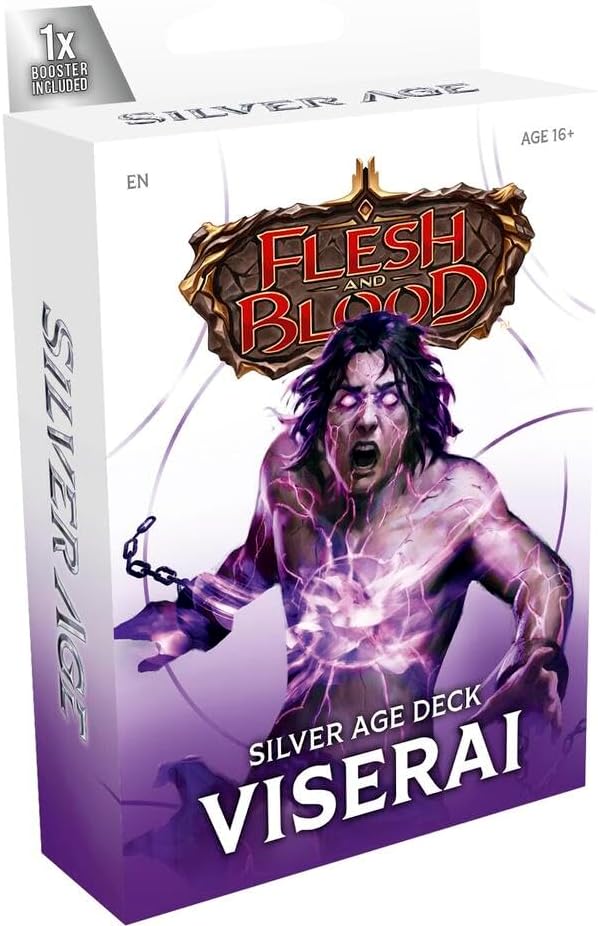
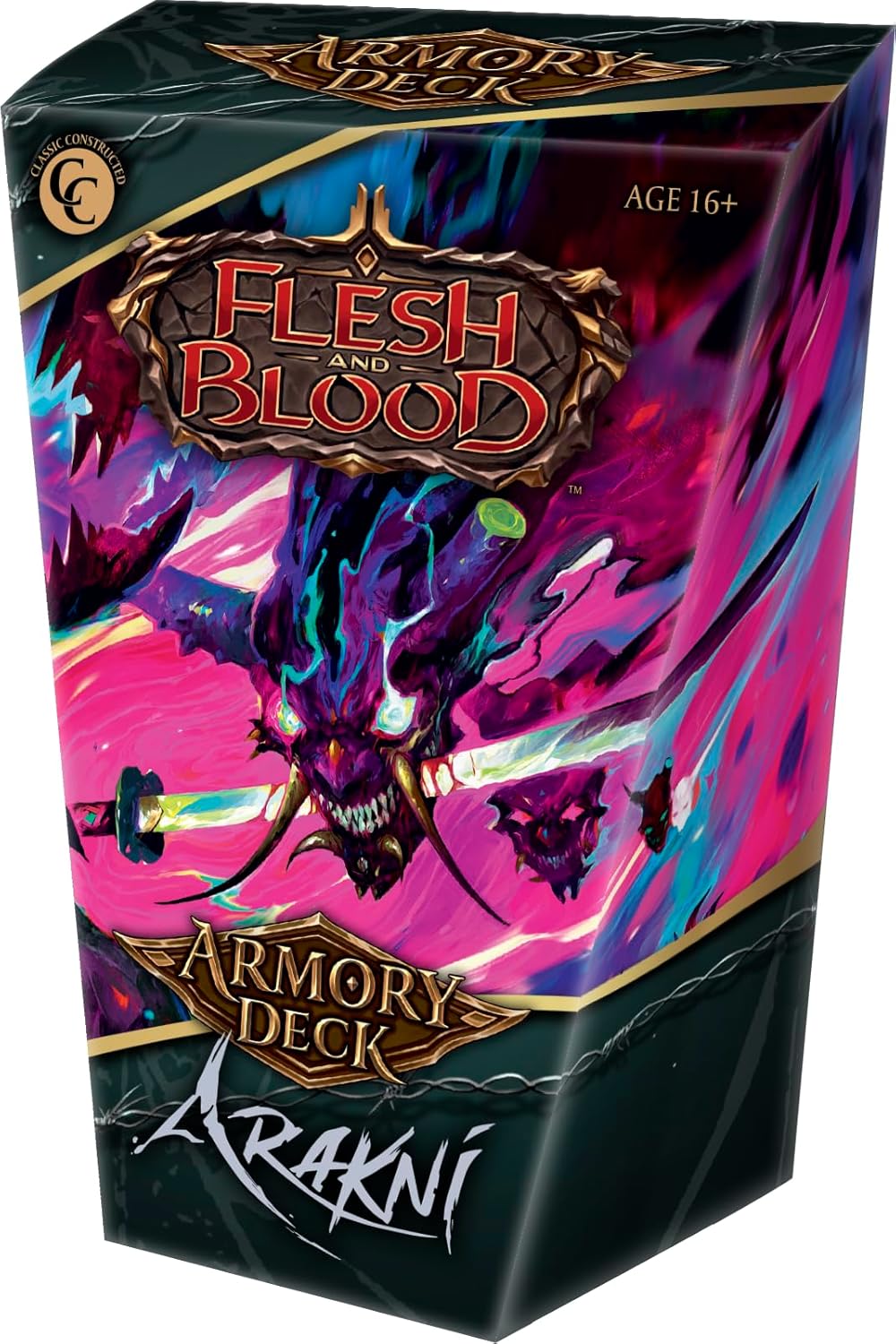
Silver Age is the better beginner product. Dorinthea teaches attack reactions and weapon pressure, Fai teaches sequencing, and Viserai teaches resource conversion. Armory Deck: Arakni is the better purchase for a committed player who wants a deeper assassin puzzle and accepts a sharper learning curve. Buy two comparable decks if you are teaching at home.
Before you add anything else, name the repeated table problem it fixes. If the answer is still “more stuff,” stop with the first verified box.
Current verified Amazon options: Flesh and Blood Silver Age: Dorinthea Deck on Amazon, Flesh and Blood Silver Age: Fai Deck on Amazon, Flesh and Blood Silver Age: Viserai Deck on Amazon, Flesh and Blood Armory Deck: Arakni on Amazon.
The picks
Some links below are affiliate links — as an Amazon Associate, Puzzlewick earns from qualifying purchases, at no extra cost to you. It never changes a pick.
 2 photos
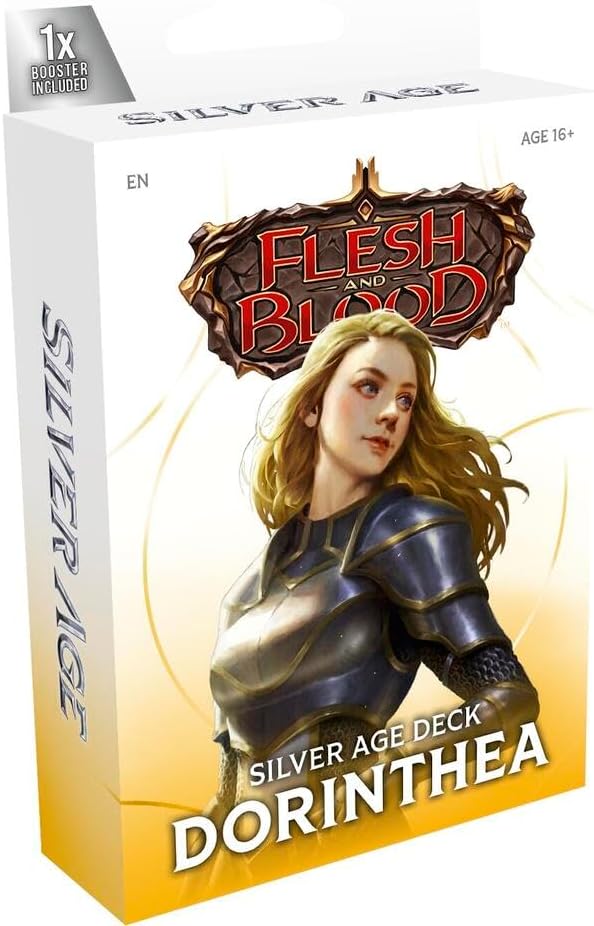
 Flesh and Blood Silver Age: Dorinthea Deck
Combat-chain fundamentals and weapon pressure. Listing and edition verified July 29, 2026.
- Verified listing — the exact product, not a lookalike
- Has a clear job in the buying order
- Checked against the official rules and product pages
- Stock and seller can change without notice
- Not every table needs this one
 2 photos
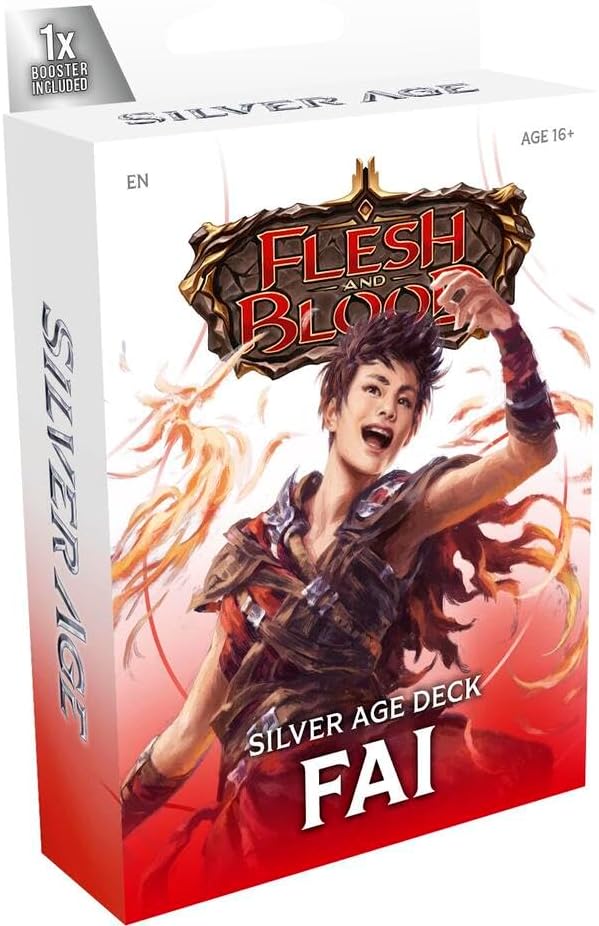
 Flesh and Blood Silver Age: Fai Deck
Fast sequencing and chain-link fundamentals. Listing and edition verified July 29, 2026.
- Verified listing — the exact product, not a lookalike
- Has a clear job in the buying order
- Checked against the official rules and product pages
- Stock and seller can change without notice
- Not every table needs this one
 2 photos
 Flesh and Blood Silver Age: Viserai Deck
Resource planning and runechant payoff. Listing and edition verified July 29, 2026.
- Verified listing — the exact product, not a lookalike
- Has a clear job in the buying order
- Checked against the official rules and product pages
- Stock and seller can change without notice
- Not every table needs this one
 2 photos
 Flesh and Blood Armory Deck: Arakni
Higher-complexity tournament-ready specialist route. Listing and edition verified July 29, 2026.
- Verified listing — the exact product, not a lookalike
- Has a clear job in the buying order
- Checked against the official rules and product pages
- Stock and seller can change without notice
- Not every table needs this one
At a glance
| Stage | Product | Buy when | Curator ruling |
|---|---|---|---|
| PAIR | Two Silver Age decks | A balanced home teach needs two heroes at the same product tier. | Start here |
| LEARN | Pitch, block, weapon, arsenal | Play open-handed before discussing metagame upgrades. | Only after repeat play |
| CHOOSE | Keep one hero | Upgrade only the turn pattern the player wants to master. | Only after repeat play |
| ADVANCE | Armory Deck | Move up when local events and a deeper format are real plans. | Specialist / later |
Questions, answered
What is Silver Age in Flesh and Blood?
It is a lower-card-pool constructed format and product on-ramp designed to reduce cost and complexity.
Should a beginner buy Silver Age or an Armory Deck?
Buy Silver Age to learn. Buy an Armory Deck when the player already understands the game and wants that specific hero.
Which Silver Age deck is easiest?
Dorinthea is a strong fundamentals teacher; Fai is faster and sequence-heavy; Viserai adds more resource planning.
Do I need two decks?
Yes for a home teach. Two decks at the same product tier create the cleanest learning match.
Can I upgrade a Silver Age deck?
Yes, but upgrades and format legality depend on the event and current card pool.
Should I buy booster packs first?
No. Choose a hero and buy targeted cards after the base deck has been played enough to reveal its needs.
Yumi's verdict
Silver Age is the better beginner product. Dorinthea teaches attack reactions and weapon pressure, Fai teaches sequencing, and Viserai teaches resource conversion. Armory Deck: Arakni is the better purchase for a committed player who wants a deeper assassin puzzle and accepts a sharper learning curve. Buy two comparable decks if you are teaching at home.
Research ledger 9 sources · reviewed 2026-07-29
Specifications, rules, current product information, community experience, and contrary evidence were checked against the sources below. Commercial links are kept separate from editorial evidence.
- Official Silver Age announcement and format intentfabtcg.com/articles/silver-age
- Official constructed format rulesrules.fabtcg.com/en/trp/07-constructed-formats
- Official learn-to-play resourceslegacy.fabtcg.com/en/resources/learn-to-play
- Current new-player starter discussionreddit.com/r/FleshandBloodTCG/comments/1t7n6fk/new_player_where_do_i_start_and_what_starter
- Armory Decks for new playersreddit.com/r/FleshandBloodTCG/comments/1u3fwi0/armoury_decks_for_new_players
- Current Armory Deck availability questionreddit.com/r/FleshandBloodTCG/comments/1uzagzx/new_to_fab_are_there_armory_decks_for_all_heroes
- BoardGameGeek title and discussion index: Flesh and Blood starter decksboardgamegeek.com/geeksearch.php?action=search&objecttype=boardgame&q=Flesh%20and%20Blood%20starter%20decks
- Exact Amazon product identity: Flesh and Blood Silver Age: Dorinthea Deckamazon.com/dp/B0GKHL27GV?tag=puzzlewick-20
- Exact Amazon product identity: Flesh and Blood Silver Age: Fai Deckamazon.com/dp/B0GKJ3Q6VP?tag=puzzlewick-20

Come in, take your shoes off — let me show you something.


Keep exploring
The next smart rabbit holes.
♢ Universe HubFlesh and Blood: the whole buying pathFlesh and Blood is a hero-centered dueling card game where equipment, pitch values, combat chains, and defense decisions matter...🂠 Topic PathTrading Card Games: compare the whole shelfStart with the game and community you want, then buy the smallest product that lets you test it properly. These guides separate...Buying GuideBest Flesh and Blood Accessories 2026: Armory Sleeves, Deck Boxes & PlaymatKenji’s tournament-clean system for the deck, hero, weapons, equipment, public zones, mat, and first Armory night.