Magic vs Pokémon vs One Piece in 2026: Which Big Three TCG Fits You?
Magic, Pokémon, and One Piece compared by cost, learning curve, local play, collecting, storage, and the first product worth buying.


AI-assisted research and drafting in Imani’s voice · reviewed by Robert Pruitt · how this guide was made
Last editorial refresh: 2026-08-14 Gold-standard QA: 2026-08-14 21 sources reviewed Affiliate links checked during gold-standard pass

The short answer
Start Magic if deck construction, multiplayer Commander, and decades of formats are the hobby you want. Start Pokémon if teaching, collecting, family play, and a clear product ladder matter most. Start One Piece if its characters will get you to the table and you want Leader-driven combat, DON!! resource allocation, and an aggressively current competitive scene. Buy one playable product before any booster box.
Decision map
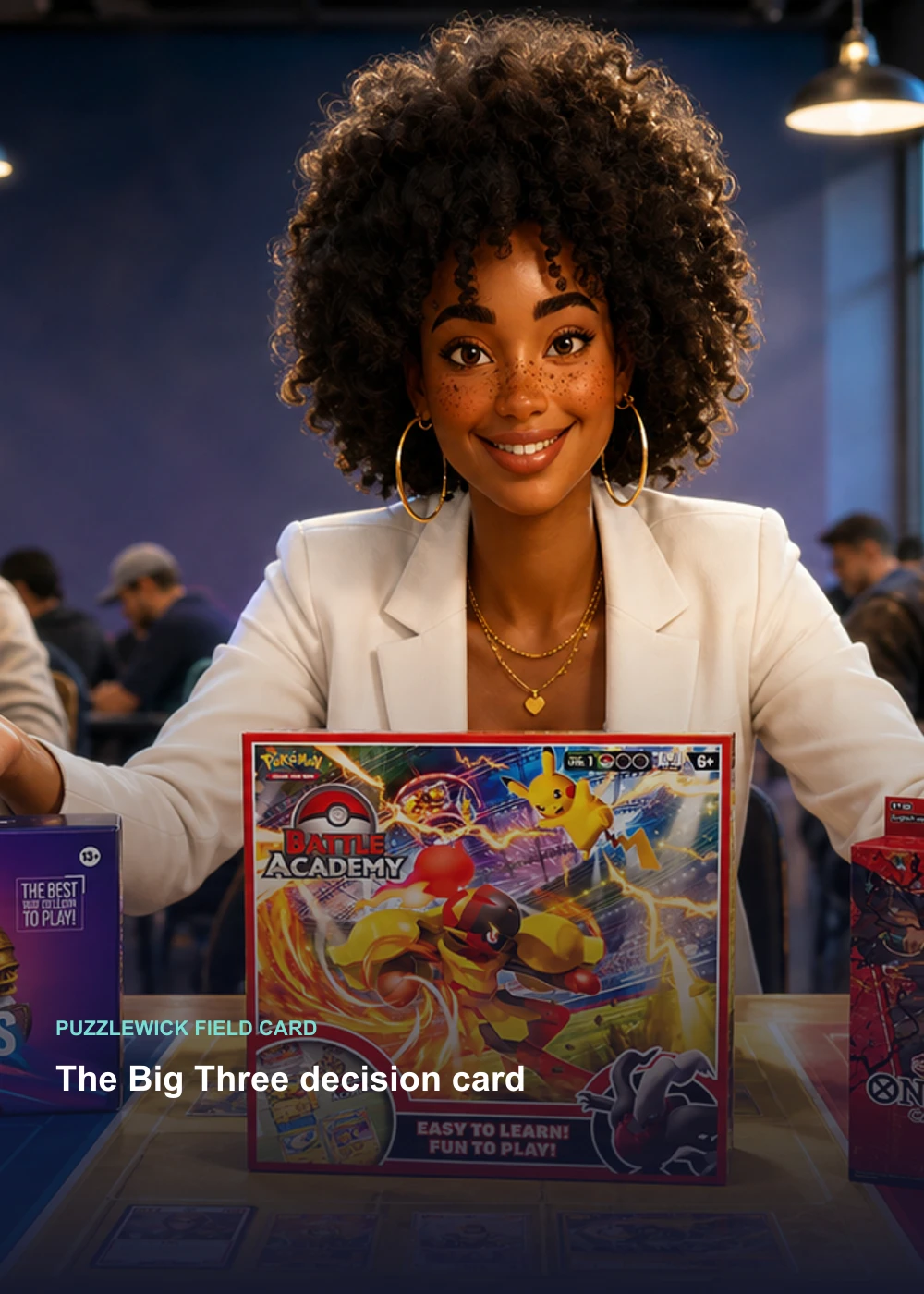
Choose in thirty seconds
Best for builders, Commander groups, drafts, and near-infinite format depth.
Battle Academy remains the best scripted two-player classroom.
Leader identity and DON!! create a distinct tempo game under the fandom heat.
Foundations Beginner Box, Battle Academy, or one current Starter Deck.
The useful “big three” depends on the evidence being measured. On TCGplayer’s North American marketplace, Magic ranked first, Pokémon second, and One Piece third by Q2 2026 gross merchandise value. That is a powerful retail signal, not a claim about every kitchen table on Earth. For a buyer choosing a hobby now, these three combine current demand, accessible English products, organized play, deep collector behavior, and products we can identify exactly on Amazon.
This comparison asks the question the shelf cannot: which game will create the kind of second, tenth, and fiftieth night you actually want? Imani separates rules burden, social shape, collection pressure, and the honest first purchase. The winner is not the game with the loudest launch. It is the one your people will shuffle again.
Start here, then go deeper
You are in the right cabinet.
 ✶ Universe HubMagic: The Gathering: the whole buying pathMagic: The Gathering is the deepest construction sandbox in the Big Three: a two-player duel, four-player Commander ritual, draft...
 🂠 Topic PathTrading Card Games: compare the whole shelfStart with the game and community you want, then buy the smallest product that lets you test it properly. These guides separate...
 Buying GuideWhat Magic: The Gathering Should You Buy First? Beginner Box, Starter Kit, Commander or BoostersChoose one playable start, find your table, and protect your cards with gear that earns its place. You do not need to buy the whole...
The short answer: choose the life around the cards
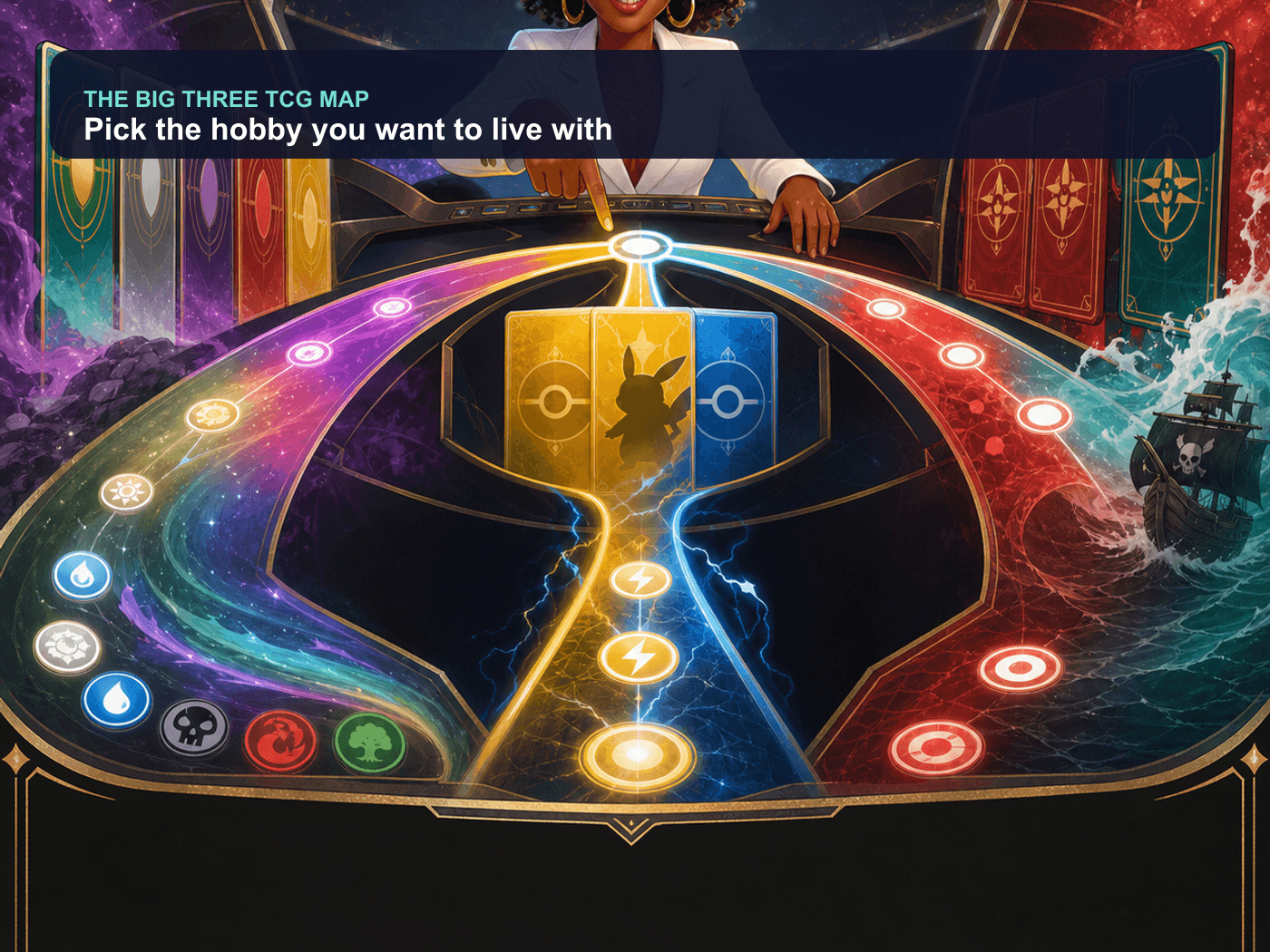
Magic is the construction laboratory. The five-color system, Commander, draft, Standard, and decades of card interactions reward a player who enjoys tuning and reinterpretation. Pokémon is the cleanest learning and collecting ladder. A child can begin on Battle Academy, graduate to a League Battle Deck, and still care about a beautiful binder. One Piece is the momentum choice. The Leader and DON!! systems make the resource puzzle visible, while the franchise gives every deck an immediate identity.
Do not begin with a booster box. Random cards cannot promise a legal, coherent deck. The correct test is one exact playable product and ten real games.
What does each game ask you to become?
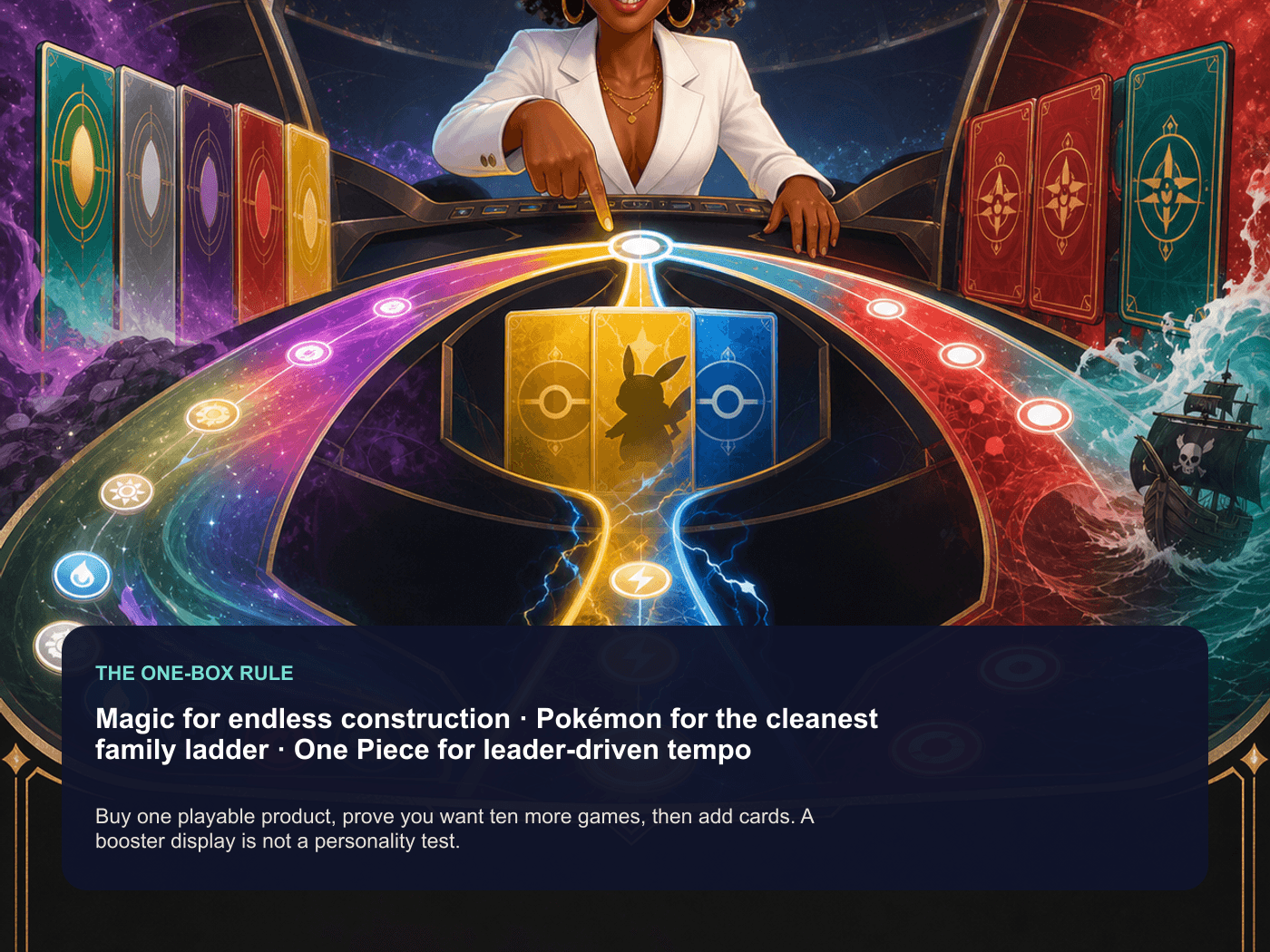
Magic asks you to become a builder and rules conversationalist. Even a preconstructed Commander deck eventually invites swaps, mana-base decisions, and a social conversation about power. Pokémon asks you to become a sequencer and curator: Trainers create consistency, Pokémon deliver the payoff, and the collecting side can remain separate from competitive deck construction. One Piece asks you to become a tempo reader: DON!! pays costs or amplifies attacks, cards in hand become counters, and the Leader changes what a good turn means.
If that description does not make you want to play, no premium treatment will rescue the purchase.
How expensive is the real first month?
The first month is inexpensive only when you refuse to buy uncertainty. Magic can begin with one Beginner Box or Starter Kit; Commander adds sleeves and a deck box, then tempts endless upgrades. Pokémon can begin and remain playable with Battle Academy; competitive ambitions move the budget toward a League Battle Deck and singles. One Piece begins cleanly with two Starter Decks, but starter-exclusive cards and current singles can increase the cost of a tournament list.
Set a ten-game gate: no booster display, premium binder, or second deck until the first product has produced ten completed games or one genuine local event. This protects money and reveals what storage you actually need.
Which community, format, and table shape fit you?
Choose Magic when a four-player social night, draft pod, or local store calendar already exists around you. Choose Pokémon when family teaching, youth League, collecting, and clear tournament structure matter. Choose One Piece when its local scene is healthy and the Leader you love has a realistic upgrade path.
Before buying, search your actual city’s next four weeks of events. A theoretically perfect game with no opponents is a solitaire collection. Conversely, two friends willing to buy matched starter decks can create a healthier scene than a crowded store whose format you dislike.
What happens after month one?
The first box answers whether the rules feel good. The next month answers whether the hobby around those rules fits your life. A Magic player should choose one actual lane: repeat two-player games, Commander with a known group, or Limited events. A Pokémon player should decide whether the budget belongs to a playable deck, a set binder, or sealed collecting. A One Piece player should confirm that the preferred Leader has an attainable upgrade path and that nearby events support the format they intend to play.
For all three games, separate a play budget from an opening budget. The play budget buys legal decks, sleeves, event entry, and exact singles. The opening budget buys randomized fun and accepts that the contents may never enter a deck. Mixing those budgets is how a modest card game becomes an expensive pile that still cannot play a satisfying match.
Before month two, perform a shelf audit. Keep one ready deck, its matching tokens, ten spare sleeves, and a short upgrade note together. Put trade cards in a binder, ordinary extras in labeled bulk storage, and expensive cards in protection appropriate to their value. A card without a known job should not be allowed to dictate the next purchase.
Then test the social reality. Visit or message the local store, ask which nights actually fire, what power or experience level appears, and whether current legality matters. Bring the intact starter once before rebuilding it from internet lists. A welcoming community can carry a merely good game for years; a format you cannot play locally needs a reliable home opponent.
The final checkpoint is emotional, not financial: after ten games, are you thinking about decisions you could make differently, or only products you could open? Decisions mean the game has found you. Products alone mean the marketing has. Keep the former; put a cooling-off period on the latter.
What should you check before the next purchase or event?
The one-year rule: choose the ecosystem whose ordinary maintenance still sounds tolerable. Magic asks you to follow formats and negotiate Commander expectations. Pokémon asks you to separate legal play from collecting goals. One Piece asks you to follow current Leaders, starter exclusives, and event legality. Every living TCG changes; the right one makes that change feel like conversation rather than homework.
The cabinet verdict: buy one future, not three beginnings
Broadest long-term system: Magic. Best family and collector bridge: Pokémon. Best high-energy fandom-first duel: One Piece. None needs a booster box on day one. Buy the exact starter below, play ten games, then follow its dedicated buying and storage map.
Crossing between games is healthiest after one system has a stable deck, storage home, and repeat group. Otherwise every new release becomes another unfinished entrance.
The picks
Some links below are affiliate links — as an Amazon Associate, Puzzlewick earns from qualifying purchases, at no extra cost to you. It never changes a pick.
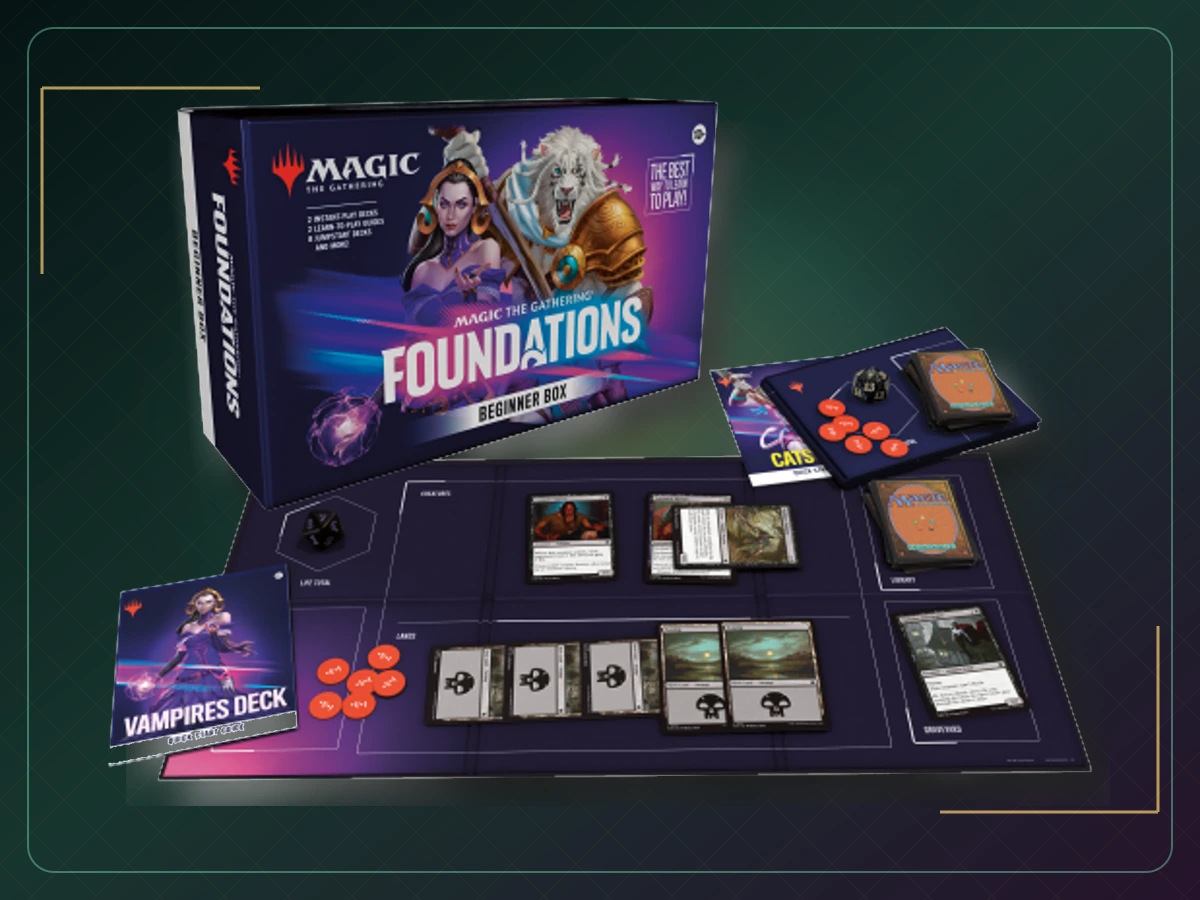
Magic: The Gathering Foundations Beginner Box
This is the cleanest physical classroom: guided packets first, mix-and-match play after. Buy it to learn, not to chase value.
- Guided first game
- Reusable Jumpstart-style packets
- Everything two players need
- Not a Commander deck
- Power is intentionally introductory
 3 photos
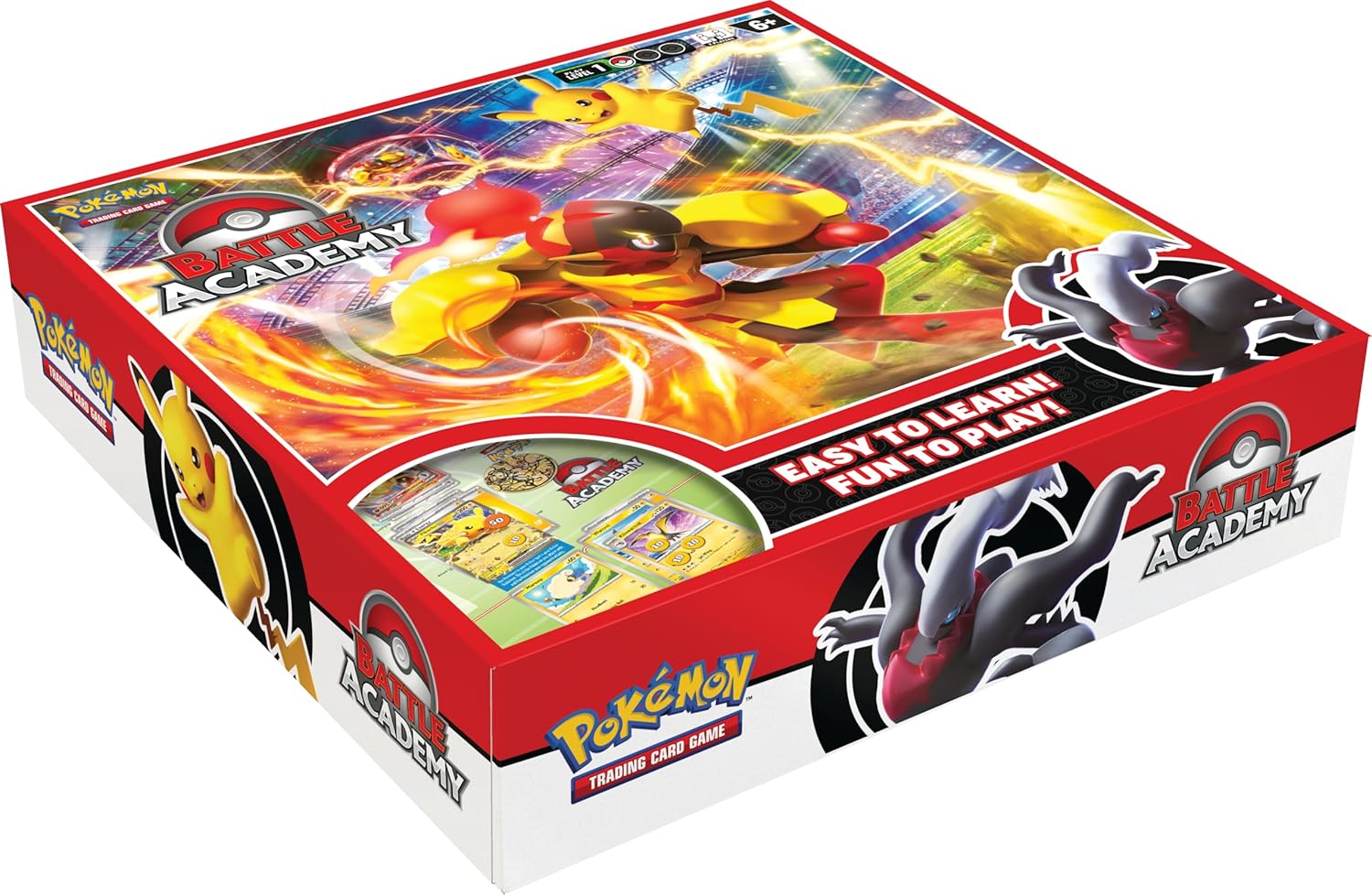
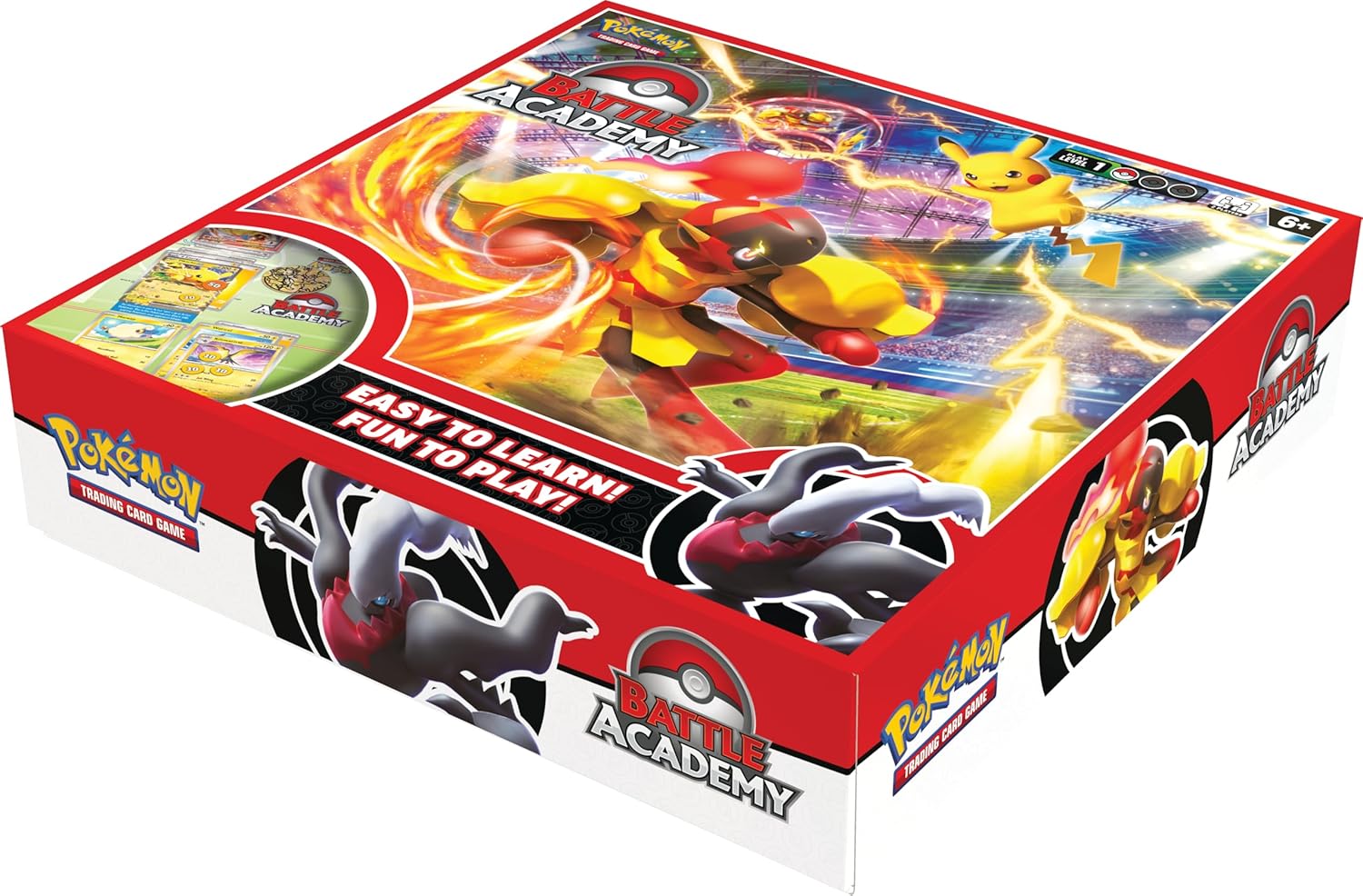
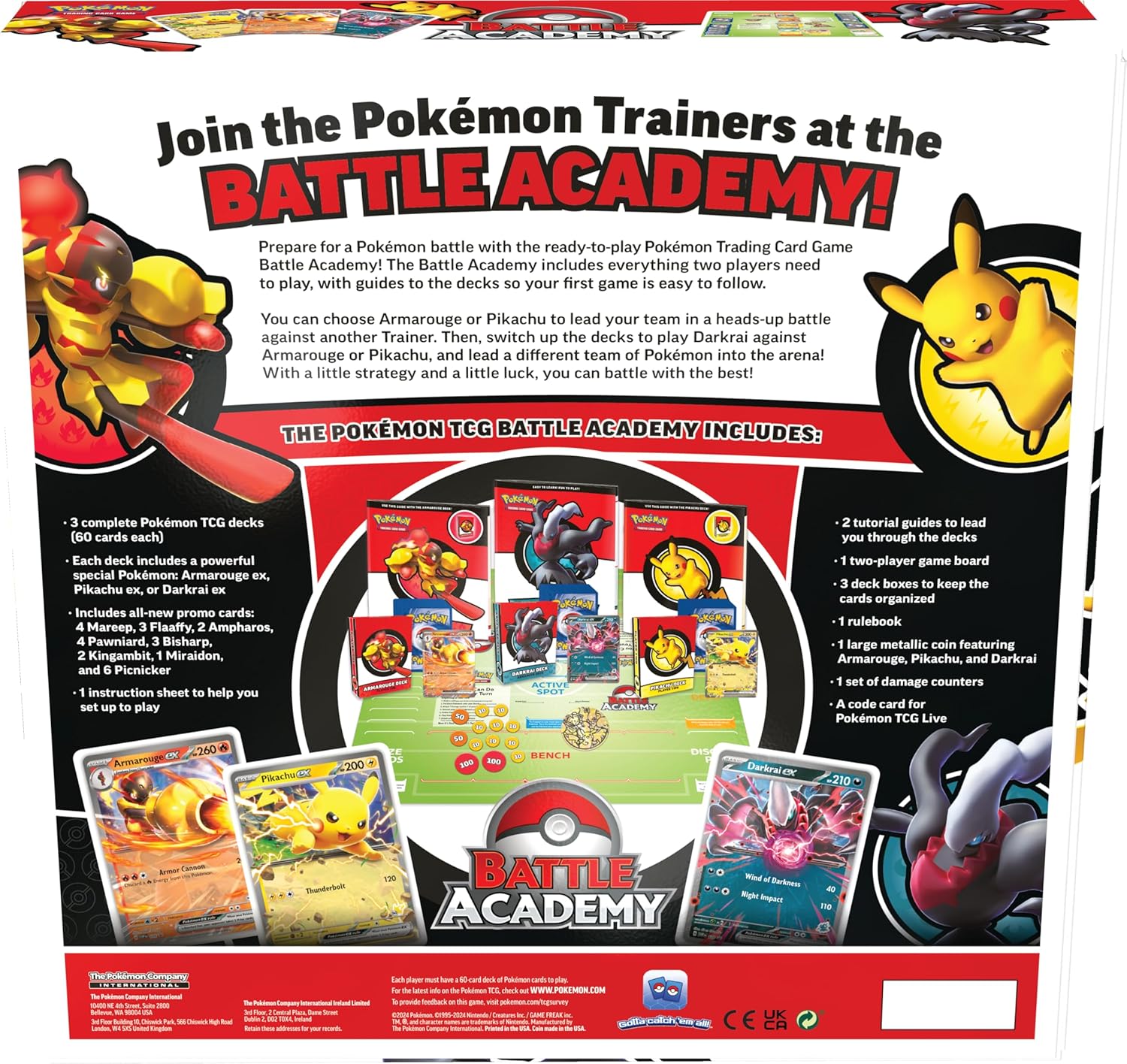
 Pokémon Battle Academy 2024
The board and ordered decks remove the usual first-game chaos. It is a classroom you can replay, not a sealed-value purchase.
- Scripted opening
- Three decks and board
- Excellent family teach
- Low competitive ceiling
- Experienced players outgrow the prompts

 2 photos
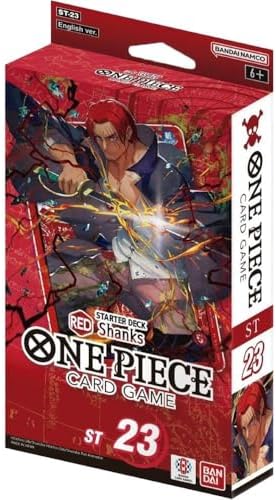
 One Piece Card Game ST-23 Red Shanks Starter Deck
Shanks makes pressure and DON!! allocation legible. One copy teaches; a second is justified only by the exact starter exclusives your final list needs.
- Playable immediately
- Clear leader plan
- Strong teaching identity
- Not tournament-finished
- Duplicates may be cheaper as singles
At a glance
| Game | Best for | First buy | Learning curve | Collection pressure | Table shape |
|---|---|---|---|---|---|
| Magic: The Gathering | Deckbuilding, Commander, draft, format depth | Foundations Beginner Box | Medium; excellent new teaching products | Very high if unmanaged | 2-player duel or 4-player Commander |
| Pokémon TCG | Families, collectors, clear competitive ladder | Battle Academy | Lowest with scripted teach | High on sealed/chase side; controllable for players | 2 players |
| One Piece Card Game | Anime fans, tempo combat, current local play | One current Starter Deck per player | Medium; counters and DON!! matter quickly | Medium-high around starters and meta singles | 2 players |
Questions, answered
What are the Big Three trading card games in 2026?
For this buyer guide, Magic, Pokémon, and One Piece are the practical Big Three because they ranked first, second, and third by TCGplayer marketplace GMV in Q2 2026 and all have deep current English product lines. That marketplace ranking is not a claim about global player population.
Which TCG is easiest for a beginner?
Pokémon with Battle Academy is the easiest fully scripted paper teach. Magic Arena is the best free digital rules teacher. One Piece is approachable with matched Starter Decks but asks players to understand DON!! allocation and countering early.
Which TCG is cheapest to start?
A two-deck Magic Starter Kit or two One Piece Starter Decks can be inexpensive, while Pokémon Battle Academy teaches two players from one box. The cheapest sustainable choice is the one you play without immediately buying randomized boosters.
Should I buy a booster box first?
No. A booster box does not guarantee a coherent legal deck. Buy a starter, Beginner Box, Battle Academy, or preconstructed deck first, then use singles or a deliberate sealed format after you understand the game.
Can I collect one game and play another?
Yes, and that is often healthier. Keep collection goals and deck goals separate, set budgets for each, and never dismantle a playable deck to chase speculative sealed value.
What should I buy only after ten real games?
Buy only the upgrade your completed games identified: exact singles for a deck problem, storage sized to the collection you actually use, or a mat that solves a real table or camera issue. Do not let randomized product replace diagnosis.
Imani's verdict
Magic wins for endless construction and social formats. Pokémon wins for the cleanest beginner-to-collector ladder. One Piece wins for players energized by Leader identity and current competitive momentum. Your first purchase should be one playable product, followed by ten games—not a booster display.
Research ledger 21 sources · reviewed 2026-08-14
Specifications, rules, current product information, community experience, and contrary evidence were checked against the sources below. Commercial links are kept separate from editorial evidence.
- TCGplayer: Best-Selling TCGs, Q2 2026seller.tcgplayer.com/blog/best-selling-trading-card-games-q2-2026
- Wizards of the Coast Magic product guidemagic.wizards.com/en/product-guide
- Official Commander format rules and overviewmagic.wizards.com/en/formats/commander
- Marvel Super Heroes Beginner Box contentsmagic.wizards.com/en/news/announcements/marvel-super-heroes-beginner-box-contents
- 2026 Magic deck-box discussionreddit.com/r/magicTCG/comments/1rivv51/deck_box_advice
- Commander deck storage discussionreddit.com/r/CommanderMTG/comments/1rz7qzl/best_way_to_store_decks
- 2026 playmat storage discussionreddit.com/r/mtg/comments/1qulxos/playmat_storage
- Play! Pokémon: getting startedplay.pokemon.com/en-us/get-started/players
- Pokémon TCG 2025 product gallerypokemon.com/us/pokemon-tcg/product-gallery/2025
- Pokémon TCG 30th celebration productspokemon.com/us/news/pokemon-tcg-30th-celebration-product-showcase
- Pokémon League play guidepokemon.com/us/strategy/get-ready-to-play-pokemon-tcg-at-pokemon-league
- 2026 tournament deck-box discussionreddit.com/r/pkmntcg/comments/1u50wos/deck_boxes_for_tournaments
- 2026 Pokémon sleeve discussionreddit.com/r/pkmntcg/comments/1s9xz3j/what_sleeves_are_you_using_in_2026
- One Piece Card Game official productsen.onepiece-cardgame.com/products/?slide=modal
- ST-29 official product contentsen.onepiece-cardgame.com/products/decks/st29.php
- One Piece Card Game official play guideen.onepiece-cardgame.com/play-guide
- One Piece Card Game rule manualen.onepiece-cardgame.com/pdf/rule_manual.pdf
- One Piece tournament rules manualen.onepiece-cardgame.com/pdf/tournament_rules_manual.pdf?20251017=
- Preparing for One Piece localsreddit.com/r/OnePieceTCG/comments/1vej6r5/preparing_for_locals
- One Piece double-sleeve and deck-box discussionreddit.com/r/OnePieceTCG/comments/1ra1zya/deck_boxes_tripe_sleeved
- Limitless One Piece tournament results and decklistsonepiece.limitlesstcg.com
Okay but have you seen what everyone’s saying about this?

Keep exploring
The next smart rabbit holes.
✶ Universe HubMagic: The Gathering: the whole buying pathMagic: The Gathering is the deepest construction sandbox in the Big Three: a two-player duel, four-player Commander ritual, draft...🂠 Topic PathTrading Card Games: compare the whole shelfStart with the game and community you want, then buy the smallest product that lets you test it properly. These guides separate...Buying GuideWhat Magic: The Gathering Should You Buy First? Beginner Box, Starter Kit, Commander or BoostersChoose one playable start, find your table, and protect your cards with gear that earns its place. You do not need to buy the whole...