Yu-Gi-Oh! Legendary Modern Decks vs Blue-Eyes White Destiny in 2026
Yu-Gi-Oh! starter products, explained with exact box identity, expansion order, beginner-to-expert strategy, hosting and solo reality, community warnings, and direct Amazon purchase paths.

AI-assisted curator persona · research and editorial responsibility: Robert Pruitt · how this guide was made
Last editorial refresh: 2026-07-29 Gold-standard QA: 2026-07-29 9 sources reviewed Affiliate links checked during gold-standard pass

The short answer
Buy Blue-Eyes White Destiny when one player wants to learn one recognizable archetype and upgrade it deliberately. Buy Legendary Modern Decks when a household wants three decks, shared staples, and a broader tasting menu. The Blue-Eyes box is the better focused curriculum; the three-deck box is the better variety purchase.
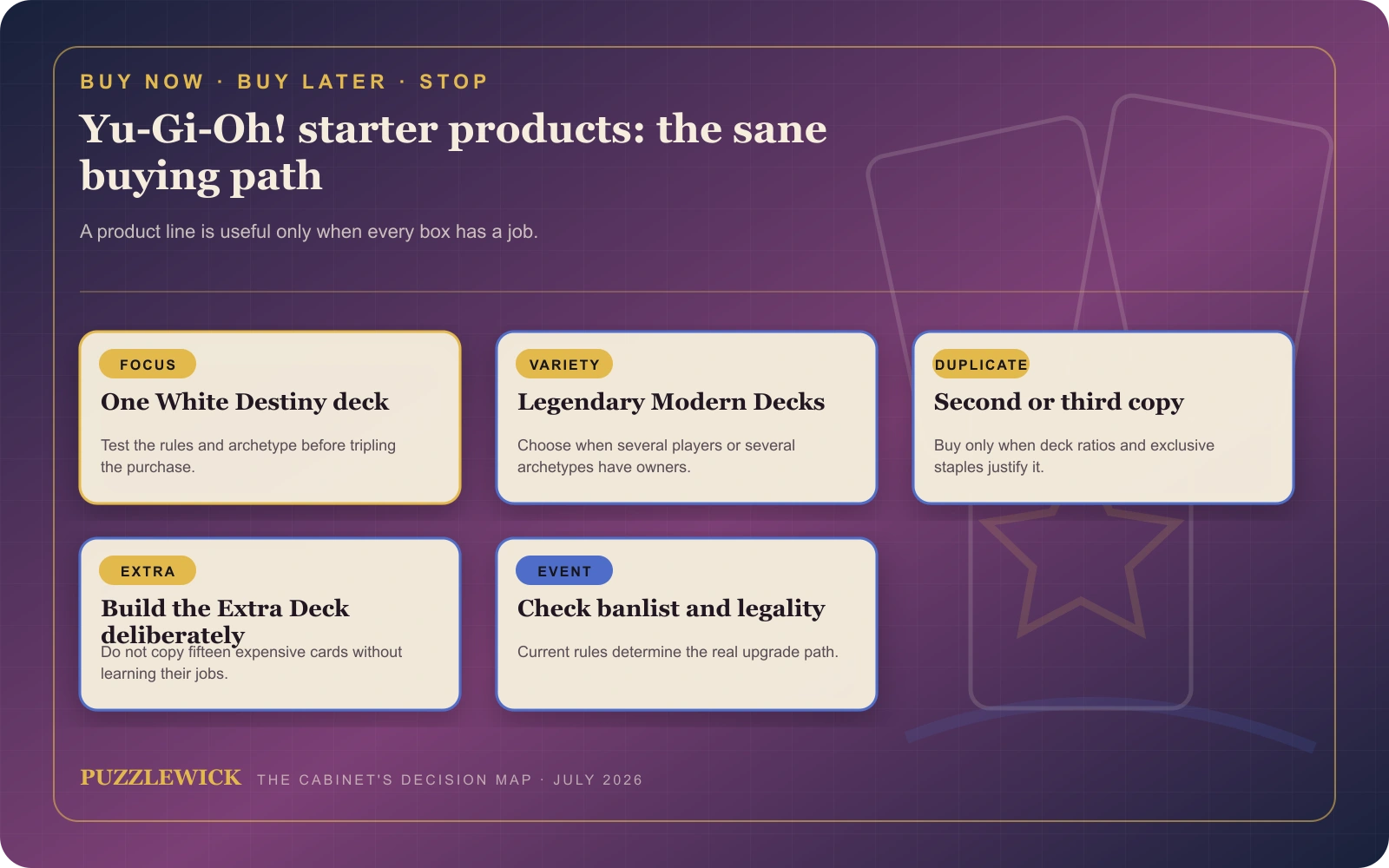
Decision map
Choose in thirty seconds
Test the rules and archetype before tripling the purchase.
Choose when several players or several archetypes have owners.
Buy only when deck ratios and exclusive staples justify it.
Do not copy fifteen expensive cards without learning their jobs.
Yu-Gi-Oh! starter products can look like one obvious shelf until product codes, formats, standalone boxes, expansions, and deluxe treatments begin competing for the same budget. This guide starts where the table starts: the learner sets zones, reads every card, practices one opening line, resolves a chain correctly, and learns when a turn is actually over.
The cabinet’s test is whether search chains, graveyard setup, negation windows, extra-deck lines, and explosive turns reward rehearsal more than nostalgia alone. We sort the verified products by that experience, then show the setup, strategy, warnings, and stopping point that keep a promising first purchase from becoming an expensive pile.
Start here, then go deeper
You are in the right cabinet.
 ✧ Universe HubAnime & New-Wave TCGs: the whole buying pathBeyond Magic and Pokémon, a new wave of trading card games has gone mainstream — One Piece, Yu-Gi-Oh!, Dragon Ball, Digimon, Weiss...
 🂠 Topic PathTrading Card Games: compare the whole shelfStart with the game and community you want, then buy the smallest product that lets you test it properly. These guides separate...
 ComparisonYu-Gi-Oh! Genesys vs Advanced Format 2026: Which Ruleset Should You Learn?Genesys removes Link and Pendulum mechanics and prices selected cards into a shared point cap. Advanced keeps the current card game,...
The short answer: which yu-gi-oh! starter products should you buy?


Buy Blue-Eyes White Destiny when one player wants to learn one recognizable archetype and upgrade it deliberately. Buy Legendary Modern Decks when a household wants three decks, shared staples, and a broader tasting menu. The Blue-Eyes box is the better focused curriculum; the three-deck box is the better variety purchase.
The verified purchase path is Yu-Gi-Oh! Legendary Modern Decks 2026 on Amazon, Yu-Gi-Oh! Structure Deck: Blue-Eyes White Destiny on Amazon. The first box should let the learner sets zones, reads every card, practices one opening line, resolves a chain correctly, and learns when a turn is actually over; every later box must solve a limitation that appeared during real play.
For Yu-Gi-Oh! starter products, the useful question is not “which carton is largest?” It is whether the product supports the players, learning curve, session length, and signature decision you actually want to repeat.
What does playing Yu-Gi-Oh! starter products actually feel like?
Yu-Gi-Oh! is a fast combo game built around summoning lines, card advantage, interaction during the opponent’s turn, and an Extra Deck that can function like a toolbox.
A focused structure deck teaches one engine repeatedly. A multi-deck product teaches contrast: how different archetypes search, extend, recover, and build disruption.
Blue-Eyes combines iconic monsters with modern support, but the learning value comes from understanding what each starter, extender, and payoff contributes—not from summoning the largest dragon as soon as possible.
The lasting hook is that search chains, graveyard setup, negation windows, extra-deck lines, and explosive turns reward rehearsal more than nostalgia alone. The game comes alive when a learner stops following a phase chart and makes a choice the rest of the table must respect.
How should the first box be assembled, staged, and taught?
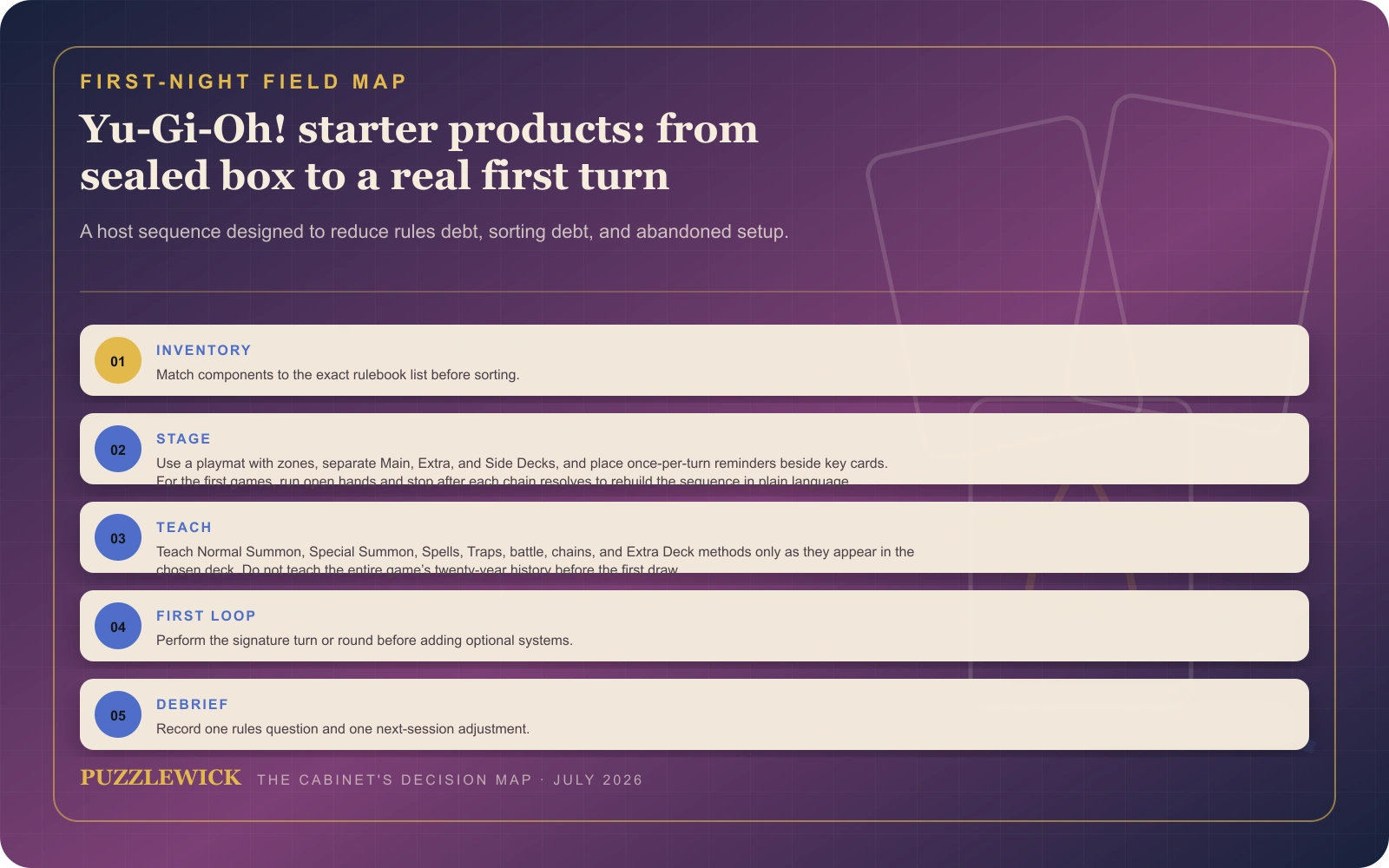

Setup: Use a playmat with zones, separate Main, Extra, and Side Decks, and place once-per-turn reminders beside key cards. For the first games, run open hands and stop after each chain resolves to rebuild the sequence in plain language.
Teaching plan: Teach Normal Summon, Special Summon, Spells, Traps, battle, chains, and Extra Deck methods only as they appear in the chosen deck. Do not teach the entire game’s twenty-year history before the first draw.
Before cleanup, photograph main and extra decks, monster and spell zones, field zone, graveyard, banishment, life totals, and the first search chain. That becomes the group’s honest reset reference and makes the second session faster without adding another accessory.
What do players compare it to, and where does the comparison break?
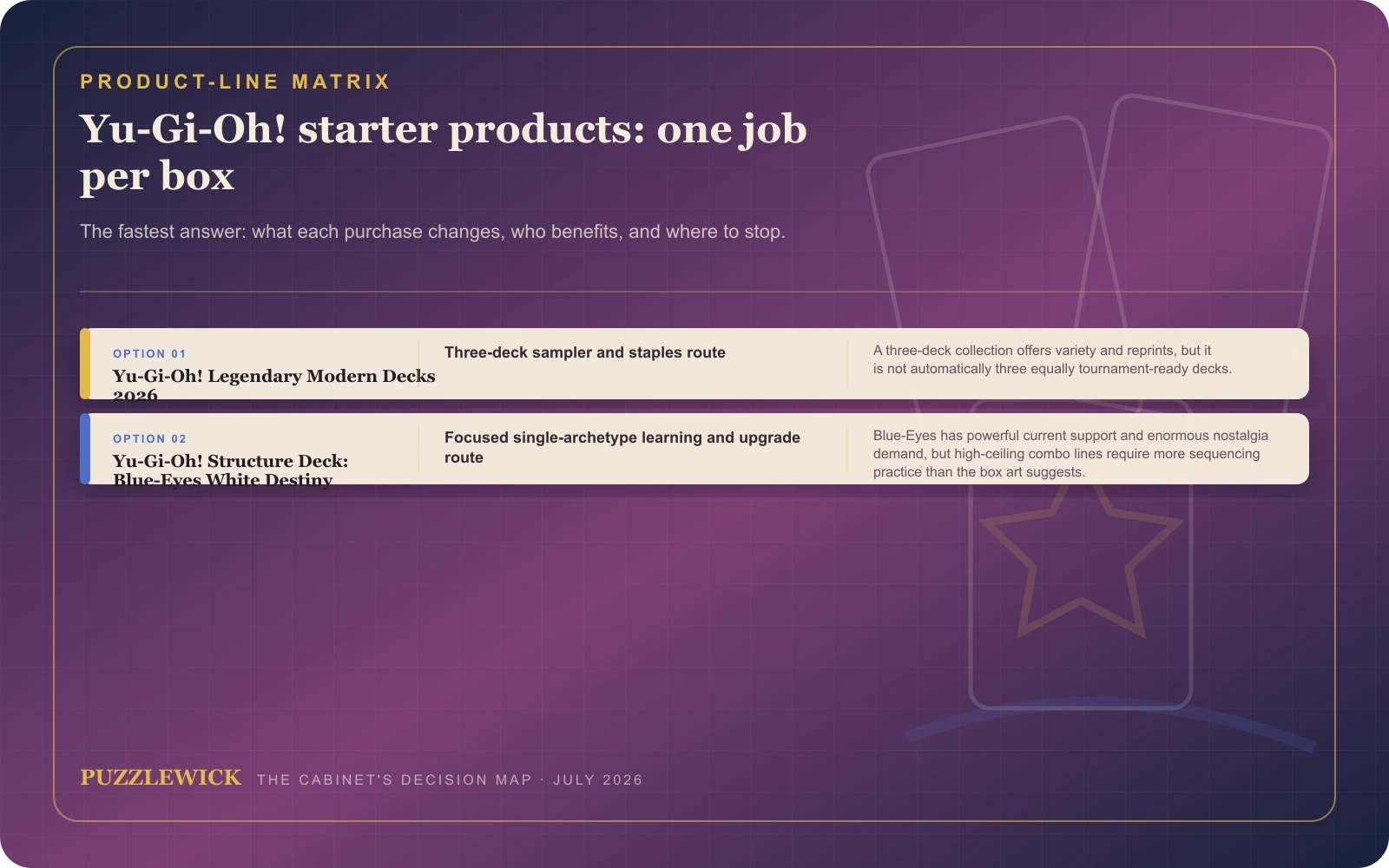
Legendary Modern Decks is a sampler; White Destiny is a focused workshop. Pokémon Battle Academy provides a scripted lesson. Yu-Gi-Oh! asks for more card-text literacy but rewards players who enjoy discovering compact engines and precise interaction windows.
The strongest BGG and forum comparisons keep returning to number of playable decks, archetype focus, staple density, combo length, extra-deck completeness, and the upgrade cost hidden behind a familiar character. Those practical differences outlast launch-week declarations that one box simply “wins.”
Read the matrix as a table-fit tool for Yu-Gi-Oh! starter products: theme earns the first play, while repeatable pacing and a tolerable host load earn permanent shelf space.
What should you buy first, second, and not yet?
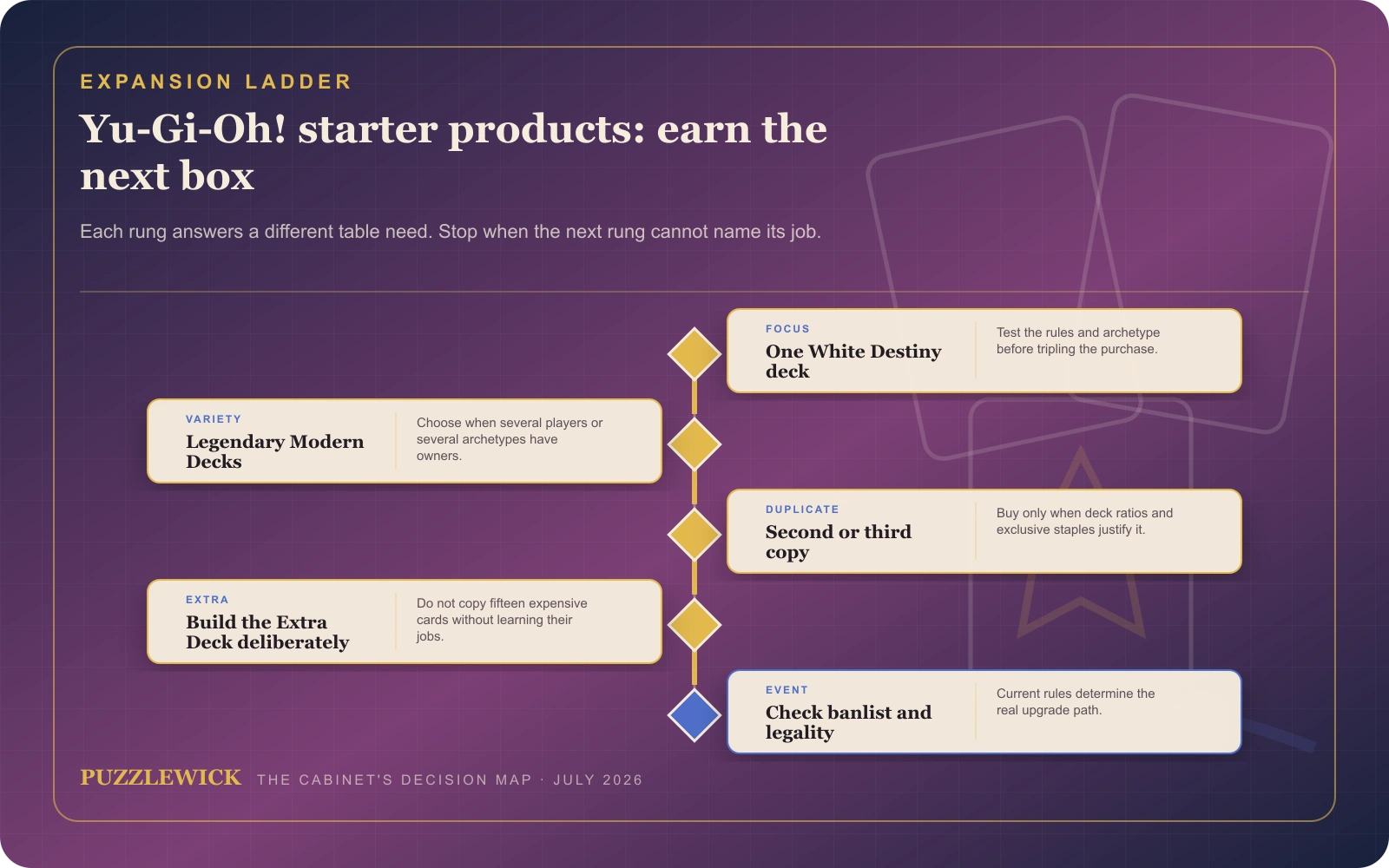

FOCUS · One White Destiny deck: Test the rules and archetype before tripling the purchase.
VARIETY · Legendary Modern Decks: Choose when several players or several archetypes have owners.
DUPLICATE · Second or third copy: Buy only when deck ratios and exclusive staples justify it.
EXTRA · Build the Extra Deck deliberately: Do not copy fifteen expensive cards without learning their jobs.
EVENT · Check banlist and legality: Current rules determine the real upgrade path.
The stopping rule matters. Blue-Eyes has powerful current support and enormous nostalgia demand, but high-ceiling combo lines require more sequencing practice than the box art suggests. Yu-Gi-Oh! product names are frequently reused across years; exact release, language, and deck title matter.
An Amazon page proves that a listing exists; it does not prove that the item belongs in this buying order. For Yu-Gi-Oh! starter products, edition, language, seller, included contents, and exact product code still outrank a convenient checkout button.
Beginner, regular, advanced, and expert strategy
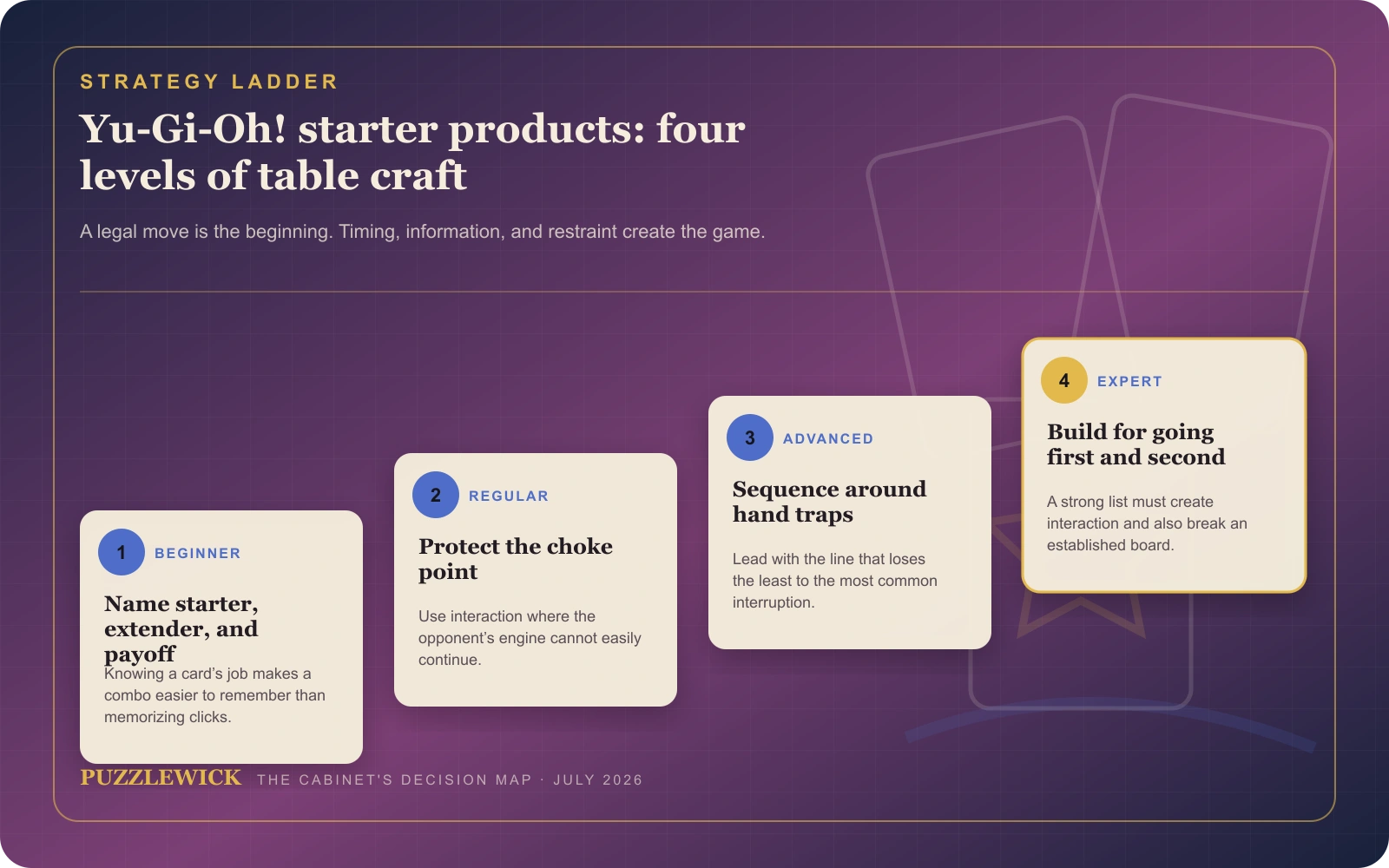
Beginner — Name starter, extender, and payoff. Knowing a card’s job makes a combo easier to remember than memorizing clicks.
Regular — Protect the choke point. Use interaction where the opponent’s engine cannot easily continue.
Advanced — Sequence around hand traps. Lead with the line that loses the least to the most common interruption.
Expert — Build for going first and second. A strong list must create interaction and also break an established board.
Debrief the first interrupted combo line. Name the decision that created it and the rule or timing window that remained muddy. Five focused minutes will improve the next session more than buying novelty to cover an unresolved teach.
This ladder cross-checks the official rules structure against recurring owner questions about number of playable decks, archetype focus, staple density, combo length, extra-deck completeness, and the upgrade cost hidden behind a familiar character.
What is the real table, hosting, and solo commitment?
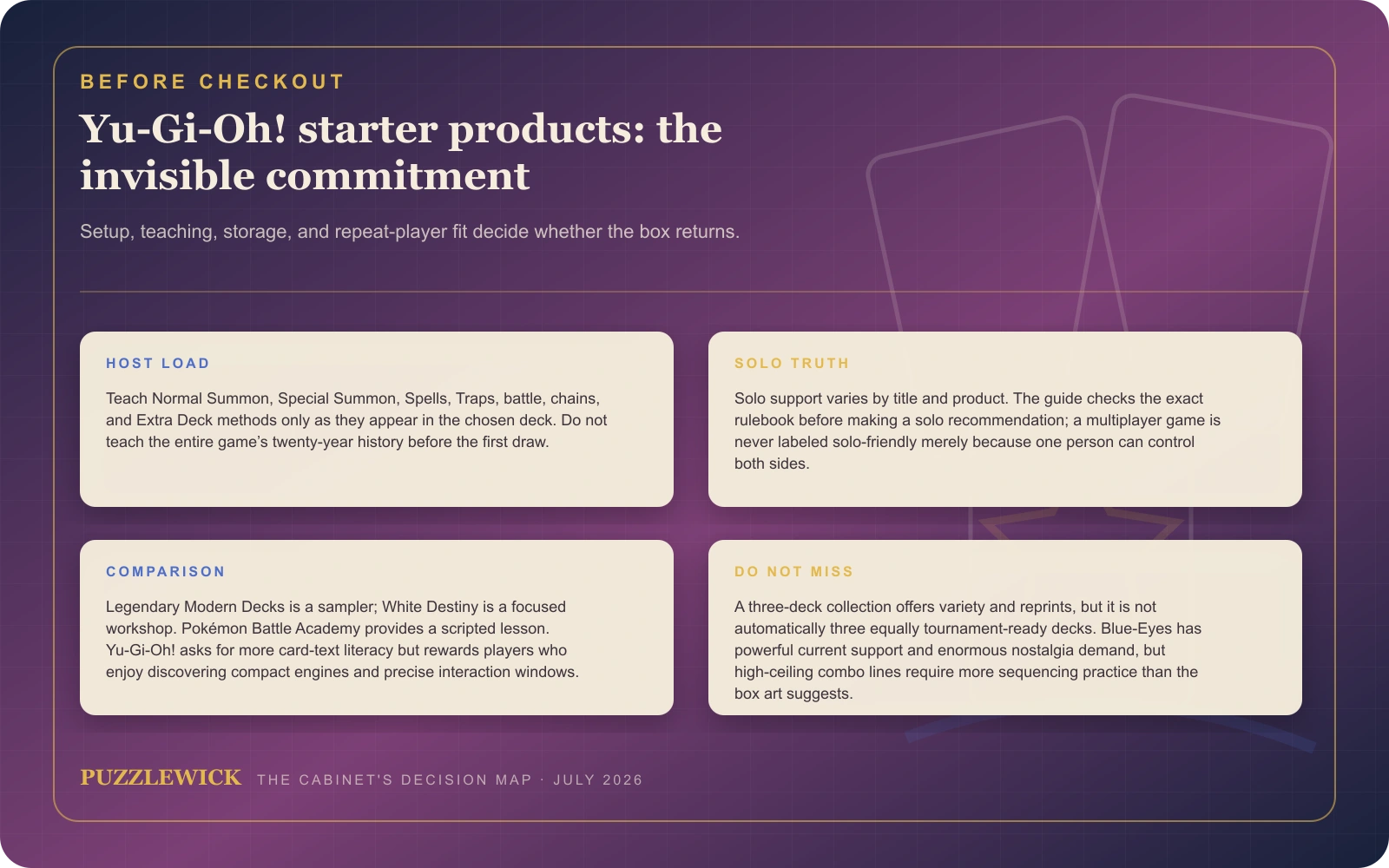

Hosting: Teach Normal Summon, Special Summon, Spells, Traps, battle, chains, and Extra Deck methods only as they appear in the chosen deck. Do not teach the entire game’s twenty-year history before the first draw.
Solo: Yu-Gi-Oh is an opposing-player game. Solo combo rehearsal is valuable, especially for search and summon order, but it cannot test disruption, chain timing, or recovery after interaction.
The invisible budget is sleeves, tokens or dice, current legality, extra-deck cards, combo notes, matchup vocabulary, and the patience to goldfish before entering locals. That workload predicts whether Yu-Gi-Oh! starter products returns to the table more reliably than the excitement of opening it.
What do lower-star reviews and long-term owners warn about?

The durable warnings are fit warnings. A three-deck collection offers variety and reprints, but it is not automatically three equally tournament-ready decks. Blue-Eyes has powerful current support and enormous nostalgia demand, but high-ceiling combo lines require more sequencing practice than the box art suggests. Yu-Gi-Oh! product names are frequently reused across years; exact release, language, and deck title matter.
The Amazon reviews worth weighing are the recurring complaints — packaging, components, complexity, and mismatched expectations. Star averages drift and listings merge, so the repeated problem is the signal, not a moving decimal.
A credible warning predicts who will regret the purchase and why. A complaint that merely describes the game doing exactly what it is designed to do is not a defect; it is evidence for the “who should skip it” verdict.
Common misconceptions, corrected before checkout
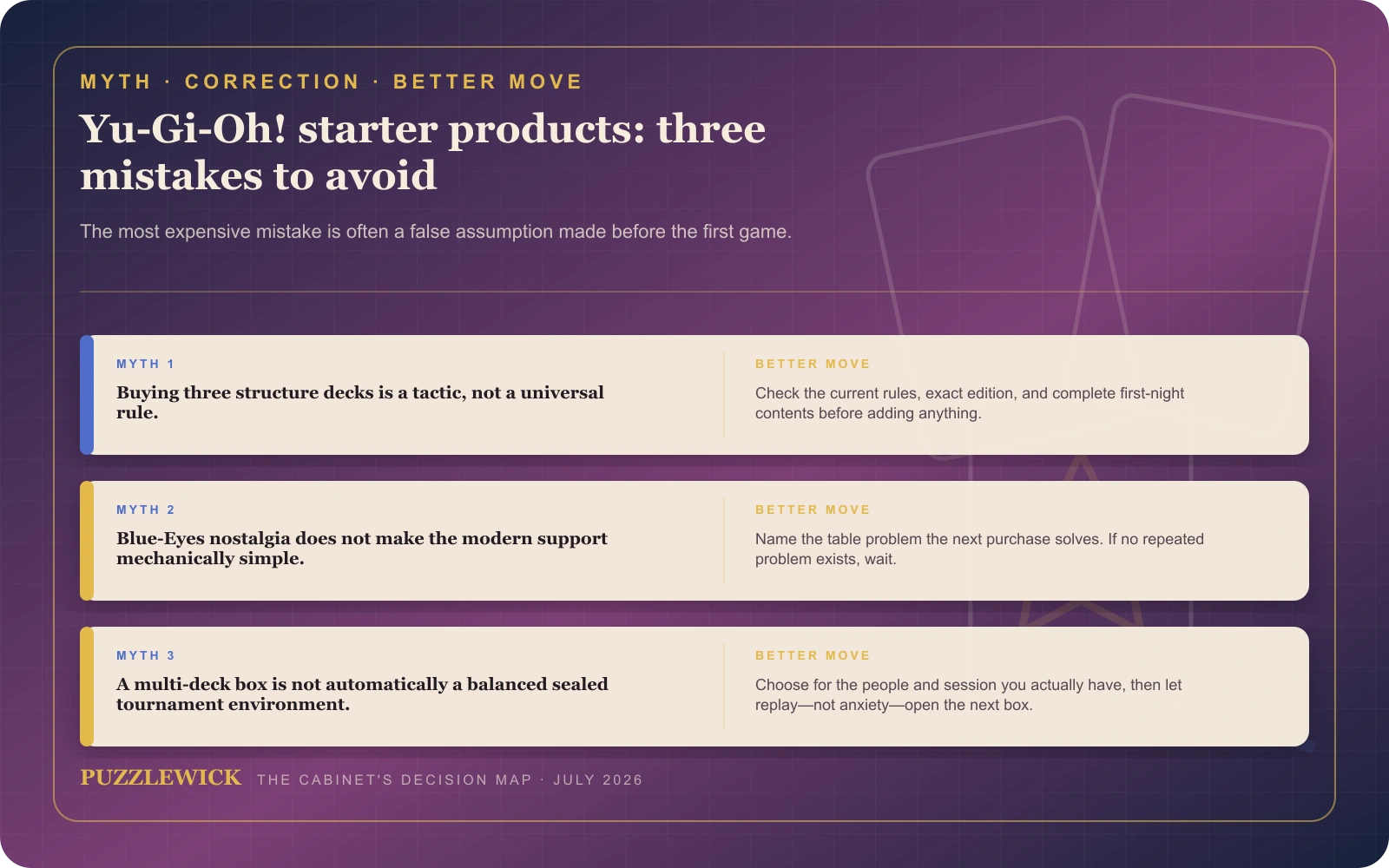
- Buying three structure decks is a tactic, not a universal rule.
- Blue-Eyes nostalgia does not make the modern support mechanically simple.
- A multi-deck box is not automatically a balanced sealed tournament environment.
Everything above was checked July 29, 2026. Product identities and availability can move.
The Puzzlewick shelf plan for Yu-Gi-Oh! starter products
White Destiny wins for one learner with a Blue-Eyes attachment and patience for combo sequencing. Legendary Modern Decks wins for two or more players who want multiple archetypes to explore. Neither should be judged only by sealed-deck power: check included staples, intended upgrades, and whether three copies are truly useful.
Before you add anything else, name the repeated table problem it fixes. If the answer is still “more stuff,” stop with the first verified box.
Current verified Amazon options: Yu-Gi-Oh! Legendary Modern Decks 2026 on Amazon, Yu-Gi-Oh! Structure Deck: Blue-Eyes White Destiny on Amazon.
The picks
Some links below are affiliate links — as an Amazon Associate, Puzzlewick earns from qualifying purchases, at no extra cost to you. It never changes a pick.
 2 photos
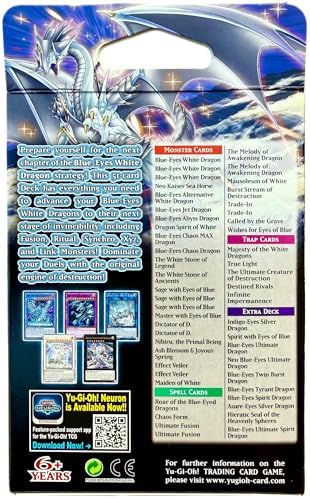
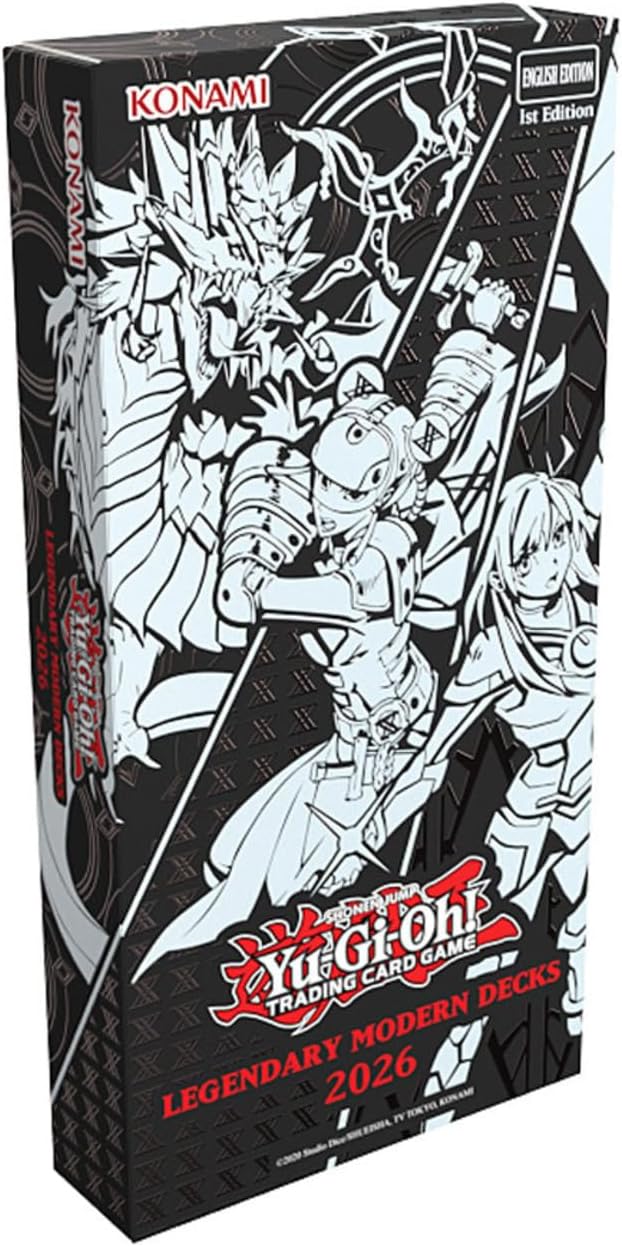
 Yu-Gi-Oh! Legendary Modern Decks 2026
Three-deck sampler and staples route. Listing and edition verified July 29, 2026.
- Verified listing — the exact product, not a lookalike
- Has a clear job in the buying order
- Checked against the official rules and product pages
- Stock and seller can change without notice
- Not every table needs this one



 10 photos
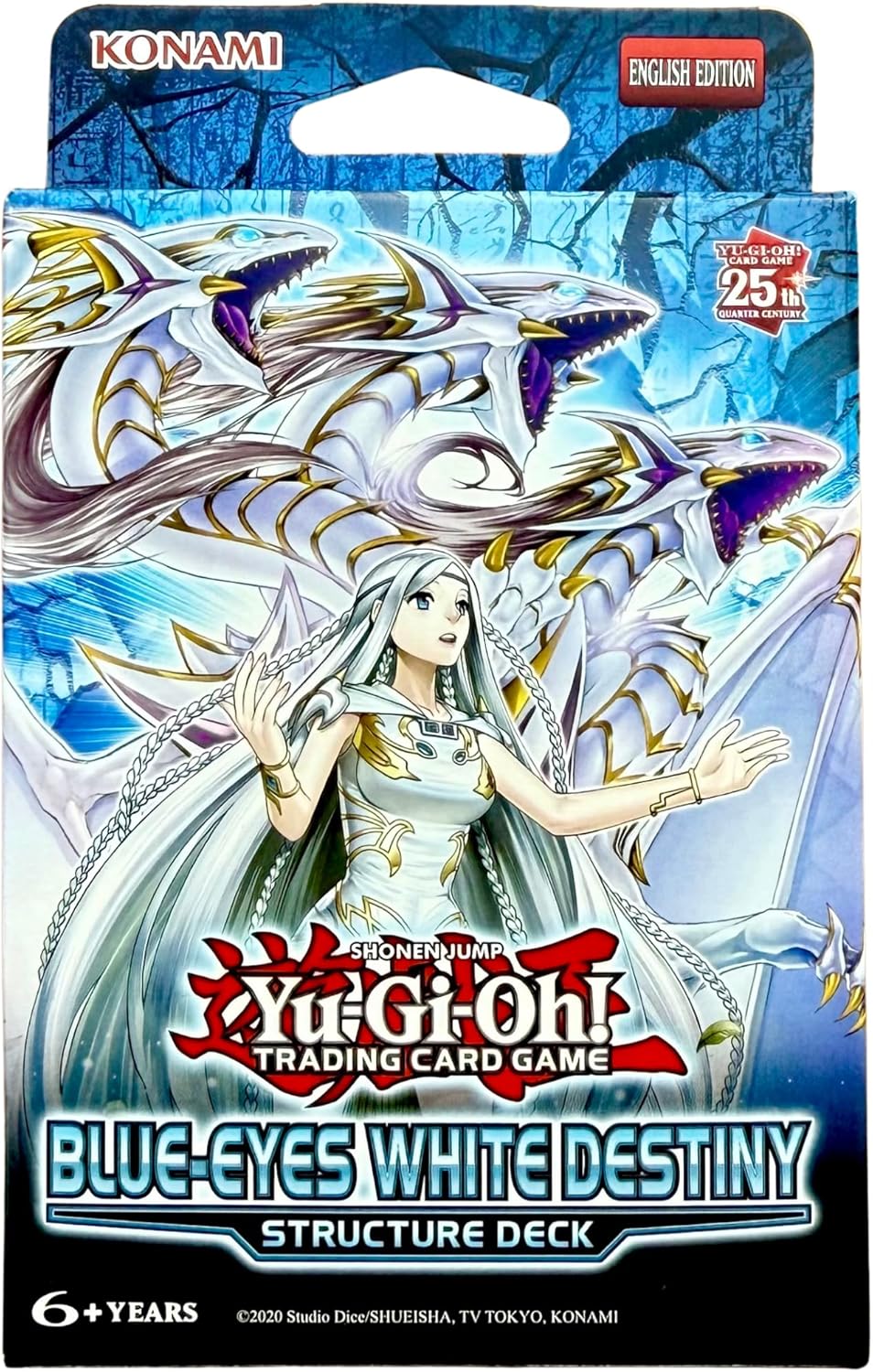
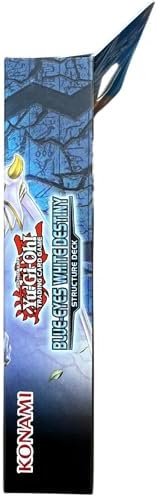
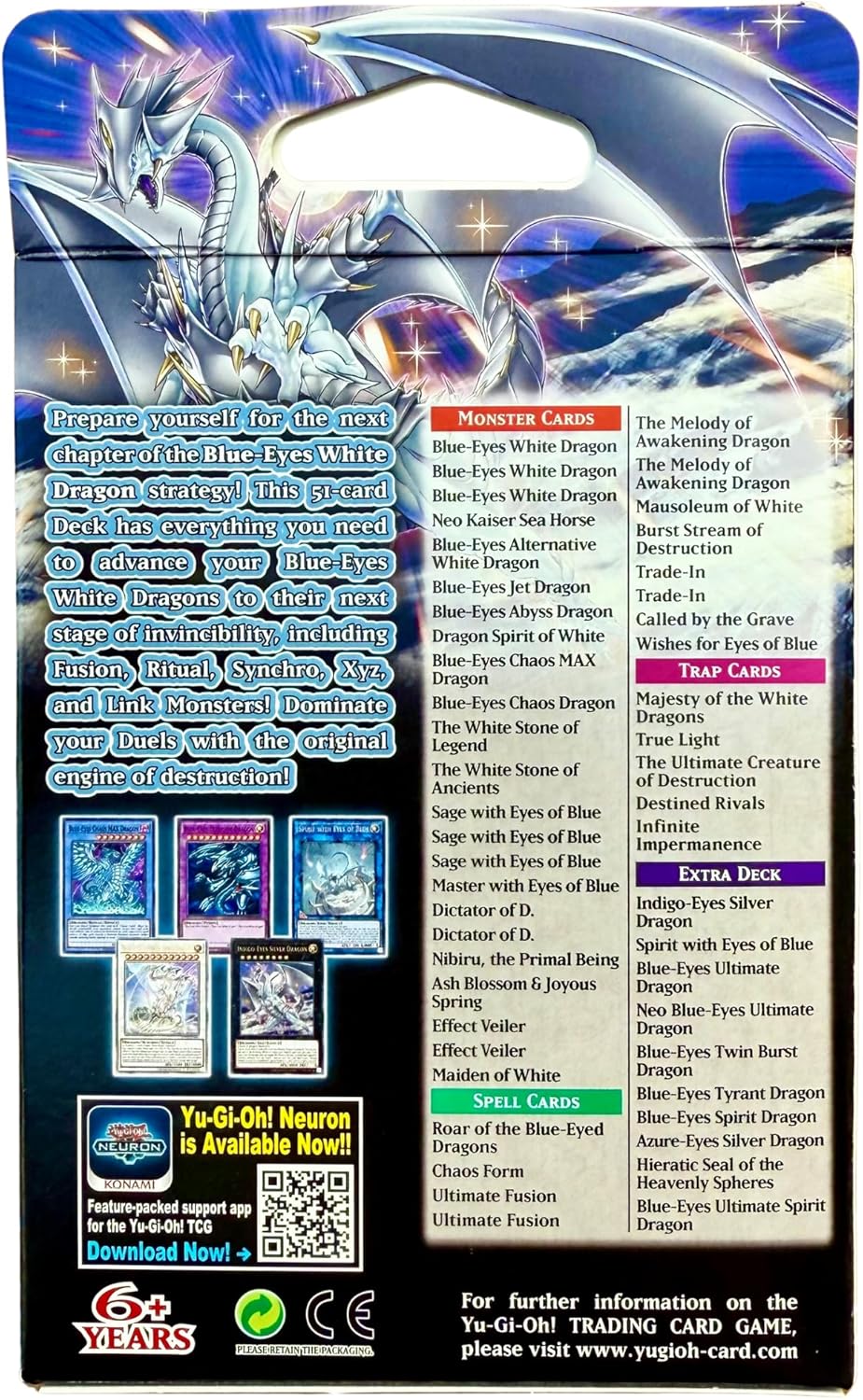
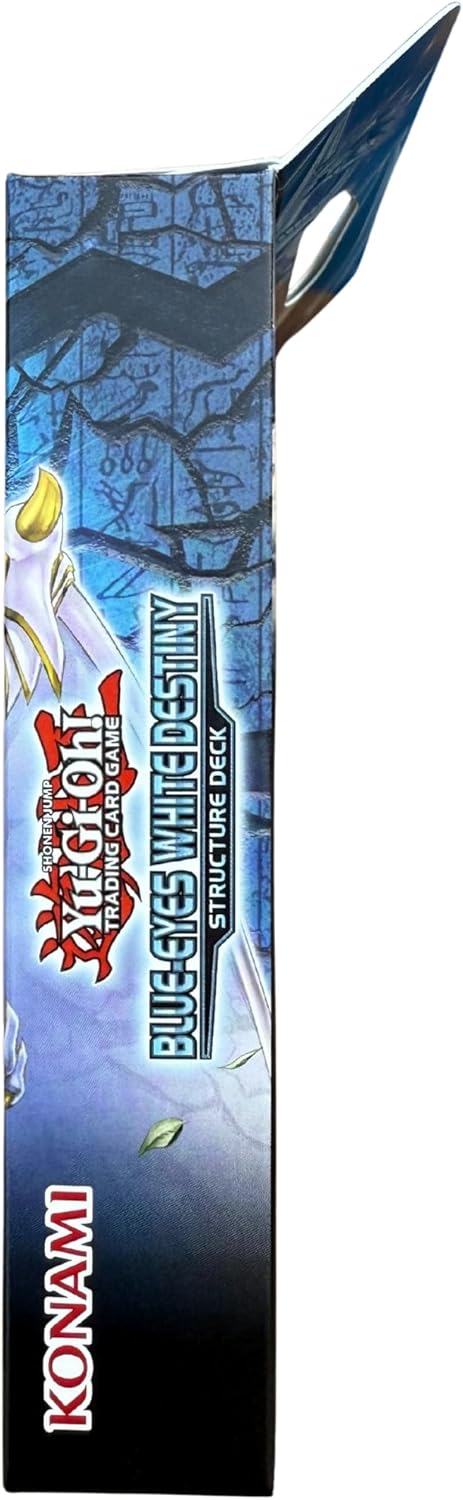
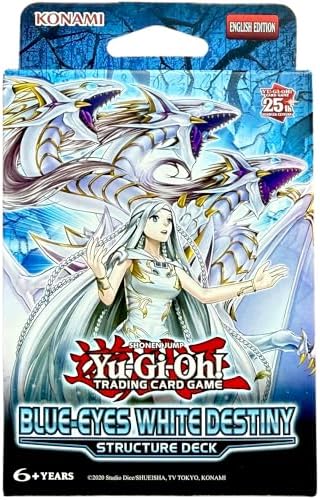
 Yu-Gi-Oh! Structure Deck: Blue-Eyes White Destiny
Focused single-archetype learning and upgrade route. Listing and edition verified July 29, 2026.
- Verified listing — the exact product, not a lookalike
- Has a clear job in the buying order
- Checked against the official rules and product pages
- Stock and seller can change without notice
- Not every table needs this one
At a glance
| Stage | Product | Buy when | Curator ruling |
|---|---|---|---|
| FOCUS | One White Destiny deck | Test the rules and archetype before tripling the purchase. | Start here |
| VARIETY | Legendary Modern Decks | Choose when several players or several archetypes have owners. | Only after repeat play |
| DUPLICATE | Second or third copy | Buy only when deck ratios and exclusive staples justify it. | Only after repeat play |
| EXTRA | Build the Extra Deck deliberately | Do not copy fifteen expensive cards without learning their jobs. | Specialist / later |
Questions, answered
Which is better for beginners, Legendary Modern Decks or White Destiny?
White Destiny is the better focused curriculum; Legendary Modern Decks is better for variety and multiple learners.
Do I need three copies of White Destiny?
Not before testing the archetype and checking which exclusive cards need higher counts.
Are Legendary Modern Decks tournament ready?
Treat them as structured starting points and staple sources, not guaranteed finished tournament lists.
Is Blue-Eyes easy to play?
The theme is familiar, but modern lines can be sequencing-heavy.
Do I need an Extra Deck?
Yes for many modern strategies, including their strongest lines; build it by card job rather than price alone.
What should I check before buying?
Verify the exact 2026 English product title and current legality rather than relying on reused branding.
Kenji's verdict
White Destiny wins for one learner with a Blue-Eyes attachment and patience for combo sequencing. Legendary Modern Decks wins for two or more players who want multiple archetypes to explore. Neither should be judged only by sealed-deck power: check included staples, intended upgrades, and whether three copies are truly useful.
Research ledger 9 sources · reviewed 2026-07-29
Specifications, rules, current product information, community experience, and contrary evidence were checked against the sources below. Commercial links are kept separate from editorial evidence.
- Official Legendary Modern Decks product pageyugioh-card.com/en/products/l26d
- Official Blue-Eyes White Destiny product pageyugioh-card.com/en/products/sdwd
- Official Yu-Gi-Oh! rulebookyugioh-card.com/en/rulebook
- Current comparable-deck discussionreddit.com/r/Yugioh101/comments/1uz6qou/other_decks_on_the_powerlevel_of_the_legendary
- Yu-Gi-Oh! beginner communityreddit.com/r/Yugioh101
- Yu-Gi-Oh! product and event newsyugioh-card.com/en/news
- BoardGameGeek title and discussion index: Yu-Gi-Oh! starter productsboardgamegeek.com/geeksearch.php?action=search&objecttype=boardgame&q=Yu-Gi-Oh!%20starter%20products
- Exact Amazon product identity: Yu-Gi-Oh! Legendary Modern Decks 2026amazon.com/dp/B0GNLCPZZ9?tag=puzzlewick-20
- Exact Amazon product identity: Yu-Gi-Oh! Structure Deck: Blue-Eyes White Destinyamazon.com/dp/B0GMT2FWTJ?tag=puzzlewick-20

Every object has a lineage. Let me tell you its story.


Keep exploring
The next smart rabbit holes.
✧ Universe HubAnime & New-Wave TCGs: the whole buying pathBeyond Magic and Pokémon, a new wave of trading card games has gone mainstream — One Piece, Yu-Gi-Oh!, Dragon Ball, Digimon, Weiss...🂠 Topic PathTrading Card Games: compare the whole shelfStart with the game and community you want, then buy the smallest product that lets you test it properly. These guides separate...ComparisonYu-Gi-Oh! Genesys vs Advanced Format 2026: Which Ruleset Should You Learn?Genesys removes Link and Pendulum mechanics and prices selected cards into a shared point cap. Advanced keeps the current card game,...