Robert builds the team before the mythos phase
Arkham Investigator Deck Starter Matrix
Choose a role, player count, and appetite for complexity to find a legal first-deck skeleton and a team shape that can actually collect clues, manage enemies, and survive treacheries.
 KeeperThe Keeper
 Answer first
What this tool solves before the table opens.
Choose a role, player count, and appetite for complexity to find a legal first-deck skeleton and a team shape that can actually collect clues, manage enemies, and survive treacheries.
Give every deck one clear job Start with a fighter, clue specialist, flex investigator, or support deck and make the opening hand serve that job.
A table-ready recommendation with the next action and the trap to avoid
Fantasy Flight: Chapter Two rulebook and deckbuilding reference remains the current authority.
Do this now · about two minutes
Turn “I need a deck” into a legal build process, an opening-hand plan, and a team job your investigator can actually perform.
Start the tool- 1
Choose the job you want at the table.
- 2
Tell Robert the investigator count.
- 3
Choose simple, combo-ready, or tuning-heavy construction.
You will leave with
A role-specific deck skeleton, partner advice, mulligan target, and a five-step legality check.Show me an example
Two-player clue specialist + low complexity becomes: repeatable investigation, one emergency enemy exit, simple economy, and a partner who can engage and defeat enemies.
Make the call
Tell Keeper what is actually on your table.
Keeper's current recommendation
Enemy plan first
Include reliable weapons or damage events, ways to find them, and enough economy to play them early. A fighter without an opening weapon is a passenger.
- Plan for one enemy answer in the opening hand
- Keep backup damage for Retaliate or Aloof problems
- In two-player teams, pair with a clue specialist
Need more precision?
Start simple. Add detail only when the table needs it.
The tool above already gives a usable answer. These modes add campaign, serious-table, or expert checks without erasing your work.
Fast, legal, playable
Give every deck one clear job
Start with a fighter, clue specialist, flex investigator, or support deck and make the opening hand serve that job.
- Verify deckbuilding text
- Include setup assets and economy
- Name the mulligan target
Ready when
Every investigator has a legal deck, a named table job, an opening-hand plan, and at least one answer outside that specialty.What this tool assumes
Deck size, signatures, weaknesses, class access, exceptional limits, and environment legality always defer to the investigator card and current Grimoire.Keeper's table briefing
The tool has a point of view. The rules still get the final word.
“A deck is ready when its first three turns know what job they came to do.”
Keeper is the fictional cabinet voice presenting this desk. Robert Pruitt owns the research, source review, and editorial judgment; the linked publisher material remains authoritative.


Physical table kit
The exact products this desk is talking about.
Real product photographs and exact retailer pages from the related Puzzlewick buying guides. Products are optional unless the tool explicitly identifies a required foundation.
Puzzlewick may earn from qualifying purchases, including as an Amazon Associate, at no extra cost to you. Prices and availability change at checkout.
 01 · Direct product
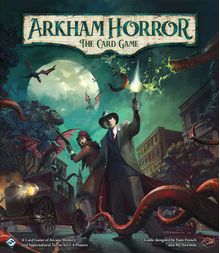
 Arkham Horror: The Card Game Revised Core Set
Buy one coherent core, run the included decks, and let the first campaign tell you which job your collection cannot yet perform.
View exact product on Amazon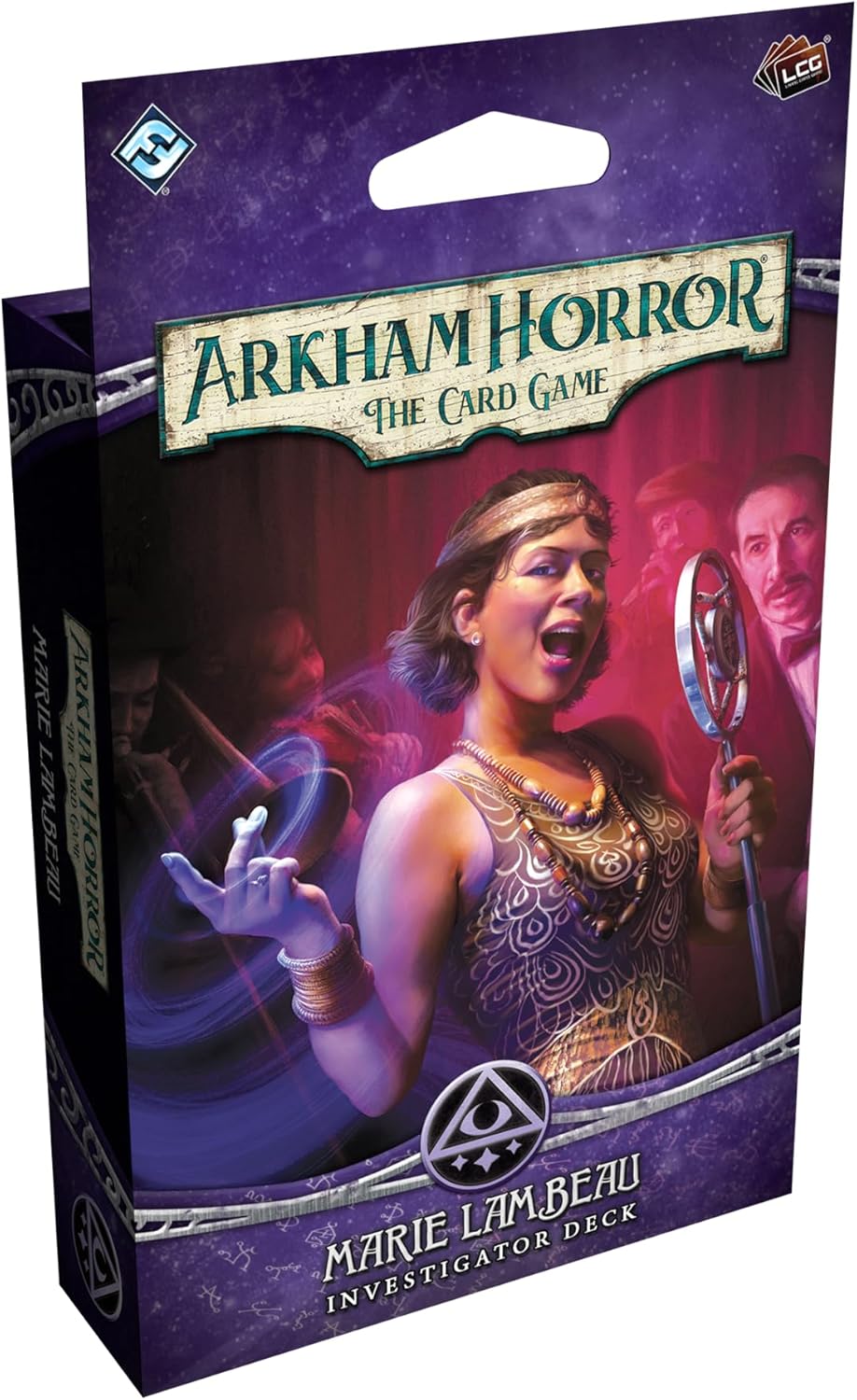 02 · Direct product
 Marie Lambeau Investigator Deck
Card filtering, clue tempo, spell flexibility
View exact product on Amazon 03 · Direct product
 André Patel Investigator Deck
Extra-action engine and broad problem solving
View exact product on AmazonPuzzlewick field cards
The useful part belongs beside the board.
The fighter
Enemy plan first
Include reliable weapons or damage events, ways to find them, and enough economy to play them early. A fighter without an opening weapon is a passenger.
- Plan for one enemy answer in the opening hand
- Keep backup damage for Retaliate or Aloof problems
- In two-player teams, pair with a clue specialist
The cluever
Beat shroud efficiently
A clue deck needs repeatable investigation plus burst clues for high-shroud or action-starved turns. Movement and economy matter because clues are distributed across the map.
- Build for intellect or testless clues
- Bring one emergency enemy escape
- Pair with a fighter at two players
The flex
Cover both pillars without drawing halves
Flex decks are strongest when individual cards solve more than one problem. Avoid ten fight cards and ten clue cards that leave the wrong half in hand.
- Favor adaptable icons and multi-use assets
- True solo needs both enemy and clue velocity
- Mulligan for setup, not a perfect future combo
The support
Make another deck measurably better
Support is a role only when it changes tests, actions, survival, cards, or resources. Bring a fallback contribution when the table does not need rescue.
- Name the teammate your cards accelerate
- Do not replace your own economy with generosity
- At three or four, role specialization becomes safer
Keep the useful version
Print it, download it, or send it to the table.
The downloaded field note includes your selections and checklist state. Private notes stay in this browser unless you download them.
Fast rulings before the table
Common questions, answered without the forum fog.
What does every first Arkham deck need?
A legal investigator-specific deck, an economy plan, opening assets, a named table job, and at least one emergency answer outside that specialty.
Is a starter deck tournament legal?
Legality depends on the current environment and card pool, not the words starter deck. Check the current Arkham Grimoire and investigator deckbuilding text.
Is the Investigator Deck Matrix an official publisher tool?
No. It is an independent Puzzlewick planning aid checked against Fantasy Flight: Chapter Two rulebook and deckbuilding reference. When the tool and current publisher material differ, the publisher rulebook, FAQ, errata, or event packet controls.
How current is the Investigator Deck Matrix?
Its evidence date is 2026-08-18. Recheck the linked current authority after a new edition, FAQ, points update, rotation, app update, or event packet.