Earthborne Rangers Buyer's Guide (2026): Which Box First, Which Expansions Matter, and Where It Is Actually Sold
Come in — the valley is the softest hard game on the shelf, and it cannot be lost. Here is the one box to start with, the two expansions owners actually keep, and the reason the shops all look empty when they are not.

AI-assisted curator persona · research and editorial responsibility: Robert Pruitt · how this guide was made
Last editorial refresh: 2026-08-02 Gold-standard QA: 2026-08-02 16 sources reviewed Affiliate links checked during gold-standard pass

The short answer
Start with the Core Set (Second Printing), on its own. It is $100 at Covenant, the shop Earthborne Games names as its exclusive US and Canada partner, or £85 at Naylor Games for the UK and EU. Inside: 540 cards, 92 punchboard tokens, and the complete Lure of the Valley campaign — fifteen to twenty-five in-game days, twenty to forty hours. The click moment comes on Day 6. Not sooner. The first days you are learning where the paths go; by the sixth you know whether wandering, noticing and tending is the evening you want. That is the moment to decide about anything else — because Earthborne Rangers has no lose condition at all, and that is either the best thing about it or the reason it is not for you. When you are ready for more, the owners have already voted: 28.3% add Legacy of the Ancestors, 25.6% add Stewards of the Valley, and then attachment falls off a cliff to 7.3%, 6.4% and 3.2%. And if you own a first printing, your whole upgrade is a $5 card pack — please do not buy the hundred-dollar box twice.
Come in, leave your shoes by the door. I have tea on, and I want to show you the box I hand to people who tell me they are tired.
You slide the lid off an Earthborne Rangers Core Set and the first thing that reaches you is the smell — uncoated paper, warm and slightly sweet, because there is no plastic film anywhere in this box to seal it away from you. The cards have a faint tooth under your thumb, like good stationery. The tokens are punchboard, not plastic, and they come away from the sheet with a soft sound rather than a snap. Someone made a decision about all of that, and you can feel it before you have read a single rule.
Then you open the campaign guide and find a valley that has already healed. That is the premise, and it is why I keep pressing this game on people: it is set after the recovery. Nothing is ending. You are a ranger walking a landscape that is doing well, meeting beings who are mostly fine, tending small things. You cannot lose. There is no failure state, no elimination, nobody leaves the table feeling small.
There is a Japanese word I keep reaching for with this one — ma, the comfortable pause, the space between things that makes the things matter. Earthborne Rangers is a game built almost entirely out of ma.
So: which box, which expansions, and — because this game has one genuinely strange problem — where it is actually sold. Let me pour, and we will go through it.
Start here, then go deeper
You are in the right cabinet.
 ❧ Universe HubEarthborne Rangers: the whole buying pathEarthborne Rangers is a cooperative card game about walking through a healed wilderness, made in St. Paul on FSC paper with...✦ Topic PathBoard Game Buying Guides: compare the whole shelfStart with the decision, not the shelf. These guides compare the games, editions, expansions, player counts, and costs people...
 Guide10 Best Solo RPG Board Games in 2026: The Grail Ladder From Beginner to HardcoreA commitment-first ranking of premium campaign RPG board games, from a 45-minute first quest to the lifestyle boxes that can occupy a...
Where Earthborne Rangers actually lives (and why every shop says sold out)
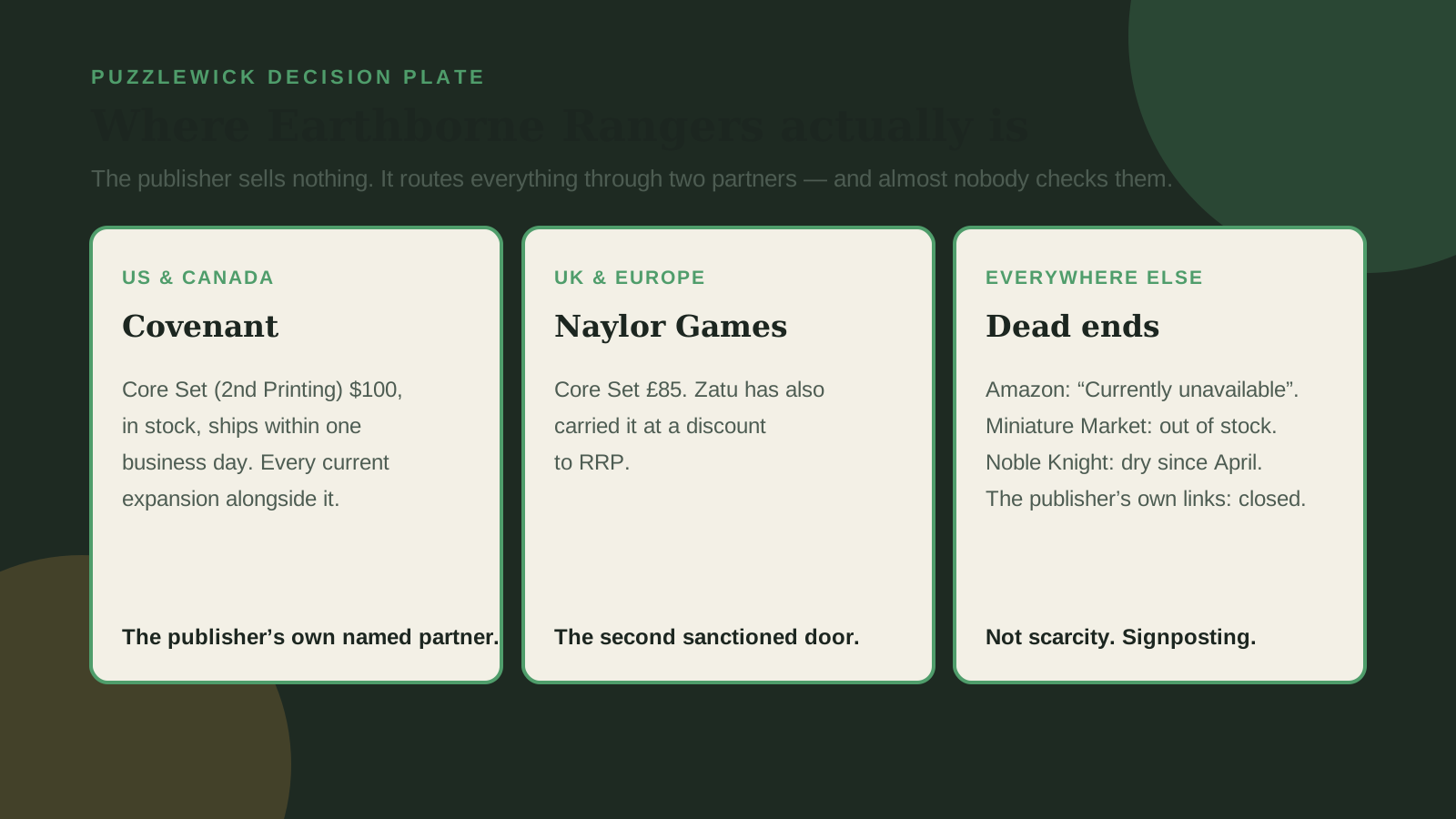
Earthborne Games is a small publisher in St. Paul, Minnesota, founded in 2020 by Andrew Navaro — previously head of studio at Fantasy Flight Games. They make one beautiful thing very carefully, and they have made an unusual distribution choice: they do not sell their own game.
Their website has no cart, no shop, and no prices anywhere in it. What it has is a set of doors. Covenant handles the US and Canada. Naylor Games handles the UK and Europe. There is also a partner for custom playmats, a Teemill shop for apparel, and a Bandcamp page for the soundtrack — which tells you something lovely about the kind of company this is, and nothing at all about where to buy the game.
Here is what a live read of Covenant showed: Core Set (Second Printing), $100, in stock, "Ships within 1 business day." Every current expansion in stock beside it. Naylor lists the core at £85. Zatu in the UK has had it in stock at a discount to RRP.
Meanwhile the Amazon listing (ASIN B0CNY46WJL) reads unavailable with no seller, Miniature Market shows SKU EBR001 out of stock, and Noble Knight has been dry since April. None of that is a shortage. It is a distribution model meeting a search habit, and losing.
One honest caution before you click. Two independent live reads of Naylor disagreed with each other on stock. Small publishers with two channels move quickly. Check the page yourself, and treat every figure here as a snapshot dated 2 August 2026 rather than a promise.
Is the Core Set enough on its own?
Yes, completely, and the community is unusually united about this.
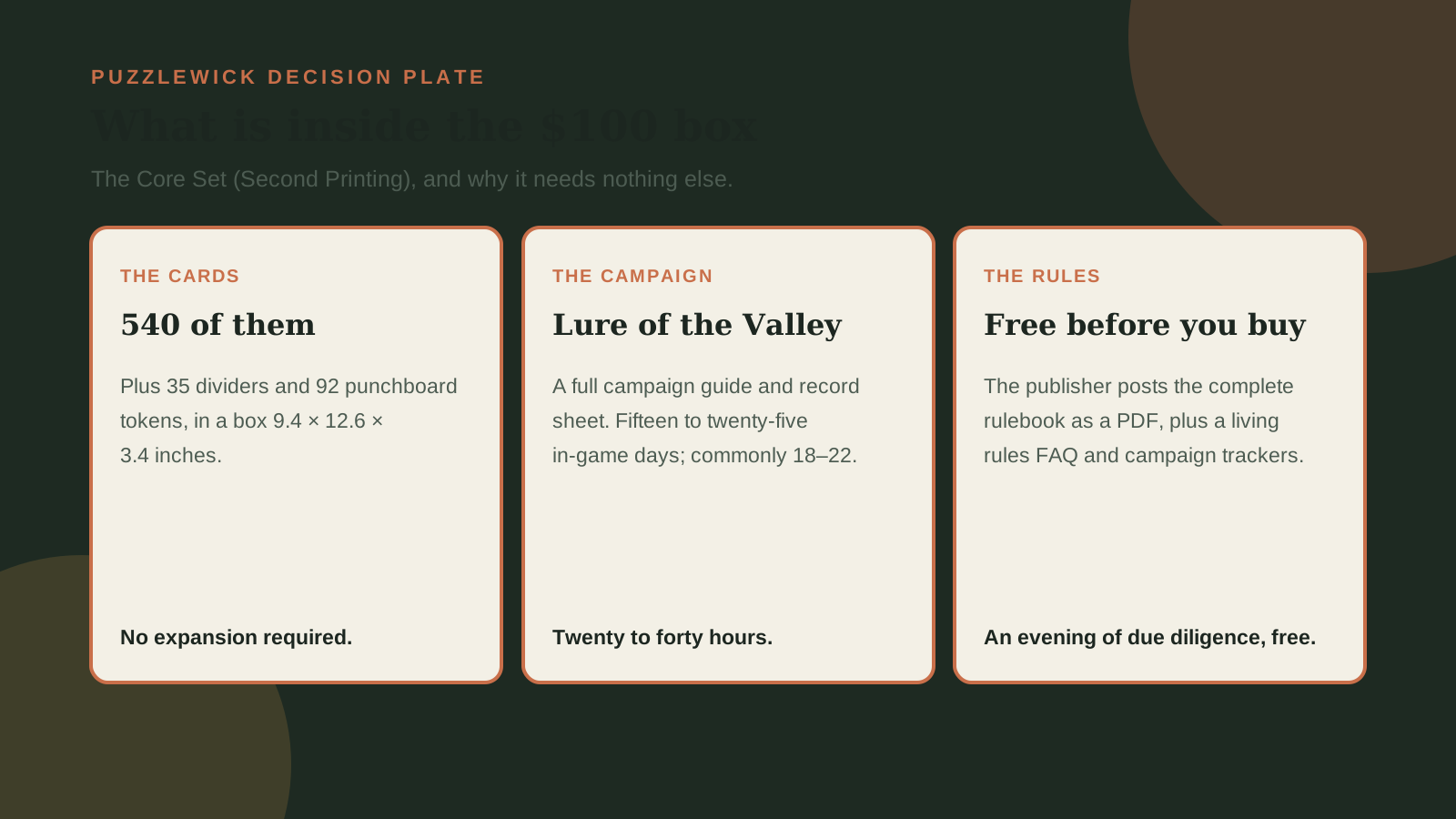
The Core Set (Second Printing) gives you 540 cards, 35 dividers, 92 punchboard tokens, the rulebook, and the Lure of the Valley campaign guide with its record sheet, in a box about 9.4 by 12.6 by 3.4 inches. That campaign runs fifteen to twenty-five in-game days — most people land between eighteen and twenty-two — which works out at roughly twenty to forty hours.
No expansion is required. The standard advice you will see repeated kindly and often is: play through Day 6 before you buy anything else. There is a good reason for that specific number. The first few days are you learning the valley's rhythm; by Day 6 you know whether the game's particular pleasure — wandering, noticing, tending, rather than winning — is a pleasure for you.
And that is the real question here, more than any expansion decision. Earthborne Rangers has no lose condition. You cannot fail it. If that sounds like a missing feature, this may not be your game. If it sounds like a relief, you are going to love it.
Before you buy, you can read the whole rulebook. Earthborne publishes the complete Core Set rulebook as a free PDF, and maintains a living rules FAQ plus a downloads page with campaign trackers and an interactive character sheet. For a hundred-dollar box, an evening with the actual rules is the best due diligence available — and it is free.
Which of the six expansions do owners actually buy?
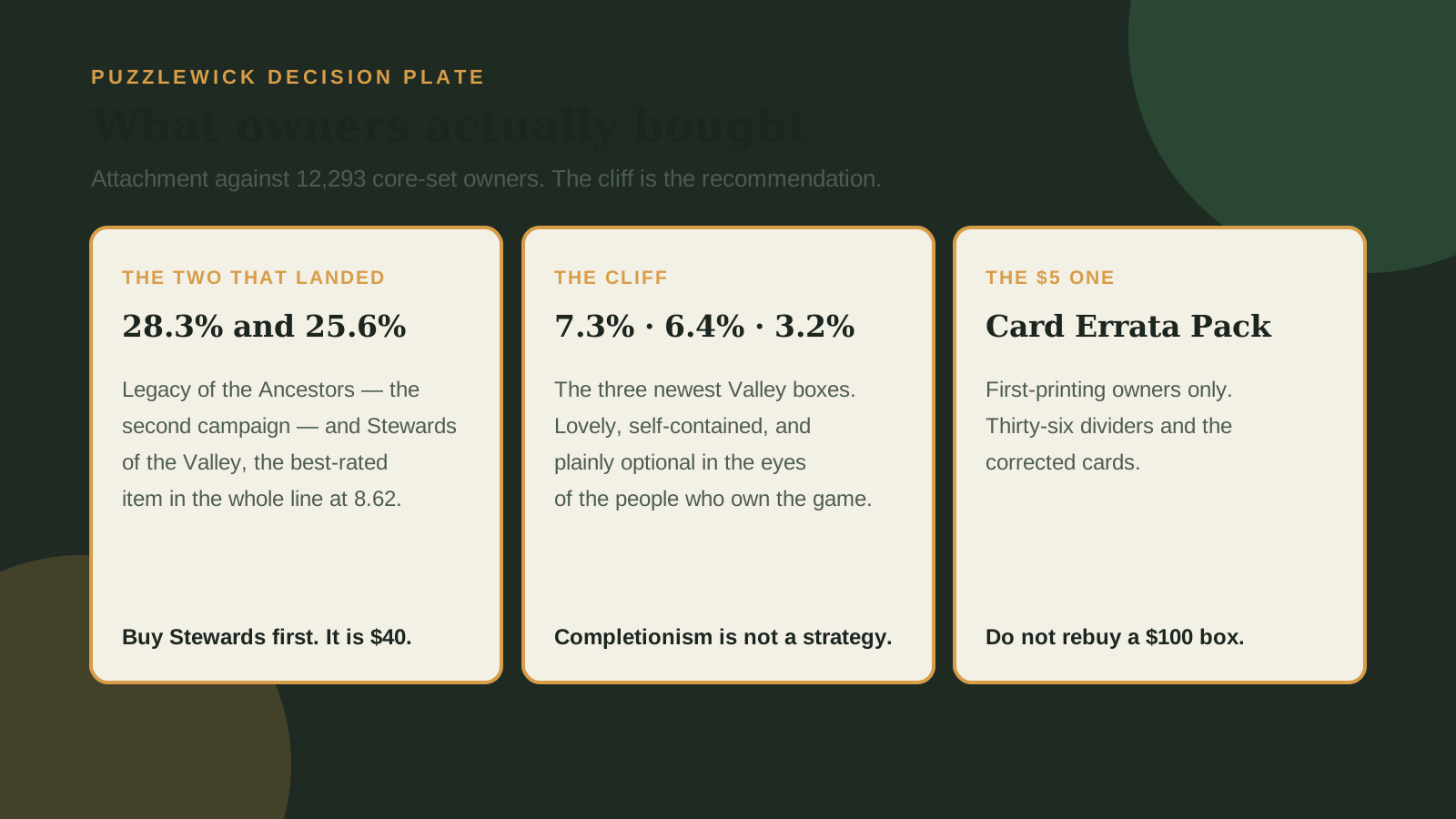
This is where owner data is worth more than any reviewer's opinion, including mine. BoardGameGeek publishes how many people own each item, and against 12,293 core-set owners the attachment rates tell a very clear story.
28.3% own Legacy of the Ancestors. 25.6% own Stewards of the Valley. 23.3% own the next item down. And then it falls off a cliff — 7.3%, 6.4% and 3.2% for the three newest Valley boxes.
That is not a gentle taper. That is a community that bought two things and stopped, and it maps almost exactly onto what those two things are.
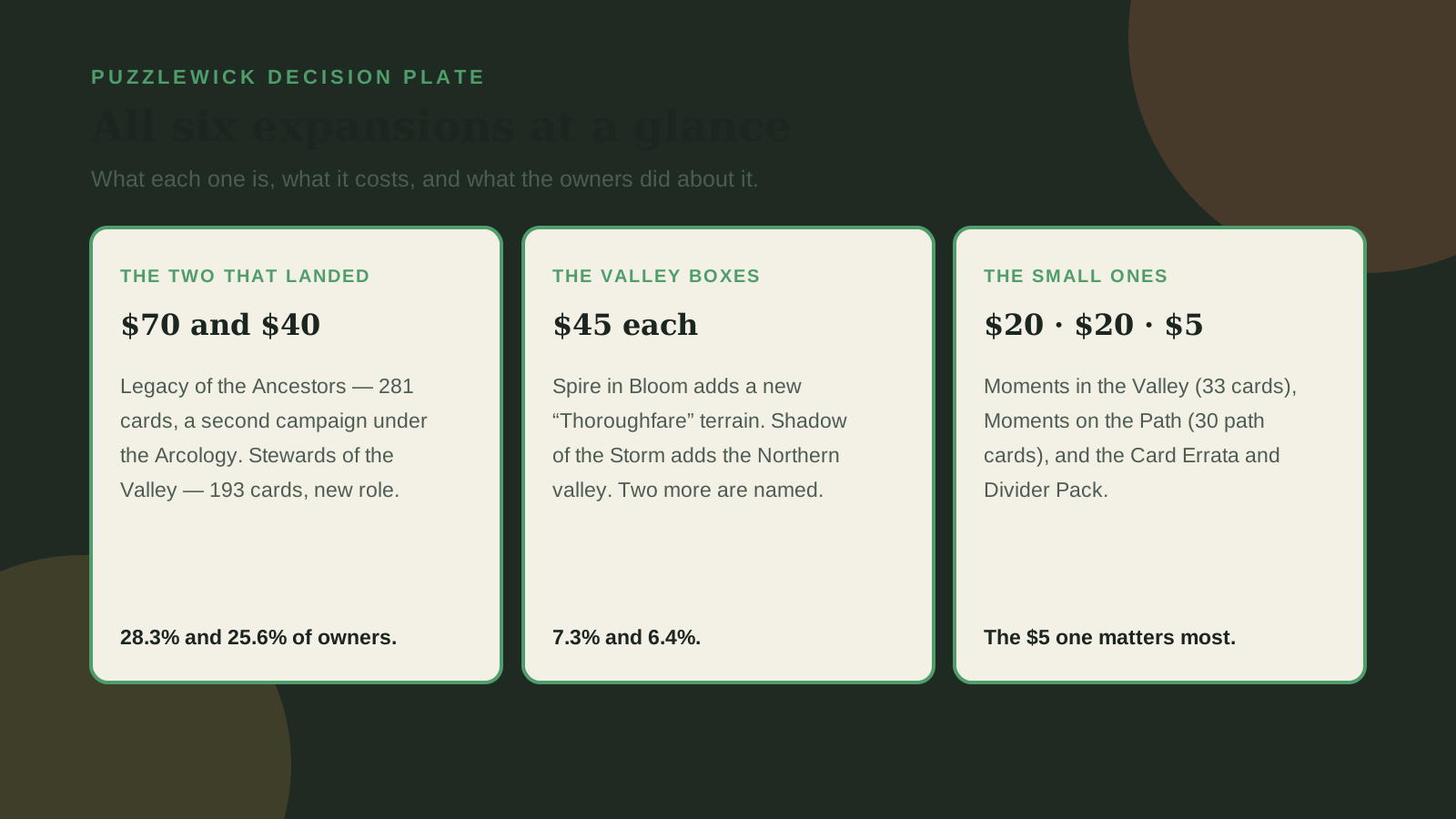
Stewards of the Valley ($40) is the closest thing to essential. It is 193 cards and 14 dividers, and it adds a whole new Talespinner background and Spirit Speaker specialty — meaning it changes who you can *be* in the valley, not just where you can go. It is also the best-rated thing in the line at 8.62 across 180 ratings. If you buy one expansion, buy this one.
Legacy of the Ancestors ($70) is the full second campaign — 281 cards, its own campaign guide, map and record sheet, taking you underground into the Ancient Estian Arcology. It is a sequel, not a supplement. Play the main story first.
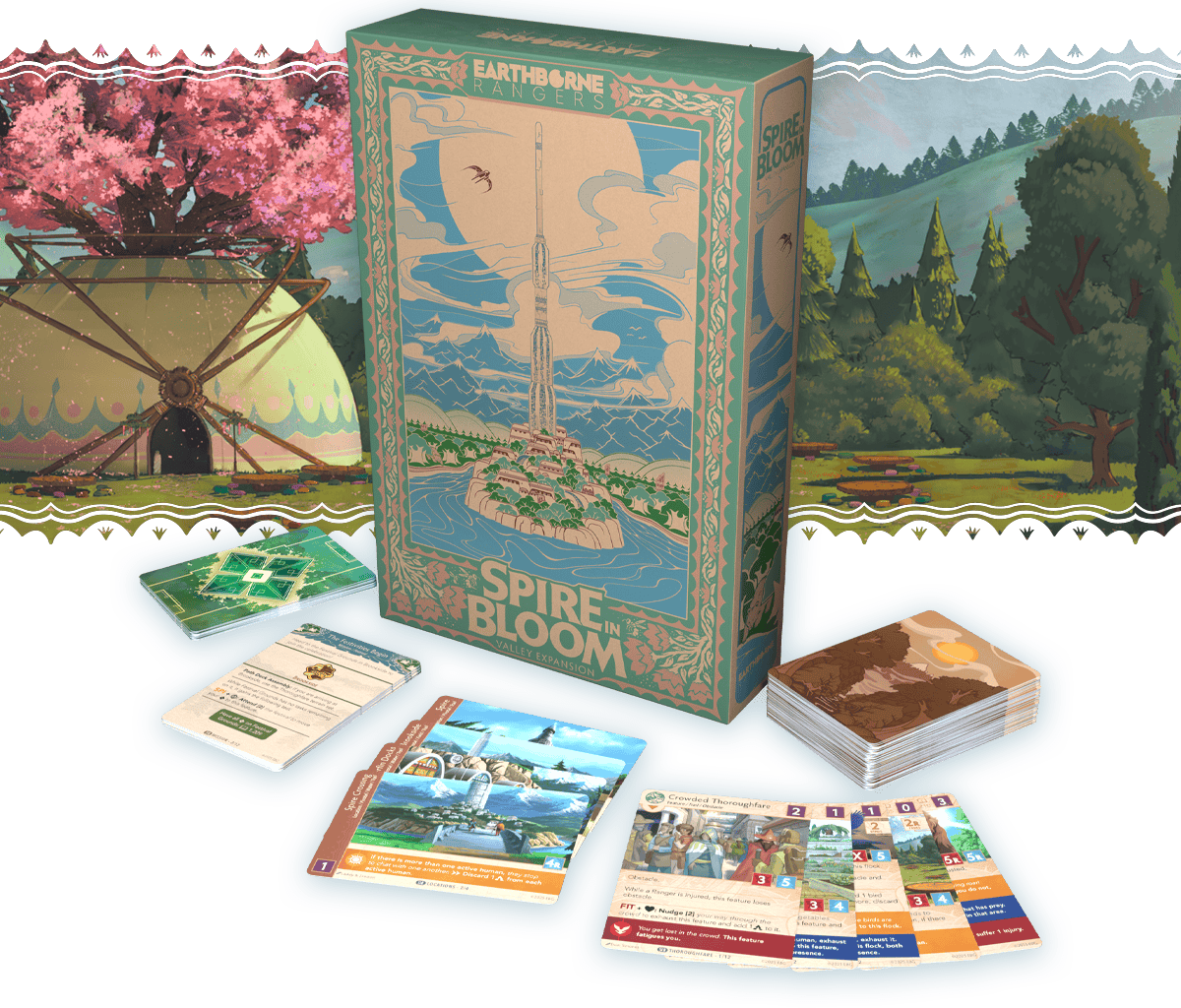
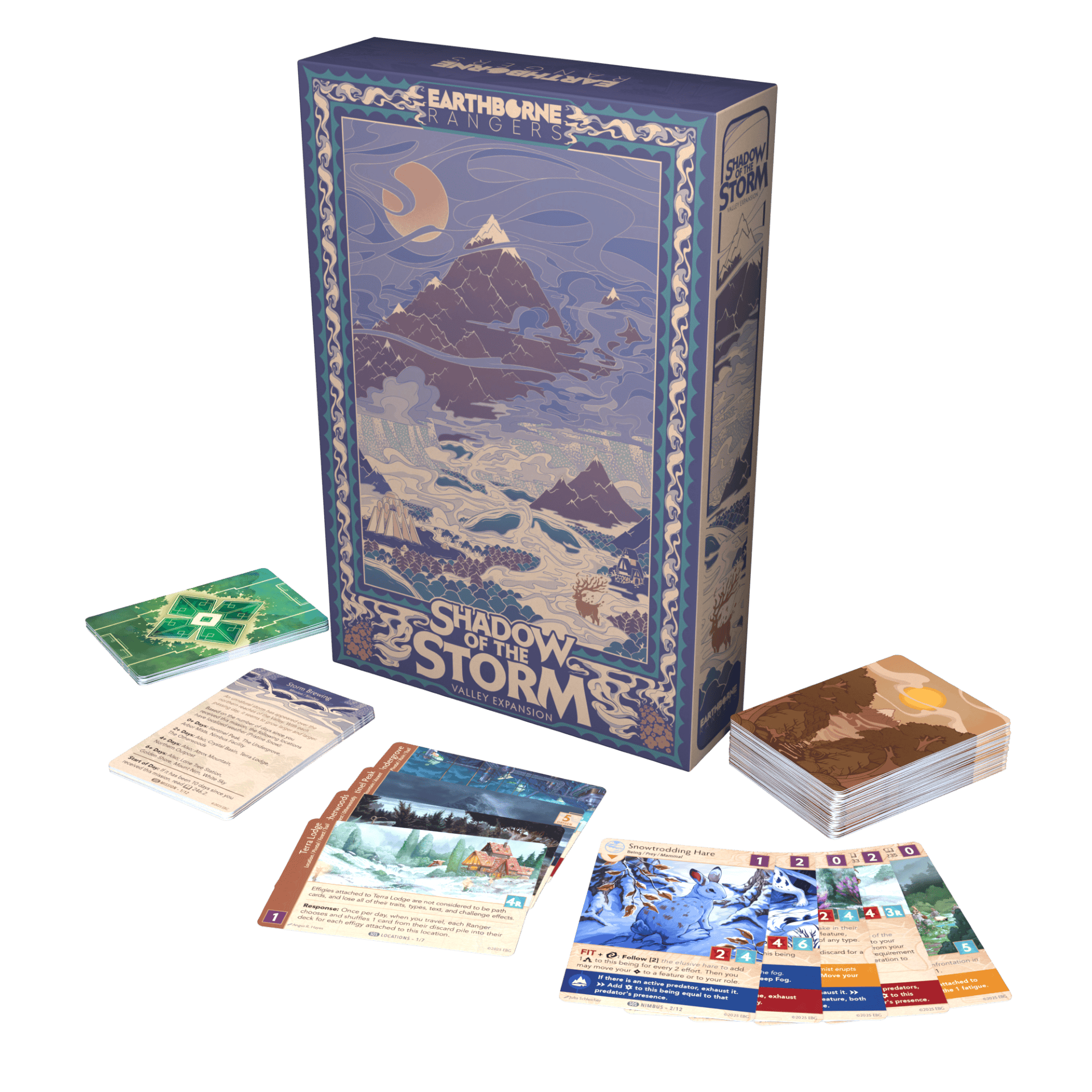
The Valley Expansions — Spire in Bloom and Shadow of the Storm, $45 each — are mini-campaigns that slot before, during or after the main story. They are lovely and they are optional, and the 7.3% and 6.4% attachment rates suggest owners agree. Two more are already named in the fine print of another product: Into the Maw and Sky and Smoke, confirming a four-box roadmap.
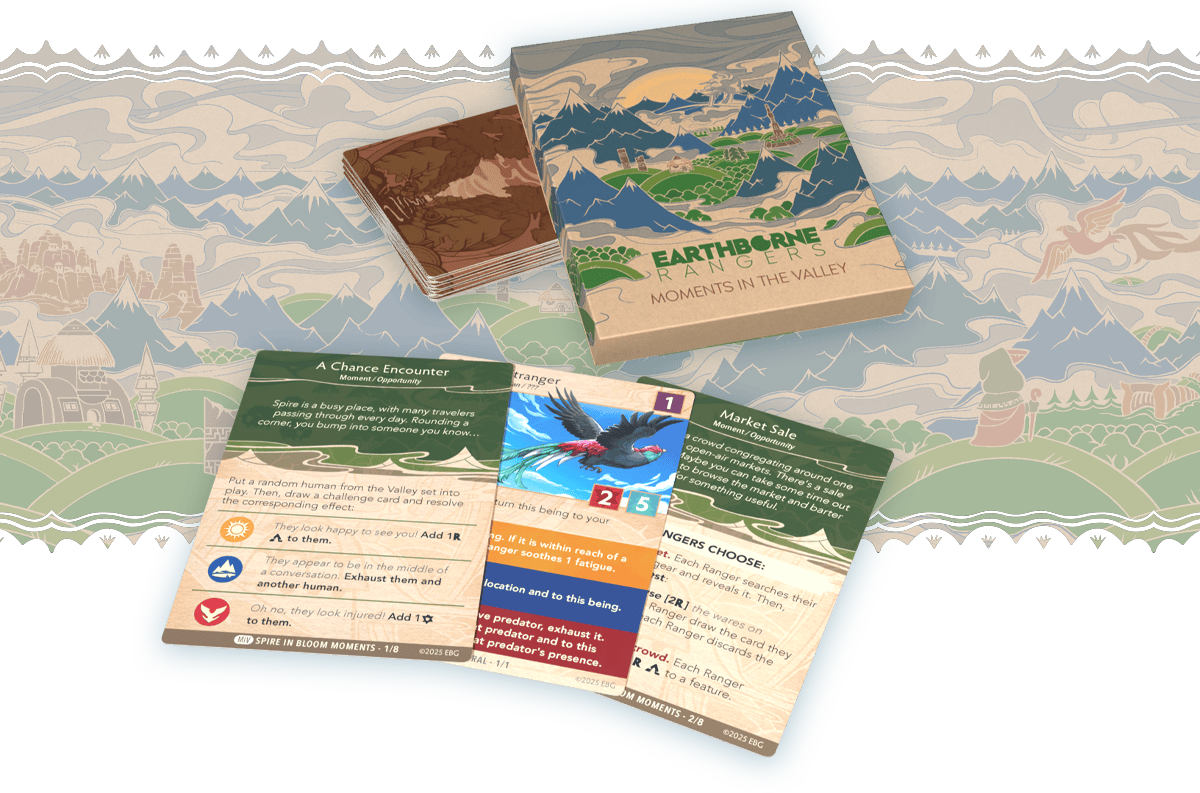
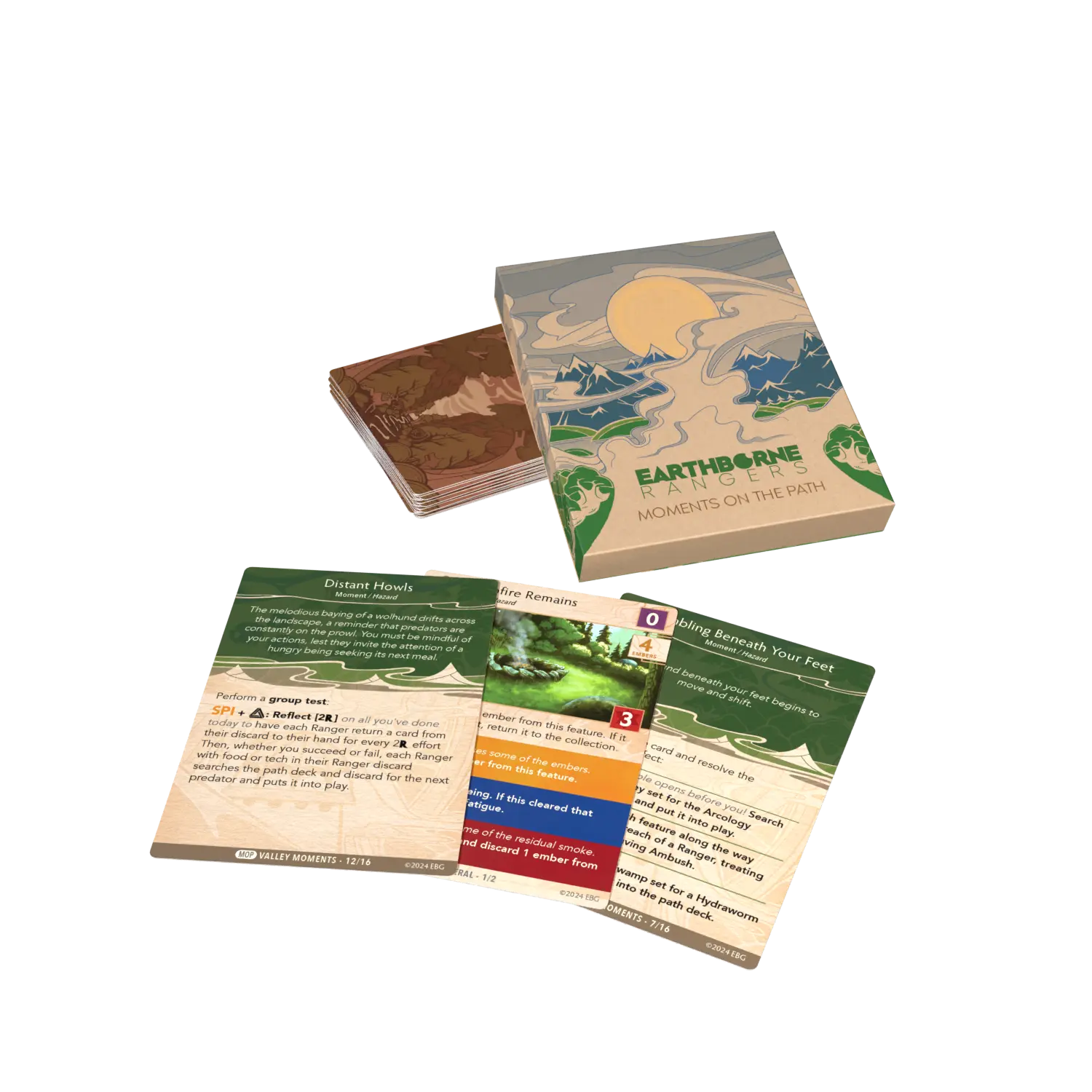
Two small items that punch above their price. Moments in the Valley ($20) is 33 cards of small narrative beats. And the one genuinely important cheap purchase: the Card Errata and Divider Pack, $5 — which is only for people who own a first printing. If that is you, five dollars brings your copy current. Do not buy the $100 box again.
Solo, two-handed, or two players? Decide before you build a deck.
This is the single best predictor of whether you will finish this game, and it deserves more thought than it usually gets.
Earthborne Rangers has a reputation as a solo game. Its own player poll on BoardGameGeek says something slightly different: best at two players, recommended at one to three. That is worth sitting with if you are buying it for solitary evenings.
The split among solo players is between running one Ranger and running two-handed. One Ranger is intimate and quick; you inhabit a single person walking through a valley. Two-handed gives you the card interplay the deck-building actually wants, at the cost of a bigger table and the constant small friction of switching between two people action by action.
There is no wrong answer, and — this is the kindest design decision in the game — you can add or drop a Ranger mid-campaign. Start with one. If the valley feels thin, add another. Nothing breaks.
At the other end, three and four players is where practicality bites. Sessions run two to three and a half hours, and much of the game is quiet individual noticing. It works. It is just not what the game is best at, and a four-player group is the one configuration where people report drifting away.
How long is it, and does it actually end?
It ends, properly, and this matters because a lot of open-world games do not.
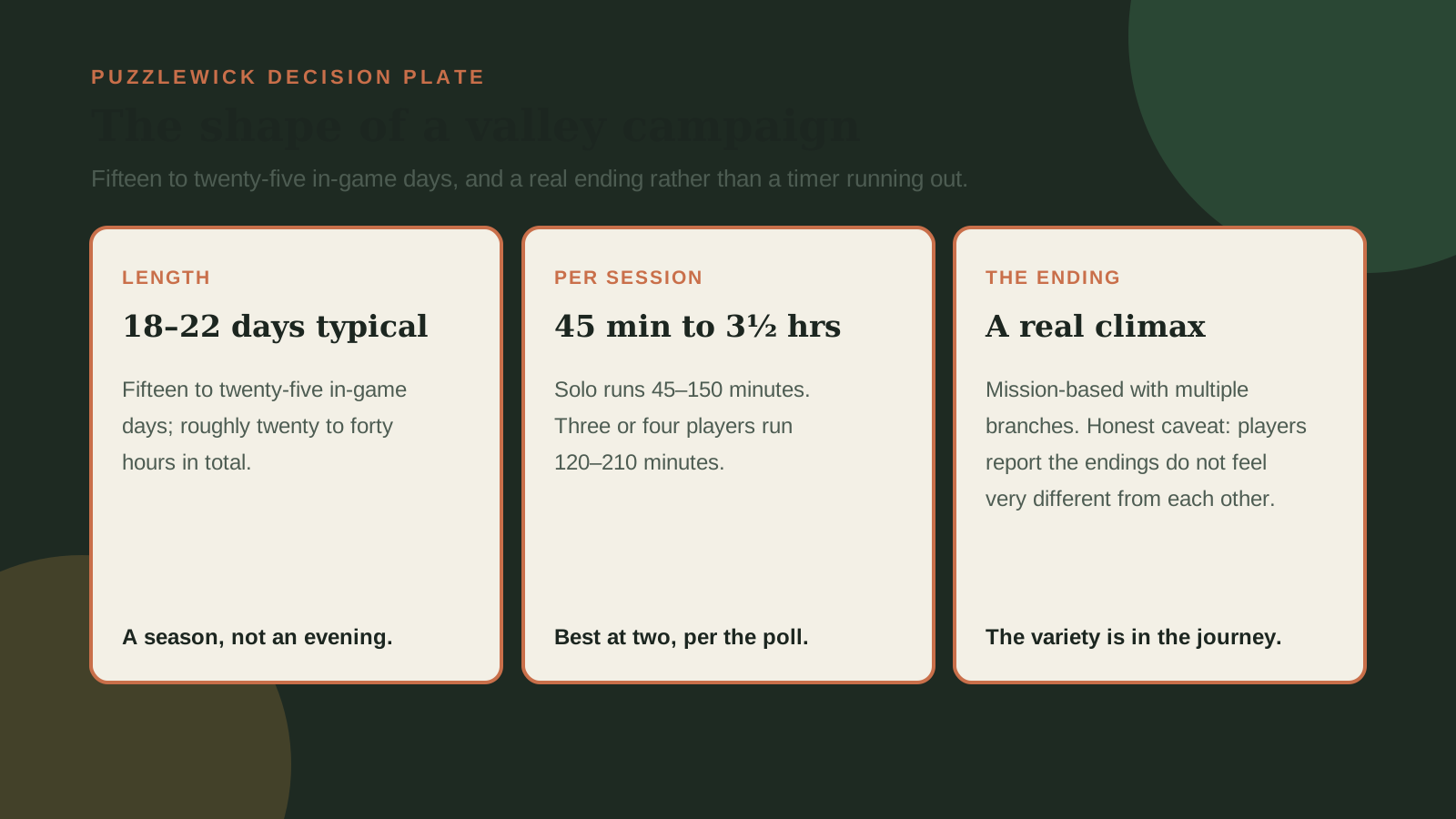
A campaign runs fifteen to twenty-five in-game days, most commonly eighteen to twenty-two, at roughly twenty to forty hours total. A solo session is anywhere from forty-five minutes to two and a half hours depending on how much you linger. Three or four players runs two to three and a half hours.
The ending is a real mission-based climax with multiple branches — not a timer quietly expiring, which is the failure mode of a lot of sandbox games. Mission timers do exist, and they exist precisely to stop you stalling in the meadow forever, which, believe me, is a genuine temptation.
The honest dissent, and I would rather you hear it from me: several players report that the different endings do not feel very different from one another. If you are the kind of player who replays a campaign hunting for divergent conclusions, temper that expectation. The variety in this game is in the journey — which paths you walked, who you met, what you chose to tend — far more than in the final page.
Earthborne Rangers, Arkham Horror LCG, or Sleeping Gods?
These three get compared constantly and the comparisons are usually unhelpful, so let me be concrete about what actually differs.
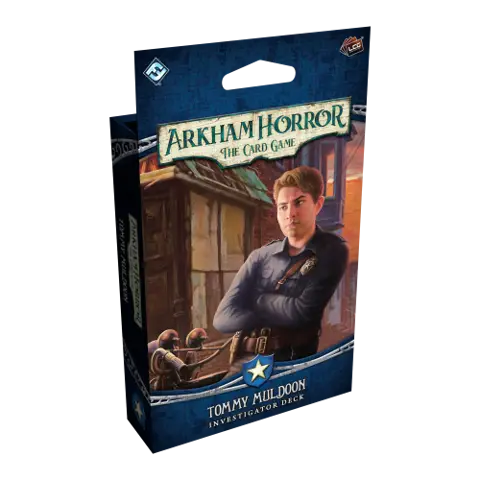
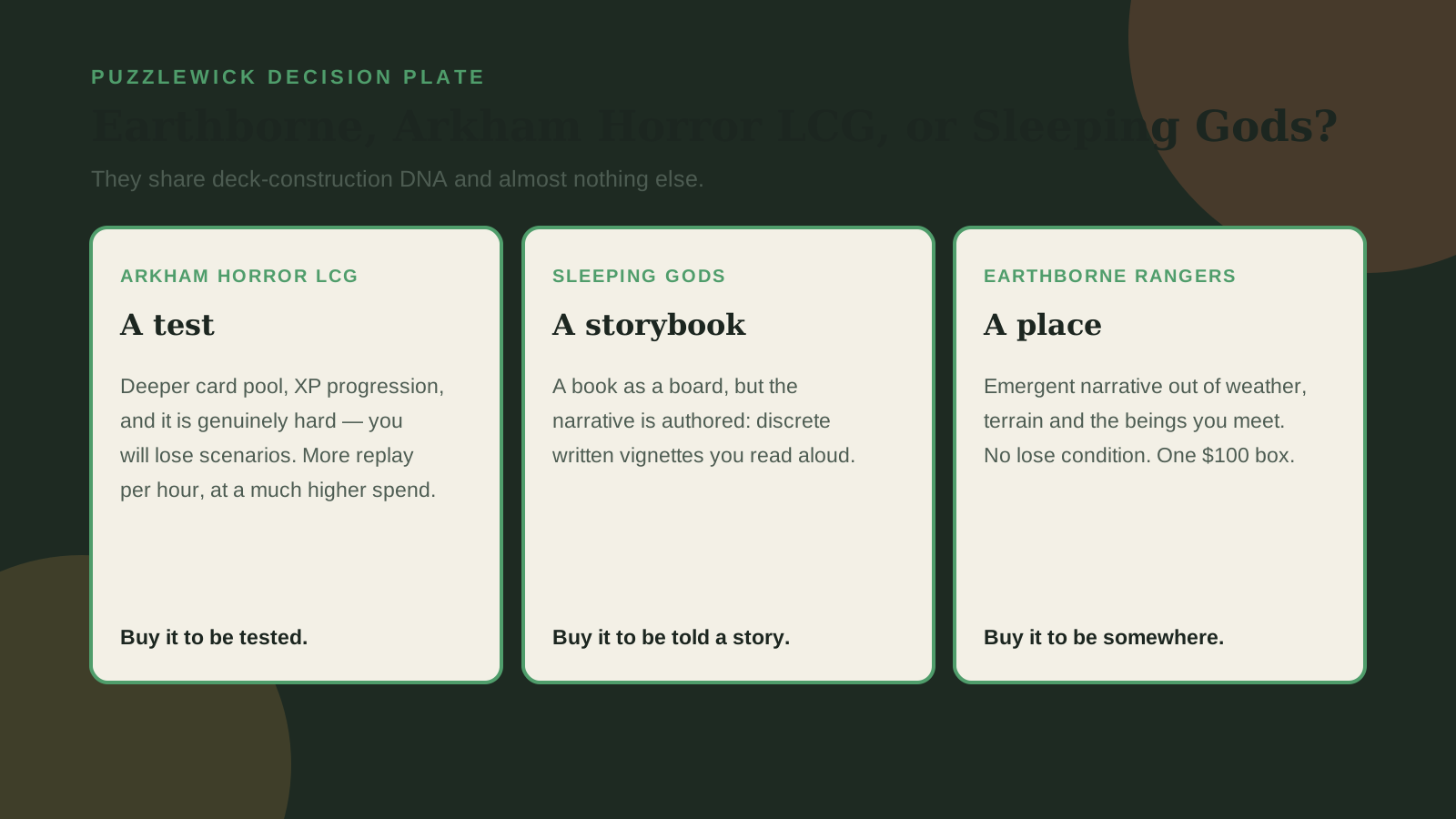
Against Arkham Horror LCG. They share deck-construction DNA and almost nothing else. Arkham has a far deeper card pool, experience-point progression, and it is genuinely hard — you will lose scenarios. Earthborne is more permissive and has no lose condition at all. The value argument favours Earthborne heavily: one $100 box against what a comparable Arkham collection costs. The counter-argument is real too — Arkham gives more replay per hour, because losing creates stories and re-attempts. If you want to be tested, Arkham. If you want to be somewhere, Earthborne.
Against Sleeping Gods. Both use a book as a board and both are about exploring. But Sleeping Gods tells you written vignettes — authored, discrete, read aloud. Earthborne generates emergent narrative from systems: the weather, the terrain, the beings you meet and how you treat them. Sleeping Gods is a storybook. Earthborne is a place.
And the warning I would want given to me: this is not a combat game, and enjoyment correlates strongly with willingness to roleplay a little. If you sit down determined to optimise, the valley will feel like arithmetic. If you sit down willing to be a person walking through it, it becomes something quite rare.
First printing, second printing, and the plastic-free question
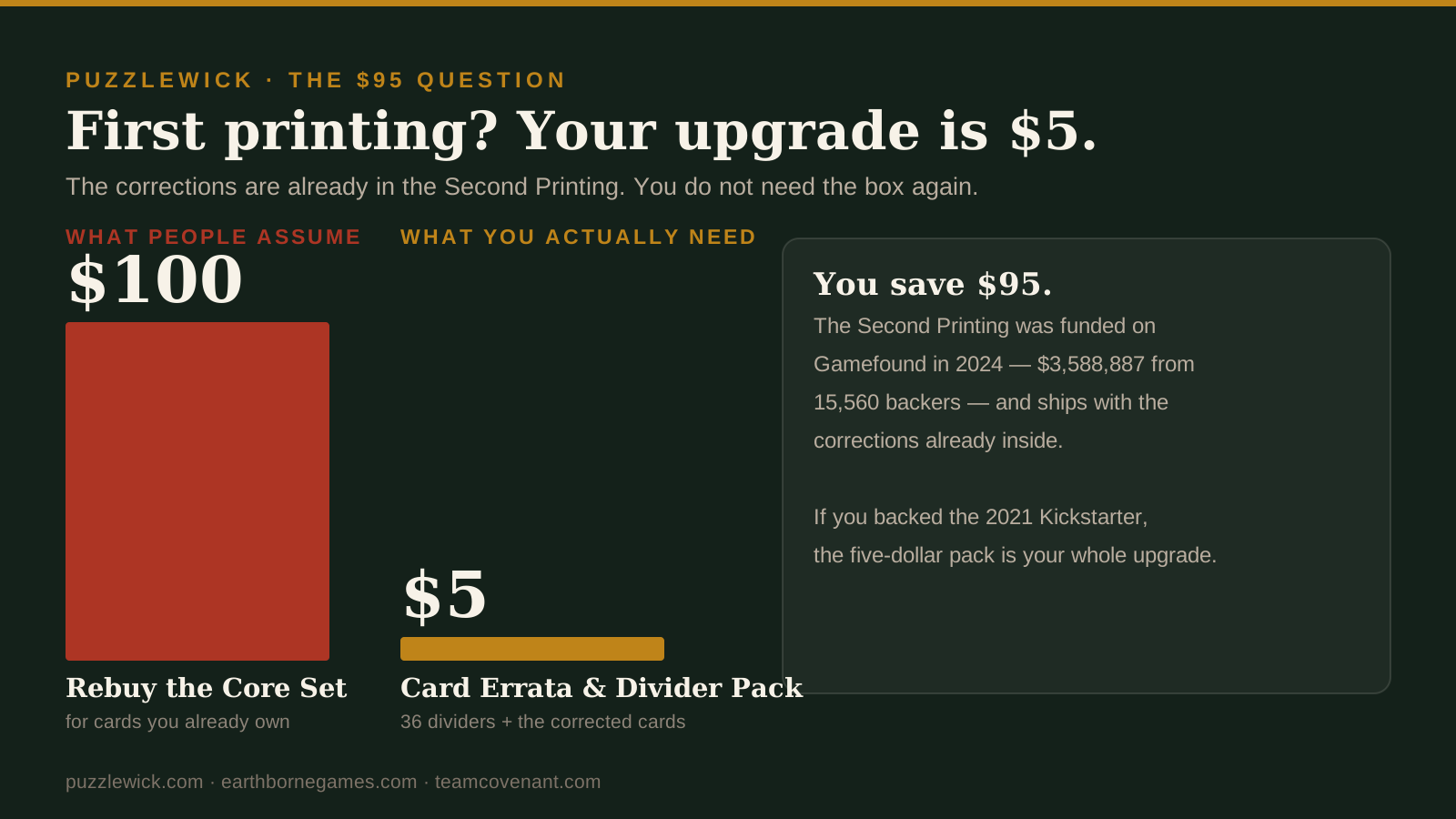
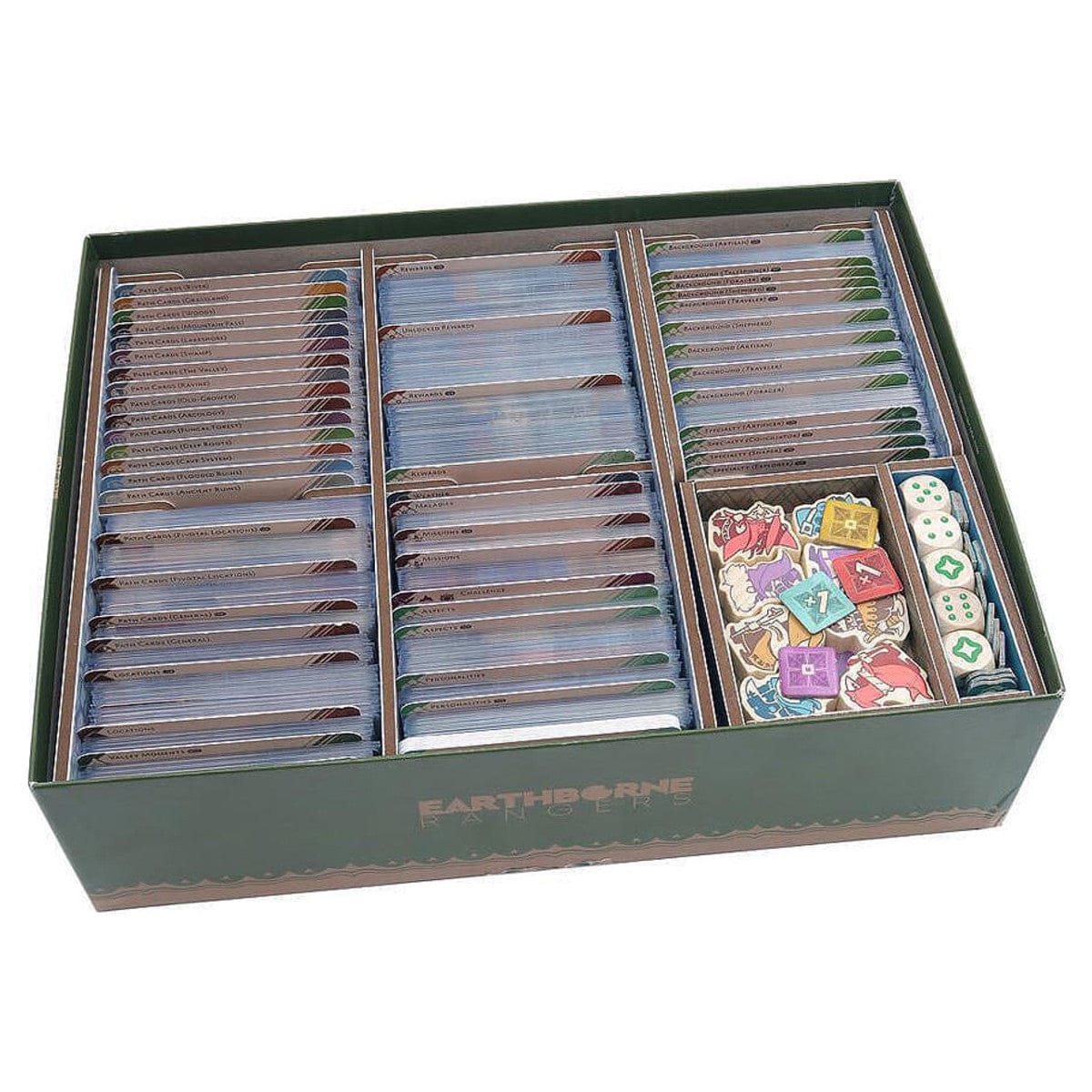
The box in shops today is explicitly the Second Printing, funded on Gamefound in 2024 — a campaign that raised $3,588,887 from 15,560 backers. The original was a Kickstarter in 2021 that raised over $450,000 and reached retail around 2023.
If you own that first printing, your upgrade is the $5 Card Errata and Divider Pack. Thirty-six dividers and the corrected cards. That is the entire decision — a five dollar fix, not a hundred dollar rebuy.
Now the part that makes this game unusual on a shelf. Earthborne's production brief is plastic-free and FSC-certified: 100% FSC paper, no plastic coatings, no shrink wrap, vegetable-based inks, and everything except the rulebook staples is recyclable or compostable. Even the miniatures hold the line — the Ranger minis are cast from lead-free reclaimed pewter.
There is a real trade-off in that, and I would rather name it than let you discover it. Uncoated cards wear faster than plastic-coated ones. That is the whole sleeving debate in this community, and it is a genuine fork: sleeve them and you protect a game you may play for years, or leave them bare and accept that a well-loved copy will look well-loved. Neither is wrong. I would sleeve, but I understand entirely why someone who bought this game specifically for its principles would not want to wrap it in plastic.
One last thing, since it is the most common reason people delay: Earthborne Trailblazer is a separate standalone game, not an expansion. Its Kickstarter closed on 16 June 2026 at $549,130 from 3,969 backers, and it is not currently purchasable. It is not a reason to wait.
What experienced tables keep reporting
Recurring owner patterns, synthesized in Puzzlewick's words. Follow each evidence trail to read the original discussion.
12,293 owners against 7,601 wishlisters on BoardGameGeek — an unusually wide gap for a game that is in print, in stock, and shipping in one business day.
BoardGameGeek community data (read 2026-08-02)
Expansion attachment against core-set owners: Legacy of the Ancestors 28.3%, Stewards of the Valley 25.6%, next item 23.3% — then a cliff to 7.3%, 6.4% and 3.2% for the newest Valley boxes.
BoardGameGeek owner counts (read 2026-08-02)
"Pledge manager is closed — Pledges cannot be added or modified in any way."
The Gamefound page still linked from earthbornegames.com/expansions/
Core Set (Second Printing), $100, in stock, "Ships within 1 business day."
Covenant, Earthborne's named exclusive US/CA partner (read 2026-08-02)
At a glance
| Product | Price | What it adds | Owners | Where | Yumi's call |
|---|---|---|---|---|---|
| Core Set (2nd Printing) | $100 / £85 | The whole game — 540 cards, full campaign | 12,293 | Covenant (US/CA), Naylor (UK/EU) | Buy this. Only this, at first. |
| Legacy of the Ancestors | $70 | Second campaign, 281 cards, underground | 28.3% of core owners | Covenant — in stock | After the main story |
| Stewards of the Valley | $40 | 193 cards, Talespinner + Spirit Speaker | 25.6% of core owners | Covenant — in stock | Best single expansion |
| Valley Expansions (each) | $45 | 60-card mini-campaign + map | 7.3% / 6.4% | Covenant — in stock | Lovely, and optional |
| Card Errata & Divider Pack | $5 | Corrections + 36 dividers | First-printing owners | Covenant — in stock | Own a 1st printing? Buy this. |
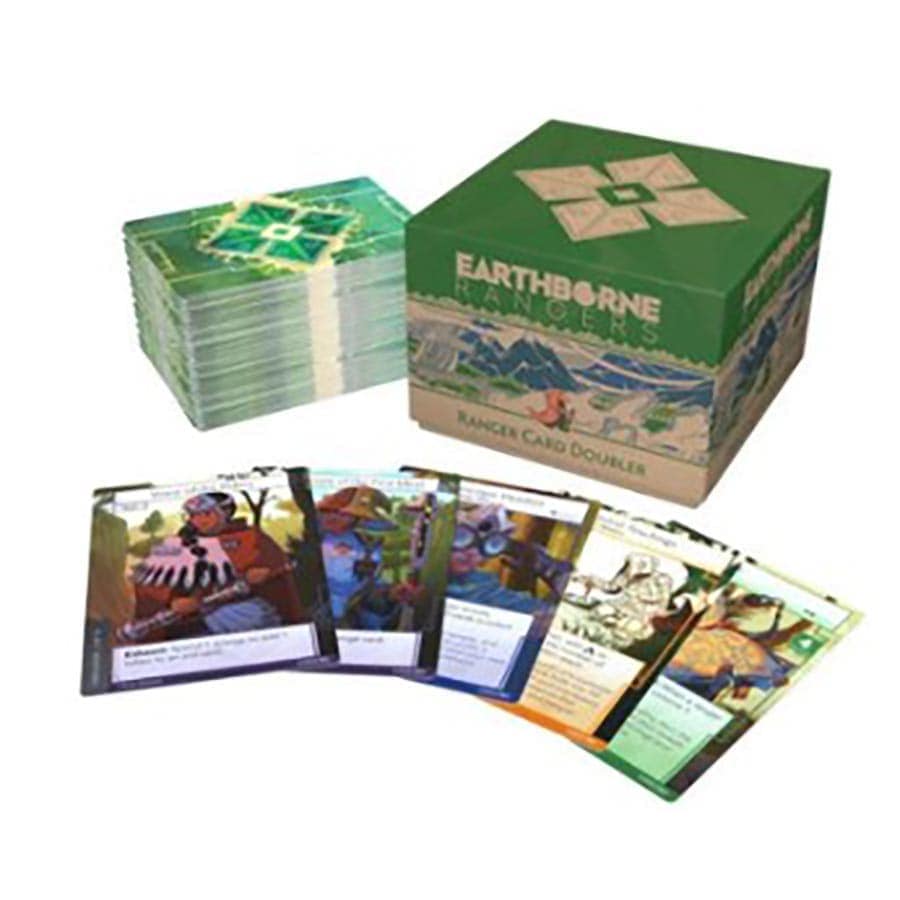
| Ranger Card Doubler | $40 | 282 duplicate player cards | 3–4 player groups | Covenant — in stock | Skip unless you play at 3–4 |
Free download — Where It's Sold, What's In It, and Which Expansions Owners Keep
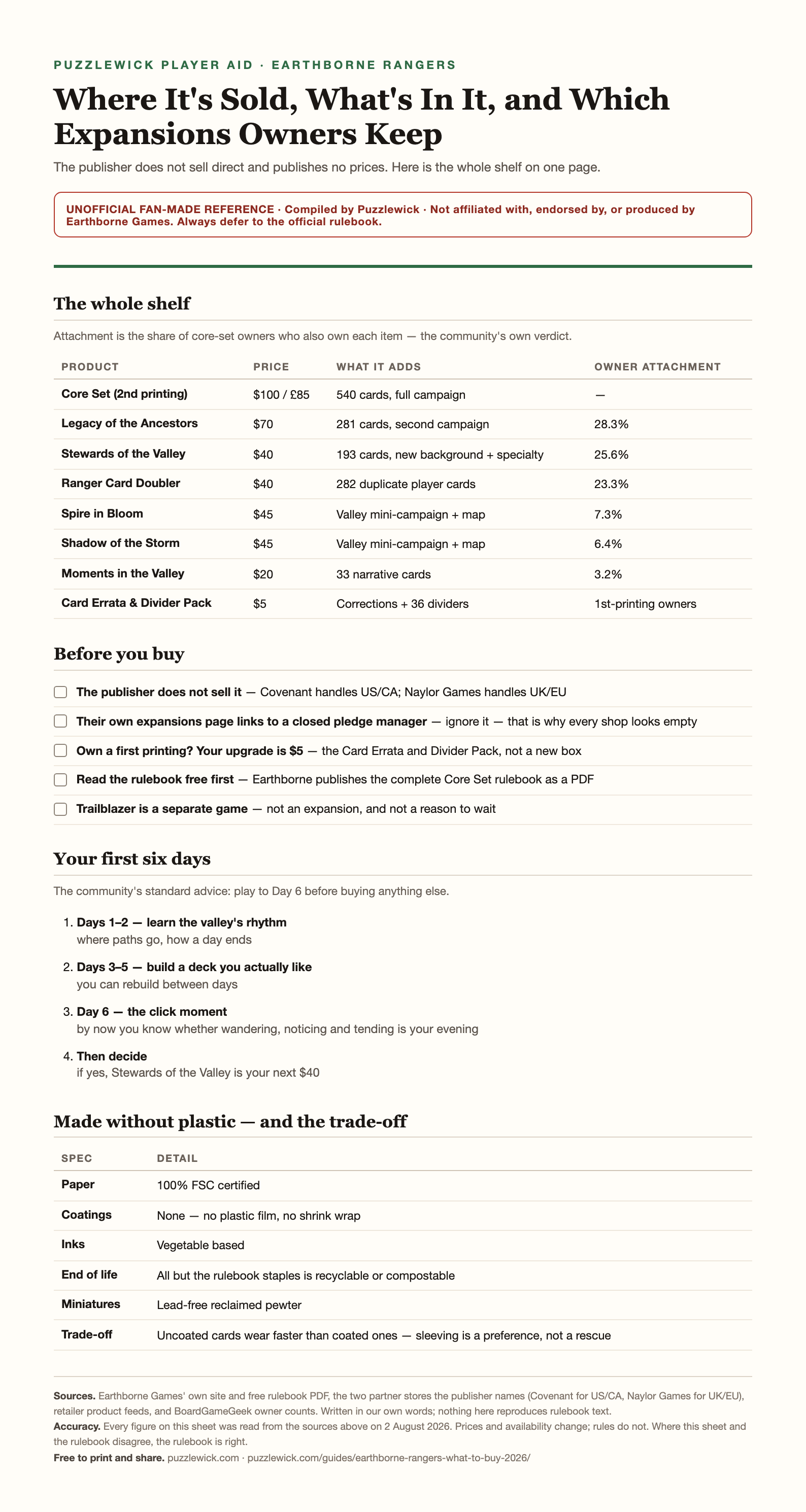
The whole shelf on one page: where the game is actually sold, every expansion with the share of owners who kept it, your first six days, and the plastic-free spec with its one honest trade-off.
Unofficial fan-made reference. Compiled by Puzzlewick from the sources listed on the sheet. Not affiliated with or endorsed by the publisher — always defer to the official rulebook.
Questions, answered
Is it called Earthborne Rangers or Earthbound Rangers?
Earthborne Rangers, from Earthborne Games. There is no game called 'Earthbound Rangers' — it is one of the two common misspellings, along with 'Earthborn Rangers' without the final e. Searching the wrong spelling on Amazon returns only unrelated games, which is part of why people conclude it is unavailable.
Where can I actually buy Earthborne Rangers?
Covenant for the US and Canada ($100 core set), Naylor Games for the UK and Europe (£85). Earthborne Games does not sell direct and publishes no prices — it routes everything through those two partners. Zatu in the UK has also carried it at a discount to RRP.
Why does Amazon say it is unavailable?
Because the listing is effectively dead — ASIN B0CNY46WJL shows 'Currently unavailable' with nobody in the buy box. That reflects Amazon's channel, not the game's availability. The core set has been in stock at the publisher's own named partner, shipping in one business day.
The publisher's expansions page links do not work. Am I doing something wrong?
No — the links are stale. Earthbornegames.com/expansions/ still points at a Gamefound pledge manager that now reads 'Pledge manager is closed'. It also lists only two of the six expansions. Go to Covenant or Naylor instead.
Is the Core Set enough, or do I need an expansion?
Enough. It contains the complete Lure of the Valley campaign — fifteen to twenty-five in-game days, roughly twenty to forty hours. The community's standard advice is to play through Day 6 before buying anything else.
Which expansion should I buy first?
Stewards of the Valley ($40). It is the best-rated item in the line at 8.62 from 180 ratings, and it adds a new background and specialty rather than only new places. Legacy of the Ancestors ($70) is the most-owned at 28.3%, but it is a sequel campaign — play the main story first.
How many expansions are there?
Six are listed on BoardGameGeek, though the publisher's own expansions page still shows only two. Two further Valley Expansions — Into the Maw and Sky and Smoke — are named in another product's contents list but are not yet on sale, confirming a four-box Valley roadmap.
Does Earthborne Rangers play well solo?
Yes, though with a wrinkle worth knowing: BoardGameGeek's own player poll says best at two players and recommends one to three. Solo players split between running a single Ranger and running two-handed. You can add or drop a Ranger mid-campaign, so start with one and see.
How long is a campaign?
Fifteen to twenty-five in-game days, most commonly eighteen to twenty-two, at roughly twenty to forty hours total. Solo sessions run forty-five minutes to two and a half hours; three or four players run two to three and a half hours.
Does the campaign have a proper ending?
Yes — a real mission-based climax with multiple branches, not a timer quietly expiring. The honest caveat from players is that the different endings do not feel very different from one another, so the variety lives in the journey rather than the final page.
Can I lose?
No. There is no lose condition, which is either the best thing about this game or a dealbreaker depending entirely on what you want from an evening. It is why it gets recommended so often as a restful game.
I own the first printing. Do I need to rebuy?
No. Buy the $5 Card Errata and Divider Pack — thirty-six dividers plus the corrected cards. That is the whole upgrade. The corrections are already included in the Second Printing.
Should I sleeve the cards?
It is a real trade-off. The game is deliberately plastic-free — 100% FSC paper, no coatings, no shrink wrap, vegetable inks — and uncoated cards wear faster than coated ones. Sleeving protects a game you may play for years; not sleeving keeps faith with why the game is made this way. Both positions are defensible.
Should I wait for Earthborne Trailblazer?
No. Trailblazer is a separate standalone game, not an expansion. Its Kickstarter closed on 16 June 2026 at $549,130 from 3,969 backers and it is not currently purchasable. It is not a reason to delay a Rangers purchase.
Yumi's verdict
Earthborne Rangers is the rare game whose hardest problem is its own front door. Seven and a half thousand people are sitting on a wishlist for a $100 box that ships tomorrow, because the publisher chose two exclusive partners, published no prices of its own, and left its expansions page pointing at a pledge manager that closed. Once you know where to look, the buying is genuinely simple: the Core Set, alone, for as long as it takes you to walk to Day 6 and find out whether a game with no lose condition is restful or pointless to you. If it is restful — and for a lot of people it is the most restful thing on their shelf — then Stewards of the Valley is your next forty dollars and Legacy of the Ancestors is your next campaign. And if you already own a first printing, the whole decision costs five dollars. It is a beautiful, principled, plastic-free object made by a small studio in Minnesota, and the only thing standing between most people and it is a broken link.
Research ledger 16 sources · reviewed 2026-08-02
Specifications, rules, current product information, community experience, and contrary evidence were checked against the sources below. Commercial links are kept separate from editorial evidence.
- earthbornegames.comearthbornegames.com/wp-content/uploads/EBR001_Rulebook_web.pdf
- thelivingvalley.earthbornegames.comthelivingvalley.earthbornegames.com/docs/faq
- earthbornegames.comearthbornegames.com/earthborne-rangers-downloads
- earthbornegames.comearthbornegames.com/resources
- earthbornegames.comearthbornegames.com
- earthbornegames.comearthbornegames.com/expansions
- teamcovenant.comteamcovenant.com/games/earthborne-rangers
- teamcovenant.comteamcovenant.com/games/earthborne-rangers?category=expansions
- teamcovenant.comteamcovenant.com/games/earthborne-rangers?category=upgrades
- naylorgames.comnaylorgames.com/pages/earthborne-games
- gamefound.comgamefound.com/en/projects/earthborne-games/earthborne-rangers-reprint
- boardgamegeek.comboardgamegeek.com/boardgame/256999/earthborne-rangers
- boardgamegeek.comboardgamegeek.com/boardgame/256999/earthborne-rangers/expansions
- miniaturemarket.comminiaturemarket.com/catalogsearch/result/?q=earthborne
- nobleknight.comnobleknight.com/Search?ProductType=Games&Keywords=earthborne
- earthbornegames.bandcamp.comearthbornegames.bandcamp.com
Come in, take your shoes off — let me show you something.

Keep exploring
The next smart rabbit holes.
❧ Universe HubEarthborne Rangers: the whole buying pathEarthborne Rangers is a cooperative card game about walking through a healed wilderness, made in St. Paul on FSC paper with...✦ Topic PathBoard Game Buying Guides: compare the whole shelfStart with the decision, not the shelf. These guides compare the games, editions, expansions, player counts, and costs people...Guide10 Best Solo RPG Board Games in 2026: The Grail Ladder From Beginner to HardcoreA commitment-first ranking of premium campaign RPG board games, from a 45-minute first quest to the lifestyle boxes that can occupy a...