Buying Guide · Updated 2026-10-17
Star Trek MTG Boosters: Build a Better Battle Night


AI-assisted research, writing and editorial QA under Robert’s direction. Our process
The short answer
Choose the thirty-pack Play Booster Display for organized Limited games, Beam Me Up for a bounded premium opening with ship promos, and the ordinary Bundle for a smaller pack night. Book a Prerelease event to learn Sealed with a local group. Reserve the twelve-pack Collector Display for treatment collecting—not deck construction, a guaranteed signed card, or a promised return.
Sources checked 2026-10-16 · 16 sources & review details
We may earn from qualifying purchases, including as an Amazon Associate.

At a glance
| feature | play | beam | bundle | prerelease | collector |
|---|---|---|---|---|---|
| Our suitability order | 1 · Play Display | 2 · Beam Me Up | 3 · Bundle | 4 · Prerelease Pack | 5 · Collector Display |
| Pack contents | 30 Play | 8 Play + 1 Collector | 9 Play | 6 Play | 12 Collector |
| The best reader job | An organized group with lands | A ship-art collector’s finite gift | A smaller ordinary opening | A confirmed local Sealed event | A defined premium-treatment goal |
| Guaranteed extras, not pictured pulls | No ready-made deck | 2 of 8 foil Schematic promos; lands, die, box | 1 foil promo; lands, die, box | Foil rare/mythic; die; box | Premium slots; no signed-card guarantee |
| Before you buy | Assign seats, basic lands and ownership | Check checkout premium and delivery region | Not a teaching or Commander deck | Kit is not admission; Amazon gap | Third-party offer and high variance |
Red alert makes great theater. It makes a terrible shopping policy. Here is how to turn the Star Trek booster line into an evening worth remembering, without confusing a playable pool, a collector opening and a finished deck.
Start here, then go deeper
You are in the right cabinet.
 ✶ Universe HubMagic: The Gathering: the whole buying pathMagic: The Gathering is the deepest construction sandbox in the Big Three: a two-player duel, four-player Commander ritual, draft...
 🂠 Topic PathTrading Card Games: compare the whole shelfStart with the game and community you want, then buy the smallest product that lets you test it properly. These guides separate...
 Beginner's GuideMagic Star Trek: Which Box Should You Preorder?Choose one standard Star Trek Commander deck for a ready-made multiplayer crew, Draft Night for four friends, or a Scene Box for a fixed...
Your mission determines the box—not the other way around
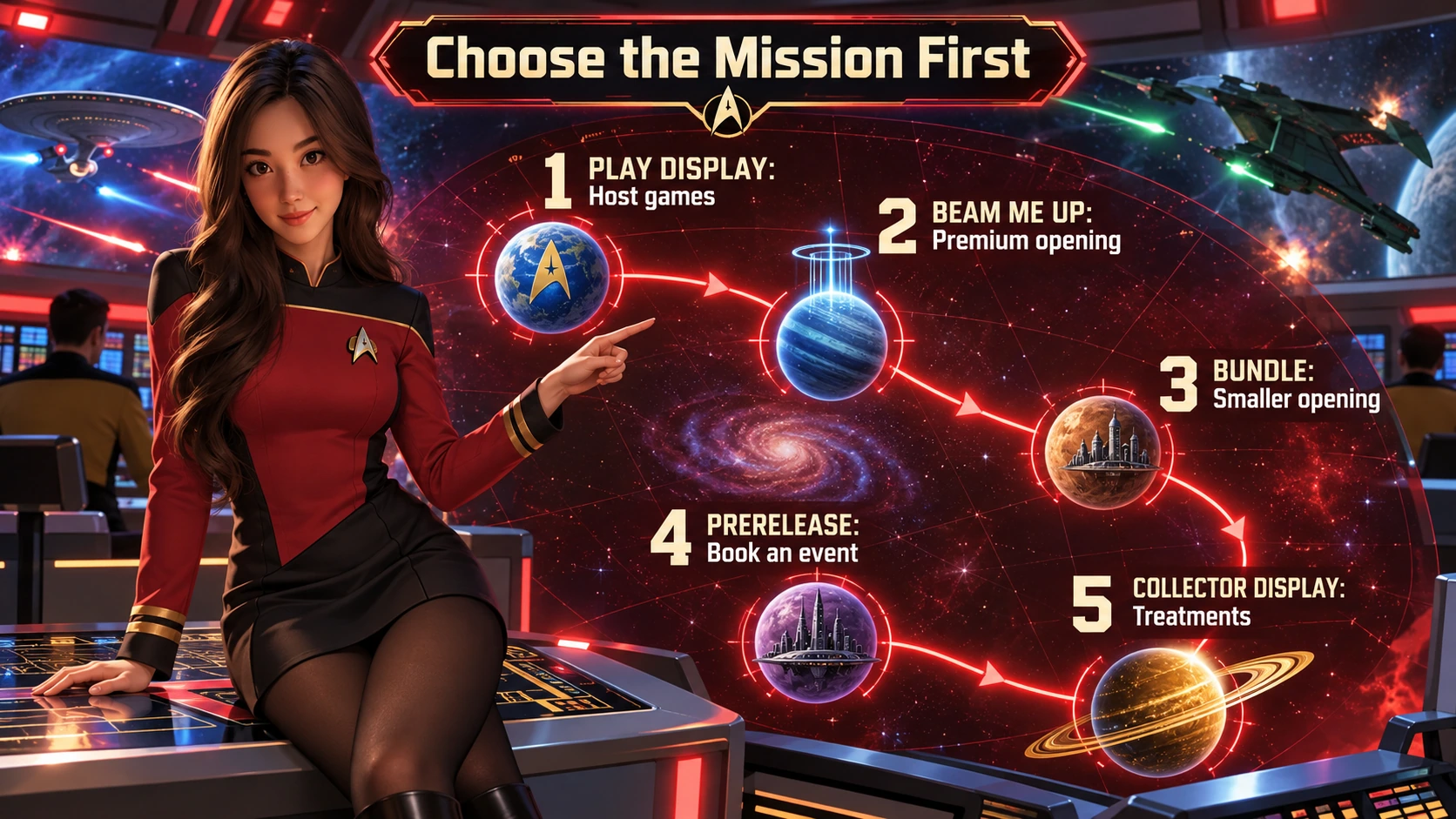
There are three different evenings hidden inside this product line: building decks together, opening something beautiful, and chasing a particular card. Buy for the evening you actually want. Our order below favors repeatable play first, a bounded premium opening second, and expensive random collecting last. It is an editorial suitability ranking, not a sales chart or a tested power tier list.
Launch alert, checked 2026-10-16: the publisher’s October 16 notice says Play Boosters and Prerelease Packs remain on track. North American Commander decks may arrive after November 13; Europe/Middle East/Africa and Asia-Pacific have additional product-specific delays, including Beam Me Up. A retailer’s displayed release date is not a shipping promise. Read the regional notice before arranging your table. The pictures below are previews; no unreleased box has been playtested for this guide.
1. Play Booster Display: the best host purchase
Thirty Play Boosters make the strongest first choice for an established group. You are buying material for games, not thirty lottery tickets that must pay for themselves. Preserve the packs until the group meets; opening everything beforehand turns a draft supply into a collection of loose cards.
A Play Booster contains fourteen Magic cards, including a traditional foil slot, according to the publisher’s contents specification. The packs also have randomized rarity and treatment opportunities. None guarantees the specific captain, shock land or illustrated card shown here. Basic lands, sleeves and a format agreement are separate hosting needs. Already have those? Reuse them. The box is the upgrade; a new accessory wardrobe is not.
Each Magic: The Gathering | Star Trek Play Booster box includes 30 Play Boosters
— Wizards of the Coast, official product specification. That quantity is the basis of our hosting arithmetic, not a guarantee of an individual card.
The thirty-pack battle plan: count seats before opening
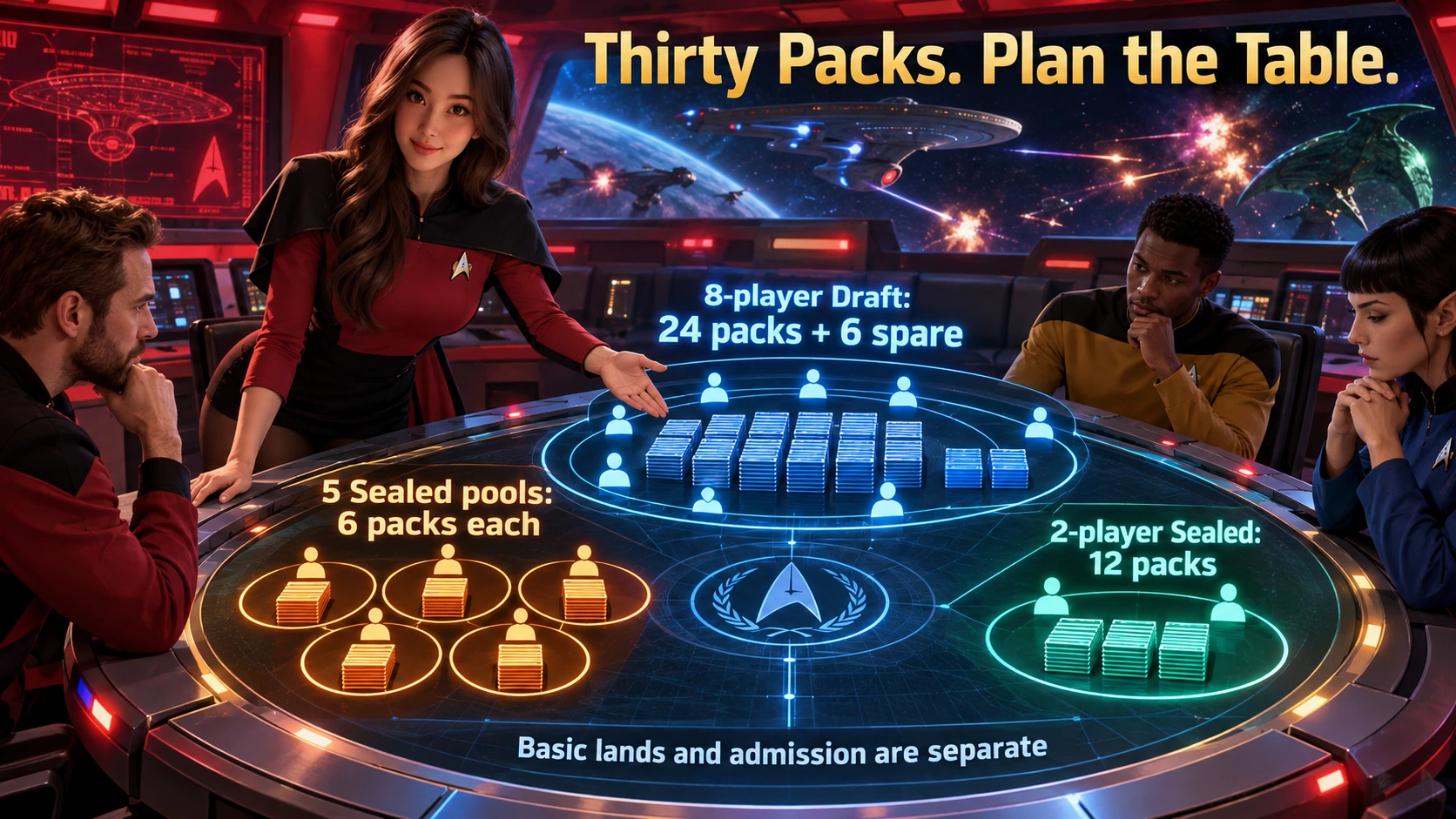
For conventional eight-player Draft, reserve three packs per player: twenty-four packs, leaving six. Decide whether those six are saved, shared or prizes before anyone opens one. For Sealed, thirty packs provide five six-pack pools. These are pack-allocation calculations, not a claim that the display includes event entry, land stations or five complete decks.
A four-player Pick-Two draft uses twelve Play Boosters; the display then leaves eighteen. Wizards’ separate Draft Night product includes its own four-player setup and lands, so our Commander and Draft Night buying map is the better destination if you want a prepared evening rather than a larger supply. Agree ownership of drafted cards, prizes and unused packs at the invitation stage.
Prerelease Pack: the first battle worth booking
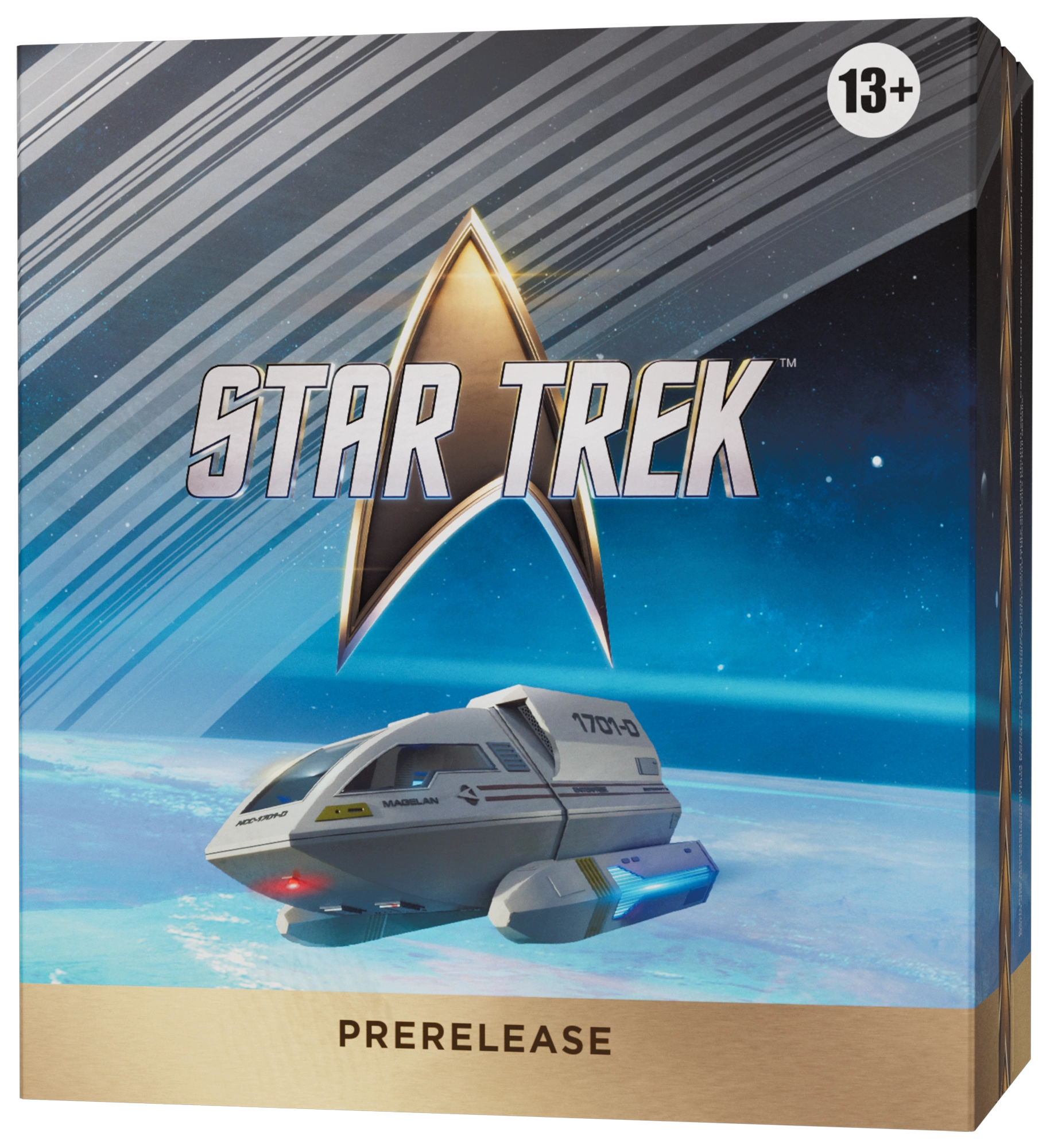 Official product image: Wizards of the Coast / CBS / Paramount. ©2026 Wizards of the Coast. TM CBS Studios Inc. ©2026 Paramount Pictures Corp.Publisher source ↗
 A Prerelease Pack is a six-Play-Booster Sealed kit with a foil rare or mythic, a die and a deck box. That kit is not an event ticket. Confirm admission, date, supplied basic lands and beginner support with your store. The announced Prerelease window is November 6–12; WPN dates and your store’s booking are the relevant references, not a general-release date pasted into retailer copy.
Learn the turn sequence first, tell the organizer you are new, and ask before assuming a takeback is permitted. Joel Are Magic’s October 15 beginner guide makes the useful distinction between learning Magic and attending your first event. We have not established an exact Amazon US Prerelease offer. The official action beneath its picture is deliberate—not a Bundle pretending to be the kit.
Brand-new to Magic? Learn the turn structure with Arena’s free tutorial, or ask a participating store about Star Trek Welcome Decks and a teaching session. Check local participation and supplies rather than assuming a free deck is reserved. The Star Trek Beginner Box was canceled; a Prerelease Pack does not replace its step-by-step teaching format.
Engineering a first forty-card deck
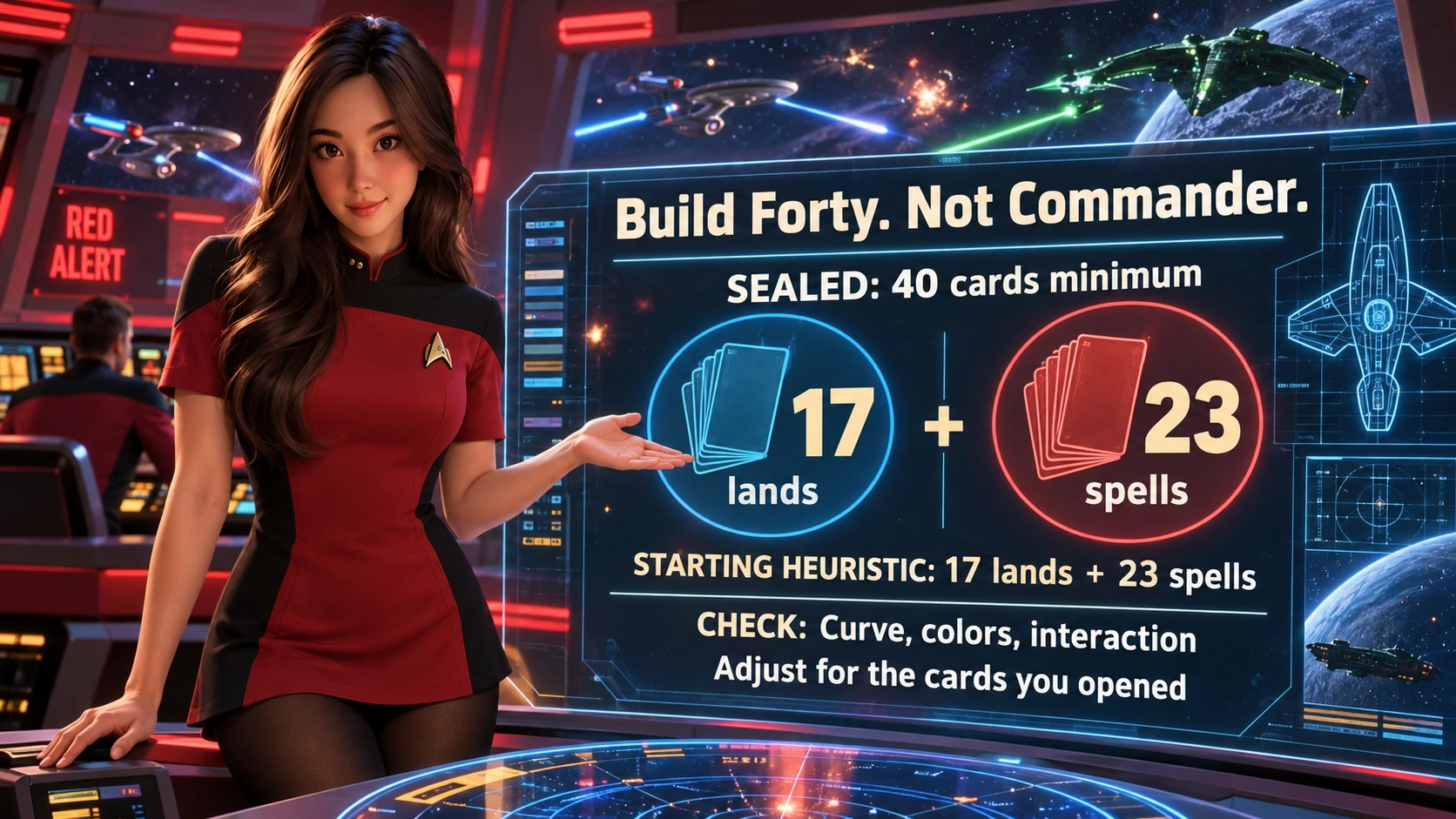
Sealed uses a deck of at least forty cards; a Commander deck is not the right starting structure. Begin by sorting your pool by color, then separate creatures, interaction, fixing and cards that require support. Choose the colors that let you cast useful spells reliably—not simply the colors containing your favorite portrait. Keep unused cards available as your sideboard.
As a starting heuristic, sketch seventeen lands and twenty-three spells, then adjust for the curve, colored requirements and fixing you actually opened. That split is advice, not a rule. Count your early plays. A hand full of spectacular expensive spells is still a hand that can miss the battle. Ask the organizer about deck construction and current release rules; this preview does not pretend to have solved the unreleased Limited environment.
2. Beam Me Up: the premium opening with a finish line
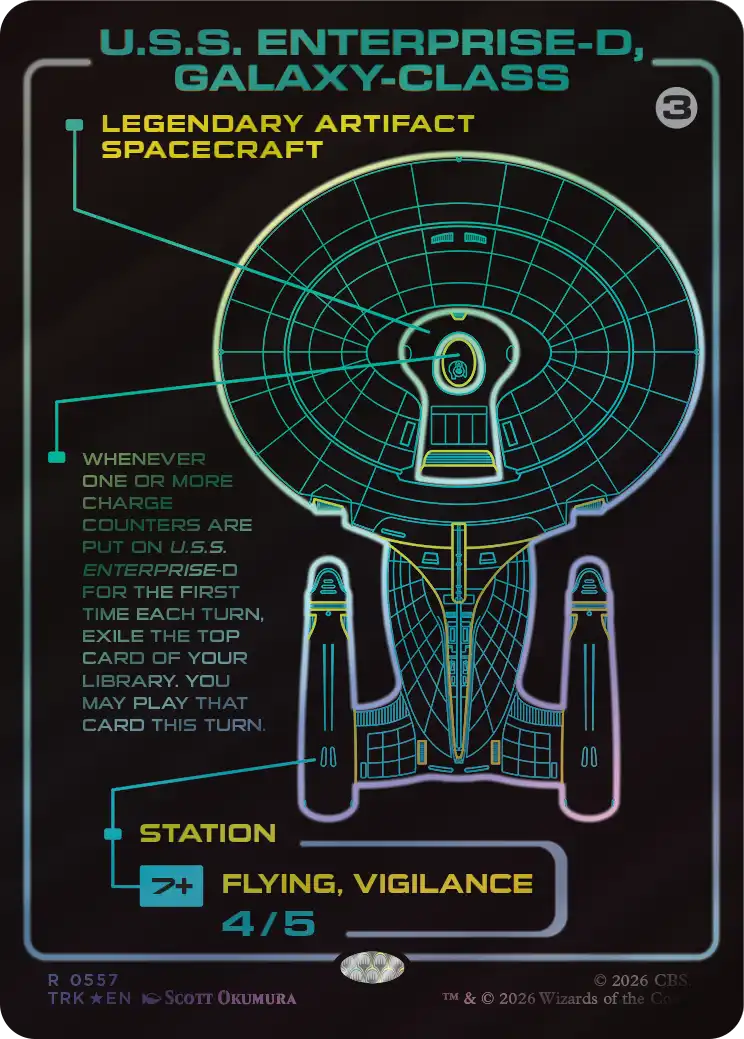 Official digital card image: Wizards of the Coast / CBS. Illustration: Scott Okumura. ©2026 CBS. TM & ©2026 Wizards of the Coast.Publisher source ↗
 Beam Me Up is the most distinctive bounded collector gift here: eight Play Boosters, one Collector Booster and two random foil ship-Schematic promos, plus thirty basic lands, a storage box and a Spindown. Its appeal is identifiable extras rather than just more ordinary packs. If you love blueprint-style starships and want one premium opening, this has a clear reason to exist.
The catch matters: the promos are two of eight possibilities, not a promise of the Enterprise-D shown below. A signed card is not guaranteed in the included Collector Booster either. Compare the actual checkout premium with an ordinary Bundle, then ask whether the Collector pack and Schematic pair are what you wanted. This is not a ready-to-play deck. Read the official Beam Me Up list, and check regional delays before making it a date-critical gift.
3. Ordinary Bundle: nine packs, fewer moving parts
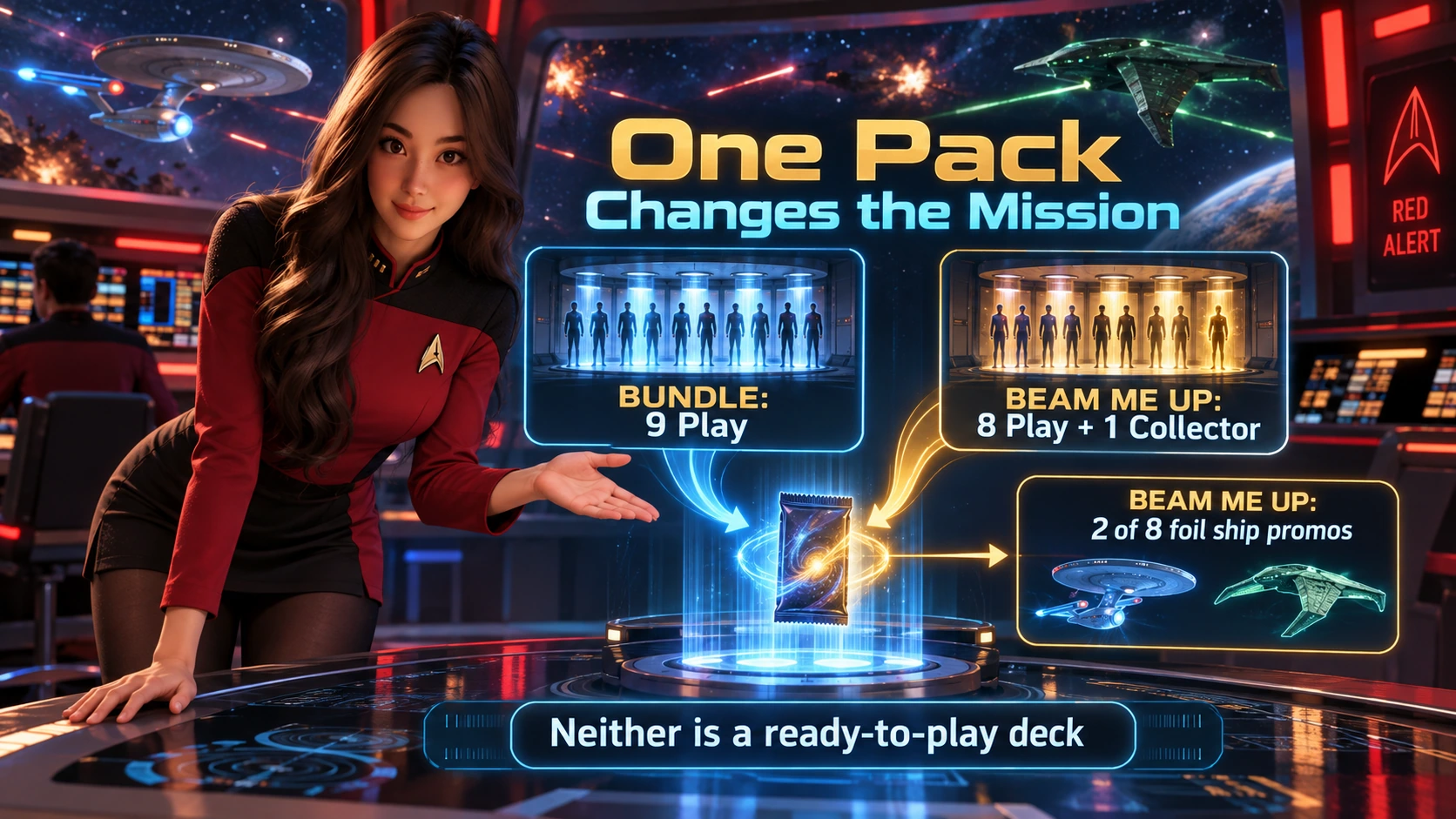
The ordinary Bundle contains nine Play Boosters, thirty basic lands, one foil alternate-art promo, a box, reference cards and a Spindown. Choose it for a smaller opening and a themed place to keep the resulting cards. It does not contain a Collector Booster or the two Beam Me Up Schematic promos.
This makes the comparison unusually simple: Beam Me Up trades away one Play Booster and adds a Collector Booster plus its two ship promos. Do not compare the two as if both contained nine Play packs. Nor should thirty included lands be mistaken for a fully stocked hosting land station: the right color mix depends on the decks being built. Follow the exact ordinary Bundle specification, rather than judging by two similar-looking boxes.
5. Collector Display: buy the treatments, not a promised return
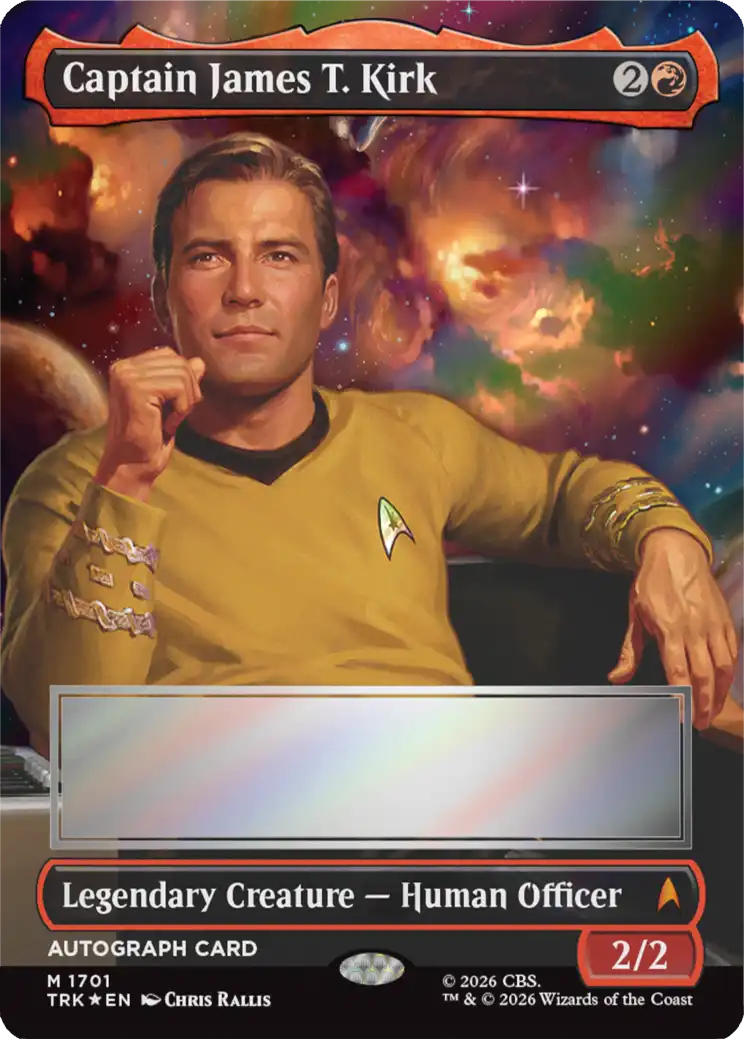 Official digital card image: Wizards of the Coast / CBS. Illustration: Chris Rallis. ©2026 CBS. TM & ©2026 Wizards of the Coast.Publisher source ↗
 Twelve fifteen-card Collector Boosters are for the reader who specifically wants premium treatments and enjoys randomized opening. They are not the right Limited packs, not a complete Commander deck and not a reliable way to obtain one exact card. The unusually rare actor-signed headliners are possible finds, never included guarantees.
Current US inspection found no featured offer but did find third-party preorder actions in Amazon’s offer panel. That is not an Amazon-sold promise. Check the selected seller, delivery and return terms yourself. Card Core’s collector analysis takes a much more optimistic position and discloses buying twelve boxes. We do not adopt its supply projections, return expectations or unsupported signed-card probability. Our verdict: a valid luxury opening for a defined collector budget, last in this general buying order.
The treatment map: a shiny card is not one category
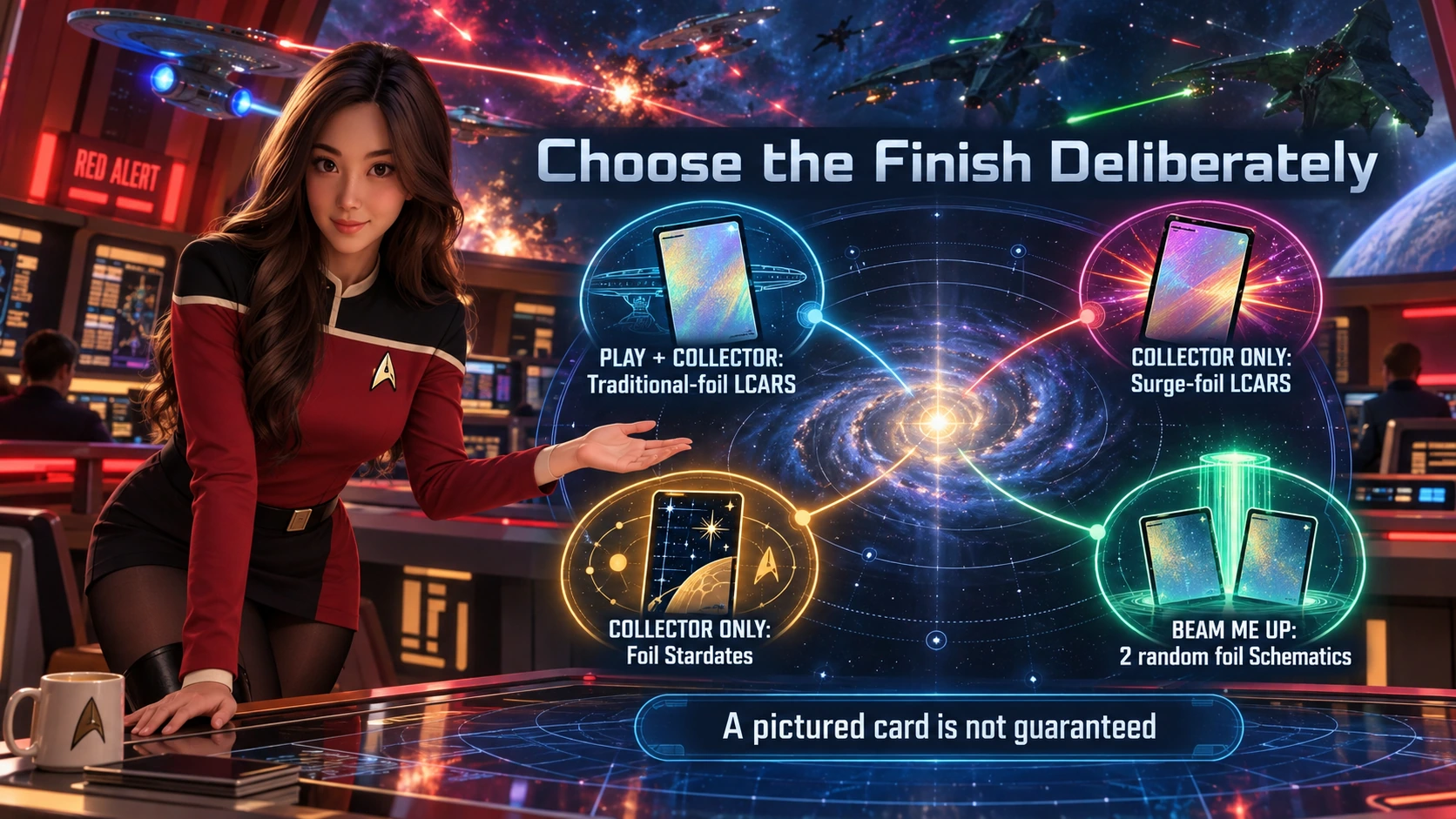
Wizards distinguishes traditional foil, surge foil, LCARS frames, Classic Enterprise designs, Stardates reprints, scenes and signed headliners. Some frame treatments appear in both Play and Collector packs; some premium finishes are Collector-only. A digital card render identifies the design and rules, not the tactile quality, curl resistance or real-world shine of an unopened physical card.
Two useful boundaries from the collecting specification: traditional-foil Stardates cards are Collector-only, while nonfoil Stardates can appear in Play packs; surge-foil LCARS and Classic Enterprise treatments are Collector-only, while their nonfoil and traditional-foil versions can occur in both pack types. Set codes matter too. A Commander-only TRC printing or a special promo is not automatically a main-set Play Booster pull.
At red alert: modal spells turn decisions into resources
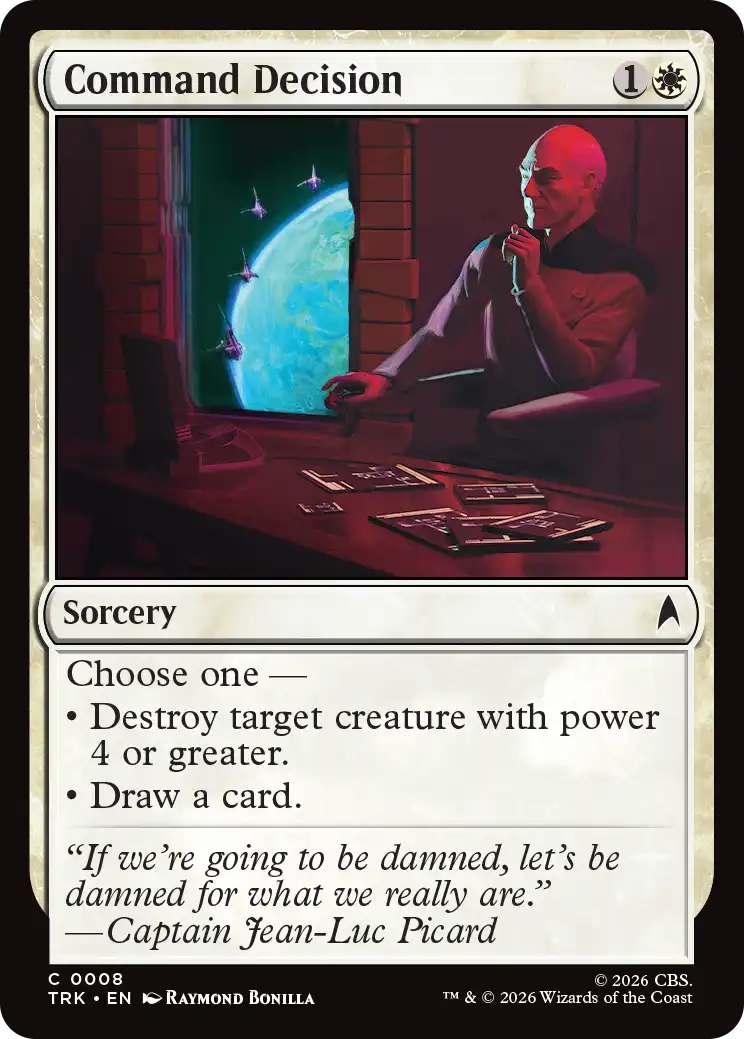 Official digital card image: Wizards of the Coast / CBS. Illustration: Raymond Bonilla. ©2026 CBS. TM & ©2026 Wizards of the Coast.Publisher source ↗
 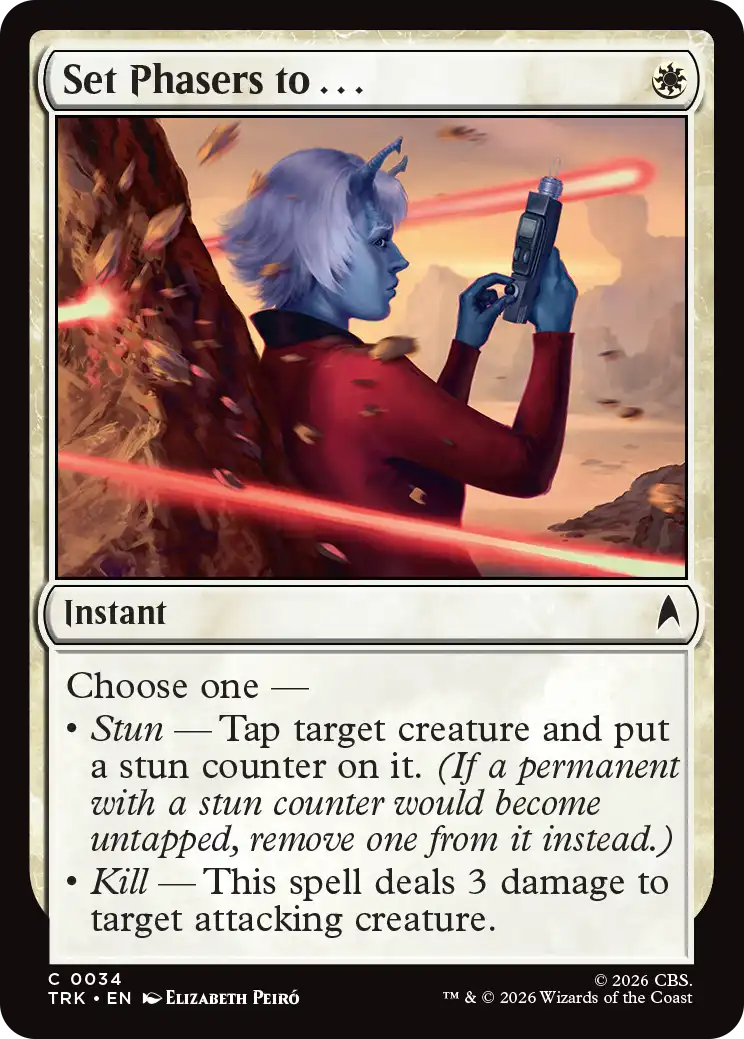 Official digital card image: Wizards of the Coast / CBS. Illustration: Elizabeth Peiró. ©2026 CBS. TM & ©2026 Wizards of the Coast.Publisher source ↗
 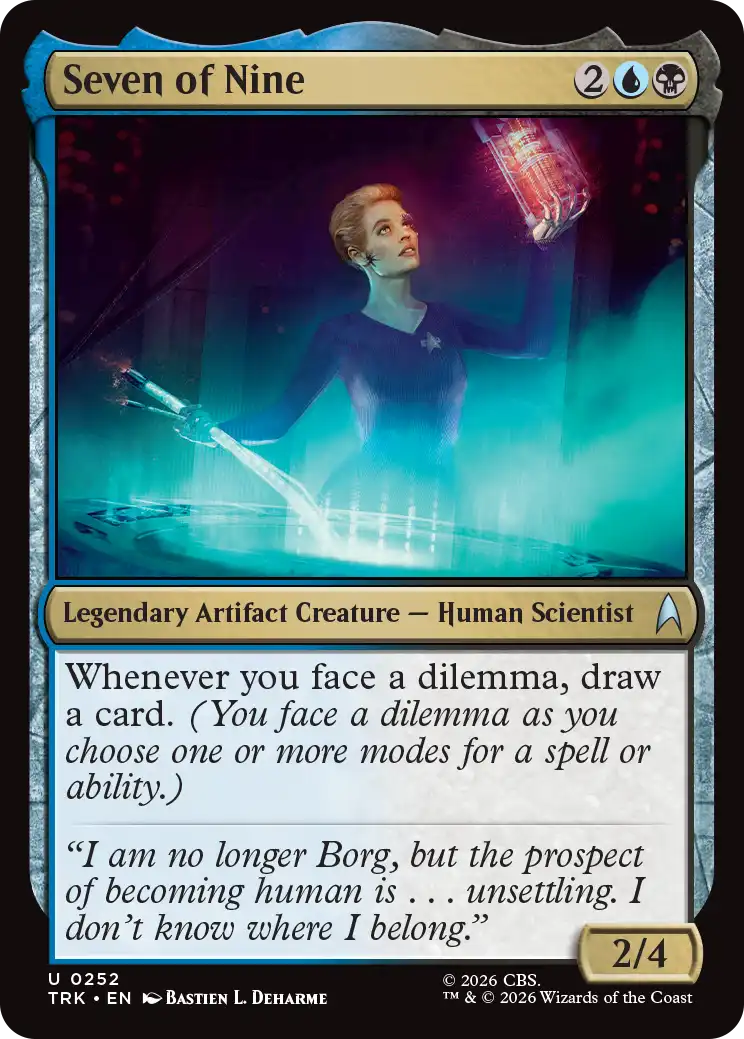 Official digital card image: Wizards of the Coast / CBS. Illustration: Bastien L. Deharme. ©2026 CBS. TM & ©2026 Wizards of the Coast.Publisher source ↗
 Set Phasers to . . . is a useful preview teaching card because its modes make the decision visible. Seven of Nine rewards facing a dilemma. The publisher explains that choosing one or more modes for a spell or ability is the relevant event; the science-fiction phrasing does not create a new free choice whenever you like.
For beginners, read every mode aloud and identify legal targets before announcing the spell. For experienced players, check whether the reward changes which mode you actually want and what interaction you must preserve. Do not spend a flexible answer merely because you can trigger another effect. These are card-reading questions grounded in the revealed mechanic explanation, not a simulated match result.
A concrete timing test: Command Decision offers removal for a creature with power four or greater or a card draw. Because it is a sorcery, you cannot hold it up as a response to an attack. Choose whether an opposing threat needs removing now or whether drawing is the useful mode; Seven of Nine does not make the removal mode instant-speed.
Federation planning: count types, not just bodies
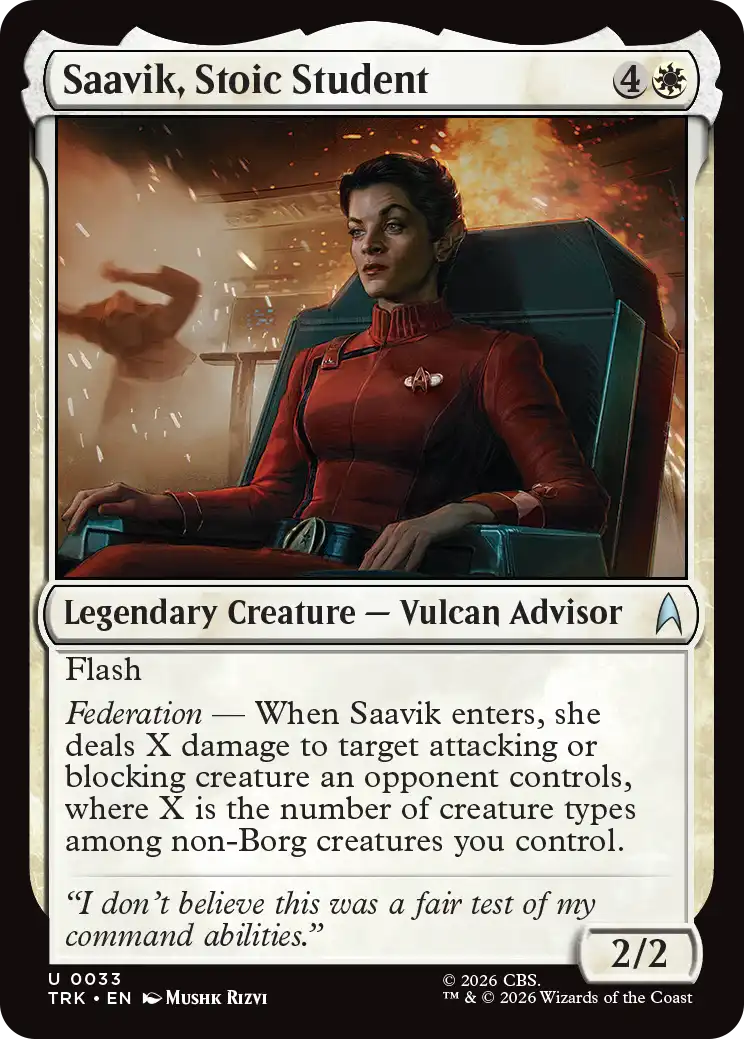 Official digital card image: Wizards of the Coast / CBS. Illustration: Mushk Rizvi. ©2026 CBS. TM & ©2026 Wizards of the Coast.Publisher source ↗
 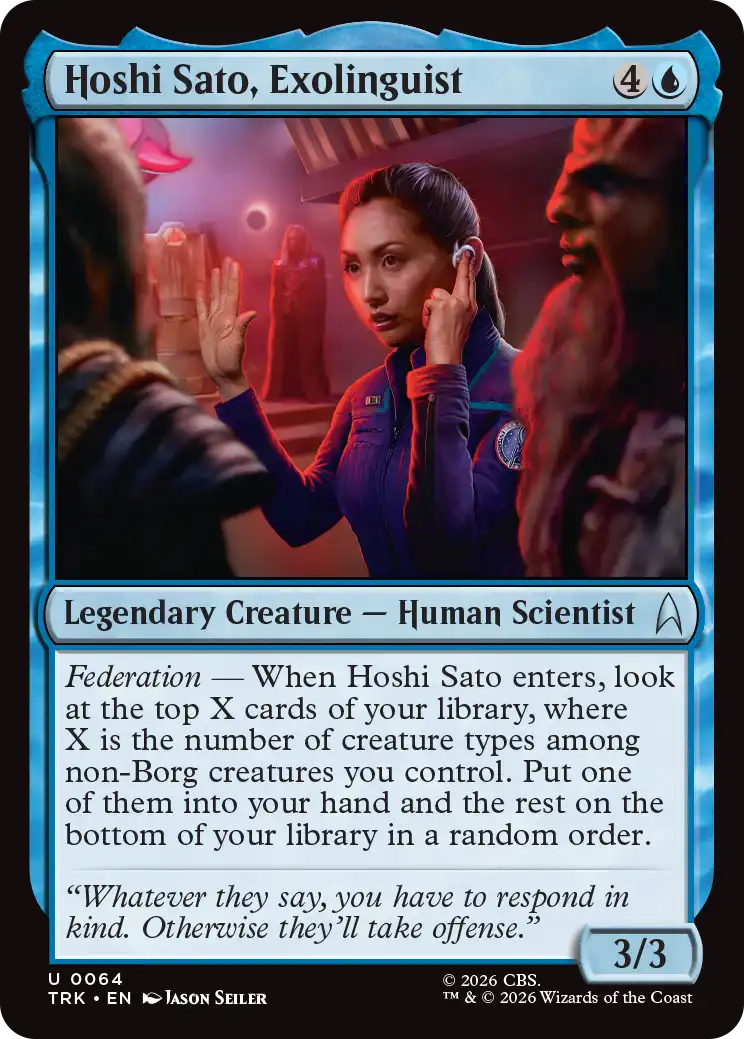 Official digital card image: Wizards of the Coast / CBS. Illustration: Jason Seiler. ©2026 CBS. TM & ©2026 Wizards of the Coast.Publisher source ↗
 Hoshi Sato illustrates federation’s creature-type question. The official explanation counts creature types among your non-Borg creatures. Three creatures do not automatically mean three different types, and adding an artifact body does not by itself establish the required variety.
In your pool, annotate which creatures add a new relevant type and which duplicate a type you already have. Then ask what you gave up in curve, removal or mana to chase that payoff. An experienced pilot should compare the board after an expected removal spell—not only the ideal untouched board. Keep the actual card wording beside the plan; a broad faction story is not a substitute for rules text.
Saavik changes the planning question. Her flash means you can cast her at instant timing. Her federation entry effect deals damage to an opponent’s attacking or blocking creature based on the relevant non-Borg creature types. Count the actual types on resolution and preserve the necessary mana; the mere presence of a Vulcan portrait is not a combat trick. Ask a judge if a removal response changes that count.
Station: your crew cannot do everything at once
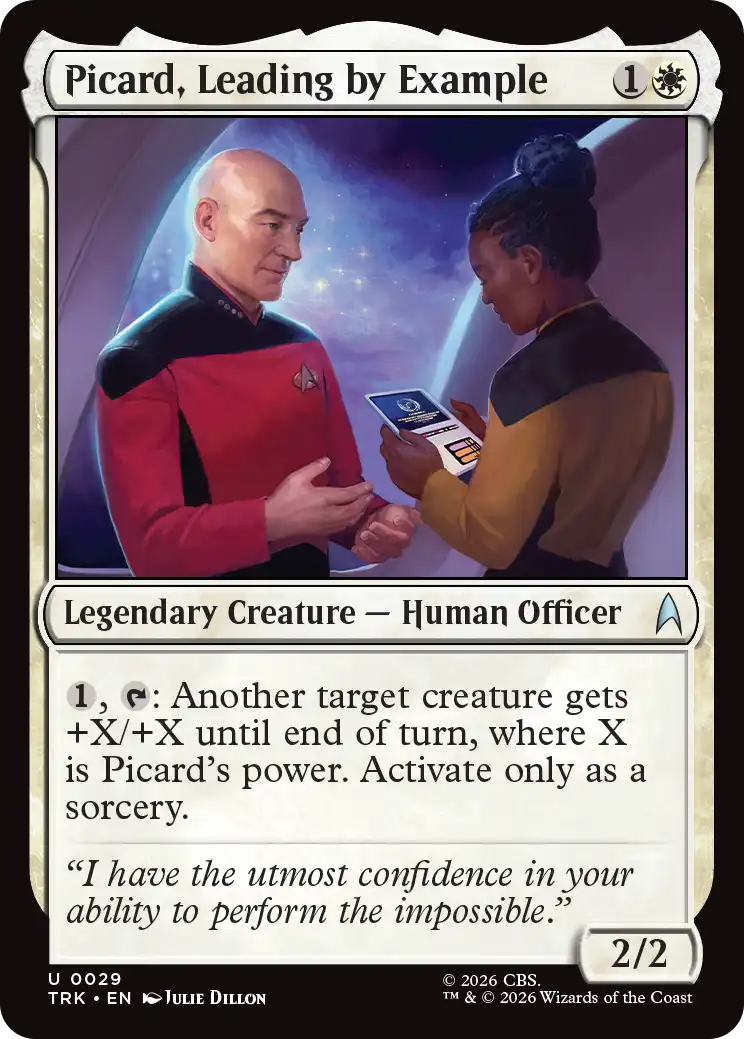 Official digital card image: Wizards of the Coast / CBS. Illustration: Julie Dillon. ©2026 CBS. TM & ©2026 Wizards of the Coast.Publisher source ↗
 Spacecraft begin as artifacts and station can add charge counters that unlock abilities. The revealed Enterprise-D is particularly useful for thinking about when a crew member is most valuable. A creature committed to building your ship may not be available for the attack or defense you wanted from it.
Before using a station ability, name the next meaningful threshold and count the board you leave behind. Check the actual timing restriction and card text; do not assume every ship works at instant speed. Against an aggressive table, reaching the next impressive line can be worse than preserving a blocker. For collecting, the foil Schematic version and an ordinary printing are different acquisition goals even when the underlying card’s game function overlaps.
Picard’s competing job: Leading by Example can tap to give another creature a power-based boost, but only as a sorcery. Plan it in your main phase, not as a surprise after blockers. Tapping him for that ability also means he is not an untapped blocker or an available contributor to another tap-dependent plan. Compare the concrete benefit with the defense you leave behind.
Romulan patience: plan your turn before revealing your hand
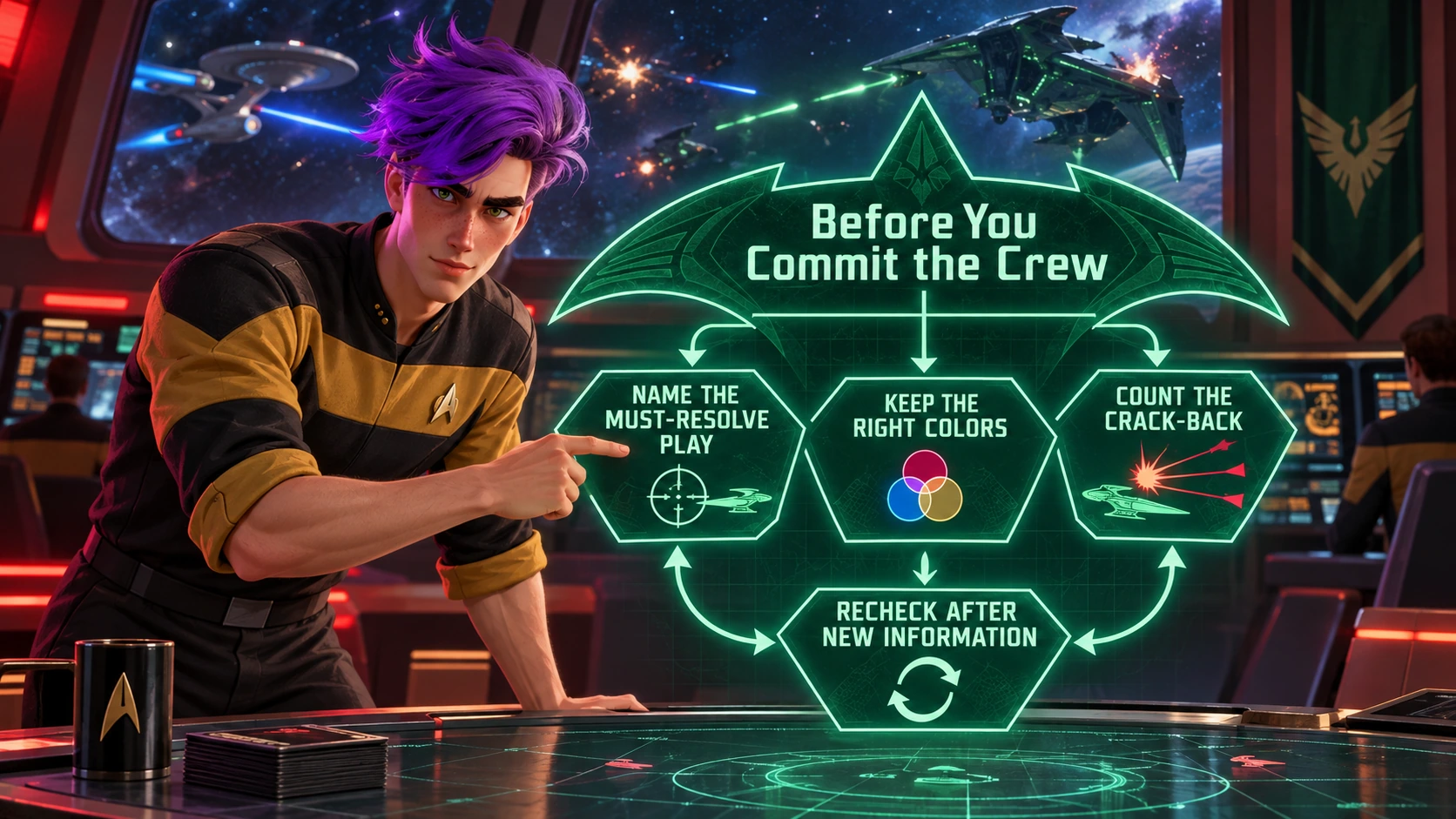
You do not need a speculative faction tier list to practice good sequencing. Before a main-phase commitment, ask three questions: what must resolve, what can wait until information changes, and what answer must remain available? Read mana requirements first. Avoid leaving the wrong colors untapped merely because the remaining total looks sufficient.
In a friendly teaching game, explain your intended sequence, then play it through and discuss one alternative afterward. At an event, keep strategic information private and ask a judge for rules clarification instead of asking an opponent to choose your play. This is general Magic decision discipline, not a claim that “Romulans” form a proven Star Trek draft archetype. The official turn guide is the rules reference.
Klingon pressure: make the attack earn its risk
Count the crack-back before sending the crew forward. Which blockers remain, what happens if the opponent removes your best attacker, and does your ship need those creatures for another job? An exciting all-in attack is not automatically a winning one. The lesson is board assessment, not a new rule attached to a costume.
When practicing, record the turn you committed, the information available and the alternative line. Do not rewrite the decision using cards revealed later. If your repeated problem is a missing interaction spell or unreliable mana, identify that job precisely before buying upgrades. A Collector Display does not fix a deck’s structure by being expensive. Specific cards are a separate purchasing decision; random packs are an opening experience.
Off duty: make the two-player game the point
A quiet game after the alarms is a better reason to buy cards than an endless chase. For two-player home Sealed, allocate six Play packs each and supply enough basic lands. Build separately, play a match, then rebuild from the same pools rather than immediately opening more. A thirty-pack display supports that twelve-pack evening with eighteen packs left for a later plan.
The Yumi-and-Dax quarters scene is explicitly fictional atmosphere, not a photograph of a real Star Trek MTG game or a legal board state. Inspectable card faces stay in the separate official figures. If you want two prepared Commander decks instead, use our crew buying guide; do not expect random Play Boosters to assemble two finished Commander decks.
Protect the collection you actually decided to keep
Sleeve the deck you are playing, not every common by reflex. Keep the valuable cards you plan to retain in appropriate protection and a dry, stable environment; do not assume a particular treatment is immune to wear or humidity. An existing smooth play surface may be sufficient. Premium storage earns its place when you carry a sleeved deck, tokens and a commander together.
The closing shop uses the same exact product identities as the main Magic store. It includes a red Gamegenic Sidekick Pro 100+ XL for a sleeved Commander travel setup, official Magic card-back sleeves, and the Federation Fleet prepared-deck route. The case is premium general-purpose gear, not licensed Star Trek art. No unverified themed playmat, binder or loose-card offer is substituted to make the shelf look fuller.
The stop rule—and what the research cannot promise
Decide what success looks like before checkout: one hosted evening, one Bundle opening, two Schematic promos, or one chosen treatment. Stop when that job is fulfilled. A pictured card is never a promise that the next box contains it. Our ranking is a researched suitability judgment; no physical opening, comparative deck playtest, return forecast or industry consensus is claimed.
We read current publisher product and rules material, the regional delay notice, and transcripts from Joel Are Magic, Card Core and Crabbok. Joel’s sponsor list includes Card Conduit, Dragon Shield and TCGplayer; Crabbok discloses Game Toppers and Battle Foam links. Those are commercial research leads, not product endorsements by Puzzlewick. Crabbok’s September cancellation discussion predates the October shipping notice; its “no other products affected” context is not current delivery assurance.
TCGplayer reconnaissance established presale product records, not a trusted strongest-card ranking; BGG searches mainly returned different Trek games. This article is AI-assisted research, writing and illustration under Robert Pruitt’s editorial direction, presented by fictional curators. Use the Star Trek universe for the next mission, not another compulsory purchase.
The picks
Some links below are affiliate links — as an Amazon Associate, Puzzlewick earns from qualifying purchases, at no extra cost to you. It never changes a pick.
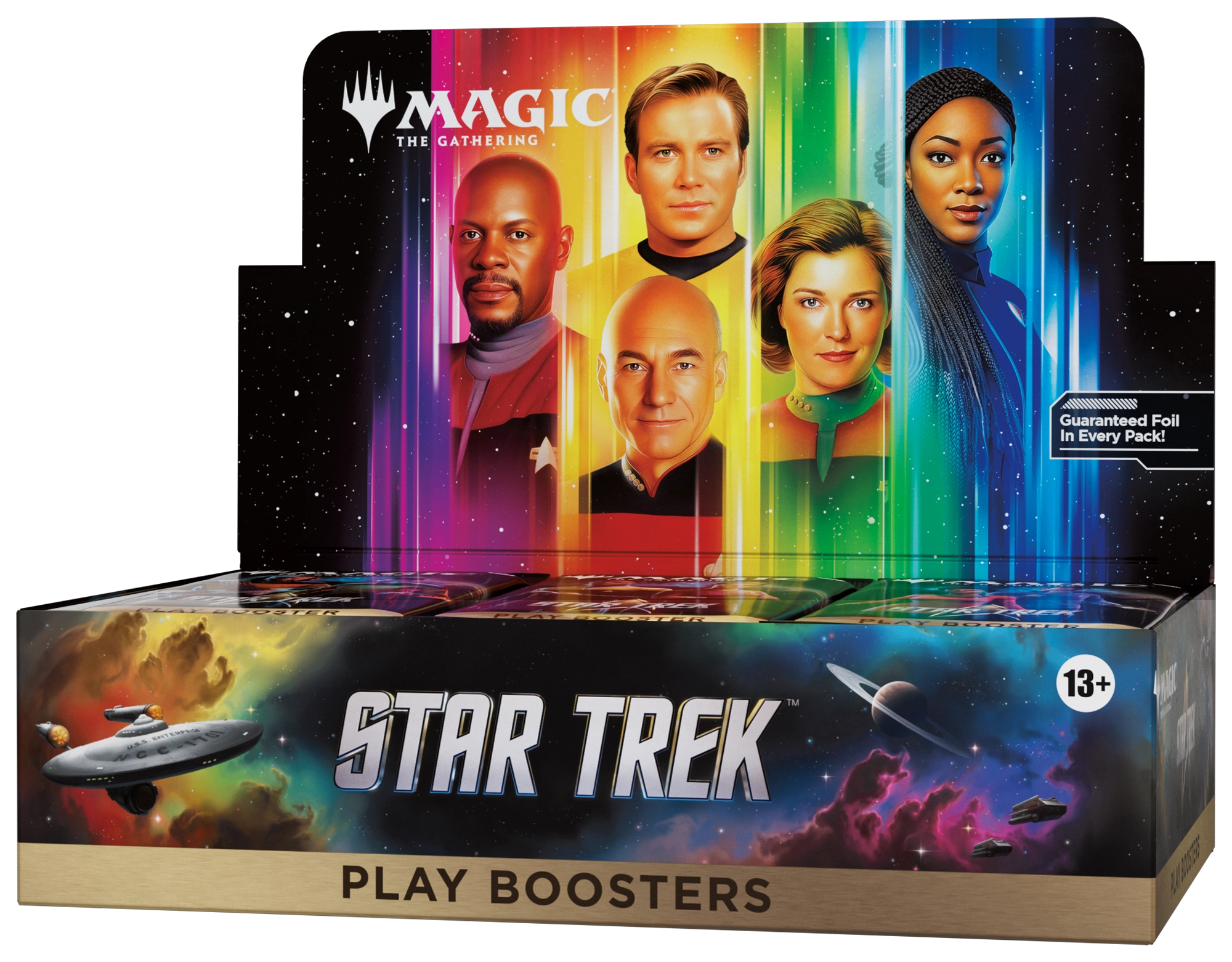
Magic: The Gathering | Star Trek Play Booster Box — 30 packs
Thirty packs become scheduled Draft or Sealed pools when your group supplies basic lands and agrees the format.
- Enough packs for eight traditional Draft seats plus six spare.
- Not a finished deck; supply lands and a hosting plan.
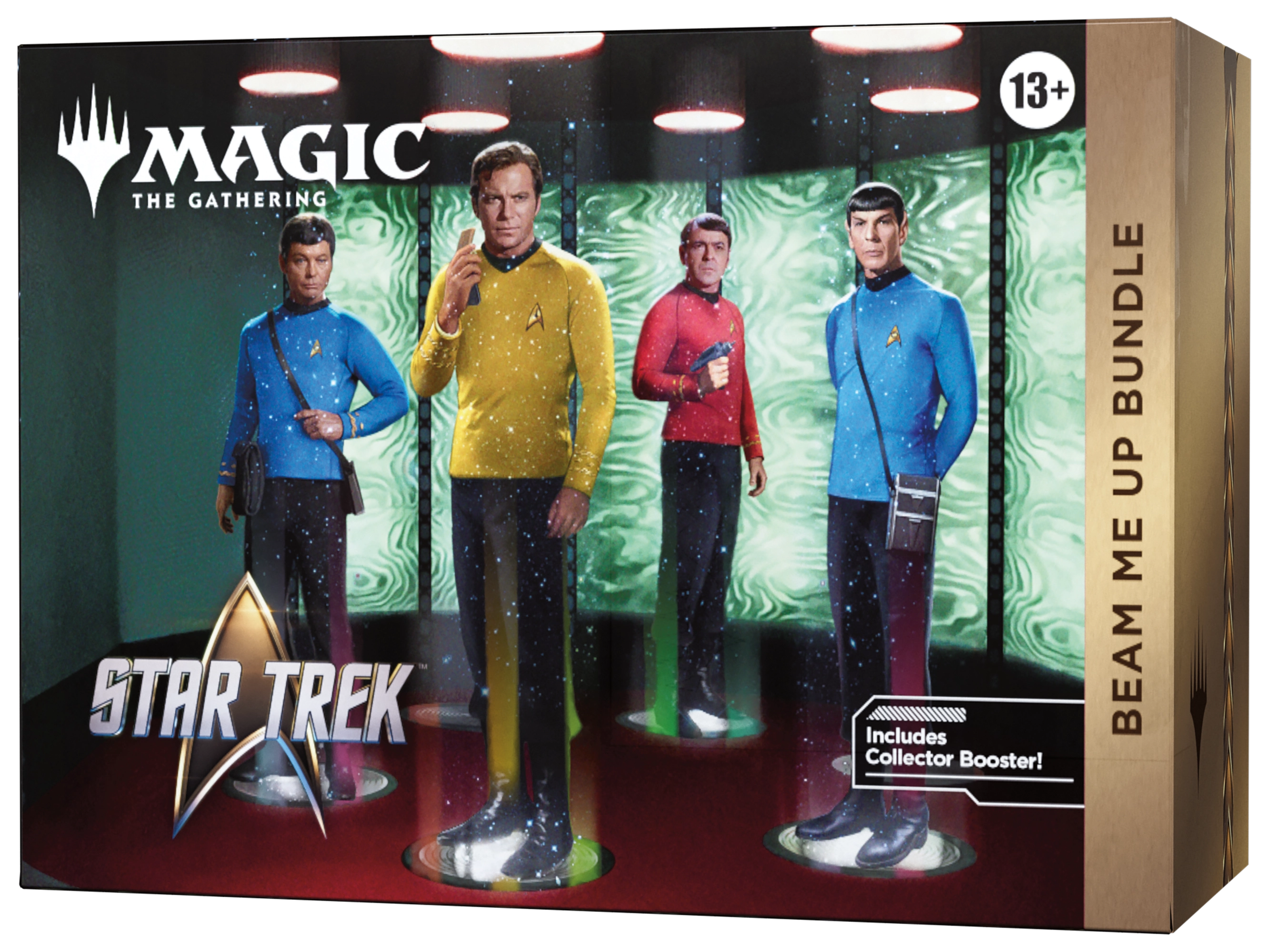
Magic: The Gathering | Star Trek Beam Me Up Bundle
Eight Play packs, one Collector pack and two of eight foil ship-Schematic promos give the premium a distinct purpose.
- Includes premium opening and guaranteed random Schematic extras.
- No particular ship or signed card guaranteed; check regional delivery.
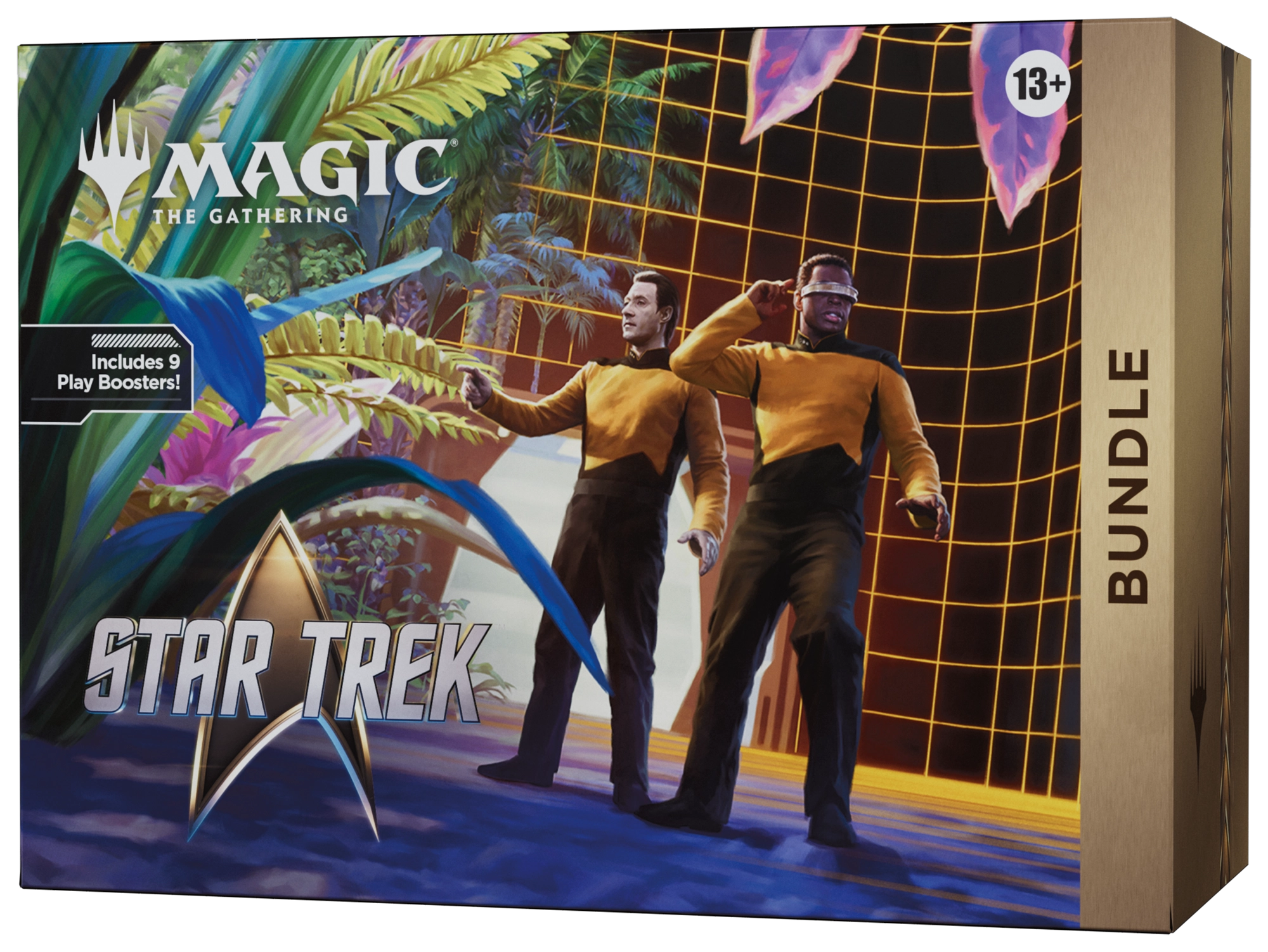
Magic: The Gathering | Star Trek Bundle
Nine Play packs, thirty basic lands, a foil promo, die and themed storage without pretending to be a ready-made deck.
- A finite ordinary opening with useful storage extras.
- No Collector pack or Beam Me Up ship promos.
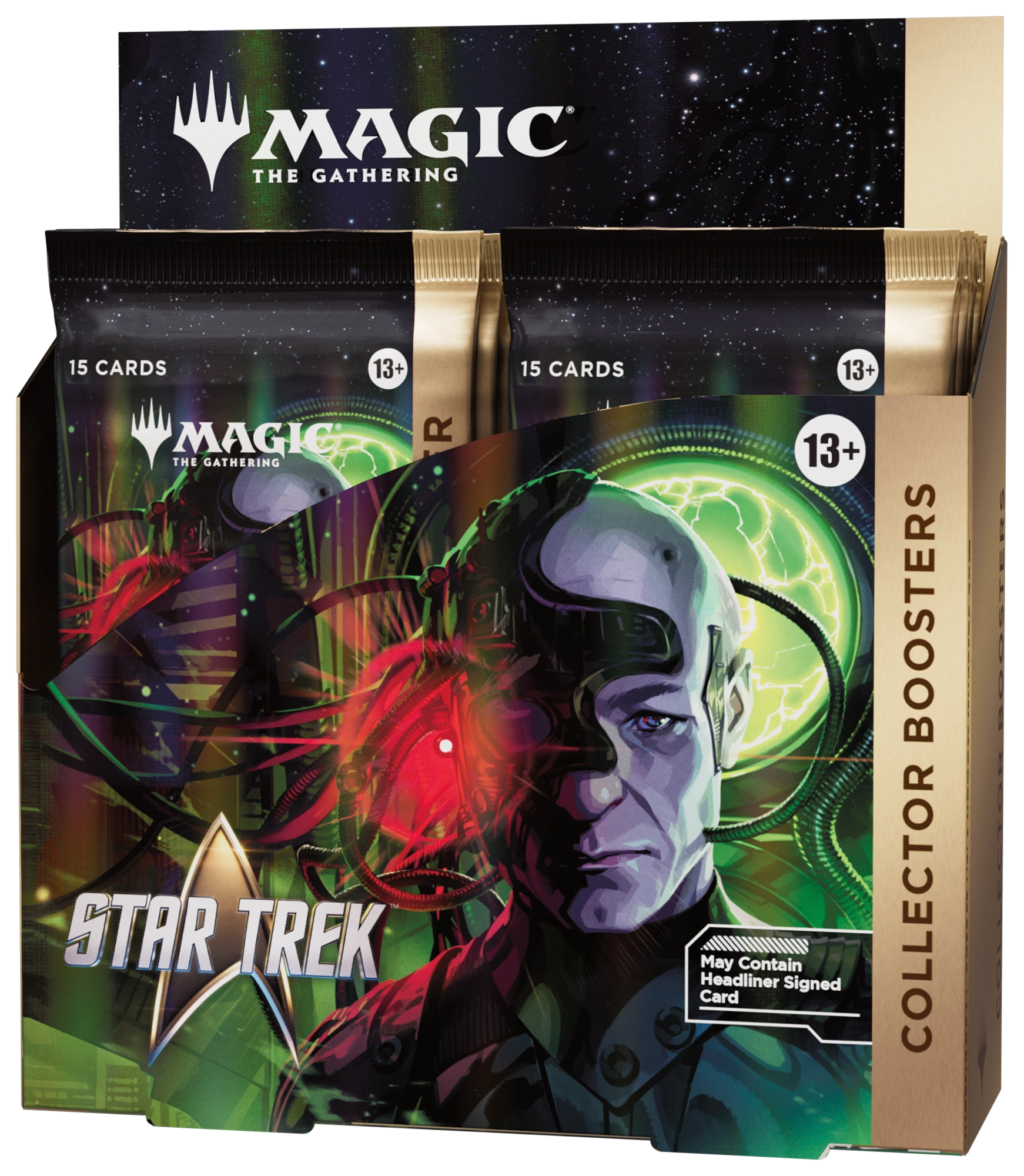
Magic: The Gathering | Star Trek Collector Booster Box — 12 packs
Twelve Collector Boosters are luxury randomized opening, not Limited packs or a guarantee of an actor-signed headliner.
- The route to Collector-exclusive finishes and possible headliners.
- Third-party preorder offers; no signed card or value return guaranteed.
Questions, answered
Can Play Boosters contain foil and special-frame Star Trek cards?
Yes. Play packs have a traditional foil slot and can contain several special-frame treatments. Some premium finishes, including surge-foil LCARS and traditional-foil Stardates, are Collector-only. A particular card is not guaranteed.
Is Beam Me Up the same as the ordinary Bundle?
No. Beam Me Up has eight Play packs, one Collector pack and two of eight possible foil Schematic promos. The ordinary Bundle has nine Play packs and a different foil promo. Neither is a ready-to-play deck.
How many players can use one thirty-pack display?
By pack allocation, it supplies eight traditional Draft seats using twenty-four packs, five six-pack Sealed pools, or two twelve-pack two-player Sealed evenings with six packs left. Basic lands, event structure and ownership agreements are separate.
Research ledger 16 sources · reviewed 2026-10-17
Specifications, rules, current product information, community experience, and contrary evidence were checked against the sources below. Commercial links are kept separate from editorial evidence.
- Wizards: current product specificationmagic.wizards.com/en/news/feature/collecting-star-trek
- WPN: current release and event dateswpn.wizards.com/en/news/star-trek-dates-and-details
- Wizards: Beginner Box cancellationmagic.wizards.com/en/news/announcements/statement-on-the-cancellation-of-the-star-trek-beginner-box
- Wizards: Star Trek product rangemagic.wizards.com/en/products/star-trek
- Wizards: five Star Trek Welcome Decks and teaching purposemagic.wizards.com/en/news/announcements/star-trek-welcome-decks
- WPN: Magic Academy participation and promotional conditionswpn.wizards.com/en/event/magic-academy-star-trek
- Wizards: Arena getting startedmagic.wizards.com/en/mtgarena/getting-started
- Wizards: Commander formatmagic.wizards.com/en/formats/commander
- Wizards: Sealed formatmagic.wizards.com/en/formats/sealed-deck
- Wizards: Pick-Two Draftmagic.wizards.com/en/formats/pick-two-draft
- WPN: intended plans of the four Star Trek crewswpn.wizards.com/en/news/make-it-so-helping-your-customers-chart-a-course-in-magic-the-gathering-star-trek
- WPN: October16 regional product delayswpn.wizards.com/en/news/magic-the-gathering-star-trek-product-delays-in-select-regions
- Wizards: current Star Trek card gallerymagic.wizards.com/en/products/star-trek/card-image-gallery
- Joel Are Magic: October15 beginner guideyoutube.com/watch?v=3I8rTDrDG5g
- Card Core: September29 Collector Display analysisyoutube.com/watch?v=0axe80SBagU
- Crabbok: September23 Beginner Box cancellationyoutube.com/watch?v=UBM2yF5RZ4Q

Come in, take your shoes off — let me show you something.


Keep exploring
The next smart rabbit holes.
✶ Universe HubMagic: The Gathering: the whole buying pathMagic: The Gathering is the deepest construction sandbox in the Big Three: a two-player duel, four-player Commander ritual, draft...🂠 Topic PathTrading Card Games: compare the whole shelfStart with the game and community you want, then buy the smallest product that lets you test it properly. These guides separate...Beginner's GuideMagic Star Trek: Which Box Should You Preorder?Choose one standard Star Trek Commander deck for a ready-made multiplayer crew, Draft Night for four friends, or a Scene Box for a fixed...