Luke Skywalker vs Emperor Palpatine in Ashes of the Empire: Which Star Wars Unlimited Spotlight Deck Should You Start and Upgrade?
Luke is easier to trust, Palpatine is more interesting to troubleshoot, and neither needs a shopping avalanche. Dax breaks down the stock 52-card lists, the first six games, safe upgrade tests, and the point at which boosters stop being useful.

AI-assisted curator persona · research and editorial responsibility: Robert Pruitt · how this guide was made
Last editorial refresh: 2026-08-27 Gold-standard QA: 2026-09-02 10 sources reviewed Affiliate links checked during gold-standard pass

The short answer
Start with Luke Skywalker if you want the stronger, more forgiving Ashes Spotlight Deck: healing preserves attacks and creates a clearer first upgrade shell. Choose Emperor Palpatine if you enjoy sequencing a wide board and converting temporary Advantage into pressure. Play each stock 52-card deck for at least six games, then change one role package at a time. Community reports favor Luke more often, but neither deck is tournament-tuned out of the box.
Decision map
Choose in thirty seconds
Players who want the stronger first fixed Ashes deck and a resilient upgrade shell
Players who prefer villain control, a wider board, and temporary-advantage sequencing
A group upgrading through Draft or a deliberately shared card pool
Luke is the better first Spotlight Deck. Palpatine is the better sequencing seminar. Fantasy Flight Games built both as complete 52-card ready-to-play lists, mixing Ashes cards with earlier cards. Their leader abilities point in opposite educational directions: Luke repairs a unit after it attacks; Palpatine asks a broad board to exploit temporary advantages before they evaporate.
This guide treats the stock lists as curricula, not raw material. First, learn what every card is doing. Then record where the list stalls. Only then change one package and replay the same matchup. If an upgrade cannot name the turn or role it repairs, it is merely a purchase wearing tactical language.
Start here, then go deeper
You are in the right cabinet.
 ✦ Universe HubStar Wars: the whole buying pathThe Star Wars universe at Puzzlewick separates quick card-game entry points from competitive collections, two-player strategy...
 🂠 Topic PathTrading Card Games: compare the whole shelfStart with the game and community you want, then buy the smallest product that lets you test it properly. These guides separate...
 Beginner's GuideStar Wars: Unlimited Ashes of the Empire Beginner Guide: What to Buy, How Support Works, and When to Skip Carbonite BoostersAshes of the Empire is a large, mechanically distinctive Star Wars: Unlimited set, but its five sealed products solve five different...
Which Ashes Spotlight Deck is better out of the box?
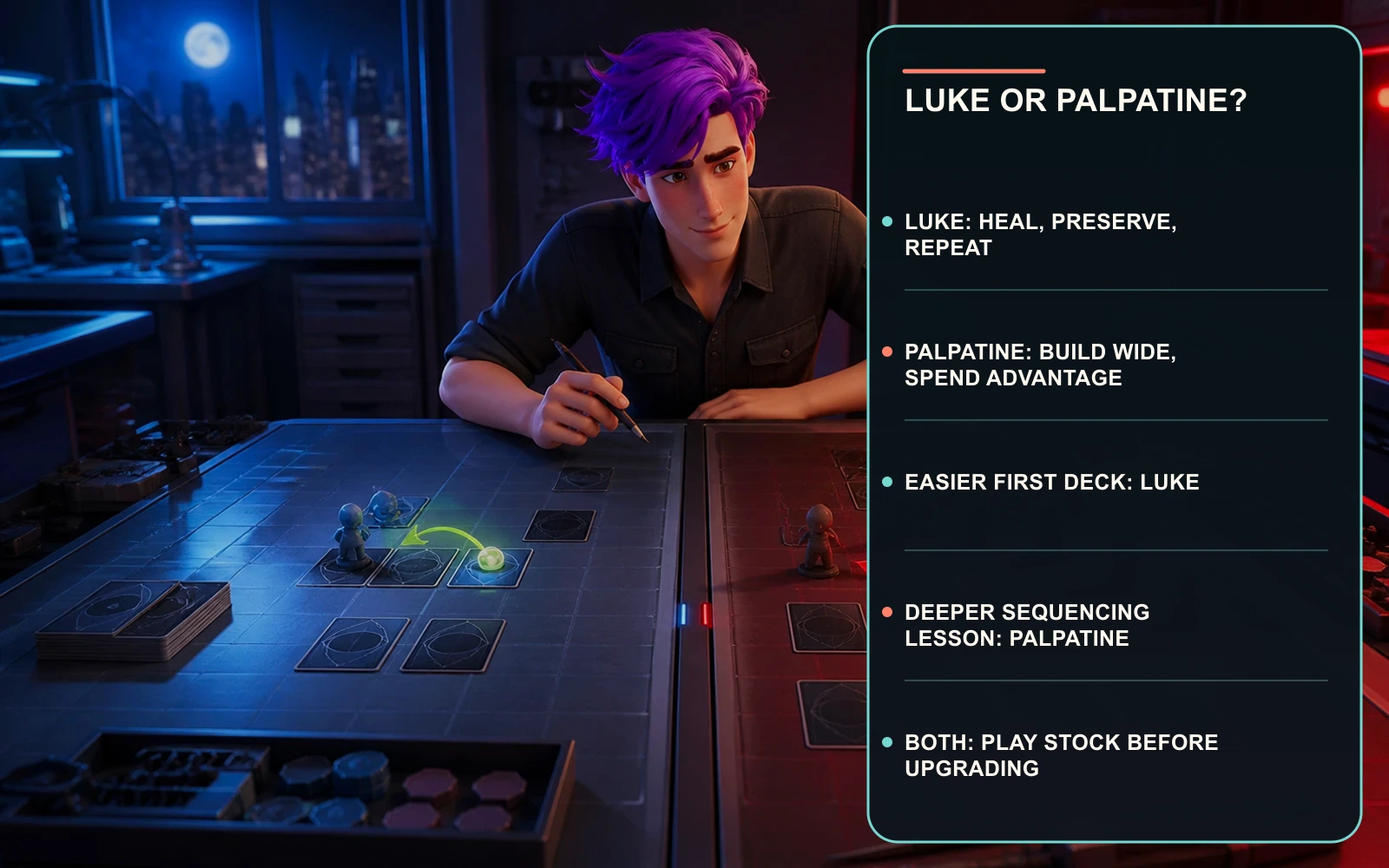
Luke is better for most first-time Ashes players. His Vigilance/Heroism shell gives a visible reward for attacking with the right unit and can preserve a damaged piece that still has work to do. Palpatine's Cunning/Villainy list is more brittle: it wants enough bodies, the correct attack order, and a plan for temporary Advantage before the bonus becomes a souvenir.
"Better" here means easier to learn, replay, and diagnose, not guaranteed to win every stock matchup. Current community discussion more often treats Luke as the stronger shell, but both are teaching products rather than solved event lists. Dax's verdict survives that uncertainty because it rests on decision visibility, not a week of win-rate fog.
How does the Luke deck want to win?
Luke wants useful units to attack, survive, and remain relevant. The stock list includes a spread of ground and space threats plus support such as Luke's Lightsaber. The leader's healing changes combat math: a unit that would normally be traded away may attack, recover, and demand another answer.
The beginner trap is healing a unit merely because damage exists. Ask three questions: does this unit have another profitable attack, does keeping it alive protect a more important piece, and does this heal change the opponent's required action? If all three answers are no, the effect may be comforting rather than consequential.
How does the Palpatine deck want to win?
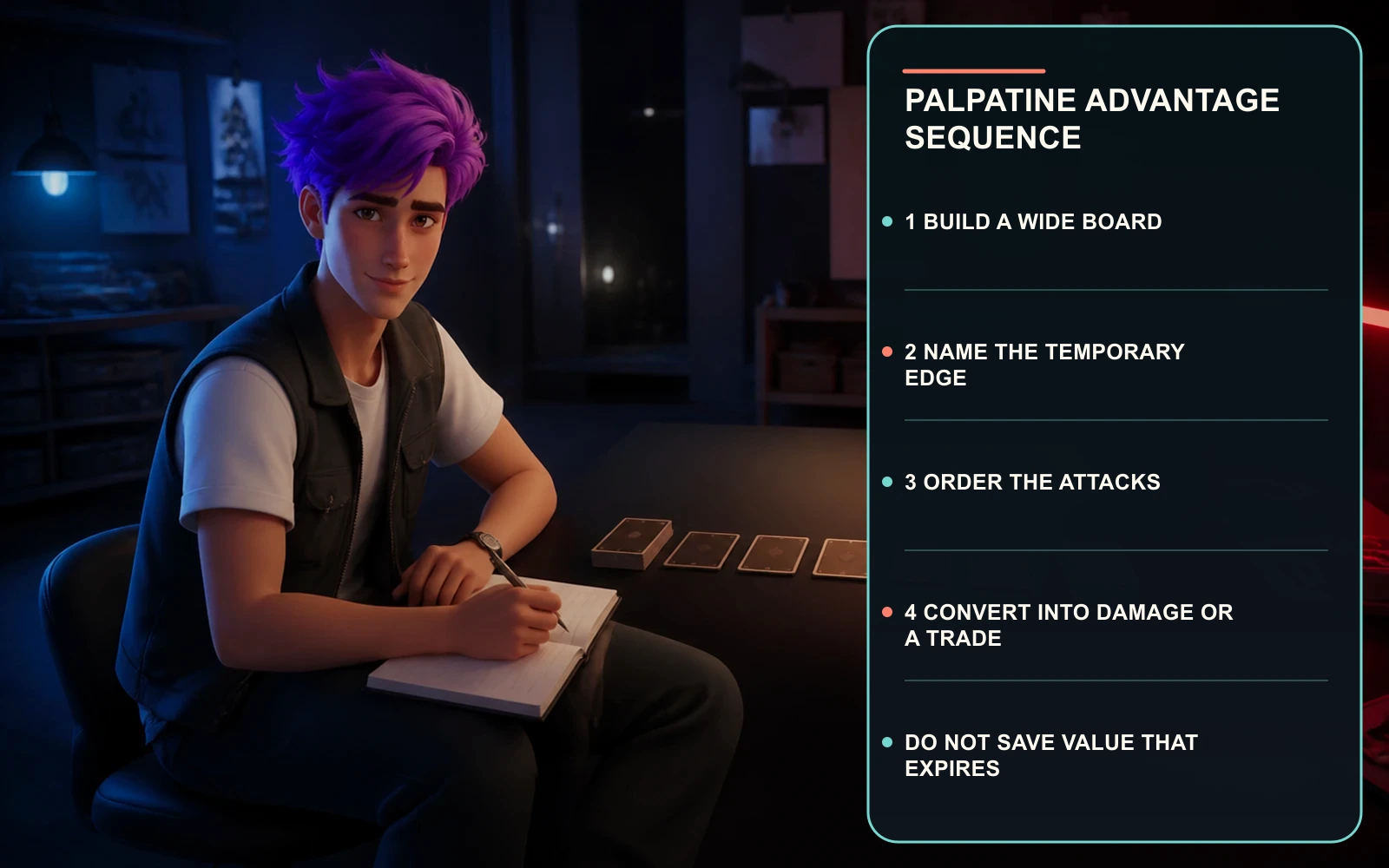
Palpatine wants to widen the board, create Advantage, and spend that temporary edge in the order that produces real damage or favorable trades. The stock deck contains pressure across both arenas and expensive payoffs, which means early sequencing determines whether the top end arrives as a threat or an obituary.
Before each attack, name the Advantage token's intended conversion. Is it protecting a unit, forcing a trade, pushing base damage, or opening the other arena? If the answer is simply "it is a bonus," pause. Temporary resources reward a pilot who plans the exit before entering the room.
What should the first six stock games test?
Play two open-hand games and narrate every attack. Play two closed-hand games and write down every forgotten leader or token interaction. Play two timed games without changing cards. For each deck, record the opening resource decision, first contested arena, first card stranded in hand, and the turn the leader ability produced actual value.
Use the same matchup and starting procedure so the notes can compare like with like. A single exciting win does not prove a package. A single ugly loss does not condemn it. The useful signal is repetition: which role fails in the same way after the pilot understands the rule?
Which first Luke upgrades are worth testing?
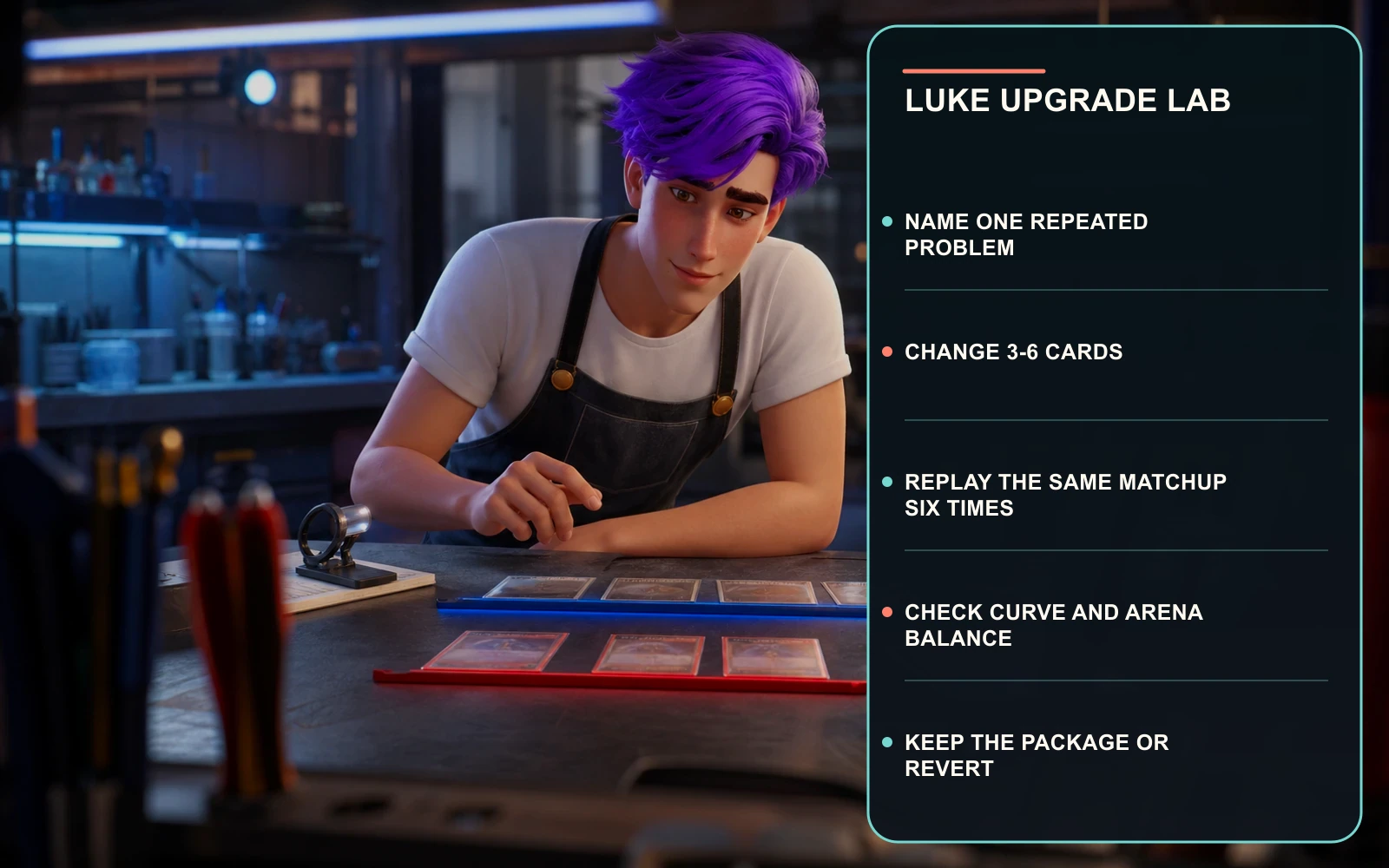
Begin with role density, not a pasted tournament list. If the deck repeatedly wants early space pressure, test another copy of a verified space role already present. If a one-of ground stabilizer is consistently excellent, test a second copy and remove the card that most often remains stranded. If healing has no meaningful target, improve the target density before adding more healing.
Change three to six cards, not twenty. Keep a stable version sleeved separately or save the stock list. Play the same matchup six more times. The test passes when the new package appears often enough to evaluate and solves the named problem without creating a worse curve or arena imbalance.
Which first Palpatine upgrades are worth testing?
Palpatine's first tests should protect the early board and clarify the top end. If the deck fails before expensive cards matter, add consistency to the inexpensive unit roles already doing useful work. If temporary Advantage repeatedly has no profitable recipient, improve the number of units that convert it rather than adding more ways to create it.
Do not assume every impressive villain belongs in the final list. Record how often a card is resourced, how often it arrives too late, and whether it improves the difficult arena. A card that is magnificent only when already ahead is a celebration, not necessarily an upgrade.
Should upgrades come from boosters or exact cards?
Use exact cards for a named upgrade; use boosters for Draft, Sealed, or a finite opening you want for its own sake. A display can teach card evaluation when it supplies an event. It is not a reliable procurement system for the second or third copy of a specific role.
Carbonite has no special tactical exception. Premium treatments can make a favorite deck beautiful, but they do not make random procurement efficient. Build the working list first. Upgrade the finish only after the list has earned permanence. Foil indecision is still indecision, merely visible from across the room.
What is the final Dax verdict?
Buy Luke if this is your first Ashes deck, if you want a resilient board, or if you learn best when the leader's value is visible. Buy Palpatine if you enjoy ordering attacks, managing temporary resources, and solving a more temperamental shell. Buy both when two regular players want a matched fixed laboratory.
Whichever deck wins your shelf, preserve the stock list, play six honest games, name one repeated failure, and change one package. The best Spotlight Deck is not the one with the louder leader. It is the one whose decisions you still want to study after the first cinematic turn becomes ordinary.
What experienced tables keep reporting
Recurring owner patterns, synthesized in Puzzlewick's words. Follow each evidence trail to read the original discussion.
Current owner and first-event discussions
The picks
Some links below are affiliate links — as an Amazon Associate, Puzzlewick earns from qualifying purchases, at no extra cost to you. It never changes a pick.
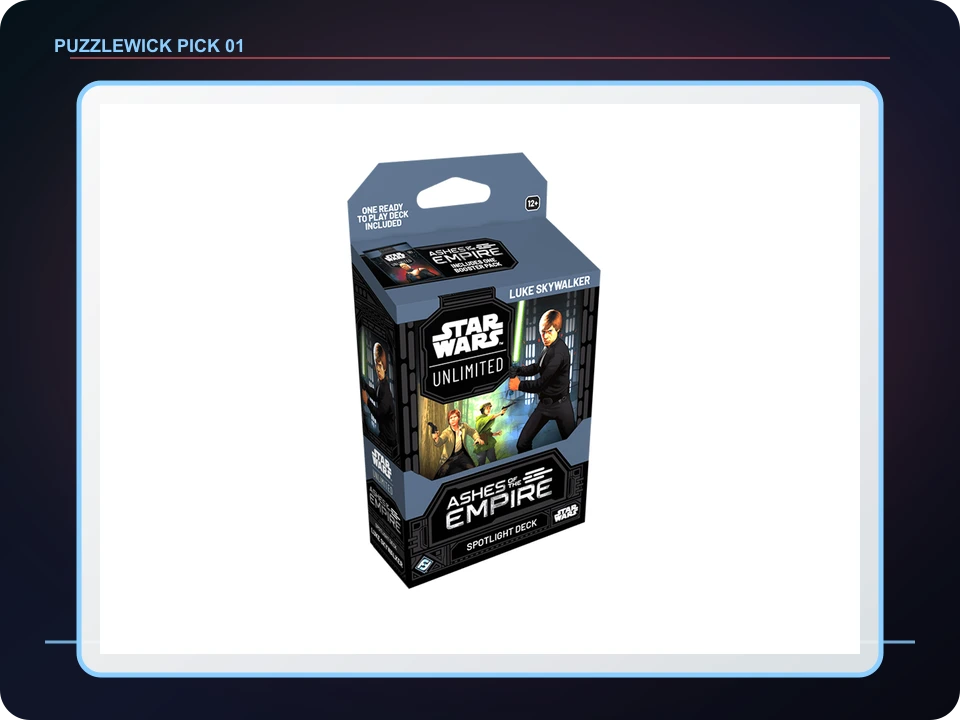
Star Wars: Unlimited - Luke Skywalker Ashes Spotlight Deck
Luke turns healing into tempo and board preservation. The stock list is immediately playable, legible to a learner, and better positioned for careful one-package-at-a-time upgrades.
- Forgiving leader ability
- Visible board-preservation plan
- Strong first upgrade laboratory
- Still not tuned out of the box
- Healing can conceal poor attacks
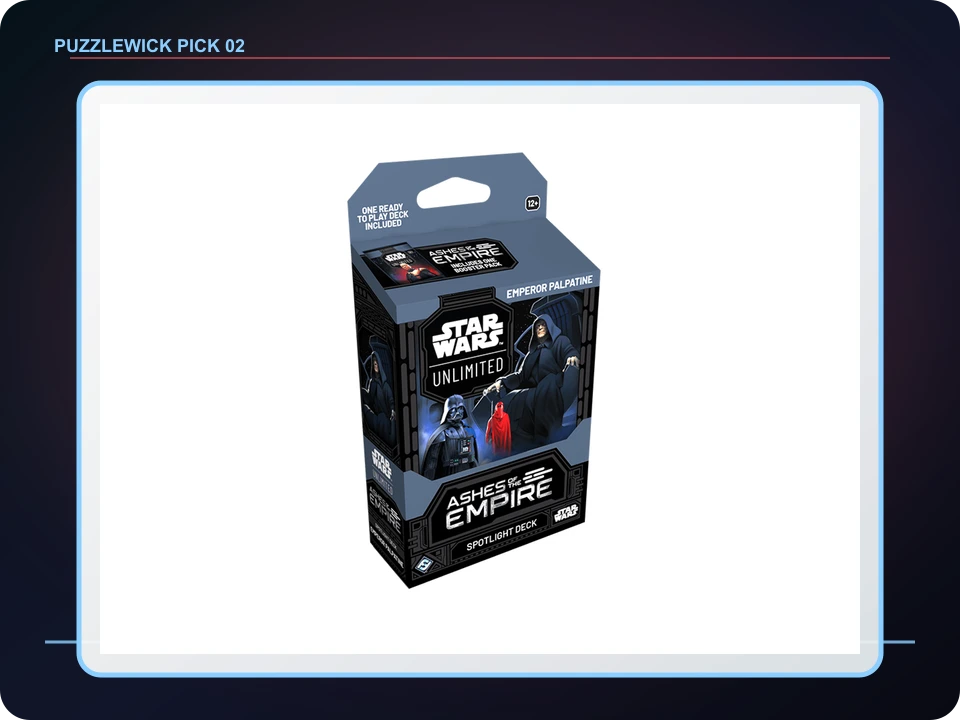
Star Wars: Unlimited - Emperor Palpatine Ashes Spotlight Deck
Palpatine is the more demanding lesson. It can create satisfying pressure, but every temporary bonus asks the pilot to plan the conversion before the value disappears.
- Distinct villain plan
- Rewards careful sequencing
- Interesting upgrade ceiling
- More fragile first decisions
- Stock ratios feel uneven sooner
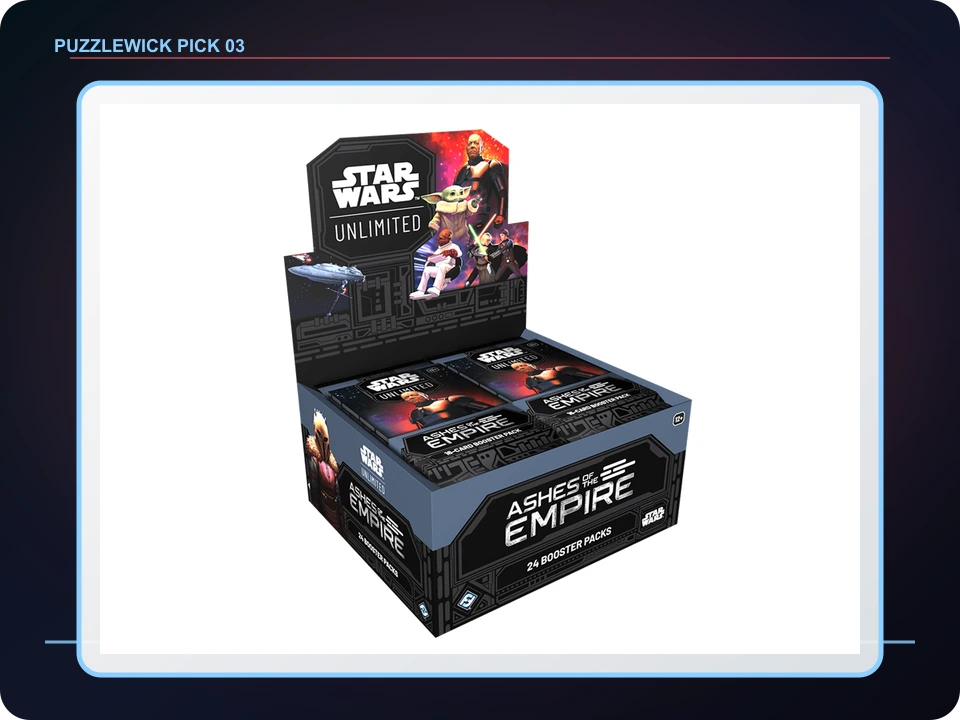
Star Wars: Unlimited - Ashes of the Empire Booster Display
The display is useful when the upgrade process is attached to an event. It is inefficient when two deck pilots simply need known copies.
- Supports Draft
- Broad card-pool exposure
- Shared opening ritual
- No guaranteed upgrade
- Twenty-four packs can outrun the question
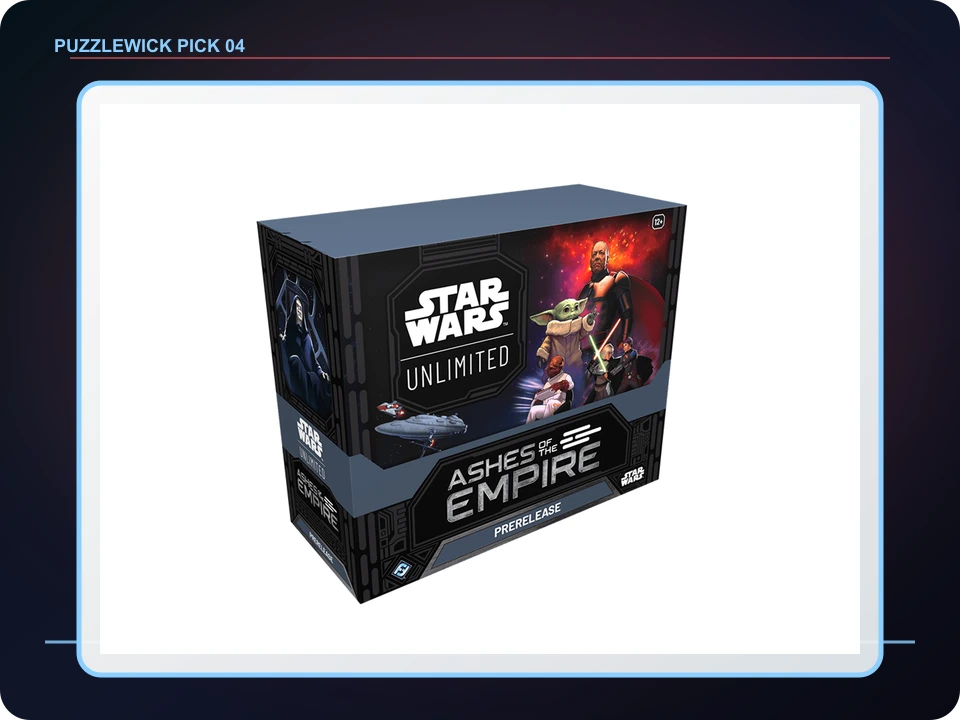
Star Wars: Unlimited - Ashes of the Empire Prerelease Box
A finite Sealed pool teaches card evaluation, curve, and arena balance without turning the Spotlight Deck into a shopping spreadsheet.
- Bounded construction puzzle
- Immediate play payoff
- Good paired exercise
- Not a direct upgrade kit
- Needs rules confidence
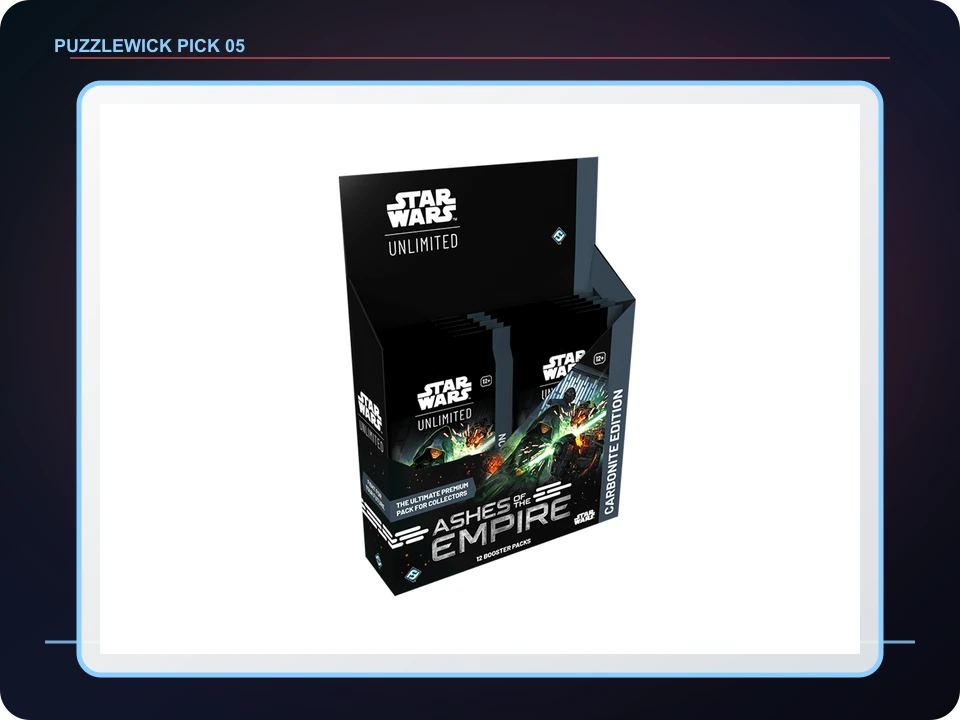
Star Wars: Unlimited - Ashes of the Empire Carbonite Booster Display
Carbonite is included here to make the boundary explicit: it is premium collecting, not the rational source of a planned Luke or Palpatine upgrade package.
- Premium treatment focus
- Distinct collector experience
- High visual drama
- Random upgrades
- Poor learning efficiency
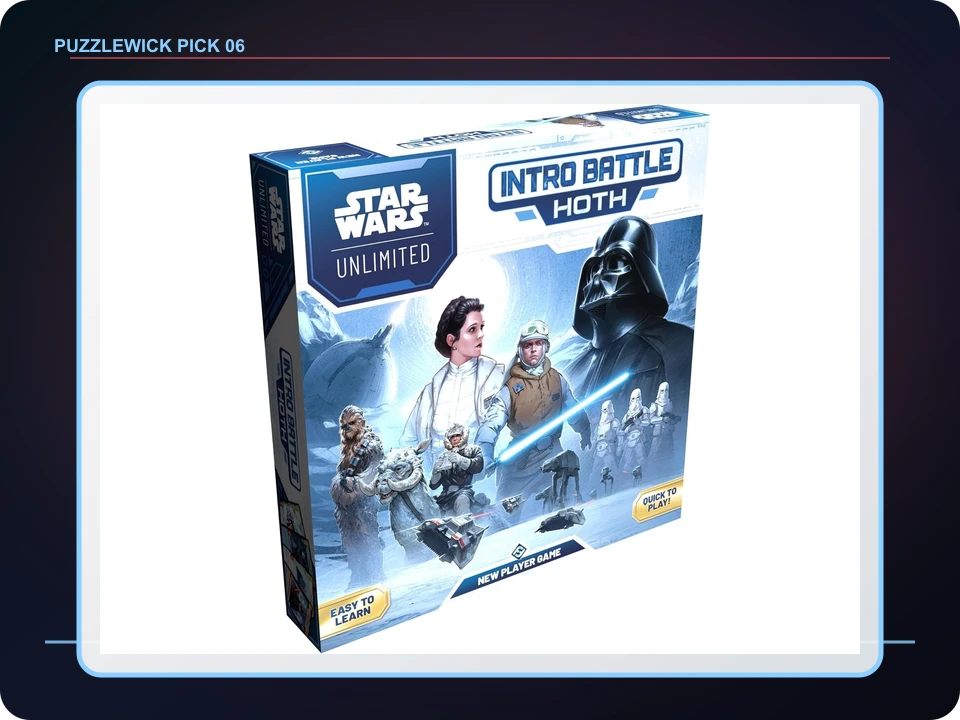
Star Wars: Unlimited - Intro Battle: Hoth
Hoth remains the reset button: a cleaner way to rehearse the base rules before returning to Ashes-specific leader and mechanic pressure.
- Purpose-built lesson
- Two-player reset
- Lower rules burden
- No Ashes upgrades
- Separate product lane
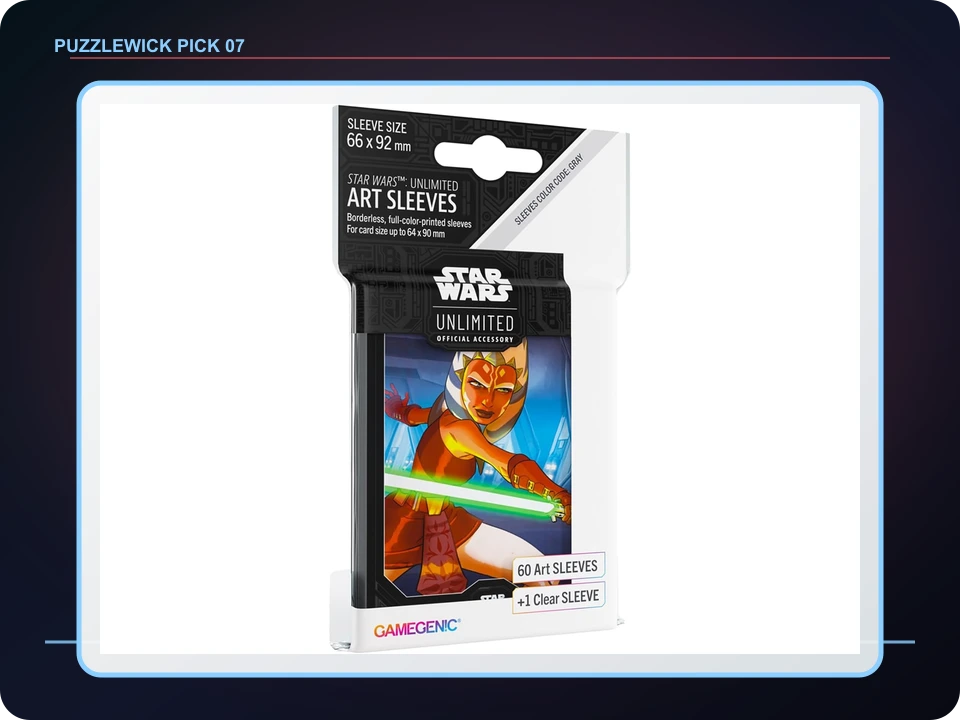
Gamegenic Star Wars: Unlimited Ahsoka Tano Art Sleeves
Official art makes the Heroism kit easy to identify while providing correct standard-card protection.
- Licensed art
- Opaque backs
- Useful deck identity
- Carry matching spares
- Replace visible wear
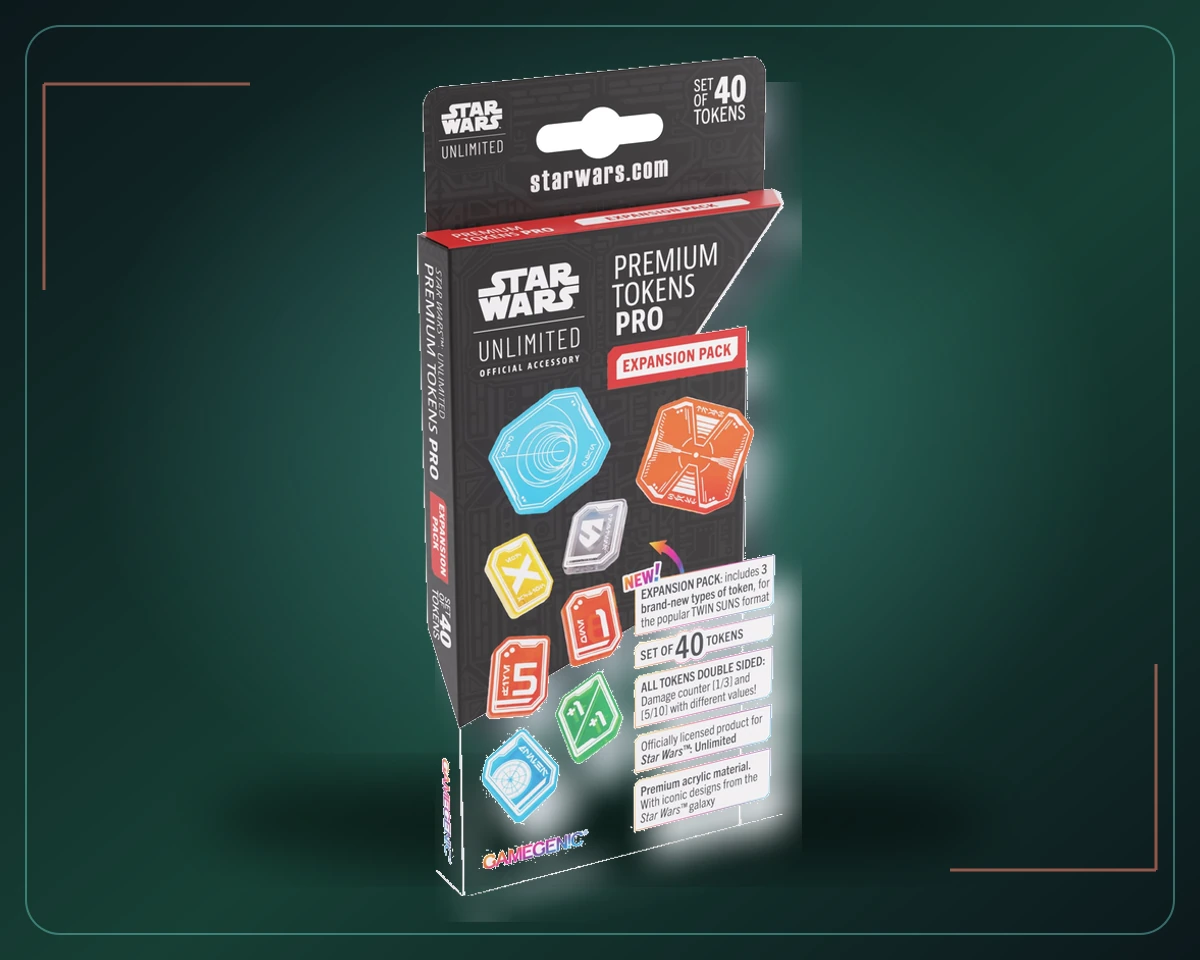
Gamegenic Star Wars: Unlimited Premium Tokens PRO Expansion
Premium Tokens PRO is the upgrade that changes every game in this matchup. Add it after the stock pieces have been used enough to justify faster, clearer state tracking.
- It targets the counters, tokens, dice, or public pieces players touch every turn instead of decorating an unused corner.
- 4.7/5 from 78 Amazon ratings at the Keller, Texas review check
- Premium table pieces become clutter when their symbols are less legible than the cardboard they replace.
- Use the game's official components first and upgrade only after the same friction appears across several sessions.

Gamegenic Star Wars: Unlimited Double Deck Pod — Yellow
The official Double Deck Pod fits the actual job of this comparison: two Star Wars: Unlimited decks, their public cards, and the shared token kit travel as one deliberate matchup instead of disappearing into a generic black box.
- The box keeps the playable kit together and is more satisfying than a generic case when the featured deck has earned permanence.
- 5.0/5 from 8 Amazon ratings at the Keller, Texas review check
- Licensed art can cost more than a plain box with stronger hinges or a more useful dice tray.
- Capacity claims are measured differently; test the real deck after inner sleeves, outer sleeves, tokens, and public cards are added.
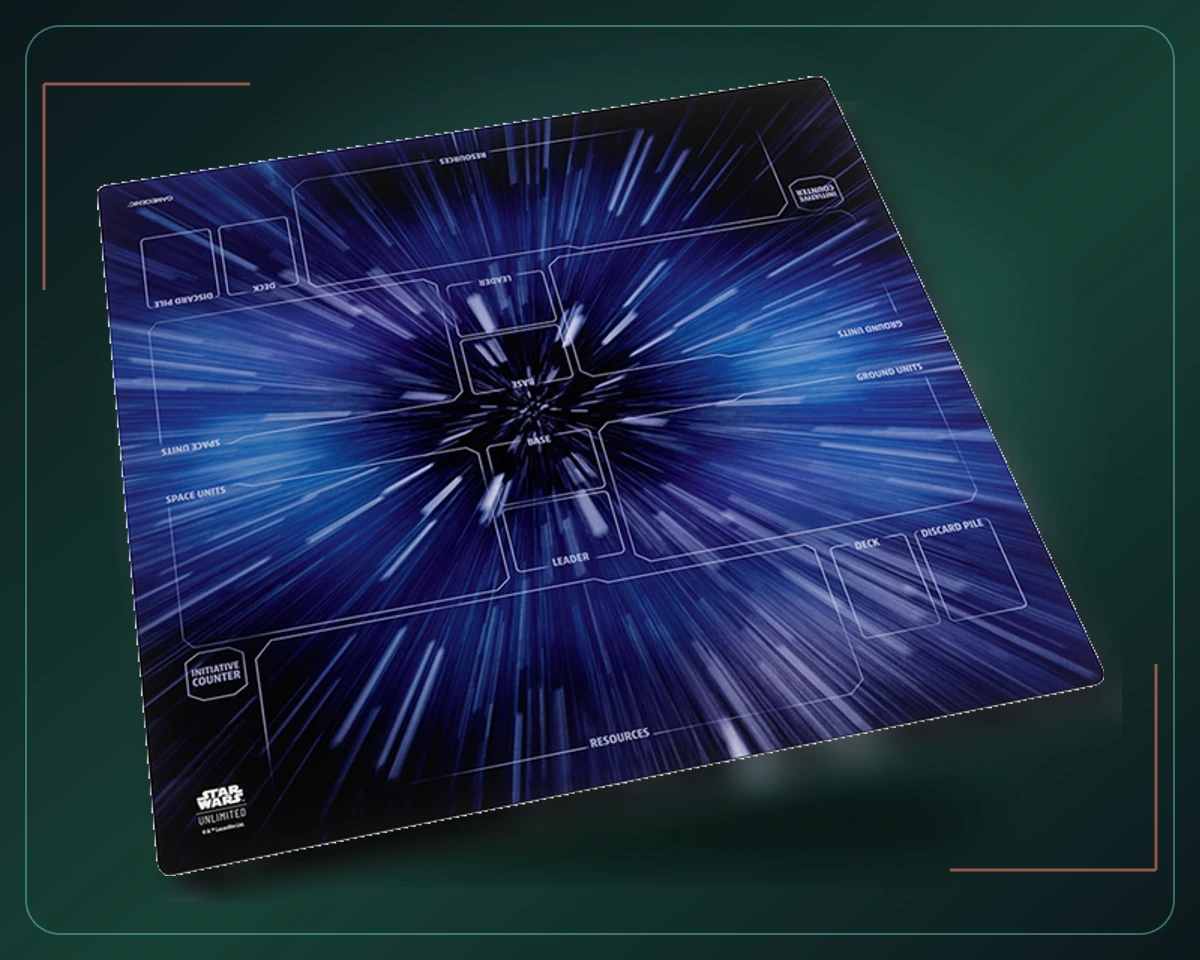
Gamegenic Star Wars: Unlimited Hyperspace XL Game Mat
The licensed Hyperspace XL mat gives the fixed-deck matchup a coherent, slip-resistant surface and easier card pickup; measure the table before committing to its 27.5-inch square footprint.
- The mat protects cards, quiets the table, and provides atmosphere without inventing another component to manage.
- 4.7/5 from 60 Amazon ratings at the Keller, Texas review check
- The first visible wear usually appears at stitched edges or from being stored folded instead of rolled.
- Measure the usable table and verify that printed zones match current rules before choosing a zone-forward design.
Puzzlewick original method
Spotlight Deck test ledger
A reversible six-game protocol separates pilot learning from card availability.
More visible and forgiving leader value
Temporary Advantage and wide-board ordering
Two open, two paused, two independent
Preserves causal visibility
At a glance
| Deck | Core lesson | Forgiveness | First upgrade question |
|---|---|---|---|
| Luke Skywalker | Attack, heal, preserve | Higher | Which useful targets and arena roles need density? |
| Emperor Palpatine | Build wide, create and spend Advantage | Lower | Which early units reliably convert temporary value? |
| — | — | — | — |
| — | — | — | — |
Free download — Luke vs Palpatine Six-Game Upgrade Ledger
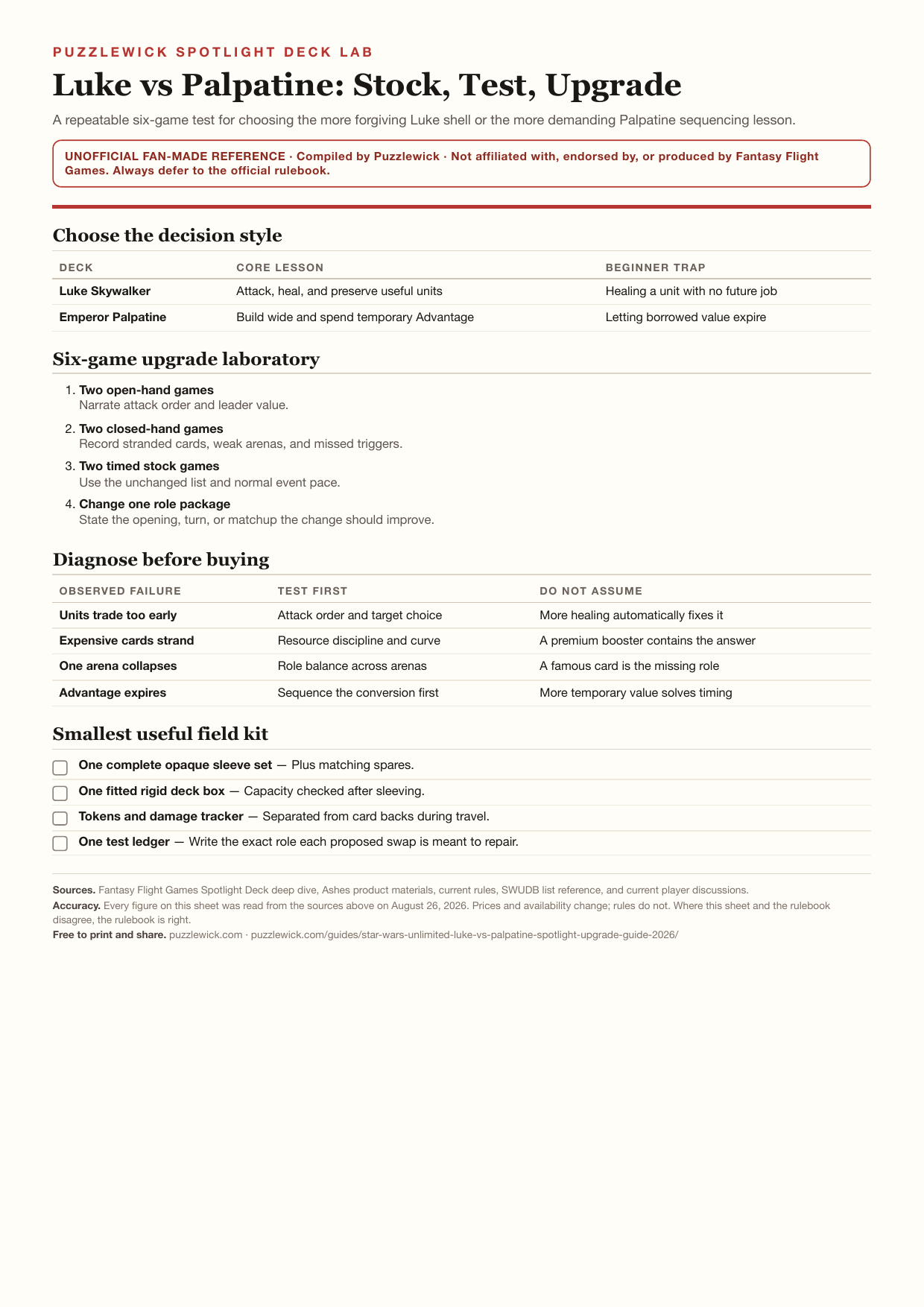
A printable stock-game log, role diagnosis, one-package test, and keep-or-revert decision card.
Unofficial fan-made reference. Compiled by Puzzlewick from the sources listed on the sheet. Not affiliated with or endorsed by the publisher — always defer to the official rulebook.
Questions, answered
Is Luke or Palpatine the better Ashes Spotlight Deck?
Luke is the better first deck for most players because healing and board preservation make decisions easier to read. Palpatine offers the deeper sequencing challenge.
Are the Ashes Spotlight Decks ready to play?
Yes. Fantasy Flight Games presents them as complete ready-to-play 52-card decks. Ready to play does not mean tournament-tuned.
Are the Ashes Spotlight Decks competitive?
Community reports do not treat either stock list as a solved competitive deck. Luke is more often favored as the stronger shell, but both need testing and targeted upgrades for serious events.
How does Luke Skywalker heal units?
Use the exact printed leader text and current rules. The deck is built around preserving useful units after they attack; the strategic test is whether the healed unit has another meaningful job.
How should I use Advantage with Palpatine?
Name the intended conversion before attacking: base damage, a favorable trade, protection, or arena pressure. Temporary value that expires unused has produced nothing.
How many cards should I change first?
Change one small package of roughly three to six cards, then replay the same matchup. Large first rebuilds hide which change worked.
Should I buy a booster box to upgrade a Spotlight Deck?
Not for exact upgrades. Buy singles for known cards. Buy a display for Draft, Sealed, or a finite shared opening.
Do I need both Spotlight Decks?
No. One is enough for a player entering an established group. Buy both when two regular learners want a stable matched pair.
What sleeves fit Star Wars: Unlimited?
Use opaque standard-size card sleeves and carry matching spares. Keep every deck in one consistent sleeve set.
What should I record after each test game?
Record the opening resource choice, first contested arena, first stranded card, leader-value turn, and the repeated role that failed.
Dax's verdict
Luke wins the first-deck verdict because his mistakes are easier to diagnose and his healing keeps useful units in the conversation. Palpatine wins the advanced classroom verdict because temporary Advantage and board width punish lazy ordering. Buy the deck whose decisions you want to repeat. Upgrade with tested singles, not a ceremonial pile of random packs.
Research ledger 10 sources · reviewed 2026-09-02
Specifications, rules, current product information, community experience, and contrary evidence were checked against the sources below. Commercial links are kept separate from editorial evidence.
- A Fated Confrontationstarwarsunlimited.com/articles/a-fated-confrontation
- Ashes of the Empire overviewstarwarsunlimited.com/articles/ashes-of-the-empire
- Ashes of the Empire productsstarwarsunlimited.com/products/set-8-ashes-of-the-empire
- Ashes on BoardGameGeekboardgamegeek.com/boardgame/474326/star-wars-unlimited-ashes-of-the-empire
- Luke versus Palpatine gameplay videoboardgamegeek.com/video/616849/star-wars-unlimited/luke-skywalker-vs-palpatine-spotlight-deck-ashes-o
- Ashes on TCGplayertcgplayer.com/categories/trading-and-collectible-card-games/star-wars-unlimited/ashes-of-the-empire
- Ashes Spotlight listssw-unlimited-db.com/community/ashes-of-the-empire-spotlight-lists
- Ashes Spotlight Deck owner discussionreddit.com/r/starwarsunlimited/comments/1usubrd/are_ashes_spotlight_decks_good_out_of_the_box
- Luke Spotlight upgrade discussionreddit.com/r/starwarsunlimited/comments/1vfksr3/upgrading_the_luke_spotlight_deck_from_ashes_of
- Palpatine Spotlight upgrade discussionreddit.com/r/starwarsunlimited/comments/1vgda5i/upgrading_the_palpatine_spotlight_deck_from_ashes

I'll be honest with you — flattery is boring.


Keep exploring
The next smart rabbit holes.
✦ Universe HubStar Wars: the whole buying pathThe Star Wars universe at Puzzlewick separates quick card-game entry points from competitive collections, two-player strategy...🂠 Topic PathTrading Card Games: compare the whole shelfStart with the game and community you want, then buy the smallest product that lets you test it properly. These guides separate...Beginner's GuideStar Wars: Unlimited Ashes of the Empire Beginner Guide: What to Buy, How Support Works, and When to Skip Carbonite BoostersAshes of the Empire is a large, mechanically distinctive Star Wars: Unlimited set, but its five sealed products solve five different...