The Hobbit MTG Cards Worth Checking in 2026: Smaug, Surge Foils, and the Lucky-Box Trap
Robert opened one modest Hobbit box and watched the live card total briefly climb past twice his purchase cost. That is a useful warning to check every finish, and a terrible reason to assume the next box will do it again.


Written and reviewed by Robert Pruitt · how this guide was made
Last editorial refresh: 2026-09-11 Gold-standard QA: 2026-09-11 16 sources reviewed Affiliate links checked during gold-standard pass

The short answer
The Hobbit cards most worth checking first are the approximately 500 Gleaming Gold Smaug copies, surge-foil treatments, and cards with real play demand such as Bilbo’s Gambit, Wizard’s Staff, Belladonna Took, and Radagast of Rhosgobel. Verify collector number, finish, frame, and condition before using any price signal; one lucky opening is not expected value.
Decision map
Choose in thirty seconds
Experienced collectors who deliberately want premium treatments
Draft, Sealed, or a large shared opening
A bounded personal sampler with lands and storage
Robert’s first Hobbit box produced a strange little collector lesson: the live estimates on several pulls briefly added up to a little more than twice what he paid. That is a genuine opening story. It is not a forecast, a guarantee, or the expected value of the next box.
The useful conclusion is quieter: do not sweep a Hobbit card into the trade pile until you have checked which physical object it is. The same card name can appear with a different collector number, finish, frame, supply profile, and condition. This guide maps the current signals without freezing volatile prices into the page, then gives every card a sensible destination: deck, collection, research tray, or trade case.
Start here, then go deeper
You are in the right cabinet.
 ✶ Universe HubMagic: The Gathering: the whole buying pathMagic: The Gathering is the deepest construction sandbox in the Big Three: a two-player duel, four-player Commander ritual, draft...
 🂠 Topic PathTrading Card Games: compare the whole shelfStart with the game and community you want, then buy the smallest product that lets you test it properly. These guides separate...
 Buying GuideMagic: The Gathering | The Hobbit Beginner On-Ramp 2026: What to Buy, Learn, Sleeve, and Say Before Your First TableThe calm path from curious Tolkien fan to competent Magic player, with the right first product, a protection kit, a table-ready...
Why can two Hobbit cards with the same name be different collector objects?
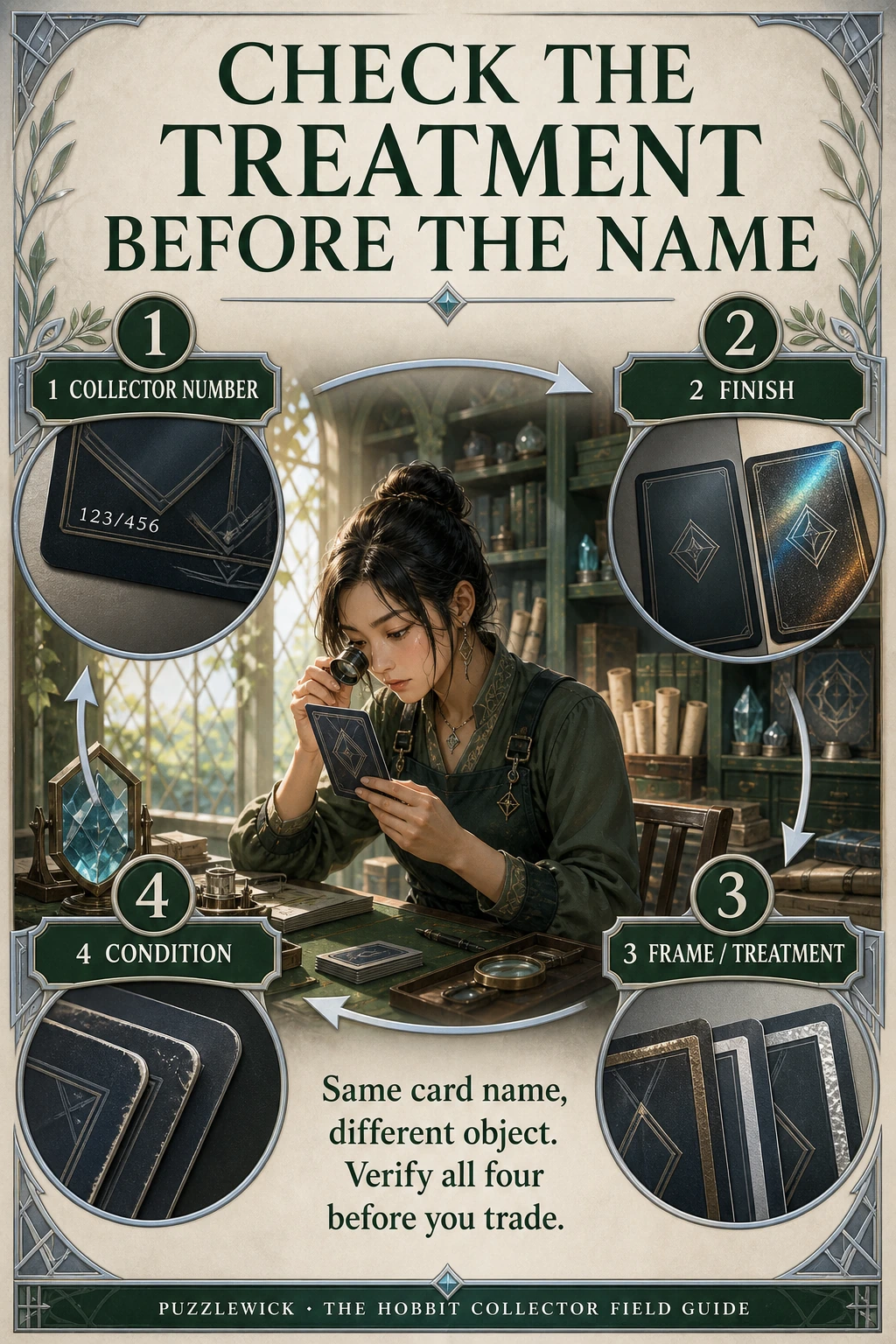
A card name tells you what the piece does in a deck. It does not fully identify the object in your hand. For collecting and trading, record four things: collector number, finish, frame or treatment, and condition. A regular Smaug, a surge-foil Smaug, and Gleaming Gold Smaug are related printings, not interchangeable price records.
The collector number is the fastest anchor because it distinguishes variants without asking a foil surface to behave under bad room light. Finish comes next: nonfoil, traditional foil, surge foil, and a unique premium treatment can occupy very different demand lanes. Frame or treatment identifies the visual family. Condition finishes the record because a sought-after card with edge wear is still the worn copy you actually own.
Which Hobbit cards sit at the top of the collector-value pyramid?
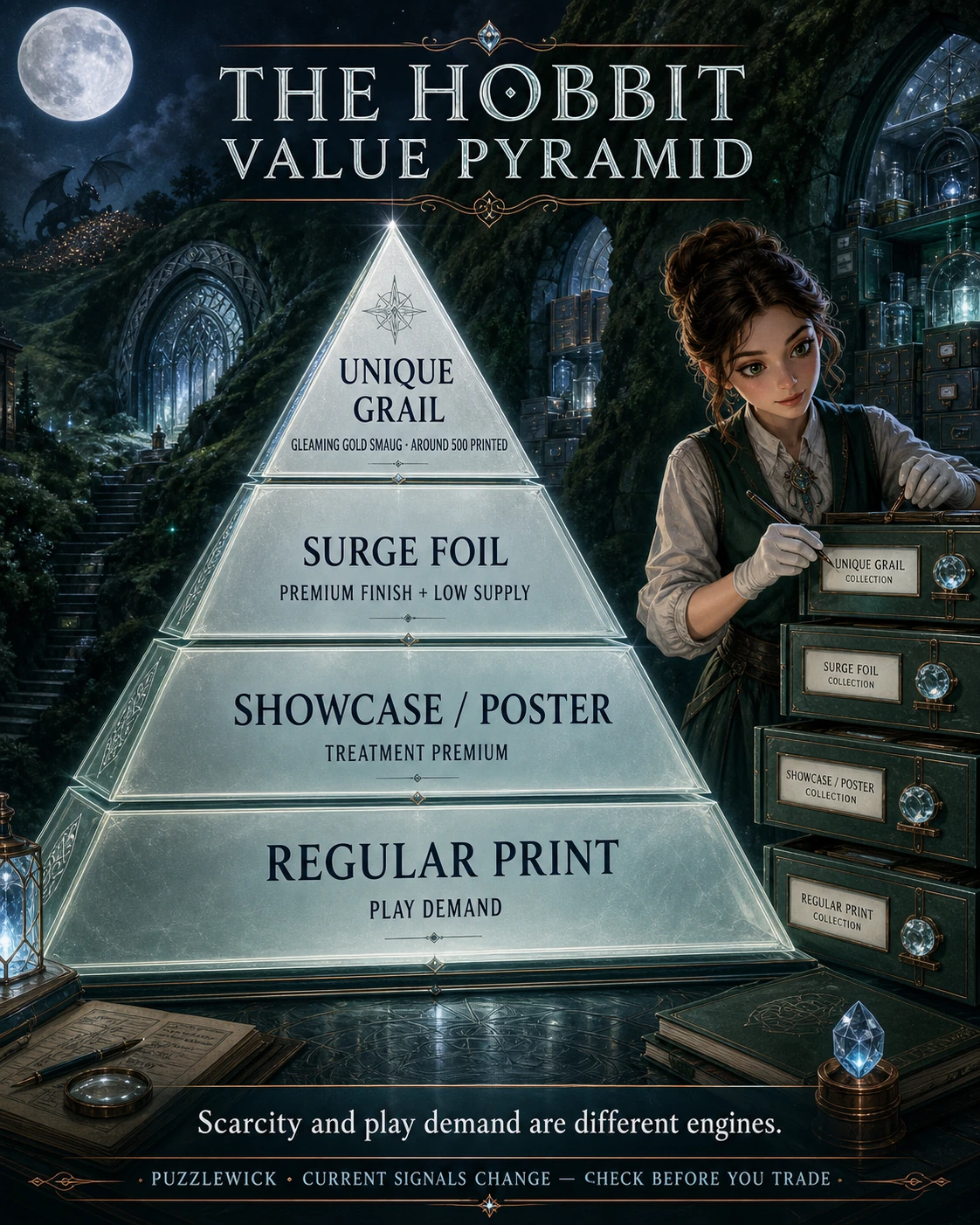
Gleaming Gold Smaug is the scarcity headliner. Wizards says roughly 500 copies of collector number 249 were printed and places that English-only treatment in Collector Boosters of any language. That is a materially different supply fact from an ordinary mythic or a premium treatment with no stated tiny print run.
TCGplayer’s August 19 value editorial was also unusually surge-foil-heavy: Gleaming Splendor, Beorn the Fierce, Orcrist, Fateful Discovery, Book Cover treatments, The Arkenstone, The Queen of Dale, and Smaug printings all appeared in its current snapshot. That tells you which exact objects deserved a second look that week. It does not freeze a price, predict the next box, or turn an asking price into a completed sale.
Use the pyramid as a hierarchy of reasons to verify. A playable regular card can move while an ornamental variant rests, and a new deck can change demand faster than a graphic can be updated.
Which cards have real player demand instead of only collector sparkle?
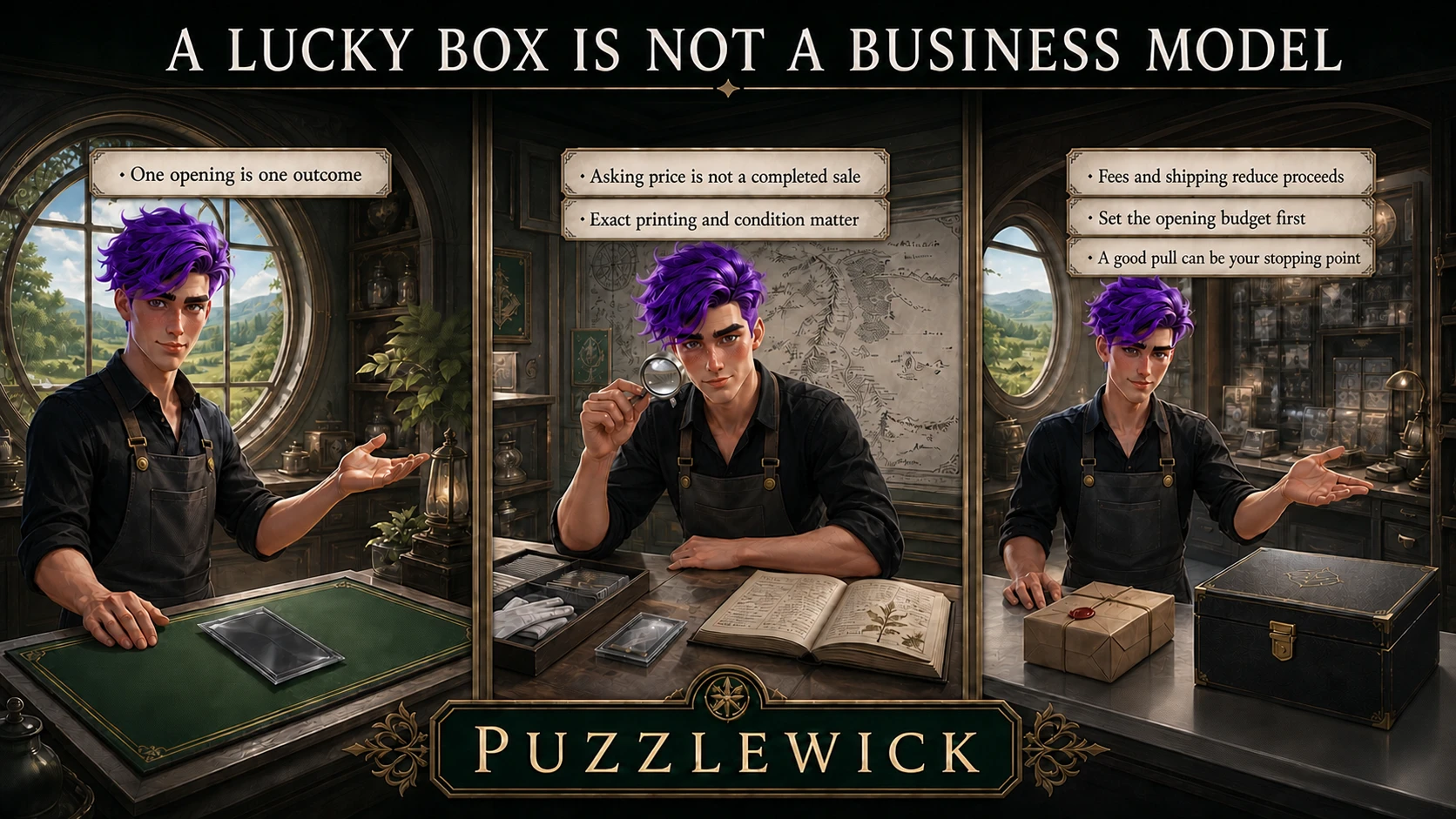
TCGplayer’s August 28 weekly Magic list showed a different engine from collector rarity. Giant’s Boulder, Little Bear, the Middle-earth Journey full-art basics, and Radagast of Rhosgobel appeared alongside broader format staples. The list names a week and a ranking, but not units sold, geography, or full methodology, so Puzzlewick treats it as a useful TCGplayer demand signal, not a global market census.
Keep the lanes separate. A surge foil may command attention because the physical object is scarce and beautiful. A regular card may move because decks want copies. Before trading, ask whether the current signal belongs to this treatment or to the underlying playable card.
Set code matters too. Sting collector 273 is HOB. Mox Amber, The Reaver Cleaver, and Arcane Signet collectors 94–96 are HOC Commander-set printings. They can be desirable Hobbit objects, but they are not cards to expect from an HOB Play Booster. A familiar world is not a shared collation sheet.
What should you do the minute a promising card leaves the pack?
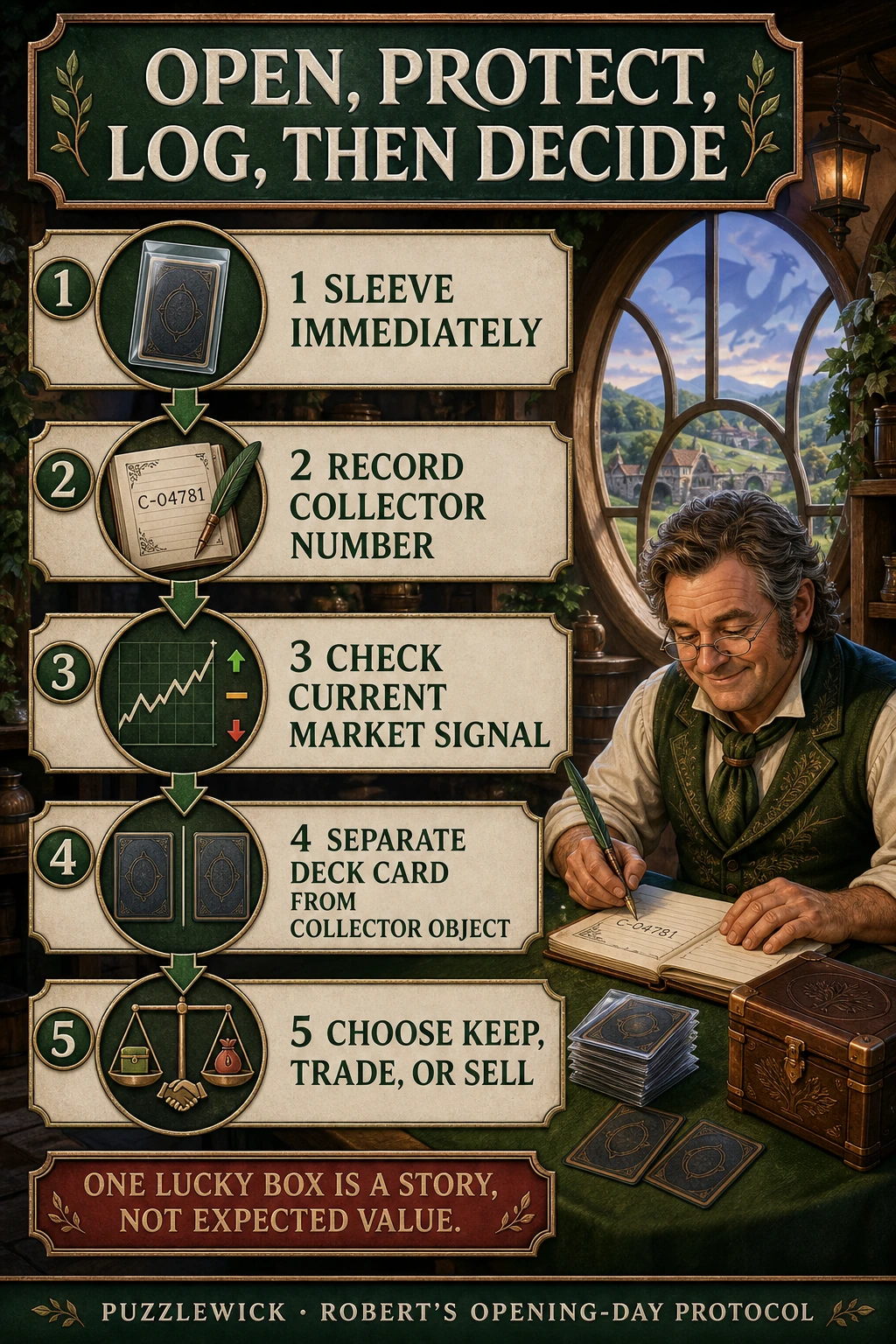
Sleeve first, research second. Clean, dry hands and a fresh sleeve prevent the investigation from becoming the damage event. Record the card name and collector number, then note finish, frame, language, and visible condition. Photograph front and back under neutral light if the card may be traded or sold.
Next, compare the exact printing across current listings and recent sales where available. Do not borrow a premium variant’s result for a regular copy. Do not call a listing a sale. Finally, give the card a destination: deck, collection, research tray, or trade case. A card loose on the kitchen table is not a fifth category; it is a delayed decision with beverage exposure.
Which Hobbit sealed product should you buy for the experience you actually want?
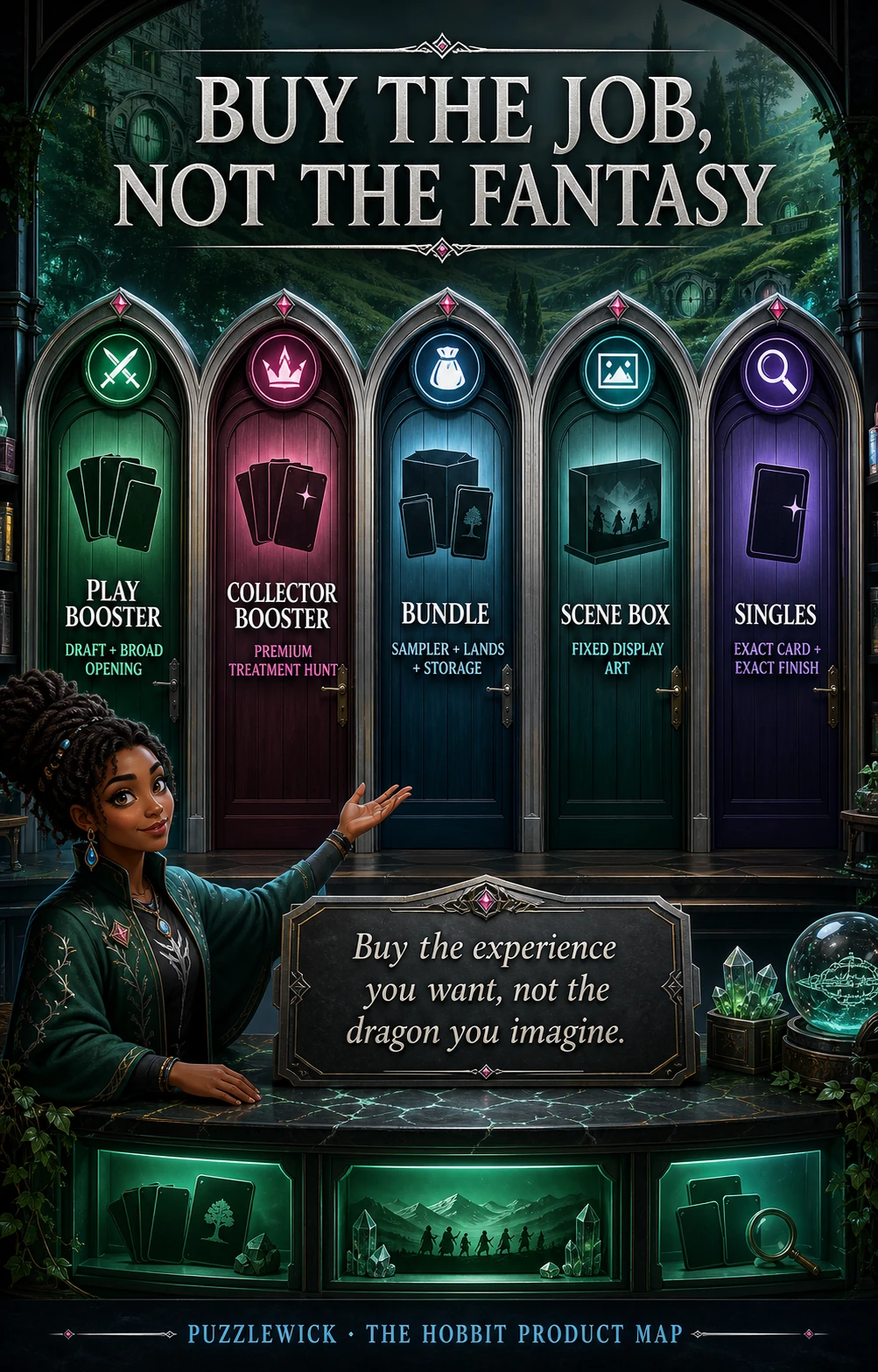
Play Boosters are for Draft, Sealed, and broad opening. Collector Boosters are the premium-treatment hunt and the only lane for Gleaming Gold Smaug. Bundles are bounded samplers with lands and storage. Scene Boxes have a finite six-card display goal. Singles are for an exact card and finish.
These are jobs, not ascending status levels. Draft Night turns packs into a four-person event. A Play Booster display supports a larger Limited plan. The Gift Bundle adds a deliberate premium flourish. The Collector display is the high-variance luxury lane. If the goal already has a card name and collector number, stop opening sealed product and buy that exact single when a trusted affiliate option is available.
How do condition and provenance change the trade conversation?
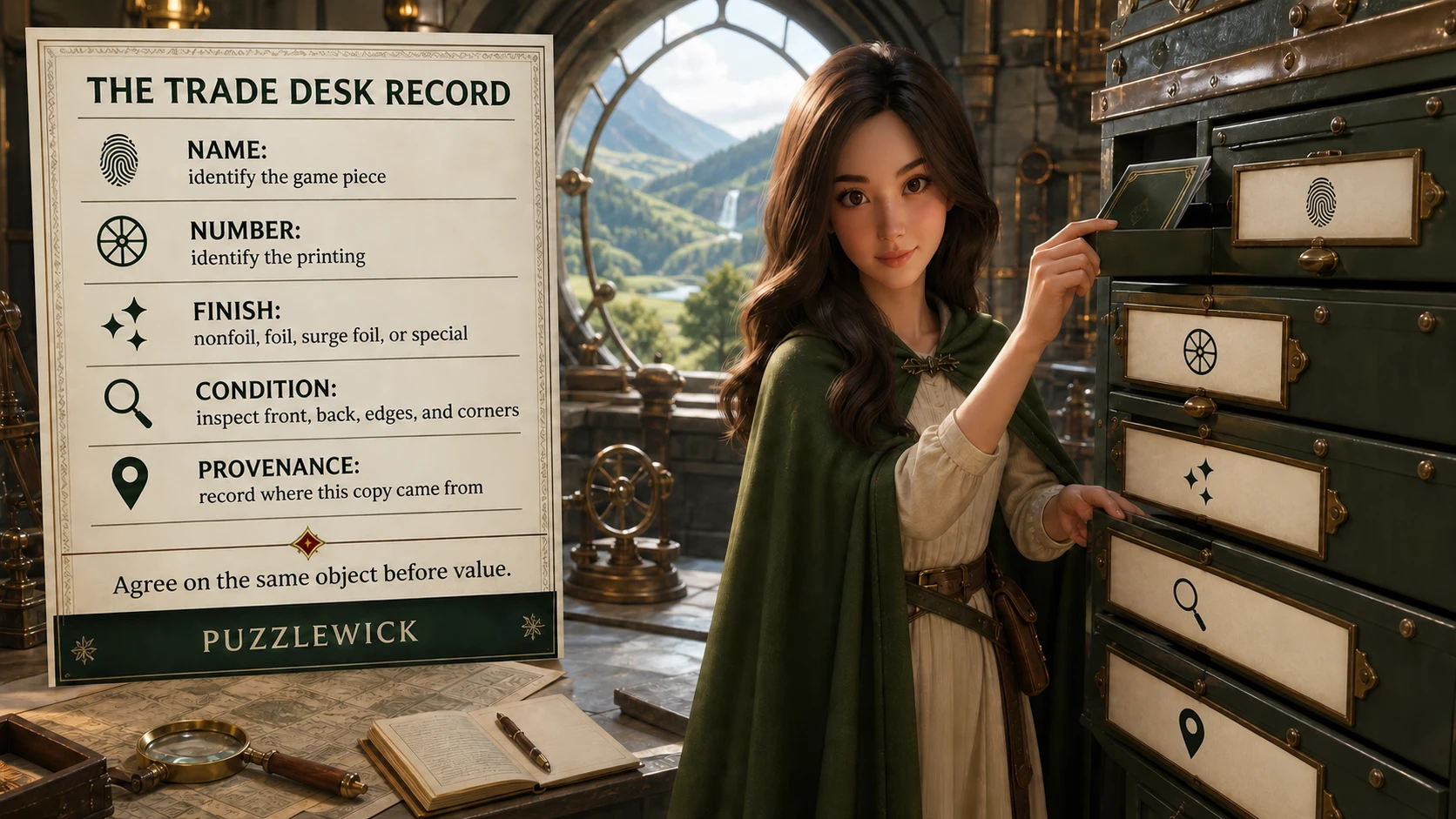
Condition is part of the object’s identity. Use bright neutral light, inspect front, back, corners, and edges, and avoid destructive tests. Foil curvature is not the same as surface wear, but both should be disclosed. A sleeve can hide whitening at the edge; remove the card only on a clean surface and only when handling is necessary.
Provenance is the paper trail: where the card came from, whether the product was sealed, and whether photographs show the same object being offered. It does not make a card authentic by itself, but it gives a buyer or trade partner a coherent record. When the value or authenticity question is serious, stop home experiments and use a reputable local store or established authentication/grading service.
Should you keep, trade, or sell the card?
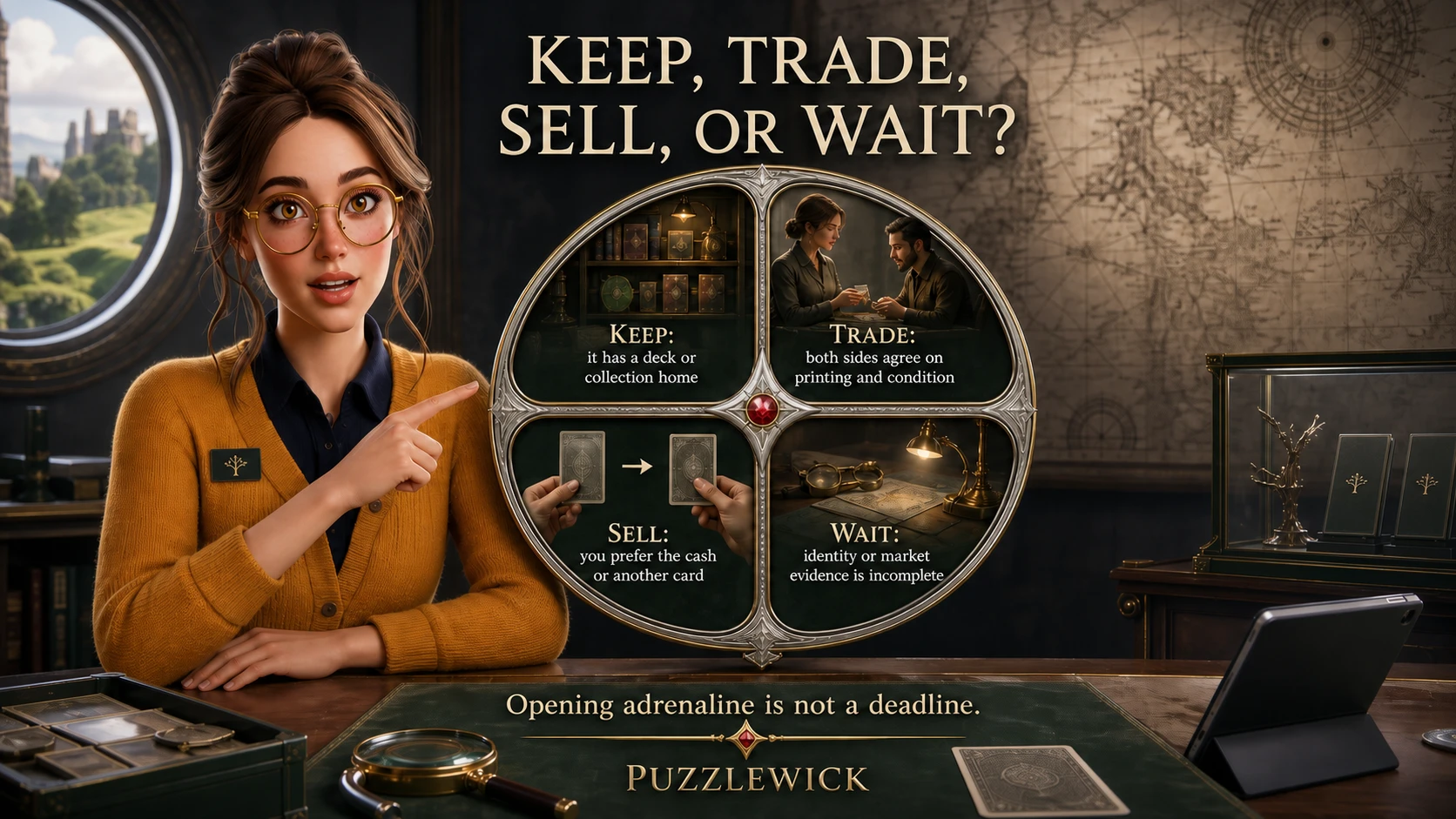
Keep it when it has a defined home: a deck you play, a binder finish line, a scene, an artist page, or a character collection. Trade it when another player values this exact printing more and both sides can identify condition consistently. Sell it when the current demand is meaningful to you and you would rather own the cash or a more important card than the object.
Do not force the decision during opening adrenaline. Put uncertain cards in a dated research tray and revisit them after the first weekend’s market noise. A collector finish line is allowed to be emotional; a trade description must be factual. Margo permits whimsy in the binder and absolutely none in the collector number.
What protection belongs beside a Hobbit opening?
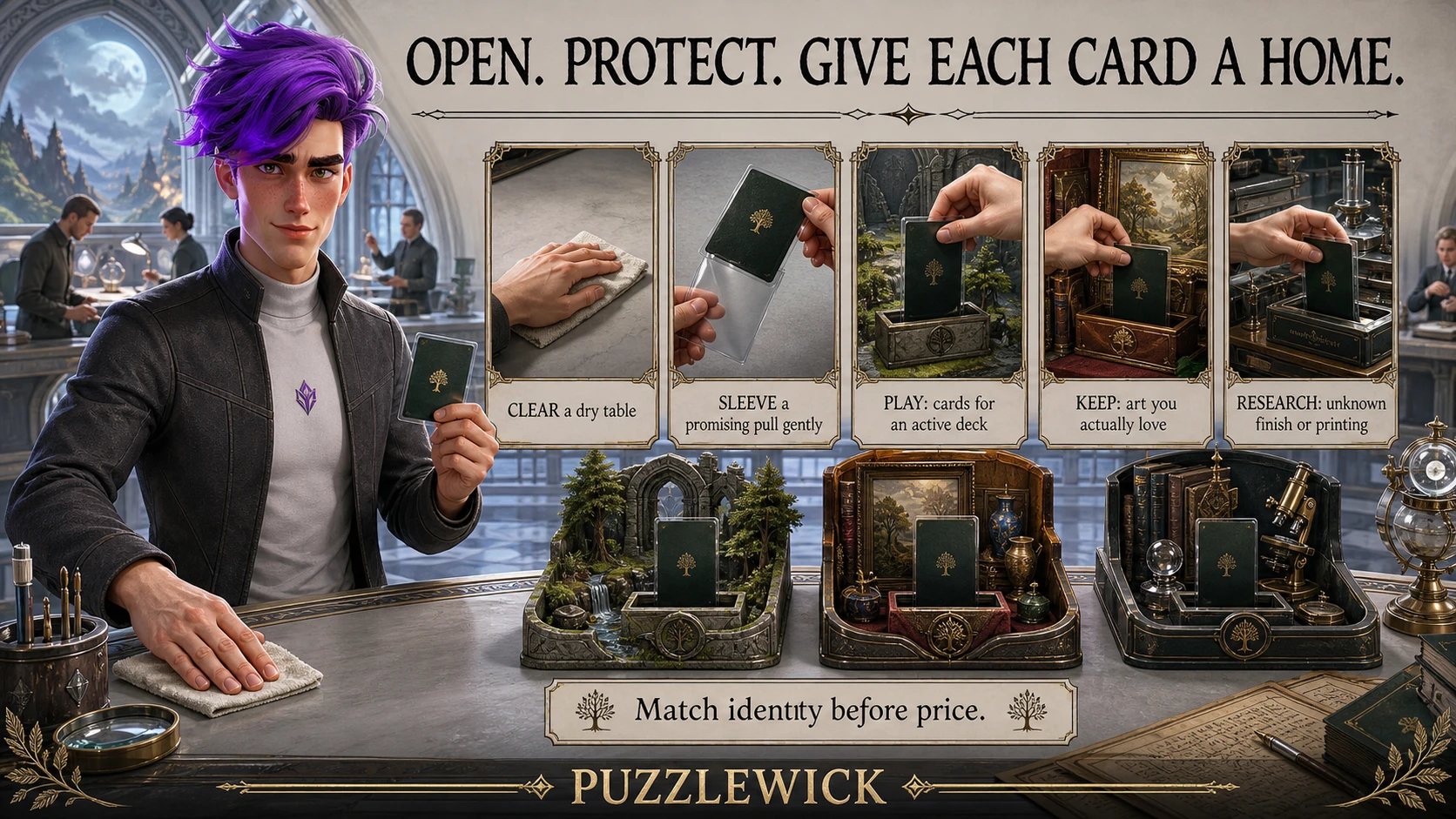
Start with standard-size matte sleeves, a fitted deck box for anything that travels, and a zipper binder for a bounded collection. Add top loaders only for cards whose value or trade role justifies the extra handling. Store cards upright in a stable indoor environment; heat, moisture, direct sun, and overfilled binder pages are the actual villains.
A playmat protects cards and clarifies the working surface, but it does not need to arrive before the first playable deck. The product shelf below is ordered by job: the exact Hobbit experiences first, then the protection that preserves the cards you genuinely use or collect. Every product photo has its exact tracked Amazon destination; stock and price remain live at the merchant.
What experienced tables keep reporting
Recurring owner patterns, synthesized in Puzzlewick's words. Follow each evidence trail to read the original discussion.
Playable regular cards and scarce premium treatments can both be desirable, but they need different evidence.
The exact collector number, finish, and condition matter more than a broad search for the card name.
A fortunate first opening created the inspection habit; it did not create a promise about the next box.
The picks
Some links below are affiliate links — as an Amazon Associate, Puzzlewick earns from qualifying purchases, at no extra cost to you. It never changes a pick.
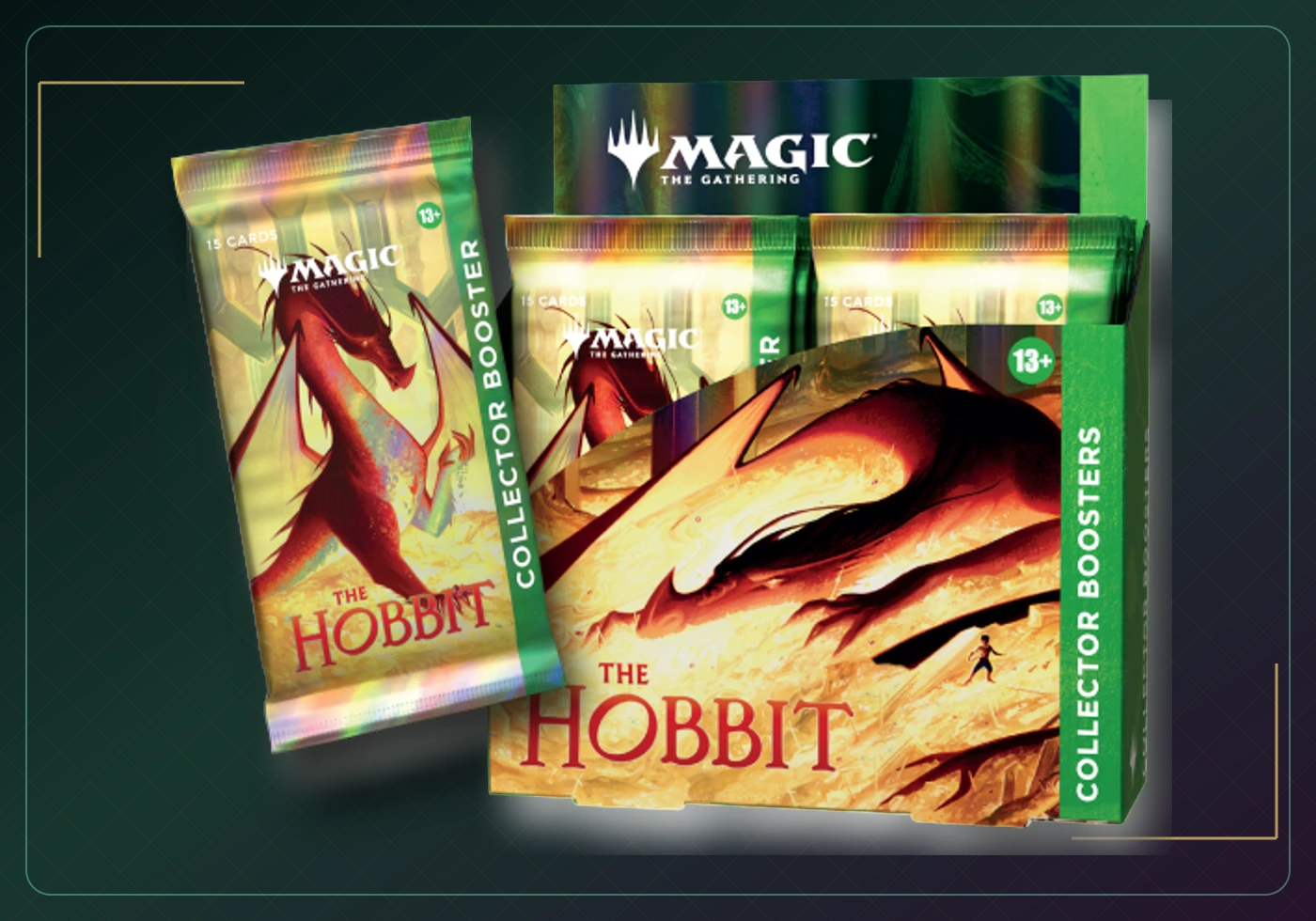
Magic: The Gathering | The Hobbit Collector Booster Display
The highest-variance Hobbit opening and the only sealed lane for the approximately 500 Gleaming Gold Smaug copies. It is not a beginner deck or a responsible route to one named card.
- Premium-treatment concentration
- Gleaming Gold chase lane
- Collector-focused opening
- High variance
- No finished deck
- Exact singles are more efficient
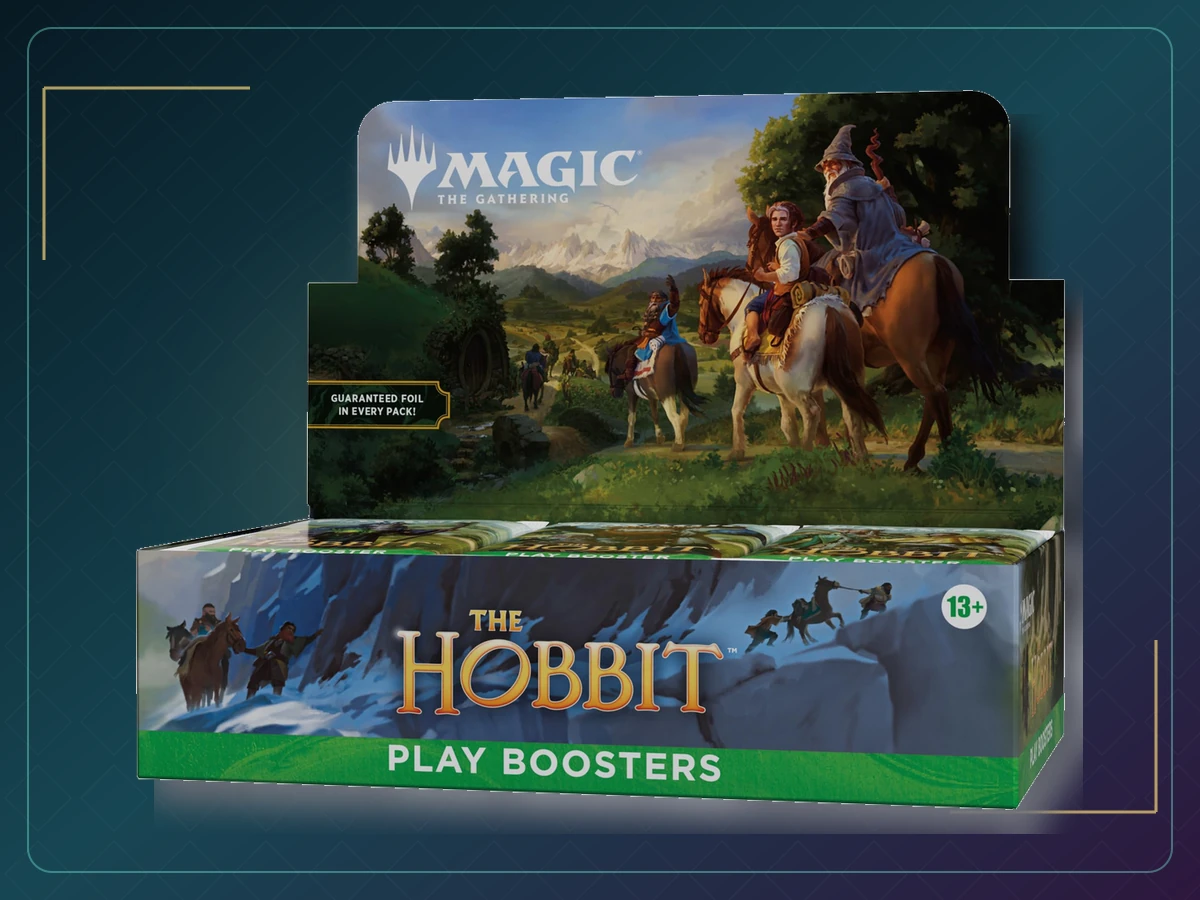
Magic: The Gathering | The Hobbit Play Booster Display
A Play Booster display earns its space when the cards become an event. It is broad inventory, not a collector-value guarantee.
- Supports Limited play
- Broad set opening
- Useful for a group
- Random deck progress
- Not premium-focused
- Requires an event plan
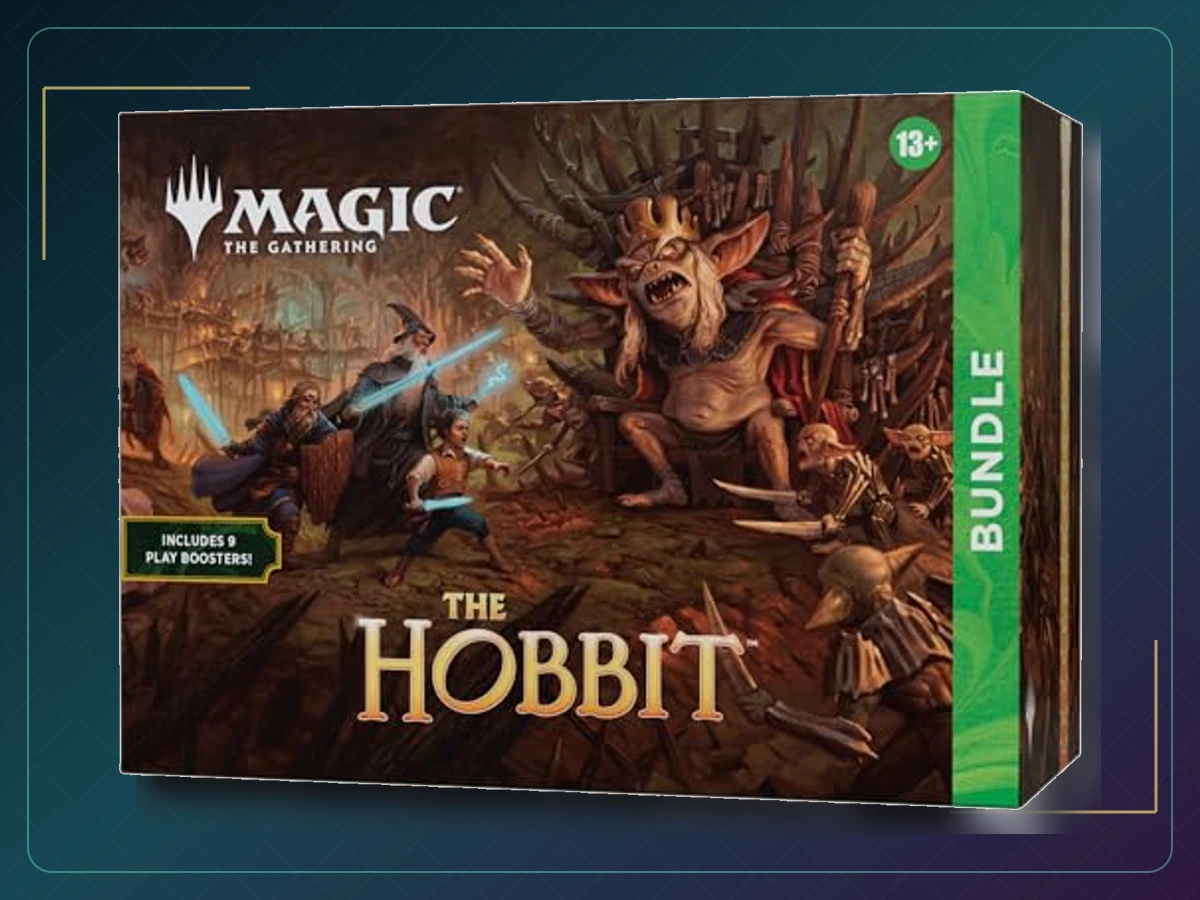
Magic: The Gathering | The Hobbit Bundle
The calmer opening route: a defined quantity, useful lands, and a box that gives the first small collection a finish line.
- Finite sampler
- Includes lands
- Built-in storage
- Not a complete deck
- Still random
- Less premium density
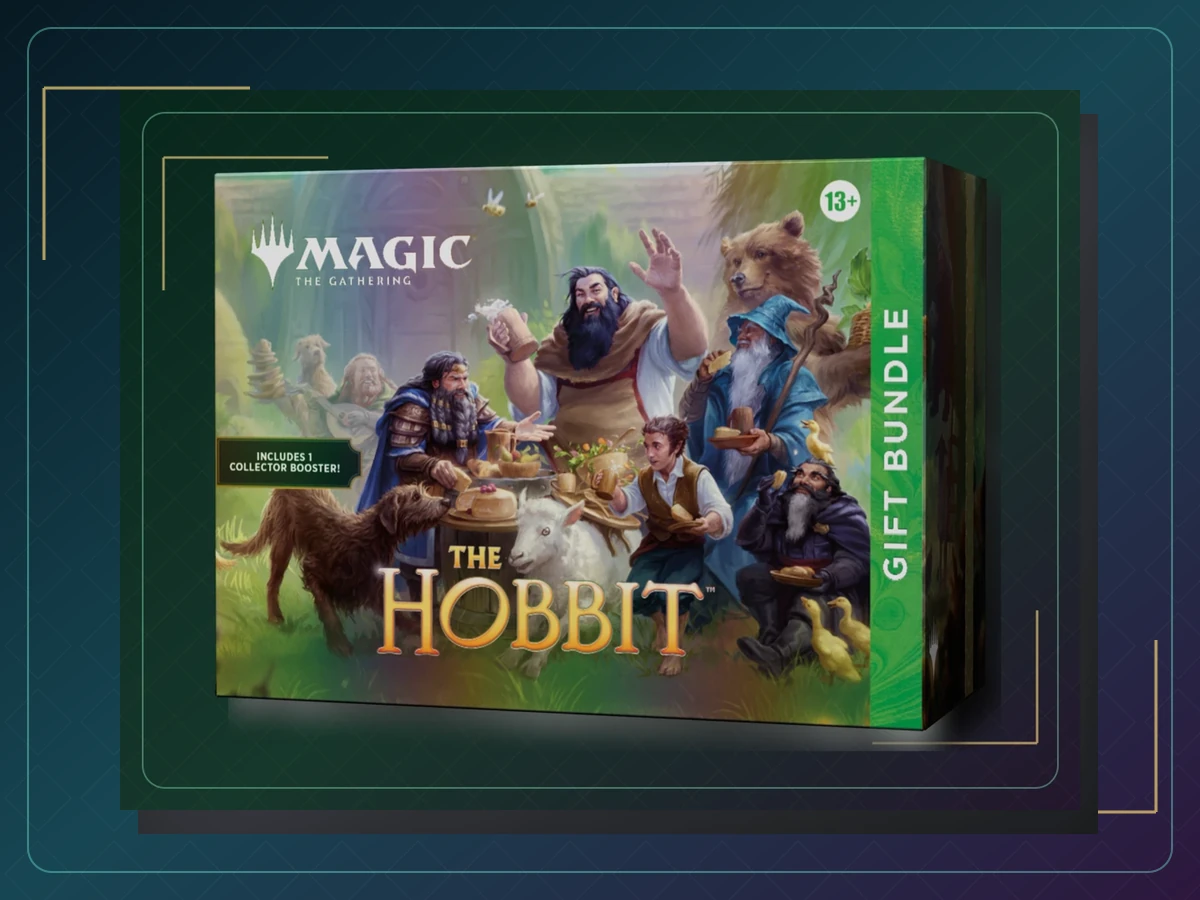
Magic: The Gathering | The Hobbit Gift Bundle
Use the Gift Bundle when presentation and one premium flourish are part of the experience, not as a disguised value calculation.
- Gift-ready ritual
- Mixed opening
- Storage and lands
- Premium pack adds variance
- Not a deck
- Not the cheapest sampler
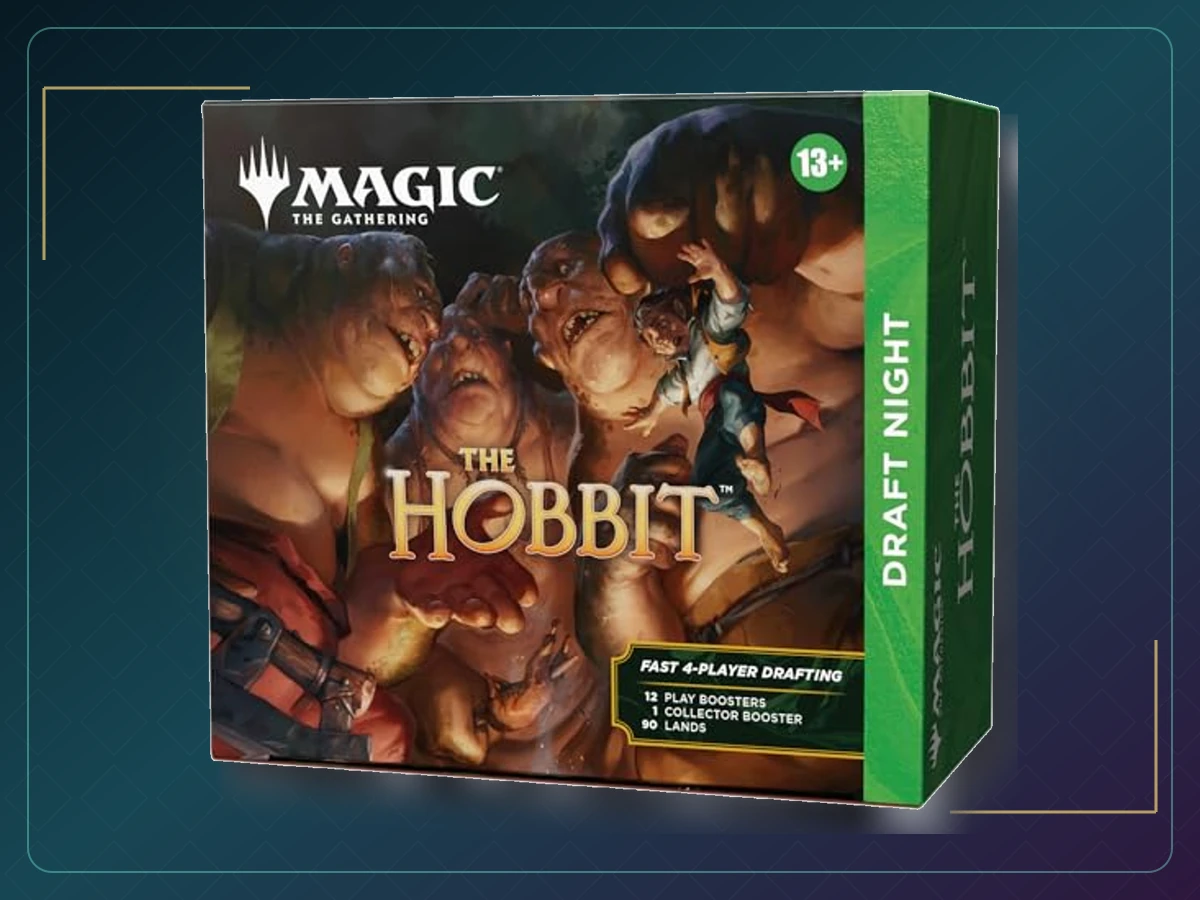
Magic: The Gathering | The Hobbit Draft Night
Twelve Play Boosters, one Collector Booster, lands, and event framing turn sealed product into a real shared evening.
- Designed around four players
- Lands included
- Packs have a game job
- Requires Limited guidance
- Does not leave four tuned decks
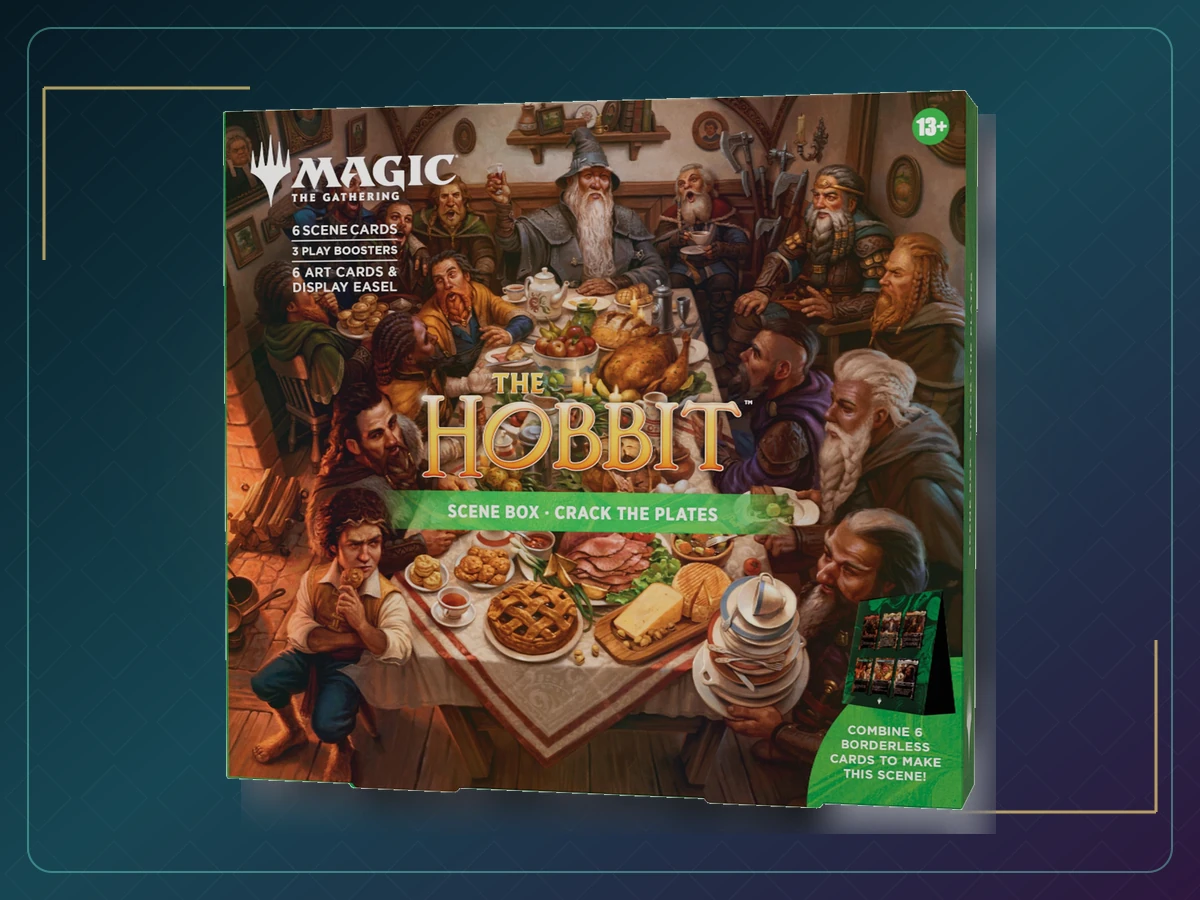
Magic: The Gathering — The Hobbit Crack the Plates Scene Box
A Scene Box has a visible finish line: one panorama, its included cards, and a few packs. That clarity is the product’s best feature.
- Defined collection goal
- Display and playable cards
- Contained purchase
- Not a teaching product
- Display taste is personal
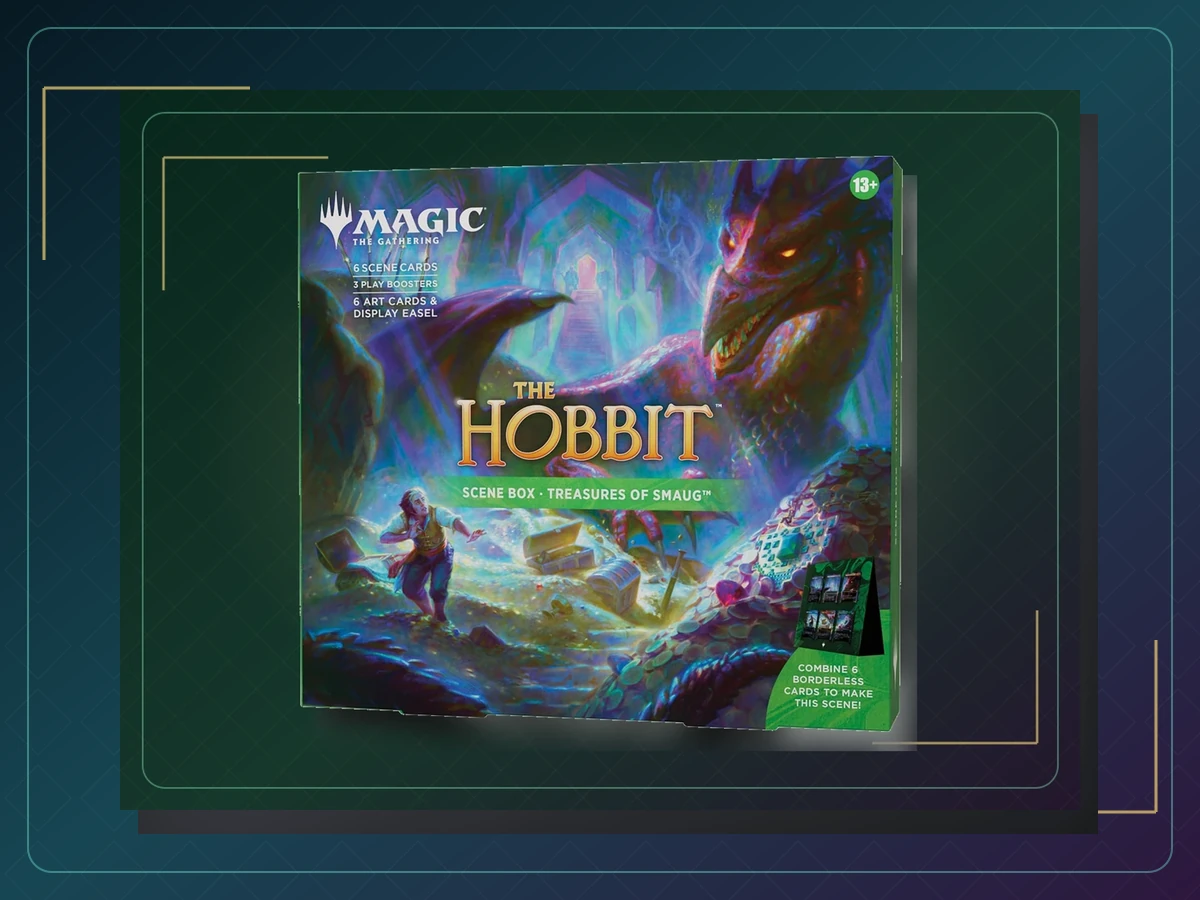
Magic: The Gathering | The Hobbit Treasures of Smaug Scene Box
The Smaug Scene Box is the finite dragon display route. It does not contain the Gleaming Gold chase card merely because both products feature Smaug.
- Exact dragon scene
- Finite display goal
- Playable scene cards
- Separate from Gleaming Gold Smaug
- Not a complete deck
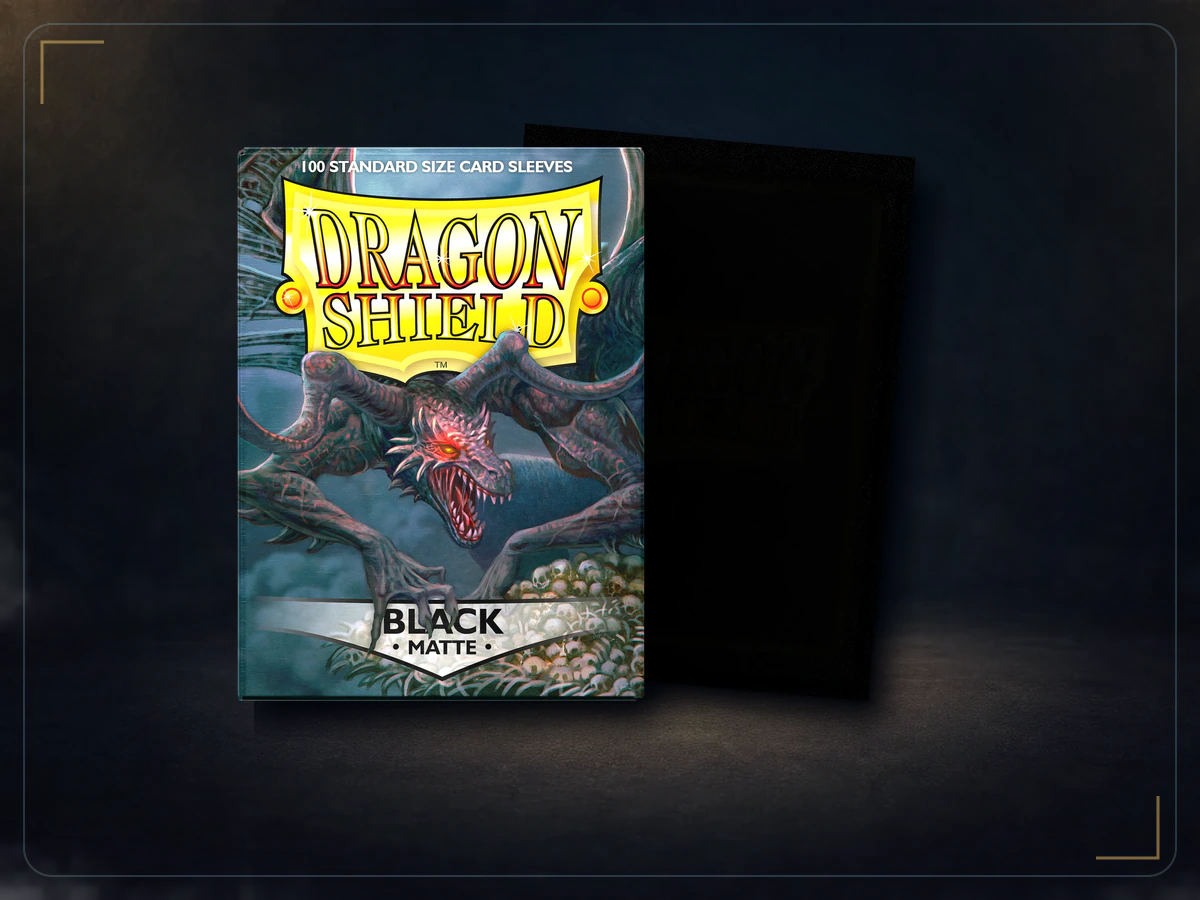
Dragon Shield Matte Standard-Size Sleeves
Durable opaque-backed sleeves are the first accessory because they solve a real handling problem without changing the game.
- Durable matte backs
- Standard MTG fit
- Broad color choice
- One box may not cover a large archive
- Check color and quantity
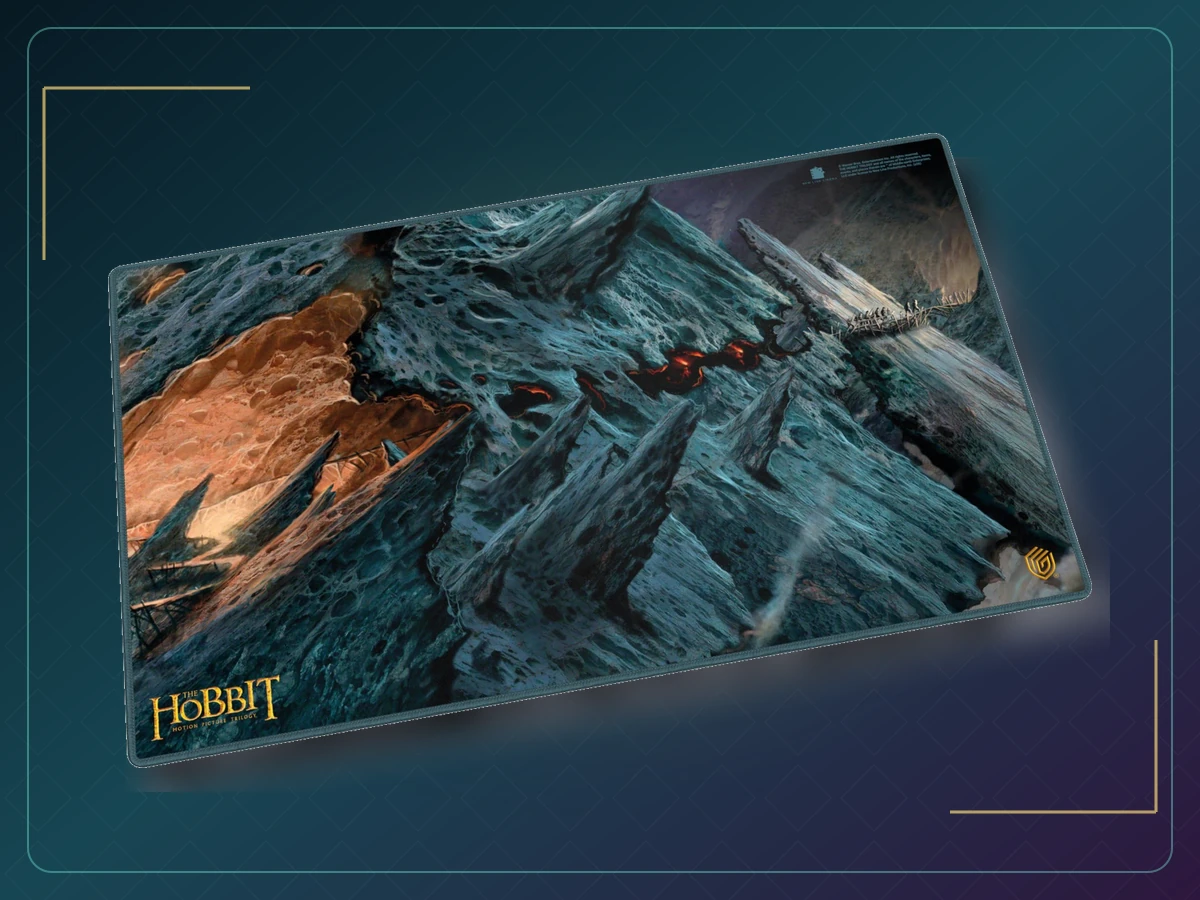
Magic: The Gathering — The Hobbit Goblin Town Playmat
The Goblin Town mat keeps the recommendation attached to this release instead of dropping a generic black storage cube into a visually specific collector guide. Use it for sorting, sleeving, and the deck that survives the opening.
- The mat protects cards, quiets the table, and provides atmosphere without inventing another component to manage.
- 1.0/5 from 1 Amazon ratings at the Keller, Texas review check
- The first visible wear usually appears at stitched edges or from being stored folded instead of rolled.
- Measure the usable table and verify that printed zones match current rules before choosing a zone-forward design.
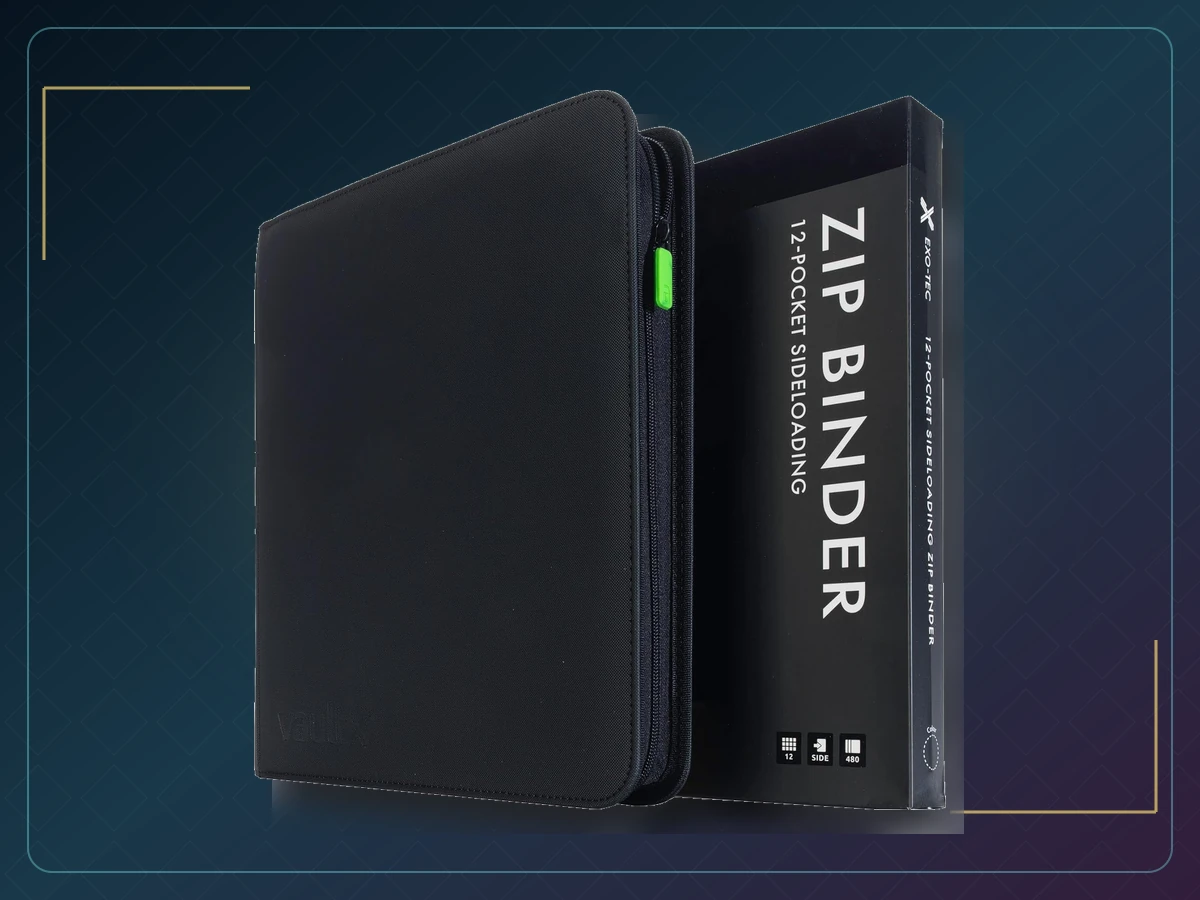
Vault X Premium Exo-Tec Zip Binder
A side-loading zipper binder gives a defined collection a stable home without metal rings pressing into cards.
- Zipper closure
- Side-loading pages
- No exposed rings
- Not deck storage
- Choose capacity after setting a finish line
At a glance
| Lane | Check first | Primary driver | Best action |
|---|---|---|---|
| Unique scarcity | Gleaming Gold Smaug #249 | Around 500 printed | Sleeve, document, verify professionally |
| Premium treatment | Surge-foil collector number | Finish plus narrower supply | Compare exact printing and condition |
| Visual collection | Showcase or poster frame | Character, artist, and treatment demand | Define the binder finish line |
| Play demand | Card name and current deck use | Players buying copies | Keep a play copy; research extras |
Free download — The Hobbit Card Check and Opening Log
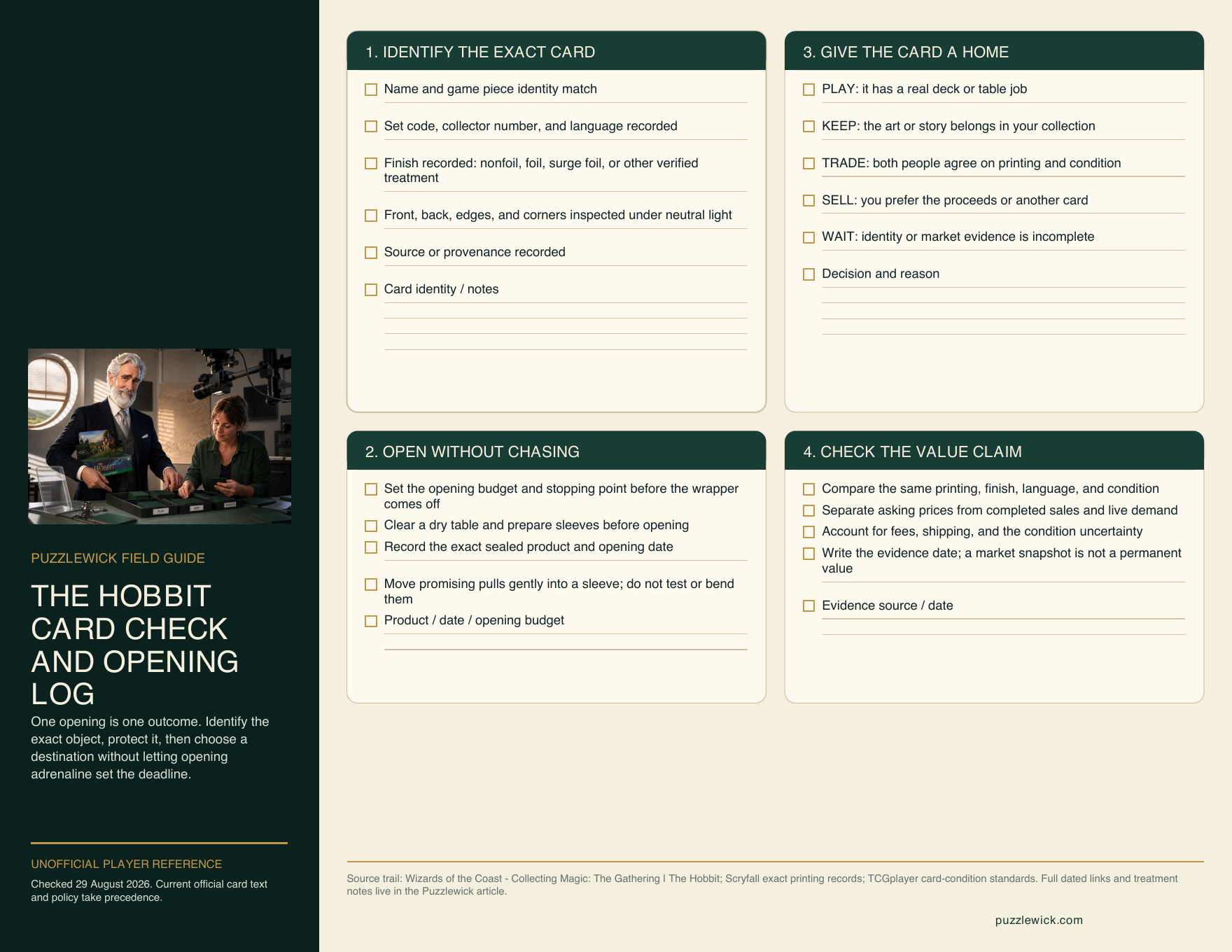
A one-page treatment check, opening protocol, and keep-trade-research decision sheet.
Unofficial fan-made reference. Compiled by Puzzlewick from the sources listed on the sheet. Not affiliated with or endorsed by the publisher — always defer to the official rulebook.
Questions, answered
What is the rarest MTG Hobbit card?
Wizards says Gleaming Gold Smaug has around 500 printed copies. It is a special Collector Booster printing and should not be confused with other Smaug cards or treatments.
Can Gleaming Gold Smaug appear in Play Boosters?
No. Wizards identifies Collector Boosters as the product lane for Gleaming Gold Smaug.
Does a surge foil always mean the card is valuable?
No. Surge foil is a premium finish and a reason to check the exact printing. Current demand, supply, card identity, and condition still matter.
Where is the collector number on a Magic card?
It appears in the small information line near the bottom of the card. Use it with the set code, finish, and frame to identify the exact printing.
Should I use a card scanner app?
Use a scanner as a first-pass catalog tool, not a final appraisal. Confirm the card name, collector number, finish, language, and condition manually.
Are TCGplayer listed prices the same as sold prices?
No. A listing is an asking price. Use current sold or market signals where available and remember that volatile cards can move quickly.
Did Robert really get more card value than the box cost?
One first box briefly showed live estimates totaling a little more than twice the purchase cost. That is a firsthand anecdote, not expected value or a forecast for another box.
Should I buy another box after a lucky opening?
Only if you want the next box’s opening, Draft, or collection experience at its full cost. A lucky first result does not change the odds of the next sealed product.
What should I sleeve immediately?
Sleeve any card you may play, trade, collect, scan repeatedly, or research as a premium printing. Use clean hands and avoid unnecessary removal.
What is the best Hobbit product for four players?
Draft Night is the clearest self-contained four-person Hobbit opening and Limited event, provided one host can teach Draft and deck construction.
Keeper's verdict
Check the object before the card name. Sleeve it, record the collector number, identify the finish and frame, inspect condition under neutral light, then compare current sold and listed signals. Keep a card because it belongs in a deck or collection, trade it because both sides agree on the exact printing and condition, and buy sealed product because you want its opening or event job—not because Robert had one unusually fortunate box.
Research ledger 16 sources · reviewed 2026-09-11
Specifications, rules, current product information, community experience, and contrary evidence were checked against the sources below. Commercial links are kept separate from editorial evidence.
- Magic: The Gathering | The Hobbit productsmagic.wizards.com/en/products/the-hobbit
- Collecting Magic: The Gathering | The Hobbitmagic.wizards.com/en/news/feature/collecting-the-hobbit
- The Hobbit release notesmagic.wizards.com/en/news/feature/the-hobbit-release-notes
- Scryfall: The Hobbit setscryfall.com/sets/hob
- Scryfall image use policyscryfall.com/docs/api/images
- TCGplayer: The Cards Everybody Wants seriestcgplayer.com/content/series/the-cards-everybody-wants
- TCGplayer: best-selling cards from The Hobbitseller.tcgplayer.com/blog/the-best-selling-cards-from-magic-the-gatherings-the-hobbit
- TCGplayer Card Conditioning Standardsmktg-assets.tcgplayer.com/web/seller/guides/Card-Conditioning-Standards.pdf
- BoardGameGeek: Magic The Gatheringboardgamegeek.com/boardgame/463/magic-the-gathering
- r/magicTCGreddit.com/r/magicTCG
- r/mtgfinancereddit.com/r/mtgfinance
- Puzzlewick Hobbit beginner on-ramppuzzlewick.com/guides/mtg-the-hobbit-beginner-onramp-guide-2026
- Puzzlewick HOB vs HOC field guidepuzzlewick.com/guides/mtg-hobbit-hob-vs-hoc-legality-products-2026
- TCGplayer: Top 10 Most Valuable Cards From Magic: The Gathering | The Hobbittcgplayer.com/content/article/Top-10-Most-Valuable-Cards-From-Magic-The-Gathering-%7C-The-Hobbit/c66ddf04-70c8-4caa-8e67-5881a14c1a8f
- TCGplayer: Top 10 Best-Selling MTG Cards of the Week 08/28/2026tcgplayer.com/content/article/Top-10-Best-Selling-MTG-Cards-of-the-Week-08-28-2026/94e368a1-5c6d-4712-ad44-6b35ecd21349
- TCGplayer marketplace homepage best-seller moduletcgplayer.com

If it didn't earn a shelf, it isn't here.


Keep exploring
The next smart rabbit holes.
✶ Universe HubMagic: The Gathering: the whole buying pathMagic: The Gathering is the deepest construction sandbox in the Big Three: a two-player duel, four-player Commander ritual, draft...🂠 Topic PathTrading Card Games: compare the whole shelfStart with the game and community you want, then buy the smallest product that lets you test it properly. These guides separate...Buying GuideMagic: The Gathering | The Hobbit Beginner On-Ramp 2026: What to Buy, Learn, Sleeve, and Say Before Your First TableThe calm path from curious Tolkien fan to competent Magic player, with the right first product, a protection kit, a table-ready...