One Piece Card Game Buying Path 2026: Starter Deck vs Booster Box vs Singles
The exact One Piece buying order: Starter Deck, second copy, singles, booster boxes, DON!! sleeves, Leader case, and local play.

AI-assisted curator persona · research and editorial responsibility: Robert Pruitt · how this guide was made
Last editorial refresh: 2026-08-14 Gold-standard QA: 2026-08-14 9 sources reviewed Affiliate links checked during gold-standard pass

The short answer
Buy one current English Starter Deck per player first. Play the decks intact, then check whether a second copy is needed for starter-exclusive cards or whether singles are cheaper. Buy a booster box only for the opening, sealed-play, or collecting experience—not as the shortest route to a finished deck.
Decision map
Choose in thirty seconds
The cleanest fundamentals-first One Piece start
Trait-cohesion and current product appeal
Only after the first product produces repeat games.
Let play, not launch heat, unlock the next purchase.
The One Piece shelf rewards people who can distinguish a ship from its cargo. A Starter Deck contains the coherent legal beginning. A booster display contains possibilities. Singles contain the exact correction. None is a larger version of the others.
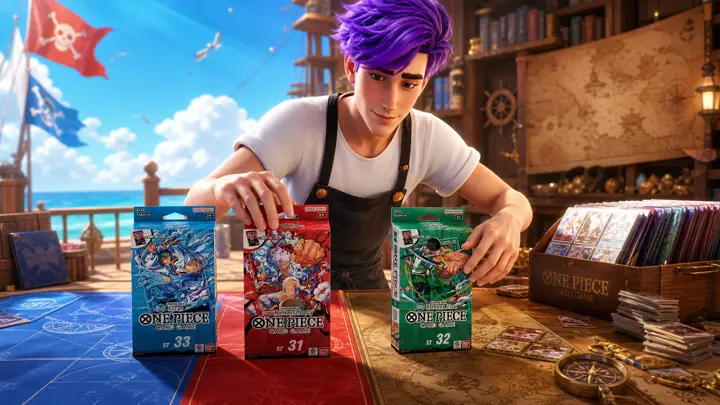
Yumi’s map begins with the Leader whose plan you want to inhabit. Then it protects the table from the two most common mistakes: buying by the highest ST number and buying two copies before checking what the second copy contributes.
Start here, then go deeper
You are in the right cabinet.
 ☠ Universe HubOne Piece Card Game: the whole buying pathThe One Piece Card Game combines Leader identity, a fifty-card main deck, ten DON!!, Life pressure, and hand-based countering into...
 🂠 Topic PathTrading Card Games: compare the whole shelfStart with the game and community you want, then buy the smallest product that lets you test it properly. These guides separate...
 ComparisonMagic vs Pokémon vs One Piece in 2026: Which Big Three TCG Fits You?Magic, Pokémon, and One Piece compared by cost, learning curve, local play, collecting, storage, and the first product worth buying.
What should a new One Piece Card Game player buy first?
Buy one current English Starter Deck per player first. Play the decks intact, then check whether a second copy is needed for starter-exclusive cards or whether singles are cheaper. Buy a booster box only for the opening, sealed-play, or collecting experience—not as the shortest route to a finished deck.
The first purchase must create a complete legal table, teach the signature decision, and reveal whether your group wants a second session. It does not need to maximize the number of wrappers opened.
How does One Piece Card Game actually work at the table?
Each player uses one Leader, a fifty-card main deck, and a separate ten-card DON!! deck. The main deck’s colors must match the Leader. DON!! refreshes, pays costs, and can be attached to a Leader or Character to increase power. Life cards create pressure and hand growth; counter values turn cards in hand into defense.
The first teach should expose that engine before it introduces exceptions. Play with visible hands when necessary, narrate one clean turn, and let the learner make a legal imperfect decision. Ownership begins when they can reset the table without you.
When should you upgrade—and what should you skip?
Play the starter intact. List the starter-exclusive cards used at fewer than four copies, then compare a second deck’s price with those singles. Upgrade searchers, two-thousand counters, removal, and the leader’s central engine before expensive finishers. Recheck current legality and event rules before locals.
Use singles to solve diagnosed problems. Random packs are entertainment, draft material, or collecting—not a reliable repair kit. Write down three weak turns before shopping. If the same problem appears repeatedly, fix that problem and stop.
What do experienced One Piece Card Game players warn newcomers about?
Do not assume every Starter Deck is equally simple, equally strong, or equally cheap to finish. Do not triple-sleeve for official play: current tournament rules cap cards at two sleeves. Main deck and DON!! sleeves should be distinguishable, and a rigid Leader case must not make the Leader difficult to identify or handle.
Current locals discussions repeatedly recommend differently colored main-deck and DON!! sleeves, a visible Leader protector, spare legal sleeves, dice or counters, and a playmat. Deck-box threads note that a double-sleeved fifty-card main deck plus ten DON!! and Leader often fits best in a Commander-sized box with room for tokens.
Community discussion is most valuable when the same friction repeats across different owners: product confusion, format legality, required duplicates, upgrade cost, storage bulk, or a teaching product mistaken for a competitive deck. One angry delivery review is not game design.
The One Piece Card Game first-month plan
Night one: play the product intact. Nights two through five: repeat before modifying. Nights six through ten: identify the decisions and cards that produce the best and worst turns. Only then: choose one upgrade path, sleeves, and a deck box.
This sequence turns excitement into evidence. It also gives a new player enough fluency to understand community advice instead of buying somebody else’s favorite answer.
Starter-exclusive cards, legality, and the first locals test
One Piece Starter Decks are not merely simplified samplers. Some contain cards that matter specifically because they originate in that product, so the second-copy question deserves arithmetic. After several intact games, list every starter-exclusive card the intended list wants at more copies than the box provides. Compare the price of those exact singles with a second sealed starter. Buy the second deck only when its useful contents justify the duplicate bulk.
Next, verify the deck as a system. The Leader defines legal colors and the strategic promise. Searchers need enough valid targets; counter density must support defense; the curve must allow DON!! to be used without stranding the hand; and expensive finishers need the early turns that make them castable. A famous card is not automatically useful in a Leader whose engine cannot support it.
Before locals, check the current official rules, banned or restricted information, event registration, and the organizer’s expectations. Sleeve the fifty-card main deck uniformly, use clearly different sleeves for the ten DON!! cards, protect the Leader without obscuring it, and carry matching spare sleeves. Practice presenting the deck, Life, Leader, DON!!, and trash in the same arrangement every game.
Your first event is reconnaissance, not a verdict on talent. Record which turns felt unclear, which cards stayed dead in hand, which opposing Leaders appeared, and which rules questions repeated. Ask one specific question after a match instead of requesting a complete deck rebuild. The best local advice is usually a correction to a pattern you have already observed.
Finally, resist the release treadmill. A new starter deserves attention when its Leader, exclusive cards, or teaching value creates a genuinely different table. A higher ST number does not mean a universal upgrade. Keep one stable list while testing changes in a separate note or proxy-friendly home session where allowed.
What should you check before the next purchase or event?
To test an upgrade, change no more than four to eight slots at once and write what problem each change is meant to solve. Play several games into different Leaders before judging it. A card that looks weak may be serving counter density, curve, searchable type, or a matchup the first opponent did not expose.
When buying singles, verify language, set code, card number, condition, and quantity. One Piece alternate art and parallel treatments can make two listings look economically unrelated even when the game text is equivalent. Buy the playable identity you intended, not the most dramatic thumbnail that happened to appear first.
Final verdict: the clean One Piece Card Game buying order
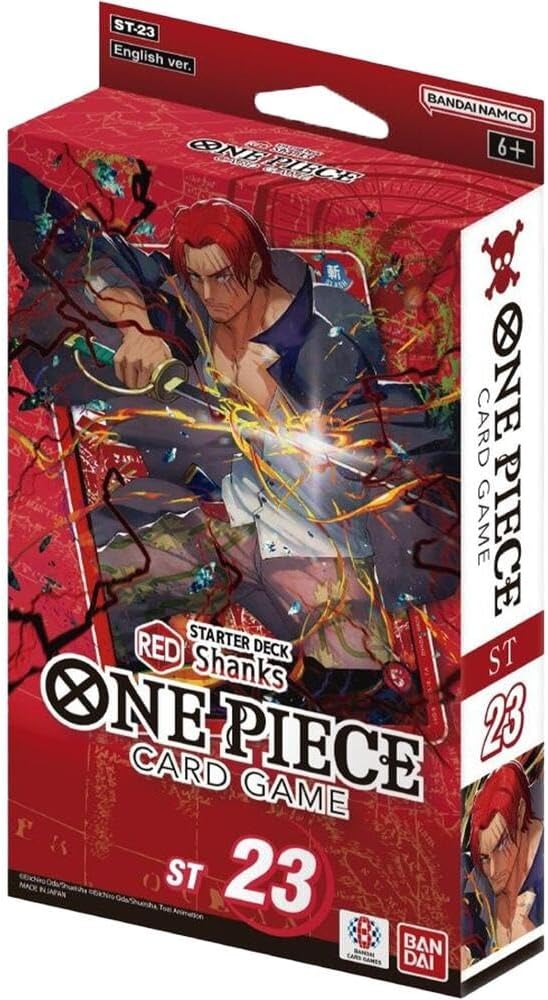
Buy One Piece Card Game ST-23 Red Shanks Starter Deck first. Move to One Piece Card Game ST-29 Egghead Starter Deck when the first product’s teaching job is complete. Treat One Piece Card Game ST-30 Ace & Luffy Starter Deck as a specific later fit, not an automatic graduation.
Then open the dedicated storage guide. Protection should fit the deck and play pattern you proved, rather than becoming a second hobby before the first one begins.
The picks
Some links below are affiliate links — as an Amazon Associate, Puzzlewick earns from qualifying purchases, at no extra cost to you. It never changes a pick.

 2 photos
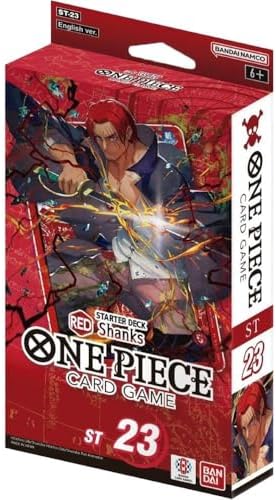
 One Piece Card Game ST-23 Red Shanks Starter Deck
Shanks makes pressure and DON!! allocation legible. One copy teaches; a second is justified only by the exact starter exclusives your final list needs.
- Playable immediately
- Clear leader plan
- Strong teaching identity
- Not tournament-finished
- Duplicates may be cheaper as singles
 2 photos
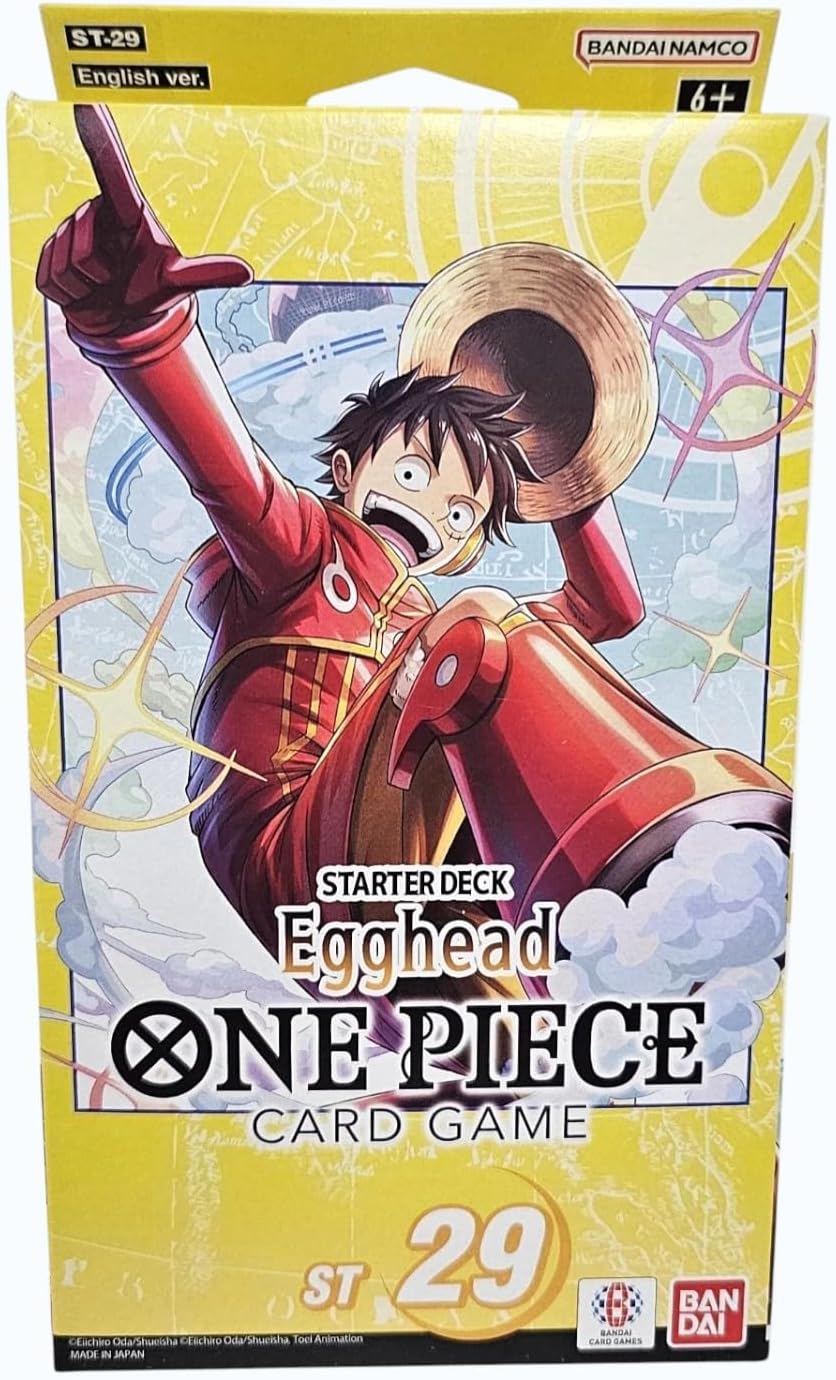
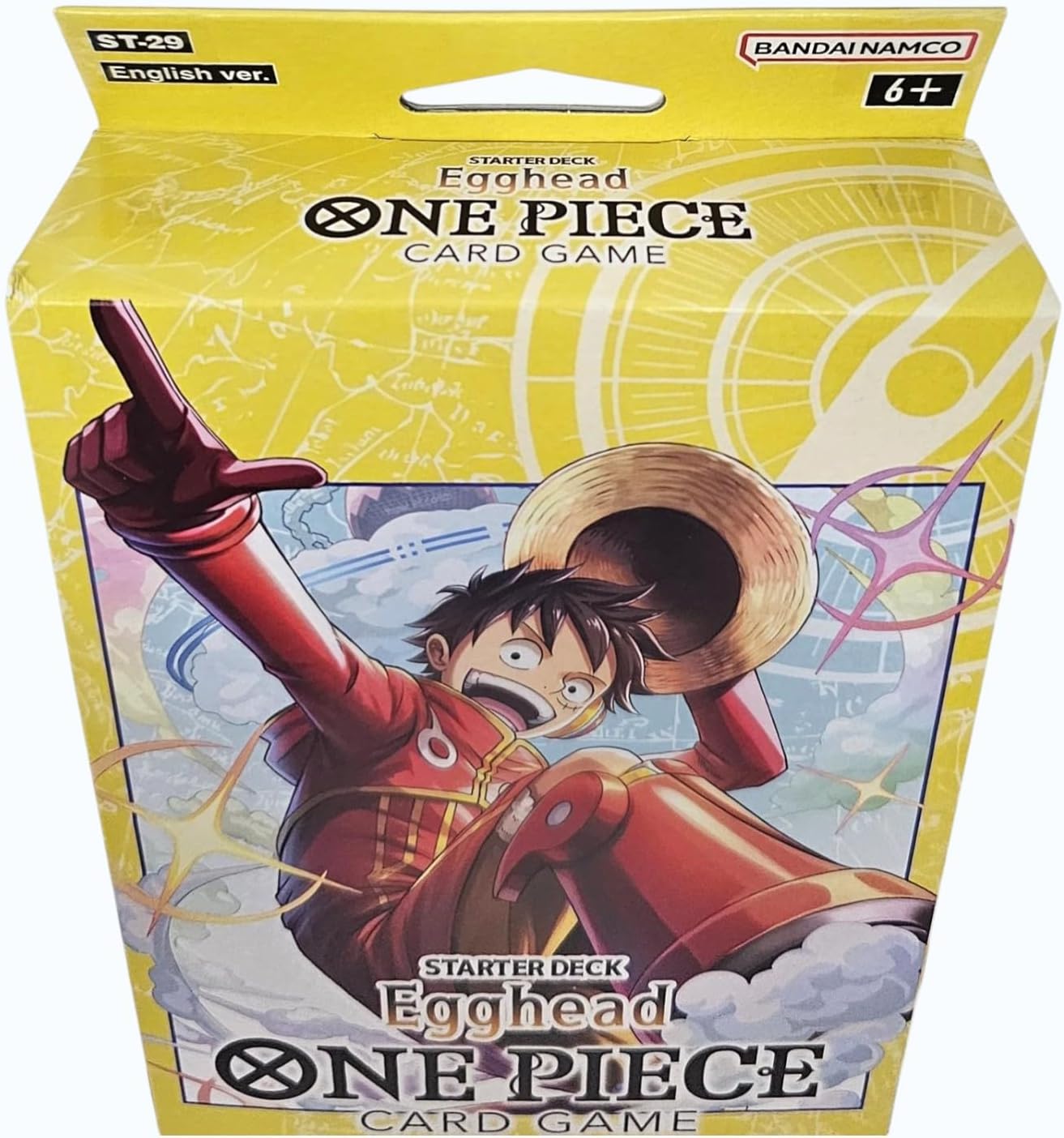
 One Piece Card Game ST-29 Egghead Starter Deck
The official box is one 51-card deck, ten DON!!, a playsheet, and bonus pack. It is a deck, not a mystery crate.
- Current 2026 starter
- Clear contained contents
- Bonus pack
- Requires upgrade research
- Starter strength is meta-dependent
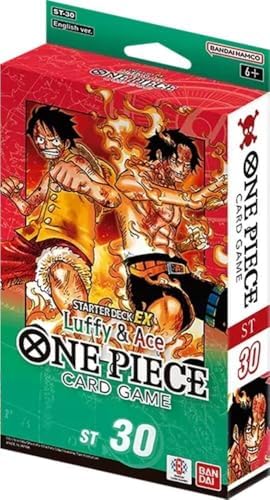
One Piece Card Game ST-30 Ace & Luffy Starter Deck
Buy this because the leader plan and characters make you want repeated games, not because ST-30 is the largest number on the shelf.
- Immediate character appeal
- Modern starter path
- Playable out of box
- High launch interest can distort price
- Still needs deliberate upgrades
At a glance
| Order | Product | Best for | Buy when | Honest catch |
|---|---|---|---|---|
| 1 | One Piece Card Game ST-23 Red Shanks Starter Deck | The cleanest fundamentals-first One Piece start | Now | Not tournament-finished |
| 2 | One Piece Card Game ST-29 Egghead Starter Deck | Trait-cohesion and current product appeal | After the rules are independent | Requires upgrade research |
| 3 | One Piece Card Game ST-30 Ace & Luffy Starter Deck | The headline character pairing | Only when this exact format or experience is wanted | High launch interest can distort price |
Questions, answered
What should a One Piece Card Game beginner buy first?
Buy one current English Starter Deck for each player. Two starters create a legal matched table immediately and teach the Leader, DON!!, Life, Counter, and attack systems.
Do I need two copies of a One Piece Starter Deck?
Not to learn. Buy one first. A second copy can provide extra starter-exclusive cards, but targeted singles may be cheaper depending on the deck and market.
Should I buy a One Piece booster box or singles?
Buy singles to finish a planned deck. Buy a booster box for opening, collecting, or a deliberate sealed experience. It does not guarantee the exact engine cards your Leader needs.
How many cards are in a One Piece deck?
One Leader, fifty cards in the main deck, and ten DON!! cards in a separate deck. Main-deck colors must match the Leader.
What should I bring to One Piece locals?
Bring a legal deck, ten DON!!, Leader, distinct legal sleeves, spare sleeves, a deck box, counters or dice, a playmat, and any required account or event registration information.
What should I buy only after ten real games?
Buy only the upgrade your completed games identified: exact singles for a deck problem, storage sized to the collection you actually use, or a mat that solves a real table or camera issue. Do not let randomized product replace diagnosis.
Yumi's verdict
Start with One Piece Card Game ST-23 Red Shanks Starter Deck. Add One Piece Card Game ST-29 Egghead Starter Deck only when it solves the next real table need. Keep One Piece Card Game ST-30 Ace & Luffy Starter Deck as a specific branch, not a compulsory rung.
Research ledger 9 sources · reviewed 2026-08-14
Specifications, rules, current product information, community experience, and contrary evidence were checked against the sources below. Commercial links are kept separate from editorial evidence.
- One Piece Card Game official productsen.onepiece-cardgame.com/products/?slide=modal
- ST-29 official product contentsen.onepiece-cardgame.com/products/decks/st29.php
- One Piece Card Game official play guideen.onepiece-cardgame.com/play-guide
- One Piece Card Game rule manualen.onepiece-cardgame.com/pdf/rule_manual.pdf
- One Piece tournament rules manualen.onepiece-cardgame.com/pdf/tournament_rules_manual.pdf?20251017=
- Preparing for One Piece localsreddit.com/r/OnePieceTCG/comments/1vej6r5/preparing_for_locals
- One Piece double-sleeve and deck-box discussionreddit.com/r/OnePieceTCG/comments/1ra1zya/deck_boxes_tripe_sleeved
- Limitless One Piece tournament results and decklistsonepiece.limitlesstcg.com
- TCGplayer: Best-Selling TCGs, Q2 2026seller.tcgplayer.com/blog/best-selling-trading-card-games-q2-2026
Come in, take your shoes off — let me show you something.

Keep exploring
The next smart rabbit holes.
☠ Universe HubOne Piece Card Game: the whole buying pathThe One Piece Card Game combines Leader identity, a fifty-card main deck, ten DON!!, Life pressure, and hand-based countering into...🂠 Topic PathTrading Card Games: compare the whole shelfStart with the game and community you want, then buy the smallest product that lets you test it properly. These guides separate...ComparisonMagic vs Pokémon vs One Piece in 2026: Which Big Three TCG Fits You?Magic, Pokémon, and One Piece compared by cost, learning curve, local play, collecting, storage, and the first product worth buying.