Summoner Wars Second Edition Buying Guide 2026: Master Set, Starter Set and First Factions
Dax audits the complete tactical shelf: why the Master Set is the default, when the Starter Set is enough, which faction decks need a board and how gates, magic and geometry win games.


AI-assisted research and drafting in Dax’s voice · reviewed by Robert Pruitt · how this guide was made
Last editorial refresh: 2026-07-25 Gold-standard QA: 2026-07-25 11 sources reviewed Affiliate links checked during gold-standard pass

The short answer
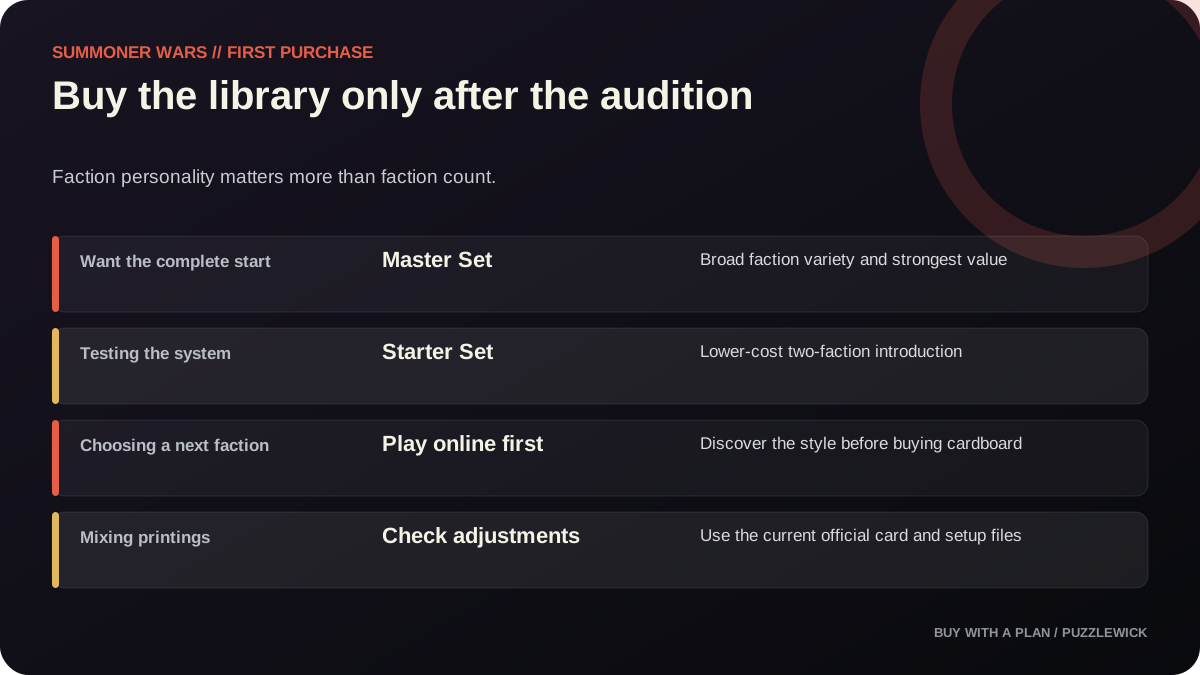
Buy the Summoner Wars Second Edition Master Set first for the board, dice and six-faction laboratory. Buy the Starter Set if two people want the cheapest self-contained duel. Individual faction decks are expansions and need a base set board and dice. Try factions digitally before buying a stack, then add one deck whose economy and positioning style differ from your favorite.
Decision map
Choose in thirty seconds
Best complete start
Best budget duel
Expansion faction
Summoner Wars is a card game that keeps asking board-game questions. Where can the unit enter? Which gate survives? Is this magic better as a summon or as patience?
Dax checked Plaid Hat rules, FAQ, current faction catalog, exact Amazon products and recent community advice about starting small, trying digital factions and resisting an indiscriminate faction shelf.
Start here, then go deeper
You are in the right cabinet.
 ⚔ Topic PathTwo-Player Board Games: compare the whole shelfThe best two-player game is designed around the duel rather than merely tolerating two people. This path separates sharp...
 ComparisonThe Best 2-Player Board Games of 2026, RankedFifteen duels for two, sorted into hard tiers — the forever-game, the silent co-op, the giant-killers under twenty bucks, and the honest...
 Buying Guide10 Board Games With the Most Expansions and Months of Content in 2026Margo maps ten enormous game ecosystems, the first add-on actually worth buying, what each expansion changes, and the stop point that...
Master Set or Starter Set: which should you buy?
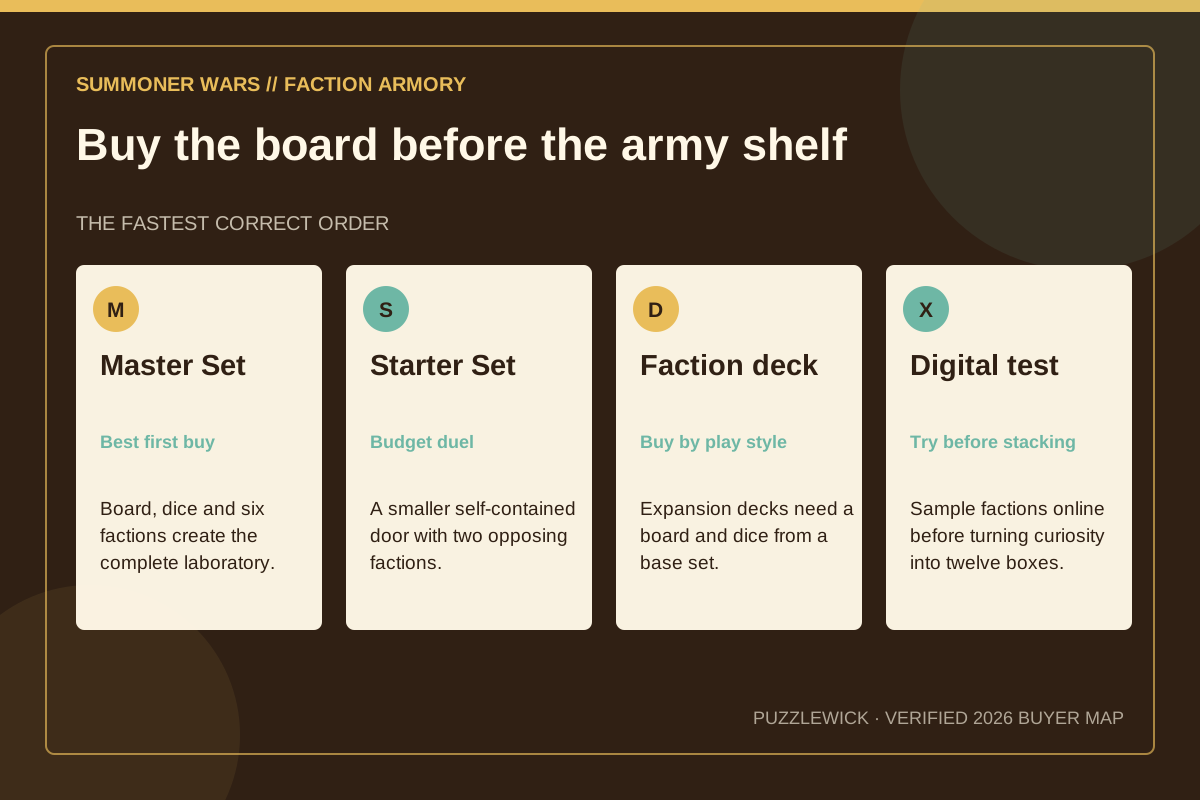
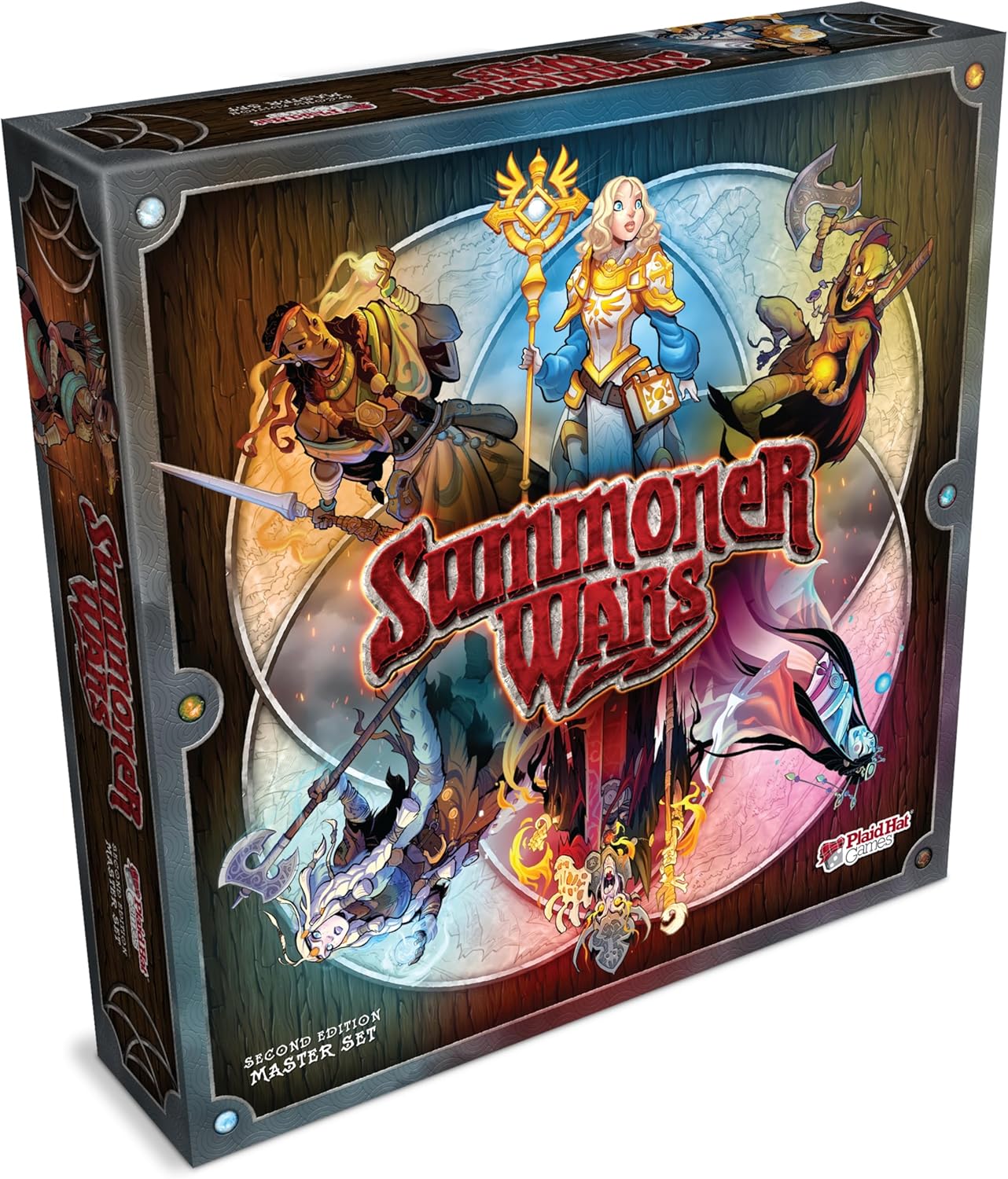
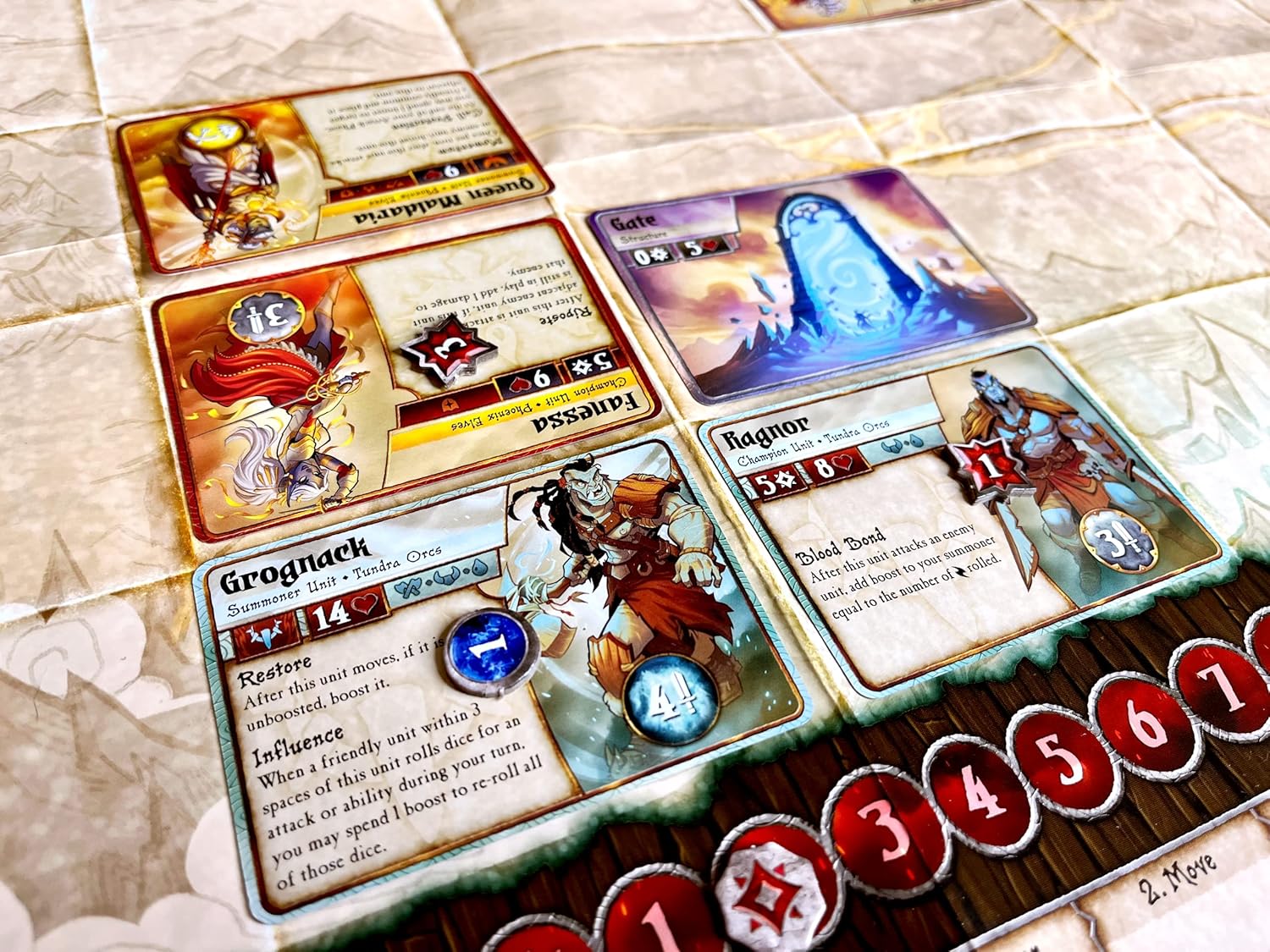
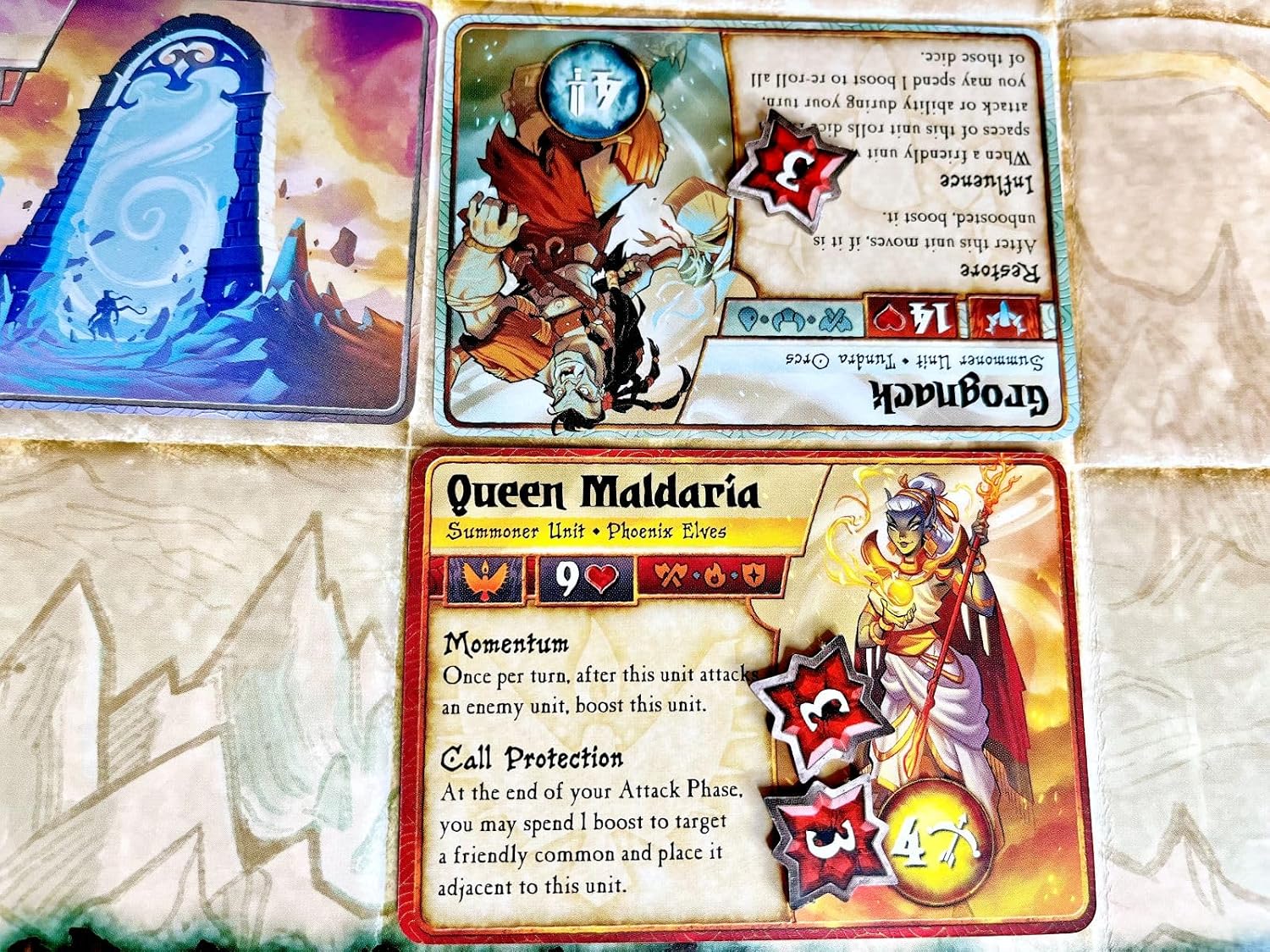
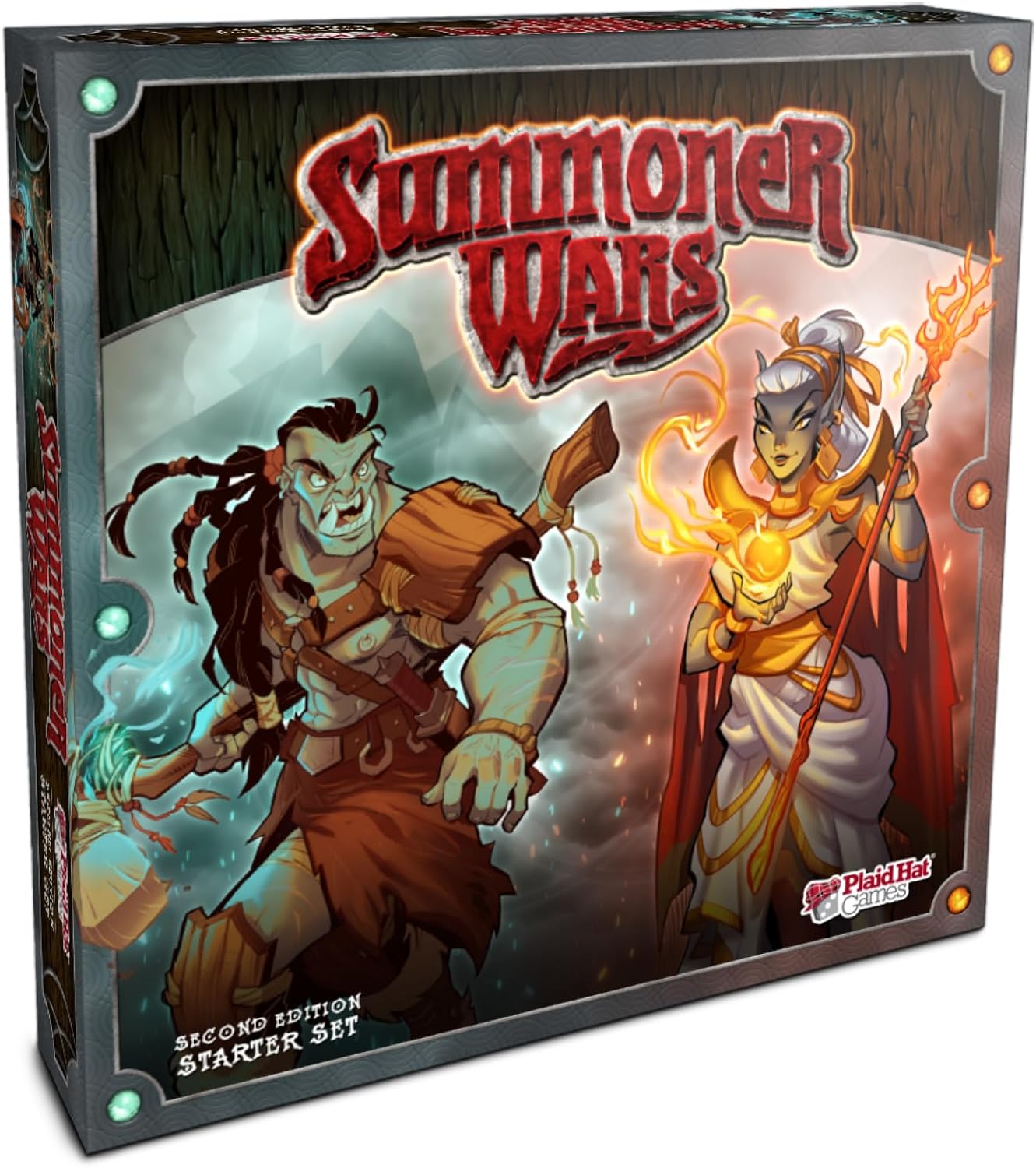
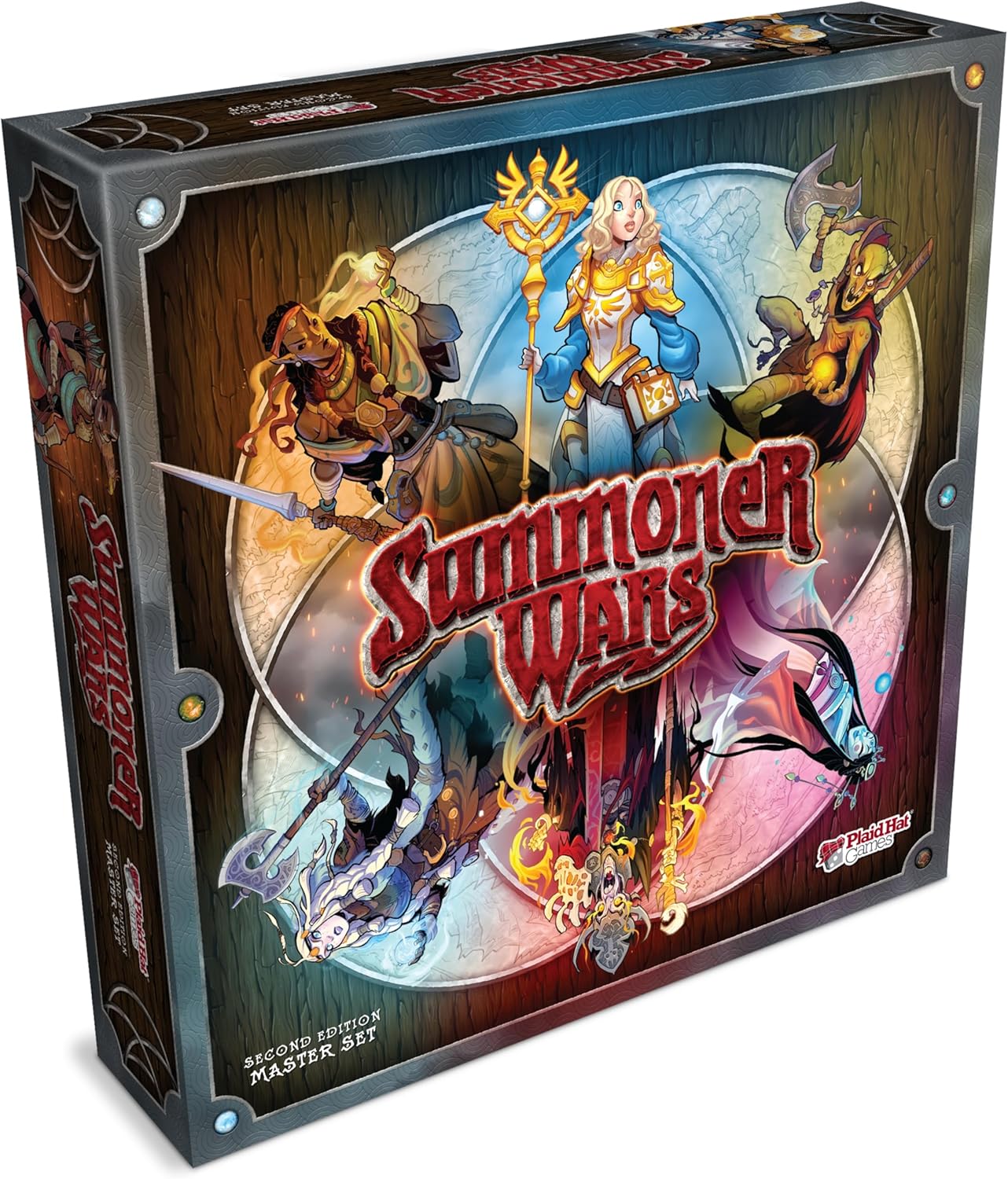
Buy the Master Set if the table already knows it enjoys tactical card games. Six factions reveal the design: different economies, board plans and summoner risks can be compared on the same grid.
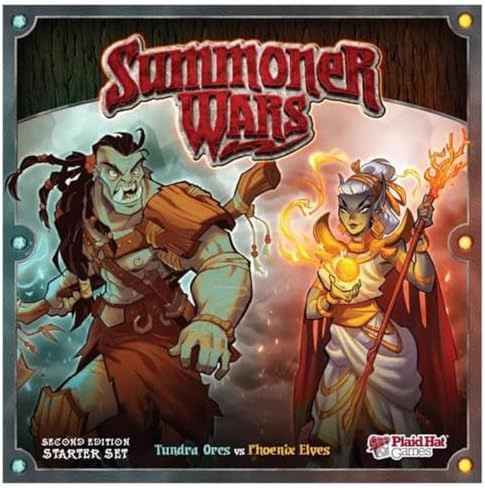
Buy the Starter Set when price or attention is uncertain. It contains two opposing factions and the shared materials needed to play. A focused matchup can teach the system better than six unopened armies.
Do not begin with a loose faction deck. It supplies an army, not the shared board-and-dice infrastructure. The cheapest listing can be the wrong product.
What is in the Master Set and Starter Set?
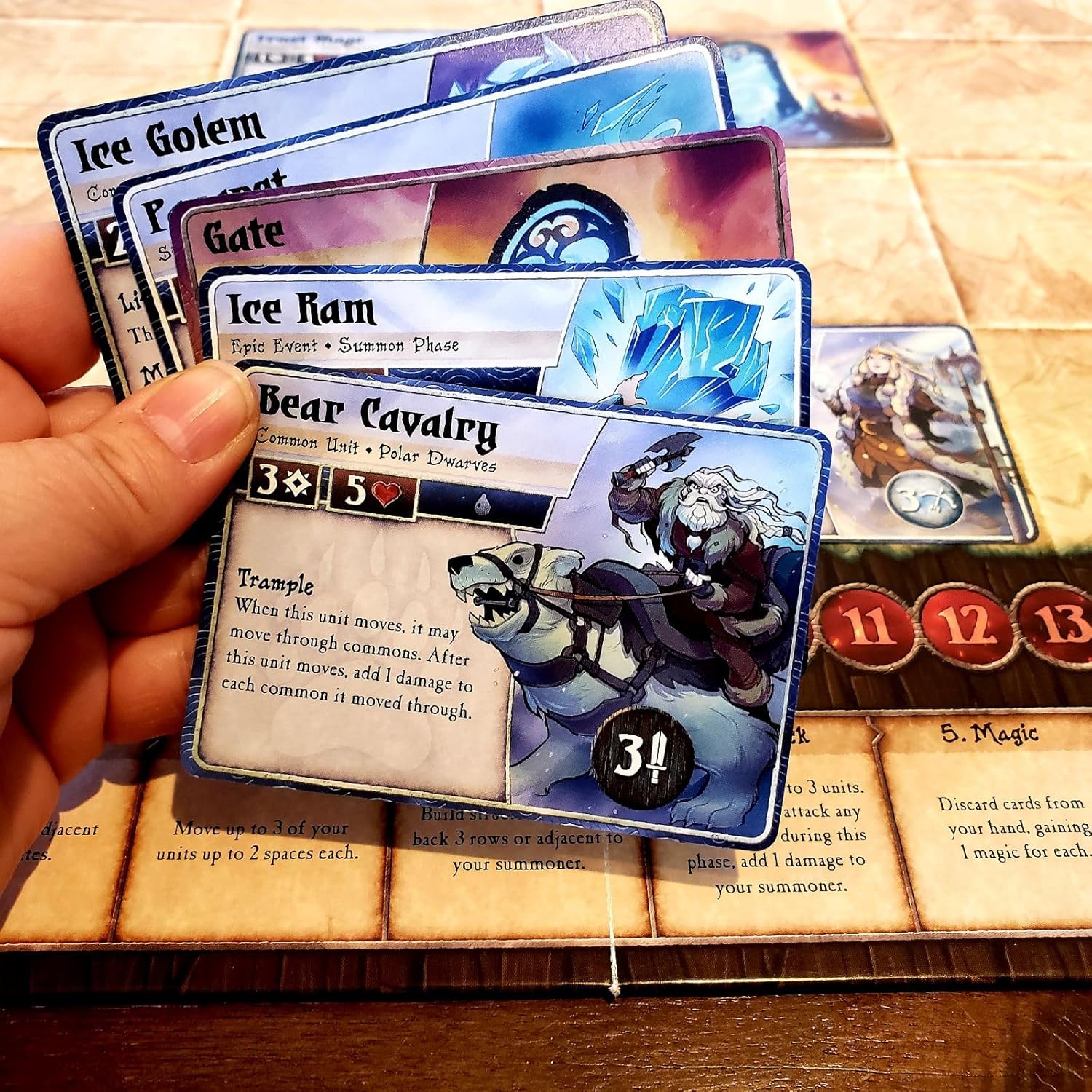

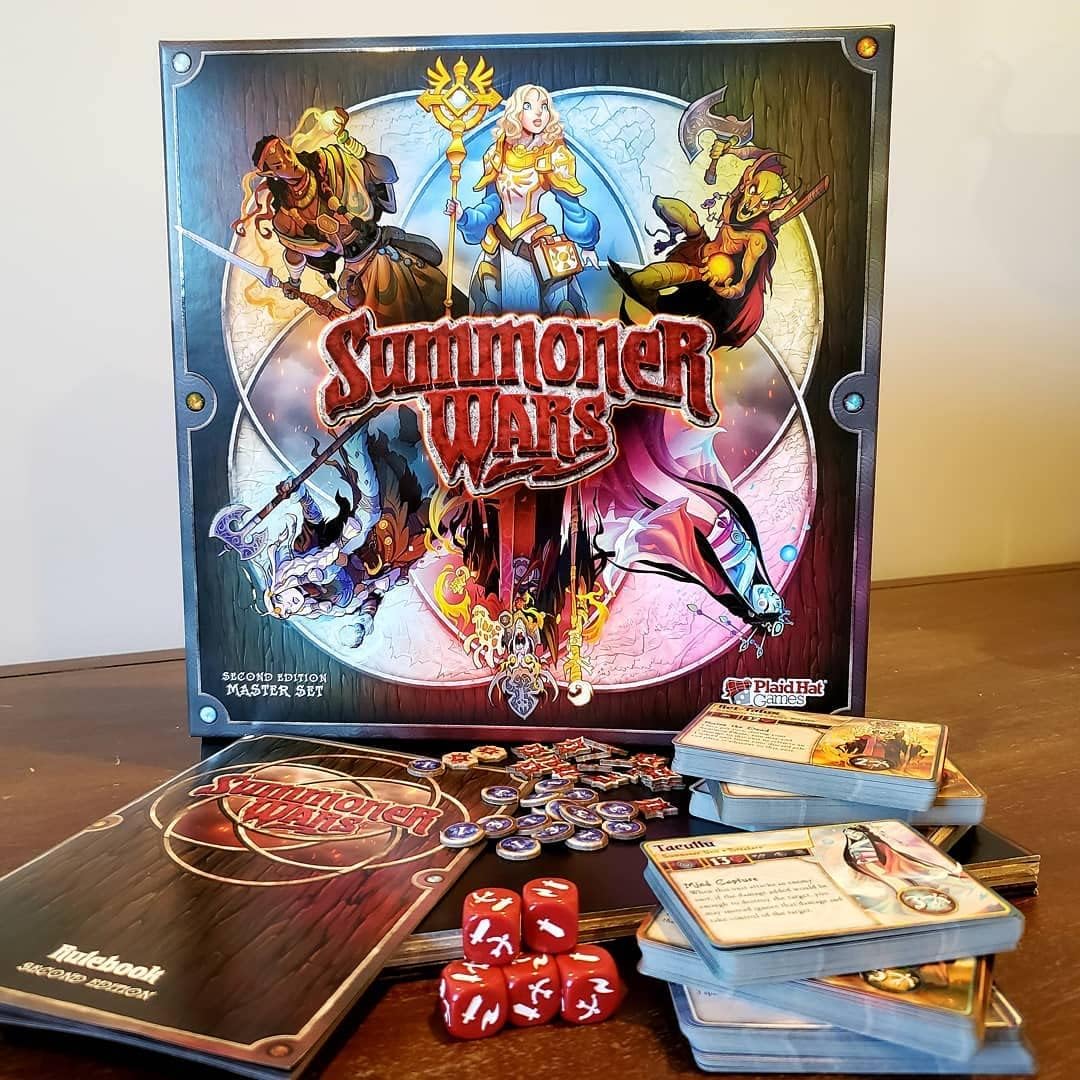
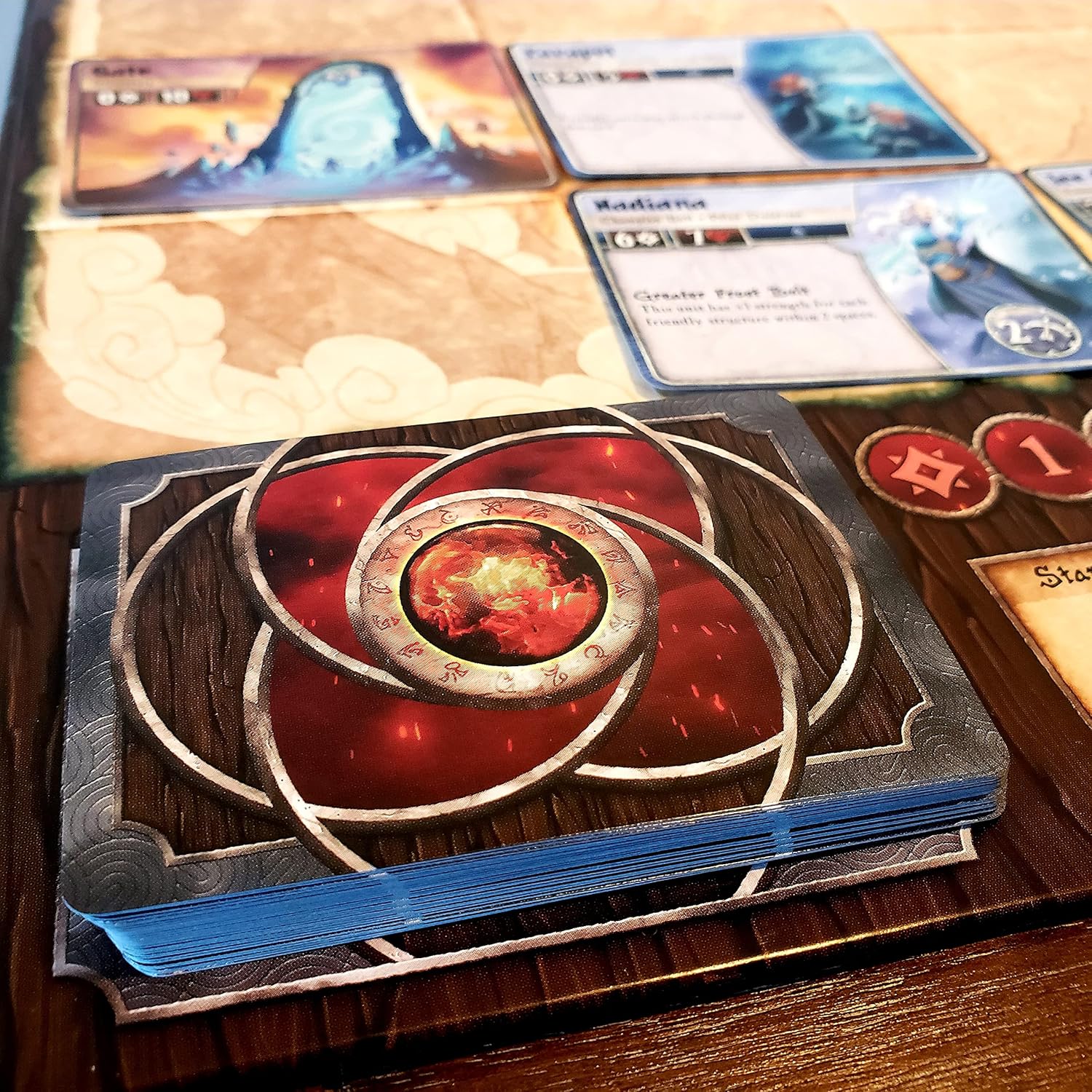
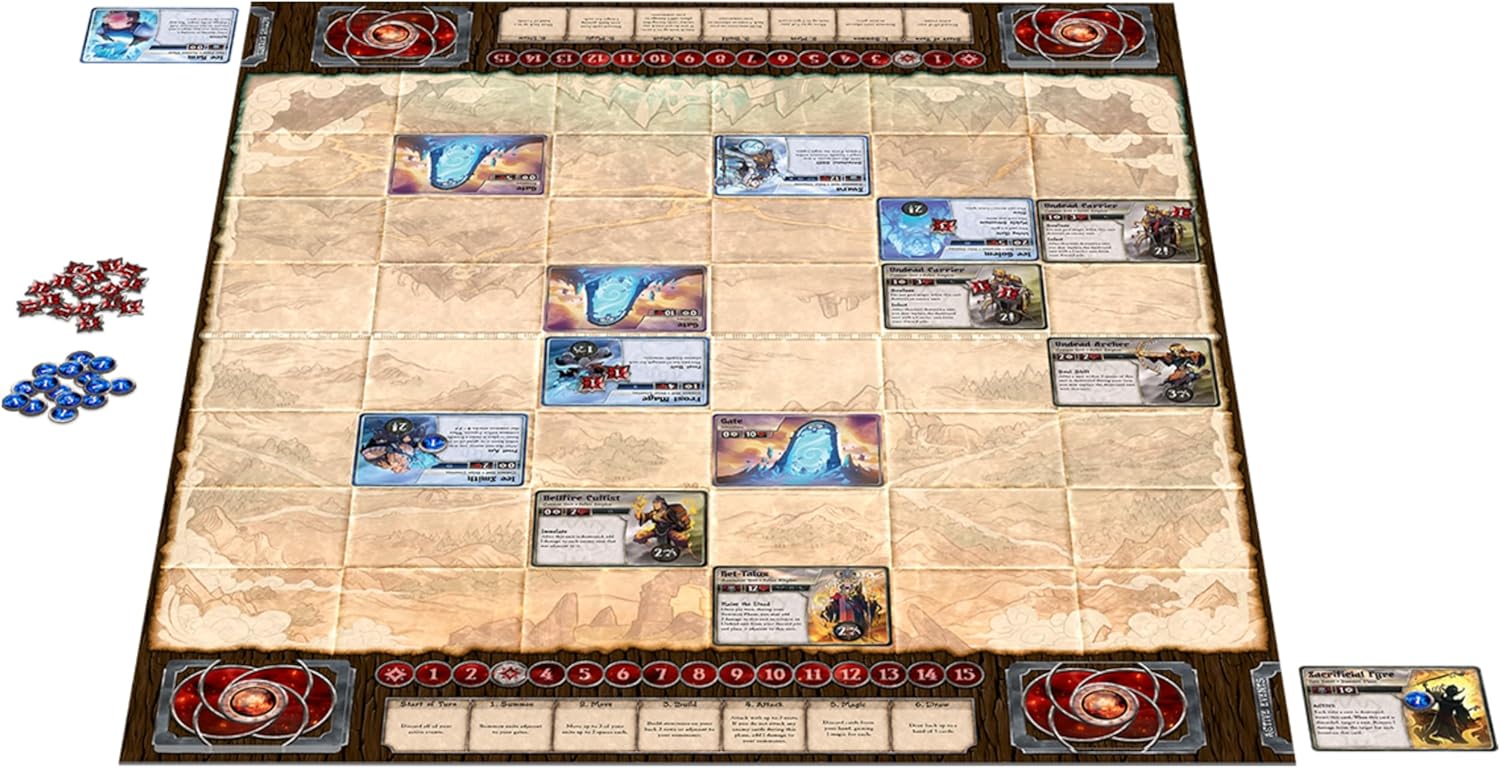
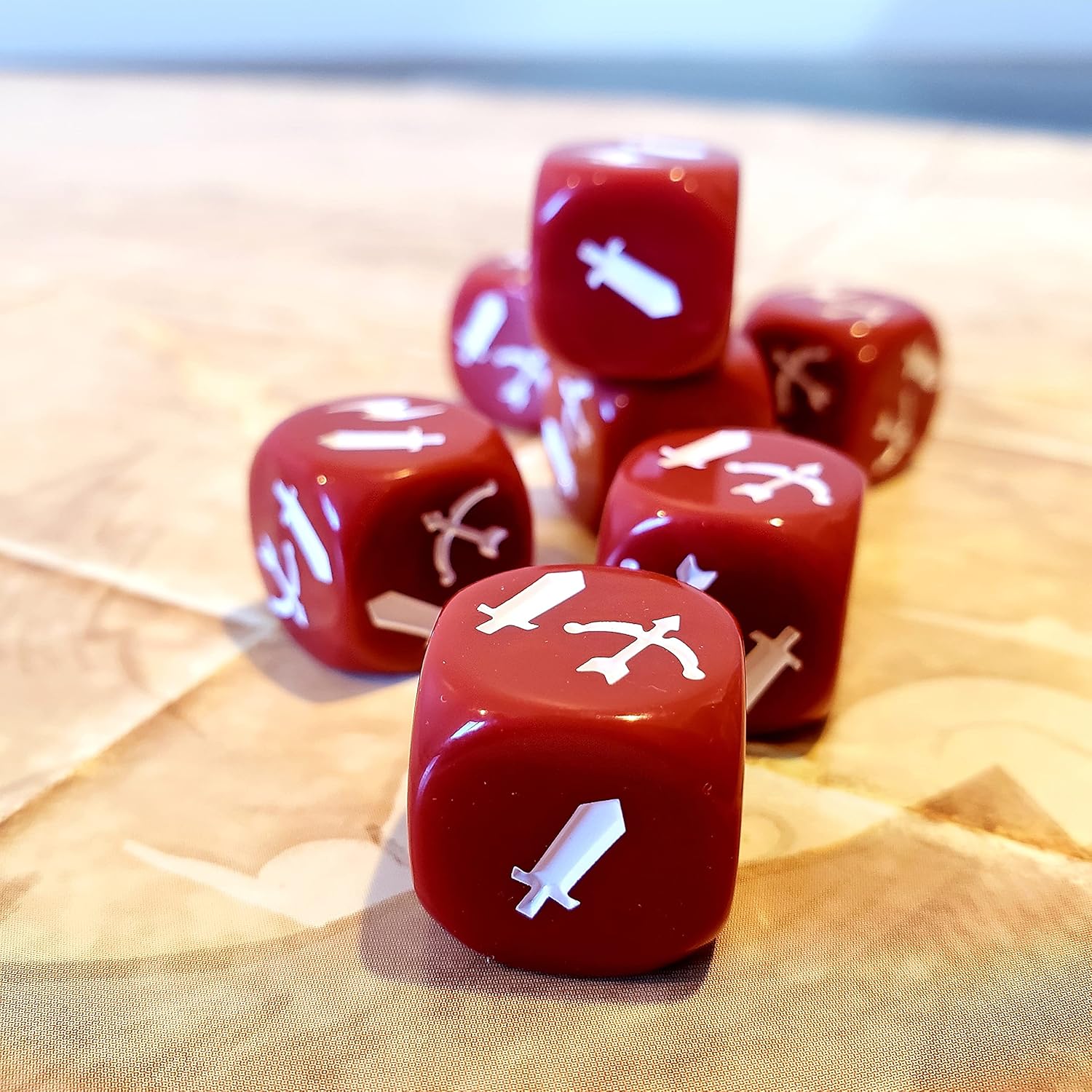
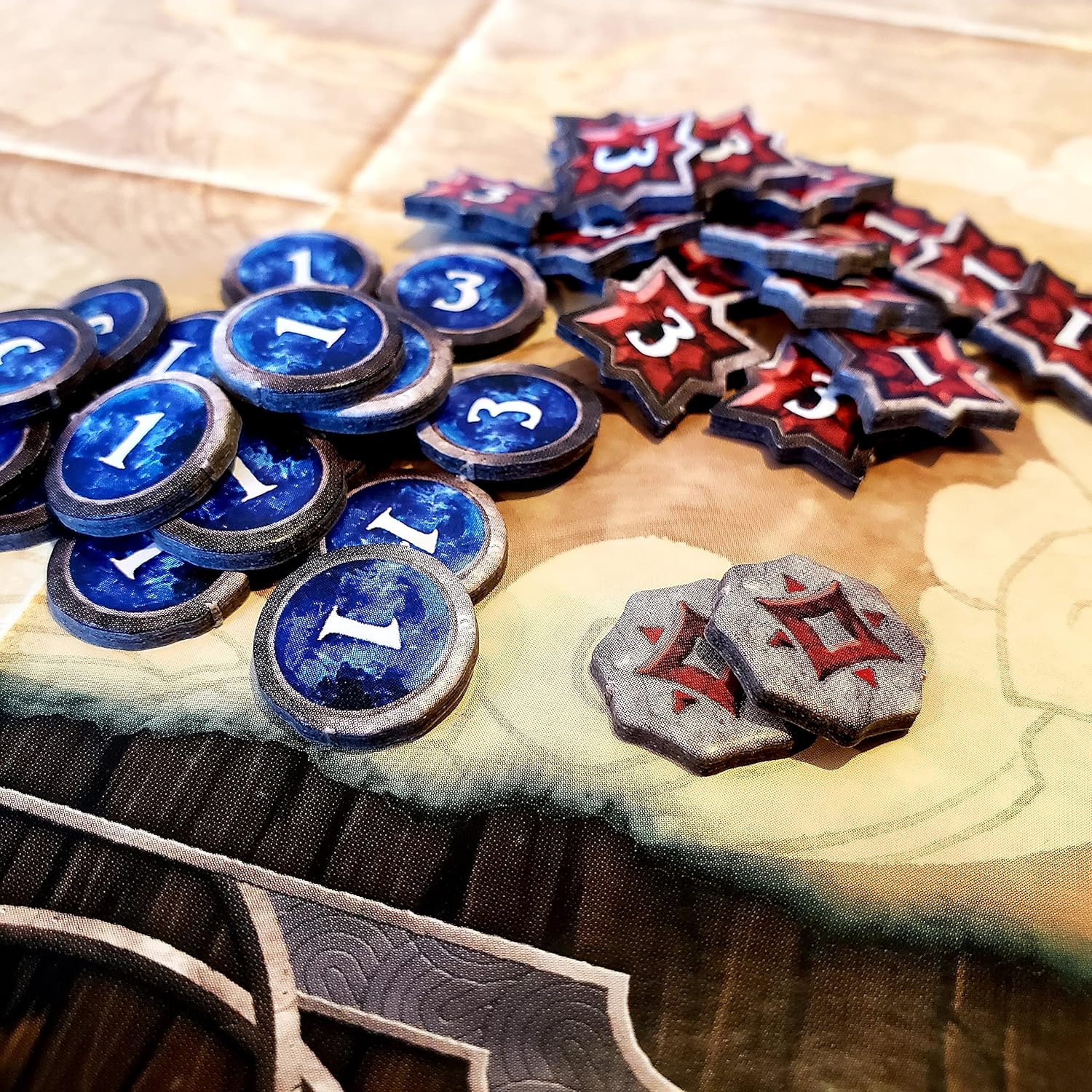
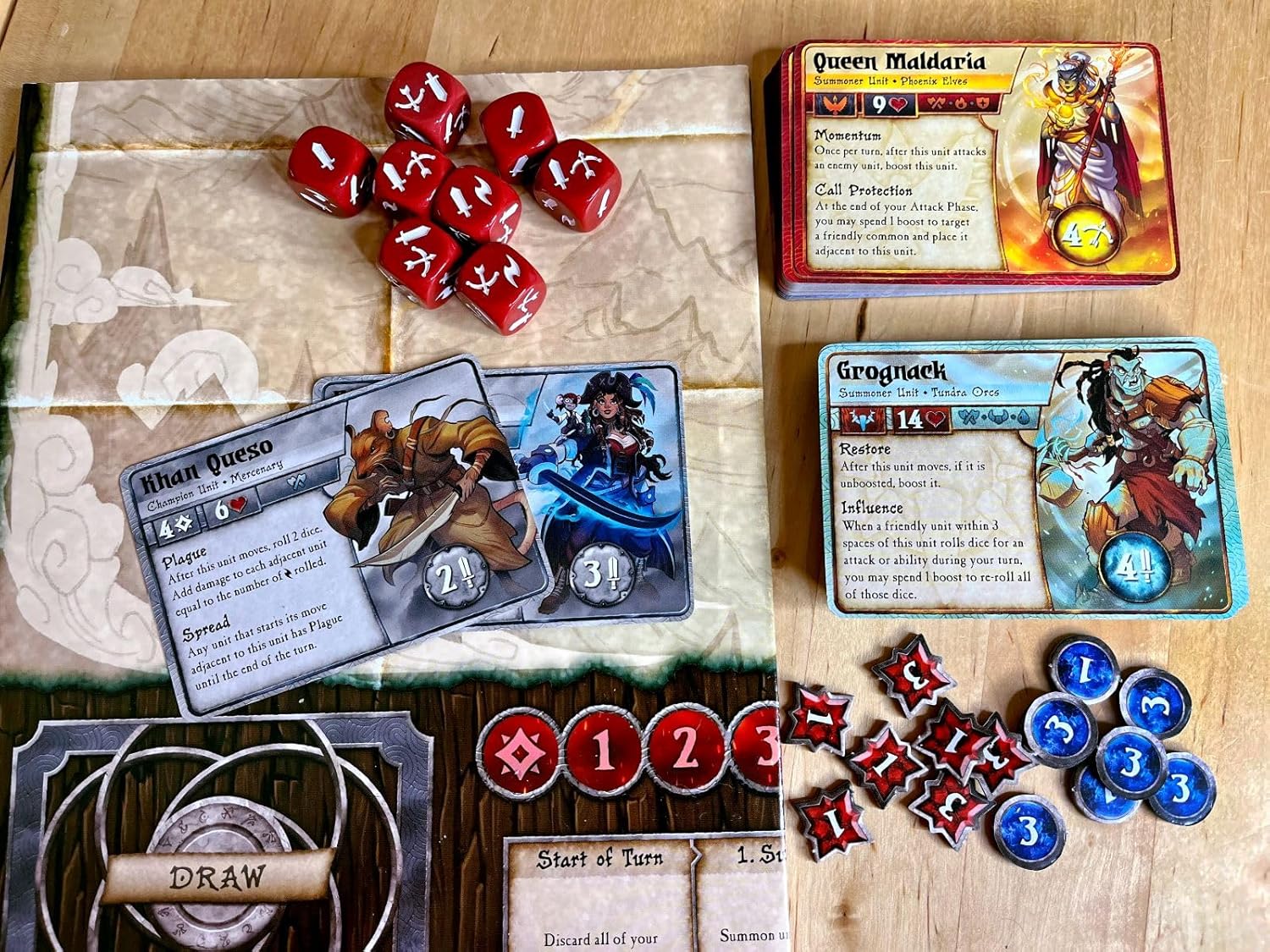
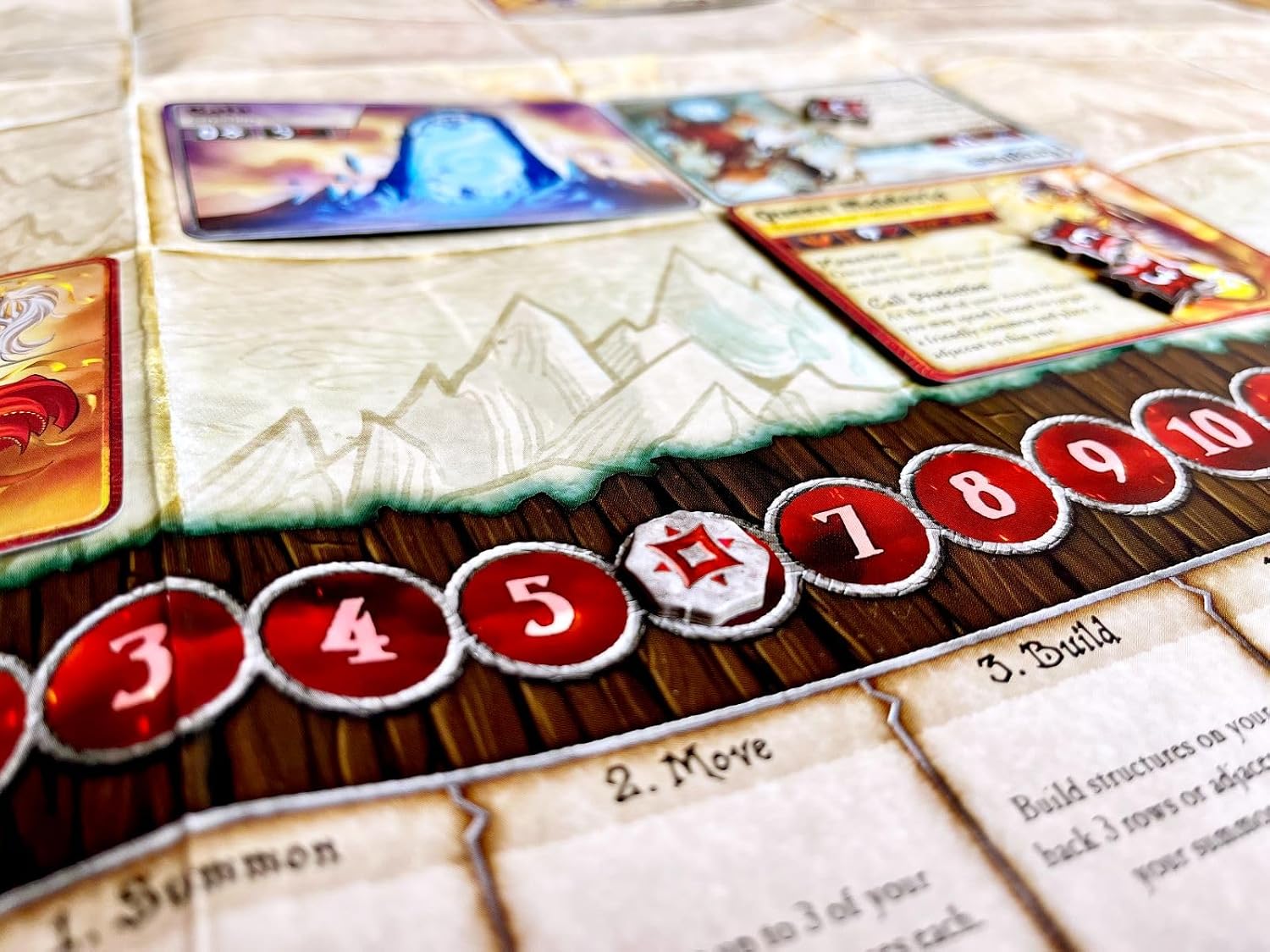
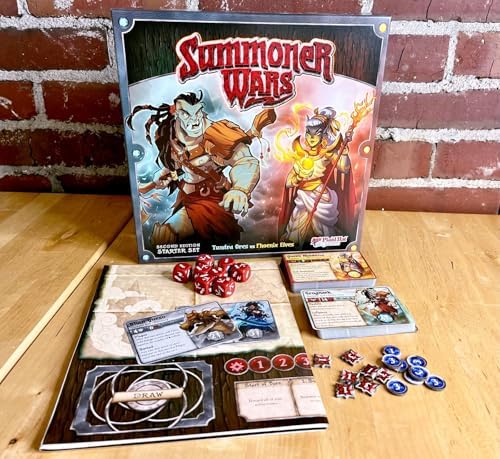
The Master Set includes the premium board, dice and six faction decks. The Starter Set includes a smaller self-contained duel with Phoenix Elves and Tundra Orcs plus the components required for that matchup.
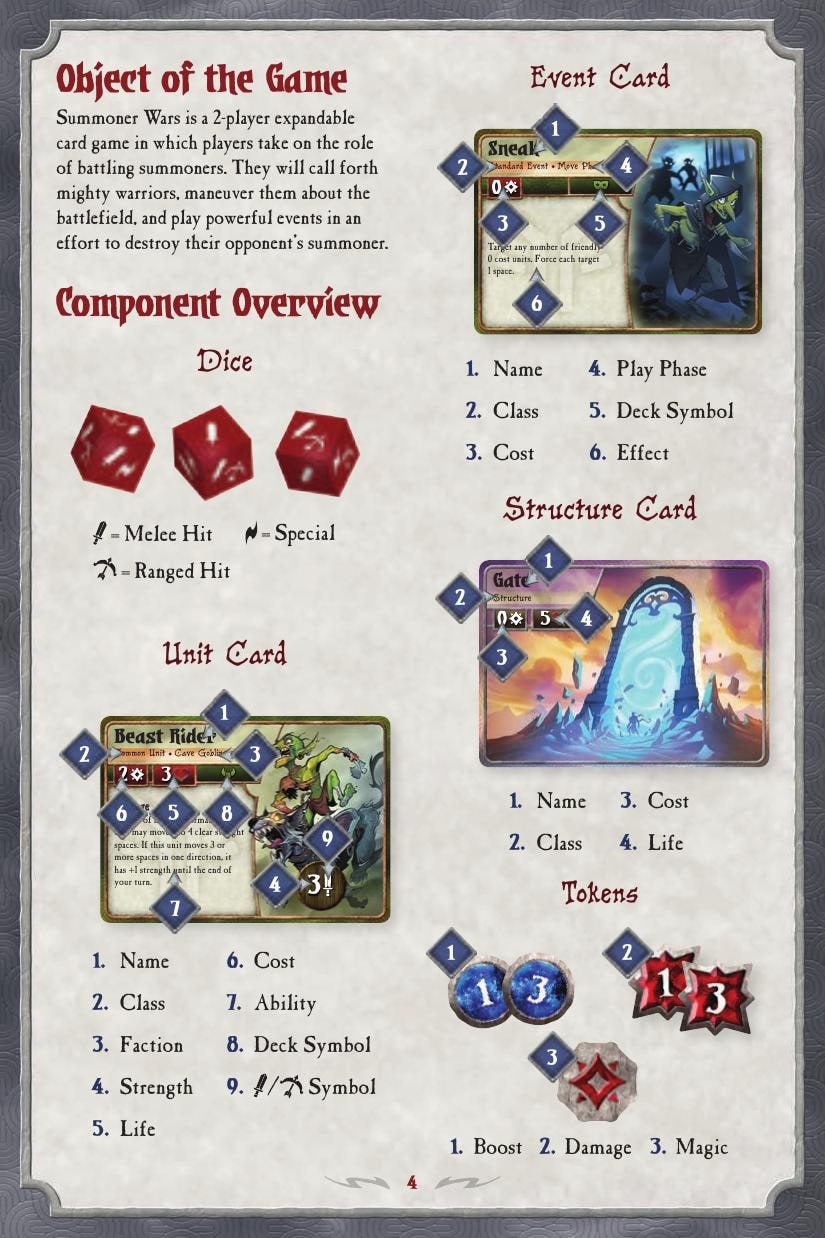
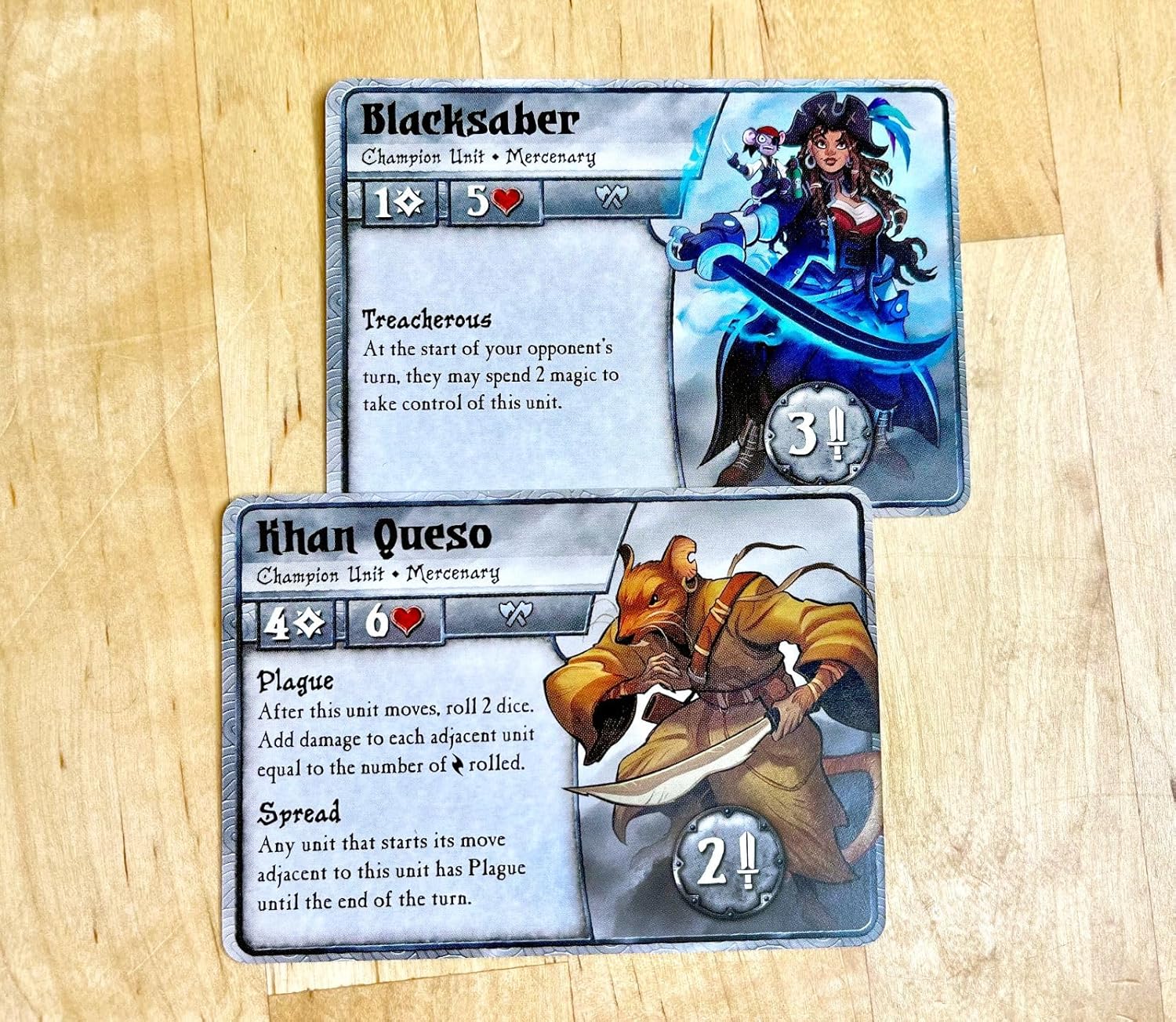
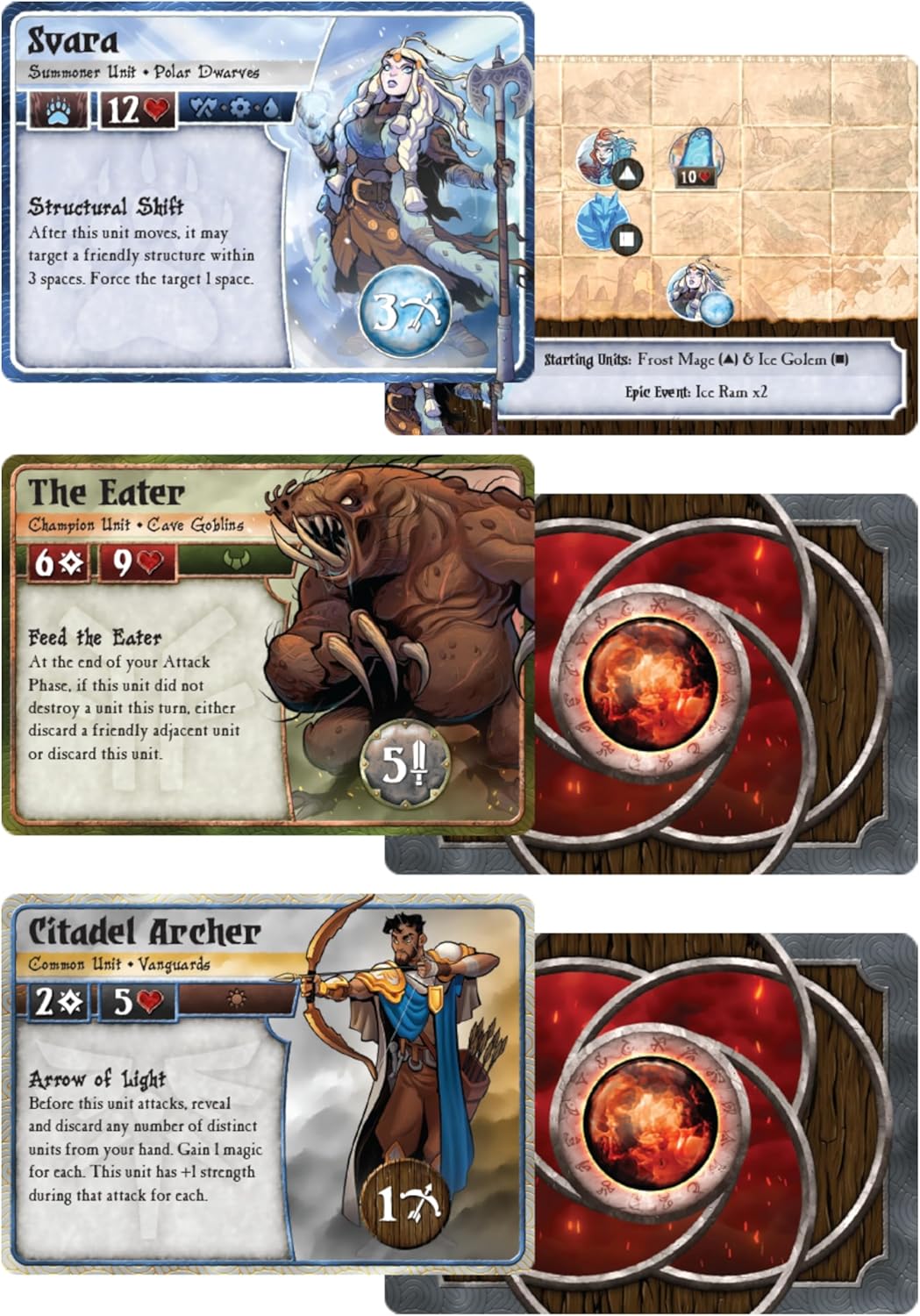
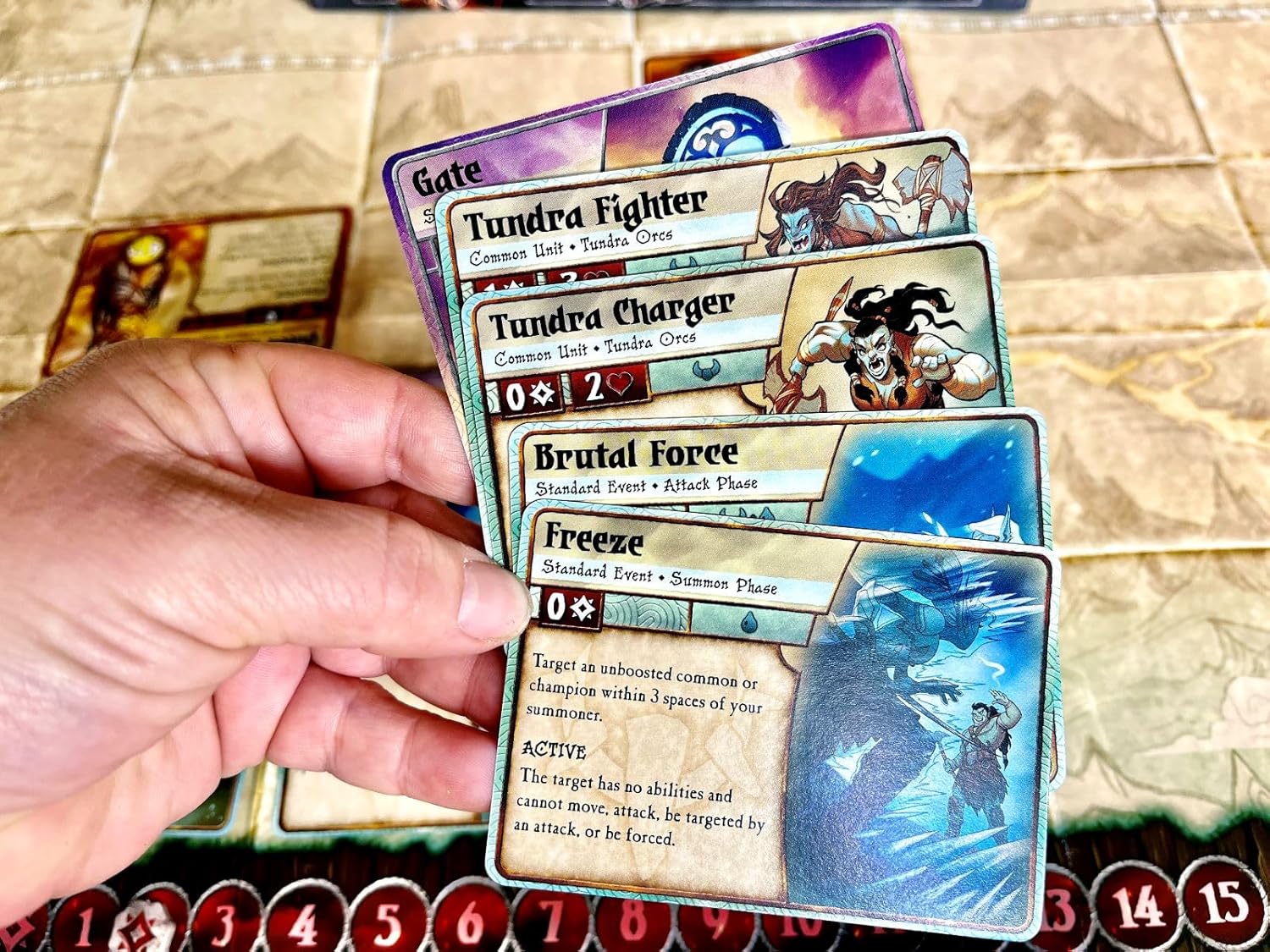
Every faction has a summoner, champions, commons, events and structures shaped around a distinct economy. The decks are fixed, so there are no booster packs and no rarity chase.
Organize each faction as a complete packet. Store dice and wound markers in one shared tray. Setup becomes fast when a player can choose a faction, place the board and begin rather than rebuild a deck from loose categories.
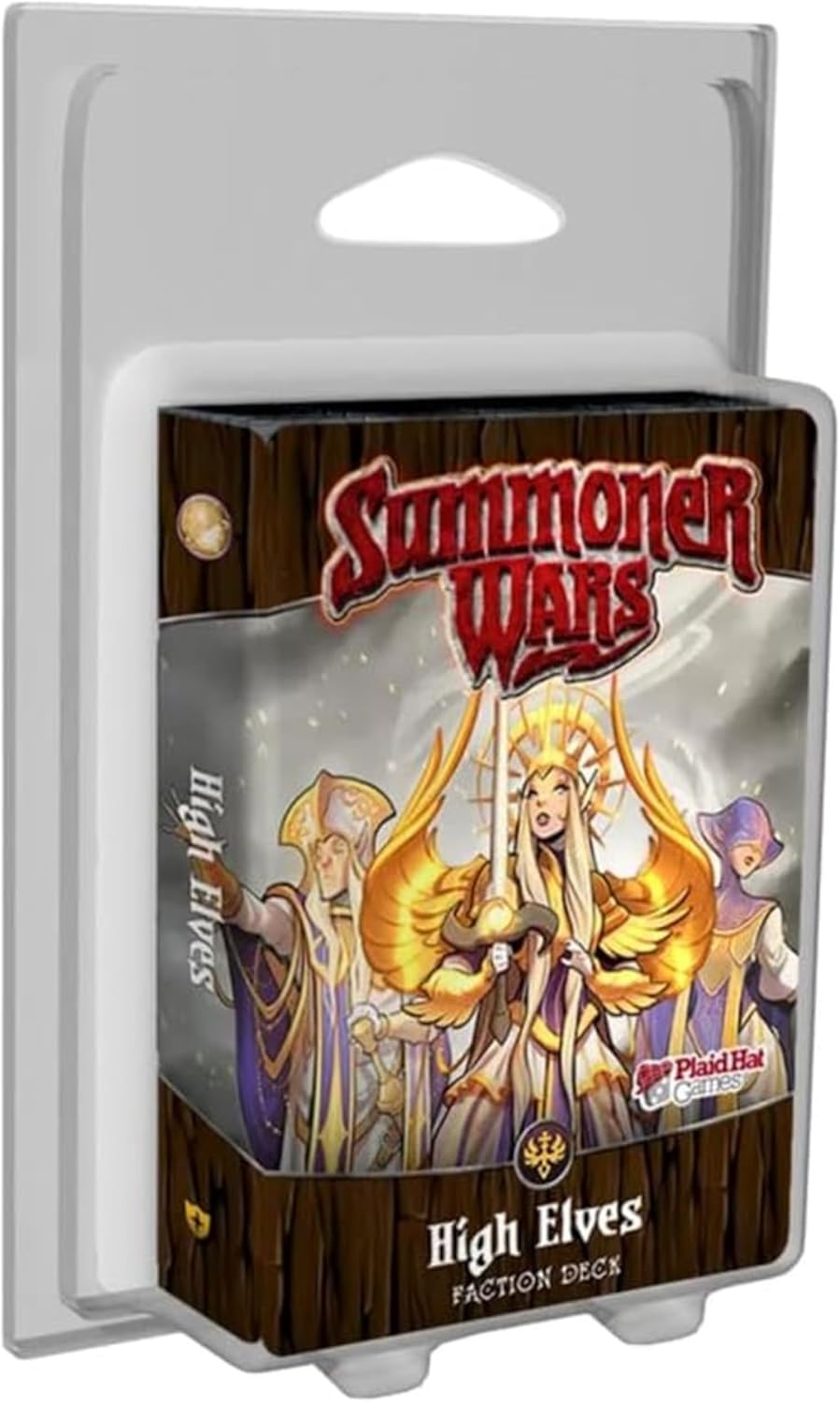
What does Summoner Wars Starter Set contents show?
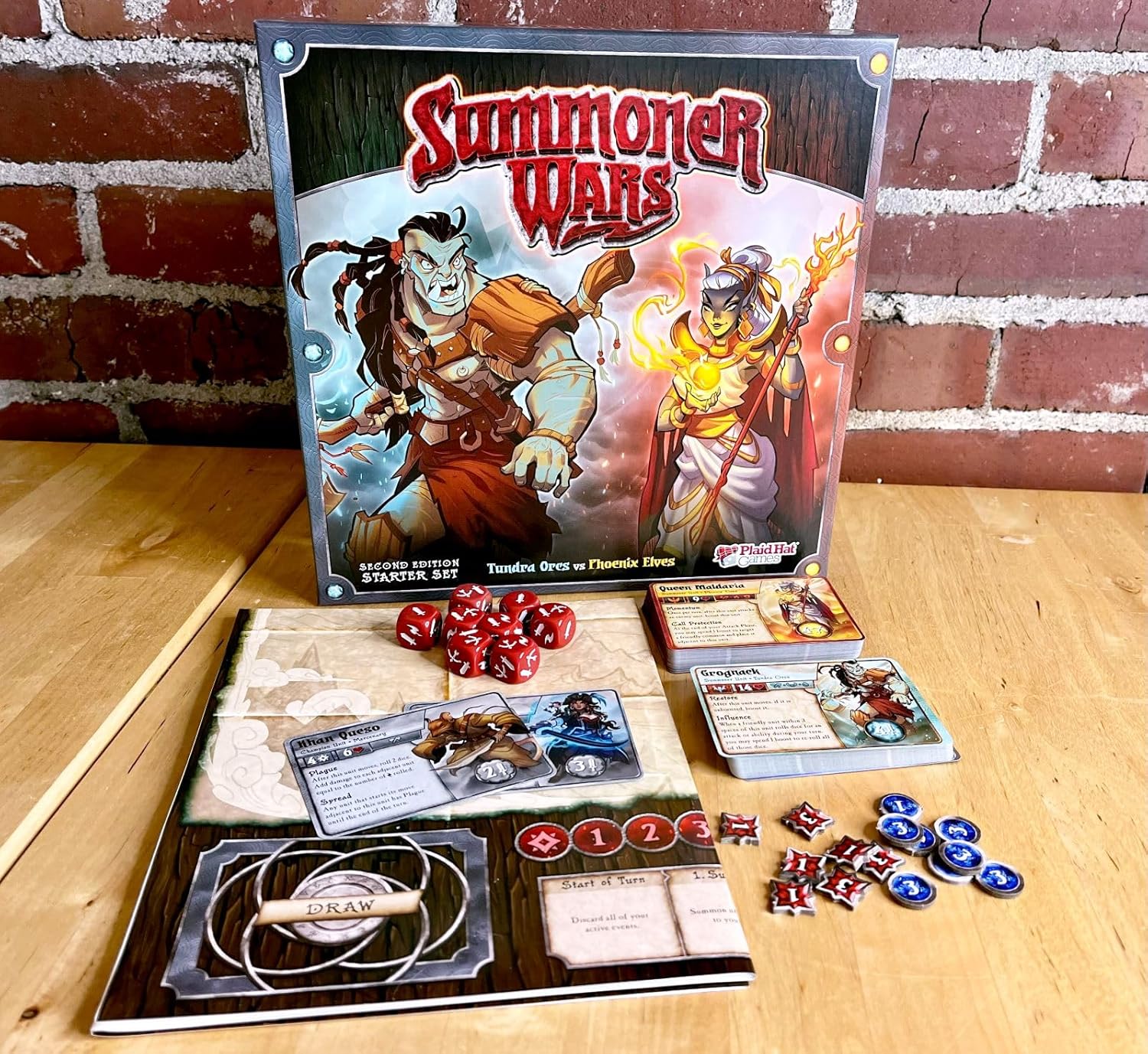

Summoner Wars Starter Set contents. The smaller set remains fully playable.
How gates, magic and summoning work together
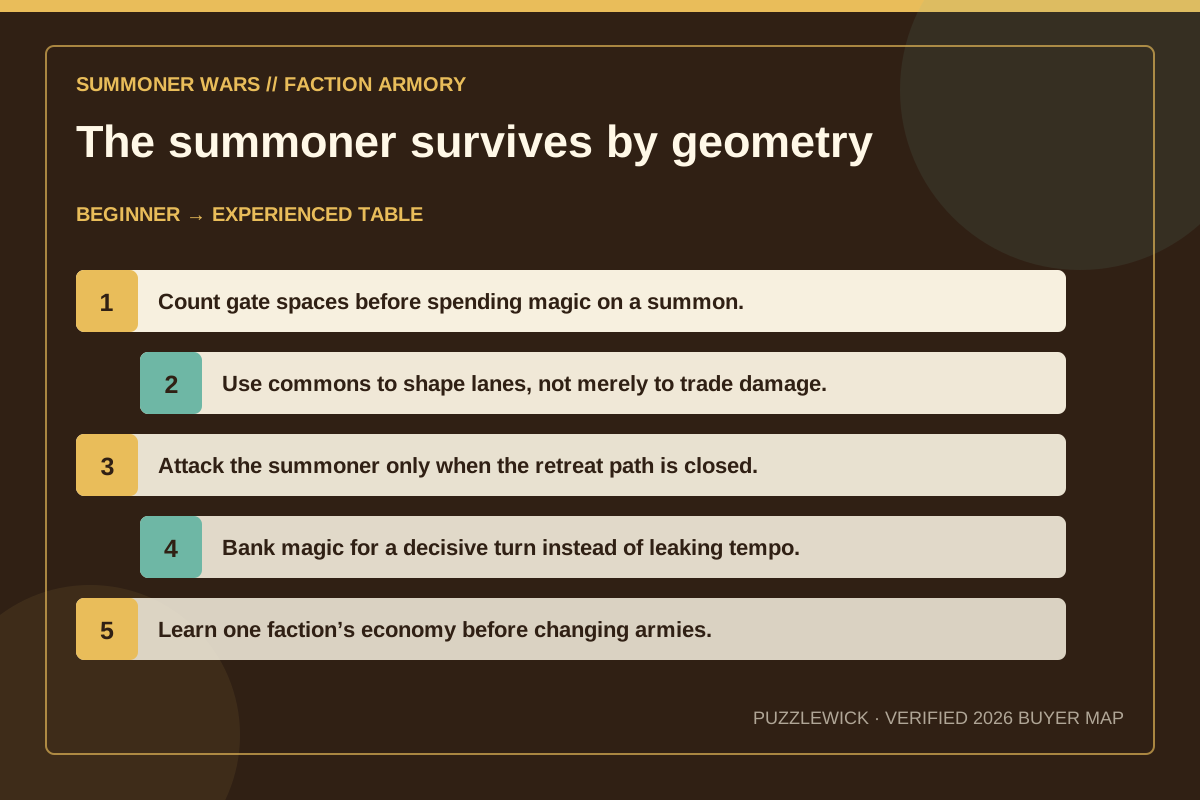
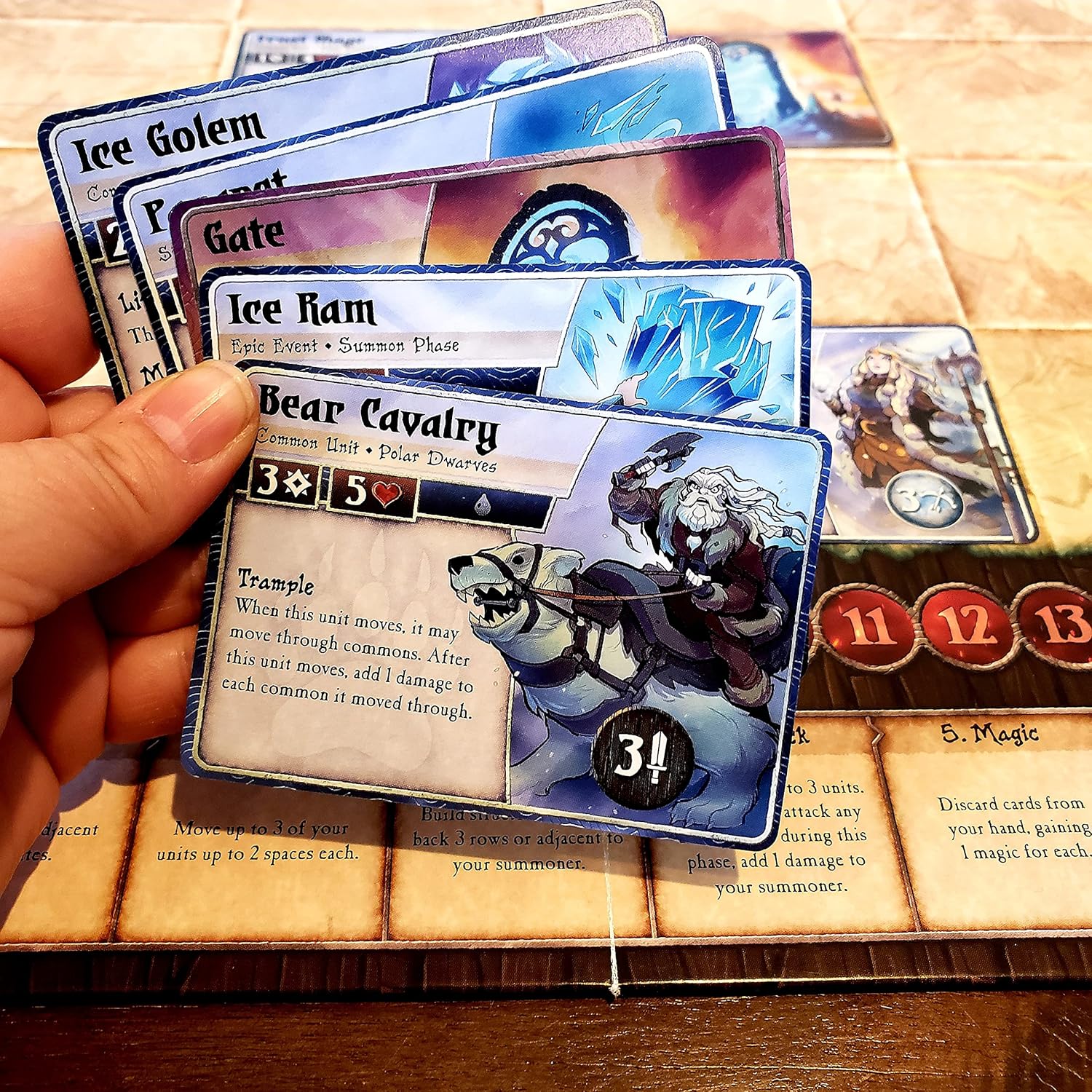
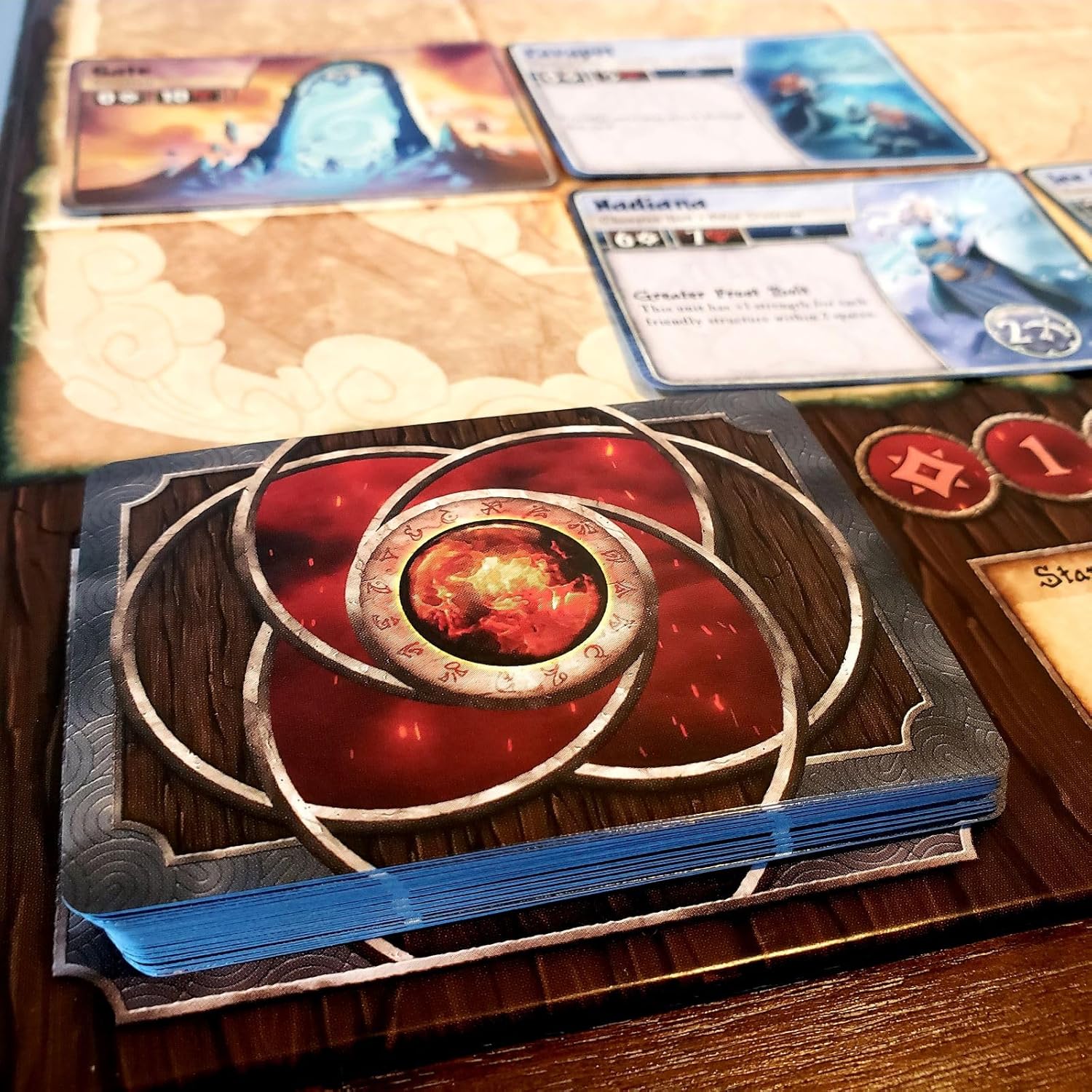
Units enter through gates, move across the grid and attack with dice. Cards also feed the magic economy, so every hand creates a tension between playing a unit and converting a card into future summoning power.
Count open gate spaces before paying for a summon. A powerful champion trapped behind friendly units is expensive furniture. Protect gates, but do not defend one so stubbornly that the summoner loses the rest of the board.
The summoner is both leader and victory condition. An aggressive move can unlock a decisive turn or expose the entire game. Ask where the retreat square will be before advancing.
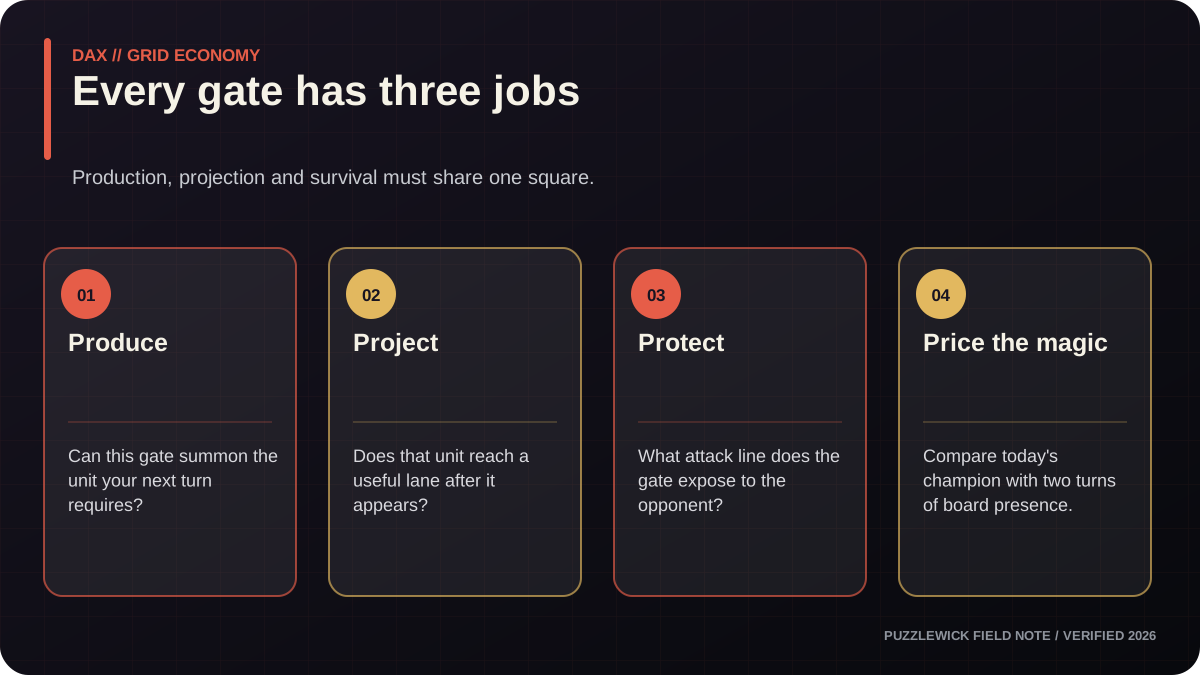
Every gate has three jobs: it is a summoning point, a mobility anchor and an objective the opponent can attack. A forward gate that cannot be defended may donate tempo; a safe gate that cannot project units may never justify its placement. Before summoning, trace the unit's attack lane and the enemy's counter-lane on the grid.
Magic is future board presence. Spending it on a flashy champion can be correct, but only if the champion changes the geometry now. Advanced players continually compare the immediate attack to the units and events that same magic could produce over the next two turns.
Which faction should you buy next?
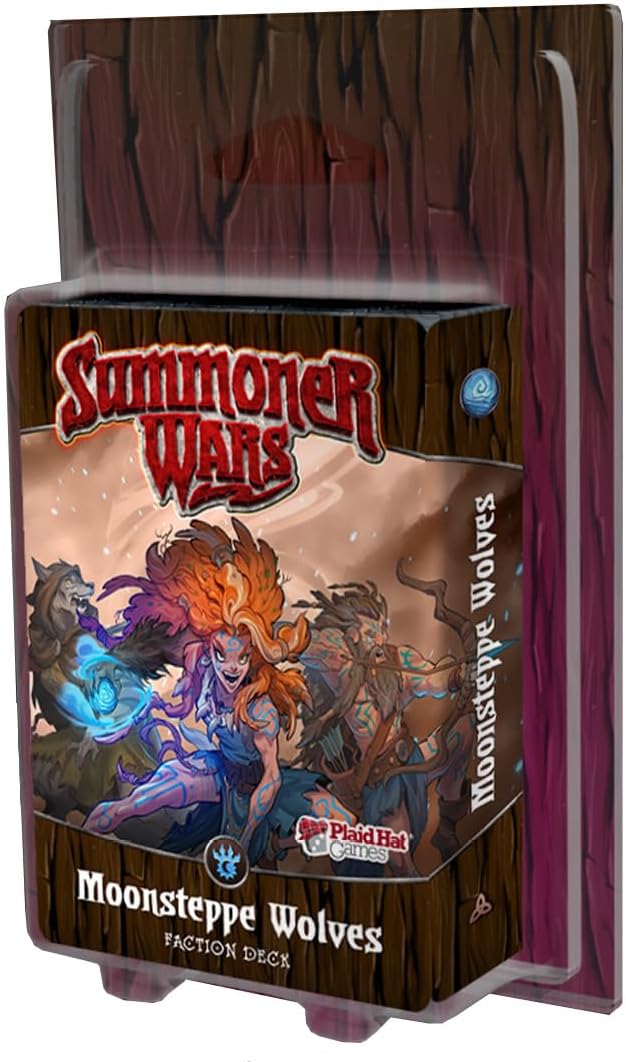
Try factions digitally or borrow them before buying. The useful next deck should contrast with the current favorite: a positional player may learn more from an aggressive economy than from a second precise control faction.
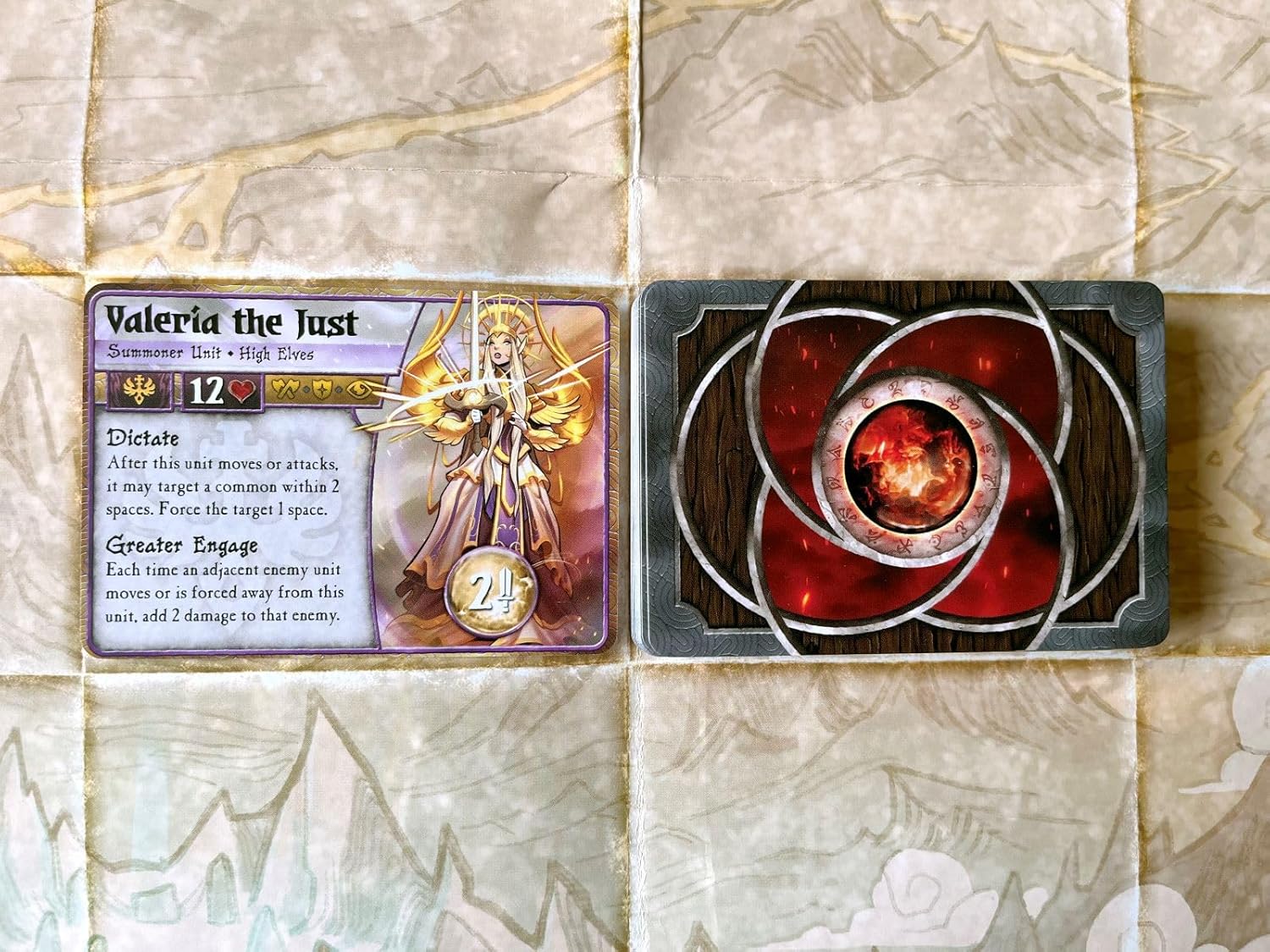
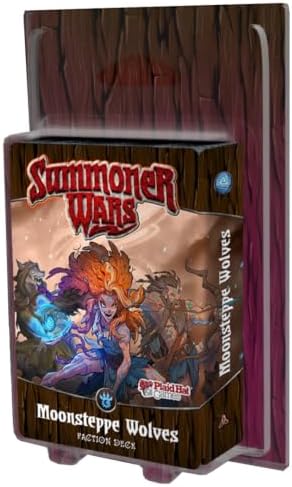
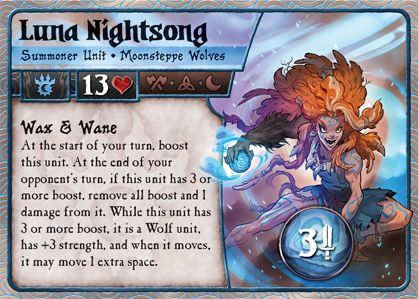
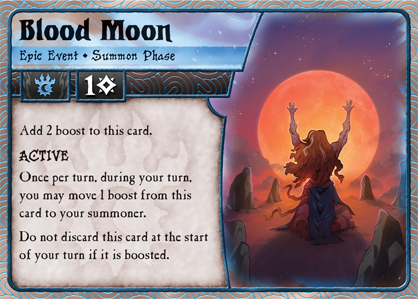
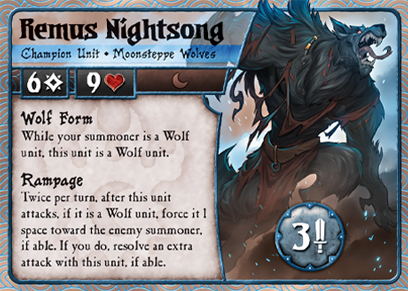
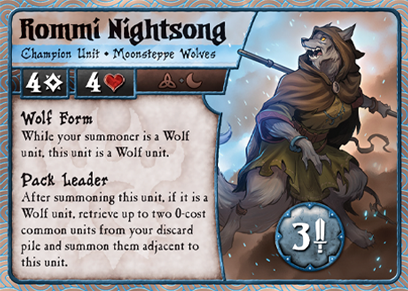
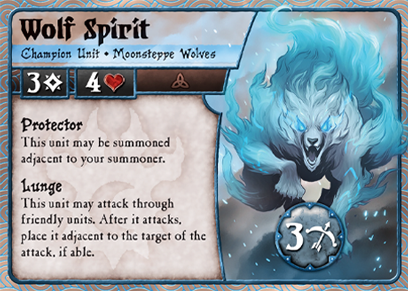
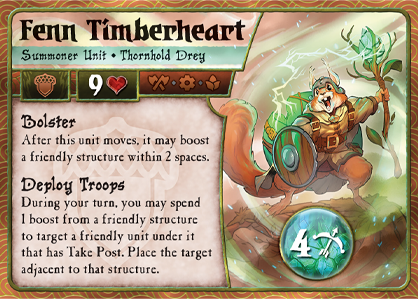
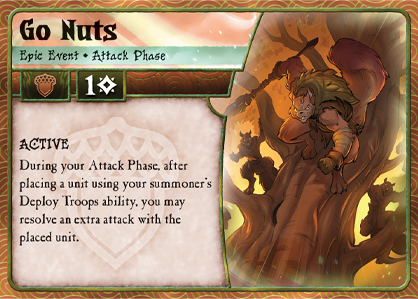
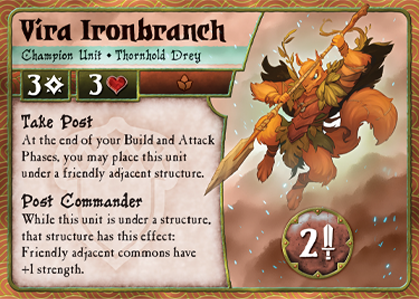
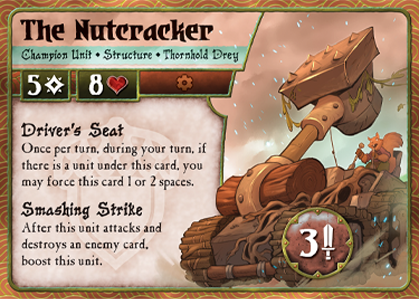
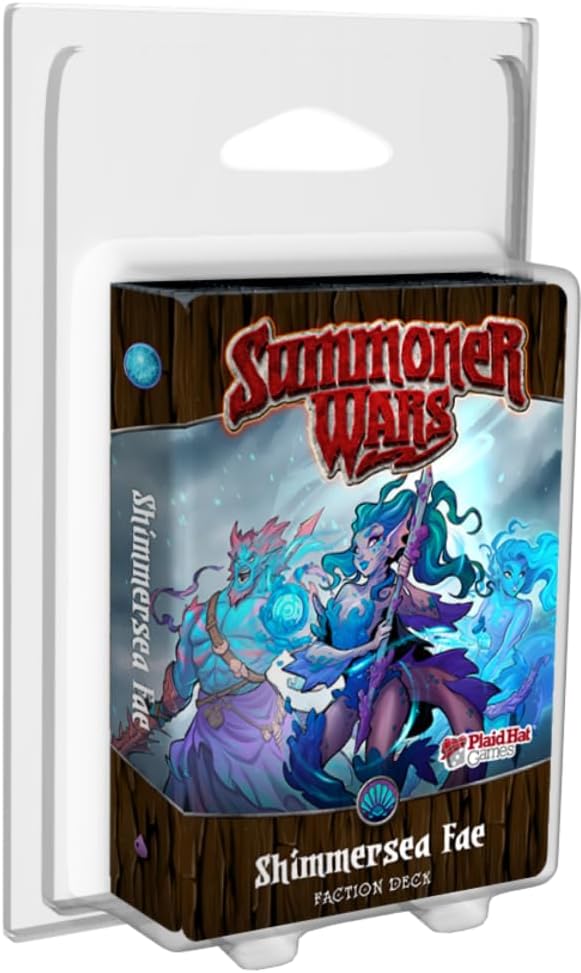
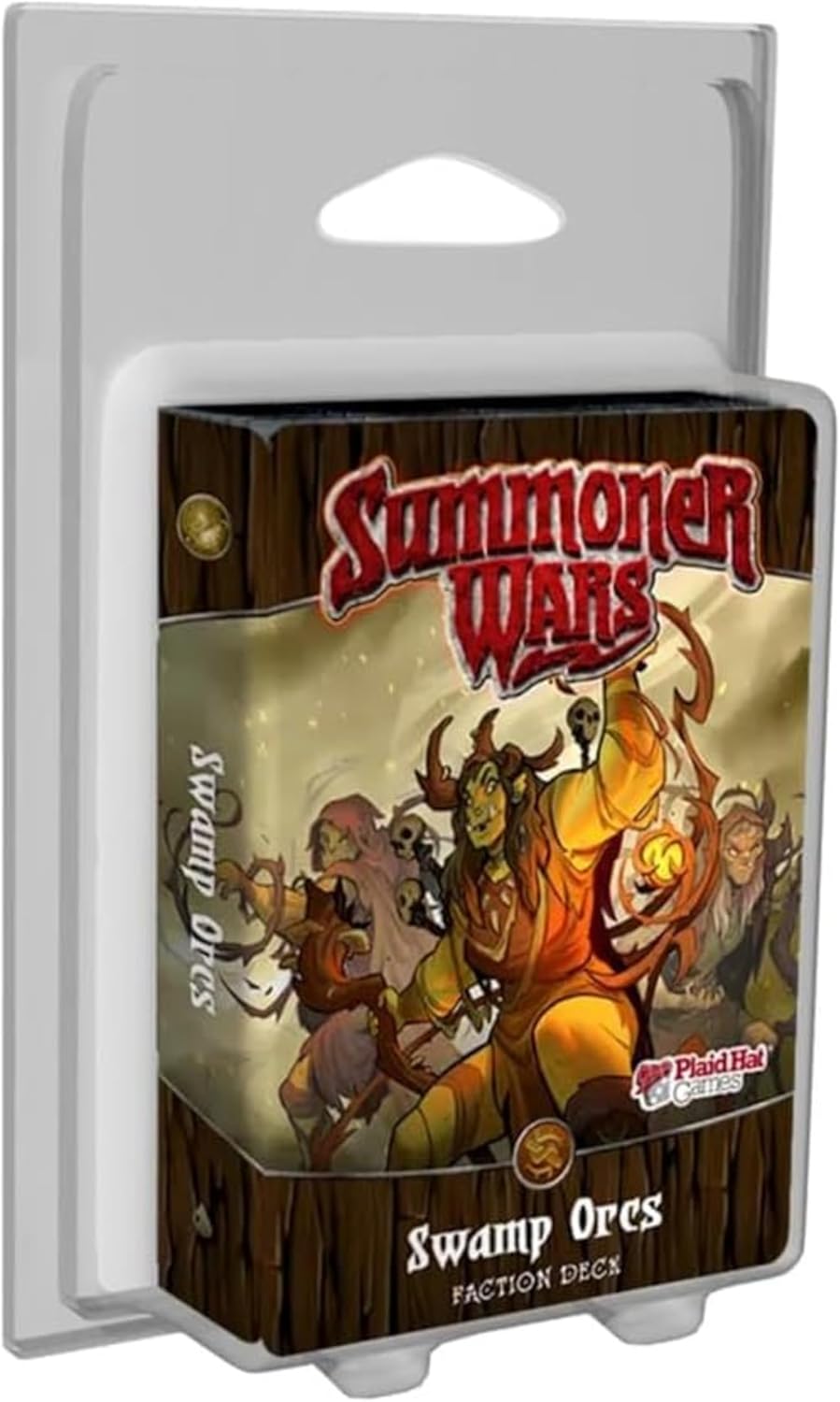
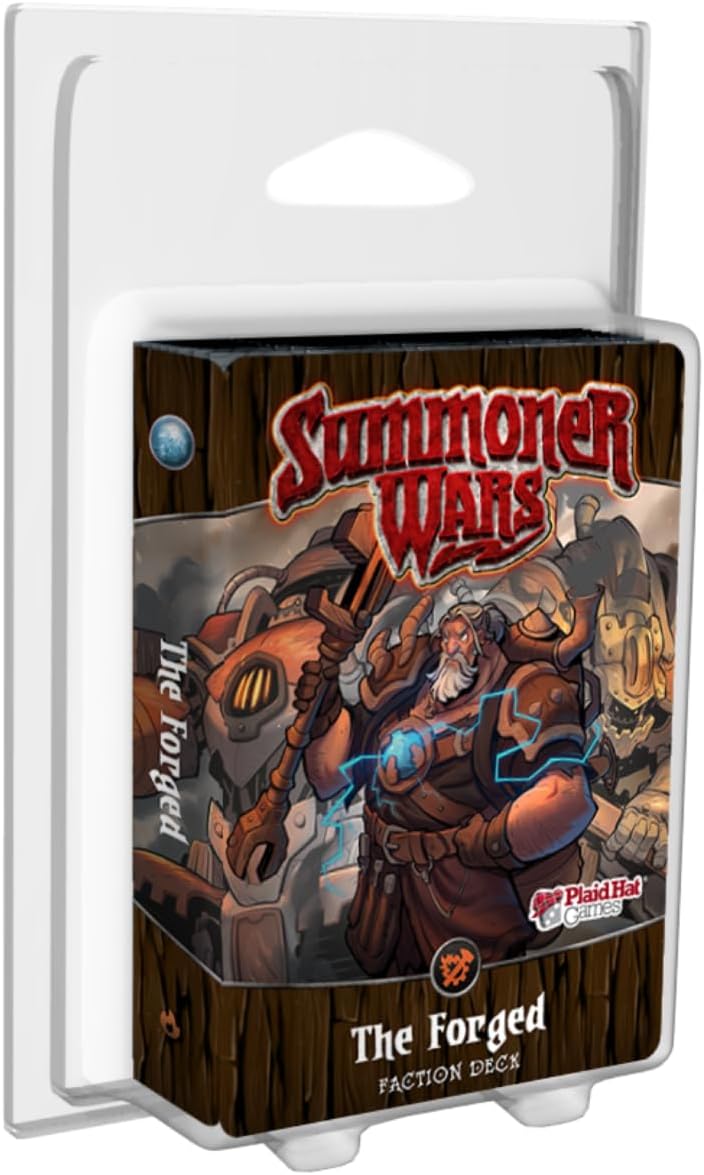
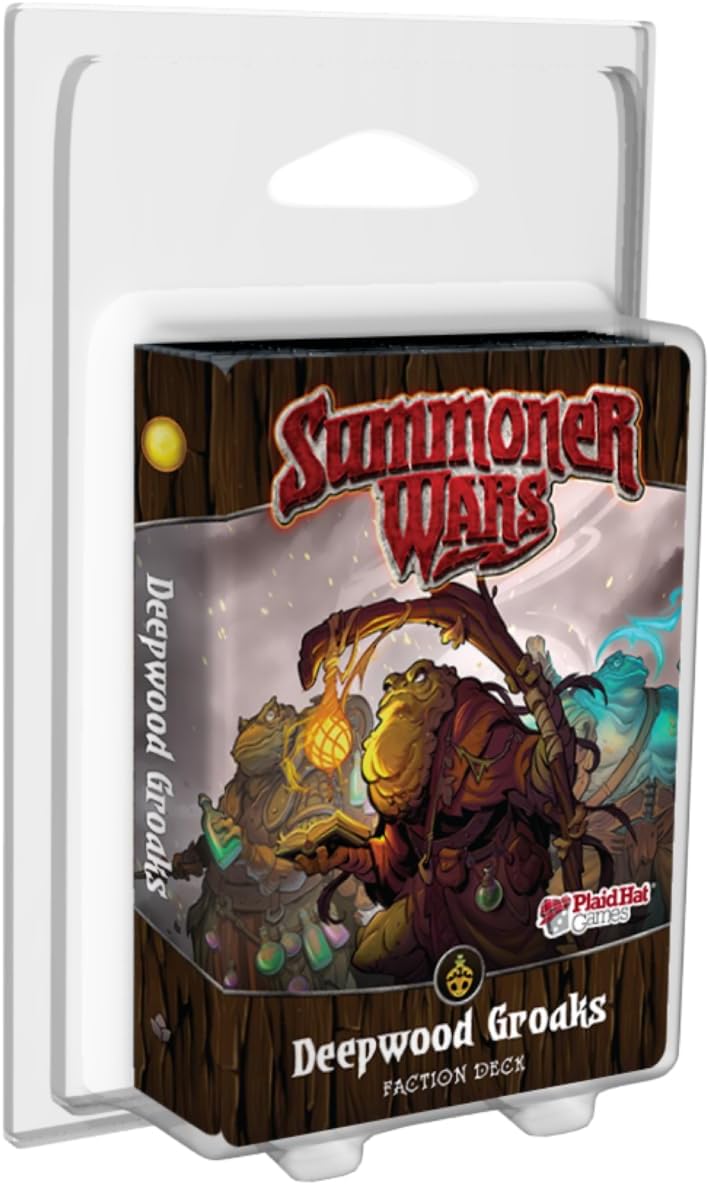
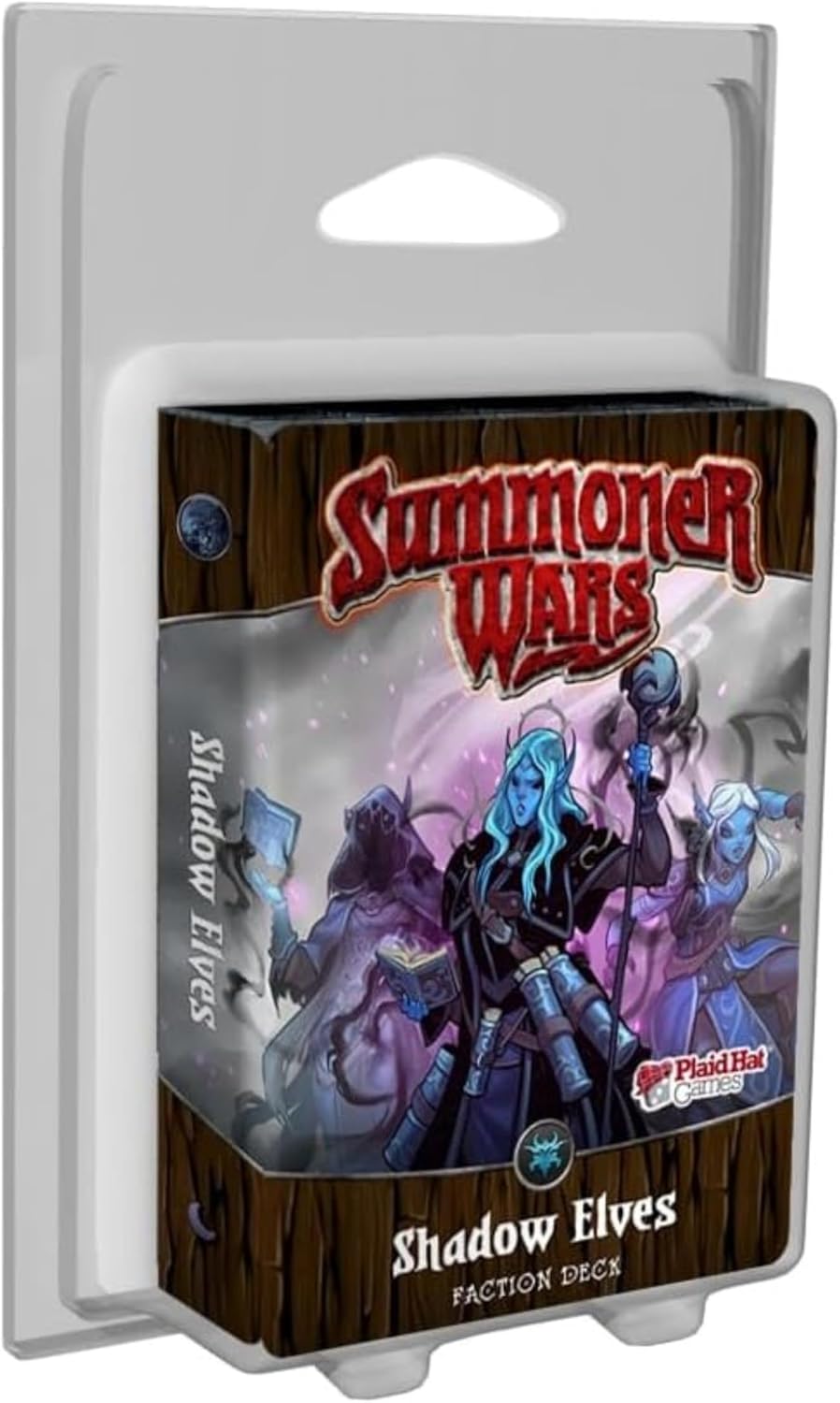
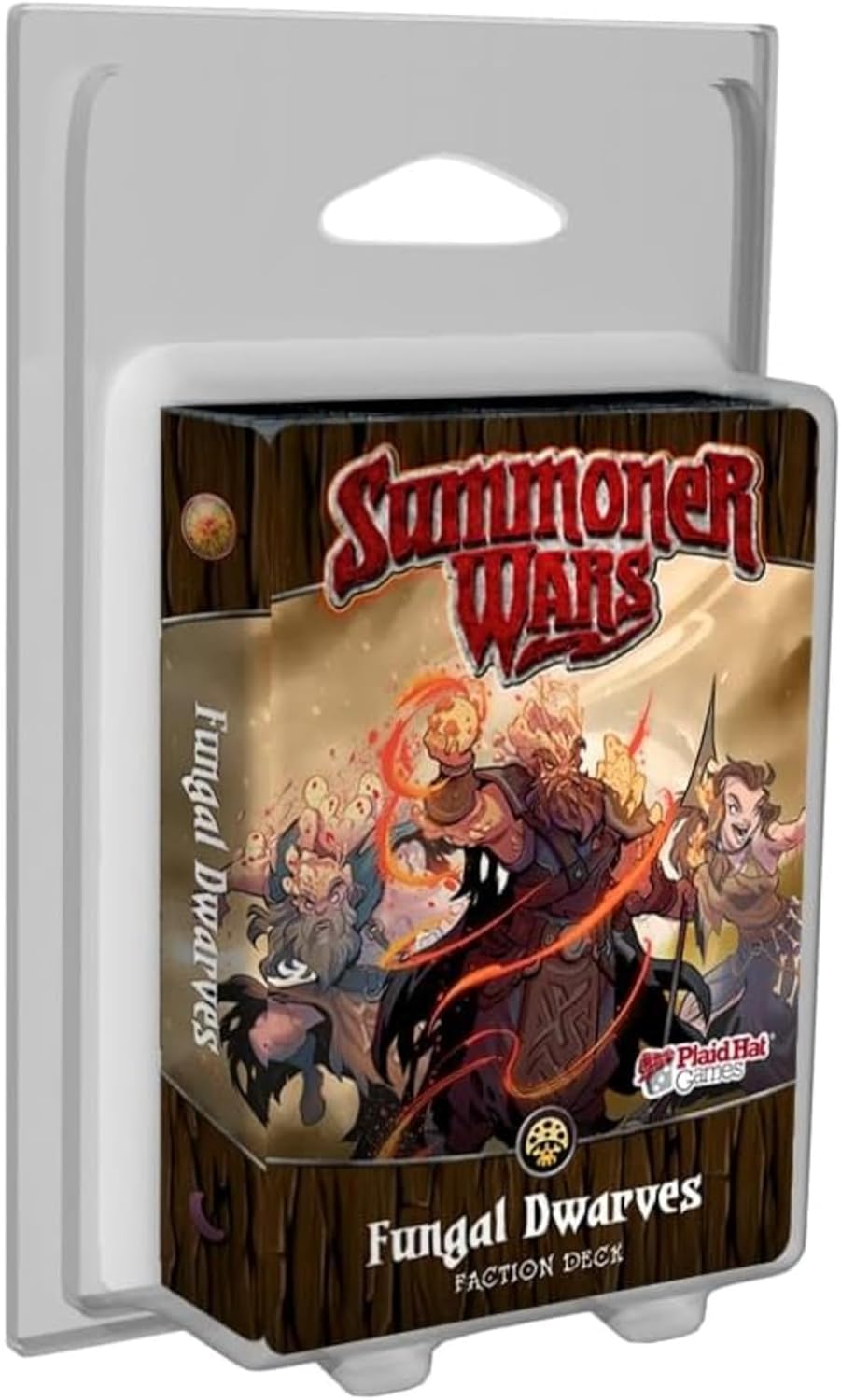
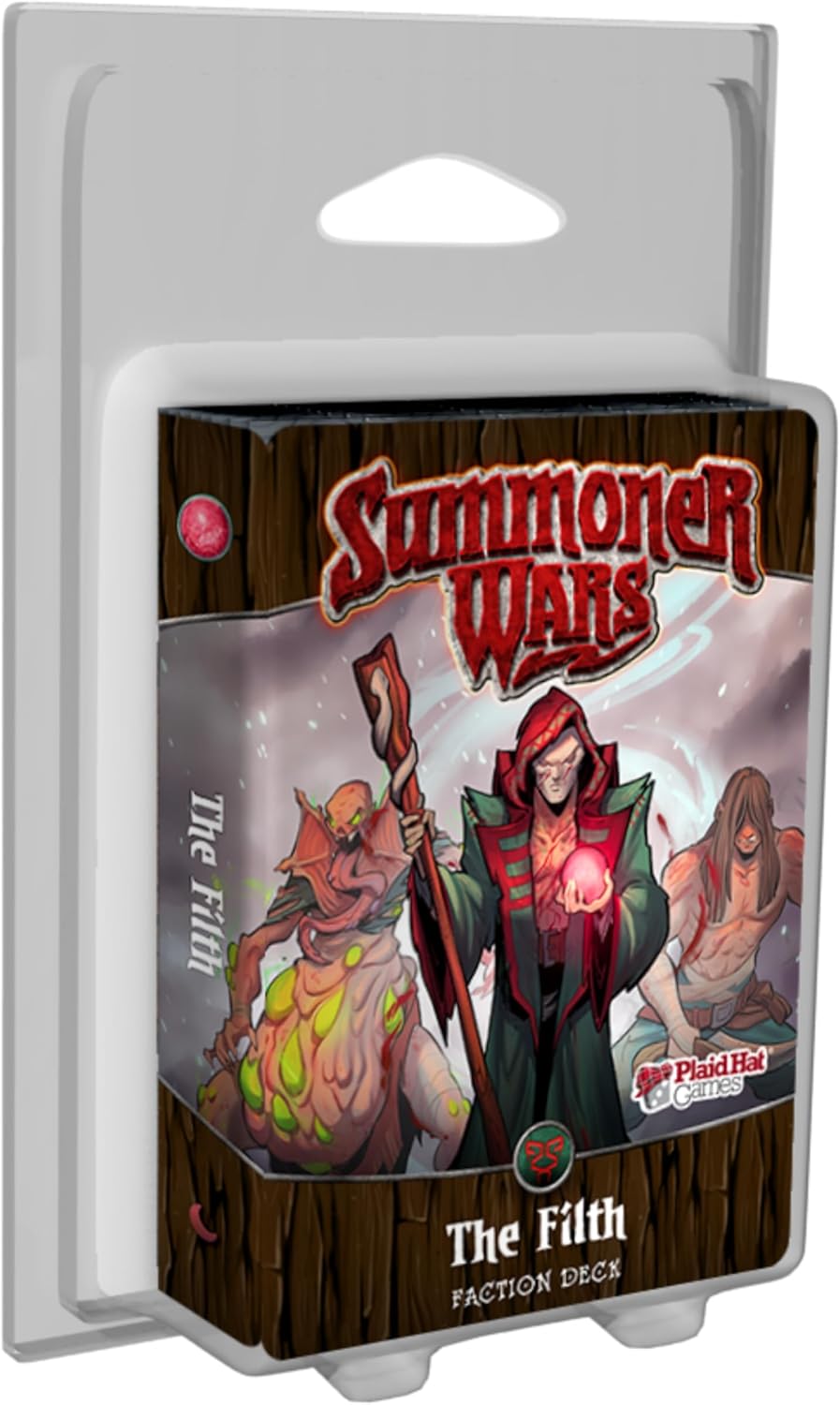
Moonsteppe Wolves, Thornhold Drey and High Elves are current Amazon-verified examples, not a universal top-three power ranking. Faction strength changes with matchup knowledge and official updates.
Buy one, play ten matches and learn its bad turns. A faction shelf is not a campaign; unopened asymmetry creates no value.
Try factions digitally before buying them physically. The official online implementation is the most efficient way to discover whether you enjoy swarms, positional control, ranged pressure or champion-heavy play. Current faction previews and card-adjustment files also matter: Moonsteppe Wolves and Thornhold Drey arrived alongside finalized updates to older cards, so owners should check the publisher's adjustment page before mixing printings.
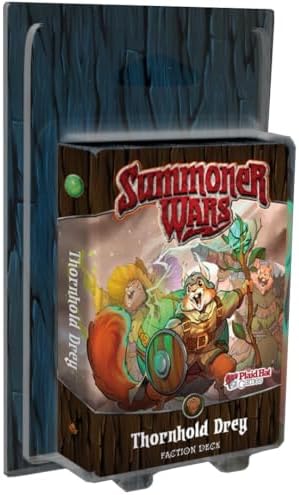
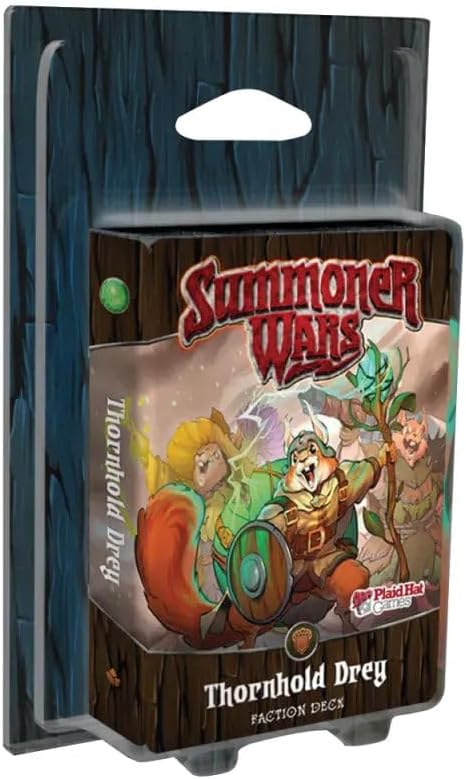
What does Thornhold Drey faction deck show?
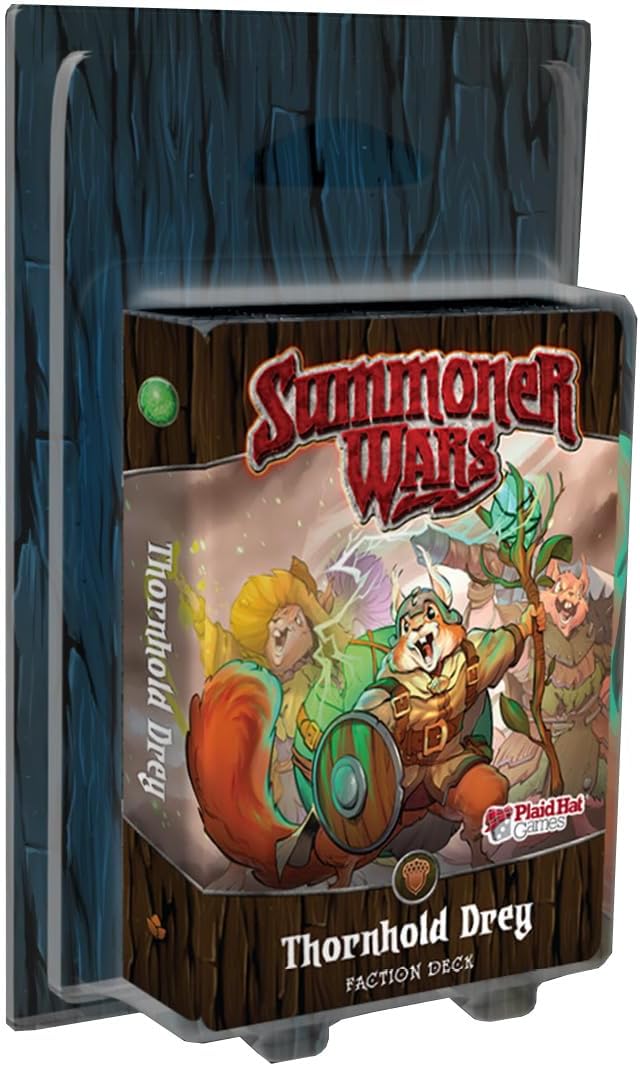
Thornhold Drey faction deck. A separate army, not a stand-alone game.
How does Beginner to advanced tactical advice improve the buying decision?

Beginners should spend commons to shape lanes rather than trading them automatically. A cheap unit can block a summon square, screen a summoner or force an opponent into poor dice.
Bank enough magic for a decisive turn. Constantly spending to fill the board can leave a faction unable to convert a positional opening. Conversely, saving forever surrenders tempo.
Advanced players attack the economy behind the card. Kill the gate that makes a champion possible, occupy the square that denies retreat and force the opponent to spend a useful card as magic. The best move changes future choices.
How does Solo, hosting and table footprint improve the buying decision?
Summoner Wars is primarily a two-player competitive game. Digital play is useful for practice and faction sampling, but the physical product is not a solo campaign purchase.
The board and player areas need roughly 36 by 30 inches. Keep wound markers in shallow dishes and dice in one shared tray. Faction decks should sit outside the board edge so the grid remains readable.
For four friends, run two boards if available and rotate factions. A single board with spectators can work for a teaching match, but the evening is richer when everyone makes decisions.
How does Dax's war room: geometry, magic economy and faction discipline improve the buying decision?
Summoner Wars is won on the board before it is won in combat. A unit is not only attack value; it occupies a route, protects a summoning point, threatens a lane, and may become magic when the hand needs to move. New players chase favorable dice exchanges while leaving the summoner exposed to geometry. Before attacking, trace the opponent's next movement and summon reach. If one opening creates a direct line to the summoner, the attractive combat elsewhere may be a distraction.
The Master Set is the correct long-term foundation for most committed pairs because its faction range teaches how differently the same grid can behave. The Starter Set is a smaller proof-of-interest purchase. Use it when budget or uncertainty is the primary constraint, not because the full system requires a chronological prelude. Faction decks are complete identities, but they still need the core board, dice, tokens, and rules environment supplied by a base product.
Teach one faction pair twice. In game one, expose event timing and explain why cards may become magic rather than units. In game two, swap factions. A player cannot separate faction strength from unfamiliarity after one match. Keep magic, discard, draw deck, gates, and active units in stable zones; the tactical board should be the only area that changes shape. Read every summoner ability before placement because the summoner is both commander and loss condition.
Advanced play begins with threat projection. Count movement plus attack range, preserve gates that create future deployment angles, and do not spend magic simply because a unit is affordable. A cheap summon that blocks two routes can outperform a premium attacker arriving one turn late. Event cards are tempo instruments; use them to change a critical exchange or geometry, not merely because their text is currently legal.
There is no default physical solo opponent in the core system, although digital play and community variants can help practice. The product's heart is a human tactical duel. Host it on a square, glare-free surface with dice trays off the board and faction decks prepared before guests arrive. Puzzlewick score: Master Set 9.4/10 for repeat tactical pairs; Starter Set 8.4/10 as a lower-risk test; random faction collecting 6/10 until the base factions have revealed what style the players actually want.
What are the ratings, misconceptions and final buying order?
The Master Set scores 9.4/10 overall, 9.6 for replay, 9.3 for value and 8.1 for teach. The Starter Set scores 8.8 overall and 9.2 as a budget trial. Faction decks score by fit, not universal rank.
A faction deck is not self-contained. More factions do not create a better first teach. Dice do not make the game random in the way a single attack result suggests; positioning and probability shape repeated outcomes.
Final order: Master Set, or Starter Set if uncertain, then digital testing, then one contrasting faction. Stop when the current armies still create unplayed matchups.
The picks
Some links below are affiliate links — as an Amazon Associate, Puzzlewick earns from qualifying purchases, at no extra cost to you. It never changes a pick.
 12 photos
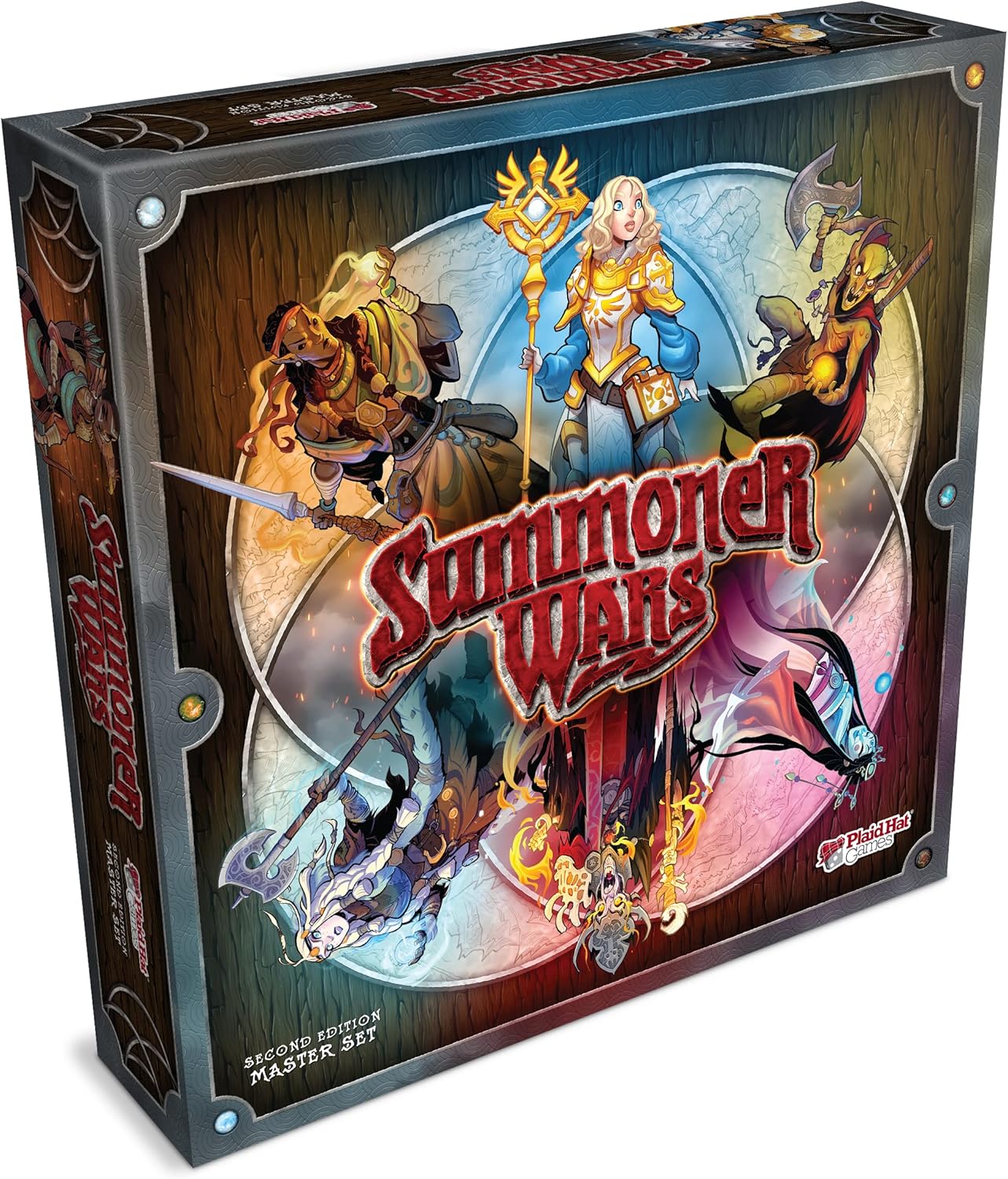
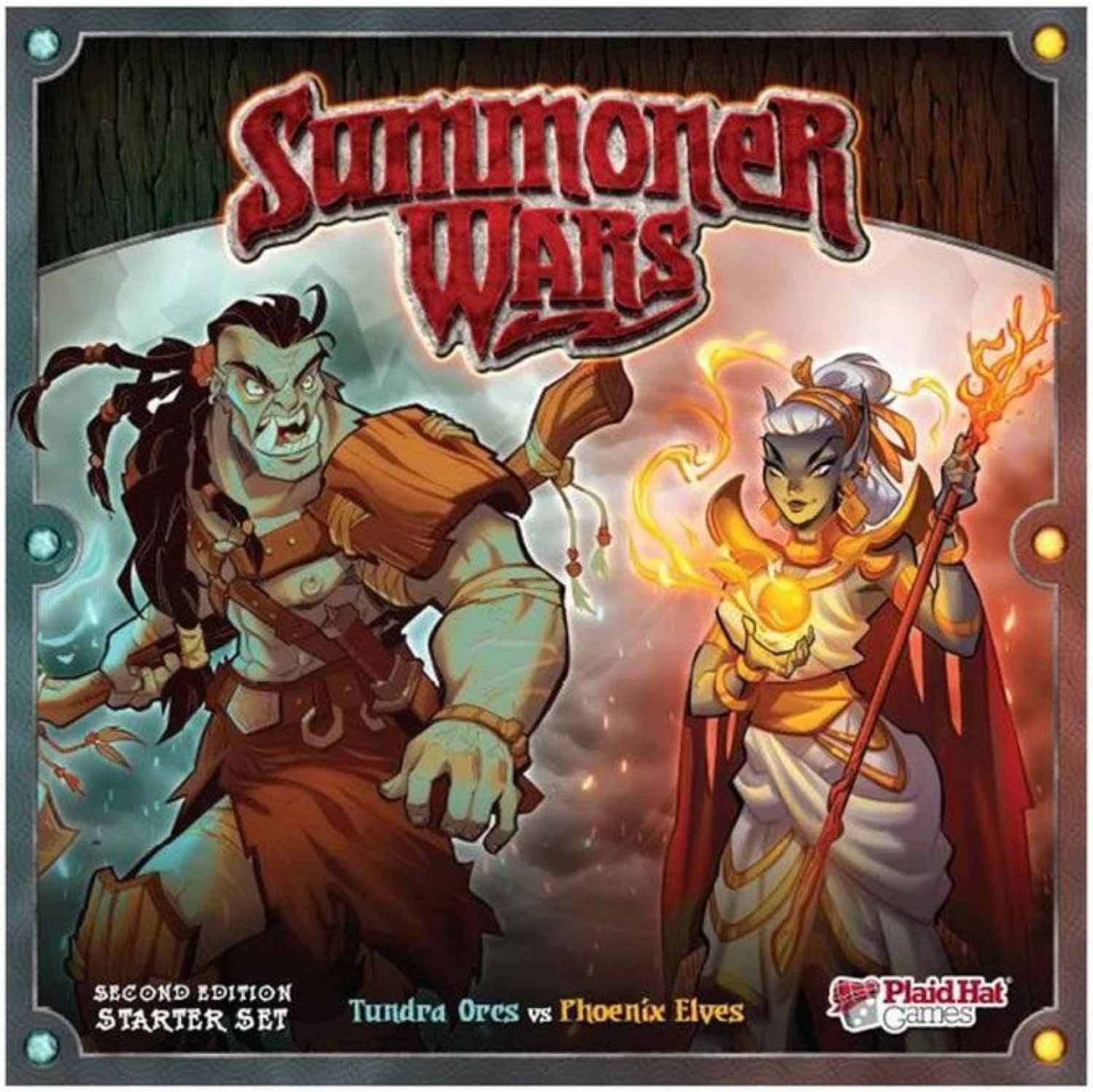
 Summoner Wars Second Edition Master Set
Board, dice and six factions create the full tactical foundation.
- Six factions
- Shared board and dice
- Best long-term value
- Larger first purchase
 12 photos
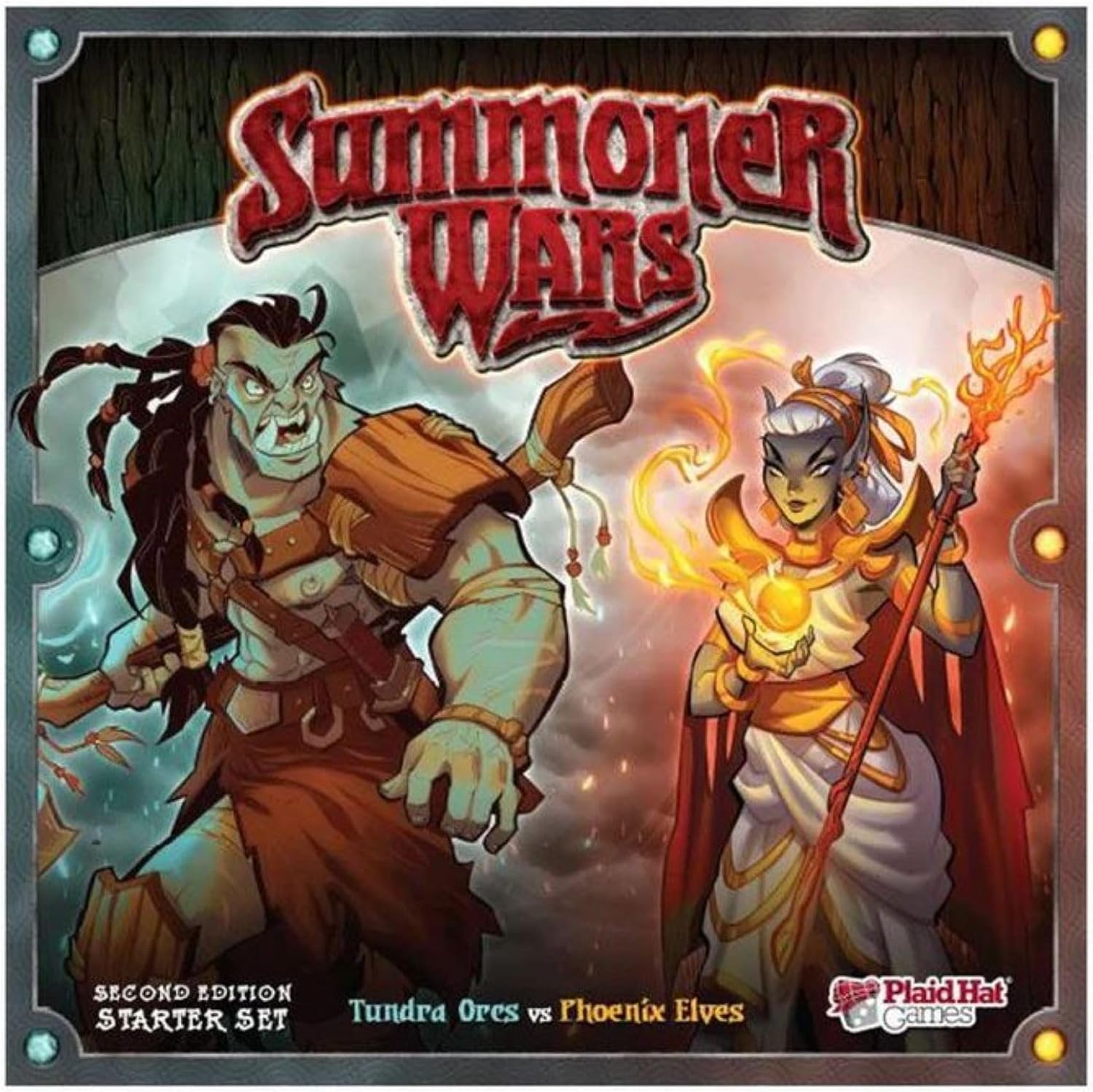
 Summoner Wars Second Edition Starter Set
Two factions plus shared components in a self-contained entry.
- Lower cost
- Playable
- Focused teach
- Less variety
 7 photos
 Moonsteppe Wolves Faction Deck
A current faction deck for an owner with shared components.
- Fresh play style
- Complete faction
- Needs base components
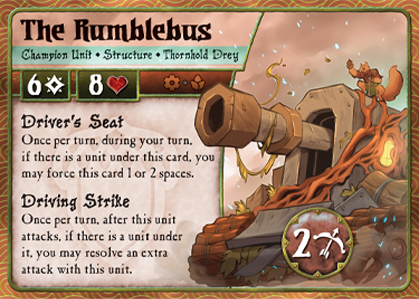 8 photos
 Thornhold Drey Faction Deck
Another distinct army for an established collection.
- Asymmetric identity
- Needs board and dice
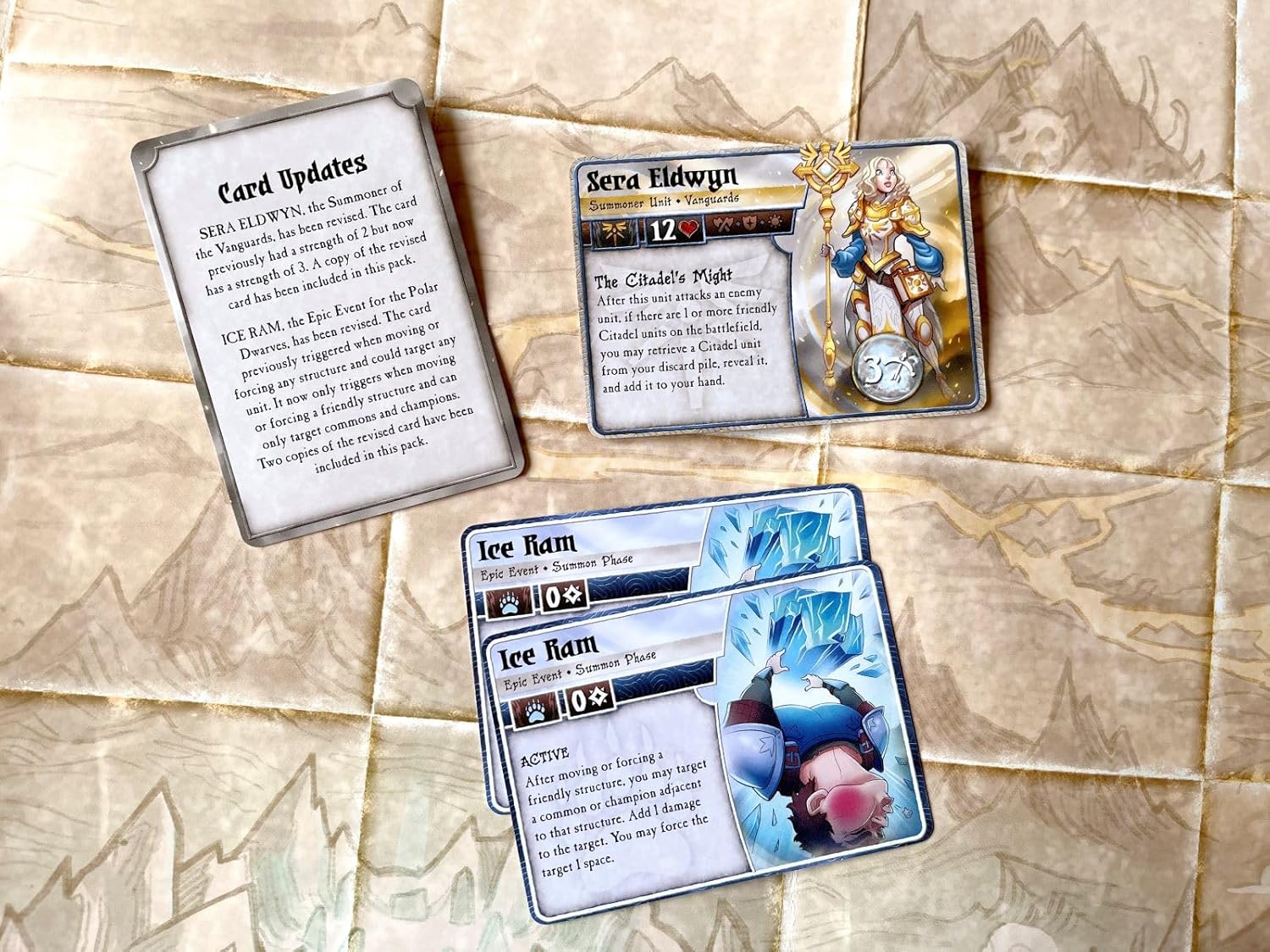
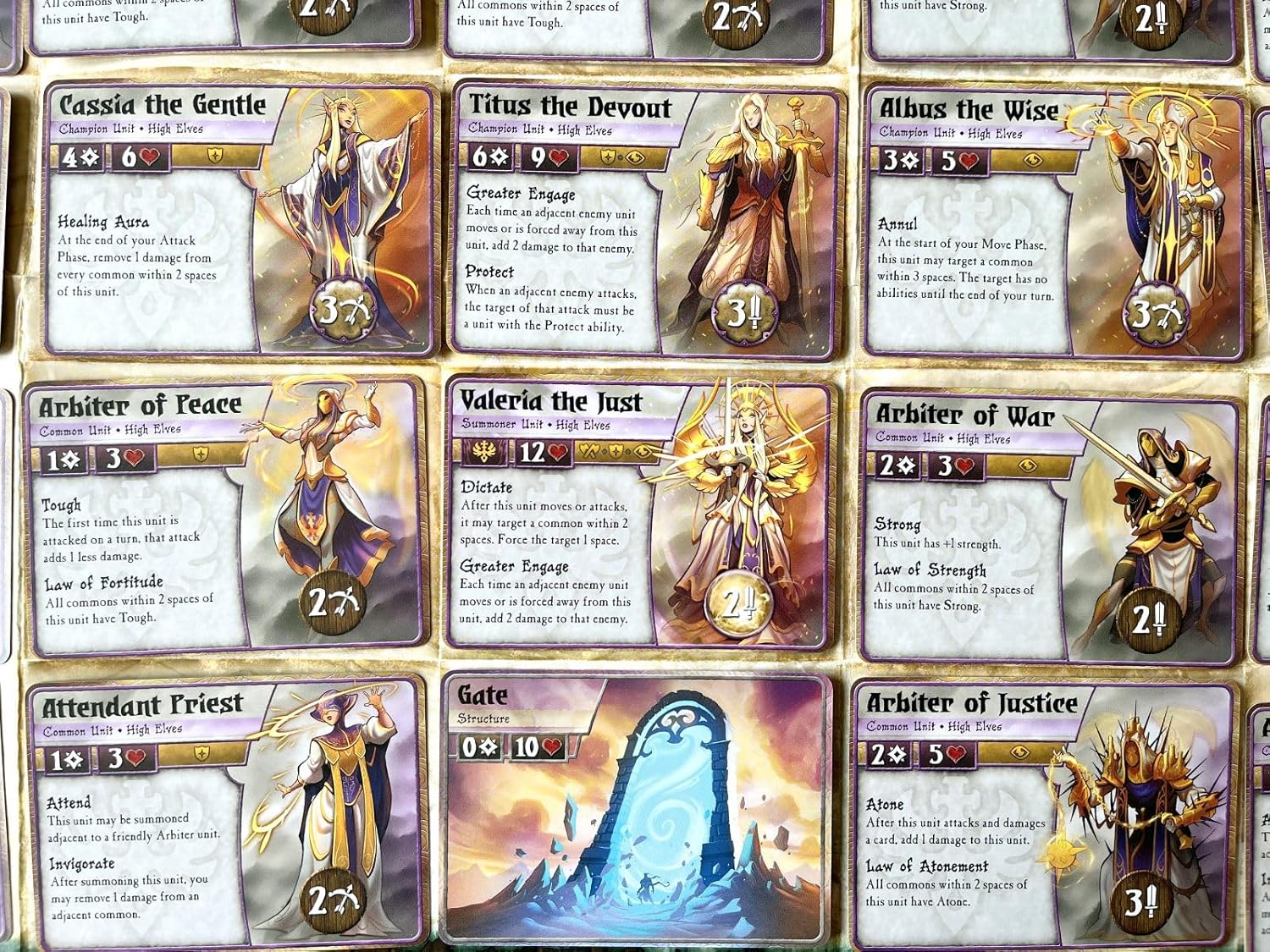
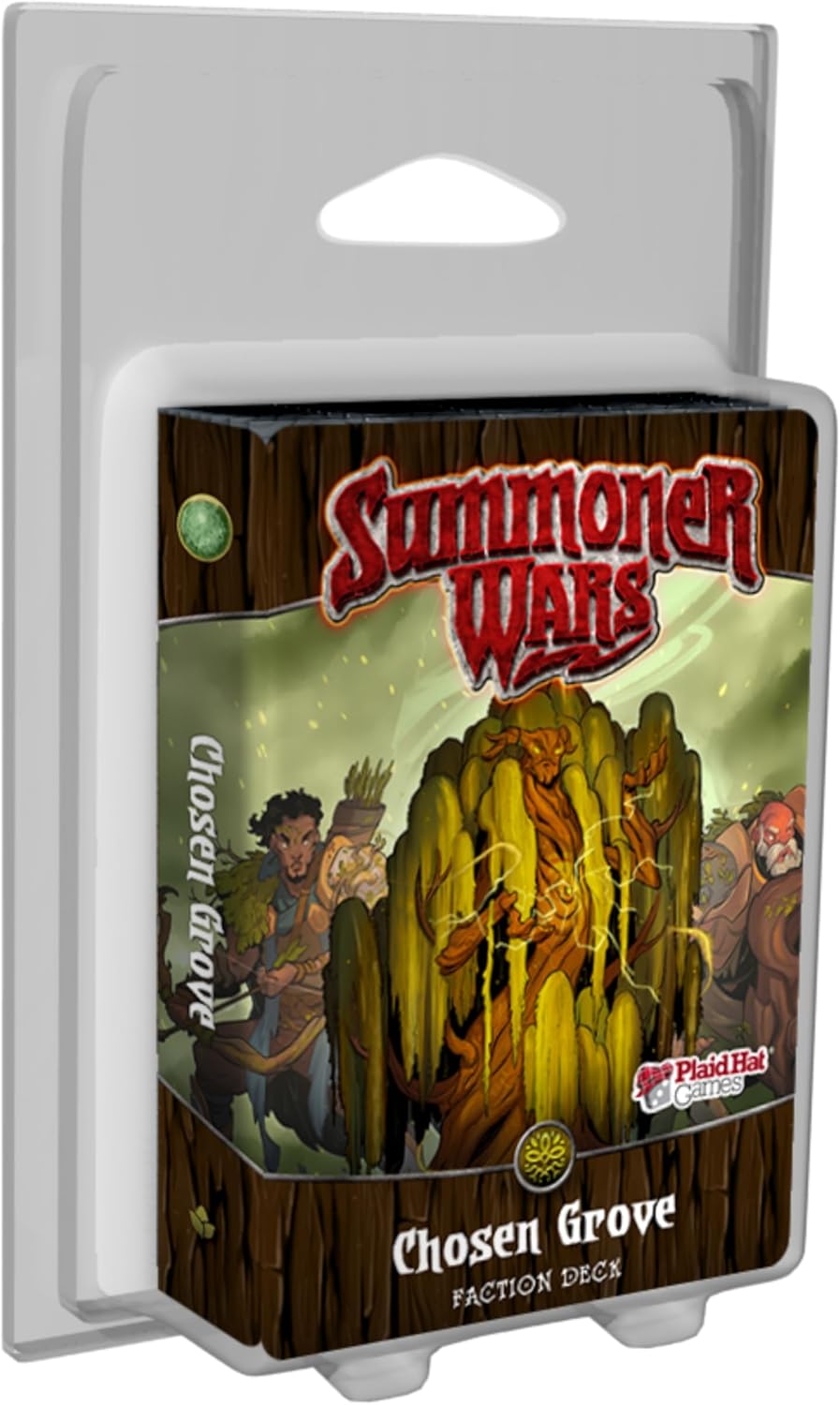
 12 photos
 High Elves Faction Deck
A faction for players who enjoy precise positioning.
- Strategic identity
- Not self-contained
At a glance
| Product | Factions | Board and dice | Best for |
|---|---|---|---|
| Master Set | 6 | Yes | Long-term play |
| Starter Set | 2 | Yes | Budget pair |
| Faction Deck | 1 | No | Existing owner |
Questions, answered
Should I buy the Master Set or Starter Set?
Buy the Master Set for long-term variety; choose the Starter Set for the least expensive complete trial.
Are faction decks stand-alone?
No. They need a board, dice and shared components from a base set.
How many factions are in the Master Set?
The Second Edition Master Set contains six factions.
Does Summoner Wars use booster packs?
No. It uses fixed complete faction decks.
Can I try factions before buying?
Yes, digital play is an excellent way to sample play styles.
Is Summoner Wars good solo?
Its primary value is the two-player competitive duel.
How much table space is needed?
About 36 by 30 inches is comfortable.
What is the most important beginner strategy?
Protect gate access and count summon spaces before spending magic.
Should I buy the Summoner Wars Master Set or Starter Set?
Buy the Master Set for the strongest long-term value and broad faction variety. Buy the Starter Set for the lower-cost two-faction test.
Can I try Summoner Wars factions before buying?
Yes. Use the official digital implementation to test faction personalities before purchasing physical decks.
What is the most important Summoner Wars strategy?
Treat gates as production, movement and vulnerable objectives at the same time. Plan the attack lane before spending magic on the unit.
Do old cards need updates in 2026?
Some cards and starting setups have official adjustments. Check Plaid Hat Games' current card-adjustment files before a competitive or mixed-printing session.
Dax's verdict
The Master Set is a 9.4/10 first purchase for tactical pairs and families. The Starter Set is a strong 8.8/10 budget door. Loose faction decks are excellent expansions but poor first purchases without the shared components.
Research ledger 11 sources · reviewed 2026-07-25
Specifications, rules, current product information, community experience, and contrary evidence were checked against the sources below. Commercial links are kept separate from editorial evidence.
- plaidhatgames.complaidhatgames.com/board-games/summoner-wars
- summonerwars.comsummonerwars.com/store
- cdn.1j1ju.comcdn.1j1ju.com/medias/d7/25/ba-summoner-wars-second-edition-rulebook.pdf
- media.plaidhatgames.commedia.plaidhatgames.com/filer_public/ad/1c/ad1c2b8a-0043-4352-94d2-101f91b388bb/faq_1.pdf
- reddit.comreddit.com/r/Summoner_Wars/comments/1qm4xod/new_player_here_what_factions_should_i_buy
- reddit.comreddit.com/r/Summoner_Wars/comments/1uhbzm8/advice_buying_expansions
- reddit.comreddit.com/r/boardgames/comments/1uv379m/favoriteleast_favorite_factions_to_play_as
- amazon.comamazon.com/dp/B099946DHM?tag=puzzlewick-20
- plaidhatgames.complaidhatgames.com/summoner-wars-card-adjustments
- plaidhatgames.complaidhatgames.com/news/2026/03/10/announcing-the-thornhold-drey-and-moonsteppe-wolves
- reddit.comreddit.com/r/summoner_wars/search/?q=beginner%20faction&restrict_sr=1&sort=new

I'll be honest with you — flattery is boring.

Keep exploring
The next smart rabbit holes.
⚔ Topic PathTwo-Player Board Games: compare the whole shelfThe best two-player game is designed around the duel rather than merely tolerating two people. This path separates sharp...ComparisonThe Best 2-Player Board Games of 2026, RankedFifteen duels for two, sorted into hard tiers — the forever-game, the silent co-op, the giant-killers under twenty bucks, and the honest...Buying Guide10 Board Games With the Most Expansions and Months of Content in 2026Margo maps ten enormous game ecosystems, the first add-on actually worth buying, what each expansion changes, and the stop point that...