The Best Card Game Starter Box for Two Beginners in 2026: Magic, Pokemon, Lorcana, One Piece, Yu-Gi-Oh!, or Arkham Horror?
Seven real on-ramps, one honest question: which box gets two nervous beginners through a complete first night with the least rules friction and the clearest next step?


AI-assisted research and drafting in Imani’s voice · reviewed by Robert Pruitt · how this guide was made
Last editorial refresh: 2026-08-16 Gold-standard QA: 2026-08-16 11 sources reviewed Affiliate links checked during gold-standard pass

The short answer
Best overall for two complete beginners: Pokemon Battle Academy. Best if you want a hobby with enormous depth: Magic: The Gathering - Final Fantasy Starter Kit. Best family-friendly bridge: Disney Lorcana Wilds Unknown 2-Player Starter. Best cooperative story: Arkham Horror: The Card Game Chapter Two Core. One Piece Learn Together and the Yu-Gi-Oh! 2-Player Starter are excellent guided lessons, but each points toward a more demanding local scene. The right box is the one that produces a complete first evening, not the one with the loudest collector hype.
Card games rarely lose beginners because the first rule is impossible. They lose beginners because the hobby arrives all at once: formats, rarity, rotations, deck lists, store etiquette, collector prices, veterans speaking in compressed jargon, and a shelf that seems to imply every box is the beginning. It is not. A real on-ramp does four jobs: it gives two people functional decks, teaches the decisions in the correct order, creates a finishable first evening, and points to exactly one sensible next step. Imani tested these boxes against that standard. This is less a ranking of fandoms than a ranking of doors.
Start here, then go deeper
You are in the right cabinet.
 ✶ Universe HubMagic: The Gathering: the whole buying pathMagic: The Gathering is the deepest construction sandbox in the Big Three: a two-player duel, four-player Commander ritual, draft...
 🂠 Topic PathTrading Card Games: compare the whole shelfStart with the game and community you want, then buy the smallest product that lets you test it properly. These guides separate...
 GuideThe Ultimate Beginner Accessory Kit for the Top 5 Card Games in 2026: Sleeves, Deck Boxes, Binders, Playmats, Dice, and What to SkipOne patient, field-tested loadout for Magic, Pokemon, One Piece, Yu-Gi-Oh!, and Disney Lorcana, including the sleeve-size trap, the...
Which card game starter box is best for two beginners?
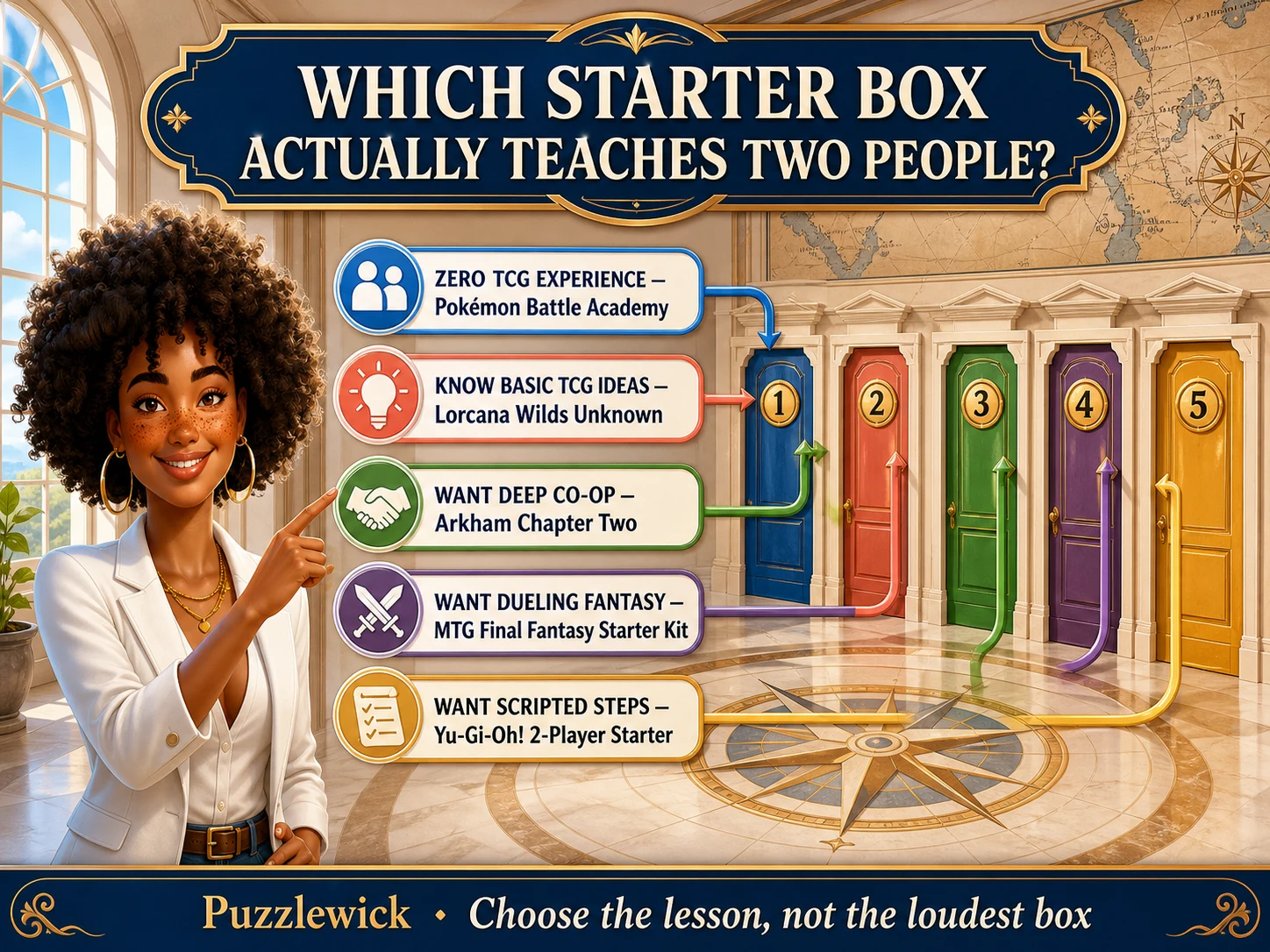
If neither player has touched a modern trading card game, Pokemon Battle Academy is the cleanest first purchase. Its board, labeled decks, and guided sequence shrink the game until the relationship between hand, Bench, Active Pokemon, Energy, attacks, prizes, and turns becomes visible. It is not the endpoint of competitive Pokemon. That is precisely why it works.
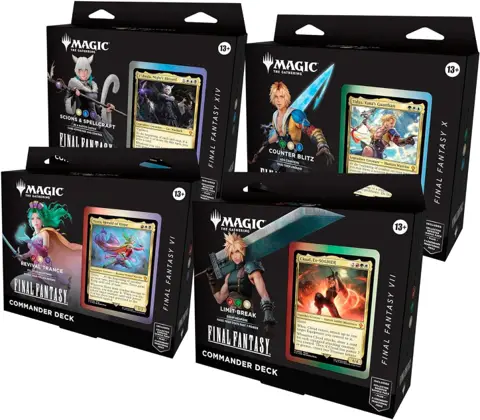
If one of you already understands turns, resources, attacking, and card timing, Magic's Final Fantasy Starter Kit offers the richest runway. It contains two ready-to-play 60-card decks, a play guide, deck boxes, tokens, and digital codes. It also carries a useful emotional advantage: recognizable Final Fantasy characters give every unfamiliar rule a story hook. The catch is that Magic's larger format culture arrives quickly, so play the matched decks several times before wandering into boosters or Commander upgrades.
Lorcana Wilds Unknown is the gentlest choice for a Disney-loving pair who already grasps basic card-game language. Arkham Horror Chapter Two is the standout for partners who would rather cooperate against a story than defeat each other. One Piece Learn Together and Yu-Gi-Oh!'s 2-Player Starter are unusually explicit lessons, but their next tables expect more rules density. Choose the destination you actually want, then take the shortest bridge to it.
What does each beginner card game box actually teach?
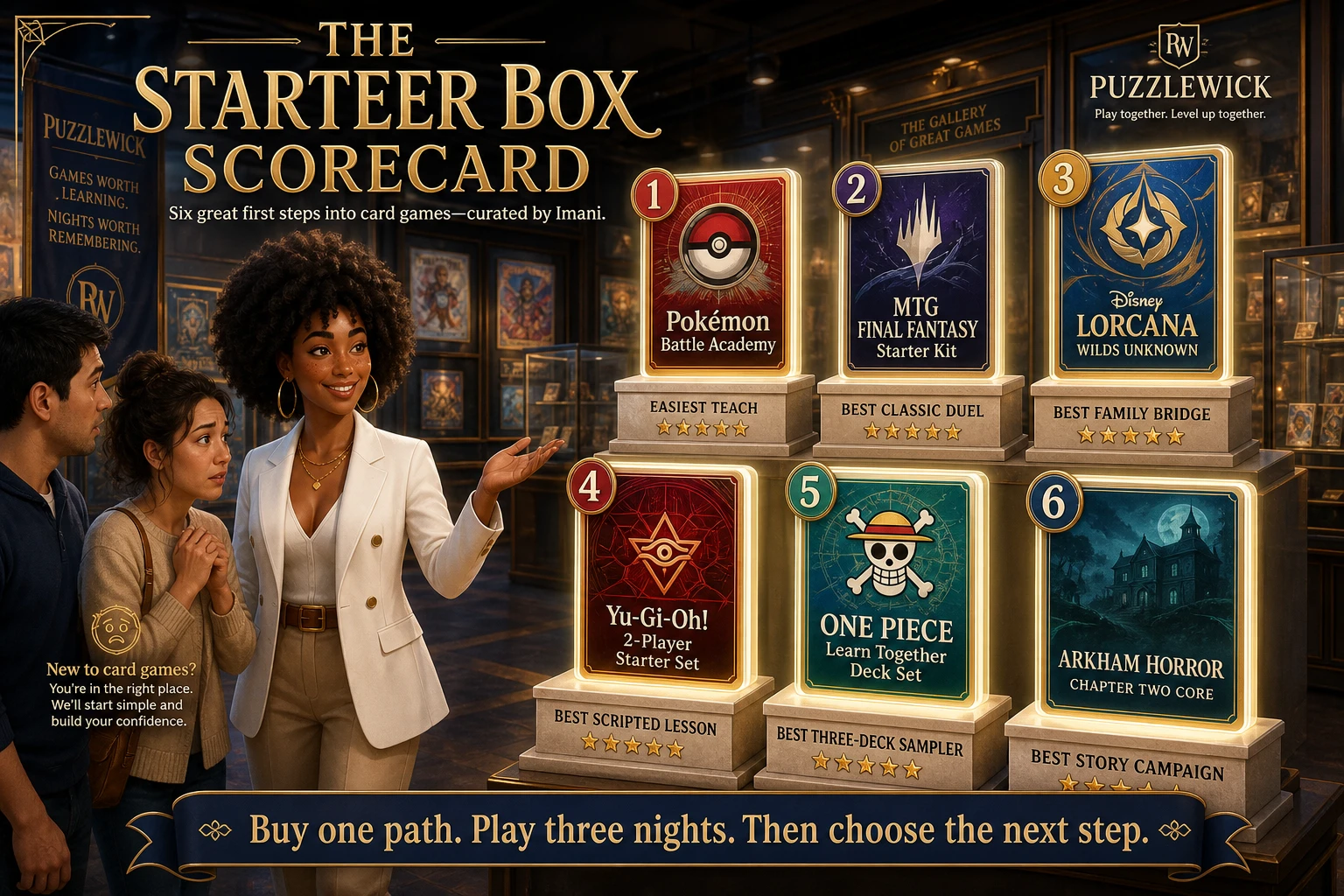
Pokemon Battle Academy promises a controlled first lesson. It is best for absolute beginners, families, or anyone who wants visible table structure. Move to a League Battle Deck only after both players can complete turns without the guide.
Magic: The Gathering Final Fantasy Starter Kit promises a real Magic duel with matched decks. It is the strongest bridge from fandom to a deep hobby, but it does not make you tournament-ready. Treat it as flight school, not a fighter jet.
The Hobbit Magic Academy and Welcome Deck program is the lowest-cost social bridge because participating stores teach with free decks during the 2026 Academy window. The important caveat is product identity: Hobbit Welcome Deck cards may mix set codes and should not be assumed Standard legal merely because they came from a current beginner event. If you want a take-home Hobbit product, Draft Night creates a four-player learning evening, not a two-player scripted duel.
Disney Lorcana Wilds Unknown 2-Player Starter provides two curated decks, lore trackers, and tokens. It is warmer and more immediately readable than buying random packs, though Ravensburger's earlier Gateway remains gentler for people with zero TCG vocabulary.
One Piece Learn Together Deck Set LD-01 is a three-deck teaching kit built around Luffy, Zoro, and Nami. Bandai's Welcome & Set Sail events explicitly pair it with beginner play. Availability can be uneven, so verify the exact LD-01 listing before buying.
Yu-Gi-Oh! 2-Player Starter Set uses a 64-page comic to script a teaching duel. That is smart instruction. The modern game beyond the box is much faster and denser, so follow it with casual practice rather than assuming one comic duel prepares you for a tournament table.
Arkham Horror Chapter Two Core is cooperative and narrative. It includes five prebuilt investigator decks and a three-scenario campaign, but setup and scenario language create more homework than the competitive starters. Use Easy difficulty and play the supplied decks unchanged. The payoff is a campaign that remembers what happened.
How should two beginners learn a TCG over three nights?
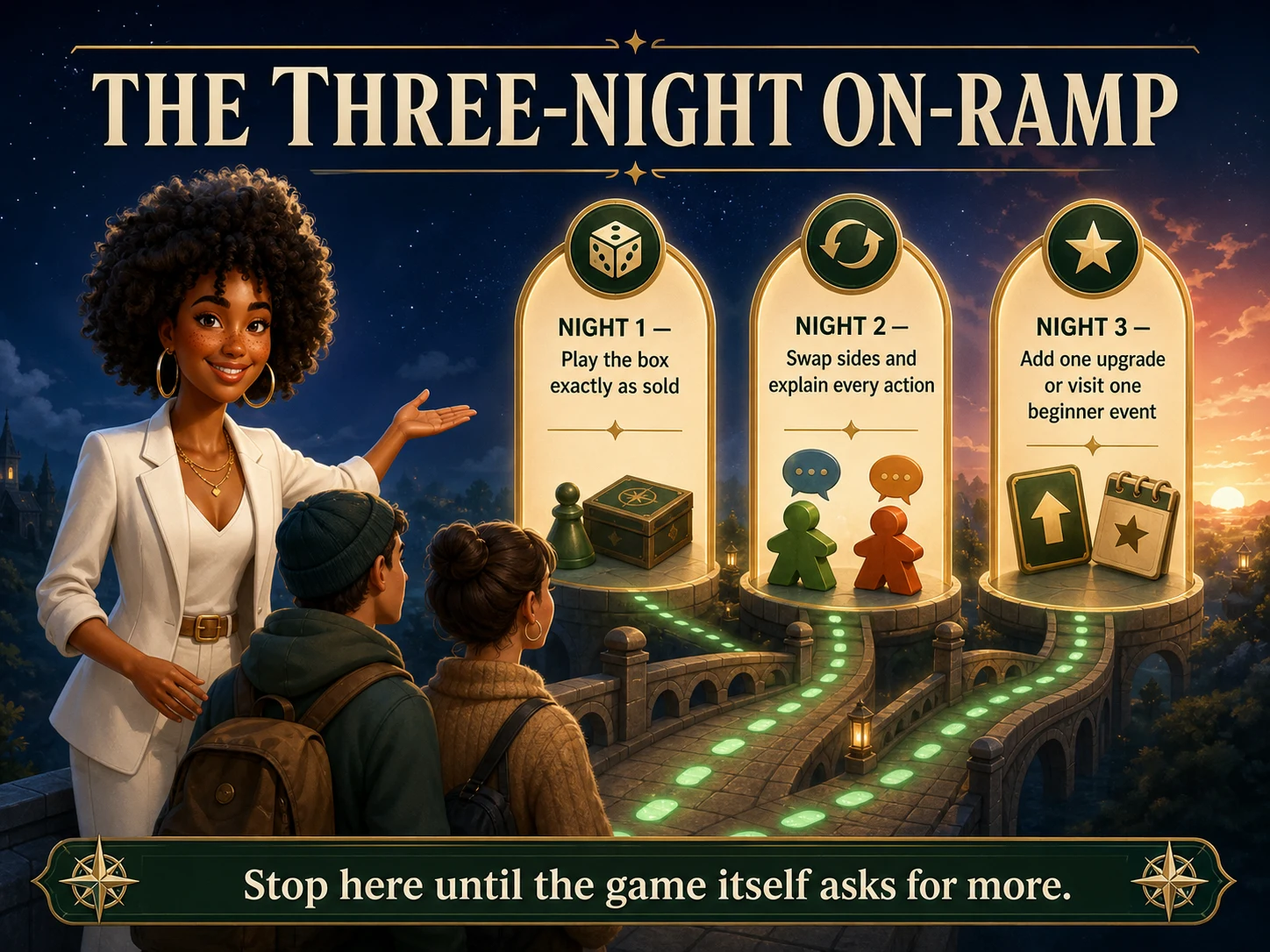
Night one: play exactly what came in the box. Do not improve a deck before you can describe its plan. Follow the guided order, keep hands open if both players agree, narrate actions, and stop after a complete game even if it was clumsy. The objective is not mastery. It is a shared vocabulary.
Night two: swap sides. Playing the other deck reveals whether a loss came from the deck, the matchup, or a decision you did not yet recognize. Mark only three friction points: a rule you looked up twice, a card that remained dead in hand, and a table procedure that caused confusion.
Night three: repeat before upgrading. If both players still want another game, you have a hobby signal. Now choose one next move: attend a beginner event, buy one compatible deck, or add protection for the cards you already enjoy. Opening a display because the first match was fun is emotionally understandable and strategically unhelpful.
This is the same principle that experienced players use when testing a deck: change one variable, then observe. Beginners deserve that clarity too. A collection becomes useful when each purchase answers a question the last session actually raised.
Which sleeves, deck boxes, and playmats do beginners really need?
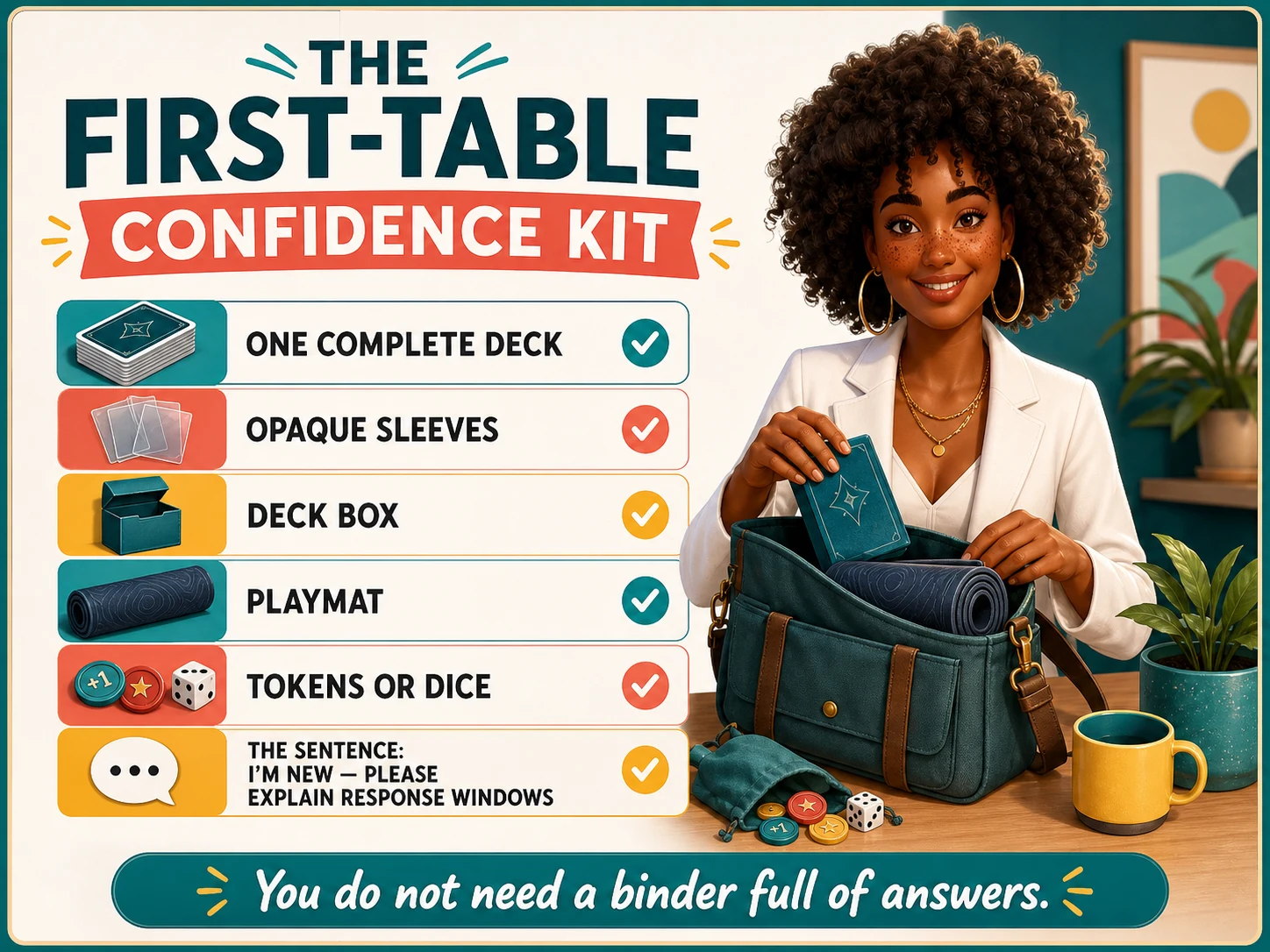
You need fewer accessories than the wall at the game store suggests. Start with opaque sleeves when the game's organized-play rules require indistinguishable card backs or when cards may be double-faced. Choose one sleeve line and one color so replacements remain simple. Put the sleeved deck in a rigid deck box that actually fits its card count; Commander and Arkham decks need more room than a 40-card teaching deck.
A plain playmat protects cards and defines your work area without turning the table into visual soup. Bring only the dice and tokens the game uses. Valuable pulls belong in an inner sleeve plus a rigid holder or side-loading zip binder, not loose in the deck box. A trade binder is optional and, on a first store night, usually a distraction.
Premium accessories should solve a physical problem: shuffling, transport, spills, storage, or card protection. They should not be used to disguise uncertainty about the game. Sleeves before boosters. A box before a binder. A binder before speculative slabs. That order is gloriously unromantic and saves money.
Your first store night: say the quiet part clearly
Use one sentence at the counter: 'We are new, we have played this starter box three times, and we want a beginner-friendly game. What event or table fits that?' That sentence does more work than pretending to understand a calendar full of format names. It tells staff your experience, your deck level, and the social experience you want.
For Magic, an Academy, Prerelease, casual learn-to-play table, or stock-precon Commander game is safer than entering a competitive Standard event by accident. Pokemon League explicitly welcomes beginners and may have decks to borrow. One Piece's Welcome & Set Sail events are designed around LD-01 and buddy learning. Lorcana community play is generally friendlier when you say your deck is the unchanged starter. For Yu-Gi-Oh!, ask whether the event is a demo, casual play, or an official tournament; the speed difference is enormous. Arkham is usually organized as cooperative meetups rather than paired competition, so bring the scenario and investigator information the group requests.
Announce actions, keep zones readable, ask before touching another person's cards, and request a rules check without turning it into a courtroom speech. Veteran vocabulary is compressed experience, not a border wall. A healthy community will unpack it when you ask.
What to buy next - and the equally important moment to stop
For Pokemon, move from Battle Academy to a current League Battle Deck when you can run the Academy decks cleanly and want more sequencing. For Magic, choose one lane: another matched starter experience, a Prerelease, a complete Commander precon, or Standard singles. Do not buy all four lanes at once. For Lorcana, upgrade the starter with singles after you can describe whether it wants to race lore, trade efficiently, or control the board.
For One Piece, play all three LD-01 leaders before choosing a color or leader shell. For Yu-Gi-Oh!, repeat the scripted duel, swap decks, then learn one modern Structure Deck before buying an Extra Deck by vibes. For Arkham, finish the Chapter Two introductory campaign before adding a campaign expansion. The game is telling you whether you enjoy deck construction, story pressure, or both.
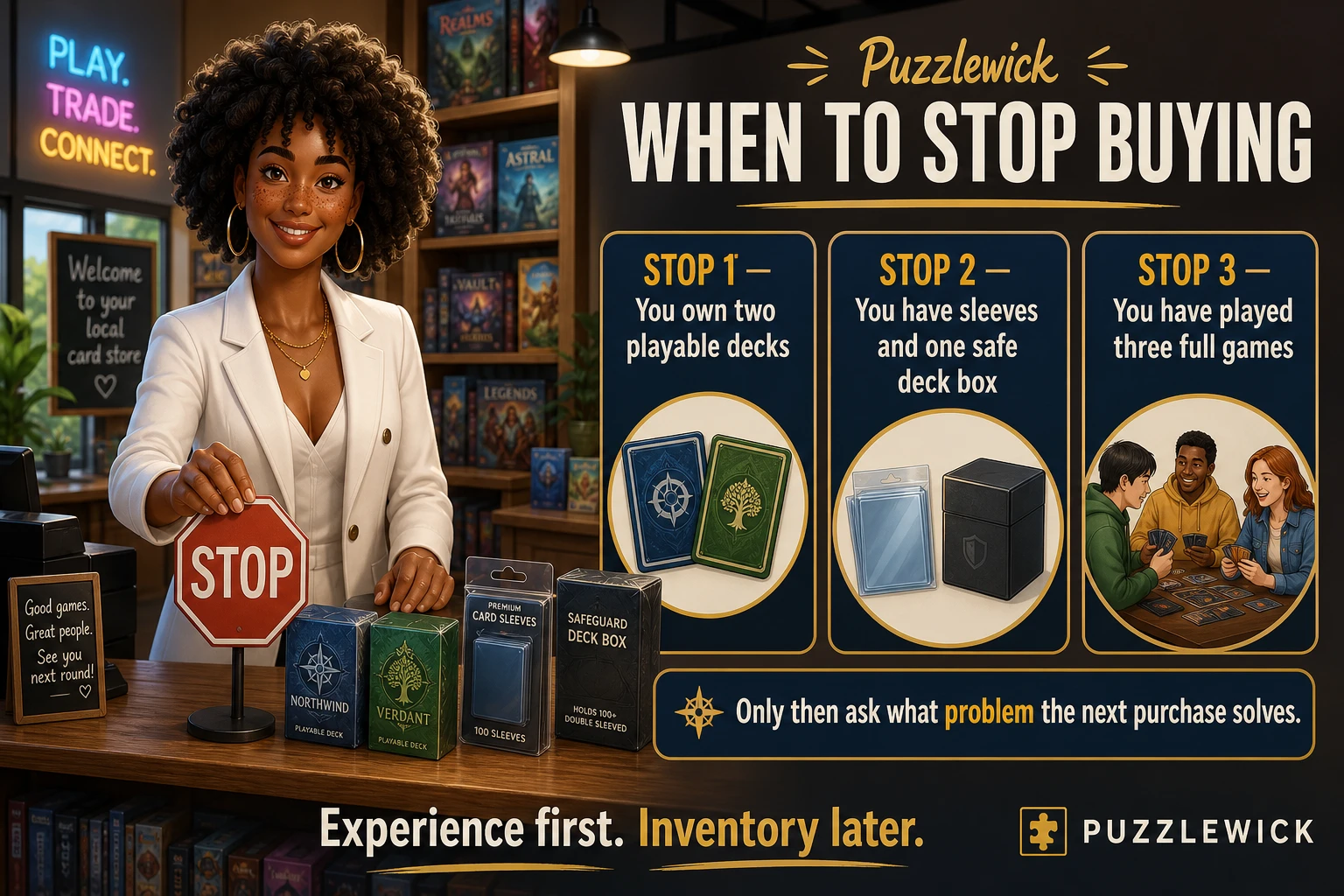
The stopping rule is simple: stop when the next purchase cannot be named as a solution to a table problem. If you need sleeves because cards slide, buy sleeves. If your starter deck lacks a clear answer, identify the exact cards. If you merely feel behind after watching collectors open cases, close the tab and play again. A hobby becomes yours when your next choice comes from your own table.
What experienced tables keep reporting
Recurring owner patterns, synthesized in Puzzlewick's words. Follow each evidence trail to read the original discussion.
New players are less afraid of losing than of holding up a table they do not yet understand.
Say that the deck is unchanged and ask for beginner or casual play before pairing begins.
Random boosters feel like progress until the first real deck still cannot be assembled.
The picks
Some links below are affiliate links — as an Amazon Associate, Puzzlewick earns from qualifying purchases, at no extra cost to you. It never changes a pick.
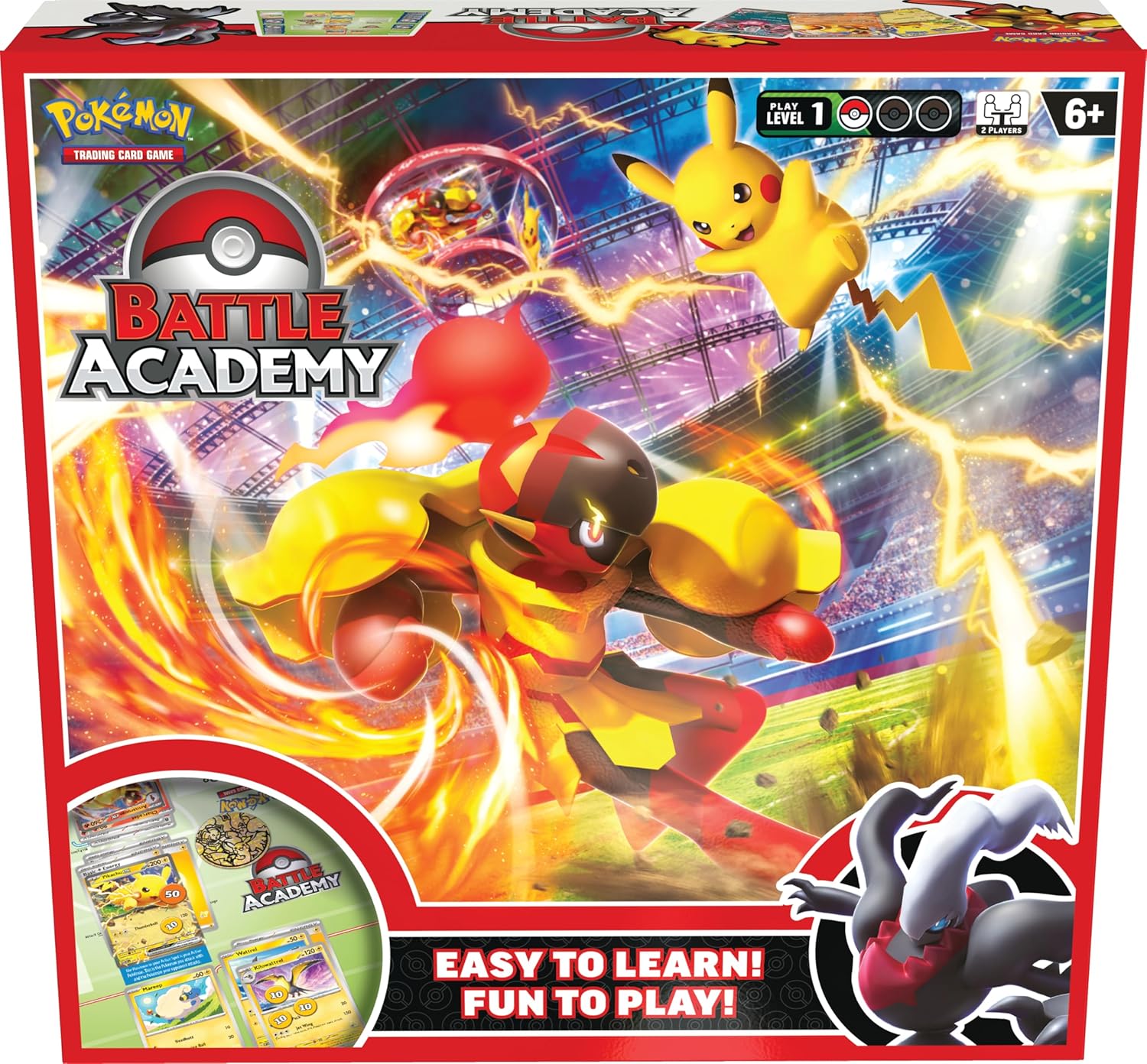
Pokemon TCG Battle Academy
The most complete low-pressure first lesson in the group.
- Guided decks
- Visible board zones
- Family friendly
- Lower ceiling
- Not tournament strength
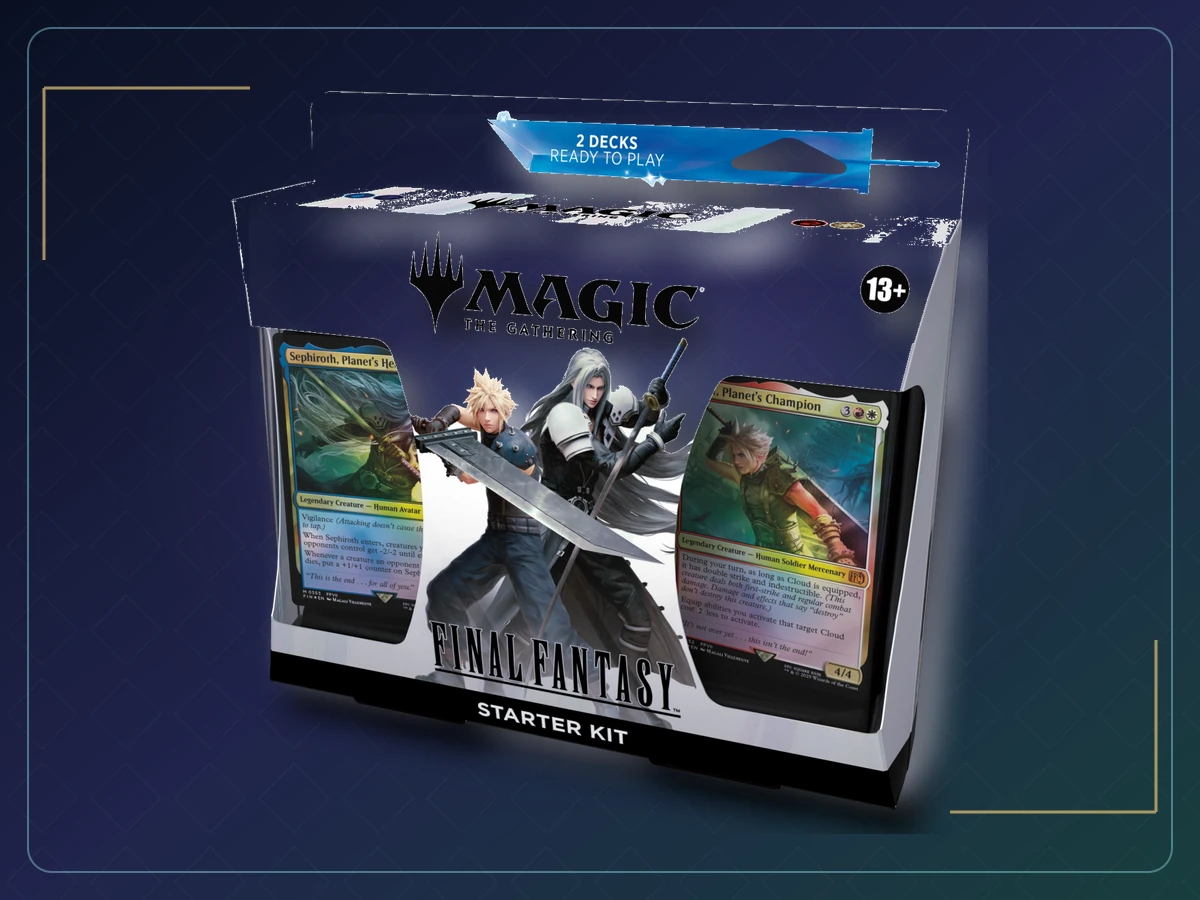
Magic: The Gathering Final Fantasy Starter Kit
A real matched Magic duel with familiar characters doing some of the cognitive lifting.
- Two 60-card decks
- Play guide and tokens
- Arena codes
- Format culture arrives quickly
- Not competitive out of box
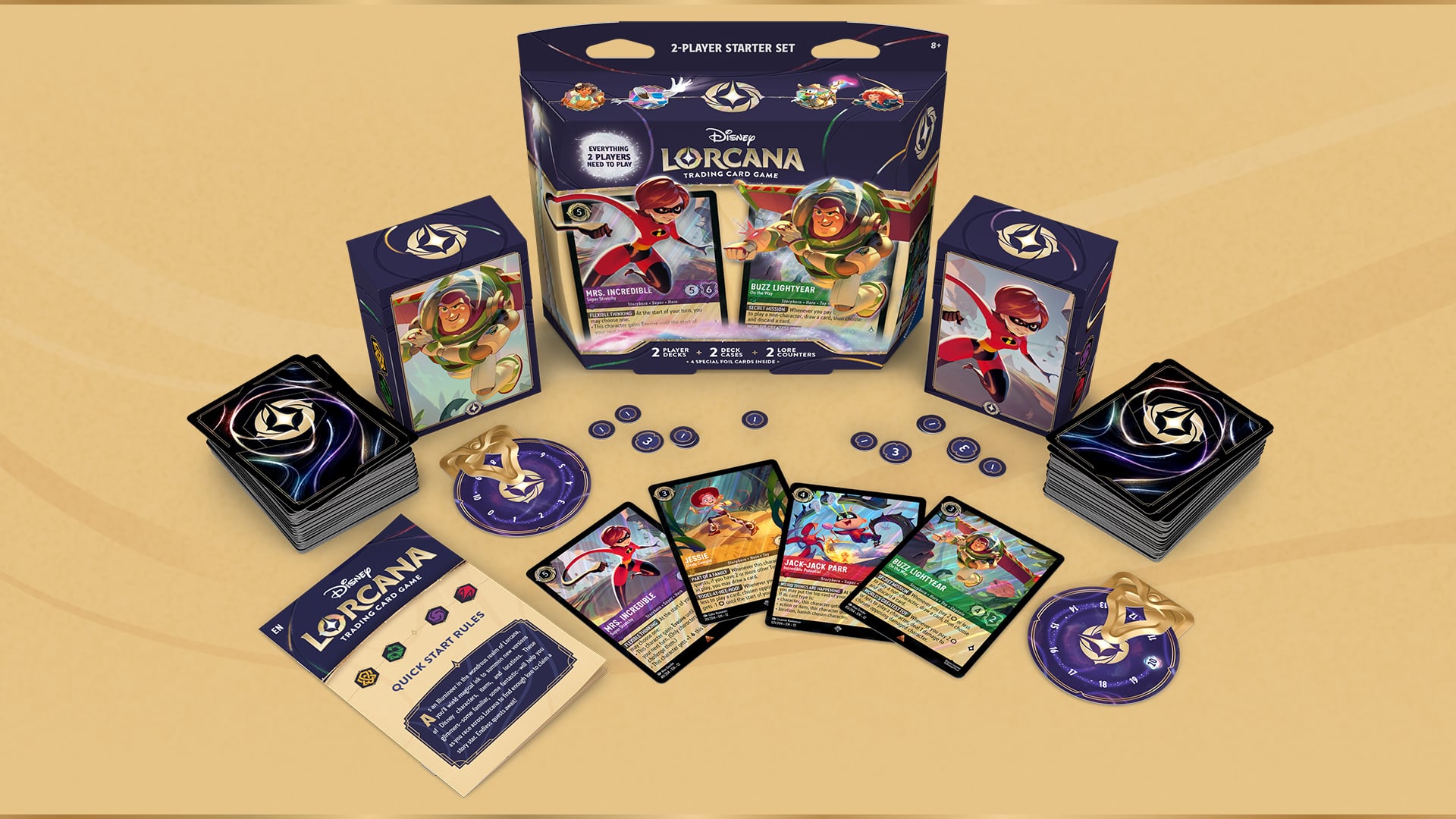
Disney Lorcana Wilds Unknown 2-Player Starter
Two curated decks, clear lore racing, and enough structure to create a real evening.
- Two decks
- Trackers and tokens
- Current 2026 product
- Not competitive stock
- Gateway is gentler for zero experience
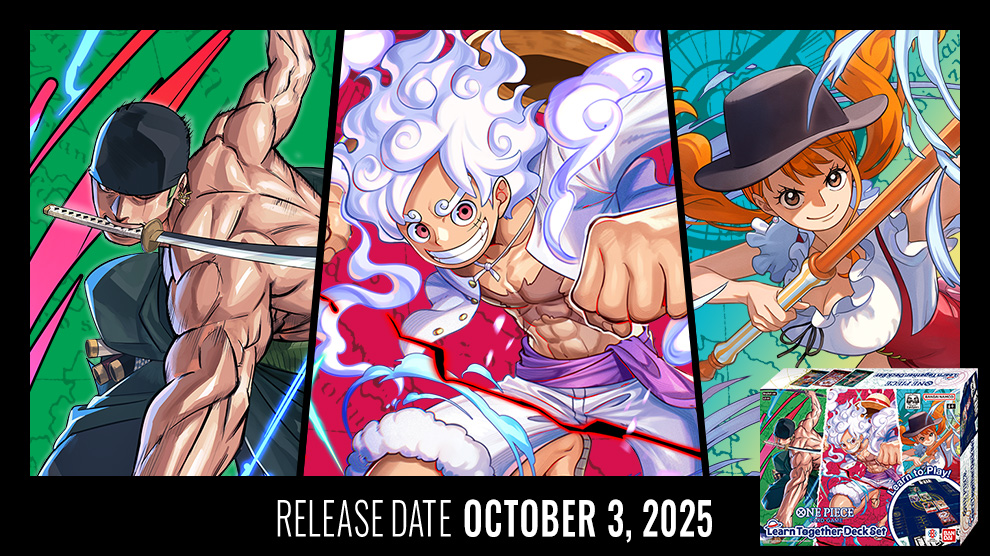
One Piece Card Game Learn Together Deck Set LD-01
Three decks and an official beginner-event path make this the correct One Piece first harbor.
- Three leaders
- Buddy learning
- Official beginner event support
- Availability varies
- Competitive scene is faster
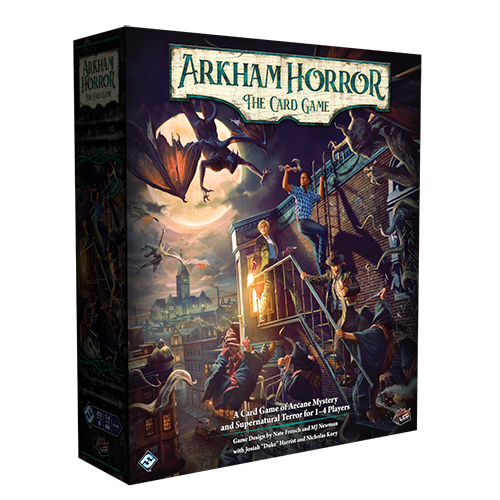
Arkham Horror: The Card Game Chapter Two Core Set
The only on-ramp here where two beginners win or lose together against a campaign.
- Five prebuilt decks
- Three scenarios
- Backward compatible
- More setup
- Weak prebuilt optimization is intentional
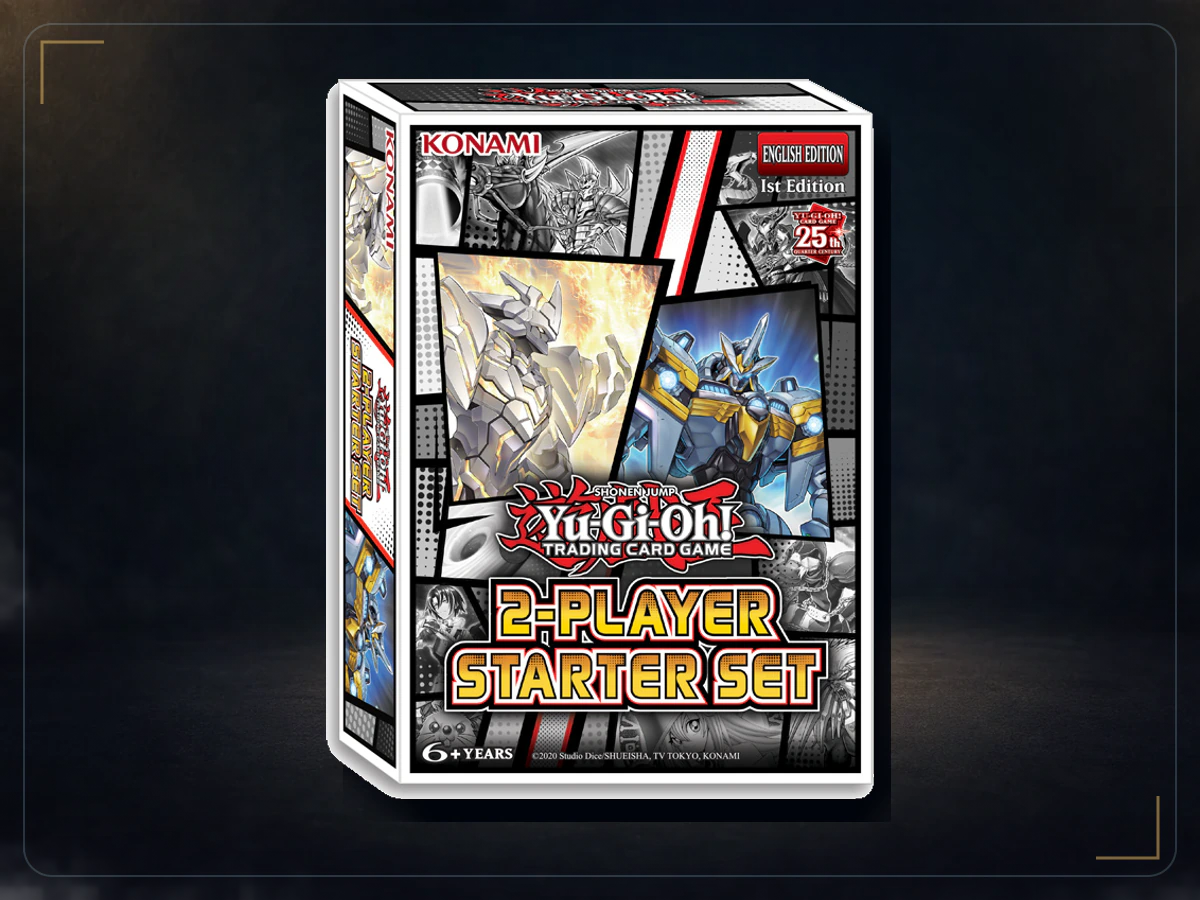
Yu-Gi-Oh! TCG 2-Player Starter Set
The comic lesson is unusually explicit, even if modern Yu-Gi-Oh! becomes denser later.
- Two decks
- 64-page comic
- Guided duel
- Steep next step
- Not tournament-ready
Questions, answered
Imani's verdict
For most households, buy Pokemon Battle Academy. For the largest future hobby, buy the Magic Final Fantasy Starter Kit. For a warm current two-player bridge, buy Lorcana Wilds Unknown. For cooperative storytelling, buy Arkham Chapter Two. Whichever door you choose, play three nights before buying inventory. The beginner advantage is not knowing less; it is being free to learn one clean system at a time.
Research ledger 11 sources · reviewed 2026-08-16
Specifications, rules, current product information, community experience, and contrary evidence were checked against the sources below. Commercial links are kept separate from editorial evidence.
- Magic: The Gathering - Final Fantasy Starter Kitmagic.wizards.com/en/products/final-fantasy/card-image-gallery
- Magic Academy featuring The Hobbitmagic.wizards.com/en/news/announcements/magic-academy-featuring-the-hobbit
- Pokemon Leaguepokemon.com/us/play-pokemon/pokemon-events/pokemon-leagues
- Disney Lorcana Wilds Unknowndisneylorcana.com/en-US/product/wilds-unknown
- One Piece Card Game Learn Together Deck Set LD-01en.onepiece-cardgame.com/products/decks/ld01.php
- One Piece Welcome & Set Sail Eventen.onepiece-cardgame.com/events/2026/welcome_set_sail
- Yu-Gi-Oh! TCG 2-Player Starter Setyugioh-card.com/en/products/2-player-starter-set
- Arkham Horror Chapter Two Core Setfantasyflightgames.com/en/products/arkham-horror-the-card-game/products/chapter-two-core-set
- TCGplayer Q2 2026 sealed product rankingsseller.tcgplayer.com/articles/top-selling-sealed-products-q2-2026
- BoardGameGeek trading card game forumsboardgamegeek.com/forums/family/3/trading-card-games
- Reddit trading card game communityreddit.com/r/TCG
Okay but have you seen what everyone’s saying about this?

Keep exploring
The next smart rabbit holes.
✶ Universe HubMagic: The Gathering: the whole buying pathMagic: The Gathering is the deepest construction sandbox in the Big Three: a two-player duel, four-player Commander ritual, draft...🂠 Topic PathTrading Card Games: compare the whole shelfStart with the game and community you want, then buy the smallest product that lets you test it properly. These guides separate...GuideThe Ultimate Beginner Accessory Kit for the Top 5 Card Games in 2026: Sleeves, Deck Boxes, Binders, Playmats, Dice, and What to SkipOne patient, field-tested loadout for Magic, Pokemon, One Piece, Yu-Gi-Oh!, and Disney Lorcana, including the sleeve-size trap, the...