One Piece Learn Together Deck Set vs Two Starter Decks: The Better First Table for Friends, Parents, and Kids
LD-01 gives three people a real lesson. Two starter decks give two people clearer ownership. Imani shows which household should buy which, how the three teaching decks differ, and the ten-game bridge to locals.

AI-assisted curator persona · research and editorial responsibility: Robert Pruitt · how this guide was made
Last editorial refresh: 2026-08-24 Gold-standard QA: 2026-08-24 11 sources reviewed Affiliate links checked during gold-standard pass

The short answer
LD-01 is the better first table. Two current starter decks are the better second table. Learn Together gives three deliberately different decks and a guided route; separate starters give stronger ownership and cleaner upgrade research only after each learner knows what they enjoy.
Decision map
Choose in thirty seconds
Two or three new players, especially a parent and child or a friend group
A learner who already knows the rules and wants one focused current leader
A second learner who wants a different current play style and a separate owned deck
LD-01 is the better first table. Two current starter decks are the better second table. Learn Together answers the awkward household question that most TCG shelves ignore: what can two beginners open, understand, and actually play against each other without buying random packs or asking a veteran to build both decks?
The set includes three teaching decks with different leaders and rhythms. That variety is educational, but it does not make all three equally close to current locals play. Separate starter decks create clearer ownership and upgrade paths, but only after the players can choose a color and leader for reasons stronger than “I know that character.” Imani is assigning seats before products.
Start here, then go deeper
You are in the right cabinet.
 ☠ Universe HubOne Piece Card Game: the whole buying pathThe One Piece Card Game combines Leader identity, a fifty-card main deck, ten DON!!, Life pressure, and hand-based countering into...
 🂠 Topic PathTrading Card Games: compare the whole shelfStart with the game and community you want, then buy the smallest product that lets you test it properly. These guides separate...
 ComparisonThe Best Card Game Starter Box for Two Beginners in 2026: Magic, Pokemon, Lorcana, One Piece, Yu-Gi-Oh!, or Arkham Horror?Seven real on-ramps, one honest question: which box gets two nervous beginners through a complete first night with the least rules...
Which table should you buy first?
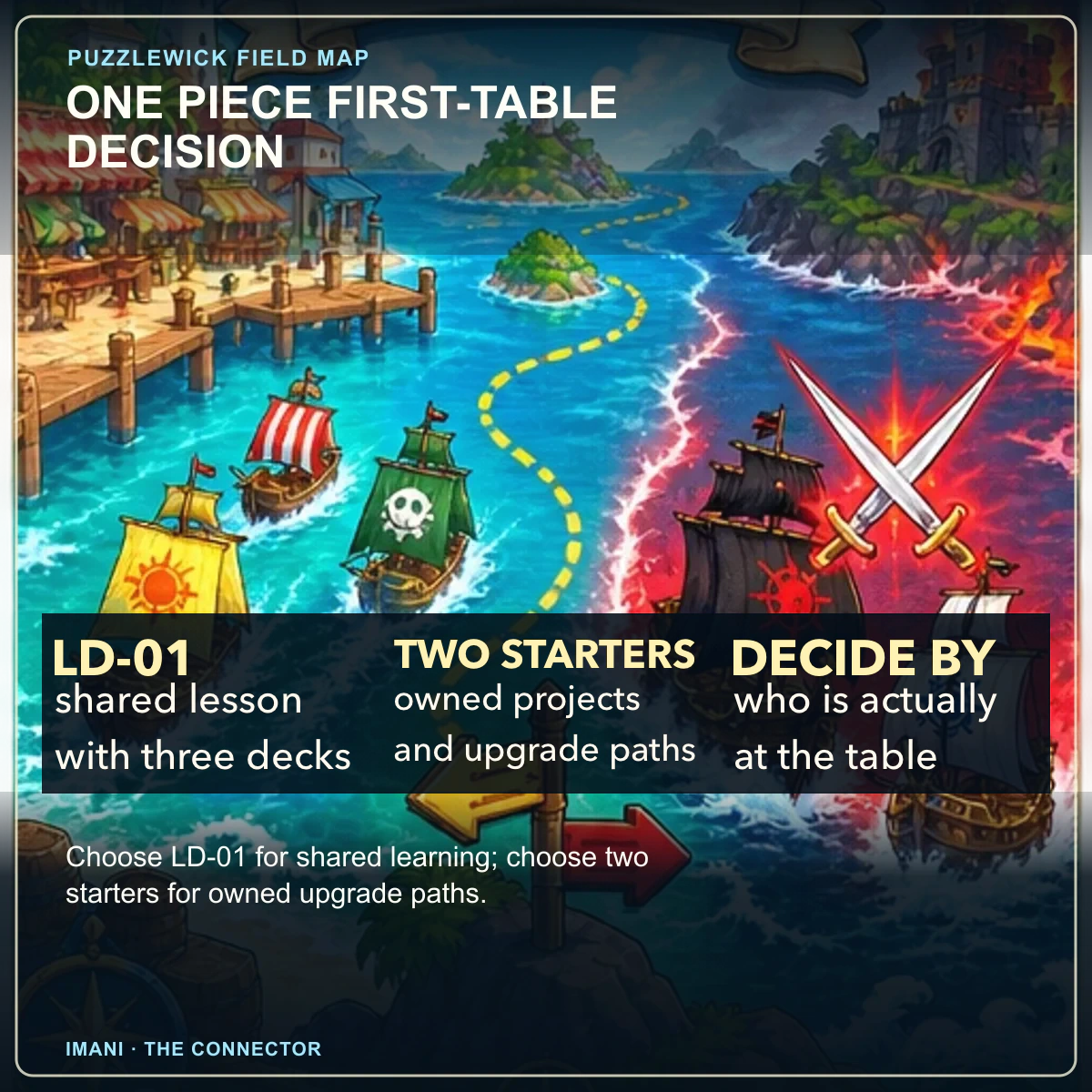
LD-01 wins when the problem is “we do not know how to play.” It gives the household three decks, a shared vocabulary, and matchup variety. Two starter decks win when the problem is “we know the rules and want our own projects.”
Do not compare sealed deck power before comparing the learners. A parent and child benefit from the guided reset and three roles. Two experienced TCG players may prefer two current starters and the official Teaching App. A single learner without a local opponent should test leaders digitally or borrow decks before buying a pair for an imaginary table.
What are the three Learn Together decks trying to teach?
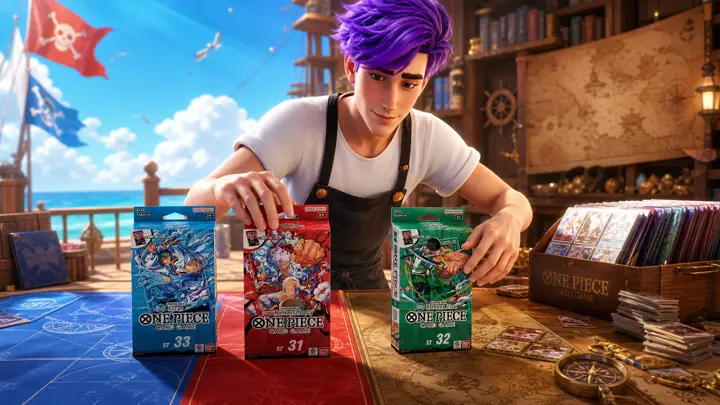
Zoro makes pressure visible: develop Characters, use DON!! to turn attacks into difficult counter decisions, and learn when resting an opposing card creates tempo. Luffy teaches a more direct red rhythm and the value of converting each DON!! turn into pressure. Nami introduces a mixed-color resource and life-management puzzle, but the teaching list is not a miniature version of every current Nami competitive list.
Rotate decks after each complete game. Ask the learner which decision felt satisfying: attacking early, controlling what could act, or turning Life and hand resources into a longer plan. The answer is more useful than the winner because it points toward the next leader.
Which rules do experienced players compress too quickly?
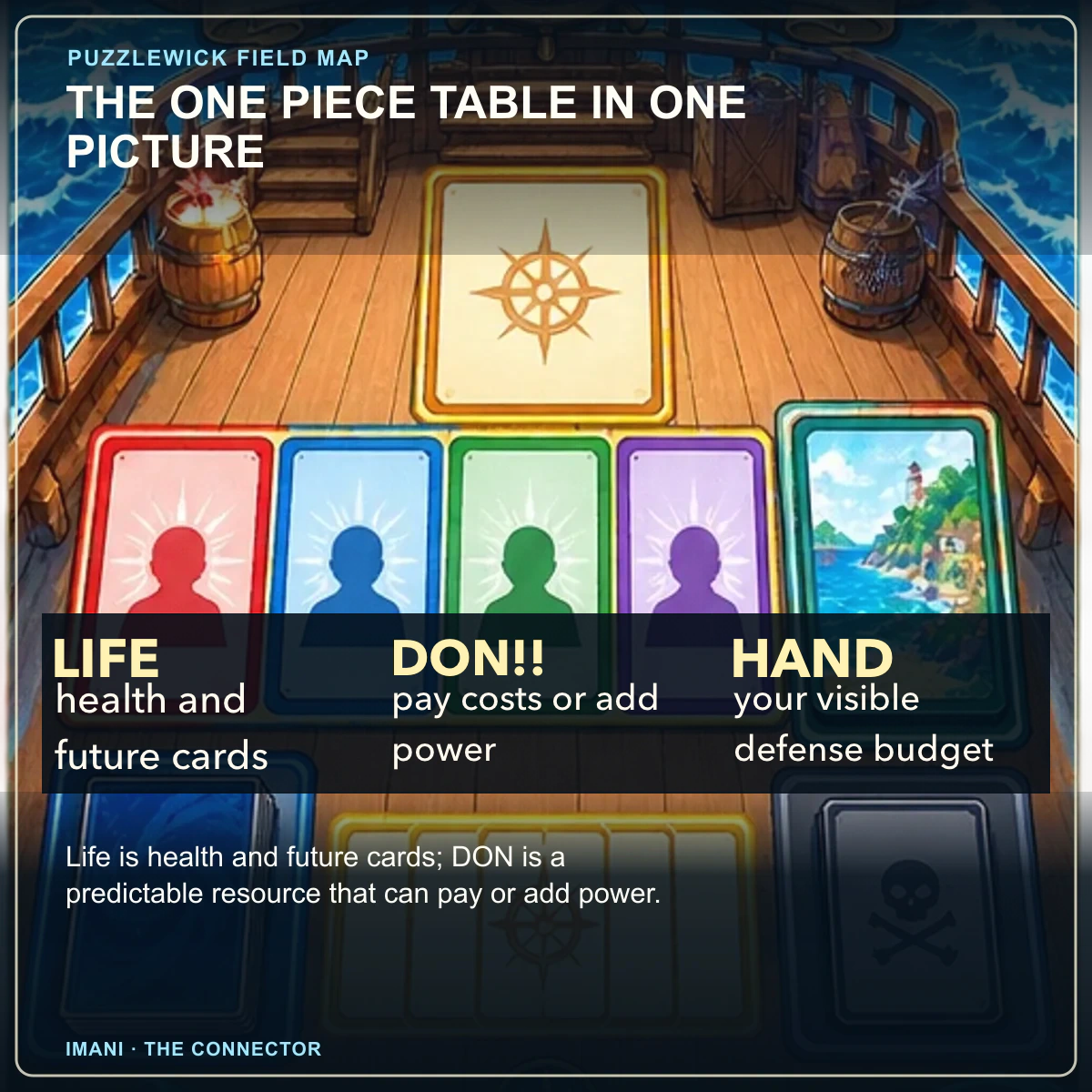
Each player uses one Leader, a 50-card main deck, and ten DON!! cards. Your Life stack is both health and future cards. Each turn, DON!! refreshes and grows predictably, so the resource question is not whether you drew mana; it is whether you spend DON!! to play Characters, hold an event, or attach it to raise power.
When attacked, the defender can use Counter from hand or effects to survive. That makes hand size a visible defensive resource. New players often over-attach DON!! for one dramatic attack and discover they have no useful second action. Teach the turn as a budget: refresh, draw, gain DON!!, decide the attack sequence, then preserve enough flexibility to answer the board.
How do you teach One Piece across ten games?
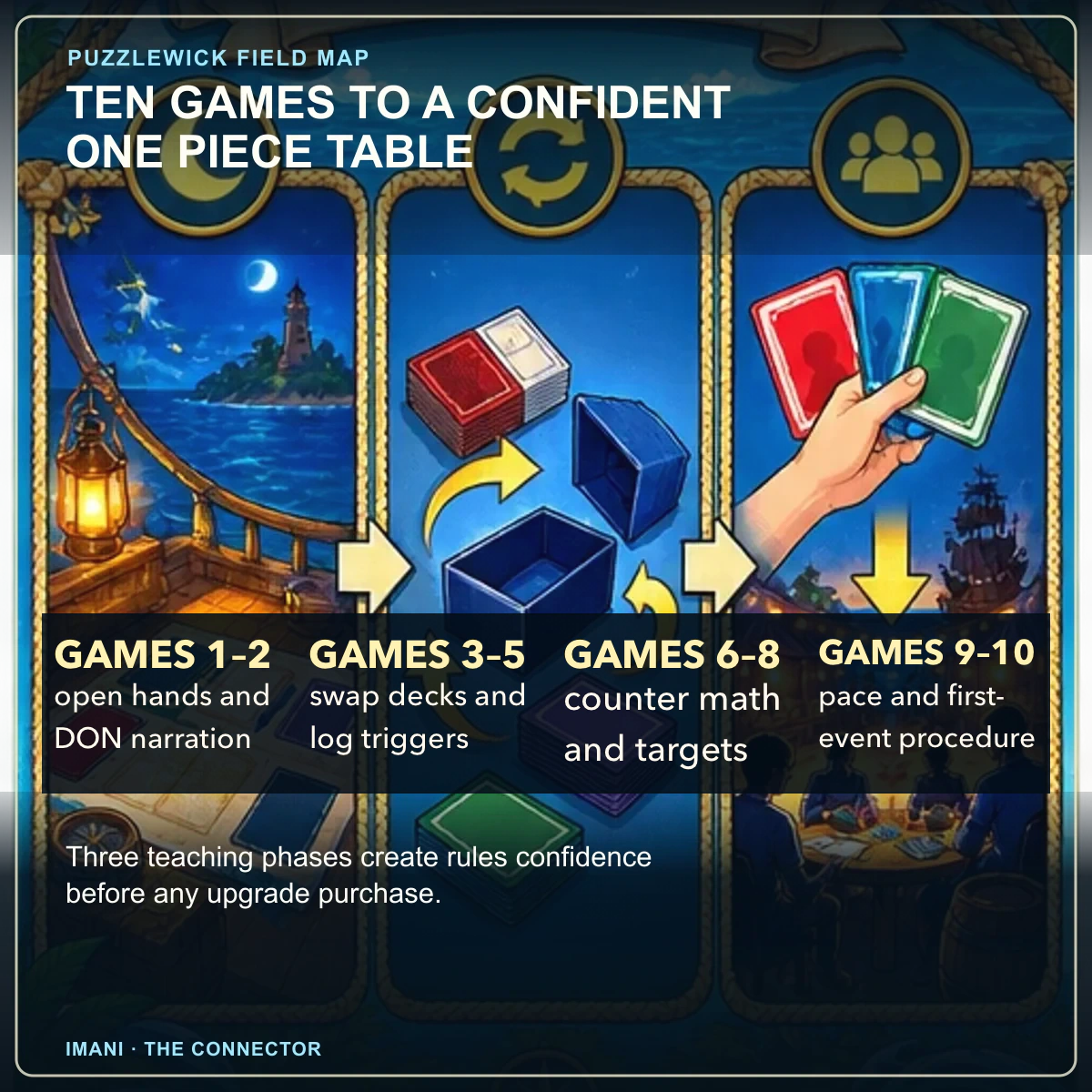
Games 1-2: play open-handed, narrate DON!! decisions, and allow take-backs before damage. Games 3-5: close hands, swap decks, and record every forgotten trigger. Games 6-8: keep one deck per player and introduce mulligan discipline, counter math, and the reason to attack Leader or Characters. Games 9-10: use a timer only to learn pace, not to rush the child or newcomer.
After ten games, each player should be able to reset Leader, Life, main deck, DON!! deck, and starting hand without help. They should announce attacks, add power correctly, and explain when a Counter leaves the hand. That is enough competence to visit a casual or beginner event and ask for a patient round.
When do two separate Starter Decks become the better buy?
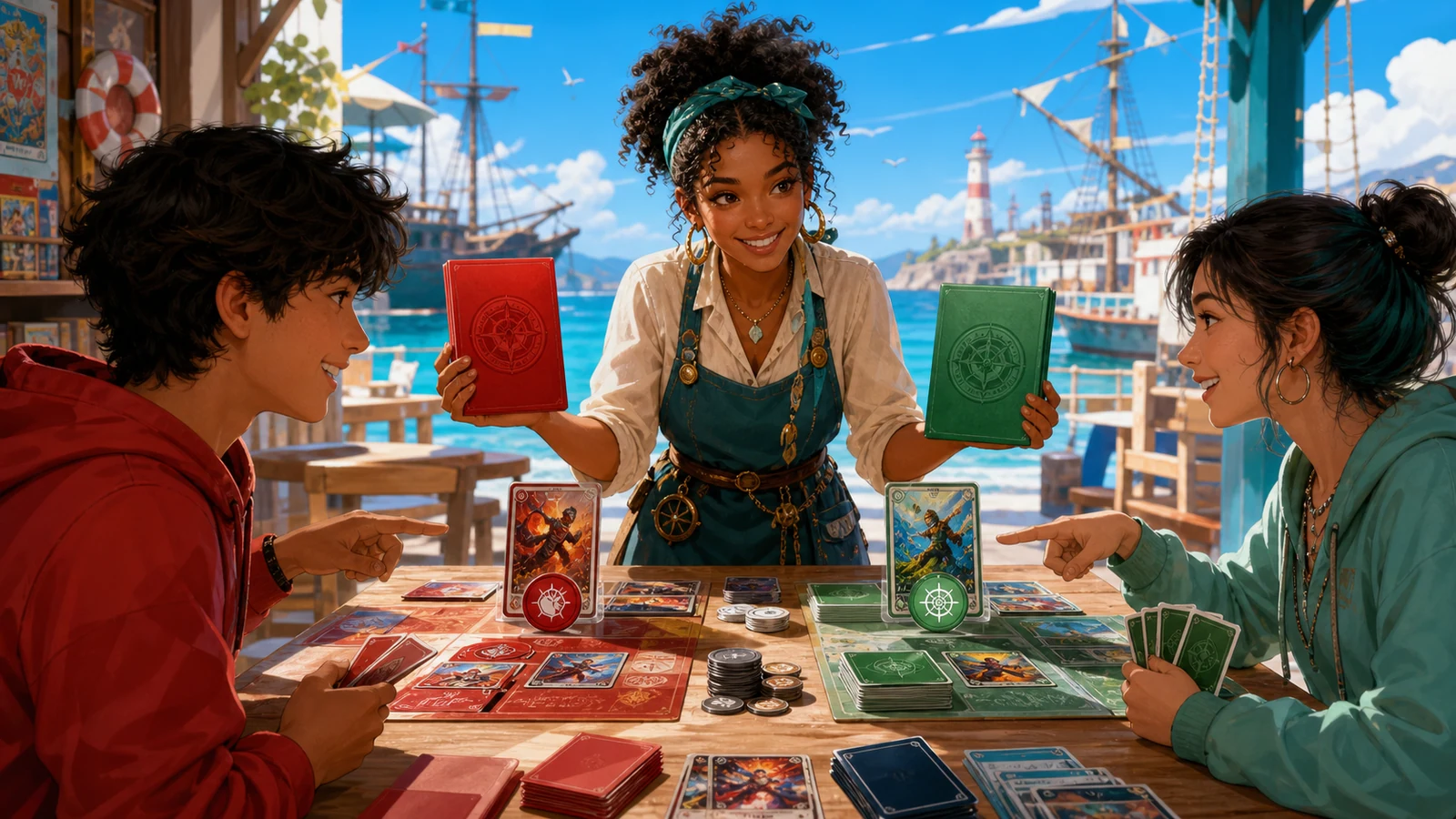
Move to separate starters after each player can name a preferred color or play pattern. A current starter gives one leader a coherent foundation and makes upgrade research specific. Choose two decks whose owners want to replay them, not two boxes with similar release dates.
Starter matchups are not guaranteed to be perfectly balanced. If one deck repeatedly dominates, swap pilots before buying fixes. Then test the intended upgraded list in a simulator or with proxies permitted by the home group. Buy exact singles or a second starter copy only when the deck list names the cards and quantities.
Which sleeves, Leader protection, case, and mat actually help?
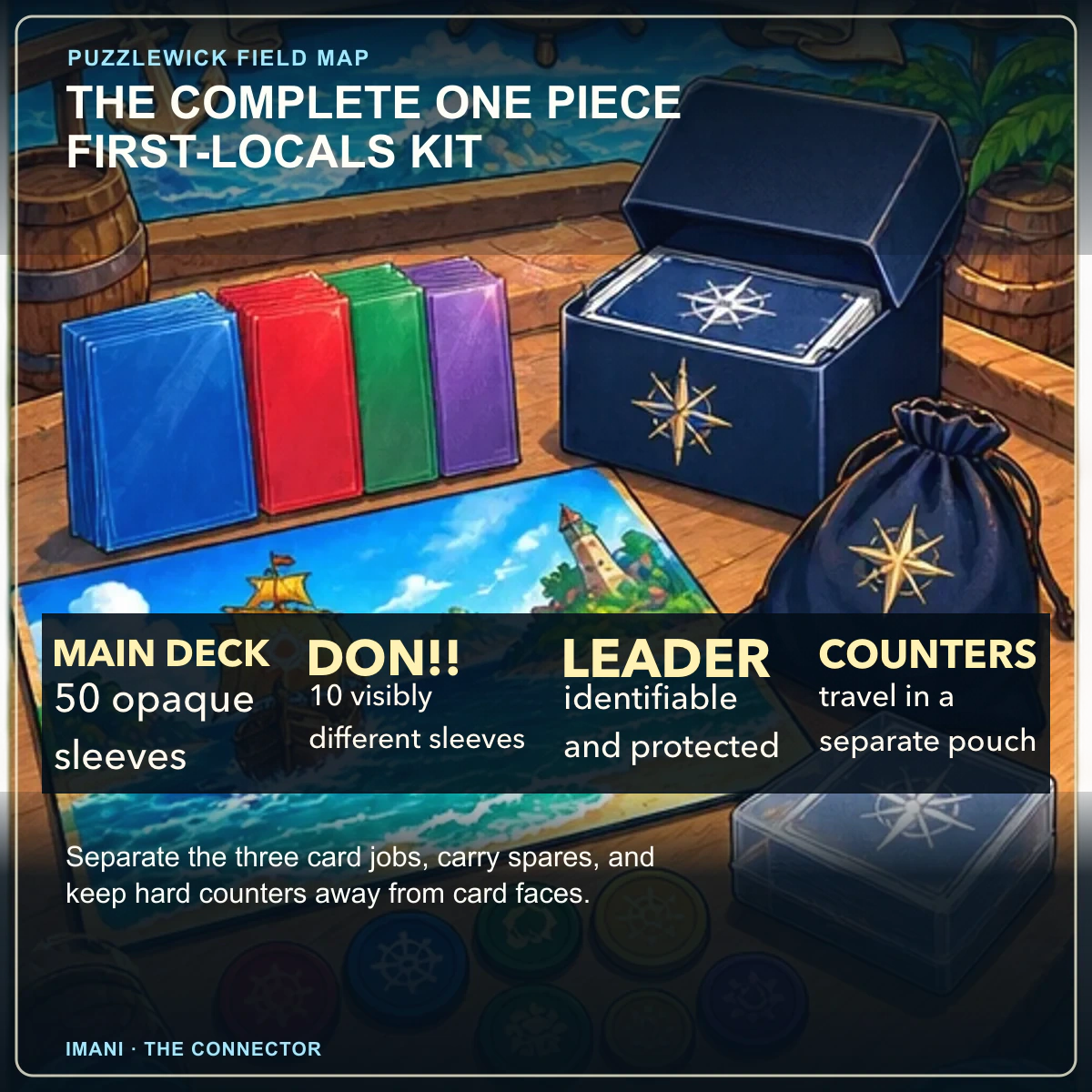
Use standard-size opaque sleeves for the 50-card main deck and a clearly different color or design for the ten-card DON!! deck. Keep the Leader identifiable and protected. Current tournament rules limit sleeve layers, so event players must check the official policy rather than assuming a decorative outer sleeve is legal.
One 70-count official sleeve pack covers a main deck and leaves replacements. A compact themed case keeps the Leader, deck, and DON!! together; hard counters and dice should ride in a separate pouch. A colorful marked-zone mat is a better beginner tool than the blank black mat Puzzlewick used to recommend by reflex. The zones should teach; the artwork should make the learner want to return.
Can LD-01 go to locals?
The decks can teach legal game anatomy, but “legal” and “prepared for the current field” are not the same judgment. Community reports consistently place Zoro closest to a usable first upgrade, while Luffy can progress with current red support and Nami often needs a much larger rebuild to resemble a current competitive list.
For a first store night, choose a beginner event, Pirates Party, or casual meetup when available. Bring one list you know, matching spare sleeves, dice or counters, and the sentence, “This is my first paper event; may I confirm the current format and any required deck list?” Check the current Bandai rules and restriction notice the week of the event.
The best upgrade signal appears after everyone has piloted more than one deck. If the same player keeps reaching for the same leader and understands when to spend DON!!, that person is ready for a focused starter. If turns still stop at every phase, keep the three-deck lesson intact. The goal is not to empty LD-01 into three half-finished upgrade piles; it is to discover which play pattern deserves an owned deck.
Before a first store event, confirm the current official card list, banned or restricted cards, sleeve rules, and event format. Pack the leader separately enough to identify it quickly, carry the required DON!! deck, and practice presenting the deck for a shuffle. Those quiet procedures are the bridge between a pleasant kitchen-table game and a local where the new player can concentrate on decisions instead of paperwork.
What experienced tables keep reporting
Recurring owner patterns, synthesized in Puzzlewick's words. Follow each evidence trail to read the original discussion.
Community pattern
The picks
Some links below are affiliate links — as an Amazon Associate, Puzzlewick earns from qualifying purchases, at no extra cost to you. It never changes a pick.

One Piece Card Game Learn Together Deck Set LD-01
LD-01 provides three teaching decks, a structured learning route, and enough contrast to discover whether red pressure, green control, or blue-yellow resource play feels best.
- Three complete teaching decks
- Excellent household value
- Built to explain the game
- Not three tuned locals decks
- Upgrade needs differ sharply by leader
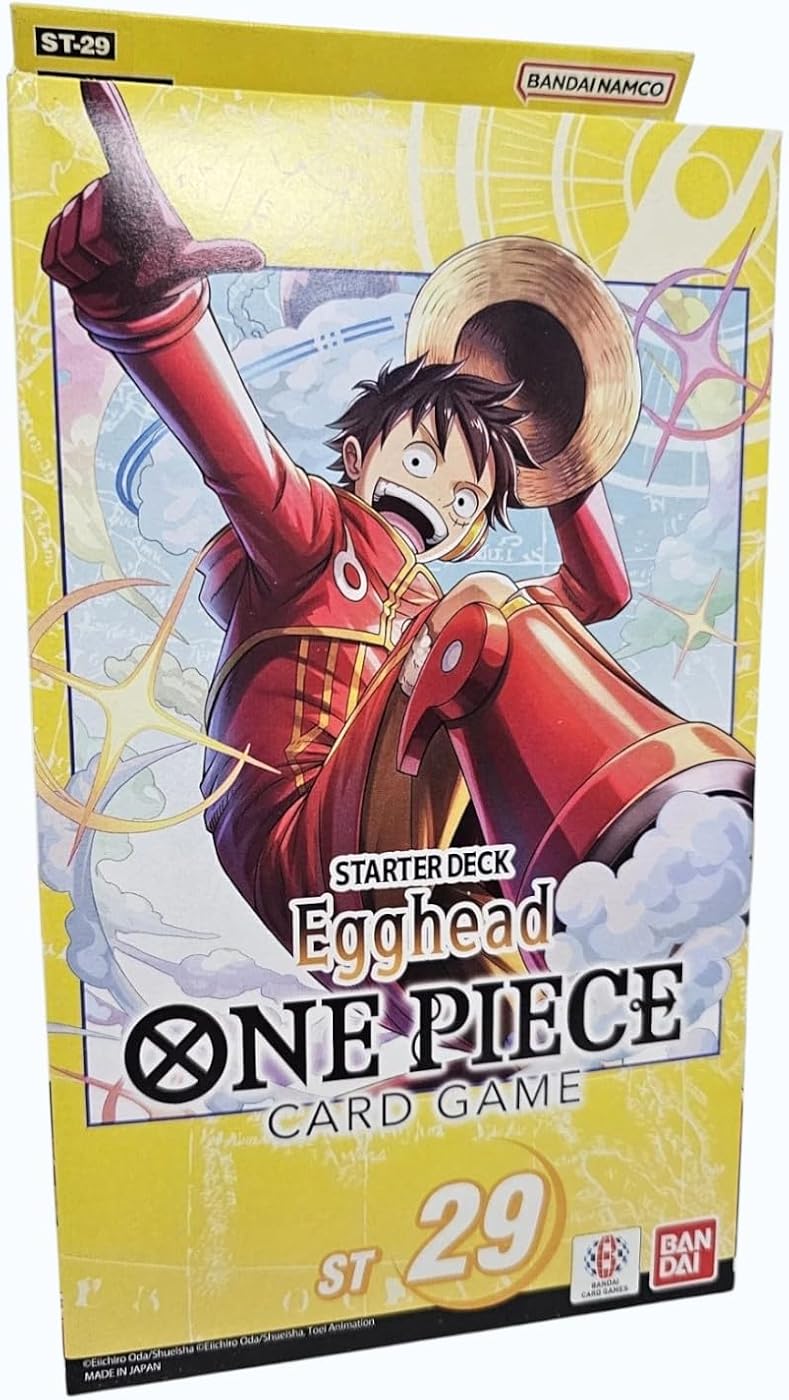
One Piece Card Game Starter Deck ST-29 Egghead
A current starter narrows the table to one leader and one play pattern. It is the better second purchase after the learner knows which decisions they enjoy.
- Focused leader identity
- Straightforward ownership
- Clearer upgrade search
- Only one player is equipped
- One copy may omit desired ratios
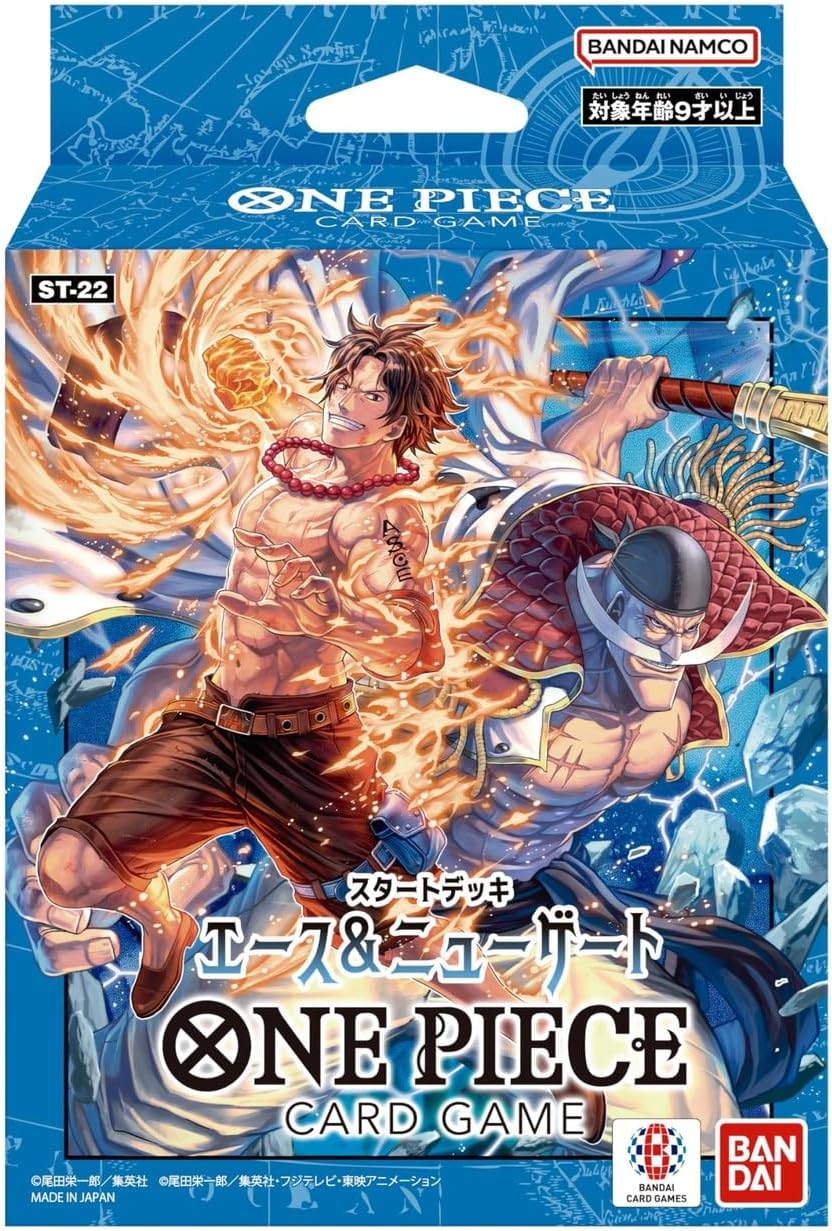
One Piece Card Game Starter Deck ST-22 Ace & Newgate
A second exact starter creates a matched household only after the group understands how leader color and deck identity affect the game.
- Second owned deck
- Distinct theme
- Upgrade path through singles
- Balance against another starter varies
- Older starter context can shift

One Piece Card Game Official Luffy Gear 5 Sleeves, 70 Count
Seventy official sleeves cover a 50-card main deck and leave replacements. Use a clearly different sleeve for the DON!! deck.
- Official art
- Enough for main deck and spares
- Strong table identity
- DON!! needs distinct sleeves
- Artwork availability can change

One Piece Card Game Nami & Nico Robin Deck Case
The official case gives one deck a clear owner and keeps the Leader, Main Deck, and DON!! system together.
- Official IP design
- Compact travel
- Clear ownership
- Check fit for double sleeves
- Counters may need a separate pouch

Bandai One Piece Card Game Official Playmat
Bandai’s official One Piece playmat keeps this beginner kit inside the licensed product ecosystem while still doing the practical job: quieter cards, easier pickup, and a clear place to teach.
- The mat protects cards, quiets the table, and provides atmosphere without inventing another component to manage.
- 4.7/5 from 75 Amazon ratings at the Keller, Texas review check
- The first visible wear usually appears at stitched edges or from being stored folded instead of rolled.
- Measure the usable table and verify that printed zones match current rules before choosing a zone-forward design.
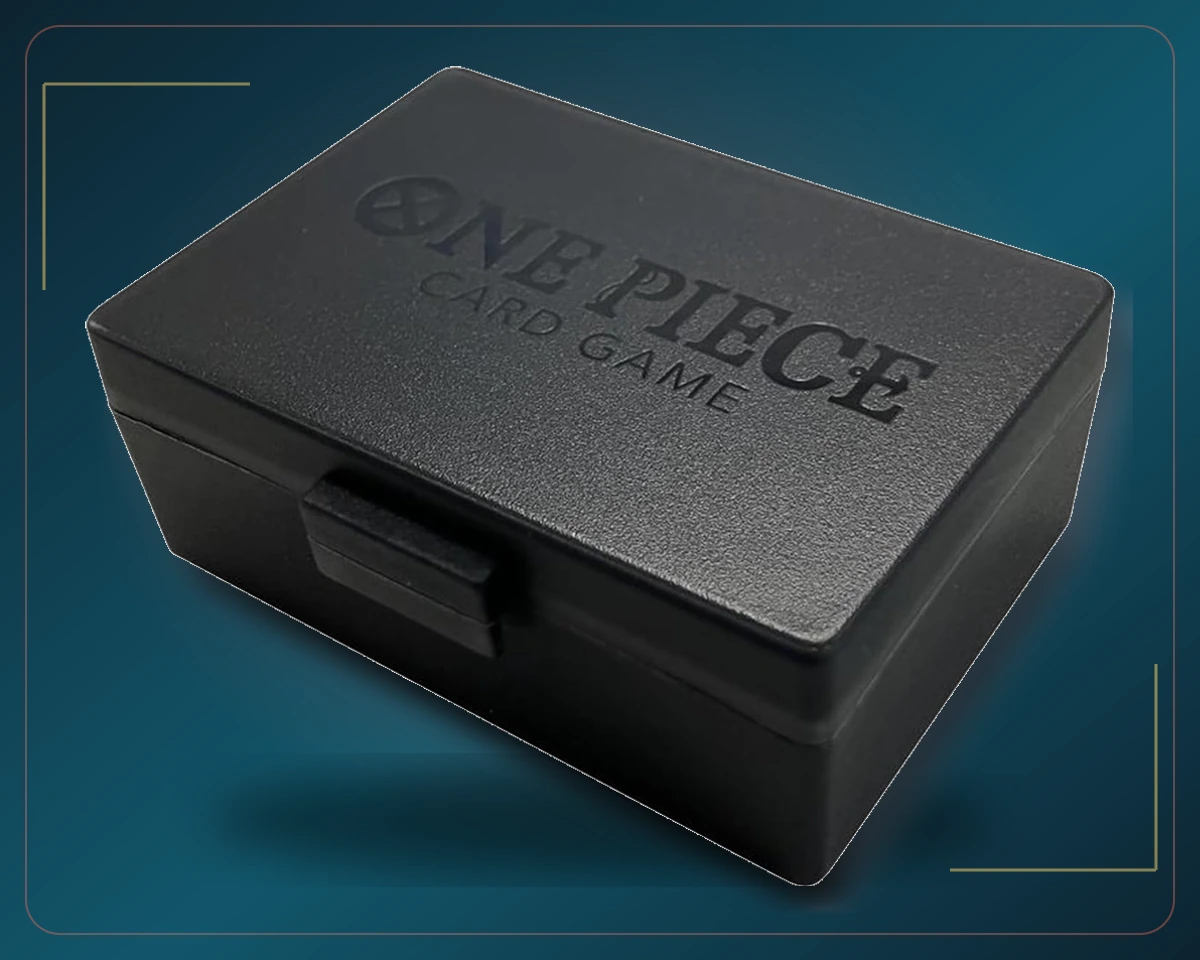
Bandai One Piece Card Game Official Dice & Case
The official dice-and-case set is a compact table-state upgrade, not decoration. It belongs after the Learn Together decks have shown which public counters the group actually reaches for.
- It targets the counters, tokens, dice, or public pieces players touch every turn instead of decorating an unused corner.
- 4.6/5 from 14 Amazon ratings at the Keller, Texas review check
- Premium table pieces become clutter when their symbols are less legible than the cardboard they replace.
- Use the game's official components first and upgrade only after the same friction appears across several sessions.
At a glance
| Route | Players | Strength | Limit |
|---|---|---|---|
| Learn Together LD-01 | Two or three beginners | Complete shared lesson and matchup variety | Not three current locals-ready lists |
| Two starter decks | Two learners with chosen leaders | Clear ownership and focused upgrade research | Matchup balance and current relevance vary |
| — | — | — | — |
| — | — | — | — |
Free download — One Piece Learn Together Deck Set vs Two Starter Decks Field Guide
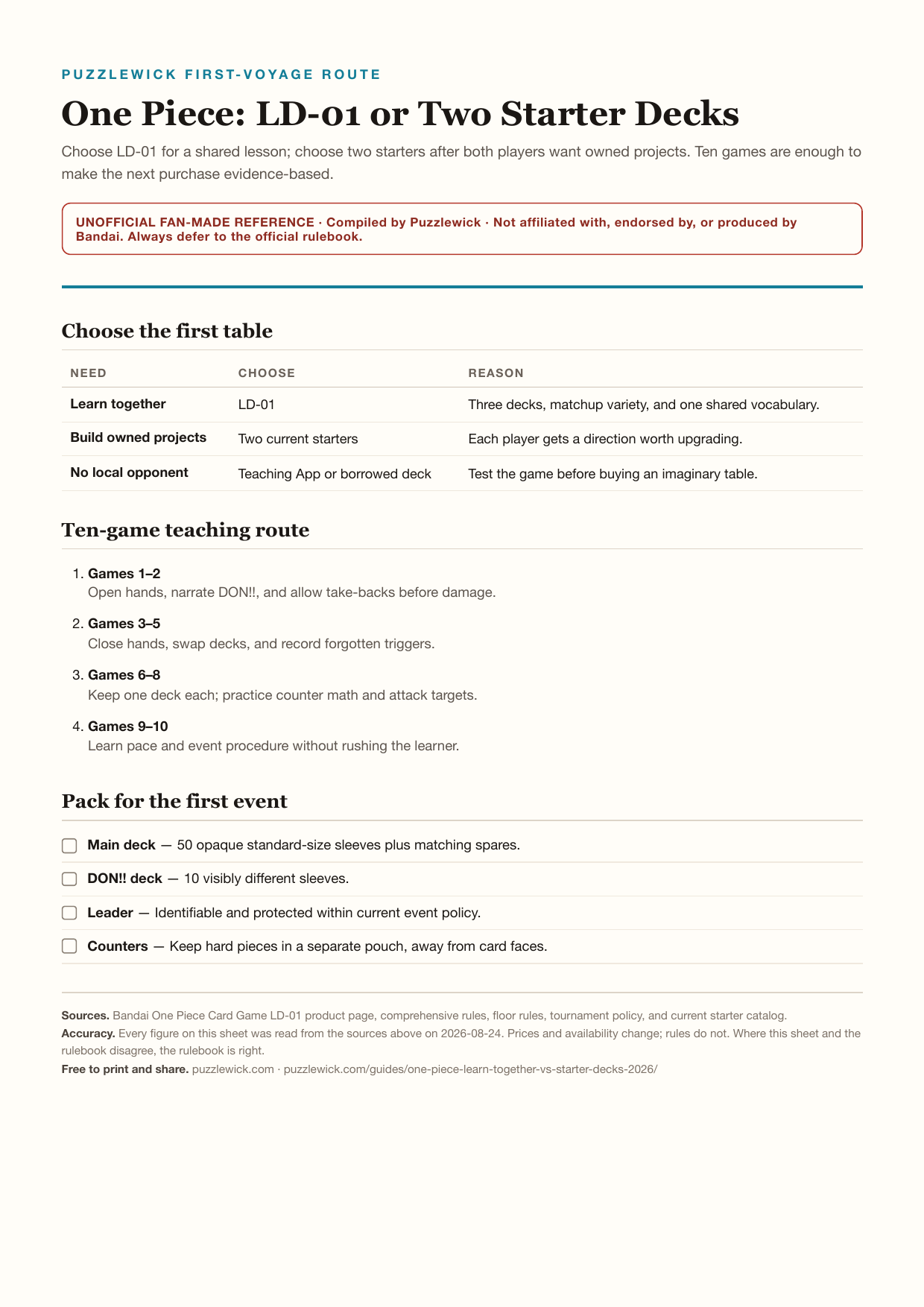
A one-page, beginner-readable table reference distilled from the official sources used in this guide.
Unofficial fan-made reference. Compiled by Puzzlewick from the sources listed on the sheet. Not affiliated with or endorsed by the publisher — always defer to the official rulebook.
Questions, answered
Is the One Piece Learn Together Deck Set worth it?
Yes for two or three new players. It creates a complete teaching table with three different decks and is more useful than random packs for learning.
Should I buy LD-01 or two starter decks?
Buy LD-01 when the group needs rules and matchup variety. Buy two starters when both players already know the rules and want distinct leaders to upgrade.
Which Learn Together deck is easiest to upgrade?
Community advice most often points to Zoro as the closest straightforward base. Exact upgrades change with current releases and restrictions.
Is the LD-01 Nami deck tournament ready?
No. It teaches a mixed-color resource plan, but a current competitive Nami list can be substantially different and may require a broad rebuild.
How many cards are in a One Piece deck?
One Leader, a 50-card main deck, and a separate ten-card DON!! deck.
Do DON cards need different sleeves?
They should be clearly distinguishable from the main deck. Use a different legal color or design and check current event policy.
What should I buy after Learn Together?
Choose one current starter or exact singles only after a learner identifies a leader, color, and play style they want to repeat.
What is the stop-buying rule?
Complete ten games and one independent reset per player before buying booster boxes, duplicate starters, premium storage, or a competitive rebuild.
Imani's verdict
Buy Learn Together LD-01 when two or three people are new, especially for a parent-child table or friend group. It solves the teaching and matchup problem in one box. Buy two separate starter decks when both players already understand the rules, each has a preferred leader or color, and the goal is to own and upgrade distinct decks. In LD-01, Zoro is generally the closest to a straightforward first upgrade; Luffy can progress with current red support; Nami’s teaching list should not be mistaken for the current competitive archetype.
Research ledger 11 sources · reviewed 2026-08-24
Specifications, rules, current product information, community experience, and contrary evidence were checked against the sources below. Commercial links are kept separate from editorial evidence.
- Learn Together Deck Set official product pageen.onepiece-cardgame.com/products/decks/ld01.php
- One Piece Card Game productsen.onepiece-cardgame.com/products/decks
- Official rule manualen.onepiece-cardgame.com/pdf/rule_manual.pdf
- Comprehensive rulesen.onepiece-cardgame.com/pdf/rule_comprehensive.pdf
- Official floor rulesen.onepiece-cardgame.com/pdf/floor_rule.pdf
- One Piece Card Game card listen.onepiece-cardgame.com/cardlist
- One Piece Card Game beginners pageen.onepiece-cardgame.com/beginners
- One Piece Card Game eventsen.onepiece-cardgame.com/events
- r/OnePieceTCG beginner discussionsreddit.com/r/OnePieceTCG
- OnePiece.gg deck referenceonepiece.gg
- Attached One Piece adults and kids research reportpuzzlewick.com/research
Okay but have you seen what everyone’s saying about this?

Keep exploring
The next smart rabbit holes.
☠ Universe HubOne Piece Card Game: the whole buying pathThe One Piece Card Game combines Leader identity, a fifty-card main deck, ten DON!!, Life pressure, and hand-based countering into...🂠 Topic PathTrading Card Games: compare the whole shelfStart with the game and community you want, then buy the smallest product that lets you test it properly. These guides separate...ComparisonThe Best Card Game Starter Box for Two Beginners in 2026: Magic, Pokemon, Lorcana, One Piece, Yu-Gi-Oh!, or Arkham Horror?Seven real on-ramps, one honest question: which box gets two nervous beginners through a complete first night with the least rules...