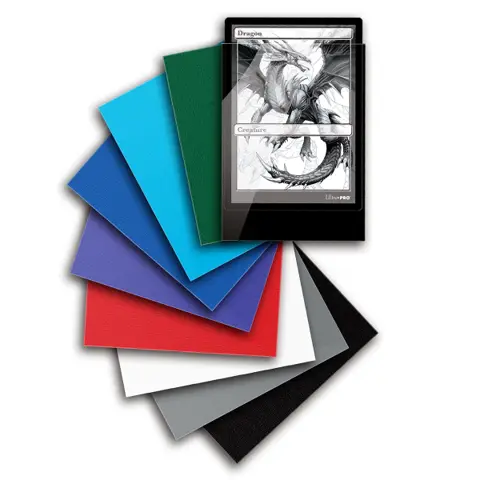
Best Yu-Gi-Oh! Accessories 2026: Japanese-Size Sleeves, Deck Boxes & Tournament Kit
The exact small-card protection system for a legal deck, Extra Deck, Side Deck, spare sleeves, mat, and first local tournament.


AI-assisted research and drafting in Dax’s voice · reviewed by Robert Pruitt · how this guide was made
Last editorial refresh: 2026-08-16 Gold-standard QA: 2026-08-16 9 sources reviewed Affiliate links checked during gold-standard pass

The short answer
Buy Japanese-size opaque sleeves, matching spares, one hard deck box that holds the Main, Extra, and Side Decks without crushing them, and a flat playmat. Do not buy standard-size gameplay sleeves by mistake. For Tier 2 and higher events, sleeves are required and double-sleeving is legal only as one clear layer plus one opaque layer with opposite openings.
Decision map
Choose in thirty seconds
Yu-Gi-Oh cards are smaller than Magic and Pokémon cards.
Protect the entire legal loadout and replace a split sleeve immediately.
Cleaner zones and easier card pickup without creating a legality issue.
Wrong fit and avoidable event-day friction.
Yu-Gi-Oh! punishes vague accessory shopping. The cards are Japanese size, the tournament policy cares about uniform sleeves, and a complete event loadout includes more than the Main Deck. Dax’s rule is simple: protect the legal object you are actually carrying, not the dramatic deck photo in your head.
This guide separates the must-haves from collector theater, explains the current sleeve rules in plain English, and gives a ten-minute pre-event check that prevents the most embarrassing kind of first-round loss: one caused by your packaging.
Start here, then go deeper
You are in the right cabinet.
 ◈ Universe HubYu-Gi-Oh!: the whole buying pathYu-Gi-Oh! remains a top-four marketplace game with a deep competitive identity and a collector rebound around new extended-art...
 🂠 Topic PathTrading Card Games: compare the whole shelfStart with the game and community you want, then buy the smallest product that lets you test it properly. These guides separate...
 ComparisonYu-Gi-Oh! Genesys vs Advanced Format 2026: Which Ruleset Should You Learn?Genesys removes Link and Pendulum mechanics and prices selected cards into a shared point cap. Advanced keeps the current card game,...
What accessories do you actually need for Yu-Gi-Oh?
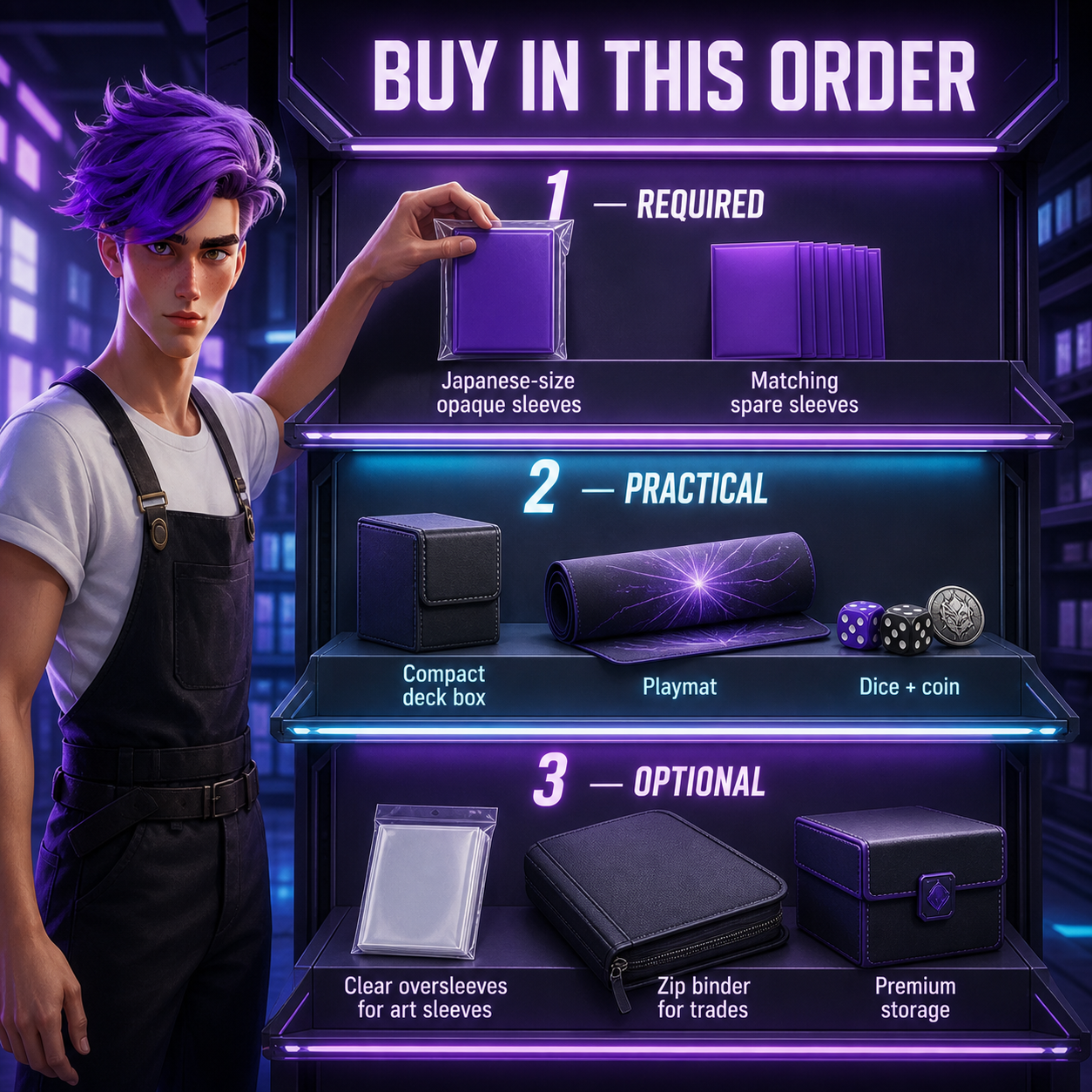
Your first kit is one pack of opaque Japanese-size sleeves, matching spares, a rigid deck box, and a clean mat. The Main Deck uses 40–60 cards, the Extra Deck up to 15, and the Side Deck up to 15. That means a 60-sleeve pack may cover the Main Deck but not the full event loadout.
Keep the Main and Side Deck in identical sleeves. The Extra Deck may use a different sleeve design, which is useful when you want instant zone recognition. Carry at least five unused matching spares in the same box. A damaged corner can become a marked-card concern even when the damage was innocent.
Count the complete configuration before shopping: Main plus Side plus Extra plus spares. A 40-card Main Deck with a 15-card Side Deck already consumes 55 matching sleeves before replacements; the separately sleeved Extra Deck can add another 15. Buying by deck photograph instead of legal card count is how a new player ends up resleeving everything at midnight.
What size sleeves fit Yu-Gi-Oh cards?
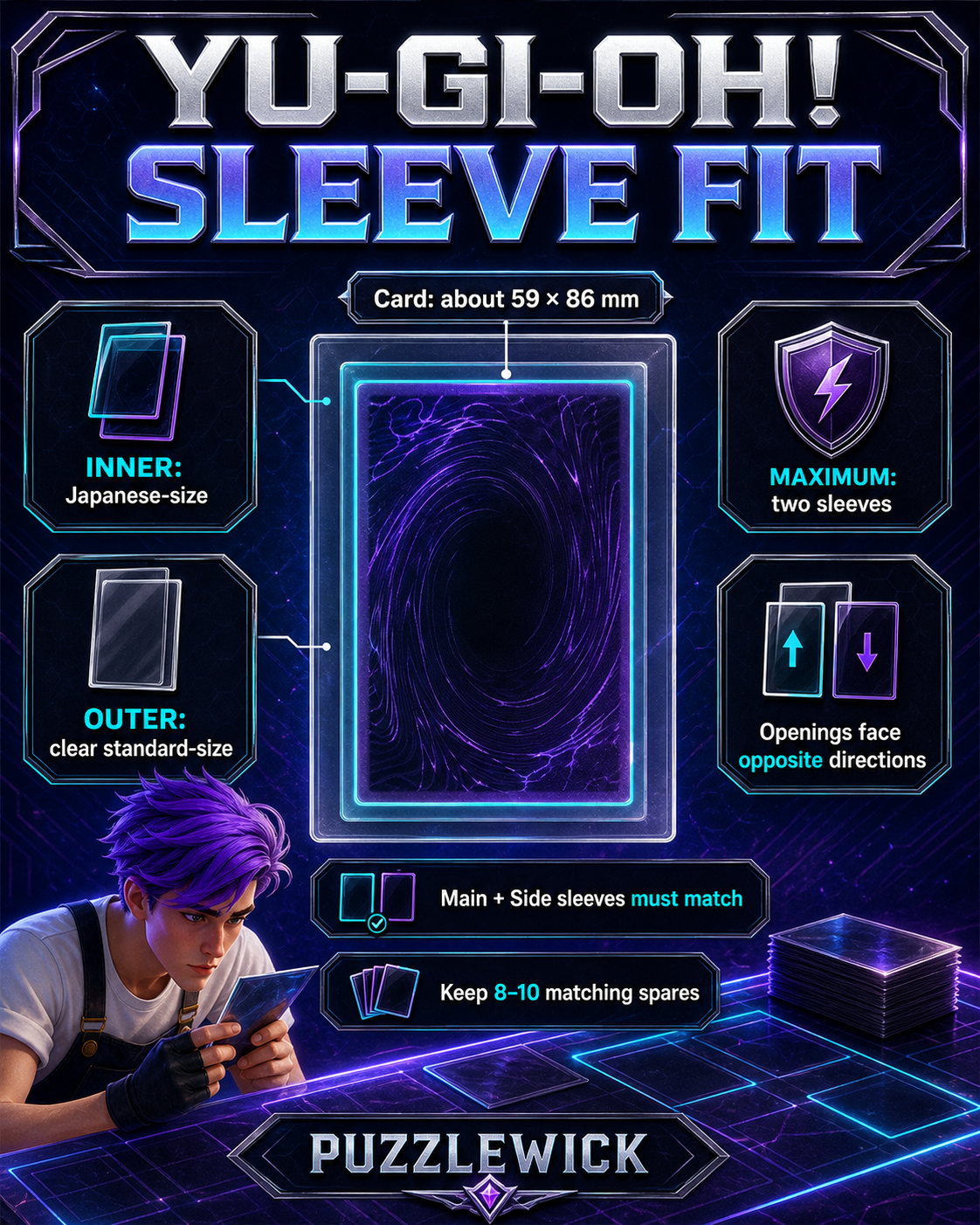
Dragon Shield lists Japanese-size sleeves for cards up to 59 × 86 mm. That is the category you want. Under current KDE-E tournament policy, sleeves must be identical in color, wear, and design within each deck; card faces must remain visible; reflective or holographic fronts are not allowed; and every card must face the same direction.
Double-sleeving is legal with exactly one additional clear sleeve, placed so the two sleeve openings face opposite directions. Do not improvise a third layer. At competitive events, the Head Judge has final authority over whether a sleeve combination is acceptable.
After sleeving, fan the deck under a bright lamp and compare every back. Manufacturing batches can differ slightly, and a few heavily handled sleeves can become shinier than the rest. Shuffle ten times, inspect the corners, and replace anything that catches. The goal is not paranoia; it is making the sleeve layer disappear so the duel, rather than the packaging, receives attention.
Which deck box holds a complete legal Yu-Gi-Oh loadout?
A box should hold the sleeved Main Deck, Extra Deck, Side Deck, spares, and a small divider without letting cards rattle. A compact hard shell such as the Boulder 100+ leaves useful capacity without forcing dice against card edges. Store counters separately when they can grind against sleeves.
Test the loaded box at home: turn it gently upside down while closed, open it, and look for bowed cards or loose movement. The box label is a capacity clue, not a promise about your exact sleeve thickness.
Use dividers to make the three legal groups unmistakable. You should be able to remove the Main Deck without dragging the Side Deck with it, and present the Extra Deck without sorting by memory. If the lid presses on the cards, choose a larger case. If the cards ricochet inside, add a soft divider rather than loose dice or hard acrylic tokens.
Do you need a Yu-Gi-Oh playmat?
A playmat protects cards from rough tables and makes sleeved cards easier to lift. A plain mat also travels across formats and avoids busy artwork under dense board states. Printed zones can help a beginner, but the rules still live in your play, not in the ink on the rubber.
Roll the mat artwork outward in a tube to reduce edge curl. In humid climates, let a damp mat dry completely before storage; trapping moisture beside a deck is an impressively efficient way to make expensive cardboard unhappy.
At home, practice placing the zones consistently even on an unprinted mat. Leave enough clearance that cards in adjacent zones cannot be mistaken for one another, and keep the Extra Deck visually separate. A zone-printed mat is a useful teaching rail; a neutral mat is the longer-lived purchase when several games share one bag.
How do you check a Yu-Gi-Oh deck before an event?
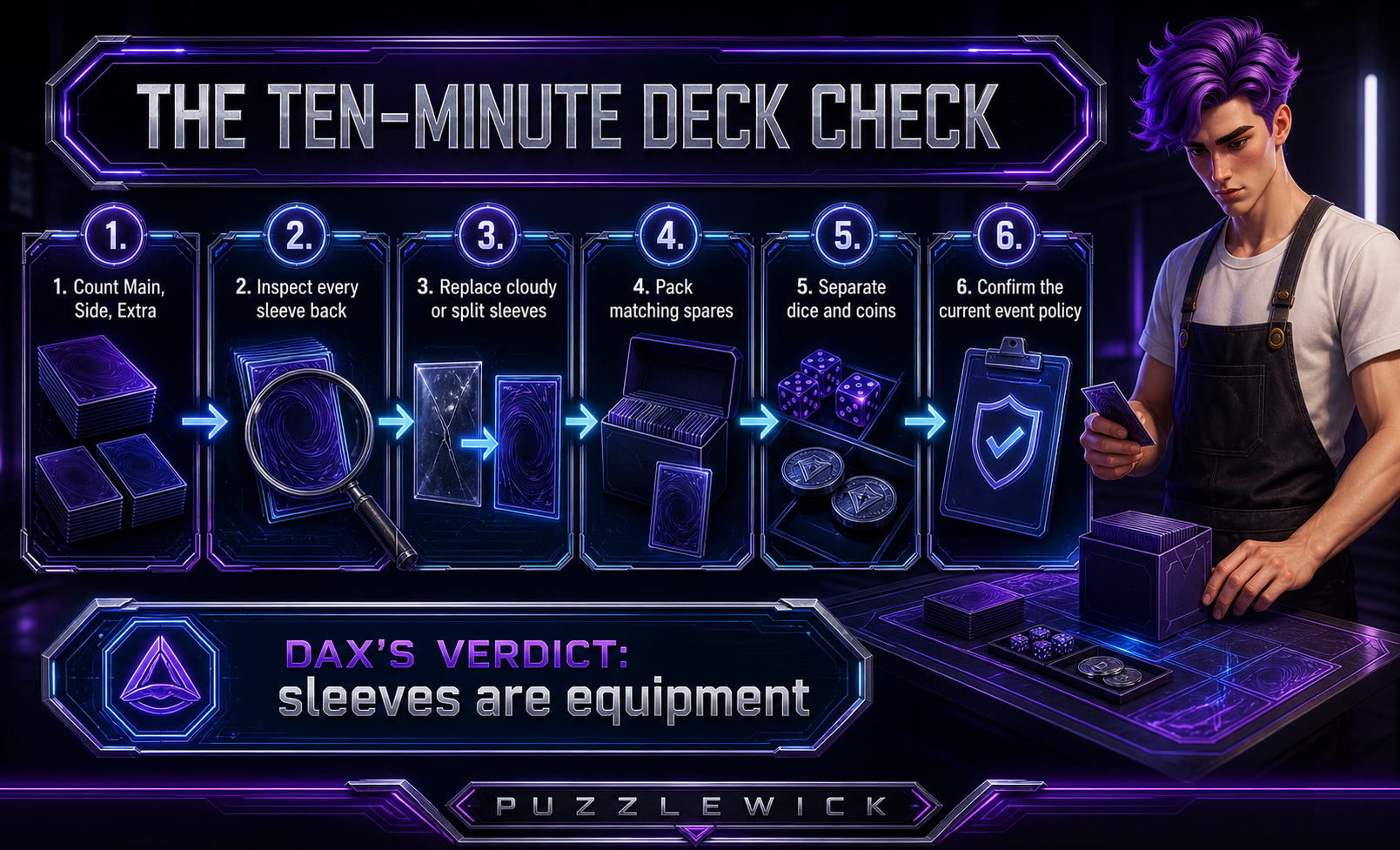
Count the Main, Extra, and Side Decks. Compare sleeve backs under the same light. Replace split corners. Confirm every card faces the same way. Separate tokens from playable cards. Put your deck list, identification, water, and matching spare sleeves in the bag before you begin decorating it.
The useful test is not whether the kit looks tournament-ready. It is whether you can sit down, present the deck, find the Side Deck, replace a sleeve, and begin without searching three compartments.
Then rehearse the first minute. Open the box, place the mat, identify each deck, and put the spares where they can be reached without emptying the bag. Photograph the final layout. That photograph is both a packing checklist and a quiet confidence boost when the local store feels louder than expected.
Which Yu-Gi-Oh accessories can wait until after ten games?
Wait on premium art sleeves, oversleeves, multi-deck luggage, display slabs, and branded counters until your habits identify a real job. Art sleeves can benefit from oversleeves, but they also add thickness and cost. A giant case for six theoretical decks is simply a bulky way to carry one actual deck.
Buy the first upgrade when you can complete this sentence: “I need this because the current kit fails when…” If the sentence ends in aesthetics alone, enjoy the purchase as decoration—but do not call it essential.
The picks
Some links below are affiliate links — as an Amazon Associate, Puzzlewick earns from qualifying purchases, at no extra cost to you. It never changes a pick.

Ultra PRO Pro-Matte Small Deck Protectors
The no-drama answer when fit and event readiness matter more than sleeve art.
- Japanese-size fit
- Opaque back
- Matte handling
- Count the pack before buying
- No collector-art protection

Ultimate Guard Boulder 100+ Deck Case
Rigid, compact, and spacious enough to keep the legal deck together without becoming luggage.
- Rigid shell
- Compact footprint
- Useful capacity
- No dedicated token drawer
- Capacity varies with sleeve thickness

Ultra PRO Solid Black Gaming Playmat
A quiet surface that makes the board state easier to read and cards easier to pick up.
- Readable
- Portable
- Multi-game
- No printed zones
- Can curl if stored poorly
At a glance
| Priority | Product | Job | Buy when | Watch out |
|---|---|---|---|---|
| 1 | Japanese-size opaque sleeves | Legal uniform card backs | Before the first event | Standard-size is the wrong fit |
| 2 | Matching spare sleeves | Replace wear immediately | With the first sleeve pack | Color batches and wear can differ |
| 3 | Rigid 100+ deck box | Main + Extra + Side + spares | When the deck leaves home | Keep hard tokens separate |
| 4 | Neutral playmat | Card handling and zone clarity | When the table needs it | Dry before storing |
Questions, answered
What size sleeves fit Yu-Gi-Oh cards?
Use Japanese-size or small-card sleeves. Dragon Shield describes the category as fitting cards up to 59 × 86 mm.
Are sleeves required at Yu-Gi-Oh tournaments?
Current KDE-E policy requires sleeves at Tier 2 and higher events. Lower-tier local policy can vary, but uniform opaque sleeves remain the practical default.
Can Yu-Gi-Oh cards be double-sleeved?
Yes. Use no more than two sleeves: one clear layer and one opaque layer, with their openings facing opposite directions.
Can the Extra Deck use different sleeves?
Yes. The Extra Deck may use a different sleeve design from the Main and Side Decks, but every Extra Deck sleeve must match the others.
How many sleeves should I buy?
Count the Main Deck, up to 15 Extra Deck cards, up to 15 Side Deck cards, and matching spares. A 60-count pack may not cover the full event loadout.
Do I need a Yu-Gi-Oh playmat?
No, but it protects cards, improves pickup, and clarifies a dense table. Printed zones are helpful teaching aids, not a substitute for knowing the rules.
What belongs in a first tournament bag?
Deck, Extra and Side Decks, matching spare sleeves, mat, legal counters or dice, deck list if required, identification, and water.
Are official art sleeves worth it?
They can be delightful, but some players oversleeve them to protect the artwork. Test thickness and event legality before building the whole kit around them.
How do I know whether my Yu-Gi-Oh sleeves are tournament-ready?
Count the complete Main, Side, and Extra Deck configuration, then inspect every sleeve back and corner under the same light. Replace wear, confirm matching direction, carry unused matching spares, and ask the Head Judge before play if an unusual art, inner-sleeve, or oversleeve combination could create doubt.
Dax's verdict
Buy the correctly sized opaque sleeves and matching spares first, then one rigid box and a quiet mat. Yu-Gi-Oh accessories succeed when they remove event friction; anything else is optional theater.
Research ledger 9 sources · reviewed 2026-08-16
Specifications, rules, current product information, community experience, and contrary evidence were checked against the sources below. Commercial links are kept separate from editorial evidence.
- KDE-E Yu-Gi-Oh! TCG Tournament Policy v2.3yugioh-card.com/eu/wp-content/uploads/2024/11/KDE-E_TCG_Tournament_Policy_2_3.pdf
- Dragon Shield Japanese-size sleevesdragonshield.com/en-us/all-sleeves/japanese-sized-sleeves
- Yu-Gi-Oh over-sleeve buyer discussionreddit.com/r/yugioh/comments/uw92d4
- Konami Yu-Gi-Oh play, rulebook, and organized-play resourcesyugioh-card.com/en/play
- Konami tournament-supplies guidance for new Duelists and parentsyugioh-card.com/en/about/faq-for-parents
- Ultimate Guard Boulder deck-box specificationsultimateguard.com/en/Deck-Boxes/Boulder/UGD010657
- Ultra PRO Pro-Matte Small exact Amazon listingamazon.com/dp/B00JWSMO5A?tag=puzzlewick-20
- Ultimate Guard Boulder exact Amazon listingamazon.com/dp/B06XGMBR6S?tag=puzzlewick-20
- Ultra PRO playmat exact Amazon listingamazon.com/dp/B00D8K2J30?tag=puzzlewick-20

I'll be honest with you — flattery is boring.

Keep exploring
The next smart rabbit holes.
◈ Universe HubYu-Gi-Oh!: the whole buying pathYu-Gi-Oh! remains a top-four marketplace game with a deep competitive identity and a collector rebound around new extended-art...🂠 Topic PathTrading Card Games: compare the whole shelfStart with the game and community you want, then buy the smallest product that lets you test it properly. These guides separate...ComparisonYu-Gi-Oh! Genesys vs Advanced Format 2026: Which Ruleset Should You Learn?Genesys removes Link and Pendulum mechanics and prices selected cards into a shared point cap. Advanced keeps the current card game,...