Masterclass
Gloomhaven
A complete beginner-to-master initiation into the legendary card-driven campaign dungeon-crawler — and why 2026, with the polished Second Edition on the shelf, is the best moment in the game's history to finally sign the pact.
Gloomhaven is a fully cooperative, legacy-style tactical dungeon-crawler for 1-4 players where combat uses unique class ability cards and an attack-modifier deck instead of dice, and your choices write a branching, persistent campaign across dozens of hours. In 2026, complete beginners should start with either Jaws of the Lion (the cheapest, gentlest on-ramp, ~$25-45) or the remastered Gloomhaven: Second Edition (2025, ~$200) — both far smoother than the 2017 original. Avoid starting with the original box or with Frosthaven, which is the harder sequel.

AI-assisted curator persona · researched & reviewed by founder Robert Pruitt, a 20-year enthusiast · our method
- The DojoWhite belt
- The MonasteryGreen belt
- The Mountain RetreatBrown belt
- The Grand HallRed belt
- The Campfire of MastersBlack belt
What Gloomhaven Is — and Why 2026 Is the Year You Finally Cross In

Welcome in, initiate — yes, the box is heavy and setup is a workout, we all complain about it and we all keep coming back. This isn't a game you finish in a night; it's a story we live together for a while, and I'm so glad you pulled up a chair. You're one of us now.
Here is the first thing to understand, and it changes everything: Gloomhaven has no dice. Designed by Isaac Childres and self-published through Cephalofair Games after a Kickstarter that snowballed into a tabletop legend, it's a fully cooperative, legacy-style dungeon-crawler for 1-4 players. You and your friends play a band of mercenaries grinding through a dark, gritty fantasy region, scenario after scenario, in a persistent campaign whose story branches based on the choices you make and the reputation you earn. No game master. No player-versus-player. You all win or lose together against an automated dungeon.
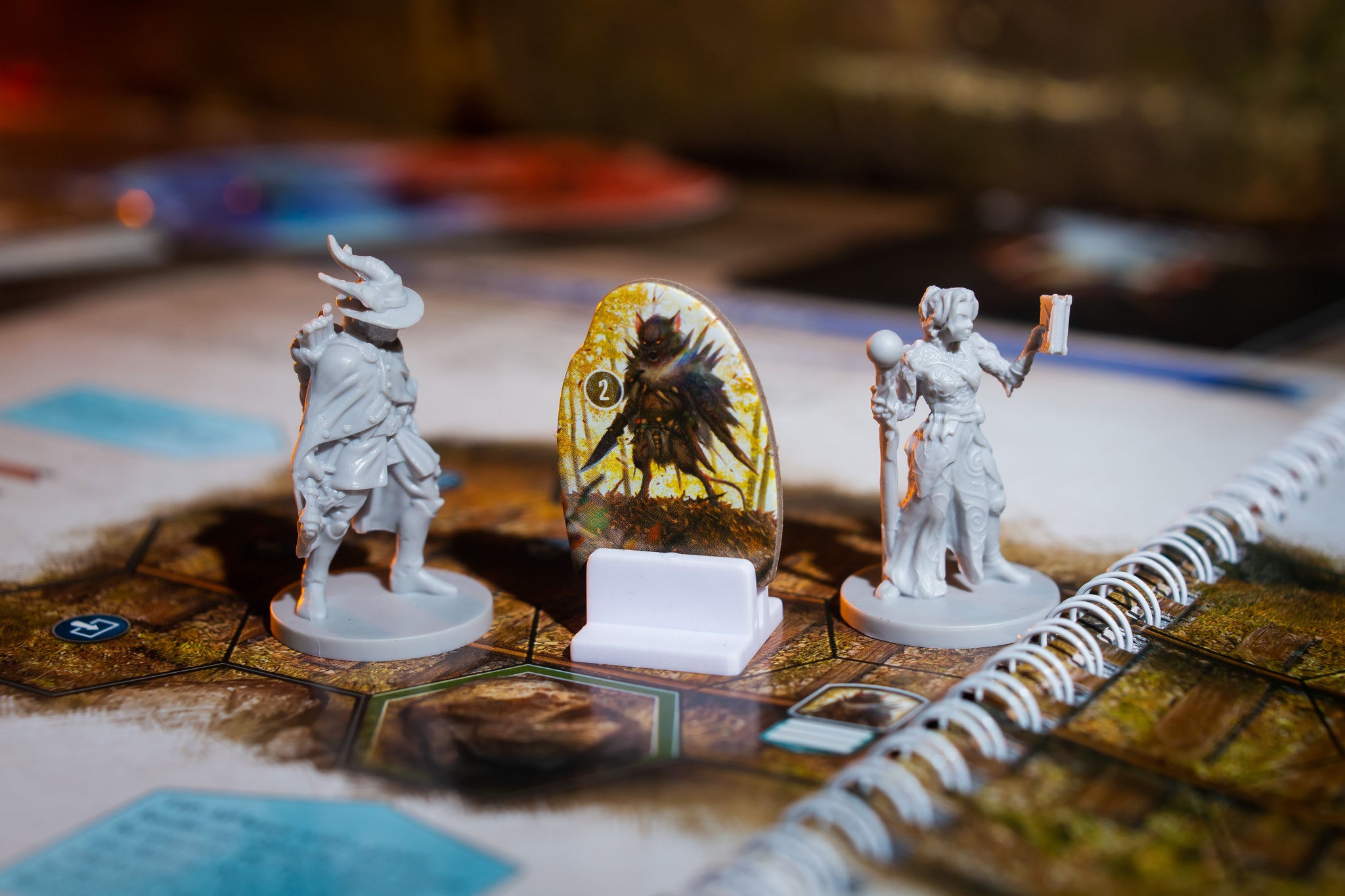
The signature mechanic is its combat. Every class carries a unique hand of dual-action ability cards — each card has a top action and a bottom action, and each round you commit two cards face-down, then use the top of one and the bottom of the other. The card's number sets your initiative (turn order). Damage is randomized not by dice but by a small attack-modifier deck you draw from on every hit. It's a board game that behaves like a tabletop RPG, famous for being long, heavy, and enormously rewarding.
Why now? 2026 is a genuine reset. Cephalofair released Gloomhaven: Second Edition in 2025 (~$199.99 MSRP), a ground-up remaster that fixes everything that historically scared off beginners — rewritten rules with a separate Learn-to-Play guide, baked-in errata, a genuinely good built-in organizer, full miniatures instead of cardboard standees, and all 18 classes rebalanced.
So: pick your door. The community's near-universal welcome mat is "just play Jaws first" — the standalone Jaws of the Lion (~$25-45) teaches the system over five gentle scenarios. Or jump straight to Second Edition if you already know this is your group's forever-game. Pick the one you love. Either is the right way in.
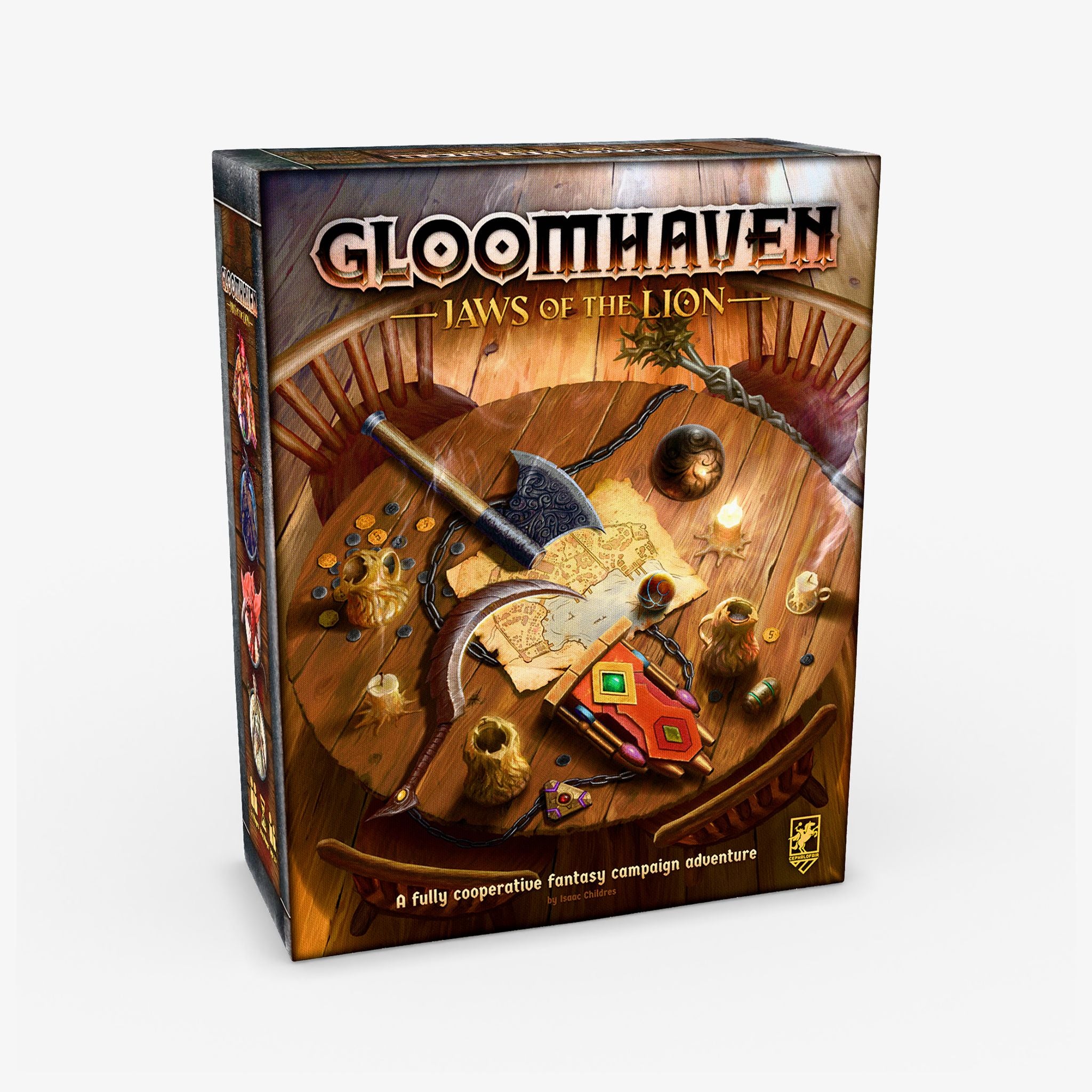
It's a board game that behaves like a tabletop RPG campaign — with no game master, and no dice.
- Choose your on-ramp: Jaws of the Lion (~$25-45) for the cheapest, gentlest start, or Second Edition (~$200) if you're sure this is your group's big game.
- Do NOT start with the 2017 original Gloomhaven or with Frosthaven — both make the learning curve far steeper than it needs to be.
- Pick a starting class you find cool, not 'optimal' — in Jaws, a tanky Red Guard or a ranged Hatchet are clean beginner picks.
- Try the digital Gloomhaven on Steam (often under $10) for a cheap, low-commitment feel of the card-combat before the box arrives.
- Read the rulebook end-to-end once before night one — the game is full of small, easily-forgotten quirks.
- Block a couple of hours and set the expectation up front: the full campaign spans many months.
First Words of the Fellowship
JotL — Jaws of the Lion, the standalone gateway box; 'just play Jaws first' is the onboarding gospel. AMD — the Attack Modifier Deck, the card deck that replaces dice; it gives you 'dice feelings without dice.' Glass cannon — affectionate label for fragile high-damage classes like the Spellweaver that delete a room, then die if a goblin sneezes on them. The big box — the full Gloomhaven campaign, what you graduate to after Jaws.
The Cheap Tutor
The official Gloomhaven video game (Steam/PS/Xbox/Switch) frequently drops under $10. It's a fantastic rules tutor — it teaches the card-combat loop and exhaustion economy by feel — though it teaches mechanics more than tactics. A few hours here makes your first physical scenario click far faster.
Why Not the 2017 Original?
It isn't a bad game — it sat at #1 on BoardGameGeek for years. But the 2017 box has dense rules and a mocked cardboard insert, and Frosthaven adds an entire town-building 'outpost' layer on top. For a newcomer in 2026, Jaws or Second Edition is simply a kinder door.
Sculpting Your Hand: Learning Your First Mercenary the Slow, Patient Way

Sit with me, initiate. Your hand is a clock, not a toolbox — every card you burn for that juicy loss action ticks you closer to exhaustion, so spend it like it's the last money you'll ever have. And don't chase the perfect deck yet; as you level, you'll yank the garbage from your modifier deck and ink perks onto your sheet, and that's the moment this mercenary truly becomes yours.
The craft of Gloomhaven is hand-sculpting and campaign stewardship. You don't build a sprawling deck so much as curate a tight 8-12 card mercenary hand where every single card matters. Master one class's hand and you've mastered the game's deepest pleasure.
Start by learning the economy. Cards leave your hand two ways: they return after a rest (most actions), or they're permanently 'lost'/burned — that's a powerful loss action, plus one card every time you rest. Exhaustion is the real enemy: run out of cards and your mercenary collapses, removed for the scenario. So the lowest acceptable 'ready' bar is simple — understand that your hand is a finite clock, and that resting always costs you a card. You do not need to play optimally to win. You need to not bleed your hand dry by accident.
Then learn the two rests. A short rest loses a random card, quick. A long rest lets you choose which card to lose, heals you 2, refreshes used items, and drops you to initiative 99. New players constantly take short rests and randomly lose the one card they needed. Don't.
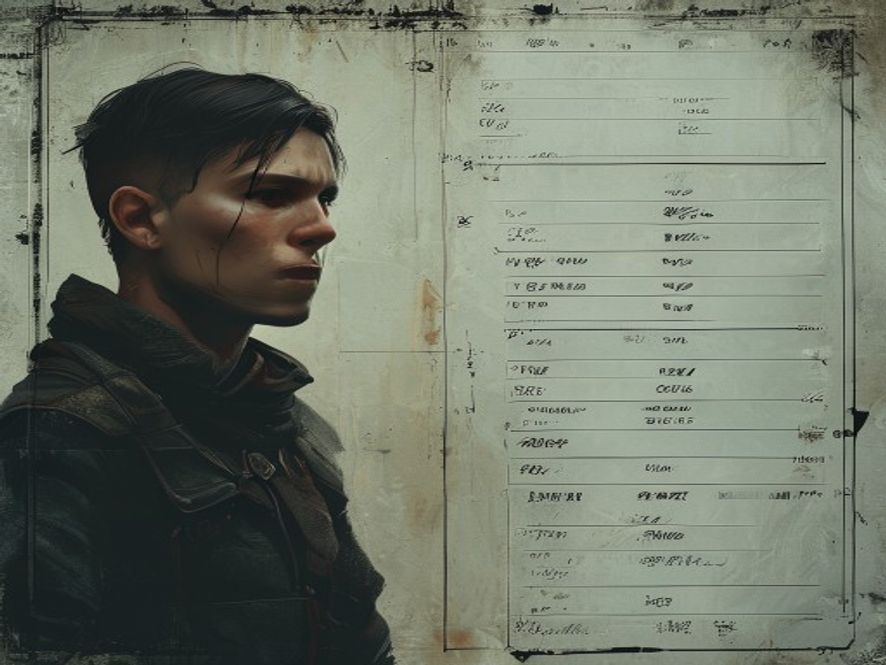
The deeper craft arrives with leveling. As you gain XP you literally re-engineer your odds — pulling the worst cards out of your personal Attack Modifier Deck and inking new perks onto a character sheet. 'I finally took my +1 row' is small but sacred progress. Over twenty scenarios your mercenary becomes mechanically yours.
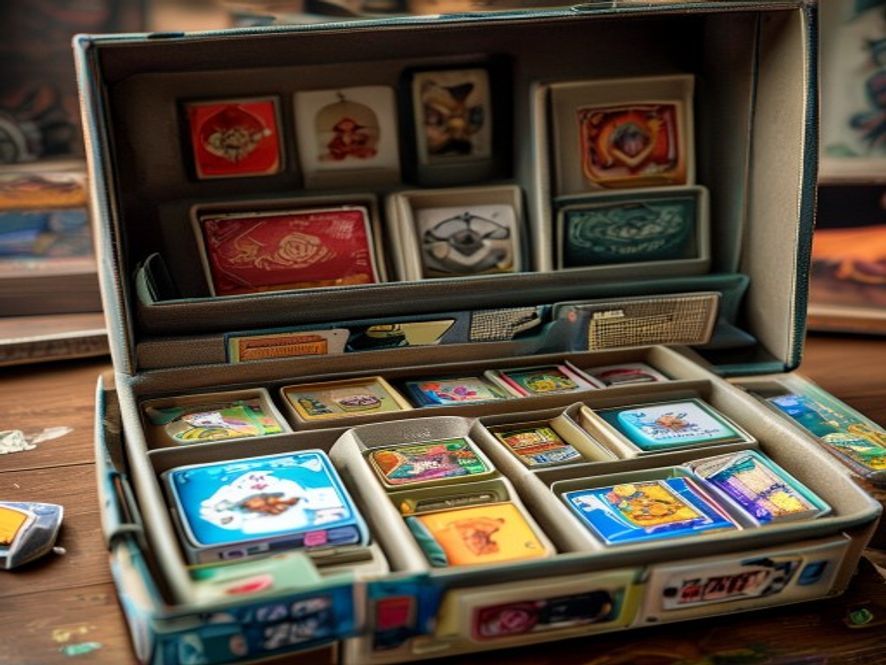
And there's the second craft nobody warns you about: taming the box. The original insert is a legendary community in-joke; graduating to a Folded Space tray or an elaborate baggie-and-binder ritual is a genuine rite of ownership. 'How do you store your Gloomhaven?' is its own beloved thread genre. You're not just learning a class. You're learning to keep a campaign.
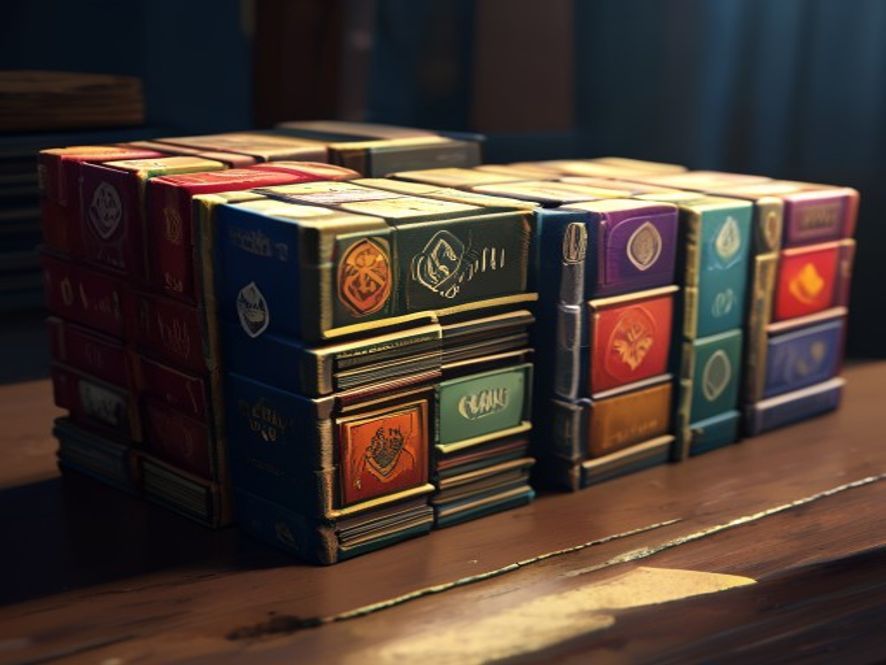
Your hand is a clock, not a toolbox — every burned card ticks you closer to exhaustion.
- Read your full class hand before scenario one and pick a tight set you understand — don't try to memorize every card.
- Practice the loss-action restraint early: avoid burning 'lost' cards until you're partway through a scenario.
- Always prefer a long rest over a short rest when you can — choosing your lost card beats gambling on a random one.
- Sleeve your ability cards; they're shuffled and handled every single round across a long campaign.
- When you level, spend your perks deliberately — start by removing the worst cards from your attack-modifier deck.
- Sort the box: even a basic insert or labeled baggies per class slashes the setup tax that kills momentum.
The Craftsman's Vocabulary
Burning a card — playing it for its powerful bottom loss action so it's gone permanently; 'don't burn too early' is the first hard lesson. Perk / Perk sheet — the permanent improvements you ink onto your sheet by removing bad AMD cards and adding good ones. Long rest / Short rest — the two recovery options; the slow safe choice versus the random gamble. The insert / the box — the eternal logistics war, where a custom organizer is a rite of ownership.
Inking Your First Perk
The first time you permanently mark a perk onto your character sheet, you've made your first irreversible mark on the game — personalizing your attack-modifier deck so this mercenary is now uniquely yours. It's tiny. It's permanent. It's the moment a class stops being 'a class' and becomes your character.
Sleeve, Sort, Survive
Three quality-of-life moves pay for themselves across an 80-hour campaign: sleeve the ability cards (most-touched components in the game), add a real insert plus a map-tile archive folder, and keep each character's cards and tokens in their own labeled tuckbox between sessions. Second Edition's improved card stock and built-in organizer help, but a dedicated insert still slashes setup.
The Lowest 'Ready' Bar
You are 'ready' the moment you can answer one question honestly: how many rounds can my hand survive before I'm forced to rest? You don't need combos memorized. Budget your hand for the whole scenario, ration your loss cards, and you'll outlast players who 'know' more but bleed out early.
How a Round Actually Works: The Two-Card Loop, the Objective, and Playing It Straight

Listen closely, initiate, because two rules keep this game fun: keep your hand hidden, and never play someone else's turn for them. Once cards are committed in the simultaneous reveal there are no take-backs — you planned it, you live with it. And whatever you do, don't burn your big loss cards too early; exhaustion is how most scenarios are actually lost.
Here is the honest anatomy of a round, exactly as it plays at the table.
First, everyone commits two cards face-down, simultaneously. No discussion of exact numbers. When you reveal, you'll use the top action of one card and the bottom action of the other — never both halves of the same card. The lower of your two card numbers (or the one you choose) sets your initiative: lower acts earlier. Then play resolves in initiative order, players and monsters interleaved.
Monsters have no human controller. They act on their own ability cards plus a strict focus/targeting rule — the system 'plays' the dungeon for you, deterministically. This is the source of the game's most universal groan: 'the monsters didn't move where I needed them to.' Everyone has screamed at the AI. It's Tuesday.
When you hit, you draw from the attack-modifier deck — the x2 crit, the +1, the dreaded Null/miss. That's your randomness, dealt one card at a time.
The win condition is the scenario objective — and this is where beginners go wrong. It's often 'reach the far room' or 'kill the boss,' not 'clear every monster.' Sometimes you rush past enemies. Read the scenario intro and its special rules at the top of the page before setup; many losses come from missing one printed line.
Now the etiquette baked into the mechanics. The hidden hand exists specifically to stop quarterbacking — one 'alpha' player running everyone's turn. The rules forbid sharing exact initiatives precisely so the table cooperates through fog, suggesting and gambling rather than commanding. No take-backs once cards are committed. Don't burn loss cards too early. And grab loot within reach, but don't end-of-round vacuum every coin while a teammate bleeds out. The mechanics are the manners. Play honest, and the game plays beautifully.
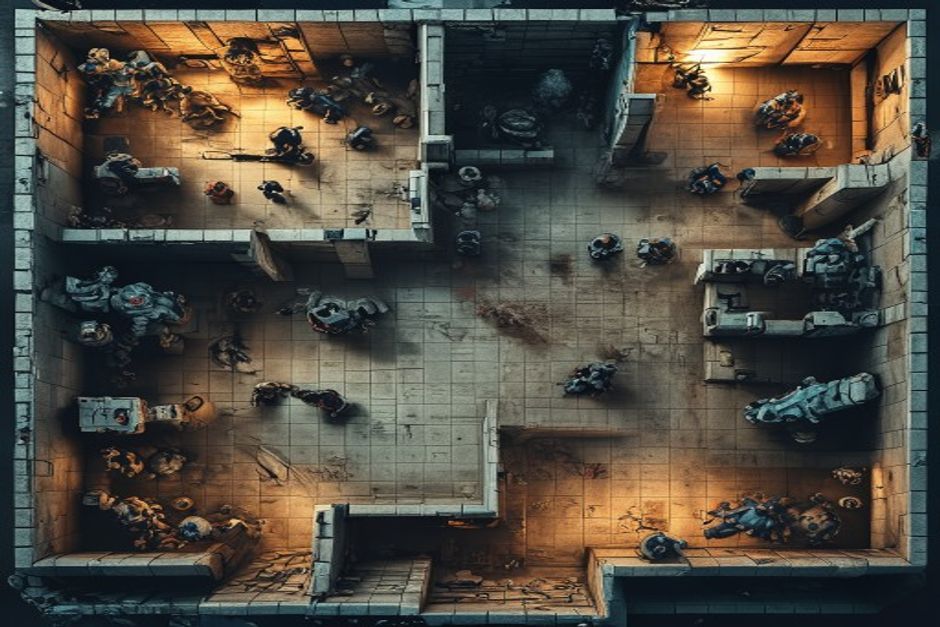

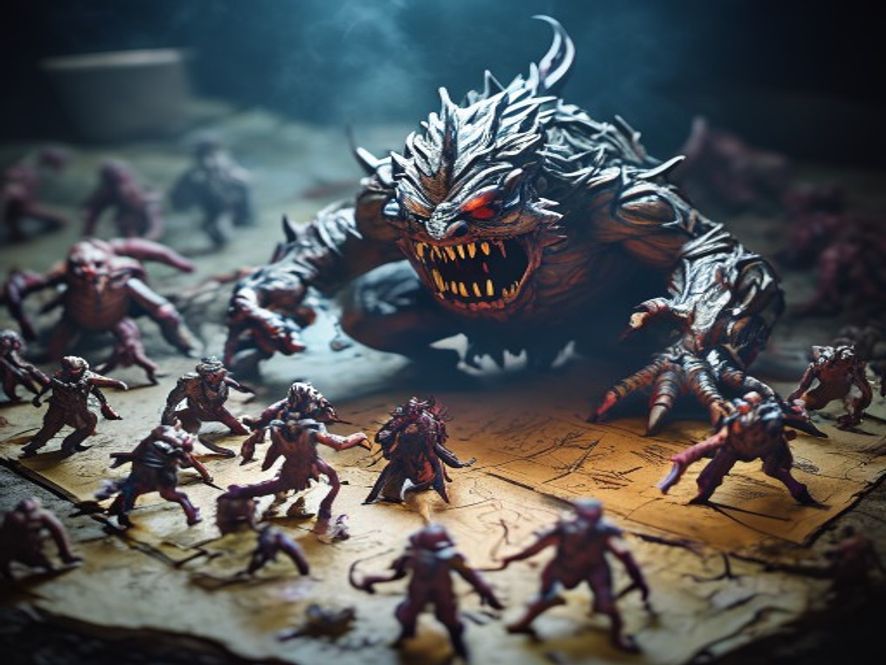
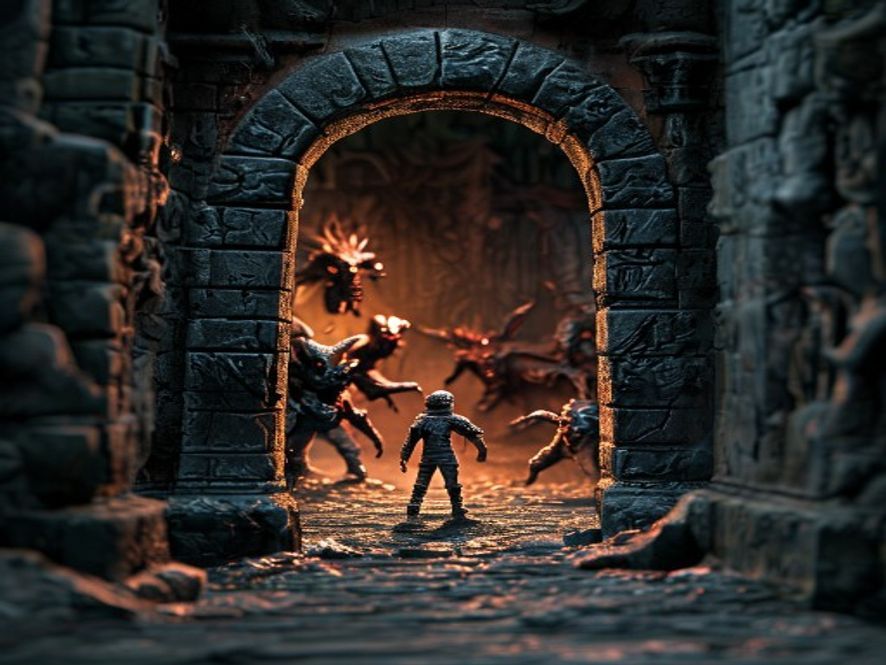
The mechanics are the manners — the hidden hand exists specifically so no one can run your turn for you.
- Read the scenario objective and special rules aloud before setup — know whether you're clearing, reaching, or killing.
- Plan your two cards as a single turn: a top action, a bottom action, AND the right initiative number.
- Commit your cards face-down and reveal together — no peeking, no renegotiating after the flip.
- Open doors deliberately; new rooms spawn fresh monsters, so push forward to control the flow rather than waking everything at once.
- Track enemy focus rules so you can predict monster turns and bait them into your strongest play.
- Aim to win the scenario first, then chase XP, then your battle goal — in that order.
The Language of the Round
Exhaustion — the lose condition: you run out of cards and your mercenary collapses. 'I exhausted on the second-to-last round' is the universal tale of woe. Quarterbacking / Alpha player — the cardinal table sin of one player running everyone's turns; the hidden-hand rules exist to stop it. Monster AI — the deterministic enemy-focus rules; 'the monsters move wrong' is the shared groan that bonds every table. The x2 / the Null — the best and worst pulls from the attack-modifier deck.
The Etiquette Baked Into the Rules
Keep your hand hidden — the rules forbid sharing exact initiative numbers and card names; the fun lives in imperfect information. Don't quarterback: suggest targets and timing, but never play someone else's turn or demand they show their hand. No take-backs once a card is committed in the simultaneous reveal. And loot is shared decency — grab what's within reach, but don't vacuum every coin while a teammate is bleeding out.
The Objective Is Not 'Kill Everything'
The most common newbie loss: treating Gloomhaven like a fantasy RPG where you must murder every monster. The primary goal is the scenario objective — frequently 'reach point X' or 'defeat the boss.' Sometimes the correct, honest play is to sprint past a room full of enemies straight to the exit. Read the objective first; let it set your whole plan.
Budget the Whole Scenario
Roughly estimate how many rounds you'll need to reach the objective, then ration your loss cards and rests against that clock. Don't burn a powerful card on round two for a fight you could win cheaply — exhaustion from over-spending and over-resting is the single most common way beginners lose a winnable scenario.
Hanging With the Veterans: Sequencing, Elements, the Meta, and the Line You Don't Cross

Real talk, initiate: you don't need to play perfectly to win, but if you want to hang with the veterans, you sequence your two cards as one move and you read the AI before it reads you. Here's the bright line, though — the cardinal sin at this table isn't losing, it's quarterbacking. The second you start running other people's turns to 'win faster,' you've lost the only thing worth keeping.
Welcome to the edge — where the difference between a competent player and a veteran is sequencing, not knowledge.
The pro mental model: plan your two cards as one turn, not two separate actions. A top action, a bottom action, and the initiative number that lands you at the safest moment — acting after the tank has blocked, before the boss recovers. Read enemy focus to bait monsters into walking into your strongest play; block line of sight; funnel rooms one door at a time. Think in roles — a front-liner soaks and positions, a damage dealer focuses kills, a support controls and heals. In Jaws, the Red Guard + Hatchet front/back pairing is the clean, beginner-proven template.
Once that's comfortable, layer in elements (fire, ice, air, earth, light, dark): some actions infuse an element this turn that another action consumes next turn for a stronger effect. That's the combo ceiling — the satisfying signature turn a Mindthief or Spellweaver pilot lives for. Optional, not mandatory to win, but it's where the artistry lives.
Know the meta, lightly. Second Edition rebalanced all 18 classes — reining in overpowered favorites like Eclipse and the Three Spears, buffing historically weak picks like Tinkerer and Mindthief — and renamed several (Brute to Bruiser, Scoundrel to Silent Knife). You don't need tier lists to enjoy it; you just need to stop fearing the 'weak' classes.
And here is the bright line — the win-at-all-costs jerk archetype the whole culture is built to repel. It's the quarterback, the alpha player who runs everyone's turns and demands to see their hands to optimize the table into a solved puzzle. The hidden-hand design exists specifically to stop them. Crossing that line wins faster and kills the game. Veterans suggest; they never command. The other half of the sin is analysis paralysis — freezing ten minutes on one turn while the room ages. Half-joke, half-genuine plea: just play the damn turn.
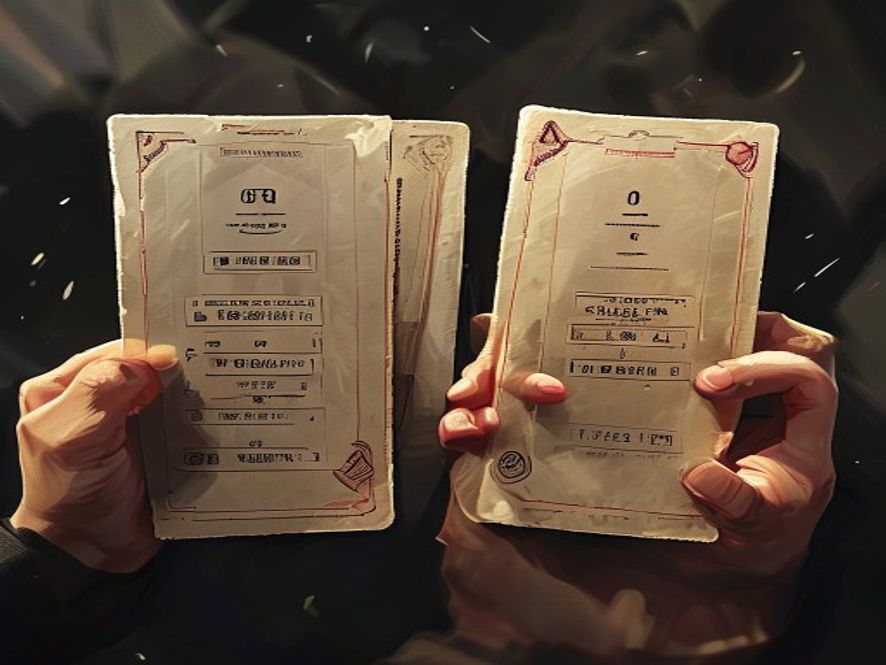
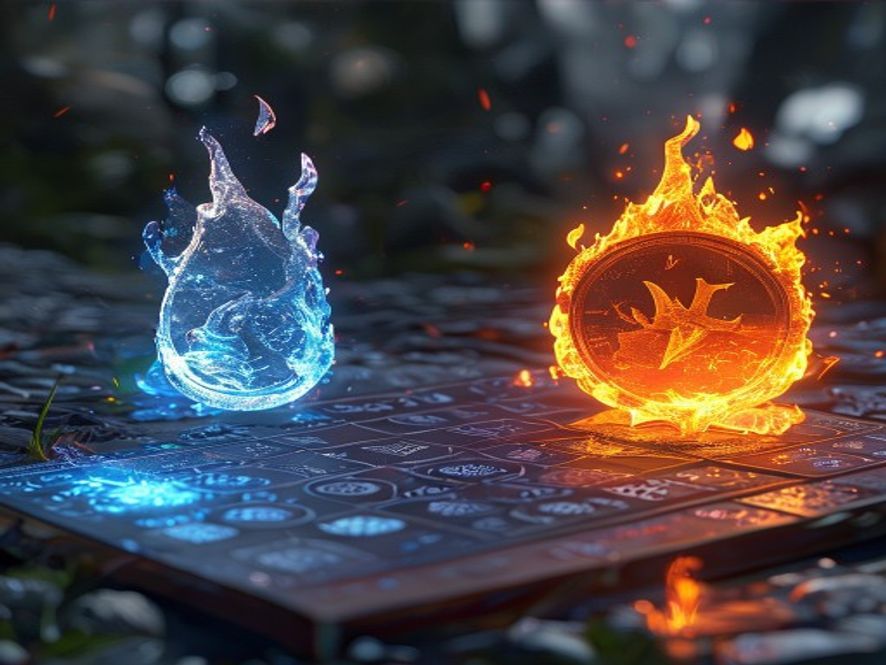

The cardinal sin isn't losing — it's quarterbacking. Veterans suggest; they never command.
- Pick your initiative as deliberately as your actions — being early or late is often more decisive than the action itself.
- Read enemy focus rules each round and position to bait monsters into your strongest play.
- Settle into a role — front-line tank, focused damage, or control/support — and commit to it for the scenario.
- Once the basics are second nature, start chaining elements: infuse on one turn, consume for a power-up the next.
- Optimize your attack-modifier deck through perks toward your class's signature turn.
- Suggest, never command — coach a newcomer's options, then let them make their own (sometimes losing) play.
The Veteran's Slang
AP (Analysis Paralysis) — freezing for ten minutes optimizing one turn while the table waits; 'just play the damn turn.' Burning a card — spending it for a powerful permanent loss action; veterans time these for the killing blow, not the opener. Perk — the permanent AMD tweaks that build toward your signature turn. Eclipse / the Three Spears — once-overpowered classes reined in by Second Edition's rebalance; Tinkerer and Mindthief, once weak, were buffed.
Sequence, Don't Just Act
The veteran upgrade is thinking in turn shape: the right top action, the right bottom action, and the initiative that places you at the safest beat of the round. Land after your tank blocks; strike before the boss recovers. Most 'lucky' veteran turns are just correct initiative — they engineered the moment, then drew their crit into a setup that was already winning.
The Bright Line: Never Quarterback
You can chase the meta, optimize your deck, and master element combos — all welcome. The one line you never cross to win is taking over other people's turns. Demanding to see hands, dictating plays, and solving the table into a puzzle is the 'win-at-all-costs jerk' the entire hidden-hand design was built to repel. Suggest and gamble through the fog — that fog is the co-op.
Don't Fear the 'Weak' Class
Second Edition's rebalance means the old tier lists are obsolete. Historically weak picks like Tinkerer and Mindthief were buffed; overpowered favorites were reined in. Play the class whose fantasy you love — a well-piloted 'B-tier' mercenary clears scenarios just fine, and learning to pilot a tricky brain like the Mindthief is one of the game's quiet joys.
The Pact, the Symbols, and the Goodbye: Welcome to the Fold

Pull up to the fire, initiate — here's the secret we share: we never speak a locked class's real name, because it's a spoiler. You call it by the symbol on its sealed box — the Lightning Bolt, the Music Note, the Angry Face. Learn the symbols, speak the code, and find your four — because this is an 80-to-100 hour campaign, and the whole magic is living the entire thing with the same people.
Now the truth nobody tells you at the store: Gloomhaven isn't a game you play. It's a pact four people sign for two years.
Its soul is reverence for permanence. You apply stickers to the campaign map that never come off. You tear open sealed envelopes. You ink permanent marks onto character sheets. And when you complete a character's secret Personal Quest, that mercenary retires — leaves the party forever, and unlocks a brand-new locked class. 'My Personal Quest is done — time to retire' is the bittersweet centerpiece of the whole campaign: you say goodbye to someone you piloted for twenty-plus scenarios, crack a sealed box, and meet a stranger. Every group's campaign becomes a one-of-a-kind artifact, a story that physically happened to that exact table and no other.
And there's the beautiful secret language. Because class names are spoilers, veterans refer to unreleased mercenaries only by the symbol on the sealed box — the Lightning Bolt, the Music Note, the Angry Face, the Circles, the Two-Minis. Saying 'I unlocked the Lightning Bolt!' instead of the real name is the in-group handshake — equal parts spoiler-discipline and shared folklore.
The hidden-hand design forces real trust: you can't control your friends' turns, only believe in them. The culture braids deep reverence with self-aware irony — players worship the 80-100 hour epic and endlessly meme the 30-minute setup, the legendary cardboard insert, the friend lost in analysis paralysis while the room ages. 'Setup took longer than the scenario' is said with love.
Veterans are fiercely protective of newcomers — 'just play Jaws of the Lion first' is the welcome mat, a deliberate gentle on-ramp so the big box doesn't crush you before you fall in love. Finishing the full campaign with the same core group is rare enough that those who do treat the last scenario like a graduation, half-grieving that it's over.
So here's your charge, initiate: find your four. Protect the night on the calendar. Show up. The map stickers and torn envelopes become your group's story — the one no other table will ever own. Welcome to the fold.
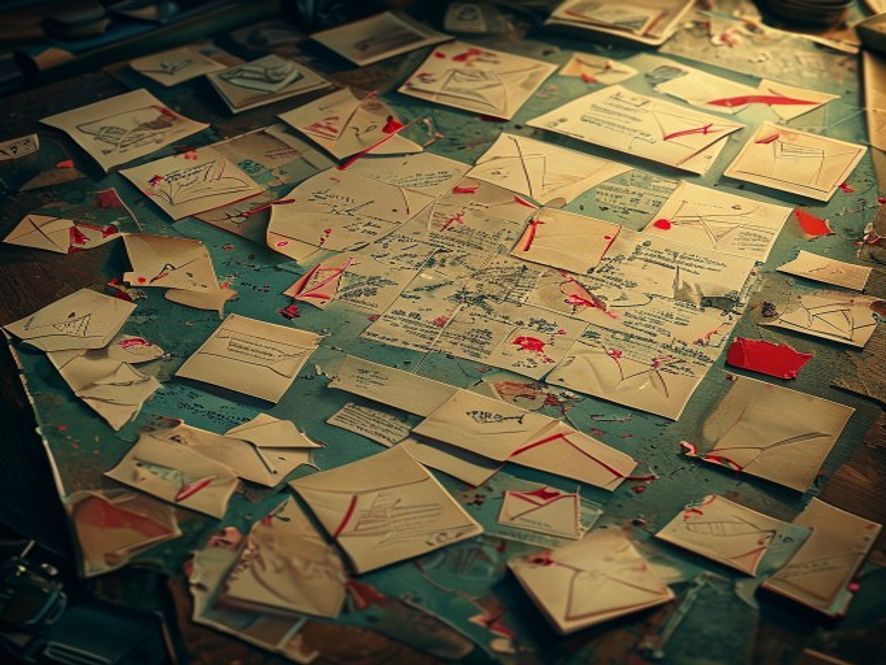
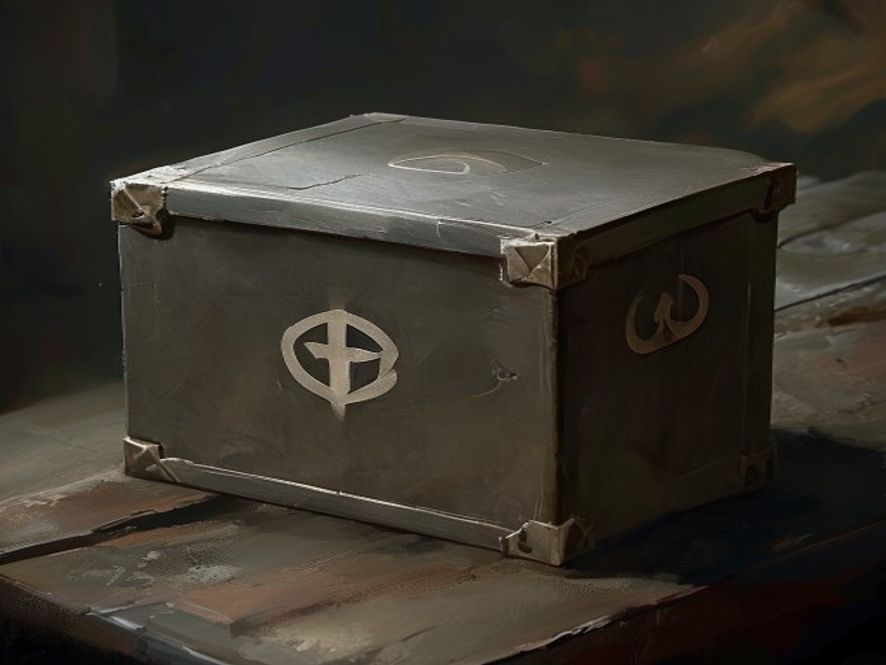
It's permanent. That's the point. Your campaign map is a chronicle no other group will ever own.
- Find your four players and schedule a recurring, protected game night — an 80-100 hour campaign needs a real commitment.
- Learn the box symbols for locked classes and use them instead of names — speak the code, keep the spoilers sacred.
- Tag scenario numbers, class names, and story beats online; the reveal is the reward, so guard it for others.
- Keep a shared 'where we left off' log: party reputation, prosperity, unlocked classes, open scenarios.
- Mark every retirement as a celebration — it's the campaign's signature emotional beat.
- Set up and tear down together so one person never eats the whole 30-minute logistics tax.
The Secret Language
The Lightning Bolt / Music Note / Angry Face / Two-Minis / Circles — spoiler-safe symbol-names for locked classes, spoken instead of the real name as a badge of discipline and pride. Retire / Retirement — completing a Personal Quest, forcing your mercenary to leave forever and unlock a new class. Sticker / no take-backs — the permanent map stickers and torn envelopes; 'it's permanent, that's the point.' The pact — the unspoken truth that this is an 80-100 hour commitment with the same people.
The Unwritten Code of the Fold
Never speak a locked class's real NAME — call it by its box symbol until it's earned and opened. Schedule the group and SHOW UP: a campaign is an 80-100 hour pact, and flaking strands four other people mid-story. Keep spoiler discipline online — tag scenario numbers, class names, and beats. Respect the legacy: stickers and torn envelopes are forever, so never pressure the group to 'undo' a permanent choice. And set up and tear down together — the box is heavy; nobody should eat the whole logistics tax alone.
The First Retirement
Completing your first Personal Quest and retiring a character is the emotional core of the entire game. You sacrifice a mercenary you've grown attached to over twenty-plus scenarios, gain a permanent party perk, and open a sealed box — learning at last the real name behind a symbol you've been whispering for hours. It's the moment you graduate from player to campaigner. Mark it. Let it land. Let it get a little quiet at the table.
The Soul of the Thing
Gloomhaven dethroned everything to sit at #1 on BoardGameGeek for years — but the community's pride was never about the ranking. It's about the weight. The glass-cannon Spellweaver that deletes a room then dies to a goblin; the Mindthief brain you finally learn to pilot; the cheer when the AMD coughs up a x2 crit at the perfect moment. Players love the game and its glorious chaos in equal measure. Your campaign map, stickered and torn, is a handmade chronicle no other group will ever own.
On Hosting the Pact
There's no GM, so the host is the rules anchor — learn the rules deeply, read scenario intros aloud, run a companion app, and adjudicate edge cases so play flows. Start on Normal. Guard the story: keep locked boxes sealed and discourage reading ahead. Aim for one scenario plus a town phase per sitting (~2-3 hours), and end on a town visit so everyone leaves leveled-up with a cliffhanger. Coach without solving — let newcomers make their own losing plays. That tension is the point.
The Armory — what to buy first
Everything you need to begin, ranked. Honest picks; affiliate links support the cabinet.
1 Cephalofair Games · Complete beginners and any group not yet sure they'll commit
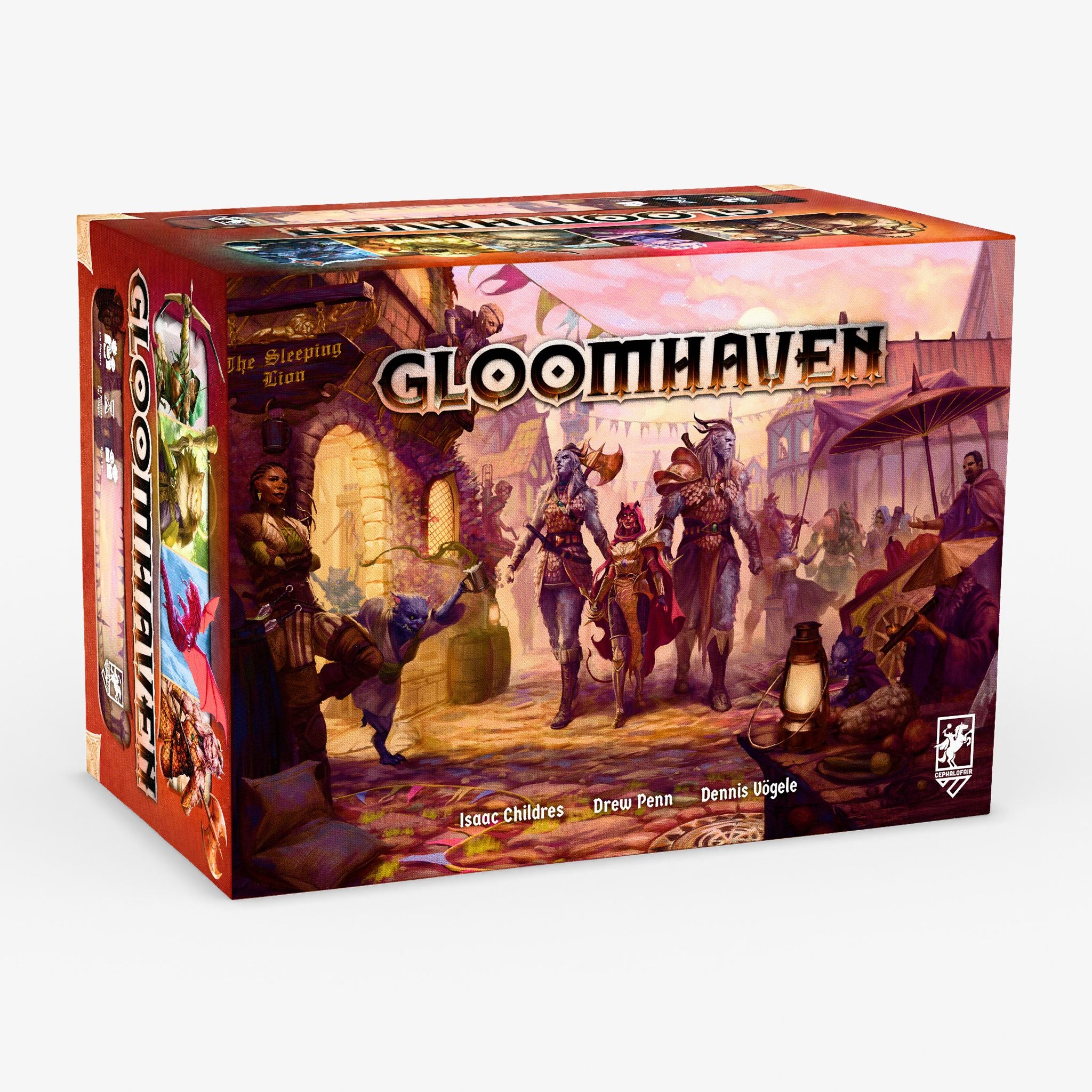
Gloomhaven: Jaws of the Lion
The single best on-ramp into the system, full stop. Jaws is a fully standalone campaign — 1-4 players, 25 scenarios, four classes — that teaches the rules as you play across its first five missions, with scenarios printed directly in a book so there's no map-tile setup to wrestle. It's the cheapest door, the fastest to learn, and the near-universal community answer to 'where do I start.' You need nothing else to play it.
Robert: If you buy one box to find out whether Gloomhaven is for you, it's this one. 'Just play Jaws first' is gospel for a reason — I've never seen it steer a newcomer wrong.
- Teaches the entire system gently over five scenarios
- No map-tile setup — scenarios play right in the book
- Cheapest entry point and fully standalone
- Smaller than the full game (4 classes, 25 scenarios)
- Front-loaded tutorial pacing can feel slow to veterans
The catch: It's an introduction by design — committed groups will eventually want the bigger campaign.
 2
2 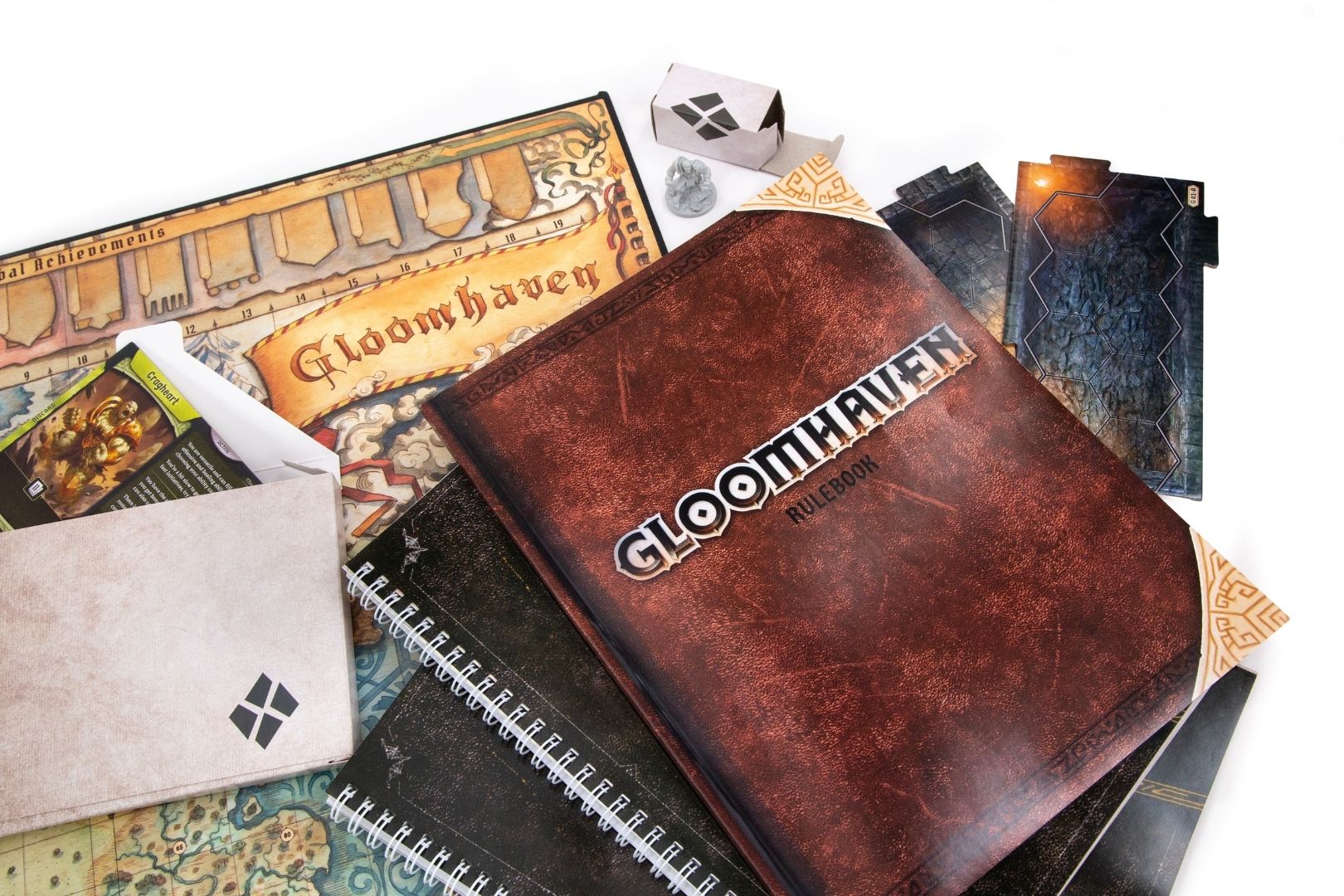
Cephalofair Games · Groups confident this is their big, forever campaign game
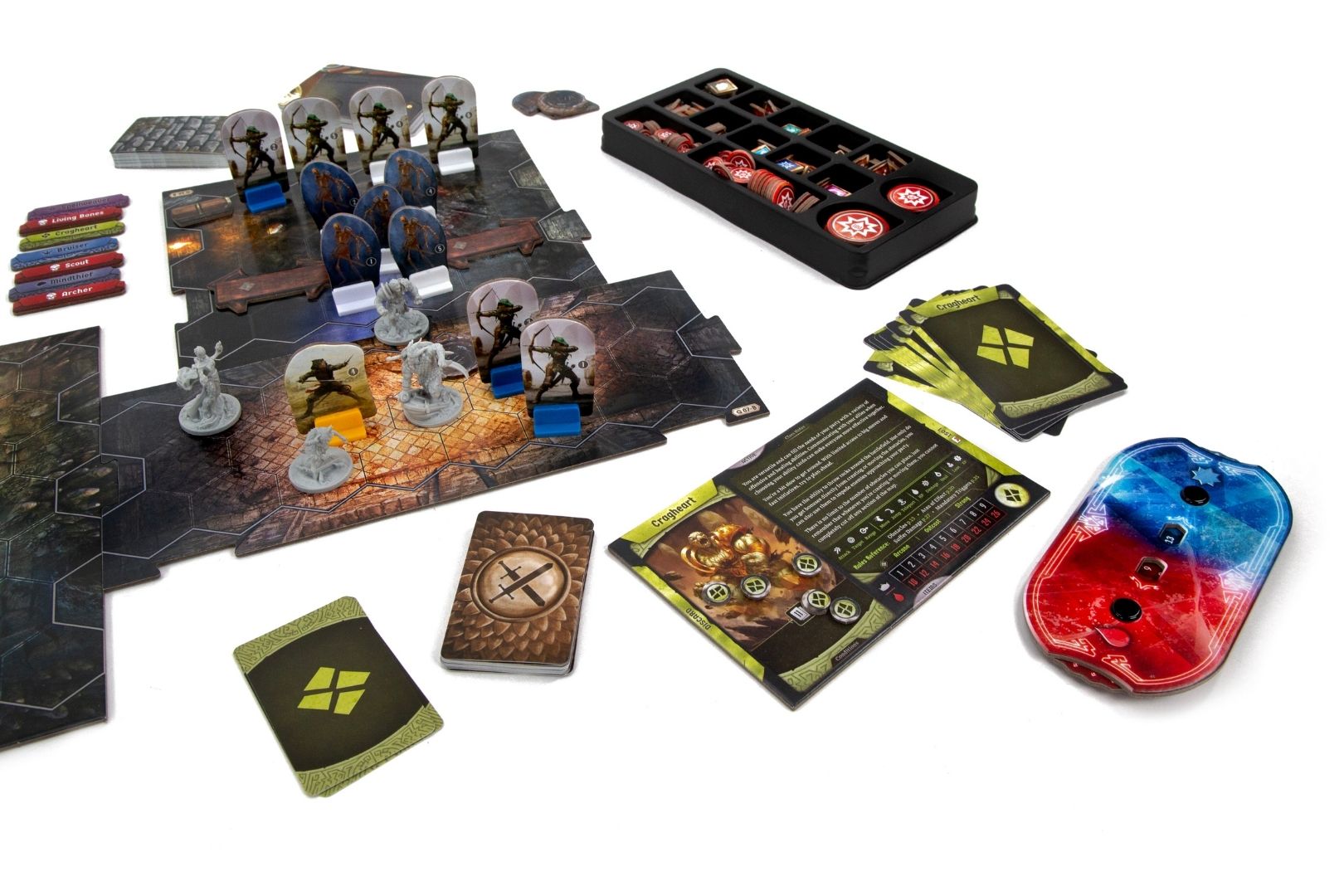
Gloomhaven: Second Edition (2025)
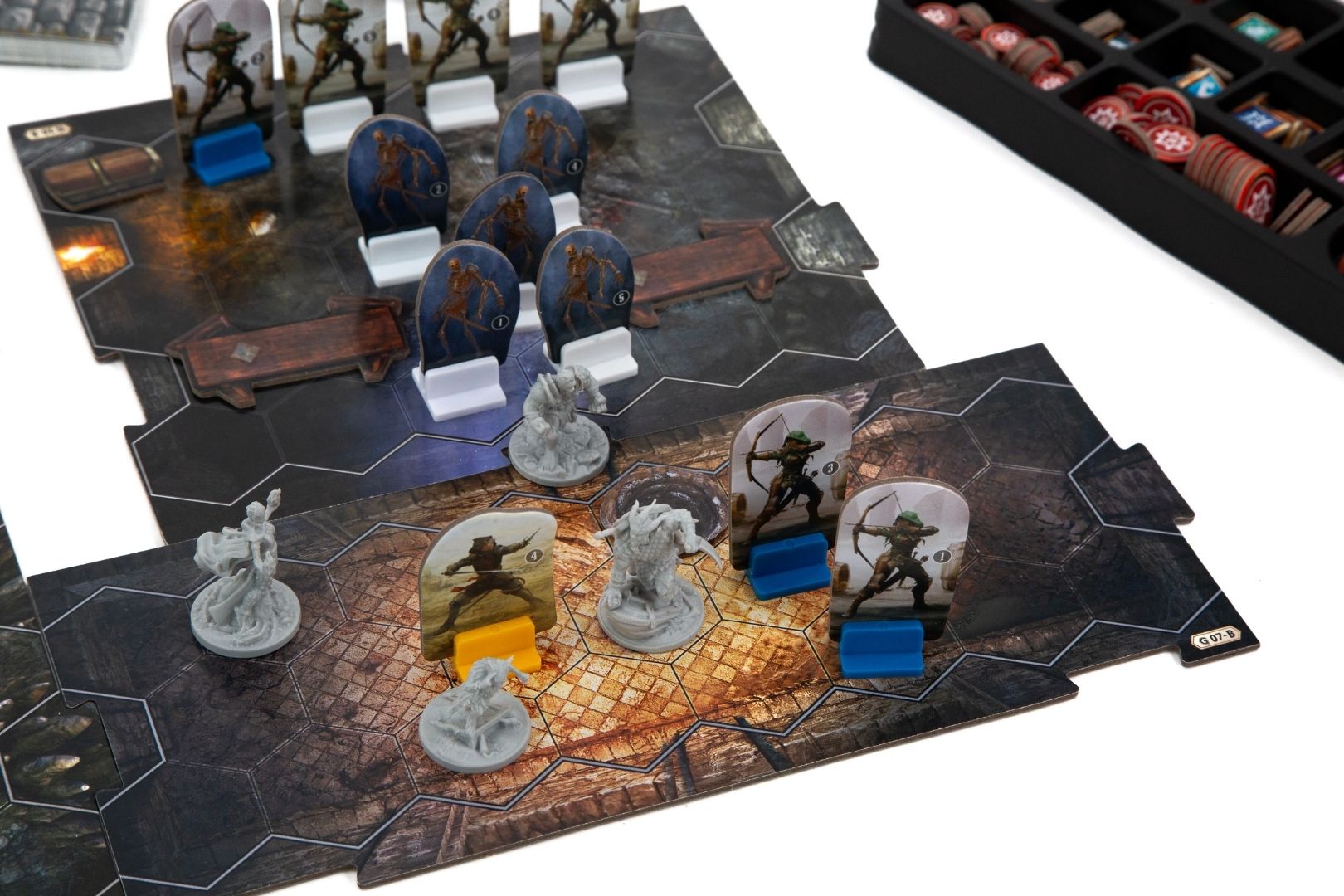
The definitive 2026 way to play the full Gloomhaven. A ground-up remaster with rewritten rules and a separate Learn-to-Play guide, baked-in errata, full miniatures for all mercenaries and bosses (no more cardboard standees), a genuinely good built-in organizer, and all 18 classes rebalanced — overpowered favorites reined in, weaker picks buffed. It swaps the old single reputation slider for a three-track faction system and runs roughly 96 reworked scenarios.
Robert: This is the grail version — the one I'd hand down. If you already know your table is in, skip Jaws and start here; it's the smoothest the big box has ever been.
- Rewritten, far clearer rules and faster setup than the 2017 box
- Full miniatures and a real built-in organizer
- 18 rebalanced classes and a deeper faction-reputation story
- ~$200 is a real investment best made by sure-to-commit groups
- Still a heavy, months-long campaign — not a casual buy
The catch: The price means it's best for groups certain they'll see a long campaign through.
 3
3 
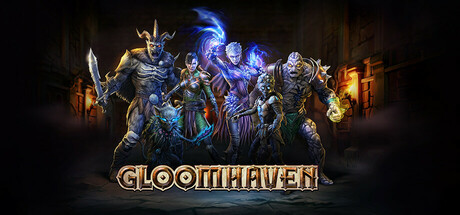
Flaming Fowl Studios / Asmodee Digital · Learning the card-combat loop cheaply before buying any box
Gloomhaven (digital — Steam / PS / Xbox / Switch)
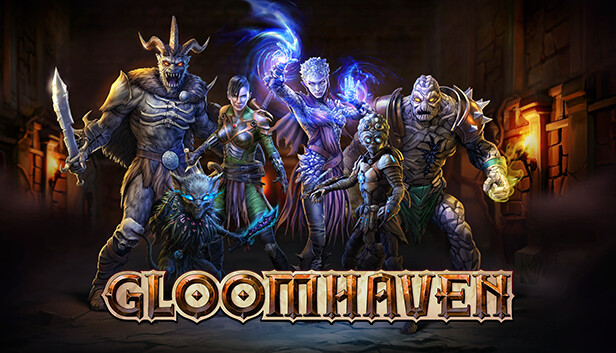
The official video-game adaptation, and a fantastic low-commitment rules tutor. It teaches the two-card / top-bottom / initiative loop and the exhaustion economy by feel, and it frequently lands on deep discount (it's dropped under $10). Note it teaches mechanics more than tactics — but for a few dollars, it's the cheapest way to know whether the system clicks for you.
Robert: Buy it on a sale, play a few hours, and your first physical scenario will click twice as fast. A bargain tutor.
- Often heavily discounted — a near-free way to learn the rules
- Automates all bookkeeping so you focus on the combat feel
- Teaches mechanics more than table tactics
- Not a substitute for the campaign's legacy and social magic
The catch: It can't deliver the legacy permanence or the found-family pact — that lives only in the box.
 4
4 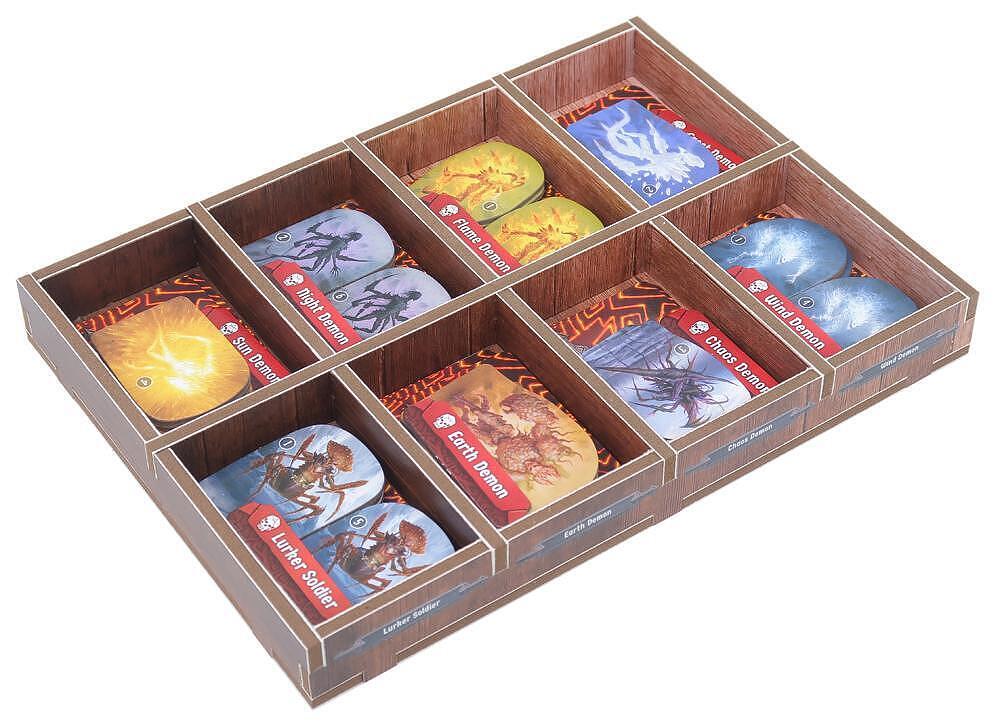
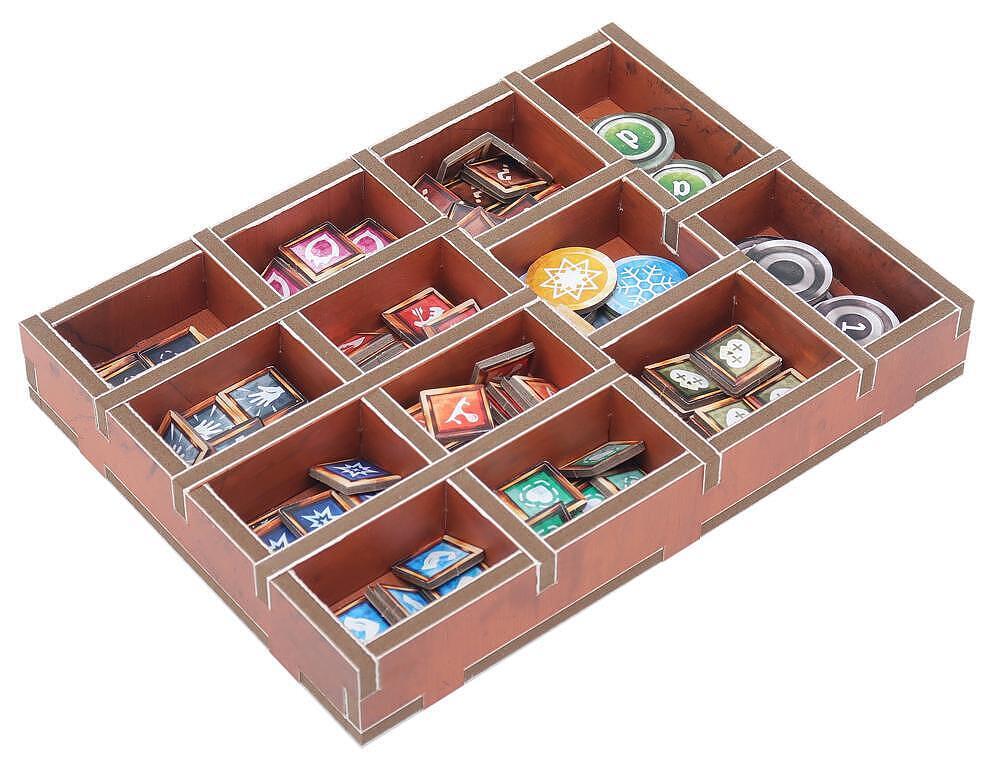
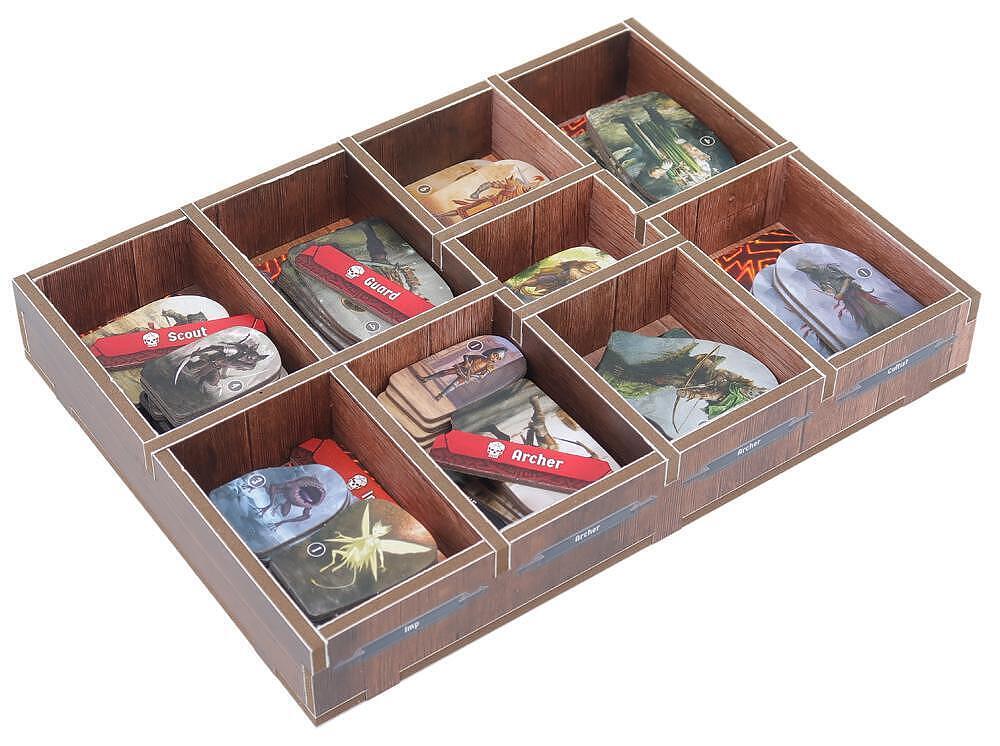
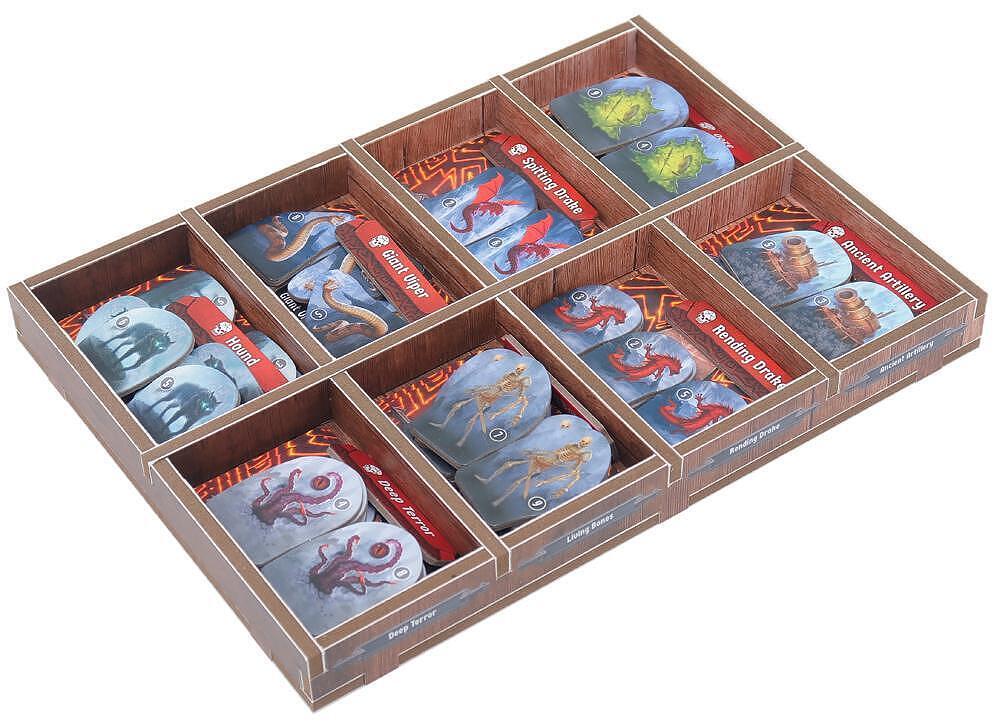
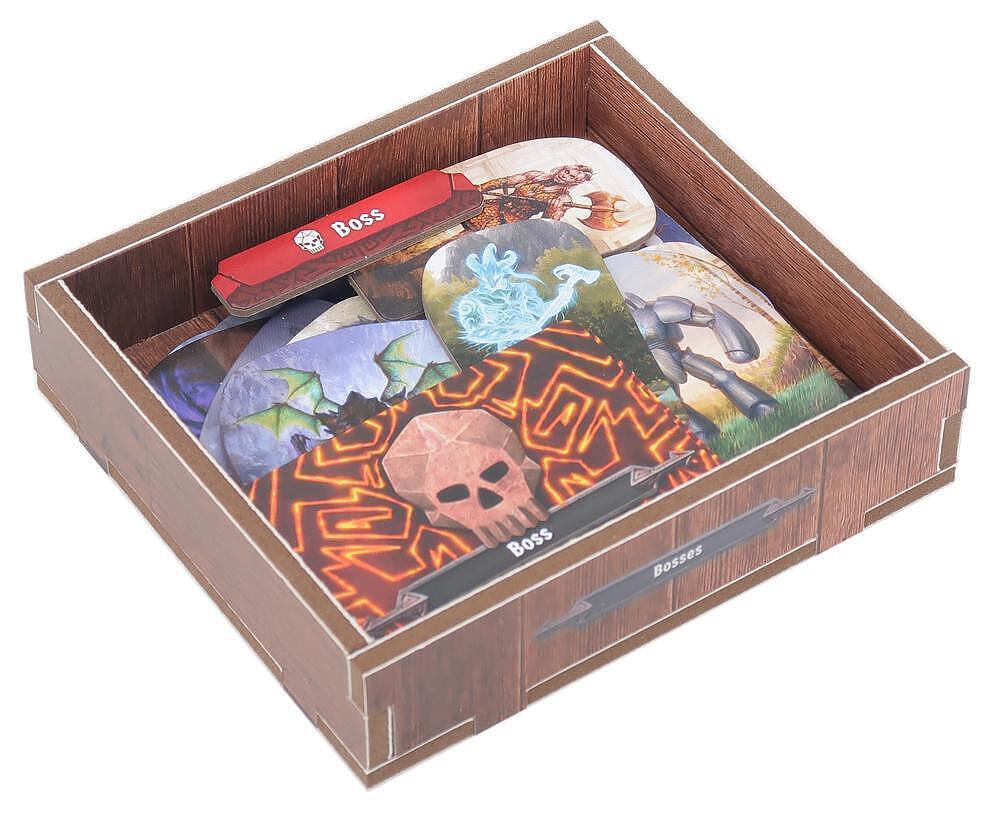
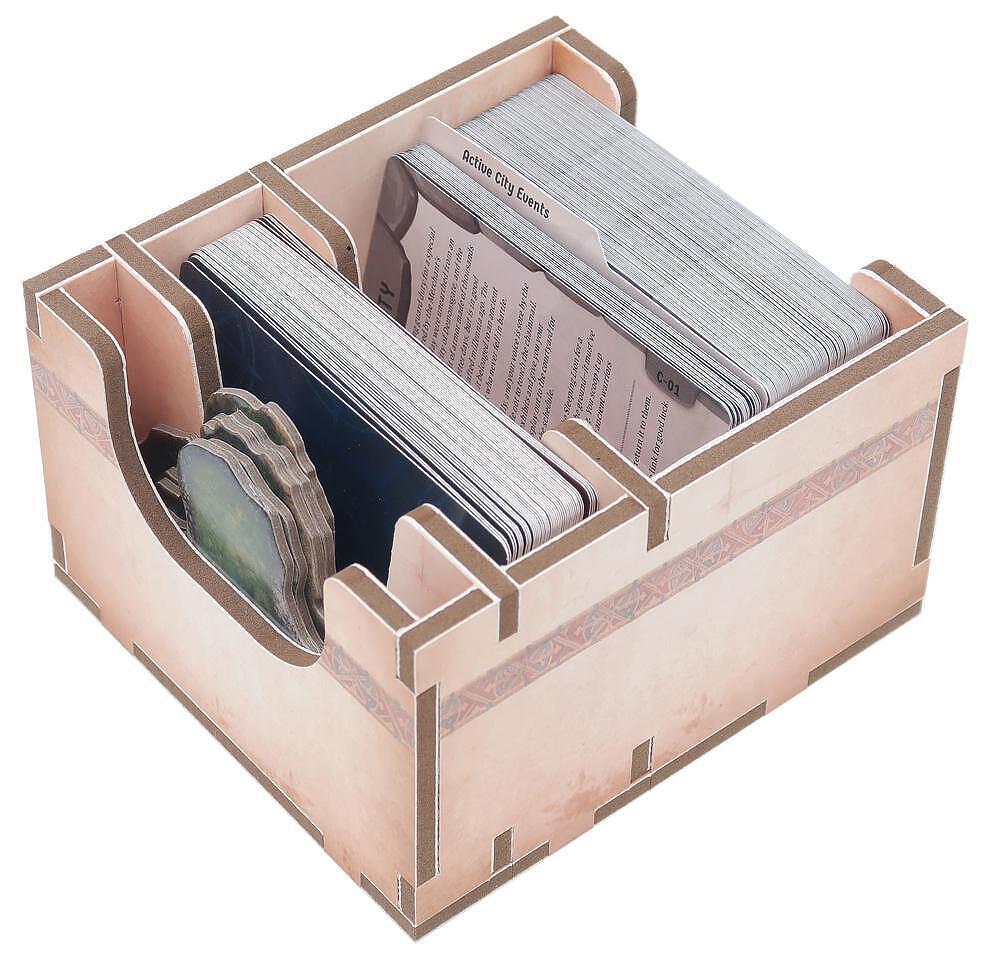
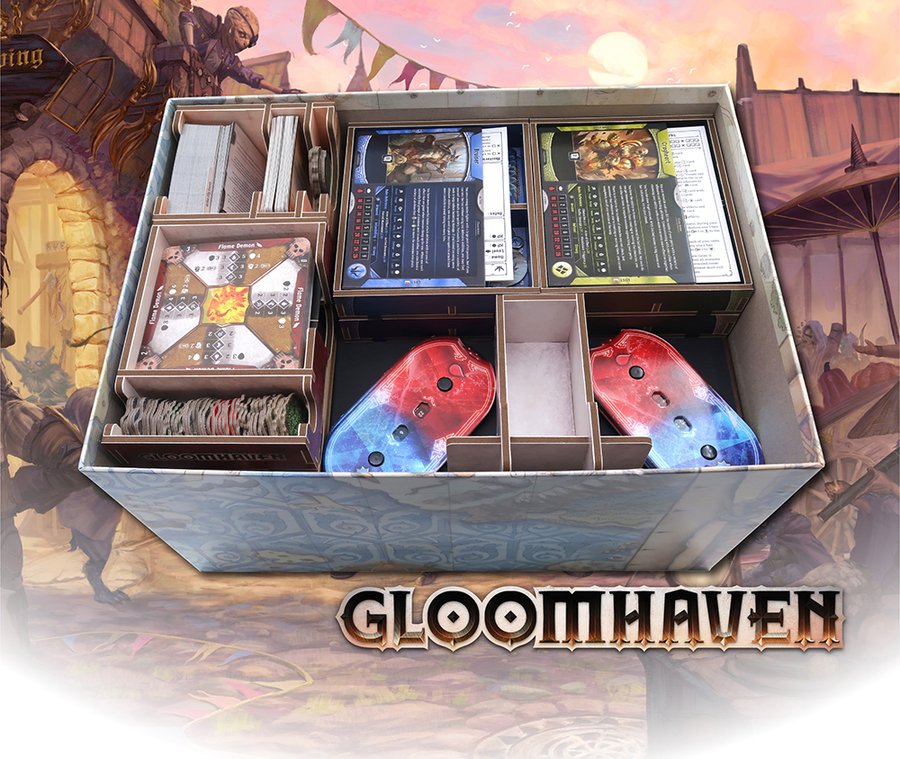
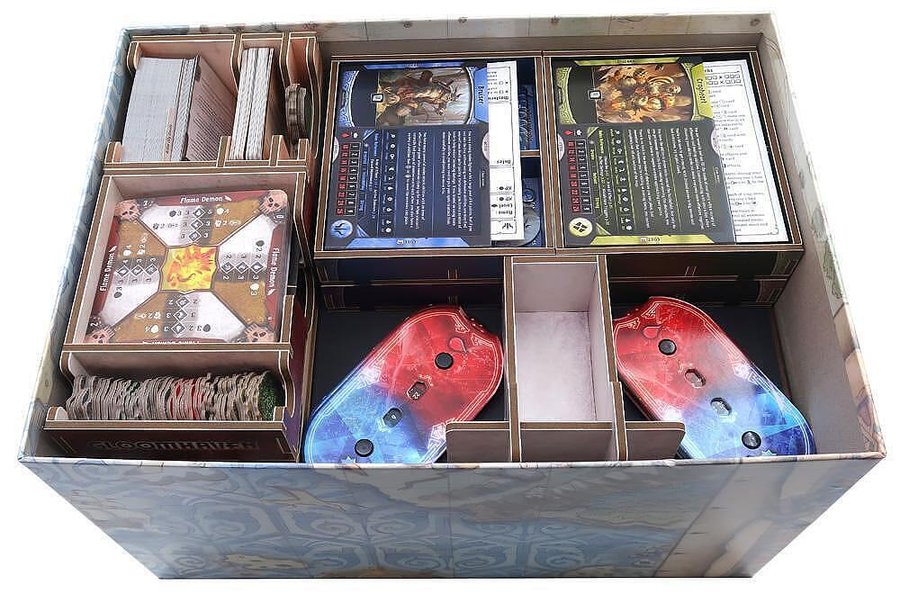
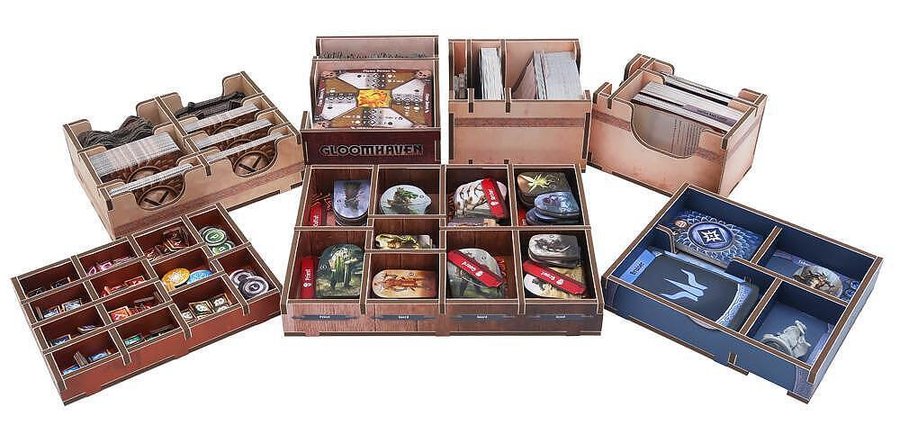
Folded Space · Slashing setup and teardown time across a long campaign
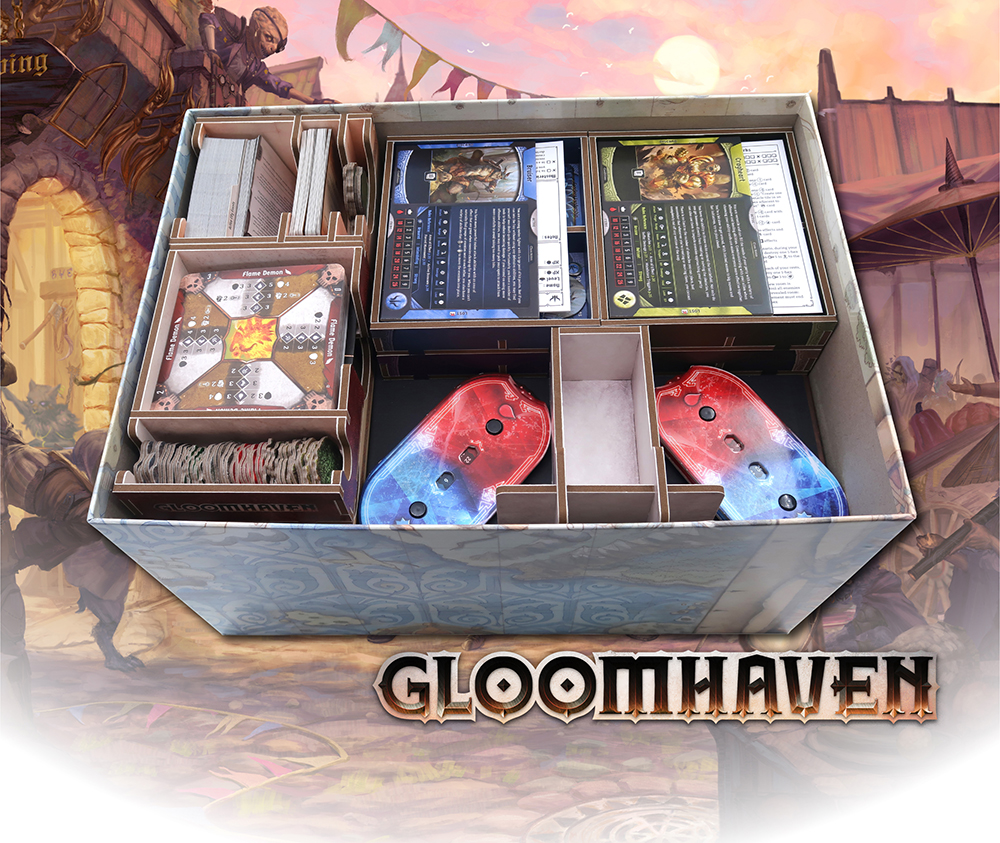
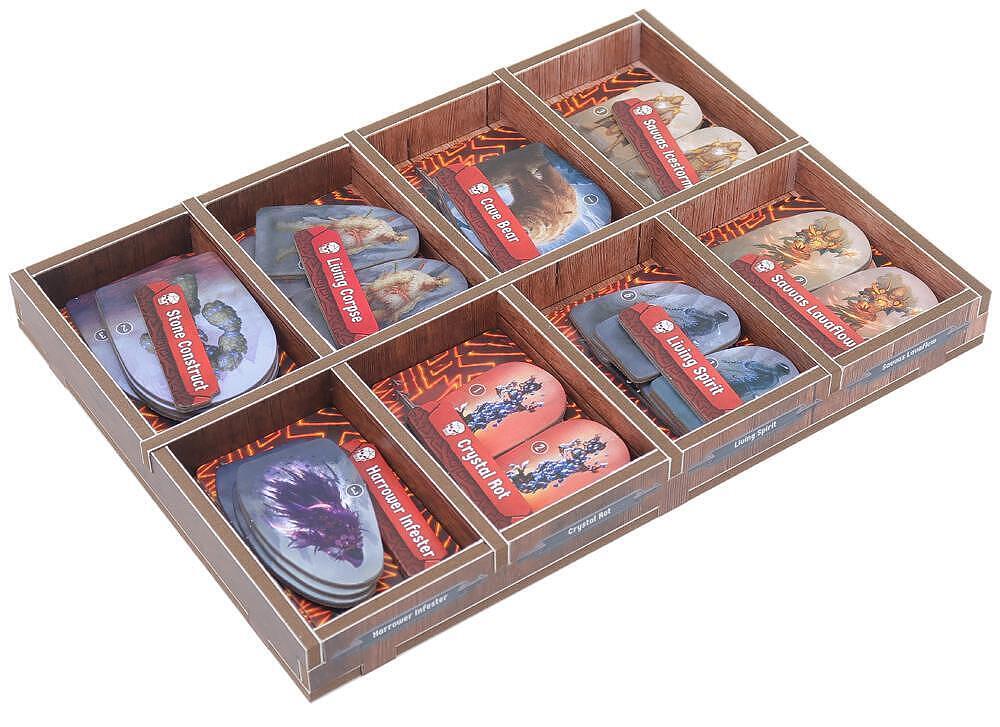
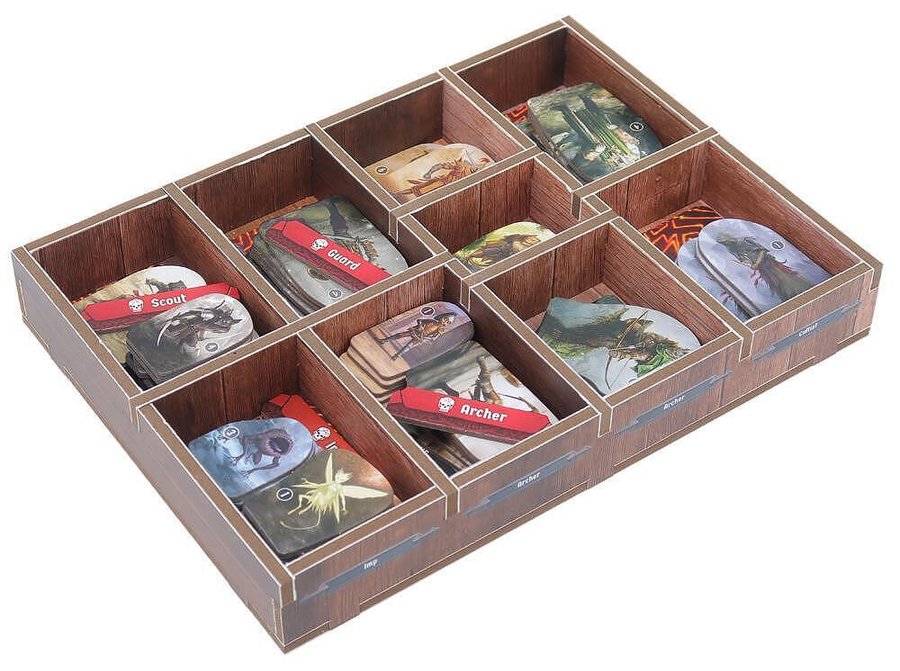
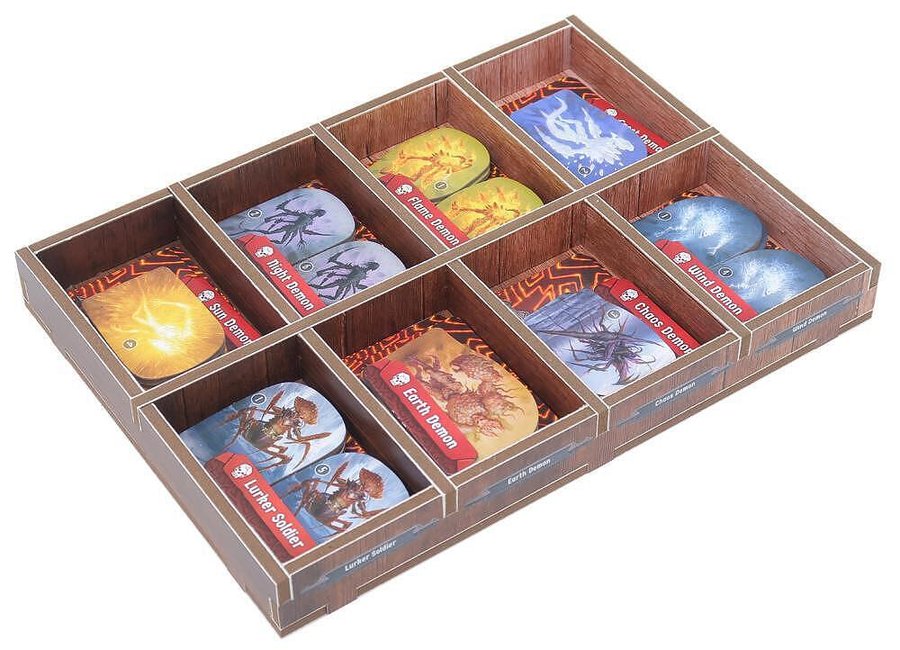
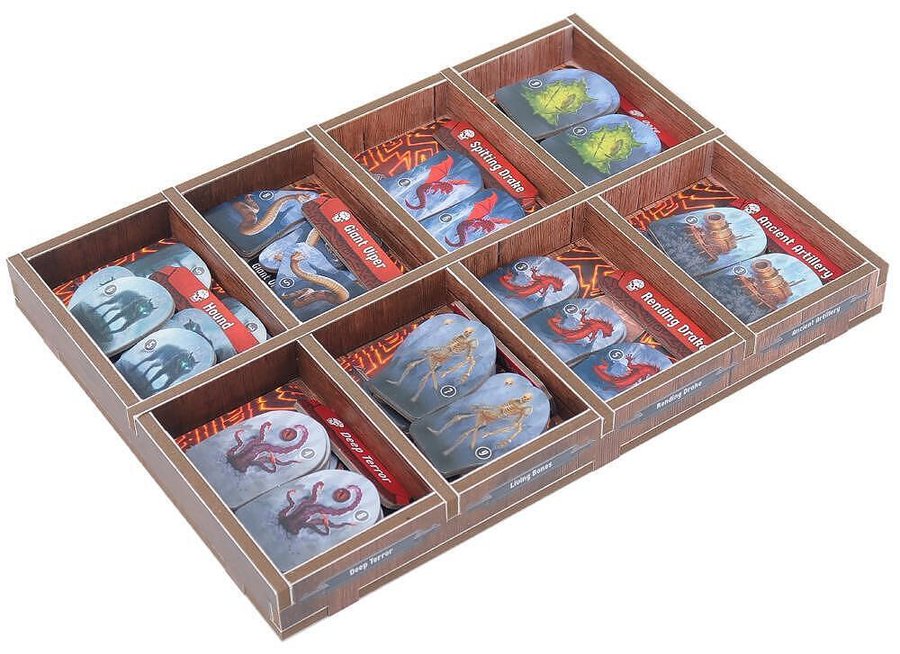
Folded Space insert for Gloomhaven: Second Edition
A foam-core organizer tray set plus a map-tile archive folder. Even with Second Edition's improved built-in organizer, reviewers single out a dedicated insert and tile archive as the quality-of-life upgrade that cuts setup/teardown significantly over an 80-hour campaign. Taming the box is a genuine rite of ownership — this is the painless way to do it.
Robert: Sticky bookkeeping kills more game nights than the difficulty ever will. An insert is the cheapest momentum you can buy.
- Noticeably faster setup and teardown every session
- Map-tile archive keeps the heaviest logistics tax low
- An added cost on top of an already pricey box
- Some assembly and sorting required up front
The catch: Pricing varies by retailer and region — confirm the exact tray set matches your edition.
 5
5 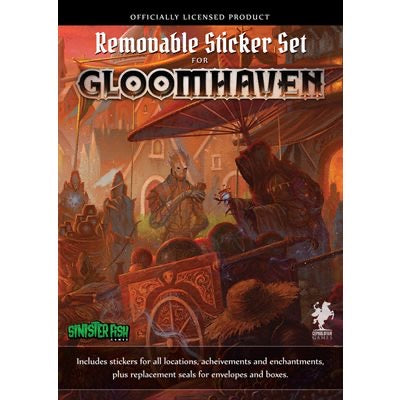
TLAMA Games · Anyone who wants to replay the campaign or preserve resale value
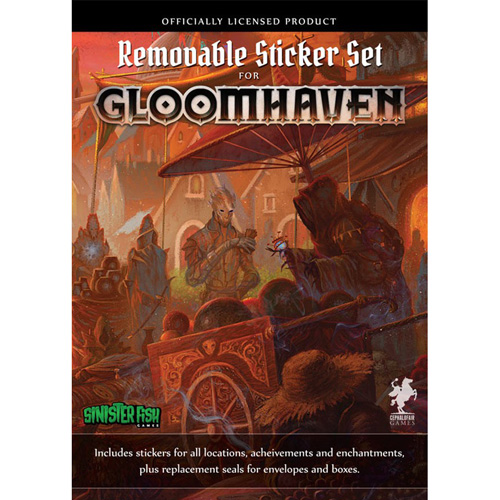
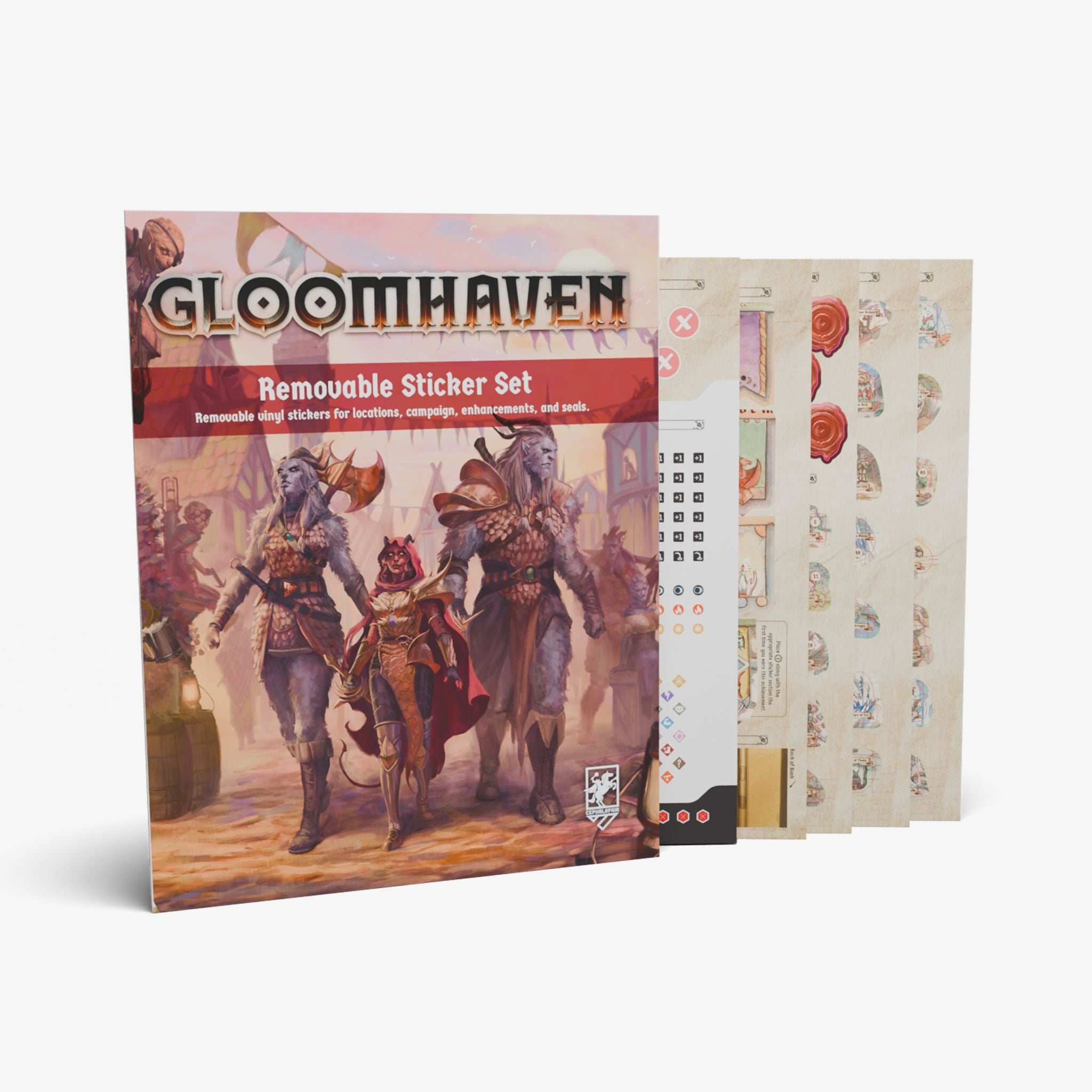
Gloomhaven Removable Sticker Set
Reusable vinyl replacements for the campaign's map and achievement stickers. Gloomhaven normally applies one-way, permanent stickers — the legacy thrill and terror — but this set lets you reset and replay (or sell the game later) without destroying it. A small purchase that quietly protects a big investment.
Robert: The permanence IS the point for many groups — but if you ever want to run friends through it again, this is the keeper's insurance policy.
- Reset the campaign for a full replay with a new group
- Preserves resale value of an expensive box
- Some purists feel removable stickers soften the legacy thrill
The catch: Pricing varies by region and retailer; availability can be spotty.
 6
6 

Open-source community (Lurkars) · Removing every scrap of bookkeeping from night one
Gloomhaven Secretariat (companion app)
A free companion app (web/app) that handles monster stats and AI turns, the attack-modifier decks, loot, and scenario setup — near-essential since the original Gloomhaven Helper shut down. Run it (or the alternative X-Haven Assistant) from your first scenario and the table experience transforms: you focus on tactics, not stat-card juggling.
Robert: Of every accessory here, this is the one I'd never play without. Free, and it gives you back hours across a campaign.
- Completely free and actively maintained
- Automates monster AI, AMD, and setup — the single biggest table upgrade
- Needs a phone or tablet at the table
- A learning curve of its own in the first session
The catch: It's a third-party tool — features and naming can shift between updates.
Questions from the road
Which version should a complete beginner buy first in 2026?
Jaws of the Lion (~$25-45) if you want the cheapest, gentlest on-ramp — it teaches the rules over its first five scenarios. Gloomhaven: Second Edition (~$200) if you're confident this is your group's big campaign game; it's the most polished, best-organized full version. Avoid starting with the 2017 original or with Frosthaven.
Do I need the original Gloomhaven to play Jaws of the Lion?
No. Jaws of the Lion is a fully standalone campaign with its own four classes and 25 scenarios. It can connect to the larger Gloomhaven world, but you need nothing else to play it.
Is Gloomhaven cooperative or competitive?
Fully cooperative — you all win or lose together against the game's automated monsters. There's no human game master and no player-versus-player.
How long does a scenario take, and how long is the whole campaign?
A single scenario typically runs about 60-120 minutes once you know the rules (longer your first time). The full campaign spans dozens of scenarios and commonly takes many months of regular sessions — often two years and 80-100 hours — to complete.
Can I play Gloomhaven solo?
Yes. The line supports 1-4 players, there are official solo scenarios, and many players run two characters at once solo. A companion app makes solo bookkeeping much easier.
What's the difference between Gloomhaven and Frosthaven?
Frosthaven is the bigger, harder sequel: it adds a town-building 'outpost' phase, resource management, new classes, and 100+ scenarios. Same card-combat DNA, but more complex — most guides recommend playing Gloomhaven first.
There's no dice — how does combat randomness work?
Each class plays unique ability cards, and every time you hit you draw from a small attack-modifier deck (e.g., x2, +1, miss/Null). Leveling and perks let you improve that deck over the campaign by removing bad cards and adding good ones.
What is 'exhaustion' and how do I avoid it?
Your hand of cards is finite; resting permanently burns a card, and powerful 'lost' actions remove cards too. Run out and your mercenary is exhausted and removed from the scenario. Avoid it by not burning loss cards early and not resting too often — play out your hand first.
Is Second Edition worth it if I already own the original?
It's a comprehensive remaster — rewritten rules, full miniatures, rebalanced classes, three-track faction reputation, and a better organizer — so it genuinely plays like a refreshed game. At ~$200 it's a real investment; reviewers say it's worth it for dedicated fans but not a trivial re-buy.
Do I have to permanently sticker my game?
By default, yes — the campaign applies stickers to the map and achievements, and you tear open sealed envelopes. If you want to replay or preserve resale value, buy a removable sticker set so you can reset everything cleanly. For many groups, though, the permanence is the whole point.
✶ The graduation Initiate, you're standing where I once stood — staring at a box heavier than the table, wondering if it's too much. It isn't. Start cheap with Jaws if you're unsure, or reach straight for the Second Edition grail if your four are already in; either door opens onto the same long, glorious road. Run a free companion app from night one, start on Normal, keep your hand hidden, and never burn that big card too early. The map stickers and torn envelopes you're about to make are a chronicle no other table will ever own — and the first time someone whispers 'I unlocked the Lightning Bolt,' you'll know you're truly home. Welcome to the fold. Now go find your four.
— Robert, Keep the best pieces close. You'll know them when your hand reaches for them first.
The Keeper · why it earned a shelfIf it didn't earn a shelf, it isn't here.
Found your footing? Send this to someone starting out.
Sources & further reading
- cephalofairgames.github.io/gloomhaven2e-faq
- cephalofair.com/blogs/blog/gloomhaven-second-edition-why-its-worth-playing
- www.fairgamestore.com/blogs/articles/where-should-you-start-gloomhaven-frosthaven-or-gl
- www.wargamer.com/gloomhaven/second-edition-classes
- www.wargamer.com/gloomhaven/isaac-childres-new-edition
- www.wargamer.com/gloomhaven/board-game
- www.gamesradar.com/gloomhaven-second-edition-revealed-with-fully-rewritten-campaign-and-new-reputation-system
- www.nerdly.co.uk/2025/11/13/gloomhaven-second-edition-board-game-review
- www.meeplemountain.com/reviews/gloomhaven-second-edition
- en.wikipedia.org/wiki/Gloomhaven
- tvtropes.org/pmwiki/pmwiki.php/YMMV/Gloomhaven
- tvtropes.org/pmwiki/pmwiki.php/Characters/GloomhavenUnlockableClasses
- tvtropes.org/pmwiki/pmwiki.php/Characters/GloomhavenStartingClasses
- boardgamegeek.com/thread/2024230/symbol-names-for-each-class