Best Crokinole Boards, Ranked (2026)
The truth about crokinole: most 'boards' are wall furniture that happen to have pegs—here's which ones actually play, and why disc speed beats décor.

AI-assisted curator persona · research and editorial responsibility: Robert Pruitt · how this guide was made
Last editorial refresh: 2026-06-13 Gold-standard QA: 2026-07-17 24 sources reviewed Affiliate links checked during gold-standard pass

The short answer
Crokinole is a 19th-century Canadian dexterity game played on a round or octagonal board with a regulation 26-inch playing surface: you flick wooden discs from your quadrant toward a recessed 20-point center hole, past a ring of eight pegs, trying to knock your opponent's discs into the surrounding ditch. A tournament-grade board is defined by a dead-flat, fast, multi-coat-lacquered maple surface, a precise 26-inch field, a clean ditch that catches discs cleanly, and consistently-set pegs — not by how pretty the rim is. Best overall is the Tracey Tour board from Crokinole Game Boards (Jeremy Tracey, the official builder for the World Crokinole Championship and successor to legendary maker Willard Martin), roughly US $300-380. Best budget pick is the Mayday Games Beech veneer board (~US $135), an MDF-core board that plays far better than its price. Best heirloom is a solid-hardwood top from Crokinole Canada (~US $700-750). The line that matters most for buyers: a fast maple surface and a true 26-inch field make a player; a thick décor rim and a felt-lined ditch make a toy.
Decision map
Choose in thirty seconds
Best overall / official tournament standard
Best tournament alternative / NCA-standard value at the top tier
Best budget (true 26-inch field under $150)
Here's the flaw, because I'm leading with it: nine out of ten crokinole boards on retail sites are not games. They're mantelpiece sculptures with pegs. Beautiful? Sure. Playable? The first time your disc stalls six inches from the twenty because the surface is too grippy, you'll realize you bought furniture. Not a game. Not close.
Real crokinole lives on physics: friction, flatness, speed. The disc has to glide across a hard maple surface finished with five to seven coats of lacquer and buffed to glass. The pegs have to sit at a consistent height with rubber give. The ditch has to be a clean drop. Get those four things right and you have an heirloom you'll defend. Get them wrong and you have a coaster the size of a manhole cover. I don't care about your rim inlay. I care whether a properly-weighted flick carries the full 26 inches. Everything else is cosmetics.
Disclosure first, because it shapes everything below: Puzzlewick is an editorial library, not the seller, and ships no boards. Puzzlewick may earn from qualifying Amazon purchases where a tagged Amazon link appears; maker and source links are editorial unless plainly labeled otherwise. That never changes which boards I call worth $400 and which $400 boards are a markup on a $130 build. What follows is what crokinole is, the four things that separate tournament-grade from toy, ten real boards ranked, and every maker and price verifiable. Where a price moves—these are small shops—I've flagged it with a tilde. Now let's flick some discs.
Start here, then go deeper
You are in the right cabinet.
 ✦ Topic PathBoard Game Buying Guides: compare the whole shelfStart with the decision, not the shelf. These guides compare the games, editions, expansions, player counts, and costs people...
 Buying GuideBest Heirloom Chess Sets, Ranked (2026)The wooden sets worth your grandkid's future — what actually makes a set heirloom, which woods survive fifty years of love, and ten real...
 Best OfBest Heirloom Wooden Games, Ranked (2026)Real wood that survives refinishing, hand-carved pieces, joinery that outlasts you — not a marketing label slapped on particle board...
What is crokinole, and why do people get obsessed with it?
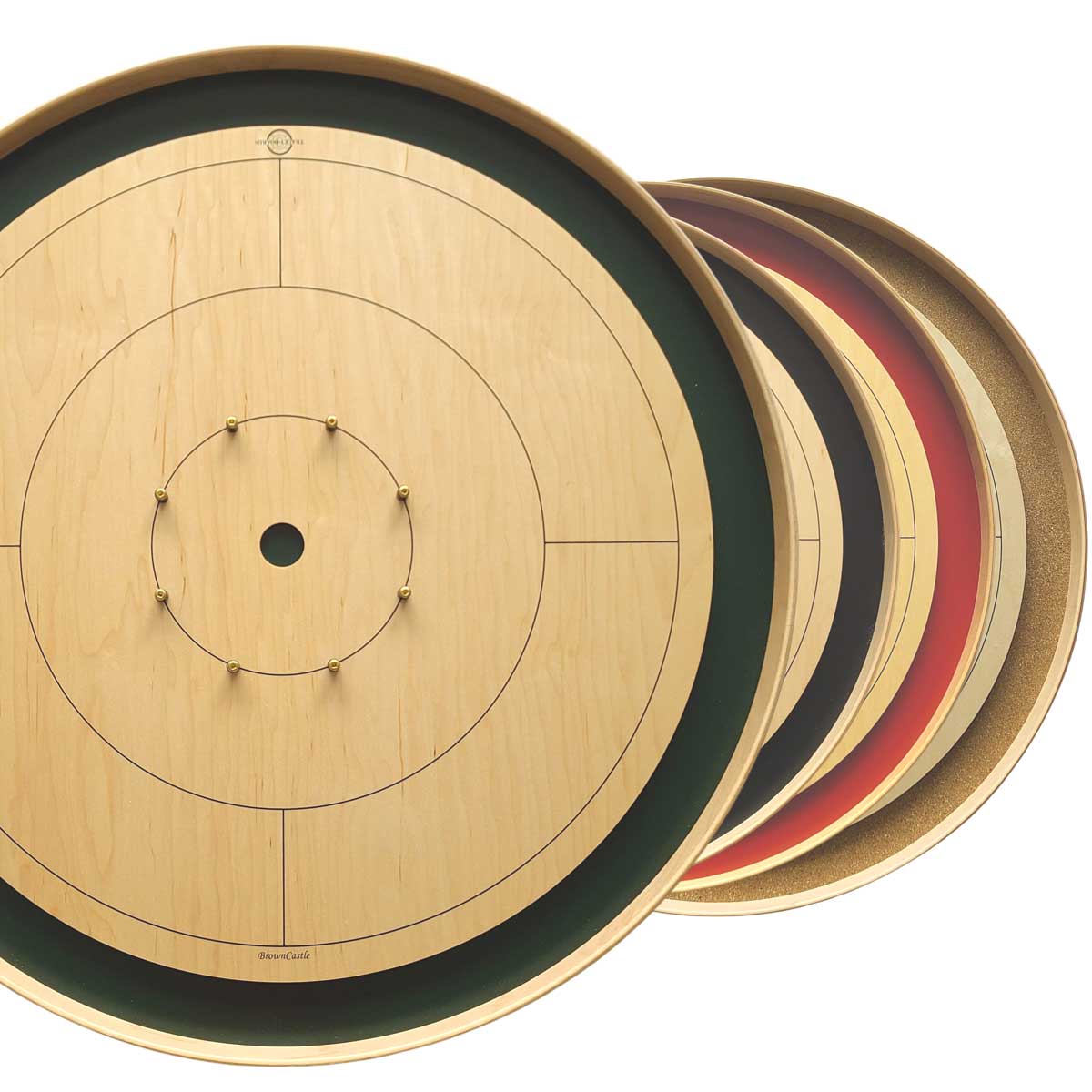

Crokinole is a Canadian disc-flicking dexterity game, and it is older than you'd guess. The earliest known board was built by craftsman Eckhardt Wettlaufer in 1876 in Perth County, Ontario — reportedly a fifth-birthday gift for his son Adam. That German-Canadian Mennonite heartland in southwestern Ontario is still the spiritual home of the game, which is why the World Crokinole Championship has been held every year since 1999 in tiny Tavistock, Ontario, on the first Saturday of June.
The setup is simple to describe and brutal to master. Two players (or two pairs) sit across a round or octagonal board with a recessed 20-point hole dead center, surrounded by three concentric scoring rings worth 15, 10, and 5 points as you move outward, and a ring of eight small pegs guarding the 15-zone. You flick a wooden disc — finger snapped against thumb — from your own quadrant, trying to land in the center, knock opponents' discs into the surrounding 'ditch,' and protect your own. The scoring is differential: only one side nets points each round, equal to the difference between the two players' totals.
The obsession comes from the skill ceiling. The opening 'open shot' rule forces you to play to the middle when there are no enemy discs to hit — your shot must reach or hold inside the 15-circle or it's removed. That single rule turns crokinole from shuffleboard into chess-with-physics: do you go for the 20 and risk rimming out, or lay a defensive disc behind a peg? A great player can ricochet a disc off a peg to tuck behind a guard. A beginner can sink the occasional 20 and feel like a genius. That gap — easy joy, deep mastery — is exactly why people who try it on a good board tend to fall hard.
The equipment is half the addiction. On a slow, grippy board the skill never reveals itself; every shot is a coin flip and the game feels random. On a fast, true maple surface, the physics become legible — you start to feel weight and angle — and that's the moment crokinole hooks people for life.
A fast maple surface and a true 26-inch field make a player; a thick décor rim and a felt-lined ditch make a toy.
What actually separates a tournament-grade board from a wall-hanging toy?
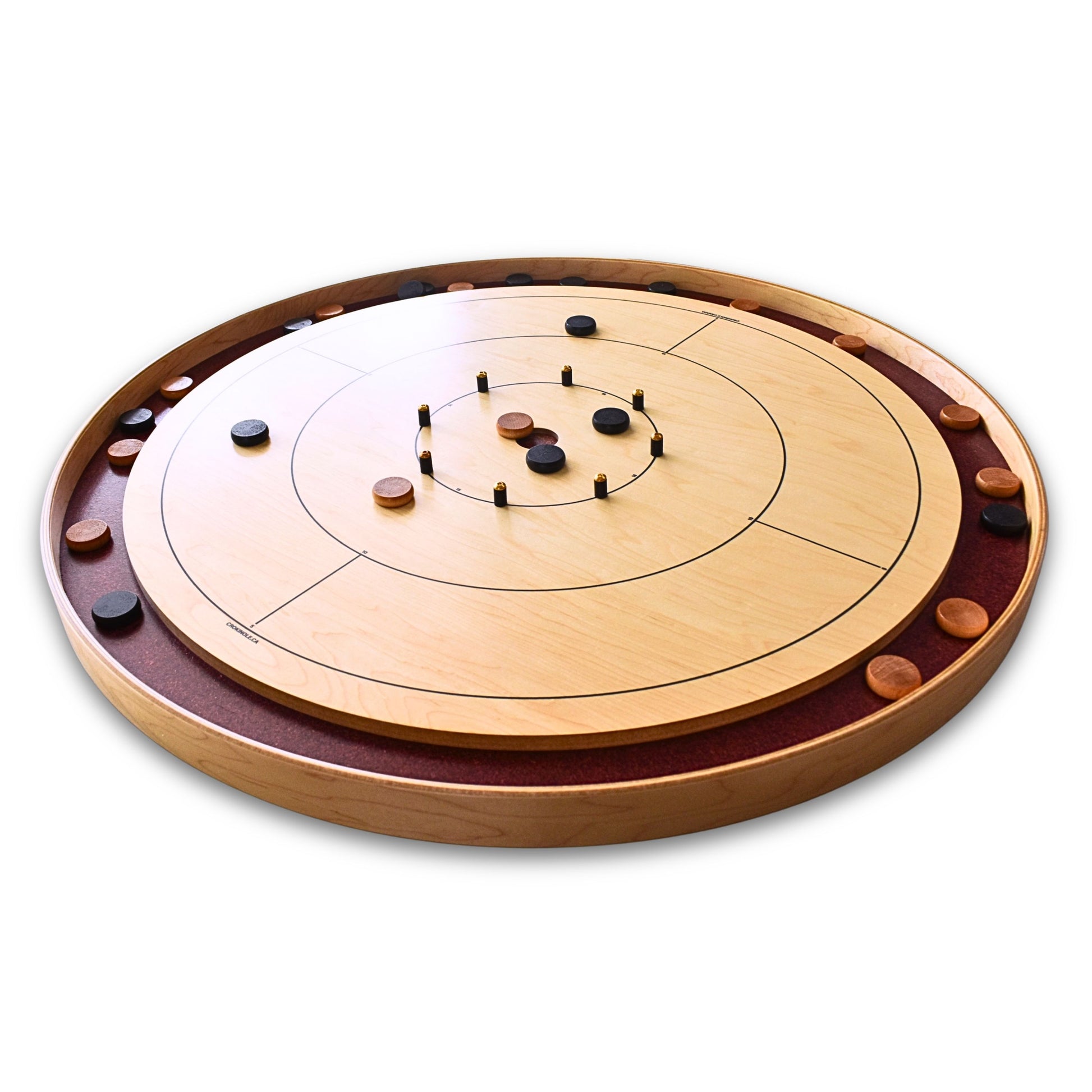
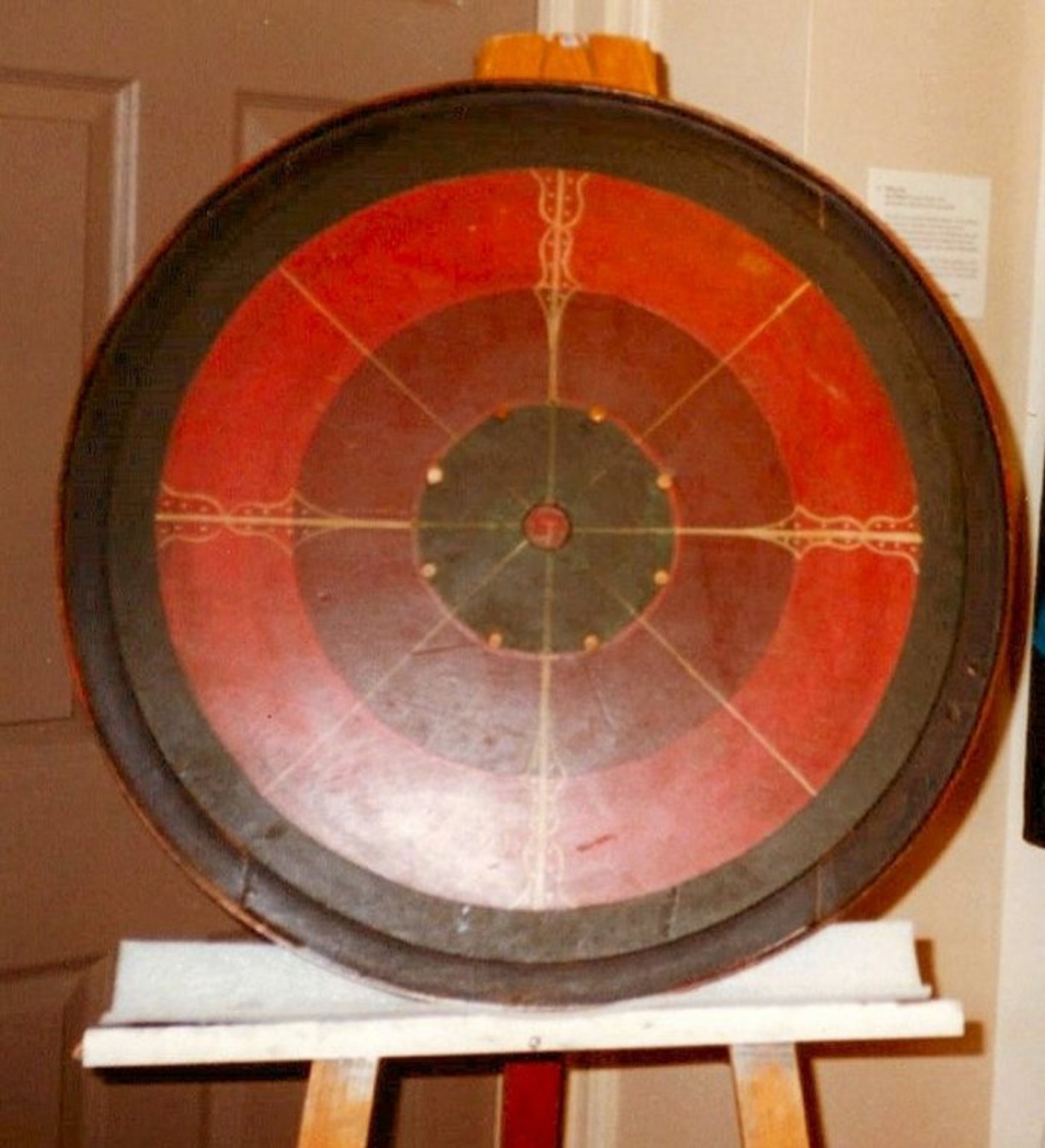
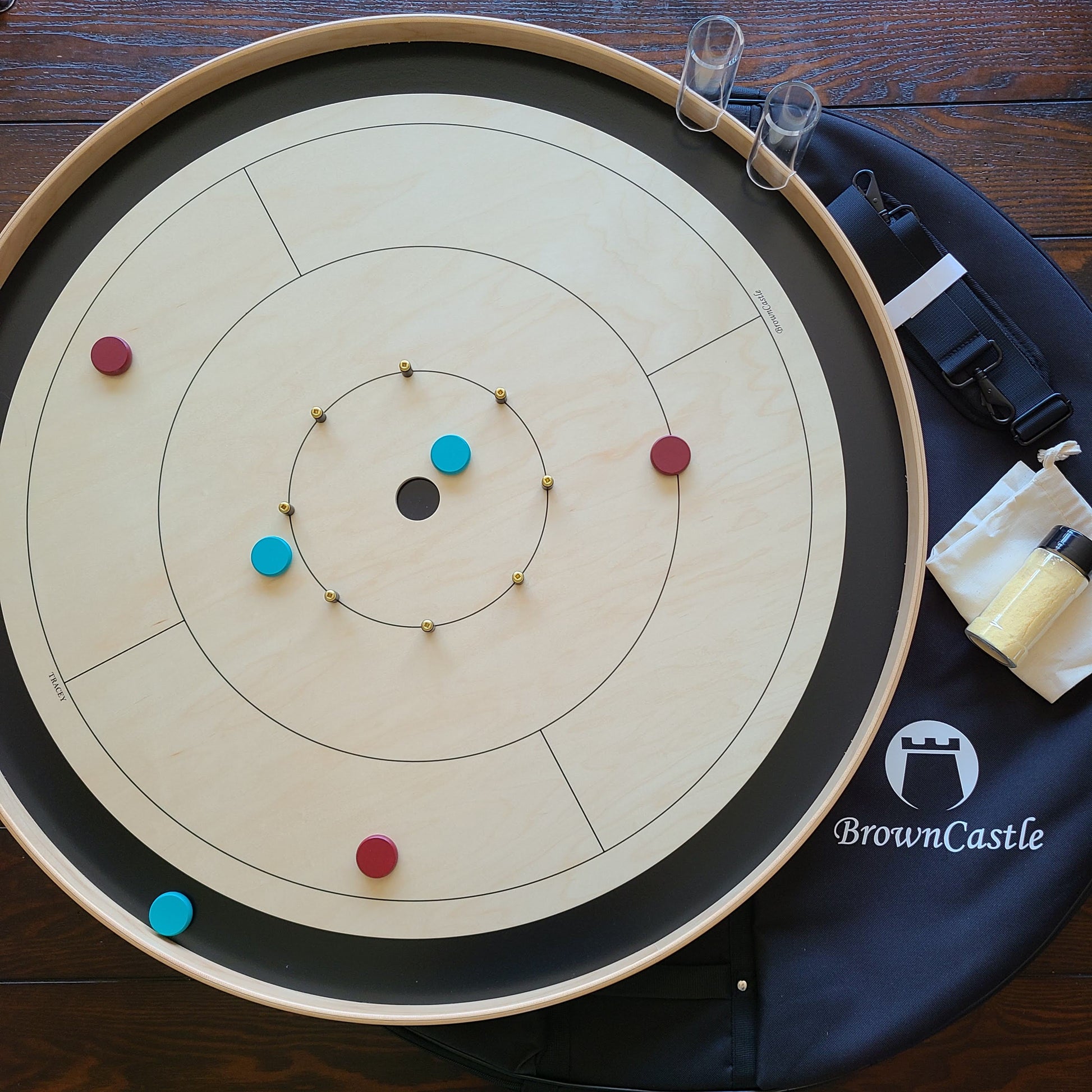
Four things. Memorize them and you'll never get fooled by a pretty photo again: the playing surface, the dimensions, the pegs, and the ditch. Everything else — the rim wood, the inlay, the figcaption-worthy grain — is cosmetics.
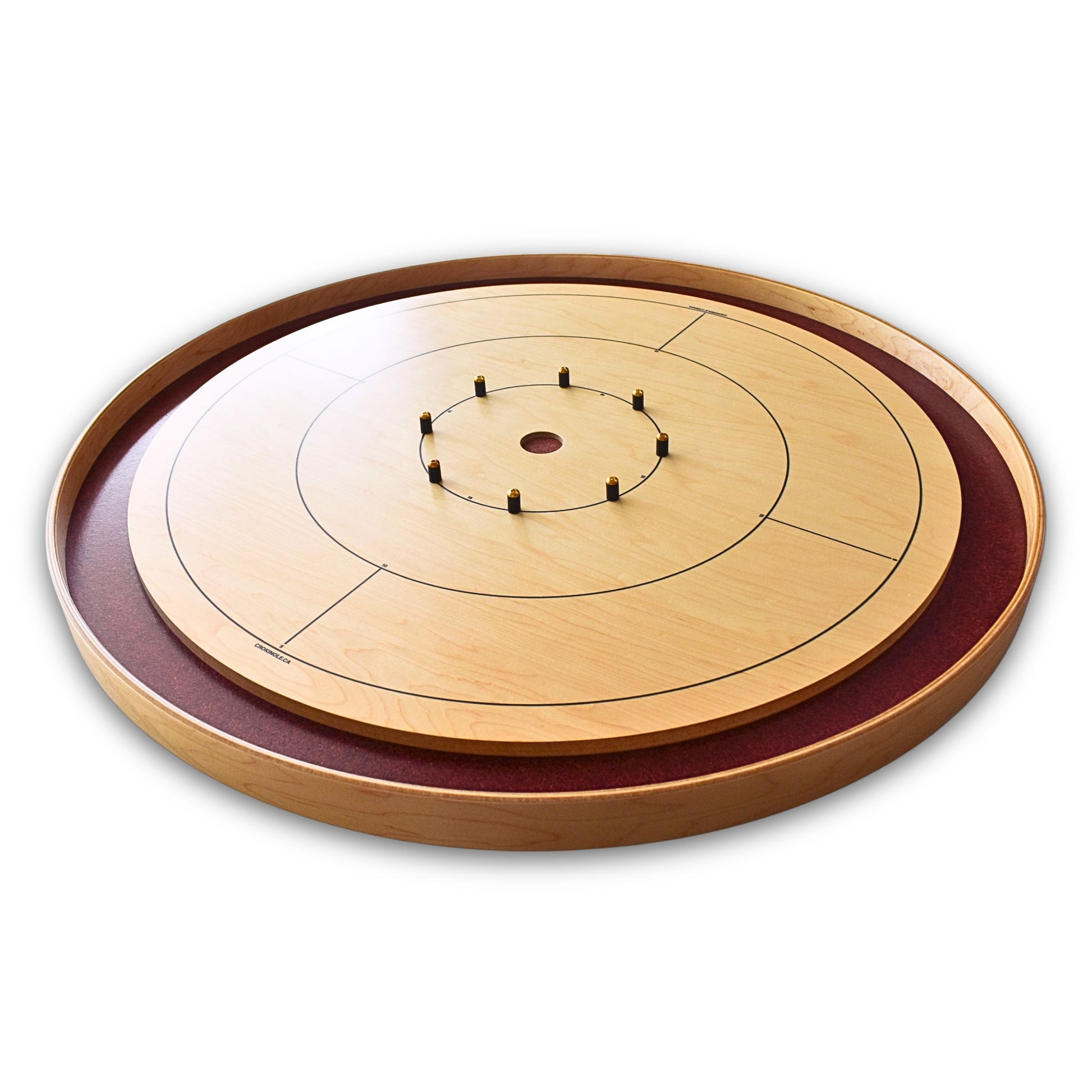
The surface is the whole game. A tournament board uses a hard maple playing deck finished with five to seven coats of lacquer, then buffed and waxed to a fast, glassy slickness. Tracey's and Crokinole Canada's competition boards both spell this out: multi-step lacquering and buffing, pre-waxed maple decks, 'very fast surface.' That speed is non-negotiable. A disc has to carry the full 26 inches off a measured flick. Cheap boards skip coats, leave the surface grippy, or — worst of all — print the scoring lines on top of the finish so they create micro-friction ridges. If a disc skids and stalls, the board has failed at its only real job.
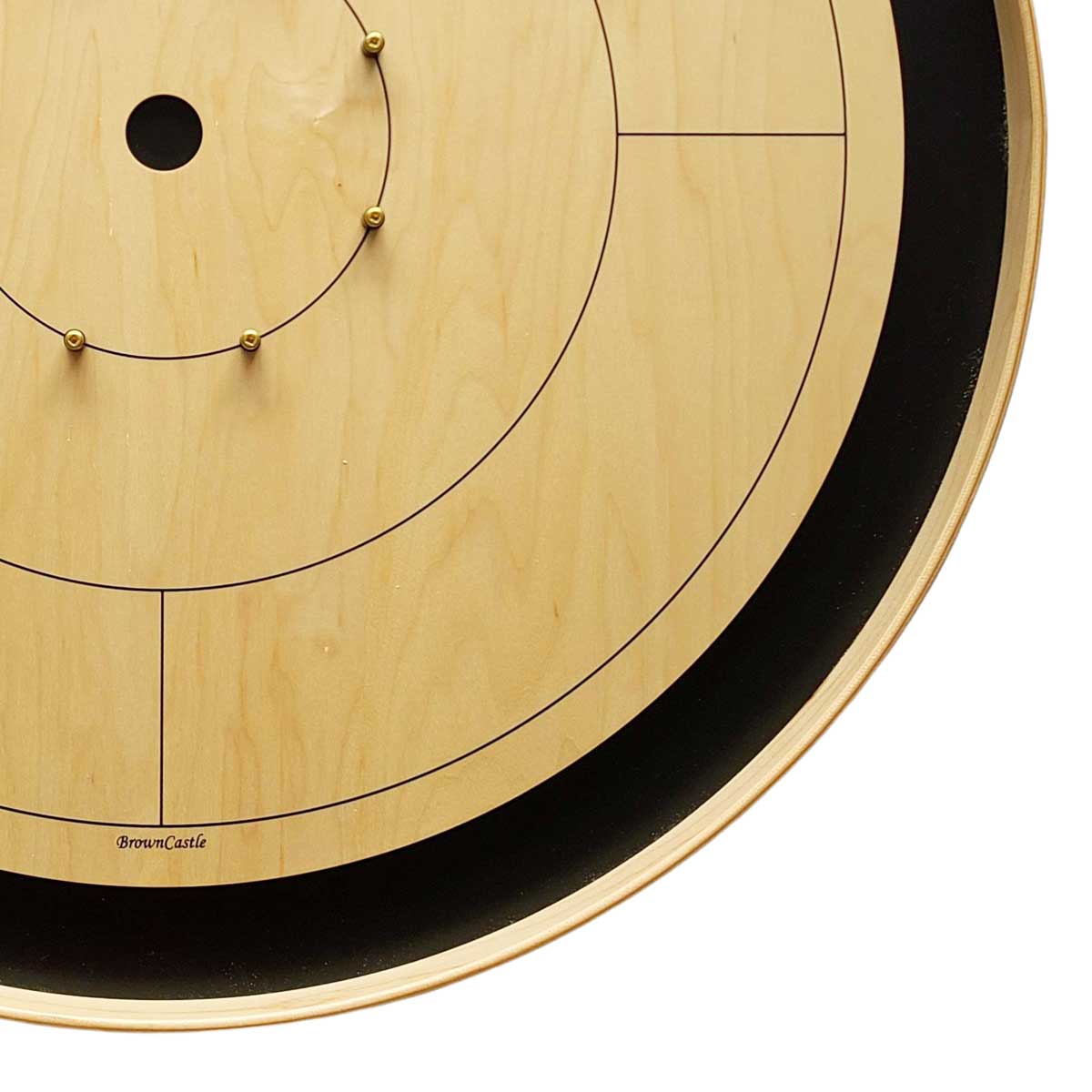
The dimensions must be regulation. A true competition field is a 26-inch playing surface (the discs themselves are ~32 mm). Overall diameter usually lands around 30 to 31 inches once you add the ditch and rim. Beware the bait-and-switch on mass-market boards advertised as '27-inch' — that's the outer frame, and the actual playing surface is often only 22 inches. A 22-inch field changes the geometry of every shot and makes practice useless for real play.
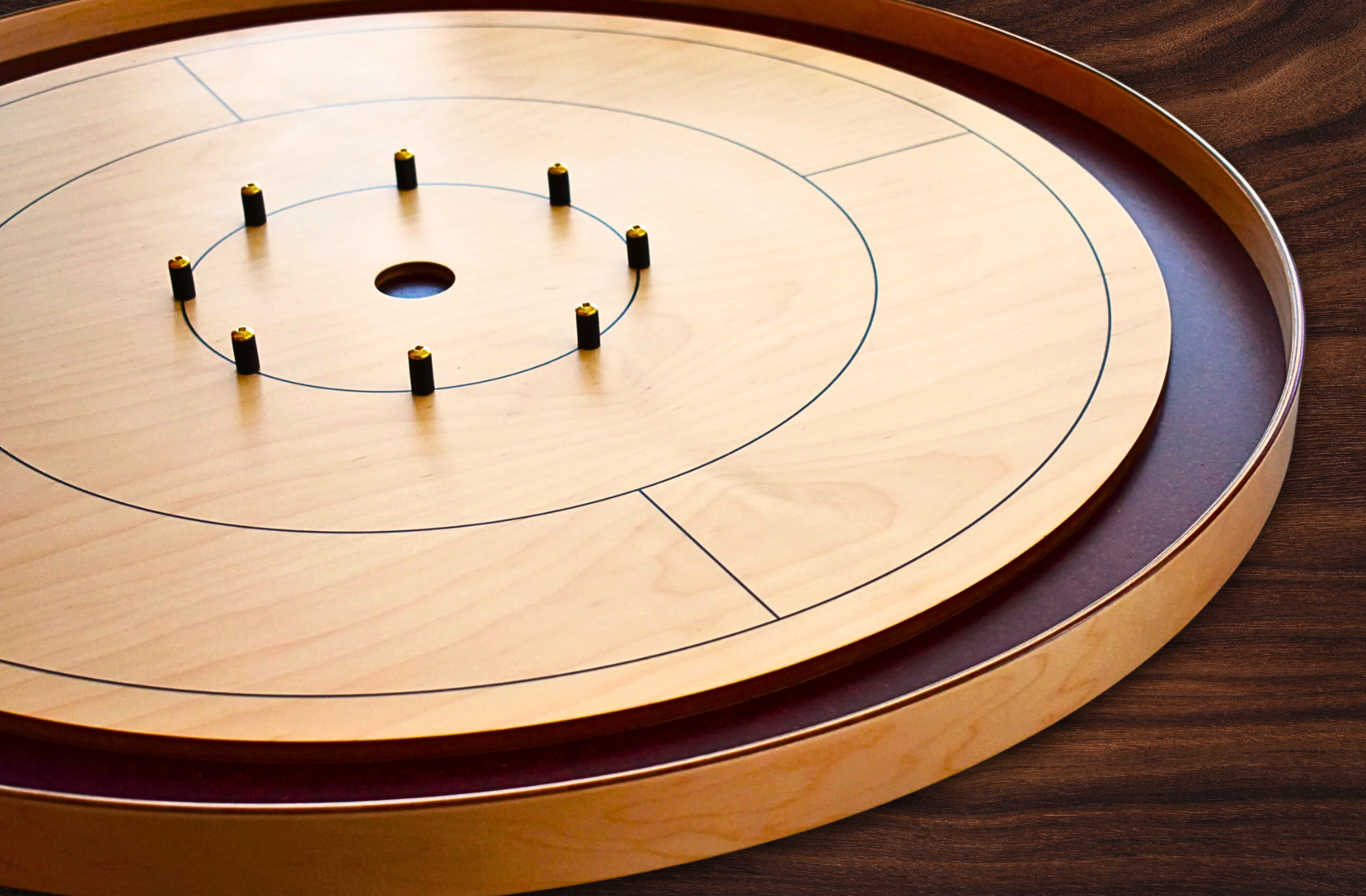
Pegs need consistency and a little give. The eight pegs guarding the 15-ring should be uniform in height and ideally have a rubber sleeve for controlled rebound. The best makers — Muzzie's, Tracey, Crokinole Canada — use solid brass screw posts sleeved in black latex or high-reflex rubber so the bounce is lively and repeatable. Budget boards use bare wooden dowel pegs, which is fine for family play but rebounds inconsistently and wears unevenly.
The ditch must catch cleanly. The recessed gutter around the field should drop sharply (roughly half an inch deepening to two inches) so a knocked-off disc stays dead. A shallow or hard-walled ditch bounces discs back onto the field, corrupting the score. It's the least glamorous part of the board and the fastest tell of a serious build.
Notice what's not on this list: solid-wood construction. A maple-veneer-over-MDF core can absolutely play at tournament level — the WCC's own reference boards use a composite-timber core under a maple deck. MDF resists warping and keeps the deck dead flat, which matters more than purist bragging rights. Solid hardwood is an heirloom and aesthetic choice, not a performance requirement. Don't let anyone upcharge you on the myth that MDF equals 'toy.' Flatness and finish equal tournament; thickness of the décor rim equals nothing.
If a disc skids and stalls, the board has failed at its only real job.
Who makes the boards that actually win championships?
The pedigree here matters, because crokinole is a craft passed hand to hand, and a handful of names carry real authority. Get these straight and the whole market organizes itself.
Willard Martin — 'the Wood Wizard' — was the legendary tournament-board builder of the modern era. For decades the Willard Pro was the board serious players chased. Martin retired his personal board business on August 1, 2020. Before he did, he trained his successor and, in his own words, blessed the handoff: the Willard Pro became the Tracey Tour board in 2018, with Willard reportedly saying the Tracey 'is every bit as good, if not better than the Willard Pro.' That's the highest endorsement in the sport.
Jeremy Tracey runs Crokinole Game Boards (the storefront is literally crokinolegameboards.com, and the brand is also known simply as Tracey Boards). Tracey is the official board builder for the World Crokinole Championship — the boards he sells are made to the same spec as the ones used in Tavistock. If you want to buy the actual tournament standard, you buy a Tracey. Note for shoppers: 'Crokinole Game Boards' and 'Tracey Boards' are the same maker, not two — don't double-count them.
Crokinole Canada, run by the Fuller family in Ontario, is the other serious-tier maker, producing NCA-standard round tournament boards plus a deep ladder of family and beginner boards and genuine solid-hardwood heirlooms. They are the most range-complete maker in the game: $130 melamine starter to a $1,000 solid-walnut showpiece, all under one roof.
Muzzie's Crokinole is Murray Skaling, a one-man shop in Nova Scotia who has hand-built and shipped over 5,000 octagonal boards since 2006. Premium maple decks, solid-brass-and-latex pegs, finished in-house. These are the romantic's tournament board — traditional octagon shape, genuinely handmade, and beloved.
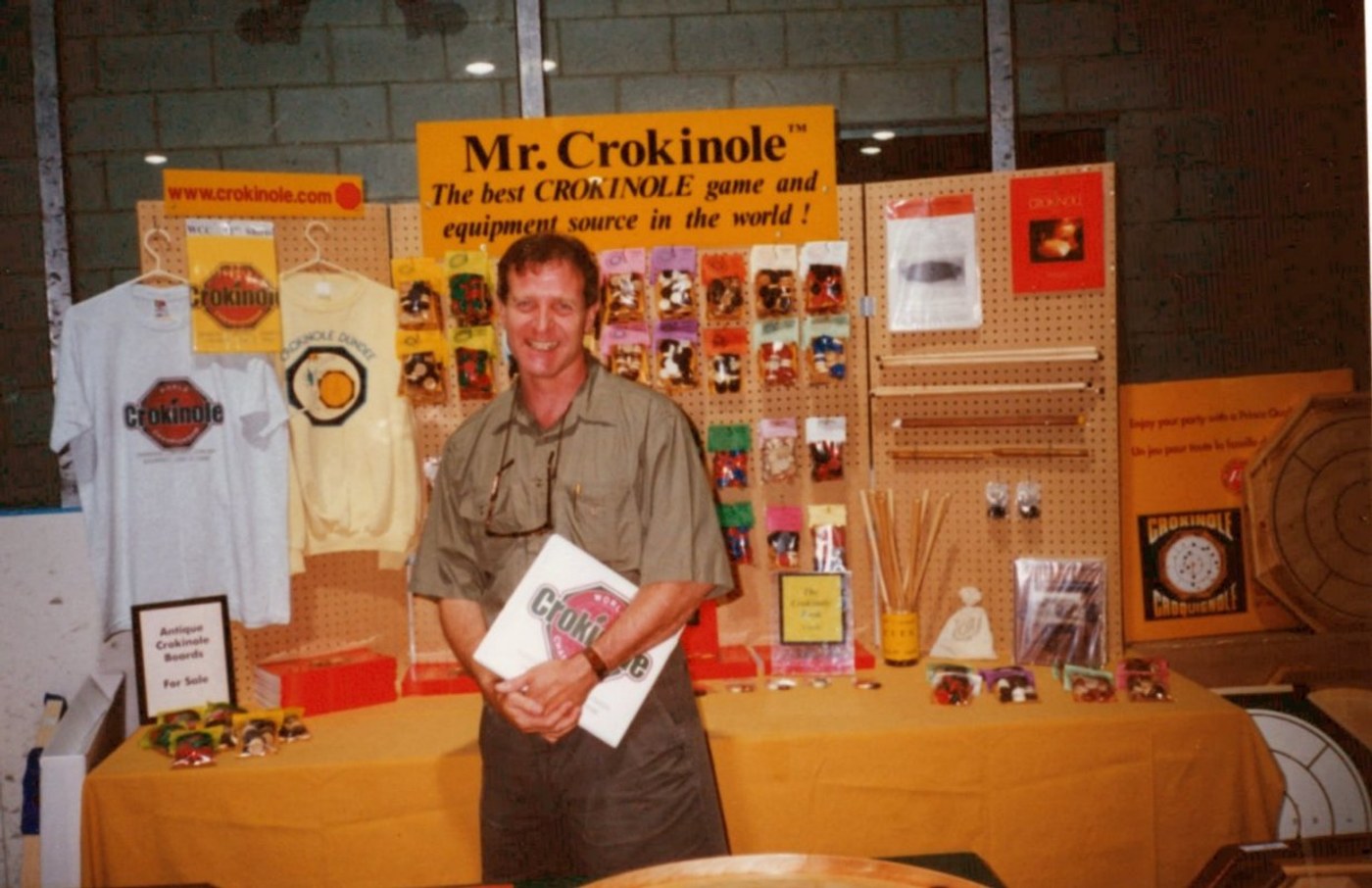
The Crokinole Depot is Ray and Jason Beierling's small hobby shop in Dorchester, Ontario — the Beierlings are accomplished tournament players and the closest thing the sport has to authoritative reviewers/promoters. They're a trusted retailer and resource more than a high-volume manufacturer.
Mayday Games is the American outlier: a board-game publisher that set out to bring affordable, decent crokinole to North America at scale. Their boards are veneer-over-MDF, mass-produced, and — crucially — far better than their price suggests. They are the budget gateway, not the tournament summit, and they're honest about it.
That's the map. Everything ranked below sits somewhere on it — and the further you stray from these names into anonymous Amazon-brand '27-inch tournament' boards, the more you're buying décor.
Willard trained his successor and blessed the handoff: the Tracey 'is every bit as good, if not better than the Willard Pro.'
Best overall and best heirloom: where should serious money go?
If you've decided crokinole is a game you'll keep, here's where the money actually earns its keep — and where it stops earning it.
Best overall is the Tracey Tour board (~US $300-380). This is the official World Crokinole Championship spec, built by Willard Martin's anointed successor. Canadian maple deck, modern composite core, five-to-seven coats of finish, buffed, with rubber-sleeved pegs and a clean ditch. The surface is genuinely fast, the markings are computer-generated for consistency, and it ships with discs, wax, a disc bag, and a rulebook. You are buying the exact thing the best players in the world compete on. There is no 'better' board in any meaningful performance sense — anything above it is paying for materials and aesthetics, not playability. For a buyer who wants one board, forever, and wants it to be correct, this is the answer.
Directly alongside it sits the Crokinole Canada round tournament board (~US $280-380) — NCA-standard, maple deck over premium maple MDF, brass-and-latex pegs, multi-step lacquered to a 'very fast' surface, with a 20s cup and bilingual rules in the box. In blind play most people couldn't tell a Crokinole Canada from a Tracey; the choice between them is brand loyalty, color options, and which ships to you faster. Both are the answer to 'I want a real tournament board.'
Best heirloom is a solid-hardwood board (~US $700-1,000). Crokinole Canada's Cherry Expressions (solid cherry, ~CA $900) and Walnut Expressions (solid walnut, ~CA $1,000) are furniture-grade objects — the kind of board that gets handed down. Muzzie's premium octagonal boards occupy similar heirloom territory with their handmade, one-man-shop character. Here's my critic's caution: these play as well as a $350 tournament board, not better. You are paying for solid-wood beauty, the grain, the weight, the story — all legitimate reasons. Just go in clear-eyed that the heirloom premium is aesthetic and sentimental, not a performance upgrade. A solid-walnut board does not sink more 20s than a maple-over-MDF Tracey.
Where does serious money not belong? Anonymous '30-inch official' marketplace boards in the $200-300 range that mimic the price of a real Tracey while delivering a grippier surface and bare wooden pegs. You're paying tournament money for toy performance — the worst value in the entire category.
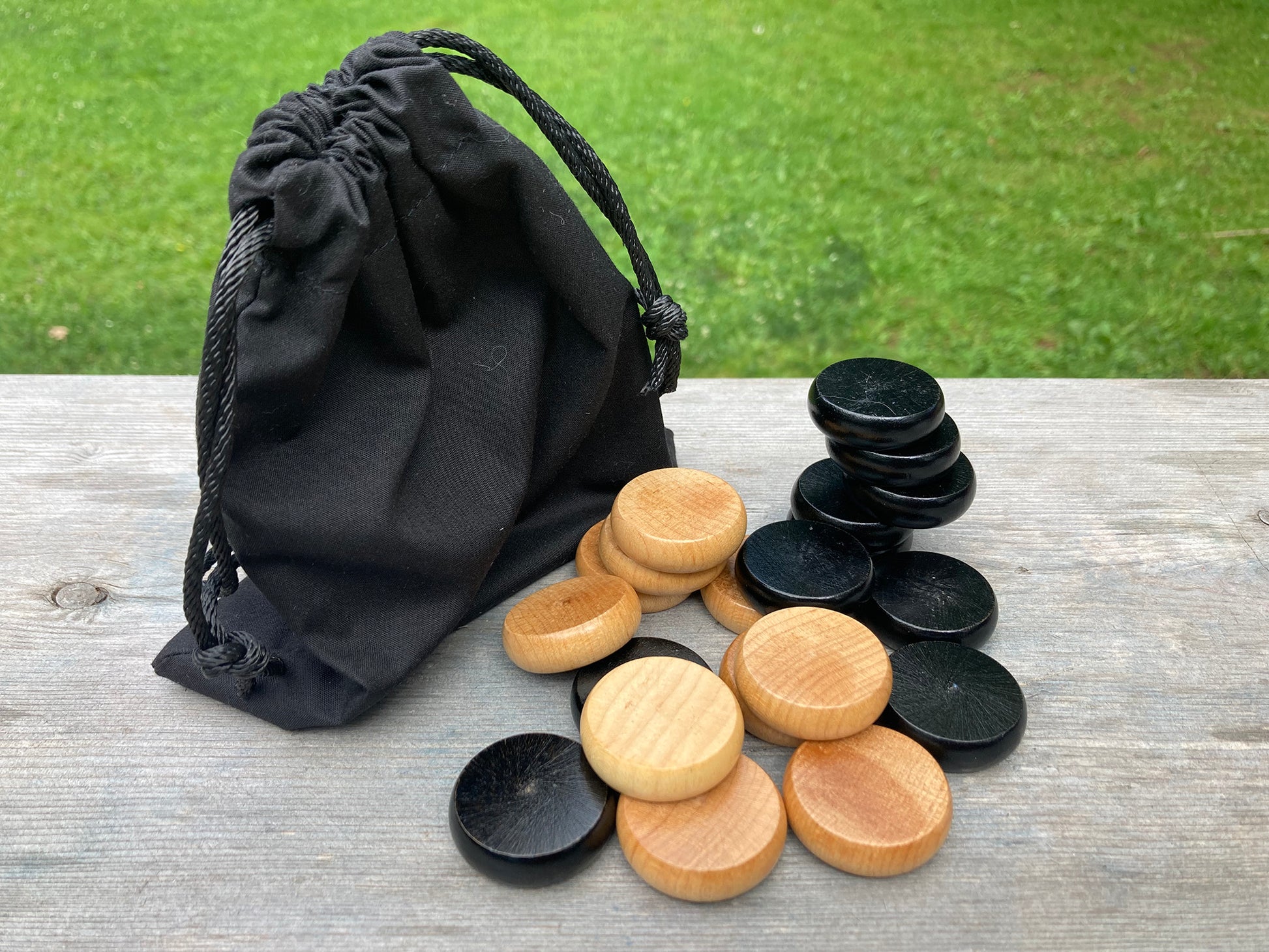
A solid-walnut board does not sink more 20s than a maple-over-MDF Tracey. The heirloom premium is beauty, not ballistics.
Best budget and best value: how cheap can you go before the game breaks?
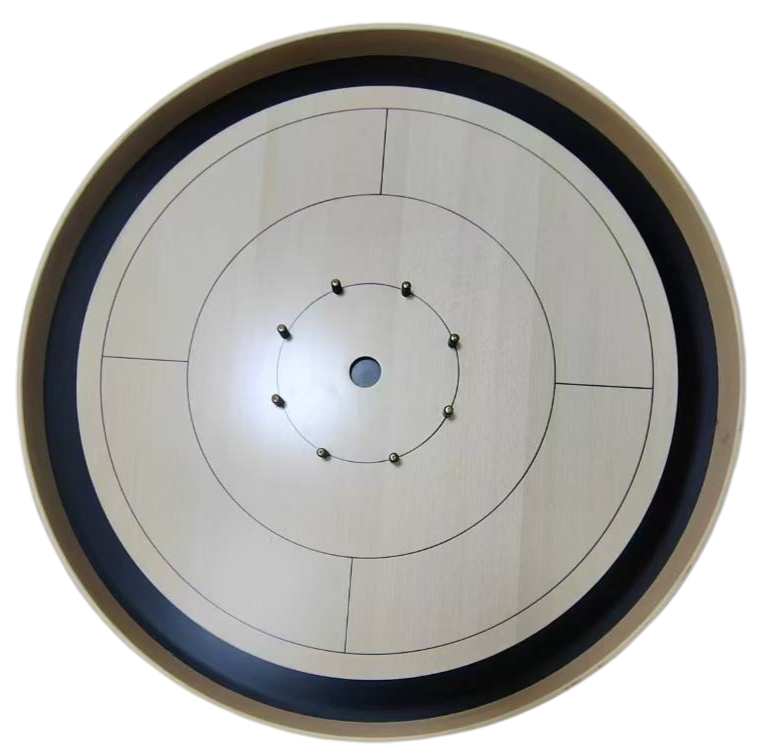

This is the most important section for most readers, because the honest truth is that the price floor for a playable crokinole board is higher than for almost any other tabletop game — and the cliff below it is steep.
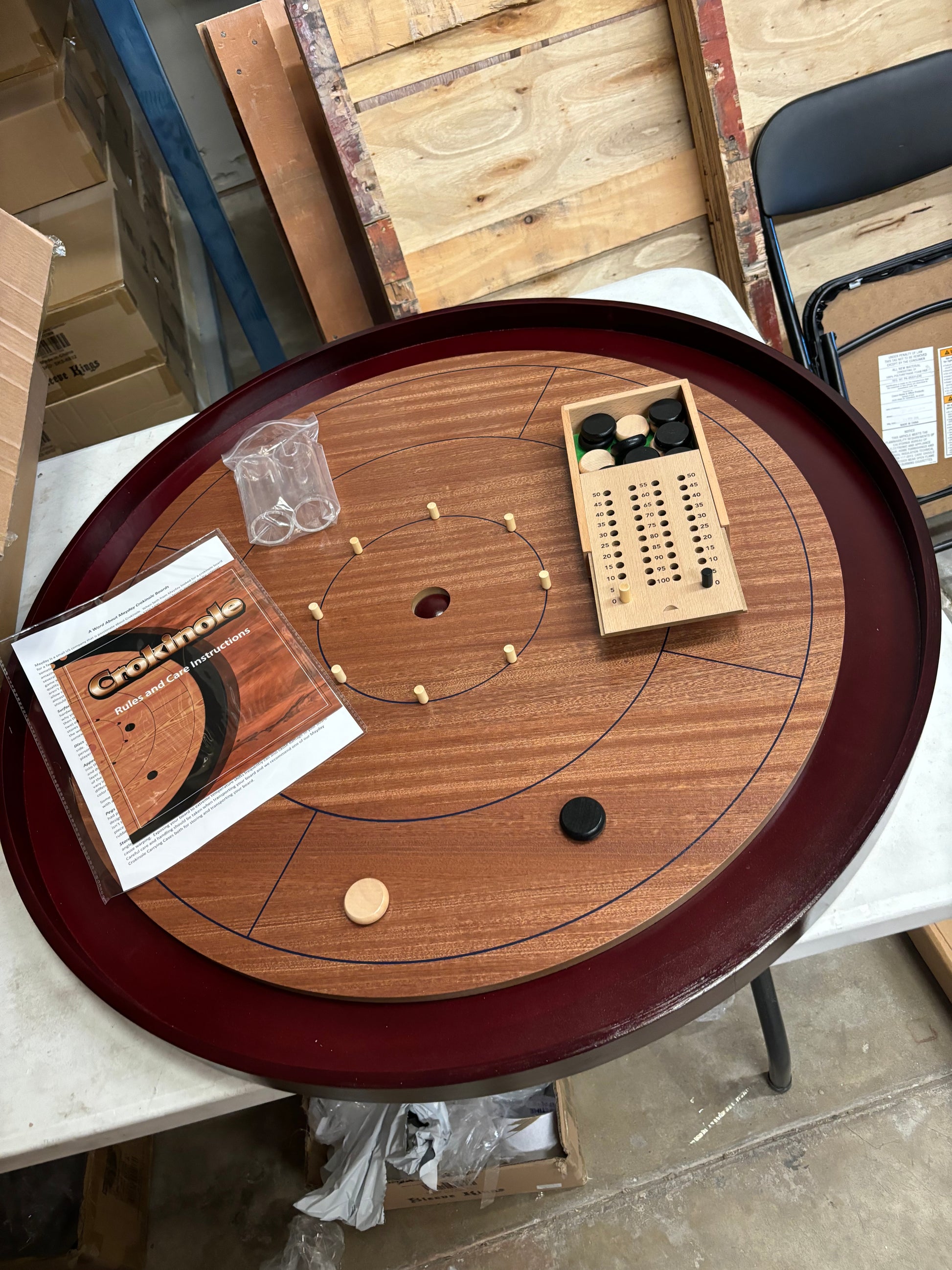
Best budget pick: the Mayday Games Beech veneer board (~US $135). Mayday is a board-game publisher that deliberately set out to bring affordable, North-America-stocked crokinole to people who'd otherwise be priced out. It's a tournament-size board — 30.5 inches overall, a true 26-inch playing surface, beech-veneer top over a sealed MDF base, ~17 pounds, double-boxed. Reviewers are consistent: it's not flawless (you'll find the odd cosmetic blemish, dowel-style pegs, a less-than-glassy surface), but the geometry is regulation and it plays genuinely well. One reviewer's verdict has aged into received wisdom: 'you could easily spend two or three times the amount of money on a similar entry level board with no effort.' For getting a real 26-inch field into your house under $150, nothing else comes close.
Best value: Mayday's Mahogany Standard board (~US $180) or Crokinole Canada's large traditional boards (~CA $250-270, e.g. The Crokinole King or Baltic Bircher). This is the sweet spot where you get a true 26-inch surface, better fit-and-finish than the entry beech board, and a board that'll satisfy a developing player for years. The Mahogany Standard ships loaded — 28 discs, magnetic disc box, two 20s holders, a tin of wax — and at $180 it's the best dollars-to-playability ratio in the guide. Crokinole Canada's large traditional octagons hit the same value zone with a more handcrafted feel.
Where's the cliff? Below roughly $130, you are almost always buying a board with a 22-inch playing surface dressed up as '27-inch,' a grippy or unevenly-finished deck, and bare pegs. Those $40-80 reversible 'Crokinole & Checkers' boards on the marketplaces are fine as a novelty or a kids' rainy-day toy — and I'll grant them that role below — but understand the trade: the surface is slow, the field is undersized, and the skill of the game never emerges. You haven't saved $100; you've bought a different, lesser game that happens to share a name. My rule: if you genuinely can't reach ~$135 for the Mayday beech, wait and save rather than buy a 22-inch board you'll replace within a year.
Below $130 you're usually buying a 22-inch field dressed up as 27 inches. You haven't saved $100 — you've bought a lesser game that shares a name.
Best for families and beginners: what should a first board actually be?
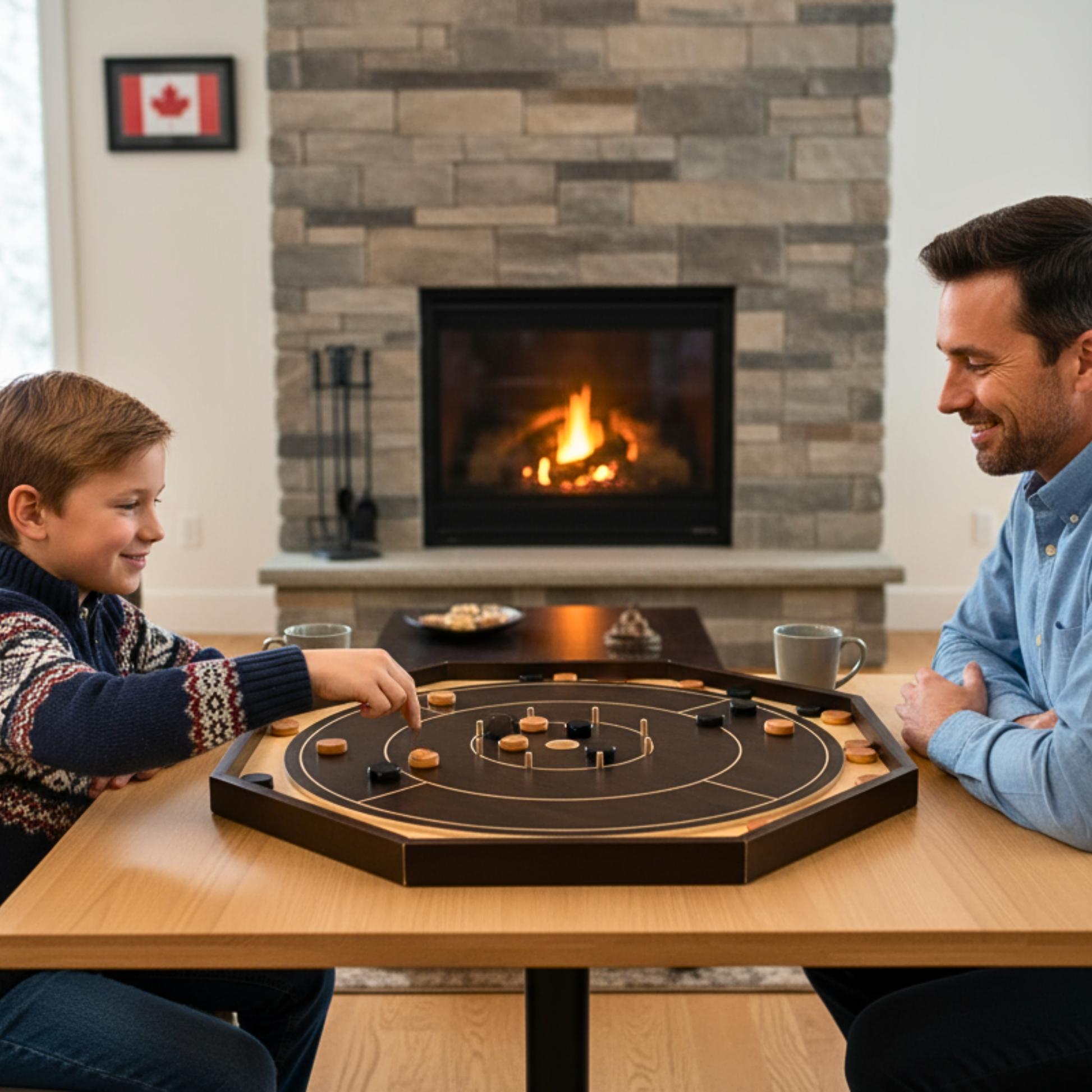

Families are where the marketplace junk does the most damage, because the listings are engineered for exactly this buyer — 'Canadian Heritage family fun for kids and friends!' — and the gap between a board that builds a lifelong player and one that gets shoved in a closet is enormous. Let me separate the tiers honestly.
Best true beginner board (the right way to start): Crokinole Canada's 'For Beginners' melamine boards (~CA $130) or 'The Family Board' / 'Gold Standard' (~CA $190). These are real boards from a real maker at the lowest sane price. The entry melamine boards use a cherry/walnut/maple melamine surface rather than lacquered maple, so the deck is a touch slower than a tournament board — but it's flat, the field is honest, the pegs are decent, and it's built by people who make championship boards. A family that starts here and catches the bug can upgrade later without ever having owned a bad board. The $190 Family Board steps up the surface and is, to my eye, the single best 'first real board for a household' in the guide.
Best mass-market family pick (eyes open): a 27-inch reversible Crokinole & Checkers board (~US $40-60). I'm including this because it's honest about what most families actually want: a cheap, fun, two-games-in-one board for game night that doubles as a checkers set on the flip side. The standard build is a wooden 27-inch frame with a 22-inch playing surface, ~24-26 discs and a bag, checkers on the reverse. As crokinole, it's compromised — undersized field, slower surface, simple pegs. As an inexpensive family novelty that gets kids flicking discs and might lead them to the real thing, it's perfectly serviceable. Just buy it knowing it's the entry drug, not the destination.
Best 'serious family that'll keep playing' pick: the Mayday beech (~$135) or Mahogany Standard (~$180). If your household is the type that adopts a game and plays it for years, skip the 22-inch novelty entirely and start on a true 26-inch Mayday. The kids learn real angles, the adults get a board they're not embarrassed by, and you never face the 're-buy because the first one was a toy' tax.
My bottom line for families: the $40 reversible board and the $130-190 Crokinole Canada starters serve genuinely different buyers. If crokinole is a curiosity, buy the cheap reversible and enjoy it for what it is. If you suspect it might become a thing in your house — and on a good board, it usually does — start at $130+ with a real maker. The single worst outcome is spending $200+ on an anonymous 'tournament' board that's neither cheap enough to be a guilt-free novelty nor good enough to be a real board.
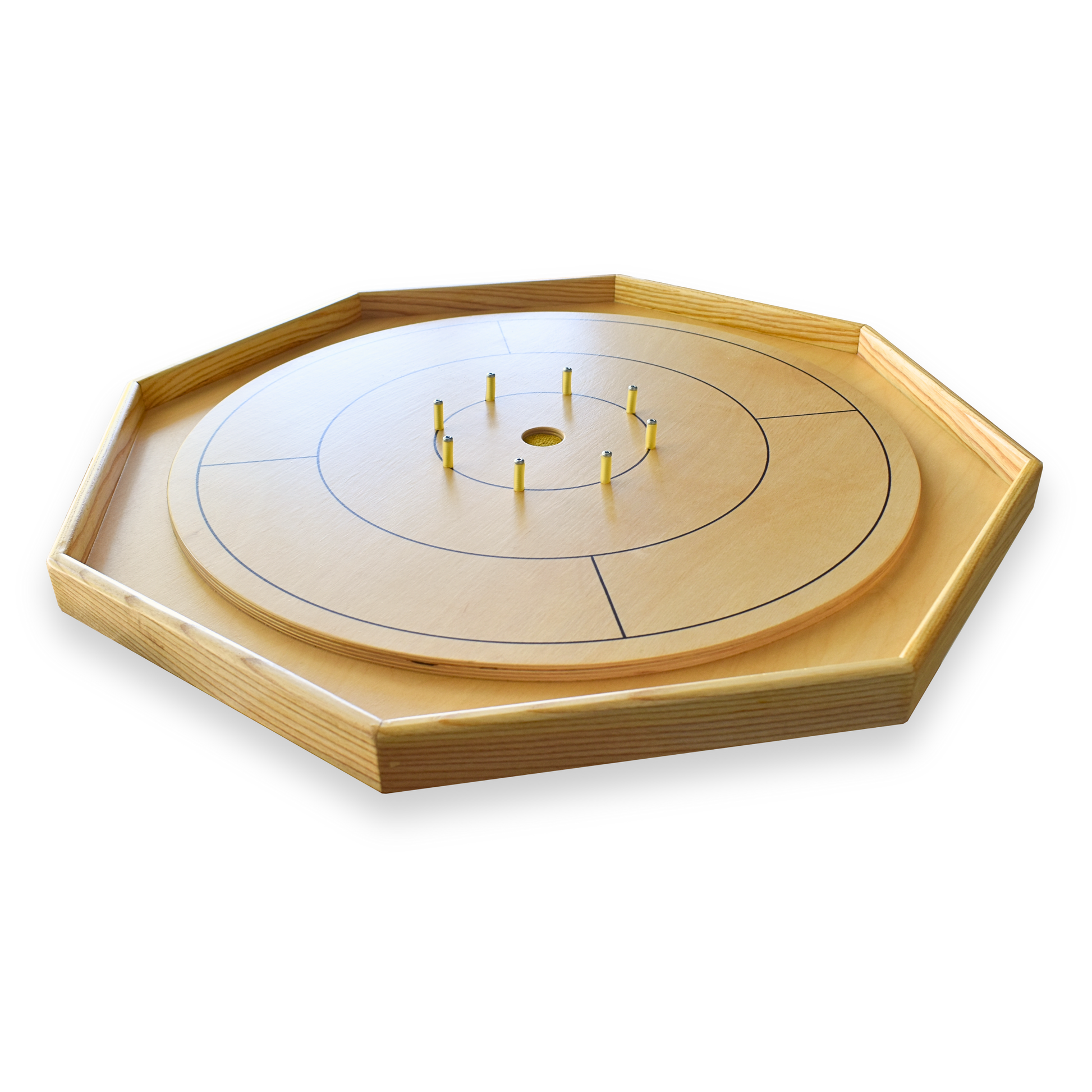
The $40 reversible board and the $190 Family Board serve genuinely different buyers. The mistake is the $200 anonymous board that's neither.
What experienced tables keep reporting
Recurring owner patterns, synthesized in Puzzlewick's words. Follow each evidence trail to read the original discussion.
Willard Martin, who built the legendary Willard Pro for decades, reportedly said of his successor's board that 'the Tracey Tour Board is every bit as good, if not better than the Willard Pro.' When the master tells you the new board matches his own, that's the closest thing crokinole has to a coronation.
Read the evidence: Willard Martin, via crokinole board reviews / BarGames101
On the Mayday budget board: 'you could easily spend two or three times the amount of money on a similar entry level board with no effort' — the line that, fairly, made it the default budget recommendation despite its rough edges.
Read the evidence: Initiative: Tabletop, Mayday Crokinole Kickstarter review
'It's astonishing how little I know about this game — and I'm super grateful for the Crokinole lessons received.' Sixty years of kitchen-table crokinole, then one club night reveals the depth. That's the gap between casual and competitive, in one sentence.
'Crokinole was just a fun way to spend a winter night together as a family, and I smile at the memories.' Proof that the game's emotional core doesn't actually require a tournament deck — though a good board makes the memories sharper.
Read the evidence: Keith Schell, 'A Uniquely Canadian Family Fun Game'
Murray Skaling of Muzzie's notes he 'designed and built a board for his daughter and her husband for a Christmas gift in 2006' — a hit that became 5,000+ handmade boards shipped worldwide. The origin story of a serious maker, and a reminder that the best crokinole boards still come from small workshops, not factories.
Reviewers of the Mayday MDF board flagged 'pimples, lines painted on top of the finish, uneven pegs, and some ugly sections in the lacquer of the ditch' — yet still recommended it on value. An honest portrait of what a sub-$150 board trades away, and why the surface-finish details I harp on actually matter.
Read the evidence: Initiative: Tabletop, Mayday Crokinole review
The picks
Some links below are affiliate links — as an Amazon Associate, Puzzlewick earns from qualifying purchases, at no extra cost to you. It never changes a pick.
 4 photos
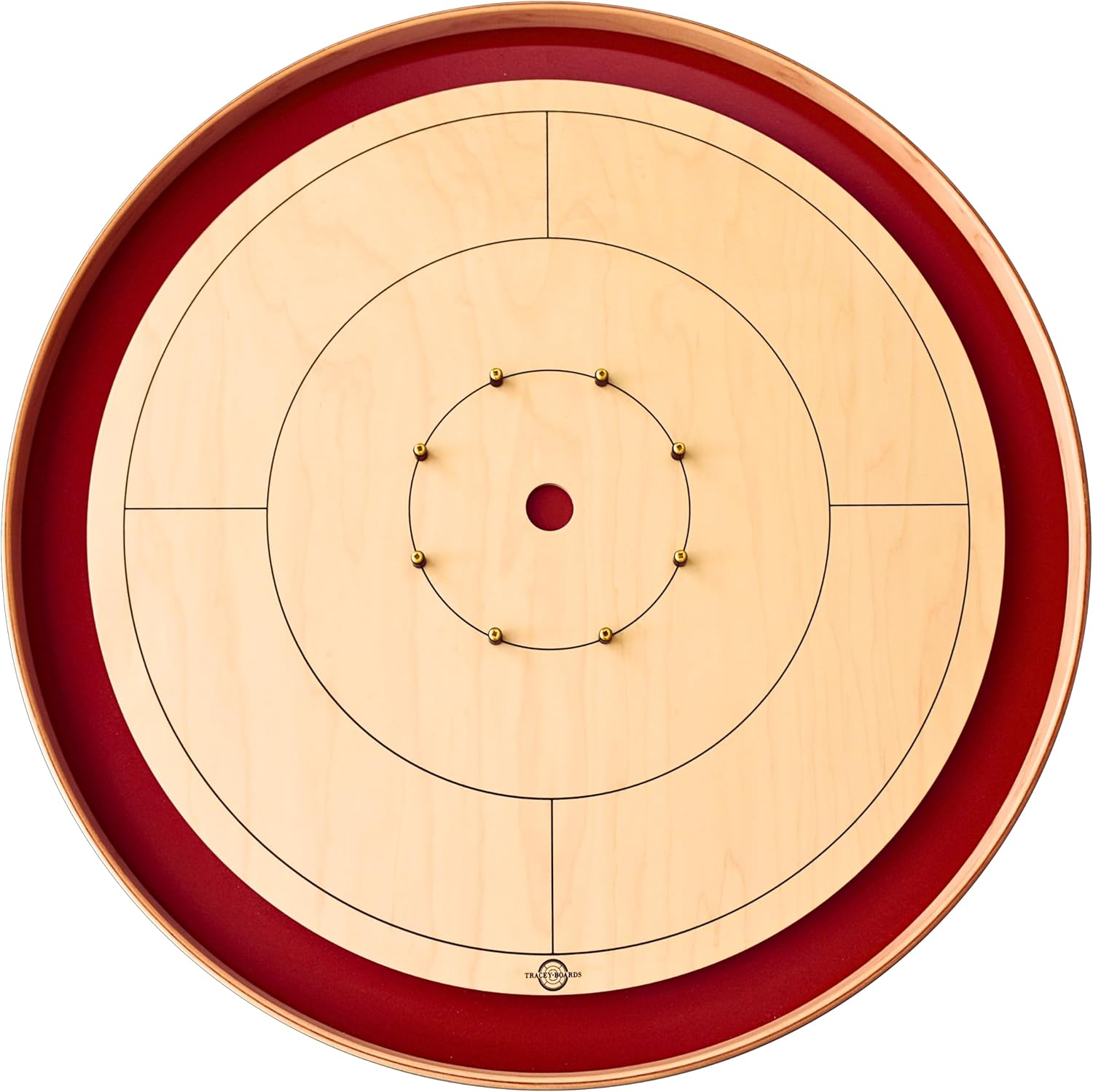
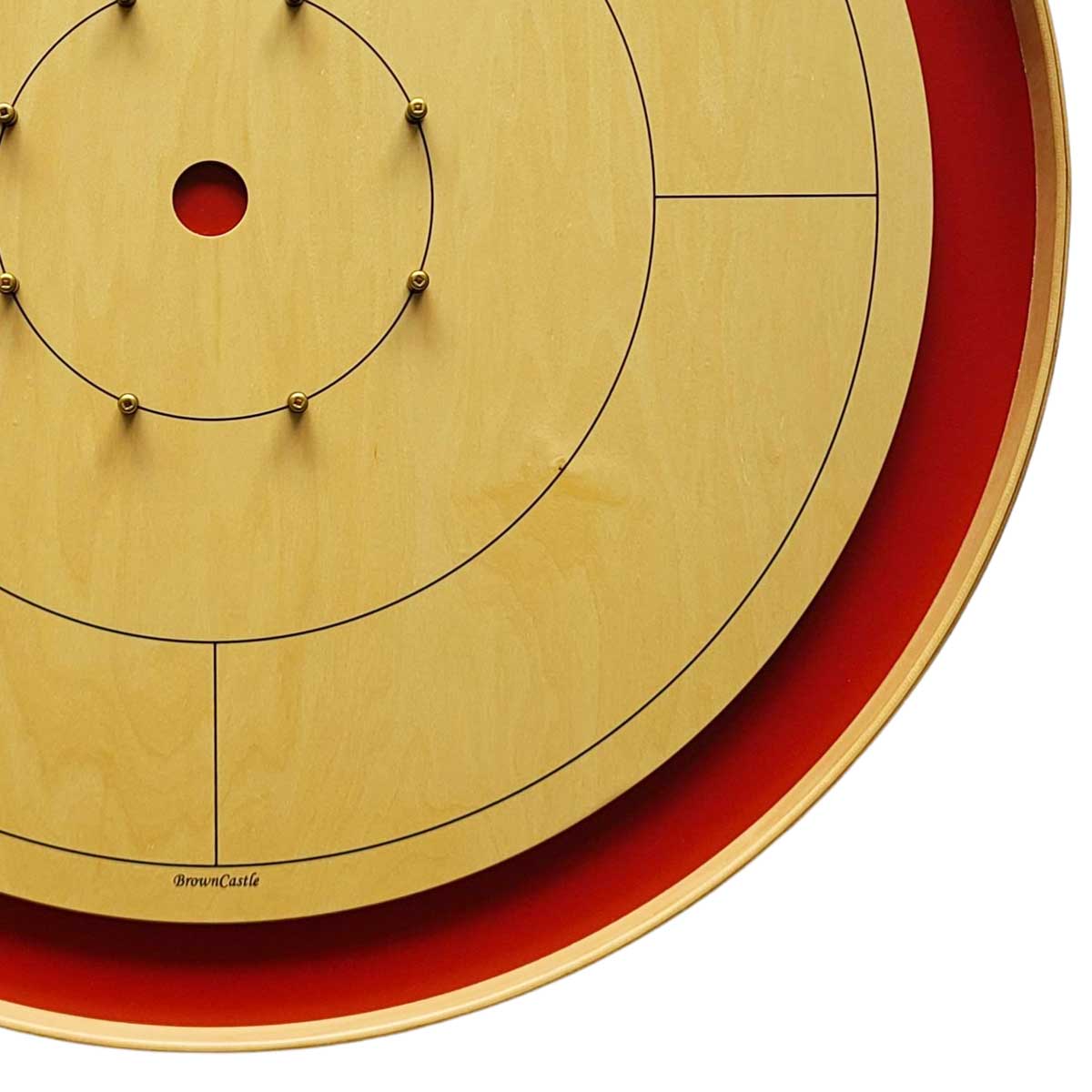
 Tracey Tour Crokinole Board
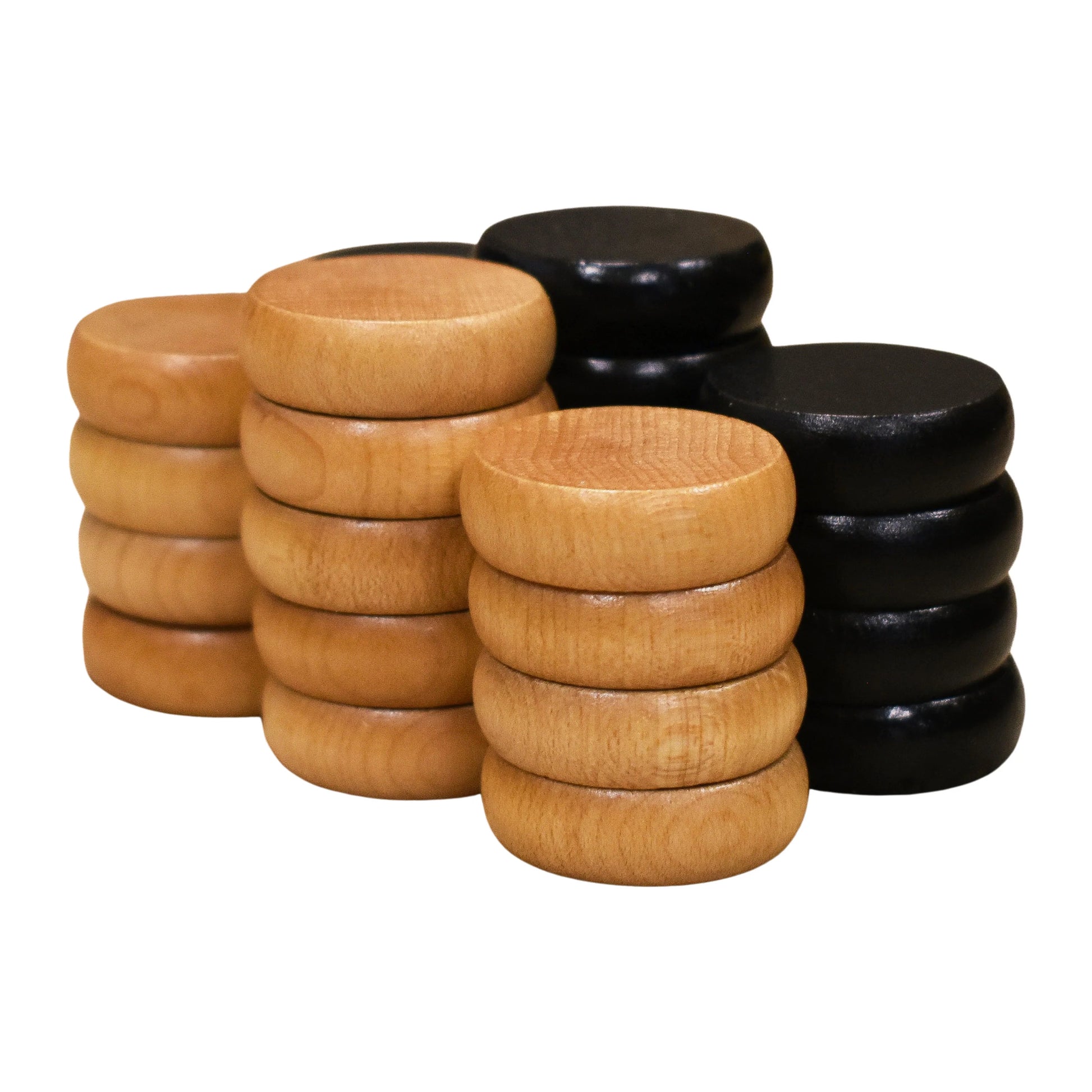
This is the board they play the World Crokinole Championship on, built by the maker Willard 'the Wood Wizard' Martin personally anointed as his successor. Canadian maple deck over a modern composite core, five-to-seven coats of buffed finish, rubber-sleeved pegs, computer-generated markings, and a genuinely fast, true 26-inch surface. It ships with discs, wax, a disc bag and a rulebook. In any performance sense there is no better board — everything pricier is paying for materials, not playability. If you want one correct board for life, this is it.
- Official World Crokinole Championship specification
- Direct lineage from Willard Martin's legendary Pro board
- Fast, dead-flat maple deck with consistent rubber-sleeved pegs
- Complete in the box: discs, wax, bag, rules
- Small-shop stock and shipping can lag; buy ahead of holidays
- Composite core won't satisfy solid-wood purists (though it plays identically)
- US pricing varies by retailer and exchange rate
 7 photos
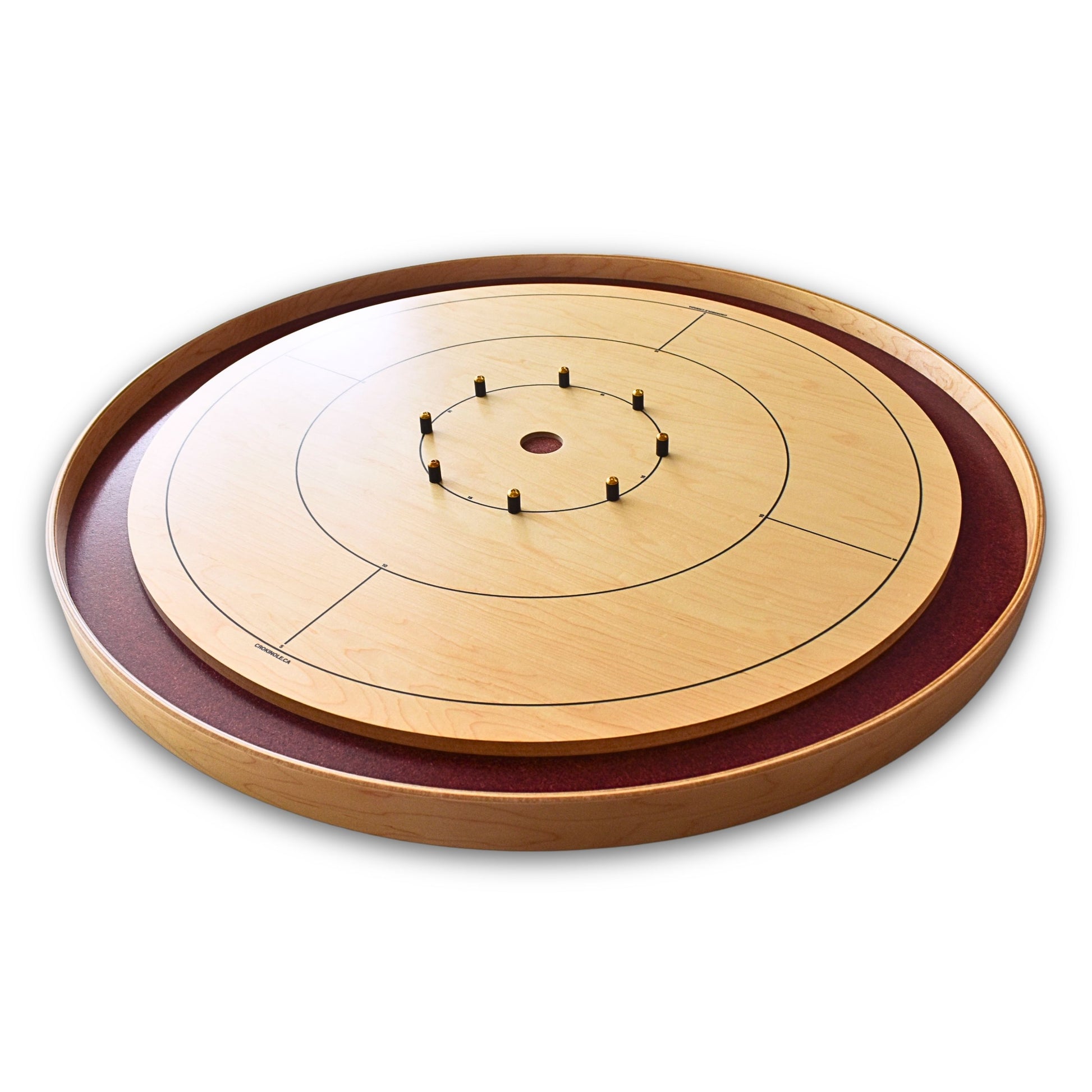
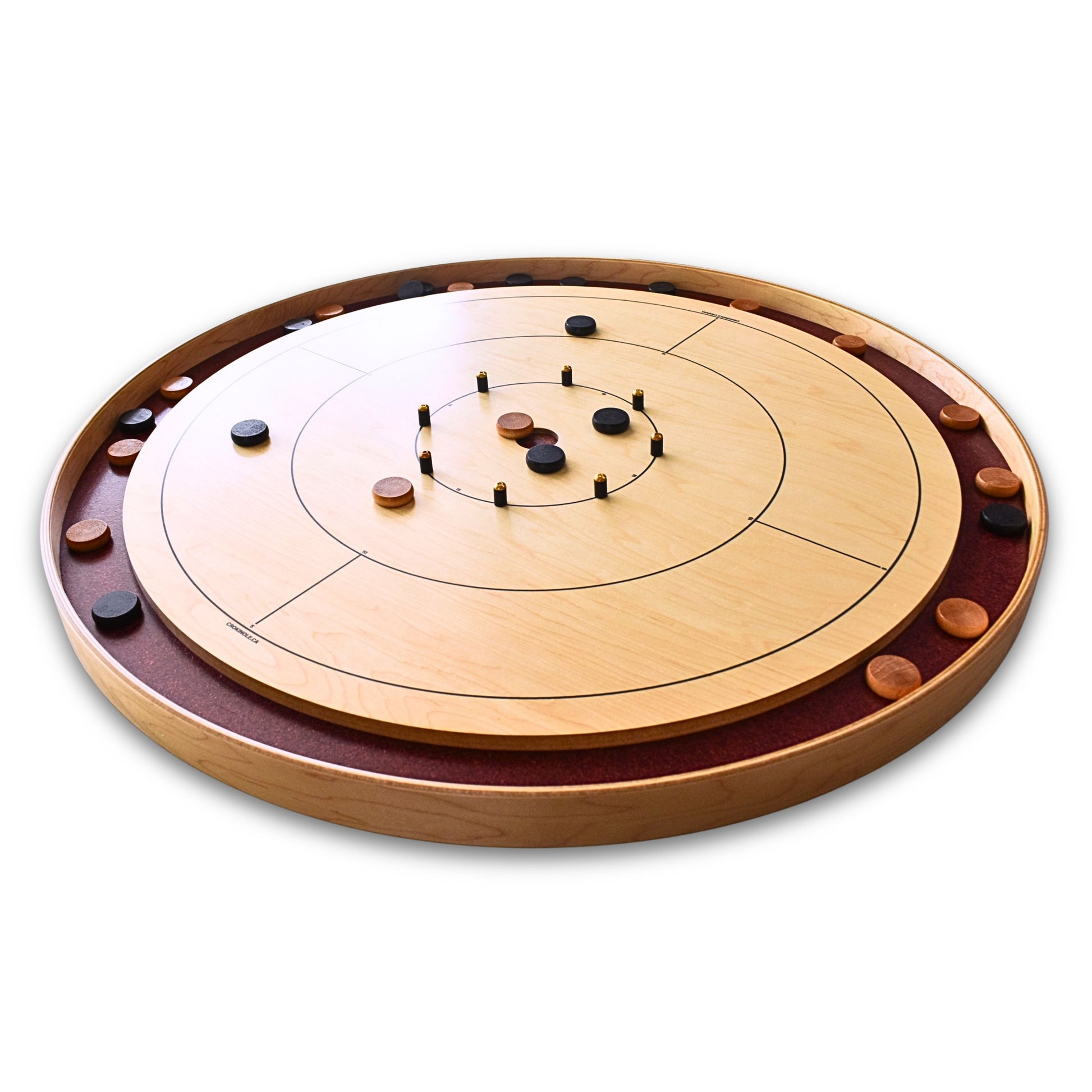
 Crokinole Canada Round Tournament Board (Royal Red / Canada Board)
The co-equal serious-tier board to the Tracey, and in blind play most people couldn't separate them. Maple deck over premium maple MDF, brass posts in black latex sleeves, multi-step lacquered and buffed to a 'very fast' surface, with a 20s cup and bilingual rules in the box. Meets NCA standards at a true 26-inch field. The choice between this and a Tracey comes down to color, brand loyalty, and shipping — both are genuinely correct competition boards. Listed around CA $365-380; roughly US $280-380 depending on exchange.
- NCA-standard 26-inch field, very fast lacquered maple surface
- Brass-and-latex pegs for lively, repeatable rebound
- Multiple colorways; deep maker catalog if you want to upgrade later
- Bilingual rules and 20s cup included
- MDF core (a feature for flatness, a turn-off for purists)
- Cross-border shipping/exchange adds cost for US buyers
- Some colorways periodically sell out
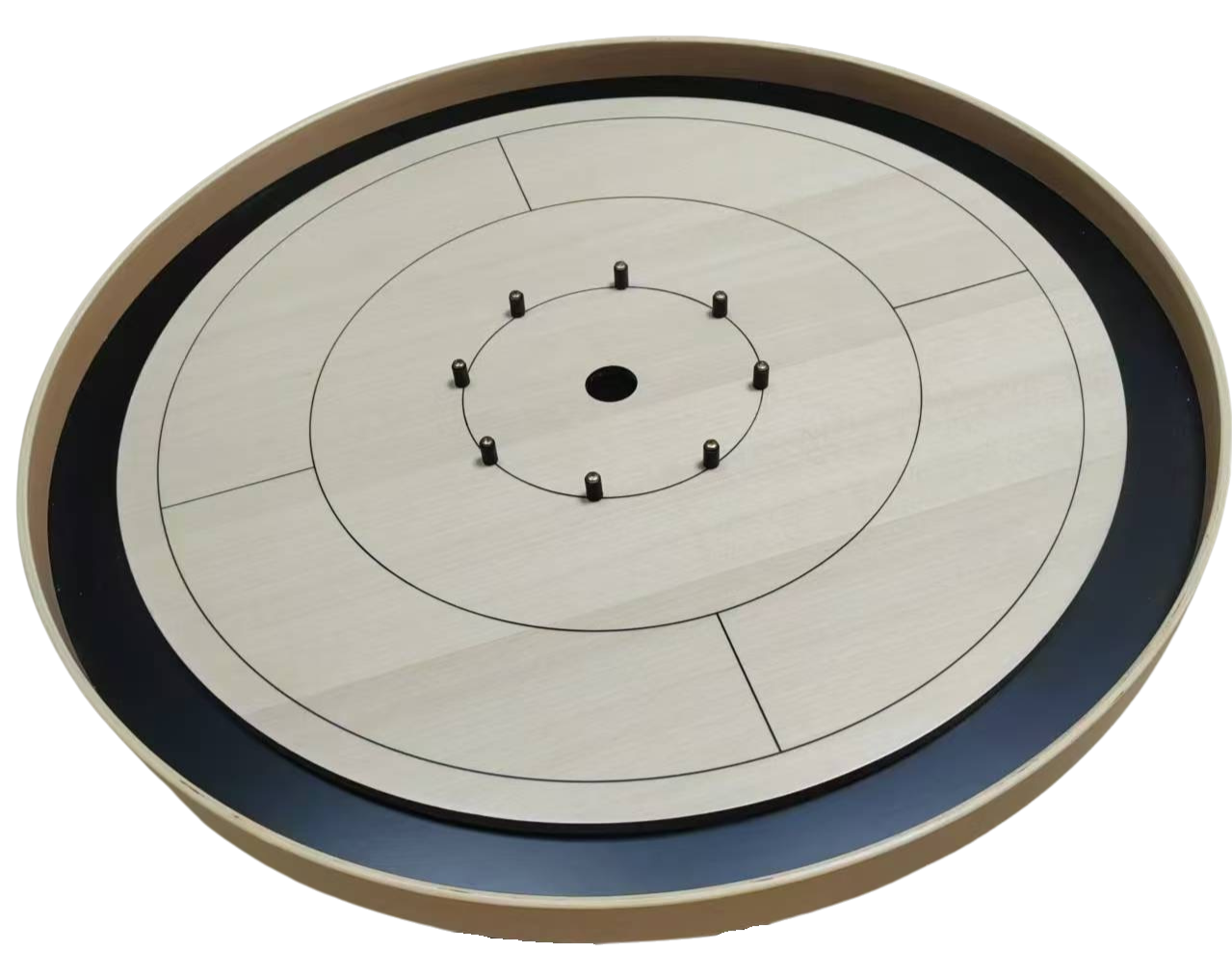
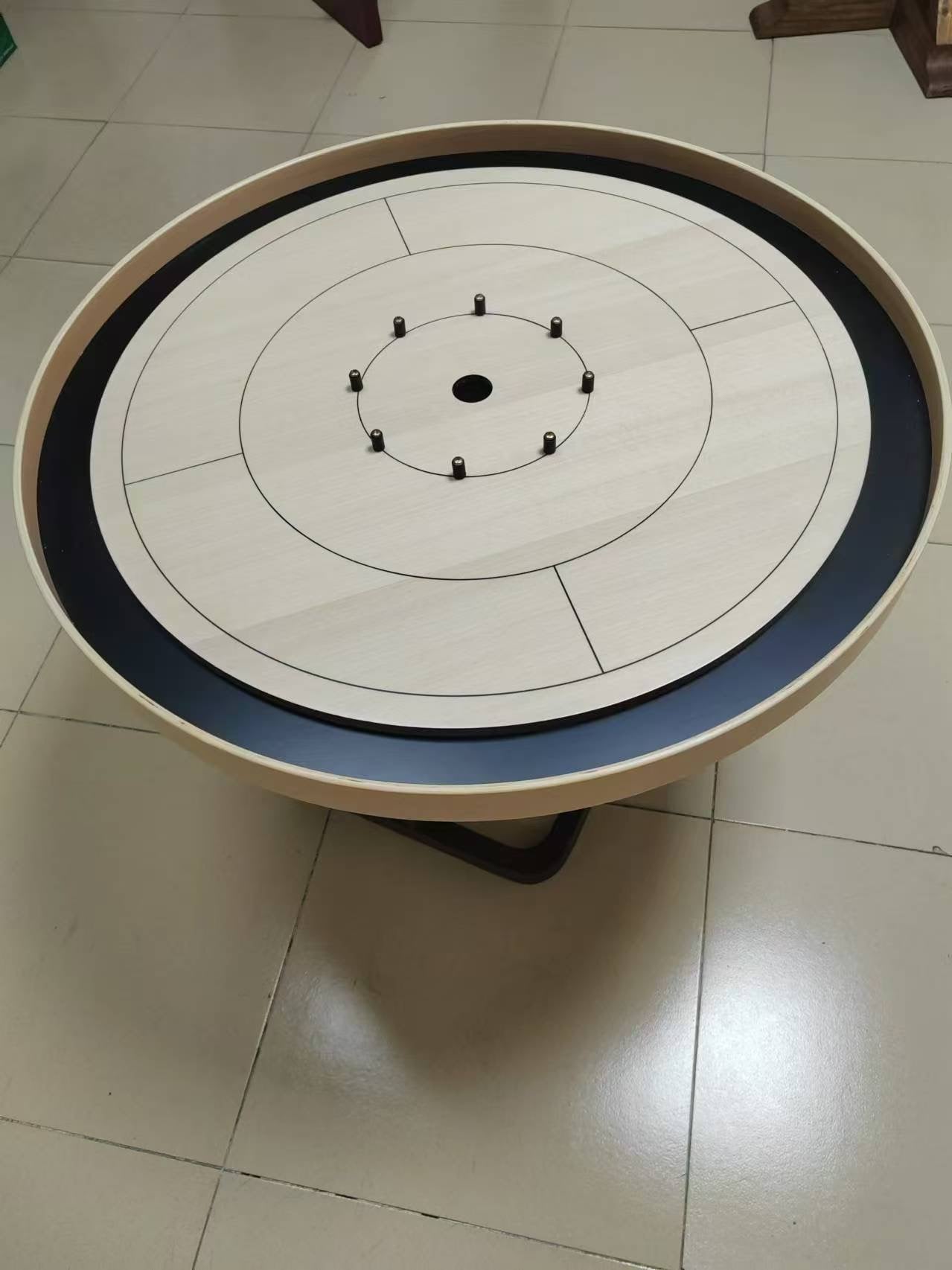 3 photos
 Mayday Games Beech Tournament-Size Crokinole Board
The single best way to get a regulation 26-inch field into your home under $150. Beech-veneer top over a sealed MDF base, 30.5 inches overall, ~17 pounds, double-boxed to survive shipping. It's not flawless — expect dowel-style pegs, the occasional cosmetic blemish, and a surface that's good rather than glassy — but the geometry is regulation and it plays genuinely well. As one reviewer put it, you could 'easily spend two or three times the amount on a similar entry-level board.' The budget gateway, and an honest one.
- True 26-inch regulation playing surface for ~$135
- Tournament-size geometry; real practice value
- Stocked in North America; ships fast and well-protected
- Outstanding price-to-playability ratio
- Bare wooden dowel pegs rebound less consistently than rubber-sleeved
- Surface is good, not tournament-glassy
- Occasional finish/cosmetic blemishes reported
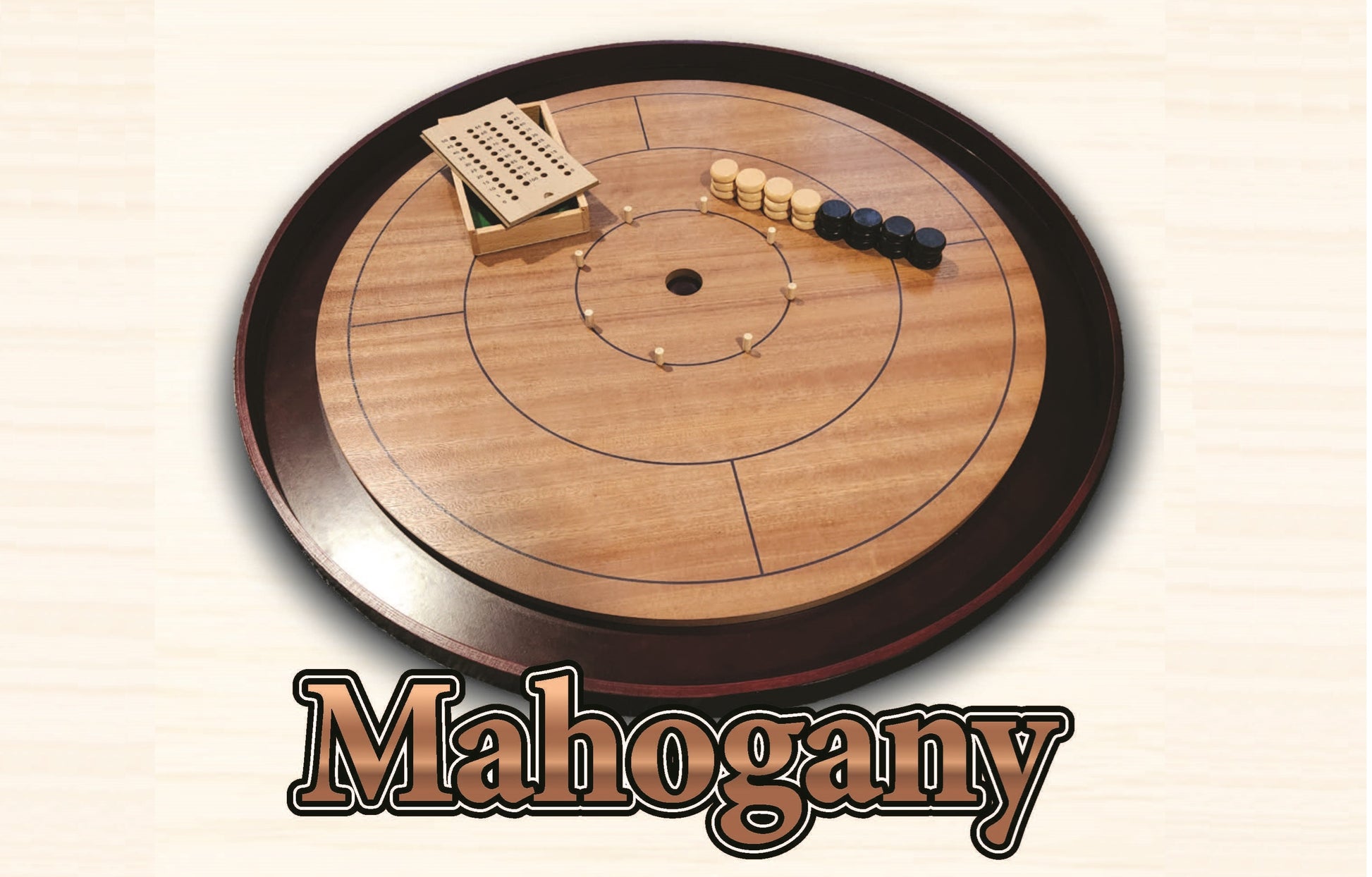
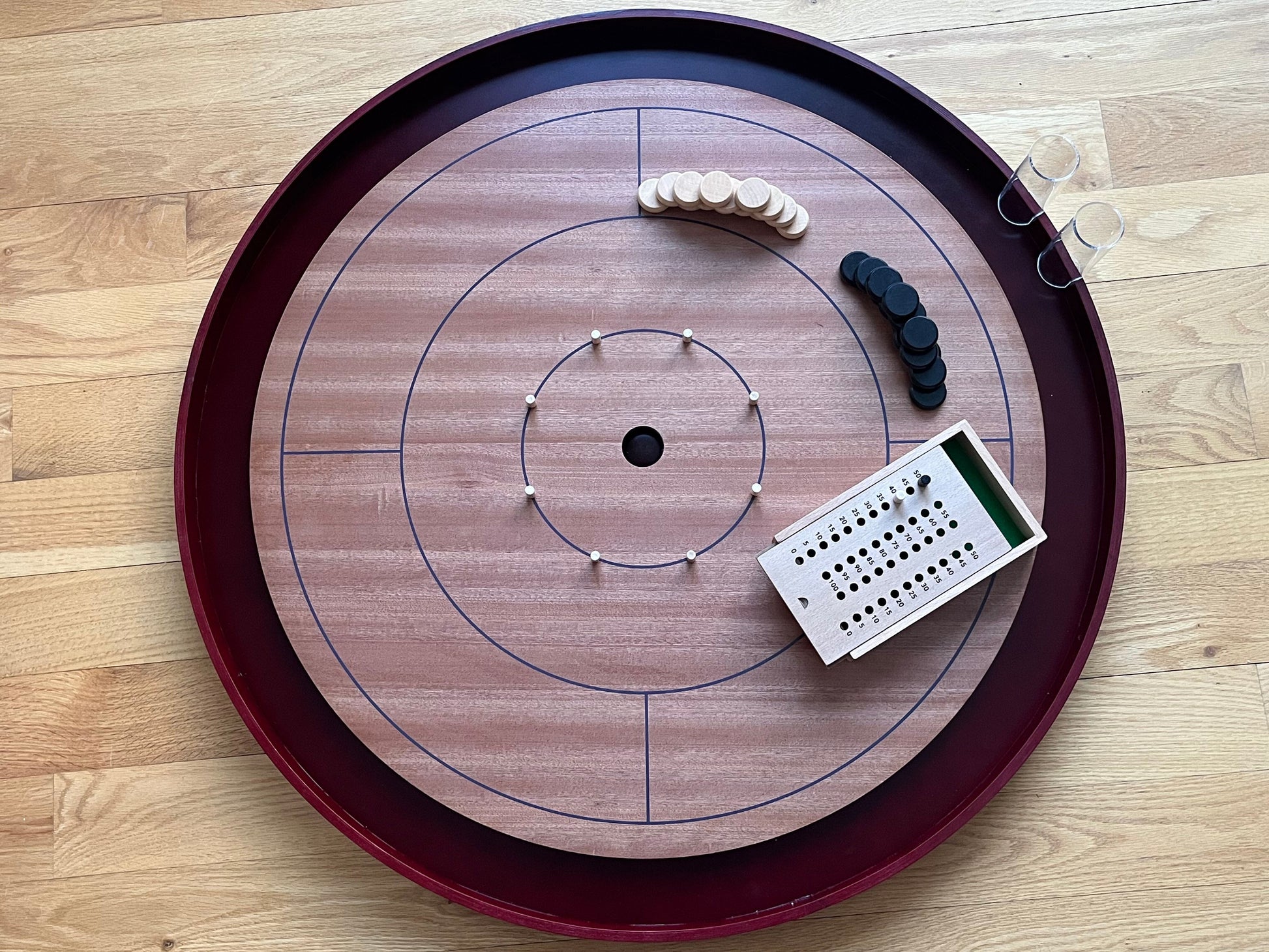
 3 photos
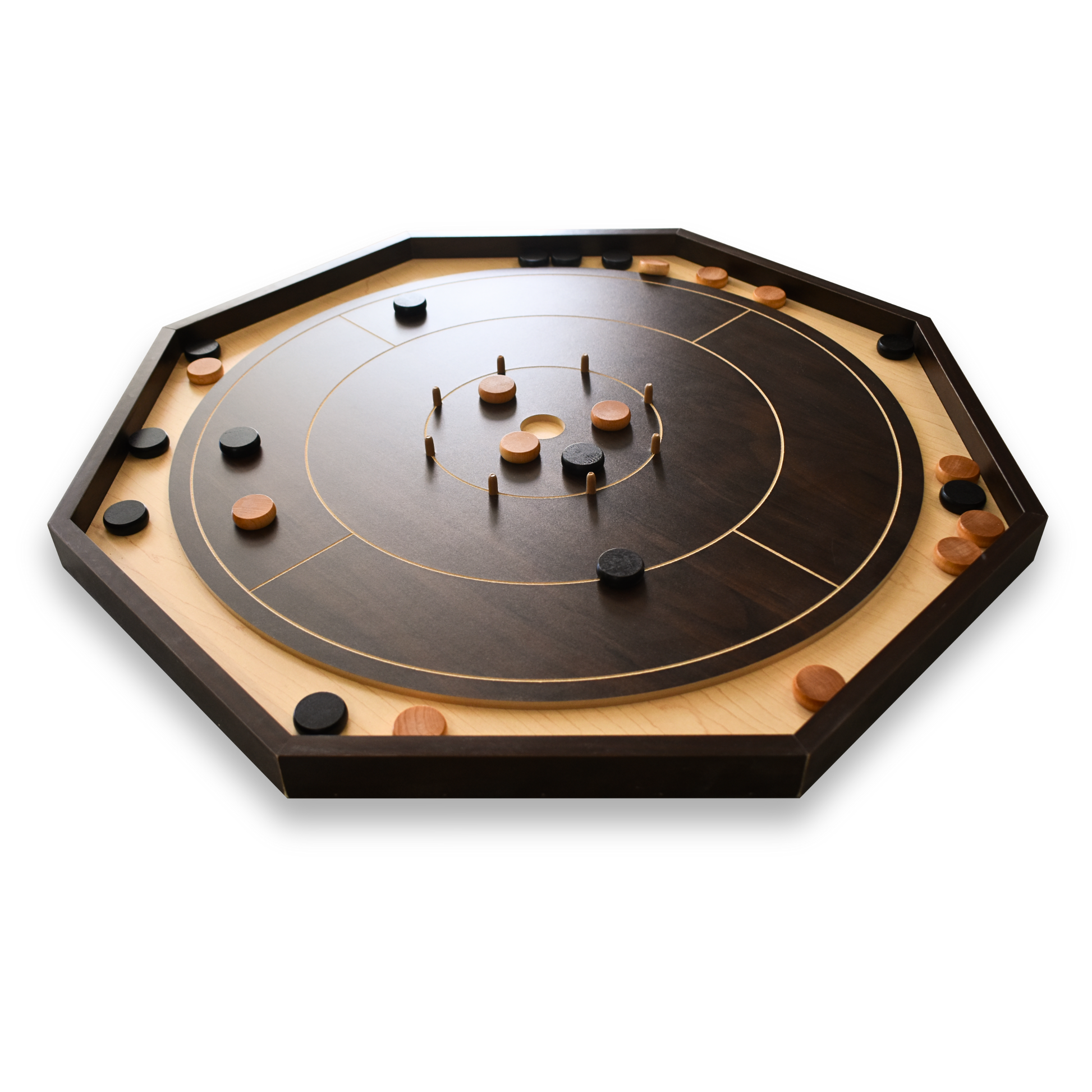
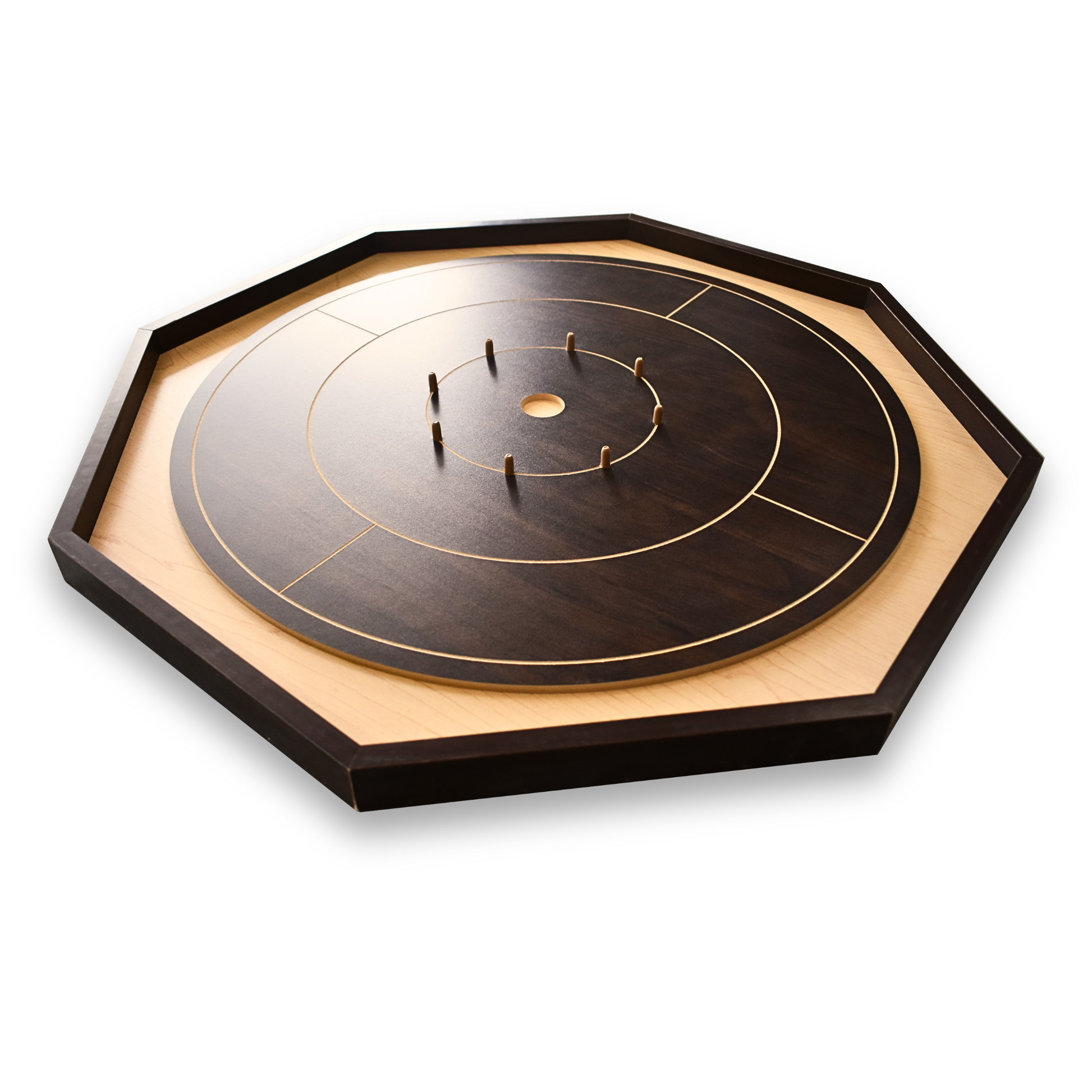
 Mayday Games Mahogany Standard Edition Crokinole Board
The best dollars-to-playability ratio in the guide. A true 26-inch field (30.5 inches overall, 2-inch ditch, quarter-inch rim) that ships loaded: 28 discs, a magnetic-clasp wooden disc box, two acrylic 20s holders, a 3-oz tin of wax, and a color rulebook — all for US $180. It uses eight wooden pegs and a wood deck rather than competition-grade rubber pegs and a buffed maple race, so it sits a clear notch below a Tracey in surface speed. But for a developing player who wants a complete, correct board without tournament pricing, this is the smart-money pick.
- True 26-inch field with a generous, well-equipped box
- Magnetic disc storage, 20s holders, wax, and rules included
- Strong value at US $180
- North-American stock and reliable shipping
- Eight wooden pegs, not rubber-sleeved brass
- Surface is a notch slower than top-tier maple decks
- Labeled 'standard,' not a true competition board
 3 photos
 Crokinole Canada 'For Beginners' Melamine Board
The lowest sane price for a board from a genuine crokinole maker. Listed at CA $130 (~US $95-100) in cherry/walnut/maple melamine finishes. The melamine deck is a touch slower than lacquered maple, so it won't deliver tournament physics — but it's flat, the field is honest, and the build comes from a shop that makes championship boards. For a buyer who wants to start right but truly can't stretch to a Mayday beech, this is the floor I'd endorse. Below it, you're in marketplace-novelty territory.
- Real maker quality at the category's sane price floor
- Flat, honest field; several attractive melamine finishes
- Backed by a credible tournament-grade manufacturer
- Melamine surface is slower than lacquered maple
- Smaller/entry build, not a competition field
- US shipping/exchange narrows the gap to better boards
Generic 27-inch Crokinole & Checkers Reversible Board
Ranked honestly for what it is, not pretended into something it isn't. A wooden 27-inch frame with a ~22-inch playing surface, ~24-26 discs and a bag, with checkers printed on the reverse. As crokinole it's compromised — undersized field, slower surface, simple pegs, and a shallow center/ditch dictated by the flip-to-checkers design. As a cheap, fun, two-games-in-one board that gets kids flicking discs and might lead them to the real game, it earns its ~$50 keep. Buy it as the entry drug, never as the destination.
- Inexpensive (~$40-60) and widely available
- Two games in one: checkers on the flip side
- Fine casual fun for kids and occasional game nights
- ~22-inch playing surface, not regulation 26 inches
- Slower surface and basic pegs; skill of the game never emerges
- Anonymous manufacturing; quality varies listing to listing
- Reversible design forces a shallow center hole and ditch
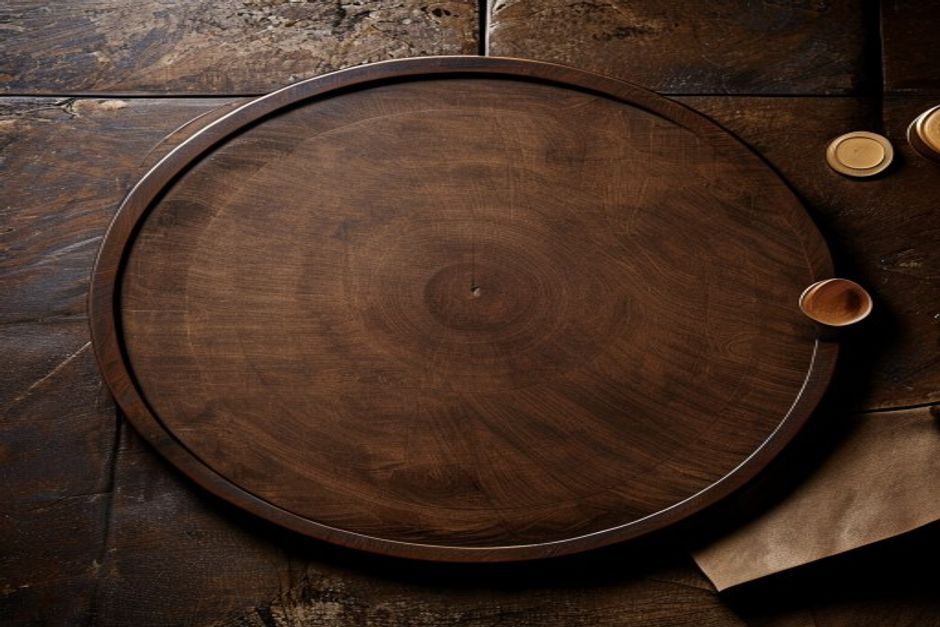
Anonymous '30-inch Official Tournament' Marketplace Board
Included as a deliberate cautionary entry. These boards mimic the price of a real Tracey or Crokinole Canada (~US $150-250) while delivering a grippier, under-finished surface, bare wooden pegs, and no verifiable maker behind them. Some do hit a true 26-inch field, which is the one thing they get right — but you're paying near-tournament money for distinctly sub-tournament performance and zero pedigree or support. If your budget reaches this number, buy a real Mayday beech for less or save a little more for a Tracey. This price band is the only genuine ripoff in crokinole.
- Some examples do offer a true 26-inch playing surface
- Readily available on major marketplaces
- Tournament-level price for toy-level surface and pegs
- No verifiable maker, pedigree, or after-sale support
- Quality is a lottery; finish and flatness vary wildly
- Strictly worse value than the Mayday beech below it or a Tracey above it
At a glance
| board | maker | surface | price | best for |
|---|---|---|---|---|
| Tracey Tour | Crokinole Game Boards (Tracey) | Canadian maple deck / composite core, 26", 5-7 coats buffed | ~US $300-380 | Best overall / official WCC standard |
| Round Tournament (Royal Red) | Crokinole Canada | Maple deck / maple-MDF core, 26", multi-step lacquered, brass+latex pegs | ~US $280-380 (CA $365-380) | Best NCA-standard alternative |
| Fundy Tournament | Muzzie's | Premium maple deck / MDF core, 26" octagon, brass+latex pegs, handmade | ~US $290 (CA $395) | Best handmade tournament board |
| Walnut Expressions | Crokinole Canada | Solid walnut, 26", tournament-equivalent surface | ~US $700-750 (CA $1,000) | Best heirloom |
| Beech Tournament-Size | Mayday Games | Beech veneer / sealed MDF base, 26", wooden pegs | ~US $135 | Best budget (true 26" field) |
| Mahogany Standard | Mayday Games | Wood deck, 26", 8 wooden pegs, loaded box | ~US $180 | Best value |
| The Family Board | Crokinole Canada | Lacquered family-grade deck, sub-tournament field | ~US $140-150 (CA $190) | Best first real household board |
| 'For Beginners' Melamine | Crokinole Canada | Cherry/walnut/maple melamine, entry field | ~US $95-100 (CA $130) | Lowest-price real-maker board |
| 27" Crokinole & Checkers (reversible) | Various marketplace brands | Wood, ~22" surface, checkers reverse, basic pegs | ~US $40-60 | Mass-market family novelty |
| '30" Official Tournament' (unbranded) | Anonymous / private-label | Varies; often 26" but grippy, bare pegs, no pedigree | ~US $150-250 | AVOID — worst value in the category |
Questions, answered
What is crokinole?
Crokinole is a Canadian disc-flicking dexterity game, first documented in 1876 in Perth County, Ontario. Two players or pairs flick wooden discs from their own quadrant of a round or octagonal board toward a recessed 20-point center hole, past a ring of eight pegs, scoring 20/15/10/5 by zone while trying to knock opponents' discs into the surrounding ditch. It's easy to learn and famously deep to master.
What is the best crokinole board overall?
The Tracey Tour board from Crokinole Game Boards (Jeremy Tracey, ~US $300-380) is the best overall. It's the official World Crokinole Championship specification, built by the maker Willard Martin personally anointed as his successor, with a fast buffed-maple deck, true 26-inch field, and rubber-sleeved pegs. The Crokinole Canada round tournament board is its co-equal alternative.
What is the best budget crokinole board?
The Mayday Games beech-veneer tournament-size board (~US $135) is the best budget choice. It delivers a true regulation 26-inch playing surface for under $150 — something no other board matches at that price. It uses wooden pegs and a good-not-glassy surface, but the geometry is correct and it plays genuinely well. Below ~$130, you're typically buying an undersized 22-inch novelty.
What makes a board tournament-grade versus a toy?
Four things: a fast, dead-flat, multi-coat-lacquered hard-maple playing surface; a true 26-inch field; consistent pegs (ideally rubber-sleeved brass); and a clean, deep ditch that catches discs without bouncing them back. A toy board fails on surface speed and field size — it often has a grippy ~22-inch surface and bare pegs. The décor rim and inlay are cosmetics that don't affect play at all.
Wood or MDF — does the surface material matter?
What matters is the playing deck and its finish, not whether the core is solid wood or MDF. The boards used at the World Crokinole Championship run a maple deck over a composite (MDF-style) core, and MDF actually helps keep the surface dead flat and warp-resistant. Solid hardwood is an heirloom and aesthetic choice — it looks gorgeous and lasts generations, but it does not make discs flick faster. Don't pay a performance premium for solid wood; pay it for beauty.
What is the regulation size of a crokinole board?
A regulation competition board has a 26-inch playing-surface diameter, with the overall board typically around 30-31 inches once you add the ditch and rim. Discs are roughly 32 mm across. Watch for marketplace boards advertised as '27-inch' — that's usually the outer frame, with the actual playing surface only 22 inches, which isn't regulation and changes every shot.
What is the best beginner crokinole board?
For a beginner who wants to start right, Crokinole Canada's 'For Beginners' melamine boards (~US $95-100) or 'The Family Board' (~US $140-150) are the best — real boards from a championship maker at modest prices. If you want a true 26-inch field to grow into, the Mayday beech (~$135) is the budget pick. Avoid the $80-120 dead zone; spend a little less for an honest novelty or a little more for a real board.
How do you play crokinole?
Players take turns flicking one disc per turn with a finger, snapping the index or middle finger off the thumb to propel the disc from their quadrant. You aim for the center 20-hole and try to knock opponents' discs into the ditch. The 'open shot' rule: if no opponent discs are on the board, your shot must reach or hold inside the 15-circle, or it's removed. After all discs are played (usually 12 per side), scoring is differential — only the higher side nets the point difference.
What is the best heirloom crokinole board?
A solid-hardwood board from Crokinole Canada — Cherry Expressions (~CA $900) or Walnut Expressions (~CA $1,000, ~US $700-750) — is the best heirloom, a furniture-grade piece meant to be handed down. Muzzie's handmade premium octagons occupy similar territory. Be clear-eyed: these play as well as a $350 tournament board, not better. You're paying for solid-wood beauty and longevity, not extra performance.
Are expensive crokinole boards worth it?
Up to about $300-380, yes — that buys you a genuine tournament-grade surface and field (Tracey, Crokinole Canada, Muzzie's) that transforms how the game plays. Above that, the premium is purely for solid-wood aesthetics and heirloom value, not performance. The genuinely bad value is the $150-250 anonymous 'tournament' board: it costs near-tournament money but delivers a slow surface and bare pegs. Spend on a real maker, or stay budget — avoid the pedigree-free middle.
What is the best crokinole board for families?
It depends on commitment. For a casual family wanting cheap two-games-in-one fun, a 27-inch reversible Crokinole & Checkers board (~$40-60) is fine — just know it's a ~22-inch toy surface. For a household likely to keep playing, start on a true 26-inch board: Crokinole Canada's Family Board (~$140-150) or the Mayday beech (~$135). The worst buy is a $200+ anonymous board that's neither a guilt-free novelty nor a real tournament board.
Where can I buy a good crokinole board?
Buy from the lineage makers directly: crokinolegameboards.com (Tracey, the WCC standard), crokinole.ca (Crokinole Canada), muzzies.ca (Muzzie's handmade), and crokinoledepot.com (the Beierlings' shop and a great resource). Mayday Games (maydaygames.com) is the budget gateway and stocks in North America. General marketplaces carry mostly décor and novelty boards — fine for a cheap family set, risky for anything you want to last. (Note: Puzzlewick sells nothing and takes no cut — we just point you at the real makers.)
Dax's verdict
Here's the candid close. Crokinole is one of the great undersung tabletop games, and the equipment matters more than in almost any other game — buy wrong and you'll never see why anyone loves it. So: if you can spend $300-380, buy a Tracey Tour or a Crokinole Canada round tournament board and never think about it again; you'll own the real thing for the rest of your life. If you want handmade soul, buy a Muzzie's. If money is genuinely tight, the Mayday beech at ~$135 gets a true 26-inch field into your house and plays honestly — that's the floor I'd stake my name on. Want an heirloom? The solid-walnut boards are gorgeous, just don't kid yourself that they play better than the maple-over-MDF tournament boards; you're buying furniture and a legacy, both worth paying for if that's what you want. And please, avoid the two traps: the $40 reversible novelty masquerading as a real board (it's a 22-inch toy, fine for kids, useless for the actual game) and — worse — the $150-250 anonymous 'tournament' board that charges real-board money for toy performance. Spend on a real maker or stay frankly budget; the pedigree-free middle is where money goes to die. One last thing, stated plainly: Puzzlewick sells nothing, ships nothing, and takes no cut on any of this. Every link here points to the small family makers and shops who actually flatten the maple. We're a fan library, not a store — our only stake is that you end up flicking discs across a board that finally shows you why this 150-year-old Canadian game is worth the obsession.
Research ledger 24 sources · reviewed 2026-07-17
Specifications, rules, current product information, community experience, and contrary evidence were checked against the sources below. Commercial links are kept separate from editorial evidence.
- en.wikipedia.orgen.wikipedia.org/wiki/Crokinole
- worldcrokinole.comworldcrokinole.com
- worldcrokinole.comworldcrokinole.com/thegame.html
- crokinolegameboards.comcrokinolegameboards.com
- traceyboards.comtraceyboards.com/about
- crokinolegamebywillard.cacrokinolegamebywillard.ca
- crokinoledepot.comcrokinoledepot.com
- crokinoledepot.comcrokinoledepot.com/crokinole-blog/the-boards-of-beierling-the-willard
- crokinoledepot.comcrokinoledepot.com/crokinole-rules.html
- crokinole.cacrokinole.ca
- crokinole.cacrokinole.ca/collections/crokinole-boards
- crokinole.cacrokinole.ca/products/the-tournament-board-set-meets-nca-standards
- crokinole.cacrokinole.ca/products/the-crokinole-canada-tournament-board-game-set-meets-nca-standards
- crokinole.cacrokinole.ca/collections/solid-hardwood-top-crokinole-boards
- muzzies.camuzzies.ca
- muzzies.camuzzies.ca/products/fundy-tournament-board-2
- muzzies.camuzzies.ca/pages/about-muzzies
- maydaygames.commaydaygames.com/products/mahogany-tournament-edition-crokinole-board
- maydaygames.commaydaygames.com/collections//crokinole-tournament-edition-board-accessories
- mastersofgames.commastersofgames.com/cat/board/crokinole-tracey-tour-championship.htm
- bargames101.combargames101.com/best-crokinole-boards
- initiativetabletop.cominitiativetabletop.com/2017/03/20/kickstarter-review-crokinole-by-mayday-games
- lyleestill.substack.comlyleestill.substack.com/p/crokinole-lessons
- keithschell.substack.comkeithschell.substack.com/p/a-uniquely-canadian-family-fun-game

I'll be honest with you — flattery is boring.

Keep exploring
The next smart rabbit holes.
✦ Topic PathBoard Game Buying Guides: compare the whole shelfStart with the decision, not the shelf. These guides compare the games, editions, expansions, player counts, and costs people...Buying GuideBest Heirloom Chess Sets, Ranked (2026)The wooden sets worth your grandkid's future — what actually makes a set heirloom, which woods survive fifty years of love, and ten real...Best OfBest Heirloom Wooden Games, Ranked (2026)Real wood that survives refinishing, hand-carved pieces, joinery that outlasts you — not a marketing label slapped on particle board...