Best Heirloom Chess Sets, Ranked (2026)
The wooden sets worth your grandkid's future — what actually makes a set heirloom, which woods survive fifty years of love, and ten real makers ranked by someone who collects them instead of selling them.

Written and reviewed by Robert Pruitt · how this guide was made
Last editorial refresh: 2026-06-13 Gold-standard QA: 2026-07-17 22 sources reviewed Affiliate links checked during gold-standard pass

The short answer
An heirloom chess set is a fine wooden Staunton-pattern set — boxwood and a dark hardwood like ebony or rosewood — with hand-carved knights, real lead weighting, four queens for promotion, and a separately-bought hardwood board sized to the pieces. The best overall heirloom is the House of Staunton Collector Series (boxwood/ebony, 3.75" king, patented weighting, ~$619 pieces-only): it is the reference modern Staunton, and everything else is measured against it. The best tournament set is a 3.75"-king Sheesham-and-boxwood German-knight set from ChessBazaar or House of Chess (~$70–$130) — FIDE-legal proportions, honest wood, made to be played not worshipped. The best budget-but-real-wood pick is a Sheesham/boxwood Staunton with board for roughly $80–$130; Sheesham is forgiving, warm, and durable even if you neglect the oil. The best luxury splurge is the House of Staunton Camaratta 1849 Collector Series in genuine ebony (4.4" king, ~$1,029+, lifetime crack warranty) — the closest mass-available render of the 1849 original short of a real antique Jaques. Buy the pieces first, then the board: base diameter should be ~75–85% of the square size.
Decision map
Choose in thirty seconds
Best luxury splurge
Best for collectors of the 1849 look
Best value real-ebony heirloom
I've been collecting for twenty-three years, and the one thing I've learned is that the right object never sells you on itself—it just fits your hand better than you expected. A true heirloom chess set landed on my shelf three weeks ago, and I opened the box on a Tuesday and forgot to close it. Played a game against myself at 2am. Played another at breakfast. Three weeks later I was the guy at the club who'd memorized the feel of the weighted kings, and I realized: this wasn't just a set, it was a piece I'd be handing forward to someone who won't even be born for a decade.
Here's the quiet part, because it's the whole reason Puzzlewick exists: we sell nothing. There is no buy button here, no markup, no affiliate sleight of hand. Every link below points straight at the maker. I'd rather you trust the ranking than line my pockets, because the second you suspect I'm paid to love a set, the ranking is worthless — and a worthless ranking is no use to someone trying to choose a set their grandkid will still be sliding across a board in 2076.
The real work: I've spent more hours than I'll admit reading chess.com equipment threads, r/chess teardowns, and the catalogs of every house worth naming. The good news—the heirloom world is small and knowable. The reference exists (House of Staunton). The originators still trade on their 1849 birthright (Jaques of London). And a wave of genuinely good Indian-made sets has put real boxwood-and-ebony in reach of mortals — with the asterisk that quality varies bench to bench, and you should buy from houses that replace a cracked pawn without a fight.
What follows is the candid version: what actually makes a set heirloom, the woods and the weighting and the knights, why you buy the board separately, sizing by king height — then ten real sets ranked, with the overrated called overrated and the sleepers called sleepers. No fabrication. Where a price wobbles or a claim is fuzzy, I've said so at the bottom. If it didn't earn a shelf, it isn't here.
Start here, then go deeper
You are in the right cabinet.
 ✦ Topic PathBoard Game Buying Guides: compare the whole shelfStart with the decision, not the shelf. These guides compare the games, editions, expansions, player counts, and costs people...
 Best OfBest Heirloom Wooden Games, Ranked (2026)Real wood that survives refinishing, hand-carved pieces, joinery that outlasts you — not a marketing label slapped on particle board...
 Buying GuideBest Crokinole Boards, Ranked (2026)The truth about crokinole: most 'boards' are wall furniture that happen to have pegs—here's which ones actually play, and why disc speed...
What actually makes a chess set an 'heirloom' — and what's just marketing?
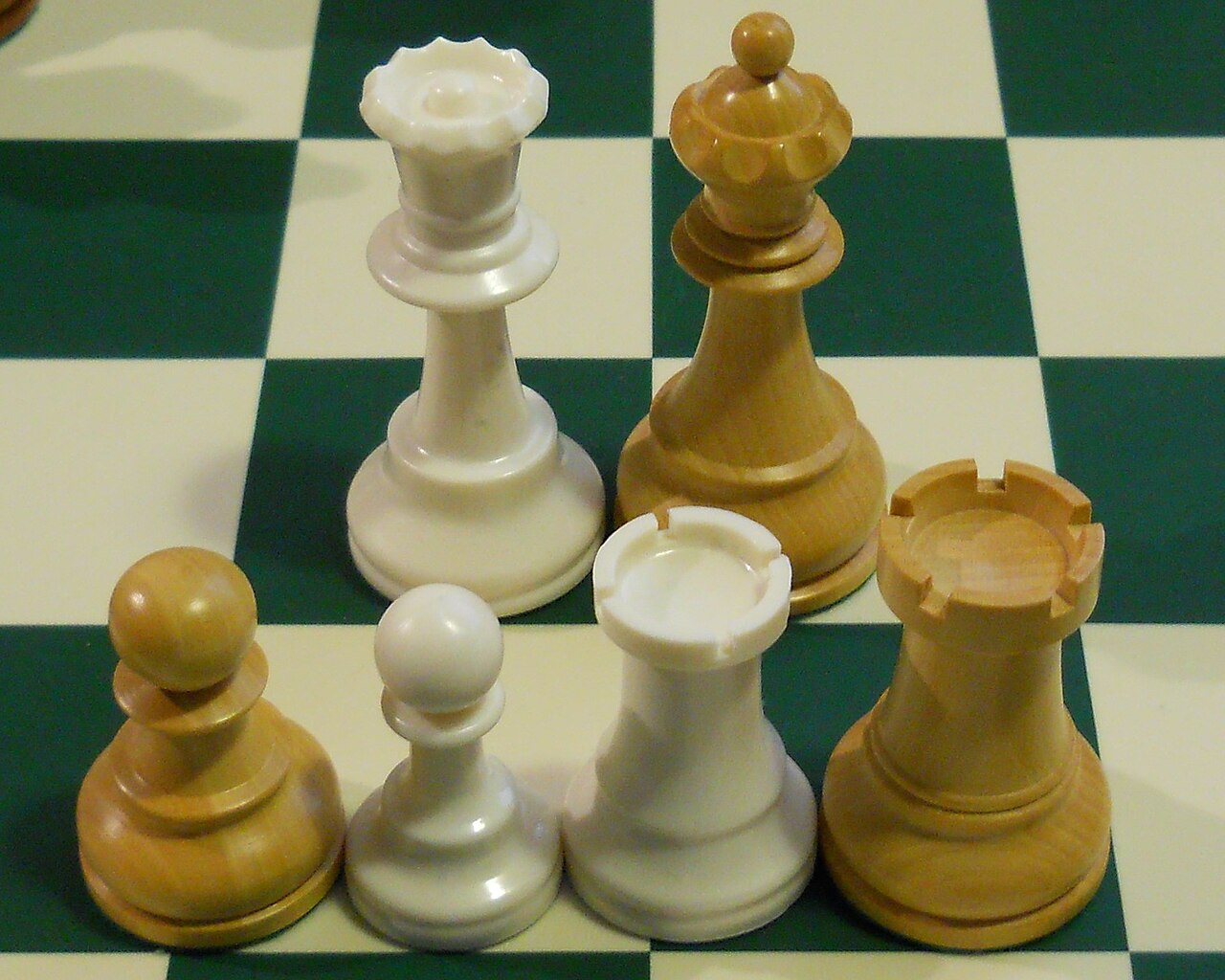
Strip away the adjectives and an heirloom chess set is four things stacked together: the right pattern, honest wood, real weighting, and knights carved by hand. Miss any one and you've got a nice set, not an inheritance.
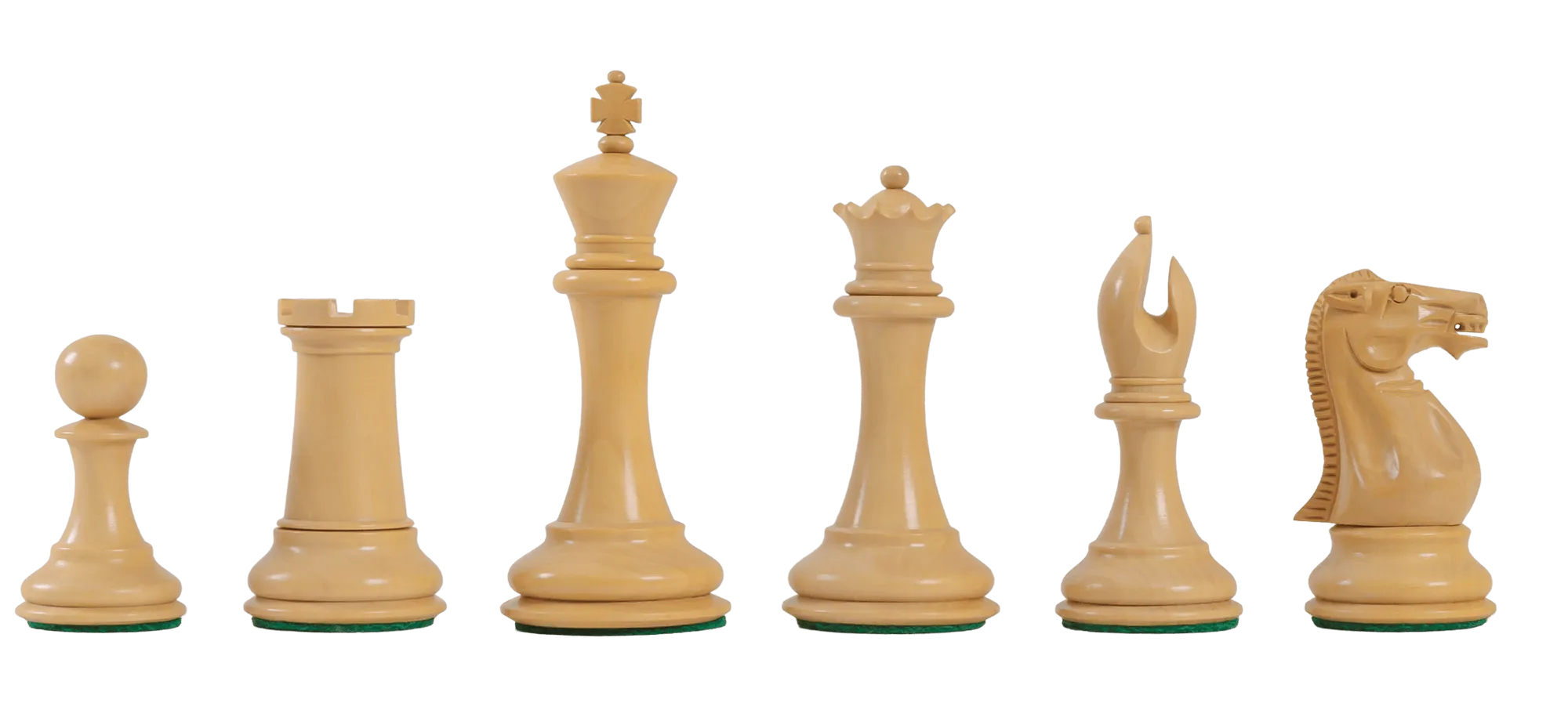
The pattern is Staunton — and it's not a vibe, it's a specific design. Registered by Nathaniel Cooke in March 1849 and first sold by John Jaques of London that September, it was endorsed by the era's strongest player, Howard Staunton, whose name it carries. Before Staunton, sets were a chaos of regional styles you had to learn before you could play; Cooke's genius was instant legibility — a cross-topped king, a coronet queen, a mitred bishop, a horse-head knight, a castle rook. Every serious set made since is a Staunton, and an heirloom set is a faithful one: properly proportioned, not the squat, fat-based caricatures you see in gift shops.
The wood is where romance meets physics. The light pieces are almost always boxwood — dense, fine-grained, pale gold, the traditional turning wood for two centuries. The dark pieces are the tell: genuine ebony (jet-black, rare, hard, expensive — the heirloom gold standard), rosewood (Blood rosewood, Bud rosewood — warm reddish-brown with figure), or Sheesham (Indian rosewood, the honest workhorse: durable, forgiving, beautiful, affordable). Beware 'ebonised' or 'lacquered' boxwood dyed black to imitate ebony — fine for a player's set, not the real thing for an heirloom.
Weighting is the invisible quality signal. Heirloom pieces are lead-weighted in the base — 'double' or 'triple' weighted — so a king lands with authority and won't tip when you knock the table. A 34-piece tournament set commonly runs 950–1,400+ grams. Felt or billiard-cloth base pads let the pieces glide. And the four-queen count (two extra queens for under-promotion) is the small detail that separates a real Staunton set from a toy.
What's just marketing: 'antique finish' on a brand-new set (a taste, not a virtue), 'hand-polished,' 'museum-grade,' and especially décor sets — metal-and-marble showpieces sold as 'heirloom' that are unbalanced to actually play. If the listing leads with how it looks on a shelf and buries how it plays, it's furniture.
An heirloom set is four things stacked: the right pattern, honest wood, real weighting, and a knight carved by a person — miss one and you have furniture, not an inheritance.
Which wood should you actually choose — ebony, rosewood, or Sheesham?
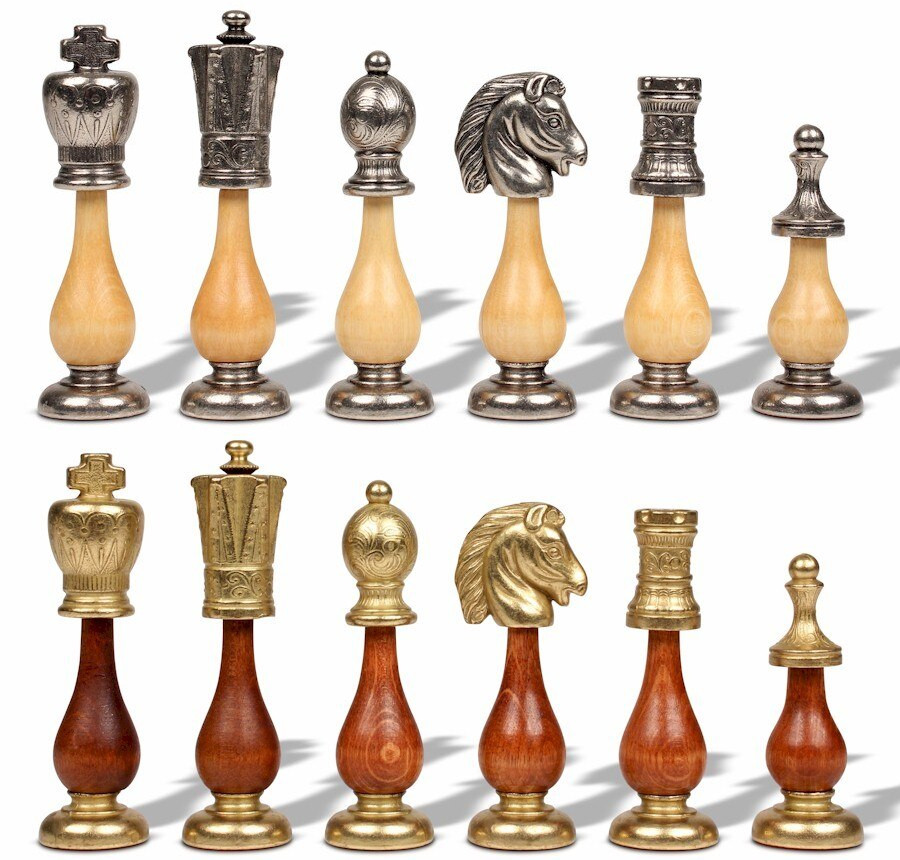

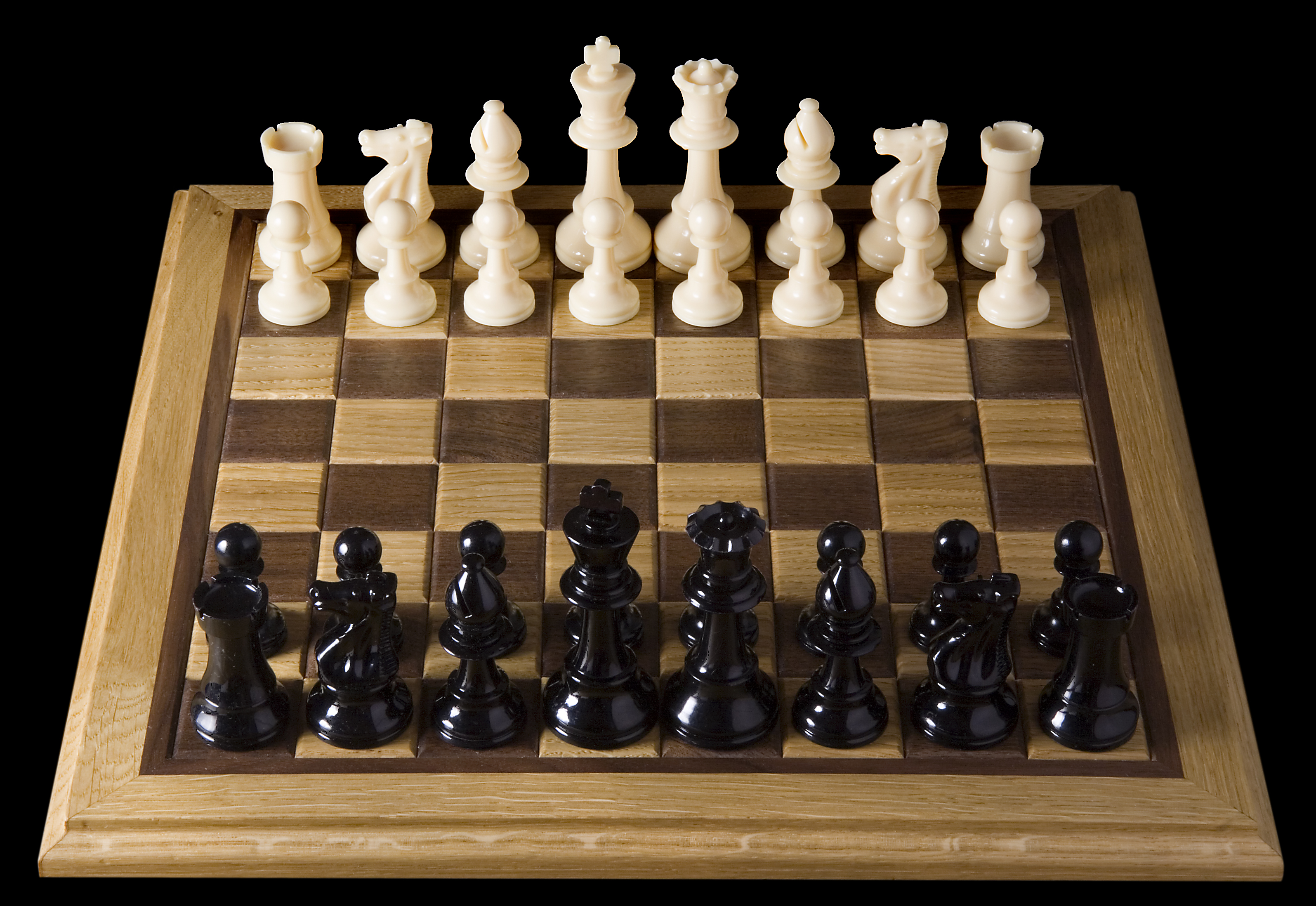
The dark wood is the single biggest decision you'll make, and it drives both the price and the personality of the set. Here's the honest hierarchy, top to bottom.
Genuine ebony is the heirloom benchmark. It's a true black hardwood, dense and oily, that takes a glassy finish and ages without fading. It is also rare, slow-grown, and increasingly restricted — which is why it costs what it costs and why a genuine-ebony set telegraphs 'serious' across a room. The trade-off beyond price: ebony's density means it can be prone to fine surface checking if a set is poorly cured or kept in a bone-dry house, which is exactly why the best houses now market crack warranties. House of Staunton's Camaratta line carries a lifetime guarantee against hairline cracks; that warranty exists because ebony earns it.
Rosewood — Blood rosewood, Bud rosewood, the various true rosewoods — is the connoisseur's value. It's a warm reddish-brown to near-purple, often with gorgeous figure, slightly softer to carve than ebony so the knight detail can be crisper, and frequently $80–$150 cheaper than the ebony version of the same set. Many collectors quietly prefer it; it photographs beautifully and it's a touch more stable than ebony in dry climates.
Sheesham (Indian rosewood / Dalbergia sissoo) is the honest everyday hero and the right answer for most buyers. As one widely-echoed forum line puts it, Sheesham is 'durable, good-looking, and forgiving if you skip oiling and dusting for months.' It's the standard dark wood on the entire mid- and budget tier of real-wood Staunton sets — warm grain, plenty hard enough to last decades, and cheap enough that a full set-with-board lands under $150. It is not lesser; it's the wood that put genuine hardwood chess in reach of ordinary households.
The boxwood for the light pieces is non-negotiable across all tiers — it's been the turning wood of choice for 200 years. Just make sure it's natural boxwood, not a pale stand-in.
My rule: if it's a true heirloom for the mantel, ebony or a top rosewood. If it's a set your kids will actually learn on and spill juice near, Sheesham-and-boxwood and don't look back. The forgiving wood that gets played beats the precious wood that gets shelved.
The forgiving wood that gets played beats the precious wood that gets shelved.
Why are the knights the part that actually matters — and how do you judge carving?
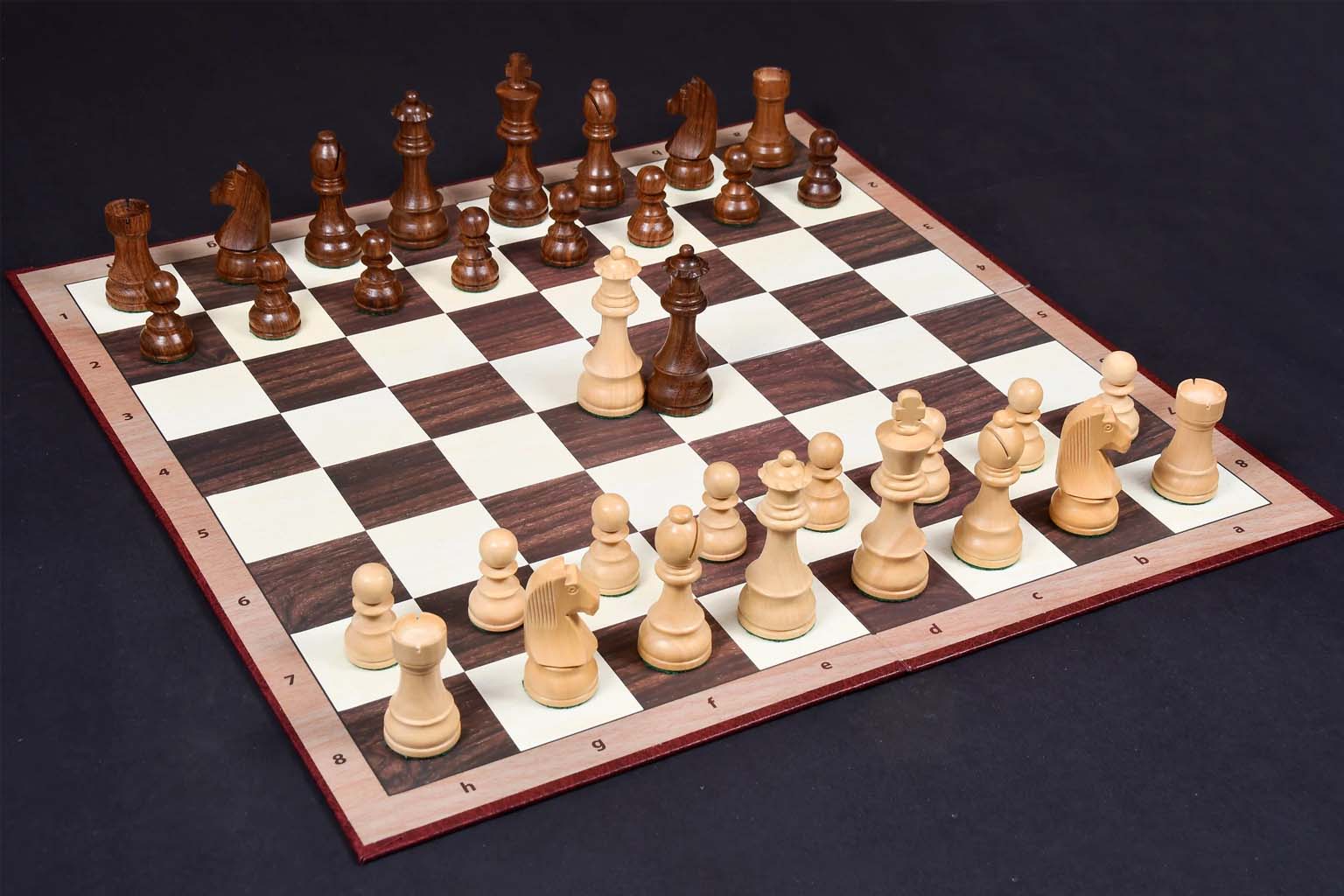
Here's the secret every collector knows and no beginner does: you judge a set by its knight. Every other piece on a Staunton board is turned on a lathe — symmetrical, repeatable, machine-friendly. The knight is the only piece that must be carved, by hand, from a turned blank. It's where the artisan's skill lives, where the price difference hides, and where the difference between an heirloom and a knockoff is most brutally visible.
What to look for, in plain terms: a good knight has a defined, expressive muzzle — you should read the nostril and the set of the jaw, not a mushy snout. The mane should be cleanly carved with depth — a traditional lightly-serrated mane on a 1849-style horse, deep flowing locks on a German or Russian knight — and crucially it should not spill messily over the base. The proportion should look like a horse, not a seahorse or a chess-emoji. And the pair of knights should match: hand-carving means slight variation, but the two should clearly be siblings.
The failure modes are exactly what the collectors flag. From the long-running chess.com Jaques thread, Gomer_Pyle nails the most common sin: 'Most reproductions don't get the bases right... Most sets these days seem to have fat, chunky bases.' And on a specific budget knight, Jack_Burton observes 'the ring just above the base never seems quite defined enough' and 'the mane sticks out like a tail over the base' when it shouldn't. That's the trained eye — and once you've read it, you can't unsee a bad knight.
This is also where you get what you pay for honestly. A $70 Sheesham set has a perfectly good German-knight — serviceable, characterful, plenty for play. A $325 Royal Chess Mall 1849 has knights that owners call 'showstoppers' with 'intricate hand-carved manes.' A $1,029 Camaratta Collector has knights modeled on the horses of the Parthenon's Elgin Marbles — and you can see the museum in them. The knight is the line item; everything else is turning.
Practical advice: when you shop, ignore the king and zoom in on the knight photo. If the maker is proud of the carving, they'll give you a big, sharp, side-on knight shot. If the knight is small, blurry, or shot from the front to hide the muzzle, that tells you what they're hiding.
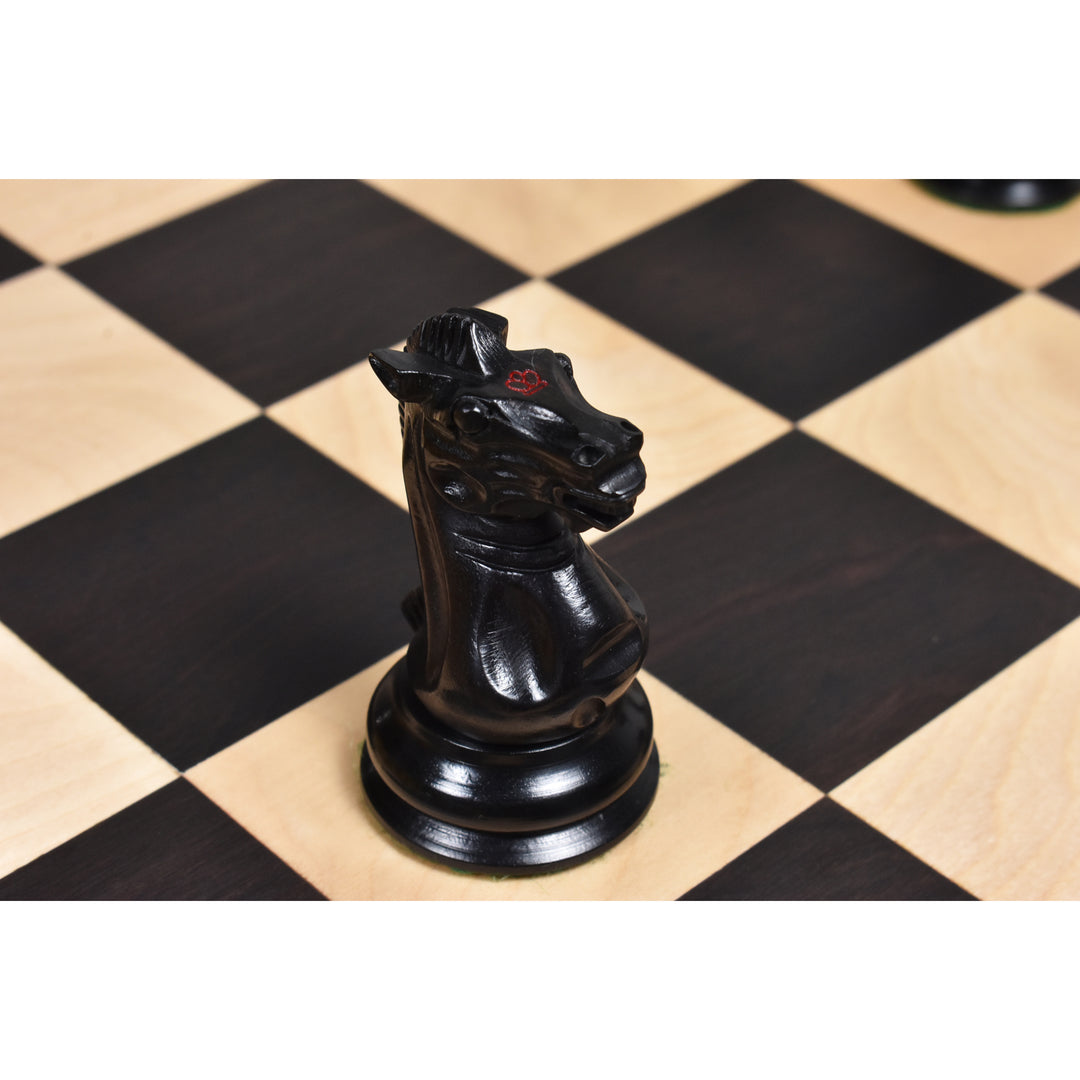
Every other piece is turned on a lathe. The knight is carved by hand — which is exactly why you judge the whole set by it.
Why do you buy the board separately — and how do you size it to the pieces?
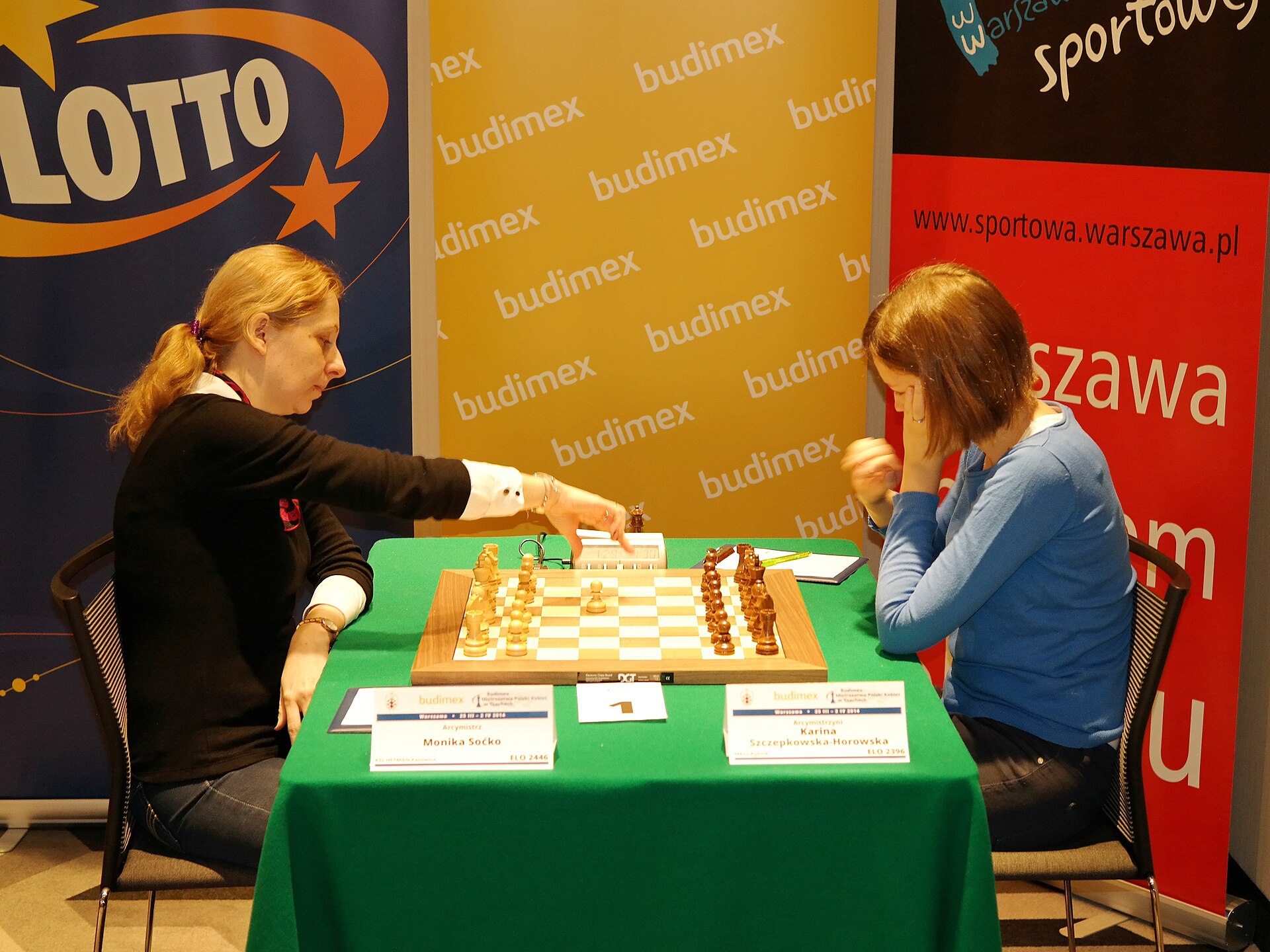
The single most common heirloom mistake is buying a beautiful set and dropping it onto the wrong board. Fine pieces and fine boards are sold separately, on purpose — House of Staunton, Official Staunton, and most serious houses photograph pieces on a board with a footnote that the board is 'for photographic purposes only.' That's not a cash grab; it's because the right board depends entirely on the size of your pieces, and they can't know that in advance.
The governing number is the king's base diameter versus the board's square size, and the rule is refreshingly concrete: the king base should be roughly 75–85% of the square size. Too big and the board looks overcrowded — pieces crammed shoulder to shoulder with no breathing room; too small and the pieces look marooned on a parade ground. The mid-target most makers aim for is about 78%.
The math runs both directions. If you have the pieces: multiply the king's base diameter by ~1.25–1.30 to get the ideal square size. A 1.8" king base × 1.30 ≈ a 2.25"–2.3" square. If you have the board: divide the square size by ~1.25–1.30 for the max king base. A 2.0" square ÷ 1.30 ≈ a 1.54" base, so shop for a king base of ~1.5" or under.
Two standards anchor the whole hobby. The US club/tournament convention is a 3.75" king on 2.25" squares — that's the default most American players land on, and it's the safe heirloom choice. The FIDE/metric convention runs 50–60mm squares (55mm is the high-event commonplace) with a 95mm (≈3.75") king. Either is correct; just don't mix a metric set onto an imperial board without doing the ratio.
A word on the board as an heirloom in its own right: the best are solid-hardwood, not photo-veneer-over-MDF. Look for genuine inlay (each square a separate piece of wood, not a printed sheet), a thick frame, and classic pairings — walnut/maple, Indian rosewood/maple, Bud rosewood/maple, or the showy walnut-burl / bird's-eye maple. Chess House handcrafts solid walnut-and-maple boards in Pennsylvania; House of Staunton's Signature and Standard Traditional boards are the reference. A great board outlasts several sets of pieces — buy it like you mean it.
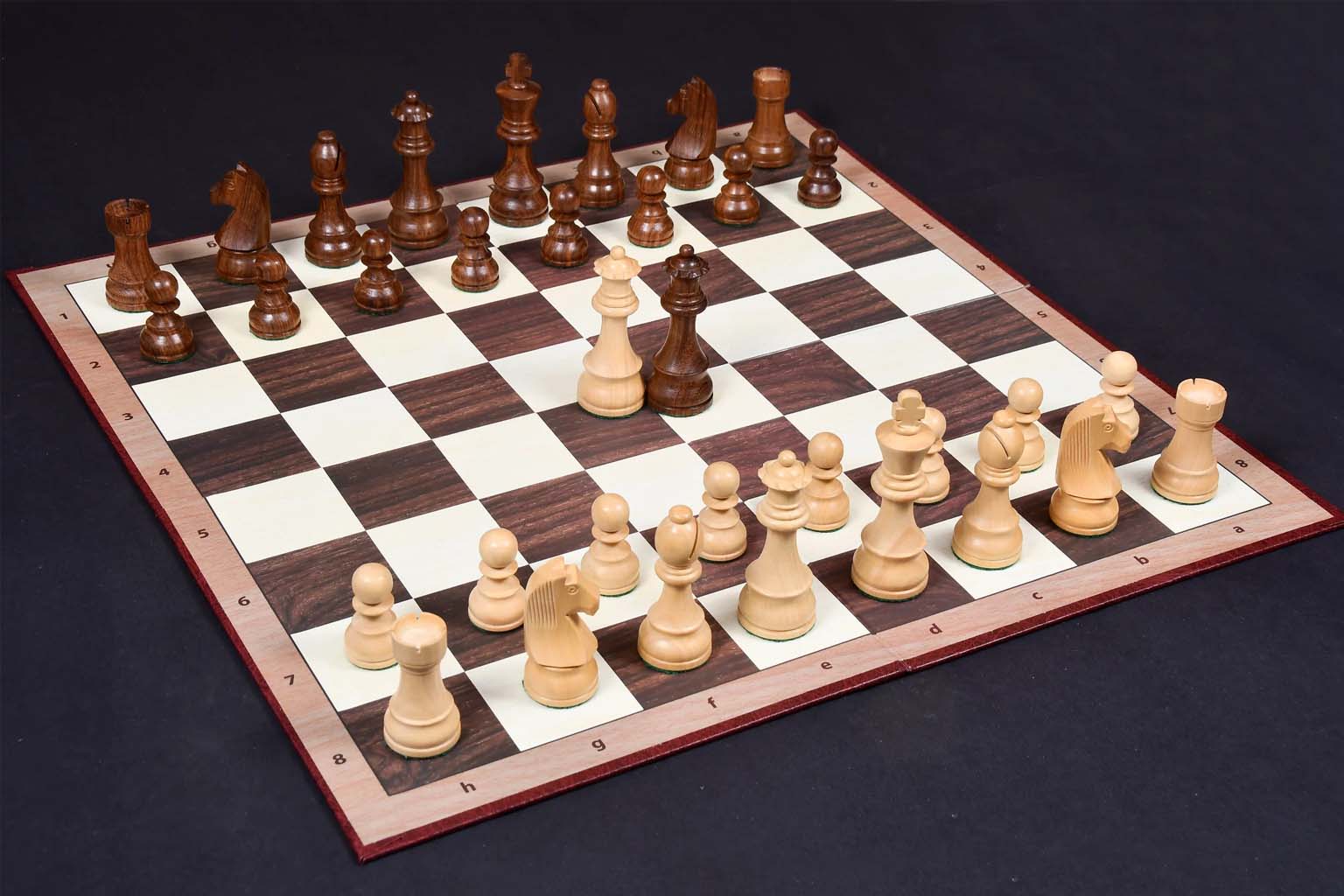
King base ≈ 78% of the square size. Get that one ratio right and a $300 set looks like a museum piece; get it wrong and a $1,000 set looks cramped.
Are Jaques of London sets worth it — and is House of Staunton really the reference?
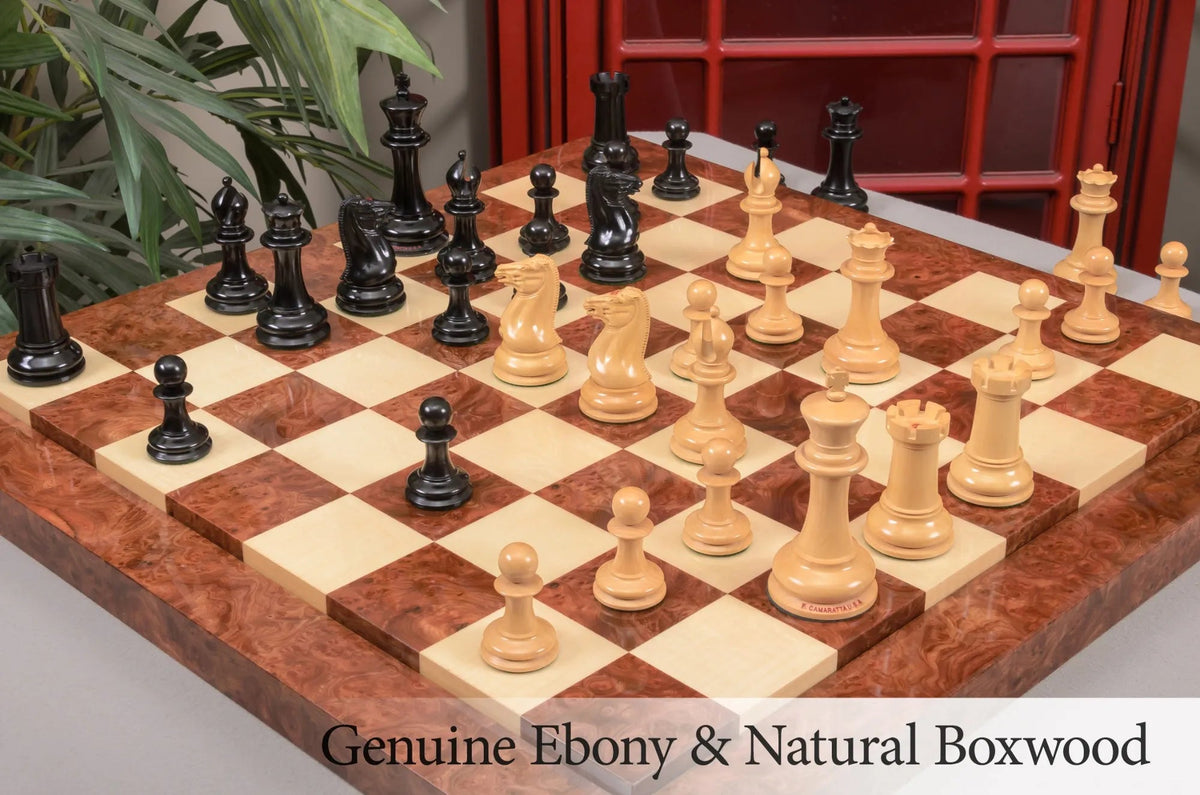

These are the two names that dominate every heirloom conversation, and they sit at opposite ends of an honesty spectrum, so let me be candid about both.
Jaques of London has the single best origin story in the hobby: they are the originators. John Jaques' firm first manufactured and sold the Staunton pattern in 1849, and the company still trades today. Buying a genuine new Jaques is buying directly from the bloodline of the design — that's a real, romantic thing, and for a certain collector it's the whole point. But here's the candor: the modern official Jaques sets command extraordinary prices (their flagship reconstructions have listed around £2,999), and the chess community is openly skeptical about the value-per-dollar. On the long chess.com thread, FrankHelwig put it bluntly: 'I don't see how anyone can justify the price for what amounts to a piece of paper and a little stamp.' That's harsh, but it captures the trade — a large slice of the premium is provenance and the name on the box, not measurably better wood or carving than houses charging a third as much. The genuine antique Jaques sets (1850s–1930s) are a different, legitimate collector market entirely — and there the provenance genuinely is the value.
House of Staunton, founded by Frank Camaratta, is the modern reference — and that's not marketing, it's how the community actually uses them. When a forum argues about whether a reproduction is faithful, House of Staunton is the yardstick. Their Collector and Camaratta lines replicate the 1849 proportions with patented weighting (U.S. Patent 11,000,757) and, on the top tier, lifetime crack warranties. They are the safe, no-regret heirloom buy: you will never be told your House of Staunton set isn't 'real enough.' The honest knock is price — they sit at the premium end of the modern market — and even their own customers sometimes prefer a specific other House of Staunton model: FrankHelwig again, recommending their Cooke set over their Collector as 'much closer to the 1849 design... a lovely set as well as cheaper.'
My verdict: House of Staunton is the reference and the safe heirloom. Buy a genuine new Jaques only if owning a set from the originating house specifically matters to you emotionally — and go in clear-eyed that you're paying a heritage premium. For most people, the 1849 experience is available far more cheaply from House of Staunton, Official Staunton, or the better Indian houses, and a genuine antique Jaques is the move for true provenance collectors.
House of Staunton is the yardstick the whole hobby measures reproductions against. Genuine new Jaques is the originators' name on the box — buy it for the heritage, not the value.
Are the Indian-made sets a steal or a gamble — and how do you buy safely?
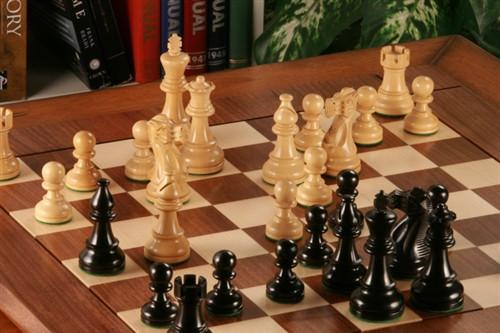
The most important development in heirloom chess this generation is that genuine boxwood-and-ebony sets, hand-carved, now start around $70–$325 instead of $600+ — because the carving has largely moved to skilled workshops in India (Amritsar and beyond), sold direct by houses like ChessBazaar, Royal Chess Mall, House of Chess, and Staunton Castle. This is a genuine democratization of the heirloom, and the best of these sets are legitimately excellent. But it comes with one honest caveat you must plan around: quality varies bench to bench.
Because these are hand-made in volume, the unit you receive can be a hair off the catalog photo — a slightly less crisp mane, a base that didn't get the same love, occasionally a cracked pawn from shipping or dry wood. The Trustpilot and chess.com records bear this out in both directions: lots of buyers 'stunned by the quality of the craftsmanship' and 'outstanding considering the price,' alongside the occasional 'eight cracked ebony pawns.' The pattern that matters: in the legitimate complaints, the good houses replaced the defective pieces quickly and without a fight. That's the whole game.
So here's how to buy the Indian tier safely. One — buy from a house with a real warranty and a replacement track record. Royal Chess Mall's 3-year defect guarantee, House of Staunton's lifetime crack warranty on its top line, ChessBazaar's responsive replacements — that warranty is you buying out the variance. Two — order direct from the maker, never from a sketchy marketplace third-party. The forums are full of 'I ordered a premium Sheesham set and a $16 Walmart magnetic set arrived' eBay horror stories. Three — apply the knight-photo test and read recent reviews, not just the star average. Four — for an heirloom specifically, lean toward the houses' upper-mid sets ($150–$350) rather than the rock-bottom listings; the jump from a $40 set to a $250 set is mostly in the carving and the wood quality, which is exactly the heirloom part.
And the thing to avoid entirely: overpriced décor sets — metal-and-marble or resin 'collector' sets dressed up as heirlooms, often priced like real wood, frequently unbalanced and unpleasant to actually play. Italfama makes genuinely beautiful Italian metal-and-wood pieces and I won't pretend otherwise — but understand you're buying display art with chess-shaped pieces, not a playing heirloom in the Staunton sense. Know which one you want before you spend.
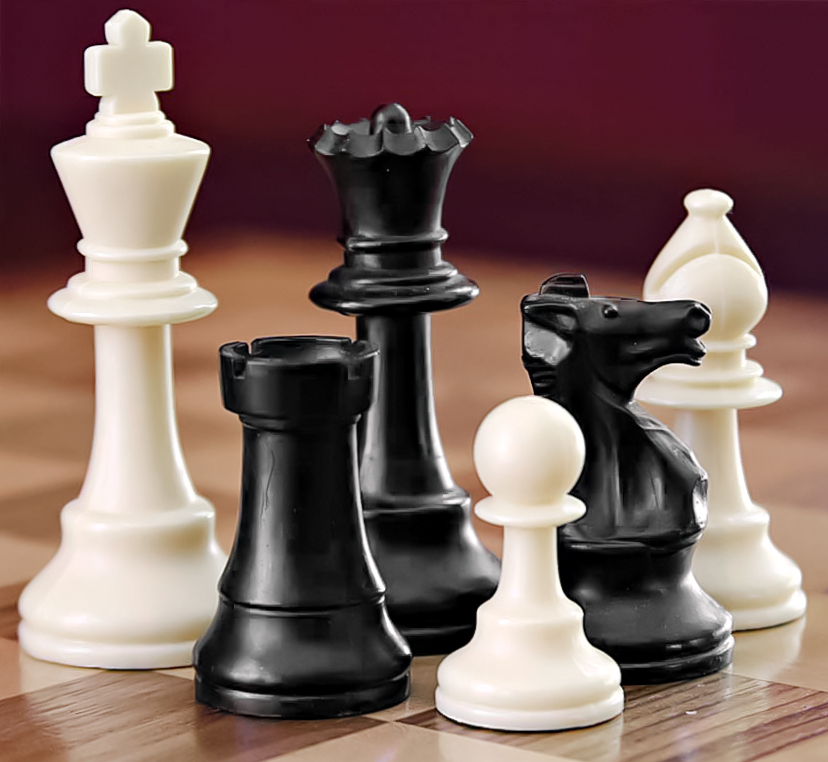
The Indian houses democratized the heirloom — real ebony-and-boxwood for $250 instead of $650. The price of that miracle is bench-to-bench variance, so buy from a house that replaces a cracked pawn without an argument.
What experienced tables keep reporting
Recurring owner patterns, synthesized in Puzzlewick's words. Follow each evidence trail to read the original discussion.
I don't see how anyone can justify the price for what amounts to a piece of paper and a little stamp.
Most reproductions don't get the bases right... Most sets these days seem to have fat, chunky bases.
[House of Staunton's Cooke set is] much closer to the 1849 design than their Collector set... a lovely set as well as cheaper.
Read the evidence: FrankHelwig, recommending a specific House of Staunton model — Chess.com
House of Chess offers the best bang for your buck — their Popular Staunton rivals more expensive French and German designs.
I was stunned by the quality of the craftsmanship — outstanding considering the price.
Read the evidence: Verified customer review of ChessBazaar — Trustpilot
Eight cracked ebony pawns arrived — but the company responded quickly and agreed to send replacements.
The picks
Some links below are affiliate links — as an Amazon Associate, Puzzlewick earns from qualifying purchases, at no extra cost to you. It never changes a pick.
 2 photos
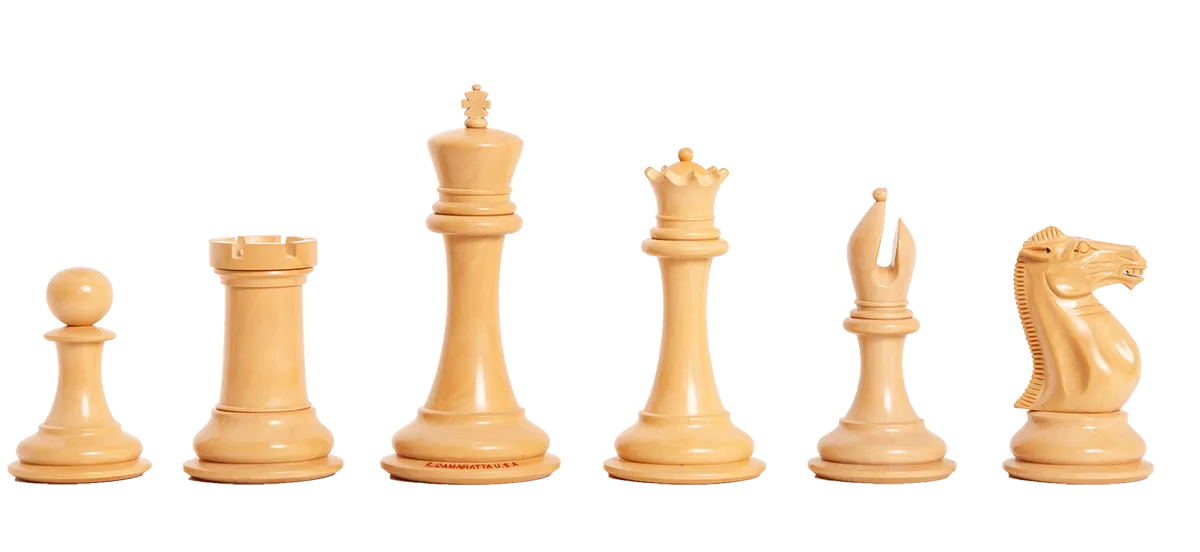
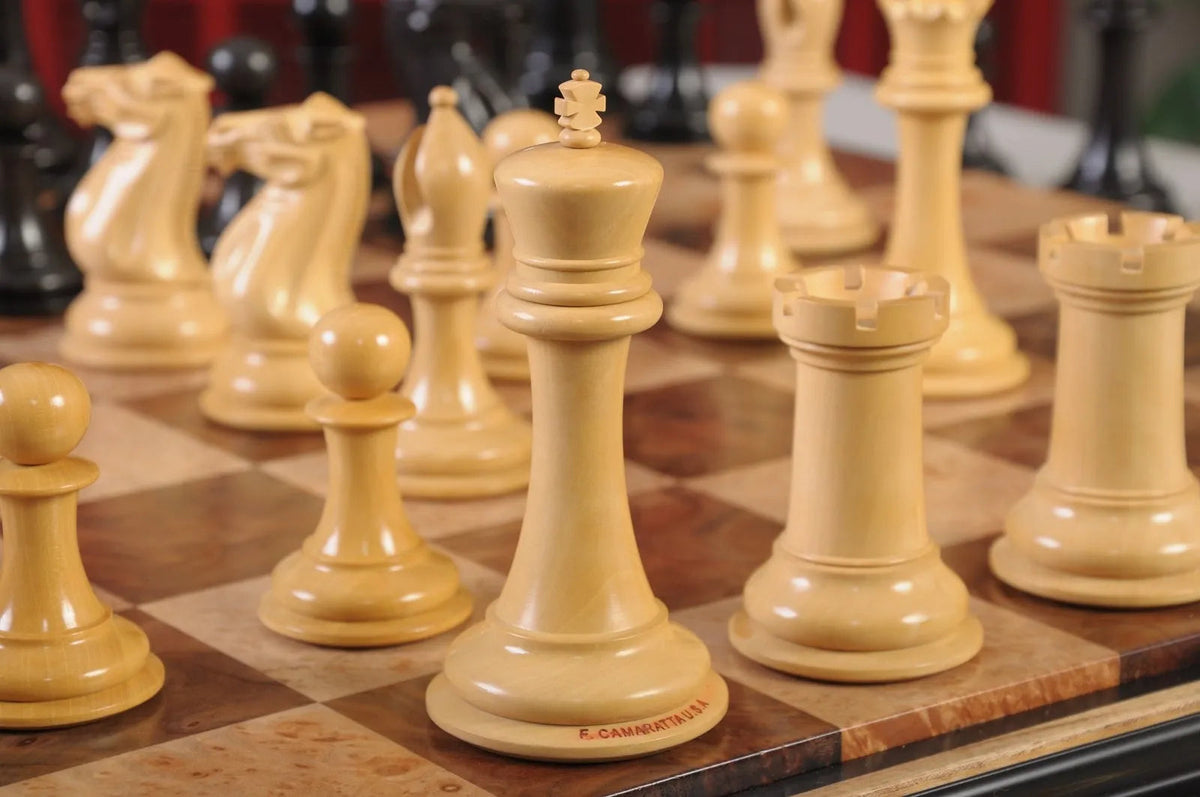
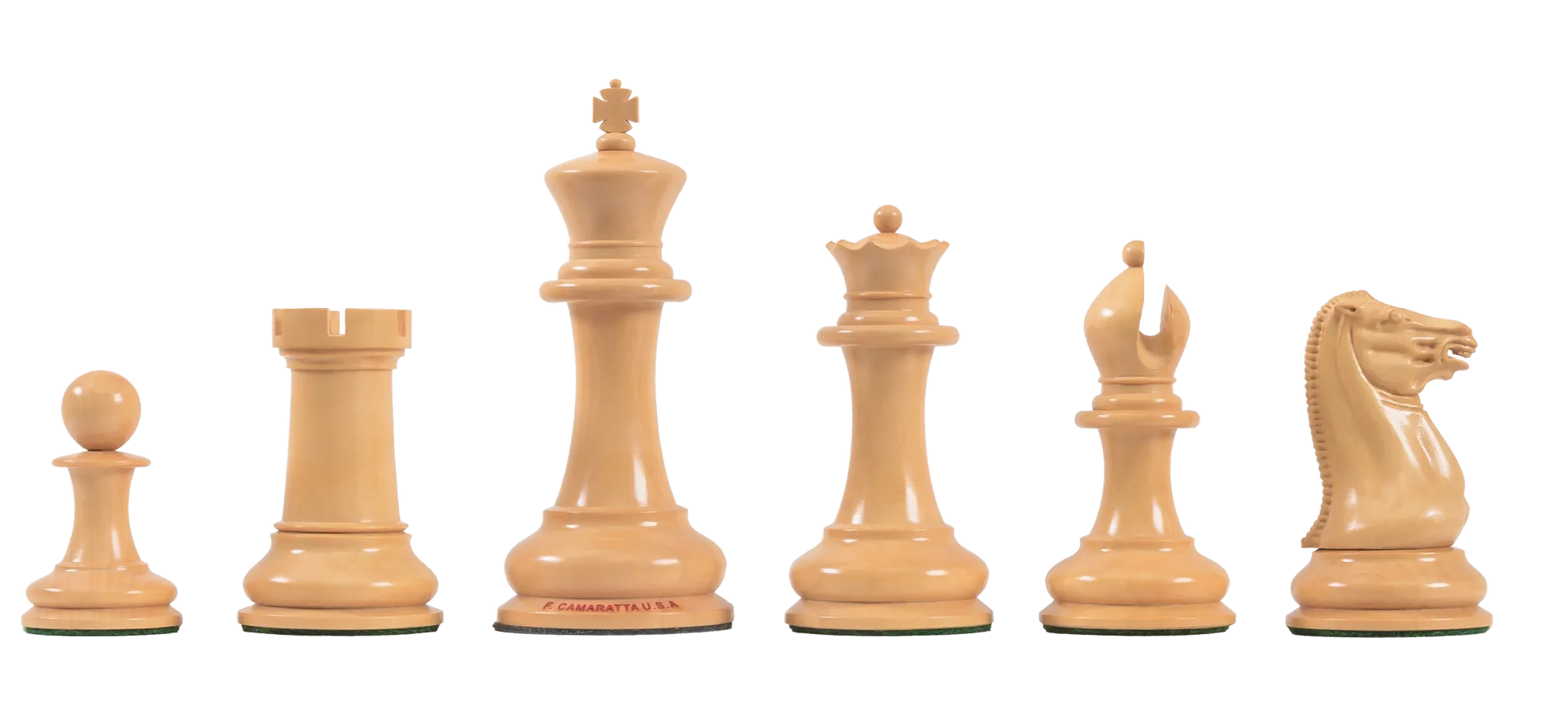
 Camaratta 1849 Collector Series — The Forever Collection (4.4" King)
When 'hand it down for generations' is the literal design brief, this is the set. A towering 4.4" king in genuine ebony (or Blood rosewood) and boxwood, Frank Camaratta's flagship replication of the 1849 original, with the patented weighting and — the part that matters on the ebony tier — a lifetime warranty against hairline cracks. At ~$1,029+ pieces-only it's a true splurge, but it's the closest mass-available render of the original short of buying a real antique Jaques, and the lifetime crack guarantee is the house putting its money where the ebony is. The 4.4" king demands a large board (2.25"+ squares); size accordingly.
- Flagship 1849 replication from the modern reference house
- Lifetime warranty against hairline cracks — the right move on genuine ebony
- Imposing 4.4" king, 2.0" base; commanding board presence
- Rosewood option saves money and many prefer the look
- ~$1,029+ pieces-only — a serious splurge before you even buy a board
- 4.4" king needs a big (and expensive) board to keep the ratio right
- Genuine-ebony variant frequently out of stock
 2 photos
 1849 Original Staunton Reproduction (4.4" King, Antiqued Boxwood/Ebony)
Official Staunton's 1849 reproduction is the collector's faithful-to-the-period pick: a 4.4" king with jet-black ebony, an antiqued-boxwood finish that genuinely evokes a 170-year-old set, exquisitely hand-carved knights that reviewers rank among the best replica 1849 knights they've seen, and a proprietary weighting process specifically aimed at preventing the cracks ebony is prone to. At ~$750 it sits between the Indian collector sets and the House of Staunton flagship. If you want the antique-Jaques look without paying genuine-antique money — and you love the distressed finish — this is the set. (If you dislike artificially-aged wood, buy elsewhere; the antiquing is a strong taste.)
- Hand-carved knights rated among the best 1849-replica knights available
- Convincing antiqued finish; true ebony, chunky period-correct rooks
- Proprietary anti-crack weighting process
- Period-faithful 4.4" proportions for the classic look
- ~$750 is real money for a reproduction
- Heavy antiquing is polarizing — not for fans of clean new wood
- Board sold separately; 4.4" king needs a large board
 3 photos
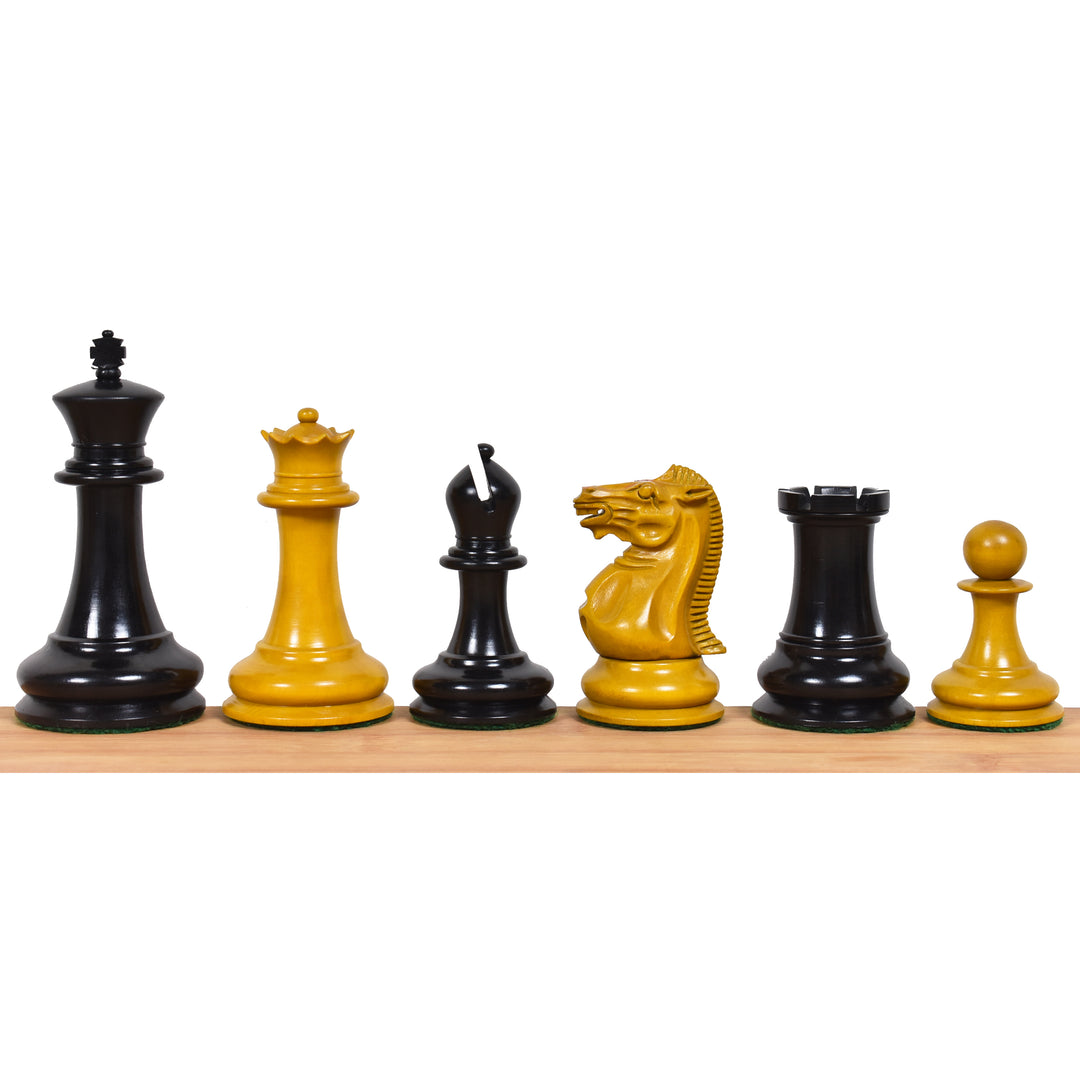
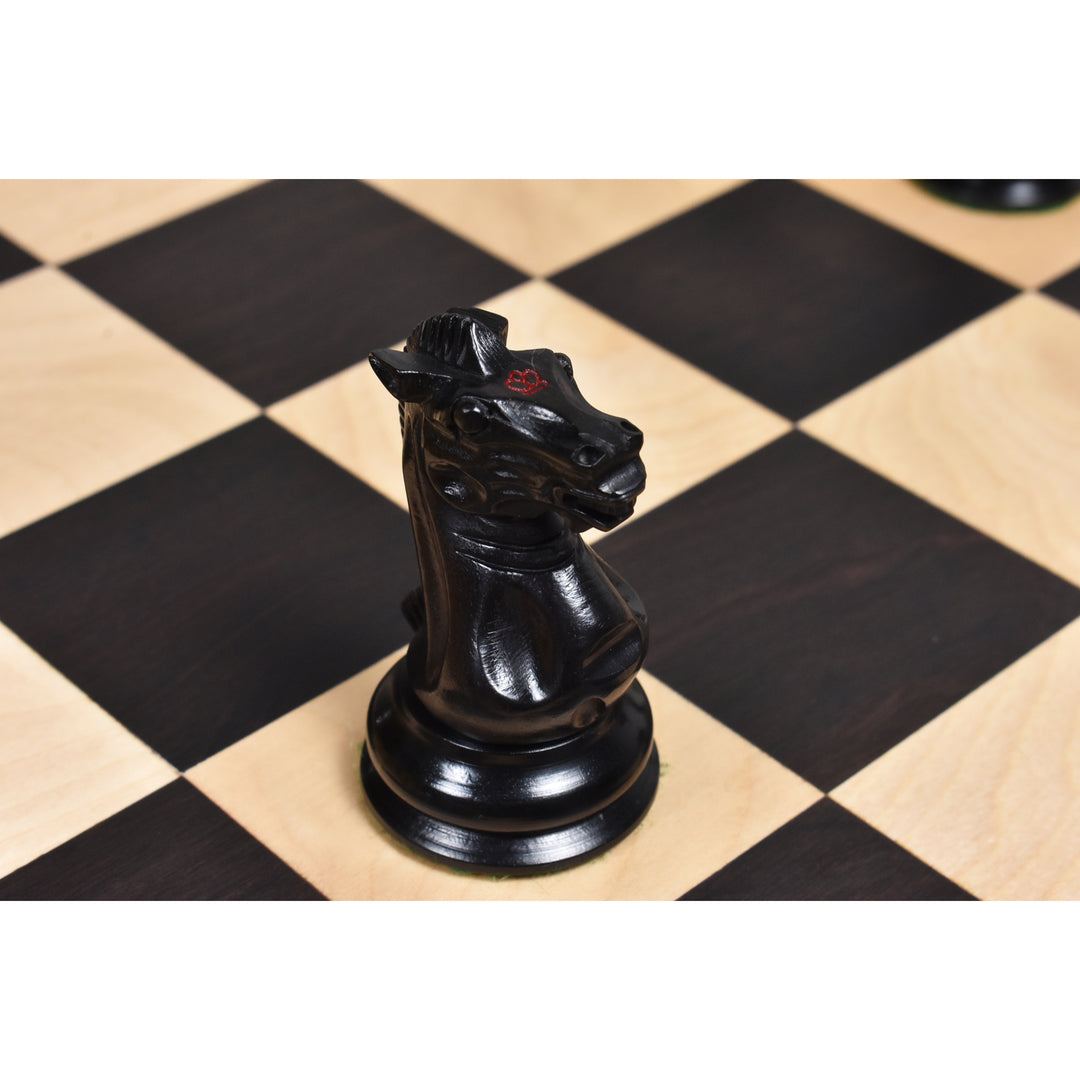
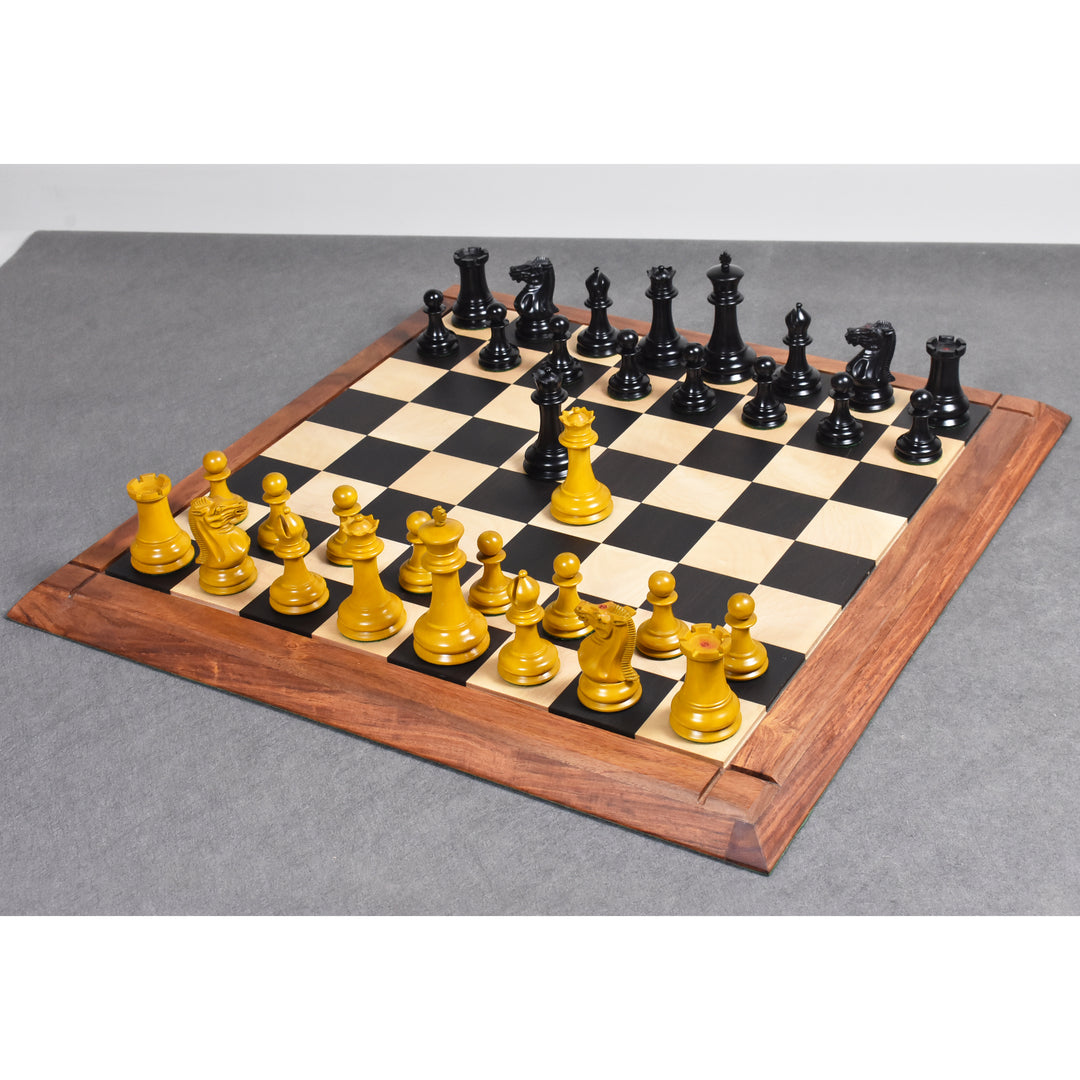
 1849 Jacques Cook Staunton Collector Set, Ebony (3.75" King)
This is the sweet spot of the whole list — genuine ebony, hand-carved 1849-pattern knights that owners flatly call 'showstoppers,' a 3.75" king on a 1.8" base, 1,400g of properly-weighted heft, and a 3-year defect guarantee, all for about $325 pieces-only. Reviewers single out the 'intricate hand-carved manes' and 'first-rate lathe turning' — carving you'd expect to pay double for. It's the clearest proof that the Indian houses have genuinely democratized the heirloom. Buy direct, apply the knight-photo test, and accept that hand-made means slight unit-to-unit variance — the 3-year guarantee is there for exactly that.
- Genuine ebony and hand-carved 1849 knights at ~$325 — remarkable value
- Owners praise the manes and turning as well above the price
- Standard 3.75" king pairs easily with 2.25" boards
- 3-year defect guarantee buys out the hand-made variance
- Bench-to-bench variance is real; inspect on arrival
- Brand naming ('Jacques Cook') leans hard on the heritage association
- Board sold separately
 2 photos
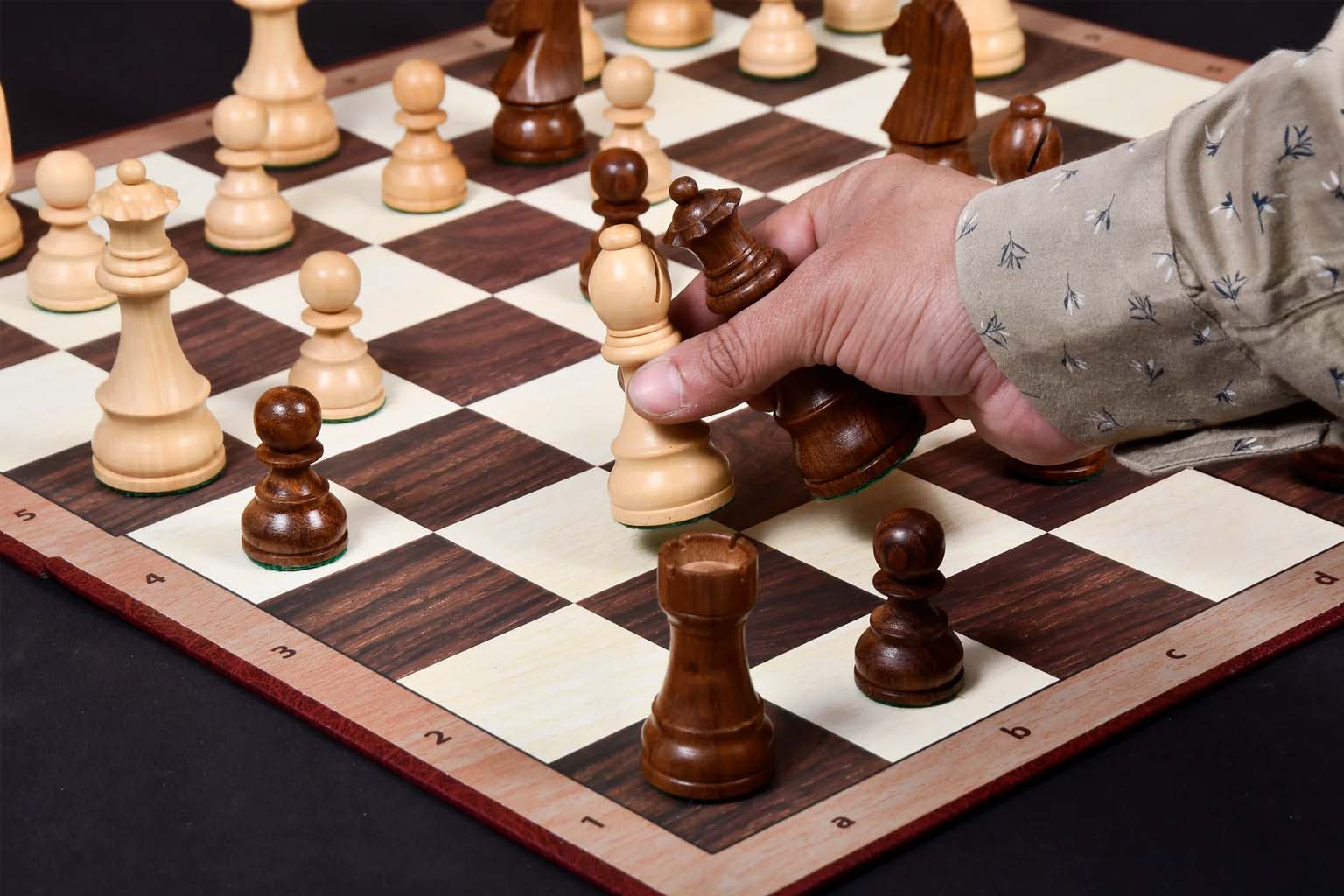
 Tournament Series German Knight, Sheesham/Boxwood (3.75" King)
The honest workhorse, and the set most people should actually buy first. A FIDE-legal 3.75" king in Sheesham and boxwood, the classic German-knight carving, iron-weighted bases (~966g, thick green felt), bundled with a storage pouch and roll-up board for roughly $90. It's not pretending to be an 1849 heirloom — it's a real-wood set built to be played hard at a club for thirty years, and Sheesham is forgiving enough to survive being a real-life object. This is the set you learn on, travel with, and don't have a heart attack when a kid knocks it over. Heirloom by endurance, not by ostentation.
- FIDE-legal 3.75" proportions; tournament-ready out of the box
- Honest Sheesham/boxwood, iron-weighted, ~$90 with board and pouch
- Sheesham shrugs off neglect — ideal for a set that gets used
- Direct from maker with responsive replacement record
- German-knight carving is good-not-great; not an 1849 showpiece
- Roll-up bundled board is functional, not an heirloom board
- Hand-made variance applies; buy direct, not via marketplace resellers
 2 photos
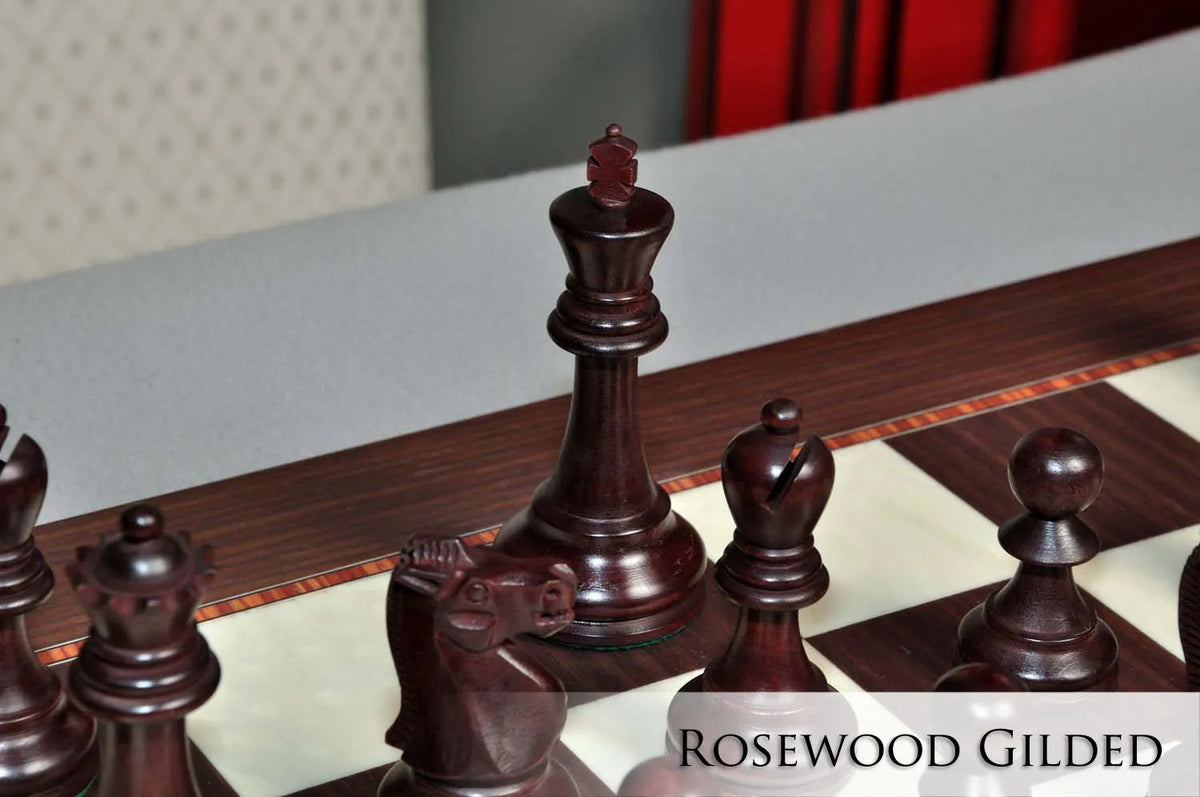
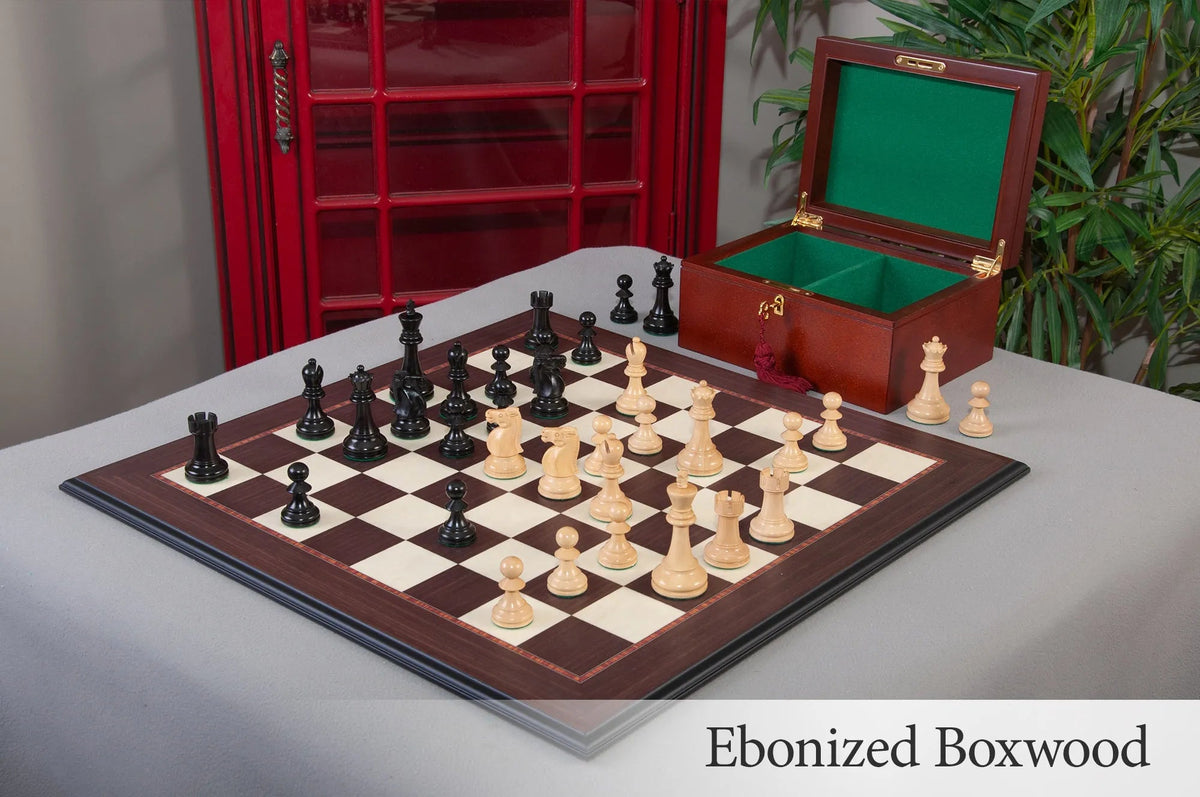
 Reykjavik II Series Set, Box & Board Combination (3.75" King)
For the buyer who wants their heirloom to carry a story, this is the one: an exact reproduction of the set used in the legendary 1972 Reykjavik World Championship — Fischer vs. Spassky, the most famous match ever played. The combination pairs the 3.75" pieces with a striped-ebony Standard Traditional board (2.25" squares) and a premium box, so the ratio is correct out of the box. It's a House of Staunton set, so the build is reference-grade; the appeal here is owning a faithful copy of the most historically loaded board in chess. Confirm current combo pricing on the product page — it varies by wood and board spec.
- Faithful reproduction of the iconic 1972 Fischer–Spassky set
- Sold as a correctly-sized set + board + box combination
- Reference-grade House of Staunton build quality
- A genuine conversation-piece heirloom with real provenance
- Combo price varies and runs premium — verify on the page
- Appeal is partly the history; the design itself is restrained
- Striped-ebony board is a specific look, not to all tastes
 3 photos
 Italian Wood & Metal Staunton Chess Set
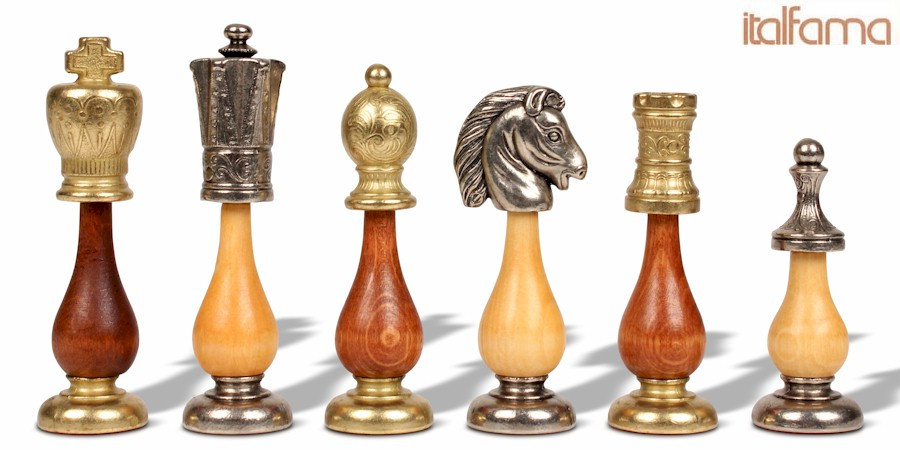
I'm including Italfama precisely so I can be candid about it. Their Italian-made metal-and-wood sets are genuinely beautiful — cast, hand-finished pieces with real weight and texture, on elm/walnut-burl veneer boards, and they make a stunning display. But understand what you're buying: this is display art with chess-shaped pieces, not a playing heirloom in the Staunton sense. Metal pieces are heavier and less pleasant to actually push around a long game, and 'heirloom' here means 'lovely object on a shelf,' not 'set your grandkid learns the Sicilian on.' Buy it for the room, not the rook. Pricing varies widely by model — check the maker or an authorized dealer.
- Genuinely beautiful Italian craftsmanship and finishes
- Substantial, textured cast pieces; real display presence
- Elm/walnut-burl boards are handsome objects in their own right
- A legitimate decorative heirloom if that's what you want
- Display-first: metal pieces are less pleasant for serious play
- Not a faithful playing Staunton in the heirloom sense
- The category where 'heirloom' marketing most often overreaches
- Pricing varies widely by model and dealer
At a glance
| set | maker | wood | price | best for |
|---|---|---|---|---|
| Collector Series (3.75") | House of Staunton | Genuine ebony / boxwood (rosewood opt.) | ~$619 (pieces only) | Best overall heirloom |
| Camaratta 1849 Collector (4.4") | House of Staunton | Genuine ebony / boxwood (rosewood opt.) | ~$1,029+ (pieces only) | Best luxury splurge |
| 1849 Reproduction (4.4") | Official Staunton | Ebony / antiqued boxwood | ~$750 | Best 1849 antique look |
| 1849 Jacques Cook Collector (3.75") | Royal Chess Mall | Genuine ebony / antiqued boxwood | ~$325 (pieces only) | Best value real-ebony |
| Tournament German Knight (3.75") | ChessBazaar | Sheesham / boxwood | ~$90 (with board & pouch) | Best tournament set |
| Popular Staunton (3.25"/3.75") | House of Chess | Sheesham / boxwood | ~$70 (pieces only) | Best budget real wood |
| Reykjavik II Combo (3.75") | House of Staunton | Boxwood pieces + striped-ebony board | Varies (set+board+box) | Best history piece (1972) |
| Heirloom American Staunton (3.75") | Chess House | Solid walnut/maple board + wood pieces | ~$448 (set + board) | Best heirloom board (USA) |
| Genuine New Staunton | Jaques of London | Boxwood + mahogany/beech/oak | Premium (~£2,999 flagship) | Originators' heritage |
| Wood & Metal Staunton | Italfama | Cast metal + elm/walnut-burl board | Varies by model | Decorative display piece |
Questions, answered
What makes a chess set an heirloom?
An heirloom chess set is a faithful wooden Staunton-pattern set built to last generations: light pieces in boxwood, dark pieces in a fine hardwood (ebony, rosewood, or Sheesham), knights carved by hand, lead weighting in the bases, 34 pieces (including two extra queens for promotion), and a solid-hardwood board sized to the pieces. The combination of real wood, real weighting, and hand-carving — not the price tag — is what separates an inheritance from a tool.
What is the Staunton pattern and why does every good set use it?
The Staunton pattern is the standardized chess-piece design registered by Nathaniel Cooke in March 1849 and first manufactured by John Jaques of London in September 1849, endorsed by champion Howard Staunton (whose name it took). Its breakthrough was instant legibility — a cross-topped king, coronet queen, mitred bishop, horse-head knight, castle rook — so any player can identify pieces at a glance. It's been the universal standard for serious and tournament play ever since, which is why every heirloom-grade set is a Staunton.
What's the best heirloom chess set overall?
The House of Staunton Collector Series (3.75" king, genuine ebony/boxwood, patented weighting, ~$619 pieces-only) is the best overall heirloom because it's the modern reference set the entire community measures other sets against. Its Parthenon-modeled knight carving is genuinely museum-grade, and you'll never be told it isn't 'faithful enough.' If you want one no-regret heirloom and budget isn't the constraint, buy this and a matching solid-wood board.
What's the best tournament chess set?
A 3.75"-king Sheesham-and-boxwood German-knight set from ChessBazaar or House of Chess (roughly $70–$130, often with a board) is the best tournament set: it meets FIDE proportions, uses honest weighted real wood, and is built to be played hard for decades. Sheesham is forgiving enough to survive real-world use, which is exactly what a tournament/club set needs. It's heirloom by endurance rather than ostentation.
What's the best budget wooden chess set that's still real wood?
House of Chess's Popular Staunton in Sheesham and boxwood (~$70, in 3.25" and 3.75" kings) is the forum-favorite best budget real-wood set — experienced players rate it as rivaling pricier French and German designs. Pair it with a modest solid-wood board and you have a genuine starter heirloom under ~$150 all-in. Avoid 'wood-look' veneer-over-particleboard; insist on real Sheesham/boxwood pieces and real solid-wood (inlay) boards.
What's the best luxury / splurge heirloom set?
The House of Staunton Camaratta 1849 Collector Series in genuine ebony (4.4" king, ~$1,029+ pieces-only) is the best splurge: it's Frank Camaratta's flagship replication of the 1849 original, with patented weighting and — critically on the ebony tier — a lifetime warranty against hairline cracks. It's the closest mass-available render of the original short of a genuine antique Jaques. Budget for a large board (2.25"+ squares) to suit the 4.4" king.
What wood is best for an heirloom chess set?
Genuine ebony (with natural boxwood) is the heirloom benchmark — jet-black, dense, ages beautifully, and the most expensive. Rosewood (Blood/Bud rosewood) is the connoisseur's value: warm, figured, and often $80–$150 cheaper than the ebony version of the same set. Sheesham (Indian rosewood) is the honest everyday hero — durable, forgiving, affordable — and the right answer for most buyers who'll actually play. Avoid 'ebonised' (dyed black) boxwood for a true heirloom; it's a fine player's set but not the real thing.
What king height should I get?
For most buyers, a 3.75" king is the safe heirloom standard — it's the US club/tournament convention (paired with 2.25" squares) and the metric equivalent (~95mm king on 55mm squares) used at high-level FIDE events. Larger 4.0"–4.4" kings make commanding display pieces but demand bigger, pricier boards to keep the proportions right. When in doubt, buy 3.75" — it's the most versatile and the easiest to pair with boards.
Do I buy the chess board separately from the pieces?
Yes — fine pieces and fine boards are sold separately on purpose, because the right board depends on your specific pieces. The governing rule: the king's base diameter should be about 75–85% of the board's square size (aim for ~78%). If you have the pieces, multiply the king base by ~1.25–1.30 for the ideal square size (a 1.8" base ≈ 2.25" squares). Buy the pieces first, then size the board to them — and choose a solid-wood inlay board, not printed veneer.
Are Jaques of London sets worth it?
It depends on what you're paying for. Jaques originated the Staunton pattern in 1849 and still trades, so a genuine new Jaques is the only set from the design's birthplace — worth real money to a heritage collector. But their flagship reconstructions run extremely high (around £2,999), and the chess community is candidly skeptical the wood-and-carving justifies the premium over houses charging a third as much. Buy a new Jaques for the heritage, not the value. For pure provenance, a genuine antique Jaques (1850s–1930s) is the smarter collector move.
What's the best heirloom set for collectors?
For collectors chasing the authentic 1849 look, Official Staunton's 1849 reproduction (~$750) has hand-carved knights rated among the best 1849 replicas, with a convincing antiqued finish and anti-crack weighting. For history-as-heirloom, House of Staunton's Reykjavik II reproduces the exact 1972 Fischer–Spassky championship set. For genuine provenance, a real antique Jaques is the blue-chip collectible — but verify authenticity carefully, as that market has many reproductions sold as originals.
Where should I buy an heirloom chess set?
Buy direct from the maker or a named, reputable dealer: House of Staunton, Chess House, Official Staunton, ChessBazaar, Royal Chess Mall, House of Chess, or Jaques of London. Avoid bargain marketplace third-parties — the forums are full of buyers who ordered a premium Sheesham set and received a cheap magnetic one. For the Indian-made tier specifically, favor houses with a real defect/crack warranty (it buys out the bench-to-bench hand-made variance), and always apply the knight-photo test before you pay.
Robert's verdict
If you want one heirloom and you want it right, the House of Staunton Collector Series is the answer — it's the reference, and a reference is exactly what an inheritance should be. If you want the 1849 dream in real ebony without the reference-house premium, the Royal Chess Mall 1849 Jacques Cook at ~$325 is the genuine steal of this list, asterisk and all: hand-made means inspect on arrival and lean on the warranty. If you mostly want a set your family will actually play until the corners go soft, a Sheesham-and-boxwood German-knight set for under $100 is heirloom enough — the forgiving wood that gets used beats the precious wood that gets shelved. Splurge on the Camaratta 1849 ($1,029, lifetime crack warranty) if a true museum-piece is the goal; buy a genuine new Jaques only if owning the originators' name specifically moves you, eyes open to the heritage tax. And buy the pieces first, then size the board to them — that one ratio (king base ≈ 78% of the square) does more for the final look than any extra $300. One last thing, and the reason you can trust every word above: Puzzlewick sells none of these. There's no buy button here and no markup — every link goes straight to the maker. We're a wonder-library, not a store. We just point you at the good stuff and tell you the truth about it.
Research ledger 22 sources · reviewed 2026-07-17
Specifications, rules, current product information, community experience, and contrary evidence were checked against the sources below. Commercial links are kept separate from editorial evidence.
- houseofstaunton.comhouseofstaunton.com/products/the-collector-series-luxury-chess-pieces-375-king
- houseofstaunton.comhouseofstaunton.com/products/the-forever-collection-the-collector-series-luxury-chess-pieces-4-4-king-26632
- houseofstaunton.comhouseofstaunton.com/products/the-reykjavik-ii-series-chess-set-and-board-combination-13338
- houseofstaunton.comhouseofstaunton.com/blogs/chess-pieces/facts-about-the-staunton-chess-set
- houseofstaunton.comhouseofstaunton.com/blogs/chess-sets/buying-a-wooden-chess-set
- houseofstaunton.comhouseofstaunton.com/blogs/chess-facts/chess-board-dimensions
- officialstaunton.comofficialstaunton.com/products/1849-early-4-4-edition-staunton-boxwood-ebony-chess-pieces
- royalchessmall.comroyalchessmall.com/products/1849-jacques-cook-staunton-chess-pieces-only-collectors-set-ebony-wood-3-75
- royalchessmall.comroyalchessmall.com/blogs/blog/guide-to-choosing-a-size-of-chess-set
- chessbazaar.comchessbazaar.com/tournament-german-knight-chess-pieces-in-sheesham-boxwood-3-75-king-with-storage-pouch-board.html
- chessbazaar.comchessbazaar.com/blog/how-measure-perfect-chessboard-for-particular-king-size
- houseofchess.comhouseofchess.com
- chesshouse.comchesshouse.com/products/heirloom-american-staunton-chess-set
- chesshouse.comchesshouse.com/pages/best-wooden-chess-sets
- jaqueslondon.co.ukjaqueslondon.co.uk/collections/staunton-chess-set
- chess.comchess.com/forum/view/chess-equipment/reproduction-and-real-jaques-of-london-chess-set
- chess.comchess.com/forum/view/chess-equipment/best-chess-sets-at-every-price-range
- chess.comchess.com/forum/view/chess-equipment/recommend-woods-for-chess-board-for-boxwood-sheesham-set
- chess.comchess.com/article/view/chess-board-dimensions
- trustpilot.comtrustpilot.com/review/chessbazaar.com
- regencychess.co.ukregencychess.co.uk/blog/2013/01/italfama-chess-boards-and-pieces
- shop.worldchess.comshop.worldchess.com/products/1849-original-staunton-chess-set-combo-pieces-in-lacquered-distress-antiqued-boxwood-ebony-with-board-and-box

If it didn't earn a shelf, it isn't here.

Keep exploring
The next smart rabbit holes.
✦ Topic PathBoard Game Buying Guides: compare the whole shelfStart with the decision, not the shelf. These guides compare the games, editions, expansions, player counts, and costs people...Best OfBest Heirloom Wooden Games, Ranked (2026)Real wood that survives refinishing, hand-carved pieces, joinery that outlasts you — not a marketing label slapped on particle board...Buying GuideBest Crokinole Boards, Ranked (2026)The truth about crokinole: most 'boards' are wall furniture that happen to have pegs—here's which ones actually play, and why disc speed...