Are Gaming Tables Worth It? Board Game Tables Compared (2026)
A purpose-built gaming table is furniture that asks you to spend like an heirloom and use it like a workbench—an old instinct finally given good joinery. Here is the honest reckoning, without the marketing: dedicated wood versus digital screen versus the topper you already own, with real makers, real 2026 prices, and the cost-per-session math that tells you whether the wood is calling your name or your wallet's.

AI-assisted curator persona · research and editorial responsibility: Robert Pruitt · how this guide was made
Last editorial refresh: 2026-06-13 Gold-standard QA: 2026-07-17 15 sources reviewed Affiliate links checked during gold-standard pass

The short answer
A gaming table is worth it if you play more than a few times a month, have the floor space, and value a recessed playing surface that protects components and lets you leave a campaign set up between sessions. Prices in 2026 run from about $499 for a solid-wood entry table (Allplay Jasper) up to $12,000–$39,250 for a heirloom Wyrmwood Prophecy; a removable topper for an existing table ($439 for Allplay's) is the cheapest real upgrade, and a digital Arcade1Up Infinity Game Table ($500–$999) is a different product entirely — a touchscreen, not a wood arena.
Decision map
Choose in thirty seconds
The best overall value — most people's right answer
Digital family game night, not a physical-game surface
Before there were gaming tables there were gaming tables. The card players of the eighteenth century had folding mahogany tops lined in baize; the wargamers of the nineteenth spread sand and lead across the dining board and prayed nobody called them to supper. The recessed 'vault' table we argue about today is not a new idea—it is an old problem, solved with elegance four hundred years ago, and we have simply learned to build it well.
I want to be plain about what you are actually weighing, because the marketing rarely is. There are three honest answers to 'should I buy a gaming table,' and they are different objects entirely. There is the dedicated wood table—a real piece of furniture with a sunken arena, built by a handful of American and European shops. There is the digital table—a large touchscreen in a frame, which plays its own library and is closer to a console than to cabinetry. And there is the topper, a removable tray that turns a table you already own into a gaming surface for the price of a nice dinner out. Confuse these three and you will overspend or under-buy. Name them correctly and the decision becomes clear.
What follows is the reckoning. Real makers, prices verified at their own pages in 2026, the math of cost-per-session, and the quiet things owners say a month and a year in. I will not sell you the wood. The wood, if it is right for you, speaks for itself.
Start here, then go deeper
You are in the right cabinet.
 ⬢ Topic PathTabletop Accessories: compare the whole shelfBuy the accessory that fixes a repeated annoyance first. Protection, setup speed, readable state, and comfortable handling beat...
 Buying GuideHeirloom Gaming Tables: Luxury Furniture That Lasts GenerationsA gaming table done right becomes furniture that outlives its makers—here's how to find the one for your table.
 ComparisonGaming Mats Comparison 2026: Neoprene vs Mousepad vs Premium FabricThe right gaming mat changes how your minis feel under your hands—here's how to pick between neoprene, mousepad, and fabric options that...
What exactly is a 'gaming table,' and what are you really paying for?
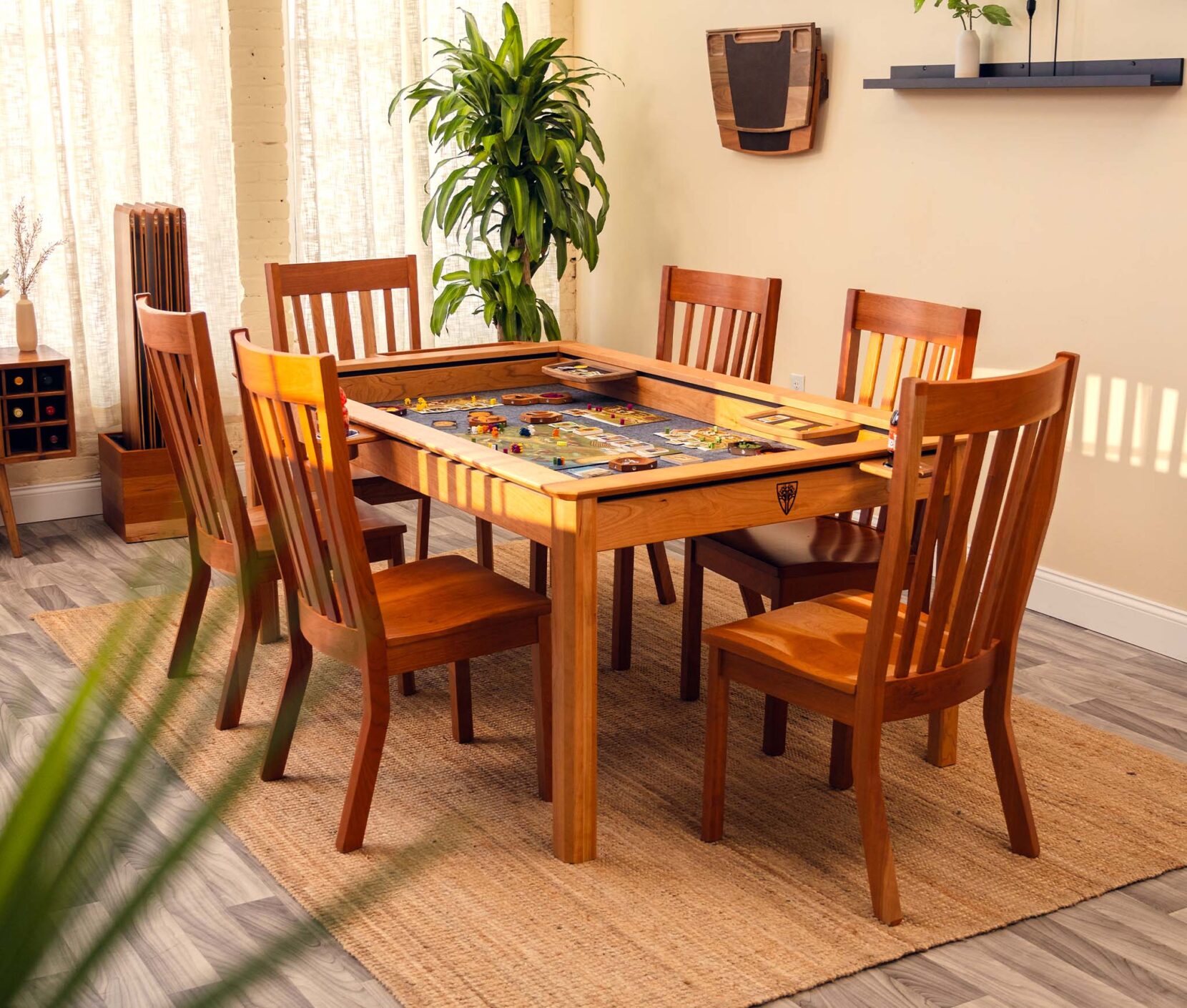
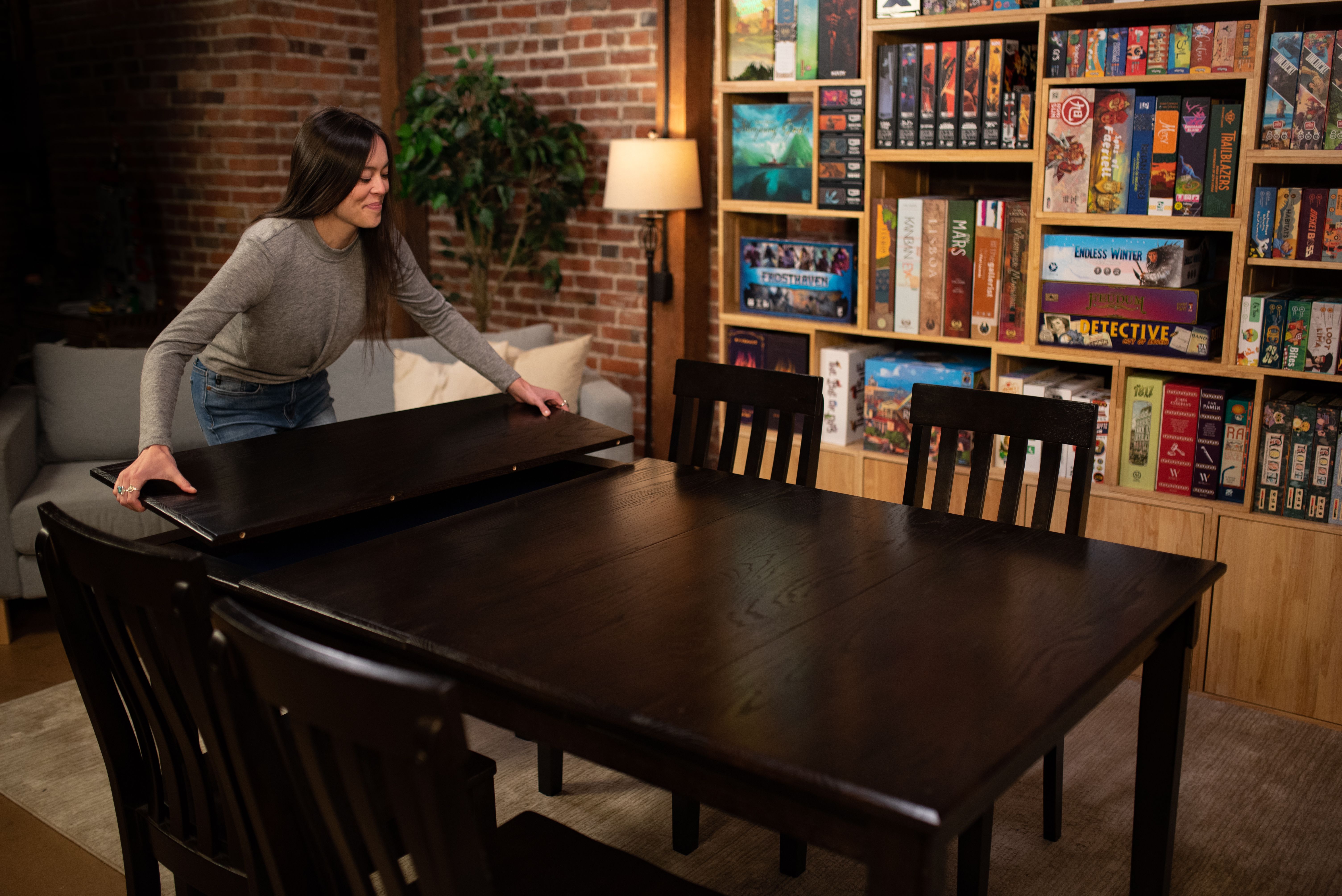
A gaming table is a table with a recessed playing surface — a lowered 'vault' or 'cellar' set a few inches below the rim, so that maps, cards, and tokens sit in a protected well rather than skating across an open top. Around that well sit the things you are paying for: padded armrest rails, cup holders set off the play area, often a felt or neoprene mat in the bottom, and — on the better tables — a set of removable solid-wood leaves that cover the vault and turn the whole thing back into an ordinary dining table.
That last feature is the heart of the matter. The defining trick of a good gaming table is dual identity. Slide the leaves off and you have a four-and-a-half-inch-deep arena (the depth Wyrmwood quotes on its Modular line) that holds a sprawling game of Gloomhaven or a D&D battle map; slide them back on and you have a dinner table that draws no comment from anyone who isn't looking for the seam. You are paying for a piece of furniture that does two jobs and hides one of them on command.
Understand the three categories before the prices, because they are not competitors so much as different answers. Dedicated wood tables — Wyrmwood, Allplay, Rathskellers, Legacy (formerly Carolina), Bandpass — are real cabinetry with a sunken arena. Toppers are the vault without the table: a removable tray with cup holders and rails that drops onto a surface you already own. Digital tables — the Arcade1Up Infinity Game Table is the one most people mean — are a touchscreen in a frame that runs licensed software; there is no wood vault and no physical components at all. The question is never simply 'is a gaming table worth it.' It is 'which of these three is worth it to me.'
The defining trick of a good gaming table is dual identity: a four-and-a-half-inch arena on demand, and a dinner table that draws no comment when the leaves go back on.
Are gaming tables actually worth the money?
Here is the math I give anyone who asks, because sentiment is a poor guide to a four-figure purchase and arithmetic is a good one.
Take the entry-level honest case: an Allplay Jasper at $899, which their own page calls their most popular table — solid American oak, a 36-inch by 60-inch play area, seating six. Spread over a five-year ownership horizon that is $180 a year. If you host or attend a game night even twice a month, you have crossed roughly a hundred-and-twenty sessions in that span, and the table has cost you well under a dollar per session by the end. At that rate the recessed surface, the cup holders that keep a soda off your cards, and the dining-mode leaves are not an indulgence; they are cheaper than the snacks.
Now take the heirloom case honestly too. A Wyrmwood Prophecy starts at $12,000 and climbs to $39,250 fully appointed. No cost-per-session math redeems that as a gaming expense alone — but Wyrmwood never asks it to. The argument there, and it is a fair one, is furniture-grade: you are commissioning a handmade, made-in-USA hardwood table that would cost comparable money from any bespoke furniture shop without a gaming feature in sight. One reviewer who paid about $5,000 for a mid-range Wyrmwood Modular put it exactly right — a standard made-in-USA walnut dining table, without any of the gaming conversion or accessories, 'usually starts at about the same $5k.' The gaming function, at that tier, is close to free; you are buying the cabinetry. Whether that is worth it is a furniture question, not a hobby one.
So the test is two-part. Volume justifies the entry tier outright — play enough and a $499–$1,500 table pays for itself in protected components and saved campaigns. The premium tier is justified only if you would have wanted the furniture anyway. Buy a $12,000 table to play four times a year and you have not bought a gaming table; you have bought regret with cup holders.
Dedicated wood vs. digital vs. topper — which one is right for you?
These three are not points on a price ladder. They are three different objects, and the right choice falls out of how you actually live and play.
Dedicated wood is for the player who wants the full instrument and the furniture both. You get the deep recessed arena, the rail system, the dining leaves, and a real piece of cabinetry that lives in your home as a table first. The cost is money and floor space — these are large, permanent objects — and on the custom tiers, patience, because they are built to order. This is the right answer when board games are a settled part of your life and you have the room to give them a dedicated surface.
A topper is for the player who has the table and the doubt. It is the recessed vault — cup holders, rails, a felt well, often its own removable lid — without legs of its own, dropped onto a dining table you already own. Allplay's four-piece topper is $439; their Jasper topper for an existing Jasper is the same idea. You keep your dining room as it is, you gain a real gaming surface in seconds, and you have risked the price of a nice dinner rather than the price of a used car. This is the honest first purchase for almost everyone uncertain whether they want the wood — and the correct final purchase for renters, small spaces, and households that cannot surrender a room to the hobby.
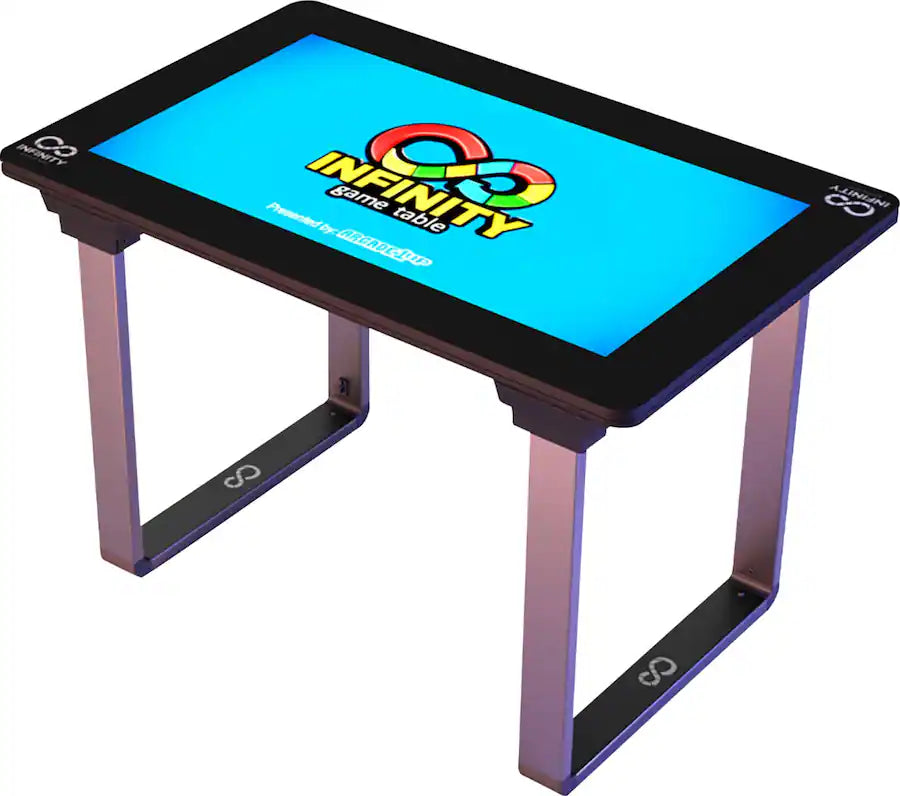
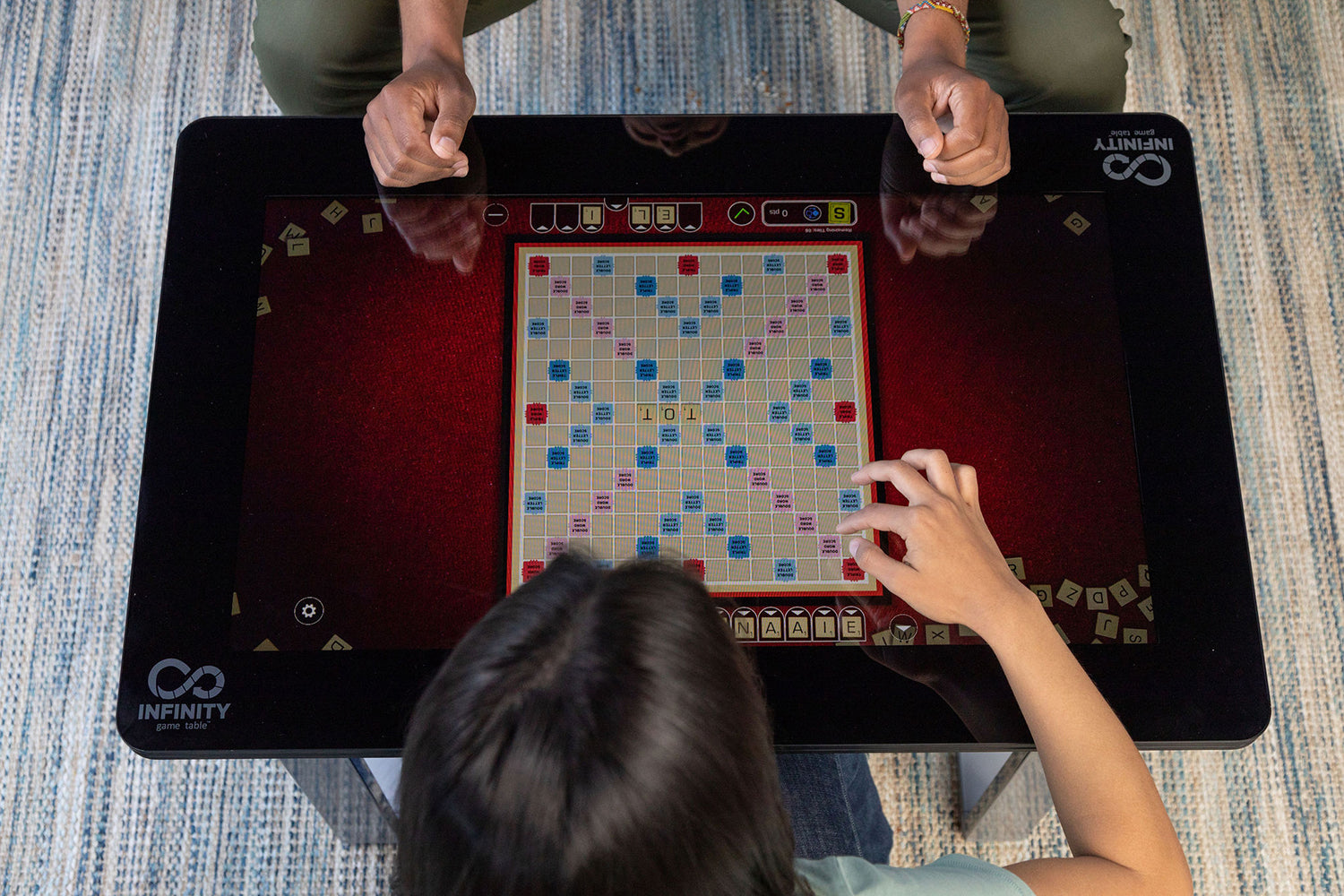
Digital is the odd one out, and you should know it before you fall for the photos. The Arcade1Up Infinity Game Table is a 24- or 32-inch HD touchscreen in a low frame, running a licensed library — Hasbro titles like Monopoly and Battleship at launch, with Asmodee games following — for roughly $500 to $999 depending on screen size. There is no wood vault, no physical components, no dining mode. It is, in truth, a large tablet shaped like a coffee table. For families who want digital board games with built-in scorekeeping and no setup or cleanup, it is genuinely pleasant. For the hobbyist who wants to play their own collection of physical games on a beautiful surface, it is simply the wrong product — a different hobby that happens to share a silhouette.
The teaching is short. Match the object to the need: the wood for the committed and the space-rich, the topper for the uncertain and the space-poor, the screen for the family that wants software, not lumber.
A topper is the honest first purchase for almost everyone uncertain whether they want the wood — you risk the price of a nice dinner instead of the price of a used car.
How much do gaming tables cost in 2026, tier by tier?
The honest spread runs from under five hundred dollars to nearly forty thousand. Knowing the tiers keeps you from overpaying for the bottom or under-budgeting for the top.
The topper tier (~$439). The recessed vault alone, dropped onto your own table. Allplay's four-piece topper is $439; a Jasper topper for an existing Jasper is the same. No new furniture, no new footprint, the lowest real cost of entry into a recessed surface.
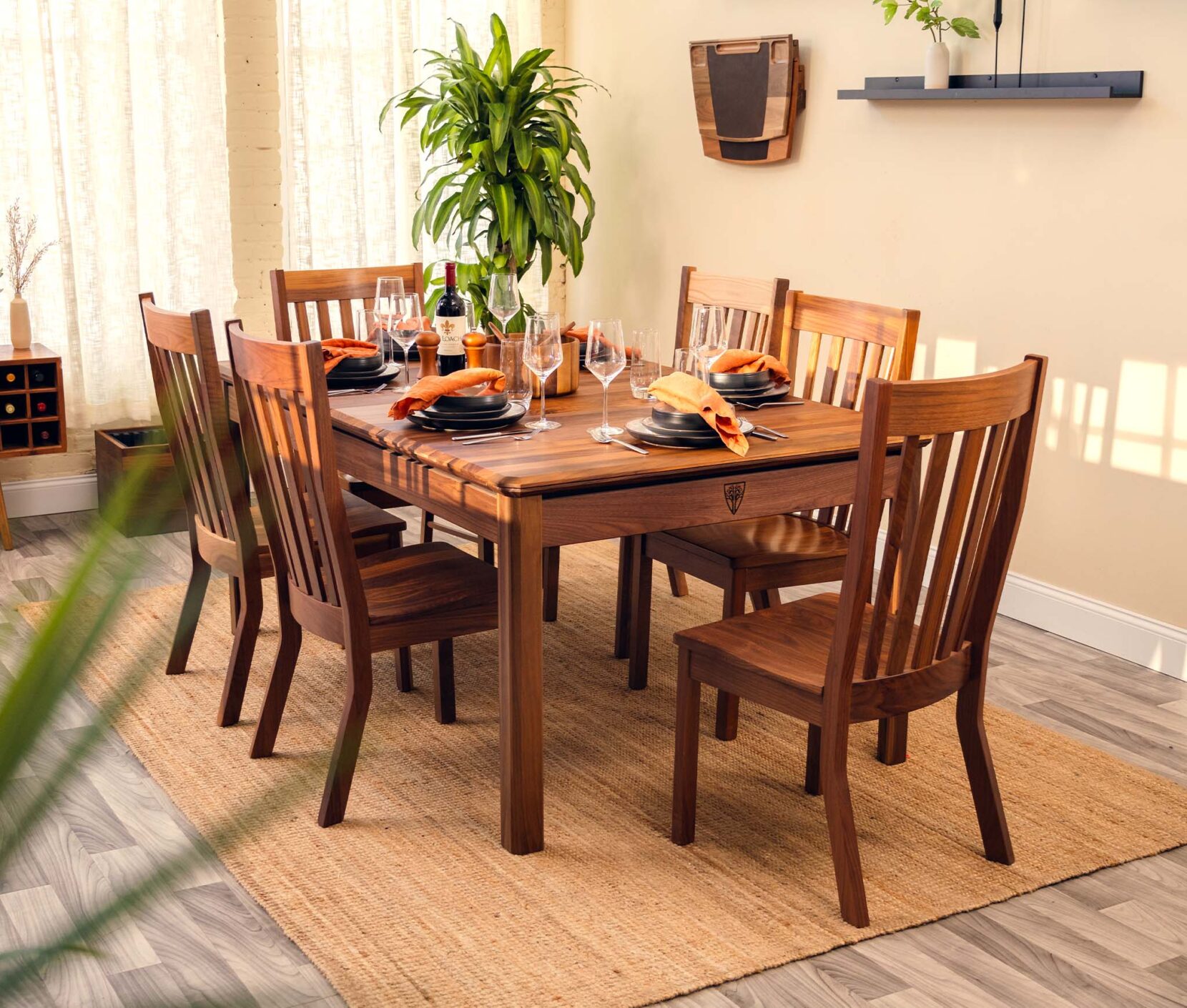
The entry-wood tier (~$499–$899). A real solid-wood table with a vault and dining leaves. The Allplay Jasmine starts at $499 — their own page calls it the most affordable solid-wood table on the market — and the Allplay Jasper, American oak with a 3-by-5 play area, starts at $899. This is where cost-per-session math becomes trivially favorable for anyone who plays regularly.
The mid tier (~$2,500–$5,000). Production craftsmanship and configuration. A Wyrmwood Modular Table for Six, ready to ship, runs $2,795–$4,785 depending on wood and surface color. Legacy Game Tables (formerly Carolina) lists its Signature Dining table from $2,999, the Banquet from $3,699, and the Tablezilla at $4,299, with roughly two-week fulfillment. The Bandpass Dresden — hardwood top over a bamboo gaming surface, dining leaves included — is $3,695. Allplay's fully custom line starts at $1,699 and typically lands $2,500–$5,000.
The heirloom tier (~$12,000–$39,250). The Wyrmwood Prophecy: handmade to order, reversible microsuede-and-wood play surface, your choice of hardwoods from cherry to Macassar ebony. Twelve thousand dollars at the base, $39,250 fully appointed. Furniture as commission, not as catalog purchase.
The digital tier (~$500–$999). The Arcade1Up Infinity Game Table — $500 or so for the 24-inch, up to $999 for the 32-inch, frequently discounted below that at retail. A different product, listed here only because buyers cross-shop it by price.
Notice the shape of this ladder. The jump from entry-wood to mid is a doubling or tripling for real gains in size, wood, and configuration. The jump from mid to heirloom is a different kind of leap entirely — you leave the realm of 'better gaming table' and enter the realm of 'bespoke furniture.' Spend deliberately at each threshold, knowing which kind of value you are buying.
What do real owners say after a month — and a year?

Sentiment from the people who already spent the money is the most useful data there is, so I have gone looking for the honest accounts rather than the marketing testimonials. The note running through all of them is the same: the regret, where it exists, is almost never about the wood.
The owner who paid roughly $5,000 for a mid-range Wyrmwood Modular in black walnut called it 'probably the highest quality piece of furniture I have in my home now,' and reported that houseguests consistently remarked on the craftsmanship. His verdict was unambiguous — 'if you can afford it, and Wyrmwood has them available, you should absolutely buy this table.' His complaints, every one of them, were about logistics, not the object: a two-year wait from a Kickstarter campaign, a cancelled inset-TV feature, a stain-color inconsistency. The table itself, a year on, he would buy again without hesitation.
A family a month into their Rathskellers Garrison echoed it from the other end of the price range. They were, in their words, 'so happy to finally have our Rathskellers in our home,' and expected it to stay 'in our family for years and years.' What they valued was specific and earned: the game cellar genuinely improved play, the aluminum rail system 'sets Rathskellers apart,' and the ability to set a game in the cellar and slide the leaves back on turned an unfinished session from a problem into a non-event. Their one real caution was about over-buying accessories — 'about 60% of the drawers are empty,' an expensive add-on that didn't earn its keep.
That is the pattern worth carrying into your own decision. Owners do not regret the recessed surface, the dining conversion, or the wood. They regret the logistics of custom and crowdfunded furniture — the waits, the cancelled features, the upsell drawers — and they regret accessories they bought on enthusiasm rather than need. The core object earns its place. The peripheral spending is where the buyer's remorse hides.
The regret, where it exists, is almost never about the wood. It is about the waits, the cancelled features, and the upsell drawers nobody fills.
Do you have the room — and will a gaming table actually fit your life?
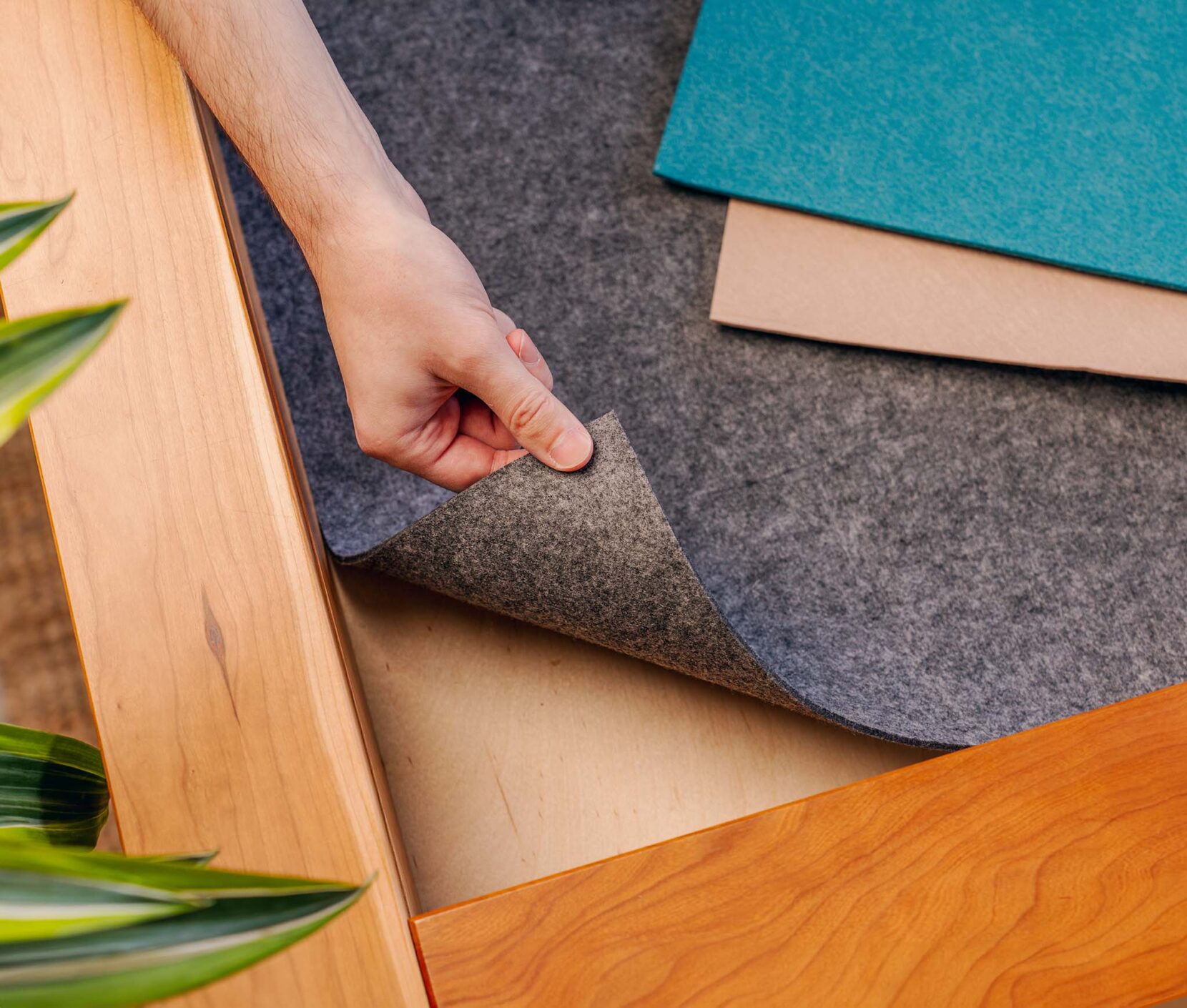
The question that sinks more purchases than price is footprint, and it deserves the same sober treatment as the wood. A dedicated gaming table is a large, permanent object. A six-seat table runs around six feet long; an eight-seat or 'battleground' configuration stretches to eight feet and wider. You are not finding a corner for this. You are giving it a room, or giving it your dining room and asking it to do double duty every single day.
This is precisely where the dining-mode leaves move from 'nice feature' to 'whole justification.' If the table cannot honestly serve as your everyday dinner surface — if the conversion is fiddly, the leaves heavy, the dining height wrong — then a dedicated gaming table demands a dedicated room, and most homes do not have one to spare. The tables that earn their footprint are the ones that genuinely disappear into dining furniture between sessions: solid-wood leaves that seal the vault flush, standard 30-inch dining height, a seam a dinner guest won't notice. That is the difference between a table that replaces your dining table and a table that competes with it for space you don't have.
This is also the strongest argument for the topper, and I will make it once more plainly. A topper claims no new floor space. It uses the table and the room you already have, converts in seconds, and lifts off to a closet when the meal needs the surface back. For an apartment, a shared home, a family that eats every dinner at the one table they own, the topper is not the compromise choice — it is frequently the correct choice, the one a larger budget should not talk you out of.
Measure the room before you covet the wood. A beautiful table in a space too small for it is not a gain; it is a daily inconvenience you paid four figures to install. The right table is the one your home can actually hold — and sometimes the right table has no legs at all.
What experienced tables keep reporting
Recurring owner patterns, synthesized in Puzzlewick's words. Follow each evidence trail to read the original discussion.
if you can afford it, and Wyrmwood has them available, you should absolutely buy this table.
Read the evidence: Inchoate Thoughts — Wyrmwood Modular Gaming Table review
A standard made-in-USA walnut dining table, WITHOUT all of these cool gaming conversion features or accessories, usually starts at about the same $5k.
Read the evidence: Inchoate Thoughts — Wyrmwood Modular Gaming Table review
the game cellar really does improve the playing experience
Read the evidence: The Tabletop Family — One Month with our Rathskellers Gaming Table
about 60% of the drawers are empty
Read the evidence: The Tabletop Family — One Month with our Rathskellers Gaming Table
Board games are designed with a certain table footprint in mind, and trying to fit large games on a small 3x5 surface is a recipe for frustration with cards sliding and tokens spilling.
Read the evidence: BoxKing — Are Board Game Tables Worth It?
The picks
Some links below are affiliate links — as an Amazon Associate, Puzzlewick earns from qualifying purchases, at no extra cost to you. It never changes a pick.
 2 photos
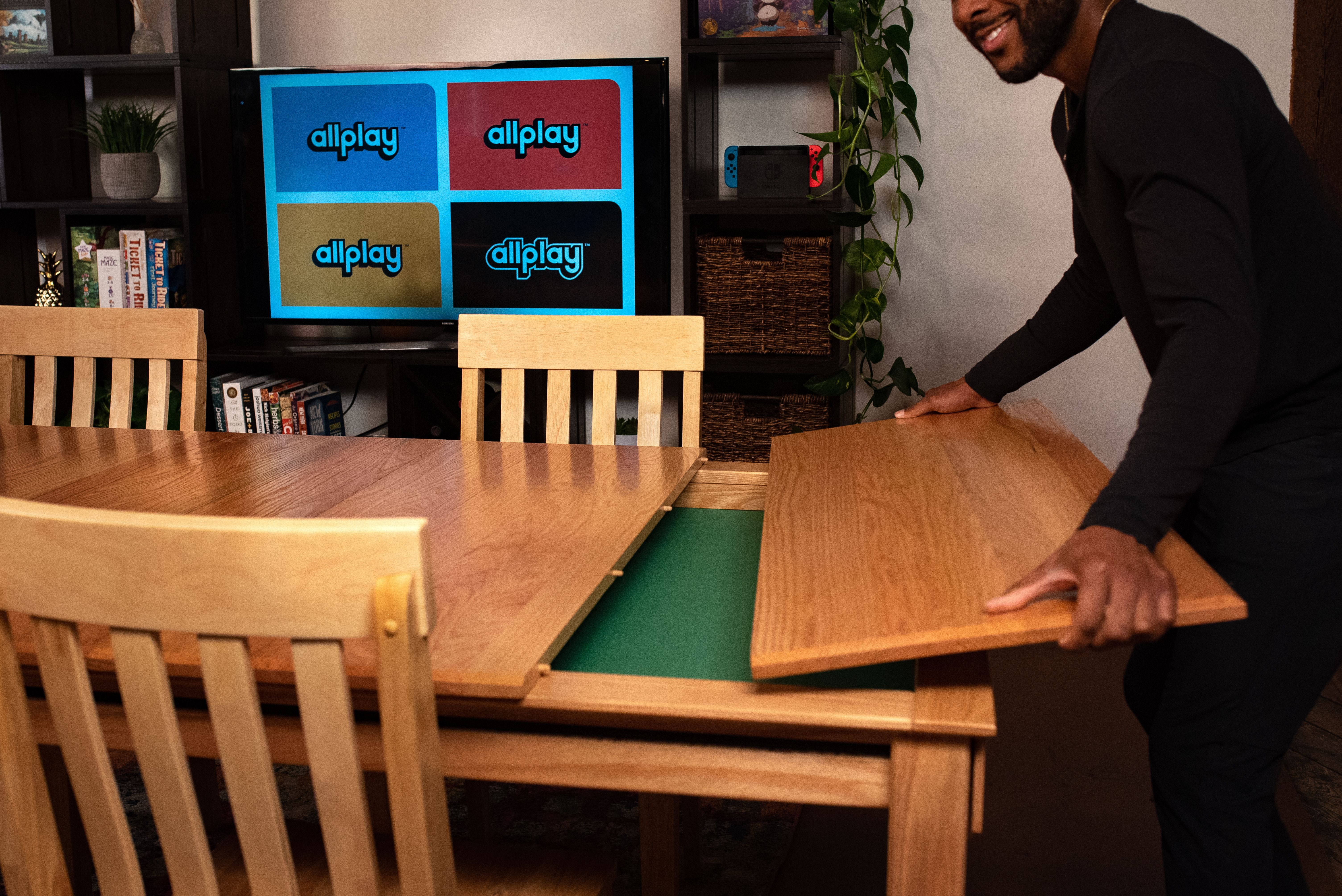
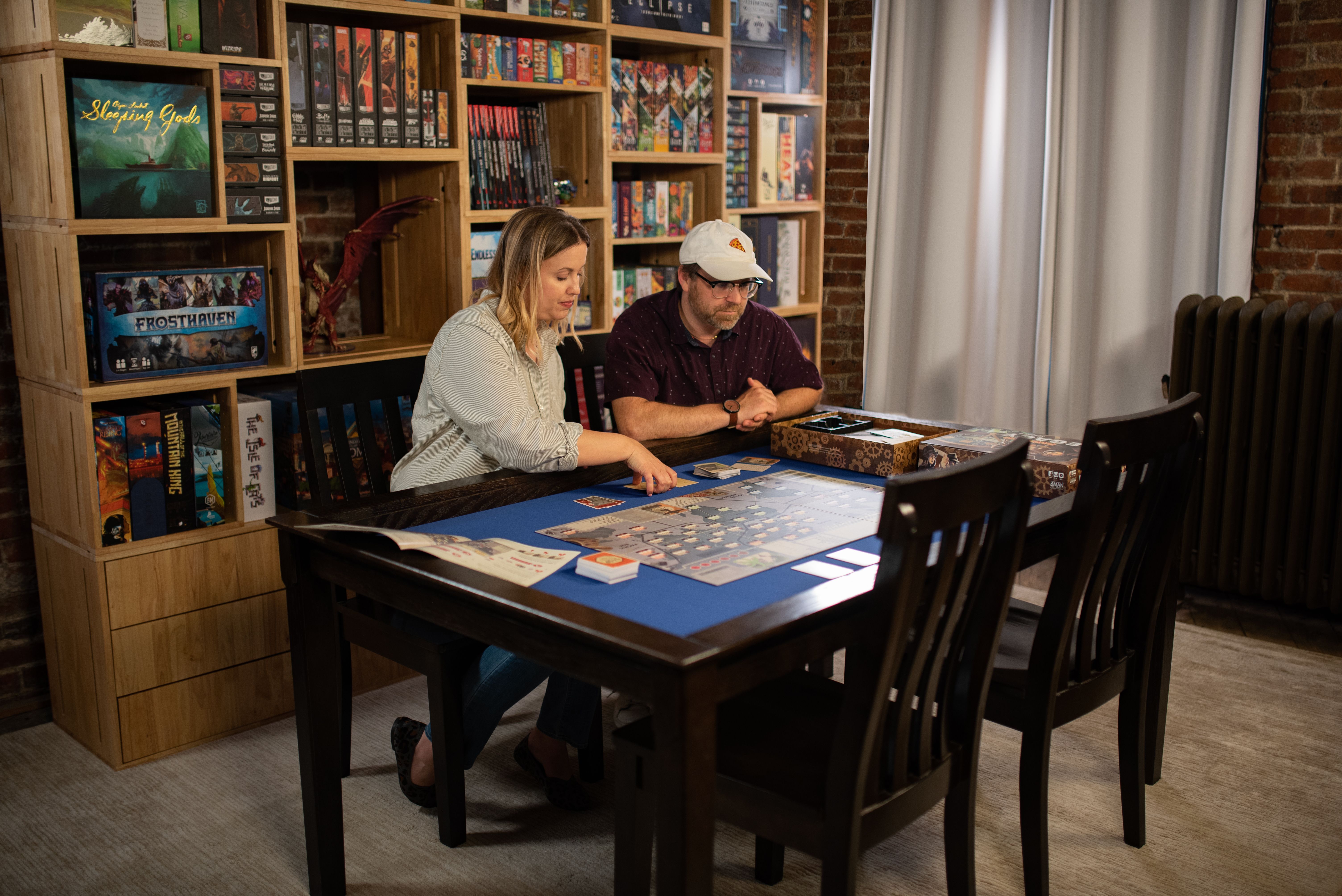
 Jasper Board Game Table
This is the table I point most buyers toward, because it is the one where the arithmetic and the craft agree. Solid American oak, a true 36-by-60 recessed arena, seating for six, ready to ship, and a starting price of $899 that no other real solid-wood table undercuts except Allplay's own Jasmine. The cost-per-session math closes for anyone who plays even twice a month. Add the $439 topper and you have a dining table nobody questions. It does not pretend to be heirloom furniture, and it does not need to. It is honest wood at an honest price.
- Best price-to-quality ratio of any dedicated wood table
- Solid American oak, made in USA, ready to ship in ~2 weeks
- True recessed 3x5 arena with optional dining topper
- Topper is a separate $439 purchase
- Less wood selection and configuration than premium custom shops
 7 photos
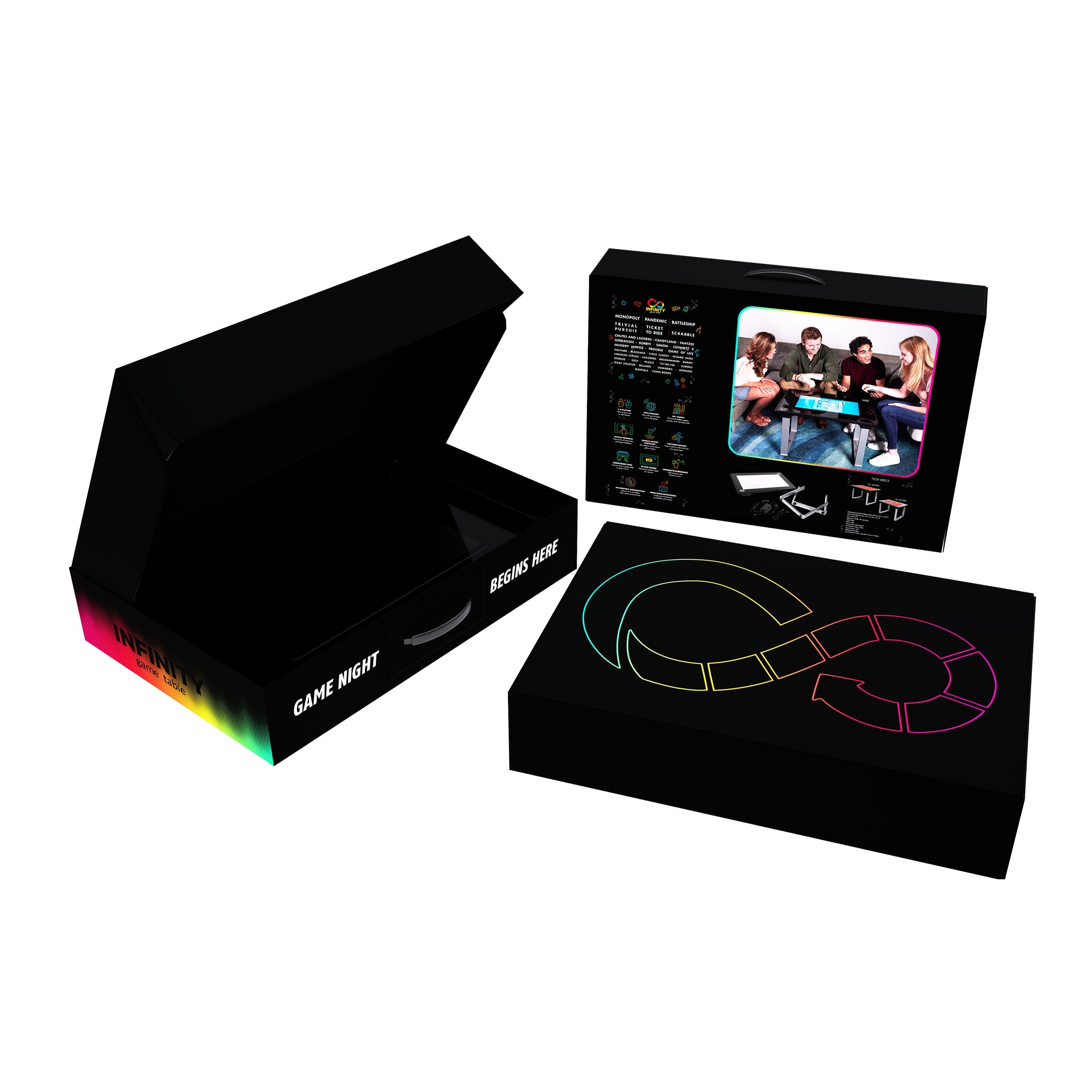
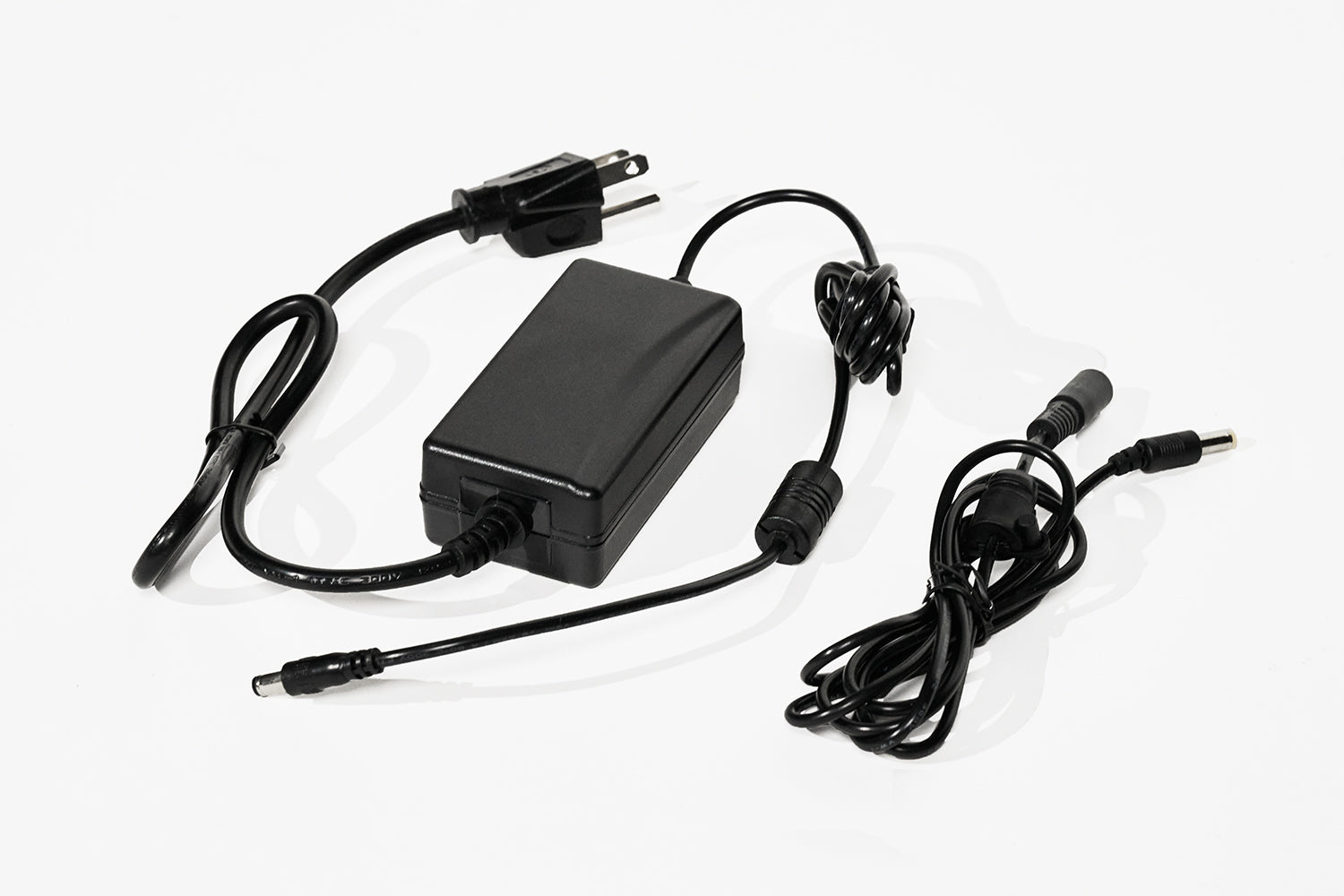
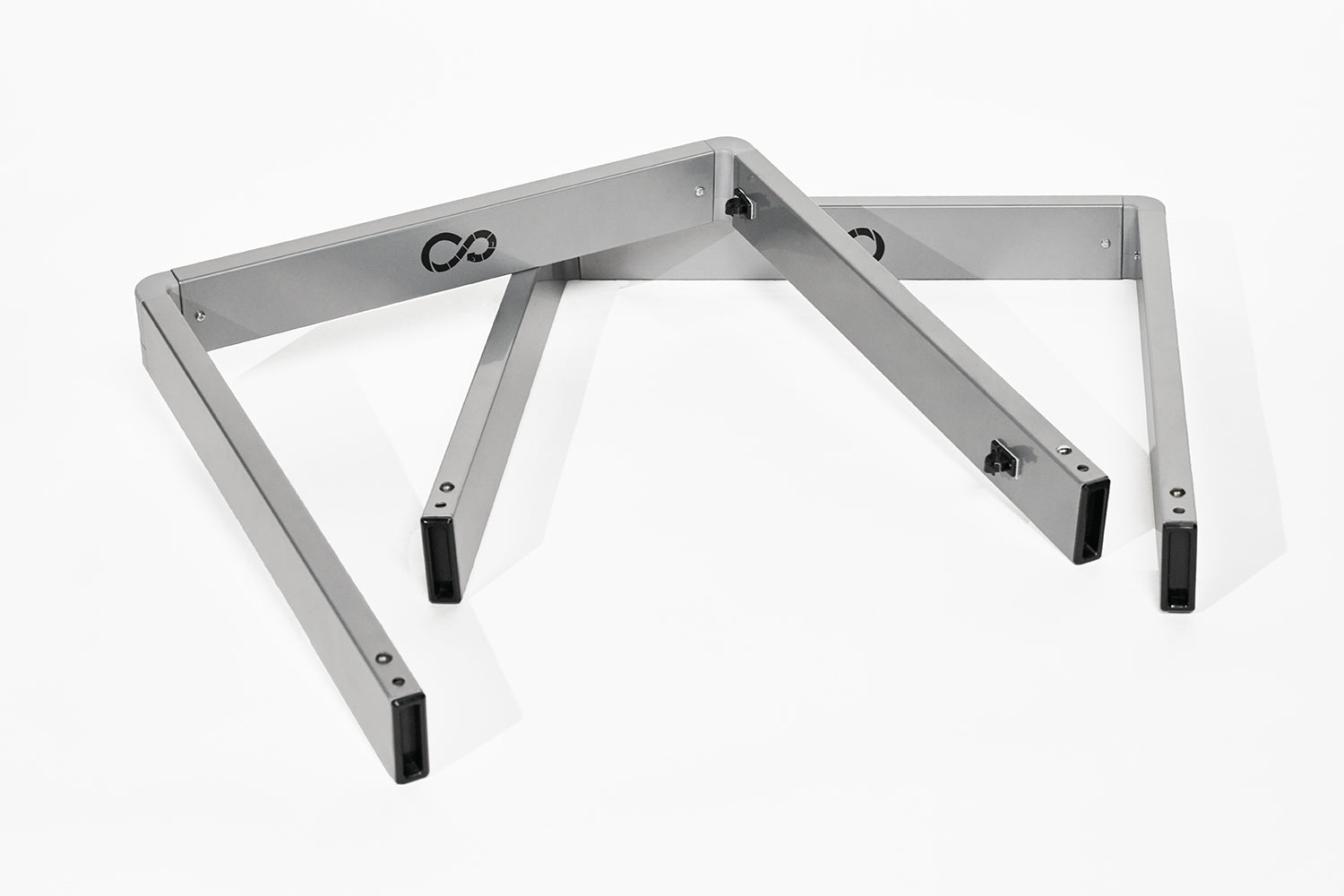
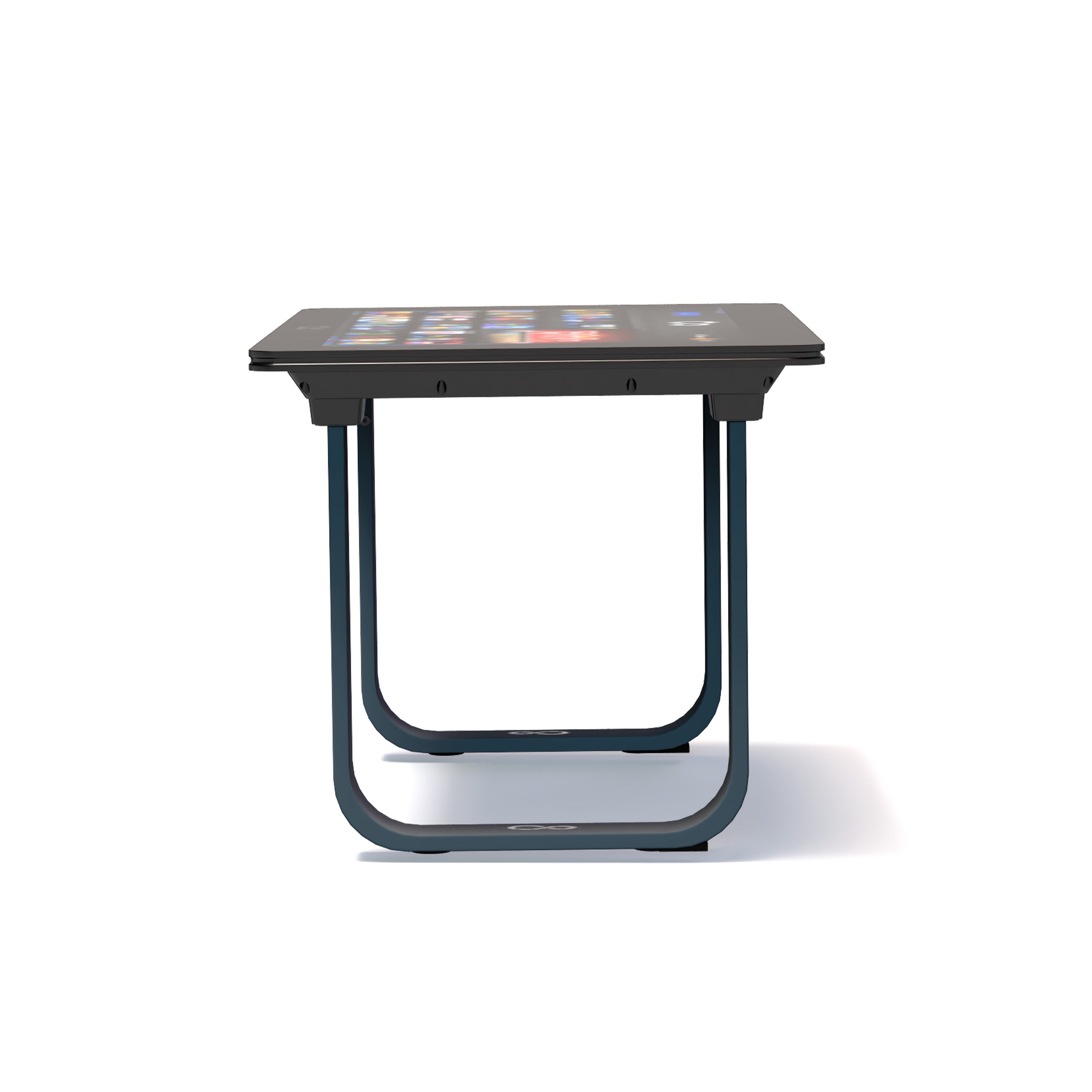
 Infinity Game Table (32")
I include the Infinity Game Table so you can rule it out for the right reason, not the wrong one. It is a 32-inch HD touchscreen in a low frame — $999 at the 32-inch size, around $500 for the 24-inch, often discounted well below at retail — running a licensed library of Hasbro and, later, Asmodee titles with no mandatory subscription. As a digital game night for families it is genuinely fun: no setup, no cleanup, automatic scorekeeping. As a surface for the physical collection you already own, it is simply not that product. Buy it for software. Do not buy it expecting wood.
- No setup or cleanup; built-in scoring and rules enforcement
- Licensed Hasbro/Asmodee library, no mandatory subscription
- Two screen sizes; frequently discounted at major retailers
- Plays only its own digital library — not your physical games
- No recessed vault and no dining-mode conversion
- A screen ages; it is electronics, not heirloom furniture
At a glance
| table | maker | price | type | best for |
|---|---|---|---|---|
| Jasmine | Allplay | $499 | dedicated | Lowest-cost solid-wood entry |
| Jasper | Allplay | $899 | dedicated | Best overall value (oak, seats 6) |
| Jasper Dining Topper | Allplay | $439 | topper | Cheapest upgrade / try-before-you-commit |
| Custom Table | Allplay | from $1,699 | dedicated | Exact size, shape, and wood |
| Modular — Table for Six (RTS) | Wyrmwood | $2,795–$4,785 | dedicated | Premium build, ready to ship |
| Signature Dining | Legacy (Carolina) | from $2,999 | dedicated | Standard-height dining-first build |
| The Dresden | Bandpass Design | $3,695 | dedicated | Dining leaves included, free shipping |
| The Phalanx | Rathskellers | from €1,950 | dedicated | Wood-and-metal modern, deep cellar |
| Prophecy | Wyrmwood | $12,000–$39,250 | dedicated | Heirloom-grade commissioned furniture |
| Infinity Game Table | Arcade1Up | $500–$999 | digital | Digital family game night (not physical games) |
Questions, answered
Are gaming tables worth the money?
For regular players, yes. An entry solid-wood table like the Allplay Jasper ($899) costs roughly $180 a year over five years; play even twice a month and that's well under a dollar per session for a recessed surface that protects components and lets you leave campaigns set up. The premium tier ($12,000+ Wyrmwood Prophecy) is only 'worth it' as bespoke furniture you'd have wanted regardless — never on gaming volume alone.
What's the difference between a gaming table and a table topper?
A gaming table is a complete piece of furniture with a recessed vault, rails, cup holders, and usually dining leaves — it replaces a table. A topper is just the recessed tray with cup holders, dropped onto a table you already own — it adds a gaming surface without new furniture or floor space. Toppers start around $439 (Allplay's 4-piece); dedicated tables start around $499.
How much does a good gaming table cost in 2026?
Solid-wood tables start at $499 (Allplay Jasmine) and $899 (Allplay Jasper). The mid tier — Wyrmwood Modular, Legacy, Bandpass Dresden — runs roughly $2,500–$5,000. Custom programs begin around $1,699. The heirloom tier (Wyrmwood Prophecy) runs $12,000–$39,250. A removable topper is about $439, and a digital Infinity Game Table is $500–$999.
Is the Wyrmwood Prophecy worth $12,000?
Only if you judge it as furniture, not as a gaming purchase. At $12,000–$39,250 it's a handmade, made-in-USA hardwood table comparable in price to any bespoke dining table from a custom woodshop — the gaming function is essentially included. No play-frequency math justifies it as hobby spend. If you'd commission a luxury hardwood dining table anyway, it's defensible; if not, a mid-tier table delivers the same gaming experience for a fraction of the cost.
Is the Arcade1Up Infinity Game Table a real gaming table?
It's a digital game table — a 24- or 32-inch HD touchscreen ($500–$999) running a licensed library of Hasbro and Asmodee titles, with no mandatory subscription. It does not have a wood vault and cannot display or hold your physical board games. It's excellent for digital family game night with built-in scoring, but it's the wrong product if you want a surface for the physical collection you already own.
Do I have room for a gaming table?
A six-seat table is about 6 feet long; eight-seat 'battleground' sizes reach 8 feet and wider, plus chair clearance on all sides. Unless the table converts cleanly to your everyday dining surface via solid-wood leaves, it needs a dedicated room most homes don't have. Tape out the full footprint and live with the outline for a week before buying. If space is tight, a topper on your existing table is usually the smarter choice.
Should I buy from Kickstarter/Gamefound or ready-to-ship?
Prefer ready-to-ship for furniture. The most common owner complaint isn't the table — it's the crowdfunding timeline, with multi-year waits and features cancelled after pre-order. Wyrmwood, Allplay, and Legacy all sell stock configurations that arrive in about two weeks. Crowdfund only if you specifically want a bespoke build and can accept the wait and the risk.
What accessories are actually worth buying?
Buy the dining topper (it's what makes the table livable as everyday furniture) and cup holders. Be cautious with add-on storage drawers — they're the single most common 'wasted money' complaint among owners, one of whom reported 60% of their drawers sit empty. Buy the table and topper first; add accessories later, only if you genuinely find yourself wanting them.
Do gaming tables hold their resale value?
Solid-wood, made-in-USA tables from established makers (Wyrmwood, Allplay, Legacy, Rathskellers) hold value far better than mass-market convertible furniture or digital tables — they're heirloom-grade cabinetry with active secondhand demand, and owners routinely describe keeping them 'for years and years.' Digital tables behave like electronics and depreciate as the hardware ages. If resale matters, buy quality solid wood, not a screen.
Kenji's verdict
A gaming table is worth it when the object matches the need — and most buyers need a smaller object than the marketing implies. If you play regularly and have the space, an Allplay Jasper at $899 is the right answer for nearly everyone: the cost-per-session math closes within a year, and the recessed arena earns its place at every session thereafter. If you're uncertain, or you live where a dedicated table cannot fit, buy a $439 topper for the table you already own and let six months teach you the truth before you spend like an heirloom buyer. And if you're drawn to a $12,000 Prophecy, be honest with yourself about what you're buying — not a gaming table, but a piece of commissioned hardwood furniture that happens to game. By that yardstick it's defensible; by any other it's regret with cup holders. The wood, when it's right for you, doesn't need a salesman. It needs a room, a reason, and a clear head about which of the three tables you actually want. Choose the object that fits your life, not the one that fills your eye — and the answer to 'is it worth it' becomes obvious, and yours.
Still deciding? Take the Game-Finder — answer seven quick questions and the cabinet hands you the one board game built for your table, with a buy link and your own shareable player talisman.
Research ledger 15 sources · reviewed 2026-07-17
Specifications, rules, current product information, community experience, and contrary evidence were checked against the sources below. Commercial links are kept separate from editorial evidence.
- allplay.comallplay.com/board-game-tables
- allplay.comallplay.com/board-game-tables/jasper
- allplay.comallplay.com/board-game-tables/jasmine
- allplay.comallplay.com/board-game-tables/custom-table
- wyrmwoodgaming.comwyrmwoodgaming.com/products/prophecy-table
- wyrmwoodgaming.comwyrmwoodgaming.com/products/table-for-six-quick-ship
- wyrmwoodgaming.comwyrmwoodgaming.com/modular-gaming-table
- legacygametables.comlegacygametables.com/collections/signature-game-tables
- bandpassdesign.combandpassdesign.com/products/the-dresden
- rathskellers.comrathskellers.com/the-phalanx-gaming-work-eat-minimal-table
- thetabletopfamily.comthetabletopfamily.com/one-month-with-our-rathskellers-gaming-table
- inchoatethoughts.cominchoatethoughts.com/product-review-wyrmwood-modular-gaming-table
- popsci.compopsci.com/gear/arcade1up-infinity-game-board-review
- bestbuy.combestbuy.com/site/arcade1up-24-infinity-game-table/6470411.p?skuId=6470411
- boxkinggaming.comboxkinggaming.com/blogs/news/why-a-great-gaming-table-matters-more-than-you-think
Every object has a lineage. Let me tell you its story.

Keep exploring
The next smart rabbit holes.
⬢ Topic PathTabletop Accessories: compare the whole shelfBuy the accessory that fixes a repeated annoyance first. Protection, setup speed, readable state, and comfortable handling beat...Buying GuideHeirloom Gaming Tables: Luxury Furniture That Lasts GenerationsA gaming table done right becomes furniture that outlives its makers—here's how to find the one for your table.ComparisonGaming Mats Comparison 2026: Neoprene vs Mousepad vs Premium FabricThe right gaming mat changes how your minis feel under your hands—here's how to pick between neoprene, mousepad, and fabric options that...