Painting Your First Warhammer Models: Tools & Paints for Beginners
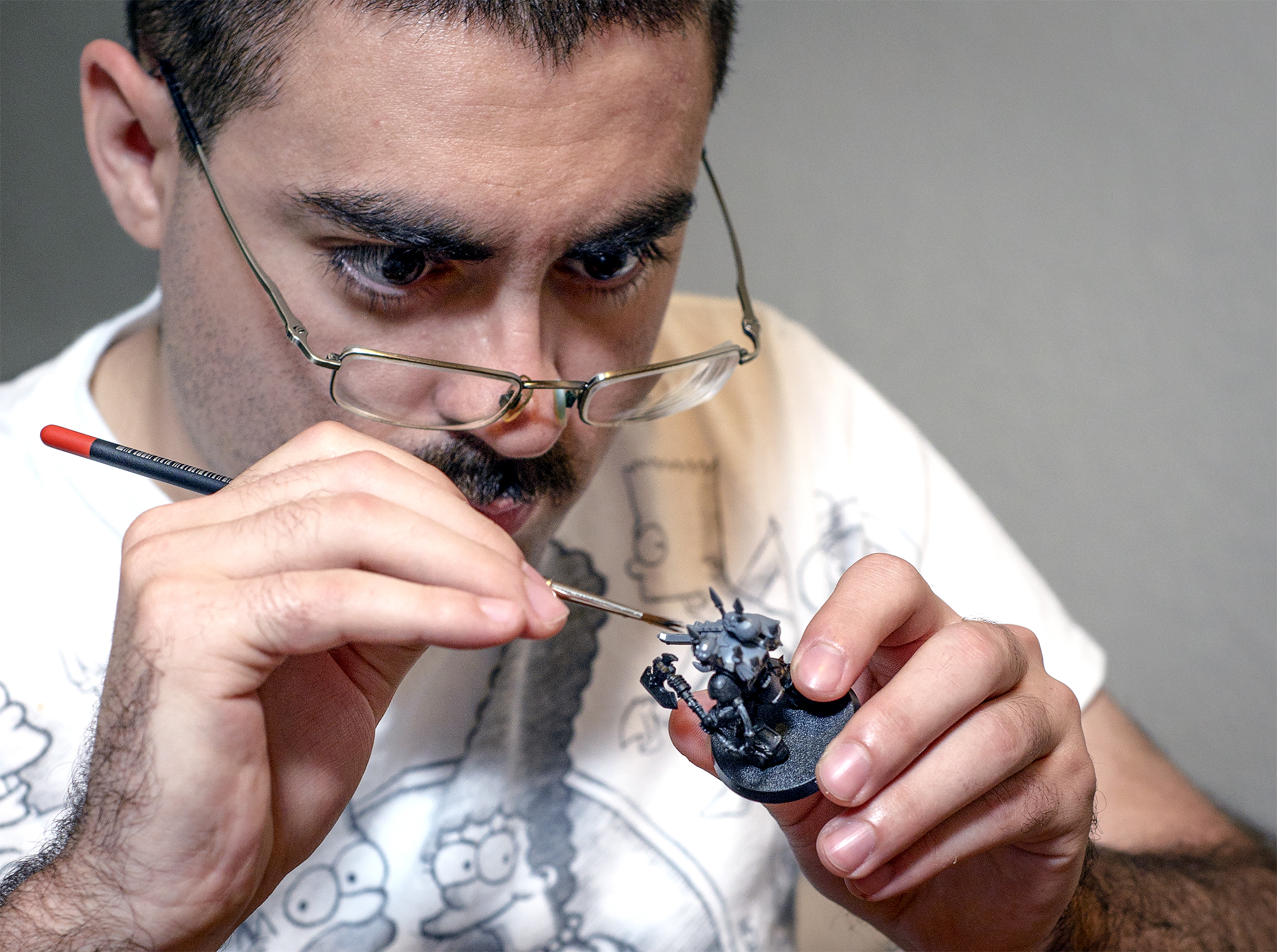
Your Warhammer miniatures are stunning—now it's time to bring them to life with paint. Here's exactly what you need to start.

AI-assisted curator persona · researched & reviewed by founder Robert Pruitt, a 20-year enthusiast · how we make our guides
The short answer
The best way to start painting Warhammer models is with an official Games Workshop starter set (which includes paints, essential tools, and a brush), paired with quality shade paints like Nuln Oil and Agrax Earthshade that do the heavy lifting for beginners.
There's something magical about the moment you pick up your first brush and realize you can actually make your plastic soldiers look alive. The good news: you don't need fancy supplies or years of art training. You just need the right starter kit and permission to make a few happy accidents.
Warhammer painting is forgiving, fun, and deeply rewarding. In this guide, I'm walking you through exactly what to buy, why each tool matters, and how to set yourself up for success—not just on day one, but for years of painting joy ahead.
What should an absolute beginner actually buy first?
If you do nothing else, buy one starter set, one can of primer, and a pot of shade. That's the whole list. Everything past that is a bonus you'll grow into. The starter set bundles the four things that are genuinely annoying to source separately and easy to get wrong: paints in the colors you'll reach for most, a brush sized for the model, clippers to free parts from their frame, and a scraper for mould lines. Buying those a la carte costs more and invites the classic beginner mistake, picking the wrong version of something and not knowing why it feels off.
Games Workshop's official sets are formulated for their own plastic, so the paints go on with little to no thinning and the curated colors are enough to finish a model rather than leaving you stranded mid-project. That "actually finishing one" feeling is the whole game at the start, it's what makes you want to paint the next.
The tools quietly protect your most important tool: your hands. A proper mouldline scraper turns prep from a chore into thirty satisfying seconds. Clippers stop you snapping a leg off. A bottle of plastic glue spares you the superglue-on-fingertips ritual we've all suffered. These aren't luxuries, they're the difference between loving the hobby and dreading the boring part. Start small, finish one model, and let momentum do the rest.
Why are shades and washes the beginner's secret weapon?
Here's the trick that makes a first model look shockingly good: a shade does half the work for you, automatically. Flood a thinned shade like Nuln Oil or Agrax Earthshade over a dry basecoat and capillary action pulls it into every recess, panel line, and crease, painting your shadows for you. No blending, no held breath, no steady hand required.
Nuln Oil is a near-black shade and it's widely called the single most useful paint in the entire Citadel range, it sits beautifully over silver, steel, blue, grey, and black, turning flat metal into grimy, believable armour. Agrax Earthshade is a warm brown that flatters gold, brass, leather, wood, and skin, instantly making things look battle-worn. Own both; one pot of each lasts months.
Two insider rules save the beginner heartbreak. First, let a wash dry completely before touching the model again, disturbing a half-dry shade leaves chalky tide-marks and uneven pooling that are a pain to fix. Second, shades go on over a basecoat, not over bare plastic, they need color underneath to deepen. This isn't laziness or cheating. It's exactly what professional painters do by hand, compressed into one honest step. The first time you wash a model and watch it suddenly look real, you'll understand why people get hooked.
Should you use Contrast or Speedpaints instead of the old way?
This is the question that's quietly rewritten beginner painting, and the honest answer is: yes, learn Contrast-style paints early, they're the fastest path to a model you're proud of. Citadel Contrast (and rivals like Army Painter Speedpaint and Vallejo Xpress) are high-pigment, translucent paints engineered to do basecoat and shade in a single pass. One coat flows across a surface, pools darker in the recesses, and dries lighter on the raised areas, giving you instant depth from a single brushload.
The catch nobody tells beginners up front: Contrast lives and dies by your primer color. Spray a bright bone-white or light-grey undercoat (Wraithbone and Grey Seer are the named Citadel sprays) and the translucent color glows. Spray it over black and it'll look muddy and dull. So the rule is simple, light primer for Contrast, dark primer for the metallic-and-Nuln-Oil route. Contrast also rewards texture: it shines on fur, cloth folds, faces, and chainmail, and looks flatter on big smooth panels where there's nothing for the shade to gather in.
My advice? Don't treat it as either/or. Use Contrast to get a tabletop-ready army fast, then go back and add a few traditional highlights on the models you love most. You keep the speed and leave yourself room to grow.
How do you choose between Games Workshop, Army Painter, and Vallejo?
All three are genuinely good, the differences are about feel and fit, not quality. Here's the honest breakdown.
Games Workshop (Citadel) paints are thicker, more forgiving, and color-matched to GW models, so they cover in one or two coats with minimal thinning. The starter sets are curated for Space Marines and Tyranids, so if that's your army, the colors are pre-decided and they're stocked nearly everywhere. The trade-off is price per pot.
Army Painter paints flow thinner and smoother, which many painters prefer for layering and detail. Their sets usually pack more colors for less money and aren't tied to one faction, ideal if you want to roam across armies without committing to Citadel's naming. Brilliant value, slightly more thinning needed.
Vallejo is the choice of pros for brightness and coverage, supplied in dropper bottles that waste far less paint and make precise thinning easy. The trade-off is the steeper curve, Vallejo expects you to thin properly and rewards good brush control rather than forgiving sloppiness.
Quick verdict: painting 40K or Age of Sigmar and want the shortest road? Start Citadel. Want flexibility and value? Army Painter. Ready to actually learn brush technique and never fight a dried-out pot again? Vallejo's droppers are a joy. And remember, you can freely mix all three; the only place to test first is shades, which flow differently brand to brand.
Do you really need expensive brushes, or will the starter brush do?
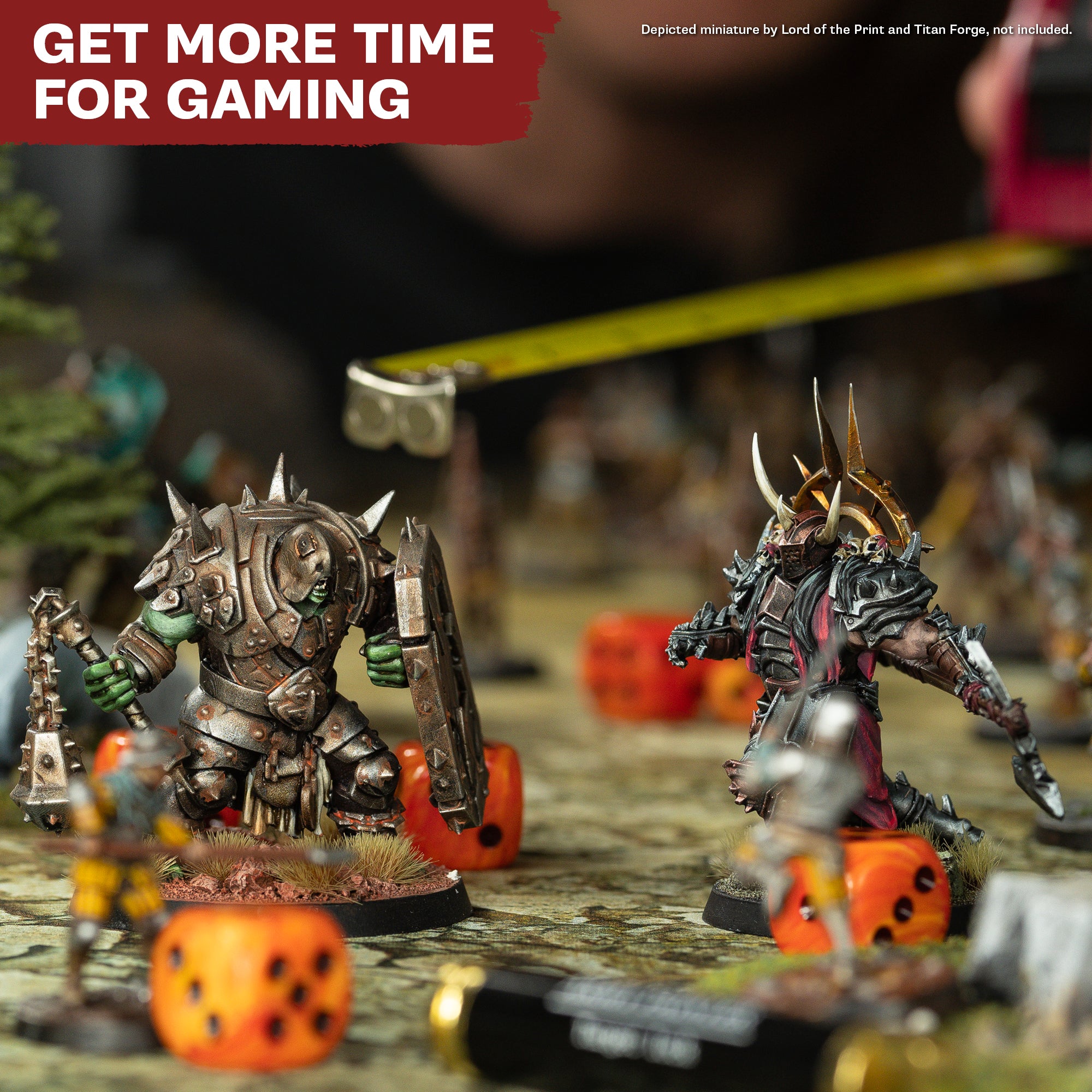
Short answer: not yet, and rushing the upgrade is a beginner trap. Your starter set's synthetic brush is genuinely fine for learning. Synthetics are cheap to replace and easy to clean, which paradoxically makes you a braver painter, you'll actually use the thing instead of babying it because you're terrified of ruining a costly sable.
Once you've painted five to ten models and your brush control has clicked, a quality natural-hair brush feels like a revelation. The Winsor & Newton Series 7 (Kolinsky sable) is the gold standard, it snaps to a needle point, holds a huge reservoir of paint, and lasts years if treated well. But at roughly twenty to thirty-plus dollars each, buying one before you've learned to load and care for it is how beginners discover, expensively, that they had too much water on the brush the whole time.
Here's the insider move most guides skip: keep your dying brushes. When a brush loses its fine point, don't bin it, demote it to a drybrush. A splayed, blunt old brush (or a soft cheap makeup brush from the drugstore) is better for drybrushing than anything new, and it costs nothing. Your brush kit naturally tiers itself over time: crisp sable for fine detail, mid-grade synthetics for basecoating, retired brushes for drybrushing and slathering on glue. Timing the upgrade matters more than the price tag.

What's the priming secret that fixes half of beginner problems?
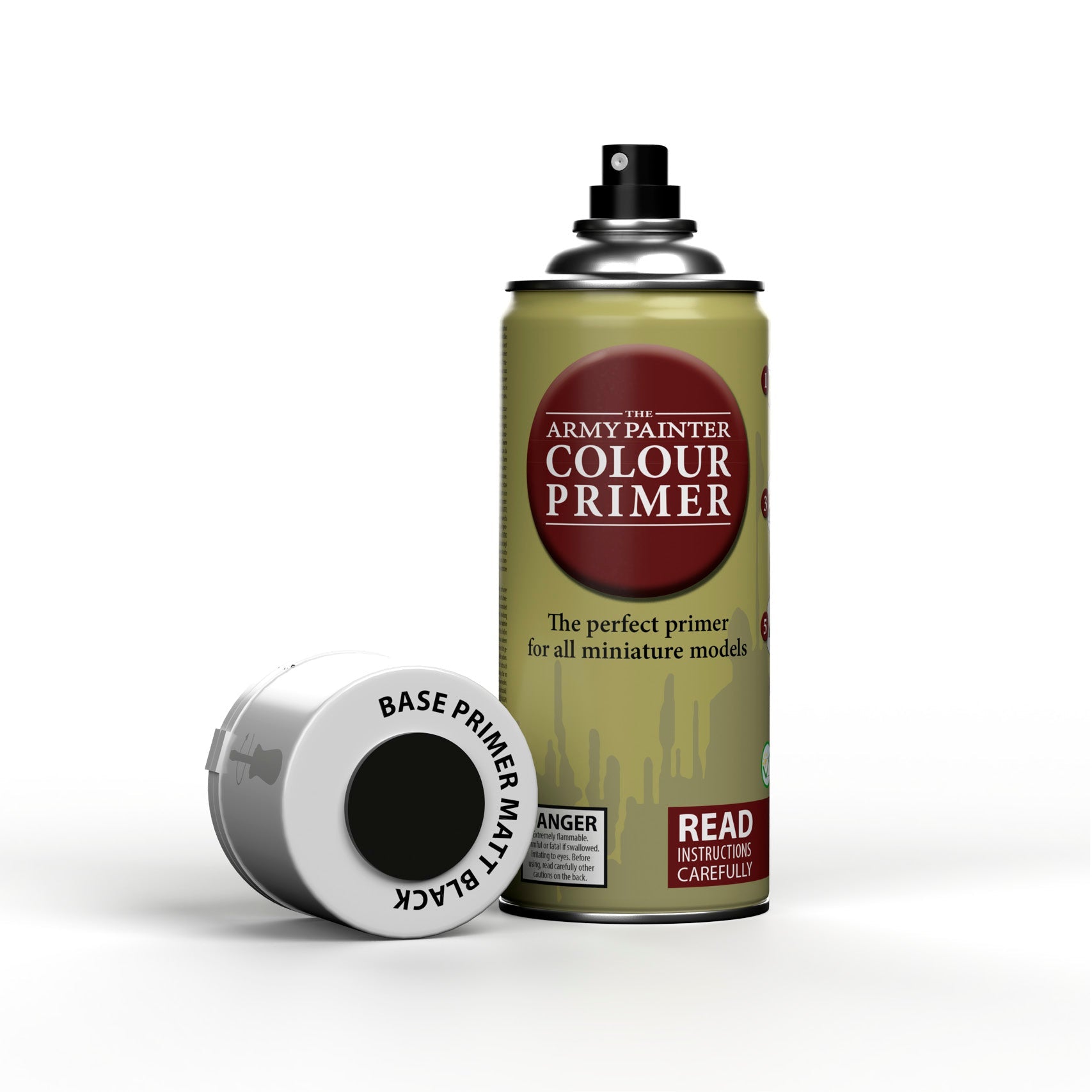
Primer is the first coat you put on bare plastic, and skipping or rushing it causes more beginner frustration than any other single mistake. It does two jobs: it gives paint something to physically grip, without it, acrylic beads up and flakes off later, and it creates an even base so your colors read true instead of patchy.
The non-negotiable rule is thin coats from a distance. Hold the can roughly a hand's width away and pass it across the model in light, sweeping bursts, building up rather than blasting on. Thick primer is the silent killer of detail, it pools in the exact recesses and rivets that make a miniature look sharp, turning crisp armour into a soft blob. If you can still read every panel line after priming, you did it right.
Now the part that ties everything together: pick your primer color to match your paint system. Going the classic route with shades? Prime black or dark grey for grimdark armies, it deepens shadows for free. Going the Contrast/Speedpaint route? Prime bone-white or light grey so the translucent color can glow. Army Painter's Colour Primer line comes in over thirty matched shades and sprays a famously fine, even mist; Citadel's sprays are equally reliable. Weather matters too, prime on a dry, mild day, because spraying in cold or humid air leaves a chalky, gritty finish that no amount of paint will rescue. One can primes dozens of models.
Which cheap upgrades make the biggest difference, fast?
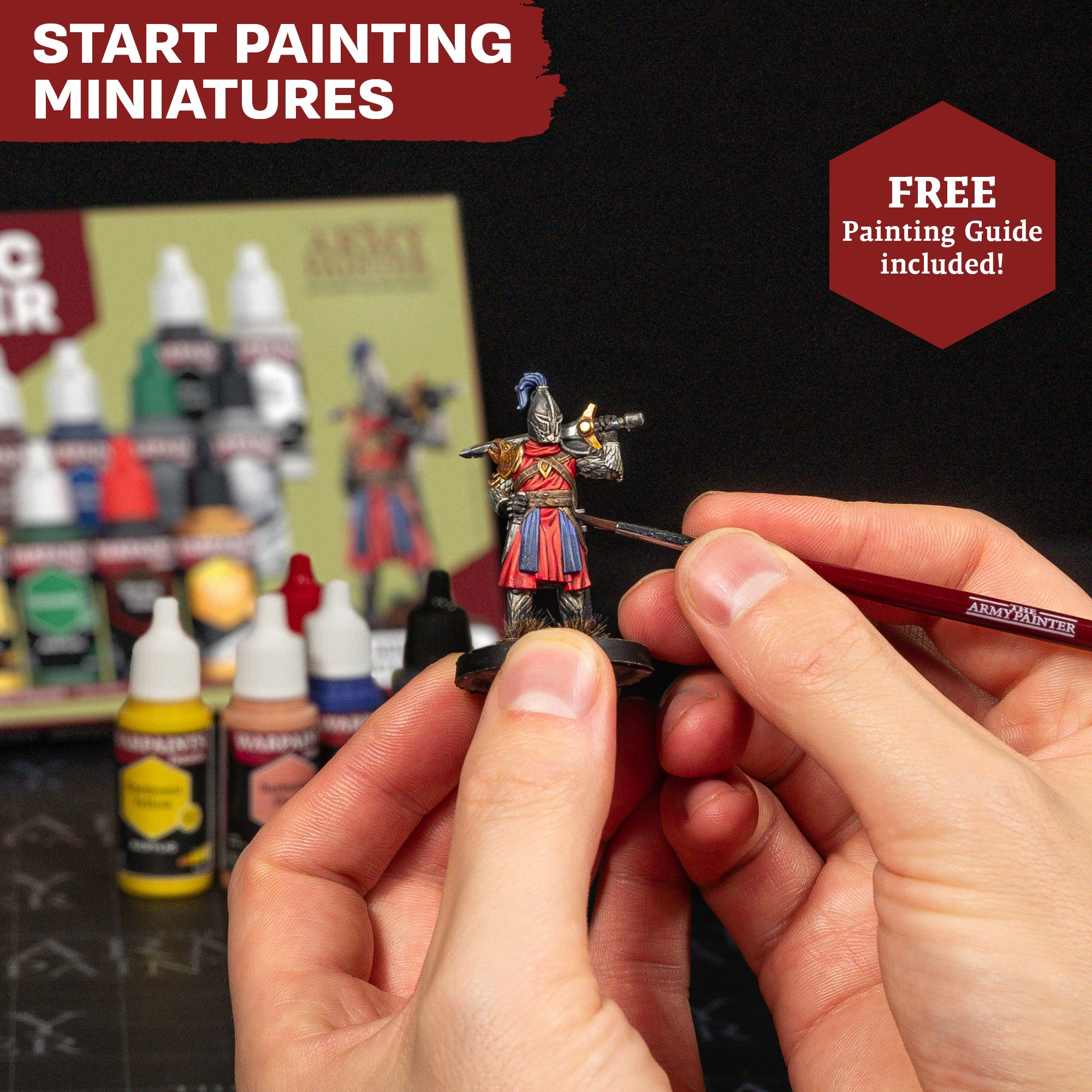
Once your starter kit's in hand, three almost-free additions will improve your painting more than any premium paint range, and beginners consistently discover them too late.
1. A DIY wet palette. This is the single biggest leap for under five dollars. Take any airtight container, lay a piece of kitchen sponge or foam in the bottom, soak it, and top it with a sheet of baking parchment. Your paint now sits on a slowly-hydrating surface and stays usable for days instead of skinning over in minutes. More importantly, it gently keeps your paint at the right thinned consistency while you work, which quietly teaches you what "properly thinned" actually feels like. Painters who switch almost never go back.
2. The two-thin-coats mantra. It's a cliché in the hobby because it's true. One thick coat hides detail and dries blotchy; two thin coats (a drop or two of water stirred in until the paint looks like milk, not cream) give smooth, even color that lets the sculpt breathe. Slower, yes, infinitely better-looking, also yes.
3. Drybrushing for instant highlights. Load that retired old brush, wipe nearly all the paint off onto a paper towel until it barely marks the page, then whisk it across the raised edges. It catches every bump and rivet with a lighter tone, faking hours of careful highlighting in seconds. It's forgiving, fast, and the most beginner-proof highlight there is.

How do you protect your models so the work actually lasts?
You've finished a model, it looks great, you're glowing, please don't skip this last step. Varnish is the save point for everything you just did. Acrylic paint, especially on the edges and high points your fingers touch, will chip, rub, and wear away with handling, and a single rough game night can undo hours of work. A clear protective coat seals the paint against scratches, oils from your hands, dust, and moisture, so your army survives years of being shoved across tables.
The same two-thin-coats logic applies, two light passes of varnish protect far better than one heavy flood, and thin coats won't drown your fine detail or fog up the finish. For wargaming models that get handled constantly, matte varnish is the standard, it kills the plastic shine and reads as natural under tabletop light. Gloss is tougher but looks toy-like on most minis; some painters gloss-coat first for maximum armor against chipping, then hit it with matte to dull the shine, the best-protected, best-looking combination.
One hard-won warning the whole hobby shares: only varnish in dry, mild conditions. Spray varnish in cold or humid air and it can "frost," leaving a milky white haze across all your careful work, the single most heartbreaking mistake in the hobby and almost entirely preventable. Test on a junk model first, spray light, let it cure fully, and your favorites stay pristine for the long haul.

The picks
Some links below are affiliate links — as an Amazon Associate, Puzzlewick earns from qualifying purchases, at no extra cost to you. It never changes a pick.
 10 photos
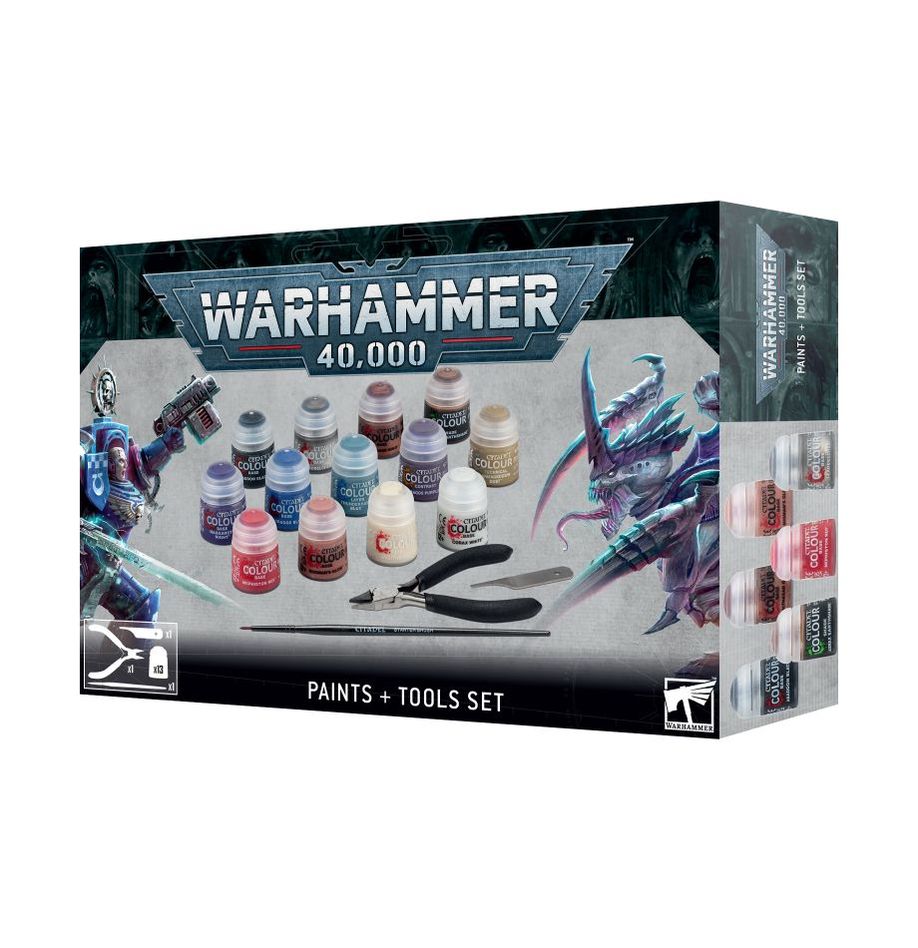
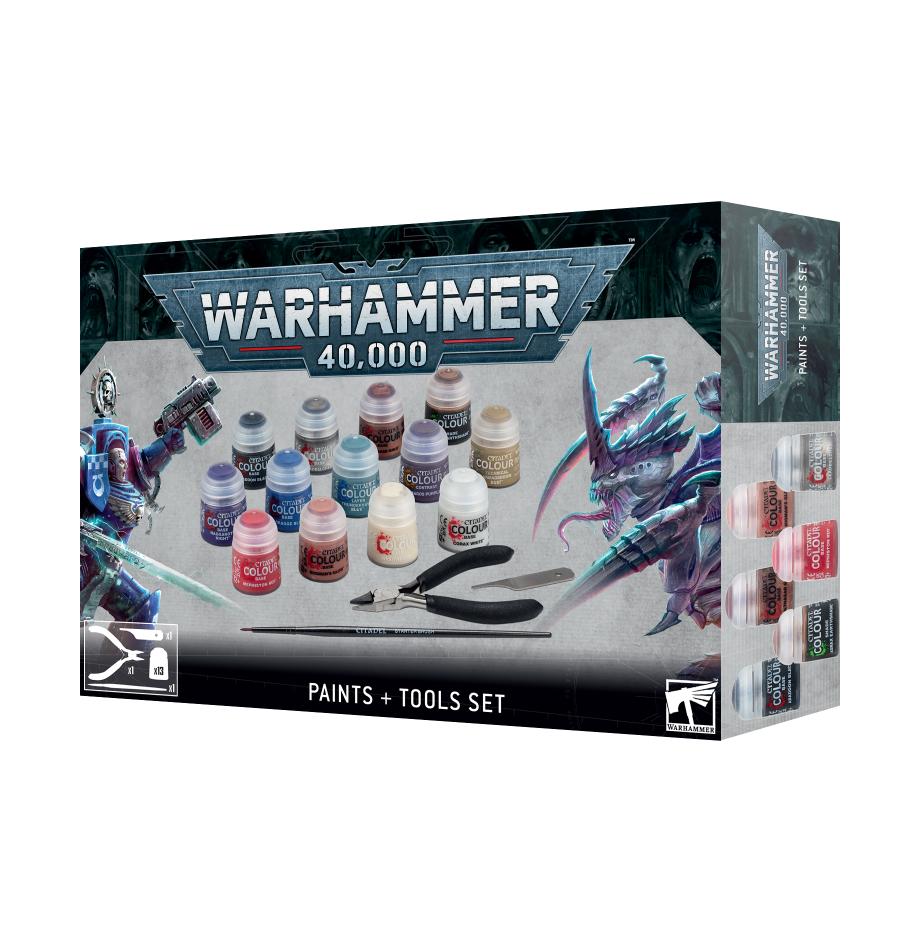
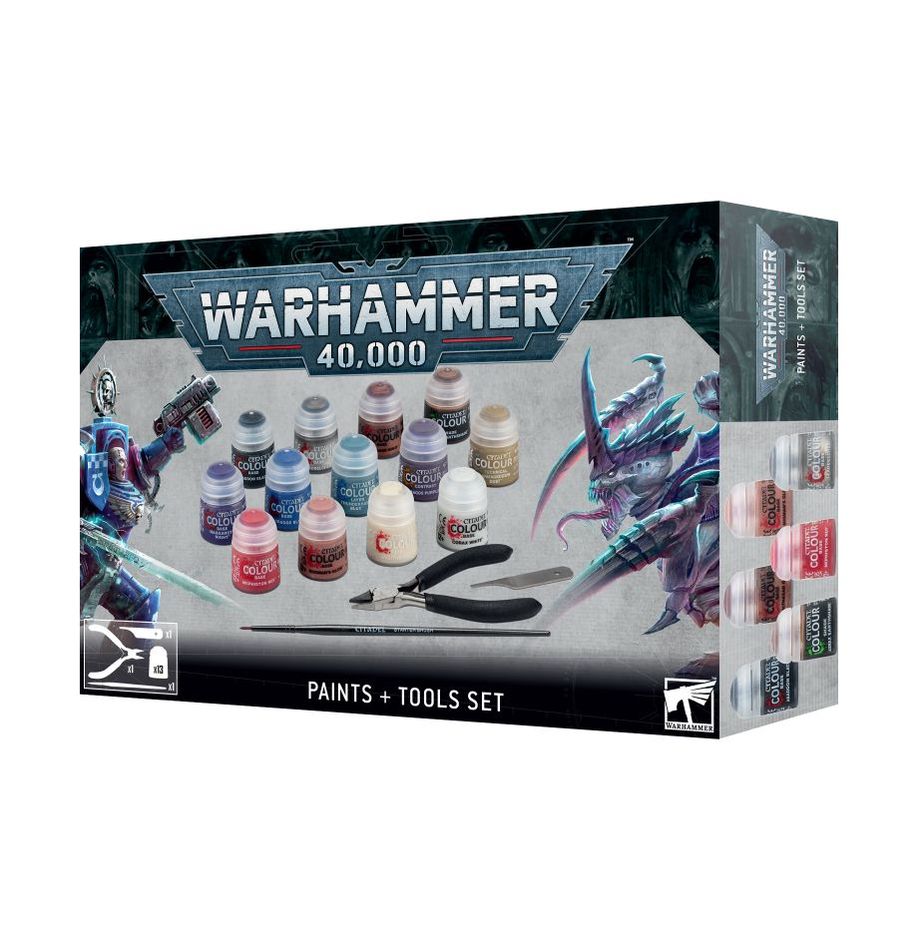
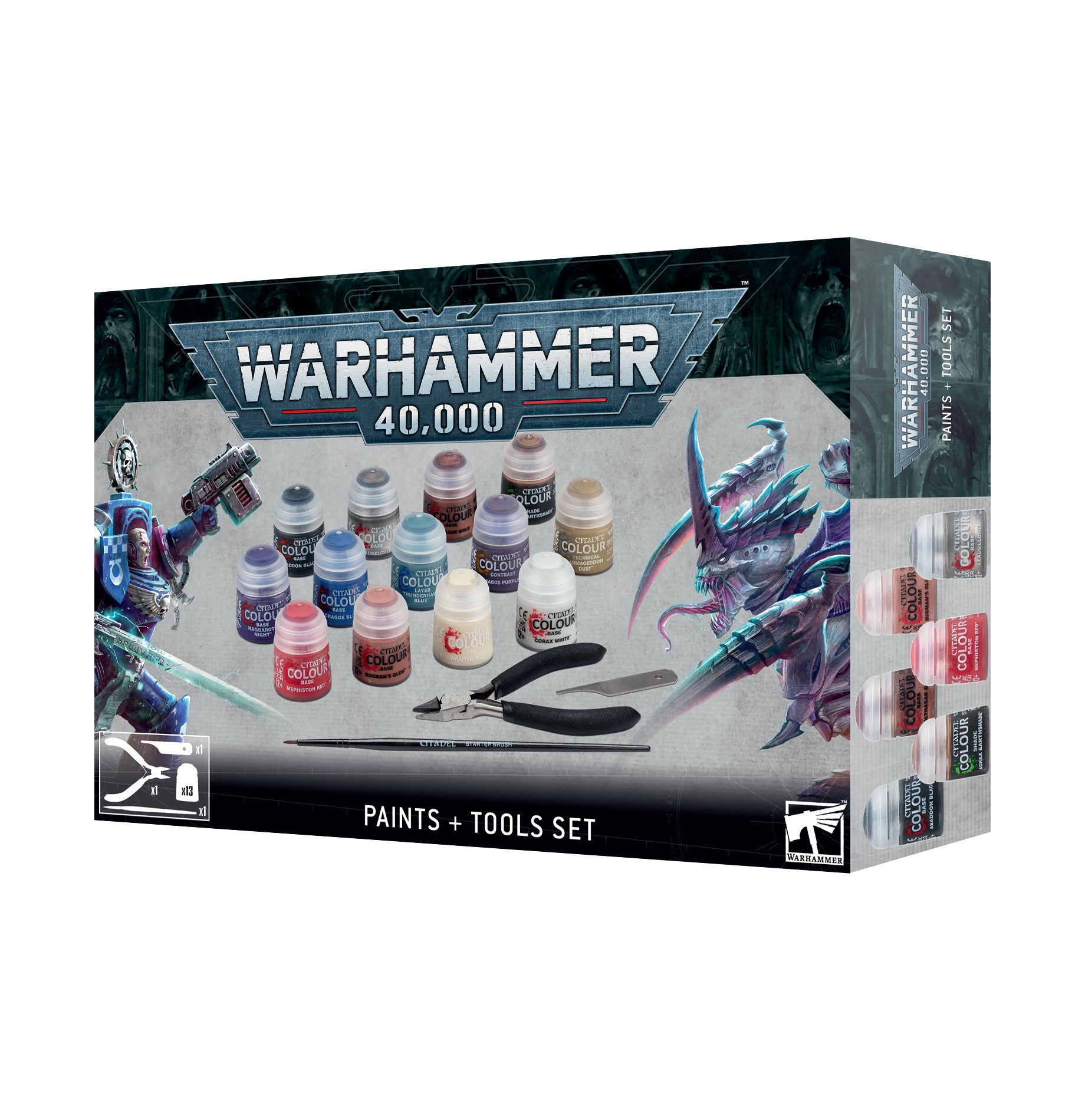
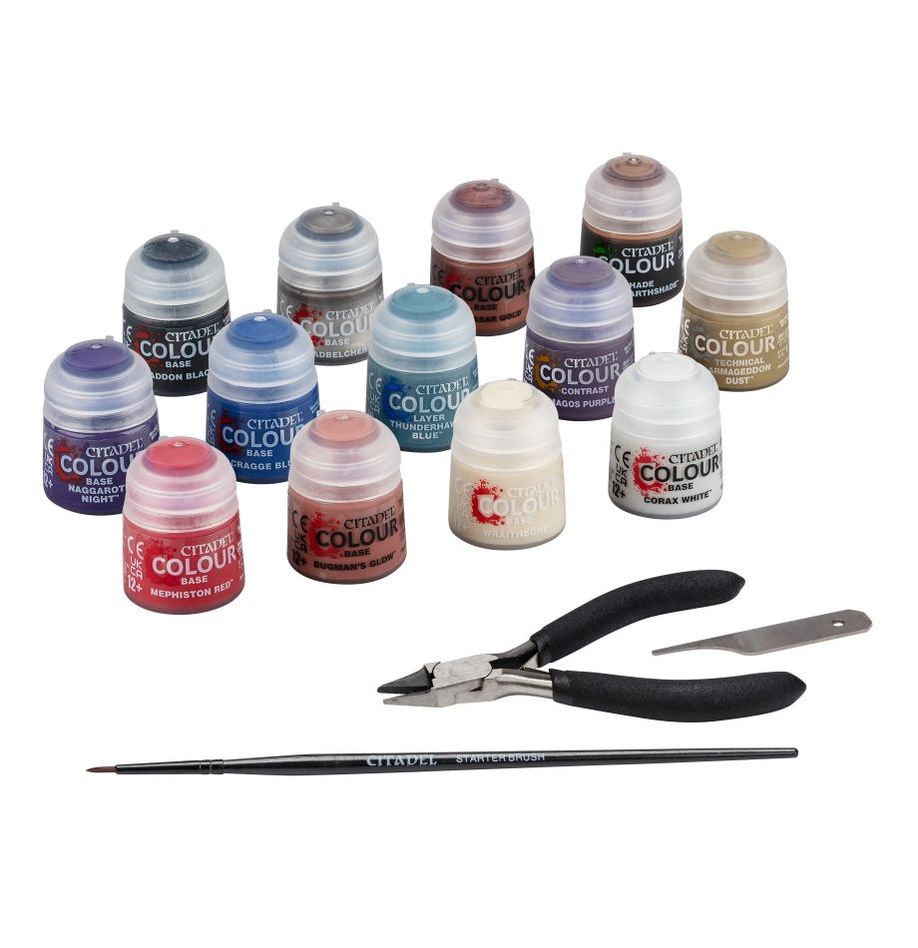
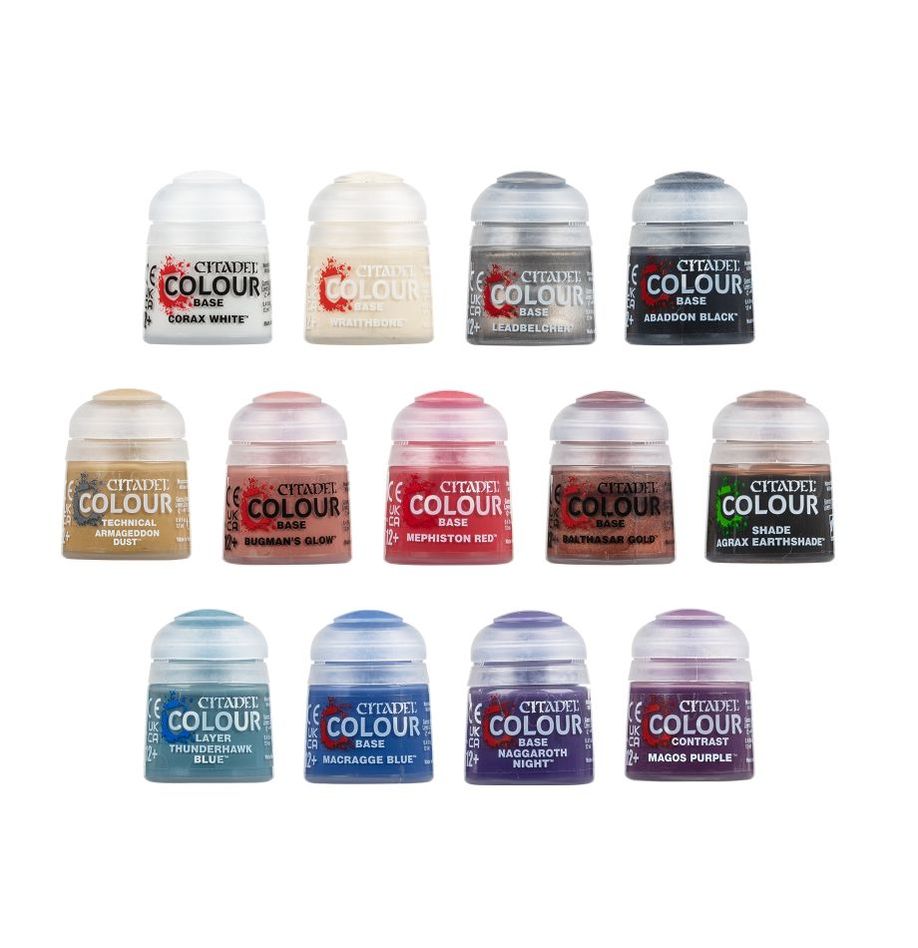
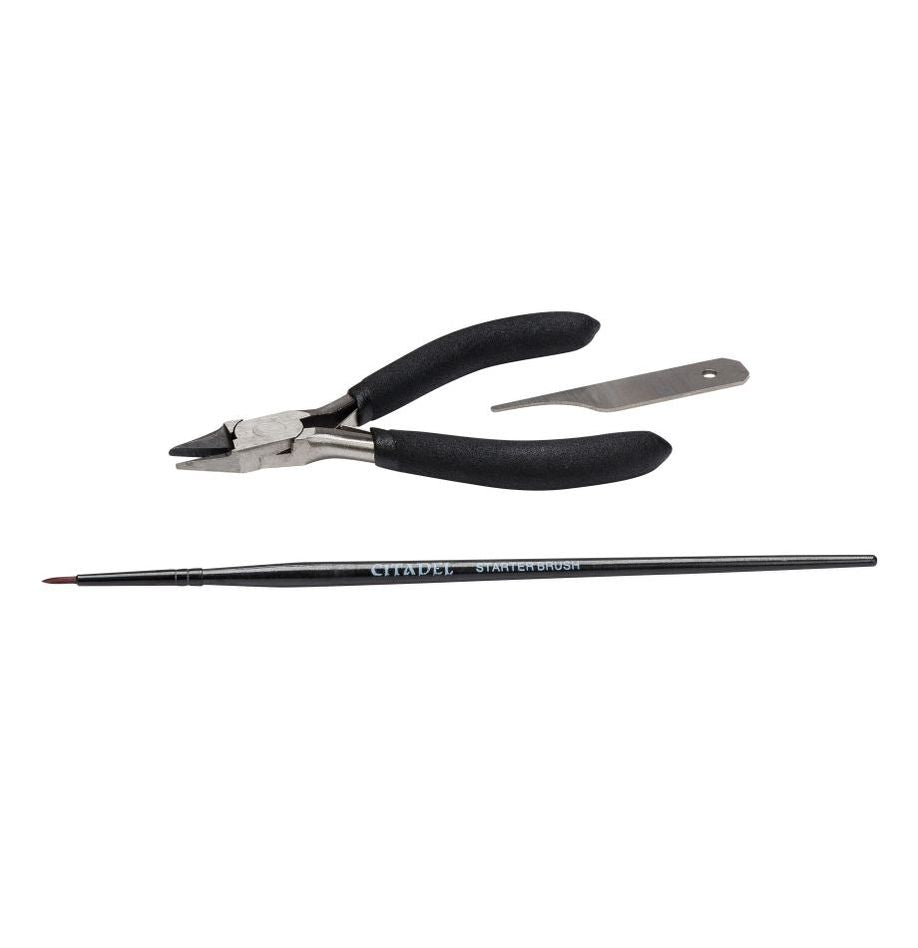
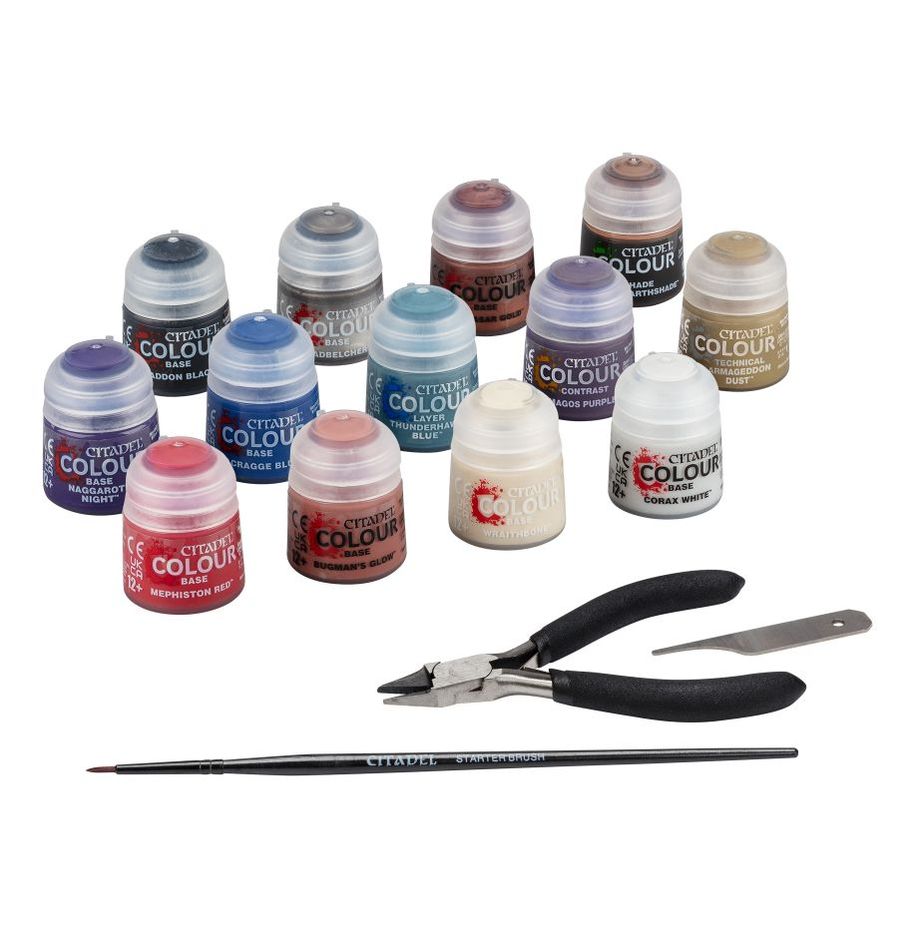
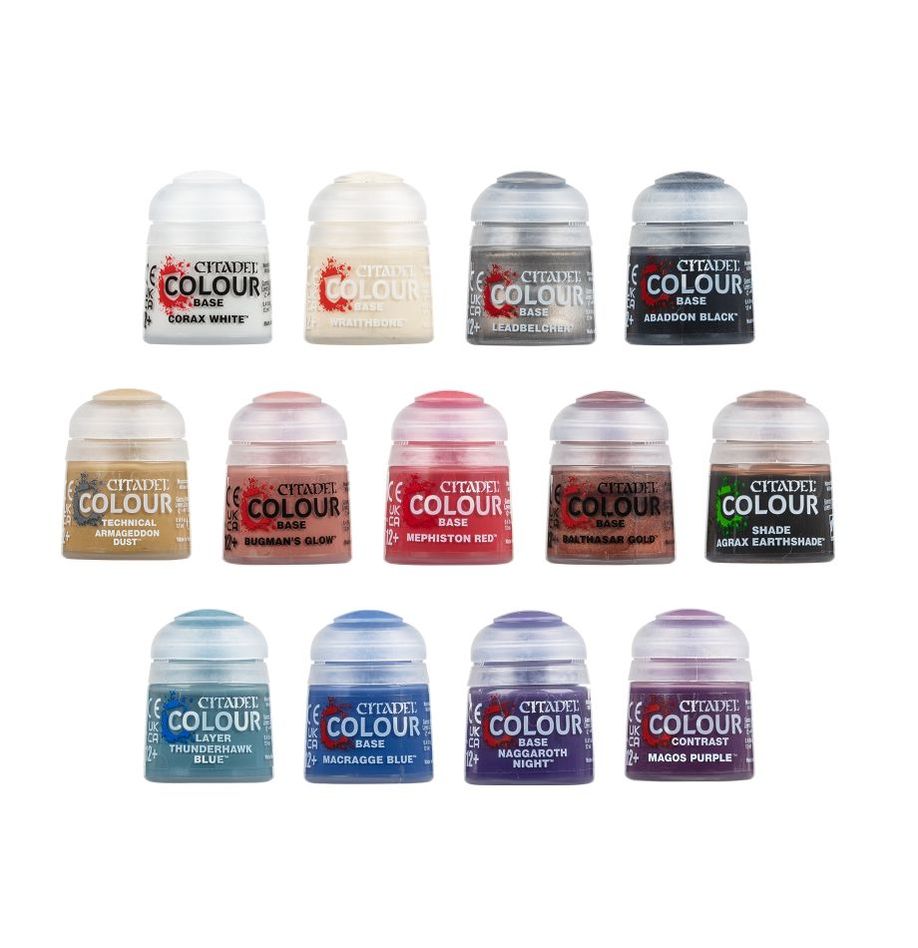
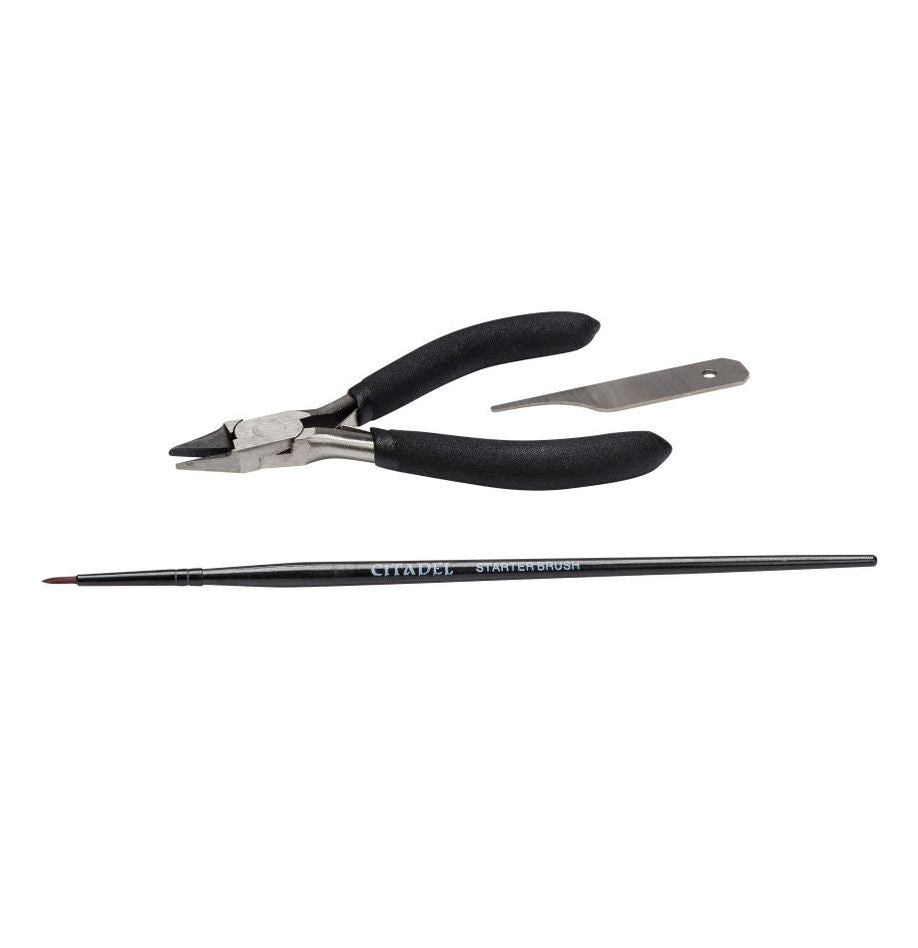
 Warhammer 40,000: Paints + Tools Set
This is the official Games Workshop starter kit, and it's exactly what it says on the tin. You get 13 Citadel paints (base, layer, shade, and technical), a starter brush, clippers, a mouldline scraper, and plastic glue. If you're painting Space Marines or Tyranids, the colors are already picked for you.
- Everything you need in one box—no additional purchases required
- Official Games Workshop colors matched to their models
- Plastic glue prevents superglue disasters
- Paints are pre-thinned and forgiving for beginners
- Only 13 colors limits your options if you want to paint other armies
- Starter brush will be outgrown quickly
 14 photos
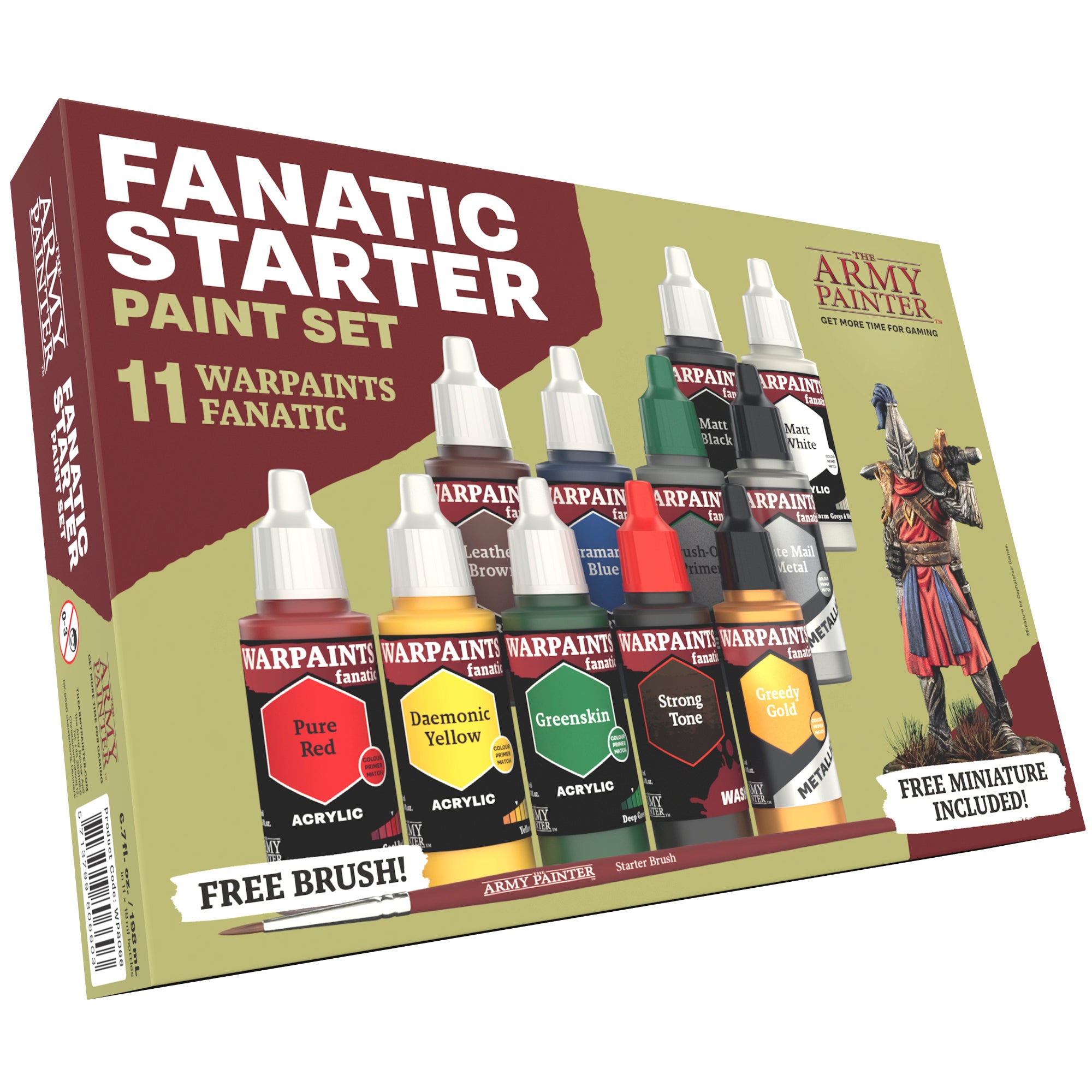
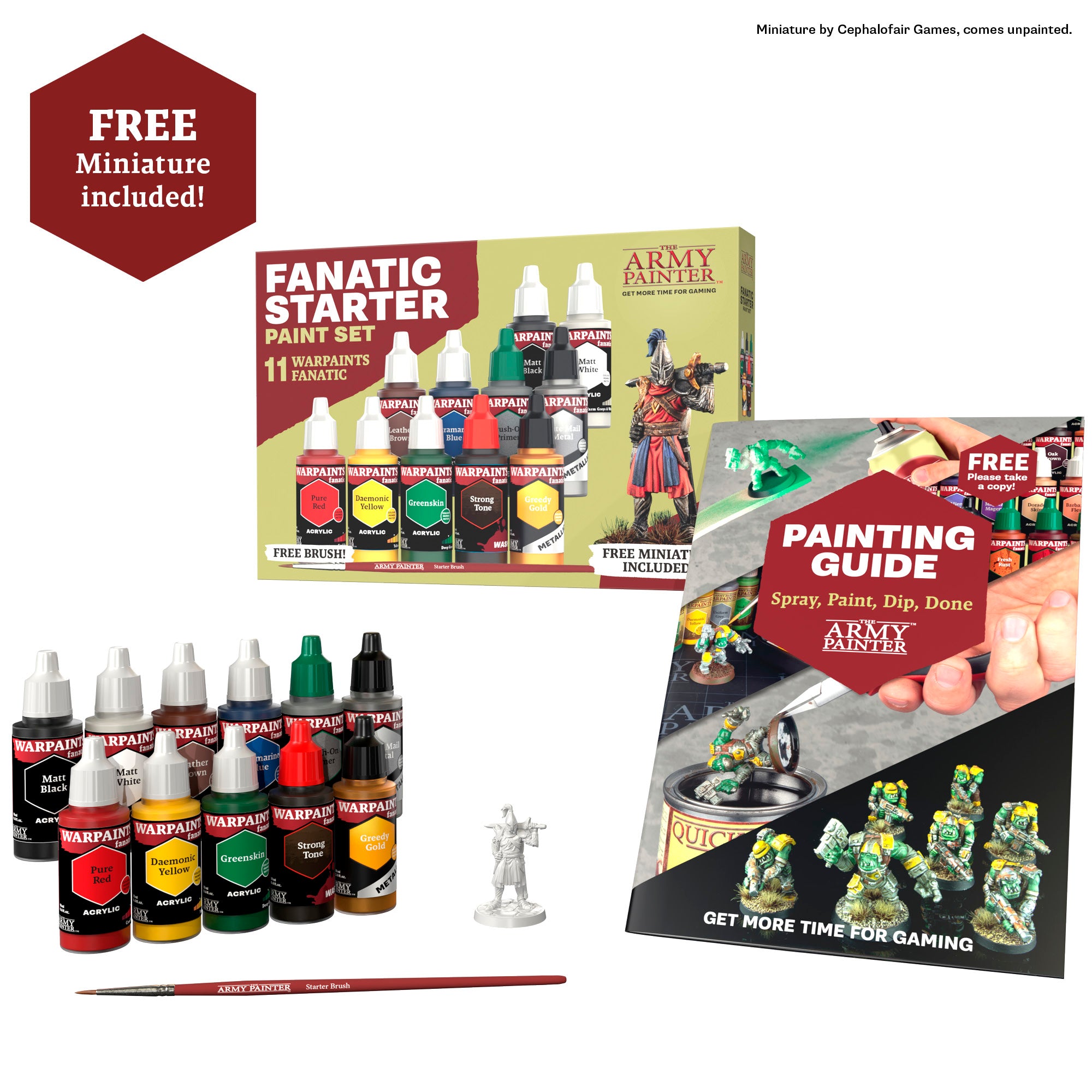
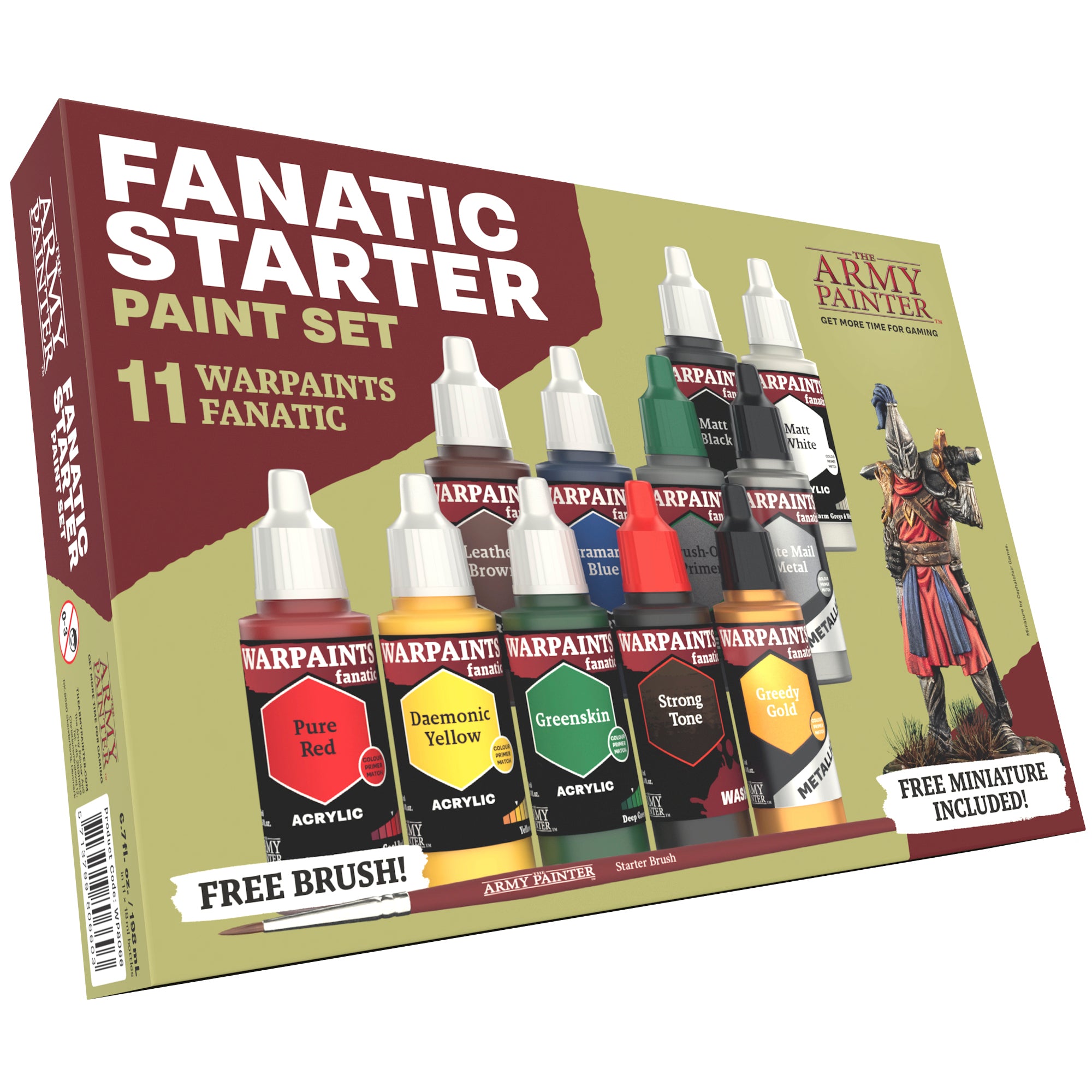
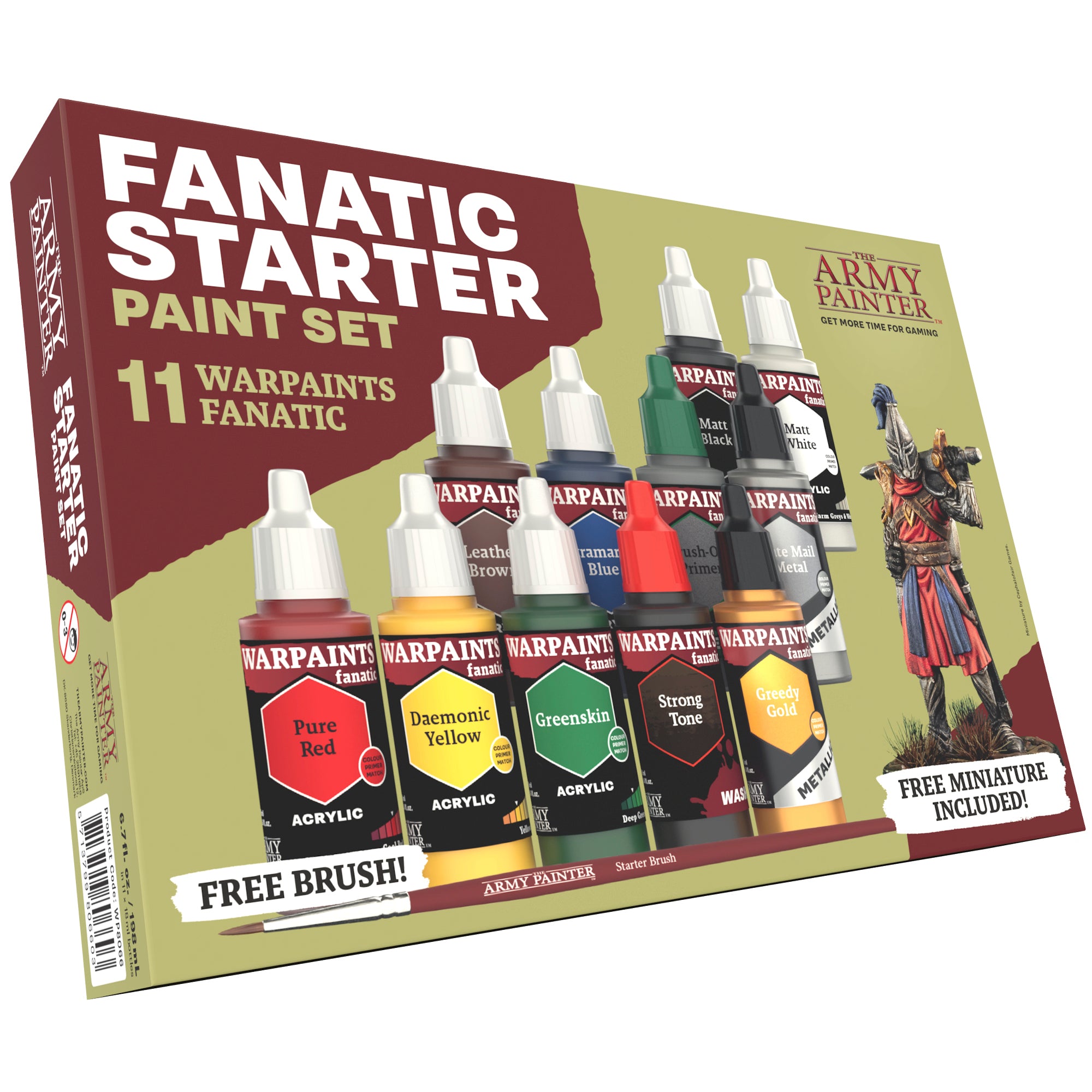
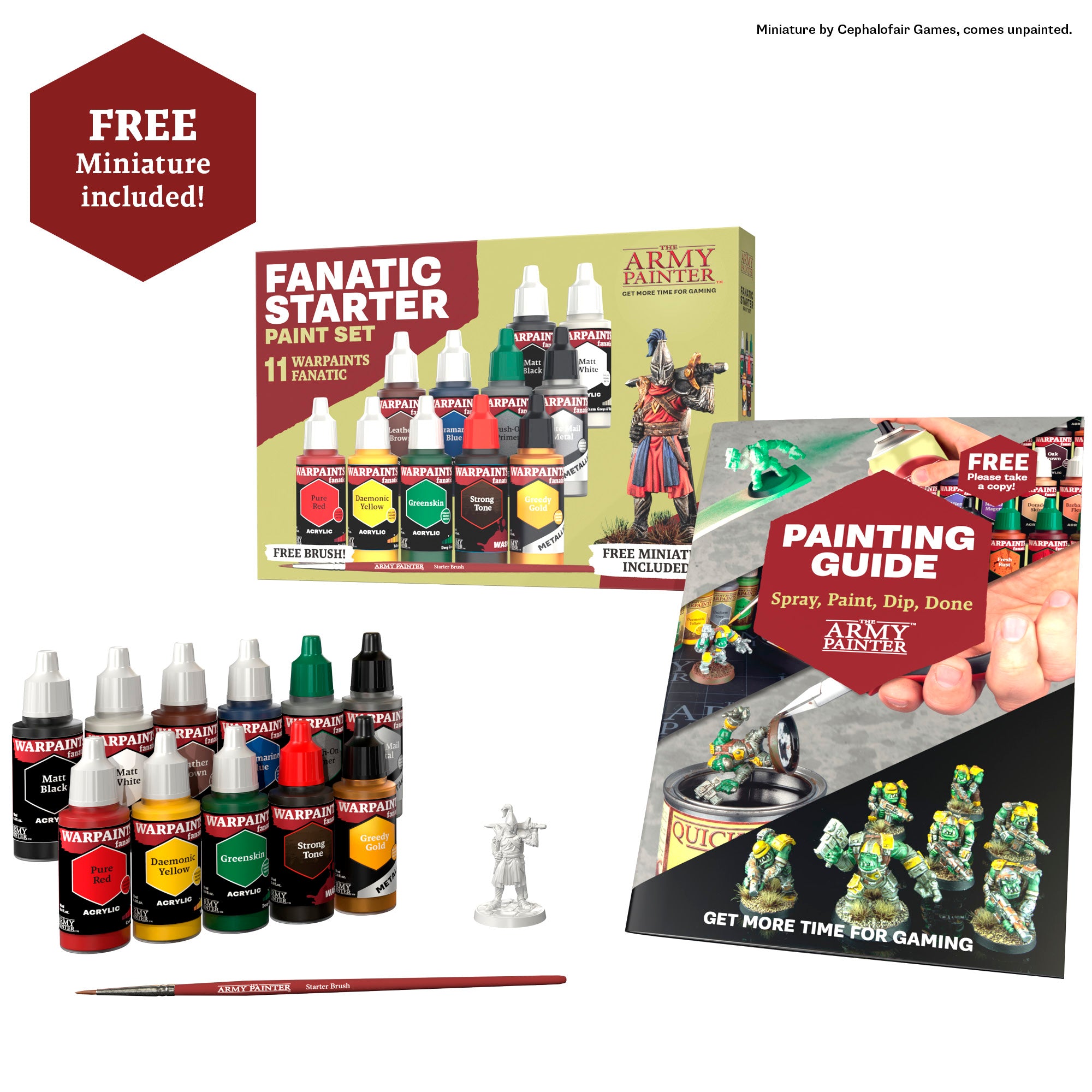
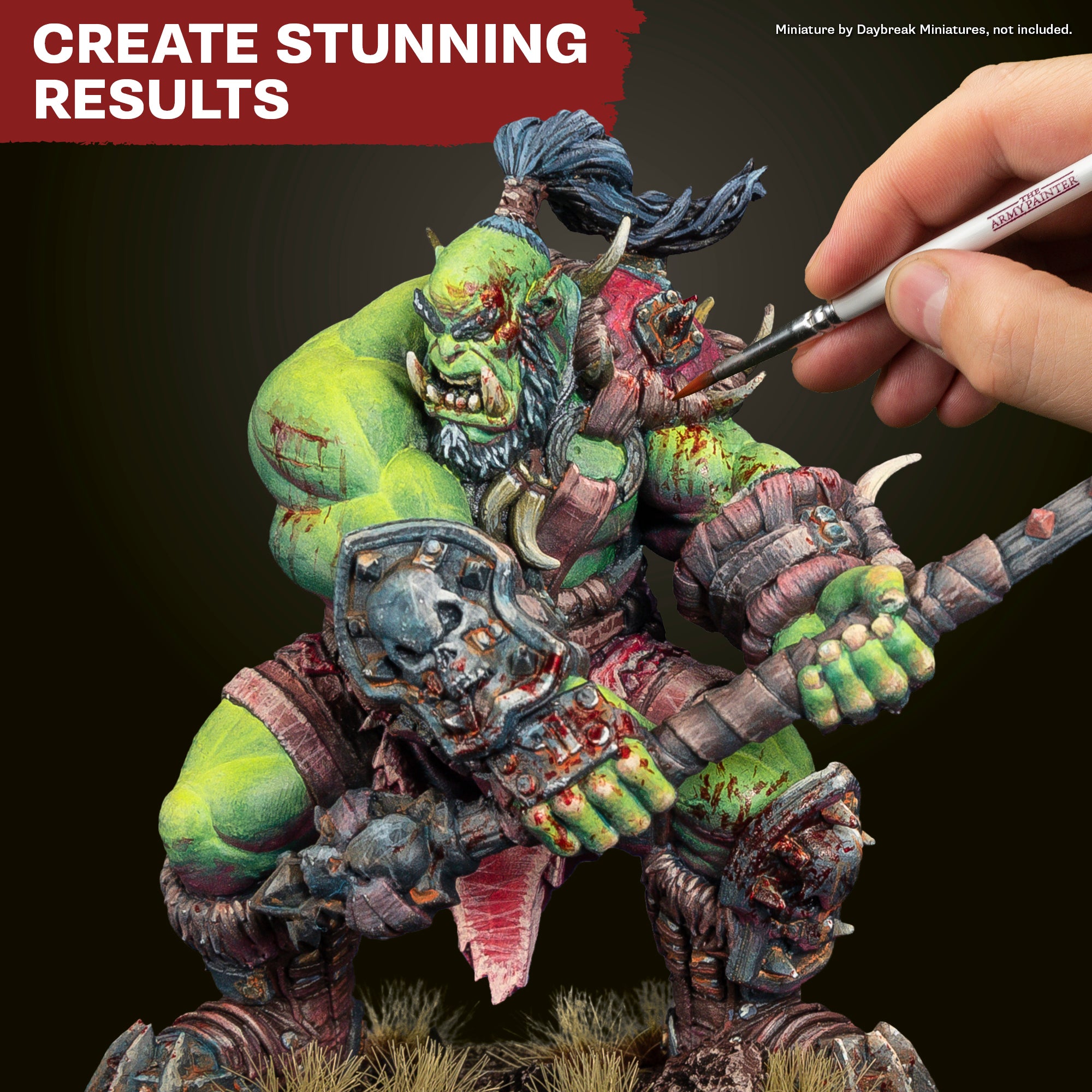
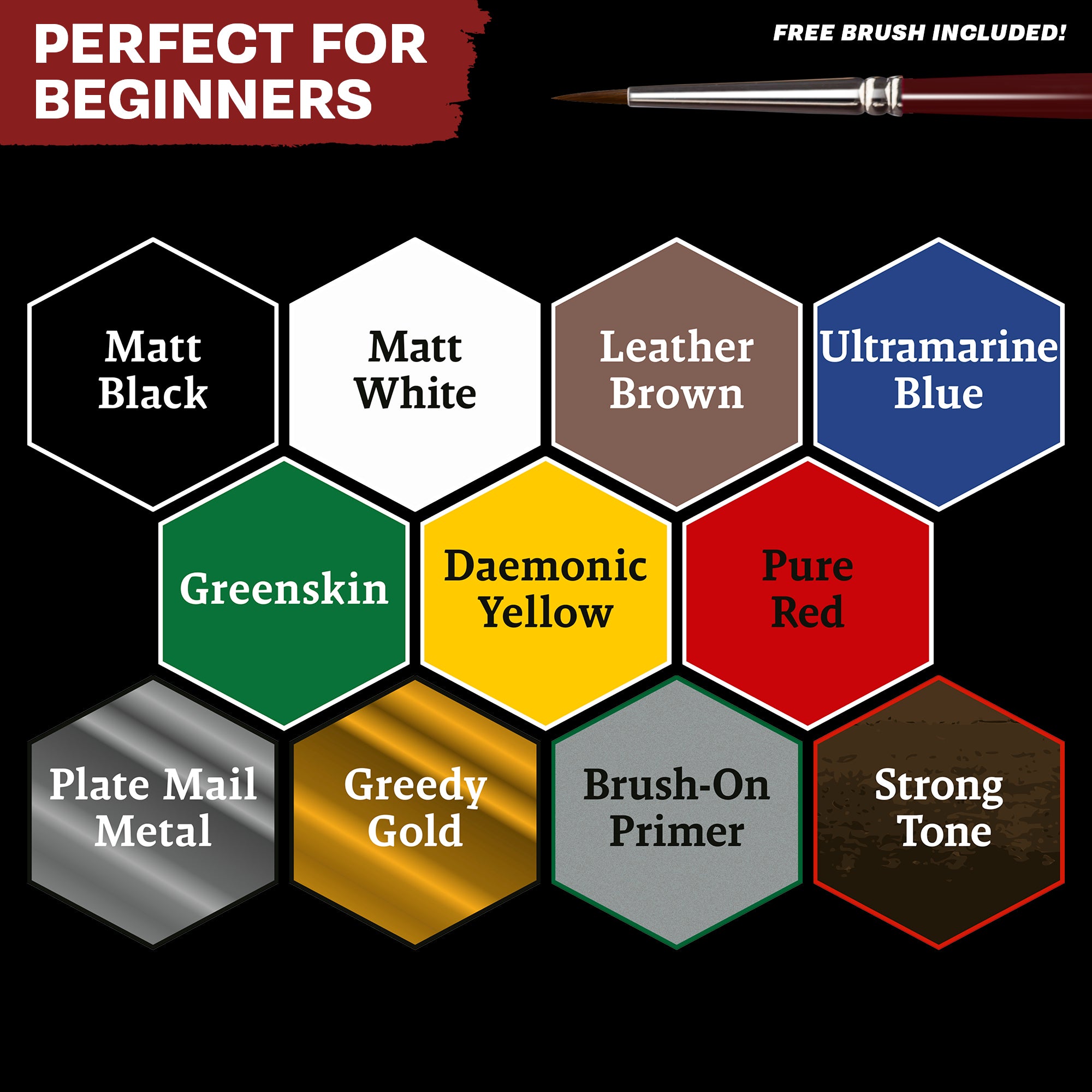
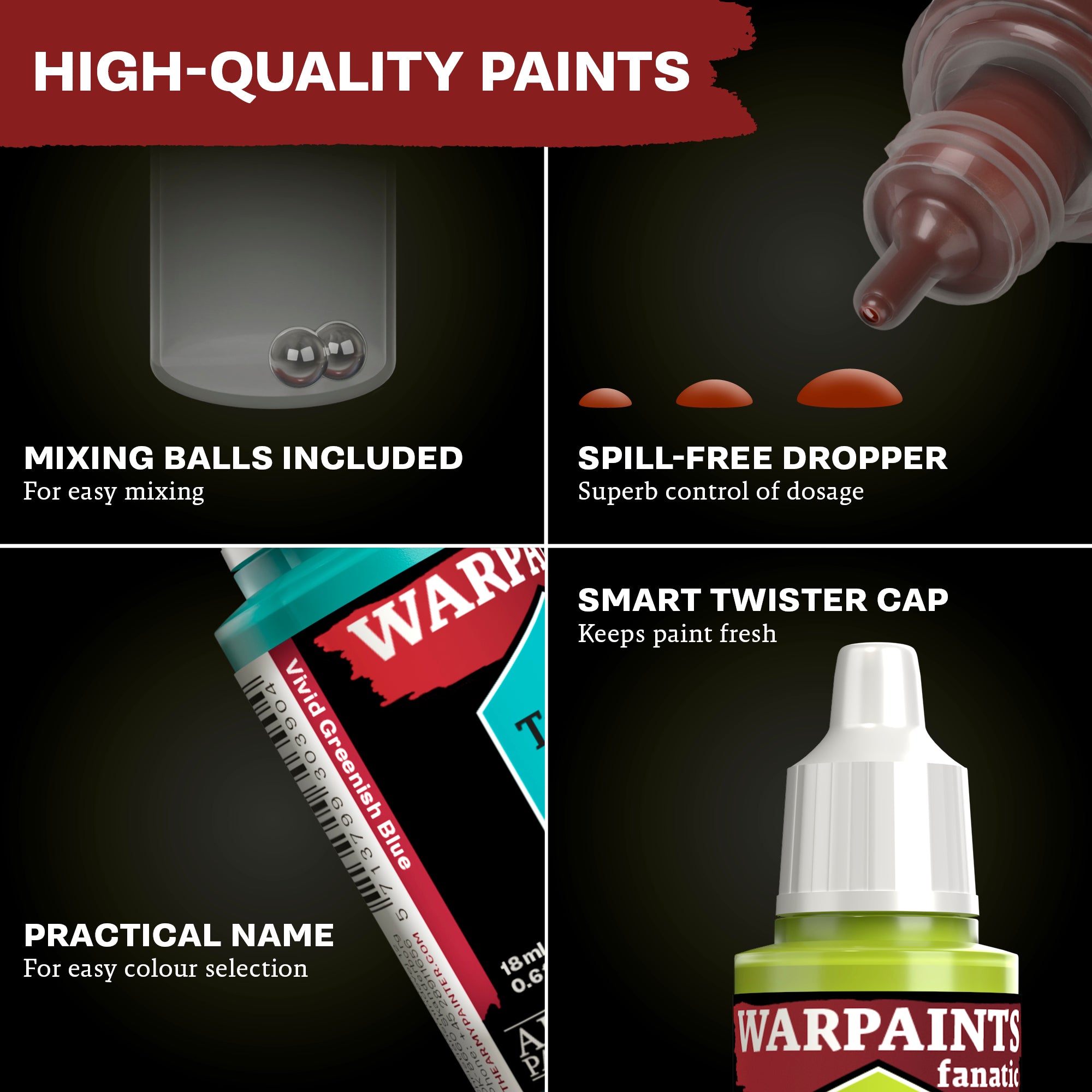
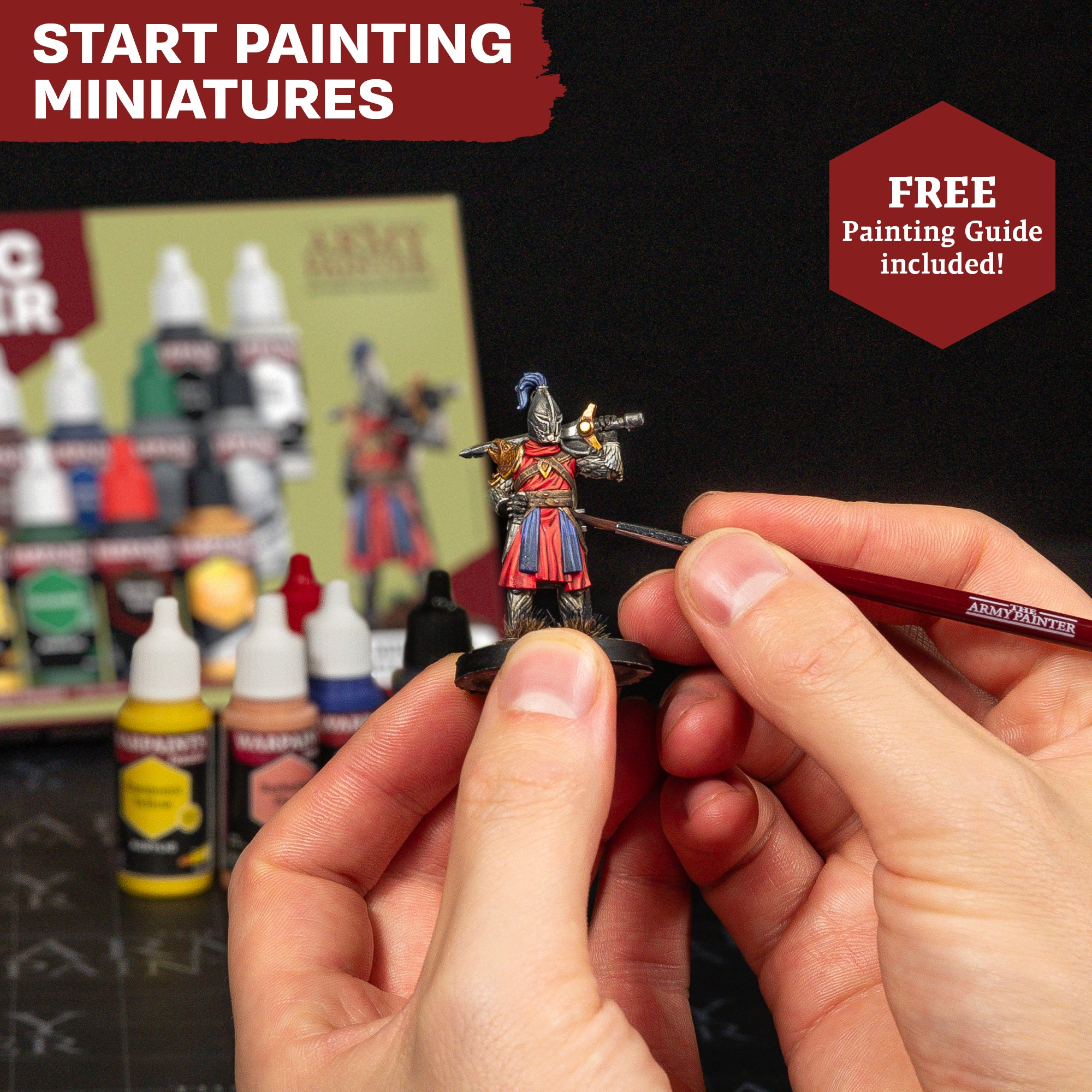
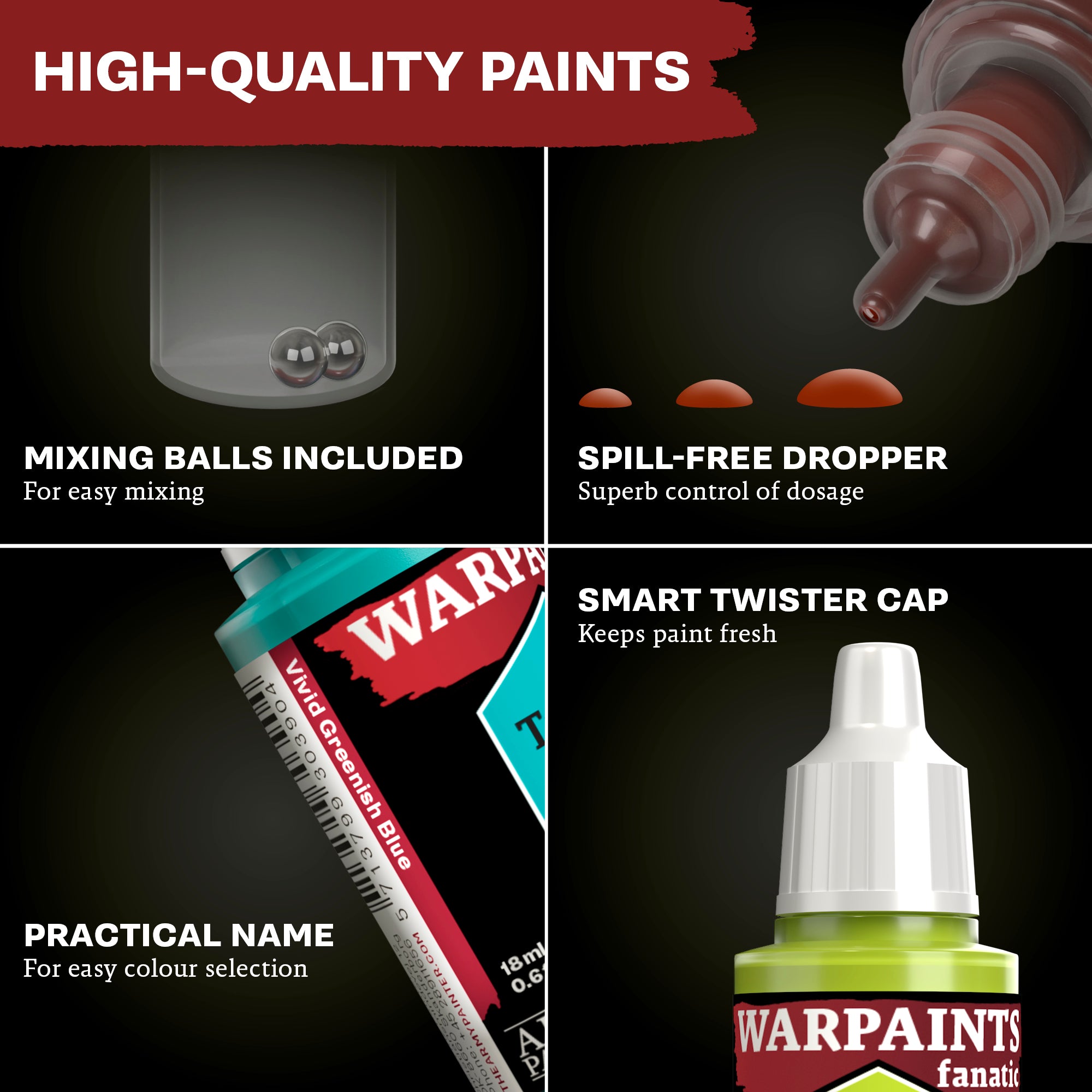
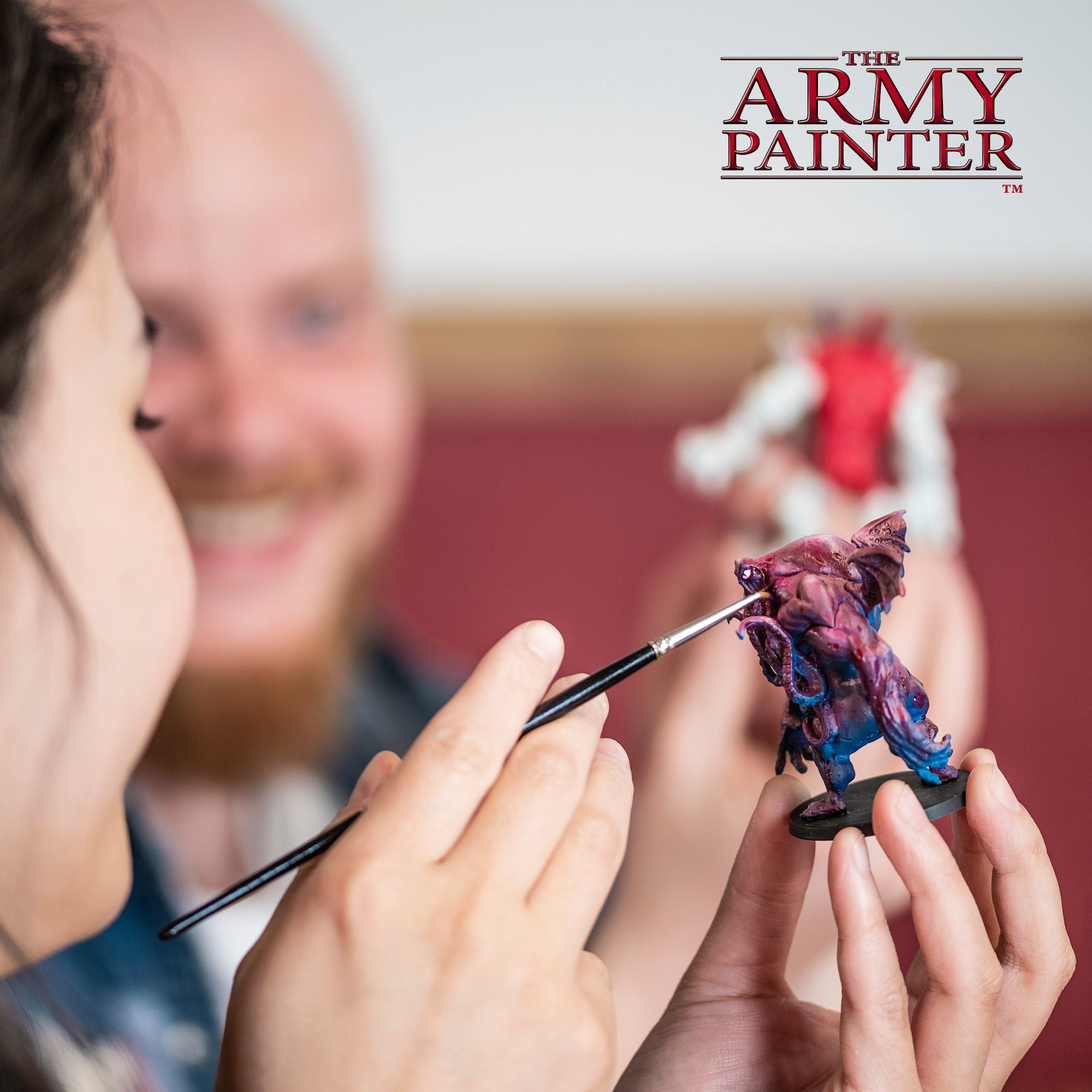
 The Army Painter Warpaints Fanatic Starter Set
This starter set includes 11 carefully chosen paints (colors, metallics, and a wash), two quality brushes, and even a free miniature figure to practice on. The paints are thin enough for smooth application and work across multiple armies, not just one faction.
- More affordable than Games Workshop
- Two brushes instead of one—great for learning
- Includes a wash to learn shading immediately
- Paints work well on any miniature, not just one brand
- Paints require a bit more thinning than Citadel for best results
- No clippers or mouldline scraper included
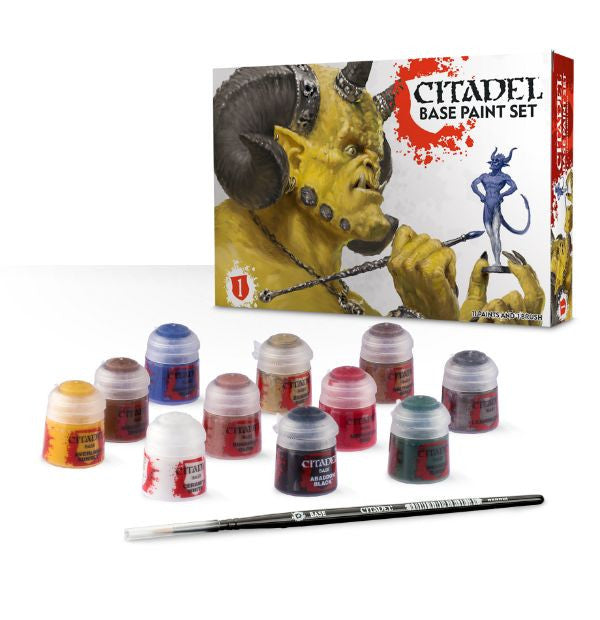
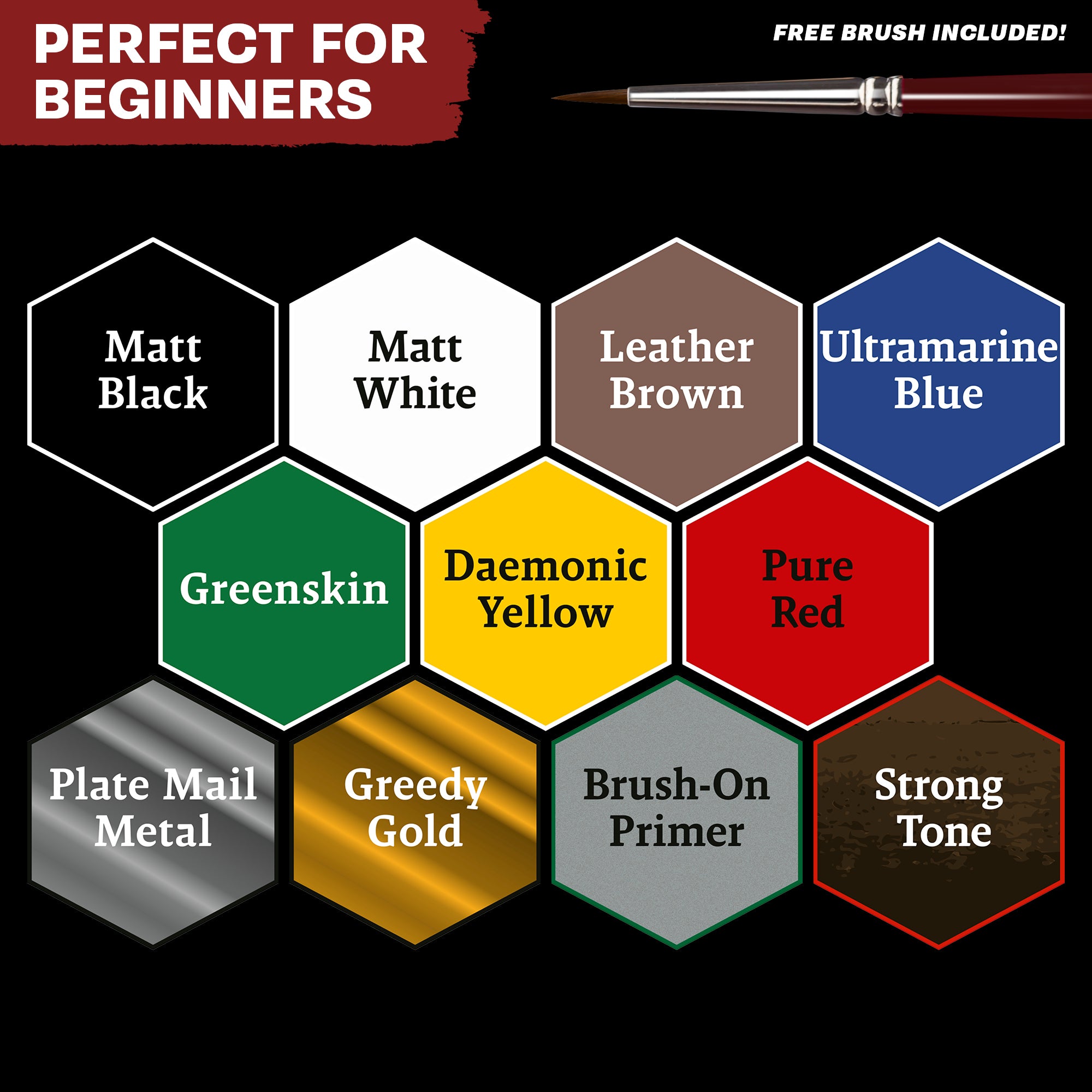
2 photos Citadel Base Paint Set (11 Colors)
This is the essential color foundation: 11 base paints and a starter brush. It covers the core colors (blacks, whites, metallics, and earths) you'll use on almost every model. A great entry point if you already have clippers and a scraper, or if you want to upgrade from an older starter set.
- Citadel quality and ease-of-use
- Colors are scientifically chosen for broad compatibility
- Great value if you already own basic tools
- No tools included
- No shade paints (you'll want Nuln Oil and Agrax Earthshade next)
 10 photos
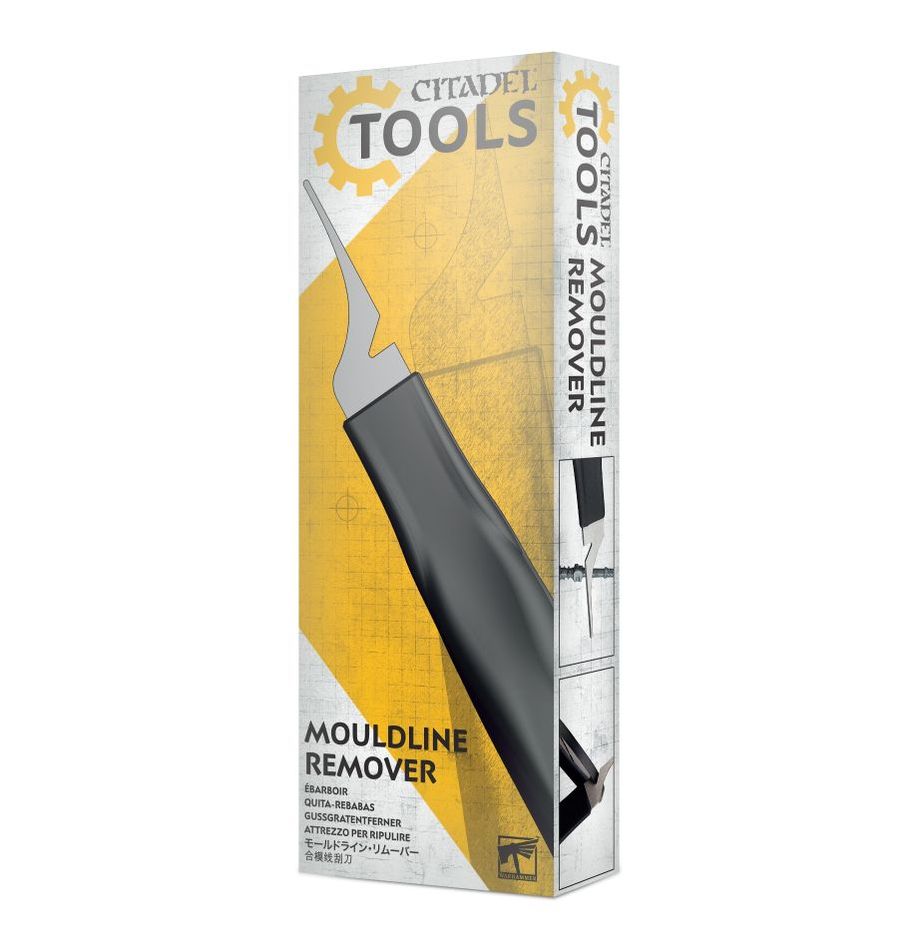
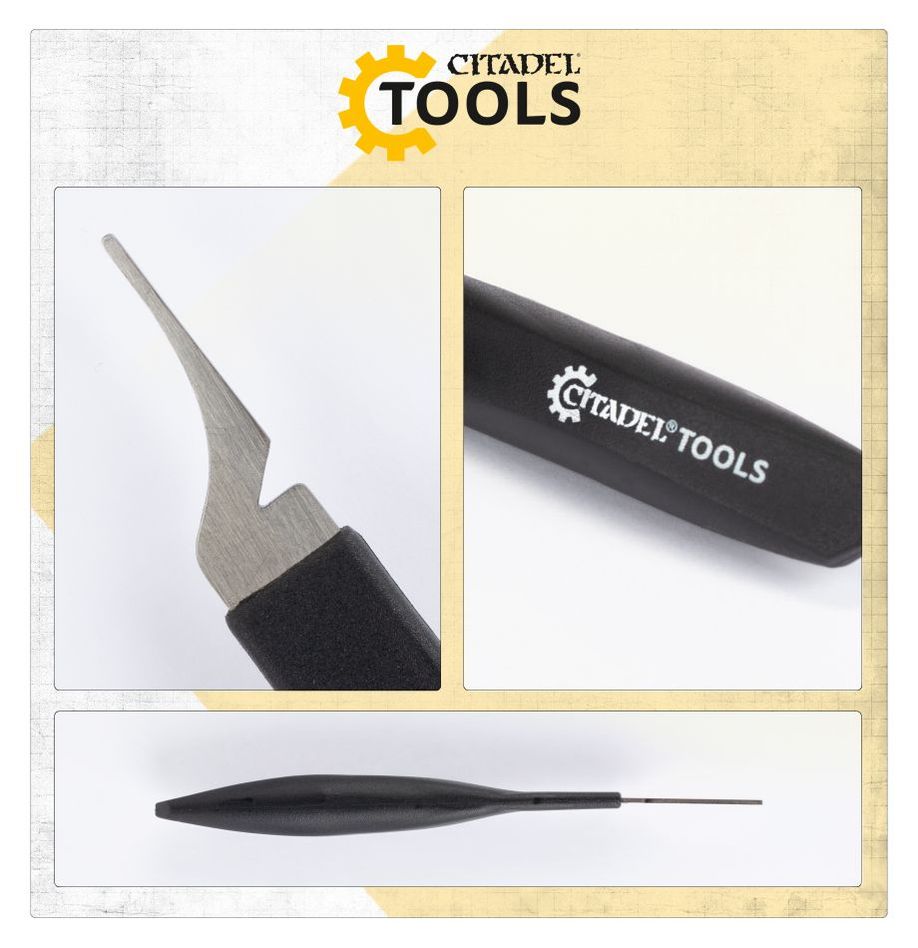
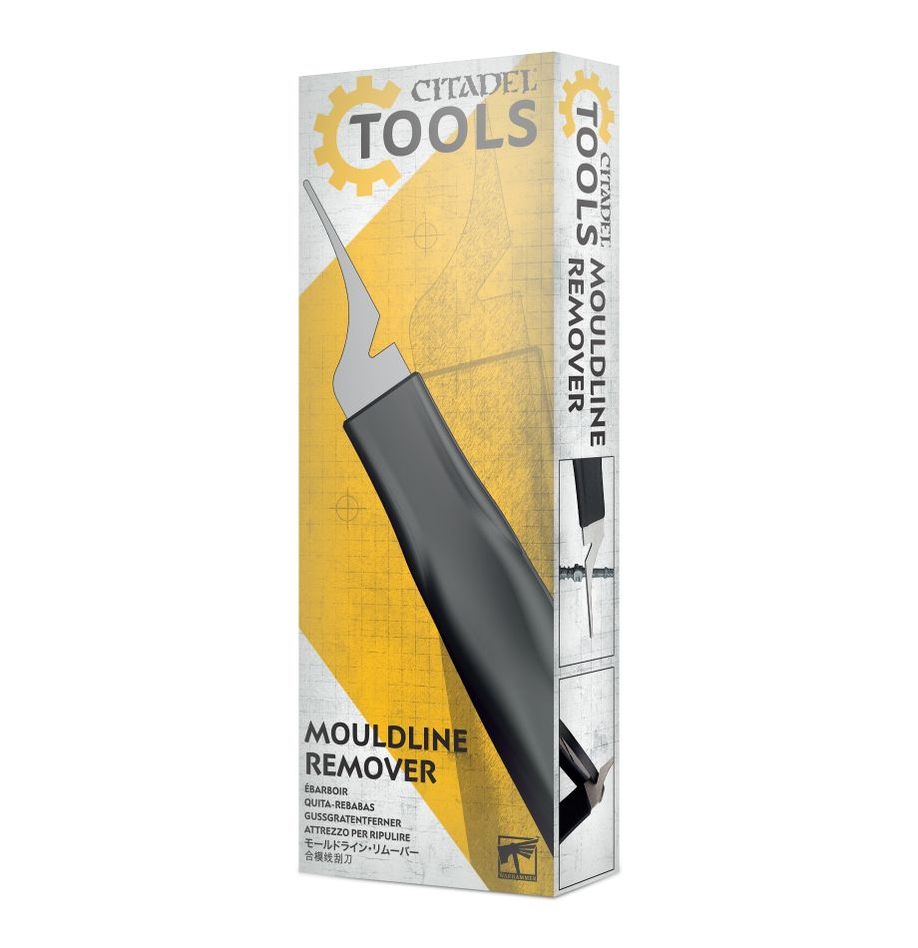
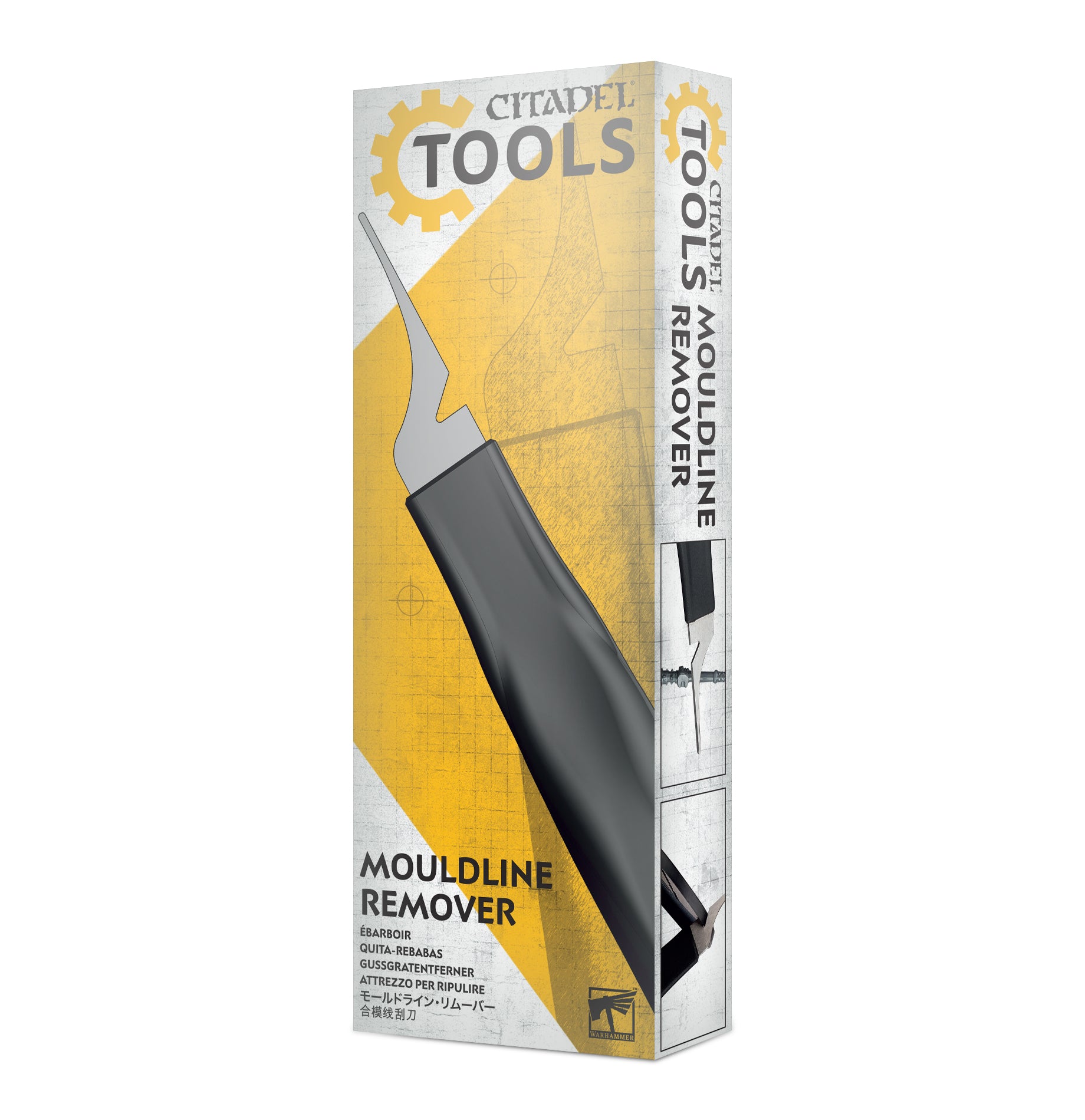
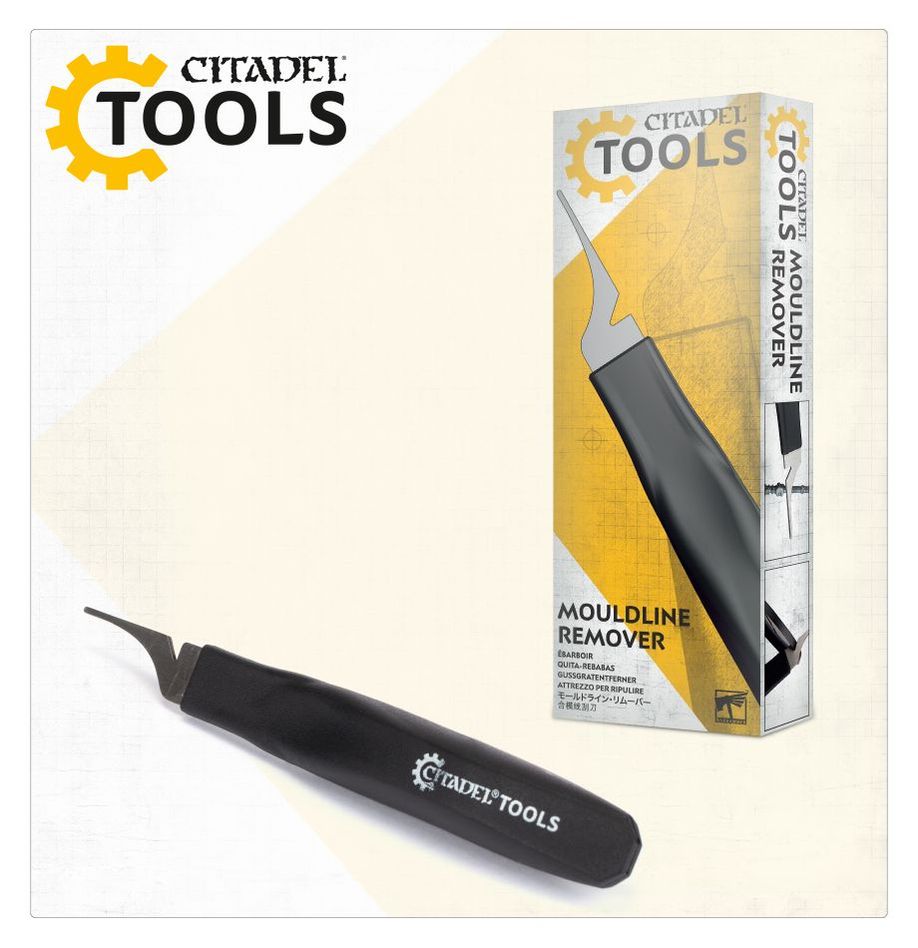
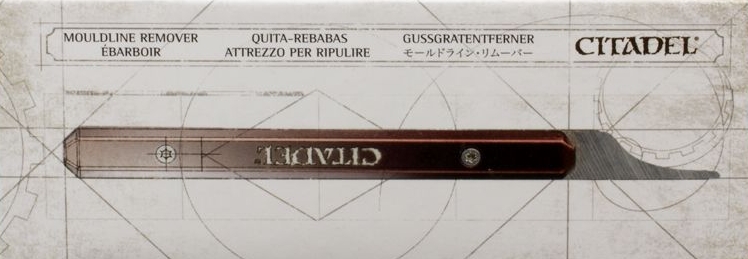
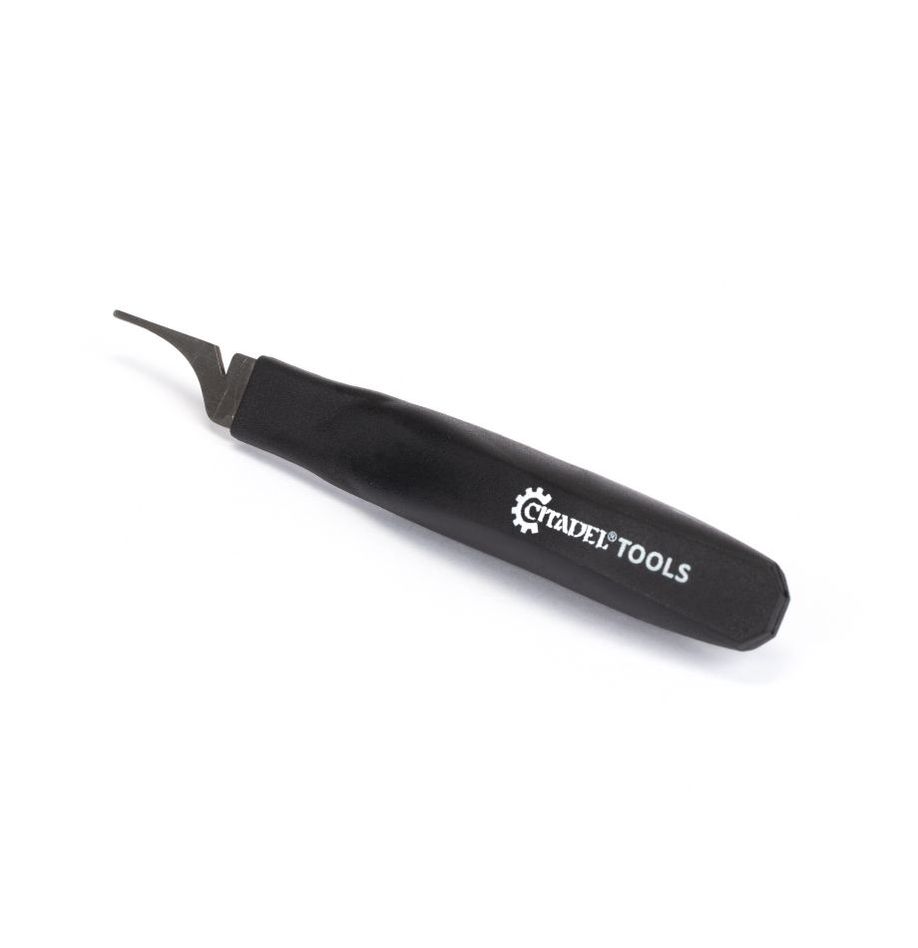
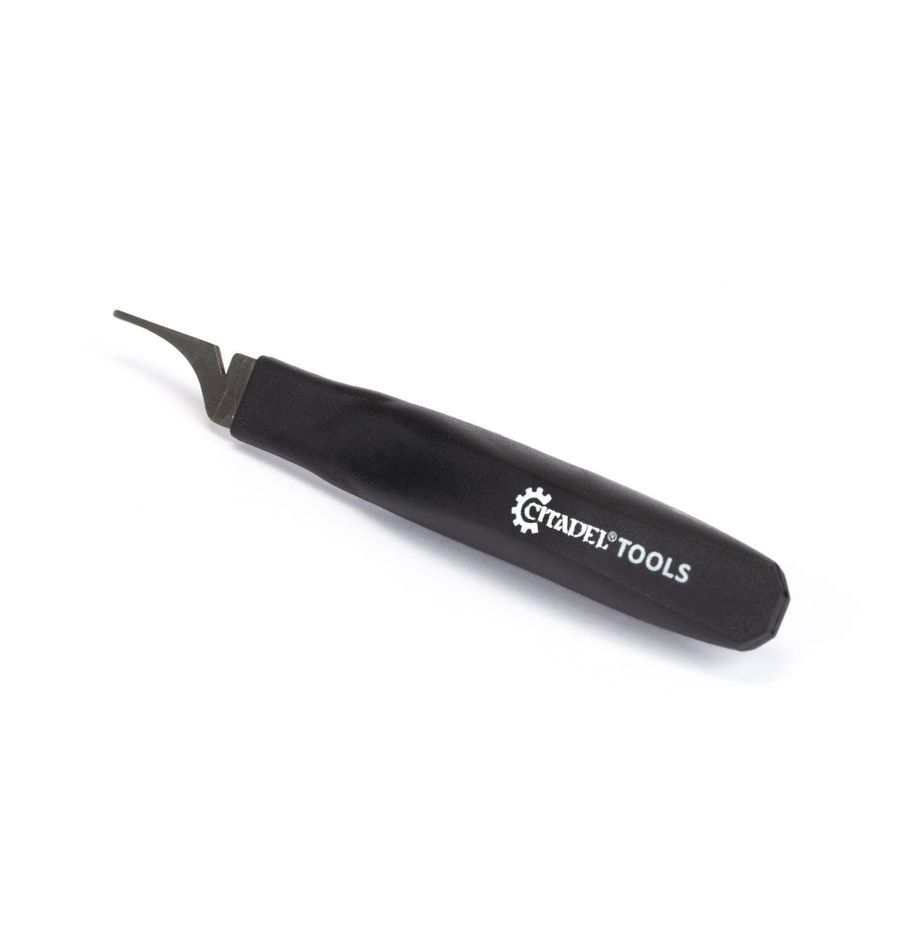
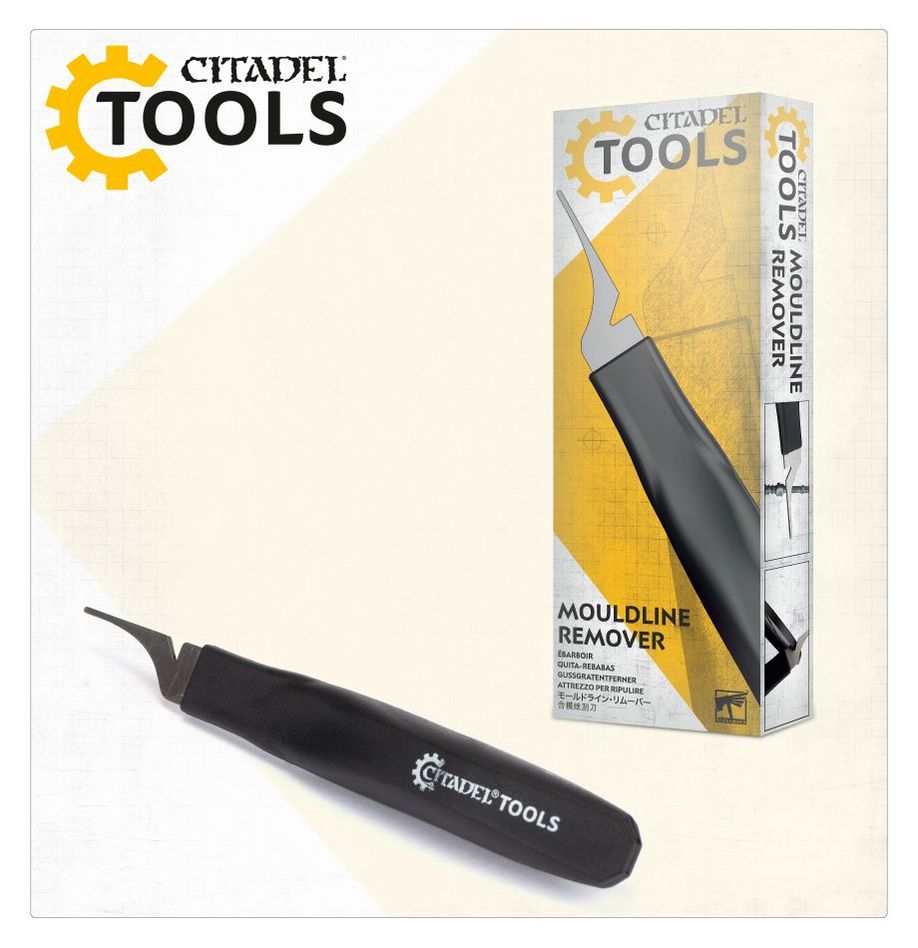
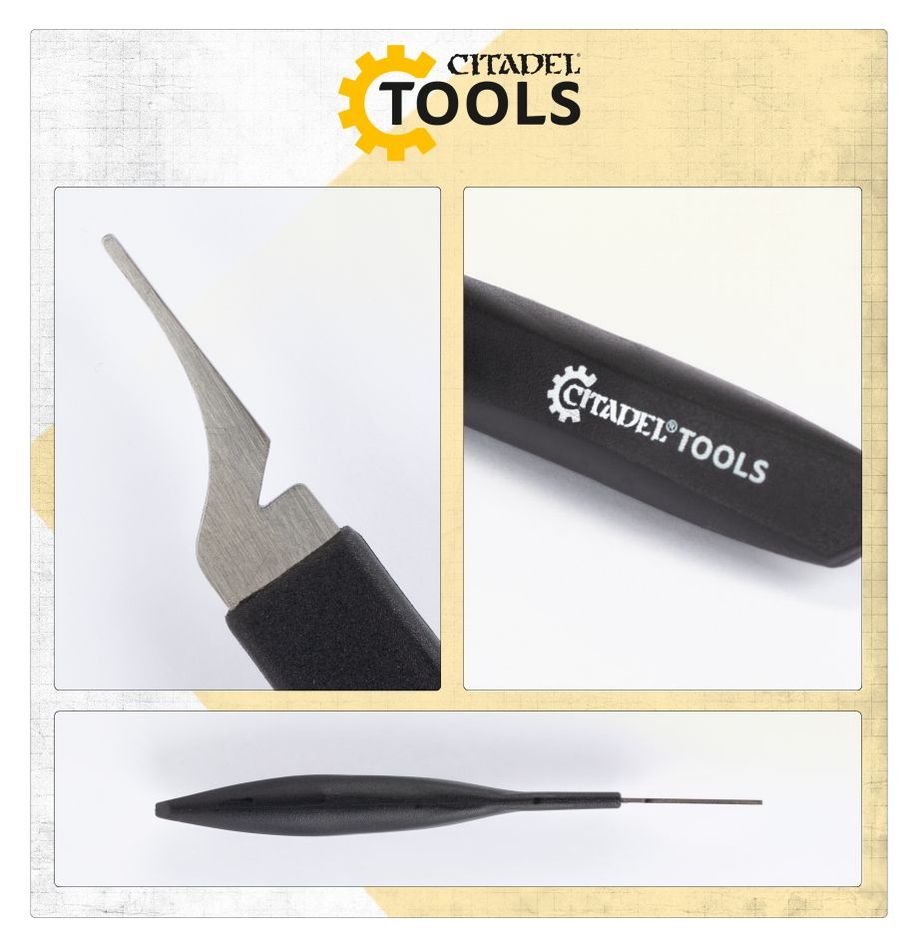
 Citadel Tools: Mouldline Remover
A simple steel scraper designed specifically for removing mould lines (the raised seams where plastic was cast). It's shaped to fit your hand and won't slip or damage your miniatures. One tool, one job, done perfectly.
- Removes mould lines cleanly without damaging plastic
- Ergonomic design prevents hand fatigue
- Lasts forever—a one-time purchase
- Specialty tool for one task
- Can be found in some starter sets, so check before buying separately
 8 photos
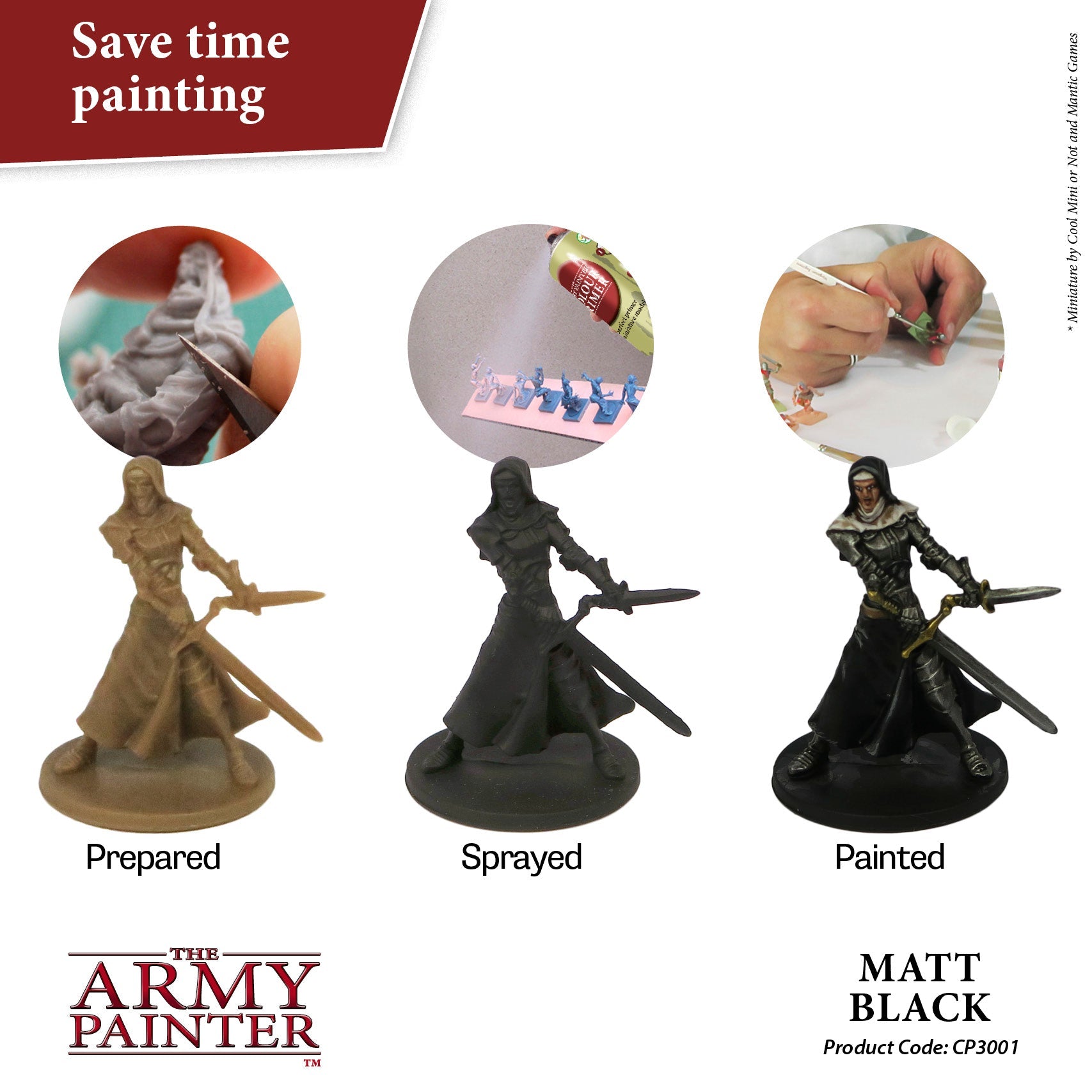
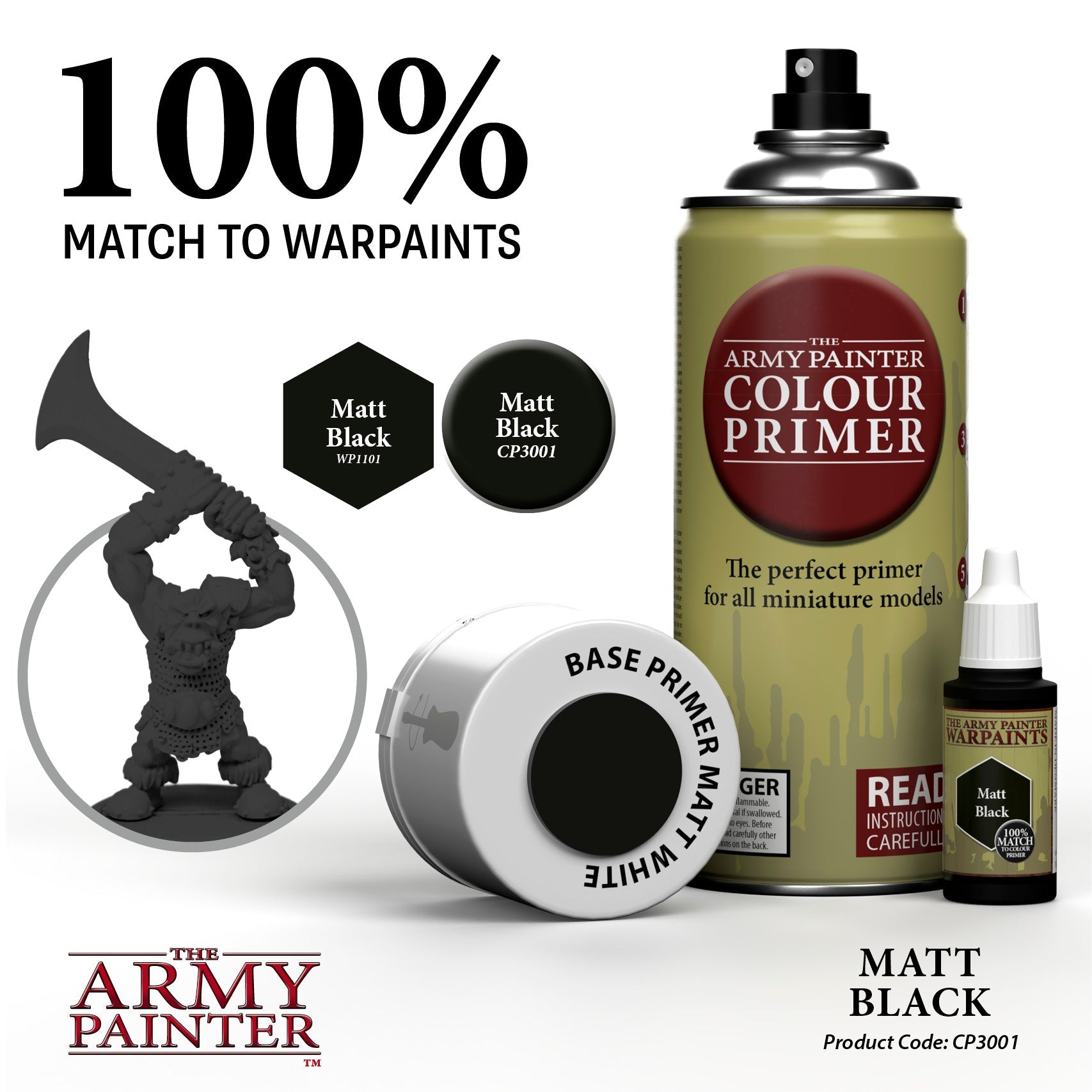
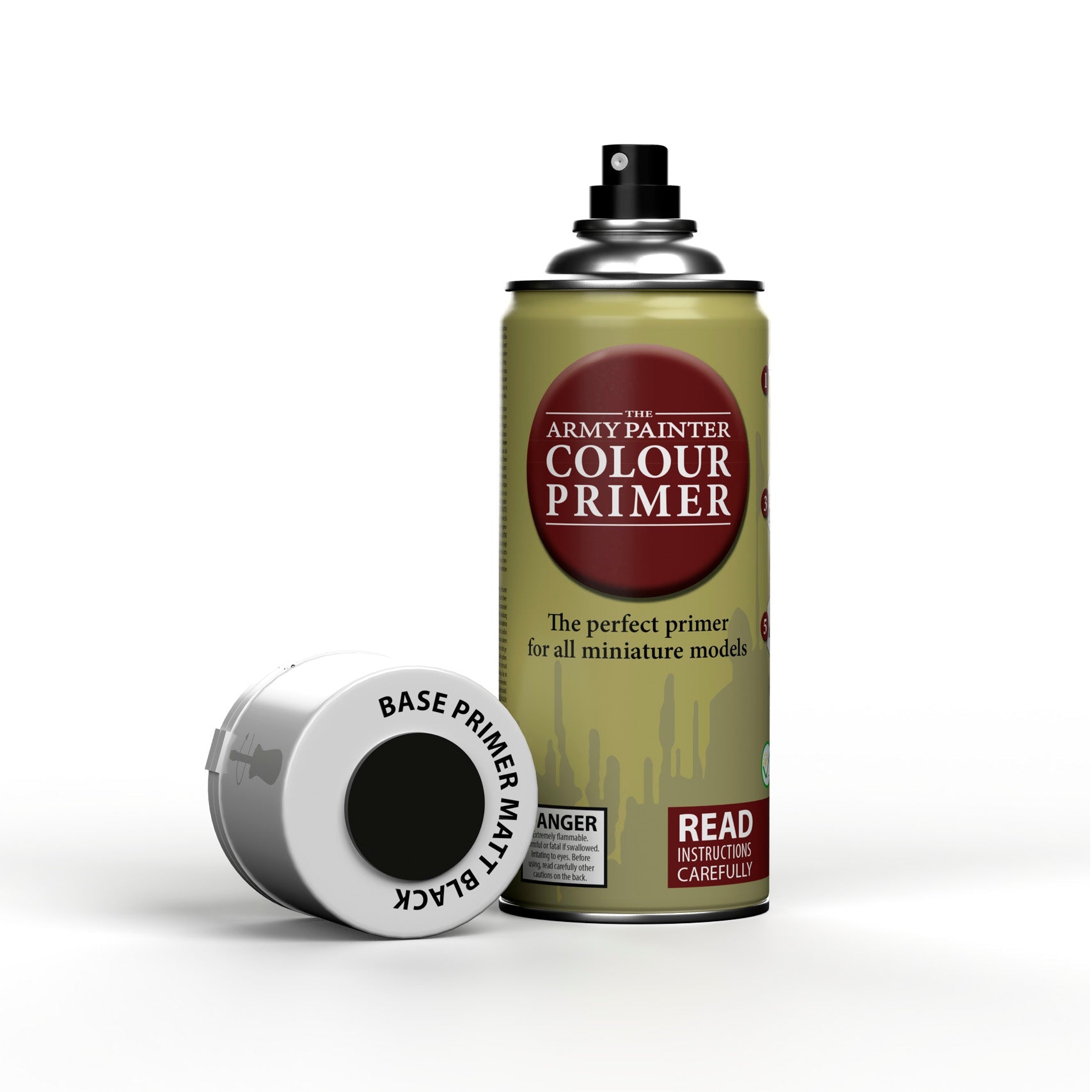
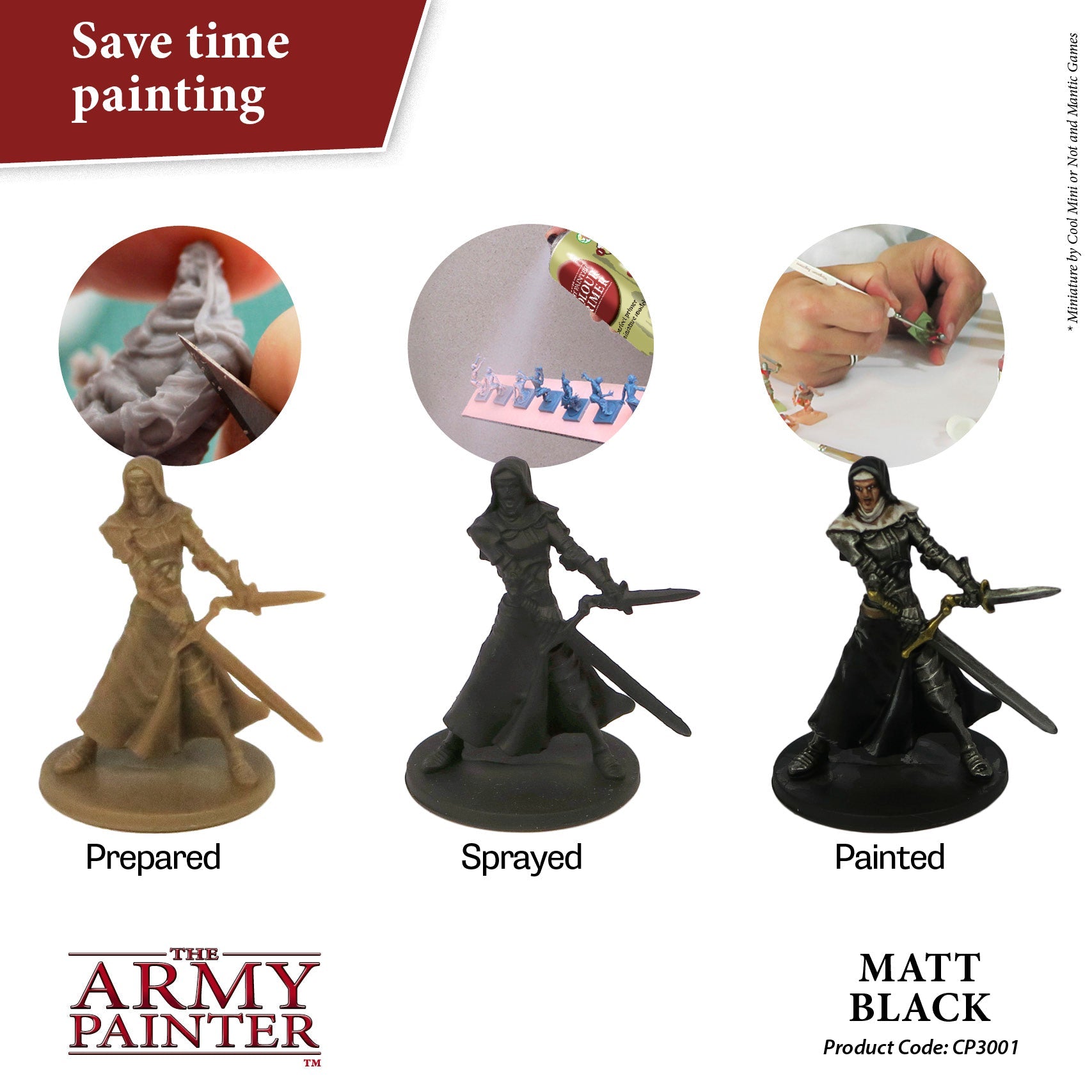
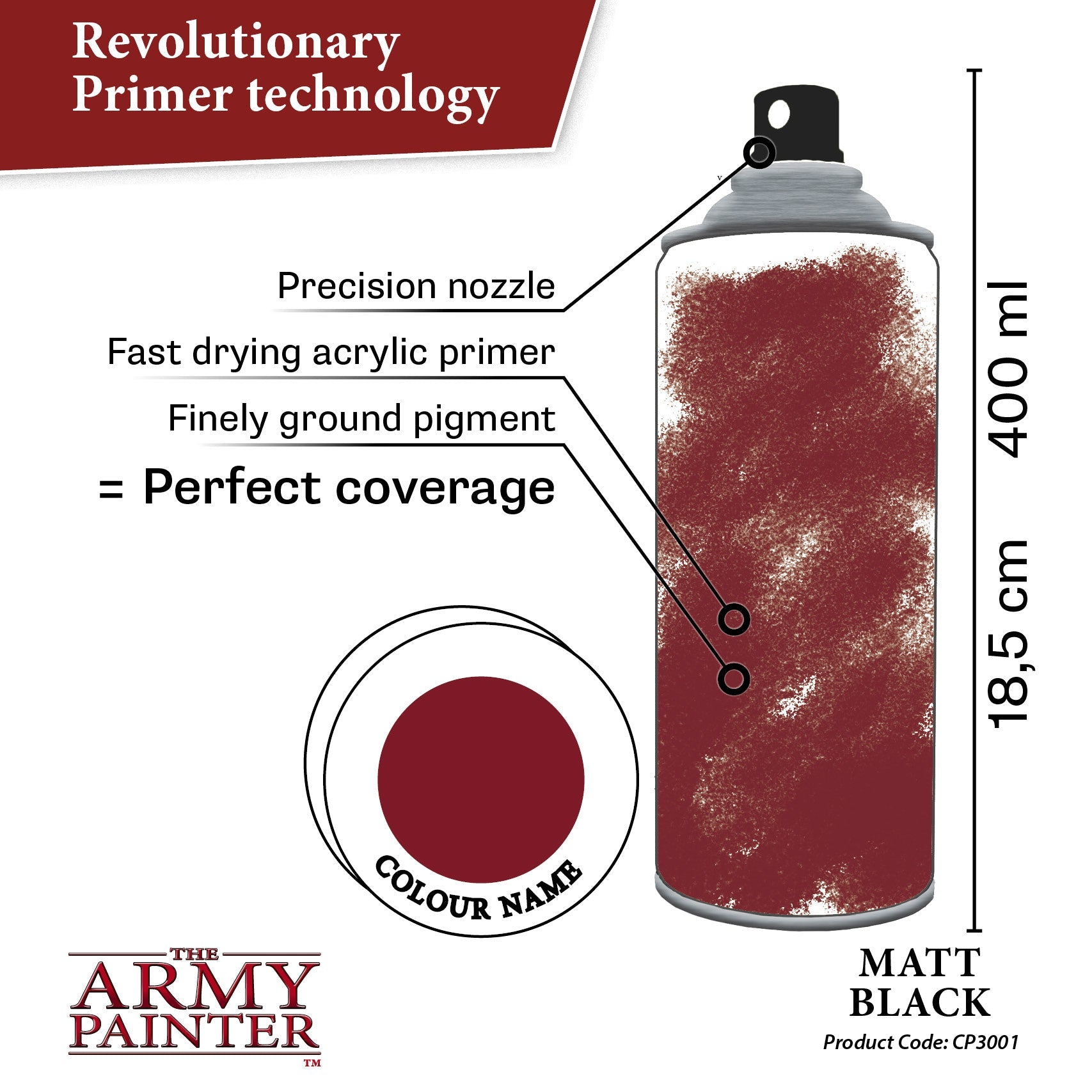
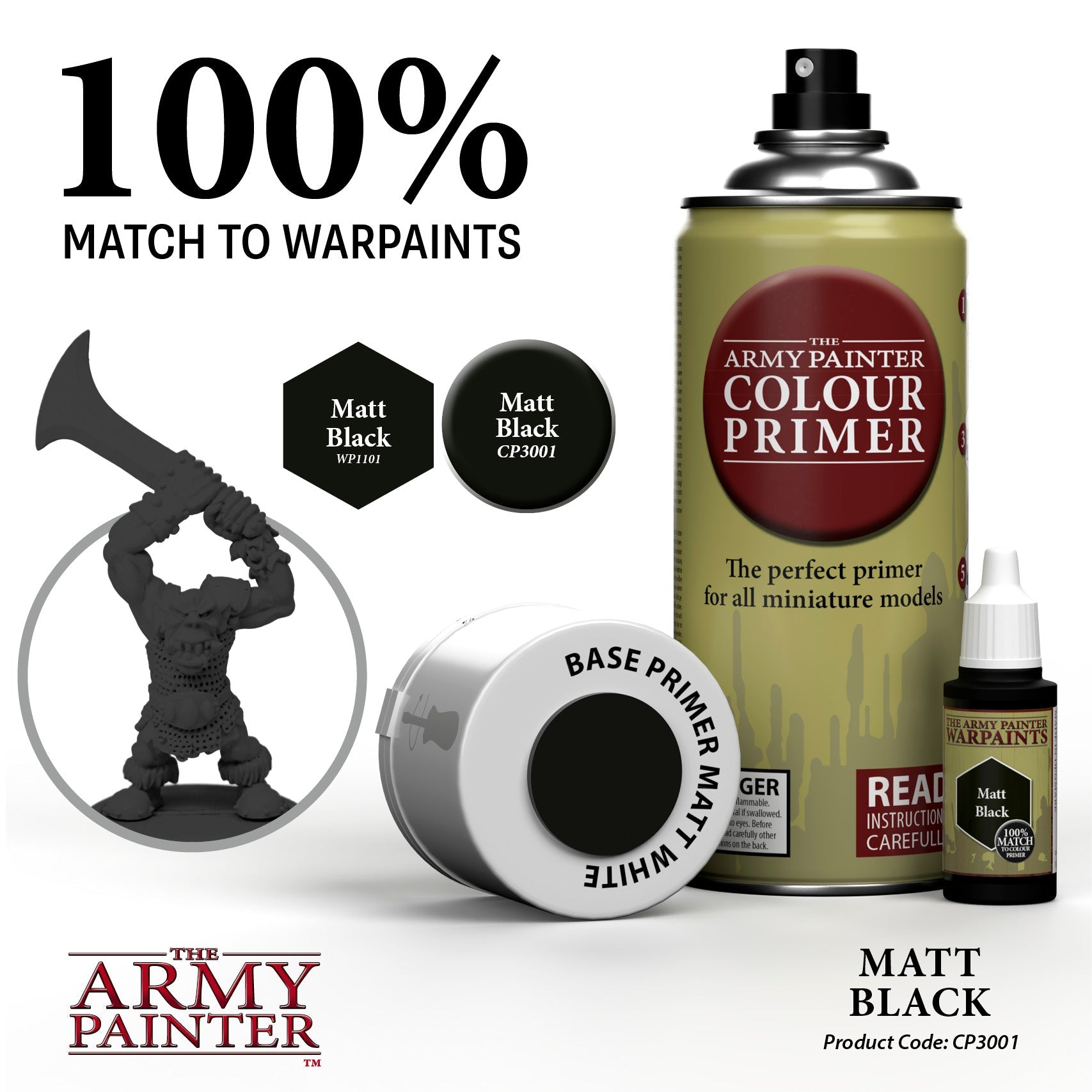
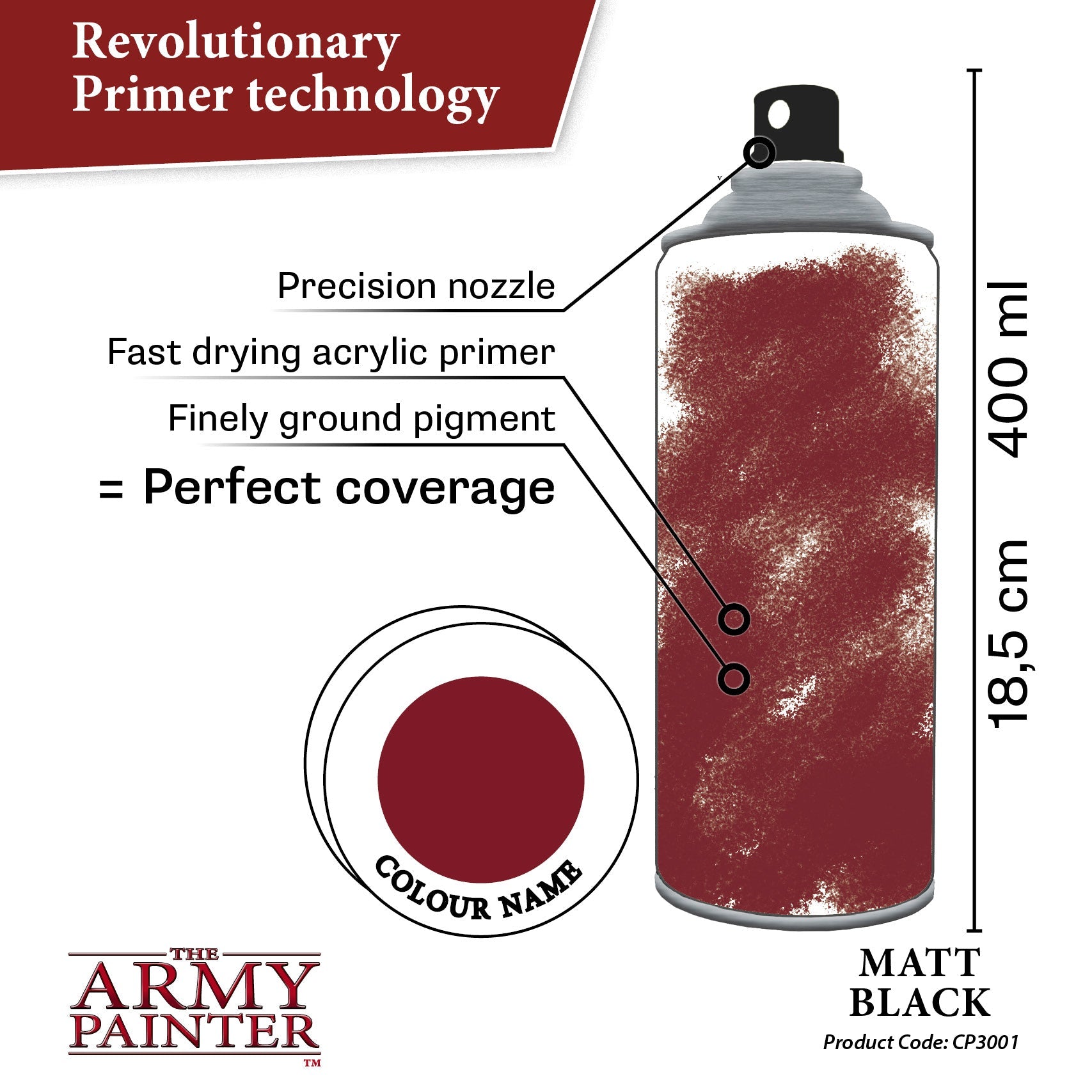
 Army Painter Color Primer Spray (400ml, Black)
A fine-mist spray primer that covers miniatures smoothly without clogging details. Black is the foundation color for grimdark armies (Necrons, Chaos, Dark Elves). One can primers dozens of models and lasts for months.
- Fine mist prevents detail loss
- Fast application—spray and go
- Affordable and readily available
- 31 colors available if you want to match your army's tone
- Requires spray technique (thin coats essential)
- Not ideal for indoor use without ventilation
 8 photos
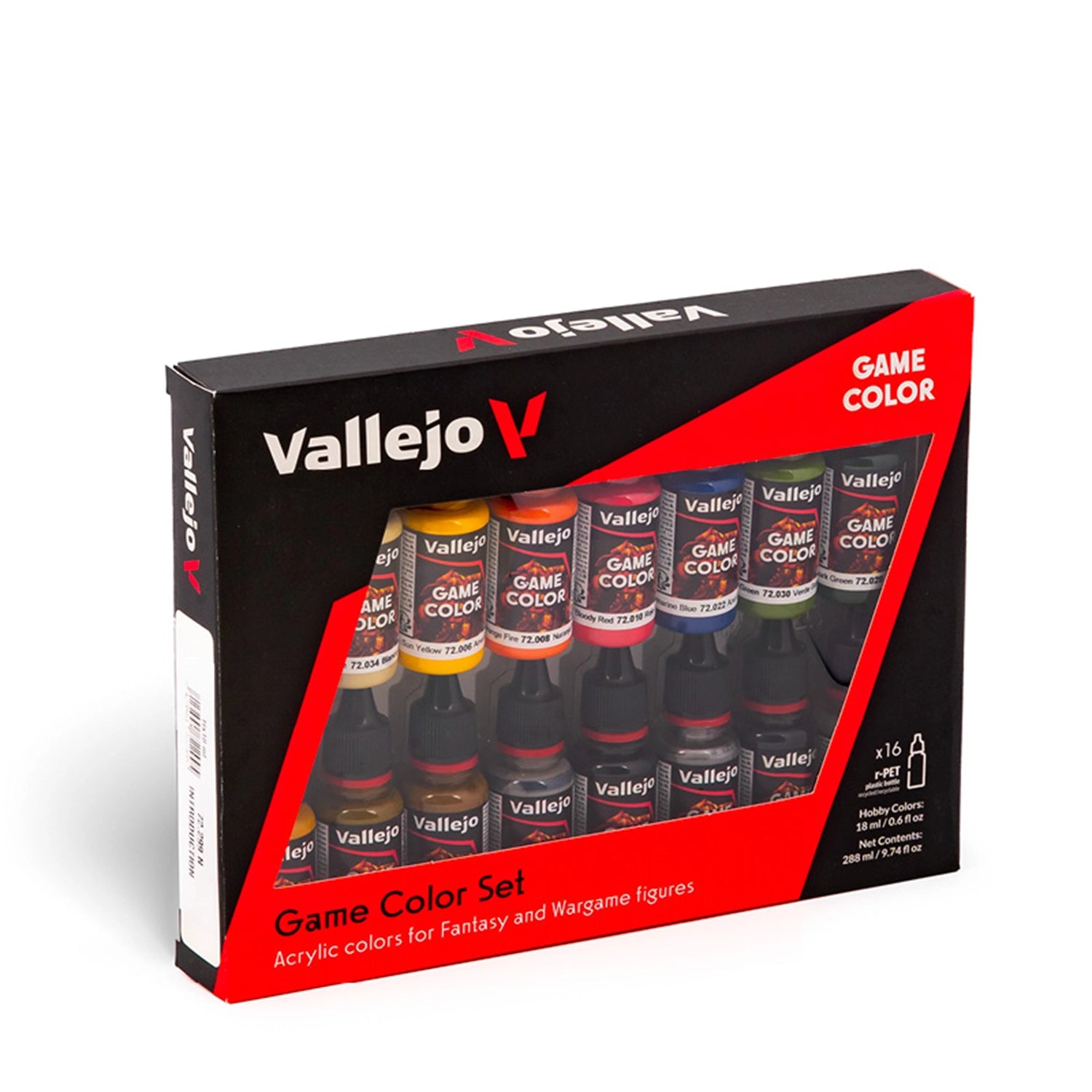
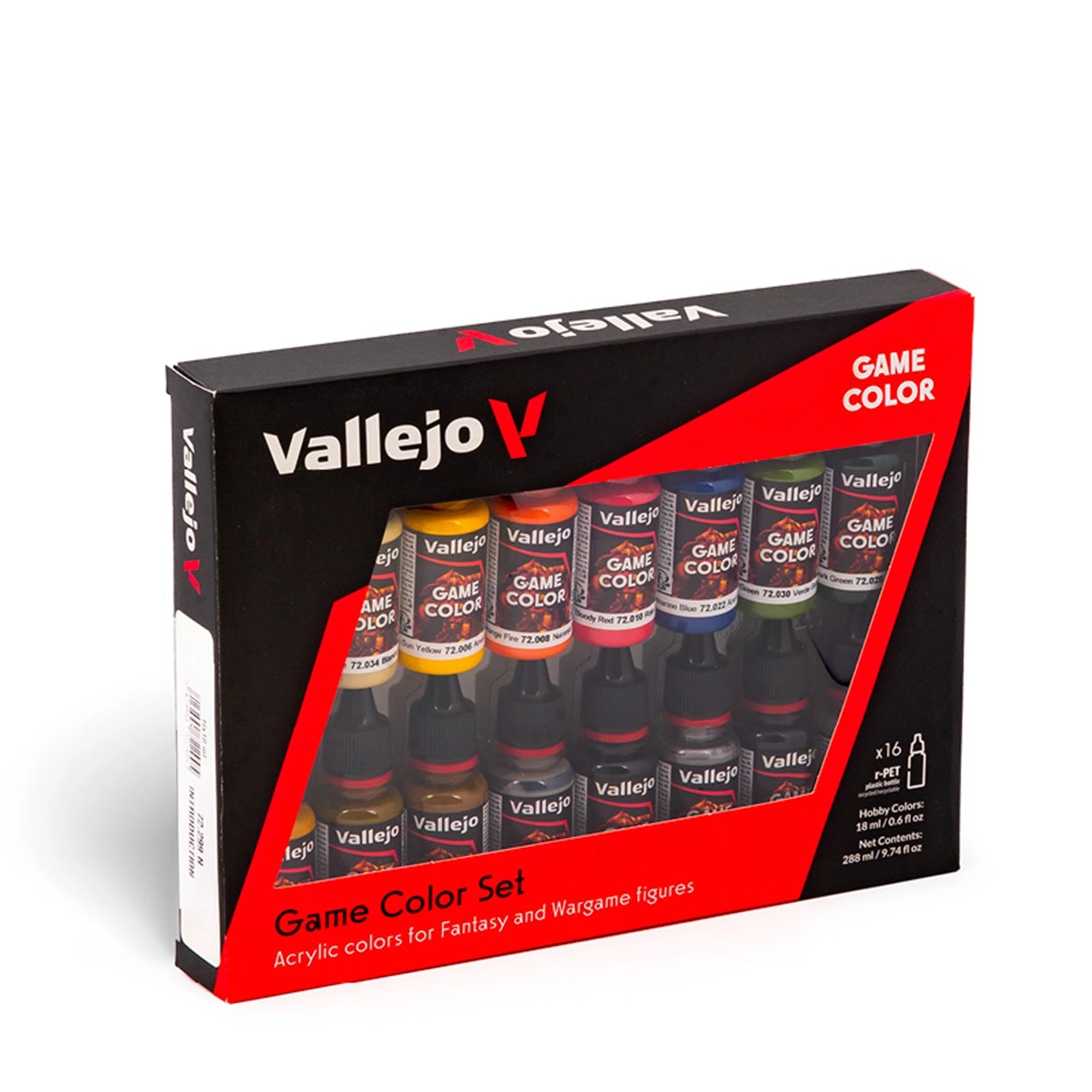
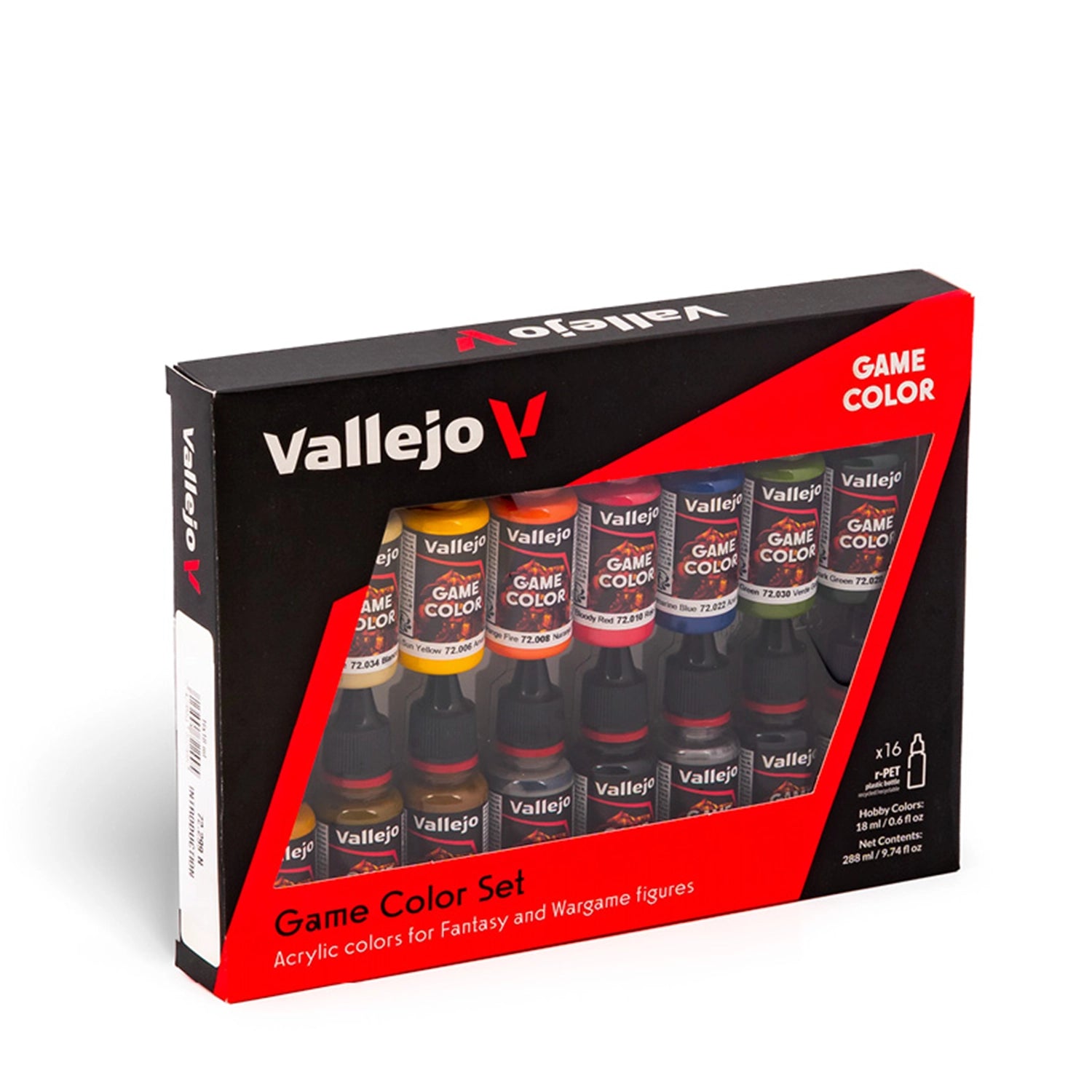
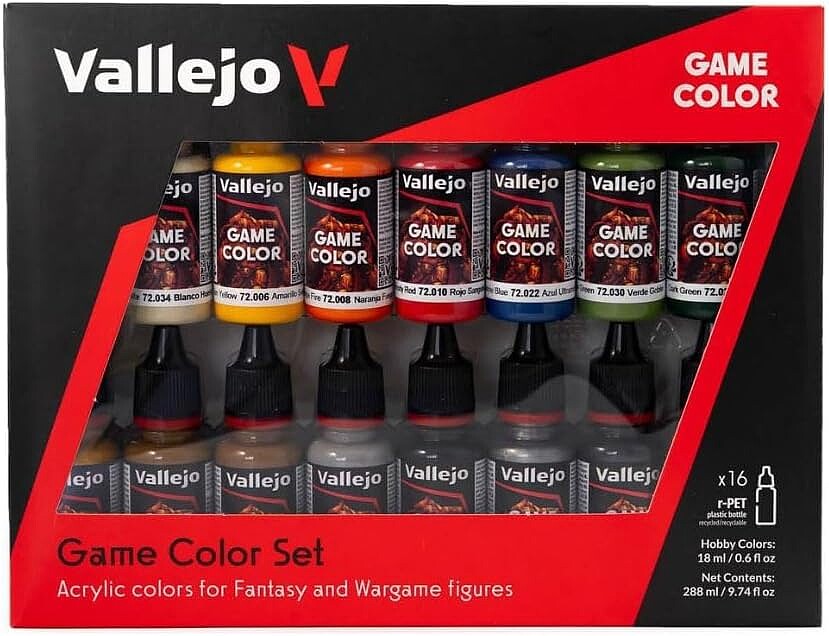
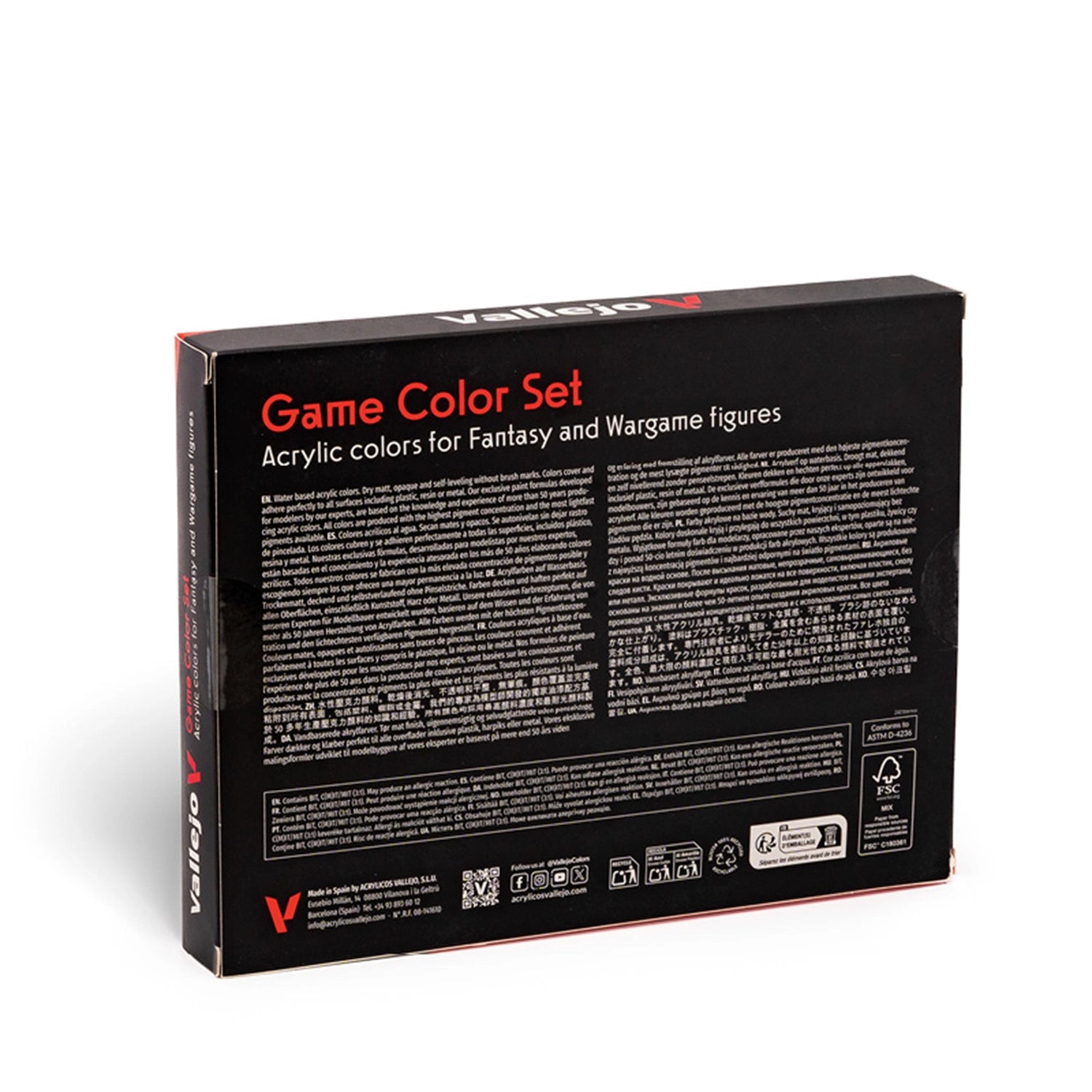
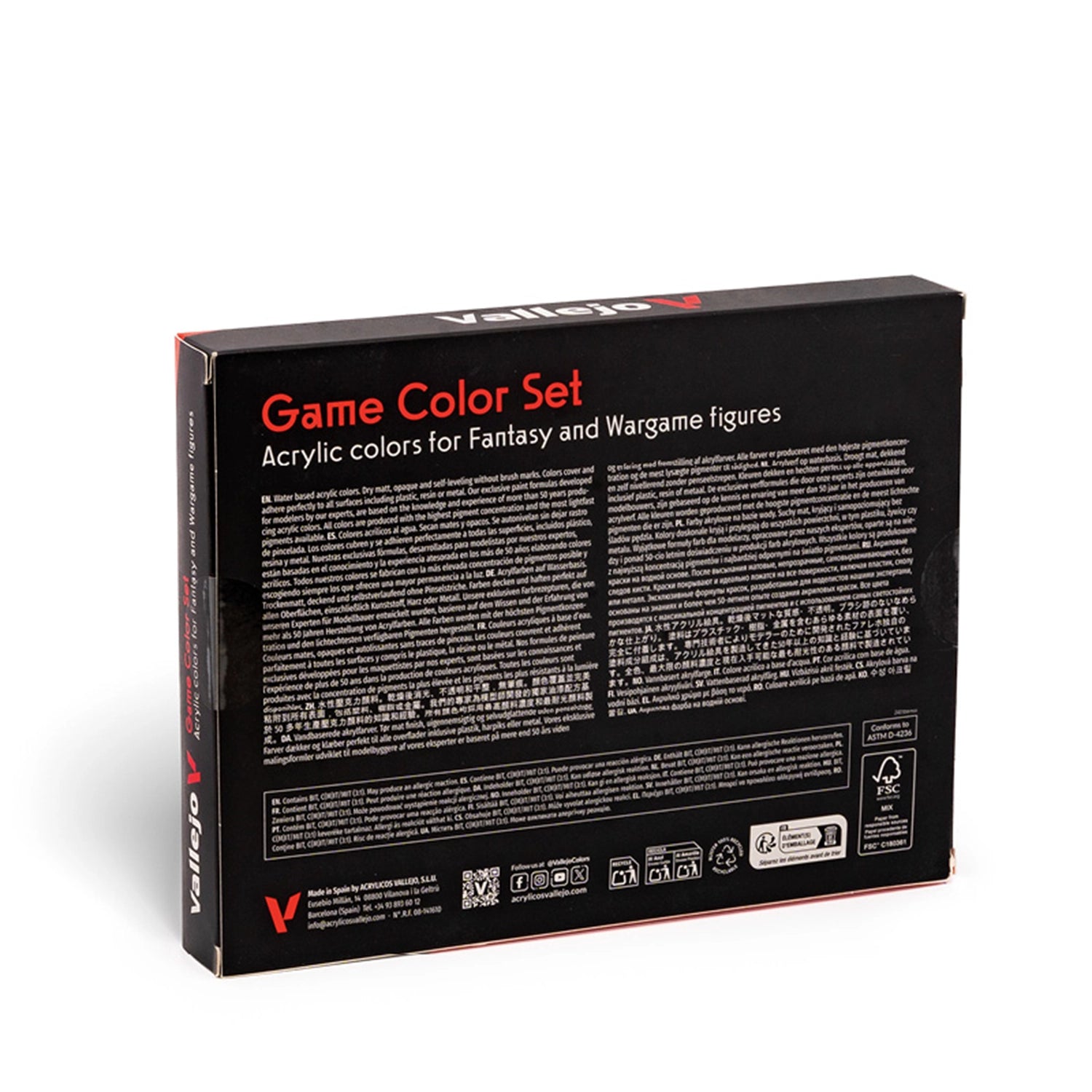
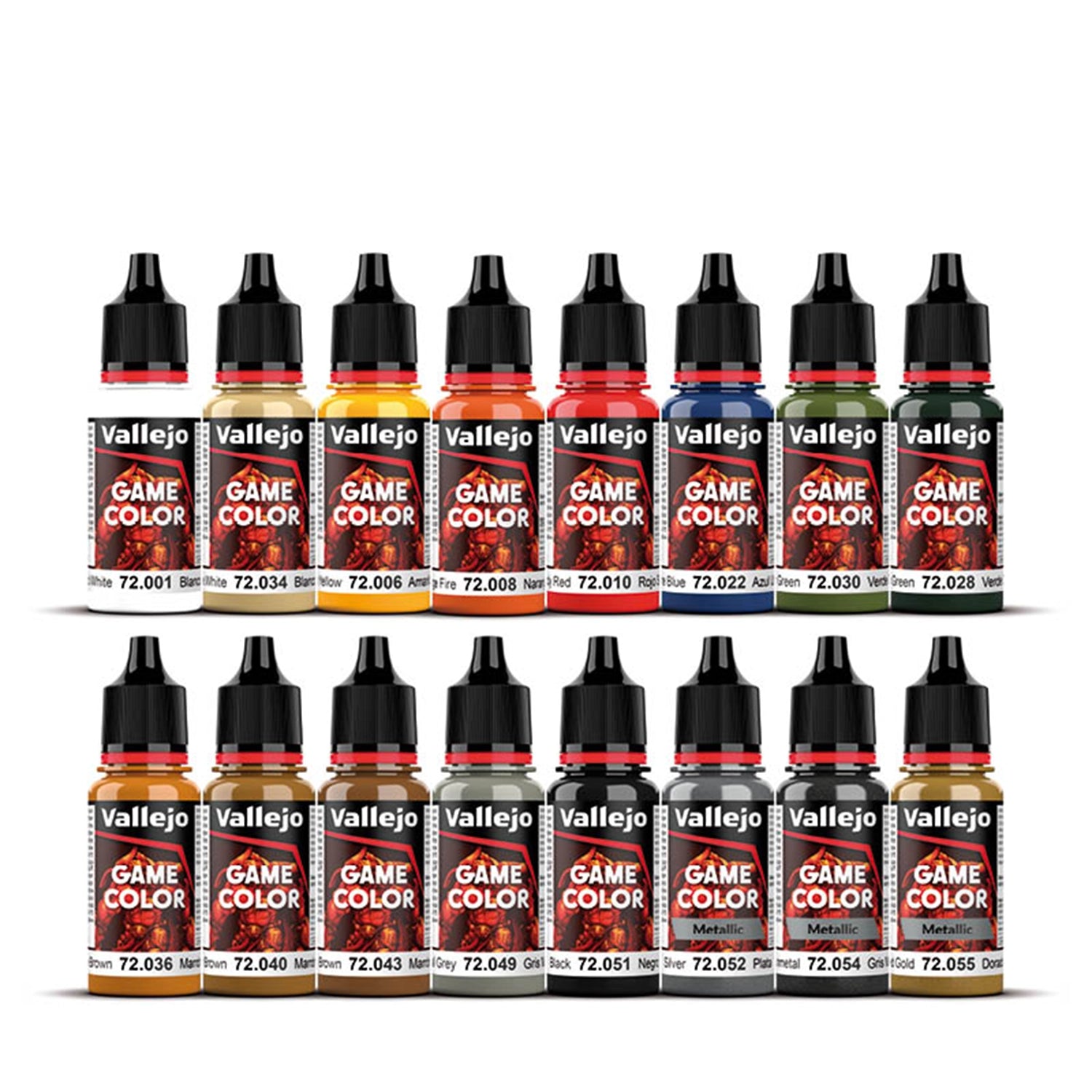
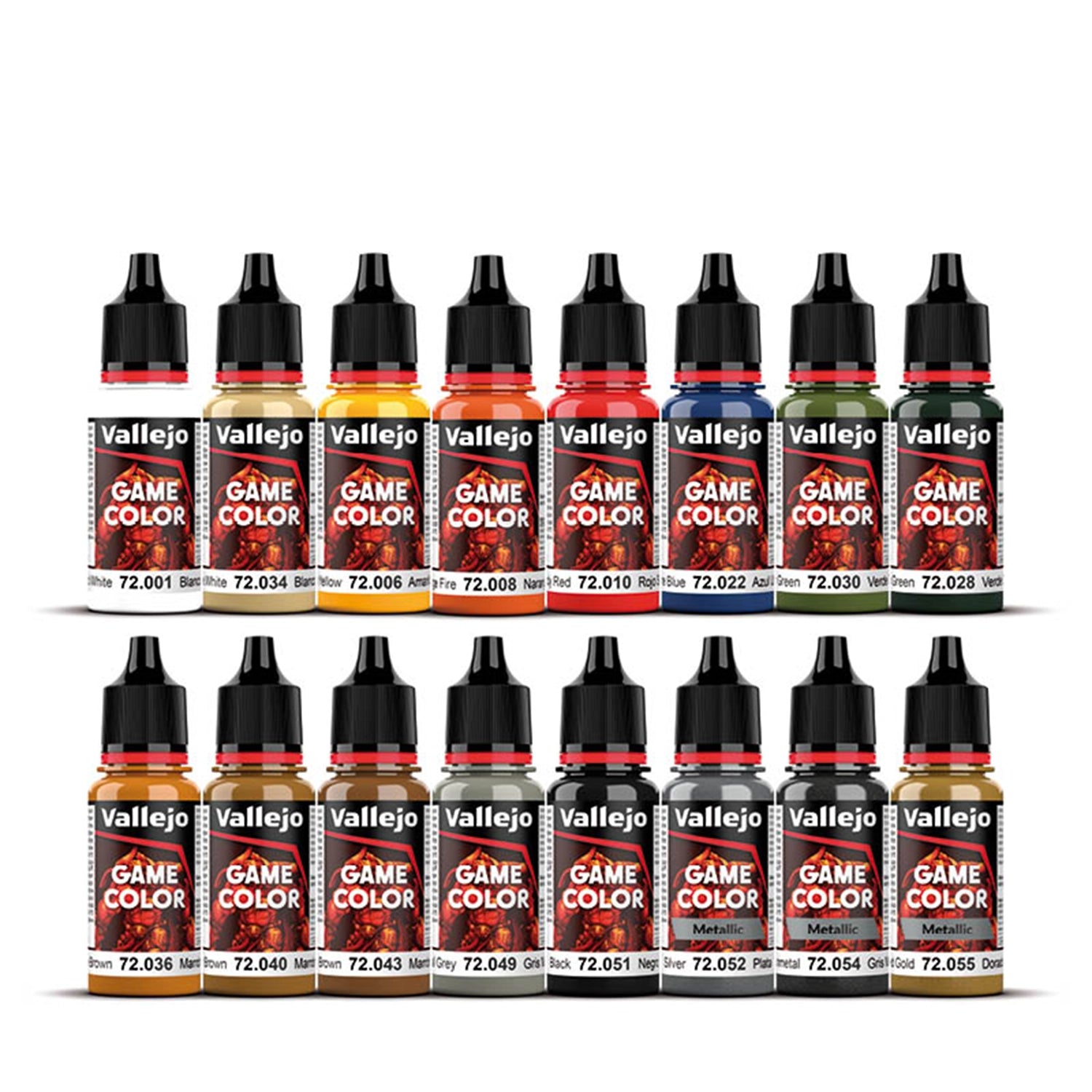
 Vallejo Game Color Introductory Paint Set (16 Colors)
This 16-color set includes the foundational palette for fantasy and sci-fi painting. Vallejo paints are loved by professionals for their brightness and flow. They require thinning but reward good brush technique with incredible coverage and color saturation.
- Professional-grade paint quality
- Thinner consistency for smooth layering
- 16 colors give more creative freedom
- Excellent coverage and brightness
- Requires proper thinning—steeper learning curve
- No tools or brushes included
- Not as forgiving as Citadel for beginners
At a glance
| Set | Price | Paint Count | Tools Included | Best For |
|---|---|---|---|---|
| Games Workshop Paints + Tools | $45 | 13 colors | Brush, clippers, scraper, glue | Warhammer 40K beginners |
| Army Painter Fanatic Starter | $43 | 11 colors + wash | 2 brushes, free miniature | Budget and flexibility |
| Vallejo Game Color Intro | $43 | 16 colors | None | Professional quality |
| Citadel Base Paint Set | $47 | 11 base colors | Brush only | Upgrading from starter kits |
Questions, answered
Do I need a spray primer, or can I brush it on?
Both work! Spray primer goes on faster and smoother, but brush-on primer is cheaper and gives you more control. If you're nervous about spray technique or don't have outdoor space, brush-on primers from Army Painter or Citadel are excellent choices. Spray is faster once you've done it a few times.
How much do I need to thin my paints?
A good rule: if the paint looks as thick as heavy cream, add one small drop of water and stir. If it looks like milk, that's usually right. Games Workshop paints are pre-thickened for minimal thinning. Army Painter and Vallejo need a bit more water. The best way to learn is to paint a test model and adjust as you go.
Can I mix paint brands together?
Yes—Citadel, Army Painter, and Vallejo all play nicely together. Where it gets tricky is shade paints; Citadel Nuln Oil flows differently than Army Painter washes, so test on a practice model first. For base colors and layering, mixing is absolutely fine.
When should I buy expensive brushes like Winsor & Newton Series 7?
After you've painted 5–10 models and feel confident with brush control. A good natural-hair brush is a lifetime investment, but rushing to buy one before you're ready to care for it properly is money wasted. Learn on synthetics, then upgrade.
What's the first thing I should paint after priming?
Base coat your primary color (black armor, white robes, whatever is dominant). Then add a layer color for contrast. Finally, apply a shade like Nuln Oil or Agrax Earthshade to bring out shadows and depth. This 'primer → base → shade' workflow is the beginner's superpower.
How do I clean my brushes so they last?
Rinse in cool water immediately after use—don't let paint dry on the bristles. For acrylic, water is enough. Store brushes bristle-up in a cup or holder. If you're painting for hours, keep a cup of water next to you and rinse between colors. Never leave brushes soaking upside down (it bends the bristles).
Yumi's verdict
Painting Warhammer models is one of the most rewarding parts of the hobby, and you don't need an art degree or a studio to start. Your best move is to grab an official Games Workshop starter set if you're painting 40K, or the Army Painter set if you want flexibility and value. Add a can of black primer, and you're ready. The most important tool isn't in any of these kits—it's your permission to make mistakes and learn as you go. Every painter you admire started exactly where you are now, holding a brush for the first time, nervous and excited. That's where the magic happens.
Sources: amazon.com, amazon.com, amazon.com, warhammer.com, amazon.com, amazon.com
The Hostess · invites you inCome in, take your shoes off — let me show you something.