Best Dice Towers (2026): The Keeper's Complete Guide, From $20 Bamboo to Heirloom Hardwood
For seventeen centuries, a Roman's answer to a single problem—how to remove the hand from the throw—has been copied, refined, and never improved upon. Here are the towers worth owning, from the craft of bamboo to the grain of heirloom hardwood.

AI-assisted curator persona · research and editorial responsibility: Robert Pruitt · how this guide was made
Last editorial refresh: 2026-06-13 Gold-standard QA: 2026-08-10 14 sources reviewed Affiliate links checked during gold-standard pass

The short answer
The best all-around dice tower for most players in 2026 is the C4Labs Deluxe Dice Tray & Tower combo (~$89.99), which pairs a velvet-lined acrylic tower with a matching catch-tray to quiet the roll and stop scattered dice. For a budget pick, the BearDice Wooden Portable Tower (~$25) folds flat and assembles tool-free; for a lifetime heirloom, the Wyrmwood Magnetic Dice Tower ($115–$420) is hand-built from solid hardwood and snaps apart with rare-earth magnets. A tower will not fix a physically lopsided die, but by removing your hand from the throw it strips out the practiced 'controlled roll' and gives the most repeatable, tamper-resistant randomization on a tabletop.
Decision map
Choose in thirty seconds
The best all-around pick — quiet, contained, watchable, made in the USA
The showpiece on a mid-range budget — watch the die spiral down
Best budget all-rounder — tool-free, foldable, eco-certified wood
The lineage is older than you think.
In the fourth century, a craftsman buried in Roman Vettweiss-Froitzheim carved a tower of bone or wood with internal ledges—baffles—so that a thrown die would clatter and rotate unpredictably before falling forward. That object survives today. And its design is precisely, astonishingly, the design you can buy this afternoon. Seventeen centuries of woodworkers, machinists, and tinkerers have refined the finish, the joinery, and the materials. The problem the tower solves has never changed: a tower exists to take the throw out of human hands. That is the whole of its purpose, and it is enough.
The craft lives in the details. Which wood species rings true and resists warping across seasons. Whether the baffles are felt-lined to soften the fall. Whether the joints are glued, magnetized, or folded flat for a satchel. In this guide I have walked the full price ladder—from a twenty-dollar bamboo folder you can slip in a jacket pocket to heirloom hardwood that will outlive its first owner. Each pick is real, currently purchasable, and chosen for a specific player and a specific table. I will answer the question every newcomer asks—do these things actually make my rolls more fair?—honestly, with the science, because reverence for tradition means telling the truth about what the tradition can and cannot do.
Start here, then go deeper
You are in the right cabinet.
 ⬡ Universe HubDungeons & Dragons: the whole buying pathDungeons & Dragons is the world's great storytelling engine — a few books, a fistful of dice, and a table of friends. This universe...⬢ Topic PathTabletop Accessories: compare the whole shelfBuy the accessory that fixes a repeated annoyance first. Protection, setup speed, readable state, and comfortable handling beat...
 Best OfBest Metal Dice Sets for D&D (2026): Heft, Balance & Where to BuyAn archivist's verified ledger of metal dice worth owning—what the heft actually buys you, whether they roll fair, and which sets are...
Why does a dice tower matter at all — what does it actually do for a roll?
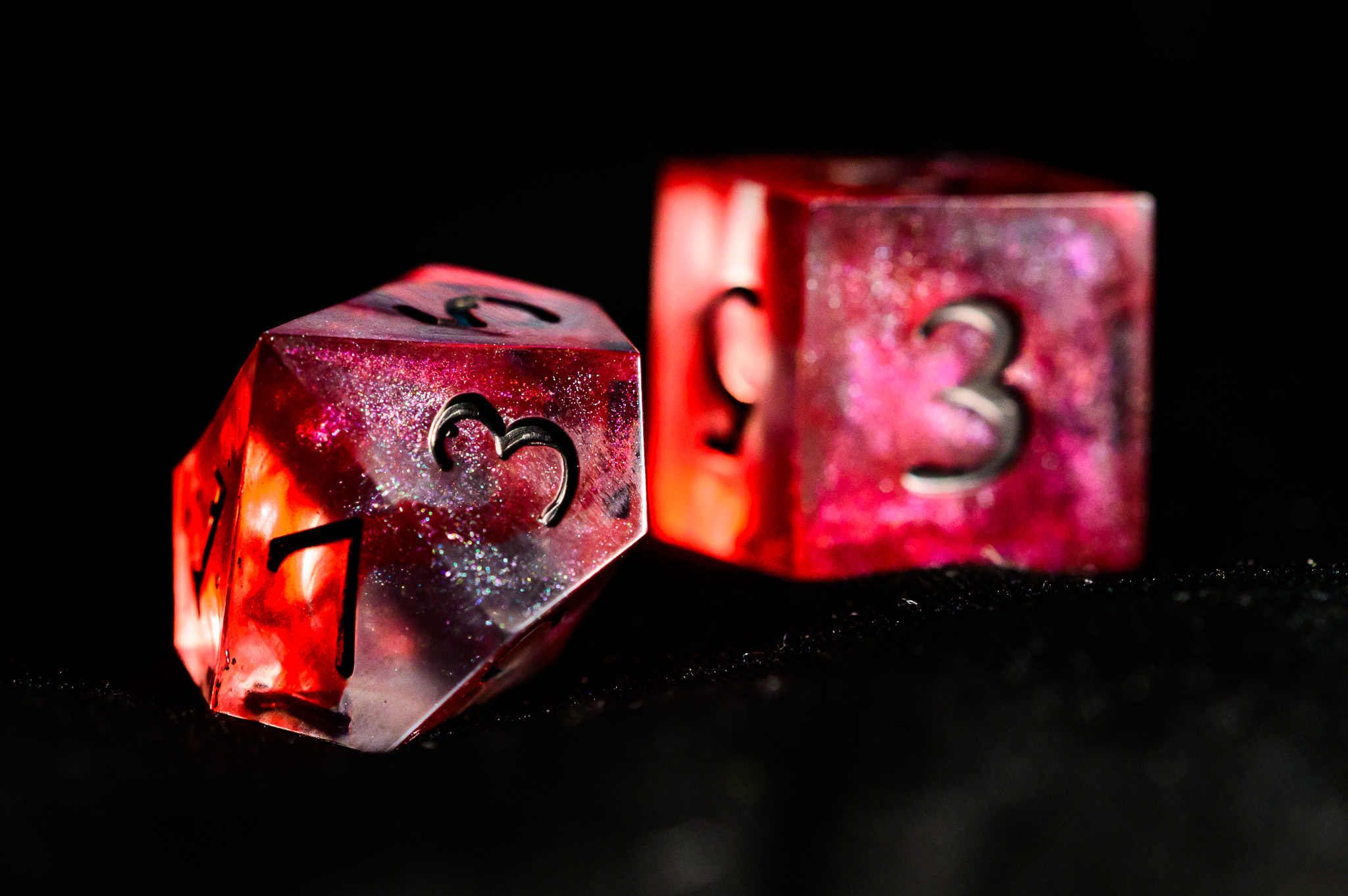
A dice tower does three concrete things, and it is worth separating the real benefit from the folklore.
First, it removes your hand from the throw. This is the heart of it. A practiced player can develop a controlled roll — a low, gentle release that favors certain faces. Drop the die down a baffled shaft and that control evaporates; the die strikes hidden ledges and rotates through chaos it never would on a flat toss. This is precisely why tournament backgammon has used towers for decades to remove any possibility of a player influencing the dice.
Second, it contains the dice. No more chasing a d20 under the couch, no knocked-over minis, no die sailing off the battlemap mid-combat. The catch-tray keeps the table sacred.
Third, it quiets and protects. A felt- or velvet-lined tower softens the fall, muffles the rattle, and saves both your table finish and the sharp edges of metal or sharp-cornered resin dice.
The idea is genuinely ancient — towers "have been used since at least the fourth century, in an attempt to ensure that dice roll outcomes were random." You are not buying a gimmick. You are buying a 1,700-year-old solution to a problem as old as gambling itself.
A tower exists to take the throw out of human hands — that is the whole of its 1,700-year-old purpose.
Do dice towers actually make rolls more fair, or is that a myth?
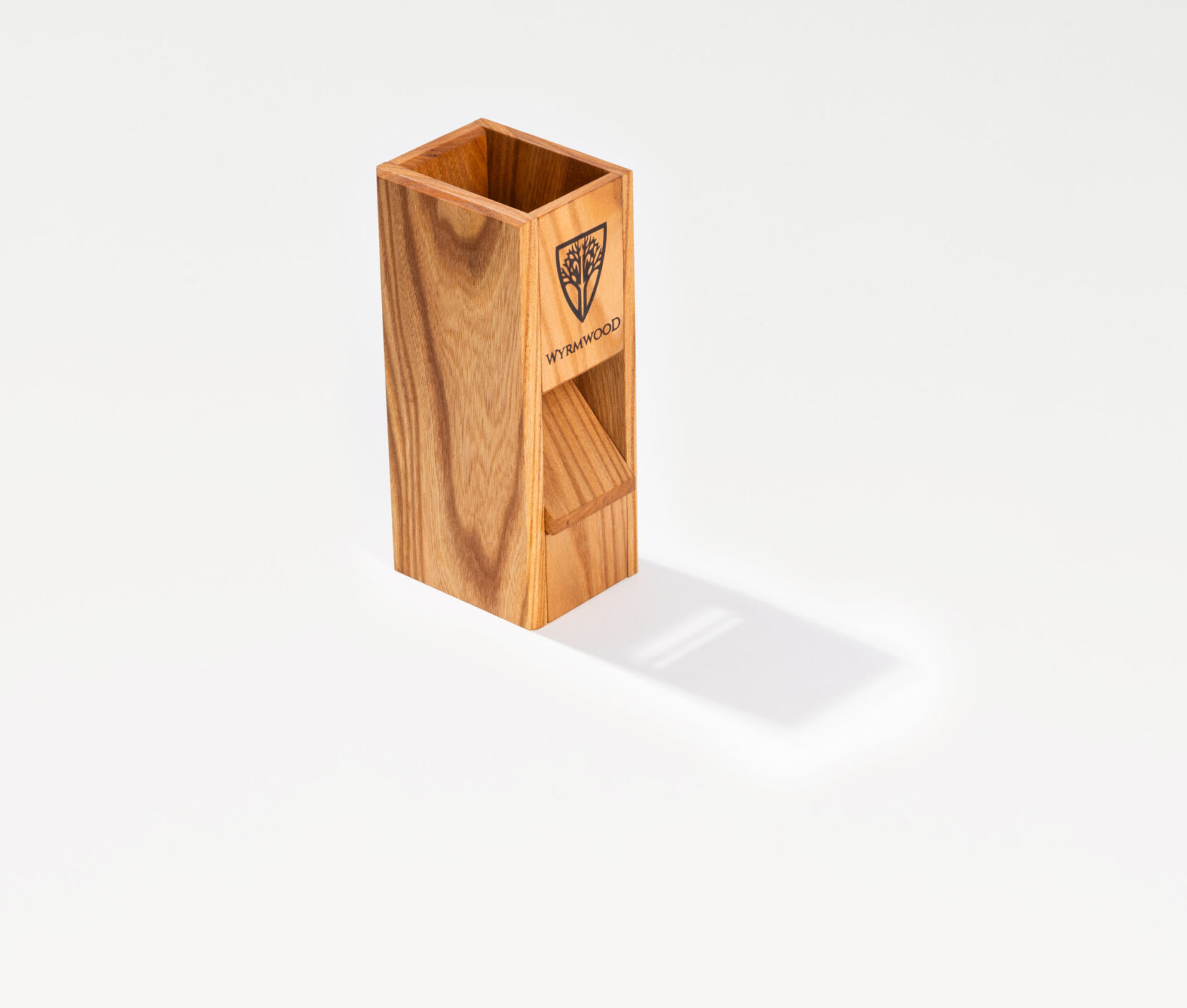
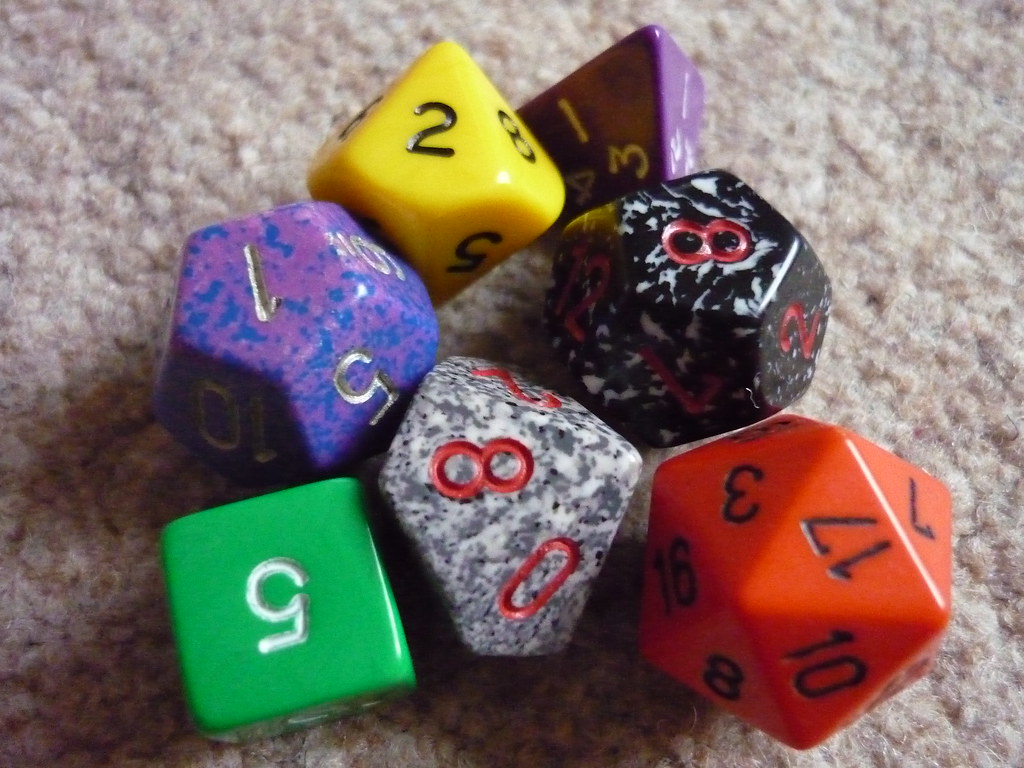
This is the question I am asked most, and the honest answer has two halves.
A tower cannot fix a biased die. If a die is physically lopsided — uneven pips drilled into the faces, an air bubble in cheap resin, rounded corners worn unevenly — it will land unfairly no matter how you roll it. No baffle geometry rescues a die that is mechanically loaded. If you want true fairness, start with precision (casino-grade, sharp-edged) dice.
But the method of rolling absolutely changes outcomes — and that is where a tower earns its place. A peer-reviewed study from Western Kentucky University rolled thirty d20s at least 3,000 times each, comparing an automated mechanical roller against the same dice thrown by hand through a dice tower. Its conclusion is blunt: "the method of rolling heavily influences the outcome." Translation: how you roll matters as much as what you roll. A tower replaces an inconsistent, potentially-biased human throw with a repeatable mechanical tumble. It does not manufacture randomness from a broken die, but it removes the single biggest human source of bias — your hand.
So the truthful verdict: a tower makes your rolls more consistent, more tamper-resistant, and more repeatable, which for any group that cares about fair play is exactly what 'more fair' means in practice. Pair a good tower with good dice and you have done everything a tabletop reasonably can.
A tower cannot fix a loaded die — but it removes the biggest human bias of all: your own hand.
What materials should a dice tower be made of — and why does the wood species matter?
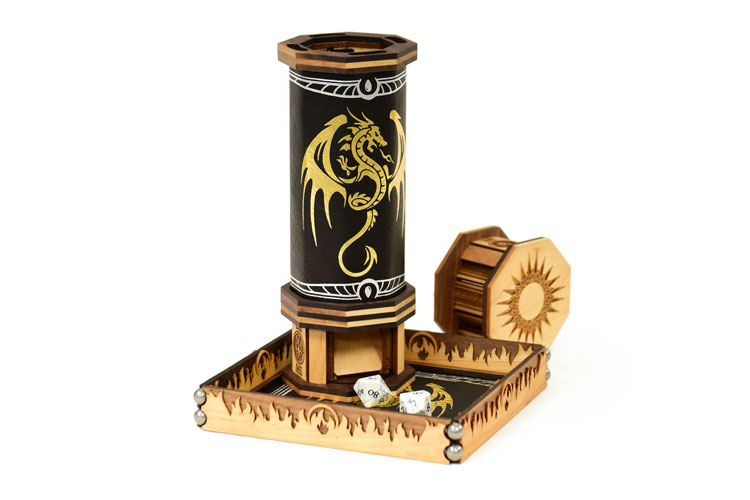
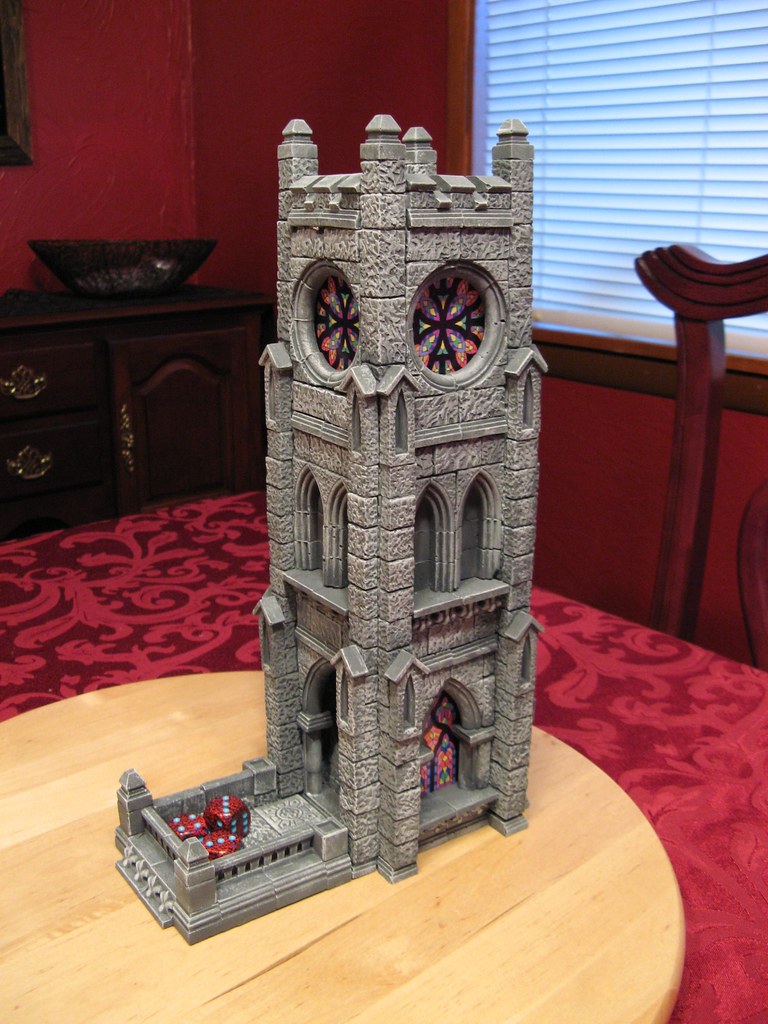
Here is where I get to talk craft, because the body of a tower is not a neutral choice.
Hardwoods (cherry, black walnut, padauk, purpleheart, wenge, ebony). These are the heirloom materials. A dense, kiln-dried hardwood resists warping across seasons, takes a finish that deepens with handling, and gives the die a crisp, woody knock as it descends. Wyrmwood, for instance, offers eight species — from the warm red of cherry and padauk to the near-black of wenge and ebony — and the choice is partly tone, partly grain, partly how dark you want the piece to age. These towers are built to last a lifetime, and the better makers glue and pin or magnetize rather than relying on cheap fasteners.
Bamboo. Technically a grass, not a wood, but a wonderful budget material: fast-growing, sustainable, light, and naturally springy. Bamboo folders (like the TDSO) are the workhorses of the portable category.
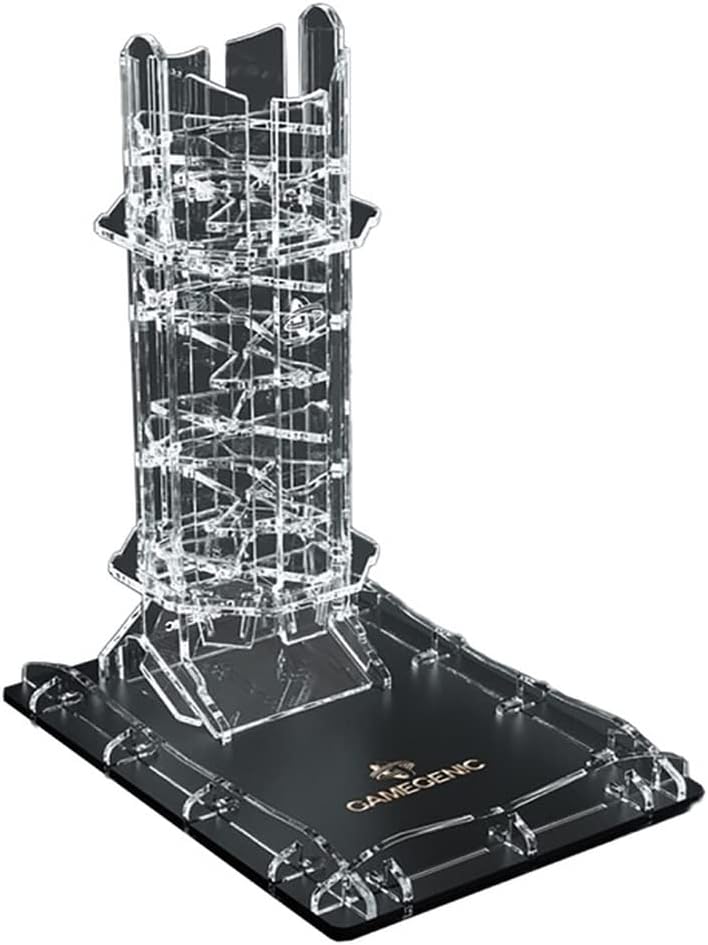
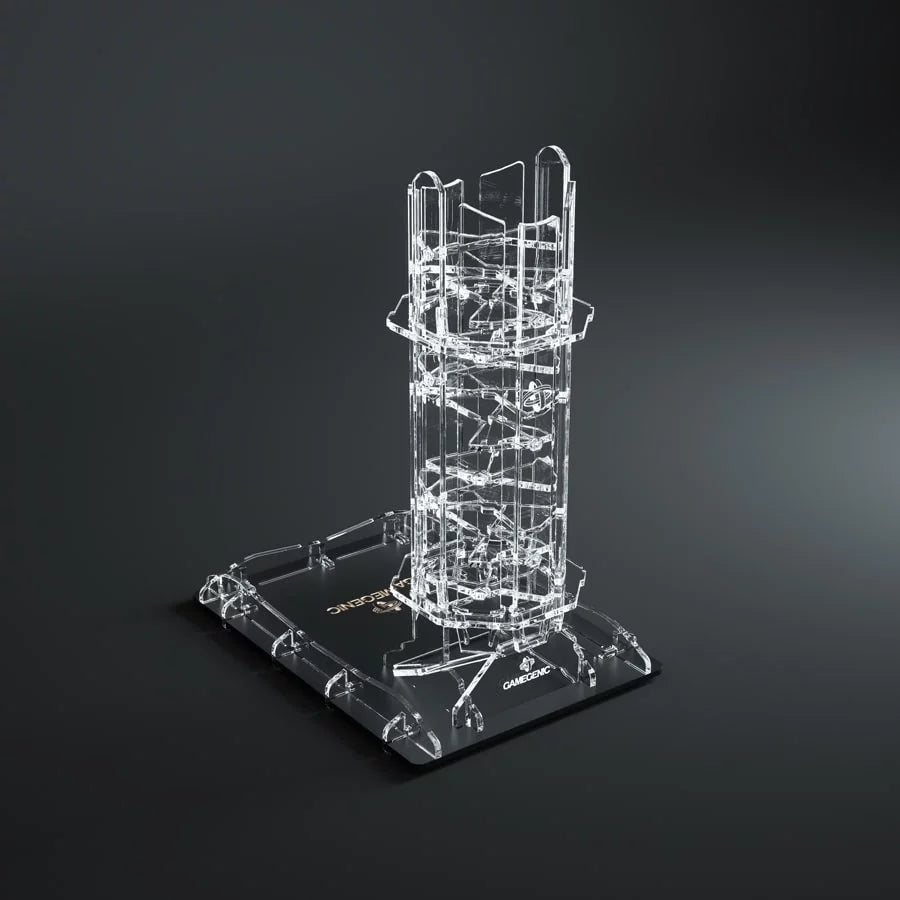
Acrylic. Modern and theatrical. A transparent acrylic tower (C4Labs, Gamegenic's Crystal Twister) lets you watch the die tumble — a real pleasure — and pairs beautifully with velvet-lined wood paddles inside to soften the noise acrylic alone would amplify.
Resin / 3D-printed PLA. The realm of dragons, skulls, and castles. Cast resin and printed PLA make sculptural, themed towers possible at any budget. The tradeoff: hard plastic interiors are loud unless the maker adds felt, and detail-heavy designs can be fragile.
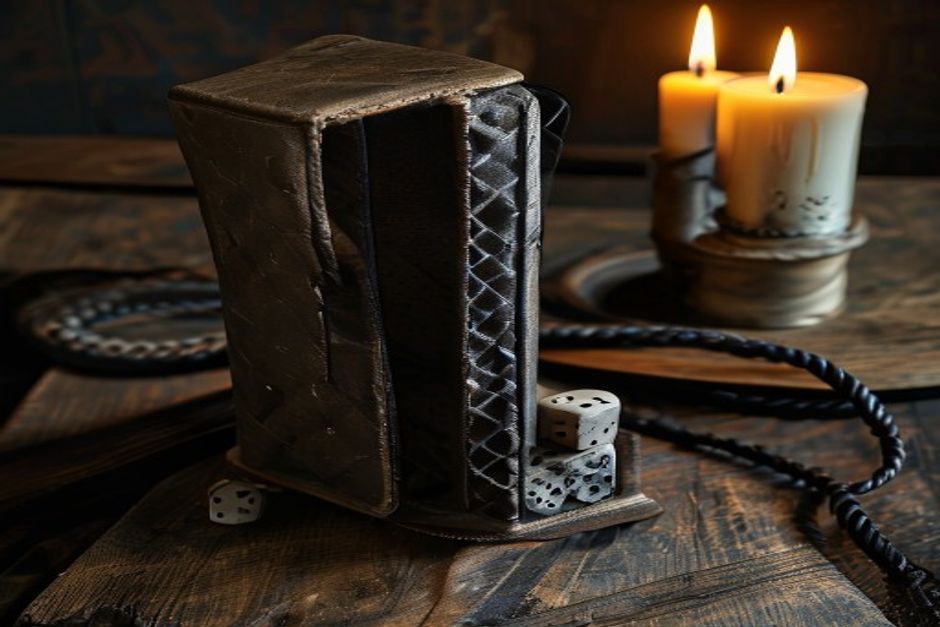
Leather & leatherette. Used as a wrap (Elderwood's foil-pressed leather) or as a folding body (Cthulhu's Tower). Velvet linings inside leatherette folders make them among the quietest towers you can carry.
Choose cherry or padauk for warmth, wenge or ebony to age dark — the species is tone, grain, and how the piece will look in twenty years.
What's the best dice tower if you're on a budget or need something portable?

You do not need to spend a fortune to roll fair. The budget and portable tiers overlap heavily, because the engineering challenge — fold flat, assemble without tools, still baffle the die properly — is the same one.
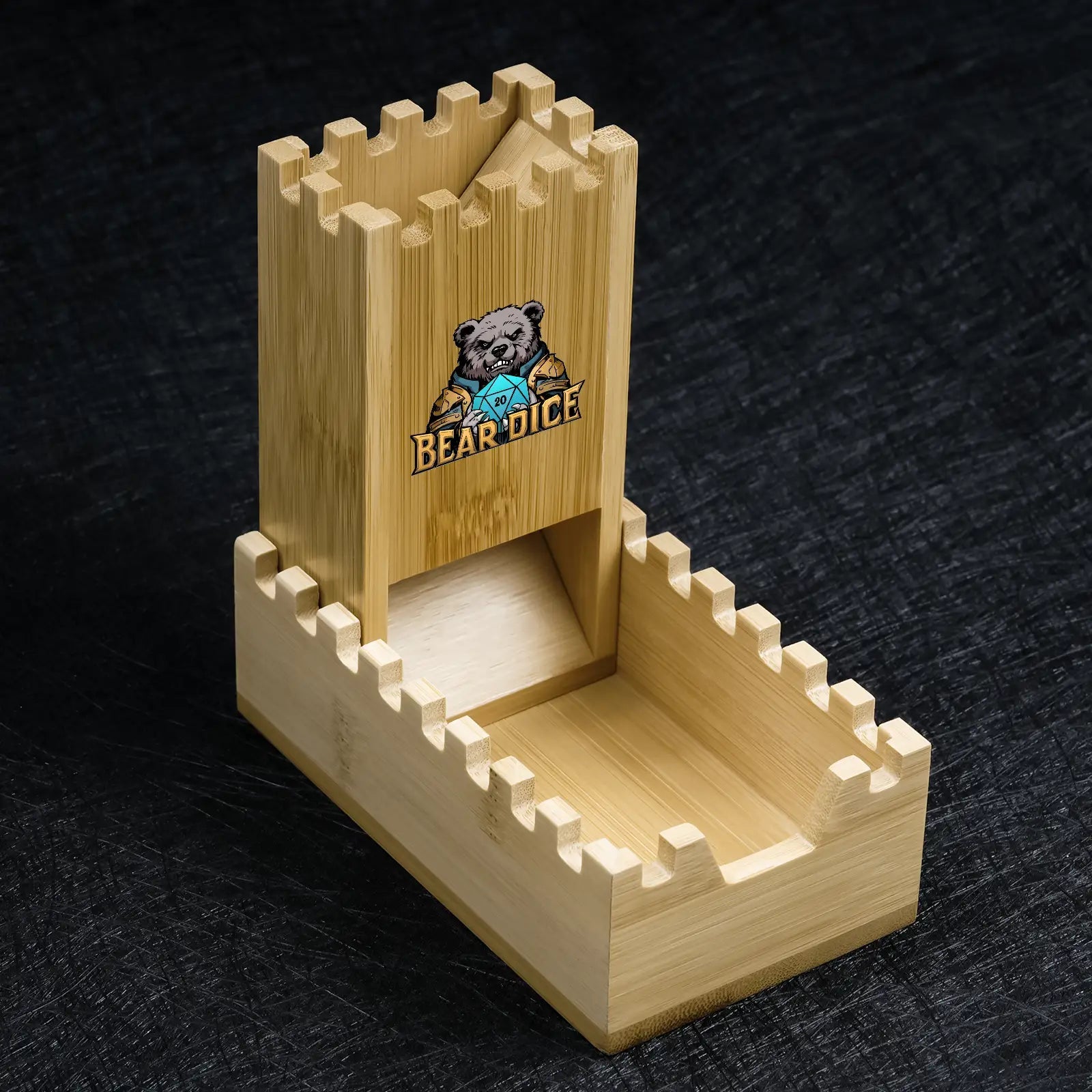
The folding bamboo/wood class ($15–$30) is the sweet spot for most newcomers. The TDSO Wooden Bamboo Folding Dragon Tower (~£15 / ~$19 on sale) holds 20–25 dice inside, snaps shut with magnets for transport, and opens to a full 14 cm working height. The BearDice Wooden Portable Tower (~$25) uses FSC-certified, moisture- and insect-treated wood in a two-section card-slot design that assembles in seconds with no glue or tools, and a wide bottom mouth so you can scoop the dice out easily.
For the quietest portable option, look at folding leatherette. Cthulhu's Tower folds completely flat and uses a velvet-lined interior — the lining makes it one of the more table-friendly travel towers, though confirm the current price with the seller before buying.
The tradeoff at this tier is honesty about longevity and silence: folding mechanisms have more moving parts, thin panels can rattle, and magnets are the part most likely to weaken over years of heavy use. But for the price of a couple of dice sets, you get a genuinely portable, genuinely functional tower. That is a remarkable bargain by the standards of this craft.
For the price of two dice sets, a folding bamboo tower gives you genuine, pocketable, fair-rolling craft.
Is a premium hardwood or heirloom dice tower worth the money?
Let me be the keeper here and answer fairly: for most players, no — a $25 folder rolls dice just as fairly as a $300 one. The baffle does not know what it cost.
But 'worth it' is not only about function, and the heirloom tier is selling something function cannot. A Wyrmwood Magnetic Dice Tower ($115–$420) is built from a solid block of one of eight hardwoods, with magnetized steel rods set along the seams so the whole tower snaps apart and back together in seconds yet holds rock-solid in play — no glue, no permanent assembly, completely collapsible for storage in a matching tray. An Elderwood Academy Codex (~$90–$115 base; ~$135 for the Scroll + Codex system) doubles as a leather-wrapped scroll case with twist-off hardwood caps held by rare-earth magnets and foil-pressed art you choose. These are objects a reviewer can shake and report the magnets "hold like a goddamn gorilla," objects described as "utterly gorgeous" and built to "last a lifetime."
The honest math: split across a regular group as a shared table-piece, or bought as a once-in-a-decade gift, an heirloom tower is absolutely worth it. As an impulse buy for a solo player who games twice a year, it is not. Know which player you are. The craft is real either way — the question is whether you will live with the object long enough to honor it.
The baffle doesn't know what it cost. You are paying for the grain, the joinery, and the years — and for some tables, that is worth every dollar.
How do I choose the right dice tower for my table — what are the real tradeoffs?
Every tower is a negotiation among five forces. Name your priorities and the choice makes itself.
1. Noise. Hard acrylic and bare resin are loud; felt/velvet linings and wood paddles are quiet. If you game late, near sleeping kids, or record at the table, prioritize a lined interior above all else.
2. Footprint & storage. A fixed hardwood tower is a beautiful permanent fixture but eats shelf space. Folding bamboo/leatherette and magnetically-collapsible hardwood (Wyrmwood) pack down to nearly flat. Match this to whether the tower lives out or gets put away.
3. Assembly. Tool-free card-slot folders (BearDice) and magnetic systems (Wyrmwood, Elderwood) assemble in seconds. Some kit towers need glue or fiddly tabs — fine once, annoying if you pack it every session.
4. Capacity & the tray. Will it catch a fistful of dice, or just one or two? Tower-and-tray combos (C4Labs holds 14 in the tray pockets; Elderwood's Scroll) solve containment properly. A bare tower with no tray is only half a solution.
5. Soul. Yes, soul. A transparent Crystal Twister that lets you watch the tumble, a dragon-skull resin centerpiece, a leather scroll-case that hides on a shelf between sessions — these change how the table feels. Function is solved cheaply; character is what you are really shopping for above ~$40.
Decide which two of these five you cannot compromise on. The rest is grain and finish.
Name the two forces you can't compromise — noise, footprint, assembly, capacity, or soul — and the right tower chooses itself.
What experienced tables keep reporting
Recurring owner patterns, synthesized in Puzzlewick's words. Follow each evidence trail to read the original discussion.
Results indicate that the method of rolling heavily influences the outcome — researchers rolled thirty d20s at least 3,000 times each, comparing an automated roller against the same dice thrown by hand through a dice tower.
Dice towers have been used since at least the fourth century, in an attempt to ensure that dice roll outcomes were random... the Roman example has essentially the same design as modern examples, with internal baffles to force the dice to rotate more randomly.
Every seam is smooth, the wood is finished beautifully, the leather is well treated, the magnets are set perfectly aligned... [it's] utterly gorgeous and could last a lifetime — though it's a real investment, especially worth it if multiple people split the cost as a group gift.
Read the evidence: DropTheDie — Elderwood Academy Scroll & Codex review
A complete system that includes a Personal Dice Tray, a Dice Vault, a collapsible magnetic Dice Tower, and a leather carrying strap — all designed to fit together into a single, tight, easy-to-store package.
Read the evidence: DropTheDie — Wyrmwood Complete Zebrawood Dice Tower System review
Magnetized metal rods are inserted into the wood along predetermined lines and marked with a number, so that they snap into place and are held firmly... while being completely collapsible — the tower can be assembled or disassembled in seconds.
Read the evidence: Wyrmwood Gaming — Magnetic Dice Tower product page
The picks
Some links below are affiliate links — as an Amazon Associate, Puzzlewick earns from qualifying purchases, at no extra cost to you. It never changes a pick.
C4Labs Deluxe Dice Tray & Tower (Combo)
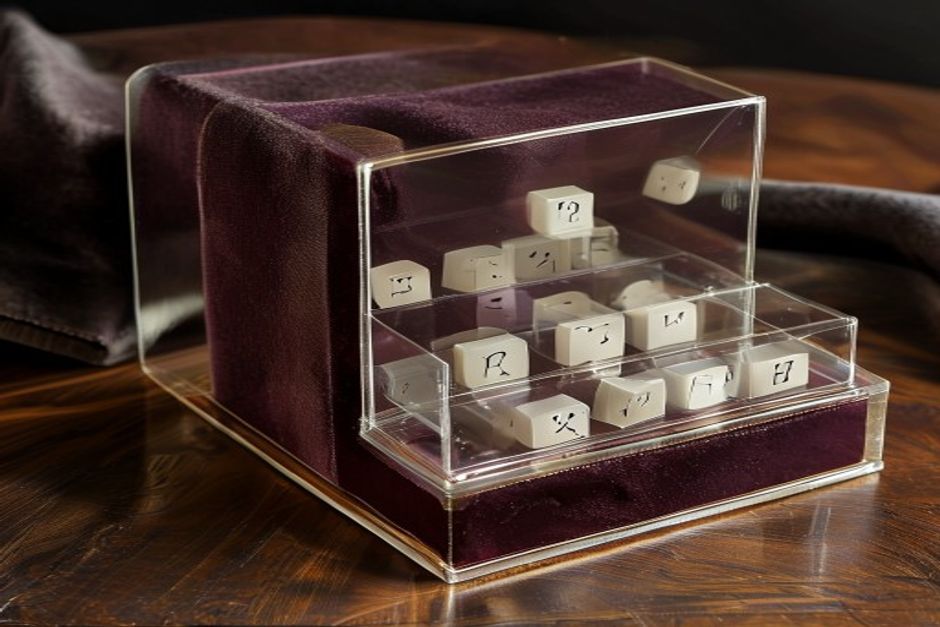
This is the tower I point most players to, because it solves the whole problem in one box. A transparent acrylic tower with velvet-lined wood paddles feeds directly into a matching velvet-lined tray with two rows of pockets that hold 14 standard dice. You get to watch the die tumble through clear acrylic, the velvet keeps it quiet, and the tray means nothing escapes. Designed and crafted in Tacoma, Washington, with pearlescent acrylic colorways by local artists. It is the rare combo where nothing is an afterthought.
- Tower AND lined catch-tray as one matched set
- Velvet-lined paddles and tray make it genuinely quiet
- Transparent acrylic — you watch the roll resolve
- Made in the USA, multiple artist colorways
- Larger fixed footprint; not a travel piece
- Acrylic shows fingerprints and can scratch
 4 photos
 Gamegenic Crystal Twister Premium Dice Tower
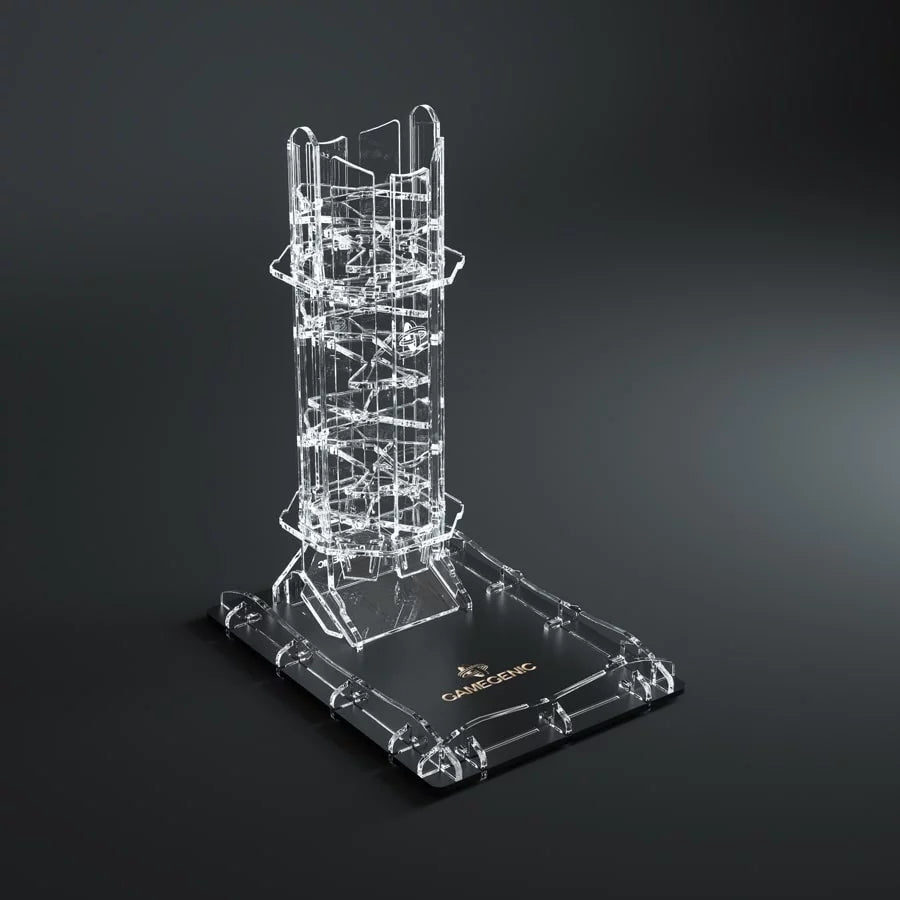
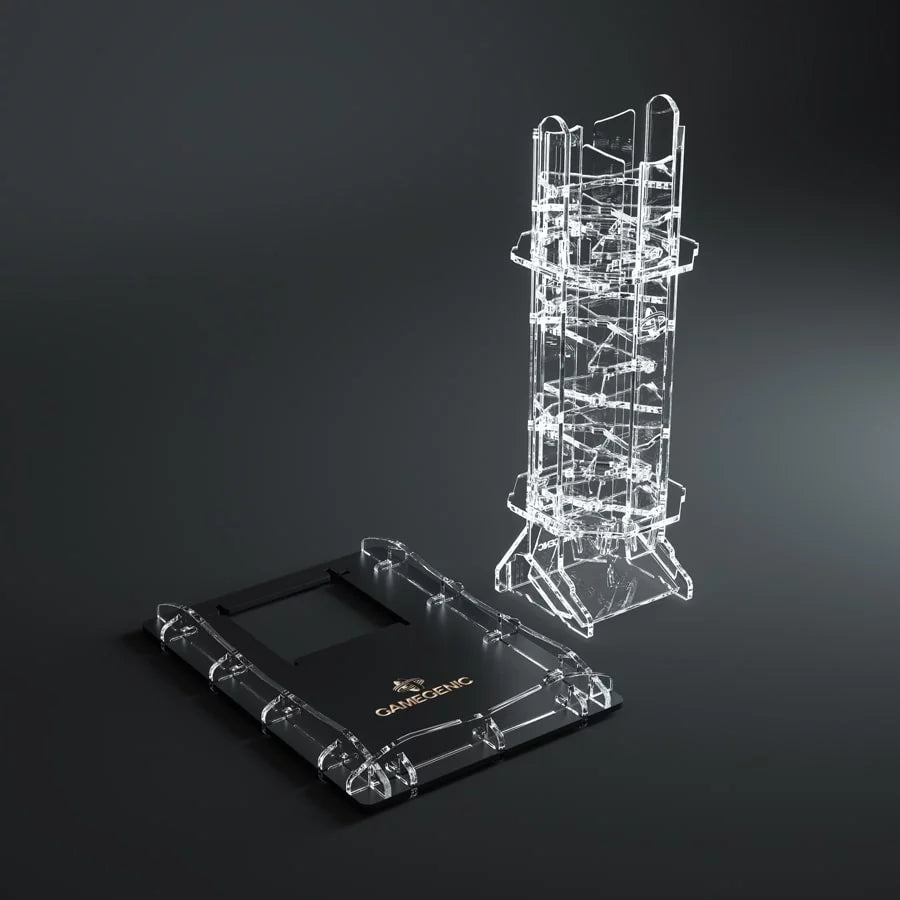
The most theatrical tower under $50. Instead of flat baffles, the Crystal Twister sends the die down a transparent acrylic spiral staircase — captivating to watch and a genuine table conversation piece. It includes an HDF dice tray to keep dice on the table, and the clear construction doubles as a display object between games. It leans more 'spectacle' than 'silence' (acrylic is not the quietest material), but for the money it is the most fun a die can have on the way down.
- Mesmerizing transparent spiral — real visual spectacle
- Includes a catch-tray to contain dice
- Doubles as a display/collector's piece
- Strong value at ~$40
- Acrylic spiral is louder than a lined tower
- Spectacle-first; dimensions not always listed by sellers
 4 photos
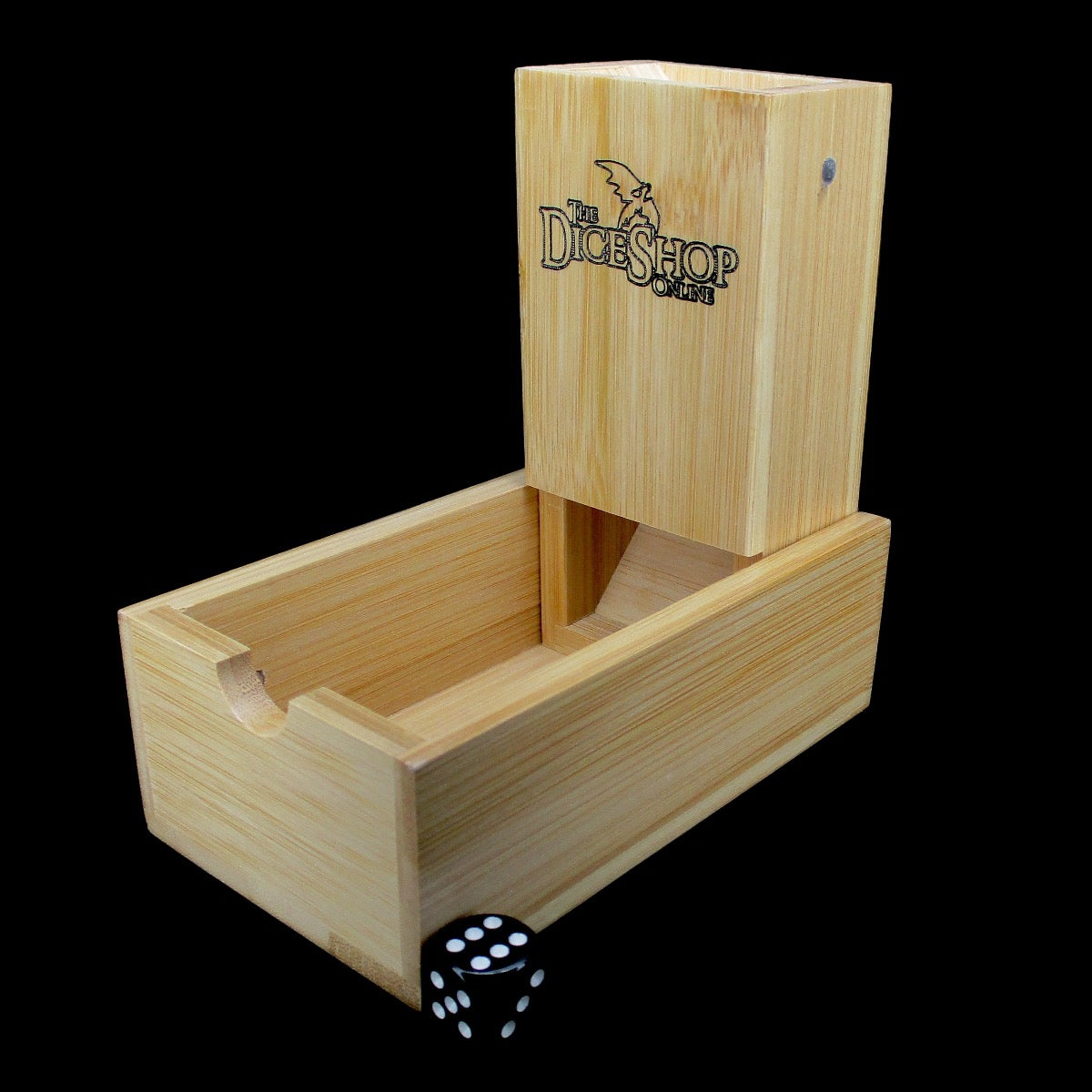
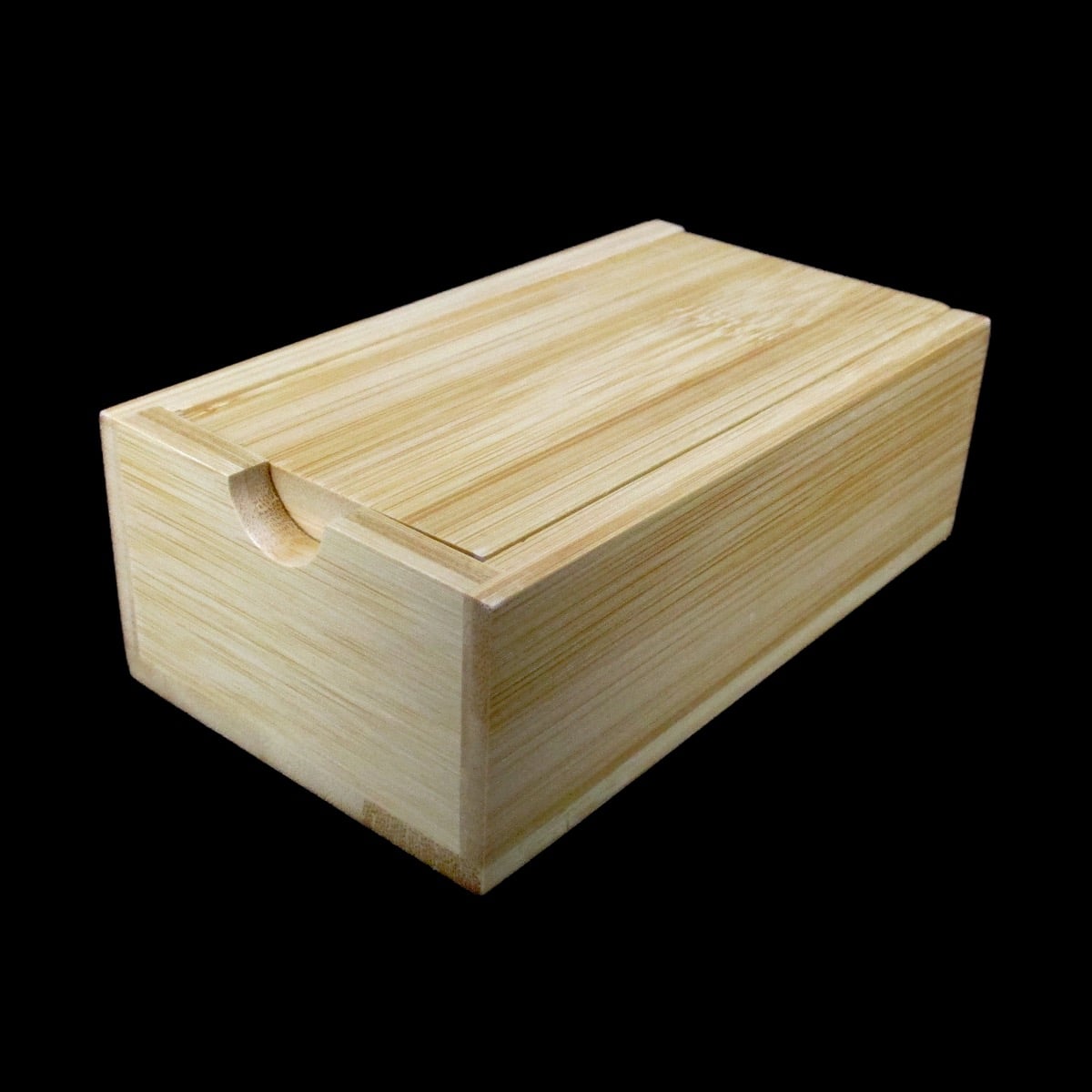
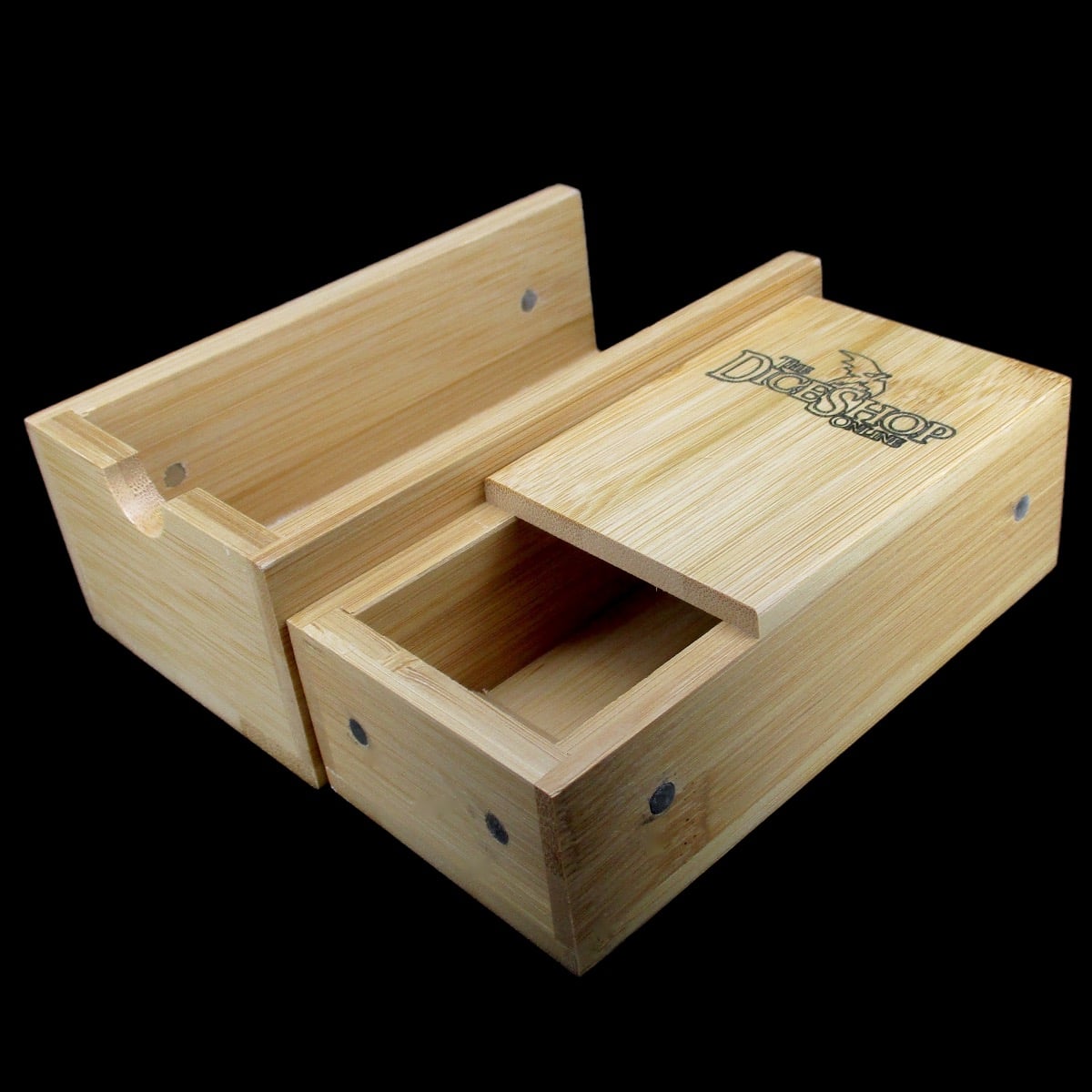
 BearDice Wooden Portable Dice Tower
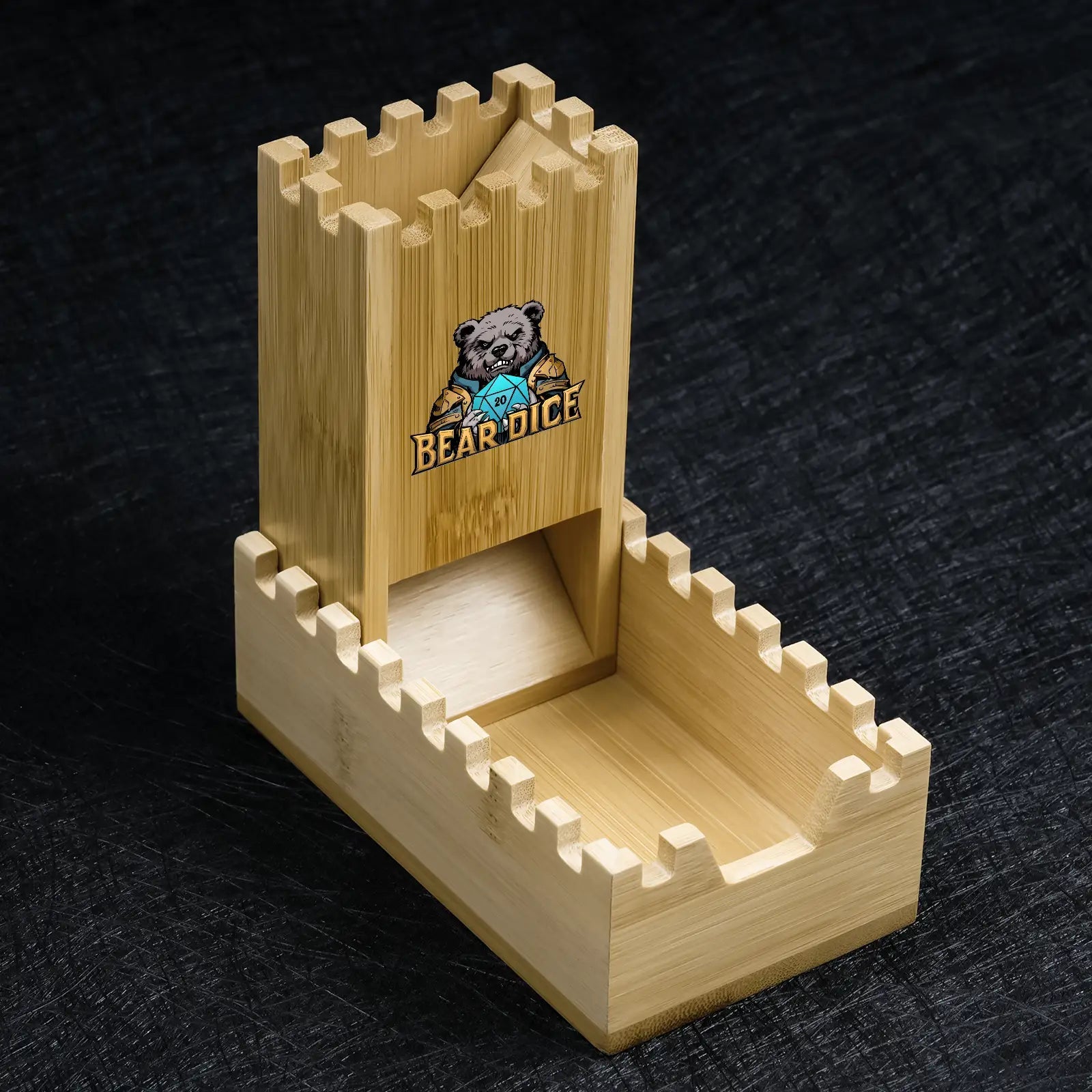
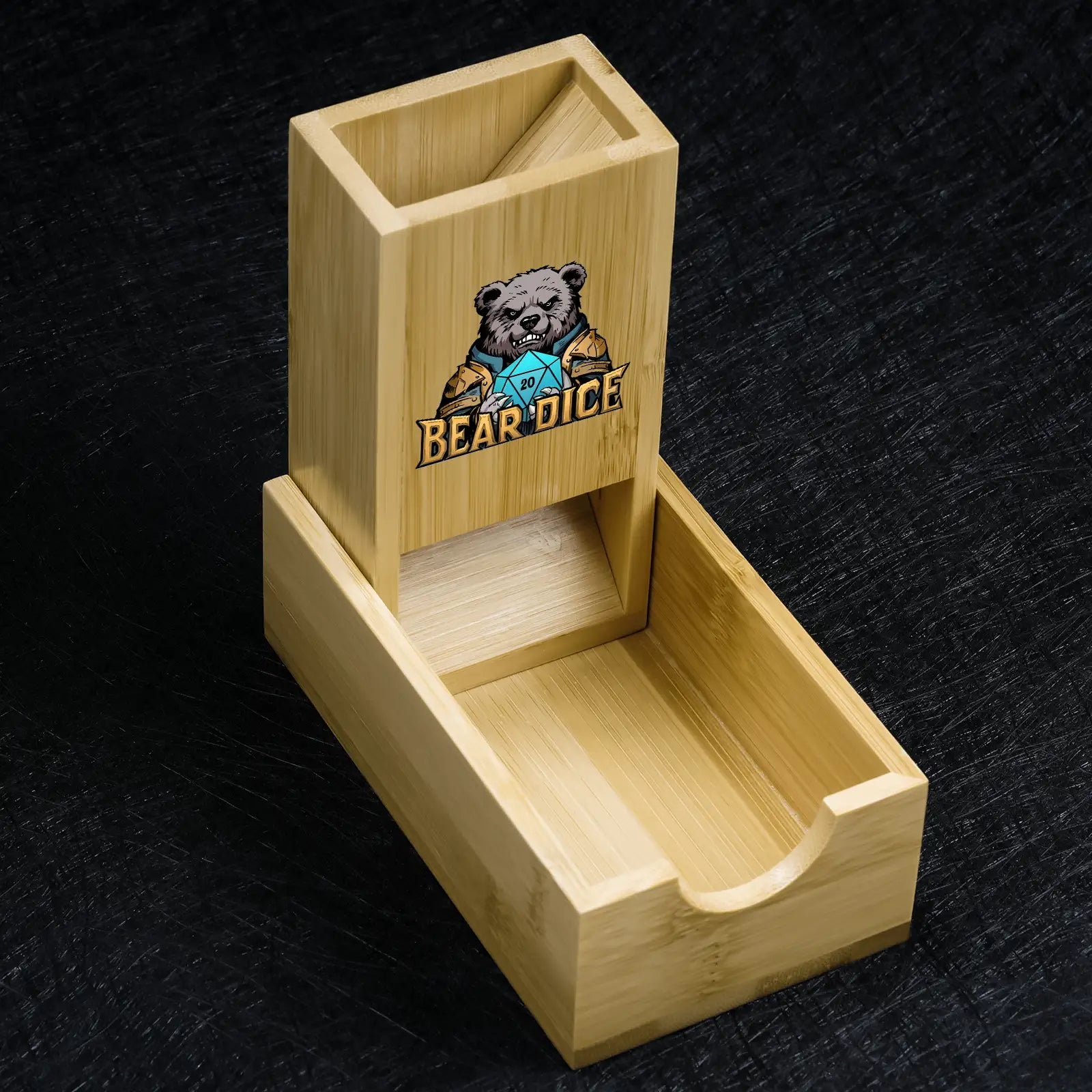
The folder I recommend first to new players. Made of FSC-certified wood treated to resist moisture and insects, it uses a clever two-section card-slot design that assembles in seconds with no glue or tools and breaks down flat for a bag. A wide mouth at the base makes scooping dice out easy, and it handles full-size d4 through d20. Hand-carved with the maker's logo. At around $25 it is a genuine, durable, portable tower for the price of a dice set — the budget tier done right.
- Tool-free card-slot assembly; folds flat to travel
- FSC-certified, moisture- and insect-treated wood
- Wide base mouth for easy dice retrieval
- Excellent value (~$25)
- Unlined wood — louder than velvet-lined towers
- No dedicated catch-tray included
 4 photos
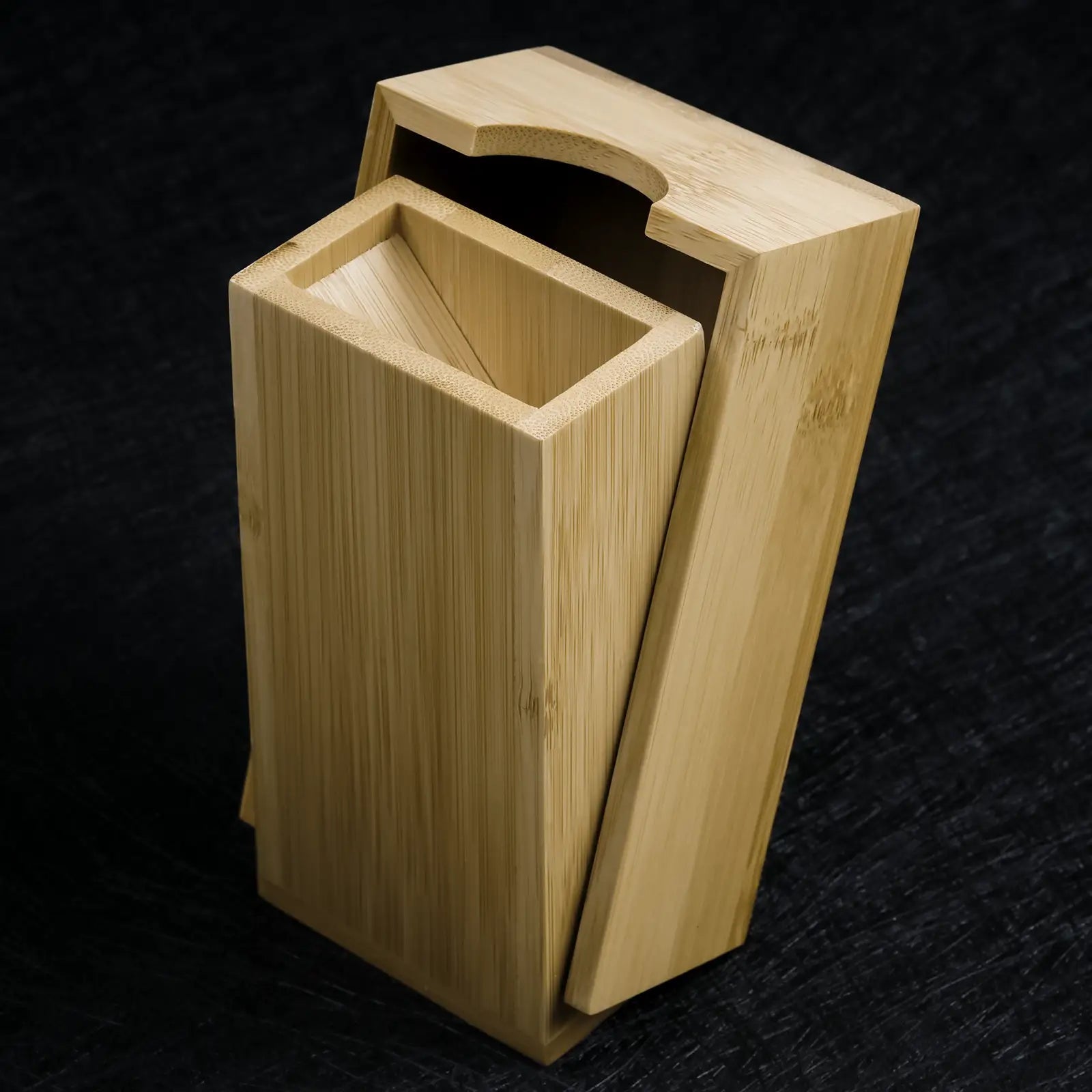
 TDSO Wooden Bamboo Folding Dragon Dice Tower
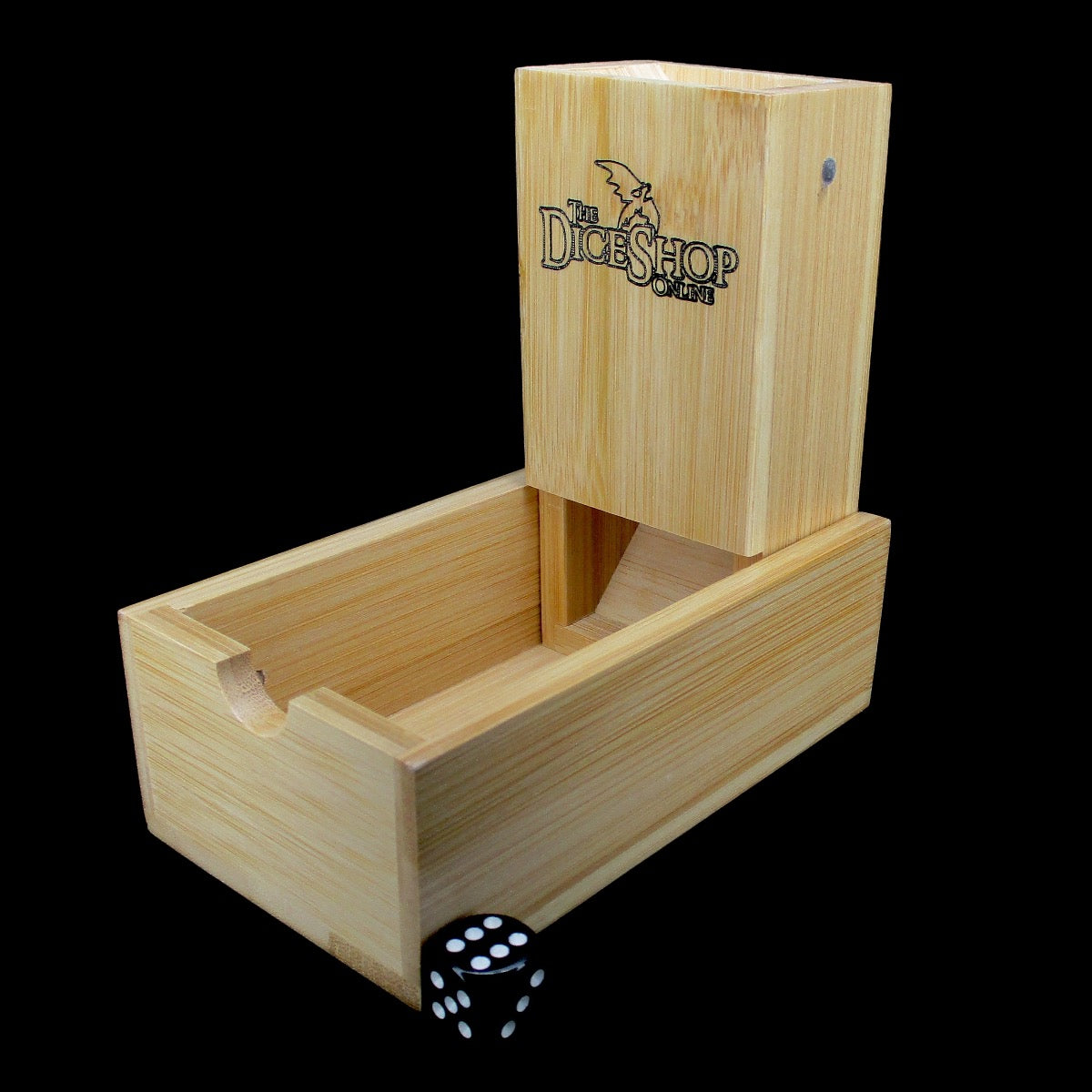
The convention bag MVP. Sustainable bamboo, magnets that snap it shut flat for transport and let it open instantly for play, and enough internal room to store 20–25 dice between games so the tower IS your dice case. It opens to a full ~14 cm working height — real baffling, not a toy. Priced around £15 / ~$19 on sale (regularly £30). For sheer portability-per-dollar, nothing here beats it. (UK retailer; price shown in GBP — confirm USD conversion and shipping at checkout.)
- Folds dead flat with magnets — true pocket/satchel tower
- Stores 20–25 dice inside; doubles as a dice case
- Sustainable bamboo, surprisingly sturdy
- Among the lowest prices for a genuinely functional tower
- Priced in GBP; USD cost varies with conversion + shipping
- Folding panels and magnets are the long-term wear points
 7 photos
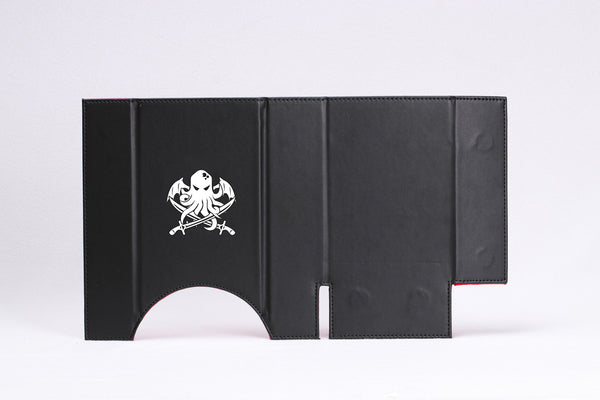
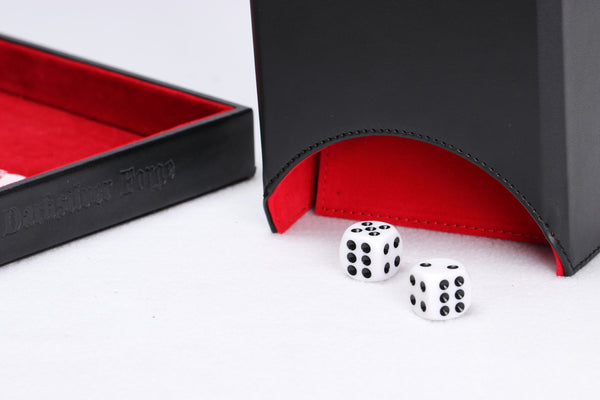
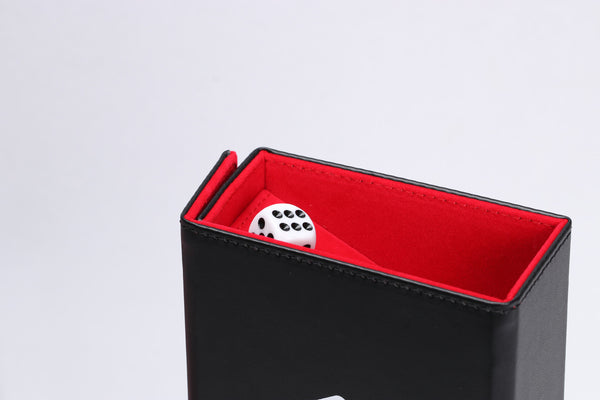
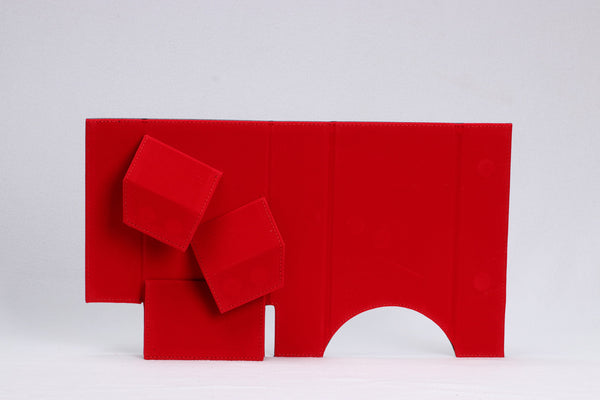
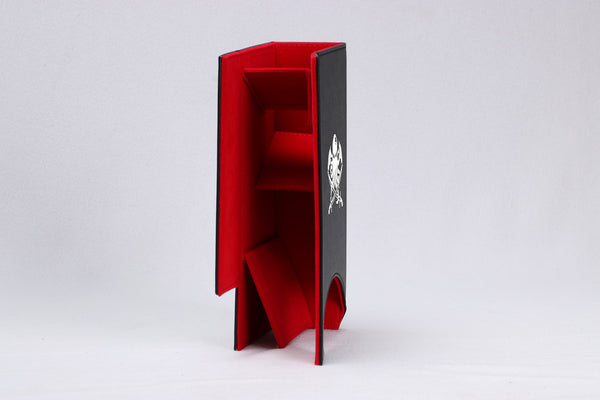
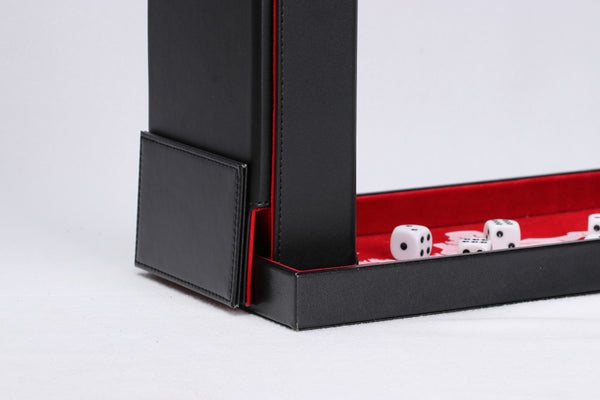
 CZYY Cthulhu Foldable Wooden Dice Tower with Tray
When silence matters on the road, this is the pick. A leatherette body folds completely flat for transport, and a velvet-lined interior softens the roll to a near-hush — the noise problem most folding towers ignore is solved here by design. The eldritch theming is a bonus for horror-RPG tables (Call of Cthulhu, dark D&D). I could not confirm the live USD price on the maker's page during research, so verify current pricing at the listing before buying — but on quietness and packability it earns its place.
- Folds completely flat — excellent for travel
- Velvet-lined interior is genuinely quiet
- Atmospheric theming for horror/dark campaigns
- Leatherette wipes clean and resists scuffs
- Live price not verifiable during research — confirm before buying
- Themed aesthetic won't suit every table
At a glance
| tower | maker | price | best for |
|---|---|---|---|
| C4Labs Deluxe Tray & Tower | C4Labs | ~$89.99 | Best all-around: quiet acrylic + lined tray combo |
| Wyrmwood Magnetic Dice Tower | Wyrmwood | $115–$420 | Lifetime heirloom hardwood, magnetic collapse |
| Elderwood Academy Codex | Elderwood Academy | ~$90–$135 | Beautiful tower that doubles as a leather scroll case |
| Gamegenic Crystal Twister | Gamegenic | ~$39.99 | Mid-range showpiece: transparent spiral + tray |
| BearDice Wooden Portable | Bear Dice | ~$25.69 | Best budget all-rounder, tool-free folding wood |
| TDSO Bamboo Folding Dragon | The Dice Shop Online | ~£15 / ~$19 | Cheapest great travel tower; stores 20–25 dice |
| Cthulhu's Tower Foldable | Darksilver Forge | ~$25 (verify) | Quietest folding travel tower, velvet-lined |
| Ars Moriendi Dragon Skull (STL) | Ars Moriendi 3D | $12 (file) | Themed sculptural centerpiece for 3D-printer owners |
| Elderwood Scroll + Codex System | Elderwood Academy | ~$135 | Full tower + matching collapsible scroll tray |
| Wyrmwood Tower + Personal Tray | Wyrmwood | $140+ combined | Heirloom tower nested into a matching catch-tray |
Questions, answered
Do dice towers make rolls more fair?
Yes, in the way that matters most: a tower removes your hand from the throw, eliminating the 'controlled roll' technique that lets a practiced player favor certain faces. A peer-reviewed Western Kentucky University study (30 d20s, 3,000+ rolls each) confirmed that 'the method of rolling heavily influences the outcome.' A tower gives the most consistent, repeatable, tamper-resistant roll on a tabletop. The one thing it cannot do is fix a physically biased die — for true fairness, pair the tower with sharp-edged precision dice.
What is the best dice tower overall in 2026?
For most players, the C4Labs Deluxe Dice Tray & Tower combo (~$89.99) — it bundles a watchable transparent-acrylic tower with a velvet-lined catch-tray, so it's quiet, contained, and complete in one box. On a tight budget, the BearDice Wooden Portable (~$25) is the best value; for a lifetime heirloom, the Wyrmwood Magnetic Dice Tower ($115+).
Are dice towers loud, and how do I quiet one down?
Bare acrylic, hard plastic, and unlined wood towers can be noisy. The fixes: buy a felt- or velvet-lined model (C4Labs, leatherette folders like Cthulhu's Tower), or line an open-design tower yourself with adhesive felt or craft foam on the internal baffles and the tray floor. Lining drops the rattle dramatically and protects your table and dice.
Do I need a dice tray as well as a tower?
Effectively, yes. A bare tower just sends dice spilling in a new direction. The cleanest setups are tower-and-tray combos where the outlet feeds a lined tray (C4Labs includes one; Elderwood's Scroll and Wyrmwood's Personal Tray pair with their towers). If you buy a standalone tower, budget for a tray too.
What size dice can a dice tower handle?
Most quality towers, including budget folders like the BearDice and TDSO, handle the full standard polyhedral set — d4, d6, d8, d10, d12, and d20 at standard (~16 mm) size. Oversized 'chonk' dice or many dice at once may need a wider tower; check the inlet dimensions if you roll big handfuls or jumbo dice.
Is an expensive hardwood dice tower actually worth it?
Functionally, no — a $25 folder randomizes a die just as well as a $400 hardwood one; the baffle doesn't know its price. You pay for craft, grain, longevity, and feeling. An heirloom tower (Wyrmwood, Elderwood) is genuinely worth it as a lifetime piece, a shared group table-fixture, or a milestone gift — and not worth it as an impulse buy for an occasional player.
Can I make my own dice tower with a 3D printer?
Absolutely — it's one of the best values in the hobby if you already print. Makers like Ars Moriendi 3D sell STL files (e.g., a dragon-skull tower set for $12) you can print in any color or material. Budget for filament/resin, long print times (~45 hours for a large detailed model), supports, and finishing — and line the interior with felt, since bare plastic is loud.
How old is the dice tower — is it a modern invention?
Far from modern. Dice towers date to at least the fourth century: the Roman Vettweiss-Froitzheim dice tower, found in Germany, is roughly 1,700 years old and uses essentially the same internal-baffle design as towers sold today. They've been used to ensure random, tamper-resistant rolls — including in tournament backgammon — for centuries.
What's the best portable or travel dice tower?
For sheer packability-per-dollar, the TDSO Bamboo Folding tower (~£15/~$19) folds flat with magnets and stores 20–25 dice inside. For the quietest travel option, Cthulhu's Tower folds completely flat with a velvet-lined interior. The BearDice (~$25) is a great tool-free folding middle ground in treated wood.
Kenji's verdict
If you want the single best answer, buy the C4Labs Deluxe Dice Tray & Tower (~$89.99): it is quiet, it catches its own dice, you get to watch the roll resolve through clear acrylic, and it's made in the USA — a complete solution with no asterisks. On a budget, the BearDice Wooden Portable (~$25) or the TDSO Bamboo folder (~£15/~$19) deliver real, fair-rolling craft for the price of a dice set. And if you're shopping for the object as much as the function — a piece to hand down or gift — the Wyrmwood Magnetic Dice Tower ($115+) and the Elderwood Academy Codex are heirloom-grade craft that will outlive their first owner. But remember the keeper's truth: every tower here rolls dice fairly. From the $19 bamboo to the $420 ebony, the baffle does the same ancient work it has done since a Roman craftsman first set ledges inside a tower seventeen centuries ago. Buy for the table you actually have — and for the joy the object brings you. The randomness comes free.
Research ledger 14 sources · reviewed 2026-08-10
Specifications, rules, current product information, community experience, and contrary evidence were checked against the sources below. Commercial links are kept separate from editorial evidence.
- en.wikipedia.orgen.wikipedia.org/wiki/Dice_tower
- digitalcommons.wku.edudigitalcommons.wku.edu/seas_faculty_pubs/7
- c4labs.comc4labs.com/product/deluxe-dice-tray-and-dice-tower
- amazon.comamazon.com/dp/B084R9PBBZ?tag=puzzlewick-20
- wyrmwoodgaming.comwyrmwoodgaming.com/products/the-magnetic-dice-tower
- dropthedie.comdropthedie.com/wyrmwood-gaming-review-complete-zebrawood-dice-tower-system
- elderwoodacademy.comelderwoodacademy.com/product/codex-dice-towers
- dropthedie.comdropthedie.com/scrollcodex
- boardgamegeekstore.comboardgamegeekstore.com/products/gamegenic-crystal-twister-dice-tower
- amazon.comamazon.com/dp/B08R5HNVJ6?tag=puzzlewick-20
- beardice.combeardice.com/products/wooden-portable-dice-tower-dnd-dice-artifact
- thediceshoponline.comthediceshoponline.com/tdso-wooden-bamboo-folding-dice-tower
- arsmoriendi3d.comarsmoriendi3d.com/shop/category/dragon-skull-dice-tower
- Community research index: r/DnD discussions about Best Dice Towers: The Keeper's Complete Guide, From $20 Bamboo to Heirloom Hardwoodreddit.com/r/DnD/search/?q=Best%20Dice%20Towers%3A%20The%20Keeper's%20Complete%20Guide%2C%20From%20%2420%20Bamboo%20to%20Heirloom%20Hardwood&restrict_sr=1&sort=top

Every object has a lineage. Let me tell you its story.


Keep exploring
The next smart rabbit holes.
⬡ Universe HubDungeons & Dragons: the whole buying pathDungeons & Dragons is the world's great storytelling engine — a few books, a fistful of dice, and a table of friends. This universe...⬢ Topic PathTabletop Accessories: compare the whole shelfBuy the accessory that fixes a repeated annoyance first. Protection, setup speed, readable state, and comfortable handling beat...Best OfBest Metal Dice Sets for D&D (2026): Heft, Balance & Where to BuyAn archivist's verified ledger of metal dice worth owning—what the heft actually buys you, whether they roll fair, and which sets are...